
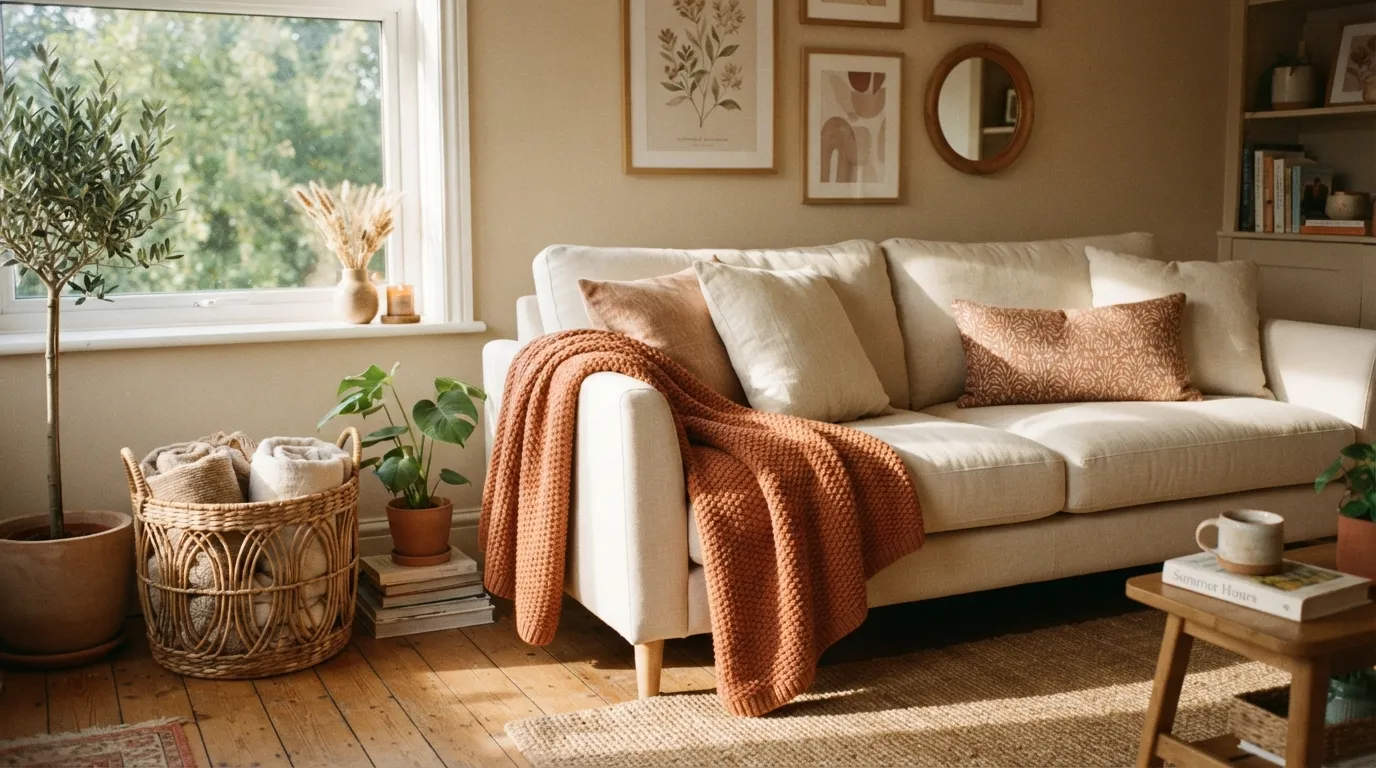
Summer decor has a shelf life. The mistake is thinking that the moment August ends, your home needs pumpkins, plaid, and every orange accessory you own. That usually makes the change feel abrupt instead of natural.
A better Summer-to-Fall Decor Transition is much simpler. Keep the light pieces that still work, then introduce warmer colors, richer textures, darker finishes, and softer lighting one layer at a time. Your home should look like summer is slowly giving way to fall, not like you packed one season away and unloaded another.
The easiest changes are also the ones you notice first. Pillow covers, throws, vases, rugs, table accessories, and lighting can shift the room without touching the furniture. You don’t need a new sofa or a completely different color scheme.
Summer-to-Fall Decor Ideas
Swap Bright Summer Pillows for Rust and Cinnamon Covers
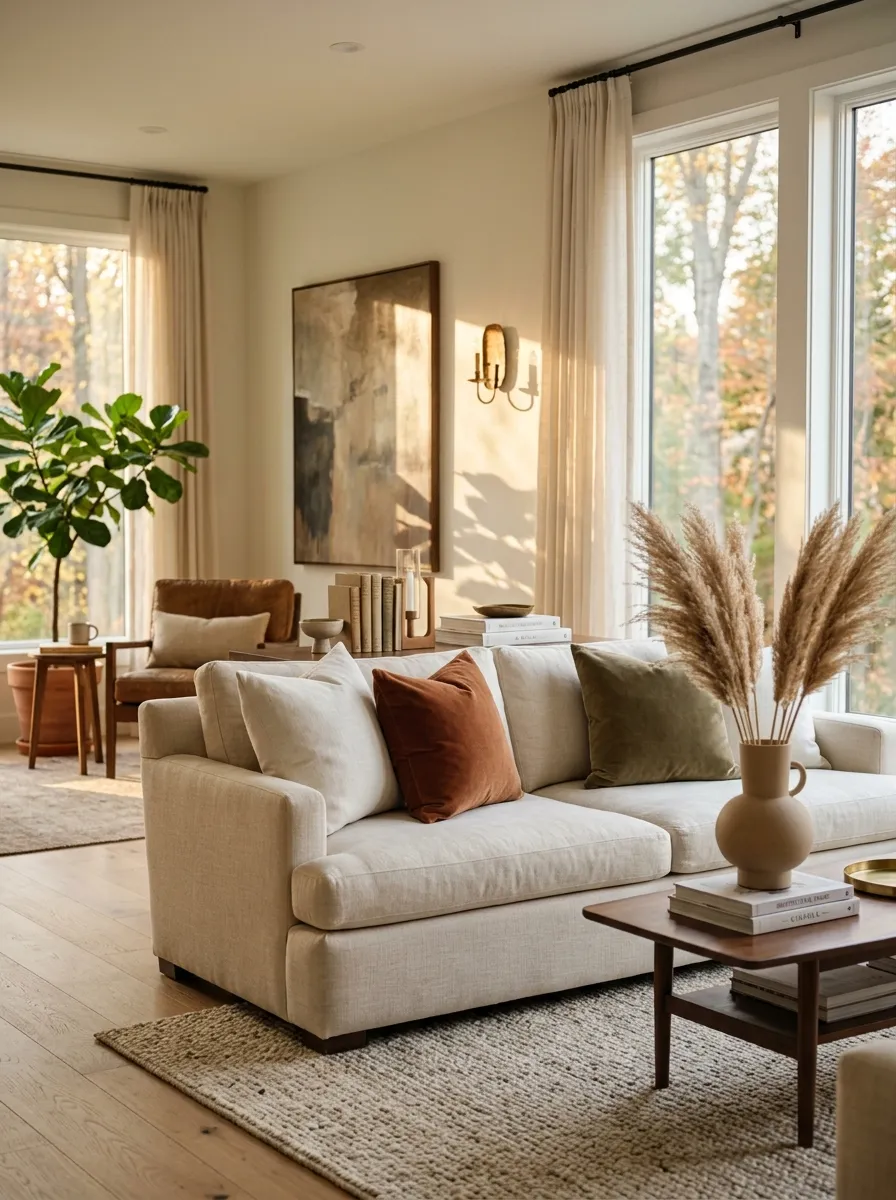
Pillows are the easiest seasonal switch because they change the room without changing anything underneath them.
Put away the bright turquoise, lemon yellow, or crisp tropical covers and bring in rust, cinnamon, muted olive, or warm brown instead.
Keep the formula simple:
- 1 warm solid
- 1 subtle pattern
- 1 neutral texture
Quick rule: Keep at least one light-colored pillow so the room doesn’t suddenly feel too dark.
Keep the Woven Baskets and Add Chunkier Textures
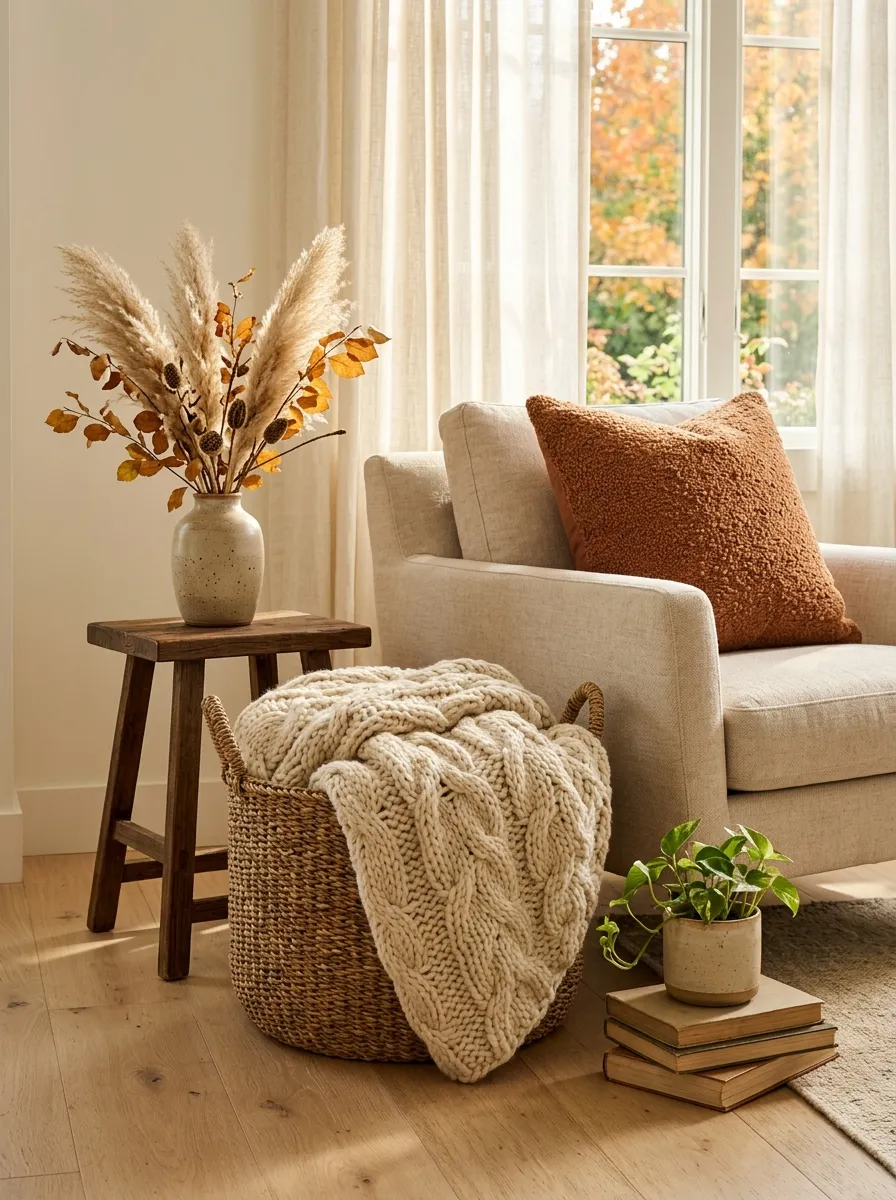
Don’t pack away every woven basket just because summer is ending. Those natural fibers are useful all year.
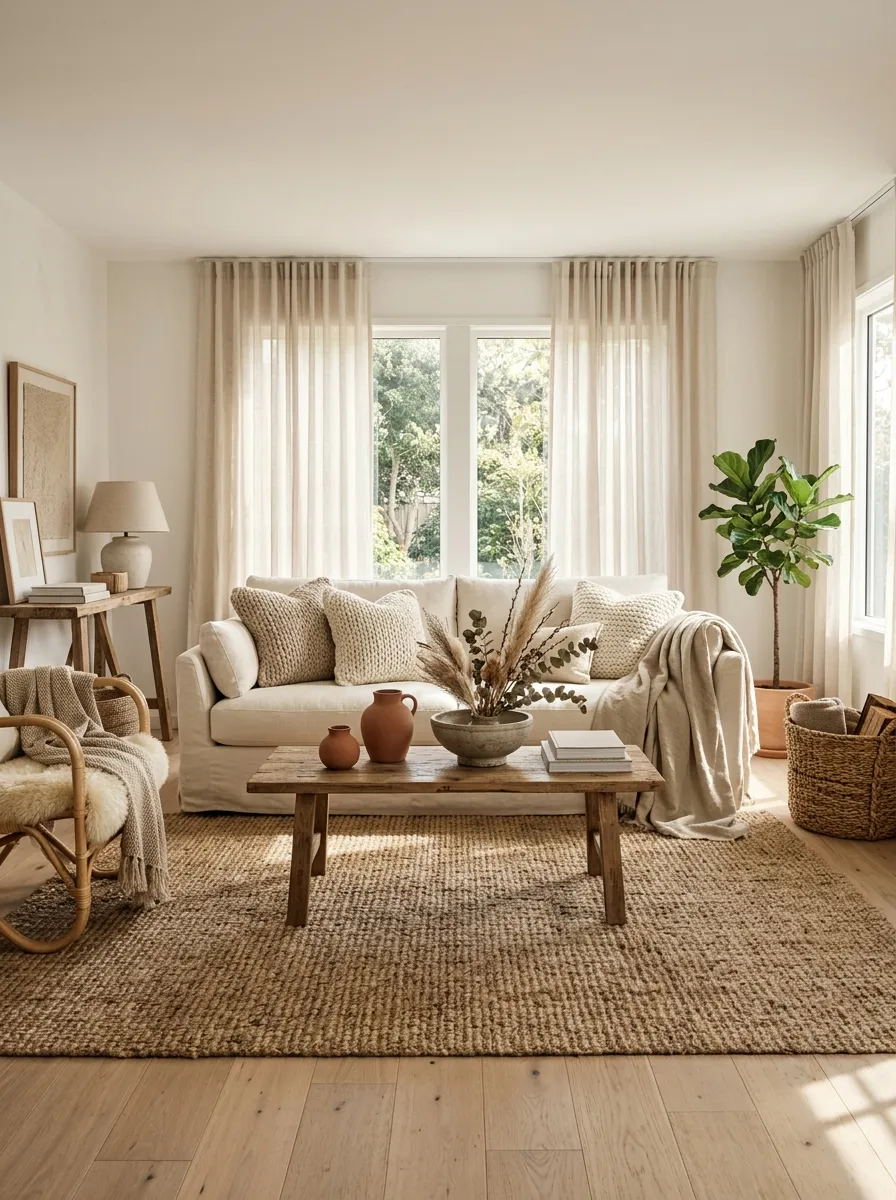
The trick is to balance their airy texture with something heavier. A chunky knit throw, nubby cushion, or thick wool-look textile gives the basket a more autumn-ready setting.
Use this combination:
- Keep the existing basket.
- Add one heavier textile nearby.
- Repeat the warm texture somewhere else in the room.
You don’t need more baskets. You need better texture around the ones you already have.
Trade Crisp White Throws for Warm Oatmeal Layers
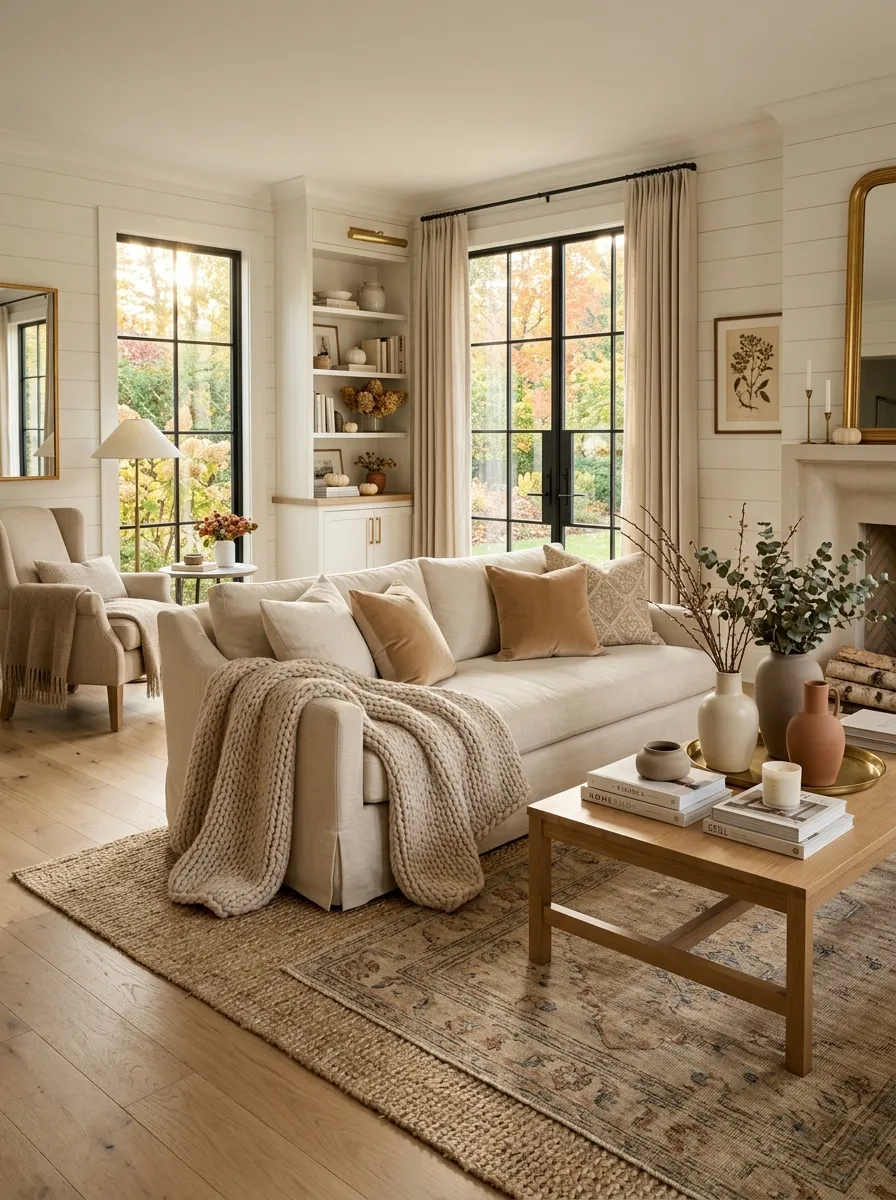
That bright white summer throw that looked fresh in June can suddenly feel a little cold by September.
Replace it with oatmeal, cream, camel, or soft taupe. These shades still keep the room light while introducing the warmth associated with fall.
Think of the difference like this:
| Summer layer | Transitional layer |
|---|---|
| Bright white | Oatmeal |
| Cool grey | Warm taupe |
| Thin cotton | Chunkier knit |
| Crisp finish | Soft texture |
The goal isn’t a darker room. It’s a warmer one.
Bring in Amber Glass Before You Bring Out the Pumpkins
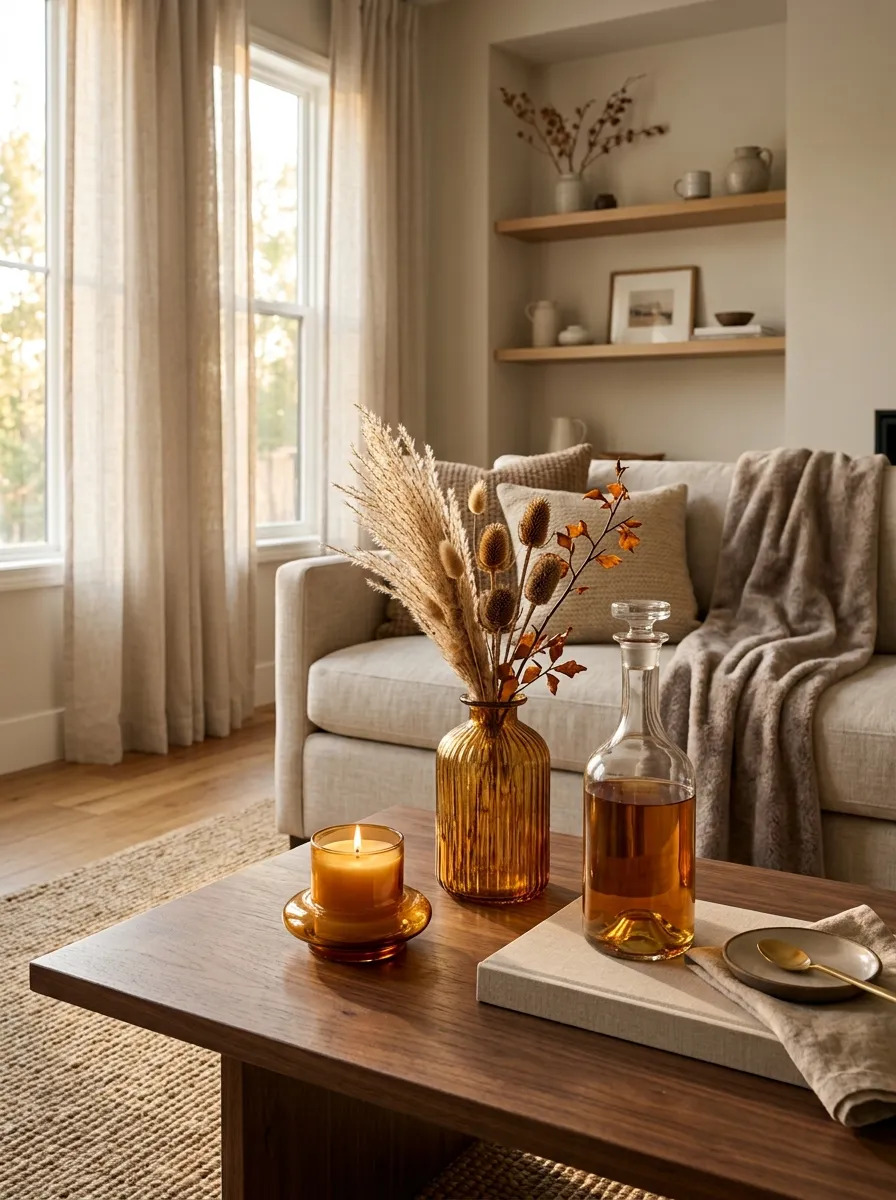
Pumpkins announce fall immediately. Amber glass is quieter.
Place an amber vase, bottle, candle holder, or small glass vessel on a coffee table or shelf. The warm translucent color catches natural light during the day and looks even richer once lamps come on.
Start with three pieces:
- Amber glass vase
- Small brass or wood accent
- Neutral ceramic
This is the kind of change that makes a room feel warmer without screaming “fall decor.”
Replace Tropical Prints With Subtle Botanical Patterns
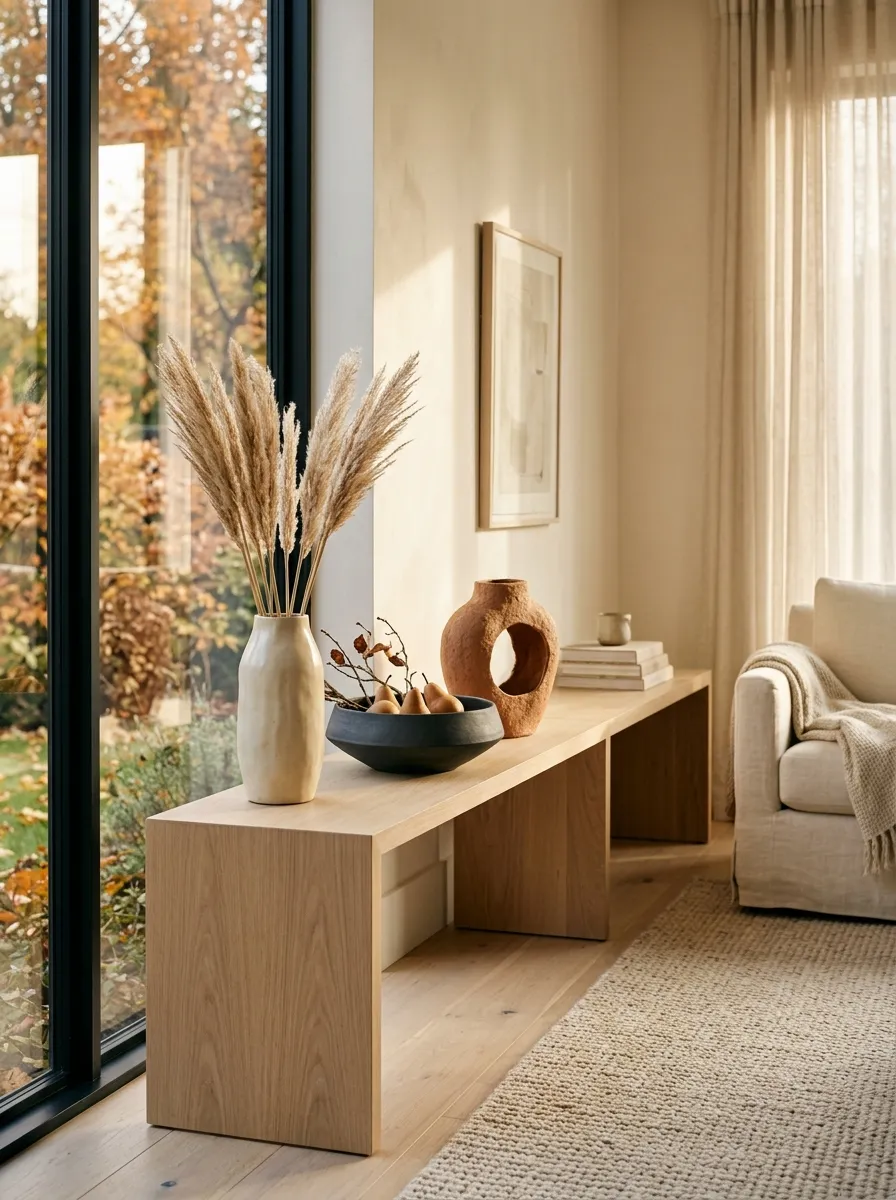
Large tropical leaves can make a room feel firmly locked in summer. You don’t need to remove every plant motif. Just make the pattern quieter.
Swap oversized palm prints for smaller botanical designs in olive, brown, cream, or muted rust. The room keeps its connection to nature while losing the vacation-resort feeling.
The pattern doesn’t need to look autumnal. It just needs to feel less summery.
Change the Coffee Table Without Changing the Furniture
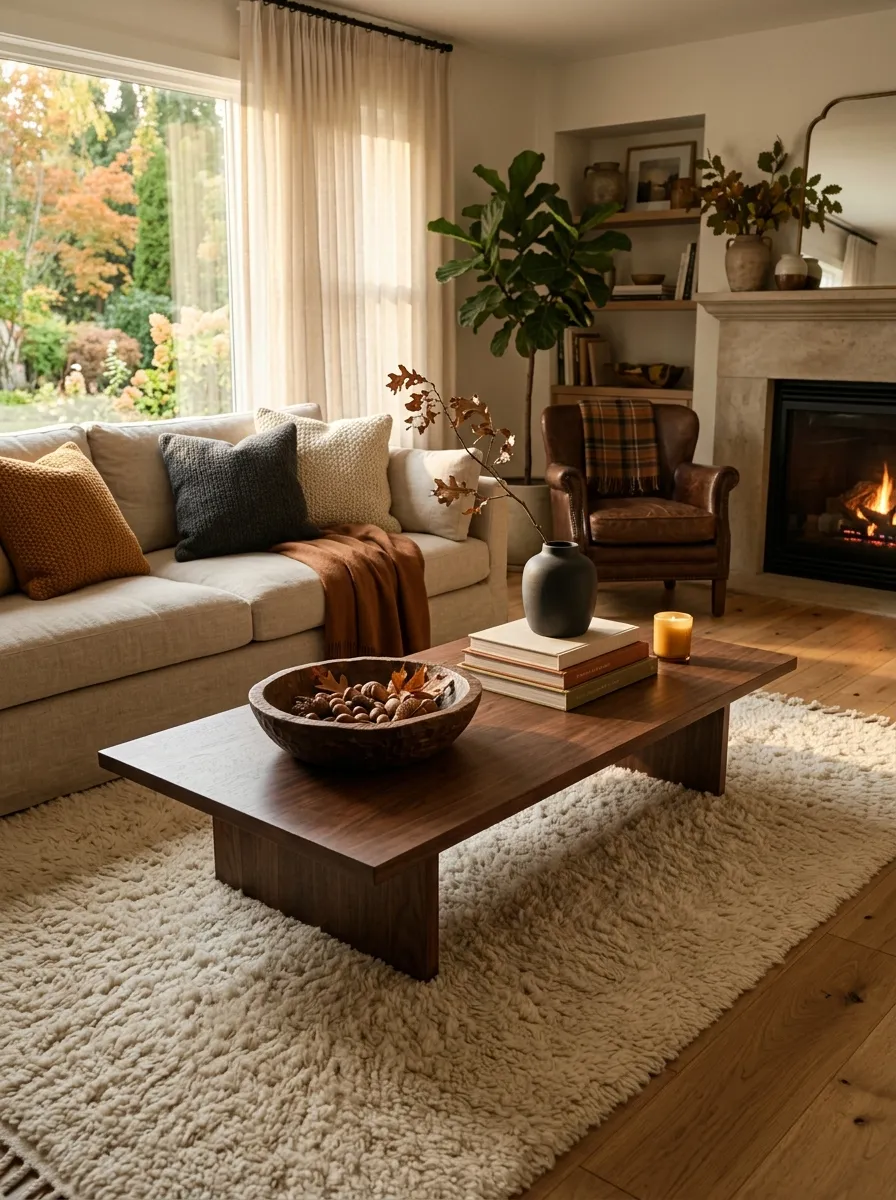
Your coffee table can shift the entire mood of the seating area.
Clear away shells, bright summer trays, or lightweight decorative pieces. Replace them with a wood bowl, darker ceramic vessel, amber glass, or a small stack of books.
Use this three-step arrangement:
- Start with one low tray or bowl.
- Add one taller object.
- Finish with a small natural element.
That’s enough to make the surface feel grounded without turning it into a fall display.
Use Terracotta Accents to Warm Up a Pale Room
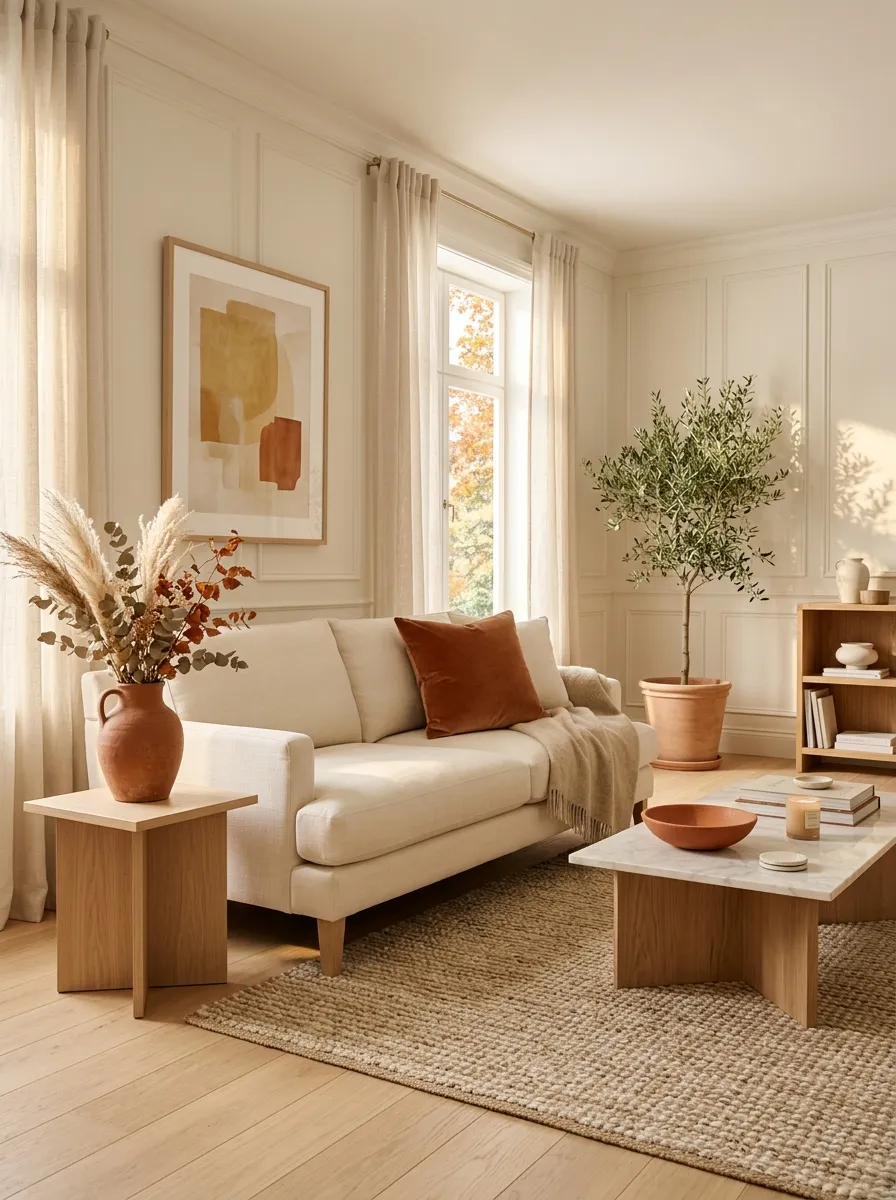
A pale room doesn’t need dark furniture to feel ready for fall. Terracotta does the job much faster.
Use it where the eye naturally lands: a cushion, vase, framed print, lamp base, or small ceramic bowl. One or two repeated accents will look intentional. Six unrelated orange objects won’t.
Terracotta works especially well against cream, beige, natural wood, and warm white.
Move Summer Florals Into Darker Ceramic Vases
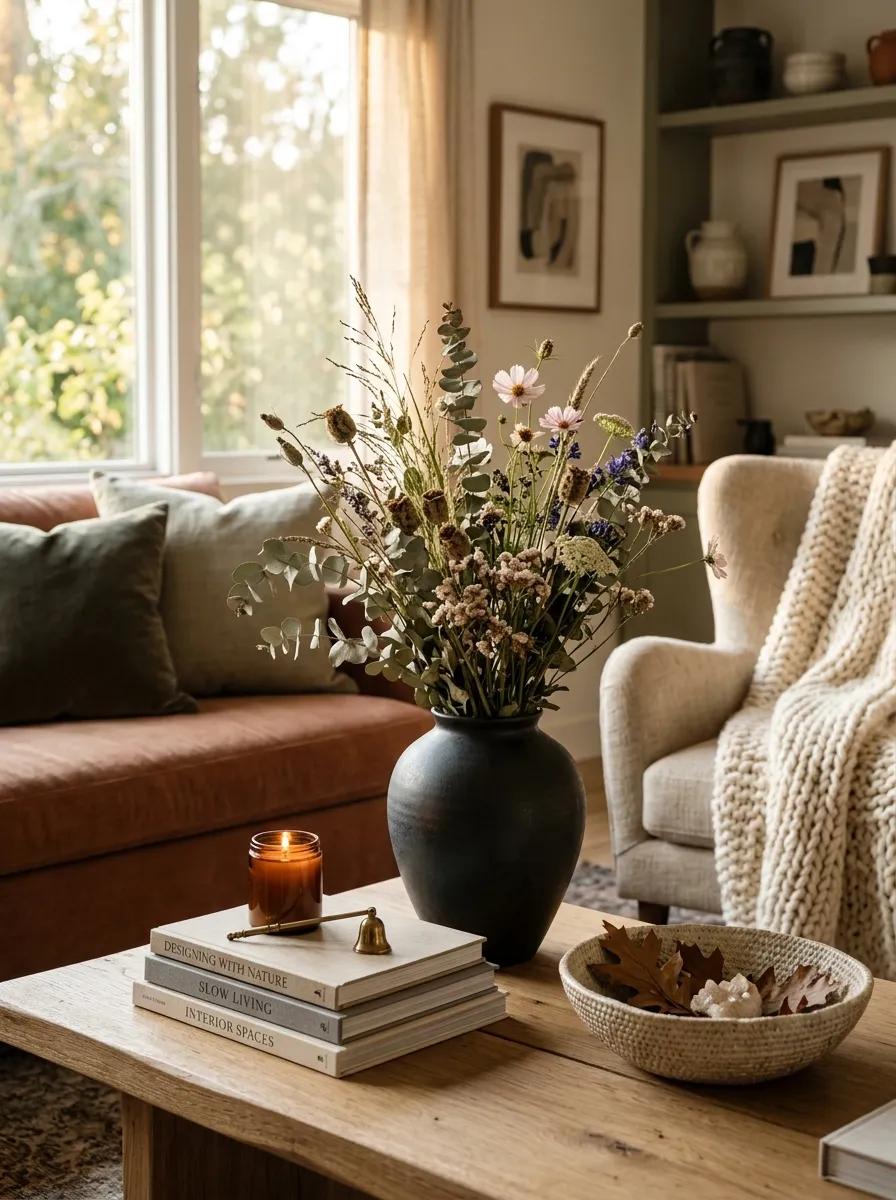
Fresh flowers don’t suddenly become summer-only when the calendar changes.
Keep the flowers if they still look good. Change the container instead. A deep brown, olive, charcoal, or muted rust vase instantly gives familiar greenery a heavier seasonal setting.
Before you buy anything new, check what you already own.
A simple ceramic vase with a darker finish can completely change how the same stems read.
The arrangement stays fresh. The mood gets warmer.
Layer a Vintage Rug Over a Bare Summer Floor
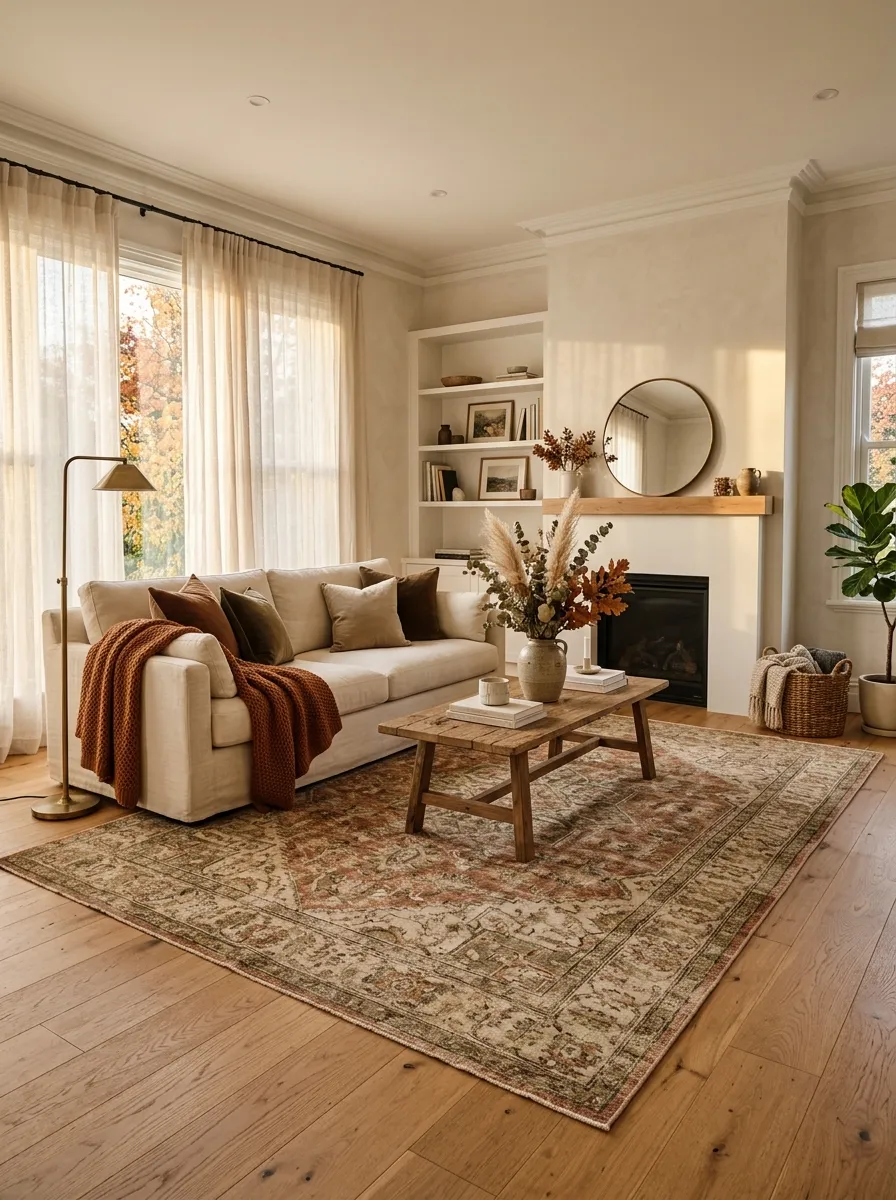
Bare floors feel wonderfully light during summer. By early fall, they can start making the room feel unfinished.
A vintage-style rug adds visual weight and texture without requiring a furniture change. Choose faded rust, muted brown, olive, cream, or a pattern that combines several of those shades.
For the easiest transition:
- Keep the floor visible around the edges.
- Choose a low-pile or flatweave style.
- Repeat one rug color somewhere else in the room.
That little bit of texture can make the entire seating area feel more settled.
Switch Cool White Lighting to Warmer Lamps
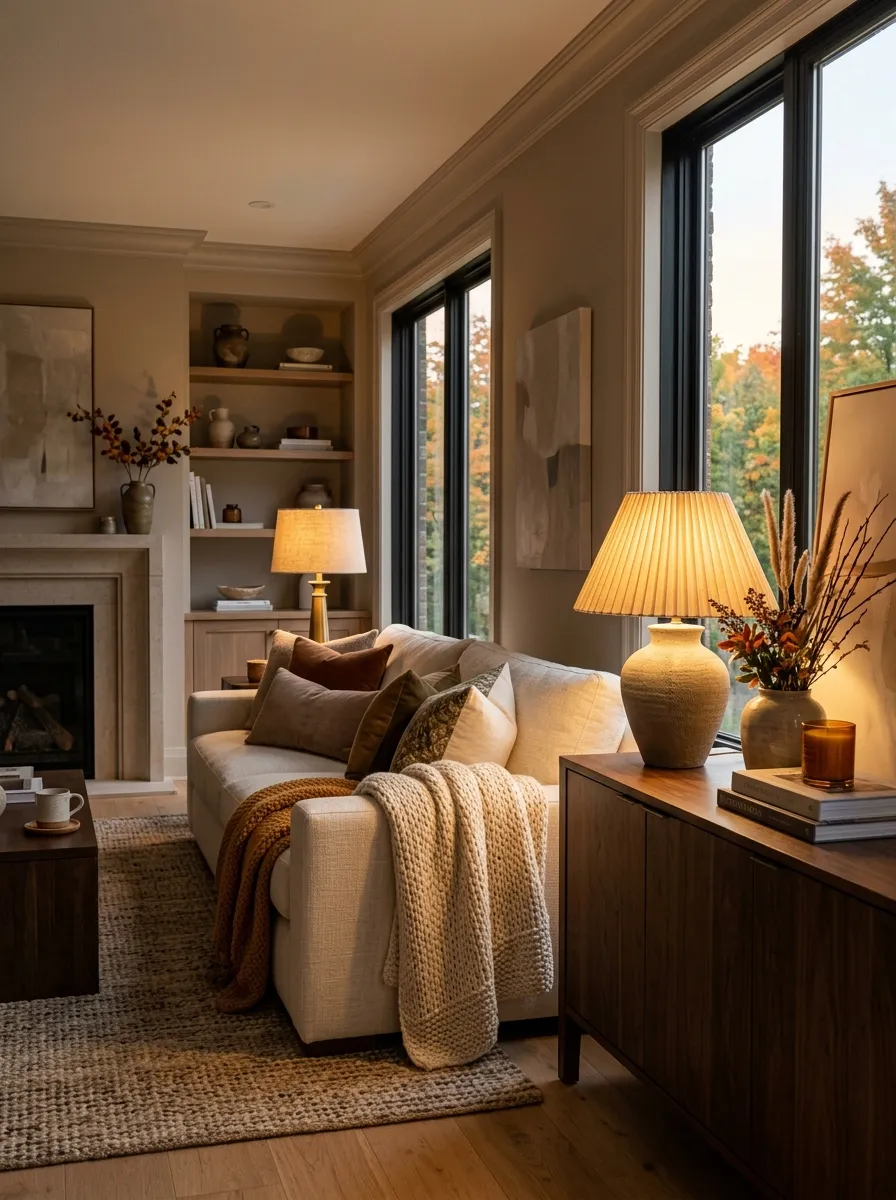
Lighting becomes more important as summer daylight starts fading. A room that looked perfectly bright in July can feel harsh under cool bulbs by early fall.
Use warmer lamps instead of relying only on overhead lighting. Put one beside the sofa, another on a console, and keep the brightest source away from the center of the room.
The room should feel softer in the evening without becoming dim or gloomy.
Add Wood Details Where the Room Feels Too Light
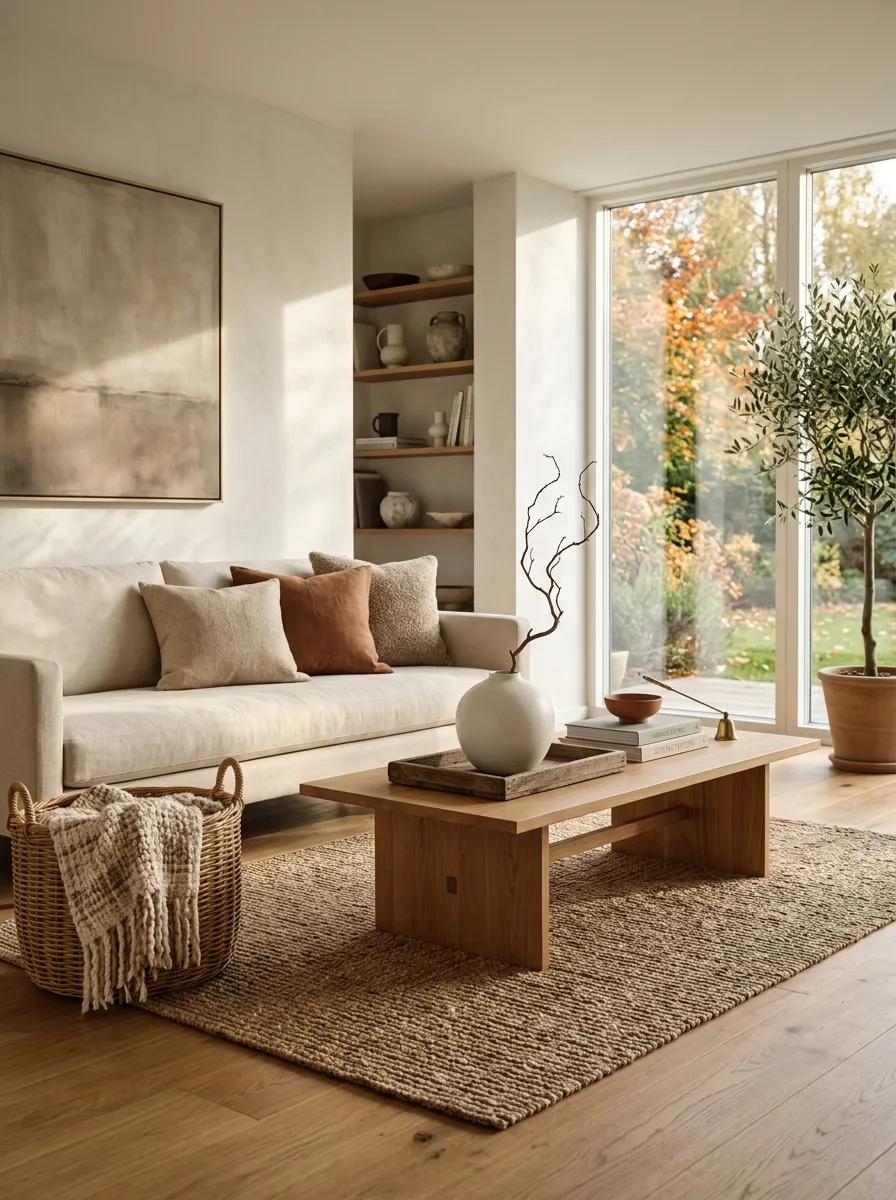
A room can have plenty of warm color and still feel strangely flat. That’s usually a material problem.
Natural wood adds the visual weight that summer decor often lacks. You don’t need a new piece of furniture. A wooden bowl, stool, picture frame, side table, or cutting board can do the job.
The best transition rooms don’t rely on one material. They mix light summer textures with a few heavier natural finishes.
Turn an Empty Console Into a Fall Transition Moment
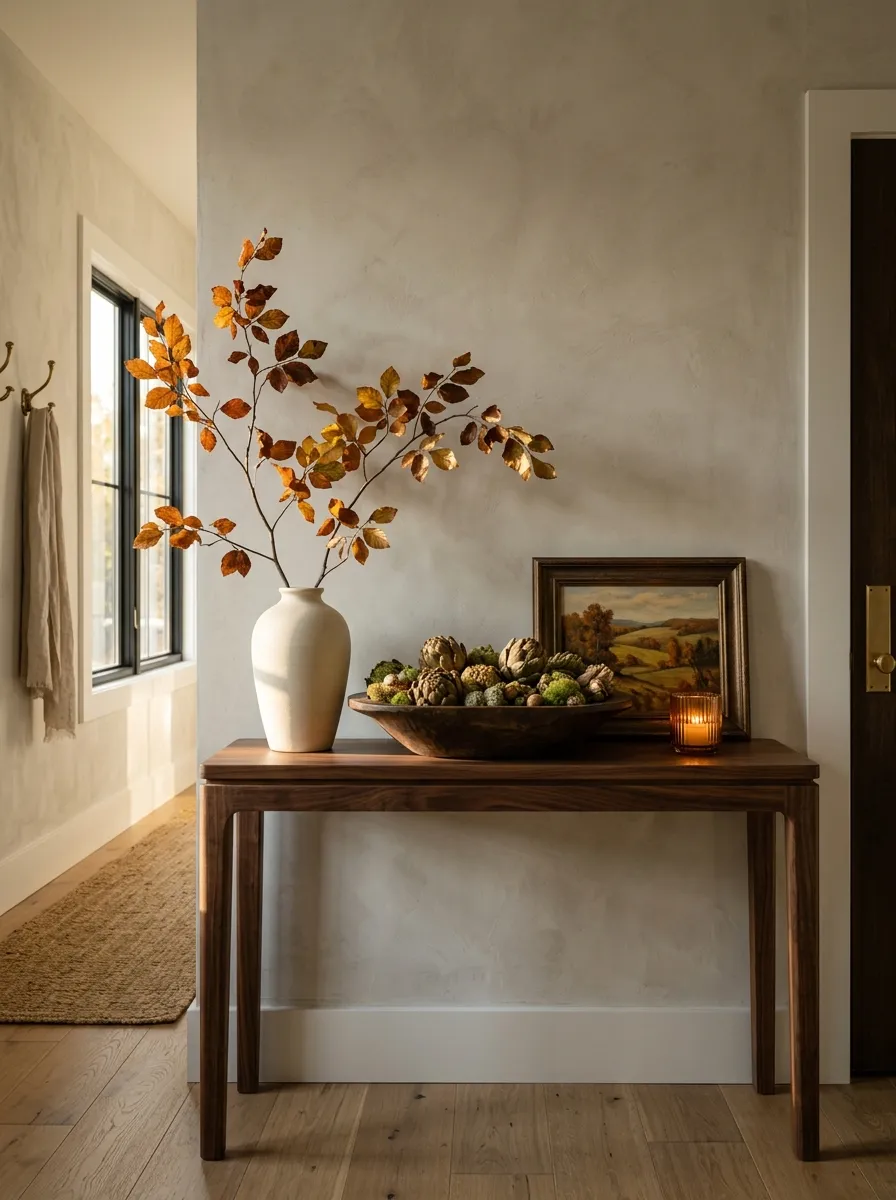
That empty console you’ve been ignoring is useful real estate.
Start with one substantial object in the middle, then build outward with smaller pieces. A wood bowl, ceramic vase, framed artwork, and one warm-toned accessory are enough.
Build it in this order:
- Place the largest object first.
- Add something taller on one side.
- Balance it with two smaller pieces.
- Leave some empty space.
The empty space matters. Overfilling the console will make the arrangement look like a seasonal display instead of part of the room.
Replace Coastal Accessories With Aged Brass Details
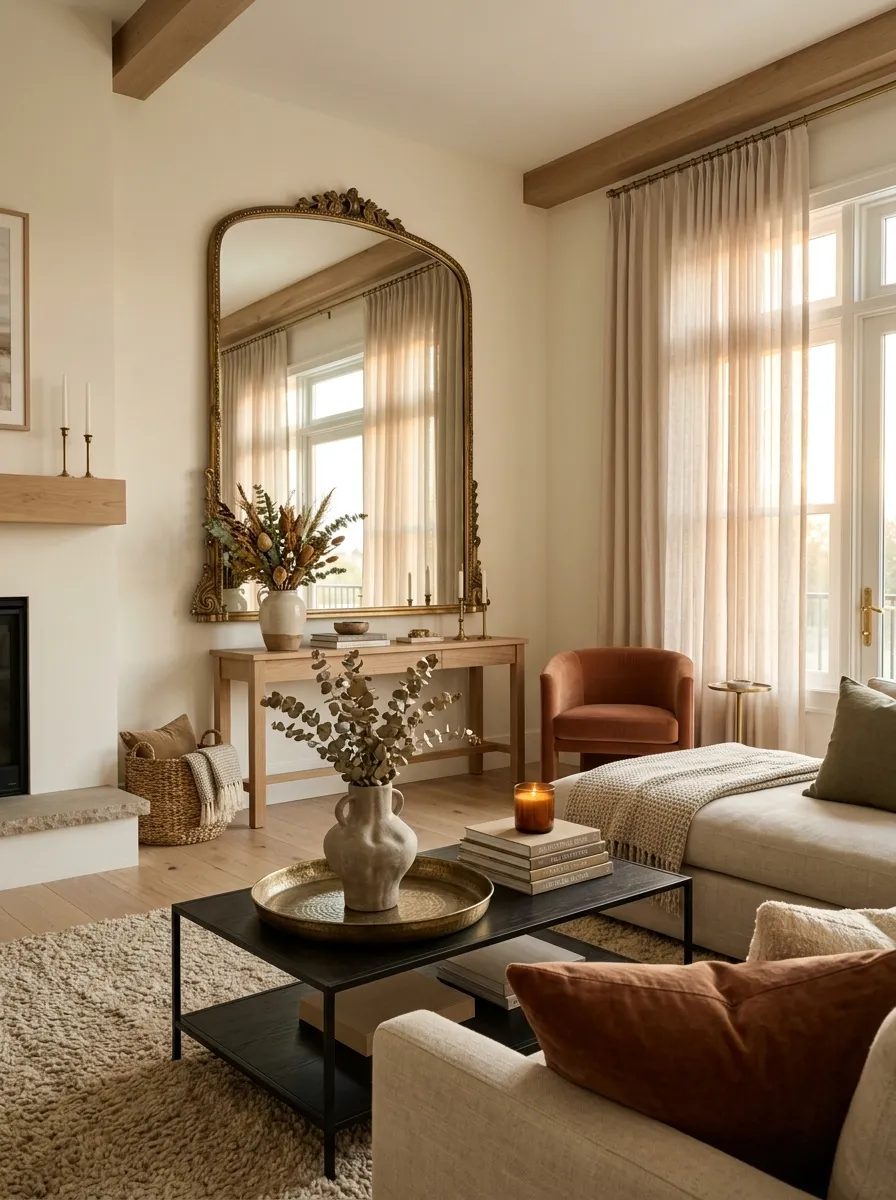
Shells, pale blue glass, rope accents, and nautical accessories instantly push a room toward summer.
You don’t have to strip the room bare. Replace just the pieces that make the seasonal message too obvious. Aged brass brings warmth without looking overly autumnal.
Try the swap on a mirror, lamp, tray, or small decorative object first. One warm metal detail can be enough to pull a pale room toward fall.
Use Dried Branches Instead of Full Autumn Arrangements
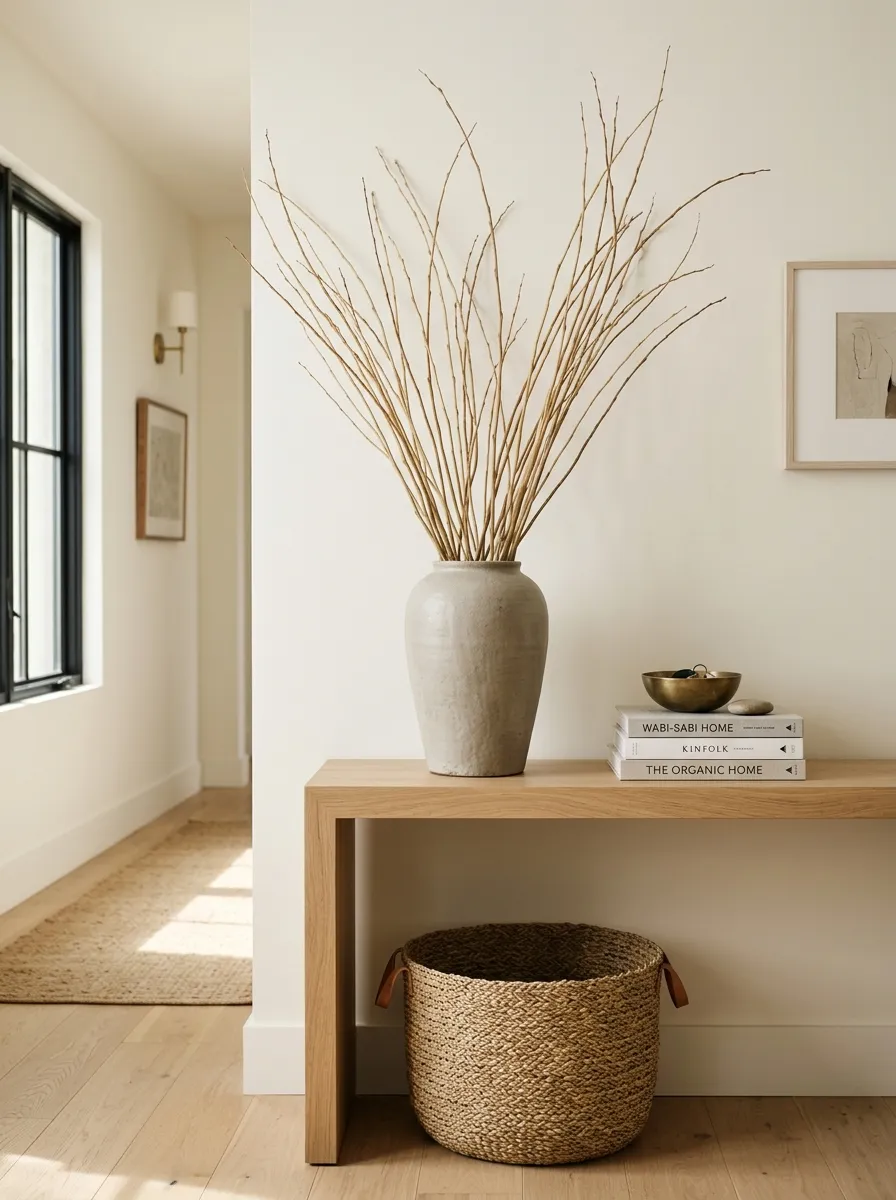
You don’t need a giant arrangement of orange leaves to make a room feel seasonal.
A few dried branches in a tall ceramic vase create height and texture while keeping the arrangement restrained. Look for natural brown, muted tan, or soft beige tones rather than bright artificial colors.
Keep the arrangement loose:
- Choose one tall vessel.
- Use a small number of branches.
- Let the stems spread naturally.
- Keep the surrounding surface mostly clear.
This works especially well in entryways, dining rooms, and empty corners that need height.
Warm Up the Dining Table Without Using Fall-Themed Decor
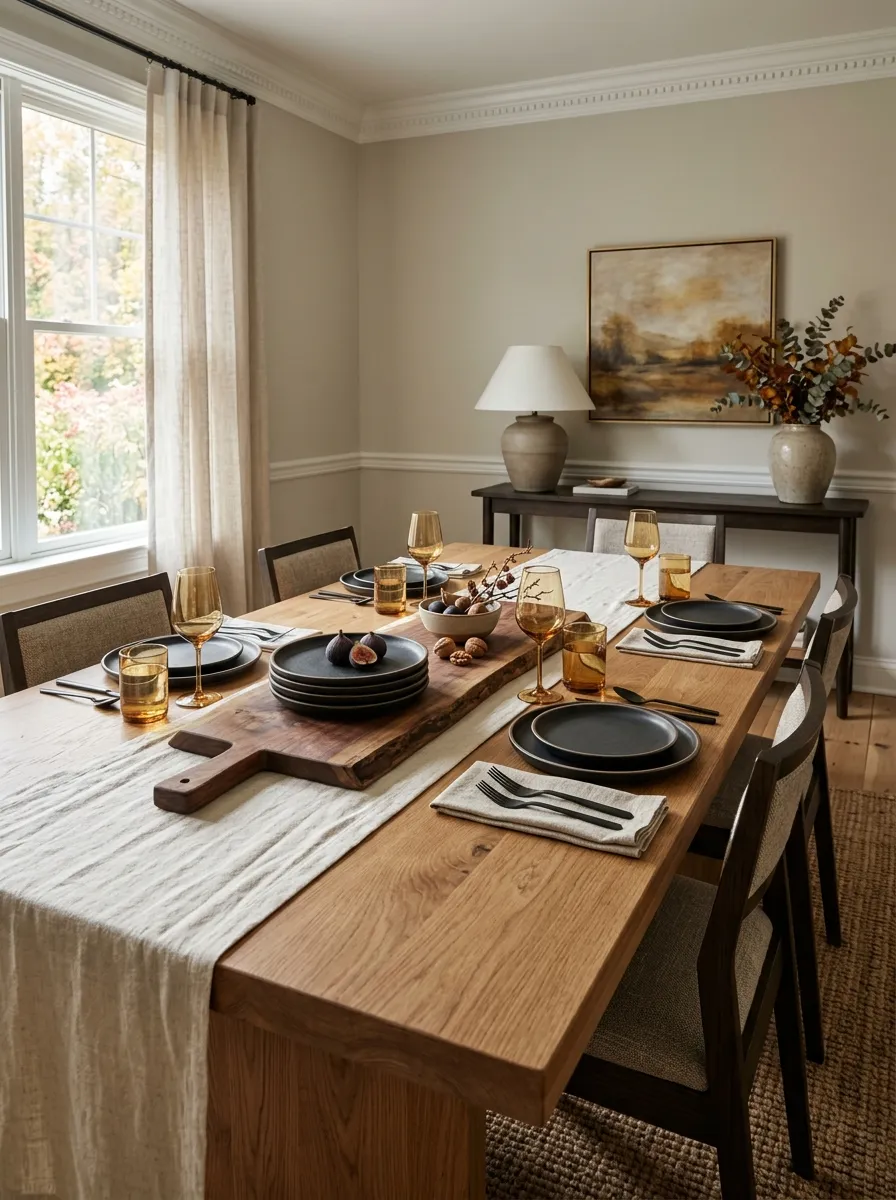
Your dining table doesn’t need pumpkins, acorns, or leaf-shaped plates to feel ready for the next season.
Change the materials instead. A linen runner, wooden serving board, darker ceramics, and a few warm-toned glasses can make the table feel richer while keeping it usable every day.
The table should still look good on a random Tuesday. That’s the test. Seasonal decor shouldn’t make everyday meals feel like a staged photo shoot.
Change Your Bedding in Layers Instead of All at Once
Your bed doesn’t need a complete seasonal makeover overnight.
Start with the layer you notice first, then build warmth underneath it. Swap a bright summer quilt for a neutral duvet, add an oatmeal throw, and finish with one deeper accent pillow.
Use this order:
- Keep the sheets light and breathable.
- Change the main cover to cream, taupe, or warm beige.
- Add one heavier throw at the foot.
- Finish with a rust, olive, or cinnamon accent.
This keeps the bedroom comfortable during those awkward weeks when the weather can’t decide what season it is.
Use Candles to Shift the Room Into Evening Mode
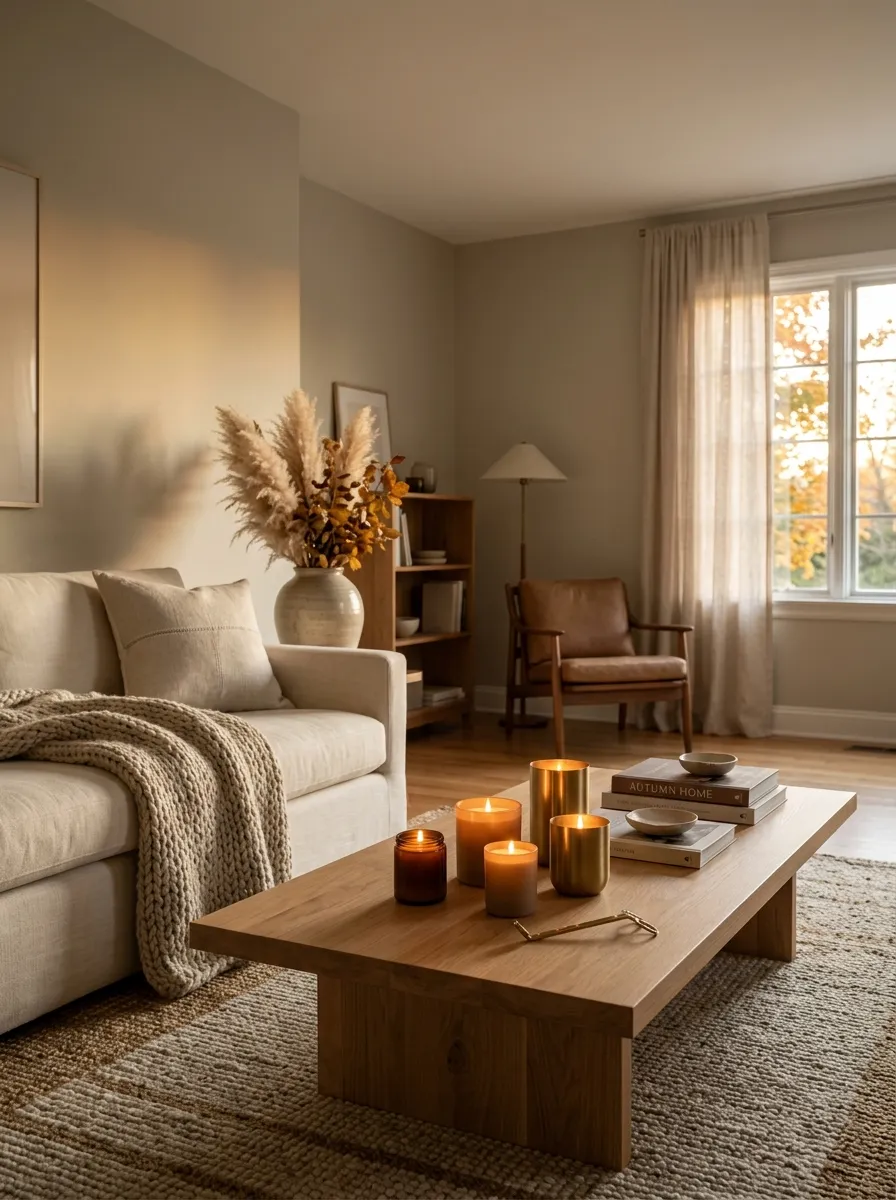
Candles are one of the quickest ways to change how a room feels after sunset.
Place them where evening activity already happens: on a coffee table, dining table, bathroom shelf, or bedroom nightstand. Choose simple vessels in amber glass, ceramic, or warm metal rather than heavily themed seasonal designs.
The important part is placement. A candle hidden behind ten decorative objects won’t change the room. Give the glow some breathing room.
Turn Summer Greenery Into a Transitional Display
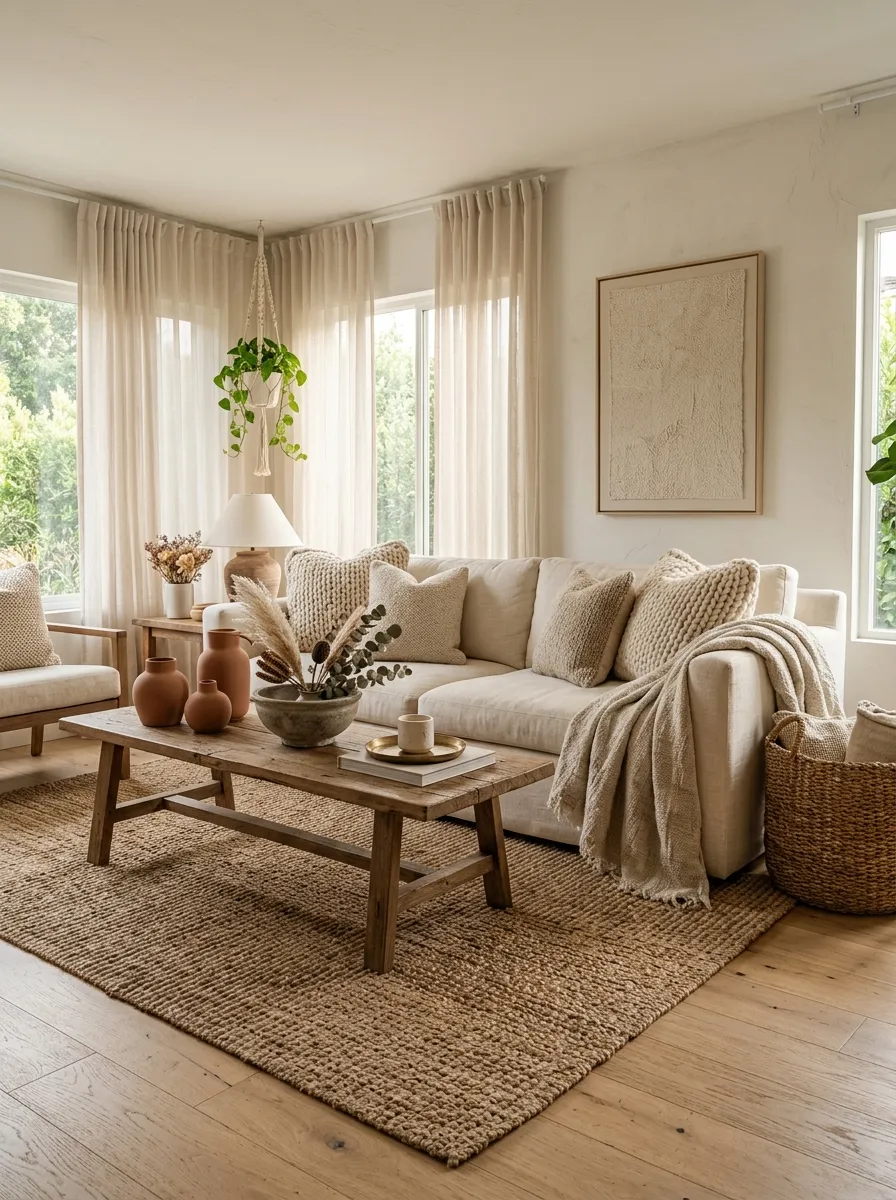
Greenery doesn’t have to disappear when the weather changes. In fact, keeping plants is one of the easiest ways to stop fall decor from feeling overly themed.
Change the container, placement, or surrounding accessories instead. Move a leafy plant into a darker basket, place branches in an earthy ceramic pot, or group greenery with wood and amber glass.
The room stays fresh because the greenery remains. The surrounding materials do the seasonal work.
Add Plaid Without Making the Room Look Like a Cabin
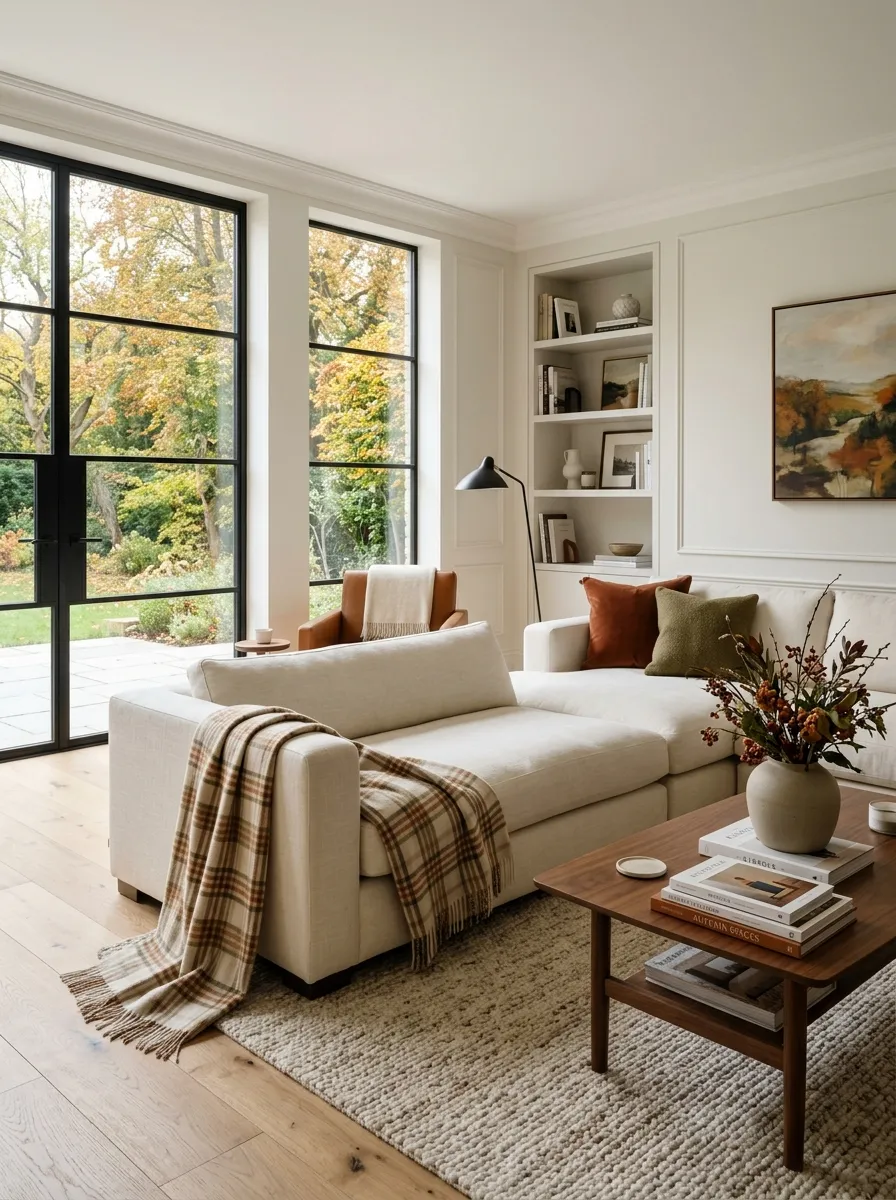
Plaid isn’t the problem. Too much plaid is.
One plaid pillow, folded throw, or upholstered accent can introduce a fall pattern without turning your living room into a rustic theme set. Choose a restrained pattern with cream, rust, brown, olive, or charcoal.
Follow the one-pattern rule:
- Pick one plaid item.
- Keep nearby patterns quieter.
- Repeat one of its colors elsewhere.
Used sparingly, plaid adds pattern. Used everywhere, it becomes the entire room.
Replace Bright Decorative Objects With Earthy Ceramics
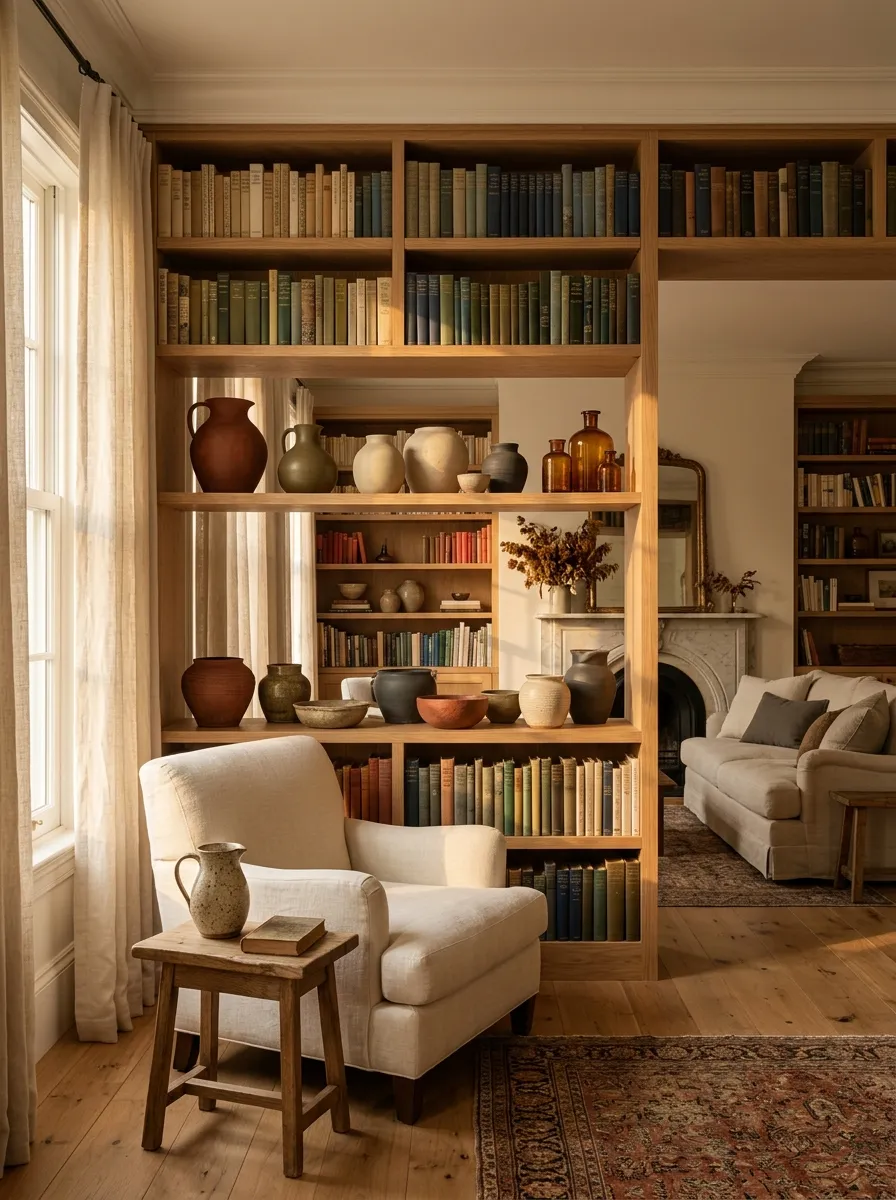
Small decorative objects have more influence than their size suggests.
If your shelves still contain bright blue glass, glossy white accessories, or colorful summer ornaments, replace just a few with matte ceramics in cream, brown, olive, charcoal, or terracotta.
Don’t clear every shelf. Keep the pieces that still work and replace only the accessories that make the room feel stuck in midsummer.
Create a Fall Mood With One Layered Corner
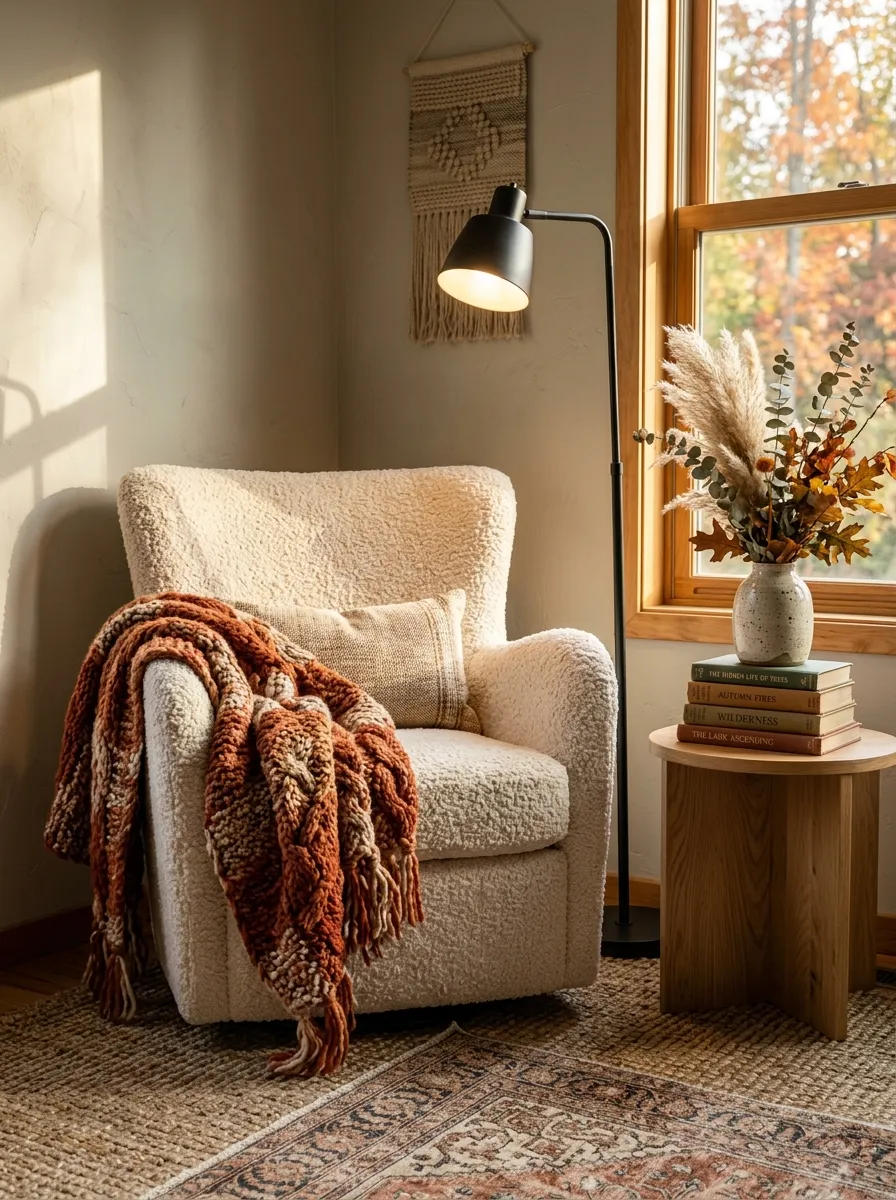
You don’t have to decorate every room at the same time.
Choose one corner that already gets attention, such as a reading chair, fireplace, console, bedroom bench, or entryway. Give that area the full seasonal treatment while the rest of the house changes gradually.
Build the corner around four layers:
- A warm textile
- A natural material
- A darker accent
- One soft light source
One convincing corner can make the rest of the home feel like it’s moving in the same direction.
Finish the Transition With Small Details That Feel Lived In
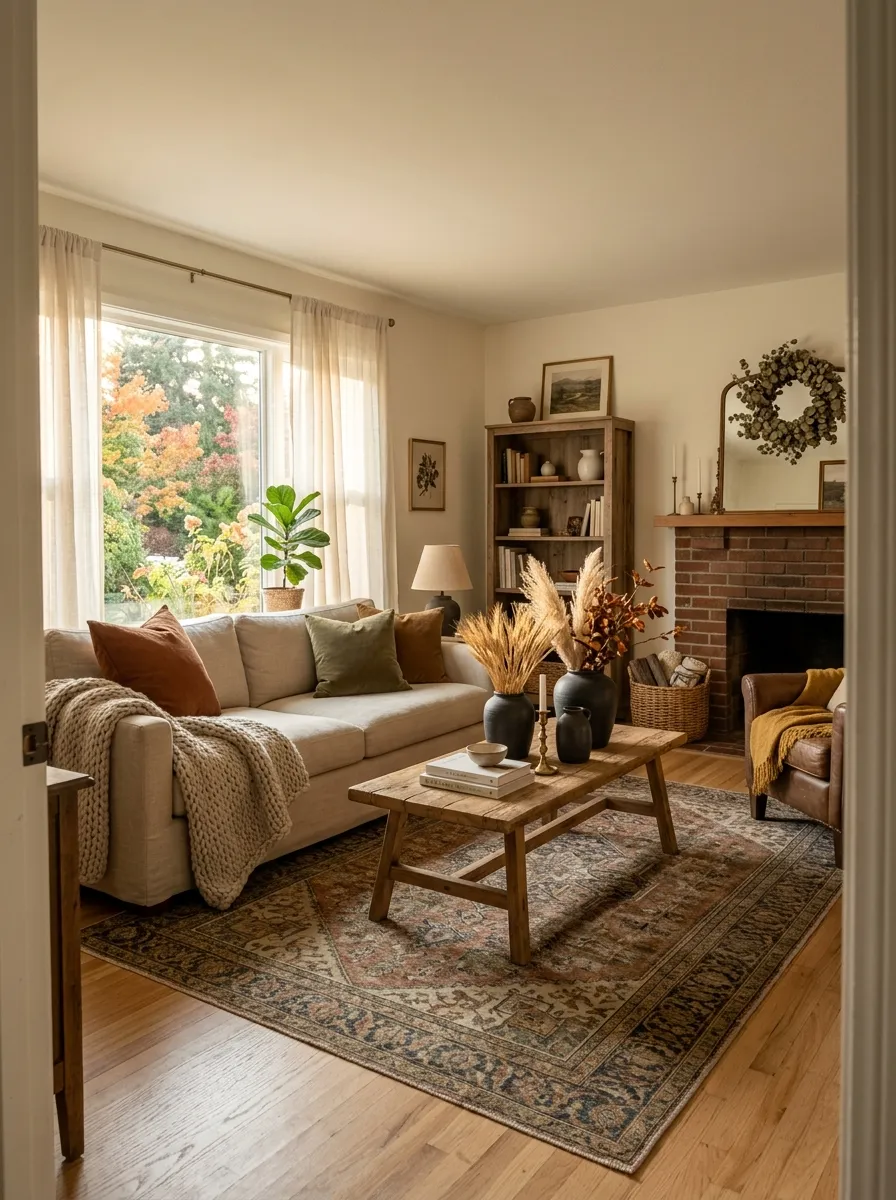
The final step isn’t adding more decor. It’s removing anything that still feels obviously out of season.
Look around the room from the doorway. Is there a bright beach accessory that no longer fits? A summer cushion that clashes with the warmer palette? An empty surface that could use one textured piece?
That’s what makes a seasonal room feel believable. It still looks like your home, just a little warmer, deeper, and more comfortable.
Conclusion
A good Summer-to-Fall Decor Transition doesn’t require a storage-room purge or a cart full of seasonal accessories. The strongest changes are smaller: a rust pillow, an oatmeal throw, darker ceramics, warmer lighting, a vintage rug, or a little more natural wood.
Start with the pieces you already own. Keep the light foundations that still work, then layer in warmth where the room feels too bright, empty, or summery. You’ll get a home that feels ready for fall without losing the relaxed character that made it work during summer.
Save this list for the next seasonal reset, and come back to it when your home starts feeling caught between the two seasons.