
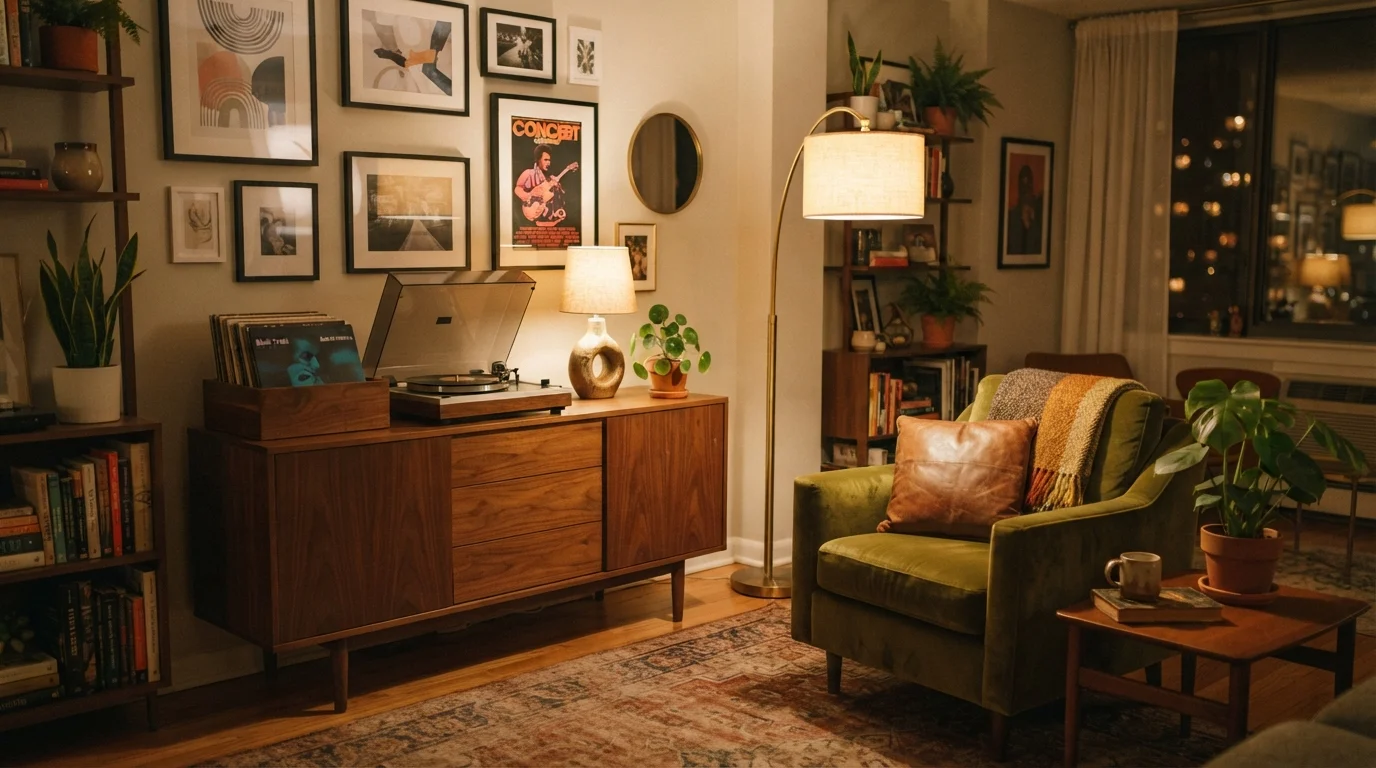
A retro apartment can look incredibly stylish, but there’s a thin line between intentional vintage character and a room that looks like it swallowed an entire thrift store.
The problem usually isn’t the furniture. It’s the lack of editing. Too many matching retro pieces make a room feel themed, while too few distinctive details leave it looking like an ordinary modern apartment with an old lamp sitting in the corner. The sweet spot comes from mixing warm woods, curved shapes, nostalgic colors, vintage-inspired lighting, and modern pieces that keep the space practical.
A strong retro apartment aesthetic also doesn’t require expensive antiques or a complete renovation. Small changes can completely shift how a room feels. The right coffee table, an unusual lamp, better hardware, or a carefully chosen piece of artwork can do more than a dozen random accessories.
The ideas below focus on the details that actually make retro interiors work. Some are easy weekend changes. Others involve bigger furniture decisions. All of them are meant to give your apartment character without turning it into a museum.
What Actually Makes an Apartment Feel Retro?
Retro style isn’t about buying everything that looks old.
The strongest rooms borrow recognizable shapes, materials, colors, and details from earlier decades, then mix them with the way people actually live today.
Start With Shape Before Decoration
Look at the outline of your furniture before buying accessories.
Rounded sofas, tapered legs, kidney-shaped tables, arched mirrors, globe lamps, curved chairs, and low-profile cabinets immediately create a stronger retro foundation than a pile of vintage-looking objects.
You don’t need every piece to have a curve. In fact, that’s exactly what you shouldn’t do. Mix rounded furniture with straight shelves, rectangular artwork, or clean-lined cabinets so the room has contrast.
Warm Materials Keep Retro Rooms From Feeling Like Props
Wood is one of the easiest ways to ground a retro interior.
Walnut, teak, oak, cane, woven materials, ceramic, brushed metal, glass, and textured upholstery all help create the layered look that makes vintage-inspired rooms feel lived in.
The important part is variation. If every surface has the same wood tone and every accessory has the same finish, the room starts looking like a furniture showroom.
The Best Retro Rooms Aren’t Completely Retro
This is the part people often get wrong.
A modern refrigerator can sit beside vintage-inspired kitchen accessories. A contemporary sofa can work with a curved mid-century coffee table. Modern lighting can share a room with an antique-looking mirror.
That contrast keeps the apartment from feeling like a staged time capsule.
The goal is to make the old and new look like they belong together. Once that foundation is right, the details become much easier to choose.
Retro Apartment Aesthetic Ideas
Build the Room Around One Strong Vintage-Inspired Sofa
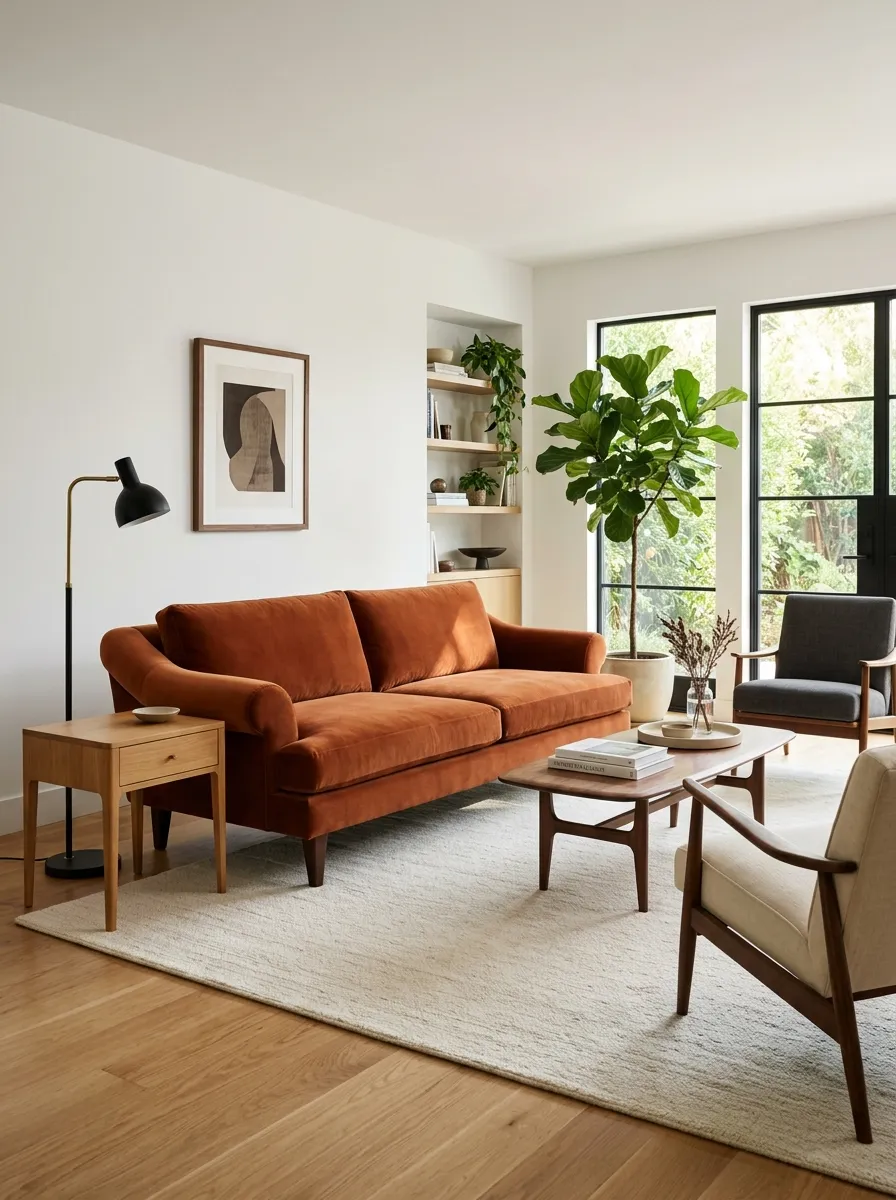
The sofa usually occupies too much visual space to ignore.
Instead of filling the room with small retro accessories, start with one substantial piece that establishes the direction. A low-profile sofa with rounded arms, tapered legs, textured upholstery, or a deep earthy color immediately gives the room more character.
Keep the surrounding furniture simpler. A plain rug, streamlined side table, and one sculptural lamp will let the sofa do the heavy lifting.
Don’t crowd the seating area with five different patterns.
Start with the sofa, then let everything else support it.
Swap a Basic Coffee Table for a Sculptural Shape
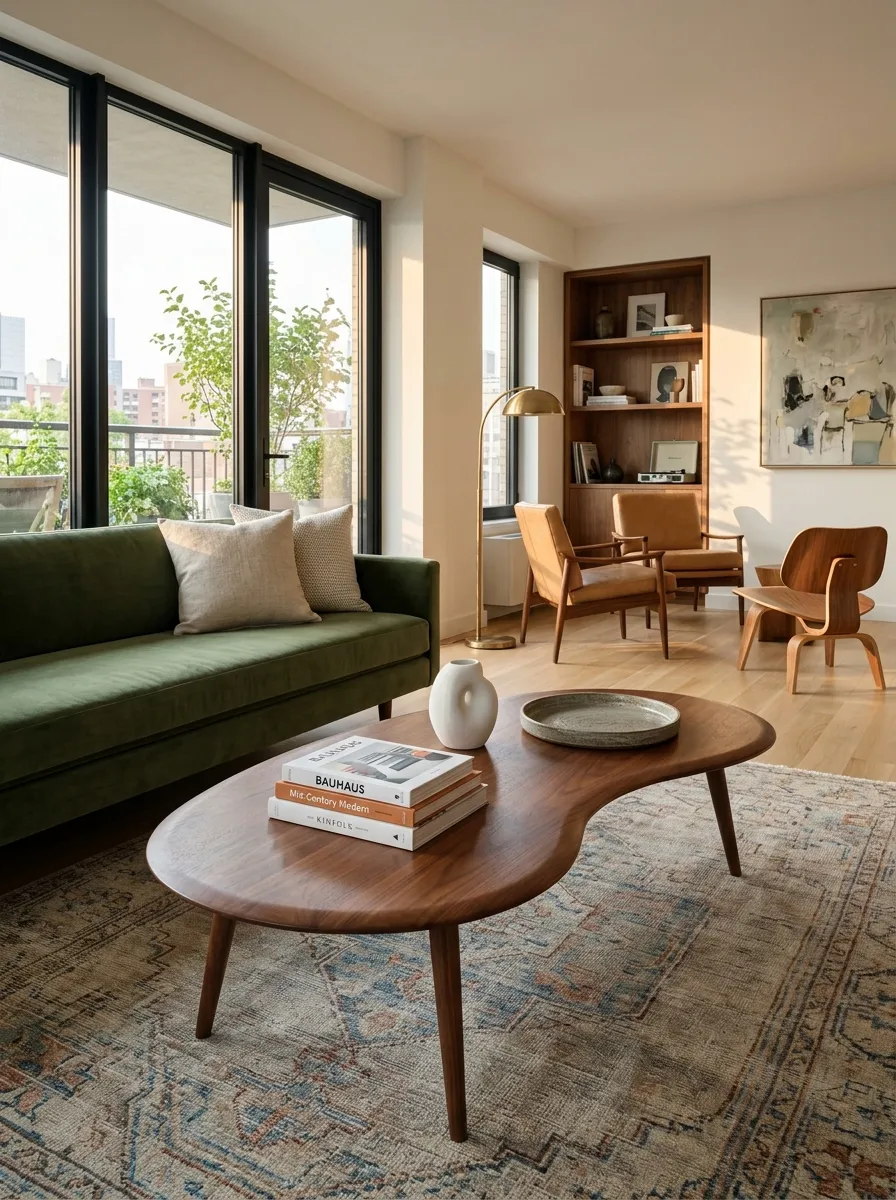
A rectangular coffee table can work, but it rarely creates much visual interest.
Retro interiors benefit from furniture with a recognizable silhouette. Try a kidney-shaped table, rounded oval, low rectangular table with tapered legs, or a piece with softly curved edges.
The table doesn’t need to look obviously vintage. It just needs a shape that feels different from the standard boxy furniture found in most apartments.
Keep the surface edited. A stack of books, a small ceramic object, and one useful tray are enough.
The shape should be the statement, not the clutter sitting on top.
Hang One Oversized Retro Artwork Piece
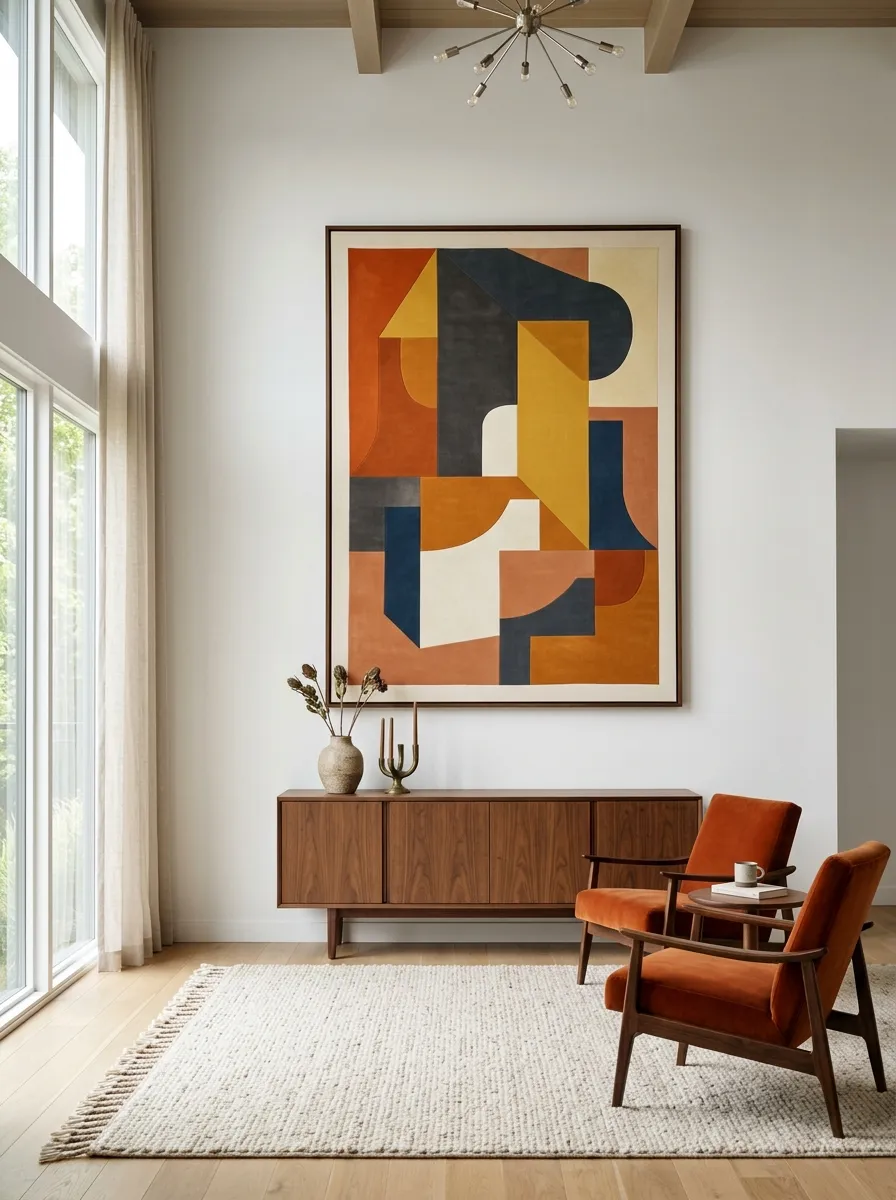
A gallery wall isn’t the only way to make a blank wall interesting.
One oversized piece can actually look stronger in a small apartment because it gives the eye one clear destination. Look for abstract geometric art, vintage-style posters, bold graphic prints, botanical artwork, or a large framed piece with an unusual color combination.
Choose artwork that shares at least one color with your furniture.
Then give it breathing room.
Don’t place three small pieces beside it just because the wall still looks empty. Empty space is part of the composition.
Choose Lighting With a Shape You Can Recognize
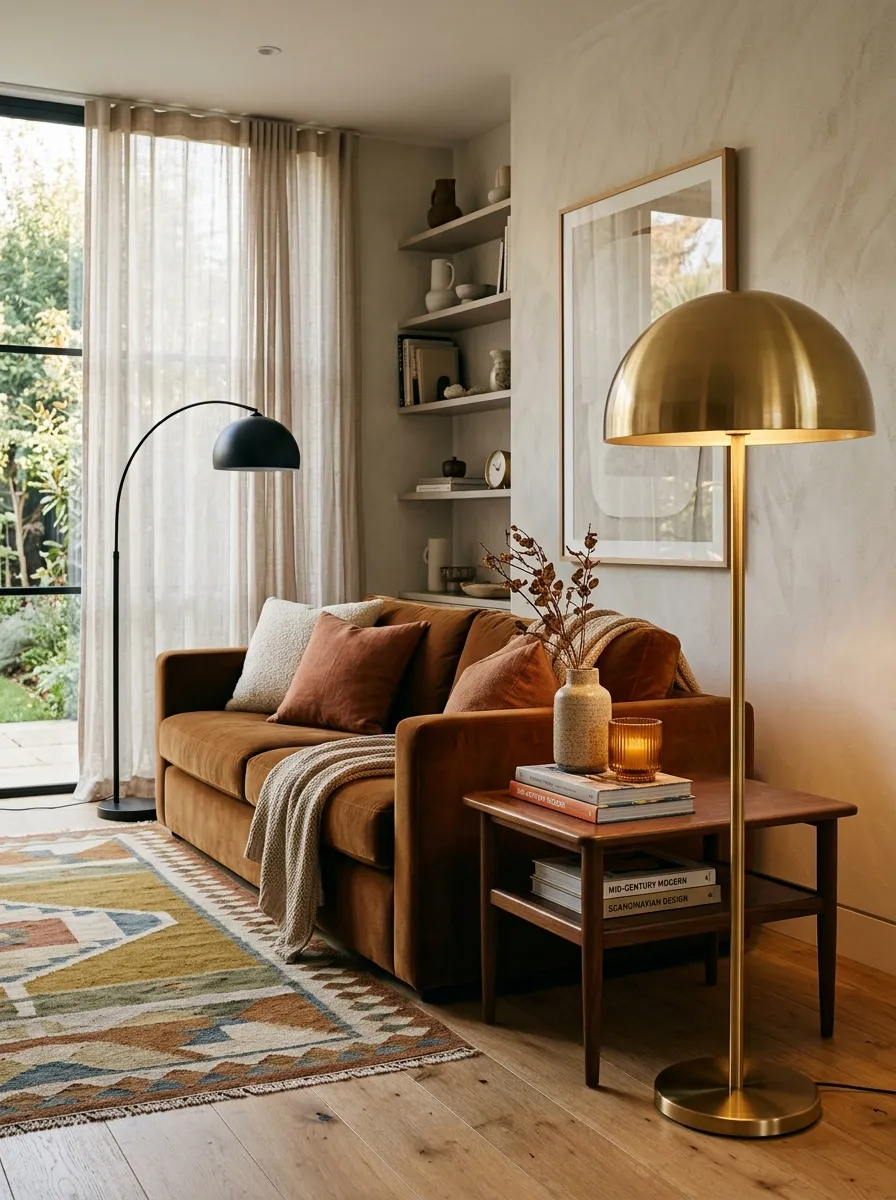
Lighting is one of the fastest ways to push an apartment toward a retro look.
Forget generic ceiling fixtures when the room needs personality. Look for mushroom shades, globe forms, curved floor lamps, cone-shaped pendants, ribbed glass, warm metal, or sculptural silhouettes.
The important detail is the shape.
A lamp can look retro without being an actual antique. That’s useful because you get the visual character without worrying about fragile old wiring or awkward proportions.
Use one noticeable lamp as a focal point, then keep secondary lighting quieter.
Pair Walnut or Teak With Warm Upholstery
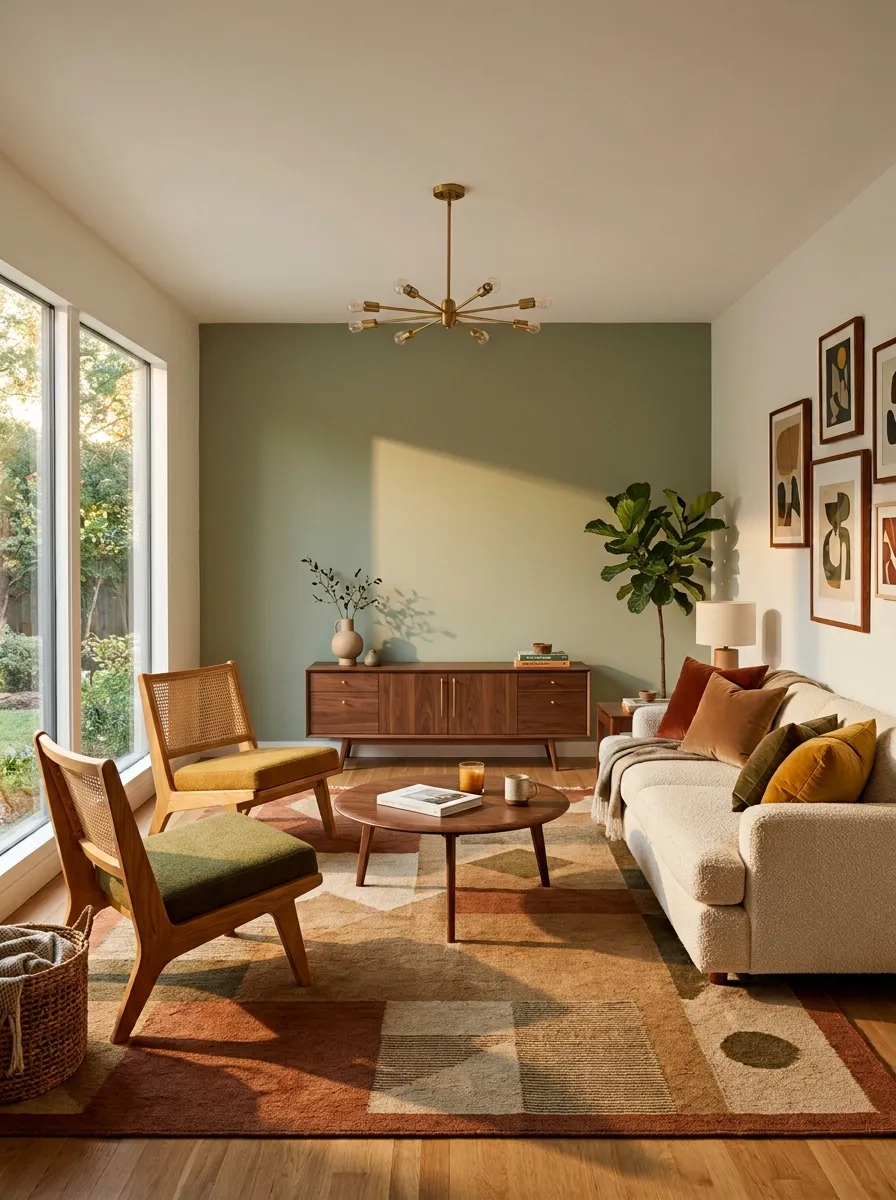
Wood furniture gives retro rooms their backbone, but the wrong combination can make the apartment feel dark.
Warm walnut, teak, and oak work especially well with cream, rust, olive, mustard, brown, tan, and muted orange upholstery.
Don’t match every wood piece exactly.
A walnut media console can sit near a lighter wood chair. A teak side table can work beside a cream sofa. Small differences in wood tone make the room feel collected instead of purchased as one set.
Warm wood + soft fabric is one of the safest retro combinations you can use.
Add a Geometric Rug Under the Main Seating Area
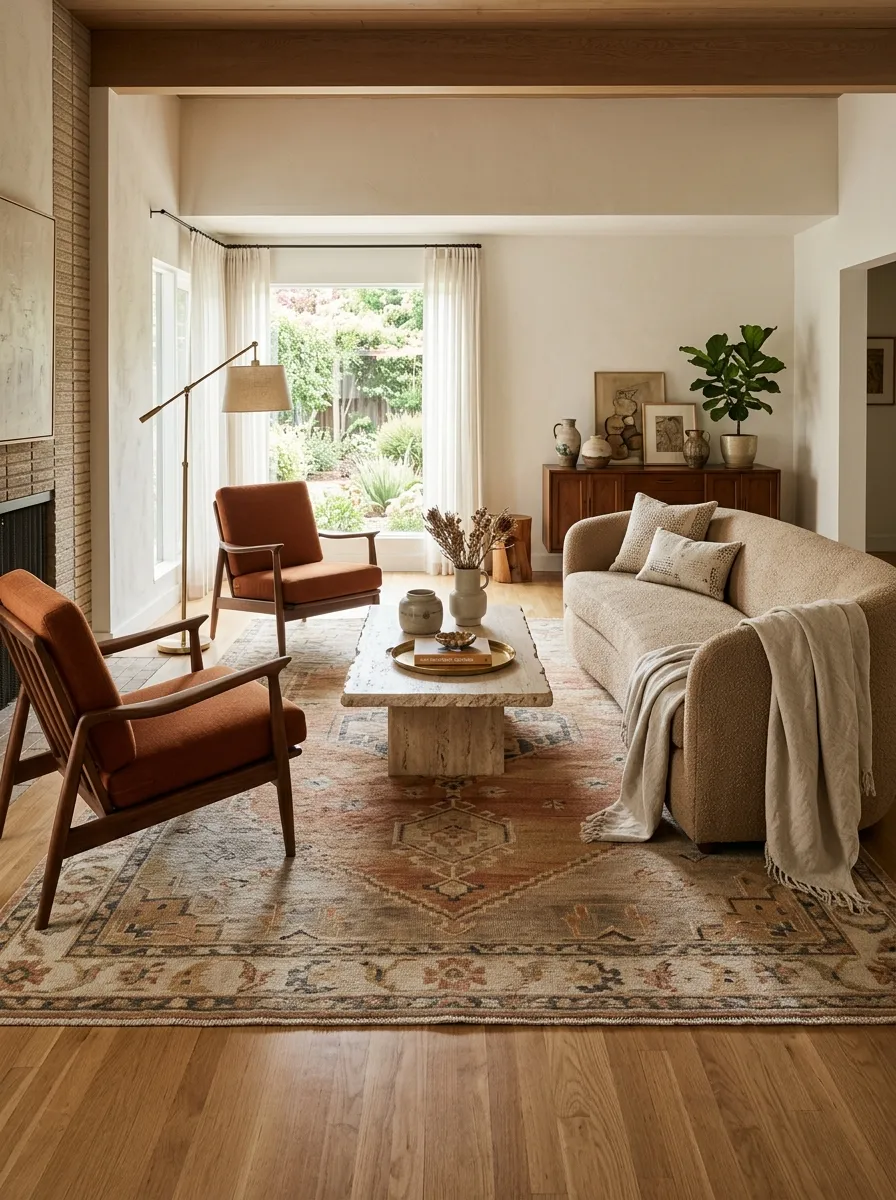
A rug can pull a retro room together faster than another accessory.
Look for geometric shapes, faded patterns, muted stripes, abstract forms, or vintage-inspired designs. The rug doesn’t need to scream “retro.” In fact, a quieter pattern usually works better when the furniture already has strong shapes.
Make sure the rug is large enough to connect the seating.
At minimum, the front legs of the main seating should sit on it when the room allows. A tiny rug floating in the middle of the floor will make the furniture look disconnected.
Replace Generic Hardware With Period-Inspired Pulls
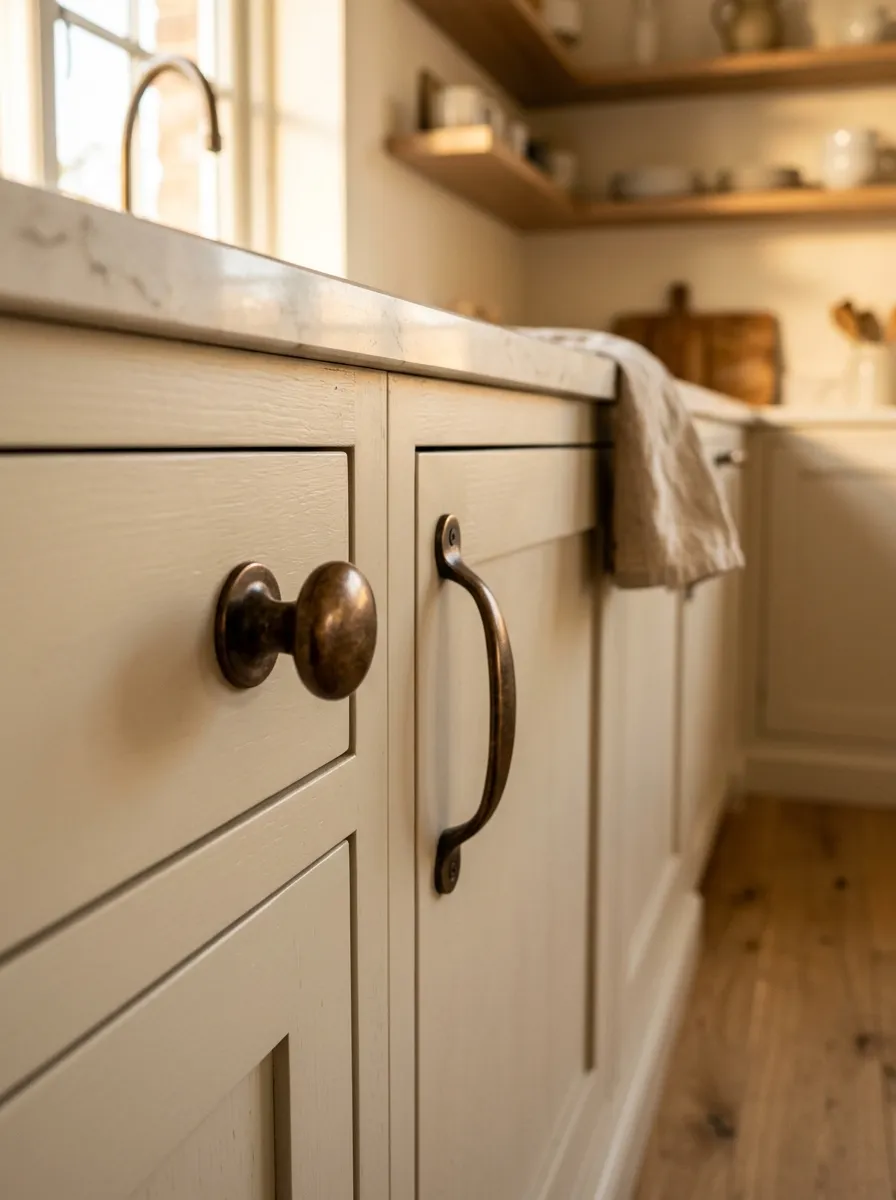
A rental kitchen can have perfectly decent cabinets and still look painfully generic.
The hardware is often the culprit.
Swapping standard pulls for vintage-inspired knobs or handles changes the cabinet fronts without replacing the cabinets themselves. Look for rounded metal knobs, slim pulls, warm brass, aged bronze, or simple shapes that feel slightly older.
Before buying anything, measure the existing holes if you’re replacing handles. The new hardware needs to fit the cabinet doors without creating extra holes.
Keep the finish consistent within the kitchen.
You don’t need six different metals competing around the sink, cabinets, and appliances.
Use Mushroom, Olive, or Mustard as a Controlled Accent
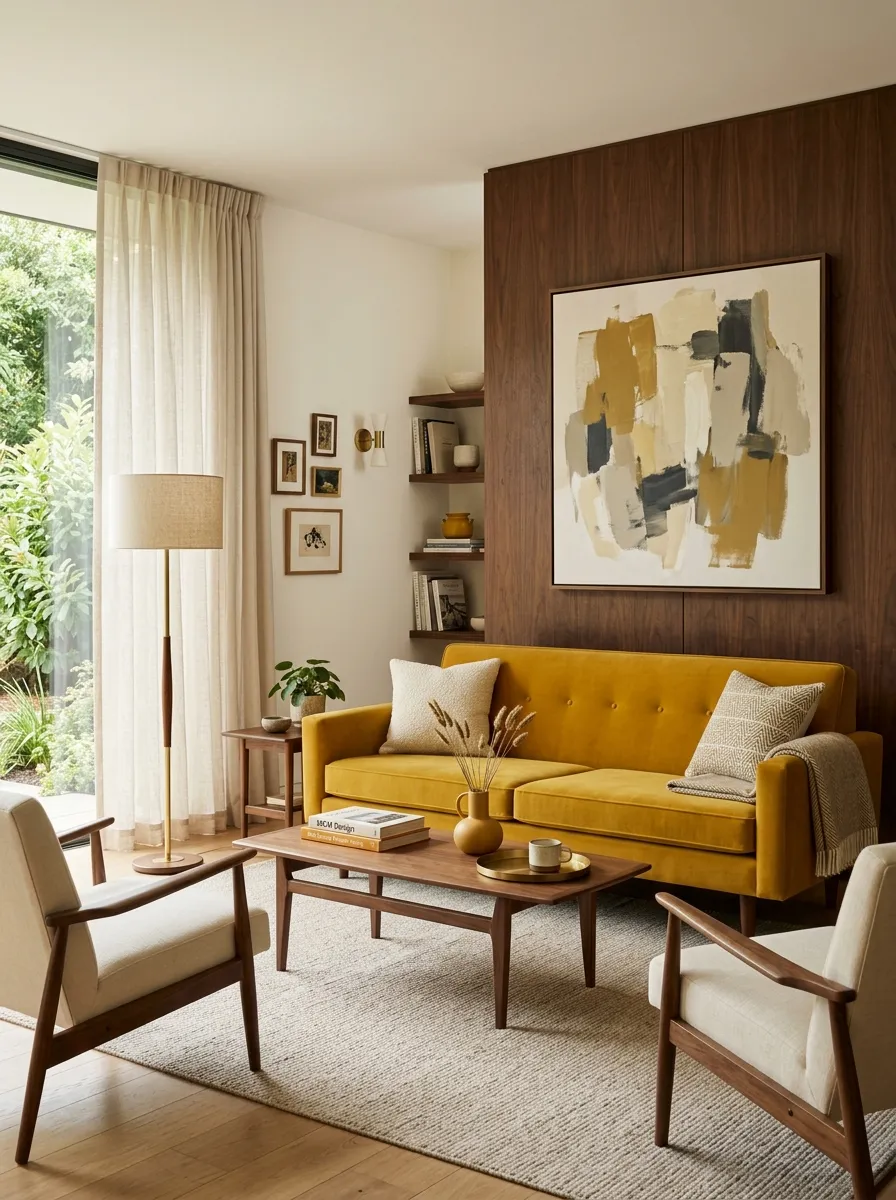
Retro color works best when it has somewhere to land.
Instead of painting the entire apartment mustard or covering every chair in olive fabric, choose one accent color and repeat it in small doses.
Mushroom works beautifully as a soft neutral. Olive adds depth without feeling loud. Mustard brings more energy and works especially well against walnut, cream, or dark brown.
Use the strongest color on one meaningful object, then repeat it lightly.
For example:
- Mustard lounge chair
- Small mustard artwork detail
- One mustard cushion
That’s enough.
The room reads as intentional because the color appears more than once, but it doesn’t take over.
Layer Small Vintage Objects Instead of Buying a Matching Set
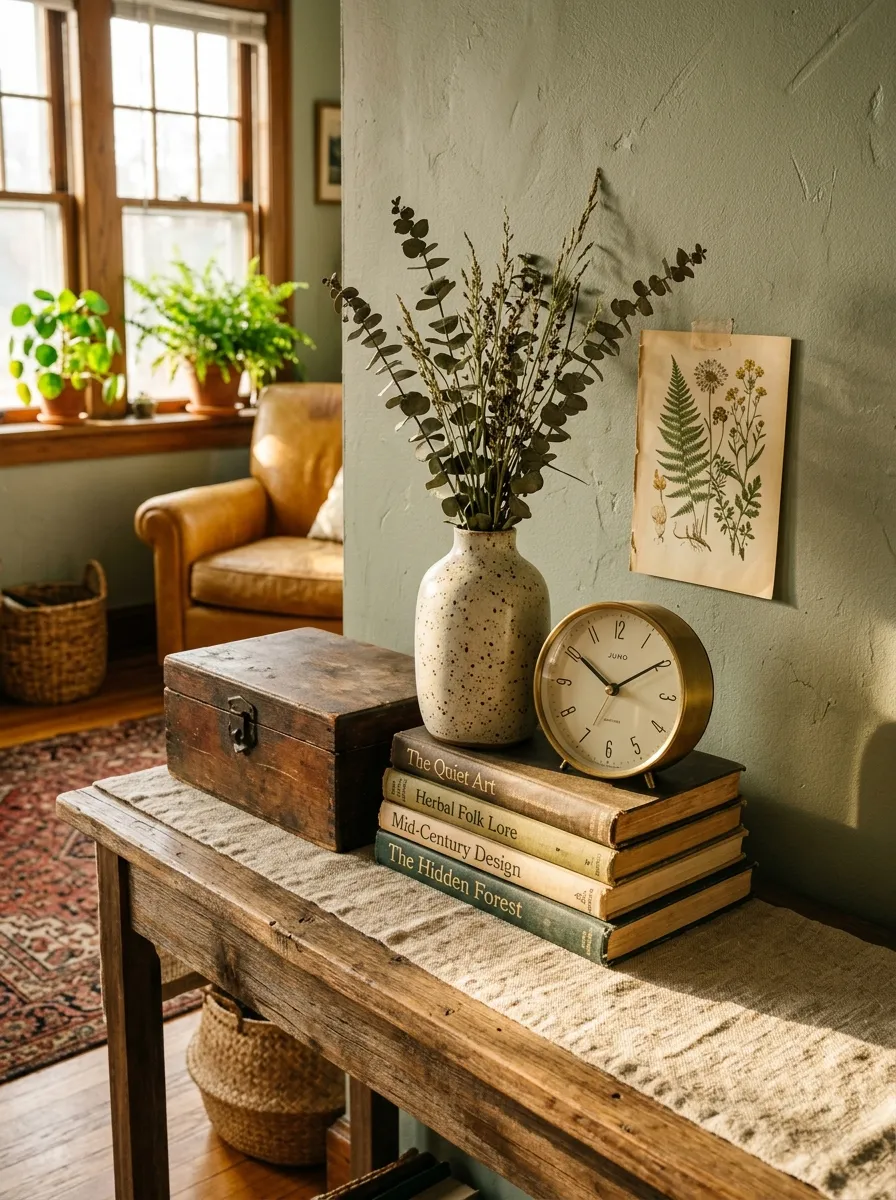
A retro apartment looks more believable when the objects feel collected over time.
Don’t buy a matching group of five decorative pieces just because they share the same finish. That’s exactly what makes a room feel staged.
Instead, combine a few different objects with different heights and textures. A ceramic vase can sit beside a small clock. A framed print can lean behind a wooden box. A brass object can break up a stack of books.
Keep the grouping tight.
The goal isn’t to fill the surface. It’s to create one little scene that looks useful, personal, and slightly imperfect.
Best rule: mix three different heights and stop before the surface becomes crowded.
Books, trays, boxes, or a shallow dish.
A small clock, framed photo, or ceramic object.
A vase, narrow lamp, or upright framed piece.
Mix Modern Appliances With Vintage-Looking Accessories
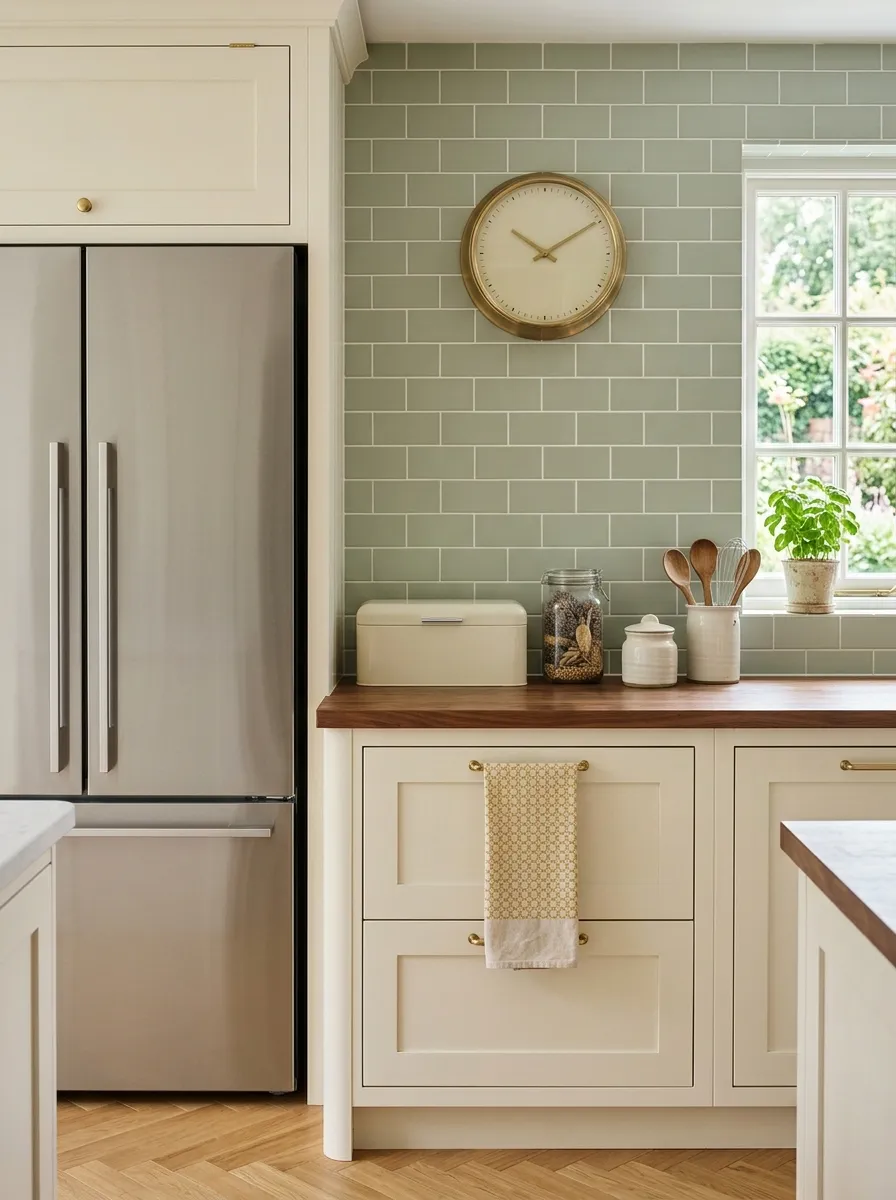
Your refrigerator doesn’t need to look like it came from another decade.
In fact, keeping modern appliances can make the retro pieces around them look more authentic. The trick is to soften the appliance’s visual presence with accessories that have warmer shapes and materials.
A wood cutting board, ceramic canister, old-style clock, patterned tea towel, glass jar, or metal bread box can shift the balance without pretending the kitchen is a time capsule.
Don’t cover the appliance with decorations.
Instead, build a few details around it so the modern appliance becomes part of the room rather than the entire visual focus.
Add Glass, Acrylic, or Lucite for a Lighter Retro Look
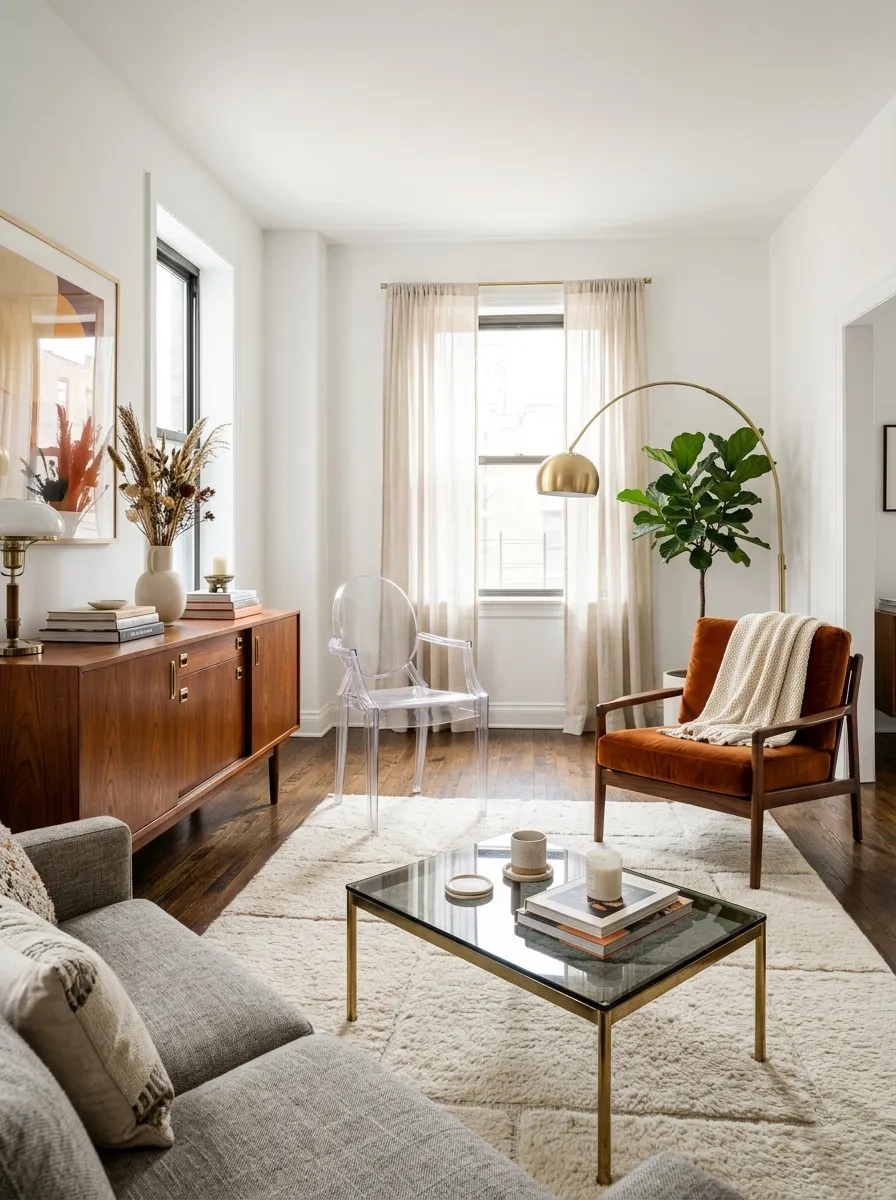
Retro rooms can become visually heavy when every piece is wood, fabric, or dark metal.
That’s where transparent materials earn their place.
A clear acrylic chair, glass side table, lucite shelf, or smoked-glass cabinet can keep the room feeling open while still giving it that unmistakable vintage-modern character. These pieces work especially well in small apartments where solid furniture can make the floor plan feel crowded.
Don’t add several transparent pieces.
One is usually enough to create contrast against heavier furniture.
Best pairing: clear material + warm wood + textured upholstery.
That combination keeps the room interesting without making it feel cluttered.
Style Open Shelves With Fewer, Better Objects
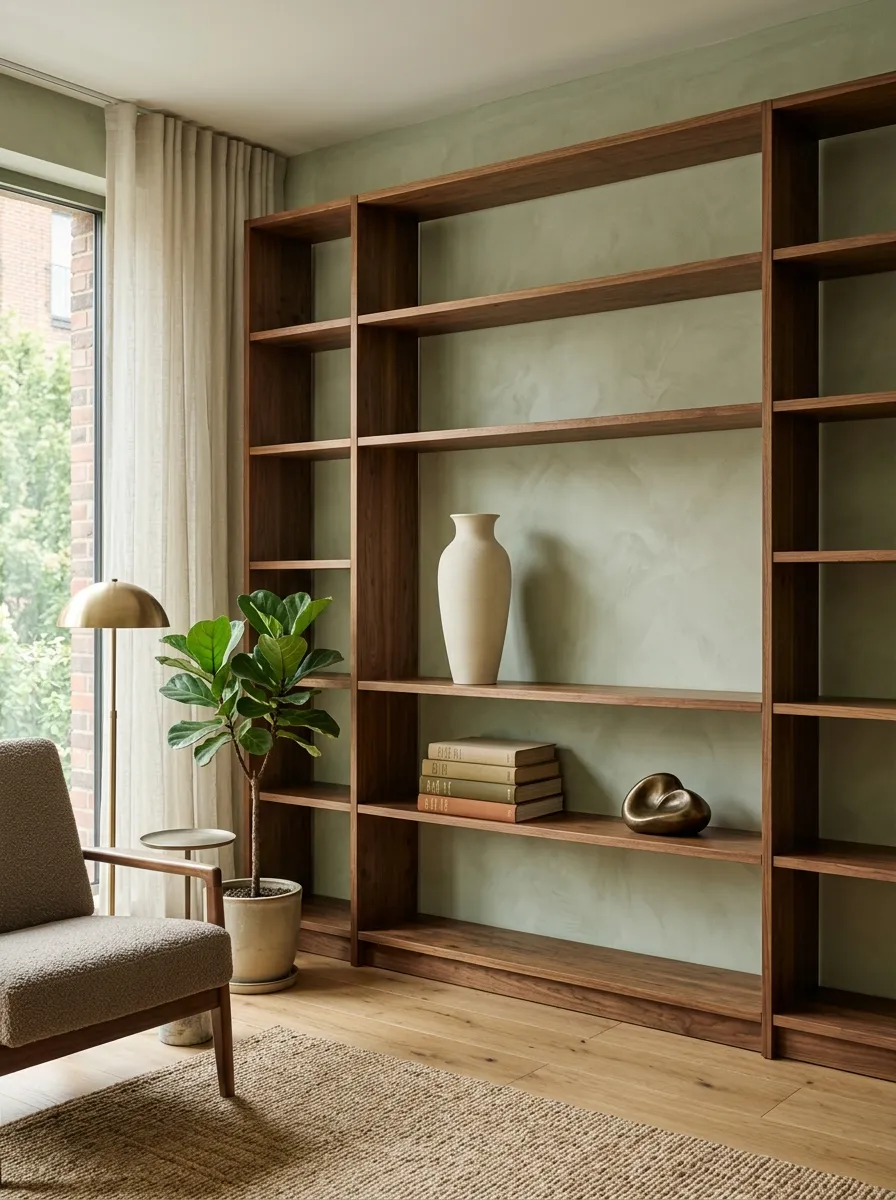
Open shelving can make a retro apartment look fantastic, or it can become the place where every random object ends up.
The difference is editing.
Leave some shelf space empty. Then group objects by height rather than lining everything up like products in a store.
Try this simple sequence:
- Place one taller object at one end.
- Add a stack of books or two smaller pieces beside it.
- Leave a clear gap before the next group.
- Repeat with a different shape.
Don’t make every shelf symmetrical. Slight imbalance looks more natural and keeps the display from feeling manufactured.
The empty spaces matter just as much as the objects.
The Secret to a Good Retro Apartment Is Editing
You don’t need every recognizable retro element in the same room.
That’s where most attempts go wrong. A curved sofa, geometric rug, walnut furniture, chrome lamp, mustard chair, vintage posters, old clock, patterned curtains, and ten ceramic accessories can technically all fit the style, but together they can make the apartment feel more like a themed set than a home.
Choose a few strong elements and let them breathe.
Start with the biggest pieces, then work downward. If the furniture already has strong curves, keep the artwork simpler. If the rug has a bold pattern, calm down the cushions. If the room has dark wood everywhere, introduce glass or lighter upholstery.
The goal isn’t to prove that you like retro design.
The goal is to make the apartment feel naturally collected, comfortable, and unmistakably yours.
A strong retro apartment aesthetic comes from restraint as much as nostalgia. Save this list for your next room refresh, then choose the ideas that actually solve something in your space.