
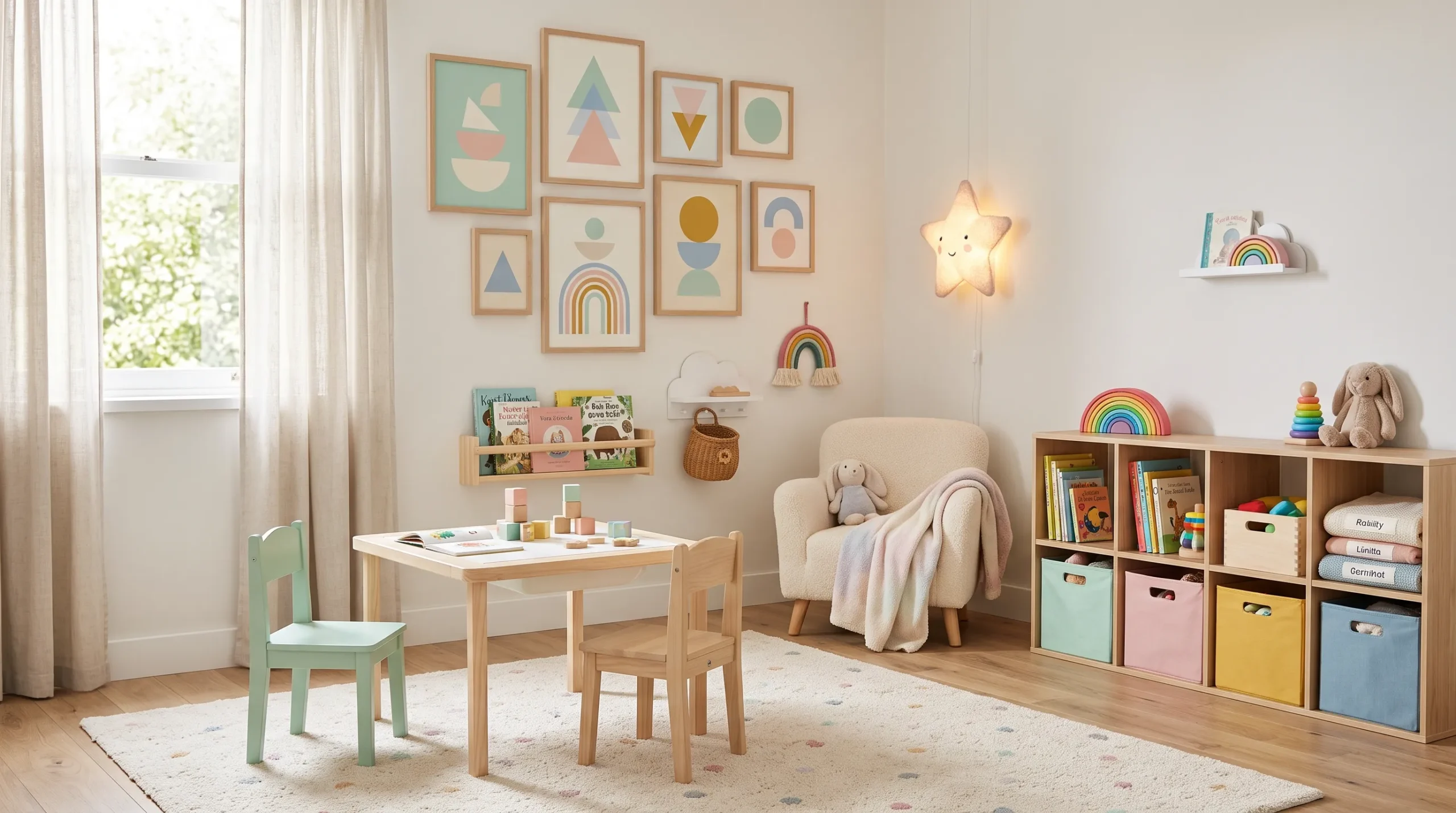
Nobody designs a toddler room for the kid who actually lives there. They design it for the Pinterest photo they’ll never take. Then the bins overflow, the rug becomes a tripping hazard, and that themed bedding your kid begged for sits in a corner because they outgrew dinosaurs in six weeks. Parents keep building display rooms instead of spaces where a two-year-old actually lives, plays, and destroys things daily.
Toddler room ideas that work aren’t the ones that photograph well. They’re the ones that bend, survive juice spills, and still function when your kid decides today is the day they only wear dinosaur pajamas and nothing else. You don’t need more decor or another throw pillow. You need smarter moves that respect the chaos.
This list skips the fluff and gives you practical toddler room ideas that hold up to real daily life. Each one comes from watching what actually works in small spaces with big personalities. None of them require a contractor or a massive budget. Let’s fix the room so it finally works for both of you.
Toddler Room Ideas That Actually Survive Real Life
Create a Cozy Canopy Bed
Transitioning your toddler from a crib doesn’t mean sacrificing a touch of magic. A wooden house bed frame draped in soft netting creates a cozy den feel that actually makes bedtime appealing instead of a battle.
Stringing fairy lights through the fabric adds a warm glow for bedtime stories. It transforms an ordinary mattress setup into a whimsical retreat where kids genuinely want to hang out.
Best of all, the open structure keeps the room feeling airy. You get all the fairy-tale aesthetic without blocking natural light or making the space feel cramped.
Swap the Crib for a Floor Bed
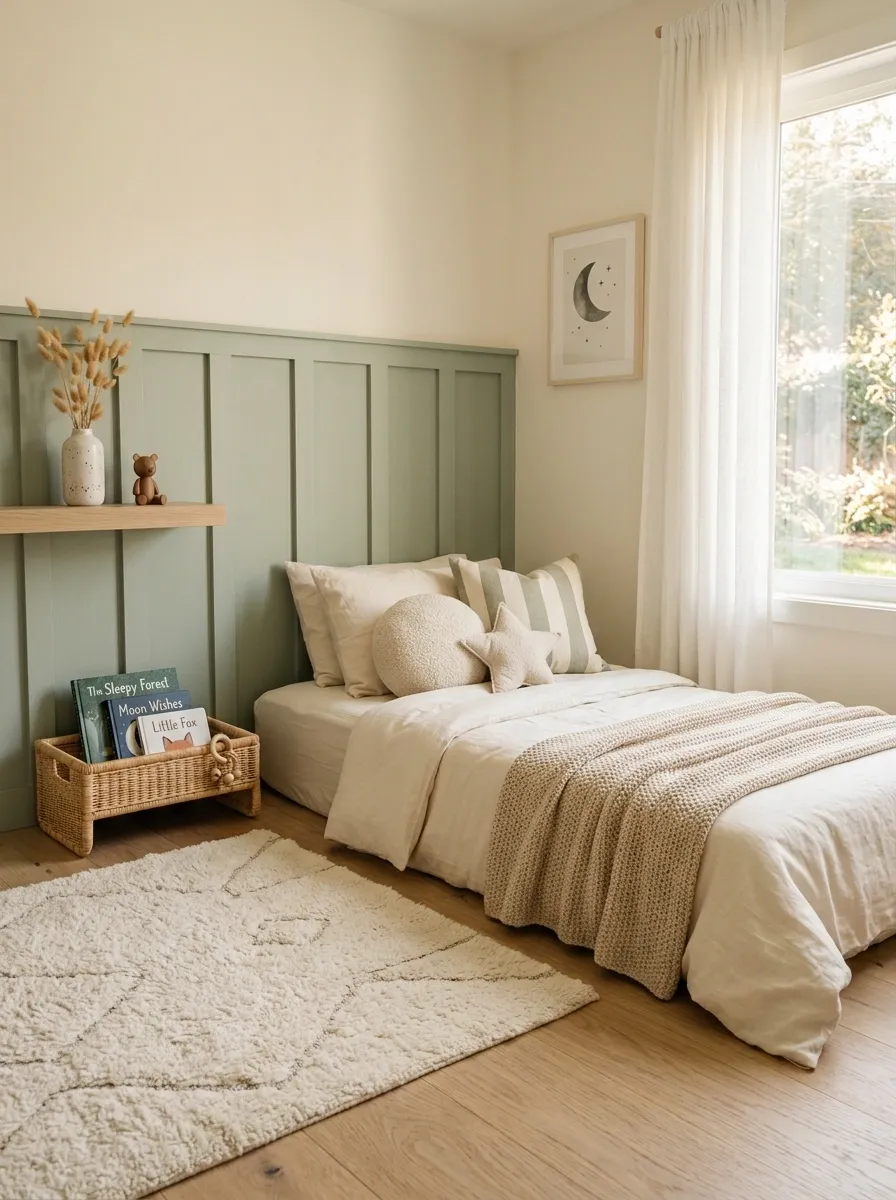
Your toddler will climb out of the crib eventually. It’s not a question of if. When they do, a floor bed removes the fall hazard completely and gives them freedom to get up safely in the morning.
Most parents panic at the idea. They picture a child roaming the house at 3 a.m. In reality, toddlers usually stay in a room that feels safe and contained. A mattress directly on the floor, pushed against a wall, creates a natural nest. Add a small rug beside it for soft landings.
The best part? No bed frame means one less piece of furniture to buy, assemble, and later replace. It’s cheaper, safer, and surprisingly tidy looking.
Anchor With a Soft Rug
Hardwood floors look stunning in listing photos, but toddlers spend ninety percent of their lives rolling around on the ground. A plush, oversized round rug anchors the room and saves little knees from unexpected tumbles.
Choosing a neutral, textured material hides minor messes surprisingly well. It creates a defined play zone right in the center of the room so toys have a designated place to land.
When it comes to cleaning, a high-pile rug that can handle spot-cleaning is your best friend. It warms up the entire space instantly and adds that essential layer of everyday comfort.
Mount a Picture Ledge at Toddler Height
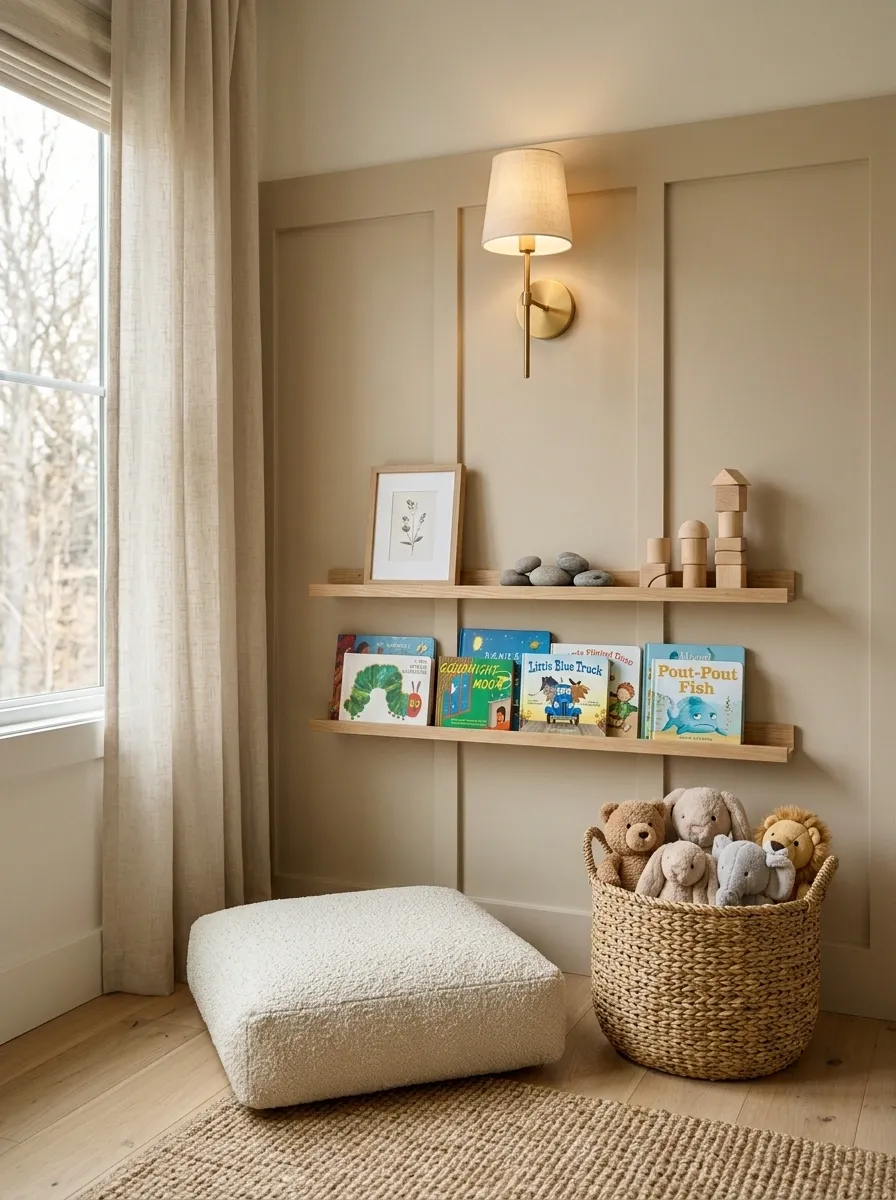
Toddlers want to touch everything. A picture ledge mounted at 24 inches lets them grab their own books without pulling an entire shelf down. It’s a small shift that prevents a lot of tears.
You don’t need special bookshelves. A simple floating ledge from any hardware store works. Mount two or three in a row and rotate the books weekly. When covers face outward, toddlers pick reading time more often.
The ledge also works for small frames, wooden blocks, or that rock collection your kid is definitely starting. It’s display space they can actually reach.
Design a Playful Accent Wall
Plain white walls can feel a bit sterile in a toddler’s space. Adding a scalloped two-tone paint design brings a playful splash of color without overwhelming the entire room.
Pairing that soft green base with tiny wall decals creates an engaging landscape for growing imaginations. It gives the eye something fun to track while keeping the overall palette calming enough for sleep.
This approach lets you lean into a theme without going overboard. When your toddler moves on to a new obsession next year, updating the wall is a quick weekend fix.
Use a Wall-Mounted Folding Desk
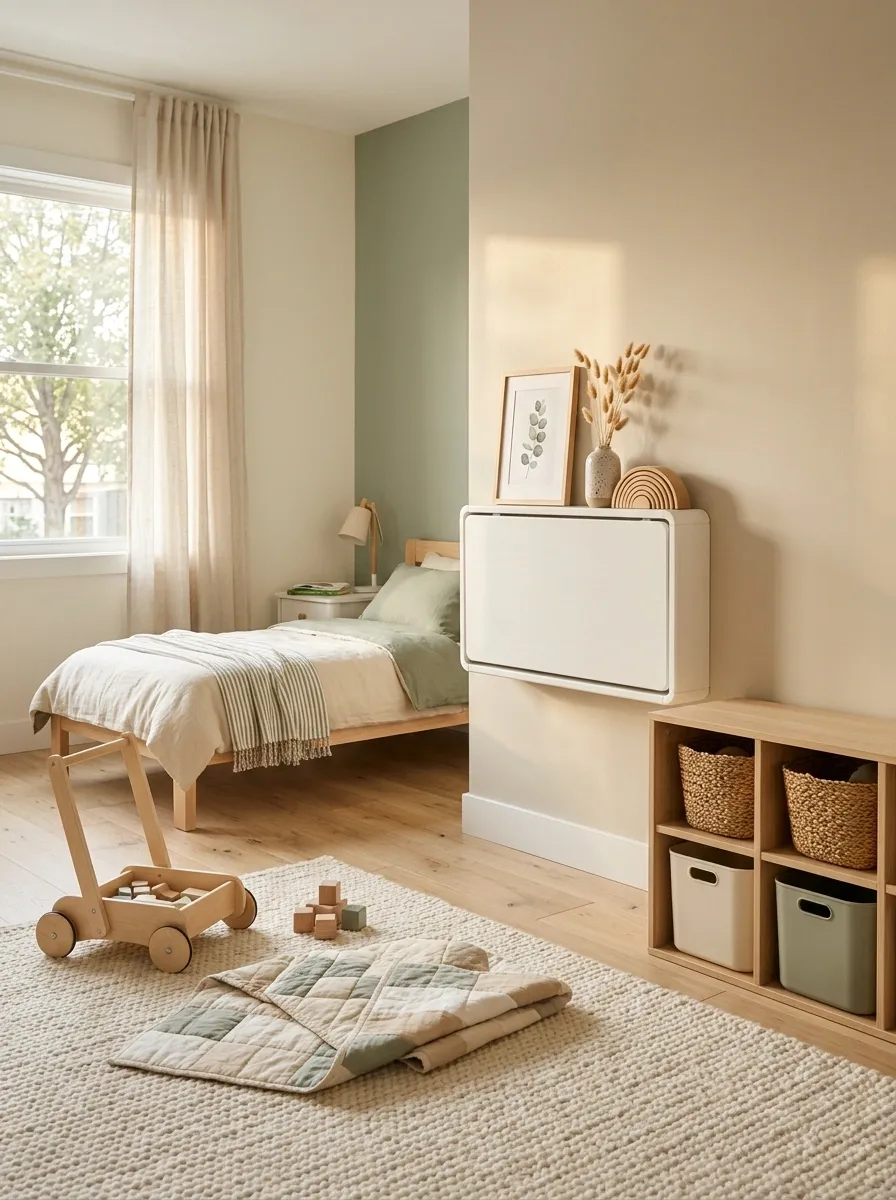
A full-size desk in a toddler room is a waste of square footage. They don’t need a workspace yet. But a wall-mounted folding desk gives them a flat surface for coloring that disappears when they’re done.
Mount it at 18 inches high so they can stand and draw. When folded, it looks like a slim shelf. When open, it holds a pad of paper and a few crayons. That’s all they need.
The real win is floor space. Toddlers need room to move, build forts, and dump out every single Lego. A desk that folds flat against the wall keeps that space open.
Layer Functional Wall Storage
Floor space is precious when toy collections start multiplying by the minute. Hanging multiple wooden ledges keeps books and treasures organized and completely off the floor.
Pairing those shelves with a fun mirror and a tiny desk setup makes the room feel like a real mini-home. Kids love having furniture scaled to their actual size for coloring and imaginative play.
It turns unused vertical wall space into an interactive zone. You get maximum functionality while keeping the footprint totally clear for building epic blocks towers.
Paint the Lower Half of Walls Only
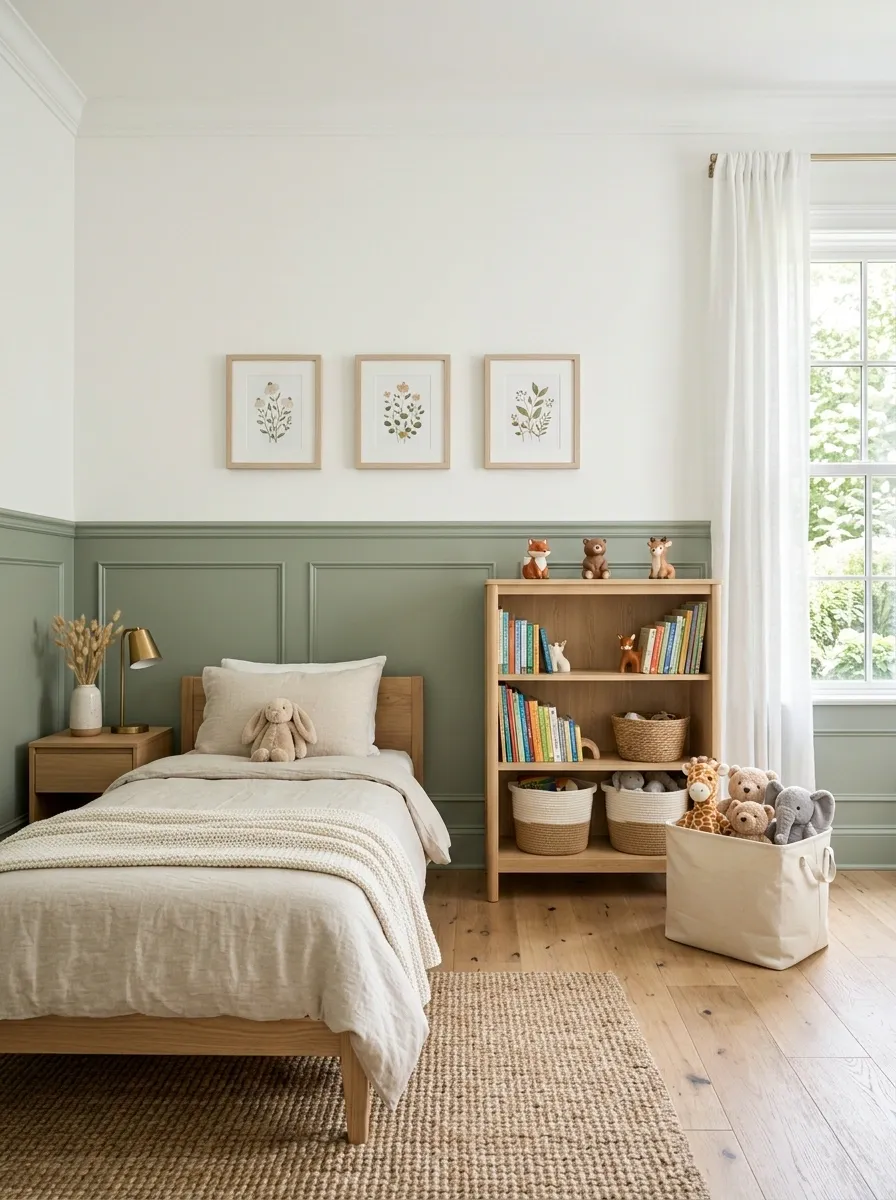
Toddlers touch walls. They kick them, draw on them, and smear peanut butter along the baseboard. Painting only the lower half in a scrubbable semi-gloss saves your sanity.
Keep the top half a clean white or soft neutral. Paint the bottom in your accent color. When scuffs appear, you wipe them off or touch up a small section. You’re not repainting an entire room because someone discovered markers.
This trick also makes the ceiling feel higher. The eye travels up the white wall and the room opens up. It’s practical and it looks intentional, not like you ran out of paint.
Hang a Clear Shoe Organizer on the Door
The back of a door is dead space until you put a clear shoe organizer on it. Suddenly you have 24 pockets that show exactly what’s inside without anyone digging through bins.
Toddlers can’t read labels, but they can spot a stuffed animal through mesh. Hang it on the inside of the closet door at a height they can actually reach. The clear pockets turn cleanup into a matching game instead of a battle.
Fill the bottom rows with toys they grab daily. Use the top rows for backup diapers, seasonal clothes, or the markers you don’t want them finding alone. When everything lives in a pocket, the floor stays visible and cleanup takes under three minutes.
Choose a Convertible Toddler Chair
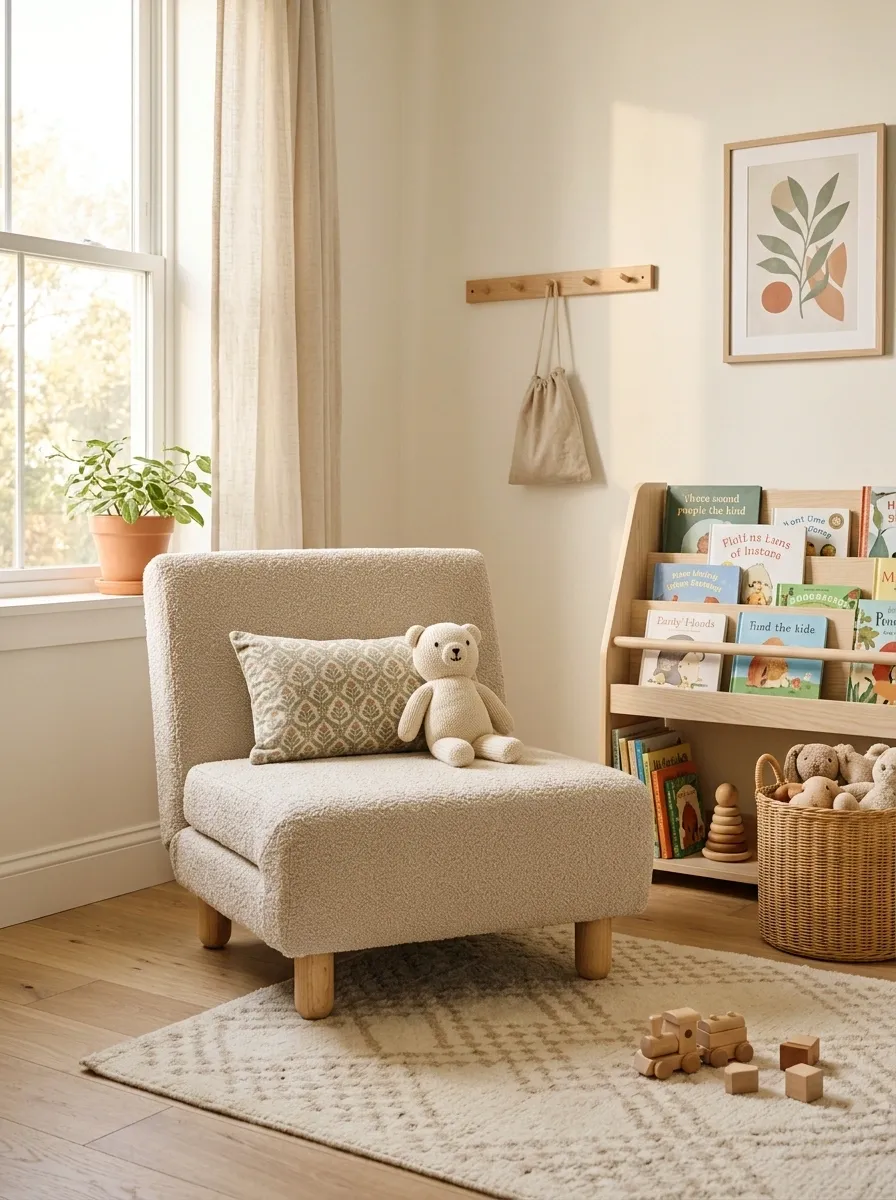
That miniature armchair in the catalog is adorable and completely obsolete by age three. A convertible chair starts as a low toddler seat and expands into a larger reading chair that fits a five-year-old.
Look for one with a removable base or adjustable legs. The seat should sit 6 to 8 inches off the ground at the lowest setting so tiny feet touch the floor. That stability matters more than the fabric pattern.
The best models flip into a lounger or grow wide enough for bedtime stories with two people. You buy it once at age two and you don’t replace it until they want a desk chair in elementary school. That’s the only way furniture makes sense in a room that changes this fast.
Ditch the Theme and Pick Three Colors
Themes are a trap. The dinosaur room looks cute until your kid decides they only care about trains. Then you’re stuck with a T-Rex mural and a child who won’t sleep near it.
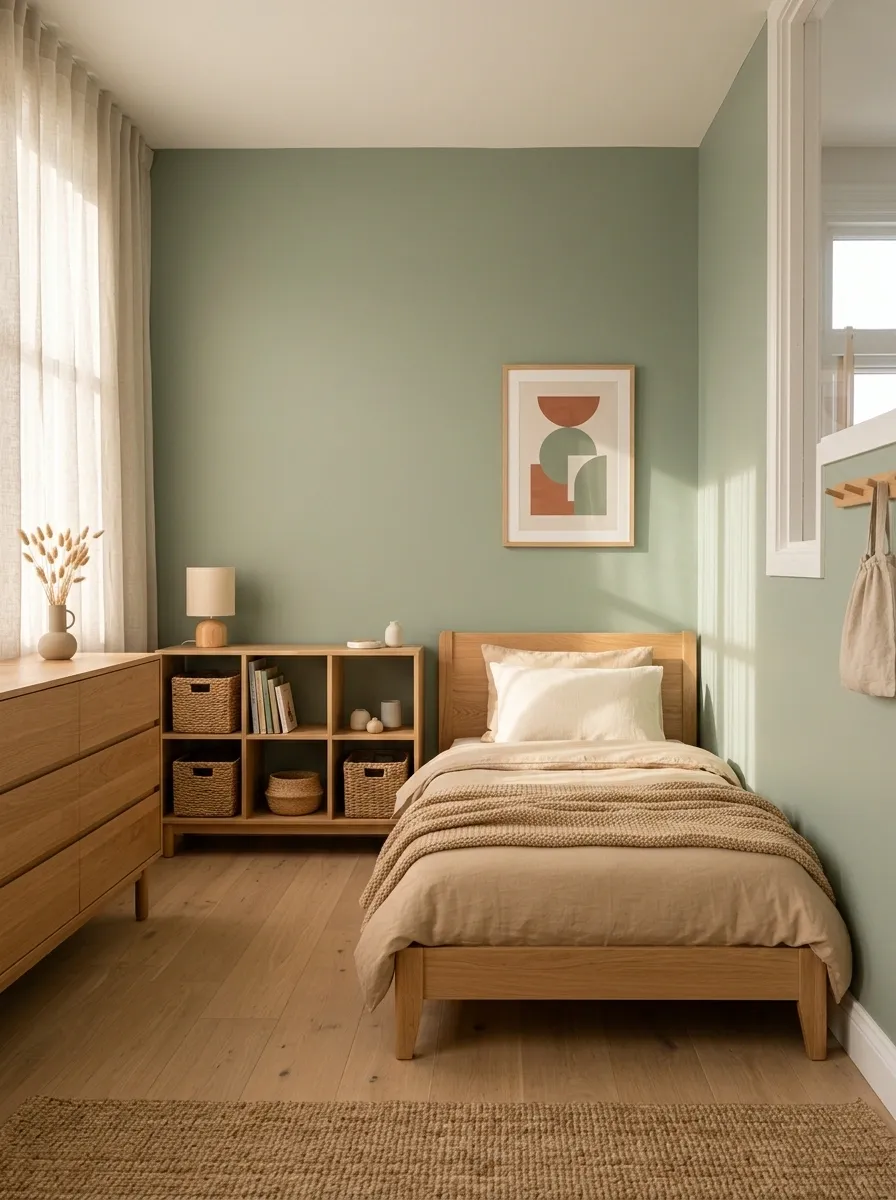
Pick three colors instead. Two neutrals and one accent. The neutrals handle the big surfaces: walls, bedding, curtains. The accent shows up in pillows, bins, and one piece of art. When your toddler’s obsession switches from dinosaurs to space, you swap the accent items instead of repainting.
This approach also keeps the room from looking like a theme park. Three colors feel calm. A theme room feels loud by month three. Your toddler doesn’t need a themed room. They need a room that doesn’t overstimulate them before bedtime.
Add a Wall-Mounted Book Sling
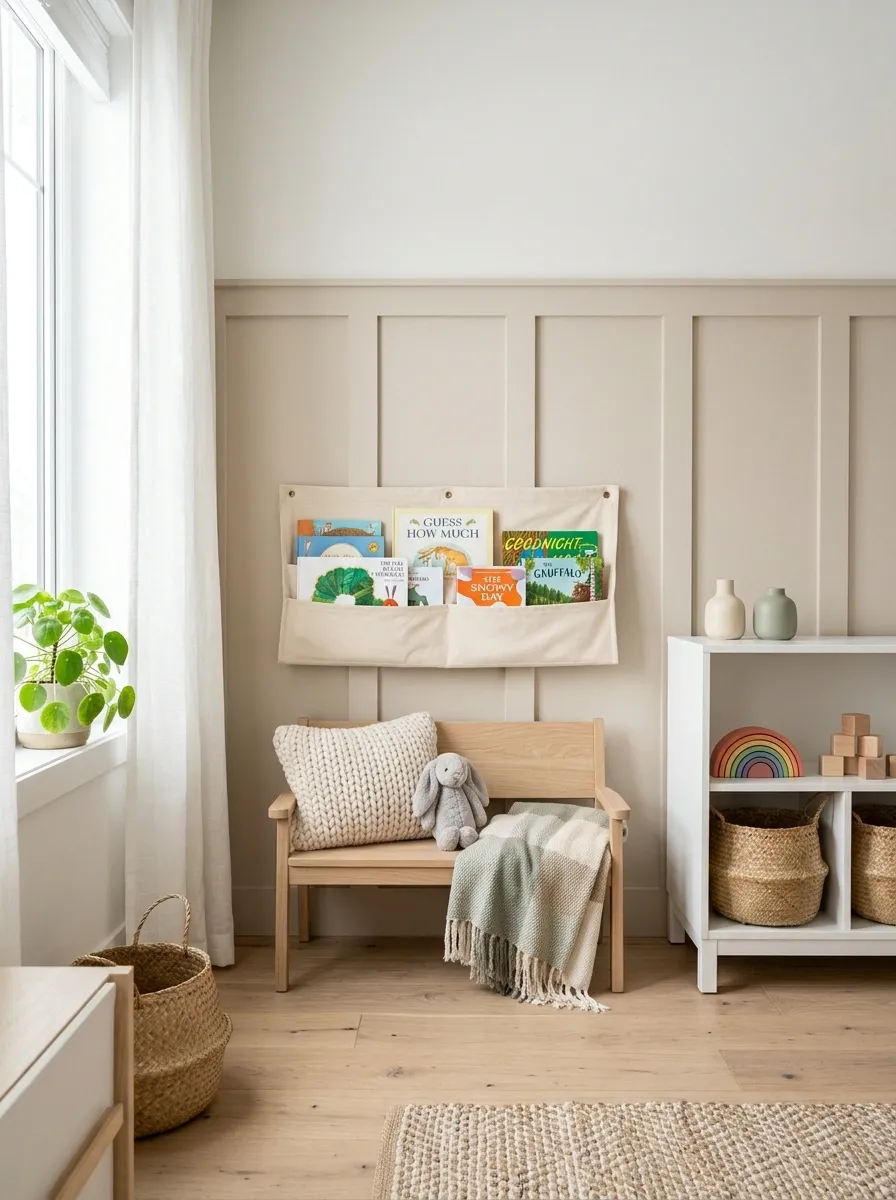
Your toddler pulls every book off the shelf because they can’t see the covers. Spines mean nothing to a two-year-old. A wall-mounted book sling fixes this by displaying covers at eye level.
Use a simple canvas sling or a shallow shelf tilted backward. Mount it 18 to 24 inches high so they can reach without climbing. Limit it to 6 to 8 books at a time and rotate the selection weekly.
When covers face out, toddlers actually browse. They pick a book, look at it, and put it back. A sling also takes up zero floor space, which matters in a room where every square foot counts. It’s cheaper than a bookshelf and it works better.
Put Everything on Lockable Casters
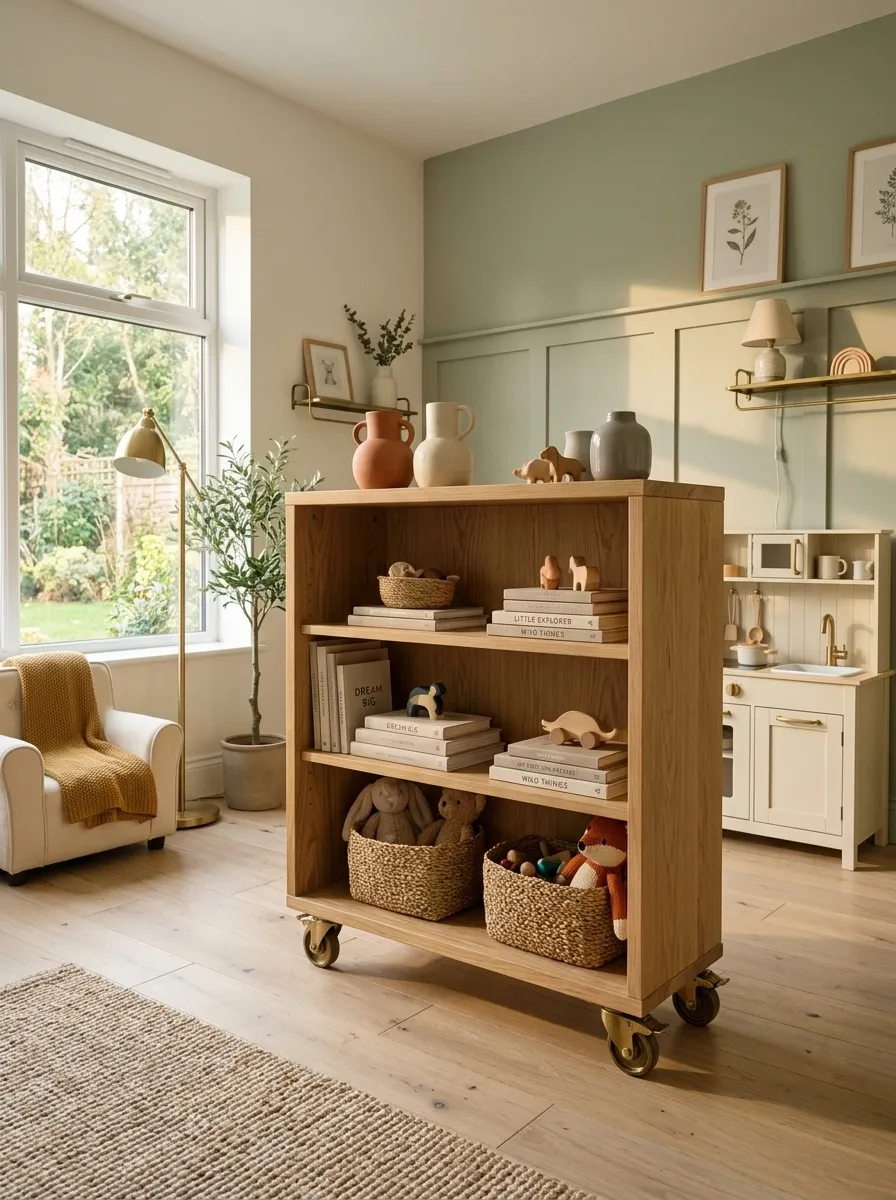
Lockable casters sound like overkill until your toddler uses a bookshelf as a ladder. Anything tall or heavy in a toddler room needs to move for cleaning and lock solidly for safety. Regular casters roll. Lockable casters stay.
Bookshelves, toy kitchens, and storage units all benefit. You unlock them to vacuum underneath or rearrange the room. You lock them before naptime so nothing shifts when a kid climbs. Most parents skip this detail and regret it the first time a dresser tips.
Buy casters rated for double the furniture’s weight. Cheap ones flatten under load and stop rolling within months. Good ones cost more upfront but you won’t replace them twice.
| Unlocked Casters | Locked Casters |
|---|---|
| Furniture shifts when climbed | Stays put during play |
| Rolls away during cleaning | Unlocks to vacuum underneath |
| Tips over when drawers open | Handles weight without shifting |
Install a Pegboard Wall for Flexibility
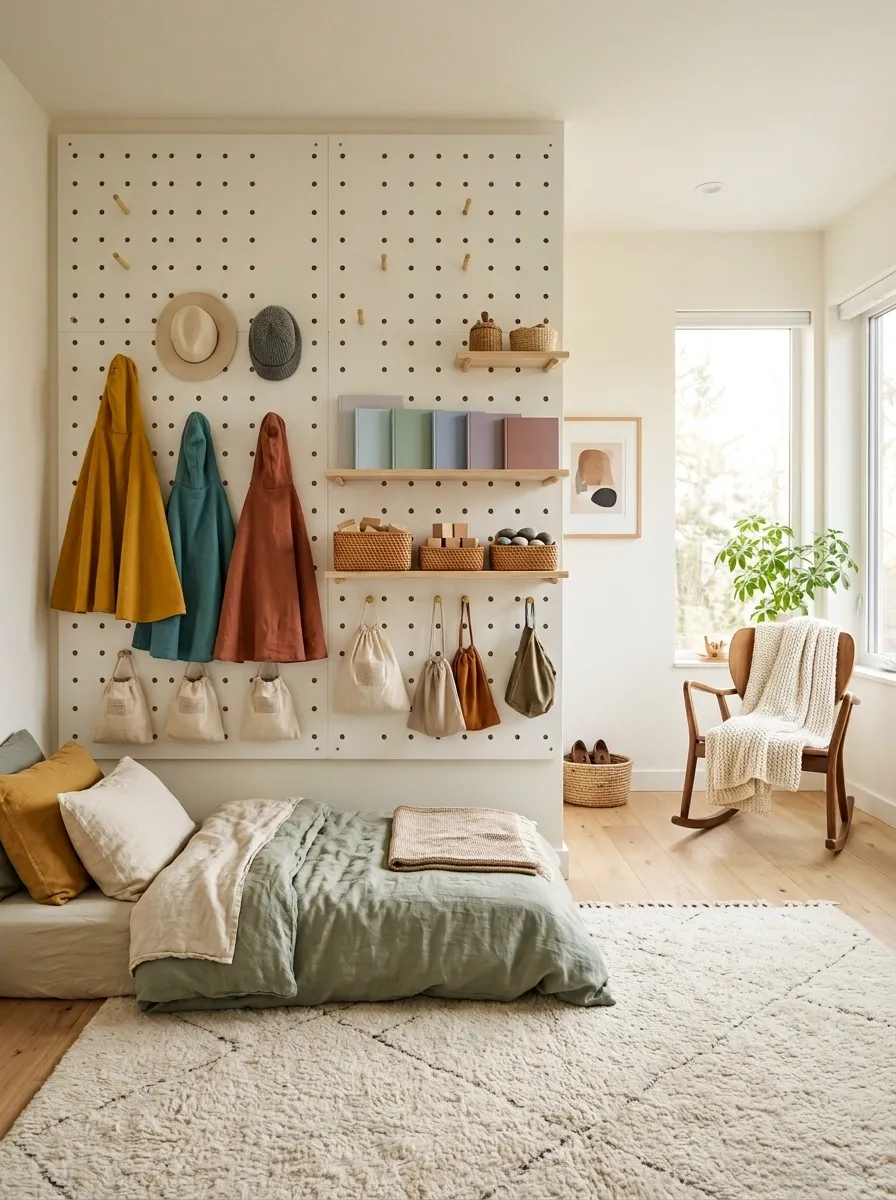
A grid of holes on the wall looks industrial until you clip a basket, a shelf, and a tiny plant holder into the same square foot. Pegboard adapts faster than any furniture you could buy. This week it’s a craft station. Next month it’s a dress-up corner.
Mount a 2×4 foot board at toddler height, starting 12 inches off the floor. Use metal hooks with rubber tips so little fingers don’t get pinched. Add a shallow basket for blocks, a clip for a cape, and a small shelf for the current favorite book.
When the obsession changes, you unclip and rearrange in five minutes. No new holes in the wall. No new furniture to assemble. Just a different room.
Use a Bench with Hidden Storage
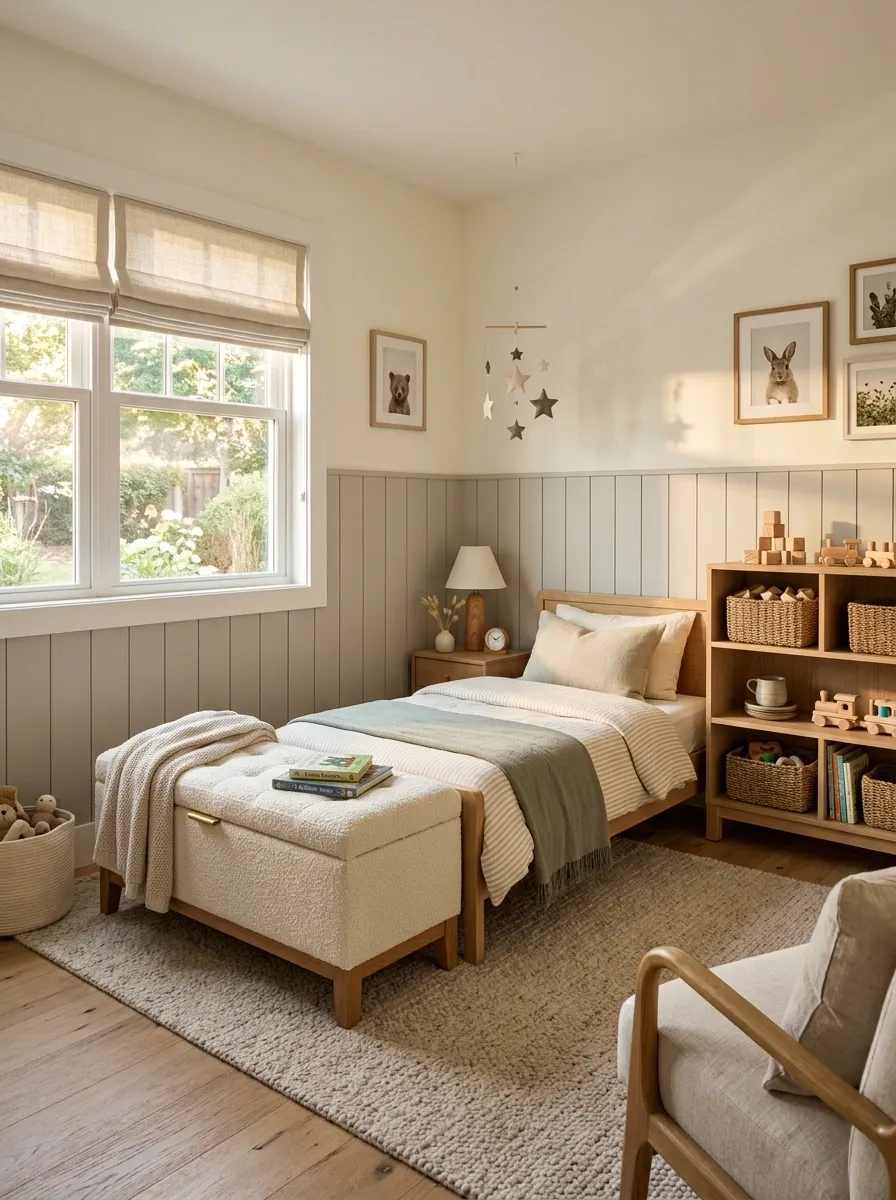
One piece of furniture can seat a parent during bedtime stories and swallow an entire Duplo collection. A storage bench at the foot of the bed or under the window gives you a place to sit and a place to hide the mess.
Look for a bench with a soft-close hinge. Little fingers get slammed in standard lids constantly. The top should be padded or have a cushion that stays put. If it slides, it’s a hazard.
The interior space fits more than you’d expect. Bulky items that don’t stack well, like stuffed animals, dress-up clothes, and oversized trucks, disappear inside. Your toddler can lift the lid and help put things away. That’s the real test of any storage.L
Skip the Rug and Try Foam Tiles
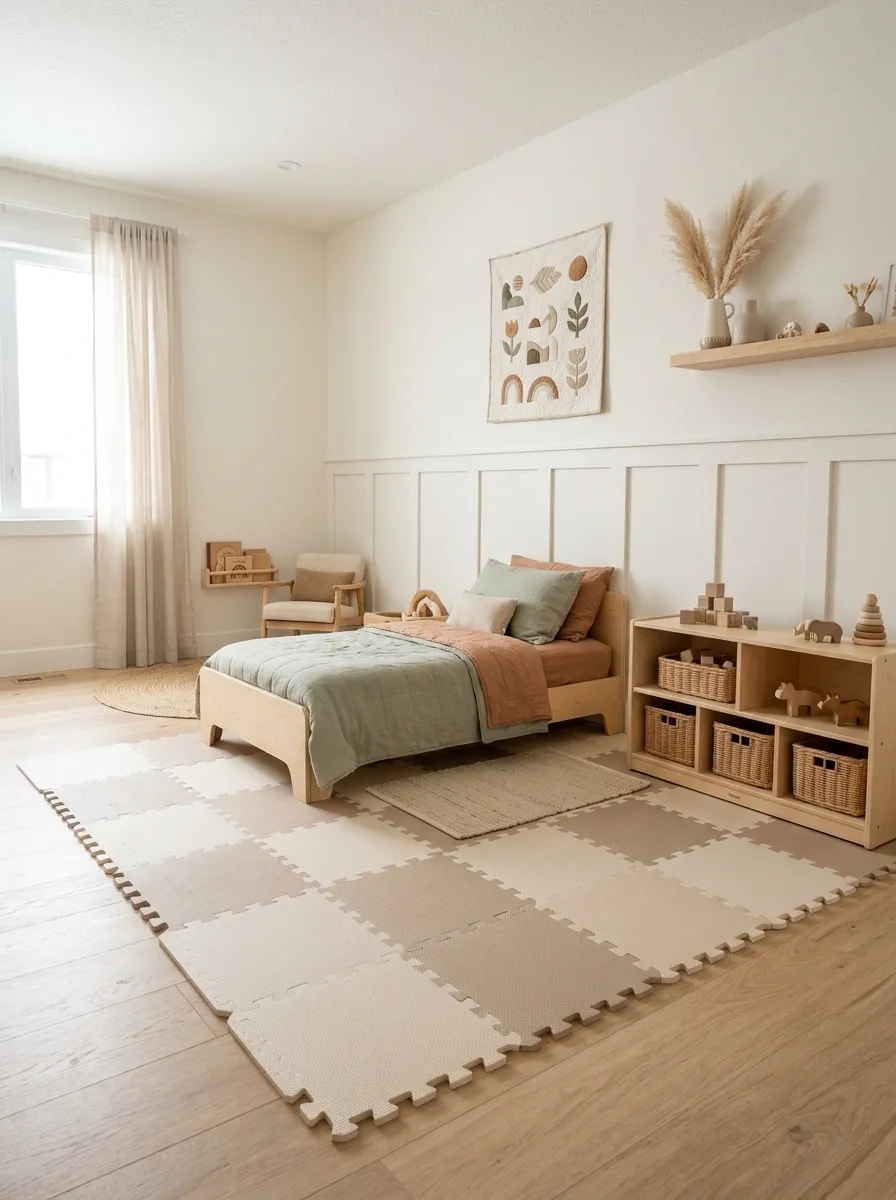
Every nursery photo shows a rug. That’s a mistake in a toddler room. Rugs slide, stain, and trap crumbs that you can’t fully vacuum. A toddler with a juice box turns a white rug into a regret within a week.
Interlocking foam tiles give you the soft landing of a rug without the permanent damage. Spills wipe off with a wet cloth. Individual tiles lift out for deep cleaning. When one gets destroyed, you replace a single square instead of an entire rug.
They also travel well. Pull them up for a playdate at grandma’s house or rearrange them into a fort base. A rug just sits there and collects stains. Foam tiles actually work.
Mount a Small Mirror Low on the Wall
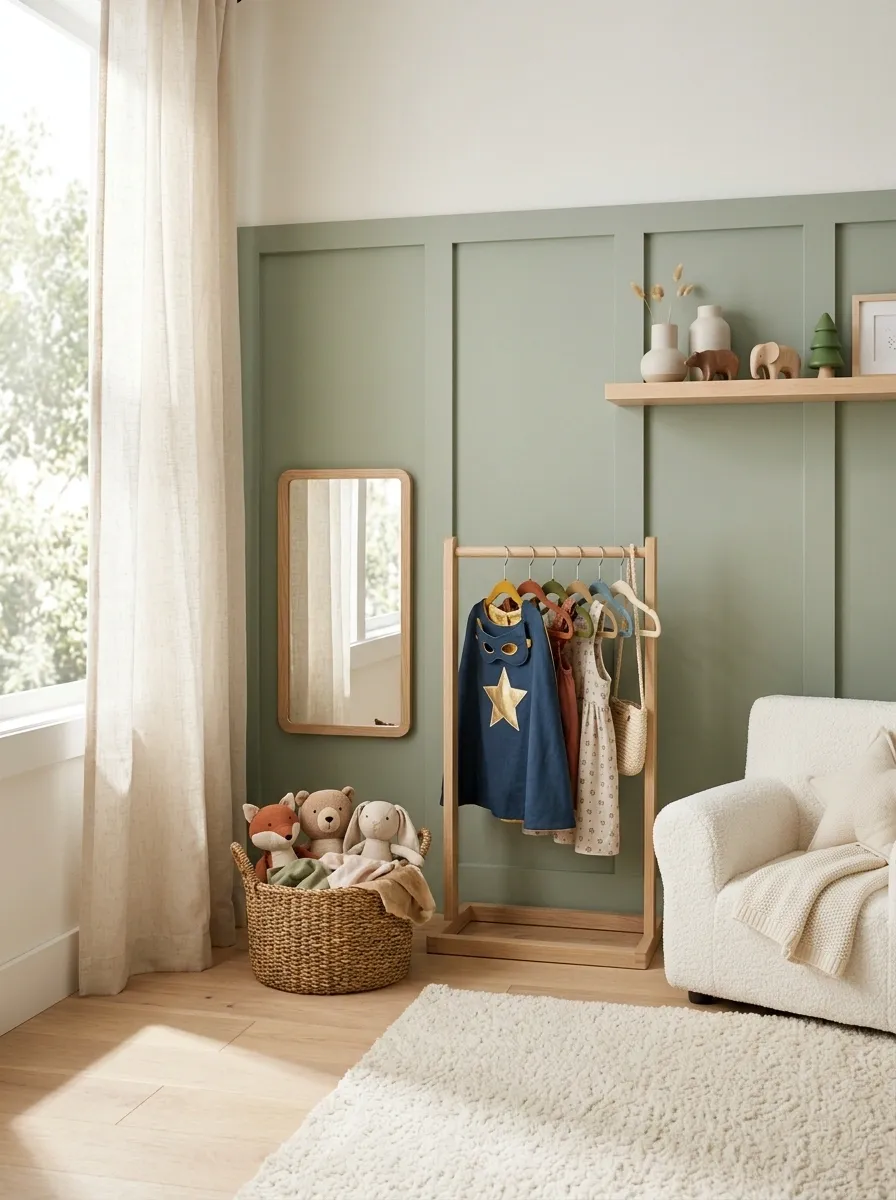
Toddlers don’t recognize themselves in bathroom mirrors they can’t reach. A small acrylic mirror mounted at 24 inches lets them see their own face, practice expressions, and check their outfit without calling for help.
Use shatterproof acrylic, not glass. Mount it with heavy-duty Command strips so it stays put when they lean in close. Place it near the dress-up area or closet so they can admire the cape they just put on.
It’s a tiny addition that makes the room feel like it belongs to them.
Create a “Quiet Corner” with a Tent
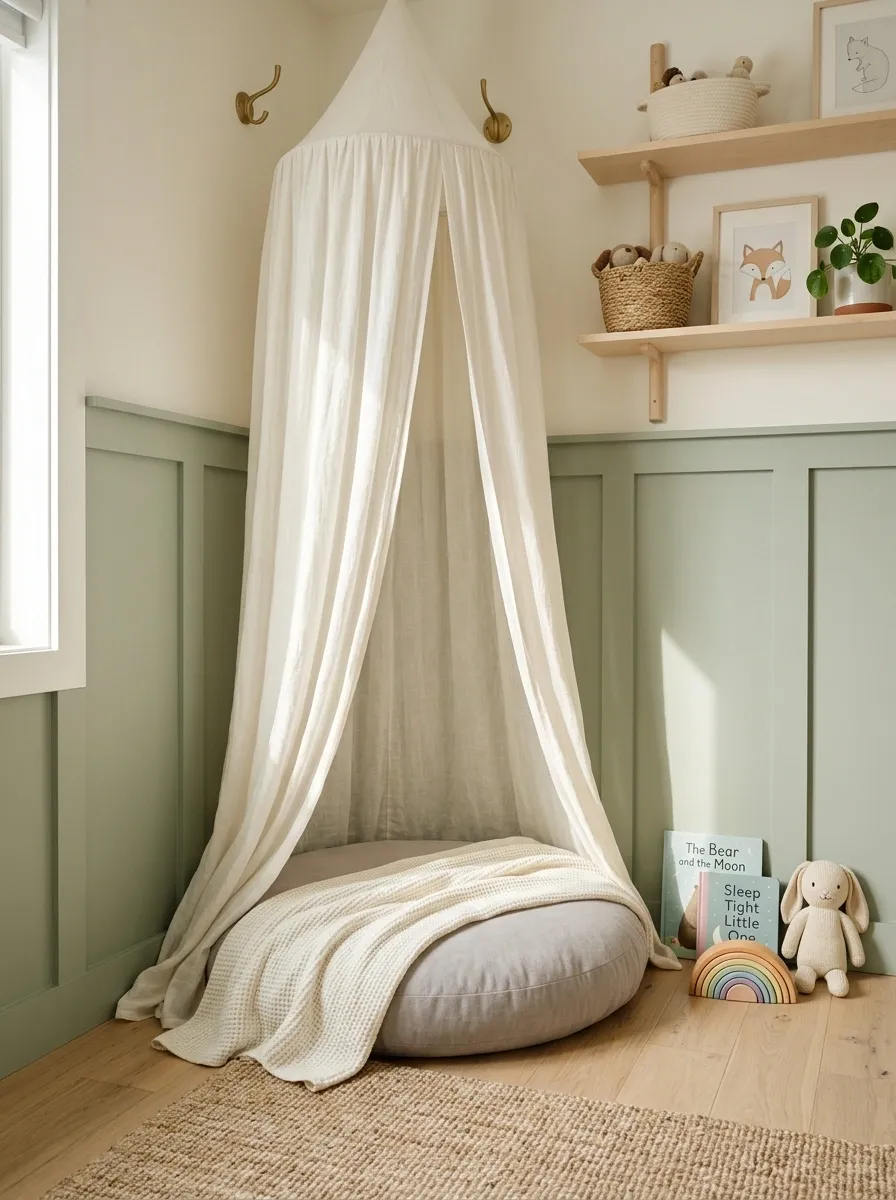
When the day gets loud, they need a place to hide. A quiet corner gives them a physical space to reset without you saying a word.
You don’t need a fancy teepee. A simple canopy draped over two Command hooks creates the same cocoon feeling. Add a small pillow, a soft blanket, and two books they already love. The rule is simple: when they’re in the corner, nobody interrupts.
Most parents skip this because it feels like coddling. It isn’t. It’s giving them tools to calm down before the meltdown wins.
Label Bins with Picture Tags, Not Words
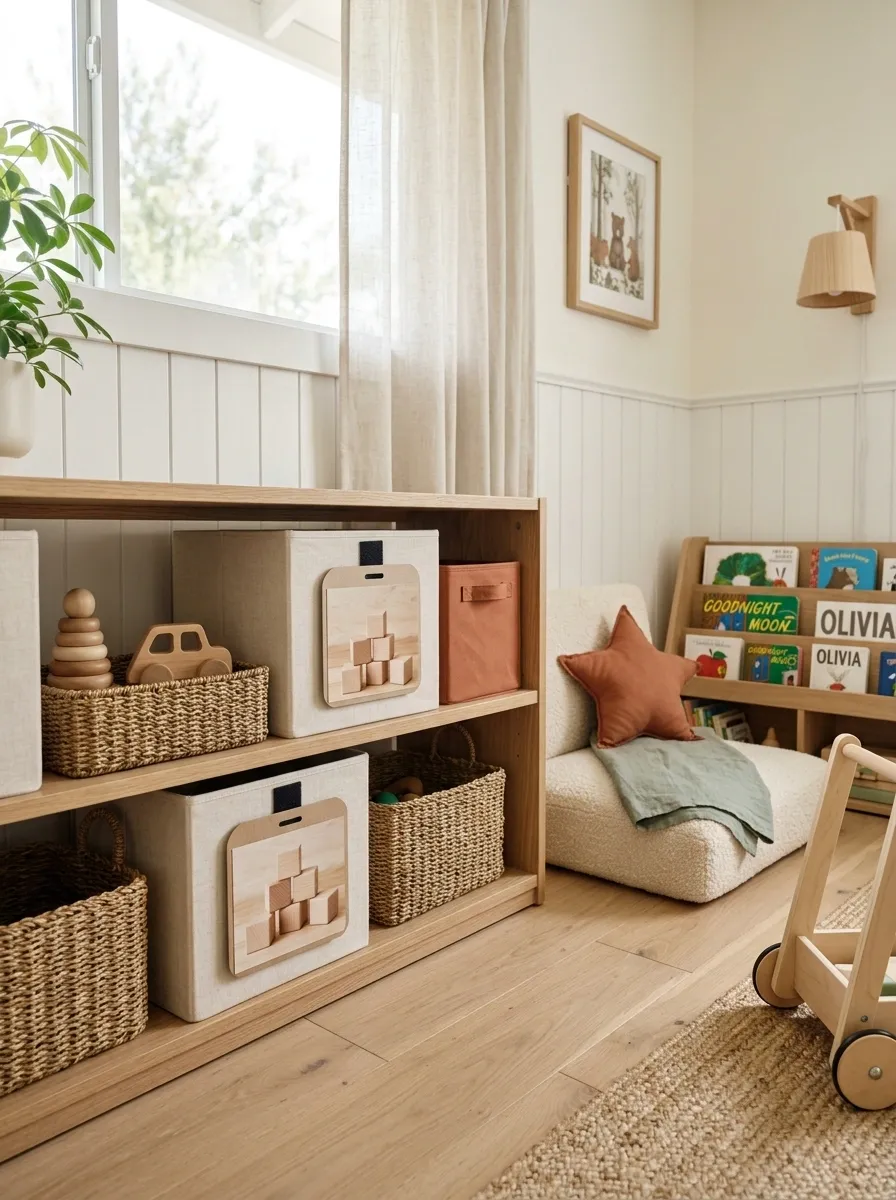
Writing words on bins is useless until age five. A toddler can’t read “blocks” but they can see a photo of a block.
Picture tags turn cleanup into a matching game instead of a guessing contest. Cut a 3×3 inch square of cardstock and glue a photo of the actual items inside. Laminate it with packing tape so it survives sticky fingers. Attach it to the bin with a strip of Velcro so you can swap labels when the contents change.
When your two-year-old matches the toy to the picture, they feel capable. That’s the entire point. Words just remind you what you meant to organize. Pictures let them do it themselves.
Use Vertical Storage for Stuffed Animals
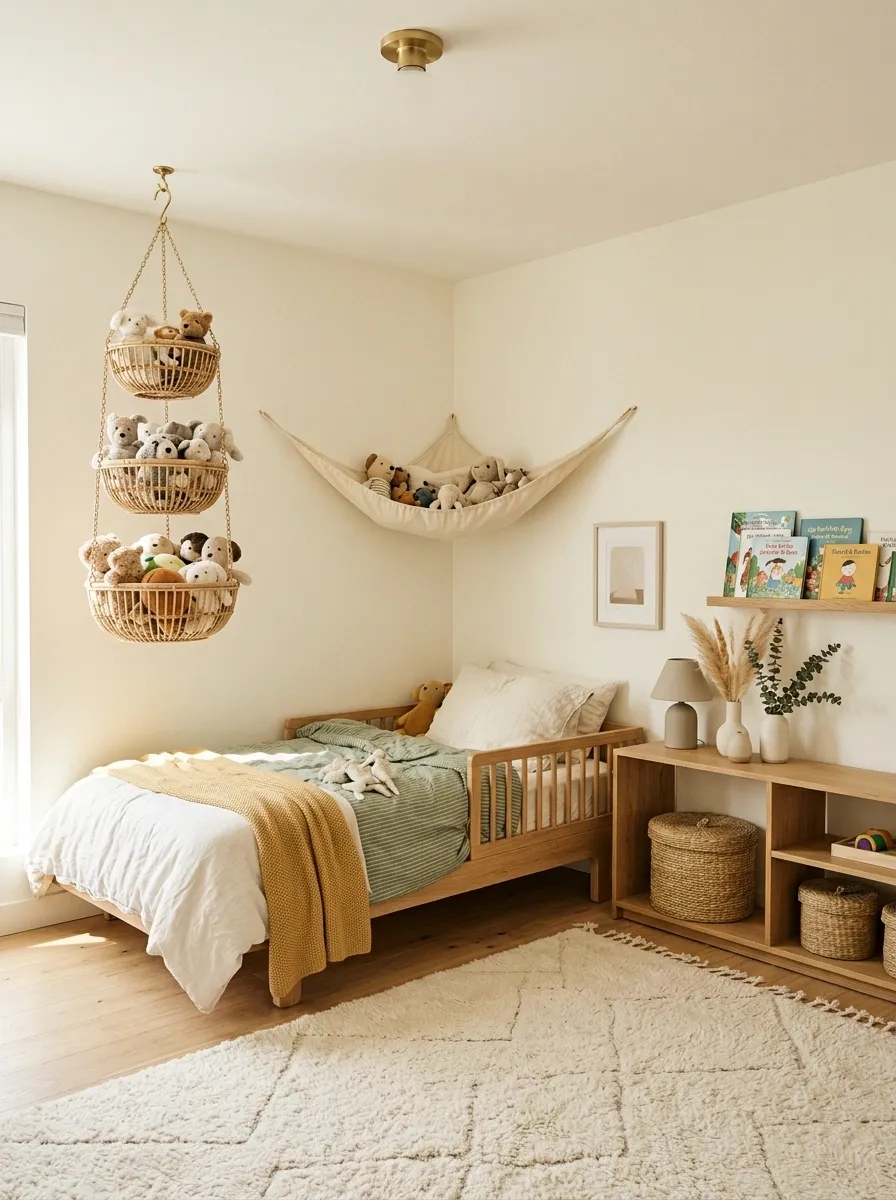
Stuffed animals are the one toy category that grows without limits. They don’t stack, they don’t nest, and they take up more space than their actual size suggests.
Vertical storage gets them off the floor and into the air where they belong. A hanging fruit basket with three tiers screws into the ceiling corner and holds twenty animals without touching the ground. A wall-mounted hammock above the bed works too.
The key is keeping them visible but elevated. When they’re on the floor, they become tripping hazards. When they’re overhead, they become decor. Your toddler can still point and ask for the bear. You just reach up instead of digging through a pile.
Pick a Nightlight That Projects Upward
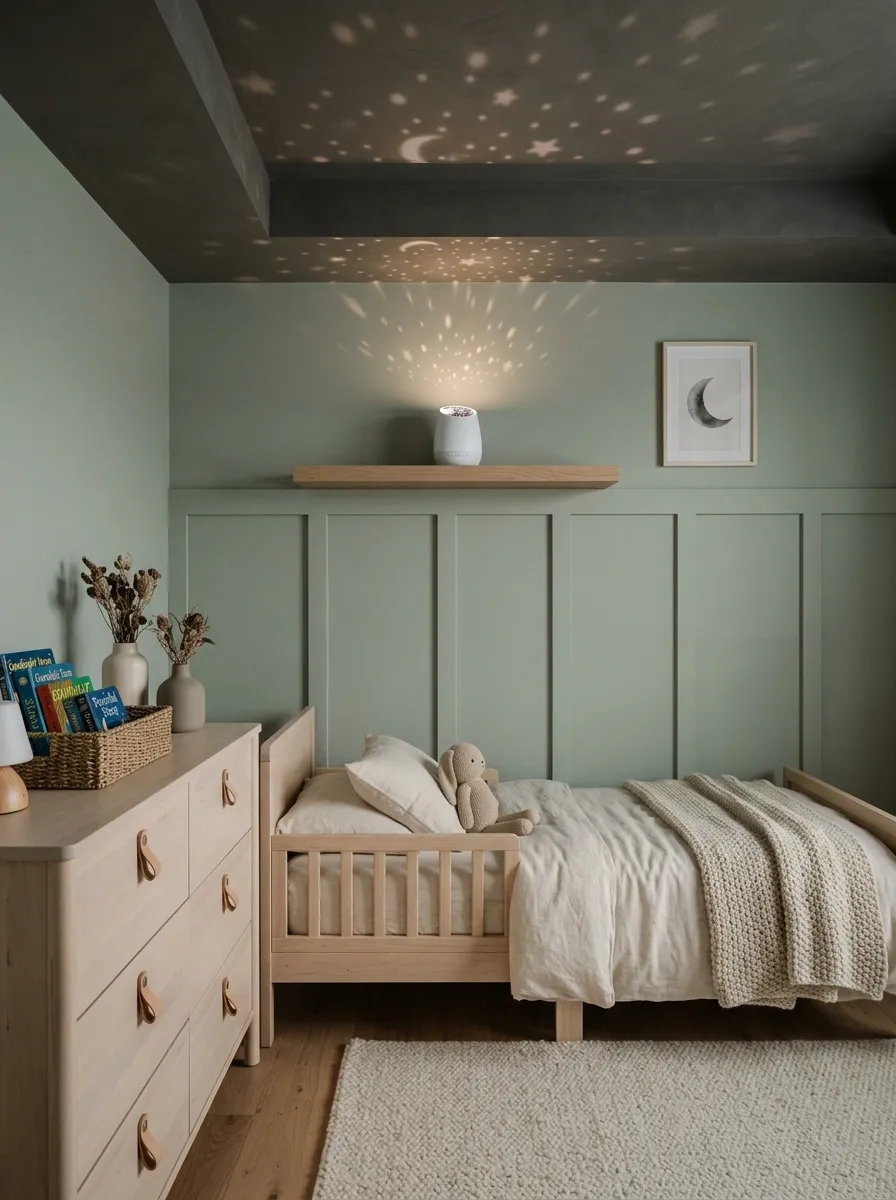
Most parents plug a nightlight into the outlet by the door. That’s exactly where a curious toddler can reach it, pull it out, and turn the room pitch black at 2 a.m. A projector nightlight that sits on a high shelf and aims at the ceiling solves this completely.
It stays out of reach and casts a soft glow across the whole room without creating shadows that look like monsters. Look for one with a timer so it shuts off after they fall asleep. The ceiling becomes their night sky instead of a dark void. They stay in bed because the room feels safe from above.
Build a Low Window Seat with Bins
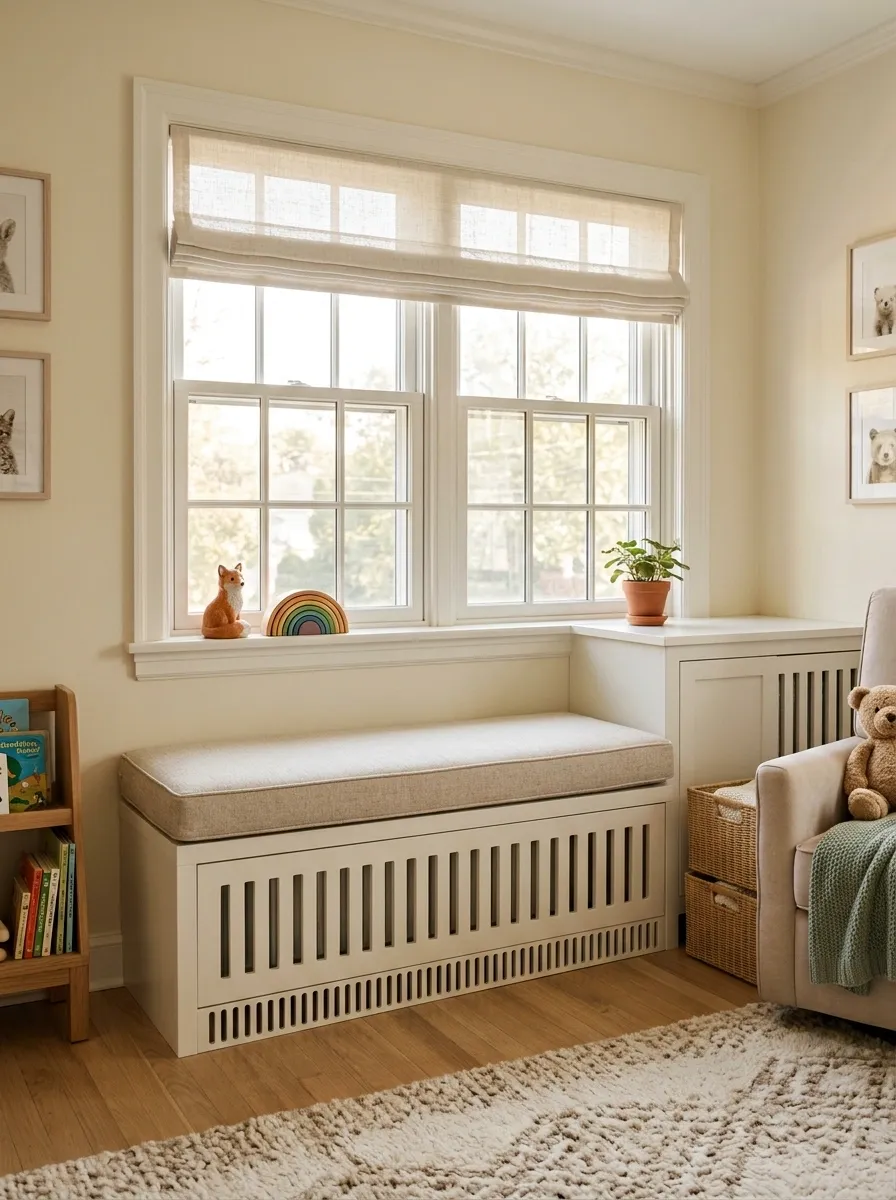
That window with the radiator underneath it is wasted space. A low window seat built to 14 inches high turns the gap into seating and storage in one piece. Add three pull-out bins underneath and you have a place for books, blankets, and the toys that somehow multiply overnight.
The seat itself should be wide enough for an adult and a toddler to sit together. A simple cushion in a washable cover makes it comfortable without becoming a permanent stain. The bins slide out on the floor so there’s no hardware to pinch small fingers.
It’s the one piece of furniture that makes the room feel finished while actually doing work.