
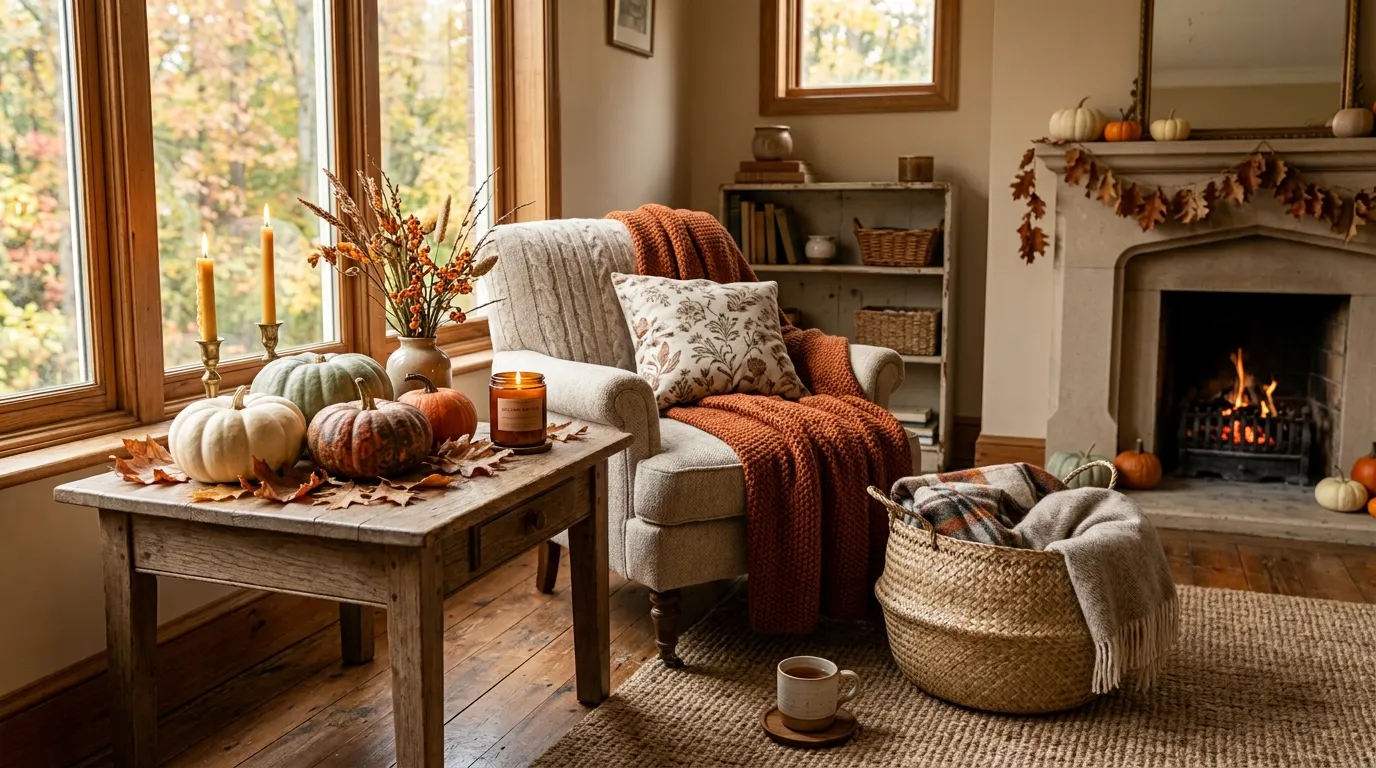
Autumn decor looks best when the room doesn’t feel like it was emptied out and refilled with seasonal stuff.
That’s the trap. A few pumpkins become a collection. A couple of orange pillows turn into orange everywhere. Every shelf gets a leaf garland, every table gets a tiny arrangement, and the room loses the calm feeling that made it worth decorating in the first place.
Fall doesn’t need that much noise.
The rooms that feel warmest usually use a much smaller set of changes. A heavier texture here. A deeper color there. A branch arrangement that gives the room some height. A few natural materials that make everyday furniture feel warmer. The season shows up without taking over.
That’s the approach behind the ideas below. Some are tiny swaps. Others change a whole corner. All of them are meant to help you decorate with more intention, especially when you want your home to feel autumnal without looking overdone.
Why Autumn Decor Often Looks More Cluttered Than Cozy
Too Many Seasonal Objects Can Flatten the Whole Room
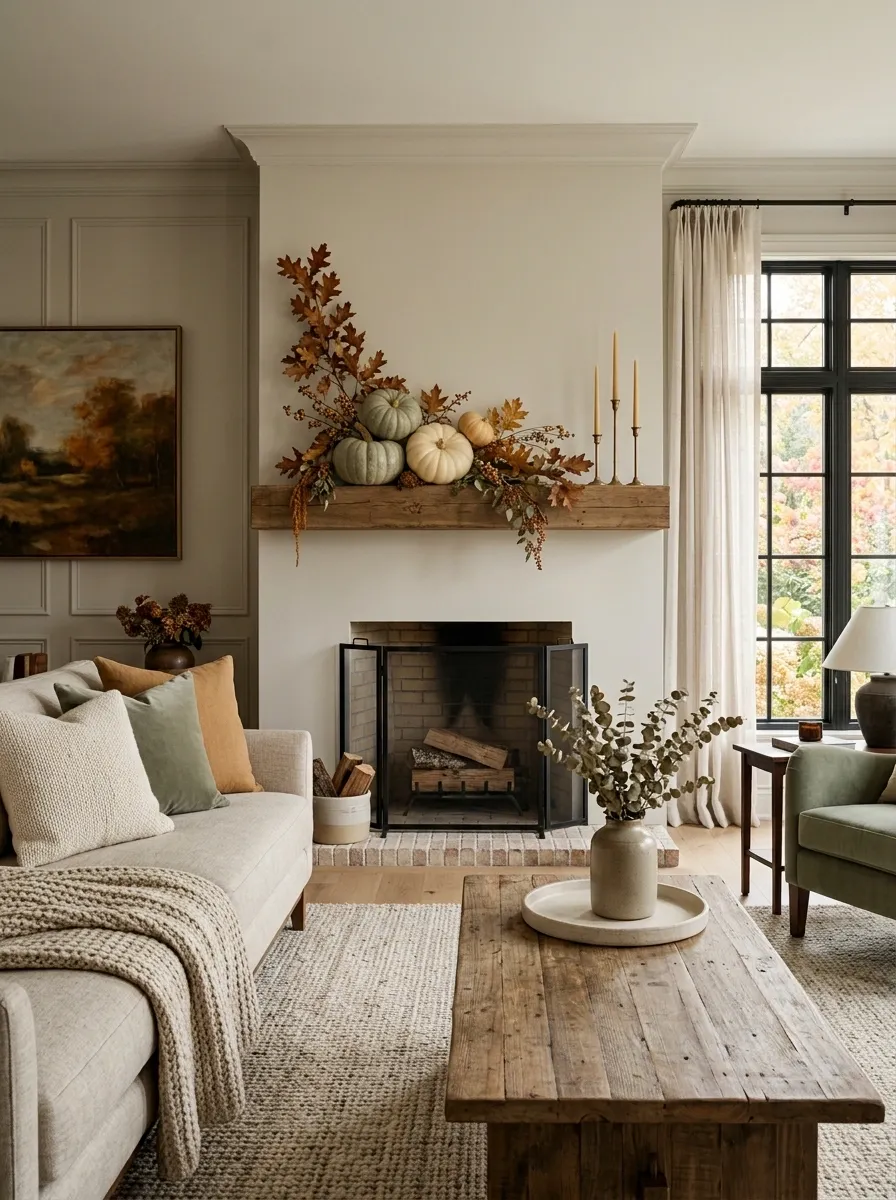
The fastest way to make fall decor look messy is to give every surface its own seasonal arrangement.
A mantel gets pumpkins. The coffee table gets pumpkins. The shelves get pumpkins. Then the dining table gets another collection. Nothing feels special because the eye has nowhere to land.
Choose a few locations that deserve attention instead. A mantel, console, or dining table can carry the strongest seasonal statement while smaller areas get quieter touches.
The rule: one strong display should lead, and everything else should support it.
Warmth Comes From Texture and Contrast, Not Just Orange
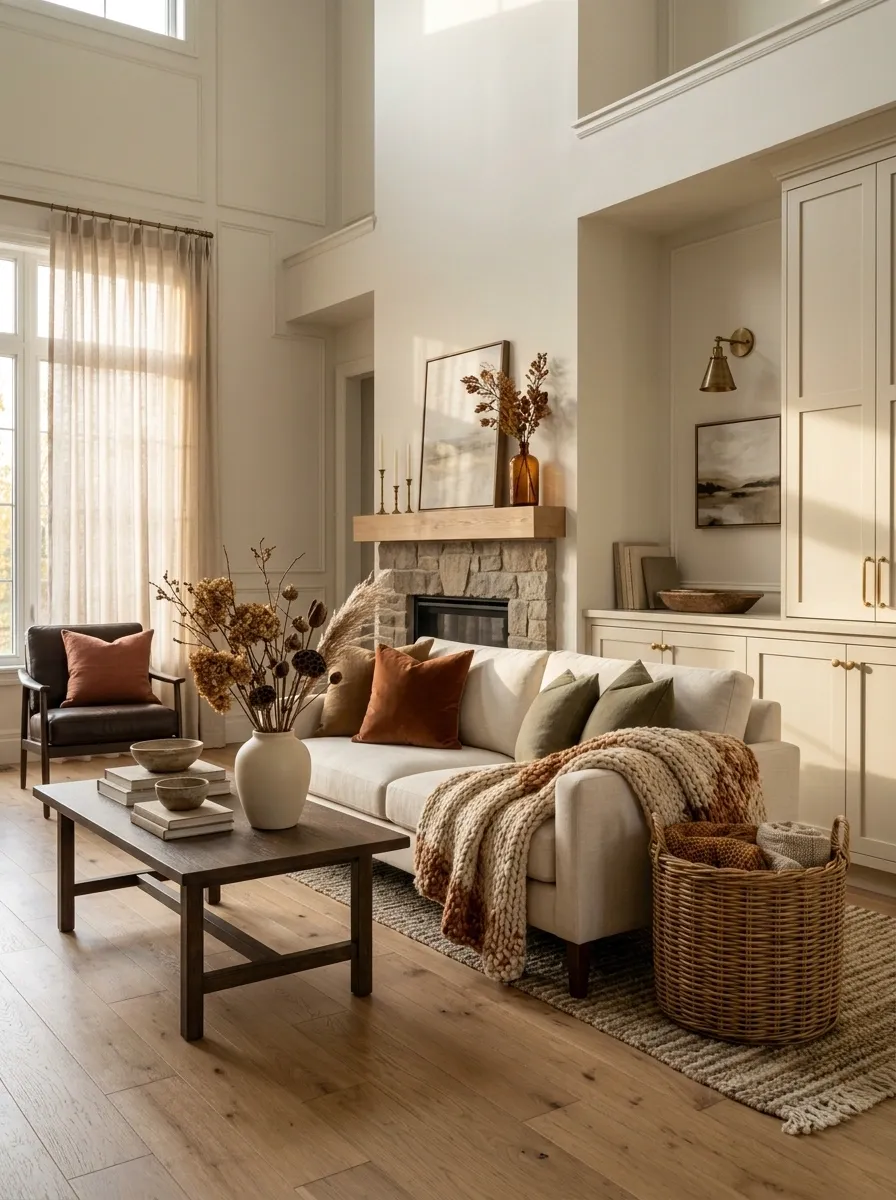
Autumn doesn’t need to mean orange everywhere.
A room feels warmer when smooth surfaces sit beside rougher ones, pale neutrals meet darker wood, and soft textiles break up hard furniture. Think linen beside ceramic, woven baskets beside painted cabinetry, or a chunky throw against a clean sofa.
That mix creates depth without making the room feel busy.
Keep the color palette controlled. Rust, cream, brown, muted green, and natural wood can carry a whole fall room without shouting for attention.
The Best Autumn Decor Usually Has One Strong Focal Point
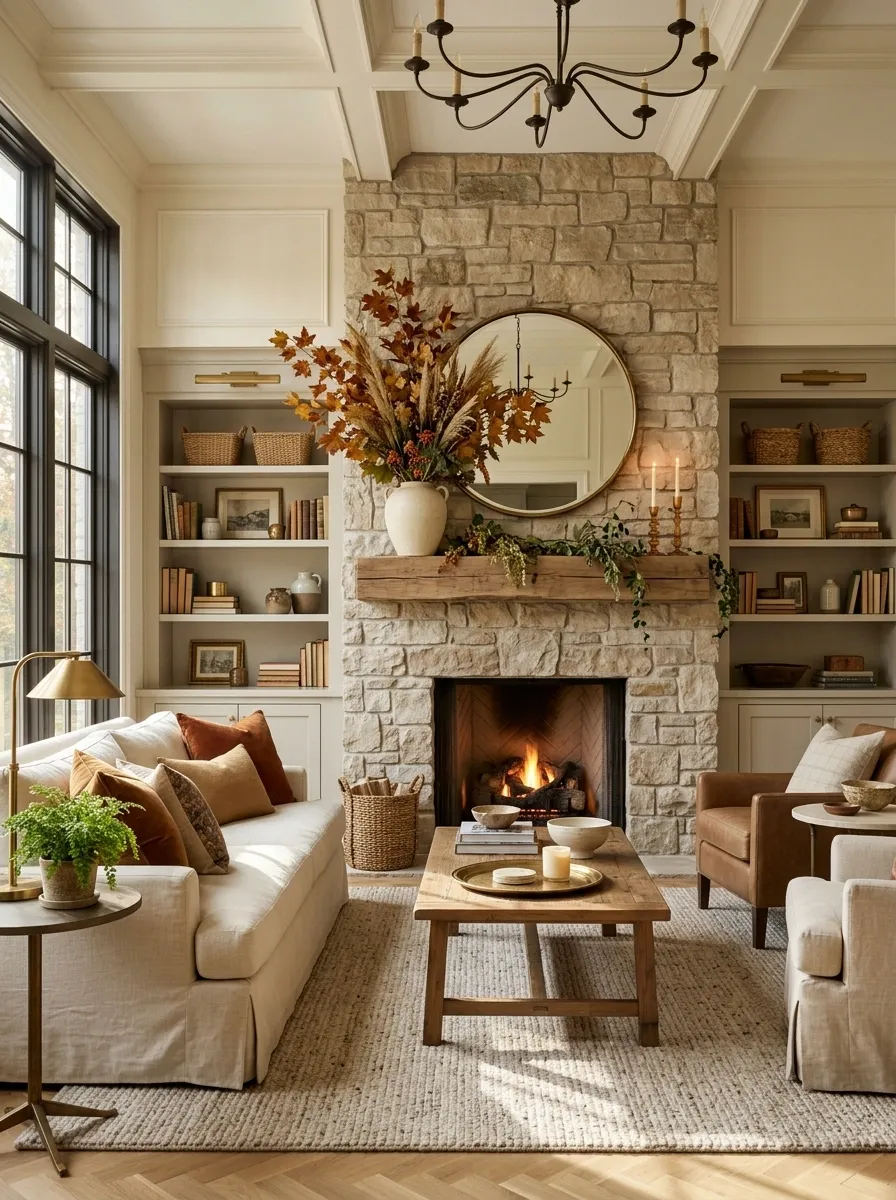
Before buying another seasonal accessory, decide where you want people to look first.
That might be a mantel with a large branch arrangement, a dining table with layered candlelight, or a front door framed with leaves and texture.
Once that focal point is strong, the rest becomes easier. Nearby pieces can stay smaller and quieter because they aren’t fighting for attention.
This is what makes a decorated room feel finished instead of filled.
Autumn Decor Ideas That Make a Room Feel Ready for Fall
Fill Tall Glass Cylinders With Pinecones and Warm Glow
Glass hurricanes instantly elevate autumn decor when you trade basic pillar candles for layered natural elements.
Start by placing a sturdy pillar candle in the center of a clear glass cylinder, then pack pinecones and faux autumn leaves snugly around the base to anchor the look.
Group three different heights together on a wooden table runner for a polished centerpiece that brings instant seasonal warmth to the room.
Build the Mantel Around One Oversized Autumn Focal Point
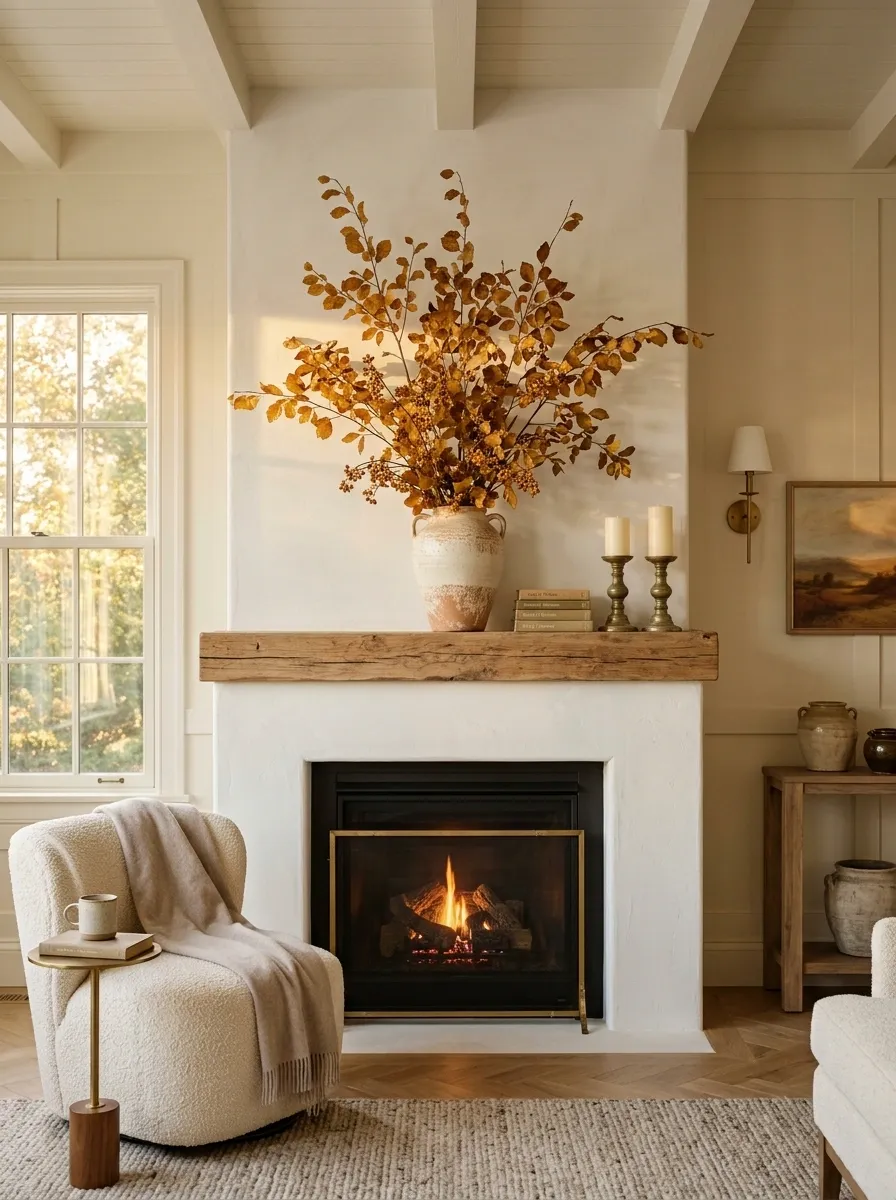
A mantel doesn’t need ten little objects to look finished. It needs one piece with enough scale to anchor everything around it.
Use a large branch arrangement, oversized vase, substantial framed artwork, or tall seasonal stems as the main event. Then keep the objects beside it lower and simpler.
Try this balance:
The mistake is filling every inch. Let the focal piece breathe and the whole mantel instantly looks more expensive.
Frame the Window With Glowing Autumn Garland
A bare windowsill gets an instant seasonal upgrade when you weave a delicate string of warm fairy lights through simple evergreen and pine branches.
Nestle a few mini pumpkins directly into the greenery to create a cozy cottage feel that looks magical from both inside and outside the room.
Keep the arrangement low against the glass so it frames the view of changing fall leaves without blocking the natural evening light.
Layer a Neutral Sofa With Rust, Cream, and Brown Textures
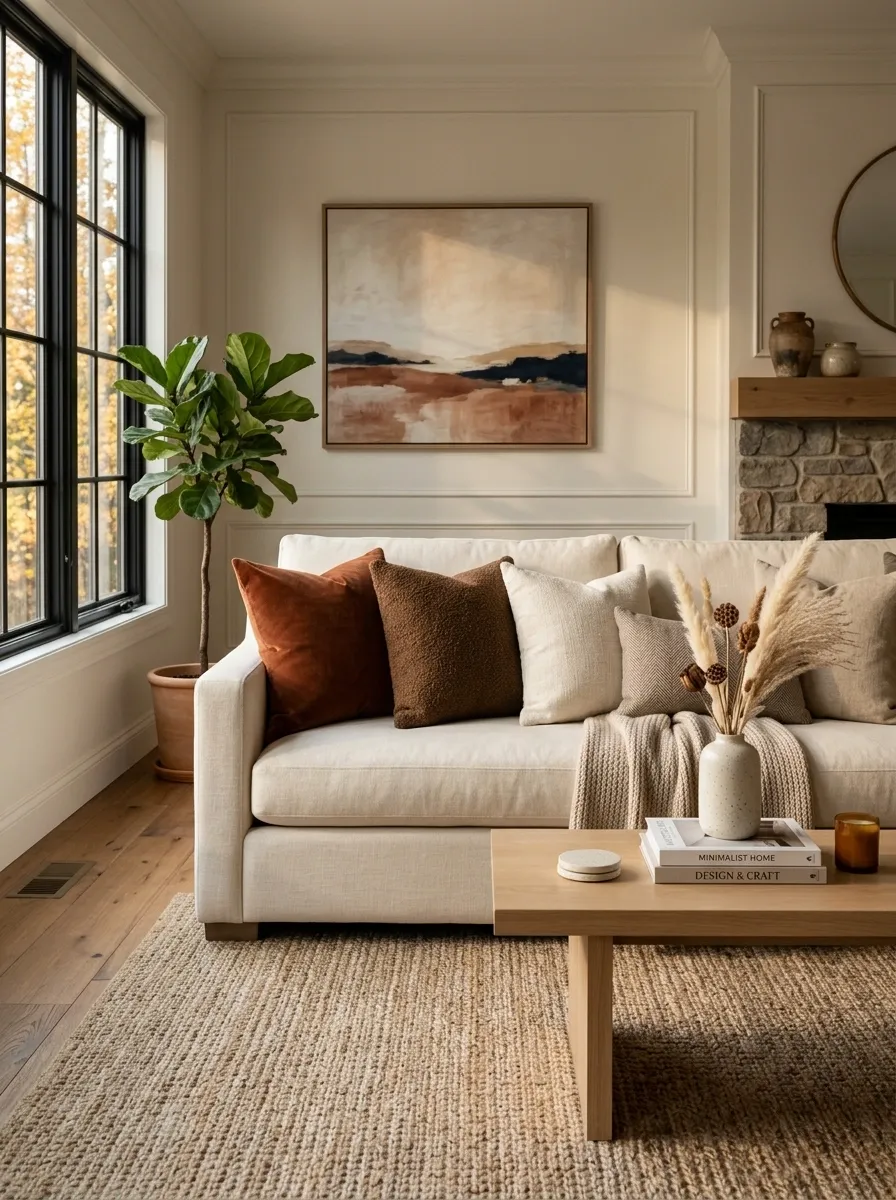
The sofa is one of the easiest places to bring fall into a room without making permanent changes.
Start with your everyday neutral cushions, then add one rust-toned pillow and one deeper brown or textured piece. Finish with a soft throw folded over the arm.
Don’t stack five different patterns together. Two or three textures are enough.
Keep the color roles simple:
- Cream keeps the arrangement light.
- Rust gives it seasonal warmth.
- Brown adds depth.
- Natural fabric keeps it relaxed.
The sofa should still look like a place people actually sit, not a showroom display.
Style a Cozy Balcony With Pumpkins and Foliage
An apartment balcony can feel like a hidden autumn retreat with just a few well-placed textures and a cascade of warm fall color.
Drape a vibrant garland of faux autumn leaves along the railing, then scatter classic orange pumpkins of varying sizes across the wooden floorboards.
Throw a plaid blanket over a wicker armchair and add a plush pillow to make the outdoor seating area irresistibly inviting for crisp evening weather.
Turn a Plain Entryway Into a Small Autumn Welcome
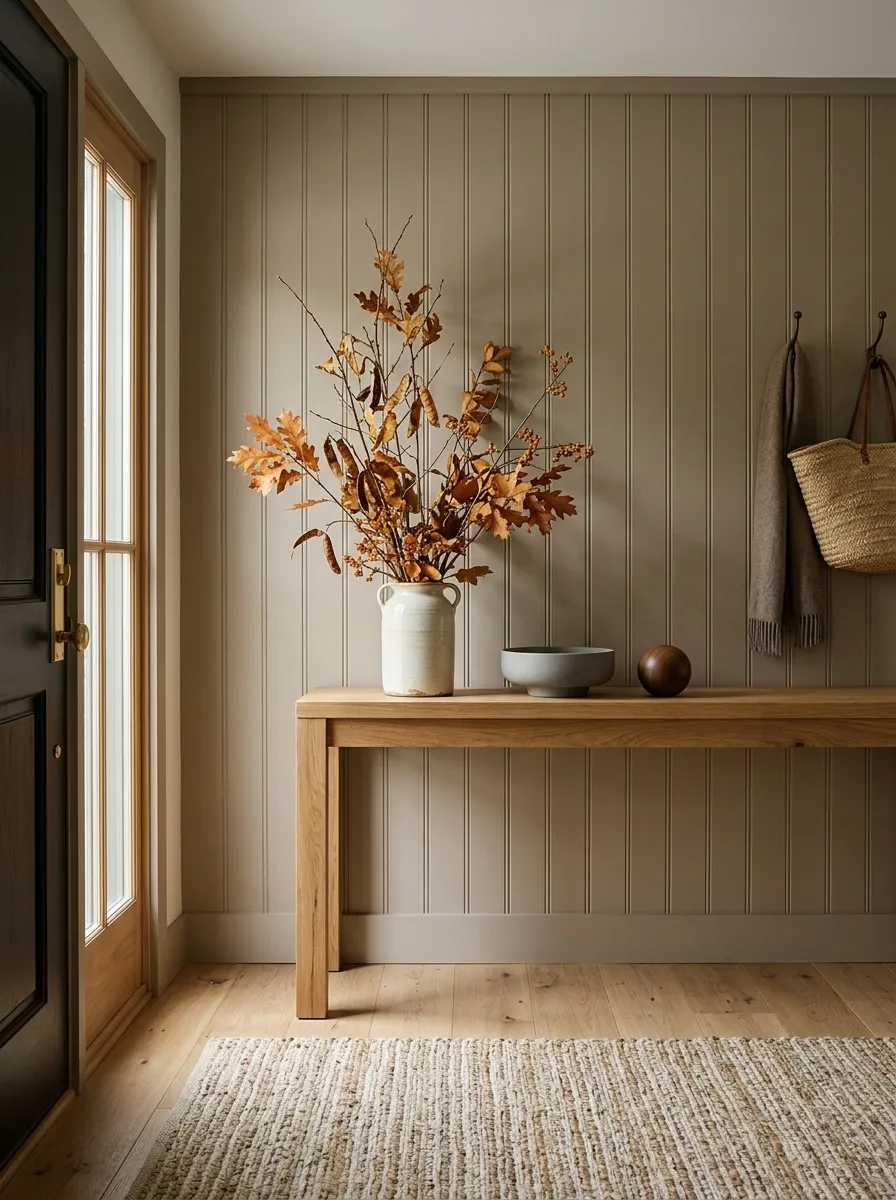
Entryways don’t need a giant display. They need a strong first layer and a little texture.
Start with the surface people see as they walk in. A simple vase with branches, a small ceramic bowl, and one seasonal object can do more than a crowded console.
Then look down. A woven runner or muted mat adds warmth at floor level and makes the area feel connected.
Build it from top to bottom:
- Add one tall element.
- Add one low functional piece.
- Repeat a warm natural material nearby.
- Leave part of the surface open.
That last step matters. A little empty space makes a small entryway feel calmer.
You don’t need more stuff. You need better placement.
Light Up the Room With Fall Leaves and Candles
Create an effortless evening ambiance by pairing a glowing string of leaf-shaped fairy lights with a cluster of simple pillar candles.
Arrange crisp paper-thin autumn leaves and warm glowing candles directly on a wooden surface to anchor the display with organic texture and soft light.
Cluster the candles in uneven heights to keep the arrangement feeling casual, gathered, and beautifully connected to the season.
Create a Wooden Dough Bowl Centerpiece
A long wooden dough bowl filled with white mini pumpkins makes an effortless centerpiece that brings instant texture to your dining table.
Nestle small white gourds alongside pinecones, faux eucalyptus leaves, and autumn foliage inside the rustic trough for a sophisticated seasonal display.
Place a tall glass candle holder with a simple pillar candle at one end to balance the length of the wooden bowl with height and warm light.
Use a Long Runner to Stretch Autumn Style Across the Table
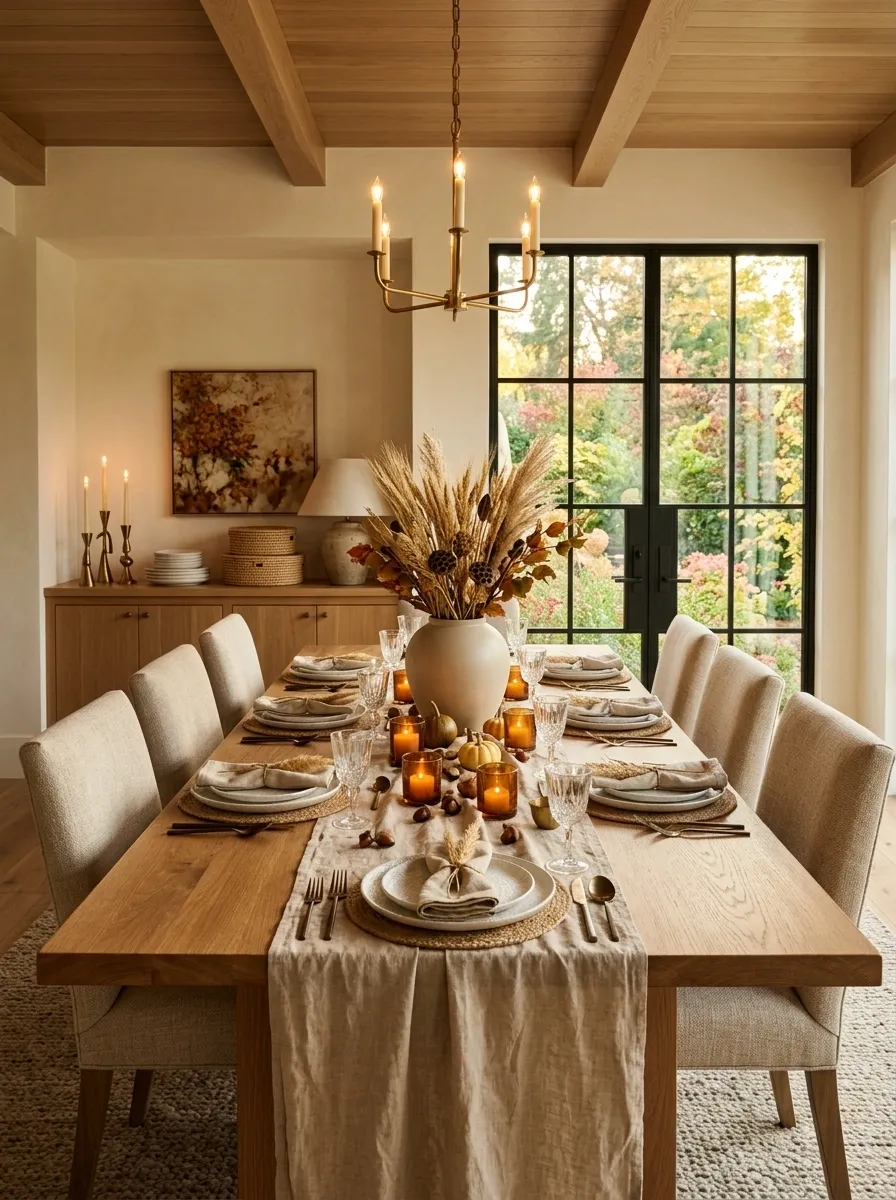
A dining table can look decorated from every angle without carrying a pile of seasonal objects.
Start with a long runner in linen, cotton, or another relaxed fabric. Then place a few larger pieces along the center instead of scattering tiny objects across the entire tabletop.
Keep the center low enough that people can still talk across the table.
A simple arrangement works best:
- Runner first.
- Add one central vessel.
- Place a few candles or small natural accents around it.
- Repeat one material at the ends.
The runner creates the visual path. The centerpiece simply follows it.
Center vessel
Low candlelight
Natural accents
The goal isn’t to fill the table. It’s to create one long visual line that makes the whole dining area feel connected.
Group Candles Instead of Spreading Them Around the Room
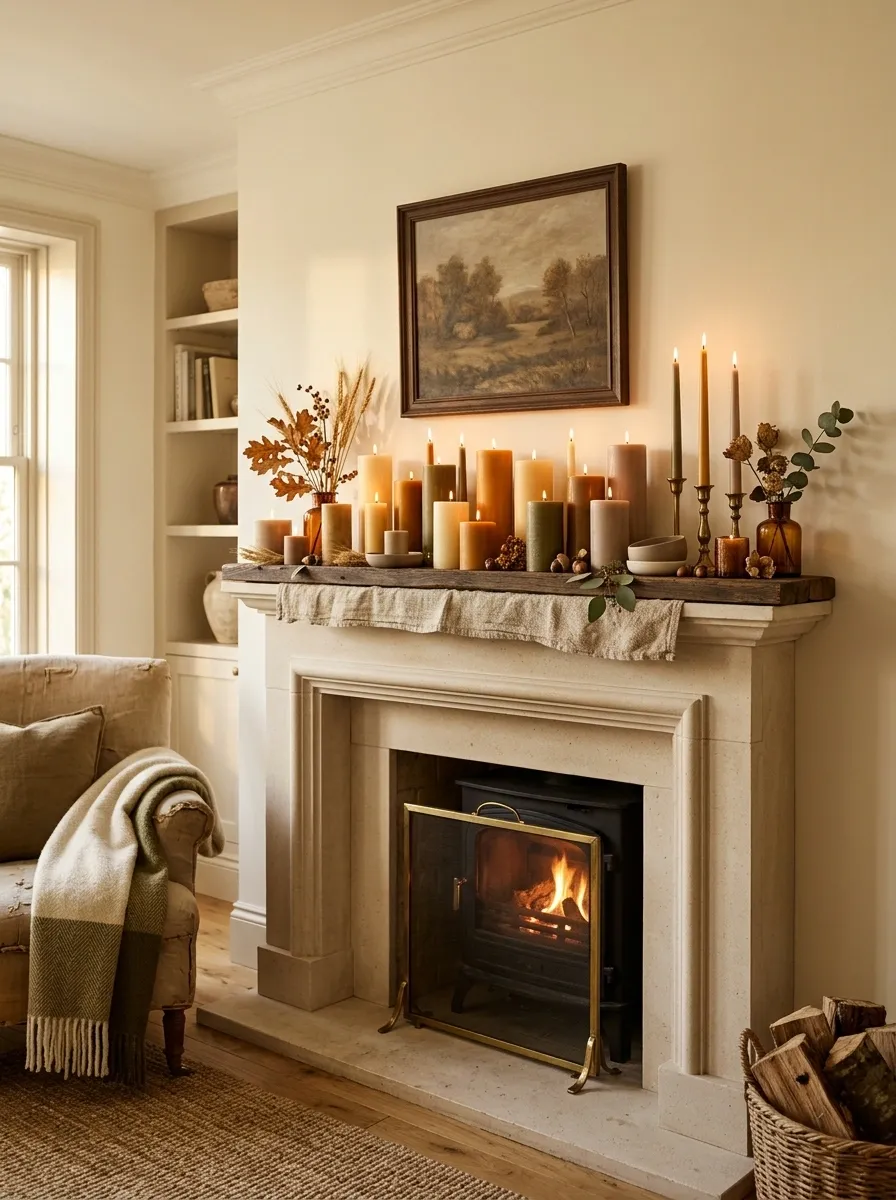
Scattering single candles across every surface makes a room look decorated in pieces. Grouping them creates a much stronger visual moment.
Put two or three candles together on a tray, shallow dish, or small wooden board. Vary their heights, but keep their colors related so the group feels intentional.
This works especially well on a mantel, console, dining table, or bathroom counter.
Keep the group contained. A small tray stops the arrangement from slowly spreading into clutter.
Give the Coffee Table One Strong Seasonal Centerpiece
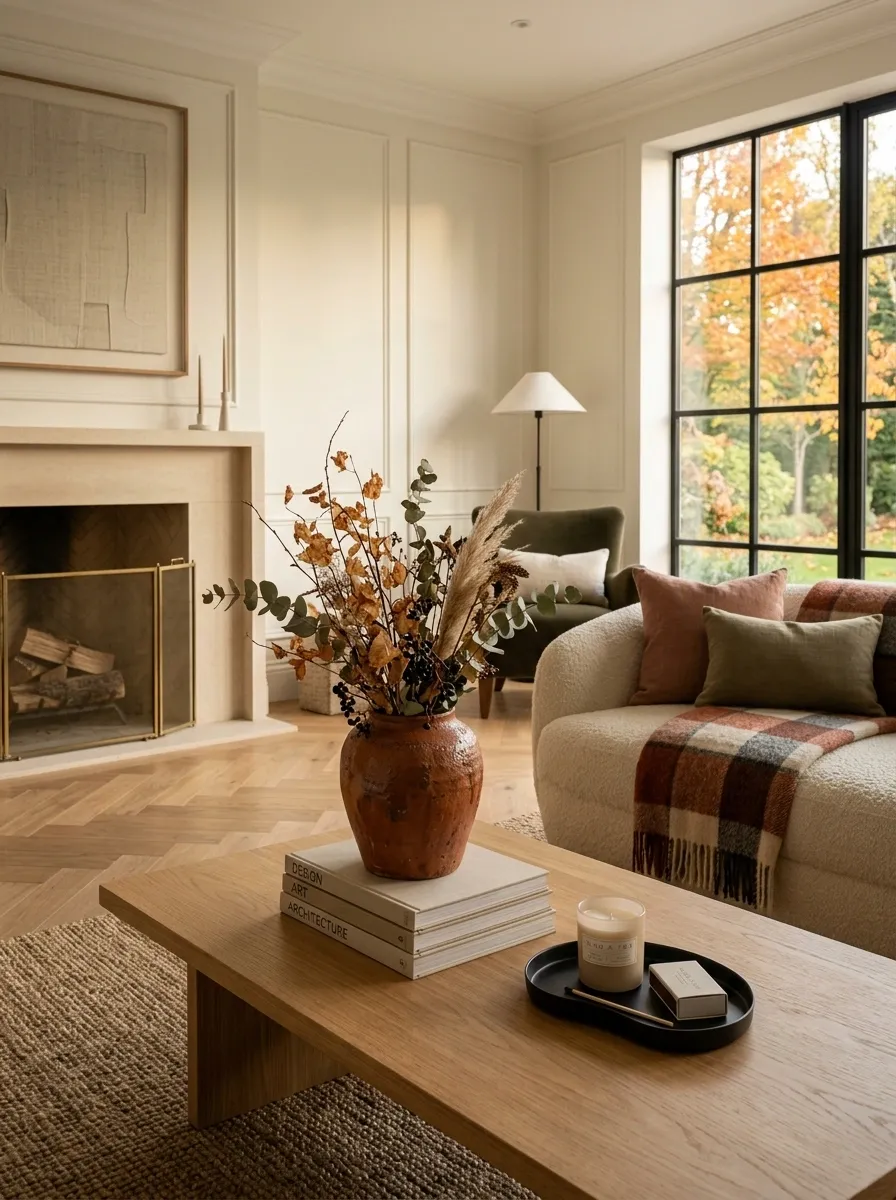
Coffee tables get messy fast, especially once autumn accessories start competing with remotes, books, drinks, and everyday items.
The fix is to make one centerpiece do the seasonal work.
A low bowl filled with natural elements, a substantial ceramic vessel, or a compact branch arrangement gives the table a clear center without blocking the room.
Then leave the rest functional.
The biggest mistake here is turning the coffee table into a miniature store display. Keep it useful.
Use Baskets to Bring in Warm Texture Without Adding Clutter
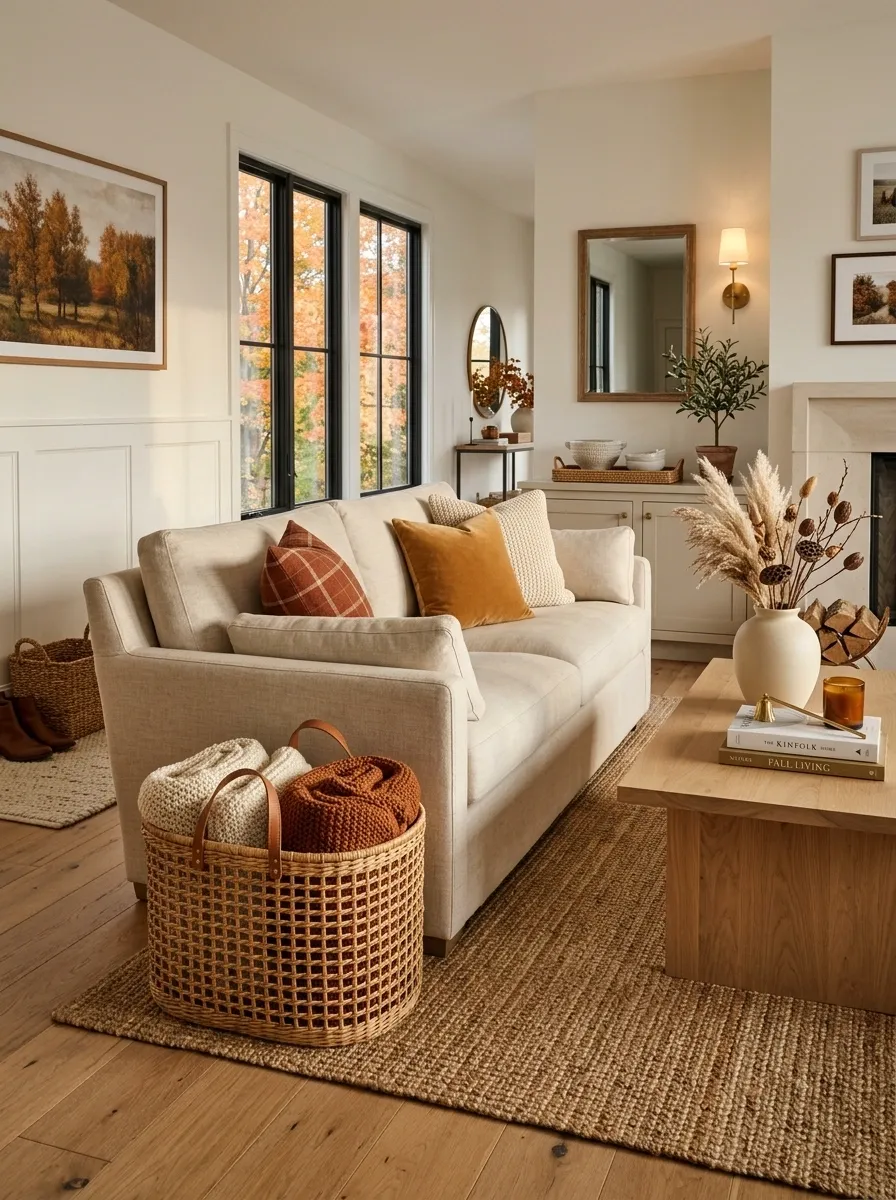
Baskets do something seasonal decor often fails to do: they can look good while solving a real storage problem.
Use one beside the sofa for blankets, another near the entry for shoes or bags, or a smaller one on an open shelf for loose everyday items.
The texture matters more than the basket shape. Woven fibers, natural reeds, and warm brown finishes instantly make a room feel less stark.
Best rule: one basket should solve one problem.
A basket with nothing inside usually looks like decor. A basket holding something you actually use looks like part of the room.
Frame the Front Door With Asymmetrical Autumn Layers
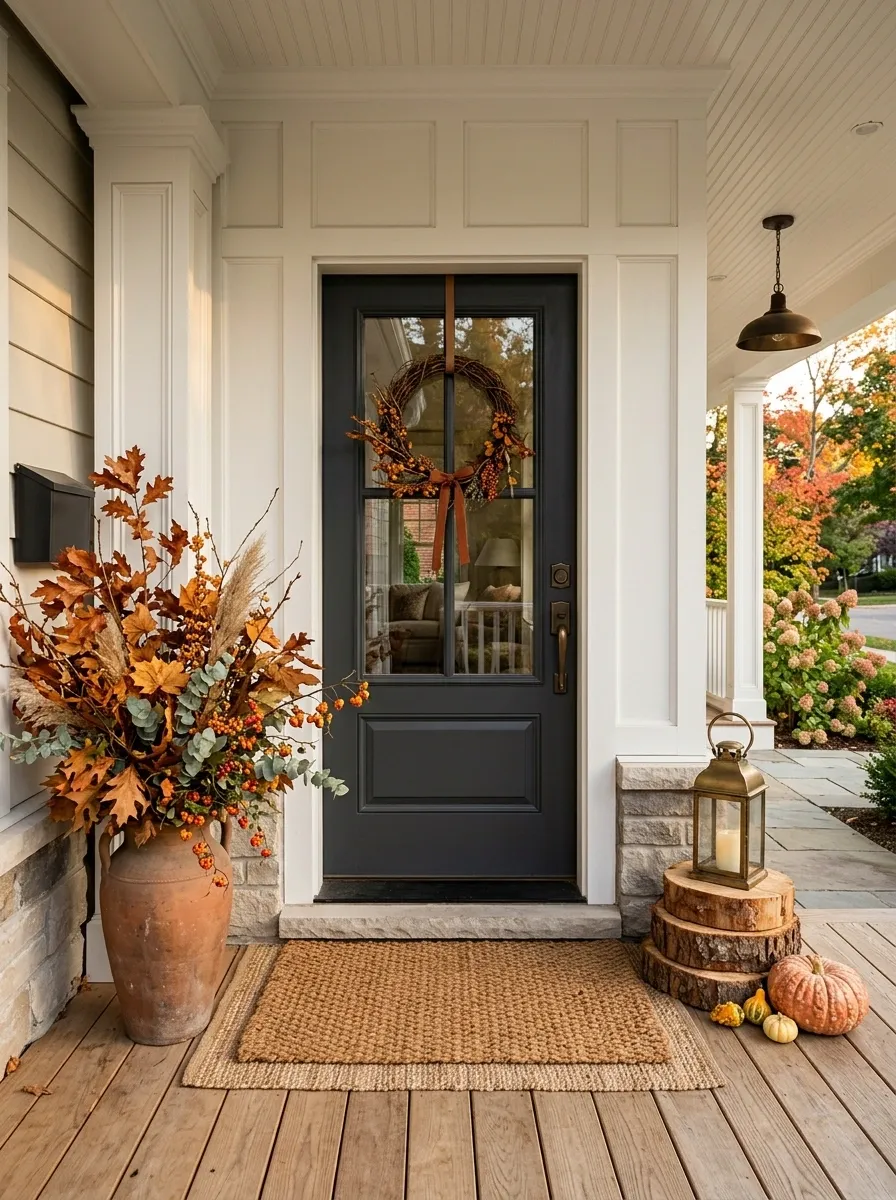
A perfectly even wreath and matching planters can make a porch look flat. Asymmetry gives the entrance more depth.
Put your strongest seasonal element slightly off-center. Then balance it with something lower and quieter on the other side.
That could mean a fuller arrangement on one side of the door with a simple lantern or planter on the other.
The entrance should feel layered, not mirrored.
Stand back from the doorway before adding anything else. If the entrance already has a clear visual weight, stop.
Mix Wood, Woven Texture, and Ceramic for a Warmer Fall Look
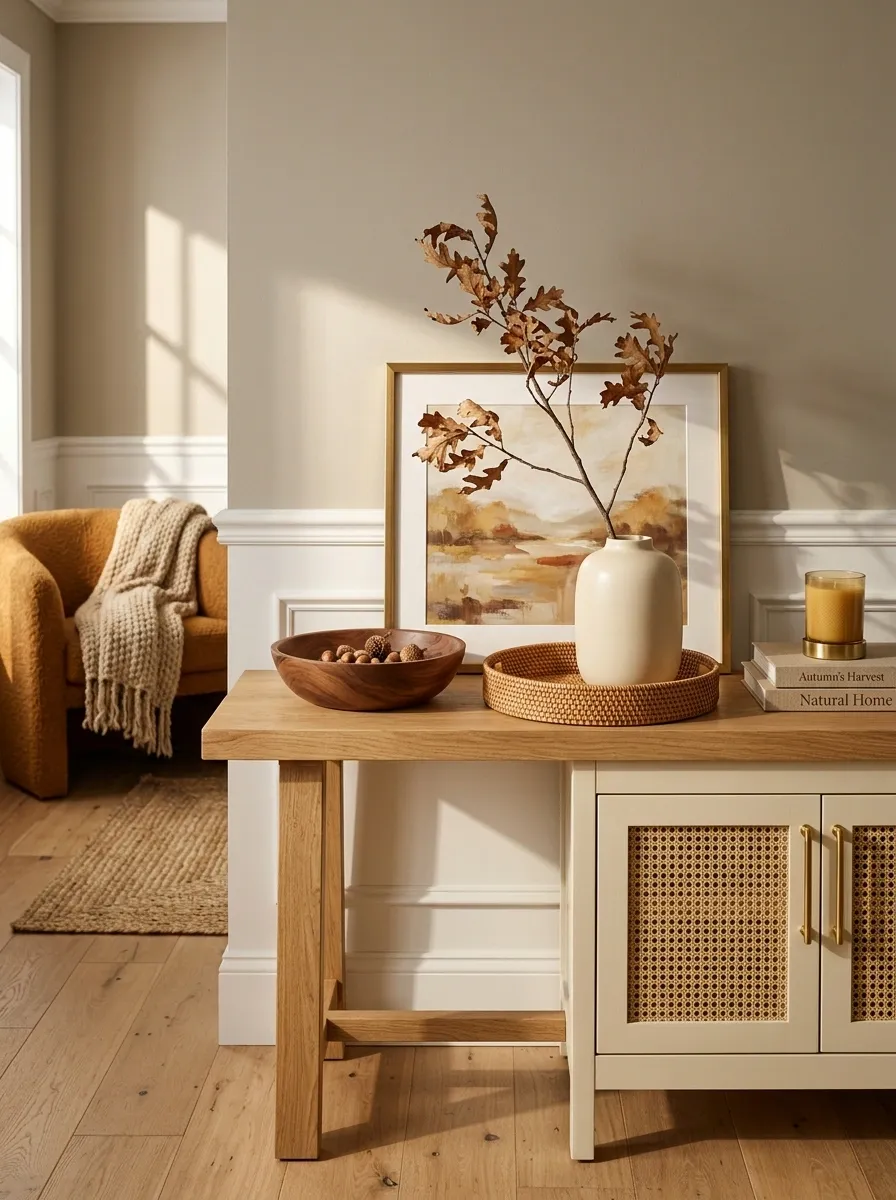
Autumn decor gets much richer when the materials do the work instead of the color.
Pair a warm wood piece with something woven and one ceramic object. The contrast between rough, matte, and smooth surfaces gives the room depth without needing more accessories.
Try this combination on a shelf, console, or sideboard.
Material pairing guide
- Wood: grounding and warm
- Woven fiber: soft visual texture
- Ceramic: clean contrast
Don’t buy all three pieces at once just to match a theme. Start with what you own and add only the missing material.
The room will feel more layered because the surfaces are different, not because you’ve added more autumn symbols.
Turn Open Shelves Into Controlled Autumn Displays
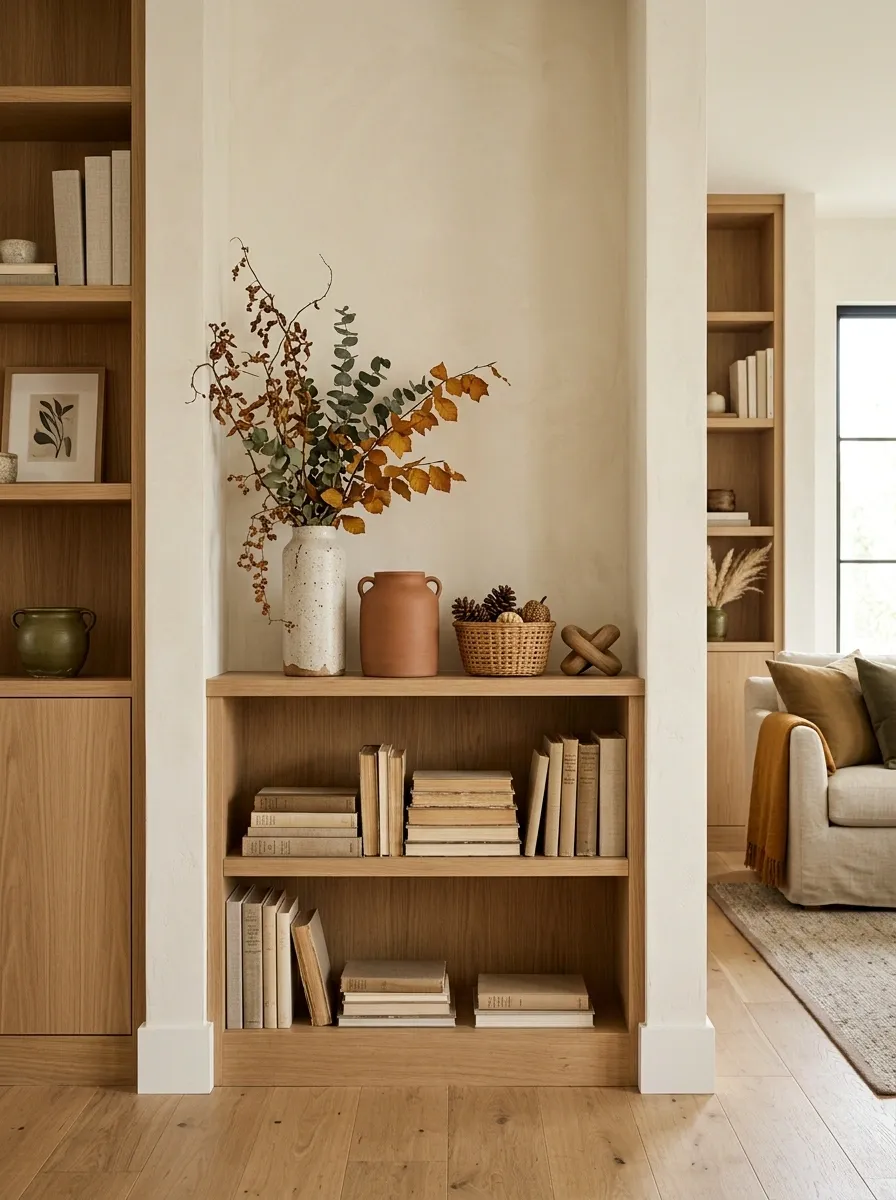
Open shelving doesn’t need a fall object on every level. That usually makes the shelves look smaller and busier.
Instead, give each shelf a job. Keep books or everyday pieces on one level, then introduce one seasonal grouping on another. Leave some areas quiet so the display has room to breathe.
Use height changes to keep the eye moving.
The empty space isn’t wasted. It’s what keeps the seasonal pieces from blending into a wall of stuff.
Use Small Pumpkin Clusters Instead of Scattered Mini Pumpkins
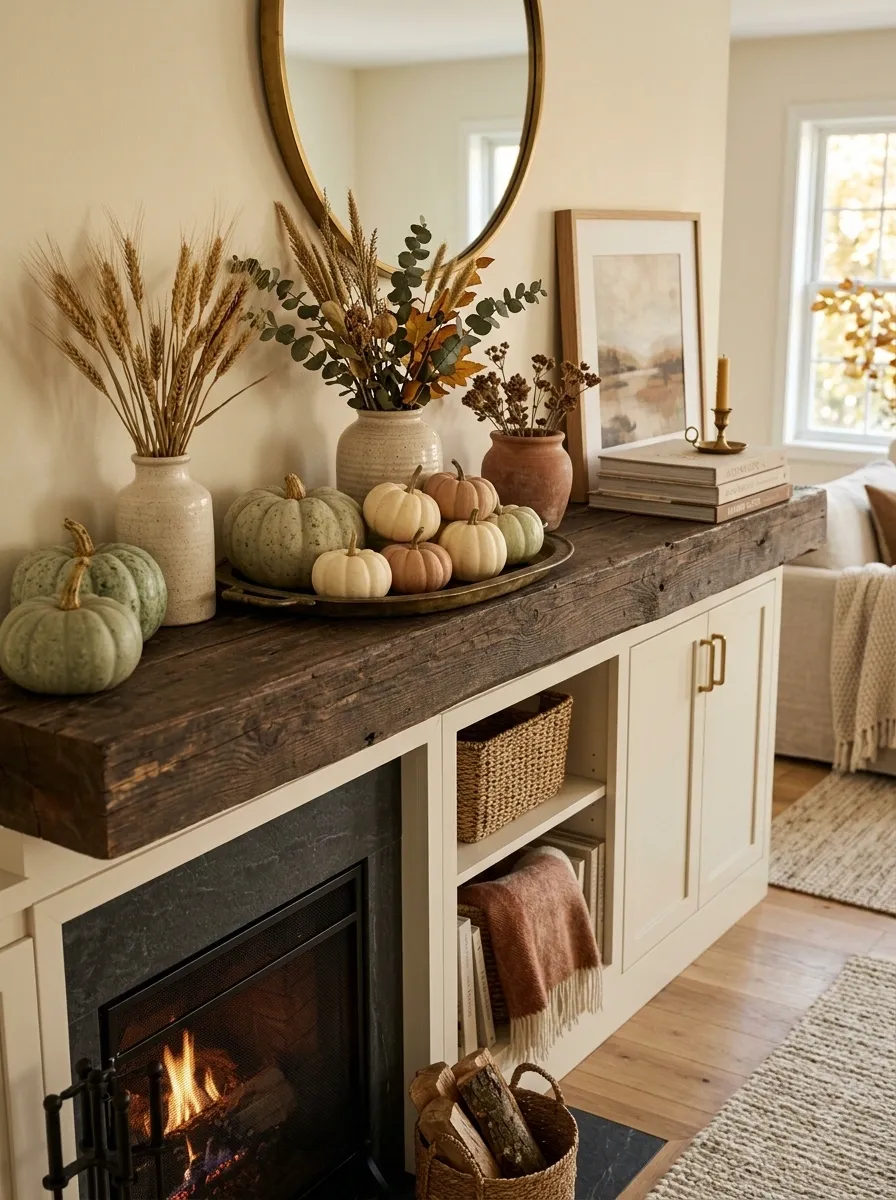
Tiny pumpkins look much better in groups than when they’re scattered randomly across a room.
Choose a few in related colors and place them together on a tray, bowl, mantel corner, or shelf. Vary the sizes slightly so the cluster has shape.
Keep the cluster contained. Once individual pumpkins start appearing on six different surfaces, the room loses its focus.
A tight grouping also makes each pumpkin easier to notice, which means you can use fewer pieces and still get the seasonal effect.
Add Autumn Color Through Artwork Instead of Accessories Alone
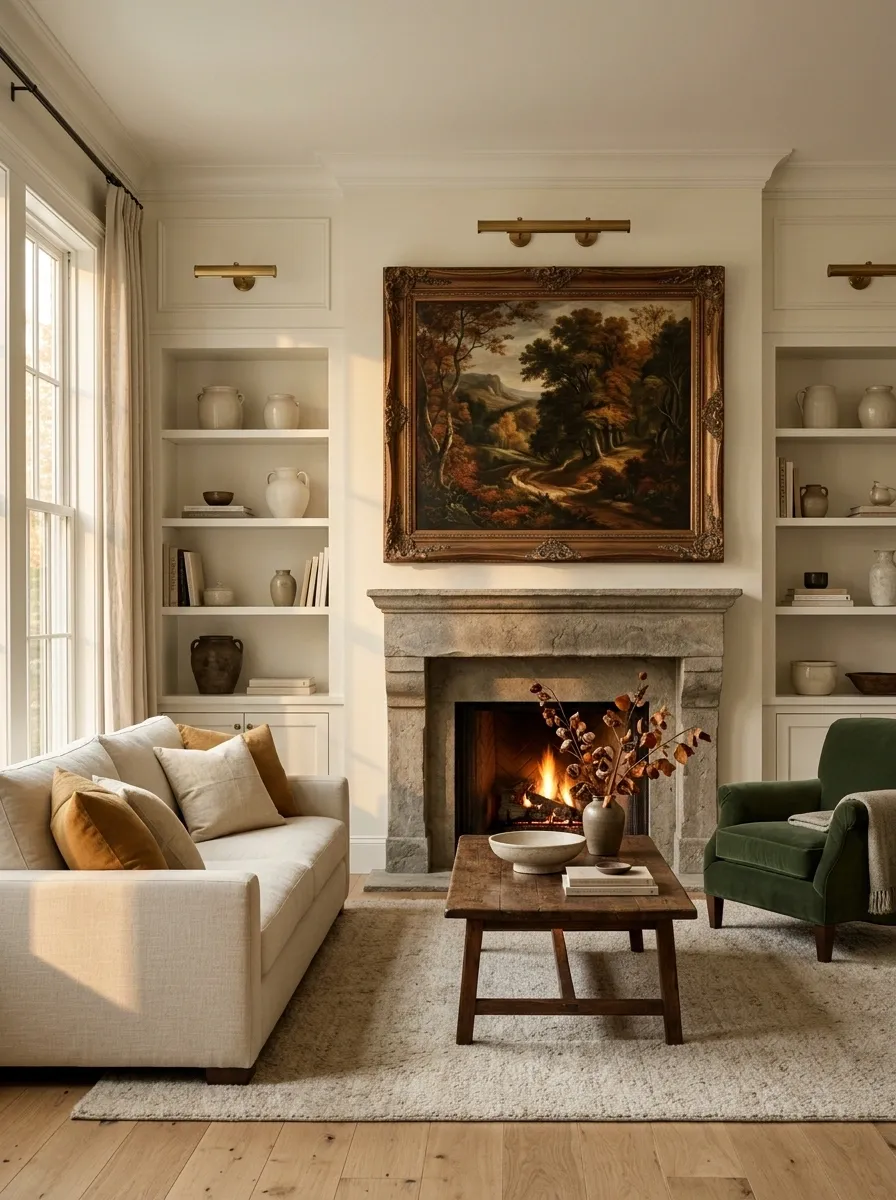
Changing every pillow and decorative object isn’t the only way to shift a room into fall.
Artwork gives you a larger color field, which makes the seasonal palette feel intentional instead of sprinkled around the room.
Look for prints with rust, ochre, deep green, cream, charcoal, or warm brown. A landscape, abstract piece, botanical print, or vintage-style artwork can carry those colors without being obviously seasonal.
This is especially useful when you want autumn color without buying a pile of seasonal accessories.
Bring Fall Into the Kitchen With Functional Seasonal Details
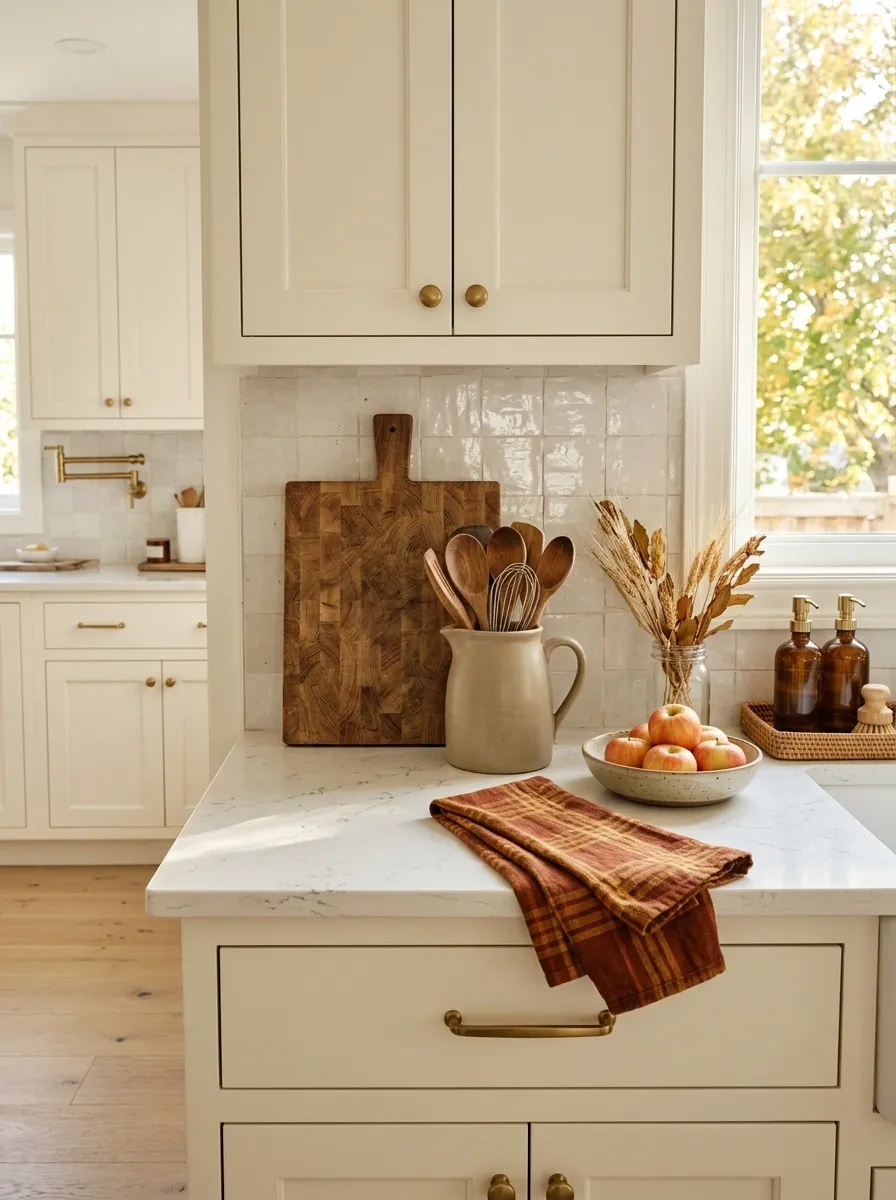
The kitchen shouldn’t look like another decorated room. It should still work.
That’s why functional autumn details are so effective here. Swap bright dish towels for warmer tones, place a wooden cutting board against the backsplash, or bring in a ceramic pitcher that doubles as a utensil holder or serving piece.
Keep the seasonal changes close to things you already use.
The best kitchen decor earns its place twice: it looks seasonal and it gets used.
Use Plaid in One Focused Spot Instead of Everywhere
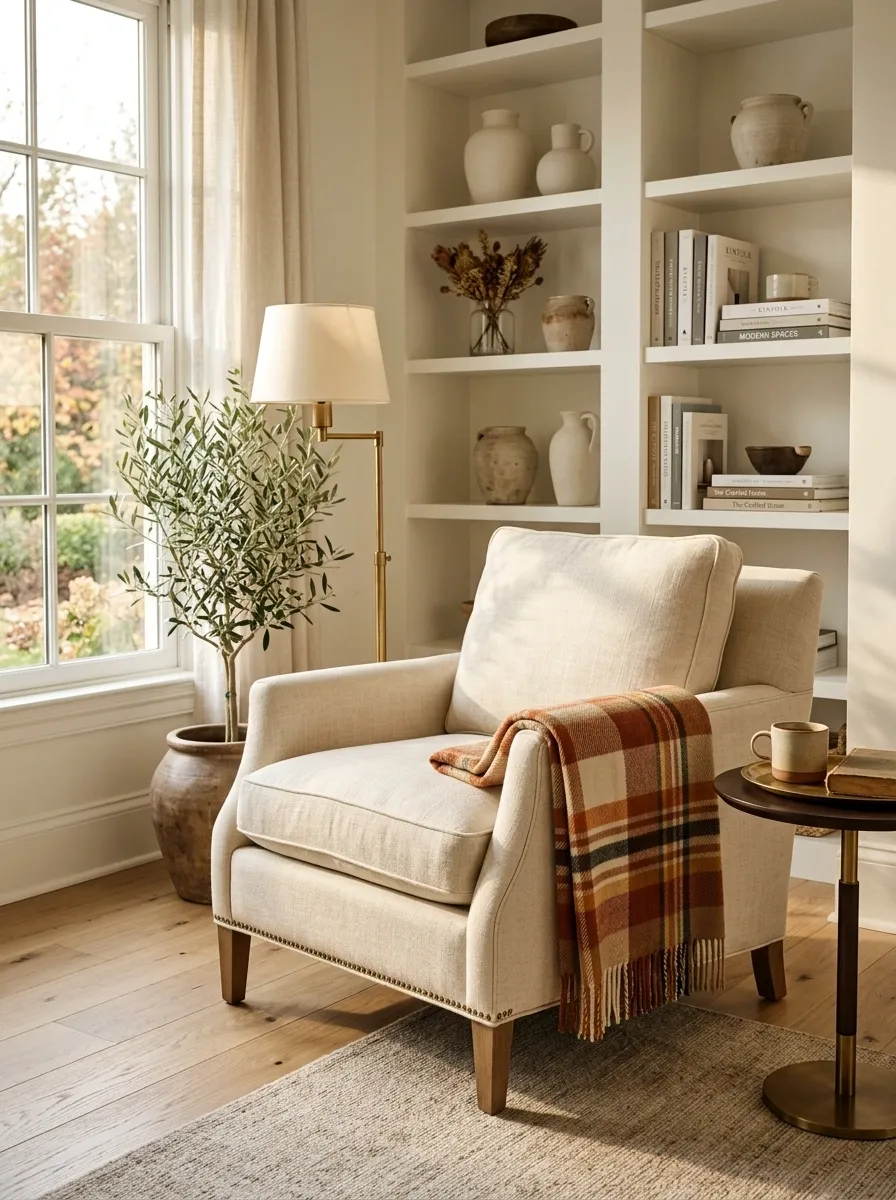
Plaid has a strong fall association, which is exactly why too much of it starts looking forced.
Choose one place for it. A folded throw on an armchair, a single lumbar pillow, or a small table runner is enough to signal the season.
Keep the surrounding pieces quieter so the pattern has room to stand out.
Best rule: let plaid be the accent, not the background.
Create a Reading Corner With One Chair, One Throw, and One Lamp
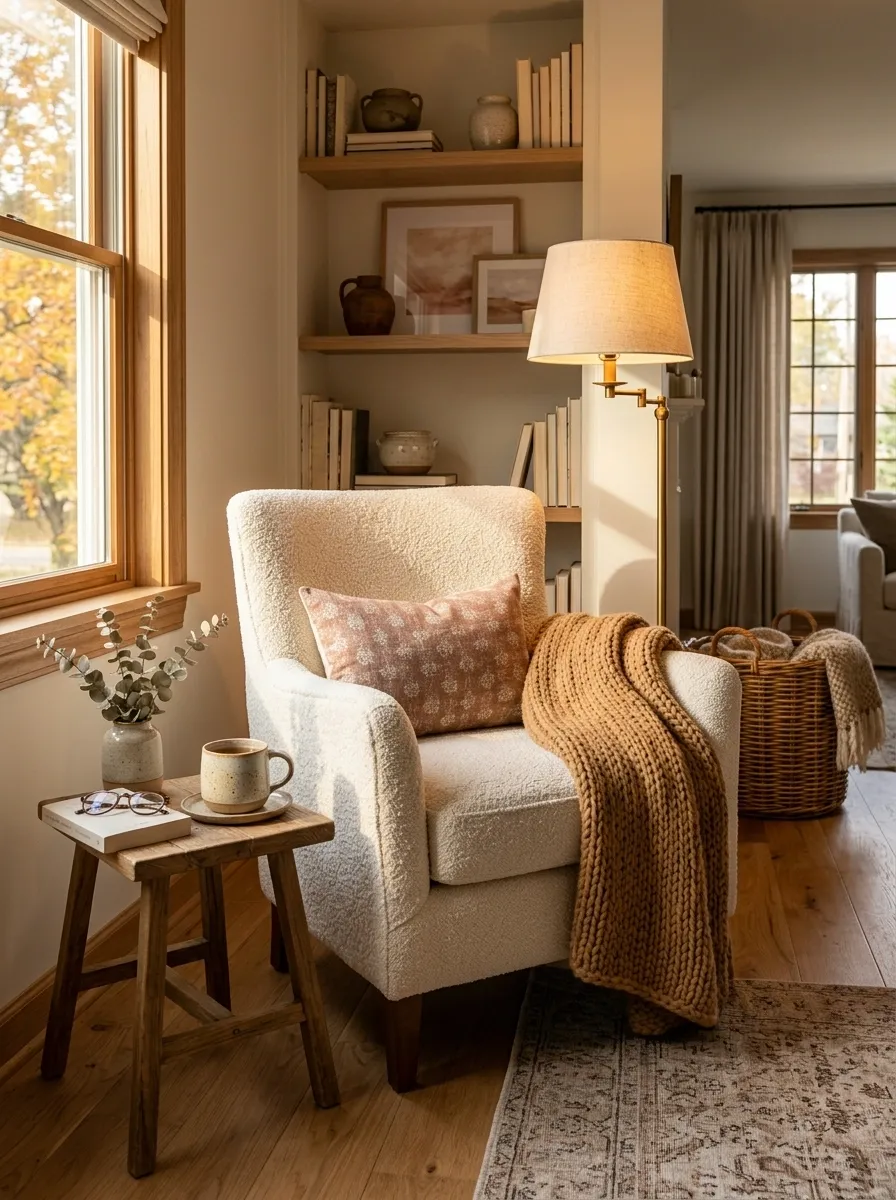
A reading corner doesn’t need a complete makeover. The right three pieces can give an empty corner a clear purpose.
Start with a comfortable chair. Add a throw for texture, then place a floor or side lamp close enough to make the chair genuinely usable.
That’s the whole structure.
A seasonal corner works best when it feels useful first and decorative second. Add a small side table only if you actually need somewhere for a book or drink.
Replace Bright Summer Accents With Deeper Everyday Neutrals
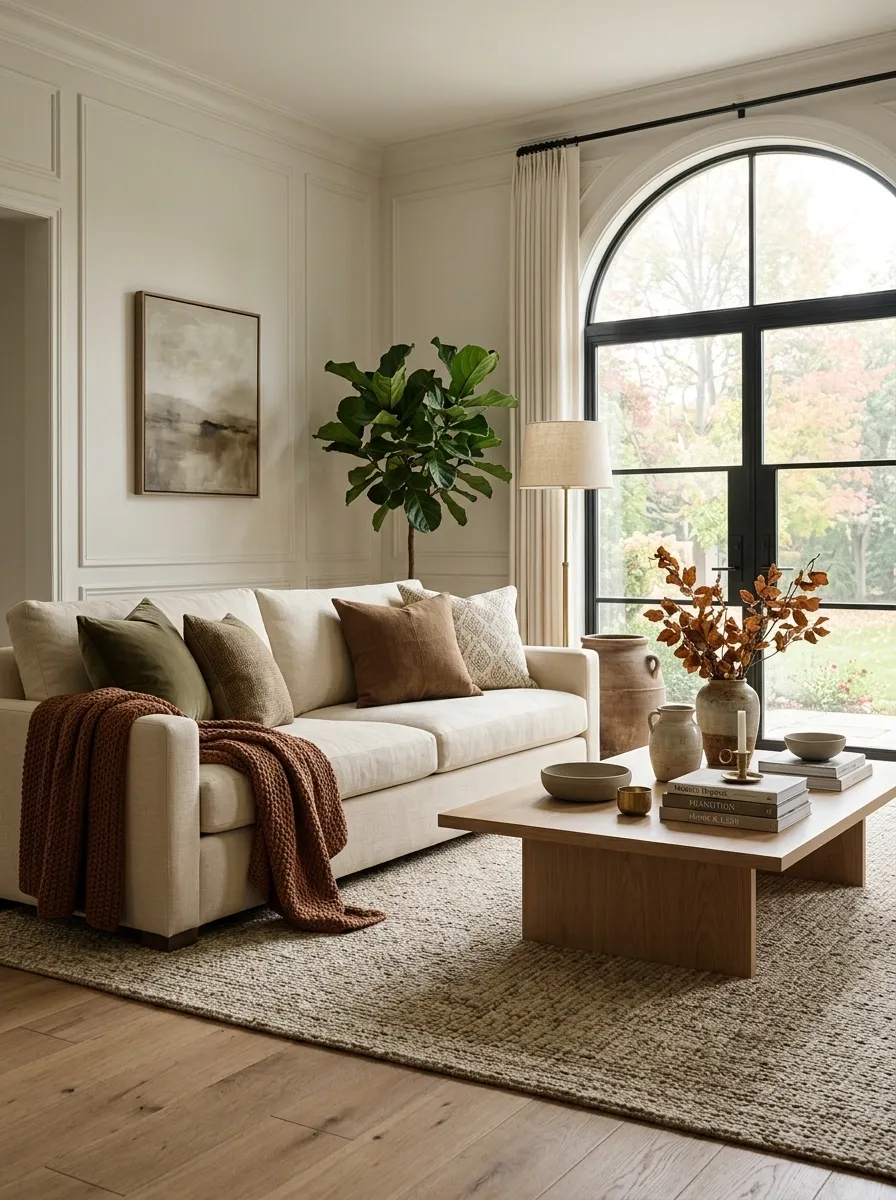
You don’t have to replace an entire room to make it feel more autumnal.
Look for the brightest summer accents first. A pale blue cushion, bright white vase, or colorful lightweight throw can often be swapped for a deeper neutral.
Think clay, tobacco brown, warm cream, muted olive, or charcoal.
The smart move is substitution, not accumulation.
This method costs less, creates less storage clutter, and makes the seasonal change easier to reverse later.
Decorate the Staircase With Repetition Instead of Random Objects
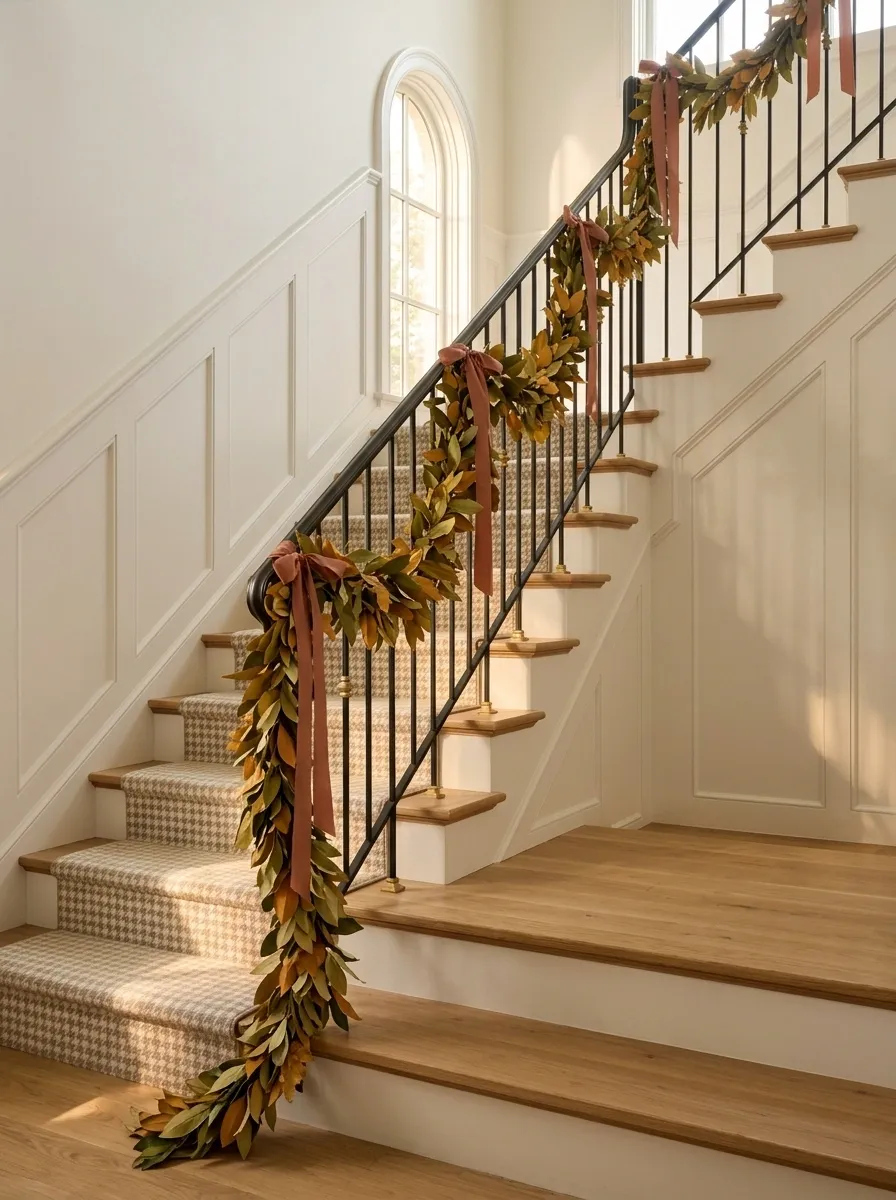
Staircases naturally create a rhythm, so your decor should follow that rhythm instead of fighting it.
A simple garland, repeated ribbon treatment, or a series of similar accents can make the staircase feel intentional. The key is consistency.
Avoid placing a different seasonal object on every step. That’s where the display starts looking random.
Repetition makes a staircase look styled. Random placement makes it look decorated.
Use Dried Stems to Add Height Without Filling Every Surface
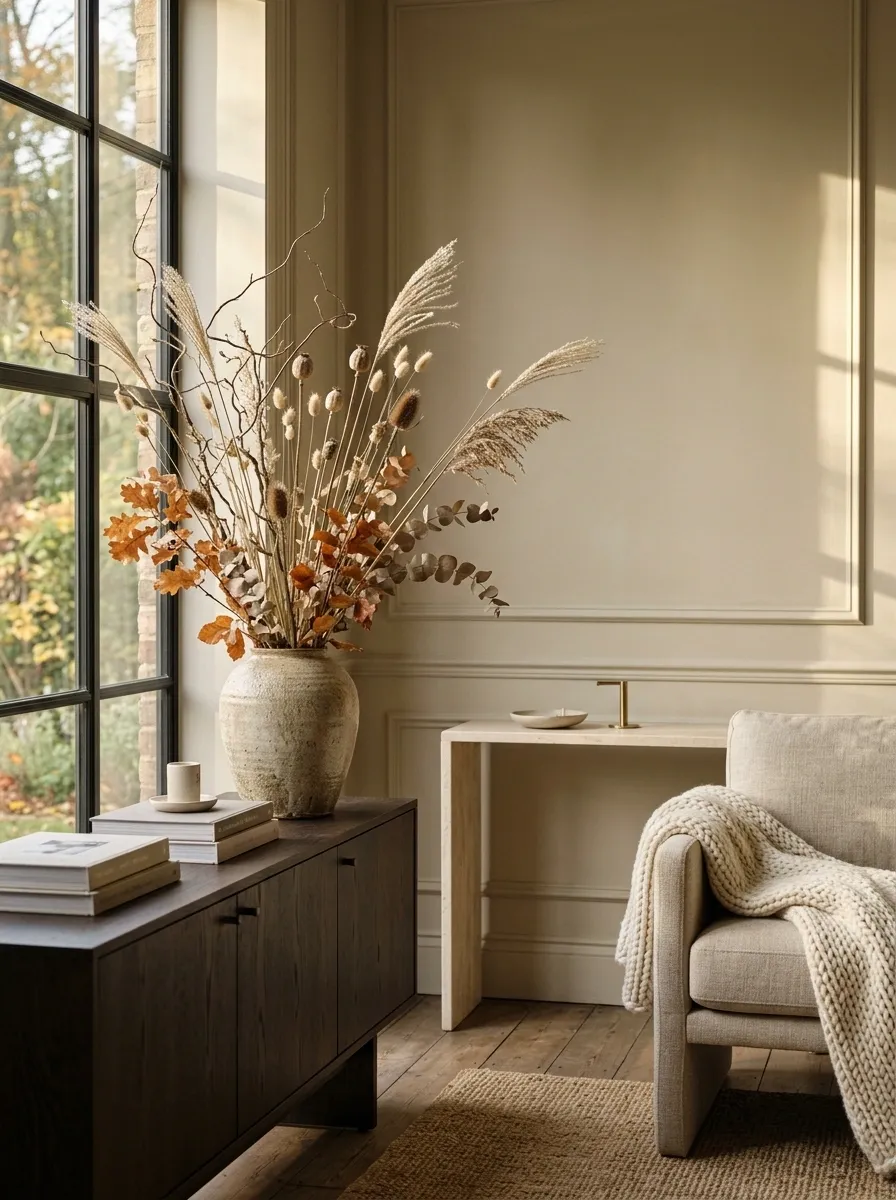
Sometimes a room simply needs more vertical interest. Dried stems solve that without requiring a large decorative collection.
Place a tall arrangement on a console, sideboard, or empty corner. Let the stems extend above nearby furniture so the eye has somewhere to travel.
Muted grasses, branches, seed heads, and faded foliage all work well because their texture already feels seasonal.
Choose height before color.
The best arrangement shouldn’t look like it came straight from a gift shop. Give the stems some space and let their natural shapes show.
Make the Bedroom Feel Autumnal With Layered Bedding
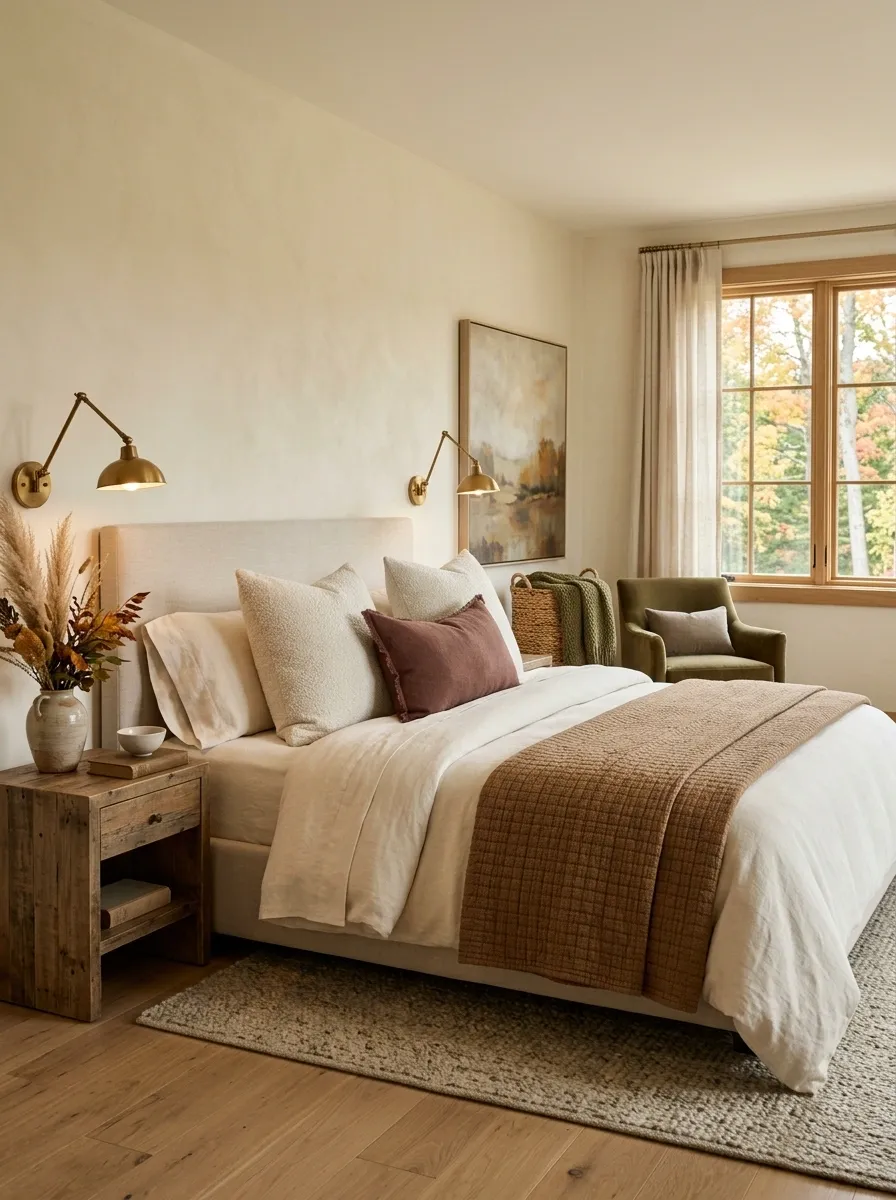
The bedroom doesn’t need obvious seasonal decorations to feel like fall. Bedding does the job better.
Start with your everyday sheets, then add a warm quilt or blanket, two textured pillows, and one deeper accent at the front. Cream, brown, muted rust, and olive all work without making the bed feel overly themed.
The key is layering thickness and texture, not piling on pillows.
Fold the top blanket instead of spreading every layer flat. That small change gives the bed more depth and keeps it looking relaxed.
Style the Bathroom With Small Seasonal Details That Still Feel Useful
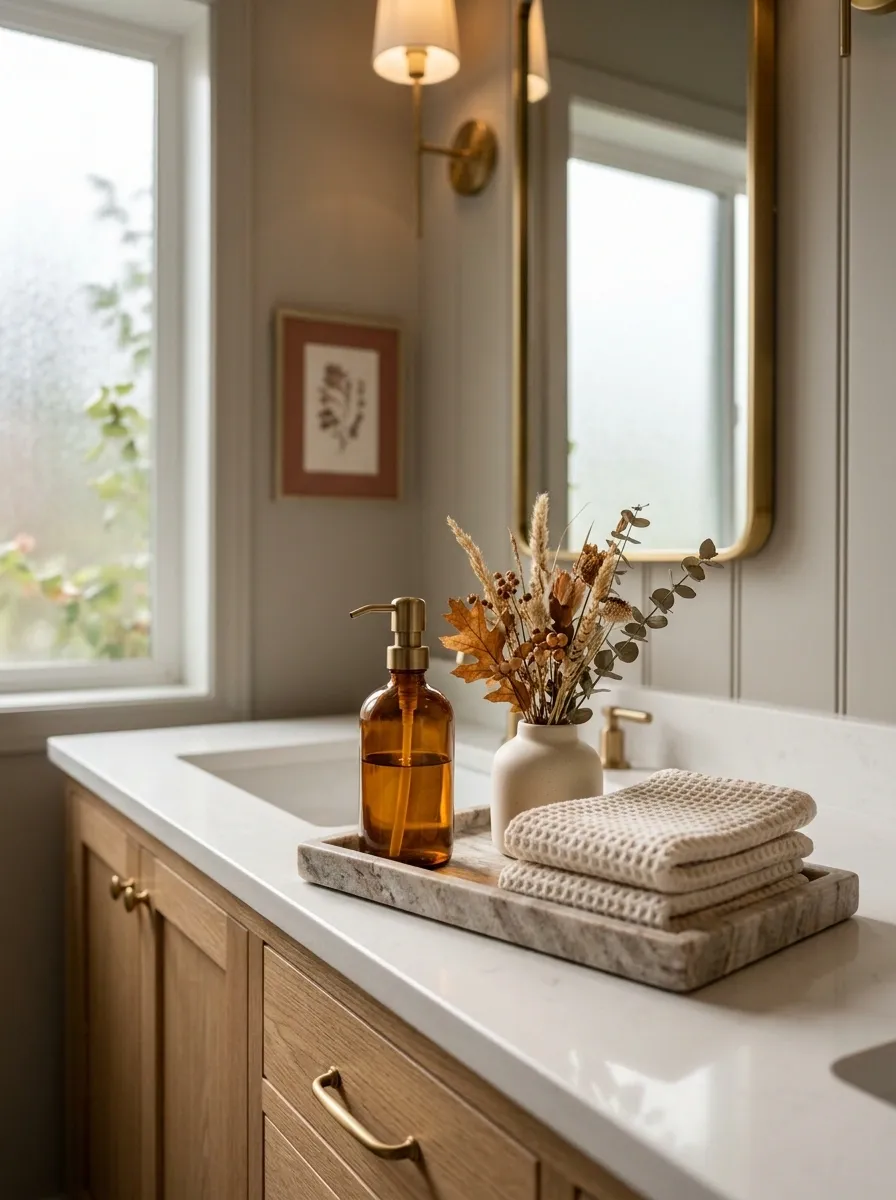
Bathrooms are easy to overdecorate because they’re usually smaller rooms. Keep the seasonal touches tied to things already sitting there.
Swap hand towels, add a warm-toned soap dispenser, or place a small ceramic vessel near the sink. A simple tray can group the pieces so the counter doesn’t look scattered.
Bathroom rule: decorate the functional zones, not every empty corner.
That’s enough to make the room feel seasonal without sacrificing the clean, practical quality a bathroom needs.
Create a Rustic Fall Moment With Wood, Metal, and Linen
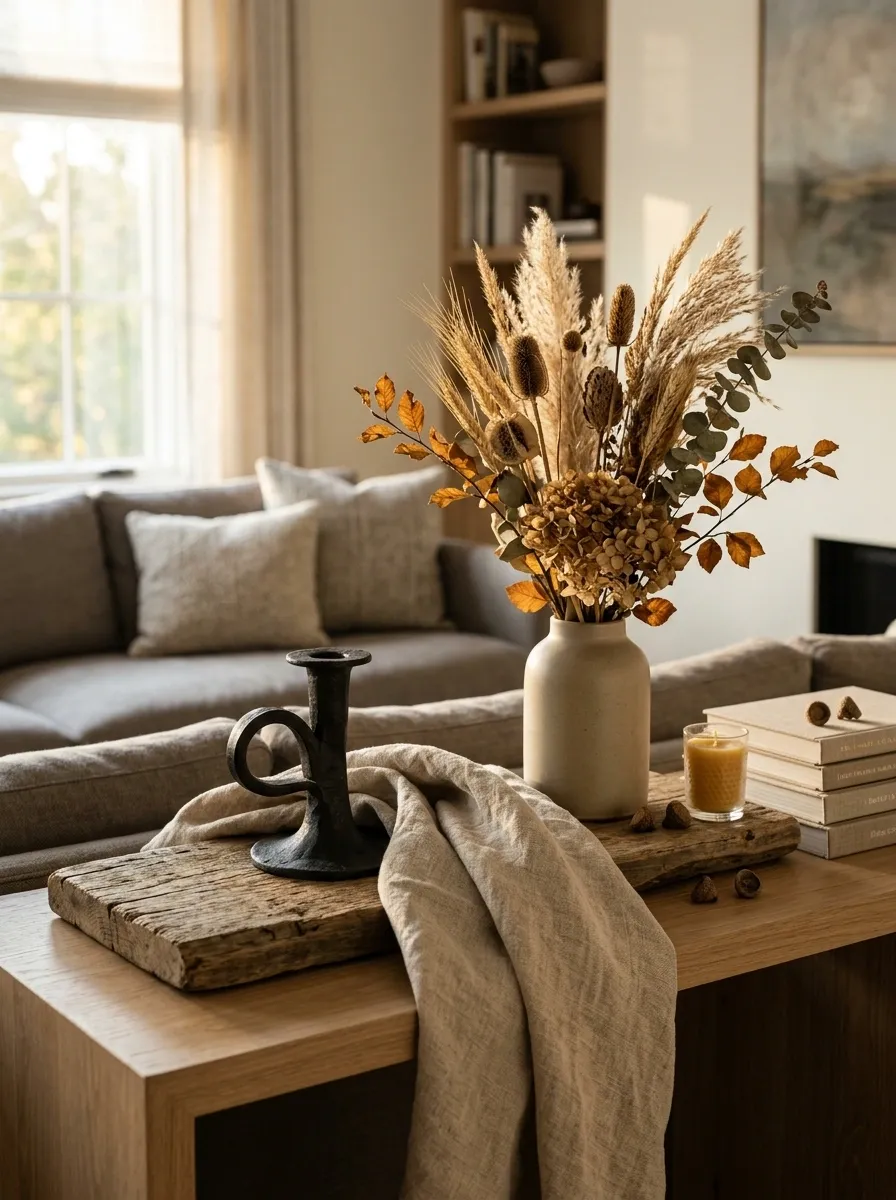
Rustic autumn decor works best when the materials feel collected rather than matched.
Place a warm wooden board or tray beside a darker metal object, then soften the arrangement with linen. The contrast gives you that worn-in fall feeling without relying on obvious seasonal signs.
Use the combination on a dining console, kitchen counter, coffee table, or shelf.
Don’t make every piece rustic. One rough surface against cleaner furniture is enough to create the contrast.
Keep Outdoor Autumn Decor Focused Around the Main Entrance
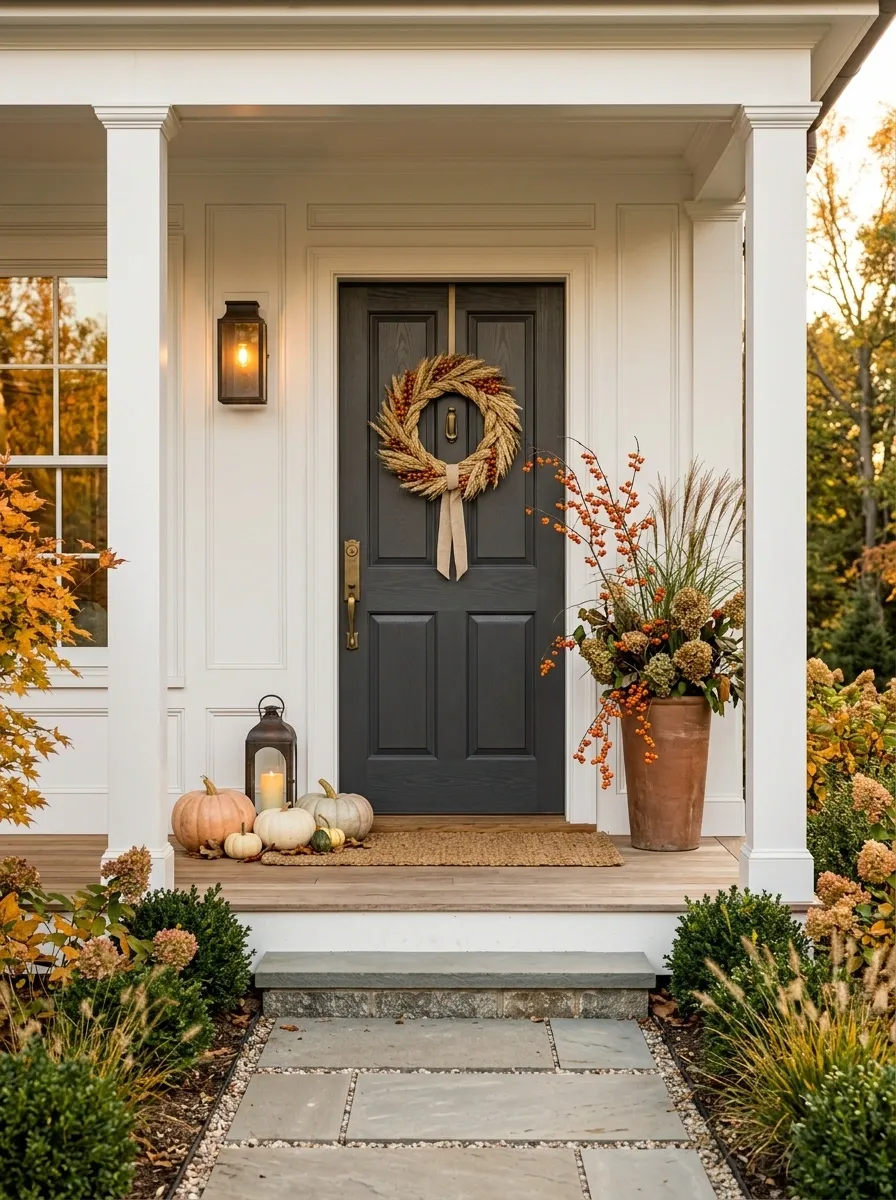
Outdoor decorating gets cluttered even faster than indoor decorating because large planters, signs, wreaths, lanterns, and pumpkins all compete for attention.
Start at the front door and work outward.
Use one taller element near the entrance, one lower grounding piece, and a clear path to the door. Keep extra seasonal objects away from the walking area.
Porch placement guide:
- Frame the doorway first.
- Add height with a planter or branch arrangement.
- Ground one side with a low basket, pot, or lantern.
- Stop before the entry feels crowded.
The entrance should welcome people in, not make them weave around decorations.
Finish the Room With One Final Detail That Ties Everything Together
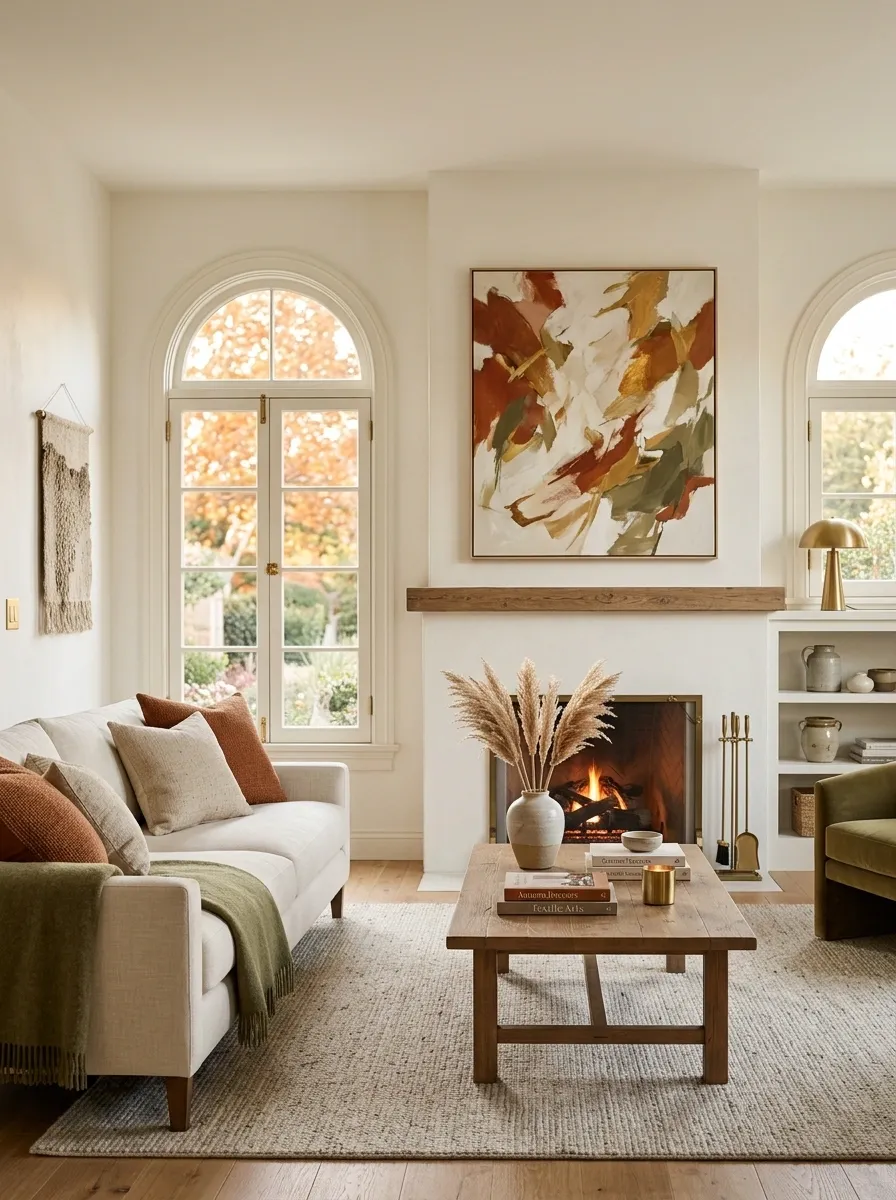
A room can have all the right autumn pieces and still feel disconnected. The final step is repetition.
Look around and find the one warm tone, material, or texture that appears once. Repeat it somewhere nearby. Maybe the rust in a pillow needs to appear in artwork. Maybe the wood on the mantel should show up on the coffee table.
Then stop decorating.
That’s the part people skip. Once the room has a clear focal point, a controlled autumn palette, and repeated materials, adding more usually weakens the result.
A Better Way to Finish Your Autumn Decor
Start with the room’s strongest feature. Give it the richest seasonal treatment. Then work outward with smaller changes that repeat the same colors, materials, or textures.
And edit as you go.
Take one thing away before you add another. Move objects around until the eye can travel through the room without hitting a wall of decorations. Keep useful pieces useful. Let furniture and empty space do some of the visual work.
That’s how autumn decor starts feeling warm instead of themed.
You don’t need every seasonal trend in your house. You just need a few choices that feel right together.
Save this list for your next fall decorating day, especially when the house feels close but not quite finished yet.