
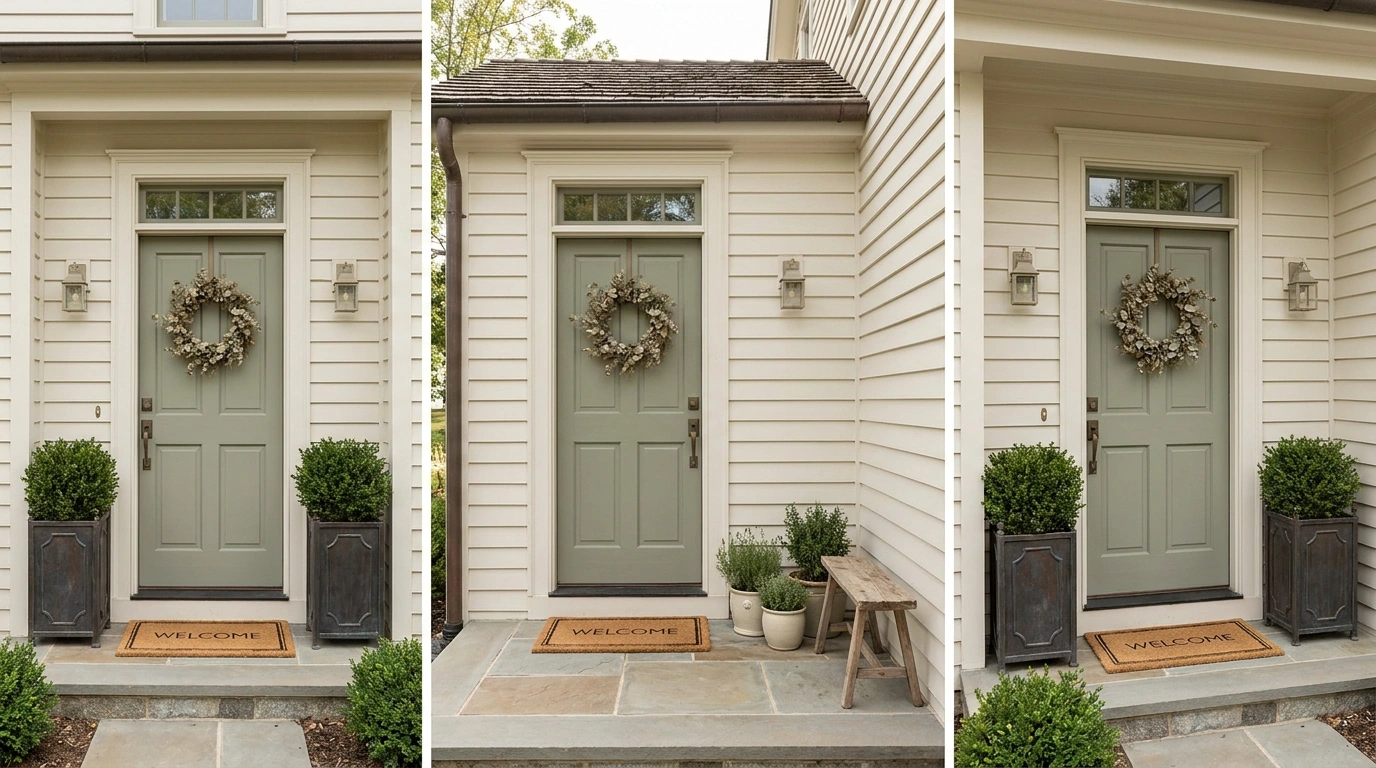
A front door can make a tiny porch look intentional, or make the whole entrance feel like an afterthought. The difference usually isn’t the size of the porch. It’s what happens around the door.
Too many decorations crowd the landing. Too little styling leaves the doorway looking disconnected from the rest of the house. And the common habit of choosing a door first, then trying to force everything else around it, often creates a collection of nice things that don’t actually belong together.
The better approach is to design the entrance as one scene. Let the door establish the direction, then use the surrounding siding, trim, lighting, flooring, planters, hardware, and planting to support it.
That makes small spaces much easier to handle. You don’t need more square footage to create a strong entrance. You need a clear focal point, a few well-chosen materials, and enough restraint to let each decision breathe.
Small Front Porch Doors With Complete Looks
Bold Black Door With Double Topiaries
This entry uses heavy contrast to turn a modest builder-grade porch into a distinct arrival point. A deep black double-door setup is flanked by tall matching planters holding double-ball topiaries, paired with a patterned doormat, layered lanterns, and a simple wooden house number sign.
The matching planters on either side create an instant sense of balance and structure without cluttering the floor space. Because the containers are tall and narrow, they draw the eye upward and add vertical presence to a shallow entryway.
It proves that you don’t need a sprawling wrap-around porch to make a statement. Clean geometry, disciplined symmetry, and dark finishes do all the heavy lifting here.
Deep Charcoal Door With Warm Cedar Surround
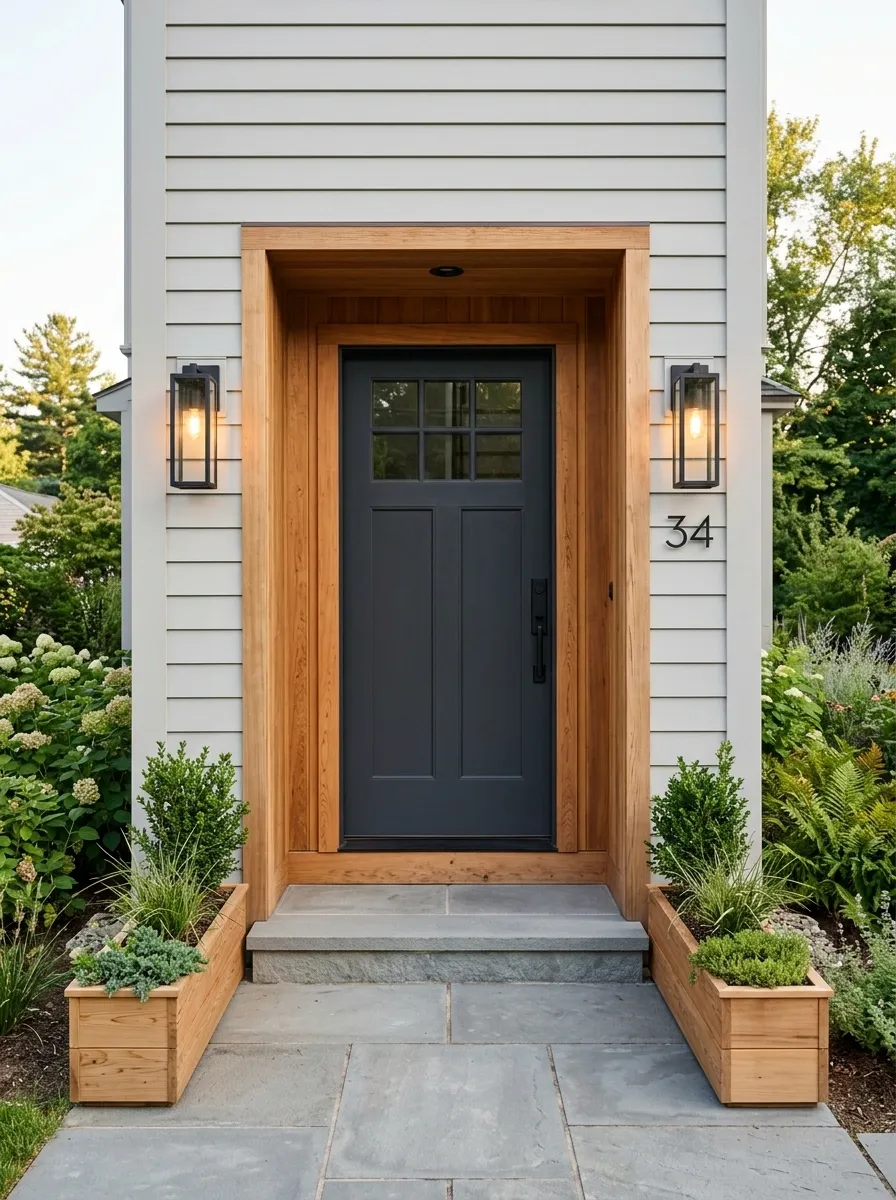
The door is the anchor here, and it earns that job. A deep charcoal paneled door sits inside a warm cedar surround, with pale siding, a soft stone threshold, slim black lanterns, and narrow cedar planters filled with uncomplicated greenery.
The contrast is strong without becoming harsh. The charcoal gives the small entrance architectural weight, while the cedar introduces enough warmth to keep the composition from feeling like a row of black-and-white finishes.
I’d keep the planters narrow and fairly quiet. The door already has enough presence. Covering the porch in decorative objects would only make the space feel smaller.
Blush Pink Door With Romantic Florals
A soft pink front door sets an unapologetically whimsical tone for this cottage-inspired entrance. The pastel hue is surrounded by crisp white siding, warm glowing lanterns, delicate string lights, and an explosion of trailing pink florals framing the entire doorway.
The botanical archway draws the eye inward and upward, transforming a standard porch opening into an enchanted garden portal. Terracotta planters and a rustic white bench finish off the composition without feeling overly staged.
It is proof that a small entryway can fully commit to a playful color palette. When the details are this charming, the porch feels less like an afterthought and more like a fairytale destination.
Muted Sage Door With Cottage Planting
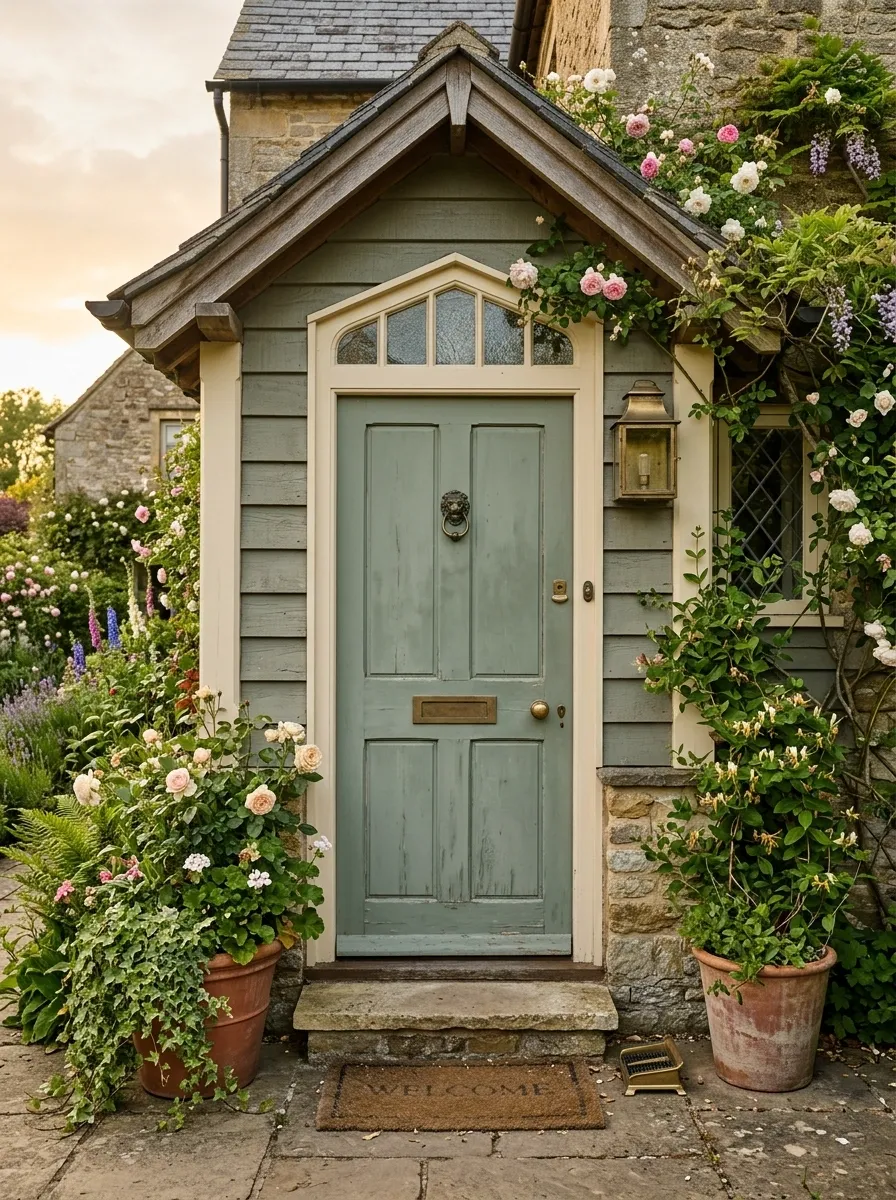
Soft sage works especially well when the rest of the porch has something earthy to push against it. Here, the door and surrounding siding sit in slightly different green-gray tones, framed by warm cream trim, aged brass hardware, and a weathered limestone step.
The planting is deliberately loose. Terracotta pots, leafy greenery, and a little climbing growth make the entry feel established instead of newly assembled. Nothing is perfectly matched, and that’s exactly why it works.
The overall composition has a cottage quality without relying on signs, wreath overload, or novelty accessories. The materials do the storytelling.
Vibrant Red Door Framed in Autumn Ivy
A brilliant red door anchors this entrance, but the true star of the show is the thick cascade of crimson ivy framing the facade. Paired with crisp white trim and classic paneling, the bold color combination feels deeply established and rich.
The wrapping foliage creates a living frame that naturally draws your gaze straight to the center. It turns the entire exterior wall into a seasonal masterpiece without requiring a single holiday prop or hanging sign.
This setup demonstrates the power of letting nature take the lead. With a statement door and aggressive climbing greenery, your tiny porch becomes an unforgettable architectural moment.
Natural Oak and Black Steel
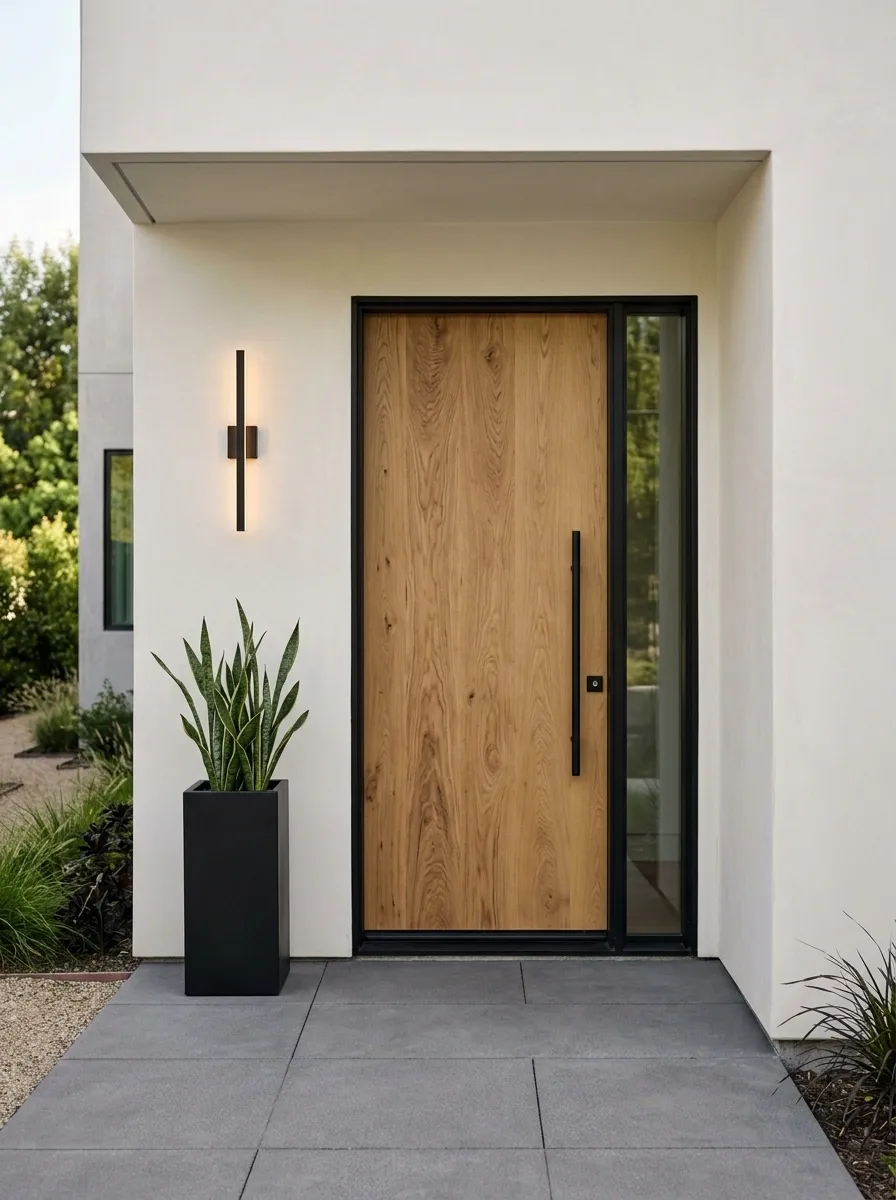
This one goes in the opposite direction. Instead of using a painted door as the main statement, the composition relies on natural material and clean geometry.
A slim natural oak door sits inside a crisp black frame, backed by a pale contemporary facade. Charcoal concrete pavers ground the threshold, while a tall rectangular planter introduces one controlled hit of greenery. A linear wall light keeps the lighting as architectural as the rest of the porch.
The important thing is restraint. There is no reason to fill this entrance with baskets, signs, and seasonal accessories. The oak grain, black framing, and simple proportions already give the porch enough visual information.
Modern Farmhouse Entry With Black Accents
A striking black glass panel door takes center stage against light stone brick, accompanied by a cozy wooden bench, neutral throw pillows, and minimalist lanterns. The composition relies on crisp monochrome contrast and clean modern farmhouse styling.
The built-in bench provides a functional landing spot while maintaining clear pathways for foot traffic. Layered botanical arrangements in simple white pots add life to the corner without overwhelming the compact floor plan.
It is a masterclass in styling a small footprint efficiently. By choosing versatile, high-contrast pieces, the porch feels finished, welcoming, and thoughtfully curated from every angle.
Classic Black Door With a White Symmetrical Entry
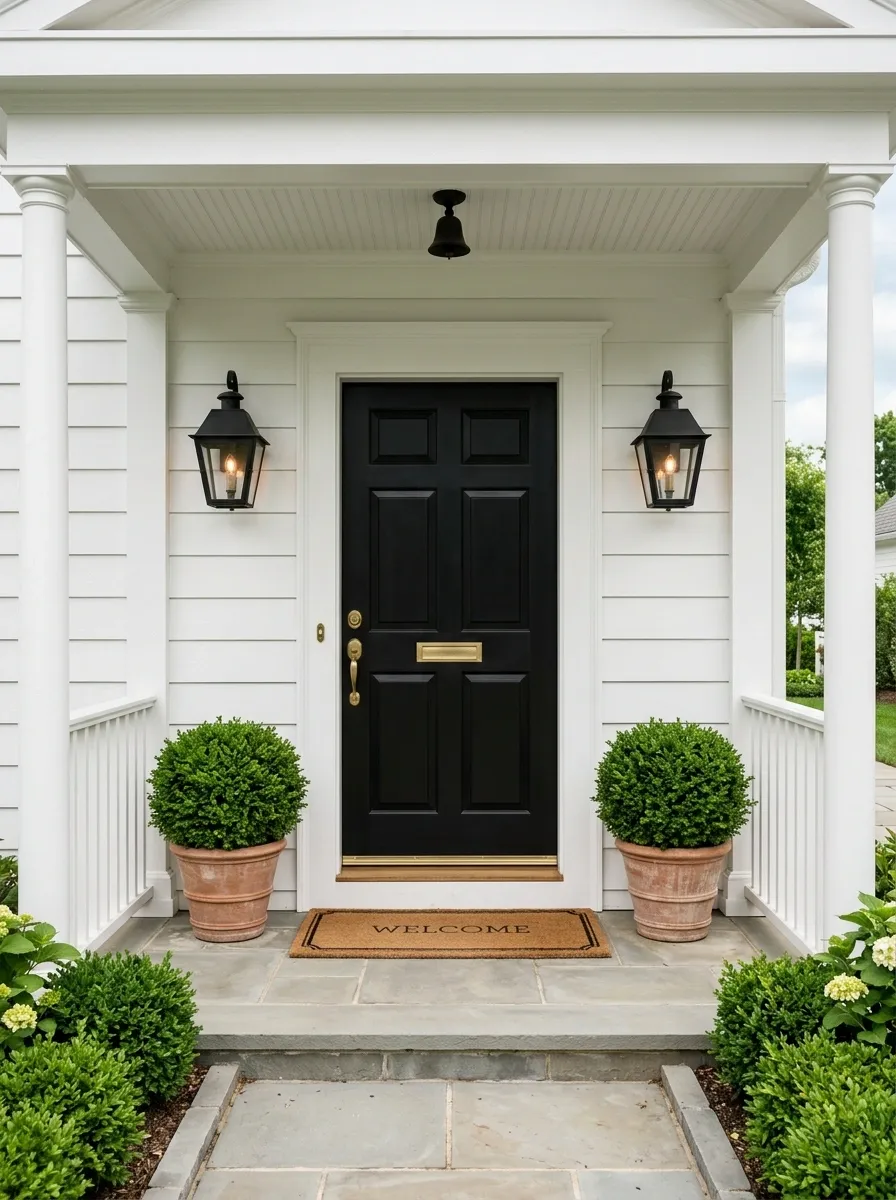
Sometimes the smartest solution is also the least complicated. This traditional porch uses a crisp white facade, a classic black six-panel door, matching black lanterns, two compact planters, and a dark mat centered directly beneath the door.
The symmetry makes the entry feel more organized than its actual footprint suggests. Your eye reads the two sides together, which gives the doorway a stronger sense of width and importance.
There is also a useful lesson here: the porch does not need a furniture set just because it is a porch. On a very small entry, seating can easily interfere with circulation. Give the door a clear landing and let the architecture create the finished look.
Bright Blue Door With Climbing Clematis
A cheerful blue door brings an instant dose of personality to this bright white townhouse entry. The bold painted wood is complemented by a hanging basket, a sleek black metal railing, and a vigorous climbing clematis bursting with rich purple blooms.
The flourishing vine adds incredible texture and softens the sharp corners of the entryway. It bridges the gap between the structured architecture and the surrounding landscape with effortless charm.
This design shows that small spaces thrive on vertical interest. When floor space is limited, letting plants climb the walls delivers maximum visual impact with zero footprint.
Dusty Blue Door With a Weathered Stone Threshold
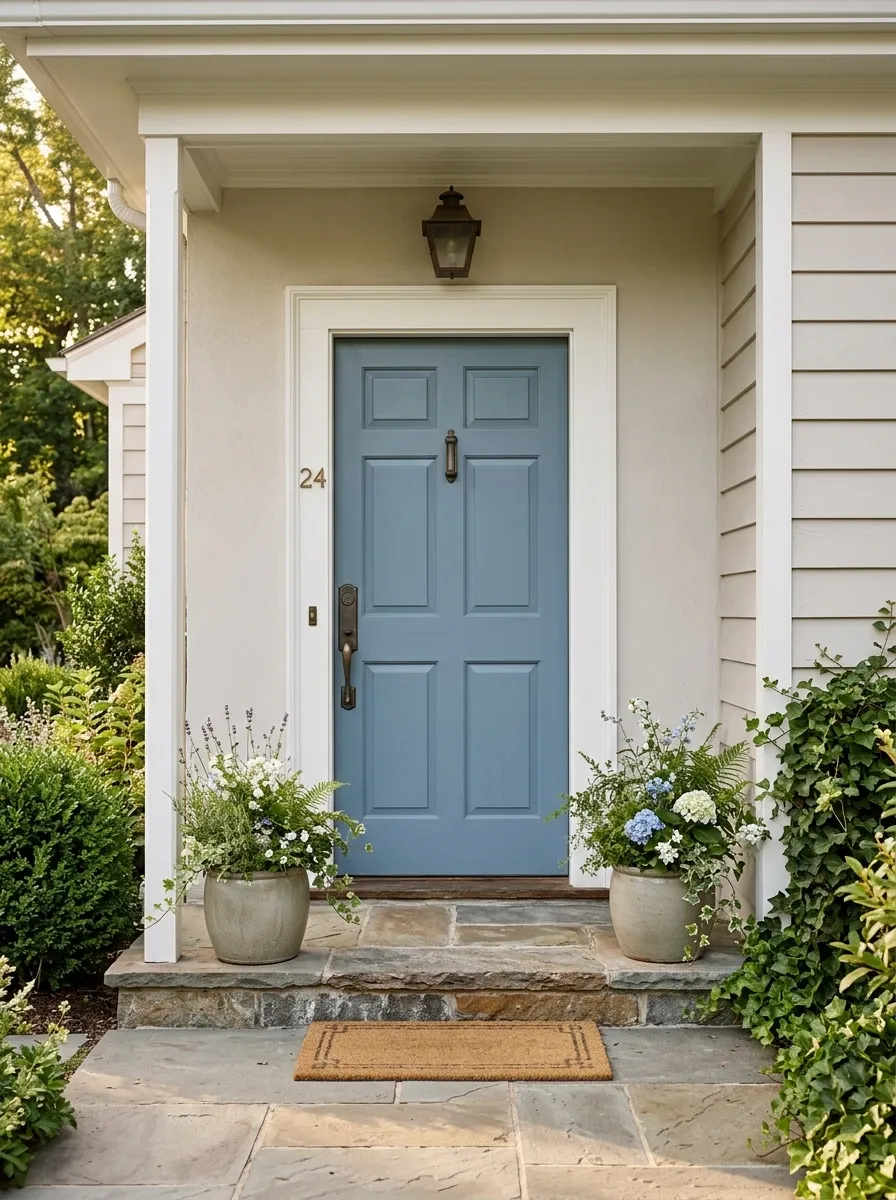
A dusty blue door changes the mood without turning the porch into a pastel display. The finished composition pairs it with pale neutral walls, clean white trim, an aged bronze handle set, and a weathered stone threshold that gives the entrance some visual weight.
Low ceramic planters sit close to the doorway with loose green planting and soft flowering stems. The greenery is important because it breaks up the blue and makes the entrance feel connected to the landscape rather than painted onto it.
The result is quiet, but not bland. That distinction matters on a tiny porch. When there isn’t room for dramatic furniture or elaborate styling, texture and material contrast have to carry more of the design.
Terracotta Door With Cream Plaster
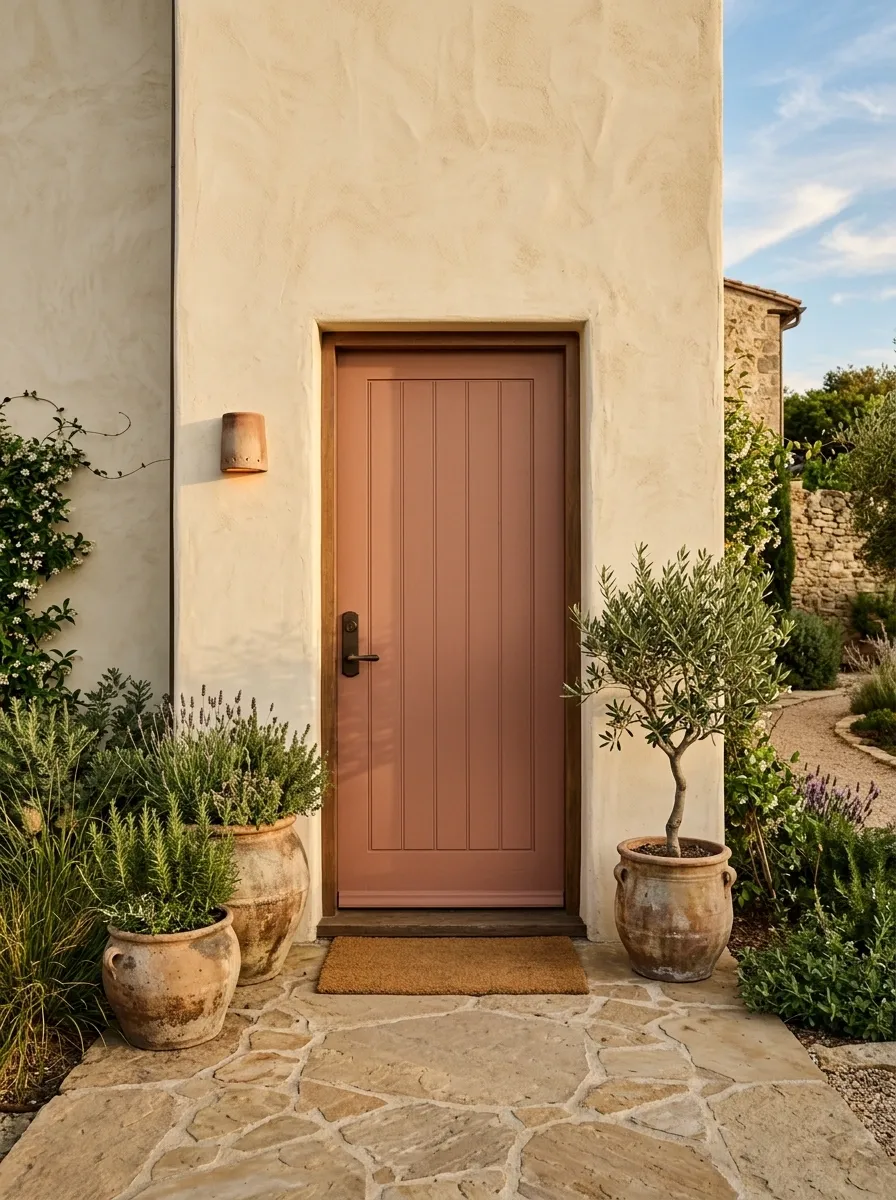
Terracotta looks especially good on a tiny porch when the surrounding finishes are warm enough to support it. This entry uses a muted clay-colored door against creamy textured plaster, with dark bronze hardware, warm stone underfoot, handmade ceramic planters, and one small olive-style tree.
The trick is keeping the color dusty rather than bright. A loud orange door would make the entrance feel smaller because the eye would lock onto it immediately. This softer terracotta still creates a focal point, but the plaster and stone keep the overall composition grounded.
There is no need for a wreath, sign, or collection of seasonal objects here. The materials are already doing plenty of talking.
Forest Green Door Framed by Dense Planting
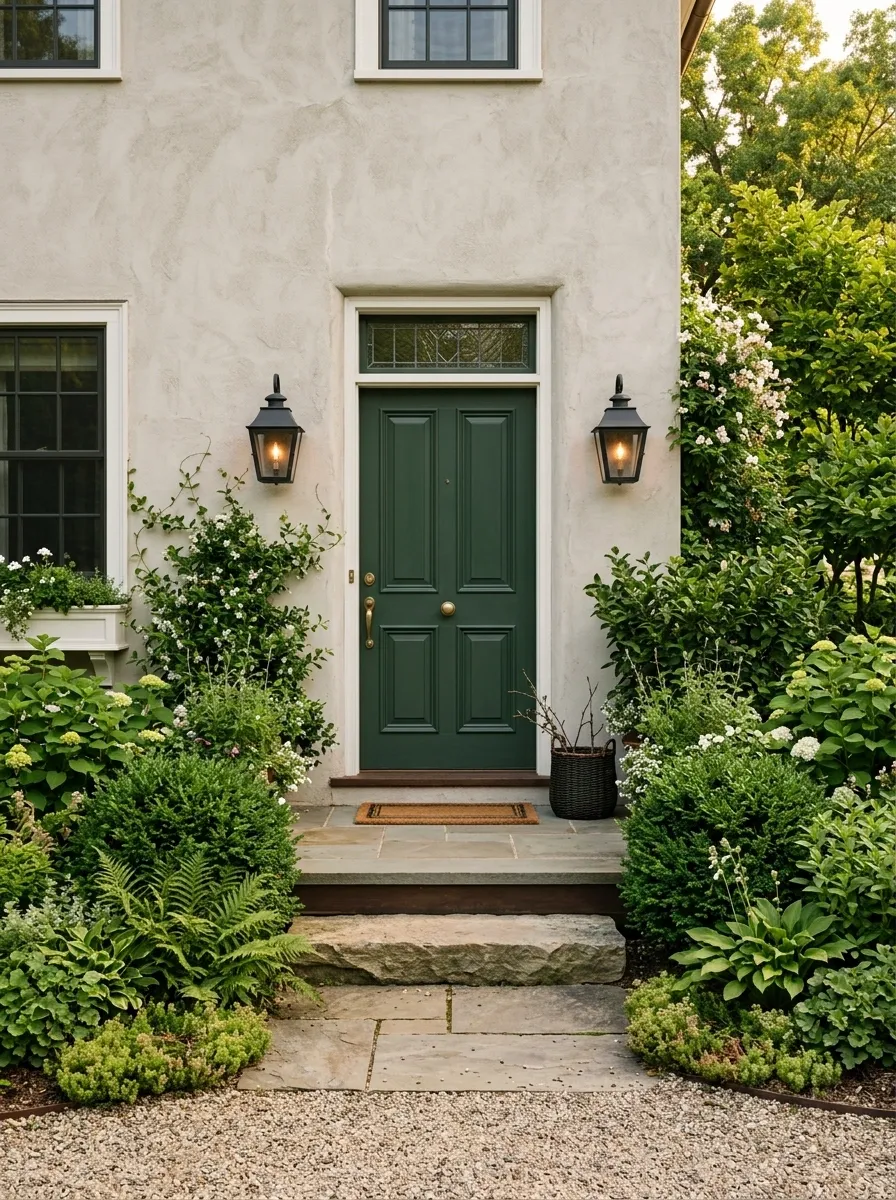
This porch lets the landscaping frame the door instead of competing with it. A deep forest green paneled door sits against a pale neutral facade, while layered planting rises around the entry in three clear heights.
Taller foliage sits farther from the threshold, medium plants fill the sides, and low greenery softens the step. Black lanterns and a simple stone landing provide just enough structure to stop the planting from feeling wild.
This works particularly well when the facade is otherwise quiet. The greenery becomes part of the architecture, and the dark green door ties the two together. I’d resist adding decorative pots in every available corner. Once the planting has a clear hierarchy, more objects only muddy it.
Warm White Door With Black Steel Glass Panels
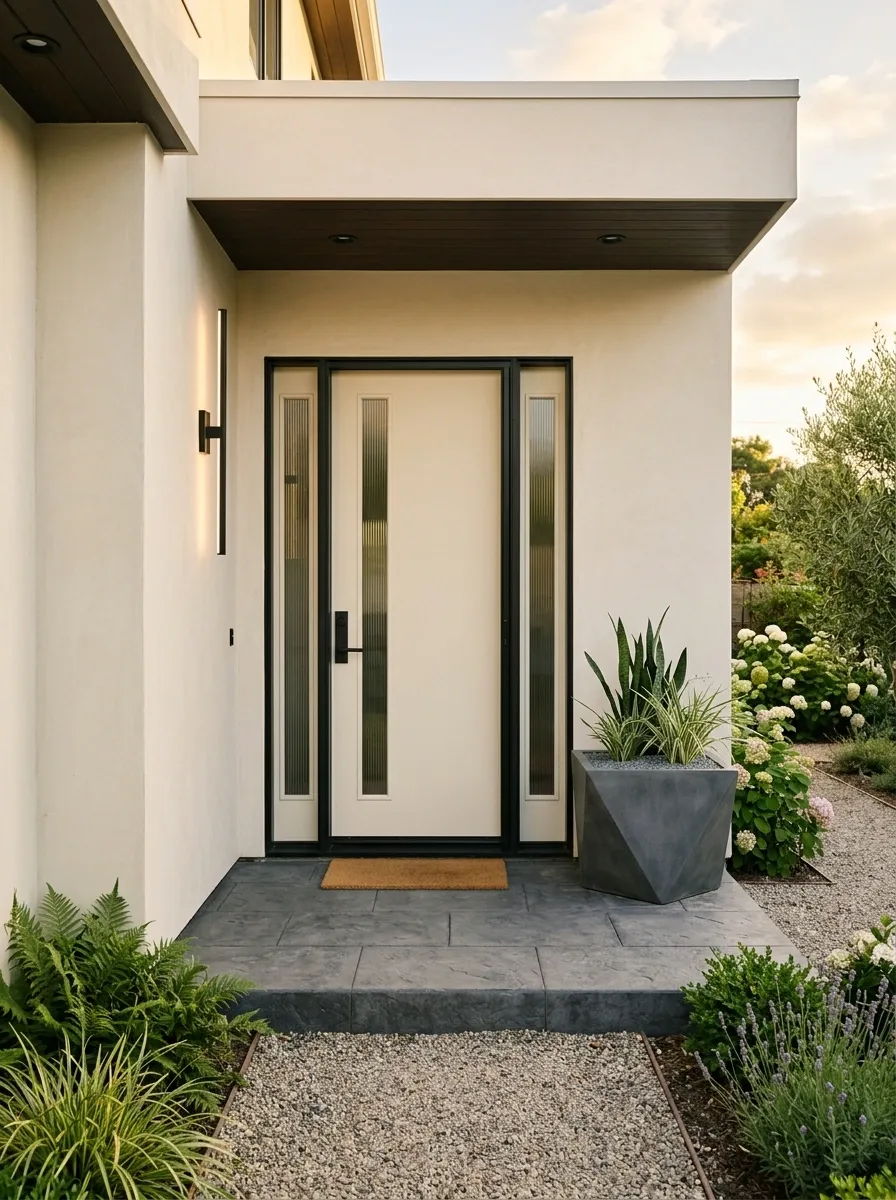
A small porch can look larger simply by letting more light through the doorway. This design pairs a warm white door with narrow glass panels framed in black steel, smooth pale stucco, charcoal paving, one oversized geometric planter, and a simple linear wall light.
The black framing creates a crisp outline against the pale facade, while the glass breaks up what would otherwise be a large uninterrupted door surface. That makes the entry feel lighter without introducing a dozen decorative elements.
The proportions matter more than the accessories here. Keep the planter substantial but singular. One strong shape reads better than several little pots fighting for space.
Vintage Red Door With Faded Brick Entry
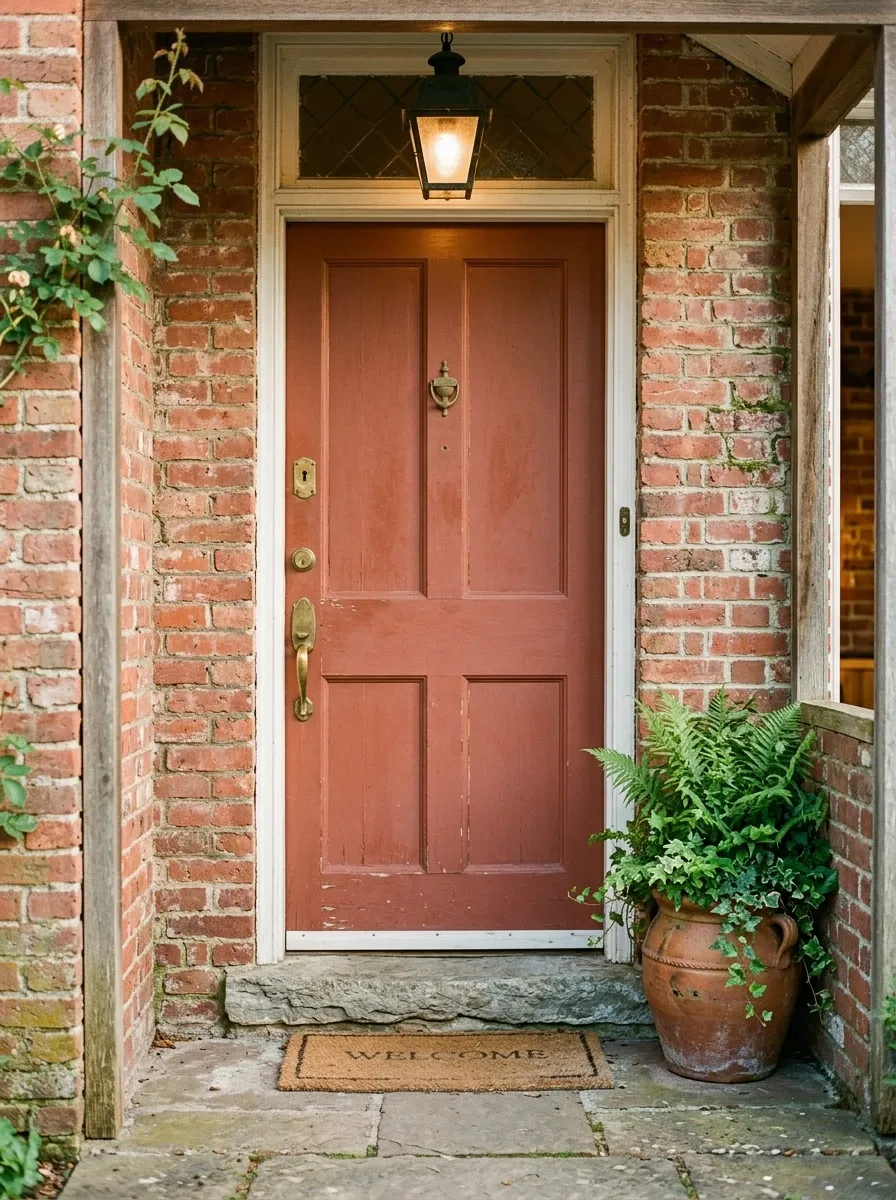
A faded brick facade gives this small porch most of its character before the door even enters the picture. The door adds a muted brick-red finish, traditional brass hardware, an old-fashioned lantern, a worn stone threshold, and one slightly imperfect ceramic pot with leafy greenery.
Everything should look like it belongs to the age of the house. That’s the part that makes this composition believable. A brand-new glossy black planter or ultra-modern light fixture would pull the design in another direction.
The red should stay weathered and slightly brown rather than fire-engine bright. Against old brick, that difference is what keeps the doorway from becoming cartoonish.
Natural Wood Dutch Door With Farmhouse Entry
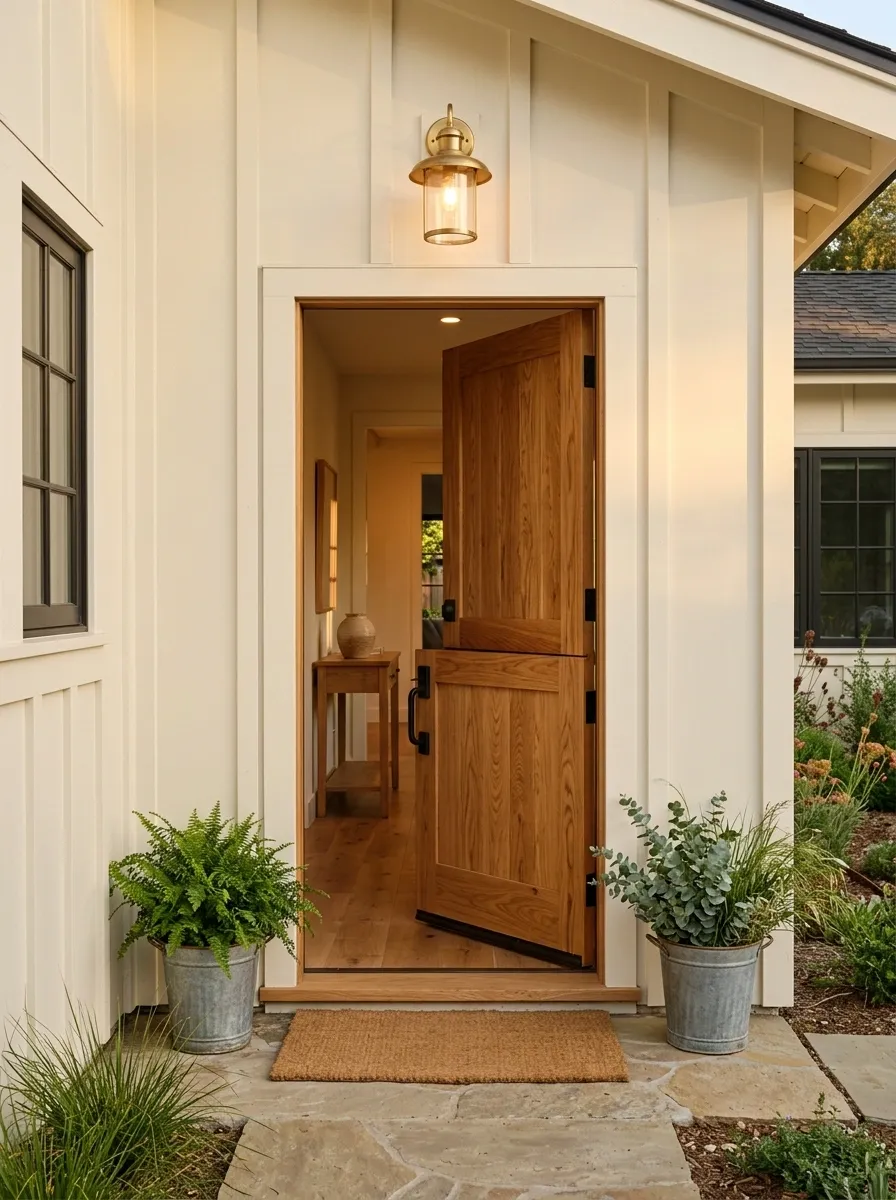
The split Dutch door gives this compact porch enough personality that the rest of the design can stay simple. A natural wood door sits beneath creamy siding, with black hardware, a narrow timber threshold, warm lantern light, and a pair of modest galvanized-style planters.
The upper door section can remain open in the finished visual, creating a little more connection between the porch and interior. That detail changes the feeling of the whole entrance without adding physical clutter.
The porch should stay mostly empty. No bench, oversized sign, or decorative collection is needed. The divided door is already the character piece, and the warm wood gives the architecture enough visual texture.
Pale Blush Door With Traditional Stonework
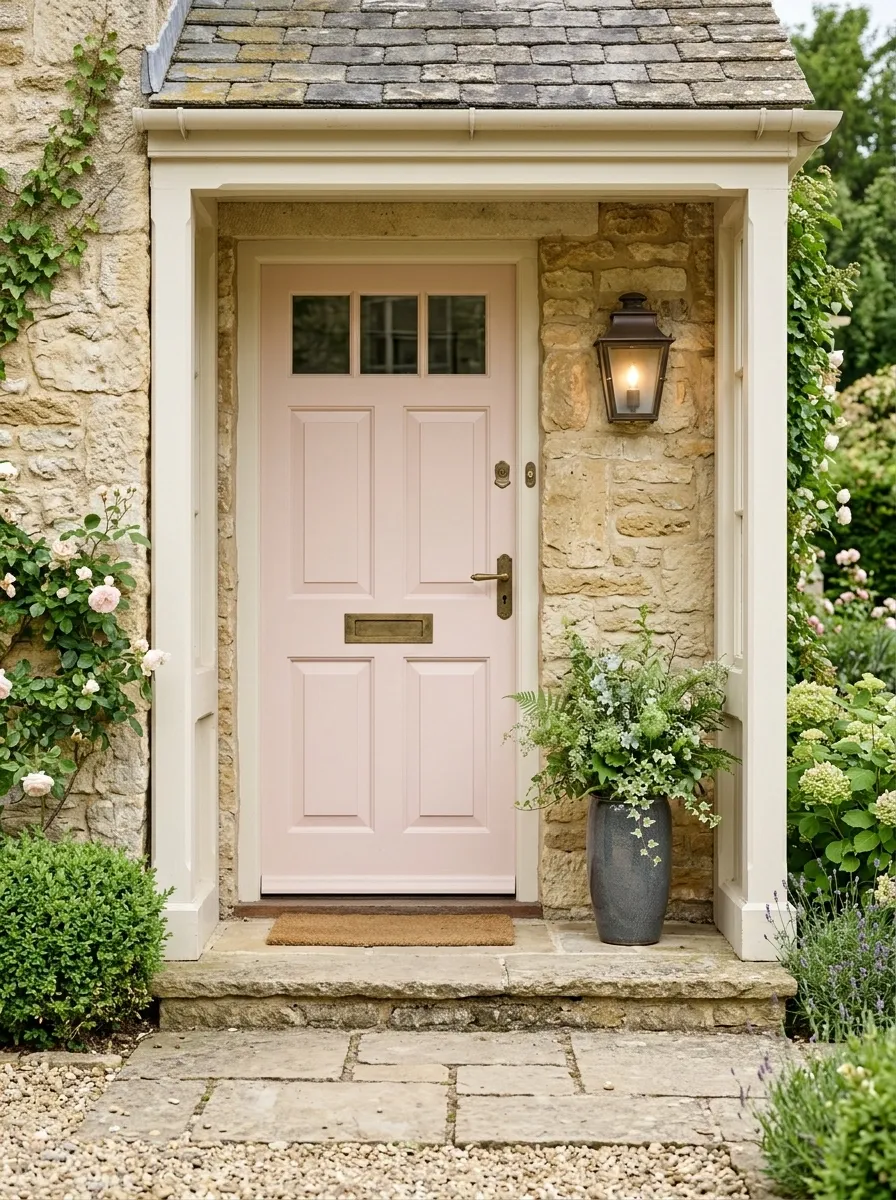
Pale blush becomes much more interesting when it isn’t surrounded by more sweetness. This small entry uses a dusty pink door against warm limestone, with cream trim, aged brass hardware, a traditional lantern, and one narrow planter of soft greenery.
The stonework does most of the balancing. Its rougher texture and neutral color keep the door from looking decorative for decoration’s sake. A warm stone threshold also visually connects the doorway to the ground, which makes the composition feel more established.
I’d skip matching pink accessories altogether. The door gets to be the unusual part. Everything else should support it rather than repeat it.
Navy Door With a Crisp Coastal Porch
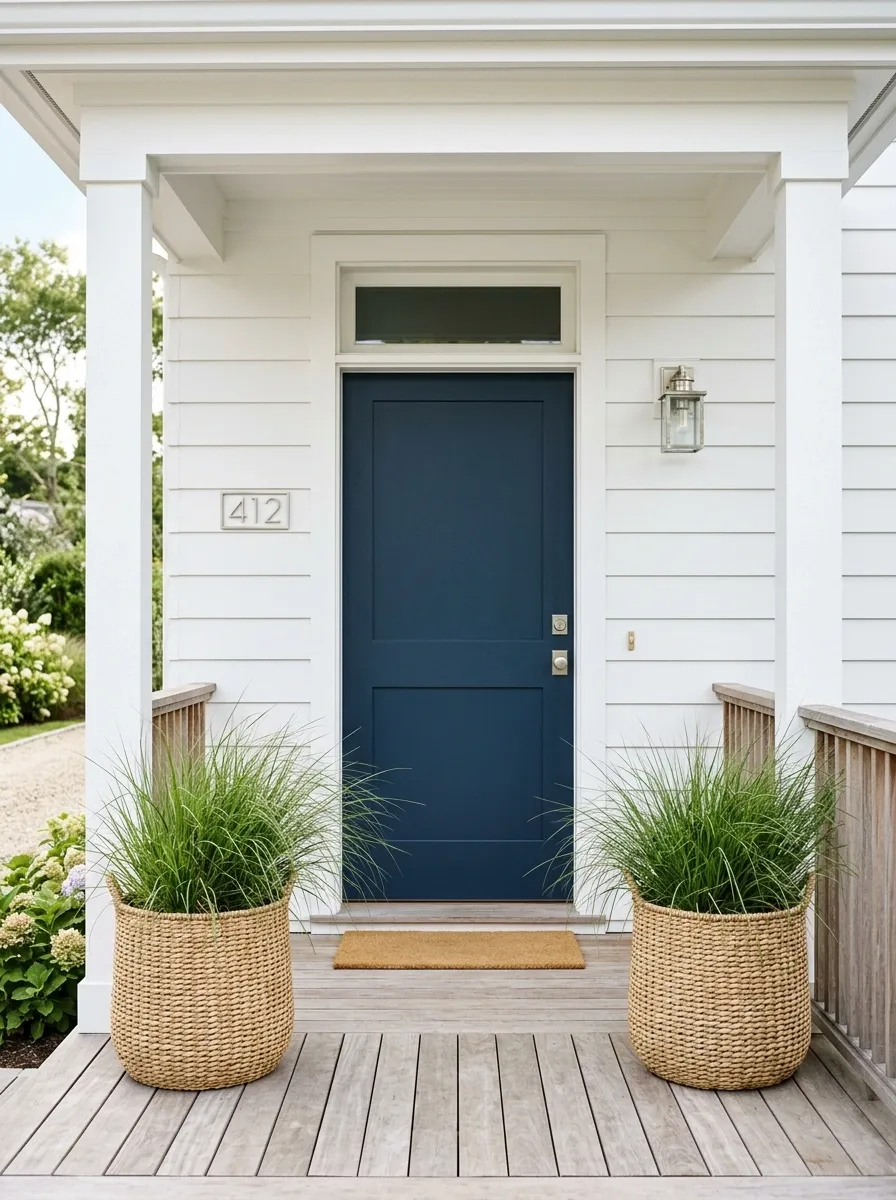
This is coastal without resorting to anchors, rope, shells, or anything that belongs in a gift shop. A deep navy door sits inside crisp white trim, backed by pale weathered decking and simple woven planters.
The plants are mostly grasses and restrained greenery. Brushed nickel hardware keeps the metal finish cooler, while strong daylight makes the white surround feel fresh against the navy.
The small porch works because the palette is doing almost everything. Navy, white, pale wood, and green already create a clear visual direction. Adding themed decorations would only make the concept more obvious and less convincing.
Vertical Slat Door With Recessed Porch Lighting
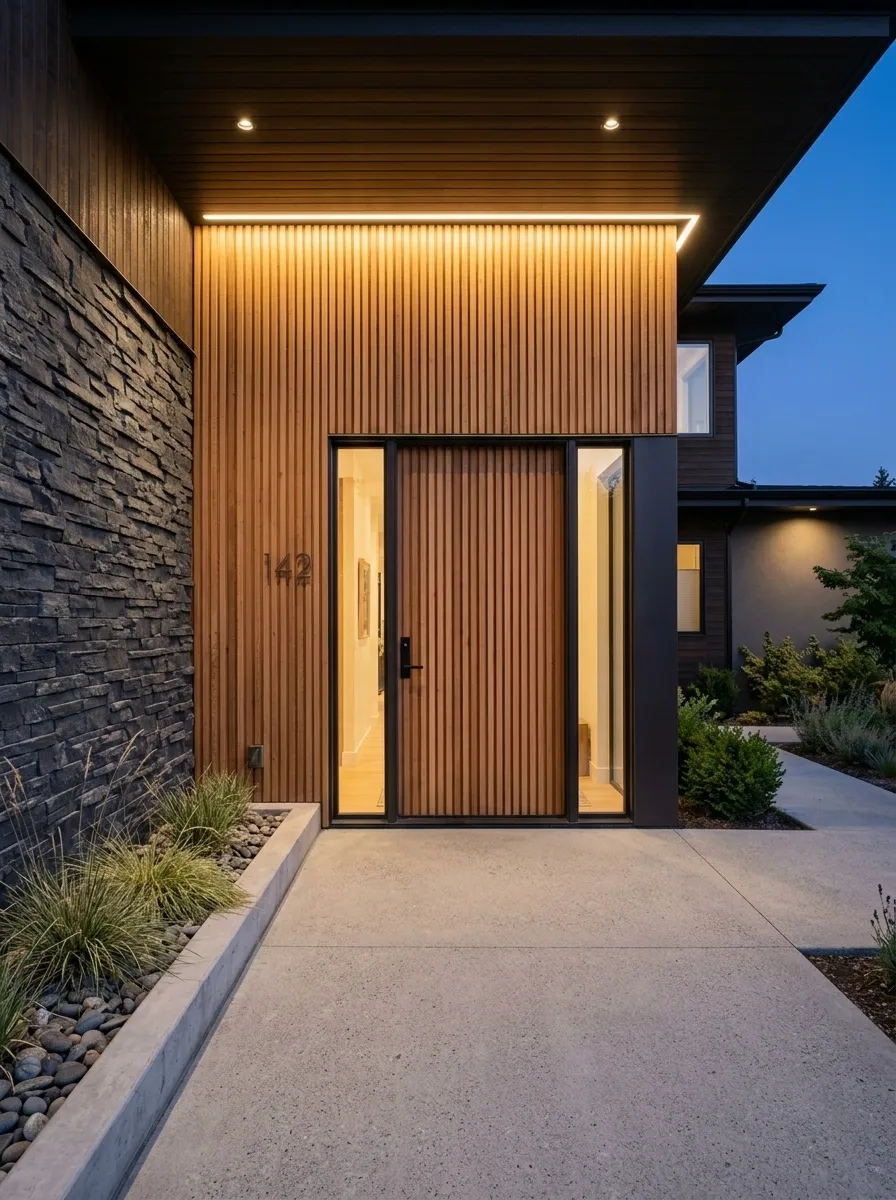
Vertical timber changes the shape of the whole entrance. This narrow modern porch uses a slatted wood door that draws the eye upward, paired with a dark stone wall, concrete paving, an integrated planter bed, and recessed lighting tucked into the porch ceiling.
The lighting is deliberately architectural. Nothing hangs beside the door because the vertical timber and long light lines already create enough movement.
This approach is especially effective when the porch is narrow rather than shallow. The vertical rhythm makes the entry feel taller, and the dark stone gives the warm timber somewhere visually solid to sit.
Cream Door With an Arched Surround
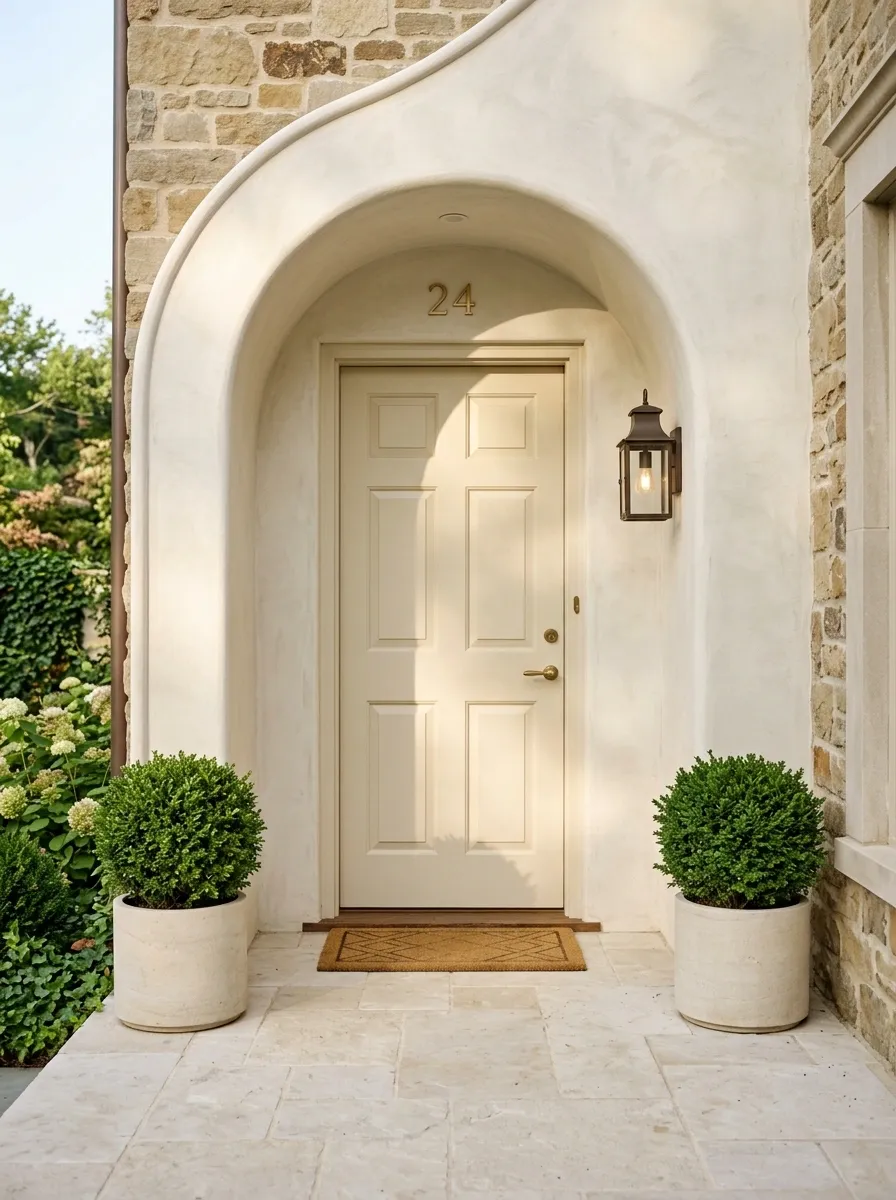
The arch is the star here, not the decor. A warm cream door sits inside a softly curved architectural surround, with pale limestone underfoot, a bronze lantern, rounded shrubs, and two low planters placed carefully on either side.
The curved opening gives the tiny porch a sense of shape that a standard rectangular doorway doesn’t have. Because of that, the surrounding styling can stay unusually simple.
The best part of this concept is how little it needs. The architecture creates the focal point, the stone adds weight, and the greenery softens the edges. More decoration would only interrupt the curve.
Burnt Orange Door With Dark Greenery
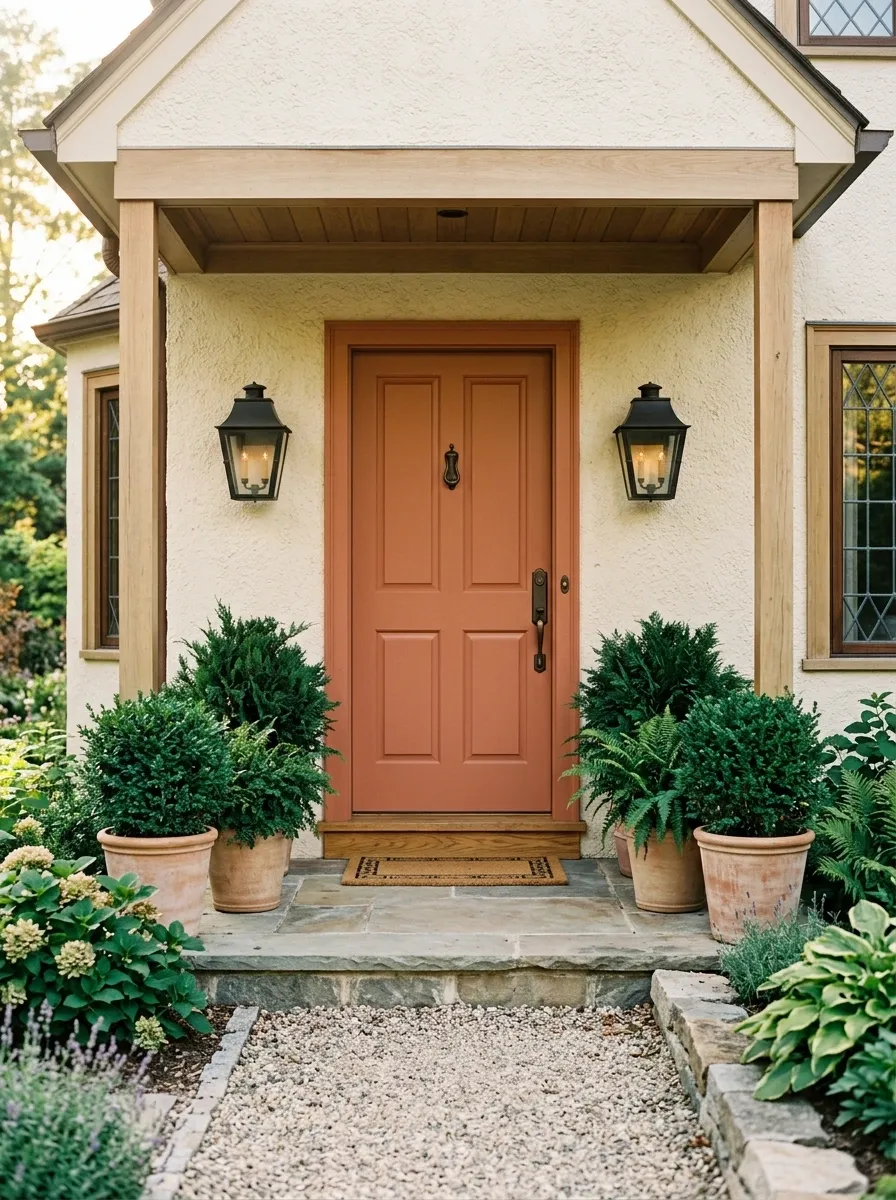
A muted burnt-orange door gives this small porch a stronger personality without making the entire facade shout for attention. The color sits against warm cream or pale stucco, with dark bronze hardware, evergreen planting, black lanterns, and a simple stone landing.
The important choice is the shade. This isn’t bright pumpkin orange. It’s a deeper, slightly dusty tone that works with the architecture instead of overpowering it.
Dark greenery makes the door look richer, while the cream surround gives the eye somewhere to rest. I’d keep the planting concentrated around the sides rather than spreading it across every inch of the threshold.
Scandinavian White Door With Pale Wood Details
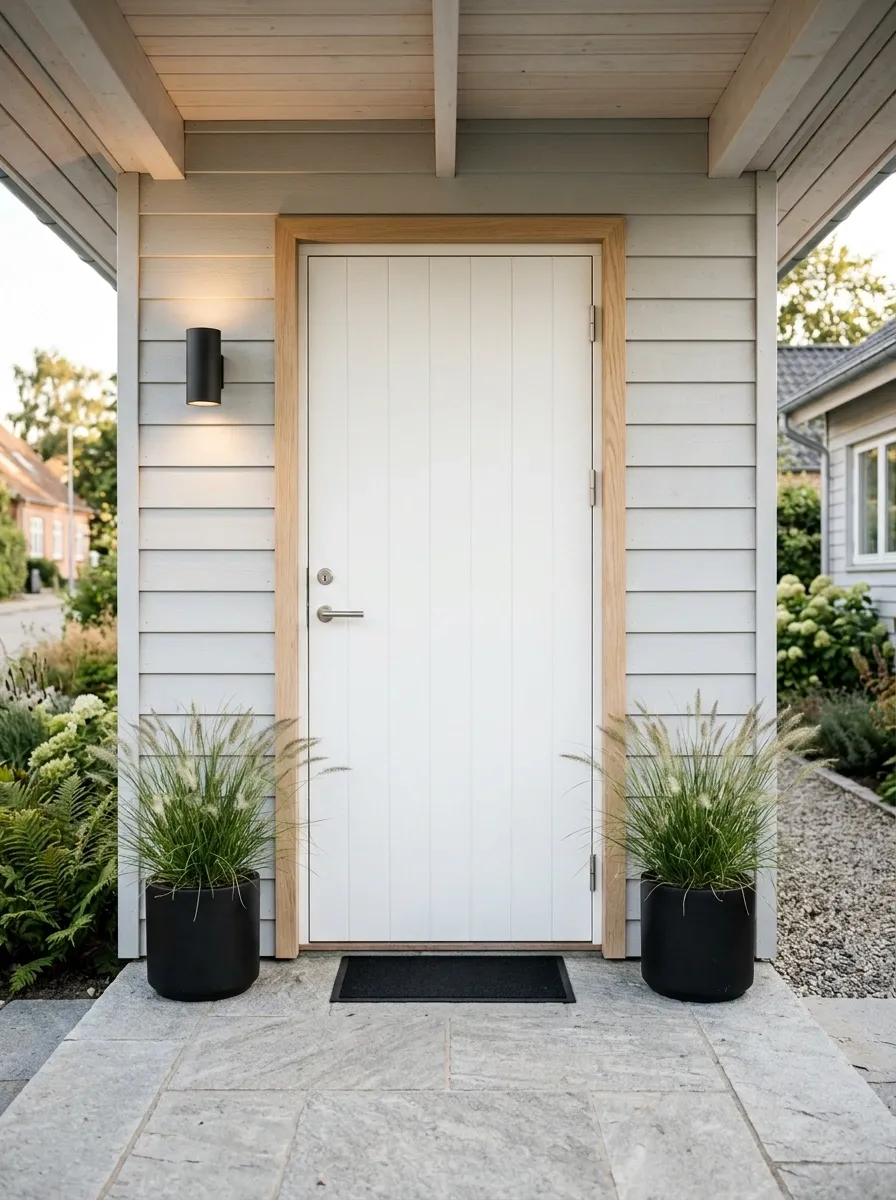
A Scandinavian-inspired porch proves that minimal doesn’t have to mean empty. The composition centers on a white vertical-panel door, pale oak trim, light gray paving, simple cylindrical planters, soft grasses, and restrained black lighting.
The palette is almost quiet enough to disappear, which is exactly why texture matters. The pale wood adds warmth, the paving gives the threshold weight, and the grasses introduce movement without creating clutter.
This direction is a smart fit for a very small porch because nothing visually fights for space. The architecture stays clear and the materials create the interest.
A tiny space doesn’t need more objects. Sometimes it needs fewer, better ones.
Moody Plum Door With Traditional Hardware
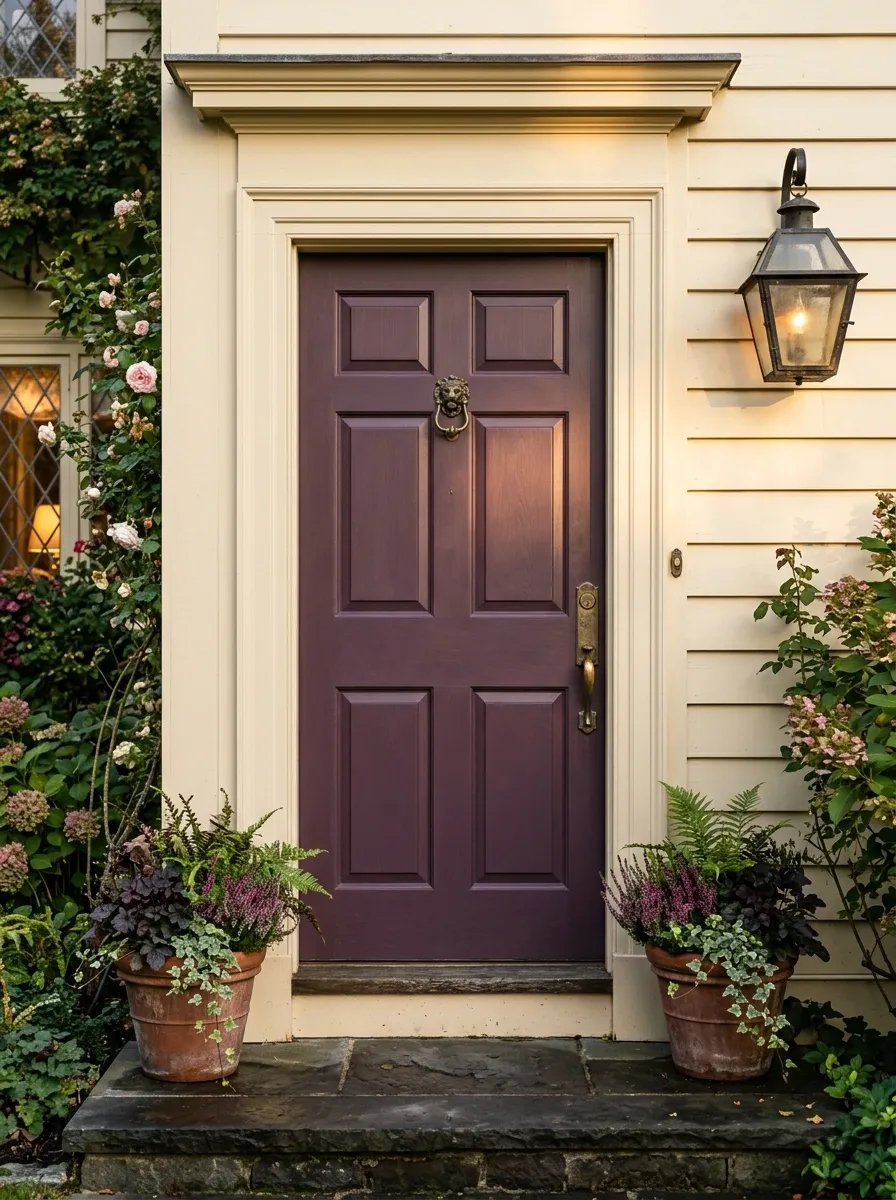
Plum is a less obvious choice for a front door, and that’s exactly what gives this entrance some personality. A muted aubergine door sits within a warm cream surround, paired with antique brass hardware, a dark stone step, an old-style lantern, and low seasonal planting.
The color feels dramatic without becoming as predictable as black or navy. Traditional materials keep it grounded, so the result feels like a real home rather than a statement color pasted onto a generic facade.
I’d keep the surrounding colors warm. Cool gray siding would change the whole mood and make the plum feel harder. Here, the cream and aged brass give it enough softness to stay welcoming.
Wide Glass Door With Minimal Framing
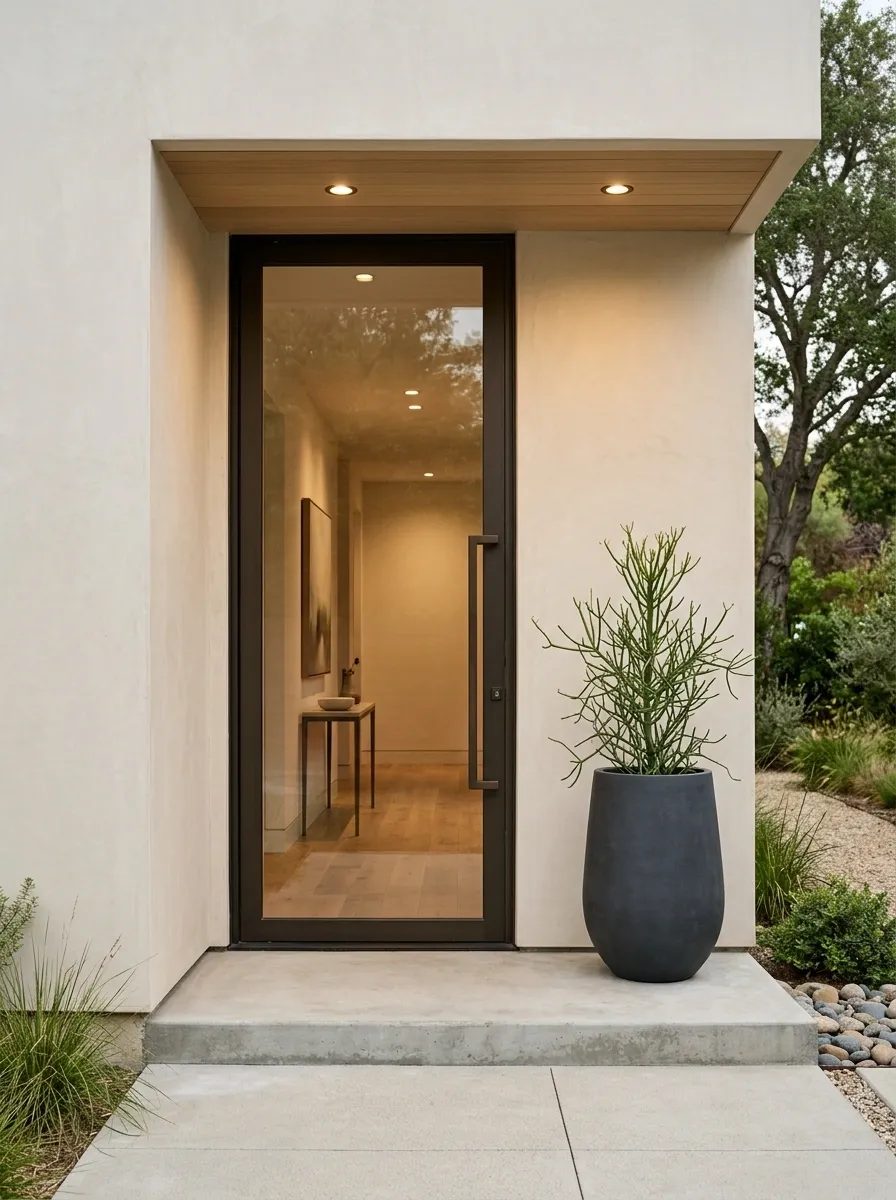
A glass-forward door can make a small entrance feel less boxed in. This contemporary porch uses a full-height glazed door with slim dark framing, pale plaster walls, a simple concrete threshold, recessed lighting, and one sculptural planter.
The glass creates a visual connection between the porch and the interior, while the dark frame gives the doorway enough definition to avoid disappearing into the pale facade.
The planter should stay substantial and simple. Think of it as part of the architecture rather than a decorative accessory.
The biggest mistake here would be adding too many small objects. The openness of the glass is the point, so protect it.
Farmhouse Black Door With Timber Porch Roof
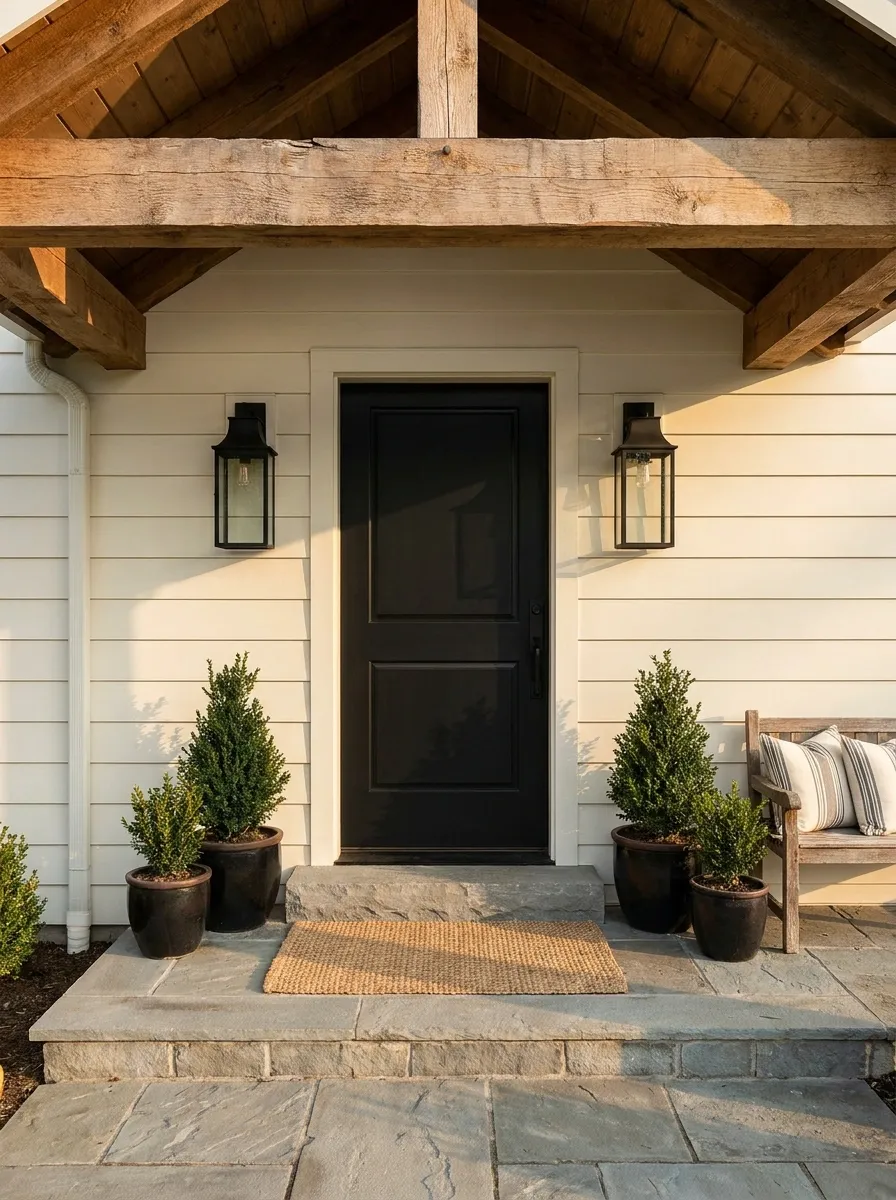
The warmth comes from above in this farmhouse composition. A matte black farmhouse door sits below a timber porch roof with an exposed wood beam, creamy siding, black lanterns, a stone landing, and restrained evergreen planters.
The timber overhead element matters because it changes how the black door feels. Without it, the entrance could lean cold or overly graphic. The wood introduces a warmer layer while the stone keeps the threshold connected to the ground.
The porch doesn’t need a bench just because there is an overhead roof. On a small landing, that would usually eat up the useful space. Keep the center clear and let the timber structure frame the door.
Soft Yellow Door With Old Brick and Greenery
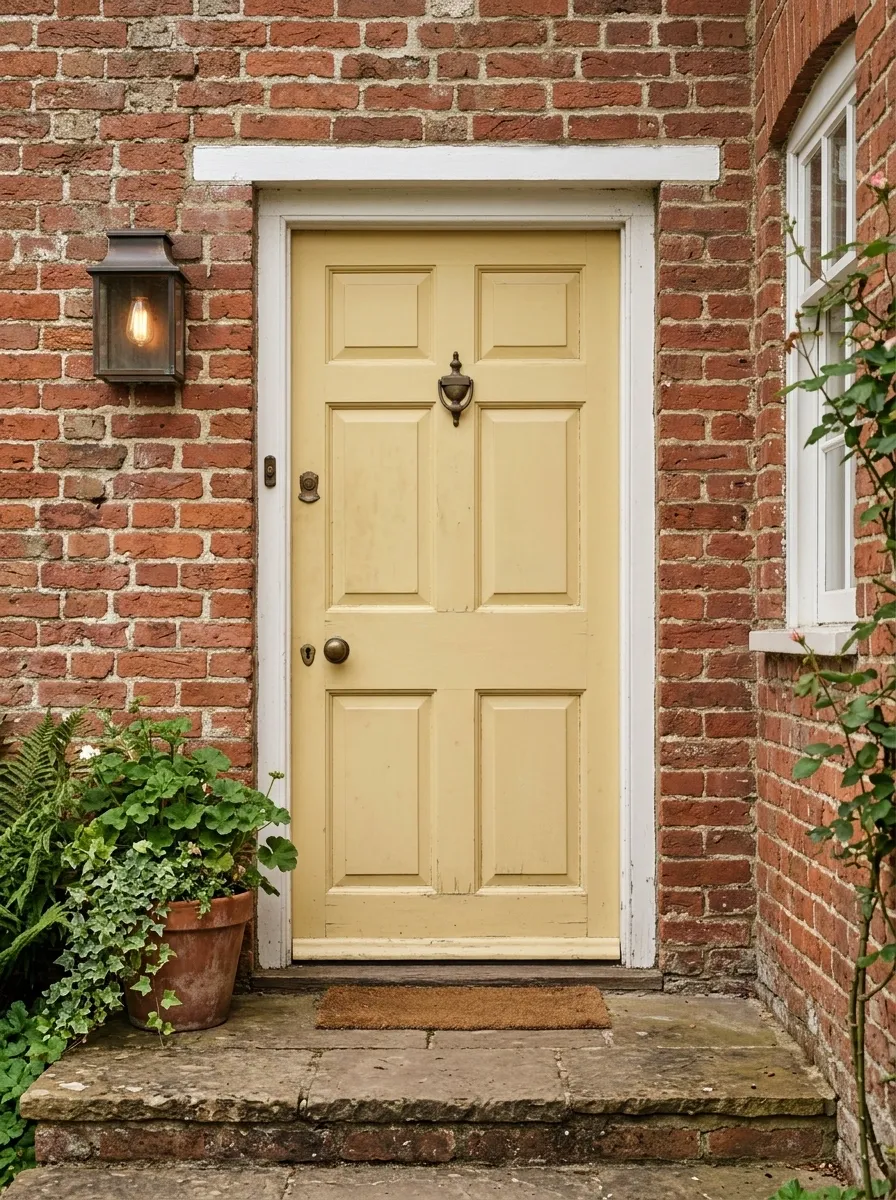
A muted buttery yellow door can bring personality to a small porch without taking over the entire facade. Here, the door sits against weathered brick with a simple white-painted frame, aged bronze hardware, a traditional wall lantern, and one terracotta pot filled with loose greenery.
The old brick is what makes the color work. Its irregular texture gives the brightened doorway something substantial to sit against, so the yellow doesn’t feel sugary or overly decorative.
Keep the yellow soft and slightly dusty. A highly saturated shade would become the entire story, and this porch has better things to say than that.
Monochrome Gray Entry With Sculptural Planters
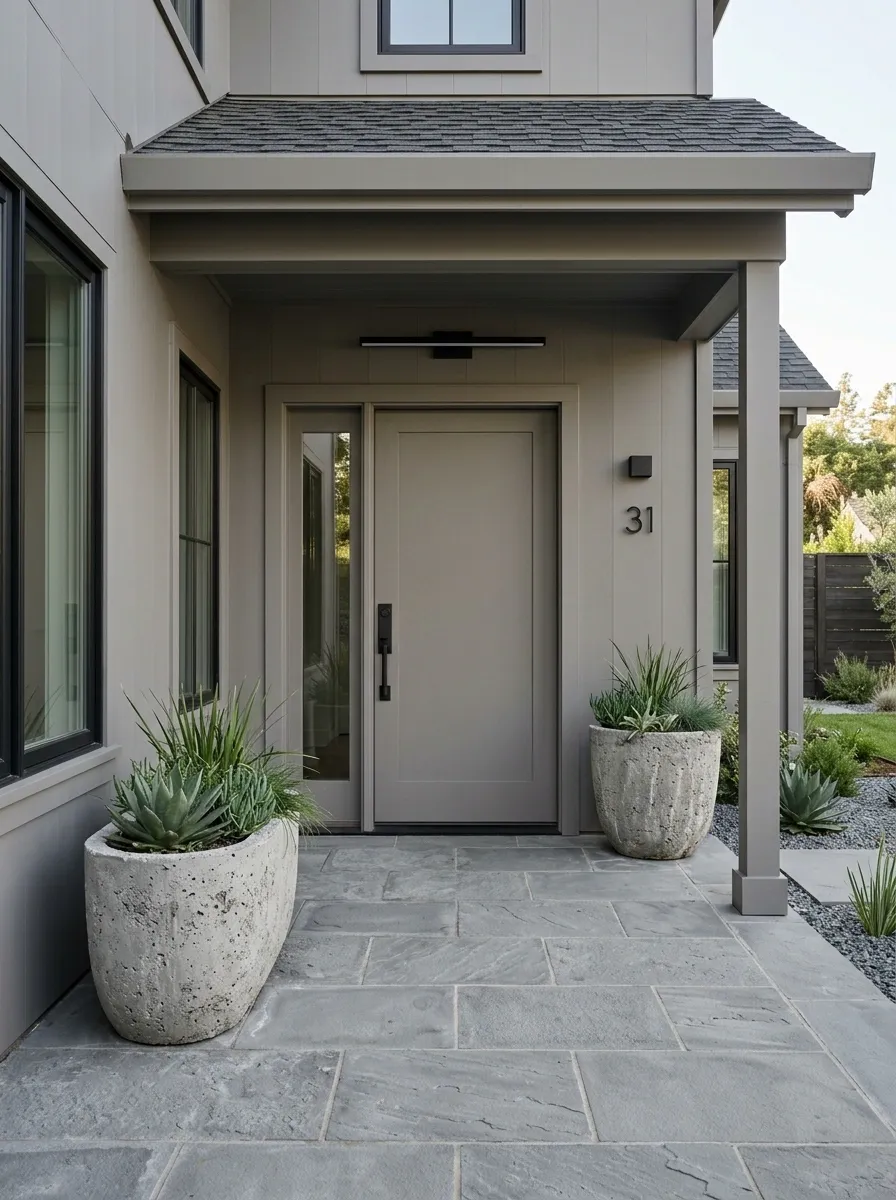
This porch proves that color isn’t the only way to create interest. The door, walls, trim, and paving all stay within a warm gray range, while black fixtures and two sculptural concrete planters provide the sharper shapes.
The variation comes from texture and form. Smooth painted surfaces meet rough concrete, low planting, and simple metal hardware. The result is restrained without looking unfinished.
A monochrome entry also makes proportion more obvious. Because there aren’t many competing colors, the size of the door, shape of the planters, and amount of empty wall become part of the design.
That’s why I’d keep the accessories almost nonexistent. The architecture needs room to breathe.
Warm Walnut Door With Soft Lantern Glow
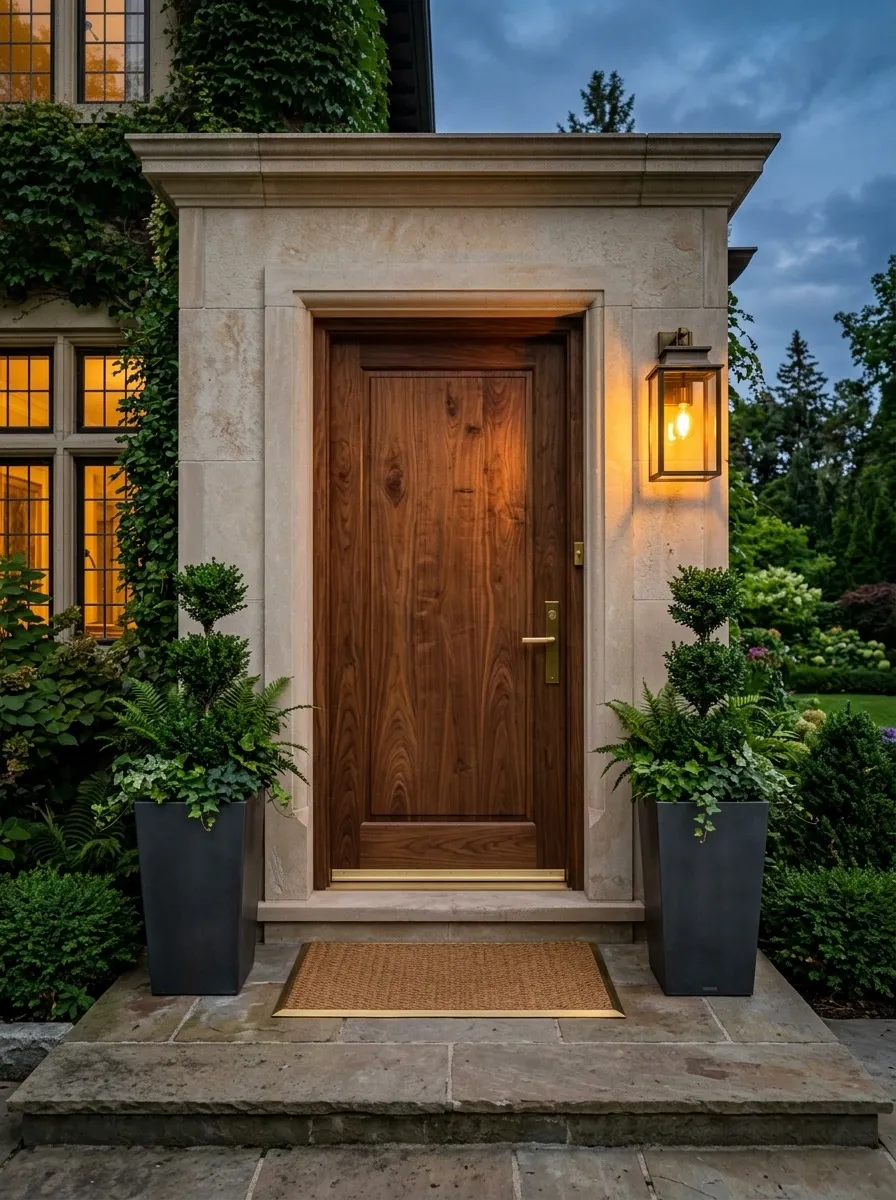
This version is at its best after the sun goes down. A rich walnut door sits within a creamy stone surround, paired with brushed brass hardware, warm lantern lighting, narrow planters, and clipped greenery.
The wood gives the entrance depth during the day, while the warm light picks up the grain in the evening. That creates a porch that changes character rather than relying on a single daytime photo.
Keep the lighting warm and concentrated around the doorway. Cool white bulbs would flatten the wood and make the brass feel disconnected from the rest of the composition.
The result is refined without needing a dramatic color on the door.
Seasonal Fall Door With Restrained Harvest Styling
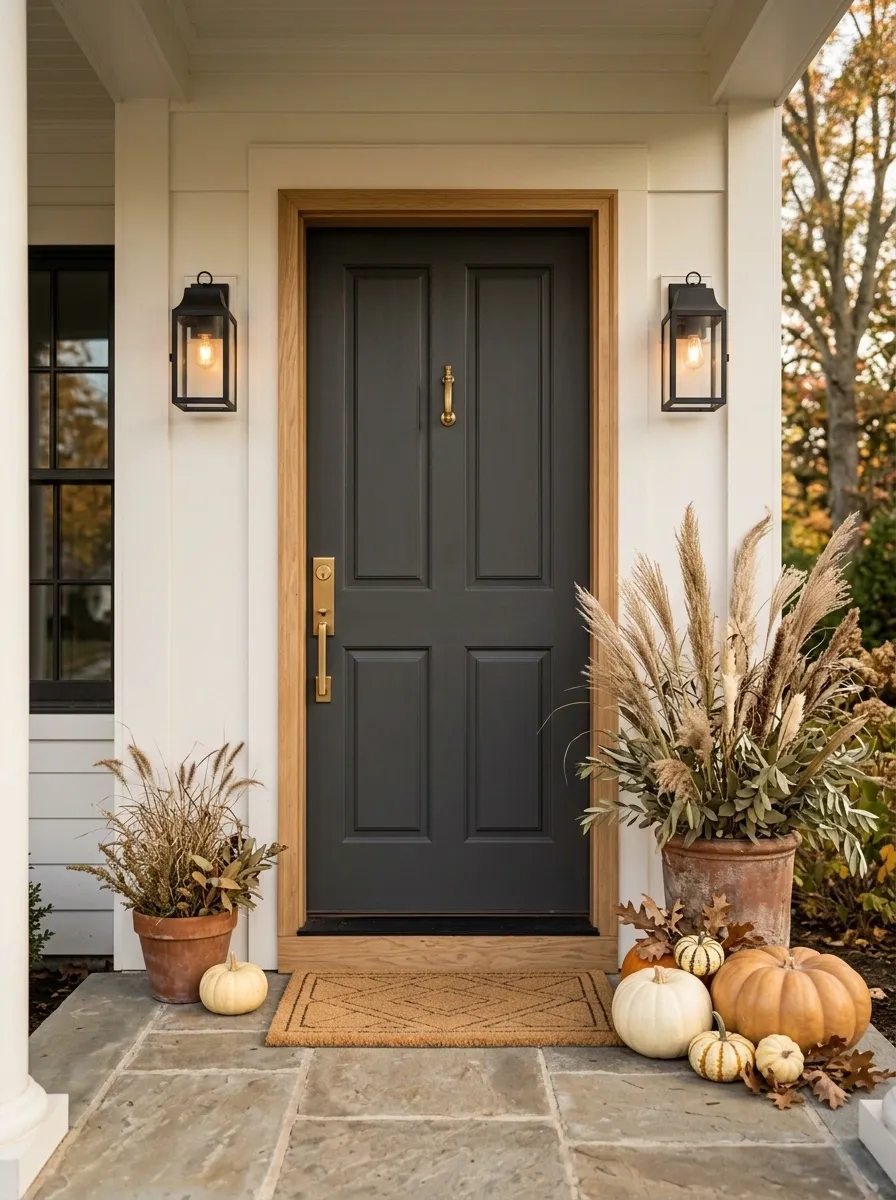
A fall porch doesn’t need to become an obstacle course of pumpkins. This compact entry uses a deep olive or charcoal door, natural wood trim, warm neutral pumpkins, dried grasses, muted foliage, simple lanterns, and two narrow planters.
The seasonal styling stays low and concentrated around the threshold. That preserves a clear path while still giving the entrance enough autumn character to feel intentional.
The color story matters more than the quantity of decorations. Warm ochre, cream, faded green, natural wood, and charcoal sit comfortably together, so the display feels like part of the architecture rather than a pile of seasonal merchandise.
Leave some empty space around the door. Negative space is doing real work here.
Tiny Modern Cottage Door With Layered Neutral Materials
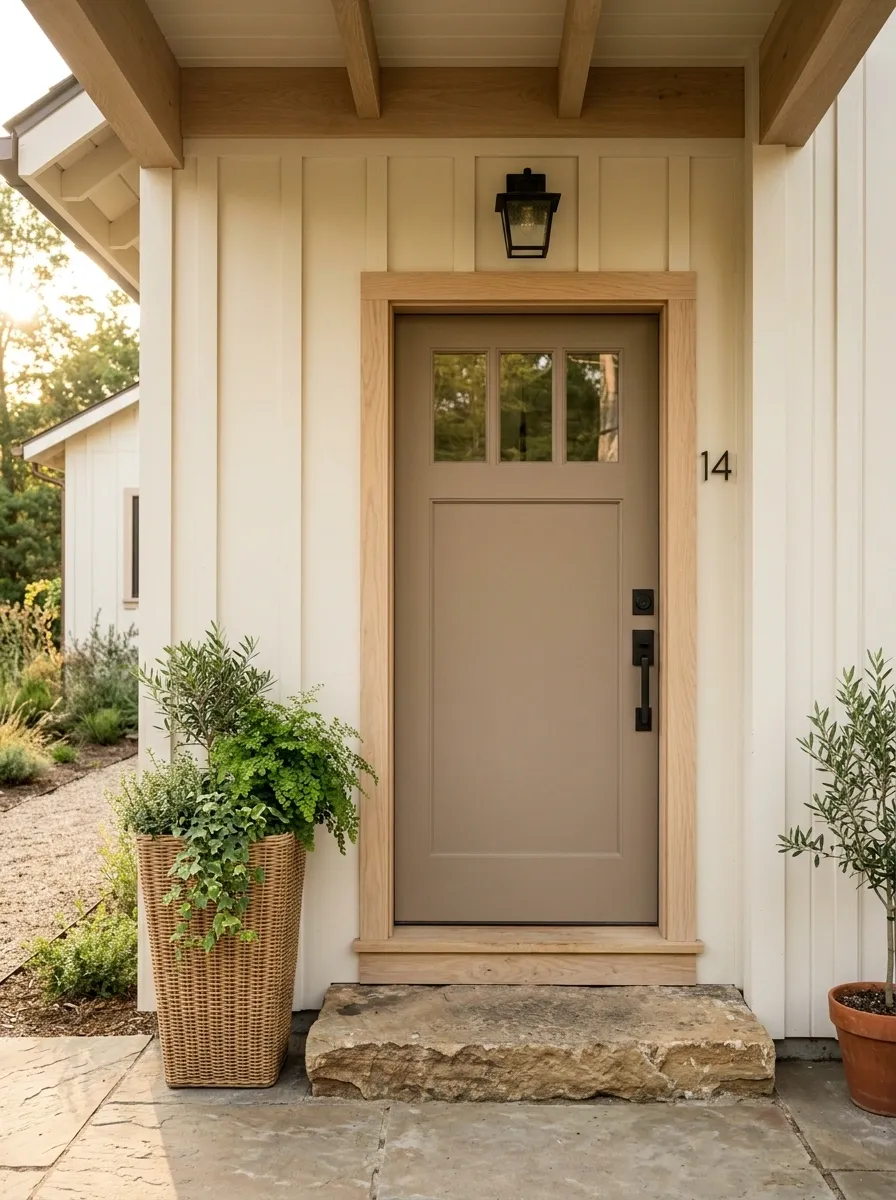
The last concept brings together the softer side of modern design with enough traditional texture to keep it from feeling sterile. A warm mushroom-colored door sits within creamy siding and pale oak trim, grounded by a natural stone step and framed with compact greenery.
Black hardware adds just enough definition to sharpen the pale materials, while a narrow woven planter introduces texture without taking up much floor space.
The strength of this composition is balance. Nothing is especially loud, but the materials aren’t flat. Warm wood, stone, painted surfaces, dark hardware, and greenery each have a different job.
For a genuinely tiny porch, that is often the better strategy. Build interest through relationships rather than filling every spare inch.
The Front Door Should Set the Direction, Not Fight the Porch
A small porch gets better when every part of it seems to understand the same idea.
That can mean a dark door with warm wood, a soft color against rough stone, a clean modern entrance built around glass, or a traditional doorway surrounded by symmetrical planting. The style can change completely, but the basic principle stays the same: the door, architecture, lighting, materials, and greenery need to belong to the same visual conversation.
Before buying planters or seasonal decorations, settle the overall direction first. Decide what you want someone to notice when they approach the house, then remove anything that competes with it.
Small spaces don’t need to look bigger than they are. They just need to stop looking accidental.
Save the designs that actually feel like home to you, especially the ones where the whole entrance works rather than one detail simply looking good on its own.