
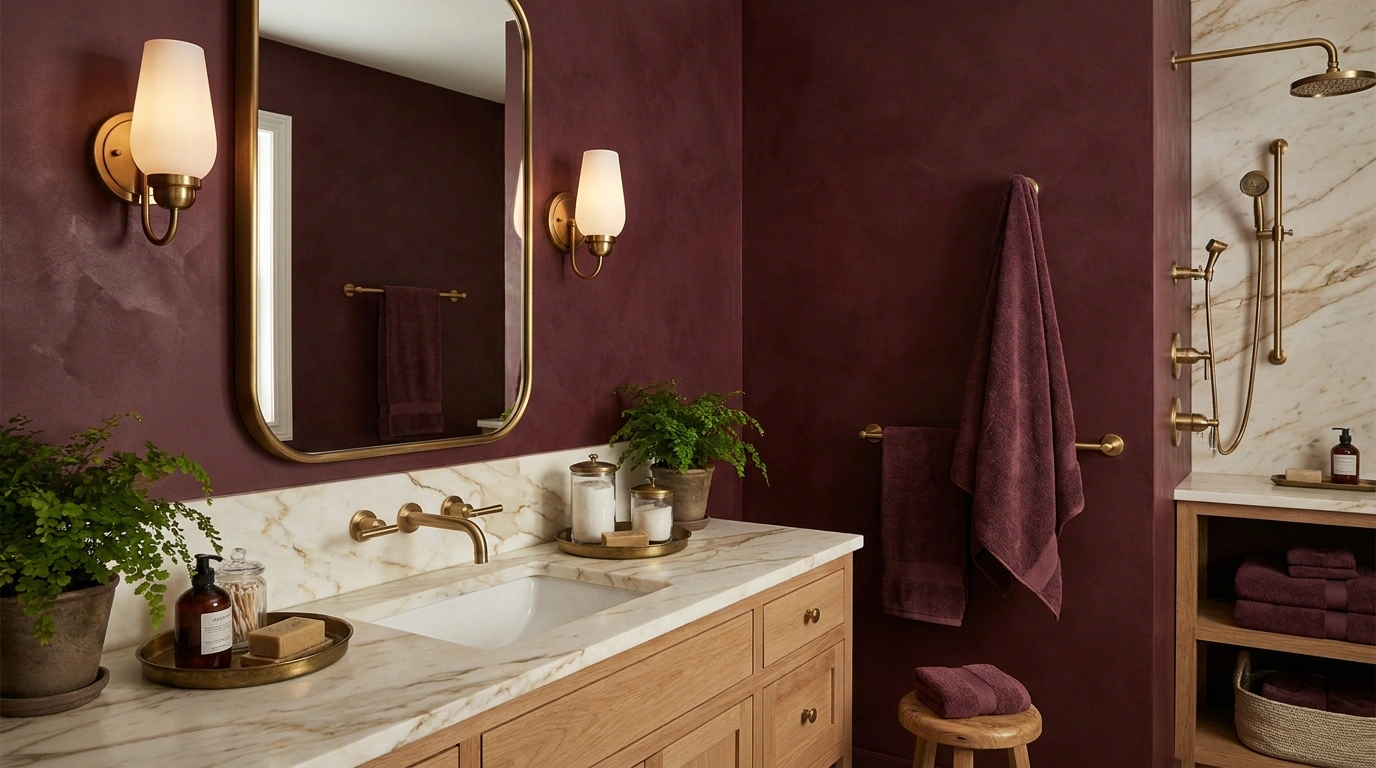
Burgundy has a habit of exposing weak design decisions. Put it beside the wrong white and it can look muddy. Pair it with too many dark finishes and a bathroom can suddenly feel smaller than it is. But give the color the right architecture, materials, and light, and it becomes remarkably sophisticated.
The best burgundy bathrooms don’t treat the shade as a decorative afterthought. They build the entire room around a relationship between depth and relief. Cream stone can soften a saturated wall. Oak can make deep red feel warmer. Marble can bring brightness and movement. Brass can pull out the richer undertones. Even a simple mirror becomes important when the surrounding surfaces carry this much visual weight.
That makes finished room compositions far more useful than a collection of disconnected decorating suggestions. The designs below take burgundy in very different directions, from traditional marble bathrooms to quiet contemporary spaces, moody powder rooms, softer tonal schemes, and highly architectural interiors. Each one offers a complete visual direction that can be adapted rather than copied piece by piece.
Burgundy Bathroom Ideas
Velvet Burgundy Wainscoting and Brass Details
This powder room pairs floor-to-ceiling burgundy paneling with classic wainscoting details for an undeniably tailored atmosphere. A marble-topped dark wood vanity anchors the corner, while an arched mirror with a gilded frame bounces soft illumination around the compact space. Traditional art hangs directly against the saturated wall, proving that deep hues can handle refined gallery styling without losing their intimate punch.
The real trick here is treating the color as a rich textile rather than just paint. The subtle gloss on the paneling reflects the warm glow of classic sconces, adding layers of dimension that keep the dark walls from feeling heavy. I’d skip adding extra tabletop clutter and let the veined marble and polished brass speak for themselves.
This dramatic direction works brilliantly in a small footprint where you want guests to feel enveloped in luxury. The combination of intricate millwork, patterned tile flooring, and aged hardware creates an instant period feel that reads entirely intentional.
Burgundy Zellige Bathroom With Aged Brass and Cream Stone
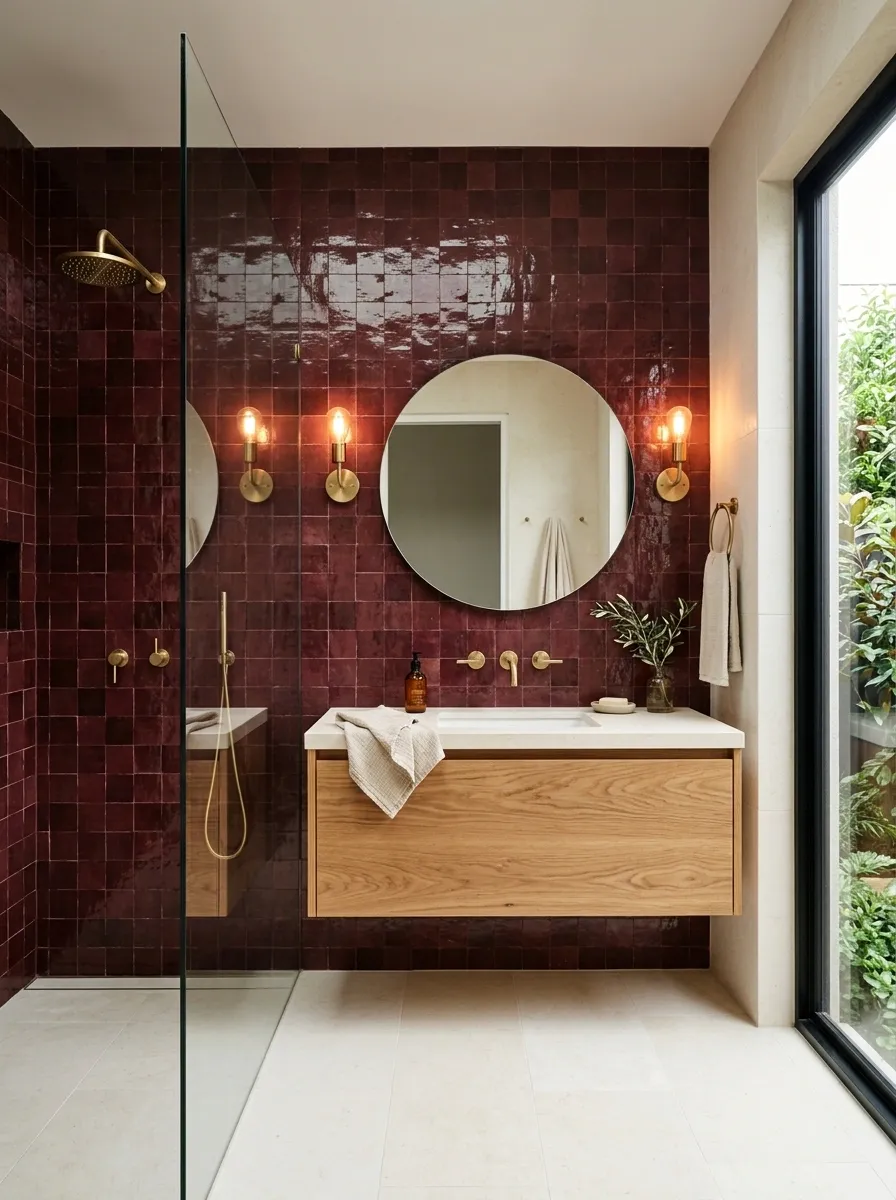
This room makes burgundy the main event without allowing it to swallow the entire composition. Irregular burgundy zellige tile runs across the shower and vanity wall, creating subtle variation rather than one perfectly flat block of color.
Cream limestone flooring keeps the lower half of the room light, while a warm oak vanity introduces another natural tone. Aged brass faucets and sconces repeat the warm undertone, and the shower glass stays nearly invisible so the tile remains the star.
The key is the relationship between rough and polished surfaces. The handmade-looking tile brings movement, while the limestone and oak calm it down.
Sleek Burgundy Walls and Vertical Tile
This modern layout uses burgundy on the upper walls to contrast crisp, pale vertical tiles that run horizontally across the lower half. A matching deep red sink basin sits atop a floating vanity, tying the saturated tone into the room without overwhelming the clean architecture. Warm integrated lighting highlights the shower niche and perimeter, softening the sharp architectural lines with an inviting amber glow.
The secret to this space is the dialogue between matte plaster finishes and clean ceramic surfaces. The burgundy ceiling pulls the entire room together into a cohesive cocoon, while the light floor tiles prevent the darker upper half from closing in.
This approach is ideal for contemporary homes seeking a bold color commitment balanced by clean, uncluttered geometry. The warm lighting and restrained accessories ensure the rich palette remains sophisticated rather than cavernous.
Deep Burgundy Traditional Bathroom With Marble and Walnut
This version leans confidently into old-world richness. Deep burgundy walls frame a dark walnut vanity with traditional proportions, while pale marble counters and flooring break up the darker wood. A framed mirror, classic sconces, and restrained aged-brass hardware reinforce the traditional language without turning the room into a period set.
What makes the design work is the balance between dark and light surfaces. The burgundy and walnut establish depth, but the marble gives the eye somewhere to rest. I’d avoid adding additional dark accessories because the room already has enough visual weight. The result is especially convincing in a bathroom with substantial wall height, where the dark color can feel architectural rather than cramped.
Contemporary Burgundy Bathroom With Pale Oak and White Quartz
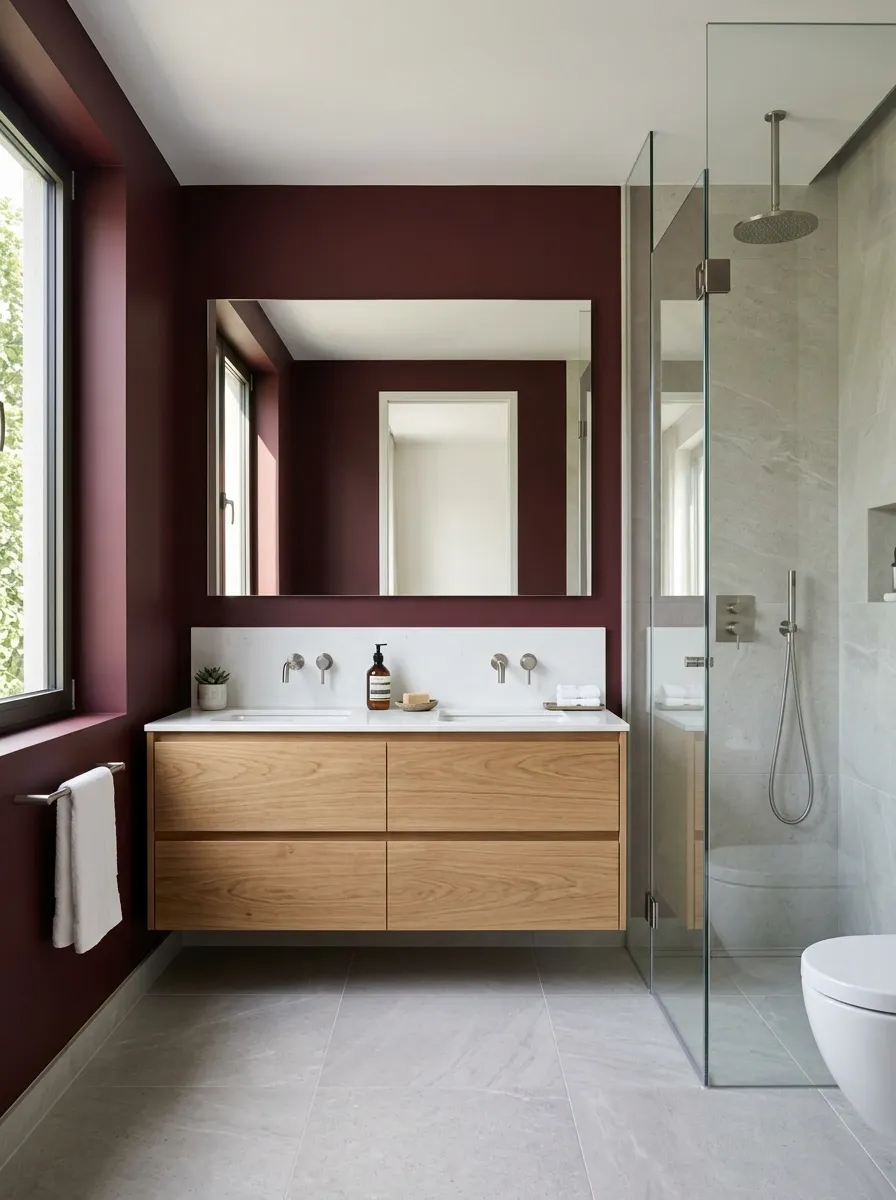
For a cleaner interpretation, this bathroom uses burgundy as a strong architectural plane rather than a historical color statement. A flat-front pale oak vanity sits against a deep burgundy wall, with crisp white quartz across the counter and large pale floor tiles below. Frameless glass, slim brushed-metal fittings, and a large mirror keep the rest of the room visually quiet.
The contrast is what makes this version feel fresh. Burgundy supplies depth, pale oak supplies warmth, and the white quartz prevents the palette from becoming muddy. I’d resist introducing patterned tile here because the strength of the room comes from its broad, simple surfaces. This composition suits contemporary bathrooms where clean cabinetry and uncluttered circulation already define the architecture.
Modern Linear Burgundy and Neutral Wood
A striking overhead burgundy plane sets a daring tone, dropping down to meet clean, vertically ribbed tiles and a minimalist shower enclosure. The enclosed wet room layout utilizes soft under-cabinet illumination to cast a warm glow across the pale flooring, while a floating vanity introduces functional warmth. Brushed fixtures and subtle shelving keep the streamlined vision intact.
Success here relies on strict material editing and clean transitions. The vertical alignment of the lower tiles draws the eye upward, making the rich ceiling color feel deliberate and structural rather than oppressive. I’d skip any patterned rugs or busy bath accessories to let the linear geometry shine.
This contemporary take suits urban apartments or minimalist homes that want to embrace dramatic color without relying on traditional millwork. The interplay between dark overhead warmth and pale lower surfaces keeps the space feeling surprisingly open.
Moody Burgundy Powder Room With Antique Mirror
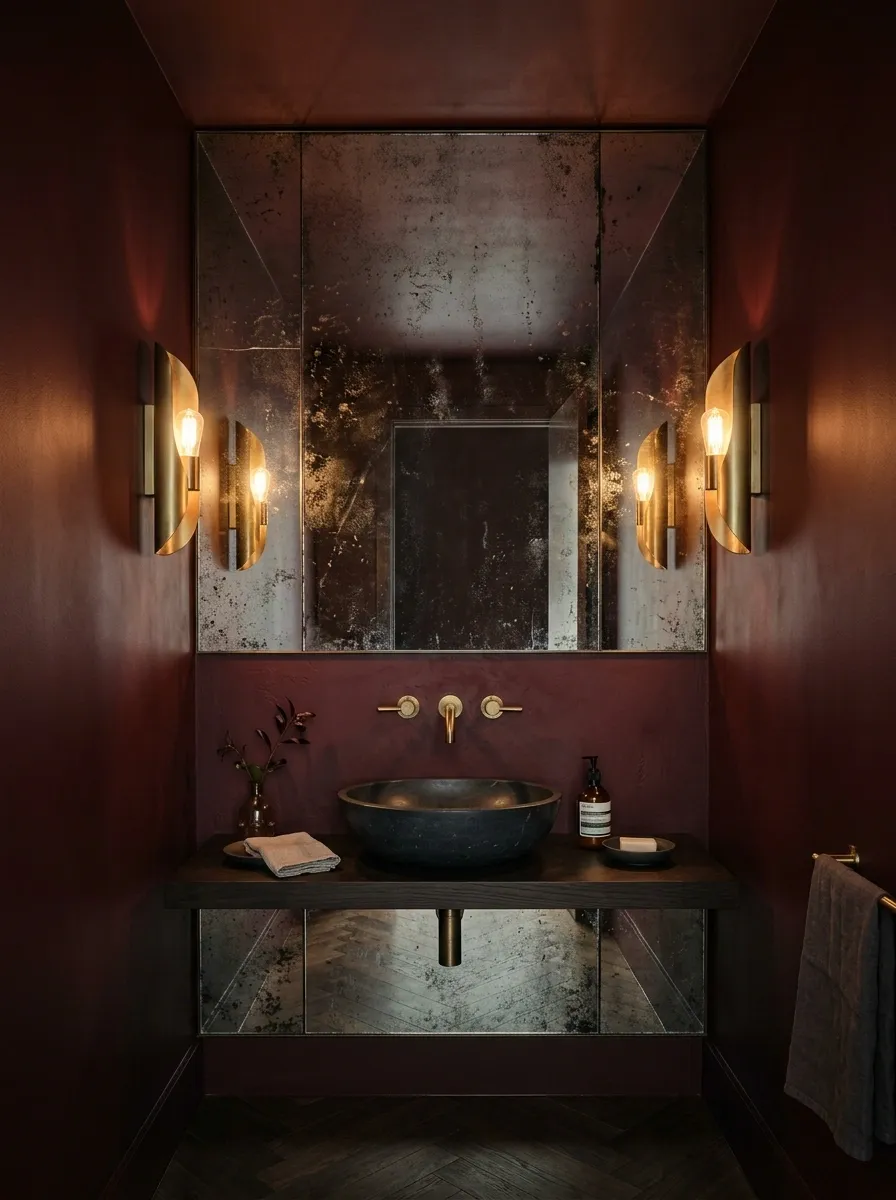
A small powder room can carry a much richer palette because the enclosed footprint makes the color feel intentional rather than expansive. Here, burgundy runs across the walls and ceiling, creating a cocoon-like backdrop for an antique mirrored vanity wall. A dark stone basin, sculptural sconces, and aged brass fittings keep the room dramatic while the mirror adds broken reflections that stop the dark surfaces from feeling flat.
The trick is concentration. Instead of spreading burgundy across a large number of competing rooms and finishes, this design commits fully in one compact space. I’d keep the floor relatively quiet and avoid filling the counter with accessories. The mirror, lighting, and deep color already provide enough visual movement.
Cozy Burgundy Beadboard and Vintage Charm
This charming half bath wraps lower beadboard and upper walls in a muted burgundy tone, accented by warm brass fixtures and botanical art. A matching burgundy toilet tank and bowl commit fully to the saturated color scheme, while a rustic woven basket and delicate floral arrangement soften the corner. The warm terracotta-toned floor tiles ground the space with earthy texture.
The charm comes from a fearless commitment to color splashing across every possible surface. Painting the plumbing fixtures and even the toilet in the same shade erases visual clutter and creates a seamless, bespoke effect. I’d keep the styling simple with just a sprig of fresh greenery and an antique mirror.
This design shines in small powder rooms where you want to lean into historic cottage aesthetics. The unified color palette turns a utilitarian space into a memorable, design-forward jewel box.
Burgundy and Limestone Bathroom With Soft Mediterranean Influence
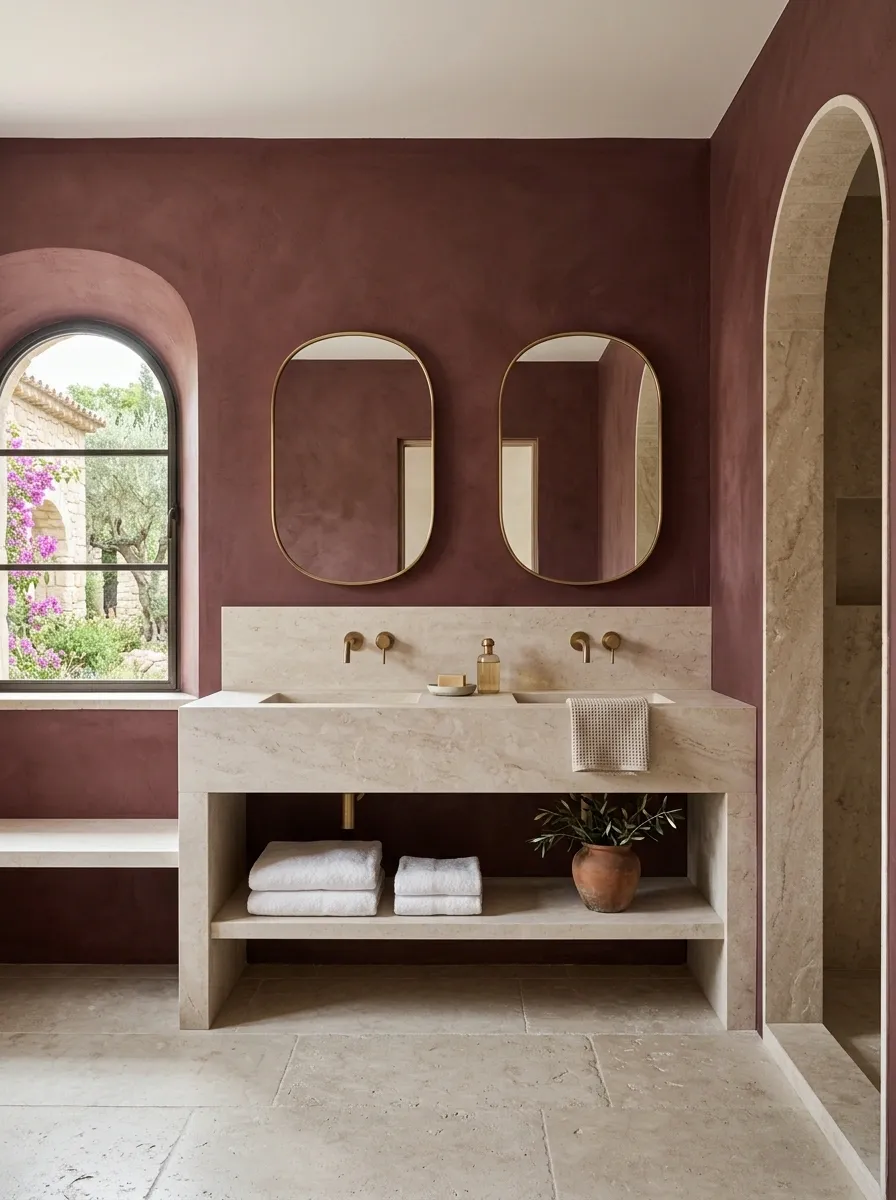
This composition takes burgundy somewhere warmer and more tactile. Instead of glossy cabinetry or high-contrast black accents, the walls have a softly plastered appearance, while pale limestone covers the floor and vanity. Rounded mirrors, simple brass fixtures, and shallow arched openings bring a gentle architectural rhythm to the room.
The appeal comes from the restrained material palette. Burgundy provides the depth, limestone introduces natural variation, and brass adds just enough warmth to connect them. There is no need for a collection of decorative accessories. I’d let the stone edges, curved architecture, and changing daylight do the visual work. This direction suits bathrooms where the goal is warmth and character rather than a sharp contemporary finish.
Burgundy Victorian-Inspired Bathroom With Checkerboard Stone
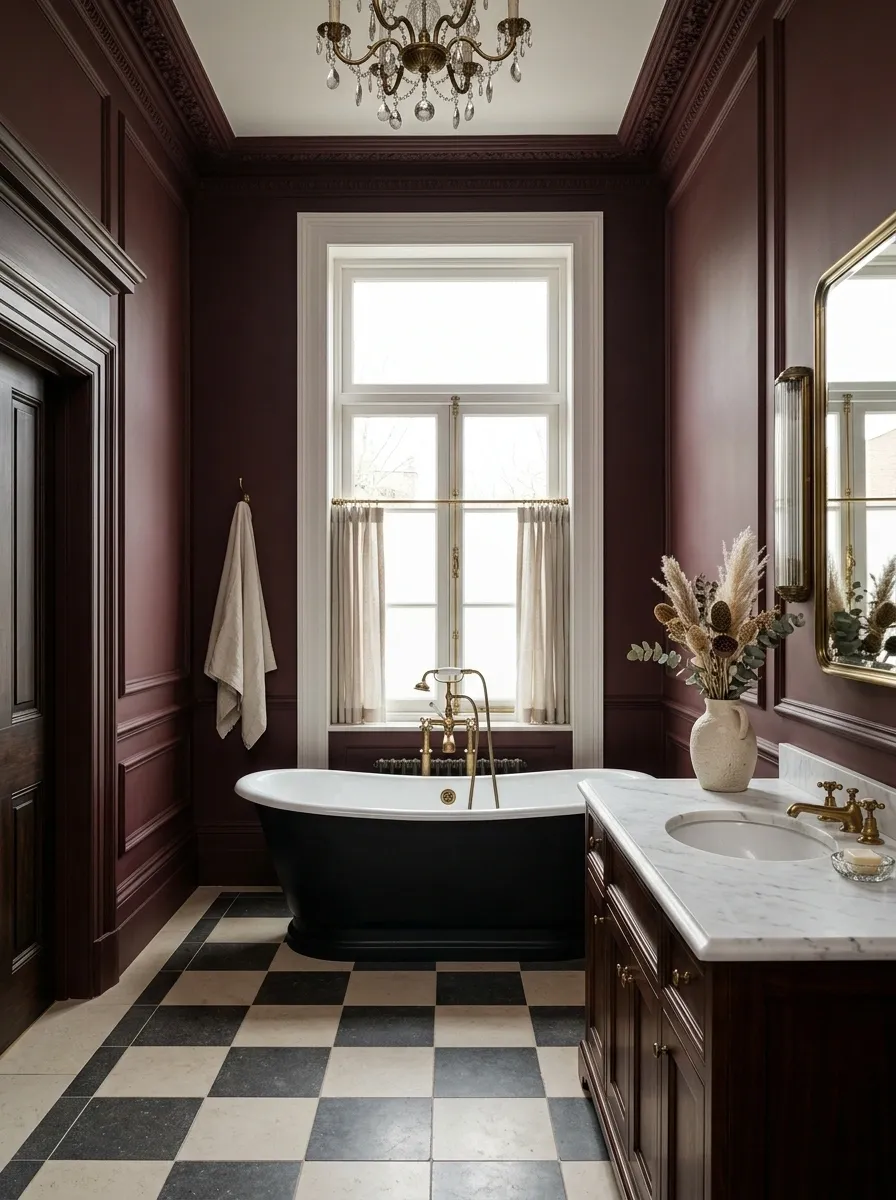
Deep burgundy walls give this bathroom the gravitas of a traditional interior, while a restrained cream-and-charcoal checkerboard floor keeps it from feeling overly dark. A freestanding tub sits beneath a classic wall treatment, joined by traditional pedestal-style fittings, dark wood furniture, framed mirrors, and aged brass details. Everything feels substantial, but nothing competes for attention.
The floor is doing more work than it first appears. Its graphic pattern breaks up the uninterrupted burgundy while reinforcing the room’s old-fashioned character. I’d keep the accessories sparse and let the architecture carry the personality. This direction is especially convincing when the bathroom has tall walls, generous trim, or other original architectural details worth emphasizing.
Burgundy Bathroom With Fluted Walnut Vanity and Travertine
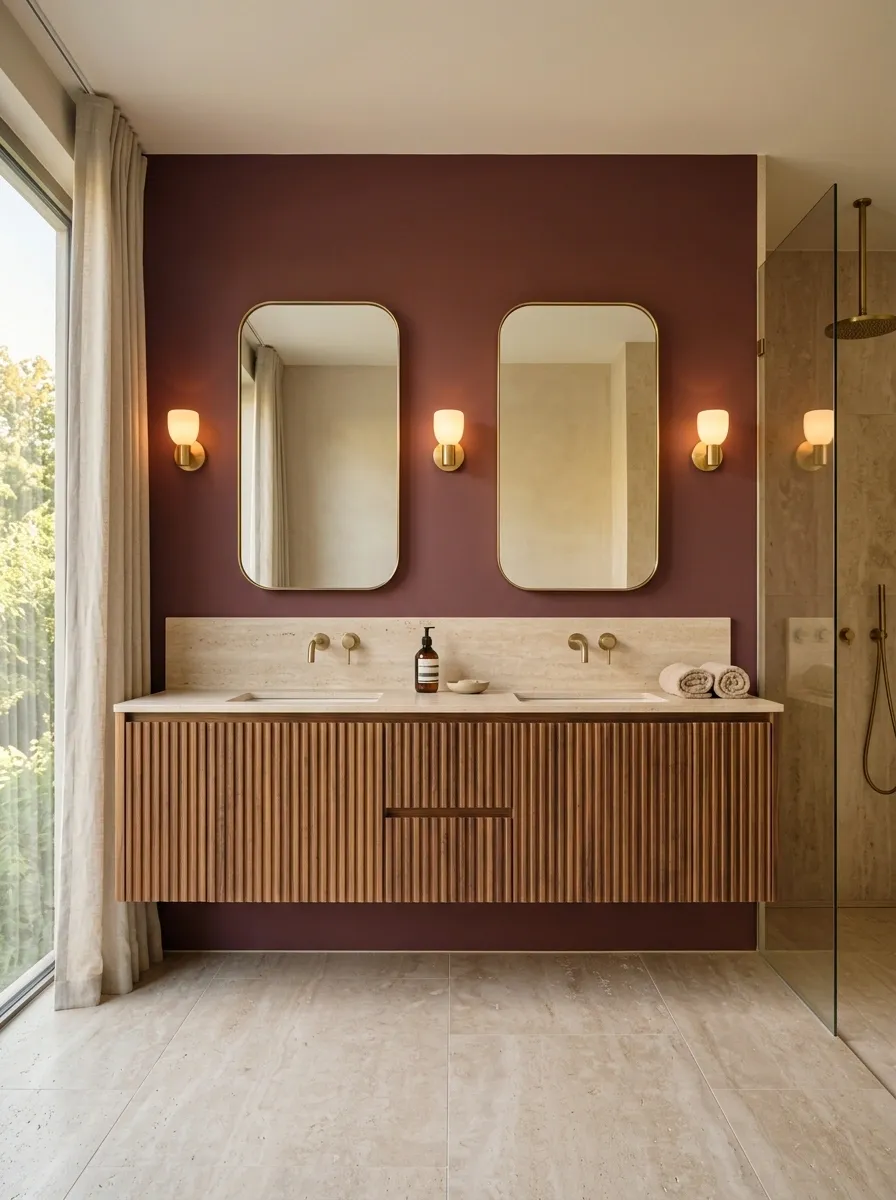
A fluted walnut vanity gives this burgundy bathroom a strong furniture-like presence. Behind it, a muted burgundy wall creates a deep backdrop, while honed travertine continues across the countertop and floor. The stone’s natural variation adds movement, but its soft beige undertone keeps the room from becoming busy. Rounded mirrors and warm sconces finish the composition.
The important detail is the mix of textures rather than the number of materials. Ribbed walnut catches light vertically, travertine introduces irregular mineral pattern, and the burgundy wall provides a broad matte plane behind both. I’d skip highly patterned towels or decorative shelving here. The architecture already contains enough variation to make the room feel layered and considered.
Modern Burgundy Bathroom With Charcoal Stone
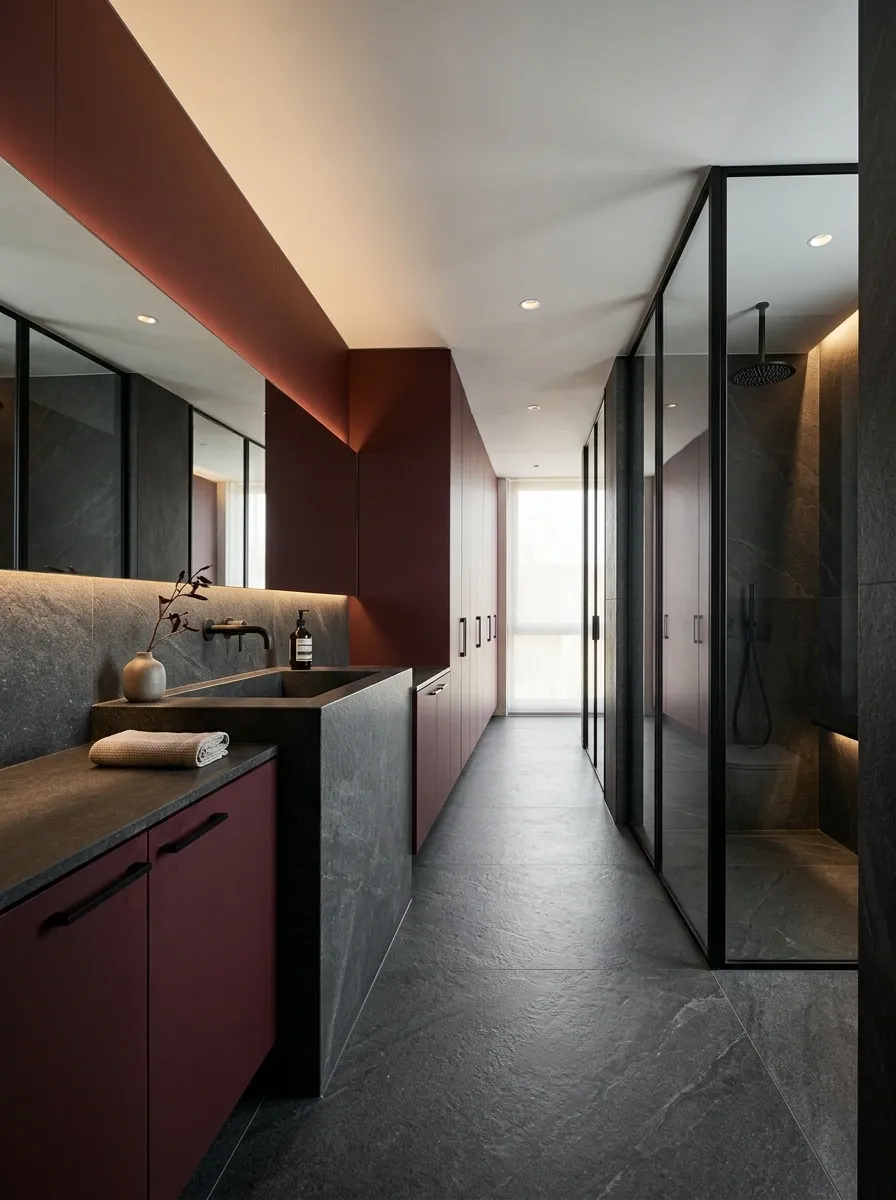
This is the darker contemporary direction, built around clean planes and selective contrast. Burgundy cabinetry stretches along one wall beneath a matching wall panel, while charcoal stone covers the floor and continues into a sculptural sink. Black-framed shower glass strengthens the architectural lines, and carefully placed lighting keeps the darker surfaces readable rather than gloomy.
A room this dark needs visual discipline. The strongest version keeps the ceiling simple, limits decorative objects, and uses lighting to reveal texture rather than simply making everything brighter. The charcoal floor creates a grounded base, while the burgundy remains the warmer, more memorable tone. This composition suits a larger bathroom where dark materials can be given enough visual breathing room.
</div> </div>
Burgundy Bathroom With Cream Vanity and Polished Chrome
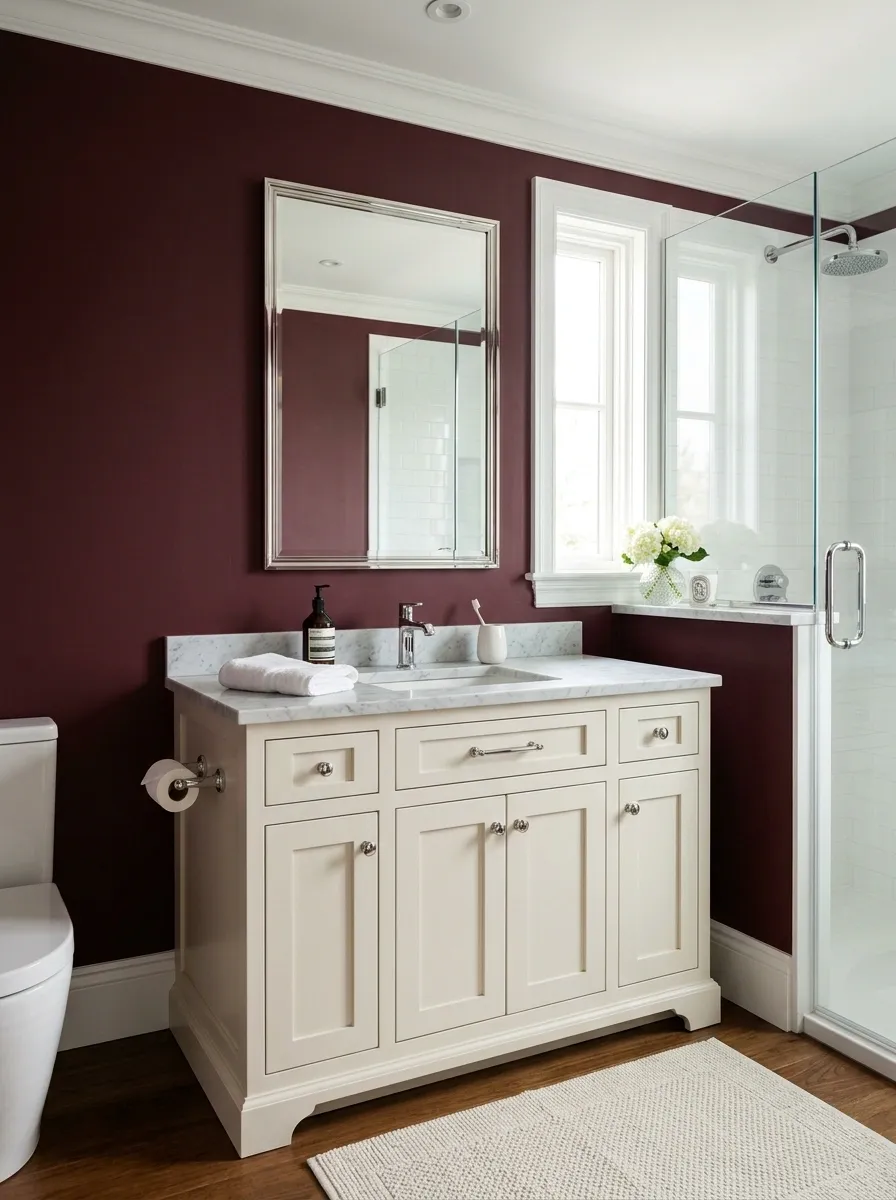
Burgundy becomes noticeably crisper when paired with bright cream and reflective chrome. In this design, the deep wall color frames a cream-painted vanity with a pale marble countertop, while polished chrome hardware adds a sharper note than aged brass would. Clear shower glass keeps the room open, and the large mirror bounces light through the darker wall color.
The success of this room comes from reflection. The marble, mirror, and chrome create small points of brightness that keep the burgundy looking saturated rather than dull. I’d avoid introducing another strong wood tone because the room already has a clear dark-versus-light relationship. This is a smart direction when you want burgundy to feel classic but noticeably fresher than a traditional all-warm palette.
Burgundy Japandi-Inspired Bathroom With Warm Oak
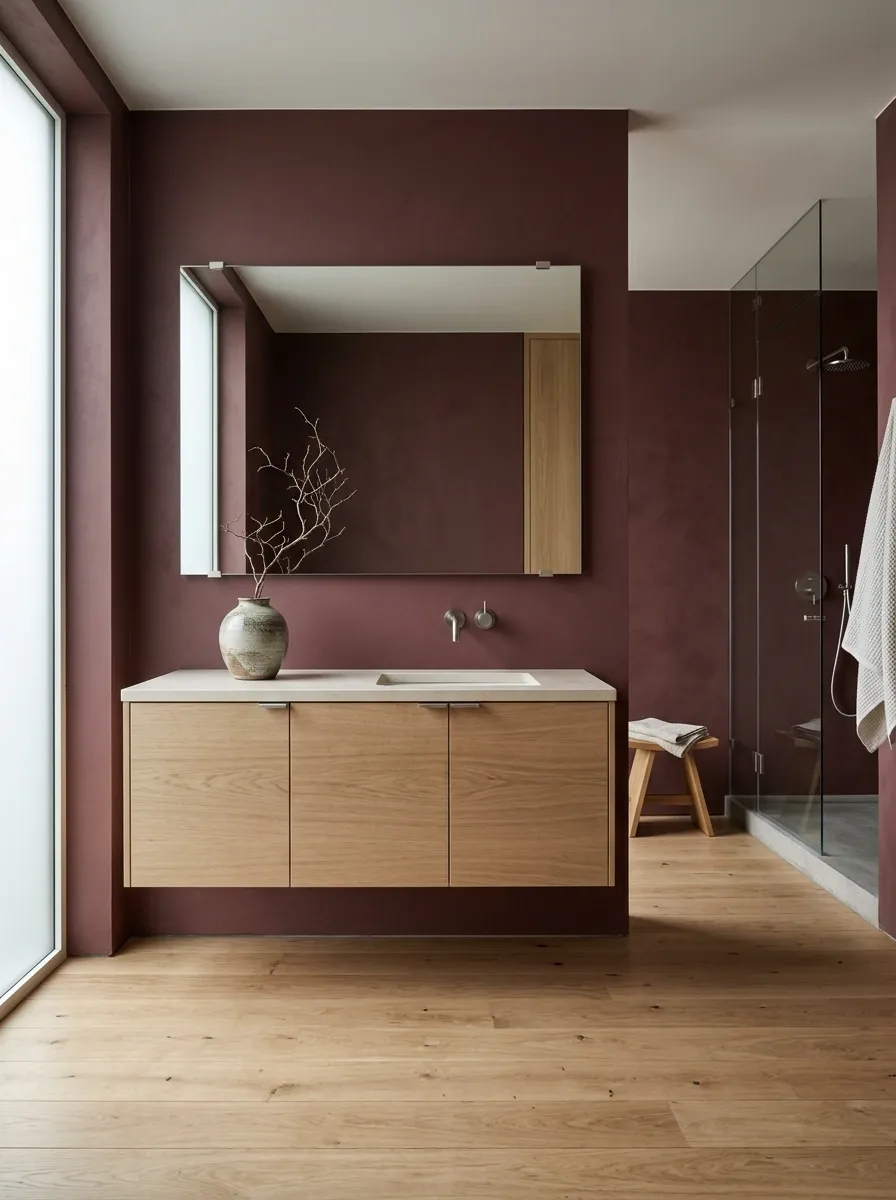
This bathroom takes a quieter route, pairing muted burgundy walls with low-profile oak cabinetry, pale stone, simple rectangular mirrors, and understated brushed hardware. The furniture sits close to the visual ground, leaving generous breathing room around it. Nothing is oversized, ornamental, or competing for attention.
The palette works because the materials are warm but restrained. Burgundy gives the room depth, oak introduces softness, and pale stone provides a calm transition between them. I’d keep countertop accessories almost nonexistent and choose lighting with simple, clean silhouettes. This direction is especially strong for bathrooms that already have streamlined architecture and need richness without visual clutter.
Burgundy Art Deco Bathroom With Geometric Marble
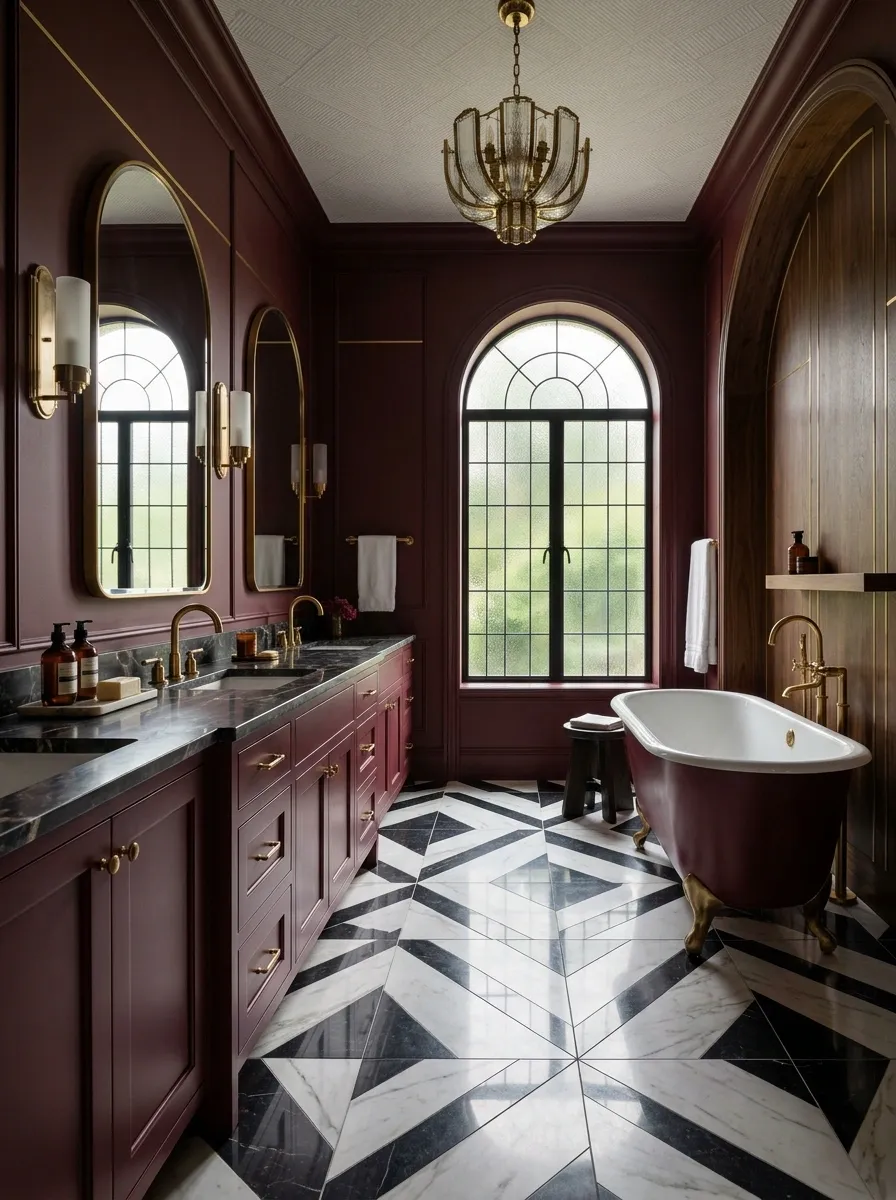
This bathroom gives burgundy a more glamorous architectural setting through geometry rather than decoration. Deep burgundy walls and cabinetry frame a geometric marble floor, while curved mirrors soften the sharper lines elsewhere in the room. Dark wood appears in small doses, and aged brass lighting adds warmth without making the space feel overly ornate.
The strongest detail is the contrast between straight and curved forms. The floor introduces deliberate geometry, the cabinetry keeps long clean lines, and the mirrors interrupt those shapes with rounded silhouettes. I’d avoid adding additional patterned surfaces because the marble already provides the graphic element. The result feels distinctly Art Deco while remaining practical enough for a contemporary bathroom.
Cabinetry
Marble floor
Mirrors
Brass lighting
Burgundy Bathroom With Green Marble and Brass
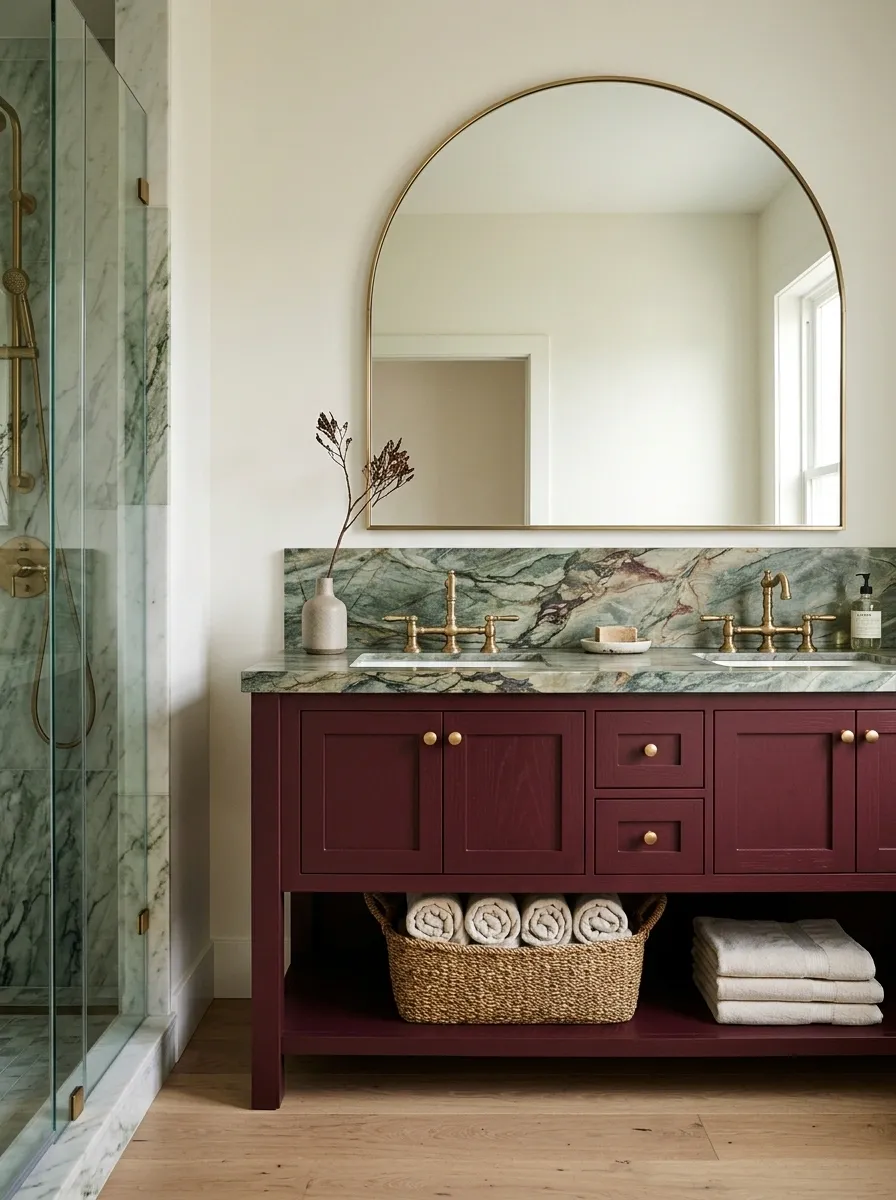
Burgundy and green can look overwhelmingly rich when both are introduced without a clear hierarchy. This room gets the balance right by using burgundy cabinetry as the dominant color and green-veined marble as the supporting statement. The flooring stays quiet, the walls remain relatively simple, and warm brass fixtures connect the red and green undertones.
The marble should feel like a bridge rather than a competing centerpiece. That means choosing a stone whose veining has enough burgundy, brown, or warm neutral movement to relate to the cabinetry. I’d keep towels and accessories close to the cream and beige side of the palette. The room already has plenty of color, so repetition through texture matters more than adding additional hues.
Soft Burgundy Bathroom With Blush Limestone
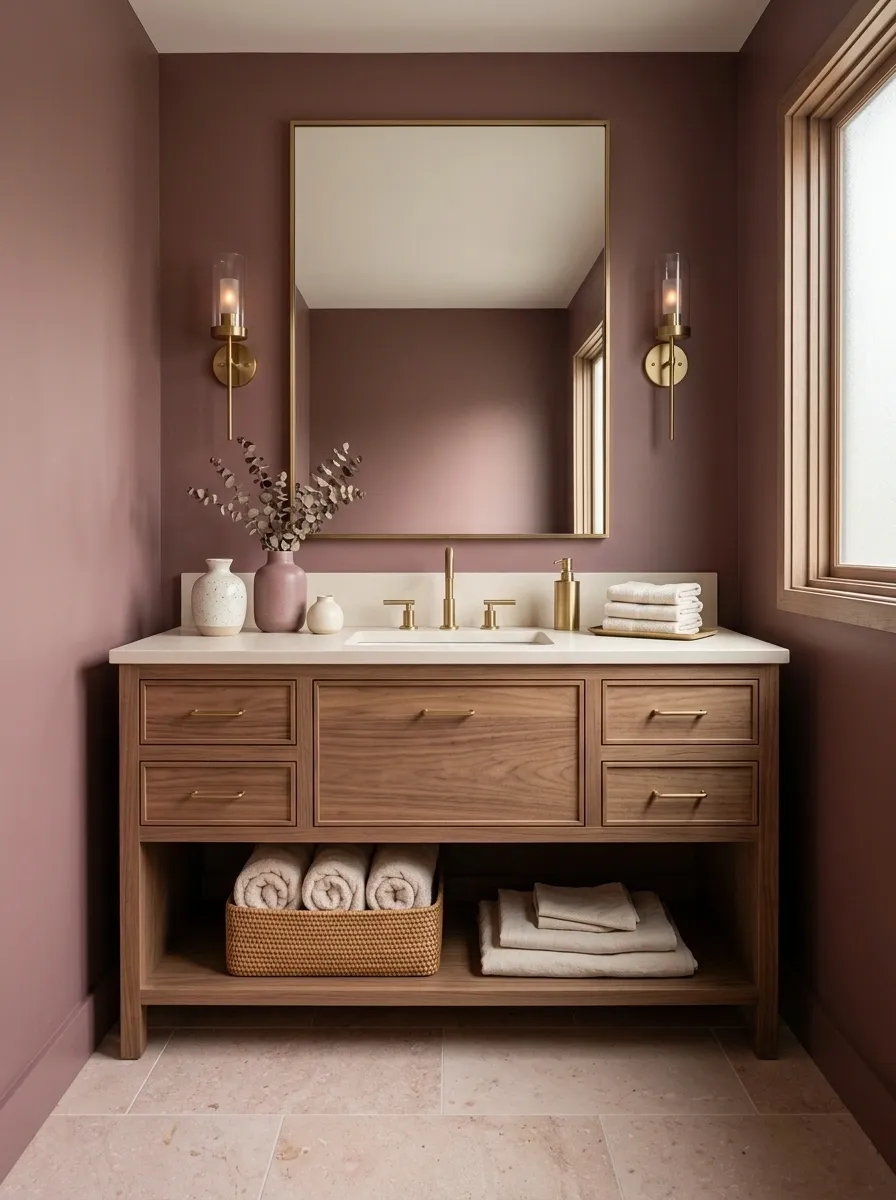
Not every burgundy bathroom needs to feel dramatic. This softer composition uses a dusty burgundy across the walls with blush-toned limestone, light walnut, brushed brass, and creamy textiles. The neighboring colors sit close together rather than creating sharp contrast, which gives the room a calmer, more enveloping character.
The secret is keeping the supporting colors warm enough to belong beside burgundy. A cold gray floor would change the entire mood, while pale stone with pink and beige undertones reinforces the warmth. I’d also choose a subdued burgundy rather than a highly saturated red-purple. This direction is particularly appealing in bathrooms where the goal is softness, natural texture, and a quieter visual rhythm.
Burgundy Cottage Bathroom With Painted Cabinetry
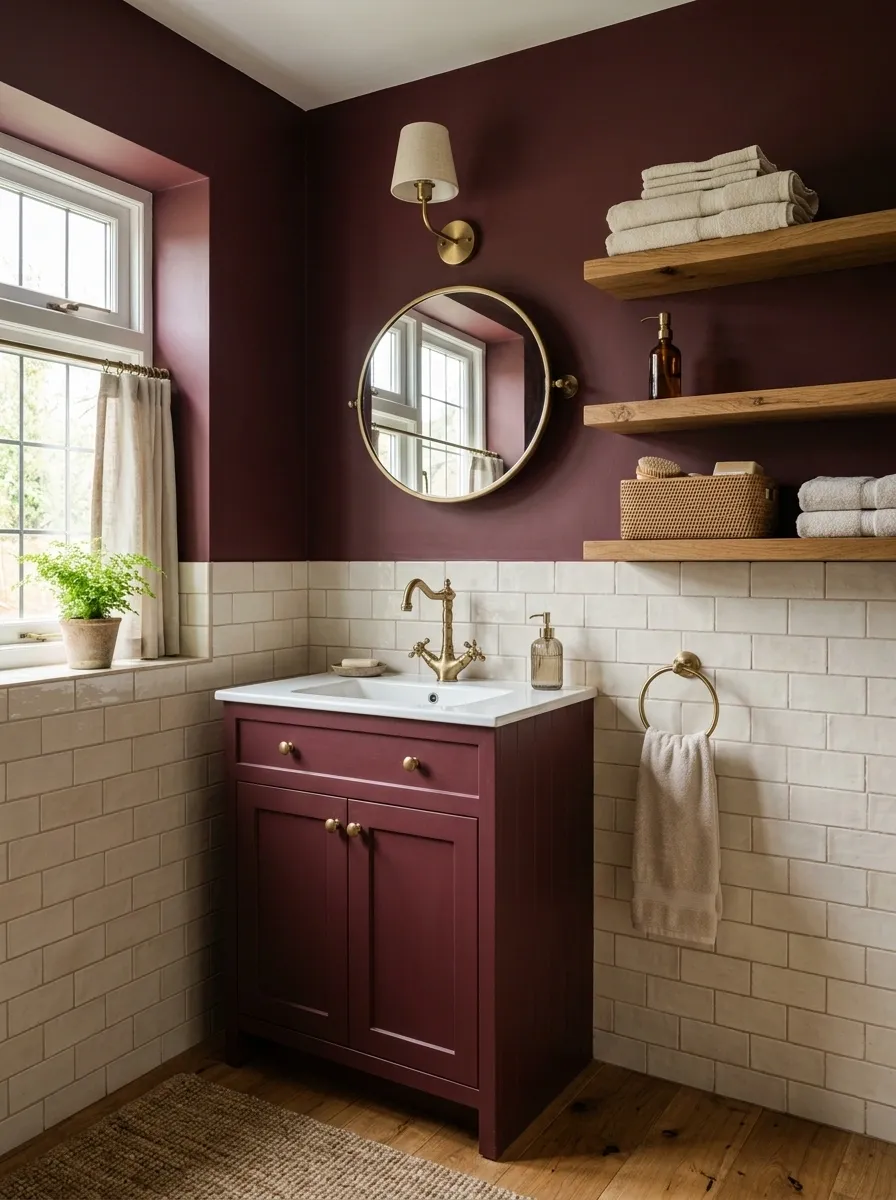
This bathroom uses burgundy in a warmer, more domestic way. Painted walls surround a compact painted vanity, while warm oak shelves, handmade-looking cream tile, traditional brass fittings, and a vintage-inspired mirror bring in the details. Nothing is overly sleek, and the mix of finishes makes the space feel assembled over time rather than purchased as one matching set.
The palette works because the natural materials stop the painted surfaces from feeling too formal. The oak and lightly irregular tile add small imperfections that make the burgundy feel approachable. I’d keep the decorative pieces useful, such as a woven basket or neatly folded towels, rather than filling every surface with vintage accessories. That keeps the room charming instead of themed.
Burgundy Bathroom With White Ribbed Tile and Oak
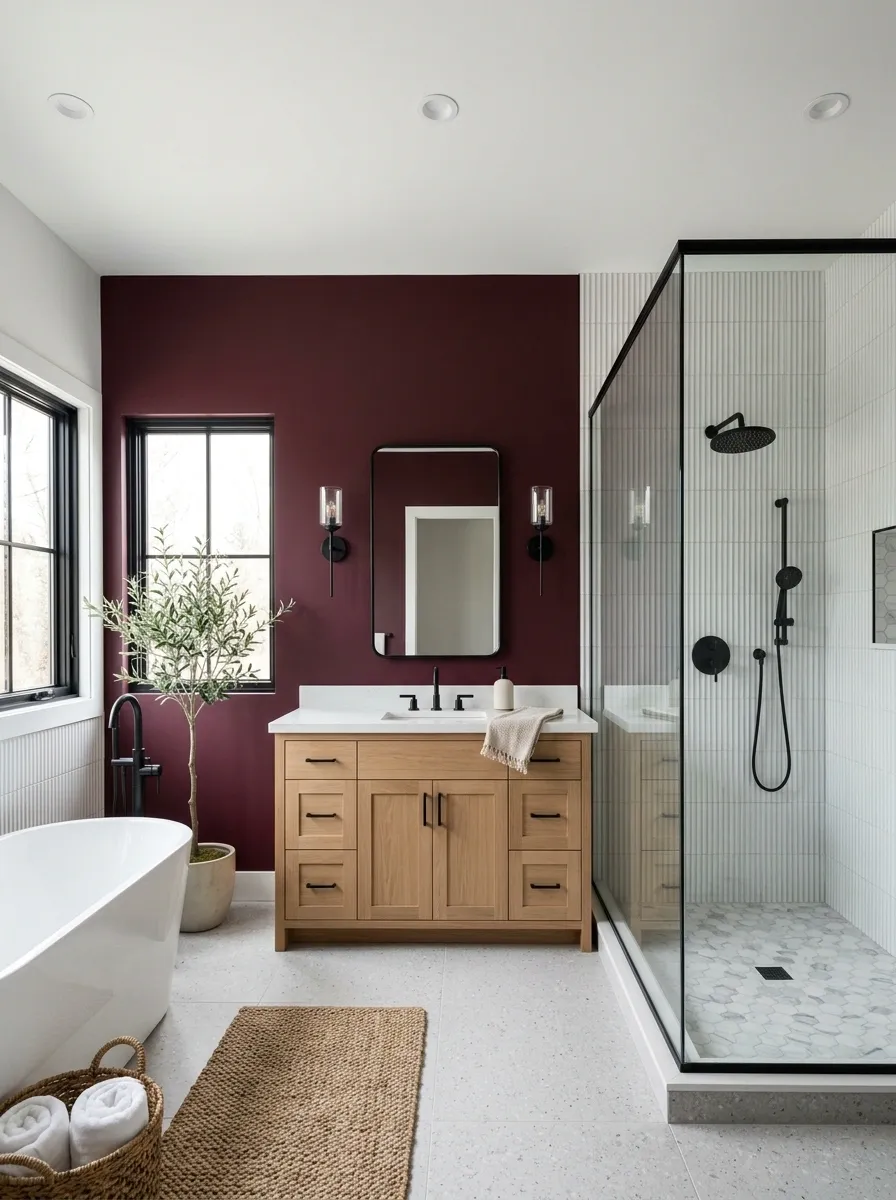
This design flips the usual burgundy equation by making white the main shower surface and using burgundy only where a stronger architectural plane is needed. Vertical ribbed white tile creates texture around the shower, while a burgundy vanity wall gives the room depth. Pale oak cabinetry details warm the transition and simple black hardware sharpens the overall composition.
The ribbed tile is important because it gives the white surfaces enough texture to stand beside the burgundy without looking plain. The vertical direction also draws the eye upward, which can make the room feel more generous. I’d use fewer decorative accessories and let the tile’s shadow lines create the detail. This is a useful approach when you want burgundy to feel substantial without making the whole room dark.
Burgundy Marble Bathroom With Sculptural Freestanding Tub
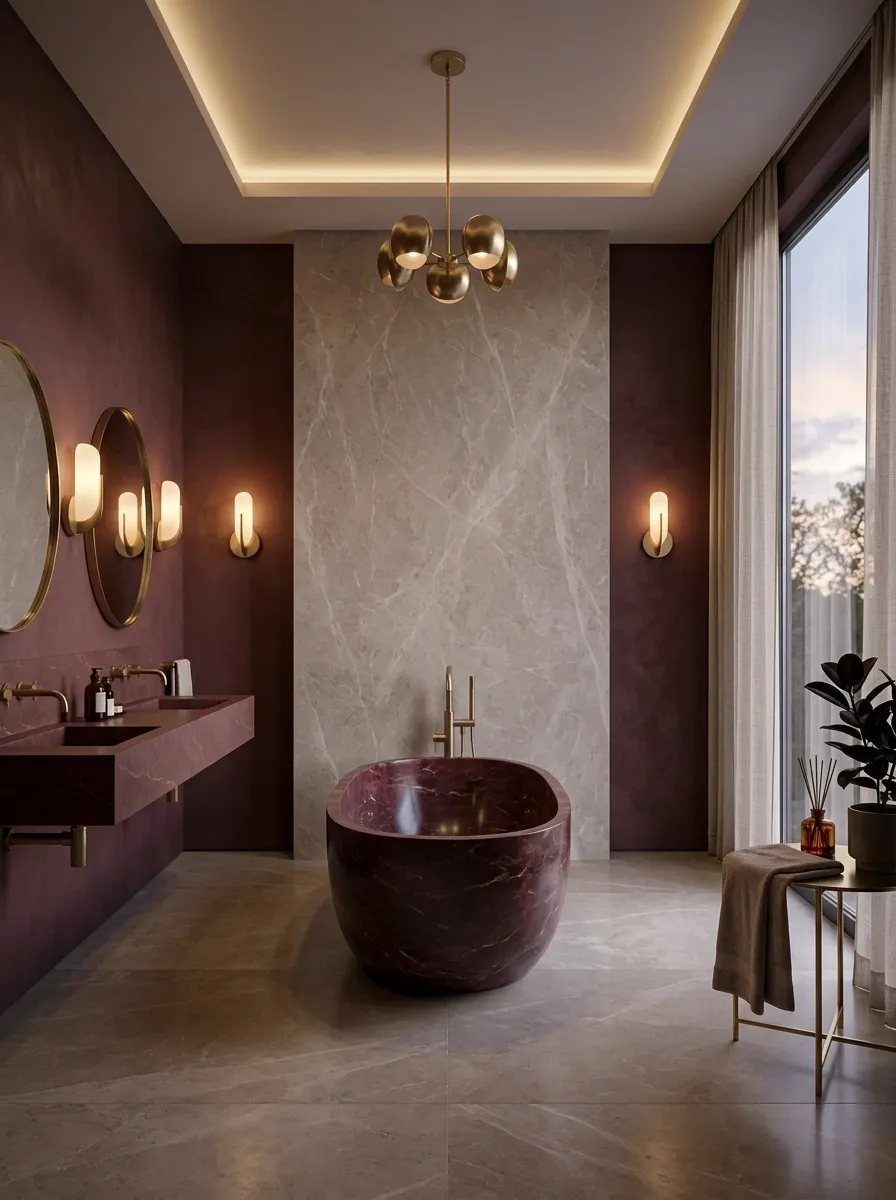
This room places the bathtub at the center of the composition, using burgundy walls and a burgundy-toned stone vanity to frame it. A quieter stone backdrop gives the tub its own visual zone, while rounded fixtures and soft wall lighting repeat its curves. The result is dramatic but surprisingly calm because the furniture arrangement leaves generous negative space around the main pieces.
The layout matters as much as the palette. The tub needs room to read as a sculptural object, so crowding it with stools, baskets, or plants would weaken the composition. I’d keep the accessories low and sparse and let the lighting create the evening mood. This design shines in larger bathrooms where the central focal point can be appreciated from several angles.
Quiet circulation
Strong sculptural form
Soft supporting light
Compact Burgundy Bathroom With Two-Tone Tile
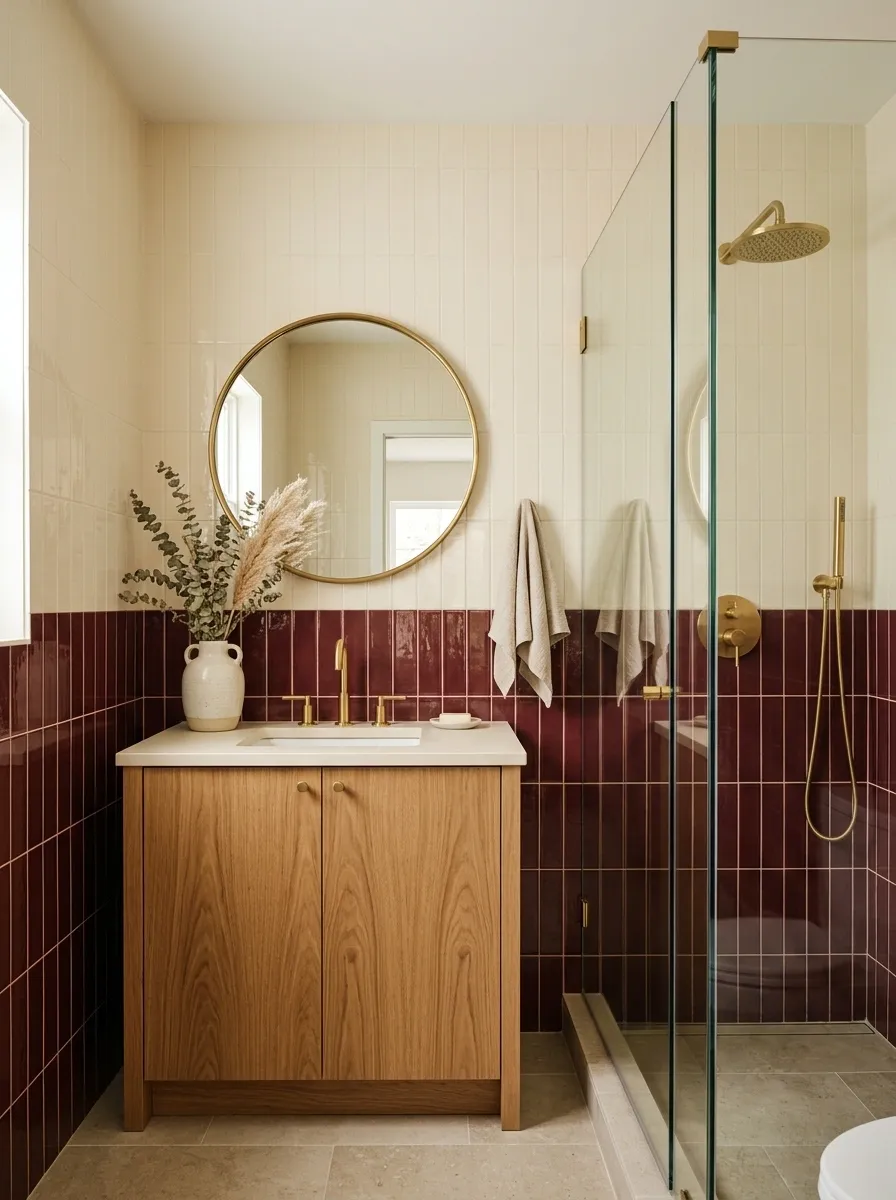
This compact bathroom uses a simple vertical split to make the burgundy feel deliberate rather than overwhelming. Rich burgundy tile covers the lower half of the walls, while warm ivory tile rises above it. A compact oak vanity, frameless shower, and brass fittings complete the room without introducing another strong color.
The two-tone arrangement gives the eye a clear horizontal boundary, which makes a small room easier to read. The lighter upper section also keeps the ceiling visually connected to the brighter surfaces below. I’d choose larger, quieter tile shapes rather than several competing patterns. The design proves that a smaller bathroom does not need to avoid deep color, it simply needs a controlled way to distribute it.
Burgundy Bathroom With Dark Walnut and Cream Terrazzo
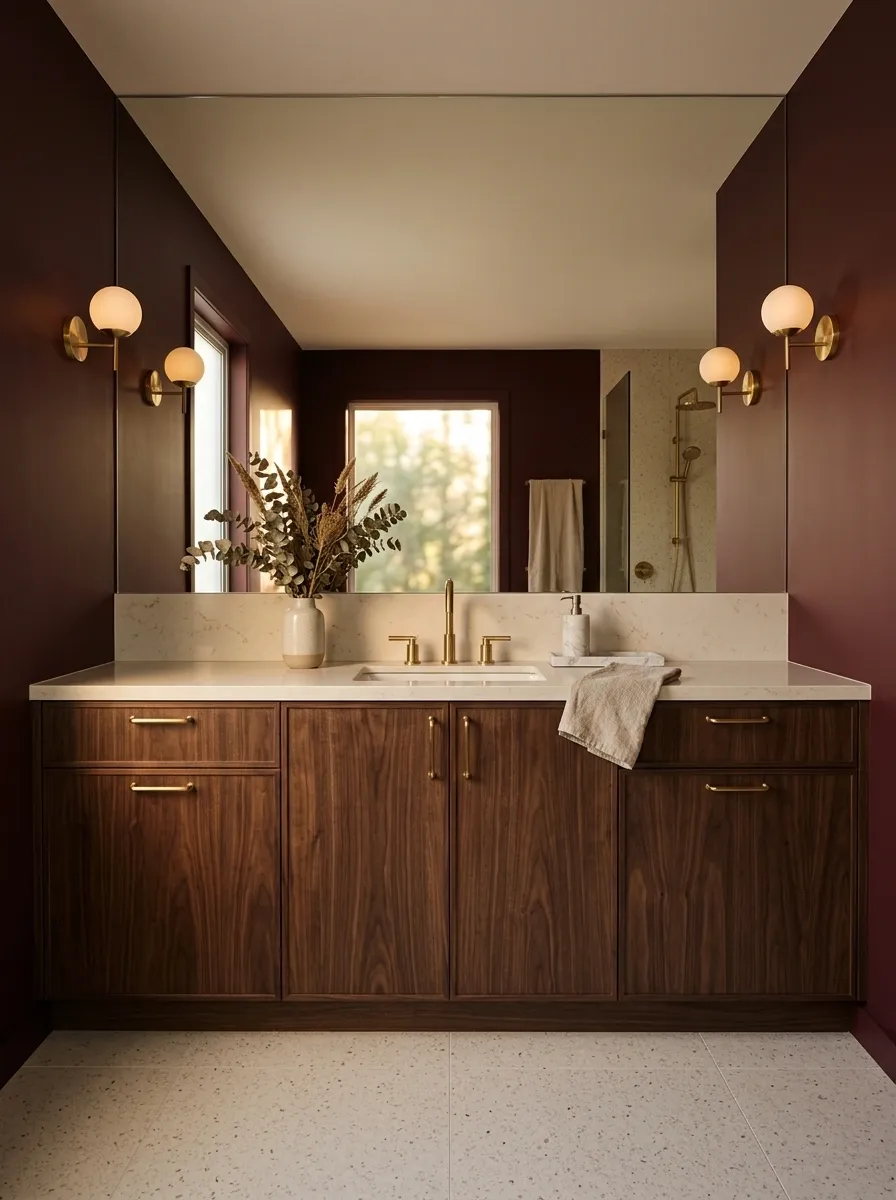
Dark walnut and burgundy create a particularly grounded pairing, and the cream terrazzo prevents the combination from becoming too dense. Here, dark walnut cabinetry establishes the furniture layer while burgundy walls provide the surrounding depth. Cream terrazzo across the floor introduces scattered mineral detail, and the mirror stretches wide enough to lighten the visual mass around the vanity.
The terrazzo is the important balancing surface because it adds pattern without introducing another saturated color. I’d keep the grout and other surrounding finishes quiet so the stone remains soft rather than busy. This room works best when the walnut is repeated in only a few places, giving it enough presence to connect with burgundy without creating a uniformly dark perimeter.
Burgundy Bathroom With Arched Niches and Travertine
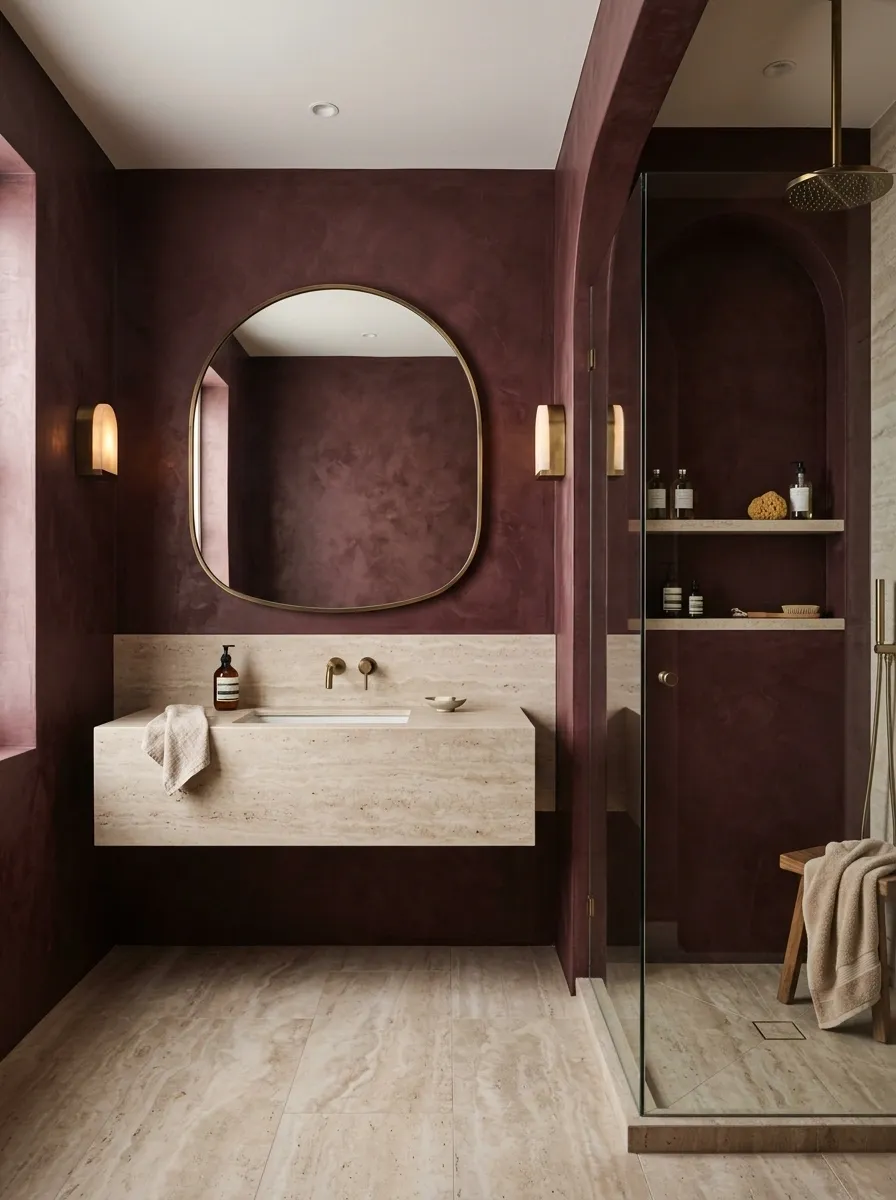
Soft arches change the entire personality of a burgundy bathroom. Here, burgundy plaster runs across the walls and around recessed shower niches, while travertine forms the flooring and vanity. Rounded mirrors continue the architectural shape, and antique brass fixtures bring warmth without competing with the stone.
The repeated arches provide the visual rhythm, so the rest of the room should stay simple. Too many decorative shapes would dilute the effect. I’d also keep the travertine relatively honed rather than highly polished, allowing the burgundy to remain the dominant visual plane. This design suits bathrooms where architectural detailing can be built directly into the walls rather than added through accessories.
Architectural detail
Repeated curve
Quiet base
Burgundy Bathroom With Blackened Metal and Pale Marble
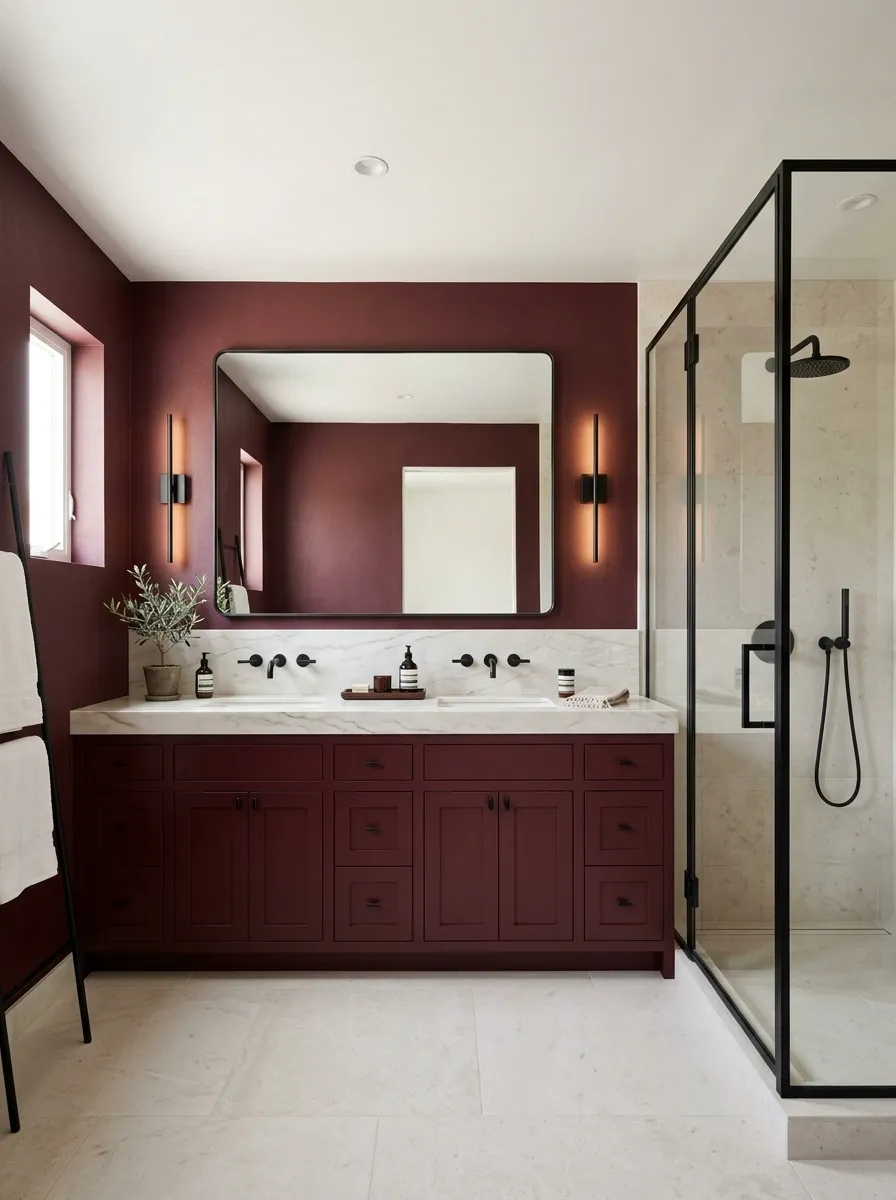
This bathroom takes burgundy in a distinctly contemporary direction by pairing it with pale marble and blackened metal. Burgundy cabinetry stretches beneath a pale stone counter, while slim dark framing outlines the shower and mirror. The floor stays light, creating a clean base beneath the stronger wall and furniture tones. Minimal lighting keeps the composition crisp rather than decorative.
The important move here is repeating the dark metal in several small places instead of giving it one oversized feature. The blackened finish connects the mirror, shower frame, and lighting without competing with the burgundy. I’d keep the marble relatively calm and avoid heavily veined slabs that introduce another dramatic focal point. This is a strong choice for someone who wants saturated color but prefers a sharper, more modern finish.
Burgundy Bathroom With Vintage Floral Wallpaper
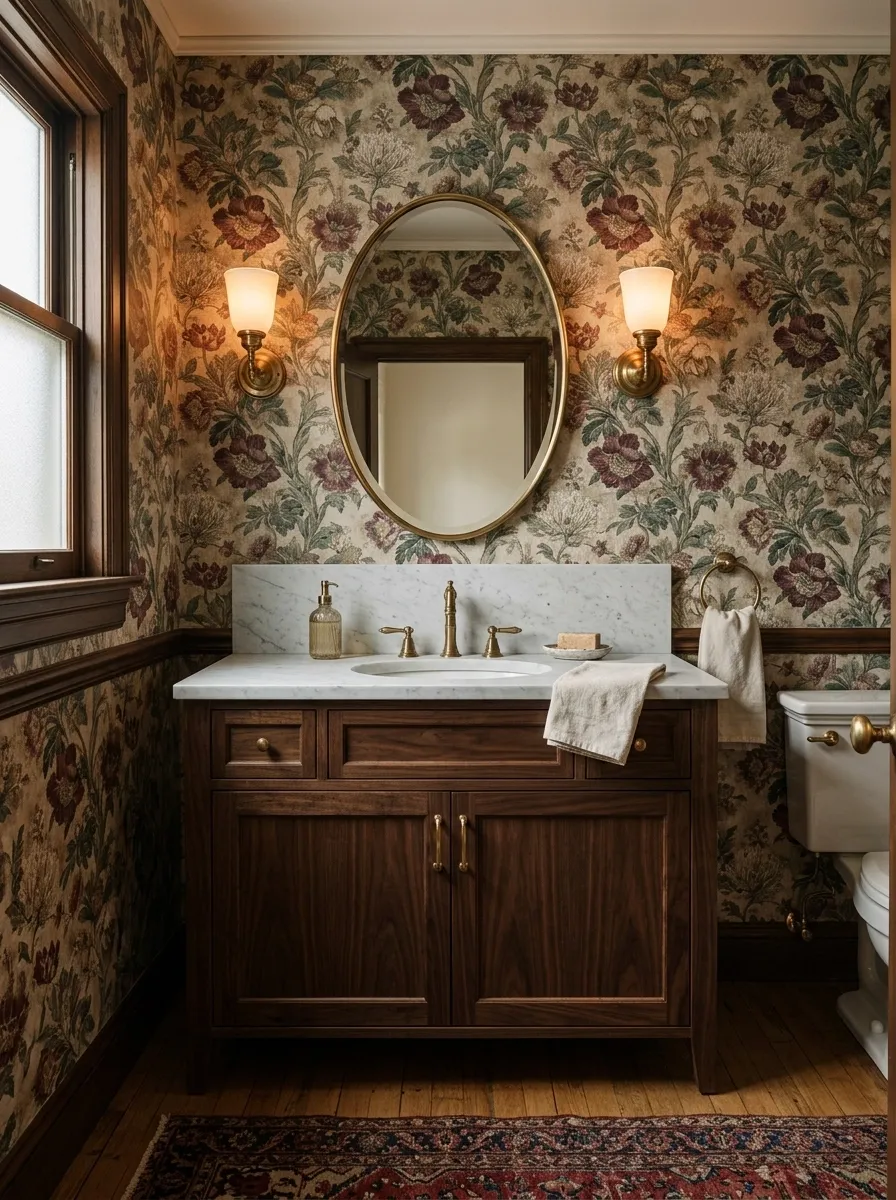
A vintage floral wallpaper brings a softer decorative character to burgundy without requiring heavy architectural detailing. The pattern combines muted burgundy with subdued botanical tones, while a dark wood vanity and pale marble sink establish the furniture layer. Traditional brass fittings, warm sconces, and a simple mirror complete the room.
The wallpaper should remain the most decorative surface, so everything around it needs a quieter visual language. I’d choose solid flooring and keep the vanity fairly simple. The combination works particularly well in a small bathroom because the pattern feels intentional at close range, while the deeper burgundy tones give the room more depth than a standard pale powder-room palette.
Burgundy Bathroom With Cream Checkerboard Floor and Oak
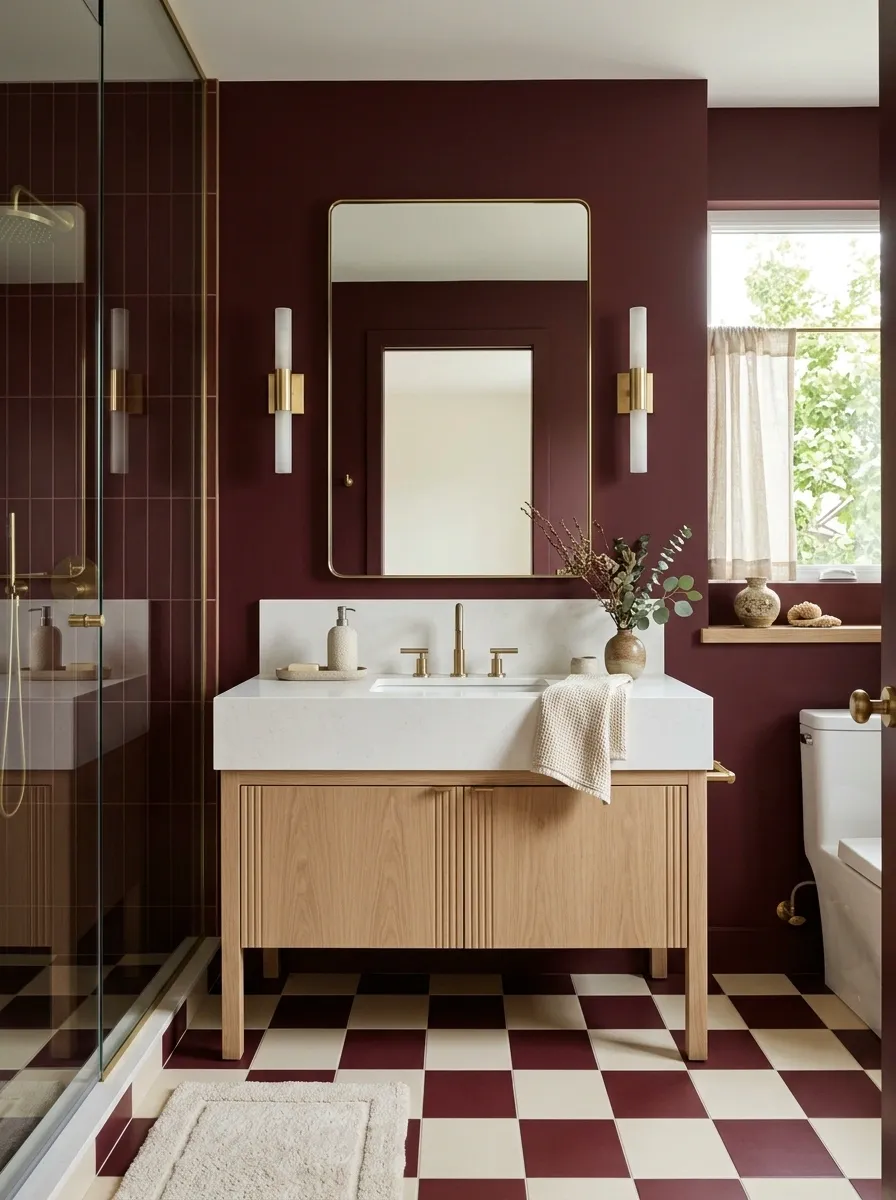
This design builds the room from a strong burgundy wall color downward into a playful but controlled floor pattern. Cream and burgundy walls surround a pale oak vanity, while a cream checkerboard floor adds the secondary visual focus. Simple brass lighting and clear shower glass keep the rest of the room open and uncomplicated.
The checkerboard works because its cream squares connect directly with the lighter vanity and surrounding finishes. That repetition prevents the floor from feeling like an unrelated pattern. I’d keep the wall color broad and uninterrupted so the room has one strong vertical plane and one strong horizontal plane. It is a particularly useful direction for anyone who likes traditional pattern but wants the finished bathroom to remain fresh.
</div>
Layered Burgundy Bathroom With Mixed Warm Neutrals
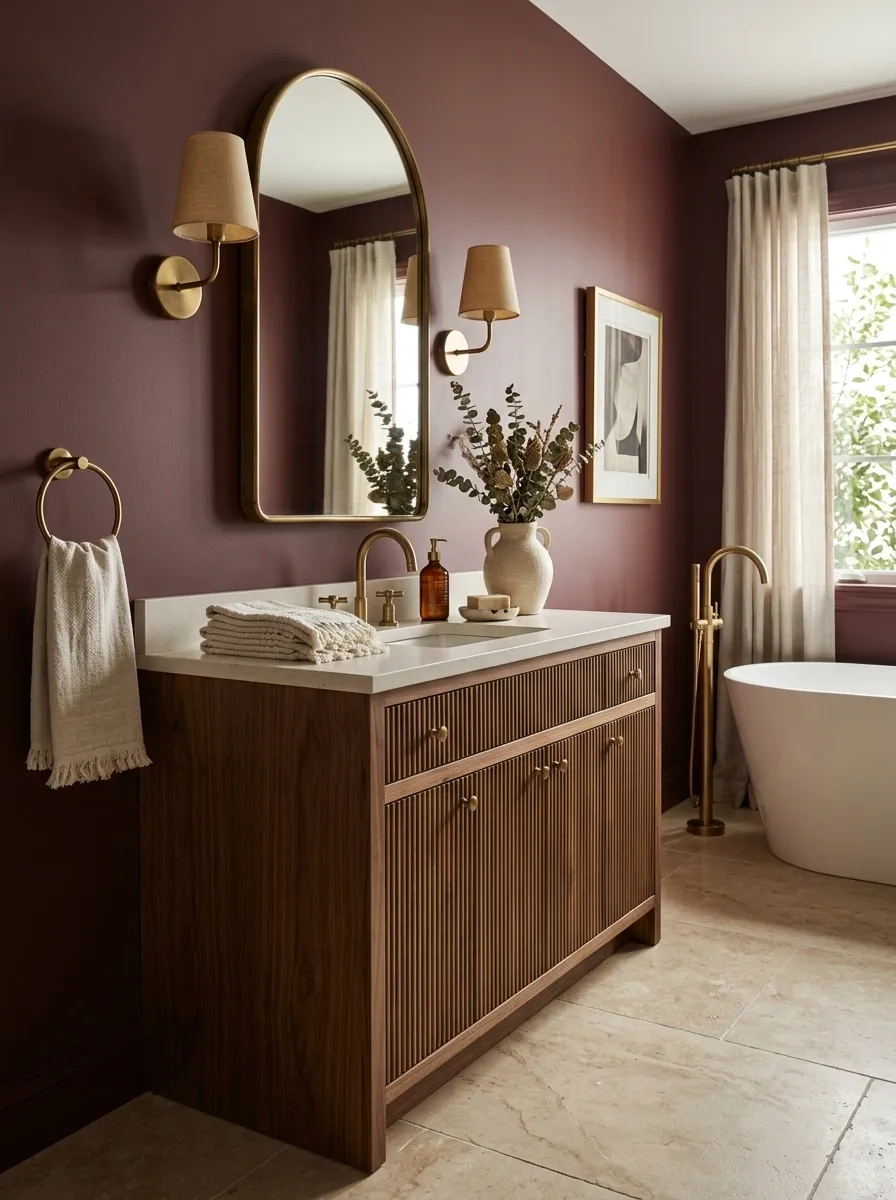
The final design brings together the warmest ideas in the collection without allowing the room to become visually overloaded. Burgundy walls establish the foundation, while warm beige stone, walnut cabinetry, aged brass, and textured ivory textiles build the surrounding layers. The lighting is soft and directional, picking up the variation in the stone and the grain of the wood instead of flattening the room with uniform brightness.
The palette works because burgundy remains the anchor while every supporting material stays within a related warm range. Walnut adds depth, brass adds a small metallic note, and beige and ivory provide enough visual relief to keep the room balanced. I’d treat this as a finished palette rather than a shopping list. Choose materials that repeat these relationships and the room will retain the same visual logic even if the exact fixtures change.
Final Thoughts
Burgundy works best when the room commits to a visual direction instead of scattering the color across unrelated finishes. A traditional bathroom can make it feel historic through walnut and marble. A contemporary space can sharpen it with pale oak and clean stone.
A compact powder room can go much darker because the concentrated palette becomes part of the architecture. Softer versions can lean into limestone, blush, and warm neutrals without losing the depth that makes burgundy interesting.
Before choosing a paint color, tile, vanity, or fixture, decide what the finished room should feel like as a whole. Then choose each surface because it supports that composition. That one decision makes the rest of the bathroom much easier to design.