
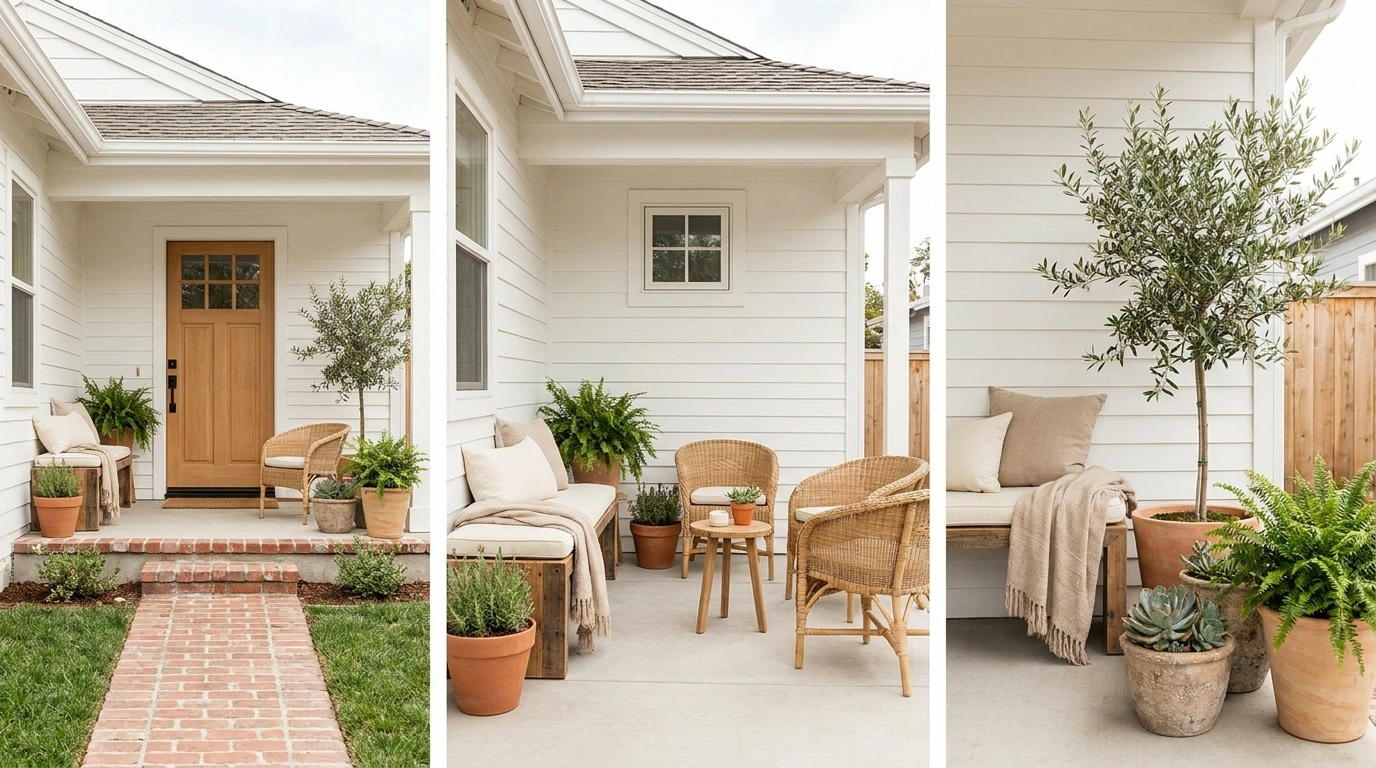
The worst thing you can do to a tiny front porch is furnish it like a full-size patio.
That’s how a useful entry turns into a maze of chair legs, oversized cushions, and furniture that has to be moved every time someone opens the door. A porch can be small and still feel comfortable, but the furniture has to respect the space instead of pretending there’s more of it.
These ideas are about making the furniture fit the porch, not forcing the porch to fit the furniture. Start with the footprint, protect the walking path, and build around pieces that have a real job.
Why Small Front Porch Furniture Feels Harder to Choose Than It Should
The biggest mistake is shopping by furniture type instead of porch size
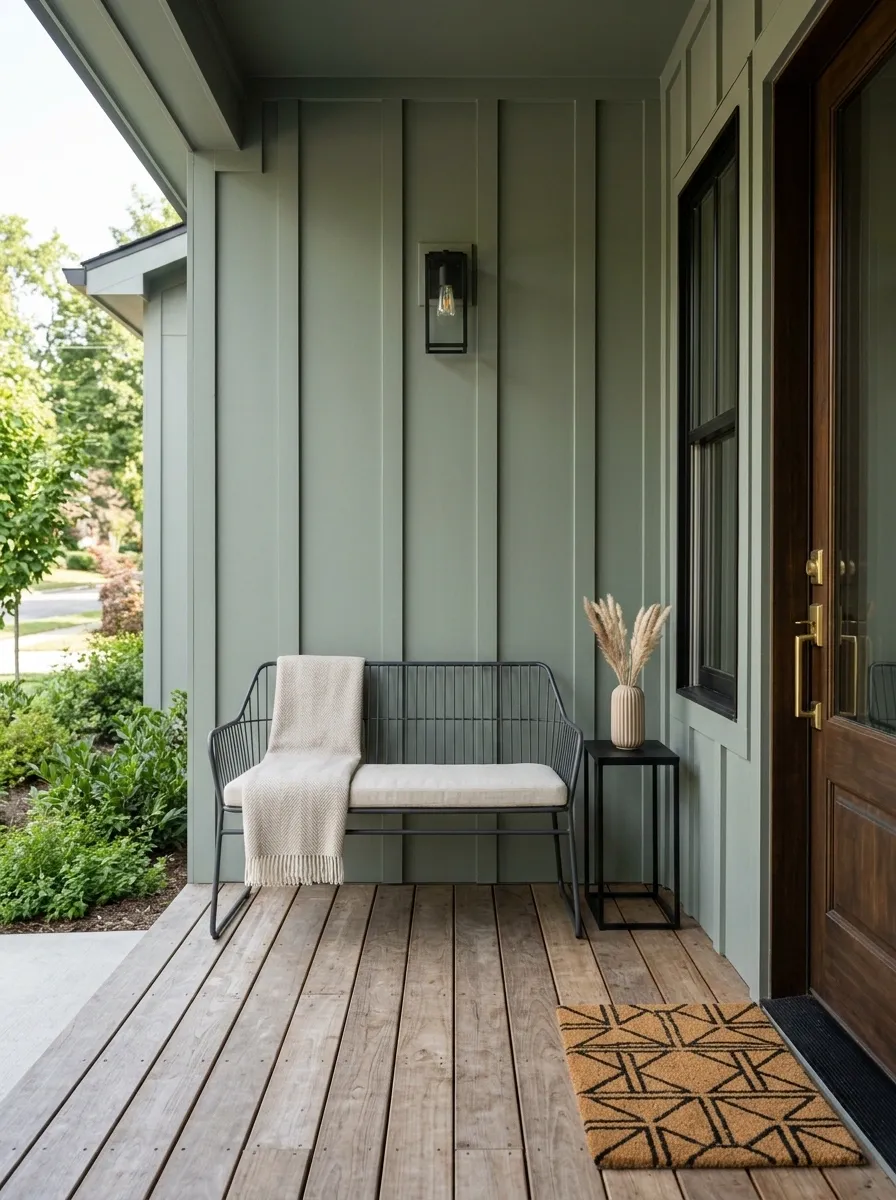
Most outdoor furniture is designed to look generous in a showroom, not necessarily on a narrow entry porch. A deep sofa can eat up the walkway before you’ve even added a cushion or side table.
Start with the space you need to keep clear. Measure the usable width and depth, then work backward from that number. A piece that looks modest in a store can become surprisingly dominant when it’s sitting beside a door, railing, or stair landing.
The furniture should fit the porch first. Seating comes second.
Small porches need visual breathing room as much as seating
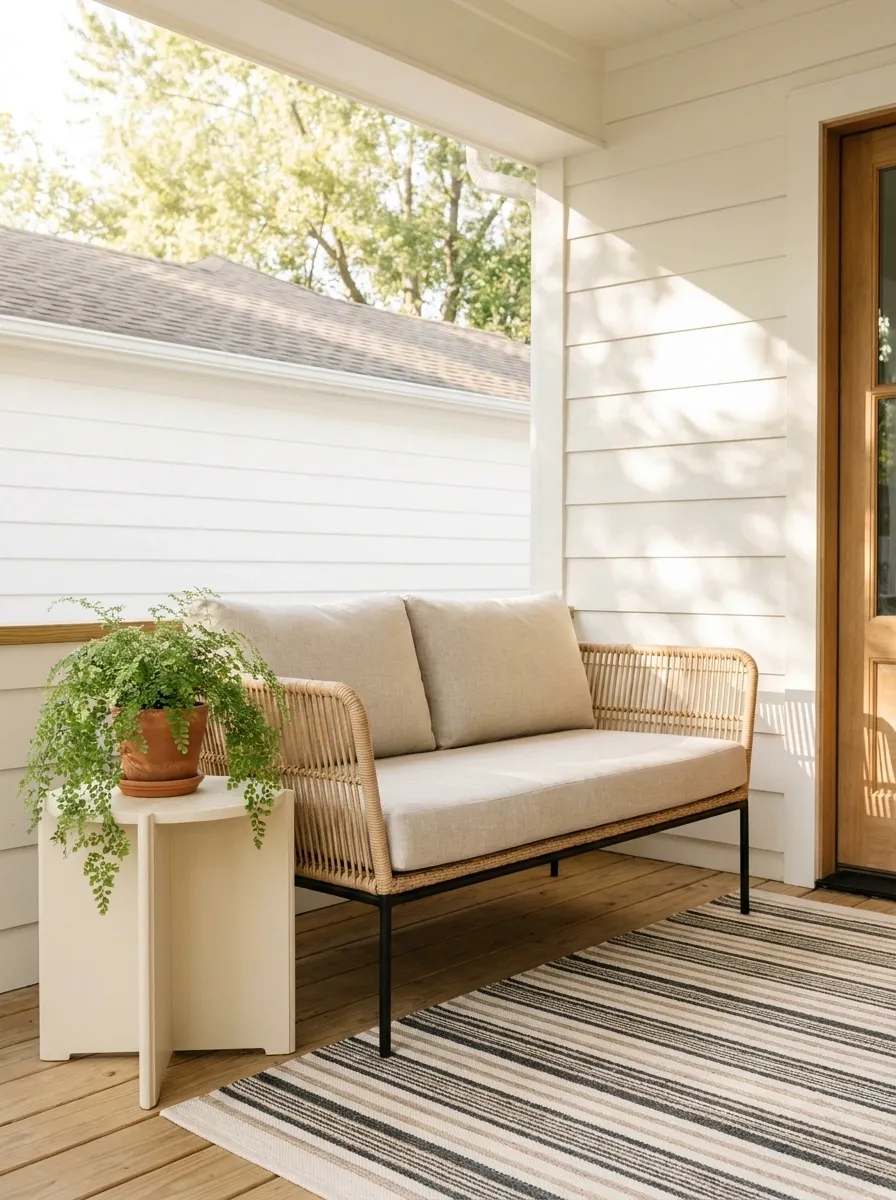
Floor space isn’t the only thing that gets crowded. Solid furniture bases, thick arms, and heavy cushions make a tiny porch look fuller than it really is.
That’s why pieces with exposed legs, open sides, or a slimmer profile often work better. You can still have comfortable seating without creating a visual wall across the porch.
Keep some floor visible around the furniture. That little bit of breathing room makes the whole entry feel easier to move through.
The best pieces do more than one job
A small porch doesn’t have room for furniture that only performs one task.
A storage bench gives you a seat and a place for outdoor gear. A stool can hold a drink, work as an extra seat, or move beside a chair when you need a footrest. A narrow console can give you a landing spot for keys without taking up the main seating area.
Think in terms of jobs, not matching sets. The fewer pieces you need to solve the problem, the easier the porch is to keep open.
Small Front Porch Furniture Ideas
Layered Seating For Small Spaces
A compact arrangement doesn’t mean you have to sacrifice comfort or seating capacity on a narrow porch.
By combining a slim loveseat with a coordinating armchair and a streamlined coffee table, you create a cozy conversational zone without overwhelming the limited square footage.
Keep the pathways clear by pushing larger pieces firmly against the exterior walls and letting the patterned rug anchor the entire grouping visually.
Cozy Wooden Rocking Chairs
Twin rocking chairs bring a timeless charm to a front porch without demanding massive amounts of floor space.
Their open wooden frames and light cushions prevent the setup from feeling heavy, allowing natural light to pass freely around them.
Add a soft throw blanket and a simple potted floral arrangement to make the spot feel lived-in and welcoming rather than overly formal.
Tuck a Narrow Bench Directly Against the House
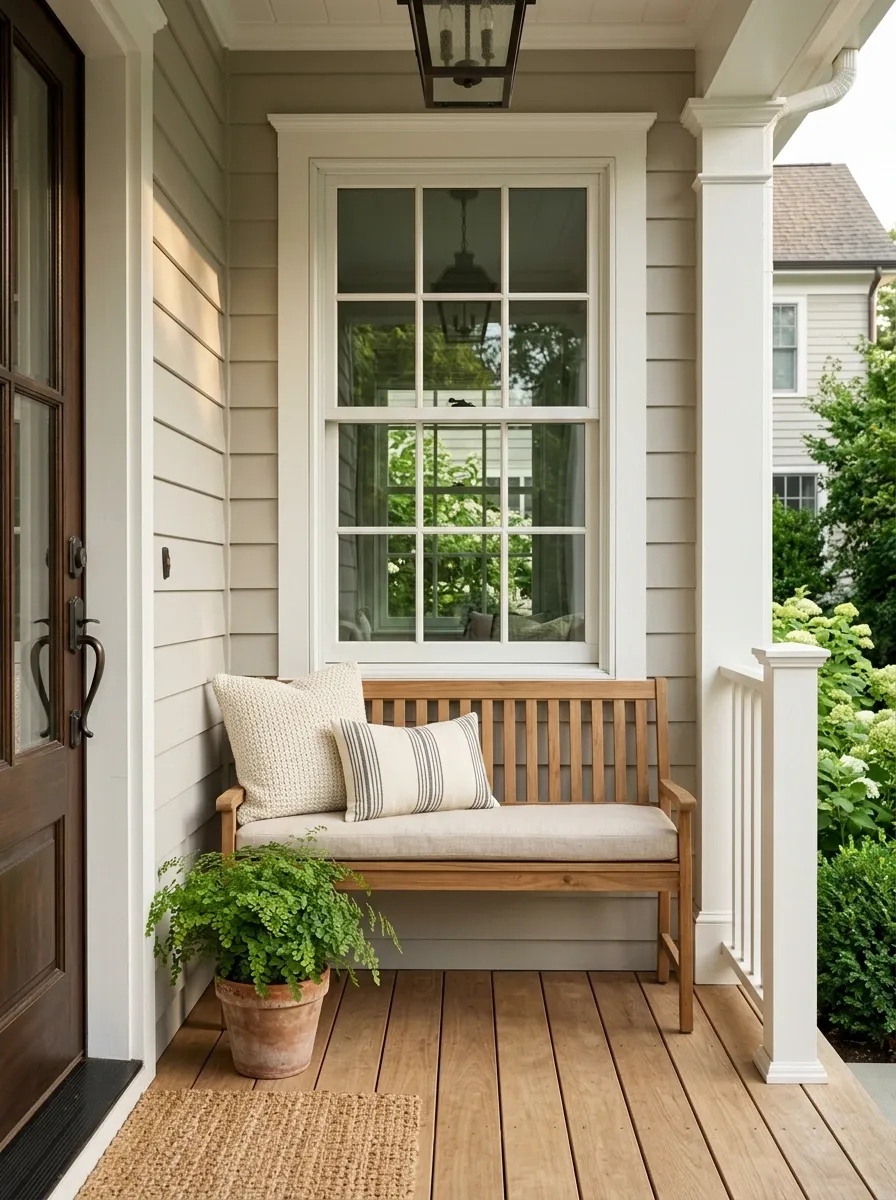
A bench doesn’t need to project far into the porch to be useful.
Place a narrow bench against the exterior wall, especially beneath a window or along a blank stretch of siding. That position gives you seating without creating a furniture island in the middle of the entry.
Keep the seat depth modest and leave enough room for the door to open fully.
A bench also makes sense when two people occasionally need to sit, but you don’t want two separate chairs taking up floor space.
Placement checklist
- Back of the bench sits tight to the wall
- Door swing stays completely clear
- Walking path remains open
- Seat isn’t deeper than the space can handle
Classic White Porch Rockers
Pairing matching rocking chairs beneath classic white porch columns creates an instantly inviting entrance for guests and family alike.
Positioning a small round table between the seating keeps morning coffee or evening reads within easy reach without cluttering the main walkway.
Soft pastel cushions and gentle lighting complete the look, transforming a standard entryway into a peaceful outdoor retreat.
Use a Small Bistro Set for a Porch That Doubles as a Sitting Spot
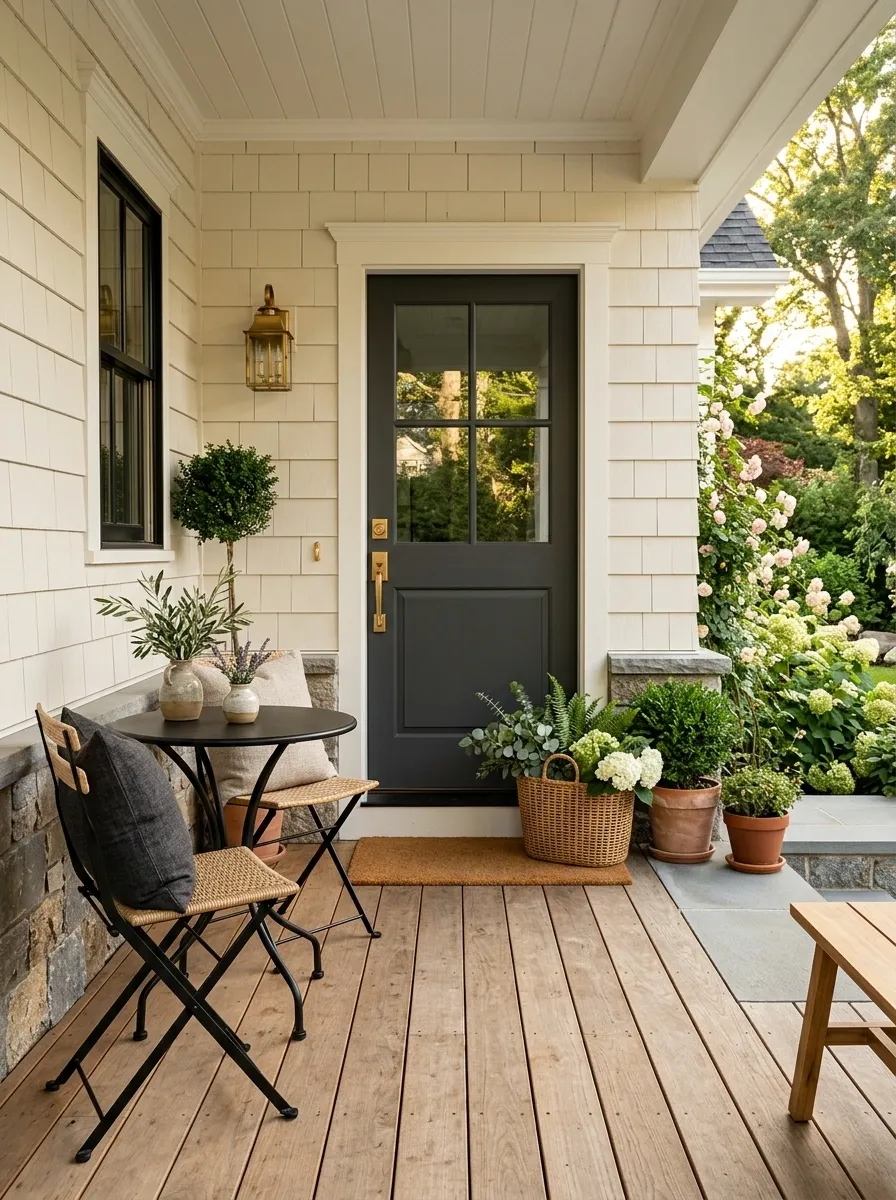
A tiny round table with two compact chairs can make a porch feel like an actual destination instead of a decorated doorway.
The trick is keeping the set visually light. Choose narrow chair frames and a table that leaves enough room to pull the chairs out without blocking the entrance.
This setup works especially well when the porch is wider than it is deep. You can keep the dining-style grouping toward one side and preserve a clean path to the door.
Keep the furniture grouped, not scattered
Pick a Chair With an Open Frame to Keep the Floor Visible
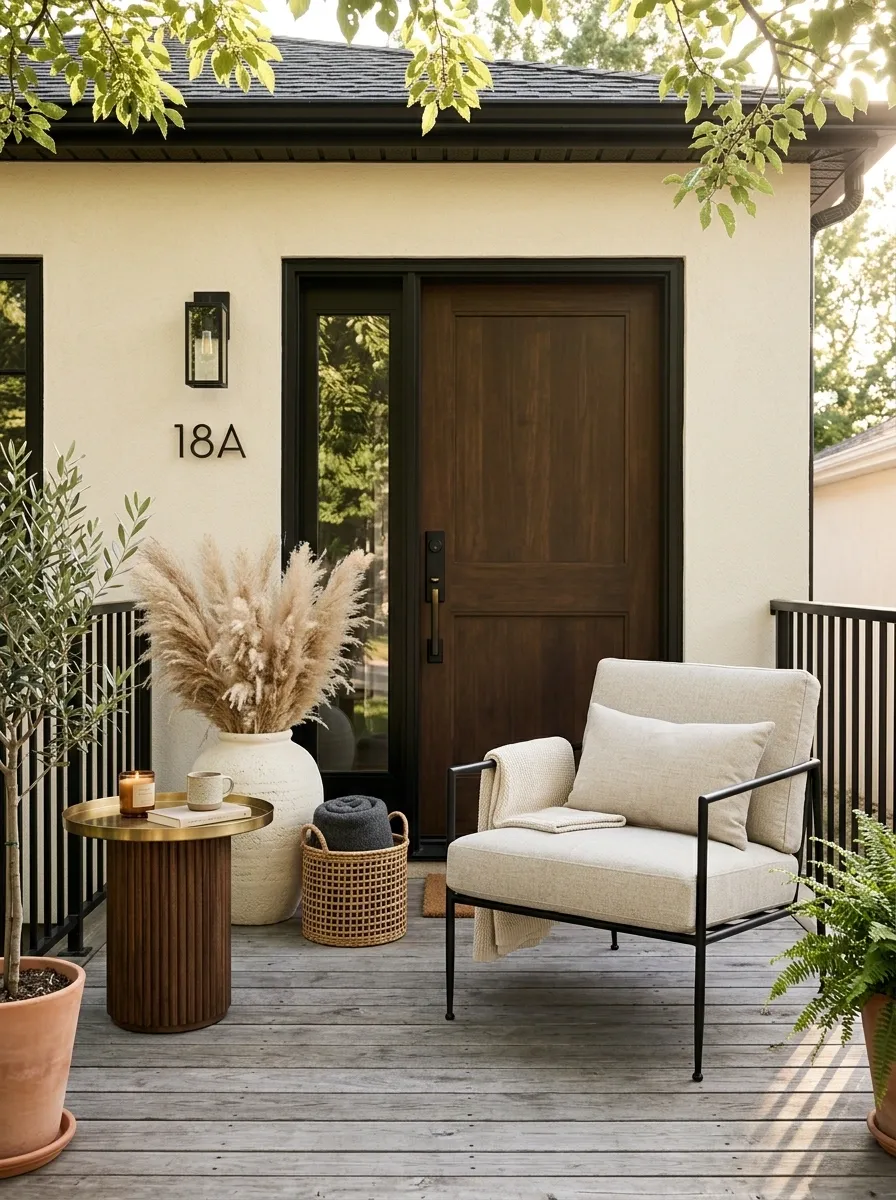
One bulky chair can make a narrow porch look more crowded than two lighter pieces.
That happens because your eye reads a solid base as one large block. An open frame breaks that block apart and lets the floor show underneath.
Choose a chair with visible legs, slim arms, and a back that doesn’t feel excessively tall. You still get a comfortable place to sit, but the porch retains some visual breathing room.
Designer rule: if the furniture feels heavy before you add cushions, it will feel even heavier afterward.
Slide a Storage Bench Under the Window
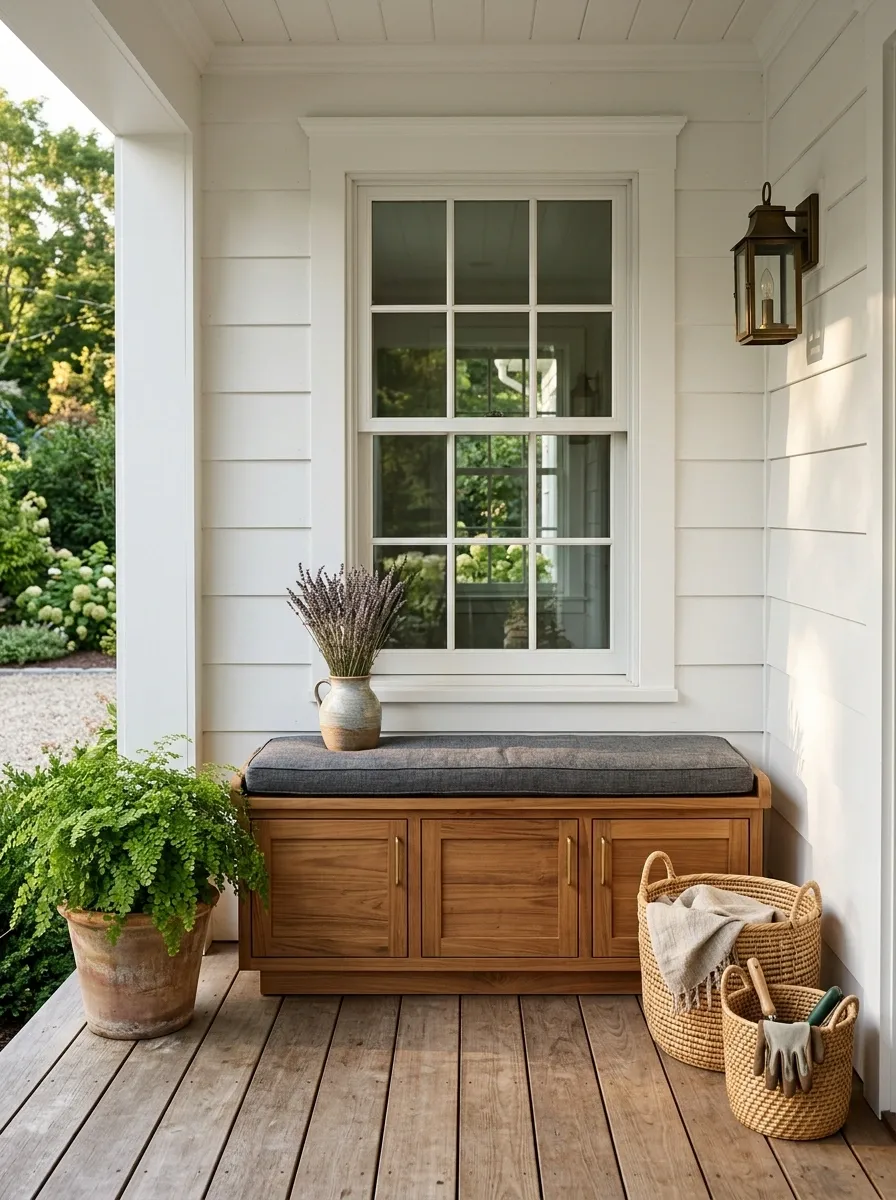
The space below a porch window is often wasted because people assume furniture will make the wall feel crowded.
A low storage bench solves that problem neatly. It uses the horizontal wall space, gives you somewhere to sit, and hides items that otherwise end up beside the door.
Choose a bench with a clean top and enclosed storage underneath. It should read as one purposeful piece instead of a seat sitting on top of a separate container.
This is especially useful for households that need a place for shoes, small outdoor supplies, or seasonal porch accessories.
Why the storage bench earns its footprint
Use One Oversized Chair Instead of Squeezing in Two
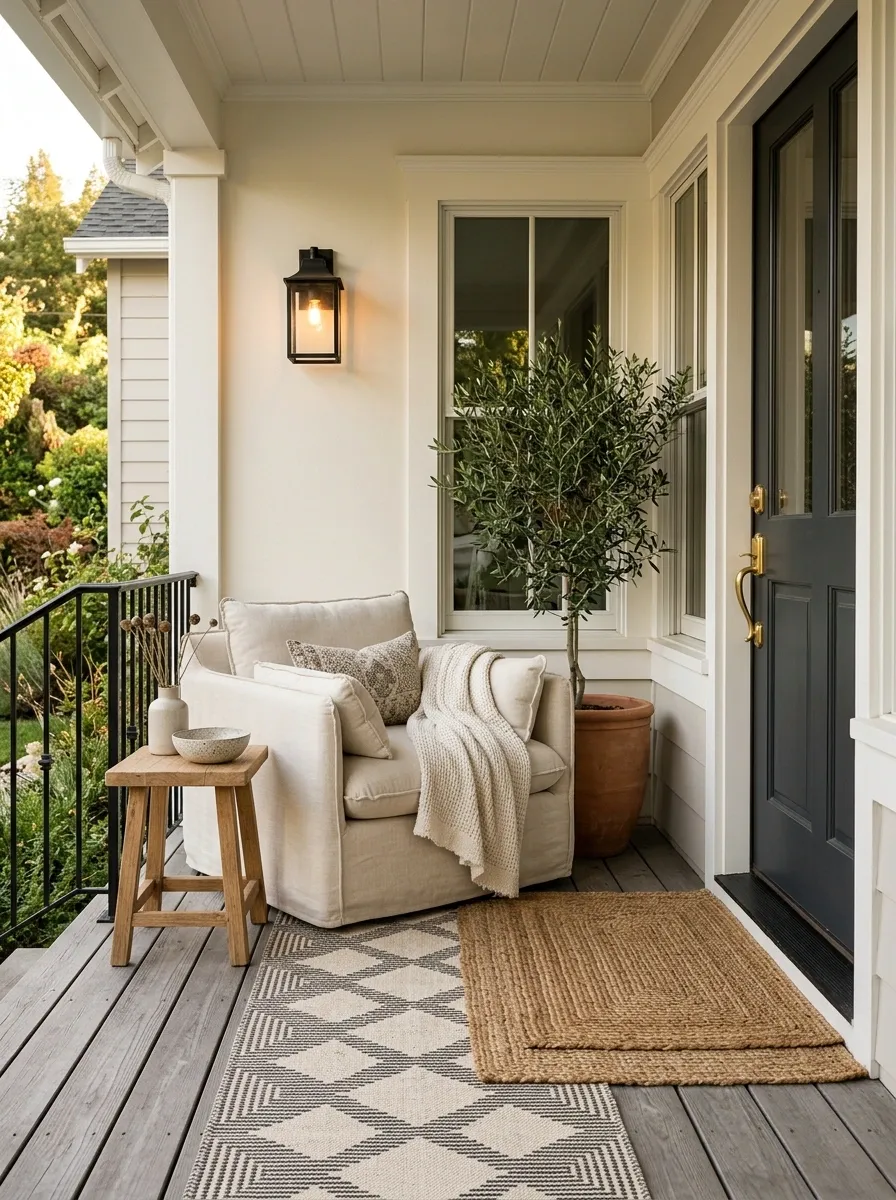
Two small chairs aren’t automatically better than one.
On a narrow porch, one generous chair can create a much calmer arrangement than two pieces pushed so close together that nobody can move around them comfortably. Give that one chair room to breathe and anchor it with a small table or stool.
This works particularly well beside the front door or near a window where the chair already has a natural stopping point.
One chair can read smaller than two crowded chairs
Give one substantial seat enough clearance and the whole porch feels more organized.
Add a Tiny Side Table Only Where Someone Will Actually Use It
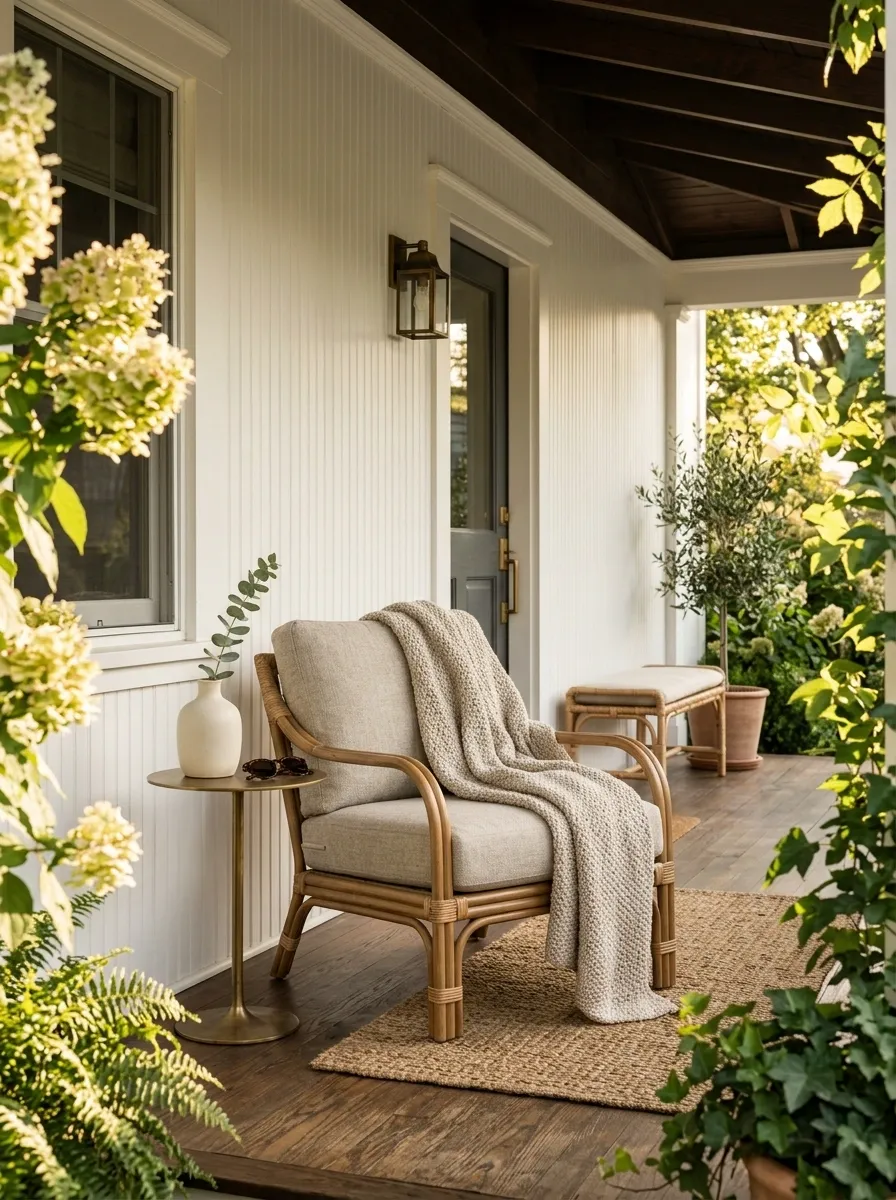
The tiny table is useful right up until it becomes another obstacle.
Don’t automatically put one beside every chair. Place it where a person will naturally reach for it, such as beside a reading chair or next to a bench at the end closest to the door.
Choose a narrow table with a footprint that stays within the seating zone. A small drink, phone, or pair of sunglasses doesn’t need a whole accent table.
Keep it if:
- It sits within easy reach.
- It doesn’t narrow the walking path.
- Its surface gets used regularly.
- It can move when the porch needs clearing.
Skip it when the table exists only because the chair “looks like it should have one.”
Choose Foldable Furniture for Porches That Need to Stay Flexible
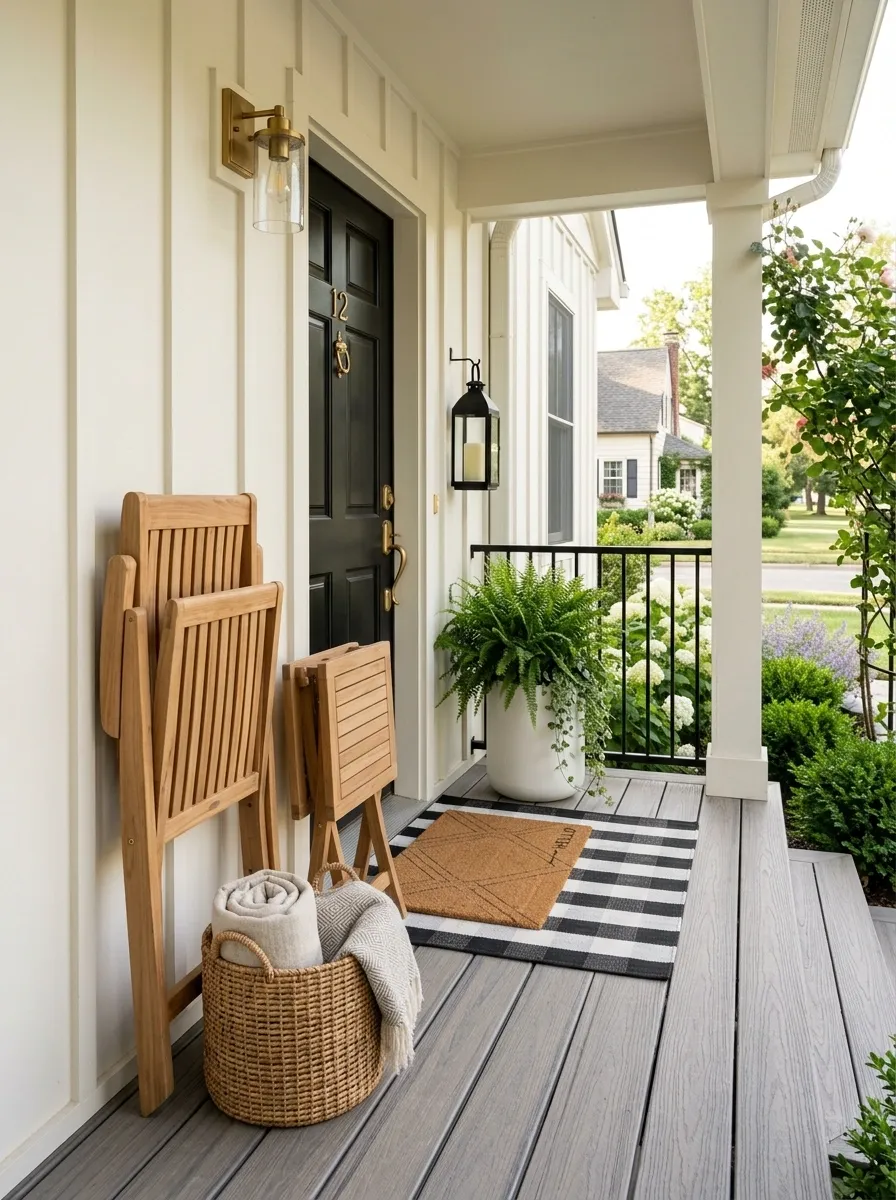
Some porches have to do two jobs.
You may need open floor space for deliveries, guests, muddy shoes, seasonal decorating, or simply getting through the front door without bumping into a chair. Foldable furniture solves that problem without forcing you to give up seating completely.
A folding chair can sit near the entry when you need it, then disappear against a wall or into storage when you don’t.
Best uses for foldable pieces:
- Occasional extra seating
- Seasonal furniture
- Small tables used only when needed
- Porches that double as entry and storage zones
The key is to choose furniture that folds flat without becoming so flimsy that you hate using it.
Pair a Bench With One Statement Chair Instead of a Full Seating Set
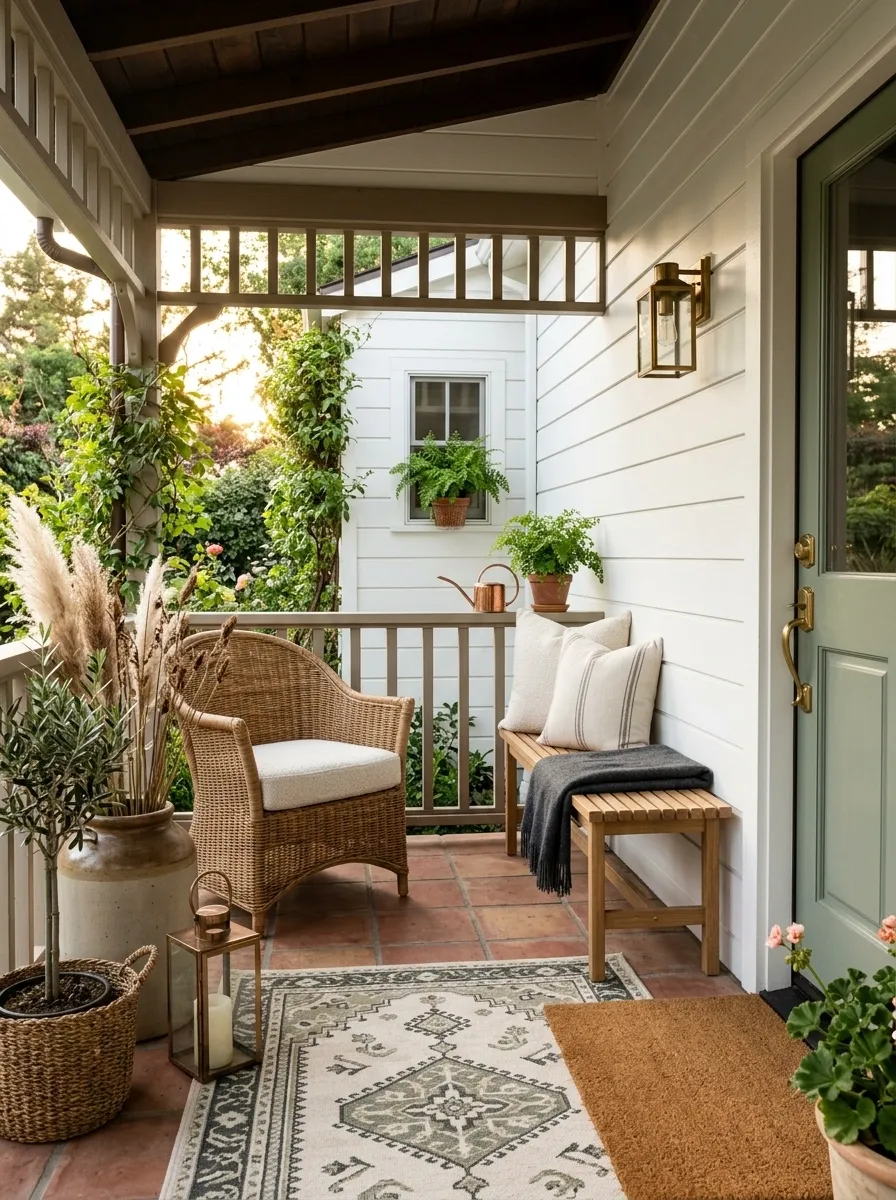
A full matching set often wastes valuable porch space.
A narrow bench handles shared seating while one individual chair creates a comfortable spot for longer sitting. The two pieces have different jobs, so you don’t need another chair just to make the arrangement feel complete.
Put the bench against the longest wall. Place the chair at the open end, angled slightly toward the seating area rather than directly into the walking path.
Use a Narrow Console Behind Seating for Hidden Function
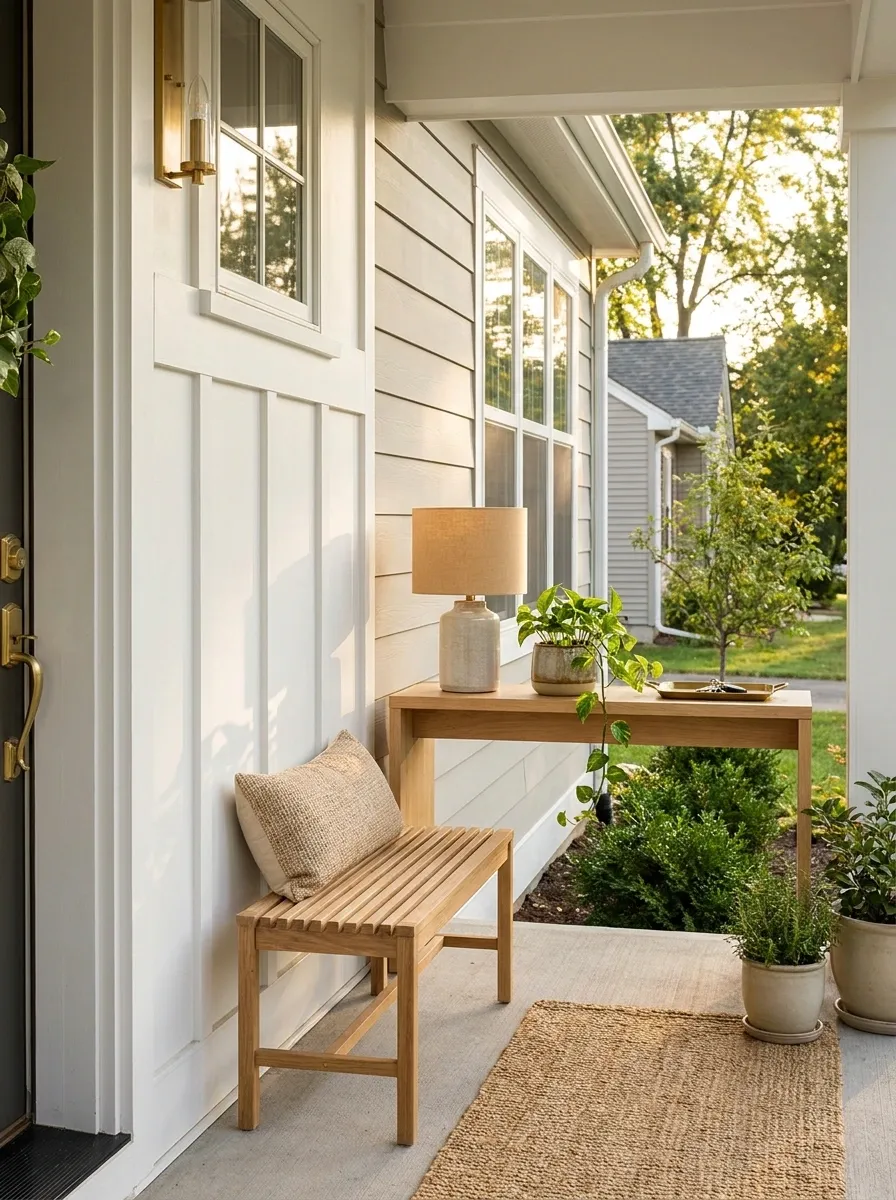
A narrow console is useful when you need a surface but don’t have floor space for another table.
Slide it behind a bench or slim chair, keeping the depth tight enough that it doesn’t push the seating into the walkway. Now you’ve got a place for keys, a small lamp, a planter, or the things that normally pile up beside the door.
The trick is restraint. One narrow surface works. A long console covered in baskets, trays, and decorations quickly becomes visual clutter.
SMART MOVE
Keep the console almost empty. One tray for small items and one useful accessory are enough. The furniture should solve the problem, not create a new decorating project.
Choose Furniture With Legs Instead of Solid Bases
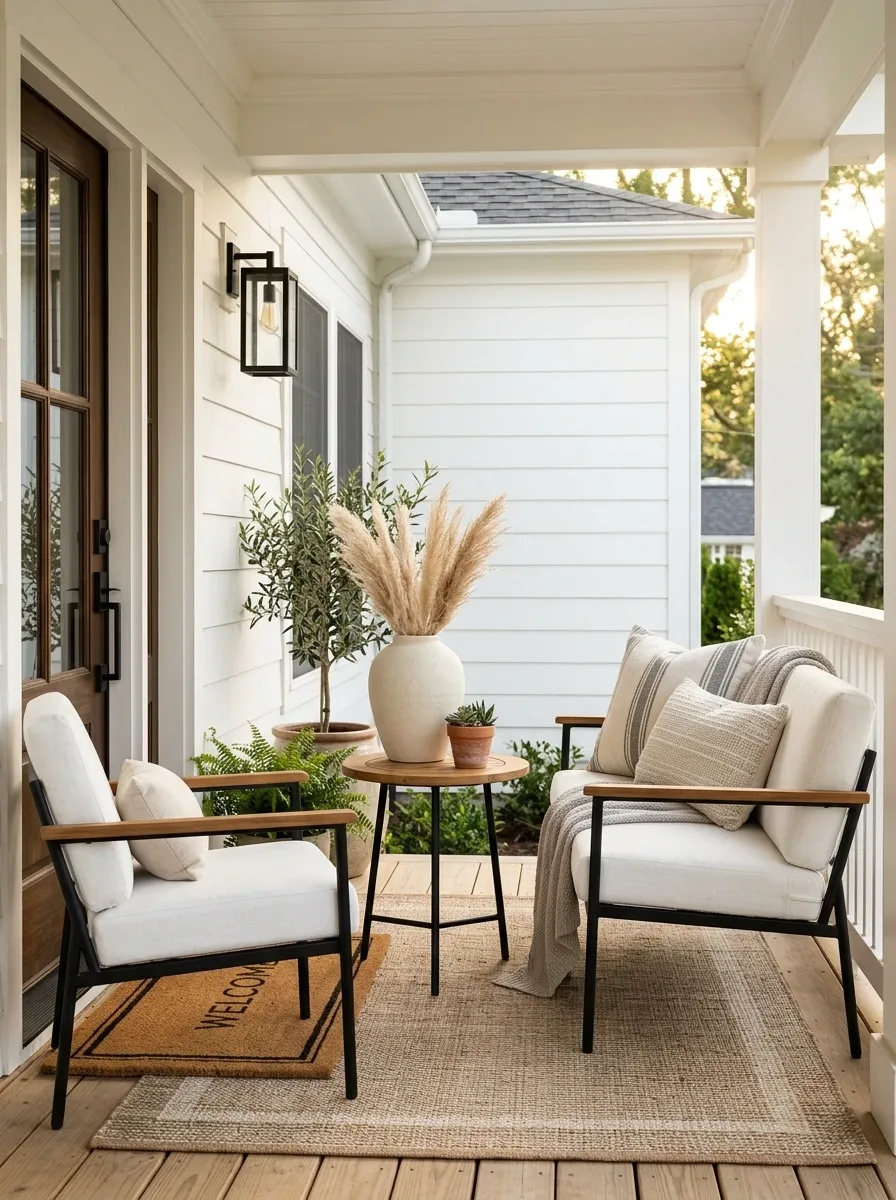
Furniture with a solid base can make a small porch feel surprisingly heavy.
A raised frame changes that. Light passes underneath the seat, more of the floor stays visible, and the furniture doesn’t form one dense block against the wall.
This matters most when your porch is narrow and the seating sits close to the house. You don’t need a tiny piece of furniture. You need one that doesn’t visually consume every inch around it.
More floor shows
Visible space underneath keeps the piece visually lighter.
More visual weight
The furniture reads as one larger block.
Put a Small Round Table Between Two Chairs
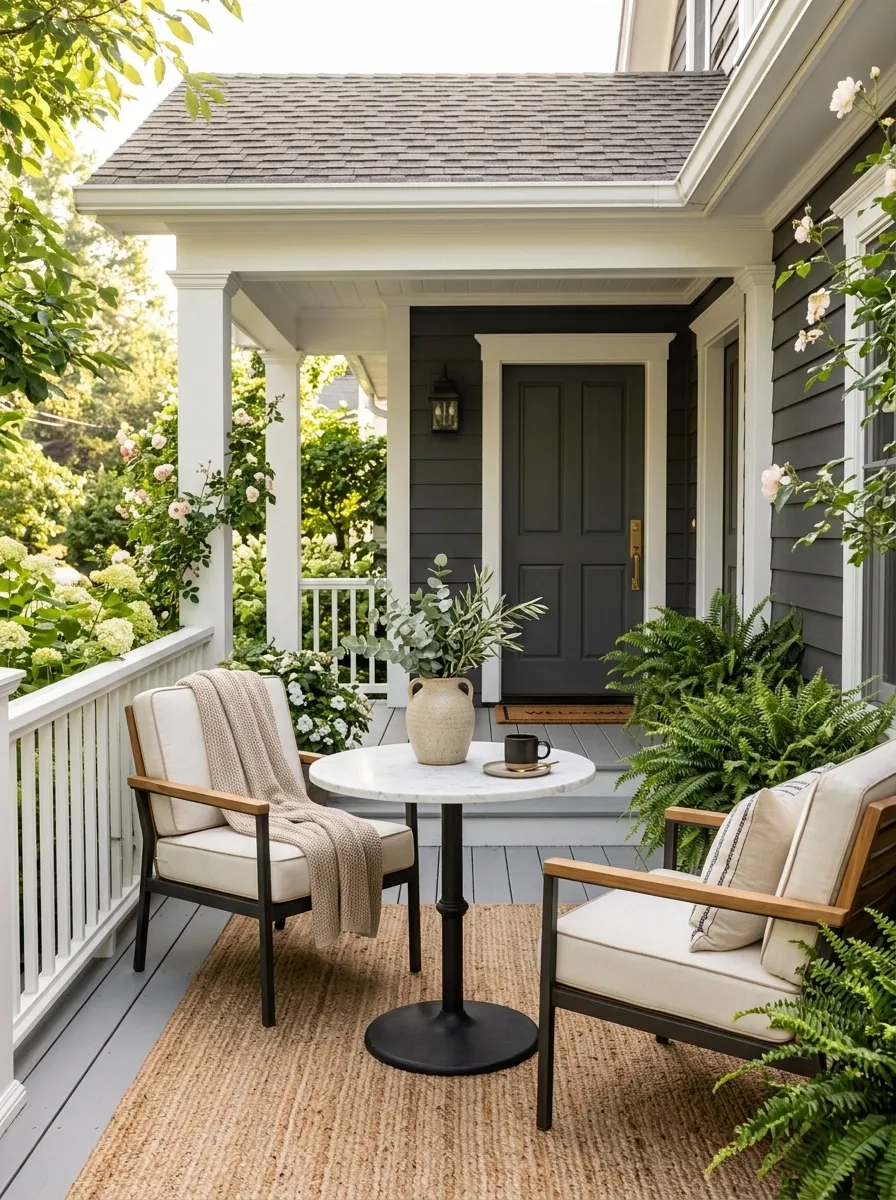
A round table earns its place when two chairs already take up most of the seating zone.
Sharp table corners can make a narrow arrangement harder to navigate. A compact round top gives you a usable surface while making the grouping easier to move around.
Set the chairs first. Then place the table between them rather than starting with the table and forcing the seating around it.
Set it up in this order:
- Position both chairs.
- Check the walking path.
- Leave the smallest comfortable gap between the seats.
- Drop the round table into the remaining central space.
That’s much safer than buying a table first and hoping the chairs fit around it.
Pick Stackable Chairs When Floor Space Changes With the Season
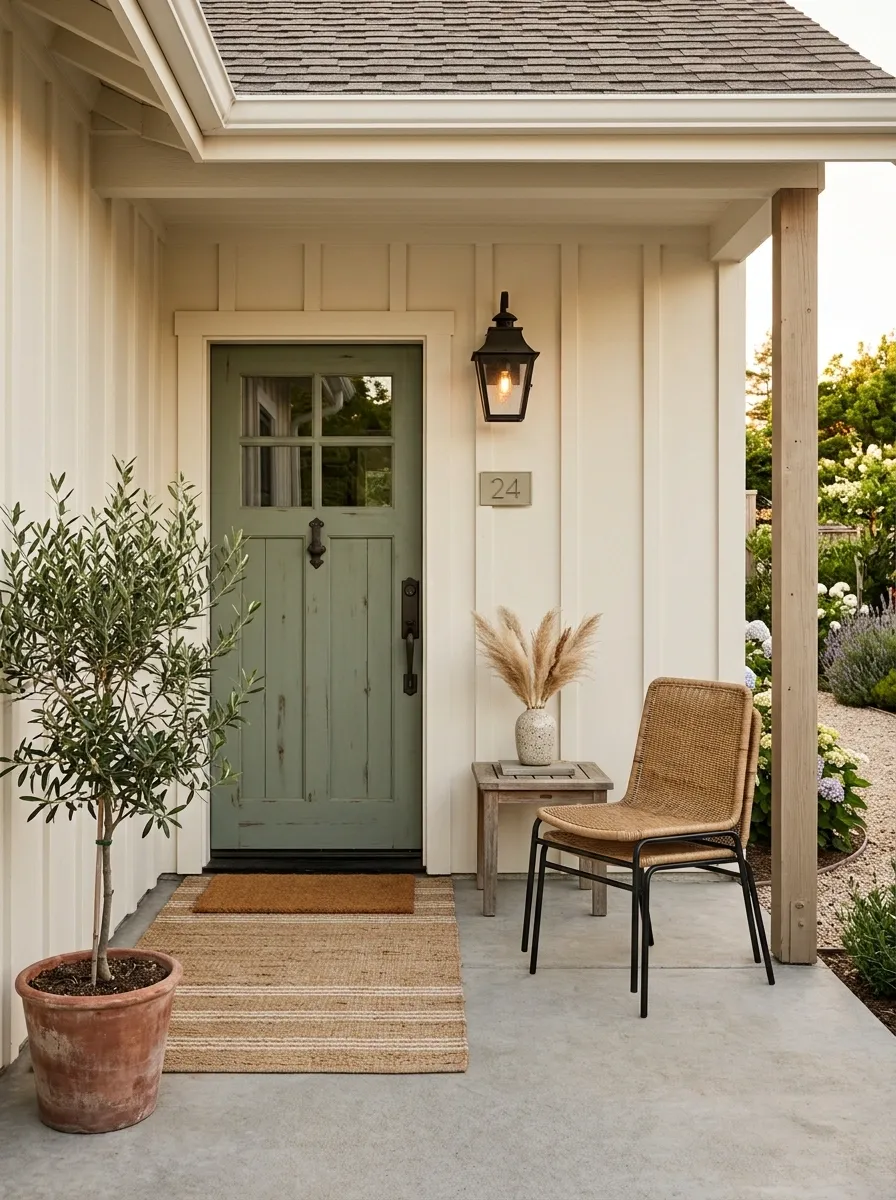
Stackable chairs are underrated on small porches because they let one seating collection handle several layouts.
Use one or two during the warmer months, then stack the extras when you need more open floor. This is particularly useful when the porch shifts between everyday use and seasonal decorating.
Choose chairs that are comfortable enough to leave out, not flimsy pieces that feel like emergency seating.
What to look for
- Clean, compact profiles
- Chairs that stack securely
- A frame that’s easy to lift
- Finishes that still look good when the chairs aren’t occupied
The goal is flexibility without adding a storage headache.
Match Furniture Depth to the Walking Path First
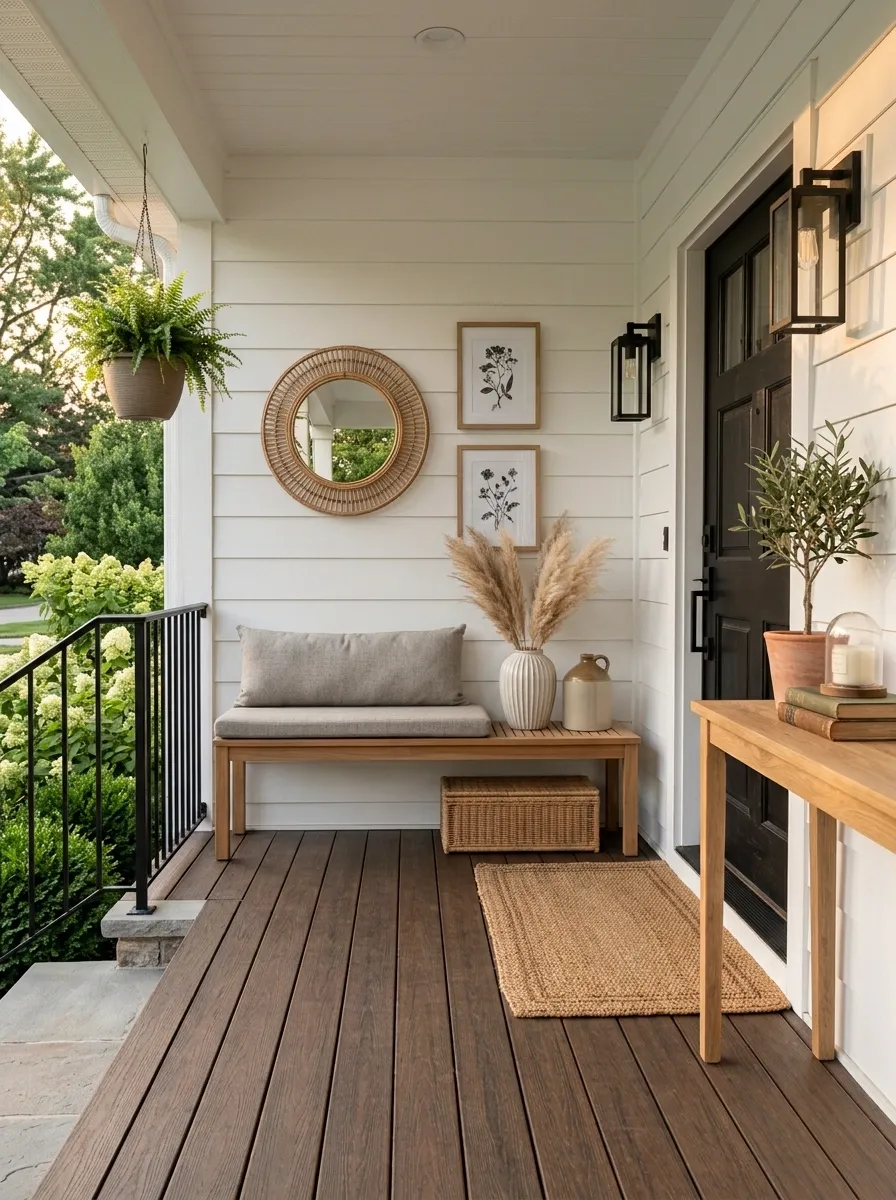
The biggest furniture mistake isn’t choosing the wrong style. It’s choosing the wrong depth.
A piece can be narrow from side to side and still feel enormous if it projects too far into the walkway. On a small porch, depth changes the entire experience of entering the house.
Measure from the wall toward the walking lane before shopping. Then compare furniture by depth, not just width.
| Furniture profile | Small-porch effect | Best use |
|---|---|---|
| Shallow | Keeps more floor visible | Narrow walkways |
| Medium | Balanced seating | Wider entry zones |
| Deep | Uses more floor quickly | Only when the porch is generous |
The shallower piece usually wins when the porch has a job beyond sitting.
Create a Reading Corner With One Chair and One Small Table
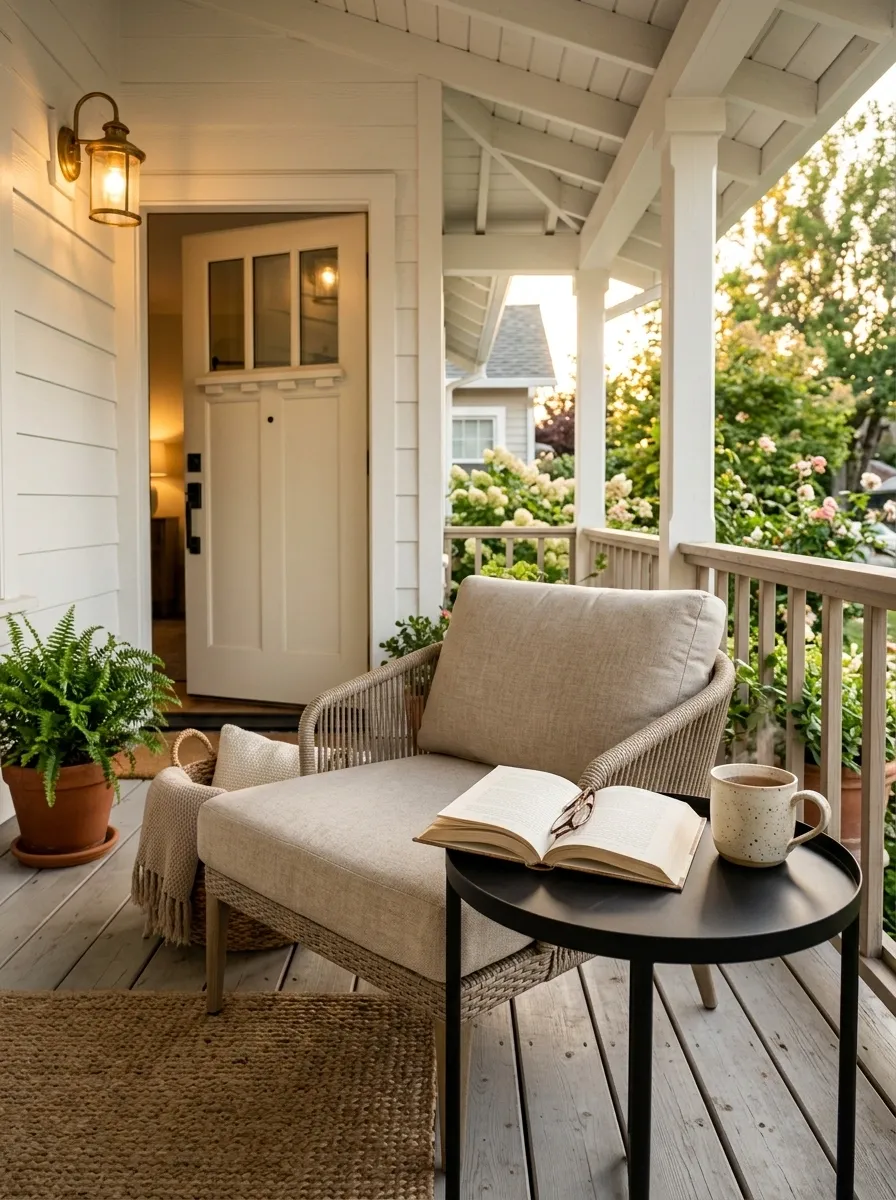
A small porch doesn’t need a complete outdoor seating arrangement to become somewhere you’d actually sit.
Start with one comfortable chair and give it a clear purpose. Add a small table beside it for a drink, book, or phone, then stop. That restraint is what makes the corner work.
Place the chair where it gets the best view or the most comfortable shade. Keep the table close enough to reach without leaning into the walkway.
Keep the setup to two useful pieces
The chair creates the destination. The table supports it. Everything else is optional.
Choose Lightweight Furniture You Can Move Without Rearranging Everything
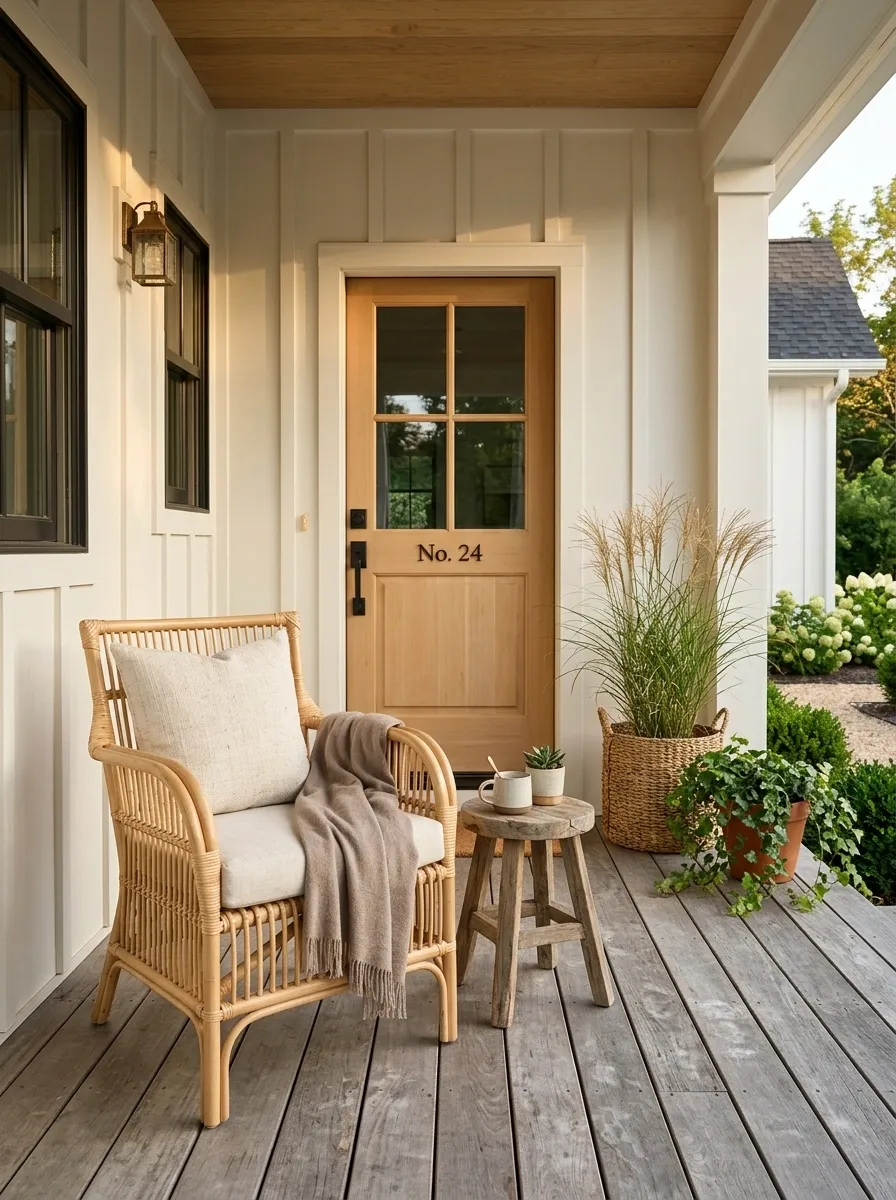
Small porches need furniture that cooperates.
A lightweight chair or stool can move aside when you’re carrying groceries, opening a package, sweeping the floor, or decorating for a new season. Heavy furniture quickly becomes an obstacle because nobody wants to move it.
Look for pieces with handles, open frames, or a manageable construction. That doesn’t mean cheap or flimsy. It means practical.
A movable piece should pass this test:
- You can shift it alone.
- It doesn’t require moving another piece first.
- It can return to the same spot easily.
- You’d actually bother moving it when needed.
Furniture that works with the porch is better than furniture that forces the porch to work around it.
Build the Whole Porch Around One Properly Sized Seating Piece
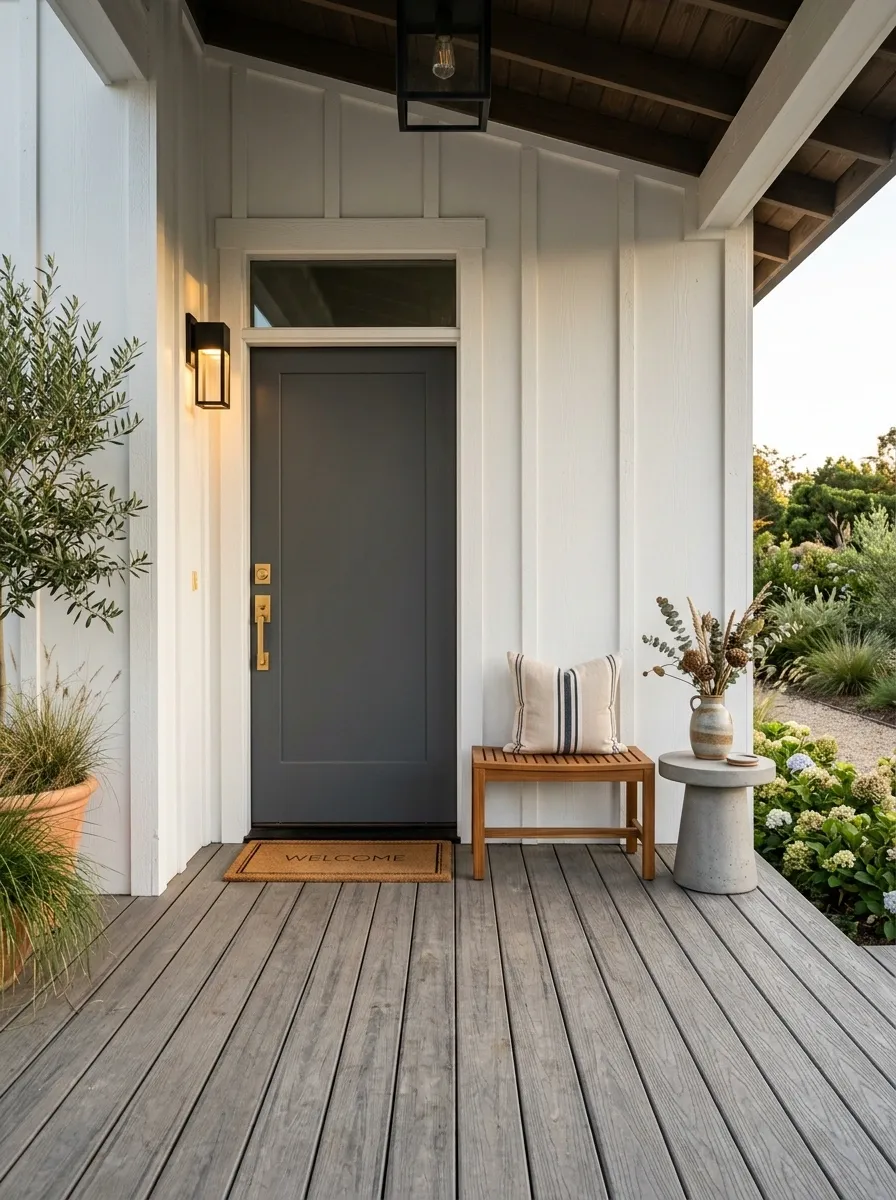
The easiest way to get small front porch furniture right is to stop shopping for a collection and choose the anchor first.
That might be a narrow bench, a compact loveseat, or one comfortable chair. Put that piece in position, check the door, check the walkway, and then add only what the porch genuinely needs.
A small table can come next. Storage can follow. Decorative extras come last.
Build outward from one piece that fits
Final Thoughts
A tiny porch doesn’t need to look like a miniature version of a huge outdoor room.
The better approach is to give every piece a reason to be there. A bench should create seating without blocking the path. A table should hold something you actually use. Storage should disappear into the furniture instead of adding another object to the floor. And the main seating piece should fit the porch before you start adding anything around it.
That’s the difference between a porch that merely looks decorated and one that actually works.
Start with the piece you want most, measure the space it can realistically occupy, and edit everything around it. Keep the walking path open. Keep the furniture visually light. Cut anything that makes the entry harder to use.
Save this list before your next porch furniture search. It’ll make those tiny measurements a lot easier to work with.