
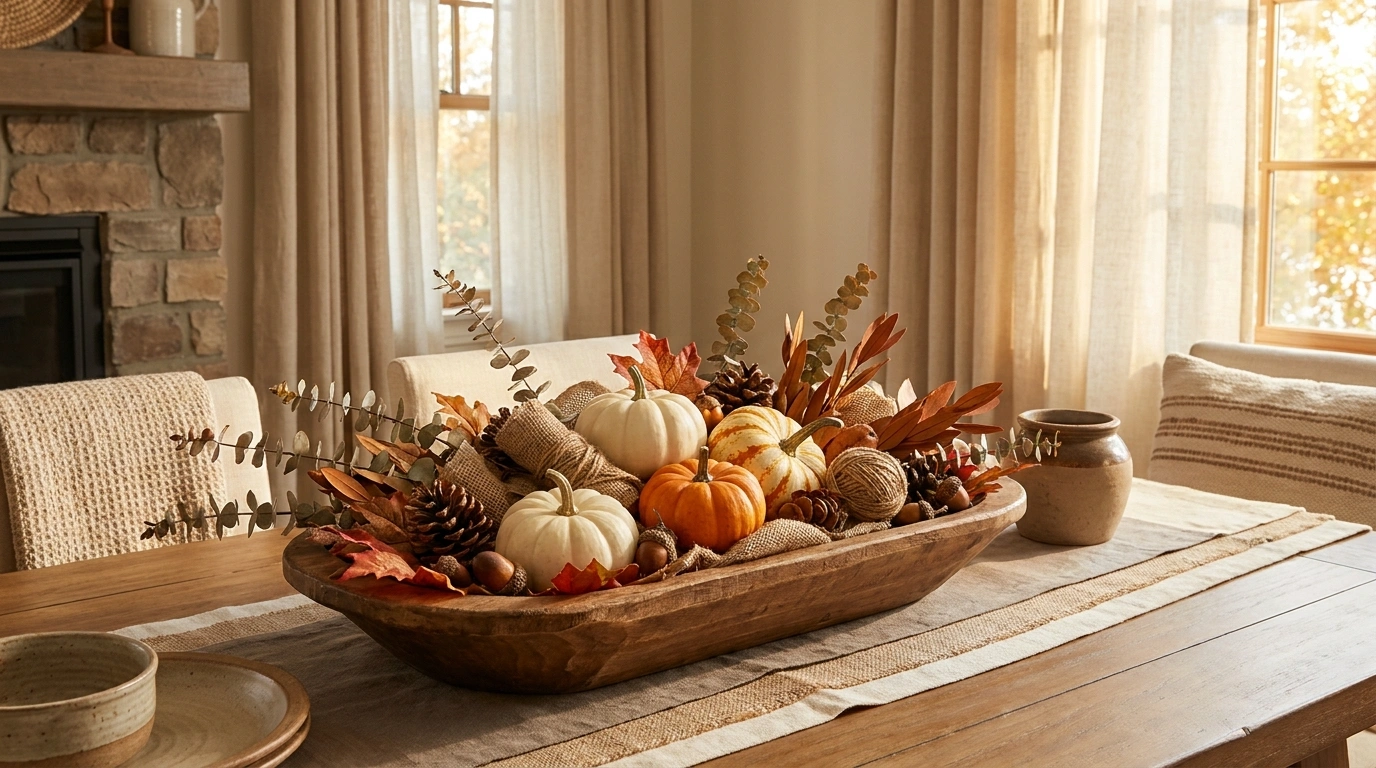
A dough bowl is easy to get wrong. Fill it with every pumpkin, leaf, berry, and seasonal trinket in the house and the result can look less like a centerpiece and more like a storage problem with an autumn theme.
That is why the strongest fall dough bowl ideas aren’t really about individual decorations. They’re about finished compositions that make sense on an actual dining table, kitchen island, console, or coffee table.
Some of these arrangements lean into classic harvest colors. Others deliberately ignore them. A few barely use orange at all. The common thread is simple: every piece has a job, and the whole arrangement looks intentional.
Complete Fall Dough Bowl Arrangements
Coffee Table Autumn Foliage
Low-profile styling hits differently when your coffee table acts as the main stage. A long, whitewashed wooden dough bowl stretches across a light oak surface, overflowing with sprawling autumn foliage, mixed berries, and tiny cream pumpkins.
In the background, crisp white walls and warm beige accent pillows keep the space feeling light and airy without losing that cozy fall edge. The trick is letting the overflowing stems spill softly over the edges of the bowl for an effortless, gathered-from-nature look.
Resist the urge to overcomplicate the surrounding coffee table decor. When your centerpiece has this much natural movement and texture, keeping the rest of the surface minimal lets the arrangement do all the talking.
Burnt Orange Pumpkins With Weathered Greenery
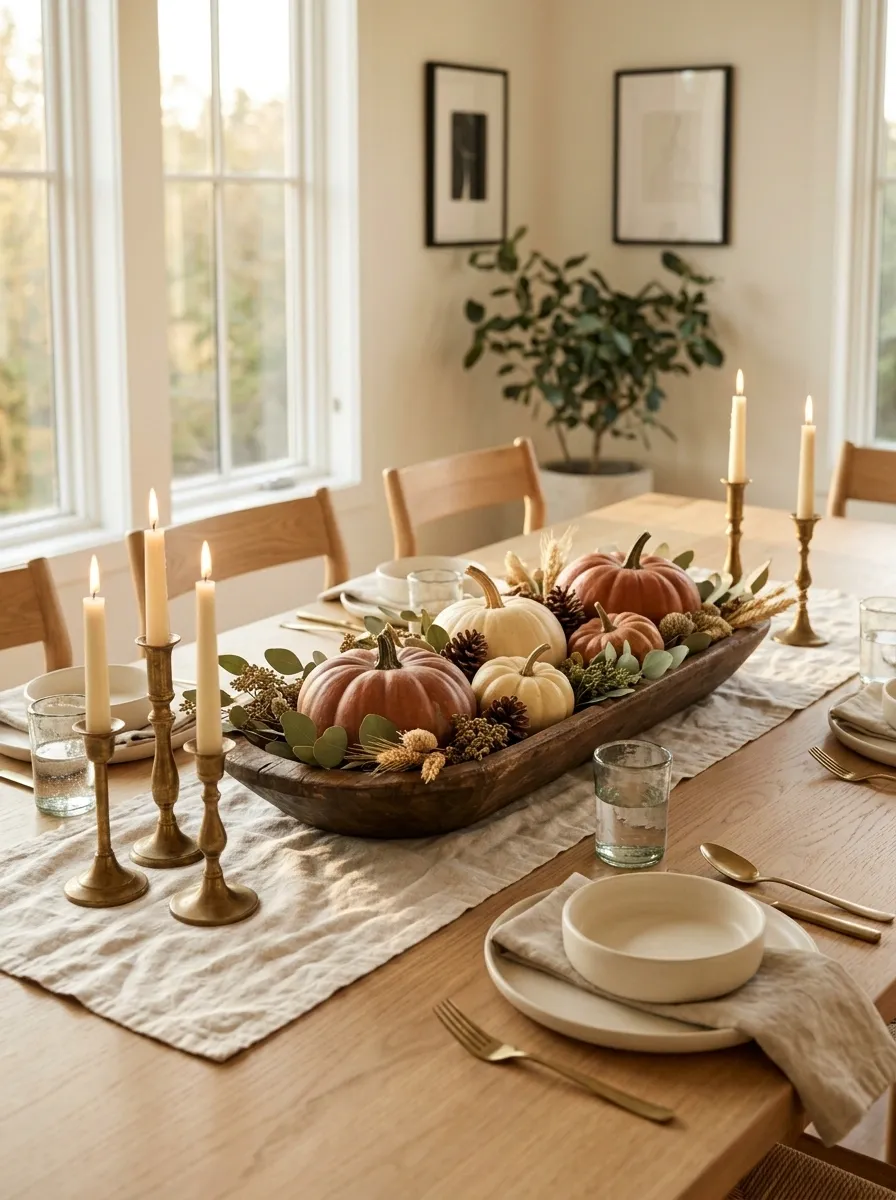
This is the fall centerpiece that earns its orange. A long, naturally weathered dough bowl sits across a light oak dining table, filled with muted burnt-orange pumpkins, dusty olive greenery, pinecones, and loose dried stems. The colors are warm, but they aren’t screaming pumpkin patch.
A soft linen runner runs underneath the bowl, while aged brass candlesticks sit near the ends of the table. Keep the surrounding dishes and textiles quiet so the arrangement remains the main event.
The slightly uneven placement is important. Perfect symmetry would make the display feel staged in the wrong way. The greenery should break up the pumpkins and give the eye somewhere to move.
Candlelit Harvest Table Runner
A dining table setup that leans entirely into ambiance is the ultimate autumn power move. A long wooden dough bowl functions as a glowing runner, packed tightly with faux fall leaves, sprigs of greenery, and an array of warm pillar candles in glass holders.
Black-rimmed plates sitting on woven placemats anchor the table’s edges, while a charming textured pumpkin waits patiently nearby. The combination of warm candlelight and layered autumn leaves instantly warms up the entire dining room.
Don’t be afraid to let the candles take center stage among the foliage. Varying the height of the glow gives the table incredible depth as natural light fades into evening.
White Pumpkins on a Dark Walnut Table
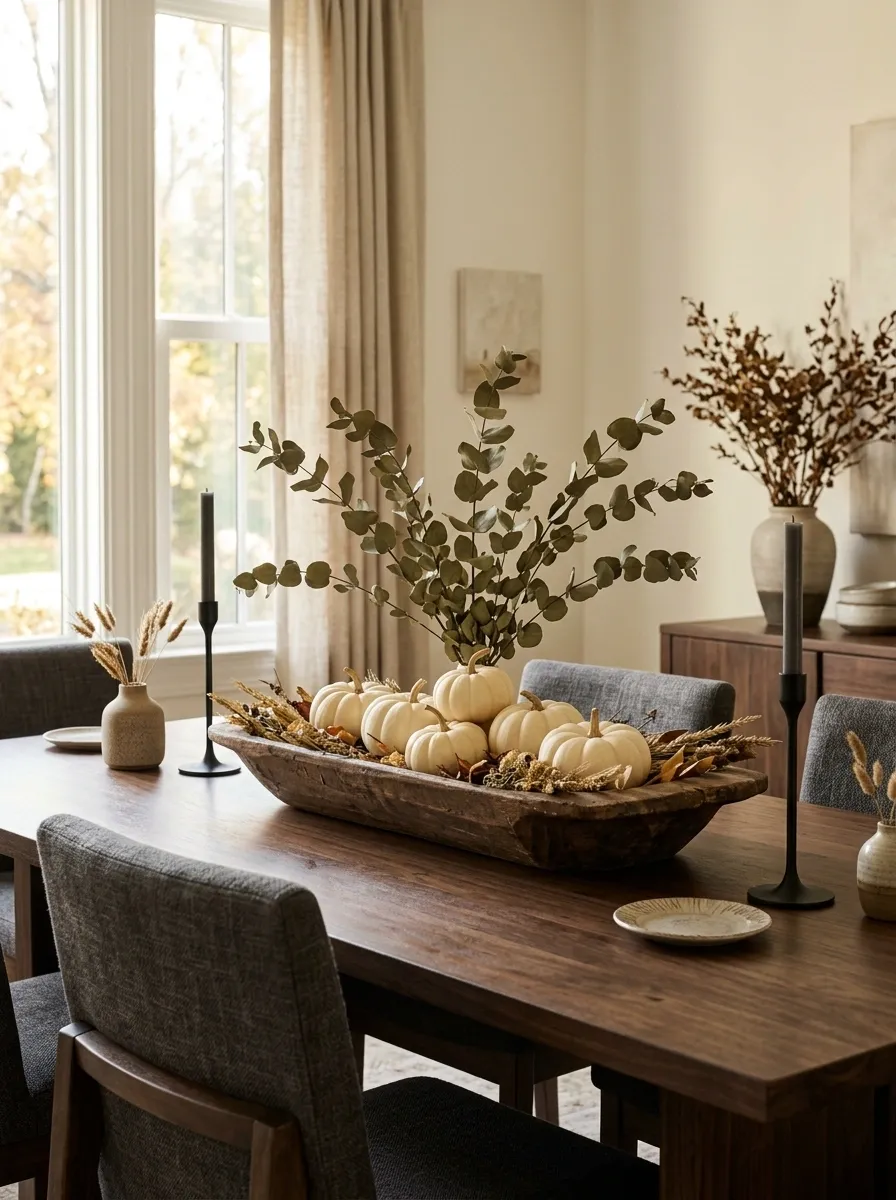
White pumpkins look entirely different when the furniture underneath them has real depth. Here, a dark walnut dining table gives a row of matte cream and white pumpkins enough contrast to stand out without needing bright fall colors.
A few dried eucalyptus stems rise loosely from the bowl, while dark taper candles and textured linen repeat the room’s deeper tones. The result is quiet, but it isn’t bland.
The trick is resisting the urge to keep adding seasonal pieces. The white pumpkins already provide the focal point. More leaves, signs, or little figurines would only flatten the contrast that makes the arrangement interesting.
Simple Greenery and Pillar Candles
Sometimes skipping the traditional pumpkins altogether is the smartest design choice you can make. A rustic wooden dough bowl is simply filled with lush green boxwood runners and staggered pillar candles of varying heights, creating an organic, understated centerpiece.
A warm wooden dining table and matching chairs provide a classic backdrop that lets the vibrant green pop against the weathered wood. It is clean, fresh, and deeply sophisticated.
The secret here is repetition. Sticking strictly to greenery and candles keeps the styling cohesive and ensures the table feels calm and intentional rather than cluttered.
Moody Plum and Rust Harvest Bowl
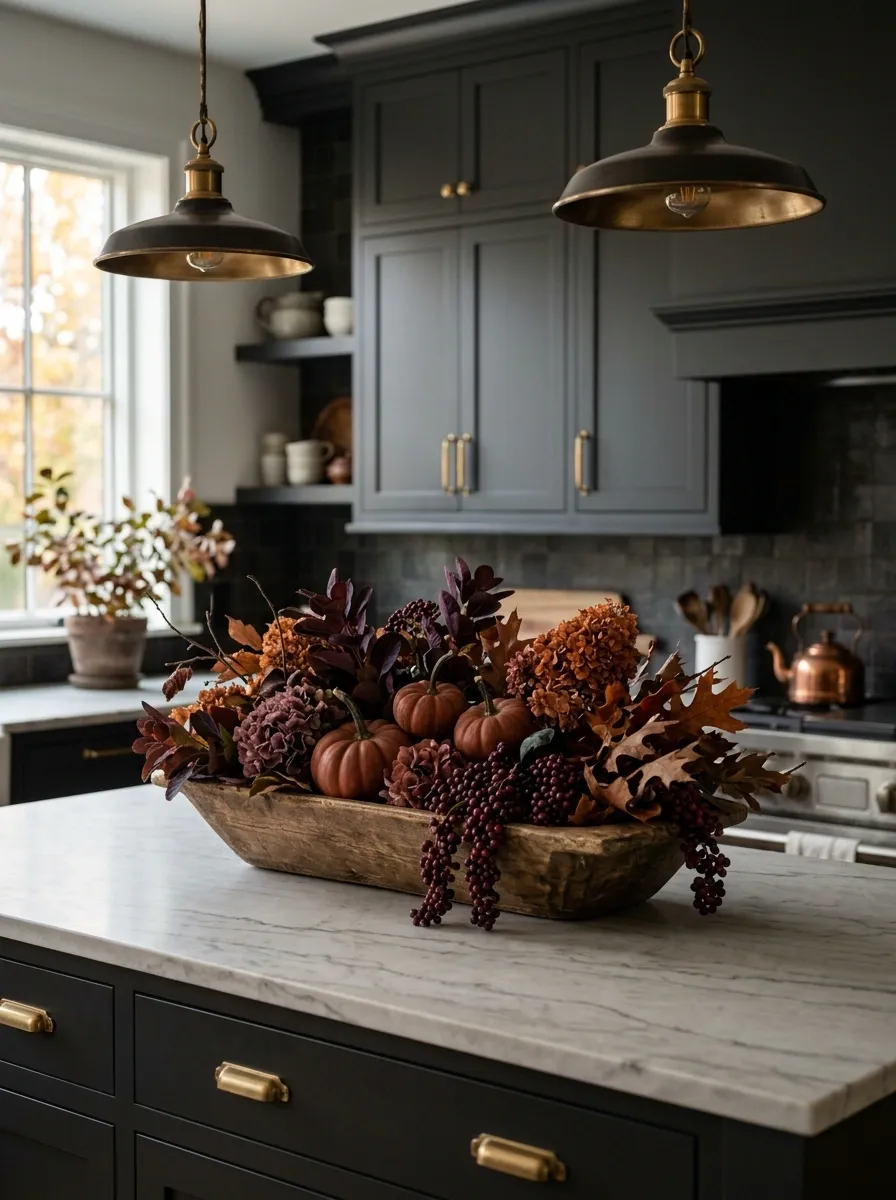
Rust is expected. Plum makes it interesting.
This stained wood dough bowl combines rust-colored mini pumpkins with deep plum foliage, burgundy berries, dried hydrangeas, and cinnamon-toned leaves. The arrangement sits on a pale stone kitchen island, with dark cabinetry behind it and warm pendant lighting overhead.
The darker colors give the centerpiece more visual depth than a standard orange-and-cream combination. They also make the wood bowl feel richer and more substantial.
Keep the background finishes relatively simple. This composition already has enough color movement. What keeps it sophisticated is the fact that the kitchen isn’t competing with it.
Fabric Pumpkins and Acorn Accents
Fabric pumpkins and quirky oversized acorns bring a playful, tactile element to fall styling. A rich stained dough bowl sits on a warm wood kitchen island, holding a curated mix of patterned fabric pumpkins, a snowy white mini gourd, and metallic acorn decor.
Behind the island, a classic ceramic pitcher overflows with tall autumn stems, while a weathered stoneware jug and warm cabinetry complete the timeless kitchen aesthetic. Every texture feels touchable and inviting.
The real magic lies in mixing materials. Combining soft fabric pumpkins with hard metallic accents and organic dried elements keeps the arrangement visually engaging from every single angle.
Black Dough Bowl With Copper Autumn Tones
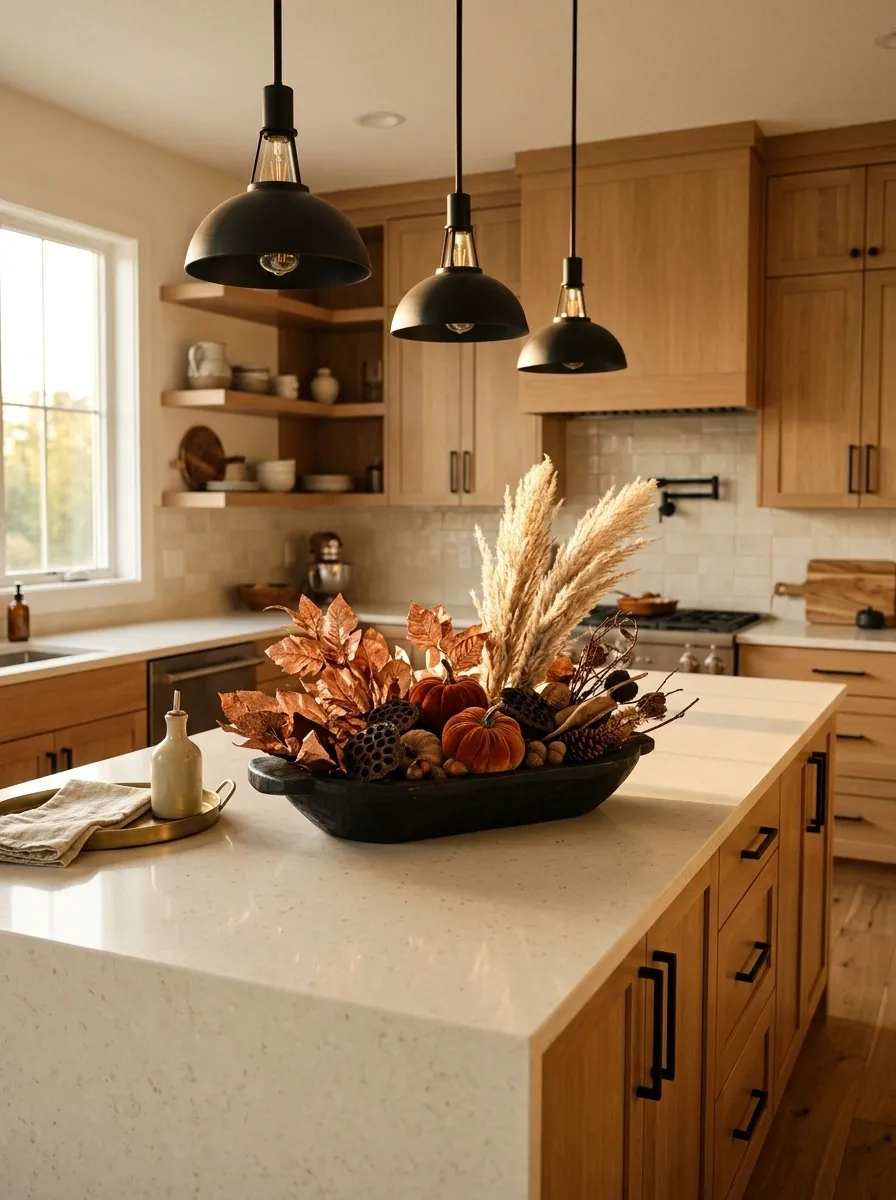
A black dough bowl changes the entire mood.
Set it on a warm cream kitchen island and fill it with copper-toned leaves, rust pumpkins, dried grasses, and a few dark seed pods. Behind it, black pendant lighting and warm oak cabinetry repeat the arrangement’s darker and warmer notes without copying it exactly.
The copper is what keeps the composition from becoming too severe. It catches the light and gives the black bowl something warm to push against.
I’d leave the surrounding countertop mostly clear. This design works because the bowl has room to breathe, and because the kitchen itself supports the palette rather than fighting it.
Organic Neutral Arrangement With Dried Branches
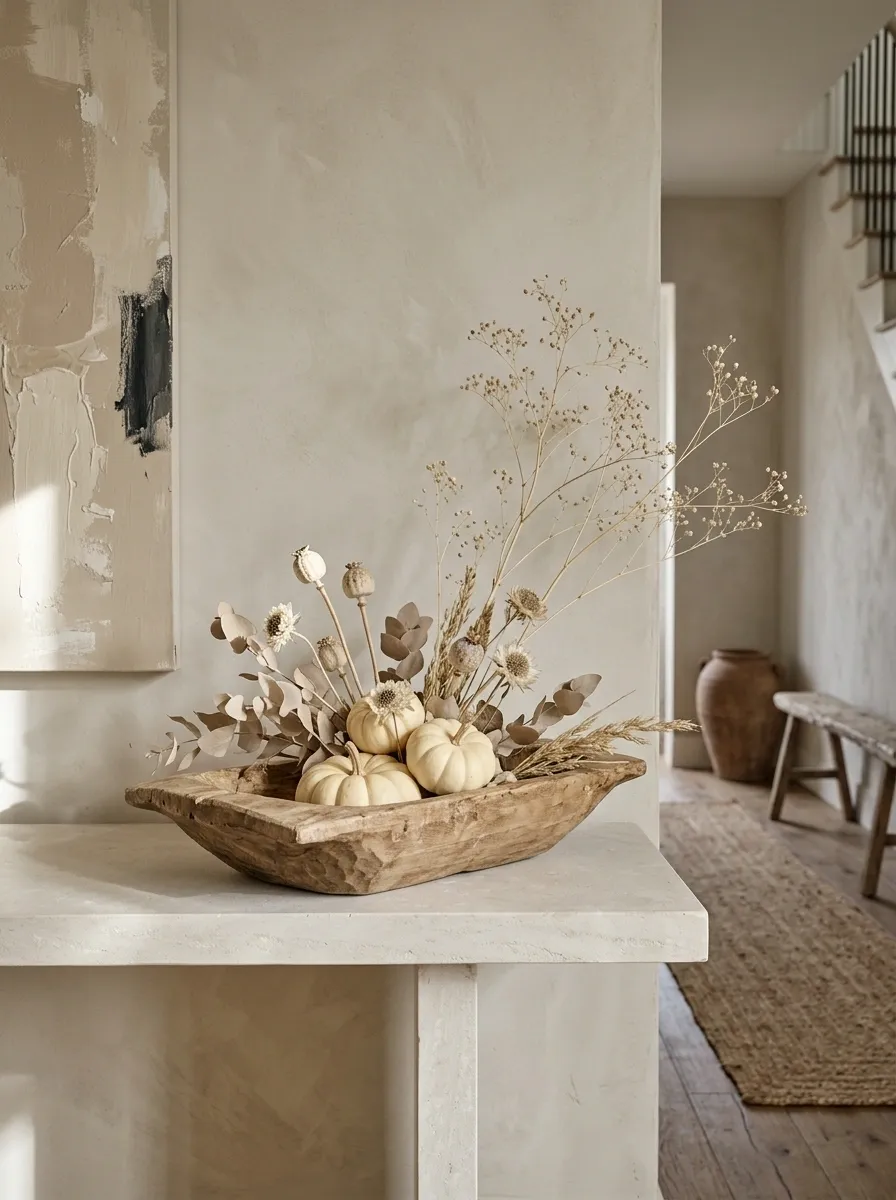
Forget the orange for a minute. A dough bowl can still read unmistakably as fall when the color palette is quiet.
A raw wood bowl holds oversized cream pumpkins, pale seed pods, dried beige branches, and soft taupe foliage. It sits on a limestone console against a warm plaster wall, with one oversized piece of artwork nearby. The entire scene feels warm because of its materials, not because somebody dumped orange decorations everywhere.
The branches should rise slightly above the bowl while the pumpkins stay low. That difference in height keeps the arrangement from becoming a flat row of objects.
The restraint is the whole point. Add too many contrasting colors and you lose what makes this version feel considered.
Vintage Autumn Bowl With Brass and Amber Glass
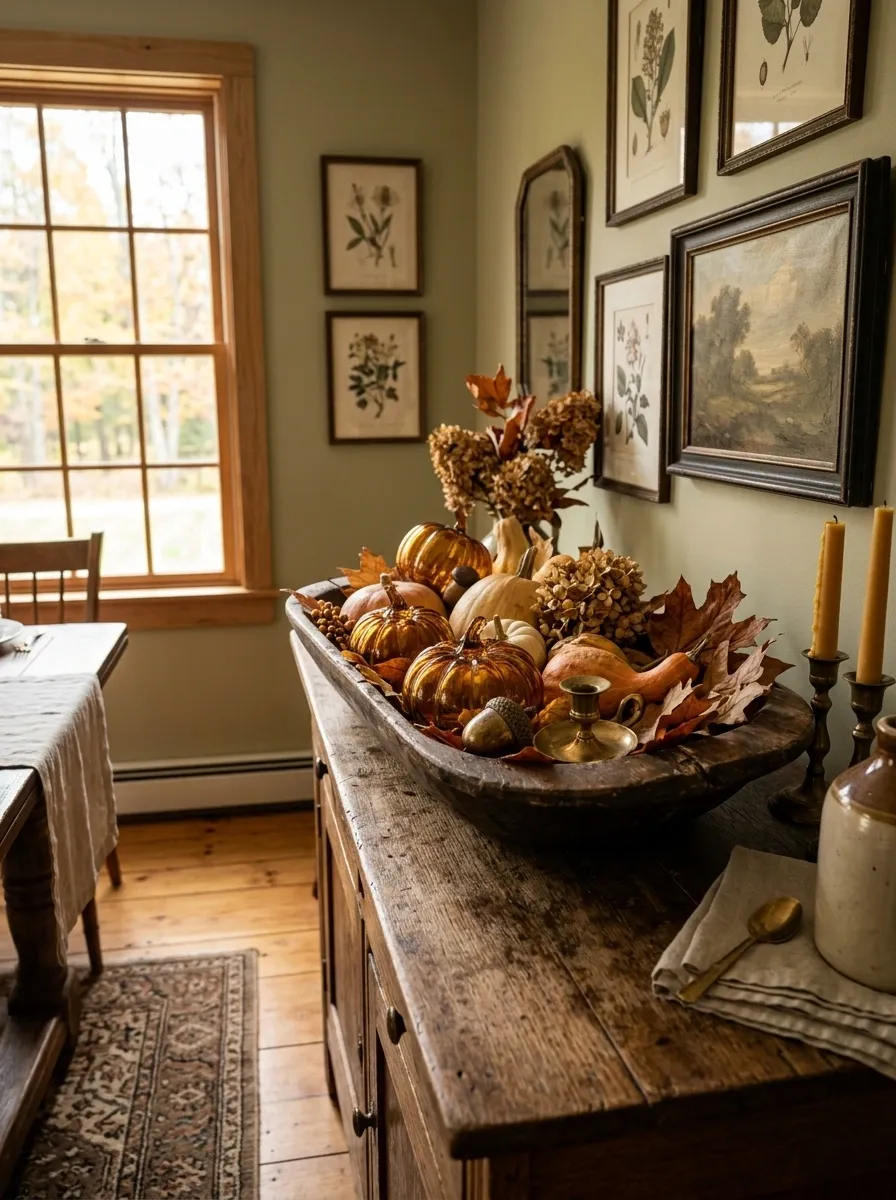
This version looks less like seasonal decorating and more like something that has been sitting in the dining room for years.
A dark, aged dough bowl holds miniature amber glass pumpkins, faded orange gourds, dried leaves, and a handful of small brass accents. Behind it, an antique sideboard, old framed artwork, and warm wood floors give the arrangement a proper vintage setting.
The amber glass matters because it catches light differently from the wood and dried materials. That little bit of transparency keeps the arrangement from becoming one solid block of brown.
Don’t polish every surface until it looks new. A little patina is doing useful work here.
Apple Harvest Bowl for the Kitchen Island
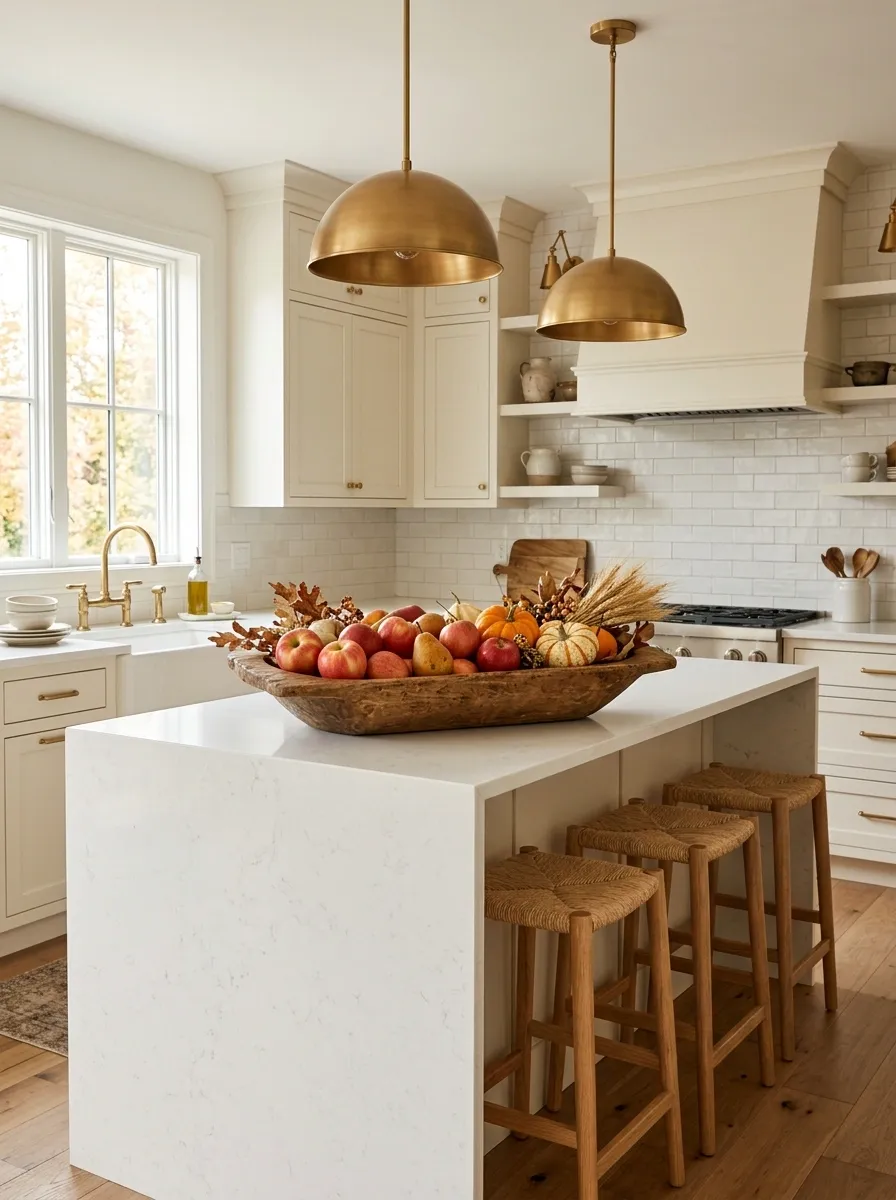
Pumpkins don’t have to carry the entire autumn season on their backs.
This arrangement uses red and blush apples, pears, dried leaves, wheat, and a few tiny gourds inside a generously sized dough bowl. It sits on a bright kitchen island surrounded by cream cabinets, natural wood stools, and warm pendant lighting.
The fruit gives the composition a fresher look than a typical dried arrangement, while the wheat and leaves stop it from looking like a fruit display at a grocery store.
Use a few pieces of fruit at different heights rather than packing the bowl to the rim. You want to see the wood. That contrast between fresh-looking produce and rough timber is what makes the arrangement feel finished.
Deep Green and Burnt Orange Woodland Bowl
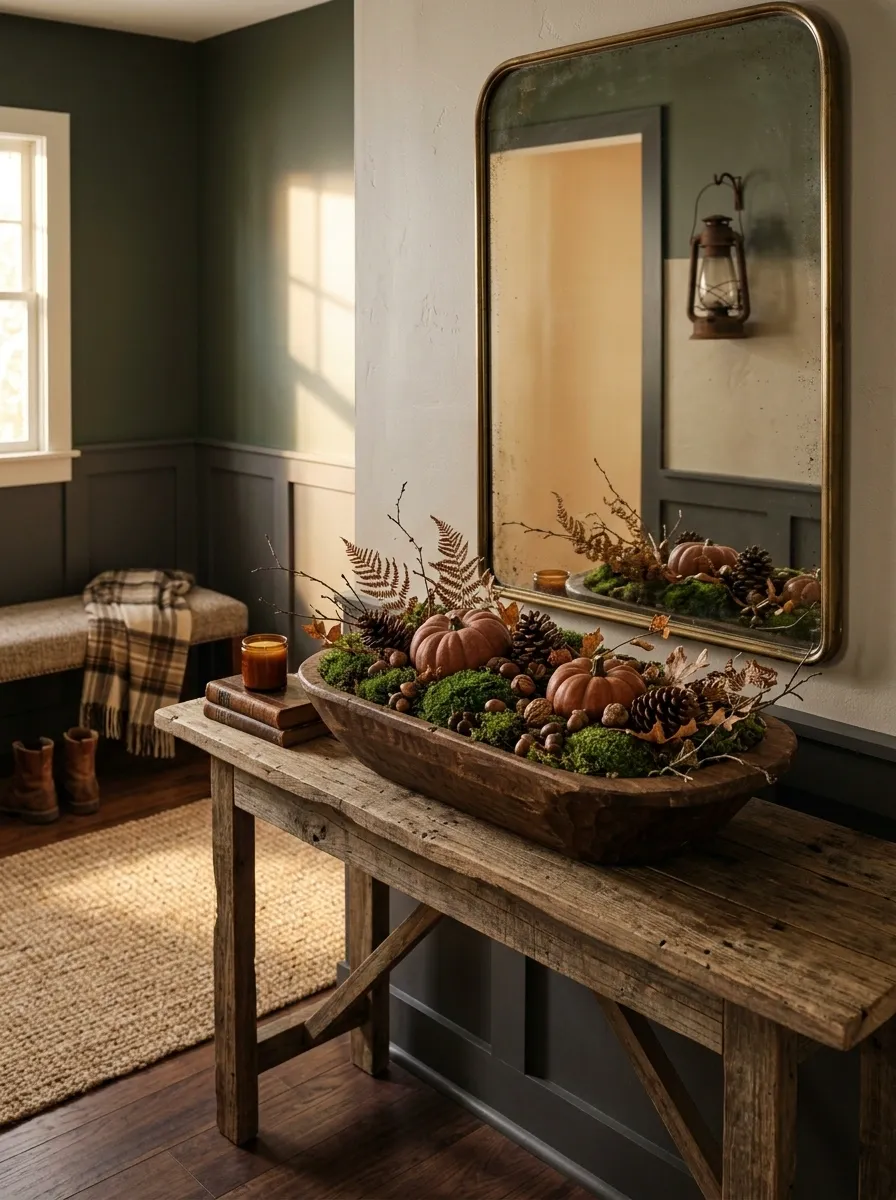
This arrangement takes its cues from the forest floor instead of the pumpkin aisle.
A chunky carved dough bowl is filled with deep green moss, muted orange pumpkins, pinecones, acorns, dried fern pieces, and small branches. It rests on a reclaimed wood console beneath a large mirror, where the reflections give the earthy arrangement extra depth.
The moss is what changes the composition. Without it, the pumpkins and branches would sit together as separate seasonal objects. The green base visually ties everything together and makes the bowl look like one complete environment.
Keep the foliage dark and slightly uneven. Perfectly shaped greenery would make the woodland idea feel too decorative.
Minimal Cream Dough Bowl for a Modern Home
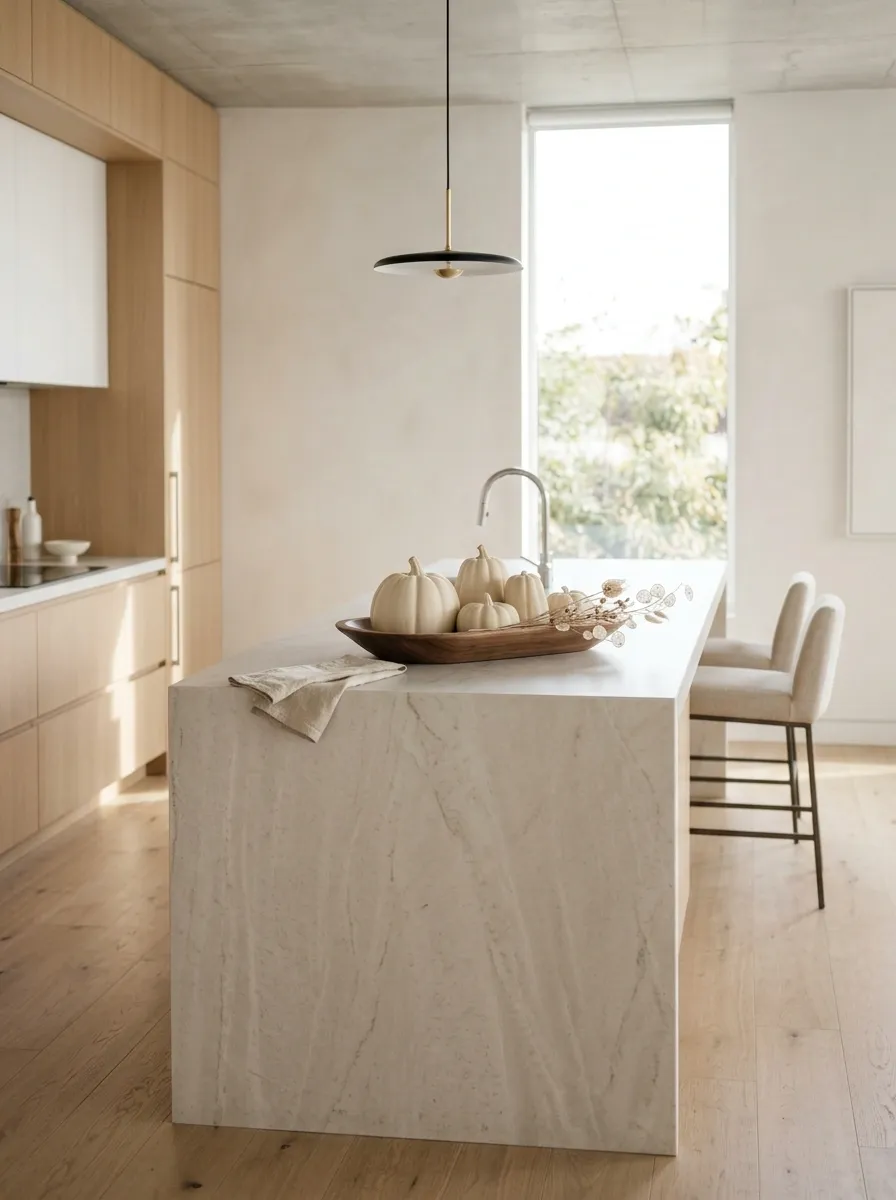
Sometimes the smartest fall arrangement is the one that knows when to stop.
A sleek low-profile dough bowl in natural wood contains five sculptural cream pumpkins and one loose beige branch arrangement. It sits on a pale stone kitchen island in a modern room with light oak flooring, oatmeal seating, and clean architectural lines.
There isn’t a huge pile of seasonal objects here. The bowl is deliberately underfilled, which gives each shape room to read and lets the surrounding room remain part of the composition.
This works especially well in contemporary interiors because the seasonal styling follows the architecture instead of fighting it. Keep the branches simple, the colors quiet, and the countertop clear.
Terracotta and Olive Mediterranean Fall Bowl
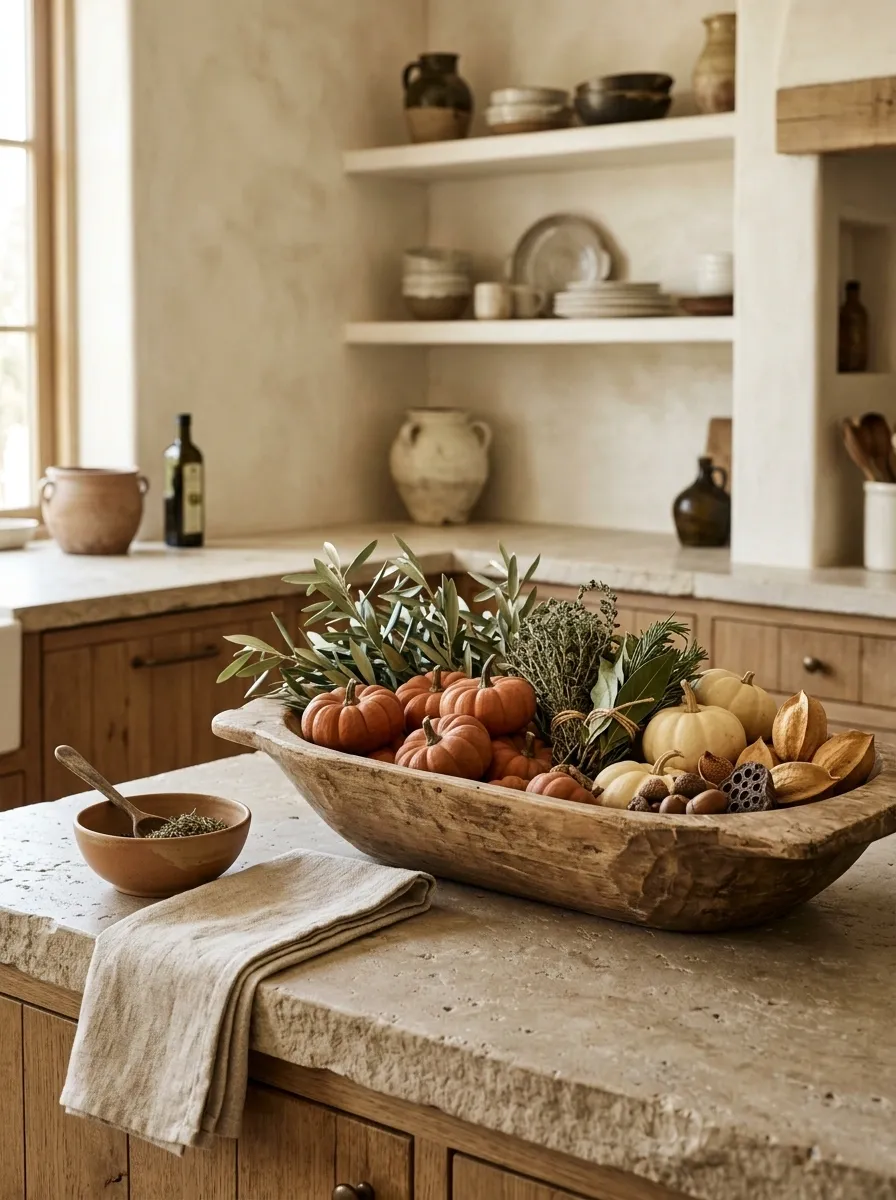
A Mediterranean-inspired fall arrangement makes the usual orange pumpkin look a lot more grown-up.
A wide rustic dough bowl holds terracotta mini pumpkins, loose olive branches, dried herbs, pale gourds, and warm tan seed pods. It sits on a textured stone kitchen counter beside handmade-looking ceramic pottery and folded linen.
The palette stays warm without becoming overly brown. Olive gives the arrangement a cooler note, while terracotta keeps it firmly rooted in autumn.
This works especially well in kitchens with stone, plaster, wood, or clay finishes. I’d skip shiny seasonal accessories here. The appeal comes from the earthy materials looking like they belong together.
Cozy Cottage Bowl With Plaid and Fabric Texture
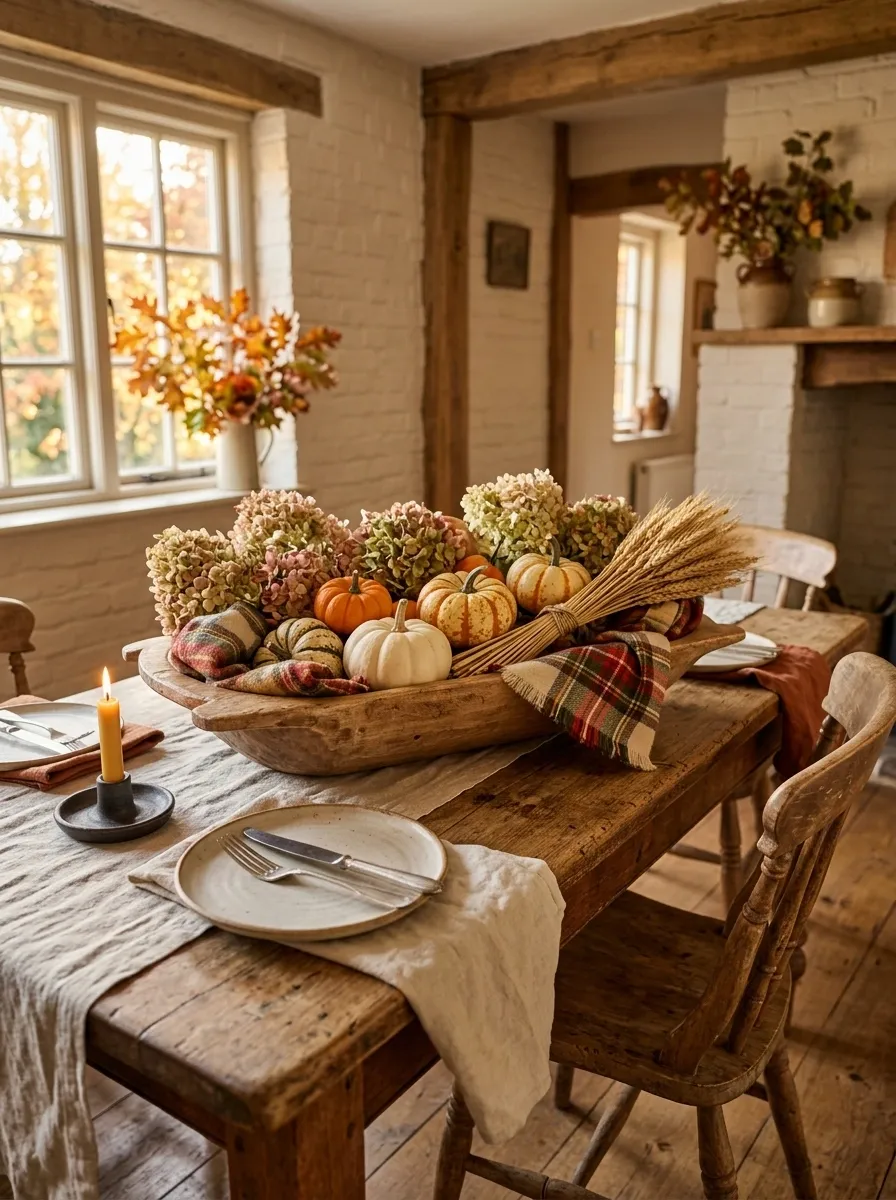
This one gets its character from something most fall dough bowl arrangements completely ignore: fabric.
A softly distressed wood bowl is filled with small pumpkins, dried hydrangeas, wheat, and loose pieces of warm plaid textile tucked between the natural elements. The bowl sits on a cottage dining table with linen napkins, worn wooden chairs, and a few low taper candles.
The plaid doesn’t need to dominate. Small glimpses are enough to introduce a familiar seasonal pattern without turning the bowl into a craft-store display.
The surrounding room should stay relaxed and tactile. Worn wood, soft fabric, and dried materials already provide plenty of visual interest.
Oversized Dough Bowl on a Long Dining Table
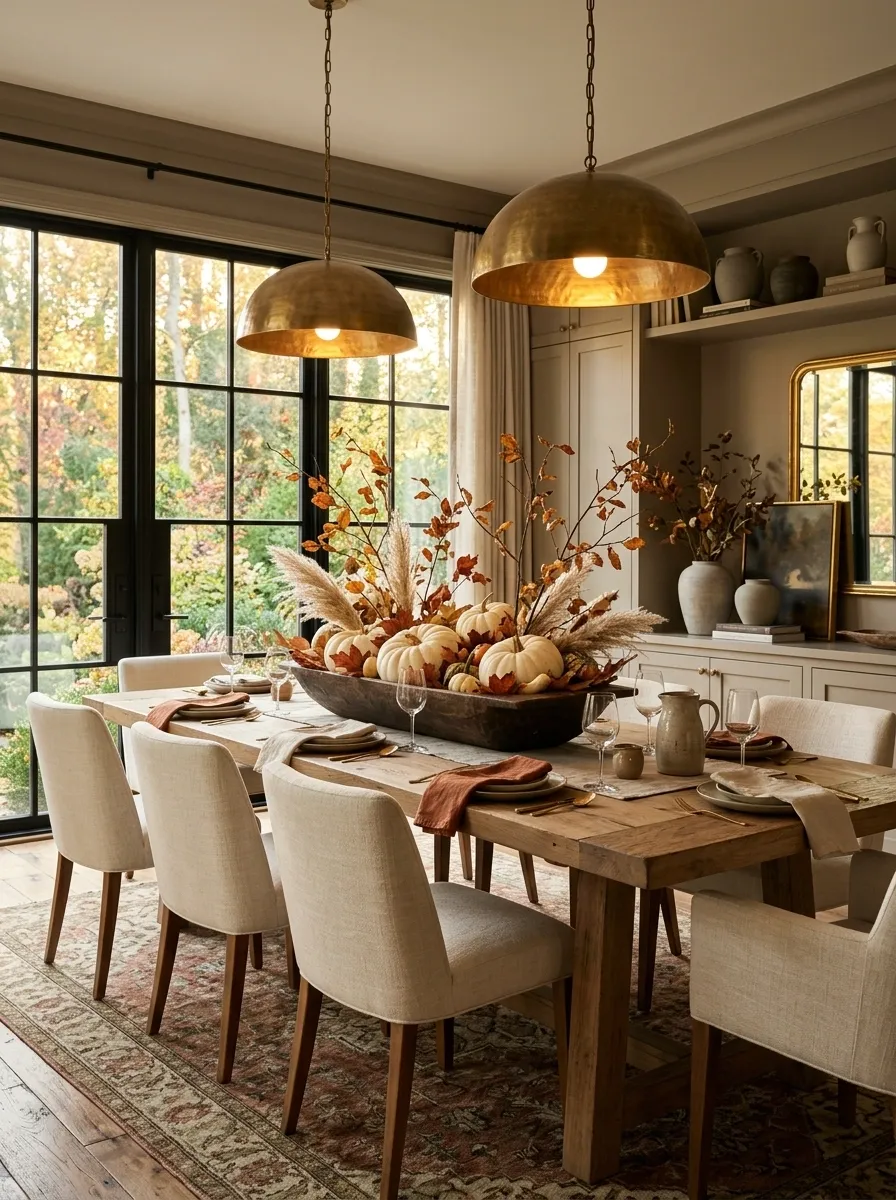
Scale changes everything here.
A long, substantial dough bowl stretches across the center of a rectangular dining table, filled with clusters of cream pumpkins, rust leaves, dried grasses, and tall branches. Instead of one tightly packed mound, the contents are arranged in loose sections that echo the length of the table.
Large dining chairs and a pair of substantial pendant lights make the centerpiece feel proportional to the room. A small bowl on a table this large would disappear. This one has enough visual weight to hold its ground.
Notice that the arrangement isn’t especially tall in the middle. The branches rise selectively, while most of the seasonal pieces stay low enough to preserve the table’s function.
Moody Black-and-Cream Autumn Table
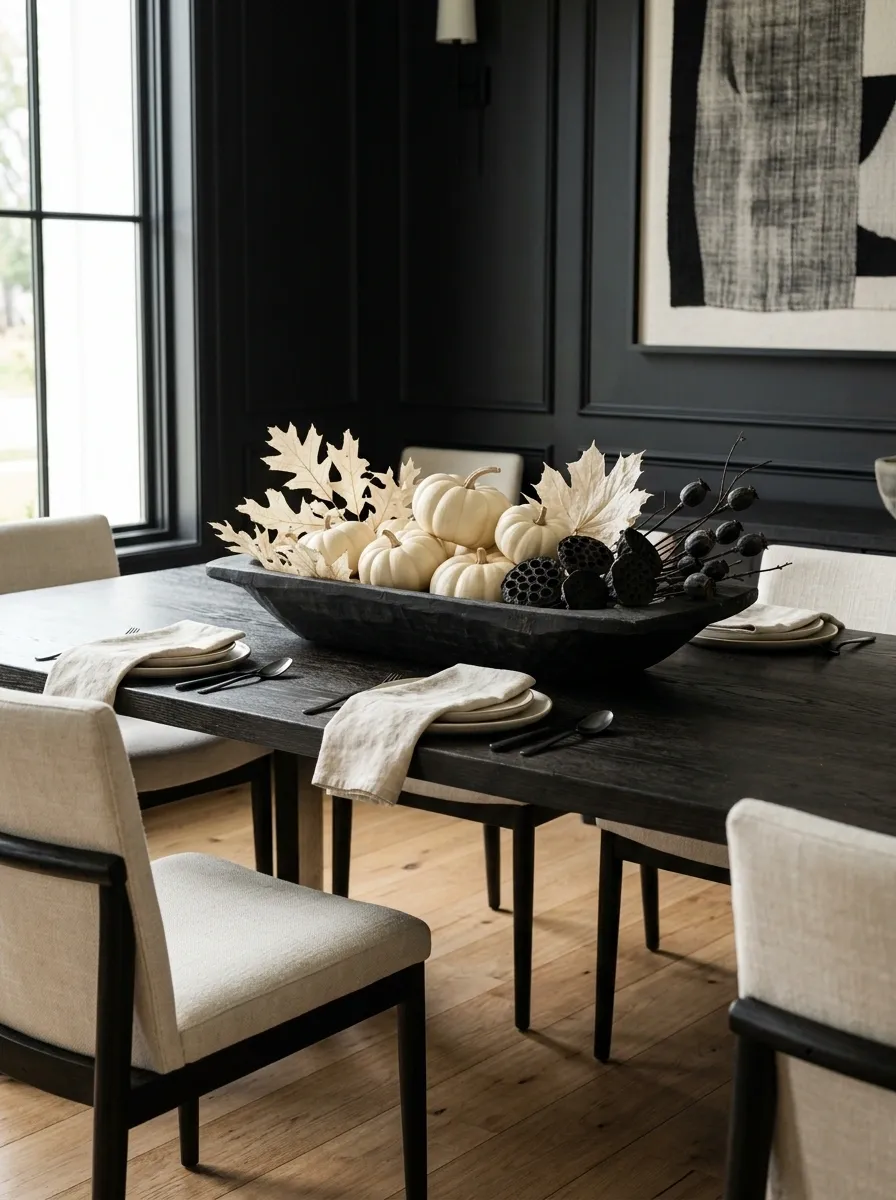
This is the arrangement for anyone who wants fall without the obvious fall colors.
A charcoal dough bowl filled with ivory pumpkins, pale dried leaves, and a handful of black seed pods sits on a dark dining table. Cream upholstery lightens the room, while warm wood flooring prevents the black-and-white contrast from becoming harsh.
The result feels graphic and architectural. The seasonal message comes through the pumpkin shapes and dried foliage rather than bright orange.
The biggest mistake would be adding another color because the table suddenly feels “too neutral.” It doesn’t. The contrast is the point. Keep the surrounding pieces quiet and let the shapes do the work.
Rustic Market Basket Style Dough Bowl
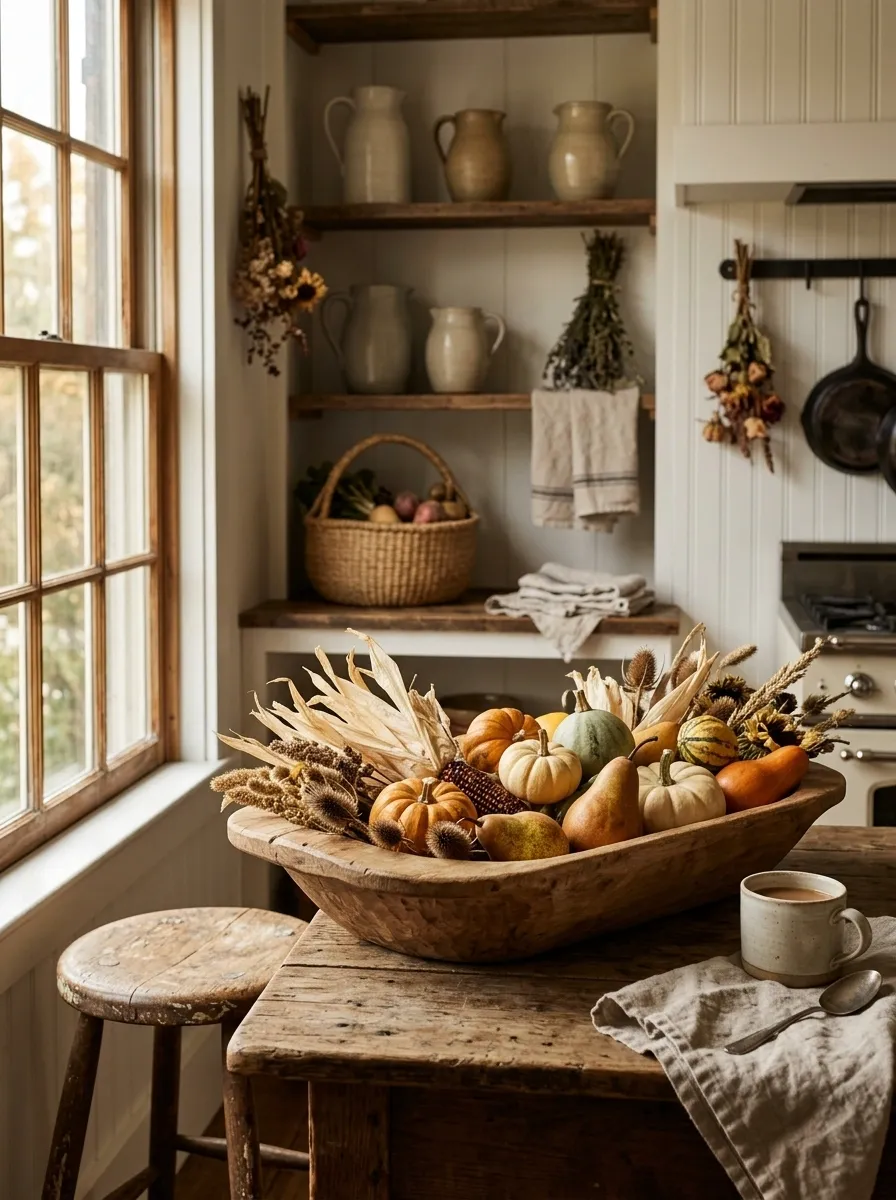
This arrangement intentionally looks a little less arranged.
A thick natural dough bowl is packed loosely with tiny pumpkins, pears, dried corn husks, seed heads, and rough woven textures. It sits on a kitchen table surrounded by ceramic pitchers, worn wooden stools, and a few casually folded linens.
The idea comes from a fall market basket, where everything is gathered by type and texture rather than lined up for inspection. That gives the composition a more relaxed character.
The key is variety within a limited palette. Use different shapes and textures, but keep the colors in the same family so it feels collected instead of chaotic.
Soft Blue and Rust Unexpected Fall Palette
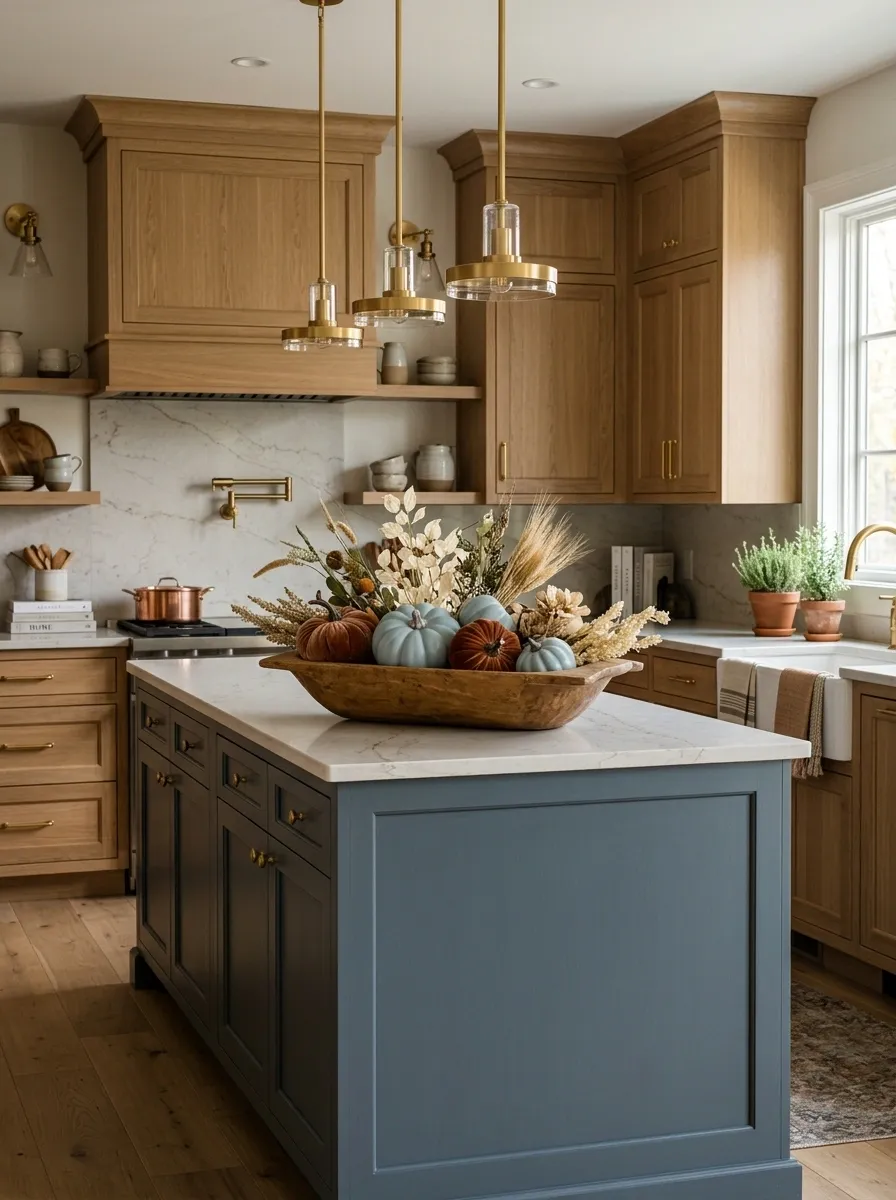
Blue has no business looking this good with fall orange, and yet it does.
A medium-toned wood dough bowl holds muted blue ceramic pumpkins, rust-colored gourds, cream foliage, and pale dried stems. The arrangement sits on a blue-gray kitchen island, with warm oak cabinets and brass lighting surrounding it.
The cooler blue creates a useful visual break from the warmer autumn pieces. Instead of competing, the colors make each other look richer.
This is a good direction when the room already contains blue-gray, slate, or muted denim tones. Don’t add five more colors to make it “interesting.” The contrast is already doing the job.
Fall Dough Bowl on a Console With Layered Decor
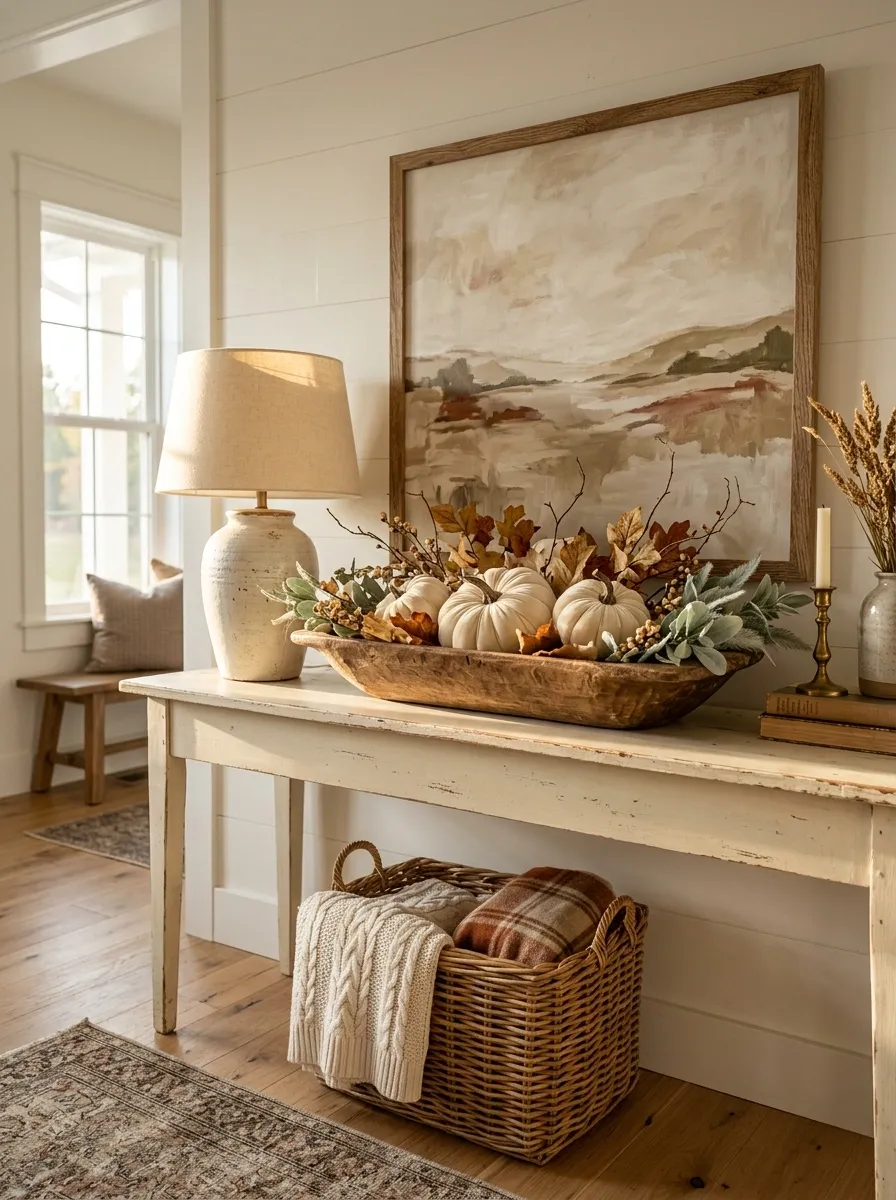
A dough bowl looks much more convincing when it belongs to the entire console rather than sitting there by itself.
This shallow bowl contains cream pumpkins, rust leaves, dried branches, and soft foliage. Behind it, a large framed artwork creates the vertical backdrop, while a tall ceramic lamp adds height on one side. A woven basket rests on the floor below.
The arrangement works because the visual layers move from low to high. The bowl handles the foreground, the artwork fills the wall plane, and the lamp bridges the two.
Keep the bowl fairly low. The console already has enough vertical elements, so another oversized floral arrangement would make the whole thing top-heavy.
Candlelit Rustic Evening Arrangement
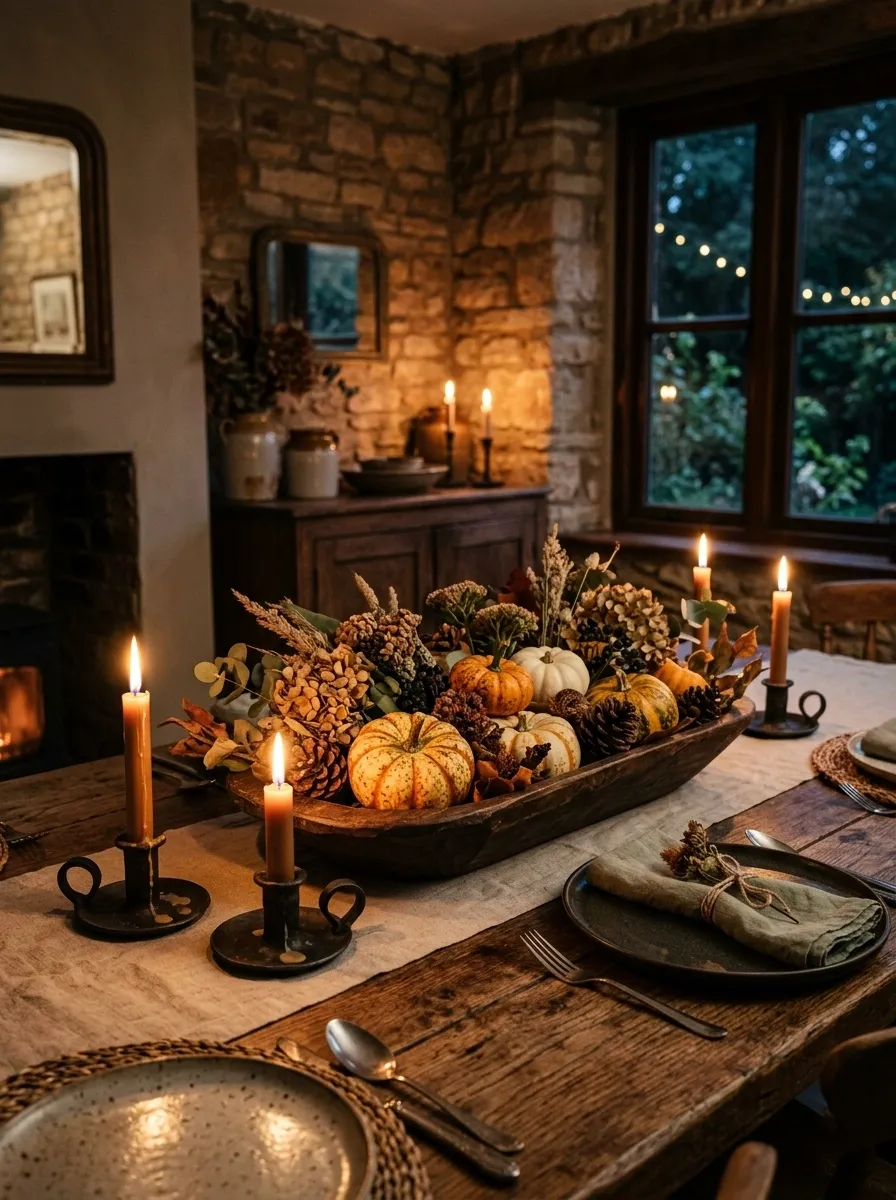
Fall changes character completely once the lighting gets warmer.
A dark wood dough bowl holds miniature pumpkins, dried florals, pinecones, and earthy foliage on a rustic dining table. Low candleholders sit around the bowl, creating pools of warm light across the wood and stone surfaces.
The arrangement stays relatively low because this scene is about atmosphere rather than height. Tall branches would interrupt the soft glow and make the centerpiece feel visually busy.
This concept works especially well in a dining room with darker wood, aged finishes, or evening-oriented lighting. The bowl doesn’t have to contain dozens of seasonal pieces. The lighting supplies much of the drama.
Woodland Neutrals With Moss and Stone
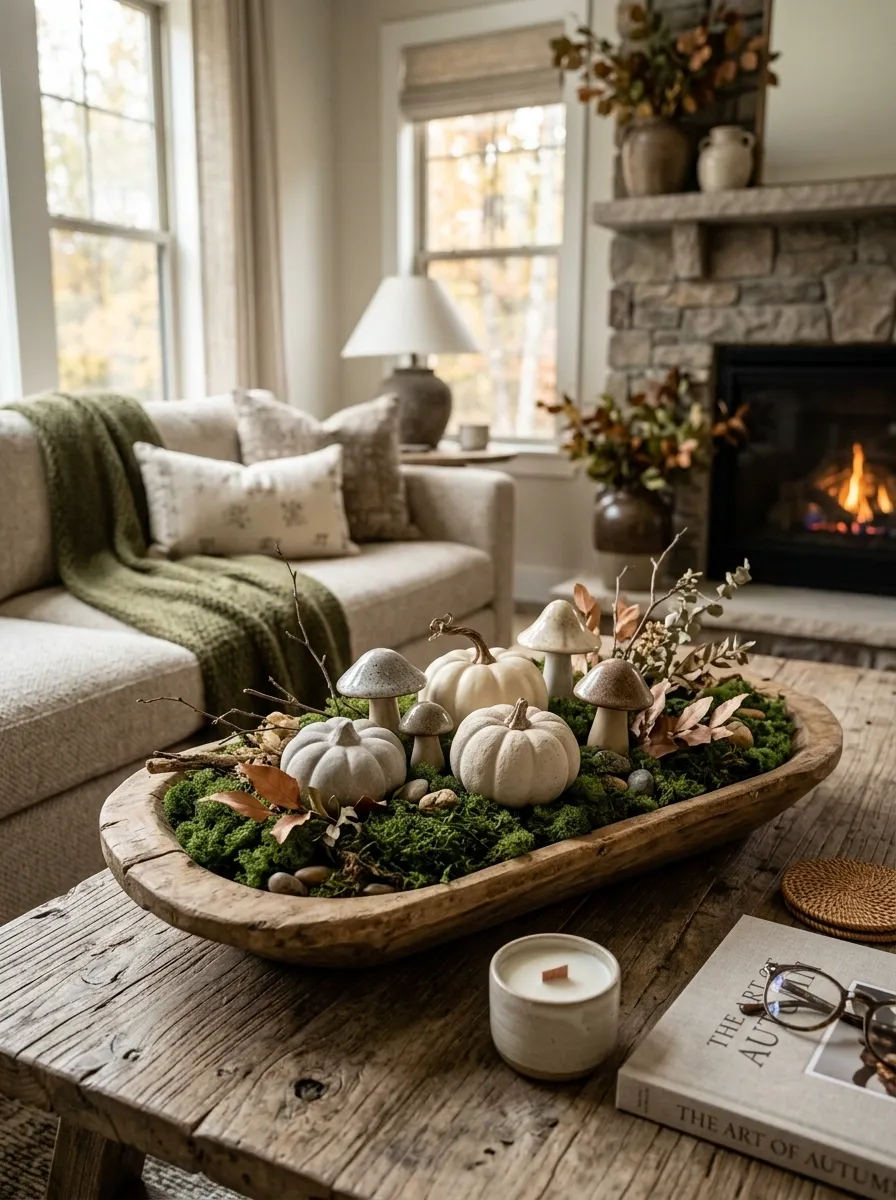
This is autumn stripped down to its natural materials.
A raw-edged dough bowl contains preserved moss, pale stone-like pumpkins, mushroom-shaped ceramic accents, dried branches, and muted brown foliage. The bowl sits on a reclaimed wood coffee table beside woven upholstery and a few natural stone objects.
The moss gives the arrangement a strong base, while the pale ceramics add visual shape without introducing another loud color. Everything feels connected to the same earthy story.
The trick is avoiding literal woodland decorations. You don’t need tiny animals, signs, or themed objects. The materials already communicate the idea more convincingly.
Traditional Orange-and-Gold Dining Room Centerpiece
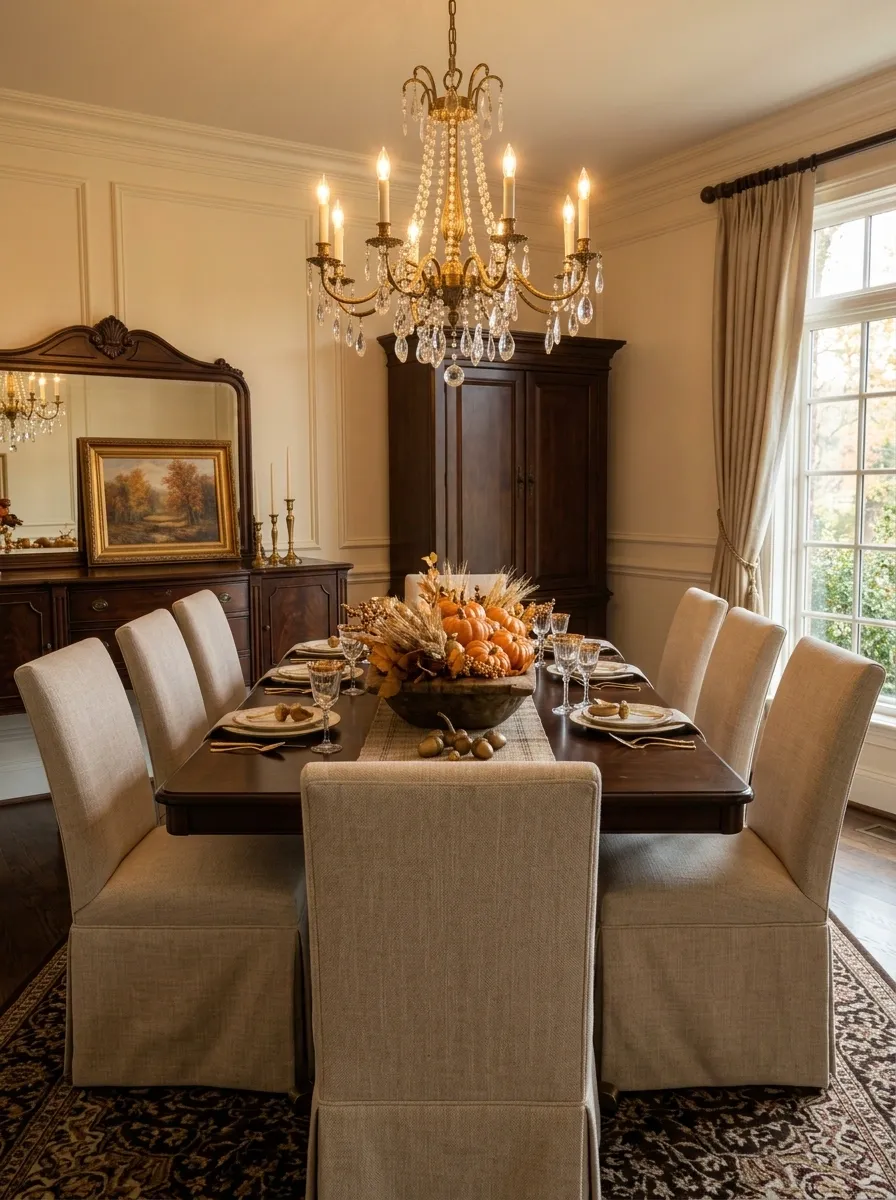
Sometimes you actually do want the classic fall table.
A traditional wooden dough bowl becomes the centerpiece of a warm dining room, filled with rich orange pumpkins, golden leaves, wheat, and restrained brass-toned accents. Upholstered chairs, a classic chandelier, and dark wood furniture give the setting enough architectural weight to support the saturated colors.
The important part is proportion. The orange pieces should cluster naturally inside the bowl rather than spill across the entire table.
This look succeeds because the surrounding room already speaks the same visual language. Traditional furniture, warm lighting, and autumn colors reinforce each other without needing extra decorative signs or seasonal typography.
Simple Fall Dough Bowl With Three Sculptural Elements
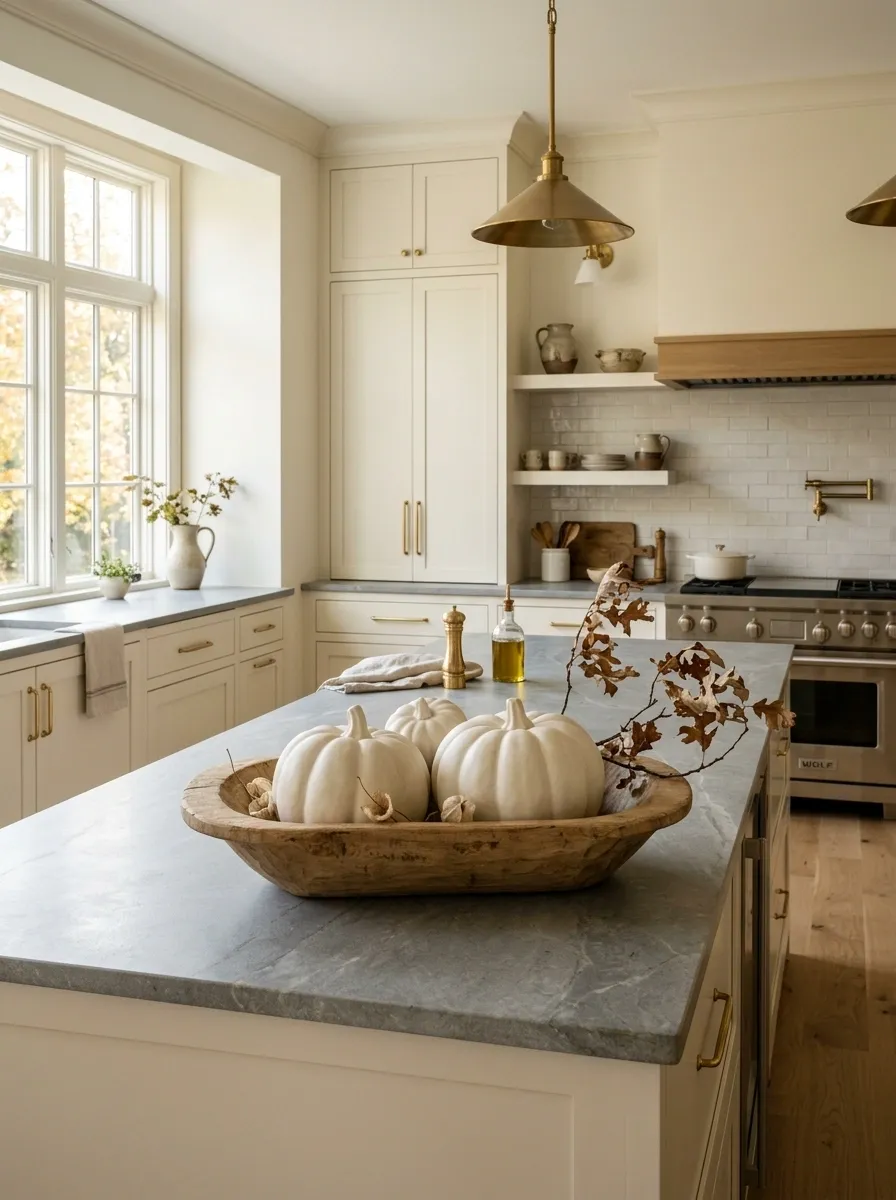
Three substantial pieces can make a better centerpiece than twenty tiny ones.
A low natural dough bowl holds three large sculptural cream pumpkins, one loose dried branch, and a few small seed pods tucked around the base. It sits on a long stone island in a quiet modern kitchen.
The arrangement is sparse on purpose. Each pumpkin has enough space around it to read as a shape rather than disappear into a pile.
This direction works when the room itself already has strong architecture, clean cabinetry, or a beautiful countertop. You don’t need to decorate every inch just because it’s autumn.
Collected Vintage Bowl With Heirloom Objects
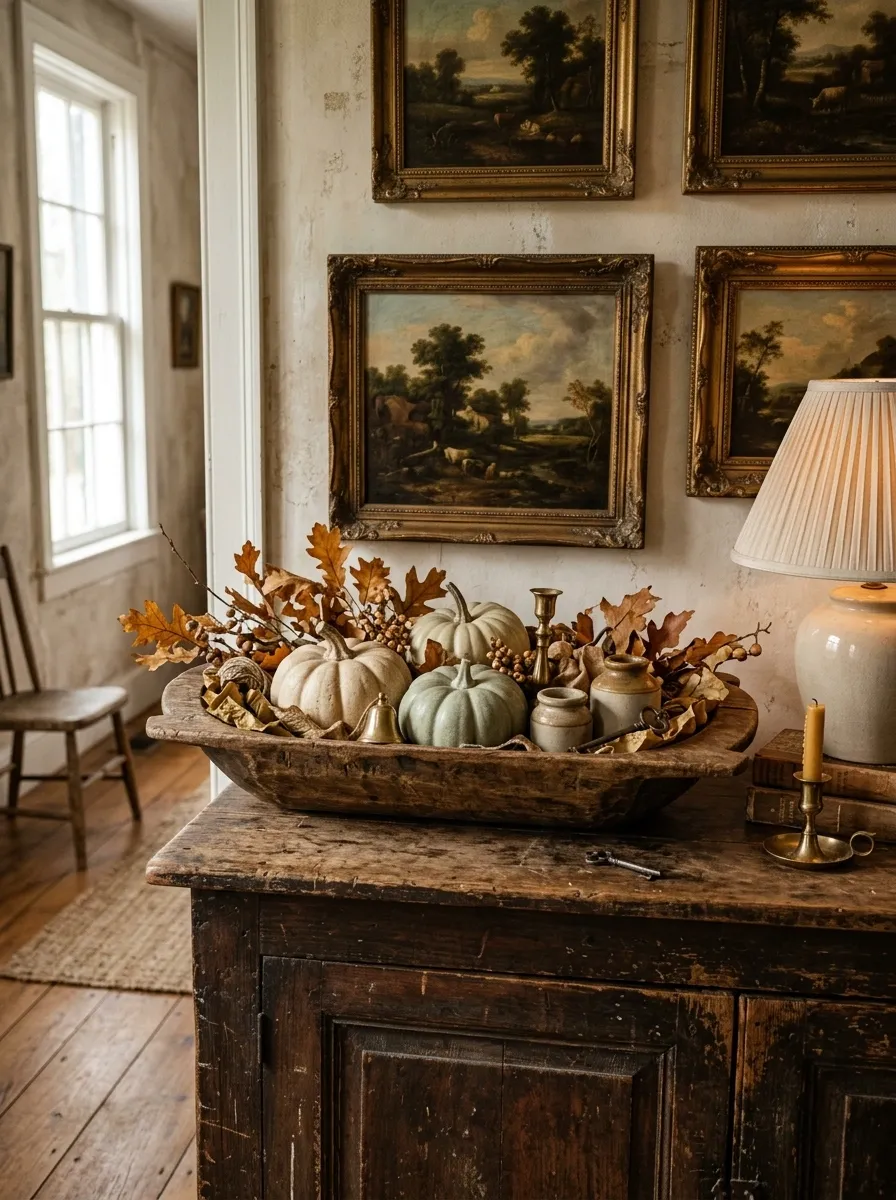
This arrangement should look as though it was assembled slowly, not purchased in one afternoon.
An old carved dough bowl holds faded ceramic pumpkins, dried leaves, miniature brass objects, and small antique-style vessels. It sits on a weathered sideboard beneath vintage artwork and beside a traditional lamp.
The muted finishes are what give the composition its character. Nothing is perfectly shiny, new, or color-matched. The small differences in age and texture make the bowl feel collected.
That doesn’t mean throwing random old objects into it. Give the pieces one shared visual language, then let the patina provide the variation.
Warm Scandinavian Fall Bowl
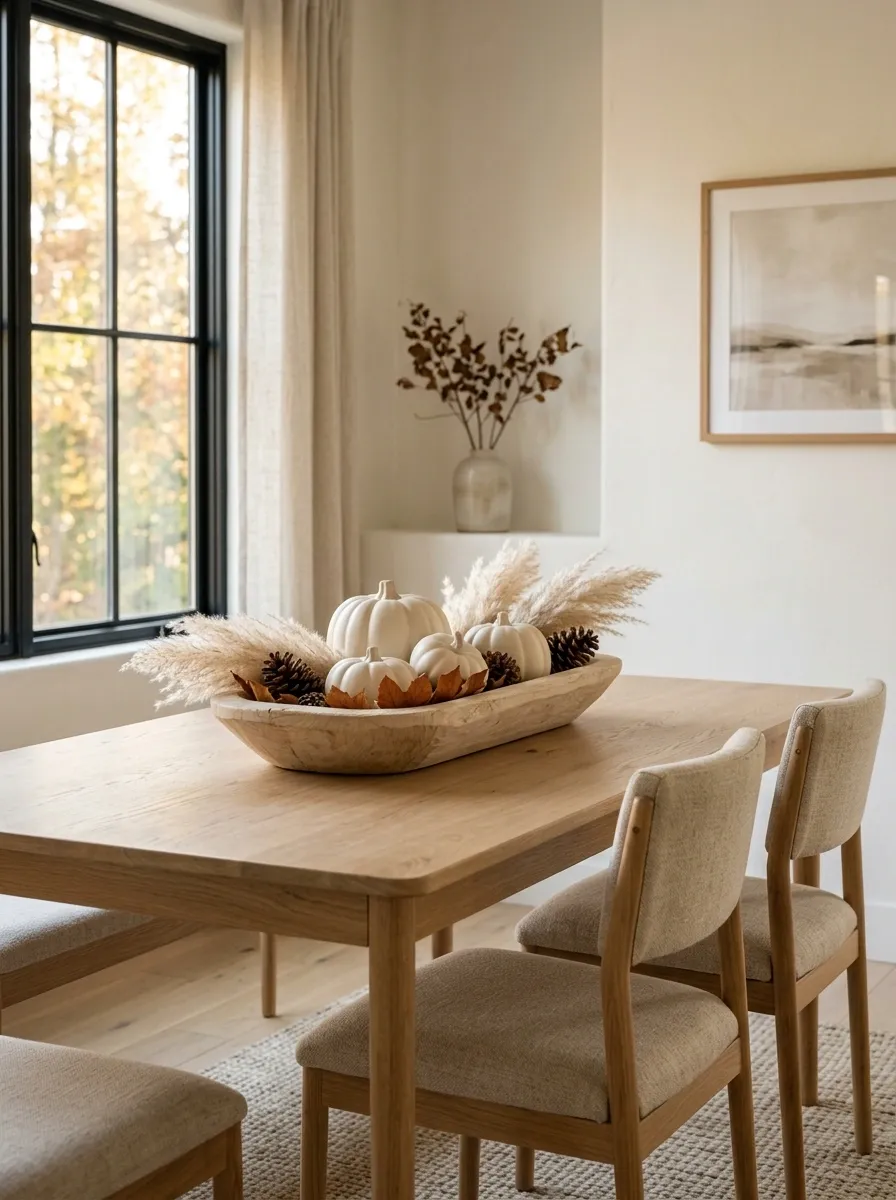
Scandinavian fall styling works best when the season comes through texture rather than a pile of autumn color.
A pale oak dough bowl holds ivory pumpkins, soft tan dried grass, natural pinecones, and a few cinnamon-colored leaves. It sits on a light wood table surrounded by simple linen chairs and warm white walls.
The palette stays calm, but the arrangement doesn’t look sterile because the materials keep changing. Smooth pumpkins sit beside rough pinecones, fibrous grasses, and grainy wood.
This is a strong direction for bright interiors where a traditional orange centerpiece would feel disconnected.
Dramatic Harvest Bowl on a Stone Island
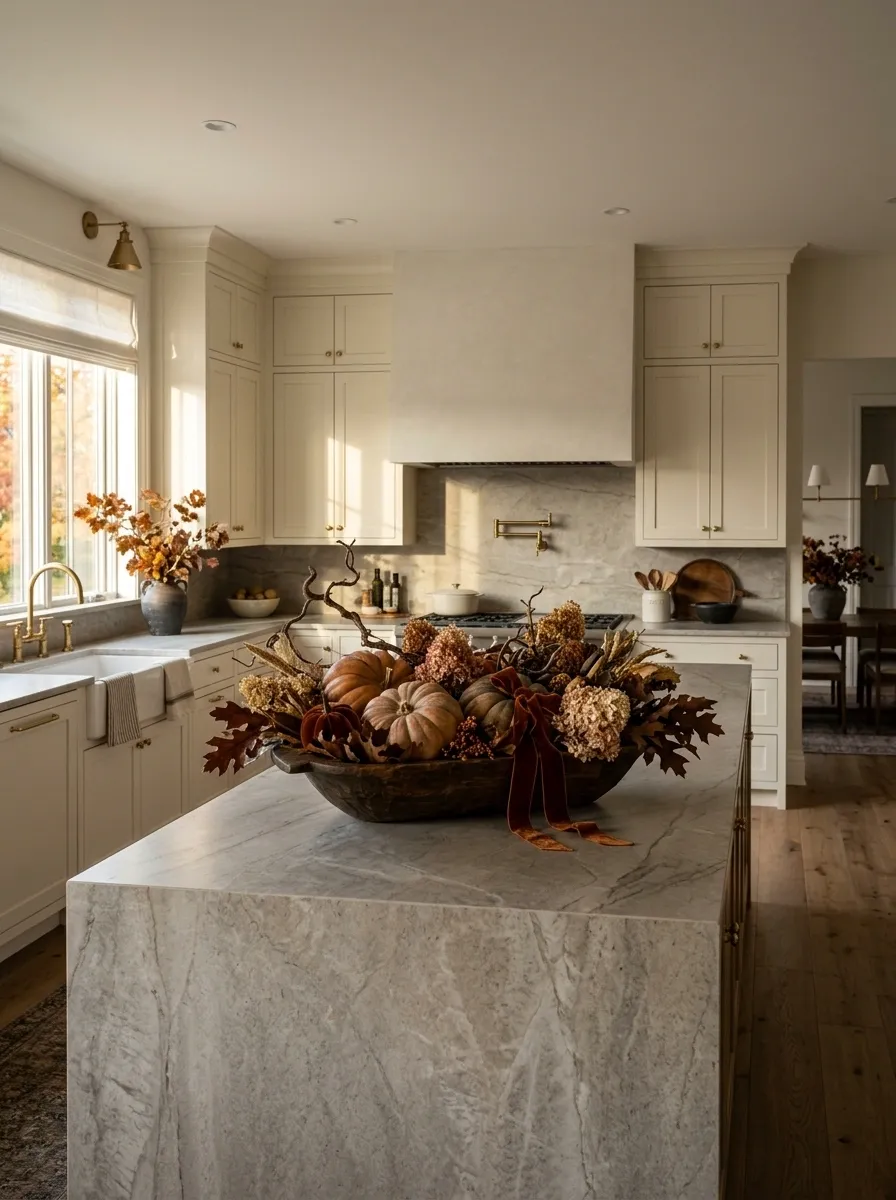
This is the maximal version, but it still needs discipline.
A large dark dough bowl anchors a wide stone kitchen island and holds oversized heirloom pumpkins, twisted branches, dried hydrangeas, deep brown leaves, and a few rust-colored accents. The kitchen behind it stays relatively quiet, allowing the arrangement to carry most of the visual weight.
The scale makes this concept work. A small bowl would look lost on such a large island. The substantial shape gives the centerpiece enough presence to connect visually with the cabinetry, island, and lighting.
Let the dramatic arrangement be the drama. Don’t decorate every remaining countertop surface.
Late-Fall Bowl With Fading Autumn Colors
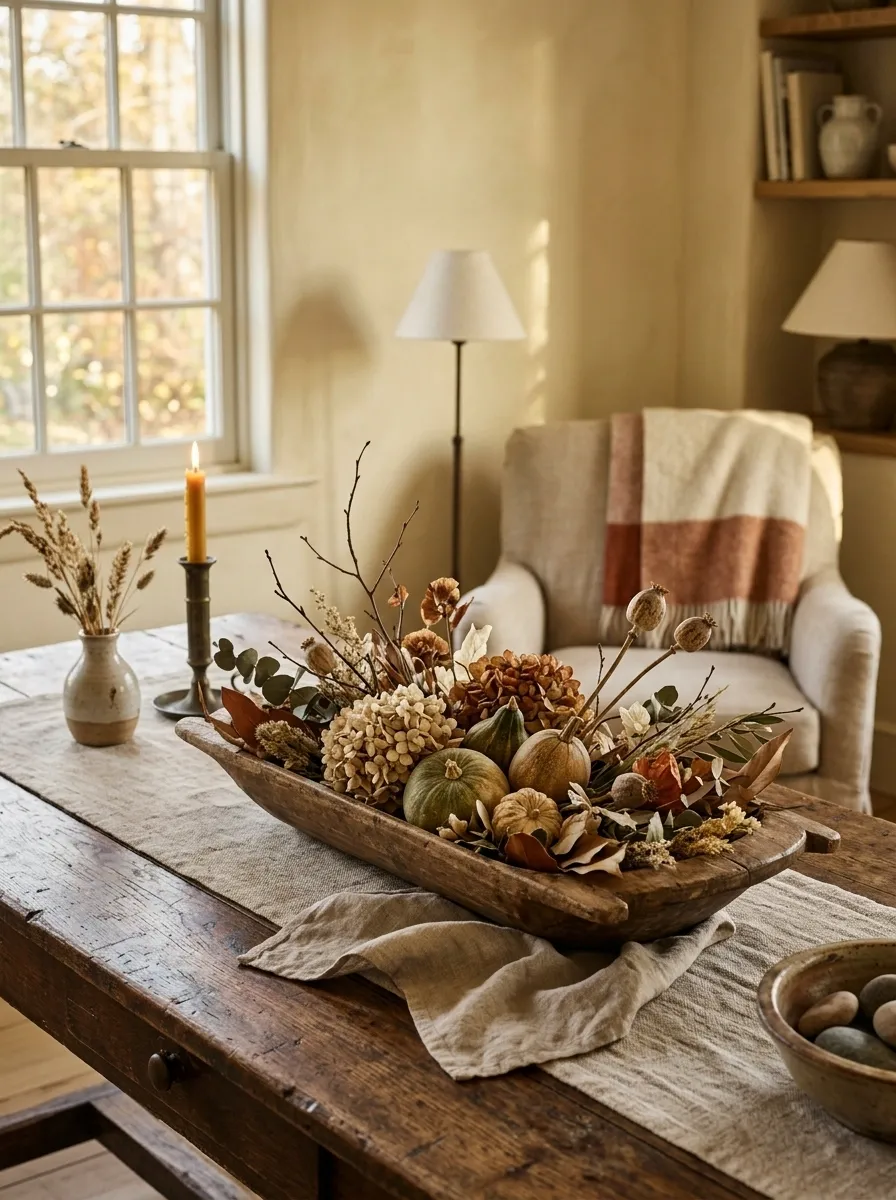
The final look is quieter because late autumn is quieter.
A natural dough bowl holds dried hydrangeas, small gourds, branches, seed pods, and faded foliage in cinnamon, muted rust, dusty brown, cream, and olive. It sits on a worn wood table surrounded by layered textiles and soft lighting.
There is no bright pumpkin-orange focal point here. Instead, the arrangement feels like the season is slowly winding down.
That makes it especially useful when you want fall decor to stay in place later in the season without looking locked into the first week of October. The muted palette transitions naturally into the colder months.
The Final Edit Matters More Than the Filling
Look at the surface where the bowl will actually live before deciding what belongs inside it. A dark wood table can support a lighter arrangement. A pale kitchen island may need more contrast. A long dining table usually needs more visual scale than a narrow console.
Then edit ruthlessly.
Remove the object that doesn’t belong. Remove the color that interrupts the palette. Remove the extra branch that makes the center too tall. The finished arrangement should feel like one idea, not several seasonal ideas fighting for attention.
Save the versions that look like something you’d actually want to live with. Those are the references worth keeping when the decorating starts.