
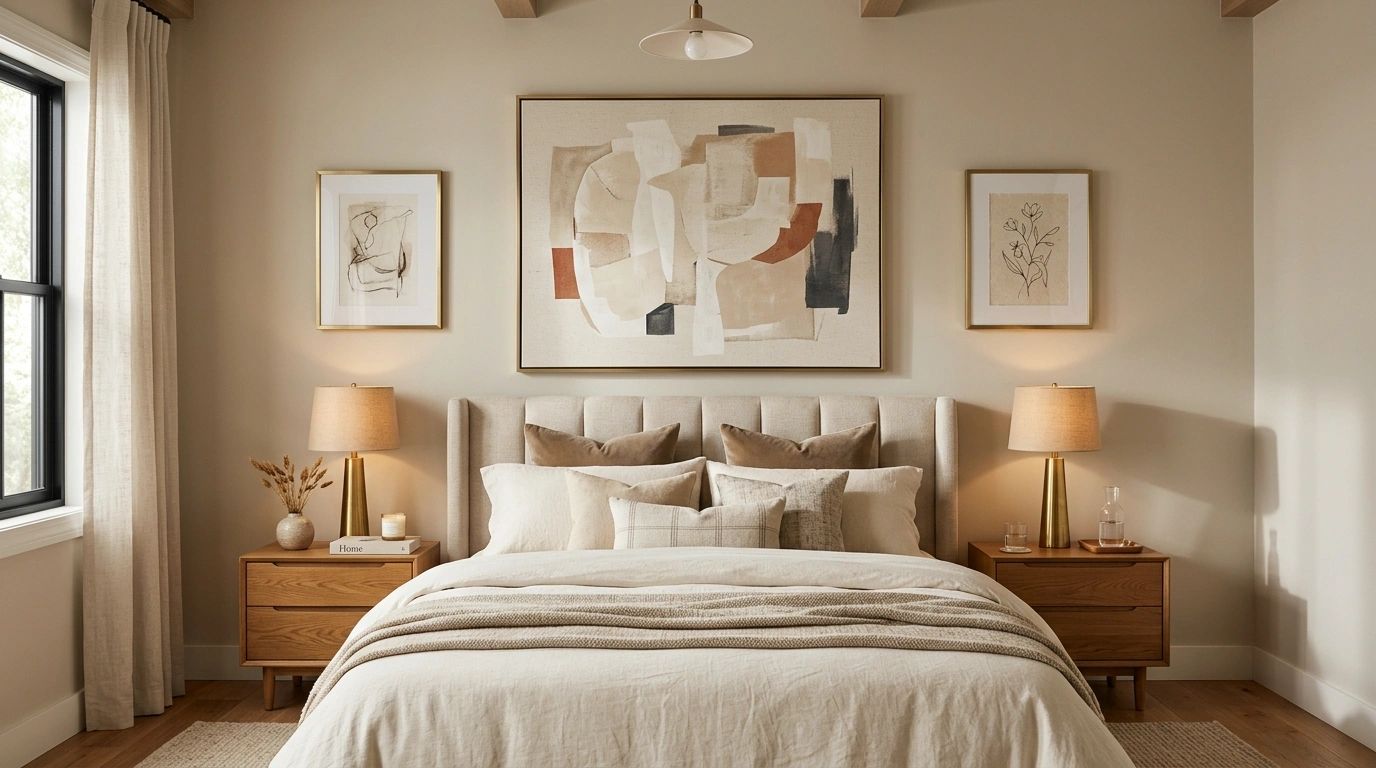
A bedroom can have beautiful furniture, good lighting, and carefully chosen bedding and still feel unfinished. Often, the problem is the wall above the bed. A completely bare wall can leave the room feeling visually empty, while a few unrelated frames or small decorations can make the space look busy without giving it a clear focal point.
That changes the decorating question from “What should go above the bed?” to “What should this whole wall look like?” The finished concepts below explore that question through artwork, timber, fabric, plaster, mirrors, wallpaper, built-in storage, and architectural treatments. Each direction is designed to work as a complete bedroom rather than as a collection of unrelated pieces.
Above Bed Decor Ideas
Built-In Ledge With Framed Art Memories
A deep wooden ledge running the length of the headboard transforms the wall into a dynamic display space without sacrificing vertical room. Framed miniature landscapes, aged photographs, and a trailing green vine layer comfortably along the shelf, while warm bedside lamps and textured taupe bedding keep the atmosphere effortlessly grounded and inviting.
The secret lies in the density of the arrangement. Mixing varied frame sizes with simple decorative objects creates a lived-in narrative, letting the wall feel curated and personal rather than overly staged or rigid.
Oversized Framed Landscape Over a Warm Linen Bed
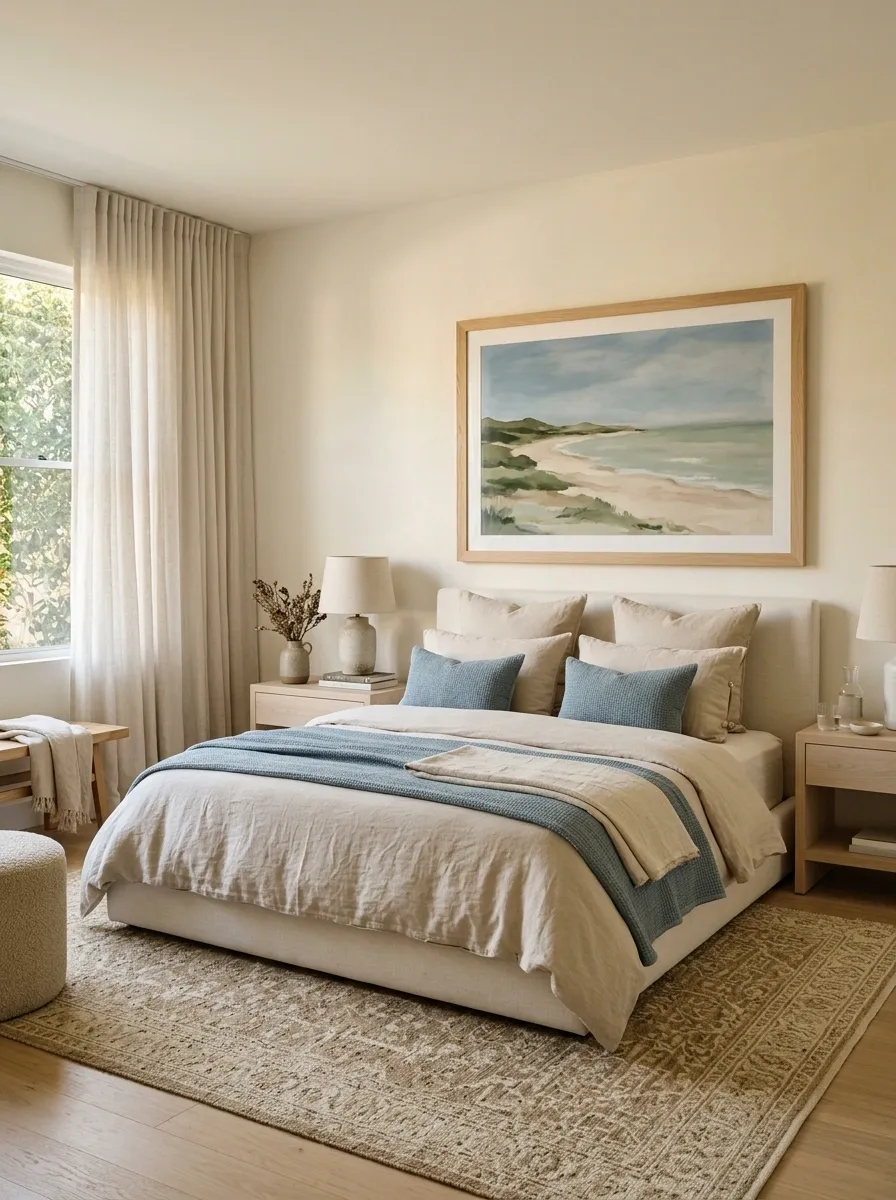
A large horizontal landscape artwork anchors the wall above a low upholstered bed, giving the bedroom an immediate sense of scale. Warm linen bedding, pale oak nightstands, creamy walls, and softly textured curtains keep the setting relaxed rather than formal. The artwork brings in muted greens, sandy beige, and dusty blue, which can quietly echo through cushions and bedding without turning the room into a themed space.
The key is the relationship between the artwork and the bed. The frame should feel substantial enough to hold its ground, while the surrounding wall remains mostly quiet. That breathing room is what keeps the composition elegant instead of crowded.
Trailing Botanical Shelf Above Vibrant Textiles
A simple floating wooden shelf mounted high above the bed brings organic life directly into the focal point of the room. Vibrant trailing pothos and cascading greenery spill downward against a soft patterned wallpaper, contrasting beautifully with a rich terracotta throw blanket and golden mustard pillows on the platform bed below.
This approach relies on the interplay between natural textures and bold color choices. Keeping the bedding rich in warm earthy tones ensures the overflowing plants feel intentional rather than accidental, turning the entire upper wall into a lively botanical feature.
Full-Width Fluted Wood Wall With a Floating Bed
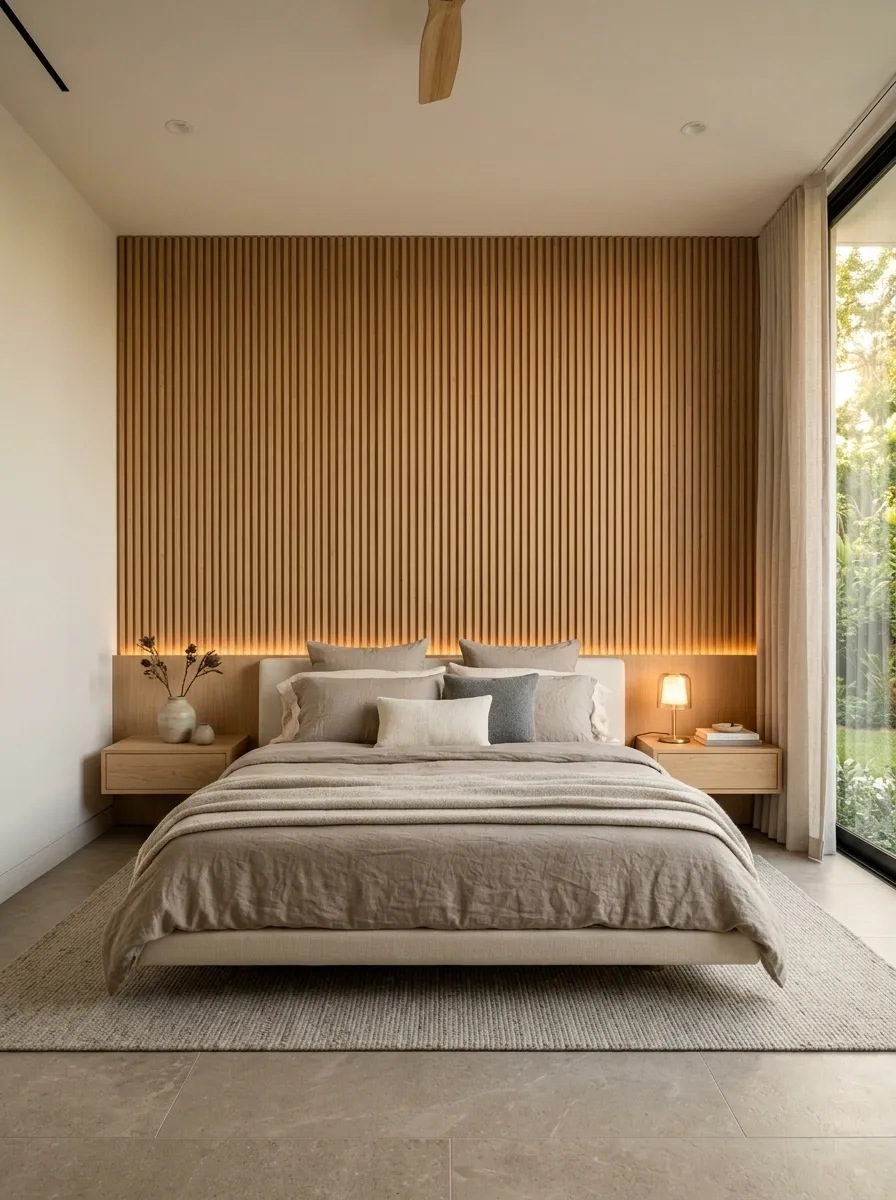
This bedroom makes the wall itself the artwork. Floor-to-ceiling fluted oak panels create a strong vertical rhythm behind a floating upholstered bed, with integrated bedside lighting tucked neatly into the composition. The furniture stays low and simple, allowing the wood grain to remain the dominant texture.
Warm oak works especially well here because it gives the wall depth without making the room feel visually heavy. The effect is strongest when the rest of the finishes stay restrained: taupe upholstery, stone-toned flooring, and soft neutral bedding leave the architecture in control.
Minimalist King and Queen Card Prints
Twin matching wooden frames featuring minimalist playing card art establish an instant sense of symmetry and clever personality above a neutral striped bed. The clean lines of the frames work harmoniously with the warm wood headboard, while soft ticking stripe pillows and a draped linen throw keep the overall palette cohesive and serene.
Simplicity anchors this design choice. By using only two complementary prints with plenty of negative space around them, the wall maintains an airy, uncluttered calm while still making a deliberate stylistic statement.
Gallery Wall of Uneven Vintage Frames Above an Ivory Bed
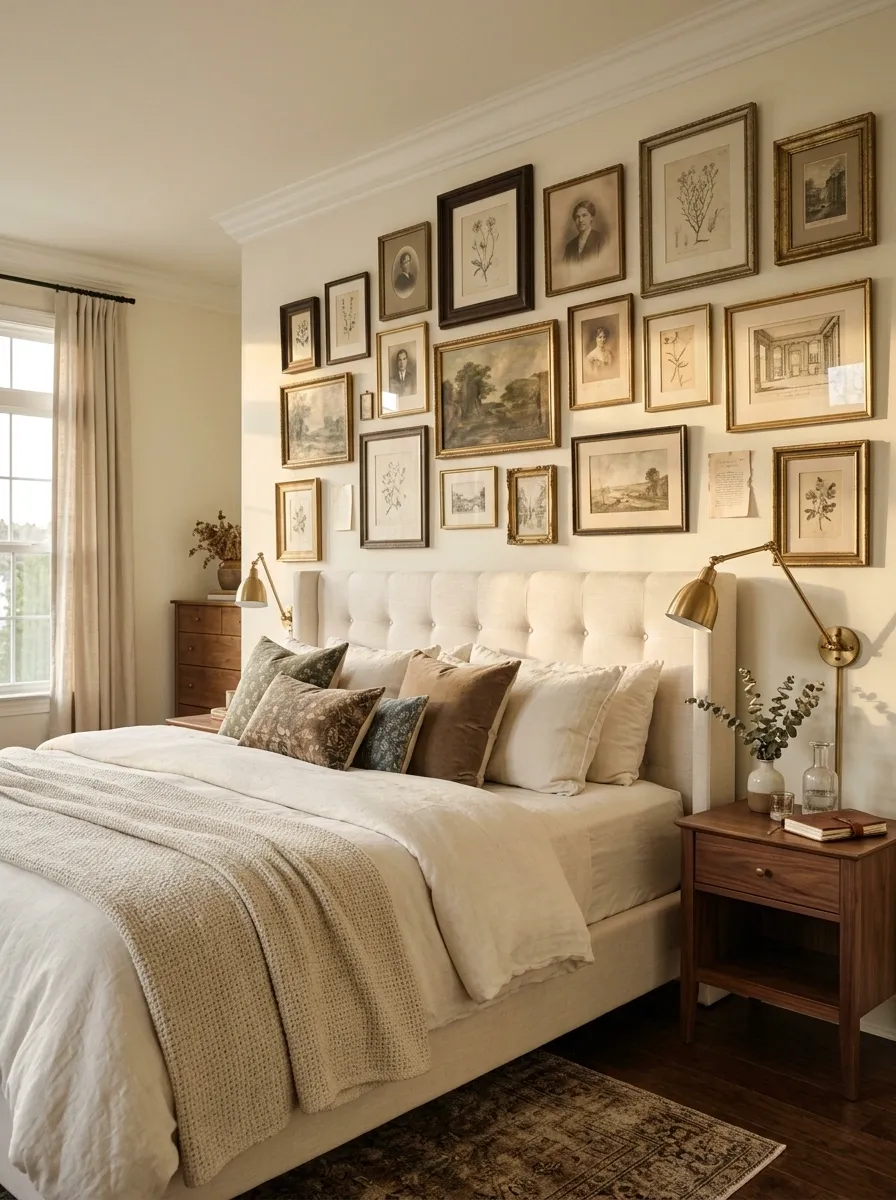
A collection of aged frames fills the space above an ivory upholstered bed, but the arrangement avoids the rigid feeling of a perfect grid. Botanical sketches, faded portraits, old landscapes, and smaller paper pieces create the impression of a collection gathered over time. Walnut furniture and warm brass lamps give the wall somewhere to visually land.
The irregularity matters. Similar frame colors keep the arrangement connected even when the sizes and artwork change. The wall should feel collected, not randomly filled, so a few intentional gaps are just as important as the frames themselves.
Oversized Textile Tapestry Behind a Low Platform Bed
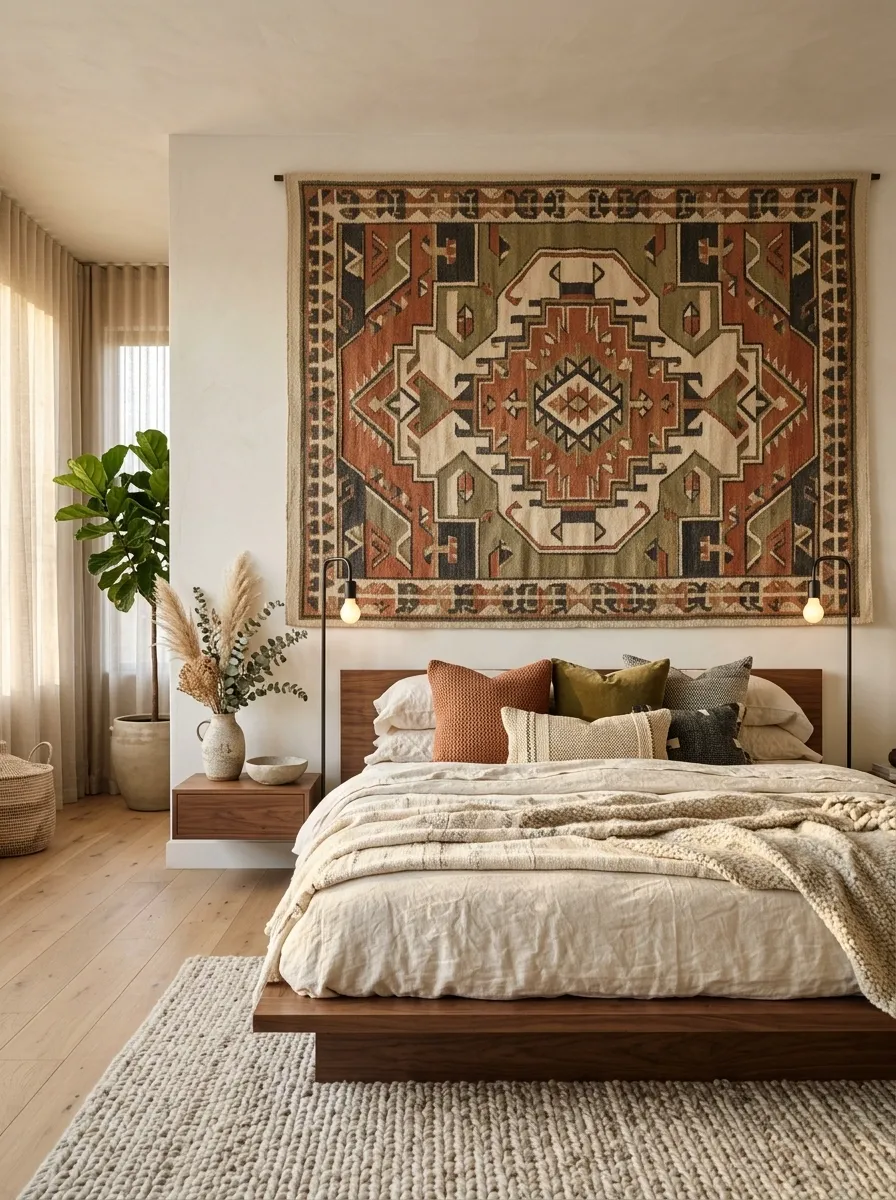
A broad woven tapestry replaces traditional artwork and gives the wall a softer, more tactile presence. Terracotta, muted olive, cream, and charcoal move through the textile, while the low walnut platform bed keeps the overall composition grounded. Floor lamps and loosely layered bedding reinforce the relaxed character without competing with the wall.
The width is what makes this concept work. A small textile would feel like an accent, but a broad one behaves more like architecture. Keep the furniture simple enough that the woven pattern remains the focal point.
reads as the wall feature Low bed
keeps the room grounded
Sculptural Plaster Arch With Soft Wall Lighting
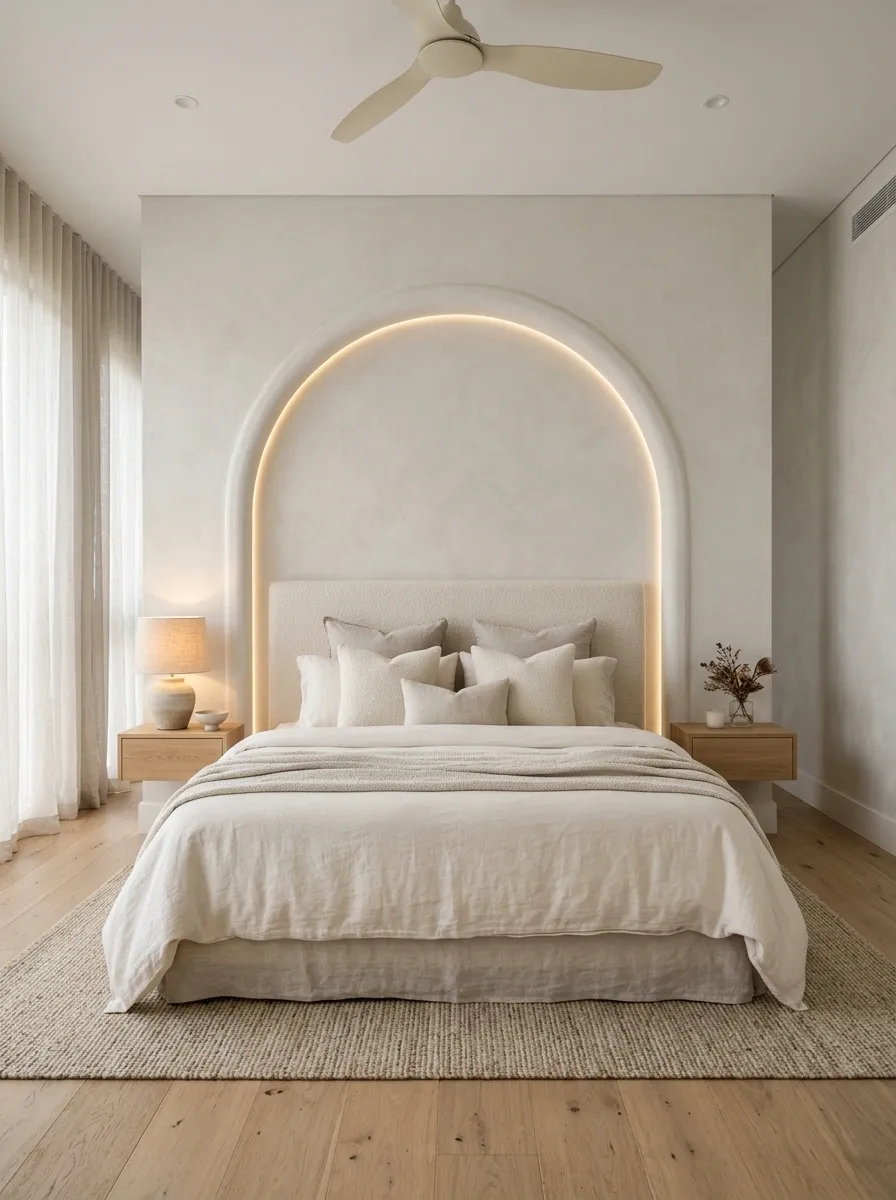
A shallow plaster arch gives the bed wall architectural character without relying on artwork. The curved form surrounds the upholstered headboard, while concealed warm lighting follows the arch after dark. Pale plaster, light oak, cream bedding, and soft stone tones keep the room almost monochromatic, allowing shape and shadow to provide the interest.
This concept works because the focal point is built into the wall rather than placed on top of it. The curved silhouette adds softness to the room’s straight lines, while the lighting makes the feature noticeable without turning it into a glowing centerpiece.
Built-In Oak Shelving Framing the Bed
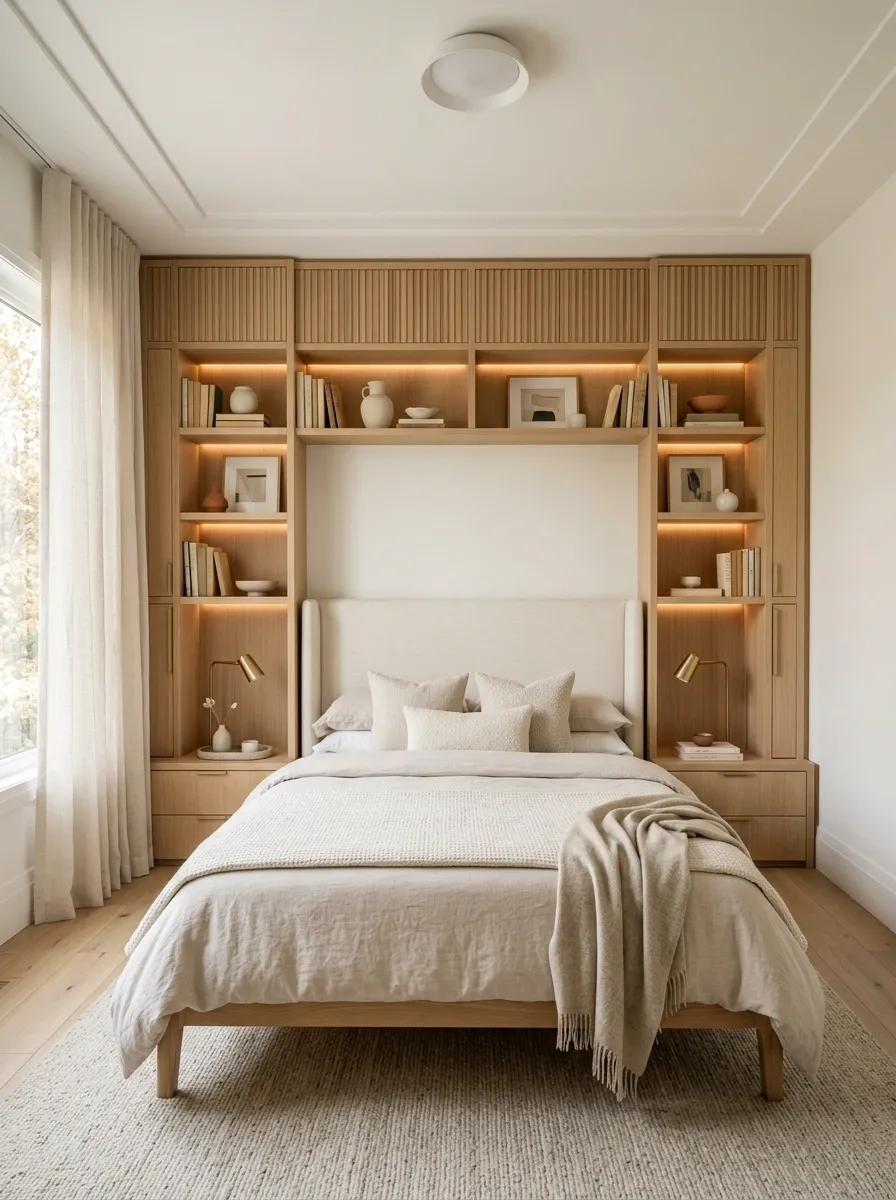
The wall behind the bed becomes part of the bedroom’s architecture with built-in oak shelving on both sides of a centered upholstered bed. Open niches hold a small collection of books, ceramics, and artwork, while warm integrated lighting gives the shelves a soft glow. The bed zone stays visually calm, creating a clear center between the taller vertical storage areas.
The important detail is restraint. Too many objects would compete with the bed, while completely empty shelving would make the installation feel unfinished. A few larger pieces with plenty of open space create a much stronger composition.
Soft Monochrome Bedroom With a Pleated Fabric Headboard Wall
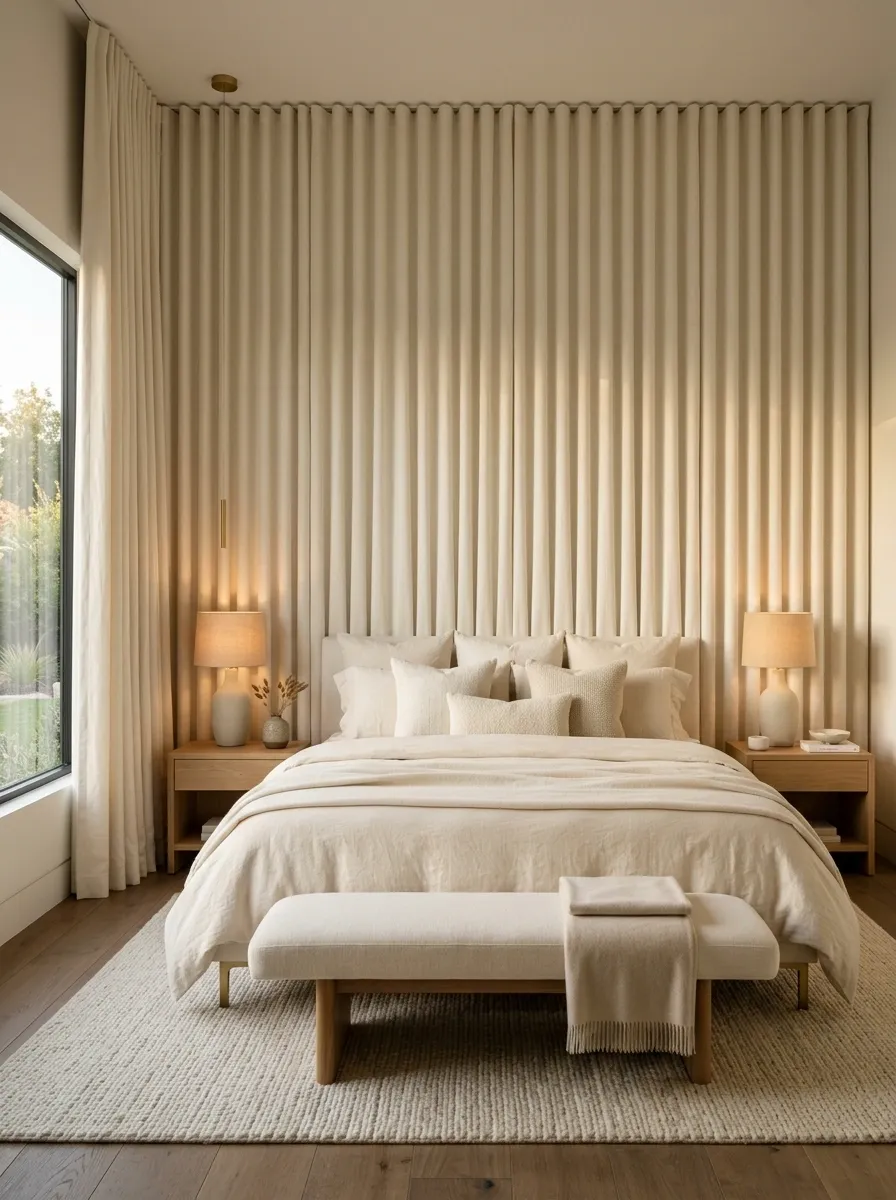
Everything above and around the bed stays within a narrow family of warm cream tones. A tall pleated fabric treatment rises behind the headboard, creating vertical texture without introducing a strong pattern. Matching curtains, upholstered furniture, and layered bedding make the wall feel expansive, while small sculptural lamps provide just enough contrast.
The success of this look depends on texture doing the work that color normally would. Repeating nearly identical shades gives the room depth, but the surfaces need enough variation to keep the monochrome scheme from appearing flat.
Mediterranean-Inspired Bed Wall With Limewashed Arches
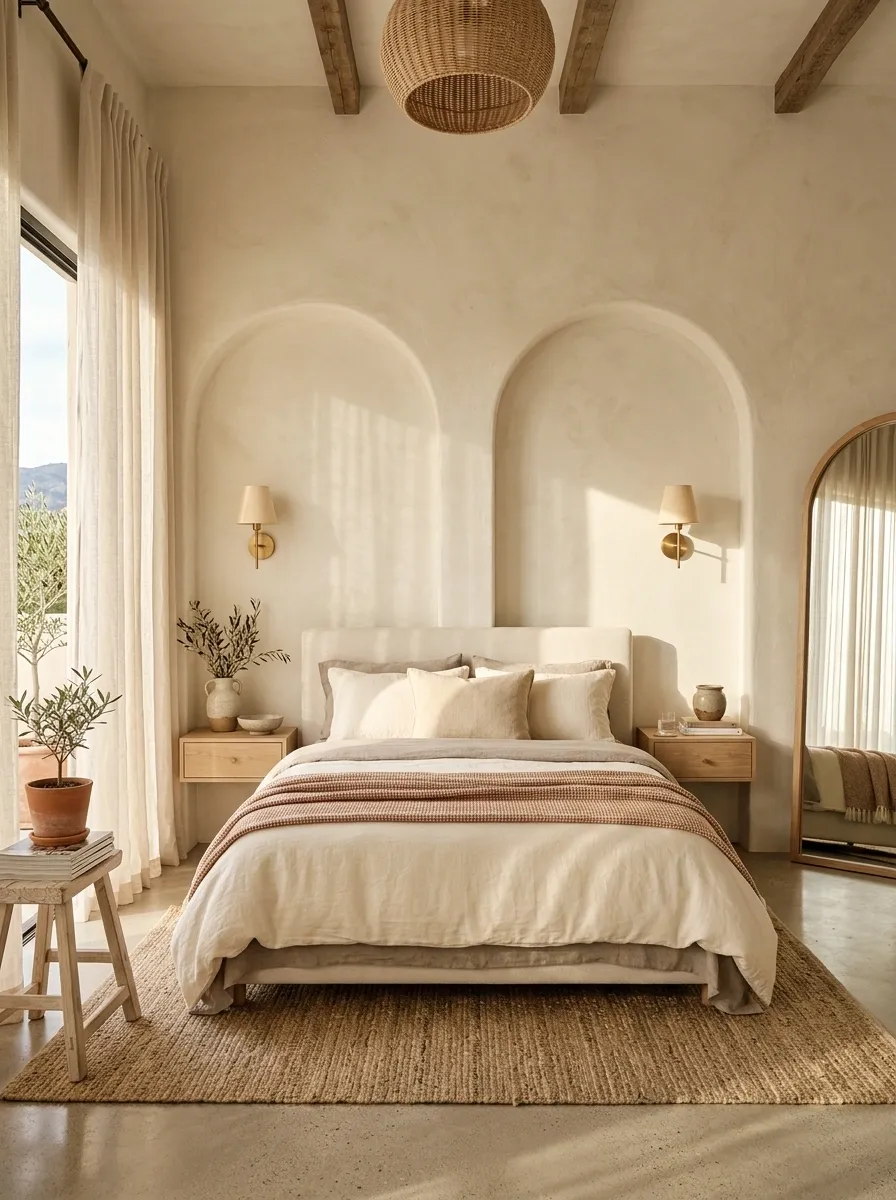
Two shallow limewashed arches frame the bed and bedside lighting, giving the wall a handcrafted architectural quality. Terracotta accents appear sparingly through ceramics and textiles, while pale timber, natural linen, and a stone-colored floor keep the room sun-washed and relaxed.
The arches should feel integrated with the room rather than pasted onto a blank wall. Repeating the curved shape in a mirror, lamp silhouette, or bedside detail can make the architecture feel connected without introducing more decoration.
Three Oversized Botanical Prints in a Symmetrical Arrangement
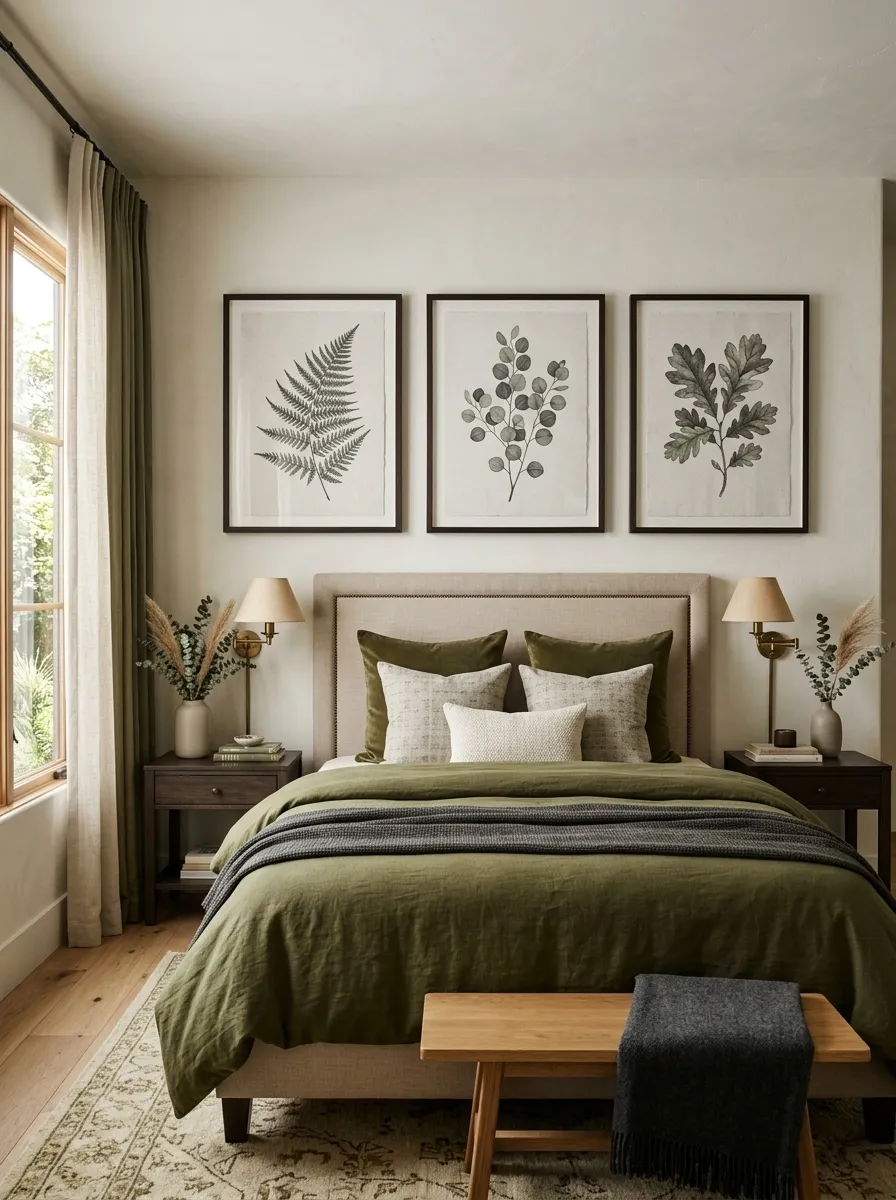
Three large botanical prints sit evenly across the wall above a tailored upholstered headboard. Muted greens and charcoal connect with olive bedding, dark wood furniture, and aged brass lighting. The repeated botanical imagery gives the room a formal rhythm, but the natural subject matter keeps that structure from feeling rigid.
The middle frame doesn’t need to be dramatically different from the outer two. Consistent scale creates the impact. A generous gap between the artwork and headboard also keeps the wall from feeling packed.
Dramatic Charcoal Bedroom With a Single Gold-Framed Artwork
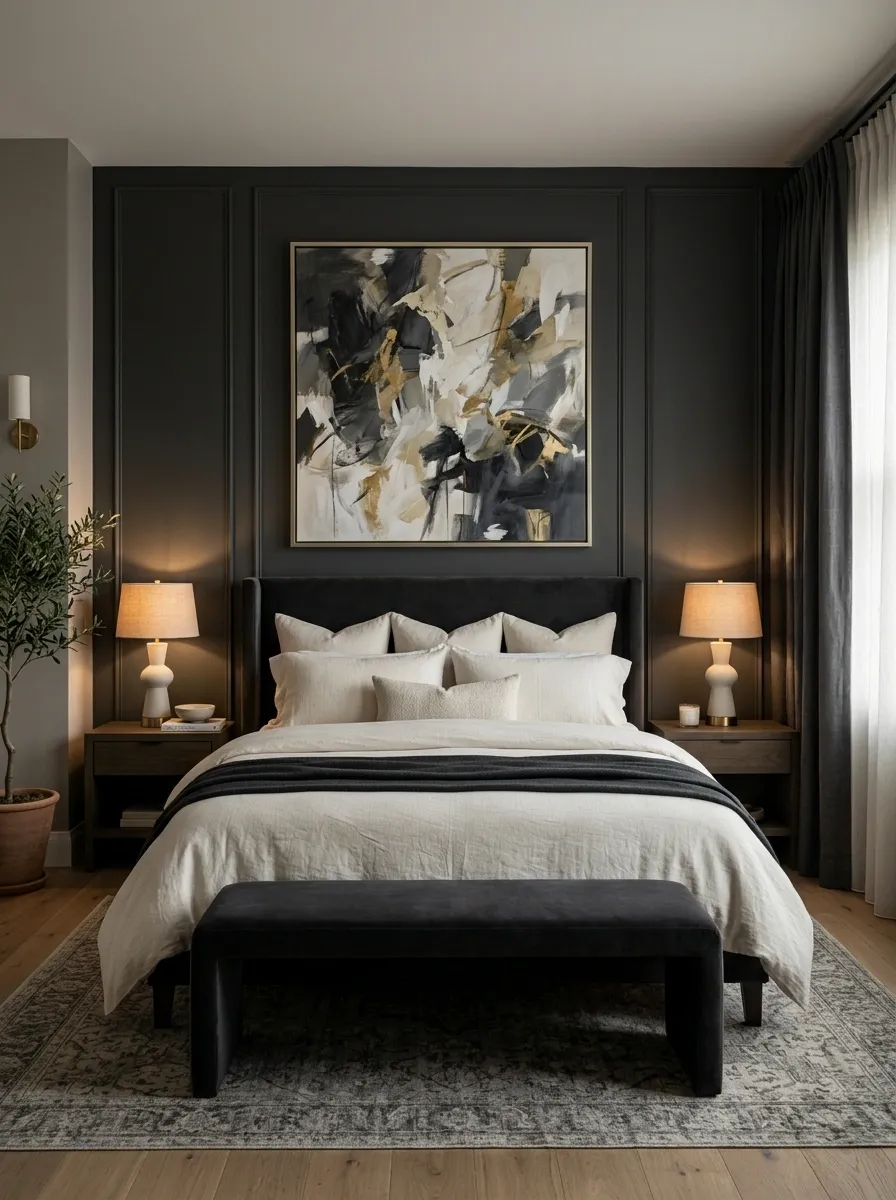
A deep charcoal wall turns the bed area into a dramatic gallery-like setting. One large abstract artwork sits above a dark upholstered headboard, with muted gold and smoky neutral tones pulling the palette together. Ivory bedding provides the bright counterpoint, while sculptural lamps add small pools of warm light.
A single oversized piece works here because the wall already carries strong visual weight. Adding several smaller decorations would weaken that tension. The contrast between dark wall, light bedding, and warm metal creates enough interest on its own.
Oversized Abstract Canvas Above a Mushroom-Toned Bed
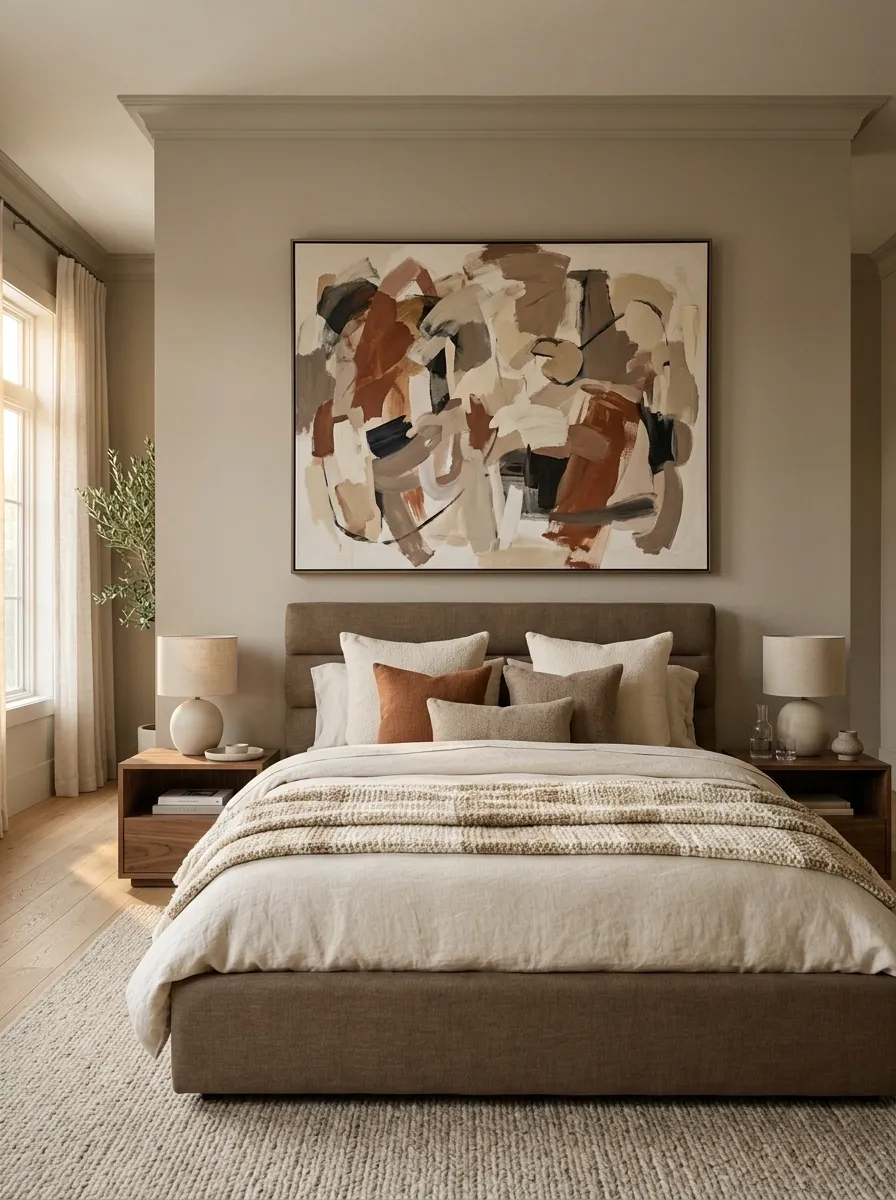
A huge abstract canvas stretches across most of the wall above a softly upholstered mushroom-colored bed. Rust, taupe, cream, and muted black move through the artwork, while the furniture remains deliberately quiet. Low walnut nightstands and rounded lamps repeat the artwork’s softer geometry.
The composition has energy without needing a busy room. The canvas carries movement, while the surrounding materials keep the eye from bouncing between too many competing features.
Cane Headboard With a Cluster of Small Framed Artworks
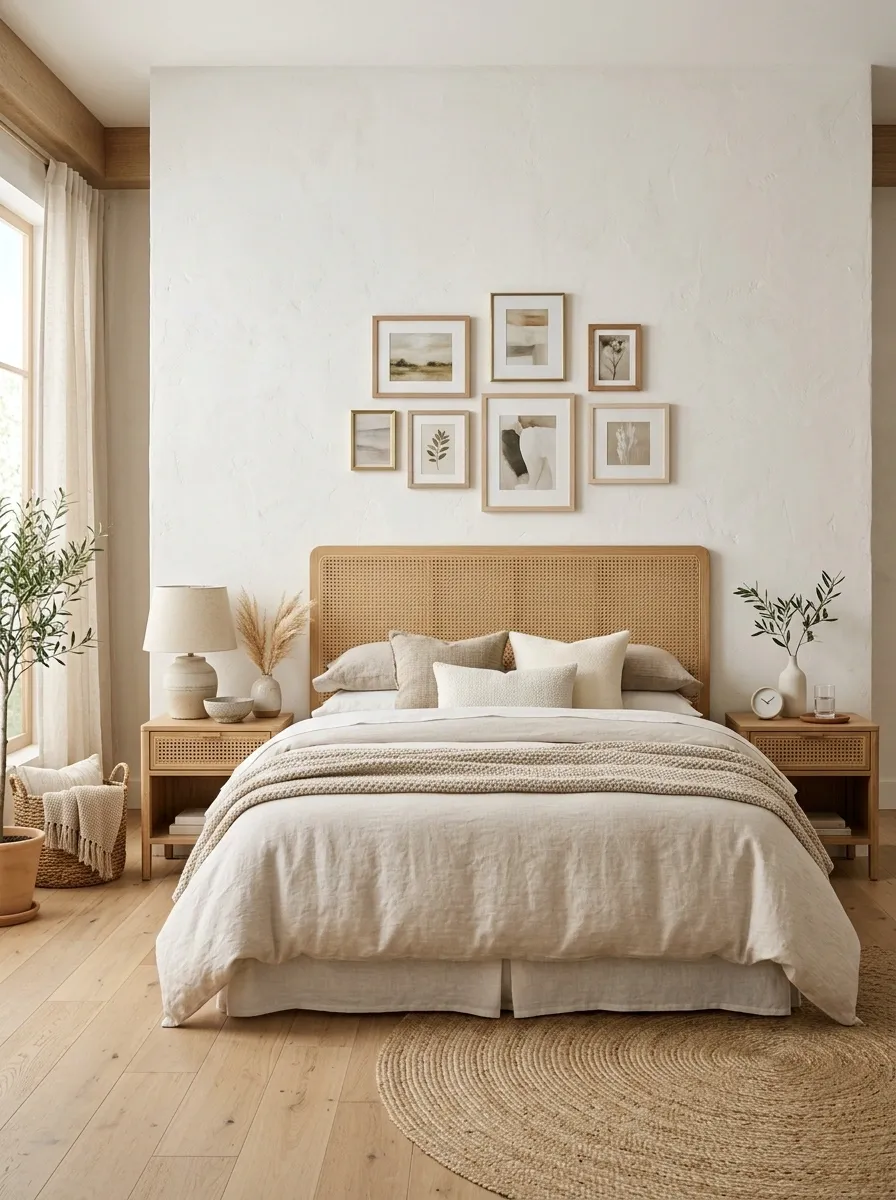
A natural cane headboard provides texture beneath a loose grouping of small artwork. White plaster walls, woven bedside tables, pale wood, and warm textiles create an airy setting, while the varied frame sizes stop the wall from looking overly formal.
This arrangement works when the individual pieces remain visually related. Similar frame finishes or a shared paper tone can tie together artwork from different sources, making the cluster feel intentional without turning it into a rigid grid.
Floor-to-Ceiling Curtains Behind the Bed
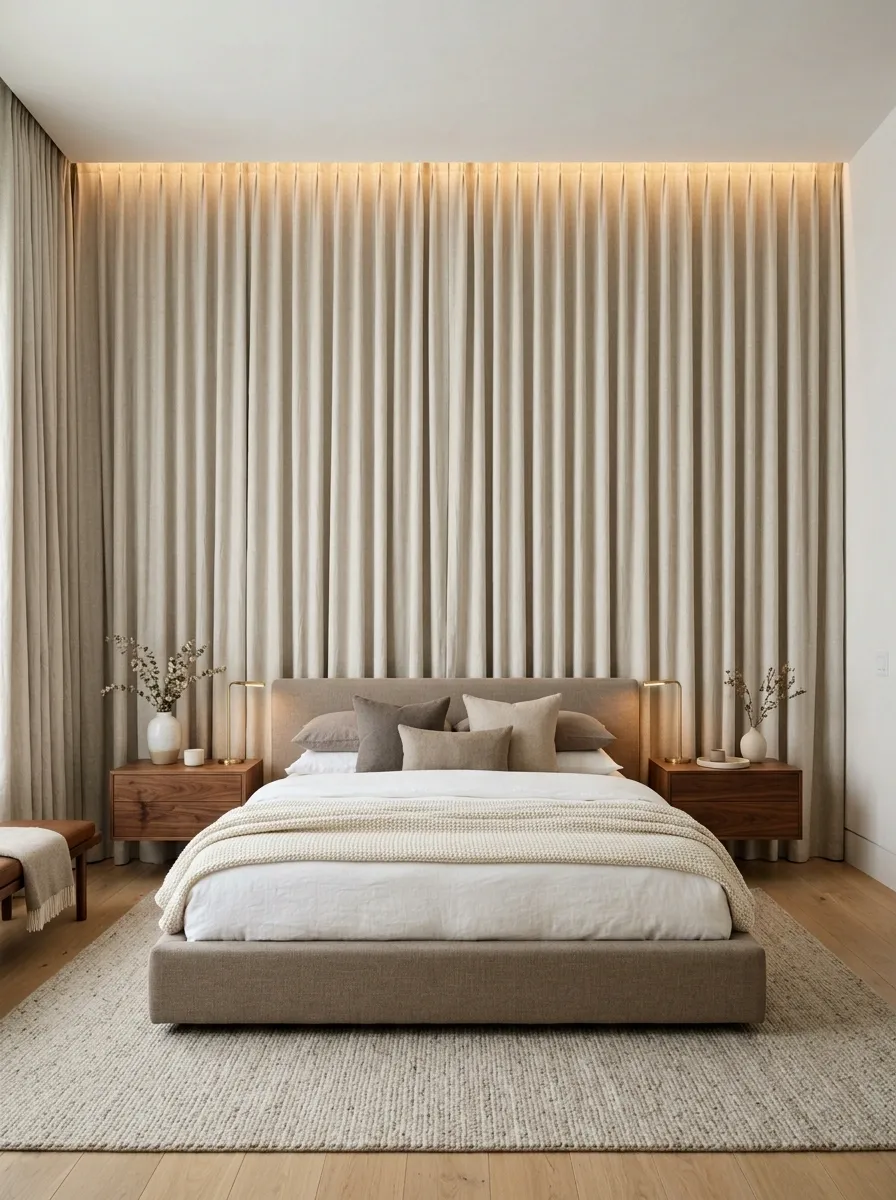
Full-height oatmeal curtains replace a traditional feature wall, stretching behind the bed from near ceiling to floor. The fabric softens the entire sleeping area, while concealed lighting picks up the folds after dark. A muted upholstered bed, warm wood, and layered neutral bedding complete the boutique-hotel feeling.
The scale is the important part. Floor-to-ceiling fabric makes the bed wall feel taller and more enveloping than a small decorative treatment would. Keep the pattern minimal so the folds remain the main source of texture.
Antique Mirror Composition Above a Traditional Bed
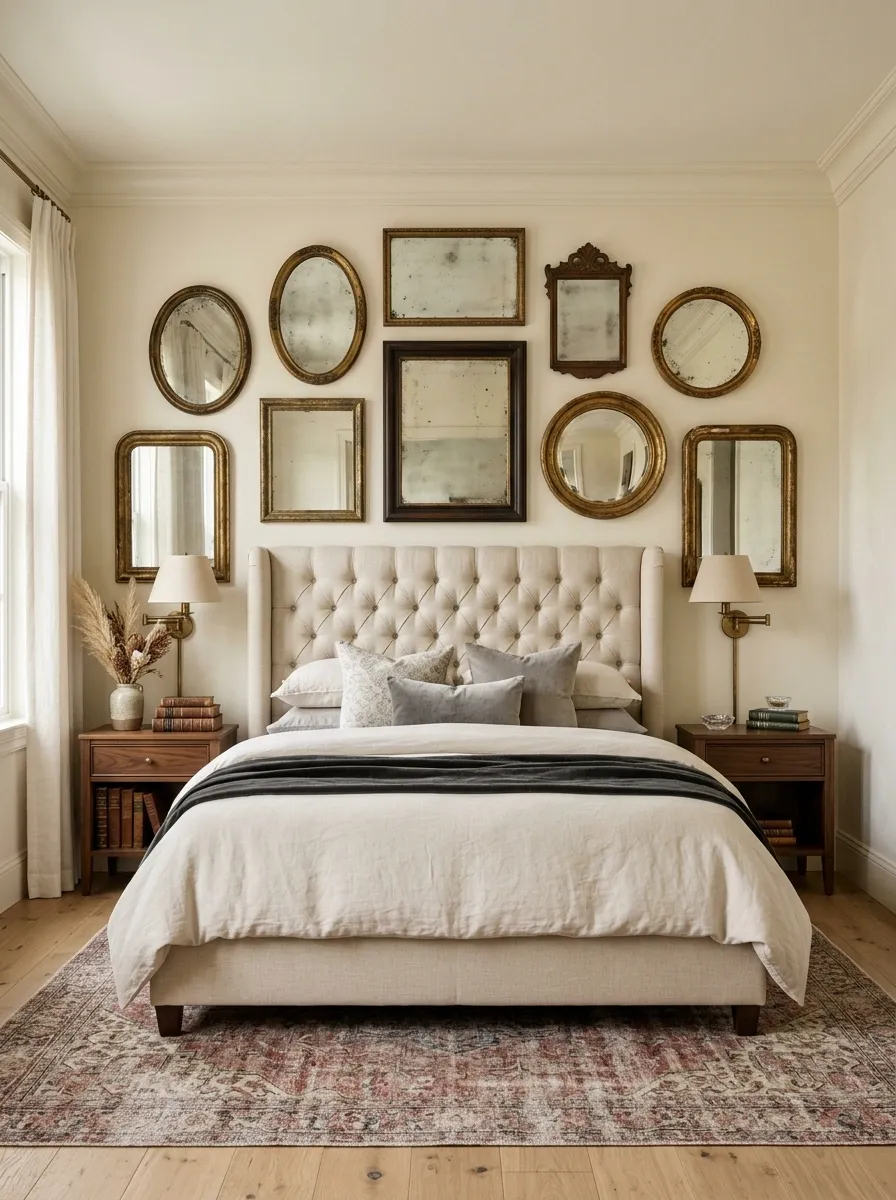
Several aged mirrors in different shapes create an elegant arrangement above a classic upholstered bed. Their imperfect surfaces reflect light and introduce depth, while walnut furniture, warm cream walls, and aged brass fixtures reinforce the traditional character.
Mixing mirror shapes keeps the composition from looking like a matching set. The surrounding room should stay relatively quiet because the reflections already create movement as the light changes throughout the day.
Sculptural Wood Headboard With Integrated Niches
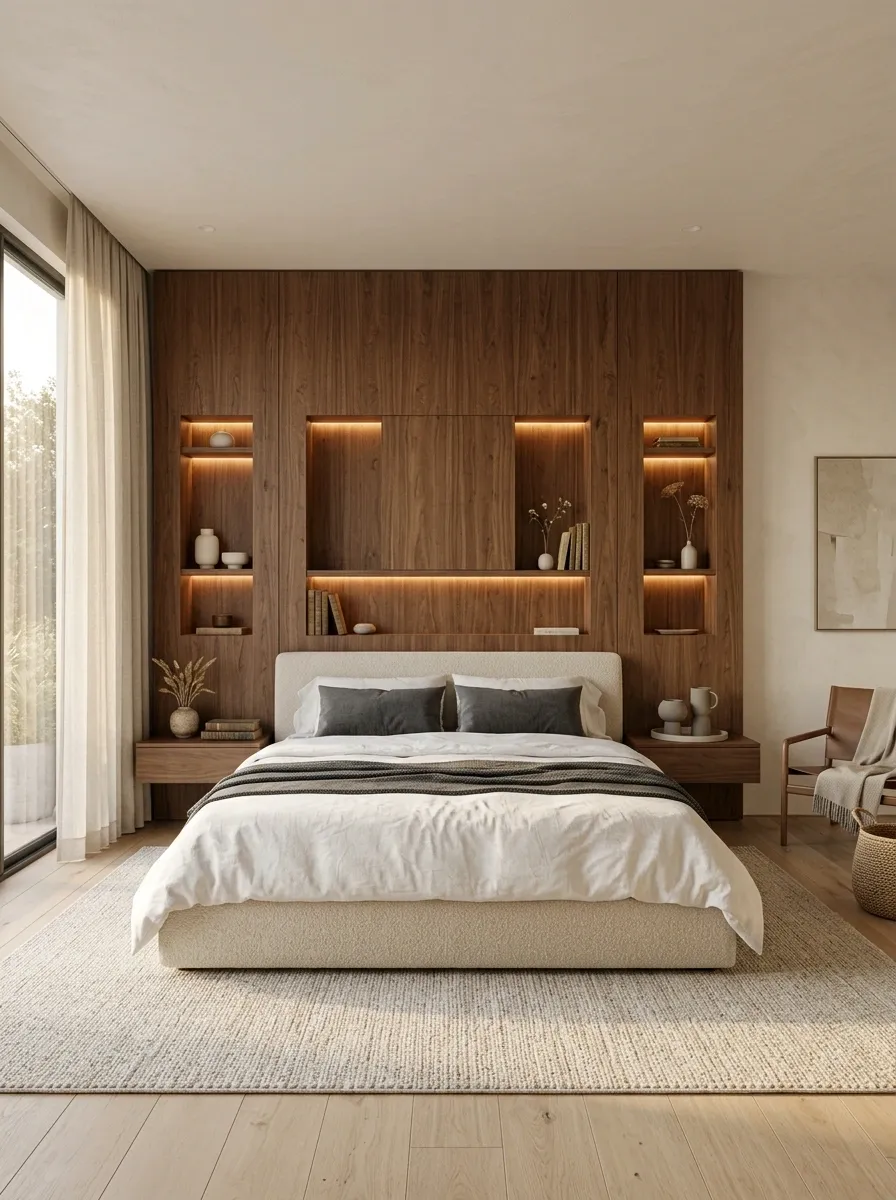
A rich walnut headboard stretches across the wall and folds storage, display, and lighting into one architectural composition. Two shallow niches sit on either side of the bed, holding only a few ceramics and books beneath soft integrated lighting. The bed remains low and upholstered, creating a contrast between the solid timber backdrop and softer textiles.
The restraint is what makes the wall feel expensive rather than busy. Open space inside the niches gives the darker wood room to breathe, while the warm lighting creates depth after sunset.
Moody Green Bedroom With Botanical Wallpaper
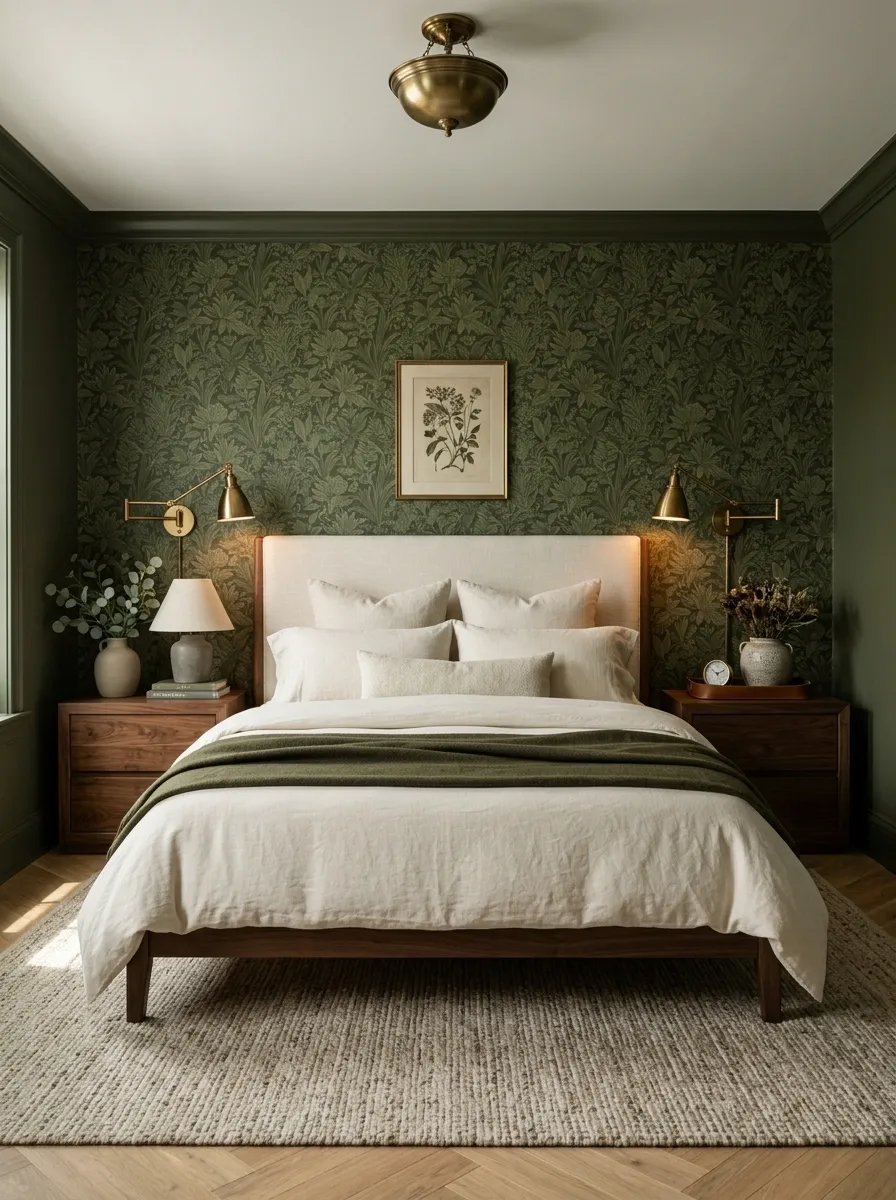
Deep olive botanical wallpaper covers the wall behind the bed, turning the entire backdrop into one immersive visual layer. Cream bedding, walnut nightstands, and aged brass sconces create warm breaks within the dense pattern. The bed itself stays simple so the wallpaper can remain the dominant feature.
A patterned wall like this needs contrast rather than more pattern. Plain textiles allow the foliage to remain readable, while the darker wood furniture gives the lower half of the room enough weight.
Floating Picture Ledge With Layered Oversized Art
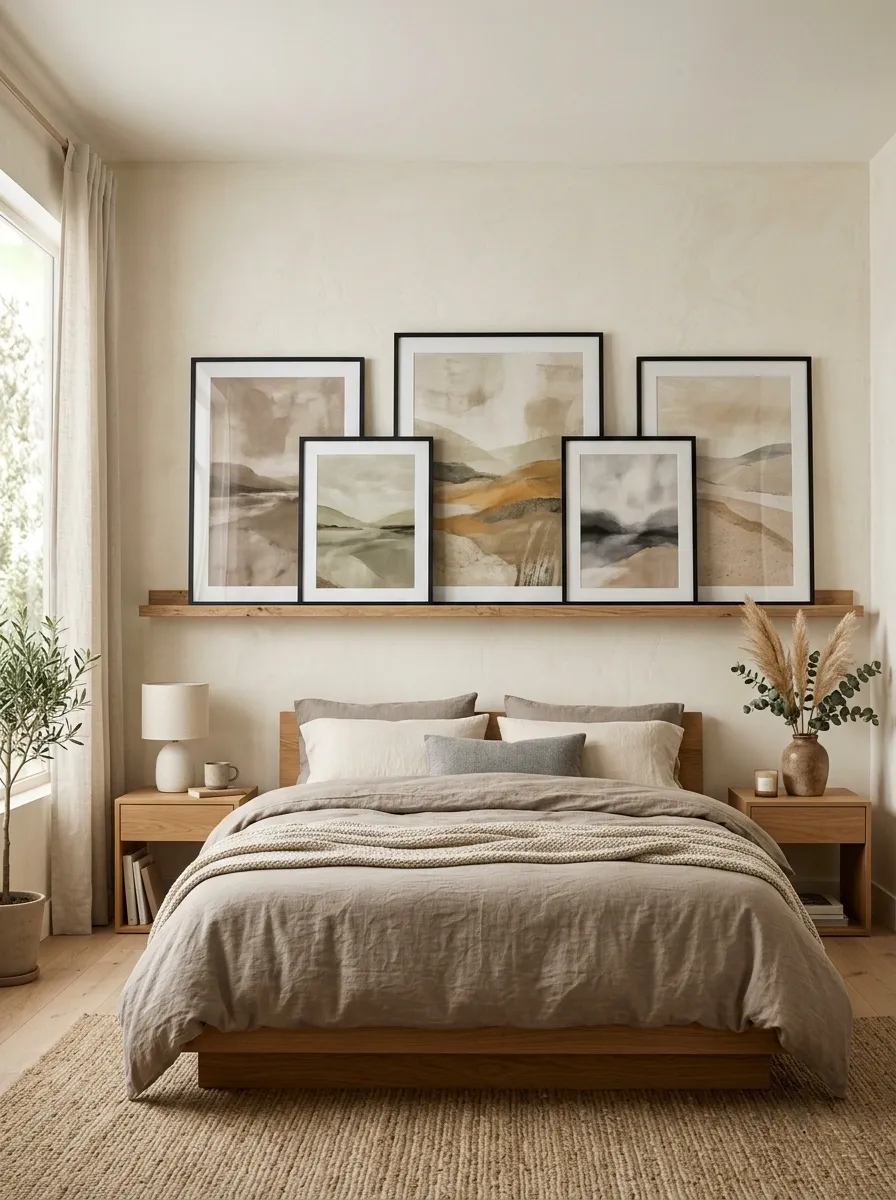
A long picture ledge runs across the wall above the bed, supporting several oversized framed prints that overlap slightly. The arrangement has a relaxed, collected feeling because the artwork isn’t locked into a rigid grid. Pale plaster, warm oak, and neutral upholstery create a quiet background for the layered frames.
The ledge provides more flexibility than individually mounting every piece. Larger frames can overlap, shift, or be replaced without forcing the entire wall into a new arrangement.
Black-and-Cream Bedroom With a Graphic Grid Artwork
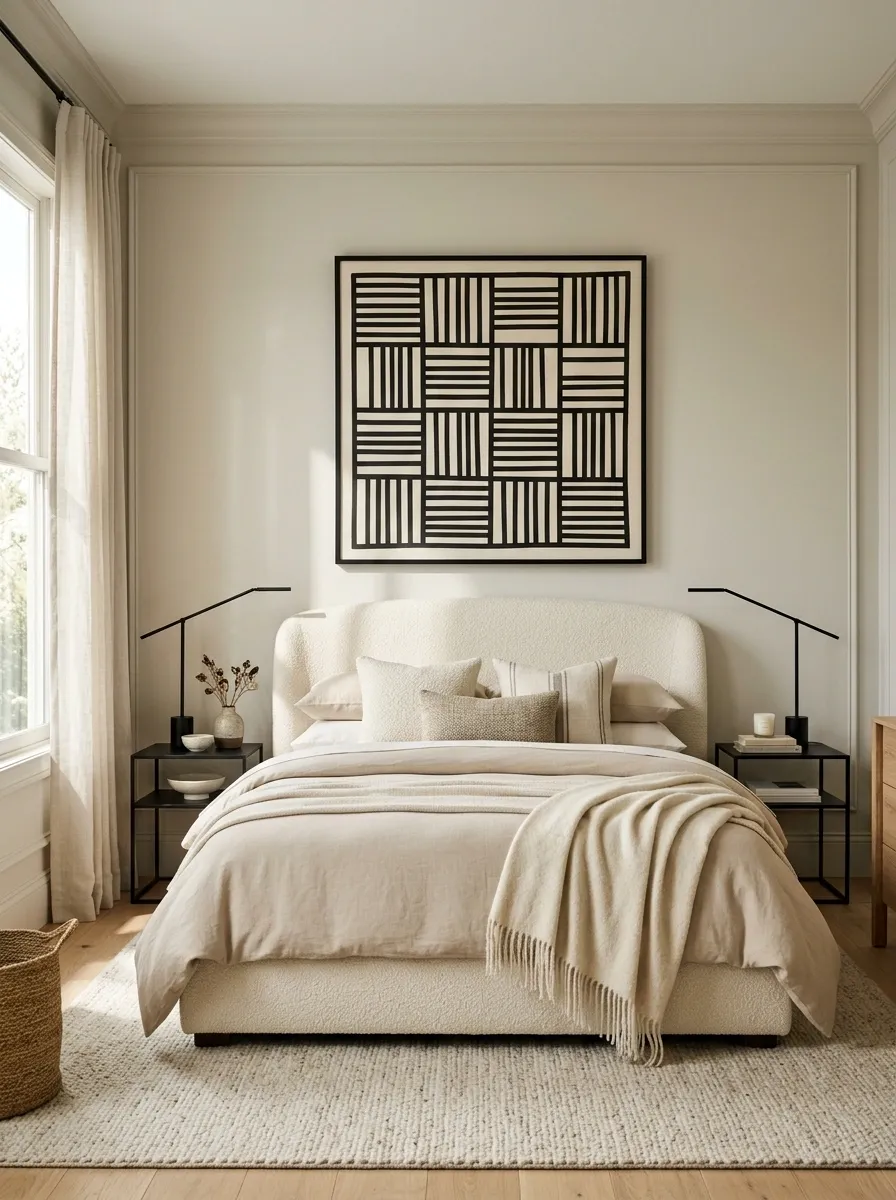
A large black-and-cream geometric artwork sits above a cream boucle bed, introducing crisp structure into an otherwise soft bedroom. Black bedside tables and slim lighting repeat the artwork’s graphic language, while pale walls and rounded bedding prevent the room from becoming too severe.
The repeated geometry matters more than matching every object. A few black linear elements are enough to connect the artwork to the rest of the room without turning the bedroom into a strict monochrome scheme.
Soft Blue Bedroom With Layered Watercolor Artwork
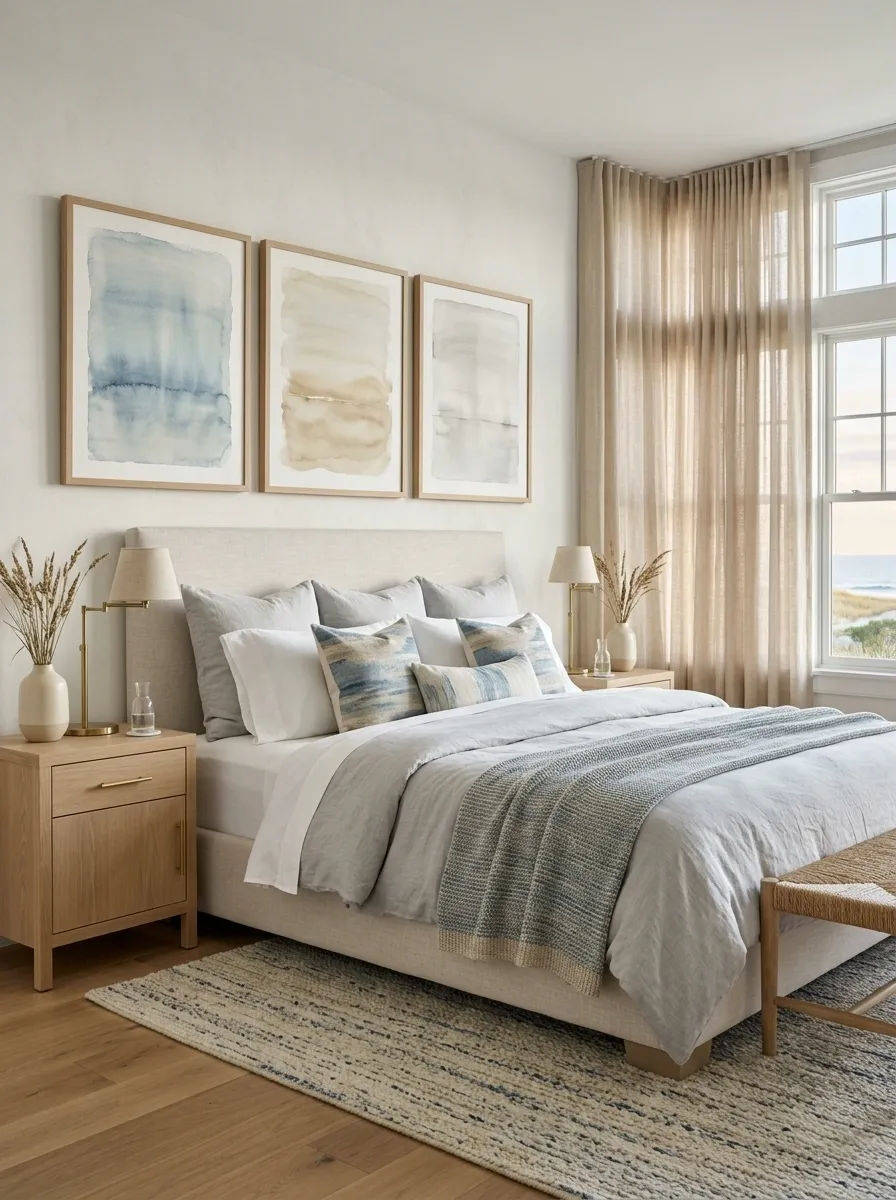
Three oversized watercolor pieces in faded blue, sand, and gray sit above a pale upholstered bed. The same washed tones return subtly in the curtains and bedding, creating continuity without turning every surface blue. Light timber and brushed metal keep the room fresh and understated.
The artwork is deliberately softer than a bold abstract canvas. That makes it useful in a bedroom where the goal is visual interest without creating a dominant, high-contrast focal point.
Draped Canopy Bedroom With Layered Neutral Textiles
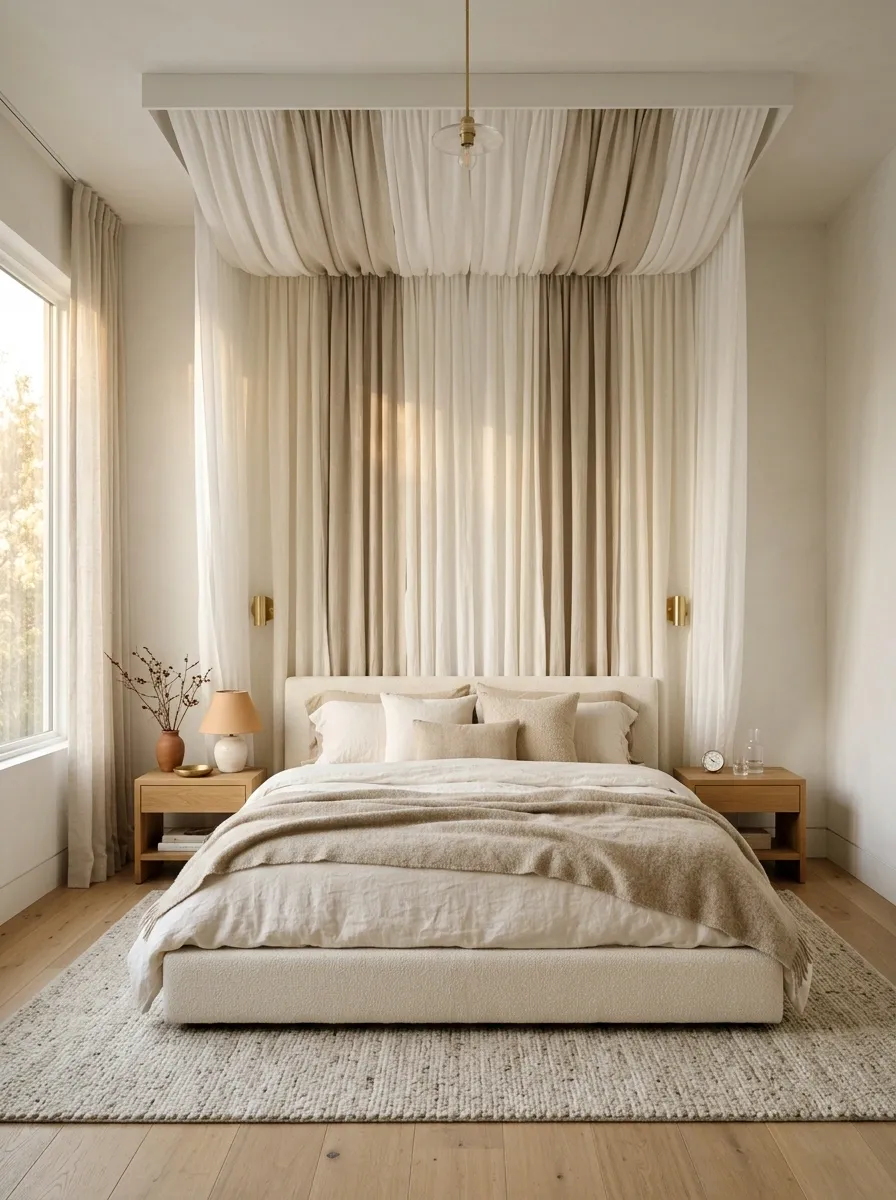
A soft canopy of fabric hangs behind the bed, creating a romantic focal wall without relying on artwork. Ivory and oatmeal textiles fall from a simple ceiling structure around a low upholstered bed, while small wall lights disappear into the folds. Warm wood furniture adds contrast near floor level.
The composition works because the fabric creates both height and softness at once. Keep the bed relatively simple so the drapery remains the defining gesture rather than one element competing among many.
Hand-Painted Floral Mural Behind a Simple White Bed
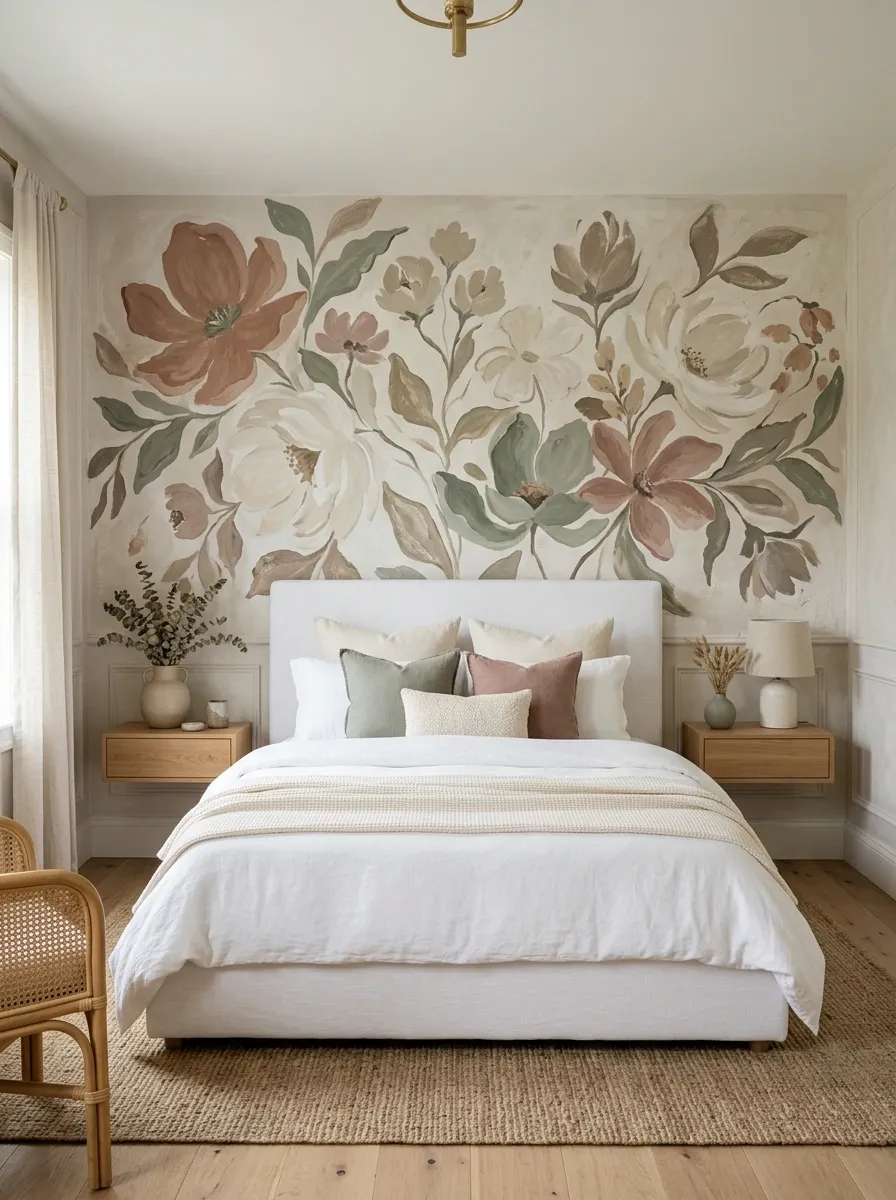
A loose floral mural fills the entire wall above a simple white bed, using muted clay, sage, cream, and dusty rose. The artwork doesn’t stop at a frame, so the bed appears to sit directly inside the painted composition. Minimal furniture allows the mural to remain the room’s central feature.
The strongest version keeps the flowers slightly imperfect. A hand-painted effect gives the wall character that a highly precise pattern would lose, while the restrained palette keeps the room restful.
Minimal Bedroom With One Oversized Round Artwork
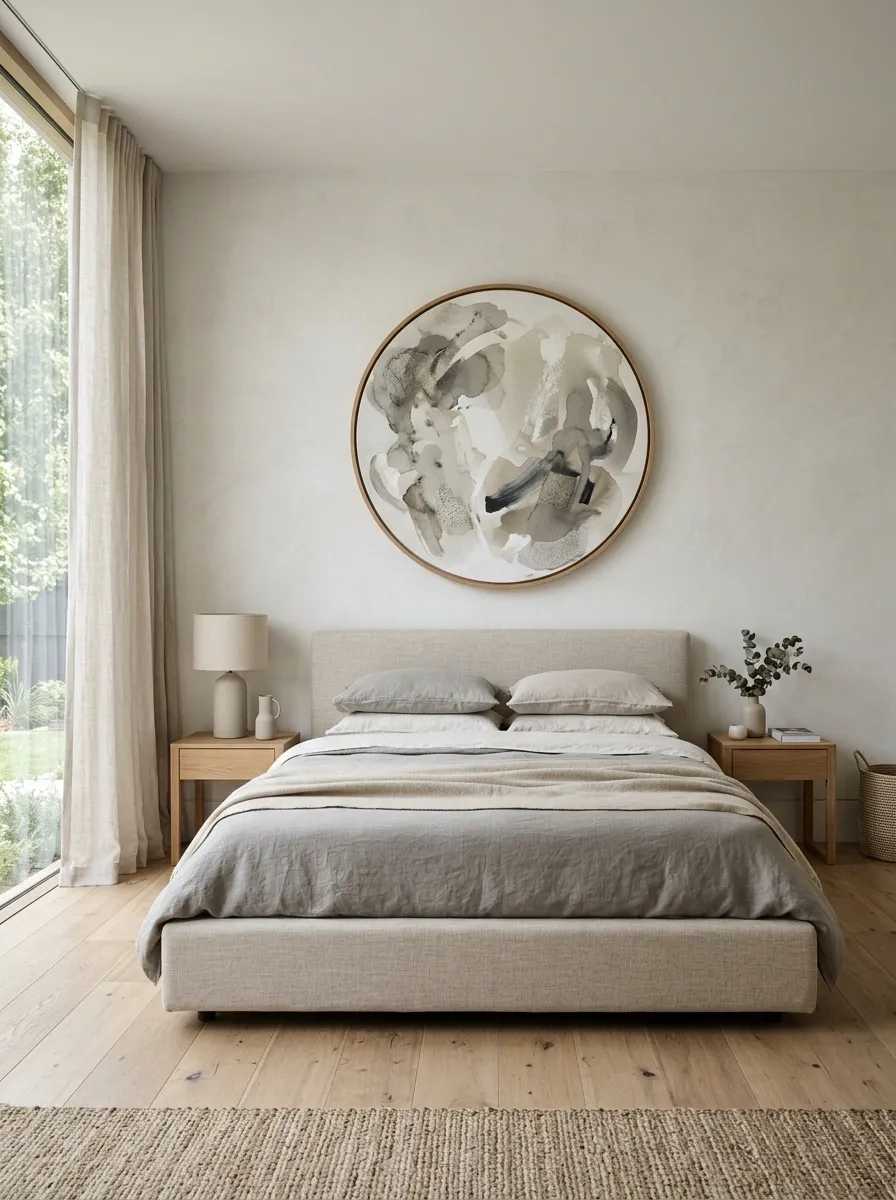
A single oversized circular artwork becomes the focal point above a low upholstered bed, breaking up the room’s otherwise straight horizontal and vertical lines. Pale plaster, warm oak, and neutral bedding give the circle plenty of negative space around it.
The simplicity is intentional. There is no need for a collection of smaller accessories when one strong shape creates enough visual tension against the architecture.
Vintage Bedroom With Ornate Framed Portraits
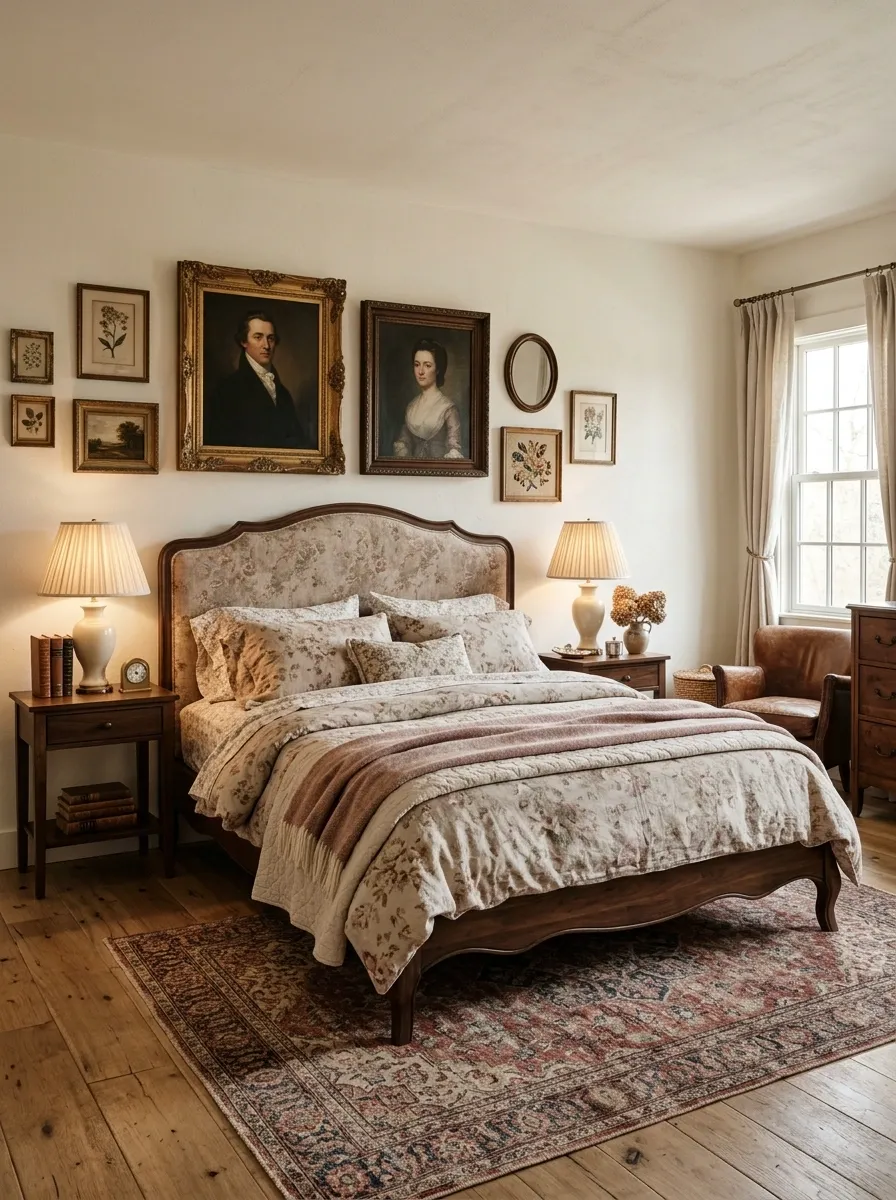
Two larger vintage portraits and several smaller framed pieces create a collected wall above an antique-inspired upholstered bed. Dark walnut, faded floral bedding, a traditional rug, and warm table lamps give the room a layered heritage character.
The artwork should feel related without looking identical. Slight differences in frame shape and age make the arrangement believable, while a restrained overall palette keeps it from drifting into costume-like styling.
Layered Hotel-Style Bedroom With Art, Sconces, and Upholstery
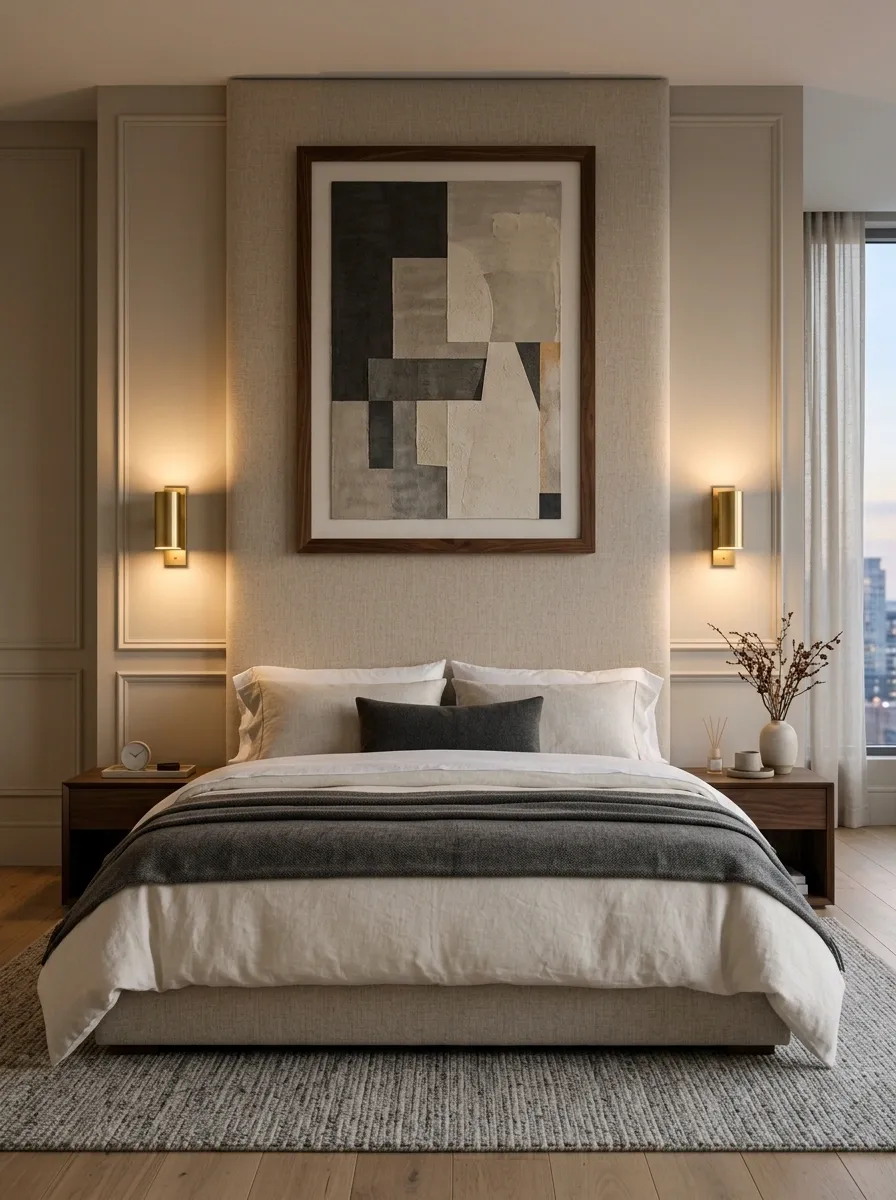
A tall upholstered headboard sits beneath one oversized artwork, framed by symmetrical sconces that establish a polished architectural rhythm. Layered neutral bedding, dark wood, brushed metal, and warm evening light complete the composition. Nothing is excessively decorative, but every major element has a defined place.
This approach succeeds through hierarchy. The artwork establishes the upper focal point, the headboard creates the central mass, and the lighting bridges the two. That structure makes a relatively simple bedroom feel considered from top to bottom.
Japandi Bedroom With a Wide Low Timber Panel
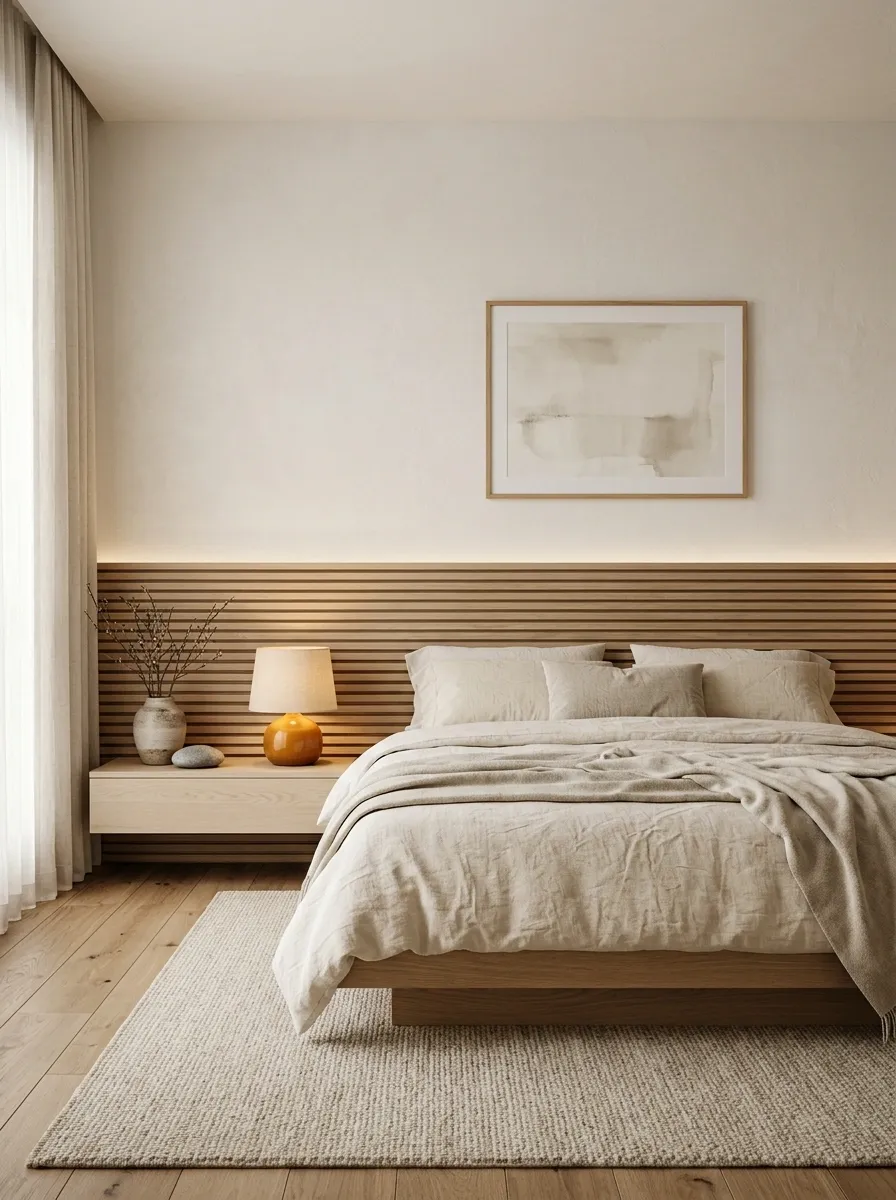
A broad timber panel stretches behind a low platform bed, creating a calm architectural backdrop with almost no visual clutter. One understated artwork sits above the bed, while natural linen, pale oak, stone-toned accessories, and soft warm lighting reinforce the Japandi character.
The horizontal proportions are what make this room feel settled. The low bed and wide timber panel work as one visual band, while the empty wall above keeps the composition from feeling compressed.
timber backdrop Low
bed profile Open
upper wall
Dark Walnut Bed Wall With Slim Picture Lights
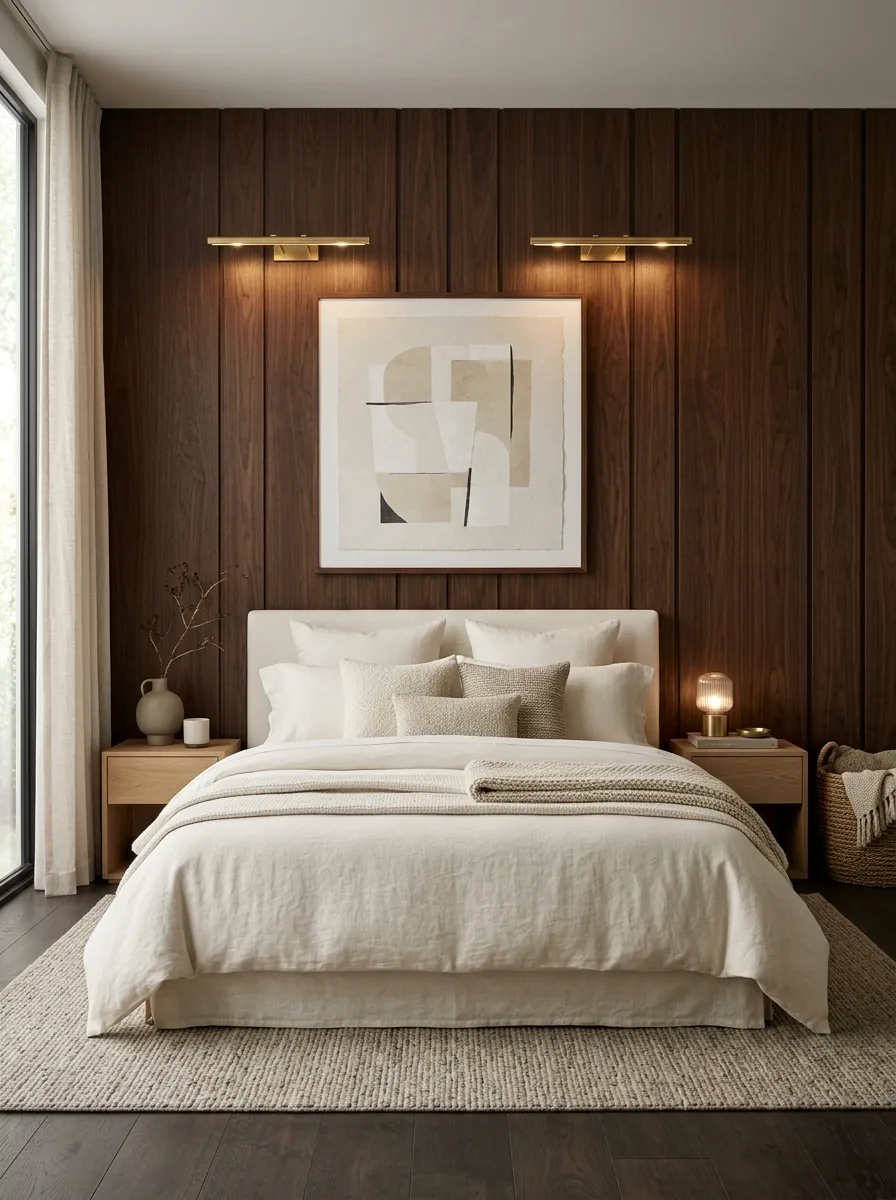
A rich walnut wall creates a deep, warm backdrop for one oversized framed artwork. Two narrow picture lights cast focused pools of illumination over the piece, while cream bedding, low bedside furniture, and warm metal details prevent the dark timber from becoming too heavy.
The lighting gives this design its character. During daylight, the walnut wall provides depth. At night, the artwork becomes the focal point through controlled pools of light rather than bright room-wide illumination.
Soft Minimal Bedroom With a Wide Limewashed Wall
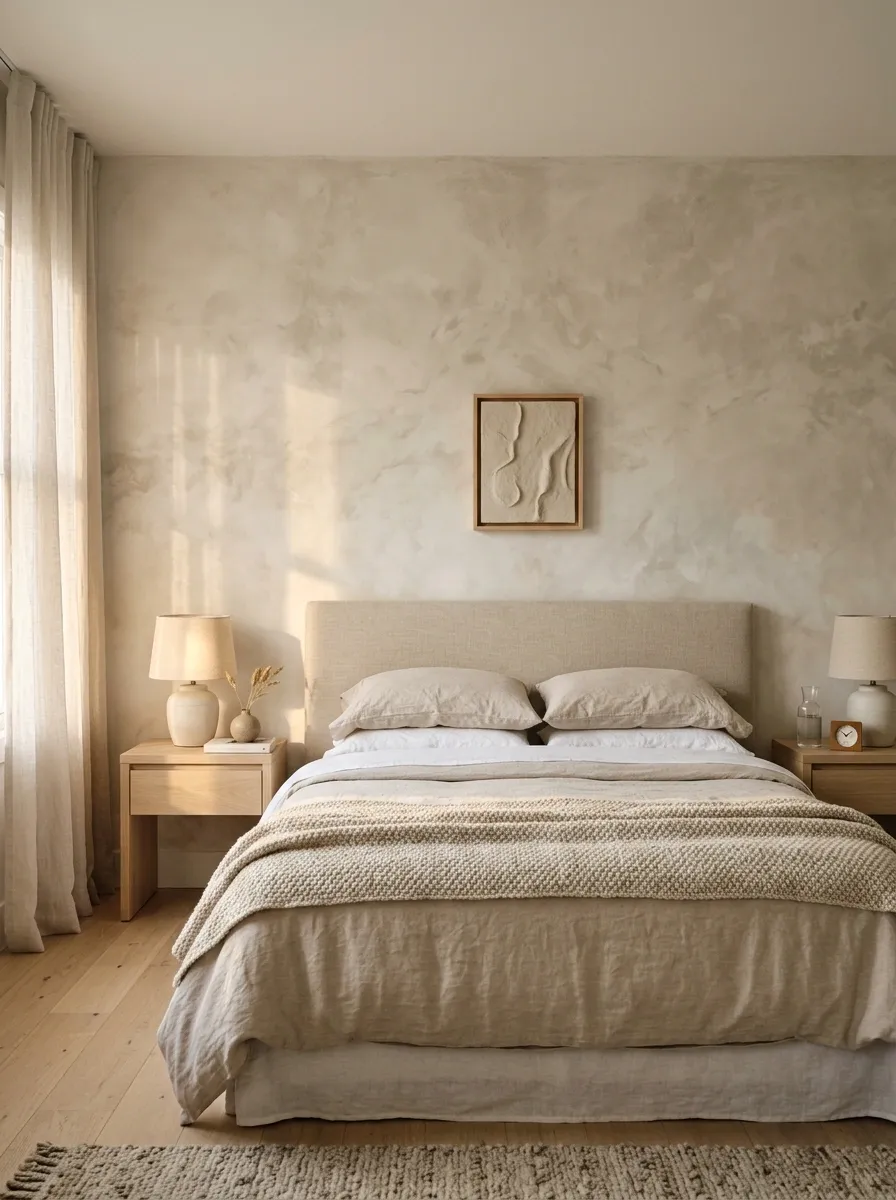
The entire bed wall is finished in softly mottled limewash, giving an otherwise restrained bedroom a subtle sense of movement. A simple upholstered headboard, pale wood nightstands, linen bedding, and one small sculptural artwork keep the room deliberately quiet.
Instead of adding more objects, the finish of the wall becomes the decoration. The uneven surface catches daylight differently across the room, so the backdrop changes naturally without needing a collection of accessories.
Warm Terracotta Bedroom With an Oversized Round Mirror
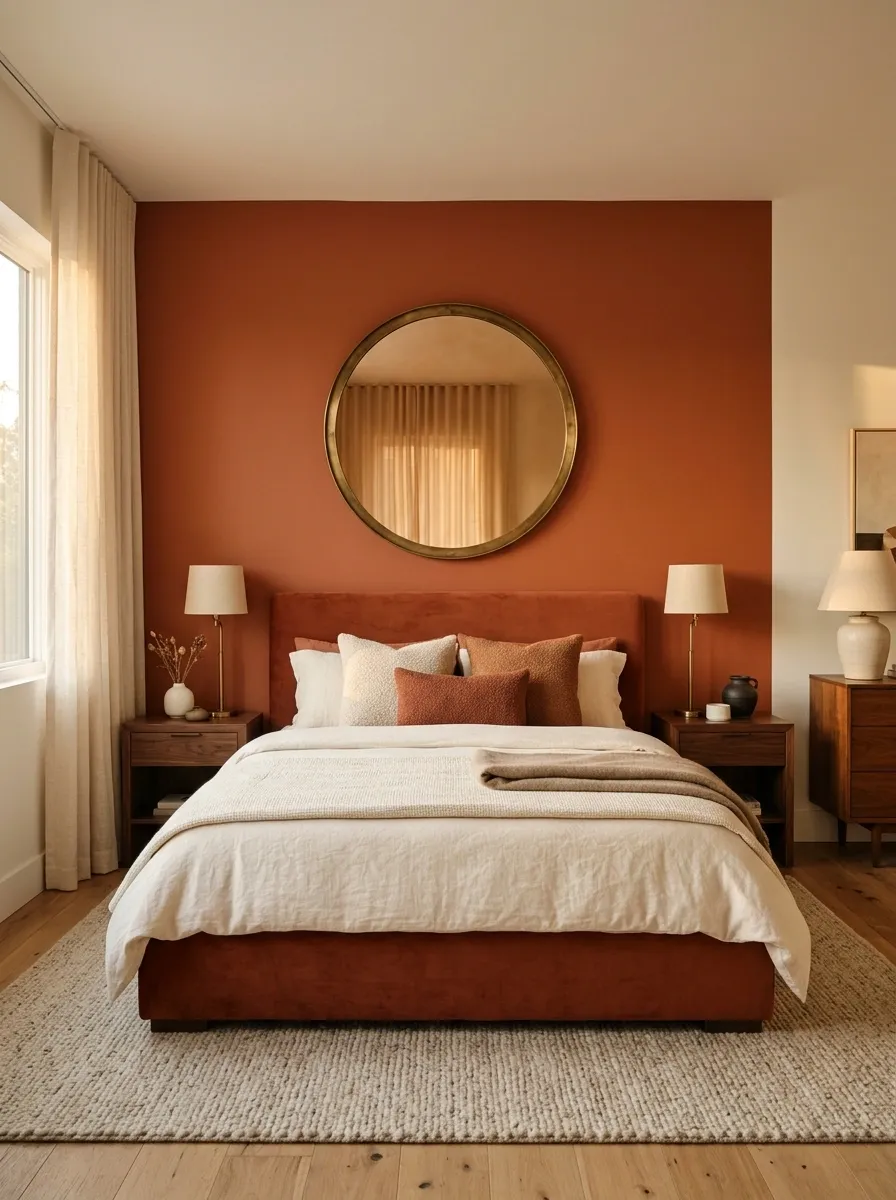
A large round mirror hangs above a warm terracotta-toned upholstered bed, balancing the straight edges of the headboard and bedside furniture. Cream bedding, dark wood, and aged brass details soften the stronger wall color without competing with the mirror.
The circular shape is important because it interrupts the room’s horizontal lines. A single oversized form is more effective here than several small decorations, especially when the wall already carries a saturated color.
Natural Bedroom With a Full-Width Stone Headboard Wall
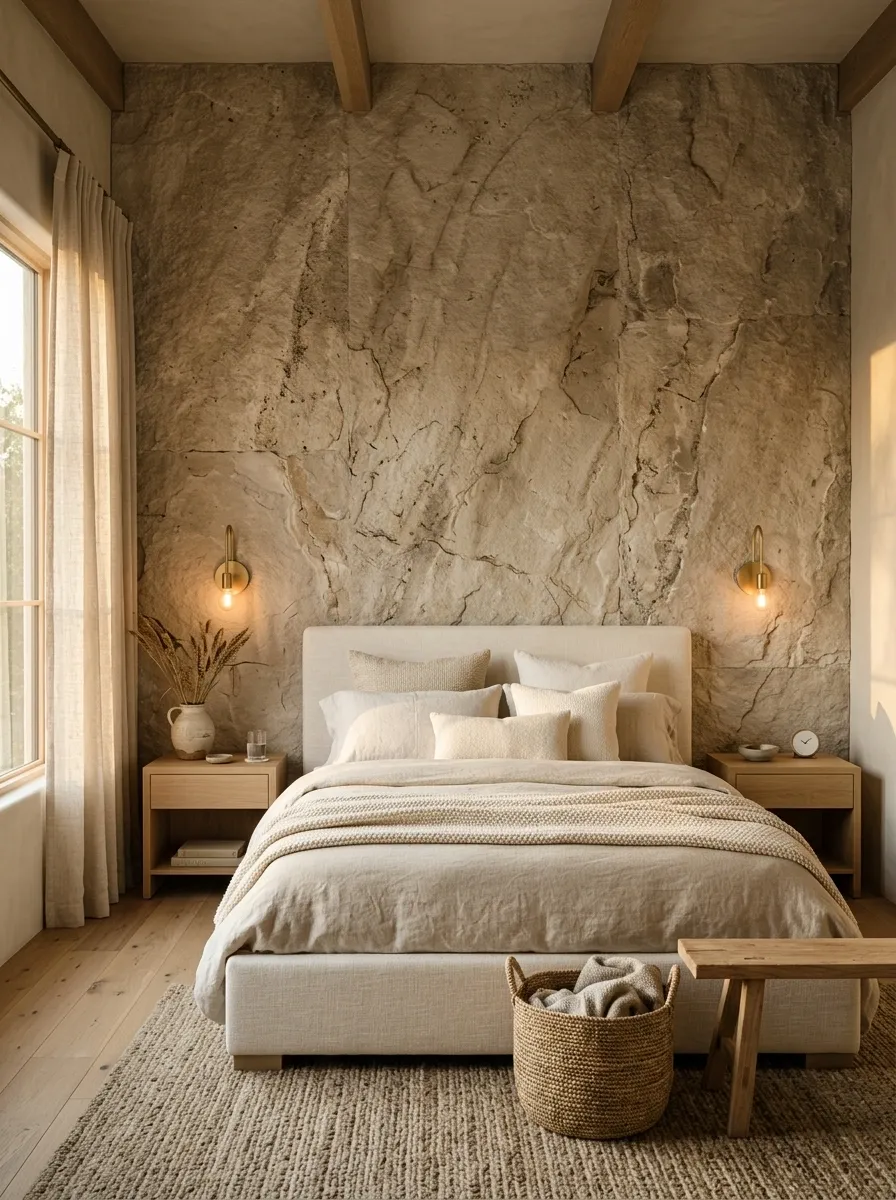
The bed sits against a full-width stone slab wall with subtle tonal variation, creating a substantial architectural backdrop. A simple upholstered bed, light oak furniture, warm linen, and understated sconces soften the harder surface while preserving its natural character.
This composition works because the stone is allowed to remain imperfect. Veining, texture, and tonal changes provide enough visual interest that additional wall decoration would only dilute the material’s impact.
Bringing the Finished Look Together
Start with the effect the bedroom actually needs. A room that already has plenty of pattern may benefit from a quiet architectural treatment. A sparse bedroom may need a large artwork or a more substantial material behind the bed. Scale matters just as much as style.
The best result is usually the one that gives the wall a clear visual purpose while leaving enough breathing room for the rest of the bedroom to feel calm.