
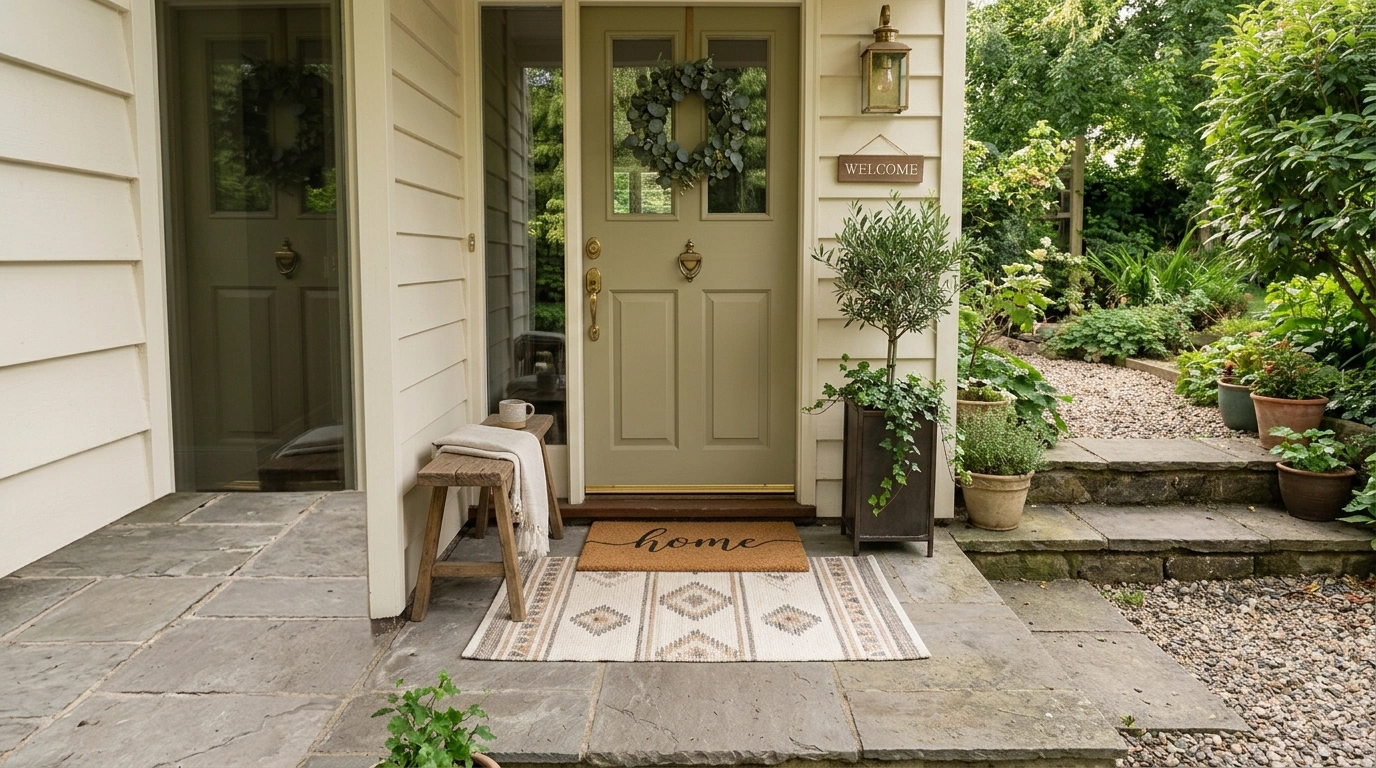
A tiny porch can look strangely unfinished even when the front door, furniture, and planters are all good choices on their own. The problem is often the floor. A rug that’s too small can float awkwardly in the middle of the entry, while a busy pattern can make an already tight space feel crowded.
The right rug changes more than the floor. It can connect the color of the front door with the furniture, soften hard flooring, define a sitting area, or give a plain entry the personality it was missing. The strongest small porch rug ideas treat the rug as part of a finished composition instead of an object added at the very end.
That means looking at the whole porch at once. The door, walls, floor, seating, planters, lighting, and textile should feel like they belong to the same visual story. The designs below take that approach, moving through cottage, modern, Mediterranean, traditional, coastal, seasonal, and more distinctive directions.
Small Porch Rug Ideas
Natural Jute Rug With a White Cottage Entry
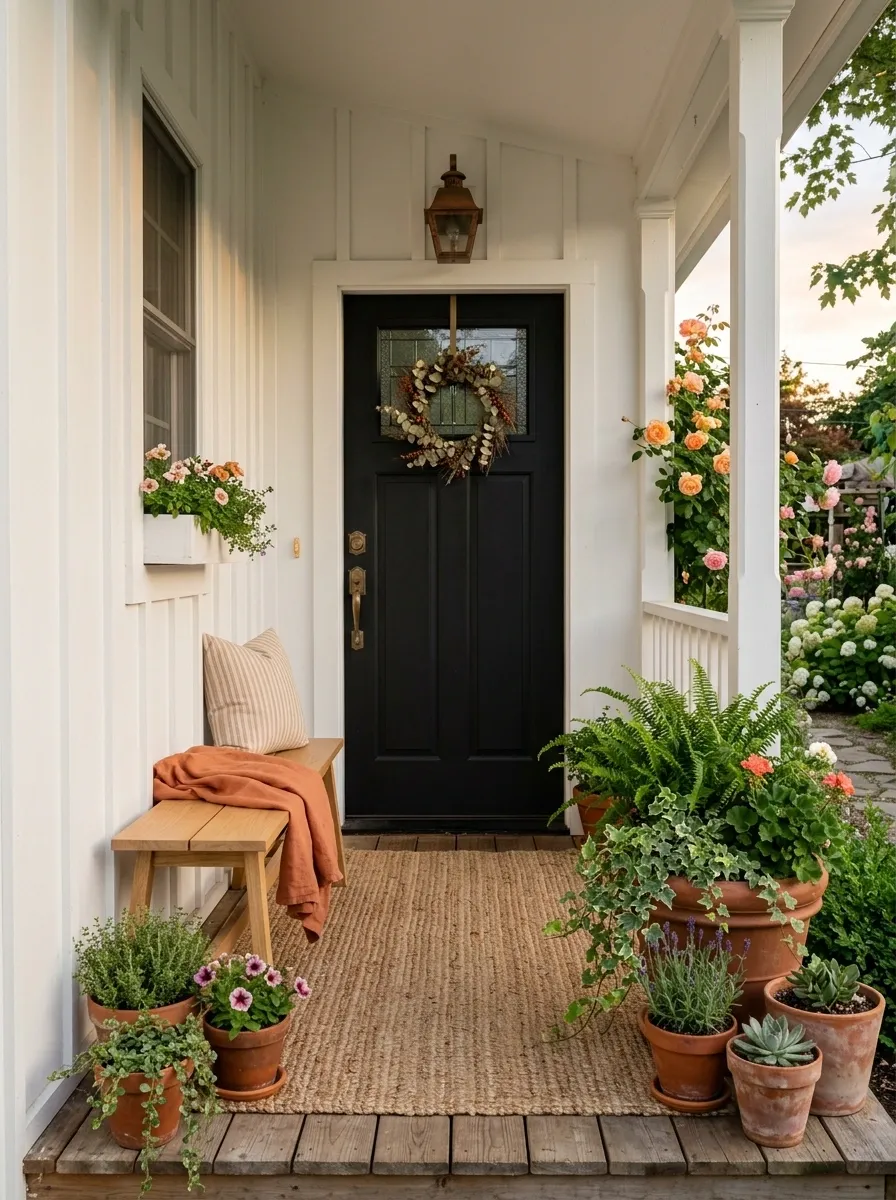
A white cottage porch gains warmth from a simple natural jute rug placed beneath a slim wood bench. The black front door provides just enough contrast, while terracotta pots and loose greenery soften the edges of the architecture. Nothing feels oversized, which matters on a shallow porch where bulky furniture can quickly consume the walking area.
The rug works because it connects the warm wood, clay pots, and natural planting without introducing another strong color. Keep the surrounding finishes relatively quiet and let the woven texture provide the visual interest. This composition suits older cottages, painted brick homes, and compact entries where the architecture already has plenty of character.
Charcoal Flatweave Rug With a Modern Black Door
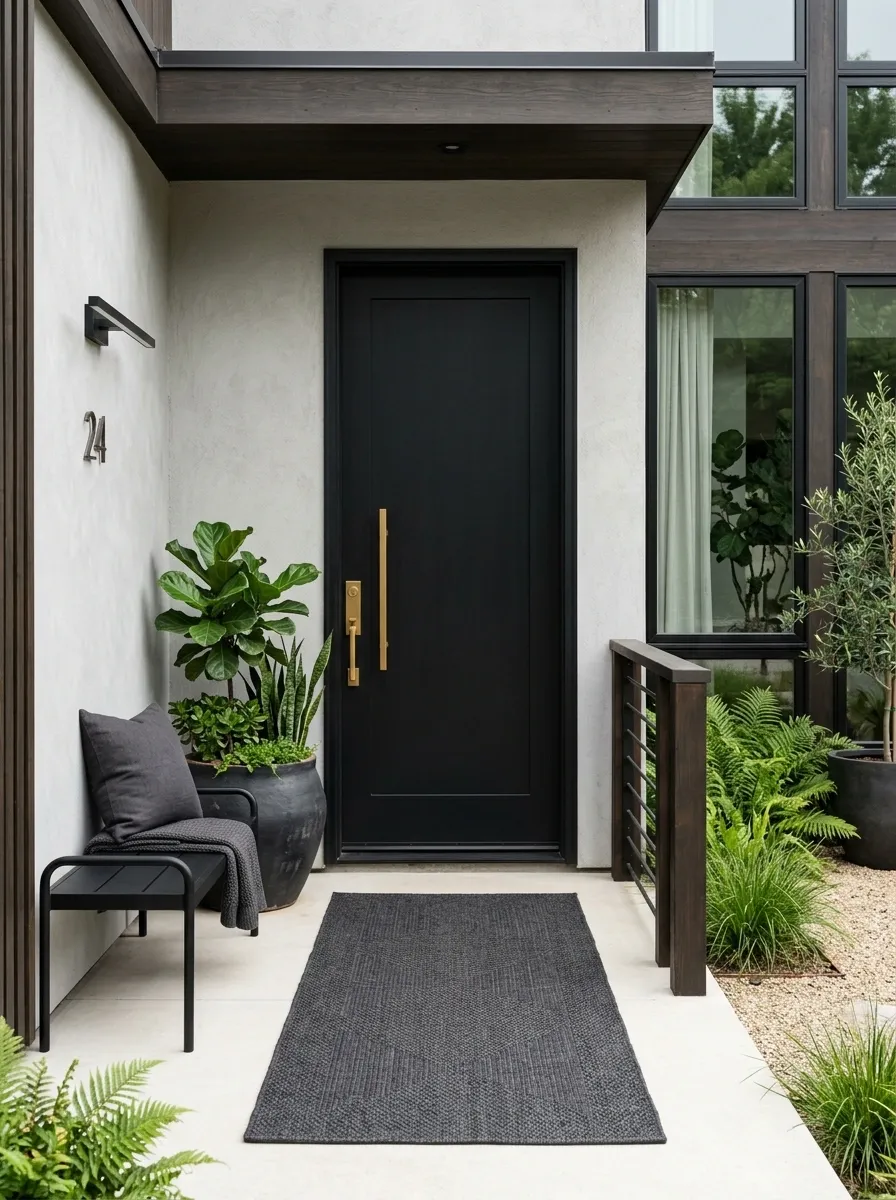
A compact contemporary porch looks sharper when a charcoal flatweave rug sits against pale flooring and a matte black door. A streamlined bench, oversized planter, and minimal wall light keep the composition architectural rather than decorative.
The dark rug creates a visual landing zone without requiring a large pattern. That’s especially useful on tiny porches, where too much graphic detail can make the floor feel fragmented. Pale concrete or light stone around the rug provides the necessary contrast, while black details repeated on the door and hardware pull everything together.
The strongest version keeps the furniture restrained. The goal isn’t to fill the porch. It’s to give the entrance a deliberate center.
Vintage Patterned Rug With a Warm Brick Porch
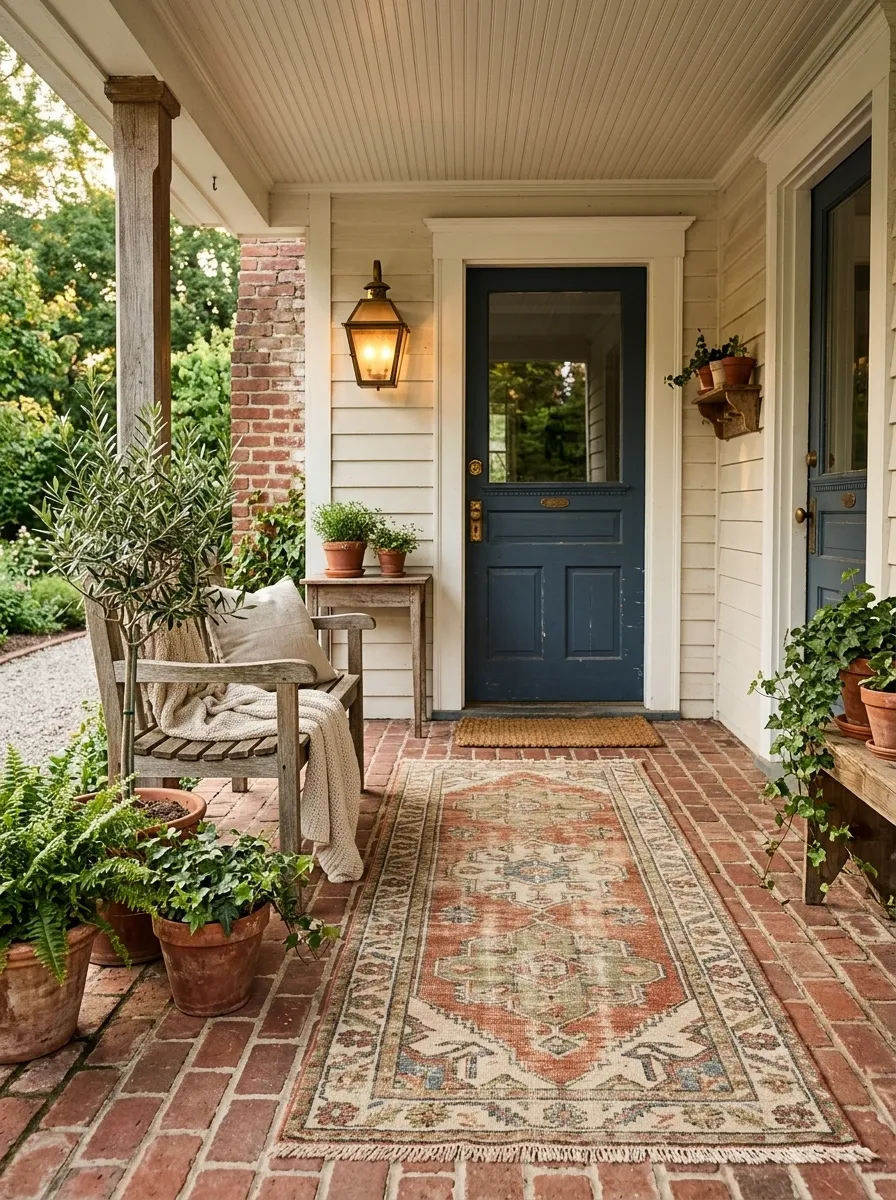
A faded Persian-inspired rug can make a brick porch feel collected rather than overly polished. Rust, cream, muted blue, and olive appear in the pattern, while an aged wooden chair, brass-toned lantern, and leafy plants reinforce the older architecture.
Here, the rug isn’t background decoration. It becomes the color bridge between the brick and the softer furnishings. The faded finish matters because a highly saturated pattern could overwhelm a tiny entry.
Let the rest of the porch repeat only one or two colors from the rug. Repetition makes the composition feel intentional without requiring matching furniture or accessories.
Slim Striped Rug For a Narrow Townhouse Porch
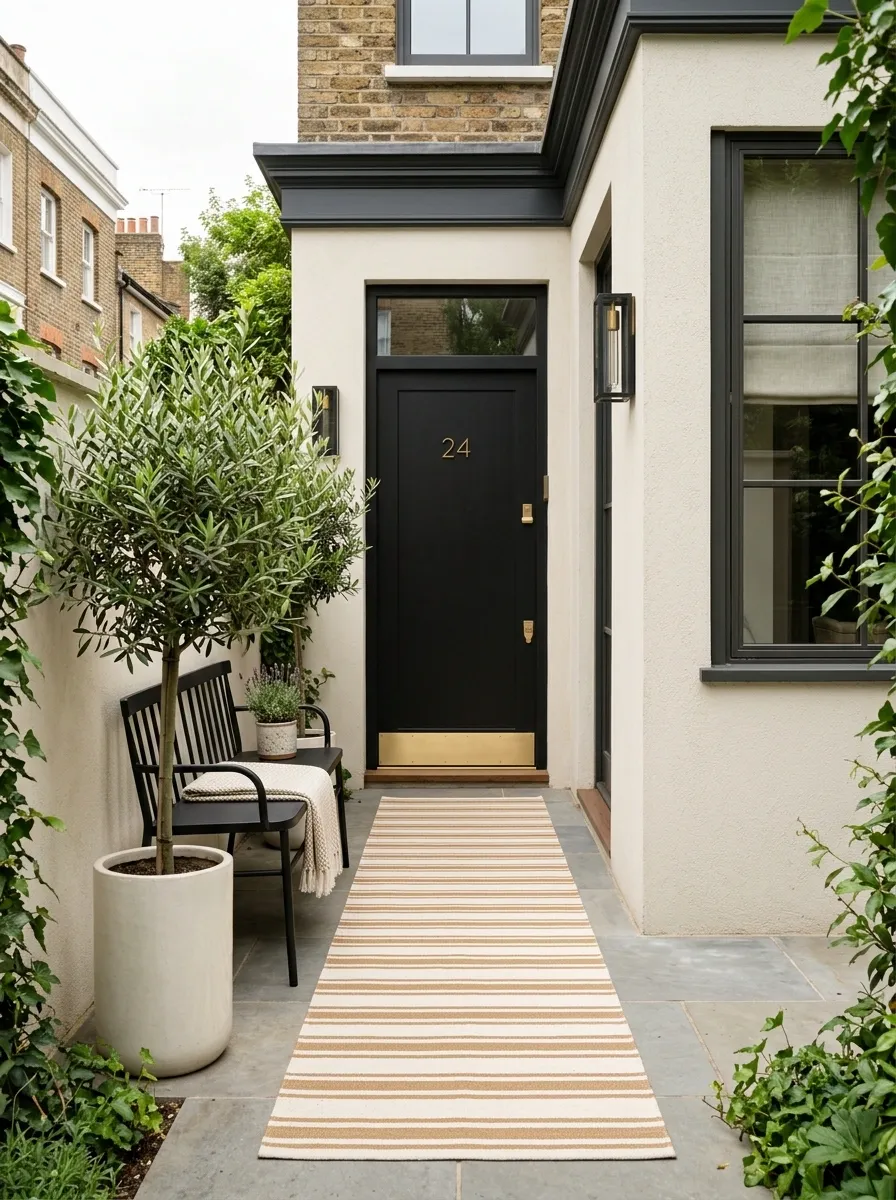
A long townhouse porch benefits from a rug that reinforces its length instead of fighting it. A slim cream-and-tan striped rug runs toward the front door, accompanied by a petite black bench, tall planter, and understated brass hardware.
The stripes quietly guide the eye down the entry, making the narrow footprint feel intentional. Because the pattern already creates direction, the furniture stays compact and relatively simple.
The important detail is clearance. The rug should establish the walking route without forcing feet around oversized furniture. On a narrow porch, a beautiful rug that blocks the natural path will make the whole arrangement feel cramped.
Terracotta Rug With Warm Mediterranean Styling
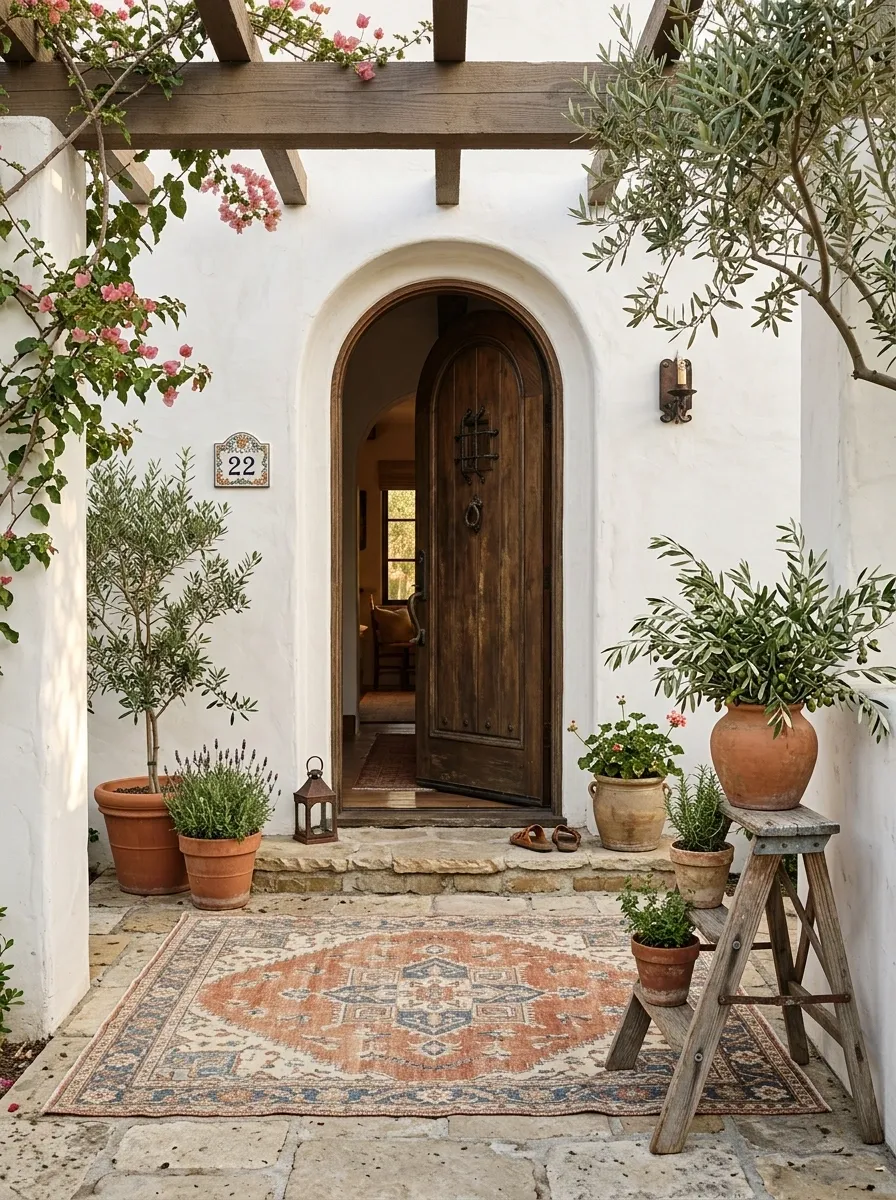
A small stucco porch can take on a completely different character with a terracotta-toned patterned rug, warm wood stool, clay pots, olive branches, and an arched doorway. The rug gives the otherwise pale architecture a grounded center while the planting repeats its earthy palette.
This design works through material warmth rather than a pile of accessories. Clay, plaster, wood, and aged metal each bring a slightly different surface, while the rug ties them together.
Keep the pattern softened and sun-faded rather than intensely colorful. The architecture should remain visible around it, especially on a very small porch where strong contrast can make the space feel visually crowded.
Black-and-Cream Rug With a Traditional Front Door
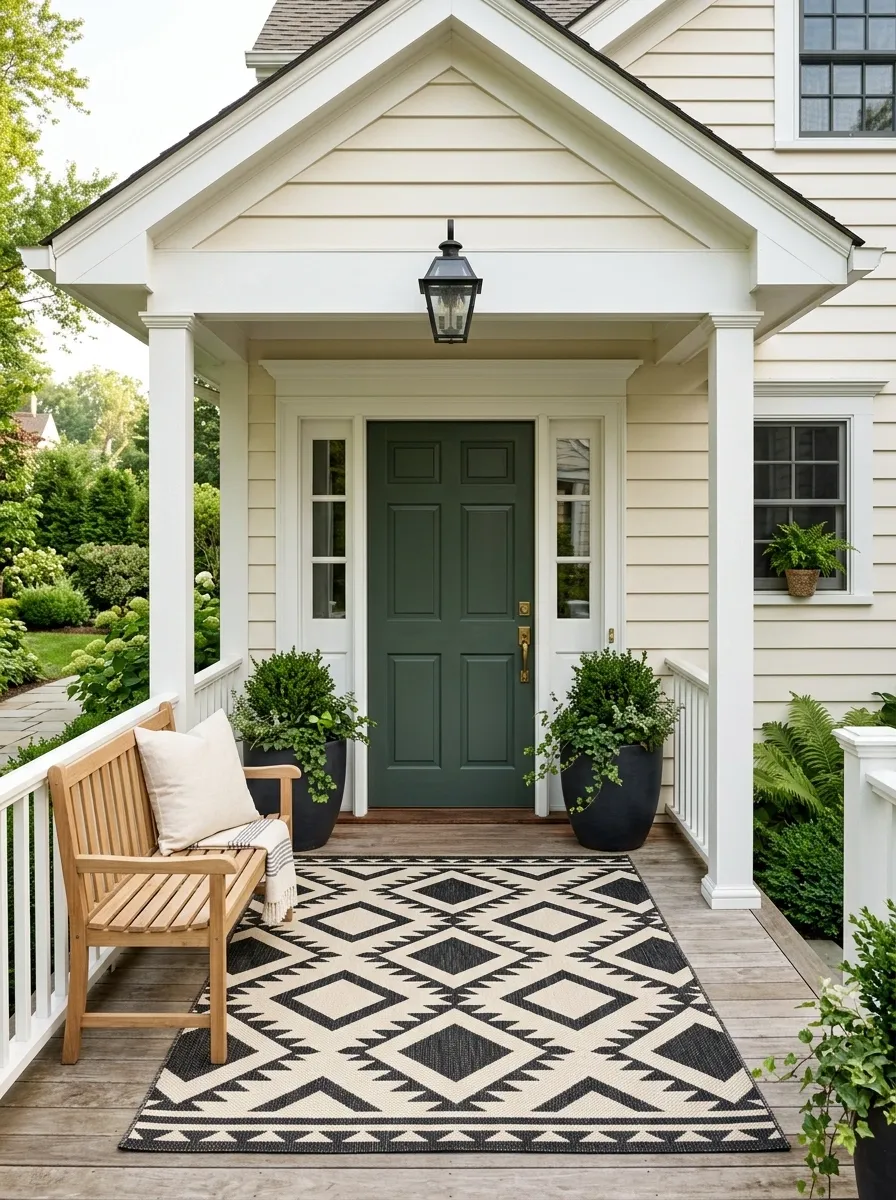
A compact traditional porch gets stronger definition from a black-and-cream geometric rug placed between a deep green front door and pale trim. A small wooden bench sits to one side, while matching planters frame the entrance without crowding it.
The dark pattern gives the floor enough weight to balance the heavier door color. Cream sections keep the rug connected to the trim and surrounding architecture, so the entry doesn’t become a collection of unrelated dark accents. The symmetry also helps a very small porch feel composed.
Keep the furniture simple here. The rug already provides enough pattern, and adding several decorative pieces would blur the clean architectural rhythm.
Faded Blue Rug With Coastal White Architecture
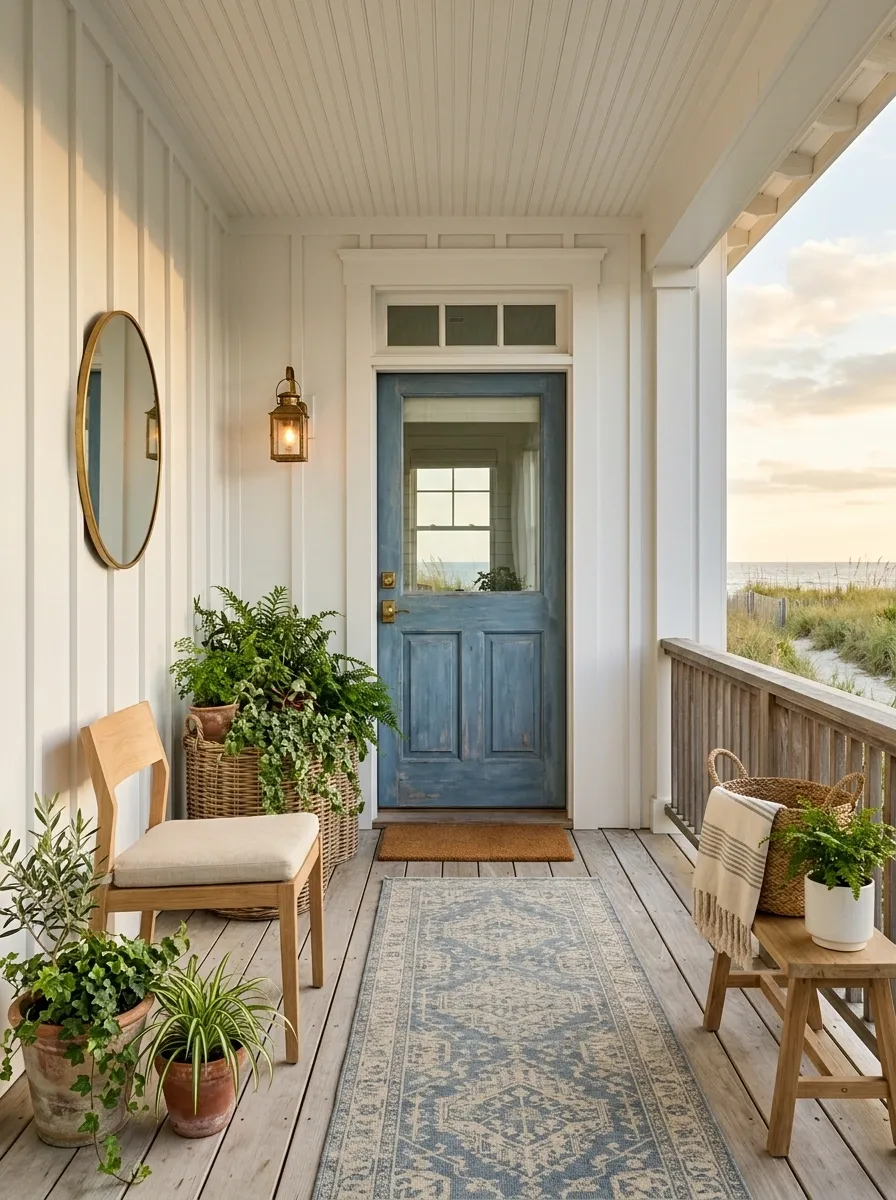
White-painted walls, pale timber, and a weathered blue door give this compact porch a calm coastal character. A faded blue-and-ivory rug sits beneath a simple wooden chair, with woven planters and soft greenery filling the remaining corners.
The rug is intentionally quiet. Its washed color repeats the door without looking overly matched, while the ivory sections keep the floor visually connected to the surrounding white architecture. Natural wood adds enough warmth to prevent the porch from becoming too cool.
This composition is especially effective when the architecture is already bright and open. Heavy furniture or several competing patterns would take away from the airy quality.
Round Rug In a Compact Square Porch
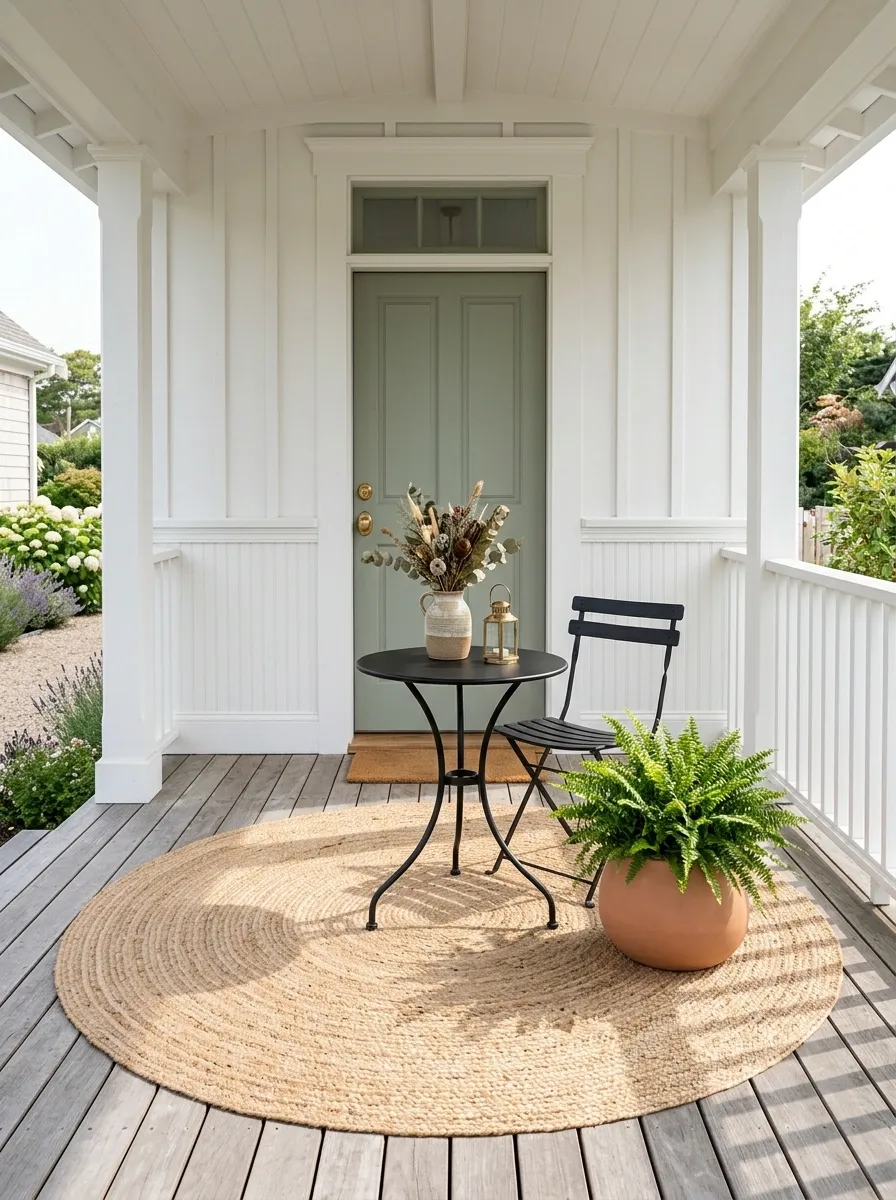
A round rug changes the geometry of a small square porch immediately. Instead of following the straight edges of the architecture, it creates a soft center beneath a compact bistro chair, petite table, rounded planter, and softly colored front door.
The circular shape works because nearly everything around it is angular. That contrast gives the little porch a stronger sense of composition without needing a large amount of furniture.
Keep the circle visually exposed. Pushing chairs, pots, or baskets too far onto the rug will hide the shape that makes the arrangement distinctive. A little breathing room around the perimeter makes the whole setup feel more deliberate.
Moody Olive Rug With a Dark Wood Porch
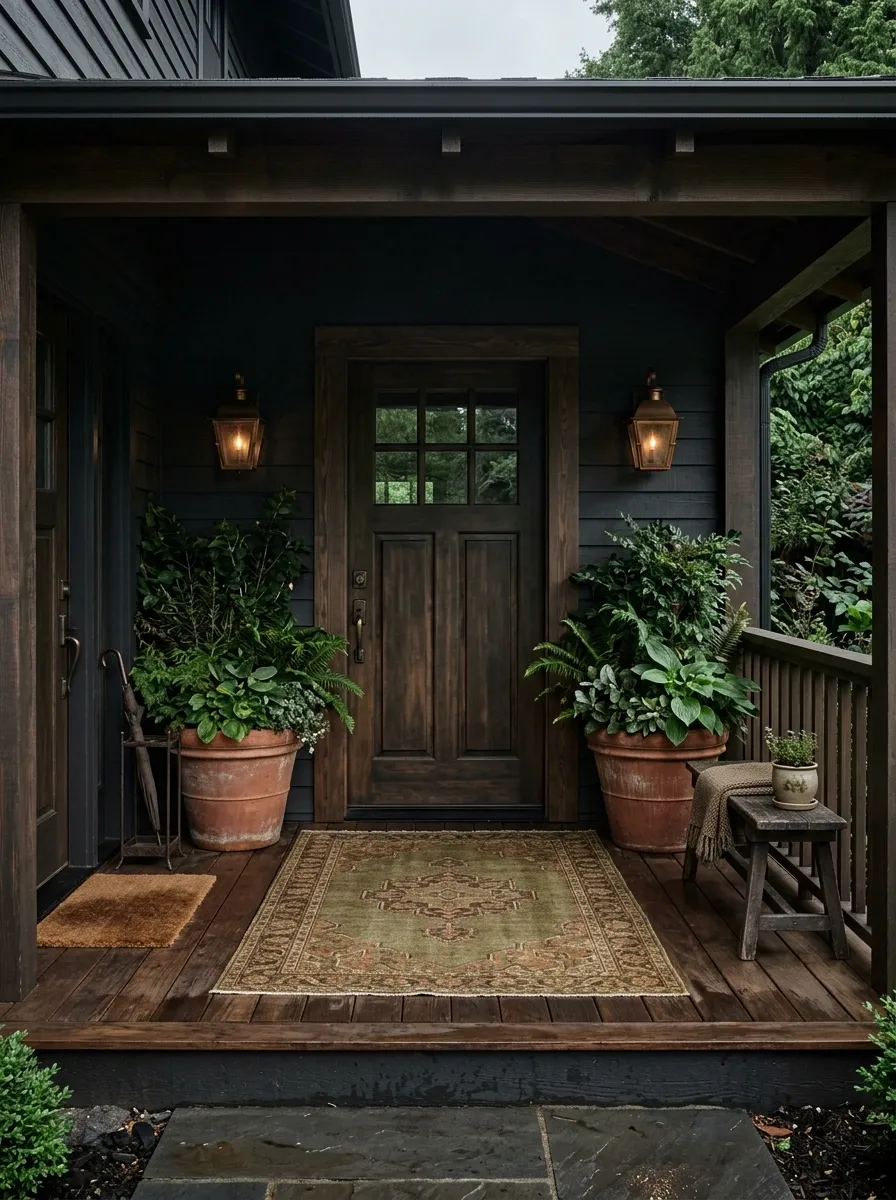
A stained wood door, olive-green rug, bronze lighting, and dense foliage give this small porch a deeper, more grounded character. Instead of brightening every surface, the design leans into the natural darkness and uses a few lighter details to keep it from feeling closed in.
The olive rug is the bridge between the wood and greenery. Its muted color feels connected to the planting without turning the floor into an obvious outdoor-themed pattern. Bronze hardware introduces a small amount of warmth against the darker surfaces.
Let the doorway remain the visual center. Too many colorful flowers or bright accessories would weaken the richer mood that makes this composition memorable.
Checkerboard Rug With Playful Cottage Styling
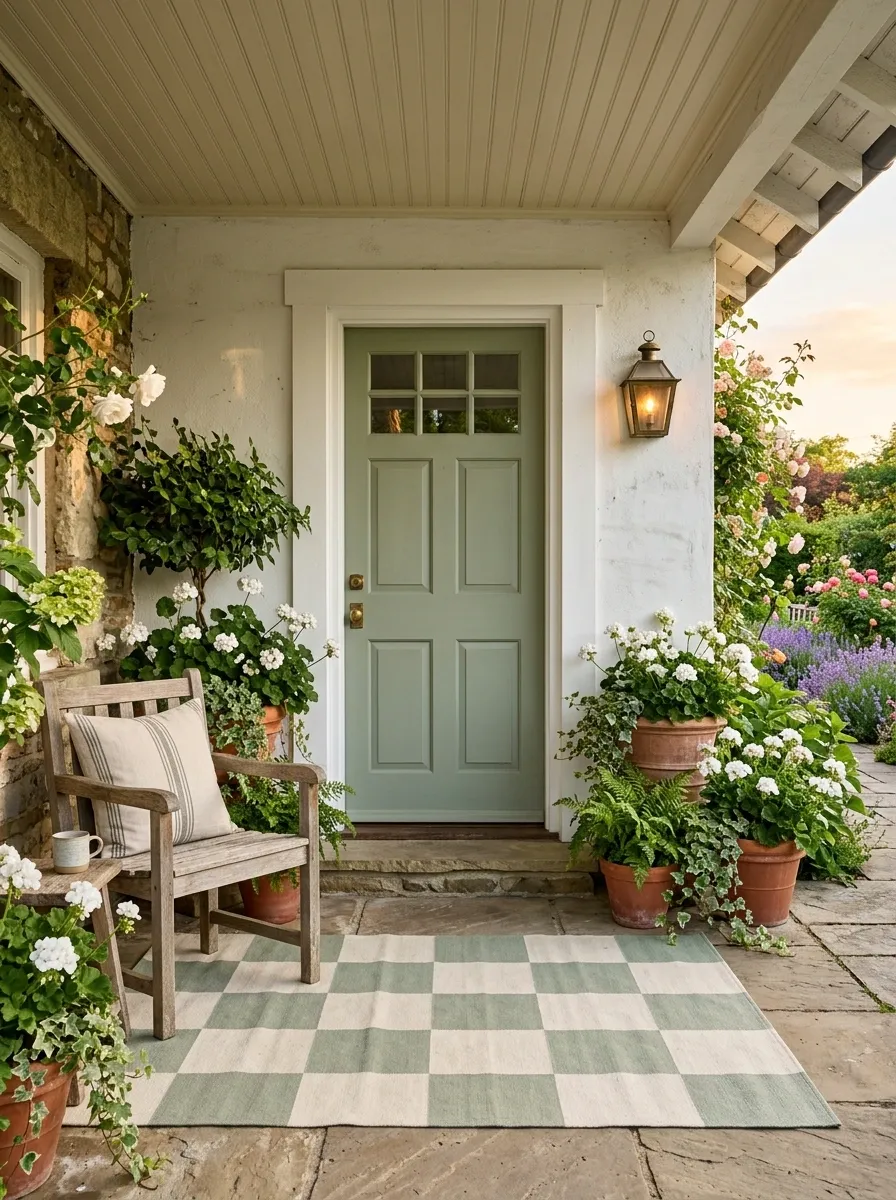
A muted checkerboard rug brings a little personality to this cottage porch without making the small space feel noisy. Cream and soft green checks sit beneath a compact wooden chair, while a painted front door, flowering pots, and vintage-style wall light add color around the edges.
The larger checker pattern is important. Small-scale checks would create too many visual breaks across a limited floor area. The broader blocks read almost like a graphic foundation, leaving the flowers and door color free to provide the softer details.
Use only a few strong accents around the rug. The charm comes from the contrast between the simple pattern underfoot and the slightly more collected styling above it.
Soft Minimal Rug With Scandinavian Porch Styling
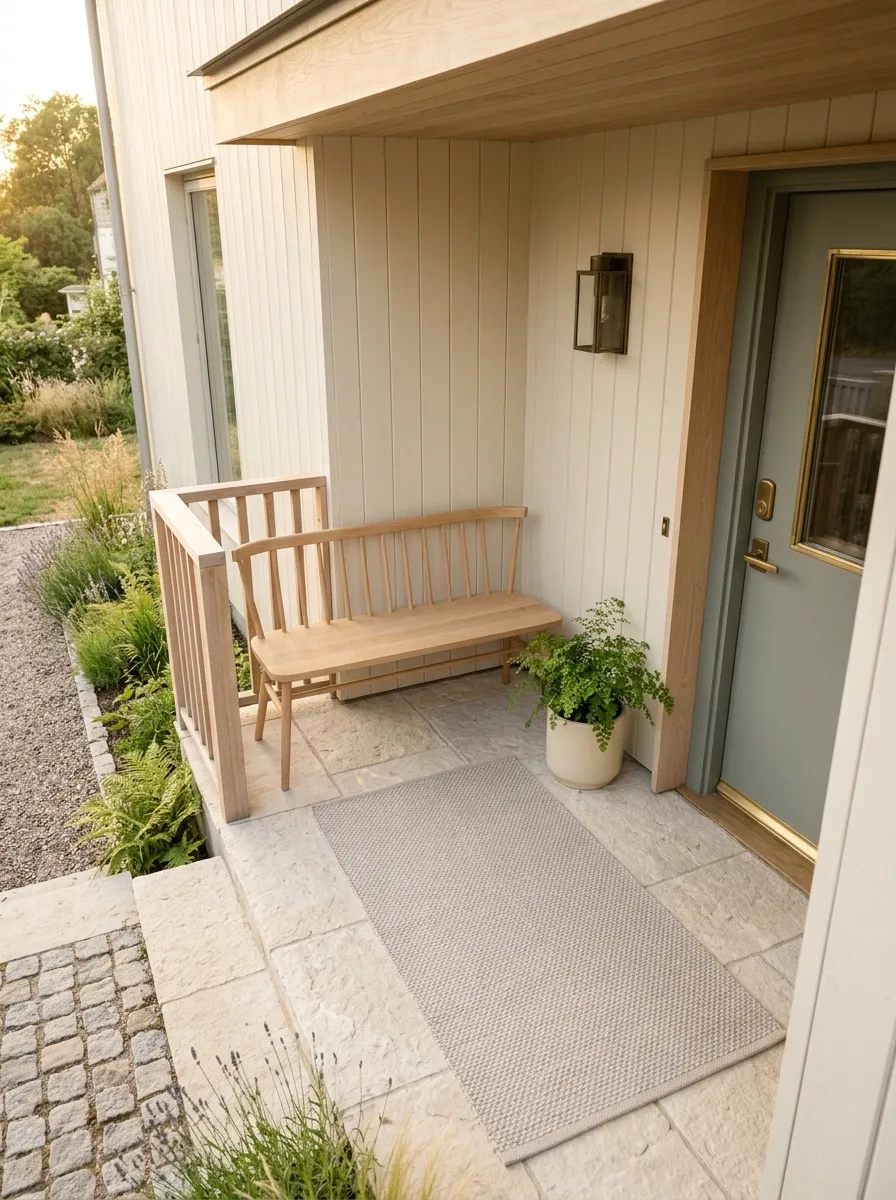
A pale taupe rug gives this compact Scandinavian-inspired porch a quiet foundation. A light timber bench, gray-green door, matte ceramic planter, and pale stone floor keep the palette restrained, while subtle woven texture stops the space from looking flat.
The strength here comes from restraint. There isn’t a collection of small accessories competing for attention. Instead, each material occupies a clear visual role, with the rug acting as the soft transition between the hard floor and the timber furniture.
Choose a low-profile rug with visible texture rather than a thick pile. On a small outdoor entry, a flatter surface keeps the furniture visually lighter and makes the doorway easier to navigate.
More texture.
Red Persian-Style Rug Against a Black Door
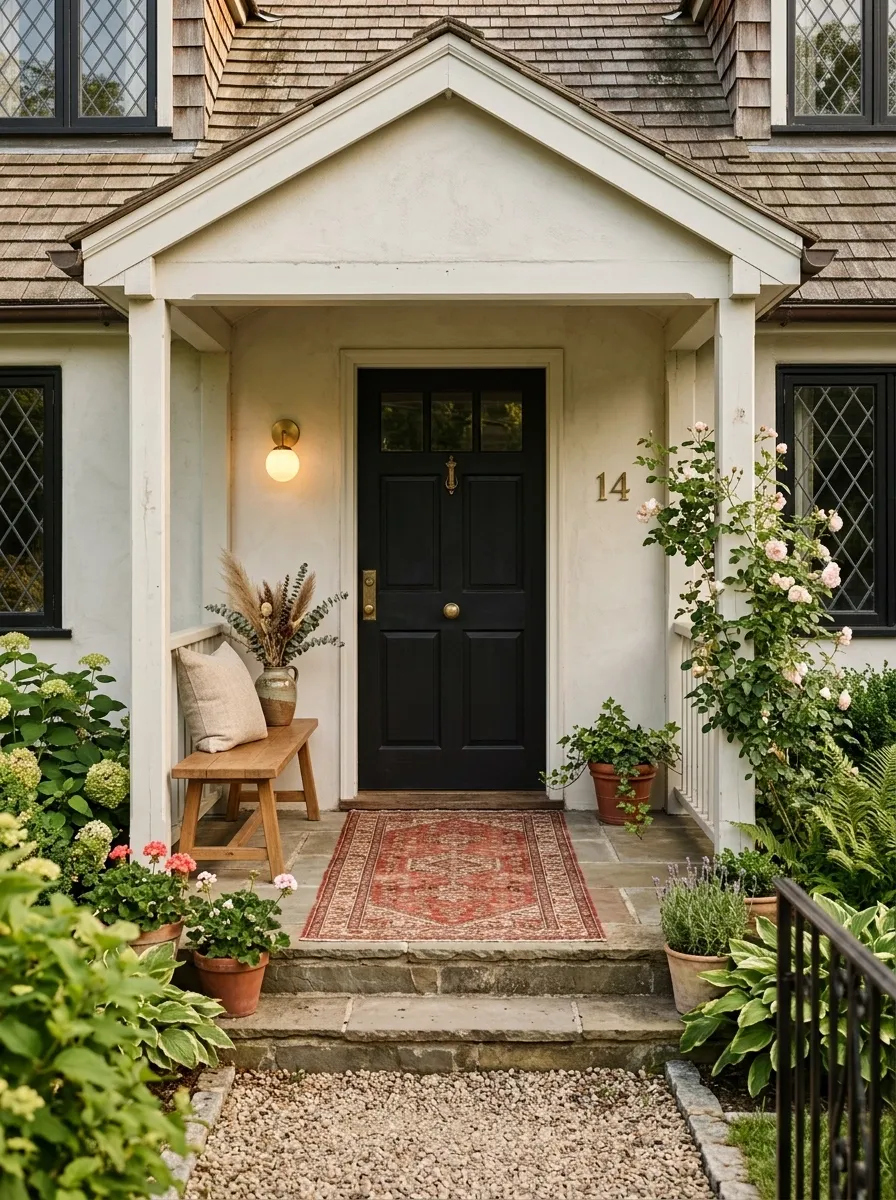
A richly faded red rug gives a tiny entry immediate character when placed in front of a matte black door. A warm wooden bench, simple brass light, and pale surrounding walls provide enough restraint for the rug to become the main visual event.
The old-world pattern works because the architecture around it stays uncomplicated. Red, rust, muted cream, and small touches of blue within the rug can quietly reappear in pottery or cushions without turning the porch into a coordinated set.
The black door adds depth behind the rug, while the pale walls keep the entire composition from becoming too heavy. This works especially well on homes with traditional or historic-looking exterior details.
Slim Runner Rug On a Deep Porch
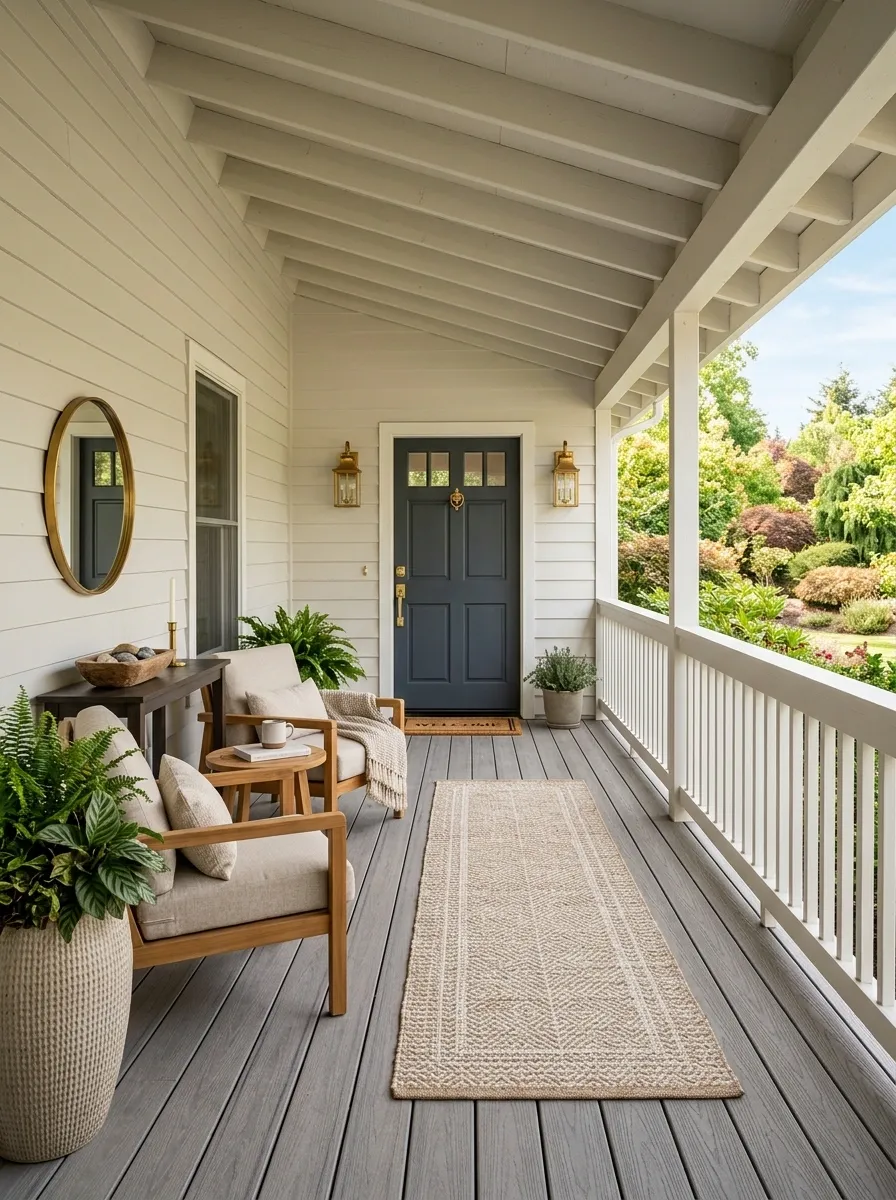
A deeper porch gives this narrow runner room to establish a clear path from the outdoor seating area to the front door. Two compact chairs sit outside the rug’s main walking line, while a narrow table and tall planter fill the edges without narrowing the route.
The runner is less about filling floor space and more about organizing it. Its long shape visually connects the separate parts of the porch, making the seating area and doorway feel like one composition.
Keep the rug centered along the natural path rather than pushing it toward the furniture. This arrangement is particularly useful when the porch has enough depth for several small zones but not enough width for bulky pieces.
Soft Floral Rug With English Garden Character
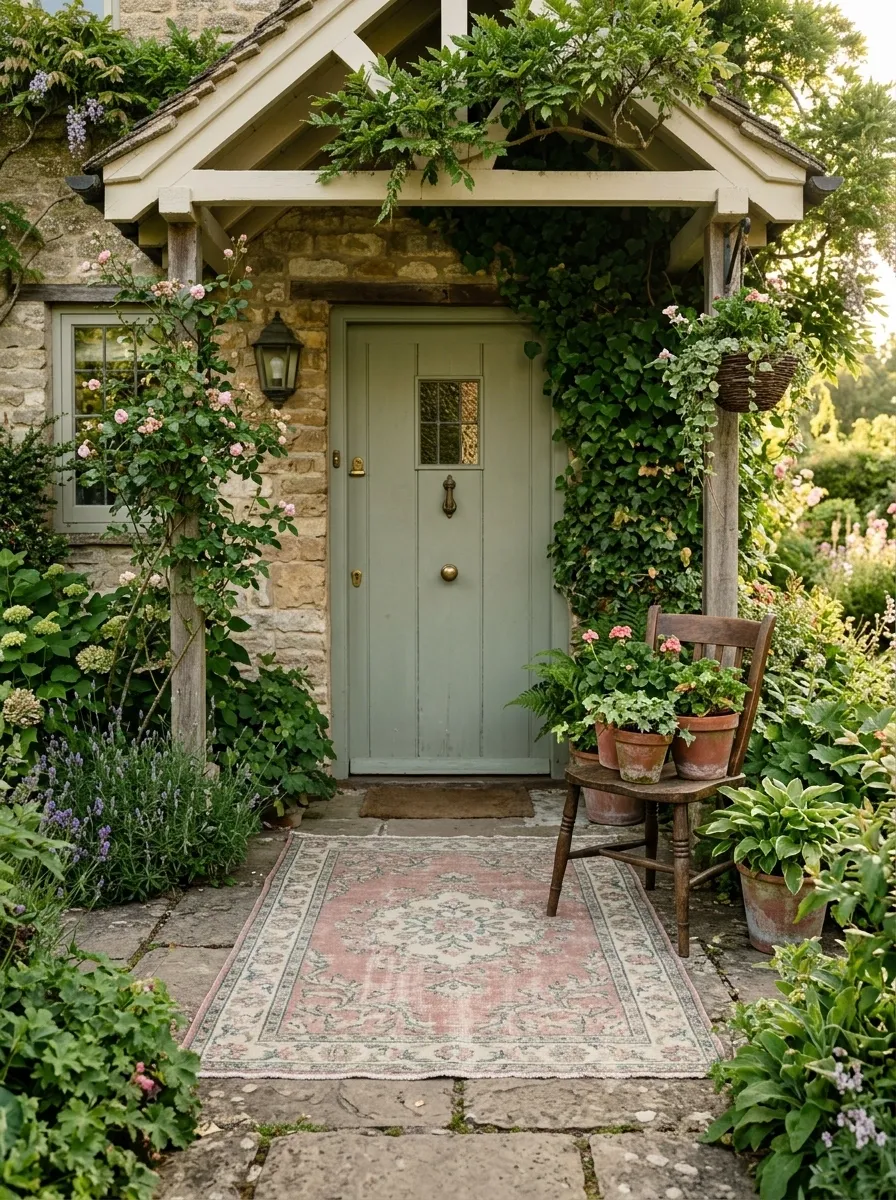
A faded floral rug gives this petite porch the feeling of an old garden entrance. The pattern mixes muted pink, sage, cream, and dusty blue beneath a weathered chair, while a sage-green door, climbing foliage, and aged ceramic pots complete the composition.
The floral pattern works because its colors are softened rather than bright. The rug can carry several shades without making a tiny porch feel visually chaotic.
Keep the furniture slightly weathered and simple. Polished modern pieces would create a disconnect with the softness of the botanical pattern and older garden-inspired styling.
Natural Flatweave Rug With Black-and-Wood Contrast
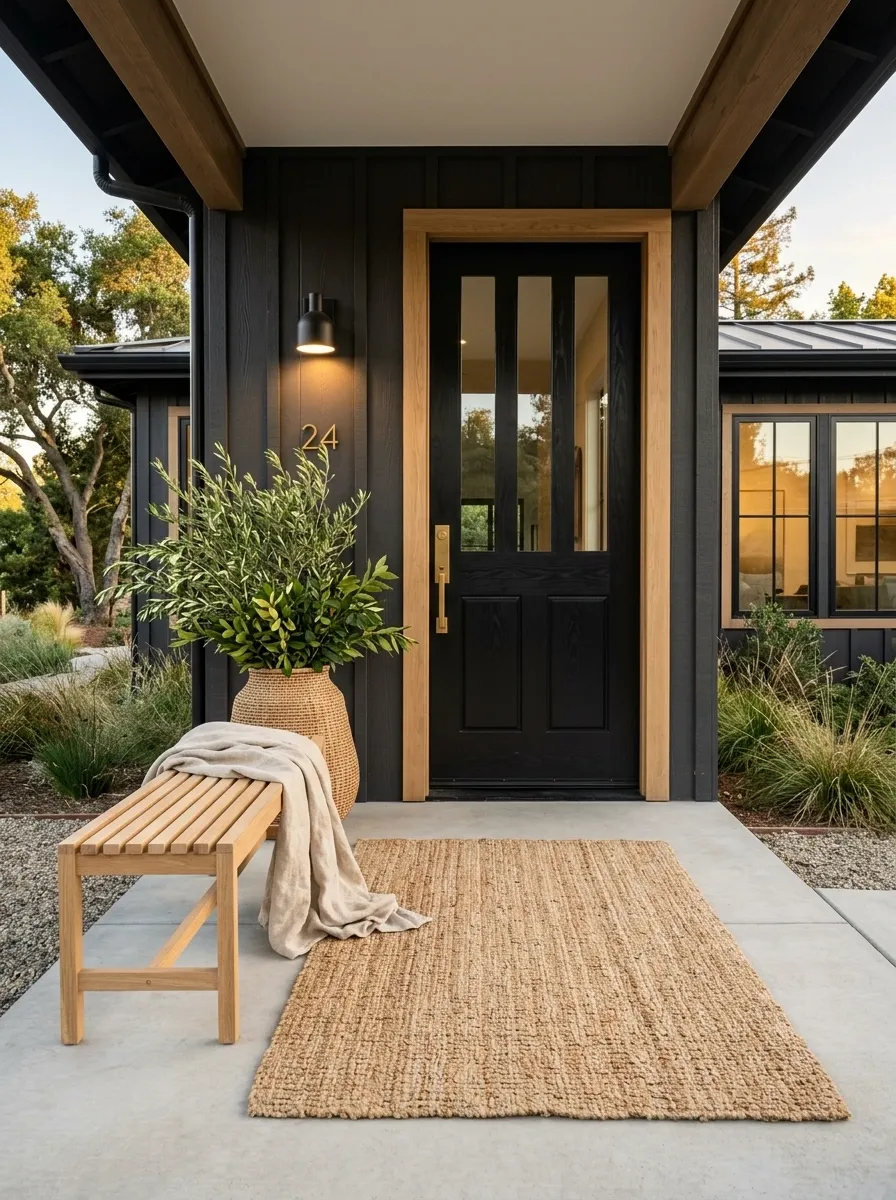
A natural flatweave rug softens the harder surfaces of a modern farmhouse porch. The composition pairs it with a black-framed door, warm oak bench, concrete floor, oversized woven planter, and a small amount of greenery.
The contrast is what makes this design work. The black architecture gives the entry definition, while the timber and woven materials stop the result from feeling too industrial. The rug sits directly between those two worlds.
Choose a rug with visible irregularity rather than a perfectly uniform texture. Small imperfections make the natural materials feel connected, while the black elements provide enough structure to keep the porch looking crisp.
soft surfaces.
Deep Green Rug With a Soft Pink Door
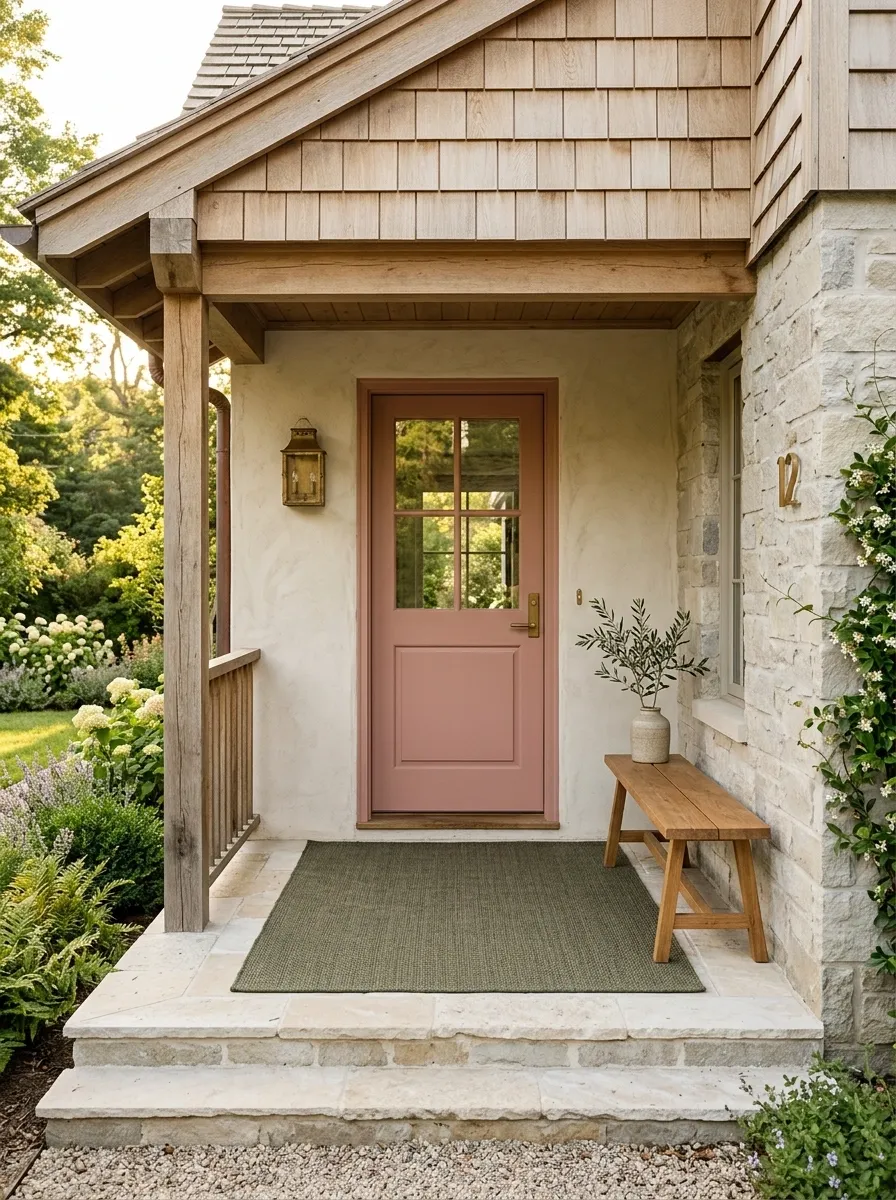
A dusty pink front door takes on a more sophisticated character when grounded by a deep muted green rug. Pale stone underfoot, a simple wood bench, and restrained greenery keep the unusual color pairing from becoming too sweet.
The green absorbs much of the visual weight, while the pink becomes a controlled architectural accent rather than the entire personality of the porch. Warm wood sits between the two colors and makes the transition feel natural.
Keep the rest of the styling quiet. A few green leaves are enough to echo the rug, while neutral walls and flooring give the color pairing room to stand out.
Black-and-Tan Tribal Rug With Industrial Details
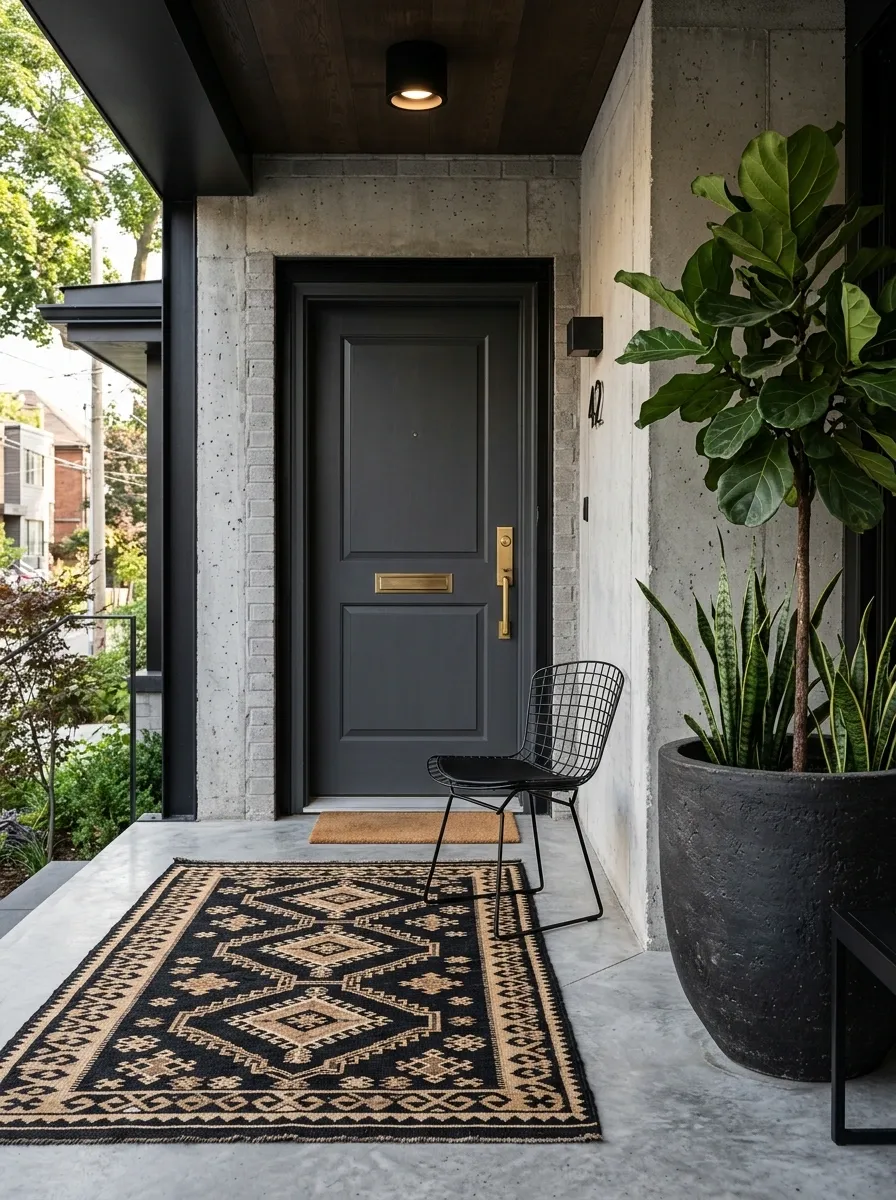
A compact urban porch can lean into its harder materials with a black-and-tan tribal-style rug, concrete flooring, steel-framed seating, and a dark front door. An oversized planter adds a living element without softening the composition too much.
The rug gives the concrete and metal something tactile to work against. Its pattern breaks the broad, hard surfaces into a more layered visual without requiring a large collection of decor.
Keep the industrial pieces slim. Heavy furniture will quickly make a small porch feel boxed in. A strong rug pattern, one substantial planter, and clean-lined seating are enough to establish the look.
Blue-and-White Mediterranean Rug On a Narrow Porch
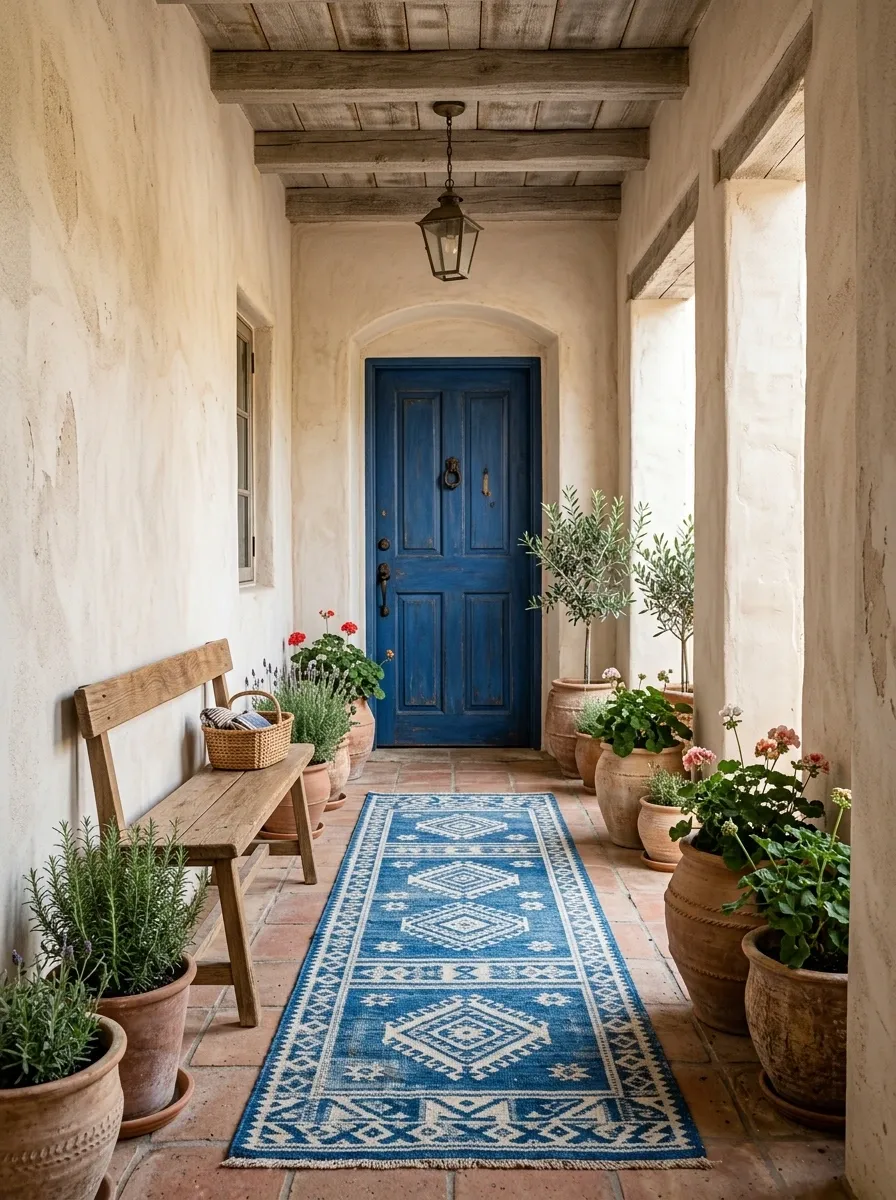
A narrow stucco entry gets a strong sense of place from a faded blue-and-white patterned rug, blue front door, pale walls, simple wood seating, and hand-thrown ceramic pots. The limited palette makes the small footprint feel purposeful rather than restricted.
Repeating blue across the rug, door, and ceramics gives the eye a route through the space. The white and warm plaster tones act as breathing room around those stronger accents.
The trick is to keep the pattern slightly weathered. A highly crisp graphic rug could make the architecture feel too modern, while a faded surface fits naturally with stucco, ceramic, and aged wood.
Warm Neutral Rug With a Layered Fall Porch
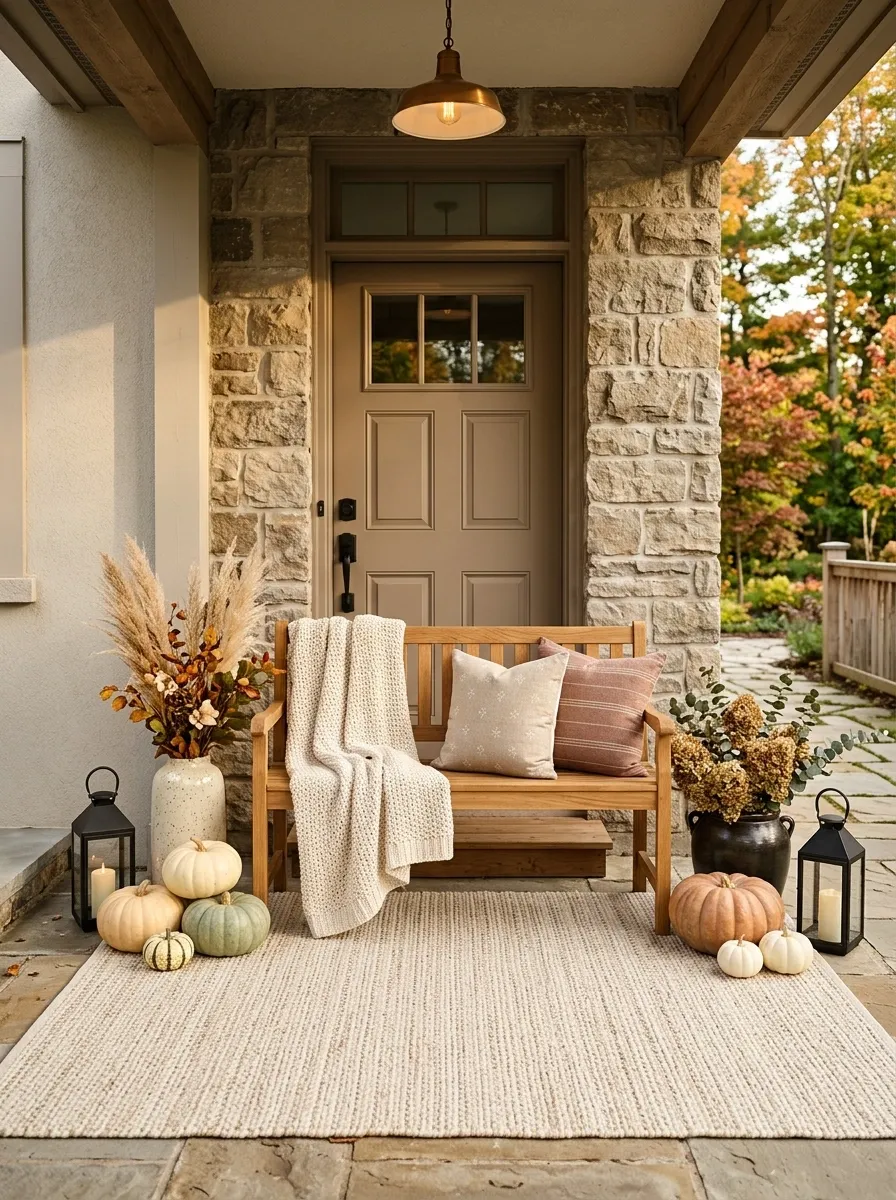
A small autumn porch can feel seasonal without becoming overloaded with pumpkins and decorations. Here, a creamy neutral rug establishes the base beneath a warm wood bench, while dried grasses, a few pumpkins, lanterns, and a muted clay-colored door provide the seasonal layer.
The restrained rug matters because the accessories already introduce plenty of texture and color. Its soft neutral tone visually ties the bench, stone, and pale architectural surfaces together.
Keep the seasonal elements concentrated around the sides of the seating area. Leaving part of the rug exposed preserves the sense of space and lets the entry remain usable rather than turning into a display platform.
Graphic Black-and-White Rug With Contemporary Seating
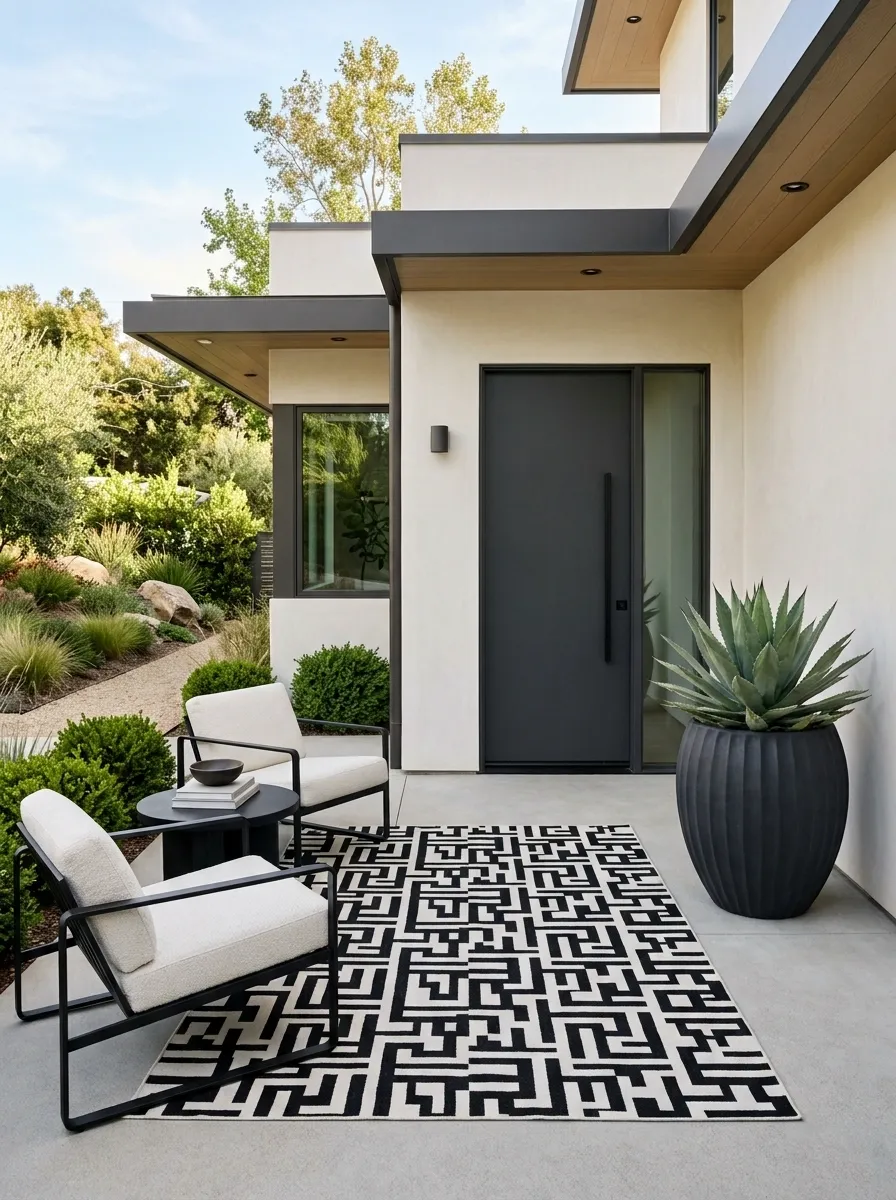
A bold monochrome rug gives a compact architectural porch a strong graphic identity. The setting uses smooth stucco walls, a dark door, sculptural seating, an oversized planter, and almost no decorative clutter.
The graphic floor works because the surrounding surfaces are deliberately quiet. The rug becomes the visual pattern, while the furniture contributes shape rather than additional ornament.
This approach is strongest when the architecture has clean lines. On a porch with ornate trim, multiple roof details, or heavily patterned surfaces, the black-and-white geometry could compete with the structure instead of sharpening it.
do the talking.
Faded Southwestern Rug With Desert Planting
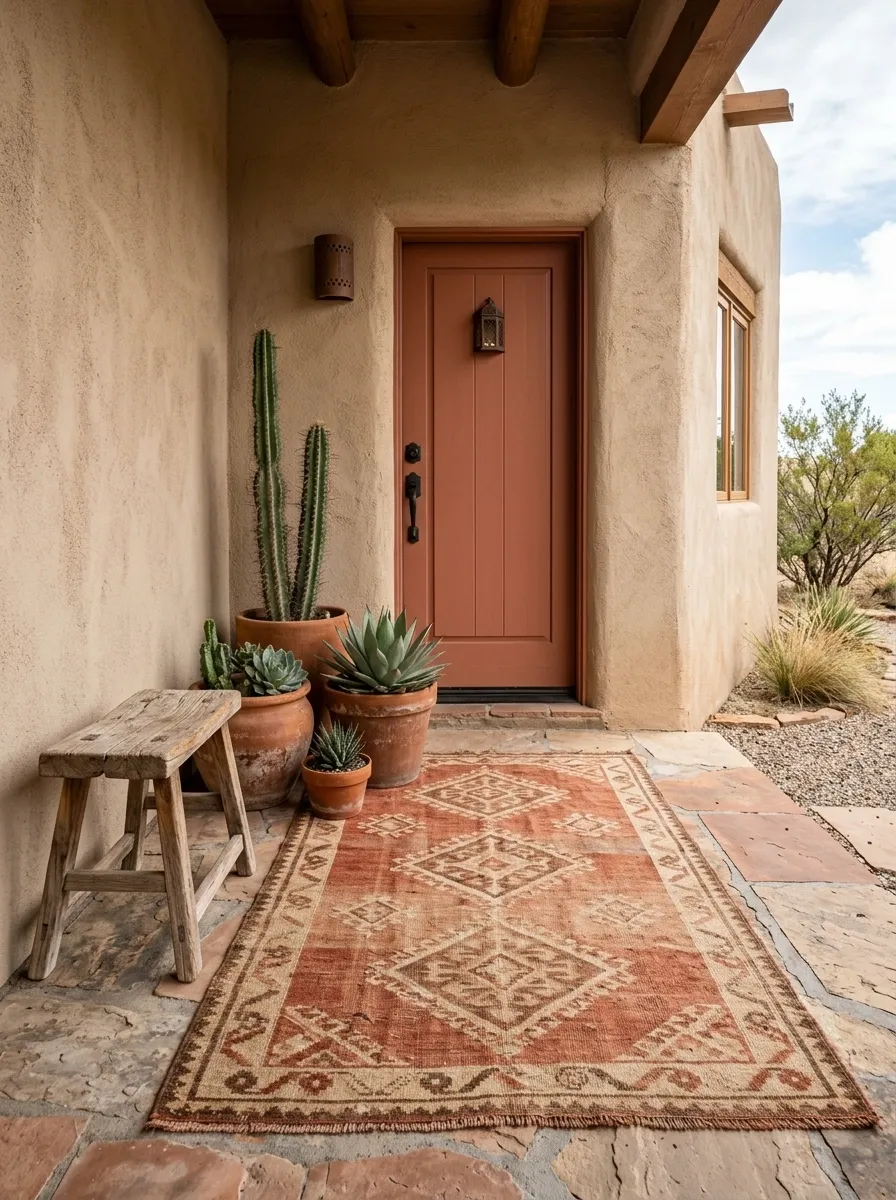
A compact stucco porch takes on a relaxed Southwestern character with a faded rust-and-sand rug, weathered wood stool, clay pots, and sculptural desert planting. The front door stays muted and warm so the rug can connect the earthy materials across the scene.
The palette feels natural because the strongest colors already belong to the materials. Rust echoes clay, sand connects with the stucco, and muted green comes from the planting rather than another decorative object.
Keep the plants architectural rather than dense. A few strong forms leave enough of the rug visible to preserve the visual center of the porch.
Soft Gray Rug With Layered Natural Textures
A pale gray rug creates a quiet foundation for a porch built almost entirely around texture. A woven chair, light timber bench, ceramic planter, and blue-gray door provide subtle shifts in tone without introducing strong pattern.
The design stays interesting because the surfaces are doing the work. Woven fiber catches light differently from wood, ceramic, and painted walls, while the gray rug connects them without demanding attention.
This is a strong direction for a porch that already has interesting architecture or natural views beyond it. The rug should remain soft and understated, allowing the surroundings to supply much of the character.
make one layered scene.
Large-Scale Botanical Rug In a Tiny Entry
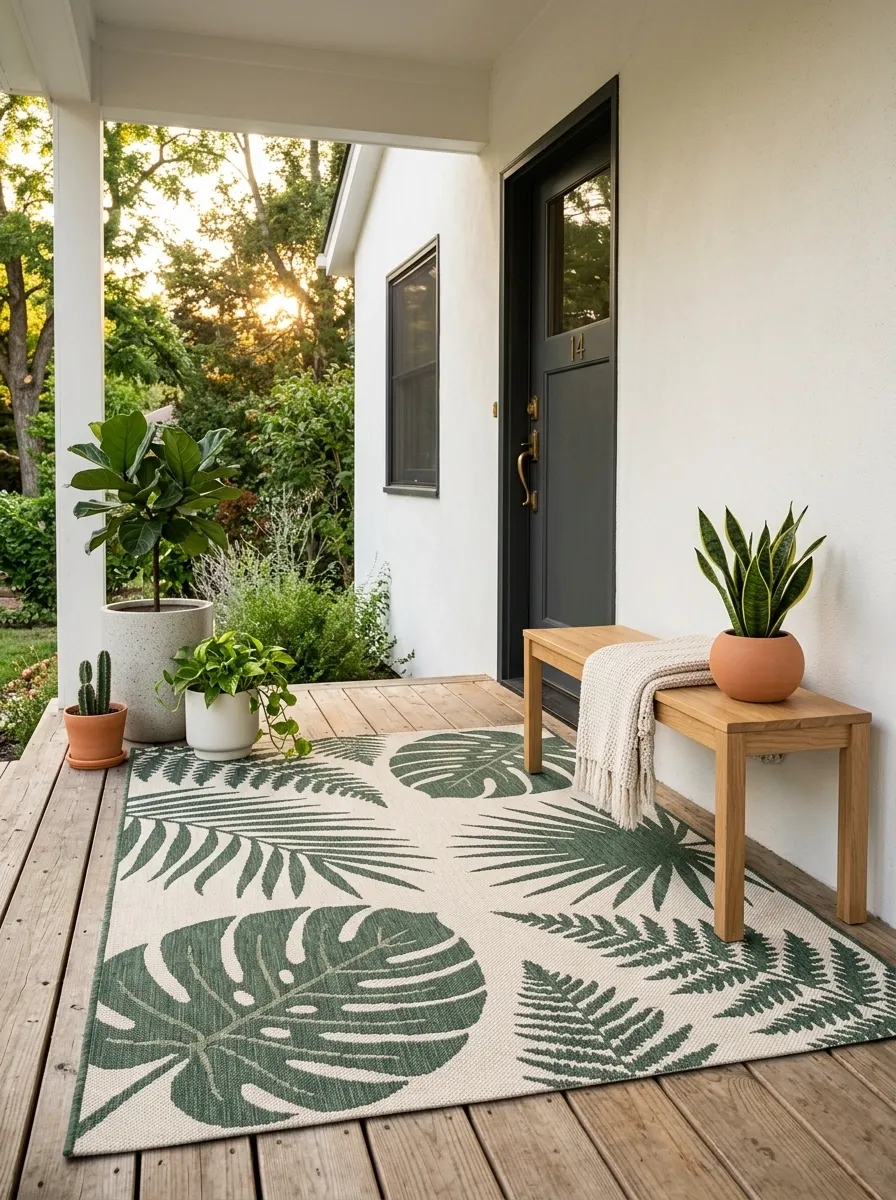
A small porch can handle a bold botanical rug when the rest of the composition is deliberately restrained. Large leaf shapes spread across the rug beneath a simple bench, plain front door, and a few carefully placed plants.
The oversized pattern is the feature. Smaller motifs would create a busier visual rhythm and make the limited floor area feel fragmented. Large leaves read as broad shapes from a distance, which helps the rug hold together as one surface.
Keep the actual planting simpler than the rug pattern. Repeating too many leaf shapes above and below the floor would make the composition feel overly themed.
Checkerboard Rug With Pale Stone and Warm Wood
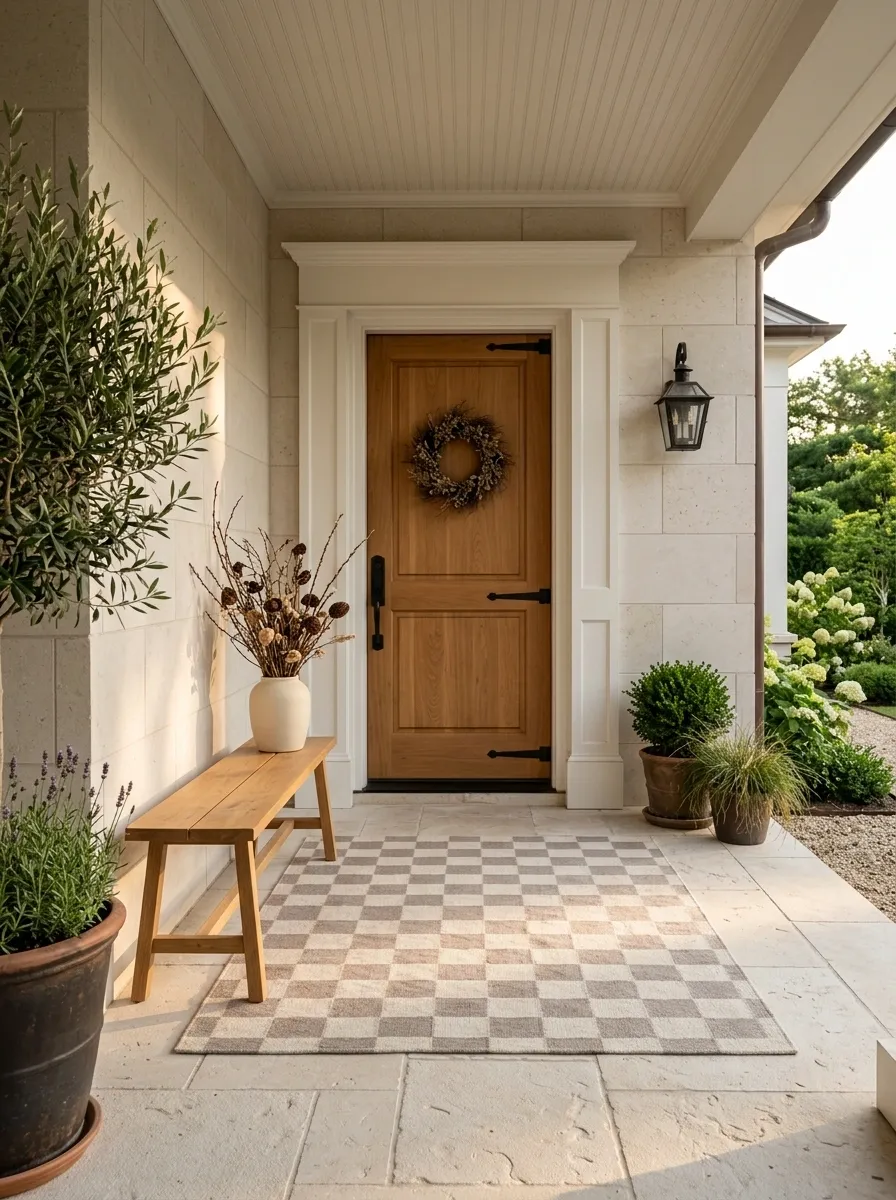
A pale stone porch gains graphic definition from a muted checkerboard rug, but the pattern remains softened by warm timber furniture and simple black hardware. The result sits between traditional and contemporary rather than committing fully to either style.
The rug and stone already create two competing surface patterns, so the furniture needs to act as a visual pause. Natural wood does that well, bringing warmth without introducing another strong graphic shape.
Choose a checker pattern with slightly softened contrast. Pure black and white can look severe against pale stone, while warmer checks keep the porch connected to its natural materials.
Layered Neutral Porch With a Handwoven Statement Rug
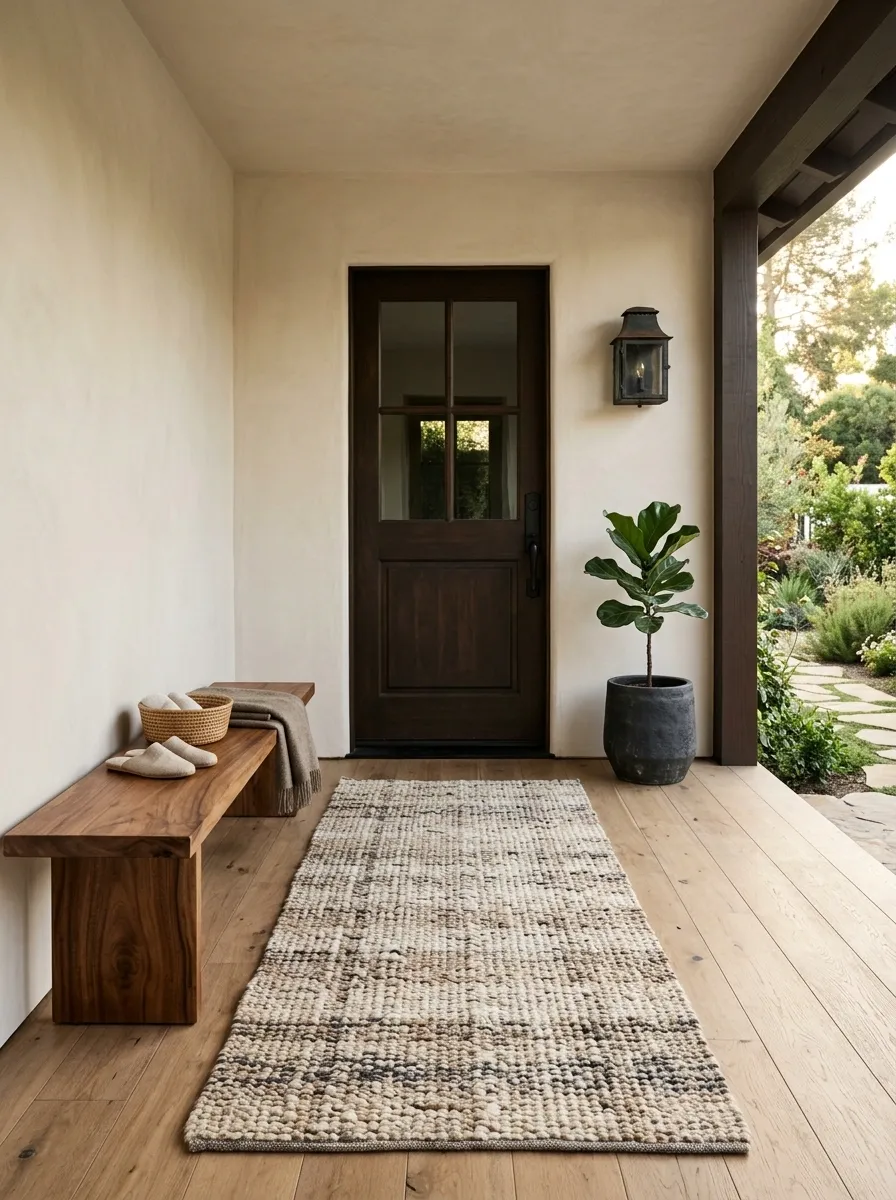
The final concept keeps the architecture almost entirely neutral and lets a handwoven-looking rug carry the personality. Cream, sand, muted brown, and faded charcoal appear in the textile, surrounded by a substantial wood bench, plaster-colored walls, aged metal lighting, and a few restrained plants.
Unlike the very minimal designs earlier in the collection, this porch has more visual depth. The rug has irregular texture, the wood has visible grain, and the aged metal introduces a darker thread through the composition.
The key is to repeat the rug’s darker tones sparingly. One charcoal lantern or planter is enough to connect the textile to the architecture without making the porch feel overly coordinated.
A Small Porch Should Feel Like One Composition
The most successful porch rugs don’t look like they were chosen separately from everything else. They reinforce something that’s already present, whether that’s the warmth of a wood door, the geometry of modern architecture, the faded character of old brick, or the soft colors of surrounding planting.
That makes the first step surprisingly simple: look at the porch before looking at the rug. Notice the dominant materials, the natural light, the walking route, and the colors that already belong there. Then choose a rug that strengthens that story instead of introducing another one.
For small entries, restraint usually creates the strongest result. Give the rug enough room to be seen, keep circulation clear, and let one memorable design decision lead the composition.