
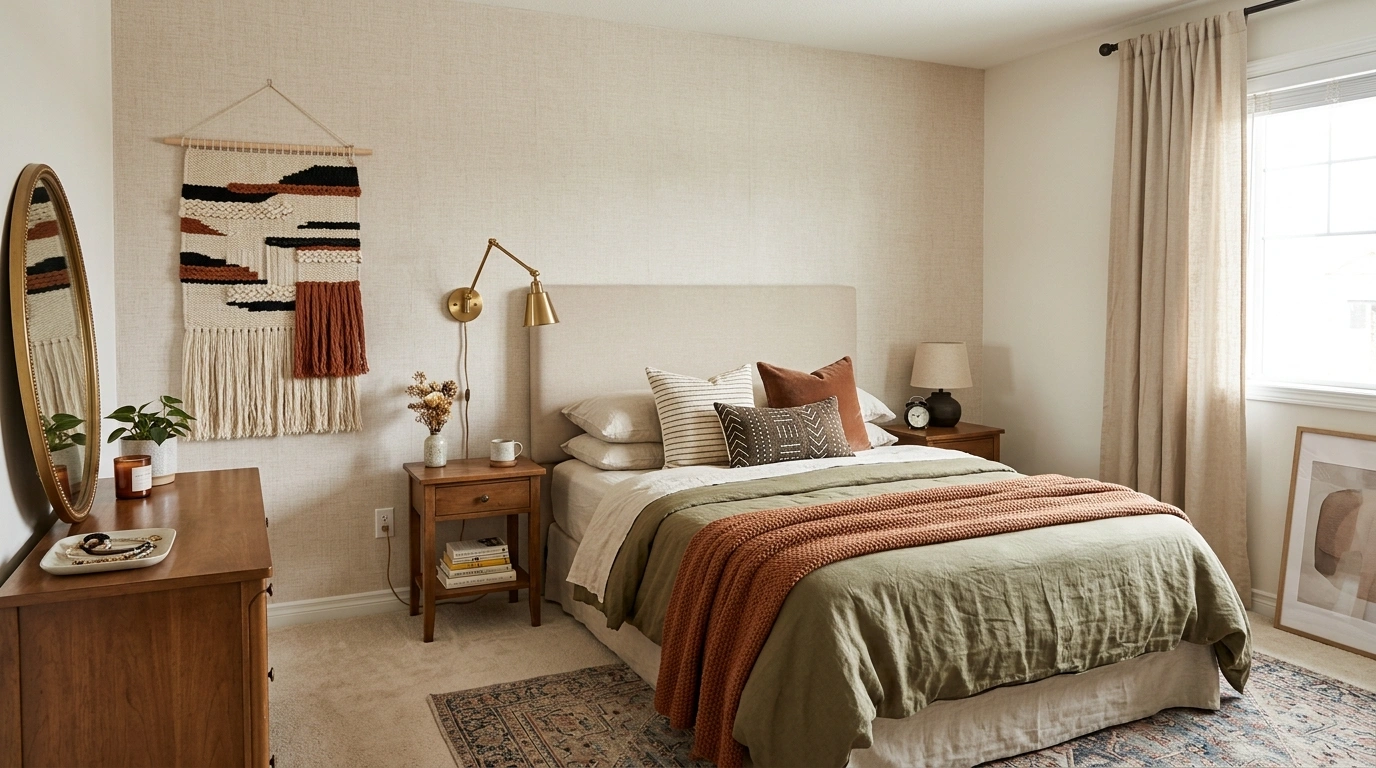
Rental bedrooms have a way of looking unfinished even when they’re clean, organized, and fully furnished. The walls are usually plain, the lighting is rarely flattering, and the furniture often feels like it was chosen for the property rather than the person living in it.
That doesn’t mean the room needs a renovation.
The bigger mistake is treating every rental restriction like a decorating restriction. You can still change the scale, softness, lighting, texture, color, and visual balance of the space. Those are the details that make a bedroom feel personal, and most of them don’t require permanent work.
The Rental Bedroom Formula: Change What You See, Not What You Can’t
A rental bedroom doesn’t need permanent renovation to feel finished. The strongest changes happen in the parts of the room that are easiest to control.
leave the walls alone.
Rental Bedroom Ideas
Layer the Bed With an Oversized Duvet
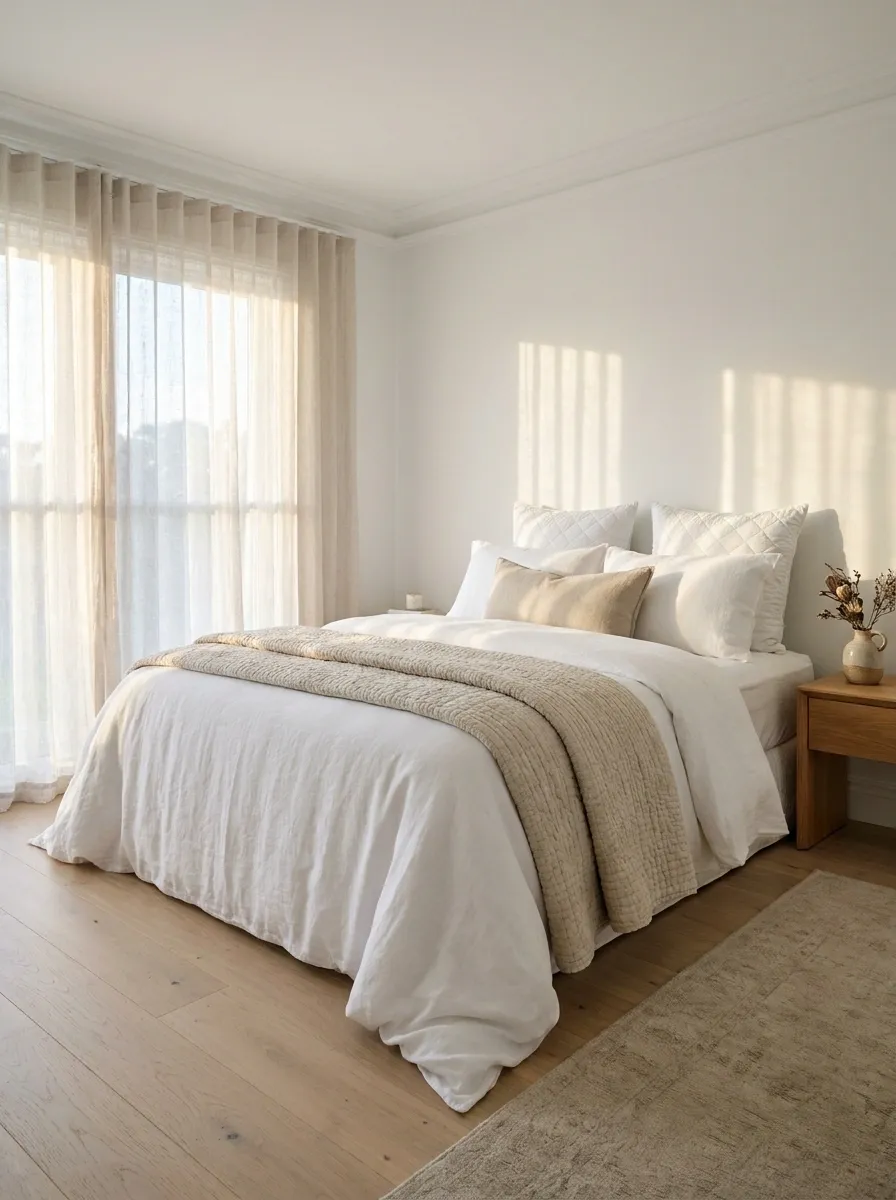
The bed is usually the biggest visual block in the room, so a flat, skimpy duvet makes the whole bedroom feel unfinished.
Choose a duvet that hangs generously over both sides, then add a folded coverlet or quilt near the bottom.
Keep the mix simple:
The oversized duvet hides the boxy rental bed frame and gives the room a softer silhouette. A lumbar pillow is enough for the finishing touch. There’s no need to cover the bed in a mountain of cushions.
Create a Romantic Canopy Oasis
Standard rental ceilings can feel cold and uninspiring, but draping soft sheer fabric overhead instantly softens the entire room. Suspend lightweight panels from the ceiling corners to frame the bed in a dreamy, architectural cocoon.
Weave warm fairy lights and cascading faux greenery through the fabric layers to introduce organic texture and a magical evening glow. This glowing canopy completely distracts from plain white walls and generic overhead fixtures.
Anchor the setup with classic neutral bedding and textured throws for a luxurious hotel-inspired feel. It is a completely temporary transformation that brings serious personality to a characterless space.
Hang Full-Length Curtains Above the Window
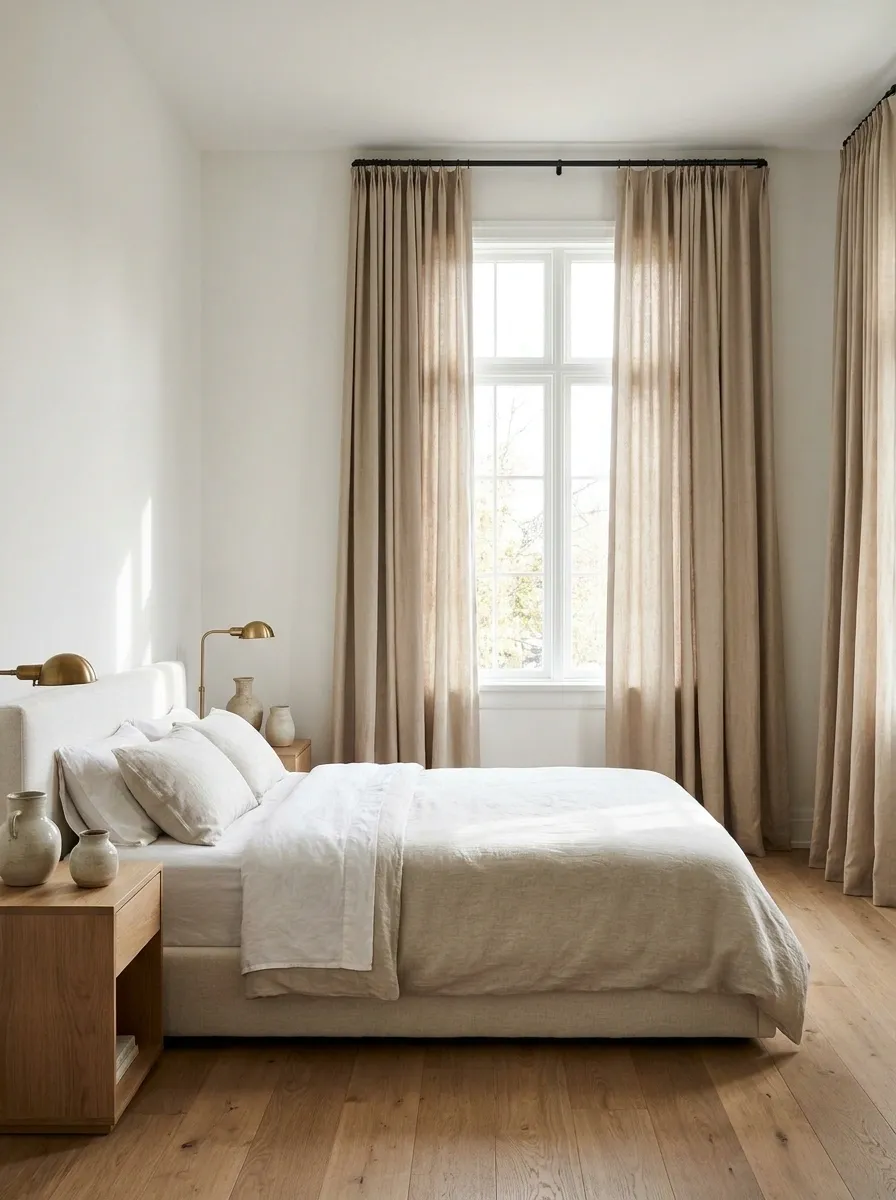
Short curtains make a bedroom look chopped up.
Mount the curtain rod as high as the wall allows within the rental’s existing setup, then let the panels fall close to the floor. The extra height pulls the eye upward and makes an ordinary window feel more substantial.
Before hanging them, check three things:
- Panels should reach close to the floor.
- The rod should extend beyond the window frame.
- The fabric should have enough width to look full when closed.
A warm neutral linen-look fabric works especially well because it softens hard window frames without demanding attention.
This is one of the simplest ways to make a plain rental bedroom look less like a temporary stop.
Ground the Space With Floor Bedding
Moving away from traditional bulky bed frames can make a compact rental bedroom feel remarkably open and airy. Placing a plush mattress directly on a low-profile base creates a modern, minimalist foundation that maximizes vertical wall space.
Arrange lush potted plants and natural wooden elements around the perimeter to bring warmth and life to the room. The abundance of greenery instantly softens sterile corners and adds an earthy, lived-in character.
Keep the color palette restricted to calming neutrals and rich wood tones to maintain a serene atmosphere. This effortless layout lets architectural details and natural light take center stage.
Replace the Harsh Ceiling Light With Layered Lighting
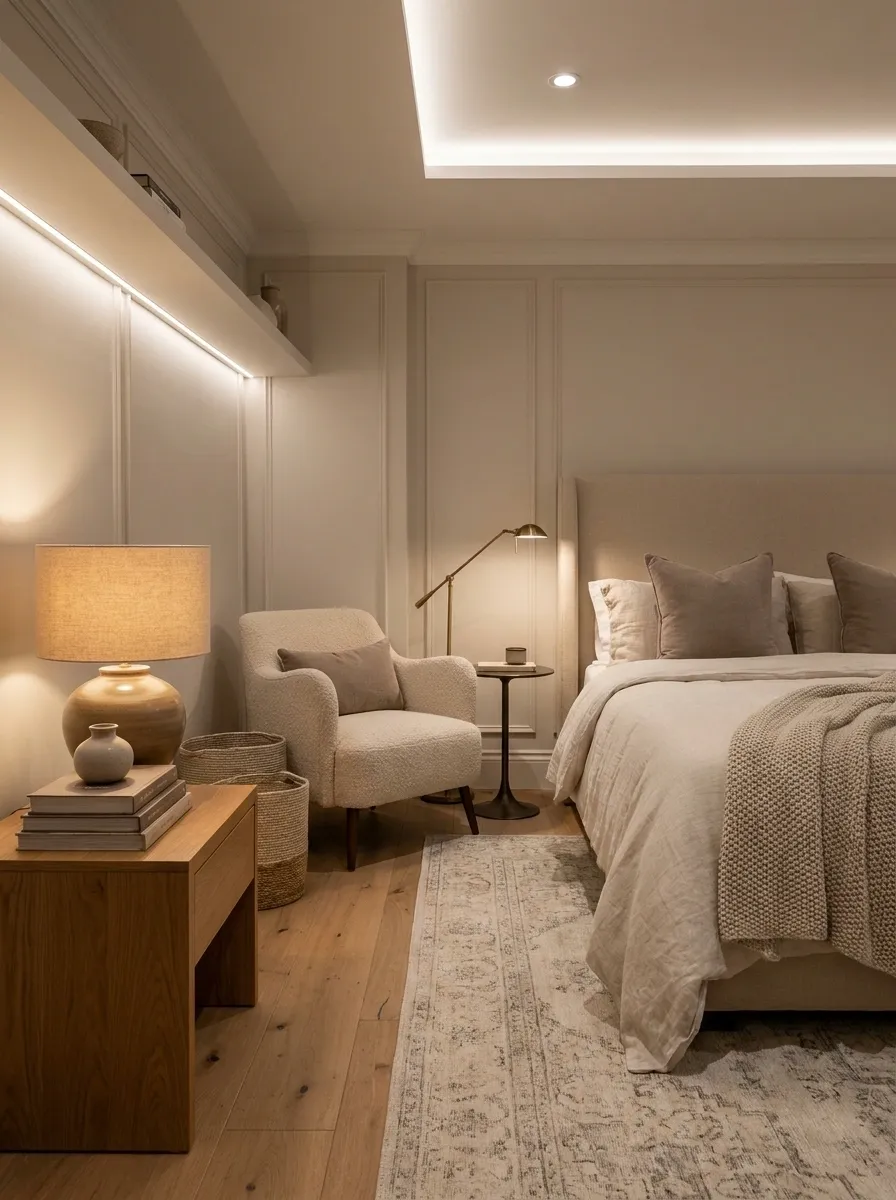
A single bright ceiling fixture makes even a well-decorated bedroom feel flat.
The fix isn’t complicated. Build three different light sources so the room still feels warm after sunset.
The important part is placement. Put a warm lamp beside the bed, another small light near a secondary zone, and let the ceiling fixture handle general visibility. The room instantly gains depth.
Warm Up With Ambient Lighting Zones
Overhead lighting alone will always make a rental bedroom feel harsh and uninviting after dark. Introduce multiple low-level light sources, like a glowing globe lamp on the floor and a warm bedside glow, to create intimate pools of light.
Combine these fixtures with textured furniture pieces, rich wood accents, and sprawling house plants to build rich visual depth. The play of light and shadow across the walls draws attention away from generic rental finishes.
Keep the flooring grounded with a patterned runner and position a casual seating area nearby. This layered approach ensures the bedroom feels exceptionally cozy and curated around the clock.
Use Removable Wallpaper Behind the Bed
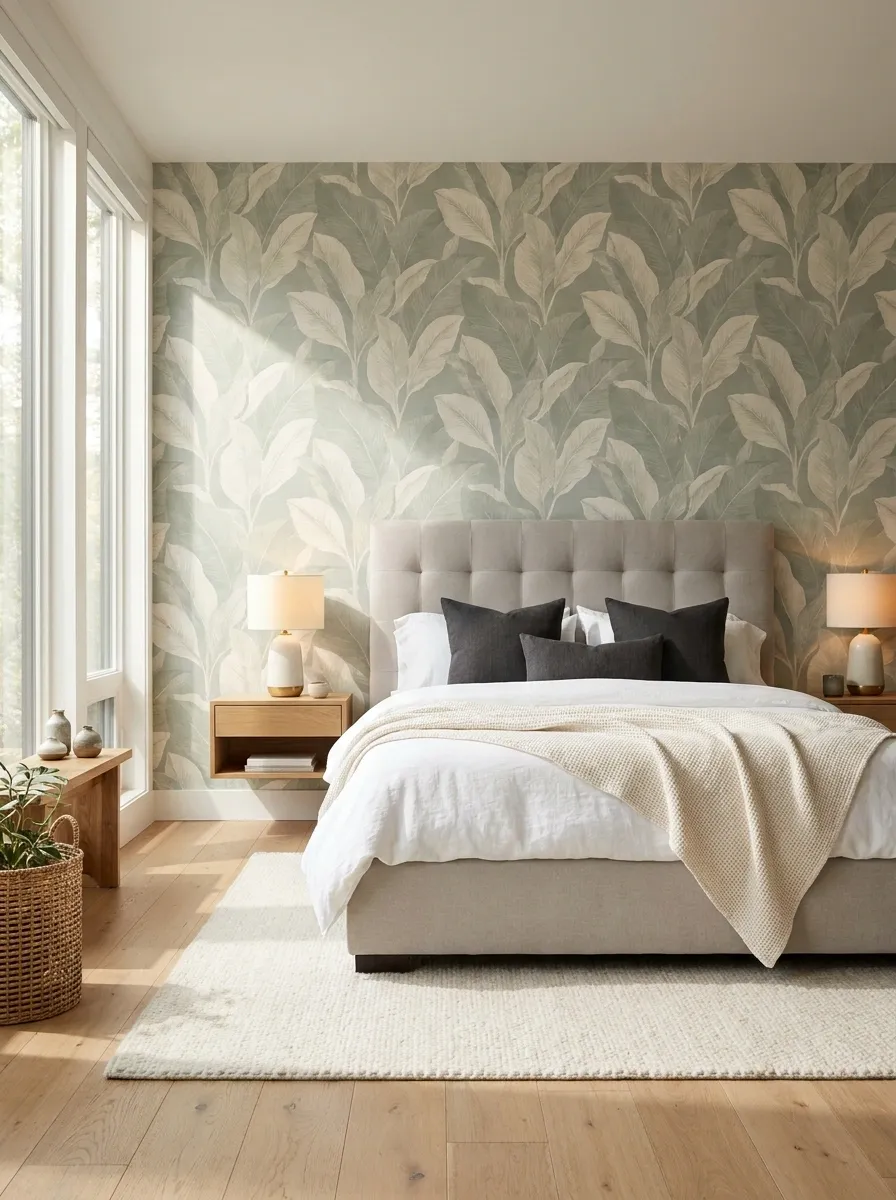
The wall behind the bed is the easiest place to create a focal point because the furniture already tells the eye where to look.
Removable wallpaper works best here when the pattern has some restraint. Skip tiny, busy prints that compete with bedding. A large botanical, quiet stripe, soft geometric, or textured-looking pattern gives the wall enough presence without making the bedroom feel crowded.
Before buying, test the color beside the actual bedding, curtains, and flooring. Rental lighting can change how the pattern reads during the day.
Keep the treatment contained. One intentional wall looks designed. Five competing walls look like a project that got out of hand.
Embrace Soft Monochromatic Blush Tones
Embracing a single cohesive color palette makes a small rental bedroom feel instantly high-end and thoughtfully designed. Layering different shades of soft pink and warm taupe across the bedding creates rich visual depth without overwhelming the eye.
Hang an eye-catching statement mirror above the bed to bounce natural light around the room and expand the visual boundaries. Pair it with an oversized botanical art piece to anchor the focal wall and mask plain surfaces.
Introduce a hanging wicker chair in the corner for a touch of unexpected charm and functional seating. Finished with a plush faux fur rug on the floor, the entire space feels undeniably chic and entirely your own.
Add a Large Rug That Extends Past the Bed
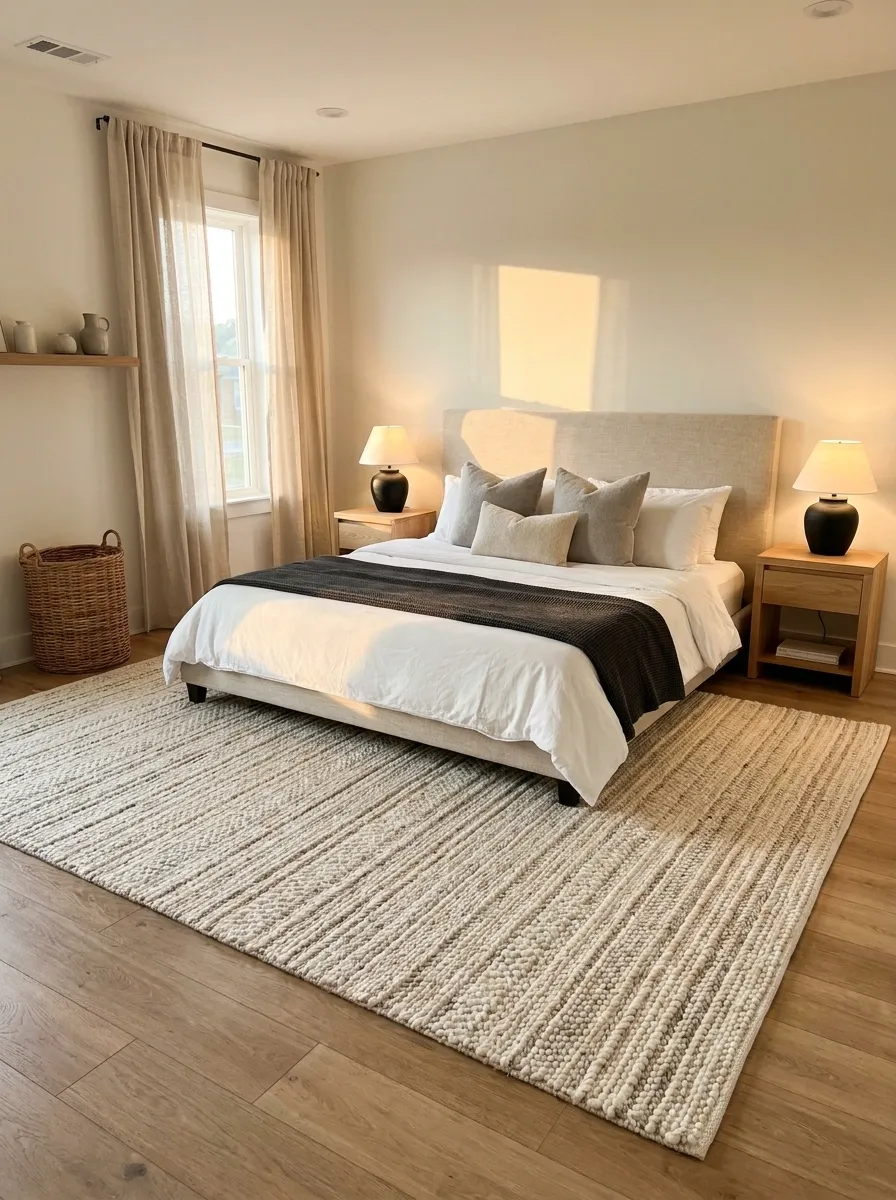
A tiny rug beside the bed makes the floor feel disconnected from everything else.
Use a large rug that extends beyond the sides of the bed and reaches far enough toward the foot to visually anchor the entire sleeping zone.
For smaller rooms, the rug doesn’t need to fill the whole floor. It needs to make the bed look grounded.
Place the rug first, then center the furniture around it.
centered on the rug
A textured neutral rug is the safest choice for a rental because it works with changing decor later. More importantly, it covers a large expanse of ordinary flooring and makes the bedroom feel layered instead of furnished piece by piece.
Create a Headboard Without Installing One
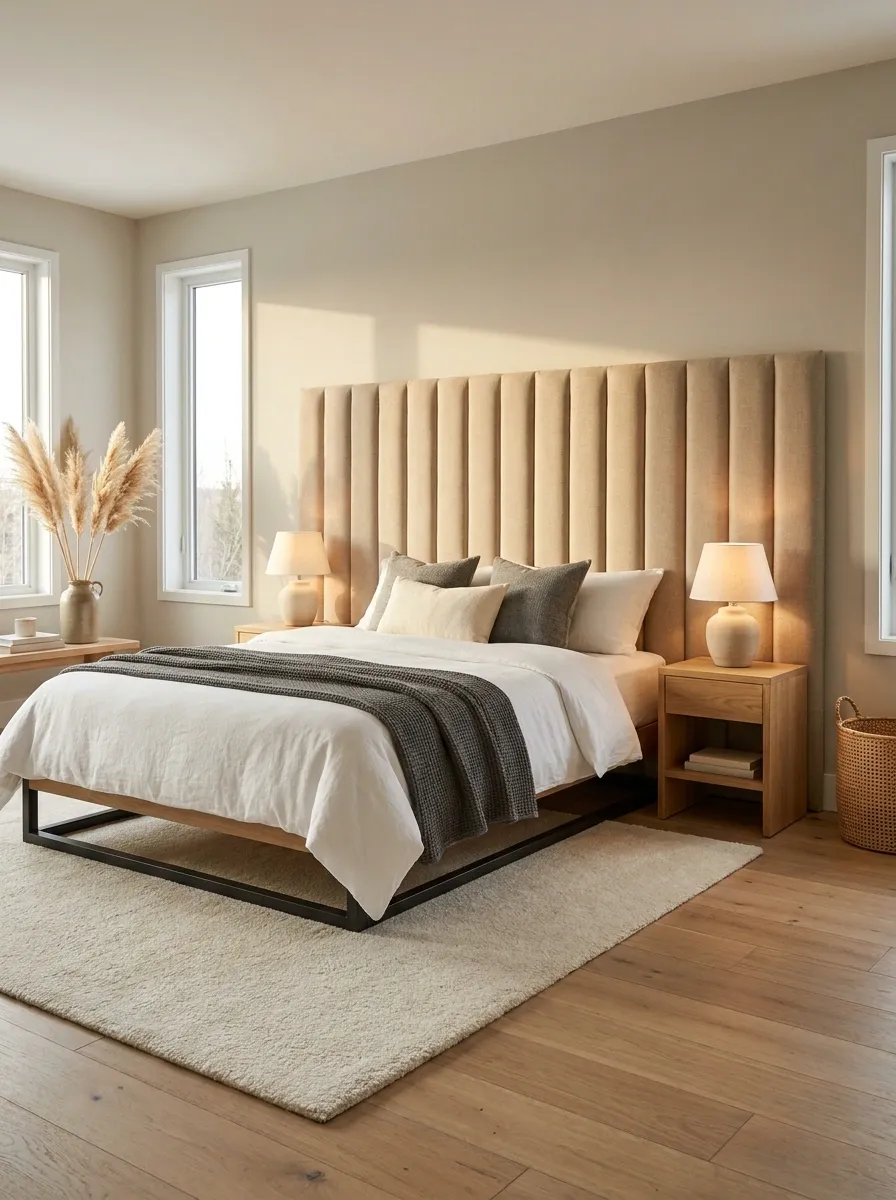
A rental bed doesn’t need an expensive built-in headboard to look finished.
Hang a wide piece of removable fabric, position a large upholstered panel behind the mattress, or use two oversized cushions against the wall. The goal is to create a strong vertical shape behind the bed.
Keep the width slightly wider than the mattress so the sleeping area doesn’t look squeezed.
The simplest setups often look better than a fake headboard that’s too small. Give the bed one strong backdrop and let the bedding do the rest.
Make the Nightstands Match Even If They Don’t
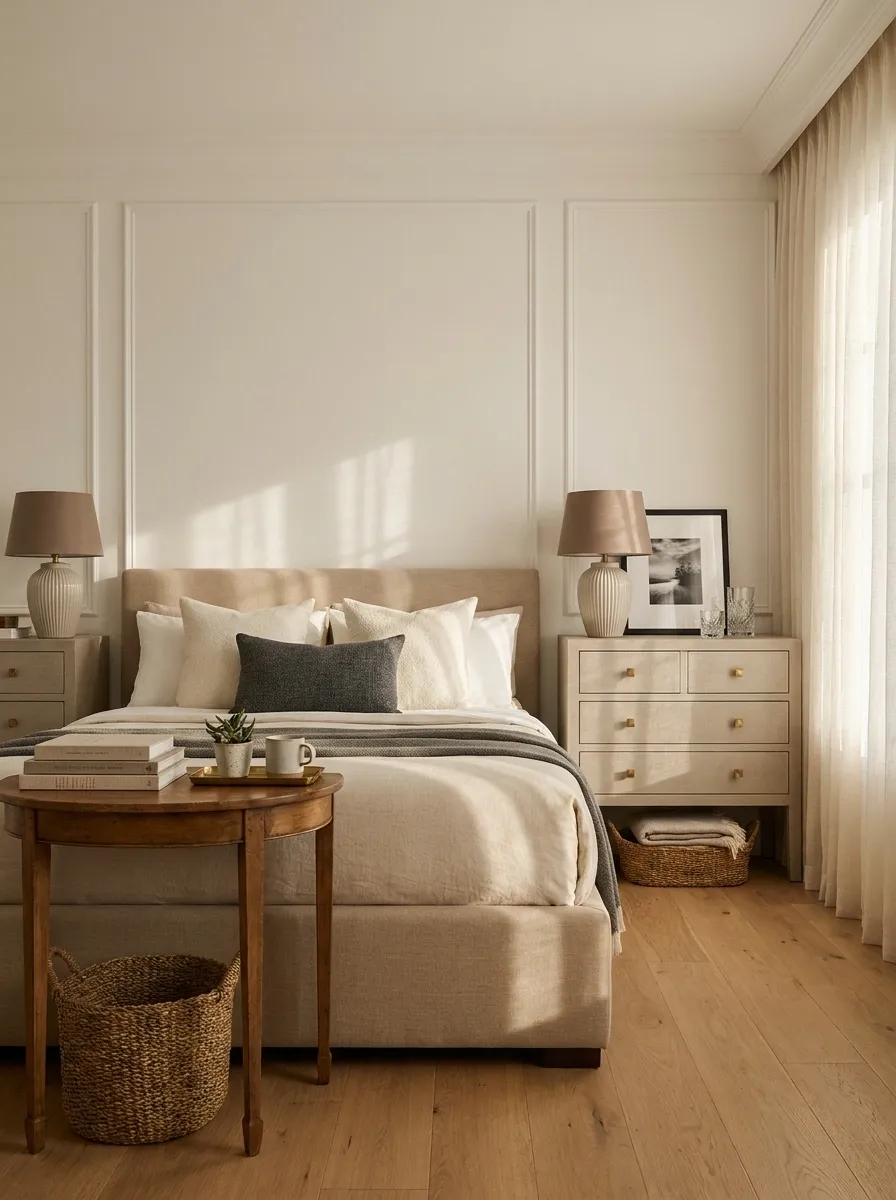
Matching nightstands aren’t required. Matching visual weight is.
A small round table beside a chunky dresser will look unbalanced unless the objects sitting on top create enough weight on each side. Keep the surfaces similar in height where possible and repeat at least one element.
A pair of lamps is the easiest solution, even when the tables underneath are completely different.
The eye reads the two bedside zones as a pair. Balance matters more than identical furniture.
Hide Rental Blinds Behind Better Window Treatments
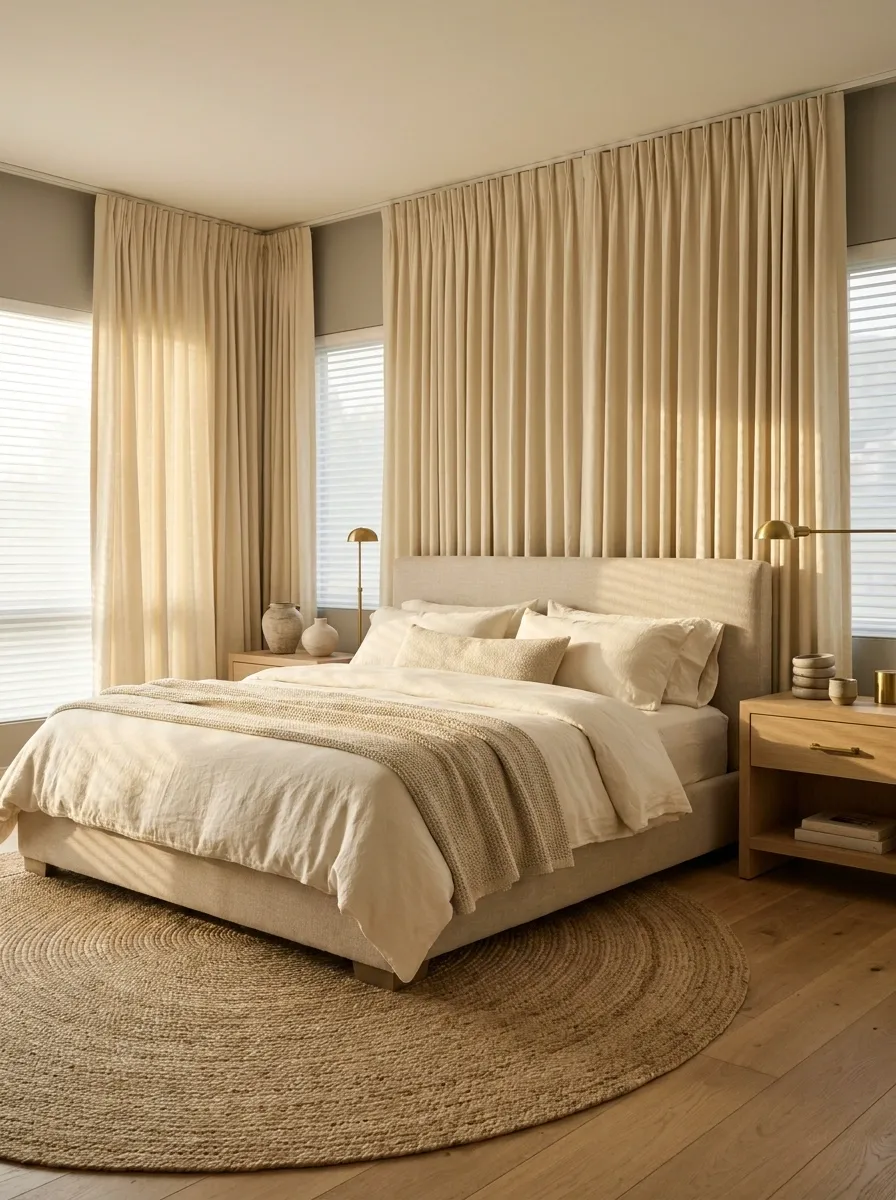
Those basic rental blinds can stay exactly where they are. They don’t need to become the star of the room.
Layer fuller curtains in front of them instead. The blinds still handle privacy and light control, while the fabric creates a softer, more finished window.
This approach is especially useful when removing or replacing the existing window hardware isn’t allowed. The room gets the visual upgrade without losing its practical setup.
Add a Narrow Bench or Ottoman at the Foot of the Bed
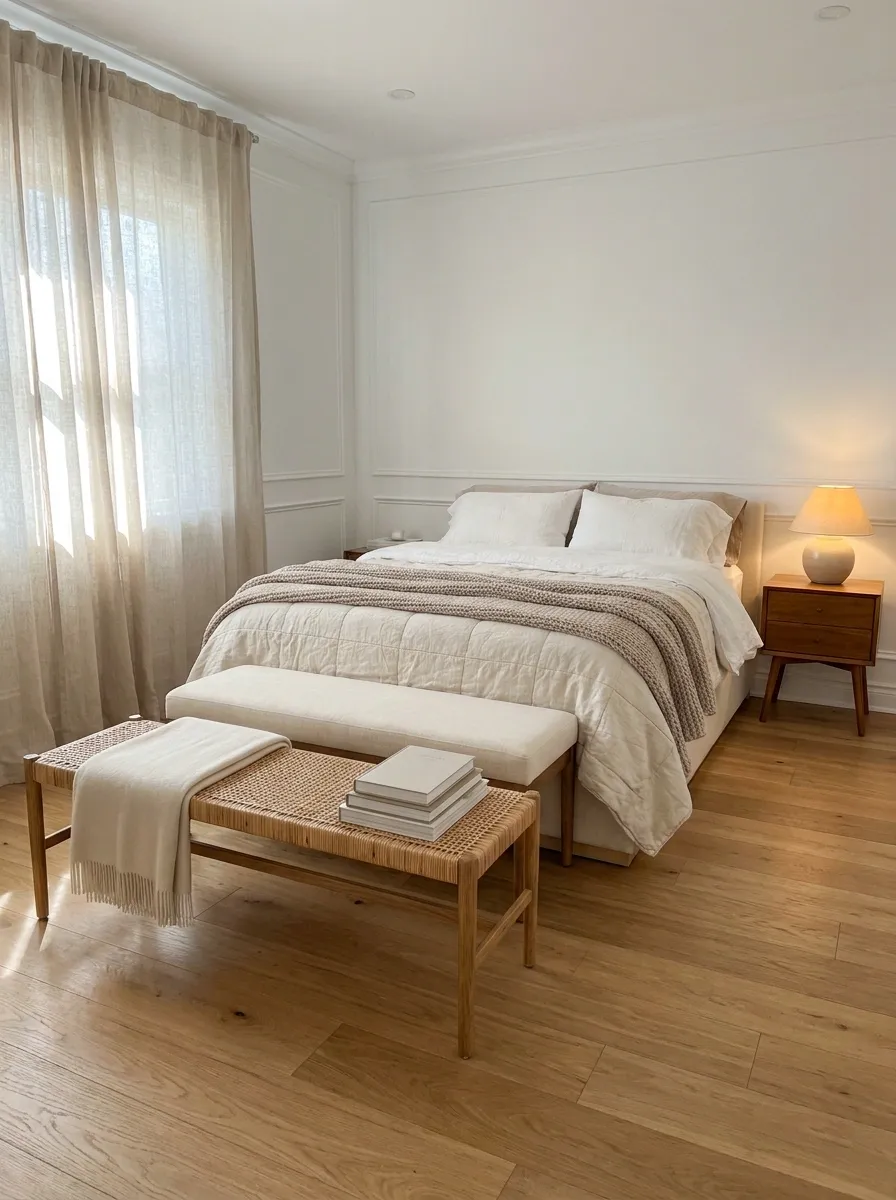
The empty space at the foot of the bed is often wasted. A narrow bench or compact ottoman fills it without making the room feel crowded.
Pick a piece that leaves a comfortable walking path around it. Upholstery adds softness, while a wood or woven design brings another material into the room.
Big visual payoff.
It gives the bed a proper endpoint, which makes the entire room feel more deliberate. In a small bedroom, choose an ottoman that can double as hidden storage.
Build a Warm Bedside Lighting Corner
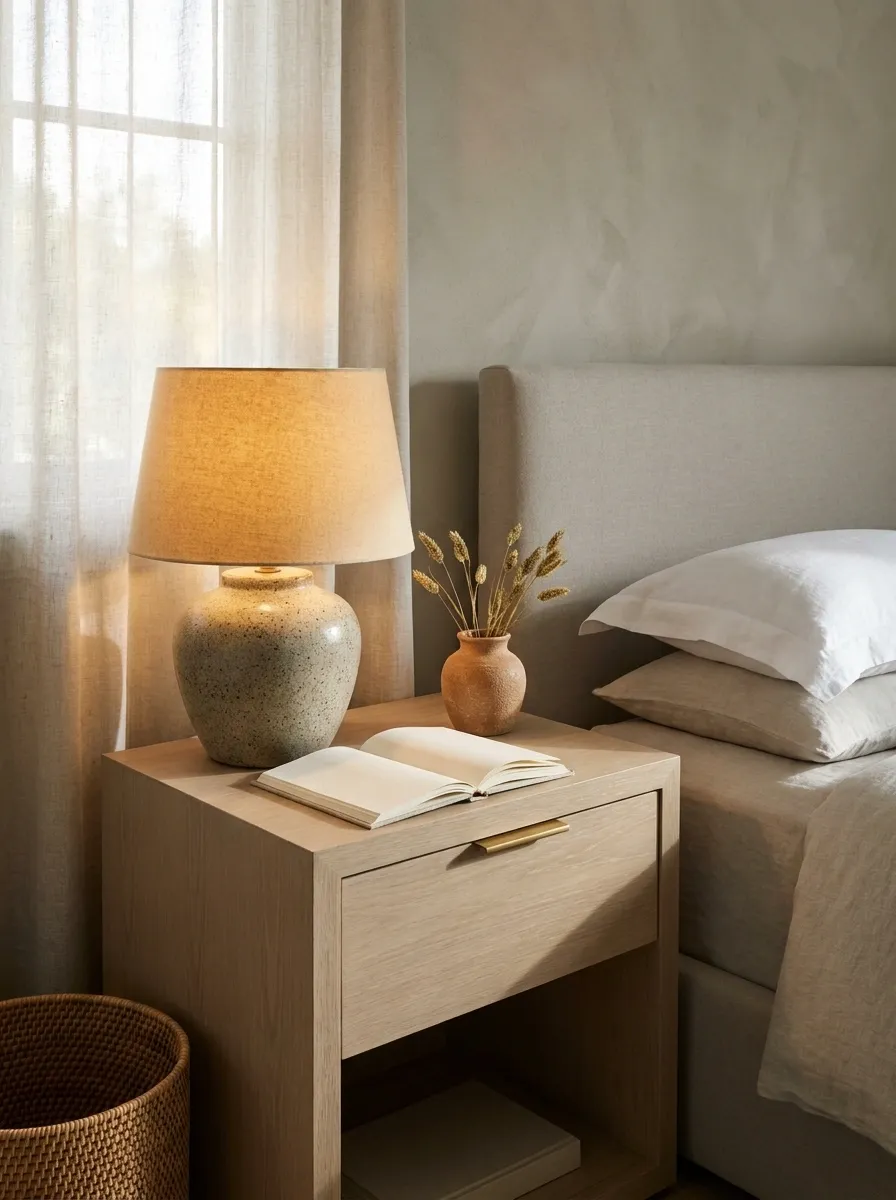
A bedside lamp shouldn’t sit there as a lonely object. Give it a small composition.
Pair the lamp with one useful item and one decorative item. A book, small framed print, ceramic tray, or little vase is enough.
That little cluster creates a finished bedside scene instead of another piece of furniture pushed against a wall.
Make a Rental Dresser Look Intentional
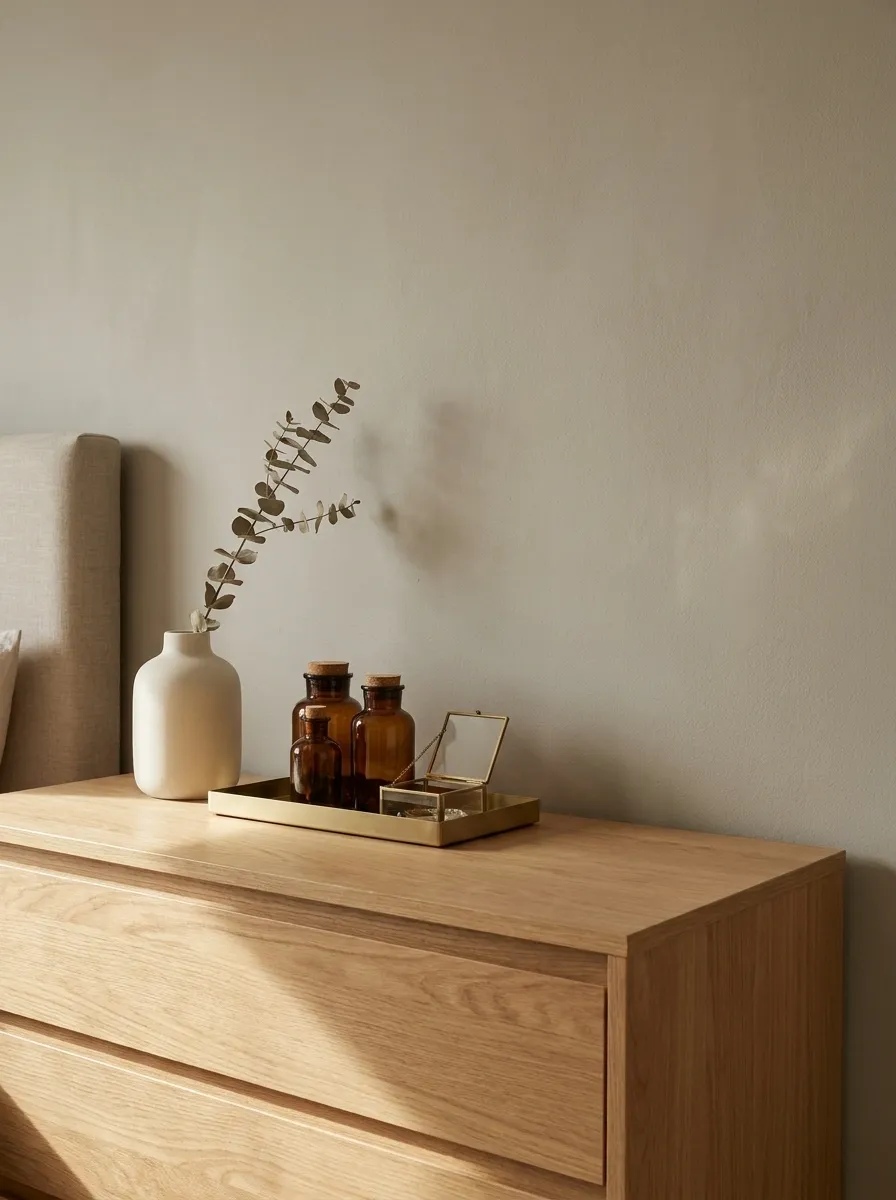
A dresser becomes clutter surprisingly fast. Random perfume bottles, receipts, cables, and half-used products can turn a decent piece into visual noise.
Give the top three distinct zones instead: one decorative, one functional, and one open.
The empty section matters. A clear patch of dresser surface makes the objects around it look more deliberate, not less decorated.
Cover an Ugly Wall With a Removable Textile
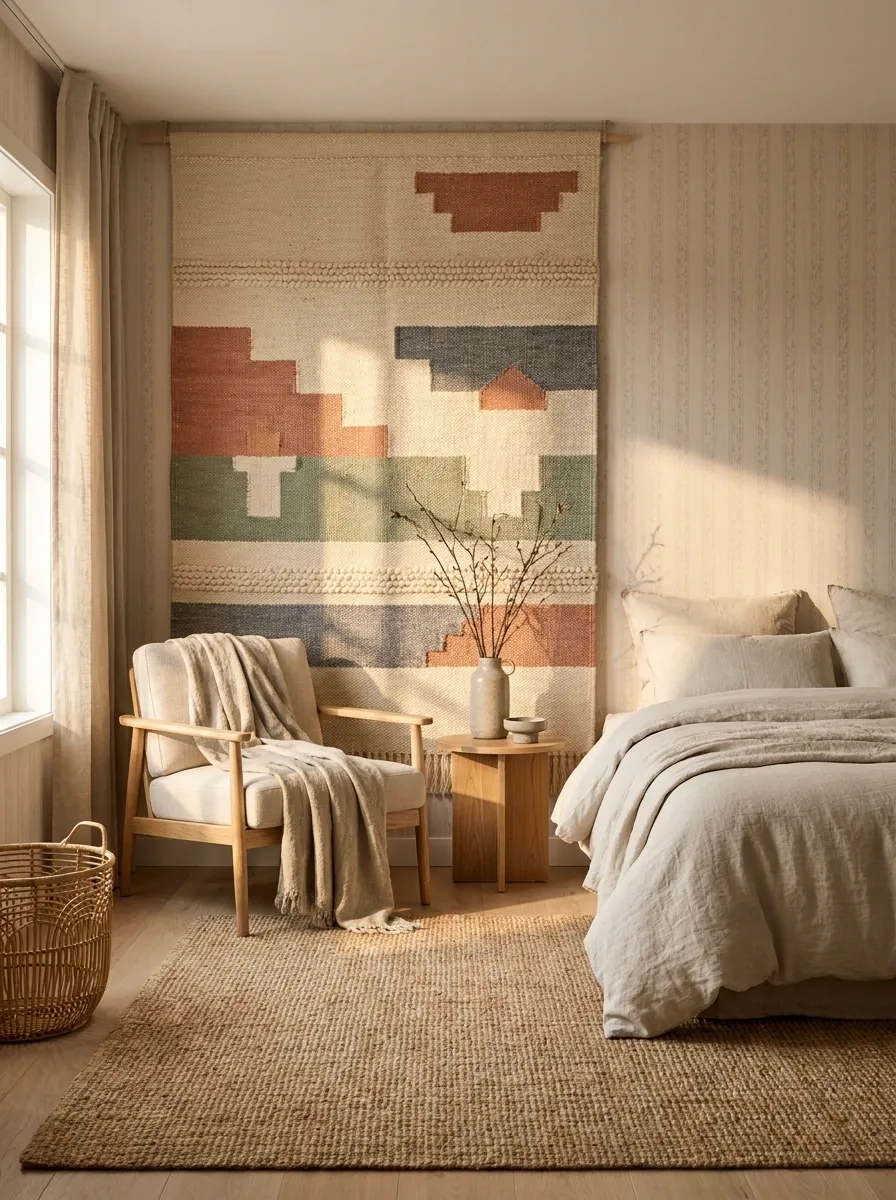
Some rental walls don’t need decorating. They need hiding.
A large woven textile, lightweight tapestry, or fabric wall hanging can cover a dated surface without committing the room to permanent changes. Choose something with enough visual weight to look intentional from across the room.
Keep the rest of the wall fairly quiet. A textile already has pattern, texture, and scale working together.
TEXTILE
This works especially well behind a reading chair, opposite the bed, or on a wall with an awkward finish that never quite looks right.
Use Mirrors to Fix a Flat or Dark Bedroom
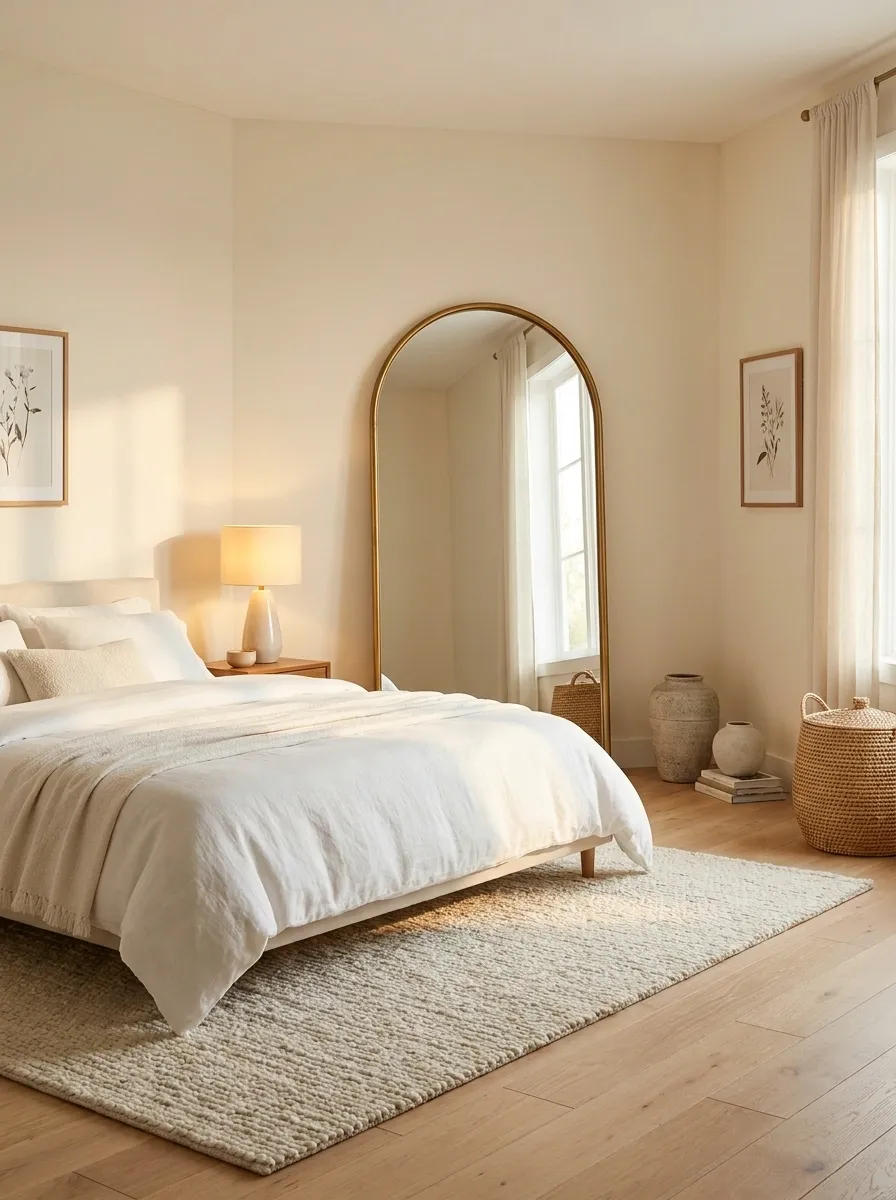
A mirror shouldn’t automatically go where an empty wall happens to be.
Place one where it can reflect daylight, a lamp, artwork, or another attractive part of the room. That gives the reflection something worth seeing.
A tall mirror works particularly well in a bedroom because it adds height while making the room feel more open.
That last rule matters. Reflection can make a room feel larger, but it can also multiply clutter.
Create a Small Reading Corner From Unused Space
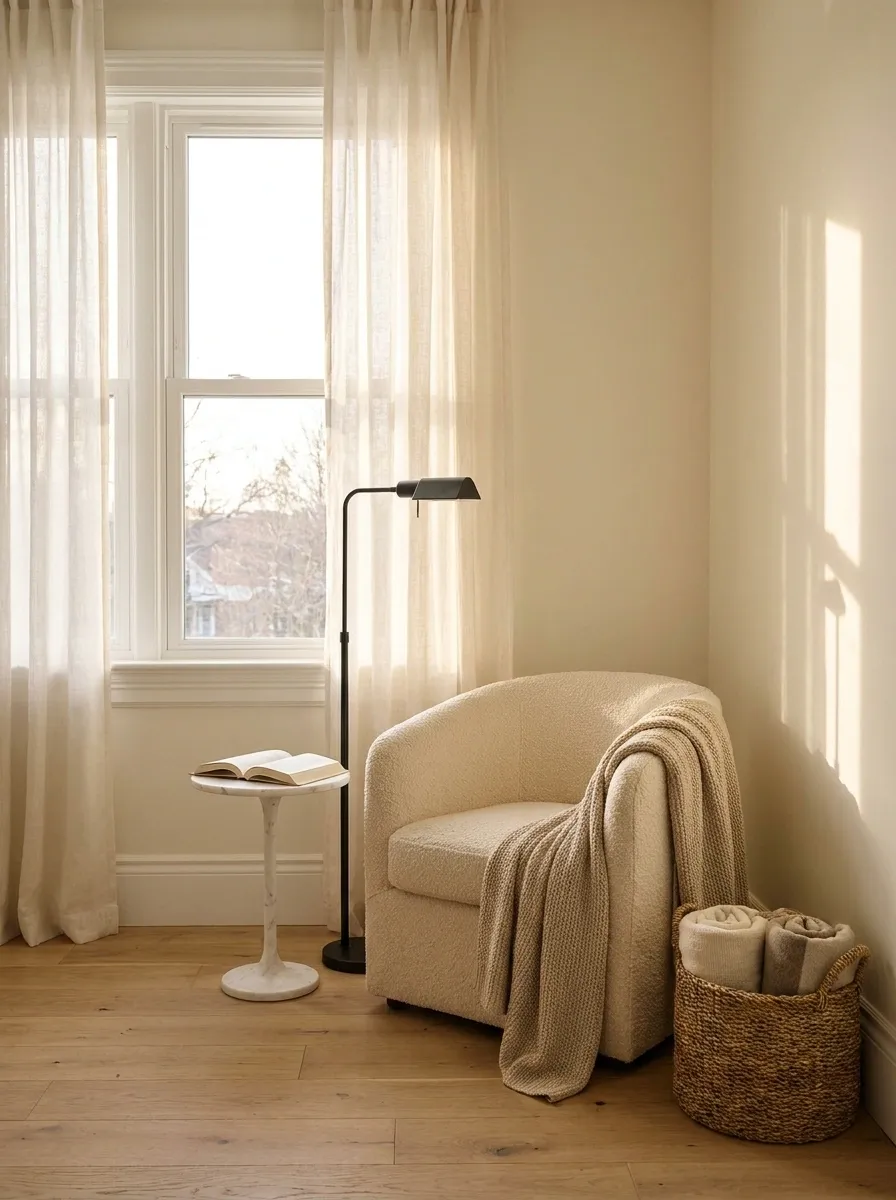
A bedroom doesn’t need a huge seating area to feel finished.
A forgotten corner beside a window, dresser, or closet can become a simple reading zone with one compact chair and a small light. Add a throw and a little side table only if the footprint allows it.
The corner should feel useful rather than staged. A place to sit, read, put on shoes, or enjoy a quiet five minutes gives the bedroom more purpose.
Hide Cords Instead of Letting Them Ruin the Room
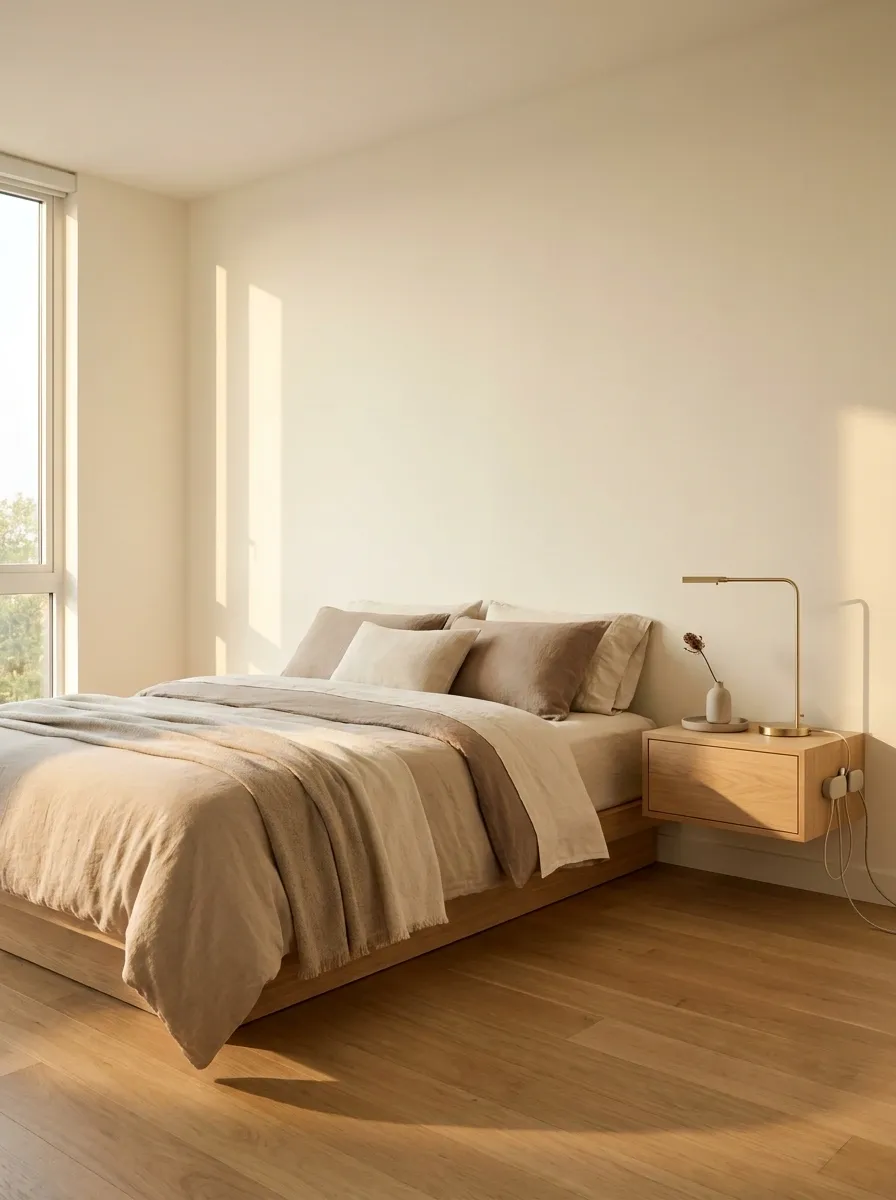
Nothing makes a carefully styled bedroom look unfinished faster than a charging cable hanging across the floor.
Route cords along furniture edges, gather extras neatly, and keep charging devices where they’re actually used. A small cable box or discreet cord organizer can handle the visual mess without altering the room.
A clean floor makes a surprisingly big difference, especially in small rental bedrooms where every visible line of clutter stands out.
Give the Bedside Area a Real Drop Zone
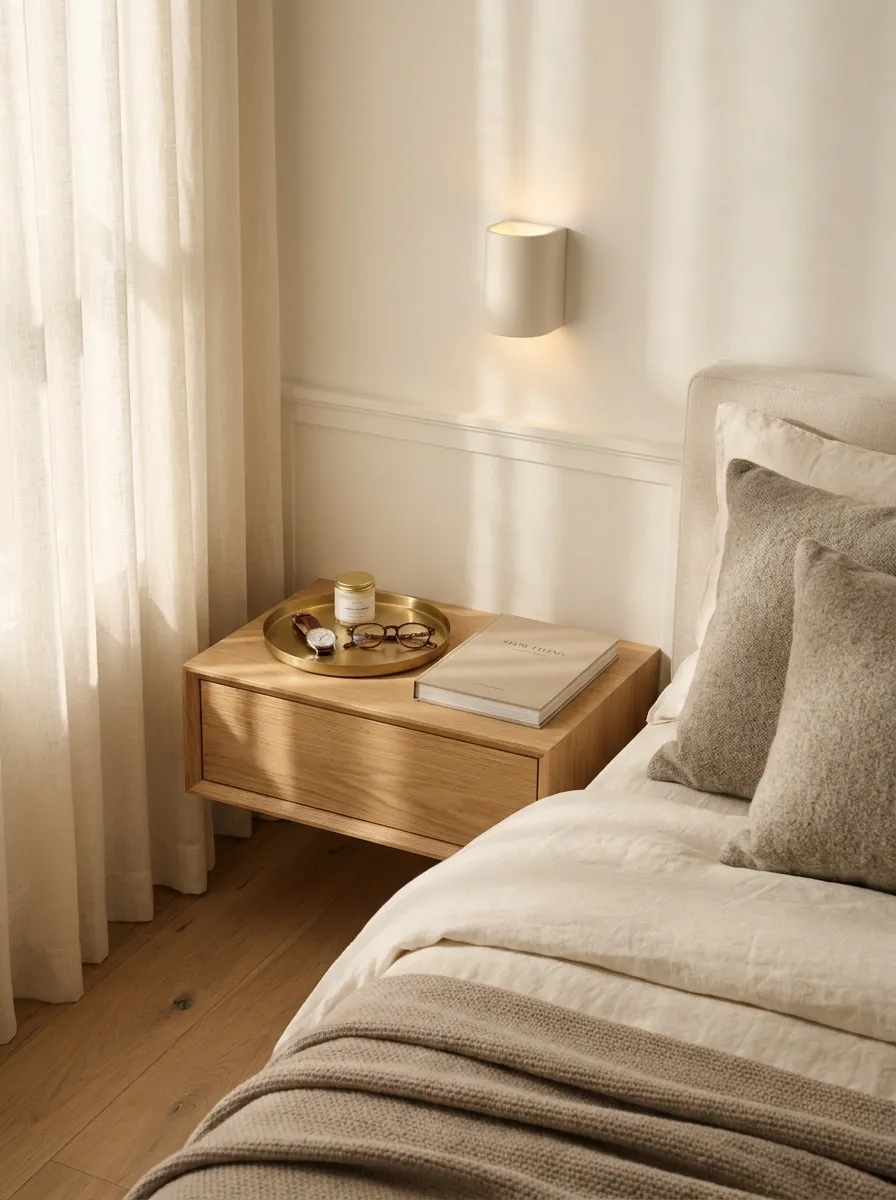
The bedside table shouldn’t become a dumping ground for everything carried into the bedroom.
Create one small landing area for the things that genuinely belong there. A shallow tray can hold a watch, glasses, lip balm, keys, or other nightly essentials without making the surface look messy.
The goal isn’t an empty nightstand. It’s a surface where everything has an obvious place.
That small distinction makes the bedroom feel calmer every night instead of only after a major clean-up.
Layer Two Different Sources of Texture on the Bed
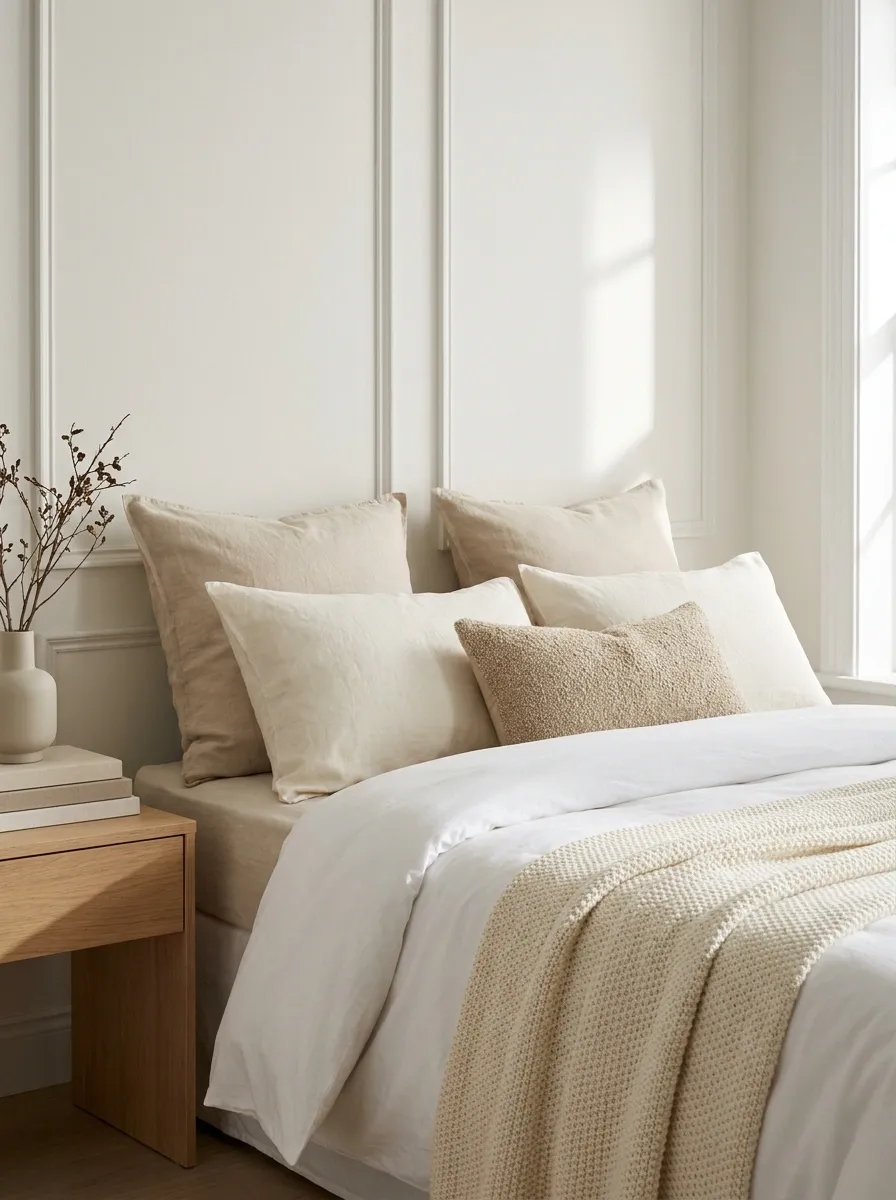
A bed can use the right colors and still look flat.
Texture fixes that faster than adding more decoration. Pair a smooth duvet with a chunky throw, washed linen pillowcases with a woven blanket, or crisp cotton with a nubby lumbar cushion.
The trick is contrast. Don’t pile on five versions of the same fabric.
Start with the bedding, then add one rougher texture. That’s enough to stop the bed from looking like a flat rectangle of fabric.
Use Plug-In Sconces Without Hardwiring Anything
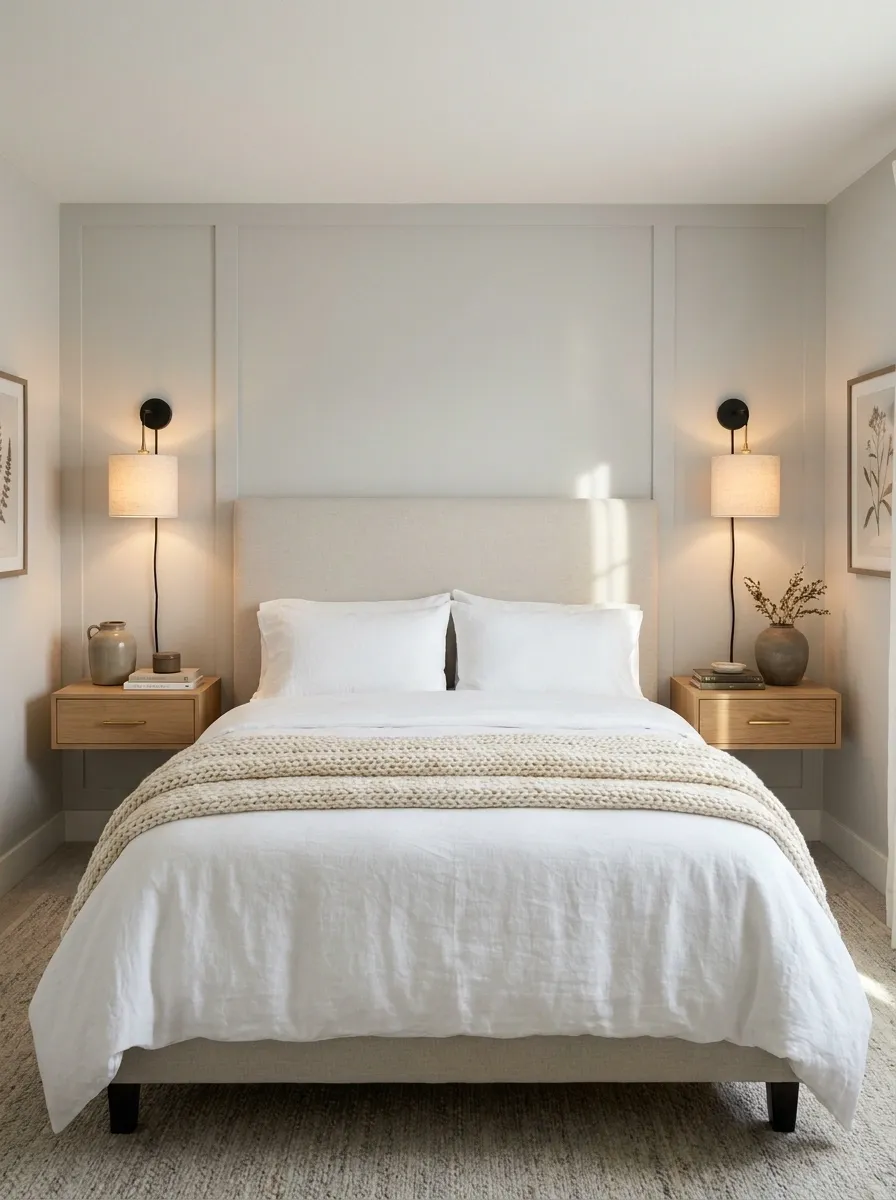
A bedside sconce gives a bedroom a more built-in look without turning it into a construction project.
Choose a plug-in version, run the cord neatly down the wall side, and keep the lamp height consistent on both sides when using a pair.
The visual payoff is strongest above small nightstands where a table lamp would eat up valuable surface space.
Add Personality With Collected Decor, Not Matching Sets
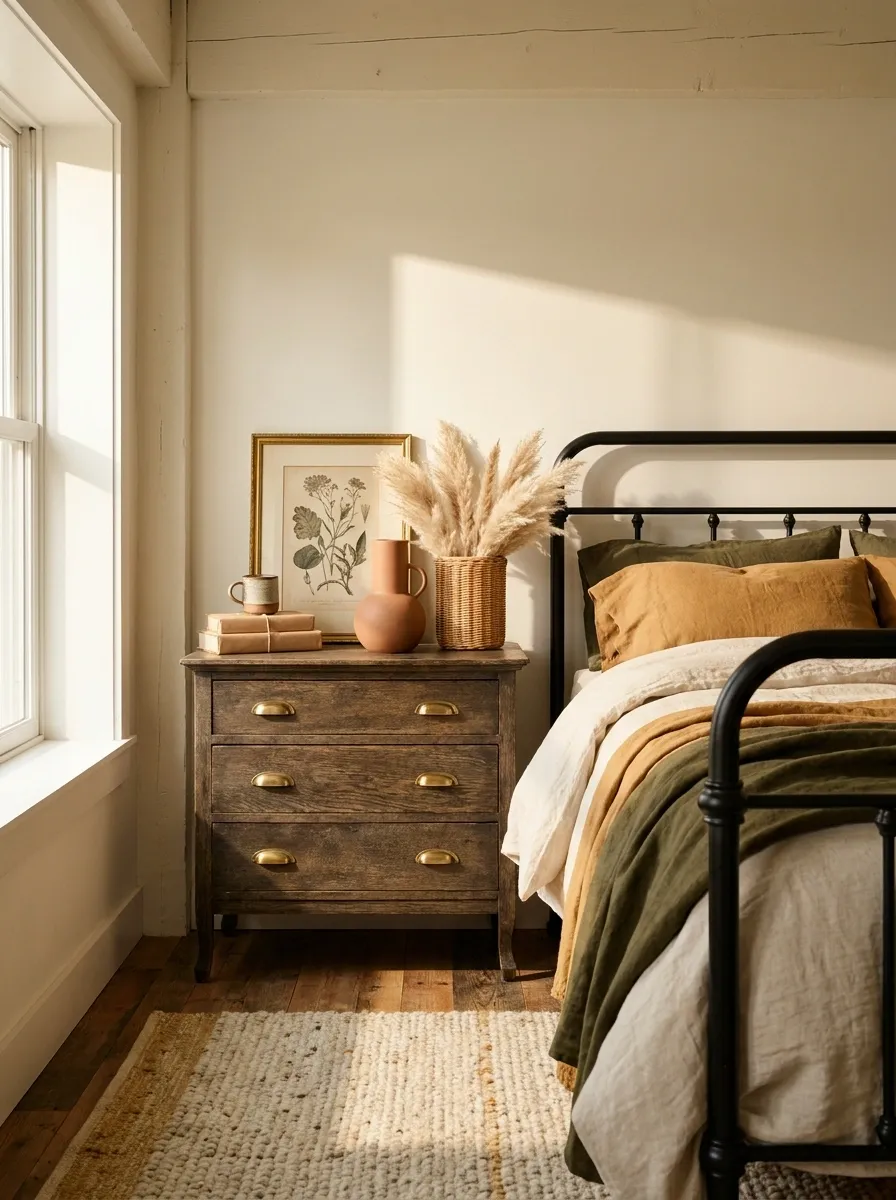
A bedroom starts feeling generic when every accessory looks like it came from the same collection.
Use a mix instead. Pair one modern object with something vintage-looking, a framed print with a small ceramic piece, or a clean lamp with a woven basket.
Each item should have a reason for being there. That’s what separates a personal room from a display set.
Make a Cheap Rental Bedroom Feel More Expensive With Scale
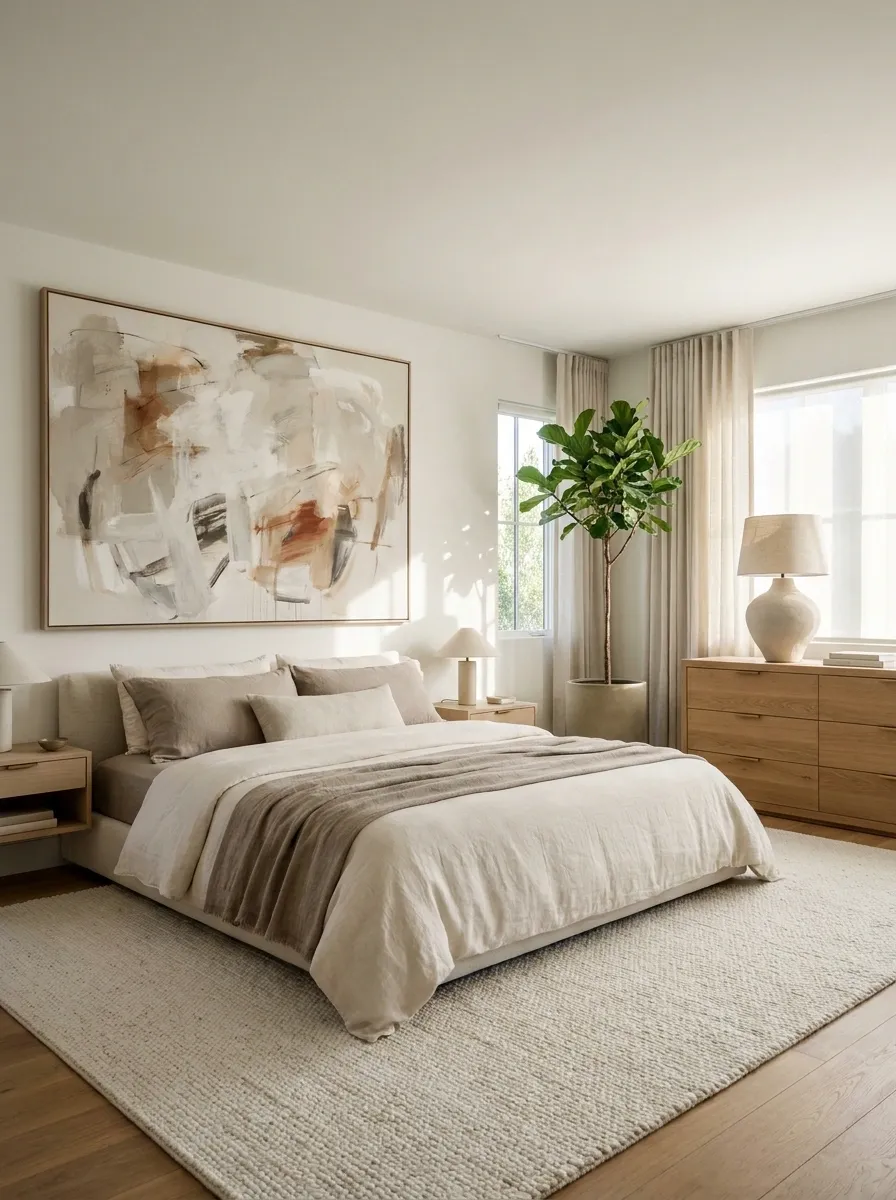
Expensive-looking rooms aren’t necessarily filled with expensive things. They simply tend to have better scale.
A tiny lamp on a huge dresser looks lost. Three miniature frames above a wide bed look accidental. A narrow rug floating in the middle of a room makes the furniture look disconnected.
Use fewer pieces, but make them large enough to hold their ground.
Scale is one of the easiest ways to change how a room reads without increasing the decorating budget.
Finish a Rental Bedroom With One Deliberate Personal Detail
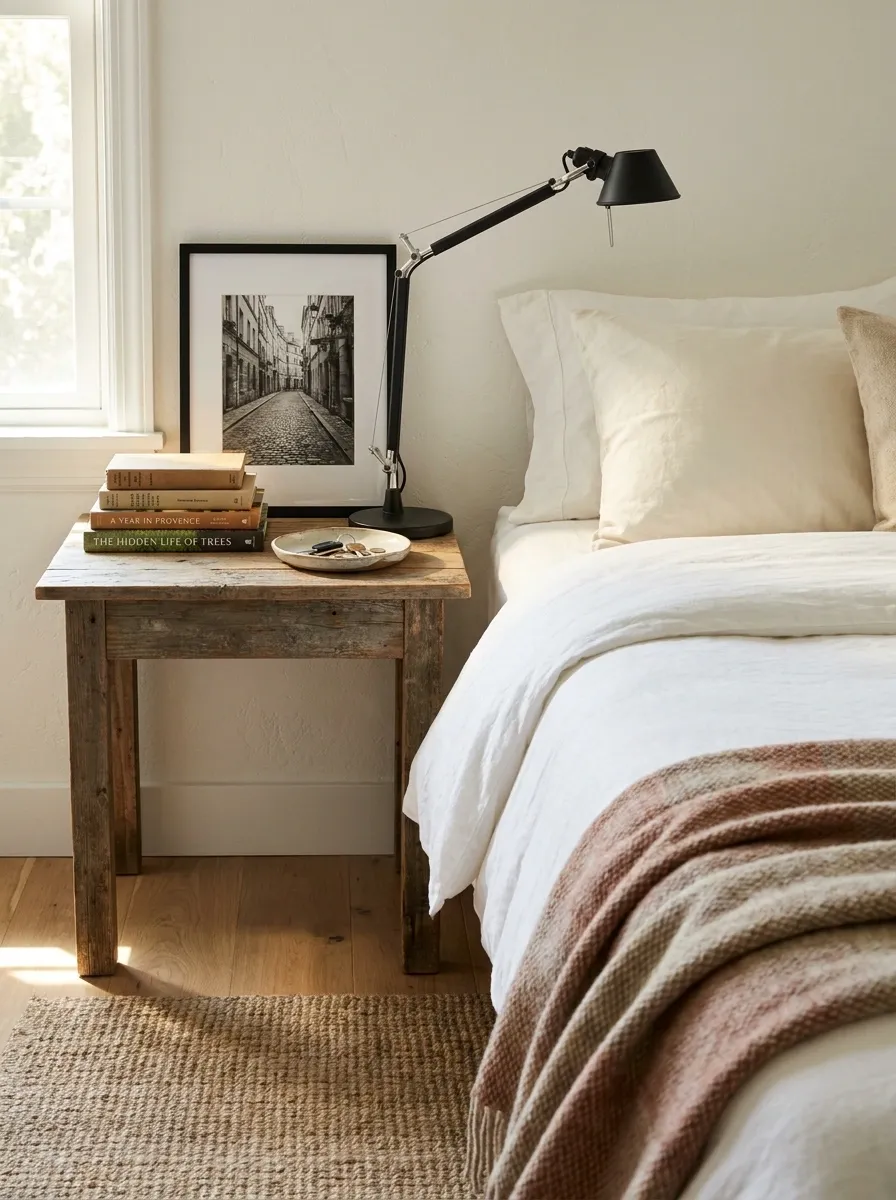
The final layer shouldn’t be another decorative object chosen because a corner looks empty.
Choose one detail that makes the bedroom unmistakably personal. It could be a favorite print, a stack of well-used books, a handmade ceramic piece, a framed travel photograph, or a blanket with a story behind it.
That detail gives the room something generic rental furniture can’t provide.
The room doesn’t need more stuff at this point. It needs one unmistakable personal cue.
The Finish Matters More Than the Lease
A rental bedroom doesn’t feel temporary because the walls can’t be painted. It feels temporary when every visible decision looks borrowed, undersized, or purely functional.
That can be fixed without fighting the property.
Start with the bed because it carries the most visual weight. Then work outward to the windows, lighting, floor, bedside areas, and walls. Bring in texture before adding more accessories. Use larger pieces instead of lots of tiny ones. Keep practical clutter contained. Most importantly, choose things that can move with you.
A good rental bedroom isn’t trying to pretend it’s a permanent home. It simply stops looking like a blank property waiting for the next tenant.
Save this list for the next time a bedroom feels too temporary, then tackle the changes that will make the biggest difference first.