
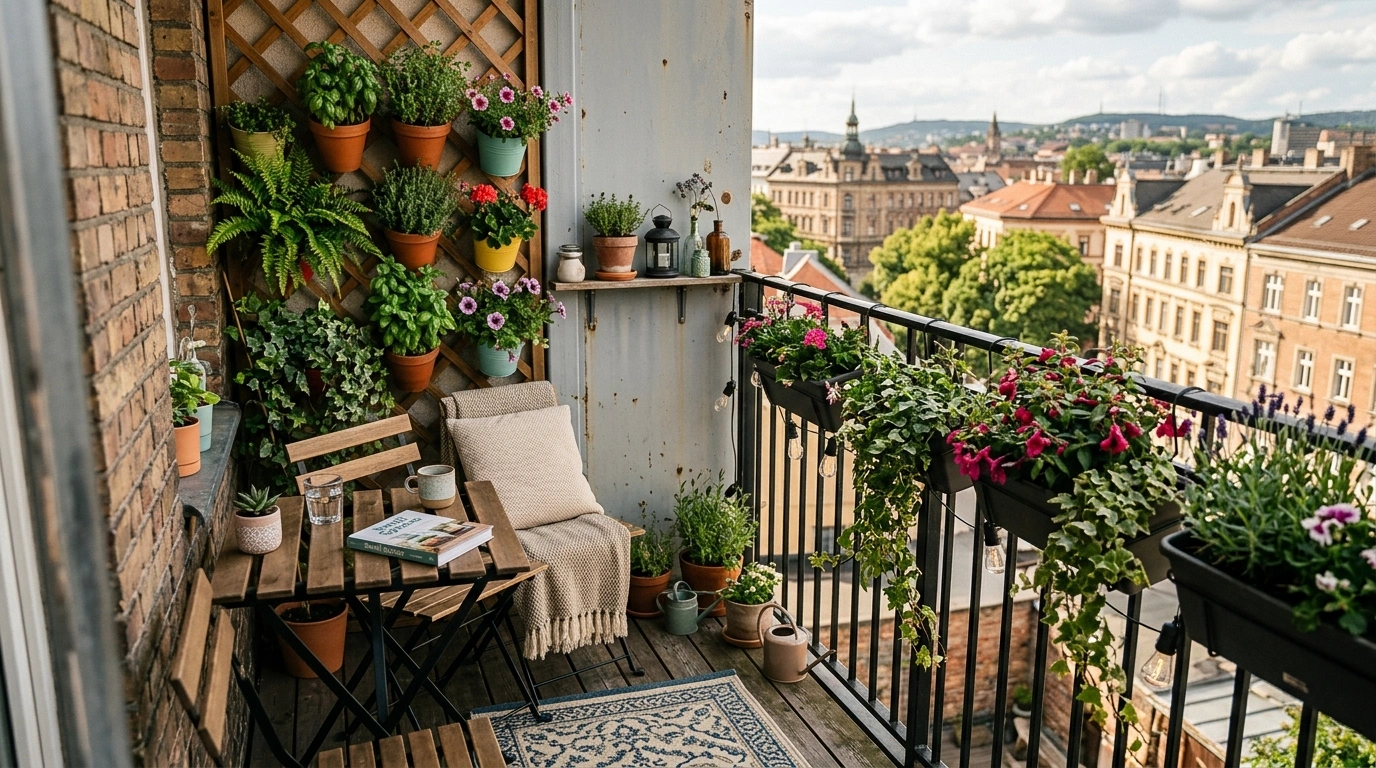
A tiny balcony can look incredible, or it can look like someone lost a game of Tetris and left the furniture there.
The problem usually isn’t the size. It’s the lack of a clear design direction. A bulky chair gets squeezed beside a plant, a table blocks the door, three different pots occupy the only usable corner, and suddenly a perfectly decent balcony feels smaller than it actually is.
Small outdoor spaces need stronger editing than large ones. Every chair, planter, textile, light, and empty patch of floor becomes visible. There isn’t much room for random decisions to hide.
That is why complete designs are more useful than isolated decorating tips. A finished balcony shows how the pieces relate to one another, how much floor stays open, where the color belongs, and what actually creates the mood.
Tiny Balcony Ideas
Railing Bar and Wood Tiles
This setup makes smart use of the perimeter by mounting a slim wooden bar directly onto the railing. Paired with two tall bar stools, it creates an instant morning coffee spot that takes up zero actual floor space.
Warm interlocking wood tiles cover the floor to soften the modern metal architecture, while lush green plants line the base and climb the accent wall. The view remains completely unobstructed because nothing heavy blocks the lower railing.
Functionality wins here without sacrificing style. A narrow balcony doesn’t need bulky furniture to feel finished; it just needs the right pieces placed against the edges.
Warm Oak Bench With a Café Table
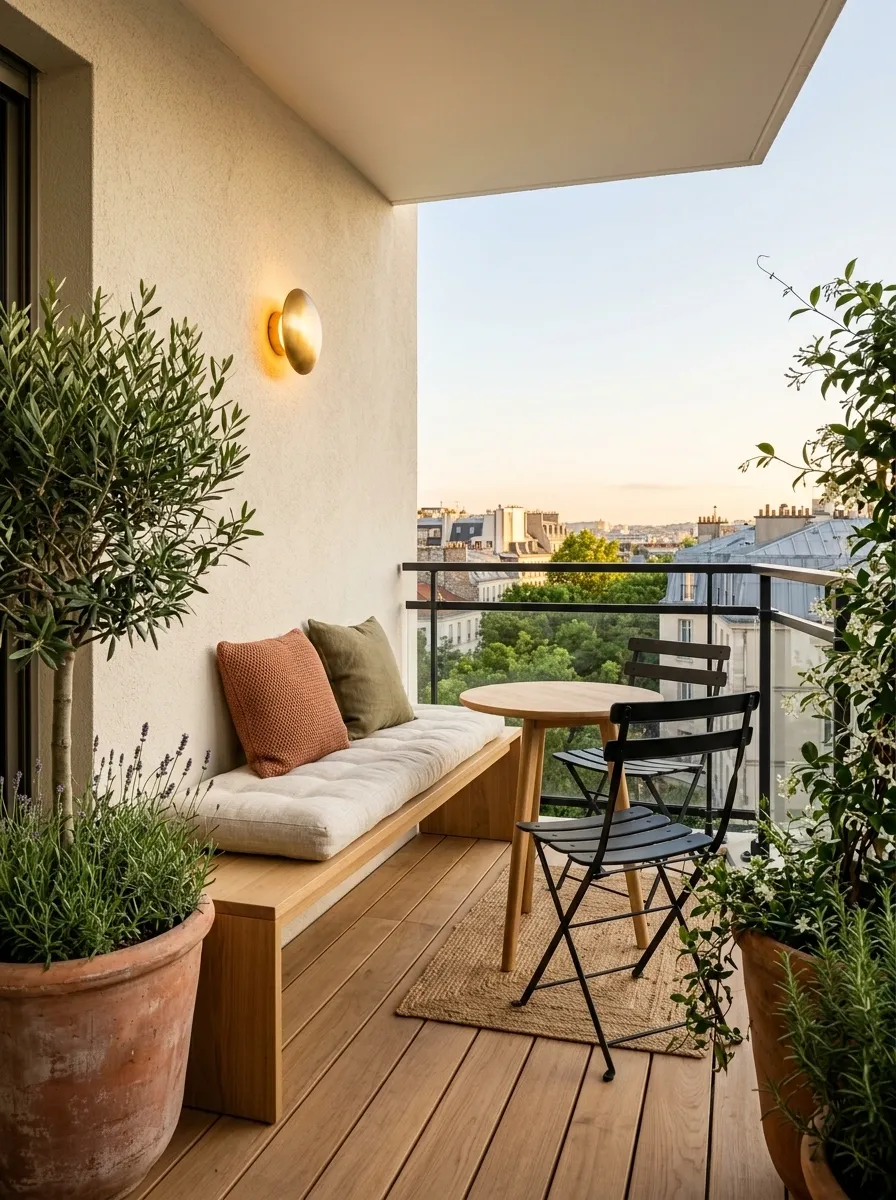
Built-in seating earns its footprint here. A slim oak bench runs along the back wall with a cream cushion, leaving the center of the balcony open for a tiny round café table and two compact chairs.
Terracotta planters sit at the corners rather than scattered everywhere, while a warm wall light gives the wood some evening depth. The palette stays deliberately quiet: warm oak, cream, terracotta, and soft green.
The clever part isn’t the bench itself. It’s the empty floor around it. That breathing room makes the balcony feel larger than a collection of freestanding furniture ever would.
And no, three decorative tables aren’t going to improve it.
Botanical Bench and String Lights
Lush greenery surrounds a cozy wooden bench, turning a narrow outdoor nook into a private plant-filled sanctuary. Potted plants sit on wall shelves, stand tall in the corners, and cascade from railing boxes to create layers of natural texture.
Patterned throw cushions add comfort to the neutral seating, while delicate string lights weave along the back wall to give the space a warm evening glow. A small round side table provides just enough room for a drink without crowding the floor.
Every inch of vertical space is put to work here. When the walls and corners handle the decor, the seating area stays open, relaxing, and entirely uncluttered.
Vertical Garden With a Fold-Down Table
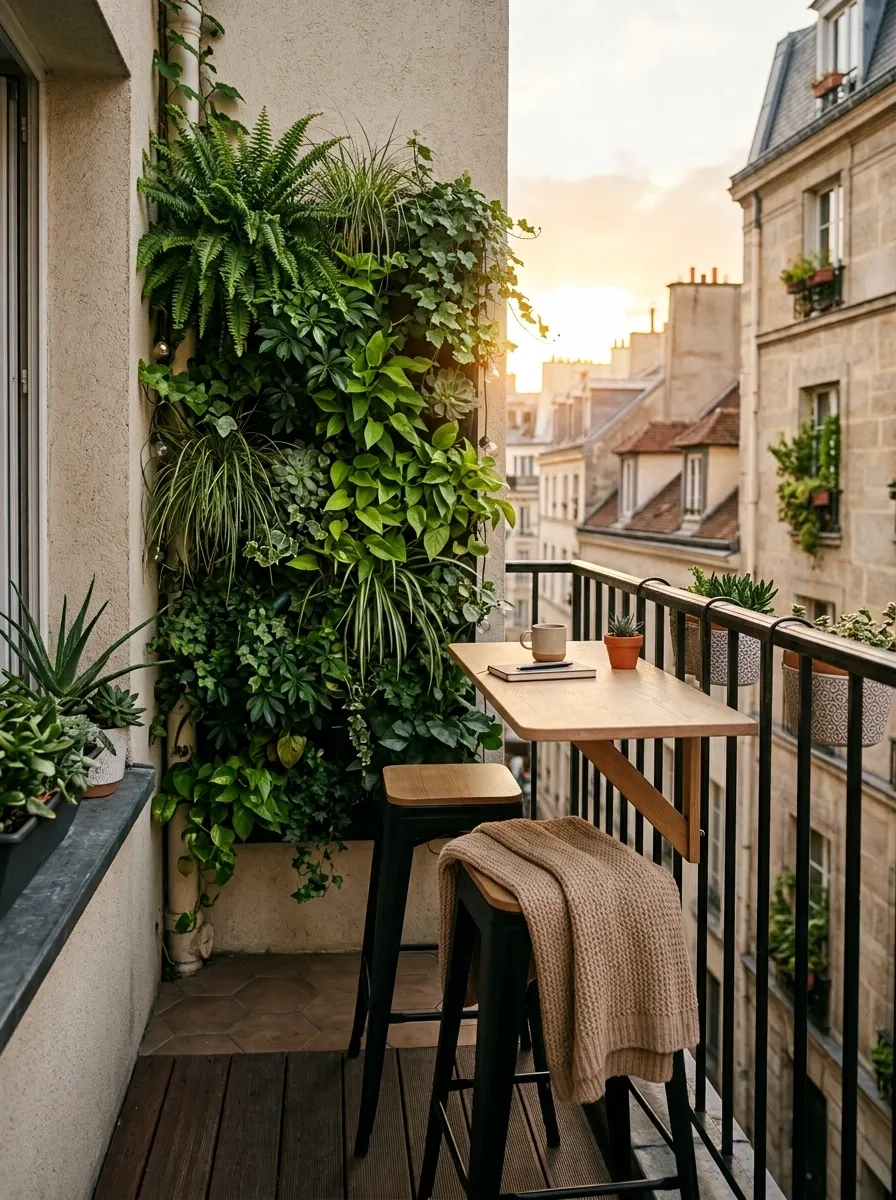
Greenery climbs the wall instead of taking over the floor in this compact urban setup. A vertical planting panel forms the main backdrop, while a small fold-down timber table sits beneath it with two slim stools.
The wall becomes the visual feature, so the rest of the balcony stays intentionally simple. Black metal, pale wood, leafy green, and one warm textile are enough.
This is especially effective on narrow balconies where floor space is painfully limited. Folding furniture also keeps the layout flexible instead of permanently reserving half the balcony for a table that gets used once a week.
The plants provide the drama. The furniture doesn’t need to audition for the same role.
Blue Toned Daybed Lounge Corner
A deep teal daybed stretches along the length of this narrow balcony, transforming an awkward corridor into an inviting outdoor nap station. Soft blue and neutral pillows layer the backrest, creating a cohesive color story against the matching wall tone.
Floating shelves and hanging planters bring in botanical life up top, leaving the floor clear and the walkways completely open. A small touch of furry texture on the bedding adds extra comfort without visually weighing down the aesthetic.
This layout proves that narrow spaces don’t need traditional chairs and tables. A single comfortable lounge piece customized to fit the exact width of the balcony makes the entire area feel custom-built.
Terracotta and Chalk White Mediterranean Corner
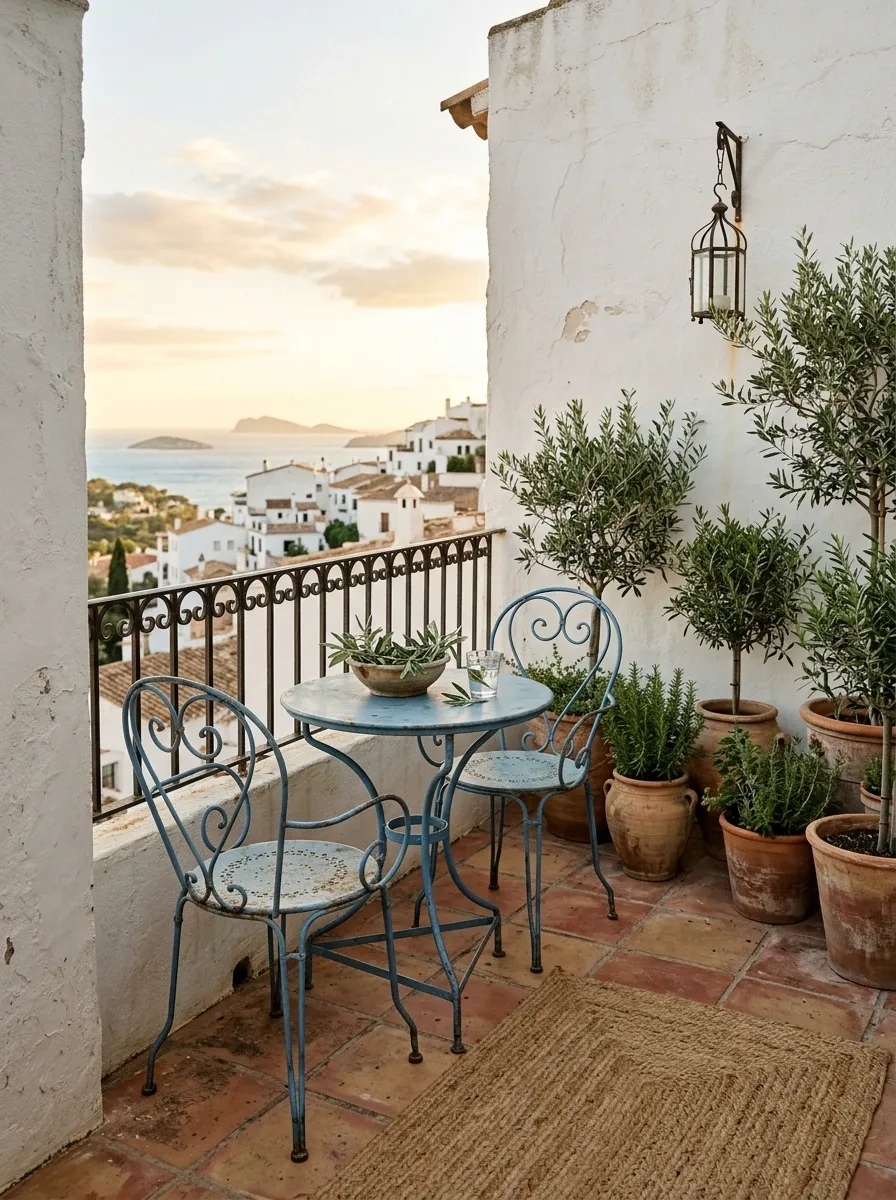
This balcony borrows its character from Mediterranean courtyards without turning into a theme park. Terracotta floor tiles anchor the space, chalk-white walls keep the background bright, and a weathered blue metal bistro set creates the focal point.
Olive greenery and a few clay pots soften the harder materials. The furniture stays delicate, with thin legs and open backs that preserve sight lines.
The success comes from restraint. The terracotta is strong enough to carry the floor, so the rest of the balcony doesn’t need five more warm colors shouting for attention. Let the materials do their job and stop decorating them to death.
Palette Lounger With a Patterned Rug
DIY appeal meets clean comfort in this clever pallet lounge setup. A low-profile wooden base topped with thick grey cushions wraps around the corner, creating an inviting L-shaped seating area that fits the balcony dimensions perfectly.
A geometric black and white outdoor rug anchors the center of the space, while a simple grey cube table and cheerful yellow flowers add a pop of contrast. Lanterns placed on the floor complete the relaxed, lived-in mood.
This design avoids the trap of oversized furniture by keeping everything low to the ground. The sight lines stay completely clear, allowing the entire balcony to feel open, welcoming, and thoughtfully composed.
Japandi Calm With Low Pale-Oak Seating
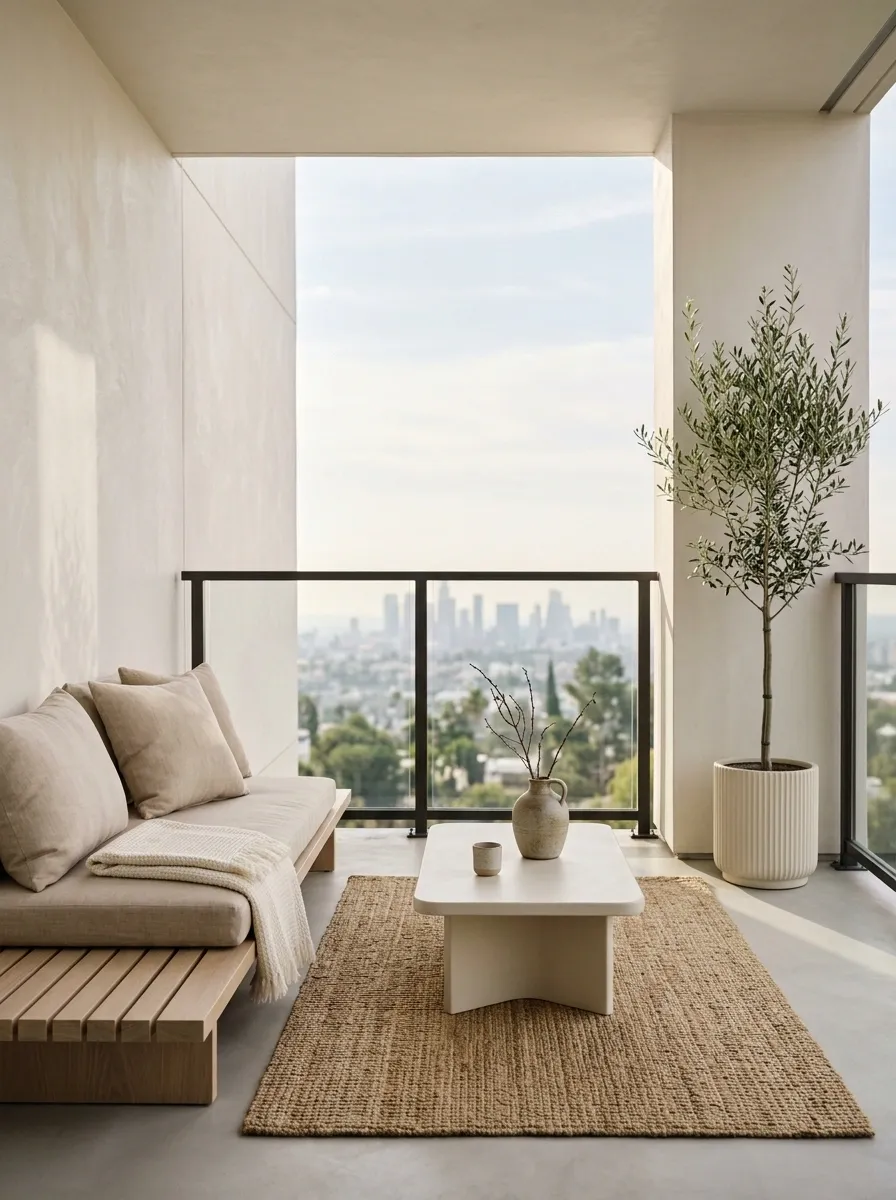
Nothing here is trying to be the star except the overall composition. Pale oak seating runs along one side of the balcony, paired with a low ceramic table, soft beige cushions, one sculptural plant, and a textured neutral rug.
The architecture stays visible. The railing remains clean, the walls stay pale, and the floor isn’t hidden beneath layers of outdoor accessories.
That restraint is exactly why the balcony feels expensive rather than empty. The low furniture creates a horizontal visual line, while the single larger plant adds height without turning the place into a jungle.
Minimal doesn’t mean boring. It means every piece has to justify the space it occupies.
Planting: one strong vertical shape
Color: warm neutrals
Texture: soft, not busy
Lush Nighttime Cushion Oasis
Soft floor seating takes center stage in this dreamy evening balcony retreat. A thick, neutral mattress layered with plush patterned pillows creates an effortless lounging spot right on a patterned blue rug, surrounded by climbing vines and glowing fairy lights.
Large candles in glass jars and warm string lighting overhead cast a magical glow across the foliage and textiles. The entire atmosphere leans into relaxation, inviting long conversations under the stars without a single stiff chair in sight.
By keeping the seating entirely on the floor, the space feels instantly larger and more intimate. It is proof that comfort and simplicity will always outperform a crowded collection of outdoor furniture.
Evening Retreat With Floor Cushions and Warm Light
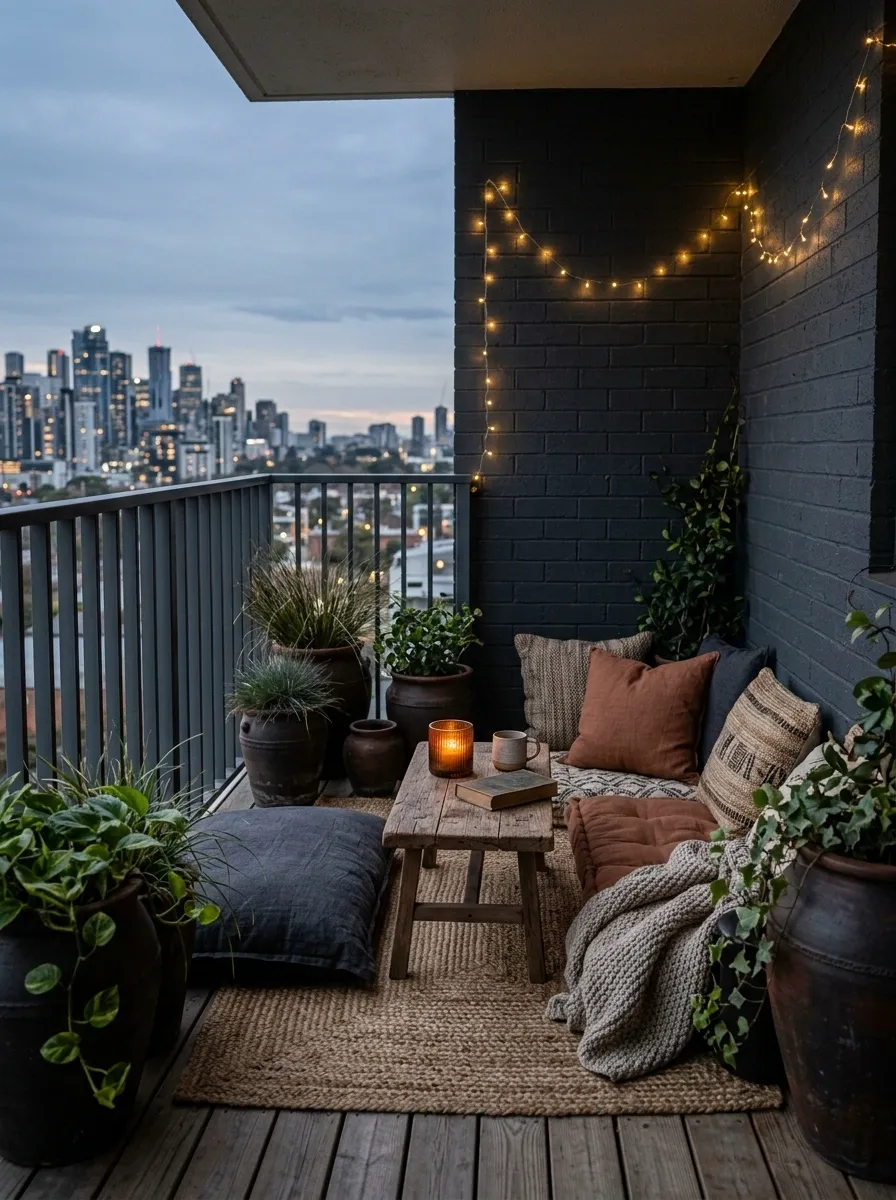
Forget the tiny dining set. This balcony is designed for late evenings, quiet conversations, and the occasional dramatic stare into the distance.
Low floor cushions gather around a small timber table, with woven textiles layered underneath and warm string lighting running overhead. Dark clay pots and earthy fabrics add depth without making the space visually heavy.
Because the seating sits low, the balcony keeps an open sight line through the railing. That’s important on a small footprint. Tall furniture can make an already narrow space feel boxed in.
The lighting does most of the nighttime work, so there is no need to bury every surface under lanterns, candles, and decorative clutter. One warm glow is far better than a hardware store exploding in the corner.
Slim Scandinavian Dining Balcony
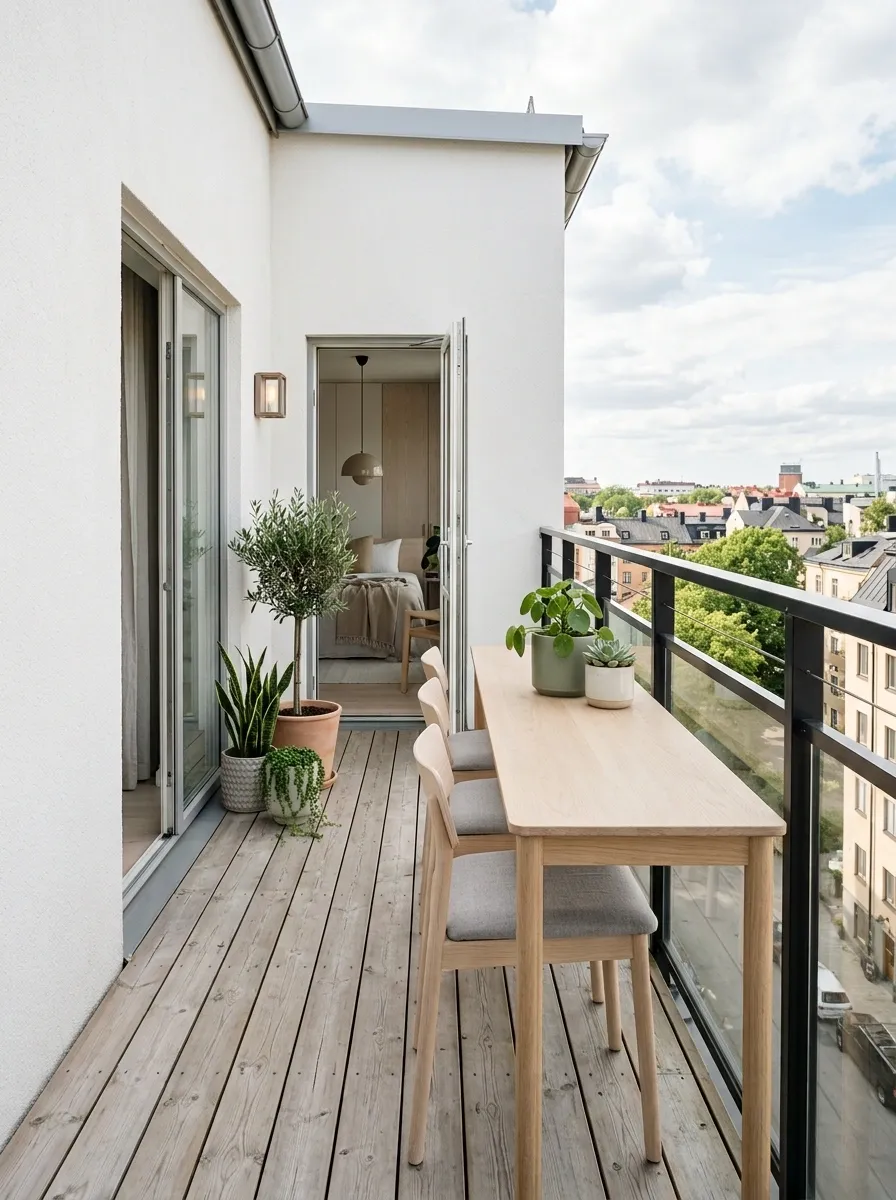
Long, narrow balconies need furniture that respects the geometry. Here, a slim rectangular table runs parallel to the railing instead of jutting across the walkway, with two lightweight chairs tucked neatly underneath.
Pale timber, soft gray upholstery, white walls, and a few restrained plants keep the space airy. The long sight line becomes an advantage rather than a problem.
The mistake to avoid is choosing a table simply because it is small. Width matters just as much as length. A compact piece that sticks too far into the walking path will make the balcony feel cramped immediately.
The whole arrangement feels more like a tiny outdoor dining room than a hallway with chairs shoved into it.
Corner Sofa With a Proper Lounge Feel
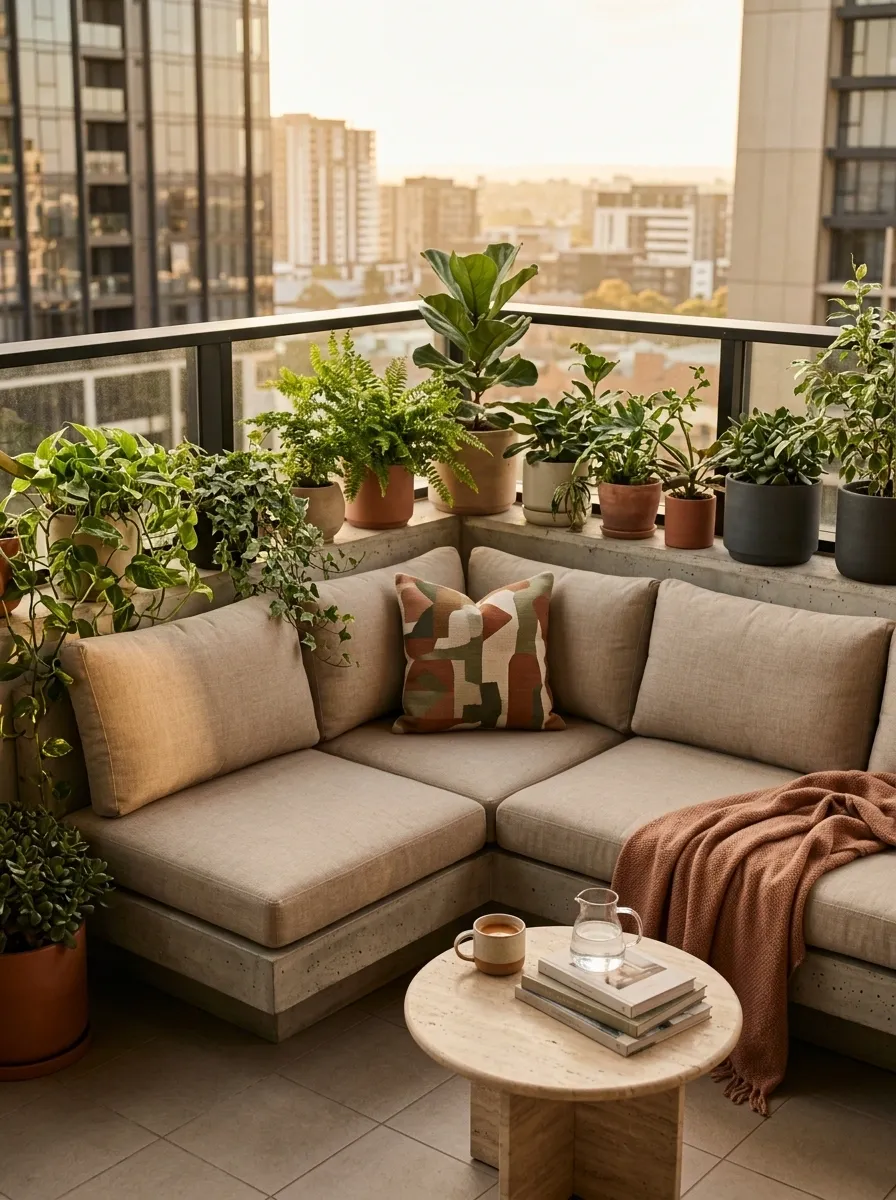
A small L-shaped balcony can handle a corner sofa when the sofa is chosen to fit the actual footprint rather than an imaginary outdoor living room.
The seating wraps around one corner, creating a defined lounge zone with a compact round table in front. Layered plants soften the railing, while a patterned outdoor cushion adds color against warm neutral upholstery.
The round table matters here. Its curved footprint breaks up all the straight balcony lines and makes movement around the seating easier.
This setup works because it commits to one purpose: lounging. Trying to squeeze dining, gardening, storage, and a full seating area into the same footprint would destroy the composition.
Woven Bohemian Retreat With Layered Texture
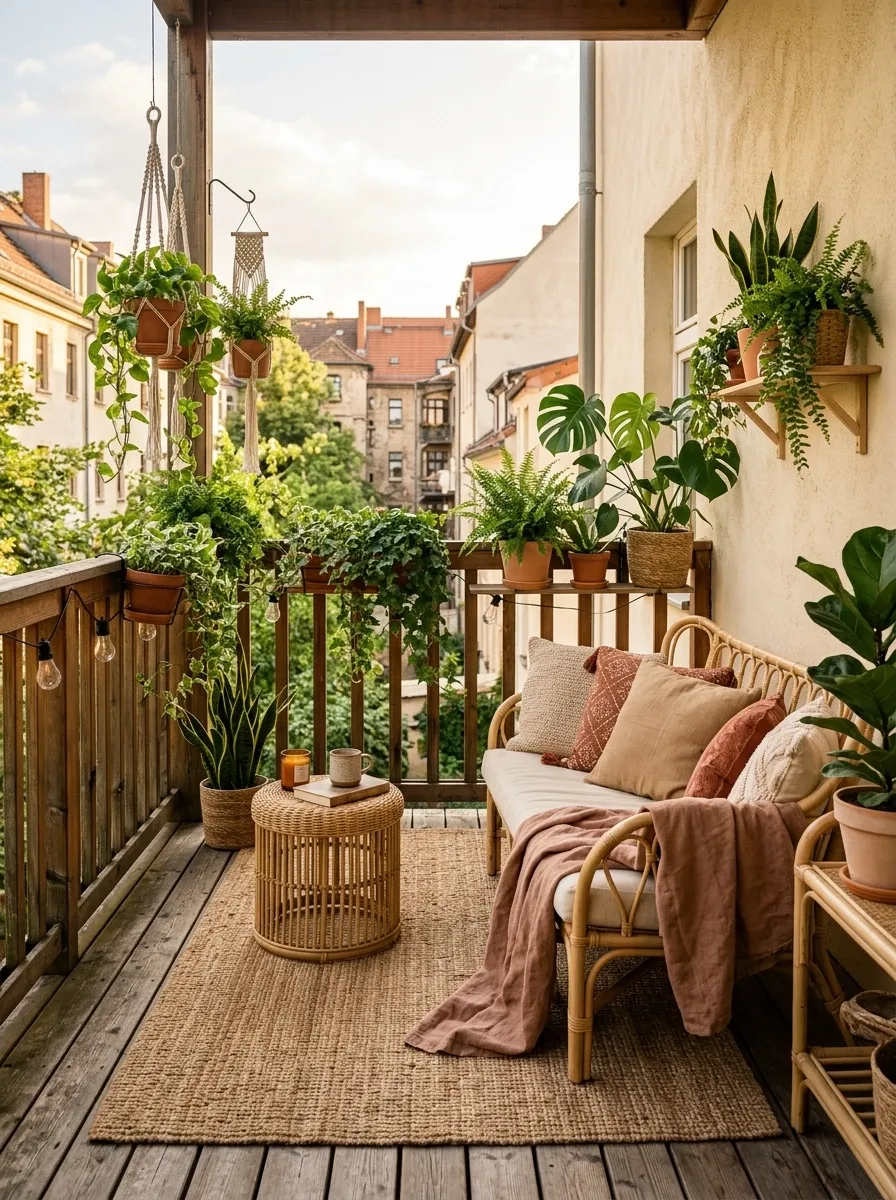
This balcony feels collected rather than coordinated to death. A low woven loveseat sits over a textured neutral rug, joined by a compact rattan stool, hanging plants, and warm timber accents.
Cream, tan, muted rust, and leafy green create a soft earthy palette, while the variety comes from texture rather than loud patterns. The balcony still feels relaxed because the furniture stays low and the railing remains visible.
The trick is knowing when to stop. Layering works here because the architecture is simple. Add too many baskets, lanterns, signs, and decorative objects and the whole thing starts looking like a craft-store clearance aisle.
Texture needs empty space around it.
Crisp Black and White With One Giant Plant
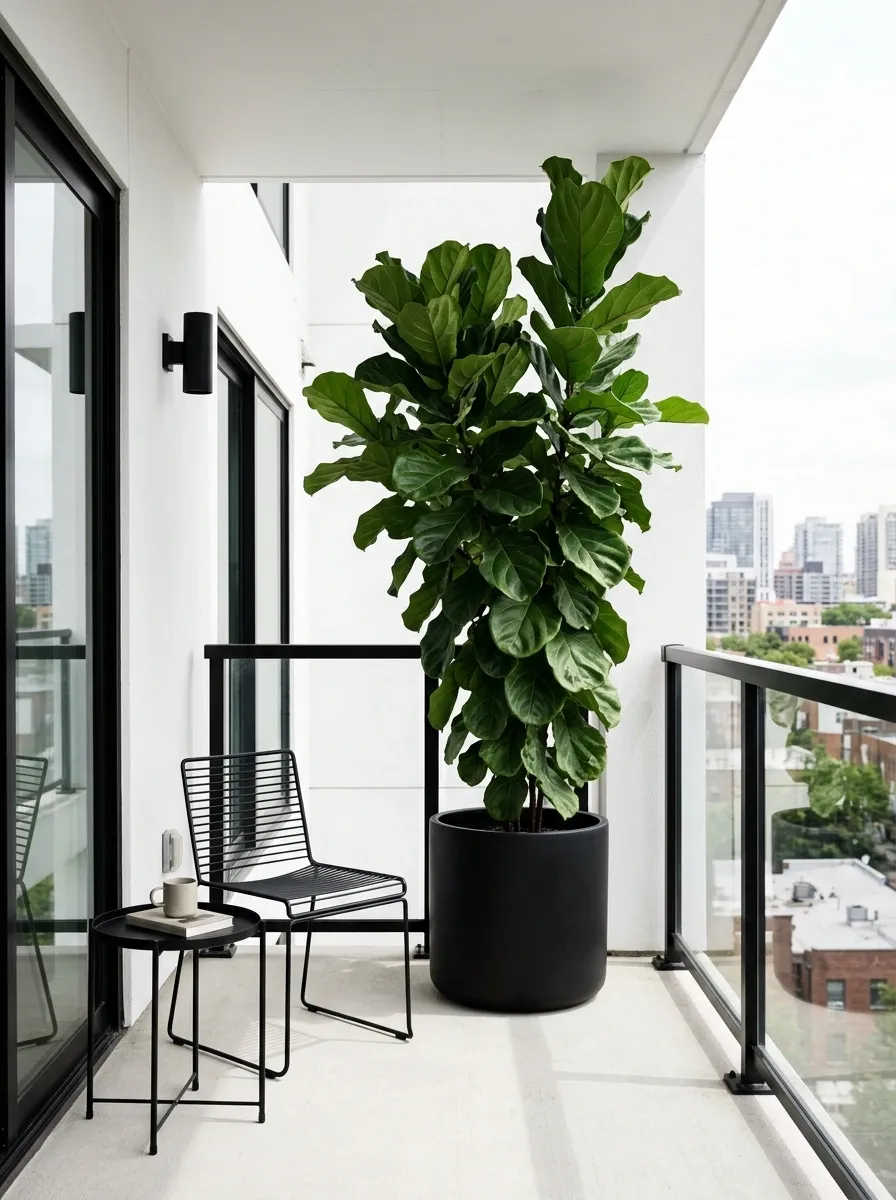
There is nothing fussy about this balcony. White walls, pale concrete flooring, narrow black furniture, and a single oversized plant create a sharp architectural composition.
The plant is deliberately large. That sounds counterintuitive on a tiny balcony, but one strong vertical shape has more visual impact than six small pots scattered across every available surface.
Black appears in controlled doses through the furniture and planters, while the white background carries most of the visual weight. The result is graphic without becoming harsh.
This is the kind of balcony that proves minimalism isn’t about owning fewer things just for the sake of it. It’s about making the few things visible actually matter.
Built-In Breakfast Nook for Slow Mornings
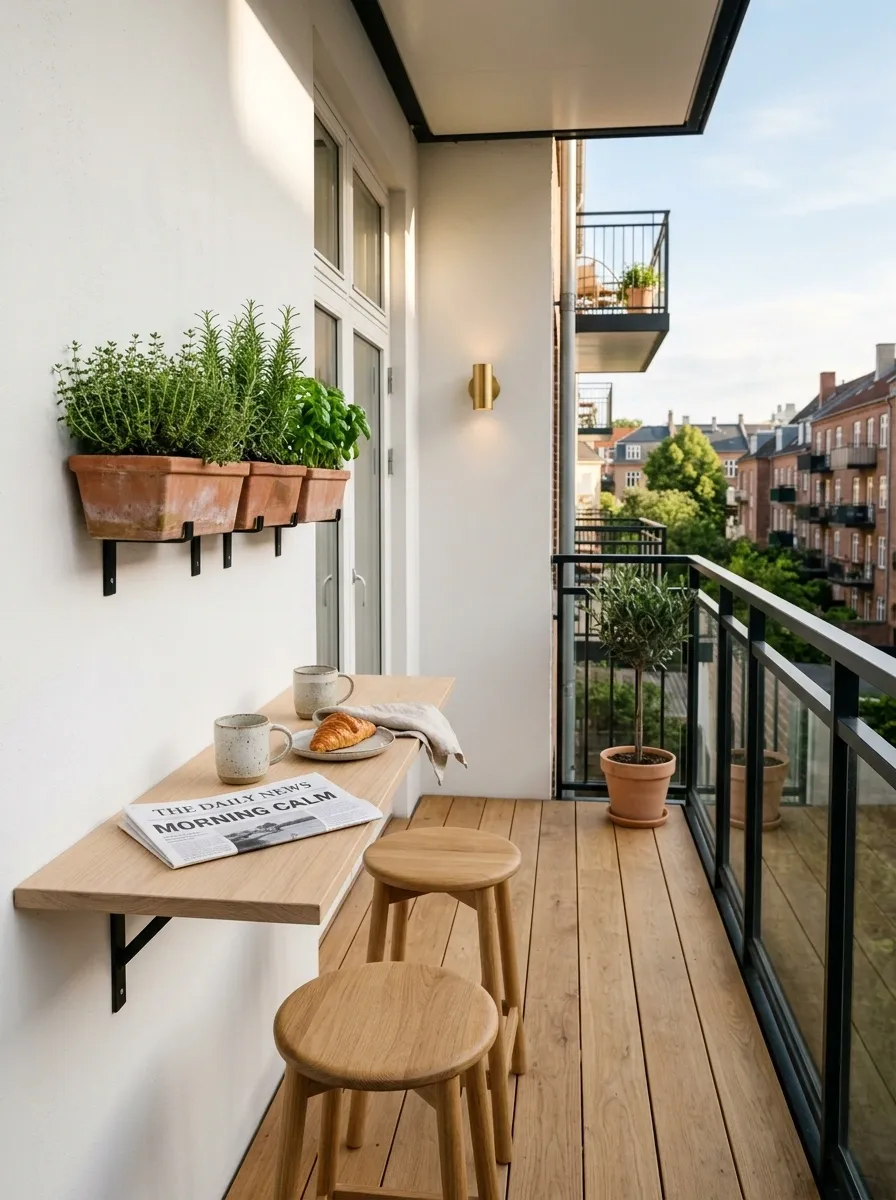
This balcony doesn’t pretend to be a party space. It is a tiny outdoor breakfast room, built around a slim wall-mounted timber counter with two compact stools.
The counter leaves the center floor almost completely open. A pale wood finish warms the white architecture, while a few herbs in narrow planters bring a little greenery close to the seating.
The concept works especially well because the furniture has a clear job. Breakfast, coffee, laptop, newspaper, done. There is no oversized lounge chair sitting around waiting for a lifestyle magazine to invent a reason for it.
Keep the finishes simple and let the open floor do some of the visual heavy lifting.
Vintage Bistro Balcony With Flower-Filled Edges
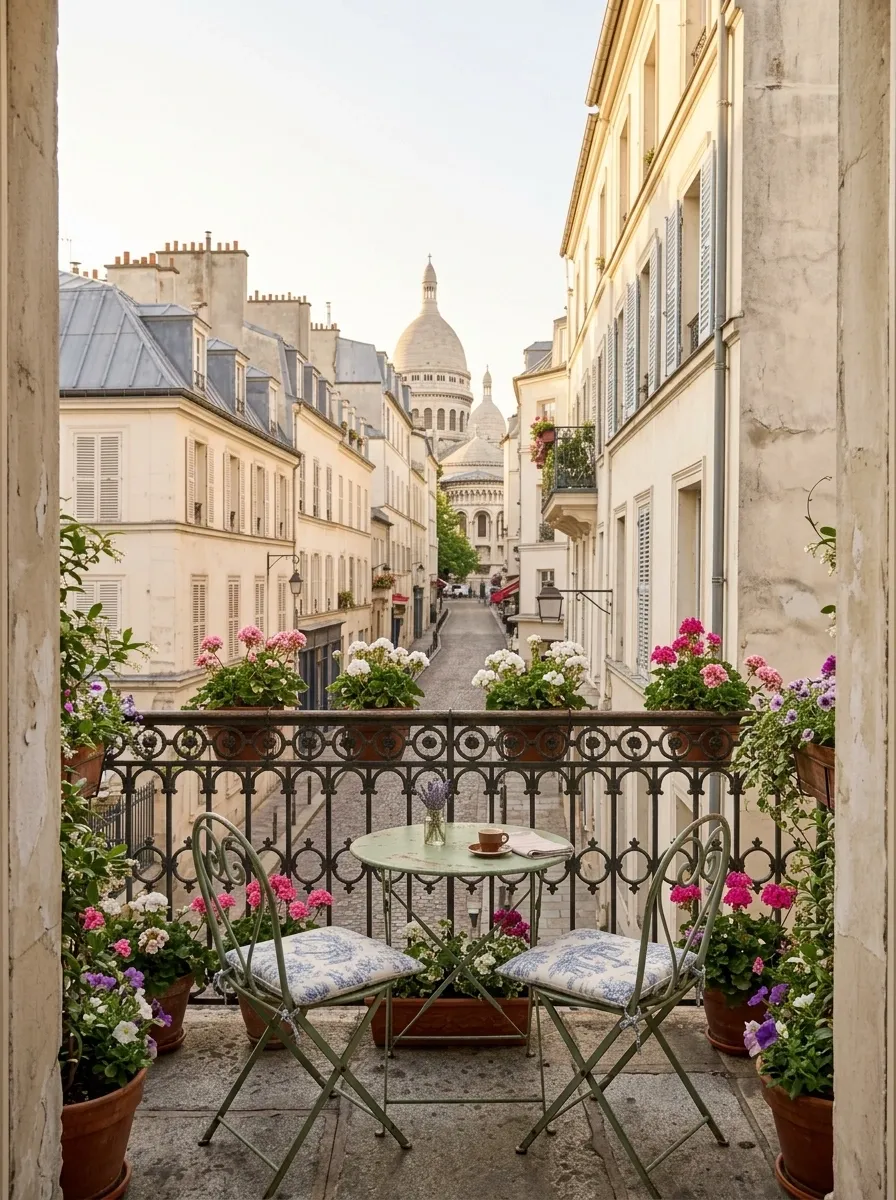
This one keeps the romance without turning the balcony into a prop department. A slim vintage-style metal table and two small chairs sit near the railing, while flowering planters hug the outer edges of the space.
The center stays surprisingly open. Cream walls, faded sage furniture, terracotta pots, and a patterned seat cushion give the balcony its character without piling on accessories.
The flowers are concentrated around the perimeter for a reason. Keeping the middle visually clear makes the footprint easier to read and keeps the balcony from looking smaller than it is.
A tiny space doesn’t need miniature everything. It needs furniture with enough personality to carry the composition.
Deep Green Balcony With Amber Evening Light
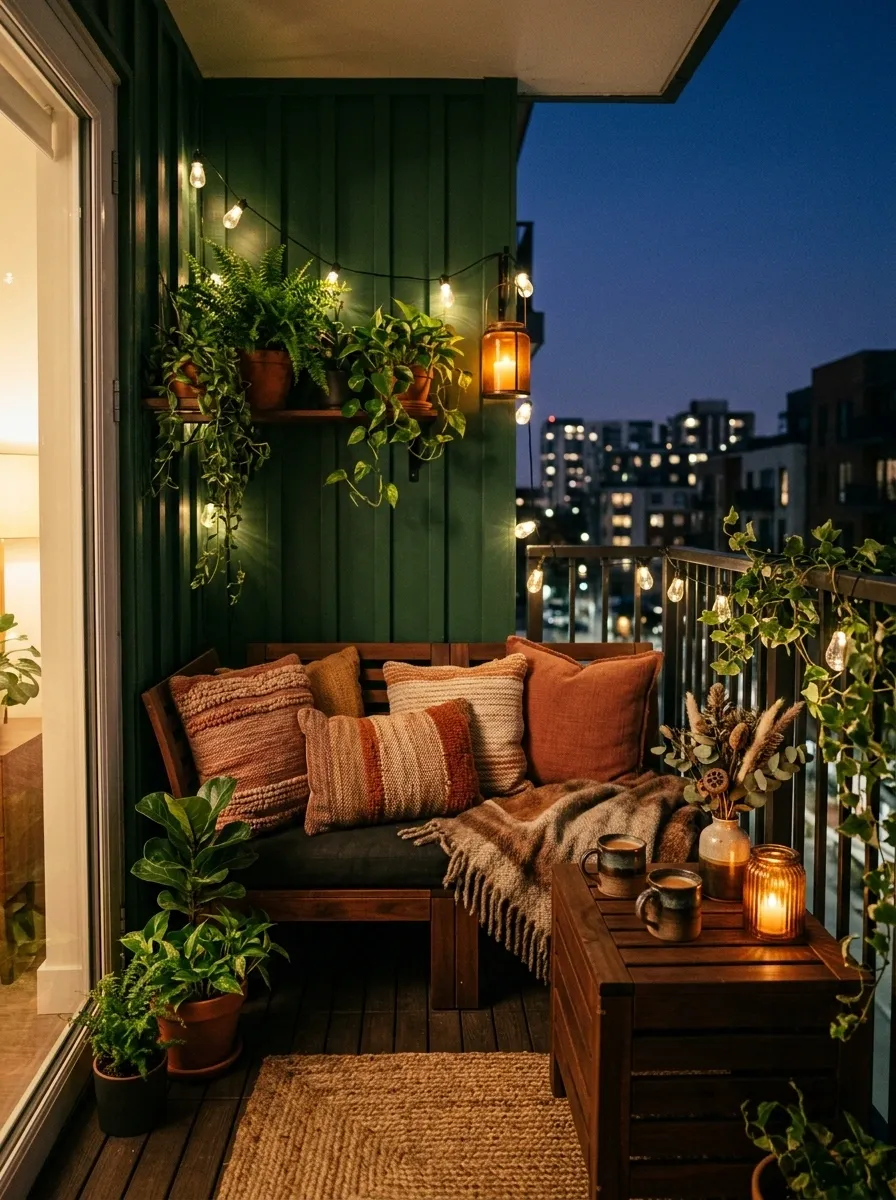
The walls take the lead here. A deep green backdrop wraps the small balcony, creating a rich setting for dark timber seating, leafy plants, warm cushions, and amber-toned lighting.
Instead of trying to make everything bright, the design embraces the darker mood and uses warm illumination to keep it from becoming flat. One compact bench sits against the wall, while a small side table and a few plants fill the corners.
The contrast between the green wall and warm light gives the balcony a strong identity after sunset. During the day, the natural foliage keeps the dark palette from feeling heavy.
Dark balconies need light with warmth, not a random collection of cold bulbs fighting for attention.
Pale Blue Coastal Balcony With Weathered Timber
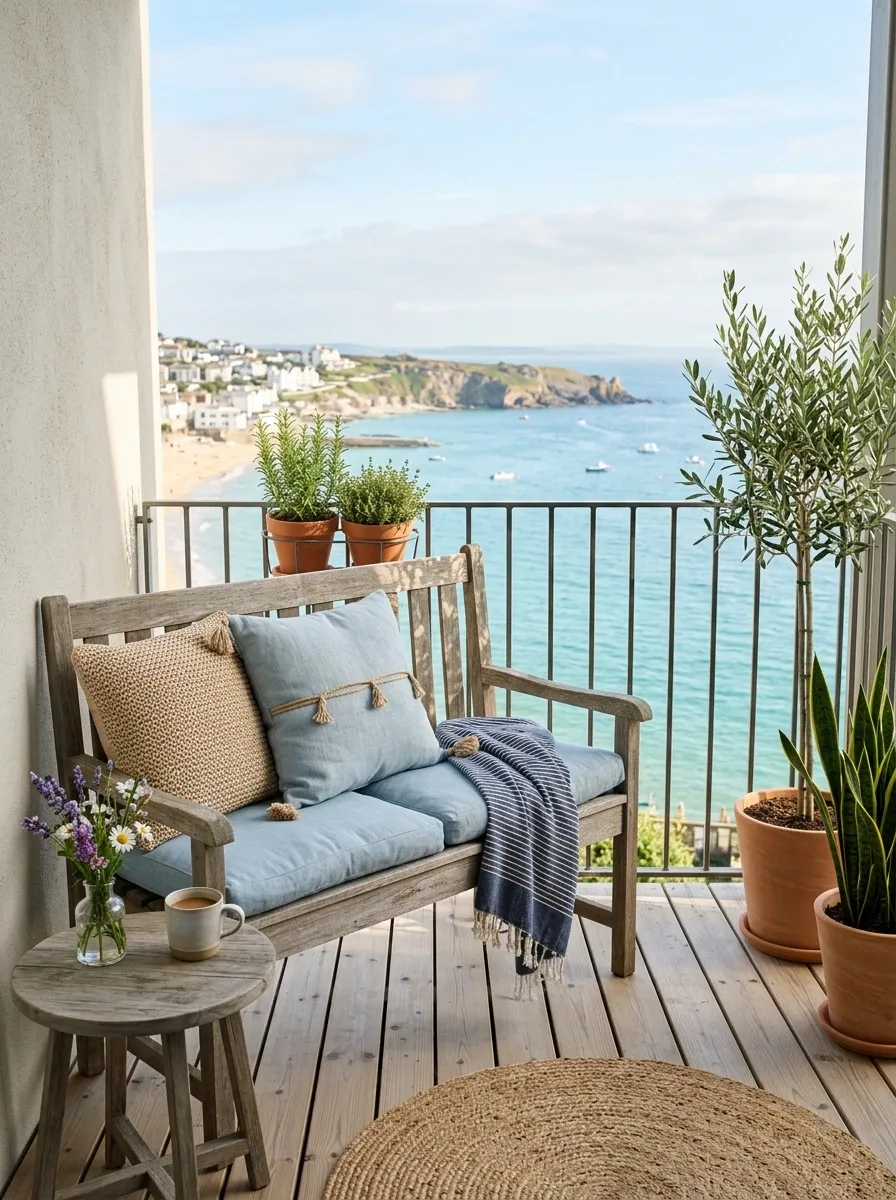
There is a calmer way to do coastal design than covering everything in anchors and seashells. This version uses a weathered timber bench, pale blue cushions, sandy beige textiles, and simple rope detailing.
The balcony feels breezy because the furniture is visually light and the colors stay soft. A few upright plants add height without interrupting the open railing.
Weathered wood provides enough texture to stop the pale palette from becoming bland, while the blue stays concentrated around the seating rather than coating every surface.
The result feels coastal because of the materials and proportions, not because somebody glued a decorative lighthouse to the wall.
Outdoor Work Nook With a Green Privacy Screen
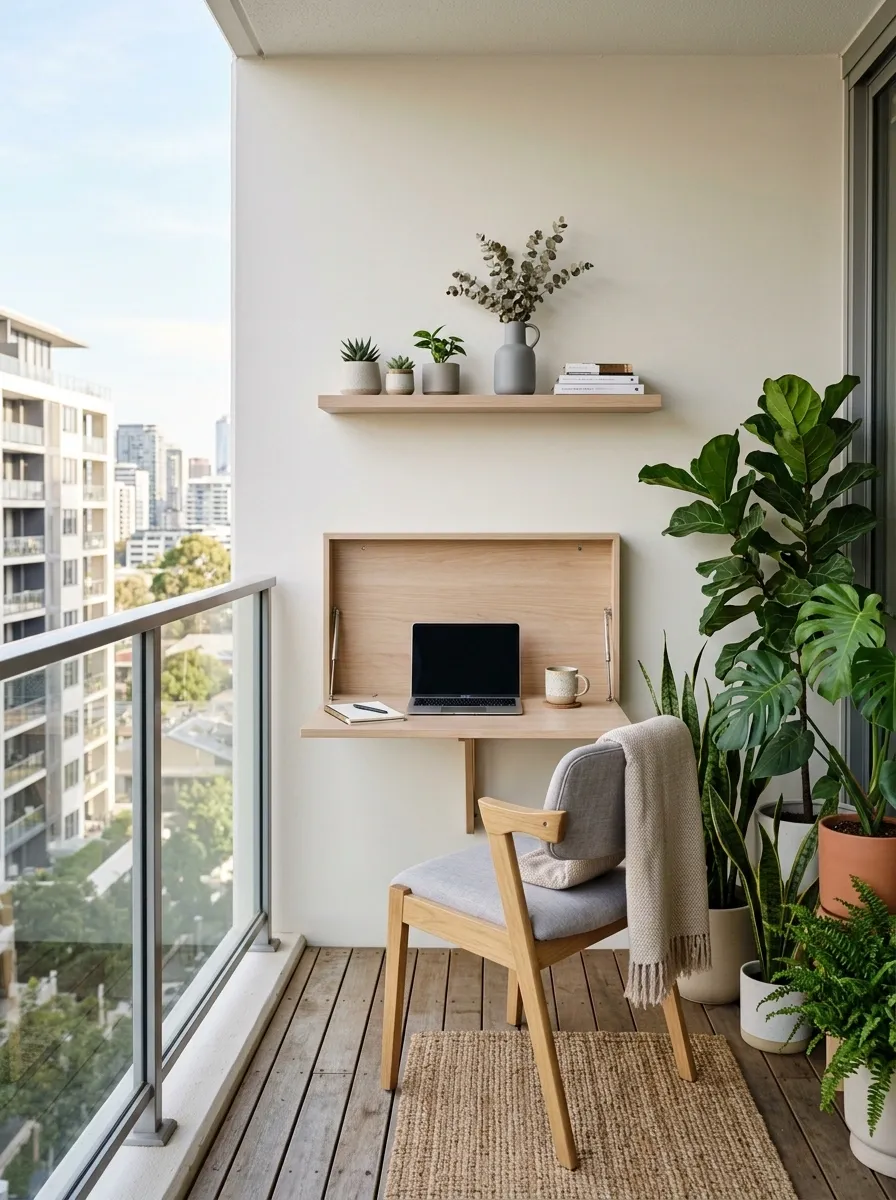
A tiny balcony can earn its keep as a work zone without making it look like office furniture escaped through a window. A slim folding desk attaches to the wall, paired with one comfortable compact chair and a narrow shelf for essentials.
Tall plants along one side create a sense of privacy, while the opposite side remains open so daylight can reach the desk. The finishes stay neutral, with pale timber, soft gray, and leafy green doing most of the visual work.
The desk disappears when it isn’t needed, which is the whole point. Permanent furniture should earn its square footage.
This concept works best when function leads the design instead of being squeezed into whatever space remains.
Raised Planter Bench With a Built-In Look
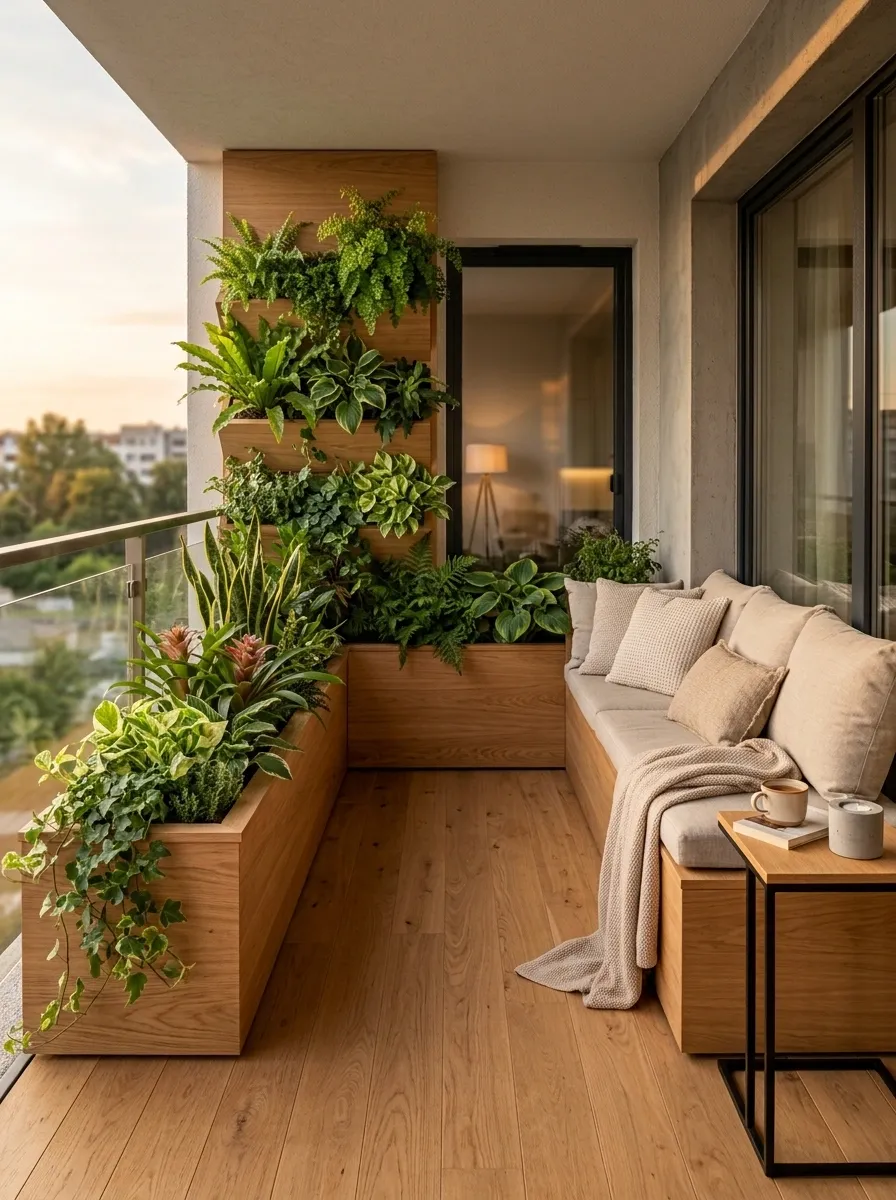
This balcony gets its identity from one continuous architectural element: a raised planter runs into a built-in bench, creating a long horizontal line across the back wall.
The seating uses warm timber and neutral cushions, while the planter carries grasses and leafy greenery at slightly different heights. A tiny side table sits beside the bench rather than in the middle, leaving the main floor clear.
Because the bench and planter visually belong together, the balcony feels designed rather than furnished. That distinction matters in small spaces.
There is also less visual competition. One long element establishes the structure, while everything else simply supports it.
Jewel-Tone Eclectic Balcony With a Strong Color Story
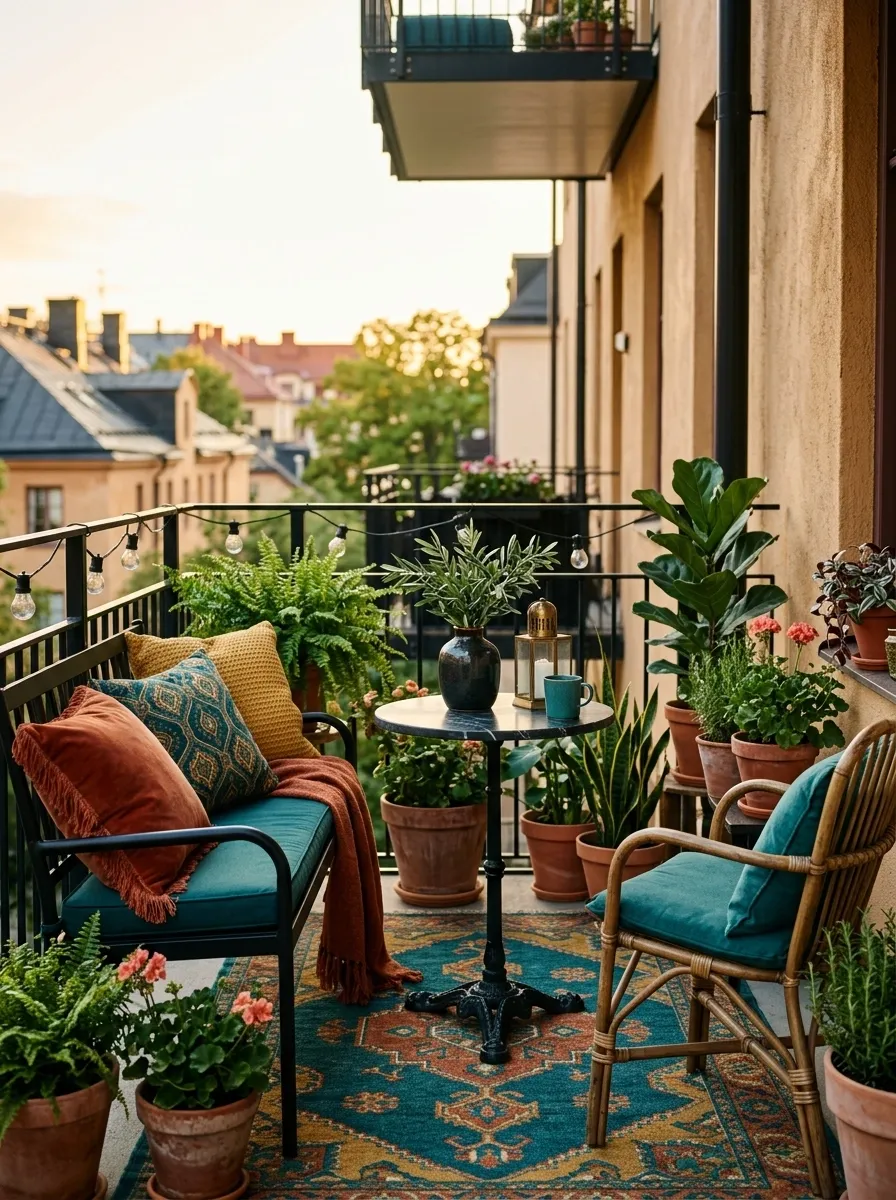
This balcony doesn’t whisper. Deep teal cushions, rusty orange textiles, mustard accents, and leafy plants give the compact space a layered, collected look without making the architecture fight for attention.
The furniture stays relatively simple, which gives the color story room to breathe. A slim painted bench anchors one side, while a small round table keeps the center flexible. Pattern appears mostly through cushions and one outdoor rug, rather than being sprayed across every surface.
The colors are bold, but they are related. That’s the difference between an eclectic balcony and a pile of unrelated purchases.
Skip the urge to add another bright accent because there is technically a free corner. Empty space keeps strong color from becoming visual shouting.
A Single Lounge Chair for Reading
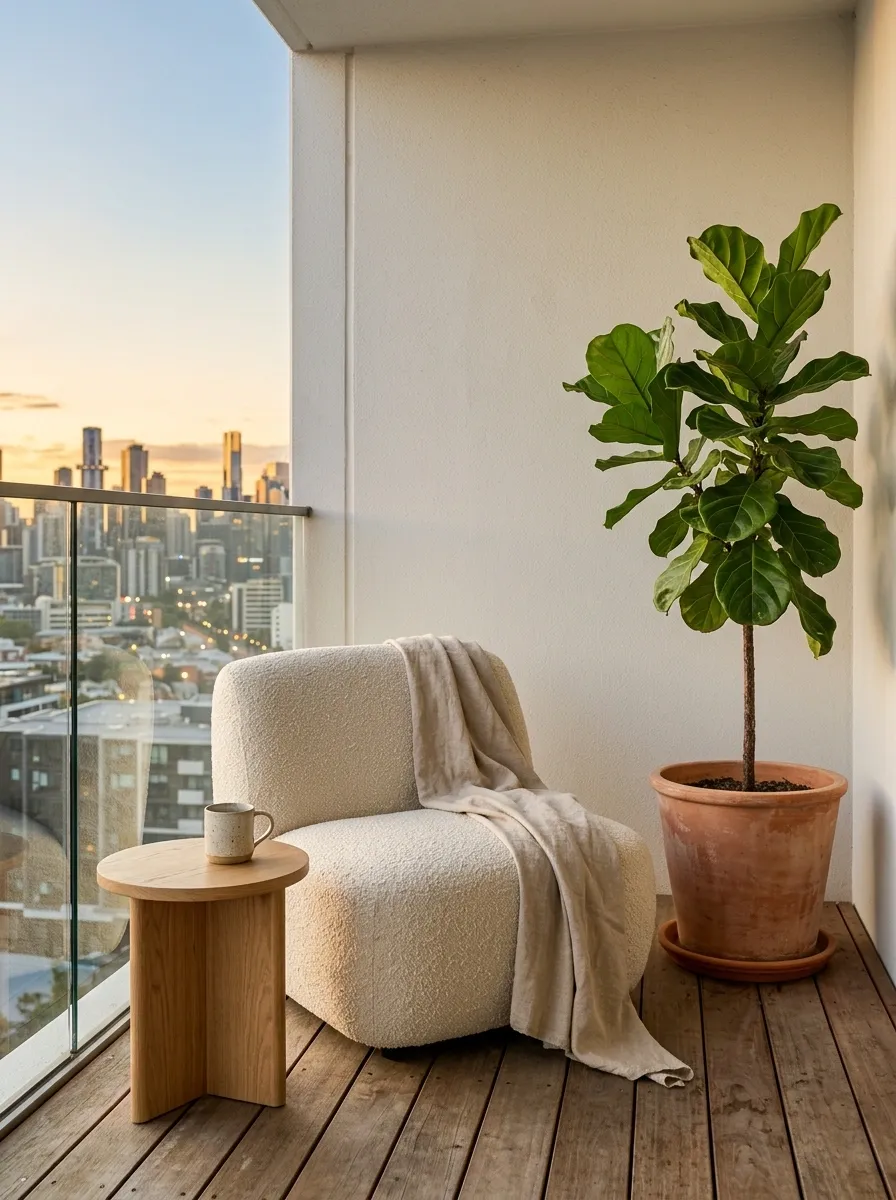
A tiny balcony doesn’t automatically need a sofa, two chairs, and a table. This version is built around one substantial lounge chair positioned toward the view, with a small side table and a leafy potted tree completing the corner.
The larger chair gives the balcony a clear purpose and a strong focal point. Pale walls and warm timber keep the rest of the composition quiet, while the tree adds height without consuming the entire floor.
The arrangement works because it accepts the actual size of the balcony instead of fighting it.
One comfortable chair beats four chairs that require everyone to sit sideways.
Industrial Balcony With Concrete and Greenery
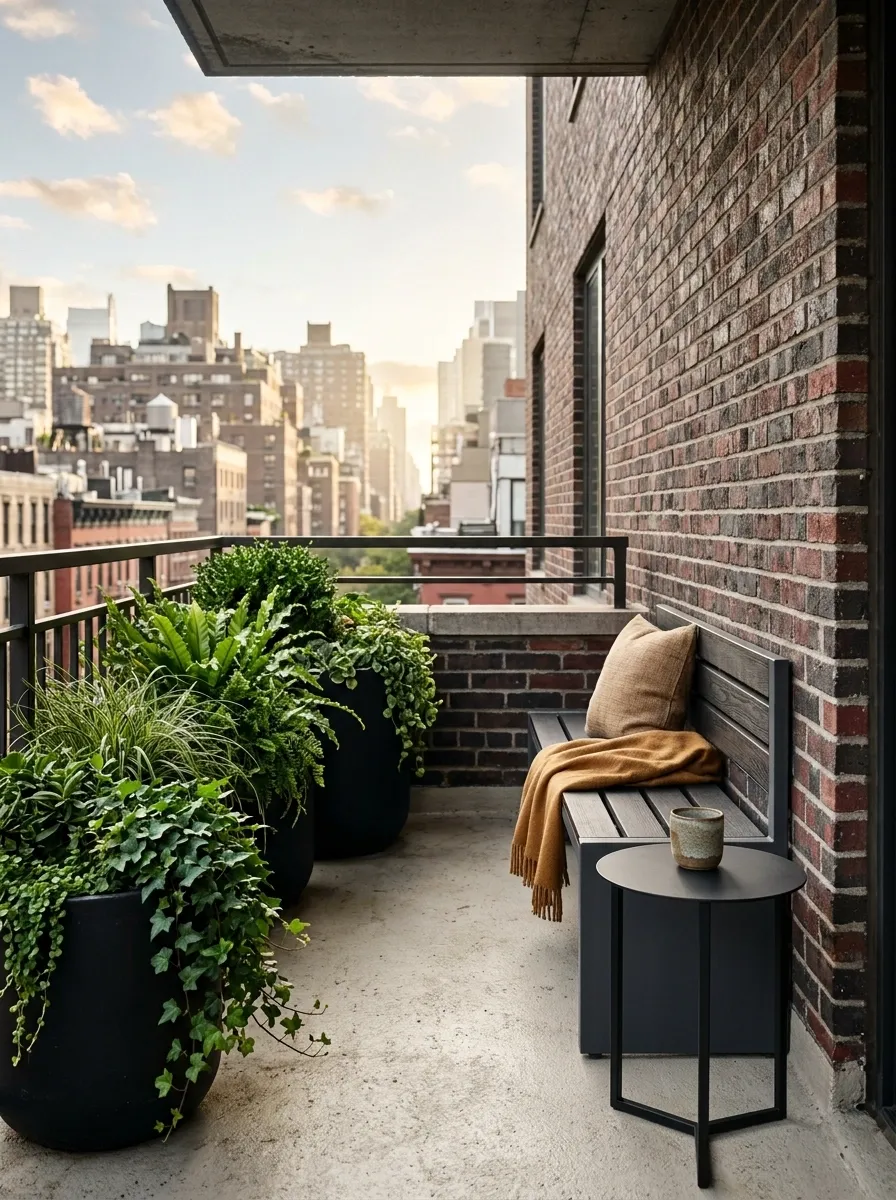
This version keeps the palette urban: charcoal metal furniture, pale concrete-look flooring, black planters, and layered green foliage.
A narrow bench runs against the wall, keeping the center relatively clear. A small metal table provides a surface for drinks, while plants soften the harder edges and bring variation to the dark materials.
The visual contrast is what gives the balcony character. Steel is rigid. Foliage is loose and irregular. Concrete is cool. Timber or woven textiles can bring just enough warmth to prevent the composition from feeling severe.
No decorative clutter is necessary. The materials already have something to say.
Layered Balcony Garden With Plants at Three Heights
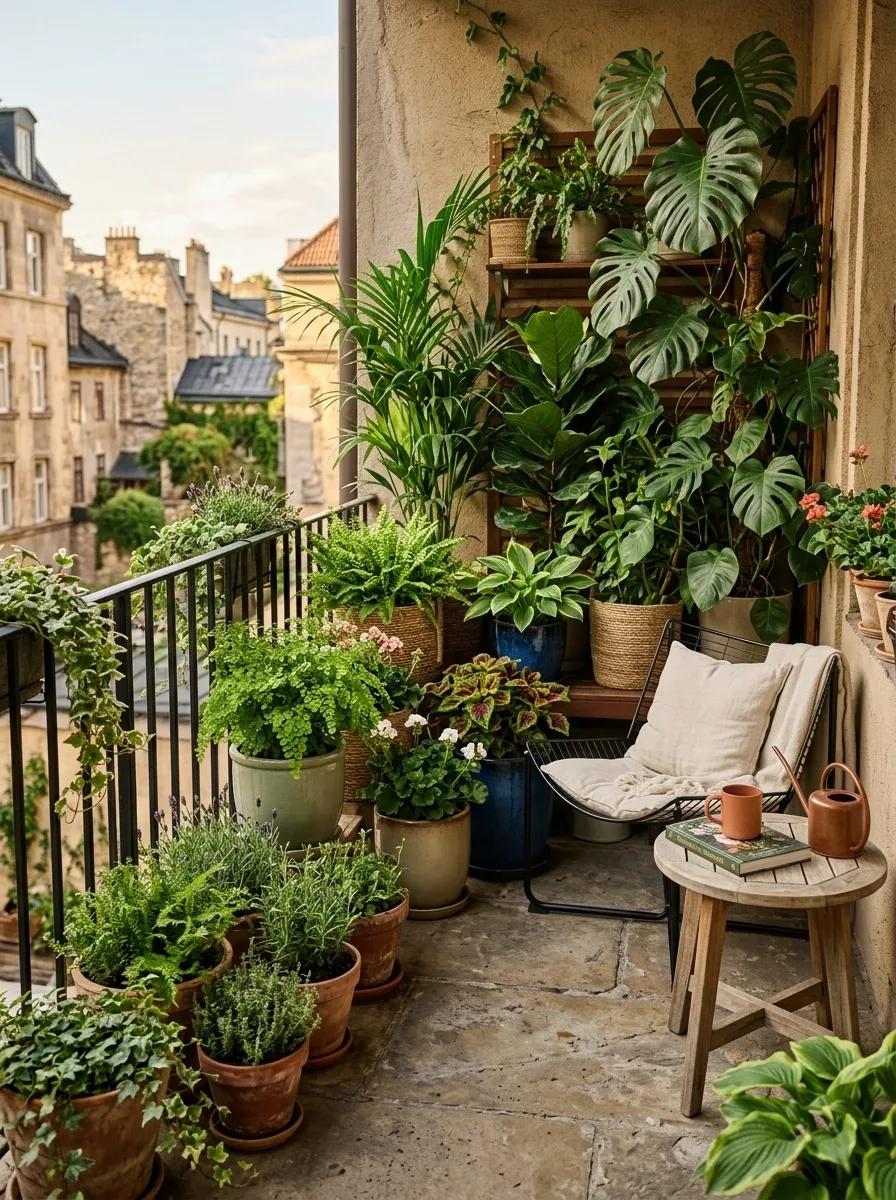
This little balcony behaves more like a compact garden than a furniture zone. Low plants occupy the floor edge, medium-height containers fill the corners, and taller foliage rises along the back wall.
A slim chair and small side table fit into the remaining pocket without becoming the main attraction. The planting creates depth because the eye isn’t met with one flat row of identical pots.
The different heights also help the balcony feel lush without demanding a huge footprint. Vertical space becomes part of the garden.
The important word is layered, not crowded. Twelve plants shoved wherever they fit aren’t automatically a garden. Sometimes they’re just twelve plants shoved wherever they fit.
Soft Curves and Neutral Layers
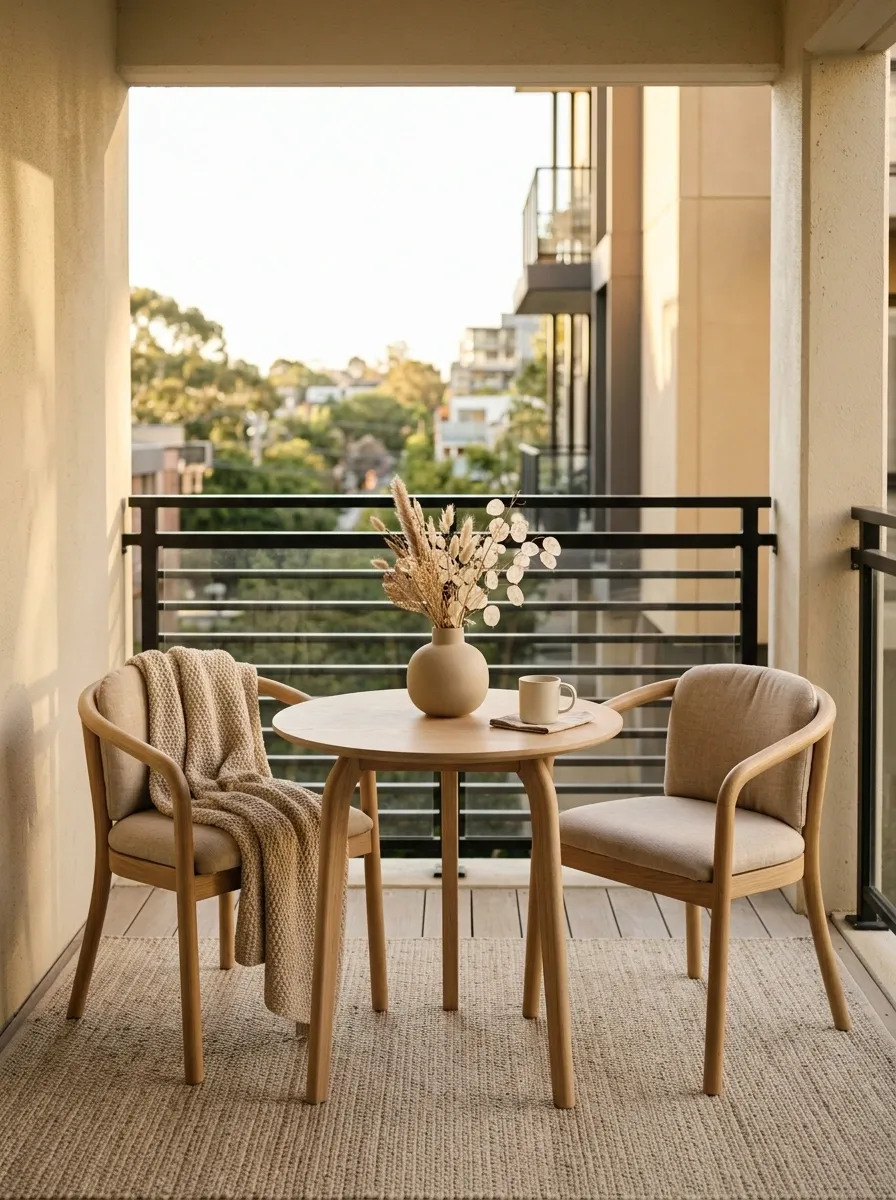
This balcony takes a softer contemporary route. A small rounded café table sits between two curved chairs, surrounded by beige cushions, pale timber, a textured rug, and warm cream walls.
The palette is deliberately restrained, but the shapes and textures keep it from feeling dull. The curved furniture softens the hard geometry of the balcony while the pale wood adds warmth.
There is no need to pile on accessories. The repeated curves already give the space a visual language.
Beige becomes much more interesting when shape, texture, and proportion are doing some of the work.
Classic Cream and Blue Balcony With Ceramic Details
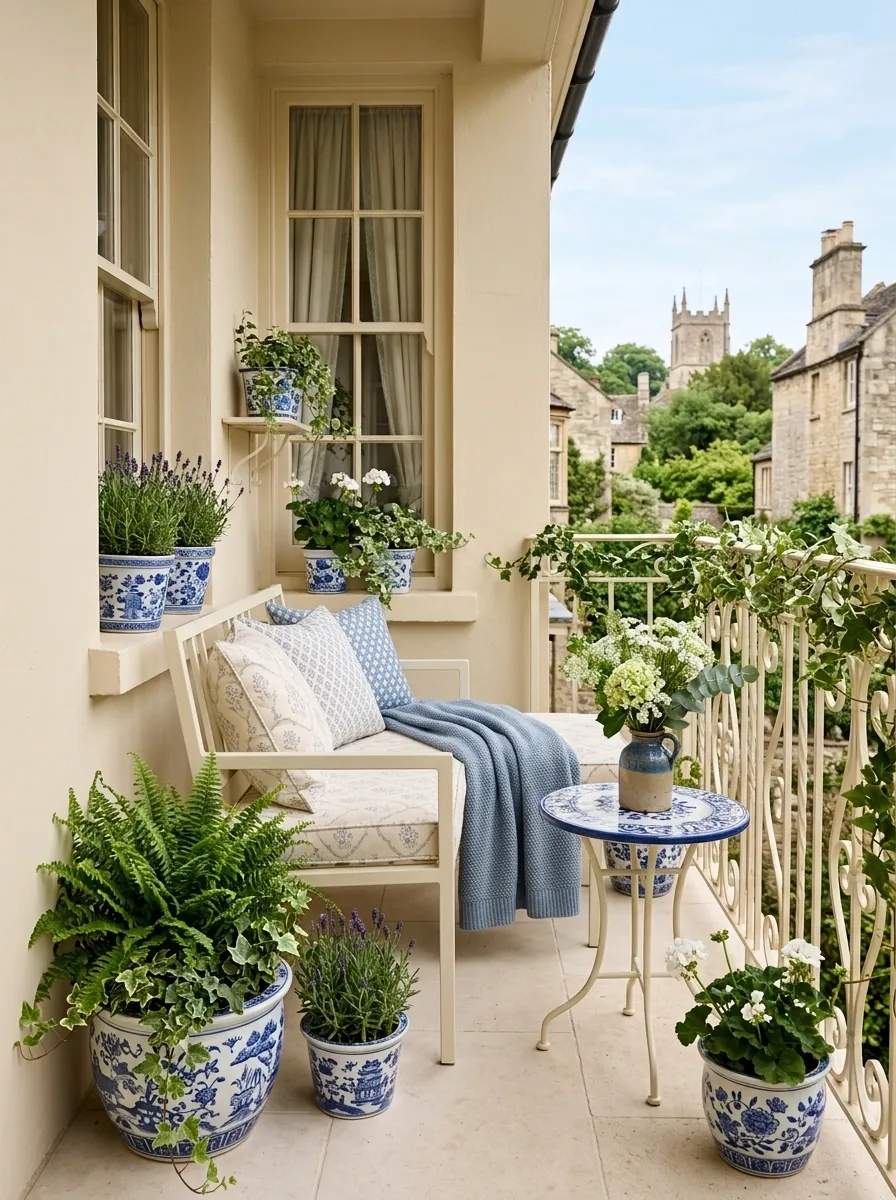
A soft blue-and-cream palette gives this balcony a traditional character without making it feel dated. A small painted metal bench sits against the wall, paired with a tiny ceramic-topped table and a few blue-and-white planters.
The flooring stays pale and quiet, while patterned textiles provide small bursts of detail around the seating. The balcony feels finished because the same blue appears in several places rather than being introduced once and forgotten.
That repetition creates cohesion without requiring matching everything.
And thankfully, there is no need for a decorative anchor.
Sunset Balcony With Clay Tones and Low Timber Seating
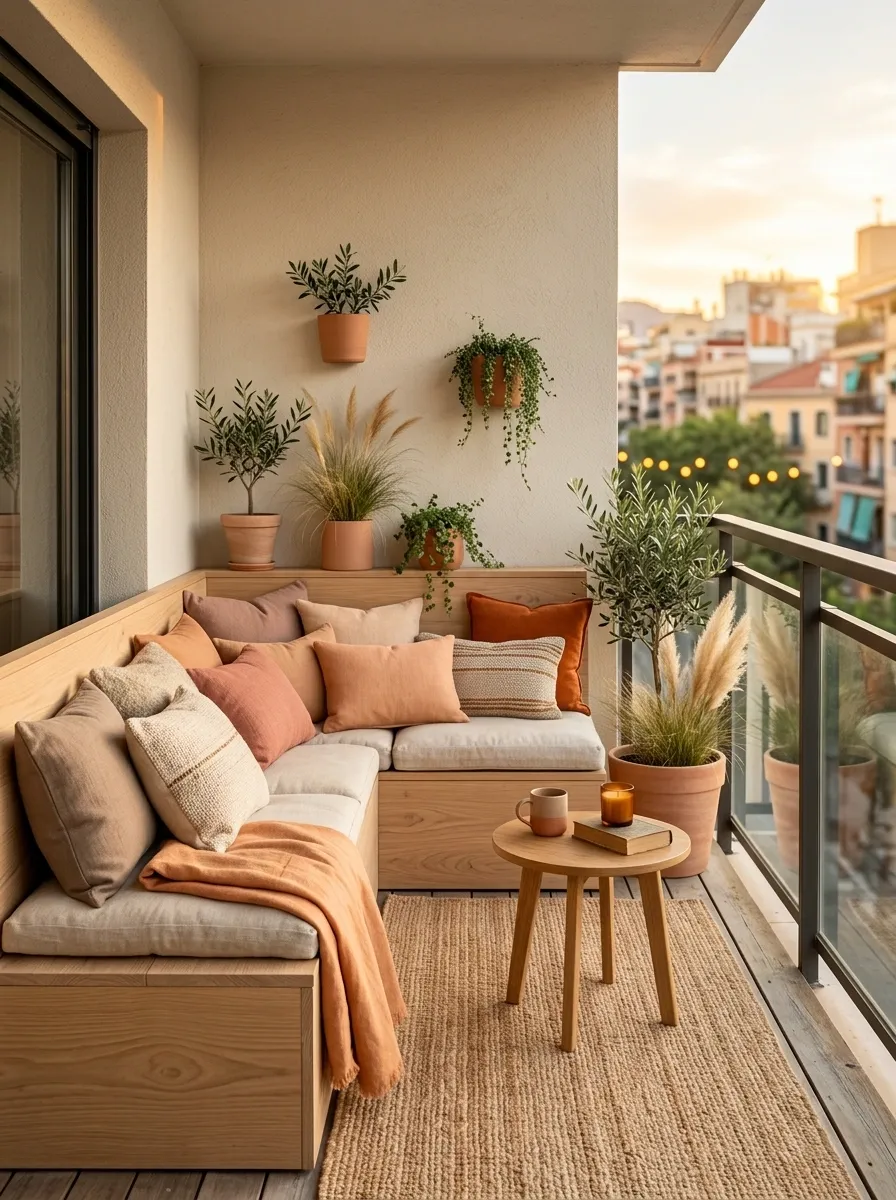
This balcony is designed around warm late-afternoon light. Low timber seating runs along one side, layered with muted clay cushions and soft orange textiles. A textured neutral rug anchors the seating, while a few understated plants add greenery without competing with the warm palette.
The wall behind the seating stays a pale sandy neutral, allowing the sunset colors to look richer without turning the entire balcony orange.
This composition feels especially strong near a warm-facing view because the natural light becomes part of the color scheme.
The trick is stopping before the palette becomes aggressively orange. Clay needs breathing room.
Compact Contemporary Balcony With Hidden Storage
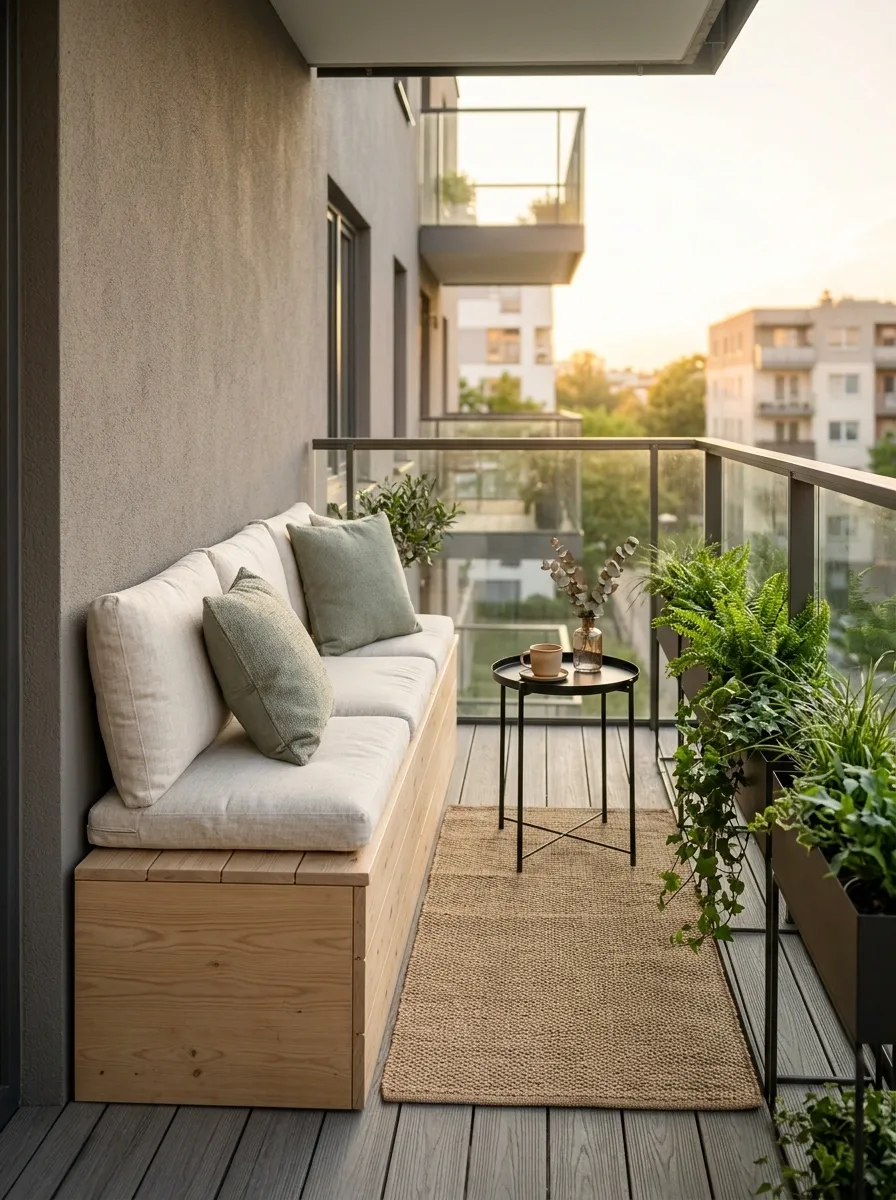
This version is all about looking tidy without looking sterile. A streamlined storage bench runs along one wall, with a lift-up seat hiding cushions and balcony supplies underneath. Slim planter boxes line the railing, while a tiny round table sits close to the seating.
The palette stays restrained with warm gray, pale timber, cream, and muted green. Clean lines make the balcony feel wider, while the hidden storage keeps everyday clutter out of sight.
The bench earns its footprint twice, which is exactly what small spaces need.
A storage box dumped in the corner isn’t the same thing. That is just clutter wearing a lid.
Moody Teal Balcony With Layered Lantern Light
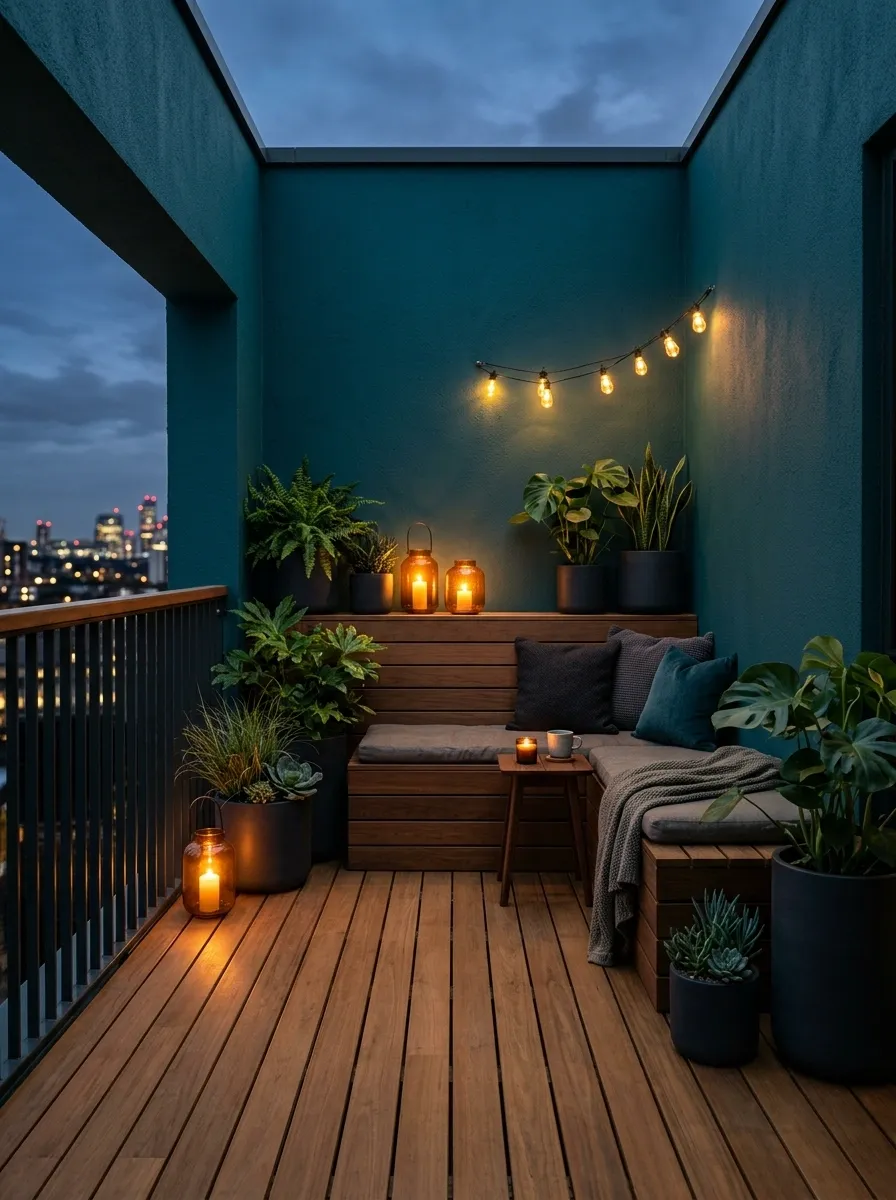
This design takes the balcony into darker territory with deep teal walls, warm timber seating, dark ceramic planters, and amber lanterns placed at different heights.
The furniture stays low and the plants are concentrated toward the back corners, leaving a clear central area. At dusk, the lanterns create small pools of warm light against the deep wall color, giving the space more depth than a single ceiling fixture ever could.
The palette is dramatic, but the shapes remain simple. That’s the important balance.
Dark color doesn’t make a balcony heavy by itself. Too many dark objects competing inside the same small footprint do.
Pale Coastal Retreat With a Weathered Wood Bench
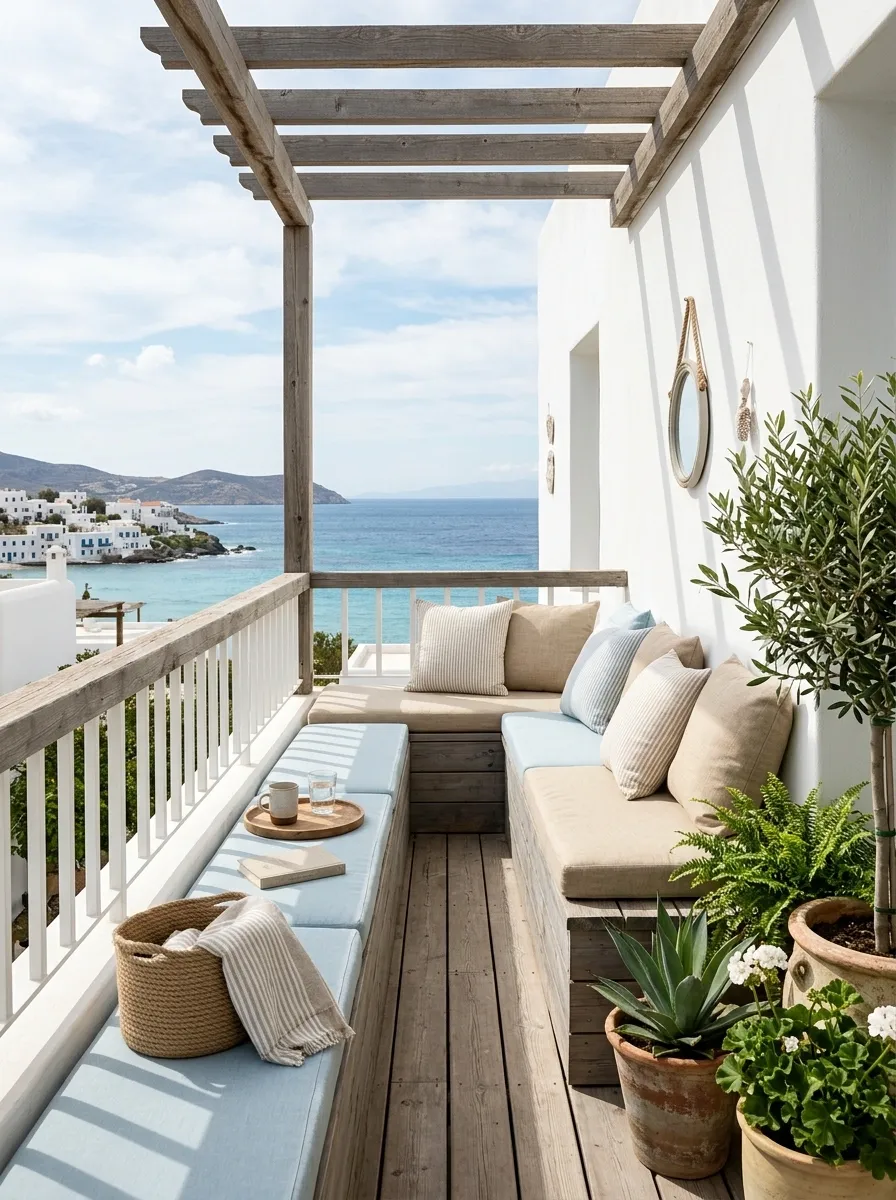
This balcony keeps the coastal direction relaxed and architectural. A weathered wood bench runs beneath the wall, topped with pale blue and sandy cushions. Rope detailing appears sparingly, while a few soft green plants add life around the corners.
The floor remains mostly visible, helping the narrow space feel longer. White walls reflect daylight, and the weathered timber gives the otherwise pale palette enough warmth to avoid looking clinical.
The design doesn’t need shells, anchors, or nautical signs to make the point. The material mix already does it.
That is generally a good rule for themed decorating: stop when the theme is obvious.
Tiny Balcony Workspace With a Folding Desk
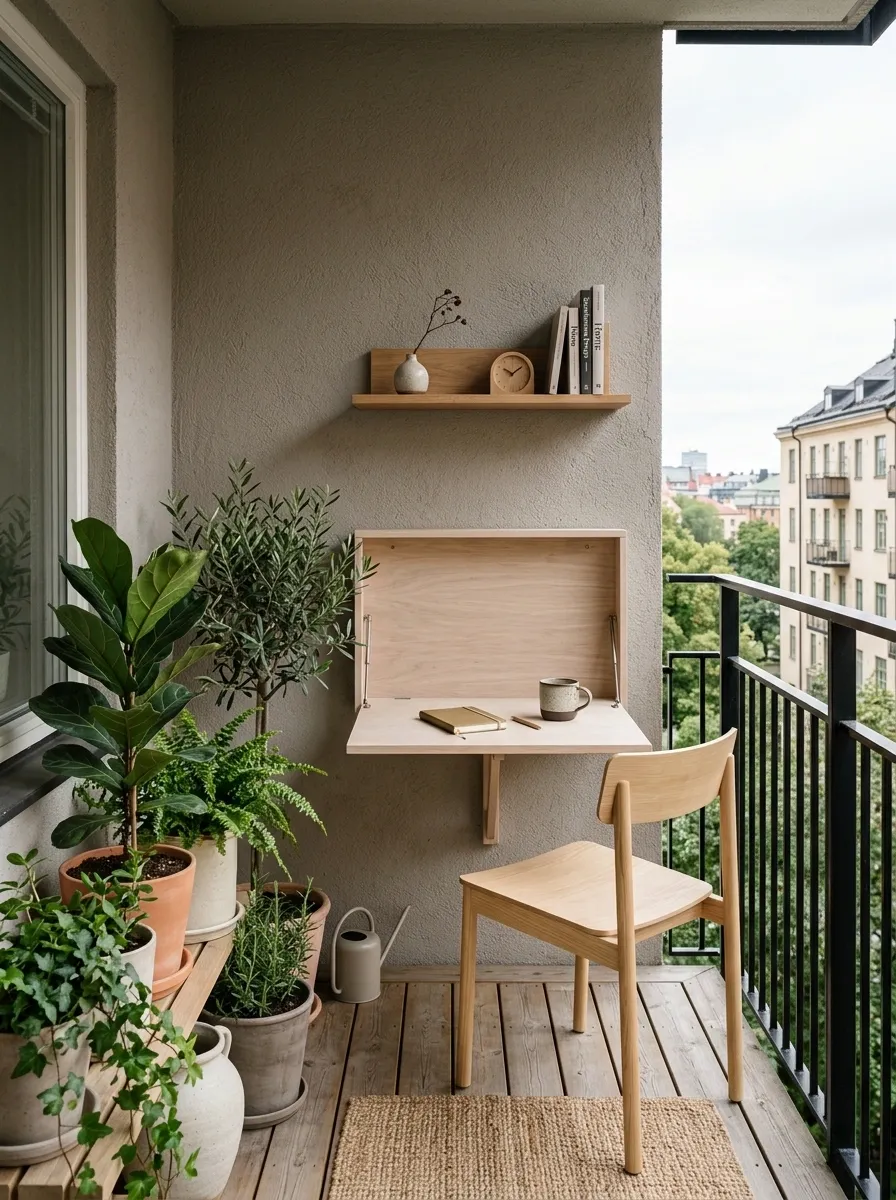
This balcony turns a narrow outdoor edge into a proper working corner without making it look like office furniture escaped through a window.
A slim folding desk sits against one wall, paired with a compact wooden chair. Tall planters form a loose privacy screen behind the desk, while a small shelf holds only the items used regularly. The opposite side stays open to preserve daylight and airflow.
The green screen gives the workspace separation without constructing a visual wall. Pale timber and warm gray keep the design calm enough for long working sessions.
The smartest part is what isn’t there. No oversized storage cabinet. No bulky desk chair. No decorative nonsense stealing elbow room.
Raised Planter Bench With a Built-In Look
This balcony gets its identity from one continuous architectural element: a raised planter runs into a built-in bench, creating a long horizontal line across the back wall.
The seating uses warm timber and neutral cushions, while the planter carries grasses and leafy greenery at slightly different heights. A tiny side table sits beside the bench rather than in the middle, leaving the main floor clear.
Because the bench and planter visually belong together, the balcony feels designed rather than furnished. That distinction matters in small spaces.
There is also less visual competition. One long element establishes the structure, while everything else simply supports it.
Jewel-Tone Eclectic Balcony With a Strong Color Story
This balcony doesn’t whisper. Deep teal cushions, rusty orange textiles, mustard accents, and leafy plants give the compact space a layered, collected look without making the architecture fight for attention.
The furniture stays relatively simple, which gives the color story room to breathe. A slim painted bench anchors one side, while a small round table keeps the center flexible. Pattern appears mostly through cushions and one outdoor rug, rather than being sprayed across every surface.
The colors are bold, but they are related. That’s the difference between an eclectic balcony and a pile of unrelated purchases.
Skip the urge to add another bright accent because there is technically a free corner. Empty space keeps strong color from becoming visual shouting.
A Single Lounge Chair for Reading
A tiny balcony doesn’t automatically need a sofa, two chairs, and a table. This version is built around one substantial lounge chair positioned toward the view, with a small side table and a leafy potted tree completing the corner.
The larger chair gives the balcony a clear purpose and a strong focal point. Pale walls and warm timber keep the rest of the composition quiet, while the tree adds height without consuming the entire floor.
The arrangement works because it accepts the actual size of the balcony instead of fighting it.
One comfortable chair beats four chairs that require everyone to sit sideways.
Industrial Balcony With Concrete and Greenery
This version keeps the palette urban: charcoal metal furniture, pale concrete-look flooring, black planters, and layered green foliage.
A narrow bench runs against the wall, keeping the center relatively clear. A small metal table provides a surface for drinks, while plants soften the harder edges and bring variation to the dark materials.
The visual contrast is what gives the balcony character. Steel is rigid. Foliage is loose and irregular. Concrete is cool. Timber or woven textiles can bring just enough warmth to prevent the composition from feeling severe.
No decorative clutter is necessary. The materials already have something to say.
Layered Balcony Garden With Plants at Three Heights
This little balcony behaves more like a compact garden than a furniture zone. Low plants occupy the floor edge, medium-height containers fill the corners, and taller foliage rises along the back wall.
A slim chair and small side table fit into the remaining pocket without becoming the main attraction. The planting creates depth because the eye isn’t met with one flat row of identical pots.
The different heights also help the balcony feel lush without demanding a huge footprint. Vertical space becomes part of the garden.
The important word is layered, not crowded. Twelve plants shoved wherever they fit aren’t automatically a garden. Sometimes they’re just twelve plants shoved wherever they fit.
Soft Curves and Neutral Layers
This balcony takes a softer contemporary route. A small rounded café table sits between two curved chairs, surrounded by beige cushions, pale timber, a textured rug, and warm cream walls.
The palette is deliberately restrained, but the shapes and textures keep it from feeling dull. The curved furniture softens the hard geometry of the balcony while the pale wood adds warmth.
There is no need to pile on accessories. The repeated curves already give the space a visual language.
Beige becomes much more interesting when shape, texture, and proportion are doing some of the work.
Making a Tiny Balcony Actually Feel Designed
The best small balconies aren’t the ones with the longest shopping list. They’re the ones where the composition makes sense before the first accessory ever arrives.
Start with the purpose. A breakfast balcony needs a different layout from a reading corner. A plant-heavy retreat needs different furniture from an evening lounge. Once that decision is clear, everything else becomes easier to edit.
Then protect the empty space. It is tempting to fill every corner because the balcony feels unfinished during setup. Resist it. A little breathing room makes the furniture look more deliberate, the plants look fuller, and the whole space easier to use.
Choose one visual story and let it repeat through color, materials, shape, or texture. That’s what makes a tiny outdoor space look finished rather than merely furnished.