
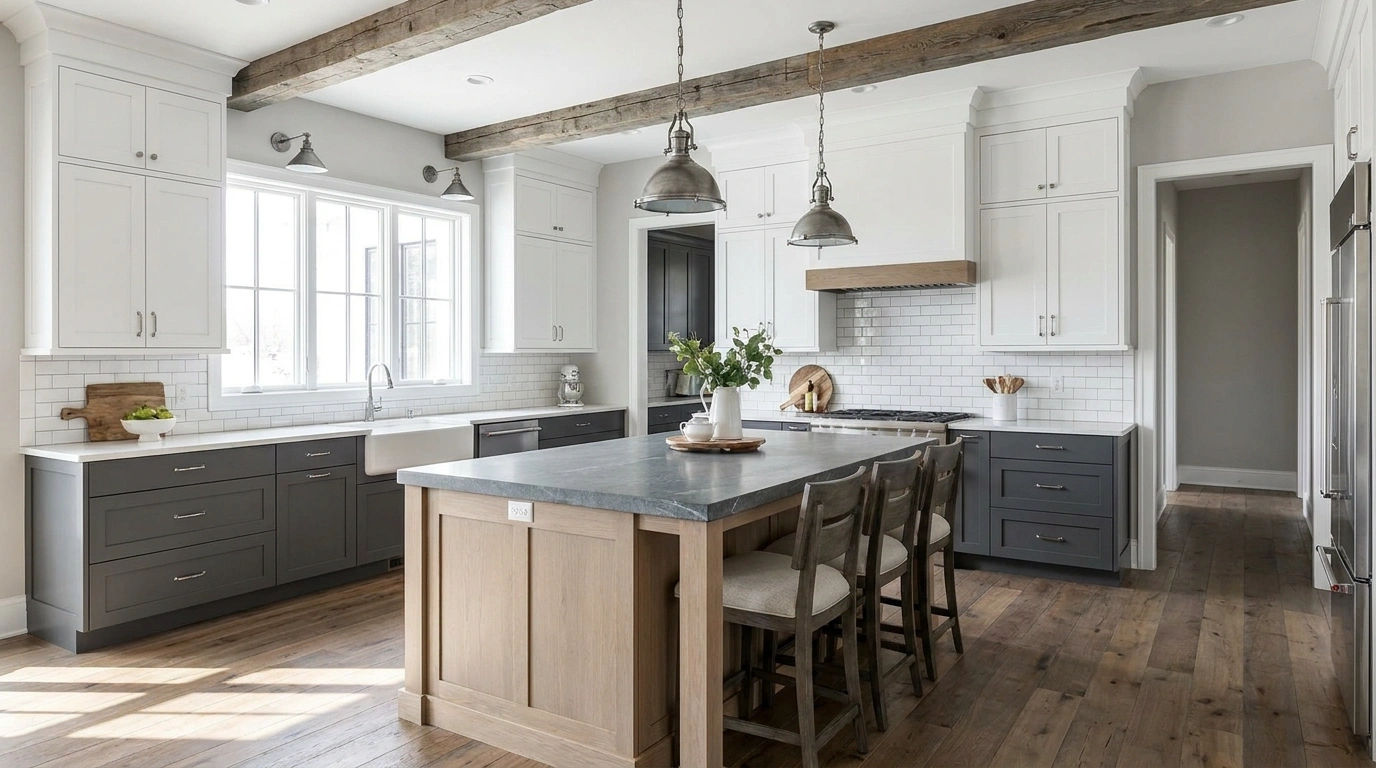
Gray and white kitchens have a tiny identity crisis. Done well, they look calm, architectural, and expensive. Done badly, they look like someone decorated a dental clinic after discovering a clearance aisle of chrome. The colors are not the problem. Flat contrast, weak lighting, and too many matching hard surfaces are.
The strongest gray and white kitchens build a complete visual story. Warm wood interrupts cool cabinetry. Stone gives the eye somewhere to land. Black adds definition without taking over.
Soft gray keeps white cabinetry from feeling harsh. Even a compact kitchen can look intentional when the cabinets, backsplash, counters, lighting, flooring, and furniture are all telling the same story.
These ideas focus on finished kitchen compositions, not random things to buy. Each concept gives the room a distinct personality, so the entire direction can be judged before the first cabinet handle gets installed.
Because yes, “add some gray” is technically a design plan. So is putting three throw pillows on a chair and calling it a reading nook.
Gray and white already create a cool foundation. The easiest way to keep the room from feeling sterile is to give that foundation one warm visual anchor, such as oak, walnut, aged brass, woven seating, or a warm-toned floor.
Gray and White Kitchen Ideas
Matte Gray Cabinets With Graphic Geometric Tile
Sleek matte gray cabinetry meets its match in a bold black-and-white geometric backsplash that instantly commands attention. The stark contrast of the tile brings a graphic punch to the space, while the dark counters maintain a grounded, streamlined look.
Upper glass-front cabinets with slender black frames keep the wall arrangement from feeling heavy and offer a peek at neatly organized glassware. The minimalist hardware blends seamlessly into the dark doors, letting the pattern work its magic.
The secret is balancing the high-impact backsplash with understated surroundings. Let the geometric tiles take center stage, keep the surfaces clean, and let the modern lines speak for themselves.
Soft Gray Shaker Cabinets With Warm Oak
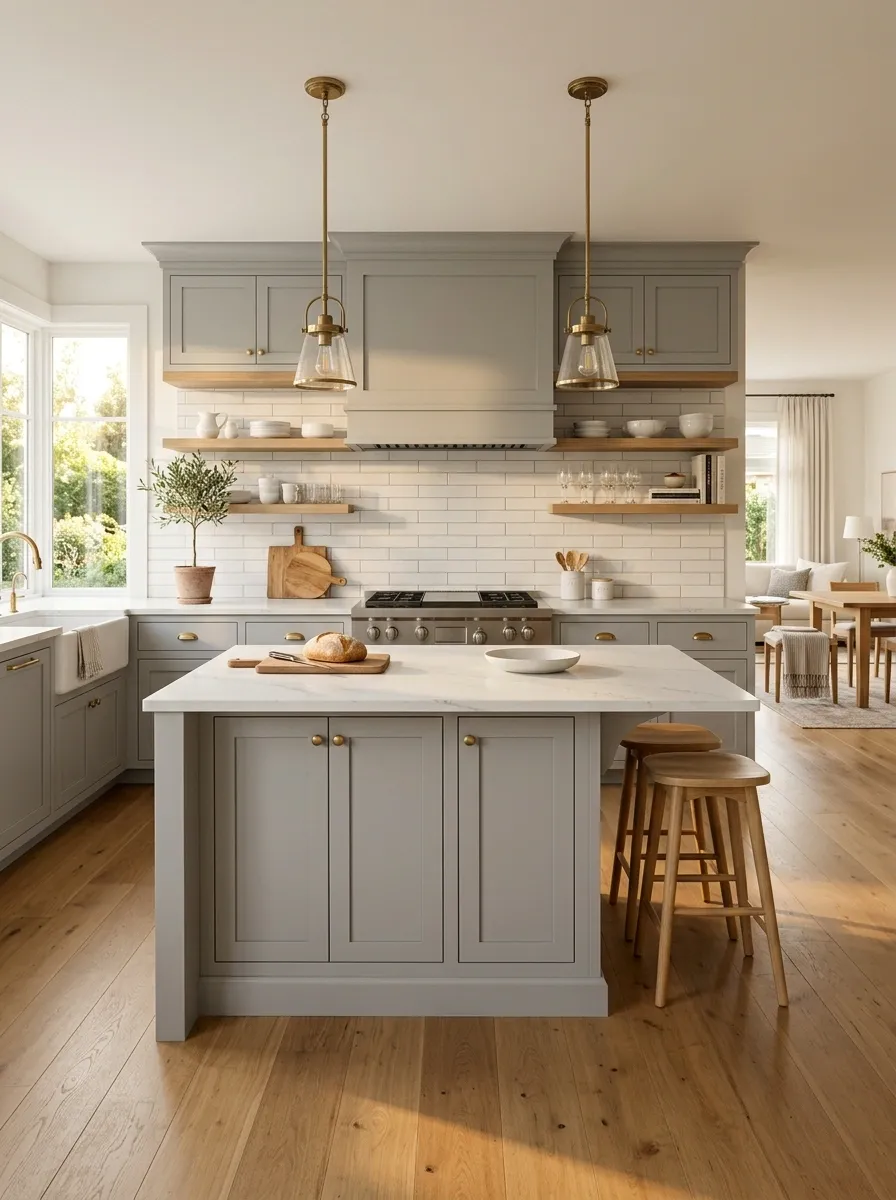
Soft gray shaker cabinets create a quieter foundation than stark white, while warm oak flooring keeps the room from drifting into showroom territory. White quartz counters brighten the work surfaces and a simple white subway backsplash gives the cabinetry enough breathing room to stand out.
The important detail is the relationship between the materials. The oak should feel warm rather than orange, the gray should lean soft rather than blue, and the white should stay clean without becoming icy.
Add aged brass hardware and a pair of simple oak stools, and the kitchen feels collected rather than color-coordinated to within an inch of its life.
Gray leads. White opens the room. Oak keeps the whole thing human.
Cozy Gray Shaker Kitchen With Warm Wooden Accents
Mid-tone gray shaker cabinets create a welcoming atmosphere that feels both classic and relaxed. Paired with soft white walls and a traditional mantel hood, the kitchen leans into a cozy, lived-in charm without losing its clean edge.
Warm wood flooring and earthy countertop decor bring organic texture into the room, offsetting the cool gray tones. A subtle vintage runner anchors the space, adding an extra layer of comfort underfoot.
It is all about layering the details. Mix in copper utensils, ceramic jars, and simple greenery to give the space soul. A kitchen should look like it is actually lived in, not just photographed.
Charcoal Gray Island With Crisp White Cabinetry
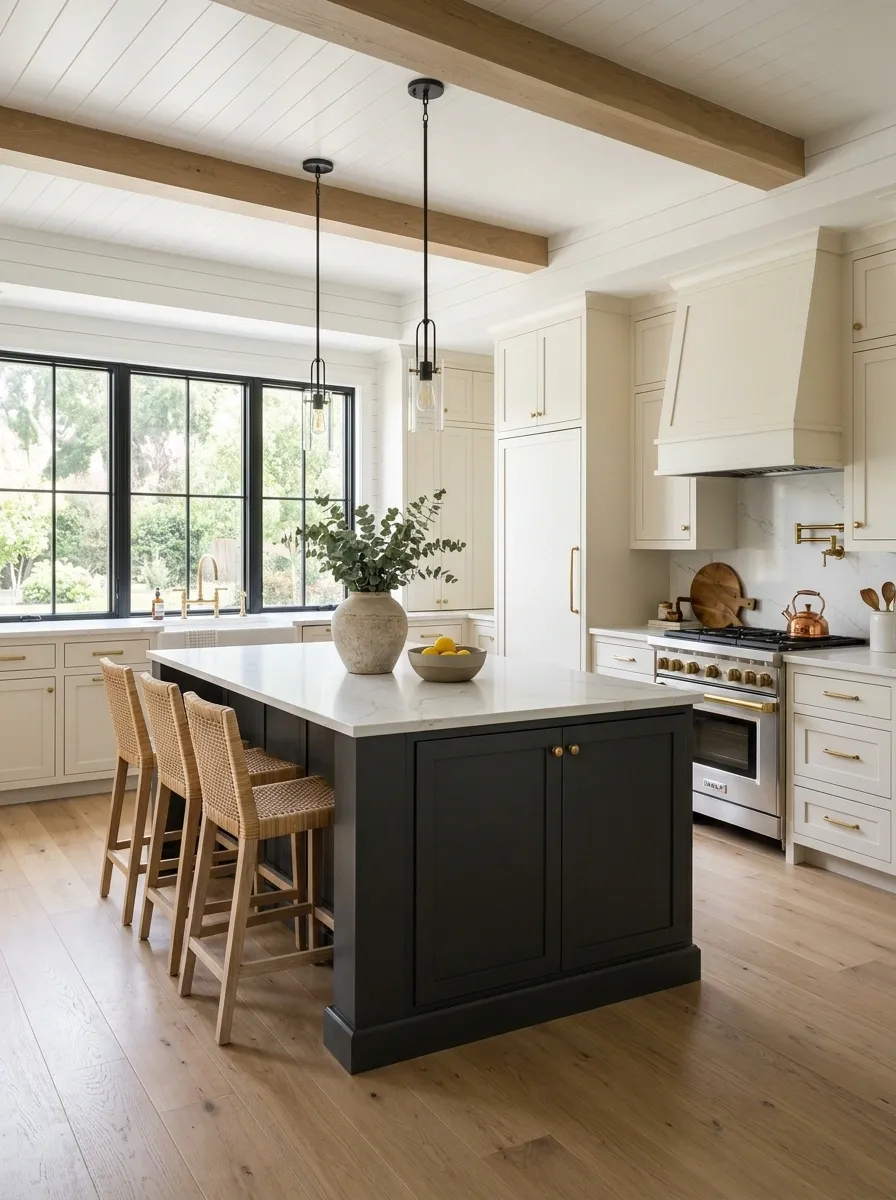
A deep charcoal island gives a mostly white kitchen enough visual weight to feel designed rather than unfinished. Keep the perimeter cabinets white, use white quartz counters throughout, and let the island carry the darker tone.
The contrast works especially well in kitchens with generous natural light because the dark island becomes an anchor without making the entire room feel heavy. Black window frames and slim black pendant lights can echo the island without turning the room into a black-and-white graphic novel.
The trick is restraint. Once the island, hardware, lights, stools, and faucet are all black, the room starts auditioning for a villain role.
Monolithic Charcoal Cabinets With Minimalist Flow
Floor-to-ceiling charcoal cabinetry creates a striking, uninterrupted wall of storage that redefines modern functionality. The matte finish absorbs the light, giving the dark gray a rich, velvety depth that feels intentional and architectural.
A stark white backsplash and minimalist black faucet cut through the darkness, establishing a sharp, clean division. Natural wood flooring underneath introduces just enough warmth to keep the dark tones from taking over the room.
The key to pulling off this look is total commitment to clean lines. Keep counters clutter-free and let the monolithic wall of cabinetry do the heavy lifting. Simplicity has never looked so dramatic.
Pale Gray Cabinets With a White Marble Focal Wall
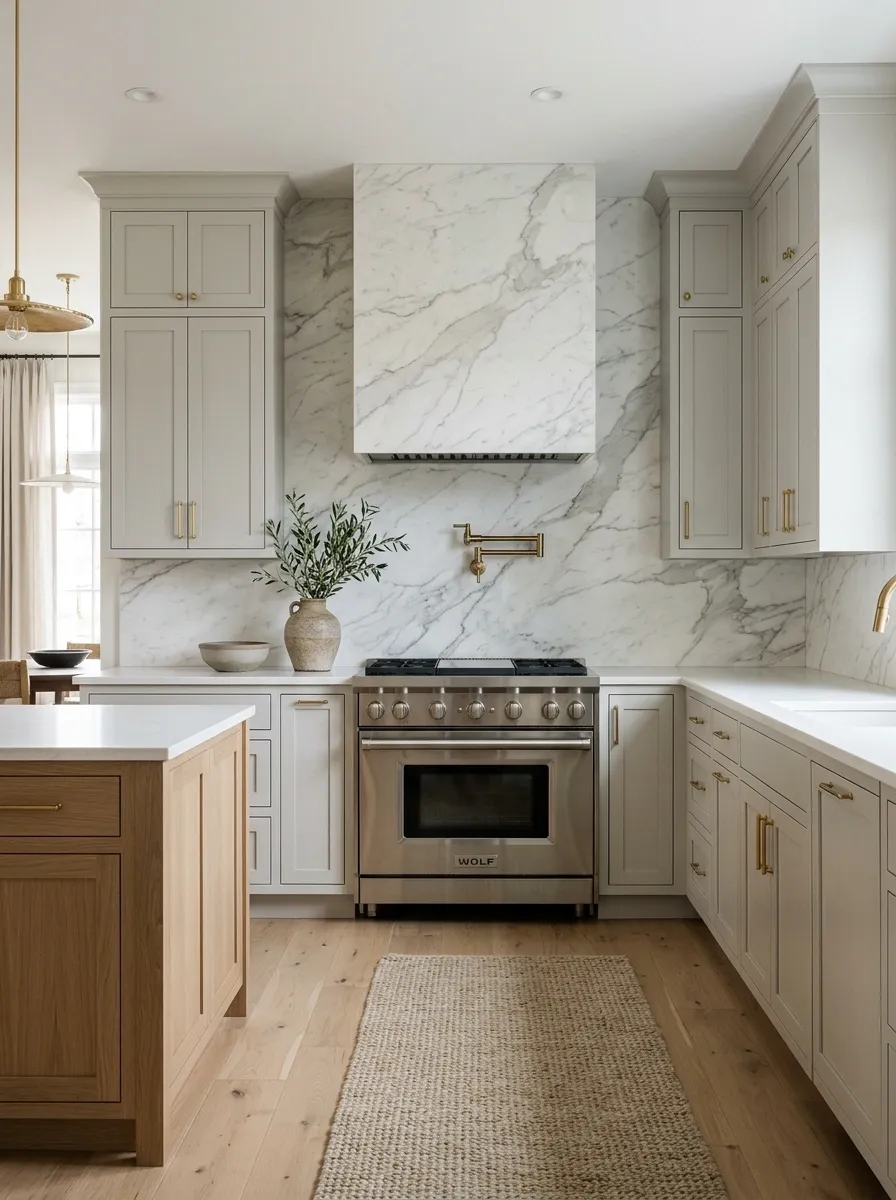
Use pale gray cabinetry across the lower and upper runs, then allow a dramatic white marble backsplash to become the room’s main visual event. Gray veining in the stone naturally ties the backsplash back to the cabinetry.
Keep the counters quiet and let the backsplash run behind the range in one continuous surface. Minimal hardware keeps the composition from becoming busy.
The result feels sophisticated without needing a dozen decorative objects. The marble does the talking. Everything else has enough manners to let it finish.
Gray Island With Warm Wood Hood and Brass Pendants
A substantial gray island anchors the room, while a custom warm wood range hood draws the eye upward to create height and dimension. Chevron-patterned tiles on the backsplash add subtle movement, tying the gray and white palette together effortlessly.
A line of slender brass pendant lights casts a warm glow over the marble island, echoing the golden tones of the hood. The herringbone pattern in the backsplash brings a classic touch to the otherwise contemporary layout.
This kitchen proves that mixing metals and woods is a science of balance. The brass hardware, wooden accents, and marble counters all play nicely together because each material has a distinct job to do.
Graphite Lower Cabinets With White Upper Cabinets
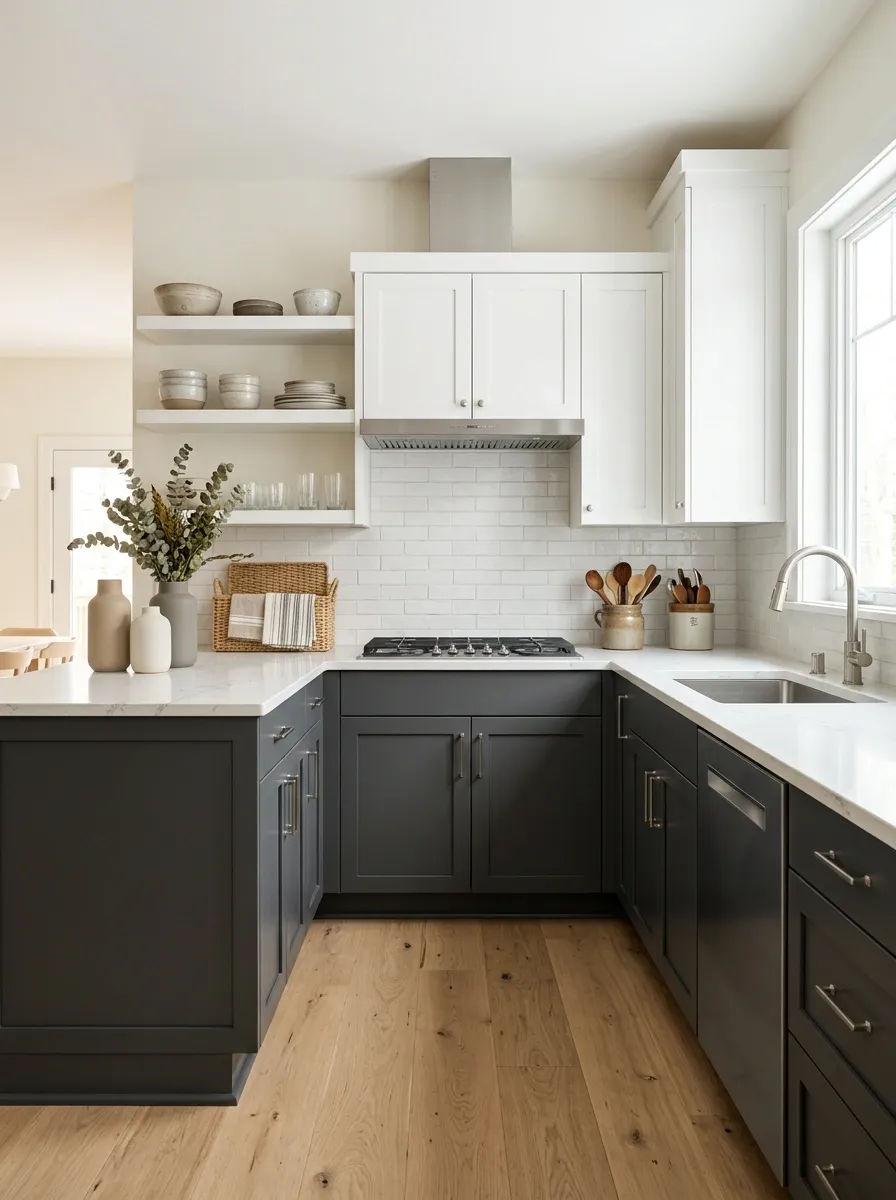
Dark gray lower cabinets paired with white uppers create a natural visual split that works especially well in smaller kitchens. The darker base grounds the room while the white upper section keeps the walls visually open.
A light wood floor adds another layer of warmth, while brushed nickel hardware quietly connects the gray and white zones.
This arrangement also gives the kitchen a little more personality than an entire wall of matching cabinetry. The lower section gets to be dramatic. The upper section gets to breathe. Everyone wins.
Soft Gray Perimeter With a Rich Wood Island
Soft gray perimeter cabinets wrap the kitchen in a calm, neutral embrace, leaving room for a rich wooden island to act as the statement piece. The natural grain of the island warms up the cooler gray tones and brings an inviting texture right to the center of the room.
Overhead, classic industrial pendants hang above the workspace, while a vintage runner bridges the gap between the dark hardwood floors and the crisp white subway tile backsplash. Every element feels deliberate and collected over time.
The magic lies in the contrast between cool cabinetry and warm wood. By letting the island bring the organic element, the rest of the kitchen gets to stay breezy, sophisticated, and deeply functional.
Light Gray Flat Panels With a White Waterfall Island
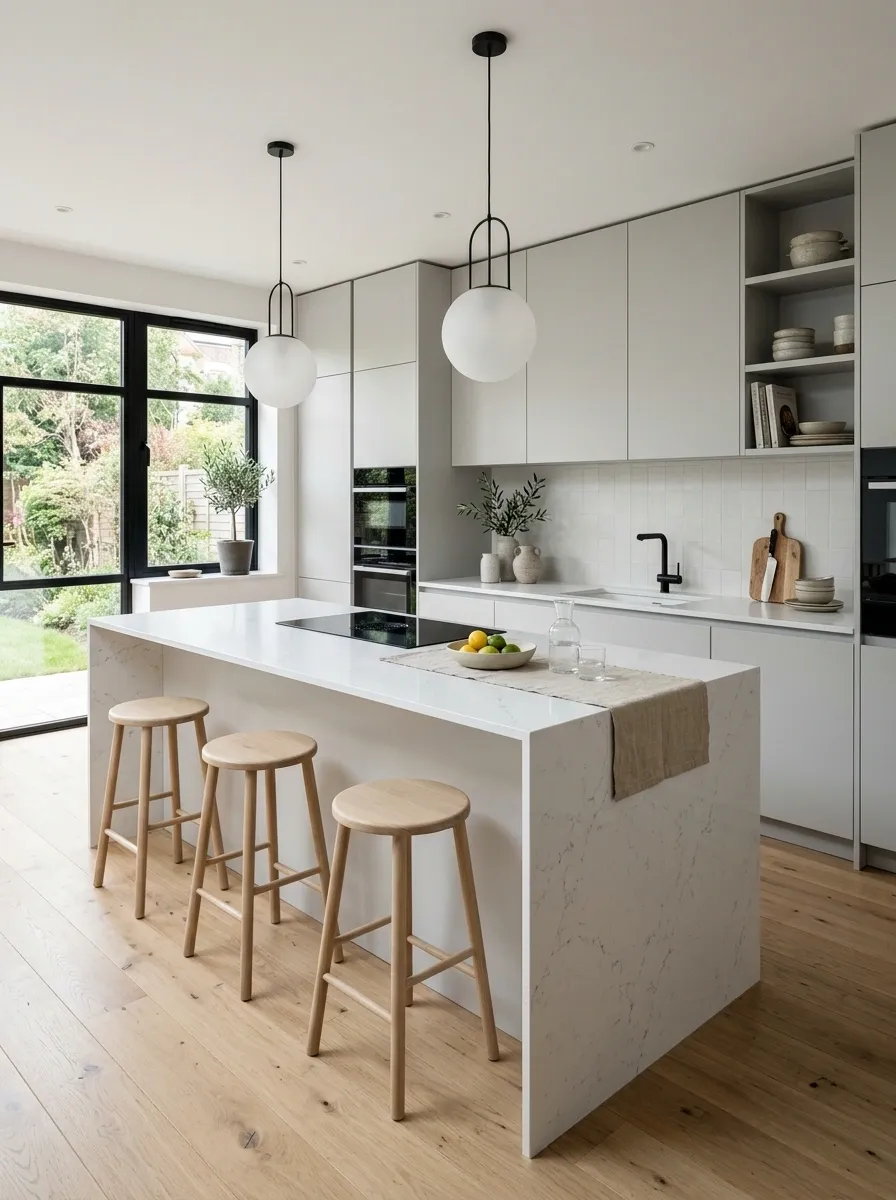
For a more contemporary kitchen, use flat-panel gray cabinetry with a large white island that extends into a waterfall edge. Keep the backsplash nearly white and let the cabinet lines remain clean.
The gray cabinetry provides enough contrast to prevent the room from becoming a sea of white surfaces, while the white island visually expands the center of the kitchen.
Add pale oak stools and simple globe pendants to soften the modern geometry. No ornate decor required. The architecture is already doing the heavy lifting.
Let the white island become the brightest object in the room.
Warm White Cabinets With a Mushroom Gray Island
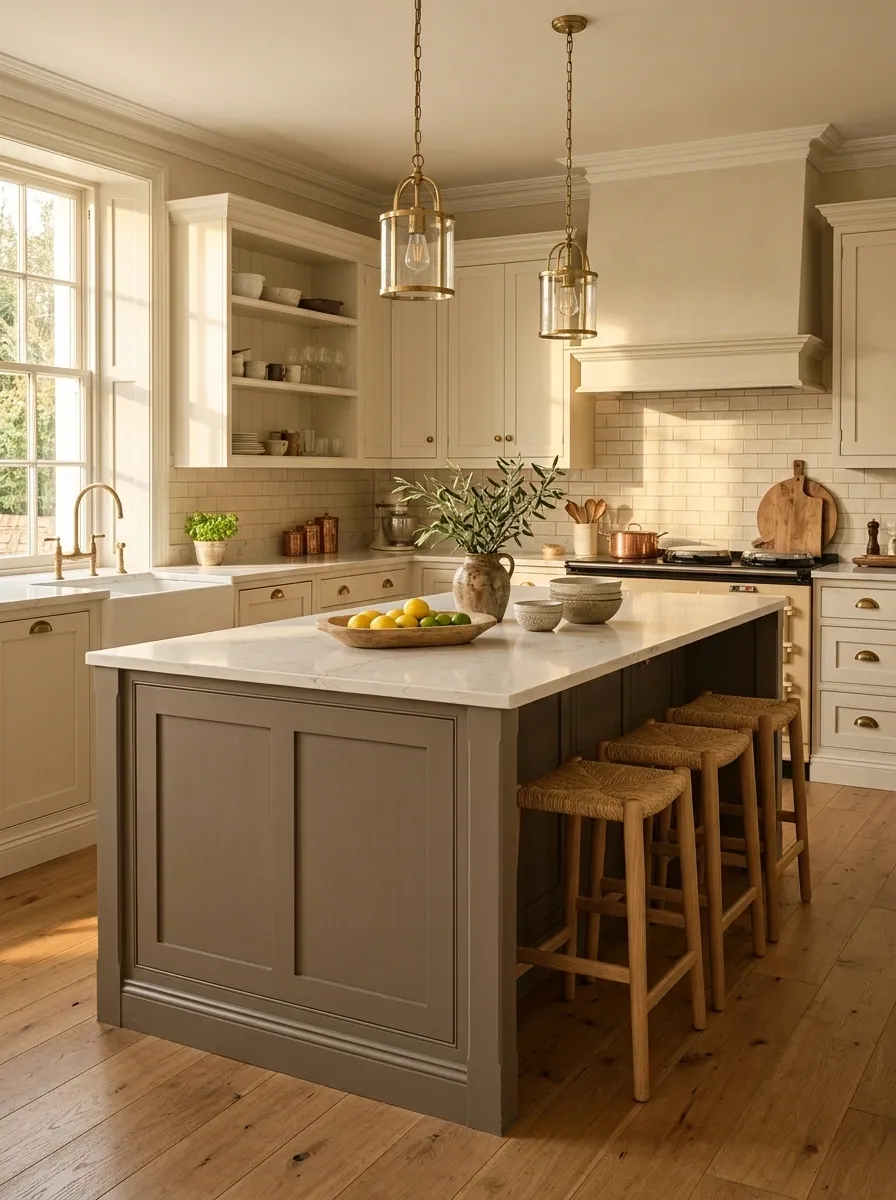
Not every gray needs to look silver. A mushroom gray island paired with warm white cabinets creates a softer, more traditional kitchen.
Use creamy white cabinetry, a warm white stone counter, and a slightly deeper gray-brown island. Natural oak stools and aged brass hardware reinforce the warmer palette.
This combination works particularly well in homes with traditional trim, wood floors, or vintage-inspired lighting. It feels relaxed rather than overly polished.
Basically, it is gray and white without behaving like gray and white are required to attend a corporate meeting.
Concrete Gray Cabinets With Bright White Surfaces
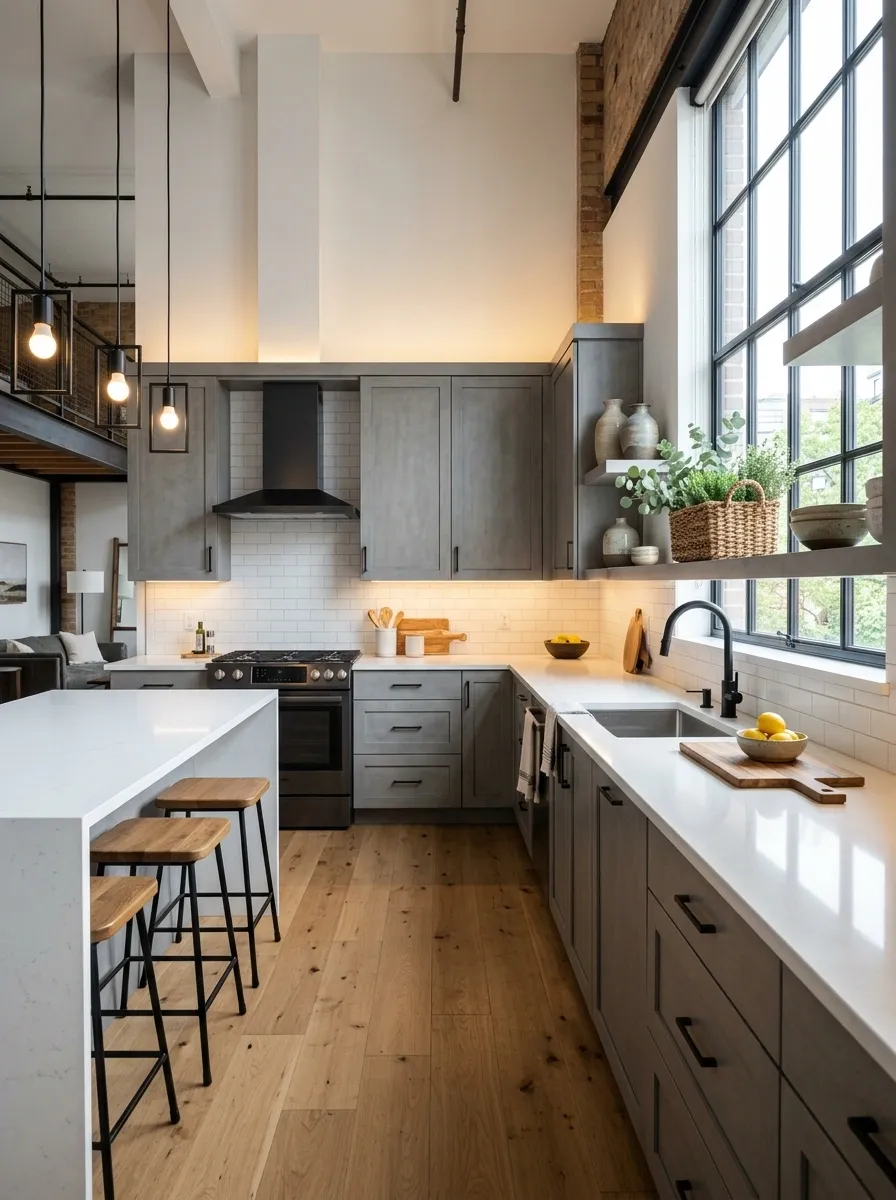
A concrete-inspired gray cabinet finish gives a modern kitchen an architectural edge. Pair it with bright white counters, a white backsplash, and warm wood flooring to stop the room from becoming too industrial.
Use black metal sparingly through the faucet or window framing. Keep the lighting warm so the gray does not appear colder at night.
The finished room should feel like a refined loft kitchen rather than a warehouse that accidentally received a refrigerator.
Dove Gray Cabinets With White Zellige Tile
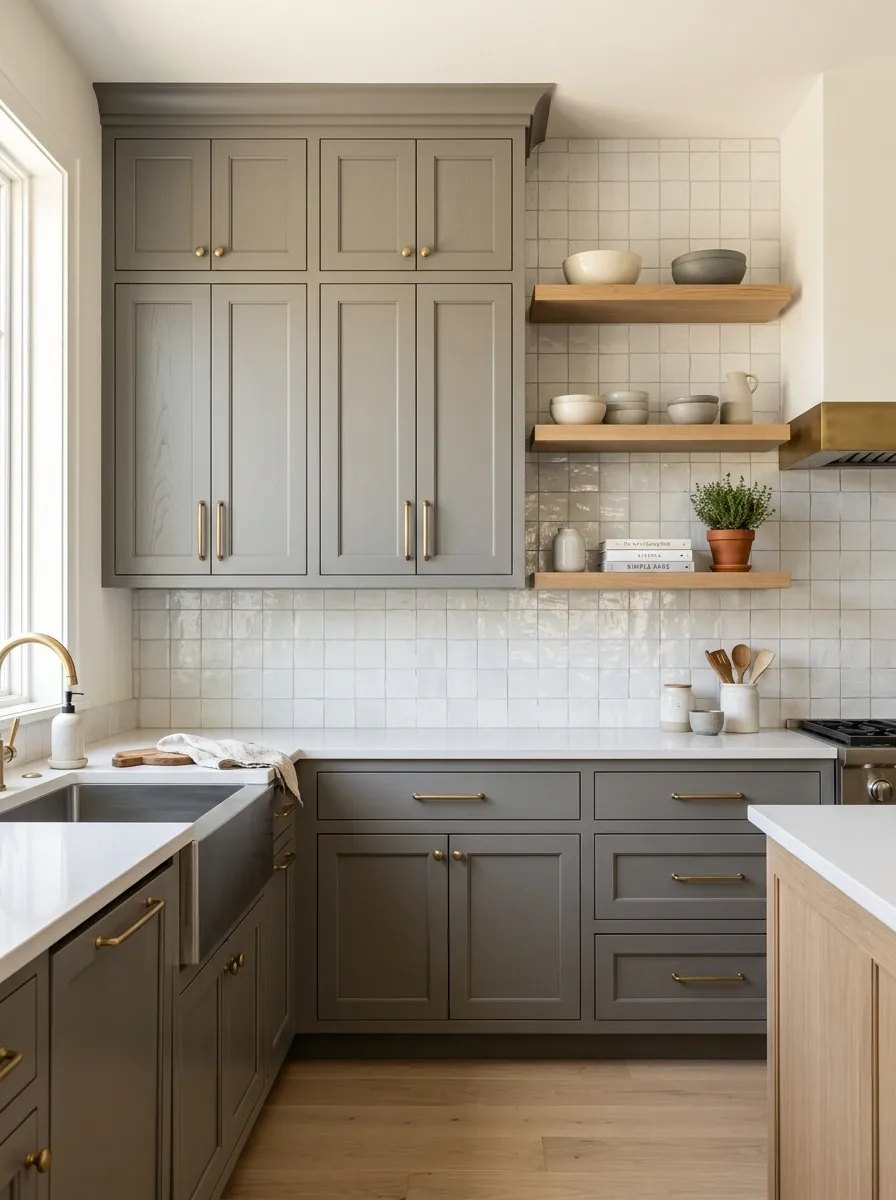
Dove gray cabinetry and handmade-look white tile create a kitchen with gentle texture rather than sharp contrast. The slightly uneven tile surface adds movement while keeping the palette restrained.
Use pale gray grout if the goal is softness, or a medium gray grout if the tile needs stronger definition. White quartz counters keep the worktops practical and visually quiet.
Natural wood shelves can add warmth, but keep them limited. Two shelves full of useful objects look intentional. Seven shelves full of decorative jars look like a lifestyle influencer lost control of the shelving budget.
Texture can create interest even when the colors barely change.
Scandinavian Gray, White, and Blonde Oak
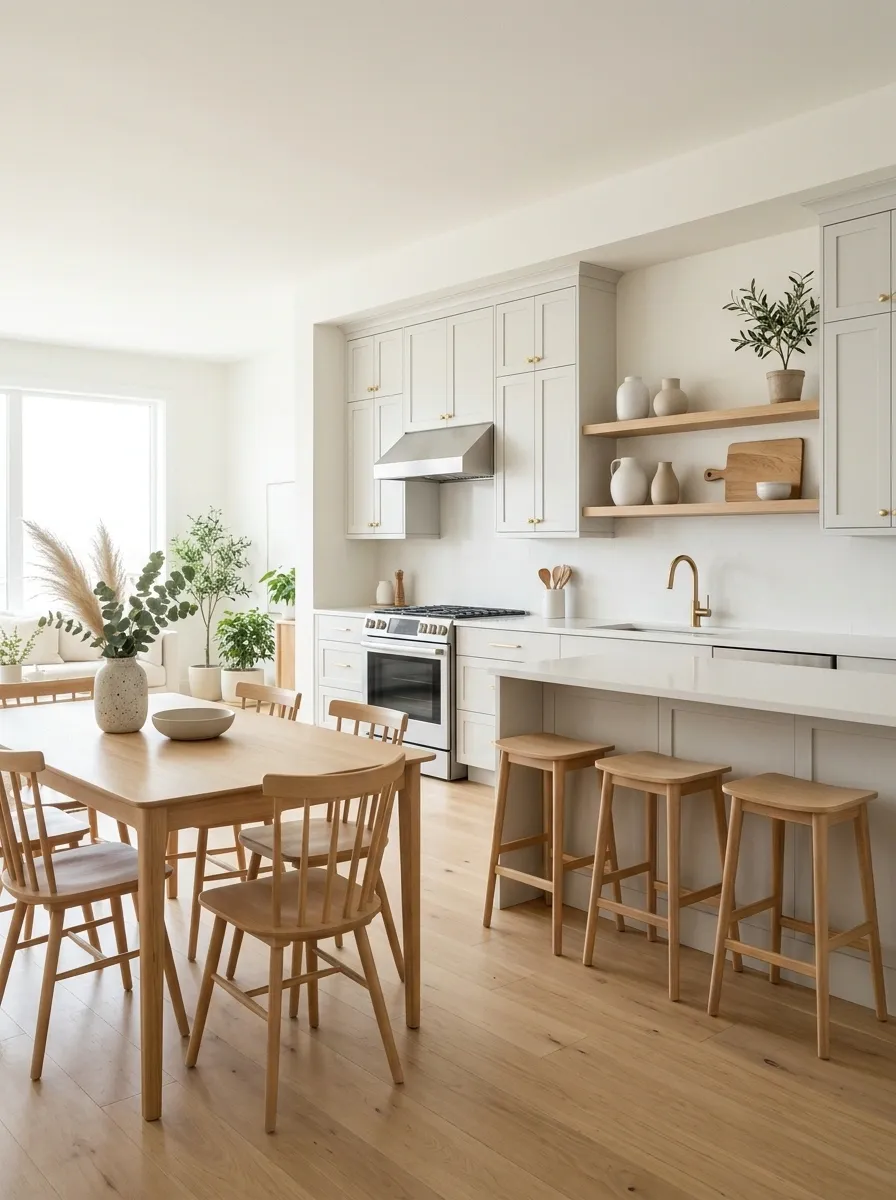
A Scandinavian-inspired kitchen benefits from very pale gray cabinetry, white counters, and blonde oak details. Keep the lines simple, the hardware minimal, and the lighting soft.
A white backsplash can blend into the walls so the cabinetry and wood become the main visual layers. Add a simple oak dining table or counter stools rather than filling every open area with accessories.
The finished look should feel airy and functional, not like the kitchen has been forced into a beige-and-basket personality crisis.
Gray Cabinets Framing a Bright White Range Wall
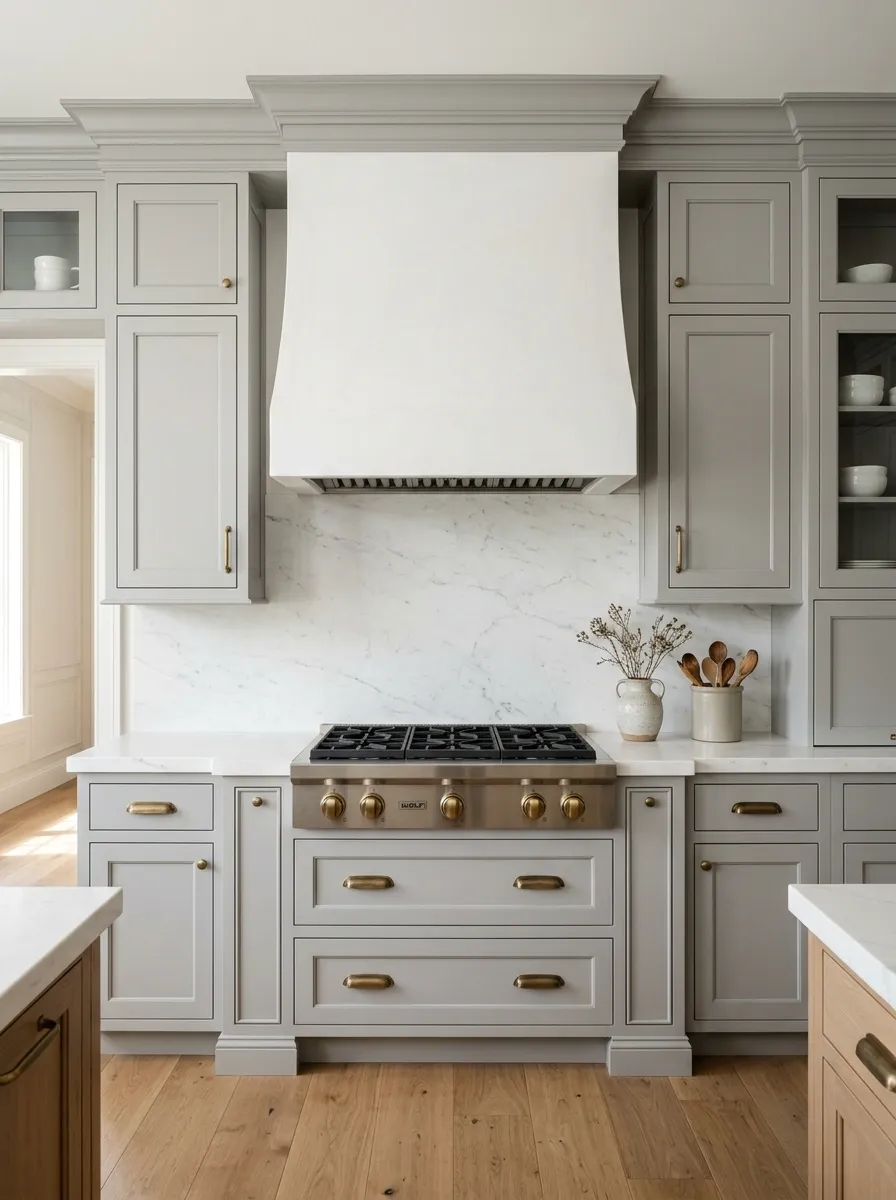
Create a strong focal point by keeping the cabinetry gray while making the range wall almost entirely white. A white hood, white backsplash, and white stone counter create a bright center inside the darker cabinet frame.
This works especially well in kitchens with a large range or substantial hood because the white zone naturally becomes the visual destination.
Keep the decorative styling restrained around the range. The architecture already knows where the eyes should go.
White Cabinets With a Deep Gray Countertop
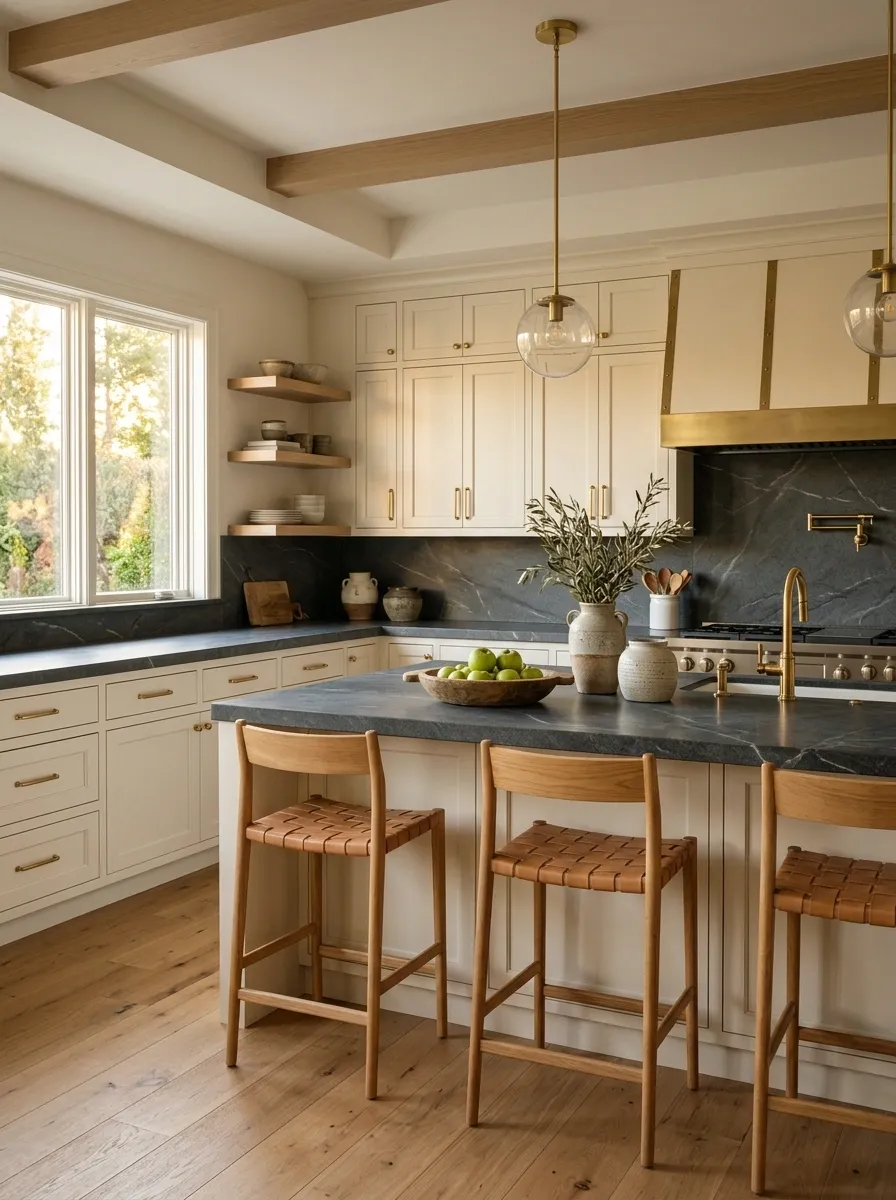
Reverse the usual arrangement by letting the cabinets stay white while the countertop provides the gray contrast. Choose a medium or charcoal gray stone with subtle movement rather than a completely flat dark surface.
White cabinetry keeps the room bright, while the darker counter visually defines the working areas.
Warm wood stools or flooring prevent the countertop from making the room feel too stark. It is a simple composition, but sometimes simple is exactly what the kitchen needs.
White cabinetry keeps the volume light. Gray counters draw the horizontal line.
Soft Gray Cabinets With a Walnut Island
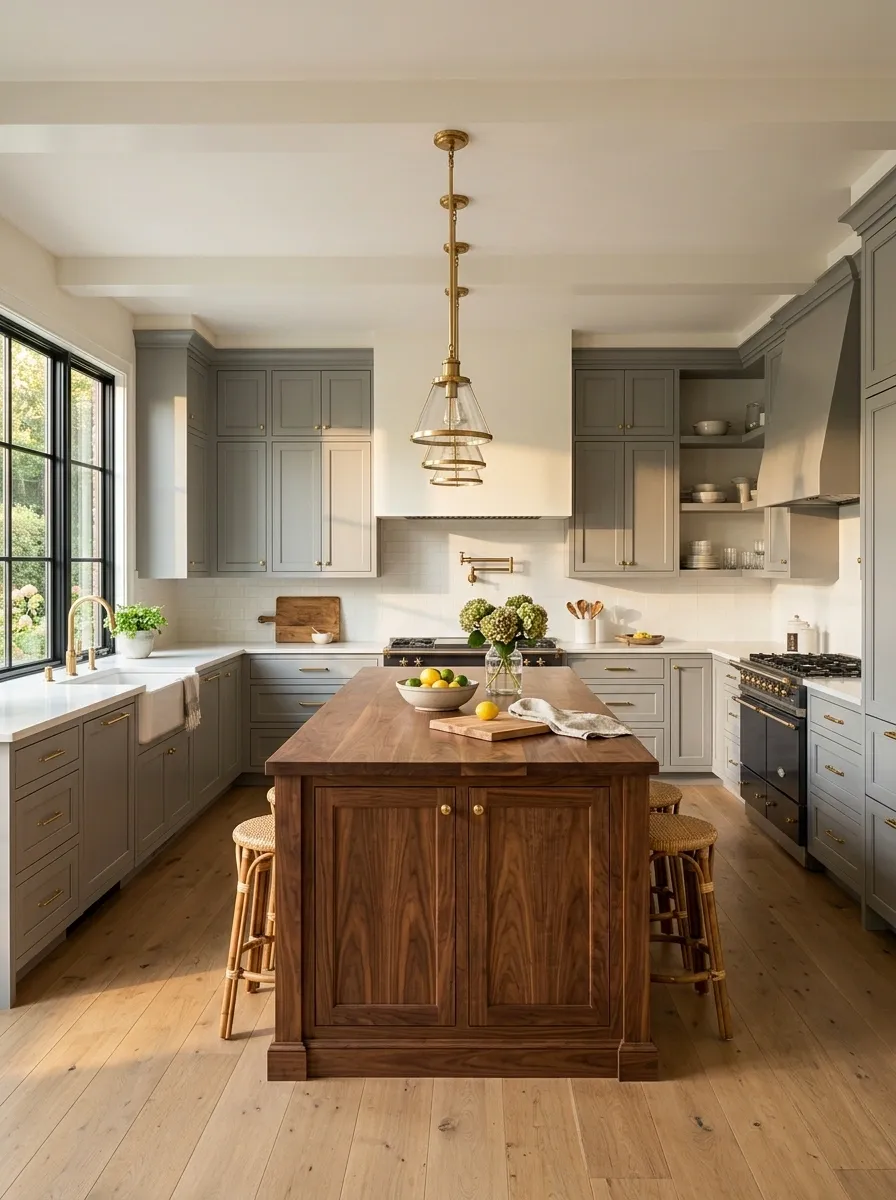
Walnut brings richer warmth into a gray and white kitchen without introducing another loud color. Use soft gray perimeter cabinets, white counters, and a walnut island with a substantial top.
The wood becomes the visual centerpiece while the gray and white background keeps the room balanced.
Brushed brass hardware works beautifully here, especially against the walnut. Keep the backsplash simple and let the grain of the island provide the texture.
No need for twelve decorative cutting boards leaning against the wall. The walnut already has a personality.
Moody Gray Cabinets With White Marble and Brass
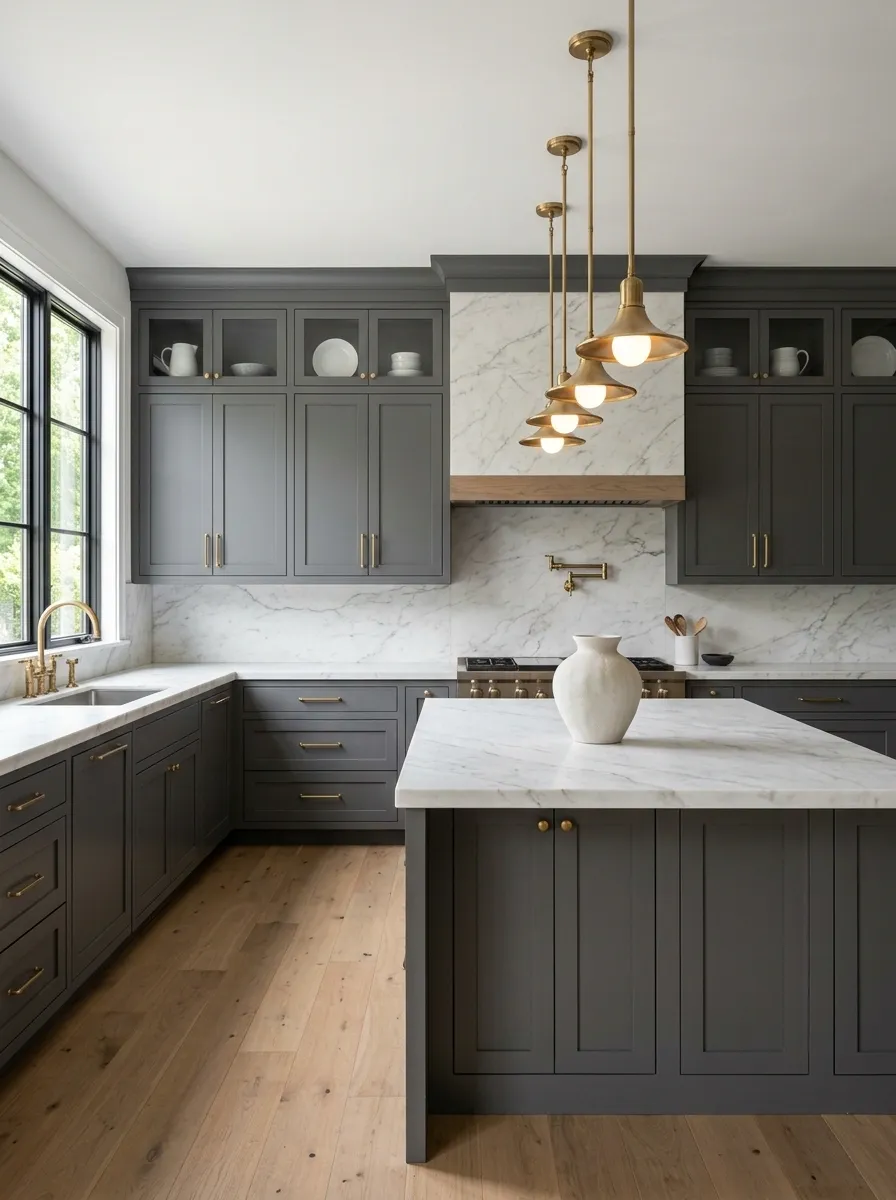
For a more dramatic kitchen, use medium-dark gray cabinetry, bright white marble, and warm brass hardware. The contrast between the dark cabinets and light stone creates a polished, traditional feel without becoming overly formal.
A large marble backsplash can visually connect the upper and lower parts of the room. Brass lighting adds warmth and keeps the gray from appearing cold.
Use fewer decorative elements than expected. When the cabinetry, stone, and hardware already have this much presence, the countertop does not need a full cast of supporting characters.
Compact Galley Kitchen With White Uppers and Gray Lowers
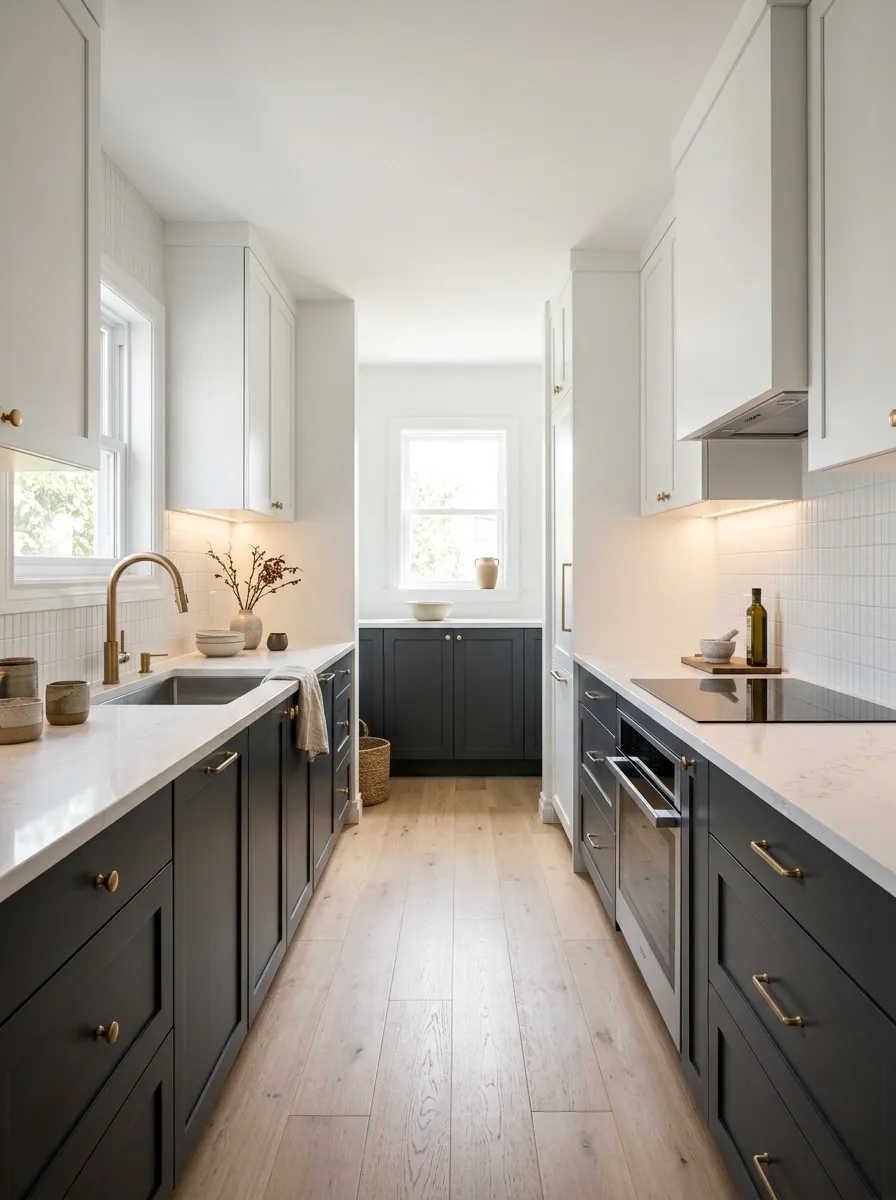
In a narrow galley kitchen, visual weight matters. Use gray on the lower cabinets and white above to make the walls feel taller and less crowded.
A narrow white backsplash can blend with the upper cabinetry, while pale flooring helps the walkway feel continuous. Keep hardware small and lighting linear rather than visually heavy.
The result is practical without looking like every available inch was attacked by cabinetry.
White Kitchen With a Gray Ceiling Moment
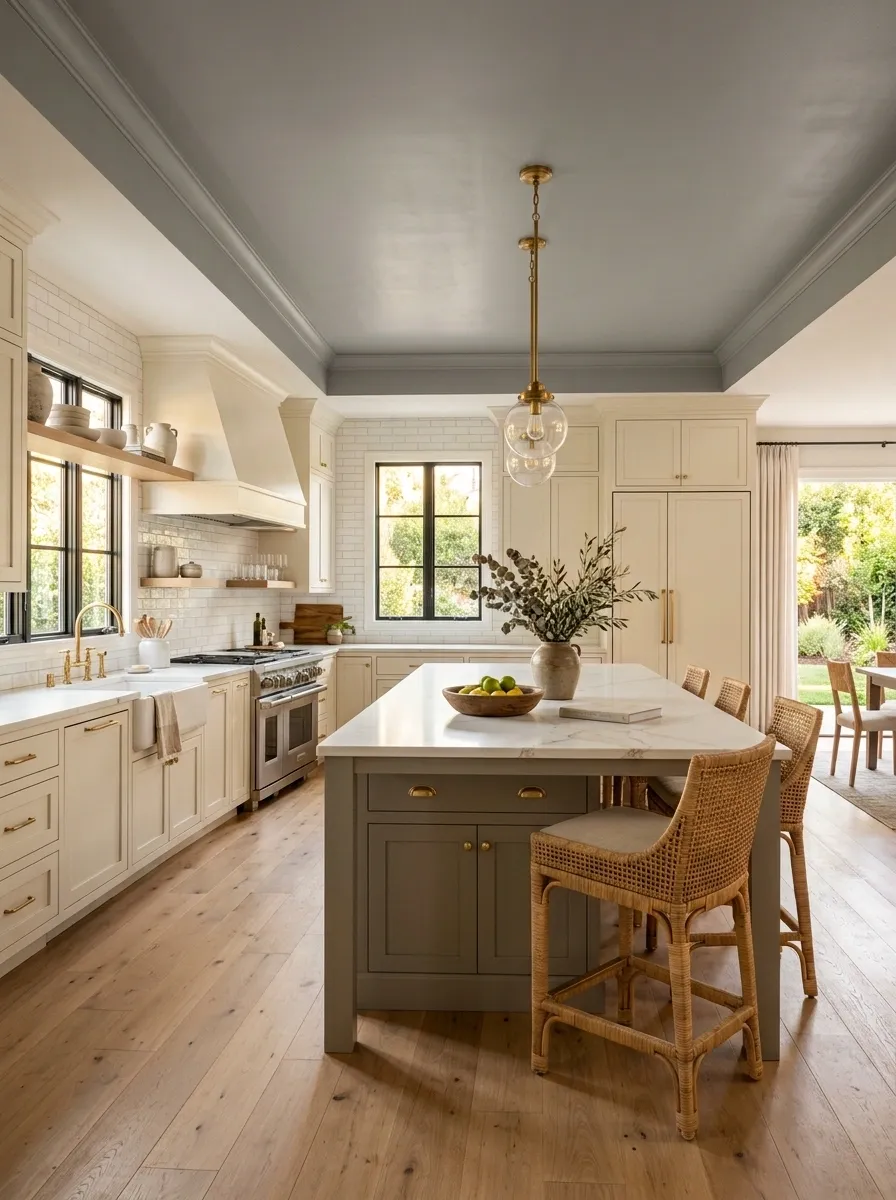
Instead of putting gray only on the cabinets, use a muted gray ceiling to create architectural depth in an otherwise white kitchen.
Keep the cabinets white, counters white, and backsplash white. The ceiling then becomes a subtle frame around the room without shrinking the visual footprint.
This works particularly well in kitchens with high ceilings or strong architectural details. The gray should remain soft and muted, not charcoal.
It is basically the design equivalent of whispering instead of yelling.
Gray Base Cabinets With a White Brick Backsplash
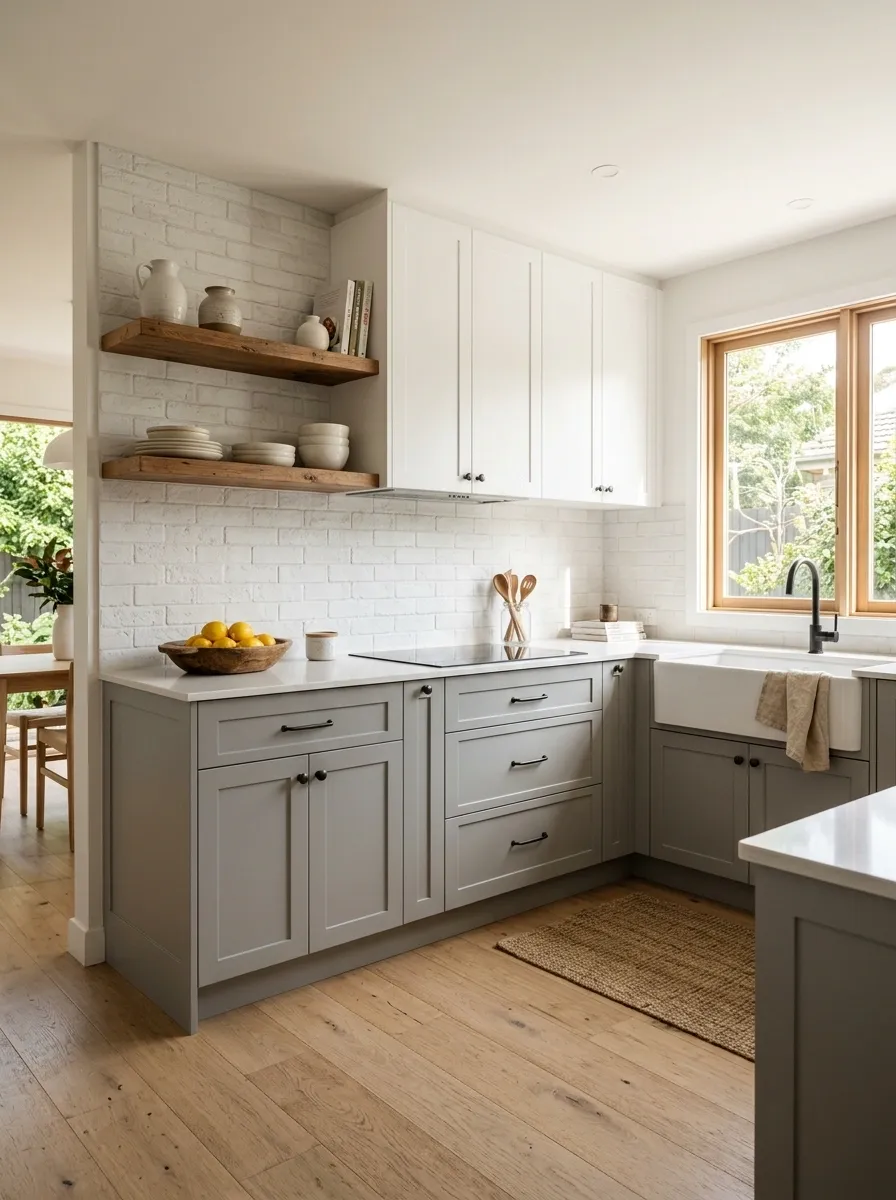
For a relaxed kitchen, combine medium-light gray base cabinets with a white brick-style backsplash and warm wood accents.
The brick pattern adds texture without introducing another color. White upper cabinetry can continue the clean look, while open wood shelves provide a warmer transition.
Use simple black or aged metal hardware for definition.
This is the kind of kitchen where a slightly crooked bowl of lemons can exist without ruining the composition. A rare and beautiful privilege.
Cool Gray Cabinets With Warm White Walls
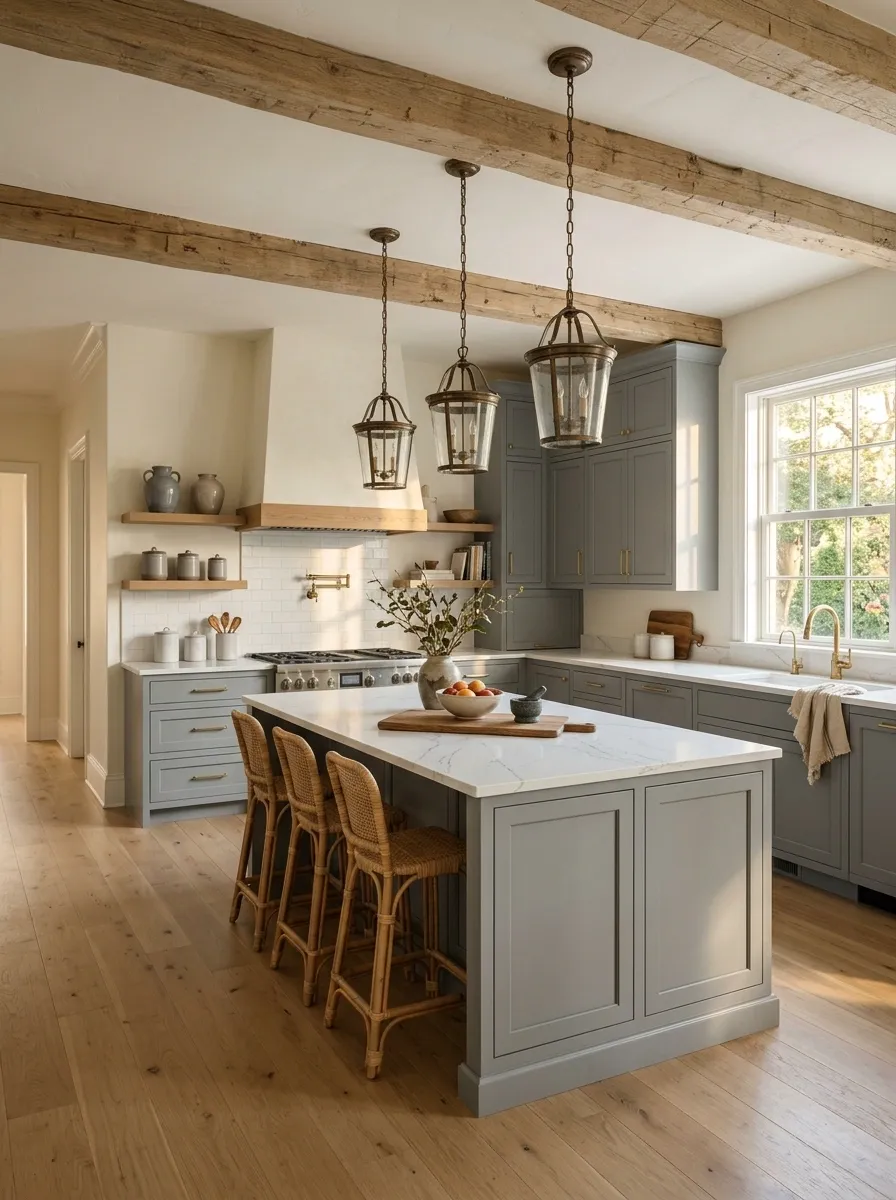
Instead of pairing gray cabinets with stark white walls, use a warm white wall color to soften the contrast.
The cabinets can lean slightly cooler while the surrounding architecture carries a creamy warmth. White counters bridge the two tones and prevent the palette from becoming visually muddy.
Add natural oak and aged metal accents for another layer of warmth.
This approach is especially useful when the kitchen connects directly to a warm-toned dining or living space.
Gray Cabinets With a Full White Stone Backsplash
A full-height white stone backsplash can make a gray kitchen feel taller and more luxurious because the counter and wall visually merge into one surface.
Choose gray cabinetry with subtle undertones and repeat that gray through the stone veining.
Keep the hood integrated or painted to blend with the cabinetry so the backsplash remains uninterrupted.
The effect is especially strong when natural light moves across the stone during the day.
Transitional Gray Cabinets With Aged Brass
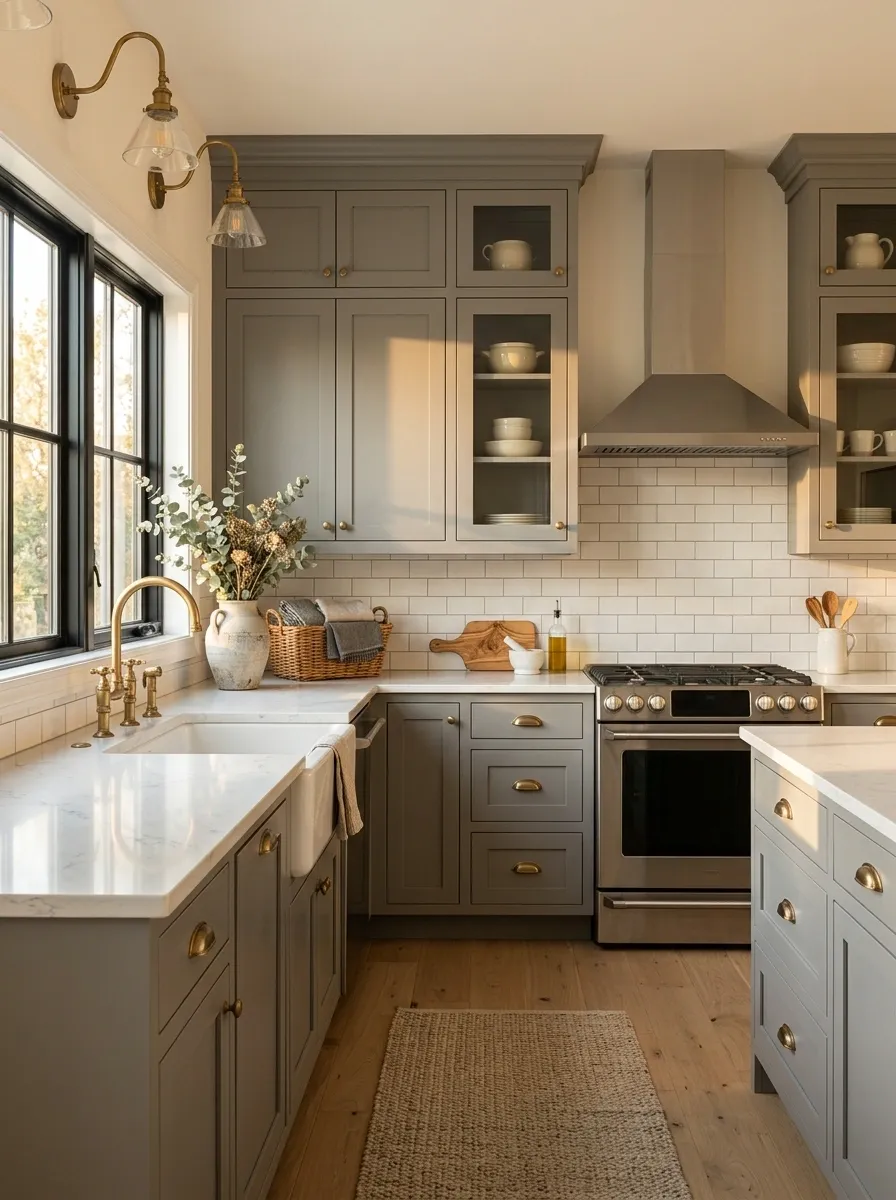
A transitional kitchen can combine medium gray shaker cabinets, warm white walls, white counters, and aged brass hardware.
The key is keeping the brass slightly muted. Bright yellow brass can make the palette feel overly decorative, while aged brass adds enough warmth without competing with the gray.
Use classic lighting and a simple backsplash to maintain the timeless character.
It has enough traditional detail to feel established and enough restraint to avoid looking like the kitchen section of a furniture catalog from 2007.
Warm metal should connect the gray cabinetry to the warmer parts of the room.
Minimal Gray Cabinets With Almost-White Stone
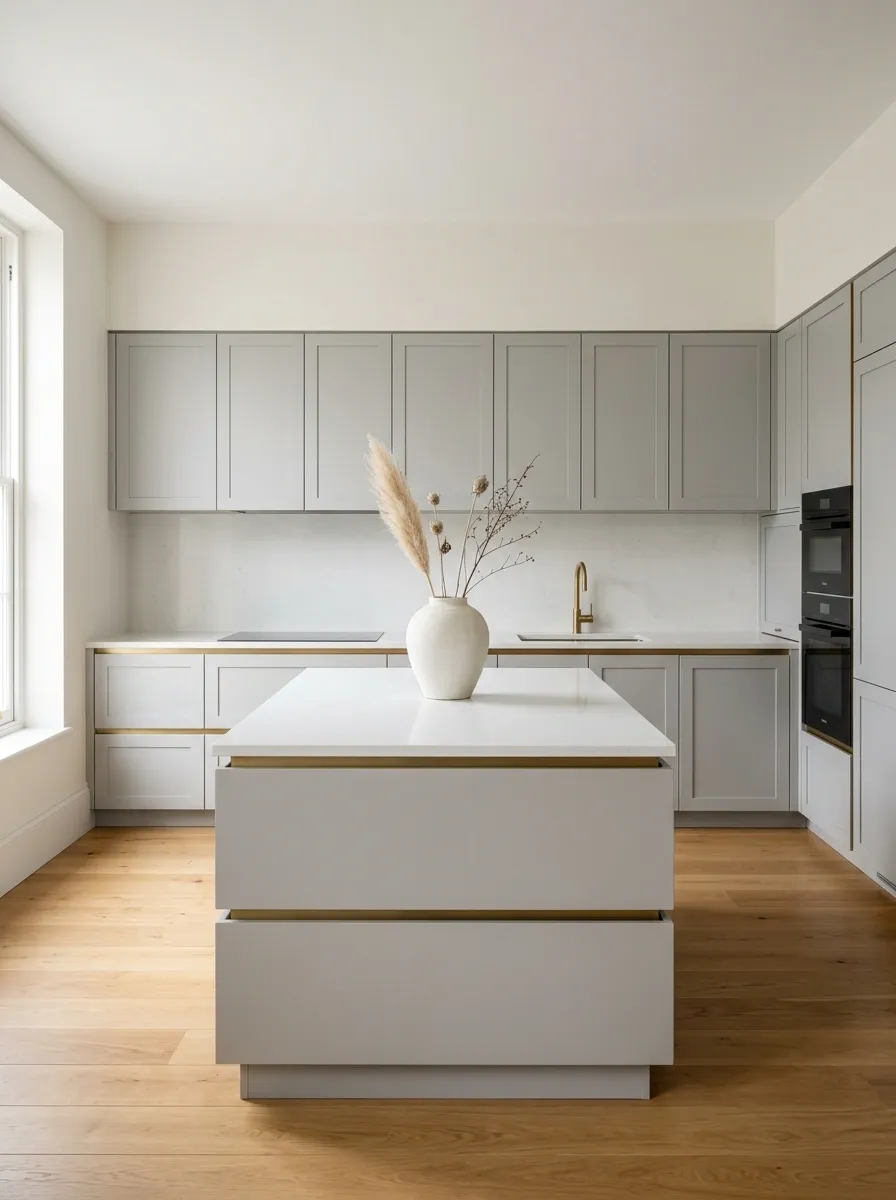
For a quiet minimalist kitchen, use barely-there gray cabinetry with a warm white stone surface. Keep the backsplash simple and eliminate unnecessary visual breaks.
Handleless cabinetry or extremely slim hardware can make the cabinet wall feel almost architectural.
Warm flooring prevents the minimal palette from becoming sterile.
The beauty here comes from proportion and negative space rather than decoration. Which is excellent news for anyone who has no desire to dust twelve decorative objects every Saturday.
Gray Cabinetry With a White Curved Hood
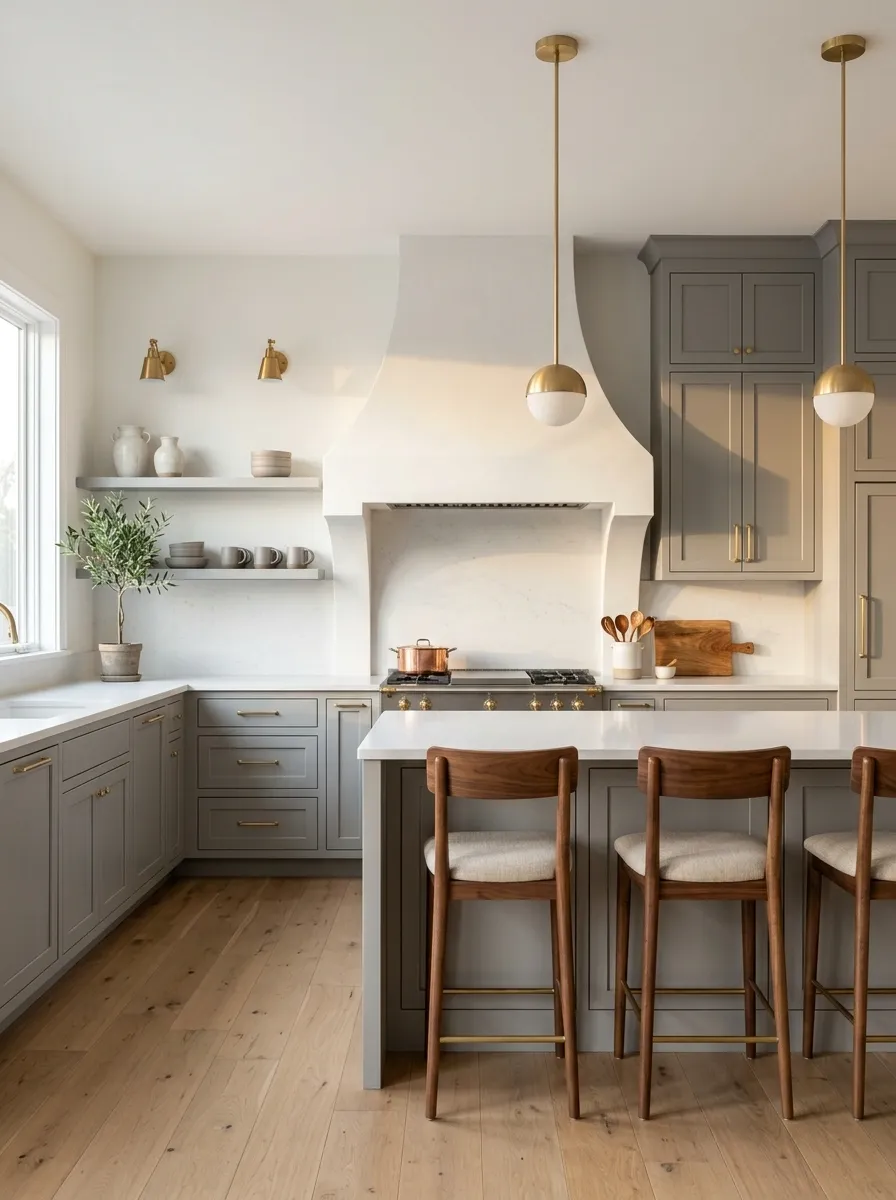
A sculptural white hood can soften a gray kitchen by introducing a curved architectural feature against straighter cabinetry.
Keep the cabinetry a medium soft gray, use white counters, and repeat the hood color through the backsplash or upper wall.
Warm wood stools and subtle brass hardware keep the composition approachable.
The curved hood becomes the room’s personality without needing decorative clutter around it.
Gray and White Kitchen With a Rustic Wood Hood
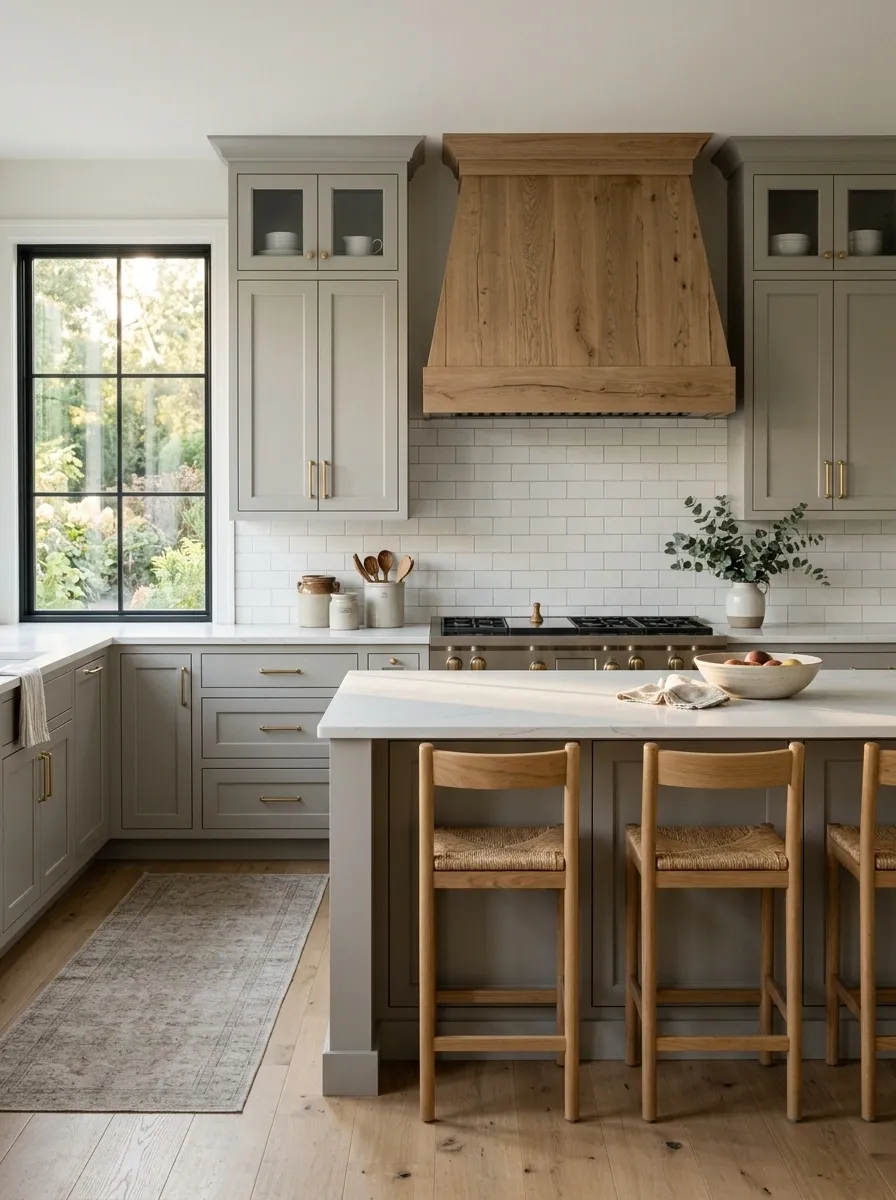
Use a substantial warm wood hood as the main contrast against soft gray cabinetry and white counters.
The wood can be repeated subtly through stools or flooring, creating a visual bridge between the cool gray and crisp white surfaces.
A simple white backsplash keeps the composition from becoming too rustic.
The result feels grounded and lived-in rather than themed. There is a difference between rustic character and turning the kitchen into a gift shop that sells signs saying EAT.
White Cabinets With Gray Veined Quartz and Oak Flooring
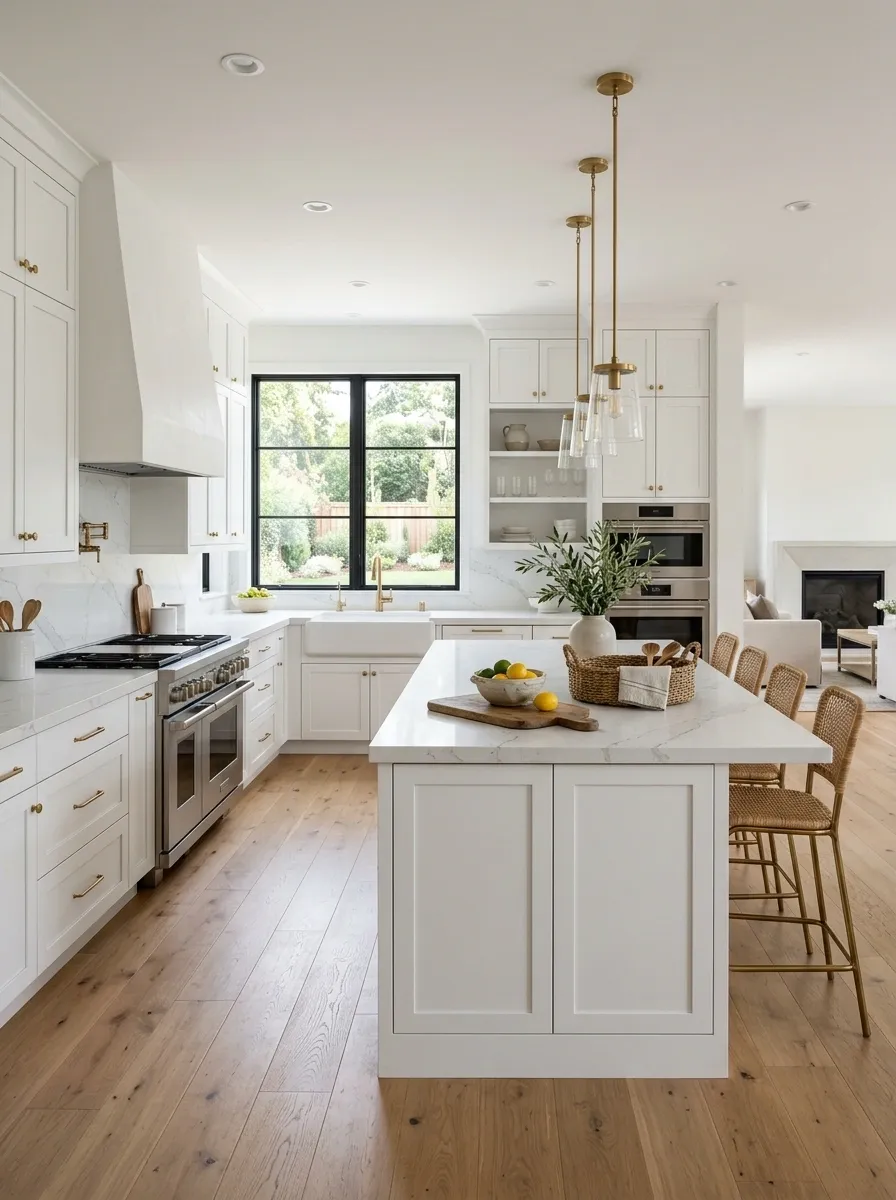
Keep the cabinetry bright white and allow the countertop to carry the gray through delicate veining.
Oak flooring introduces warmth underneath while maintaining a clean, contemporary appearance above.
Choose simple hardware and let the floor and counter provide most of the visual variation.
This combination is especially effective in open-plan homes because the oak connects naturally to nearby living spaces while the gray veining adds enough contrast to define the kitchen.
Deep Gray Pantry Wall With a White Island
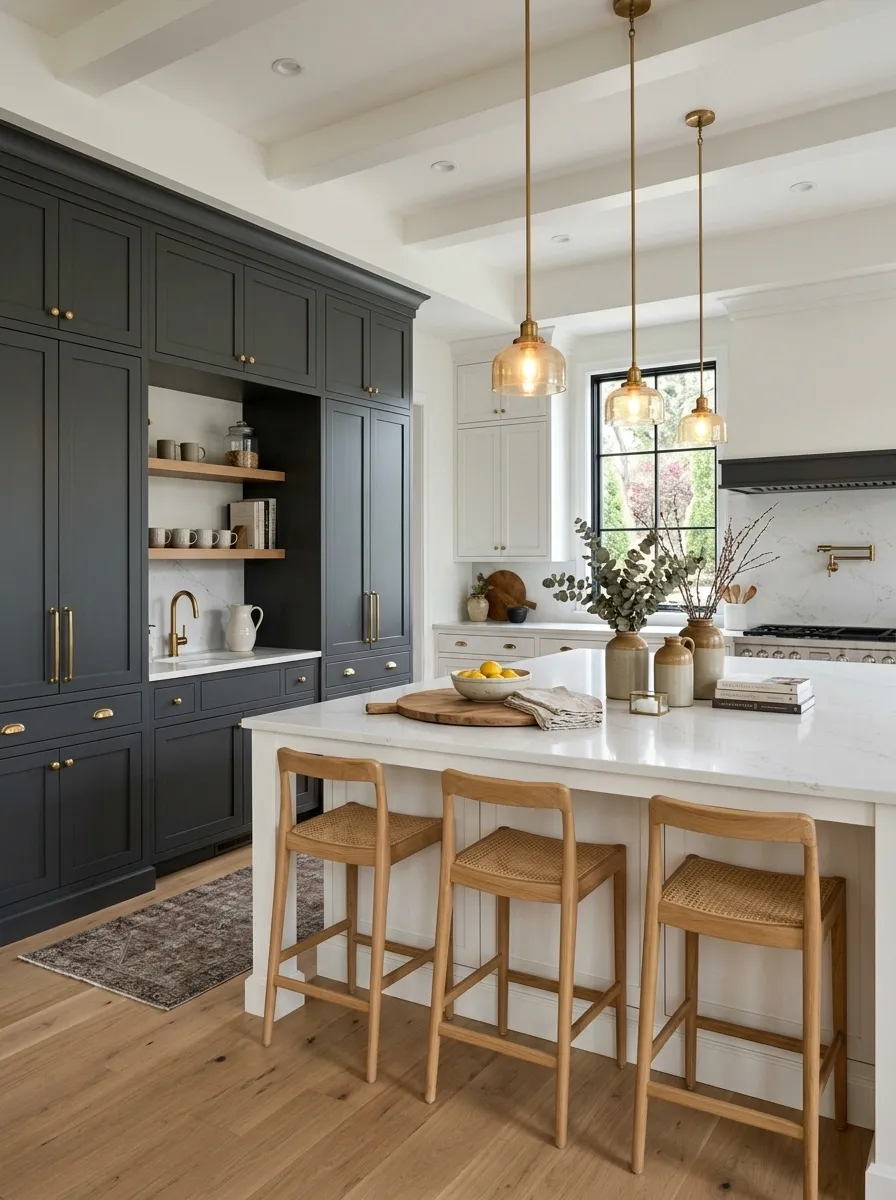
Give one full wall of cabinetry a deeper gray finish while keeping the central island white.
The darker pantry wall creates a strong backdrop for appliances and storage, while the white island remains visually light in the center of the room.
Warm pendant lighting and natural wood stools keep the composition balanced.
This layout works especially well in large kitchens because the darker wall gives the room a sense of depth instead of leaving the cabinetry as one enormous white rectangle.
Gray Cabinetry With a White Checkerboard Floor
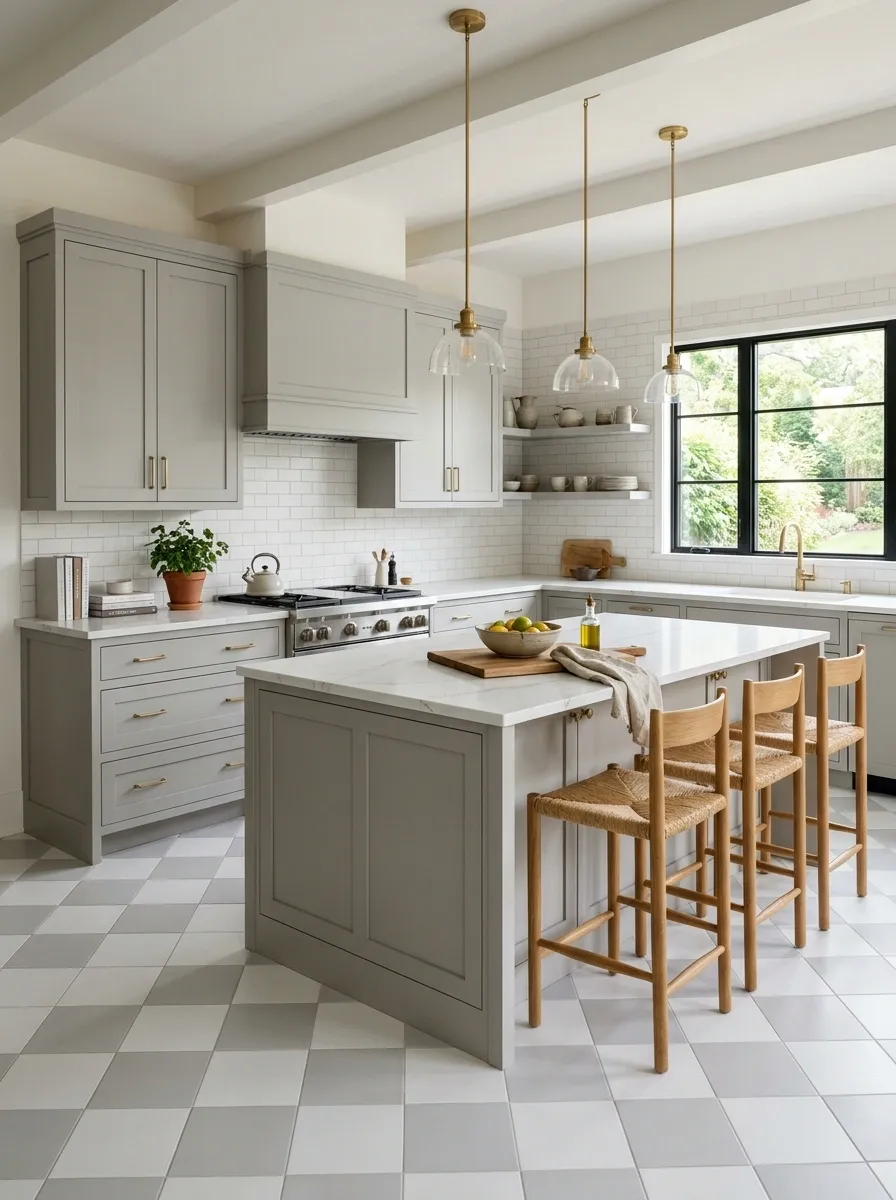
A subtle gray-and-white checkerboard floor can add personality while the cabinetry stays calm.
Choose large or medium tiles rather than tiny checks if the goal is a modern look. Keep the cabinets in a soft gray and use white counters to repeat the lighter squares.
Warm wood stools can soften the geometric floor.
The floor becomes the playful element, so keep the backsplash and hardware relatively quiet. Otherwise the kitchen starts competing with itself like three people trying to tell the same story at dinner.
Light Gray Cabinets With a Black Window Frame
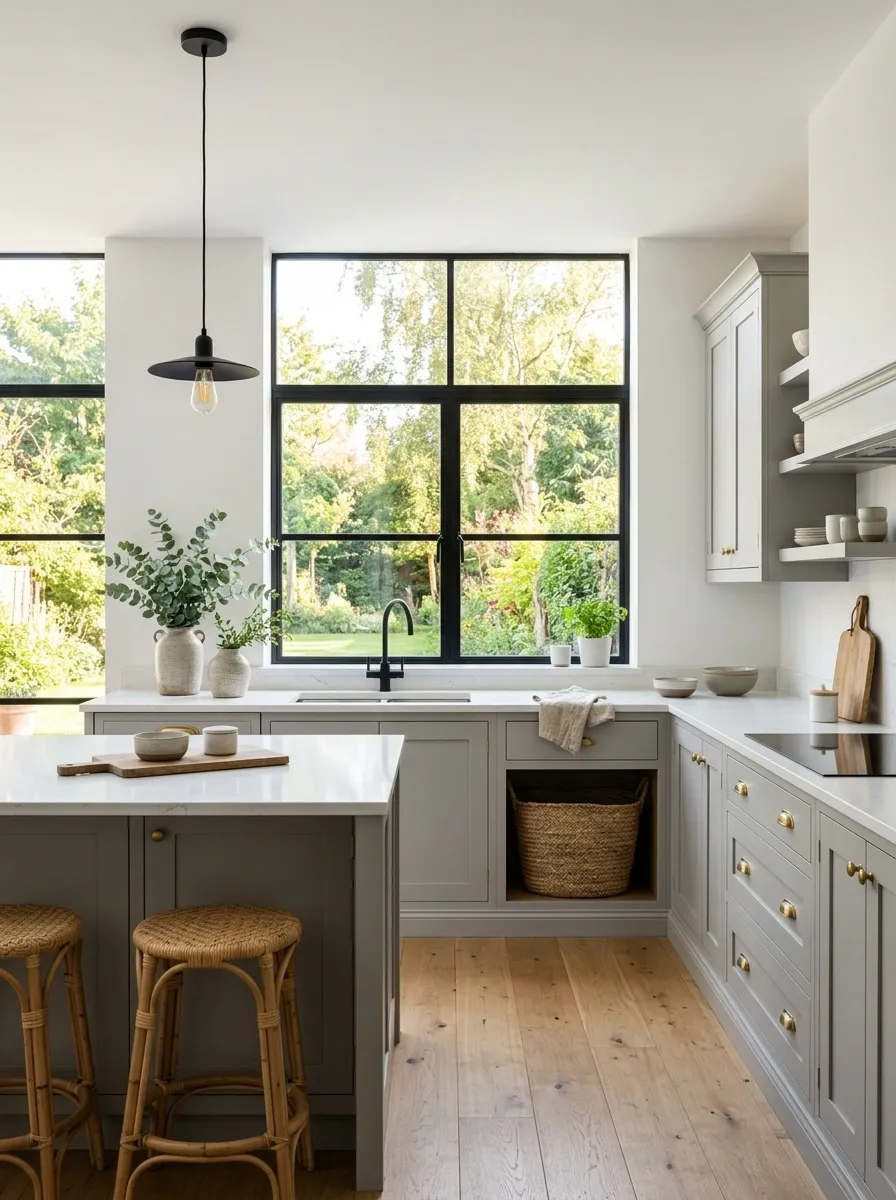
Use soft gray cabinets, white counters, and a large black-framed window to create a crisp architectural contrast.
The window frame gives the room definition without requiring dark cabinetry. Natural light also prevents the gray from feeling heavy.
Keep other black elements limited to small repetitions such as the faucet or pendant cords.
The result feels contemporary but still warm enough for everyday life.
Gray Cabinets With White Subway Tile and Black Accents
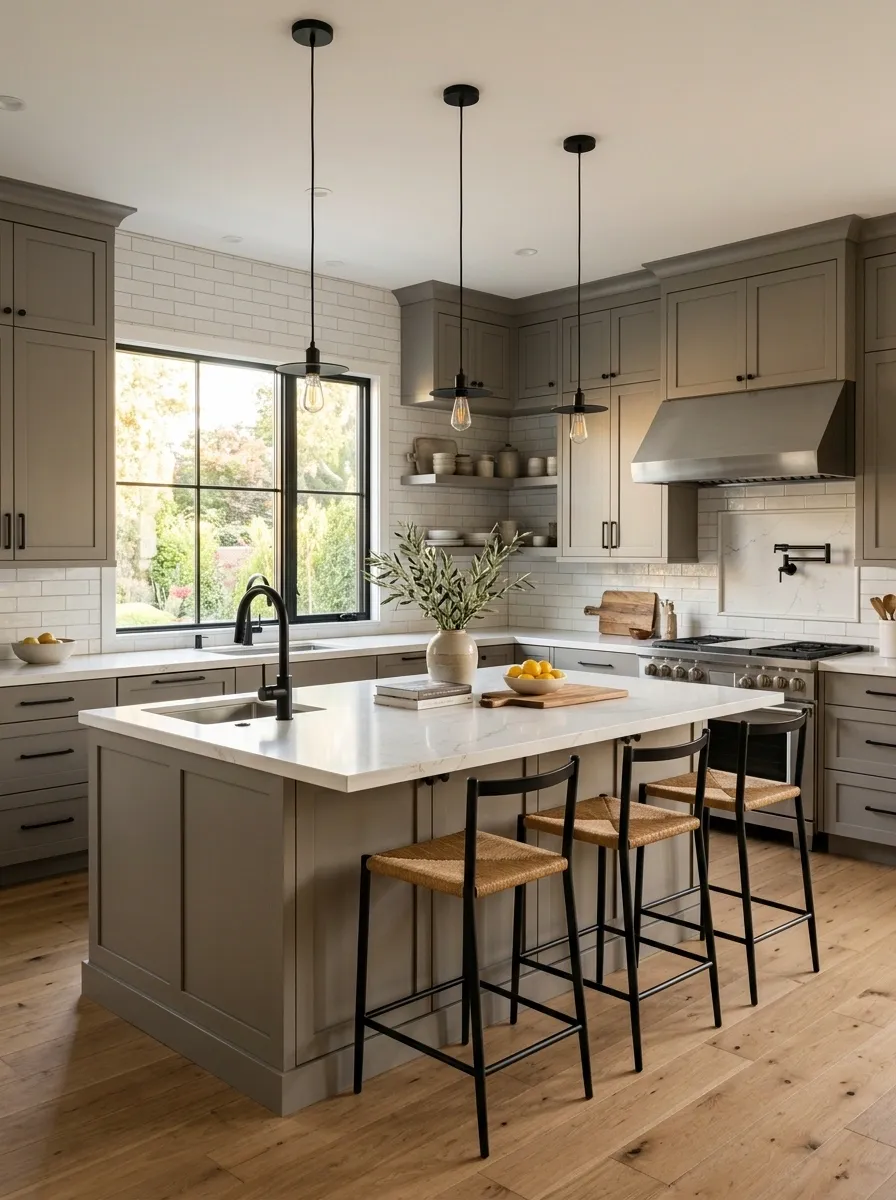
This combination works because each element has a clear job. Gray cabinets provide the main color, white subway tile keeps the backsplash bright, and black hardware gives the room definition.
Use a warm gray rather than a cold blue-gray if the kitchen already receives limited daylight.
A few black accents are enough. Faucets, pendants, and hardware can repeat the tone without turning every object into a black accessory.
Because apparently once one black pendant appears, the entire internet wants matching black stools, chairs, shelves, brackets, and possibly the dog.
Airy Gray Kitchen With Floor-to-Ceiling White Storage
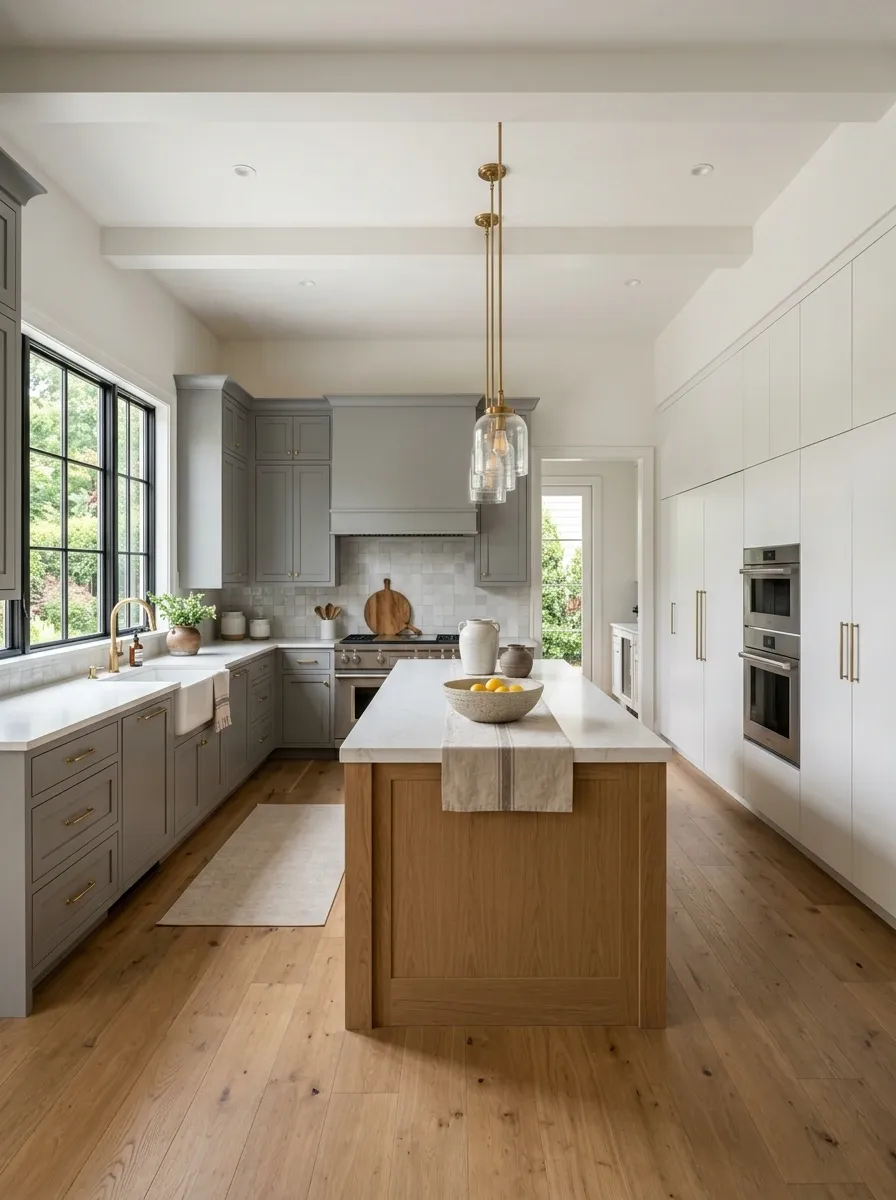
Keep the cabinetry gray around the main work zone, then use floor-to-ceiling white storage at one end of the kitchen.
The white storage visually recedes while the gray work zone gives the room its main identity.
Use warm wood flooring and simple lighting to keep the tall cabinetry from feeling clinical.
This is particularly useful in kitchens where storage is essential but a full wall of dark cabinetry would feel too heavy.
Warm Gray Cabinets With Creamy White Stone
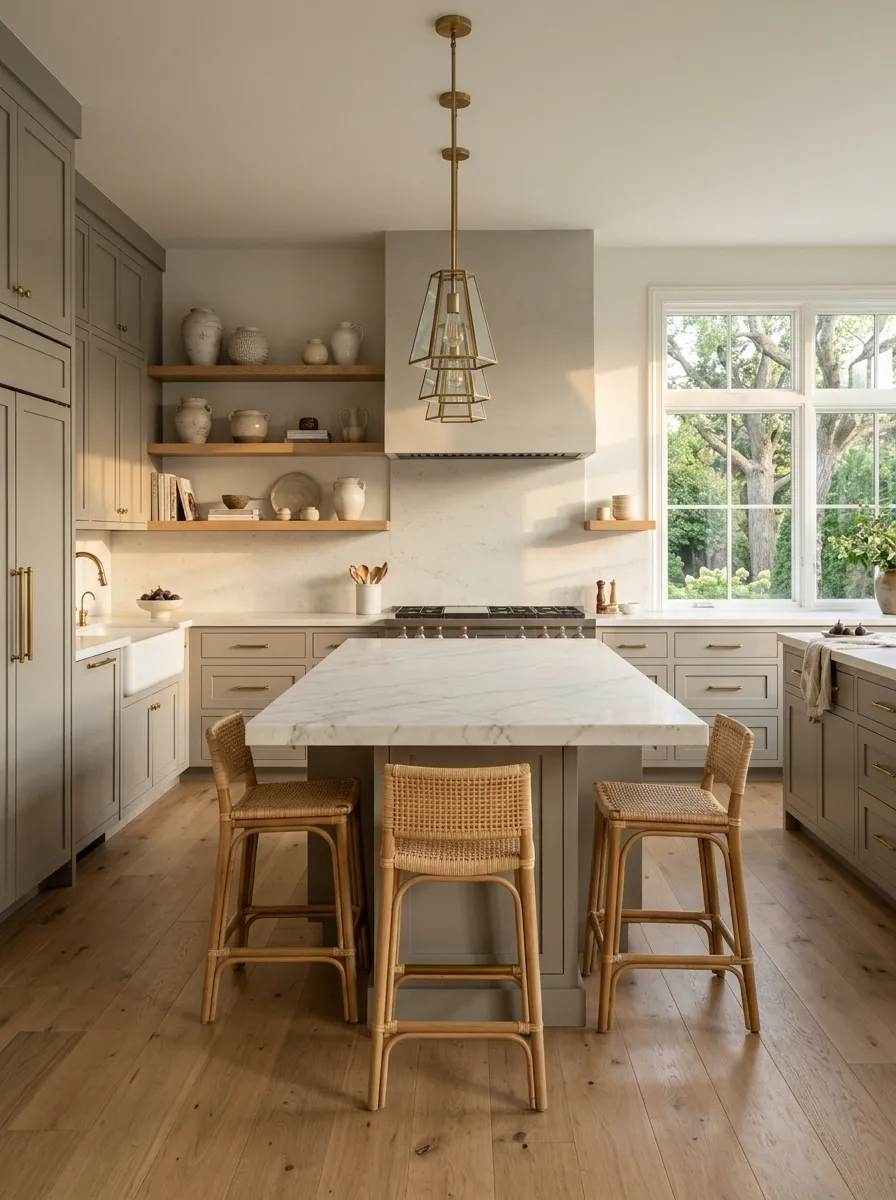
For a softer interpretation, choose warm gray cabinets with creamy white counters instead of bright optic white.
The slight warmth makes the room feel more relaxed and works beautifully with natural oak, woven stools, and aged brass.
Avoid mixing several different whites here. The beauty comes from keeping the white family consistent enough that the warm gray cabinetry feels intentional.
This is gray and white with the volume turned down.
Gray Island With White Perimeter Cabinets and Open Shelving
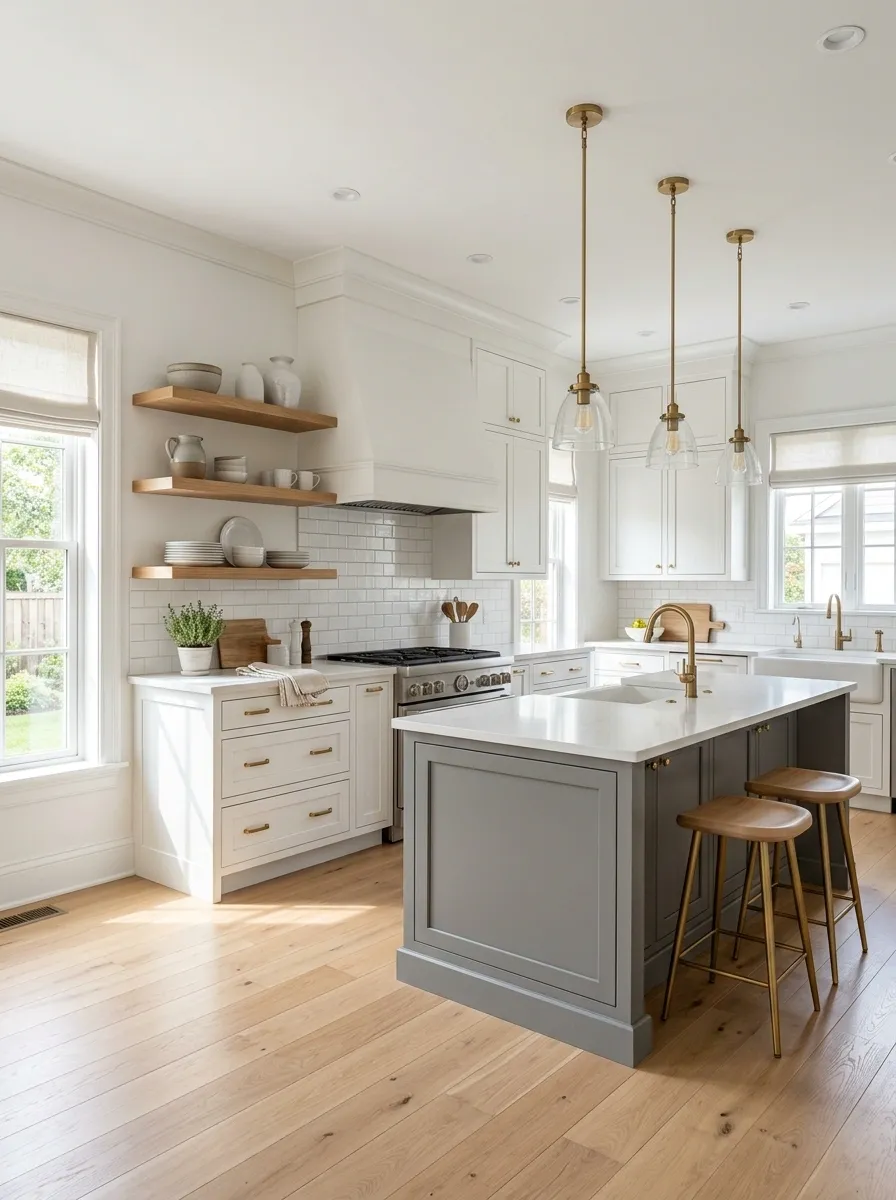
Keep the perimeter cabinetry white and give the island a medium gray finish. Replace a small section of upper cabinetry with natural wood shelves to create a warmer visual break.
The open shelving should hold useful, attractive pieces rather than become a museum of tiny decorative objects.
White walls and counters maintain the airy quality, while the gray island provides enough contrast to anchor the center.
Contemporary Gray Cabinets With a White Slab Backsplash
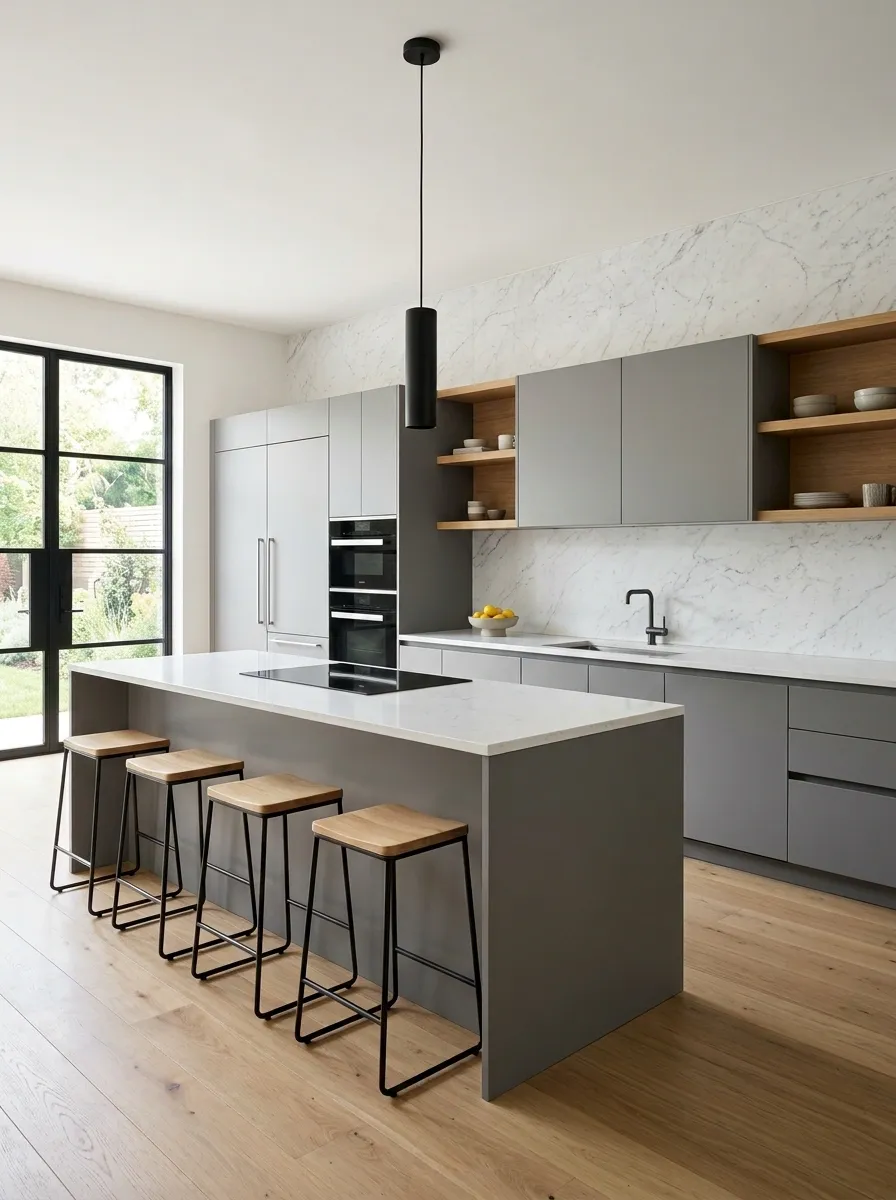
For an especially clean modern kitchen, use flat gray cabinetry with a continuous white slab backsplash and matching white counter.
Avoid decorative tile patterns. The appeal comes from uninterrupted surfaces and precise horizontal lines.
Warm wood stools can soften the geometry, while a simple pendant adds just enough detail overhead.
This approach is ideal when the architecture is already interesting and the kitchen does not need another layer of visual noise.
Classic Gray Cabinets With a White Farmhouse Sink
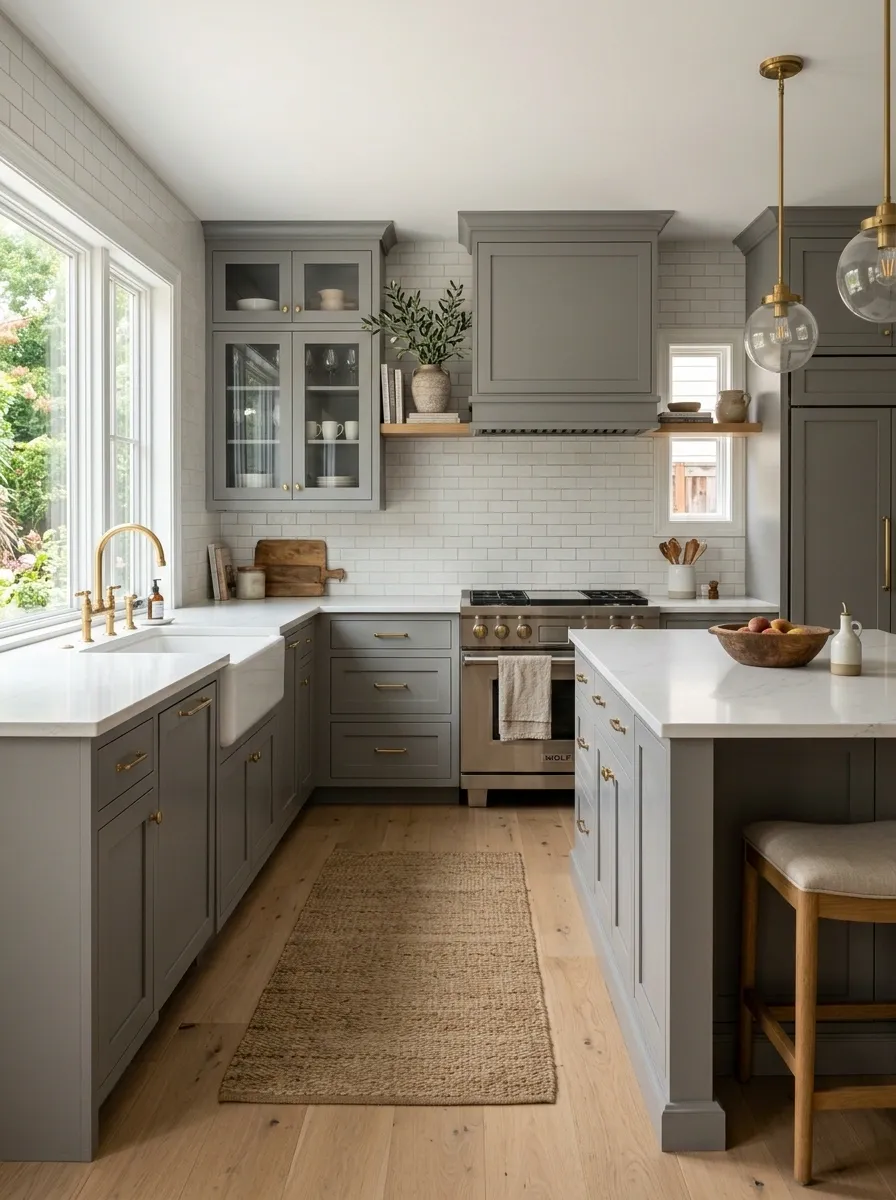
A deep white farmhouse sink creates a strong focal point against medium gray cabinetry.
Pair it with white counters, simple white tile, and warm oak flooring. Traditional hardware in aged brass or brushed nickel keeps the look grounded.
The sink should feel integrated into the overall composition rather than treated as a decorative centerpiece.
The result is classic without turning into farmhouse cosplay. No sign that says FARMHOUSE required.
Elegant Gray Kitchen With a White Waterfall Island
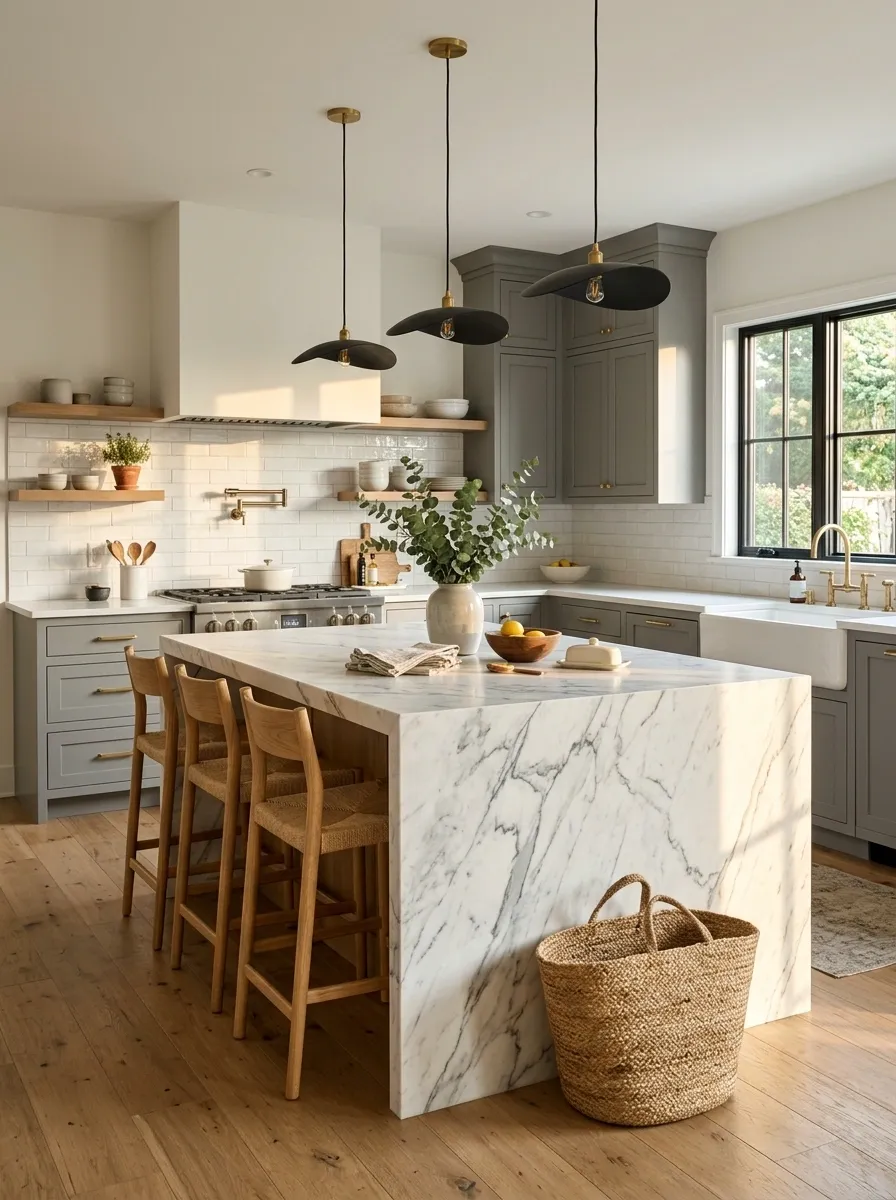
Use medium gray cabinetry around the perimeter and a large white waterfall island in the center.
The island should have enough visual mass to feel intentional rather than like a small piece dropped into the middle of the room.
Keep the backsplash white and the lighting sculptural but simple.
A warm wood floor adds enough contrast to stop the gray-and-white palette from feeling overly polished.
Gray Cabinets With Soft White Arched Details
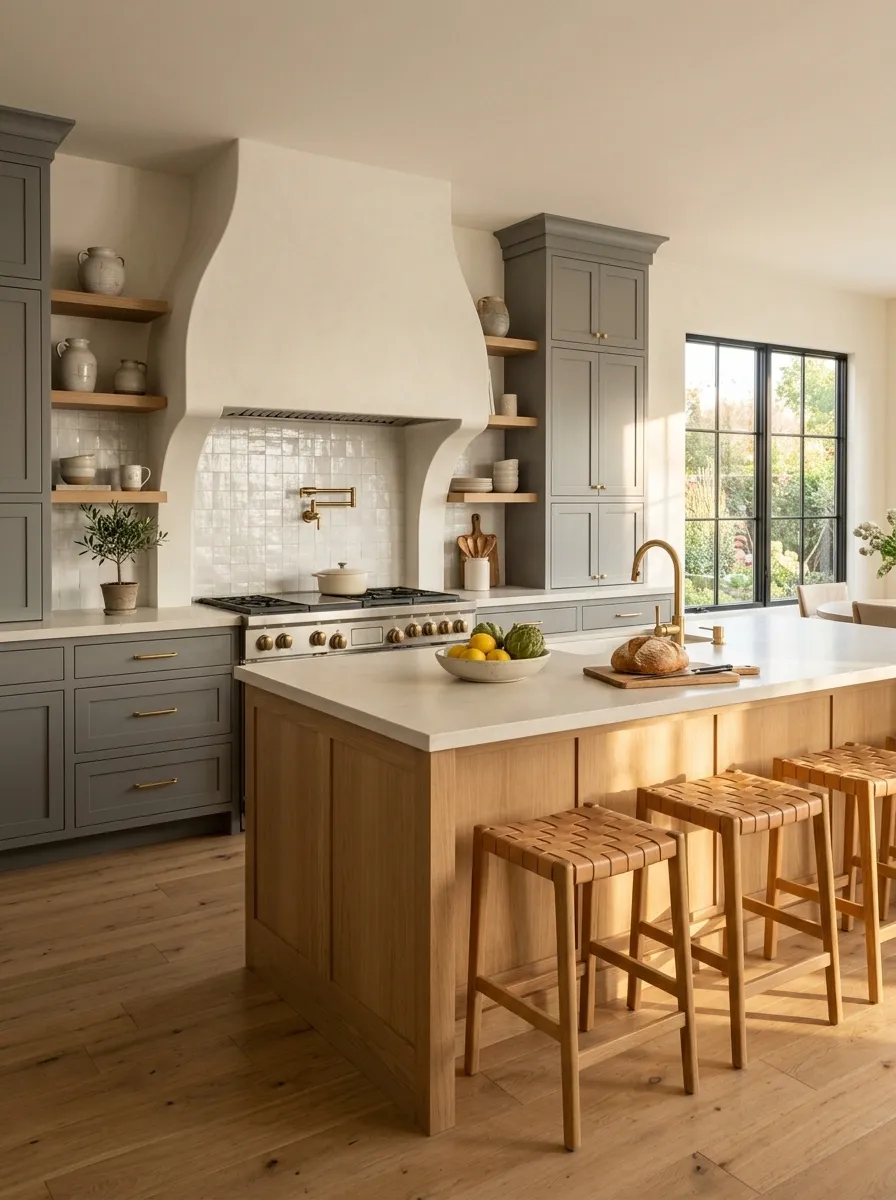
A white arched hood, doorway, or niche can introduce a softer architectural shape into a kitchen dominated by rectangular gray cabinetry.
Keep the cabinetry medium gray and the surrounding walls warm white. Natural wood can appear through stools or flooring.
The curved detail should be repeated only where the architecture naturally allows it. Too many arches and the kitchen starts looking like it joined a trend board against its will.
Open-Plan Gray Kitchen With Warm Wood Connections
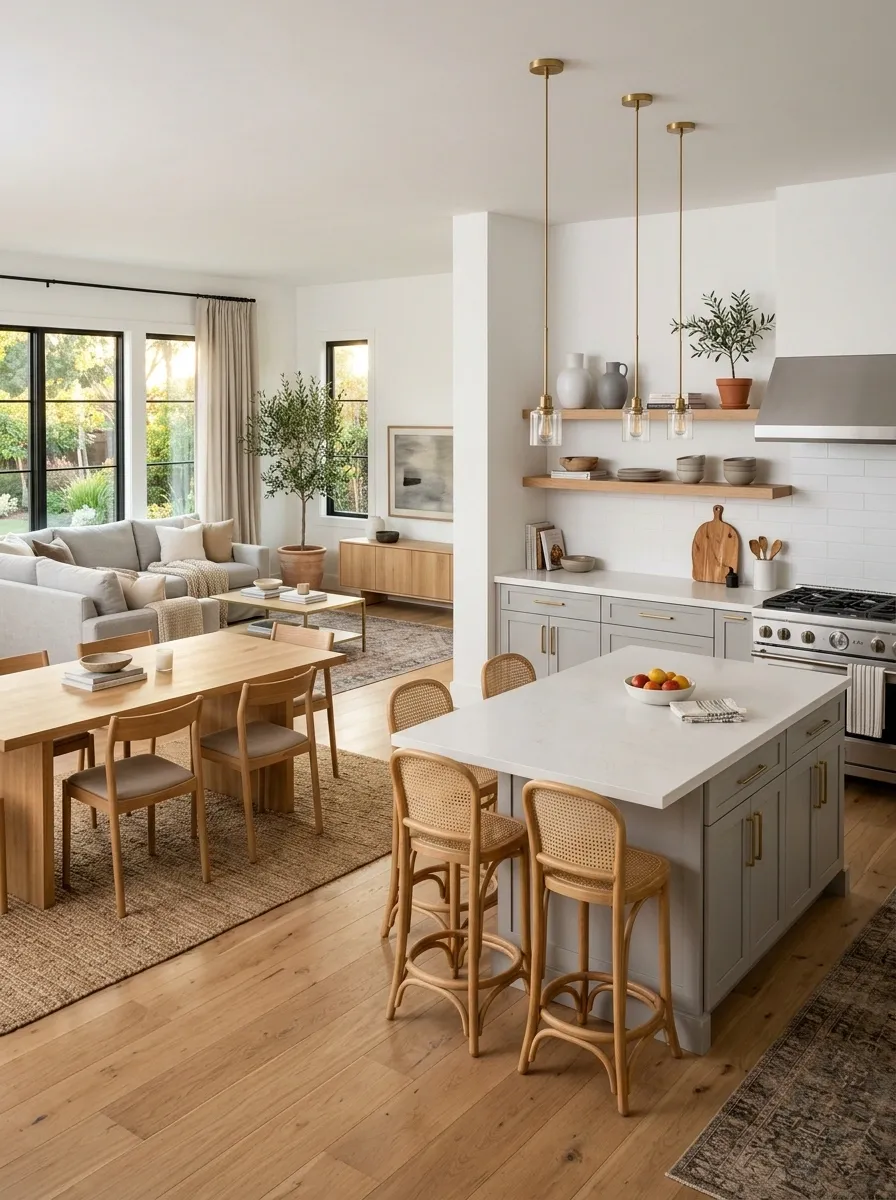
In an open-plan home, the kitchen should connect visually to the surrounding living space.
Use soft gray cabinetry, white counters, and warm wood flooring that continues into the adjacent room. White walls keep the transition seamless.
Repeat the wood tone through dining furniture or shelving rather than introducing another major kitchen color.
The kitchen then feels like part of the home rather than a separate gray-and-white box dropped into the floor plan.
High-Contrast Gray and White Kitchen With Minimal Decor
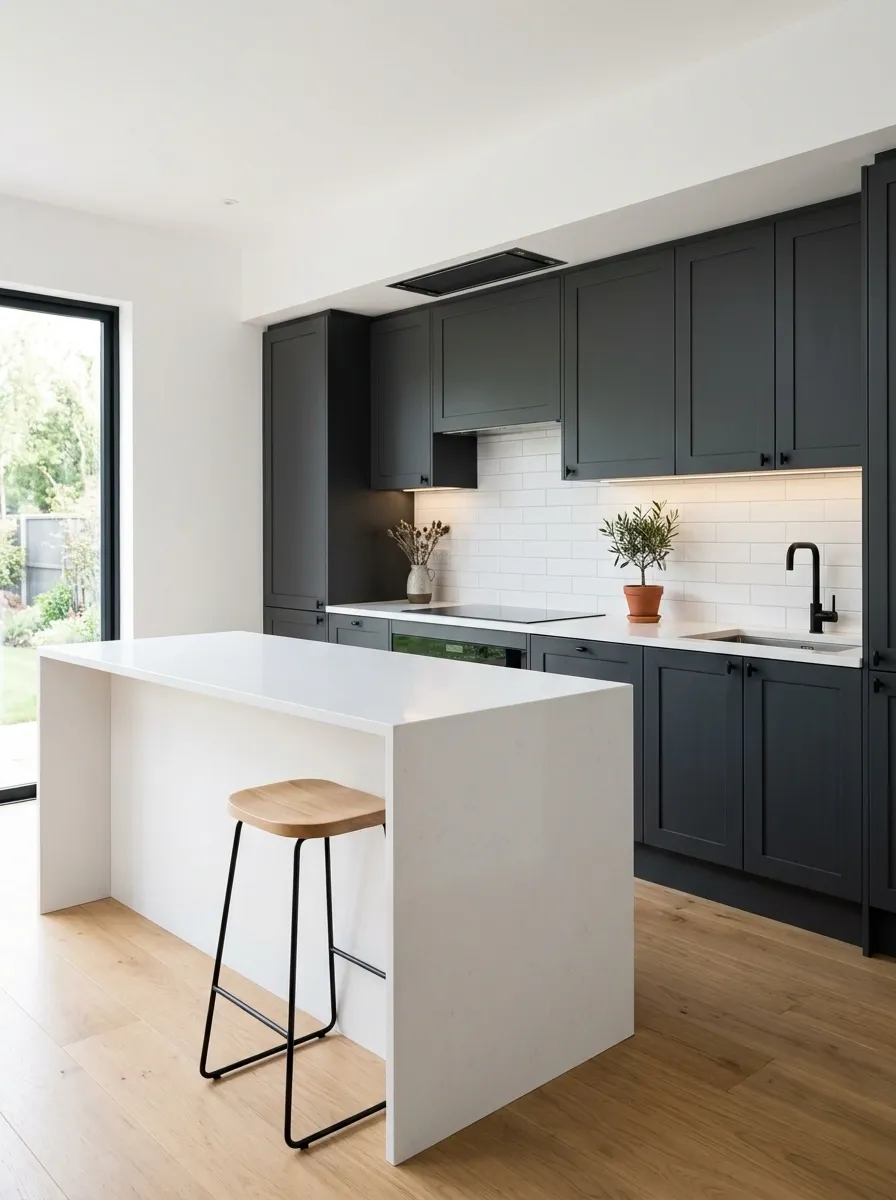
For a sharper look, use deep gray cabinetry, bright white counters, white walls, and very limited accessories.
The contrast creates enough drama without decorative clutter. Use one or two natural elements, such as a wood stool or small plant, to prevent the room from feeling too rigid.
Lighting should be warm enough to soften the gray after sunset.
This is the kitchen for anyone who likes a clean counter and would like to keep it that way for more than seventeen minutes.
Soft Gray Cabinets With a White Cottage-Style Backsplash
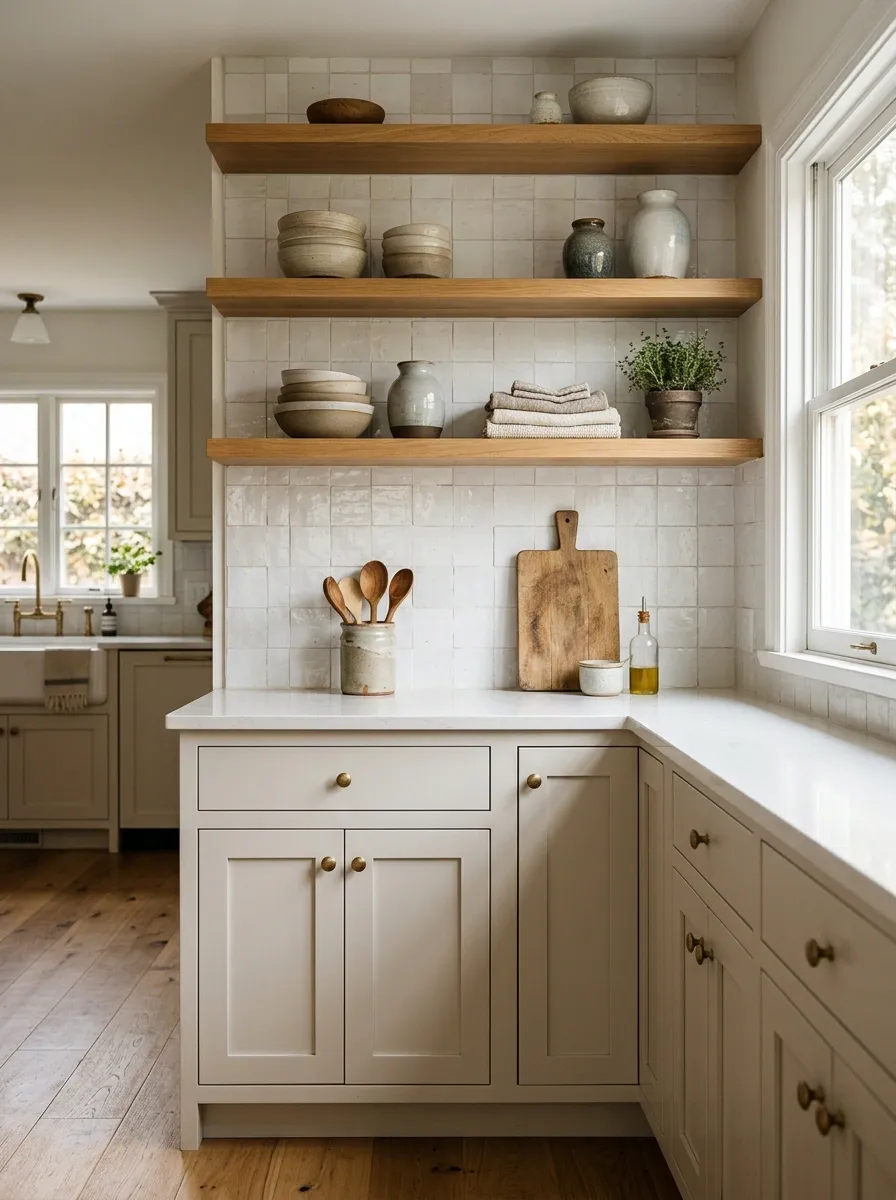
Use pale gray cabinets with a handmade white backsplash and warm wood accents for a relaxed cottage-inspired composition.
The gray should remain soft and slightly warm. White counters keep the work surfaces bright while the backsplash introduces subtle texture.
Choose simple knobs rather than oversized decorative hardware.
The finished kitchen should feel comfortable and collected, not like every object was purchased specifically to prove that cottage style exists.
Gray and White Kitchen With a Warm Stone Floor
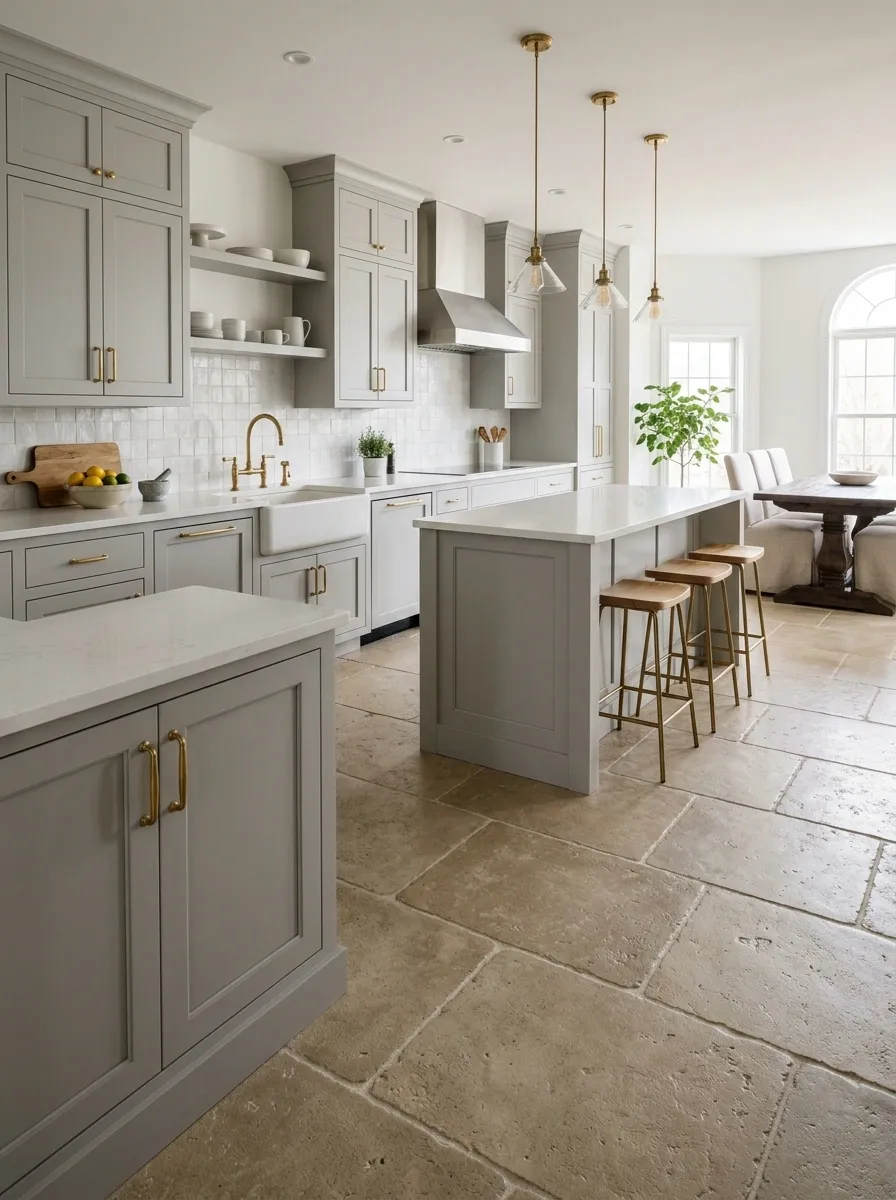
A warm stone or limestone-look floor can completely change the personality of a gray and white kitchen.
Pair the floor with soft gray cabinetry, white counters, and a clean white backsplash. The floor supplies the warmth that the cool cabinetry lacks.
Keep furniture and accessories restrained so the floor remains visible.
This works especially well when the kitchen opens toward an entry or dining area with similarly warm flooring.
The Gray and White Kitchen Test
Gray and white works best when the kitchen has a reason for every contrast. The strongest rooms do not simply collect gray cabinets, white counters, black hardware, wood stools, brass lights, patterned tile, open shelves, and seventeen decorative cutting boards because the internet said they were cute.
They choose a direction.
Soft gray with oak feels warm and relaxed. Charcoal with white stone feels dramatic. Pale gray with blonde wood feels airy. Deep gray with brass feels richer and more traditional. White cabinetry with a gray island keeps the room bright while giving the center some weight.
That is the part worth saving.
Choose the whole composition first, then let the smaller details support it. A kitchen becomes much easier to design when the big visual relationship is already working.
And if the final result looks good enough to make someone pause mid-scroll and save it for “later,” congratulations. The Pinterest board has officially done its job.