
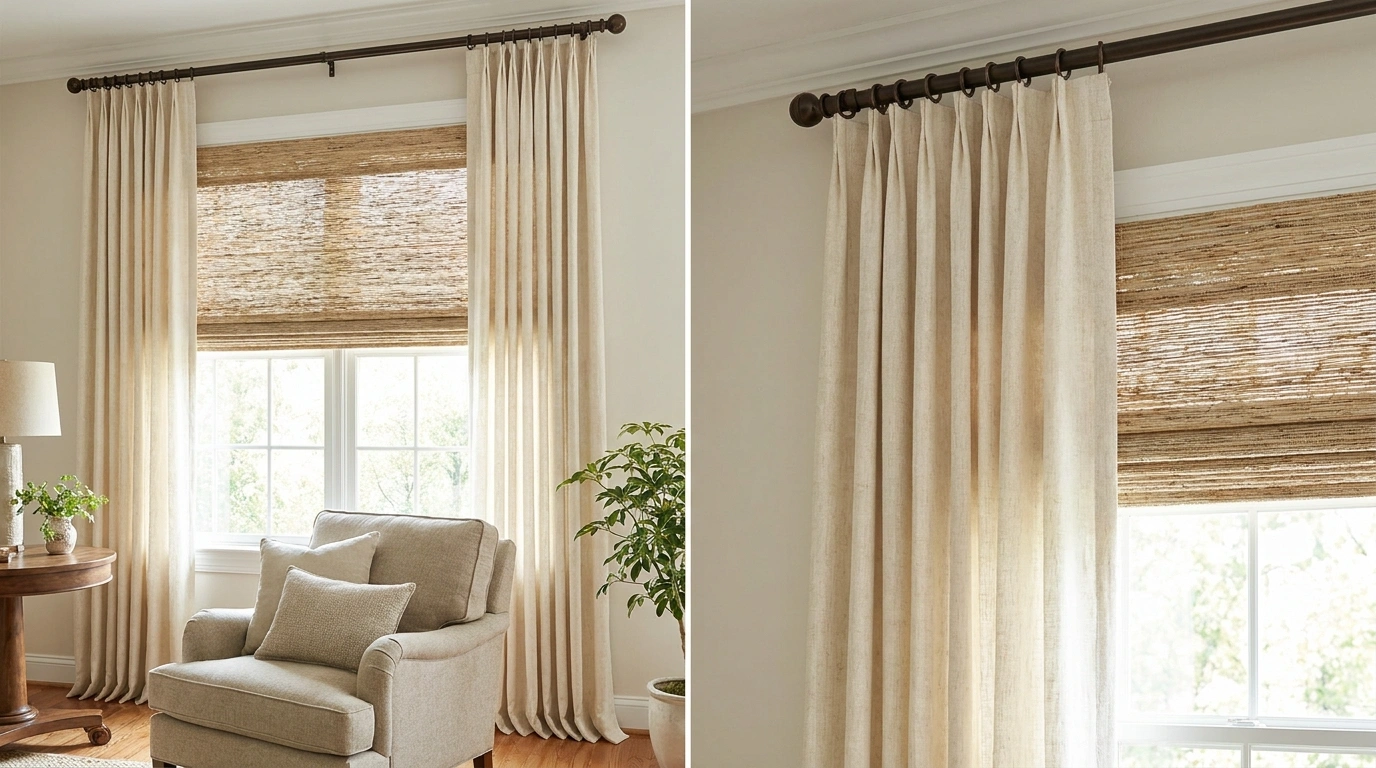
A window can have beautiful proportions, a gorgeous view, and plenty of natural light, yet the entire room can still feel strangely unfinished.
Sometimes the problem is the curtains hanging several inches too high, the bulky shade swallowing half the glass, or the fabric pattern that looks charming online but starts fighting the sofa the moment it enters the room. Windows are innocent until the measuring tape gets involved.
Because expensive curtains don’t automatically mean good curtains. Sometimes they just mean an expensive mistake with excellent pleats.
A FRIENDLY WINDOW INTERVENTION
Your windows deserve better than curtains that look like they lost a fight with the measuring tape.
The right treatment works with the entire room, from ceiling height and natural light to furniture, flooring, and privacy. Because a gorgeous living room with awkwardly hanging curtains is still an awkwardly dressed window.
Window Treatment Ideas
Ceiling-High Ivory Linen Curtains in a Warm, Light-Filled Living Room
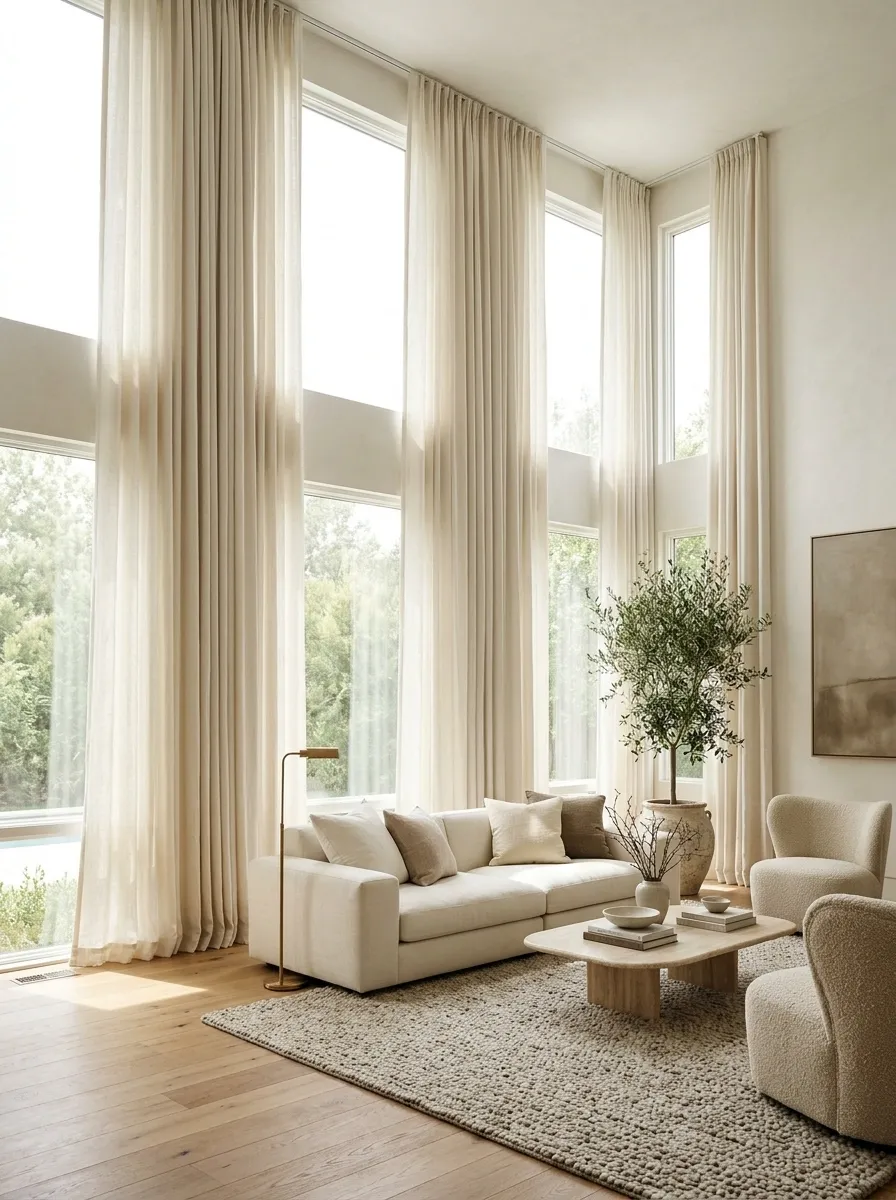
The relaxed, full-height classic.
Ivory linen curtains hung from a ceiling-mounted track give a living room long, uninterrupted lines. Pair them with a low cream sofa, warm oak flooring, a textured rug, and a few restrained brass details. The fabric should skim the floor neatly, with enough fullness to form soft folds rather than looking stretched flat across the window.
The trick is to let the curtains frame the room instead of chopping up the wall. Keep the furniture relatively low and the nearby colors quiet, so the tall fabric has room to stand out. This approach works especially well around large windows, although the panels need space to stack without blocking too much glass when open.
THE FINISHING FORMULA
Long lines. Soft folds. Zero awkward gaps.
MOUNTING
Near the ceiling
FABRIC
Relaxed ivory linen
FINISH
A neat floor-length drop
Measure the finished drop before buying fabric. Guessing the length is how the curtains end up looking like they belong to a much shorter house.
Layered Sheer and Blackout Curtains in a Quiet Neutral Bedroom
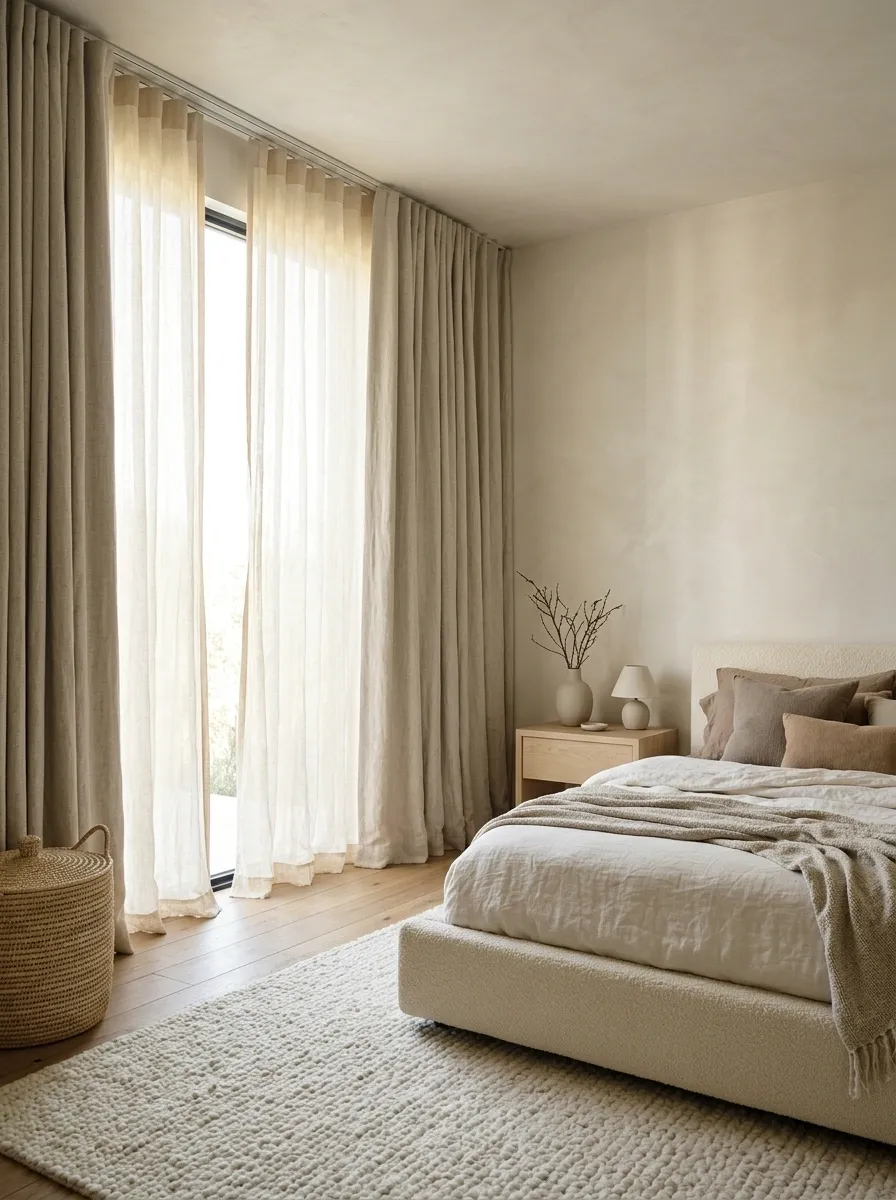
Soft daylight by day, proper darkness at night.
Two curtain layers give a bedroom more control without making the window look heavy all day. Hang translucent white or warm ivory sheers closest to the glass, then place fuller blackout curtains in taupe, oatmeal, or muted brown on the outer track. A low upholstered bed, textured bedding, and pale timber furniture keep the finished room calm rather than overly formal.
During the day, the sheers soften incoming light while preserving a gentle view of the window. At night, the outer panels provide stronger darkness and privacy. For the best result, choose tracks that let both layers move independently. Sheers alone are not a reliable privacy solution after dark when the room lights are on.
TWO LAYERS, TWO JOBS
Sheer layer
Softens daylight and keeps the window from feeling bare.
Blackout layer
Adds darkness and stronger nighttime privacy when closed.
Planning note: allow enough track space for both layers to move freely. Two curtains fighting over one tiny track is not the bedroom drama anyone ordered.
Olive Roman Shades in a Mid-Century Breakfast Nook
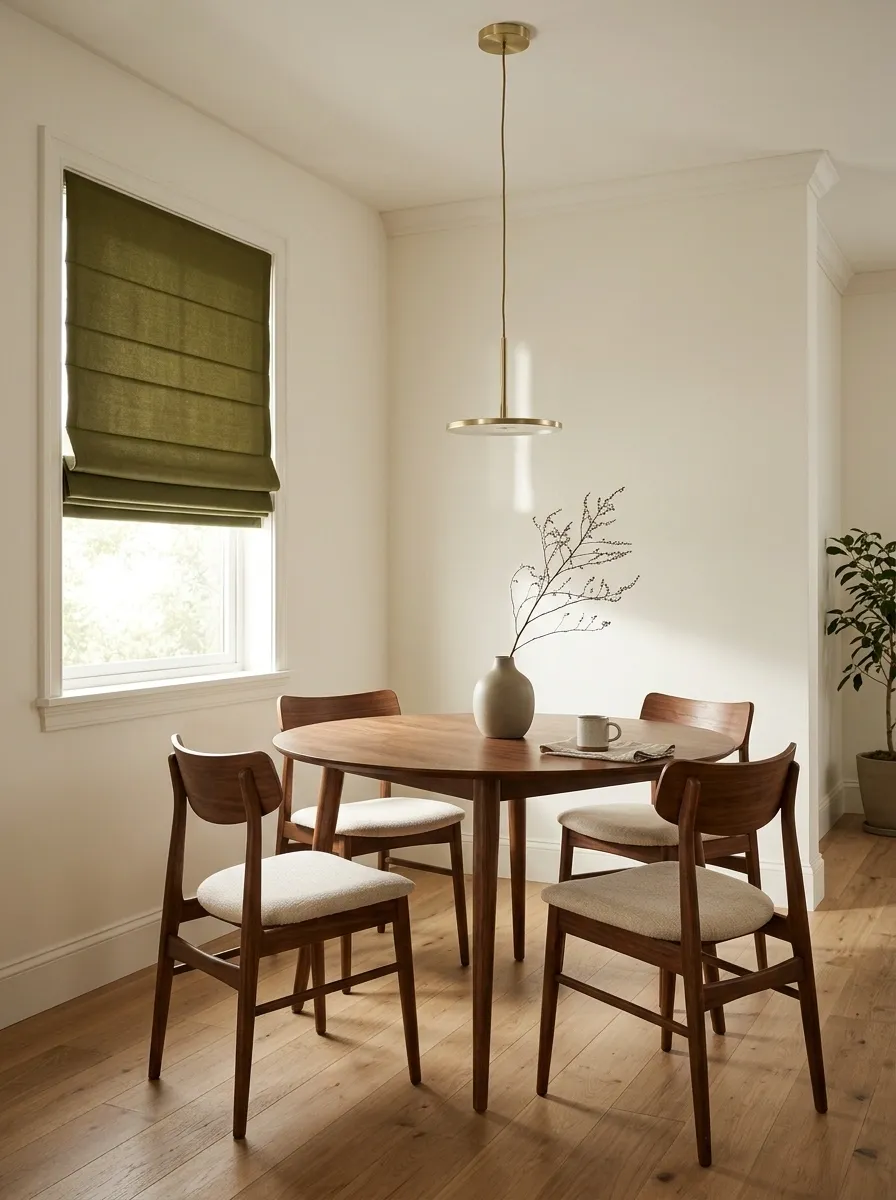
A tailored shade with a little personality.
Olive Roman shades bring color and structure to a breakfast nook without swallowing the window. Pair them with a walnut dining table, curved wood chairs, a simple pendant, and warm off-white walls. The shade’s neat horizontal folds complement the clean geometry of mid-century furniture, while the earthy green adds interest without turning the room into a jungle-themed café.
When lowered, the fabric creates a relatively smooth, tailored surface. When raised, it gathers into horizontal folds that add texture near the top of the window. Keep the pattern simple here and let the shade’s color do the talking. This composition suits smaller dining corners where long curtain panels would crowd the table or interrupt the walkway.
ONE SHADE, TWO SILHOUETTES
The folds are part of the design.
Lowered
A clean fabric panel with a tailored finish.
Raised
Stacked folds reveal more glass and daylight.
Check the raised stack against the window height before ordering. A shade that eats half the glass when lifted isn’t doing the view any favors.
Café Curtains in a Vintage Cottage Kitchen
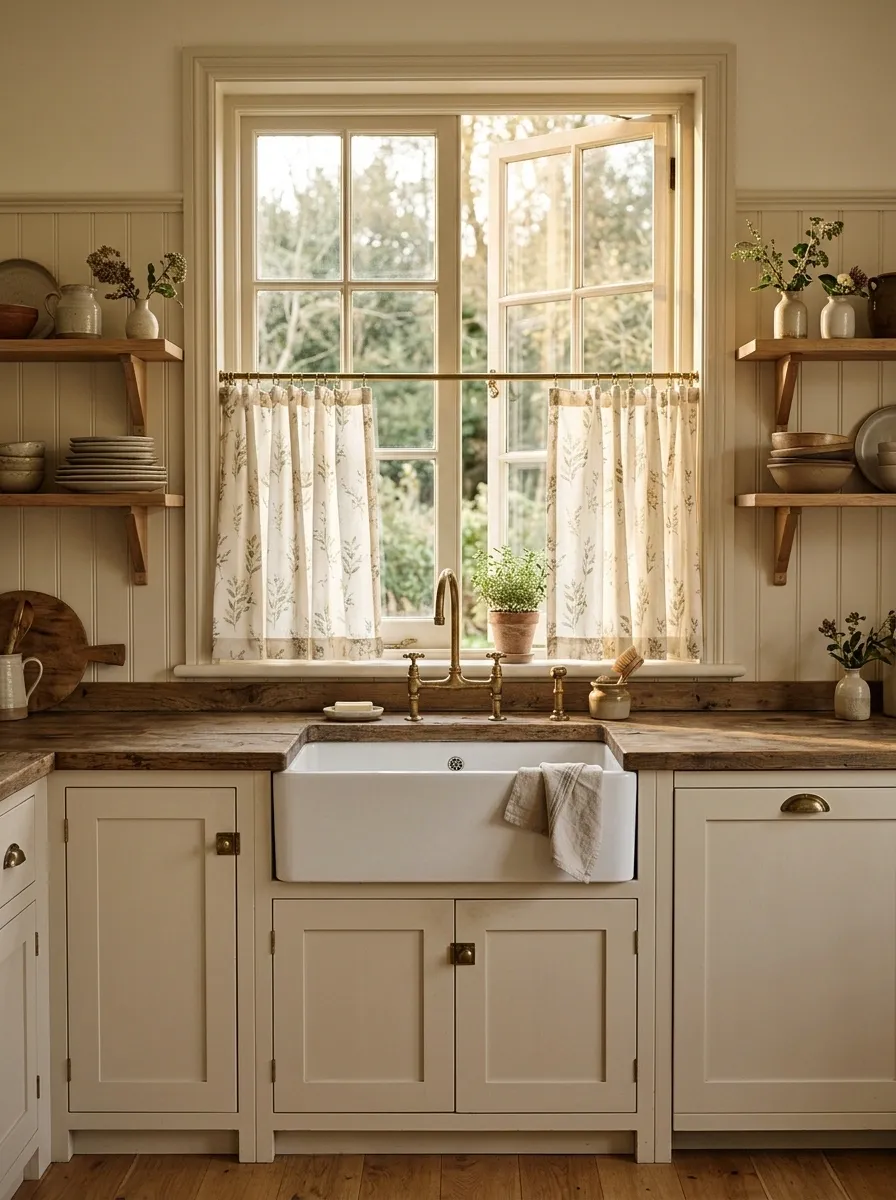
Privacy where it matters, daylight where it counts.
Café curtains cover the lower portion of a kitchen window while leaving the upper glass exposed. In a cottage kitchen, soft cream fabric with a delicate stripe or tiny botanical print works beautifully alongside painted cabinets, a timber countertop, simple shelving, and a ceramic sink. The short panels feel at home in a practical room where full-length curtains would be awkward near the worktop.
The placement is what makes this look work. The lower section provides a degree of privacy at sink level, while the open upper glass keeps the kitchen bright. Choose a washable fabric and a straightforward hanging method, especially near cooking areas where splashes and grease can become unwelcome roommates.
THE CAFÉ CURTAIN SPLIT
Cover the view, not the daylight.
Open to daylight
Screened by fabric
Set the curtain line according to the window and the privacy needed. The point is a deliberate split, not a random strip of fabric hovering somewhere in the middle.
Woven Wood Shades With Linen Side Panels in an Organic Modern Living Room
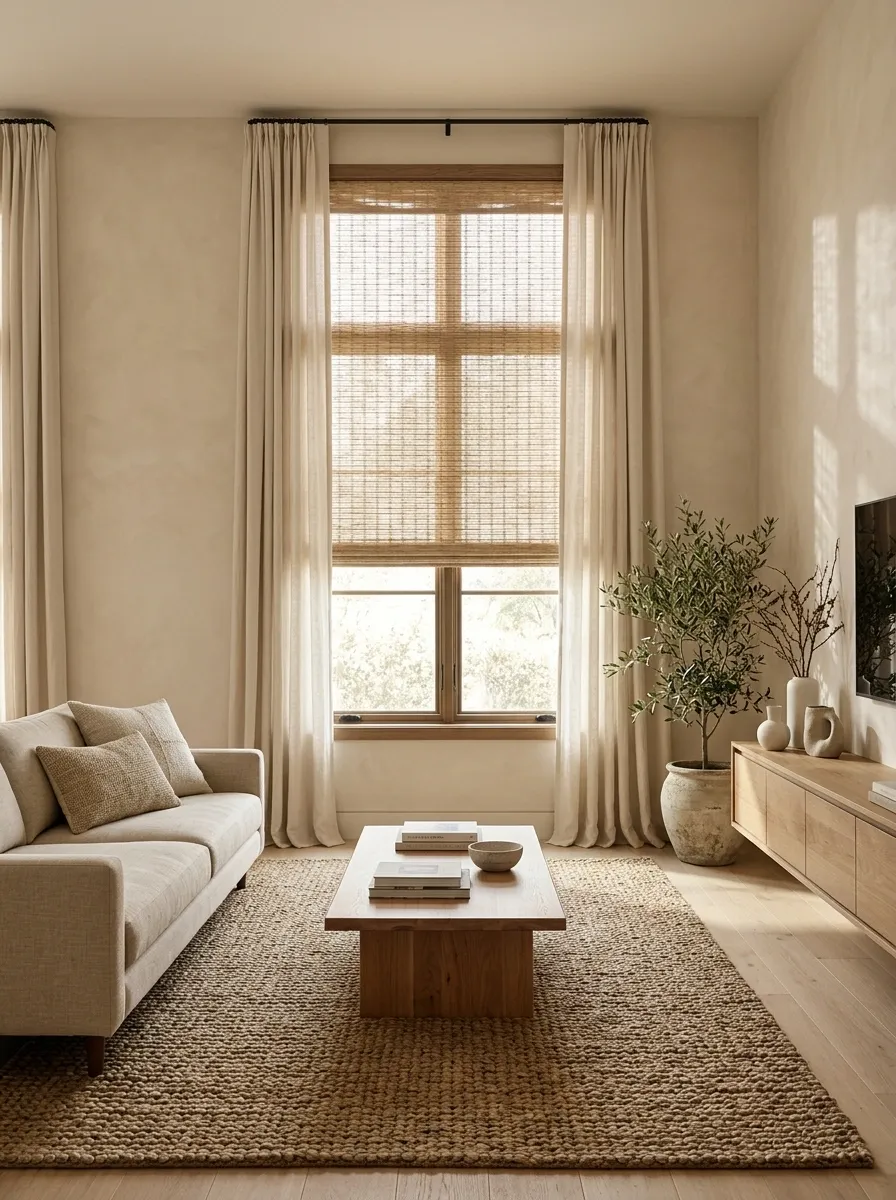
Natural texture without the rustic overload.
Woven wood shades add a finely varied texture to a living room filled with linen, timber, and soft neutral colors. Use natural straw or warm brown shades inside the window frames, then add relaxed linen curtains at the sides. Plaster-look walls, pale oak flooring, a low sofa, and a substantial woven rug make the different textures feel related rather than randomly collected.
The shades provide the more structured layer, while the side curtains soften the window’s edges and give the room a finished outline. Keep the wood tones in the same general family, but don’t try to match every surface exactly. A little variation looks natural. Five nearly identical beige textures, however, can make a room look like it was assembled by a nervous paint-card collector.
WHY THESE MATERIALS WORK TOGETHER
Woven wood
Brings visible texture and a structured layer to the glass.
Linen panels
Add soft edges and flowing vertical lines beside the window.
Warm timber
Connects the window treatment to the floor and furniture.
One material should lead, while the others support it. Texture needs a pecking order too.
A Bay Window With Curved Drapery and a Built-In Window Seat
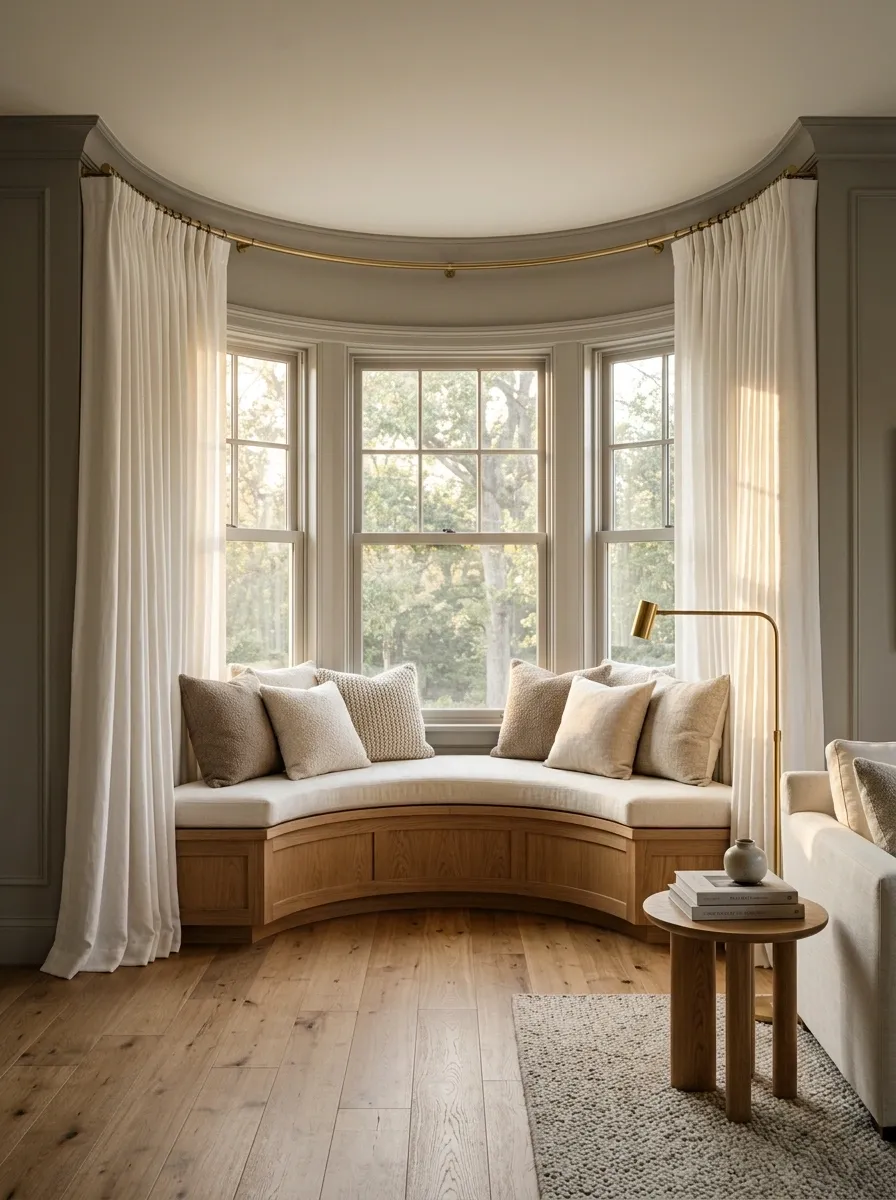
An awkward architectural corner, finally earning its keep.
Bay windows can be wonderful until furniture starts collecting around them like nobody agreed on a floor plan. A built-in window seat solves the awkward gap while full-length curtains on a curved ceiling track frame the entire alcove. Add fitted cushions, a few textured pillows, warm wood flooring, and a nearby reading lamp. The result feels like an intentional part of the living room rather than a strange little annex.
The key is respecting the bay’s shape. The curtain track should follow the curve, while the seat follows the usable interior space. Keep the cushion depth practical and preserve enough room to move around the seating area. A beautifully upholstered seat that nobody can comfortably sit on is basically expensive window dressing with commitment issues.
THE BAY WINDOW BLUEPRINT
Follow the architecture. Don’t fight it.
Built-in window seat
Cushions follow the usable bay shape
Curtain track
Follow the angle or curve of the bay.
Seat clearance
Keep the cushion and walking space usable.
Arched Mediterranean Windows Framed by Soft Linen Drapes
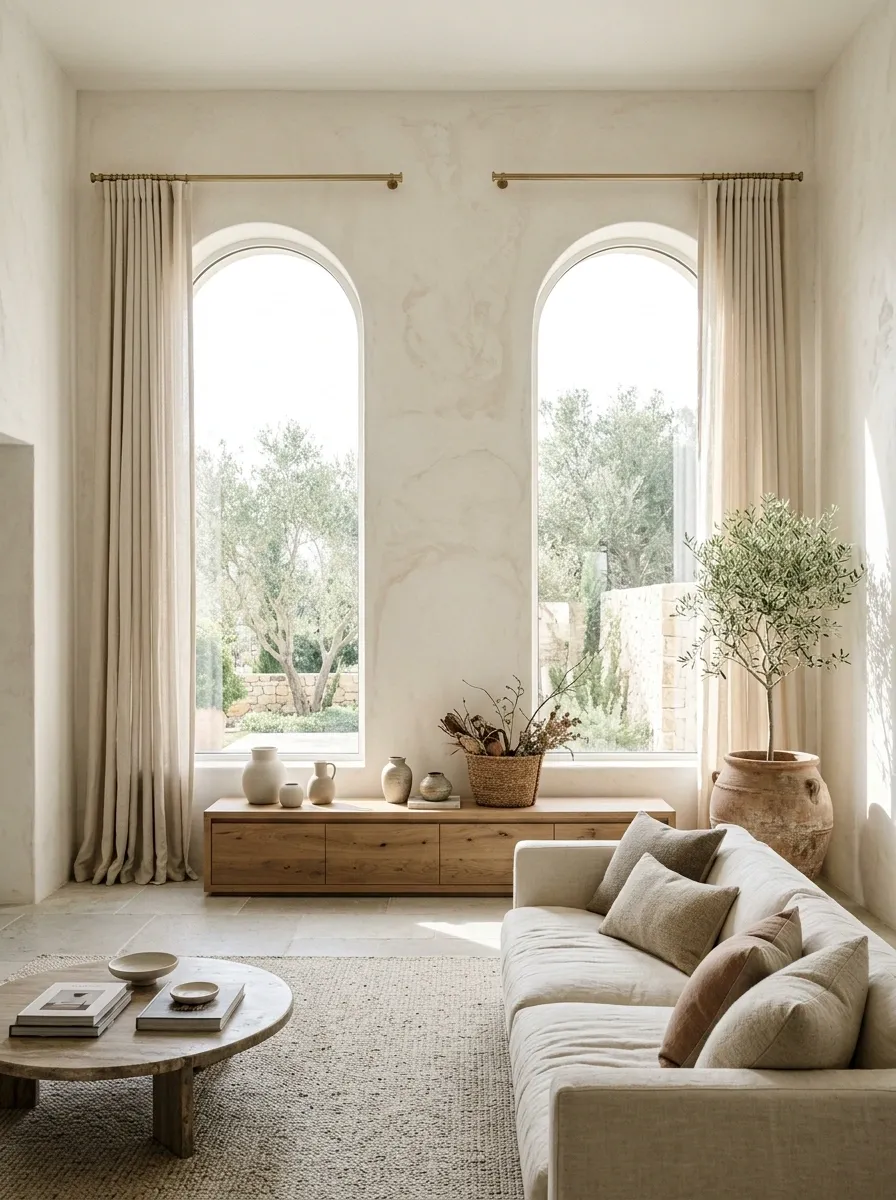
Let the architecture have its main-character moment.
Tall arched windows already bring plenty of character, so heavy decorative treatments aren’t needed to make them interesting. Soft linen curtains in warm ivory or pale sand frame the sides, leaving the curved tops visible. Add plaster walls, stone flooring, a low timber console, and a comfortable neutral sofa to create a Mediterranean-inspired sitting room that feels relaxed rather than themed.
Mounting the curtains high and outside the main glass area helps preserve the arch’s distinctive shape. When the panels are open, they should frame the window instead of covering its most recognizable feature. Pair the fabric with uncomplicated hardware and let the architectural curves provide the detail. The window has already done the hard work, so there’s no need for a valance to audition for the same role.
FRAME THE ARCH, KEEP THE CURVE
The window is the feature. The curtains are the supporting cast.
The placement rule
Keep the curtain track above the arch where the wall allows, and position the open panels outside the main glass area. Check the actual curve and available wall space before ordering hardware.
Wall-to-Wall Wave Curtains Beside Modern Sliding Glass Doors
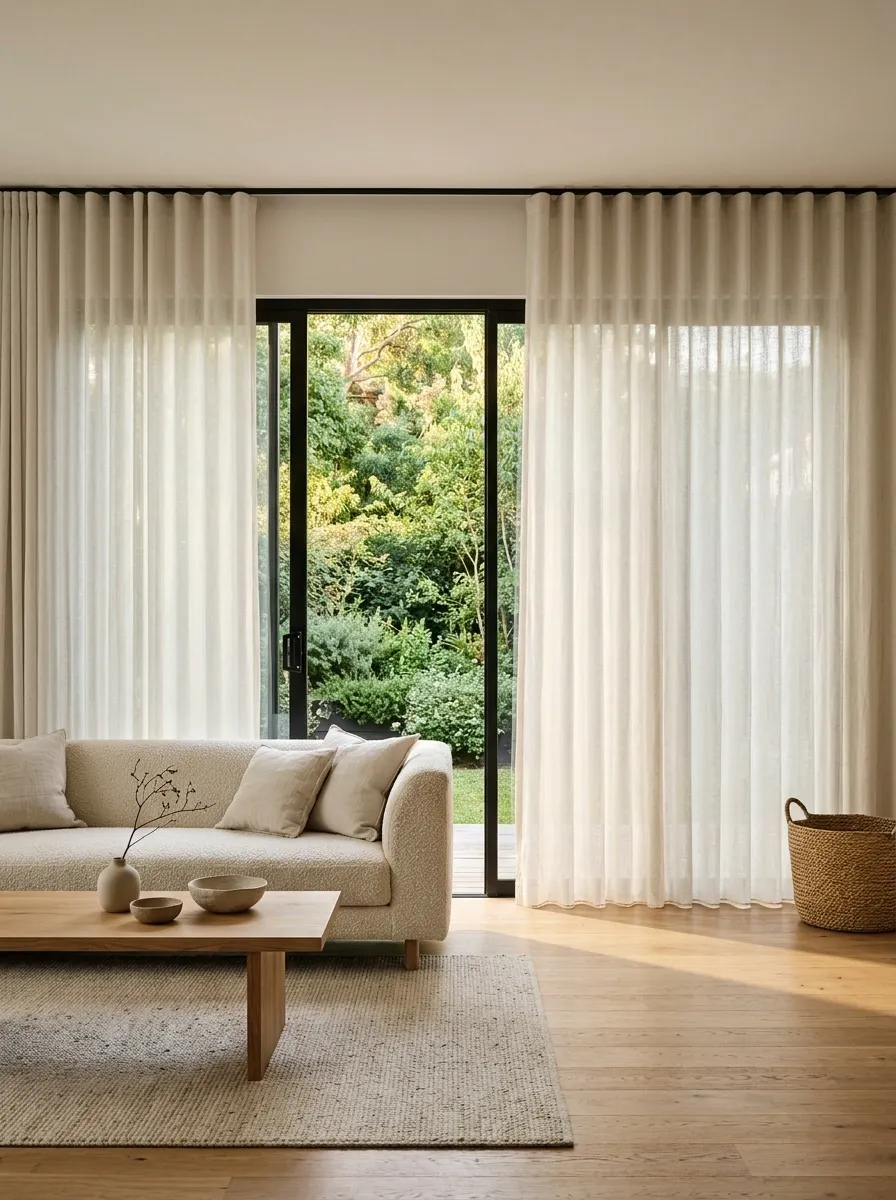
A glass wall that doesn’t need a complicated outfit.
Wide sliding glass doors look especially sharp with wave-fold curtains running along a continuous ceiling track. Choose a soft off-white fabric, a restrained modern sofa, low timber furniture, and a clear view into the garden. The even fabric ripples create a calm vertical rhythm across a large expanse of glass, while the full-width track makes the treatment feel connected to the architecture.
The practical detail is where the curtains go when they’re open. Wide panels need somewhere to stack, and that space shouldn’t block the doorway or swallow the best part of the view. Measure the available wall space at the sides before choosing the track and panel width. Otherwise, the curtains may technically open while behaving like two very expensive door guards.
THE WIDE-GLASS CHECK
Measure the open position, not just the closed one.
stack
and outdoor view
stack
Before ordering
Measure the glass width and the wall space available for stacked panels.
Before installing
Check that the panels clear the handles and don’t obstruct the main route outside.
Color-Blocked Curtains in a Playful Eclectic Living Room
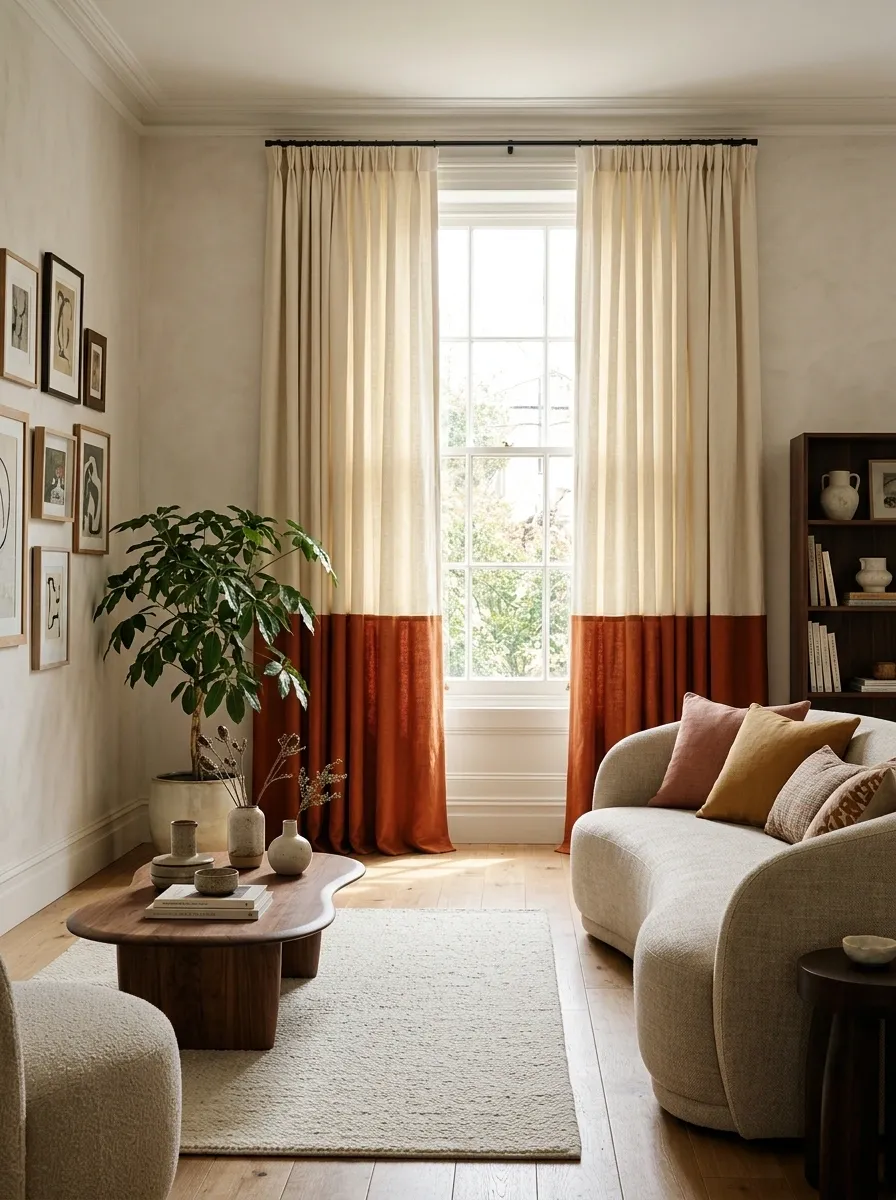
A little color theory, a little controlled chaos.
Color-blocked curtains bring a strong graphic element to a living room without requiring patterned wallpaper or a dozen decorative accessories. Picture a warm ivory upper panel meeting a deeper burnt-orange lower section, with sculptural furniture, a simple rug, and a few carefully repeated colors elsewhere in the room. The fabric itself becomes a large design feature rather than another background layer.
The most convincing versions have a clear color hierarchy. One shade leads, the second supports it, and the rest of the room gives the combination some breathing room. Keep the seam between the colors deliberate and well proportioned. Add too many competing accent colors and the room starts to look like every object arrived from a different group chat.
A COLOR-BLOCKED COMPOSITION
Two curtain colors. One clear point of view.
upper panel
lower panel
Decide where the color division should sit before fabric is cut. A poorly placed seam can disrupt the window’s proportions, and fabric doesn’t come with an undo button.
Deep Velvet Drapes in a Moody Formal Dining Room
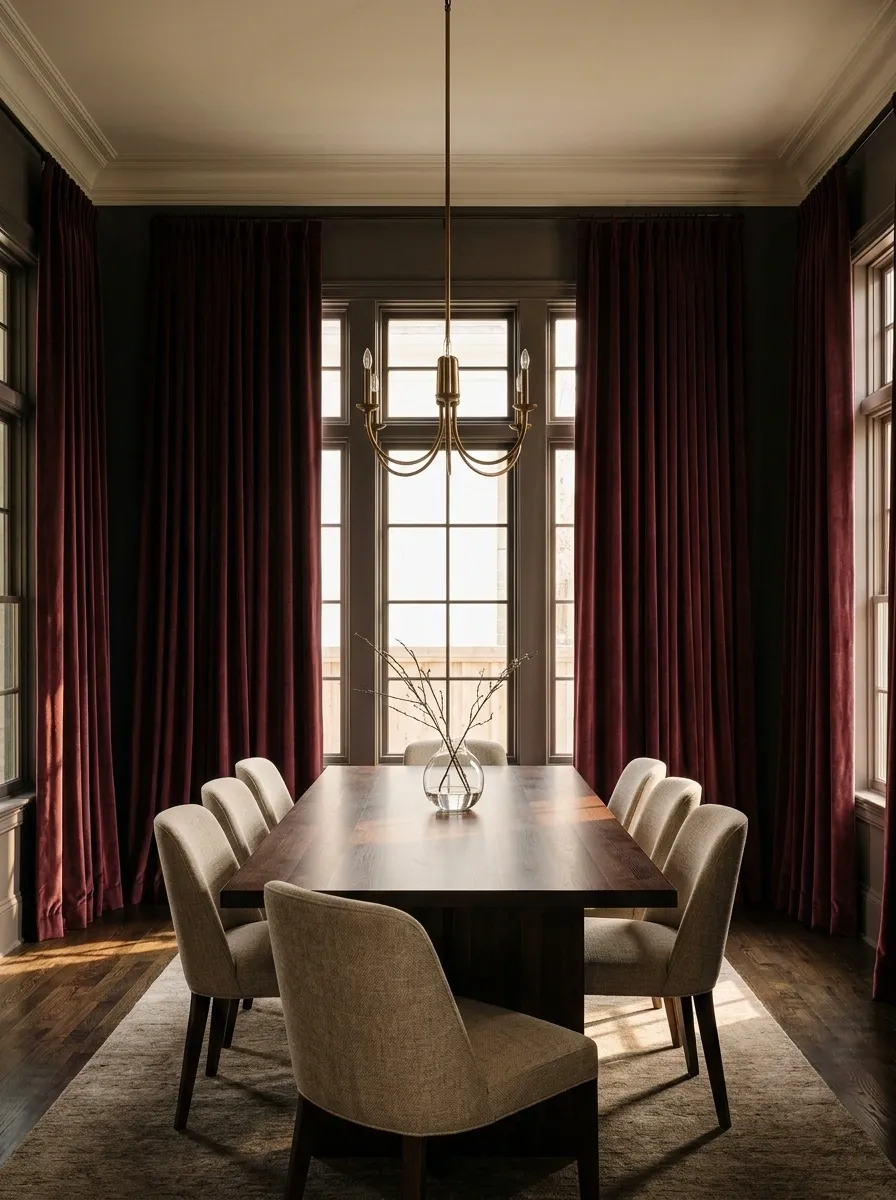
Maximum drama, with absolutely no apology.
Deep burgundy velvet curtains create a rich backdrop for a formal dining room with dark timber furniture, warm lighting, and restrained metallic details. Let the fabric fall in substantial folds beside tall windows, then balance its visual weight with a solid dining table, upholstered chairs, and walls in a warm neutral or deep complementary tone. The room should feel layered and intimate, not like a restaurant trying to win an award for the most dramatic evening ever.
Velvet needs enough width to hang in full folds, and its thickness affects how far the panels project into the room. A track that is too narrow can make the curtains look cramped when open. Keep nearby patterns restrained so the fabric’s depth remains the focus. There’s already plenty of drama in velvet; the wallpaper doesn’t need to start a subplot.
THE HEAVY-FABRIC REALITY CHECK
Velvet needs room to be velvet.
Allow for fabric bulk
Measure how much room the panels need when gathered to the sides.
Give the room some quiet space
Let the curtain color and rich folds lead. Keep nearby patterns and shiny finishes in check.
Recessed Ceiling-Track Sheers in a Minimalist Japandi Living Room
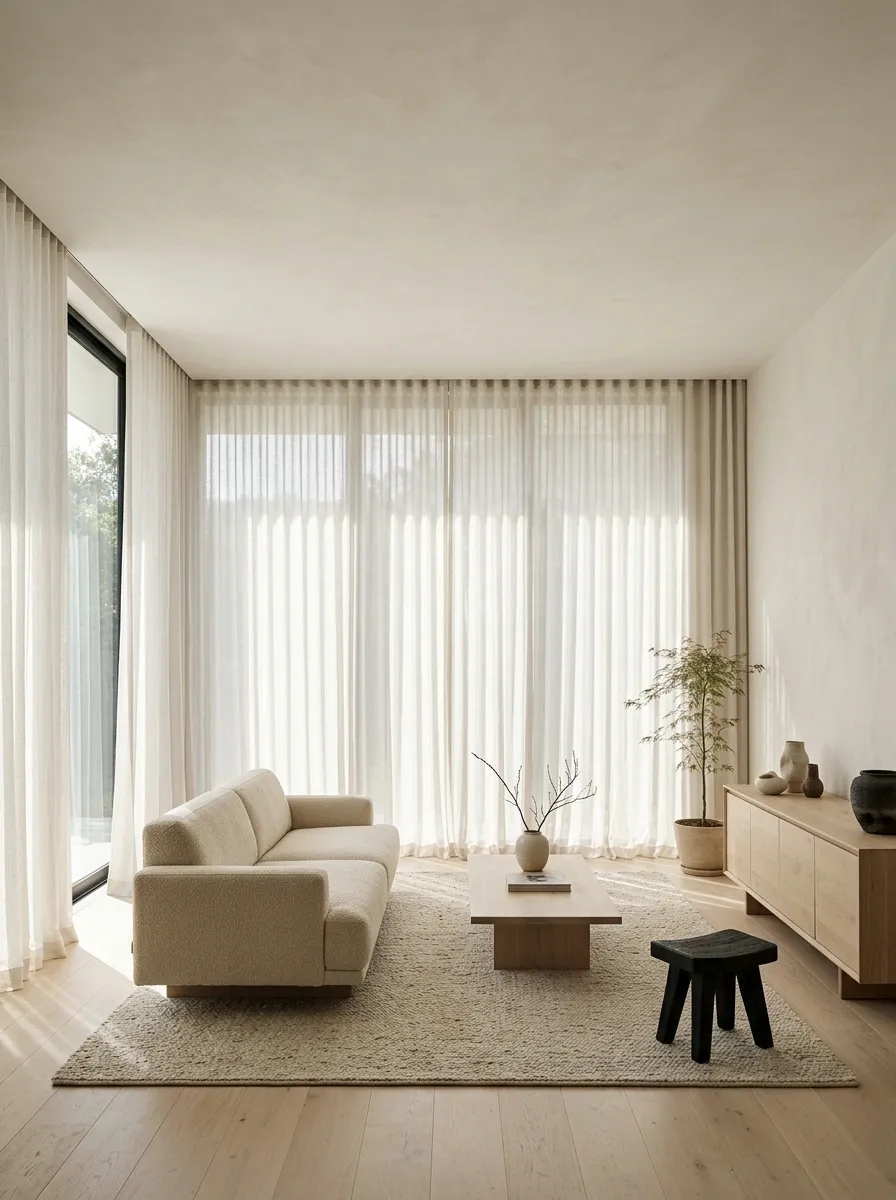
Quiet architecture, doing the absolute most by doing the absolute least.
Recessed ceiling-track sheers give a Japandi living room a clean, uninterrupted finish. The fabric appears to emerge directly from the ceiling, falling in soft vertical folds beside pale plaster walls, low timber furniture, and a neutral sofa. Keep the floor clear around the window and let natural light reveal the fabric’s subtle texture. A few dark wood accents provide contrast without turning the room into a monochrome waiting room.
The detail that makes this design work is the concealed track. It needs to be planned around the ceiling construction, curtain heading, and finished fabric drop before installation. Retrofitting a recessed track after the ceiling is finished can involve extra work. Minimalism may look effortless, but the planning department is definitely awake.
THE DETAIL YOU BARELY SEE
A cleaner ceiling line starts above the curtain.
What needs planning first?
The ceiling recess, track depth, curtain heading, and floor clearance. Coordinate them before finishing the ceiling so the hardware stays hidden and the fabric hangs cleanly.
Floral Curtains and Complementary Wallpaper in an English Cottage Bedroom
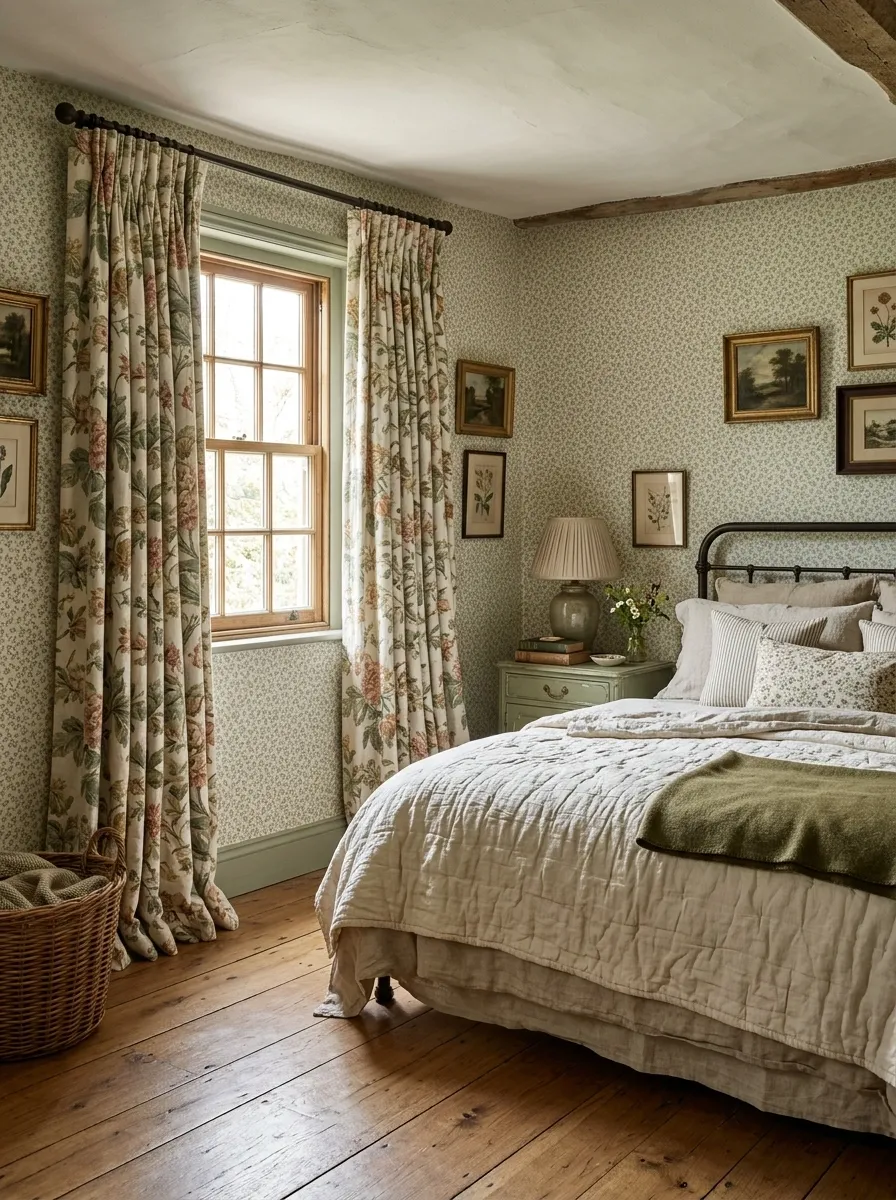
Florals that coordinate instead of starting a family feud.
Floral curtains and patterned wallpaper can make a cottage bedroom feel collected, traditional, and full of character. The trick is to give the two patterns different jobs. Use curtains with a noticeable botanical motif, then select wallpaper with a smaller print or a softer background. Painted bedside tables, a quilted bed, and warm wood flooring help keep the room grounded.
The colors should overlap without every flower matching every leaf. A muted green repeated in the curtains and wallpaper can tie the room together, while cream bedding creates a visual pause. Avoid combining two equally bold patterns at the same scale. That’s less English cottage and more two floral prints arguing over custody of the bedroom.
THE PATTERN PECKING ORDER
Let one print speak louder.
Curtains
The larger, more noticeable motif.
Wallpaper
A quieter repeat with more breathing room.
The tie-breaker: Repeat one or two colors across both prints, then use plain bedding to give the eye a break. Even flowers need personal space.
White Plantation Shutters in a Classic, Light-Filled Dining Room
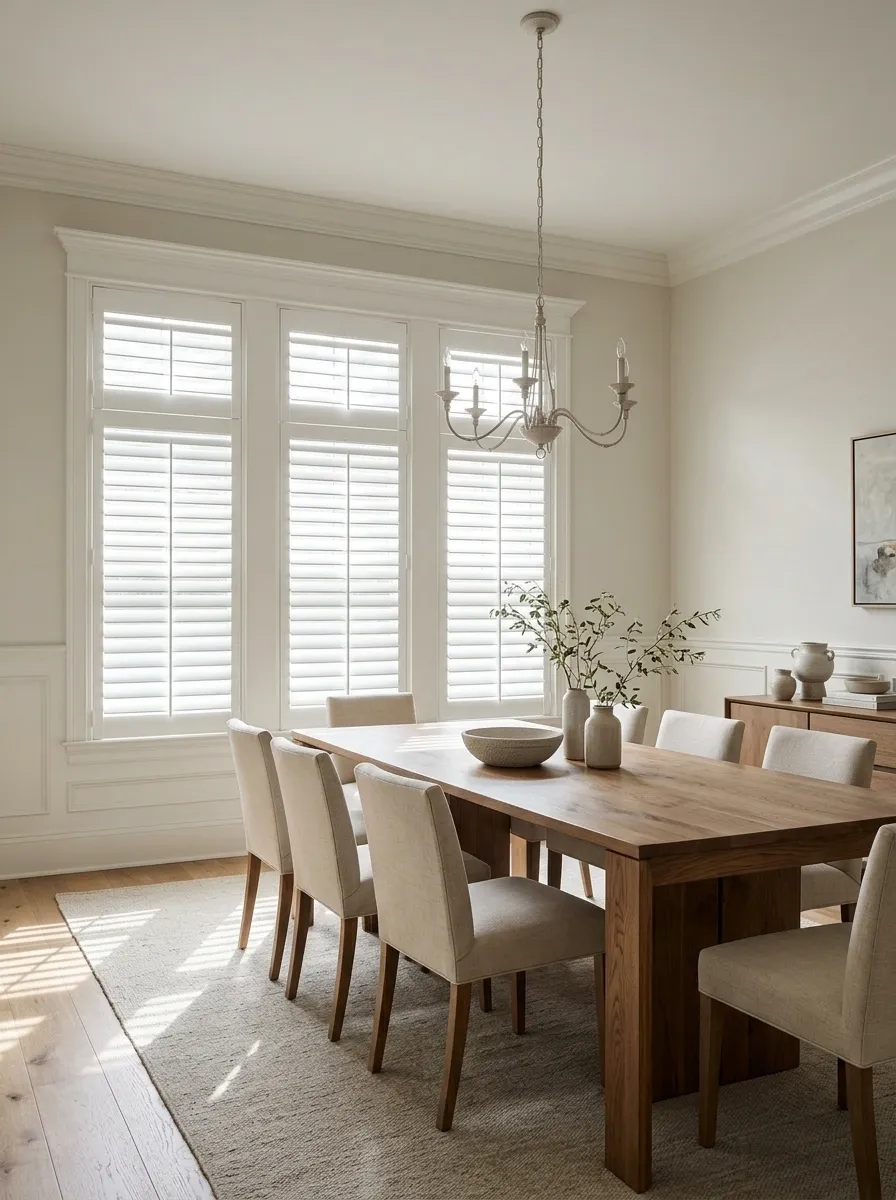
Crisp lines without dressing the window in fabric.
White plantation shutters give a classic dining room a structured finish. Their broad frames and adjustable horizontal louvers work well alongside traditional window trim, a solid wood table, upholstered chairs, and warm neutral walls. Keep the room’s main finishes relatively simple so the shutters’ geometry feels like part of the architecture rather than another decorative layer.
The louvers can be tilted to manage the direction of incoming light and reduce direct views, while the panels can open to expose more of the glass. The exact effect depends on the window’s orientation and shutter design. Measure the frame carefully, including handles and opening clearance, before ordering. A beautifully fitted shutter that collides with the window handle is a very expensive mechanical disagreement.
LIGHT CONTROL, BUILT INTO THE FRAME
Same shutters. Different angles.
Louvers tilted
Redirects daylight and limits direct sightlines.
Louvers angled
Changes how light passes through the slats.
Check whether the shutters will sit inside or outside the frame, and confirm clearance for the panels to swing open. The frame has to function, not just photograph well.
Terracotta Roman Shades in a Sculptural Mid-Century Study
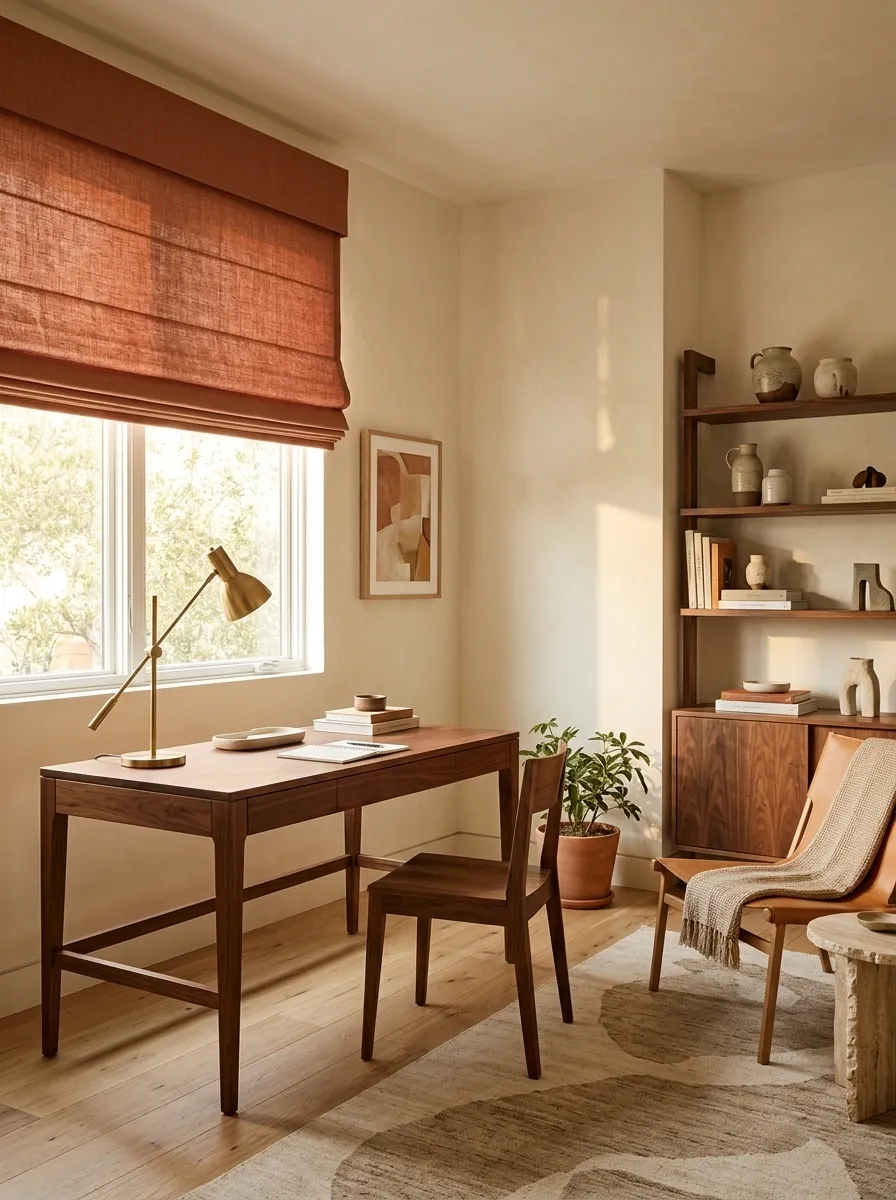
A warm accent that understands the assignment.
Terracotta Roman shades make a home office or reading study feel more considered without covering the room in color. Pair the shade with walnut furniture, a sculptural task lamp, cream walls, and artwork that picks up a similar earthy tone. The warm fabric contrasts with the timber while the Roman shade’s tailored folds echo the straight lines of the desk and shelving.
The shade works best when its raised position has been considered from the start. The gathered fabric will occupy some of the upper window, and that matters when the window isn’t very tall. Mounting it too low can make the glass feel cramped. Measure the available space above the window and decide how much glass needs to remain visible when the shade is raised. A small office doesn’t need its daylight rationed by bad measuring.
BEFORE THE SHADE GOES UP
Protect the glass you actually want to see.
Raised stack
Folds take up part of the upper glass.
Higher mounting
Can leave more visible glass when raised, if the wall allows.
Confirm the shade’s actual stack height with the supplier. The right mounting position depends on the window frame, shade construction, and available wall space above it.
Wall-Matching Curtains in a Compact Apartment Living Room
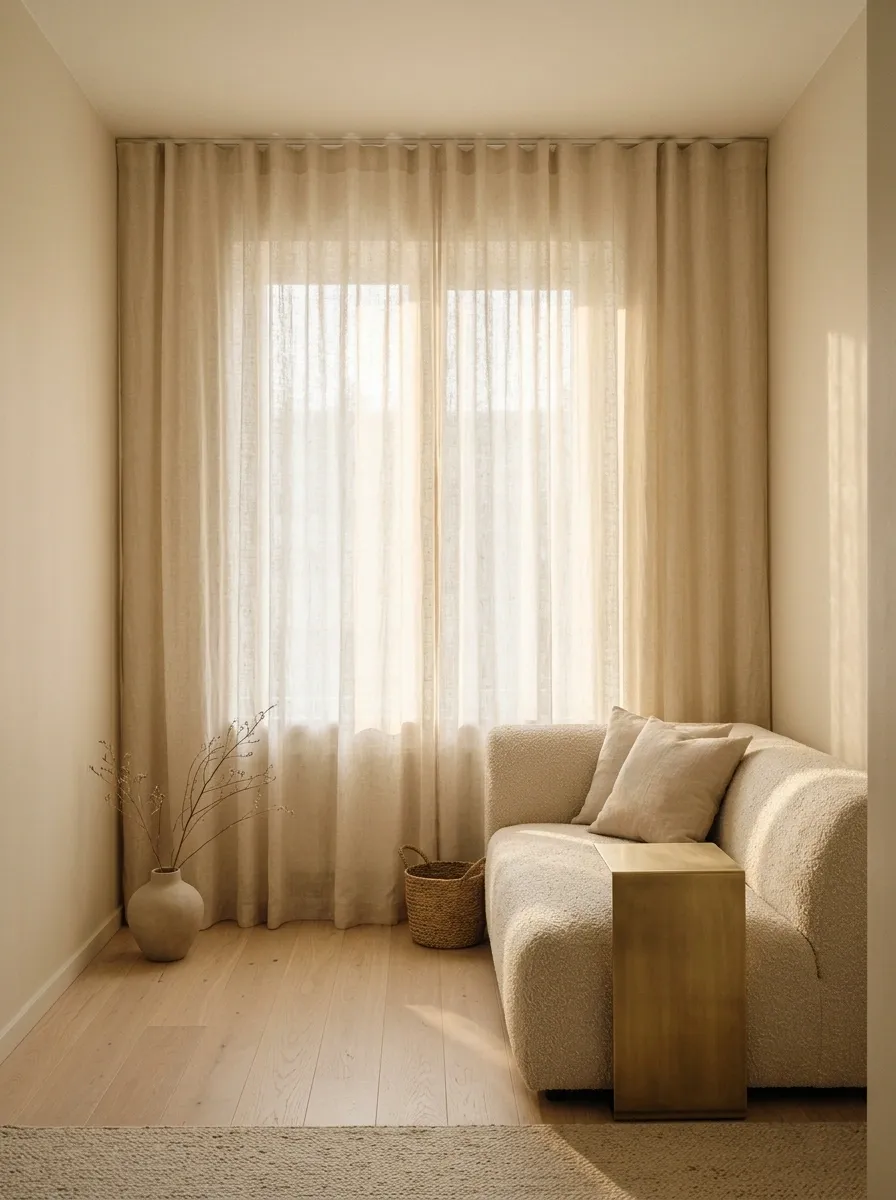
A small-room trick that doesn’t involve buying smaller furniture forever.
When a compact living room has too many contrasting edges, wall-colored curtains can make the window feel like part of one continuous surface. Choose full-height panels in a shade close to the paint, extend the track beyond the glass when wall space permits, and pair the treatment with a compact sofa, slim side table, and uncluttered walkway. The result feels calmer because the curtains don’t create another strong color boundary.
This approach is especially useful when a window sits on a narrow wall or the room already contains plenty of furniture. Keep the fabric texture visible so the walls and curtains don’t merge into one flat block. Before widening the track, check for adjacent doors, radiators, switches, and shelves. Visual continuity is lovely, but a curtain covering the light switch is a daily argument nobody needs.
THE SMALL-ROOM VISUAL TRICK
Fewer hard color breaks. More visual flow.
High contrast
The window treatment creates another strong boundary.
Close color match
The wall and curtains read as a more continuous backdrop.
Let fabric texture create the interest while the color stays quiet. Match the actual undertone of the wall paint, and check nearby furniture and curtain stack space before expanding the track.
Blue-and-White Striped Curtains in a Relaxed Coastal Living Room
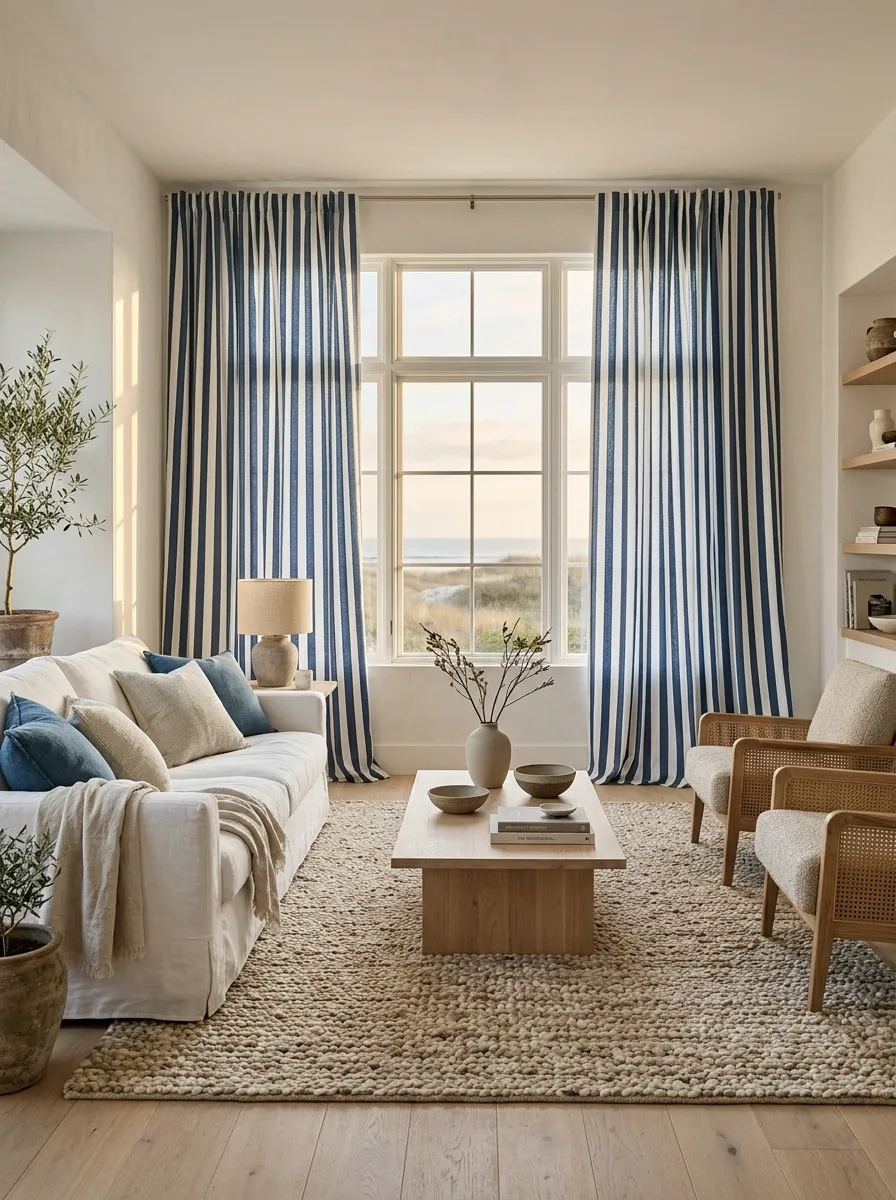
Coastal style without turning the living room into a souvenir shop.
Blue-and-white striped curtains give a coastal living room a crisp focal point while keeping the overall look relaxed. Pair them with pale timber furniture, a textured natural rug, a soft white sofa, and a few muted blue accents. The stripes add movement to the window, while the neutral furniture prevents the room from feeling overly themed.
The scale of the stripes matters. Broader stripes create a stronger graphic statement, while finer ones feel quieter and more traditional. Keep other fabrics mostly solid, and repeat the blue in one or two places around the room. Shell-shaped everything and anchors on every cushion aren’t required. The ocean can stay outside without sending the entire decor department a dress code.
STRIPES NEED A LITTLE DISCIPLINE
Let the curtains bring the pattern.
Bold, broad stripes
Fine, quieter stripes
Repeat the blue in a cushion or artwork, then let the sofa, rug, and larger furniture stay relatively quiet. The goal is a coastal room, not a nautical gift shop with excellent lighting.
Tailored Door-Mounted Shades on French Doors in a French-Country Kitchen
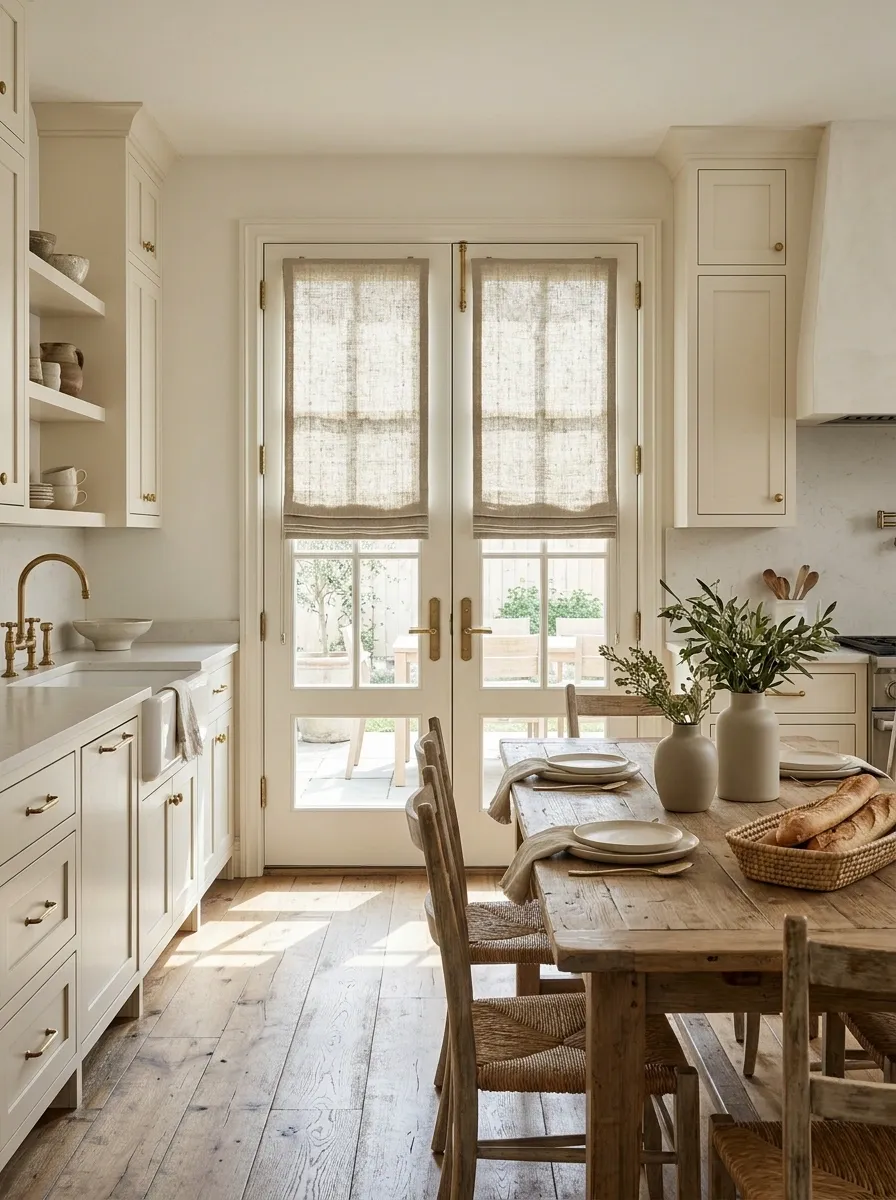
Pretty doors that still remember they’re doors.
French doors need window treatments that respect their movement. Individual shades fitted to each glazed door keep the look tidy without covering the entire opening with one heavy curtain. In a French-country kitchen, warm ivory or muted flax shades pair naturally with painted cabinets, stone-look flooring, a timber dining table, and simple ceramic accessories.
Because the shades move with the doors, handles, hinges, and opening clearance all need attention during planning. Choose a mounting method designed for the particular door and glazing, rather than improvising with hardware that may interfere with operation. The finished treatment should look integrated, not like two miniature window coverings that got lost on their way to a bigger window.
THE FRENCH-DOOR FIT CHECK
The shade must move with the door.
Check these before buying
Handle clearance
Hinge and frame depth
Door swing and shade movement
Compatibility with the actual glazing
Confirm the mounting method with the shade supplier, especially for glazed doors. A tidy appearance is great. A door that refuses to close is less of a design achievement.
Frosted Privacy Film in a Warm Contemporary Bathroom
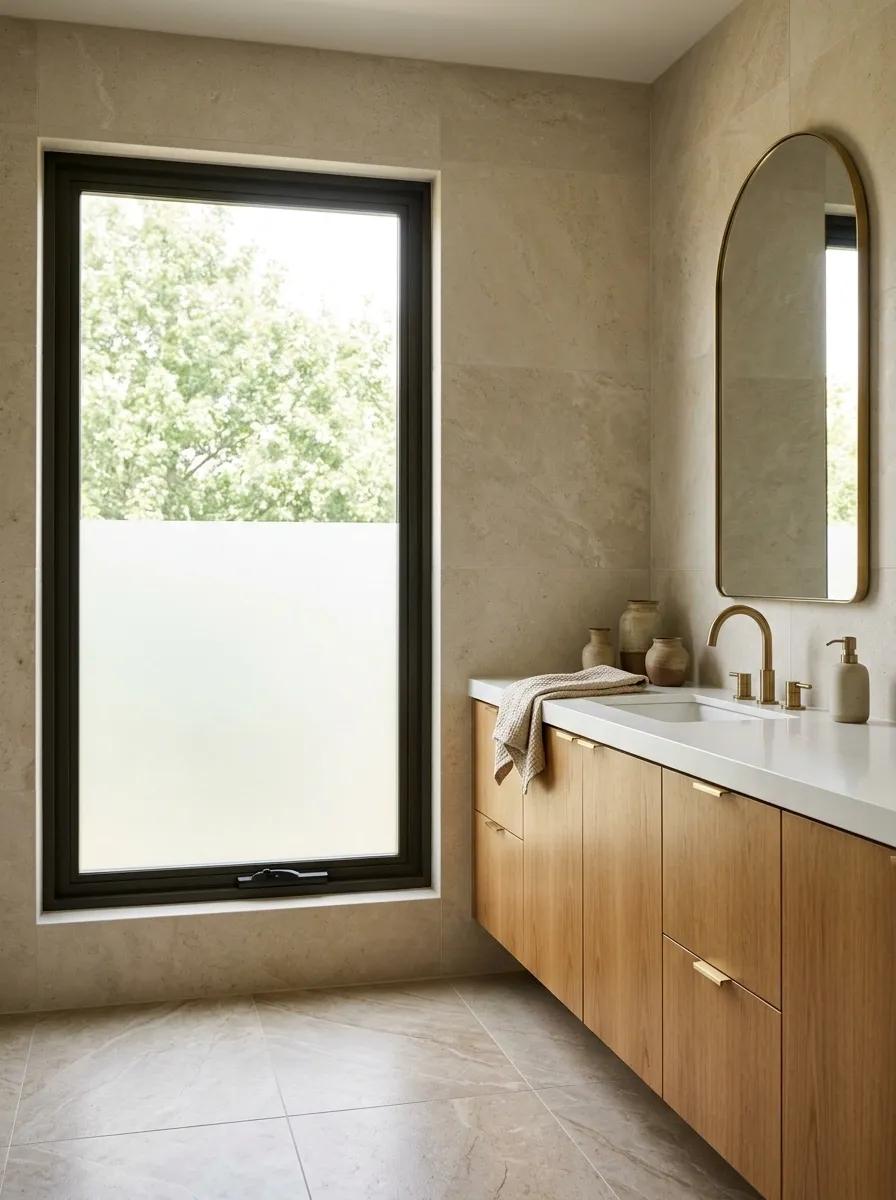
Natural light without the unwanted audience.
Frosted window film is a useful alternative to fabric in a contemporary bathroom where curtains would feel bulky or collect moisture. Apply it to the appropriate part of the glass, then let warm stone finishes, a timber vanity, simple hardware, and soft wall colors carry the rest of the room. Leaving the upper glass clear can preserve some of the outside view where the surroundings and window height make that practical.
The coverage should be based on actual sightlines, not a random strip that happens to look symmetrical. Consider neighboring buildings, the window’s height, and whether the room needs privacy from standing or seated views. Film can obscure visibility without providing full blackout, so it isn’t a universal substitute for every type of window covering. Privacy is the goal, not turning the bathroom into a mysterious frosted rectangle with plumbing.
PRIVACY BY WINDOW ZONE
Cover the sightline that actually matters.
When appropriate
Blocks direct views
The practical test
Check sightlines from outside at different angles and lighting conditions. A clear window that looks private in daylight may reveal more at night when the bathroom lights are switched on.
Cordless Cellular Shades in a Soft, Practical Nursery
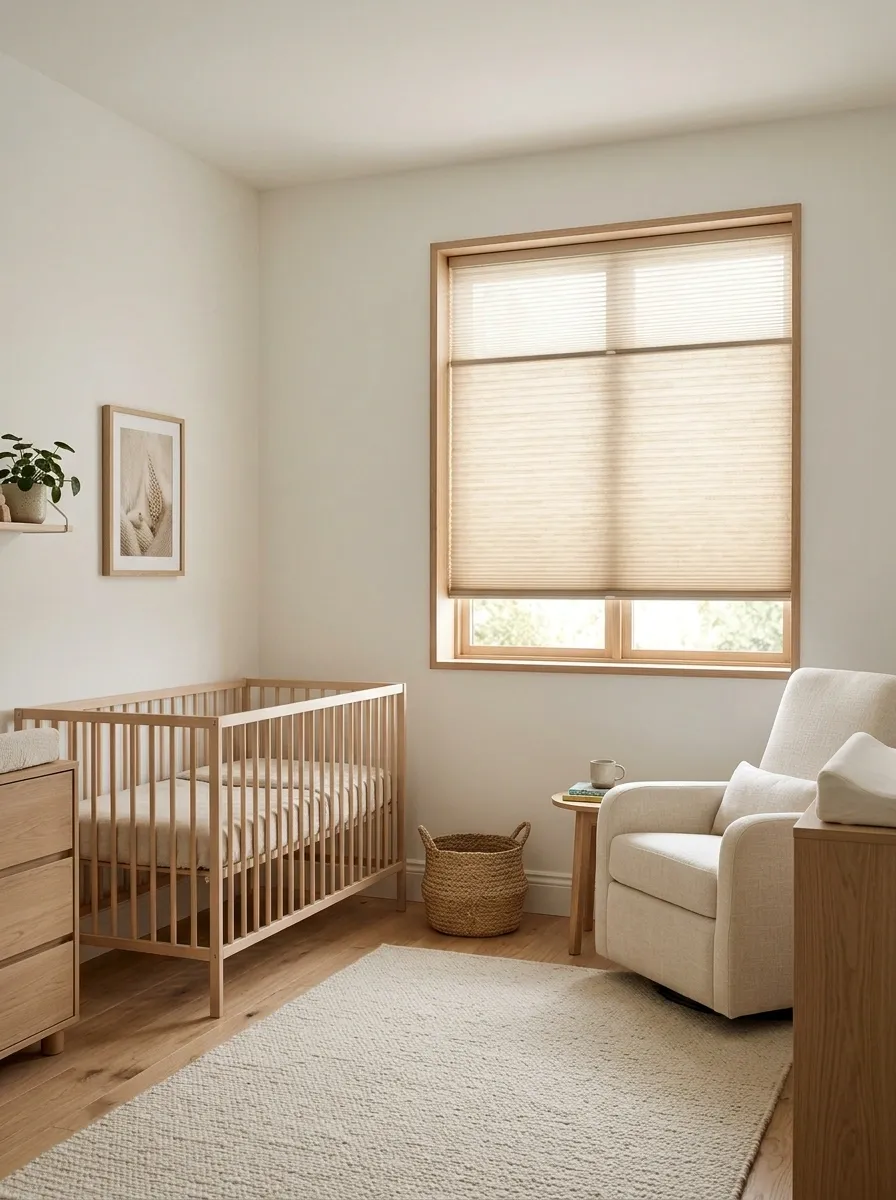
Gentle light control without unnecessary visual clutter.
Cordless cellular shades fit neatly into a nursery where the goal is a calm room that can handle everyday use. Choose a warm white or soft oatmeal shade, pair it with pale walls and simple timber furniture, and keep the window area free of unnecessary decoration. A comfortable nursing chair, a low-key rug, and washable textiles provide enough softness without creating a forest of accessories around the cot.
Cellular shades are available in different light-filtering and room-darkening options, so the right choice depends on daylight, sleep routines, and the room’s orientation. Cordless operation also avoids a dangling control cord, but the complete nursery setup still needs to follow current child-safety guidance. Keep window coverings and their components away from the cot, and don’t mistake a quiet color palette for a substitute for sensible safety planning.
CHOOSE THE LIGHT LEVEL
Soft daylight or a darker sleep space?
Light-filtering
Softens daylight while allowing light into the room.
Room-darkening
Reduces incoming light more substantially when lowered.
Nursery reality check
Choose suitable cordless hardware, follow child-safety instructions, and keep loose coverings and cords away from the sleep area. Cute clouds on the wall are optional. Safety planning isn’t.
Solar Roller Shades in a Sunlit Home Office
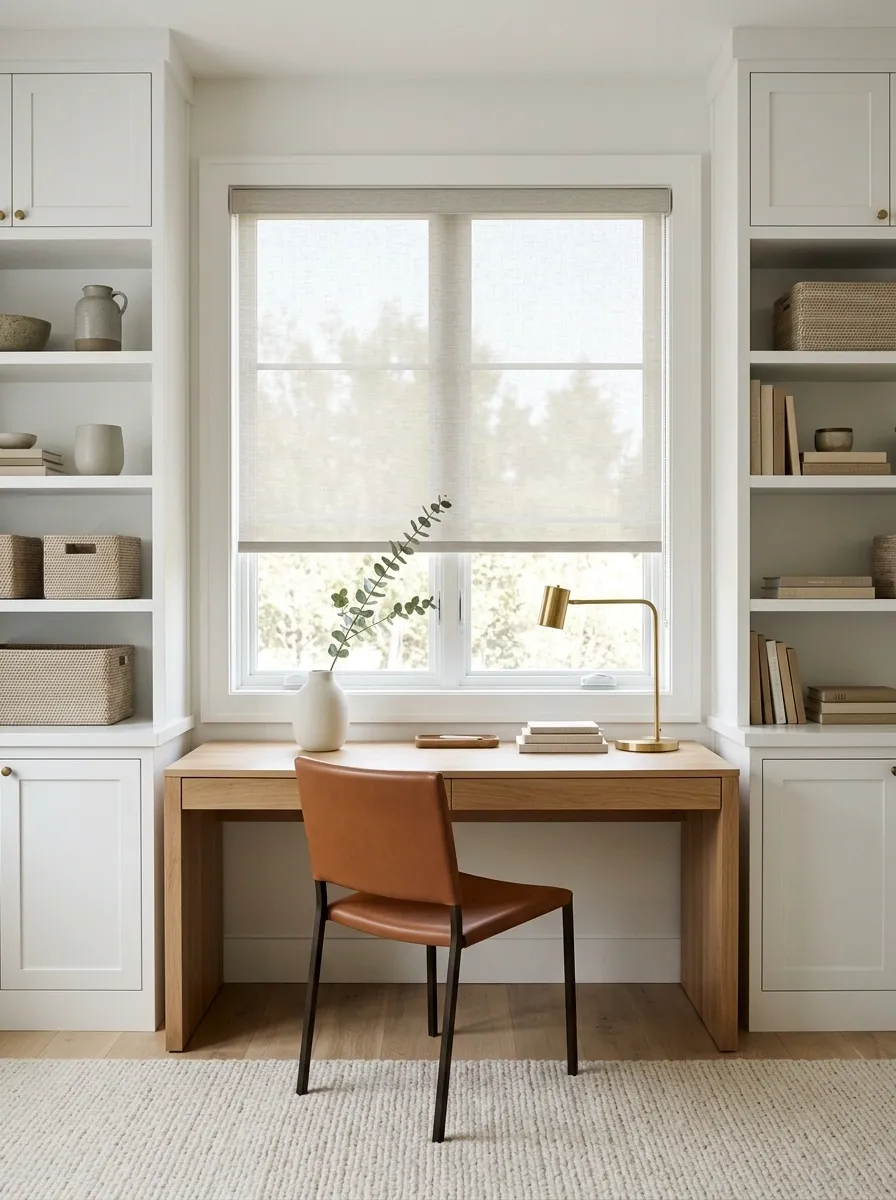
Less screen glare, fewer negotiations with the sun.
Solar roller shades work particularly well in a home office with strong daylight and a view worth keeping. A light, neutral shade across the window can reduce glare while preserving some outward visibility, depending on the fabric’s openness and the conditions outside. Pair it with a desk positioned thoughtfully in relation to the window, a practical task lamp, clean-lined storage, and a restrained color palette.
The fabric specification matters more than its color alone. Different openness levels transmit different amounts of light and affect how clearly the view remains visible. Even the right shade can’t fix every screen reflection if the monitor faces the wrong direction. Position the desk and screen first, then choose a shade that suits the remaining glare and privacy needs. The sun may be the office’s biggest distraction, but the monitor doesn’t need to help.
THE HOME-OFFICE GLARE CHECK
The desk and the window need to get along.
Window + shade
Check the direction of incoming sunlight.
Position the screen to reduce direct reflections.
Before choosing the fabric
Compare openness, glare reduction, outward visibility, and daytime privacy. Solar shades generally don’t provide complete nighttime privacy when indoor lights are on.
Independently Controlled Shades Across a Corner Window
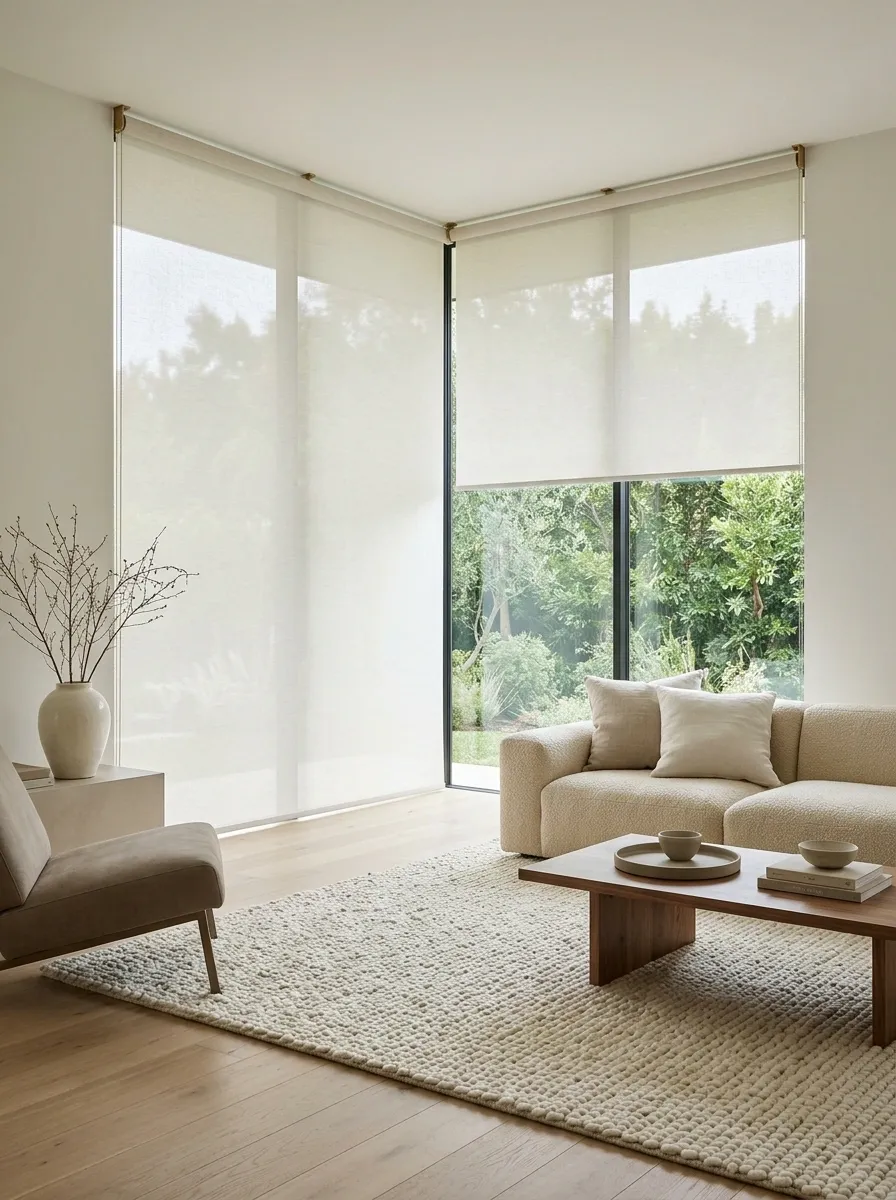
Two window walls, one surprisingly important planning decision.
Corner windows bring lovely natural light, but their meeting point can complicate window treatments. Separate roller shades for each window run create a clean, contemporary finish while allowing each side to be adjusted independently. Pair them with low-profile furniture, neutral upholstery, and a clear view outside so the glazing remains the main feature of the living room.
The important detail is how the two shades meet at the corner. Their brackets, fabric rolls, and control mechanisms need enough clearance to operate without colliding. Separate controls also let one side remain open while the other reduces glare or improves privacy. It sounds obvious until two expensive shades meet in the corner and immediately start behaving like rivals.
THE CORNER-WINDOW PLAN
Two window runs. Independent control.
A
B
Separate controls
Adjust each side according to glare, view, and privacy.
Clear corner
Check bracket and roller clearance where the two runs meet.
Confirm the mounting arrangement with the supplier before ordering. Corner geometry can affect bracket placement, particularly when the two windows have very little wall space between them.
Extra-Long Drapes in an Industrial Loft With Tall Steel-Framed Windows
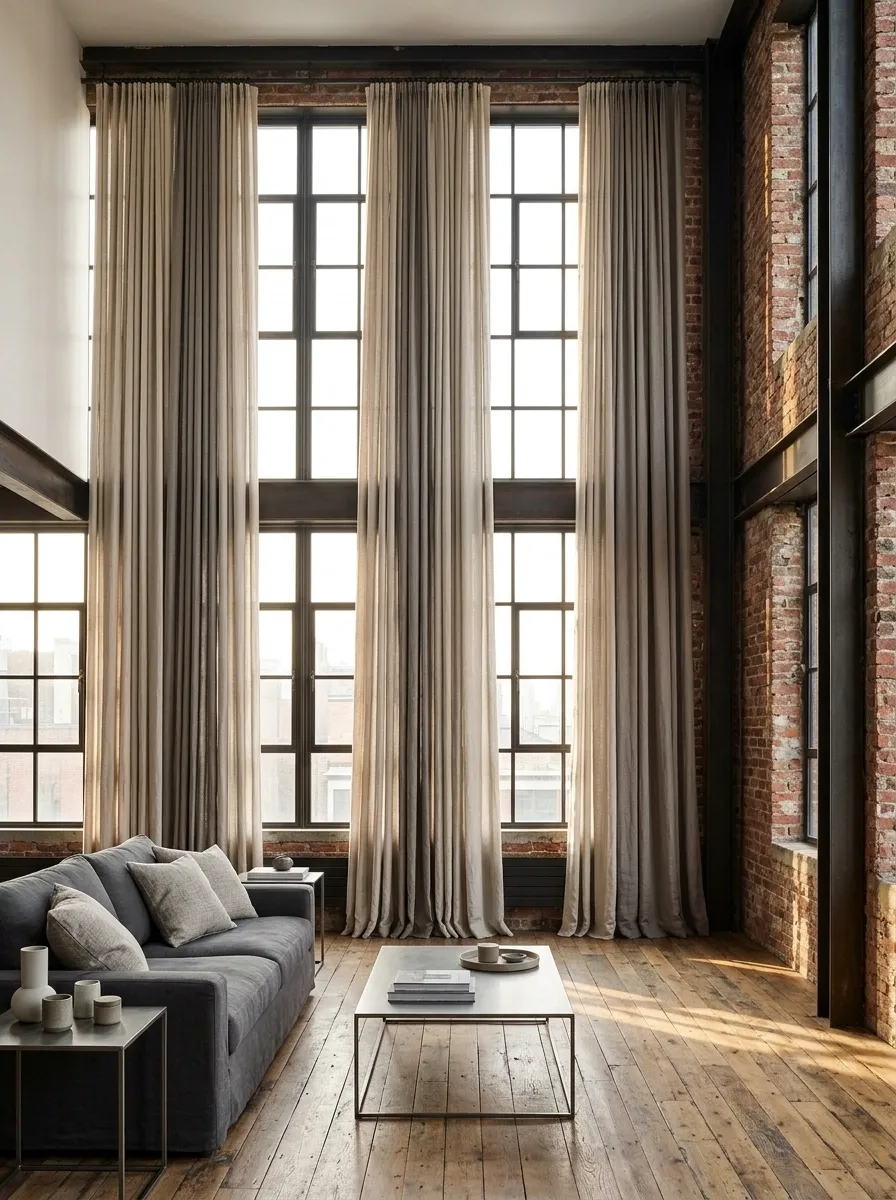
Big windows deserve curtains that didn’t come from the kids’ section.
Tall steel-framed windows give an industrial loft its character, but curtains that stop halfway down the wall can make the whole room feel oddly proportioned. Full-length drapes in warm gray, oatmeal, or charcoal soften the dark window frames while respecting the loft’s height. Exposed brick, timber floors, a generous sofa, and simple metal lighting keep the setting connected to its industrial roots.
Mount the track high enough to create one continuous vertical line, and choose fabric with sufficient weight to hang cleanly. Very narrow panels can look underwhelming beside oversized glazing, while excessively bulky ones may hide the window’s architectural grid. The aim is to soften the industrial edges, not smother the best feature of the room under a textile avalanche.
TALL WINDOW, FULL-LENGTH TREATMENT
Respect the height. Soften the steel.
Track placement
Plan for a tall, continuous drop that relates to the window height.
Panel fullness
Allow enough fabric to create folds without overwhelming the glazing.
Measure the floor-to-track distance and the stack-back space before ordering. Tall windows make proportion mistakes much harder to ignore.
Remote Roller Shades for Clerestory and Skylight Windows
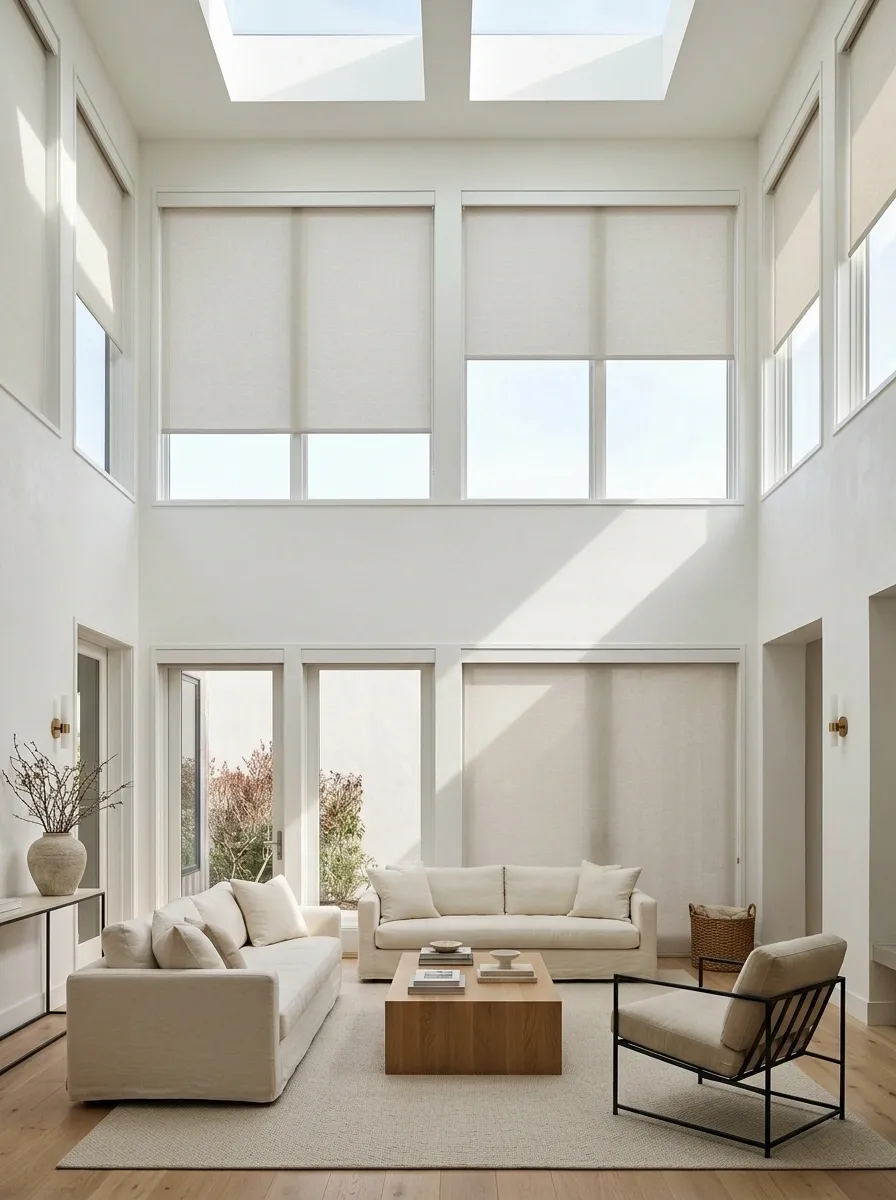
For windows that are useful, gorgeous, and wildly inconvenient to reach.
High clerestory windows and skylights bring daylight into architectural spaces where ordinary curtains would be impractical. Discreet motorized shades offer a way to manage direct light without adding long fabric panels or requiring a ladder every time the sun shifts. Pale walls, timber furniture, and uncluttered surfaces keep the room’s architecture visible, while the shades blend into the glazing when not in use.
The installation needs more planning than a standard roller blind. Skylight orientation, mounting surfaces, shade compatibility, power access, and control options all affect the result. Some windows need specialized products rather than ordinary shades adapted on site. Decide how the covering will be operated and serviced before finalizing the design. A remote control is useful; a shade that nobody can repair without dismantling half the ceiling is less charming.
HIGH-LEVEL GLASS, PLANNED PROPERLY
Control access matters as much as coverage.
glazing
Choose a shade designed for the actual window angle and mounting surface.
Remote control
Plan how the covering will be operated, powered, and serviced.
Before approving the installation
Confirm window orientation, product compatibility, control access, power requirements, and a safe maintenance method. Skylights can need specialized hardware and installation.
Black-and-White Check Curtains in a Modern Farmhouse Dining Area
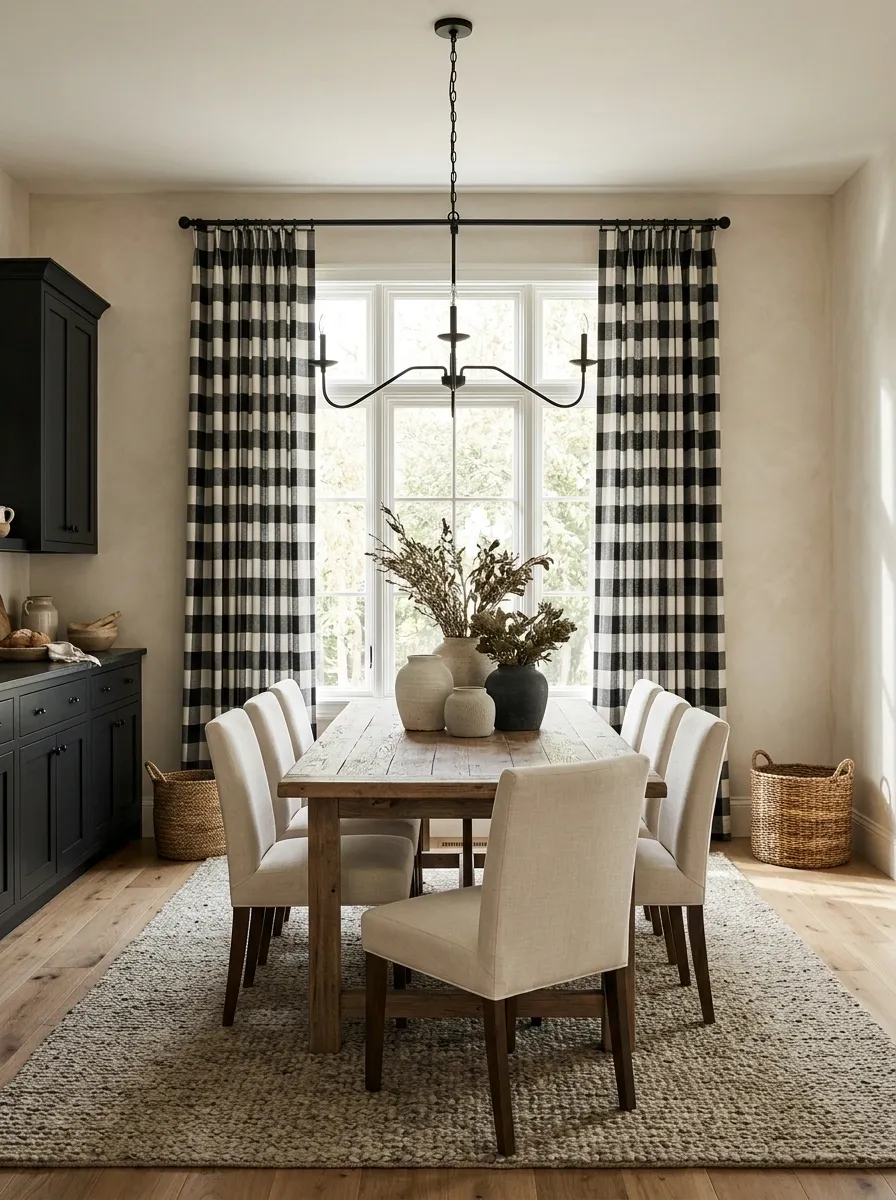
A graphic pattern with enough personality to carry the room.
Black-and-white check curtains bring an unfussy farmhouse feel to a dining area. Pair them with a natural wood table, painted cabinetry, simple upholstered chairs, and warm neutral walls. A few restrained black details elsewhere in the room tie the window treatment to the furniture without making every object match like an aggressively coordinated school uniform.
The check size affects the overall look. Larger squares feel bolder and more graphic, while smaller checks lean traditional. Keep the neighboring textiles simple and avoid adding several other high-contrast patterns. The curtains should be a clear feature rather than one more contestant in the room’s visual talent show. Washable fabric is a sensible choice around dining spaces, where spills don’t usually announce themselves politely.
PICK YOUR CHECK SCALE
Same colors, very different energy.
Large check
Stronger graphic impact and a bolder window statement.
Small check
A finer, more traditional pattern with less visual weight.
Keep the balance: Repeat black in one or two small details, then leave the table, walls, and upholstery relatively calm. The checks already have the speaking role.
Pattern-on-Pattern Curtains in a Colorful Maximalist Living Room
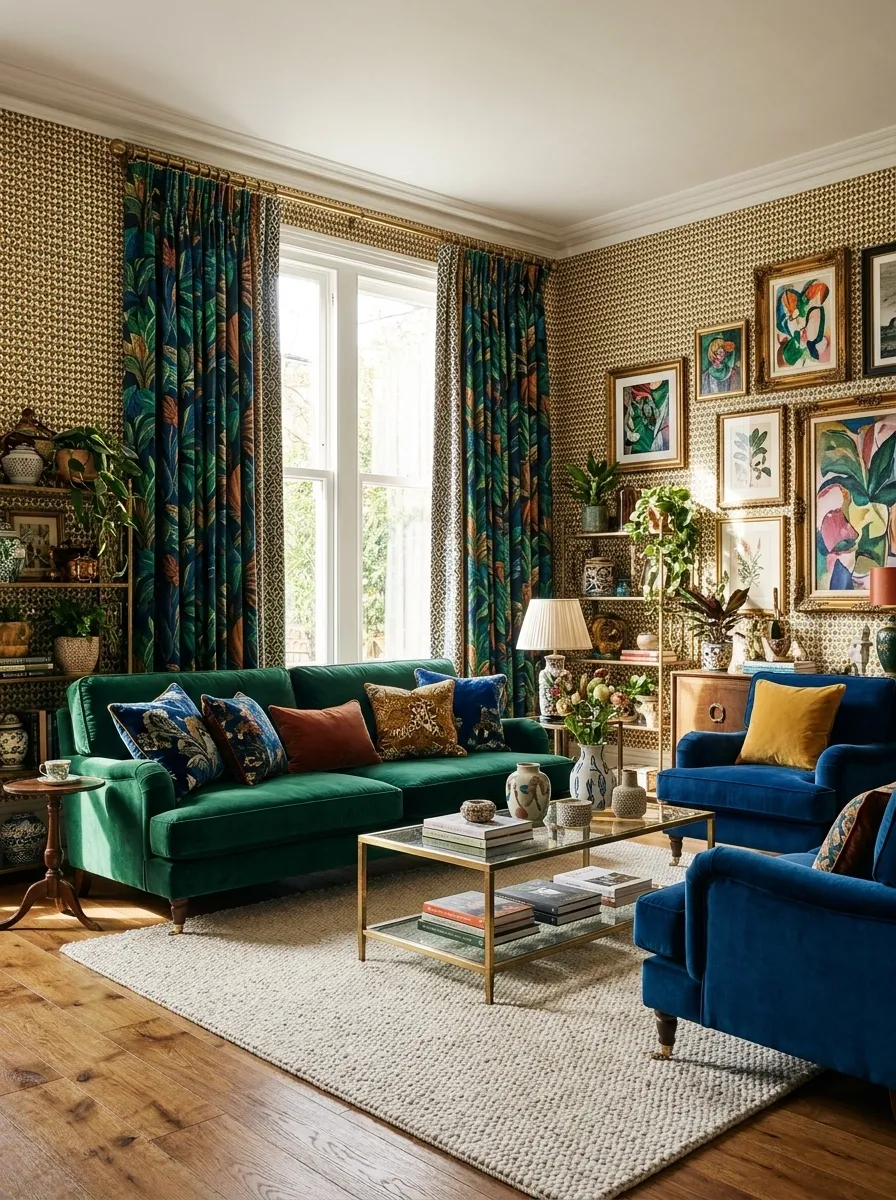
More pattern, less accidental chaos.
A maximalist living room can combine patterned curtains, expressive wallpaper, colorful upholstery, and layered artwork without looking like a clearance aisle exploded. The secret is a shared color story. Choose curtains with a strong dominant motif, then use wallpaper with a different pattern scale and repeat a handful of colors across cushions, art, or furniture. The room can be richly layered without giving every surface equal visual volume.
Keep one area relatively quiet so the patterns have somewhere to rest. A plain sofa or a solid-colored rug can provide that pause, even in a room that loves color. The objective isn’t to make everything match; it’s to make the differences look intentional. Maximalism has no problem with excess. Randomness is the actual villain.
THE MAXIMALIST BALANCE
Layer the patterns. Keep the hierarchy.
The rule worth remembering
Vary pattern scale, repeat selected colors, and let one or two surfaces stay quieter. The room can be maximalist without every curtain, cushion, wall, and rug demanding a microphone.
A Scalloped Fabric Valance Above a Vintage Kitchen Banquette
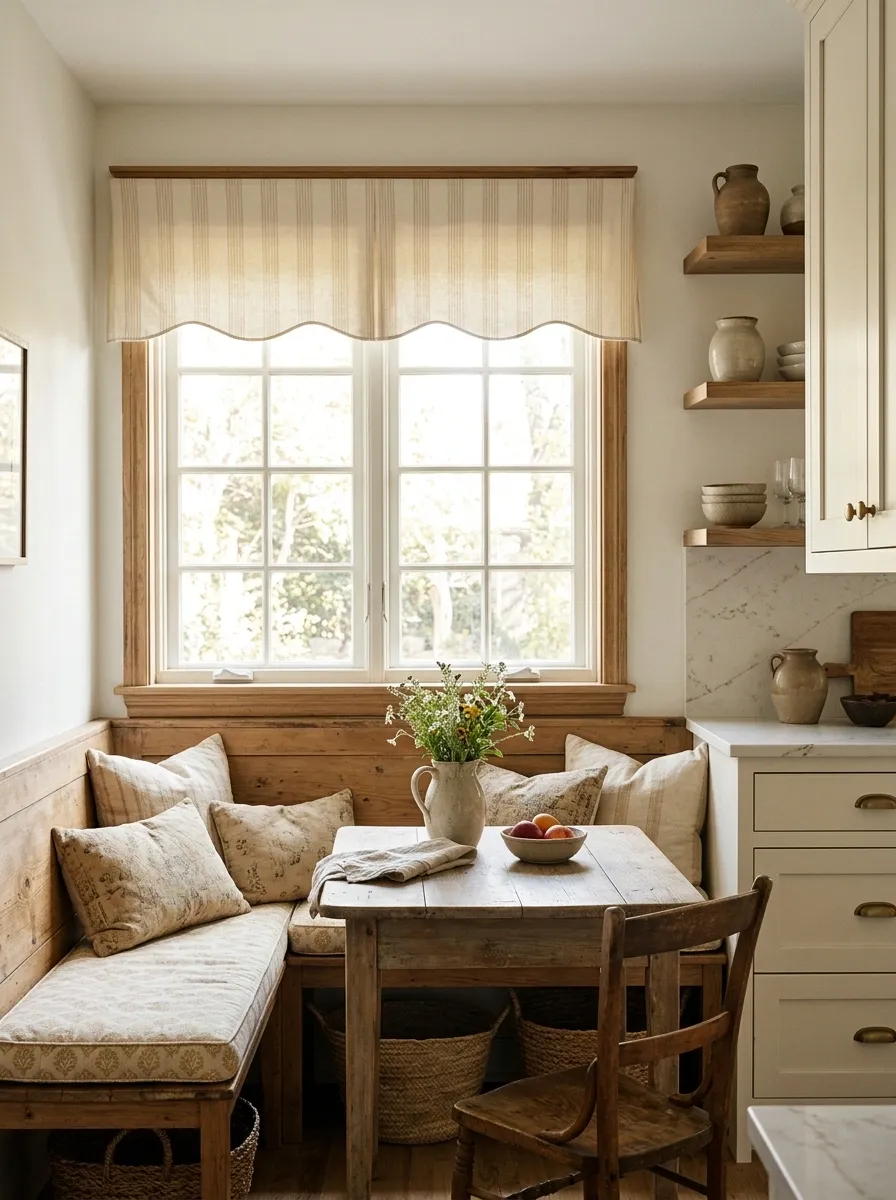
A little curve, a little nostalgia, absolutely no need for a full curtain circus.
A scalloped valance adds a playful finishing line to a kitchen window without covering most of the glass. In a vintage-inspired breakfast nook, warm ivory fabric with a subtle stripe works beautifully above a built-in banquette, patterned seat cushions, and a compact timber table. Painted cabinetry and simple ceramic pieces keep the space charming without making it look like a museum exhibit nobody is allowed to touch.
The shape is the main attraction. A shallow scalloped edge feels neat and tailored, while deeper curves create a more decorative look. Keep the valance proportionate to the window and leave enough glass exposed for daylight. This is a short treatment, so precise placement matters. Too low, and it starts looking like the window got a tiny fabric haircut.
THE SCALLOP MAKES THE STATEMENT
Short fabric. Very deliberate shape.
Keep the proportions in check
Choose the depth of the scallops according to the window height and the amount of glass that needs to remain visible. Repeat a fabric color in the banquette cushions to connect the two areas.
A Tailored Box-Pleated Pelmet With Full Curtains in a Parisian Sitting Room
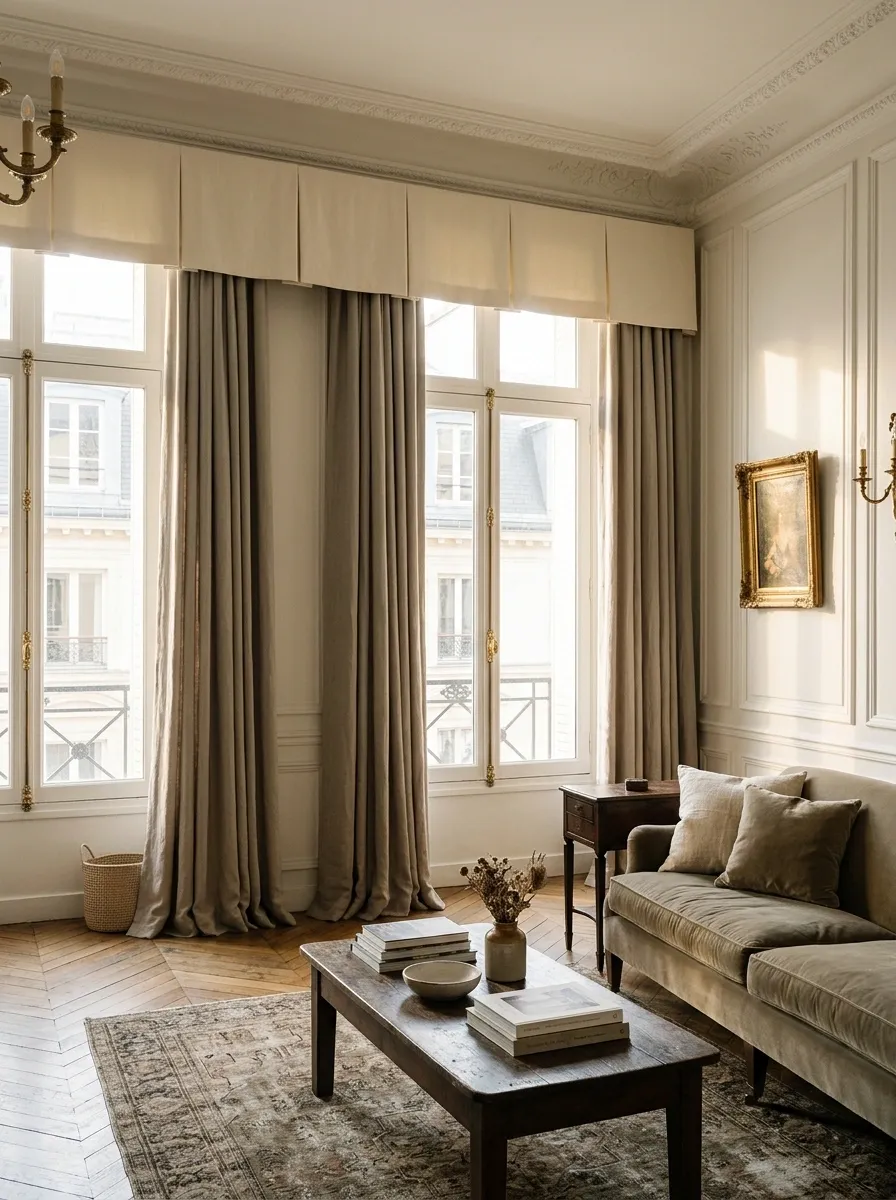
Formal, polished, and very aware of its own good taste.
A structured box-pleated pelmet creates a crisp architectural frame above full-length curtains. In a Parisian-inspired sitting room, warm ivory or muted taupe fabric can sit beneath elegant wall mouldings, with the curtains falling in generous folds beside tall windows. A classic sofa, antique-style timber furniture, and a restrained palette let the layered window treatment feel intentional rather than old-fashioned.
The pelmet adds a solid horizontal line while the curtains create softer vertical lines. That contrast is what makes the combination work. Keep the pelmet’s depth proportionate to the window and the room’s ceiling height, and coordinate its fabric with the curtains without requiring an exact match. This is a more formal treatment, so it benefits from a room with some architectural structure. Putting an elaborate pelmet above a tiny window with no surrounding wall detail can feel a bit like wearing a royal crown to buy milk.
THE LAYERED WINDOW PROFILE
A crisp top line. A softer full-length finish.
Structured pelmet
Creates a defined upper edge and conceals the heading or hardware where designed to do so.
Full curtains
Add softness, vertical lines, and a generous fabric finish.
Confirm the combined depth of the pelmet and curtain hardware before installation. They need to clear the window trim and any handles without crowding the glass.
Light-Filtering Cellular Shades in a Plant-Filled Conservatory
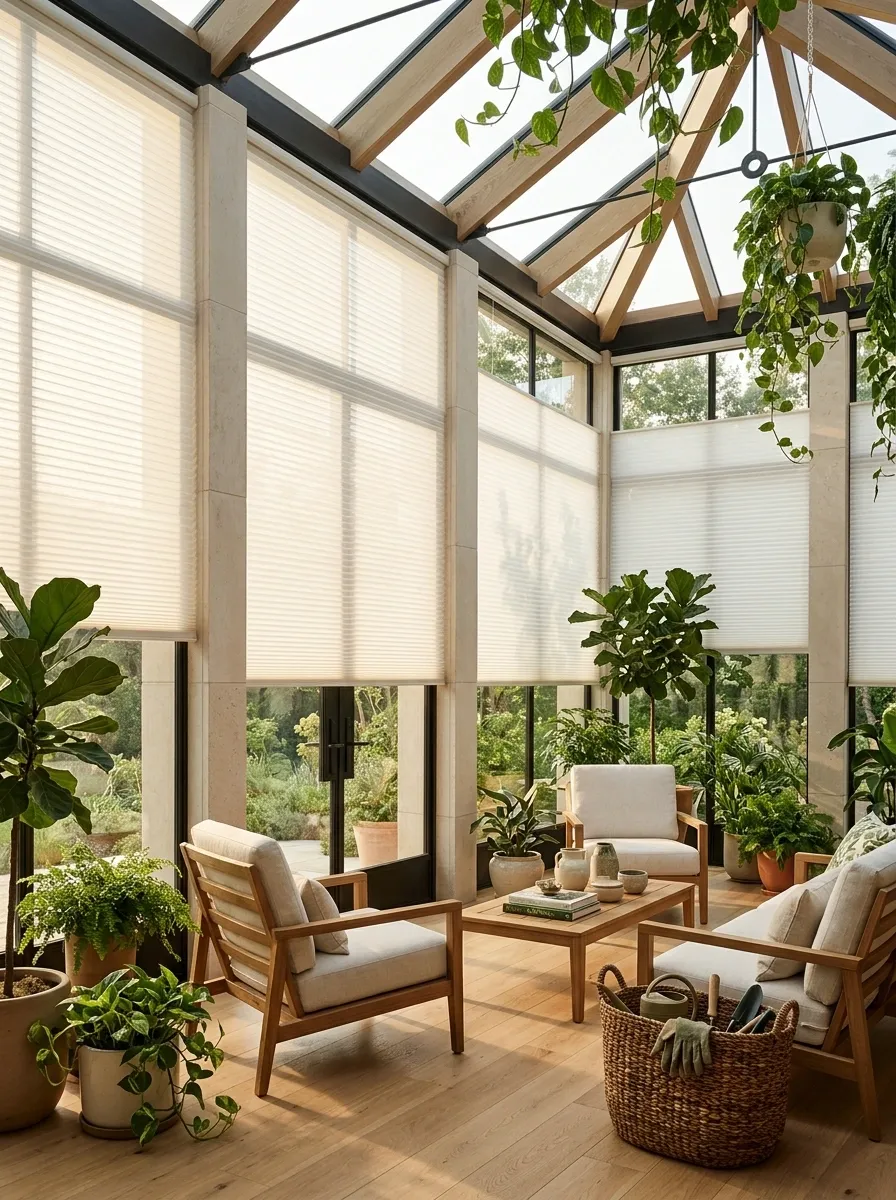
A greenhouse-inspired room without the midday sun taking over.
A conservatory can be wonderfully bright until the sunlight turns the seating area into a place nobody wants to sit. Light-filtering cellular shades provide a cleaner solution than bulky curtains across large glazed sections. Choose a quiet ivory or pale stone shade, then pair it with timber furniture, comfortable upholstery, and plants positioned according to their actual light needs. The room should still feel connected to the garden rather than closed off behind a wall of fabric.
Cellular shades come in different light-control options, and the right choice depends on the glazing’s orientation and how the room is used. Direct sunlight can be especially strong through overhead or exposed glass, so product suitability matters. Keep the seating clear of operating mechanisms and consider the access needed to maintain high windows. Plants may tolerate a little drama, but the furniture shouldn’t have to live through a daily heatwave.
PLAN THE LIGHT BEFORE THE PLANTS
Different zones have different jobs.
Glazing
Manages incoming light.
Plant zone
Matches the plants’ light needs.
Seating zone
Keeps glare and heat in check.
Choose shades suited to the window’s orientation and glazing. Check whether overhead areas need dedicated products, and leave practical access for cleaning and servicing.
Rich Walnut Venetian Blinds in a Tailored Home Library
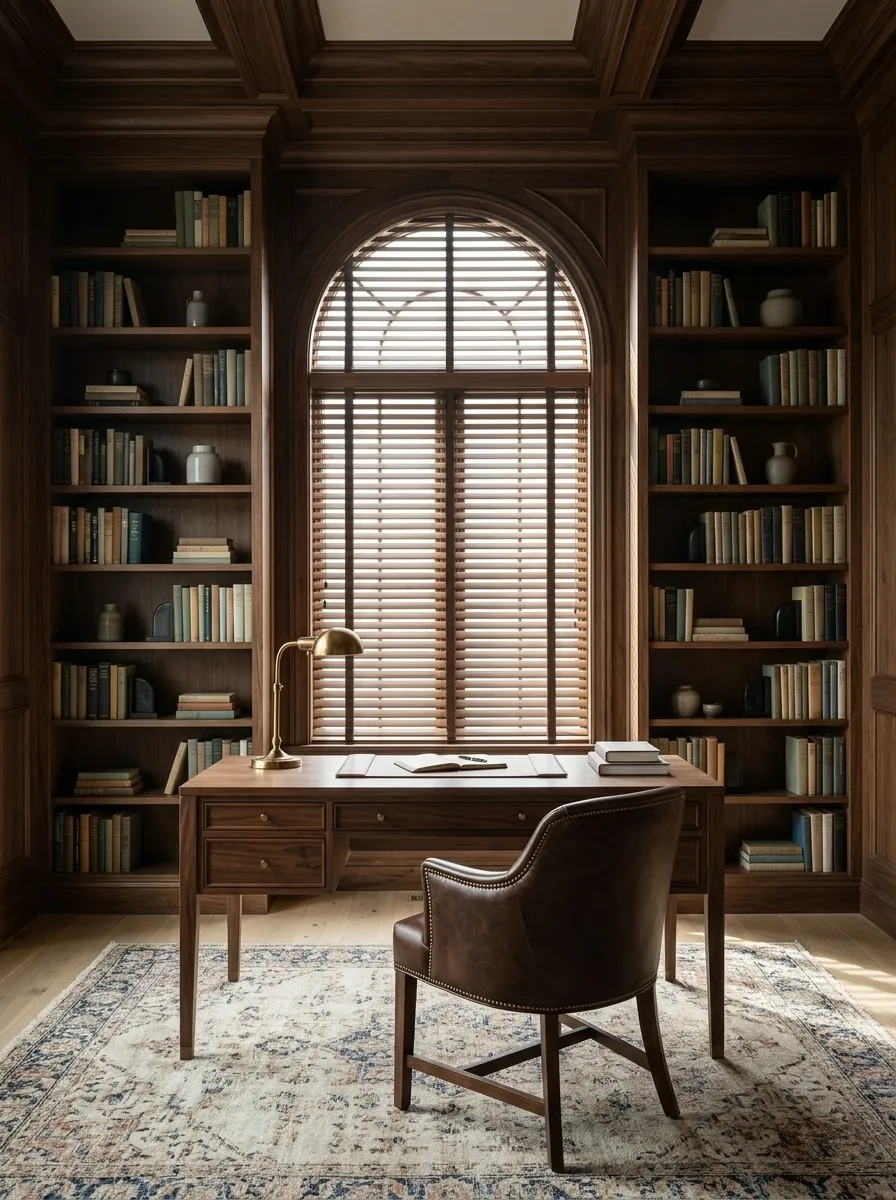
A serious window treatment for a room that takes reading seriously.
Walnut Venetian blinds give a home library or study a structured, architectural look. Their horizontal slats work naturally with built-in bookshelves, a solid desk, warm wood flooring, and a leather or textured fabric chair. Add a restrained desk lamp and a few carefully selected objects, but keep the shelving from becoming a wall of clutter. The richness comes from the combination of timber, light, and clean lines.
The angle of the slats changes how daylight enters the room and how much of the outside view remains visible. Real wood blinds can also vary in tone, so match them to the broader wood palette rather than expecting every surface to be identical. Check the blind’s weight, control design, and mounting requirements before choosing a product for a large window. A library should inspire serious thinking, not serious upper-body exercise every time the blinds need adjusting.
THE SLAT-ANGLE EFFECT
Small adjustments. Different light.
More closed
Limits direct views and changes light entry.
More open
Allows a different balance of daylight and visibility.
The wood-matching rule
Coordinate the blind with the shelves or desk, but allow natural wood variation. Confirm the mounting strength, blind weight, and operating mechanism for the window size.