
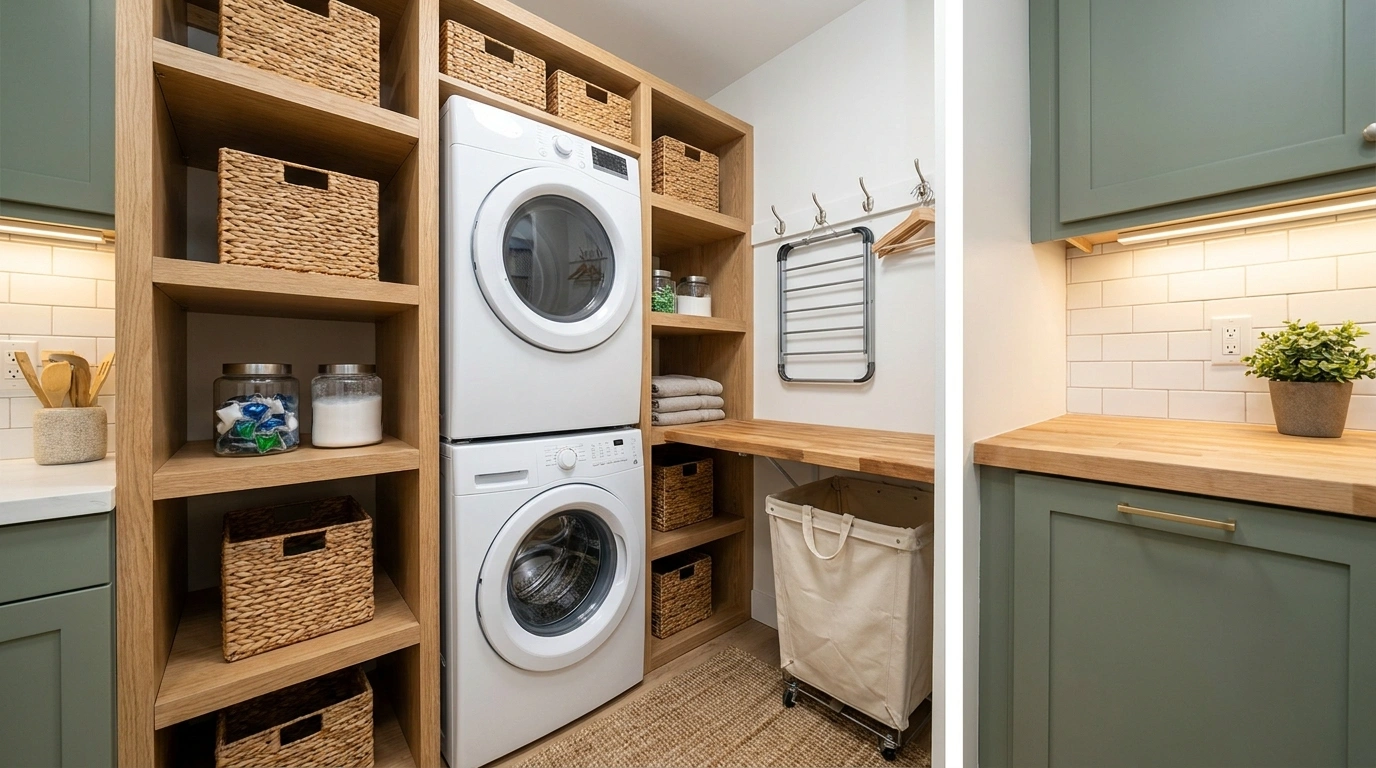
Apartment laundry rooms are often designed as if nobody will ever need to stand in them. The washer blocks the only useful corner, detergent bottles multiply across one tiny shelf, and the clean clothes somehow end up living in a basket for three business days. Meanwhile, the rest of the apartment gets the nice finishes.
That setup deserves an upgrade.
A small laundry area can look polished without taking over your budget or sacrificing the space you need to move around.
The biggest improvements usually come from getting the layout right, using vertical storage, choosing a thoughtful color palette, and giving everyday items a proper home. You don’t need a giant utility room, custom cabinetry on every wall, or seventeen matching containers to make it work.
Apartment Laundry Room Ideas
Balcony Laundry Station With Smart Drying Racks
Maximizing an open balcony for laundry duties is a brilliant move when interior square footage is at an absolute premium. By placing a compact front-loading washer right against the exterior wall, you free up interior rooms while taking full advantage of natural airflow and sunlight for drying tasks.
Installing a motorized overhead drying rack and a wall-mounted folding shelf transforms this narrow zone into a complete utility hub. The vertical arrangement keeps hanging clothes out of the main pathway, while a woven laundry hamper tucks neatly beside the appliance to handle dirty garments without visual clutter.
Weatherproofing and proper anchoring are critical when setting up a functional outdoor washing station. Ensure all electrical outlets are rated for outdoor use, and securely mount your ceiling racks into solid concrete or studs to support the weight of wet linens and heavy garments safely.
Cozy Utility Nook With Open Shelving
Transforming a transitional corner into a dedicated laundry station brings both efficiency and charm to your apartment routine. By utilizing vertical wall space above the washer, you can turn a bare nook into a hardworking storage center that keeps everyday essentials within arm’s reach. An arrangement of deep wooden shelves holds neatly folded linens, woven baskets, and textural ceramic bowls, introducing warmth and personality to the utility area. Fresh floral arrangements and framed art soften the utilitarian feel, proving that a laundry corner can be just as stylish as the rest of your living space. Keep the color palette calm and cohesive by matching your storage containers to the surrounding walls and cabinetry. Choose durable, moisture-resistant surfaces for the counter and ensure your appliances are properly leveled to maintain a quiet, seamless operation in an open-plan layout.
Stacked Washer and Dryer With Warm Oak Shelving
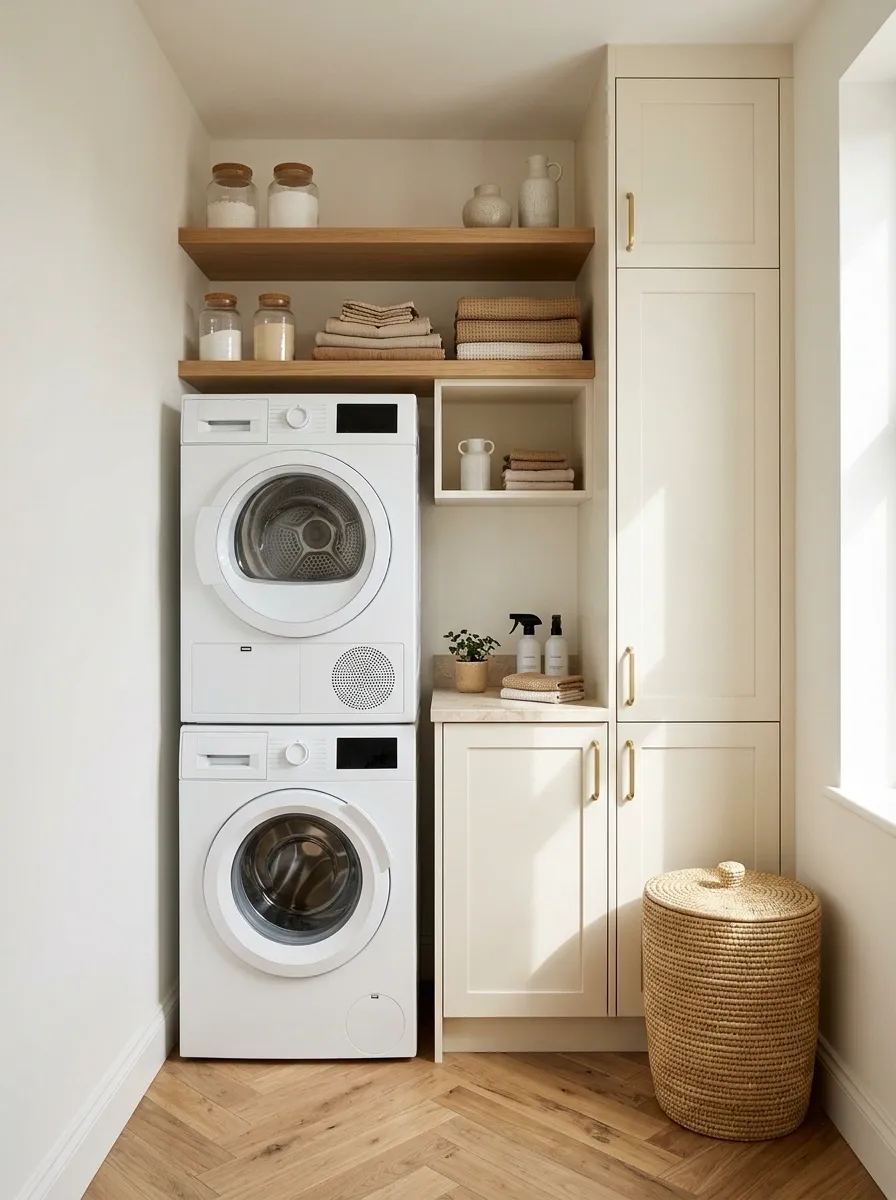
Stacked appliances are a practical solution when a laundry area has more height than floor space. Instead of spreading the machines across the room, stacking creates a compact vertical arrangement and leaves more room for a hamper, storage cabinet, or folding surface.
Warm oak shelving helps the setup feel like part of the apartment rather than a utility corner. A shelf above the machines can hold frequently used detergent and laundry supplies, while a taller cabinet beside the stack can store cleaning products and spare linens. Keep the shelf shallow enough to reach comfortably and avoid placing heavy items overhead.
Pair the oak with warm white walls, pale stone-look surfaces, and simple hardware. The wood introduces texture without making the space feel busy. A woven hamper or canvas laundry bag can add another natural material while remaining useful.
Before stacking, verify that both appliances are compatible with the arrangement and use the manufacturer’s approved stacking kit. Don’t improvise a support structure from ordinary shelving. The installation needs to be stable, correctly fitted, and accessible for maintenance.
The warm modern formula
Wallpapered Nook With Stacked Charcoal Machines
A small utility closet becomes an unexpected design statement when enveloped in bold, patterned wallpaper and sophisticated dark finishes. Stacking a sleek charcoal washer and dryer maximizes vertical height, leaving ample room beside the appliances for a fully appointed cabinetry and counter setup. The dramatic botanical wallpaper creates a striking backdrop that elevates the entire room from a purely functional space to an intentional design feature. Paired with soft neutral cabinetry and a tailored Roman shade over the window, the aesthetic balances modern convenience with timeless elegance. Before committing to a patterned wall covering in a utility zone, select washable materials that resist moisture and humidity. Ensure your stacked appliance unit is professionally secured with an approved kit, and keep maintenance access clear so your striking new laundry nook remains as practical as it is beautiful.
Side-by-Side Machines With a Continuous Folding Counter
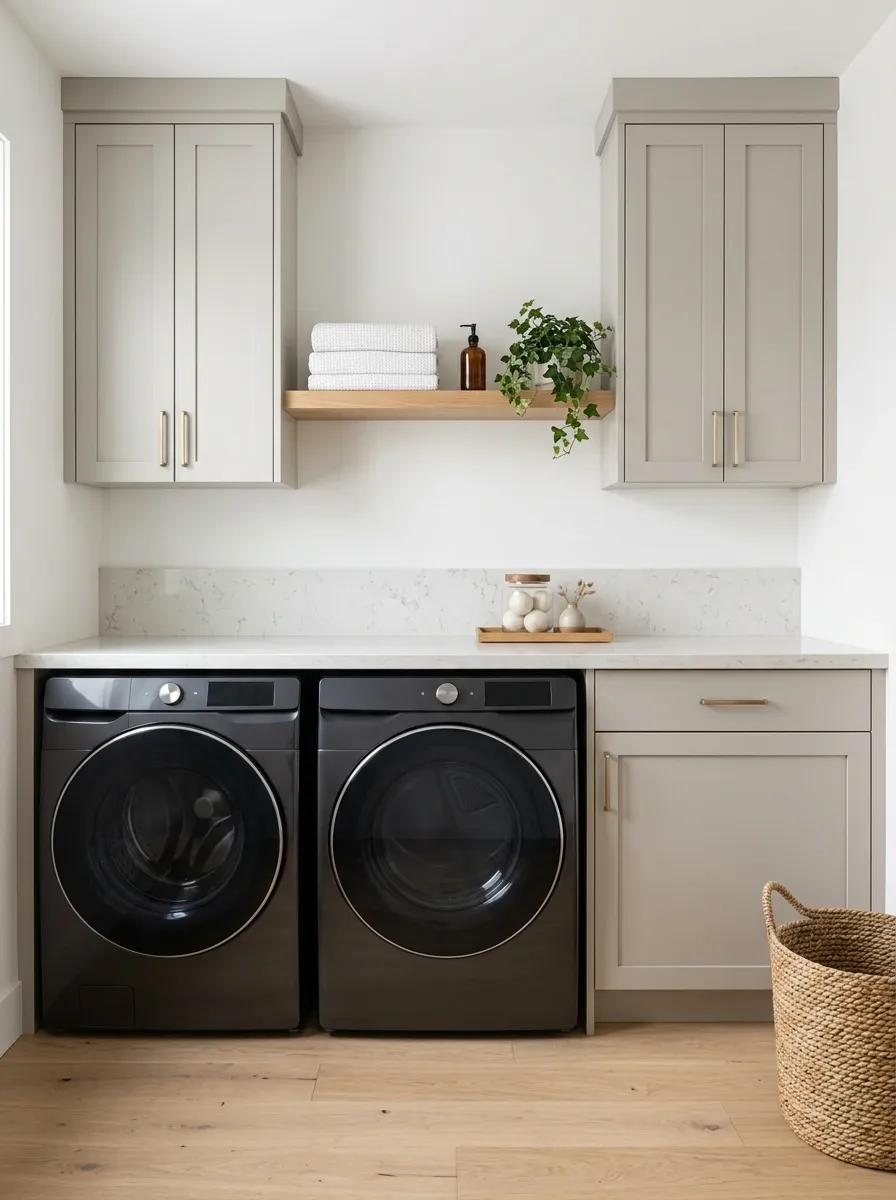
If your apartment has enough width for two machines beside each other, a continuous countertop can make the entire laundry routine easier. It creates one uninterrupted surface for sorting clothes, folding clean laundry, and setting down a basket without balancing everything on top of the appliances.
Choose a countertop that complements the rest of the room. Pale quartz-look surfaces, warm laminate, and sealed wood can all work, depending on the budget and maintenance requirements. Cabinets underneath provide concealed storage for detergent, cleaning supplies, and spare towels.
Wall-mounted cabinets or open shelves above the counter add storage without taking up floor space. Keep the most frequently used items within reach, and leave a clear section of the counter for folding. Filling the entire surface with jars and decorative objects defeats the purpose. The laundry still needs somewhere to land.
Measure the appliance heights, required clearances, and countertop support before planning the installation. The counter must be properly supported and shouldn’t interfere with appliance operation or maintenance.
The counter zone
Streamlined Closet Laundry With Smart Overhead Rails
A dedicated laundry closet that doubles as a wardrobe care station is the ultimate luxury for a compact apartment. By installing a motorized ceiling drying rack alongside a built-in ironing board and hanging rails, this narrow hallway setup handles washing, steaming, and drying all in one seamless zone. The interior design focuses on maximizing every vertical inch, featuring upper storage baskets for seasonal items and organized hanging space for freshly pressed garments. Integrated lighting strips run along the ceiling tracks, illuminating the work area and making evening laundry tasks effortless and precise. When designing a multi-functional laundry closet, ensure there is adequate ventilation to prevent moisture buildup in enclosed spaces. Choose lightweight, durable hangers and collapsible accessories to keep the narrow walkway completely unobstructed when the area is not actively in use.
Kitchen-Integrated Laundry With Matching Cabinetry
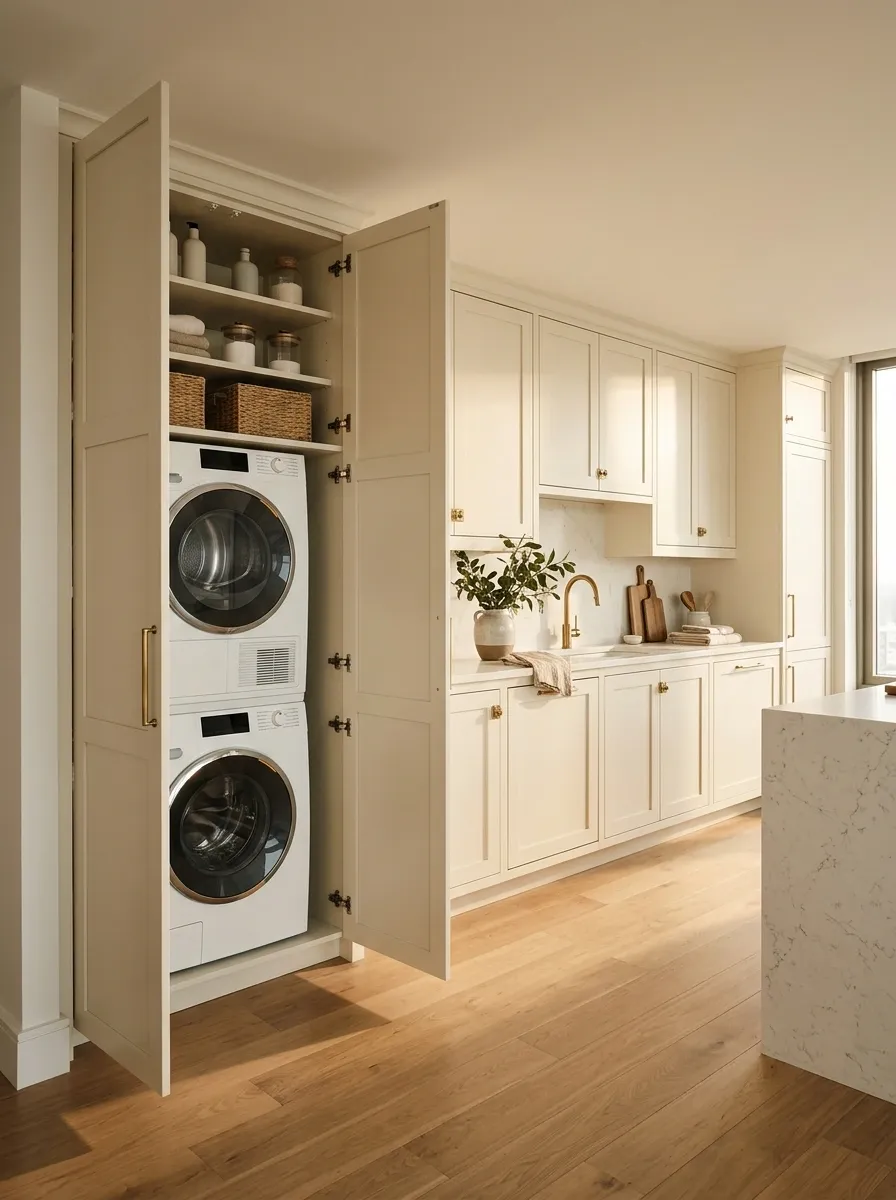
In many apartments, the kitchen is the most practical place for laundry equipment because plumbing and utility connections may already be nearby. Integrating the machines into the kitchen cabinetry can make the arrangement feel deliberate rather than like an appliance compromise.
For a streamlined appearance, match the cabinet doors around the washer and dryer to the existing kitchen fronts. A continuous countertop helps connect the laundry zone with the rest of the kitchen, while a cabinet panel or suitable door system can conceal the appliances when they’re not in use.
If the machines sit beneath a counter, plan the work zones carefully. Keep laundry products in a dedicated cabinet, away from food and cooking supplies. Avoid storing detergents beside food preparation items, and make sure the machines don’t interfere with cabinet doors, drawers, or the main cooking area.
Noise and vibration matter in an open-plan apartment. Choose appliances suited to the installation, follow the manufacturer’s leveling instructions, and make sure the floor can support the equipment. A well-designed kitchen laundry area should function smoothly without taking over the kitchen’s primary purpose.
The shared-cabinet strategy
Glass-Door Balcony Laundry Cabinetry
Enclosing an outdoor balcony laundry setup within custom cabinetry creates an exceptionally polished and organized look. Framed glass cabinet doors on the upper shelving let you display neat storage bins and decorative accessories while keeping everything protected from the elements. A soft pastel blue finish on the cabinetry ties the utility zone seamlessly to the apartment’s interior palette, making the balcony feel like a true extension of the living space. Below the integrated washing machine, a pull-out wicker basket collects everyday laundry without disrupting the clean architectural lines. When planning an exterior cabinetry installation, select weather-resistant materials and hardware that can withstand temperature shifts and humidity. Ensure the washing machine has proper drainage and ventilation clearances built into the cabinet design to guarantee safe, long-lasting performance.
Bathroom Laundry Nook With a Shared Vanity Palette
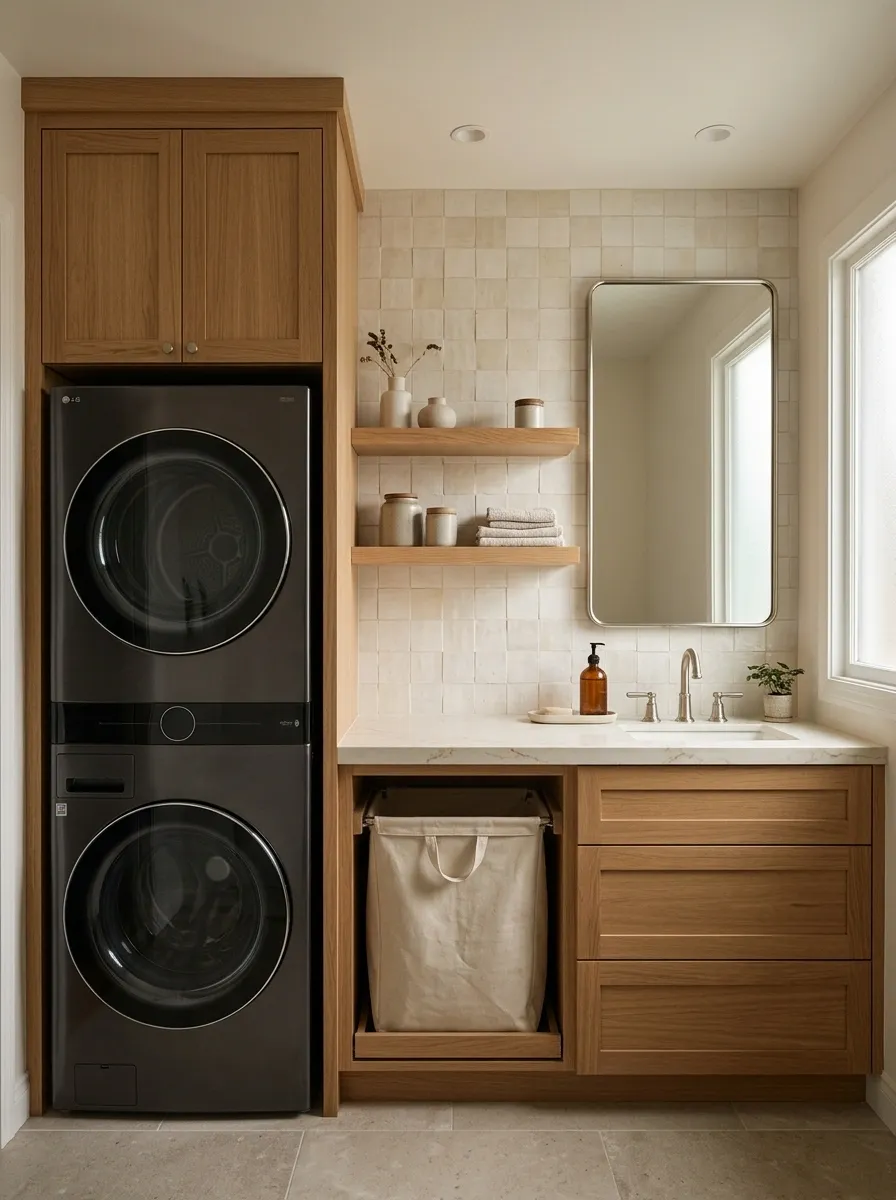
A bathroom laundry nook can work beautifully when the room already has suitable plumbing and enough space for the machines. The trick is to make the laundry equipment feel connected to the vanity and other finishes instead of treating it as a separate design problem.
Repeat the bathroom’s cabinet color, countertop material, or metal finish around the laundry area. Warm oak vanity cabinetry can carry through to a shelf above the washer, while cream tile and brushed nickel hardware create a calm, cohesive palette. If the bathroom uses darker finishes, repeat one of those tones in a cabinet or accessory rather than introducing an unrelated color.
Use closed storage for detergents and cleaning products, especially in a shared bathroom where toiletries and laundry supplies need separate homes. A pull-out hamper can reduce clutter, while a shallow shelf provides space for everyday laundry essentials.
Moisture management is essential. Confirm that the appliances are suitable for the location and that ventilation, electrical protection, and clearances meet local requirements and manufacturer instructions. Keep electrical connections away from water exposure, and don’t crowd the machines into a space that traps excess heat or humidity.
The bathroom-to-laundry palette
Sage Green Laundry Cabinetry With Natural Wood Accents
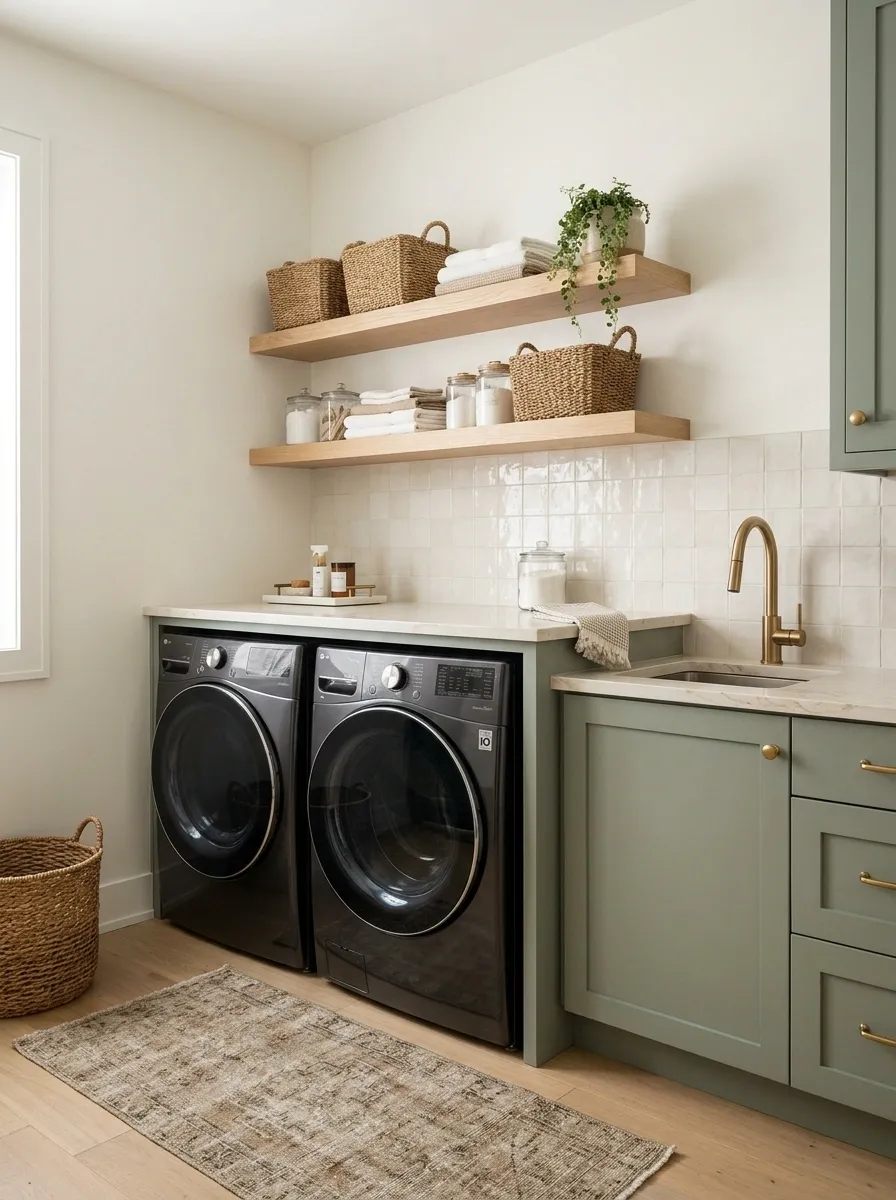
Sage green adds color without making a small laundry room feel heavy. Its muted undertones work with white appliances, pale counters, and natural wood, creating a relaxed look that feels more considered than an all-white utility space.
Use sage on the lower cabinets and keep the walls light if the room is narrow or lacks natural daylight. In a larger laundry area, the color can extend across more cabinetry. Natural oak shelves or a wooden countertop add warmth, while simple nickel or muted brass hardware completes the palette without turning the room into a showroom of competing finishes.
A backsplash in warm white or pale beige keeps the green cabinetry as the main feature. Choose baskets and containers in a small range of natural tones to add texture without visual clutter. The point is to create a room that feels calm, not to stage a botanical garden around the detergent.
For a rental, removable wallpaper or approved temporary accessories can introduce a similar color story without permanent cabinet changes. Always check product compatibility and the lease before making alterations.
The sage-green palette
Moody Charcoal Laundry Room With Warm Task Lighting
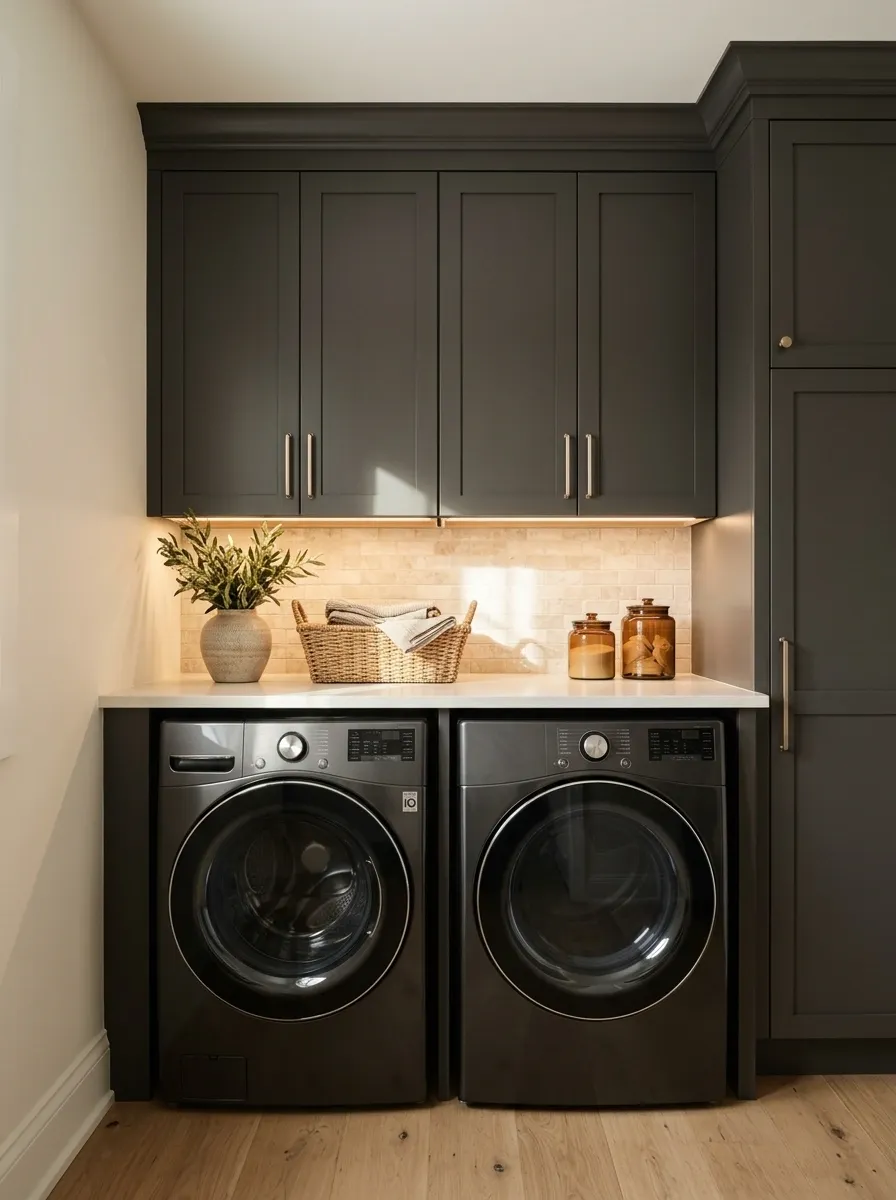
Charcoal cabinetry can give a compact laundry room a tailored, modern appearance. Rather than making every surface dark, balance the cabinets with lighter walls, a pale countertop, and warm task lighting that makes the working areas easy to use.
Choose a charcoal with warm undertones if the apartment already has wood flooring or beige finishes. Matte cabinet fronts look understated, while simple black or brushed metal hardware maintains the clean lines. A pale backsplash can reflect light and keep the room from feeling closed in.
Lighting deserves attention in a dark laundry room. Add suitable task lighting beneath cabinets or above the folding counter, using fixtures approved for the location. Make sure the room remains bright enough to sort clothes, check stains, and read product labels. Dramatic shadows look good in photographs, but they’re not especially helpful when you’re trying to identify a navy sock in a black load.
Keep the countertop relatively clear and use closed storage for supplies. The contrast between dark cabinets and a light work surface creates enough visual interest without needing decorative signs or extra accessories.
The dark-to-light balance
Vintage Floral Laundry Nook With Classic White Appliances
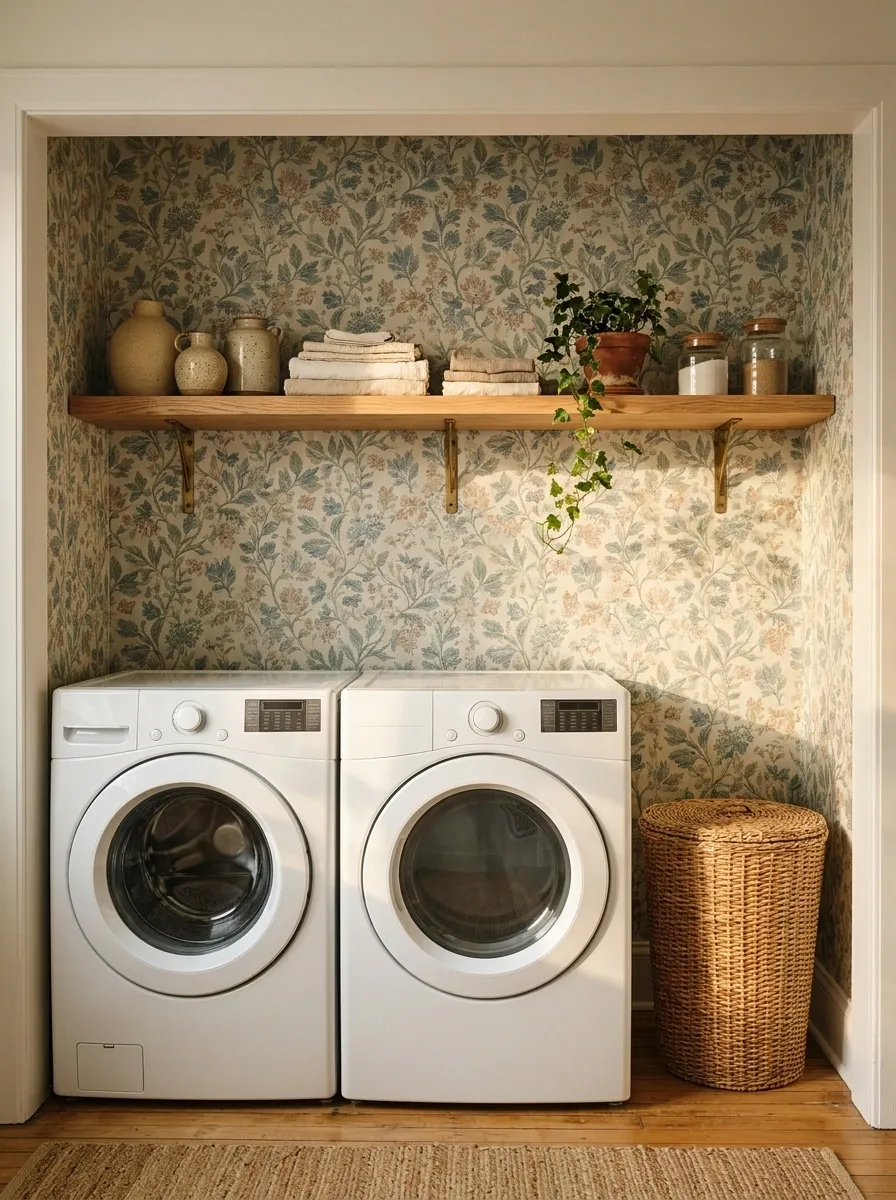
A vintage floral pattern can give a small laundry nook personality without requiring elaborate cabinetry. The easiest approach is to use wallpaper or a patterned backsplash on one feature wall, then keep the machines and surrounding surfaces simple.
Look for floral prints with a restrained palette of muted green, faded blue, dusty rose, or warm cream. Smaller patterns tend to work better in narrow spaces because they add detail without overwhelming the room. Classic white appliances provide a clean visual break and let the pattern take center stage.
Pair the print with a simple wooden shelf, a woven hamper, and understated hardware. If the floral pattern already contains several colors, choose accessories that repeat one or two of them rather than adding a completely new palette. The room should feel collected, not as if every item came from a different decorating decade.
For a rental, removable wallpaper may provide a temporary option, but check the surface requirements and test the adhesive before committing to a full wall. Keep the pattern away from areas where it could interfere with appliance access or required ventilation.
The vintage pattern mix
Narrow Laundry Closet With a Slim Rolling Storage Cart
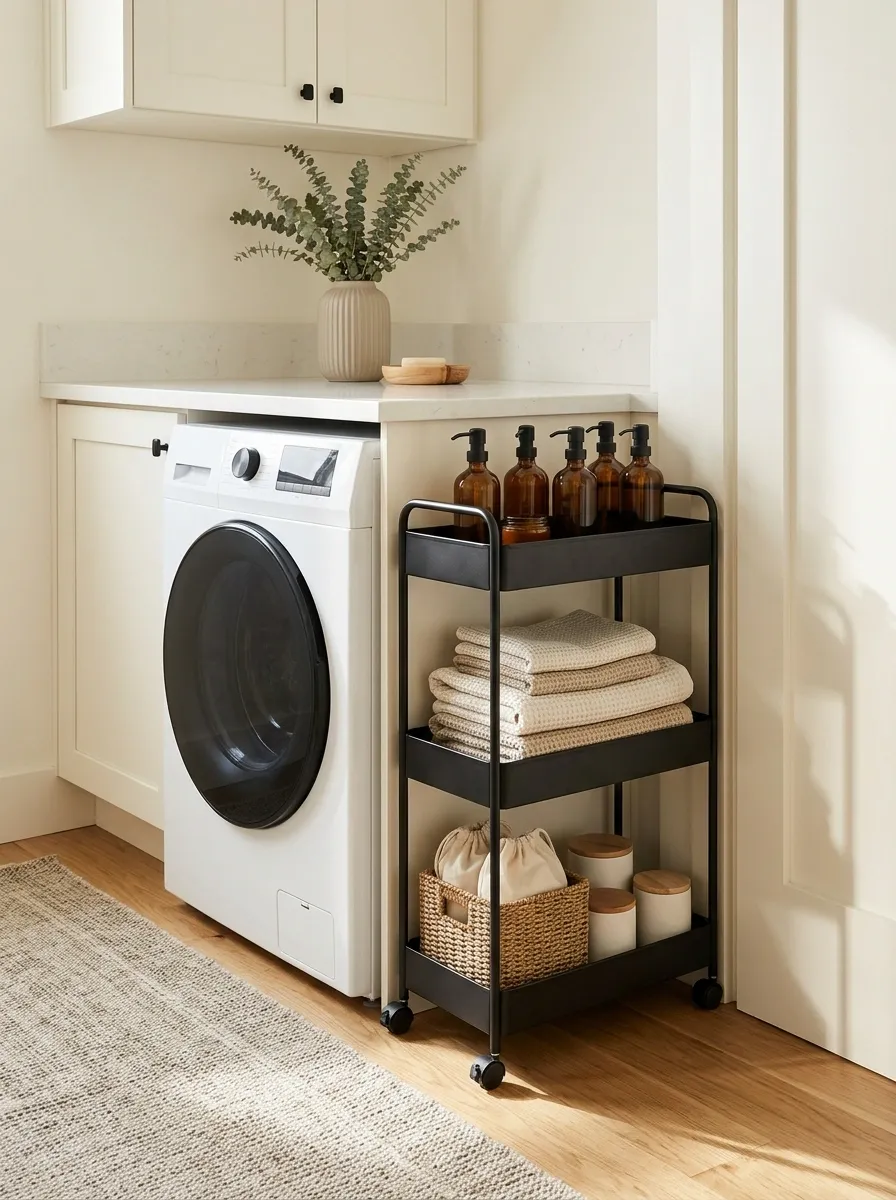
A slim rolling cart can add storage to a laundry closet without requiring a permanent cabinet installation. It is particularly useful when there is a narrow gap beside a machine and enough clearance to pull the cart out when needed.
Measure the gap carefully before buying anything. Account for hoses, appliance movement, door swings, and the cart’s handles. A cart that technically fits but gets trapped behind an open machine door is just an expensive metal rectangle.
Use the cart for lightweight, frequently used supplies. One shelf can hold detergent and stain remover, another can store dryer accessories, and a small basket can contain laundry bags or cleaning cloths. Choose a stable design with wheels that lock when the cart is in place.
Keep the cart out of the main walkway and avoid overloading it with heavy bottles. If the gap is extremely narrow, a wall-mounted shelf or pull-out cabinet may be more useful than a freestanding cart. The best storage solution is the one you can reach without rearranging the entire laundry room.
The narrow-gap storage plan
Laundry Room With a Ceiling-Mounted Drying Rail
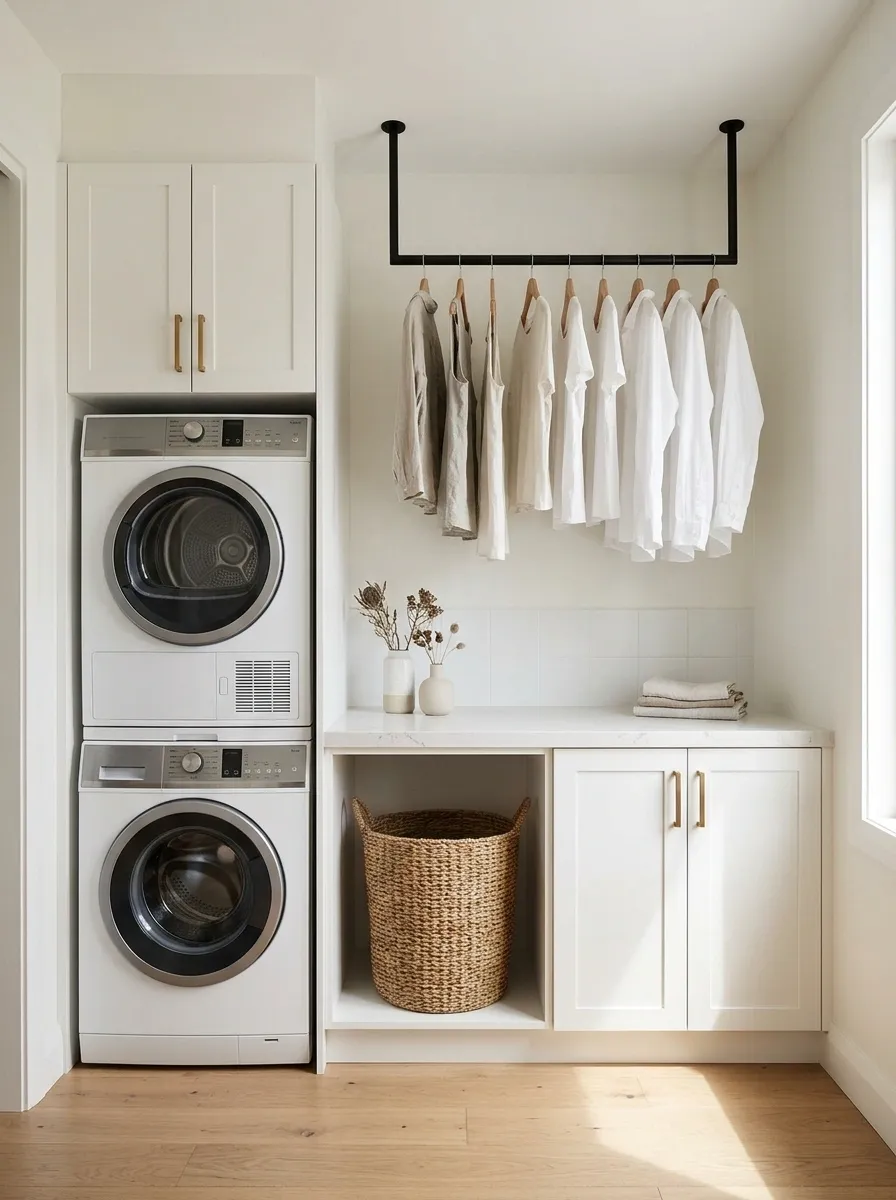
A ceiling-mounted drying rail makes use of space that often goes completely unused. It’s especially helpful in apartments where a freestanding drying rack would block the walkway or take over the only available floor area.
Install the rail where clothes can hang without interfering with doors, cabinets, or the appliances. A simple metal rail looks modern, while a wood-toned design can blend into a warmer interior. Use suitable ceiling fixings and confirm that the structure can support the intended load. A rail should never be attached casually to a weak ceiling surface.
Keep the hanging area close enough to the laundry machines to make transferring clothes easy. If the room has limited airflow, avoid packing wet garments tightly together. Leave enough space between items so they can dry properly.
For a multipurpose laundry room, choose a rail that can be raised, lowered, or folded away if the ceiling height and product design allow it. A permanent hanging rail can be useful, but only when it doesn’t interfere with daily movement.
The overhead drying zone
Fold-Down Drying Rack for a Multipurpose Laundry Nook
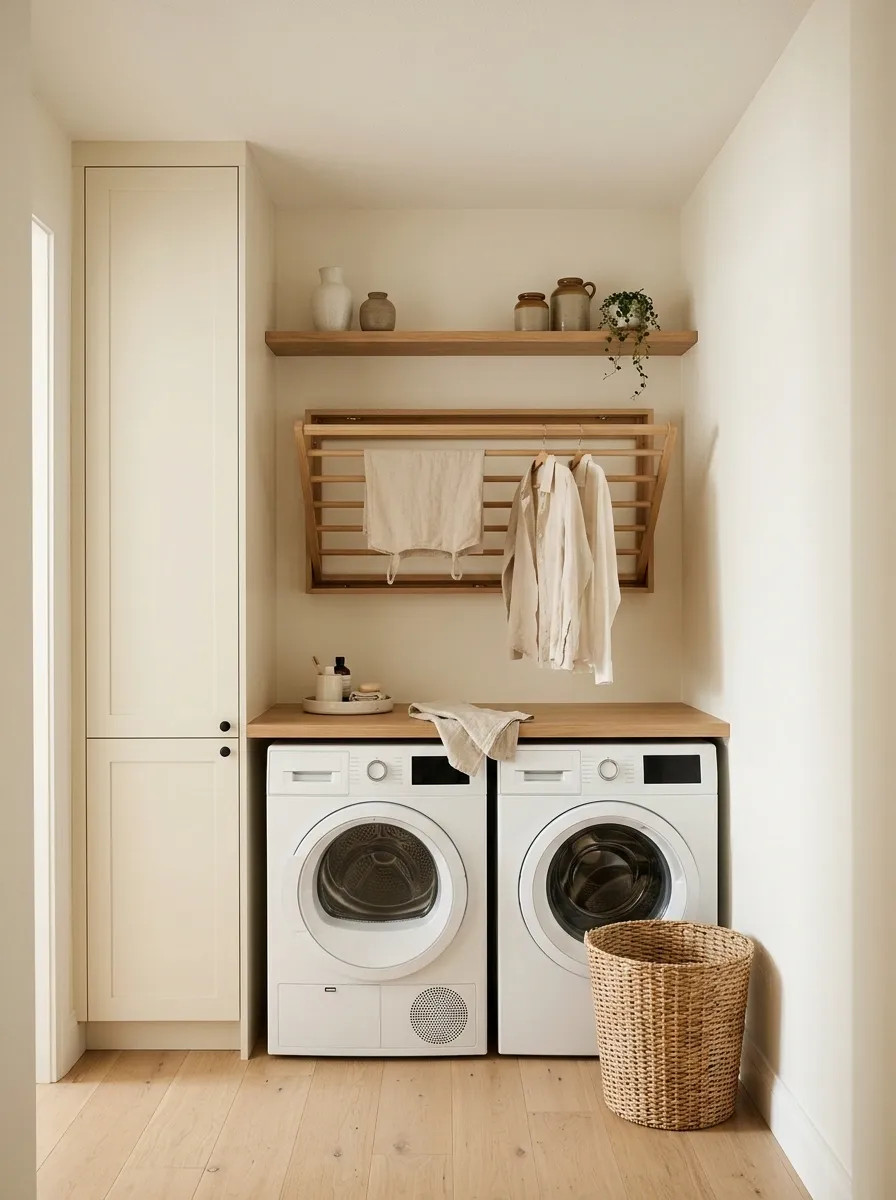
A fold-down drying rack gives you hanging space when you need it and frees the wall when you don’t. That makes it useful in small apartments where the laundry nook also functions as a hallway, storage corner, or part of a bathroom.
Choose a rack that folds close to the wall and has a suitable weight rating. Wood adds warmth to a neutral room, while a simple white or black metal rack can blend into contemporary finishes. Install it at a height that allows garments to hang freely without brushing against the machines or blocking access to nearby storage.
Position the rack where clothes can dry with enough airflow. If the room has no window, use appropriate ventilation rather than relying on a crowded drying rack to solve itself. Damp garments need room around them, and the rack should be folded away only when the clothes have been removed.
A fold-down rack is most useful when it supports a specific routine. Use it for delicate items, shirts that shouldn’t go in the dryer, or small loads that don’t justify setting up a large drying stand.
The fold-away routine
Laundry and Cleaning Closet in One Organized Wall
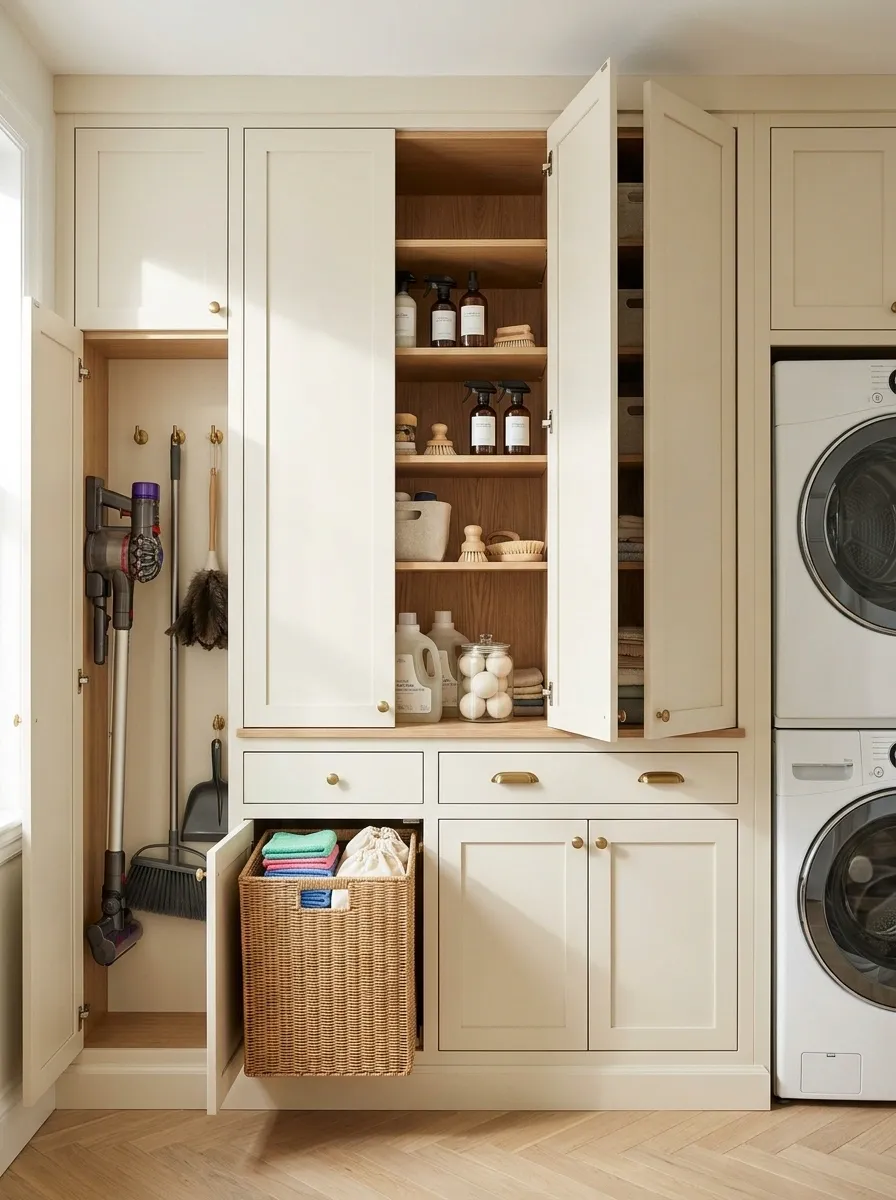
Combining laundry supplies and cleaning products in one organized wall can be efficient when an apartment has limited storage. The important part is separating the categories so the closet remains easy to use and household products stay safely stored.
Use closed cabinets for cleaning chemicals, stain removers, and products that should be kept away from children or pets. Store items in their original containers, follow label directions, and avoid placing chemicals near food, toiletries, or anything that could contaminate them. Heavy bottles belong on sturdy lower shelves rather than overhead.
Reserve one section for laundry products and another for general cleaning tools. Hooks can hold a broom or lightweight cleaning accessories, while a pull-out basket can collect microfiber cloths and laundry bags. Keep the vacuum or mop in a separate compartment if the space allows.
Don’t force every household supply into the same narrow cabinet. Measure the items you actually own and give frequently used products the easiest access. A well-organized wall should make it faster to find what you need, not turn cleaning day into an archaeological expedition.
The storage-wall categories
Deep Blue Laundry Cabinets With a Light Countertop
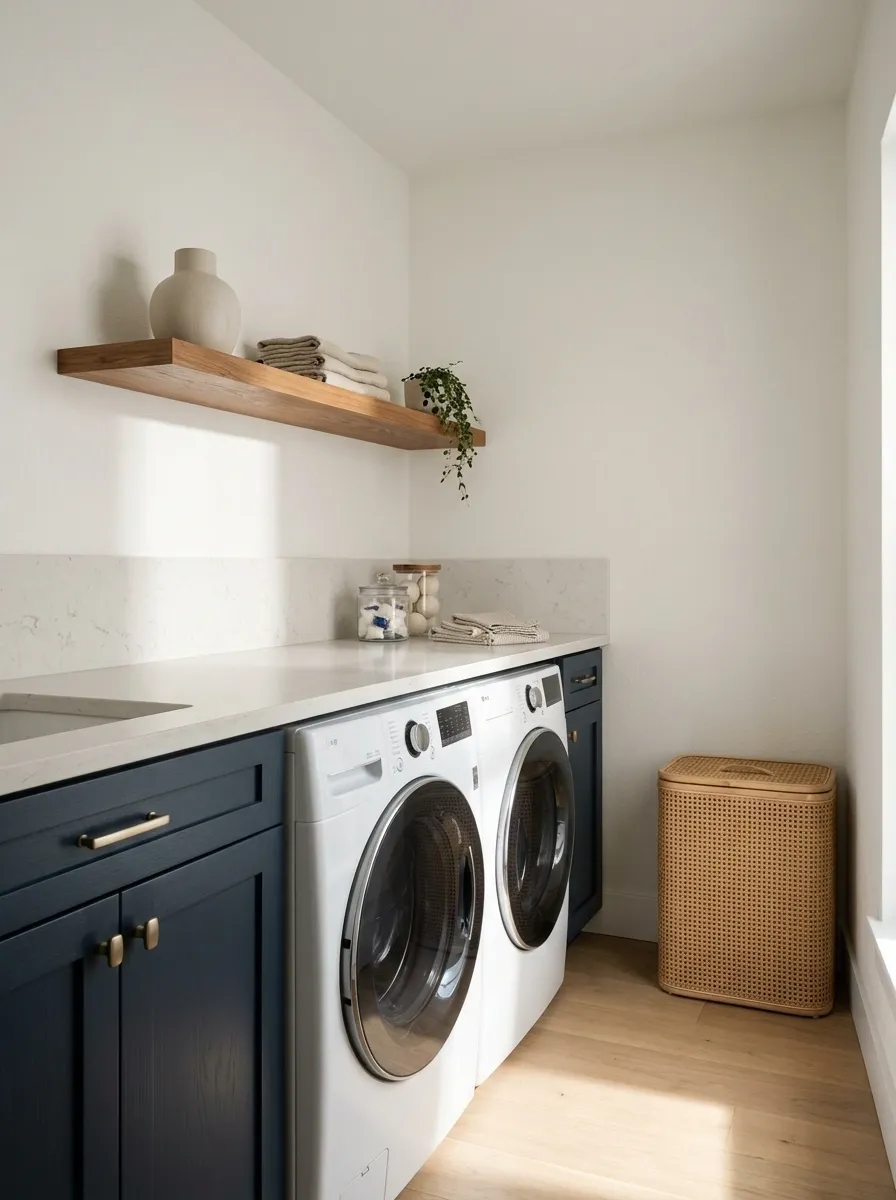
Deep blue cabinetry creates a confident focal point in an apartment laundry room. Navy and inky blue shades feel classic, while softer blue-gray tones can create a more relaxed contemporary look. A light countertop prevents the dark cabinetry from making the room feel too enclosed.
Pair blue cabinets with warm white walls, pale stone, and simple hardware. Brushed nickel creates a crisp finish, while muted brass introduces warmth. A wood shelf or woven hamper can soften the contrast without adding another dominant color.
If the room is narrow, keep the upper surfaces lighter and use deep blue on the lower cabinets. This creates visual weight near the floor without making the entire space feel dark. In a room with good lighting, blue can extend across a larger cabinet wall.
Choose a backsplash with a restrained pattern or a plain surface that lets the cabinetry lead. There’s no need for navy cabinets, a busy blue tile, dramatic wallpaper, and colorful accessories all at once. One strong design choice is usually enough.
The deep-blue palette
Warm Terracotta Laundry Nook With Cream Cabinetry
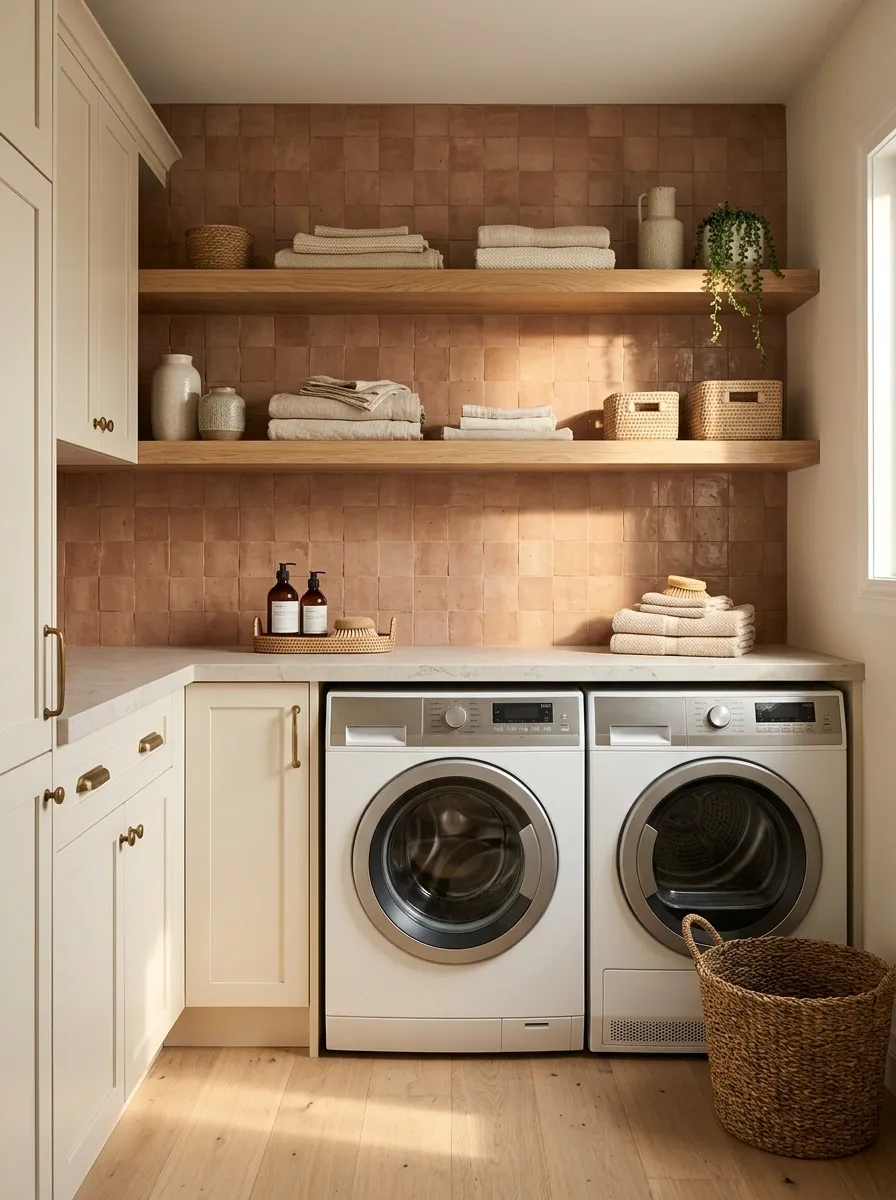
Terracotta adds warmth and personality to a laundry nook without relying on a bright, saturated color. Its earthy undertones work particularly well with cream cabinetry, natural wood, and simple white appliances.
Use terracotta on a backsplash, a painted feature wall, or a small section of cabinetry. If the laundry area is compact, keep the largest surfaces light and let the warmer color appear in a defined zone. In a larger room, deeper clay tones can create a richer look when balanced with pale countertops and adequate lighting.
Cream cabinets soften the contrast and create a more inviting appearance than stark white. Oak shelving, woven storage, and understated hardware help the palette feel connected rather than overly decorative. Keep the floor relatively simple so the room doesn’t become a collection of competing patterns.
Terracotta can shift between pinkish, orange, and brown undertones depending on the lighting. Test samples beside the cabinet finish and flooring before choosing the final shade. The right tone should work with the room’s existing materials, not fight them every afternoon when the sunlight changes.
The earthy color story
Checkerboard Floor With Simple Painted Laundry Cabinets
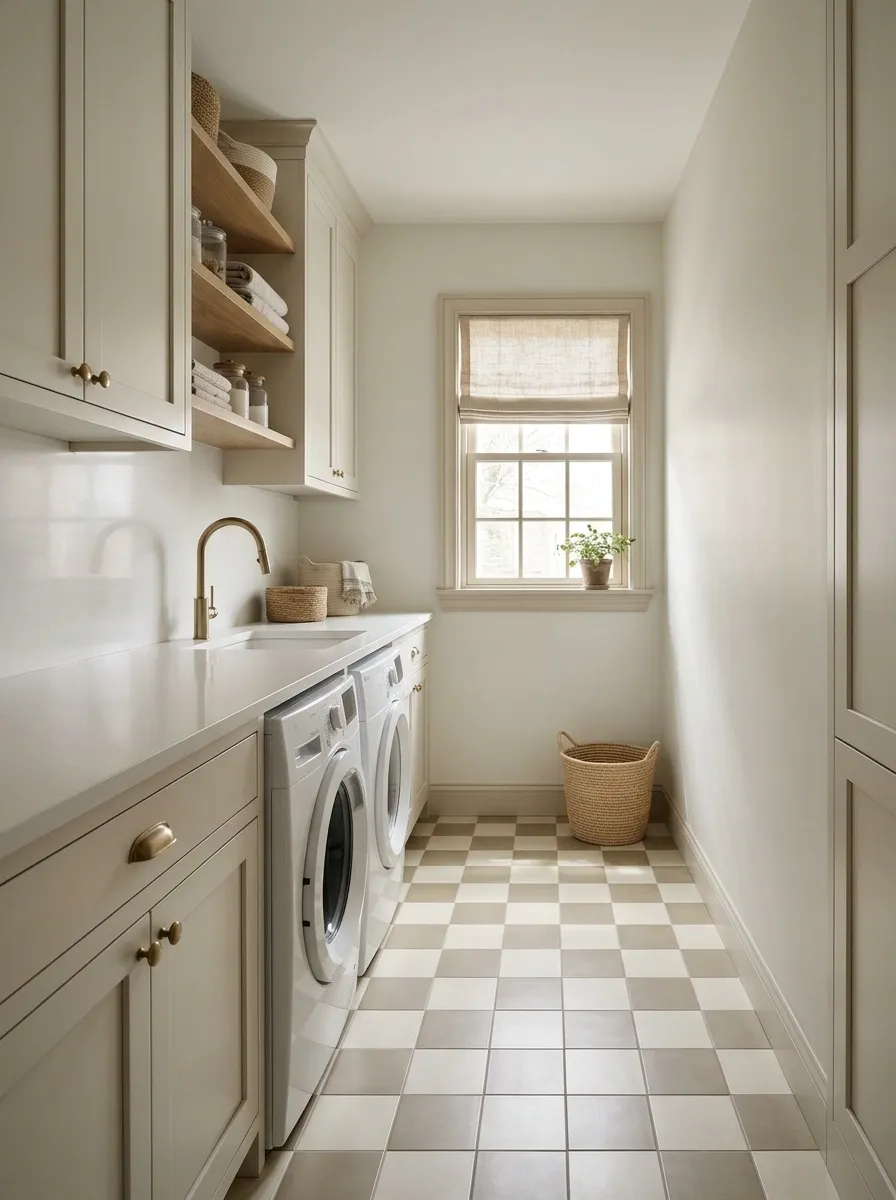
A checkerboard floor adds pattern to a laundry room without requiring decorative accessories on every shelf. Classic black and white feels graphic and timeless, while cream and muted beige create a softer version that suits warm apartment interiors.
Let the floor do most of the visual work. Pair it with simple painted cabinets, a plain countertop, and uncomplicated hardware. If the floor has a strong contrast, keep the walls and backsplash quiet. Adding several other bold patterns can make a small room feel visually crowded.
In a narrow laundry area, tile size and pattern scale matter. Smaller spaces can benefit from a modest checkerboard pattern that doesn’t overwhelm the floor, while larger tiles can create a cleaner look in a wider room. Consider the direction of the pattern and how it relates to the doorway and cabinet layout.
Choose flooring suitable for the location, with appropriate slip resistance and moisture performance. If permanent flooring changes aren’t possible, a suitable removable floor covering may offer a temporary visual update, provided it is safe for the surface and doesn’t create a trip hazard.
The checkerboard balance
Laundry Workroom With a Compact Utility Sink
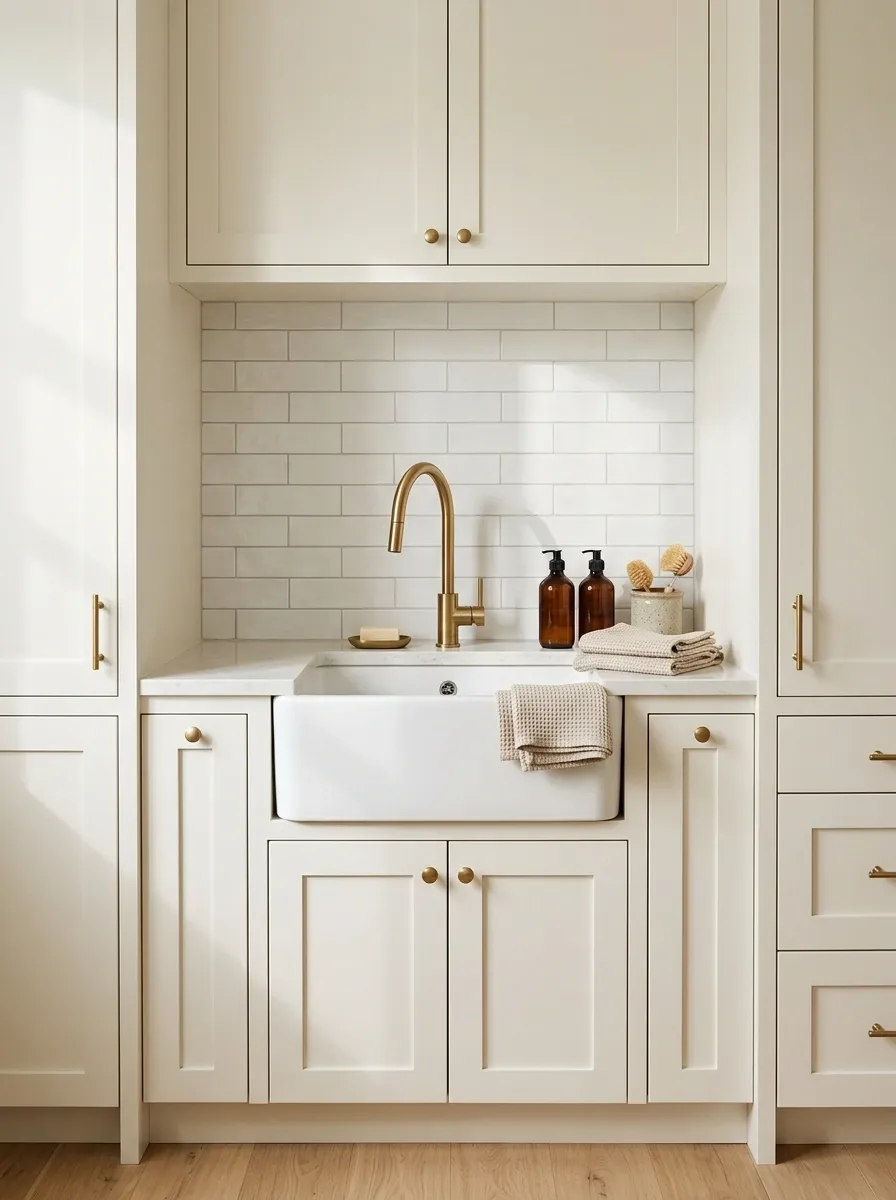
A compact utility sink can make an apartment laundry room more useful for hand-washing delicate garments, rinsing cleaning cloths, and treating stains before washing. It also creates a dedicated place for messy tasks that shouldn’t happen in the kitchen sink.
Choose a sink sized to the available counter and cabinet space. A deep basin is practical, but it needs enough clearance for comfortable use. If the room is very small, a narrow sink or a compact wall-mounted model may be more suitable than a large freestanding unit.
Keep the surrounding finishes simple and durable. A pale countertop, easy-to-clean backsplash, and closed cabinet storage create a practical work zone. Place stain-treatment products nearby in a secure, designated cabinet, and keep the countertop clear enough to handle wet garments without knocking everything onto the floor.
Before installing a sink, confirm that the plumbing can support the layout and that the installation meets applicable requirements. In a rental apartment, get permission before changing plumbing or cabinetry. A utility sink is useful, but it isn’t worth an expensive lease dispute.
The sink-side workflow
Under-Stair Laundry With Custom-Fit Storage
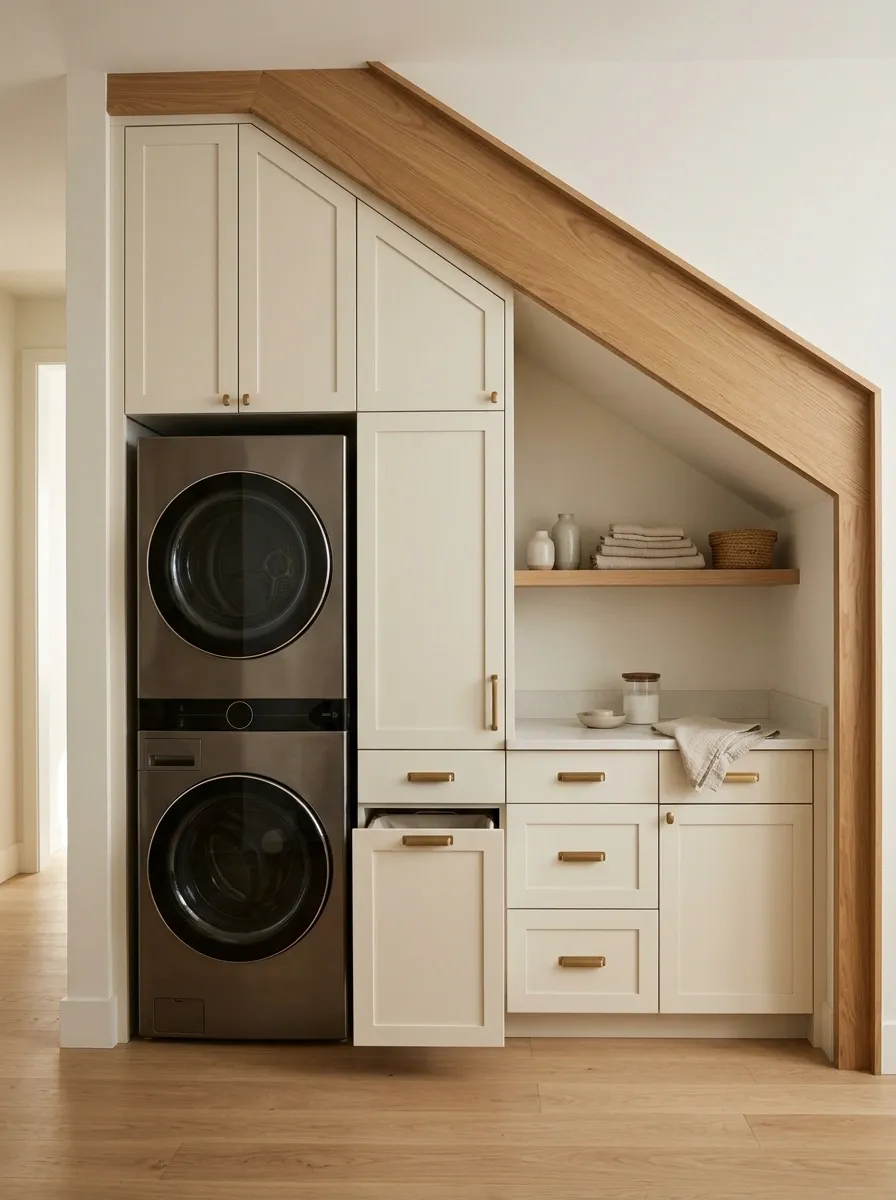
The space beneath a staircase can be useful for laundry equipment when the dimensions, access, and utility connections support the arrangement. A custom-fit layout makes use of an awkward area that might otherwise become a dumping ground for random household items.
Stacked appliances often work well beneath stairs because the vertical layout can fit into a narrower footprint. Lower sections of the slope may provide room for drawers, cleaning tools, or a pull-out hamper, while taller portions can accommodate the machines and storage cabinets.
Use cabinetry that follows the angle of the staircase rather than leaving deep, inaccessible gaps. A mix of closed storage and one practical shelf can keep the area organized. Choose finishes that relate to the surrounding hallway or living space so the laundry nook feels integrated.
Before building, measure the slope, machine dimensions, door openings, and route required to move the appliances into position. Ventilation, drainage, electrical access, and service clearances must be planned carefully. The staircase structure and headroom also need to be considered. Custom-fit storage is only useful when the equipment can be installed and maintained safely.
Make the slope work
Open-Shelf Laundry Room With Coordinated Baskets
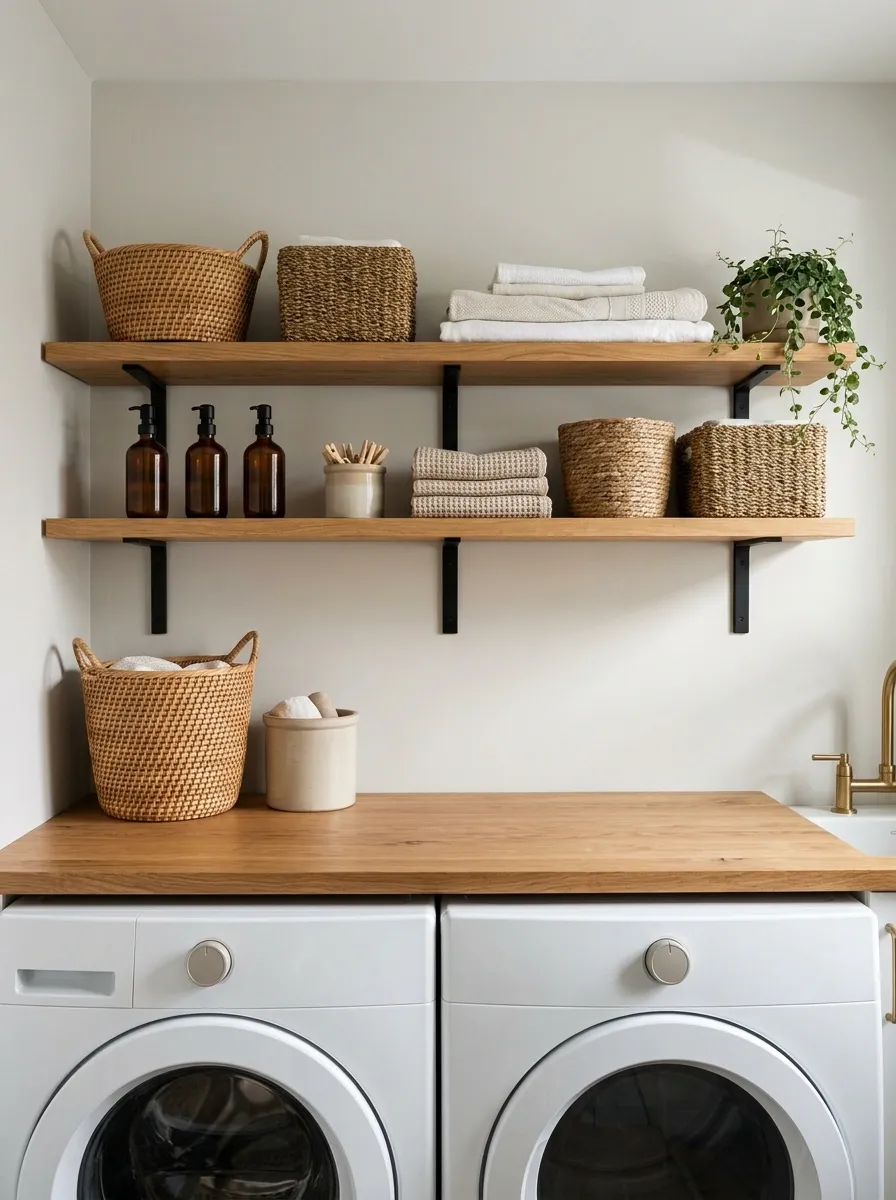
Open shelves can make a small laundry room feel less enclosed than a wall of upper cabinets. They also keep everyday supplies easy to reach, provided the items on display are organized and the shelves aren’t overloaded.
Use baskets to group products by purpose. One can hold laundry bags, another can contain dryer accessories, and a third can store spare cloths or small cleaning tools. Choose baskets in a coordinated range of colors and materials so the shelves look consistent without requiring every item to match perfectly.
Warm wood shelves soften white appliances and pale walls. Metal brackets create a more contemporary look, while concealed supports give the shelves a cleaner appearance. Make sure the shelves are properly installed and rated for the intended load, especially if you plan to store heavy bottles or bulk products.
Open storage requires regular editing. Keep frequently used items visible and move backup supplies into a cabinet or separate storage area. A shelf full of half-empty bottles, random boxes, and decorative signs is not an organizing system. It’s clutter with better lighting.
The shelf-editing method
Rental-Friendly Laundry Closet With Removable Wallpaper
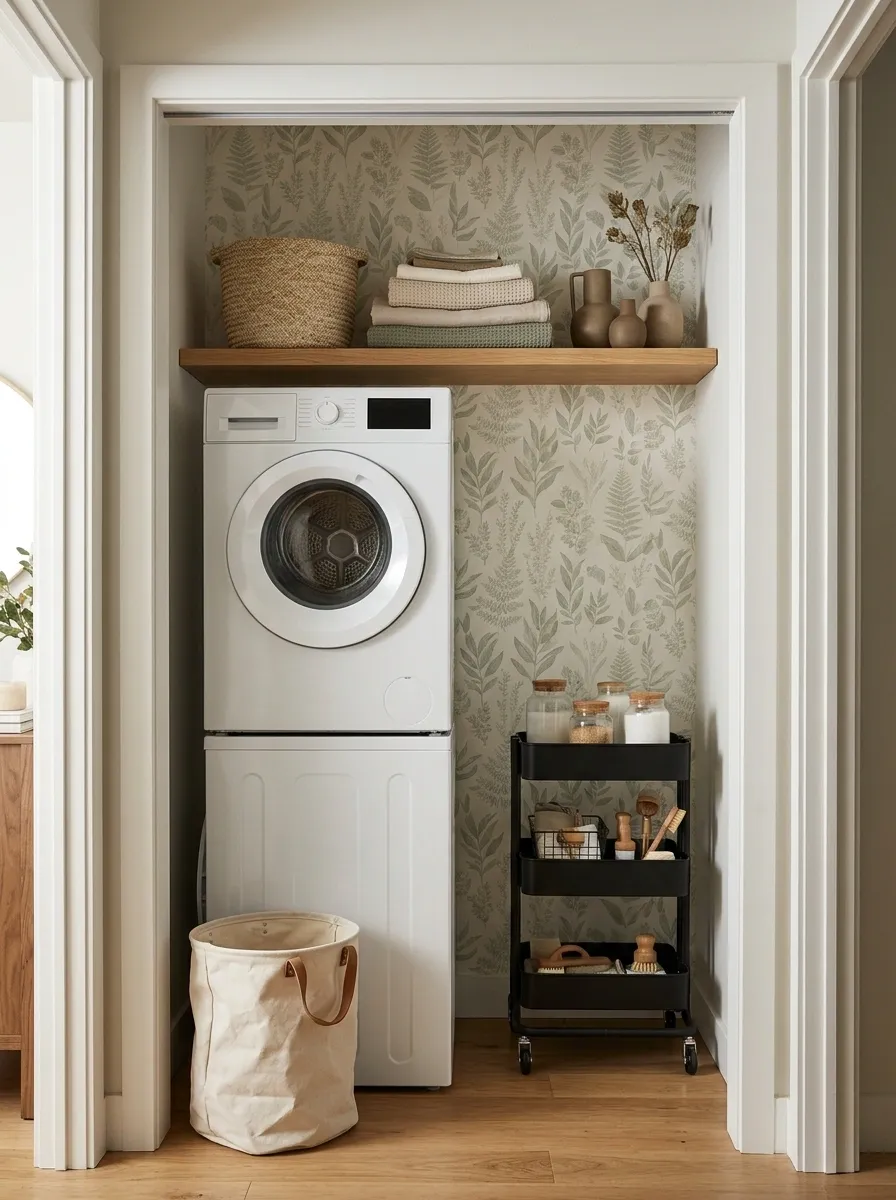
A rental laundry closet can feel personal without requiring permanent renovations. Removable wallpaper, freestanding storage, and a few carefully chosen accessories can make a plain appliance alcove look considered while keeping the changes relatively easy to reverse.
Choose a wallpaper pattern that works with the existing floor and appliances. Muted botanicals, small geometric prints, and soft stripes add interest without overwhelming a narrow closet. If the wallpaper sits behind the machines, keep the remaining surfaces simple so the pattern doesn’t compete with open shelves and stored supplies.
A freestanding shelf or slim rolling cart can add storage without drilling into every wall. Use removable hooks only for items and surfaces they are designed to support, and check the product instructions before applying anything to painted walls. Some adhesives can damage delicate paint or leave residue, particularly in older apartments.
Measure the appliance doors and available walking space before adding storage. A renter-friendly makeover should make the closet easier to use, not create a maze of baskets and temporary shelves. Keep ventilation and access to plumbing and electrical connections clear, and confirm that any changes comply with the lease.
The rental-friendly edit
Sliding-Door Laundry Closet for a Tight Hallway
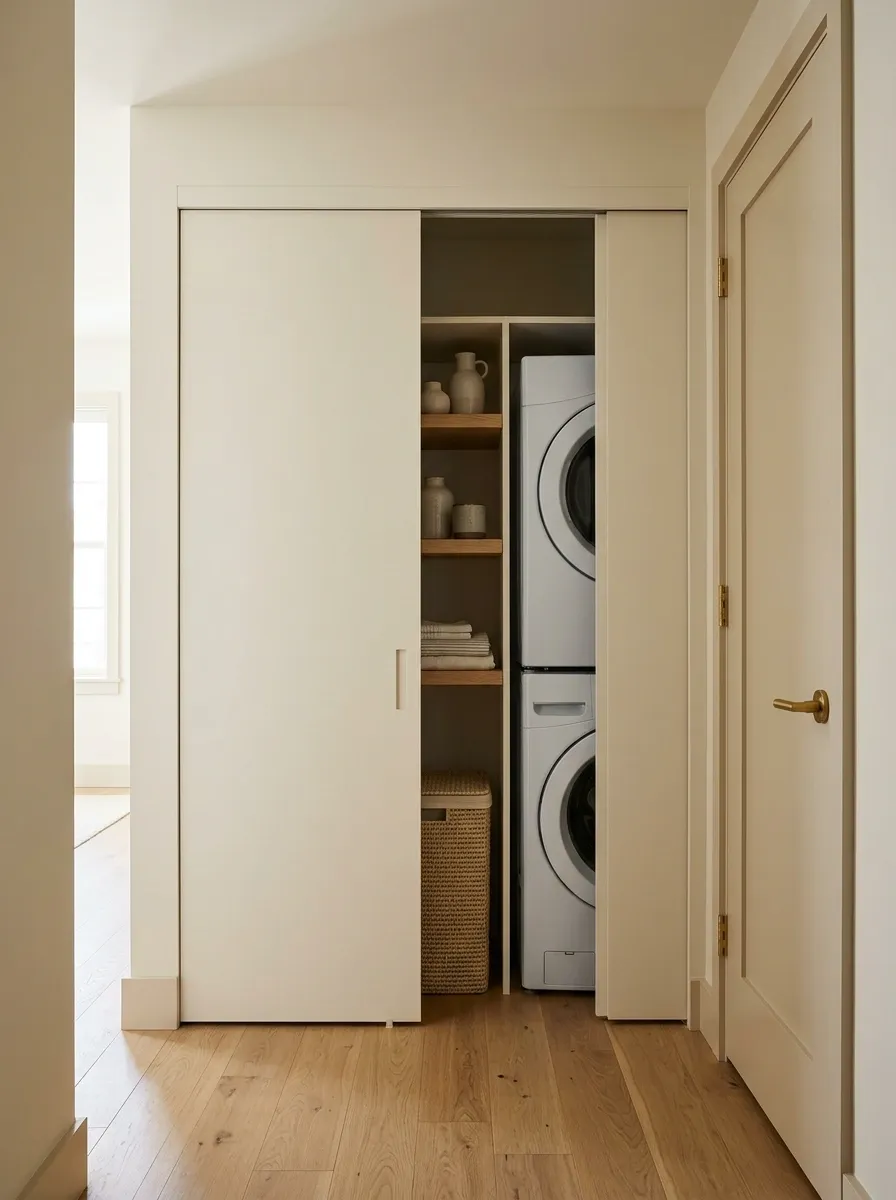
A traditional hinged door needs room to swing open, which can be a nuisance in a tight hallway. Sliding doors can reduce that conflict and help a laundry closet sit neatly along the wall without competing with the main walking route.
Choose doors that suit the apartment’s existing finishes. Flat ivory panels create a quiet, built-in appearance, while warm wood adds texture. If the hallway already has visible storage cabinets, repeating the same finish helps the laundry closet feel like part of the architecture rather than an isolated feature.
Inside, keep the layout simple. A stacked washer and dryer, a narrow shelf, and a dedicated hamper may be enough. Sliding doors don’t automatically create more storage inside the closet, so measure the available depth and make sure the machines can be accessed comfortably.
The track and door system need careful planning. Confirm that the wall and opening can accommodate the hardware, and check how much clearance is required to service the appliances. The doors mustn’t block ventilation or prevent access to plumbing and electrical connections.
The hallway clearance plan
Dusty Pink Laundry Cabinets With a Terrazzo Floor
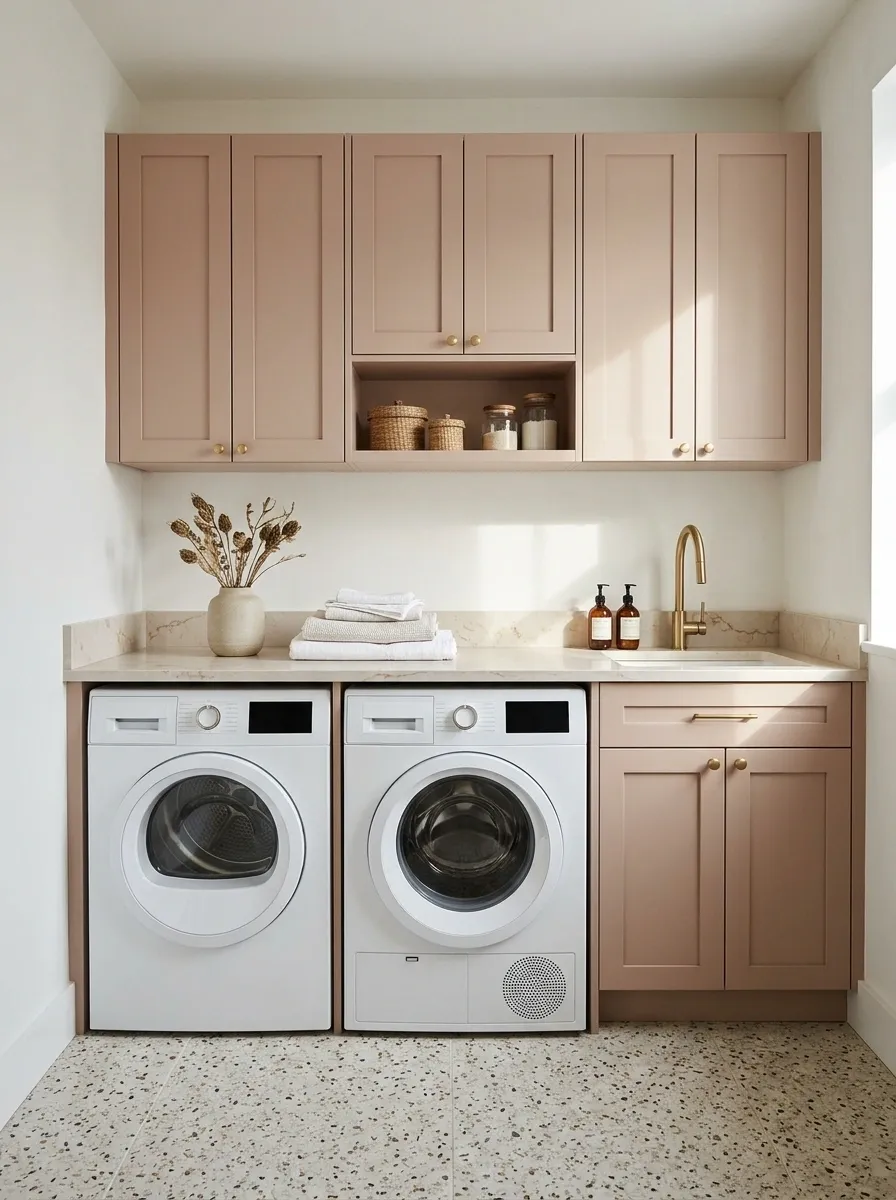
Dusty pink cabinetry gives a laundry room a softer color story without turning it into a sugary pastel display. Muted blush, rose-beige, and clay-pink tones feel more sophisticated than bright candy pink, especially when paired with pale stone and simple cabinet fronts.
A terrazzo floor adds texture and connects the pink cabinetry to the rest of the room. Choose a pattern with small, restrained chips in cream, gray, or warm brown so it complements the cabinets instead of fighting them. A pale countertop and white appliances keep the palette balanced, while brushed brass or understated nickel hardware completes the look.
If the laundry room is very small, use pink on the cabinets and keep the walls lighter. This gives the space a recognizable design feature without making every surface compete for attention. In a larger laundry area, a slightly deeper blush can create a richer, more enveloping effect.
Terrazzo-look porcelain or other suitable flooring can provide the visual effect with a practical surface for a utility area. Check the product’s slip resistance, cleaning requirements, and suitability for the installation. Color should be the fun part of the project, not the reason the floor becomes difficult to maintain.
The blush and terrazzo palette
Walnut Laundry Cabinetry With a Refined Contemporary Finish
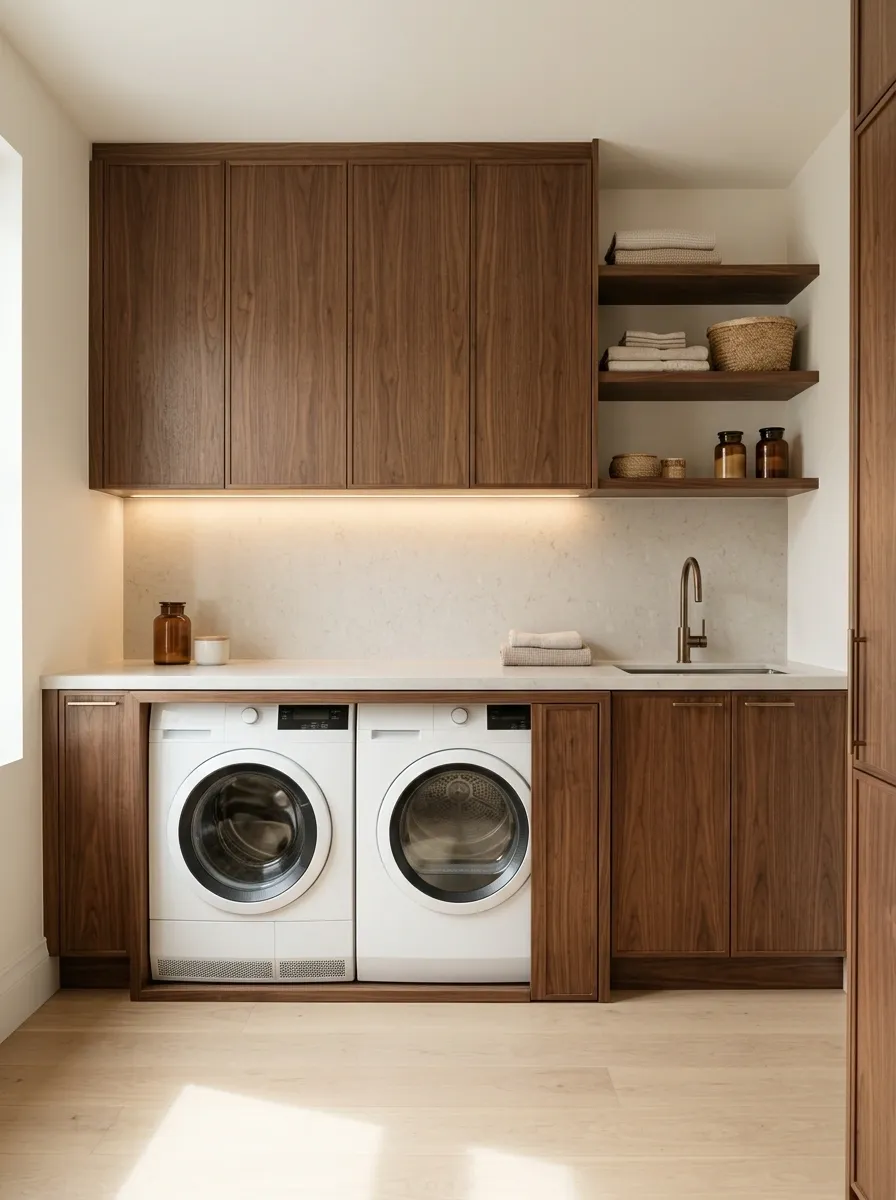
Walnut cabinetry makes a laundry area feel like a considered part of the apartment rather than a utility space squeezed into whatever corner was available. Its rich brown grain adds depth, while clean cabinet fronts keep the overall look contemporary instead of overly traditional.
Pair walnut with a pale stone-look countertop, white appliances, and warm integrated lighting. The contrast between the wood and lighter surfaces helps the cabinetry stand out without making a compact room feel too dark. If the machines sit beneath the counter, matching cabinet fronts on either side can create a continuous built-in appearance. For a stacked arrangement, a walnut surround and adjacent closed storage can deliver a similar effect.
Keep the hardware understated. Slim bronze pulls or discreet integrated handles preserve the clean lines, while a small amount of open shelving provides space for frequently used products. Avoid filling every shelf with decorative accessories. The wood grain already brings enough visual interest, and detergent bottles don’t need to become supporting cast members in a luxury design production.
In a small or windowless laundry closet, consider walnut on selected cabinet fronts rather than every wall. A pale floor and warm white walls help balance the darker timber. Engineered wood products and wood-look finishes can provide a similar appearance when solid walnut isn’t practical for the budget or environment.
The contemporary walnut material study
Soft Gray Laundry Room With Tonal Finishes
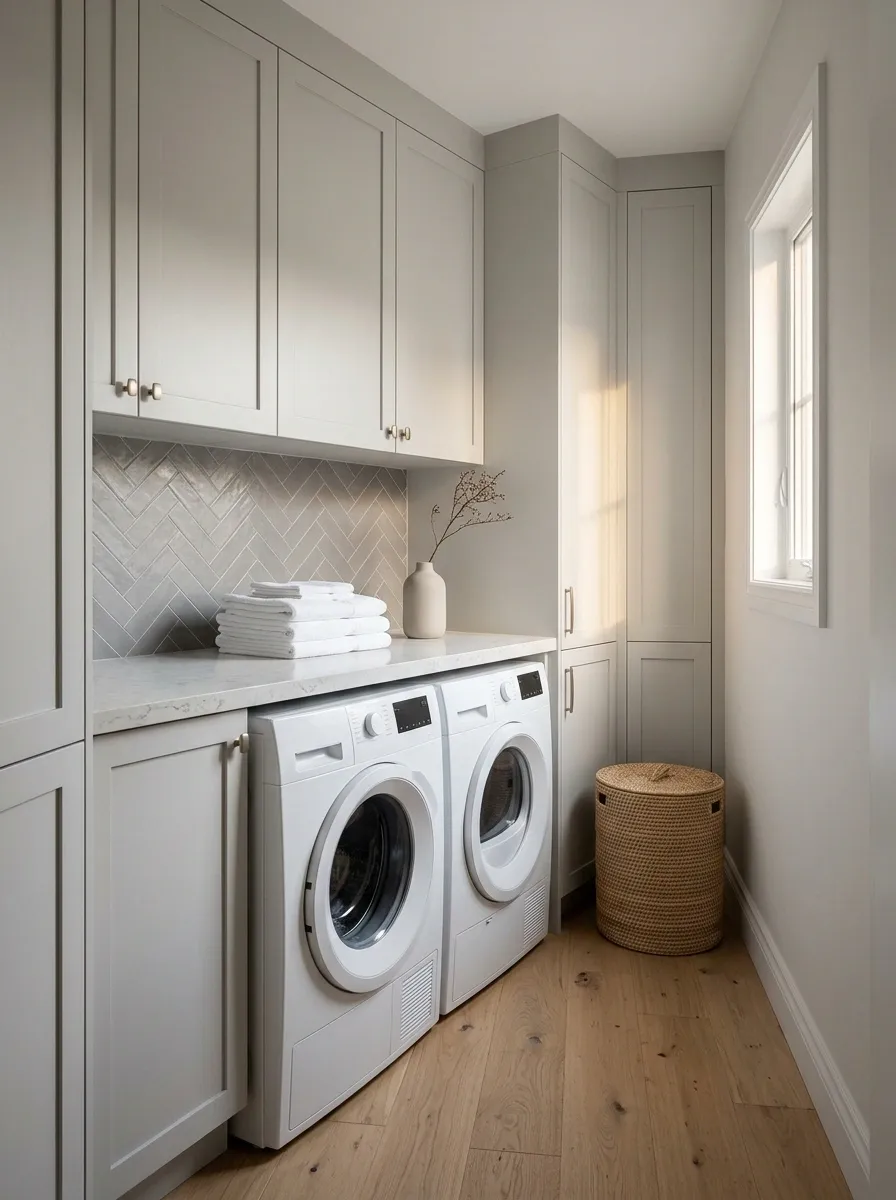
Soft gray is a useful choice when white feels too plain but bold cabinet colors seem like too much commitment. A warm gray palette creates a calm, cohesive laundry area and works with a wide range of appliance finishes, flooring materials, and apartment styles.
The key is layering different gray tones instead of matching every surface exactly. Try light gray cabinetry, a slightly deeper backsplash, and a pale stone-look countertop. White appliances introduce a clean break, while brushed nickel hardware and a textured laundry basket add subtle variation. A small amount of natural wood can warm up the palette if the room starts to feel flat.
Tonal designs rely on differences in texture and finish. Matte cabinets paired with a lightly patterned countertop feel more considered than a room where every surface has the same smooth gray finish. If the laundry nook is narrow, use lighter shades on the walls and upper cabinets to maintain an open appearance.
Lighting matters here, too. Cool artificial light can make gray finishes feel blue and sterile, while warmer light can bring out beige undertones. Test paint and material samples together before choosing the final palette. And please, don’t buy five nearly identical gray baskets in the hope that the sixth one will finally organize the laundry. Storage needs a plan, not a support group.
The tonal design formula
Vertical Laundry Wall With a Compact Drying Ladder
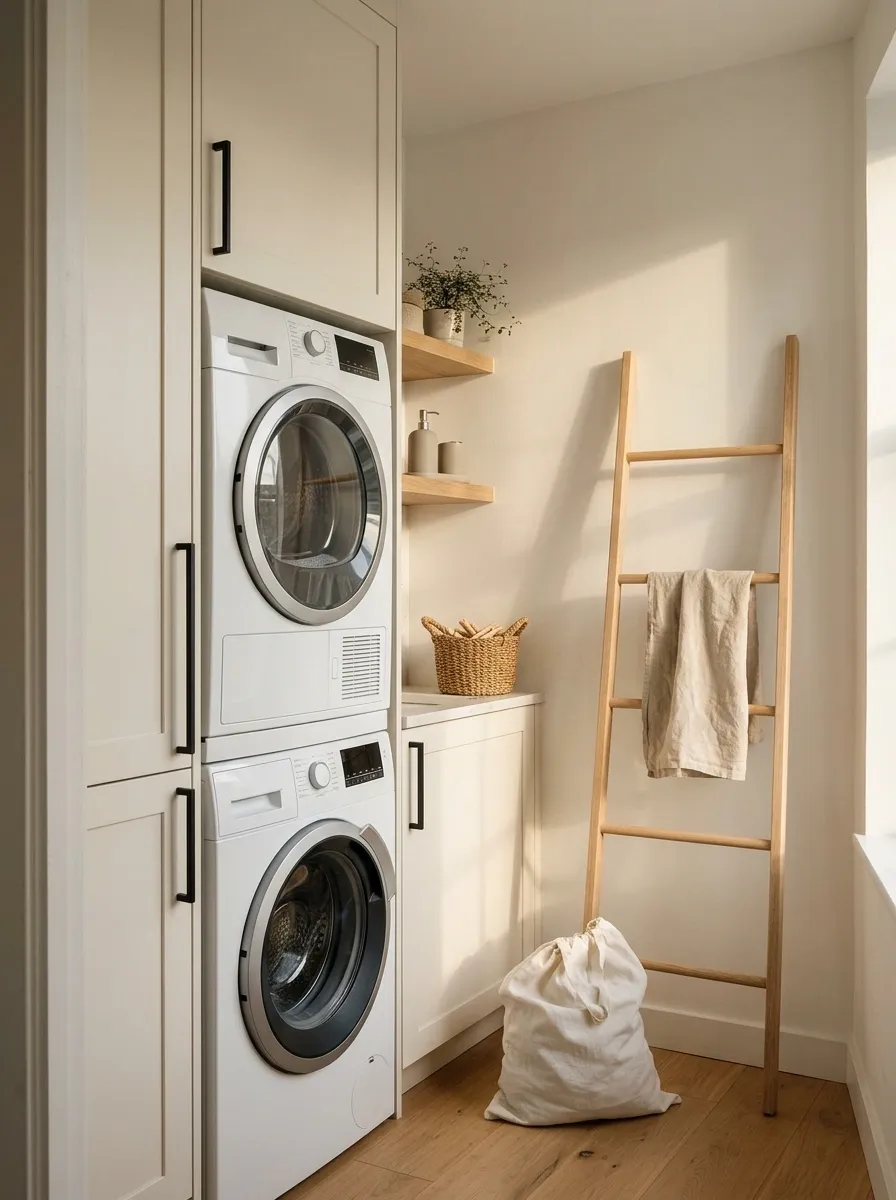
When floor space is limited, a compact drying ladder offers a simple way to add hanging capacity without installing a large permanent rack. It can lean against a suitable wall when in use and be moved aside when the laundry area needs to function as a passage or shared utility space.
Choose a ladder designed for drying clothes rather than a decorative ladder intended for display. Wood brings warmth to a neutral laundry room, while powder-coated metal suits a more contemporary look. Position it near the machines so wet garments can be transferred easily, but keep it away from electrical equipment and areas where dripping water could create a hazard.
A vertical laundry wall can combine the ladder with stacked appliances, a shallow shelf, and a small basket for pegs or laundry bags. Keep the number of elements limited so the space remains easy to navigate. The ladder should solve a drying problem, not become another object that needs moving every time the washer door opens.
Check the ladder’s stability, weight limit, and floor grip, especially if it leans against a wall. Avoid placing it where it could tip into a walkway, and make sure garments have adequate airflow to dry. If the apartment has children or pets, secure the setup or choose a more stable alternative appropriate to the household.
Vertical drying, minimal footprint
Deep Green Laundry Room With Traditional Cabinet Details
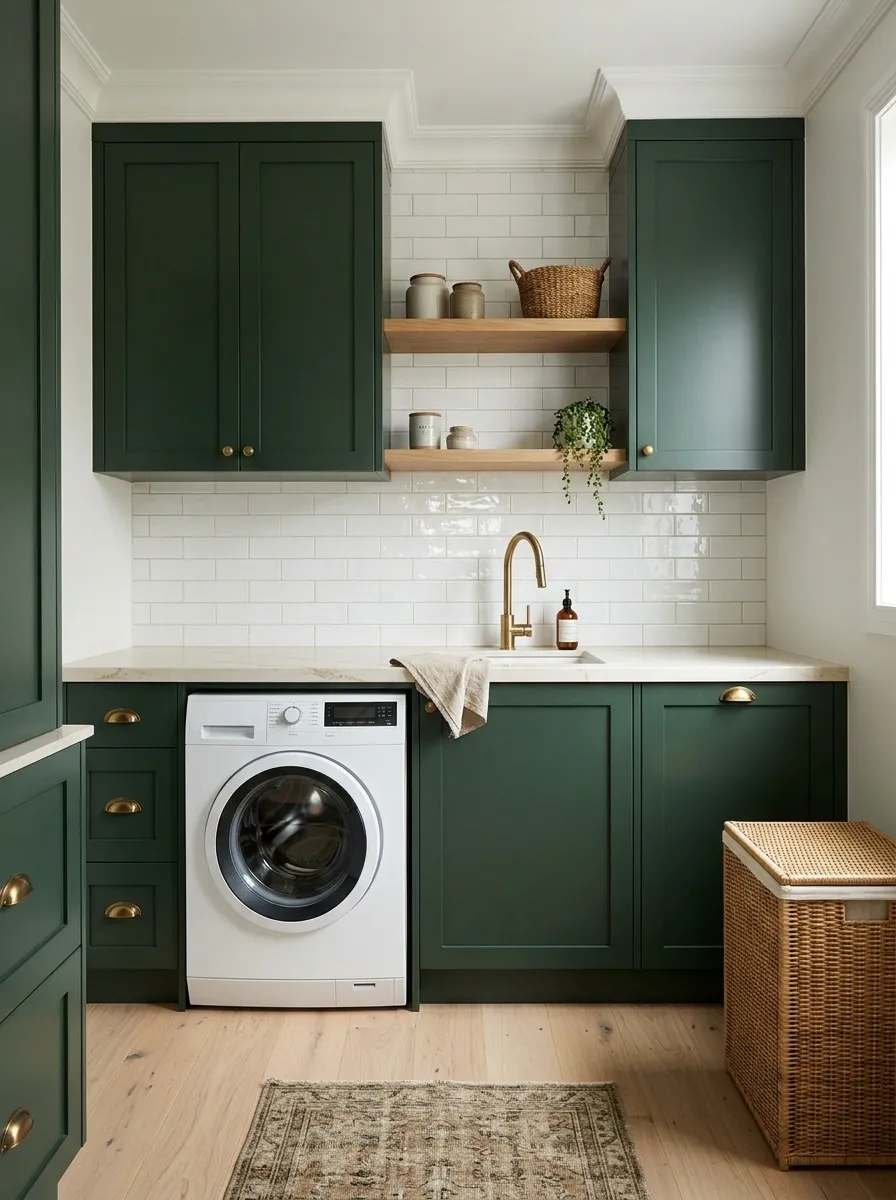
Deep green cabinetry gives a laundry room a rich, established look that feels more distinctive than standard white storage. Forest green and muted bottle green work especially well with classic cabinet doors, creamy counters, and warm metal hardware. The result has character without requiring elaborate decoration.
Shaker-style cabinets add traditional detail, while a simple backsplash keeps the room from becoming visually busy. White appliances brighten the composition, and a pale floor helps balance the darker cabinetry. If you want a slightly more contemporary result, use flat-panel green cabinets and keep the hardware minimal.
This color works best when it has enough contrast around it. In a narrow, windowless laundry closet, reserve deep green for the cabinet fronts and use lighter finishes on the walls and countertop. In a larger laundry area with good lighting, the green can extend across more of the cabinetry without overwhelming the room.
Keep the styling edited. A wood shelf, a woven hamper, and a few practical containers are enough to complement the cabinets. Too many brass accessories, patterned tiles, and decorative signs can make the room feel themed rather than designed. The cabinetry should do most of the visual work.
The classic green palette
Entryway Laundry Zone With a Bench and Everyday Storage
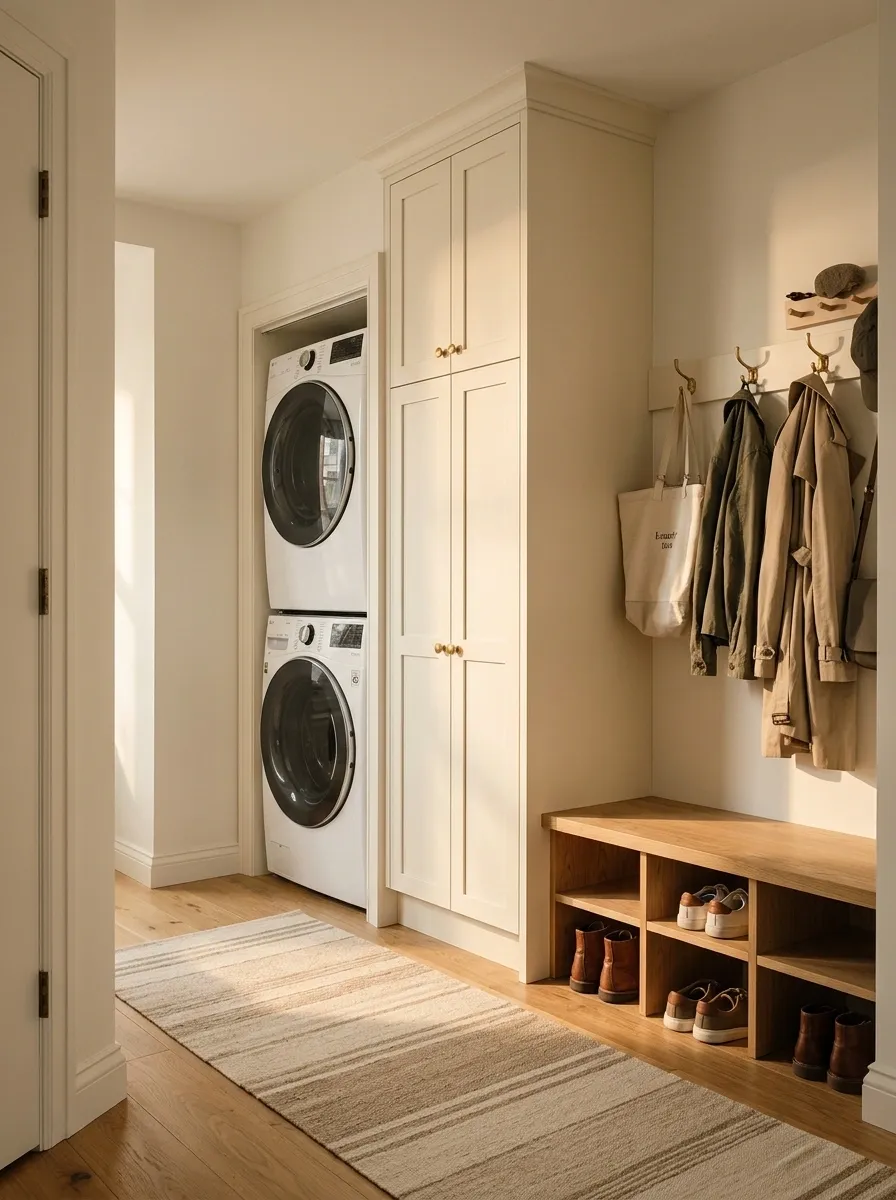
When the laundry area shares space with the entryway, the design needs to handle two different routines without letting either one take over. A compact bench, wall hooks, and closed storage can make the entrance more useful while keeping laundry equipment integrated into the overall layout.
A stacked washer and dryer tucked beside a tall cabinet can free up enough wall width for a narrow bench. Choose a bench with shoe storage underneath and add hooks for coats, bags, or a laundry tote. Warm oak, cream cabinetry, and neutral flooring create a connected look, especially when the entryway and laundry zone share the same wall.
The layout should separate clean clothes from the dirtier items that arrive from outside. Use a designated hamper or laundry bag rather than letting worn clothes land on the bench. Keep shoes and cleaning products in their own compartments, and avoid placing open laundry supplies where they can be knocked over as people enter and leave.
Measure the circulation space carefully. The bench shouldn’t obstruct the appliance doors, entry door, or main walking route. If the apartment is especially narrow, a wall-mounted seat or shallow shoe cabinet may be more practical than a full bench.
The two-in-one entry
Blue Patterned Backsplash With Warm Wood Shelves
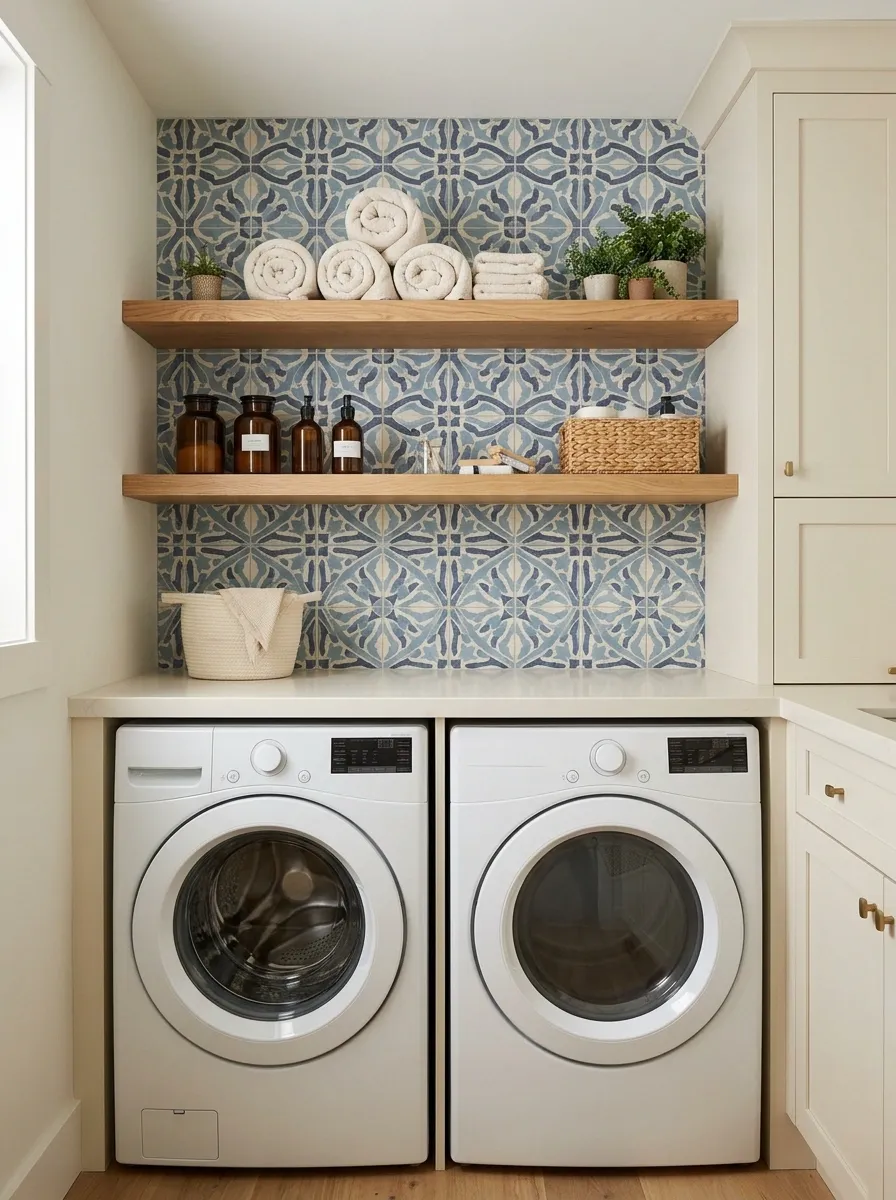
A blue patterned backsplash brings personality to a compact laundry room without taking up valuable floor space. It creates a clear focal point behind the machines, while warm wood shelves soften the pattern and make the space feel less like a purely functional corner.
Choose a backsplash with a controlled color palette. Dusty blue, muted navy, and creamy white work well with oak shelving and white appliances. Geometric tiles create a crisp contemporary look, while small floral or vintage-inspired patterns give the room a more collected feel. Keep the surrounding cabinetry and countertop relatively simple so the backsplash doesn’t have to compete with five other design decisions.
Floating shelves provide room for detergent containers, folded towels, and a small basket for laundry accessories. Place everyday supplies within easy reach and keep heavier products on sturdy, properly installed shelving. If you prefer an uncluttered look, decant a few frequently used products into labeled containers and store the original bottles in a cabinet.
In a rental apartment, removable backsplash panels or peel-and-stick tile may offer a temporary alternative, but check the product’s suitability for the surface and the moisture conditions. Don’t install a decorative material where it could interfere with appliance ventilation or safe access to plumbing and electrical connections.
The backsplash design notes
Fully Built-In Laundry Wall With a Hidden Hamper
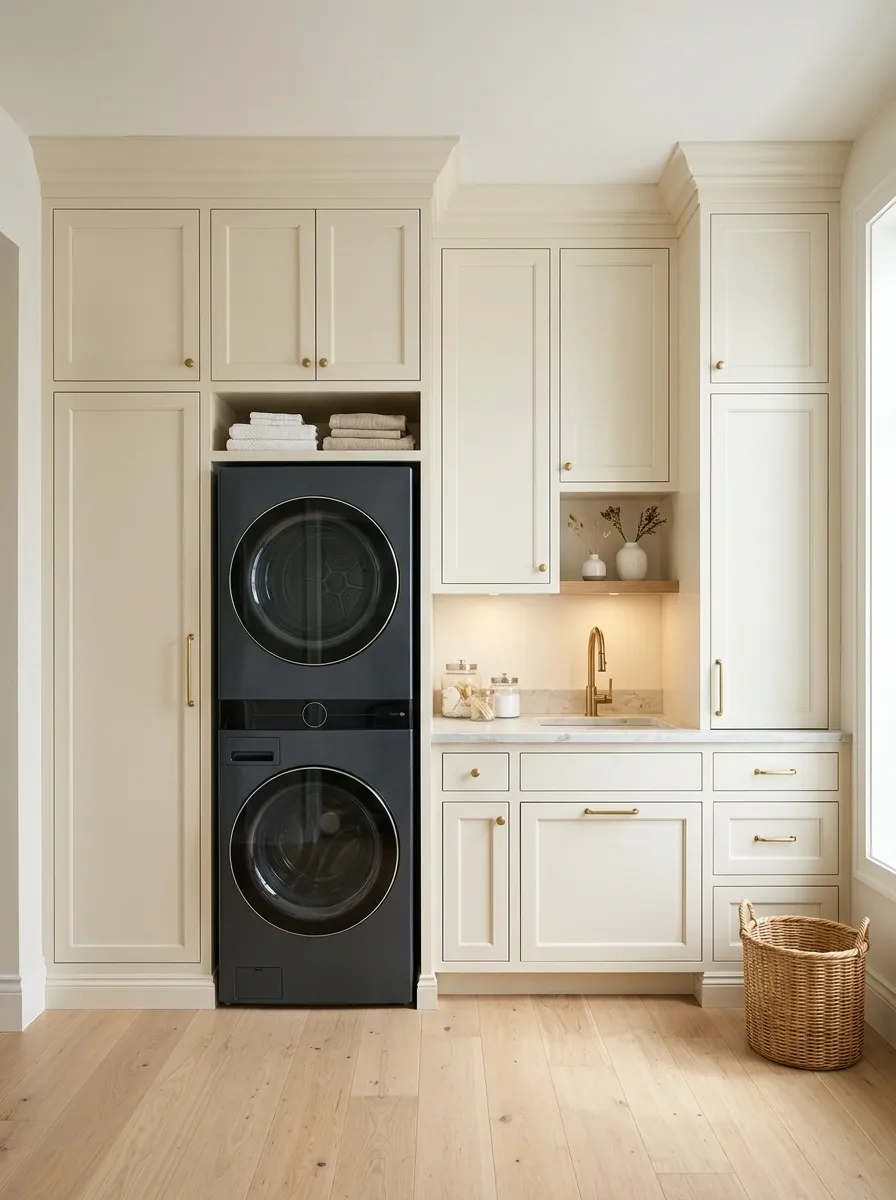
A fully built-in laundry wall gives an apartment a clean, finished appearance by organizing the machines, storage, and laundry collection into one coordinated layout. Instead of having separate baskets, shelves, and cleaning supplies scattered around the room, everything has a designated place behind a consistent run of cabinetry.
The most useful feature is a pull-out or tilt-out hamper integrated into a lower cabinet. It keeps worn clothes out of sight and makes sorting easier, especially when the laundry area sits near a kitchen, hallway, or bedroom. If you regularly separate lights and darks, consider two smaller compartments instead of one oversized basket. The best system is the one that matches the way your household actually handles laundry.
Cabinetry can surround a stacked washer and dryer or frame side-by-side machines beneath a continuous counter. Leave the clearances required by the appliance manufacturer, and make sure the layout allows access to shutoff valves, drains, electrical connections, and any ventilation components. A beautiful cabinet wall isn’t a win if routine maintenance requires dismantling half the apartment.
Choose durable cabinet finishes that can handle regular use, and use a countertop material suited to the space. Soft ivory, warm gray, and pale oak create a light, residential feel, while walnut or deep green can make the built-in wall more dramatic. Simple door fronts keep the overall design from becoming too busy.
Before ordering custom cabinetry, measure the machines, door swings, access routes, and available depth carefully. Account for hoses and other connections rather than measuring only the appliance bodies. Custom storage works best when the practical details are solved before the cabinet doors arrive.
The built-in wall plan
A Laundry Room That Works as Hard as It Looks
The best apartment laundry room isn’t the one with the most cabinets, the fanciest tile, or a suspicious number of matching glass jars. It’s the one that makes washing, drying, folding, and putting things away feel straightforward. Start with the layout, decide what needs to stay hidden, and choose a finish palette that connects naturally with the rest of your apartment.
Use vertical space when the floor is limited, keep everyday supplies easy to reach, and avoid storage solutions that create more work than they save. Even a small laundry closet can feel thoughtful with better lighting, a useful shelf, and a clear place for the hamper.
Save the designs that fit your space and your routine, then combine the details you genuinely love. Your laundry may never become the most exciting task on your schedule, but at least its home can look like somebody had a plan.