
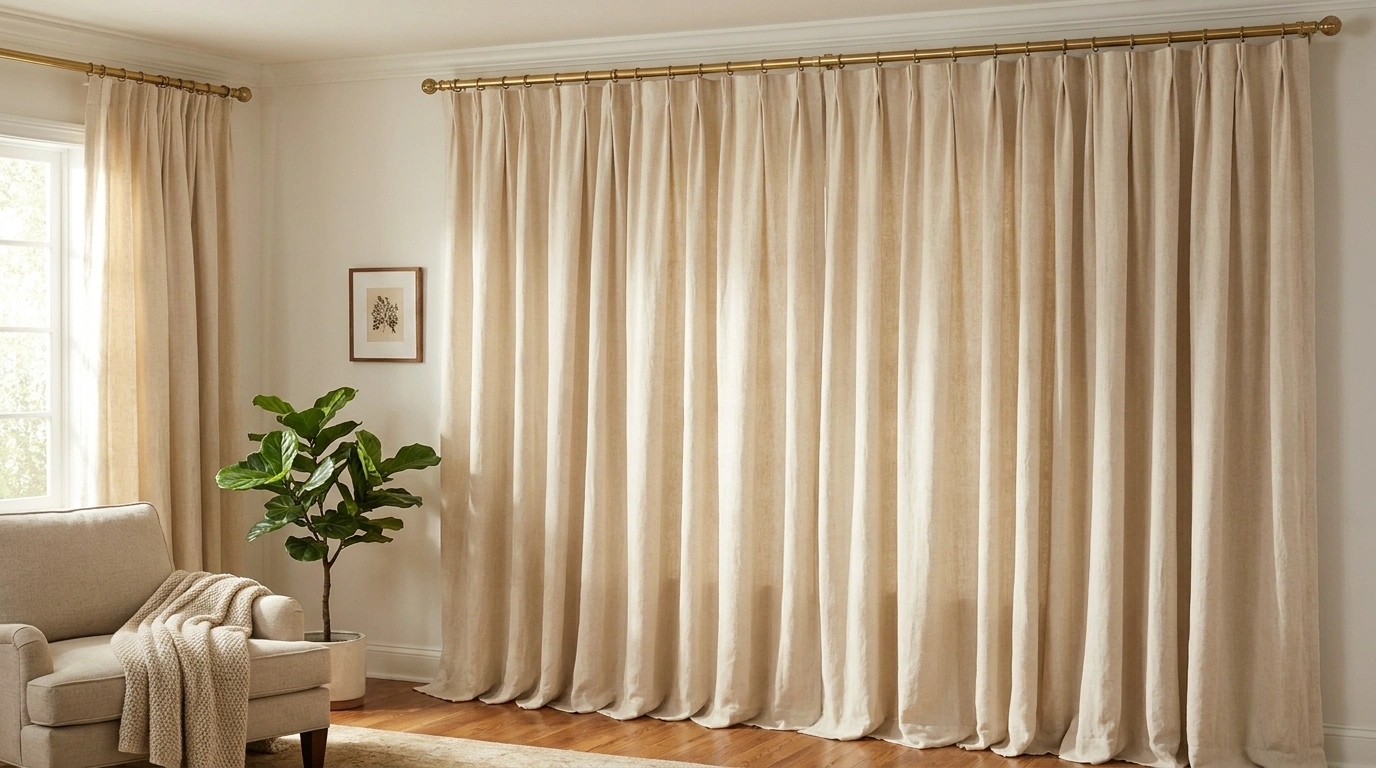
A curtain can look expensive in a showroom and still look awkward at home. The folds may be too bulky, the fabric may hide too much glass, or the heading may clash with the shape of the window.
The difference often comes down to how the curtain hangs. A straight panel creates a very different effect from a gathered swag, a sculpted shade, or a row of sliding panels. Fabric, hardware, window proportions, and the surrounding furniture all influence the finished result.
Some curtain styles make a room feel formal and traditional. Others keep a kitchen relaxed, give a bedroom a softer outline, or make a large window look architectural. The following designs show what each approach looks like as part of a complete interior, along with the details worth considering before choosing a style for your own home.
How to Choose a Curtain Hanging Style for Your Window
Match the Curtain Shape to Your Window
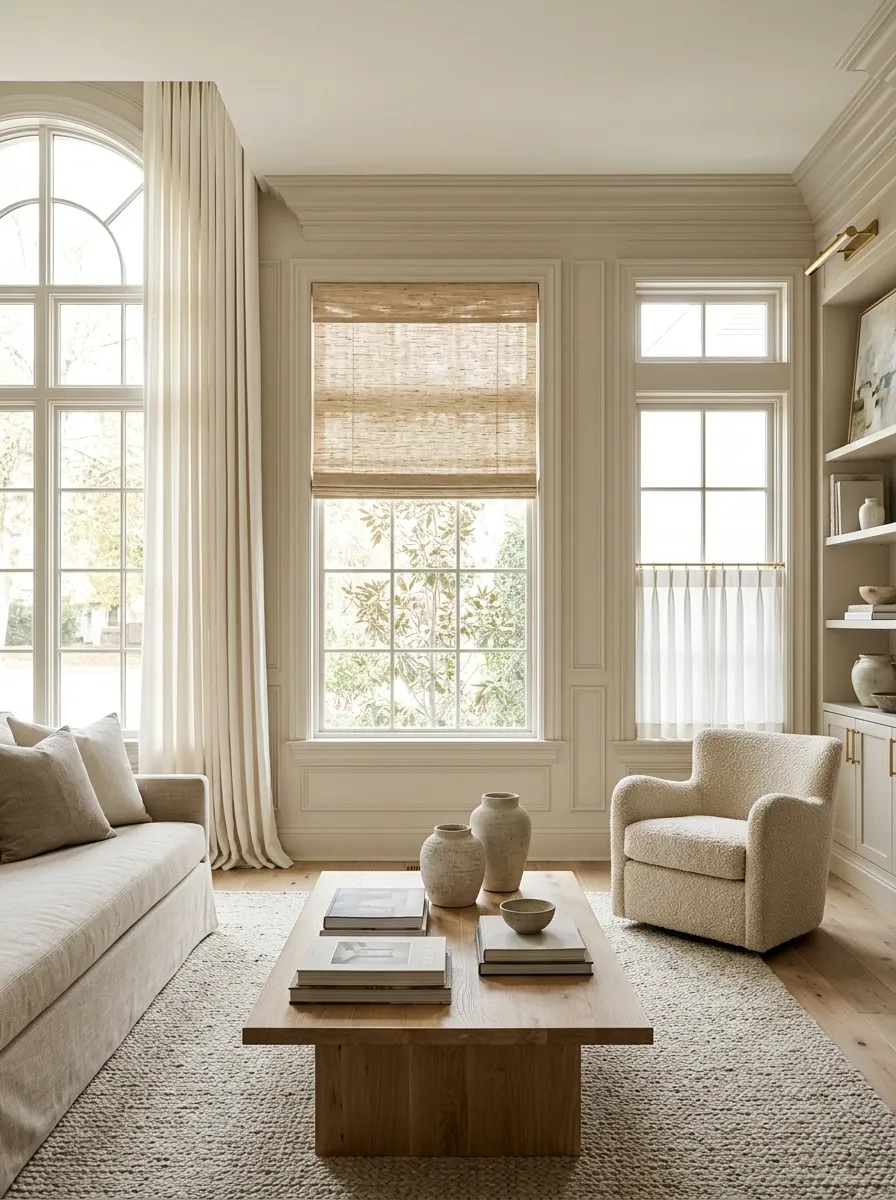
Tall windows can carry long, vertical panels, while compact windows often benefit from cafe curtains or fitted shades. Wide windows need a treatment that covers the opening without overwhelming the wall.
Start with the window’s shape and let that guide the design.
Balance Fabric Fullness, Texture, and Light
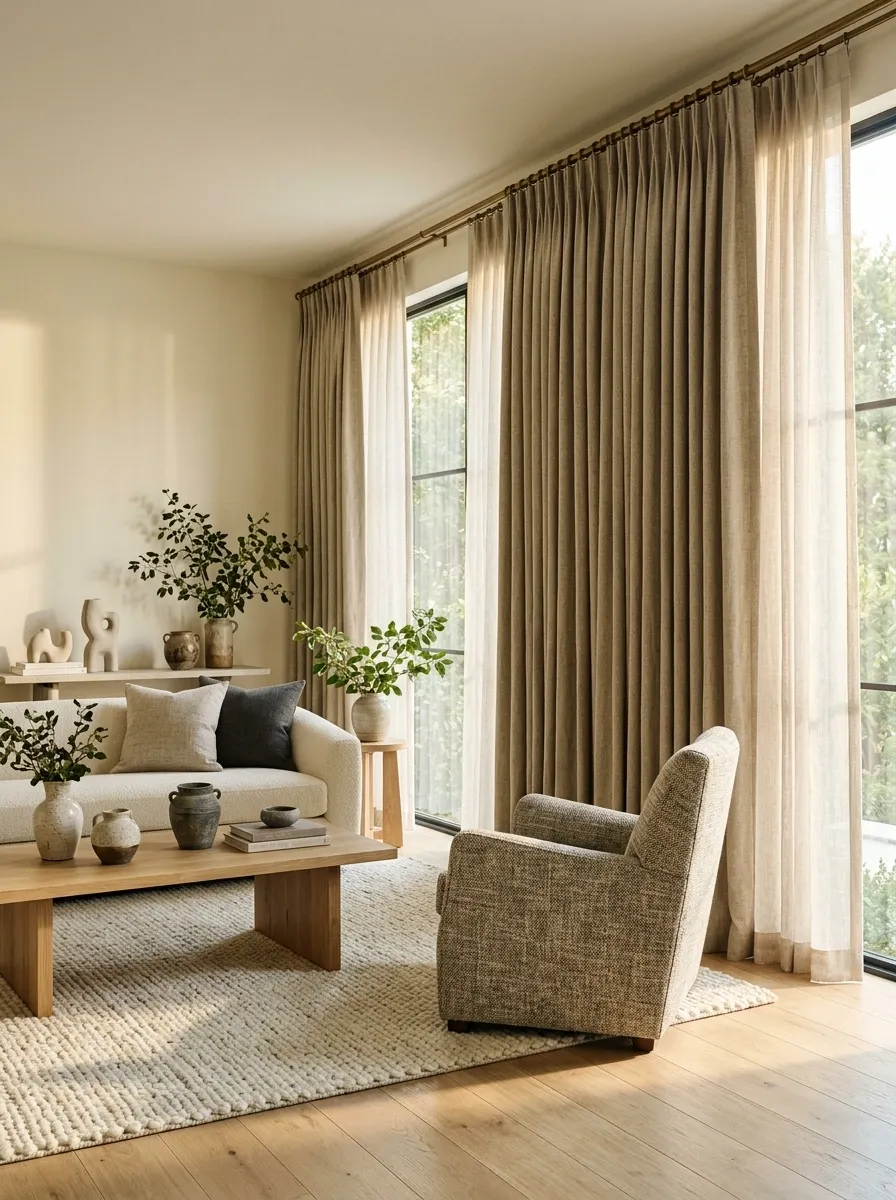
Heavy fabric gives gathered styles depth and structure. Lightweight fabric creates softer folds and allows more daylight into the room.
Consider privacy, glare, and how much glass you want to keep visible before deciding how full the curtains should be.
Treat the Rod and Mounting Height as Part of the Design
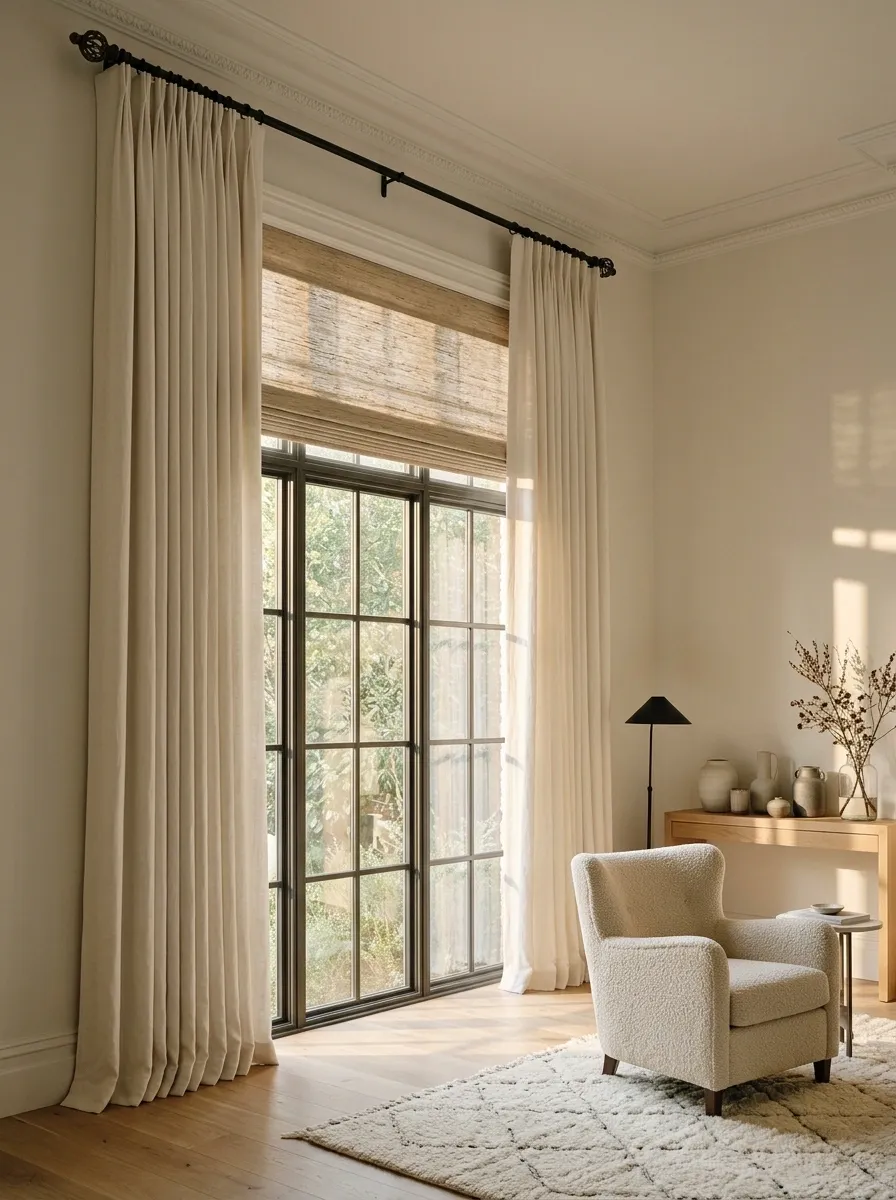
A curtain rod placed above the window trim can emphasize height, while an inside-mounted shade creates a neat, built-in appearance. Decorative finials and dark metal hardware also contribute to the finished look.
Choose hardware that supports the curtain style rather than competing with it.
Curtain Hanging Styles for Every Kind of Interior
Empire Curtains With Rich Swags and Framing Side Panels
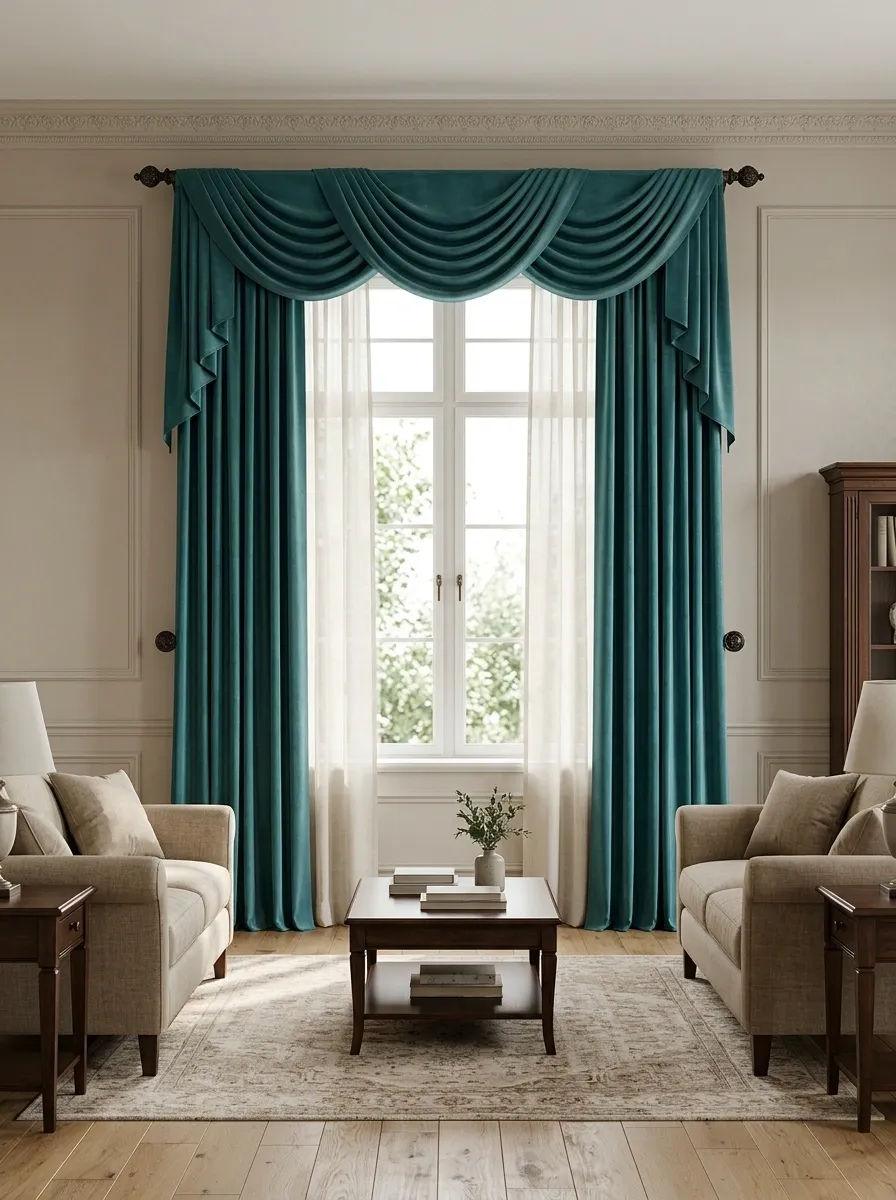
Empire curtains bring a formal, layered look to a traditional living room. Rich teal fabric forms a decorative swag across the top, while coordinating side sections descend around the window.
The gathered fabric creates movement without making the entire window look uniformly heavy.
The strongest version uses a generous upper treatment, long side panels, and a relatively quiet wall color. Dark curtain hardware gives the arrangement a defined outline, while wood furniture and warm neutral upholstery keep the room balanced.
This style works best when the window and surrounding wall have enough room for the fabric to spread visually. Keep nearby accessories restrained so the elaborate top treatment remains the focal point.
Creates the decorative focal point.
Frame the window vertically.
Straight Curtains in Soft Taupe With Clean Vertical Lines
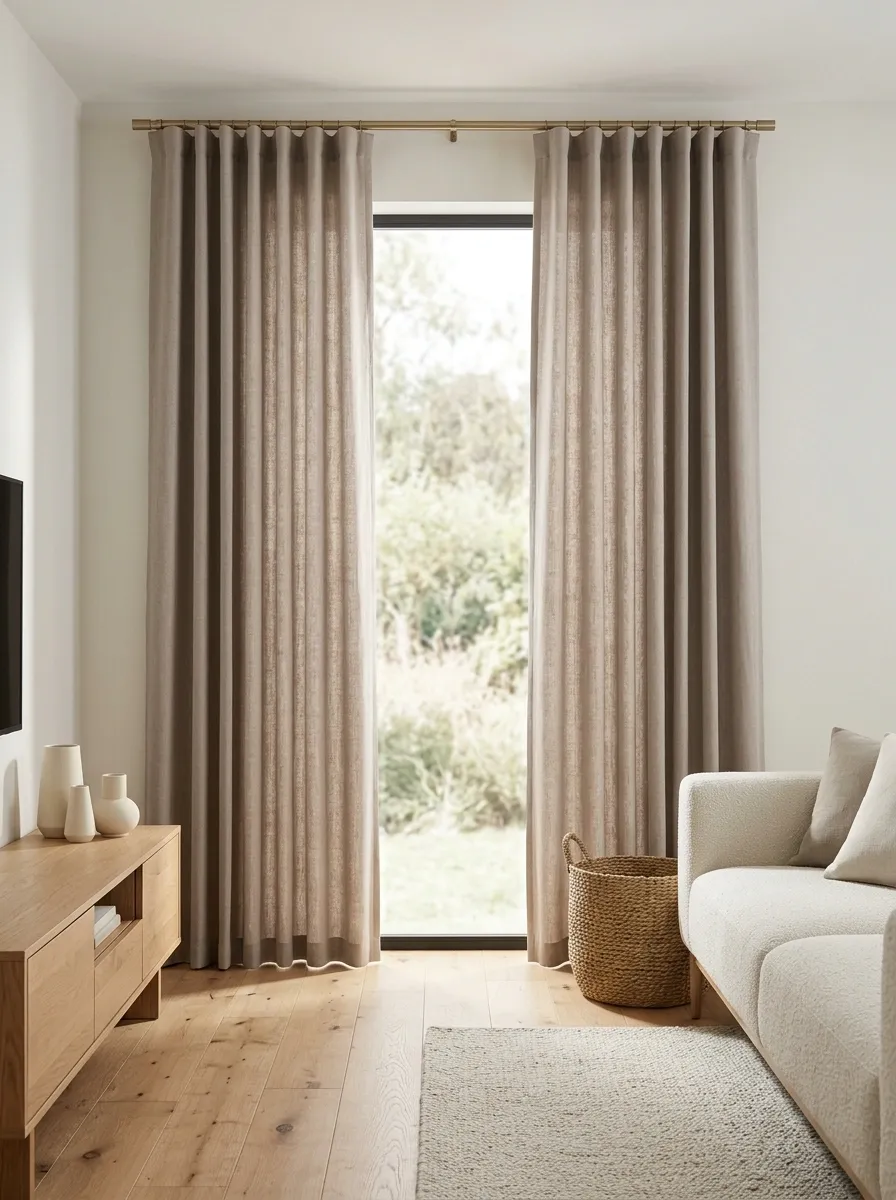
Straight curtains are a strong choice when the room already has plenty of visual detail. Long taupe or warm gray panels hang from a simple rod, creating uninterrupted vertical lines around the glass.
The design relies on fabric quality, accurate length, and balanced proportions rather than elaborate decoration.
Pair them with pale walls, natural wood furniture, and understated metal hardware. A subtle woven texture gives the fabric depth without disrupting the clean silhouette. For a contemporary finish, let the panels fall close to the floor instead of bunching heavily at the bottom.
Straight curtains suit modern and traditional interiors alike. They’re especially effective when the architecture, outdoor view, or furniture should remain the main focus.
Creates subtle movement.
Give the fabric more definition.
Overlapping Swags in Warm Gold for a Traditional Living Room
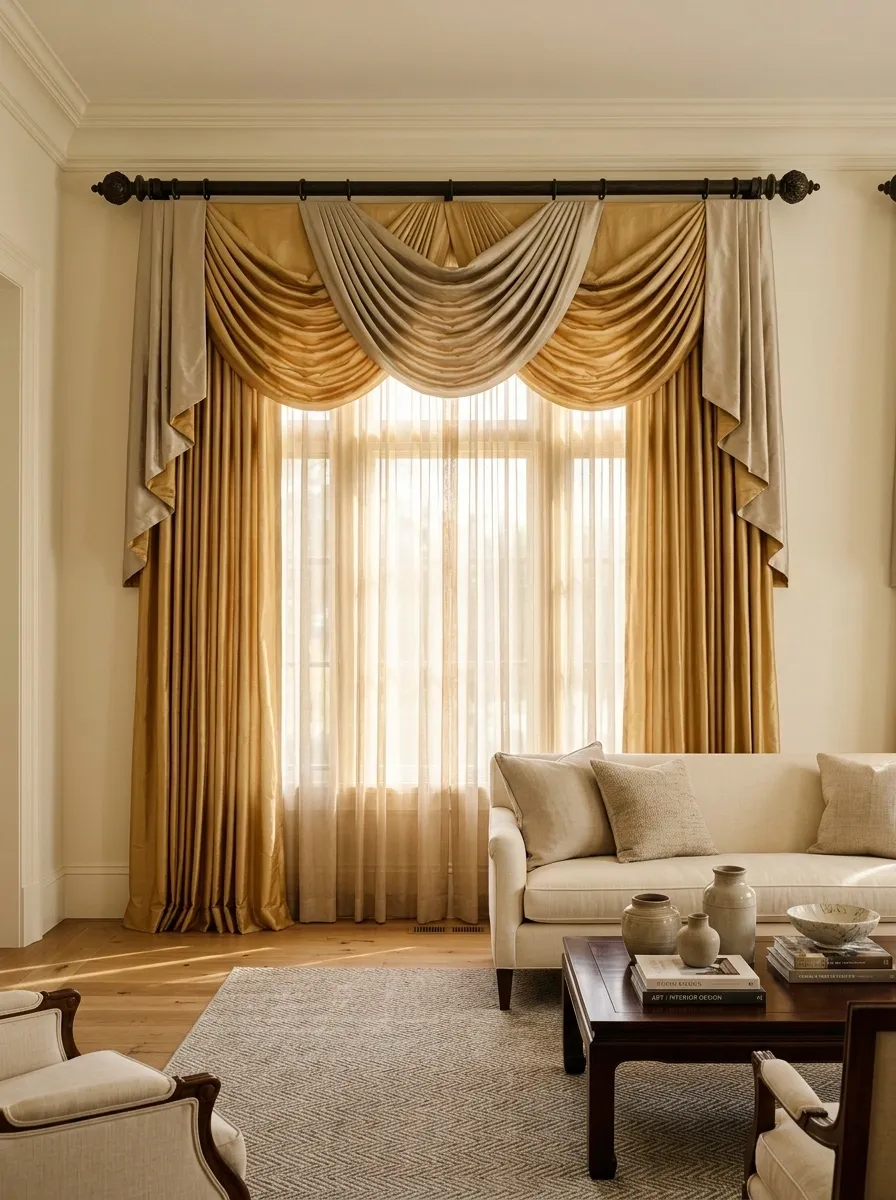
Overlapping swags create a layered arrangement across the upper window, with curved sections of fabric crossing or meeting to form a decorative canopy. Warm gold or muted champagne fabric gives this treatment a classic appearance, particularly when paired with coordinating side drapes and dark curtain rods.
The overlapping folds provide depth that a straight valance cannot achieve. They also make the upper portion of the window a focal point, so the rest of the room benefits from a simpler approach to upholstery and accessories.
Choose fabric that forms graceful curves without collapsing under its own weight. On smaller windows, use fewer swags and keep their depth proportionate to the opening.
Frame the arrangement.
Creates depth and overlap.
Deep Navy Pleated Curtains With Tailored Fullness
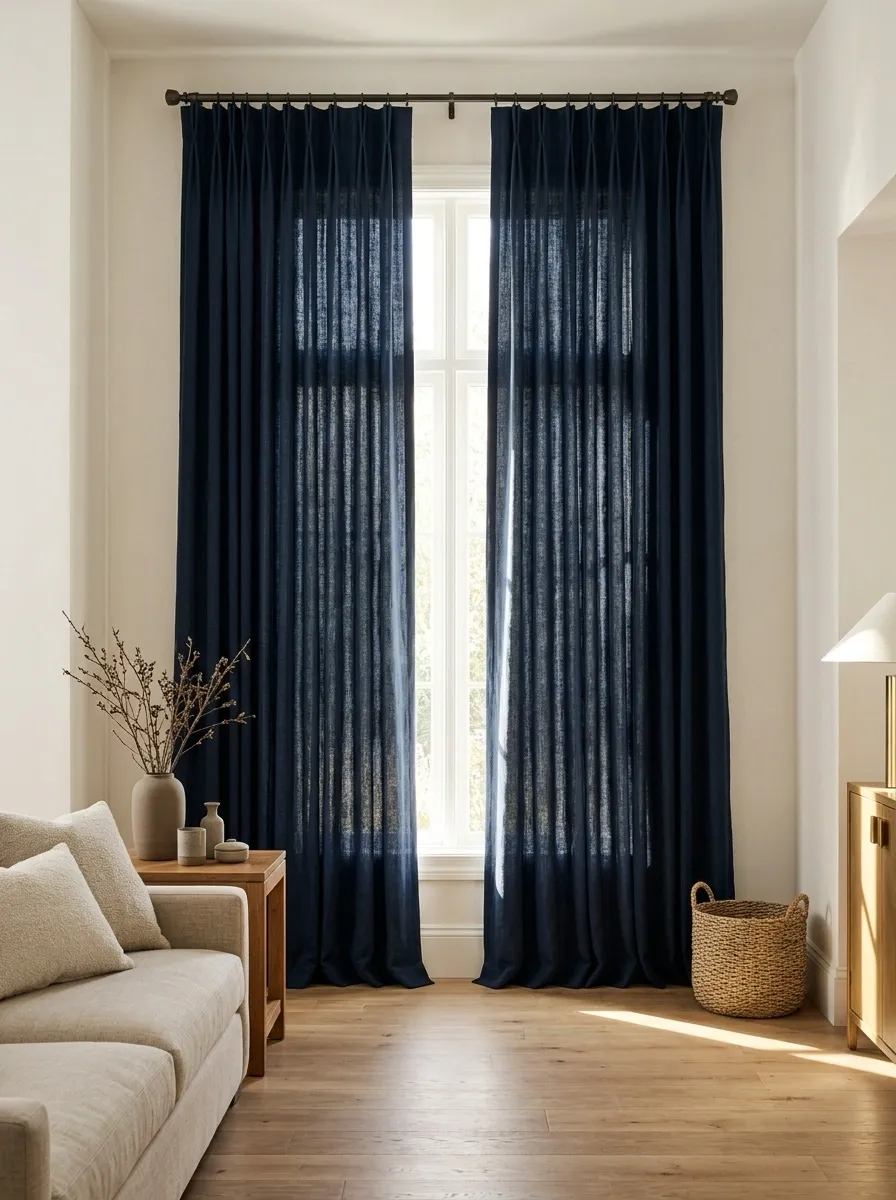
Pleated curtains offer a structured, substantial look without relying on decorative swags. Deep navy fabric makes the folds especially visible, producing a regular rhythm of light and shadow along the full height of the window.
A dark rod and simple finials reinforce the tailored finish.
In a living room, combine the curtains with warm white walls, a timber side table, and neutral upholstery. The contrast keeps the navy fabric rich rather than overwhelming. In a bedroom, lined pleated panels can also help limit unwanted light, depending on the fabric and lining selected.
Consistency matters more than extra decoration. Choose a pleat heading that creates the fullness you want, and make sure both panels hang evenly when open and closed.
Keep the heading orderly.
Maintains the tailored line.
Cafe-Style Curtains for a Warm, Practical Kitchen
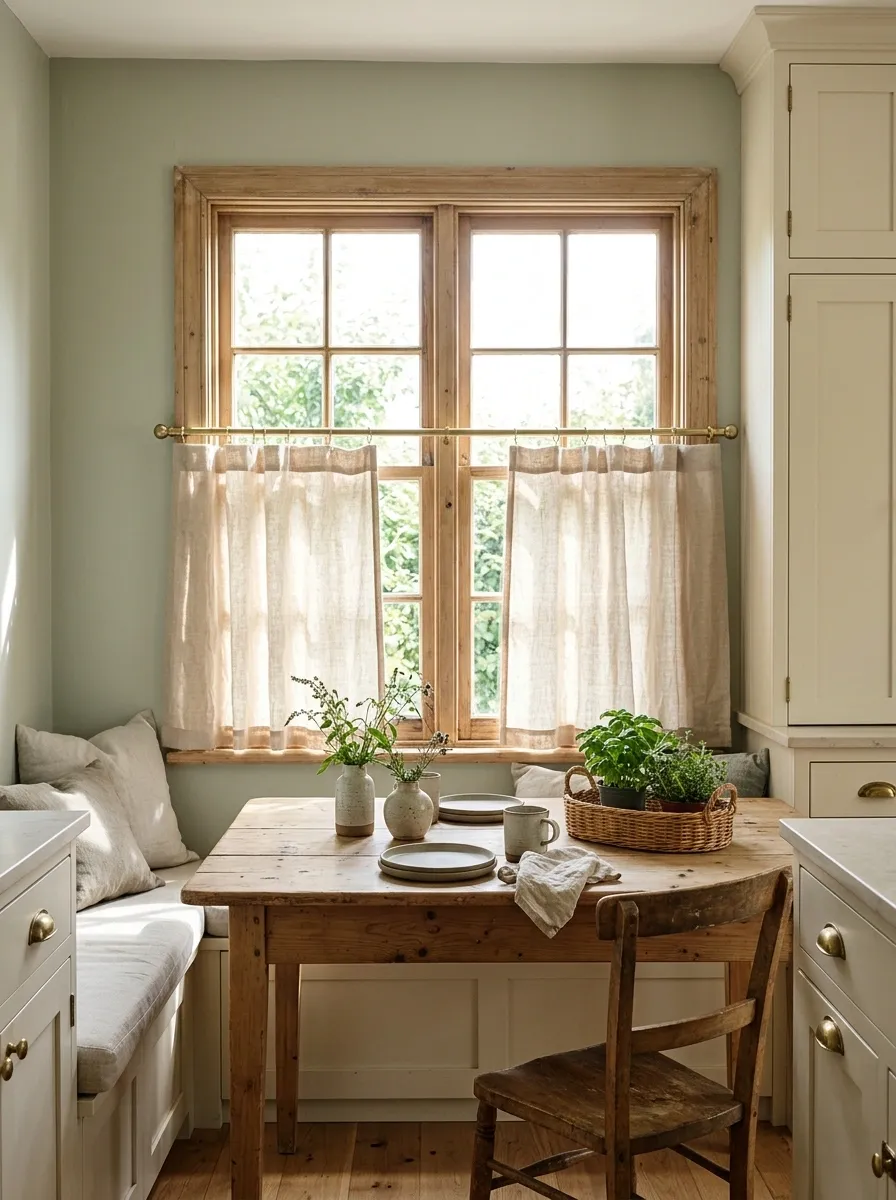
Cafe-style curtains cover the lower portion of a window while leaving the upper glass exposed. This creates a relaxed, familiar look that works naturally in kitchens, breakfast nooks, and informal dining areas.
A pair of light beige panels on a simple rod can soften the window without making it feel closed in.
This arrangement is useful when you want privacy at seated eye level but still want daylight to enter through the top half of the window. Pair the curtains with timber finishes, ceramic accessories, and a calm wall color.
Measure carefully before choosing the curtain length. In a kitchen, keep fabric clear of cooking surfaces and other heat sources. A washable material is a sensible choice near food preparation areas.
Sandglass Curtains With a Dramatic Center Tie
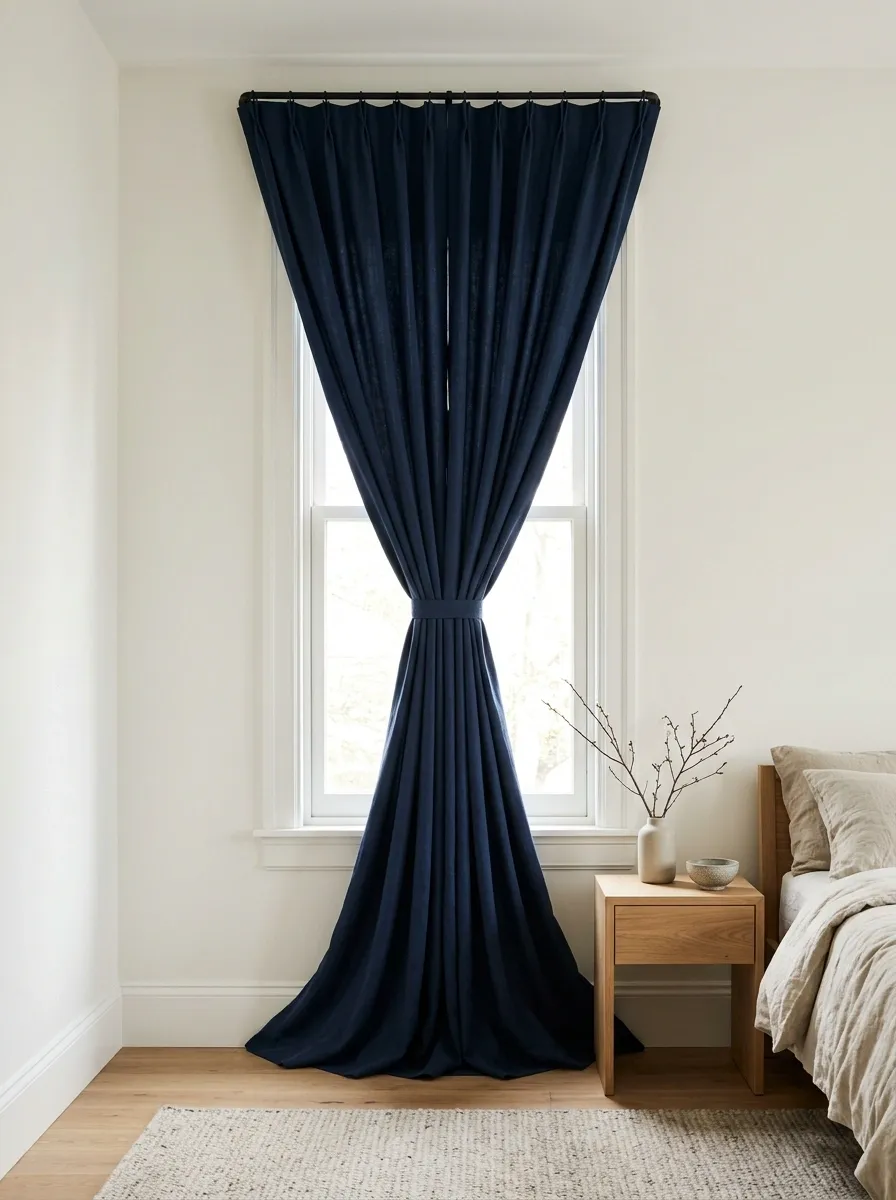
Sandglass curtains turn ordinary fabric into a sculptural window treatment. The panels gather tightly at the center, creating a narrow waist while the fabric spreads above and below.
Deep navy blue makes the hourglass shape especially striking against pale walls and a simply furnished bedroom or sitting room.
The arrangement leaves parts of the window exposed, so the fabric becomes as much a decorative feature as a privacy treatment. A coordinating tie keeps the silhouette controlled, while a plain rod prevents unnecessary visual competition.
Choose fabric that drapes easily, and make sure the center tie can hold the weight without pulling the curtain out of shape. This style is most effective when its sculptural outline has room to stand out.
Creates the first outward sweep.
Defines the narrow waist.
French Curtains With Soft, Repeating Scallops
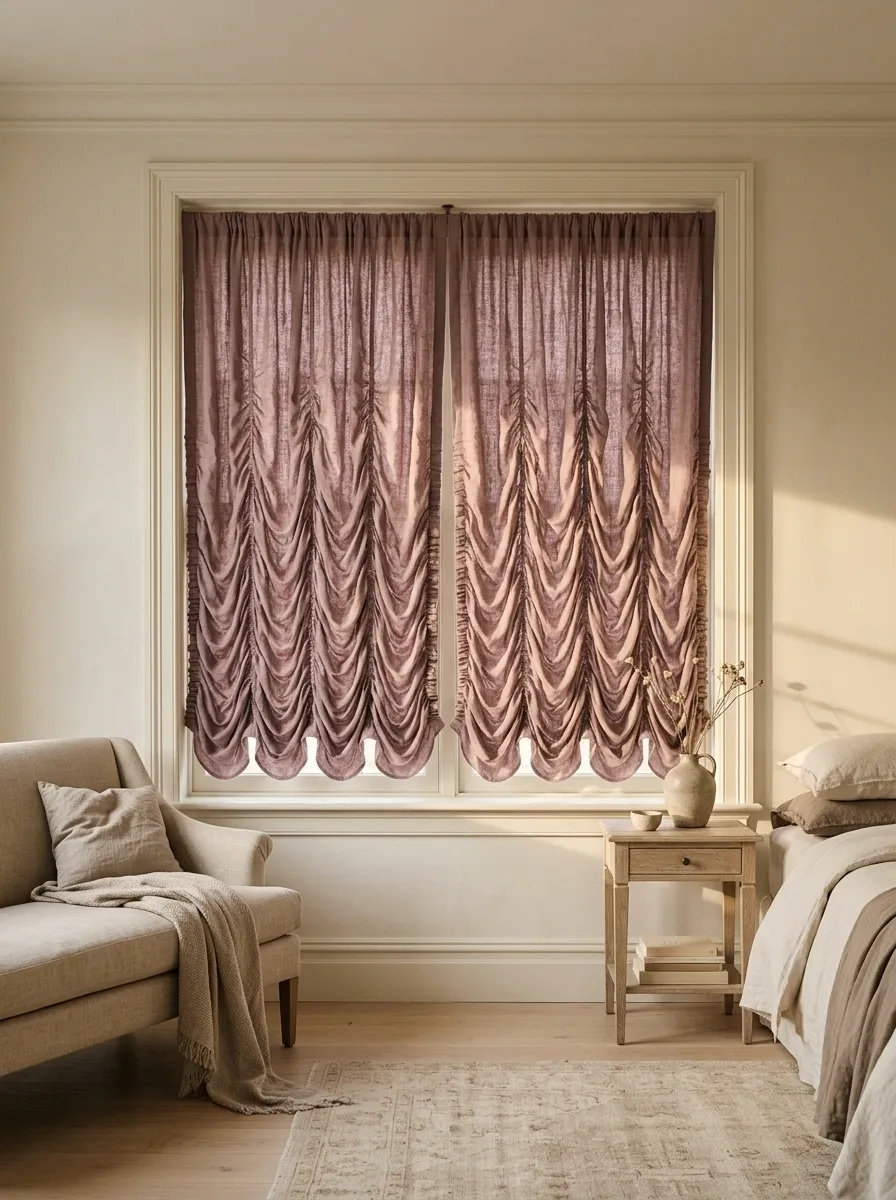
French curtains are associated with repeating curves and generous gathers. Lavender or dusty mauve fabric creates a textured surface that feels romantic without relying on extra decoration.
Across a wide window, the scalloped shape introduces a gentle rhythm that contrasts with straight window frames and simple architectural lines.
Keep the surrounding interior understated. Cream walls, pale timber, and restrained upholstery allow the curved folds to remain visible. Lightweight fabric creates softer gathers, while a more substantial textile gives each scallop a fuller outline.
The important detail is consistency. The gathered sections should feel related in scale rather than crowded together or stretched too far apart. This style suits traditional bedrooms and formal sitting areas where fabric is a leading design feature.
Roller Blinds for a Clean, Modern Window
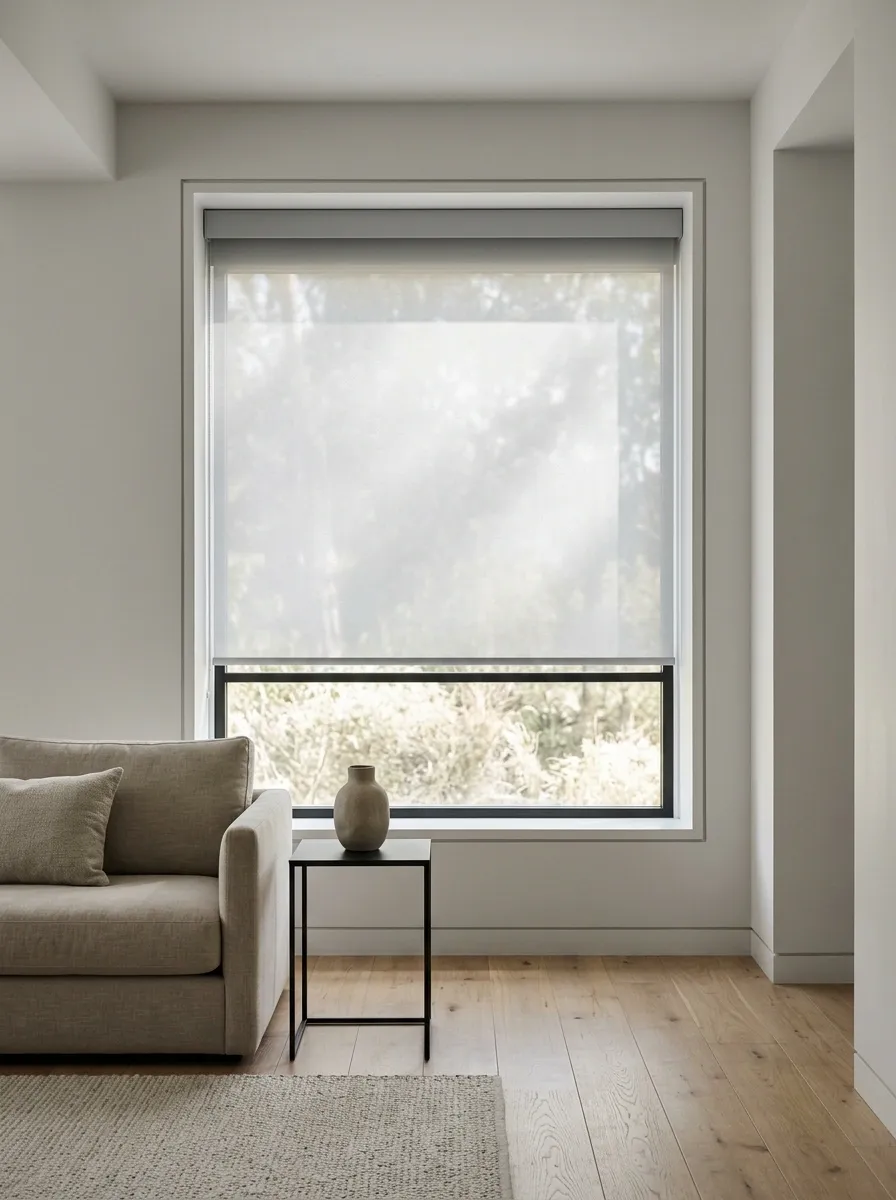
Roller blinds take a quieter approach to window dressing. A single sheet of fabric rolls into a compact headrail, leaving a tidy rectangular shape when lowered.
Light gray creates a discreet finish in a modern living room, home office, or bedroom, especially where the window frame and surrounding architecture already provide plenty of visual structure.
An inside mount gives the blind a precise, built-in appearance. Pair it with natural wood, matte metal, and uncluttered surfaces rather than adding a second decorative treatment that competes for attention.
The fabric can be translucent, light-filtering, or blackout, depending on the privacy and light control needed. Measure carefully, including handle clearance and the available space for the headrail.
A straight headrail and an accurately measured recess create the neatest finish.
Asymmetric Drapery With a Sweeping Side Panel
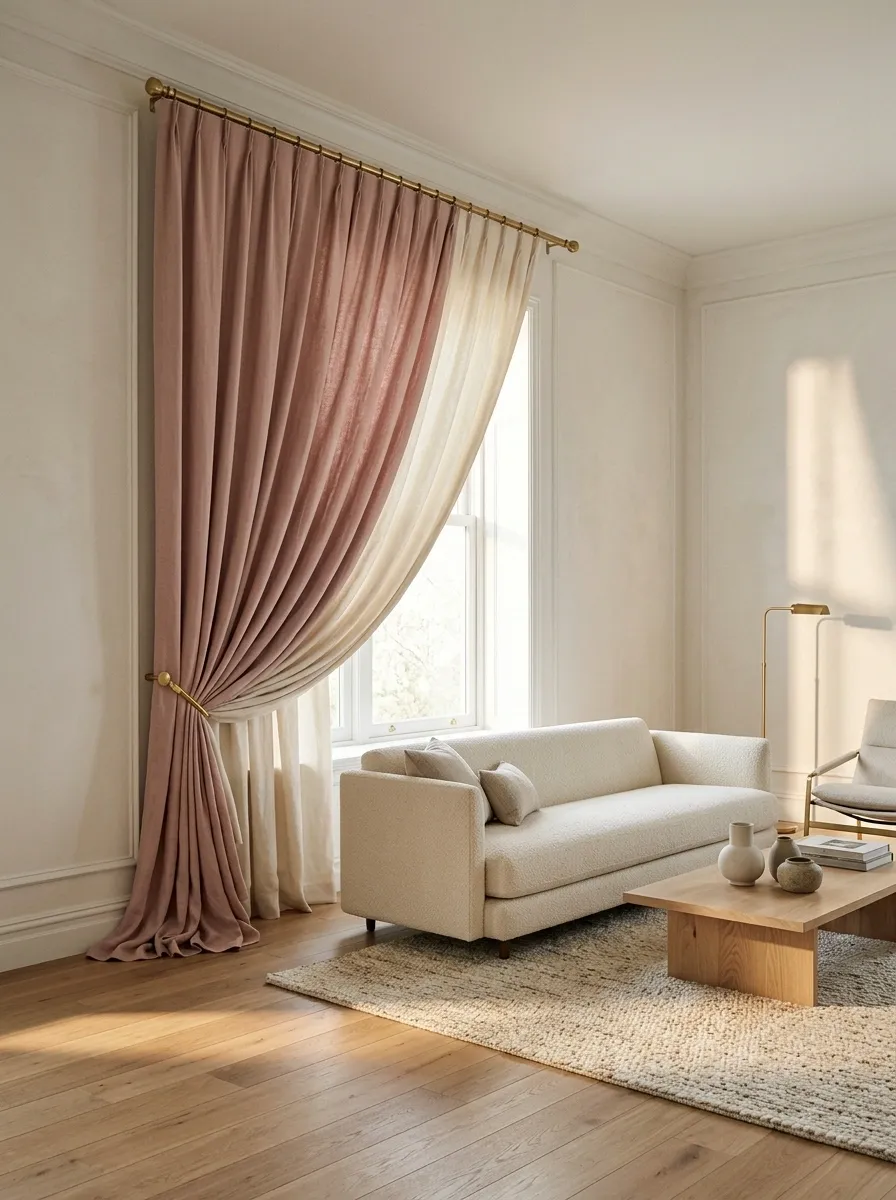
Asymmetric drapery gives a window a more expressive, less predictable outline. Dusty rose fabric can fall diagonally from one upper corner, creating a long sweeping line while the opposite side remains relatively open.
The result draws the eye across the window rather than framing it with matching panels.
This arrangement works particularly well when a window sits off-center on a wall or when furniture makes a balanced pair of curtains impractical. A restrained color palette keeps the angled fabric from feeling overly ornate.
Plan the direction of the fabric before installing the hardware. The gathered point should look intentional, and the falling panel shouldn’t obstruct a handle, doorway, or the main path through the room.
Provides visual movement.
Prevents the window from feeling crowded.
Italian Curtains With Graceful, Tied-Back Panels
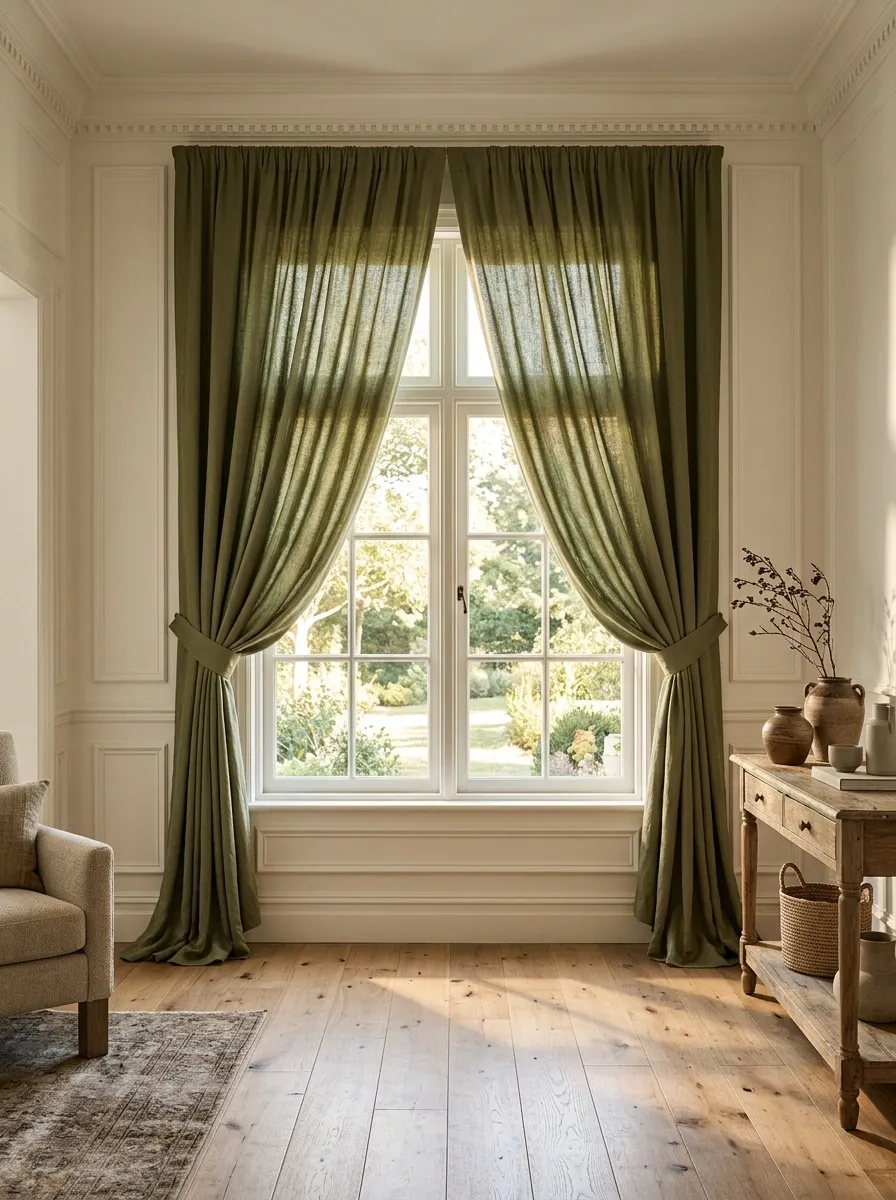
Italian curtains are arranged to stay drawn back, creating broad, curved openings rather than moving like ordinary free-hanging panels. Olive green fabric gives the treatment a classic European character, especially against warm white walls, wood furniture, and traditional architectural details.
The gathered panels sweep toward the sides, allowing the center of the window to remain open while the fabric creates a graceful outline. The arrangement depends on how the fabric is supported and shaped to maintain its distinctive curve.
Use fabric with enough softness to drape naturally, but avoid excessive bulk that makes the side gathers look heavy. This style suits rooms where daylight and the outdoor view deserve attention, while the curtains still provide a substantial decorative frame.
Vertical Blinds in a Bright, Contemporary Living Room
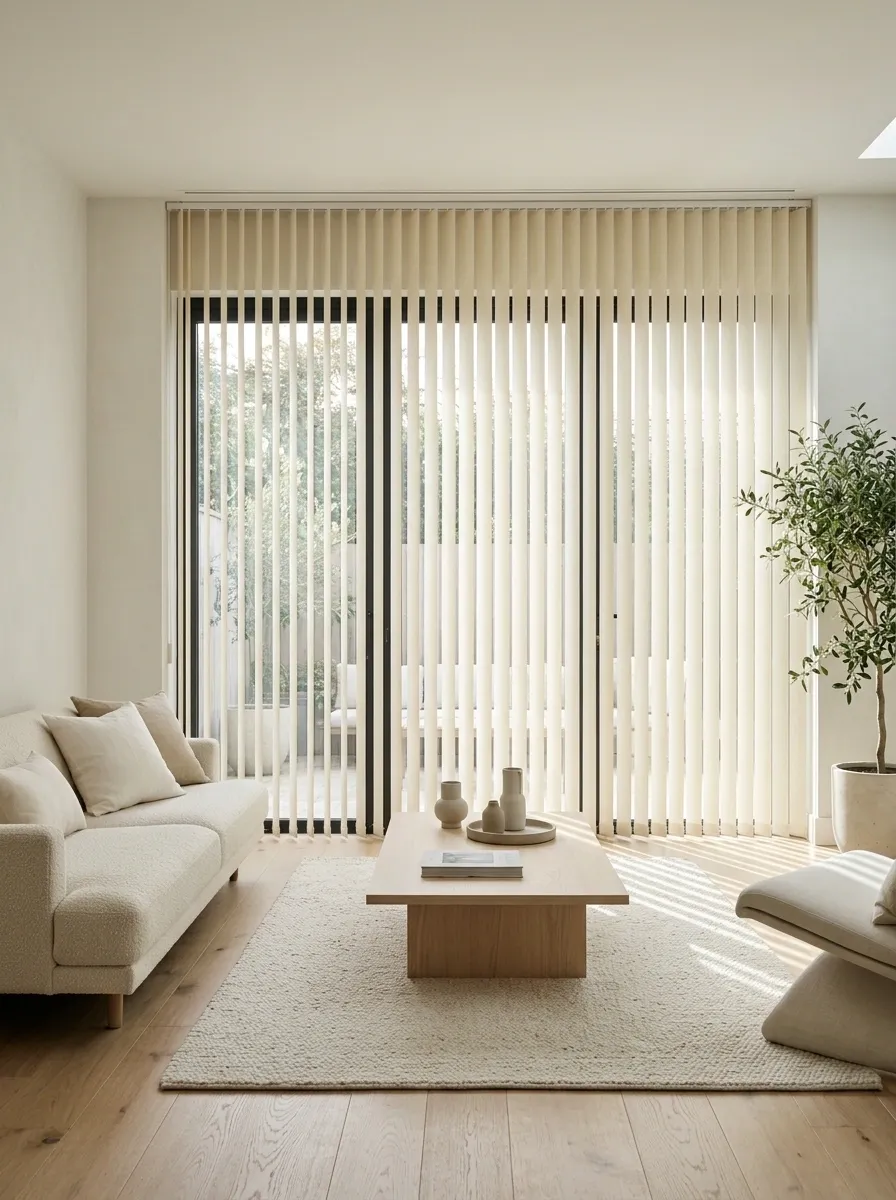
Vertical blinds bring structure to large windows and glazed doors. White or warm ivory vanes create repeated vertical lines, making the window treatment feel architectural rather than decorative.
In a bright living room, pair them with pale walls, light wood flooring, and simple furniture to maintain an open, uncluttered appearance.
The main benefit is adjustable light control. The vanes can rotate to change the amount of daylight and privacy, while the sliding mechanism allows access to a doorway or broad window.
Choose a track that suits the opening and check that the vanes can move without hitting furniture or door handles. This treatment is particularly effective across wide windows where flowing curtains would occupy too much visual space.
Vertical vanes maintain the same arrangement while changing the view and amount of light.
Greater visual coverage.
Allows filtered daylight.
Decorative Drapery With Golden Swags and Long Side Tails
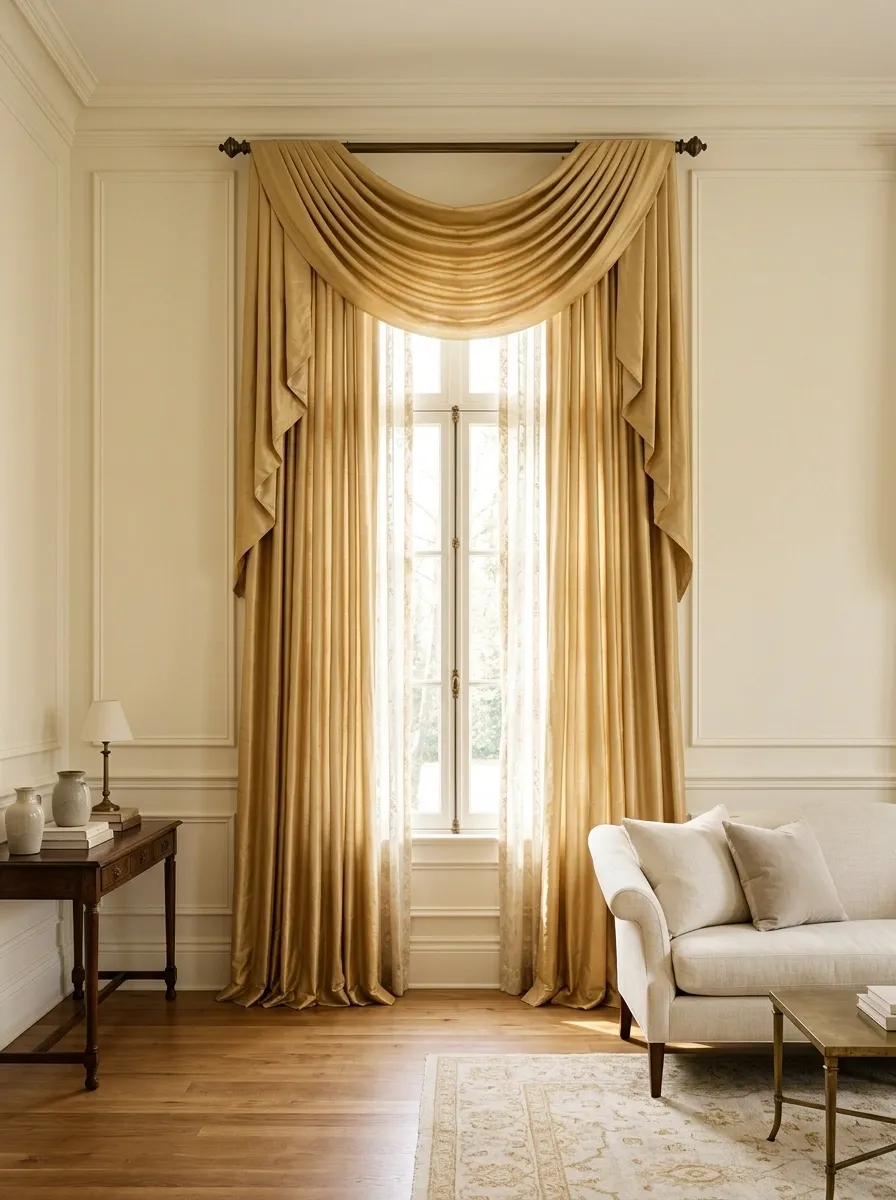
Decorative drapery places the emphasis on the shape of the fabric. A broad golden swag curves across the top of the window, while long side tails descend toward the sill or floor.
The combination creates a formal frame that suits traditional living rooms, dining rooms, and homes with classic architectural details.
Gold fabric stands out against warm ivory walls, particularly when the folds catch natural light. Dark or antique-brass hardware establishes a clear upper line, while simpler furniture keeps the arrangement from becoming visually overwhelming.
Consider the window’s height before choosing the depth of the swag. A large, layered treatment needs enough wall space to look intentional. Keep the folds defined and avoid adding too many competing patterns nearby.
Provides the curved focal line.
Extend the treatment vertically.
Preserves visual breathing room.
London Curtains With a Soft, Scalloped Hem
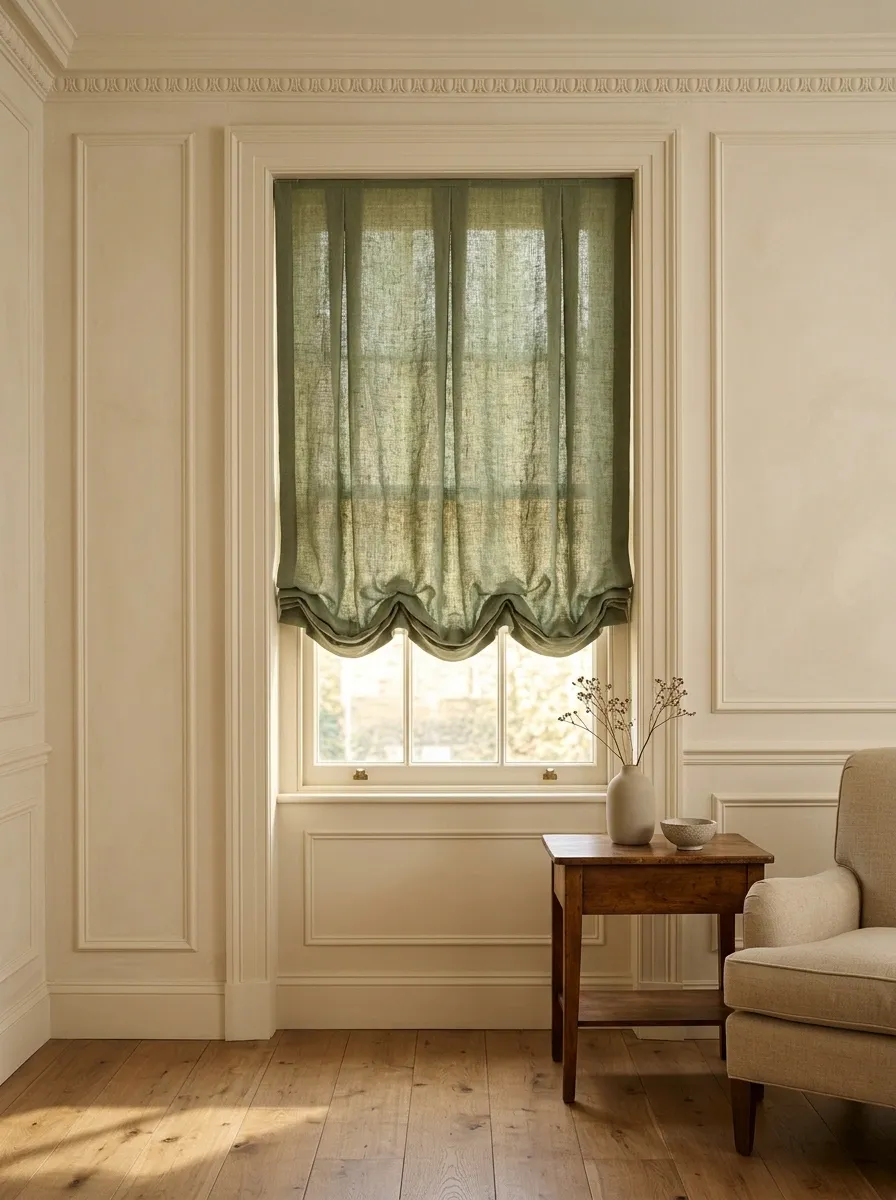
London curtains combine a tailored upper section with fuller fabric that gathers into soft curves near the bottom. A muted olive or moss-green textile creates a grounded, traditional look, particularly alongside cream walls and natural wood finishes.
The lower scallops distinguish this design from a plain flat shade. Gentle fullness gives the fabric depth, while the compact shape leaves the area beneath the window relatively clear.
This makes the treatment worth considering for bedrooms, sitting rooms, or windows where full-length curtains aren’t practical.
The gathered hem should have room to form its curves without looking cramped. Choose a textile with enough body to hold its shape while remaining soft enough for natural folds.
Thread Curtains for an Airy, Textured Interior
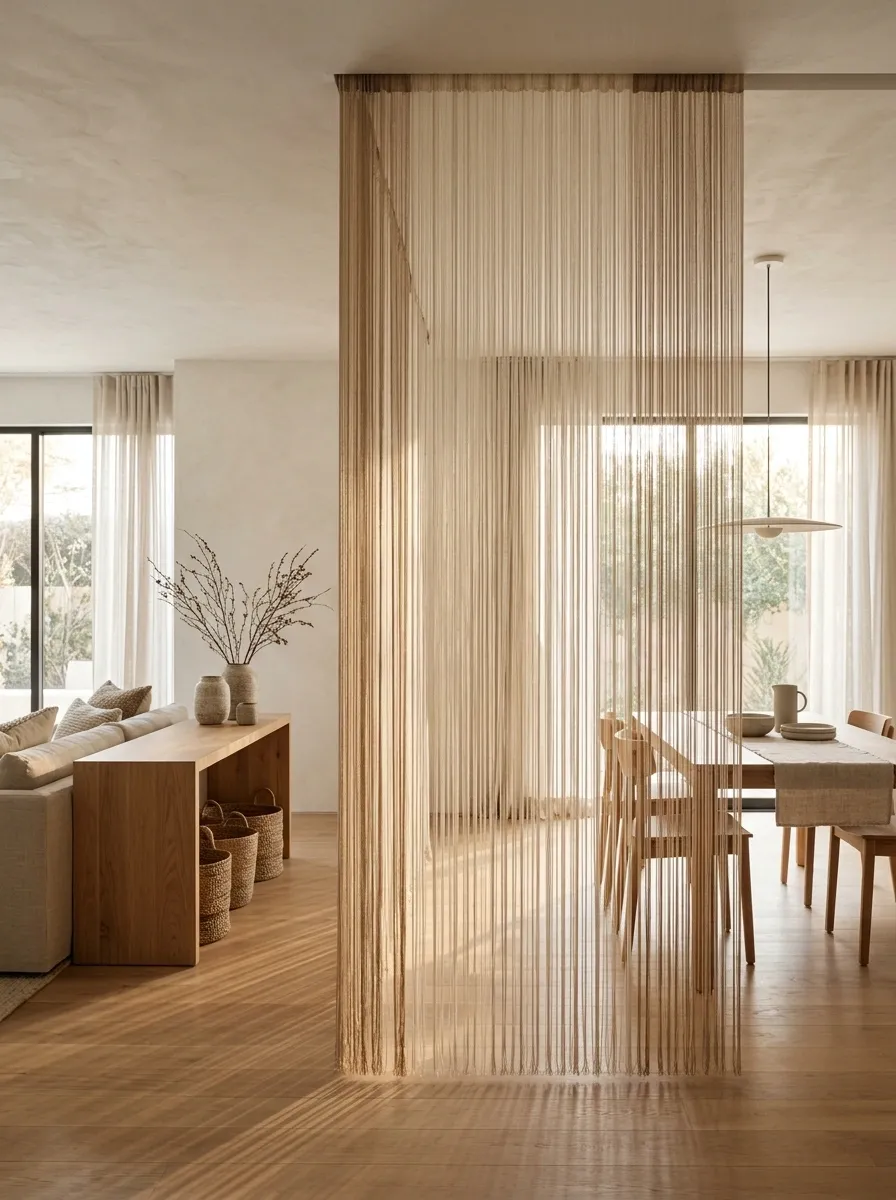
Thread curtains create a screen from individual hanging strands rather than a solid sheet of fabric. In warm brown, beige, or natural tones, they introduce fine vertical lines while allowing the room beyond to remain visible.
This makes them visually lighter than conventional curtains and gives an open-plan interior a subtle sense of separation.
Use them across an interior doorway or between living and dining areas, where a soft visual boundary matters more than full privacy. Natural wood and restrained furnishings complement the linear texture without competing with it.
Thread treatments usually offer limited privacy and light control, and individual strands can tangle or collect dust. Choose them for their transparency and decorative effect, keeping them away from doors or busy walkways where they could become caught or obstruct movement.
Thread density changes the balance between visual separation and openness.
More background remains visible.
Create a stronger visual screen.
Austrian Curtains With Cascading Teal Folds
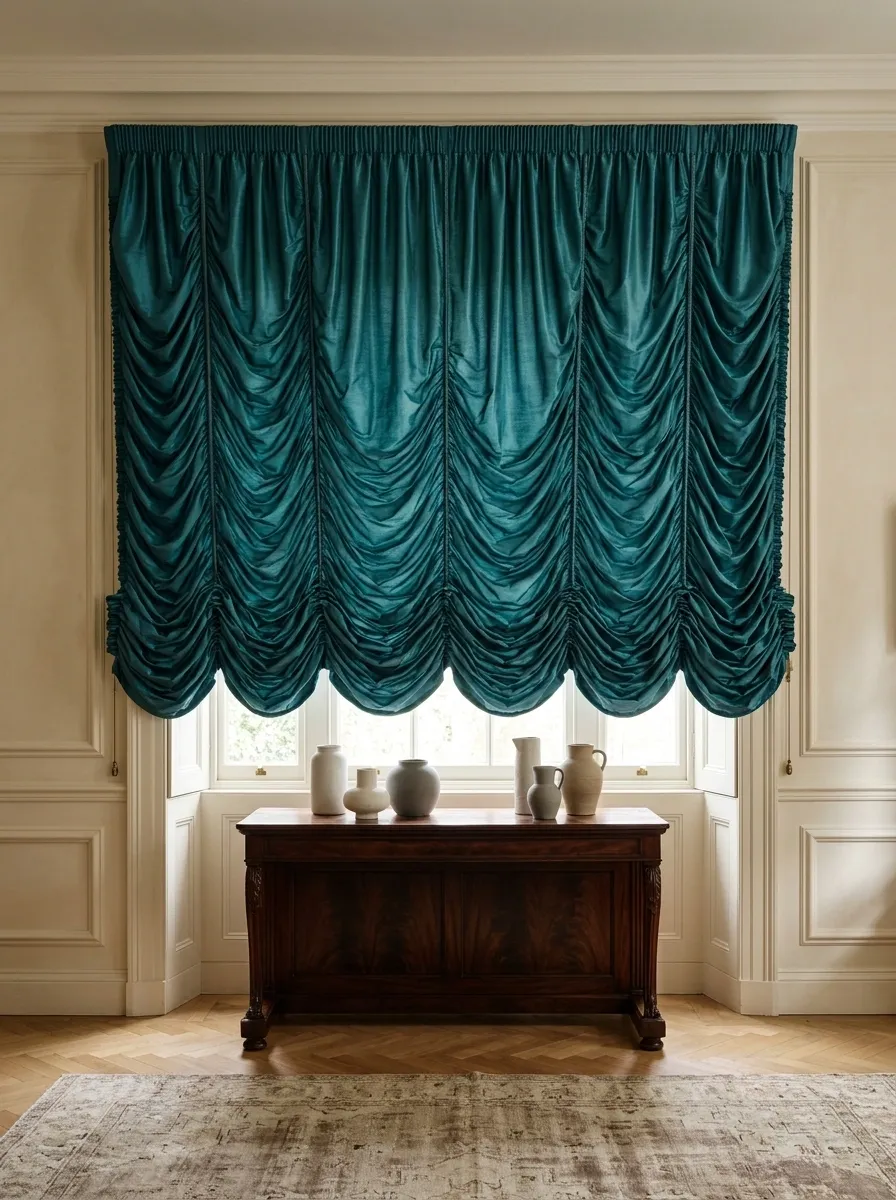
Austrian curtains create a dramatic fabric surface through repeated horizontal gathers and cascading vertical folds. Deep teal fabric catches the light differently across the window, giving the treatment a rich, dimensional appearance.
The result feels formal and decorative, especially in traditional rooms with relatively simple wall finishes.
As the fabric gathers, curved sections form along the bottom while vertical folds connect those curves to the top. This is more elaborate than a simple tied-back curtain, so the surrounding interior needs enough visual space for the fabric to stand out.
Choose the fabric and gathering arrangement together. A soft textile produces fluid folds, while a heavier material can make the raised sections more pronounced. Plan the operating hardware carefully if the treatment needs to be raised or lowered.
Give the fabric depth.
Create the cascading edge.
Japanese Panel Curtains With Natural Tones and Clean Geometry
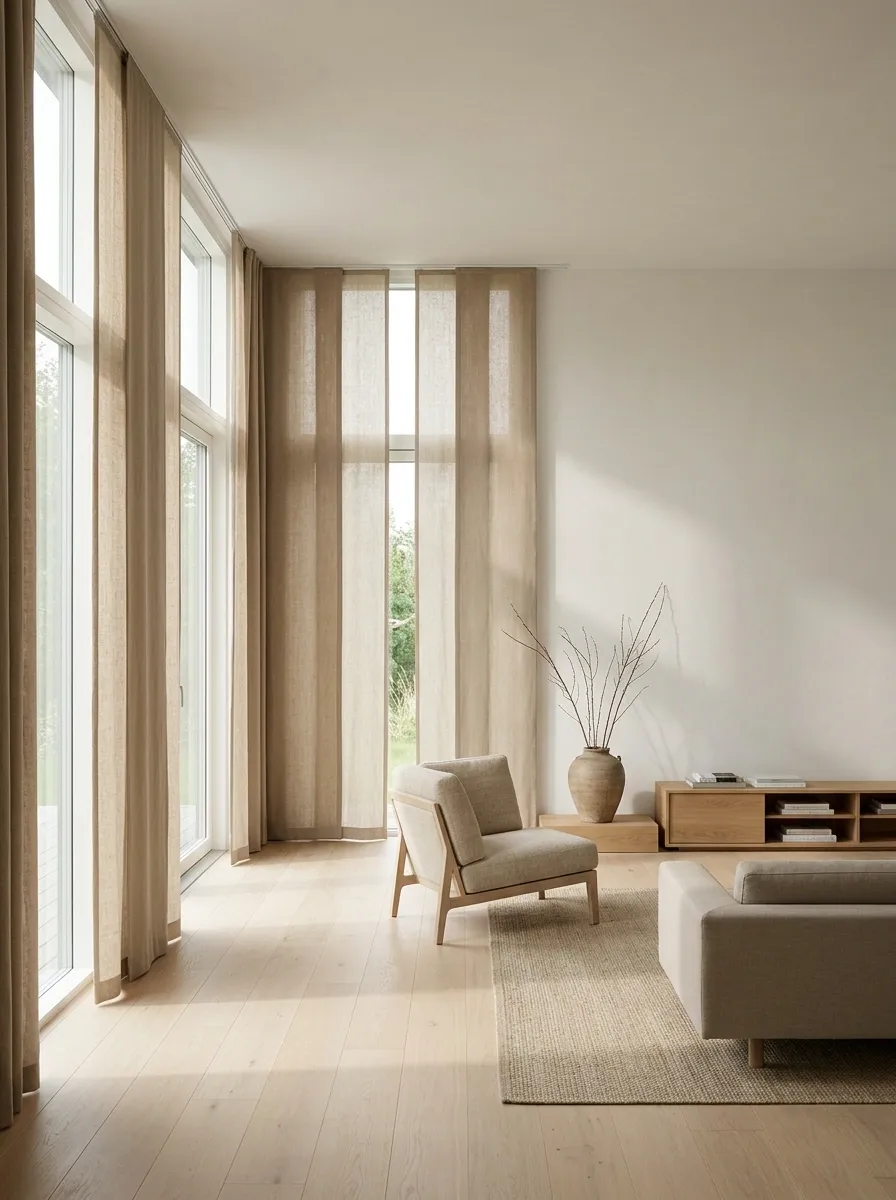
Japanese panel curtains bring a quiet, architectural quality to large windows and sliding doors. Broad, flat panels in warm beige, natural wood tones, or soft ivory create a sequence of clean vertical divisions.
Unlike gathered curtains, these panels rely on straight edges and measured spacing to establish the design.
Pair them with pale timber flooring, low-profile furniture, and uncluttered walls. Natural textures add warmth without disrupting the simple geometry. The panels can also visually connect a window and sliding doorway, helping the treatment feel like part of the room’s architecture.
This style works especially well across wide openings where ordinary curtains would gather into bulky folds. Check the track layout and panel overlap before installation, and allow enough clearance for the panels to slide without obstructing handles or furniture.
Broad panels create a more architectural finish than gathered fabric.
Keep divisions balanced.
Use texture instead of extra decoration.
Finding the Right Curtain Style for Your Home
A window treatment should suit the room, not force the room to suit it. Elaborate swags and cascading folds bring strong decorative character, while straight panels and roller blinds leave more attention for the architecture and furniture. Cafe curtains, thread treatments, and shaped shades solve different practical and visual problems.
Before buying fabric, stand back and look at the entire window. Consider the amount of wall space, the furniture nearby, how the curtains will open, and the privacy you need after dark. Those everyday details matter just as much as the finished appearance.
Choose the style that makes sense for your home, then settle the fabric, heading, hardware, and length as one complete design. Save your favorite ideas so you have a clear reference when it’s time to measure and shop.