
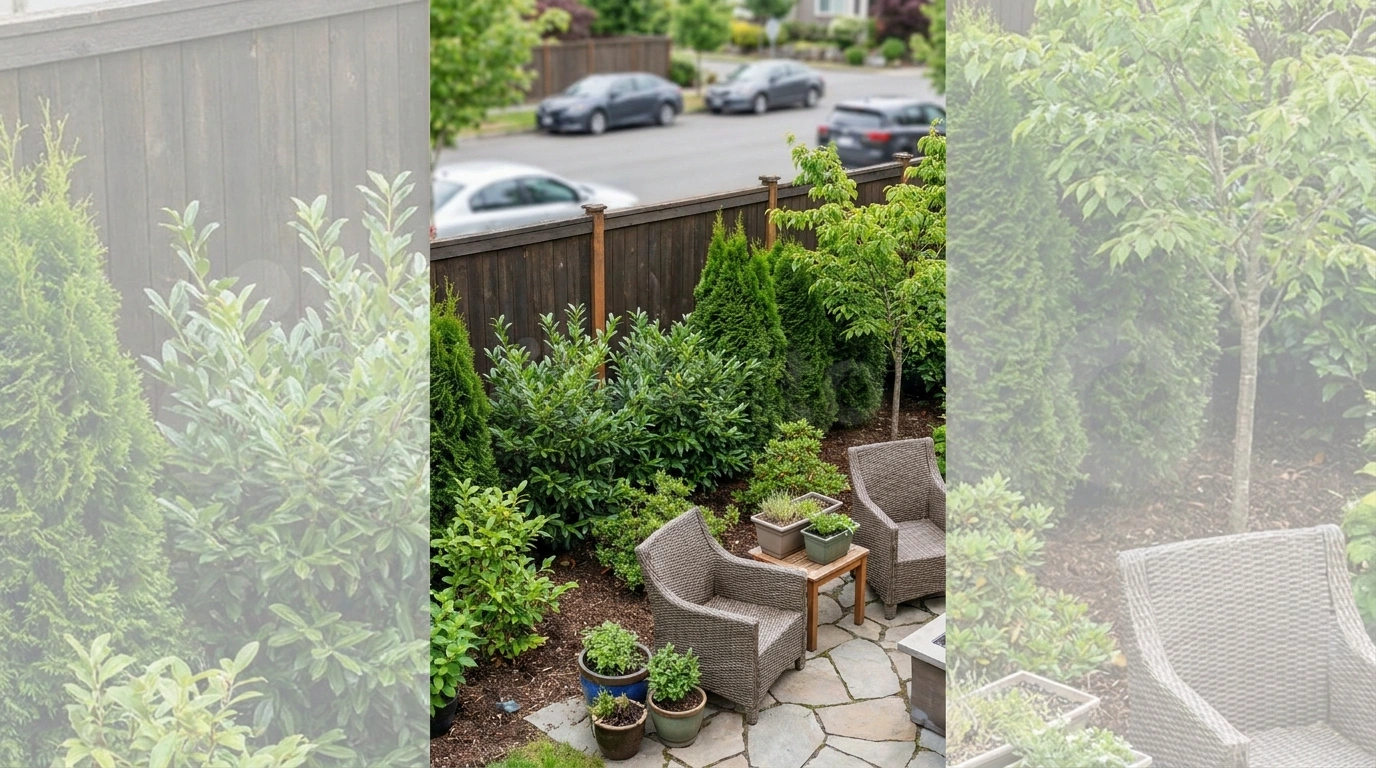
Traffic has a special talent for ruining the exact moment you finally get to enjoy your backyard. The coffee is ready, the patio looks good, and the weather is behaving. Then a motorcycle tears past, a truck rattles the windows, and your peaceful morning becomes a free public listening experience you never signed up for.
The annoying part is that plenty of popular backyard fixes tackle the appearance of the problem instead of the problem itself. A few shrubs won’t silence a busy road. An open-slat fence isn’t a soundproof wall, and a tiny fountain can’t negotiate a ceasefire with rush-hour traffic.
To reduce traffic noise in your backyard, start with the route the sound takes, the barriers between the road and your seating area, and the layout of the property. Smart furniture placement, suitable fencing, dense planting, and gentle background sounds all have a role to play.
The goal isn’t to turn your garden into a concrete bunker. It’s to create an outdoor space that feels more private, comfortable, and peaceful without making it look like an industrial noise-control facility.
The Backyard Reality Check
Build a Backyard Layout That Helps Keep Traffic Noise at Bay
The first move isn’t buying expensive landscaping. It’s figuring out where the noise enters the yard and where the quietest outdoor space can be created.
Start with the layout before spending money on things that look expensive but accomplish very little.
Move the Main Seating Area to the Quietest Side of the Yard
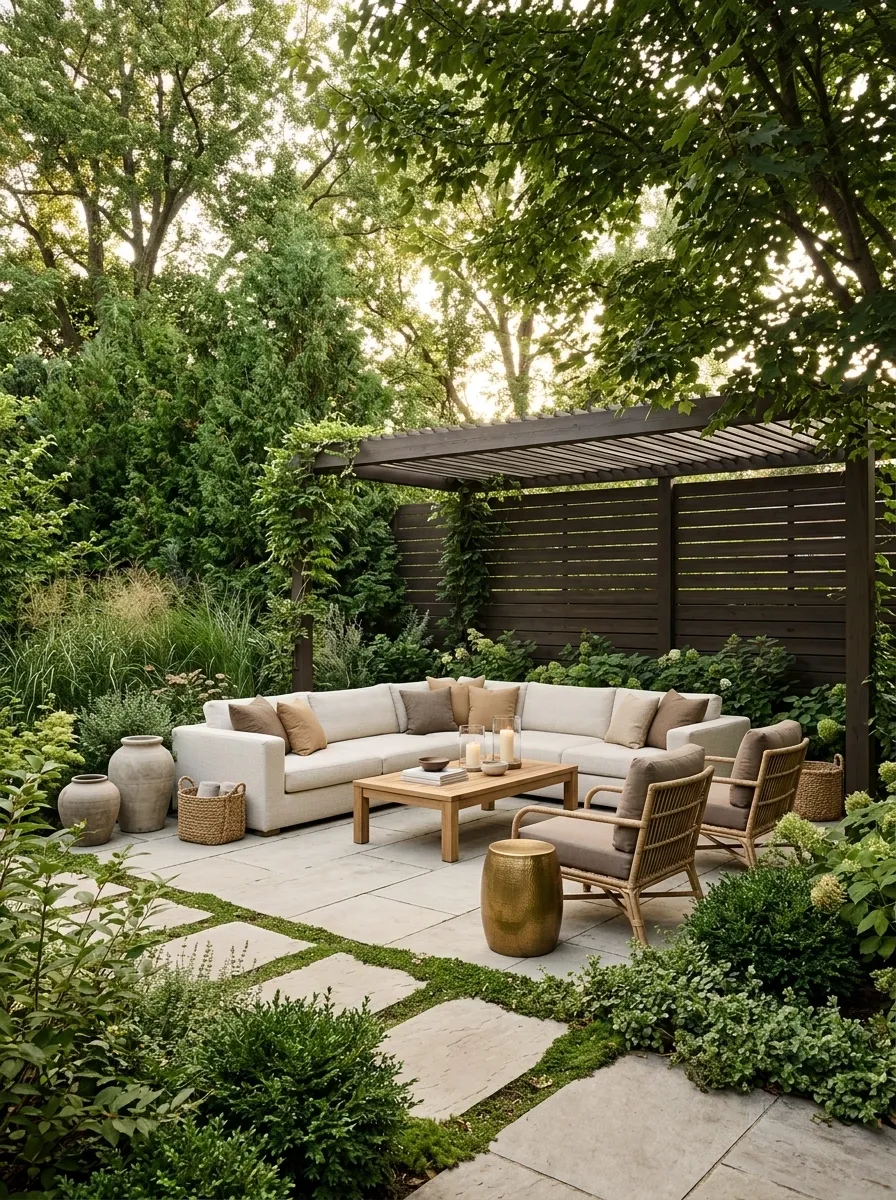
Your patio doesn’t have to sit beside the road just because that’s where it was originally placed. Moving the main seating area farther from the traffic-facing boundary can make the space feel more removed from passing vehicles.
Look at the yard from the road inward. Find the most sheltered corner, especially one already screened by a suitable fence, a house wall, or an existing garden structure.
Try this layout adjustment first:
- Move the main chairs away from the exposed boundary.
- Put a dining table in the more sheltered zone.
- Keep the most frequently used seating away from direct openings toward the road.
A few furniture changes are easier to test than a major landscaping project.
THE LAYOUT RESET
Same backyard. Smarter seating.
The goal is to use the most sheltered part of the yard, not automatically the part closest to the street.
LAYOUT A • EXPOSED
The chairs sit beside the road-facing edge with little screening.
LAYOUT B • SHELTERED
The seating uses a more sheltered part of the property.
Illustrative layouts only. Actual results depend on the property’s shape, buildings, terrain, and sources of reflected sound.
Use Solid Fencing Where It Makes Practical Sense
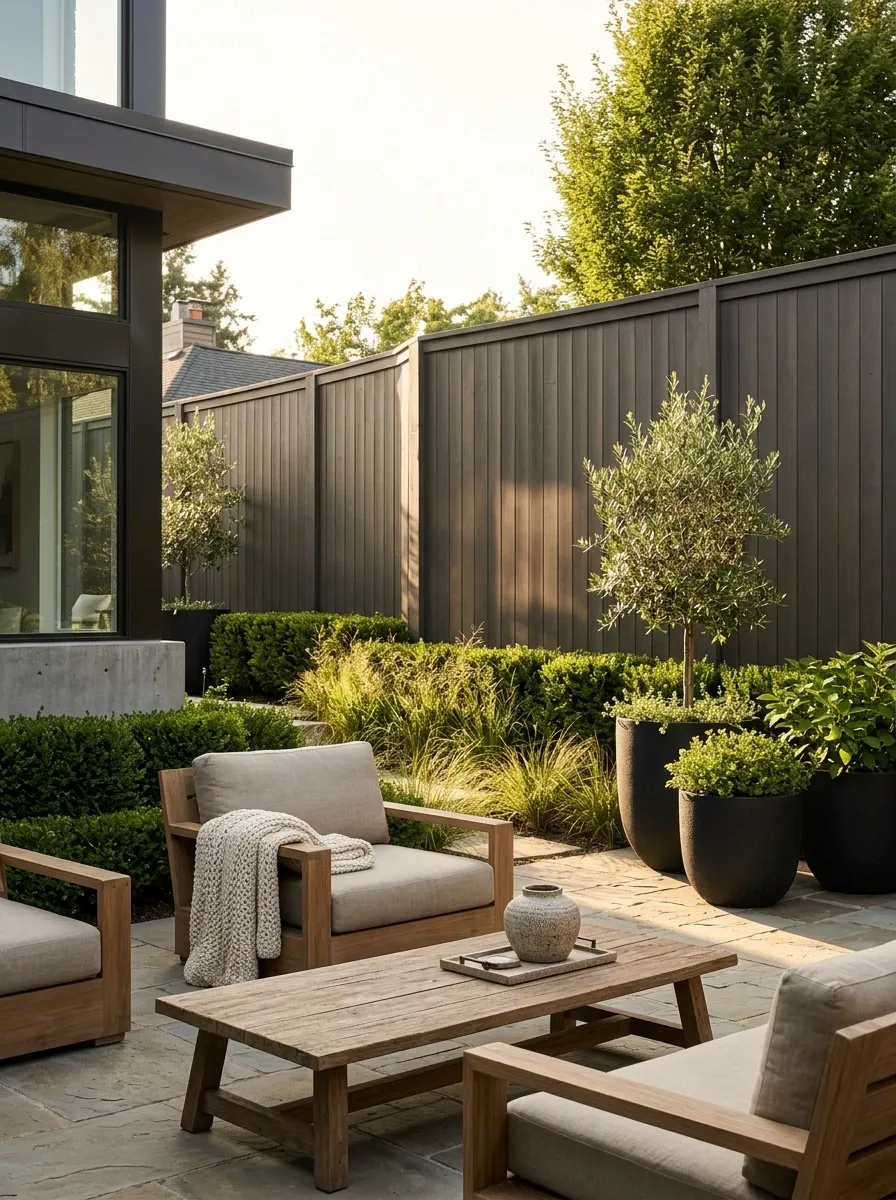
That decorative fence with generous gaps may be serving looks, but it isn’t doing much to interrupt the direct path of traffic noise. A properly designed solid barrier is generally a better starting point when sound reduction is the goal.
Height, continuity, placement, and suitable construction all matter. A short screen with open spaces underneath won’t perform like a continuous barrier that interrupts the sound path.
Before installing one, check local height limits, drainage, wind exposure, property boundaries, and any neighborhood restrictions.
Fence shopping rule: Choose the barrier for its actual construction first, then choose a finish that complements the house. Nobody needs a backyard noise solution that looks like a prison yard.
FENCE CHECK • BEFORE YOU BUY
Looks matter. Gaps matter more.
▥ ▥ ▥
Open decorative slats
Airy and attractive, but the openings let sound pass through.
▰ ▰ ▰
Continuous solid barrier
A more promising design when appropriately built and positioned.
THE PRACTICAL CHECKLIST
✓ Check for gaps and openings
✓ Assess the required height and placement
✓ Confirm structural and local requirements
✓ Choose a finish that suits the house
Create a Layered Boundary Instead of a Single Thin Screen
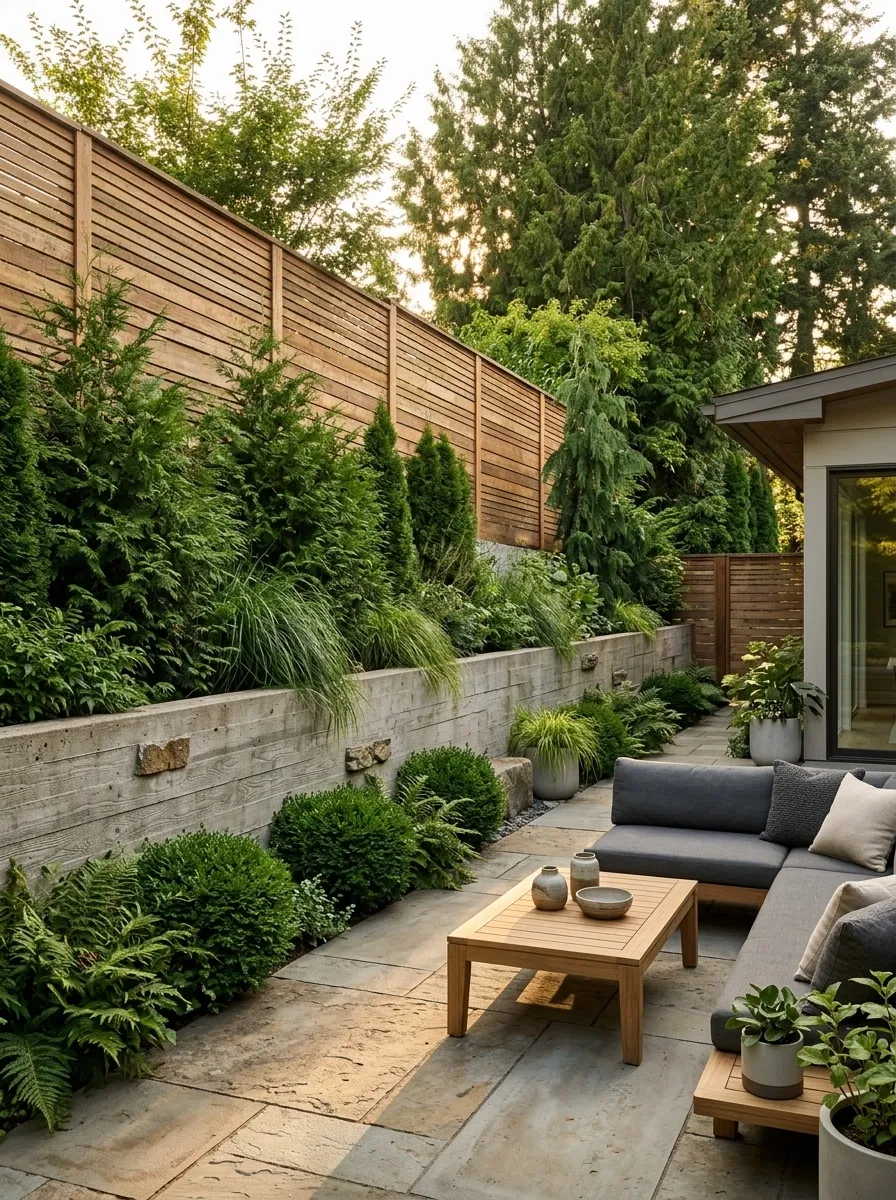
One thin row of shrubs is a lot of responsibility to dump on a plant. A more considered boundary combines different elements to create a fuller, more private garden edge.
Start with a suitable solid barrier where it’s feasible. Add dense planting on the garden side, then use the remaining space for a path, planting bed, or outdoor seating zone.
The result looks more intentional than a fence awkwardly stranded in the middle of a lawn.
The important distinction is that the solid barrier does the main physical screening work. The planting softens its appearance, improves privacy, and gives the garden depth.
Plants alone shouldn’t be treated as a reliable traffic-noise barrier.
LANDSCAPE PLANNING • FROM ROAD TO PATIO
Build depth into the boundary.
Each layer has a job. Together, they create a more complete garden design than one lonely fence panel.
LAYER ONE
Road-facing edge
Identify the main exposed boundary and the direction of incoming traffic sound.
LAYER TWO
Solid barrier
Use a suitable continuous fence or wall where the site and local rules allow it.
LAYER THREE
Dense planting
Add shrubs and greenery to soften the boundary and improve garden privacy.
LAYER FOUR
Living space
Place the patio or seating zone in the most sheltered practical location.
Design concept only. A layered garden improves enclosure and appearance, but planting does not guarantee a measurable reduction in road noise.
Choose Landscaping That Supports a Quieter Outdoor Space
Plants bring the softness that makes a backyard feel like a garden rather than a construction project. They can also improve privacy and help disguise hard boundaries.
The trick is choosing planting that suits the space instead of buying whatever looks lush at the garden center.
Plant Dense Evergreen Hedges Along the Exposed Boundary
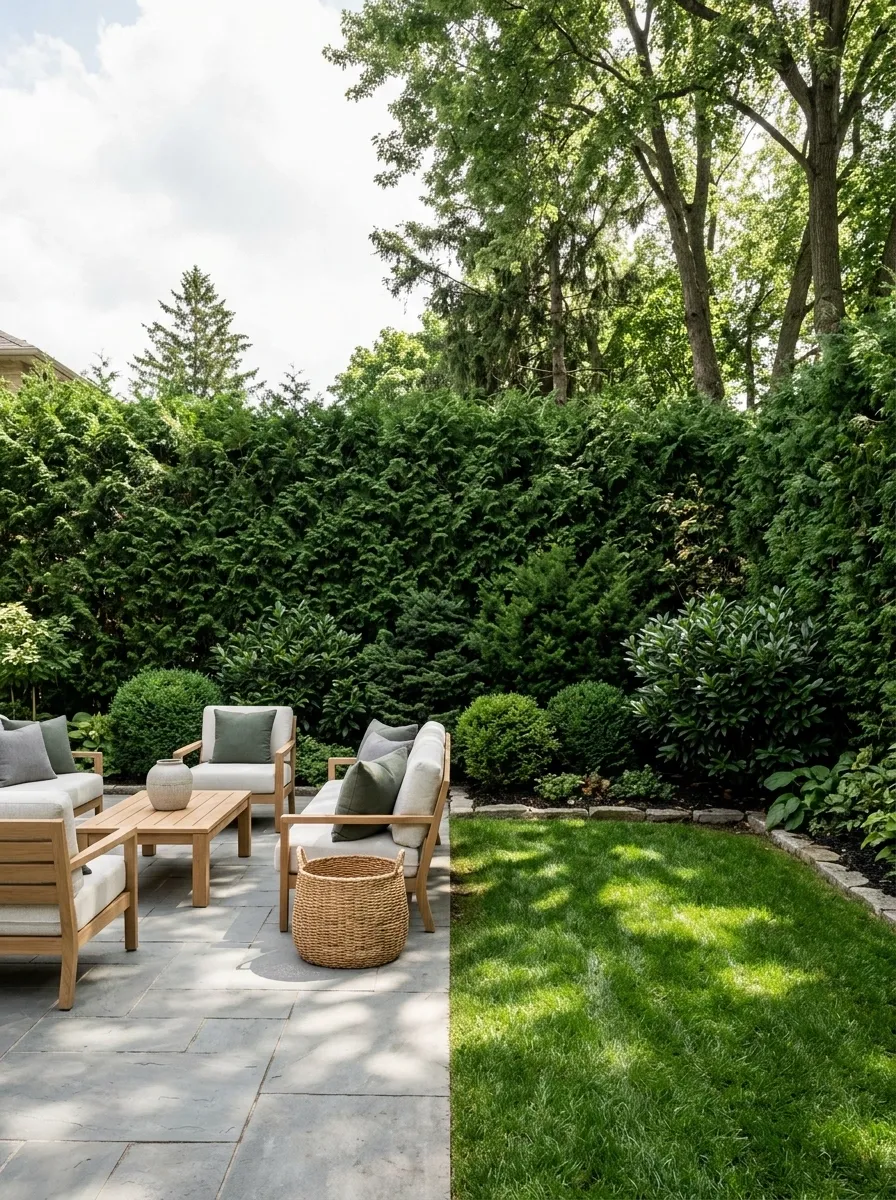
Deciduous shrubs can leave a surprisingly bare boundary in winter. Evergreen hedges keep their foliage throughout the year, making them useful for ongoing privacy and a consistent green backdrop.
Choose plants based on your local climate, soil, available width, and the mature height of the hedge. A dense row needs enough room to grow properly.
Squeezing large shrubs into a narrow strip and hacking them back every weekend isn’t a relaxing hobby. It’s a landscaping subscription nobody asked for.
Before choosing a hedge, check these details:
PLANT BUYING CHECKLIST
Will this hedge work here?
GROWING CONDITIONS
☐ Local climate suitability
☐ Sun and shade needs
☐ Soil and drainage
☐ Water requirements
SPACE AND UPKEEP
☐ Mature width and height
☐ Year-round foliage
☐ Trimming frequency
☐ Safe distance from structures
Keep expectations realistic. A hedge adds privacy and greenery, but it won’t reliably block traffic noise by itself.
Combine Trees, Shrubs, and Ground-Level Planting
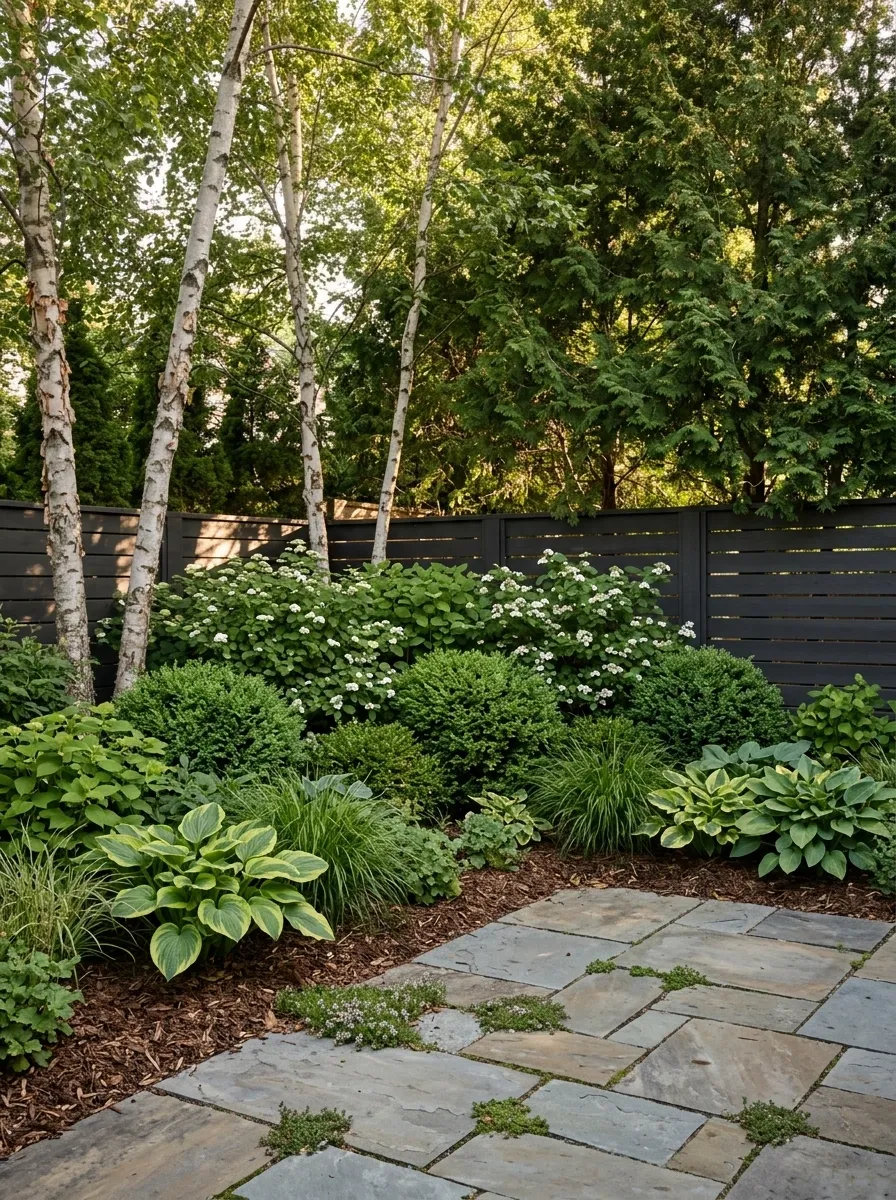
A garden boundary looks fuller when it has different heights instead of a flat line of identical plants. Taller trees provide a canopy, medium shrubs add body, and low planting softens the edge near paths and patios.
This layered arrangement works especially well when the backyard feels exposed or when a plain fence dominates the view. Choose species that fit the available space and won’t create future problems with roots, drainage, or overhanging branches.
Think of the planting as a composition, not a wall of random greenery. Different leaf shapes and shades of green give the boundary depth without requiring a collection of expensive ornamental plants.
THE LAYERED GARDEN FORMULA
Give the garden more than one height.
A balanced planting scheme makes the boundary feel intentional while providing varied foliage and a more enclosed setting.
TALL LAYER
Trees
Add height, canopy, and a sense of enclosure where space permits.
MIDDLE LAYER
Shrubs
Fill visual gaps and build a denser green background.
LOW LAYER
Ground planting
Soften path edges and connect the planting to the lawn or patio.
Designer rule: Repeat a few compatible plant varieties instead of buying one of everything. The result feels cohesive, not like the clearance section at a garden center.
Use Raised Planters to Structure a Small Backyard
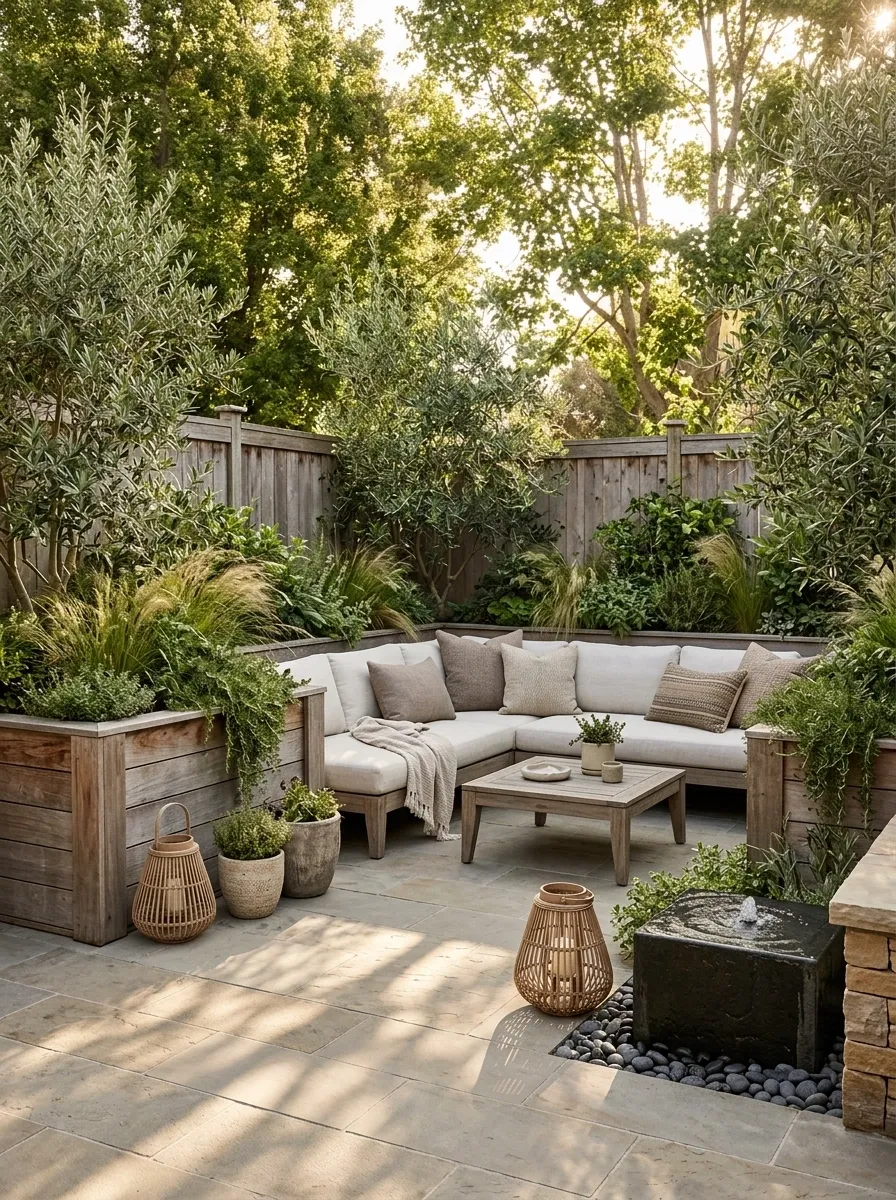
Raised planters give a small backyard definition without taking up the space needed for an oversized hedge. Place a long planter along a patio edge, use two planters to frame a seating nook, or create a staggered arrangement beside an existing fence.
The trick is choosing planters that are substantial enough to suit the space. Tiny pots scattered along the boundary won’t suddenly become a sound barrier.
Their job is to add greenery, soften hard edges, and make the outdoor layout feel more private.
Design rule: Repeat the same planter finish in different sizes. It looks intentional instead of resembling a garden center’s lost-and-found section.
SMALL BACKYARD DESIGN NOTES
Three ways to make planters work harder.
Line the patio edge
Use a row of matching planters to define the outdoor living zone.
Frame a seating nook
Place planters at the sides of a bench or outdoor sofa without blocking circulation.
Repeat natural finishes
Choose matching wood, stone, or muted ceramic finishes for a cohesive look.
Before buying: Check the mature plant size, container weight, drainage, and space needed to walk around the planters.
Add Outdoor Features That Make Traffic Less Noticeable
A quieter-feeling backyard doesn’t rely on barriers alone. Background sounds and comfortable surroundings can make outdoor time less frustrating, even when some traffic remains audible.
The key is using these additions for what they actually do. A water feature can provide sound masking, thoughtful audio can create a more pleasant atmosphere, and soft furnishings can improve comfort.
None of them deserves to be marketed as a magic mute button for the highway.
Add a Water Feature Near the Seating Area
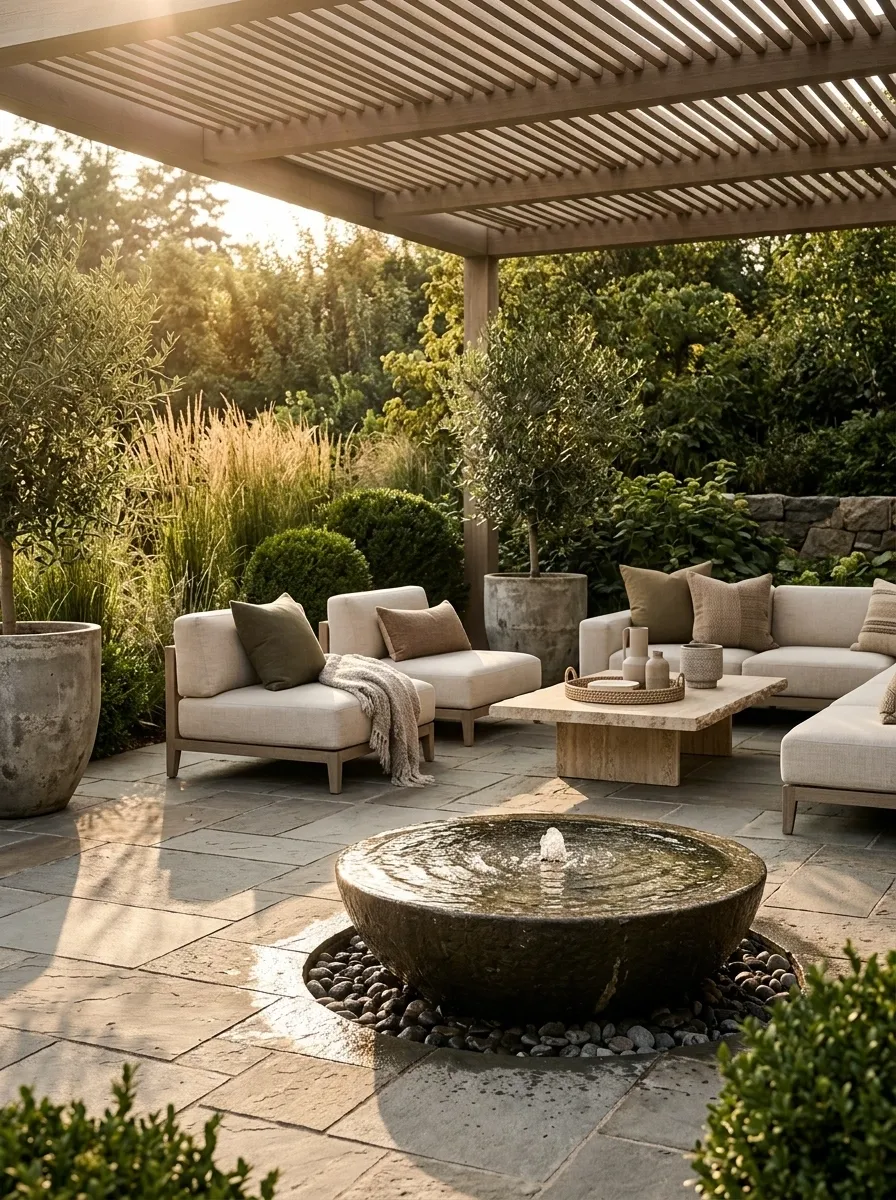
The gentle bubbling of water can make traffic less noticeable, especially when the seating area is relatively close to the feature. A compact fountain can also give the patio a focal point, so the eye has something more appealing to land on than the road beyond the fence.
Choose the sound carefully. A small bubbling bowl creates a softer effect than a forceful cascade, and louder isn’t automatically better.
The feature should suit the size of the garden and remain pleasant during a long afternoon outside. A tiny tabletop fountain isn’t about to win a volume contest with a line of heavy trucks.
WATER FEATURE FIELD NOTES
Choose the sound, not just the sculpture.
Different water features create different experiences. Match the sound and maintenance needs to the space.
COMPACT
Bubbling bowl
A restrained option for a small patio or intimate seating corner.
GENTLE FLOW
Small fountain
A decorative focal point with moving water and an adjustable sound character.
MORE PRESENCE
Compact cascade
A stronger visual statement that needs careful sound and splash management.
THE REALITY CHECK
Listen to the feature at your usual seating position. Keep the volume comfortable, maintain the pump, and remember that masking makes noise less noticeable rather than physically blocking it.
Use an Outdoor Speaker Carefully for Gentle Background Sound
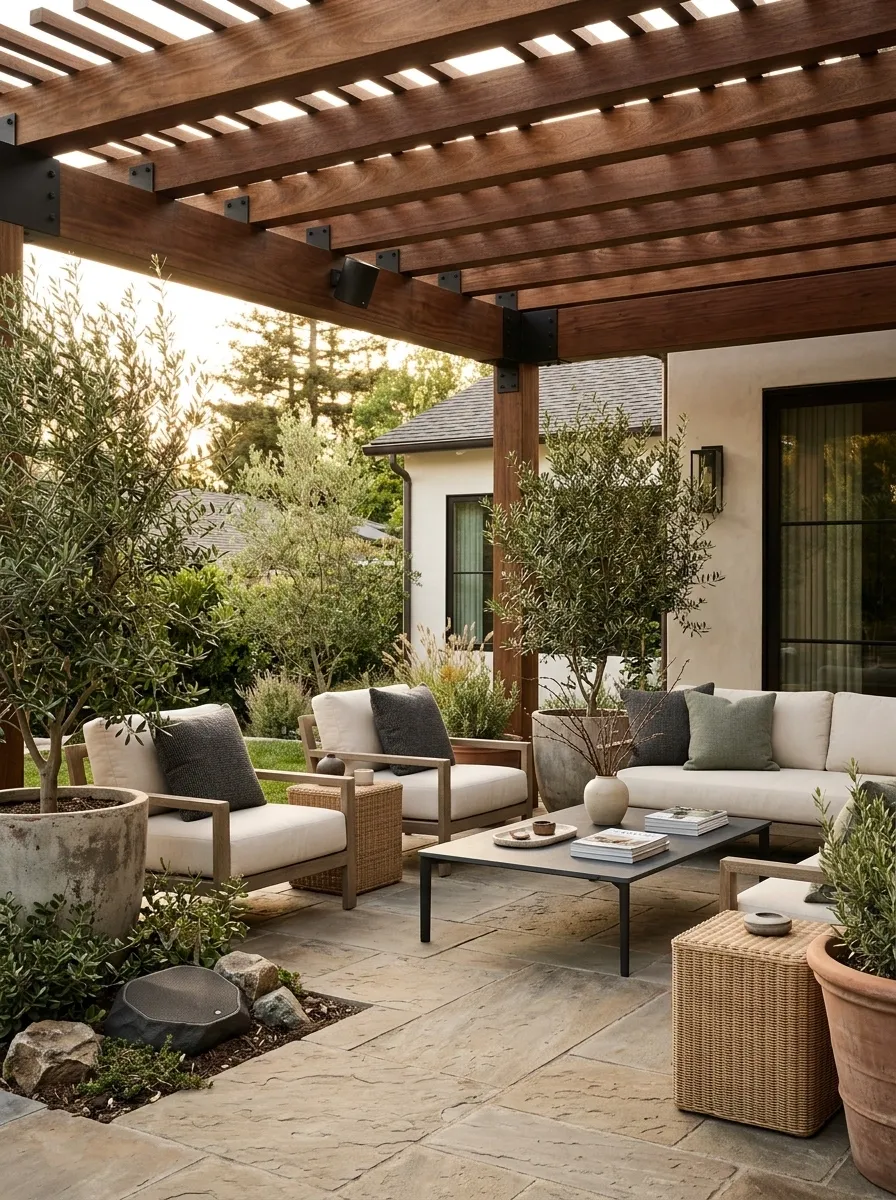
A little background music can make a patio feel more inviting, particularly when traffic noise is difficult to avoid. Keep the sound focused on the seating area rather than turning the backyard into an open-air concert venue.
Choose weather-rated equipment, place speakers where they’re useful to listeners, and keep the volume comfortable. Constantly increasing the volume to compete with trucks defeats the purpose of creating a relaxing outdoor space.
The neighbor test: If the people next door can follow your entire playlist without trying, the volume needs adjusting. The backyard doesn’t need its own nightclub residency.
OUTDOOR AUDIO • QUICK SETUP
Background sound, not backyard warfare.
🔊
Aim toward the seating
Keep the listening area comfortable without directing unnecessary sound toward neighbors.
🎵
Start at a low volume
Use gentle ambient music rather than trying to overpower every passing vehicle.
🌧️
Choose outdoor-rated gear
Check weather protection, safe wiring, and local noise rules before installation.
Audio can mask some unwanted sound, but it won’t reduce the traffic noise physically reaching the property.
Choose Soft Furnishings That Make the Seating Area More Comfortable
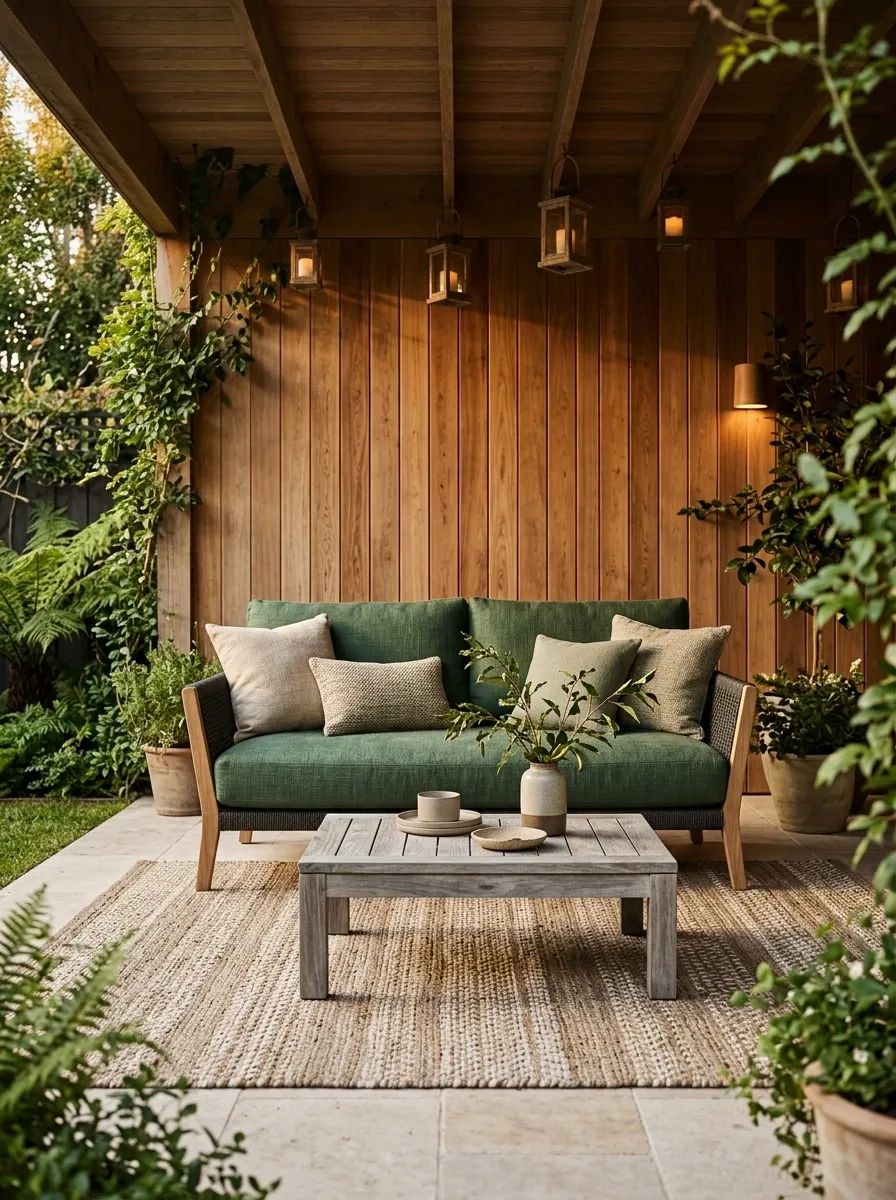
Outdoor cushions, textured rugs, and comfortable upholstery won’t block much road noise in an open garden. They can, however, make the seating area feel more inviting and encourage you to spend time in a thoughtfully sheltered corner.
Use a restrained mix of weather-resistant fabrics, natural textures, and colors that relate to the planting. A deep green cushion against warm timber or pale stone feels considered without requiring an entire patio makeover.
Skip the urge to cover every surface in cushions. The goal is a comfortable seating arrangement, not a showroom where nobody dares to sit down.
THE COMFORT LAYER
Make the sheltered corner worth using.
Choose a few pieces that improve comfort without crowding the patio.
Supportive seating
Choose chairs with comfortable proportions and cushions made for outdoor use.
Tactile layers
Bring in washable covers, woven textures, and an outdoor rug suited to the surface.
Warm lighting
Add shielded outdoor lamps or lantern-style fixtures to make evening seating more inviting.
Keep expectations straight: These details improve comfort and atmosphere, not meaningful traffic-noise insulation in an exposed backyard.
Match the Solution to Your Backyard and Budget
The best plan depends on how the property is laid out, how close the road is, what barriers already exist, and how much construction makes sense.
Start with changes that are easy to test, then invest in more substantial measures if the problem remains.
Start With Layout Changes Before Major Construction
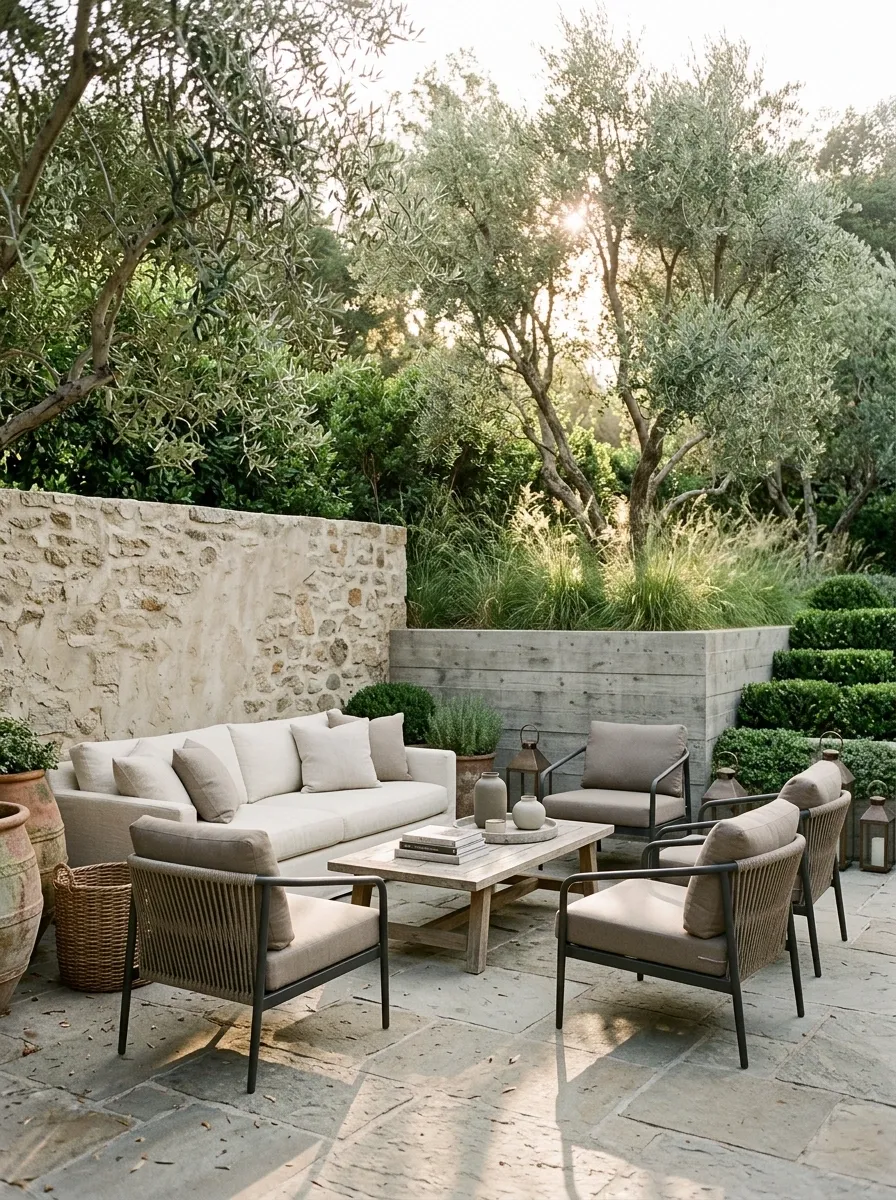
Before ordering a new fence or digging up the garden, test what can be improved with the existing space. Listen from different seating positions at different times of day.
Traffic patterns change, and a spot that feels comfortable in the morning may be considerably noisier during the evening rush.
Move the furniture, use existing structures for shelter where practical, and identify the exposed boundary. These basic checks help determine where further spending is most likely to make sense.
The budget-friendly sequence: Observe first, rearrange second, and start requesting construction quotes only when the problem and proposed solution are clear.
THE LOW-COST STARTING PLAN
Spend strategically, not emotionally.
Listen and observe
Identify the noisiest boundaries and the most comfortable seating positions.
Test the layout
Reposition chairs and tables to use the most sheltered practical area.
Choose the next move
Evaluate fencing, planting, or professional advice based on the remaining problem.
A quieter-feeling seating arrangement is a useful first improvement, but furniture changes alone won’t block substantial traffic noise.
Know When a Fence or Wall Needs Professional Advice
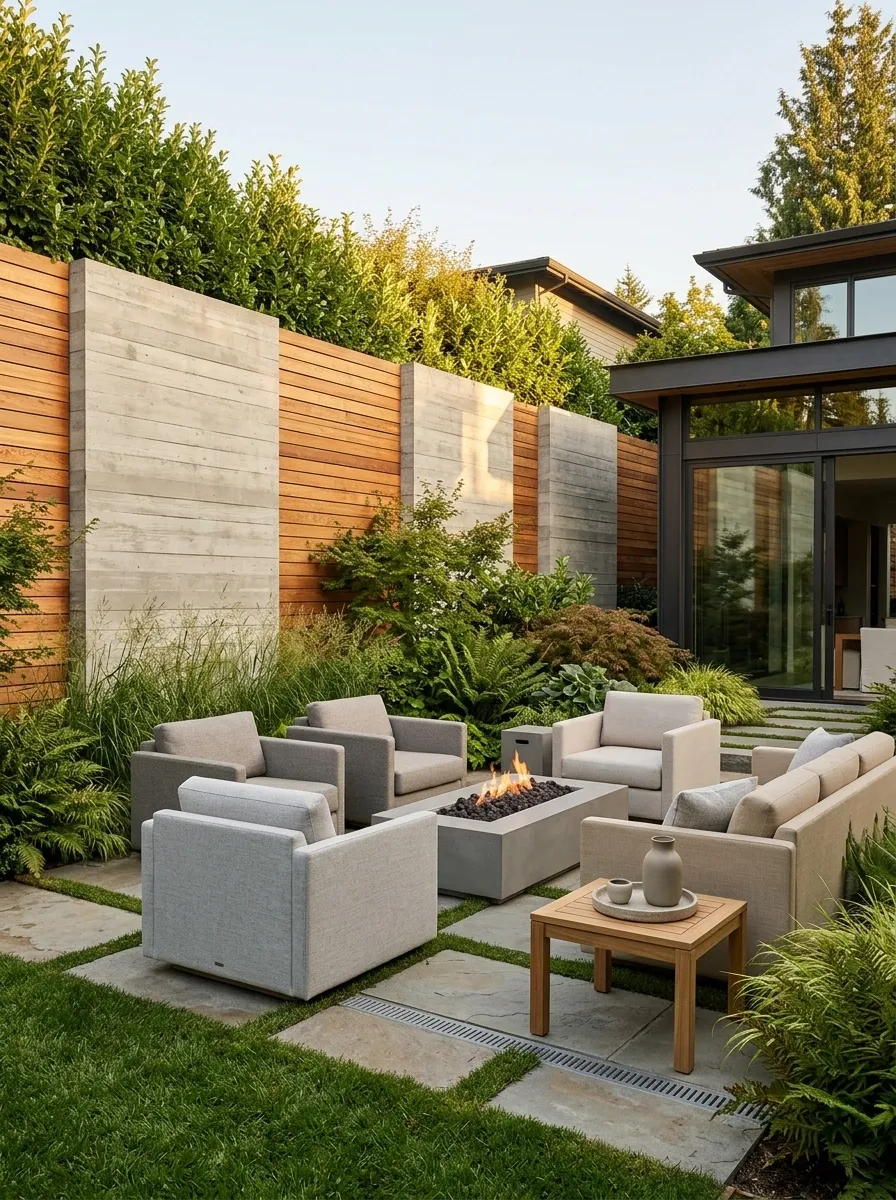
A substantial acoustic barrier has to do more than look solid. Its dimensions, construction, and position affect how well it interrupts sound, while wind loads, foundations, drainage, and site conditions determine whether the structure is suitable for the property.
Before building a tall fence or masonry wall, check local regulations and consult a qualified professional when structural design or permits are involved. Underground utilities and property boundaries also need attention before excavation begins.
A rushed installation can create expensive problems without delivering the expected result. That’s a particularly annoying outcome when the original goal was a more peaceful place to sit.
BEFORE THE BUILD STARTS
Four checks that prevent costly surprises.
01 / RULES
Local requirements
Check permitted heights, approvals, and boundary restrictions.
02 / STRUCTURE
Wind and foundations
Make sure the proposed barrier is suitable for the site and soil.
03 / SITE
Drainage and utilities
Check water flow, underground services, and excavation risks.
04 / PERFORMANCE
Expected results
Ask a qualified acoustic professional about realistic outcomes where noise is severe.
Don’t guess on structural work. A heavy wall or tall fence needs proper planning, not just a confident weekend DIY tutorial.
Combine Several Measures for a More Enclosed Garden
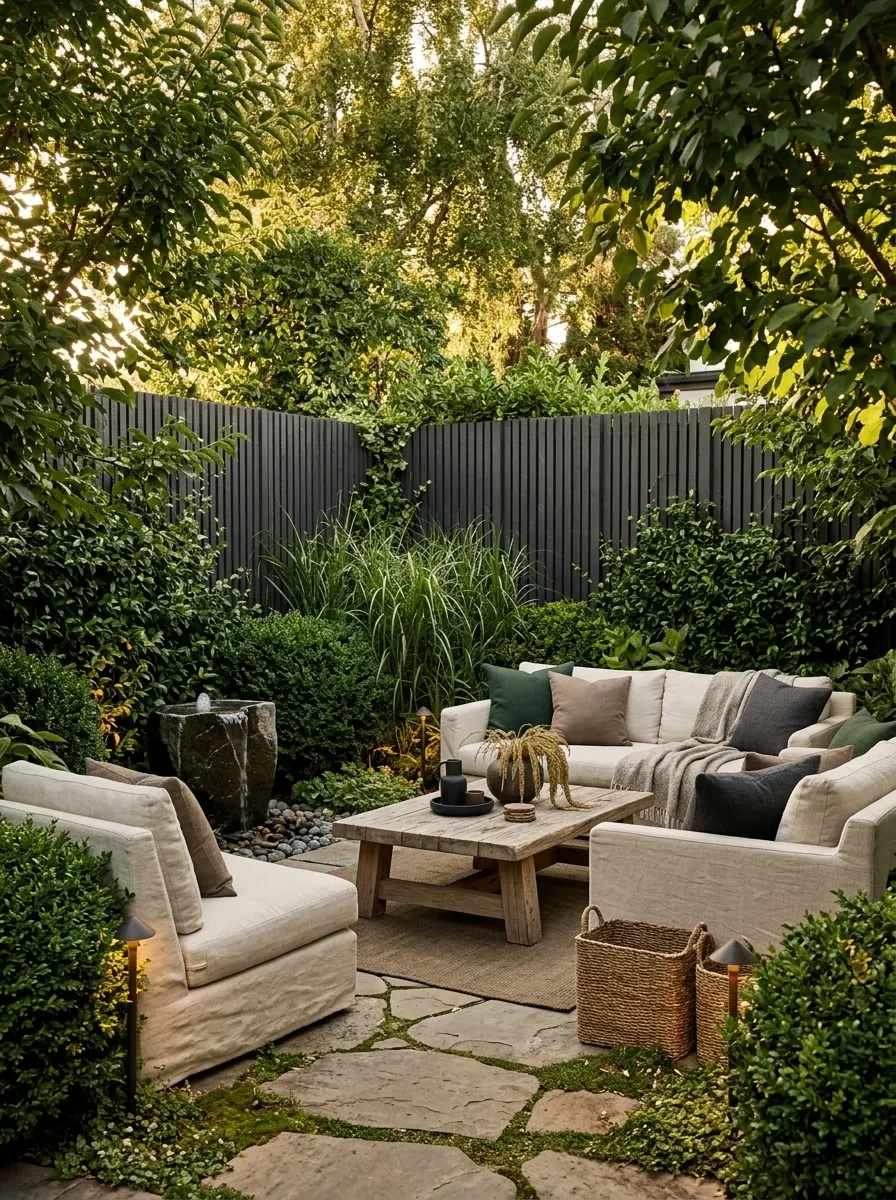
The strongest overall plan often combines measures that solve different problems. A suitable solid barrier can interrupt the direct path of sound, while dense planting softens the boundary.
A sheltered seating layout makes the garden more comfortable, and a modest water feature can provide gentle background sound.
The right combination depends on the property, so there’s no universal shopping list that guarantees silence. Choose the measures that address the actual weaknesses in the yard instead of buying every product advertised as a noise solution.
A cohesive garden will look better, too. Repeated materials, layered greenery, and a defined seating area create a deliberate design rather than a collection of unrelated fixes.
BUILD YOUR OWN BACKYARD PLAN
Choose a sensible starting point.
PLAN A • START SMALL
Rework the layout
Move seating, use existing sheltered areas, and add comfortable outdoor furnishings.
Best starting point when construction isn’t yet justified.
PLAN B • IMPROVE THE EDGE
Add screening and greenery
Evaluate a suitable solid barrier, then add planting that complements the property.
Best when the exposed boundary is a key weakness.
PLAN C • DESIGN AROUND THE PROBLEM
Combine targeted measures
Pair suitable barriers with a sheltered seating zone and carefully chosen sound masking.
Best when several aspects of the yard need attention.
These are planning approaches, not guaranteed performance levels. Severe or persistent traffic noise may require a site-specific acoustic assessment.
Make Your Backyard Feel Like Somewhere You Actually Want to Spend Time
You don’t need to buy every noise-reducing product on the internet or surround the garden with a fortress wall. Start by fixing the obvious weaknesses. Move the seating, assess the boundary, and work out whether a solid barrier could help before spending money on decorative extras.
Then give the space some personality with layered greenery, comfortable furniture, and a water feature if it suits the setting. Those details won’t erase the road, but they can make the garden feel more private and inviting.
Save these ideas for your next backyard project. Your garden deserves better than a collection of expensive fixes that look impressive and barely address the problem.