
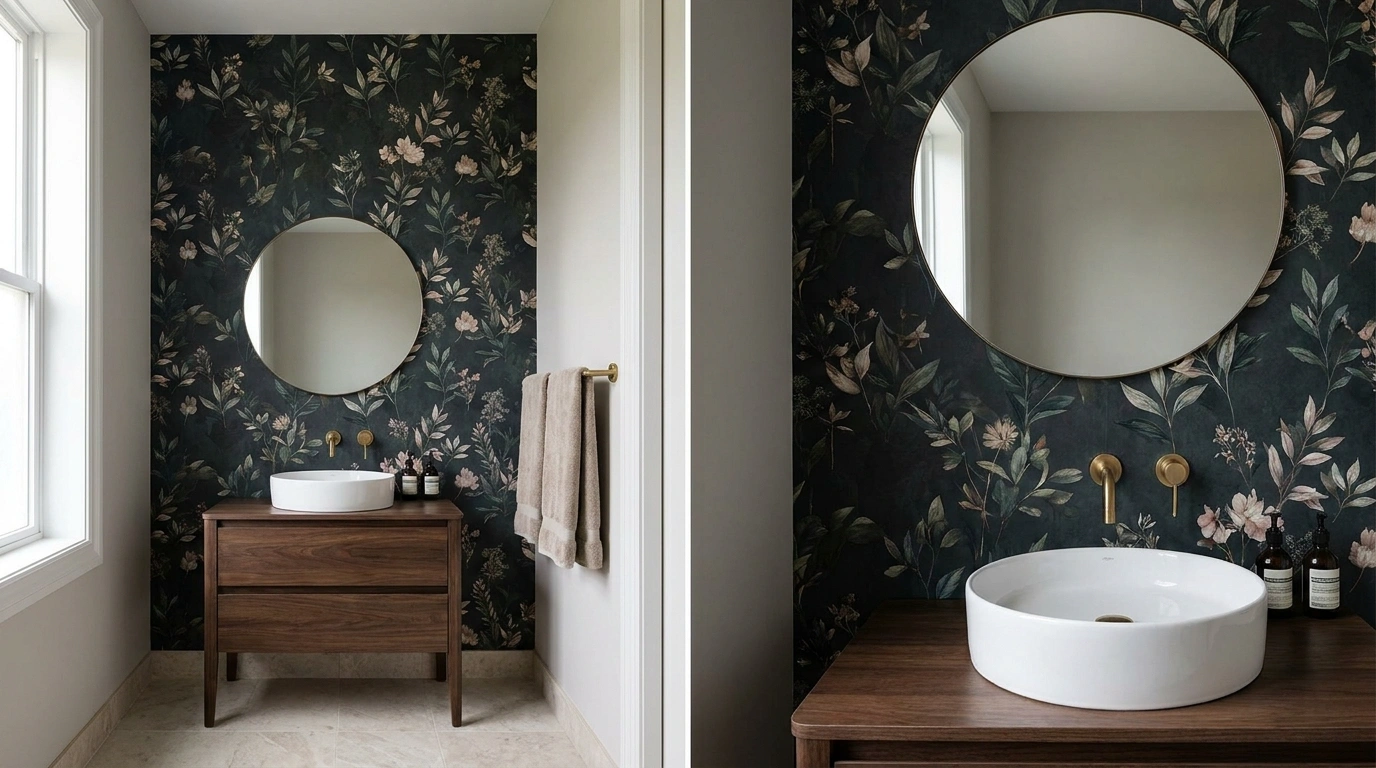
Bathroom wallpaper has a talent for looking flawless on a mood board and wildly uncooperative once the vanity, flooring, mirror, and lighting show up. Suddenly, the gorgeous pattern is fighting three different finishes, and the bathroom looks like nobody was in charge of the group project.
The fix isn’t necessarily buying a more expensive wallpaper. It’s choosing a pattern that works with the rest of the room, from the cabinetry and countertop to the smaller details that make everything feel connected.
Dark botanicals, delicate vintage florals, bold geometric prints, scenic murals, and rich damask patterns can all work beautifully. Some make compact powder rooms feel dramatic, while others bring warmth and personality to larger bathrooms without making them feel crowded.
Bathroom Wallpaper Ideas
Dark Botanical Wallpaper With a Rich Walnut Vanity
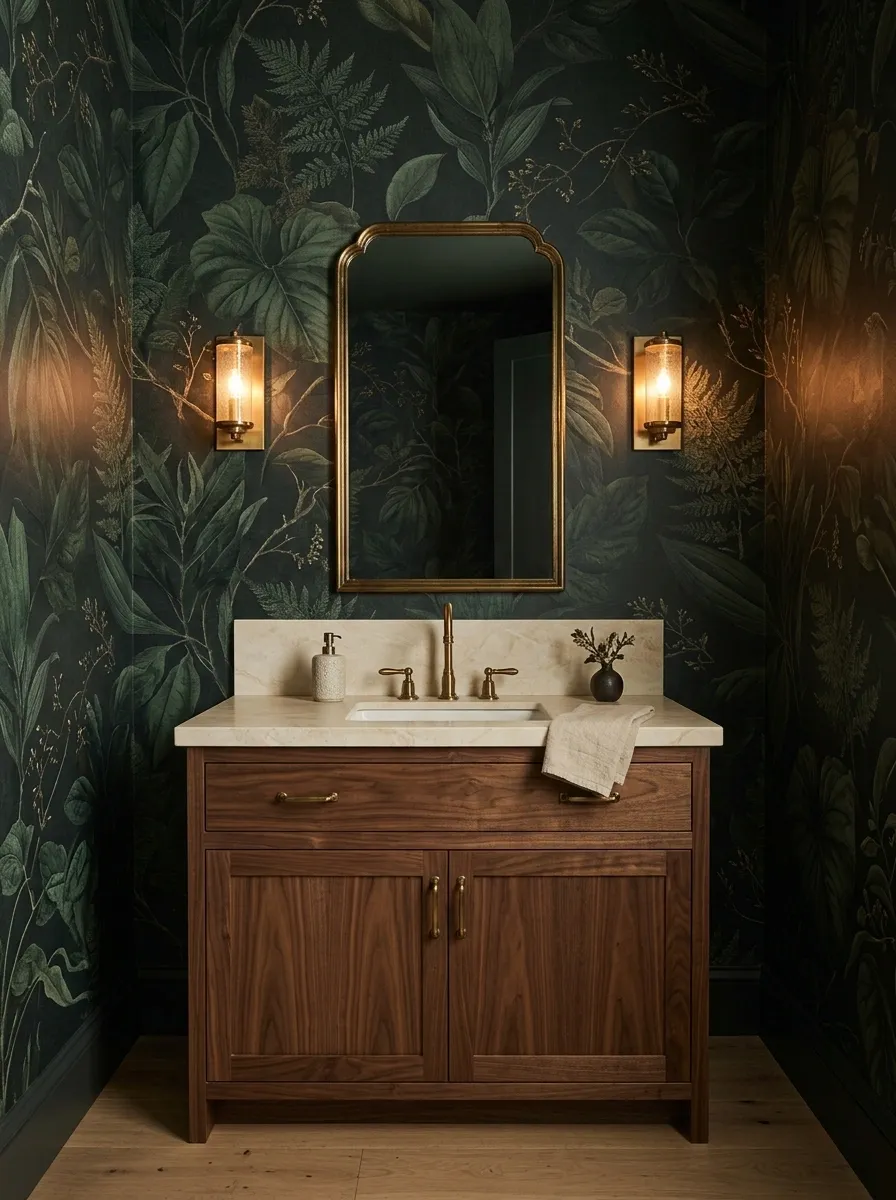
Dark botanical wallpaper brings instant depth to a powder room, especially when oversized leaves and delicate branches stand against a forest green or charcoal background.
Pair it with a rich walnut vanity, antique brass hardware, a framed mirror, and warm wall sconces. A creamy stone countertop provides breathing room, because even dramatic wallpaper needs somewhere for the eyes to rest.
Walnut keeps the room from feeling cold, while brass adds a subtle glow against the darker walls. Keep the flooring relatively quiet so the print remains the star.
This combination works particularly well in a powder room where a bold color scheme feels intentional rather than overwhelming.
THE FINISH PALETTE
Forest green
Wallpaper backdrop
Walnut brown
Vanity cabinetry
Antique brass
Metal accents
Warm ivory
Countertop
Let the dark wallpaper and warm timber do the heavy lifting. The other finishes can stop auditioning for the lead role.
Blush Floral Wallpaper With Vintage Gold Details
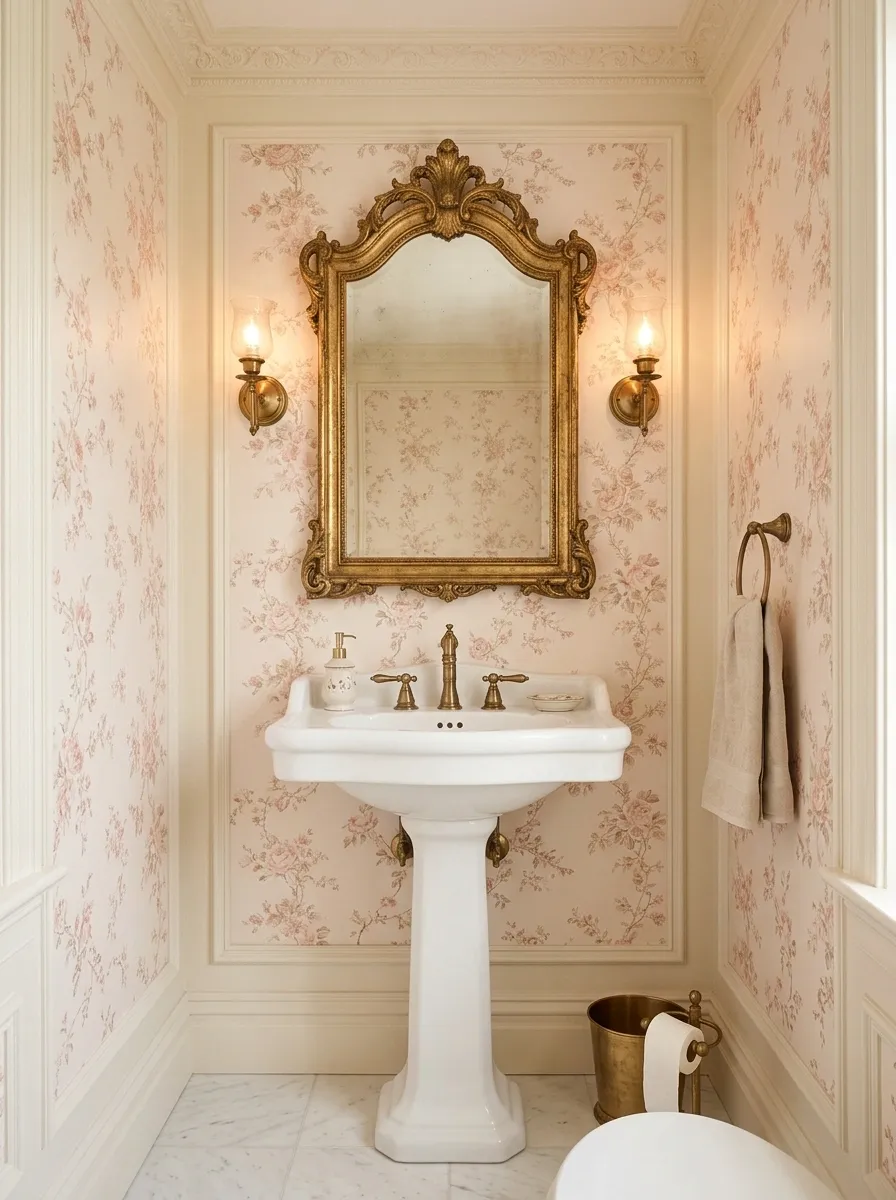
Small blush flowers against a creamy background give this bathroom the feeling of an old-fashioned dressing room, minus the dusty museum energy.
A porcelain pedestal sink, ornate gold mirror, pale marble flooring, and traditional wall sconces reinforce the vintage character. Keep the flowers fine and delicate rather than oversized if the goal is a softer finish.
The balance between ornament and simplicity makes this look work. An elaborate mirror feels appropriate because the wallpaper has a light background and plenty of visual breathing room.
A heavily carved vanity, ornate lighting, and a busy floor could push the whole room into costume territory. One or two decorative details are charming. Seven competing for attention is a group project nobody asked for.
THE ROMANTIC FORMULA
Soft pattern. One antique statement. Plenty of pale space.
WALLS
Blush flowers on creamy ivory
FIXTURES
White porcelain and aged gold
FLOOR
Pale marble with gentle veining
Keep the largest decorative detail to one main focal point, such as the mirror. The wallpaper already brought flowers to the function.
Oversized Geometric Wallpaper With a Floating Oak Vanity
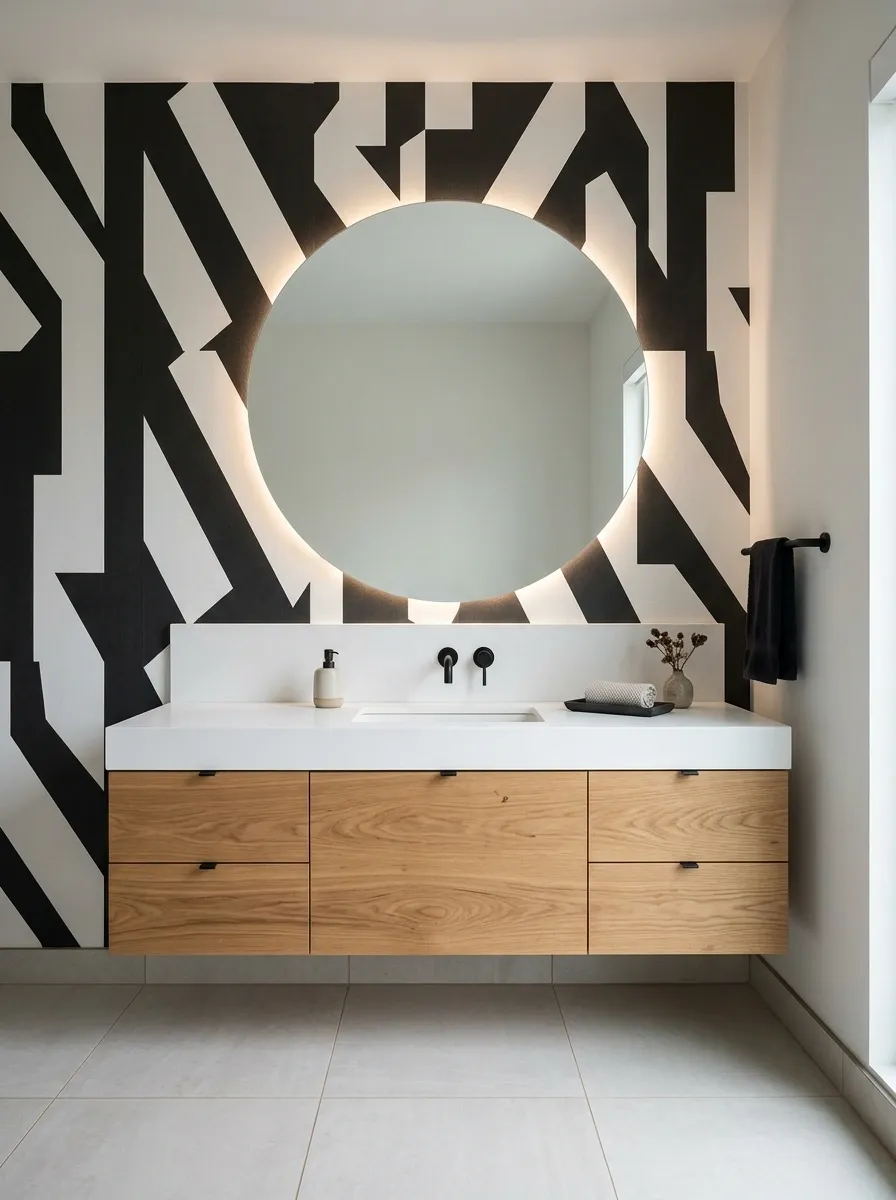
Large black-and-white geometric shapes give this bathroom a crisp, contemporary look without requiring a complicated collection of accessories.
A floating oak vanity warms up the high-contrast walls, while matte black fixtures echo the darker parts of the print. A round mirror softens all those straight lines, and large, understated floor tiles keep the room from looking like a board game.
The trick is controlling how many patterns compete at once. When the wallpaper has bold shapes, the floor doesn’t need a second dramatic print.
The oak provides warmth, the black fixtures create continuity, and the floating cabinet leaves more floor visible. The result feels architectural rather than like the bathroom won a fight with a geometry textbook.
VISUAL HIERARCHY
High-contrast wallpaper
Warm oak vanity
Quiet pale flooring
Keep one dominant graphic, one warm material, and one restrained background. Three lead actors are already two too many.
Tropical Palm Wallpaper With Natural Wood and Stone
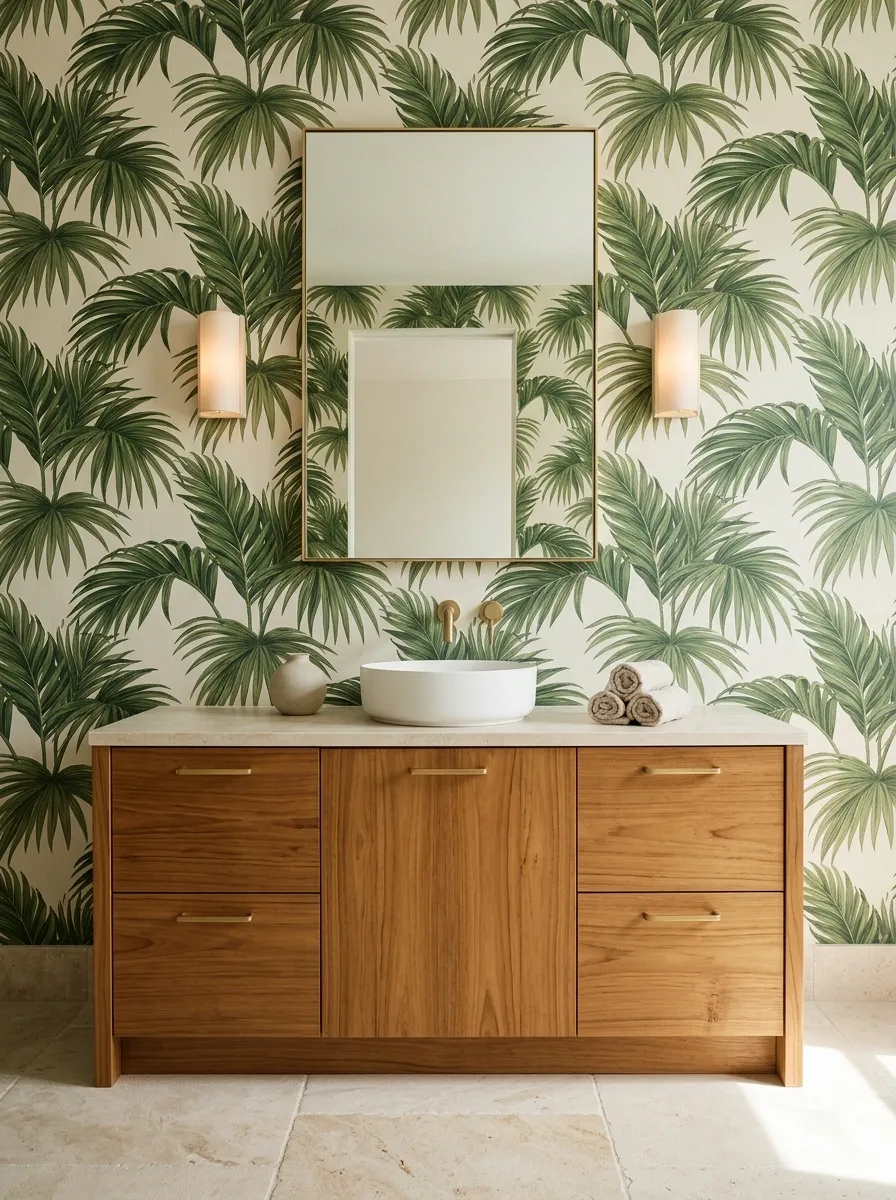
Oversized palm leaves bring a relaxed, tropical character to a bathroom, especially against a light background with generous space between the motifs.
Pair the wallpaper with a honey-toned teak vanity, a white vessel sink, pale stone flooring, and simple warm lighting. The wood grounds the leafy pattern, while the white basin creates a clean focal point instead of introducing another competing material.
Skip the matching palm-print towels, seashell collection, and decorative pineapple unless the bathroom is secretly auditioning to become a themed restaurant.
Natural materials make the tropical reference feel more sophisticated. This look works particularly well in a bright bathroom where daylight brings out the contrast between green foliage, pale stone, and warm timber.
THREE MATERIALS, ONE COHESIVE ROOM
Leafy green
The expressive surface that establishes the tropical theme.
Honey wood
The warm, grounding element that stops green from dominating.
Pale stone
The quiet visual break that keeps the composition airy.
Use the tropical print as the reference point, then repeat its green sparingly. The bathroom needs a natural palette, not a leaf convention.
Scenic Landscape Mural With a Sculptural Stone Basin
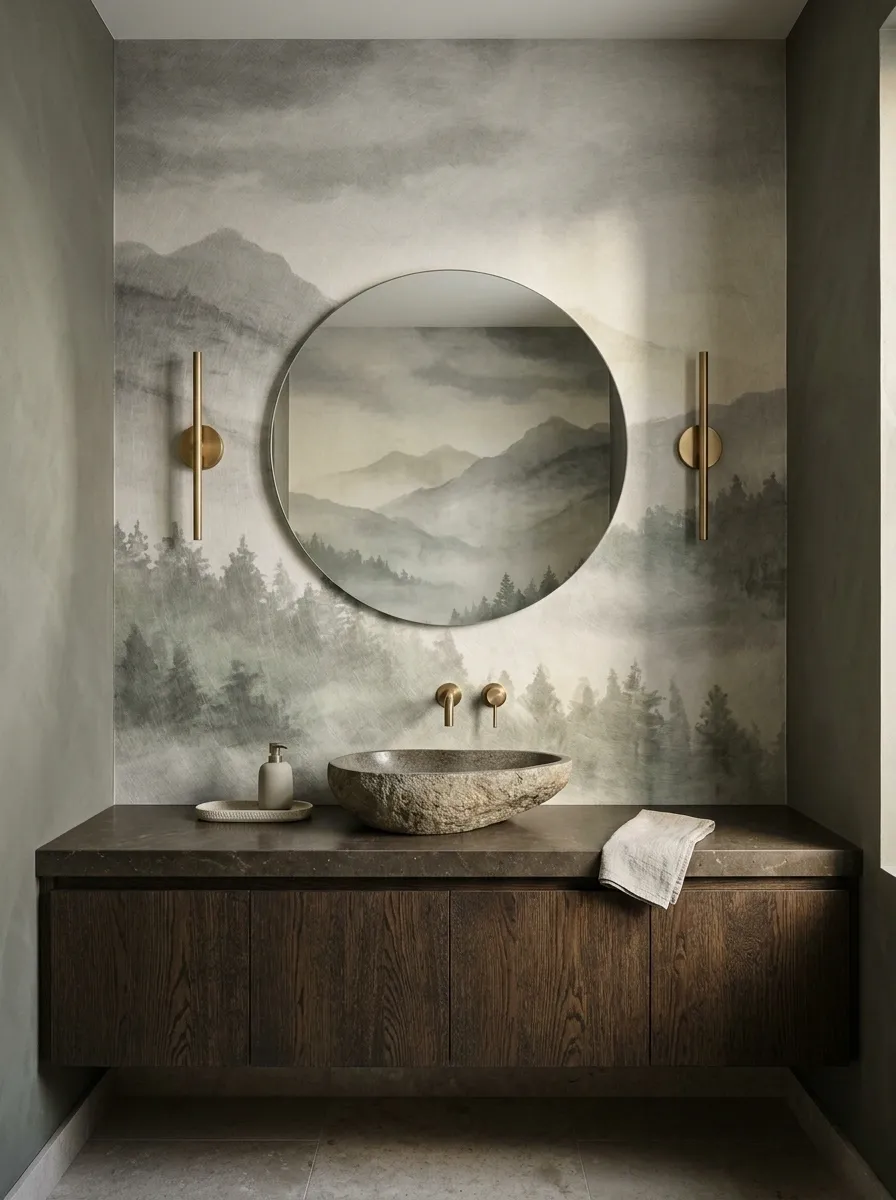
A misty landscape mural turns the bathroom into a room with a view, even when the nearest actual view is the neighbor’s fence.
Look for soft mountains, atmospheric trees, or painterly scenery in muted gray, sage, and warm ivory. A sculptural stone basin, dark wood vanity, and understated brass sconces make the composition feel considered without distracting from the artwork.
The mural should occupy a clear visual plane, ideally behind the vanity or another focal area where the image can be appreciated. Avoid chopping the strongest part of the landscape behind bulky cabinets or a complicated mirror.
The surrounding finishes should borrow from the mural rather than compete with it. Let the scenery be the statement, and leave the accessories out of the audition.
THE MURAL SIGHTLINE
Keep the artwork visible.
Center the strongest landscape details where the room’s main sightline can catch them.
Keep the foreground simple.
Stone, dark wood, and muted metal support the mural without competing with it.
Illustrative placement concept, not a measured installation drawing. Adapt the mural to the actual wall, fittings, and room dimensions.
Warm Grasscloth Wallpaper in a Minimalist Bathroom
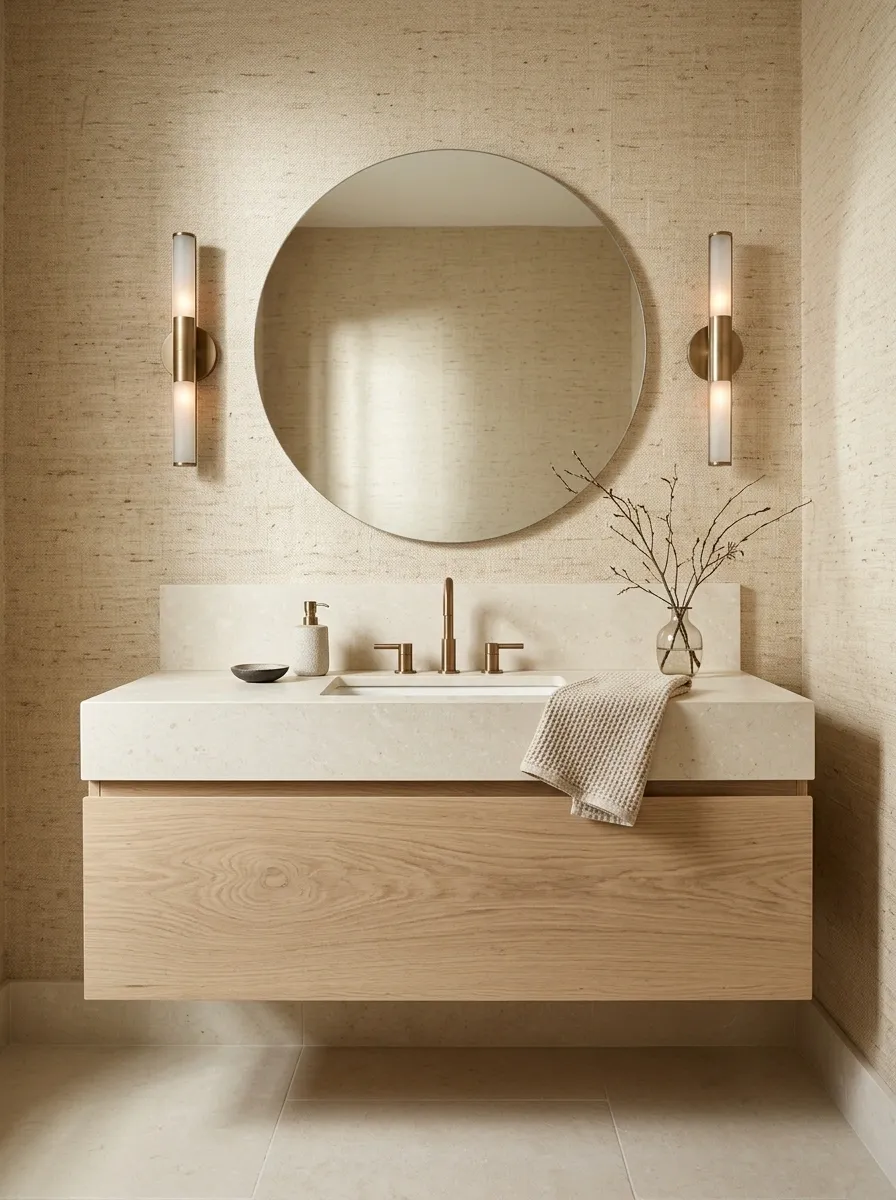
Not every bathroom needs a wallpaper pattern that practically introduces itself at the door.
Grasscloth-inspired wallpaper in sand, oatmeal, or warm taupe gives the walls subtle texture while a pale oak vanity, creamy limestone, and brushed bronze fixtures keep the room grounded. A frameless mirror and simple wall lighting preserve the uncluttered look.
The beauty here comes from the difference between surfaces rather than bold colors. The wallpaper looks tactile, the timber introduces natural grain, and the stone adds another quiet layer.
Keep the palette warm instead of mixing icy gray tile with golden wood and wondering why the room feels like a corporate waiting area.
For bathrooms, choose a suitable moisture-resistant wallcovering or a bathroom-rated textured alternative. Natural grasscloth can be vulnerable to moisture, so placement and product selection matter.
THE QUIET-LUXURY MATERIAL STUDY
Same warm family. Different textures.
Textured walls
Oatmeal and sand
Vanity
Pale natural oak
Stone
Creamy limestone
The little luxury trick is texture, not clutter. Three well-chosen materials can do more than a countertop full of decorative bottles.
Tiny Blue Floral Wallpaper With Classic White Beadboard
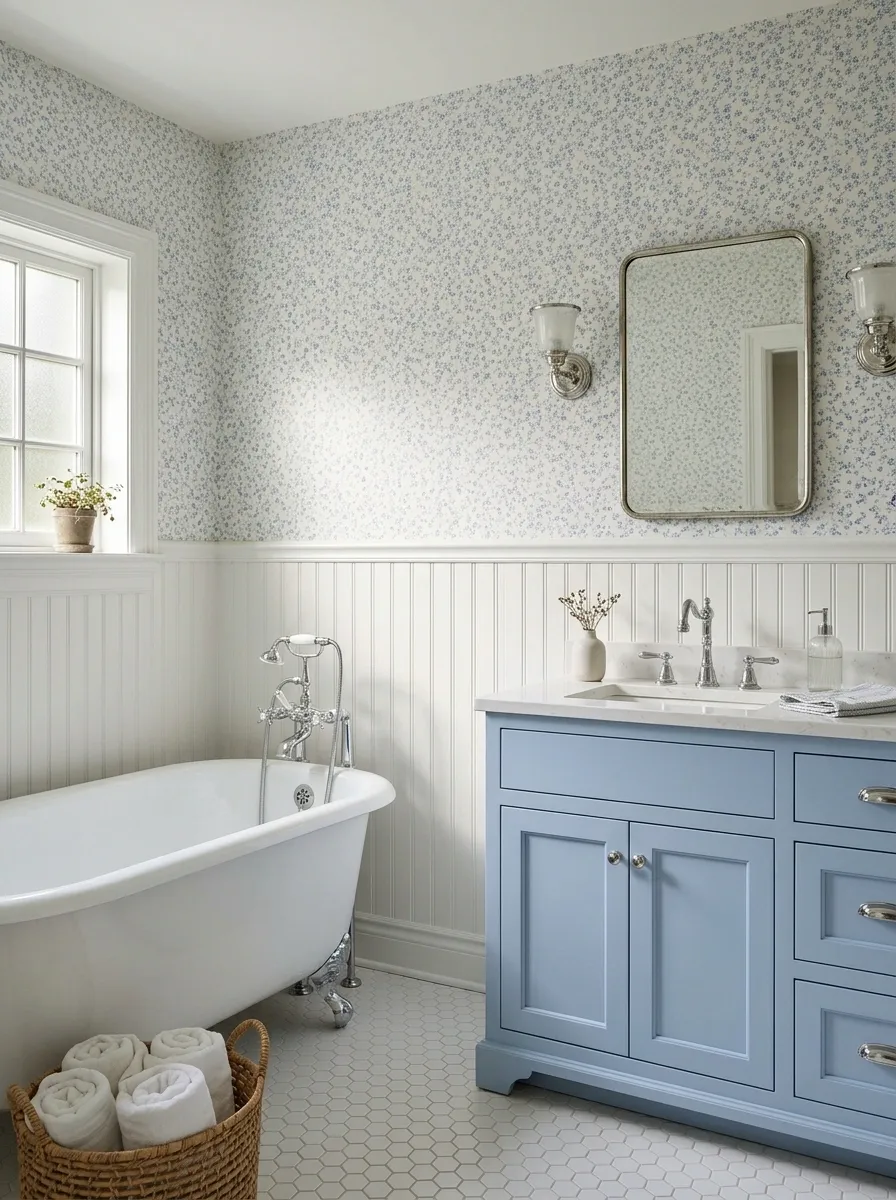
Delicate blue flowers above crisp white beadboard create the kind of traditional bathroom that feels charming without trying too hard.
A clawfoot tub, a painted white or pale blue vanity, traditional chrome fittings, and small-format floor tiles reinforce the cottage character. The wallpaper adds detail at eye level, while the lower wall creates a clean visual break.
The division between patterned wallpaper and plain paneling is what makes this look work. It gives the eye a quieter surface to land on and stops a dense floral print from swallowing the entire room.
Keep the paneling a clean white or a very pale blue pulled from the flowers. This arrangement suits older homes particularly well, but it can also bring character to a newer bathroom that otherwise looks a little too builder-basic.
THE WALL IS A COMPOSITION
UPPER WALL
Fine blue floral wallpaper
LOWER WALL
Plain painted beadboard
Why it works
The plain lower section stops the floral pattern from taking over.
Finish to repeat
Use the wallpaper’s soft blue in one additional detail, such as the vanity.
Black and Gold Art Deco Wallpaper in a Glamorous Powder Room
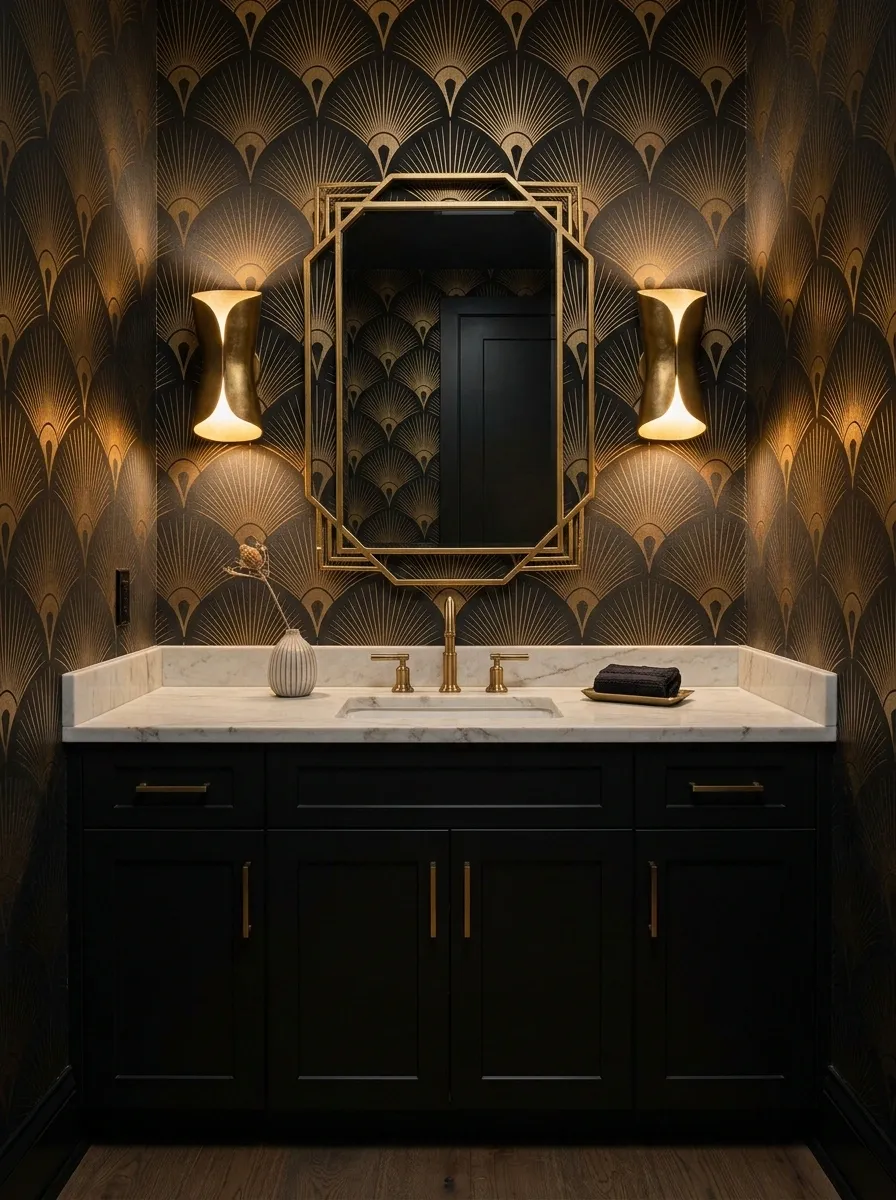
Art Deco wallpaper turns a small powder room into a dramatic interior with very little extra decoration.
Choose charcoal or black wallpaper with repeating gold fans, arches, or sunburst motifs. Pair it with a black vanity, a marble countertop, an angular gold mirror, and sculptural sconces. Repeated metallic details make the room feel cohesive rather than randomly expensive.
The important distinction is between using gold as an accent and coating every available surface in it. A little reflection against a dark background creates depth; too many shiny finishes can make the room feel like a jewelry store after closing.
Keep the marble relatively quiet and use warm lighting to bring out the pattern without washing out its contrast.
A STUDY IN CONTRAST
Let the gold catch the light. Don’t let it take over the room.
DOMINANT SURFACE
Matte black
SELECTIVE SHINE
Antique gold
VISUAL PAUSE
Quiet marble or pale stone
FINAL LAYER
Warm, flattering lighting
Strong wallpaper, controlled metallic details, and a quieter countertop. The room gets the drama without the unnecessary supporting cast.
Soft Blue Striped Wallpaper With Coastal Shaker Cabinetry
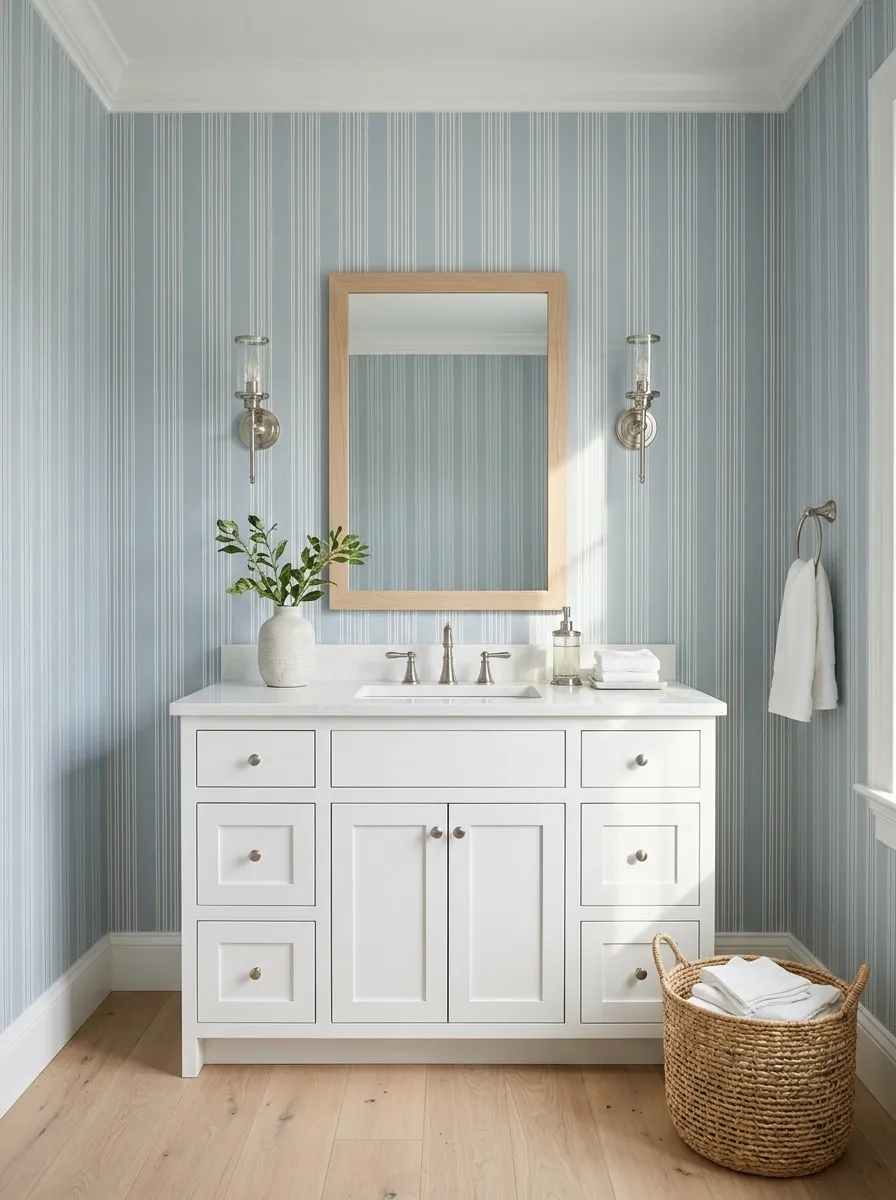
Thin blue-and-white stripes bring a fresh, ordered look to a coastal bathroom without resorting to starfish-shaped soap or anchors on everything.
Pair the wallpaper with white Shaker cabinetry, pale oak flooring or a suitable wood-look finish, a simple framed mirror, and brushed nickel fixtures. The combination feels relaxed but still polished.
Fine stripes give the room a quieter, more traditional appearance, while broader stripes feel bolder and more graphic. Keep the vanity and countertop simple so the repeated lines remain the main visual feature.
If the room already has patterned floor tiles, choose a wallpaper with softer contrast to avoid a visual tug-of-war.
THE COASTAL COLOR BALANCE
Fresh blue, generous white, a little natural warmth.
Blue and white
Use the striped wallpaper to establish the main rhythm.
White cabinetry
Keep the vanity calm and visually grounded.
Natural oak
Add warmth so the blue doesn’t feel chilly.
The goal is coastal, not nautical gift shop. Let the colors carry the theme; skip the decorative anchors.
Retro Abstract Wallpaper With Walnut and Terrazzo
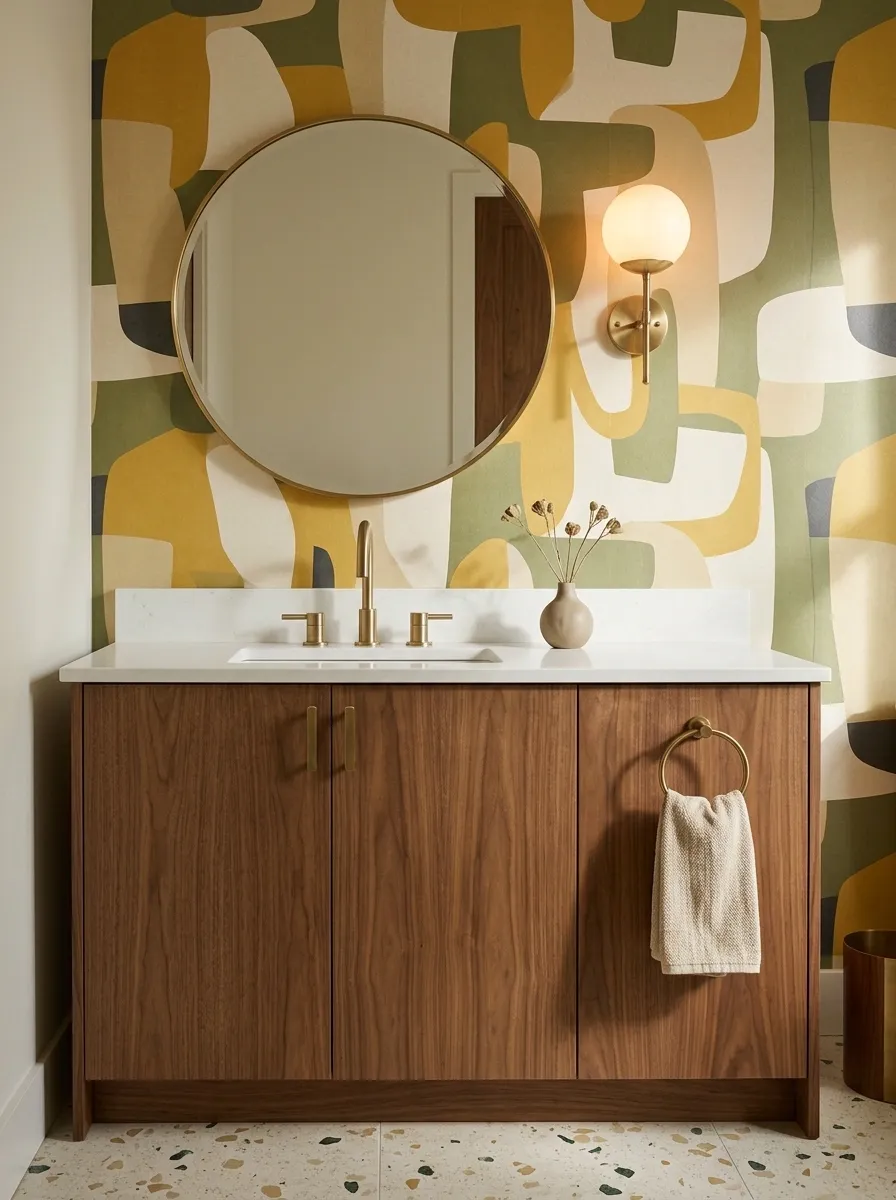
Mustard yellow, olive green, and warm cream create a distinctly retro bathroom when arranged in a confident abstract wallpaper pattern.
A walnut vanity, globe-shaped lighting, and terrazzo flooring complete the look with rounded forms and natural materials. The result is colorful without needing a different accent color on every surface.
Walnut is especially useful because its warm brown tones connect the mustard and olive without making either color look too loud. Terrazzo can introduce another pattern, but its chips should feel subtler than the wallpaper’s shapes.
Keep the metal finishes restrained and the silhouettes simple. The character comes from the color palette, curved lighting, and graphic wallpaper, not from filling every corner with retro accessories.
A MID-CENTURY COLOR STUDY
Retro color, grown-up materials.
Mustard
The brighter accent
Olive
The grounding color
Warm cream
The visual breathing room
THE MATERIAL THAT CONNECTS IT ALL
Walnut cabinetry
Its warm grain bridges the retro colors and keeps the room from feeling overly playful.
One strong print, one warm wood, and one quieter floor. Retro charm is the assignment. A time-travel prop department is not.
Fine Vertical Stripes in a Narrow Apartment Bathroom
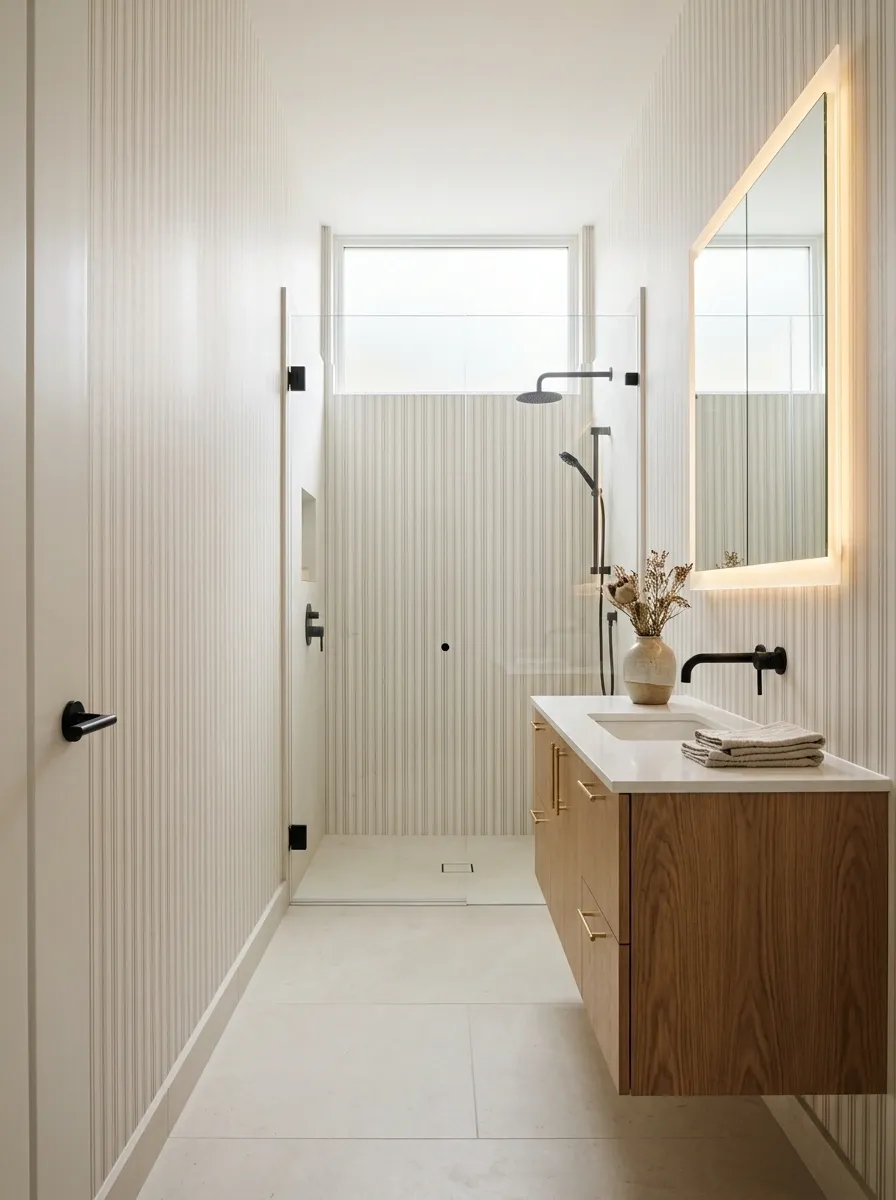
A narrow bathroom doesn’t need another bulky-looking pattern making the walls feel closer together.
Fine vertical stripes in soft ivory and muted taupe create a more elongated visual rhythm, while a slim floating vanity, recessed mirrored cabinet, and pale floor keep the room feeling open. Use streamlined fixtures, wall-mounted lighting, and a clear shower screen to preserve as much visual space as possible.
The stripes introduce direction without adding a complicated motif. Keep the storage practical and the countertop mostly clear. Clutter is remarkably talented at making even expensive renovations look like they came with complimentary chaos.
THE NARROW-ROOM PLAN
Keep the footprint small. Keep the sightline clear.
Wall treatment
Fine, low-contrast stripes that create a consistent vertical rhythm.
Space planning
Shallow storage, a floating vanity, and unobstructed floor space.
The non-negotiable: Measure door swings, drawer clearance, and the space needed to use the sink comfortably. A pretty bathroom that requires side-stepping around its own vanity is not winning.
Maximalist Bird-and-Flower Wallpaper With an Emerald Vanity
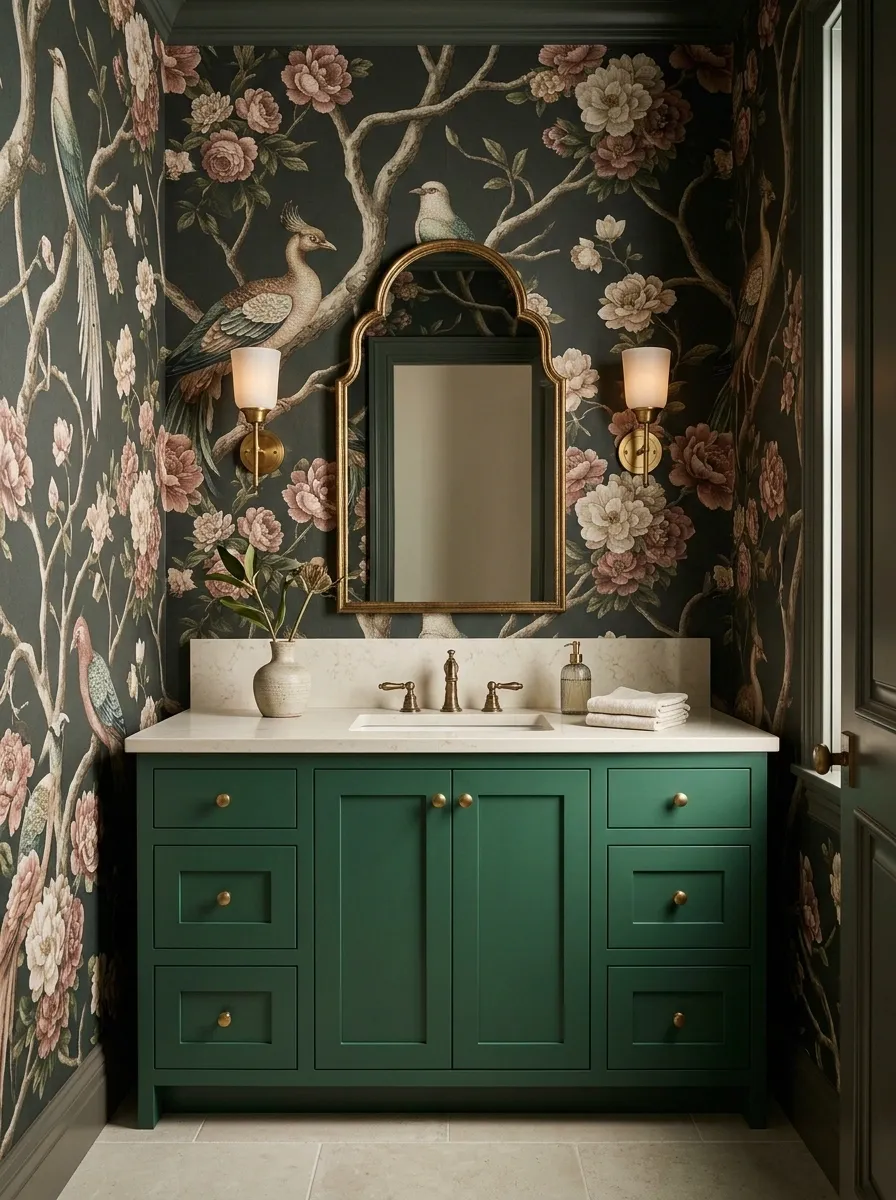
Oversized birds, twisting branches, and layered flowers bring a whole illustrated world to the walls.
An emerald green vanity picks up a strong color from the print, while a distinctive mirror and warm brass lighting add character without introducing another competing pattern. Keep the countertop in a quiet cream or pale stone finish so the eye has somewhere to rest.
Maximalism works best when the colors look related, even when the pattern itself is busy. Pull one dominant shade into the vanity, let the wallpaper handle the visual storytelling, and keep smaller accessories relatively simple.
There is no need for matching bird ornaments, floral soap dispensers, and leafy towels to prove the theme has been understood. The walls have already submitted the assignment.
MAXIMALISM, WITH A GAME PLAN
Let the print be wild. Keep the decisions connected.
Repeat one strong color
Emerald cabinetry connects the room to the dominant greens in the wallpaper.
Quiet the hard finishes
Cream stone, restrained metal, and simple tile keep the scene from becoming visual noise.
Maximalist doesn’t mean everything gets equal billing. Choose the wallpaper as the star, the vanity as its strongest supporting character, and let the rest behave.
Ink-Wash Wallpaper With Japanese-Inspired Minimalism
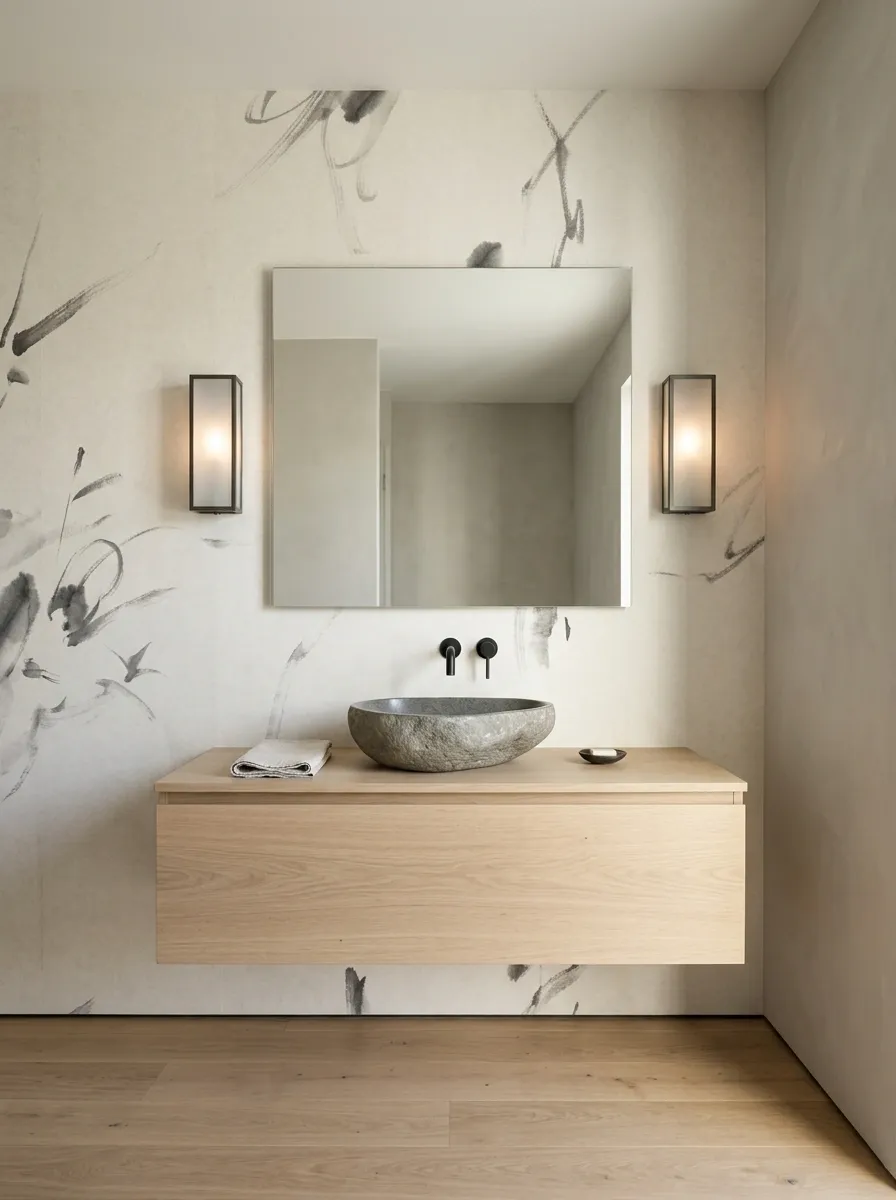
Soft charcoal brushstrokes on a muted ivory background bring a quiet, painterly quality to this bathroom.
Pair the wallpaper with a pale oak vanity, a stone vessel basin, matte black hardware, and simple plaster-toned surfaces. A broad mirror and uncomplicated lighting keep the composition balanced, while the irregular ink pattern introduces movement without the busyness of a conventional repeating print.
This design depends on restraint. Natural wood and stone provide enough texture that decorative accessories become almost unnecessary.
Avoid adding several more patterns or introducing bright accent colors that compete with the ink marks. Negative space is part of the design, not an invitation to buy more things.
THE ART OF LEAVING SPACE
A quiet palette gives the pattern room to breathe.
Expressive surface
Ink-wash wallpaper supplies the visual movement.
Grounded materials
Oak, stone, and muted gray bring the composition back to earth.
The editing rule: When the walls already have movement, let the other finishes stay simple. Negative space is doing actual work here, not just taking up room.
French Toile Wallpaper With Painted Paneling
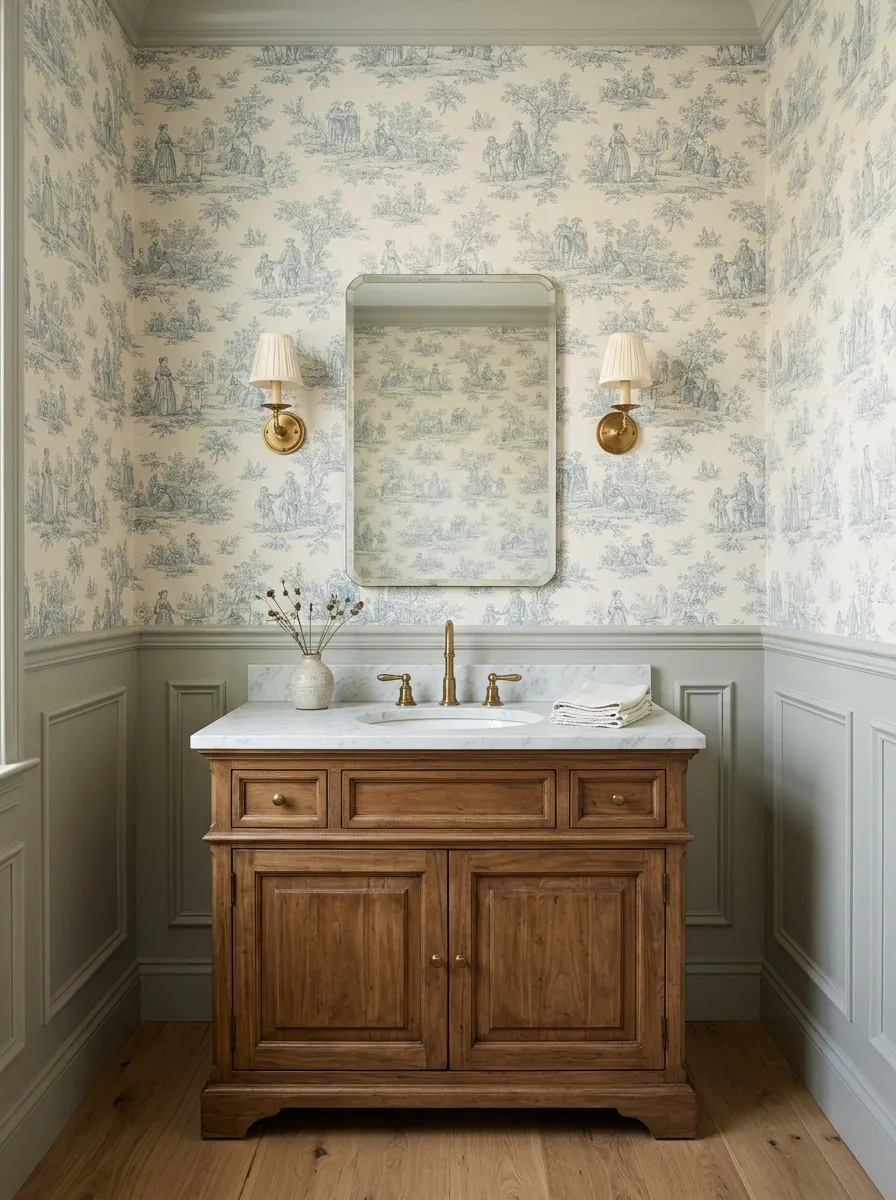
Classic toile wallpaper brings delicate illustrated scenes to the walls, often in muted blue, gray, or faded red against a creamy background.
Combine it with painted paneling, an antique-inspired vanity, marble surfaces, and traditional sconces for a bathroom that feels collected rather than newly assembled from a showroom catalogue.
The lower paneling gives the detailed wallpaper a visual boundary. A painted cream or soft gray-green finish allows the illustrations to stand out without making every inch of the room equally busy.
A simple stone countertop and restrained hardware provide a modern counterbalance. The room doesn’t need to recreate an entire French château just because the walls are feeling literary.
THE CLASSIC WALL COMBINATION
Pattern above. Painted structure below.
Muted toile wallpaper
LOWER WALL
Painted paneling
Keep the print delicate
Fine illustrations preserve the traditional character without overwhelming the room.
Keep the lower wall quiet
A plain painted finish lets the wallpaper feel intentional rather than relentless.
Traditional doesn’t have to mean complicated. Let the wallpaper bring the history and let the rest of the room keep its composure.
Terracotta Arch Wallpaper With Soft Sculptural Shapes
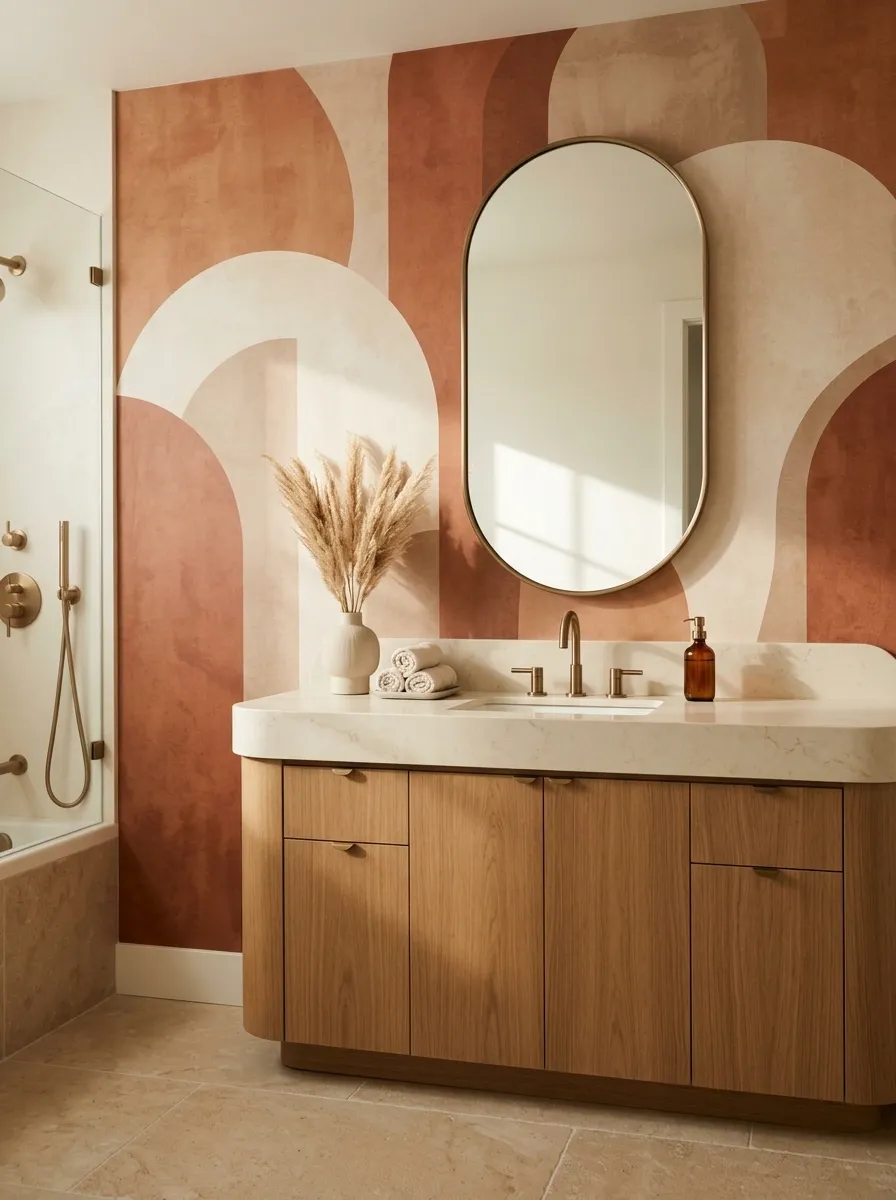
Oversized abstract arches in terracotta, clay, and creamy beige give this bathroom a contemporary look with a distinctly warm personality.
A rounded mirror, a soft-edged vanity, sandy stone flooring, and brushed bronze fixtures echo the wallpaper’s curved forms without matching every line. The effect is coordinated, but not so literal that the room starts looking like a geometry worksheet.
Terracotta provides depth, cream keeps the pattern from feeling heavy, and natural stone adds grounded texture. Choose a vanity finish that feels warm rather than icy white, and keep the lighting soft enough to bring out the earthy tones.
Huge shapes need enough room to read clearly, so match the scale of the arches to the wall.
THE WARM-SHAPE PALETTE
Repeat the curves. Vary the materials.
Terracotta
The strongest color in the wallpaper.
Warm cream
The breathing space between strong shapes.
Sandy stone
The quieter material that grounds the room.
THE FINISHING TOUCH
Curved mirror + brushed bronze fixtures
Repeat the rounded silhouette and warm undertone, not the exact pattern everywhere.
The room should feel connected, not aggressively matchy. A few well-placed curves can make the whole design click without putting an arch on every available surface.
Playful Color-Block Wallpaper in a Family Bathroom
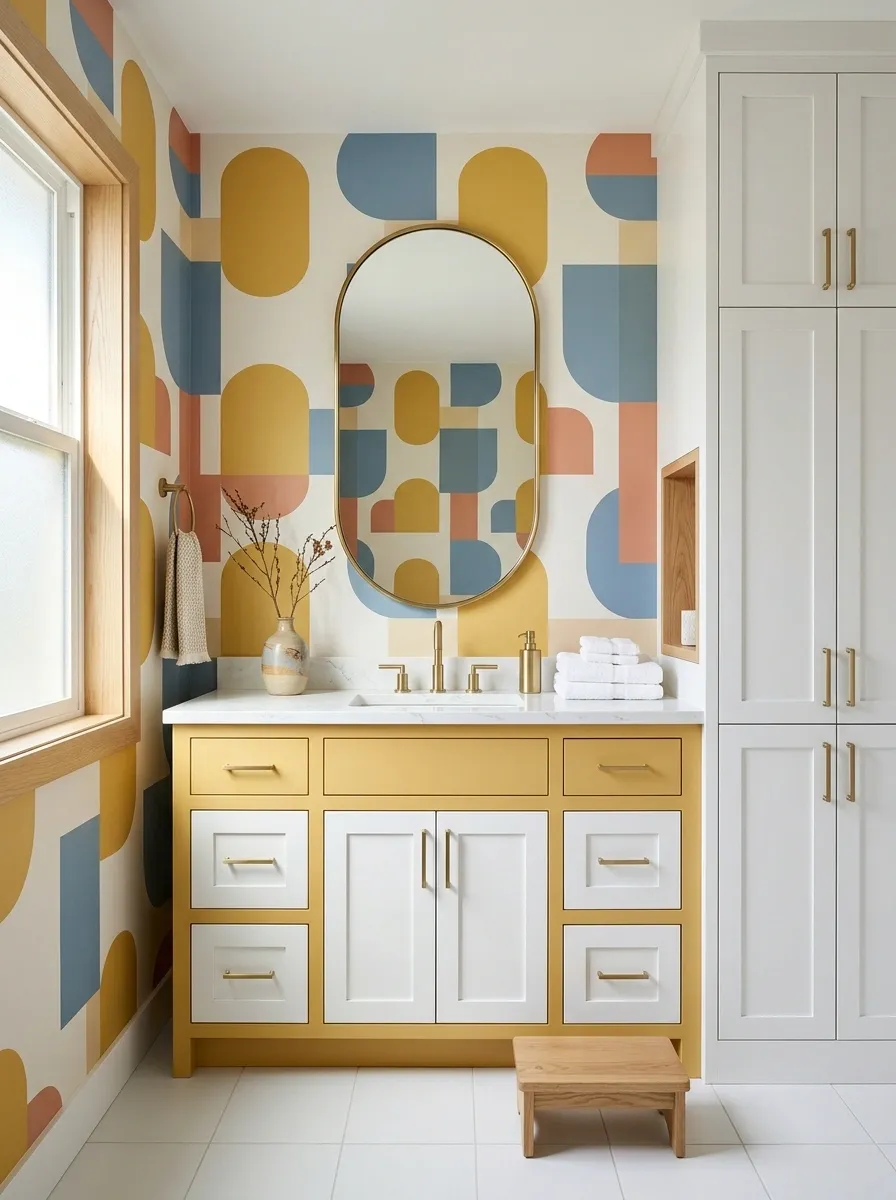
A bathroom shared by children and adults can have personality without looking as though a toy box exploded across every surface.
Wallpaper featuring rounded shapes or color blocks in mustard yellow, dusty blue, and muted coral brings energy to the walls. White cabinetry, simple tile, and a cheerful yellow vanity keep the room visually organized.
Closed storage is especially useful here. Towels, toiletries, and bath toys need somewhere to go, and a busy wallpaper pattern makes countertop clutter even more noticeable.
Choose durable fittings, easy-to-clean supporting surfaces, and colors that can work with plain towels as children grow and preferences inevitably change overnight.
THE FAMILY-BATHROOM FORMULA
Playful walls. Practical everything else.
Warm yellow
A cheerful accent for the vanity or wallpaper.
Dusty blue
Balances the warmer colors without feeling harsh.
Muted coral
Adds warmth without introducing neon-level chaos.
THE ACTUAL LIFE STUFF
Closed storage
Keep everyday products out of sight when the bathroom isn’t in use.
Simple surfaces
Let easy-clean finishes balance the more expressive walls.
A family bathroom should survive actual family life. The wallpaper can have the personality; the storage needs to have a plan.
Concrete-Effect Wallpaper With Industrial Black Metal Details
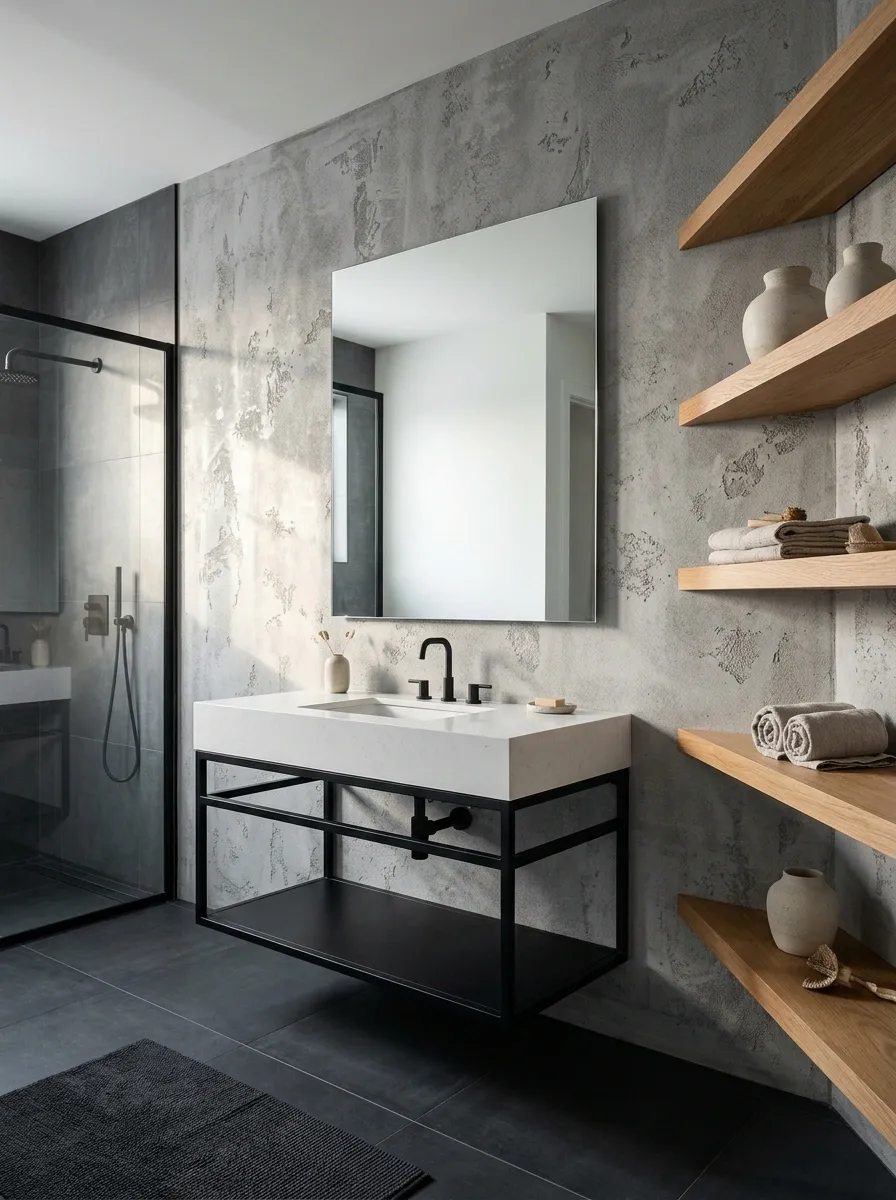
Concrete-inspired wallpaper gives a bathroom an industrial edge without the expense and permanence of installing actual concrete across the walls.
Pair the cool gray finish with a black metal-framed vanity, warm wood shelving, dark fixtures, and simple white or charcoal floor tiles. A large mirror keeps the composition open, while warm materials stop the space from feeling like an underground parking garage with excellent plumbing.
The balance between warm and cool surfaces is what makes this design work. Concrete-effect walls and black metal provide the industrial character; wood adds enough warmth to keep the room inviting.
Avoid piling on faux brick, distressed metal, exposed piping, and several different gray finishes simultaneously. Industrial style has a point of view, not a requirement to use every material from an abandoned factory.
INDUSTRIAL MATERIAL BALANCE
Concrete needs warmth. Black needs a little breathing room.
WALLS
Concrete gray
FIXTURES
Matte black
WARMTH
Natural wood
Editorial verdict: Choose a dominant texture, a dark structural detail, and one warmer material. The industrial mood is established. No need to bring the entire factory inside.
Sage Vine Wallpaper With Cream and Pale Oak Finishes
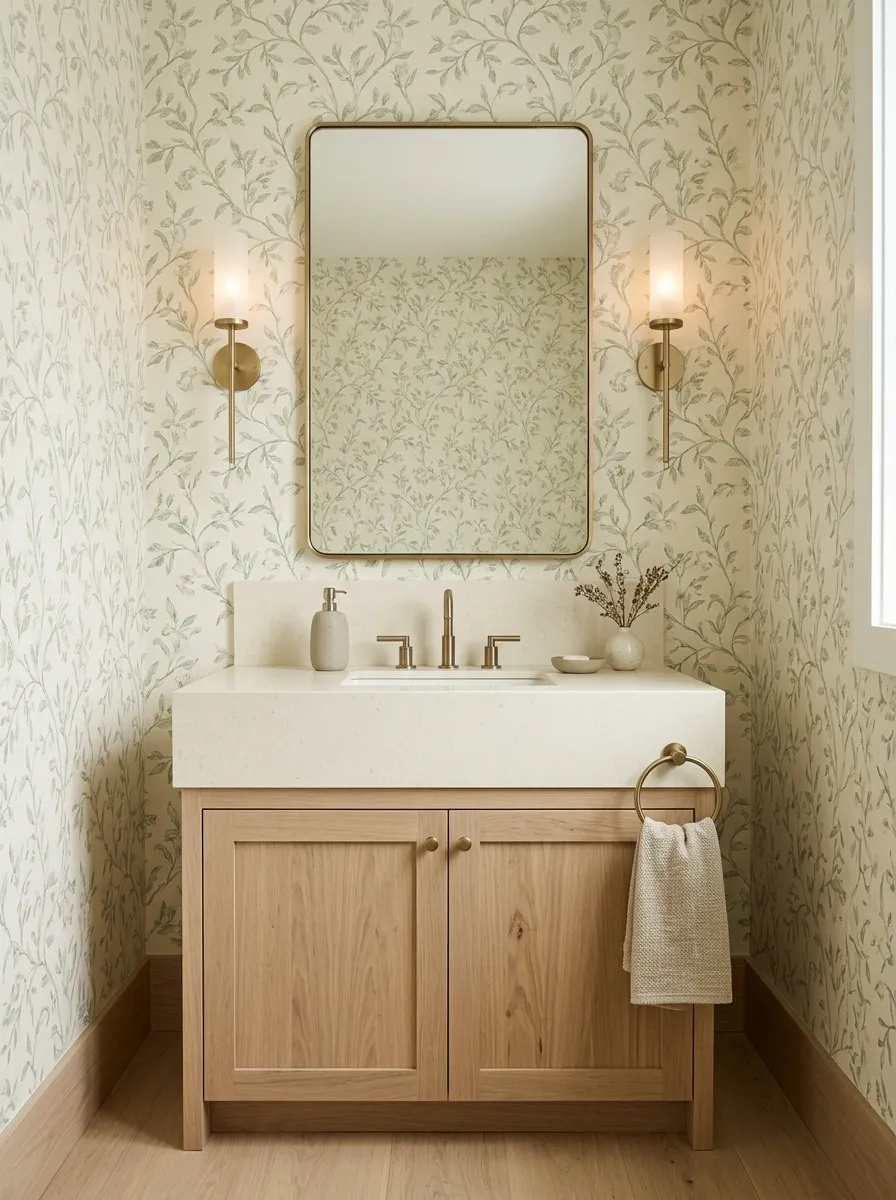
Delicate sage vines on a creamy background create a fresh, understated bathroom without the intensity of a dramatic tropical print.
Pale oak cabinetry, a warm white countertop, muted brass details, and simple light flooring reinforce the gentle palette. A framed mirror and understated sconces give the design enough structure to feel finished while keeping the botanical wallpaper at the center.
The relationship between the greens and neutrals matters. Sage looks balanced when surrounded by warm cream and natural wood rather than several competing shades of cool gray.
This look suits bathrooms that need a little character without a dramatic renovation aesthetic. Keep the accessories simple, let the wallpaper provide the pattern, and resist the urge to turn the countertop into a tiny botanical garden. The vines have already secured the job.
THE SAGE-AND-OAK PALETTE
Soft green, warm white, natural grain.
WALLPAPER
Sage green
COUNTERTOP
Warm ivory
VANITY
Pale oak
Repeat the sage sparingly.
Pick it up in one or two details rather than painting every surface green.
Keep the warmth consistent.
Oak, cream, and muted brass reinforce the wallpaper’s soft undertones.
A coordinated room doesn’t need a matching set of everything. It needs materials that get along, which is already more than can be said for most group projects.
Burgundy Damask Wallpaper With Dark Mahogany Cabinetry
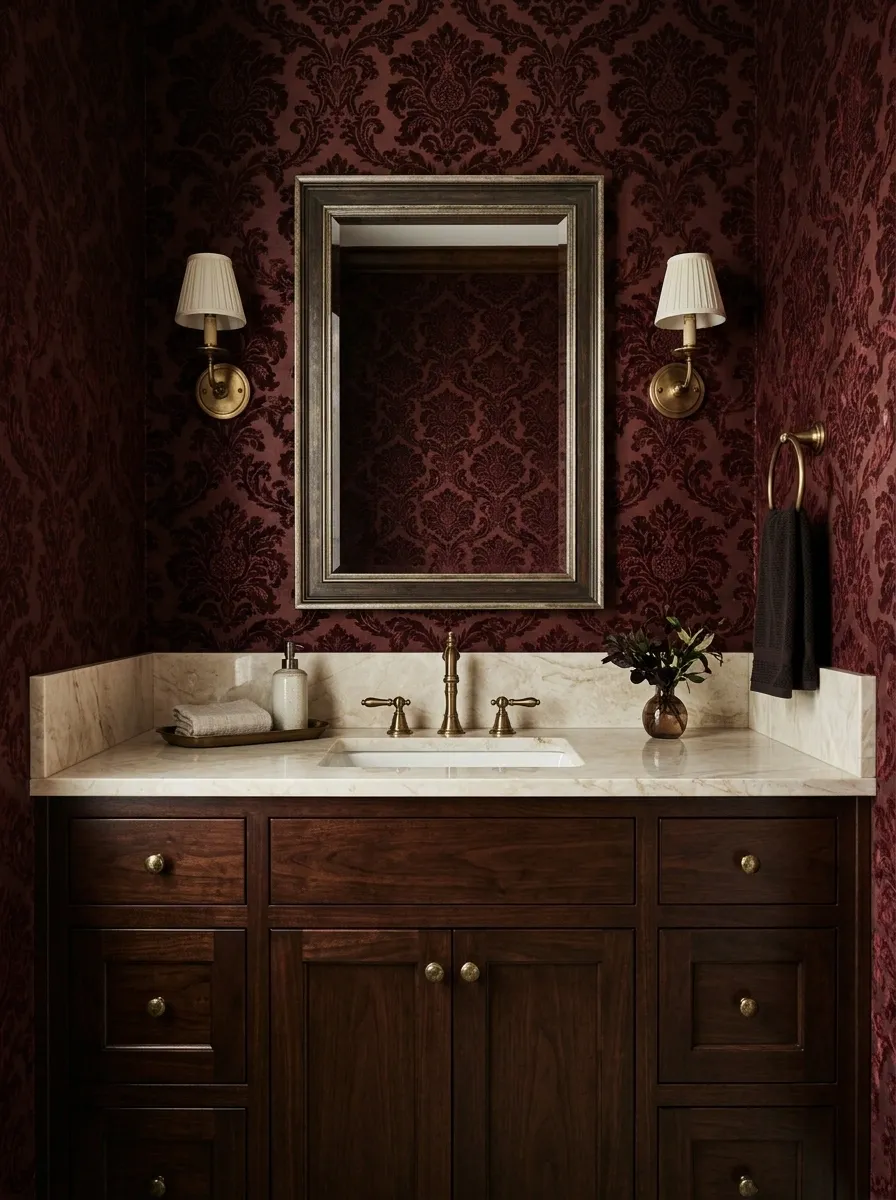
Burgundy damask wallpaper makes a strong statement, especially when paired with dark mahogany cabinetry, creamy marble, aged brass, and traditional wall lights.
The pattern introduces a layered, historic feel, while the lighter countertop keeps the vanity visible against the deeper colors. A framed mirror with a restrained antique finish completes the composition without competing with the wallpaper’s ornament.
The secret to this room is contrast. Burgundy and dark wood can feel heavy when every other surface is equally dark, so the cream stone becomes an essential part of the design rather than an afterthought.
This look suits a powder room, guest bathroom, or larger bathroom with adequate lighting. In a tight space, control the pattern scale and preserve enough light-colored surface to keep the composition balanced.
A RICH-COLORED ROOM, EDITED WELL
Deep walls. Dark wood. One deliberate light break.
WALLS
Burgundy damask
CABINETRY
Mahogany
Cream marble
Introduces contrast at the vanity.
Aged brass
Adds warmth through fittings and lighting.
Balance check: Keep one large surface light enough to break up the darker palette. Old-world drama is the goal, not a room where the mirror needs a flashlight.
Micro-Geometric Wallpaper in a Crisp Contemporary Bathroom
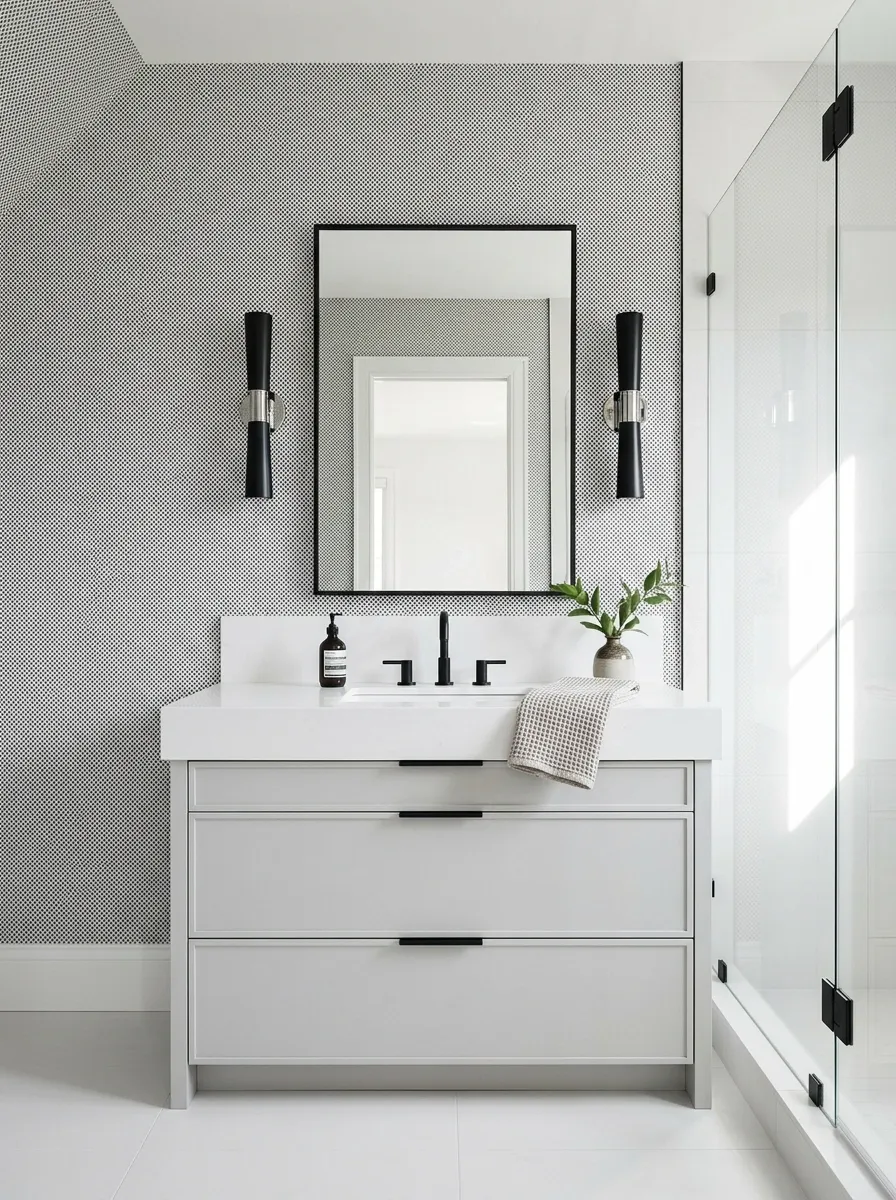
A small-scale black-and-white geometric pattern gives a contemporary bathroom subtle movement without competing with the fixtures.
Pair it with a pale gray vanity, frameless shower glass, large white tiles, and matte black fittings. The wallpaper adds texture to the walls while the larger surfaces keep the room feeling clean and organized.
Pattern scale is the deciding factor. Tiny repeating shapes create a fine visual texture from a distance, whereas larger geometry becomes a stronger focal point. If the bathroom already has detailed floor tiles, keep the wallpaper low-contrast so the two patterns don’t compete.
This design works well in a modern bathroom where strong lines and uncomplicated materials do most of the work.
PATTERN SCALE CHANGES THE MOOD
Small repeats create texture. Large repeats create a statement.
Micro geometry
Quiet texture for bathrooms with other strong architectural lines.
Oversized geometry
A stronger focal point that needs simpler surrounding finishes.
Choose the pattern scale according to the whole room. The floor and wallpaper don’t both need to be the loudest thing in the bathroom.
Art Nouveau Wallpaper With Flowing Botanical Lines
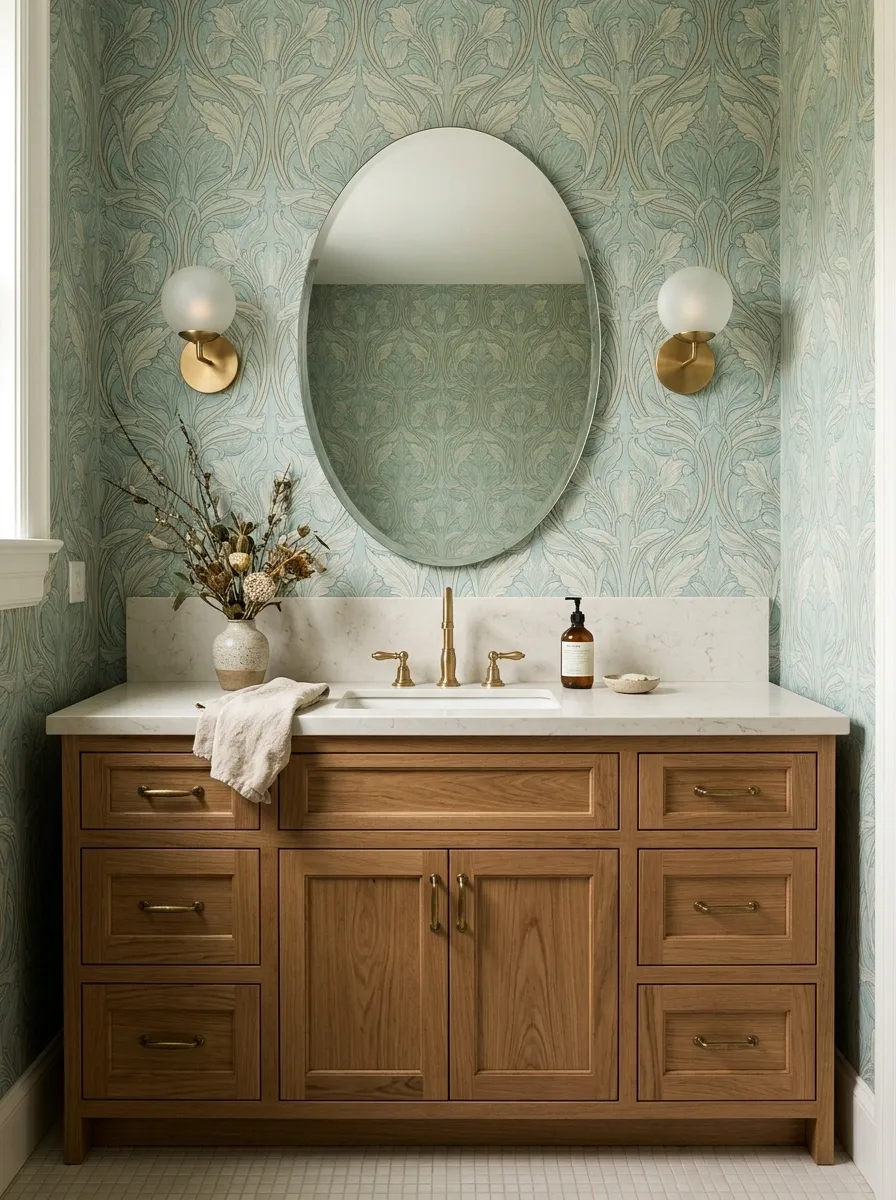
Art Nouveau wallpaper uses flowing floral lines, curved stems, and stylized leaves to create an artistic, vintage-inspired bathroom.
Muted teal and cream work especially well with a warm wood vanity, an oval mirror, and small-format floor tiles. The flowing motifs introduce movement, while the curved mirror echoes the design without repeating the exact same pattern.
Keep the remaining finishes simple enough for the illustrated wallpaper to remain visible. Ornate lighting can suit this style, but piling on carved wood, heavily patterned tiles, and decorative accessories may leave the room with too many competing details.
This look brings personality to a traditional bathroom without relying on bright colors or oversized prints.
FOLLOW THE LINEWORK
Flowing wallpaper. Rounded details. Quiet finishes.
Wallpaper motif
Curved botanical lines and muted color.
Supporting forms
An oval mirror and warm timber echo the curves.
Repeat the wallpaper’s movement rather than adding more ornament. The design already has enough plot twists.
Watercolor Wallpaper With a Freestanding White Bathtub
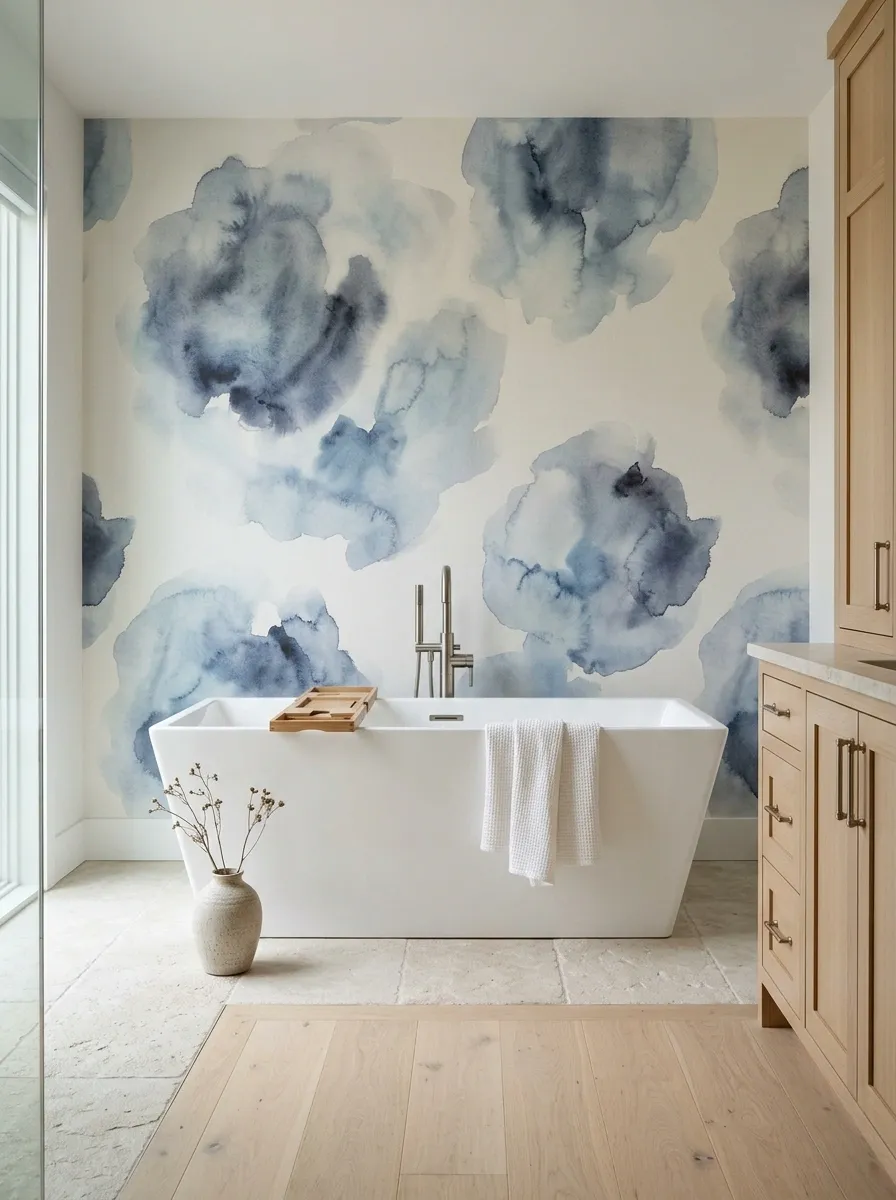
Loose blue watercolor shapes give this bathroom a light, atmospheric feel. The softly blended pattern works especially well behind a freestanding white bathtub, where the wall becomes a backdrop rather than another hard architectural surface.
Pale oak cabinetry, limestone flooring, and brushed nickel fixtures keep the palette fresh. The clean lines of the bath provide contrast against the irregular wallpaper, while the natural wood prevents the room from feeling cold.
Choose a watercolor pattern with enough pale space to keep the overall composition airy. A highly saturated mural may call for darker cabinetry or stronger contrast, but this softer version benefits from understated finishes.
Keep the accessories minimal and allow the tub and wallpaper to establish the focal area.
A SOFT COLOR TRANSITION
Let the blue dissolve into pale, quiet finishes.
Watercolor blue
The main expression on the wall.
Soft white
The tub and cabinetry keep the room crisp.
Pale stone
The flooring adds subtle texture and warmth.
The watercolor doesn’t need backup from five other patterns. Keep the supporting finishes calm and let the room breathe.
Oversized Monochrome Florals in a Compact Powder Room
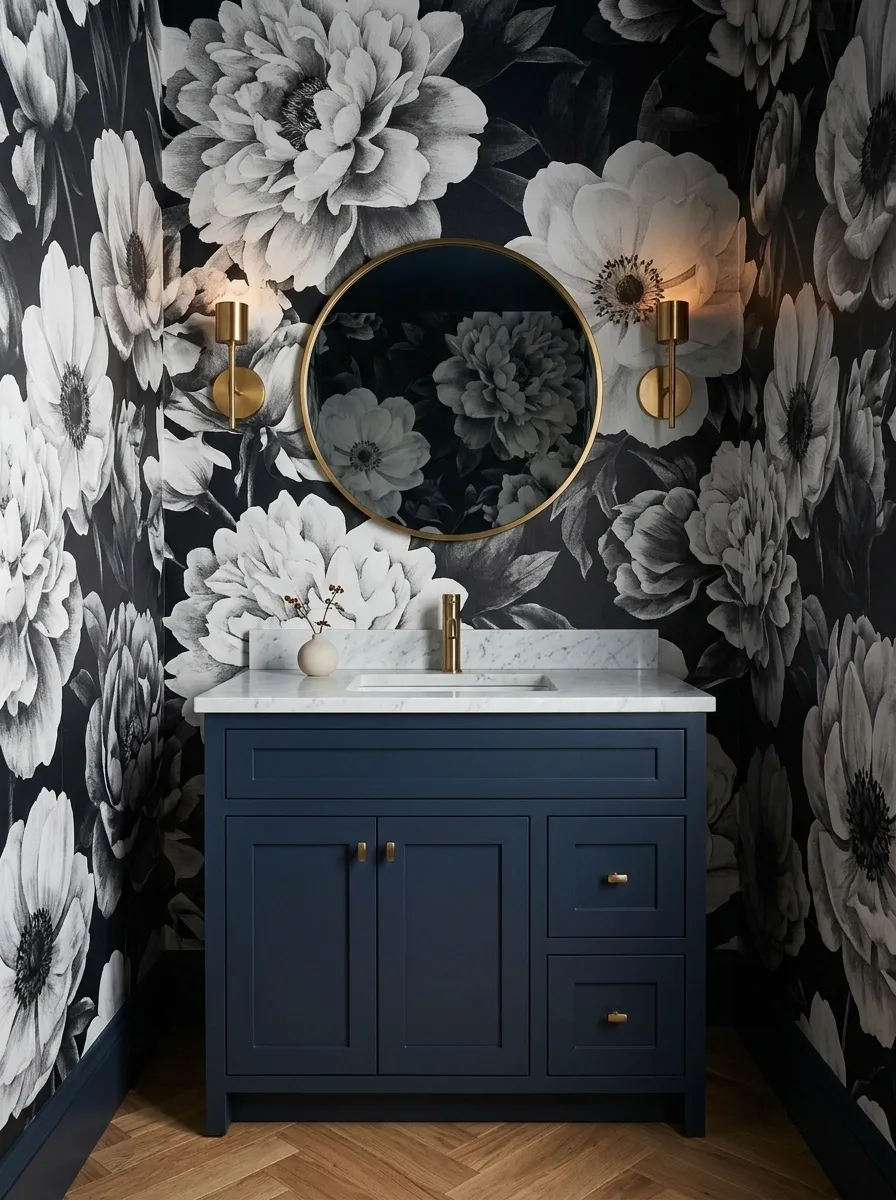
Large black-and-white blooms can make a compact powder room feel dramatic and deliberately designed.
Pair the wallpaper with a compact navy vanity, a round mirror, a marble countertop, and simple brass lighting. The monochrome pattern creates strong contrast, while the navy cabinet adds color without introducing another competing print.
The limited palette matters more than the room’s size. Oversized motifs can work in a small space when the surrounding finishes stay simple and the pattern has enough room to read clearly.
Avoid placing too many accessories on the vanity. Between the wallpaper, mirror, and cabinet, the room already has a strong visual hierarchy. A cluttered countertop would simply ruin the plot.
THE SMALL-ROOM CONTRAST PLAN
Big print. Small vanity. Very little clutter.
Monochrome wall
Oversized florals supply the drama.
Navy vanity
A single color gives the room depth.
A small room doesn’t automatically need tiny patterns. It needs a plan for where the eye should go.
Subtle Metallic Wallpaper With Travertine and Fluted Oak
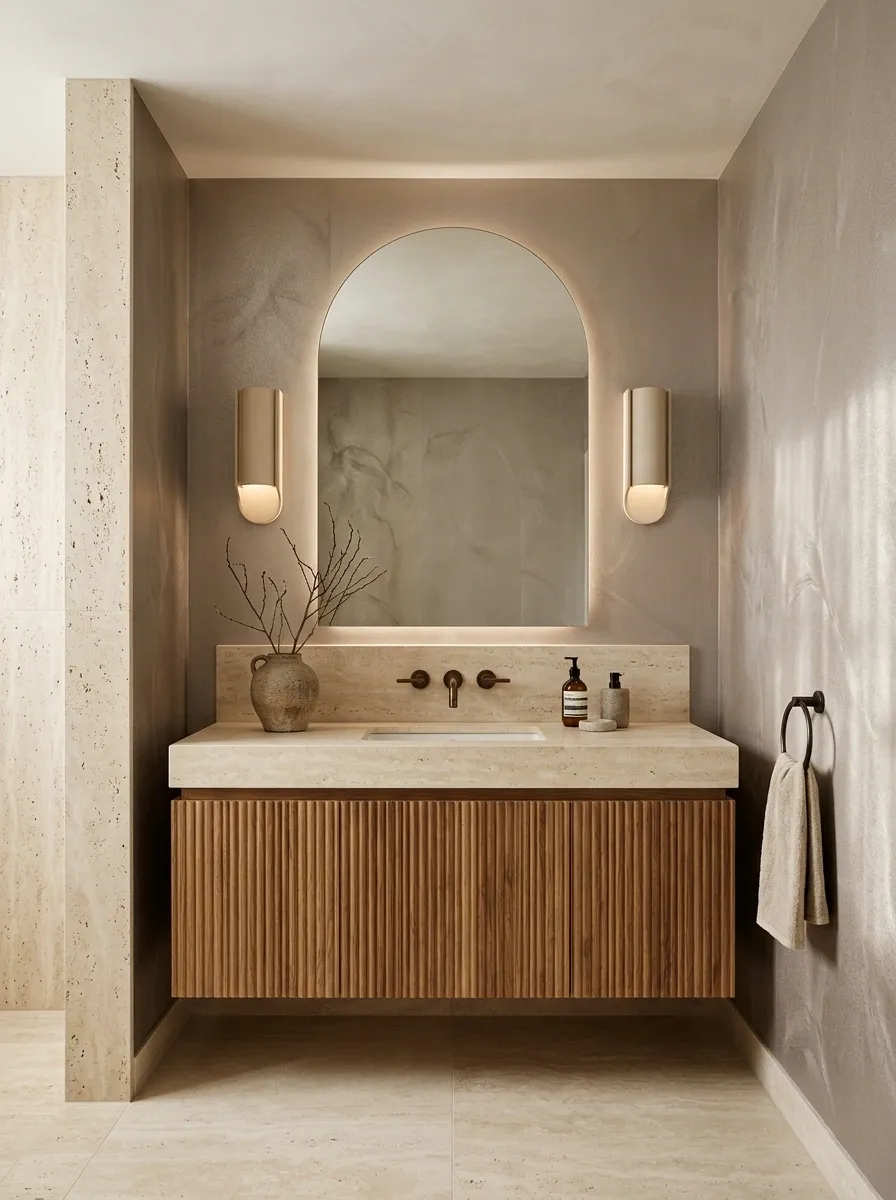
Warm taupe wallpaper with a restrained metallic sheen creates a refined bathroom without relying on a loud print.
Pair it with travertine surfaces, a fluted oak vanity, bronze fixtures, and layered lighting. The wallpaper catches the light gently, the stone introduces natural variation, and the timber gives the room a warm architectural feature.
The luxury comes from the relationship between these materials rather than the amount of decoration. Choose metallic wallpaper with a subtle finish instead of a high-shine pattern that competes with the stone’s natural movement.
This design works particularly well in a larger bathroom where the textures can be appreciated from different angles. In a smaller room, use the reflective finish selectively and avoid adding several more glossy surfaces.
THE MATERIAL HIERARCHY
A little reflection, plenty of natural texture.
WALLPAPER
Soft metallic taupe
STONE
Natural travertine
VANITY
Fluted oak
The finishing layer
Use bronze fixtures and warm layered lighting to connect the stone, wood, and reflective wallpaper without introducing another competing finish.
Quiet luxury works because every material has a purpose. Nobody needs a countertop full of gold accessories to understand the assignment.
Choosing Bathroom Wallpaper That Actually Works
A wallpaper sample can look completely different once it’s placed beside the vanity, countertop, and floor. Before committing, examine the pattern alongside the finishes that will stay in the room.
Large motifs need enough wall space to read clearly, while smaller patterns can introduce texture without becoming the main event. Consider the room’s natural light, the position of mirrors, and how much of the wallpaper will remain visible around cabinetry and fittings.
Moisture matters, too. Choose a product suited to bathroom conditions, prepare the wall properly, and follow the manufacturer’s installation guidance. Even attractive wallpaper has limits when it’s exposed to repeated direct splashes or persistent humidity.
Most importantly, choose a complete direction before buying the finishing details. A clear palette and a few well-matched materials will usually do more for the finished room than another shopping trip for decorative accessories.