
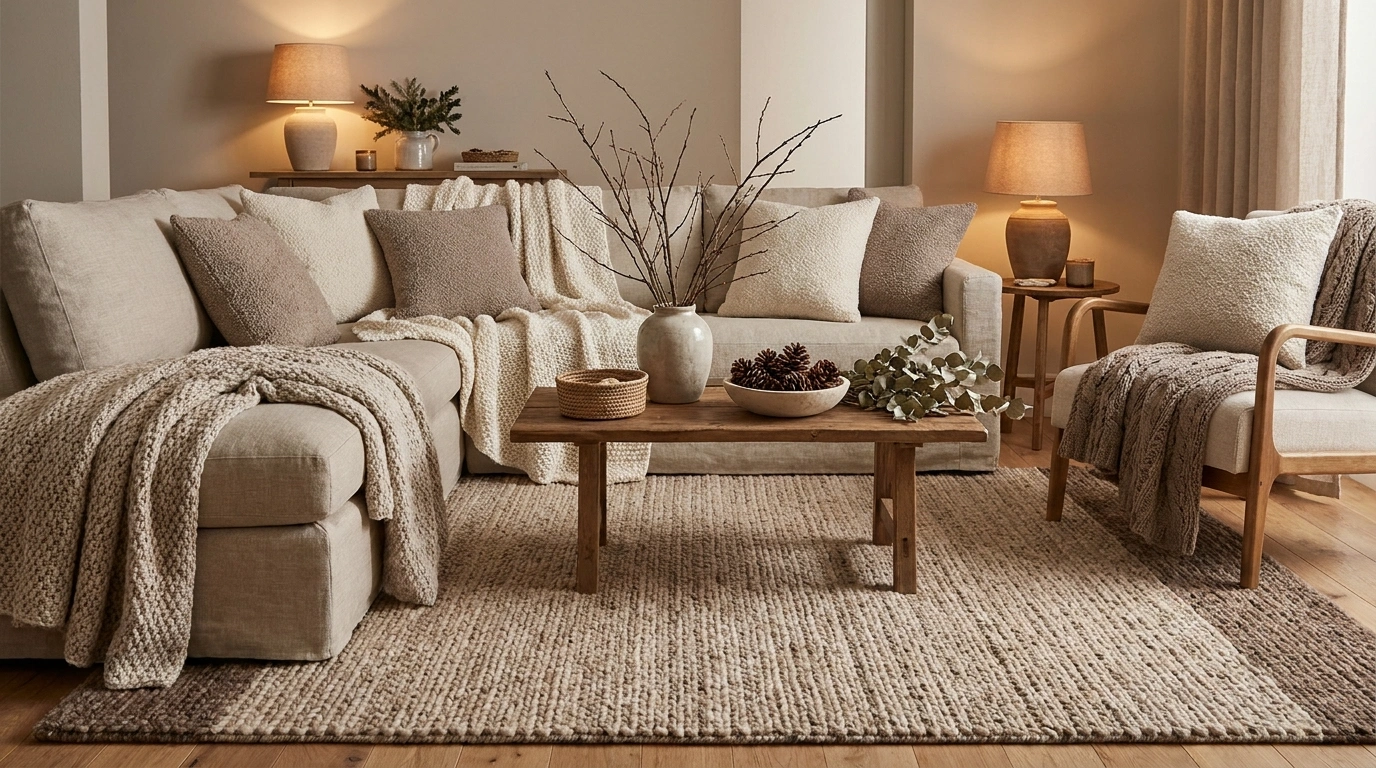
The chair by the window has become a place to stack laundry. The ceiling light is doing an interrogation. Somewhere, a thin decorative throw is bravely pretending it can make the whole room feel comfortable.
Winter is when these little failures become difficult to ignore.
A seasonal room doesn’t need a collection of objects explaining the weather. It needs somewhere good to sit, light that makes sense after sunset, and textures that feel pleasant when you’re using them rather than rearranging them.
Deep green, pale timber, rust linen, dark blue, warm white: there are several ways to get there, and none requires turning the house into a themed shop.
Winter home decor can be a change in the room’s working arrangement as much as its accessories. Move the chair into useful light. Give the blanket a home. Let a darker wall support pale furniture. The rooms below make those decisions together, with complete settings rather than an instruction to purchase another small ceramic object.
Rooms With Their Own Winter Mood
Olive Living Room With a Low Linen Sofa
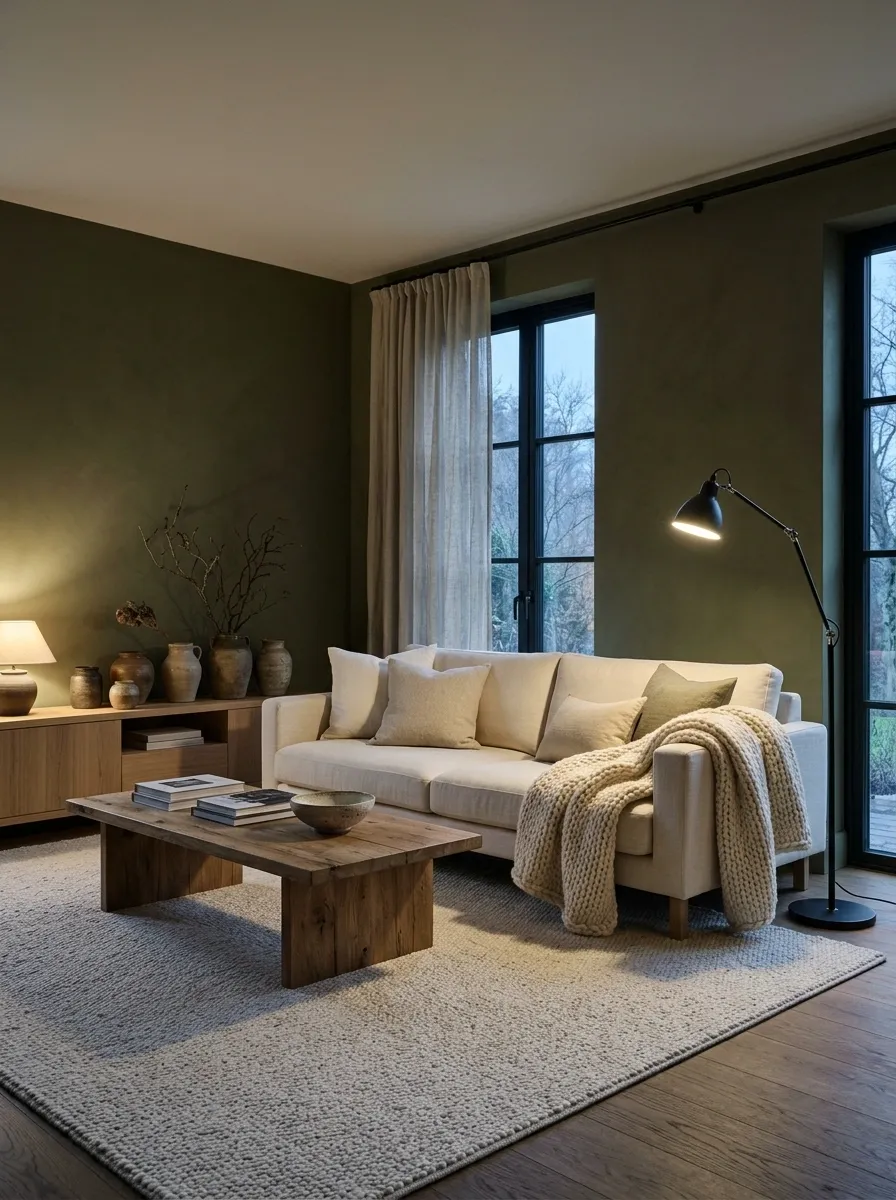
Olive walls give a low linen sofa a sheltered setting, while a broad pale rug keeps the center open. Add a timber table, a proper reading light, and a blanket within reach of the seat you actually use.
The wall color supplies depth, so the cushions can stay simple. Choose a rug size that relates the seating rather than floating under the table like a decorative postage stamp. The room feels settled when furniture and light support an evening inside. It doesn’t need a sign announcing that comfort has officially been achieved.
Give the evening a place to happen.
Muted olive around the seating.
Sofa, rug, and useful empty floor.
Place the reading light beside the occupied seat, not wherever the corner looks empty.
Ink-Blue Bedroom With Oatmeal Bedding
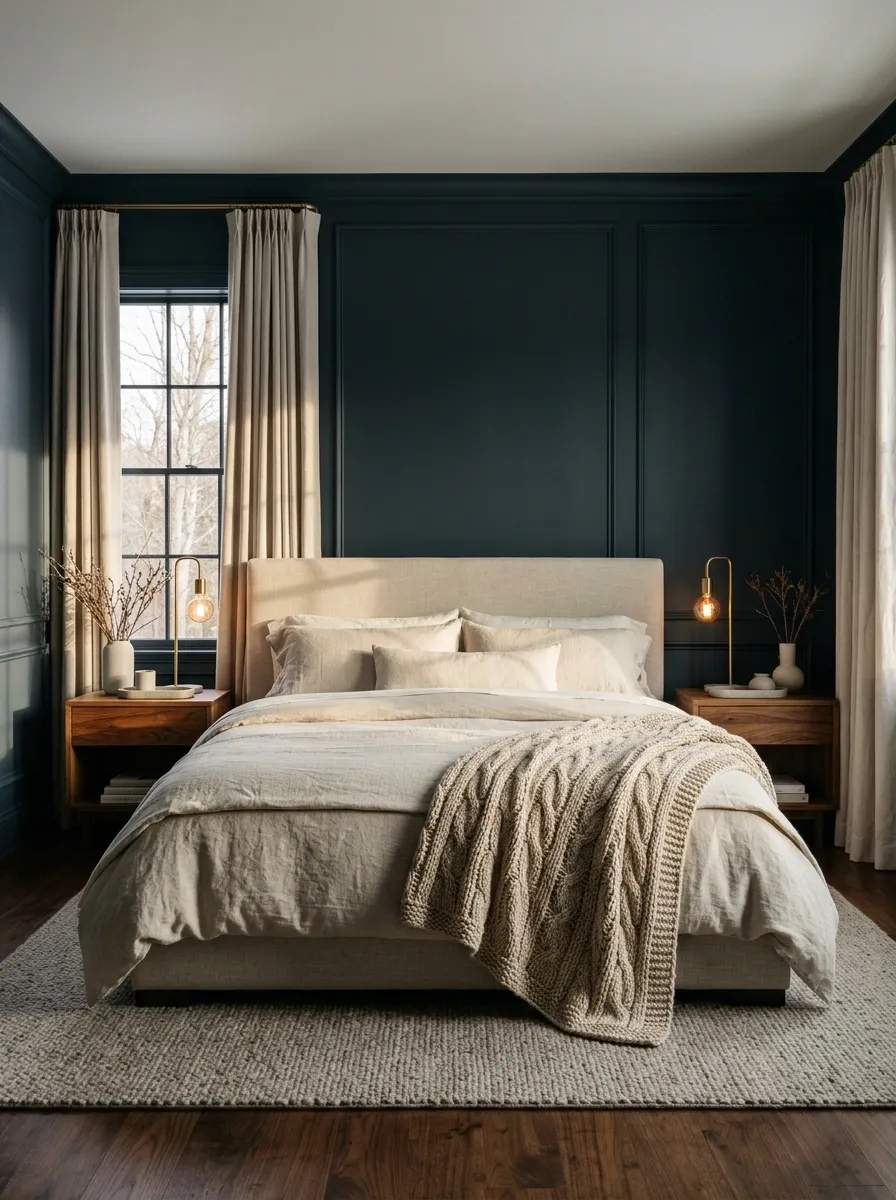
Ink-blue walls and oatmeal bedding give a bedroom a clear light-dark relationship, with warm timber bedside pieces and plain curtains completing the setting. Use reachable bedside lights rather than relying entirely on the ceiling.
Keep the deepest color on the perimeter and let the bed remain distinct. Adding navy curtains, navy bedding, and a navy rug would produce impressive commitment and very few landmarks. A textured throw can give the bed depth without another pattern. Choose layers you will actually use, not a ceremonial pillow collection that requires nightly eviction.
A pale textile surface separates the furniture from the dark room envelope.
Birch-Toned Sitting Room With Charcoal Detail
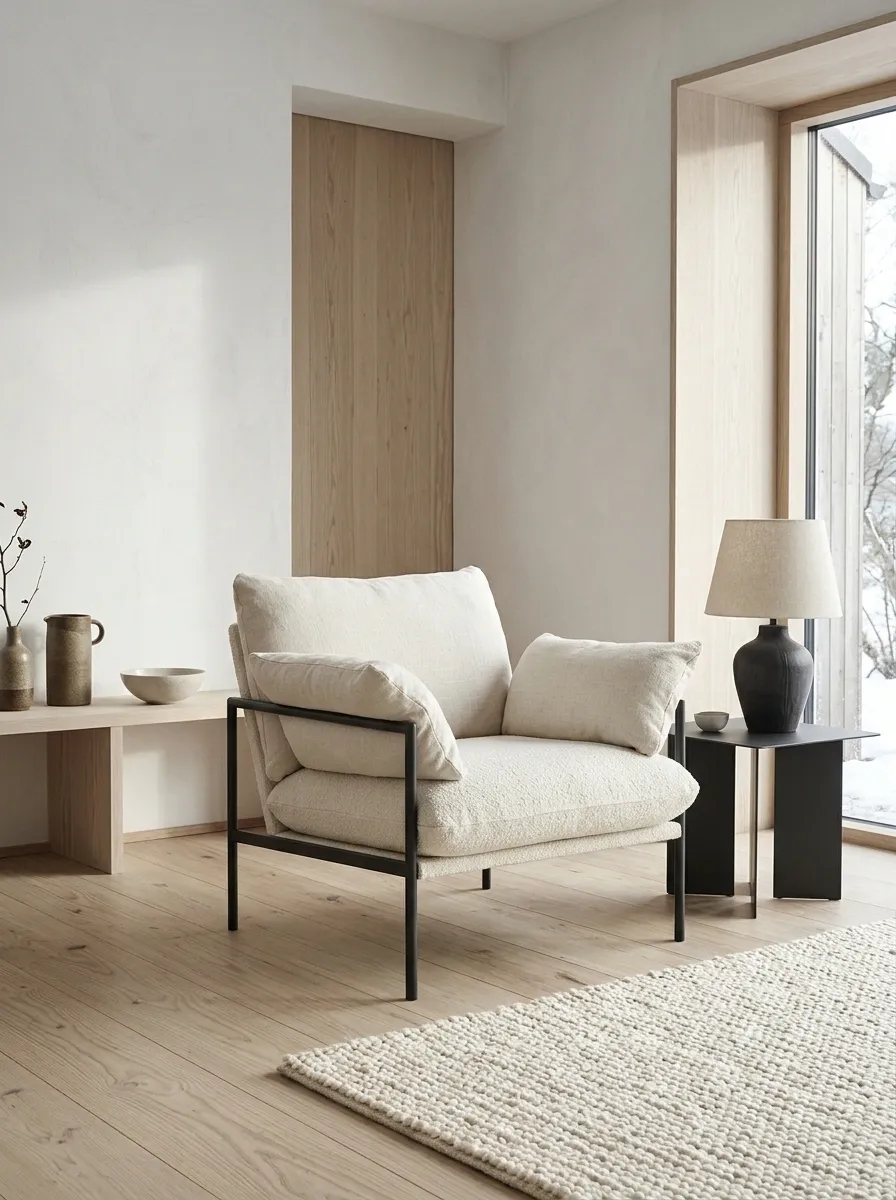
Pale timber, chalk walls, and a softly woven rug can create a winter room without dark paint. Use charcoal on a lamp, chair frame, or small table so the pale surfaces retain definition.
The material differences matter:
- Smooth timber.
- A soft upholstery weave.
- A rug with visible texture.
Keep the fabrics warm-toned enough to sit comfortably together. Several almost-white surfaces chosen independently can make a room look oddly mismatched. The quiet palette needs deliberate comparison, not a promise from a paint name containing the word cloud.
Different surfaces keep pale colors interesting.
A few dark useful objects give the room an outline.
Rust Dining Nook With a Timber Banquette
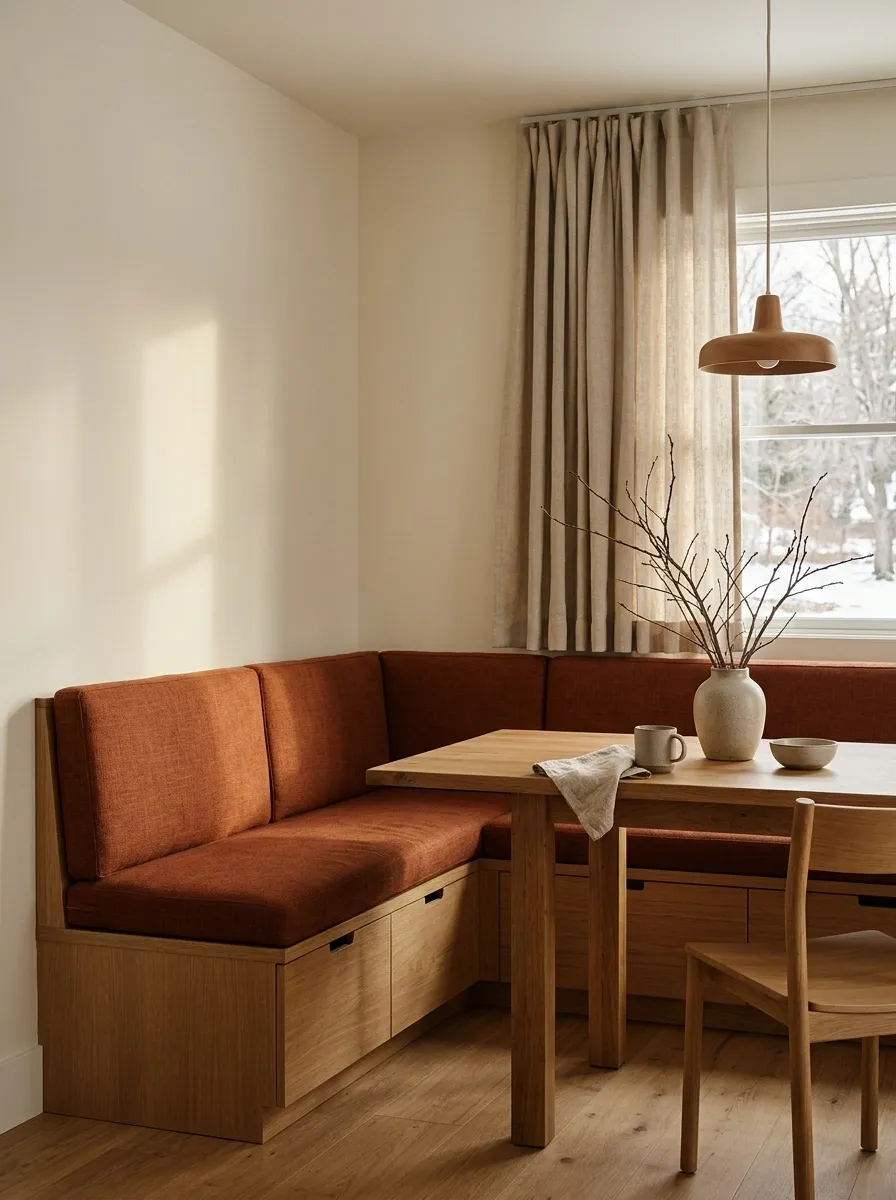
A rust-upholstered banquette gives a dining corner warmth beside cream walls and a simple timber table. Keep the pendant related to the tabletop, with plain curtains and closed storage below the seat.
The nook should work for sitting and eating, not just display a reassuring number of cushions. Check table reach, knee room, and access to the inner seat. Rust can carry the color while the rest of the room remains quiet. One substantial fabric choice does more than several tiny seasonal accents competing for a place beside the salt.
Table reach, back support, knee space, and the route out matter more than a perfect cushion arrangement.
A Reading Corner With a High-Back Chair and Floor Light
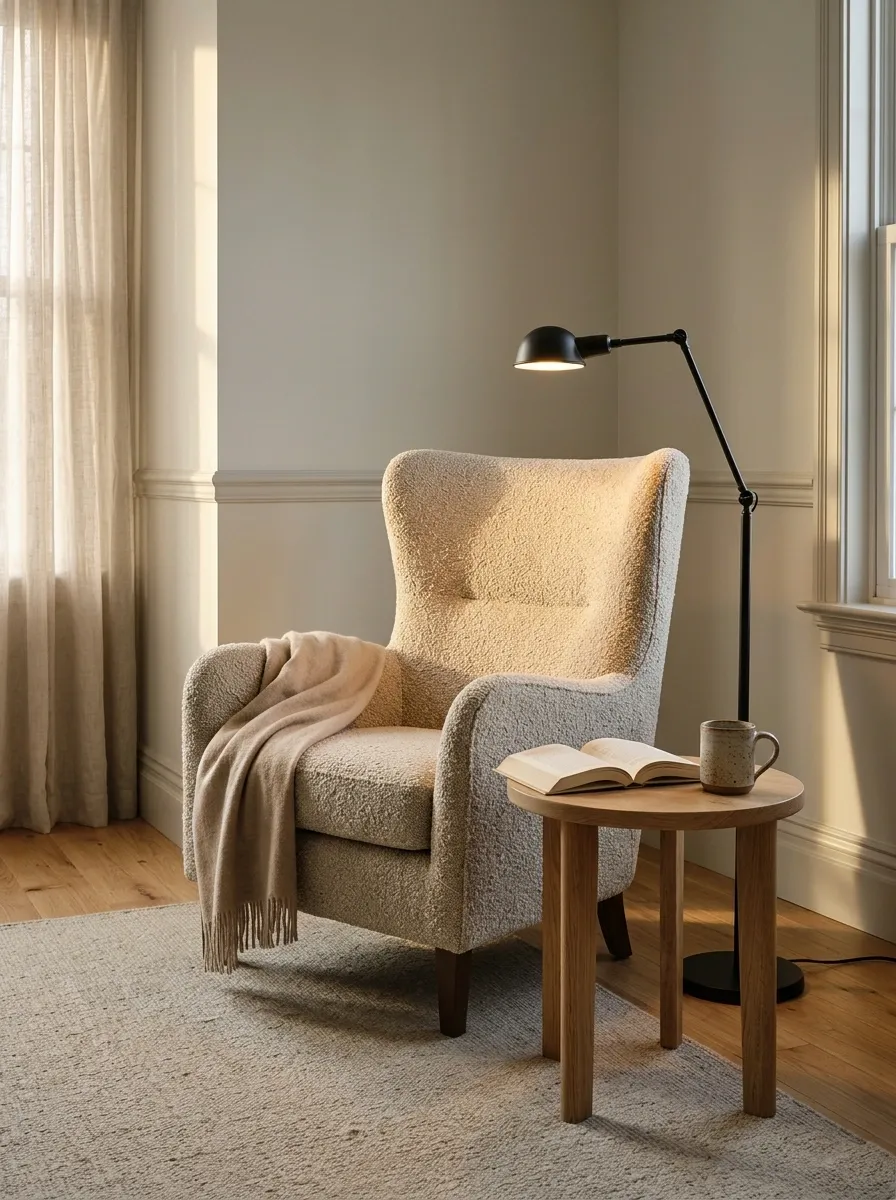
A supportive high-back chair, small side table, and adjustable reading light can make an underused corner feel complete. Use a plain rug to connect the chair to the room, with a soft throw stored close by.
Place the lamp for the person reading rather than the symmetrical view from the doorway. The table needs a clear patch for a cup and book. Don’t occupy it permanently with decor and then complain that the chair never gets used. A reading corner should support reading, which remains a surprisingly effective design brief.
Supportive back and comfortable feet.
Light control, book, drink, and blanket.
Cream Kitchen With Dark Timber and a Window Seat
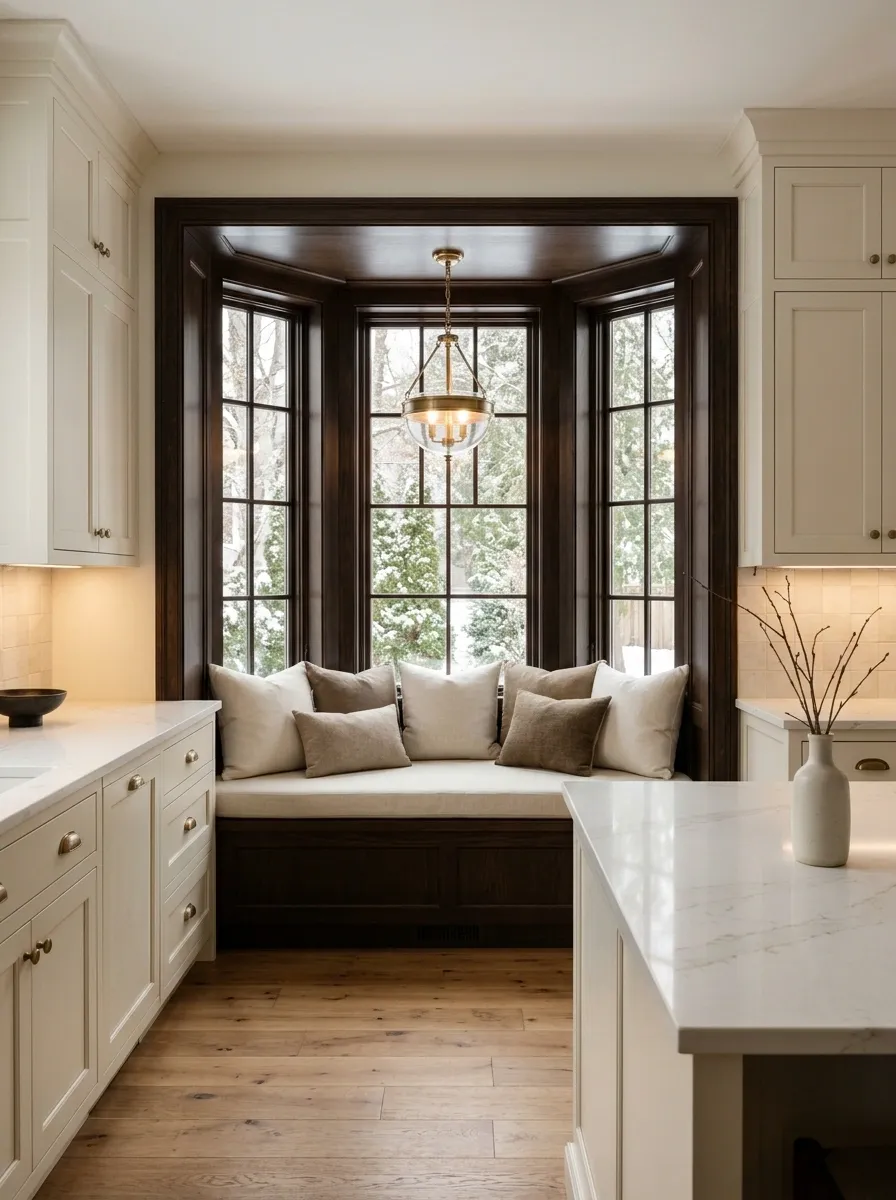
A cream kitchen can feel more inviting through a dark timber breakfast seat, a plain upholstered pad, and softer lighting at the eating area. Keep the working counter clear and let the window provide the room’s changing view.
Choose cleanable seat materials and keep textiles away from cooking heat. The kitchen doesn’t need a collection of decorative food to look welcoming. A useful seat and a clear table make more sense than a counter crowded with trays nobody can move without dismantling a scene. Keep the practical and social parts distinct but related.
Clear task lighting at the work surface; a more comfortable pool of light where people sit.
Stone-Floor Entry With a Closed Timber Bench
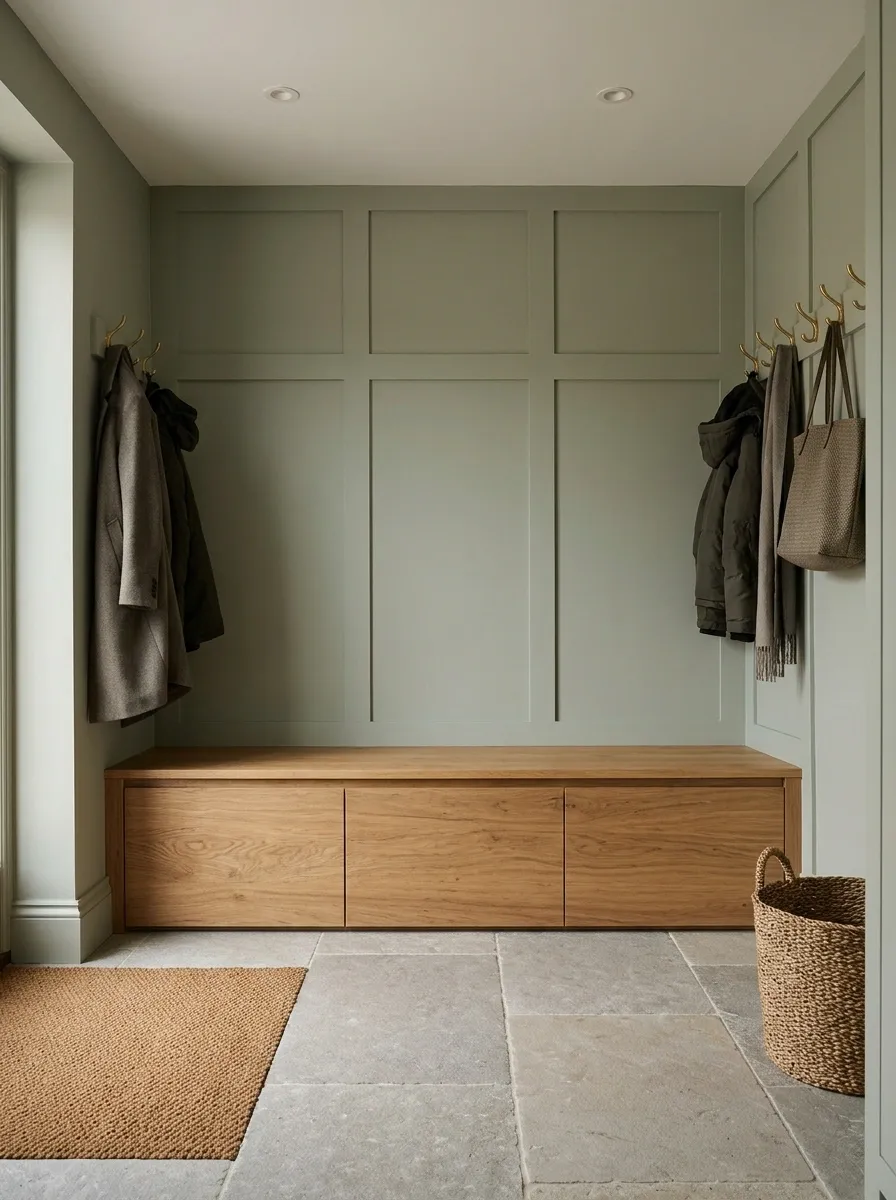
A closed timber bench, durable mat, and muted green wall give a winter entry a complete arrival routine. Keep coat hooks on the return wall where possible so damp outerwear doesn’t hang over the seat.
Plan the wet and dry positions separately. The mat needs to remain stable, and the bench should leave room for taking shoes off. A basket of decorative branches doesn’t improve any of those actions. Give everyday objects proper storage and let the timber, wall color, and useful lighting supply the character.
Mat and damp outerwear.
Seat, closed shoes, and personal items.
Mushroom Home Office With Warm Task Lighting
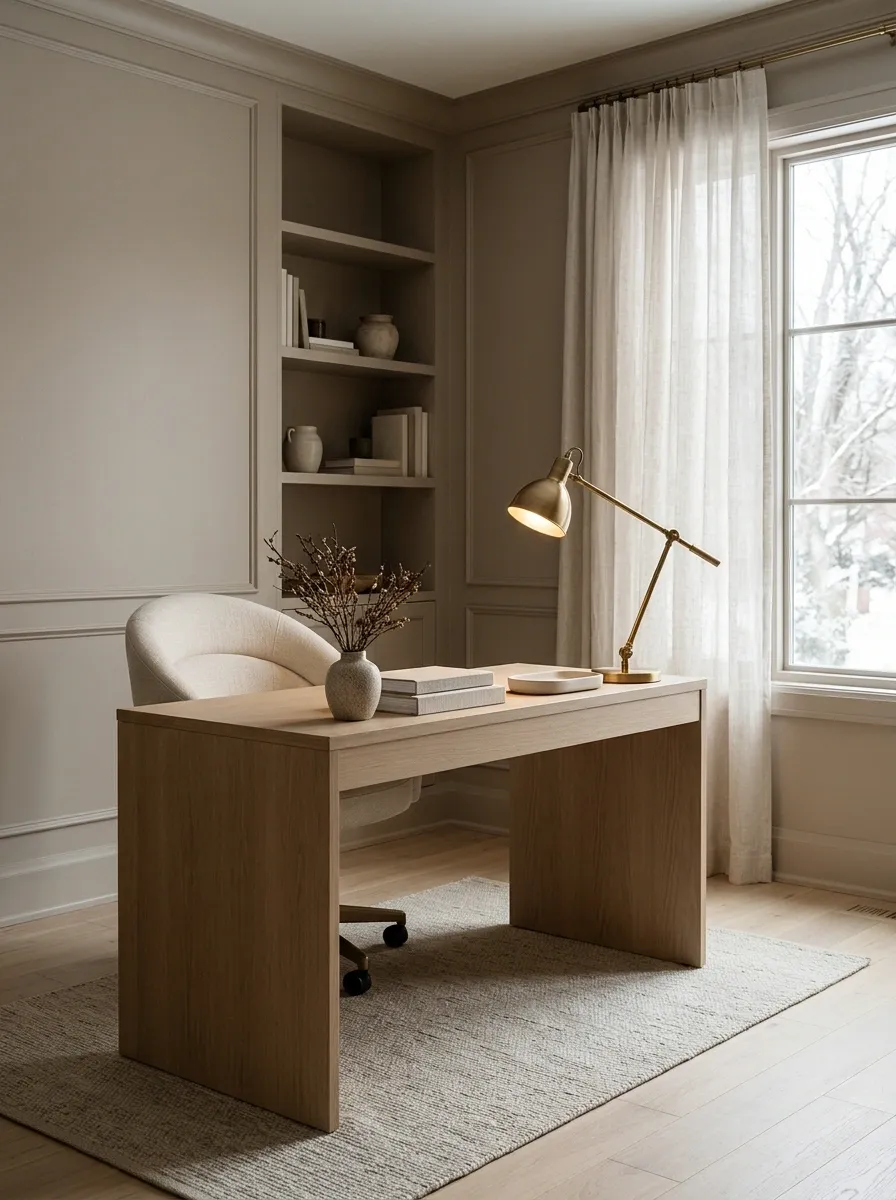
Mushroom walls and pale timber furniture can make a home office feel settled during darker days. Use a supportive chair, a plain rug, and task lighting that serves the actual desk position.
The room still needs enough light for work; atmospheric dimness is a poor productivity strategy. Keep the window usable and the desktop clear. A soft curtain can reduce visual harshness without becoming a complicated decorative installation. Choose one warm textile and let the rest remain practical. The printer doesn’t need to join the seasonal palette.
Is the desk comfortable after sunset?
Check screen reflections, task visibility, chair comfort, and reachable light controls from the working position.
Burgundy Guest Room With Plain Cream Linen
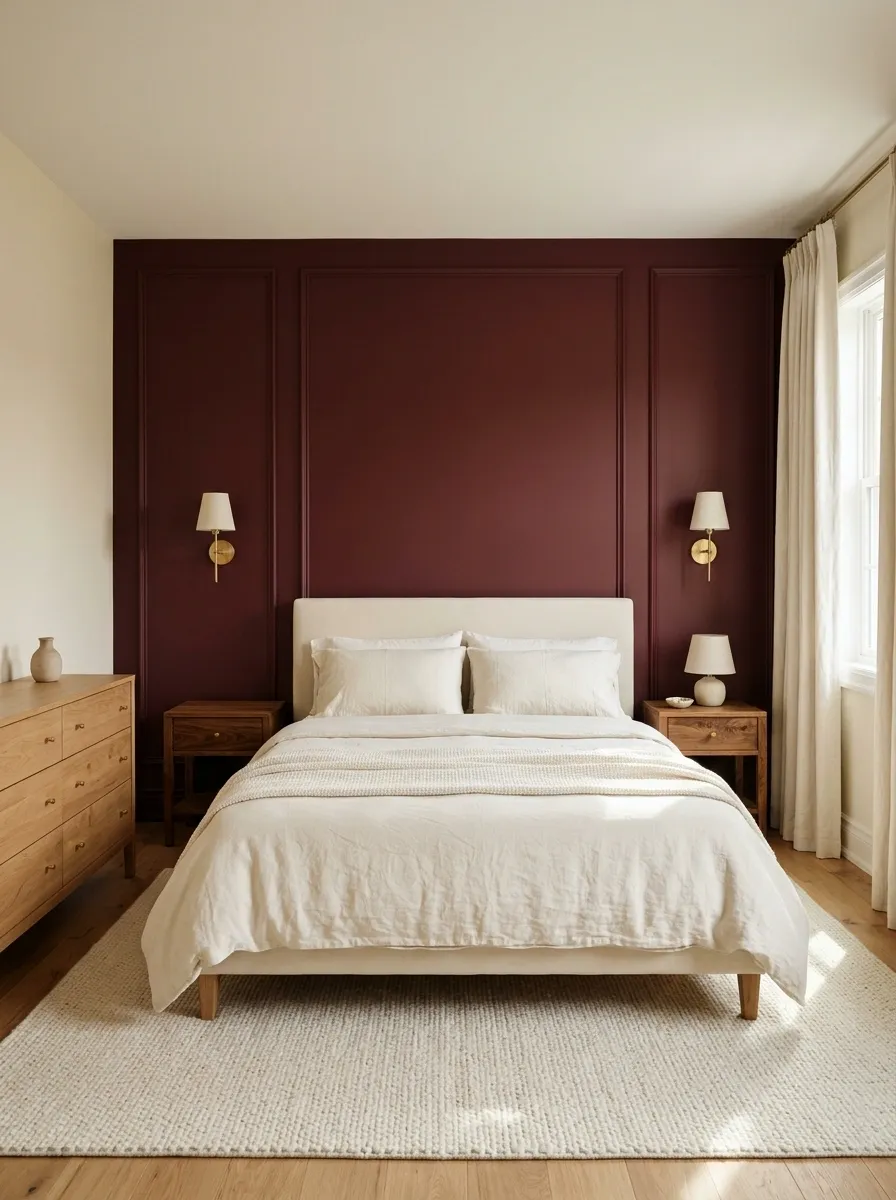
A burgundy bed wall gives a guest room depth, with cream bedding and a simple timber chest preventing it from feeling heavy. Keep the curtains plain and leave a clear bedside surface.
Guests need somewhere for belongings, not a complete installation of decorative objects. Reserve a drawer and a useful bag position before adding another cushion. The strong wall color can carry the room’s character while the textiles remain uncomplicated. A welcoming room is easier to recognize when the person staying there doesn’t have to ask where the ornamental tray is allowed to go.
A clear drawer, bedside area, and bag position make the room usable immediately.
Warm White Bathroom With Walnut and Textured Towels
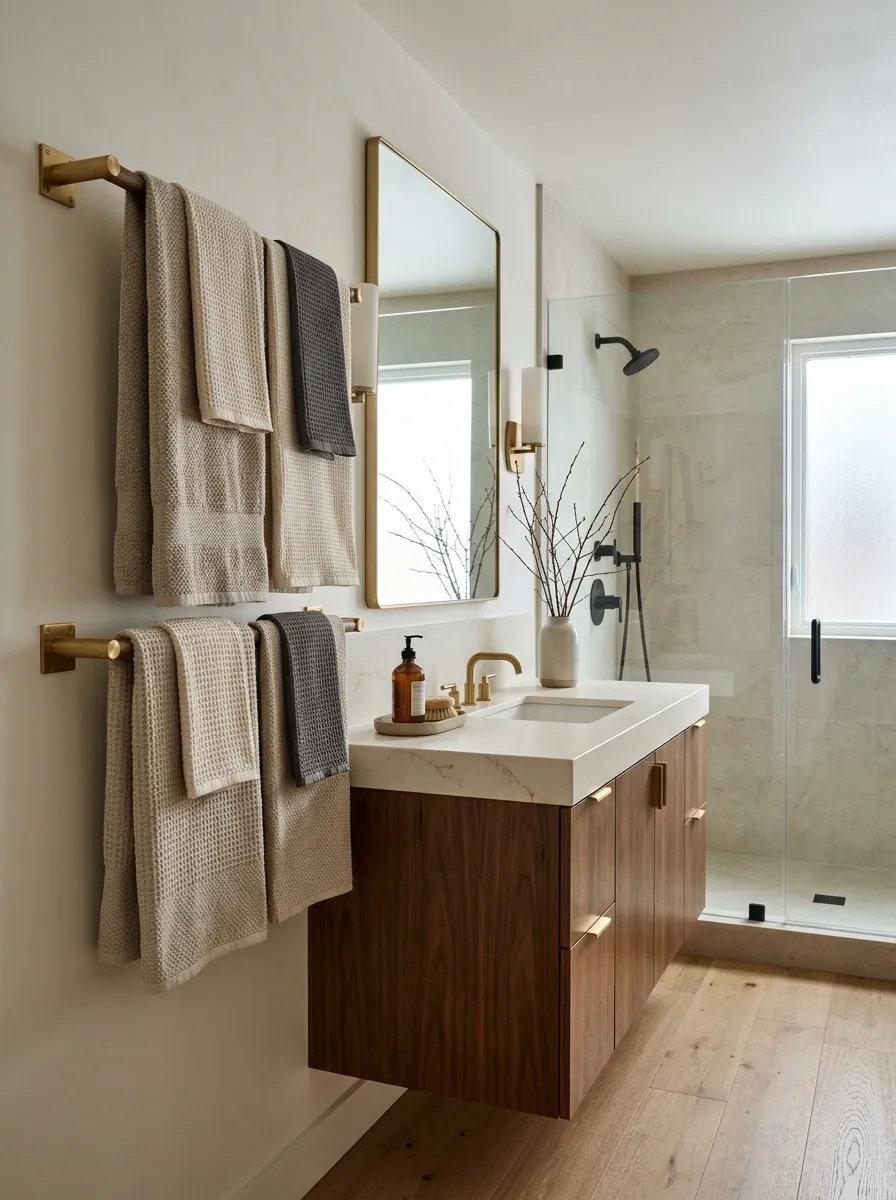
A warm white bathroom can take on a winter mood through walnut storage, suitable soft lighting, and a restrained towel palette. Keep the wet area plain and give used towels a proper drying position rather than stacking them decoratively.
The room’s comfort comes from usable surfaces and a clear routine, not a wooden stool placed in every available gap. Keep the counter available and select timber finishes for their actual exposure. A towel rail doing its job contributes more than a display of pristine linen that nobody is supposed to touch.
Clean spare towels can be stored; used towels need a workable open drying arrangement.
A Library Wall With a Window-Side Chair
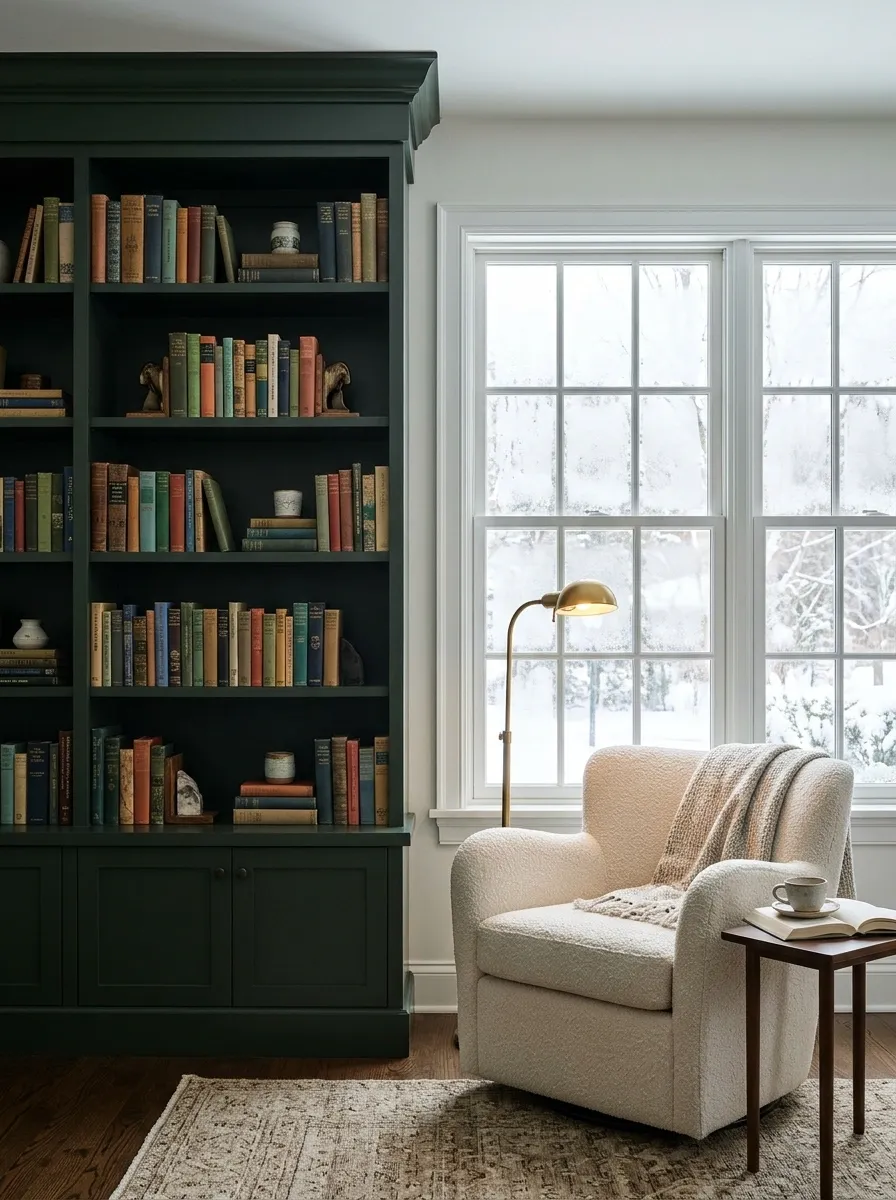
Dark green book storage can make a living room feel enclosed without darkening every surface. Put a pale reading chair near the window, with a small table and useful lamp completing the setting.
Let the books provide color variation. Additional patterned curtains and cushions may be unnecessary beside a full wall of spines. Keep frequently used volumes reachable and heavier books appropriately low. The chair should have space around it, rather than being tucked into the remaining gap after the shelves have won the room. A library corner needs a reader, not just inventory.
Dark perimeter. Comfortable foreground.
Choose the chair position before filling the wall with storage. Its reading light and table need space too.
A Pale Living Room With Chocolate Curtains
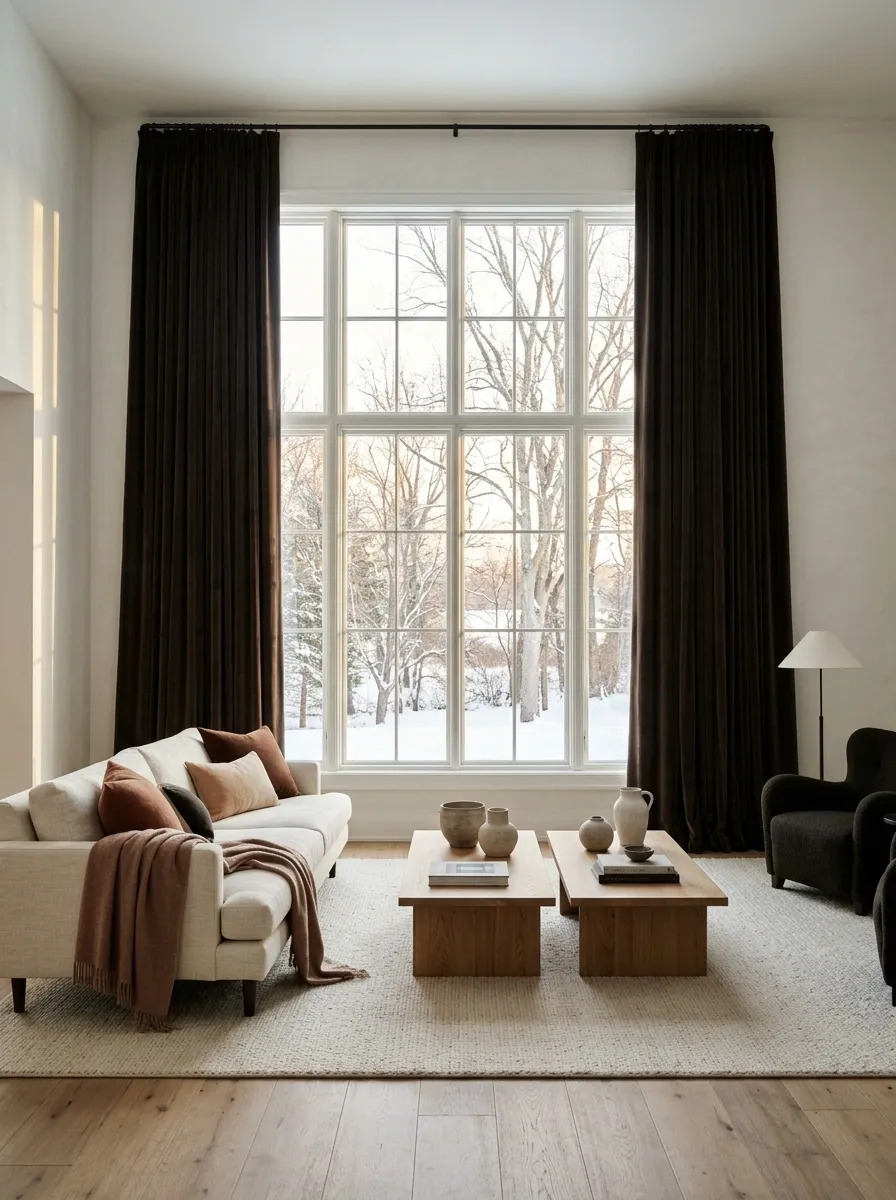
Chocolate-colored curtains can give a pale living room a firmer outline, with cream seating and timber tables keeping the center light. Add a muted rust textile if the room needs warmth beyond the brown perimeter.
Check the gathered curtain volume and the view when open. Dark fabric can be generous without swallowing the window. Keep the largest remaining fabrics plain so the contrast feels deliberate. This is useful when repainting the walls isn’t on the agenda but the room needs more depth. The curtains can make the decision; the sofa doesn’t have to be replaced in solidarity.
A Small Dining Room With Upholstered Chairs and Plain Walls
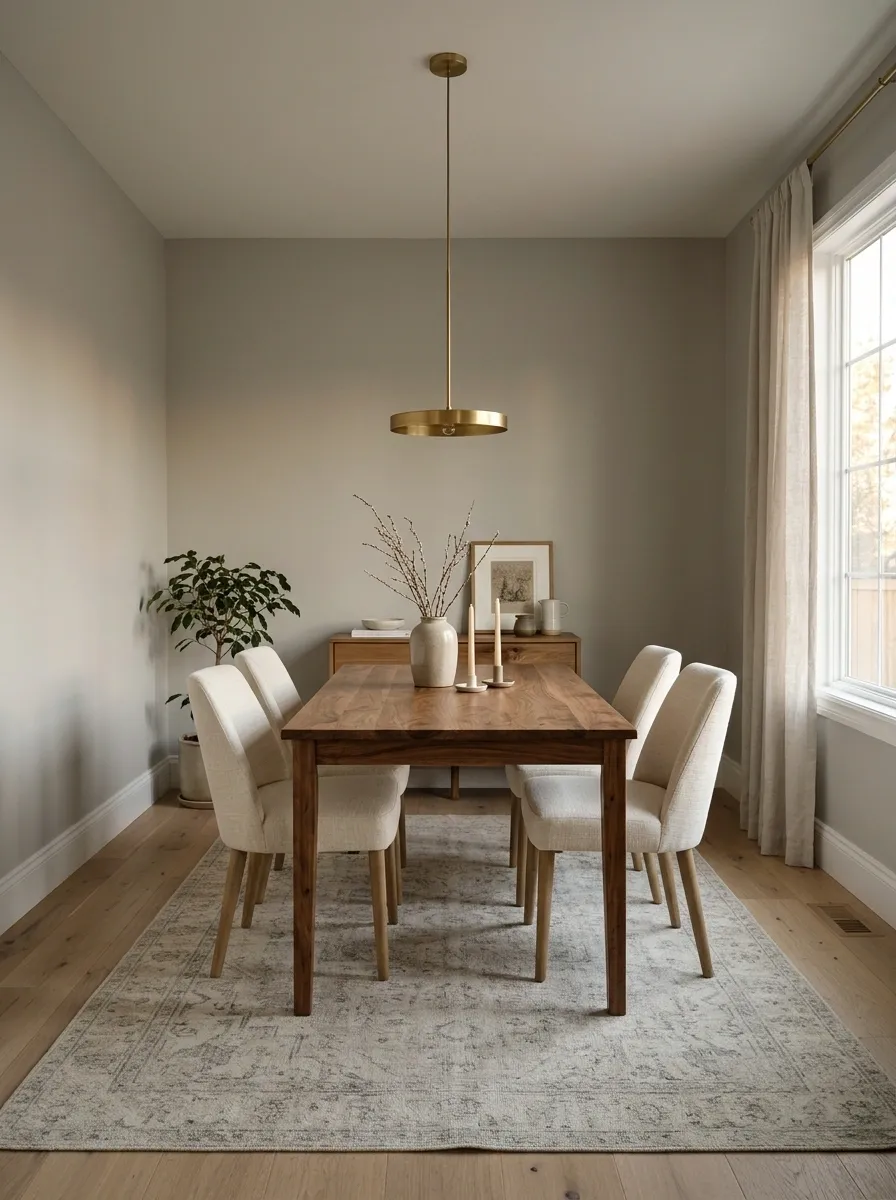
Upholstered dining chairs can soften a compact room around a simple timber table. Keep the walls quiet, use a suitable rug only where it works with chairs, and place the pendant over the actual dining surface.
The fabric needs to suit ordinary meals, not an imaginary household that never drops anything. A small repeated texture can make the room feel complete without patterned wallpaper. Check chair movement before committing to the rug. A dining room should not require everyone to lift their chair over a decorative edge every time they stand.
Judge rug size and clearance with the table in use, not only when the setting is empty.
A Window Seat With Deep Green Cushions
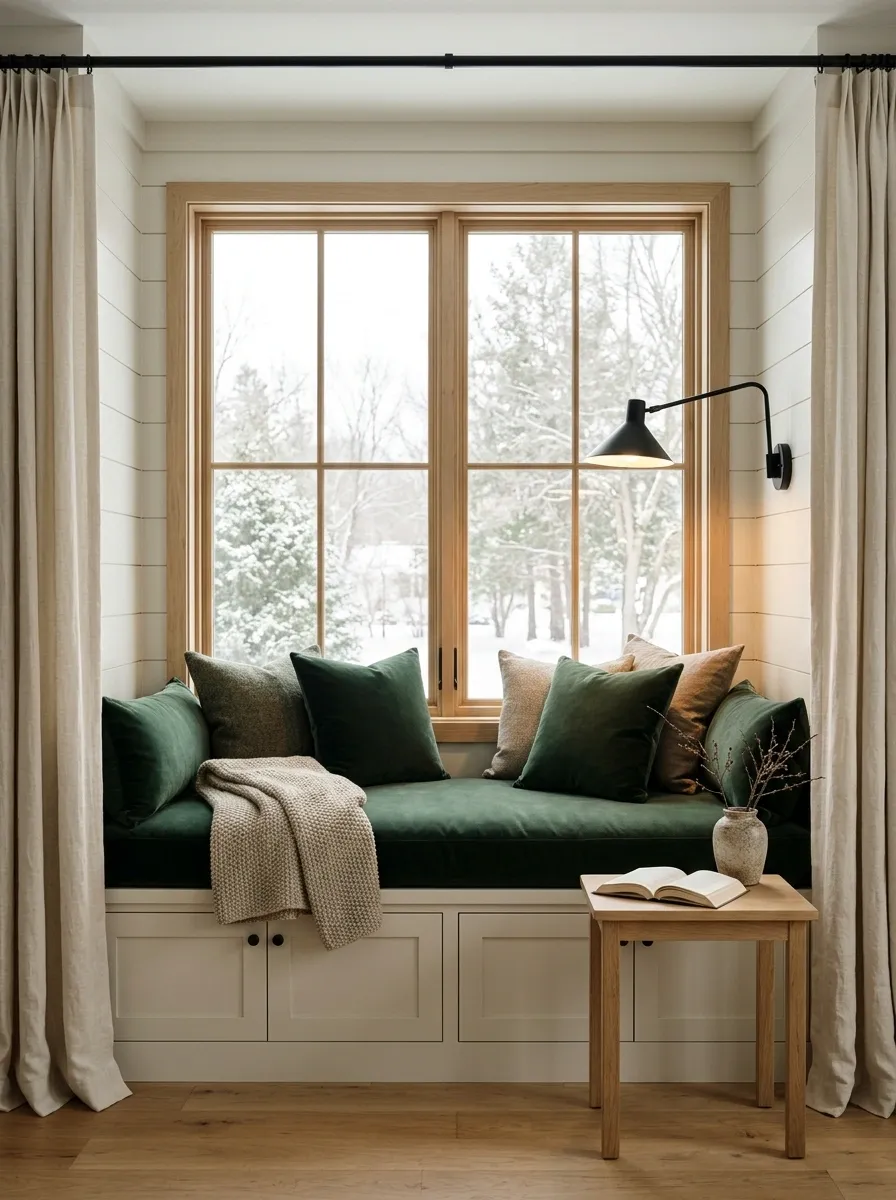
A window seat can become a useful winter corner with supportive cushions, a reachable side surface, and a reading light. Keep the rest of the wall pale and use closed storage below for the extra blanket.
Preserve window operation, heating clearances, and any required access. The seat needs more than an appealing cushion: back support and comfortable leg position matter. Avoid filling the sill with objects that must move whenever the window opens. The view can provide the decoration while the furniture handles the people, an arrangement with considerable long-term potential.
Back, feet, book, light switch, window handle. Check each before choosing the final fabric.
A Winter Bedroom With a Plain Upholstered Headboard
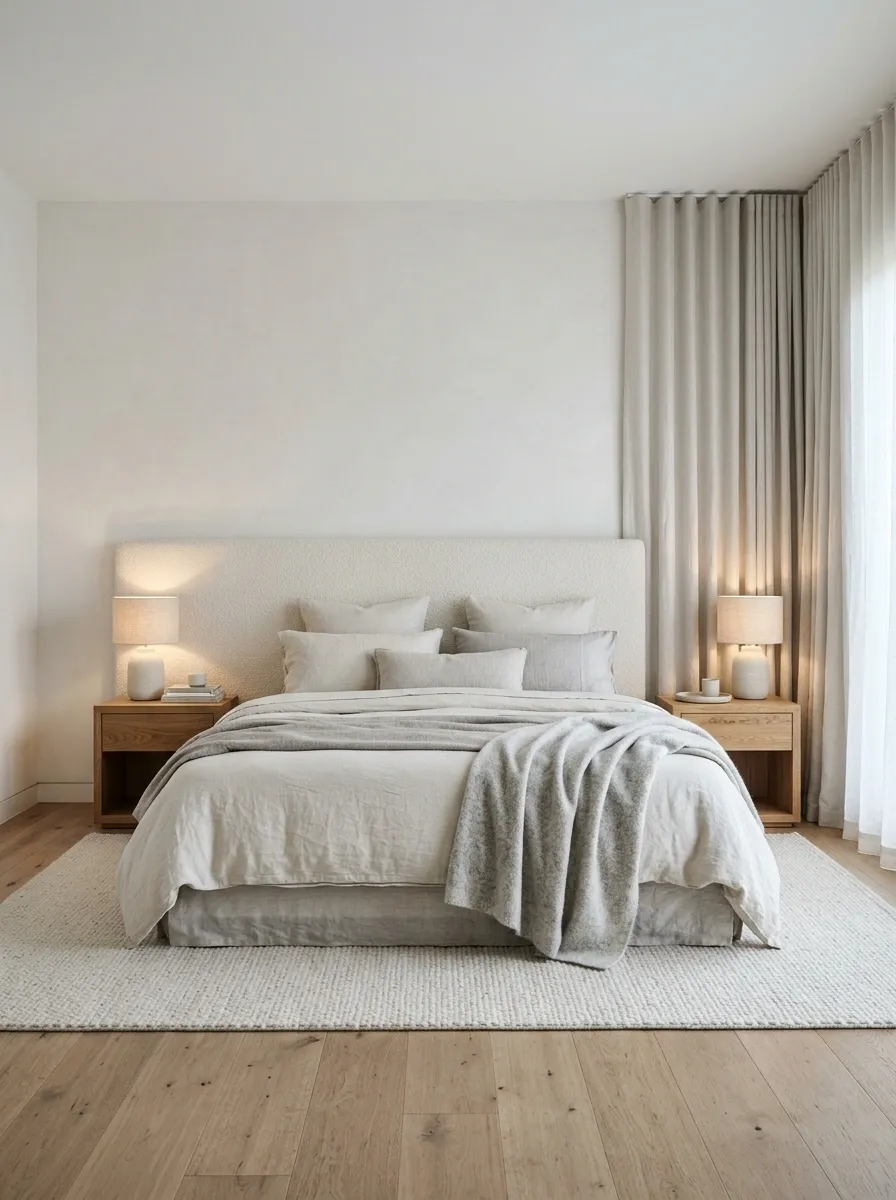
A substantial upholstered headboard can give a pale bedroom a softer center. Pair it with simple bedding, warm timber nightstands, and curtains close to the wall color so the room stays quiet.
Choose texture and a small tonal difference rather than adding another large print. The headboard should feel distinct from the wall without demanding the attention of every object in the room. Keep bedside lighting useful and the floor around the bed clear. A comfortable bedroom does not need an obstacle course of benches, baskets, and cushions awaiting their nightly relocation.
One clear soft focal shape.
A Long Hallway With Warm Art and a Plain Runner
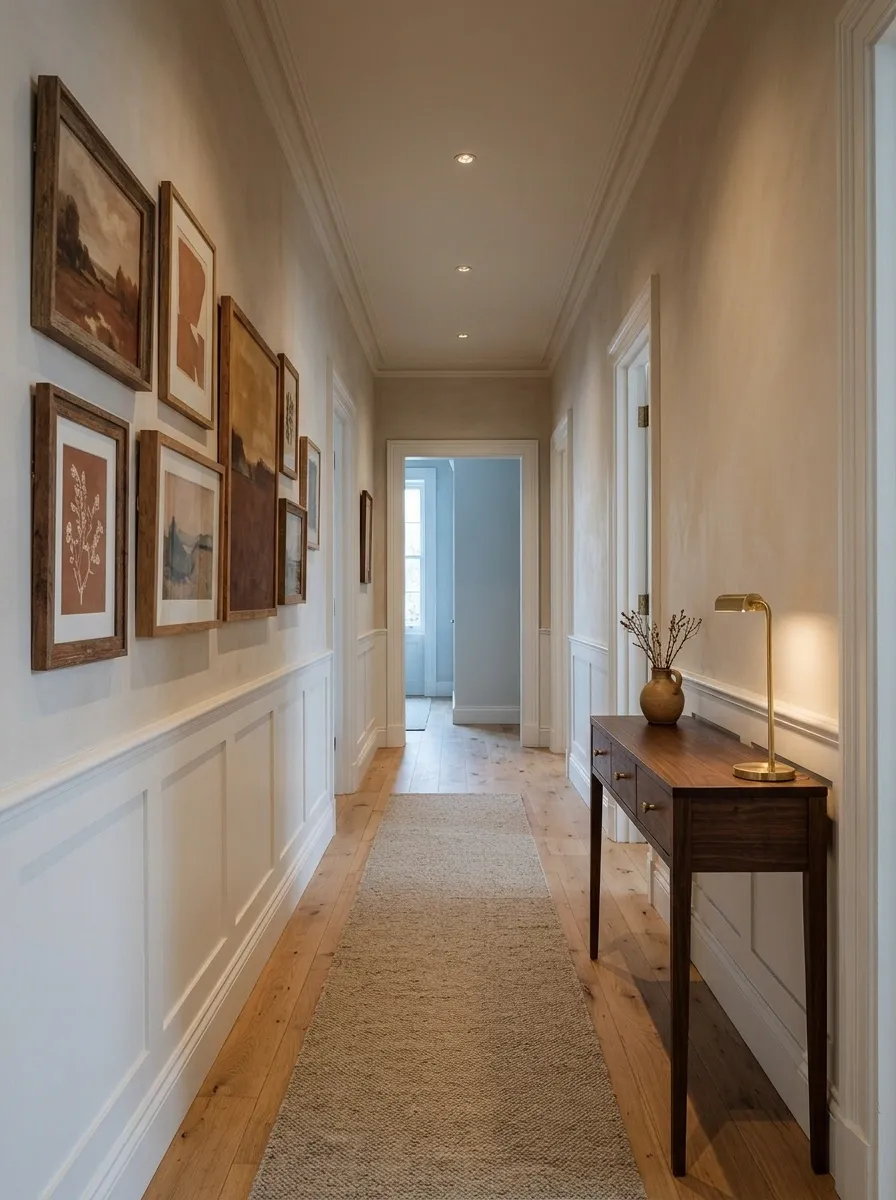
A sequence of warm-toned artwork and a simple runner can give a hallway a more settled feel. Keep furniture shallow, lighting clear, and the runner stable so the route remains straightforward.
The pictures should relate through subject, tone, or framing rather than matching so precisely that they look issued by a committee. Use the hallway’s length as the organizing feature. A small lamp belongs only where there is a suitable surface and a contained cable route. Seasonal atmosphere is not a reason to make an already narrow passage more interesting to navigate.
Check frame projections, furniture depth, cable positions, and runner edges while carrying a normal bag.
A Charcoal Snug With Camel Upholstery
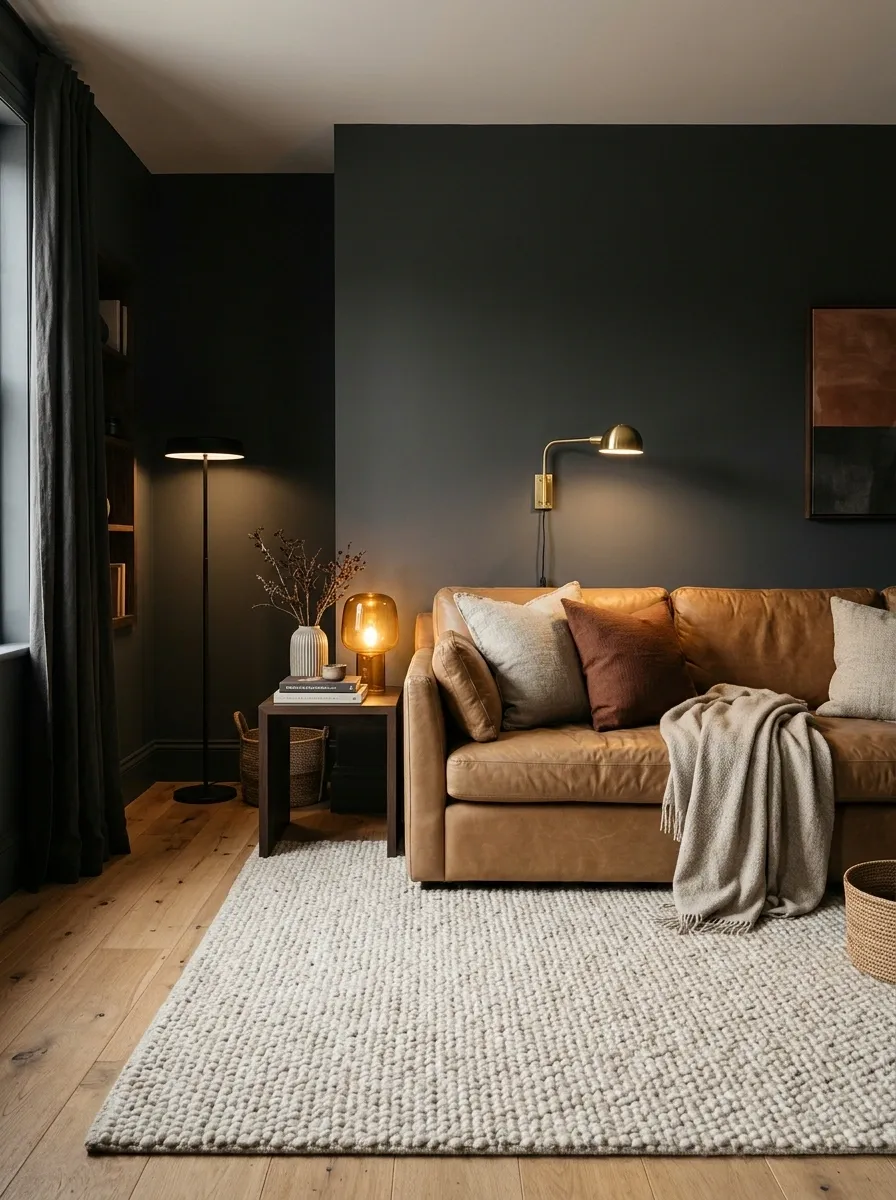
Charcoal walls and camel seating give a small snug a strong enclosed character, with a pale rug and plain side table preventing it from becoming too heavy. Use several useful light positions rather than one bright ceiling fixture.
The room needs light for ordinary tasks as well as evening atmosphere. Keep the curtain fabric restrained and let the upholstery provide warmth. A snug can feel intimate without making every object dark enough to disappear. The phone you dropped should remain findable without a search party or an emergency relationship with the ceiling switch.
Keep controls, tables, and walking routes clear in the room’s normal evening lighting.
A Family Room With Washable Layers and Closed Toy Storage
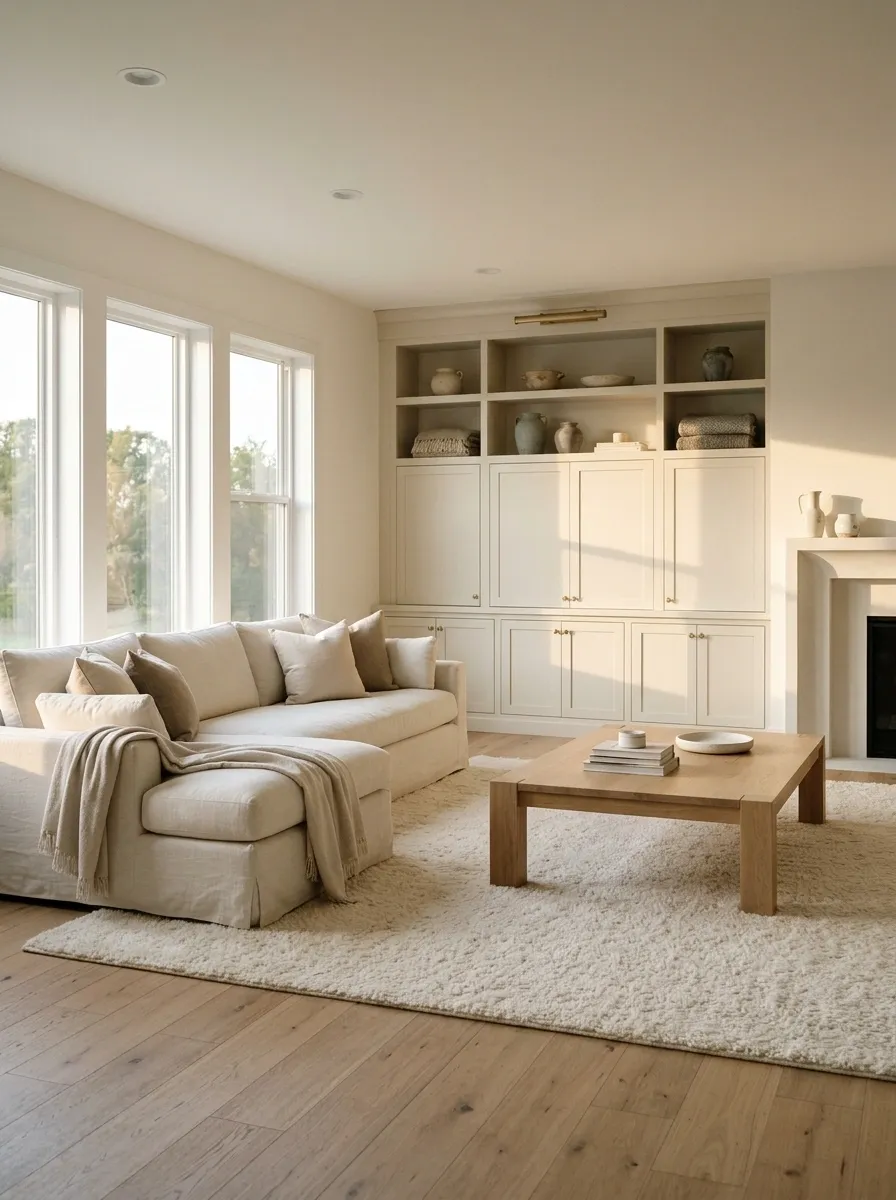
A family room can use soft upholstery, suitable washable covers, and closed storage to feel comfortable through winter. Keep the central floor available and give blankets a shelf or cupboard rather than a permanent heap.
Choose the layers around actual use. A delicate throw that spends its life being rescued from the sofa is not contributing much. Use one or two related colors so toys and daily objects can enter the room without overwhelming it. The room should still look like a complete setting when people are living in it, which is its main assignment.
Reachable blankets and open play floor.
Suitable washable layers and closed storage.
A Garden-Facing Room With Pale Seating and Dark Frames
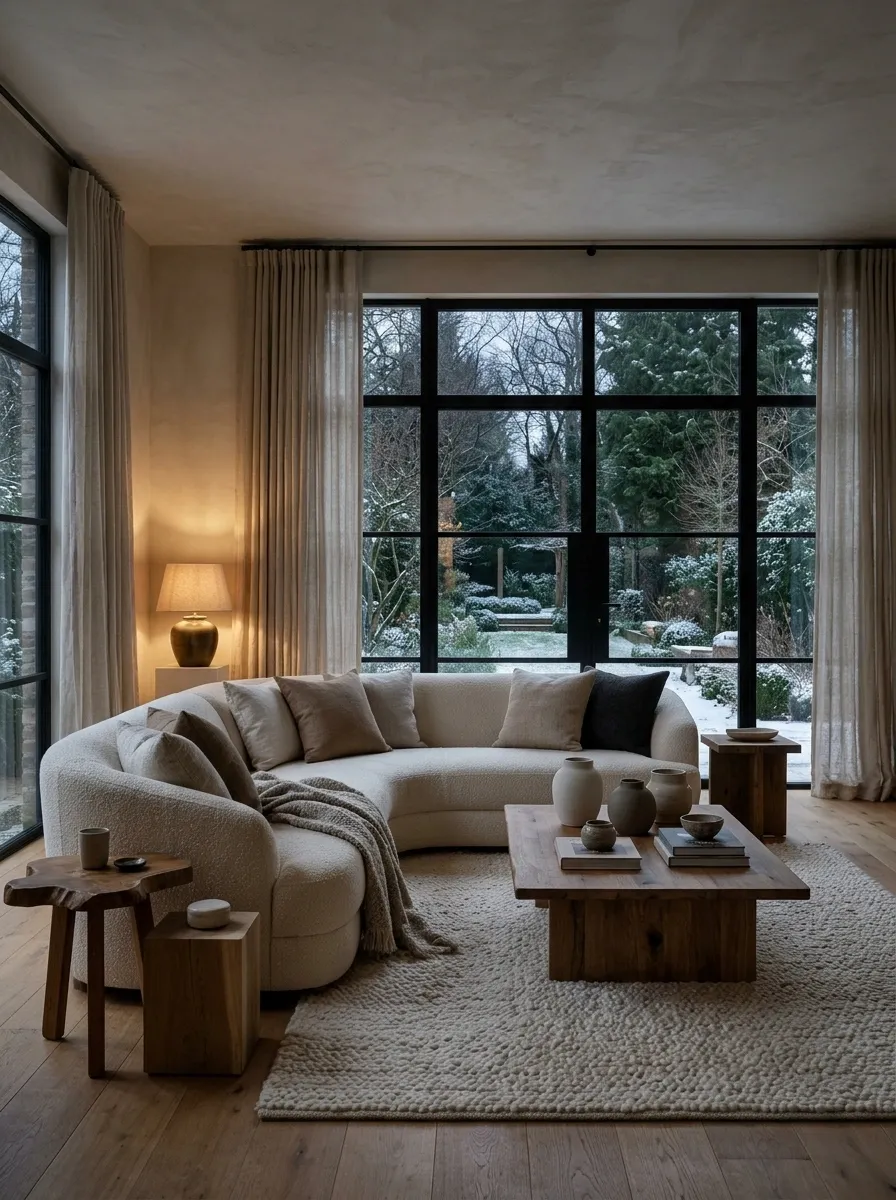
Pale seating can face the winter garden through dark window frames, with timber tables and a textured rug keeping the interior grounded. Gather curtains clear of the view where privacy allows.
Check the room after dark, when the glazing reflects the interior instead of the garden. Place lamps so the seating still feels comfortable and the glass doesn’t simply double a glaring light source. The view can remain the main visual feature without requiring a row of indoor plants across the sill. Keep the opening usable and let the outdoor scene do its changing.
What happens when the view disappears?
Review reflections and lamp glare from the occupied sofa after sunset.
A Cream Bedroom With Forest-Green Bedding
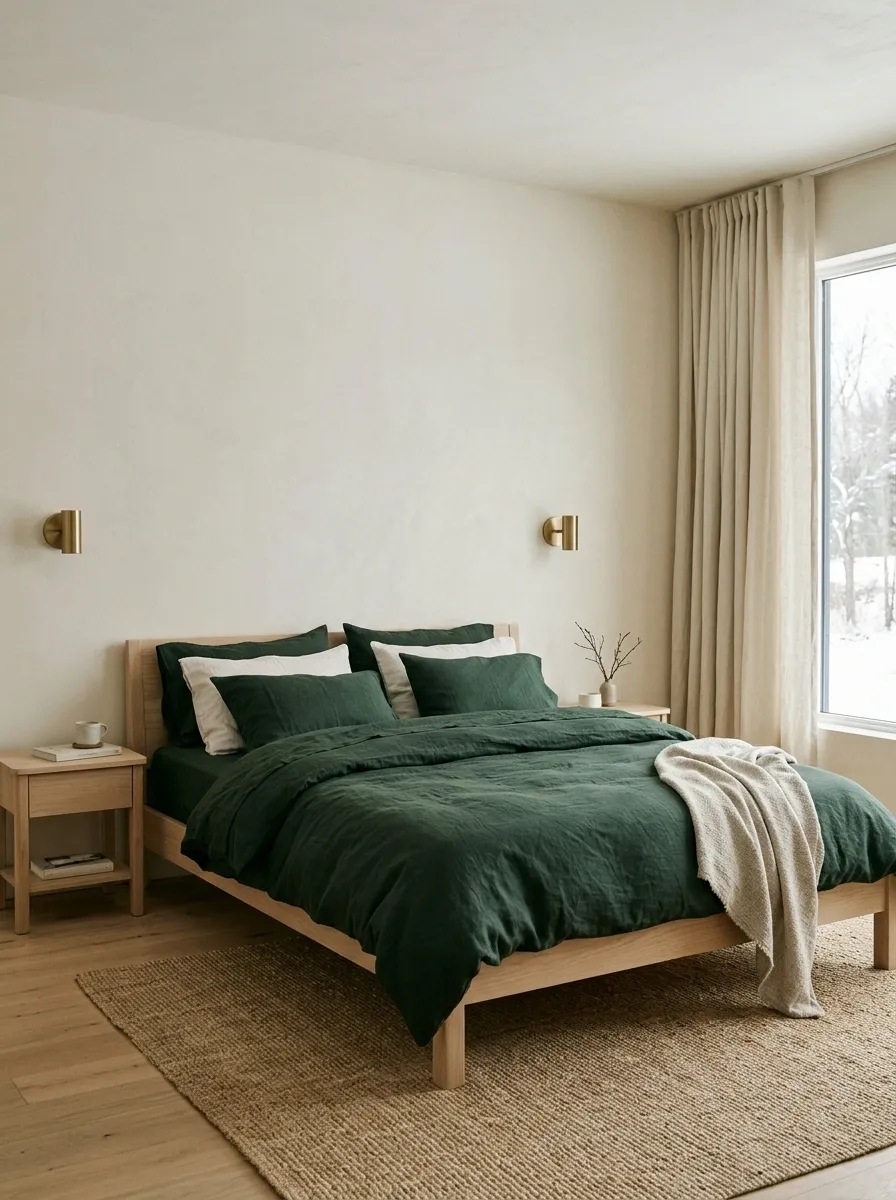
Forest-green bedding gives a cream bedroom a concentrated dark center, with pale wood furniture and a simple woven rug keeping the surrounding space light. Use plain curtains and modest metal lights to retain definition.
The bedding can carry the color without a second green wall. Choose layers for comfort and care rather than piling on decorative fabric. A darker bed surface should remain distinct from the furniture, especially if the bed frame is also dark. Let cream supply the breathing space. Coordination doesn’t require the room to surrender every surface to the same shade.
Keep the walls, curtain, and rug quieter.
A Compact Apartment With a Dark Accent Wall and Pale Storage
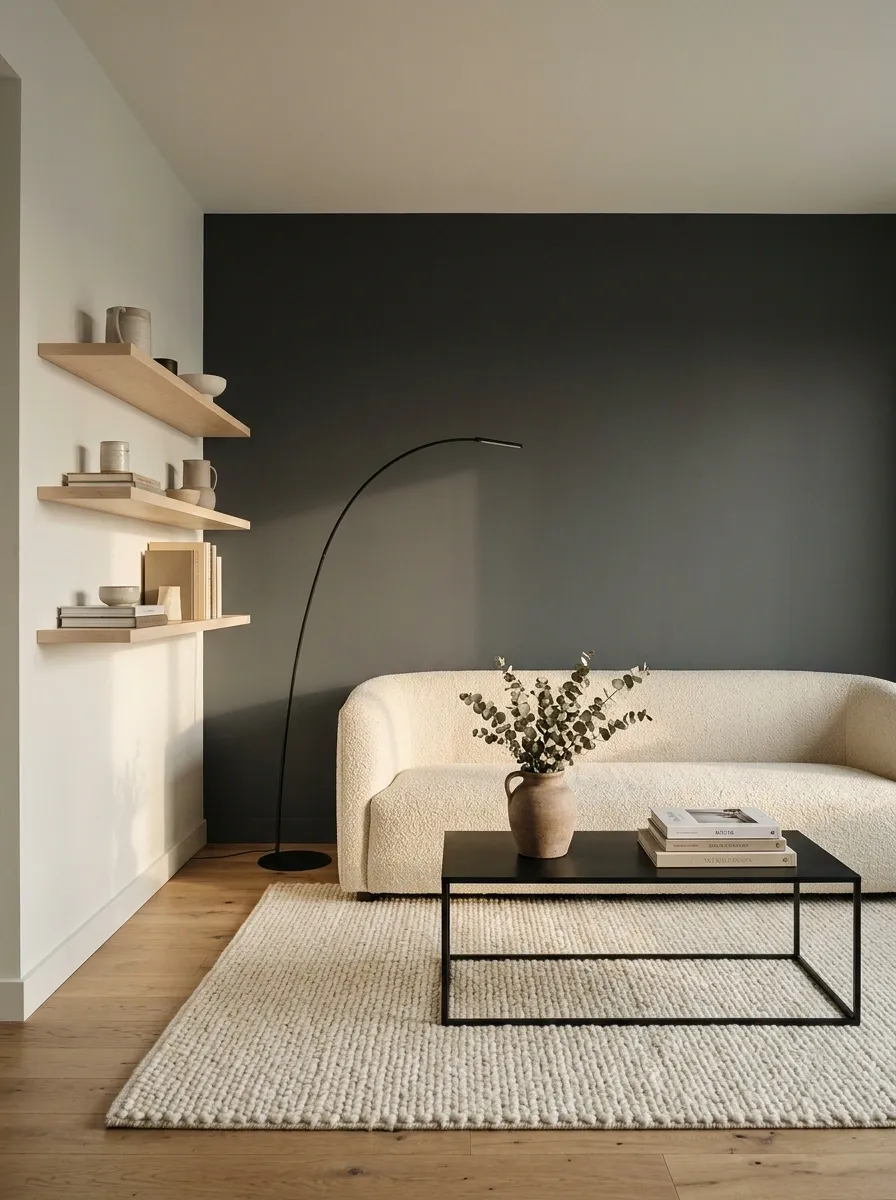
A dark wall behind the sofa can give an apartment living area depth while pale storage keeps the edges light. Add a textured rug, a useful table, and a simple reading lamp so the setting feels finished without extra furniture.
Choose the accent wall around the layout, not the smallest wall that happens to be easy to paint. Keep the remaining surfaces coherent and avoid filling every corner with seasonal objects. A small apartment benefits from fewer decisions made clearly. The empty patch beside the sofa may already be doing excellent work as a route.
Use it to support the seating or another real focal area rather than an arbitrary patch of available wall.
A Stair Landing With a Low Cabinet and Warm Picture Light
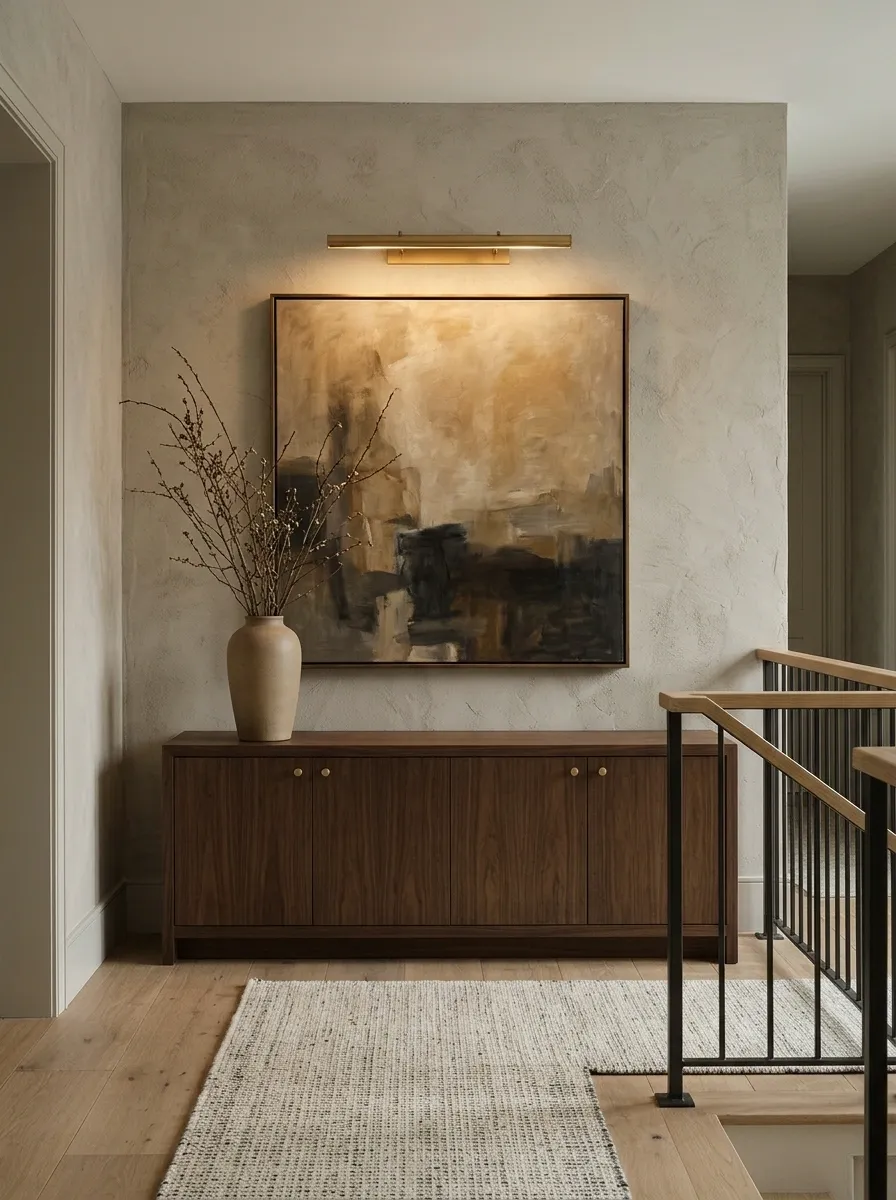
A low cabinet and one substantial artwork can make a landing feel considered, with a suitable picture light or wall light adding evening definition. Keep the floor clear and the cabinet restrained in depth.
The landing’s circulation and stair safety come first. Don’t add a chair simply because a decorative corner seems possible on paper. Check doors opening onto the space and the furniture’s projection from the normal route. The winter character can come through warm material and a quieter light source without turning the landing into a sitting room nobody can pass.
Stair access, door swings, and guard safety decide what furniture fits.
A Dining Room With a Simple Textile at the Table
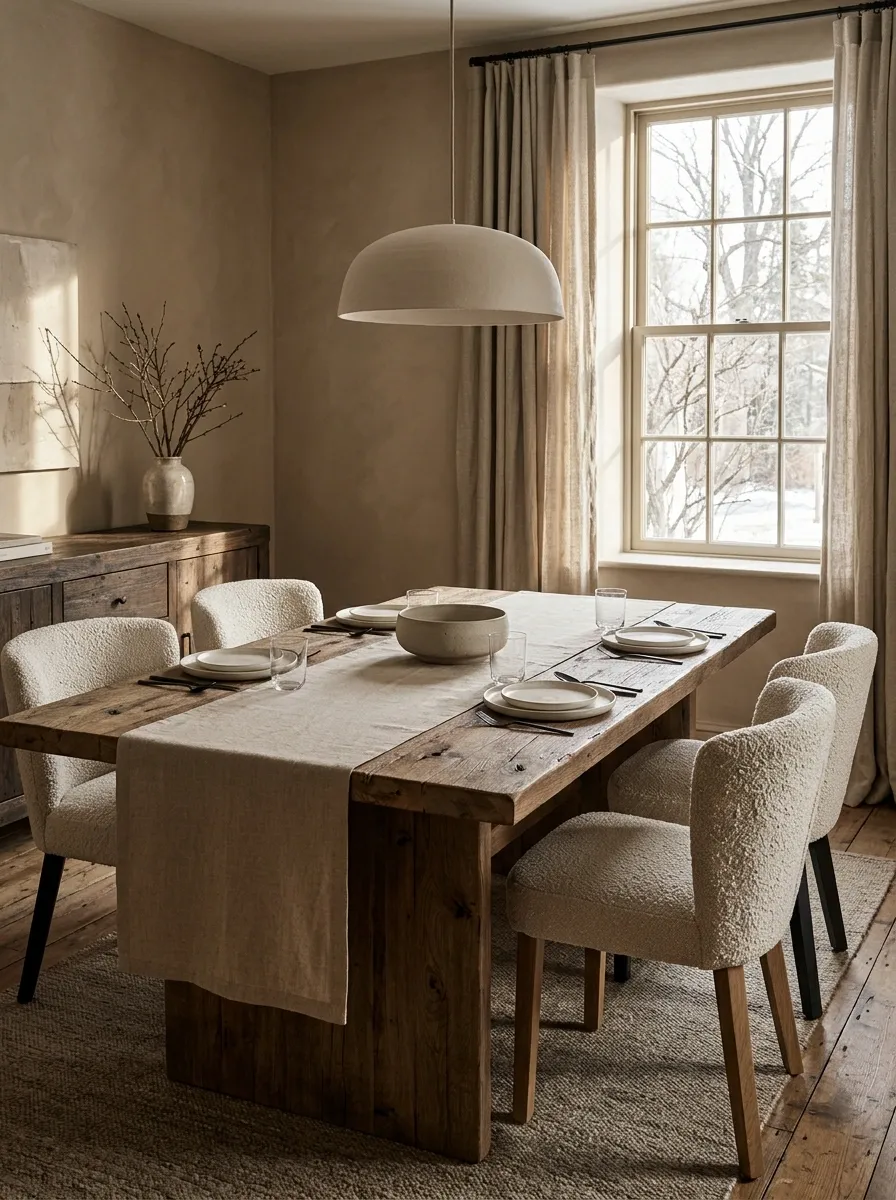
A plain runner or modest tablecloth can soften a timber dining room beside upholstered chairs and warm wall color. Keep the tabletop largely available, with a low bowl or simple object rather than a tall arrangement.
The textile should suit ordinary washing and the way you eat. It doesn’t need a matching set of decorative chair covers to establish a seasonal mood. Let the table remain the place where plates and conversation happen. An arrangement that must be dismantled before every meal is less a centerpiece than a small recurring domestic appointment.
Low decor, usable place settings, and a textile you can maintain.
An Enclosed Sunroom With Warm Neutrals and Proper Storage
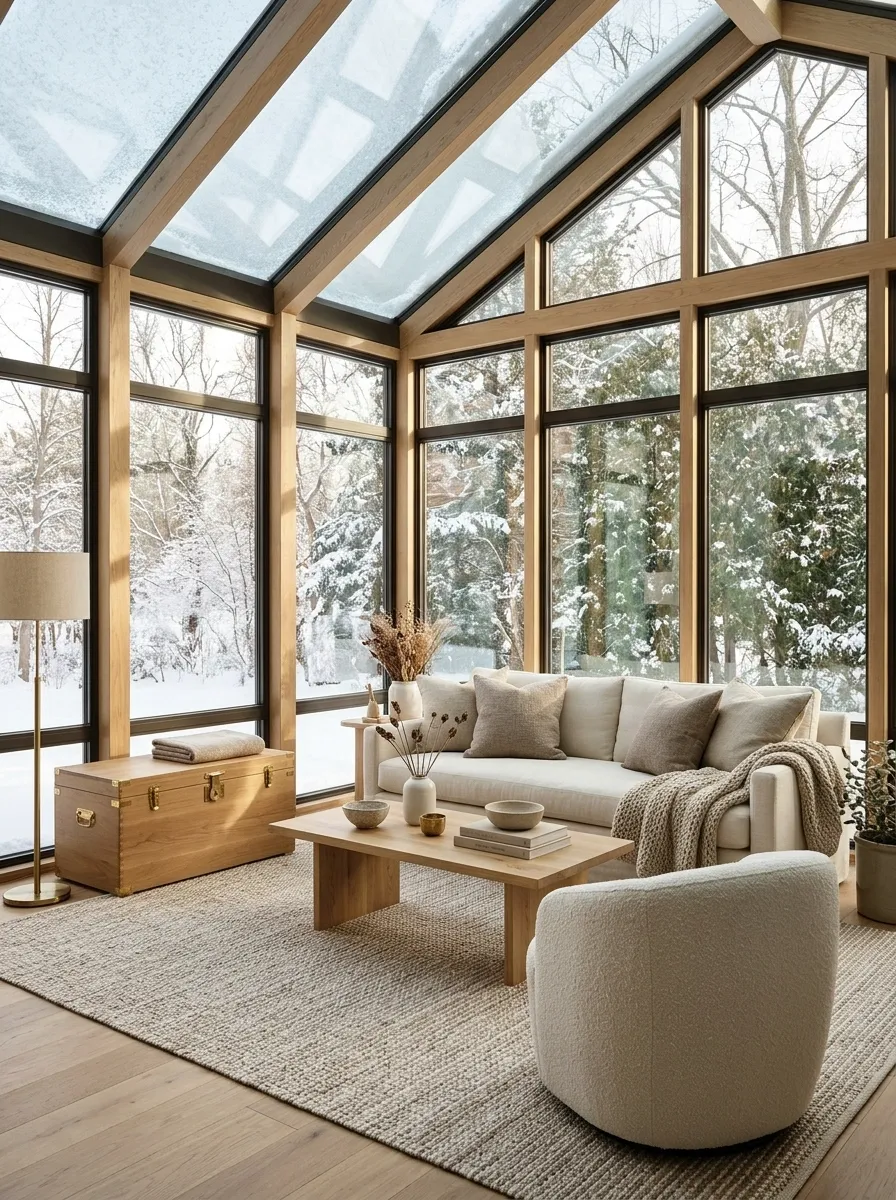
An enclosed sunroom can use warm neutral seating, a practical rug, and closed blanket storage to feel more settled in winter. Keep the glazing clear and choose furniture around the room’s actual temperature and moisture conditions.
Enclosed doesn’t automatically mean comfortable in every season. The decor should follow a usable environment rather than trying to compensate for one that isn’t suitable. Use removable layers and keep them dry. The room can remain visually light while feeling more furnished, without pretending another cushion will resolve whatever the building itself still needs.
Temperature, moisture, ventilation, and actual use determine what furnishings belong here.
A Quiet Bedroom With a Blanket Chest and a Clear Bench
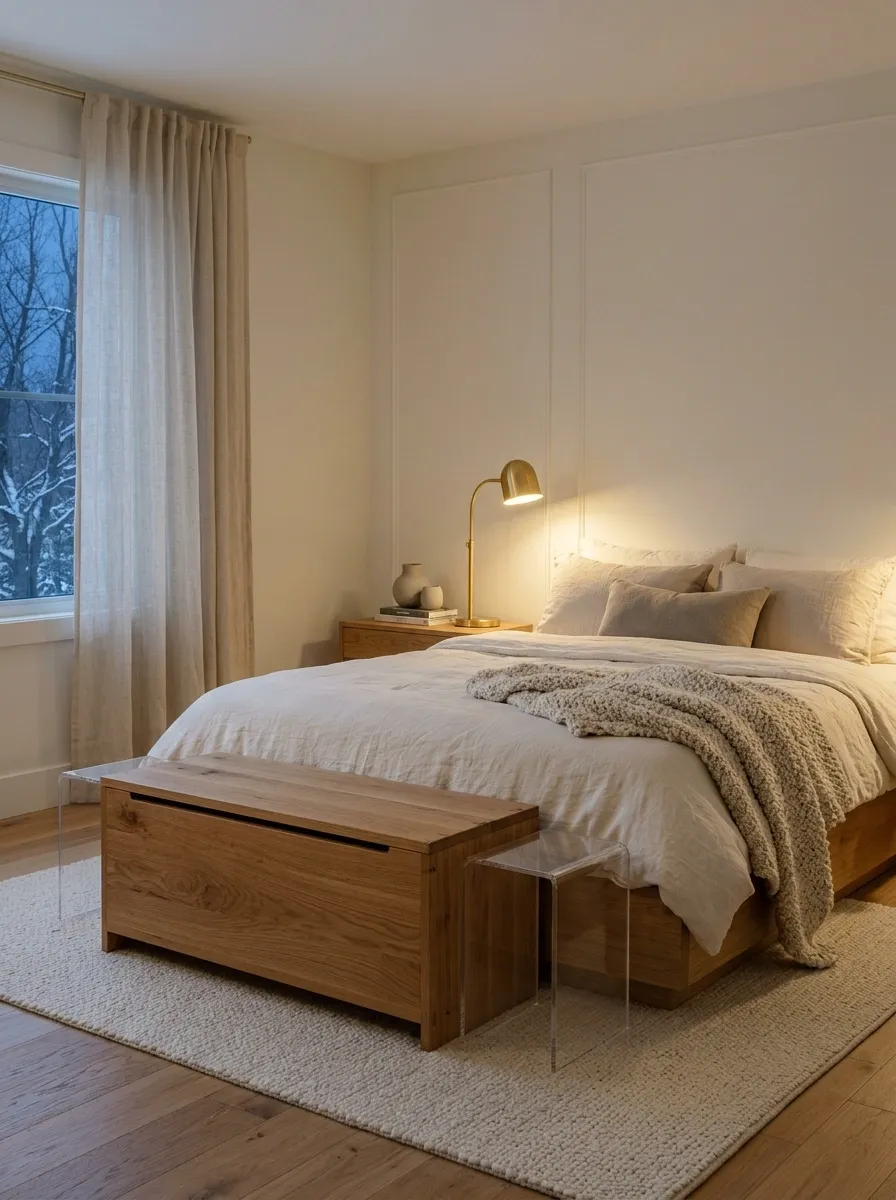
A blanket chest can give a bedroom useful closed storage, while a simple bench or chair remains available for dressing where space permits. Plain bedding and warm wood give the room its character without another strong pattern.
Choose storage with appropriate lid operation and safety for the household, and keep it outside the main walking route. The bench should not become a permanent display shelf. A bedroom can feel generous through useful places to put things, even when the floor area is modest. The distinction between furnishing and filling becomes especially noticeable when you get up in the dark.
Extra layers, contained.
Dressing and ordinary use.
Stay in the Room for an Evening
Before buying another seasonal accessory, use the room after sunset. Read, eat, sit, and reach for the things you normally need. A glare in your eyes or nowhere for a cup is more informative than a beautifully arranged corner.
Move the lamp. Clear the table. Put the useful blanket within reach. Then decide whether color or texture is still missing.
Keep the setting you would enjoy on an unremarkable weekday. Winter occupies quite enough of the calendar to deserve rooms that work beyond a single carefully styled afternoon.