
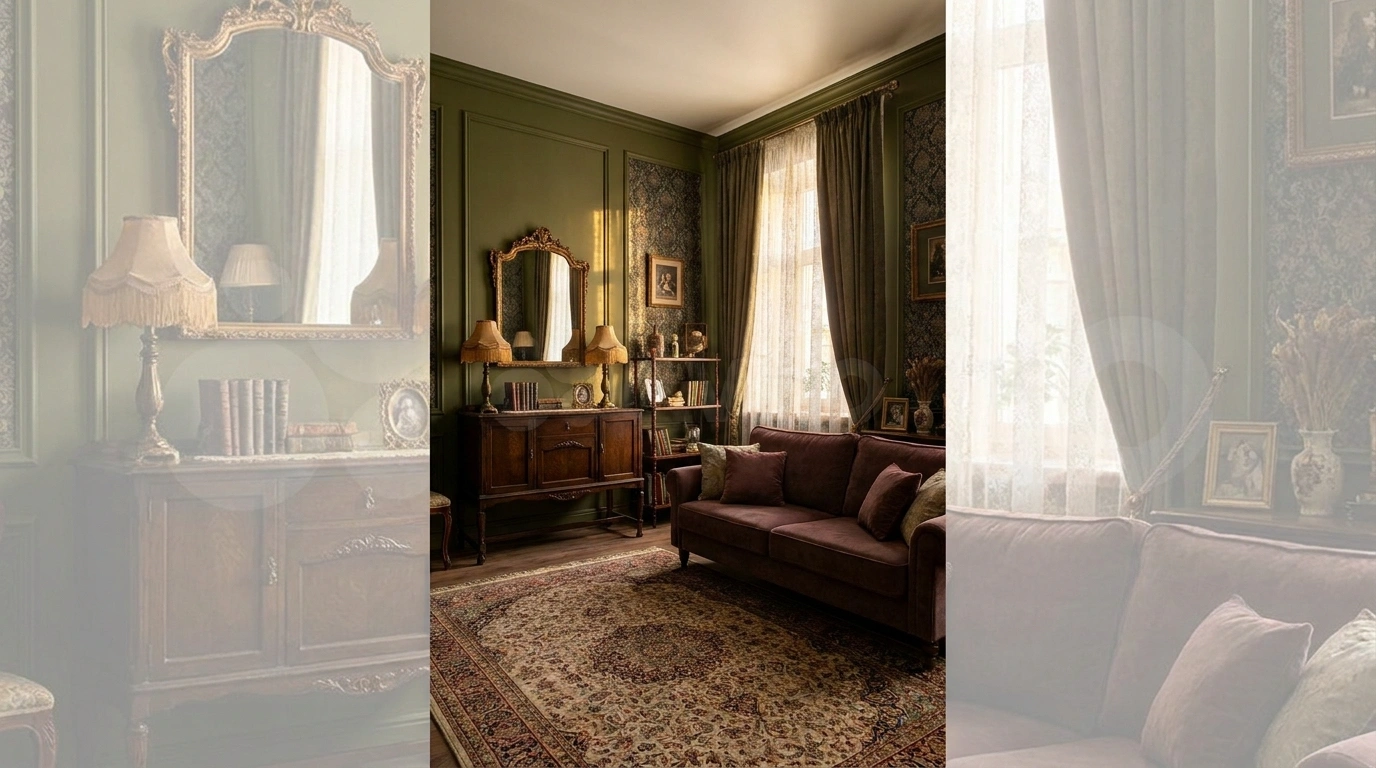
A deep green wall, a dark wood chest, and a lamp glowing through a pleated shade can give an ordinary room the atmosphere of somewhere with stories. Add a handsome mirror and a worn patterned rug, and suddenly the flat-pack side table looks as though it’s considering its career options.
That’s the appeal of Victorian-inspired decorating. Rooms feel layered, substantial, and personal. Furniture has shape. Color gets to do more than whisper. Useful objects can be beautiful, and the occasional decorative flourish is allowed to enjoy itself.
Learning how to style your home like a Victorian house starts with choosing which qualities suit your space. You can borrow the rich palette, antique furniture, patterned textiles, and architectural detail without reproducing an entire period interior.
Choose a Victorian Direction Before Filling the Room
Start With the Architecture You Already Have
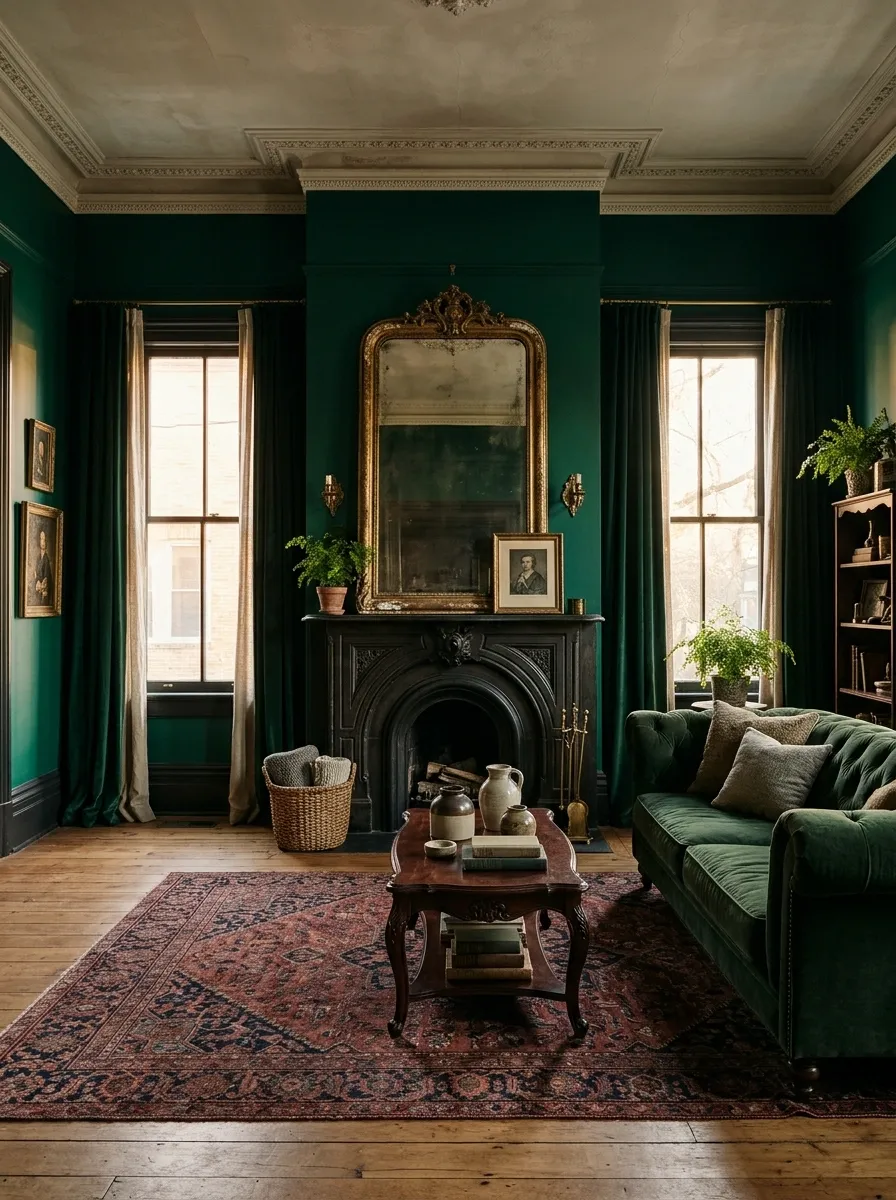
Look at the room’s doors, windows, ceiling height, fireplace, and existing trim. Those features tell you where decorative detail can sit comfortably.
A room with generous ceilings may support a stronger cornice or tall curtains. A compact room may benefit more from rich paint, a substantial mirror, and carefully chosen furniture. Avoid adding molding in tiny leftover strips simply to claim the look. Let each architectural addition relate to the whole wall, and preserve the features that already give the room character.
Build Around a Few Materials With Real Presence
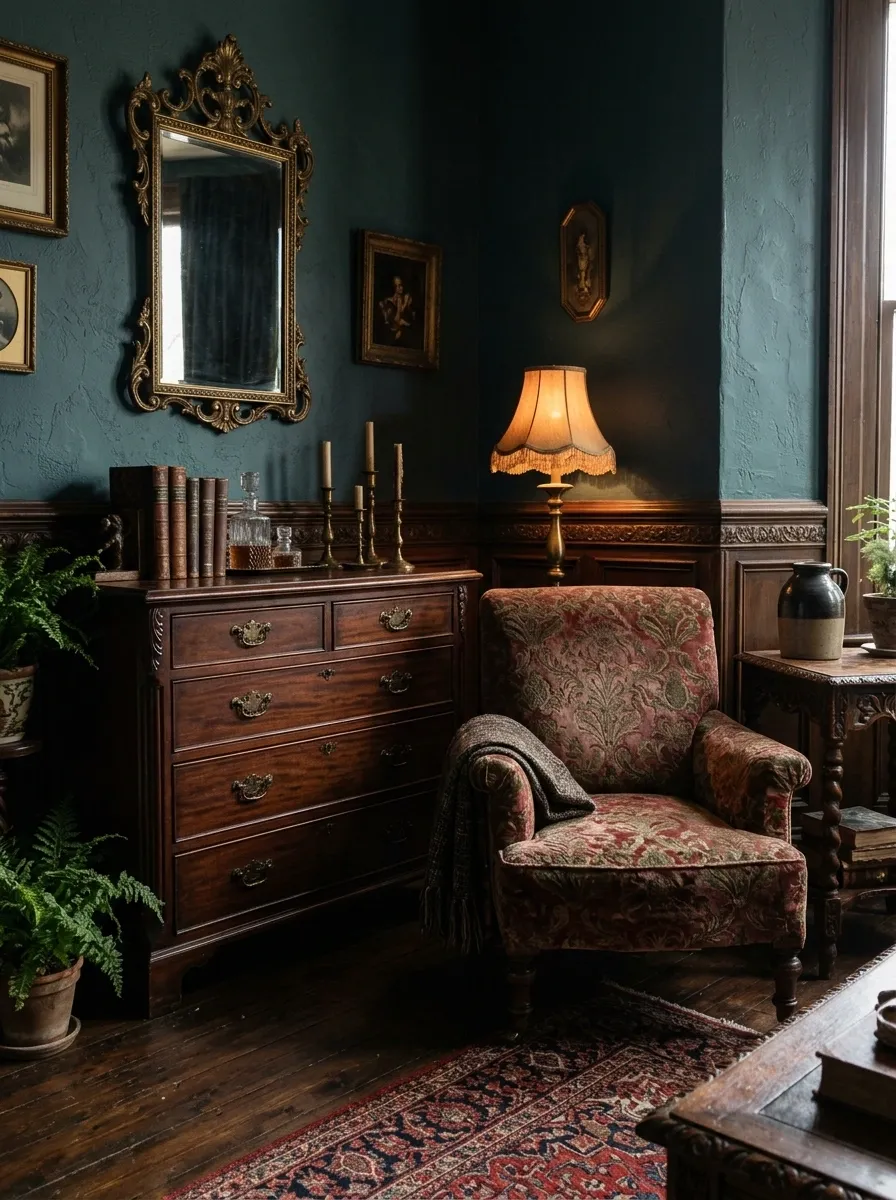
Dark wood, patterned fabric, warm metal, substantial pottery, and textured upholstery provide a useful starting point. You don’t need every material in every room.
Choose a few that connect naturally, then repeat them in different forms. A wood chest can relate to a chair frame without matching it exactly. A metal lamp can pick up a detail in the mirror. That repetition gives the room coherence while leaving room for the irregularity that makes older and secondhand pieces interesting.
Leave Enough Room for the Details to Register
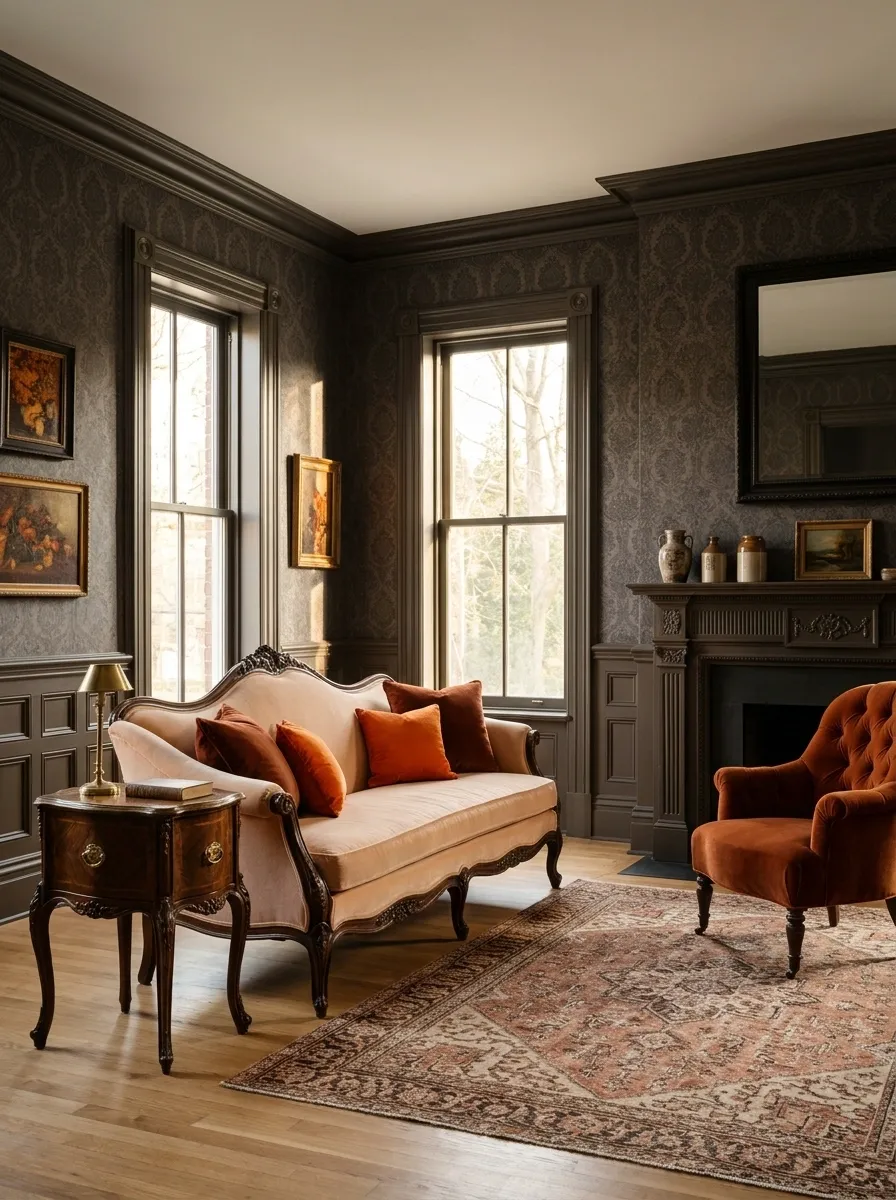
Victorian-inspired decorating can handle layers, but every layer still needs a purpose.
Keep walking routes comfortable and leave useful surfaces available. A small collection looks more deliberate when it has a defined place. Strong wallpaper works better when nearby objects don’t compete with every part of the pattern. Think about where you want attention to settle, then let the surrounding details support that choice. The room should reward a closer look without requiring visitors to negotiate around the display.
Victorian-Inspired Decorating Ideas
Frame Rooms With Flowing Arches
A well-proportioned structural arch can instantly connect two distinct spaces while keeping a clear sense of separation.
Consider how the opening interacts with the surrounding wall pattern, lighting, and flooring transitions before committing to the structure. A softly lit entryway allows views to unfold gradually, adding depth and architectural intrigue to even modest floor plans.
Keep the finish clean and cohesive so the arch feels like a natural part of the home’s history rather than an afterthought. Thoughtful placement lets functional doorways double as striking decorative features throughout the house.
Give the Skirting Boards and Door Frames a Deliberate Finish
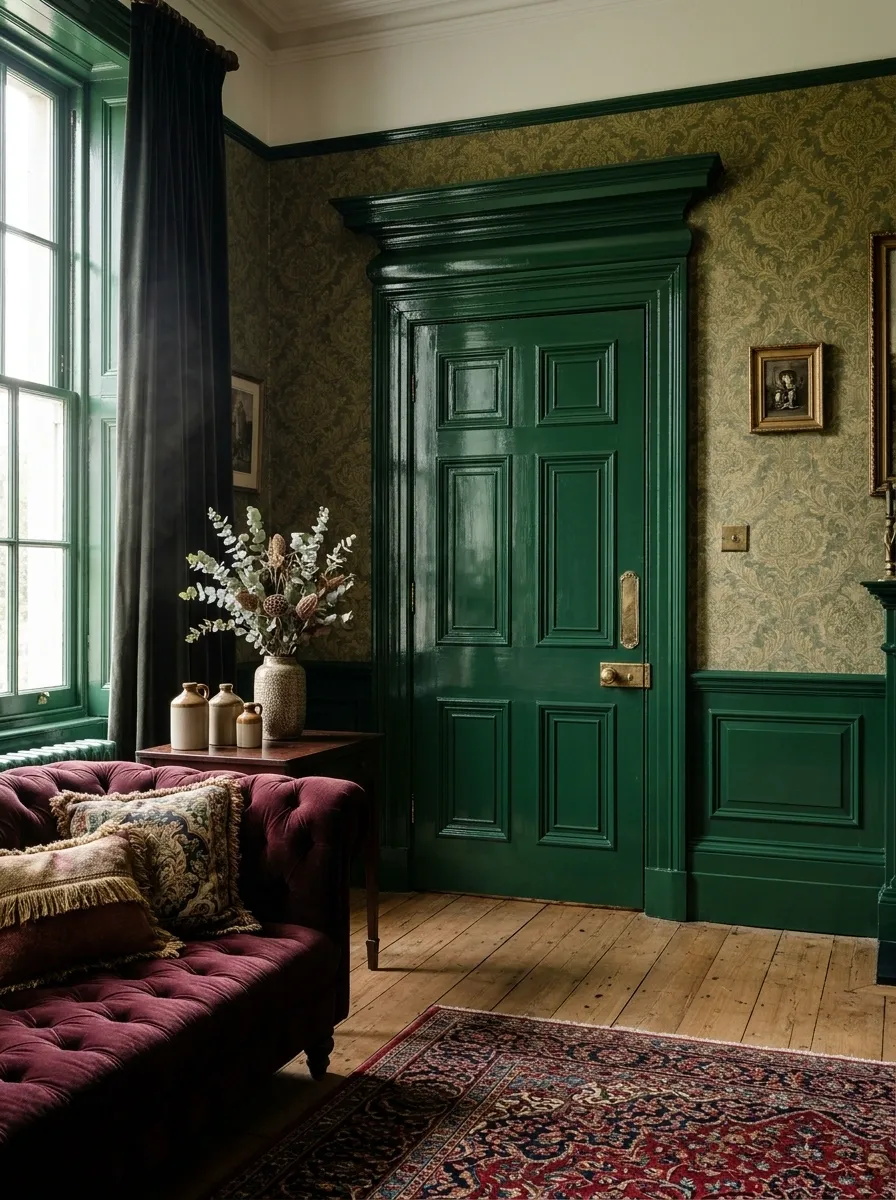
Trim can give the room a stronger outline.
Clean and assess the existing woodwork, then choose whether it should contrast with the walls or sit within the same color family. A deeper trim color can emphasize the shape of a doorway. A related finish can create a quieter, more enveloping room.
Keep the decision consistent across connected elements. Don’t paint each small strip as a separate experiment. Prepare the surface properly and preserve normal door operation. Crisp, cared-for edges make the decorative choices look intentional, especially when the room already contains strong pattern or substantial furniture.
Decide whether the trim should stand out or blend into the wall. Test the two surfaces together, including where they meet the floor.
Embrace Moody Walls and Brass
A saturated, dark color palette can transform a compact powder room into an unexpectedly dramatic destination.
Pair deep wall tones with gleaming metallic fixtures and an ornate mirror to catch the light and bounce it around the space. The contrast between dark surfaces and polished gold hardware creates an immediate sense of luxury and period-appropriate drama.
Keep surrounding accessories minimal to let the rich wall treatment and statement mirror command all the attention. Crisp white sanitaryware or patterned floor tiles will ground the moody atmosphere and keep the room feeling balanced.
Use Wallpaper With a Pattern Large Enough to Read
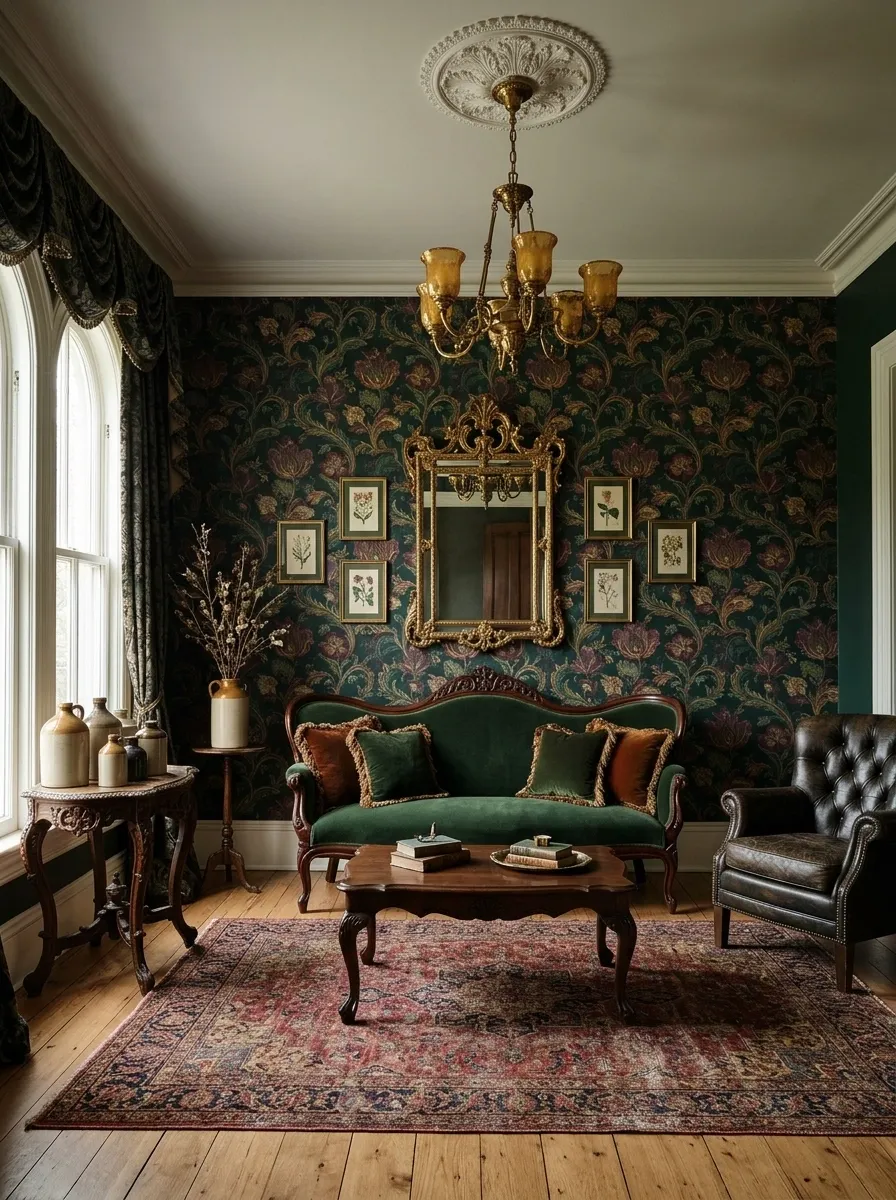
A strong floral, botanical, or scrolling pattern can establish the room’s direction quickly.
Choose the scale beside the furniture rather than judging a tiny sample alone. Look at how much uninterrupted wall remains around doors, windows, and cabinets. A complicated pattern squeezed into several narrow fragments can look restless.
Check the repeat and hanging requirements before ordering. Use a substantial sample where possible, then inspect it from your normal seat. Let some surrounding surfaces remain quieter. Wallpaper already provides detail, so it doesn’t need a small decorative object competing with every leaf.
Check the overall rhythm and color balance.
Compare the pattern with upholstery, artwork, and wood tones.
Plan how the repeat meets openings and short wall sections.
Anchor the Kitchen With Grandeur
A high-ceilinged kitchen benefits immensely from decorative plasterwork, patterned ceilings, and stately mantelpieces.
Balance elaborate overhead details with grounded cabinetry, functional island seating, and classic checkered flooring. Every ornamental element should respect the room’s scale so the space feels collected and authentic rather than overwhelmingly busy.
Keep prep areas practical while layering in vintage lighting, fresh florals, and warm wood tones for everyday character. Traditional craftsmanship shines when paired with thoughtful modern conveniences that make the space genuinely liveable.
Add Ceiling Detail That Belongs to the Room’s Proportions
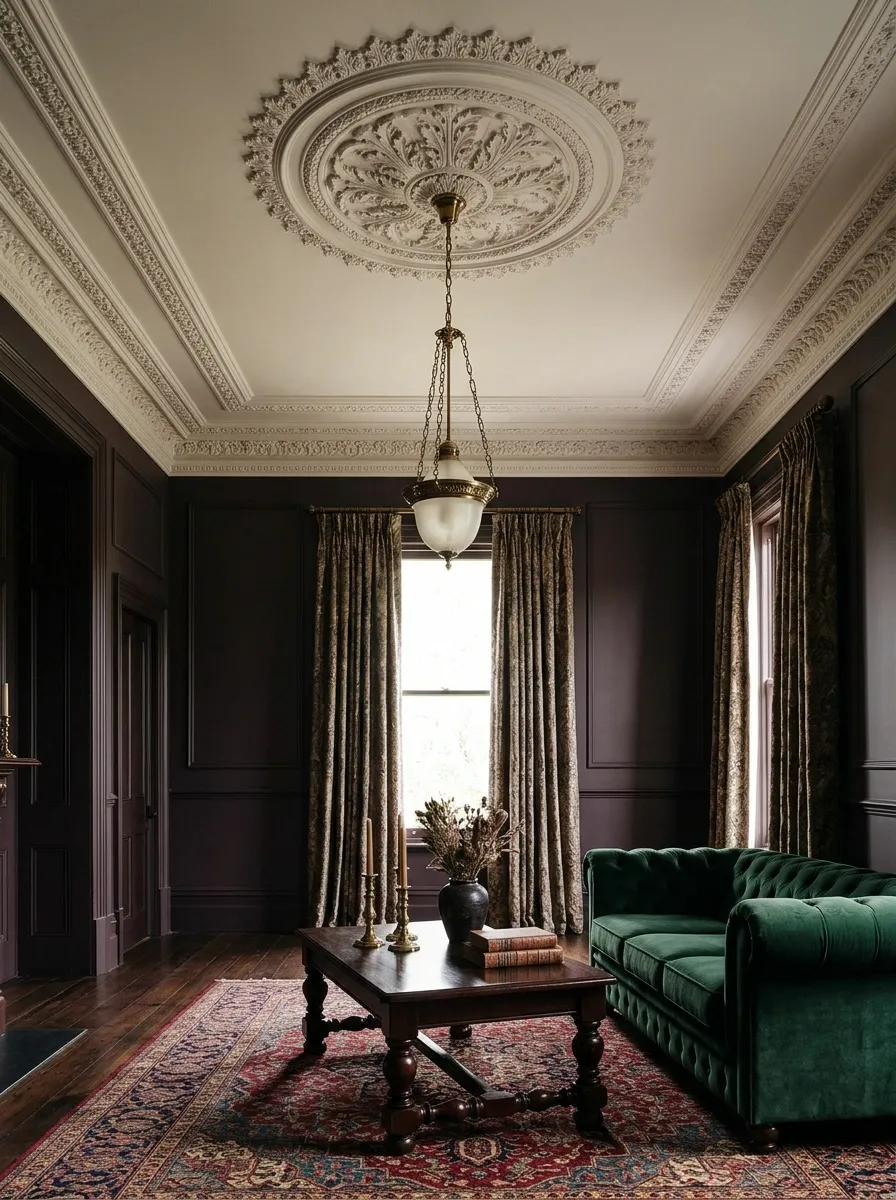
A cornice or ceiling rose can give a plain room a more finished architectural character.
Choose the profile and scale according to the ceiling height, room size, and existing trim. A modest room usually benefits from a clear, restrained decision rather than the largest ornament available. Check the ceiling’s condition before adding anything.
Where a ceiling rose meets a light fitting, plan the installation appropriately. Keep the detail aligned with the room and the fitting’s requirements. Decorative architecture looks convincing when the proportions agree, and rather less so when the ceiling seems to be wearing someone else’s hat.
| Look at | Before choosing |
|---|---|
| Ceiling height | How much visual weight the detail can carry. |
| Existing trim | Whether the profiles feel related. |
| Light fitting | Alignment, mounting, and installation requirements. |
Use Dark Wood Furniture as an Anchor
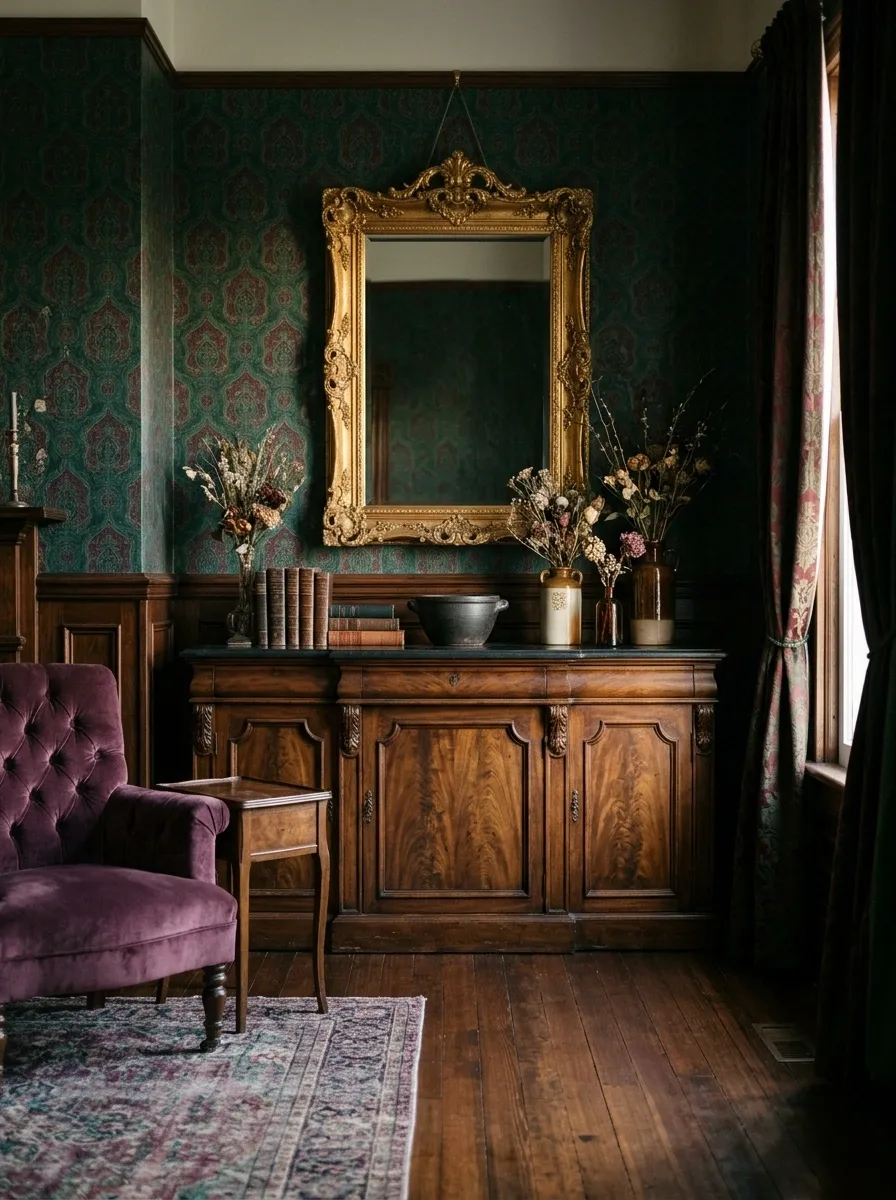
A substantial chest, sideboard, or table can provide the weight a Victorian-inspired room needs.
Look for good proportions and useful storage before decorative carving. A plain piece with attractive grain can sit comfortably beside patterned wallpaper or a more ornate mirror. Everything doesn’t need to compete in the carving competition.
Check secondhand furniture carefully for condition, stability, and signs of pests before bringing it home. Measure the access route as well as the final position. Keep worthwhile existing finishes where they suit the room. Dark wood can provide enough character without an immediate paint makeover.
Choose storage capacity, sound construction, and a workable footprint before decorative detail.
Include opening drawers, nearby doors, and the route into the house.
Choose a Sofa With Shape and Comfortable Proportions
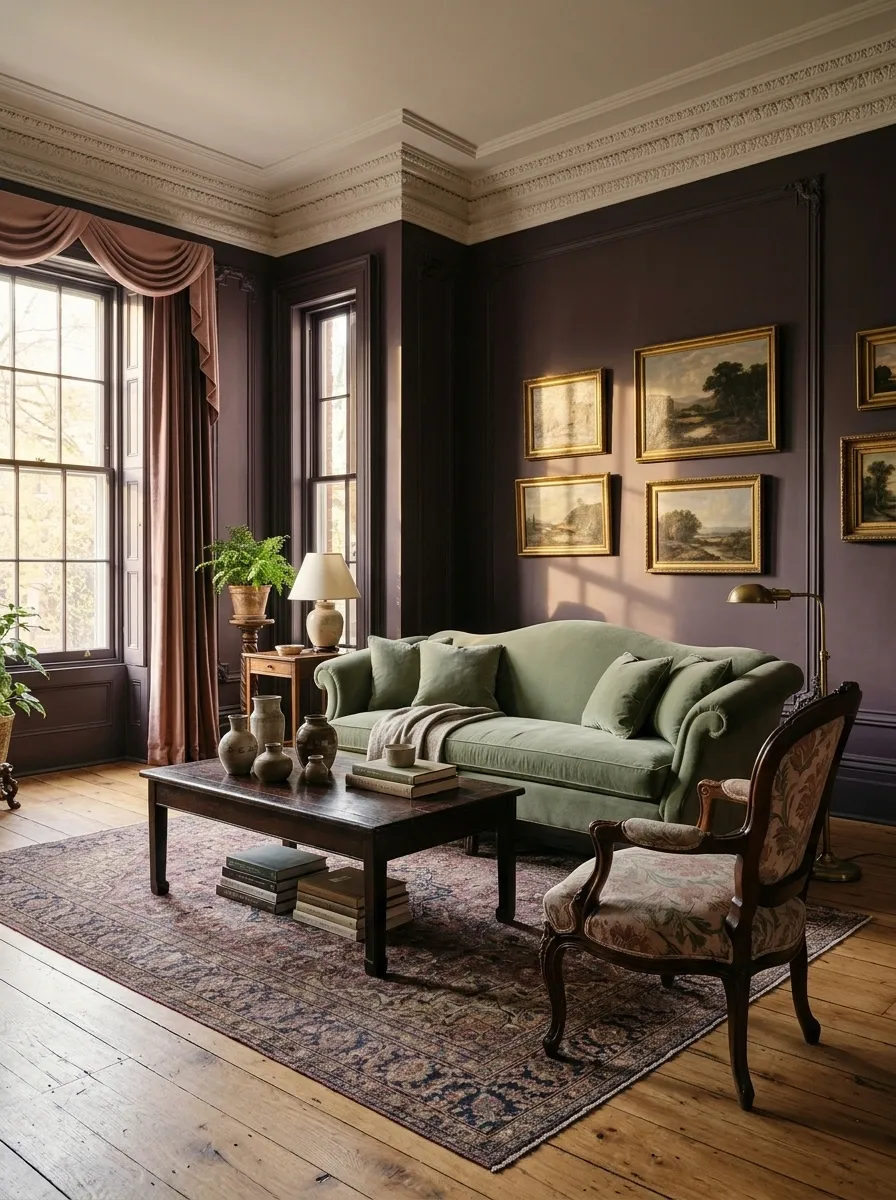
A sofa with a curved back, shaped arms, or a more tailored outline can help establish the style.
Check the actual sitting comfort and full footprint before falling for the silhouette. Deep rolled arms can use considerable room, so compare the outside dimensions with the usable seating. A beautiful sofa still has to accommodate your household.
Keep the upholstery connected to the palette without insisting on a dramatic fabric. A quieter sofa can support rich walls, patterned curtains, and antique furniture. Let the room distribute the detail rather than asking one enormous seat to deliver the entire look.
- Check the seat depth and back support.
- Compare arm thickness with usable sitting space.
- Measure the full footprint and access route.
- Choose fabric care you can manage.
Put Velvet Where Its Texture Can Make an Impression
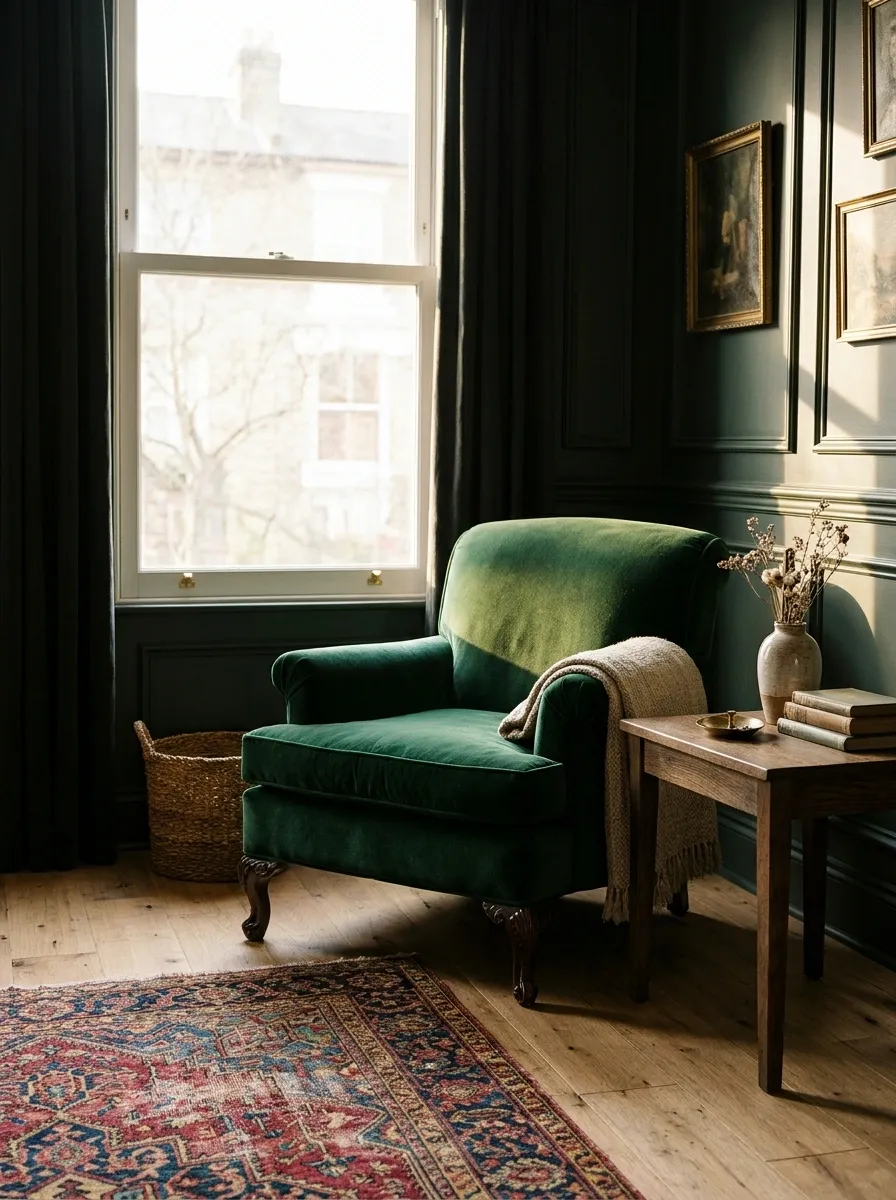
Velvet brings visible depth to a room, especially where light moves across the surface.
Use it on a chair, sofa, or a small group of cushions rather than automatically covering every soft furnishing. Compare the fabric in different directions and lighting conditions. The color can read differently as you move around it.
Choose upholstery suitable for the expected use and follow its care guidance. A much-used family seat needs more consideration than an occasional chair. Pair the fabric with a contrasting surface, such as wood or a simpler weave, so the texture has room to register.
Check durability, comfort, and realistic cleaning needs.
Use texture to connect colors without dominating the room.
View the sample upright and flat before choosing the color.
Bring in an Occasional Chair With a Distinctive Frame

One shaped wood chair can give a room more personality than another matching upholstered box.
Look for a frame whose proportions you enjoy and a seat that serves a real purpose. Place it where someone can join the conversation, read, or sit while getting ready. It should belong to the room’s activities.
Inspect older furniture carefully and keep necessary repairs in the budget. Don’t buy an uncomfortable chair purely because the back looks impressive. Give it a suitable nearby surface if needed, then leave enough room around the frame for its shape to be appreciated.
Choose its position for reading, conversation, or another regular use. A distinctive frame contributes more when the seat doesn’t become a permanent clothes holder.
Dress Windows With Full, Properly Fitted Curtains
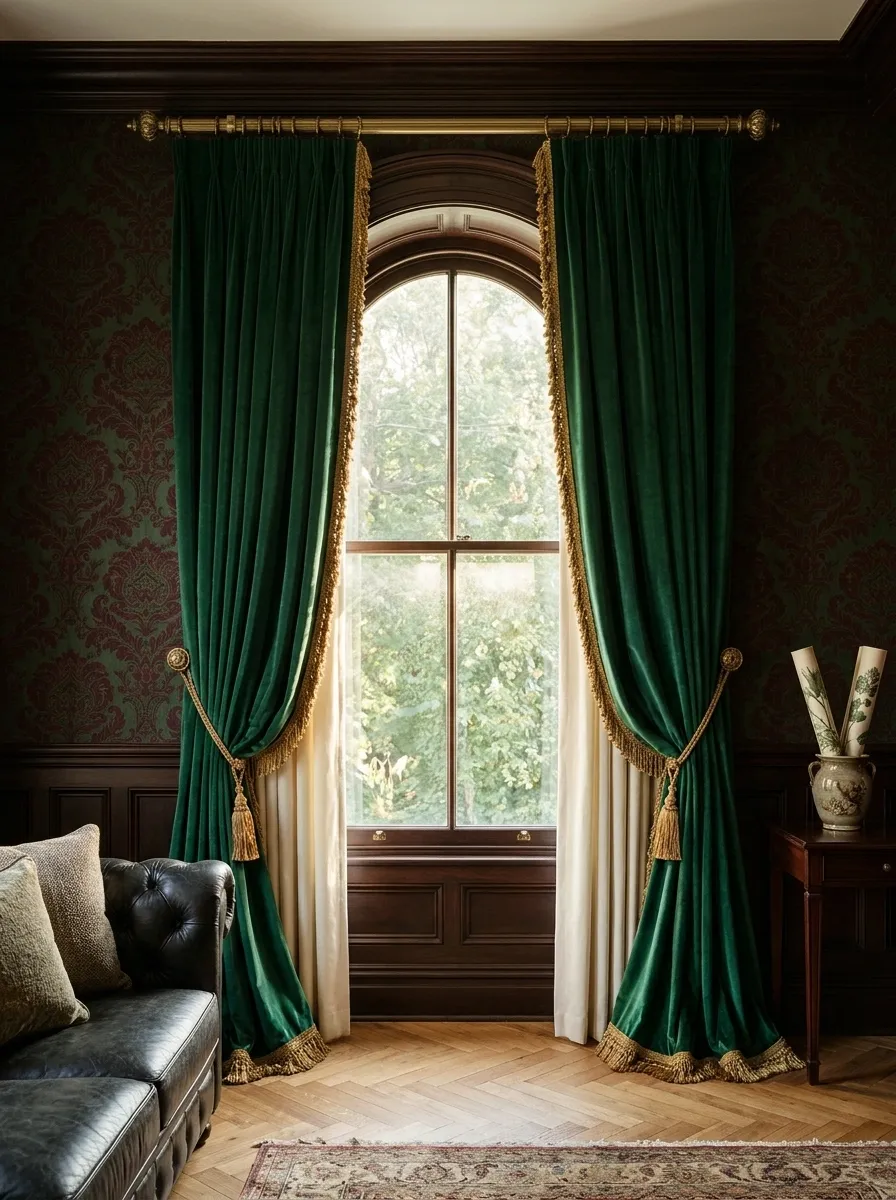
Substantial curtains can give the room a softer outline and a stronger sense of completion.
Choose fabric and lining suited to the window, light-control needs, and daily use. Plan the pole position and finished drop together. Keep gathered fabric from unnecessarily covering the glass when the curtains are open.
You can use a plain curtain beside patterned walls or let the window fabric carry more detail in a quieter room. Check access to handles and required clearances around heating. Full curtains look deliberate when they hang well and operate normally, rather than surviving as a permanent fabric sculpture.
Fabric has somewhere to gather beside the useful glass.
Panels hang neatly and provide the intended coverage.
The treatment remains easy to move and maintain.
Ground the Seating With a Patterned Rug
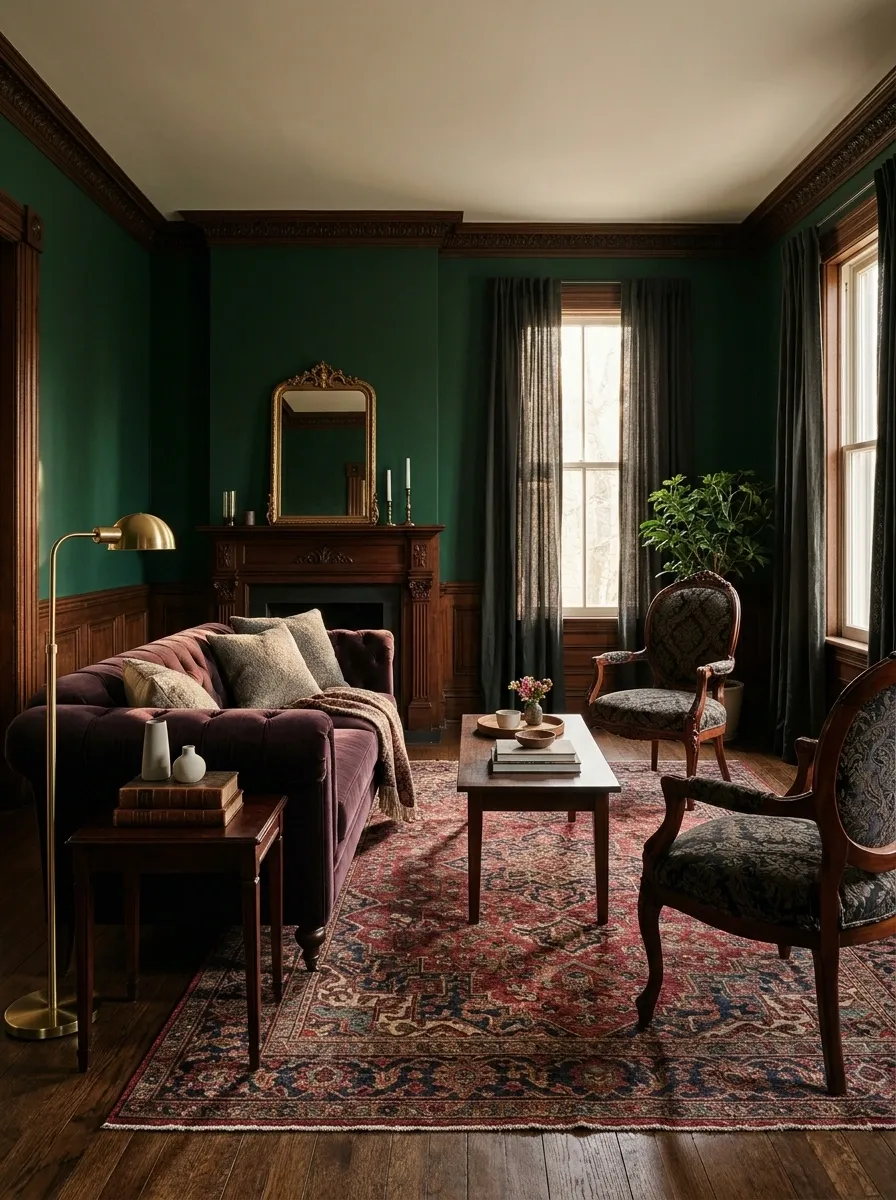
A patterned rug can connect a room full of different furniture finishes.
Choose colors that relate to the upholstery and walls, then check the pattern at the size you need. A rug with some visual complexity can sit well beneath simpler furniture. Give busy upholstery a little more breathing room.
Position the rug so it supports the seating group instead of floating alone beneath the coffee table. Check edges, door movement, and the flooring’s requirements for a suitable pad. The rug should make the arrangement feel more connected while remaining comfortable to walk and clean around.
Use fabric samples or clear photographs of the furniture and finishes when comparing rugs. Judge the overall palette before the individual motifs.
Make an Existing Fireplace the Room’s Main Architectural Feature
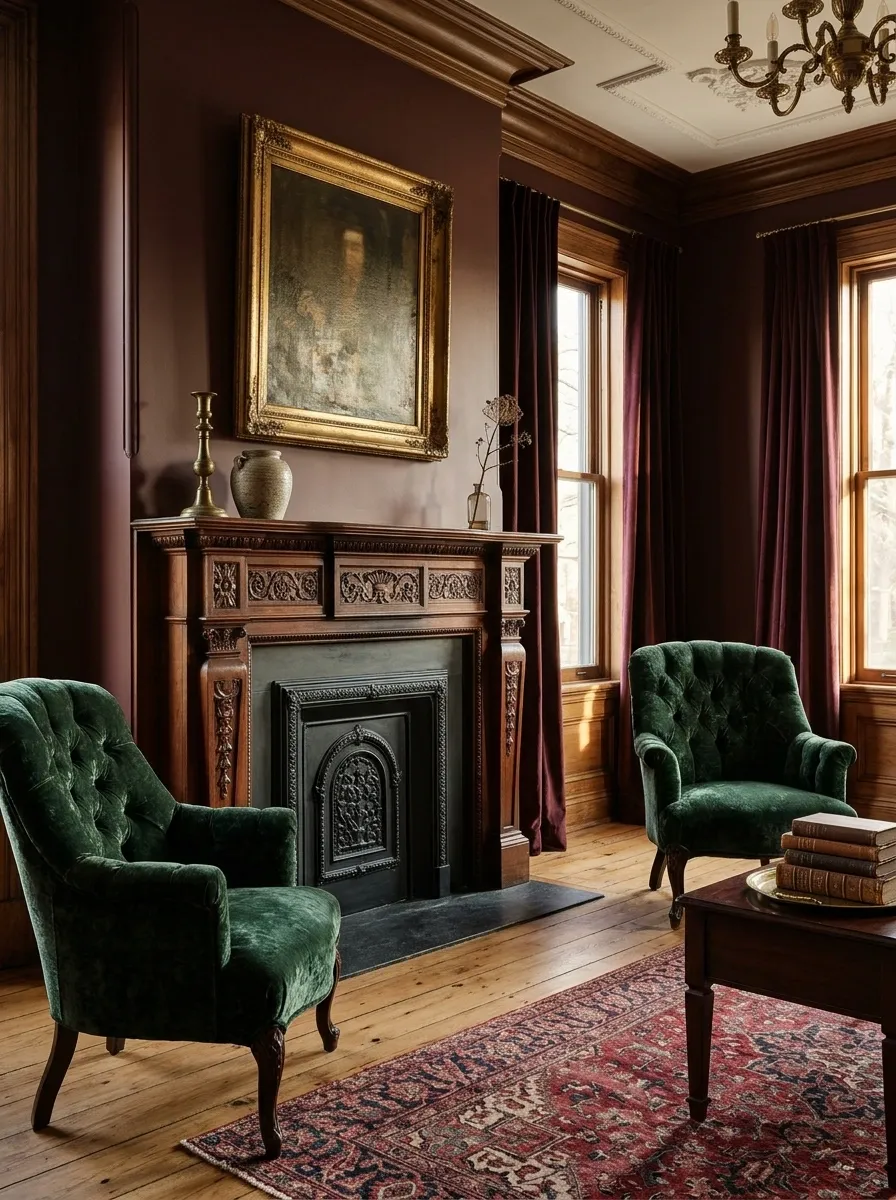
A fireplace gives you an obvious place to organize the room’s attention.
Clean and assess the surround, then arrange the nearby furniture so the feature remains visible and usable. Choose a mantel display with enough space between objects to appreciate the material beneath them.
Keep working fireplaces and appliances appropriately maintained, and follow their clearance requirements. Don’t pile combustible decor around a heat source for atmosphere. If the fireplace is decorative, keep its role clear. The surround can provide plenty of character without filling the opening with a collection of unrelated seasonal accessories.
Let its material and outline remain visible.
Choose a small, coherent arrangement rather than continuous clutter.
Keep all required access and clearances intact.
Use Table Lamps With Shades That Suit Their Bases

A lamp can carry character without becoming an oversized decorative object.
Look for a base with useful presence, then pair it with a shade that fits its proportions and fitting requirements. Pleated or gently shaped shades can support the room’s layered character. Keep the light itself comfortable and practical.
Check the lamp from a seated position. The bulb shouldn’t glare directly at you, and the shade should direct light where needed. Have older electrical pieces assessed appropriately before use. A handsome vintage base is worth enjoying with a setup that works reliably in a modern home.
The base and shade need to work as lighting, as well as look balanced together.
Check glare, useful illumination, and whether the switch is comfortably reachable.
Add Wall Sconces Where They Support the Room
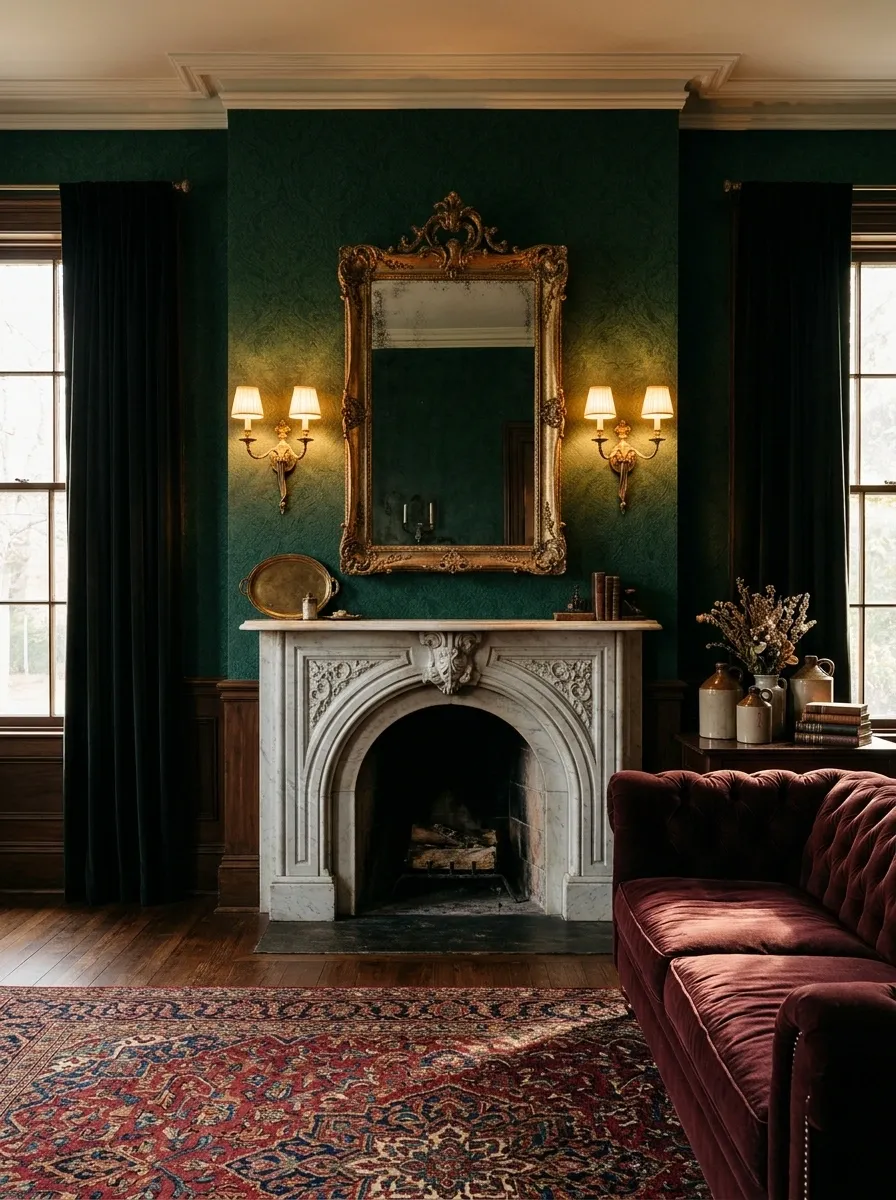
Sconces can give a wall more structure and bring light closer to the activities below.
Use them beside a mirror, around a suitable focal point, or near seating where the layout calls for it. Choose fittings that relate to the room’s other metals and proportions. Check projection as carefully as height.
Plan wired installation with an appropriate professional. If using a suitable plug-in design, consider the cable route before choosing the position. A decorative fitting loses some dignity when its lead travels diagonally across the wallpaper. The final arrangement should feel resolved during daylight and after dark.
- Check the light’s purpose.
- Compare its projection with nearby movement.
- Plan the power supply or cable route.
- Test the position from the seats and doorway.
Let Books Provide the Detail on a Bookcase

Books already give a room color, texture, and evidence that someone lives there.
Arrange the ones you use so they remain accessible. Group small related objects where useful, but leave enough room to retrieve a book without dismantling a display. Keep heavy contents and the furniture’s securing requirements in mind.
Use the shelves to support the room’s character rather than manufacture a library nobody can touch. A few well-chosen objects can sit among the books, but the books don’t need to spend their lives supporting a vase. Their original job remains quite respectable.
Place regularly used titles within easy reach. Leave enough space to lift them out, and follow the unit’s load and securing guidance.
Display Ceramics as a Collection Rather Than Loose Filler

A group of ceramic pieces can give a cabinet or sideboard a clear decorative purpose.
Choose a connection you enjoy: a shared color, material, shape, or origin. Vary the scale enough that the group has a stronger outline. Keep the arrangement stable and suited to the surface.
Leave a useful part of the furniture available where daily life needs it. You don’t have to display every piece you own at once. Rotating a collection can make favorite objects easier to appreciate and keep the room from becoming a shop where everything is permanently awaiting a price tag.
Choose the piece that establishes the group’s presence.
Use related pieces without hiding their outlines.
Leave room to see the collection and use the furniture.
Give the Hallway One Substantial Piece of Furniture
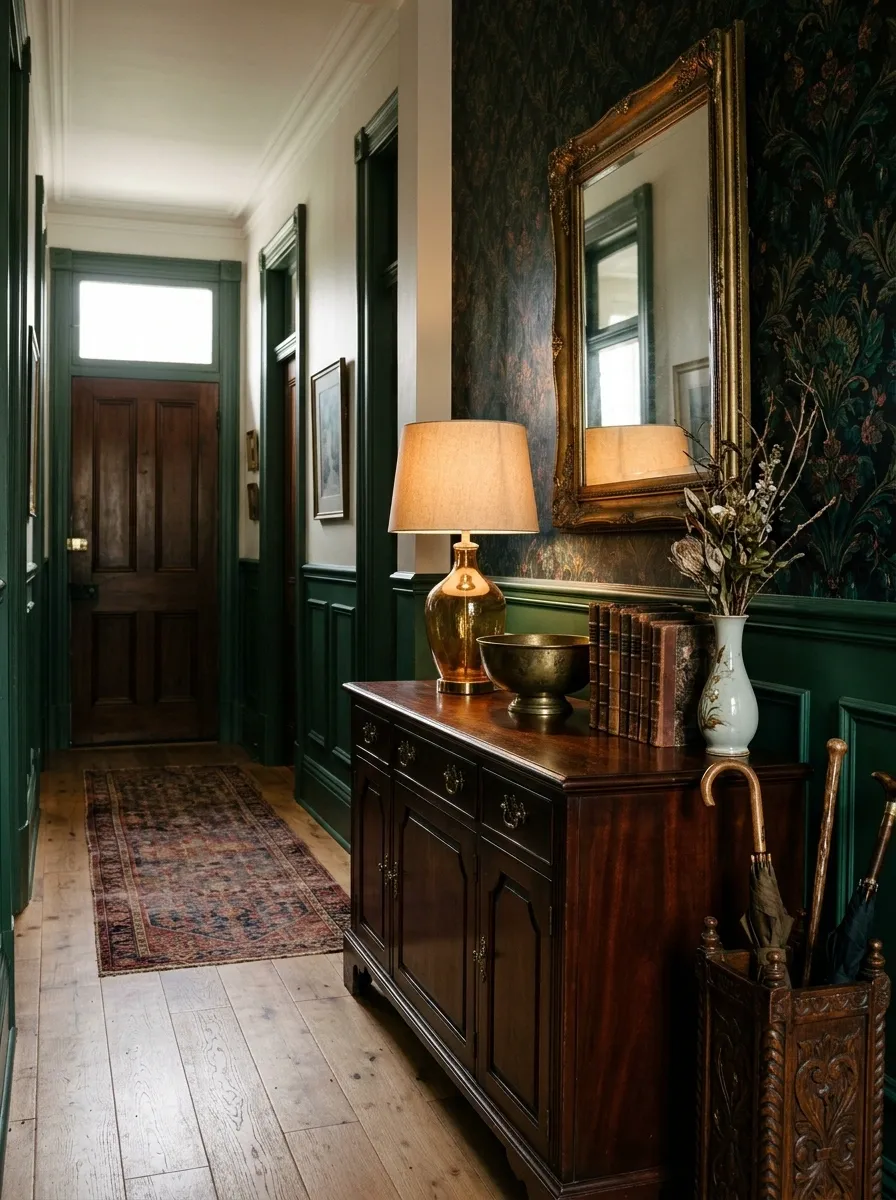
The entrance can introduce the style without delivering the entire collection at the door.
Use a suitable console, chest, or narrow table where it leaves the route comfortable. Choose storage that solves an actual problem, such as keys, small accessories, or incoming post. A mirror or lamp can complete the area if the proportions allow.
Keep the top controlled. The furniture’s shape should remain visible beneath the objects. Check drawer and door movement before buying, particularly in a narrow hall. A useful entrance piece gives the house character while helping you get out of it on time.
Enough space to pass carrying ordinary belongings.
Drawers and doors can be used without blocking essential access.
Use a Stair Runner With a Clear Border or Pattern
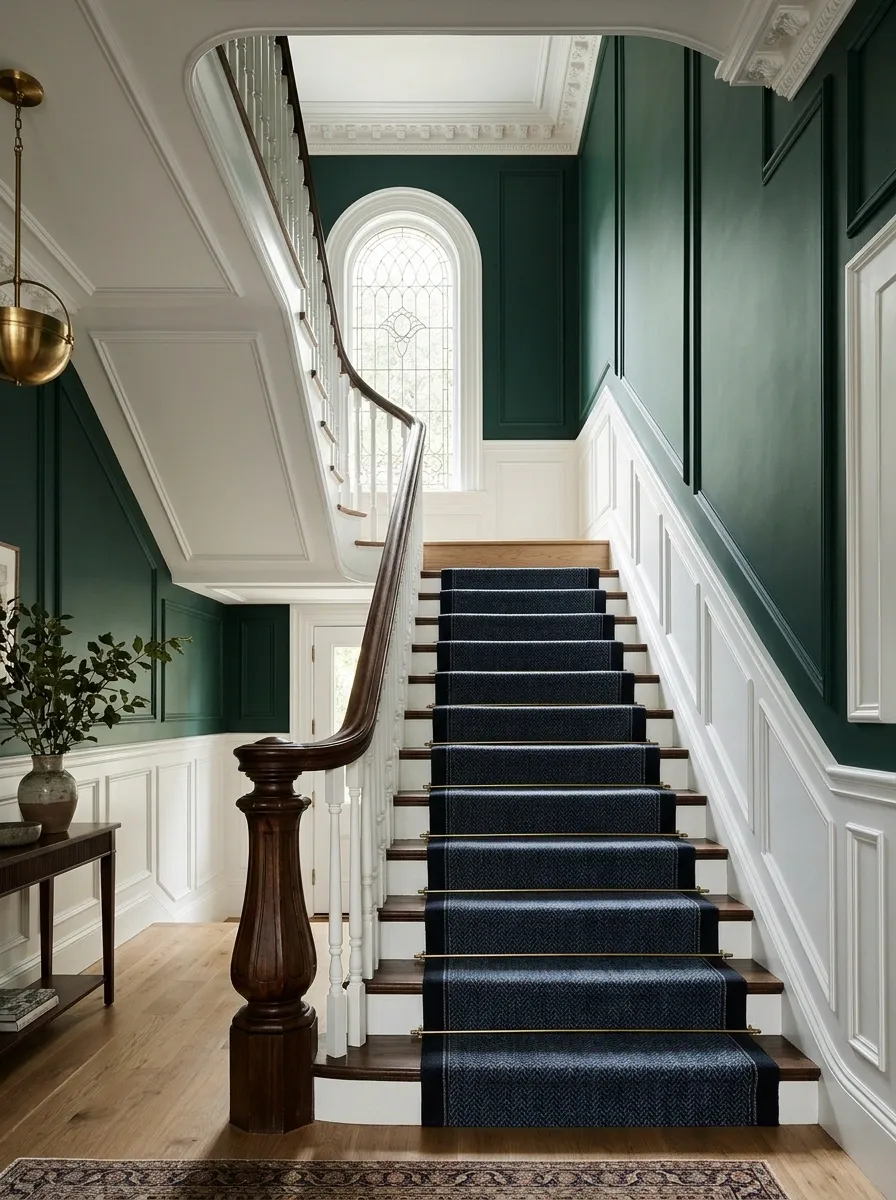
A runner can connect the entrance palette to the floors above.
Choose material and installation suited to the staircase and household use. A defined border, restrained stripe, or patterned design can give the stair a more considered appearance. Compare it with the hall flooring and nearby wall treatment.
Plan the full installation rather than buying on appearance alone. Secure fitting matters more than decorative accessories. Keep the surrounding trim in good condition so the runner feels integrated. The staircase should look finished while remaining straightforward to use and maintain every day.
| Design choice | Practical check |
|---|---|
| Pattern and border | How it meets landings and changes in direction. |
| Material | Suitability for traffic, care, and the stair. |
| Installation | An appropriate, secure fitting method. |
Let a Distinctive Bed Frame Establish the Bedroom
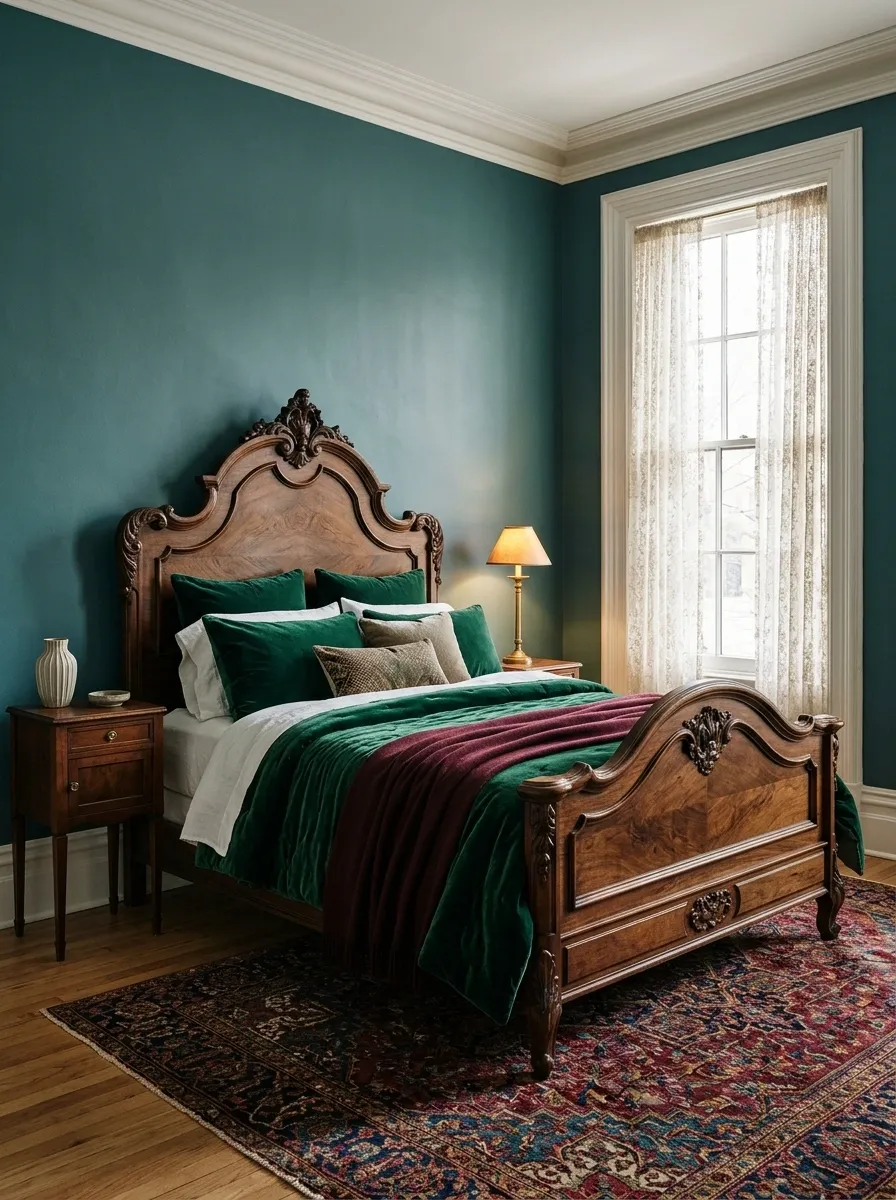
A shaped timber frame or suitable metal bedstead can give the bedroom a clear focal point.
Choose it around the mattress, room dimensions, and people using it. Check stability, compatibility, and condition carefully, especially with older pieces. The bed should remain comfortable to access and make.
Keep surrounding furniture quieter if the frame has substantial detail. You don’t need a heavily carved wardrobe beside an elaborate bed simply because both were available. Let the frame carry the room’s main statement, then use textiles and smaller pieces to connect it to the wider palette.
Compatible support and the correct mattress dimensions.
Sound joints, stable construction, and appropriate inspection.
Enough access around the complete frame.
Layer the Bed With Pattern and Texture You’ll Enjoy Sleeping Under
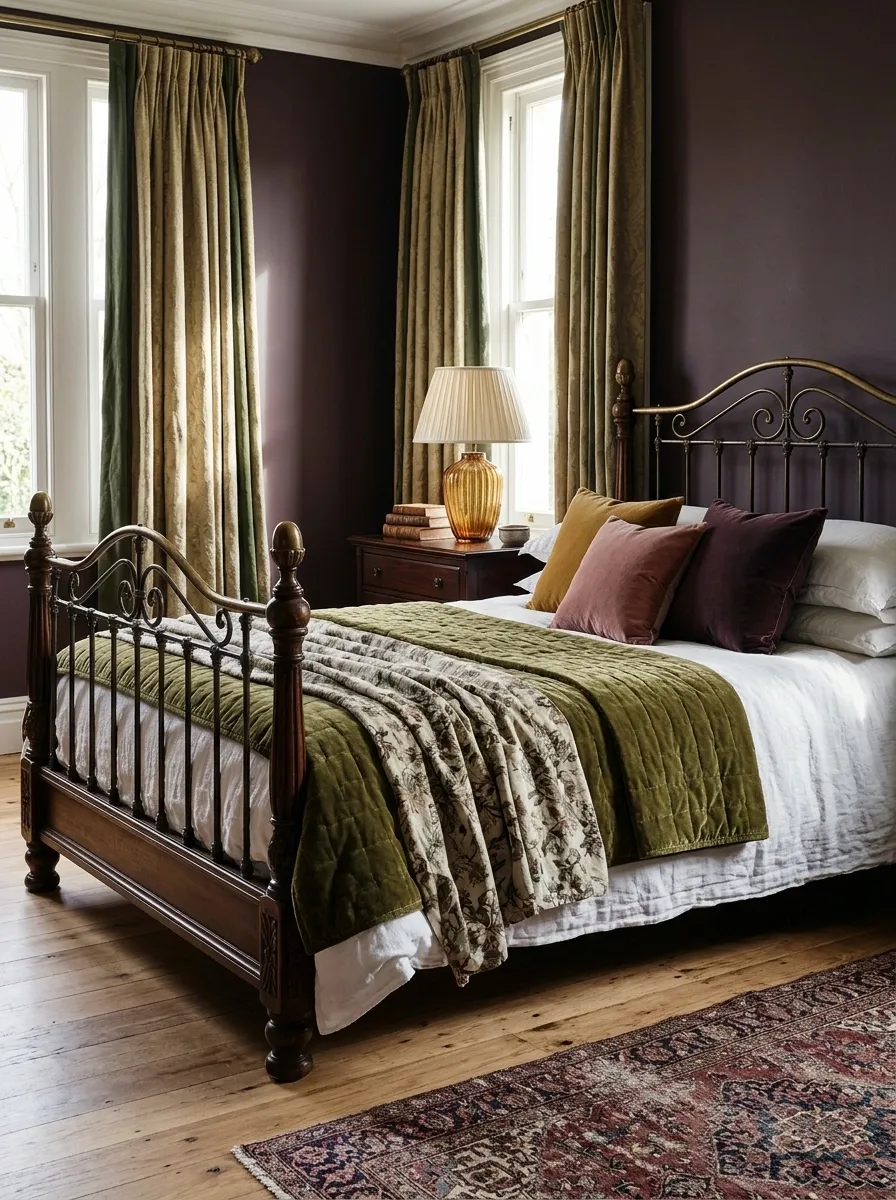
A decorative bedroom still needs a bed that works at bedtime.
Choose a comfortable base, then add a quilt, coverlet, or removable blanket with texture or pattern. Relate it to the room’s wall color and curtains without matching every fabric. A small amount of contrast keeps the layers interesting.
Keep the number of cushions manageable. Nobody needs a nightly excavation before reaching the pillow. Check laundering and drying needs before choosing bulky textiles. The finished bed should look inviting because its layers make sense together and feel good to use, rather than because it takes an impressive amount of effort to rebuild.
Use quieter supporting layers to give the strongest fabric room. Keep temperature, comfort, and care needs ahead of decorative bulk.
Give the Bathroom Character Through Its Visible Details

You can introduce the style without replacing every functioning fitting.
A suitable framed mirror, considered wall color, coordinated accessories, and attractive towel fittings can change the room’s character. Work with existing tile and sanitaryware where they remain useful. Choose materials and finishes suited to the moisture exposure.
Keep the basin and floor practical. Decorative trays shouldn’t claim every dry patch, and fabric shouldn’t linger where it stays damp. If a larger renovation is planned, develop the whole room before buying individual statement pieces. A striking fitting needs a workable layout around it.
Sound, useful fittings that suit the room.
The visible details that feel unfinished or unrelated.
Dry space, cleaning access, and materials near moisture.
Bring the Kitchen Into the Palette With Furniture and Practical Objects
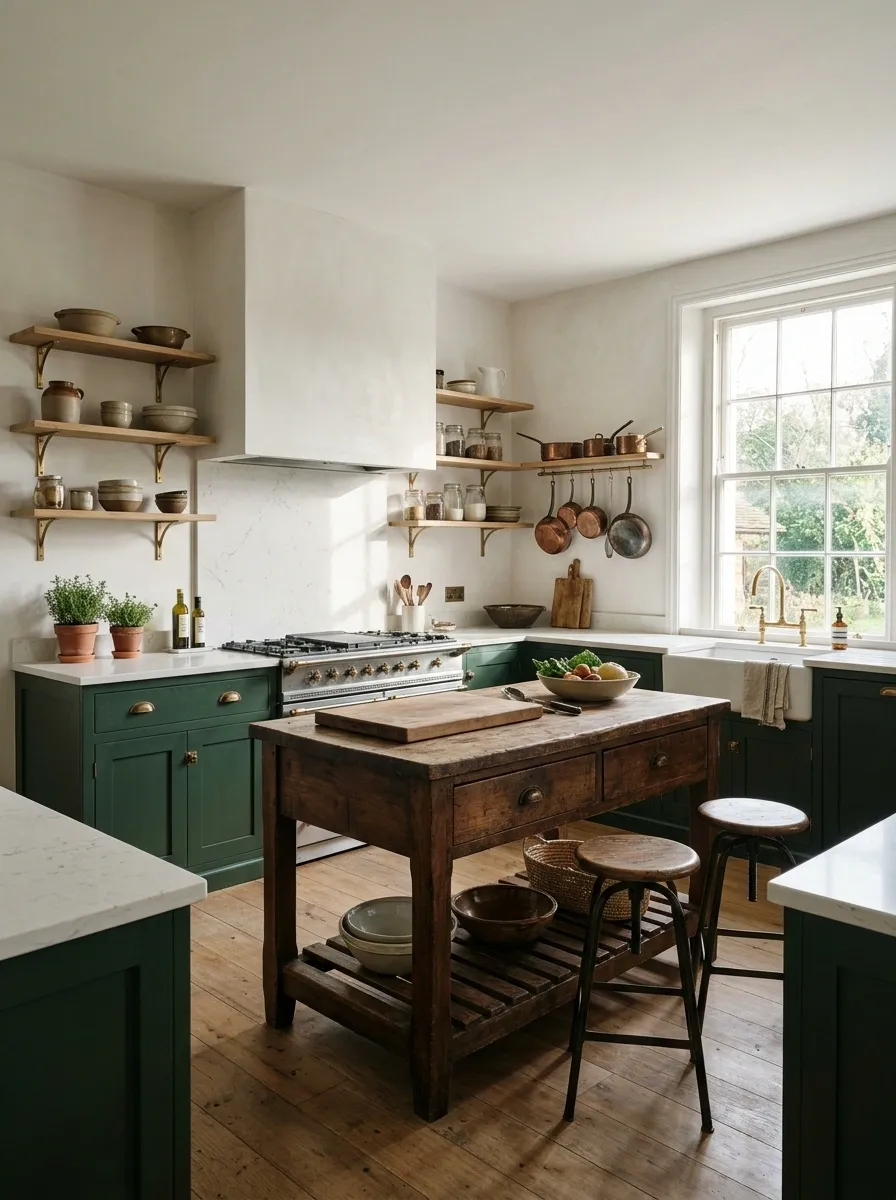
A kitchen can relate to the rest of the house without pretending modern appliances don’t exist.
Use a suitable freestanding cabinet, wood table, or well-chosen hardware to connect the finishes. Keep cookware and ceramics visible only where they’re useful, stable, and easy to maintain. Leave working surfaces available.
A quieter appliance area can coexist with more character elsewhere in the room. Don’t add decorative objects around cooking heat or sacrifice access to equipment. The kitchen looks more convincing when its furniture and materials have purpose, rather than when every modern function has been disguised behind another accessory.
Choose useful handles, a comfortable table, and accessible storage. Let decorative character grow around a kitchen that still functions normally.
Let the House Acquire Character Gradually
Start with the piece or room you’re most excited to live with: a richly painted sitting room, a handsome chest in the hall, or curtains that finally fit the windows. Finish that decision before collecting the next layer.
Knowing how to style your home like a Victorian house means giving color, craftsmanship, and detail room to matter. Keep the modern comfort, choose older pieces carefully, and leave space for your own belongings. The room should become more enjoyable as you use it.
Save this list on Pinterest before your next secondhand shopping trip. Admire the enormous carved cabinet, then measure the doorway.