
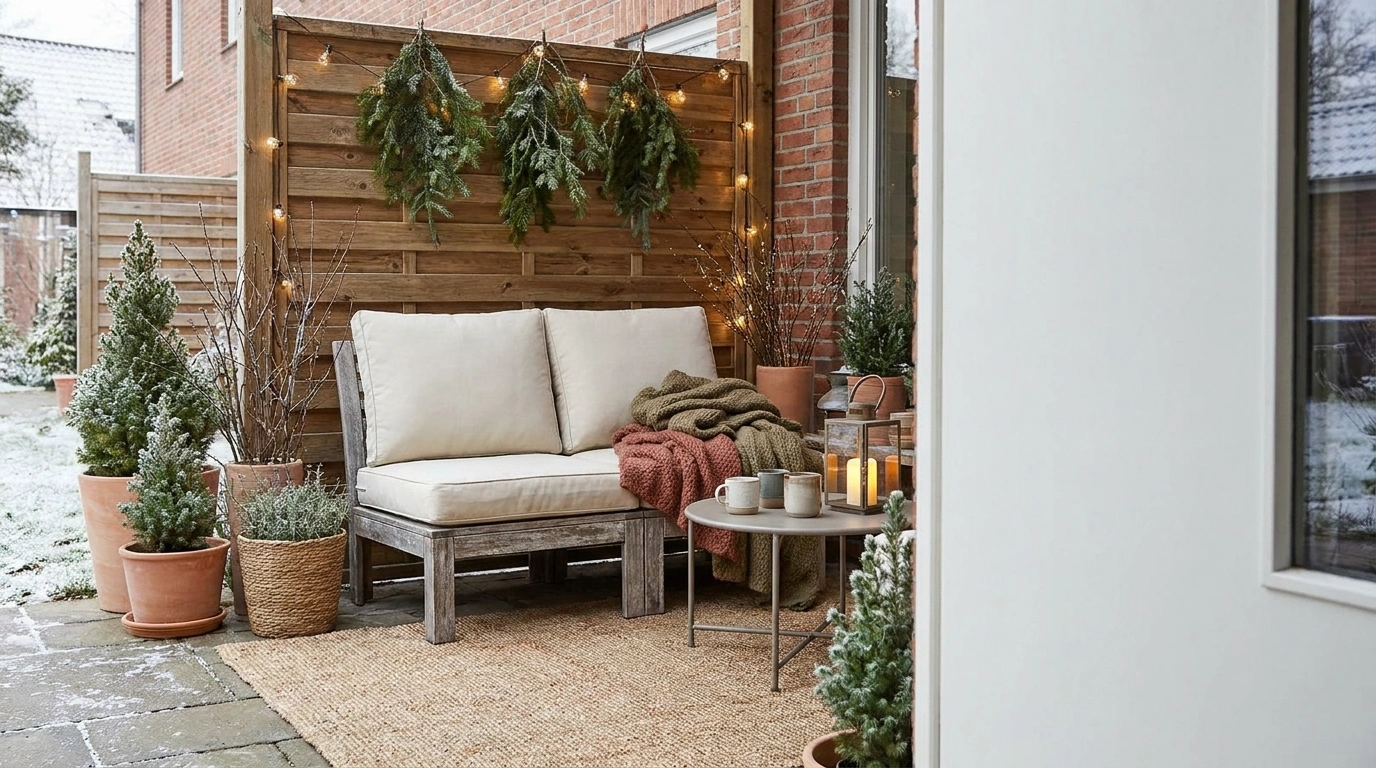
The patio looked spacious in June. Then the cushions came inside, the pots started collecting leaves, and the whole thing became a damp rectangle you pass on the way to the bins.
Winter asks a smaller question of an outdoor space: is there a comfortable reason to step out here for a little while?
You might want a morning coffee seat, somewhere sheltered to read on a mild afternoon, or simply a view that does not resemble abandoned garden furniture. You can design for any of those without pretending a tiny exposed patio is a year-round outdoor living room.
Keep drainage, door operation, and the route through the space clear. Use furnishings and lights suited to the actual exposure, and store anything that cannot stay dry. Treat frost and ice as a maintenance issue, not an opportunity for a decorative rug to conceal the problem.
Start With the Shape of the Patio
A Doorway Patio With One Proper Chair
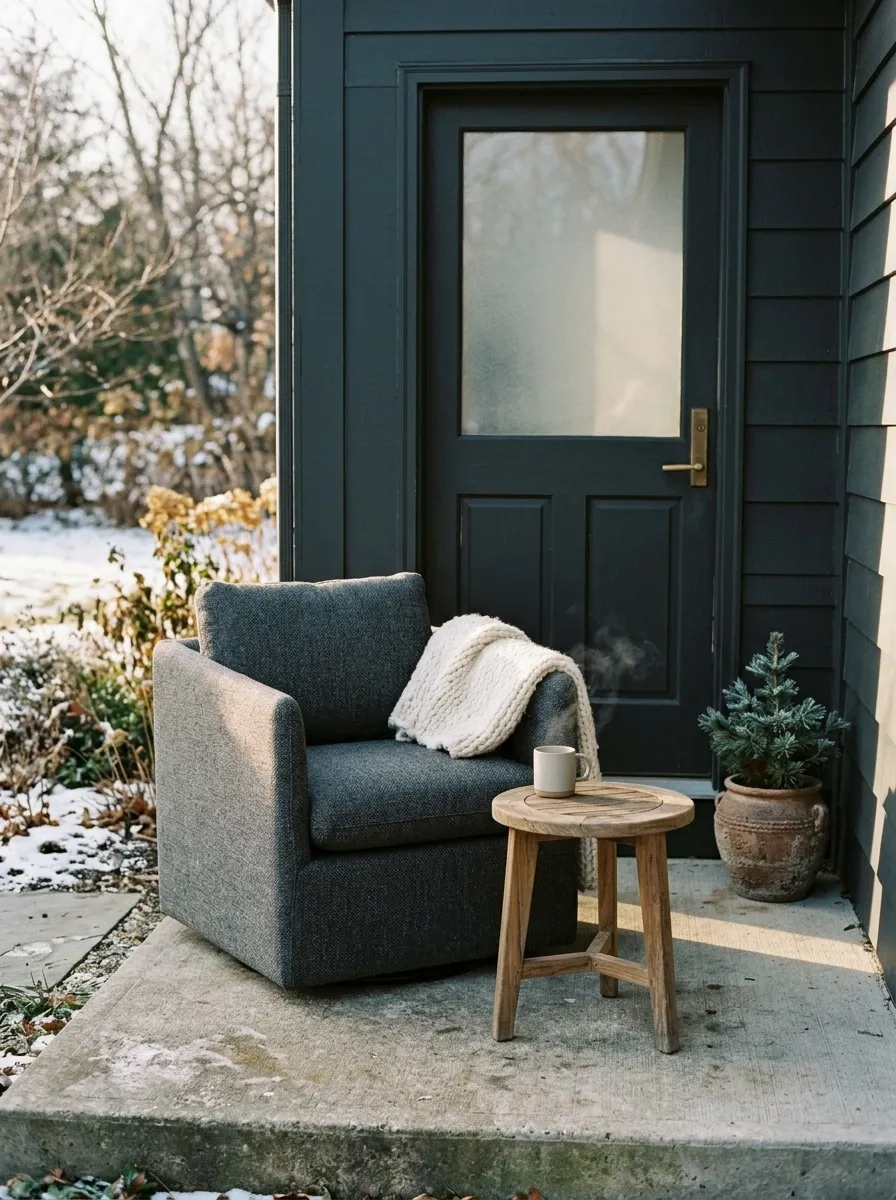
For a tiny slab immediately outside a door, try one comfortable chair rather than a miniature dining set.
Position it beside the opening, with a compact side table where it is easy to reach. Test the door fully open before deciding anything is finished. A second chair is not an improvement if it turns every trip outside into a sideways shuffle.
Seat beside the route
A single useful seat can be the complete layout.
A Narrow Patio With Seating Along One Side
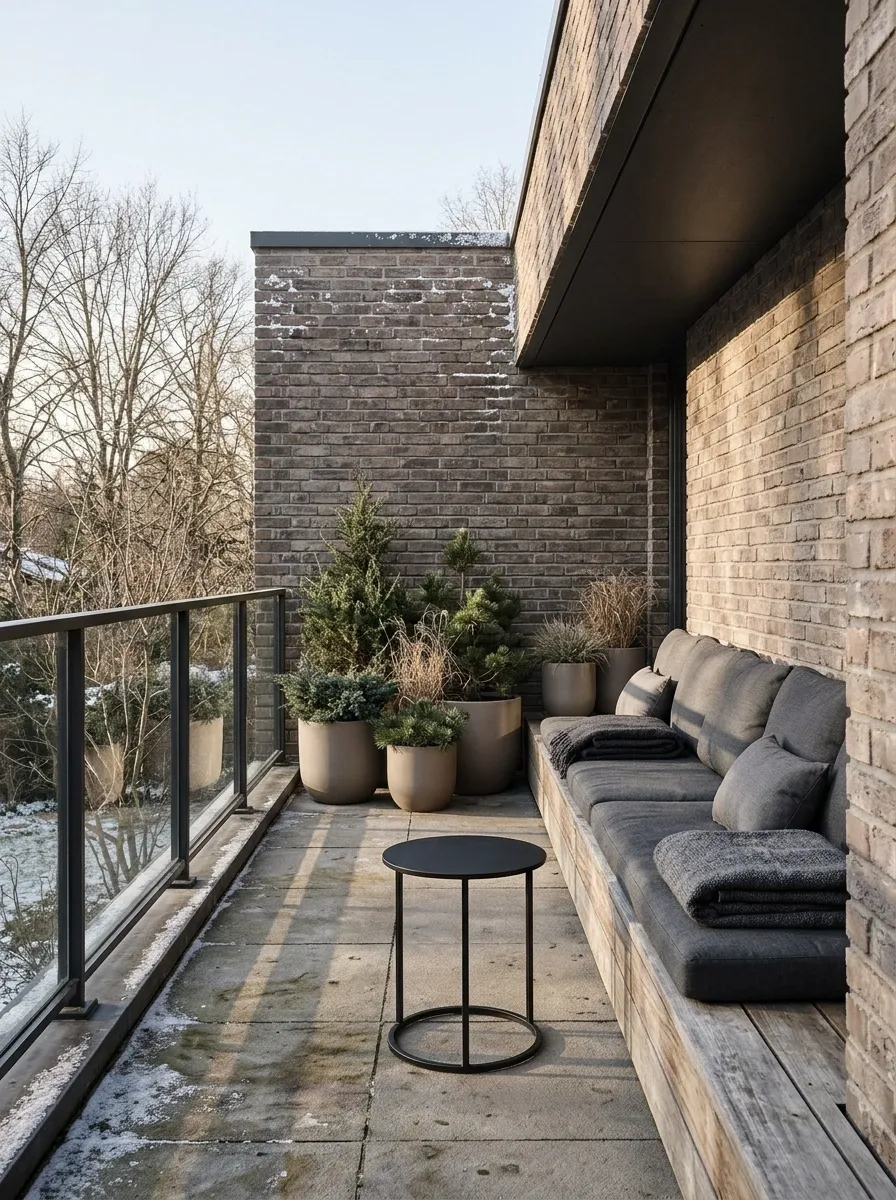
A narrow patio benefits from furniture that follows its length instead of pushing into the middle.
Use a modest-depth bench or compact chairs along the more sheltered edge. Keep the opposite side visually lighter. If planting belongs there, choose a few appropriately sized pots rather than a continuous obstacle course.
| Along the wall | Through the middle |
|---|---|
| Seating | Clear circulation |
| One small table | Space to stand and turn |
| Concentrated planting | Access for cleaning and drainage |
A Square Patio With an Off-Center Table
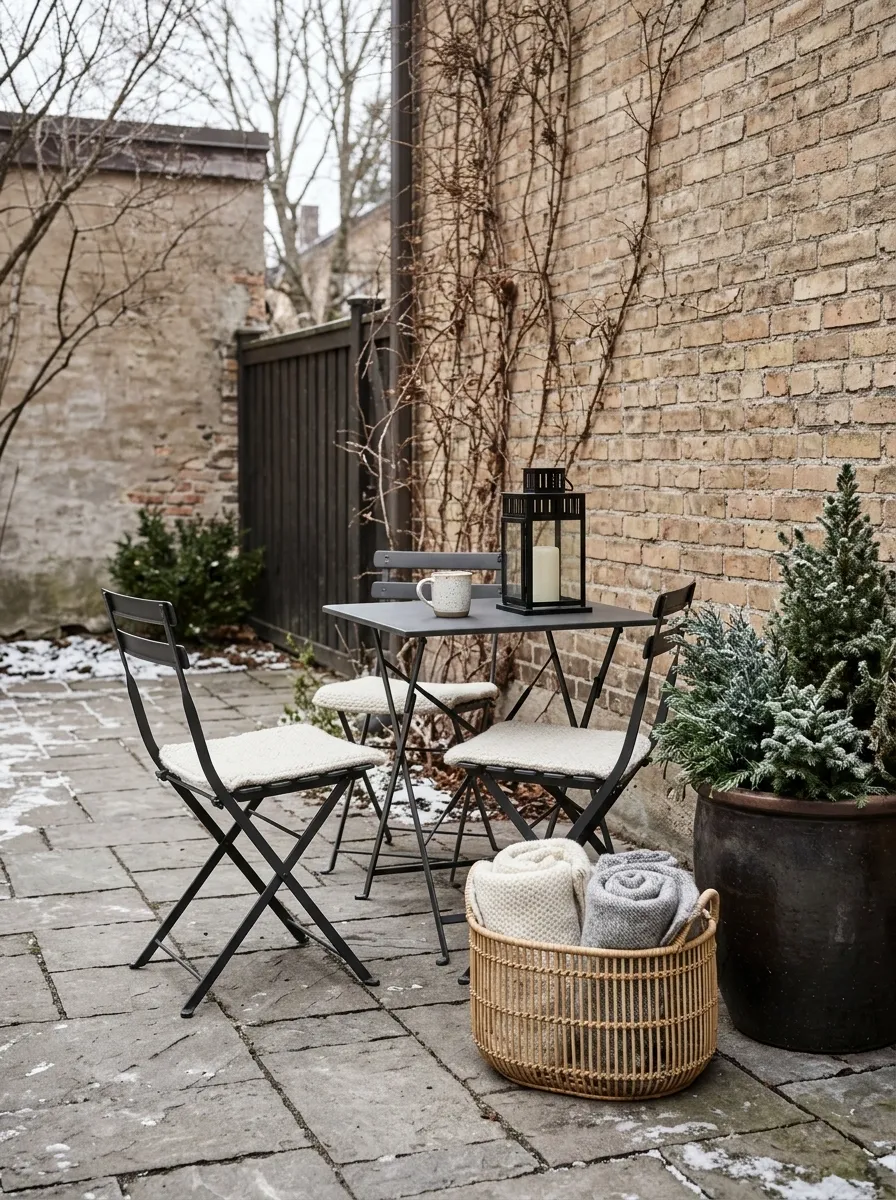
You do not have to center the table just because the paving forms a square.
Move a compact table toward the calmer corner and leave the main crossing route open. The patio can feel larger when furniture supports how you move through it. Check the chairs pulled out, not tucked in their most flattering position.
Layout test: Walk from the door to every exit while carrying something broad, such as a laundry basket. The awkward spots become obvious immediately.
An L-Shaped Patio With Separate Jobs

Assign the two arms different jobs:
- Wider arm: the comfortable seat and its supporting table.
- Narrower arm: a route, with planting only where it leaves sufficient access.
Repeat a planter color or material to connect them. Both sides do not need identical furniture to qualify as a coordinated patio.
Concentrate comfort in the wider arm
A Courtyard Patio With a Low Central Focus
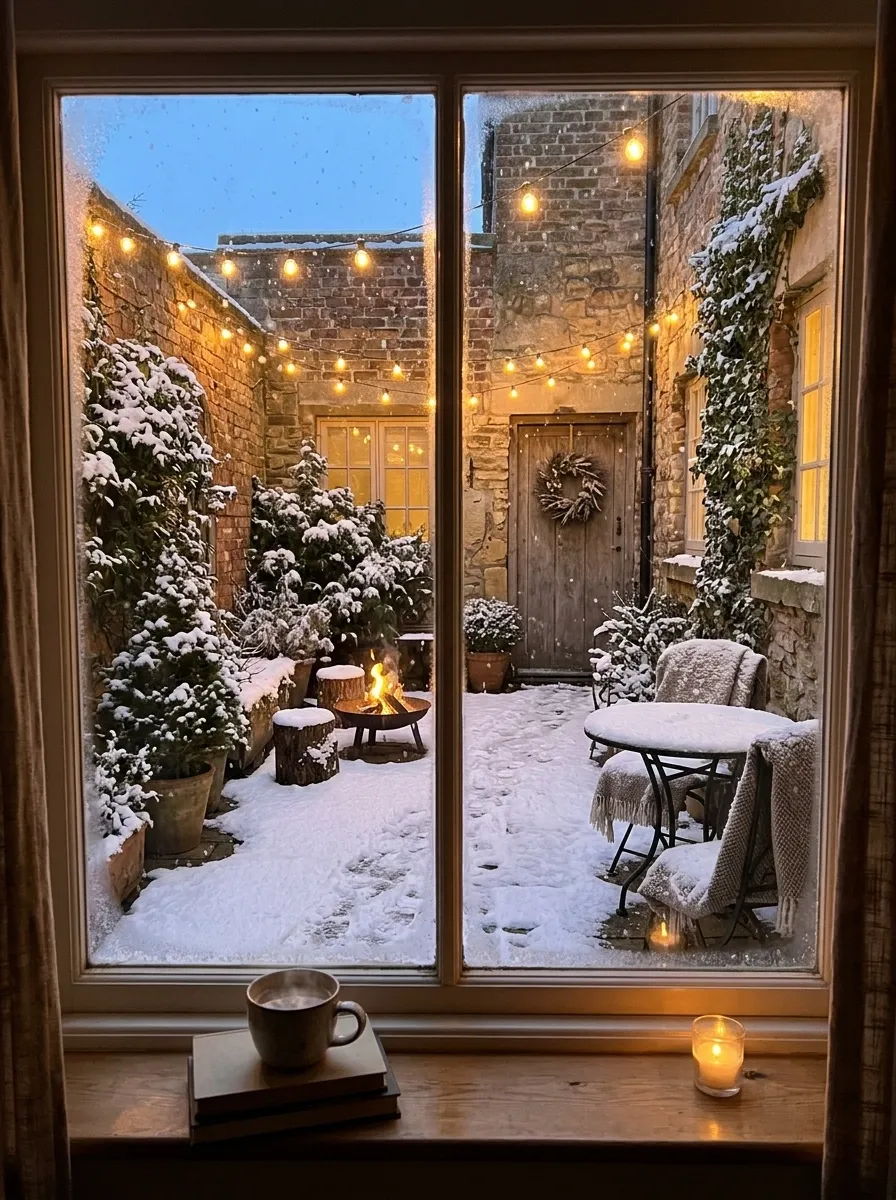
In a small enclosed courtyard, try a low table or broad planter as the focal point, with seating at the edge.
Keep the center low enough that you can read the whole space from the house. Tall furniture in the middle can make a compact courtyard feel chopped up, especially during winter when you experience it mostly through the window.
View to check first: the one from your usual indoor seat.
Make the Useful Part More Sheltered
A Chair Tucked Behind an Existing Return Wall
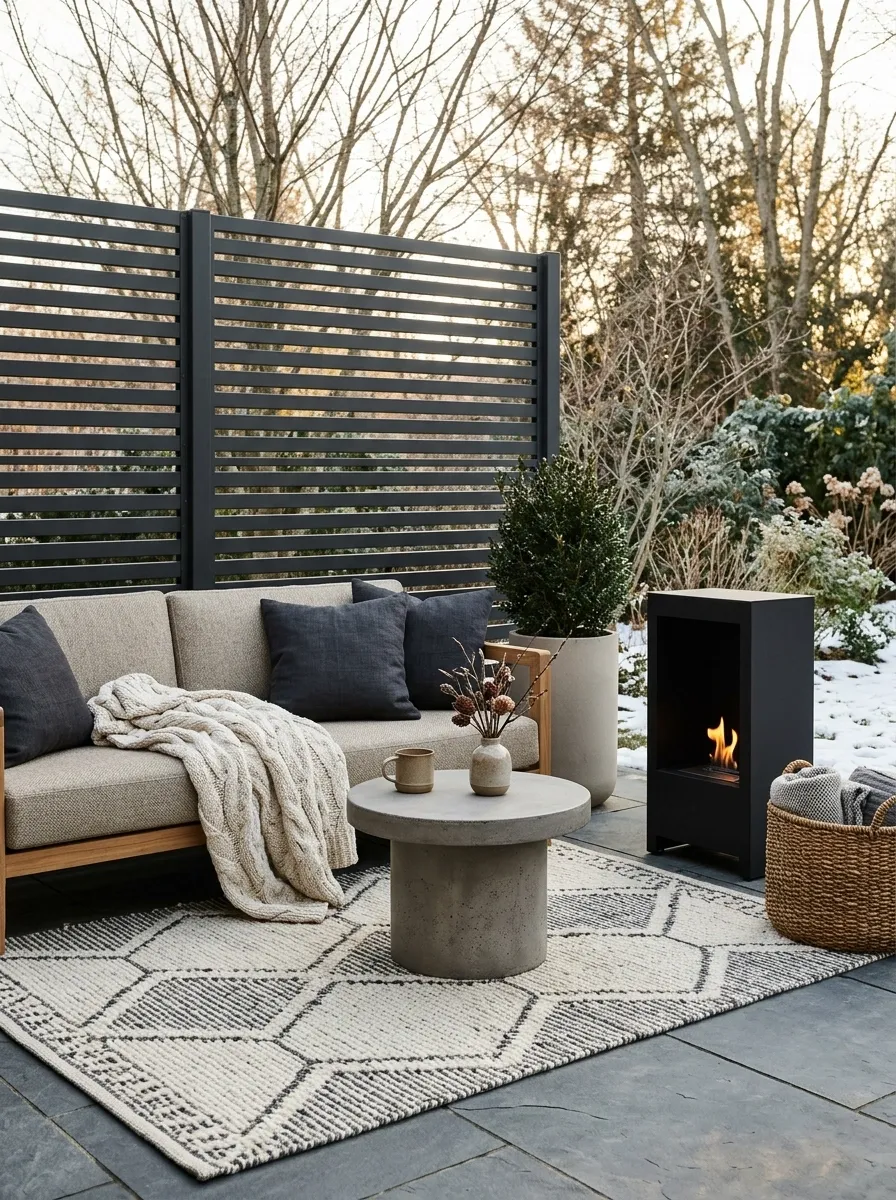
An existing corner may offer more comfort than the most obvious central position.
Try the chair near a return wall, then spend a few minutes there in the conditions when you expect to use it. Do not assume the corner is sheltered just because it looks enclosed. Wind can have surprisingly strong opinions about your furniture plan.
| Observe | Decide |
|---|---|
| Where leaves collect | Where turbulence may be strongest |
| Which seat stays drier | Where a short winter break might work |
| Door traffic | Whether the corner remains practical |
A Covered Edge Used as a Small Winter Nook
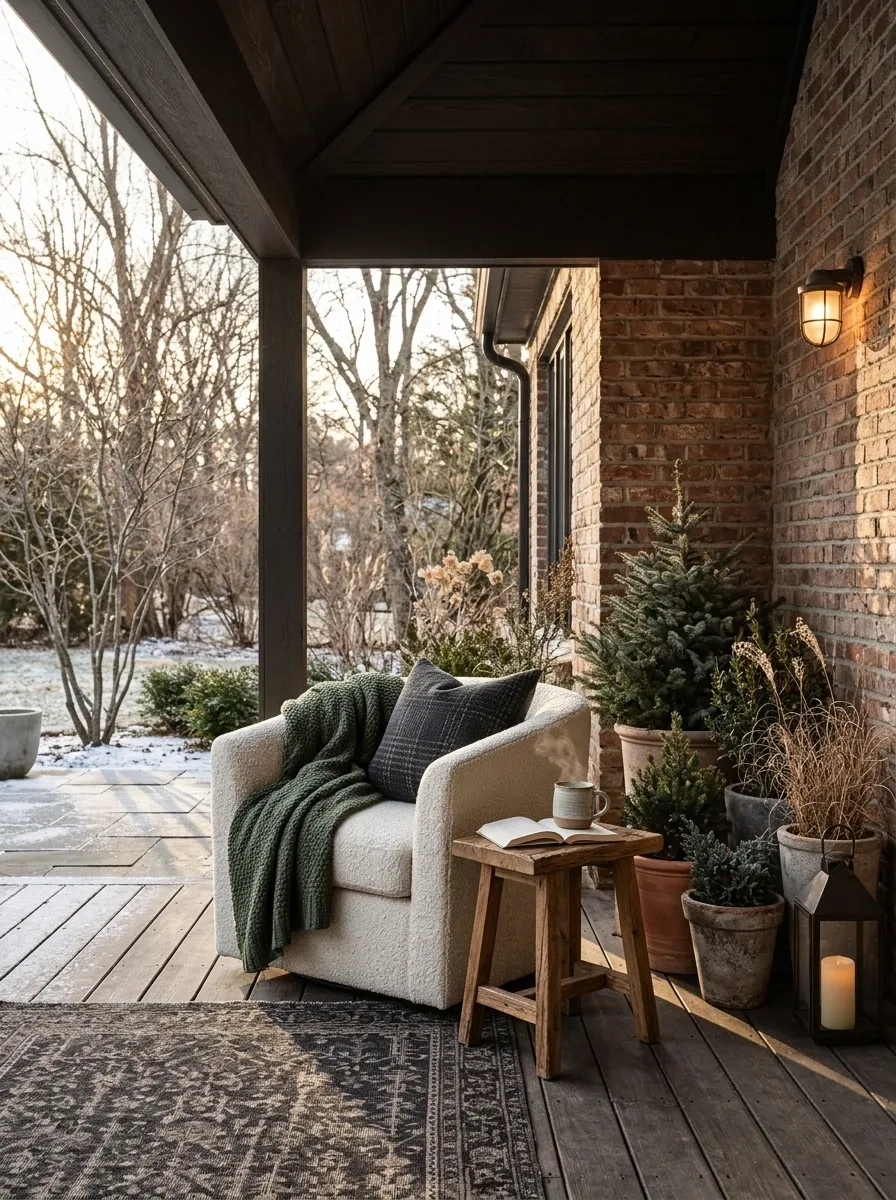
If part of the patio already sits beneath a suitable roof or overhang, move the everyday seat there.
Use the exposed section for robust planting and a clear approach. This gives the patio a practical hierarchy: the sheltered area is for sitting; the rest does not need to behave like an extension of the sofa.
Do less: A chair, reachable table, and suitable light may be enough for the covered section.
A Clear Seasonal Windbreak With Honest Expectations
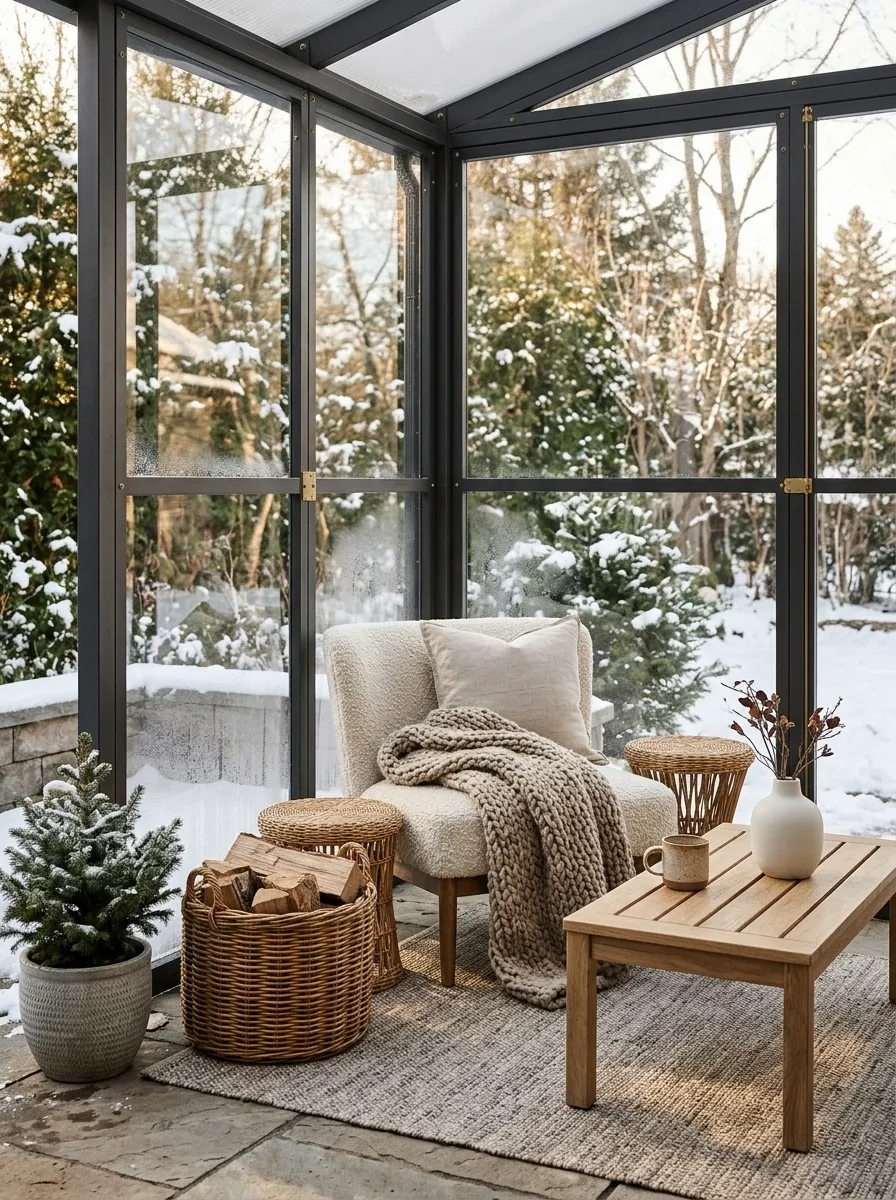
Purpose-made outdoor clear panels may help protect a suitable sheltered nook where the product and mounting system allow it.
Keep ventilation, local loads, access, and water management in the plan. This is a windbreak, not an insulated room. Do not move outdoor combustion heaters into an enclosure or improvise a sealed space around them.
Visual benefit: The garden remains visible while the nook feels more defined.
A Low Planting Boundary Around the Seat
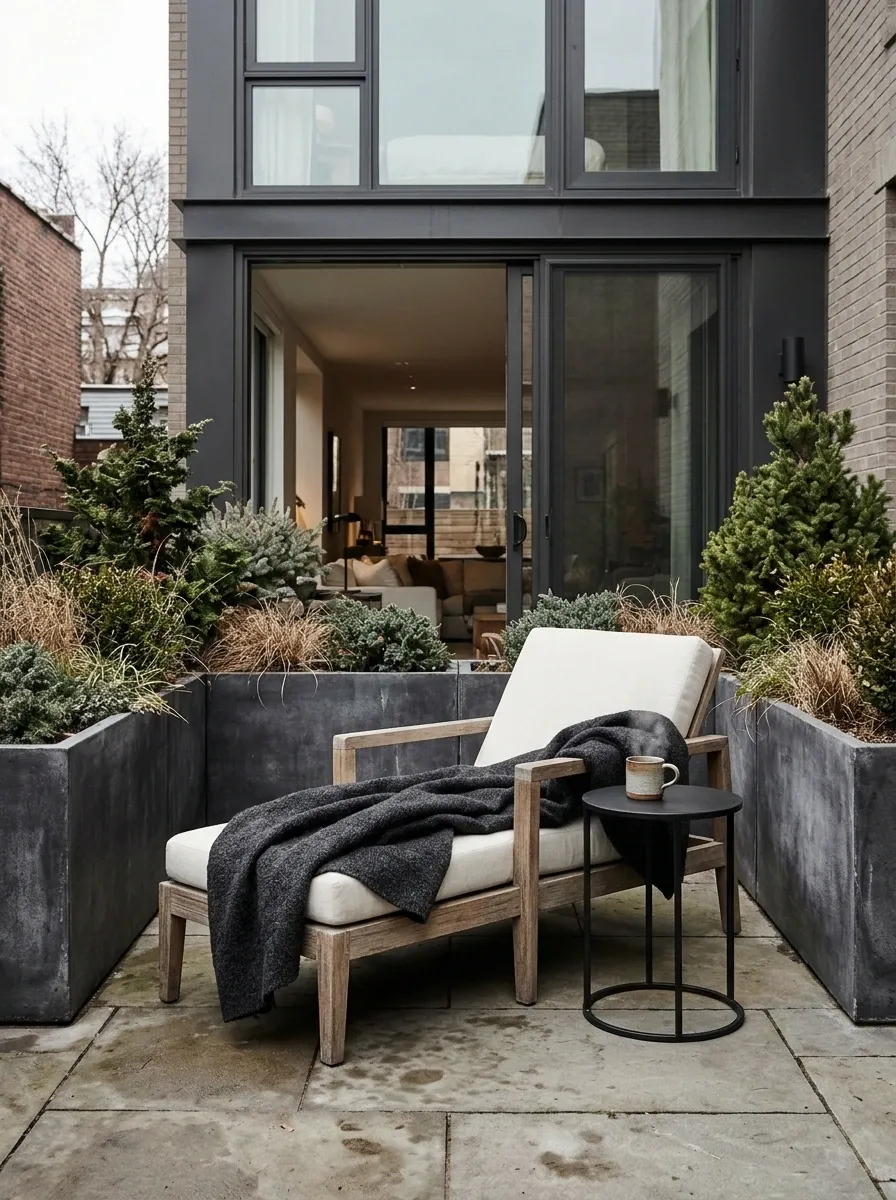
Stable, appropriately sized planters can give a seat a sense of enclosure without adding a tall screen.
Think of this as a visual boundary, not guaranteed wind protection. Keep the plants low enough to preserve views from inside, and leave room to maintain the pots. A patio gets tiring when every small job requires moving half its contents.
Planting defines, rather than fills, the space
Give Yourself a Reason to Step Outside
A Morning Coffee Perch
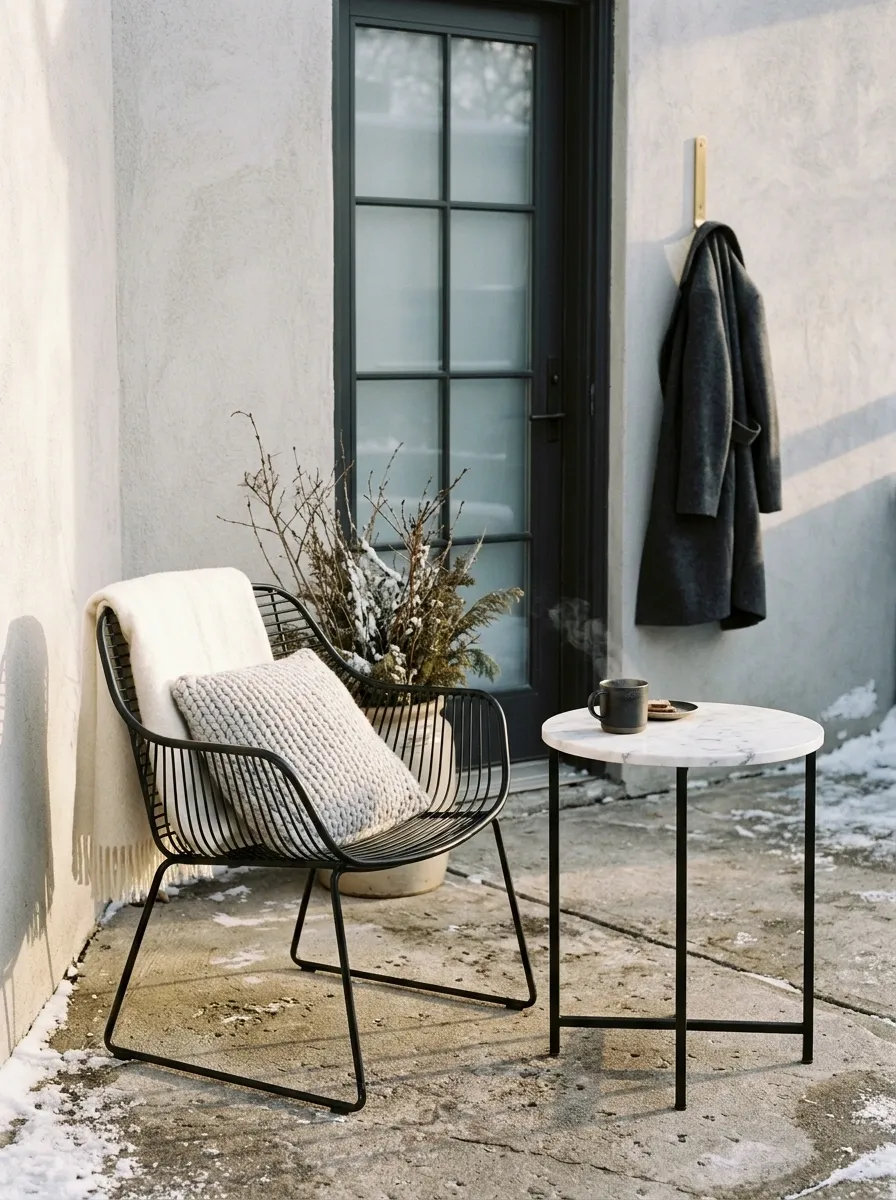
Make one seat easy to use without a setup ritual. A dry seat surface, a small table, and a nearby indoor hook for an outdoor layer can be more useful than a patio full of cushions.
Choose the position around morning conditions and the view you enjoy. If using the space requires carrying out a complete textile collection, the coffee will be cold before you sit down.
Keep ready: the chair and table.
Bring out when needed: the cushion and throw.
A Compact Winter Lunch Table
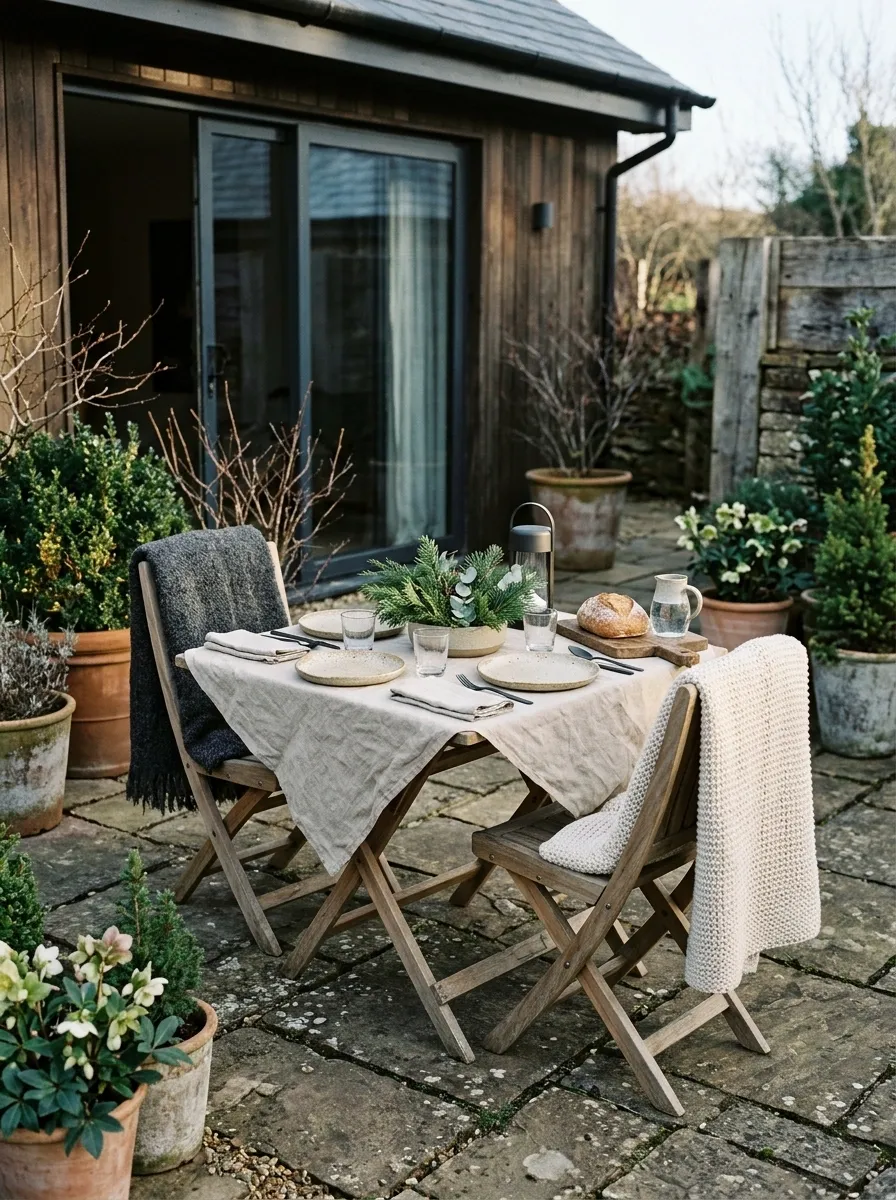
A mild afternoon deserves somewhere to put lunch.
Before choosing a bistro set, check three ordinary movements: sitting down, pulling the chair back, and standing up without moving the table. A set is not space-saving if nobody can use it comfortably.
Leave enough tabletop for the meal. The centerpiece can take the afternoon off.
| Tabletop priority | Optional extra |
|---|---|
| Plates and cups | One small outdoor-suitable light |
| Comfortable reach | A simple washable cloth brought out for use |
| Easy cleaning | A little seasonal color |
A Reading Seat With a Real Side Table
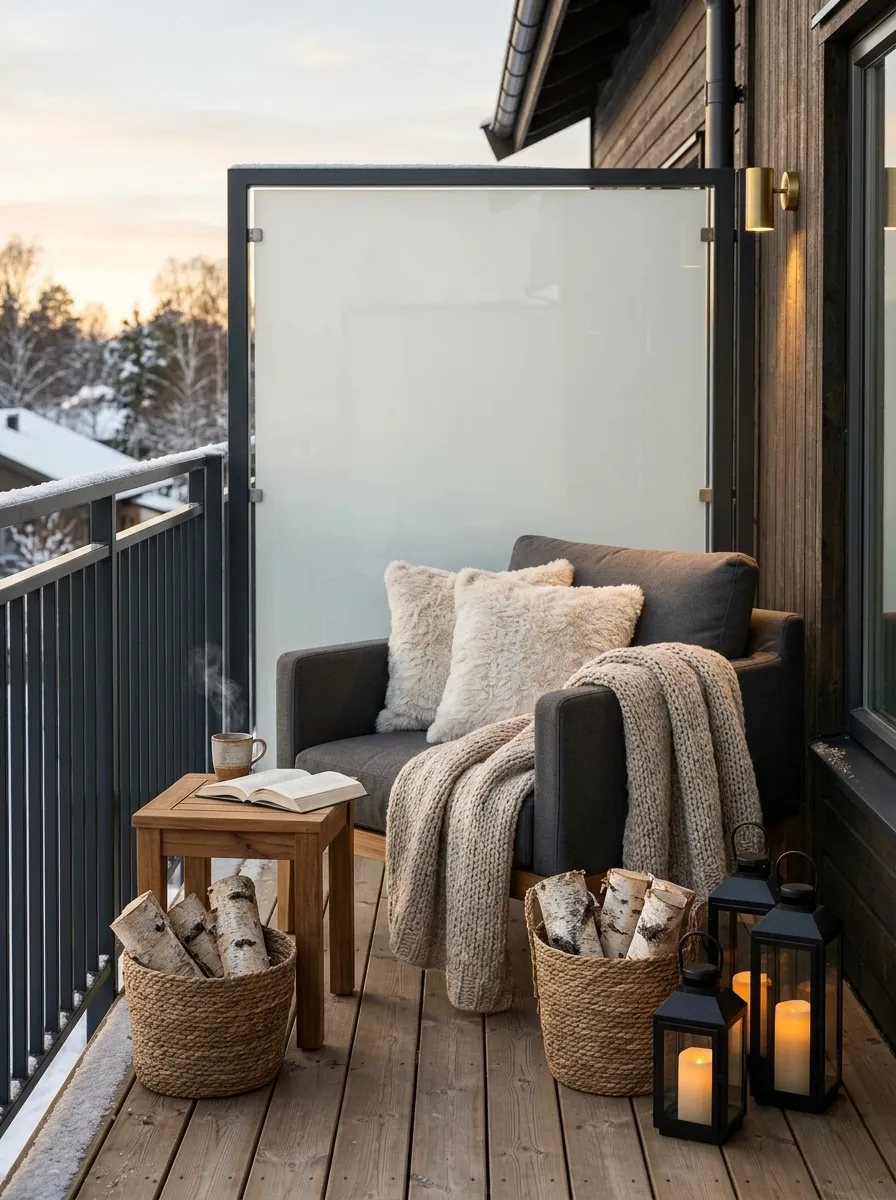
A reading corner becomes more useful when there is a stable place for a mug and book.
Try a small nesting table or compact outdoor side table with a suitable base. Keep the reading light separate from decorative lantern glow when more illumination is needed. Use the corner only in comfortable conditions; no novel is improved by your fingers slowly losing interest in turning the pages.
Comfort depends on the supporting pieces
within reach
A Little Potting Station for Dry Days
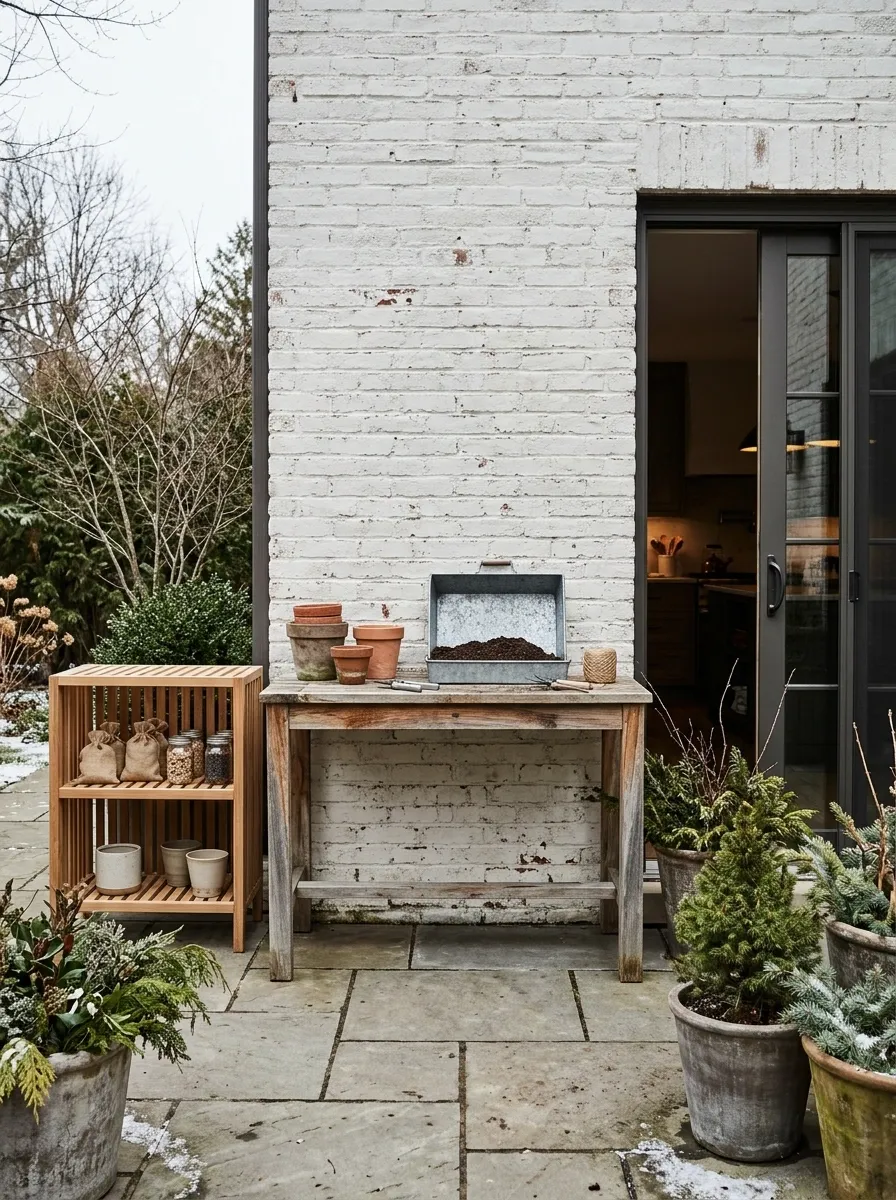
A narrow, weather-suitable work surface can give the patio a winter purpose beyond sitting.
Keep only the tools you use regularly there and store materials according to their requirements. Choose a position that does not block the main route. A portable tray can contain soil and make cleanup easier, especially when the patio doubles as the route into the kitchen.
Useful boundary: Work at one edge. Keep the sitting surface and door approach free of potting supplies.
A Winter View Patio
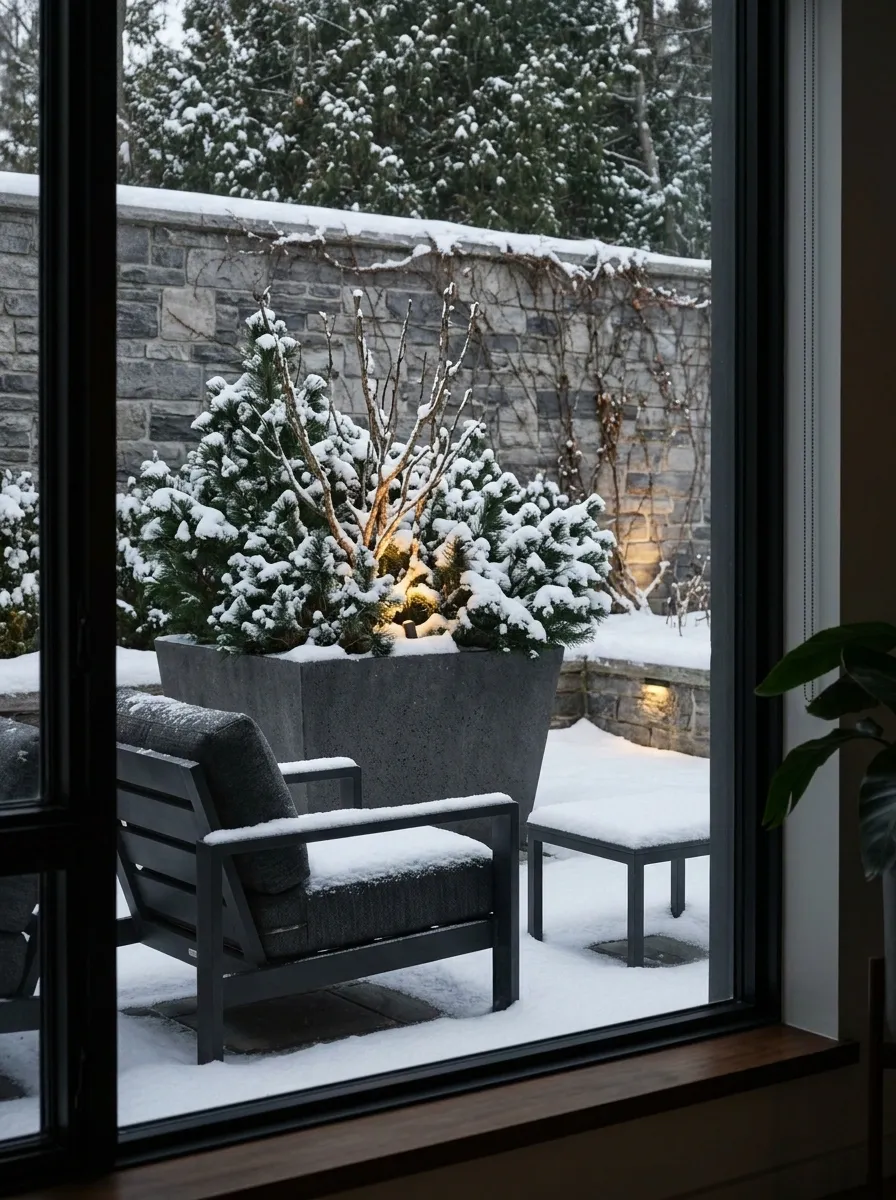
Some patios are more valuable as a view than a destination during cold weather.
Arrange one strong planter, a clean seat silhouette, and suitable low-glare lighting where you can enjoy them from inside. You do not need to keep a dining set outdoors purely to prove the space is furnished. Design the scene around the window you actually look through.
Foreground, focal point, quiet background
Keep clear
One strong planter
Calm backdrop
Make the Winter Details Earn Their Space
Fewer Pots With More Presence
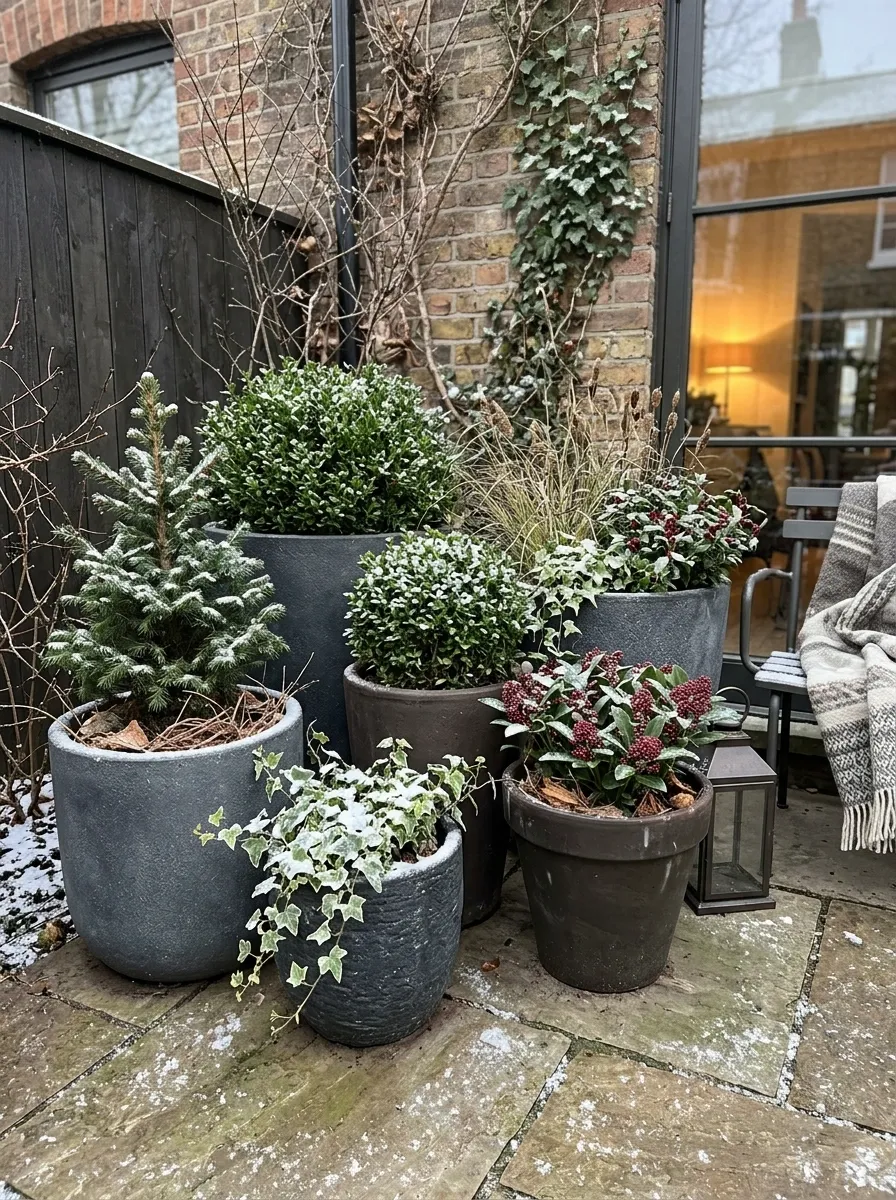
Small pots can become visually restless on a compact patio. Consolidate the display into fewer, appropriately sized containers that suit the site and planting.
Check cold-weather suitability for both the plants and pots, and retain drainage. Larger is not automatically better on a balcony or raised structure where loads matter. Choose scale thoughtfully rather than buying the biggest planter and hoping architecture is flexible.
| Replace this | With this |
|---|---|
| Scattered tiny pots | A coherent grouping |
| Mixed bright finishes | A restrained container palette |
| Empty seasonal gaps | Planting suited to local winter conditions |
A Dark Backdrop Behind Pale Planting
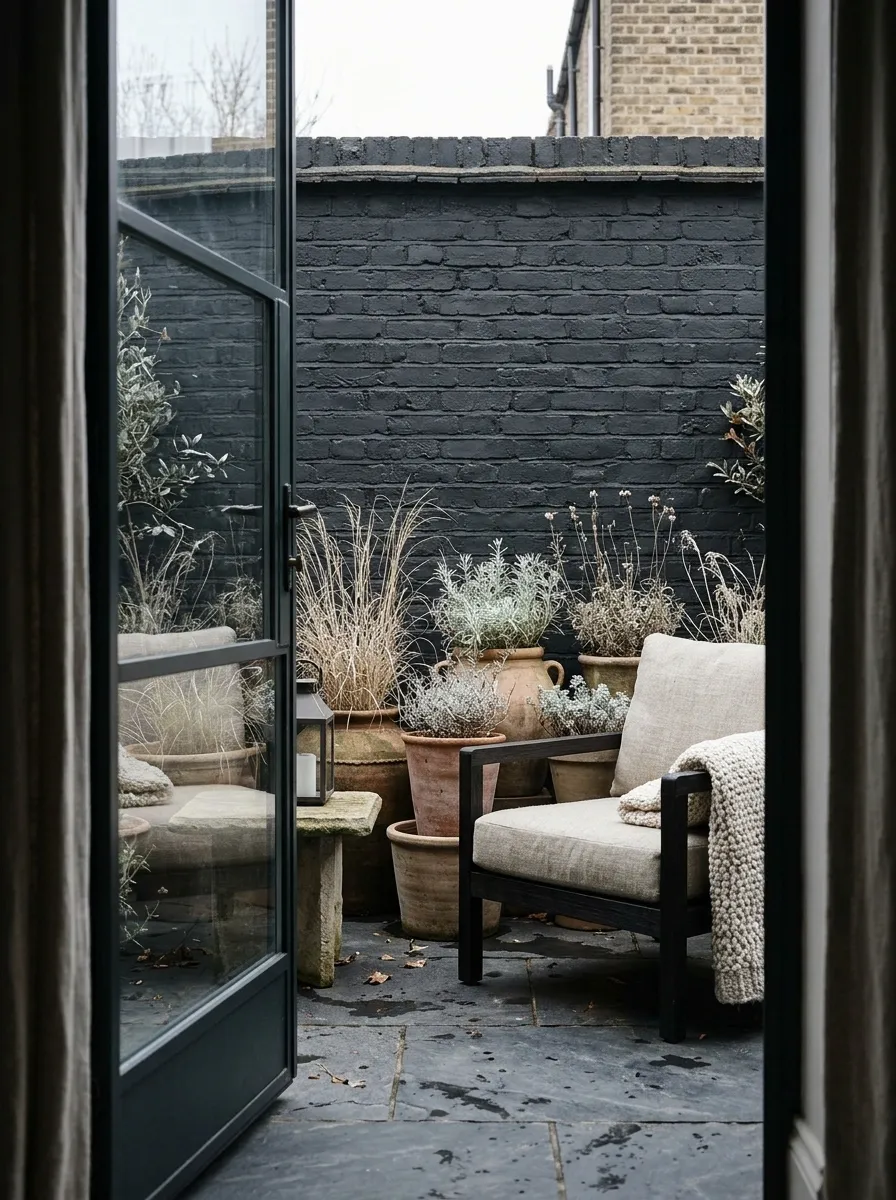
A dark-painted boundary can make pale grasses, light pots, or silvery foliage stand out where those plants suit the climate.
Use an exterior system suitable for the existing material and condition. Keep the color tied to the house or furniture so it feels connected. This is particularly effective when the patio is mostly viewed from indoors: a little contrast helps the winter arrangement read clearly.
Let pale shapes register against depth
A Winter Color Repeated in Fabric and Pottery

Pick one accent—rust, deep green, muted blue—and repeat it in a cushion brought outside for use and a suitable pot that can remain there.
That limited repetition gives the space coherence without requiring a seasonal shopping spree. Let the rest of the furnishings stay neutral. A small patio has limited tolerance for every color requesting equal attention.
Easy formula: one movable textile, one permanent visual echo, plenty of existing material left visible.
A Warm-Glow Lantern Beside the Seat
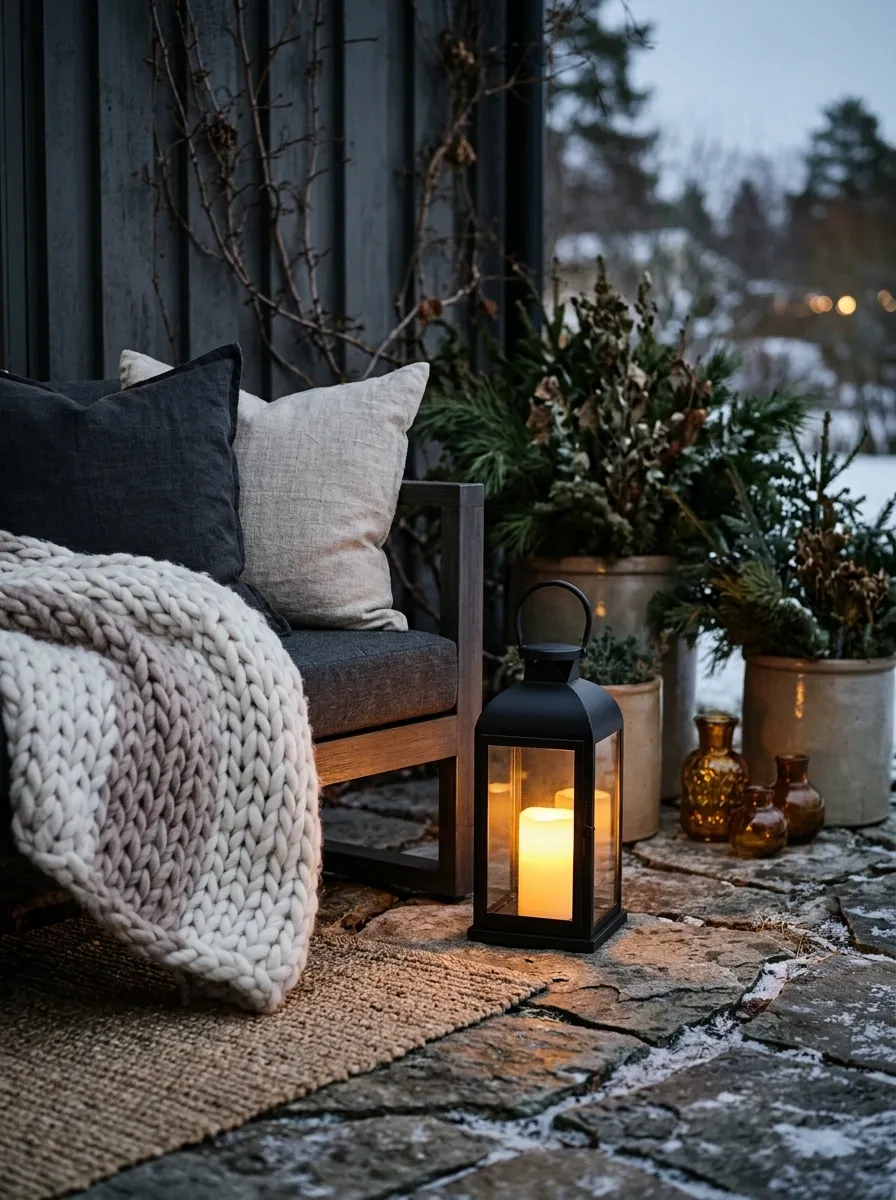
A stable outdoor-suitable lantern can make the seat feel like a destination after dark.
Use an appropriate flameless light source and keep the lantern within the furnishing zone, outside the route. It provides atmosphere, not necessarily enough light for steps or reading. Plan functional lighting separately wherever visibility matters.
Placement: beside the chair on a stable surface, rather than in the exact spot your feet land when you stand up.
Wall Lighting That Preserves Table Space
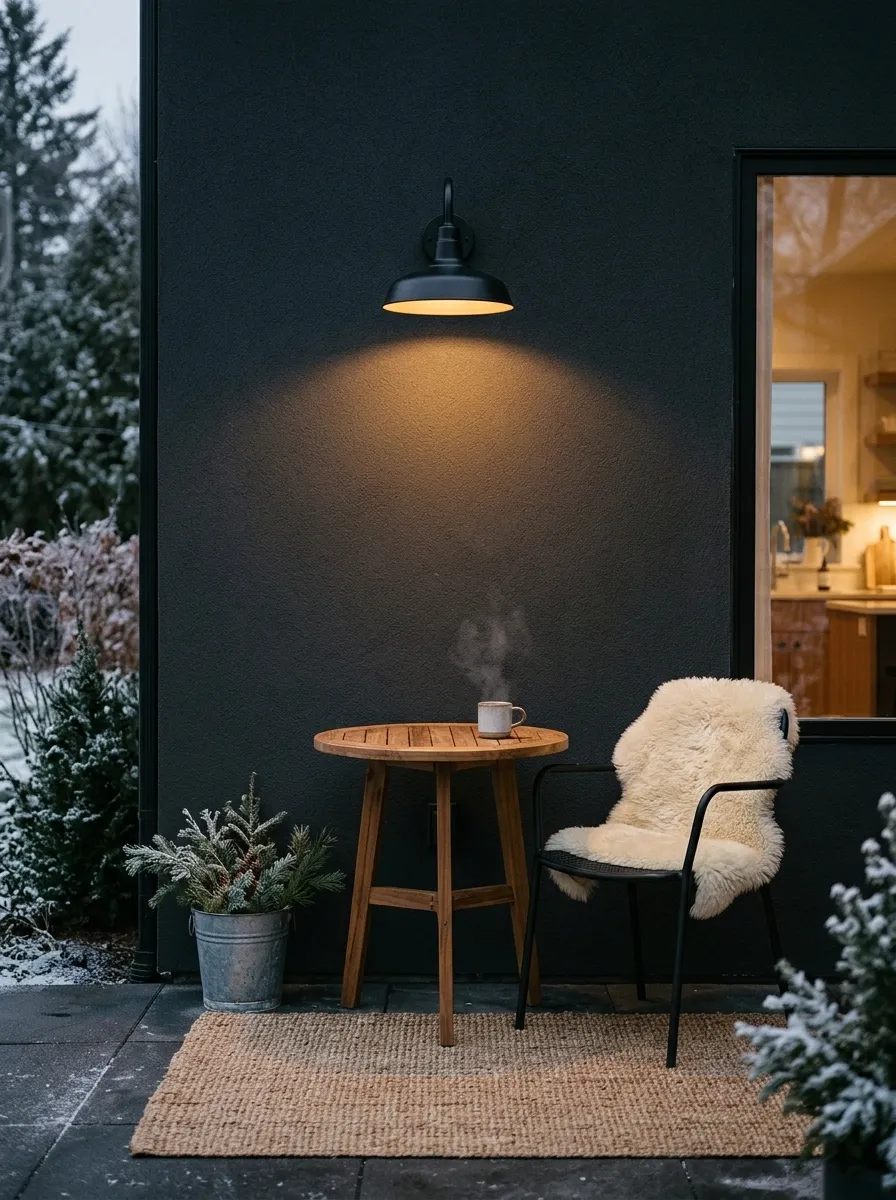
Where a suitable installation is possible, exterior wall lighting can free a small table from holding another object.
Choose the fixture and output around the real task, with controlled glare and appropriate exposure ratings. Plan installation professionally. Check the light from the seat and from inside the house so a pleasant patio accent does not become a bright reflection in the kitchen window.
Keep the little table useful
Check glare from seated positions and indoor windows.
Deal With the Things That Usually Spoil It
Cushion Storage Close to the Door
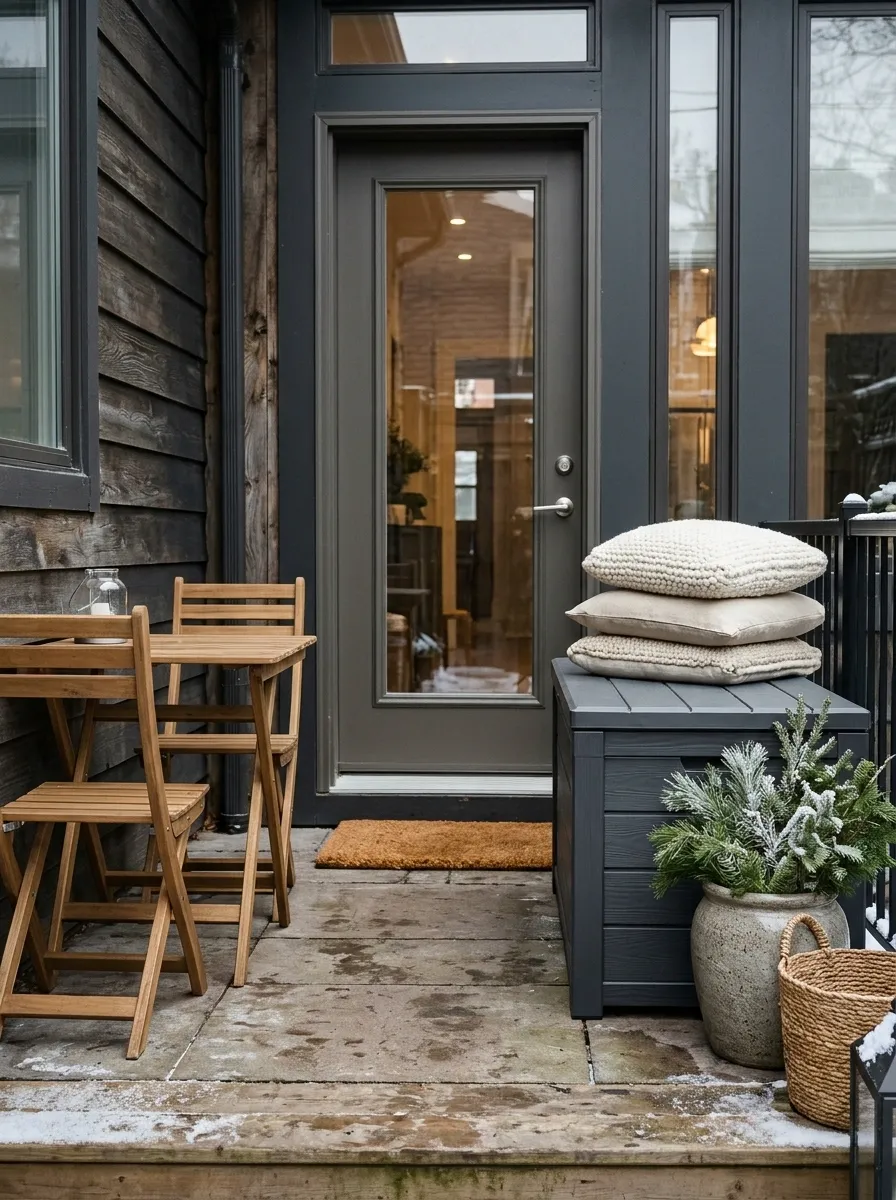
Put the storage where you will actually use it. For many small patios, that means a dry indoor cupboard or a suitable weather-resistant box nearby.
Store cushions only when fully dry, and inspect any outdoor storage for moisture. A box labeled outdoor can still need careful positioning and maintenance. Convenience matters: if putting the cushion away feels like a separate project, it will eventually stay outside through a storm.
| Storage test | Pass condition |
|---|---|
| Easy to reach | You will use it every time |
| Dry inside | Textiles remain dry |
| Does not block access | Patio route stays usable |
A Folding Guest Chair Kept Elsewhere
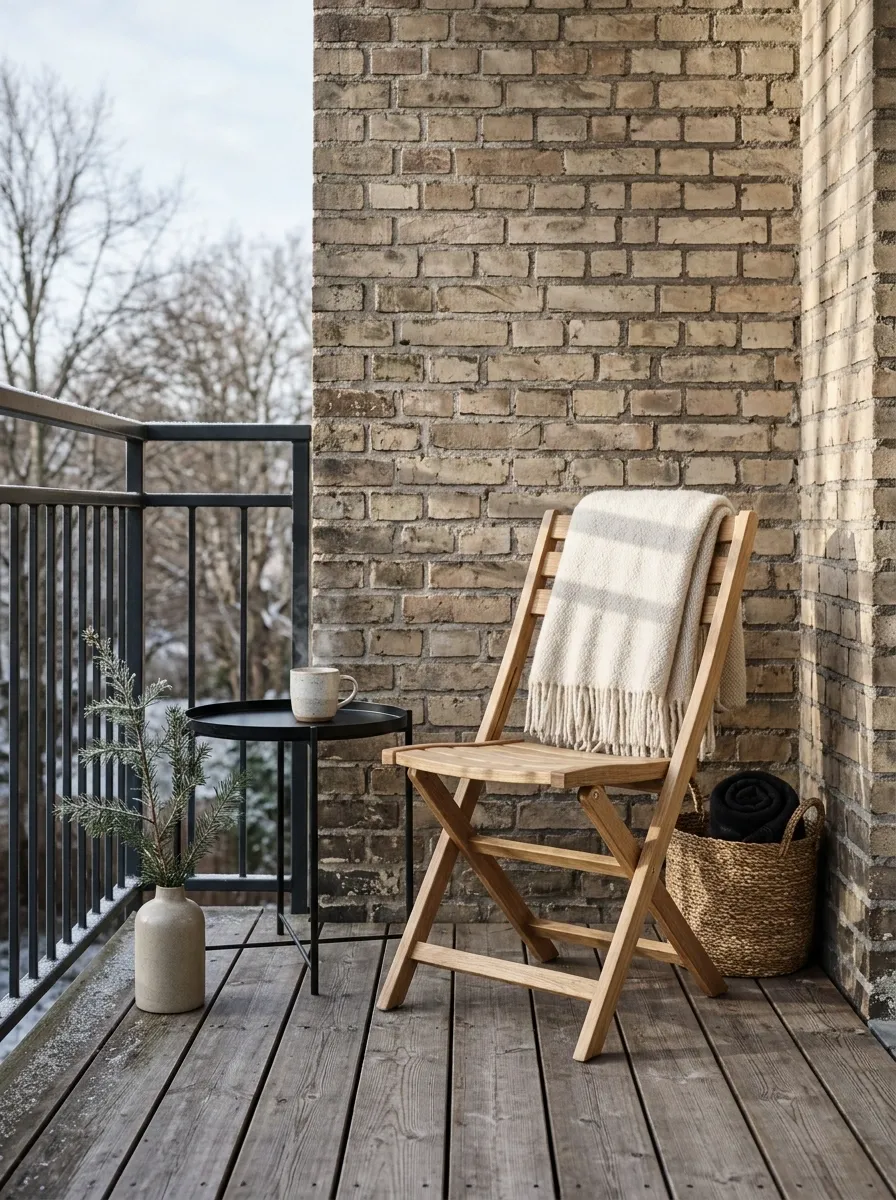
Keep everyday furniture comfortable and bring out extra seating only when it is needed.
A suitable folding chair stored indoors can be a better use of space than permanent spare seating. Choose something stable and comfortable enough for the intended visit. The patio does not need to host an imaginary gathering every day of the winter.
Space recovered: a clearer view, easier cleaning, and room to move around the chair you use most.
A Clear, Cleanable Strip Beside Planting
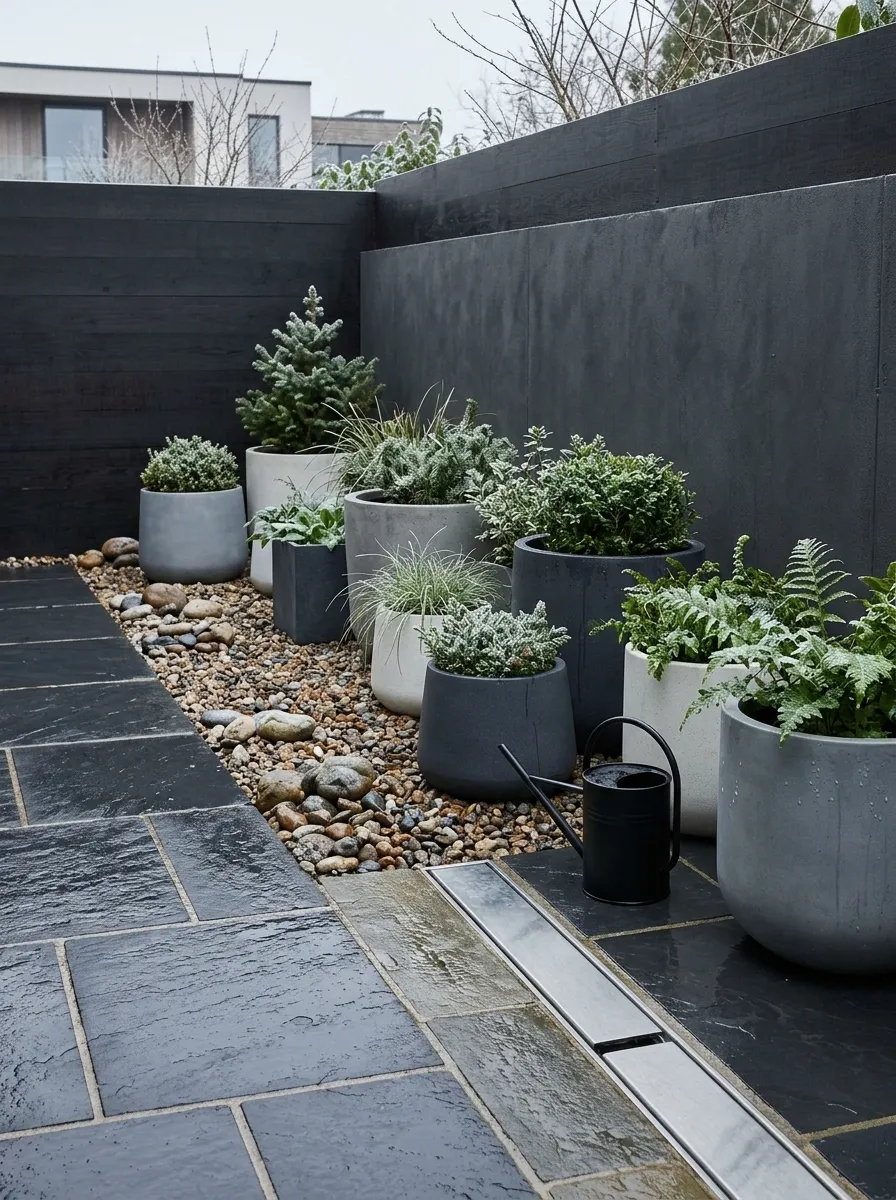
Leave enough access to reach drains, sweep leaves, and inspect the paving near pots.
This sounds unglamorous because it is. It also keeps the patio from becoming a damp puzzle of unreachable corners. Put containers where their drainage will not make the walking route unnecessarily wet, and adjust the layout if runoff becomes a problem.
Keep the drain reachable
A Small Patio Without an Outdoor Rug
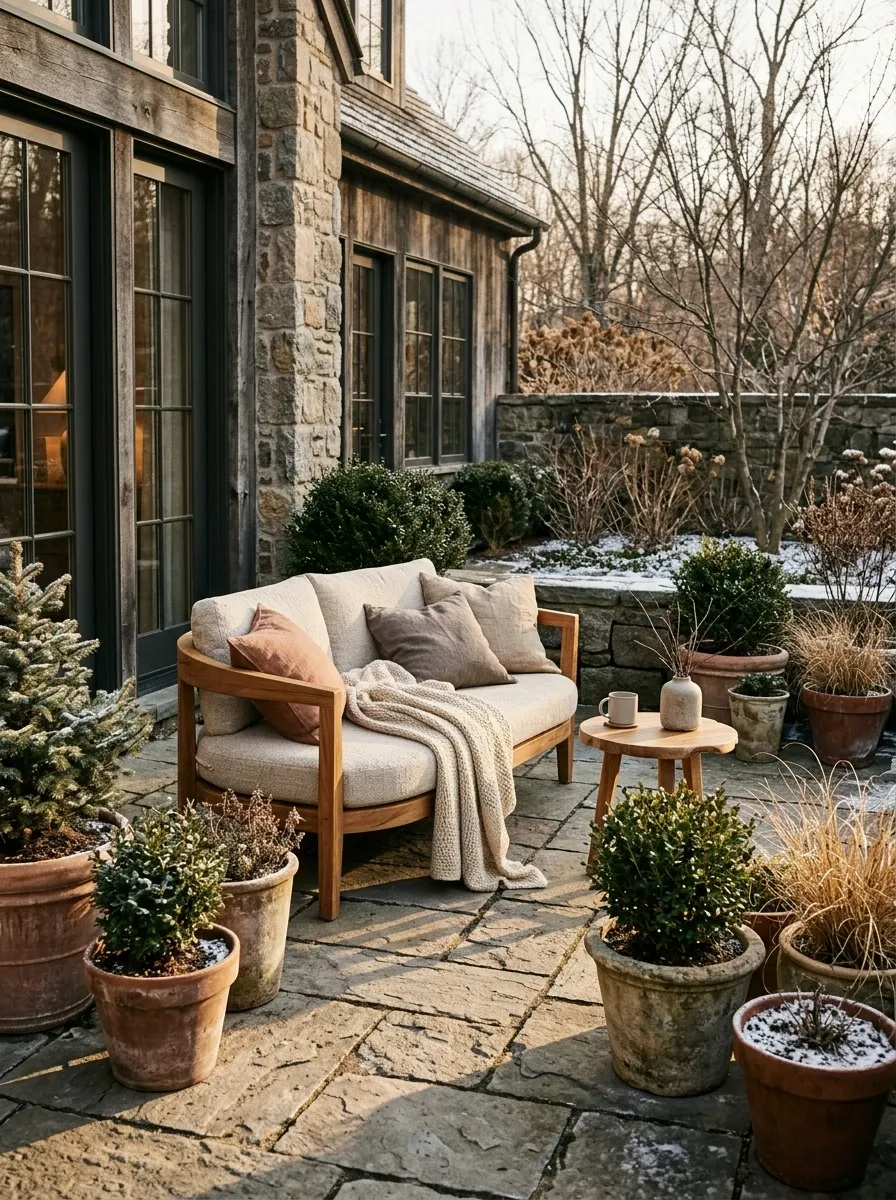
You can create a comfortable-looking patio with visible paving, warm furniture finishes, and well-placed planting.
A rug is optional, especially if it would remain damp, interfere with drainage, or conceal a slippery surface. If you use one, choose it for the location and lift, clean, and dry it as needed. The absence of a rug does not revoke the patio’s decorative credentials.
Other ways to soften the scene: curved furniture, muted pots, and a textile brought out only while you sit.
A Seasonal Reset Instead of More Decoration

Before shopping, do a short reset:
- Remove the broken pot.
- Clean the table and chair.
- Store summer extras.
- Check the walking route and drainage access.
Then arrange what remains. One usable seat and a pleasant view can be a complete winter plan. The patio may simply need the evidence of last season cleared away.
Keep what supports the season
Useful furniture
Dry seasonal textiles
Routes and drains
An Invitation, Not an Obligation
Leave the patio ready for the pleasant winter moments your climate offers. A bright lunchtime. A still afternoon. A few minutes outside while the house is busy.
You do not owe the furniture an appearance during miserable weather. Go back inside when you want to. The patio will cope.