
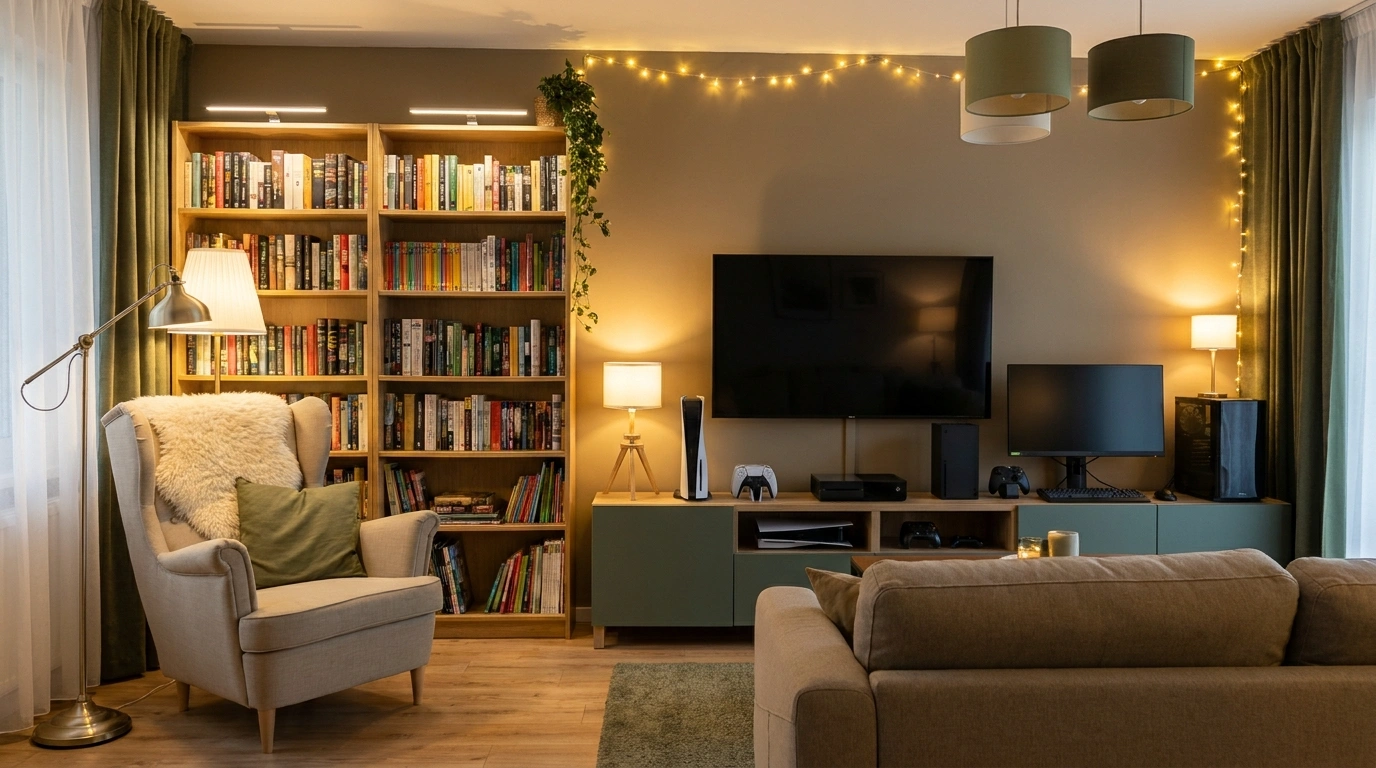
One person wants a good place to read.
Someone else wants a screen, a controller, and a perfectly reasonable opportunity to announce that the last defeat was clearly the game's fault.
Both activities can belong in a living room. The challenge is giving each person useful seating, light, storage, and a realistic level of separation without turning the room into two hostile territories.
Start with what happens at the same time. A reading corner that only works after the gaming equipment is switched off is a different arrangement from one intended for simultaneous use.
Agree on the Shared Conditions Before Moving Furniture
Check screen direction, reflected light, sound, calls or voice chat, and the walking routes between seats. A bookcase or curtain may change the view, but it doesn't automatically stop sound. If one activity is loud, furniture placement alone won't make the other quiet.
Choose lighting that serves each activity without unnecessary spill or glare. Keep cables clear of routes and follow the actual equipment's support, power, and ventilation instructions. PlayStation's PS5 guidance, for example, warns against blocked vents and cramped placement. Other equipment needs its own appropriate conditions.
Give the small everyday objects a place:
- Controllers near the gaming seat, in suitable storage when inactive.
- Books in progress beside the reader.
- Headphones and chargers stored and used according to their requirements.
The room is easier to share when each activity has a useful place to put things down, not merely an attractive seat assigned to it.
Give Each Activity a Clear Place
A Gaming Sofa With a Reading Chair Angled Away From the Screen
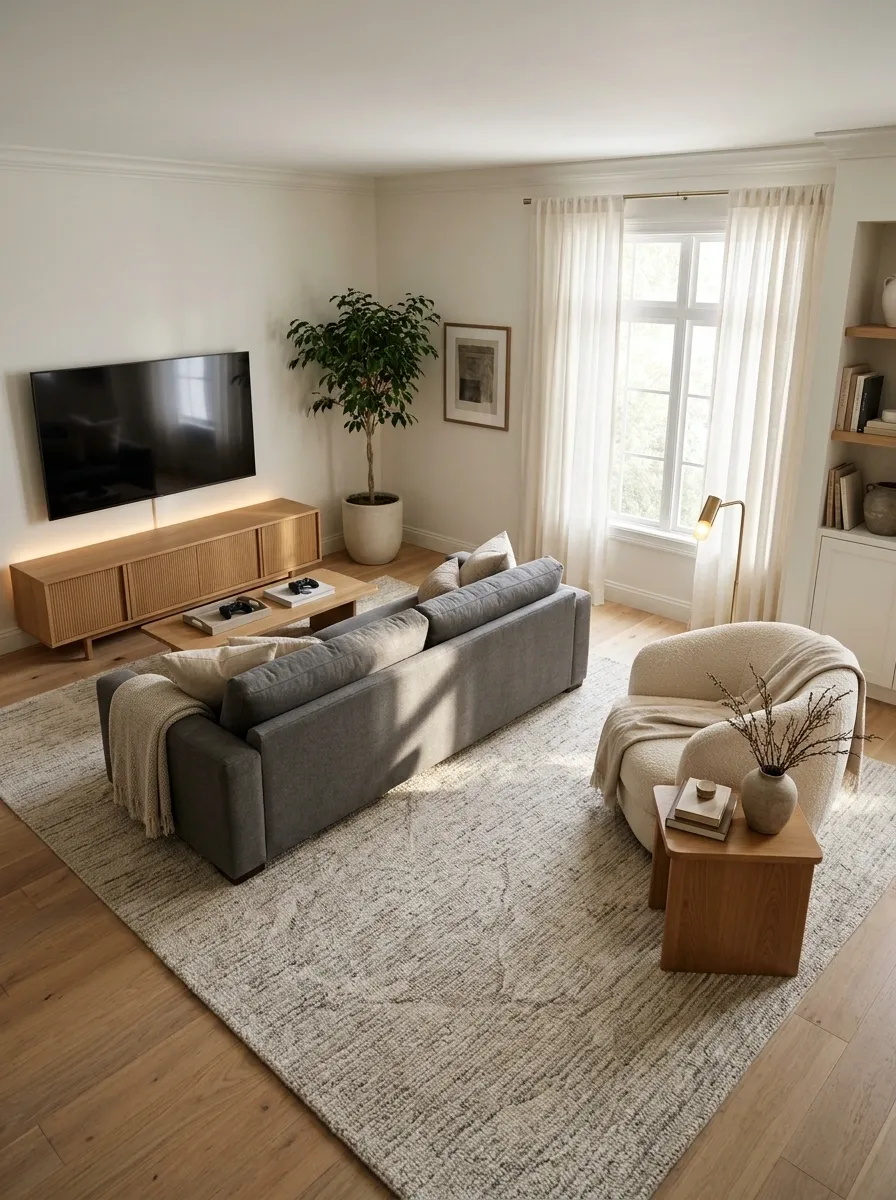
Use the sofa for gaming and place a reading chair at a comfortable angle away from the direct screen view. Give the reader a useful light and landing surface rather than relying on the television area's tables.
Keep both seats connected through a rug or related textile colors. The chair can feel part of the room without facing every visual distraction.
Plan-view activity study. Check actual light, sound, equipment conditions, and circulation with both users present.
Check screen spill, light, sound, and access from both seats during simultaneous use.
This is a modest degree of separation, suited to people comfortable sharing sound and activity. Don't promise a quiet retreat if the actual gaming routine includes voice chat that can be heard throughout the house.
Gaming and Reading at Opposite Ends of a Long Room
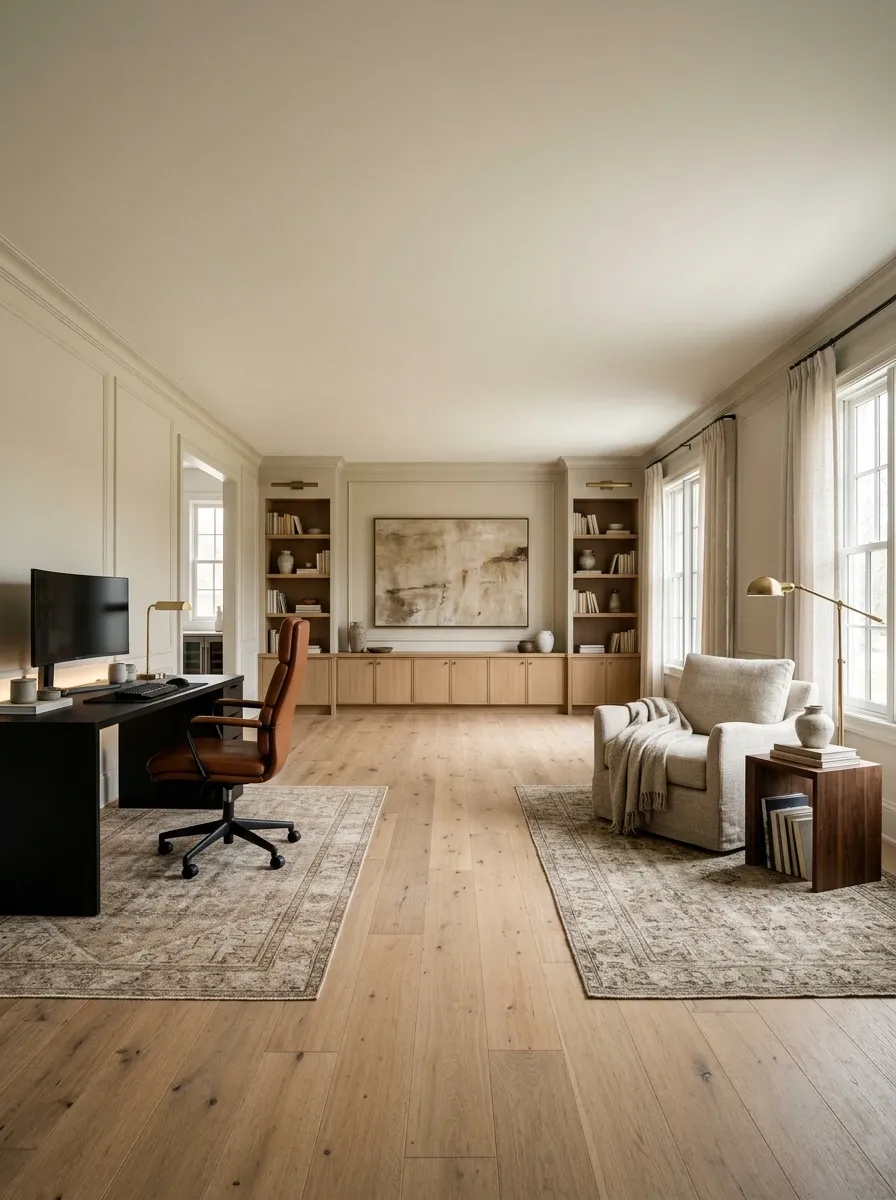
Place the gaming setup at one end and a complete reading group at the other, with a clear route between them. Each zone needs its own useful seat, surface, and light.
Connect the ends through a shared wall color, wood tone, or related rugs rather than making them identical. The different activities can remain visibly distinct.
Plan-view activity study. Check actual light, sound, equipment conditions, and circulation with both users present.
Distance may help with distraction, but assess the actual sound and screen light in use.
A long room offers more separation than a single seating group, but the layout still needs testing. Sound can travel, and a bright screen may remain visible from the reading seat. Choose the arrangement around the real room rather than assuming opposite ends automatically means independent conditions.
A Gaming Desk on One Wall and a Reading Seat Near the Window
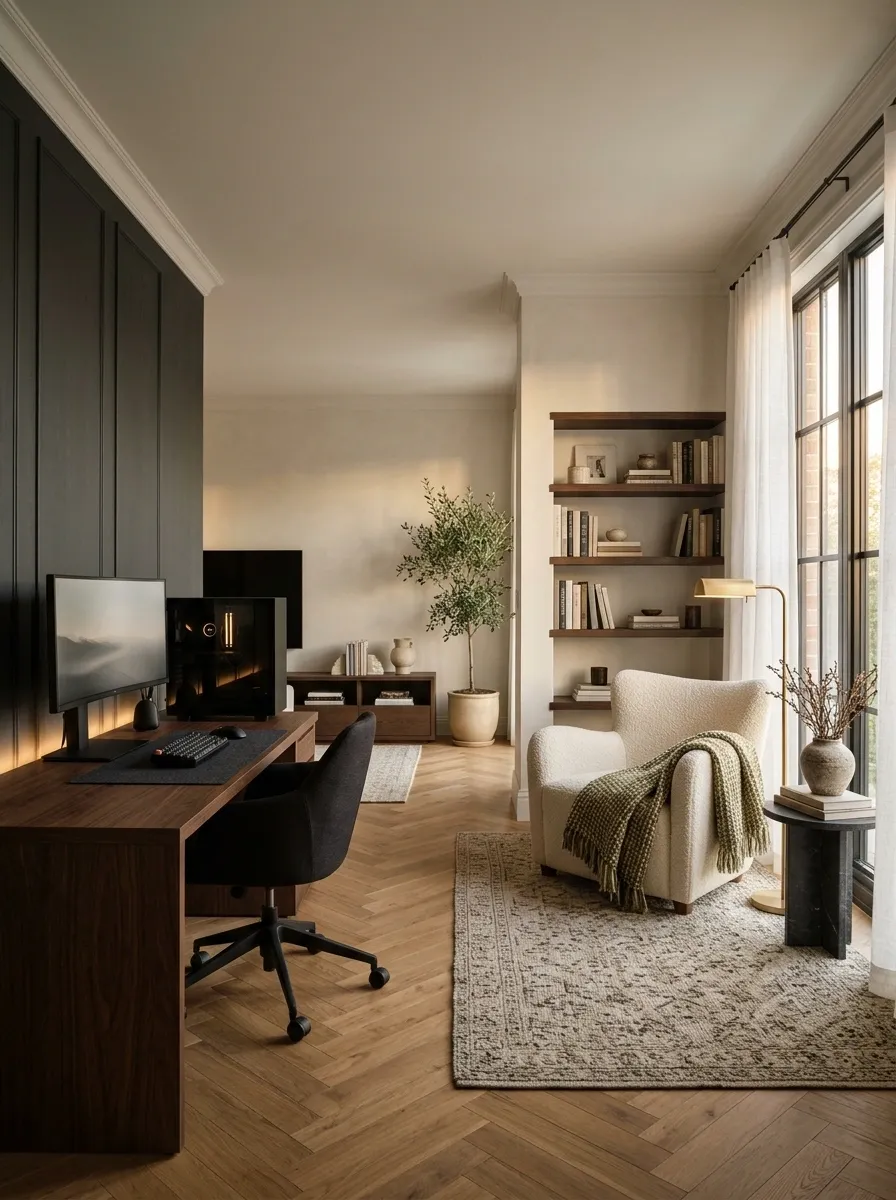
Give a suitable gaming desk its own wall and put a reading chair near a usable window where the light and access conditions suit it. Keep the desk chair's movement separate from the reading corner.
Plan-view activity study. Check actual light, sound, equipment conditions, and circulation with both users present.
Check the arrangement
Check monitor reflections and provide useful evening reading light.
Choose window coverings for the actual glare and privacy needs. A window can be pleasant for reading while creating reflections on a monitor across the room.
Keep both cable routes and book storage practical. The reading chair needs more than daylight if it will be used after dark, while the gaming desk needs stable equipment support and suitable ventilation. Each activity should work at its normal hours rather than only during the brief moment when the room looks most appealing in natural light.
Back-to-Back Activity Groups in a Wide Room
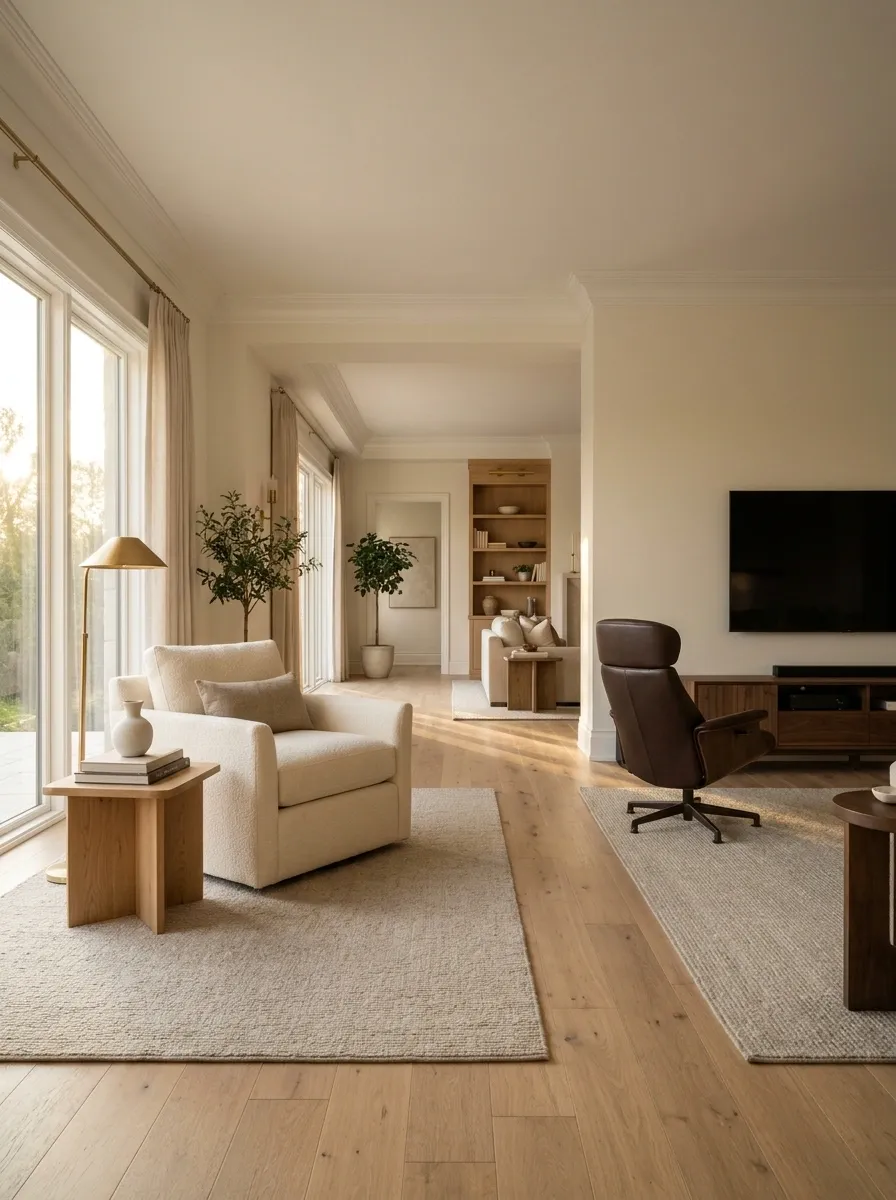
In a sufficiently wide room, orient the gaming and reading seats away from each other, with clear space and circulation between their furniture groups. The arrangement can reduce direct visual distraction without relying on a full partition.
A shared material palette keeps the room coherent. Give the reader a separate surface so books don't compete with controllers on the same crowded table.
Plan-view activity study. Check actual light, sound, equipment conditions, and circulation with both users present.
Use only where the full furniture footprints and walking routes remain comfortable.
This is a layout choice, not acoustic separation. Test the sound conditions with both activities happening. If the people sharing the room need more quiet than the arrangement can provide, agree on equipment or timing changes rather than adding increasingly decorative objects between the chairs.
Create a Visual Boundary Without Crowding the Floor
A Suitable Low Divider Between the Activity Zones
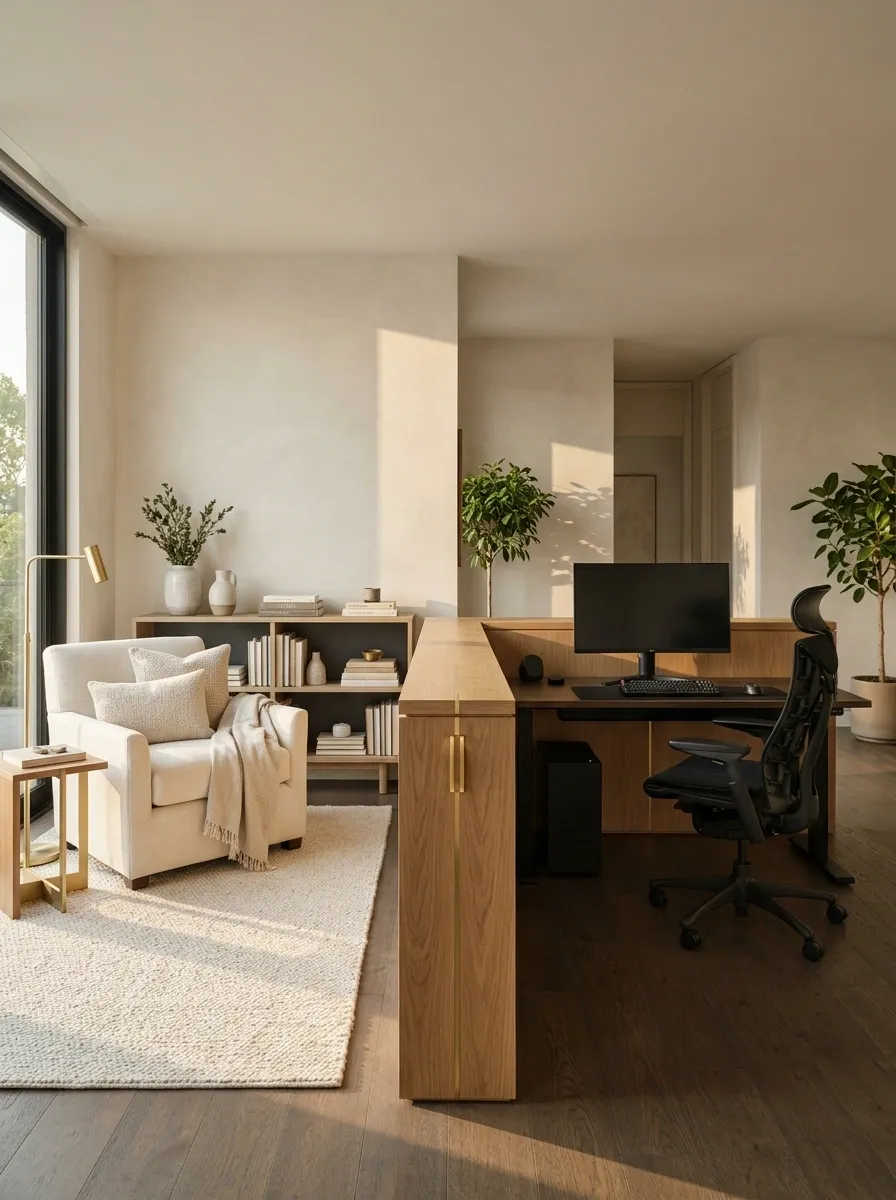
A low divider designed and safely installed for its position can give the two zones a visible boundary while keeping the room open. Keep the height and depth appropriate to the actual room and circulation.
Plan-view activity study. Check actual light, sound, equipment conditions, and circulation with both users present.
Use furniture designed for the position and secure it as required.
The reading side can relate to books while the gaming side keeps its equipment appropriately supported elsewhere. Don't use an ordinary unapproved bookcase as a freestanding barrier simply because its back is less visible.
The divider shouldn't consume the space each activity needs. A little visual distinction can help, but a crowded room with a cabinet wedged down the middle is not automatically two well-planned spaces.
A Curtain Used as a Visual Layer Between Zones
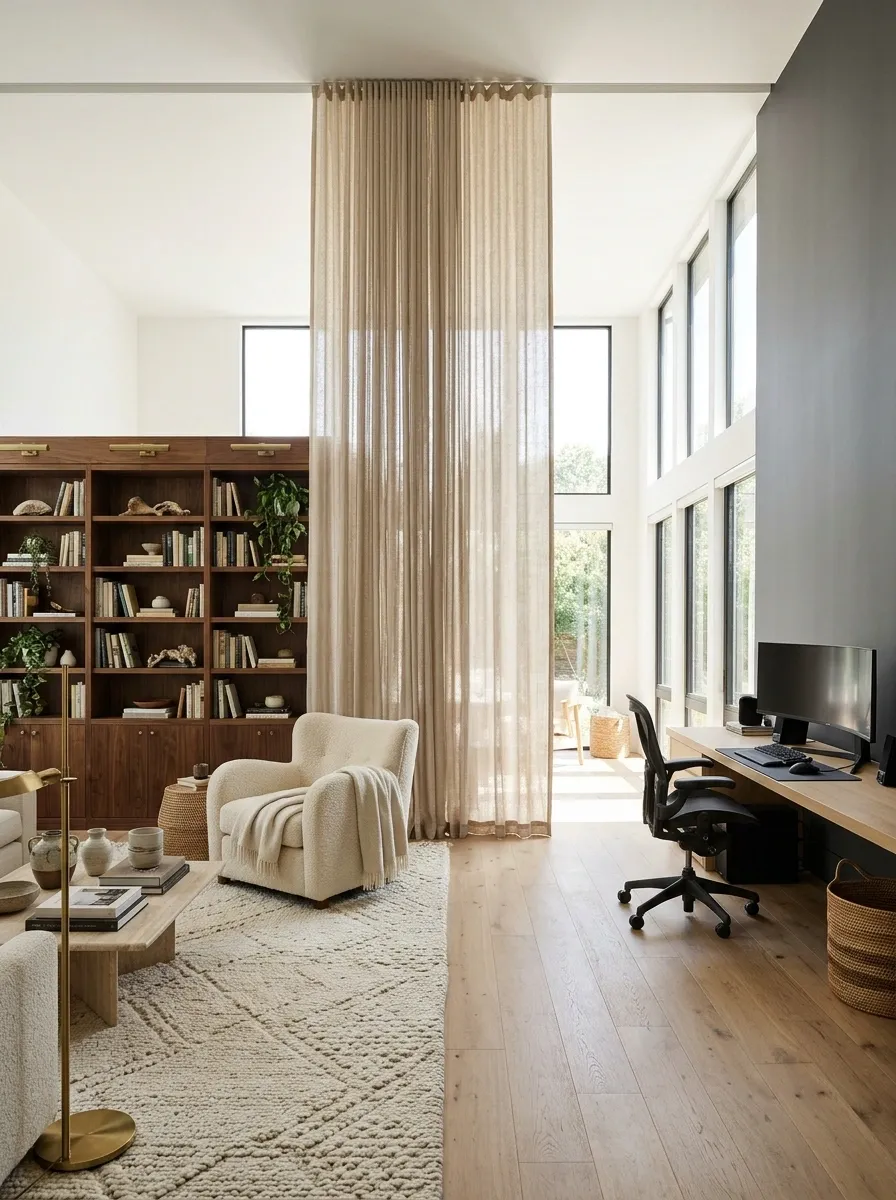
A suitable curtain arrangement can provide adjustable visual separation where the room and installation allow. Keep the fabric clear of electronics, vents, heat sources, chair movement, and walking routes.
Choose a quiet material that relates to the room rather than making the division the most conspicuous feature. Plan where the curtain stacks when open.
Plan-view activity study. Check actual light, sound, equipment conditions, and circulation with both users present.
Check the arrangement
A curtain is visual separation unless a properly specified system provides a particular acoustic performance.
Don't assume an ordinary fabric panel will create silence. It can screen a view and make the room feel more separate, but the sound agreement still needs to work for the people using it.
Related Rugs Defining Different Furniture Groups
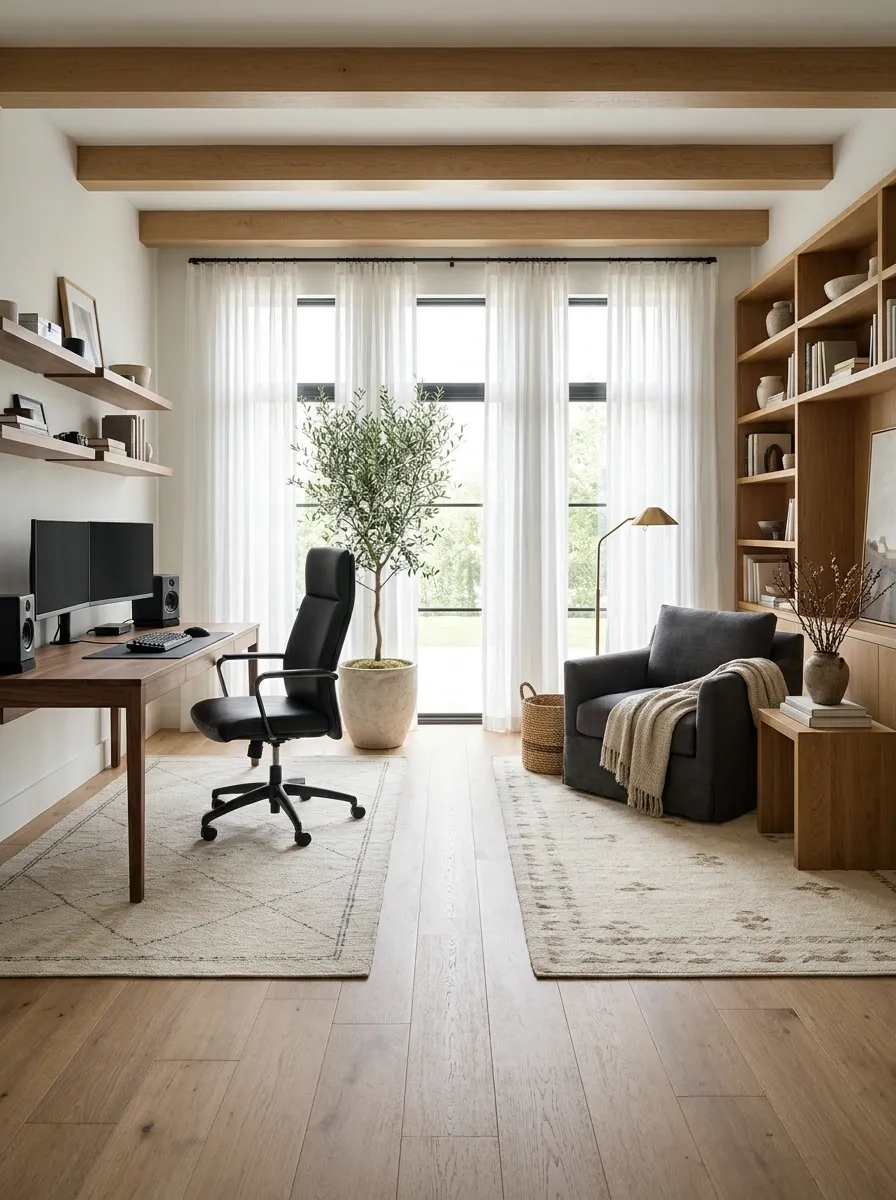
Use separate related rugs where the room has enough space and the floor layout permits. One can define the gaming seats; the other can gather the reading chair and table.
Choose the rugs around real furniture use and clear routes, not only their color connection.
Choose them for the furniture footprints and circulation, with appropriate flat, stable placement. They can share a background color while differing in pattern or texture.
The rugs provide a visual distinction without introducing a physical barrier. Keep the floor between them clear if that is the walking route. A narrow strip crowded with tables and baskets can make the zones feel less usable, even if the rug colors have achieved an excellent diplomatic relationship.
A Deep Gaming Wall and a Lighter Reading Corner
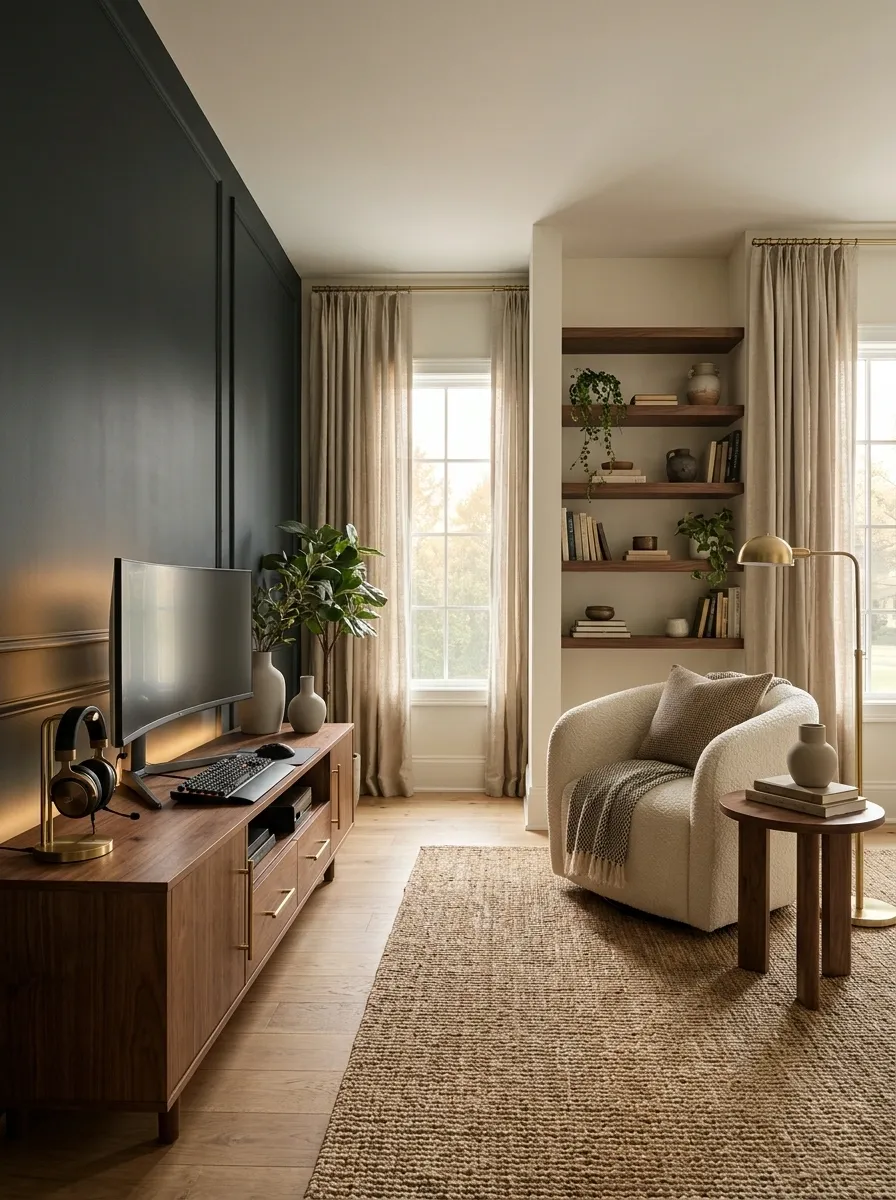
Use a deeper wall around the gaming setup and a lighter treatment near the reading seat, where the room's architecture gives the color a convincing boundary. Connect the areas through one repeated material or accent.
The darker wall can make the screen area feel more defined, while the reading corner remains a softer place within the same room. Test the colors under the light used for both activities.
Plan-view activity study. Check actual light, sound, equipment conditions, and circulation with both users present.
Treat color as visual organization rather than a solution to light spill or sound.
Keep the furniture plan practical before painting. A strong two-zone palette won't make an awkward desk position or an uncomfortable chair more useful, however clearly it identifies which side is meant to be relaxing.
Make Lighting and Storage Work for Both People
A Reading Lamp Outside the Gaming Screen's Main Reflection
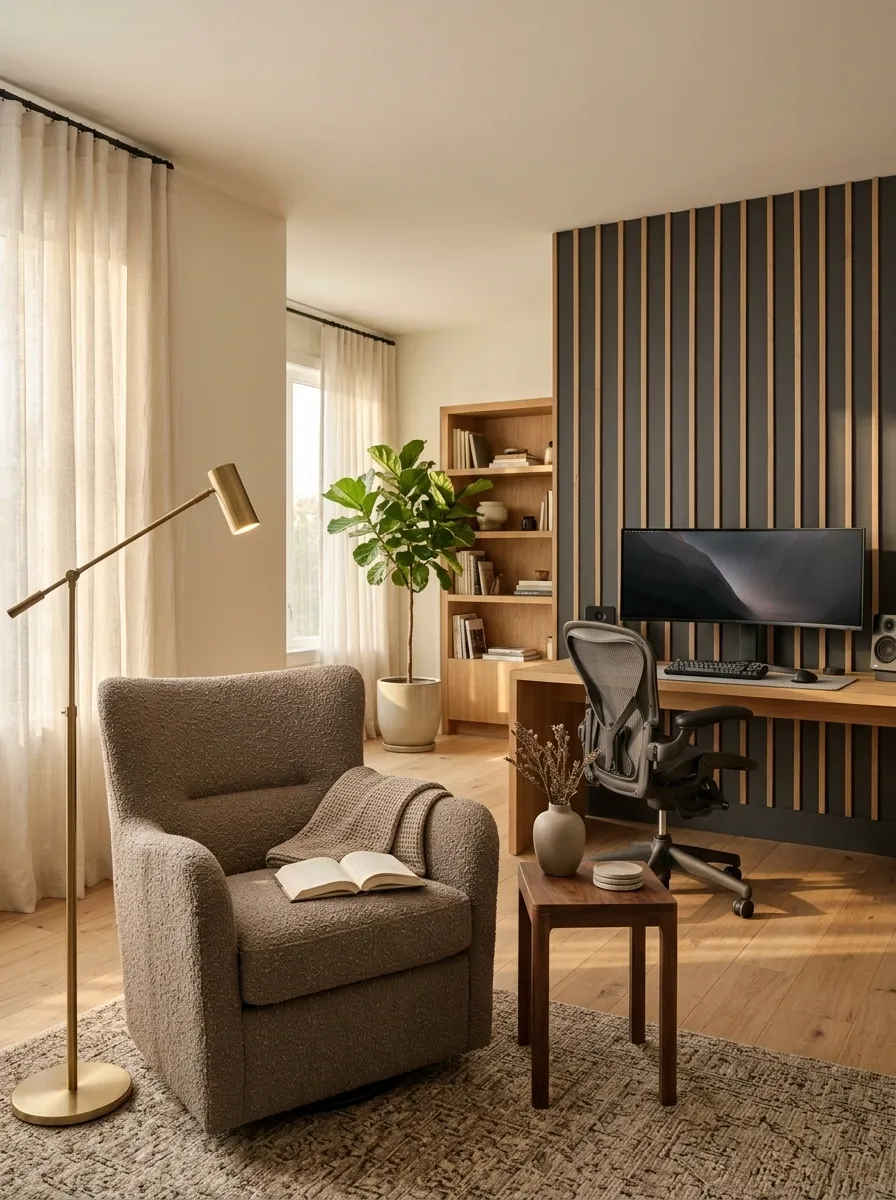
Give the reading seat a suitable lamp positioned for the actual book and chair, then check how it appears on the gaming screen from the user's seat. Adjust the arrangement to reduce unwanted glare without leaving the reader poorly lit.
The lamp doesn't have to match the media area's lighting exactly. Related finishes can connect different useful fixtures.
Plan-view activity study. Check actual light, sound, equipment conditions, and circulation with both users present.
Check the arrangement
Test the real screen reflections and reading position with both activities active.
This is a shared-room negotiation worth doing before buying additional lights. The reader should not be expected to use the screen's glow, and the gamer shouldn't have a bright lamp reflected directly across the action if the layout can avoid it.
A Book Wall Behind the Reader and Ventilated Media Storage Elsewhere
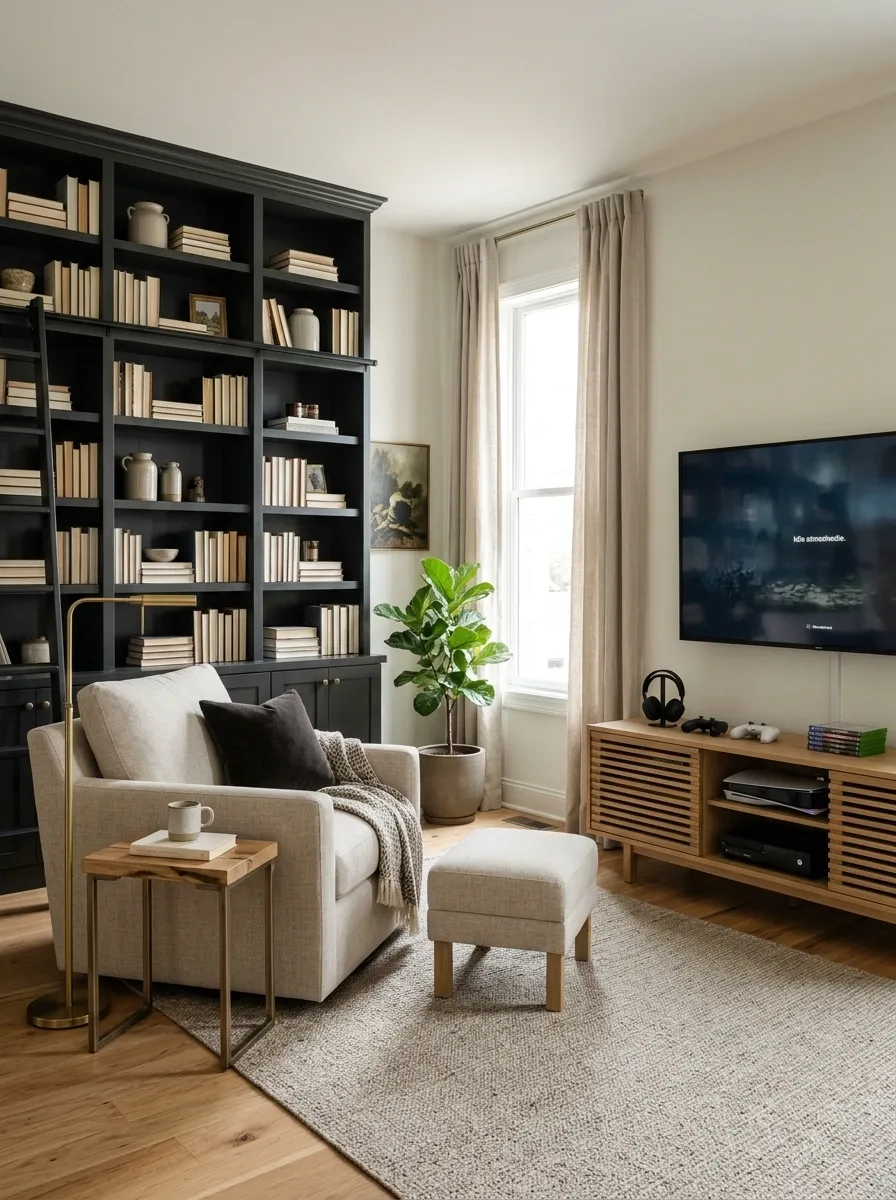
Give books a clear storage wall near the reading seat, while gaming equipment uses appropriate media furniture in its own position. Keep the equipment's required ventilation and cable access unobstructed.
Plan-view activity study. Check actual light, sound, equipment conditions, and circulation with both users present.
Store and operate each device according to its actual requirements.
Use related cabinet finishes or a repeated wood tone to connect the two storage areas. The room can have different contents without looking divided into unrelated furniture collections.
Books shouldn't be packed around vents to make the technology look more domestic. A clear appropriate equipment space is a more convincing design detail than a hidden console that becomes difficult to cool, reach, or maintain.
A Shared Sofa With Separate Lights and Landing Spots
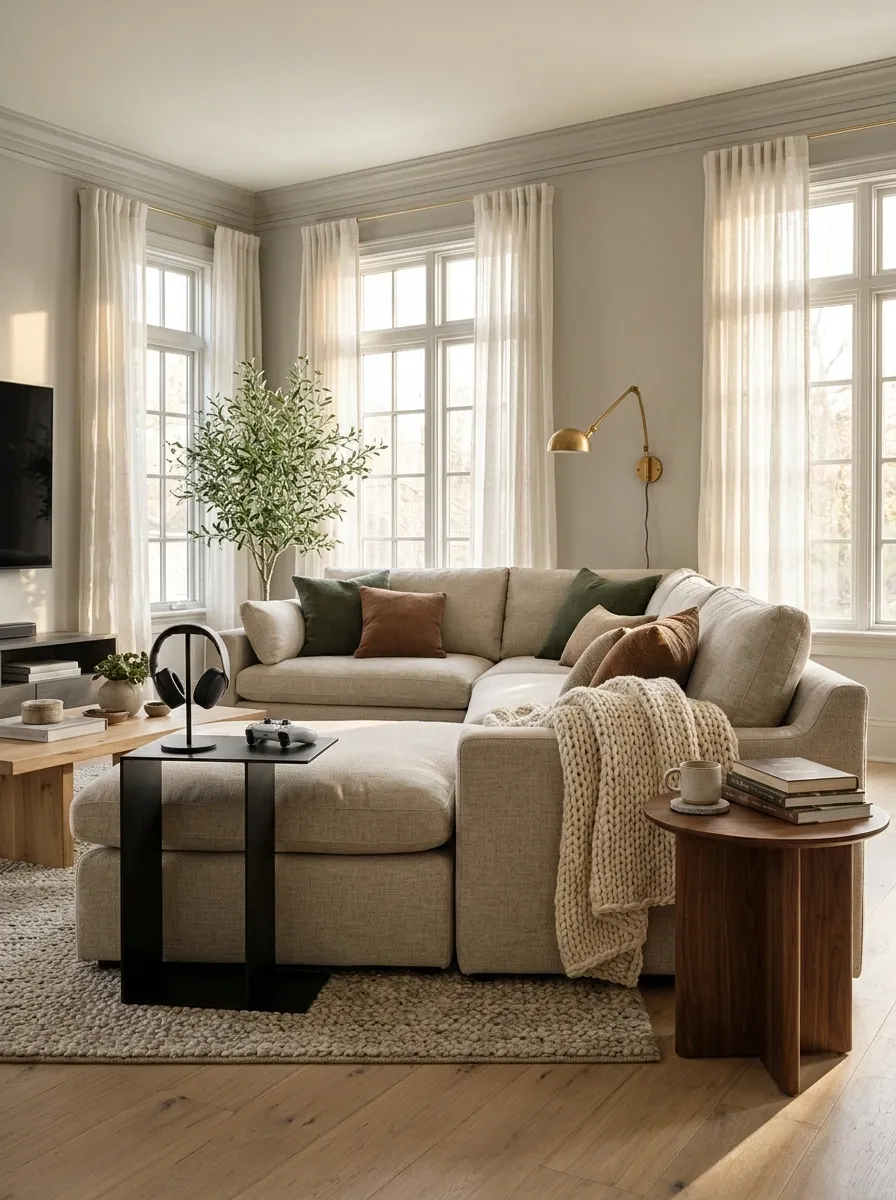
If both people enjoy using the same sofa, give each end a practical surface and suitable light arrangement. The gaming seat needs a comfortable screen view; the reading seat needs useful local illumination and somewhere for the book.
Keep the surfaces clear enough that the two activities don't compete for the same small patch of table. Headphones or other equipment choices may help with the agreed routine, but they don't replace a workable sound arrangement.
Plan-view activity study. Check actual light, sound, equipment conditions, and circulation with both users present.
Test the actual seating, light spill, reflections, and sound during simultaneous use.
This can feel pleasantly companionable when the users' preferences suit it. It isn't a failure if one person prefers a separate chair; the room should support the household rather than enforce a particular image of togetherness.
A Compact Gaming Setup With Clear Inactive Storage
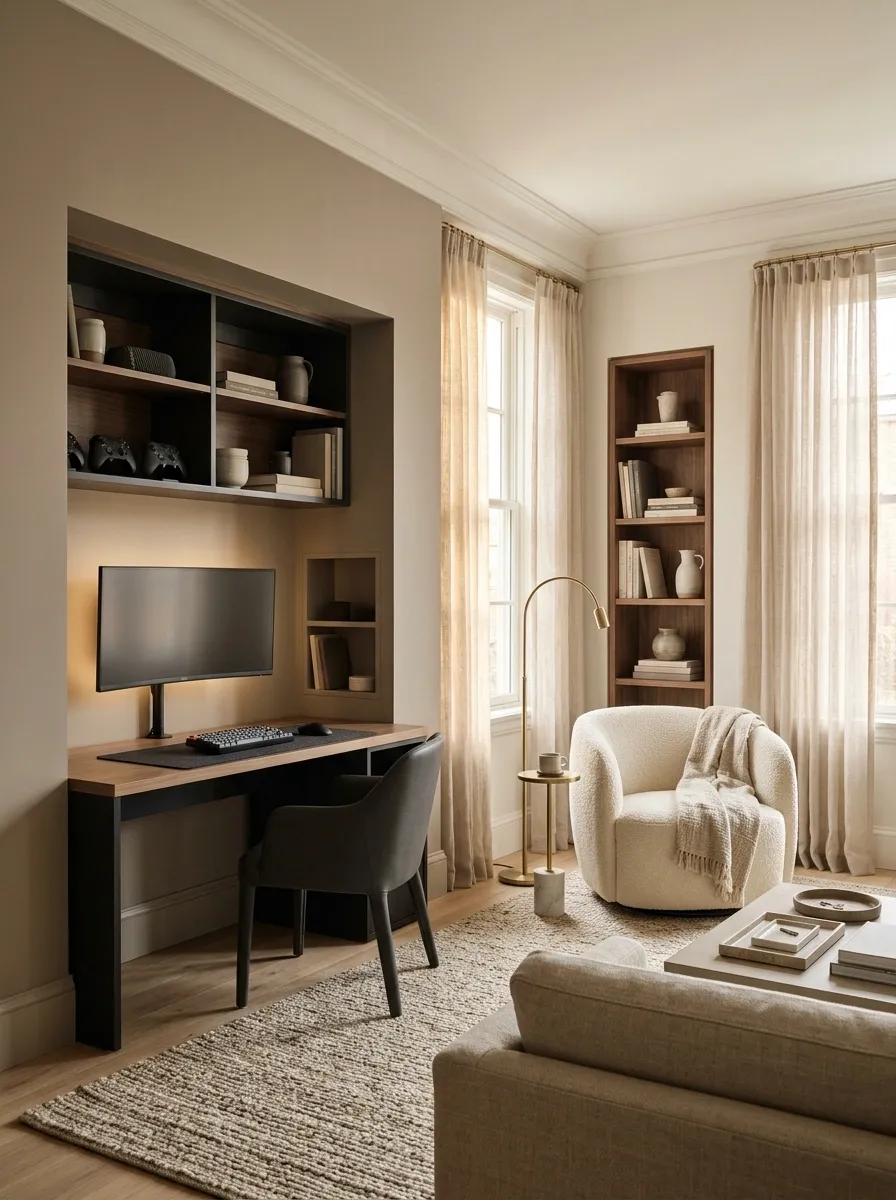
A compact gaming setup can remain visually quiet when not in use if controllers and suitable inactive accessories have an easy storage place. Keep active equipment ventilated and follow charging and storage requirements.
Choose a desk or media piece suited to the actual devices. The reading area can remain the room's clearer daytime composition if that matches how the room is used.
Plan-view activity study. Check actual light, sound, equipment conditions, and circulation with both users present.
Check the arrangement
Use appropriate equipment support and don't operate or charge devices in unsuitable enclosed storage.
The storage should be quick enough that people use it. A system requiring complete disconnection and repacking after every session may look excellent once and then spend its life as an empty decorative box beside the actual equipment.
Use the Wider Room Creatively
A Gaming Desk Behind a Fixed Sofa
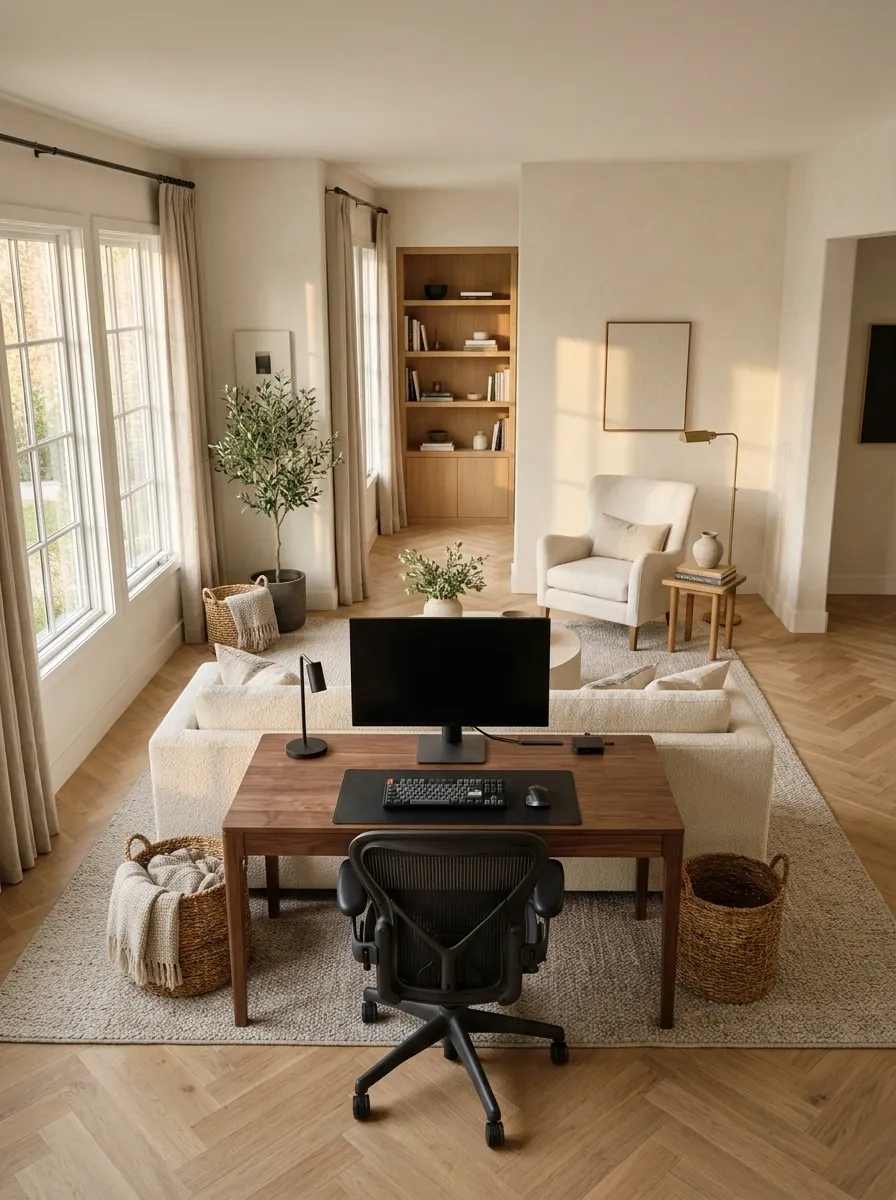
Where the room has enough depth, a suitable gaming desk can sit behind a fixed sofa while a reading chair occupies another part of the room. Keep the desk chair's full movement and access clear.
Plan-view activity study. Check actual light, sound, equipment conditions, and circulation with both users present.
Use only where desk depth, chair movement, equipment requirements, and circulation all fit.
Plan the monitor, equipment, ventilation, and cables as a proper workstation. A narrow console isn't automatically a desk simply because it fits behind the sofa.
This arrangement can make the screen less prominent from the main seating view. It still needs comfortable use. The sofa should not become a decorative barrier that leaves the gamer trapped in a narrow slot with no room to move the chair.
Two Comfortable Chairs With Separate Reading and Gaming Surfaces
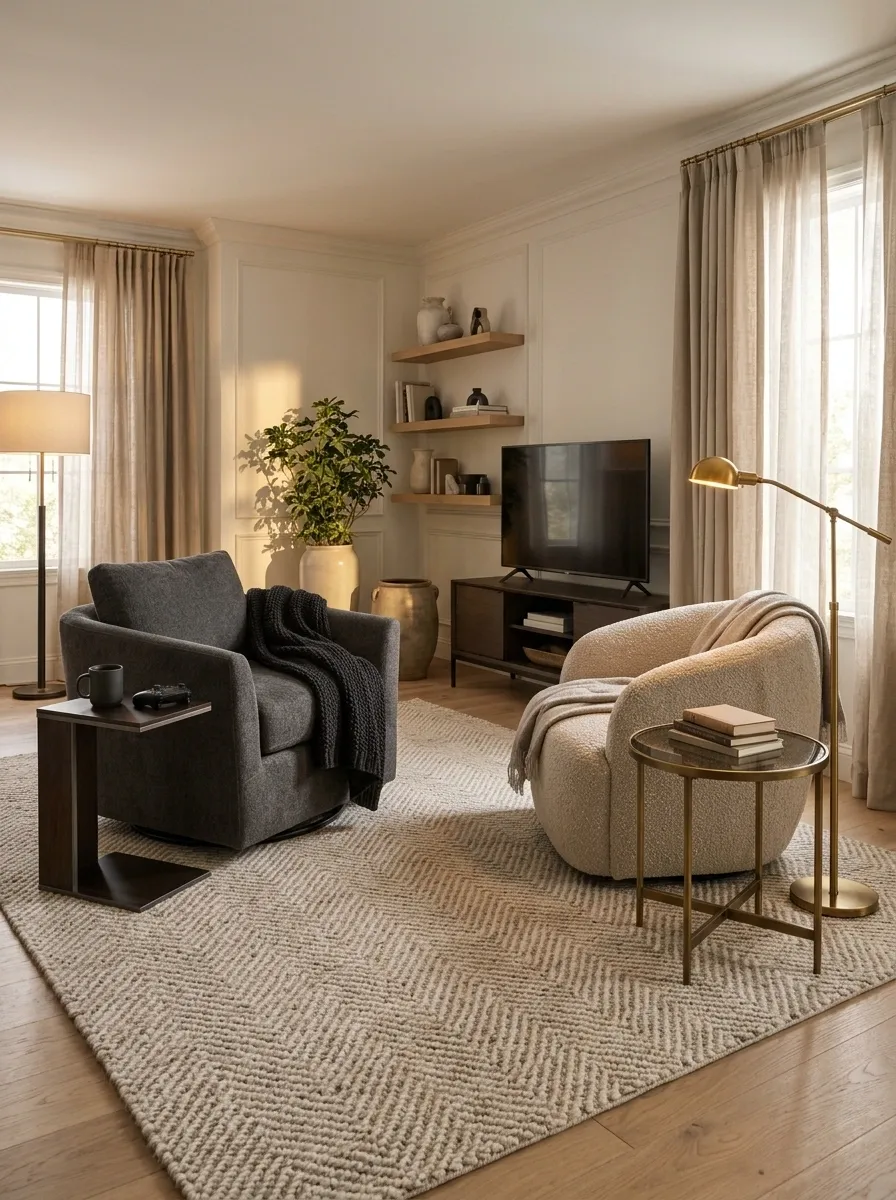
Use two suitable chairs in one conversation-friendly group, giving each person a surface suited to the activity. One might hold a controller and drink; the other a book and reading light.
The chairs can relate through fabric or shape while the small tables differ according to use. Keep the screen view comfortable from the gaming seat without requiring the reader to face it directly.
Plan-view activity study. Check actual light, sound, equipment conditions, and circulation with both users present.
Choose the positions from real use and keep each person's surfaces independently practical.
This is a good option for a compact room where a second full sofa group would be excessive. The shared arrangement can feel social, while the small practical differences acknowledge that the two people are doing different things.
Test the Shared Hour
Use the room together at the time these activities normally overlap. Turn on the relevant lights, use ordinary sound levels, and sit where each person expects to be.
Change what actually causes friction: a reflected lamp, a missing table, a cable across the route, or a screen directly in the reader's view. A well-shared living room doesn't need equal quantities of books and gaming accessories on display. It needs both people to have a comfortable, usable place.