
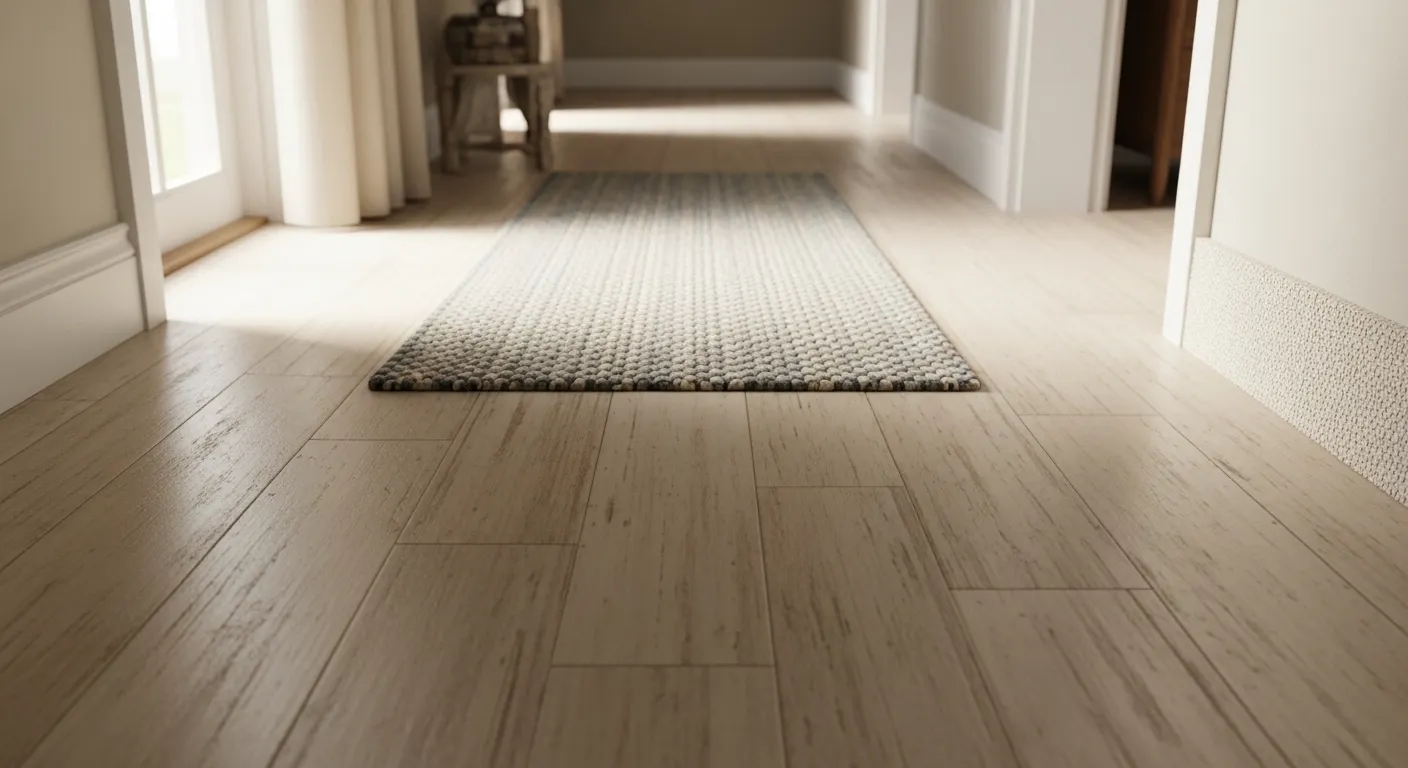
Nobody agonizes over hallway flooring. They agonize over kitchen countertops, bathroom tiles, and living room rugs — surfaces they’ll photograph, admire, and show to guests who actually comment on them. The hallway floor gets whatever was left over from the last renovation, or whatever the builder put down, or whatever was on sale in a shade that wouldn’t show dirt. The result is a floor that apologizes for existing every single time someone walks across it.
Here’s the thing about hallway floors that the rest of your home doesn’t have to deal with: they’re seen from end to end, in their entirety, from the moment you enter the space. A living room floor is mostly covered by furniture. A kitchen floor disappears under an island and appliances. A hallway floor is completely, unambiguously visible for its entire length — which makes it either the most powerful design element in the space or the most damaging one, depending entirely on what you chose to put there.
The floor also does something walls and ceilings don’t: it creates the visual rhythm that carries the eye down the corridor. A patterned floor pulls you forward. A directional floor — herringbone, chevron, plank — creates movement and energy. A flat, uniform floor in a neutral tone stops the eye before it starts. Most hallways have the third kind, which is why most hallways feel shorter, narrower, and less interesting than they actually are.
Why Hallway Flooring Decisions Are Different From Every Other Room
In a bedroom, your floor choice is largely about comfort and warmth underfoot. In a kitchen, it’s about durability and ease of cleaning. In a hallway, the primary function of the floor is visual — it’s setting the tone, creating direction, and providing the foundation on which everything else in the space is read. That’s a completely different brief, and it requires thinking about flooring as a design statement rather than a practical surface.
Pattern works harder in hallways than anywhere else in your home, precisely because there’s so little competing with it. A herringbone floor in a living room is one element among many. A herringbone floor in a hallway is the dominant feature of the entire space. That’s an enormous amount of design leverage available for the cost of a flooring choice, and it’s being wasted in most homes on plain planks or, worse, carpet.
The Material Decisions That Actually Matter
Before choosing a specific floor, a few fundamental decisions determine whether the result will look intentional or accidental.
Direction matters more than material — The direction your flooring runs is the single biggest factor in how a hallway feels spatially. Planks running lengthways make a corridor feel longer. Diagonal or herringbone layouts create movement and visual interest that plain directional floors can’t achieve. Tiles laid on a diagonal make a narrow space feel wider. These are the decisions that change the feel of the space before you’ve even chosen what the floor is made of.
Scale to the space — Flooring that’s too small in scale for a long hallway creates a busy, fragmented effect that makes the space feel smaller. Large format tiles, wide planks, and bold geometric patterns scale properly to corridor length in a way that small tiles and narrow strips never quite manage.
The transition is part of the design — Where your hallway floor meets the floors of adjoining rooms is a design moment that most people treat as a technical necessity rather than an opportunity. A considered transition — a brass threshold strip, a deliberate change in direction, a border tile — makes the hallway feel like a room rather than a gap between rooms.
The Floor Is Not the Place to Use Up Leftover Material
This deserves its own section because it’s the single most common hallway flooring mistake and it produces consistently terrible results. Using offcuts from the kitchen renovation, laying the same carpet that was left over from the upstairs bedrooms, or installing the “practical” version of what you actually wanted because it’s a high-traffic area — all of these decisions produce floors that look like they belong somewhere else, which is because they do.
A hallway floor that was chosen specifically for that hallway, in the right scale, pattern, and material for that particular space, always looks better than a floor that ended up there through default or convenience. The hallway is not a storage solution for flooring decisions you already made elsewhere.
Hallway Flooring Ideas Worth Installing
Dark Carpet and Warm Walls:
What should I do with this random nook in upstairs hallway
by u/greglorious_85 in DesignMyRoom
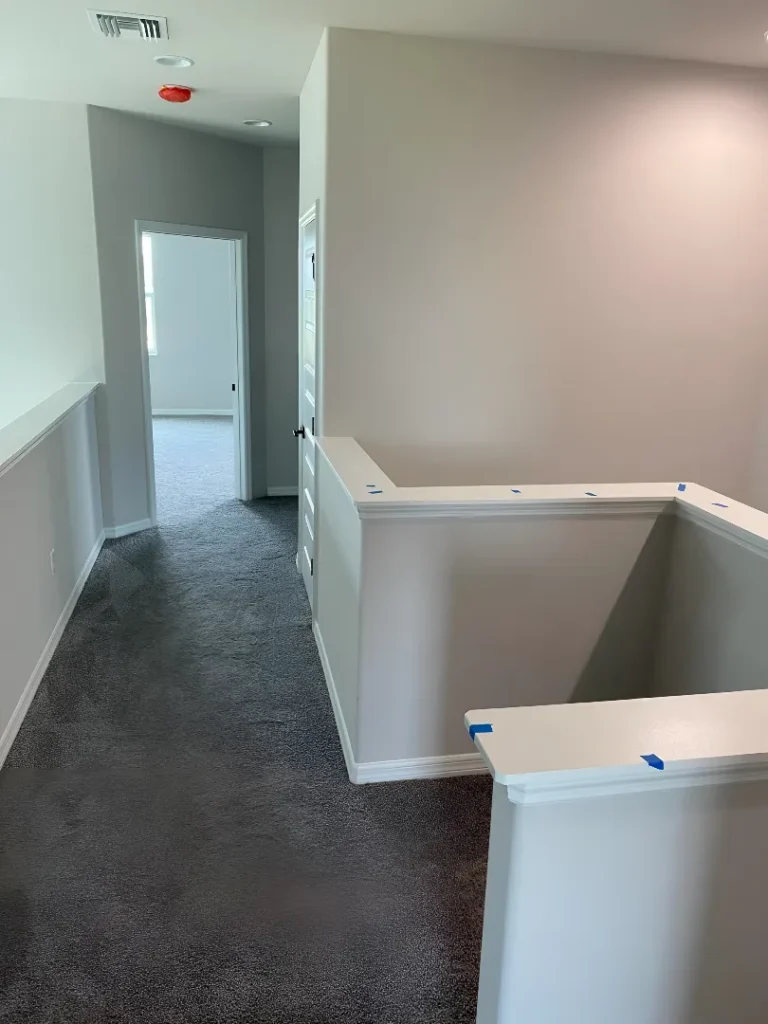
Most flooring articles would tell you carpet in a hallway is a mistake, and most flooring articles are working from a very limited definition of what a hallway can be. This upstairs corridor with its deep charcoal carpet, warm blush-greige walls, and crisp white wainscoting is doing something that hard flooring rarely achieves — it feels genuinely quiet and residential, the kind of hallway that muffles sound between bedrooms and makes an upper floor feel like a retreat rather than a traffic route. The open staircase landing creates a nook that breaks the corridor into something more spatially interesting than a straight run, and the contrast between the dark floor and the warm walls gives the whole thing a cocooning quality that cold stone or pale wood simply wouldn’t. Not every hallway needs to make a graphic statement. Some just need to make you feel like you’re home.
Black and White Diamond Marble:
High-gloss black and white diamond marble tiles on the diagonal, grey walls with elaborate white plaster crown molding, white paneled doors with brass hardware, a crystal flush mount, and a black console with a lamp at the far end — this floor is running the entire room and it knows it. The diagonal layout widens the corridor visually while the high-contrast pattern creates the kind of graphic punch that makes people stop and actually look at a hallway rather than walk through it. The grey walls are deliberately quiet so the floor can be loud, and the white trim provides the clean boundary the pattern needs to read clearly. Every other element in this hallway is serving the floor rather than competing with it, which is the correct attitude to take when you’ve committed to a statement tile.
Charcoal Herringbone Wood:
Dark charcoal herringbone hardwood floors, cool grey-white walls, white arched doorway framing a bedroom beyond, brass wall sconces, a blackened oak sideboard topped with a large matte black vase of olive branches and a globe lamp — the floor here is doing the kind of textural work that makes an otherwise neutral scheme feel deeply considered rather than merely clean. The herringbone pattern in a dark, heavily grained wood creates movement and warmth simultaneously, which is a difficult combination to achieve and one that neither plain dark floors nor plain herringbone in a lighter tone could replicate. The dark floor against the pale walls is a high-contrast choice that makes the architecture of the arched doorway far more legible than it would be on a matching-tone floor. The sideboard styling is minimal enough to let the floor breathe, which is the right call.
Warm Oak Herringbone With Moody Walls:
Light warm oak herringbone flooring, charcoal grey walls, black steel-framed glass partition, a brass-framed circular mirror, a slim bronze and gold console styled with hurricane lanterns and glass vases, a large fiddle-leaf fig in a concrete planter, and a backlit shelving unit in the corner displaying books and sculptural objects — this hallway understood that warm flooring and dark walls create a completely different atmosphere than cool flooring and dark walls, and made its choice accordingly. The honey tones in the oak stop the charcoal from reading as oppressive, while the herringbone pattern gives the floor enough visual interest to hold its own against the heavily styled walls. The brass mirror and gold console keep the warm floor tones echoing upward through the space so the palette feels unified vertically as well as horizontally.
White Gloss Tiles, Black Walls, and One Red Painting:
Highly polished white floor tiles running the full length of the corridor, brilliant white ceiling with a continuous LED cove, black feature wall at the far end, black steel-framed glass door, a black metal console with white ribbed vases on the right wall — and on the left, a large-scale abstract painting in red, black and white that is unmistakably the focal point of the entire space. The white gloss floor is doing something very specific here: it’s acting as a mirror, reflecting the ceiling light and the red painting, which doubles the visual impact of both without requiring any additional elements. A matte floor would absorb all of that reflected light and reduce the painting to a single object on a wall. The gloss turns the floor into a participant in the display, which is a level of thinking about flooring that most people never reach. The lesson is that surface finish is a design decision, not just a practical one.
Reclaimed Pine and Olive Green Wainscoting:
Wide reclaimed pine floorboards with all their knots, grain variation, and warm sepia tones, olive green wainscoting running up the staircase and along the hallway walls, white above the dado rail, a natural sisal stair runner, a geometric diamond pendant light casting warm light over the staircase, and an extraordinary gallery wall of bold, colorful graphic prints in black frames covering the staircase wall from floor to ceiling. The floor is the anchor of everything — its warmth and character give the olive green something to sit with rather than fight, and its imperfections make the whole space feel genuinely inhabited rather than recently installed. A smooth, perfect floor under that gallery wall would look like a showroom. The reclaimed pine makes it look like a home that has been curated over time by someone with genuine taste and no interest in everything matching.
Go Grey with Wide-Plank Oak (Yes, You Need Texture)
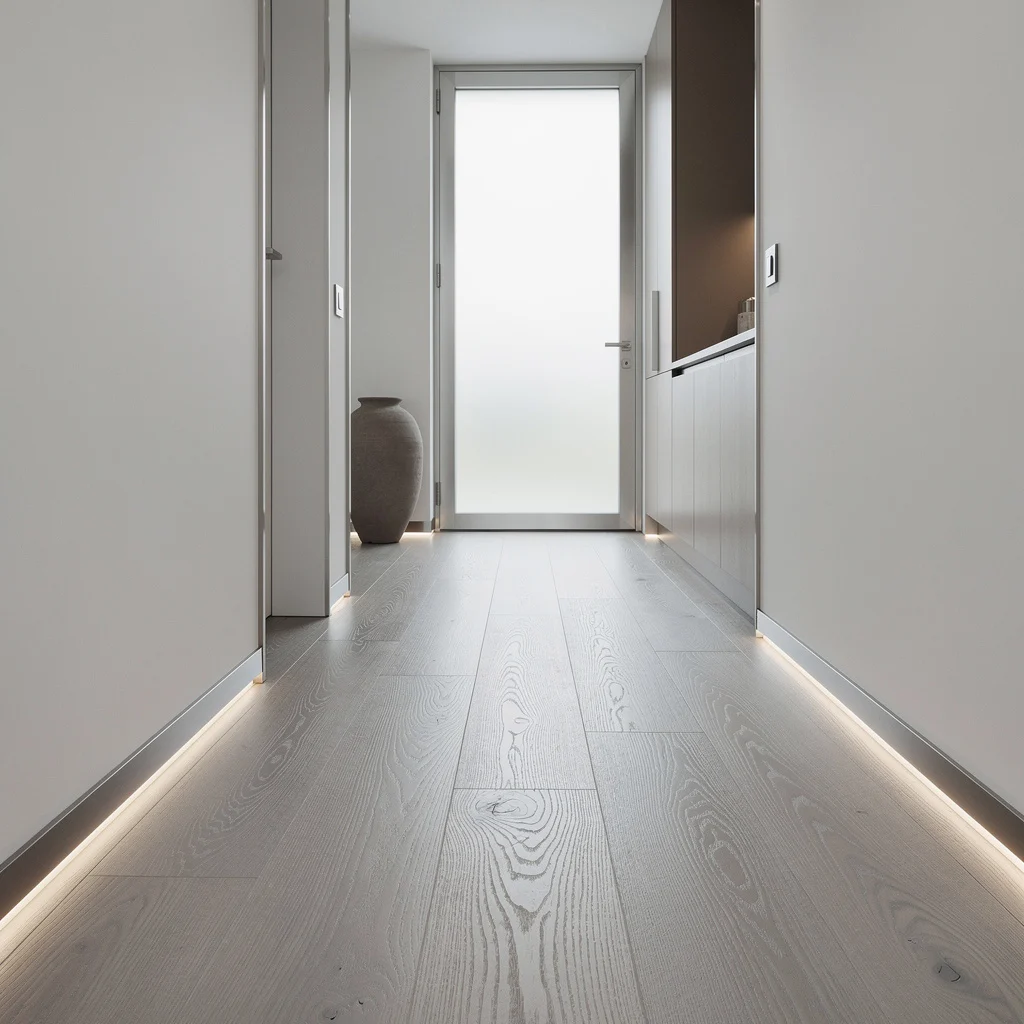
Want grown-up luxury without screaming try-hard? Choose wide-plank brushed oak floors in a soft grey to make your hallway feel bigger than your student loan debt. Run recessed LED lights along the baseboards for that ‘I know what ambient lighting means’ flex, and toss up pure matte white walls with chrome trim for a modern punch. Build in minimalist cabinetry, but keep it muted, unless you want to blind your guests. And no, one big vase counts as decor—don’t overdo it. Always finish your hallway with frosted glass doors to let light in but keep nosey neighbors out.
Marble + Onyx: Bring Drama or Go Home
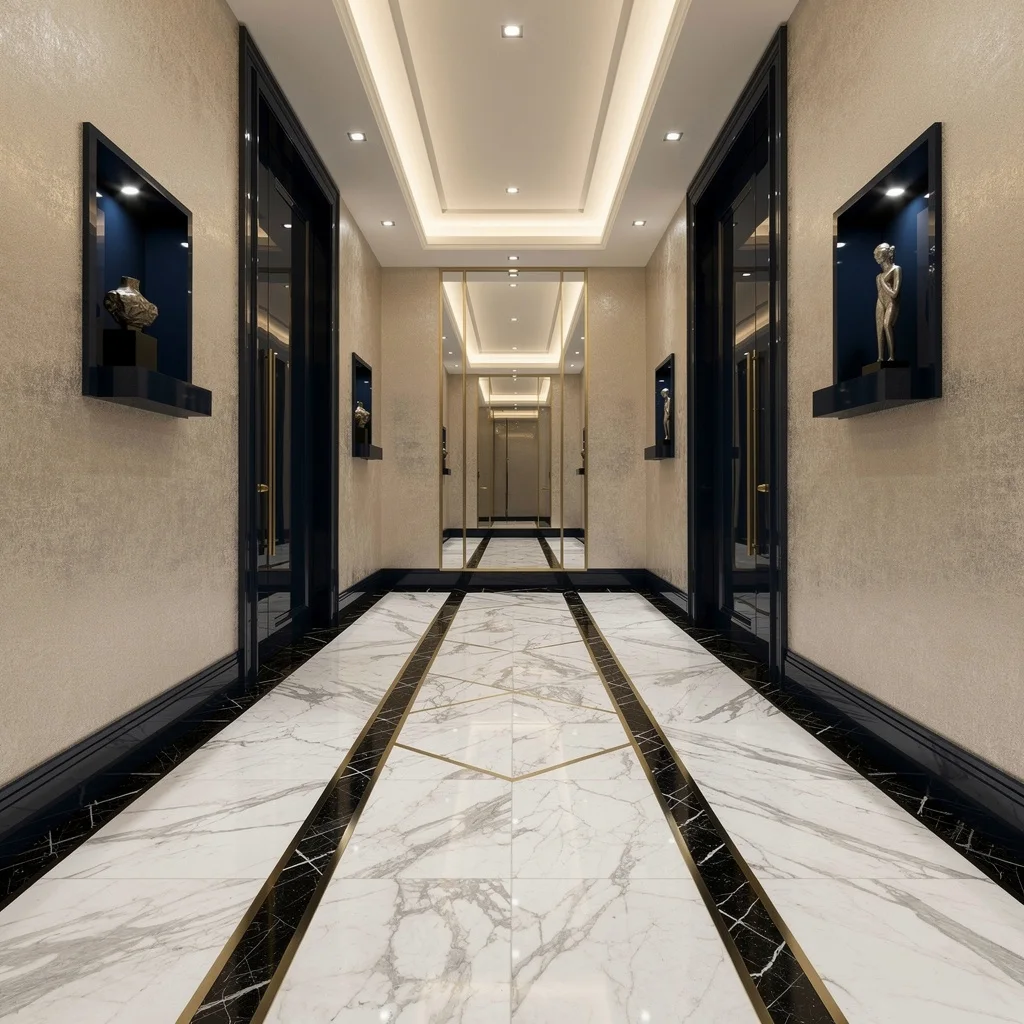
If you crave drama (and who doesn’t?), slap your hallway with split-level Calacatta marble and sneaky geometric onyx inlays. Break up those fancy tiles with skinny brass inserts—they catch the light and instantly say ‘I have expensive taste.’ Keep walls textured and glossy navy trim for contrast, and slot in floating niches for tiny sculptures, not that dusty souvenir stuff. For bonus points, use mirrored panels at the far end to cheat a bigger space. Pro tip: Use reflective surfaces to amplify your floor game—don’t be shy with the shine.
Terrazzo That Pops (Because Boring Is So Last Decade)
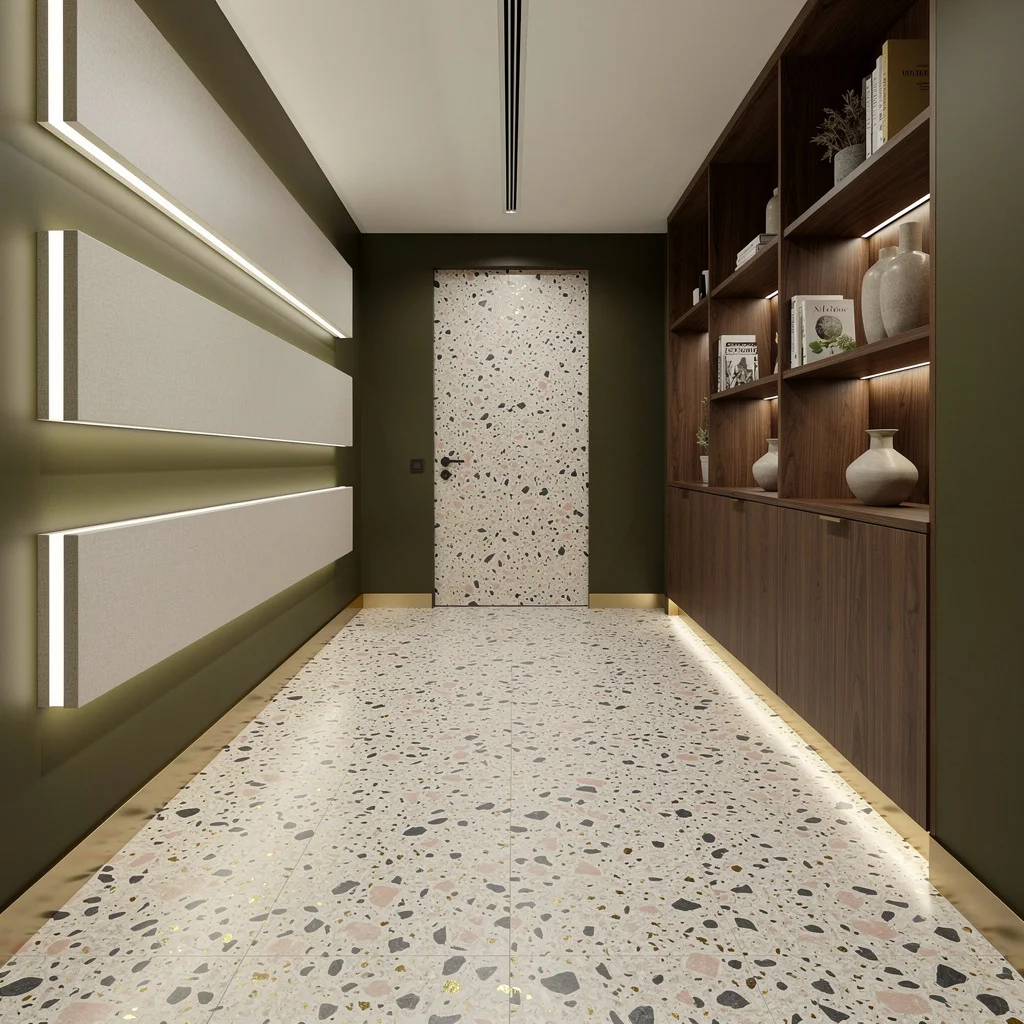
Ready to ditch basic tiles and go bold? Mix your own terrazzo—yes, with gold flecks if you’re feeling extra—then lay it by hand for instant artful vibes. Match the mood with deep olive walls and matte brass skirting, and finish one side with walnut shelving (books and vases only, please). Illuminate the floor with indirect LED strips under floating panels. Always run your ceiling in crisp white to avoid the cave effect, and don’t forget a matching terrazzo pivot door at the end. Pro move: Keep your lighting low and glowy for max terrazzo flex.
Herringbone Wood: Scandinavian Chic, Zero Fuss
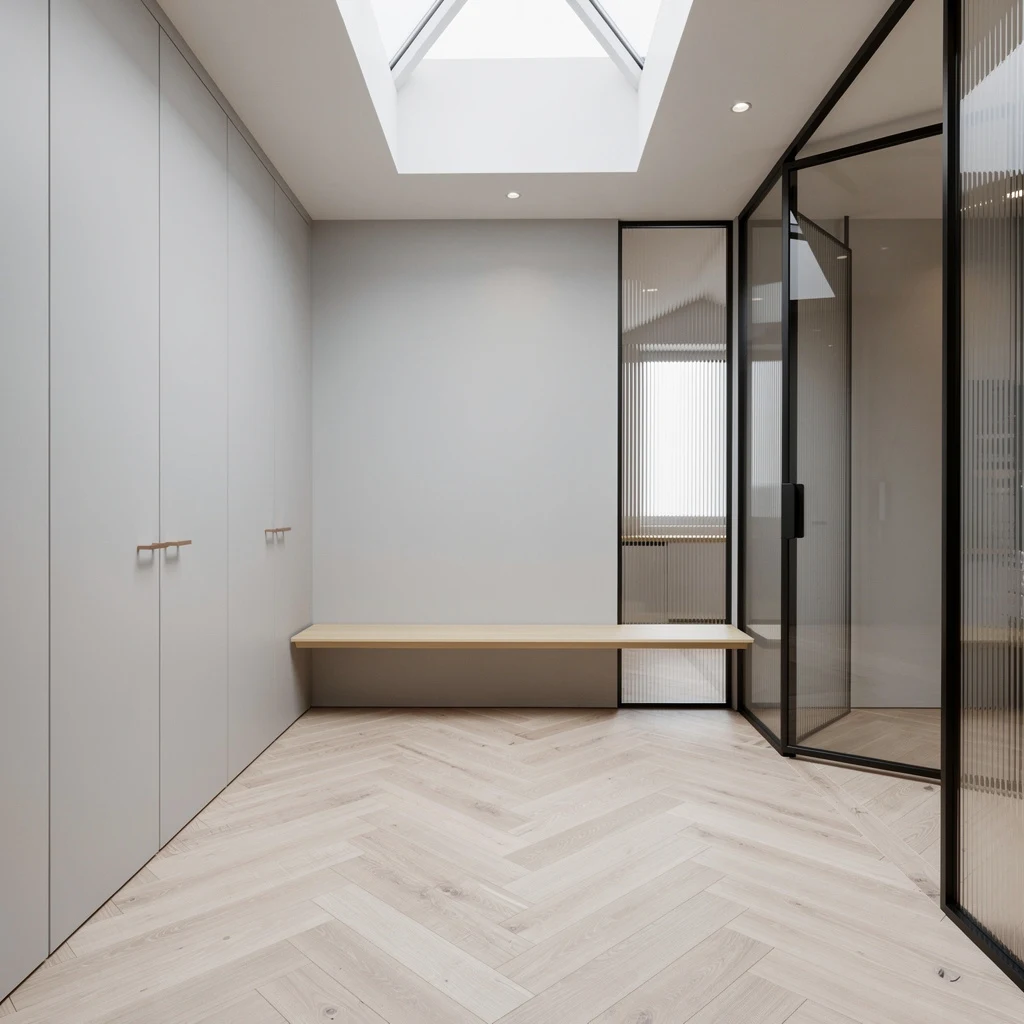
Want to fake serenity and style? Go herringbone ash wood—whitewash it for soft, nobody’s-home clarity. Use skylights if you can, or go with flushed light for natural drama. Set dove-grey walls, minimal handles, and stick a skinny blonde birch bench nearby for a seat that says ‘I live in a coffee commercial.’ Frame your partition with matte black steel, keep ribbed glass panels vertical for bonus texture, and step back—decorating over this floor is a crime. The pro hack? Let your floor take center stage; herringbone patterns are the new flex, so keep décor minimal or risk overkill.
High-Gloss Porcelain: Make It Moody Green
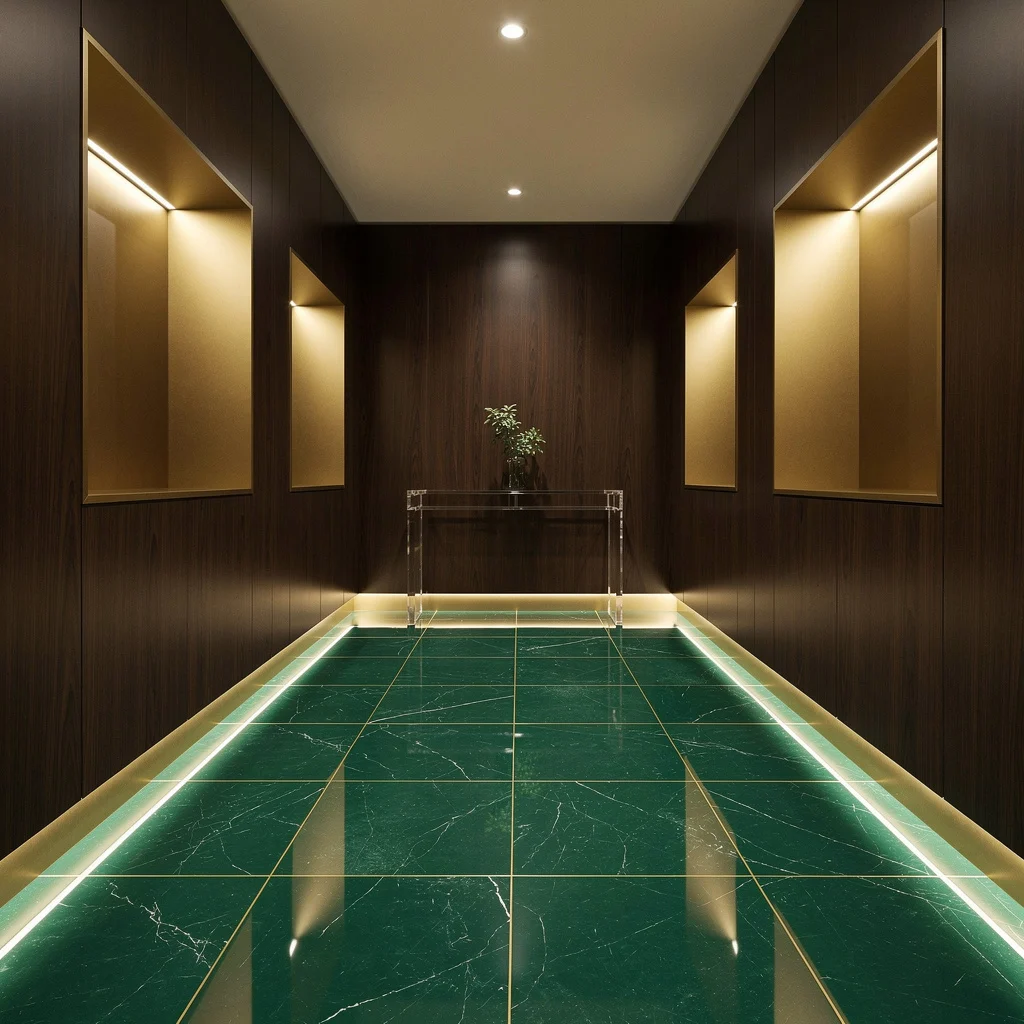
Craving big impact? Grab deep emerald porcelain tiles and arrange them with gold grout—yes, it’s extra, but you deserve it. Illuminate baseboards to throw the glow upward and give those tiles the attention they deserve. Wrap your walls in dark walnut veneer, build in display alcoves with gold finishes (your random knick-knacks don’t qualify), and spotlight the ceiling in ivory for contrast. Put a clear acrylic console center-stage and watch the drama double. Always balance bling with restraint—too much gloss is a crime against taste, so keep décor tight and lighting strategic.
Encaustic Tiles: Pattern Power Without the Panic
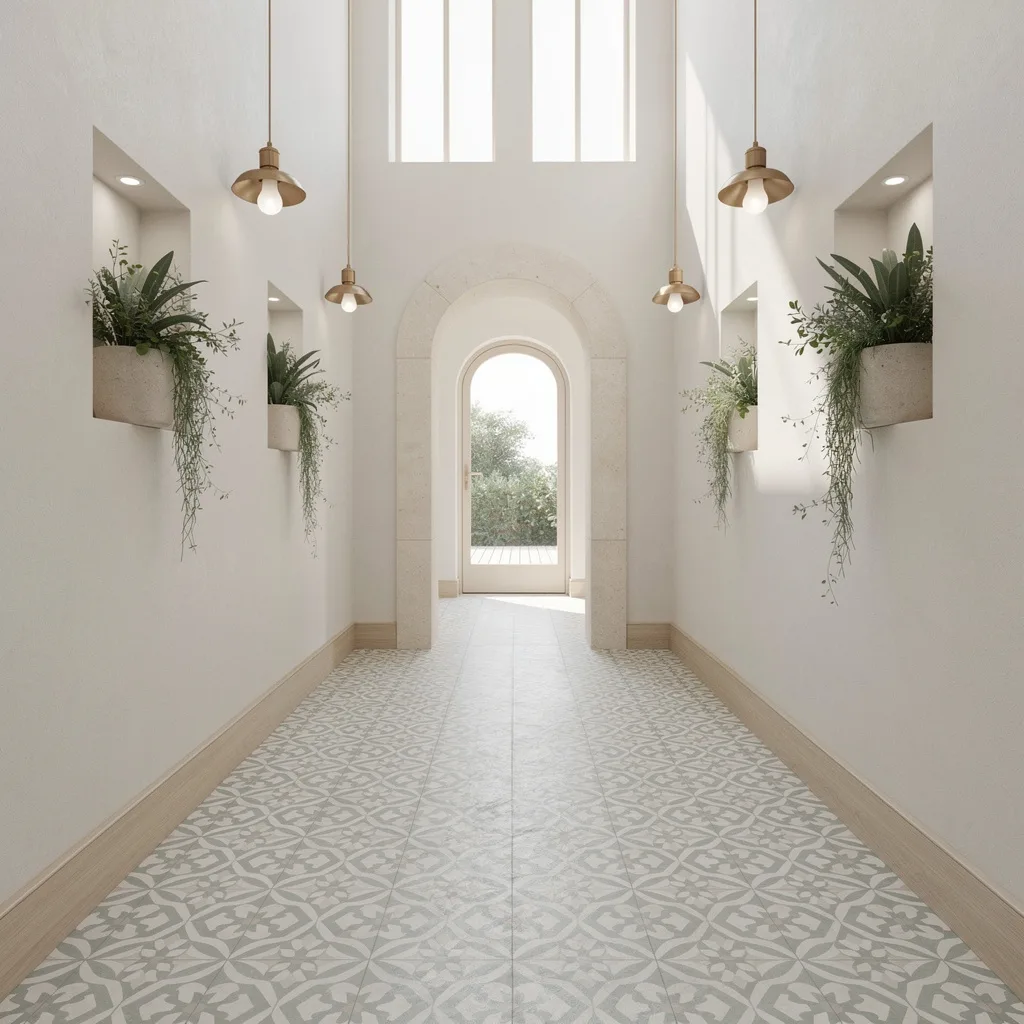
Ready to break up the monotony? Lay down encaustic cement tiles in geometric patterns and soothing shades. Let natural light handle half the drama—those transom windows aren’t just for show. Go ultra-matte on the walls and hit skirting with pale oak. Hang bronze pendant lights to echo the floor pattern and build minimalist niches for your plants (faux or not, just keep them alive-looking). Finish with an arched limestone doorway for artisan vibes. Always match your tile pattern to your lighting rhythm—consistency is key, unless you want a headache corridor.
Chevron Stone: Moody Basalt with Vertical Wood
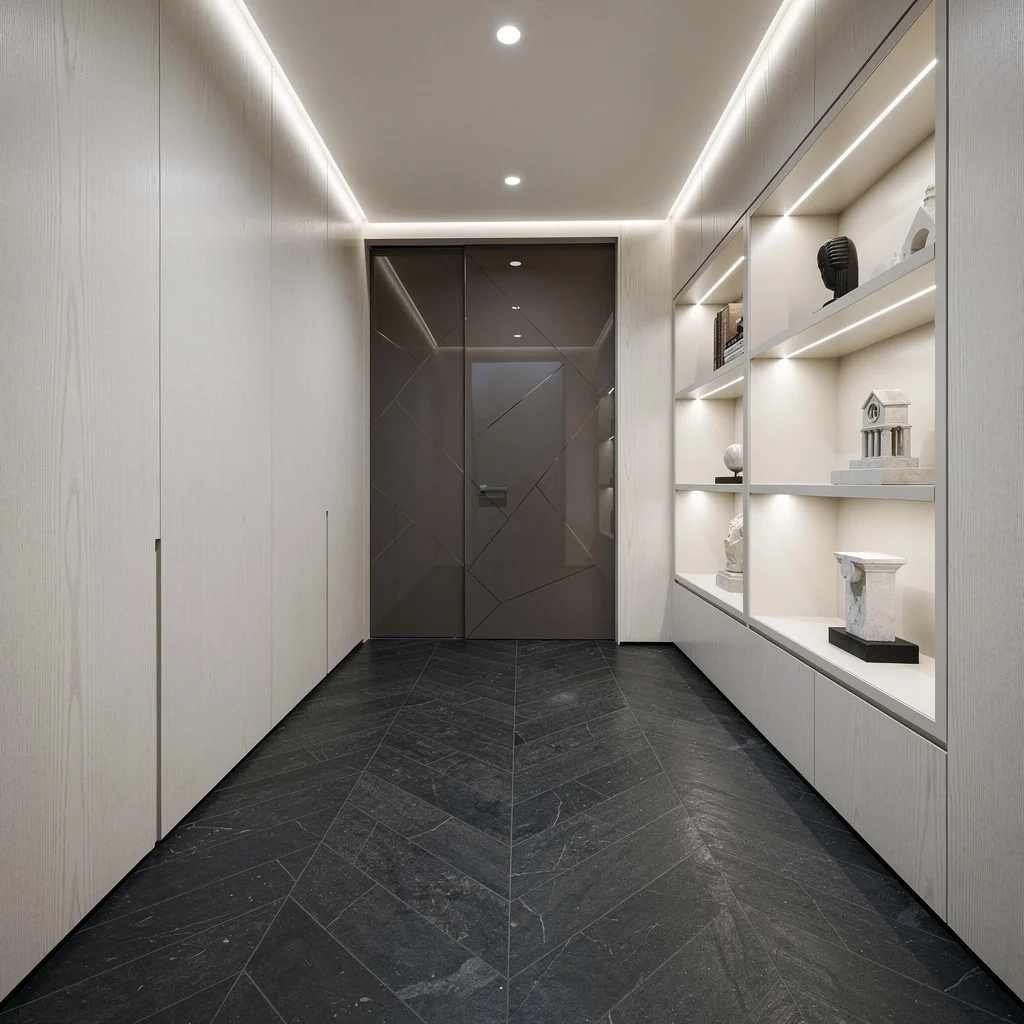
If you want monument-level dignity, work chevron basalt stone tiles in deep charcoal—extra points for a matte finish. Set white oak paneling vertically on the walls, and run shadow gap LED lighting overhead for gentle drama. Put discreet off-white shelving on one side and drop in architectural objects, not random clutter. End with smoked glass sliding doors to mirror the chevron geometry. Pro move: Repeat the geometric floor rhythm in your storage and lighting lines for harmony. Don’t break the pattern—let the floor boss the space.
Poured Concrete: Reality Check for Minimalists
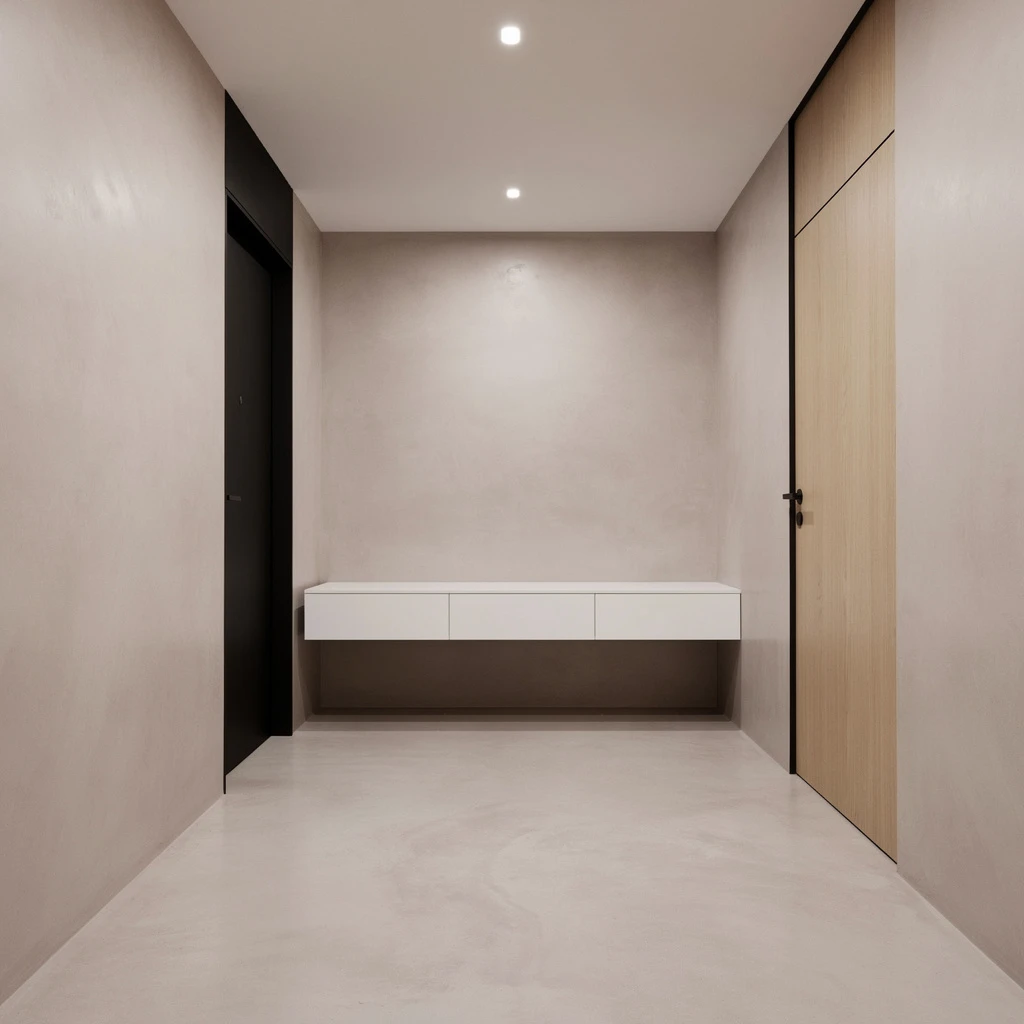
Minimalists, get your kicks with ultra-smooth poured concrete floors—hone them to a soft matte and tint pale taupe for warmth (no cold hospital vibes here). Match your walls with microcement, and punctuate with matte black door casings for contrast. Throw on slim recessed lights for diffused glow and install a suspended floating console in white—keep it mid-wall and clutter-free. Finish with an oak flush door for a touch of actual coziness. Styling tip: Concrete floors look best when you keep the rest of the room seamless—messy lines are a crime; stick to straight, clean, continuous everything.
Parquet Zigzag: Maple and Walnut, Because Extra Is Everything
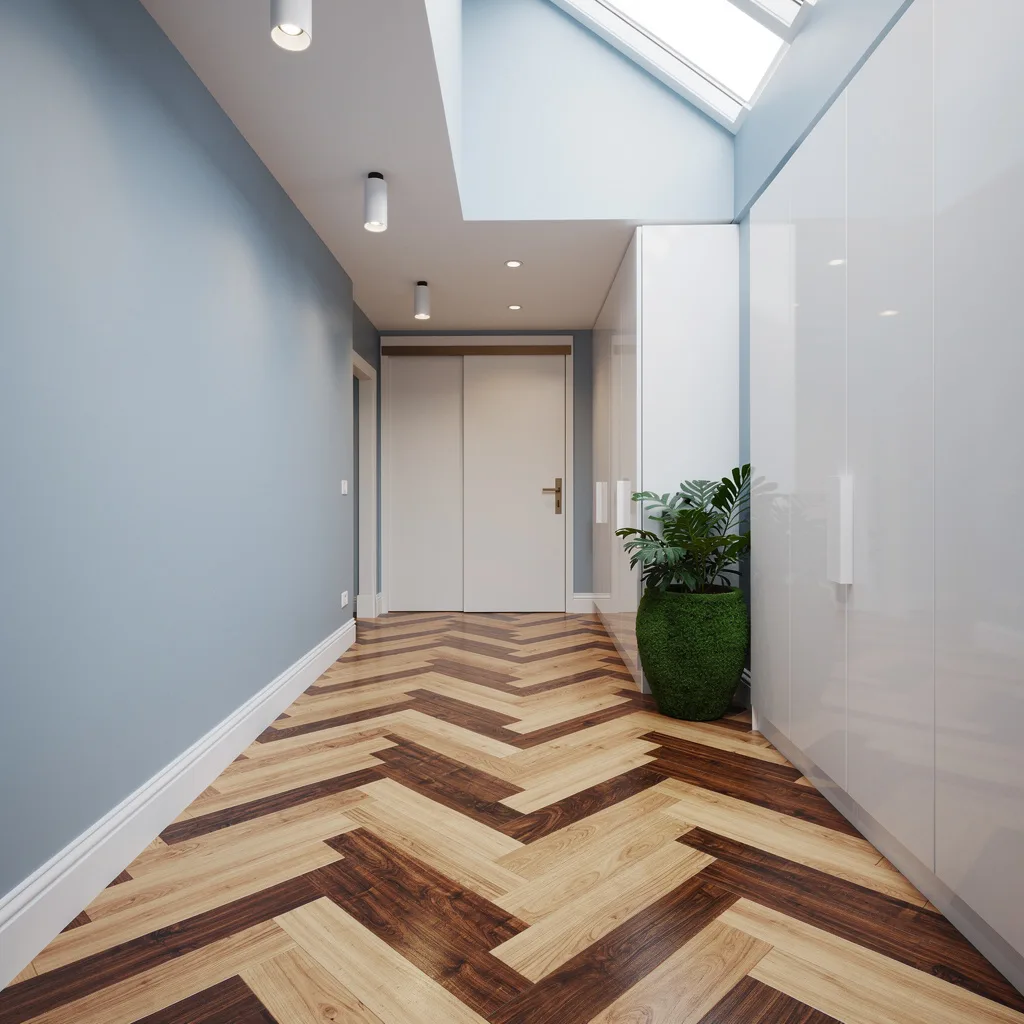
Obsessed with bold moves? Lay parquet floors in zigzag stripes of light maple and chocolate walnut for maximum contrast. Flood your hallway with natural light from clerestory windows, and finish the walls in powder blue with crisp white skirting—classic, but not stuffy. Choose cylindrical spotlights for layered illumination, then install glossy white storage units on one side. Toss in a moss-green planter for some plant drama. Use matte bronze hardware on a sliding door for that final designer statement. Remember: Zigzag patterns need clean walls and simple storage, or you’ll risk visual chaos—let the floor do most of the talking.
Diagonal Travertine: Classic, But With a Twist
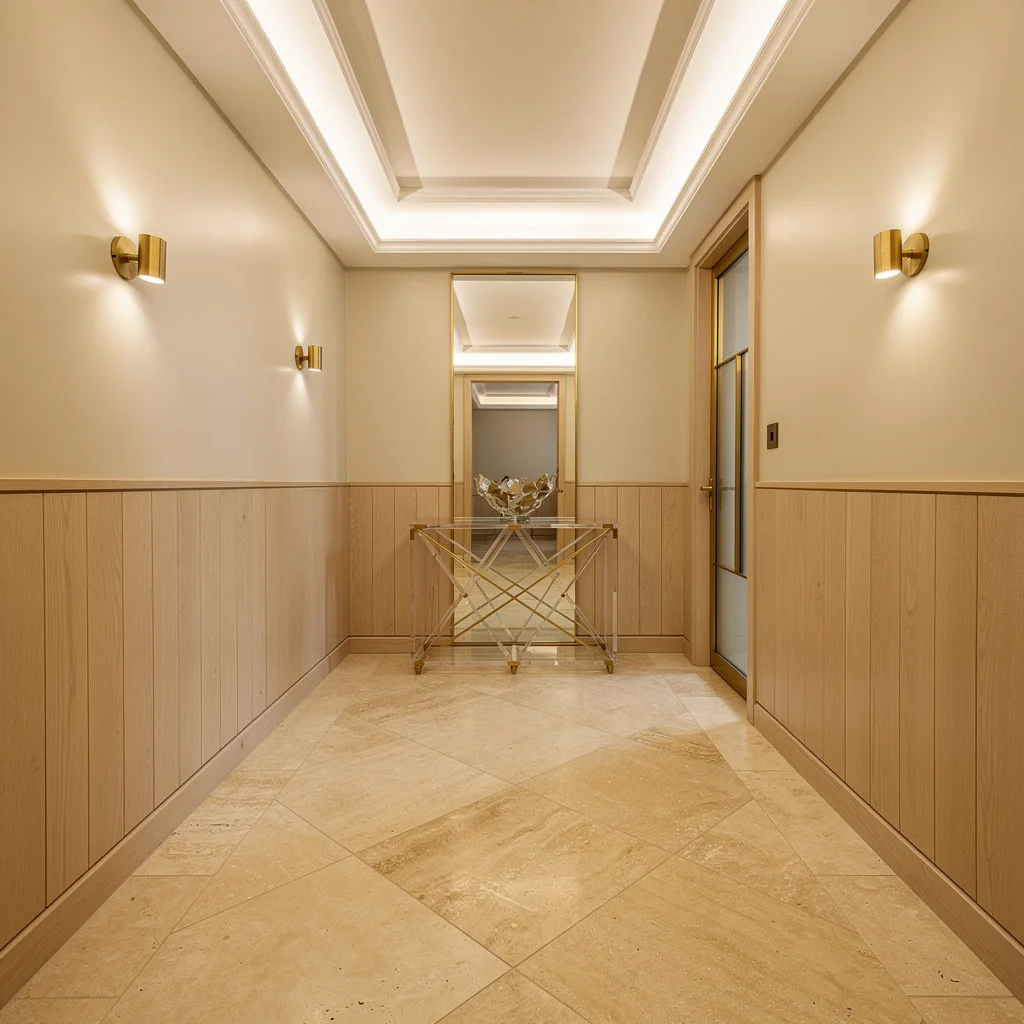
Go classic but skip the snooze fest. Choose custom-cut travertine tiles in honey shades, laid diagonally with flush grout for sophistication. Throw up vertical white oak wainscoting for grown-up warmth and mount brass uplights because indirect lighting is your friend. Paint your ceiling in matte ivory and add cove lighting for big mood. Go wild mid-hall with a geometric lucite-and-gold console table. Finish with a narrow glass door in satin brass—tasteful, not tacky. The pro secret: Diagonal tile layouts visually widen your hallway—always pair them with vertical elements for balance.
Final Thoughts
Hallway flooring is not a secondary decision to be made after the walls are painted and the furniture is ordered. It’s the foundation — literally and figuratively — of everything else the space is trying to do. Get it wrong and nothing else in the hallway can fully compensate. Get it right and even modest walls, basic lighting, and minimal furniture will look considered and resolved.
The floors worth choosing are the ones that were selected specifically for the hallway they’re going into — in the right scale, the right direction, the right pattern for the length and width of that particular corridor. Not the leftover option. Not the safe option. The one that treats the hallway floor with the same seriousness you’d bring to any other significant design decision in your home.
Your hallway is walked across multiple times every single day by everyone who enters your house. The floor is the one element they literally cannot avoid engaging with. It deserves better than whatever was left over.