
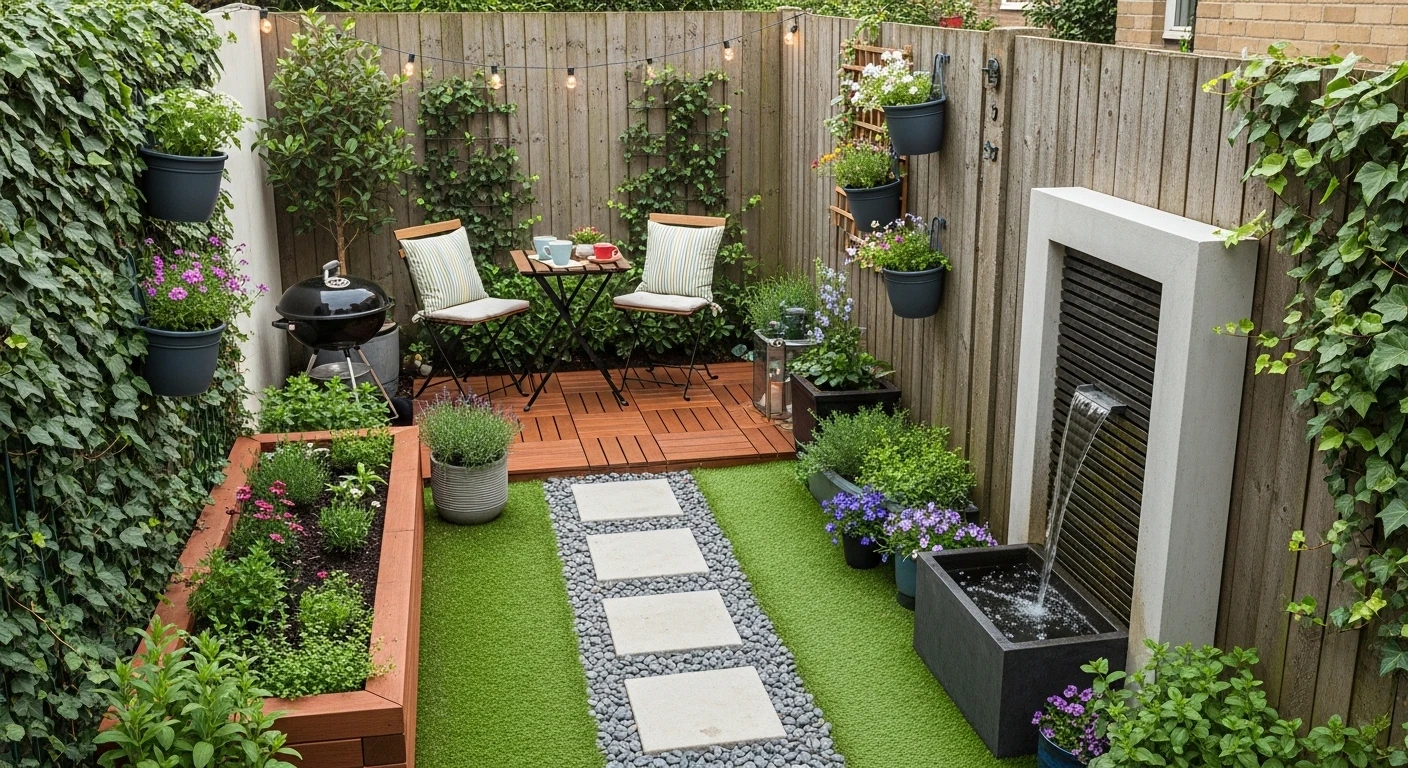
You have a very small backyard. Not small. Very small. The kind where you can stand in the center and touch both fences if you try. The kind where people visit and say “oh, it’s cozy” while meaning something else entirely.
Here’s what they don’t tell you: very small backyards are actually easier to design well than large ones. Every surface is visible from every angle. Every plant matters. Every material choice reads clearly. There’s no dead corner to ignore, no awkward zone to fill with a sad potted plant and a lawn chair nobody uses.
The backyards on this list are genuinely tiny. All of them look genuinely intentional. That combination is rarer than it should be, and it’s entirely achievable with the right approach.
Postage Stamp Designer
Design a tiny yard. Every choice matters.
Why Very Small Backyards Usually Look Worse Than They Should
Too many things trying to exist in the same three square meters. A bistro set, a planter, a string of lights, a storage box, a herb garden, and a bird bath do not create a layered look in a tiny space. They create a yard sale. Very small backyards need fewer, more deliberate elements — each one chosen to do more than one job.
The Vertical Dimension Is Your Only Escape
Floor space is fixed. You cannot negotiate with square footage. But the walls, the fence, the overhead structure — these are all available territory that most people completely ignore. A very small backyard that uses vertical space well feels dramatically larger than one that keeps everything at ground level. Train climbers up walls. Hang baskets. Build overhead structure. Go up.
One Clear Purpose Beats Five Competing Ones
A very small backyard works when it has a single, well-executed purpose. A dining spot. A soaking retreat. An outdoor room. A planted sanctuary. Trying to squeeze all five into a space that can barely hold one means none of them work properly. Decide what you want the space to do. Then do only that, brilliantly.
The Outdoor Room
Why very small backyards are a design advantage, not a compromise.
Very Small Backyard Ideas
The Overgrown Pergola: When Plants Are the Architecture
Build or install a simple wooden pergola frame and immediately stop thinking of it as a structure. Think of it as a trellis for the real design — climbing vines, trailing greenery, and hanging basket plants that fill every gap until the pergola disappears beneath the growth. String Edison bulbs across the frame in loose horizontal rows so warm light filters through the foliage at night. Below, keep furniture minimal and honest: a small round folding table in natural wood, two folding bistro chairs with floral seat pads, and a slatted wooden bench along one side with cushions. Irregular stone pavers on the ground with creeping groundcover filling the gaps. The secret here is patience — let the plants do the architectural work and resist the urge to tidy it into submission.
Cedar Deck, Sunken Hot Tub, and a Garden That Does the Fencing
Install large-format slate grey porcelain tiles as the base surface, then build a raised cedar deck platform in the center zone with the hot tub recessed flush into it so the deck edge becomes the tub surround. Keep the cedar warm-toned and unsealed so it weathers naturally. Around the perimeter, plant densely — roses, hydrangeas, ornamental grasses, lavender, and low shrubs in a deliberately wild mix that acts as both garden bed and privacy screen. A horizontal cedar fence panel backdrop behind the planting ties it together without looking like a barrier. Two low-profile modular loungers on the deck beside the tub with grey cushions. The plants do the enclosing. The deck does the living. The tub justifies every square centimeter.
Black Walls, Teak Sofa, and a Pergola That Means Business
Paint every fence and boundary wall matte black and watch the space immediately double in perceived depth. Install a clean cedar pergola frame overhead — open slat top, no roof — and let climbing plants grow through it over time. On the floor, lay large grey porcelain pavers with minimal grout lines. Choose a teak-framed L-shaped sofa with cream and black outdoor cushions as the sole seating piece, positioned against the black back wall. A round woven rattan coffee table at center. Large black ceramic planters at the corners with bold tropical foliage — monstera, bird of paradise, ferns. A geometric monochrome outdoor rug underneath to define the zone. The black boundary makes greenery pop sharply and creates a room-like enclosure that feels designed rather than fenced.
Limestone Pavers, Clipped Hedges, and a Built-In Bench That Does Everything
Lay pale limestone or sandstone pavers across the entire ground surface and stop there — no lawn, no gravel, no second material fighting for attention. Build a low curved or straight render wall along the back boundary at bench height and cap it with hardwood timber to create permanent built-in seating that never needs to be stored, moved, or replaced. In front of it, place one slim metal side table. In the space between the paving and the walls, plant densely in structured beds — multi-stem trees for height, clipped box hedges for geometry, white hydrangeas and hostas for soft fill. Gravel channels between paver sections with low creeping plants growing through. One padded outdoor chair with a footstool for the sitting area. The built-in bench is the most important decision — it frees the floor from furniture clutter while providing all the seating the space needs.
The Cottage Garden Corner: Controlled Wildness With Tea on the Table
Lay irregular natural stone flag pavers with fine gravel filling the gaps and let low creeping plants establish between stones over time. Position a small wooden table and two scrolled metal bistro chairs at the center — the furniture should look like it has been there for decades, not purchased last spring. Plant every available boundary and wall space with climbing roses, trained to grow upward rather than outward. Allow the planting to become generous and slightly unruly — the goal is abundance, not precision. A weathered wooden gate or fence panel on one side adds a layer of depth and the illusion of a garden beyond. A simple ceramic tea set on the table. Overhead, climbing roses and foliage arching from both sides to meet in the middle. This aesthetic only works if the planting is genuinely generous. Half-hearted planting in a cottage garden reads as neglect, not romance. Commit to the abundance or choose a different direction.
Fake a Million Dollar Oasis with One Bench and One Water Feature
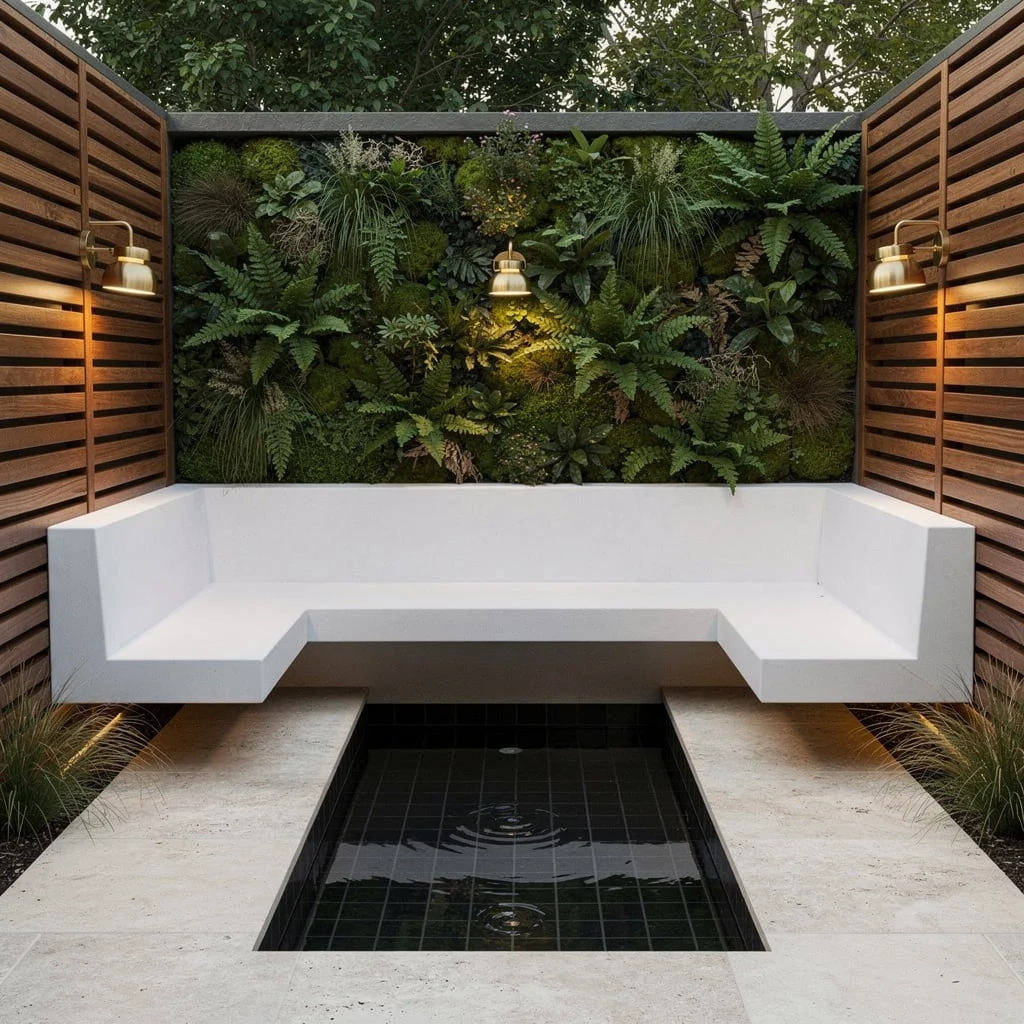
Stop trying to cram too much stuff outside—luxury doesn’t mean maximal clutter. Go high-end with a single floating white concrete bench running around a narrow, rectangular water feature using black reflective tiles if you want that moody spa vibe. Lay neutral travertine on the floor and plant a thin living wall of ferns and moss on the fence—vertical greenery is way more impressive than fake grass. Uplit slatted ipe wood panels add privacy and drama; sneak in some brass lanterns for soft, ambient lighting. Don’t forget a sprinkle of ornamental grass for an ‘I spent real money’ finish. Keep everything low-key and let textures do the bragging.
Layer Up Small Spaces Like a Design Genius (With Limestone and Jasmine)
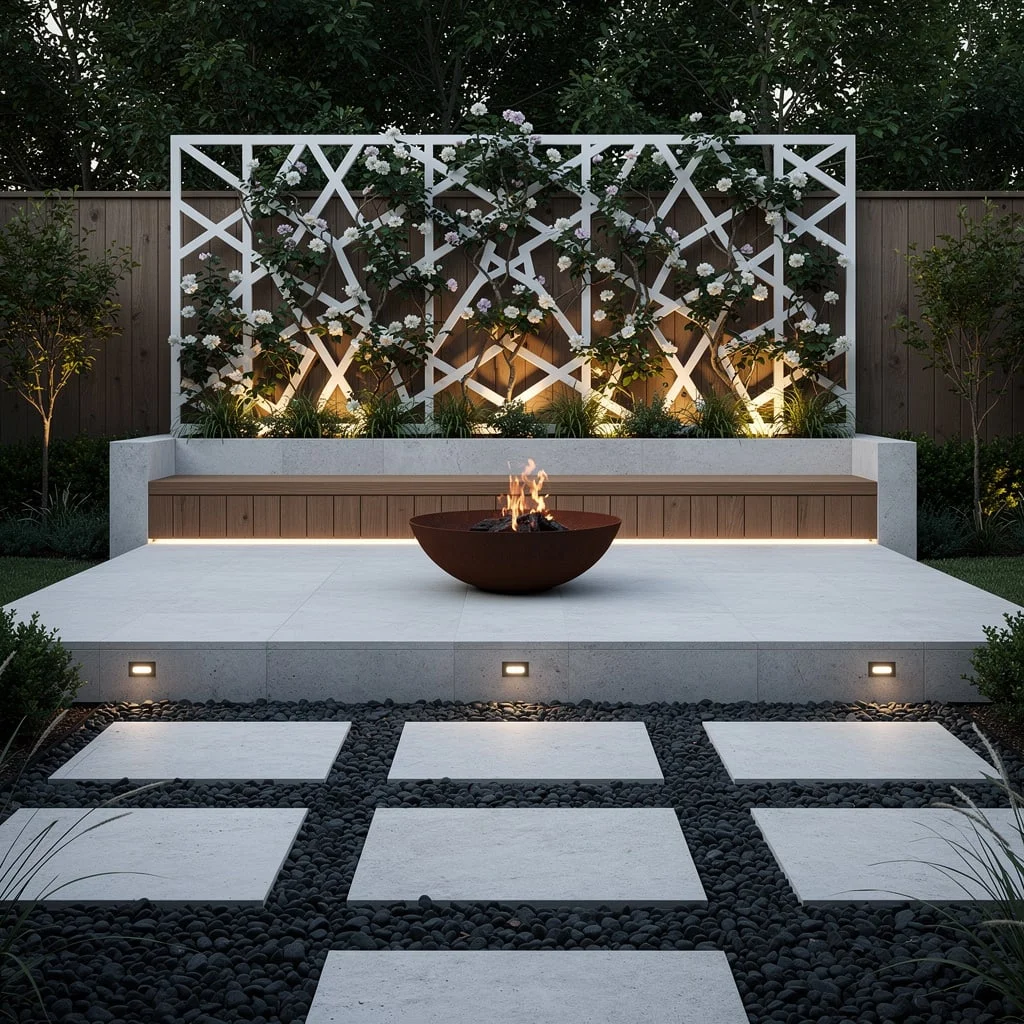
Quit whining about your yard being tiny—layering is how you win. Raise a seamless limestone platform topped with a teak-clad planter bench, because real wood > fake plastic. Install a geometric white trellis on your back fence and espalier star jasmine across it for A-grade architectural flex. Stick oversized grey pavers in the main area, with black Mexican beach pebbles in between to prove you have taste. The centerpiece should be a corten steel fire dish, obviously—the neighbors will be jealous. Recessed step lights are non-negotiable for night drama. Never use lawn gnomes unless you want to live in design jail.
Bring the Secret Courtyard Drama with Slate, Steel, and Olive Trees
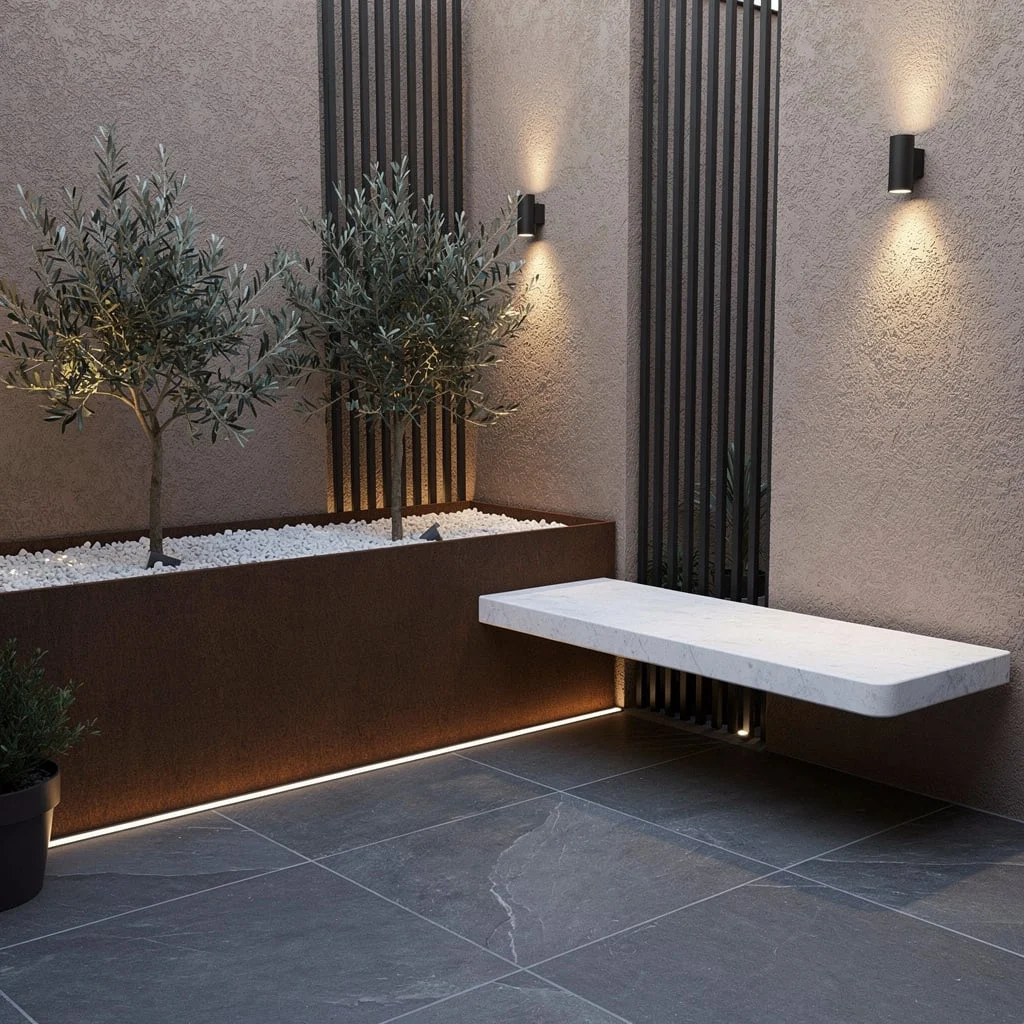
If you want mysterious vacation vibes, go hard with oversized slate tiles and a corten steel-edged raised planter—fill it with olive trees and white gravel for Insta-worthy chic. Add a sleek, cantilevered white stone bench along one side—no, don’t buy a chunky Adirondack. Textured taupe stucco walls with slim black metal slats keep the mood whispery cool. Ribbon LED lights under the planter and ground spotlights on the walls let you flex your lighting game all night. Pro tip: Don’t let your tree roots outgrow your planter unless you want a messy jungle instead of tranquility.
Trick the Eye: Create Space with Mirrors, Boxwoods, and Designer Decking
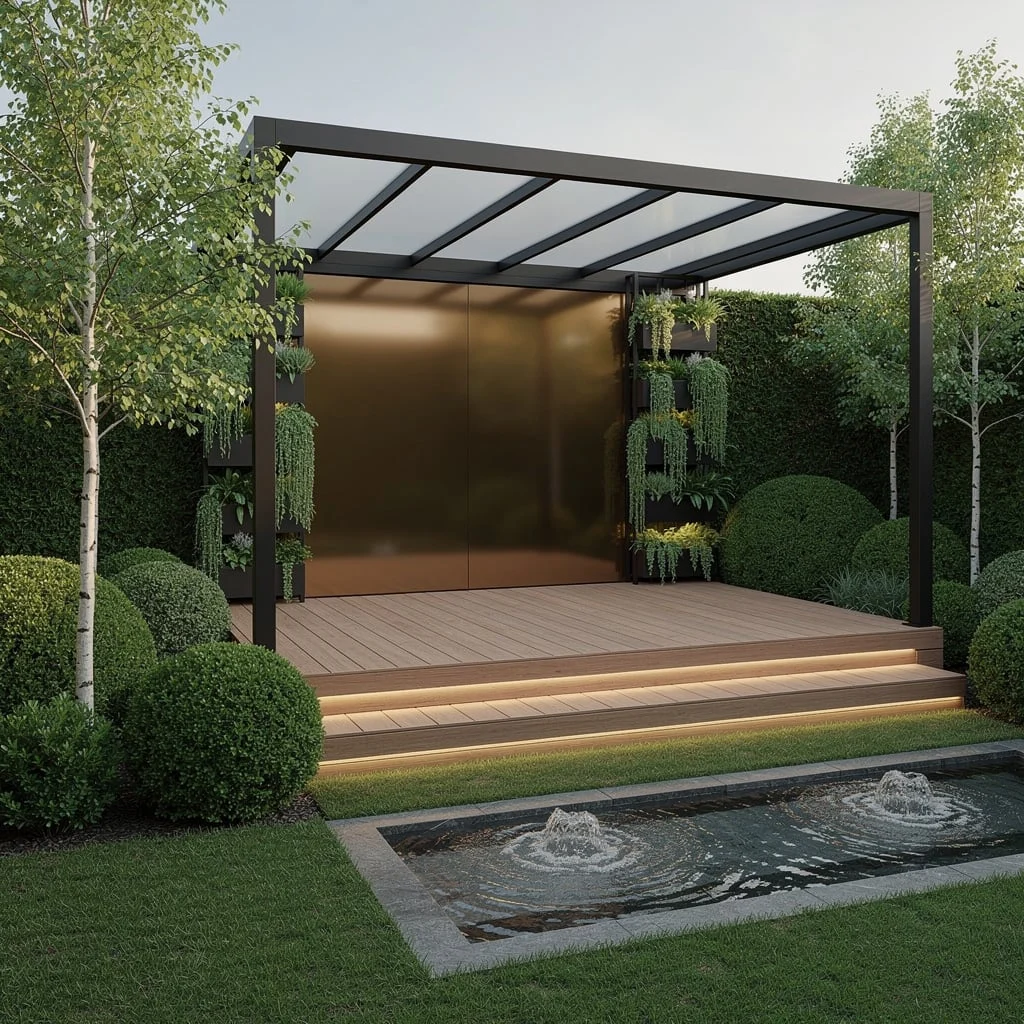
Want your linear backyard to look double its size? Float a cedar deck surrounded by neatly clipped boxwoods and dwarf birch—it’s called ‘discipline’, look it up. Build a black steel pergola overhead and add frosted glass for dappled light that screams expensive. Decorate with vertical planters full of cascading greenery and add a mirrored bronze panel on your back wall to literally reflect your good taste. LED strips in your deck boards are mandatory for ambience. Don’t skip a bluestone water rill: movement makes everything feel more extra. Rule: Never let anything overgrow—precision is your new religion.
Master the Micro-Courtyard with Porcelain, Stone, and Fountain Magic
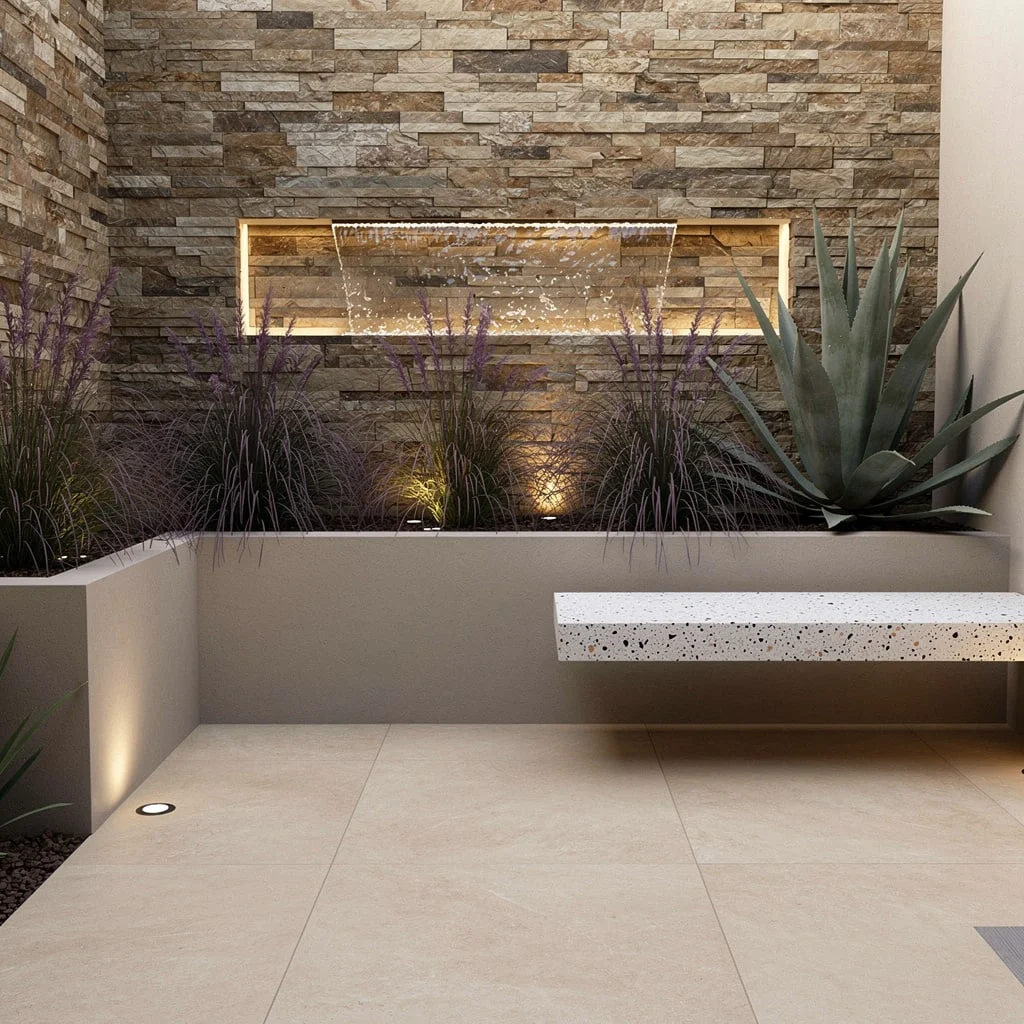
Kick basic concrete to the curb—line your micro-courtyard with nearly seamless porcelain slabs in sand hues. Get yourself some fiber-cement raised planters packed with vertical purple fountain grass and agaves. For a privacy flex, wrap your back wall in stacked stone and install a linear sheet fountain that will make your neighbors rage with envy. Add ground-recessed spotlights to highlight those planters, then throw in a minimalist terrazzo bench ‘cause tiny doesn’t mean boring. Keep landscape lighting subtle, not Las Vegas. Styling rule: No yard flamingos, ever. Minimalism means drama, not wildlife rescue.
Make Sunken Patios Your Secret Weapon for Coziness
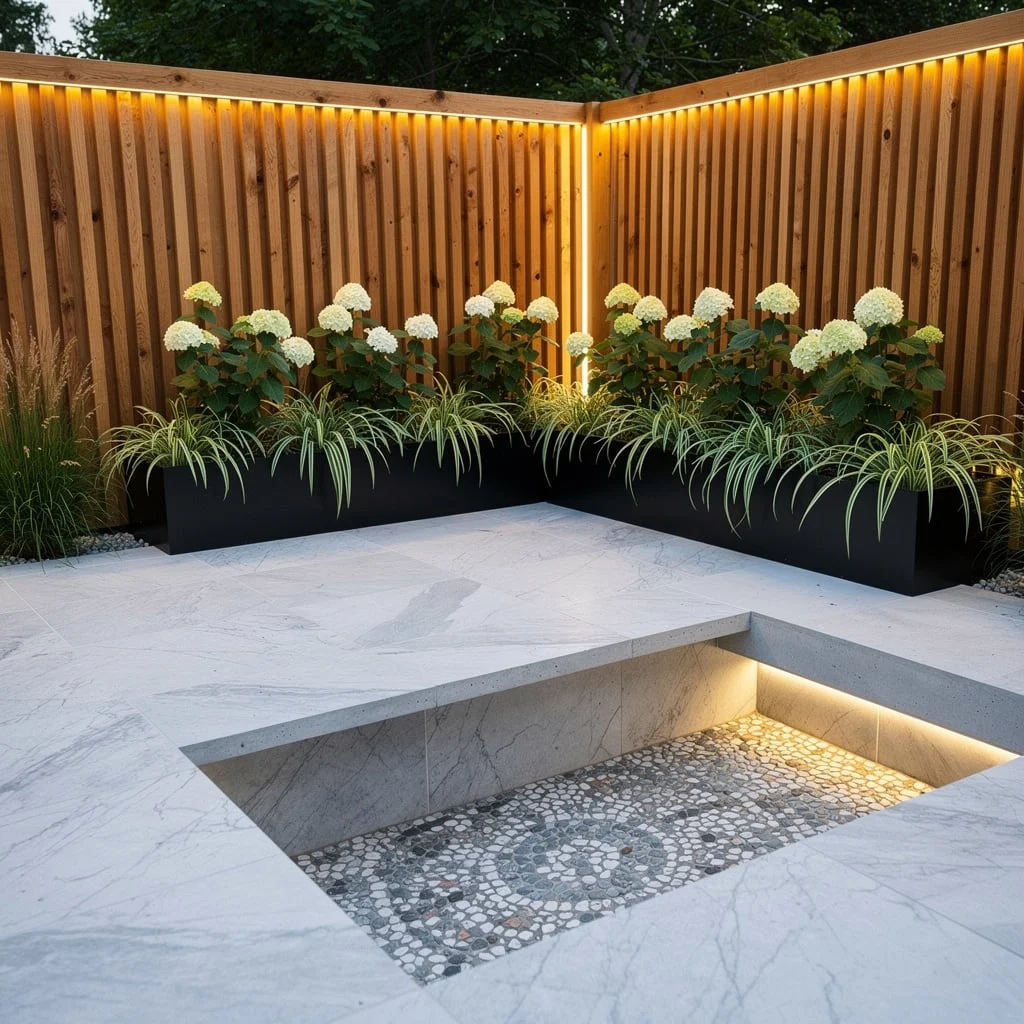
Stop putting your patio at ground level. Dig down and lay light-grey marble tiles that blend seamlessly with your house. Use matte black steel frame planters—stuff them with liriope and hydrangeas for a designer contrast. Wrap oak fencing upright around the edge and inlay warm white LED uplights to make your after-dark parties pop. Place a contemporary cantilevered concrete bench next to a pebble mosaic feature for texture. If you don’t want your yard to look like a sad showroom, mix materials, then throw on a luxe blanket. Pro tip: Don’t let drainage ruin your vibes—always grade sunken spaces away from the house.
Go Ultra-Minimalist: Travertine Walkways, Concrete Benches, and Poly Panels
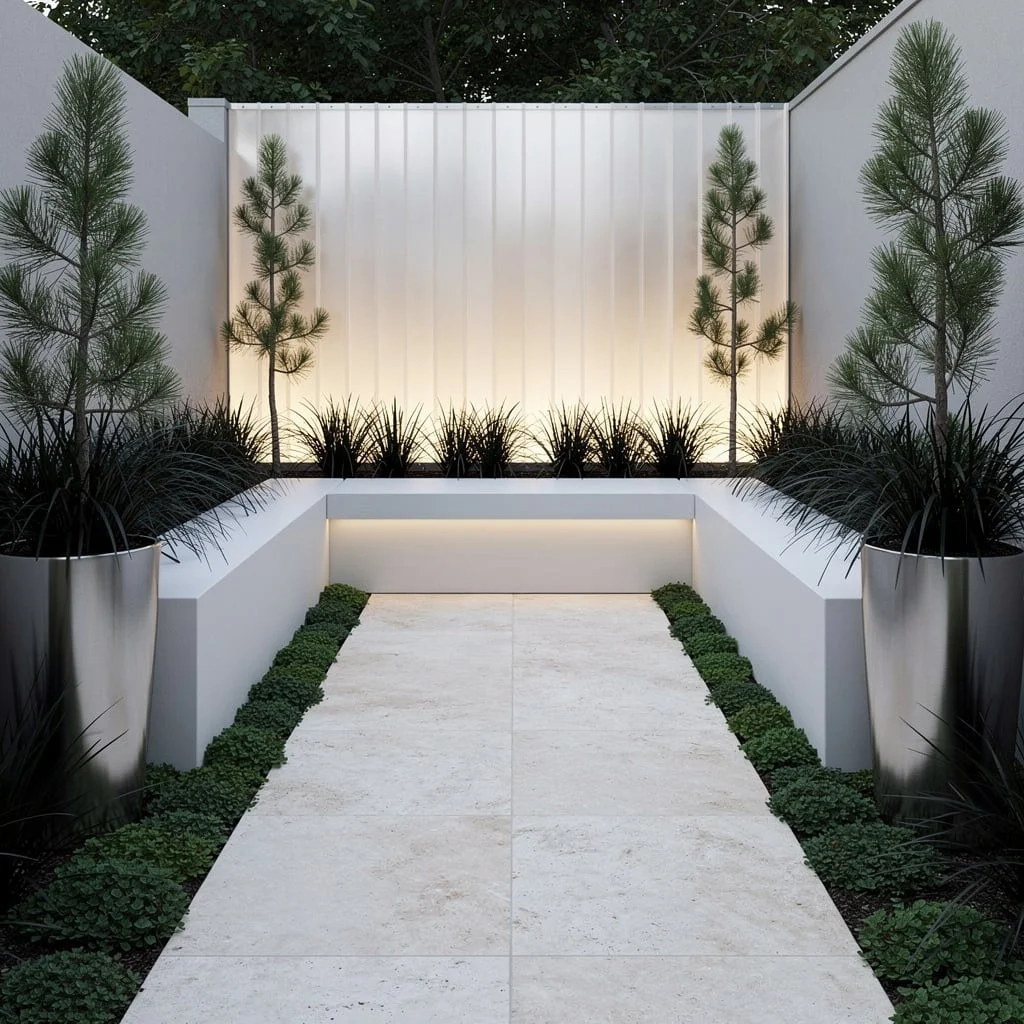
Strip your backyard down to the essentials. Lay custom oversized pale travertine tiles right through the space. Bench seating should merge with the path—smooth white concrete is the only answer if you want crisp, gallery vibes. Use microclover groundcovers along the edges and drop tall brushed-aluminum planters with black mondo grass and pencil pines at the corners. Vertically backlit translucent polycarbonate panels on the rear fence make your nighttime hang a total mood. Rule: Clean lines only, so stash garden gnomes or fussy pots in your basement. Less, but better, always wins.
Split Your Levels and Conquer with Bluestone, Corten, and Modular Moves
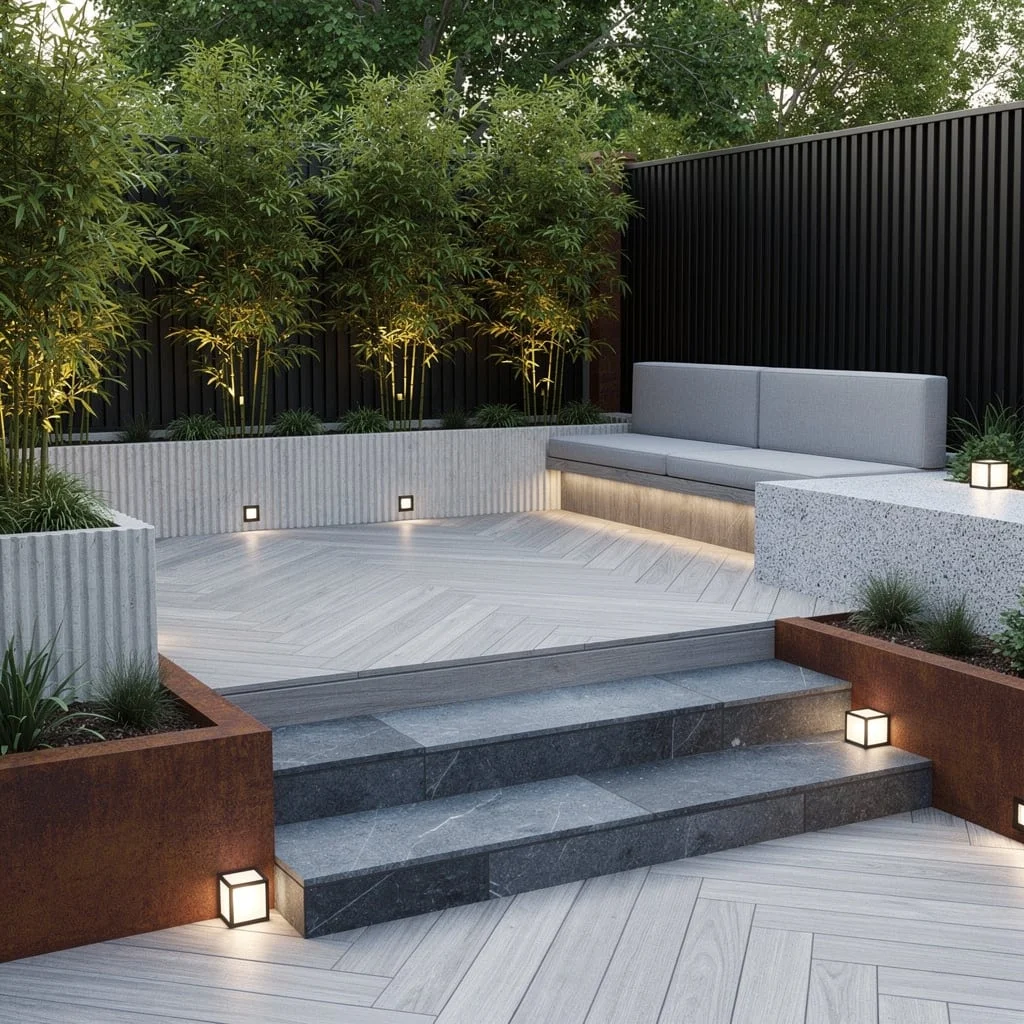
Micro-yard doesn’t mean micro-style. Start with a bluestone step entry, then add weathered corten edging for plant drama—think bamboo, but only if you like privacy. Lay light greywashed chevron wood decking in the main zone for snob factor. On one side, use ribbed concrete planters as bamboo screens; on the other, install a granite ledge for modular seating. Cube-shaped LED accent lights make everything look intentional. Matte-black ribbed screens box in your space with total designer credibility. Don’t crowd the deck; focus on fewer, bigger pieces that can actually survive weather and group selfies.
Rock Custom Craftsmanship with Concrete, Brick, and Bleached Wood
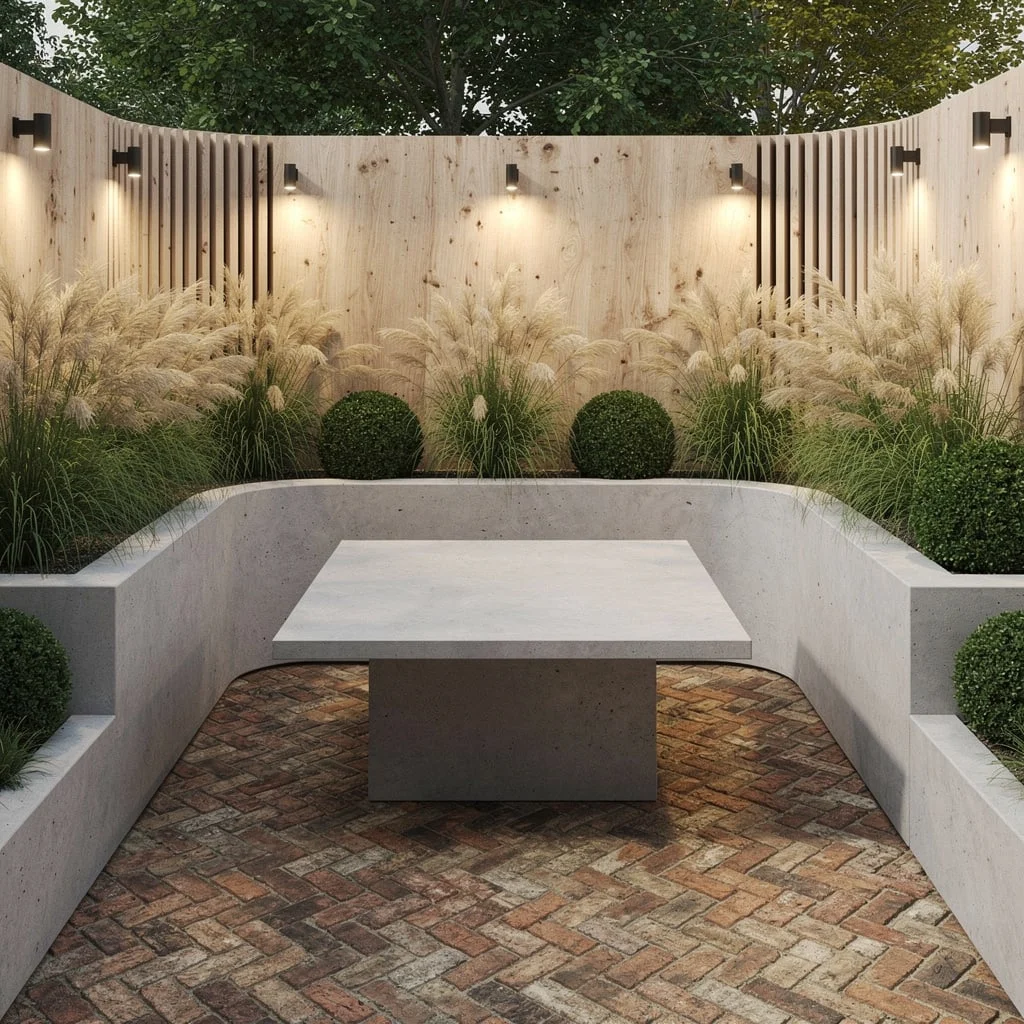
Smart micro-backyards = clever perimeter moves. Install a raised concrete planter filled with ornamental grass and topiary balls—bonus points for symmetry. Go flush with herringbone-patterned reclaimed brick in the center for texture next to a sleek concrete table. Build a gentle, curving bleached wood slatted privacy screen for airy style. Magnetic track LED spotlights are the only lighting worth your time; mount them discreetly above. Skip cheesy patio sets; design is about cohesion and custom moves. Pro tip: Don’t let weeds eat up your edges; keep maintenance tight and your craftsmanship showing.
Rule Split Levels and Frosted Glass Like a Minimalist Movie Set
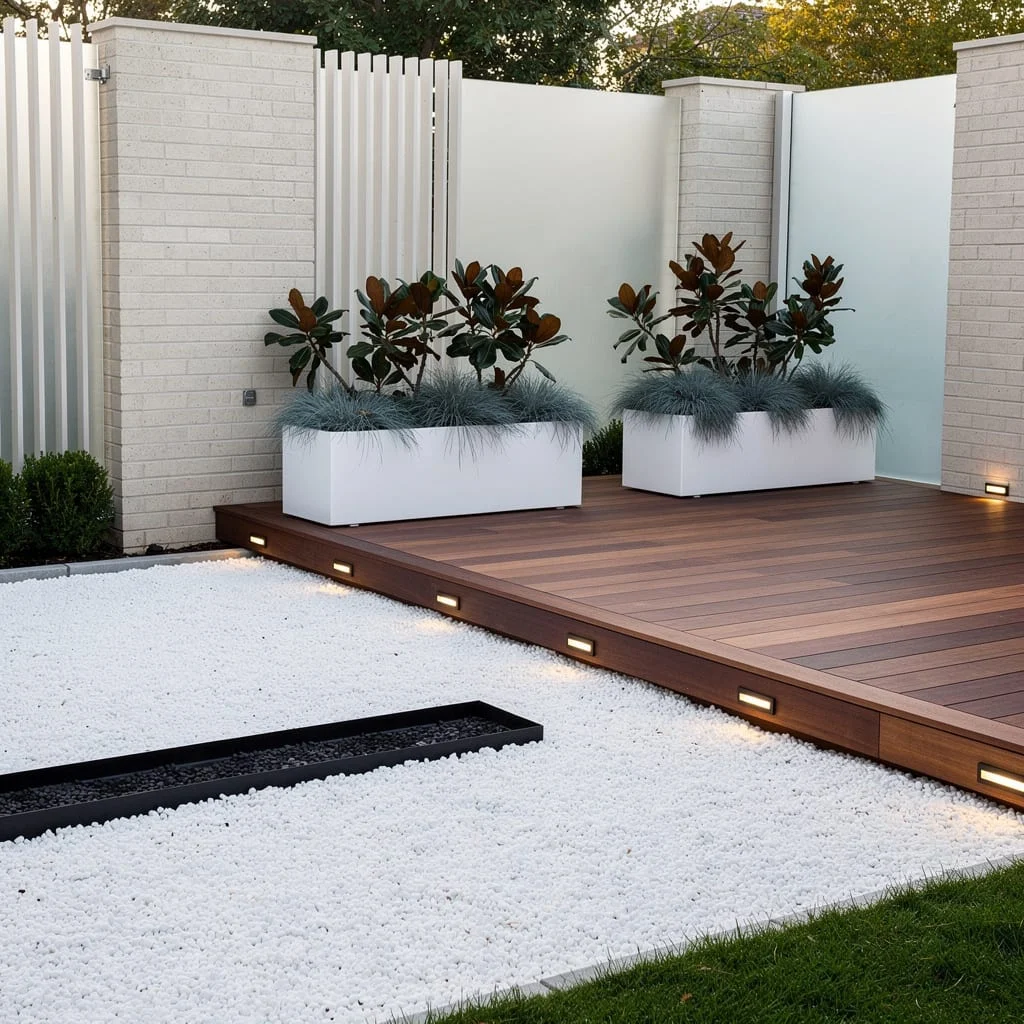
Split-level backyards are designer cheat codes. Dig a crushed white stone terrace for your fire channel, then step up to an ipe wood deck with powder-coated white planters starring magnolia and blue fescue—no plastic plants allowed. Install pale vertical brick screens and frosted glass panels for high-end privacy. Recessed riser lights make transitions subtle but glam. Keep your furniture low-profile and hardware sleek. Never crowd the fire channel—let everyone see it. Pro tip: Repeat materials between levels so nothing looks accidental. You want sleek, not scattered.
Play the Cube: Multifunctional Concrete, Charred Wood, and Mediterranean Palm
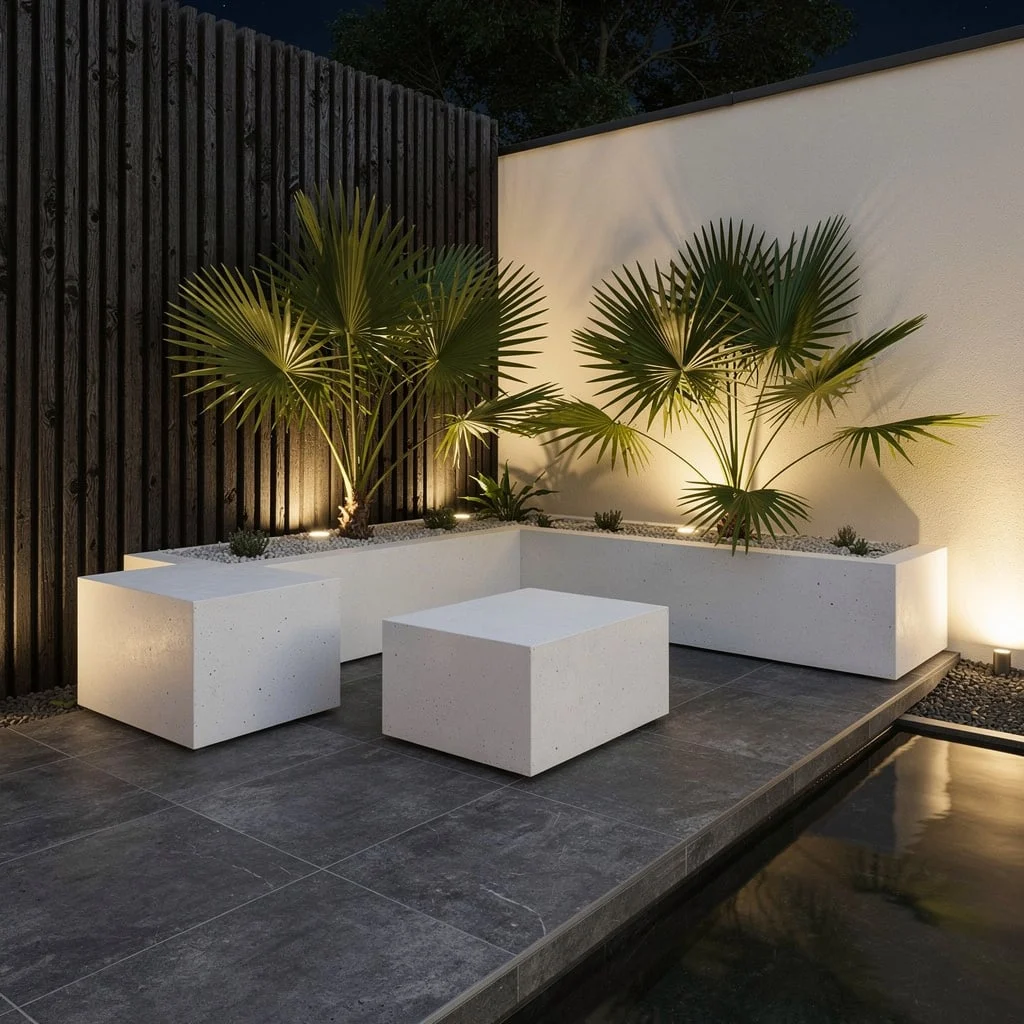
Tiny backyard? Deploy floating white concrete cubes for seating and planters—double duty, every time. Weathered graphite porcelain tiles underneath raise your style game, not your allergies. Mix vertical charred wood fencing with cream plaster walls on your boundaries for clean drama. Ground-level uplights cast Mediterranean fan palms in a sculptural glow (seriously, skip palms if you hate sweeping). Add a micro-water rill reflecting night lighting so you can pretend you own a designer spa. Rule: keep that layout tight and restrained—no extra chairs, no ‘just in case’ fillers. Everything should serve a purpose.
Centralize Everything: Bronze, Limestone, and Hostas for Contemporary Glory
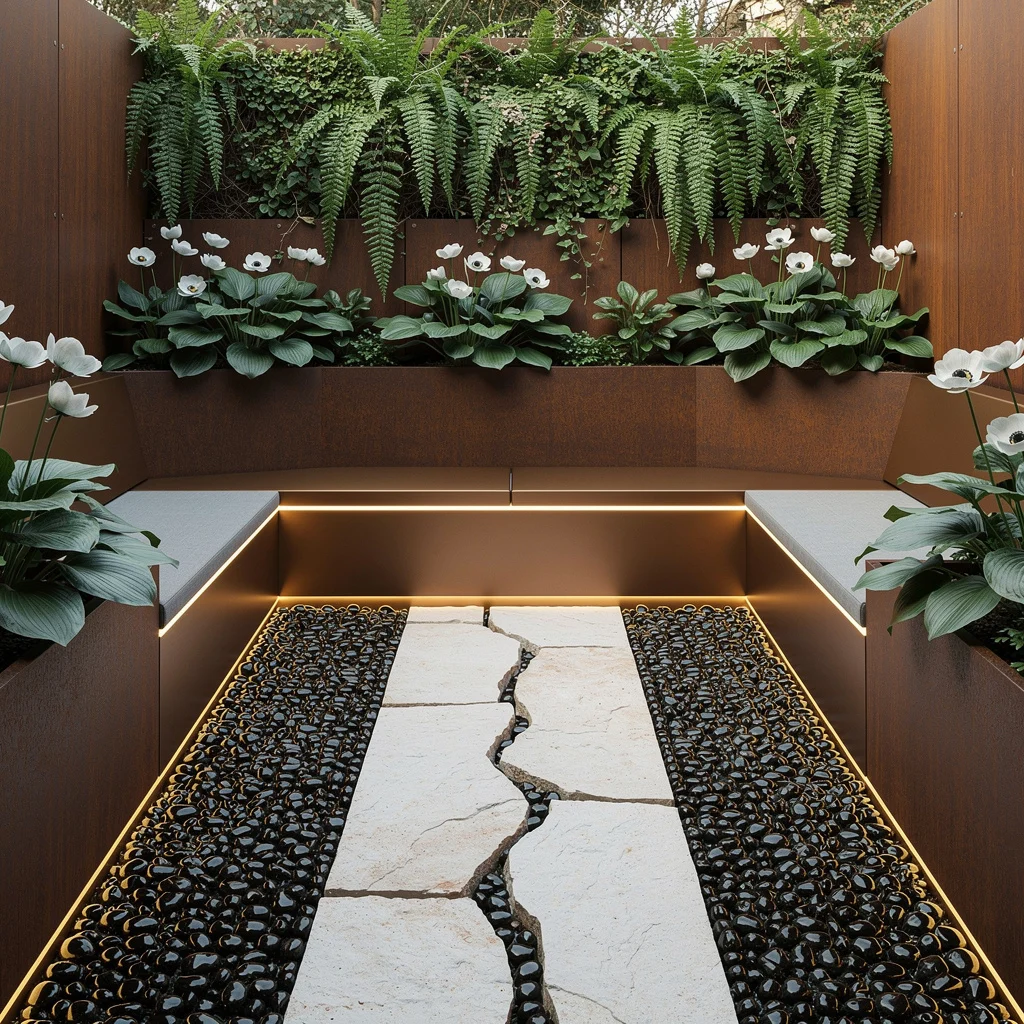
If you crave slick, contemporary vibes, anchor your yard with a rift-cut pale limestone path flanked by reflective black glass pebbles. Integrated seating in bronze anodized aluminum along two sides fakes built-in luxury. Hidden linear LED strips are your night-time secret weapon—subtle illumination only, not interrogation room glow. Stage elevated rust-stained steel planters packed with white anemone and lush hostas for real designer geometry. Mount a living wall of trailing ferns at the back—vertical is always power. Don’t clutter your path; keep symmetry sharp. No red tulips—ever. Contemporary means consistency, not random bursts.
The Decisions That Work in Every Very Small Backyard
Built-in seating is always the right choice. It eliminates the largest category of outdoor furniture, frees floor space, and looks considered rather than assembled.
One material per surface. The floor has one material. The walls have one treatment. The planting has one dominant palette. Very small spaces fragment visually the moment two competing materials appear on the same plane.
Lighting defines the space after dark. A very small backyard with good lighting becomes a genuinely usable outdoor room at night. One without it disappears when the sun goes down.
Overhead structure changes everything. A pergola, a canopy, a trained climbing frame — anything that creates a defined ceiling turns a tiny outdoor patch into an enclosed outdoor room. Without it, small backyards feel exposed rather than intimate.
Very Small Is Not a Limitation. It’s a Brief.
Designers work better with constraints. A very small backyard forces every decision to matter, every plant to earn its place, and every material to do its job clearly. There is no room for filler, for placeholder furniture, for “we’ll sort that corner eventually.”
The backyards that look best at this scale are the ones where someone accepted the size completely — not as a compromise but as a parameter — and then designed within it with total commitment. That’s all it takes. Accept the size. Make every decision count. The very small backyard stops being a problem the moment you stop treating it like one.