
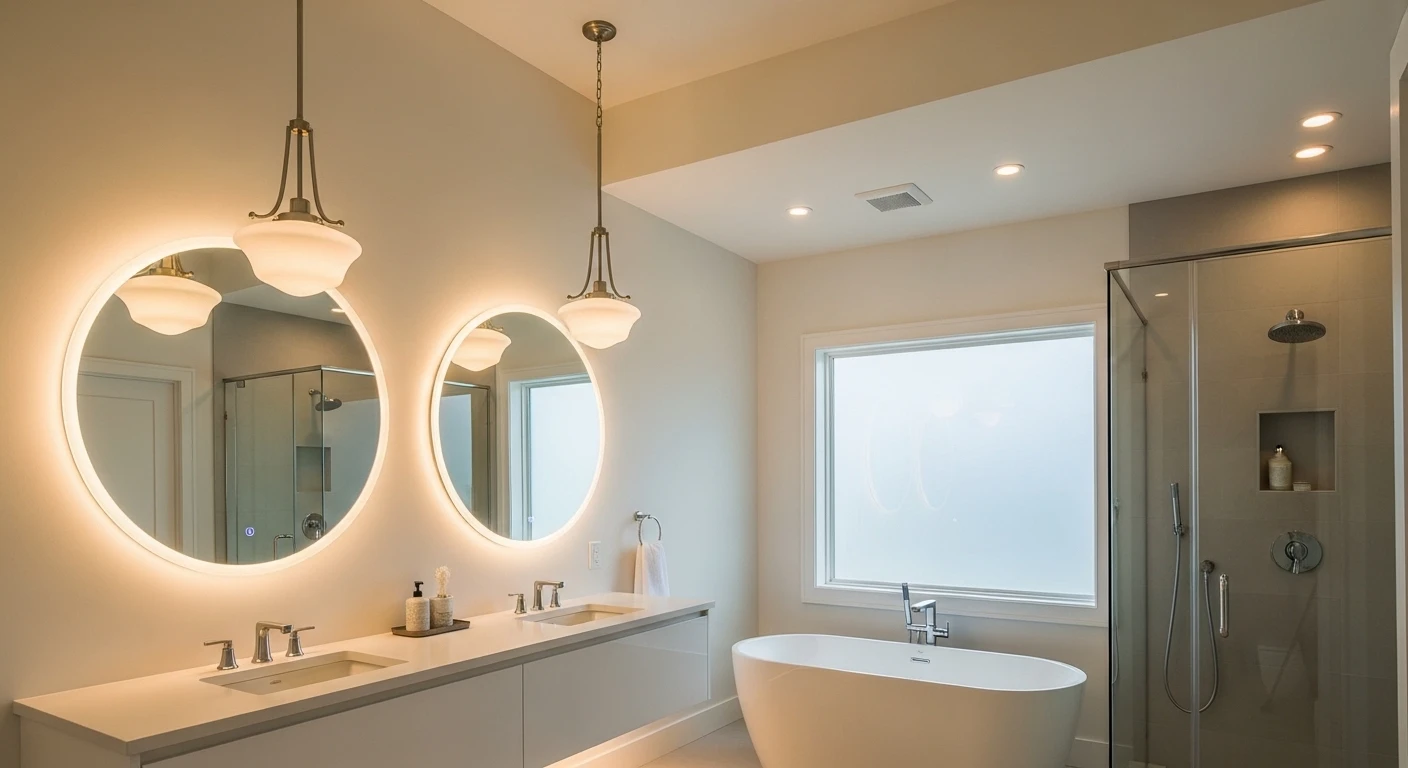
Most master bathrooms have one light source. One. A single fixture on the ceiling that flattens every surface, washes out every face, and makes a room full of expensive materials look like a hospital corridor at six in the morning.
The tile cost a fortune. The vanity took three months to arrive. The mirror was a whole conversation. And none of it looks like it should because the lighting is doing exactly one job badly instead of several jobs well.
Bathroom lighting is not a single decision. It is a system. Task light for the mirror. Ambient light for the room. Accent light for the surfaces worth showing off. Get all three working together and the room transforms — not just visually, but experientially. The same bathroom feels completely different at the right light level, at the right color temperature, from the right sources.
These ideas show exactly how that works in practice.
Why Bathroom Lighting Fails So Consistently
One overhead fixture creates one problem: shadows go exactly where you don’t want them. Under your eyes when you’re applying makeup. Across the mirror when you’re trying to see clearly. Across the floor when you’re trying to feel calm. The solution is never a brighter bulb. It’s more sources, positioned correctly, working at different levels simultaneously.
Color Temperature Is the Decision Nobody Makes Deliberately
Warm light makes skin look alive and materials look rich. Cool light makes everything look clean and clinical. Most people don’t choose — they accept whatever came in the fixture. Warm white (2700K–3000K) belongs in a master bathroom that should feel like a retreat. Cool white (4000K+) belongs in a surgical suite. These are different goals and they require different bulbs.
The Mirror Is Not Just a Mirror
In a well-lit bathroom, the mirror is a light source. Backlit, edge-lit, or flanked by sconces at face height — the mirror zone is where task lighting lives. Getting this right means the difference between seeing your actual face and seeing a vague approximation of it in unflattering overhead shadow.
The Layered Retreat
Why your expensive bathroom looks terrible, and how to fix the light.
Master Bathroom Lighting Ideas
Chromotherapy Rain Shower:
Install a large-format ceiling-mounted rain shower head with integrated chromotherapy LEDs — these cycle through or lock onto specific colors depending on the mood you’re after. Mount it on multiple ceiling-drop arms for a clean architectural look. Surround the shower zone with large-format concrete-effect porcelain tiles in mid-grey, kept frameless and grout-minimal. A recessed niche in the shower wall at mid-height provides storage without breaking the tile plane. Keep the rest of the bathroom calm and minimal so the shower becomes the undeniable focal point it deserves to be. The colored water effect photographs dramatically but the real value is experiential — warm red light for energizing mornings, cool blue for winding down.
White Marble, Gold Rings, and Mirrors That Earn Their Square Footage
Clad every surface — floor, walls, shower partition — in large-format white marble or high-quality marble-effect porcelain with consistent veining direction. Float a long fluted white vanity with a gold-edged trim line at counter height and mount two sculptural vessel basins on top with brushed gold faucets. Above the vanity, install a single full-width frameless mirror with gold trim and edge lighting running top and bottom. Hang two oversized circular gold and crystal chandelier pendants from the ceiling — one over the vanity zone, one over the open floor space. Add gold linear tube sconces on the side walls for layered task light. Warm recessed downlights fill the ceiling between the pendants. Every reflective surface multiplies the light sources until the room glows from every angle simultaneously.
Hot Pink Under-Vanity Glow:
Choose a floating dark espresso vanity and run RGB LED strip lighting along the entire underside so the glow hits the floor directly beneath it — select a saturated pink or magenta for maximum impact. Install a linear mosaic tile feature wall behind the mirror in silver and grey tones, floor to ceiling, and flank the mirror with two vertical cylindrical wall sconces at face height for actual task lighting. A sculptural vessel sink in a matching bold tone on the white counter surface. Dark grey large-format floor tiles ground the whole composition. A tall indoor plant in a dark pot in the corner. The under-vanity light does the heavy lifting atmospherically while the sconces handle function. Set the LED strip to a dimmer so the intensity adjusts between morning routine and evening wind-down.
Arched Backlit Mirror, Disc Pendants, and Grey Marble That Goes Everywhere
Tile every wall surface in large-format grey marble porcelain — consistent across the vanity wall, the shower walls, and the floor — so the material reads as an envelope rather than a feature. Build an open shelf vanity unit in dark warm wood with a floating stone counter, a round white vessel basin, and open lower shelf for folded towels. Mount two tall arched pill-shaped mirrors with warm LED backlighting tracing the full perimeter of each arch — the warm glow against the grey stone is the entire lighting scheme. Hang a sculptural multi-disc pendant in brushed gold from the ceiling — overlapping discs at varying angles catching light differently. Recessed ceiling downlights handle ambient fill. A small eucalyptus arrangement on the vanity surface. The backlit arch mirrors are the non-negotiable element — everything else supports them.
Travertine, Crystal Pendants, and Warm Light That Makes Everything Look Better
Clad walls and floors entirely in warm travertine or travertine-effect porcelain — the natural variation in the stone does the texture work so the lighting doesn’t have to compete. Float a warm wood vanity unit with a travertine counter and a sculptural white vessel sink. Install a large circular backlit mirror with a soft warm LED halo directly above. Hang two small crystal chandelier pendants from the ceiling — one over the vanity zone, one further into the room — for ambient warmth that the travertine amplifies beautifully. Warm recessed downlights at the ceiling perimeter. A frameless glass shower screen with a ceiling-mounted gold rain head and a lit niche recess in the shower wall. A fluffy white bath mat on the floor. A small wooden stool inside the shower. Dried pampas grass in a tall vase beside the vanity. The travertine’s warmth and the crystal pendants create a hotel bathroom effect that requires very little additional styling to work.
Go Extra With Crystal Chandeliers and Cove Glow
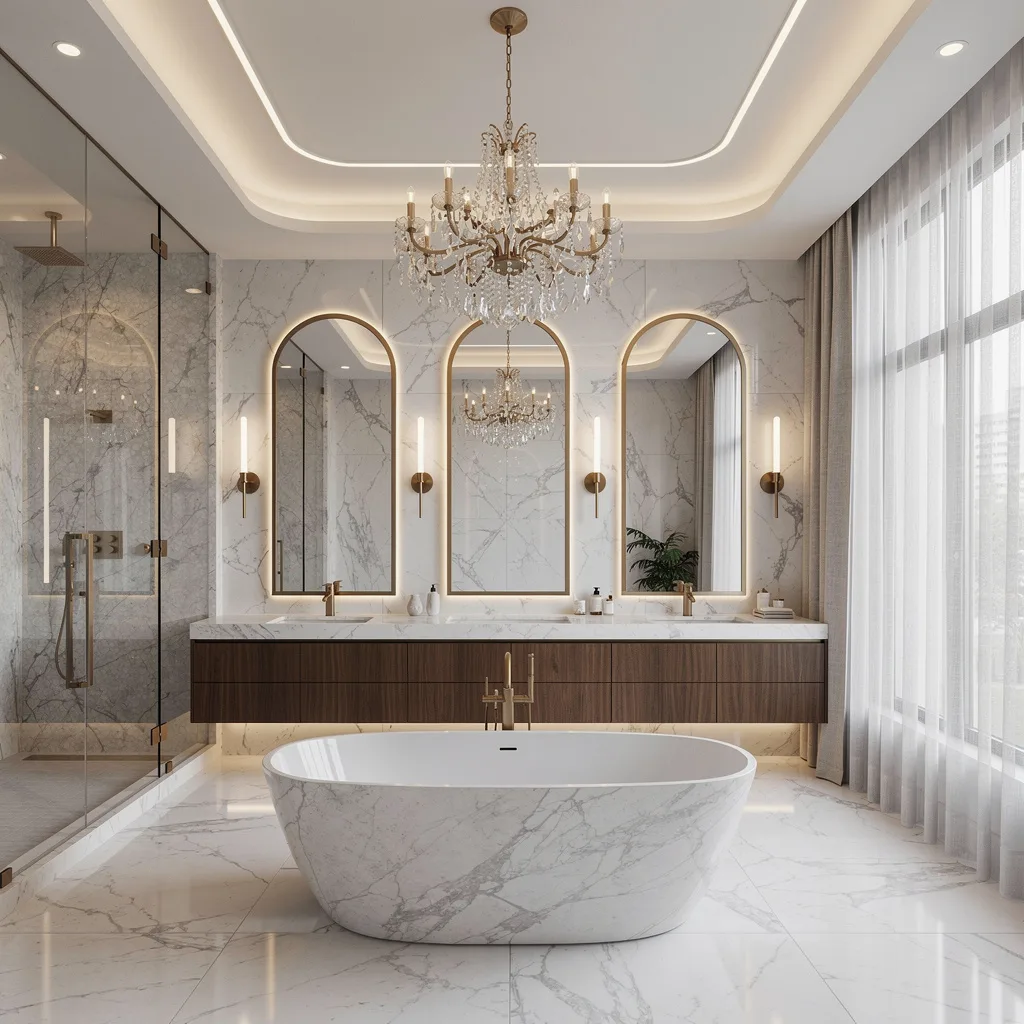
If you crave spa-level drama without the monthly facial bill, haul in a statement crystal chandelier smack dab over your soaking tub and sit on Calacatta marble like you own the place. Install cove lighting around a tray ceiling for that rich, never-harsh ambient vibe. Brass LED sconces on either side of arched mirrors? Yes, please. Mount strip lighting under your floating walnut vanity for instant drama—and add motion sensors unless you love toe stubbing. Don’t leave the shower sad; slap vertical light bars on porcelain slabs. To avoid glare, use sheer linen drapes to filter the daylight. Pro tip: Don’t let your lighting fight; layer soft, strong, and glam for seamless bright luxury.
Layer Up Your Lighting Like You Layer Your Outfits
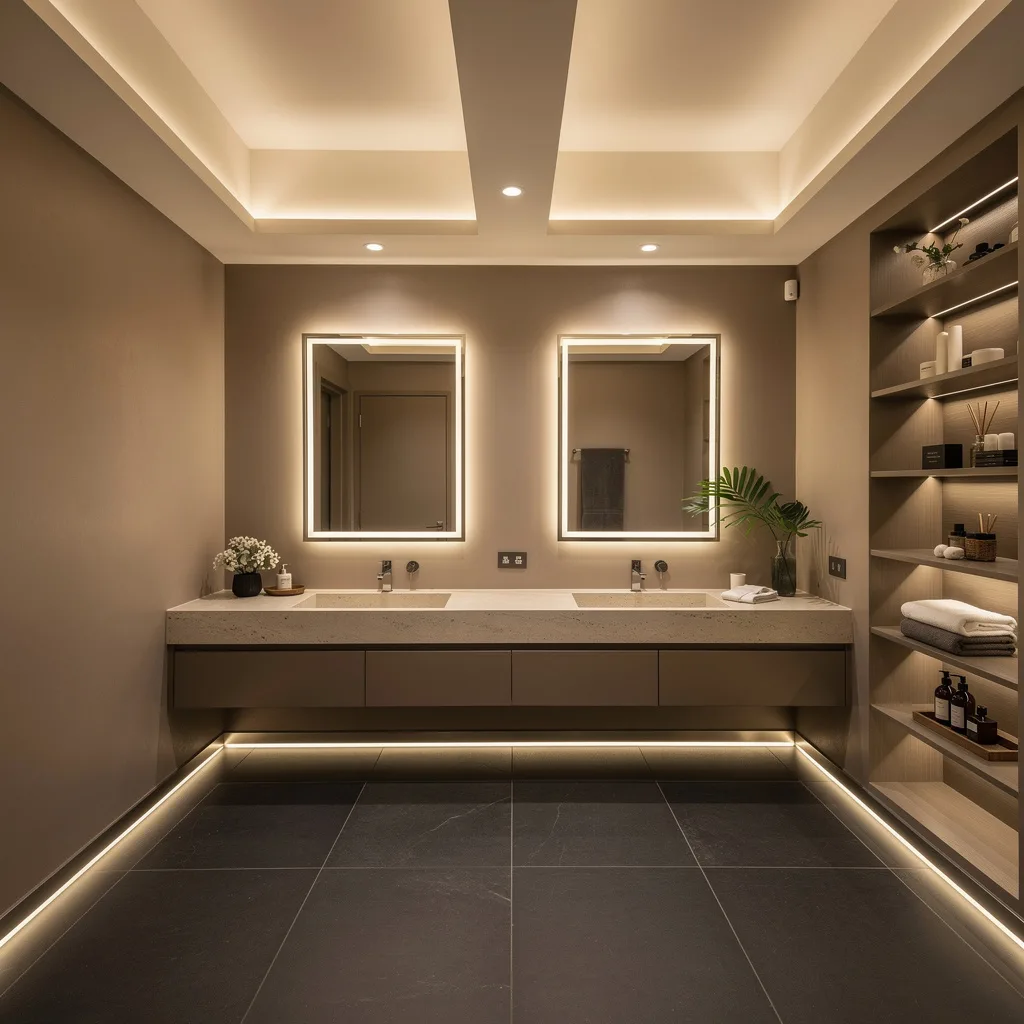
Chasing those serene spa vibes? Hide uplights along ceiling coffers—no direct aggression, just gentle washes on taupe walls. Custom backlit glass mirrors above a trough sink kill the ‘I can’t see myself’ drama and brushed nickel edges keep it sleek. Drop perimeter strip lights on your matte charcoal tile floor, and let floating vanity strip lighting highlight your fancy lotions. Under-cabinet and alcove accent lighting deliver softness, not a migraine. Pro tip: Never let one bright light boss the room; distribute indirect sources so every corner stays chill yet sophisticated.
Backlit Onyx = Instant Breakfast at Billionaire’s
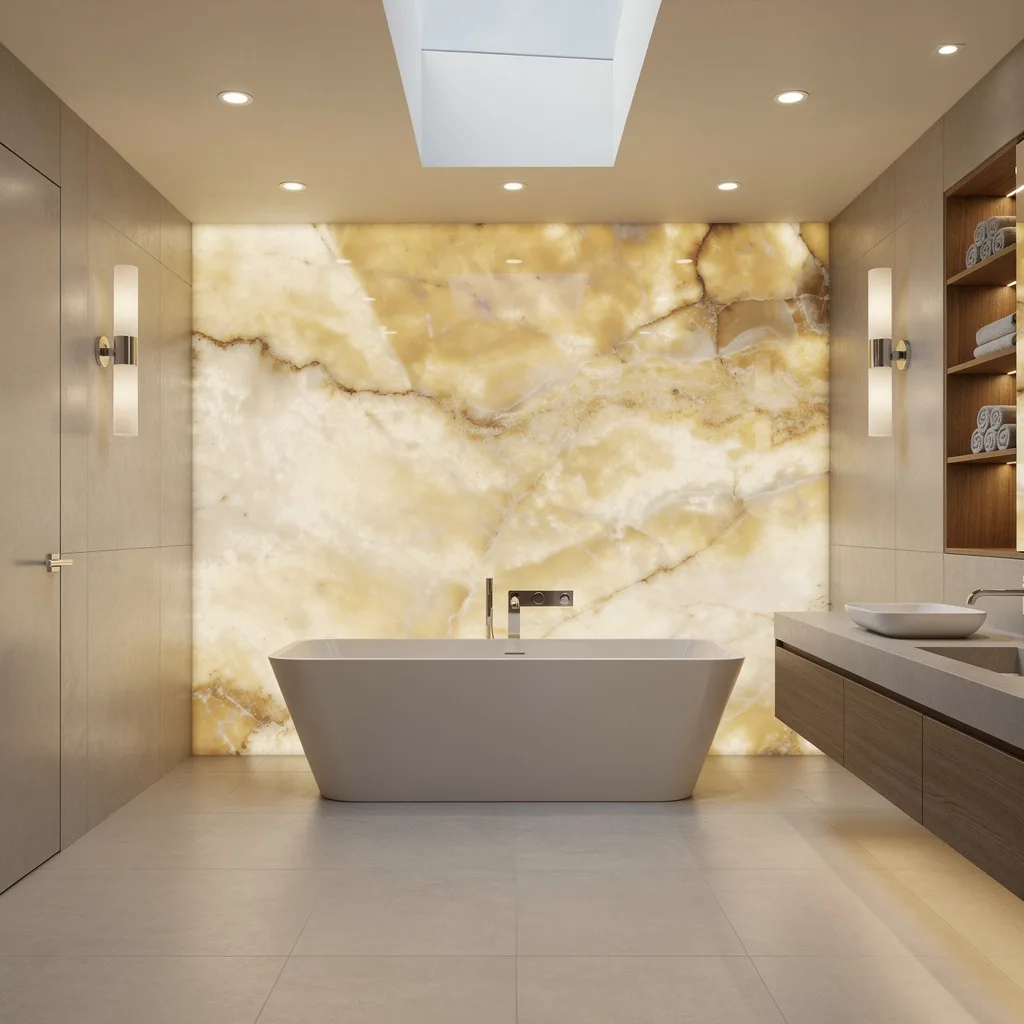
Want glowing warmth but hate tacky gold? Backlight an onyx accent wall behind your tub, and watch your bathroom flex golden glow while frosted glass sconces with chrome keep things clean. Space recessed spotlights like a math nerd did the grid—consistency is everything. Float an oak vanity with under-mounted sinks for minimalist cred, tossing in linear shelf lights for towel envy. A skylight drops daylight so you don’t get the vampire complexion. Pro tip: Marry backlighting with natural light, but never let one outshine the other—balance is key if you want a Pinterest-worthy morning.
Staggered LED Pendants—Because Symmetry Is Overrated
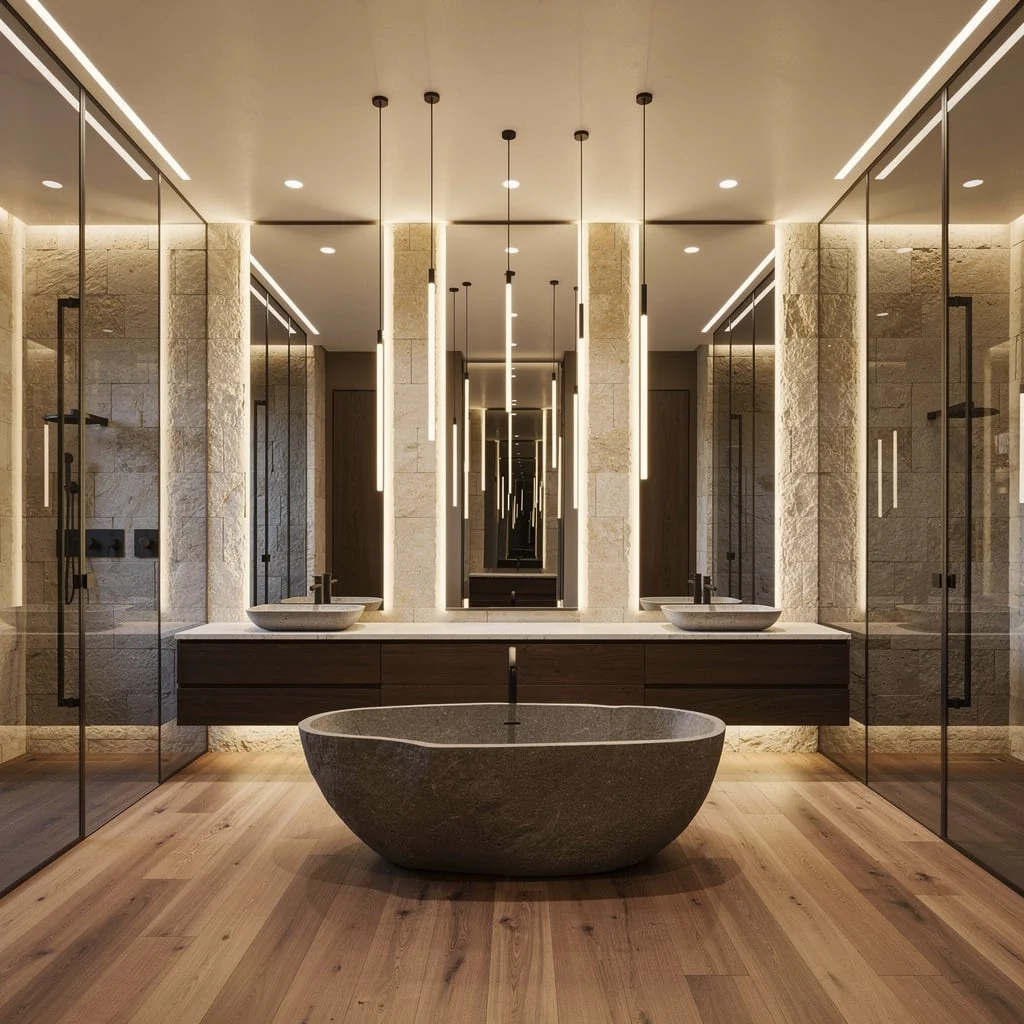
If you like your bathrooms modern but not dead, stagger linear LED pendants at various heights above your stone tub. Heated ash wood floors? If your feet aren’t spoiled, what’s the point. Edge-lit, anti-fog mirrors bounce light—no more smudgy face checks. Texture stone walls, dark oak floating vanities, under-cabinet lighting, and glass shower panels with embedded side channels mean every inch sparkles. Pro tip: Vary pendant heights and layer under-cabinet lights so no zone gets left out—lighting should define your spaces, not just illuminate them.
Moonlight Discs—Get the Celestial Glow Without the Astrology
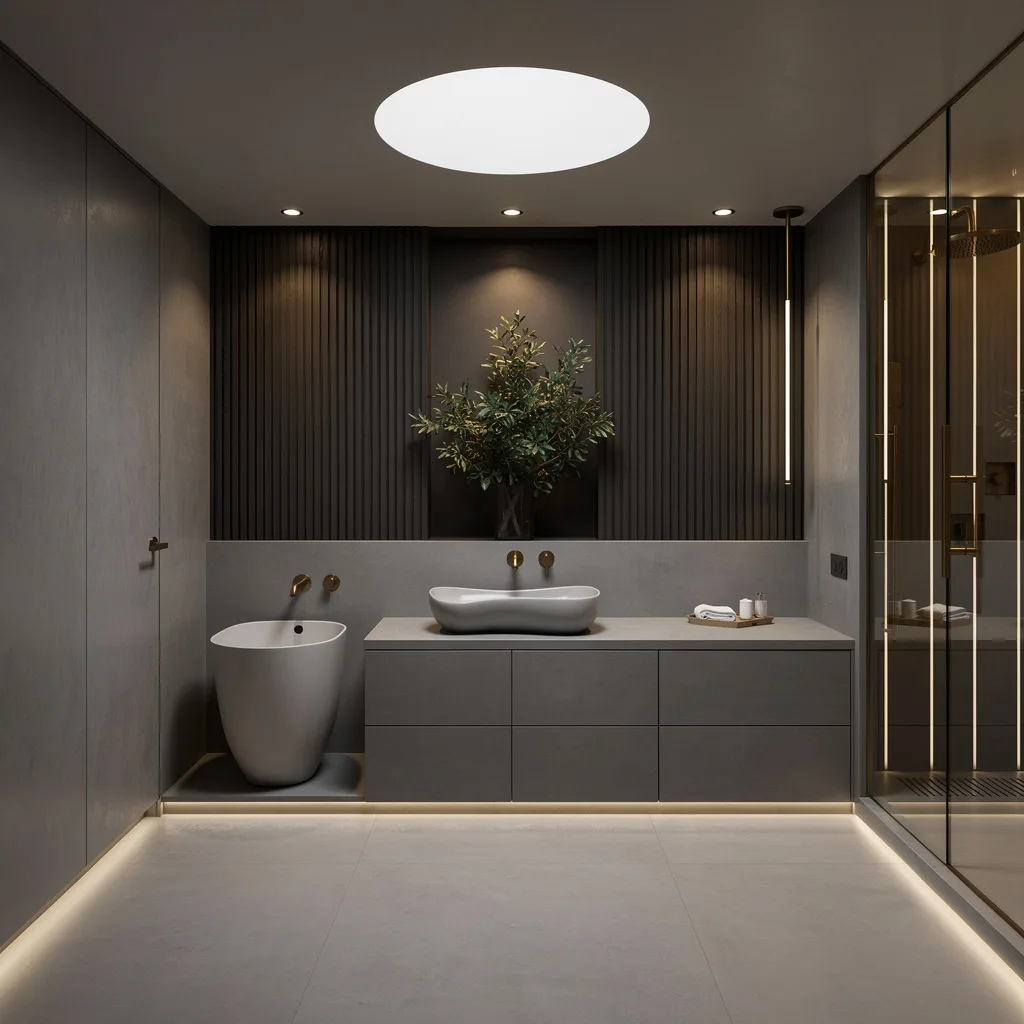
Ditch basic ceiling lights; install oversized disc fixtures for that perfect moonlit effect. Microcement vanities plus freestanding bidet and sculpted basin—hello, art enthusiast flex. Tuck brass micro-spots into fluted wood and spotlight your tall foliage; you aren’t decorating a blank void. Sneak under-bench and toe-kick floor lighting for subtle pathfinding (no stubbed toes). Vertical wall washers in the walk-in shower = Instagram mood. Pro tip: Always counter soft ceiling light with targeted accent spots—so every corner stays atmospheric and not ‘just vaguely lit’.
Futurism Moves: Diffused Coffered Ceilings & Tube Pendants
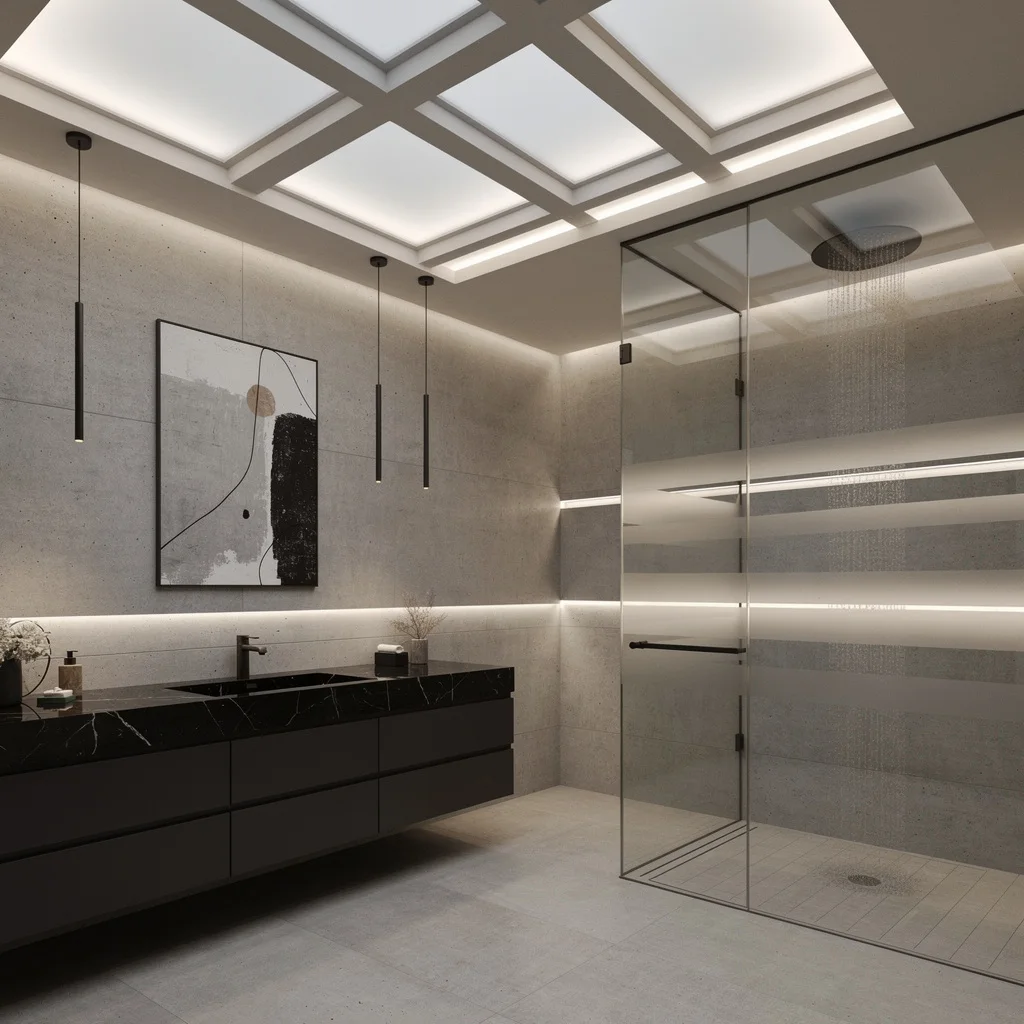
If muted vibes are your whole persona, install custom illuminated coffered ceilings with satin glass panels. Matte black quartzite vanities need tube pendants hung at various lengths—glare-free, always. Cover the walls in concrete-finish tile, and line up recessed horizontal lighting at eye height for instant gallery drama. Rain shower? Frosted glass and horizontal strips so your morning doesn’t feel like a crime scene. Pro tip: Set all linear lights at the same level—aim for clean lines and asymmetric suspensions, never let two pendants fight for attention.
Shadow Line Coving—Drama Starts at the Ceiling
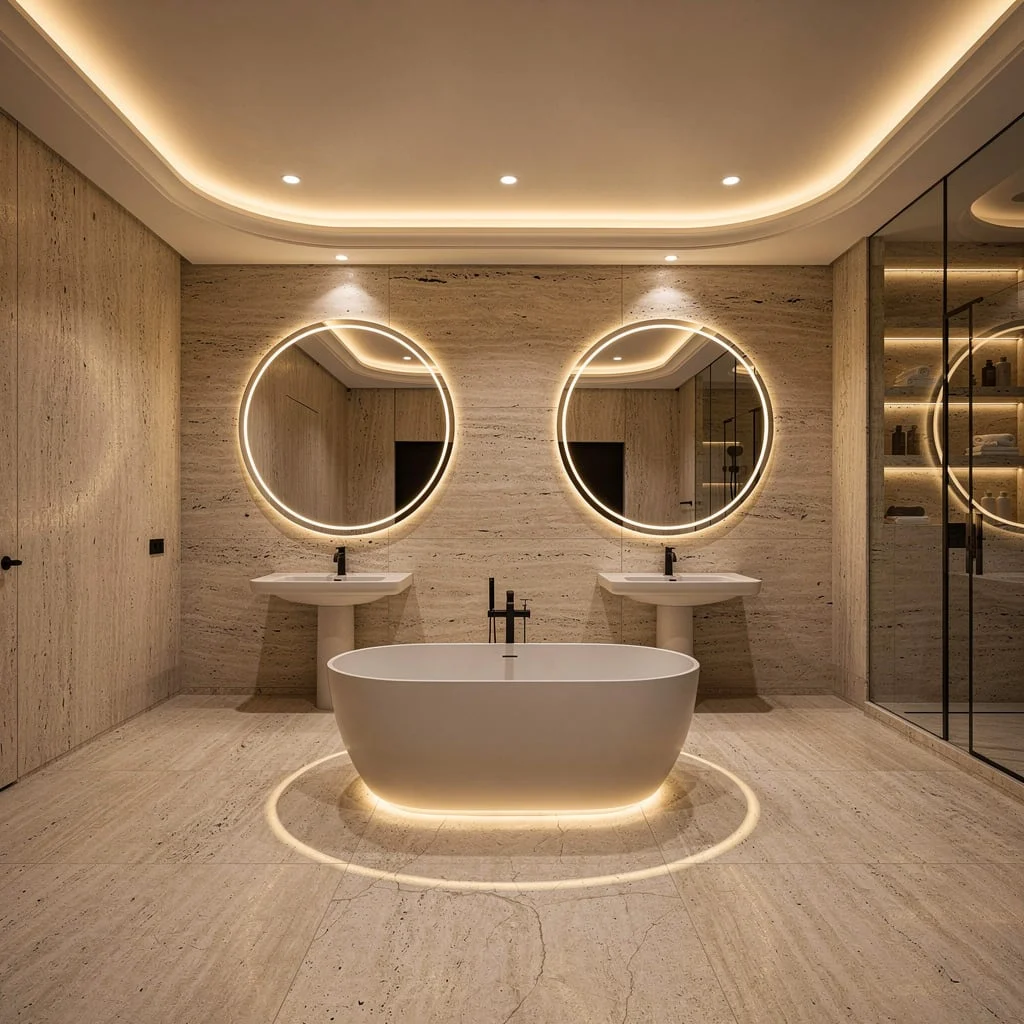
Shadow line coving housing endless warm LEDs belongs in every grown-up bathroom—ditch one giant overhead and layer instead. Double pedestal sinks need oversized circular mirrors with perimeter backlighting; go big or go home. Ring indirect floor lighting under your tub for cinematic flair, and let recessed wall wash spots zone your shelving and seamless shower. Travertine walls, textured porcelain slab flooring—hello, expensiveness. Pro tip: Indirect glow is your bestie; always bounce light off walls and floors so everything gets a soft highlight, not authoritarian brightness.
Oasis Vibes: Skylit Alcove & Burnished Steel Pendants
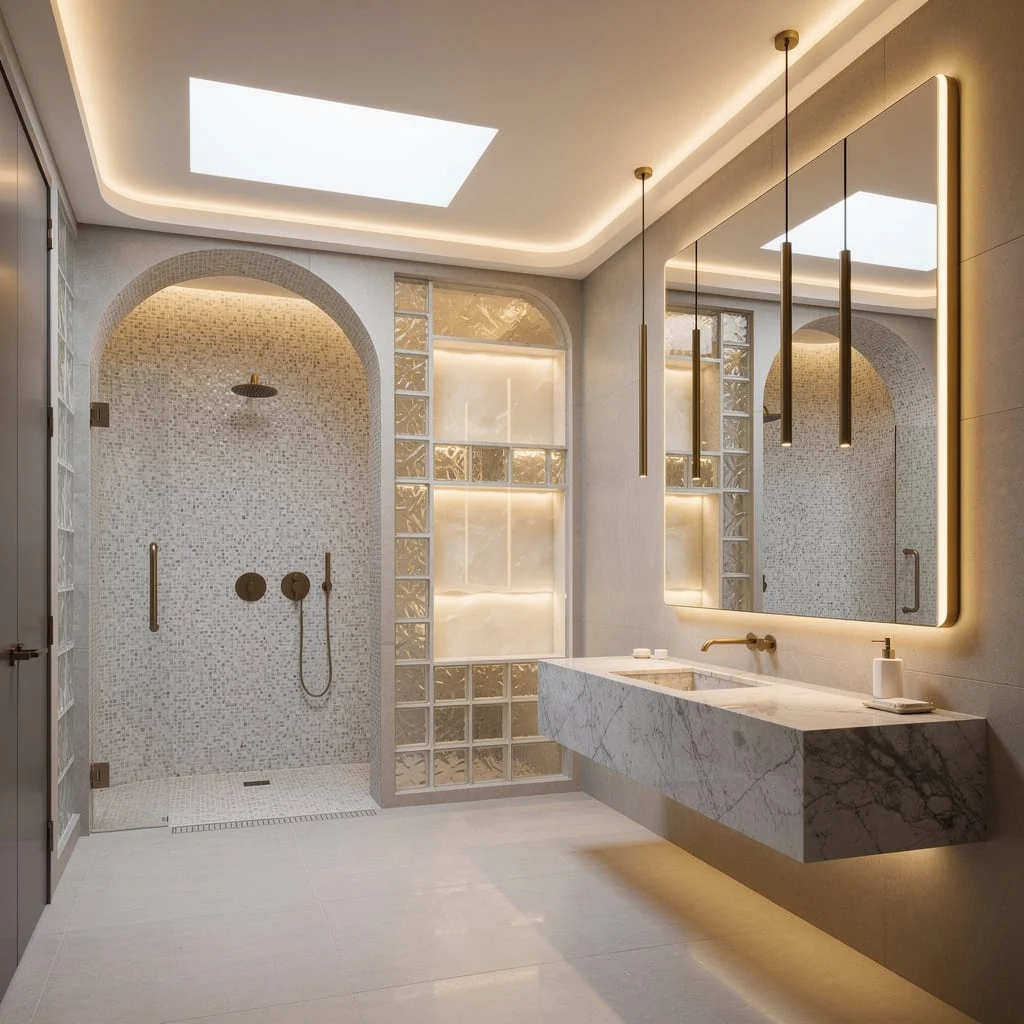
If your bathroom hasn’t seen daylight, you’re missing out—build a skylit, arched alcove shower and slap on micro-mosaic tiles for texture. Use textured glass block to diffuse light; let harsh rays die. Drop slim vertical pendants in burnished steel over a cantilevered marble vanity for perfect task lighting, and backlight floating mirrors so you never see shadows. Mix in ceiling-perimeter soft LEDs and translucent resin panels set in shower niches. Pro tip: Always hide the LEDs so glow stays ambient; expose the pendants for sharp, focused light.
Horizontal Shadow Lines—For Those Who Hate Boring Walls
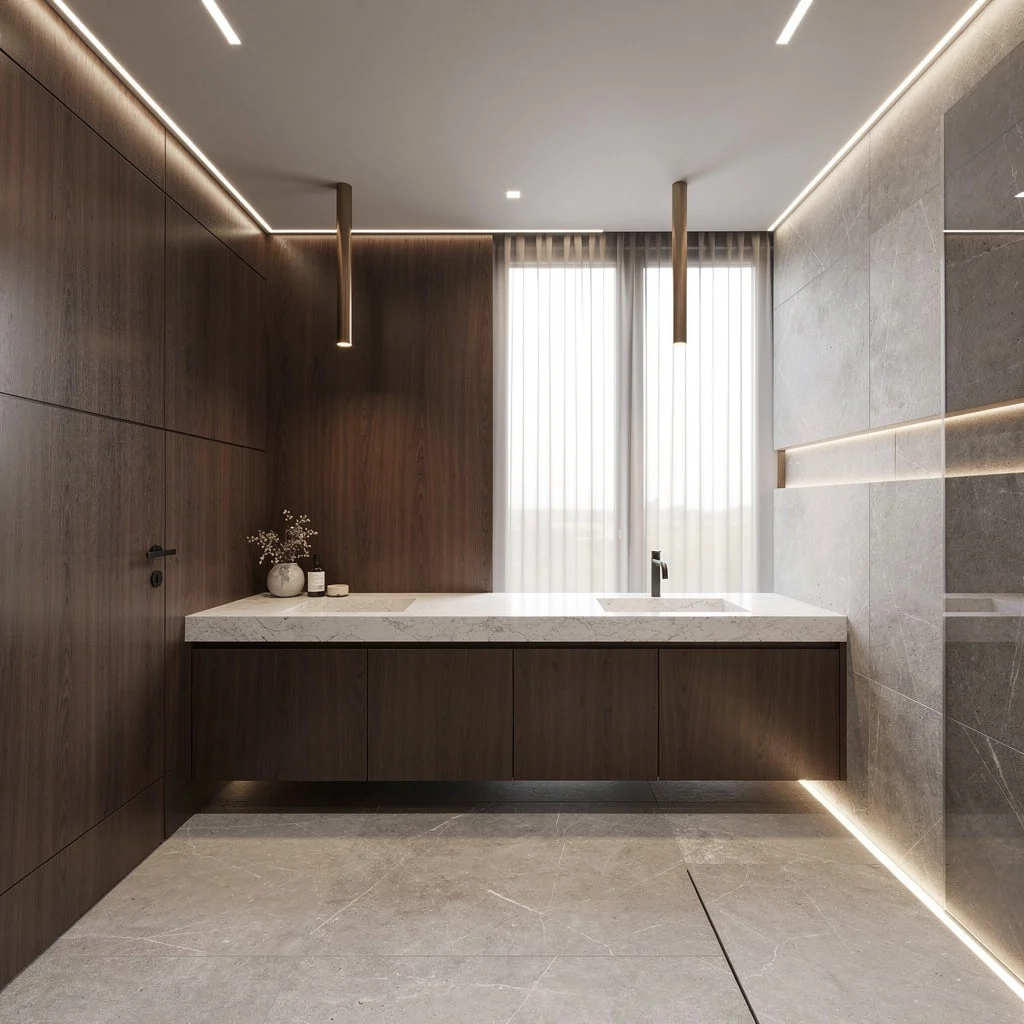
If walnut paneling doesn’t scream luxury, nothing will. Run horizontal LED shadow lines—from wall to ceiling—for layered, seamless shine. Frame sheer curtain walls with recessed uplights so daylight floods in but never blinds. Use ceiling-mounted bronze tube lights on a marble vanity for targeted task light. Hide vertical reveals behind stone-tiled shower walls—ambient bounce beats harsh glare every day. Pro tip: Always keep ambient and task lighting separate—let indirect lighting set mood, then punch up spots where you need detail.
Glass Pendant Cluster—Because One Light Is Never Enough
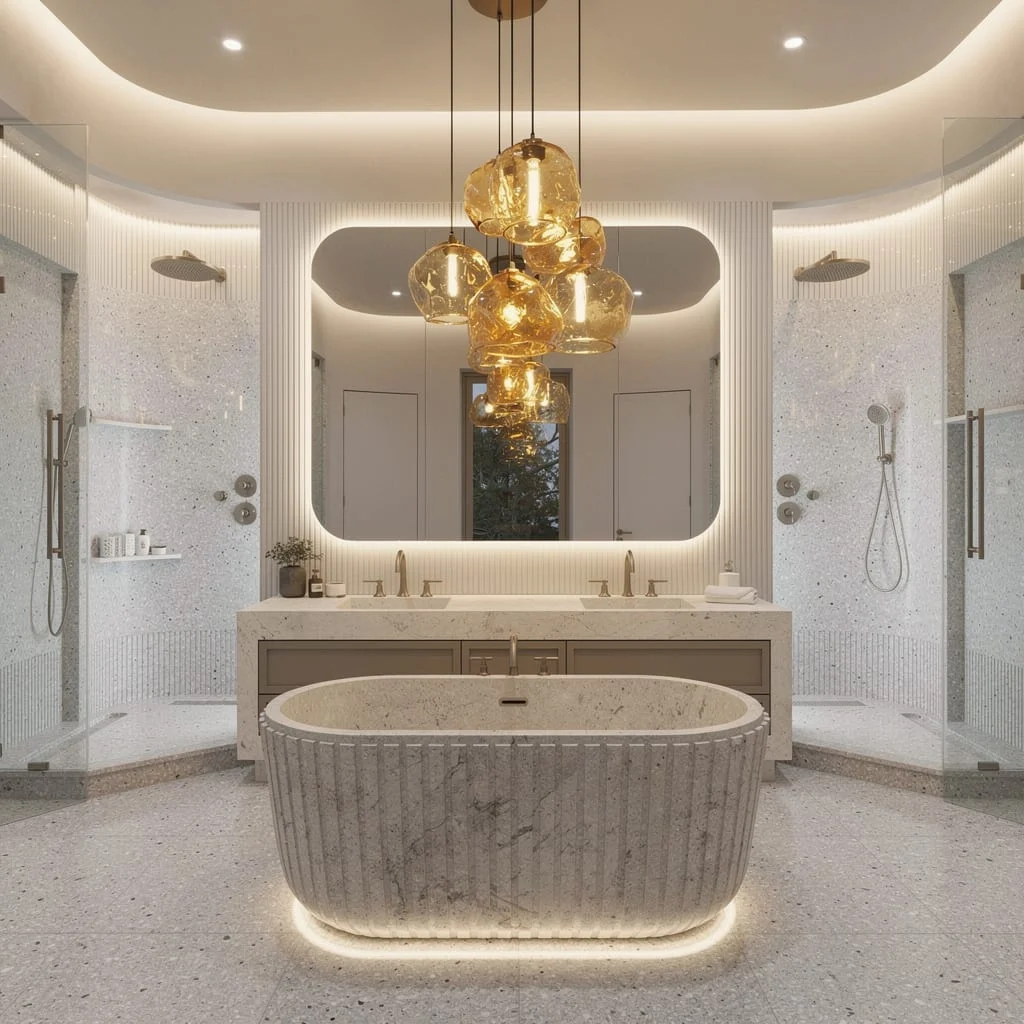
Bored of single fixtures? Hang a sculpted glass pendant cluster over your soaking tub so the drama never stops. Pair with full-wall, frameless mirrors backlit with concealed LEDs—top and bottom for maximum effect. Let brushed pewter fixtures ride shotgun, and highlight the shower alcove with waterproof LED tape so the wet zone glows like a spaceship. Reflect soft indirect lighting off terrazzo floors for airy texture. Pro tip: Always hide the fixture wiring, and run LEDs behind panels so ‘floating’ gets real—never let fixtures look hardwired and basic.
Matte Brass Panels and Underlit Vanity—Get Lux Without Trying
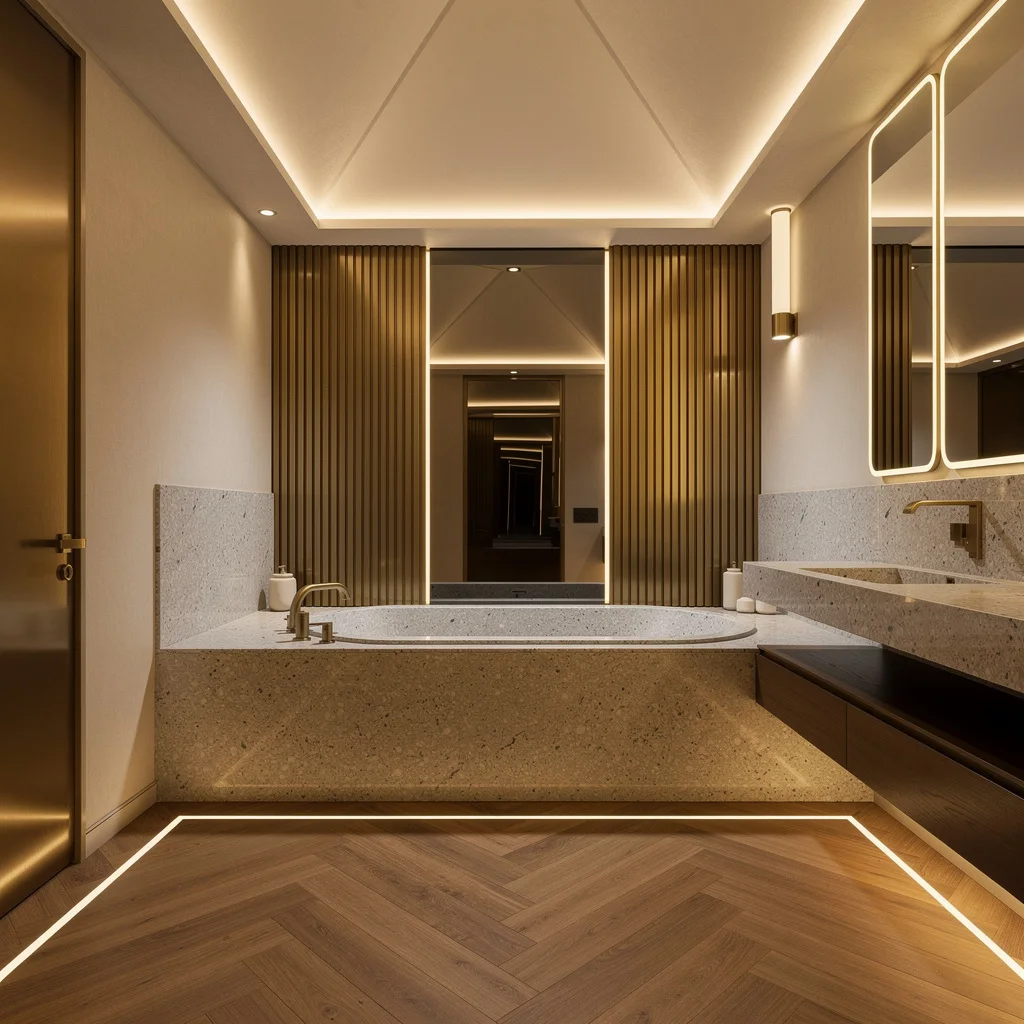
Want instant magazine vibes? Flank your stone vanity with matte brass ribbed panels—underlit for double drama. Cove lighting tucked inside a geometric ceiling recess keeps the clean lines rolling. Outline the bathing zone with chevron oak floors, and use shadow gaps with embedded LED tape for a subtle perimeter glow. Floating storage with frameless backlit mirrors keeps things shiny—but not obnoxious. Mix wall washers here and there for gentle ambiance. Pro tip: Combine accent and task lights—never let the vanity lighting overpower your tub glow.
Floating Shelf Glow and Ceiling Dome: Channel Calm Luxury
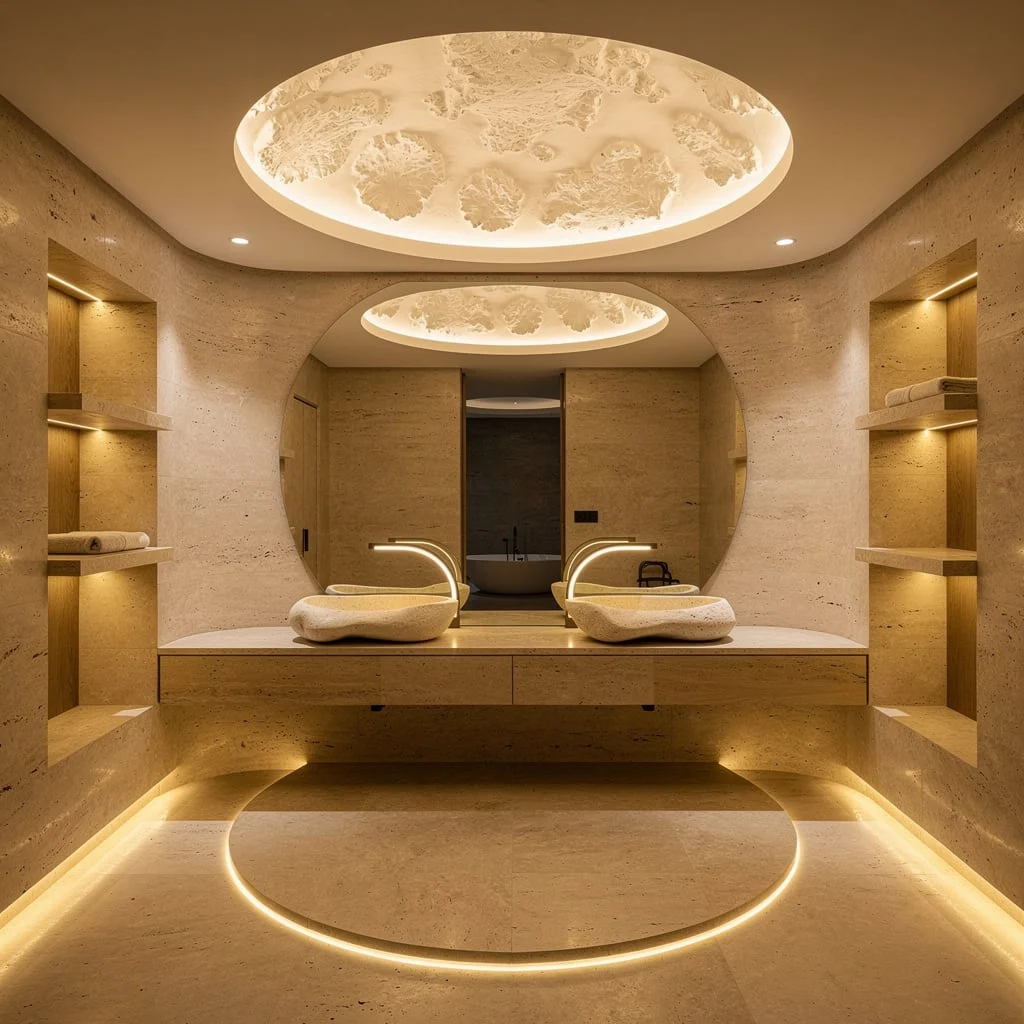
Love calm refinement? Bathe architectural floating shelves in soft golden underlighting against satin-finish travertine. Sculptural wall-mounted stone basins need arching LED bar lights—forget heavy pendant chains. Flood the freestanding tub zone with an oversized illuminated dome; hand-cast plaster details are your ticket to visual interest. Use floor wash fixtures all around the wet zone so the highlights stay diffused, and sprinkle indirect light in recessed niches to keep the peace. Pro tip: Domes should always be oversized for scale—tiny ceilings don’t flex, big ceilings ooze confidence.
The Lighting Decisions That Apply to Every Master Bathroom
Never rely on a single overhead source. It flattens the room, creates bad shadows, and wastes every expensive material surrounding it. Minimum three light sources: ambient, task, and accent.
Face-height lighting at the mirror is not optional. Overhead light alone at a mirror creates under-eye shadows that make everyone look exhausted. Sconces or backlit mirrors at face height eliminate this entirely.
Dimmers on everything. The same bathroom should function at full brightness for getting ready and at ten percent brightness for a late night. Fixed-brightness switches make that impossible.
Warm white for atmosphere, cooler white for task. Layer both with separate switches if possible. Warm ambient light with slightly cooler mirror task light is the combination that works best for both mood and function.
Your Bathroom’s Materials Deserve Better Light
Every design decision you made in that bathroom — the tile, the vanity, the fixtures, the mirror — was made in a showroom with layered professional lighting. Then it went into a room with one ceiling fixture and suddenly looked half as good.
The materials didn’t change. The light did. Fix the light and everything else you already paid for starts earning its keep. That’s not an upgrade. That’s finishing what you already started.