
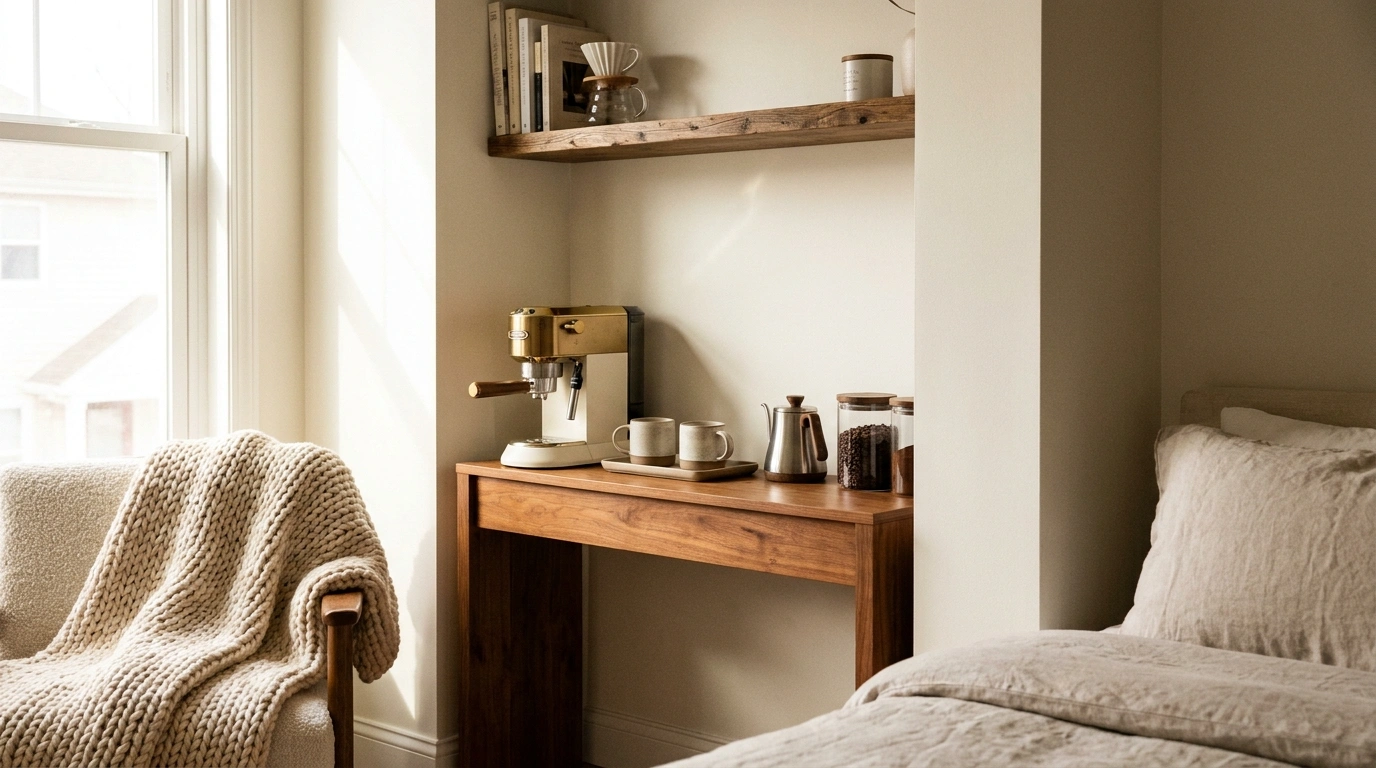
There’s a very specific moment when a bedroom coffee station goes wrong. The machine is cute. The mugs are cute. The little jars are, somehow, also cute.
Then everything gets placed on top of a dresser with nowhere for the cords to go, no clear surface left to actually make coffee, and absolutely no relationship to the rest of the bedroom.
That’s the problem with treating a coffee station as a collection of objects. A good-looking setup isn’t about finding the prettiest machine and putting a few accessories around it. The entire corner needs to belong to the room.
THE ROOM AROUND IT IS.
Bedroom Coffee Station Ideas
Arched Bedroom Coffee Nook
An arched built-in alcove transforms an ordinary bedroom wall into a sophisticated morning station by combining architectural depth with functional luxury. The soft grey cabinetry blends seamlessly into the surrounding walls, while an integrated wine fridge and upper display shelves keep essentials beautifully organized yet easily accessible.
The brilliant placement within a carved-out wall cavity means the coffee station occupies zero extra floor space while adding immense character. A sleek brass sconce mounted under the arch casts a warm, inviting glow over the counter, highlighting the curated ceramics and framed artwork below.
This setup proves that structural nooks can become the ultimate bedroom luxury when treated with intentional design. Keep the styling minimal so the graceful curves of the arch remain the true star of the composition.
Textured Wood Coffee Alcove
A recessed wooden coffee station brings unmatched warmth and textural richness right into the heart of the sleeping quarters. The patterned geometric tile backsplash adds subtle movement behind the espresso machine and kettle, while integrated under-shelf lighting creates a cozy, resort-like ambiance.
Framed by full-height cabinetry, the station feels completely built-in and purposeful rather than like an afterthought. The pale wood grain echoes the calming tones of the adjacent reading chair and bedding, tying the entire bedroom color palette together effortlessly.
Designing a coffee zone inside a wall cavity keeps the primary walking paths entirely open and uncluttered. Stick to a cohesive palette of neutral ceramics and metallic accents to maintain that serene, high-end hotel feeling.
Built-In Coffee Cabinet Framing a Large Bedroom Window
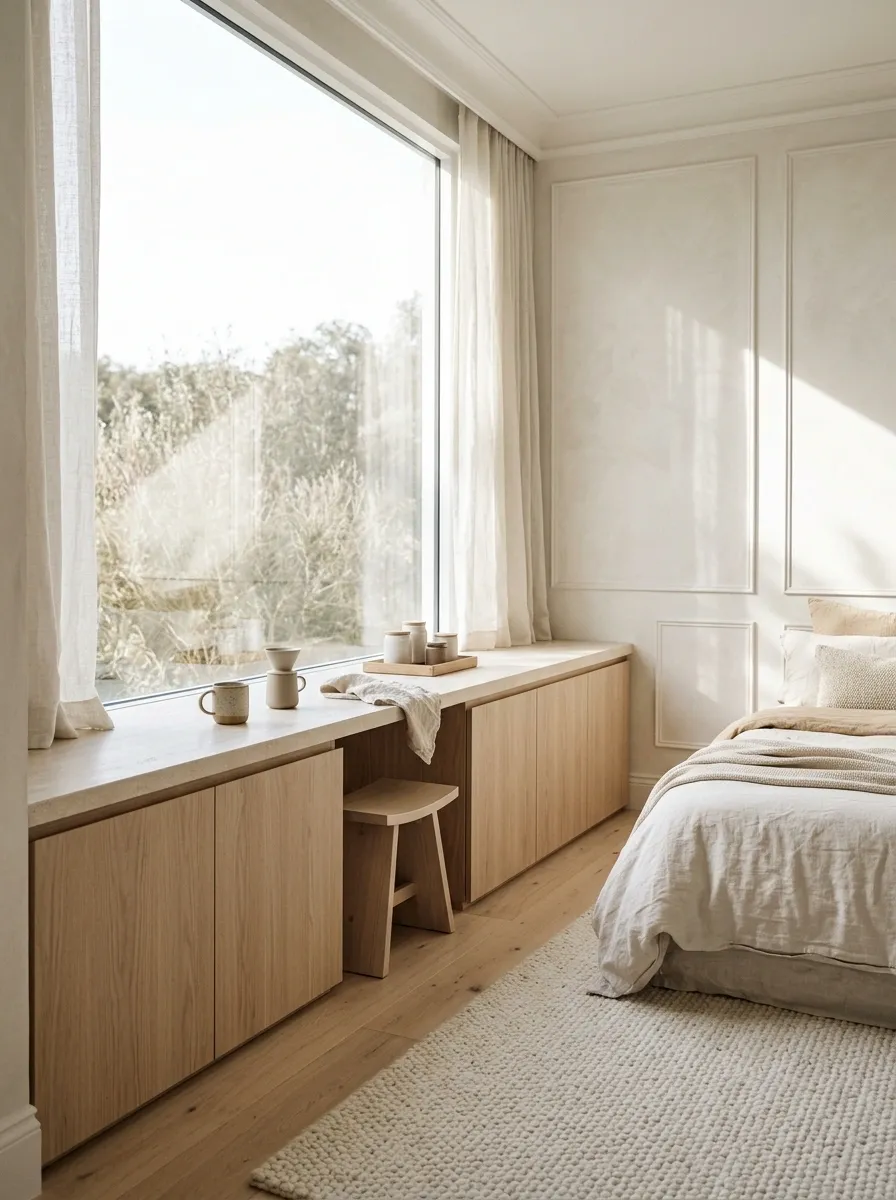
A bright bedroom looks especially polished when the coffee station stays visually quiet. Here, a low built-in cabinet runs along the wall beside a large window, using pale oak fronts and a light stone counter that almost disappear into the daylight.
A small stool tucks underneath part of the cabinet, keeping the floor open. Soft ceramics add texture without crowding the surface, while the rest of the bedroom stays restrained with linen bedding and light timber flooring.
The window does most of the visual work, so the coffee cabinet doesn’t need to compete. That’s the whole point. Too much shelving or decorative clutter would turn a calm architectural moment into another display wall.
Arch Framed Coffee Bar
A grand arched coffee cabinet with striking marble backing introduces dramatic luxury and timeless elegance to the bedroom. The soft muted pink cabinetry grounds the impressive arch, while delicate glass shelving showcases an edited collection of everyday mugs and decorative glassware.
This statement piece manages to act as both functional beverage station and breathtaking art installation. The intricate veining of the stone backdrop provides natural pattern, allowing the simple metallic teapot and fresh floral arrangement to shine without needing extra clutter.
Placing such a substantial furniture piece in the bedroom requires keeping the surrounding textiles light and airy. Let the rich textures of the cabinetry and stone carry the visual weight while the bed remains soft and inviting.
Mid-Century Modern Coffee Stand
A streamlined mid-century inspired coffee stand offers an effortless way to incorporate a morning beverage station without heavy permanent construction. The mix of warm wood tones, clean white cabinet doors, and slender tapered legs keeps the piece feeling visually light against a neutral wall.
Open lower shelving featuring woven storage baskets keeps extra coffee accessories tidy and out of sight. Above the counter, a slim floating shelf with under-cabinet lighting holds trailing greenery and a brass lamp, establishing a cozy corner ambiance.
This freestanding approach works wonderfully for anyone wanting flexibility without sacrificing sophisticated style. Keep the surface edited to just the espresso machine and matching mugs to maintain that clean, intentional designer look.
Scandinavian Bedroom With a Compact White Coffee Counter
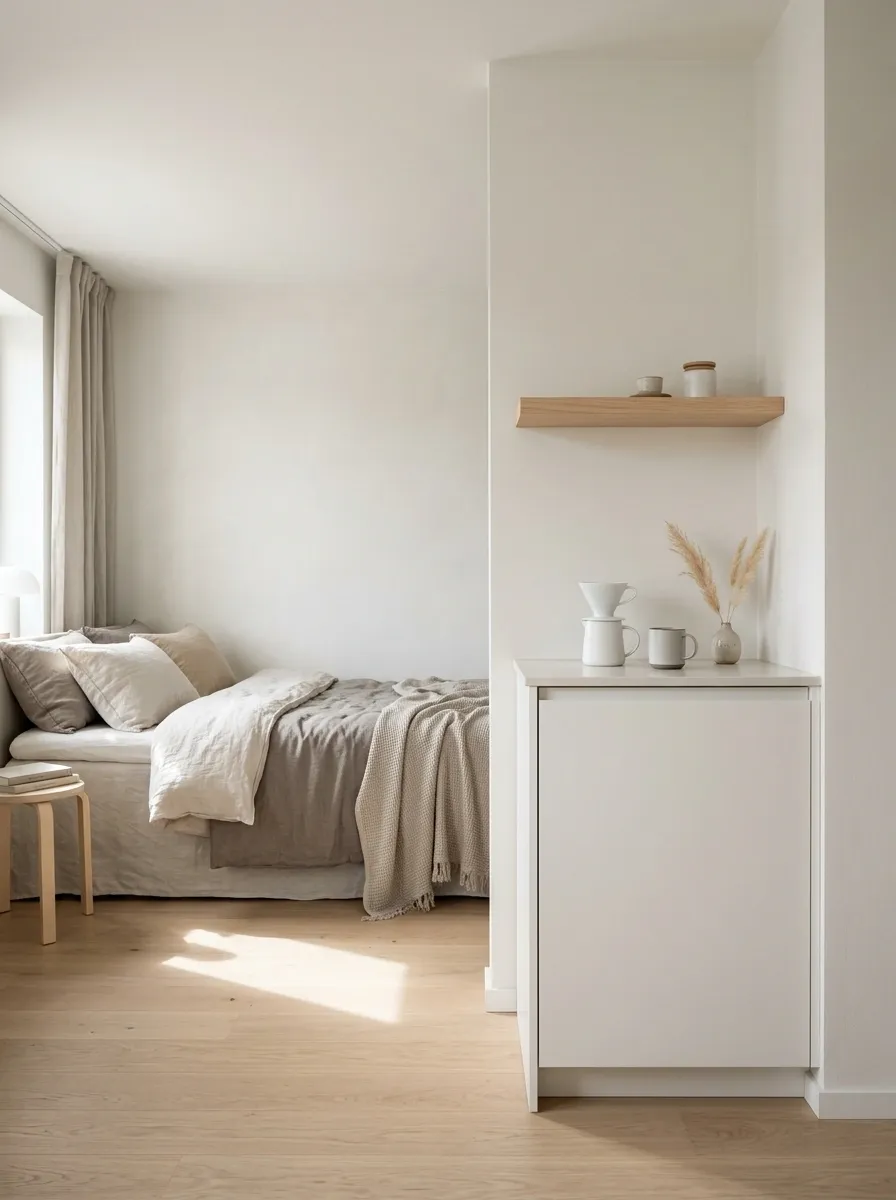
A compact bedroom doesn’t need a full cabinet wall to get a convincing coffee station. This Scandinavian setup uses a narrow white base cabinet with a pale wood shelf above it, leaving plenty of floor visible and the circulation path completely open.
The rest of the room stays simple: light timber flooring, soft bedding, woven texture, and a few carefully placed ceramics. The station feels finished because its proportions match the room. Nothing is oversized, and there isn’t a lonely countertop stretching farther than the furniture around it.
This is the sort of setup that proves small doesn’t have to mean visually improvised. The biggest mistake here would be filling the open shelf with every coffee accessory available.
Hotel-Inspired Bedroom Beverage Cabinet
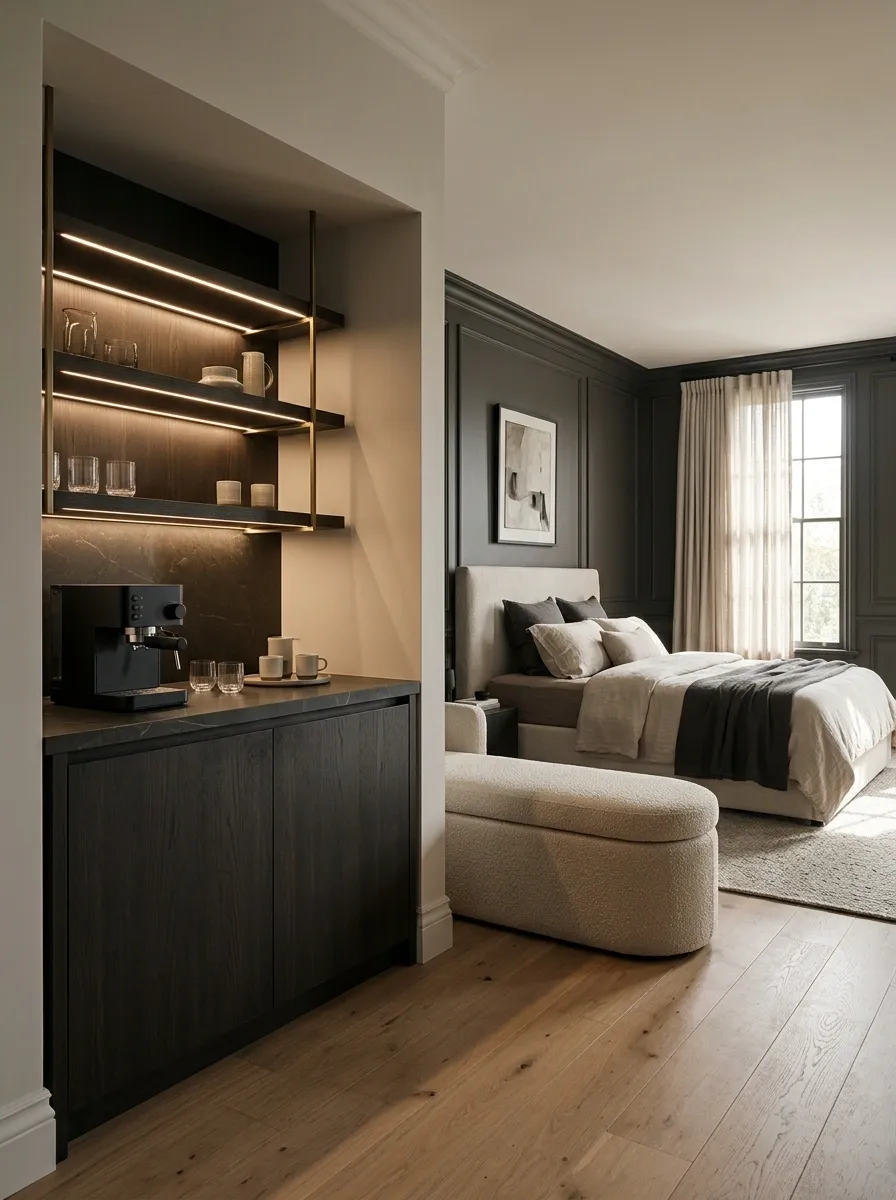
A hotel-style coffee station works when it feels like part of the bedroom’s hospitality design rather than a miniature kitchen counter. This version uses a dark timber cabinet, stone surface, integrated warm lighting, concealed storage, and a nearby upholstered bench.
The composition is deliberately polished. The beverage area has a clear footprint, while the bed and lounge furniture keep enough distance to preserve an open feeling. Glassware and cups are visible, but the messy everyday supplies disappear behind cabinetry.
This concept suits larger bedrooms and guest suites particularly well. The secret is restraint. A hotel room feels luxurious because everything has a place, not because every surface is covered with attractive things trying desperately to get noticed.
Vintage Dresser Turned Into a Charming Coffee Station
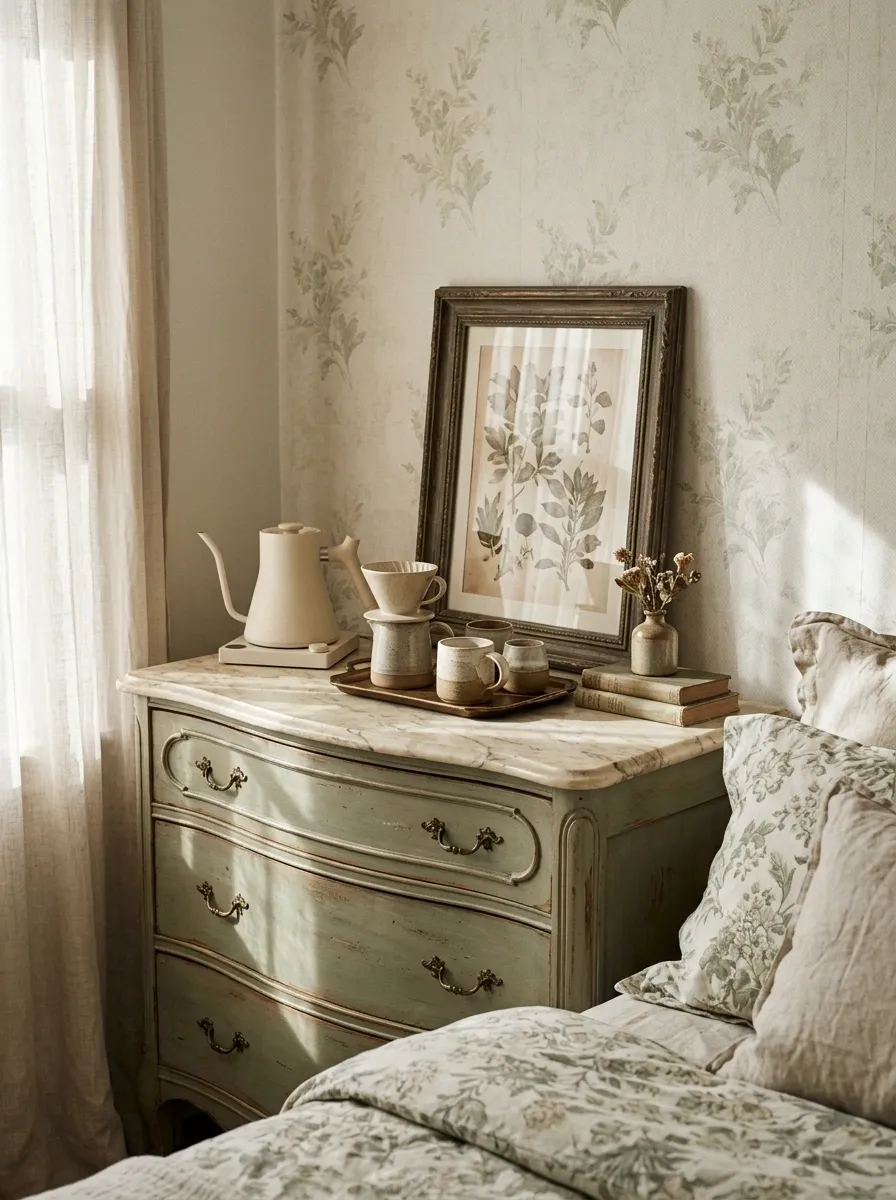
A vintage dresser can make a bedroom coffee station feel like furniture first and beverage zone second. This version uses a painted antique-style dresser with a pale stone or marble-look top, aged brass pulls, framed artwork, and a small collection of handmade ceramics.
The charm comes from contrast. The slightly imperfect furniture gives the room personality, while the coffee setup stays edited enough to avoid looking like a countertop appliance display. Patterned bedding or soft floral fabric can reinforce the traditional character without making the corner feel overly themed.
Use the dresser as the visual anchor. Everything above it should stay relatively quiet. Otherwise the surface starts looking less like an elegant coffee station and more like a craft fair packed into three square feet.
Japandi Coffee Niche With Pale Wood and Stone
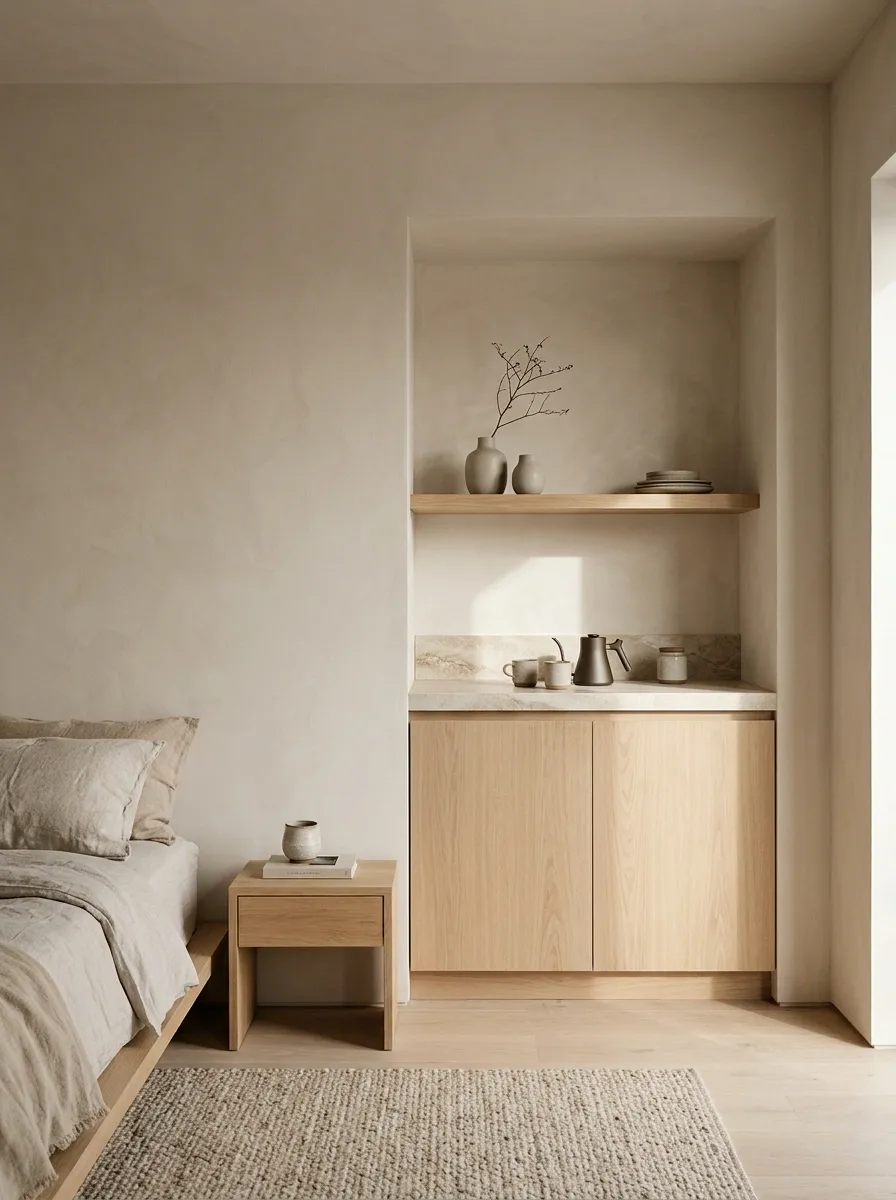
This bedroom takes the opposite route from the vintage dresser. Everything is quieter, cleaner, and intentionally restrained. A recessed coffee niche uses pale oak cabinetry, a light stone counter, soft beige walls, and one or two carefully chosen ceramics.
The niche works because it feels architectural. There isn’t a lot happening above the counter, and the surrounding furniture stays low and simple. Natural timber adds warmth while the stone keeps the composition crisp.
This look suits bedrooms where visual calm matters more than display. The coffee setup should almost disappear when viewed from across the room, then reveal its details when someone moves closer.
The temptation to add shelves everywhere should be ignored. The internet has enough tiny decorative jars already.
Bedroom Coffee Station Hidden Inside a Wardrobe Cabinet
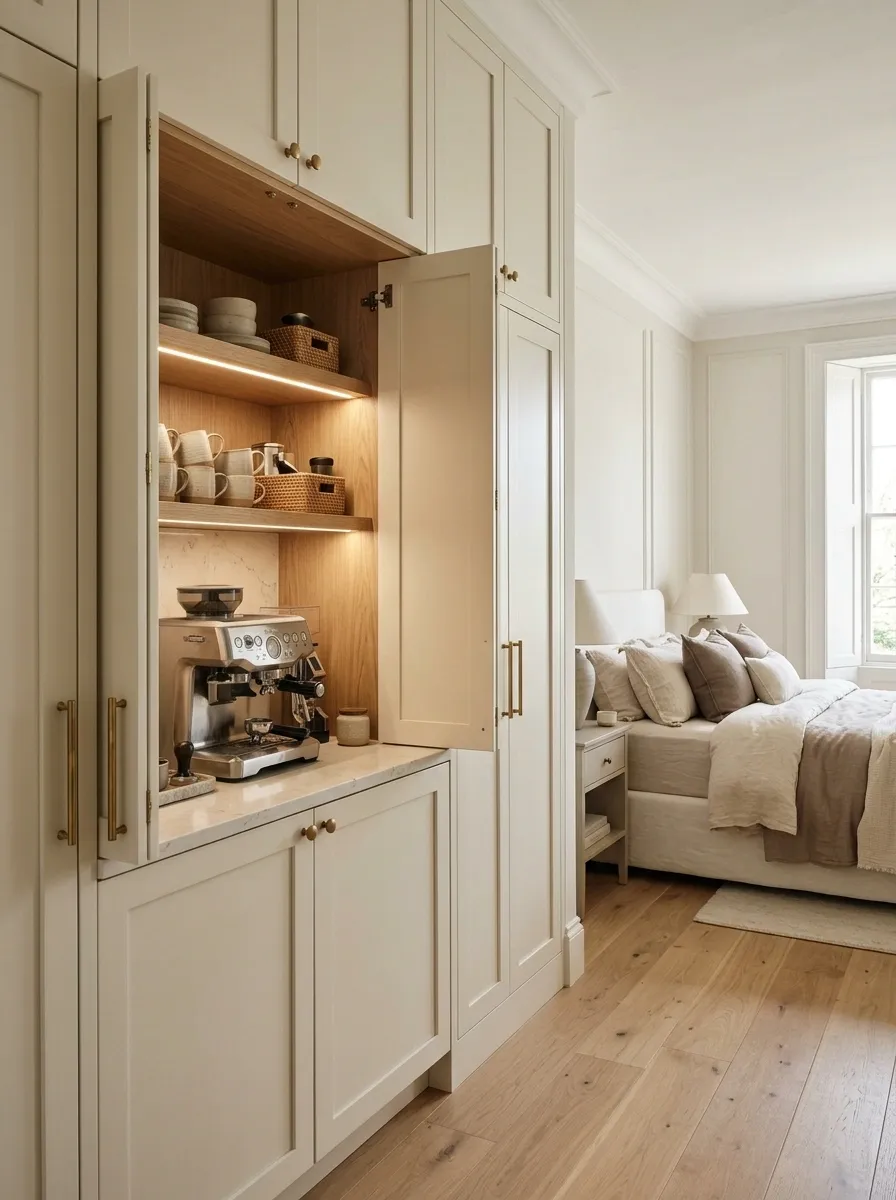
Sometimes the prettiest coffee station is the one that vanishes. A tall built-in wardrobe can conceal a complete beverage zone behind matching cabinet doors, keeping the bedroom visually uninterrupted when the station isn’t being used.
Inside, the setup can have a compact counter, open cup storage, concealed supplies, and dedicated task lighting. Outside, it reads as one continuous run of cabinetry that belongs to the bedroom.
This is particularly effective in modern bedrooms where a wall of mismatched furniture would break the clean architecture. The closed doors restore the room’s calm immediately.
The most important detail is continuity. Use the same cabinet finish and visual proportions as the rest of the wardrobe system. The goal isn’t to hide an ugly coffee station. It’s to make the station feel like a completely intentional part of the architecture.
Small Apartment Bedroom With a Slim Floating Coffee Shelf
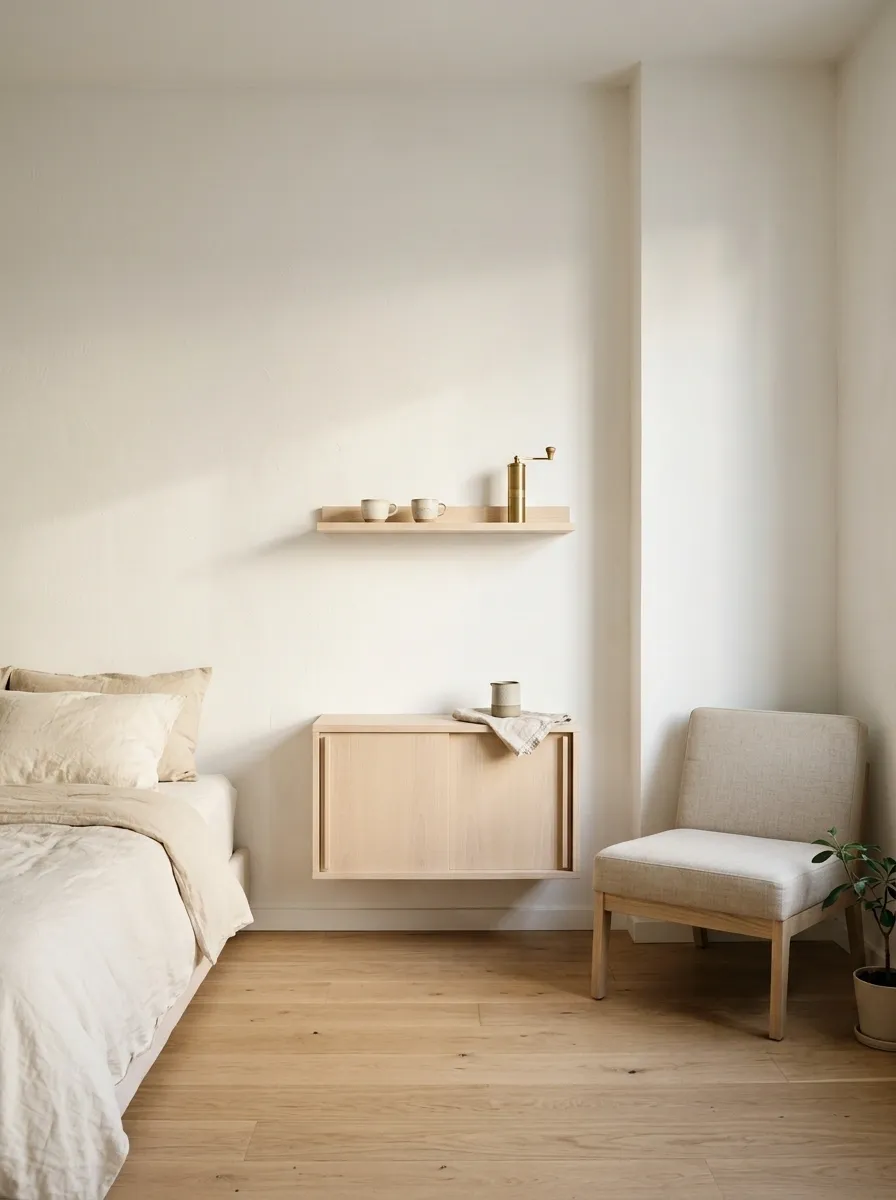
A tiny bedroom doesn’t need a full cabinet to create a convincing coffee zone. This apartment-friendly composition uses a shallow floating shelf above a narrow lower cabinet, leaving most of the floor visible and preserving the walking path.
The design feels light because storage moves vertically. Pale wood, warm white walls, and simple bedding keep the room open, while one compact chair nearby gives the corner some purpose without swallowing valuable floor space.
The shelf should remain visually disciplined. A few cups and one useful accessory are enough. Once every inch becomes storage, the airy effect disappears.
This is a strong solution for renters or small bedrooms because the design relies on proportion and wall organization more than a large built-in footprint.
Soft Traditional Bedroom With a Marble-Topped Beverage Cabinet
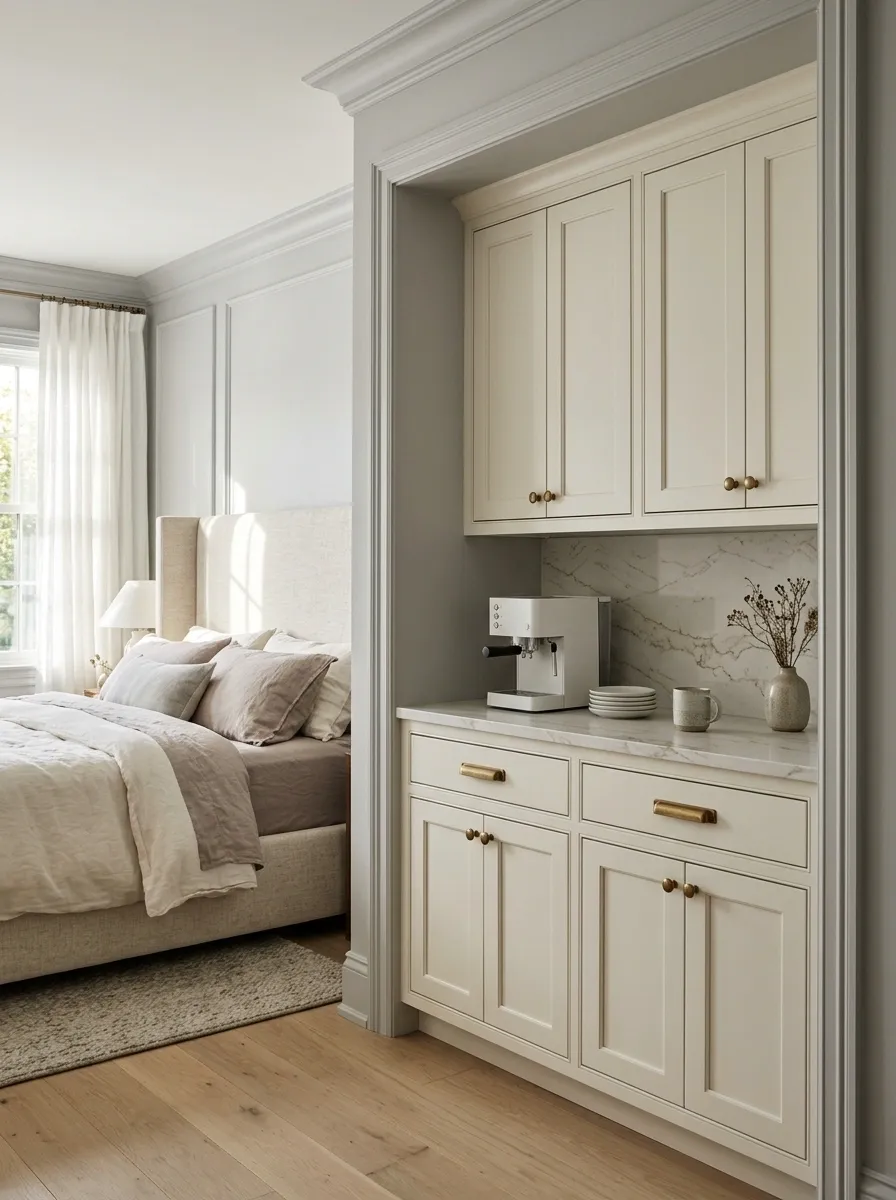
A traditional bedroom can handle a coffee station beautifully when the station follows the room’s furniture language. Here, a creamy painted cabinet uses a marble-style counter, refined metal hardware, upholstered furniture, and soft window treatments to create a polished side zone.
The coffee station doesn’t need to look obviously traditional. The connection comes from proportion and finish. Cabinet doors should feel substantial, the counter should have a quiet pattern, and the hardware should relate to other metal details already present in the bedroom.
Keep the coffee equipment visually simple so the cabinetry remains the feature. A loud collection of mismatched accessories would fight the room’s more formal character.
The finished effect feels closer to an elegant bedroom sideboard than a kitchen transplanted upstairs. Exactly the point.
Moody Green Bedroom With a Built-In Coffee Alcove
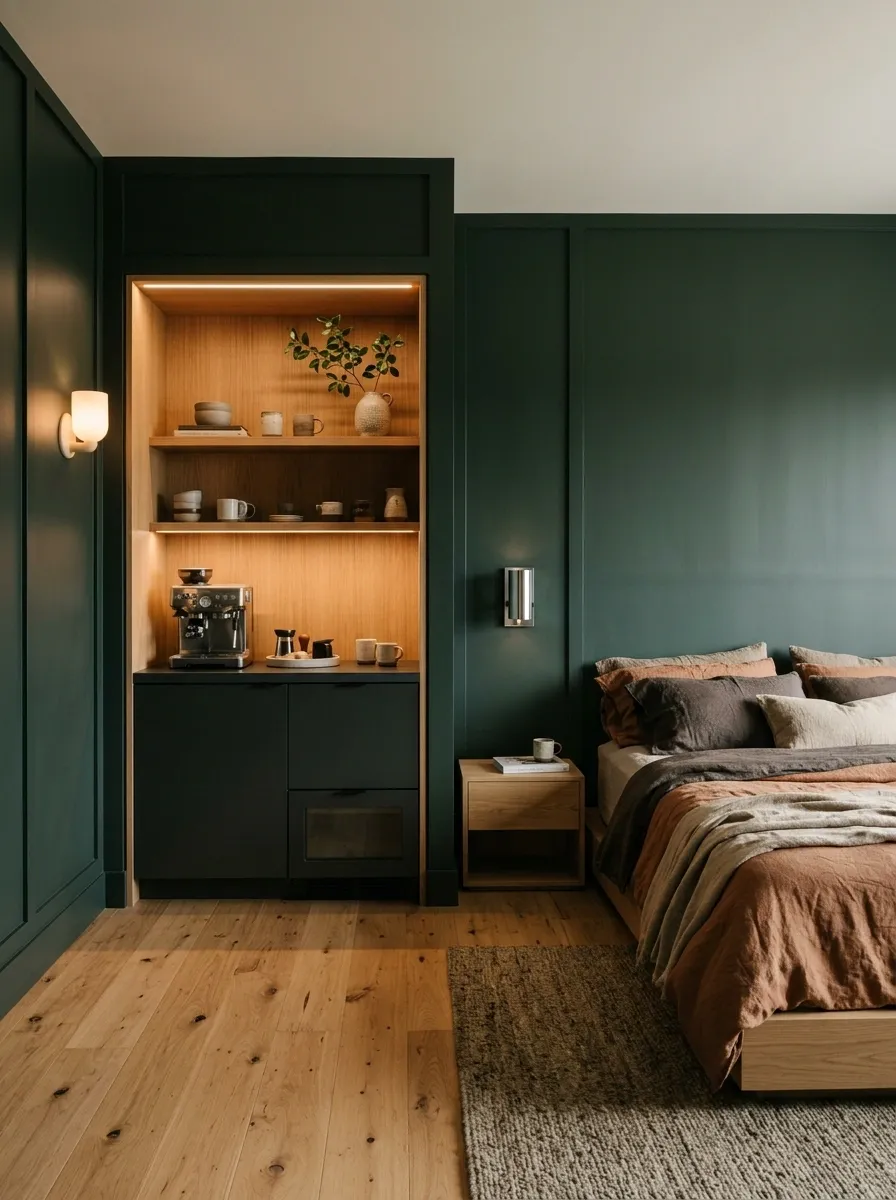
Deep green walls give this bedroom coffee station its personality before a single accessory appears. The beverage zone sits inside a recessed alcove with warm oak shelves, a darker counter, and soft wall lighting that picks up the warmer tones in the bedding and flooring.
The important part is the contrast between the saturated wall and the natural wood. The oak prevents the green from feeling too heavy, while the darker counter keeps the niche connected to the room instead of making it look like a bright little kitchen cut into the wall.
This composition works especially well when the bedroom already has strong architectural character. Keep the styling sparse. A dramatic wall color has already done plenty of talking.
Coastal Bedroom Coffee Cabinet With Rattan and Pale Blue
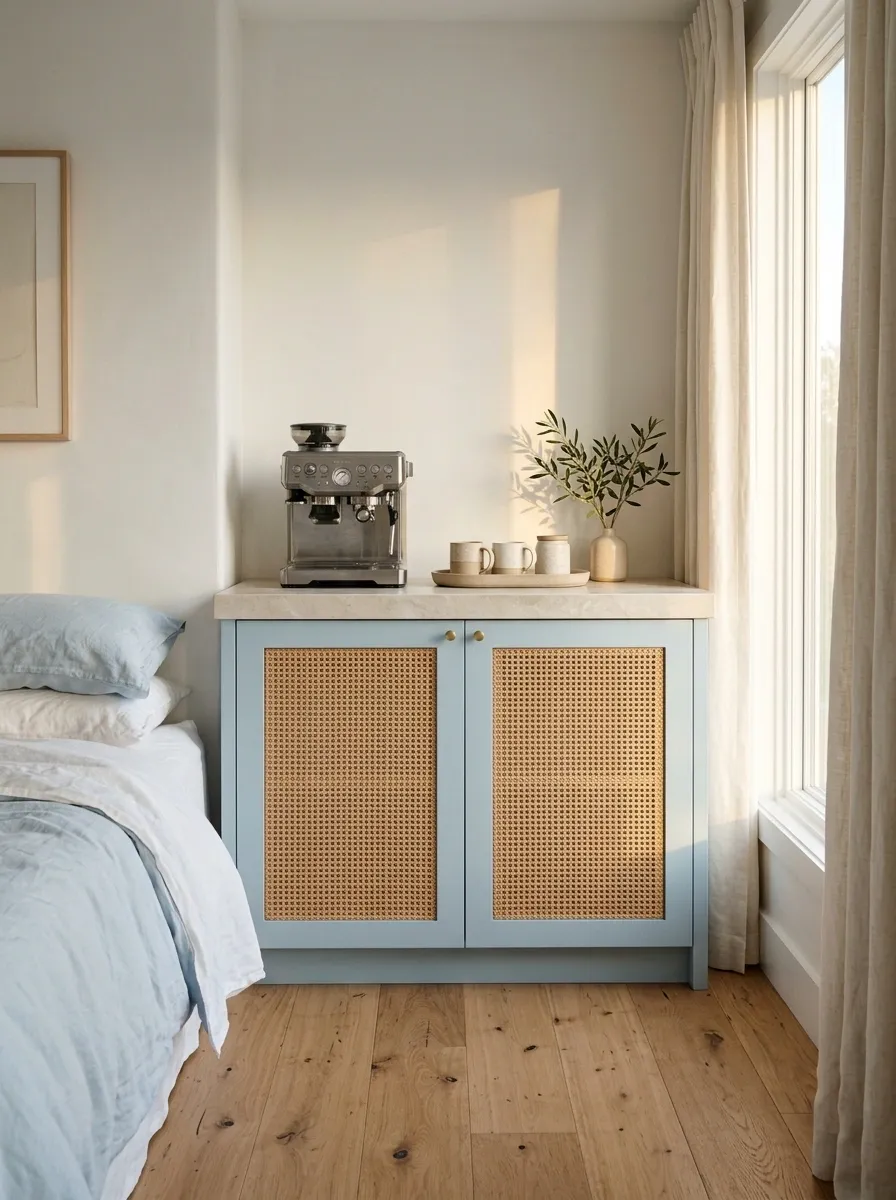
A pale blue cabinet, light stone surface, woven-front storage, and linen bedding give this bedroom a relaxed coastal character without turning it into a themed beach rental. Warm timber flooring keeps the cooler blue from becoming icy, while natural woven texture gives the coffee cabinet some depth.
The station sits near a bright window, with the cabinetry acting as a soft color block rather than the main focal point. The result is calm but not bland.
The trick here is restraint. There is no need for seashell décor, nautical signs, or an entire pottery collection arranged around the coffee maker. The materials already tell the story.
A little blue, some warm wood, and plenty of natural texture get the job done.
Industrial Loft Bedroom With a Steel and Oak Coffee Bar
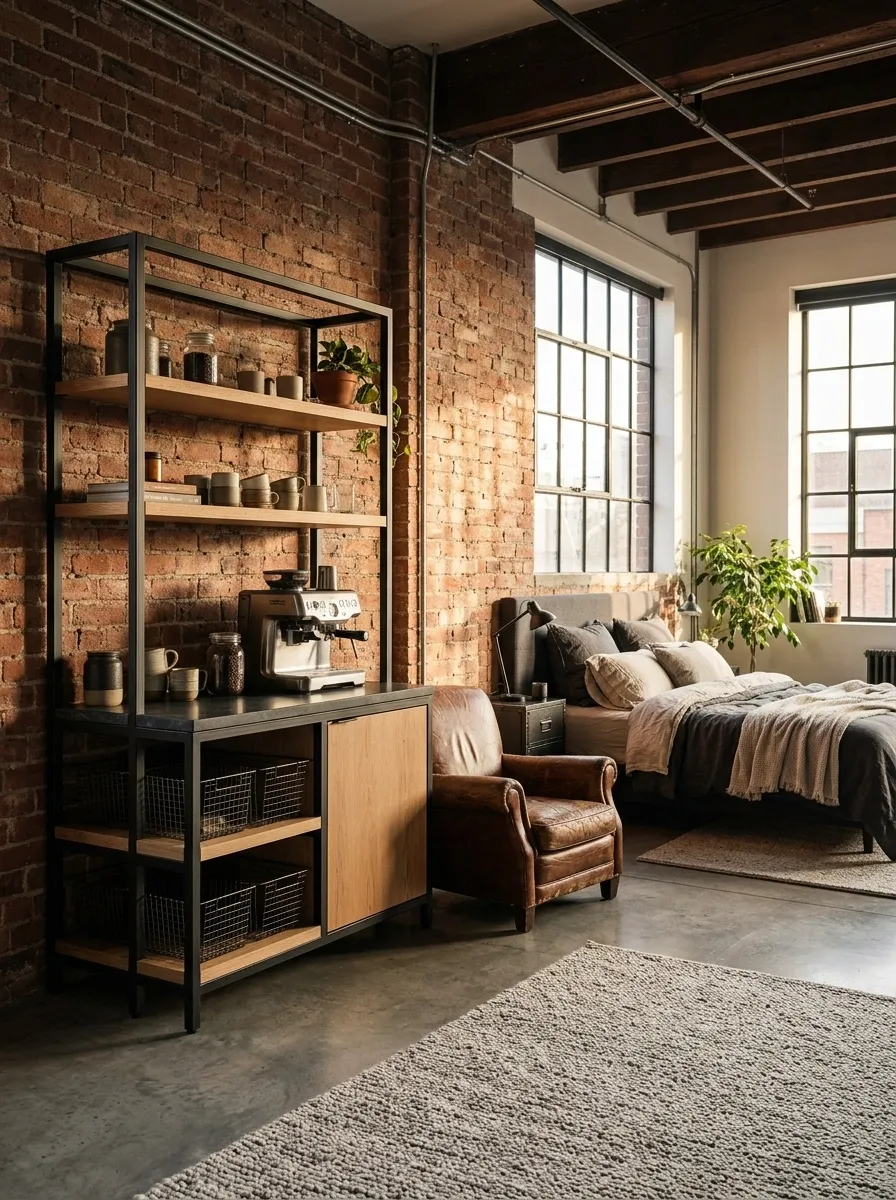
Exposed brick, black steel, warm oak, and soft bedroom textiles create a coffee station that belongs naturally in a loft. The cabinet uses a simple steel frame with oak shelving and a compact stone counter, while a leather chair nearby gives the setup a stronger relationship with the sleeping and lounging areas.
Hard materials dominate the station, so the rest of the bedroom needs softness. Linen bedding, a textured rug, and upholstered elements prevent the space from feeling like an office that accidentally acquired a bed.
The best part of this concept is the material tension. The brick and steel bring structure, while oak and textiles stop everything from becoming cold.
Industrial style doesn’t require making the room look like a warehouse cafeteria. Thankfully.
Feminine Bedroom Coffee Corner With Curved Cabinetry
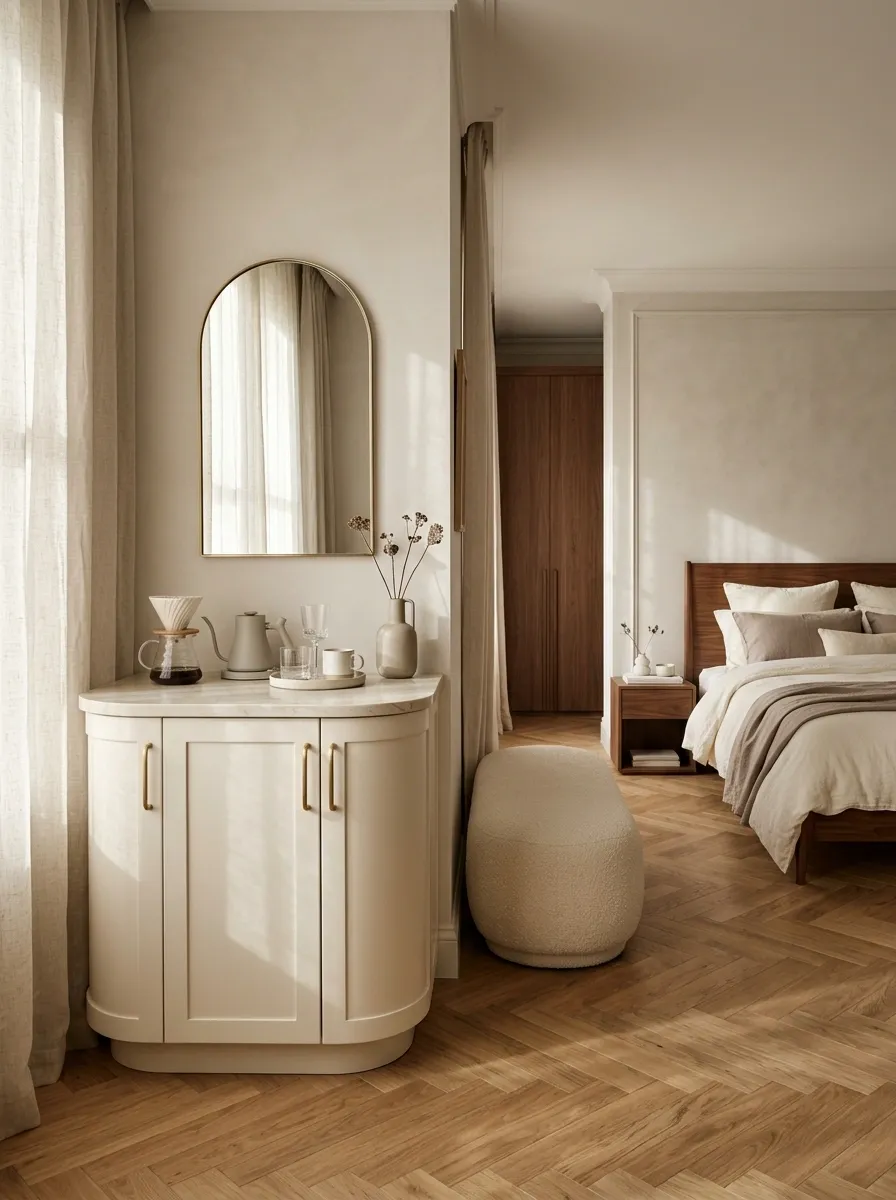
Curved cabinetry changes the entire character of a bedroom coffee station. This composition uses a softly rounded cabinet in warm ivory, a pale stone counter, a curved mirror, and an upholstered bench with similarly gentle proportions.
There is no need for elaborate decoration because the repeated shapes create the visual identity. The rounded forms appear in several parts of the room, making the coffee corner feel connected to the bedroom rather than treated as an isolated feature.
Keep the surrounding furniture a little sharper to give the curves some contrast. Too many rounded pieces can make the room feel visually soft all the way through.
The result is refined without becoming fussy, which is harder to pull off than it looks.
Rustic Bedroom Coffee Station Built Into a Reclaimed Wood Wall
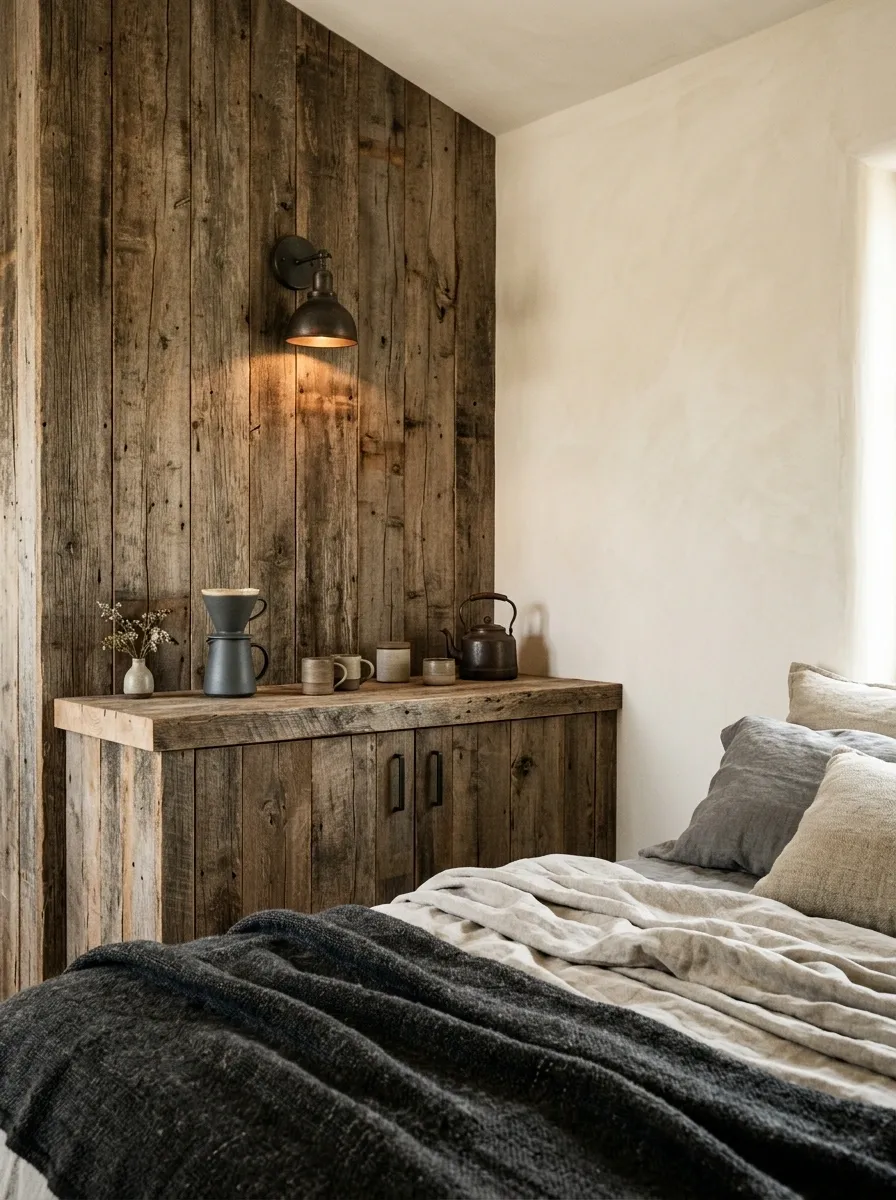
This rustic bedroom makes the coffee station part of the architecture through a reclaimed timber wall, a simple counter, aged metal lighting, and practical lower storage. Plaster-like surrounding walls and wool textiles keep the heavy wood from taking over the entire room.
The reclaimed boards provide enough texture to make the coffee corner memorable, while the rest of the room stays deliberately quiet. That contrast is what keeps the design rustic rather than cluttered.
A few handmade ceramics fit naturally here, but the styling should remain useful. Let the timber, lighting, and wall texture create the atmosphere.
The biggest mistake would be piling on more rustic accessories just because the room can technically handle them. It can’t. Nobody needs six signs explaining that coffee is important.
Classic English Bedroom With a Freestanding Drinks Cabinet
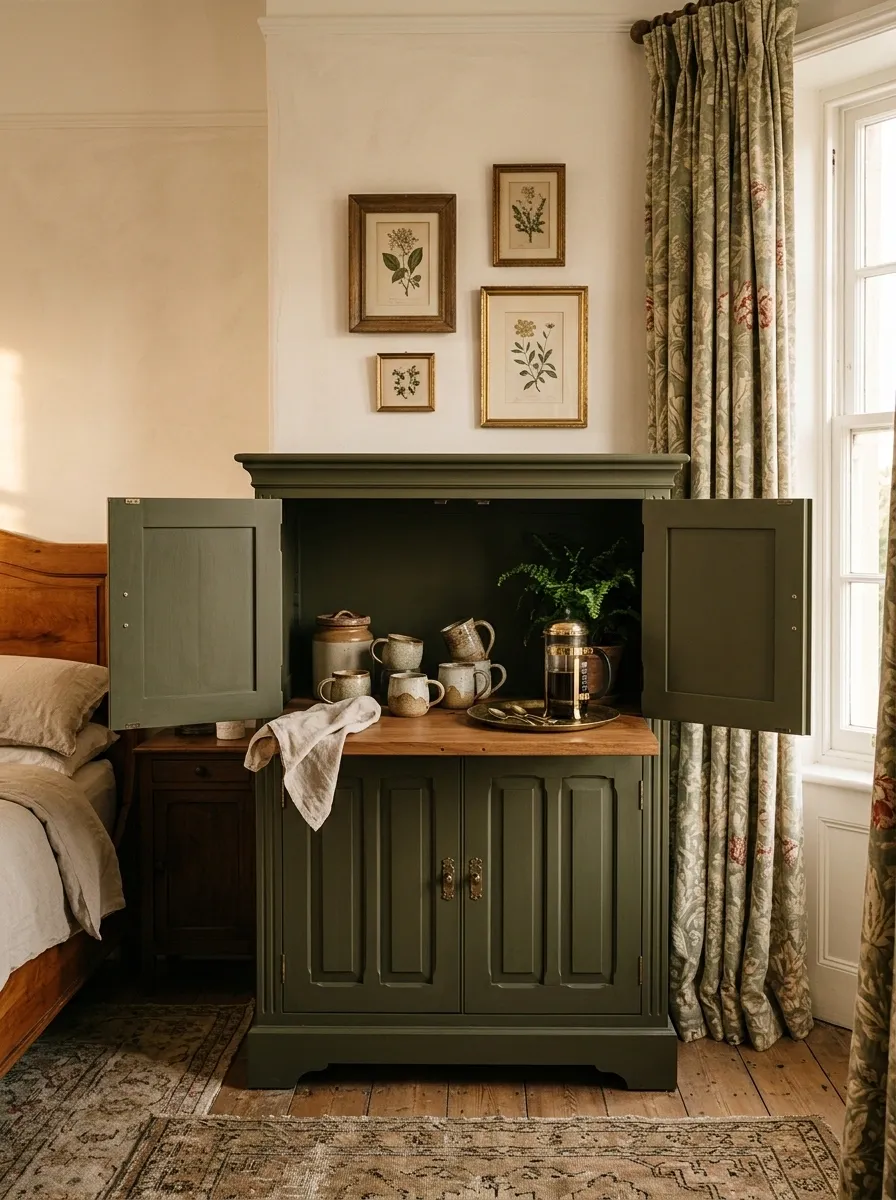
A freestanding drinks cabinet gives this bedroom a collected, traditional feel without requiring a permanent built-in. The cabinet has painted doors, a compact stone or timber serving surface, classic hardware, and open space for a few coffee essentials.
Botanical artwork, patterned curtains, and warm wood furniture make the station feel like it has always belonged in the room. The coffee zone becomes another piece of furniture rather than a separate functional category.
That distinction matters. A traditional bedroom looks better when the coffee cabinet has the visual weight of a sideboard or drinks cupboard.
Keep the styling slightly imperfect. Matching every object within an inch of its life would remove the charm. Traditional interiors can survive a little personality.
Bedroom Coffee Station Under a Sloped Ceiling
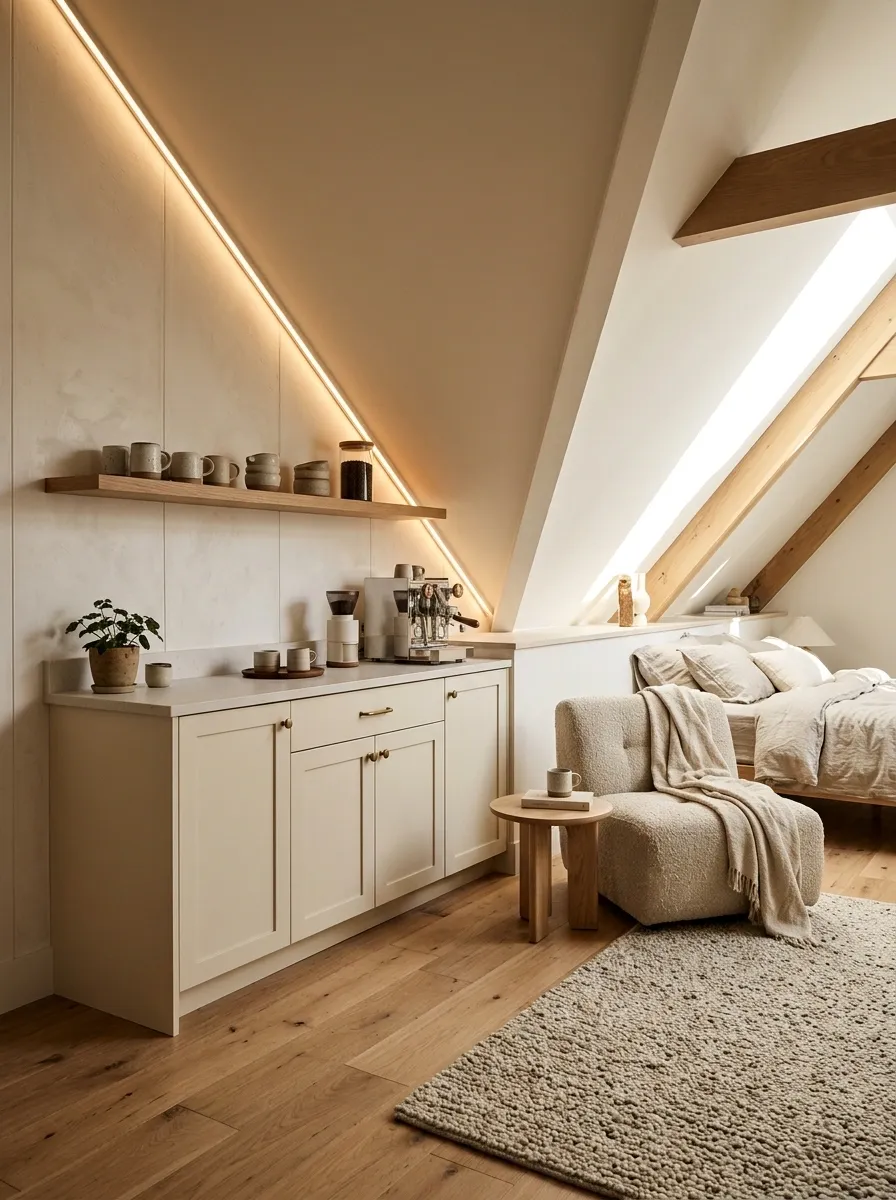
Awkward attic space gets a much better job than collecting random furniture in this design. The low wall beneath the sloped ceiling becomes a custom coffee station with shallow cabinetry, a compact counter, warm timber shelving, and lighting tucked into the usable portion of the roofline.
The furniture is deliberately low so the architecture remains visible. A nearby upholstered chair turns the station into a cozy destination, while the rest of the attic bedroom stays simple and bright.
The ceiling shape is the feature here, not something to hide.
Measure the usable height before choosing appliances or cabinetry. Under a sloped roof, a setup that looks charming in a photo can become deeply annoying when a cabinet door opens directly into the slope.
Compact Bedroom Coffee Bar Built Into a Window Seat Wall
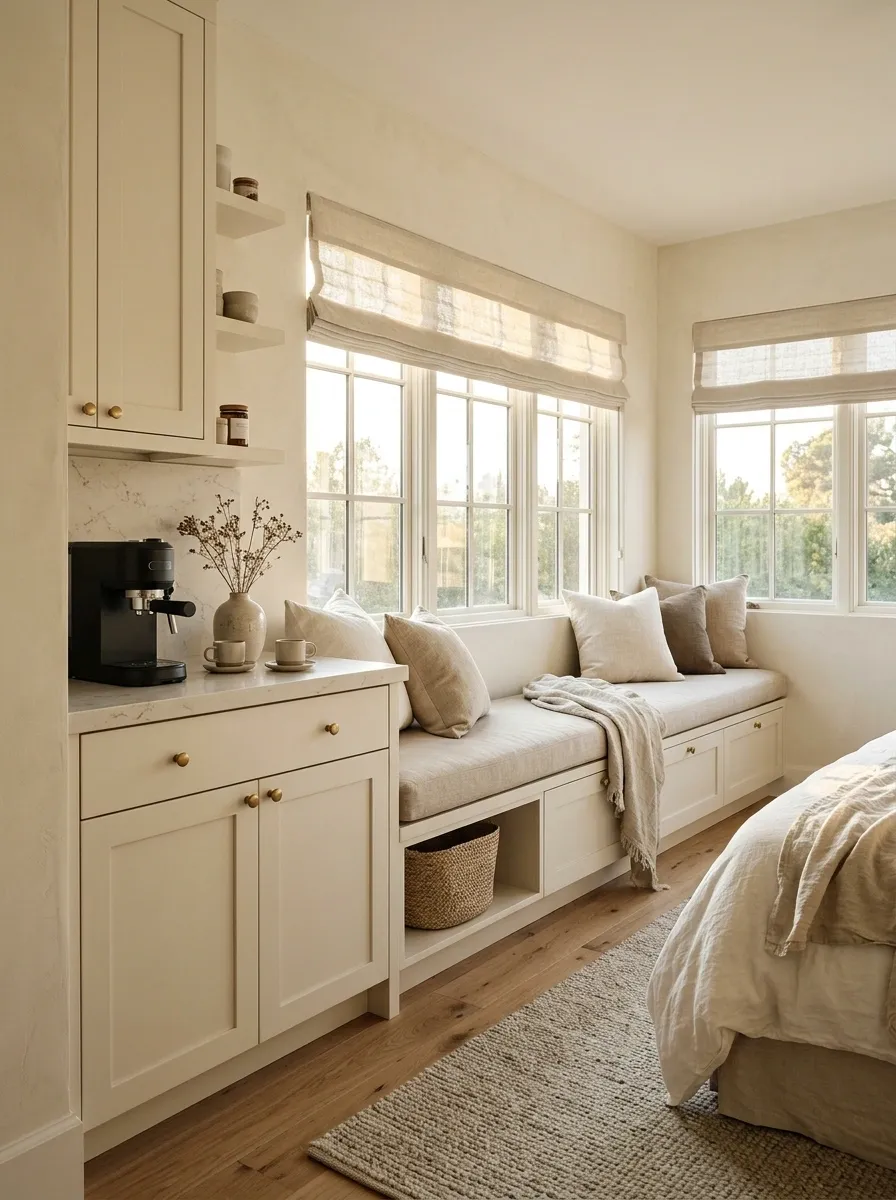
A long window seat creates an unusually good opportunity for a bedroom coffee station. Instead of treating the coffee zone as a separate piece of furniture, this concept integrates a narrow cabinet into the same wall as the seat.
Soft cushions, pale cabinetry, and natural daylight create one continuous composition. The station sits at the end of the bench, so the entire wall reads as a single useful zone rather than several unrelated pieces squeezed together.
This approach is especially effective in smaller bedrooms because the window wall already has a clear architectural purpose. The coffee station simply joins it.
The trick is keeping the cabinet height and depth visually consistent with the seat. A random-height cabinet would destroy the whole line in about three seconds.
Deep Blue Bedroom With Warm Brass and Walnut Coffee Cabinet
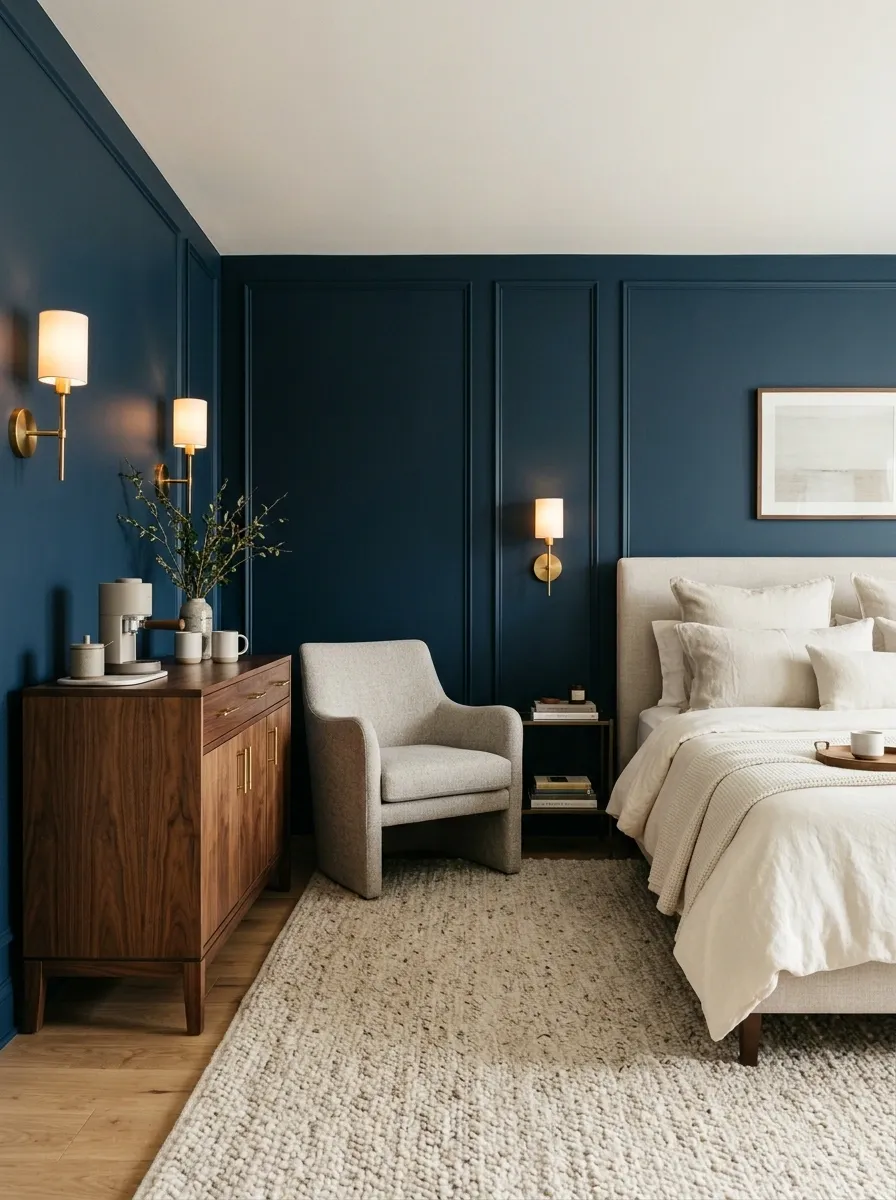
Deep blue walls give this bedroom a dramatic backdrop, while a medium walnut coffee cabinet and warm brass lighting introduce enough warmth to keep the room from becoming visually cold.
Cream bedding provides the necessary light contrast, while a textured rug and softly colored upholstery bridge the darker wall and richer cabinetry. The coffee station sits against the blue backdrop as a deliberate architectural feature rather than disappearing into the wall.
This palette works because each element has a job. Blue provides depth. Walnut brings warmth. Brass catches the light. Cream keeps the overall room from becoming too dense.
Skip the urge to repeat brass on every available surface. One warm metal detail can look intentional. Ten can start looking like the hardware aisle won.
large backdrop
warm structure
small glints
visual relief
Farmhouse Bedroom Coffee Station With Painted Shaker Cabinetry
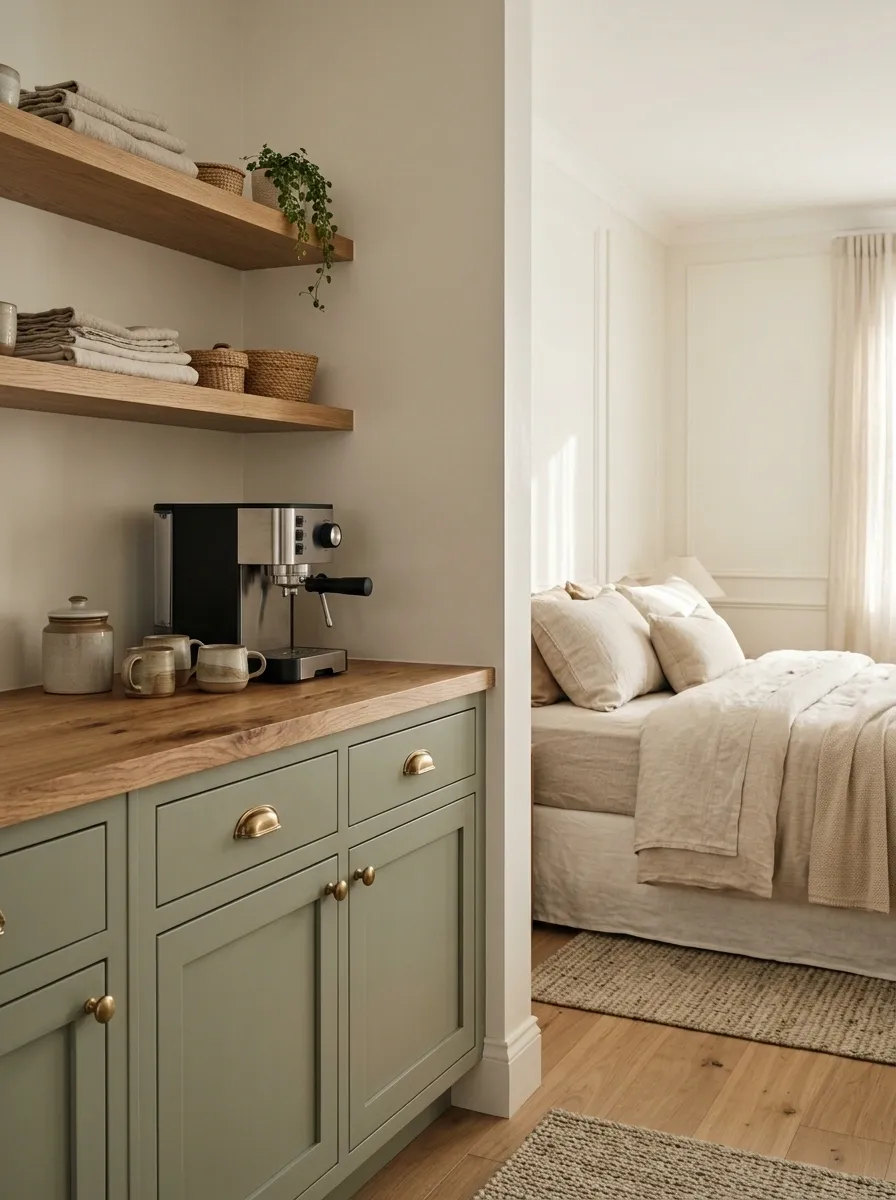
A painted Shaker cabinet gives this farmhouse bedroom coffee station the visual weight of a proper piece of furniture. A simple wood counter, open shelving, traditional hardware, woven textures, and warm bedding make the entire corner feel relaxed without becoming overly rustic.
The cabinet finish should echo the bedroom’s larger palette rather than introducing a random new color. Natural wood, soft textiles, and handmade ceramics provide enough texture to keep the painted surfaces from feeling flat.
This design works especially well when the bedroom already has traditional furniture or visible architectural details. Keep the countertop useful and lightly styled. Farmhouse charm disappears quickly when every available inch becomes a display shelf.
Apparently, even the coffee corner needs boundaries.
Tiny Guest Bedroom With a Self-Contained Coffee Hutch
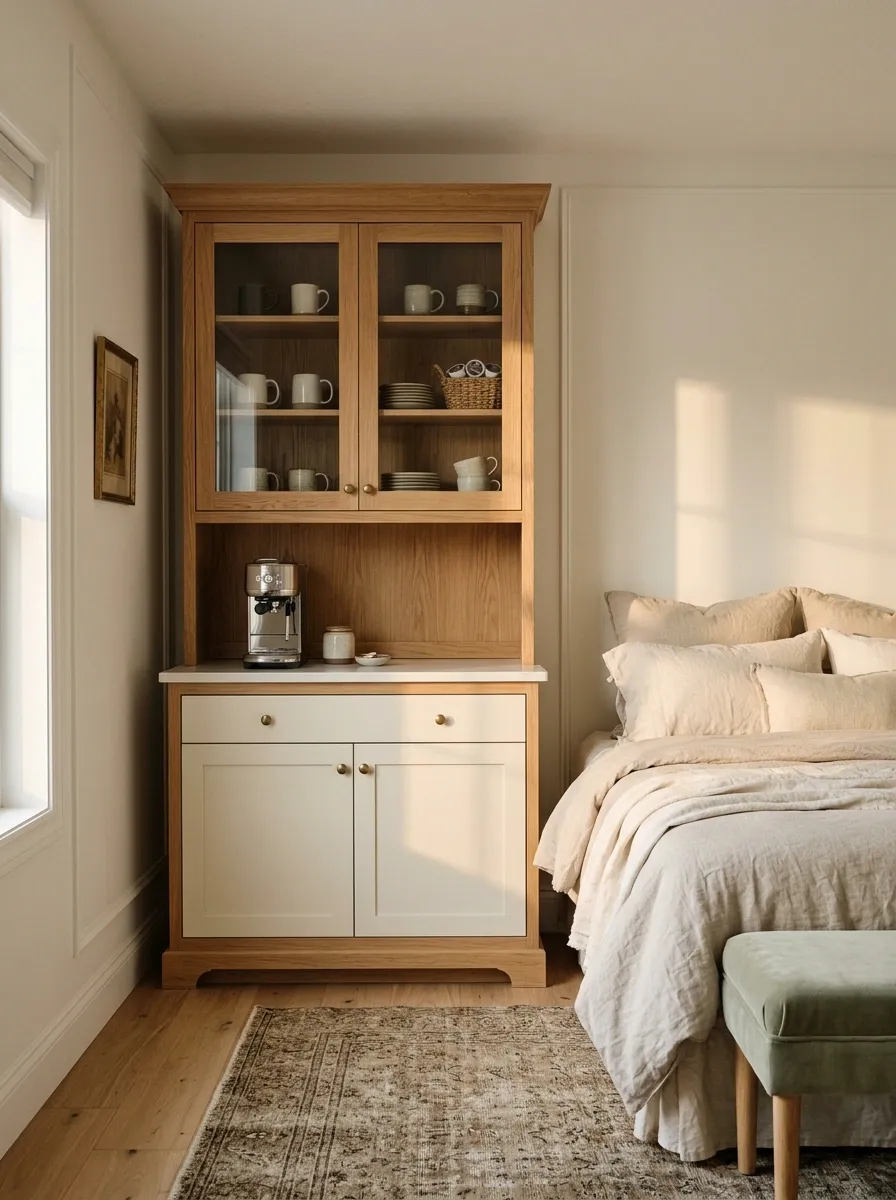
A compact guest bedroom benefits from a coffee hutch that behaves like one complete piece of furniture. The lower section provides a usable counter and concealed storage, while the upper portion holds cups and a few essentials behind a more substantial silhouette.
The hutch sits against one wall instead of competing with the bedside furniture, leaving the center of the room open. Soft neutral bedding, a small upholstered bench, and warm lighting make the space feel considered rather than squeezed together.
This is a particularly useful direction when a guest room needs to serve several purposes without becoming visually crowded. The coffee zone has a defined footprint, so visitors know exactly where it belongs.
And yes, giving one piece of furniture a job besides “looking nice” is still allowed.
Warm Modern Bedroom With a Long Low Coffee Credenza
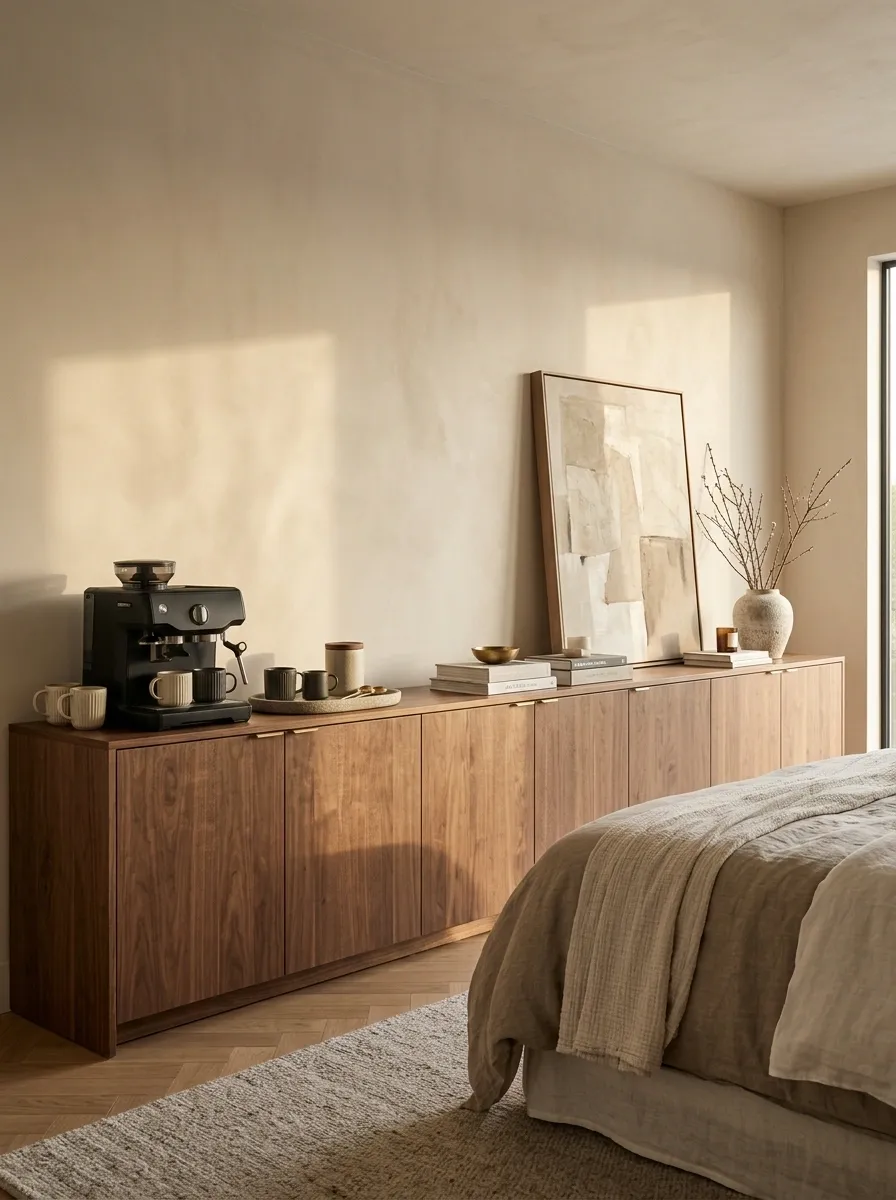
Instead of isolating the coffee station, this bedroom folds it into a long low credenza that spans much of the wall. One section houses the coffee setup, while the remaining length provides concealed storage and room for books, artwork, or a few larger decorative pieces.
The low profile keeps the bedroom feeling open. Walnut or warm oak gives the furniture enough character to become a focal point, while the coffee area remains visually connected to the broader composition.
This is a strong choice for a spacious bedroom where a tiny coffee cabinet would look oddly undersized. Scale matters here. A large room often looks more polished when the furniture has enough width to match it.
The coffee station isn’t getting its own little island. It has joined the furniture family.
Parisian-Inspired Bedroom With a Curved Beverage Console
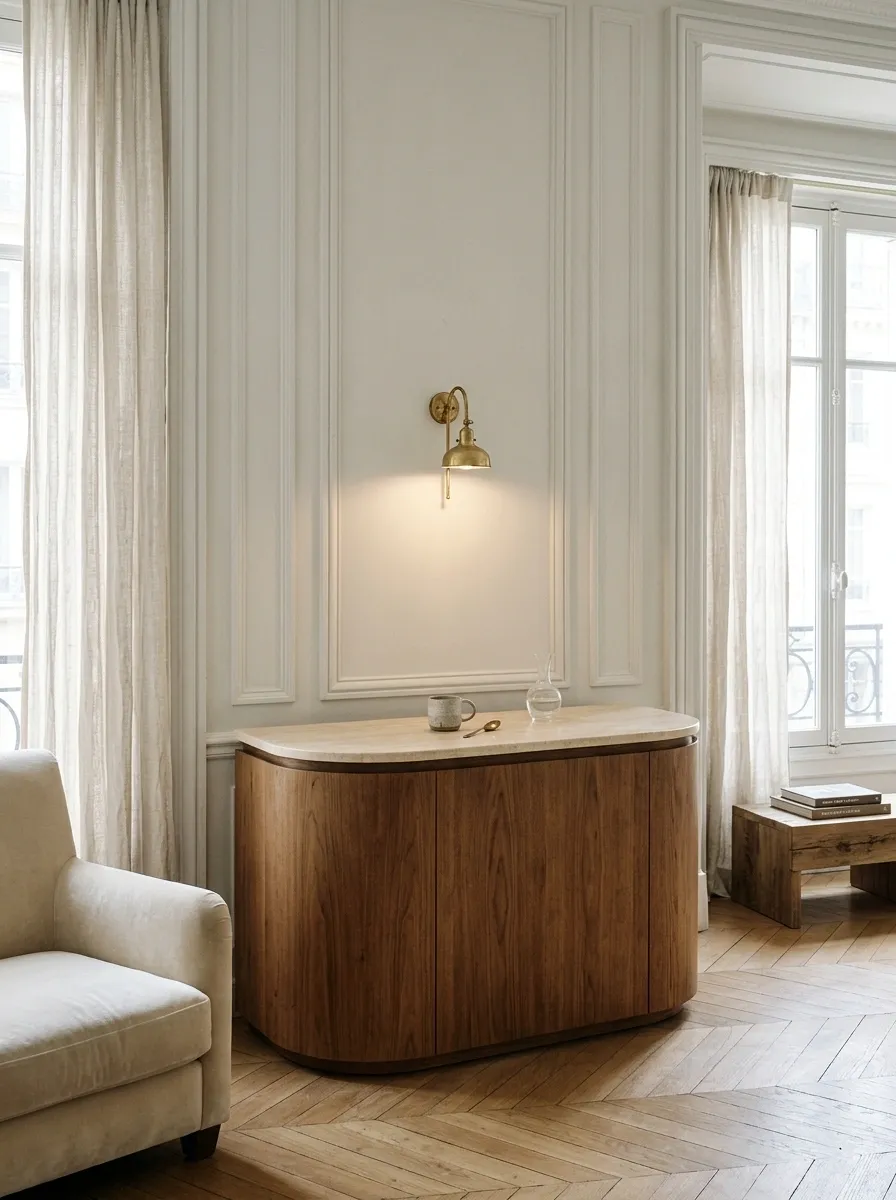
Classic wall molding, tall ceilings, pale finishes, and a curved beverage console give this bedroom a refined European character. The coffee cabinet is intentionally furniture-like, with a softly rounded silhouette, light stone surface, and a small lamp or wall light creating a warm pool around the setup.
The bedroom’s architecture remains visible. That’s important because the molding and ceiling height already provide plenty of character. The console simply plays along rather than trying to dominate the room.
A muted palette of cream, warm timber, soft upholstery, and restrained metal keeps the composition sophisticated.
The furniture should feel collected rather than showroom-perfect. A room this elegant doesn’t need to prove it knows what a coffee grinder is.
Earth-Toned Organic Bedroom With a Hidden Coffee Drawer
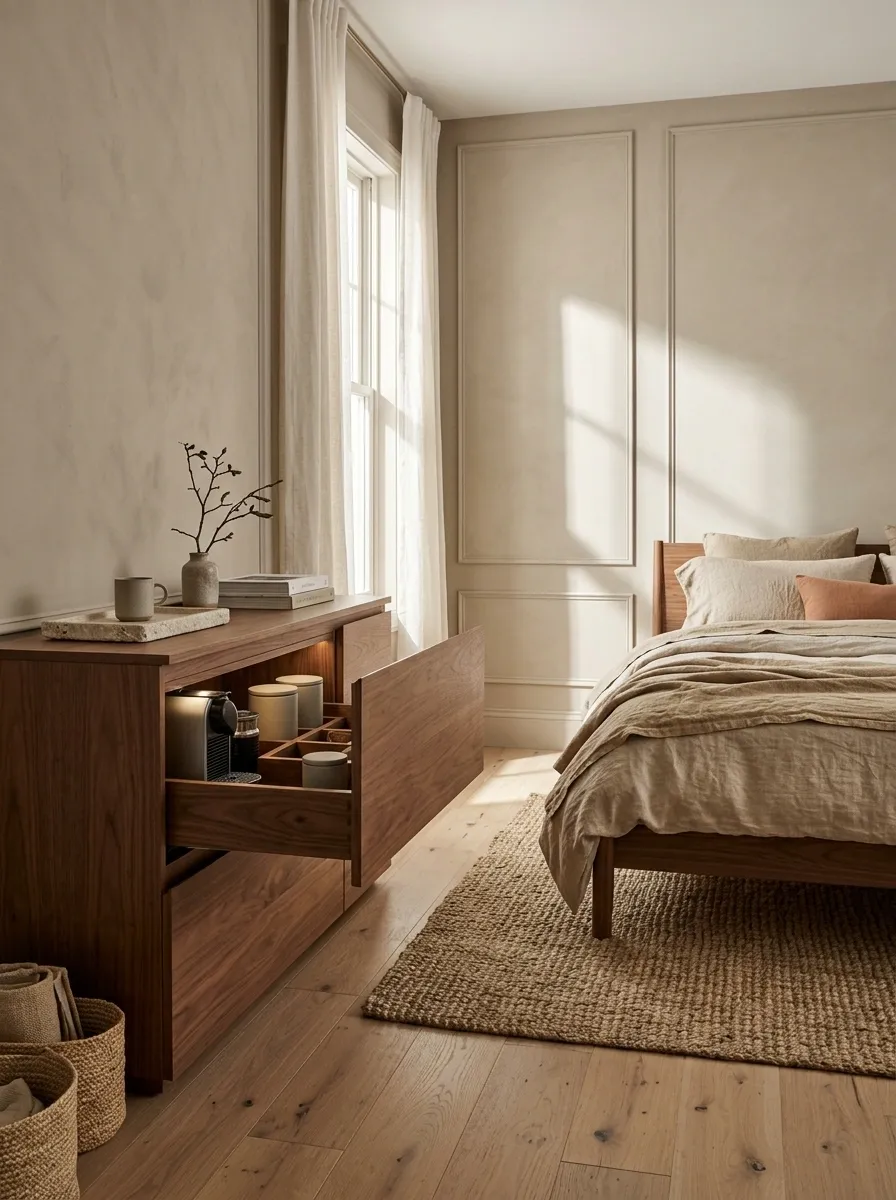
The calmest coffee station in the collection barely announces itself. This warm organic bedroom uses clay-toned walls, walnut furniture, linen bedding, and natural textures, while the brewing equipment disappears behind a concealed cabinet drawer.
When the drawer is closed, the room reads as a quiet bedroom with a unified furniture composition. Open it, and the beverage setup becomes immediately practical without changing the visual character of the space.
This direction works beautifully for bedrooms where clutter is especially noticeable. The cabinet itself should remain simple because the room already relies on natural materials and subtle variation for interest.
The real luxury here is visual peace. The coffee machine gets to exist without becoming the main character.
Bedroom Coffee Station Beside a Built-In Bookshelf
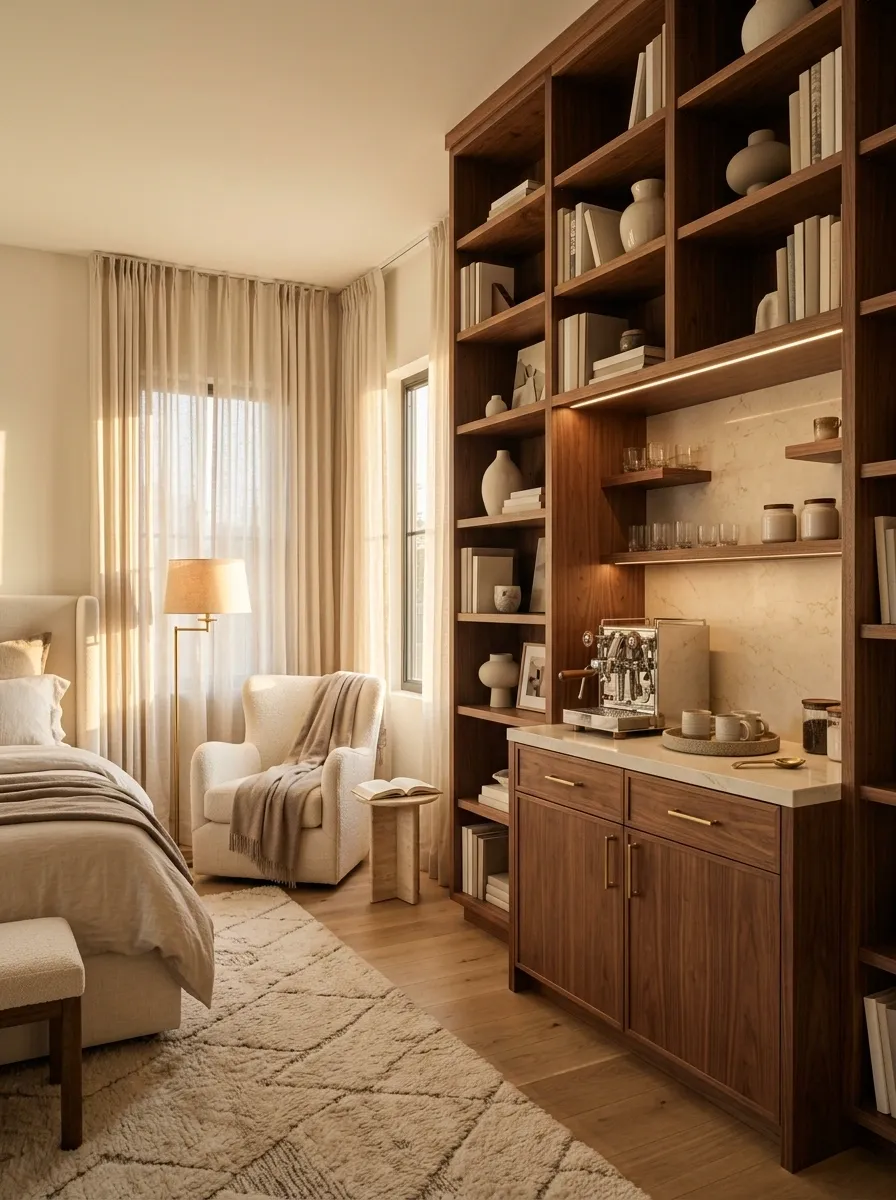
A bedroom coffee station becomes much more convincing when it shares a wall with something that already belongs in the room. Here, a floor-to-ceiling bookshelf surrounds a lower coffee cabinet, creating a reading and beverage zone that feels completely intentional.
A comfortable chair sits nearby with a warm floor lamp, while the shelving continues upward with books and a few larger decorative pieces. The coffee area stays visually connected to the reading corner without competing with the bed.
The key is scale. A tiny coffee cabinet beside a huge bookshelf would look accidental. Keeping the lower cabinetry and shelving proportions related makes the entire wall read as one piece of architecture.
Coffee and books were always going to become best friends eventually.
Warm Minimal Guest Suite With a Bedside Beverage Cabinet
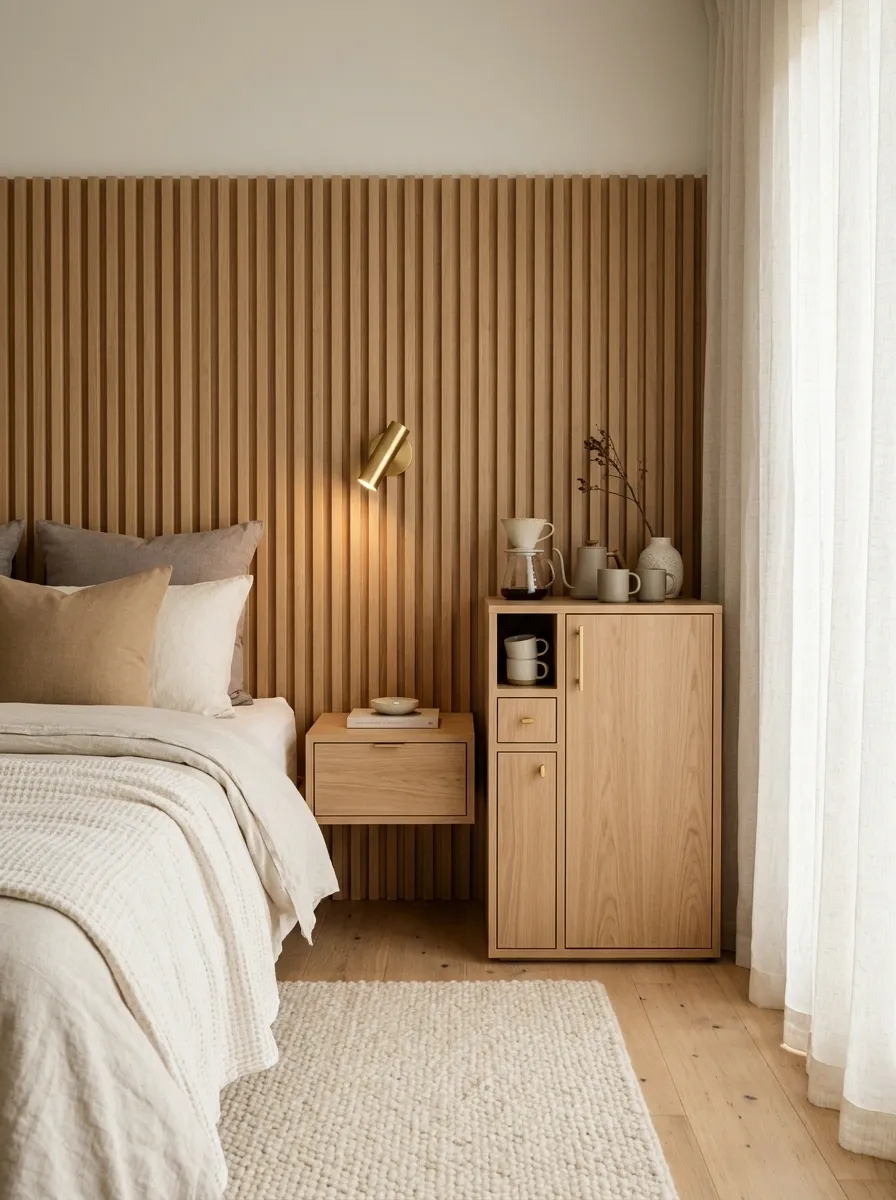
This guest bedroom keeps the coffee station unusually close to the sleeping area. A small timber cabinet sits beside the bed, visually coordinated with the nightstand and headboard wall, creating a compact beverage setup without introducing an obvious kitchen corner.
Warm lighting, soft neutral bedding, and simple ceramics keep the arrangement feeling calm and residential. The cabinet should have enough visual substance to sit comfortably beside the bed but remain narrower than the main furniture pieces.
This works especially well for guest suites where convenience matters but space is limited. The station feels built into the room because its height, finish, and lighting relate directly to the bedside composition.
The goal is coffee without making a hotel minibar look like it moved in permanently.
Dramatic Boutique-Hotel Bedroom With a Full Beverage Wall
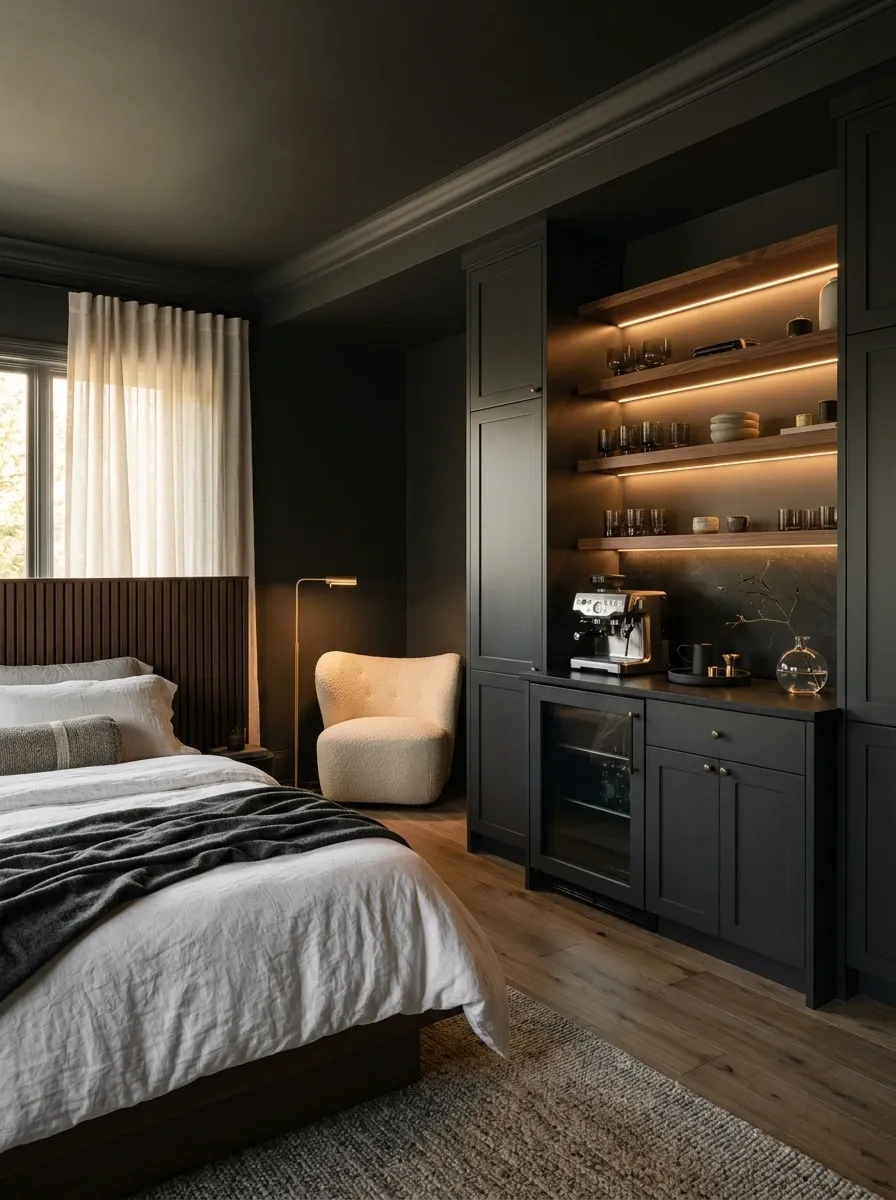
The final concept goes big. A full beverage wall turns one side of a spacious bedroom into a polished hospitality zone, combining dark cabinetry, a stone counter, warm integrated lighting, open glassware storage, and a nearby lounge chair.
This design works because the entire wall is treated as one architectural statement. The coffee area doesn’t look like an oversized version of a countertop setup. It has enough visual scale to belong in the room.
Keep the bed and larger furniture relatively restrained so the beverage wall has somewhere to land visually. Artwork can soften the cabinetry, while warm lighting gives the stone and wood enough depth after dark.
This is the bedroom equivalent of arriving at a boutique hotel and immediately deciding the room is better than the one at home.
Choosing the Bedroom Coffee Station That Actually Fits
The best setup isn’t necessarily the biggest one, the fanciest one, or the one with enough accessories to stock a small café.
Start with the bedroom itself.
Look at the wall that already has potential. Notice where furniture naturally gathers, where daylight lands, how much space doors and drawers need, and which materials already make the room look cohesive. A coffee station becomes much easier to design once those existing clues are doing some of the work.
A built-in niche can disappear beautifully into a modern bedroom. A vintage dresser can give a traditional room some character. A long credenza can solve the scale problem in a spacious room, while a concealed cabinet can keep a minimalist bedroom wonderfully quiet.
The important decision isn’t which coffee setup photographs well on its own. It’s which complete composition still looks right when the coffee machine isn’t the thing being stared at.
Because the machine can sit almost anywhere.
Making it look like it belongs is the actual design move.