
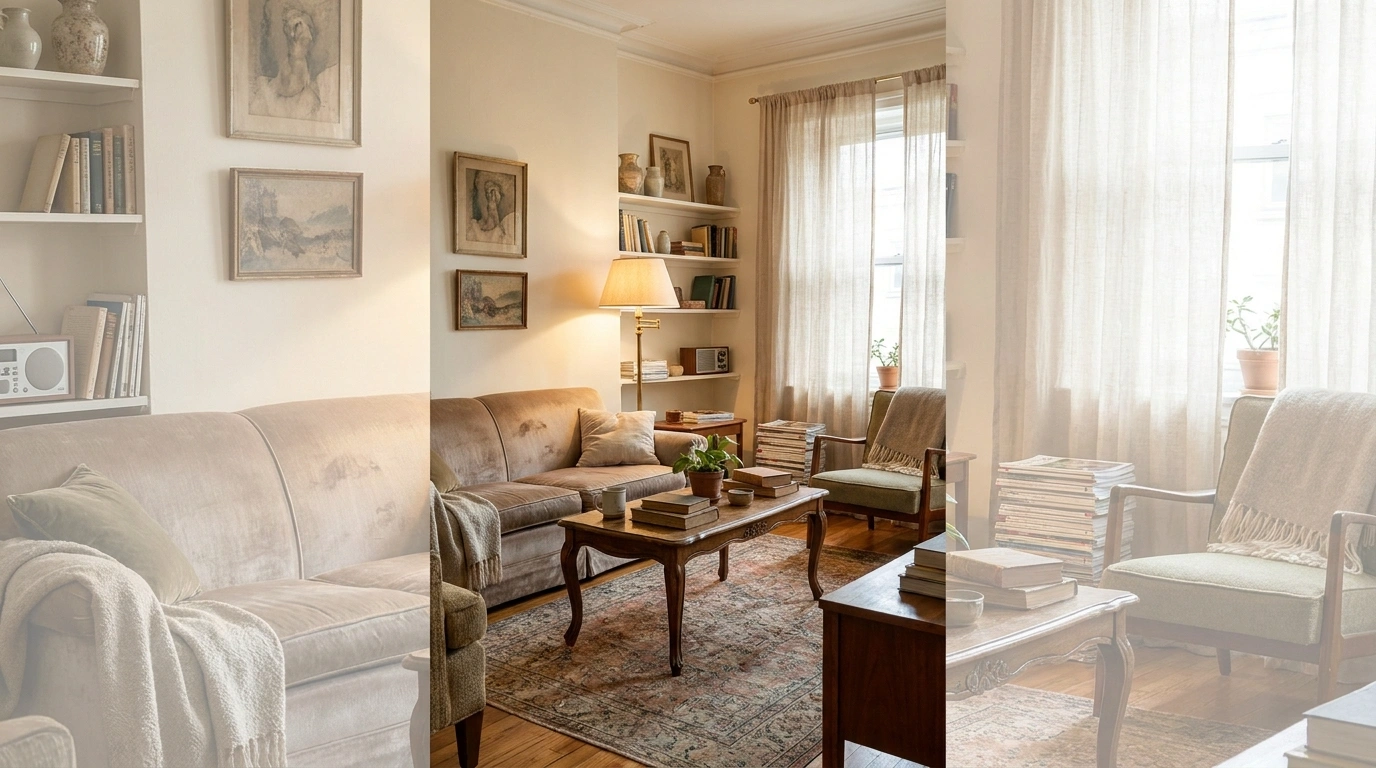
Vintage apartments can go wrong surprisingly fast. Add a few old-looking pieces, a floral pattern, some brass, and suddenly the room looks less like a charming apartment and more like a furniture store that got trapped in 1978.
The better vintage spaces don’t come from filling every corner with antiques. They have a clear visual language. Maybe the warmth comes from walnut furniture and faded rugs.
Maybe the personality comes from an old fireplace, painted cabinets, unusual artwork, or a slightly strange chair that somehow makes the whole room work.
The Vintage Apartment Vibe Check
Cozy Vintage Apartment Designs
Warm Caramel Apartment With Walnut Furniture and Faded Textiles
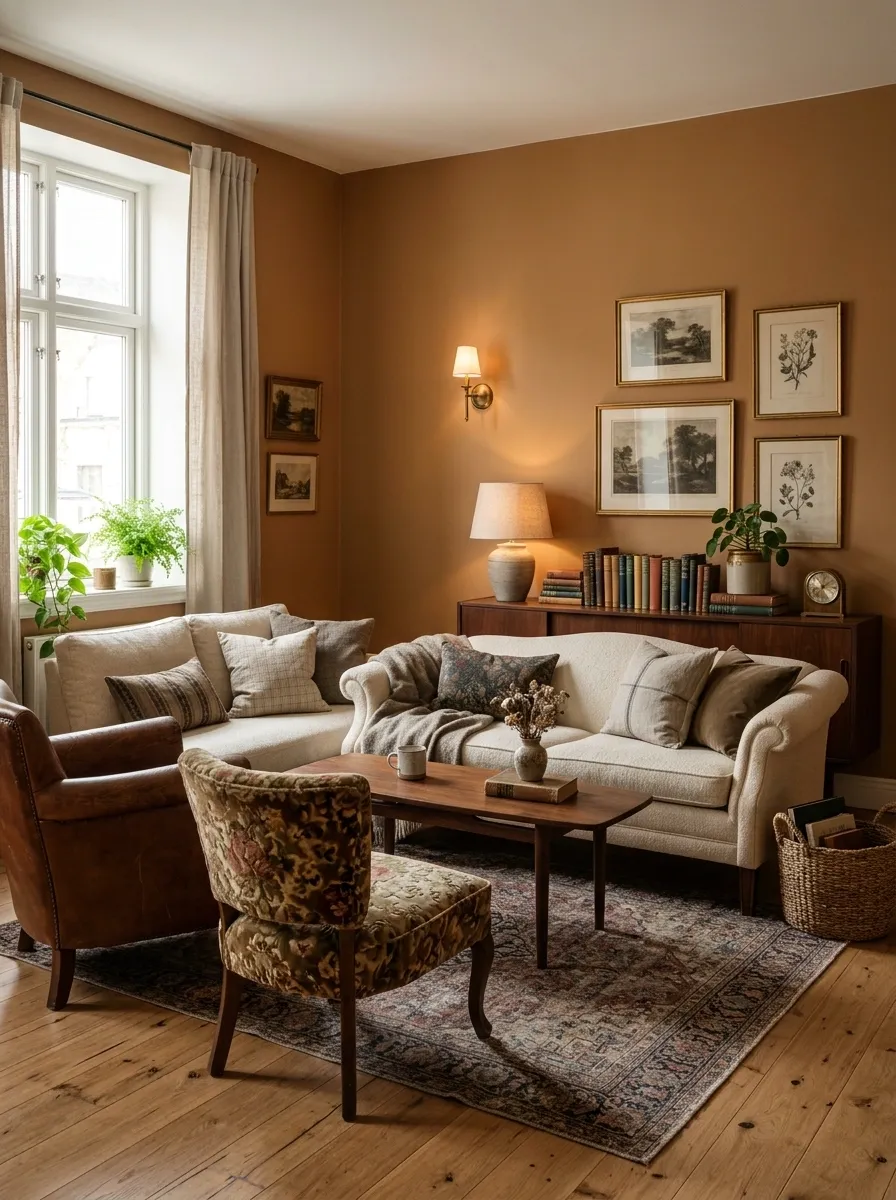
Warm caramel walls give this apartment an immediately enveloping backdrop, but the room stays grounded through dark walnut furniture, cream upholstery, aged brass lighting, and a faded patterned rug. A low vintage cabinet anchors one wall while a traditional sofa and two mismatched chairs create a relaxed seating arrangement.
The palette moves from caramel to walnut to cream rather than relying on one brown everywhere. That difference matters. The room feels layered instead of looking like somebody ordered the entire apartment from the same catalog.
A few worn books and old framed prints finish the space without making it look like an antique shop exploded.
Moody Plum Apartment With Antique Wood and Cream Upholstery
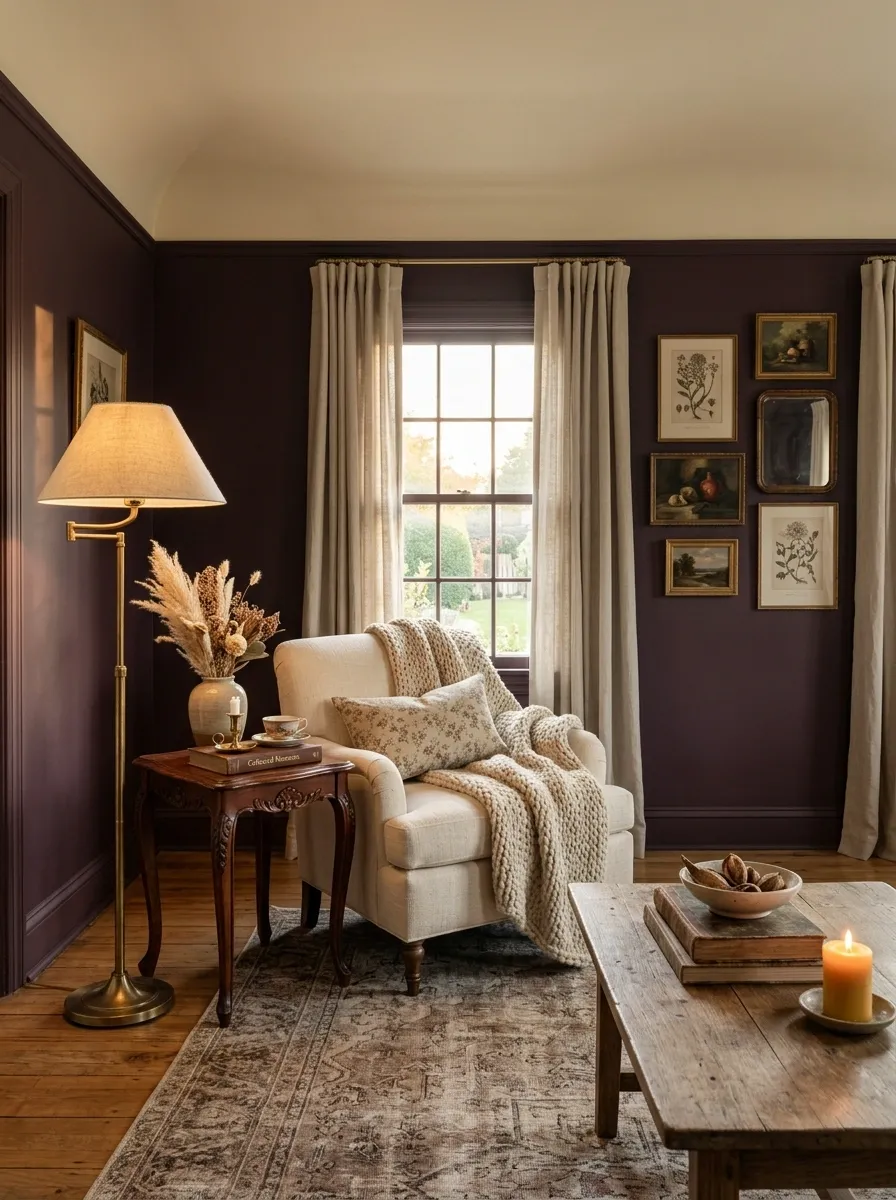
Deep plum walls turn this apartment into a darker, more intimate version of vintage style. Antique wood furniture brings a warm brown counterpoint, while cream seating prevents the room from becoming visually heavy. A traditional floor lamp stands beside a reading chair, and a faded rug connects the furniture without introducing another dominant color.
The trick is leaving some surfaces quiet. The ceiling, curtains, and upholstery provide enough light space to let the plum walls feel dramatic without making the apartment resemble a very committed theater set.
Dark walls are allowed to have hobbies besides making rooms look “moody.” In this case, the hobby is looking expensive without actually screaming about it.
Sage Green Apartment With Honey Oak and Vintage Brass
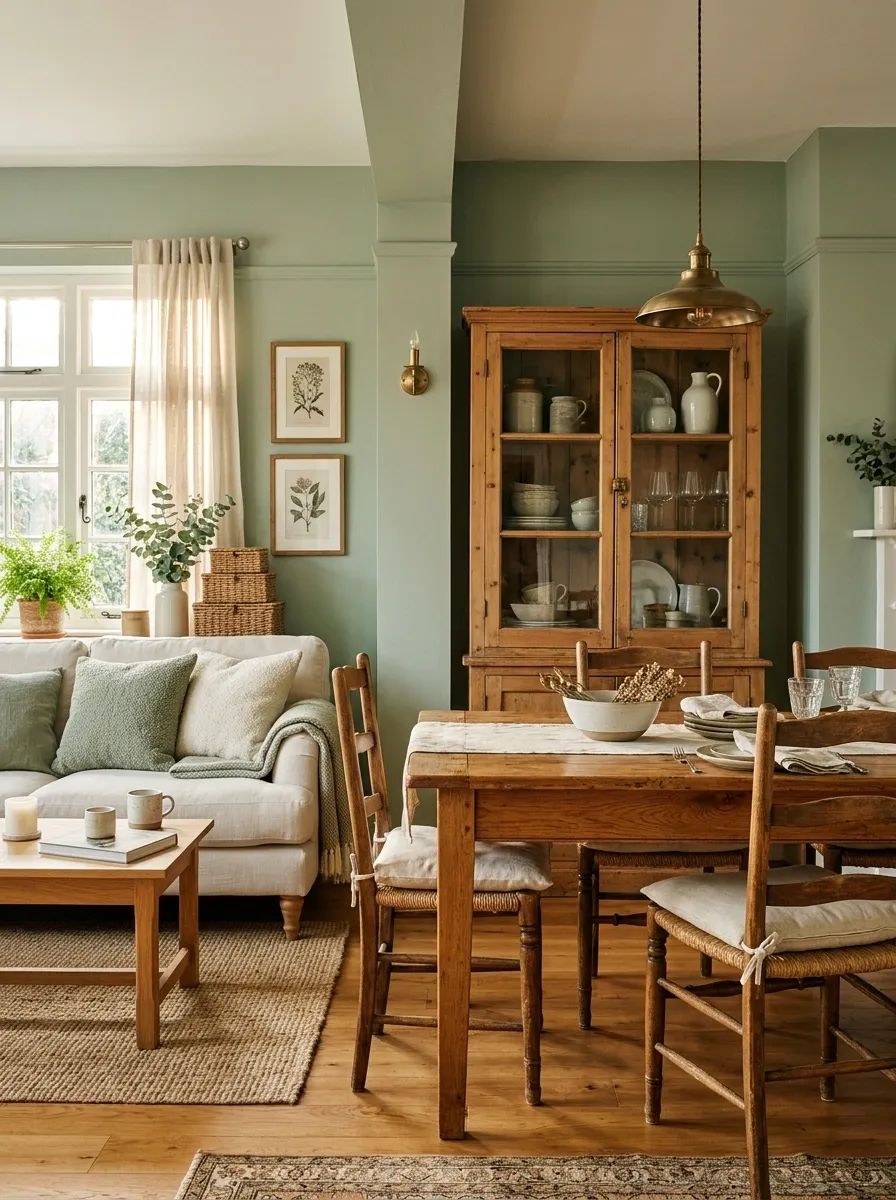
Soft sage walls create a calm background for honey oak furniture, cream linen, old brass lighting, and muted botanical artwork. The apartment feels vintage without relying on ornate furniture everywhere. A simple wooden dining table, traditional chairs, and an old cabinet give the room its age while the lighter green keeps the overall palette fresh.
The warmer oak is important here. Without it, sage can drift toward cold and gray. With it, the apartment gets that slightly faded, collected quality that makes vintage interiors feel lived in.
The green isn’t trying to become a personality disorder. It simply does its job very well.
Tiny French Salon Studio With Curved Furniture
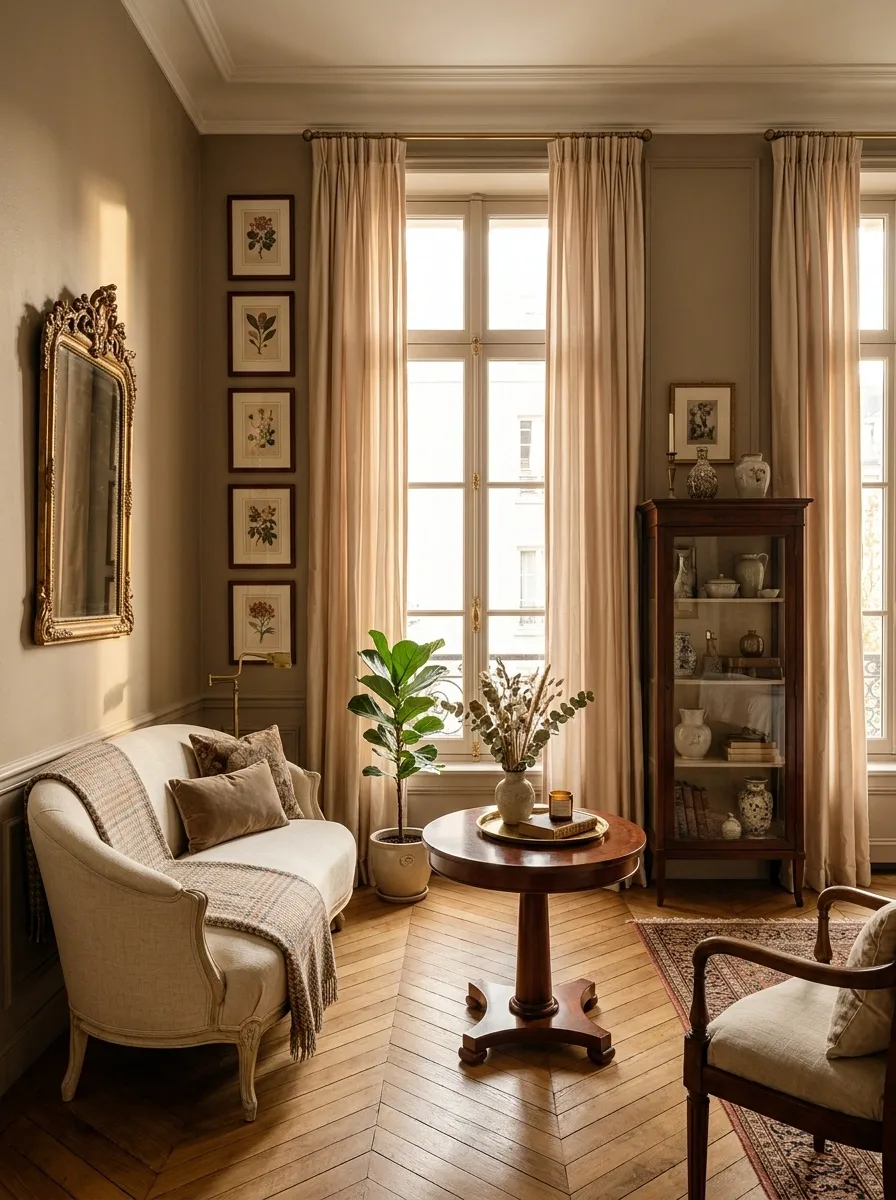
This compact studio borrows the proportions and personality of a small French salon. A curved loveseat sits opposite a narrow antique cabinet, while a small round table occupies the center without blocking circulation. Tall curtains, an old mirror, framed artwork, and warm wall color create a sense of height.
The furniture stays relatively delicate, which is what makes the room feel charming rather than crowded. Curves soften the small footprint, while vertical artwork pulls attention upward.
Small rooms don’t need tiny personalities. They need furniture that understands personal space.
CABINET
Colorful 1970s Apartment With Rust, Olive, and Cream
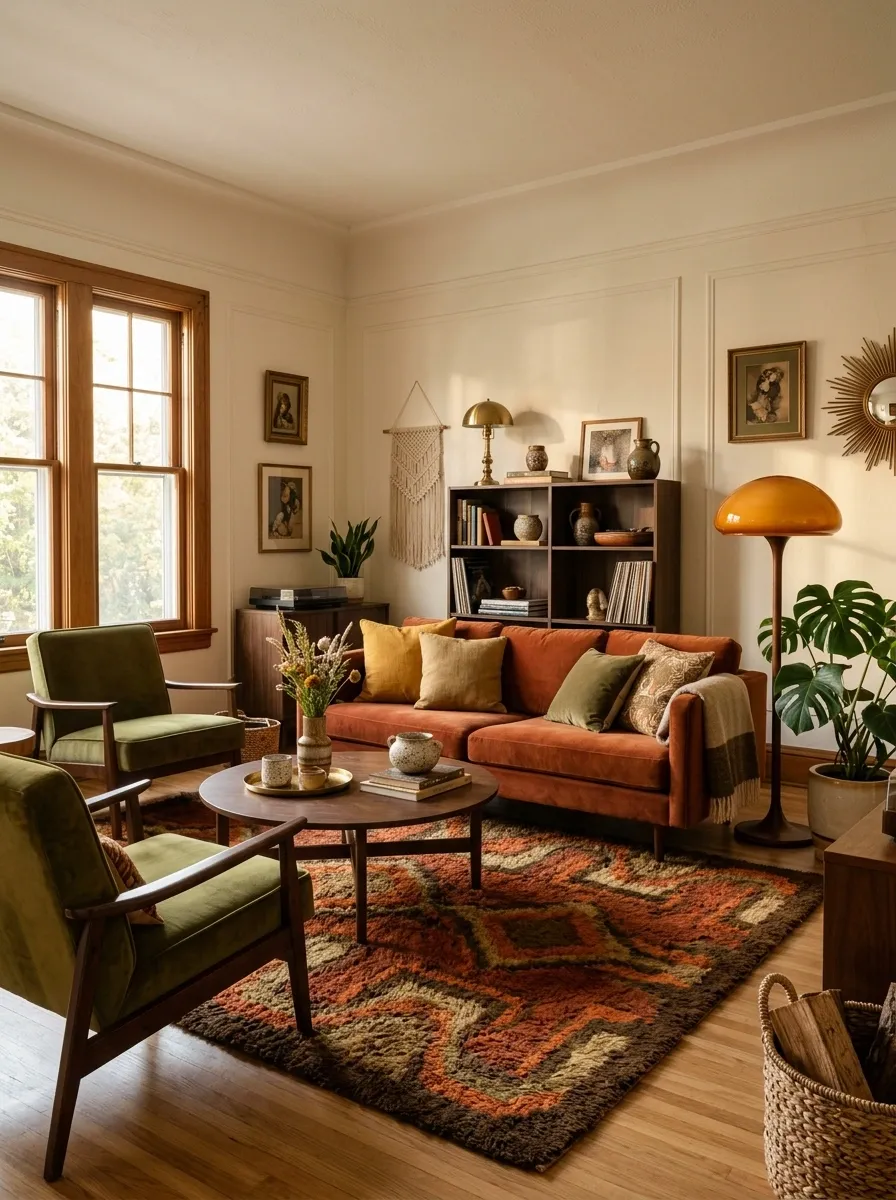
This apartment leans fully into 1970s color without turning the room into a museum recreation. Rust-colored seating, olive green accents, cream walls, dark wood furniture, and a patterned rug create the foundation. Low furniture keeps the room visually connected to the floor, while a sculptural lamp and rounded coffee table reinforce the era.
The important part is proportion. The strongest colors occupy furniture and textiles, while the walls remain quieter.
It’s retro. It’s warm. It also somehow manages not to look like the waiting room of a dentist who owns a lava lamp.
Library-Like Apartment With Wall-to-Wall Bookcases
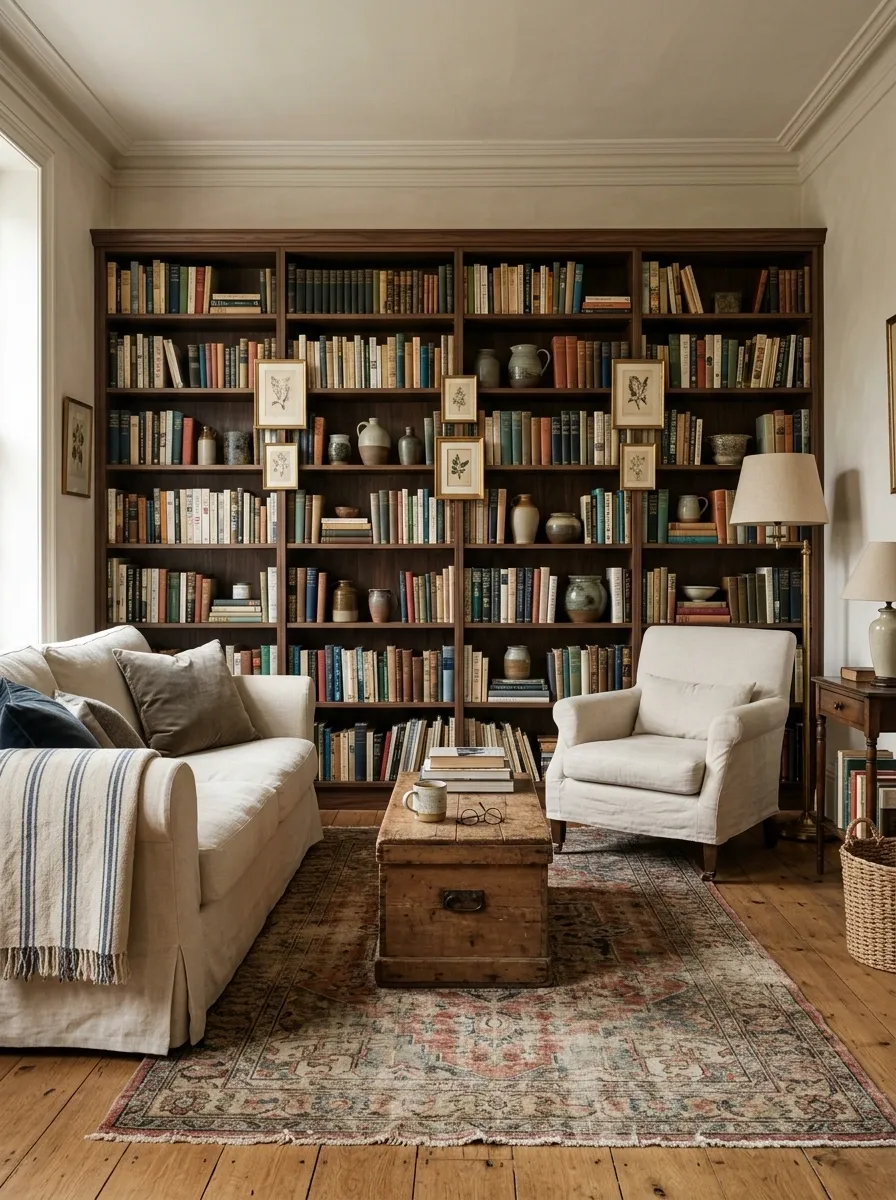
Built-in bookcases turn the living room into the visual center of the apartment. Dark wood shelves cover one long wall, with a cream sofa, reading chair, traditional lamp, and worn rug arranged in front. Books fill most of the shelves, while a few framed prints and ceramic pieces break up the rows.
The furniture stays relatively simple because the books already create texture and color.
There is no need to pretend the books are there “for styling.” They can simply be books. Revolutionary concept.
Cream Apartment With Cherry Wood and Vintage Florals
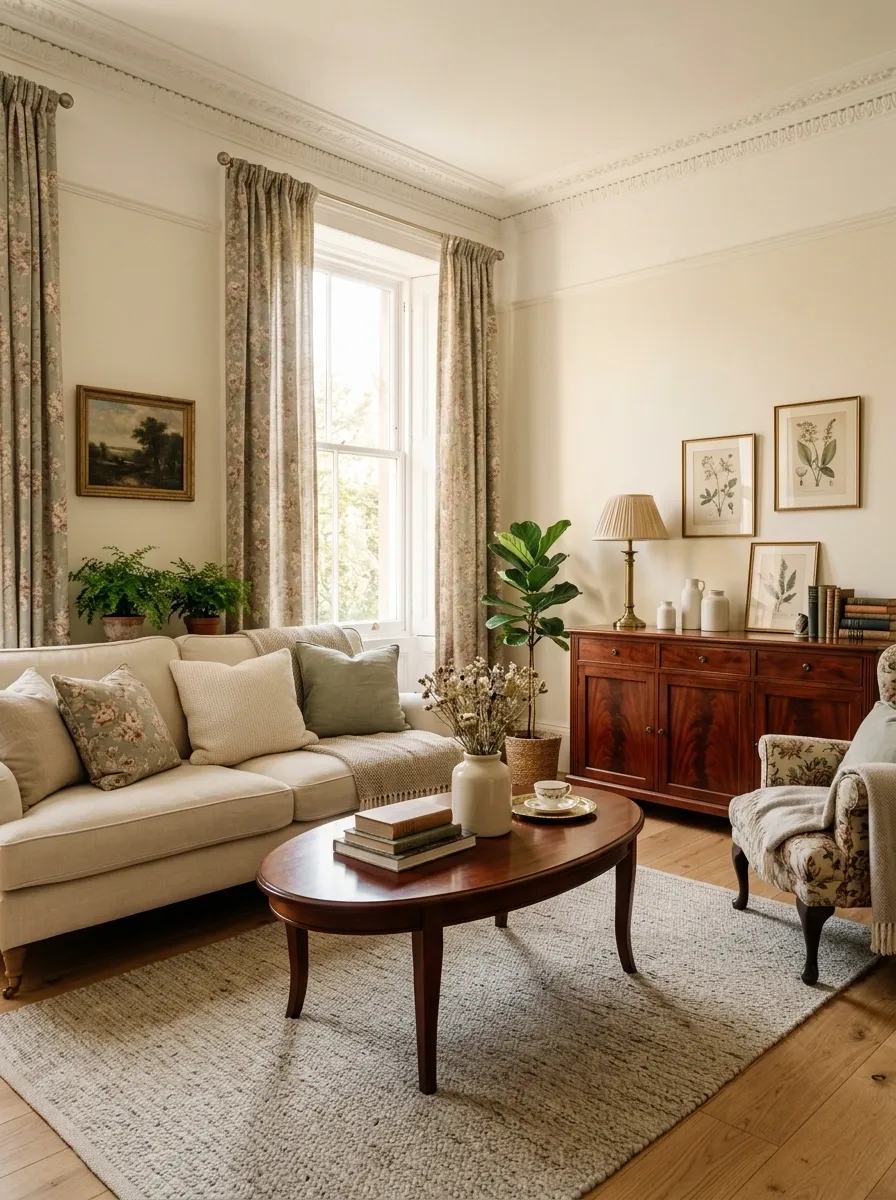
Cream walls and upholstery keep this apartment light while cherry wood furniture gives the room a reddish warmth. Floral curtains and a patterned chair introduce a vintage pattern, but the larger sofa and rug remain comparatively quiet.
The wood appears in several places, which makes the red-brown tone feel intentional. Cream acts as the bridge between the darker furniture and the patterned textiles.
Florals are doing their job here. They don’t need to colonize the entire apartment.
Quiet background
Furniture warmth
Pattern and personality
Narrow Long Vintage Dining Room With a Built-In Bench
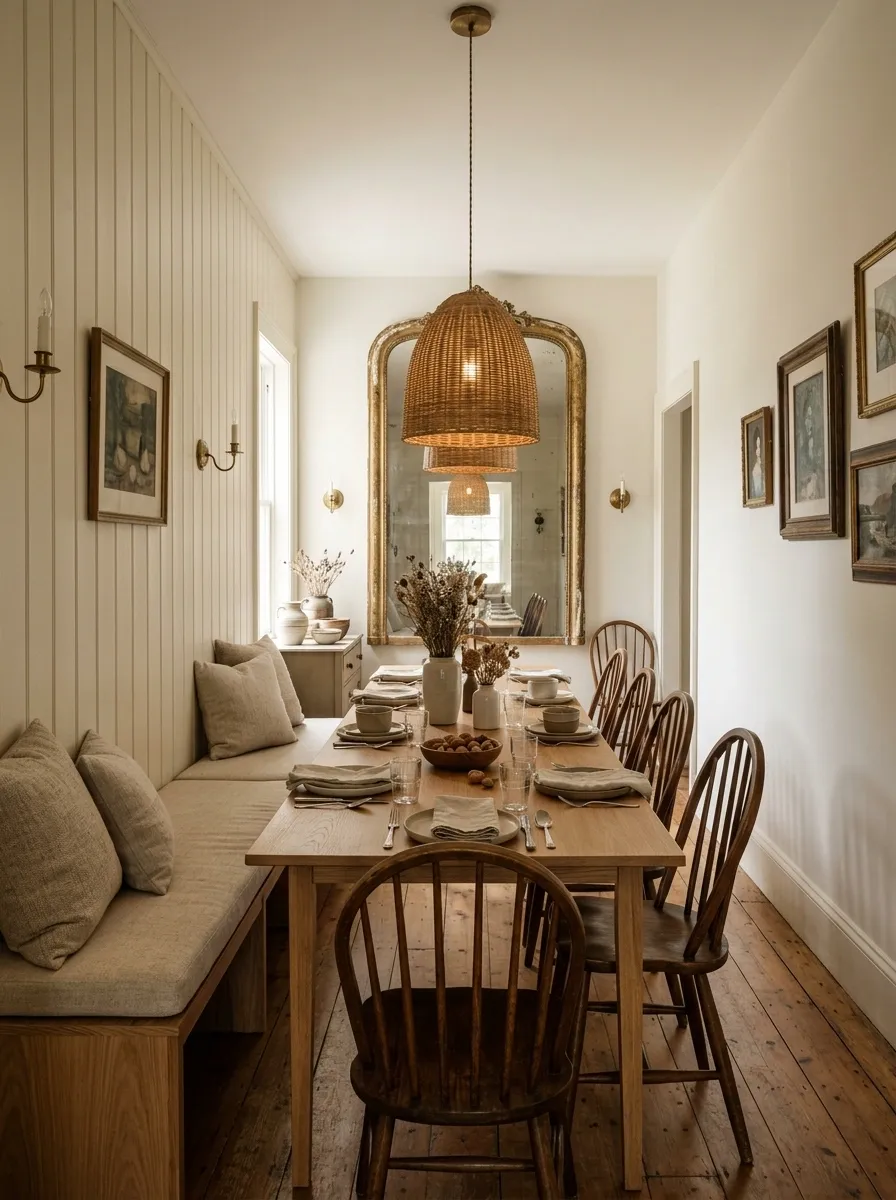
A long dining room gets a tailored arrangement instead of a collection of furniture scattered along the walls. A narrow wooden table runs through the center, with a built-in bench against one wall and traditional chairs opposite it. A large vintage mirror sits at the far end, visually extending the room.
Pendant lighting stays centered over the table, while the furniture remains narrow enough to preserve a comfortable walking path.
The room is long. The furniture has noticed.
Terracotta Apartment With Linen and Dark Walnut
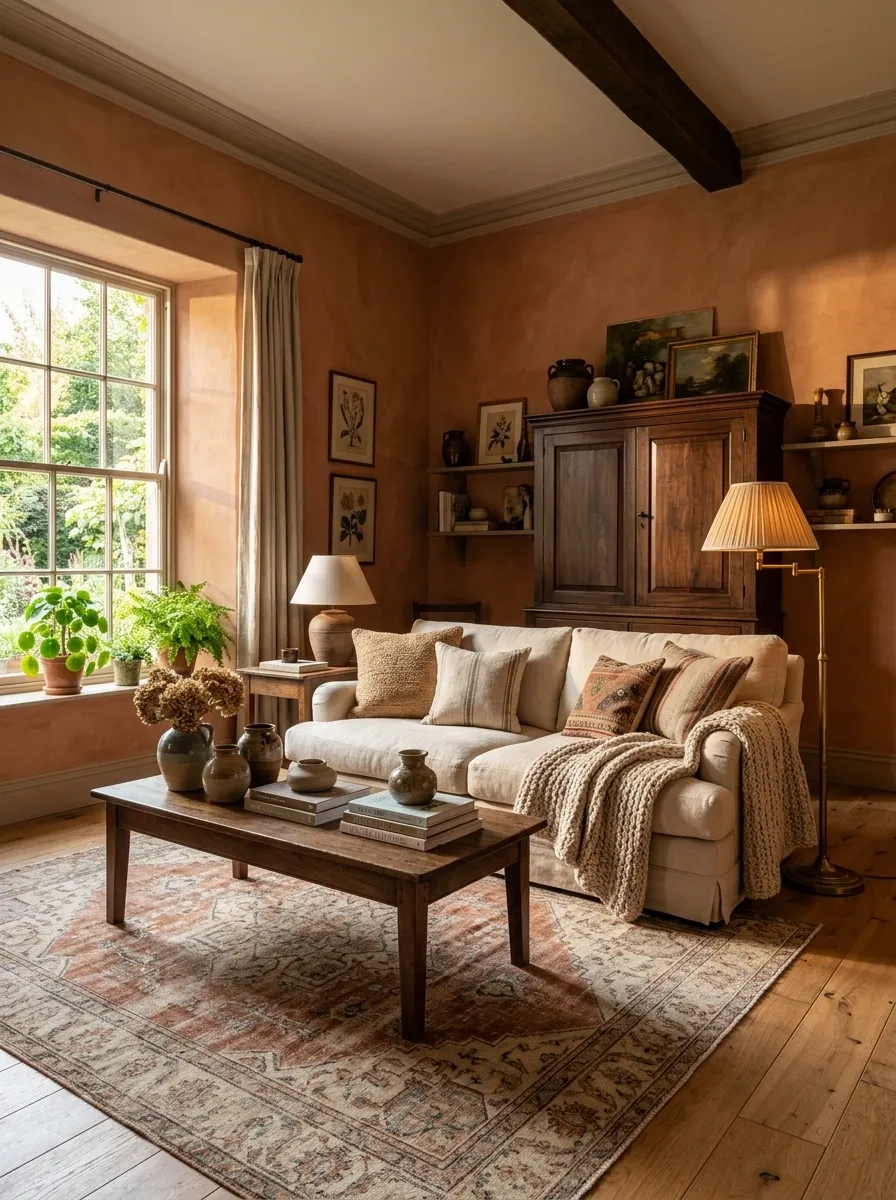
Terracotta walls give this apartment a sun-warmed foundation, while dark walnut furniture keeps the palette grounded. Cream linen seating, woven textures, aged brass lamps, and a faded rug soften the contrast. The room feels richer because the warm colors come from several materials rather than one painted accent wall doing all the work.
A walnut cabinet provides the darkest visual anchor, while terracotta remains dominant across the larger surfaces.
Terracotta has entered the chat and brought dark walnut with it.
Vintage Coastal Apartment Without Nautical Decor
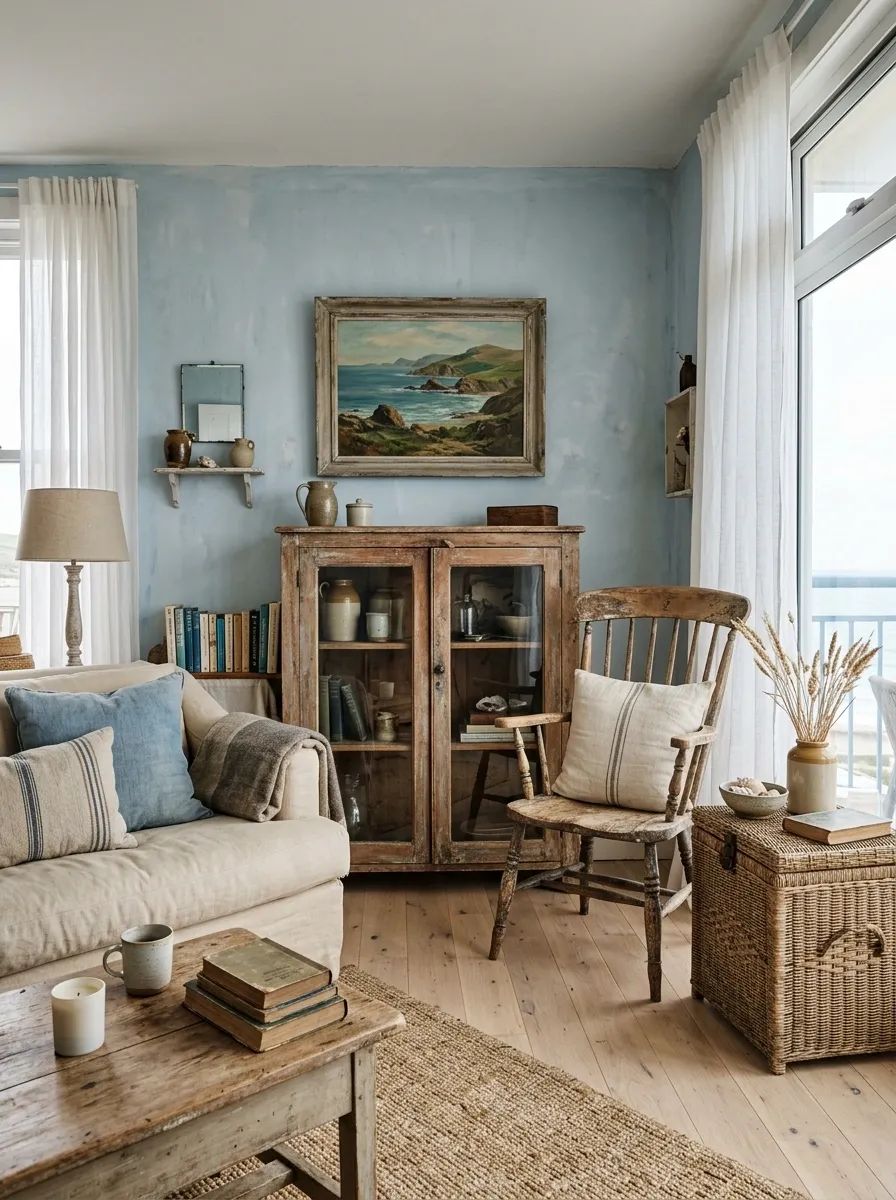
This apartment uses the softer side of coastal vintage style. Faded blue walls, warm cream upholstery, pale wood, old woven furniture, linen curtains, and weathered artwork create a relaxed atmosphere without a single anchor, rope, or decorative seashell in sight.
The palette feels influenced by old seaside homes rather than themed around the ocean. A worn wooden cabinet and vintage chair bring enough history to stop the room from becoming generic coastal minimalism.
No ship wheel was harmed in the making of this apartment.
Dark Bedroom With Antique Walnut Furniture
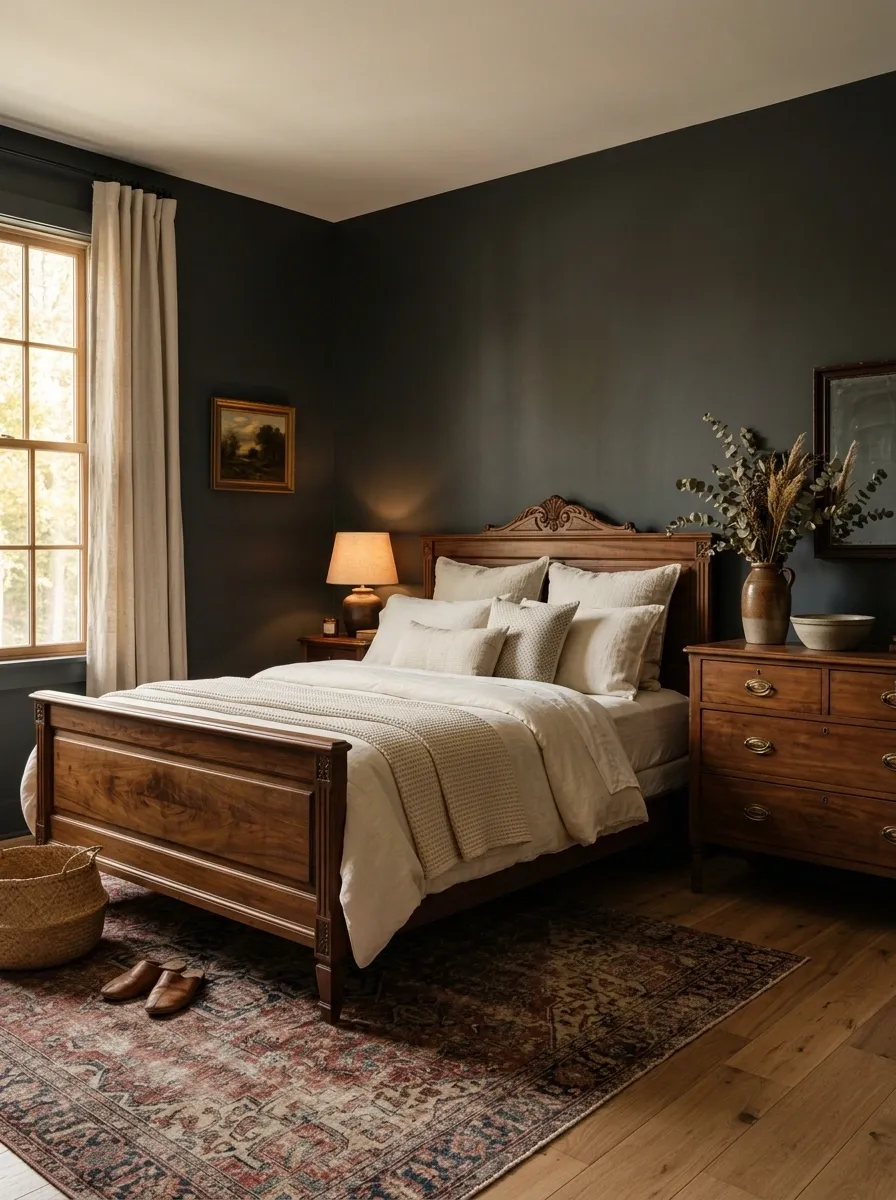
This bedroom uses deep wall color to make the antique walnut furniture feel even richer. A traditional bed, matching dresser, warm bedside lamps, cream bedding, and a faded rug create a layered composition without filling the room with decorative clutter.
The bedding stays lighter than the walls and furniture, giving the center of the room enough visual relief. Curtains remain simple so the carved furniture can hold attention.
The bedroom has chosen darkness. The darkness has chosen walnut. This relationship is working out beautifully.
Butter Yellow Apartment With Mahogany Furniture
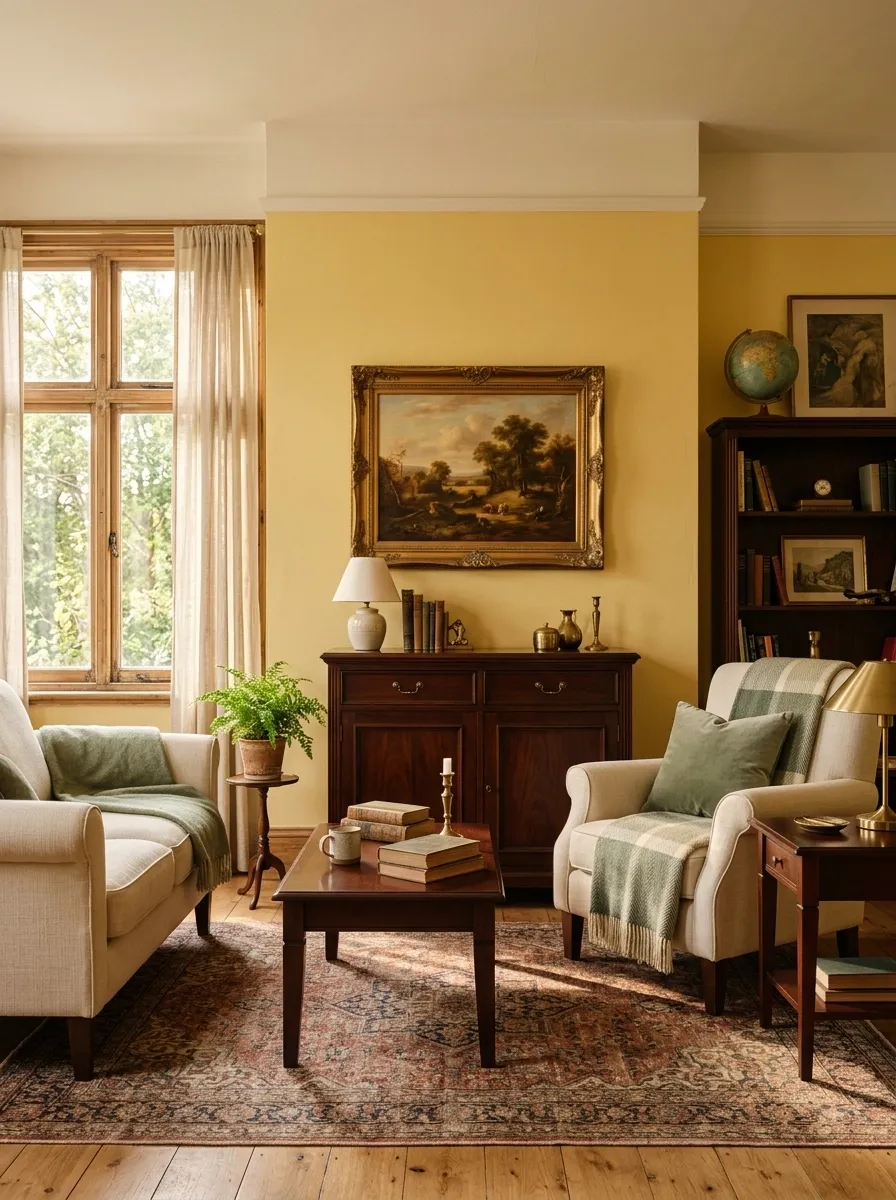
Butter yellow walls brighten the apartment while mahogany furniture gives the room a more traditional, grounded character. Cream upholstery, muted green textiles, brass lighting, and a faded patterned rug create a warm palette that feels distinctly vintage without becoming overly formal.
The furniture is substantial, but the yellow walls prevent the room from feeling visually heavy. A single large framed artwork sits above the main cabinet instead of covering the entire wall with tiny objects.
Butter yellow has entered its serious interior-design era.
Small Apartment With a Vintage Green Kitchen and Dining Nook
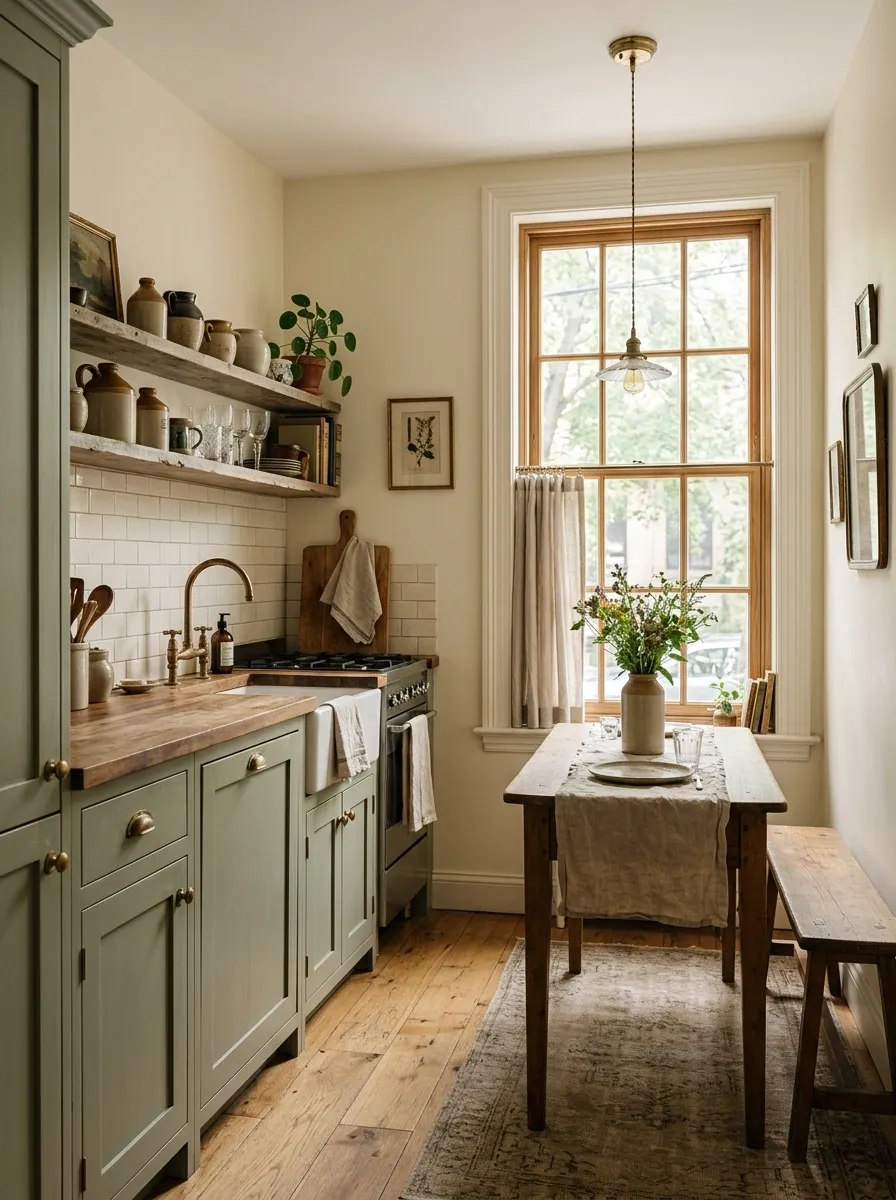
A compact kitchen gets its personality from muted green cabinetry, warm wood counters, aged brass hardware, and a small dining nook tucked beside the window. The rest of the apartment stays relatively quiet, allowing the kitchen to become the visual anchor.
A narrow table and bench make the dining area feel intentional rather than squeezed into leftover space. Cream walls and warm flooring connect the kitchen to the rest of the apartment.
The tiny dining nook is not “extra space.” It is now officially a destination.
1920s-Inspired Apartment With Geometric Vintage Details
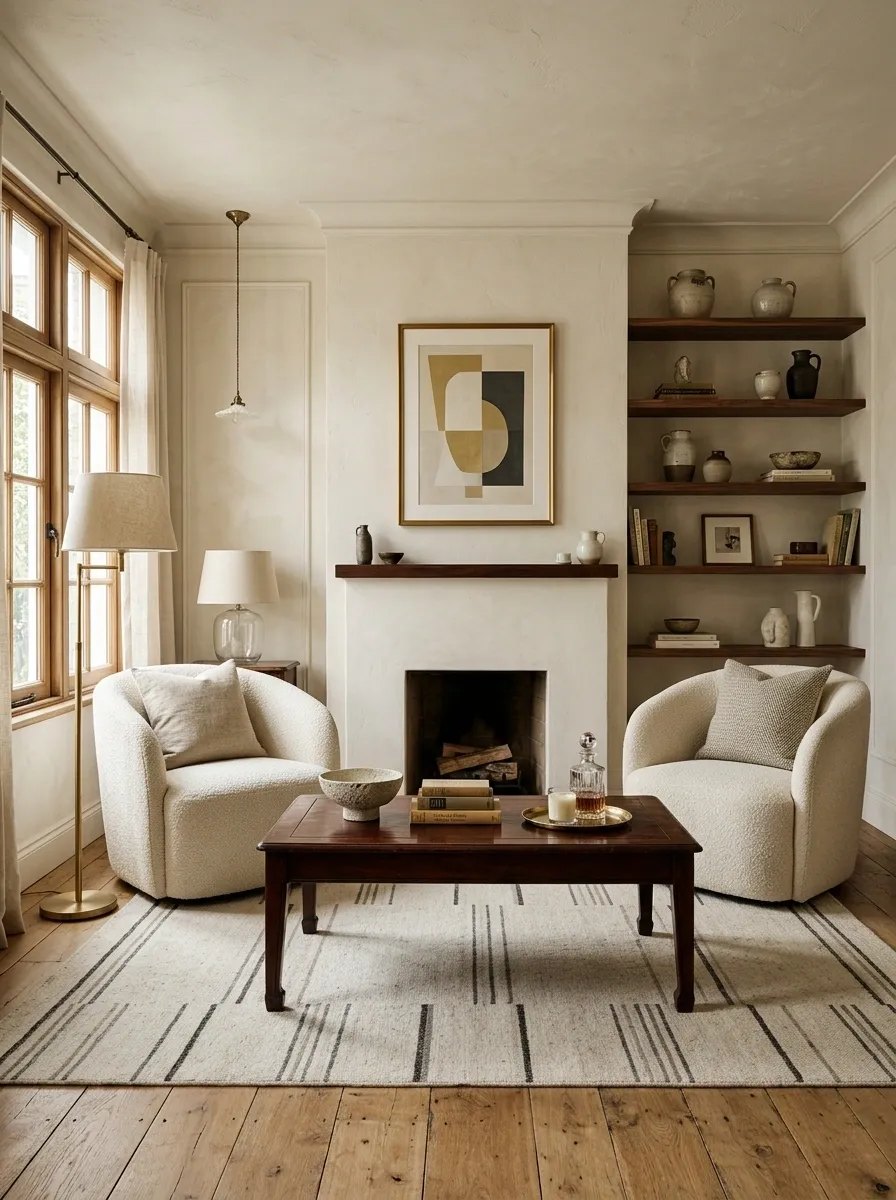
This apartment borrows the geometry of the 1920s without turning the room into a period replica. Cream plaster walls meet dark wood furniture, geometric rugs, brass lighting, curved chairs, and restrained early-century artwork.
The strongest shapes repeat quietly throughout the room. Arched furniture, straight shelving, curved lamps, and geometric textiles create a visual vocabulary that feels connected without becoming theatrical.
The 1920s called. It wants its geometry back. Unfortunately, the apartment is using it better.
Apartment With an Original Fireplace as the Main Focal Point
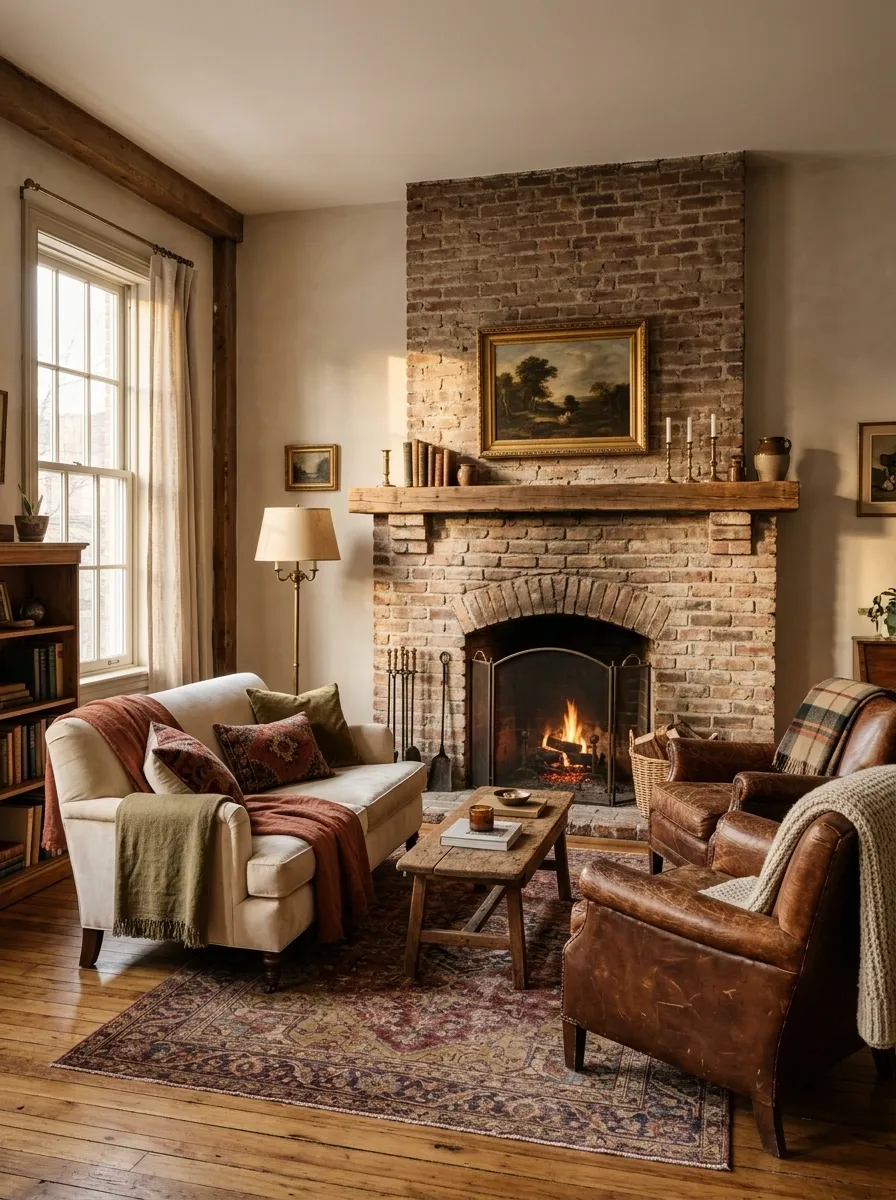
The fireplace becomes the natural center of this apartment, with the furniture arranged around it rather than treating it as background architecture. A compact sofa faces the hearth, two vintage chairs sit at an angle, and a low coffee table keeps the middle of the room open.
Artwork above the mantel stays restrained because the fireplace already provides a strong vertical focal point. A traditional rug connects the seating arrangement while warm lighting reinforces the architecture after dark.
Sometimes the fireplace doesn’t need help. It has been carrying the room for decades.
Vintage Maximalist Apartment With Controlled Pattern
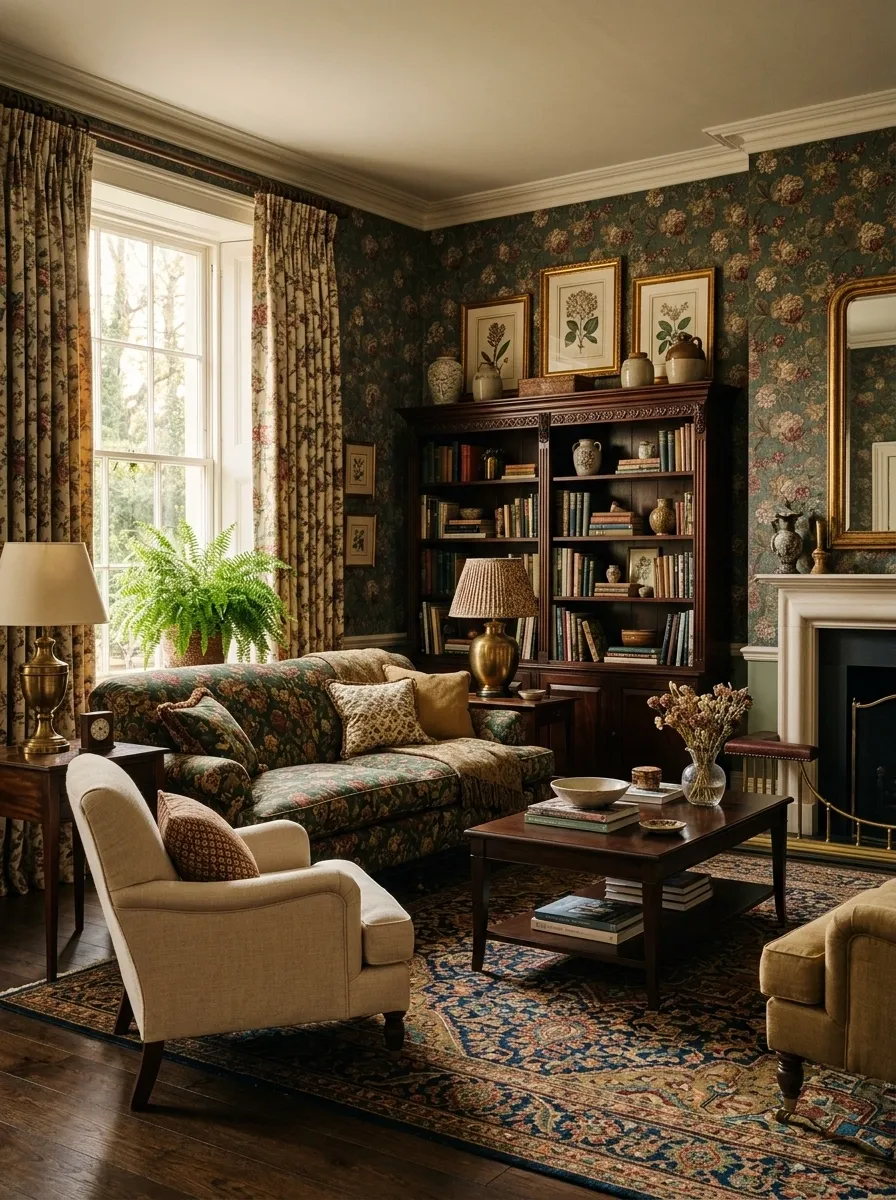
This apartment embraces pattern, but the patterns share a related palette. Floral curtains, a patterned rug, printed upholstery, framed artwork, and wallpaper create a richly layered room, while dark wood furniture gives the eye somewhere to rest.
The trick is controlling where the strongest patterns appear. The sofa may have a print, but the nearby chair becomes quieter. The rug has movement, while the curtains repeat only a few of its colors.
Maximalism does not mean every object gets a speaking role. Some furniture can sit quietly in the back row.
Neutral Vintage Apartment With Stone, Linen, and Oak
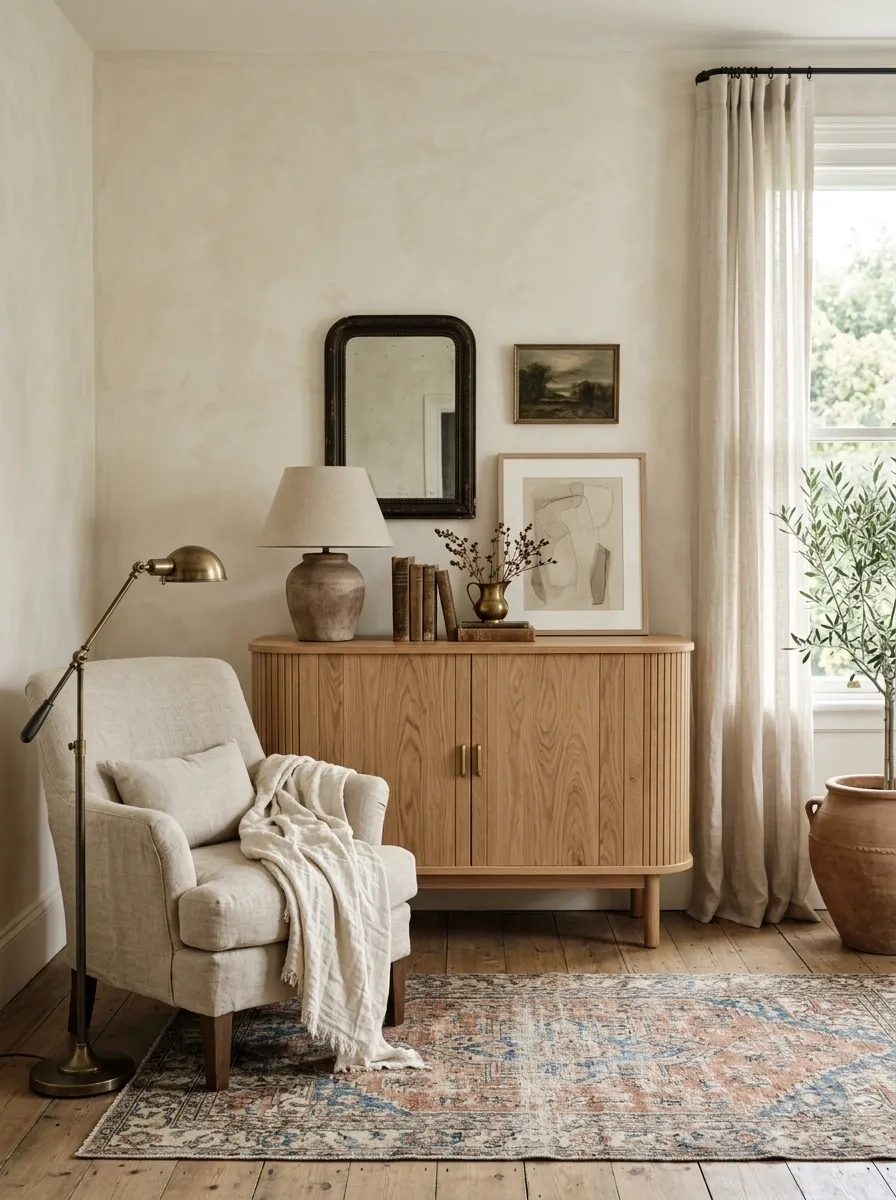
This apartment takes a quieter route, using warm stone tones, pale oak, linen upholstery, creamy walls, faded textiles, and a few aged metal details. Instead of relying on strong paint colors, the room gets its character from changes in texture and subtle shifts between warm neutrals.
A pale oak cabinet sits against a softly textured wall, while linen seating and a worn rug add enough variation to keep the room from becoming one large beige blur. A darker vintage lamp gives the composition a little punctuation.
Neutral doesn’t have to mean personality-free. Beige has simply been put on probation.
Quiet architectural backdrop
Visible grain and warmth
Soft, slightly irregular texture
Small dark accents that sharpen the palette
Compact Apartment With a Curved Vintage Sofa
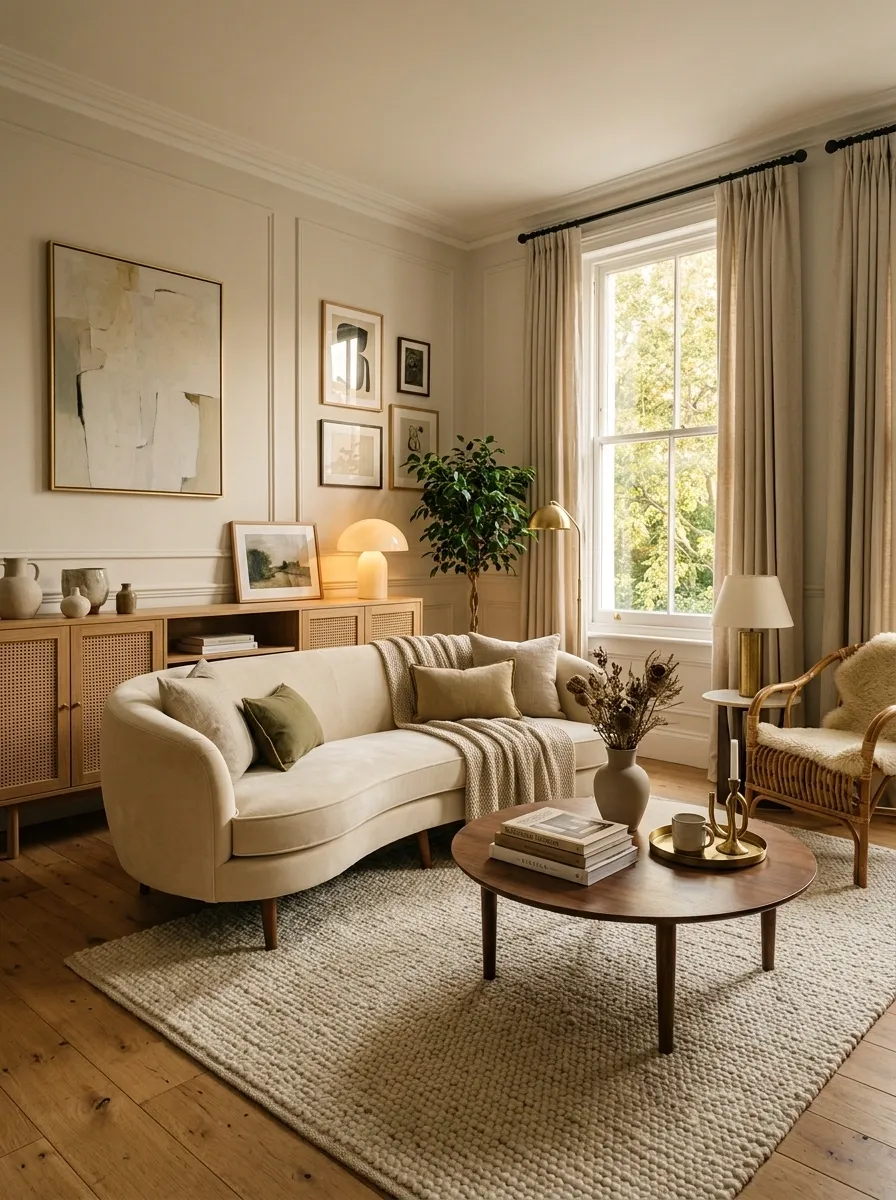
The entire living area is organized around a curved sofa that softens the geometry of a compact room. A round coffee table sits in front, a low wood cabinet fills the longest wall, and a textured rug defines the seating zone without extending too far into the circulation path. Tall curtains draw the eye upward and make the arrangement feel less compressed.
The curves are repeated sparingly through the coffee table and lamp, giving the room a clear shape language without turning it into a showroom of circles.
The sofa is rounded. The table is rounded. The room has clearly chosen a side.
CABINET
Blue-Green Vintage Apartment With Brass Lighting
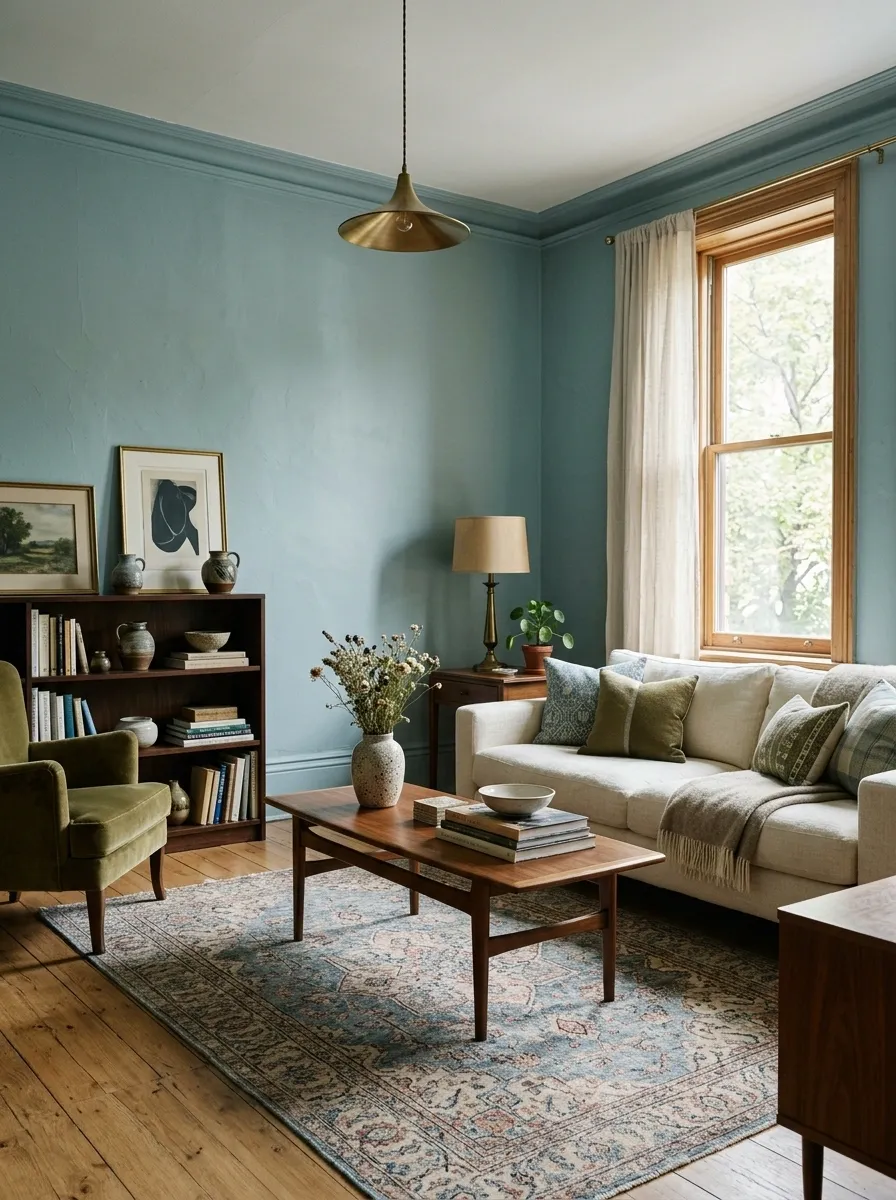
Muted blue-green walls give this apartment a cool foundation, while walnut furniture, cream upholstery, aged brass lamps, patterned curtains, and a faded rug bring warmth back into the composition. The color appears across both the living room and nearby hallway, creating continuity without making every piece match.
The brass works best in small doses. Table lamps and one overhead fixture are enough to catch the warm light against the cooler walls. Too much brass would push the room toward decoration-first territory.
Cool walls, warm wood, brass lighting. The room knows how to keep a conversation going.
Muted patterned textiles
Brass lighting
Cream upholstery
Romantic Vintage Bedroom With Soft Wallpaper
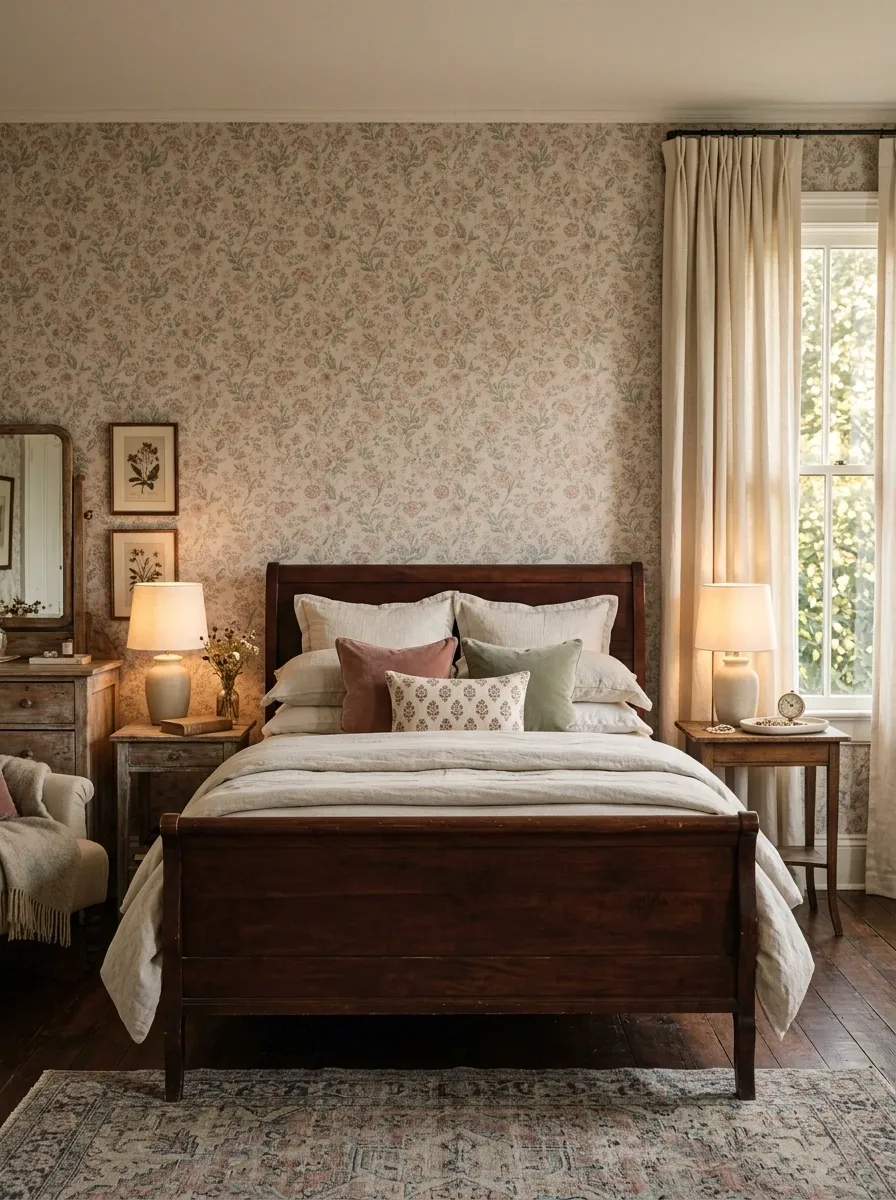
A muted floral wallpaper wraps this bedroom without overpowering it. An antique-style wood bed sits against the patterned wall, while cream bedding, gathered linen curtains, a vintage dresser, and simple bedside lamps soften the composition. A faded rug adds another layer underfoot, but its pattern stays quieter than the wallpaper.
The room feels romantic because of the combination of pattern, fabric, and furniture shape. There is no need for every surface to become ornate.
The wallpaper understood restraint. The rest of the room wisely followed instructions.
Warm Apartment With a Vintage Reading Corner and Record Cabinet
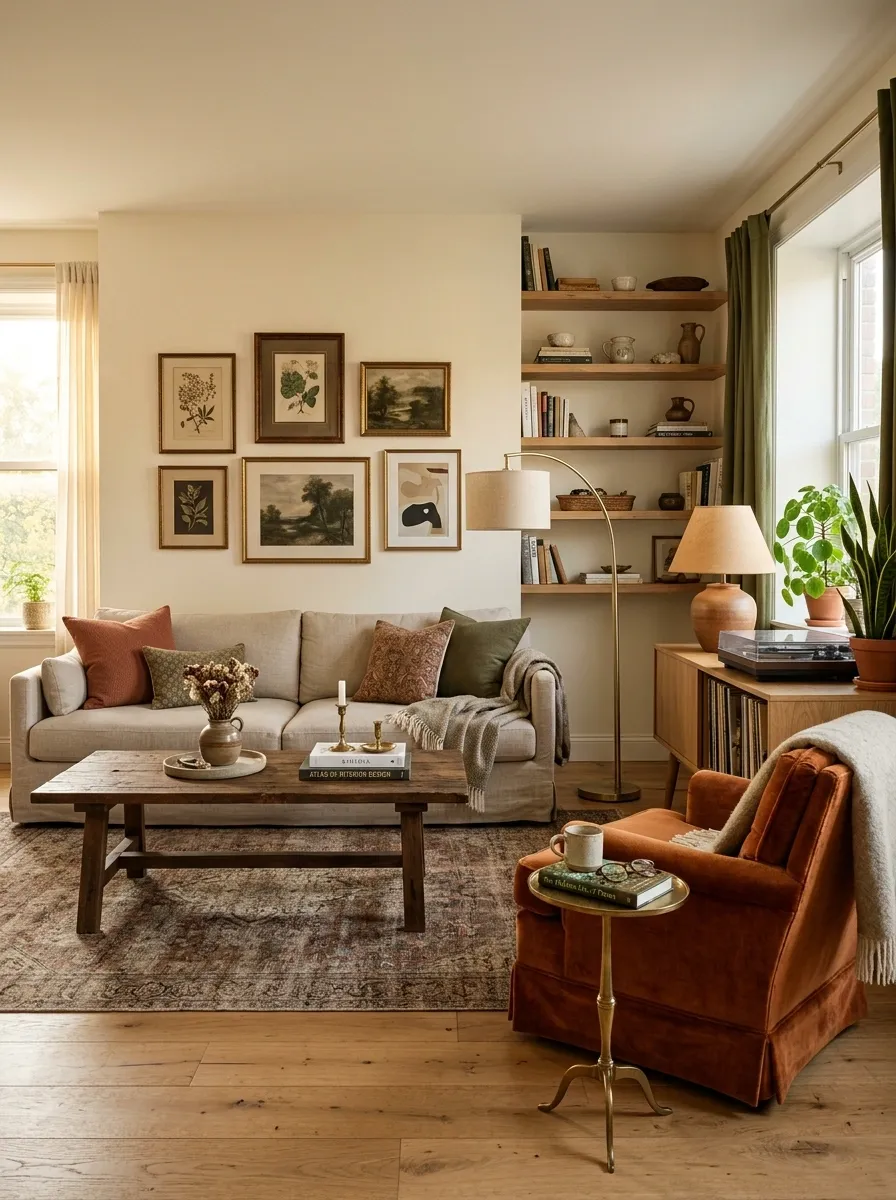
This living room has room for actual life. A long sofa anchors the main seating area, while a dedicated reading chair and floor lamp occupy one quieter corner. A low wood record cabinet sits nearby, integrated into the furniture arrangement rather than treated as a separate display.
The room feels personal because the hobbies are part of the floor plan. Books, records, a small lamp, and a comfortable chair tell the story without covering every surface with decorative objects.
Proof that a living room can contain hobbies without looking like the hobbies formed a hostile takeover.
Burgundy and Cream Apartment With Traditional Furniture
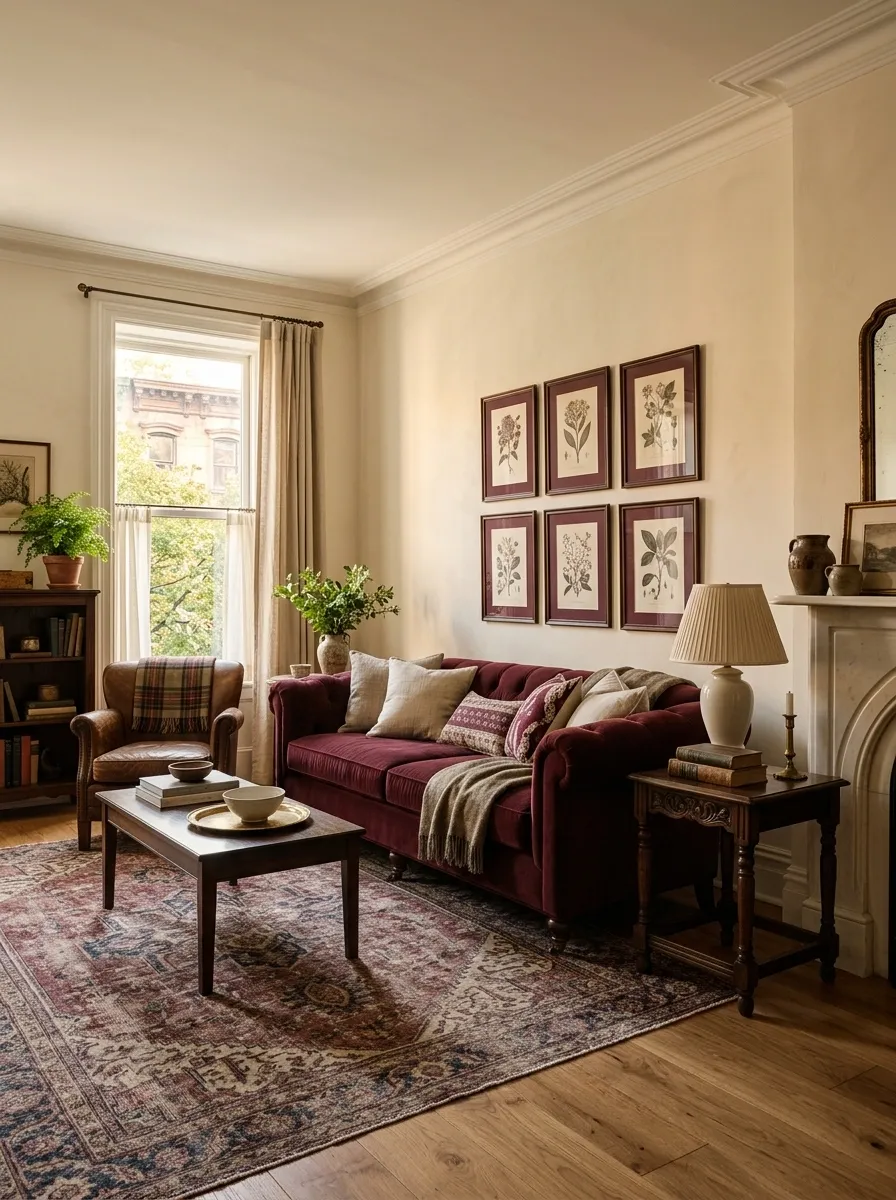
Deep burgundy upholstery gives this apartment its strongest visual moment, while cream walls, medium-toned wood furniture, traditional lamps, and a faded rug keep the room from feeling too heavy. The palette has enough contrast to feel dramatic but enough light space to remain comfortable.
A burgundy sofa or pair of chairs anchors the seating area, while smaller burgundy repeats appear in artwork or textiles. That repetition makes the color feel intentional rather than randomly dropped into the room.
Burgundy showed up and immediately requested better lighting.
Airy Vintage Apartment With Sheer Curtains and Pale Wood
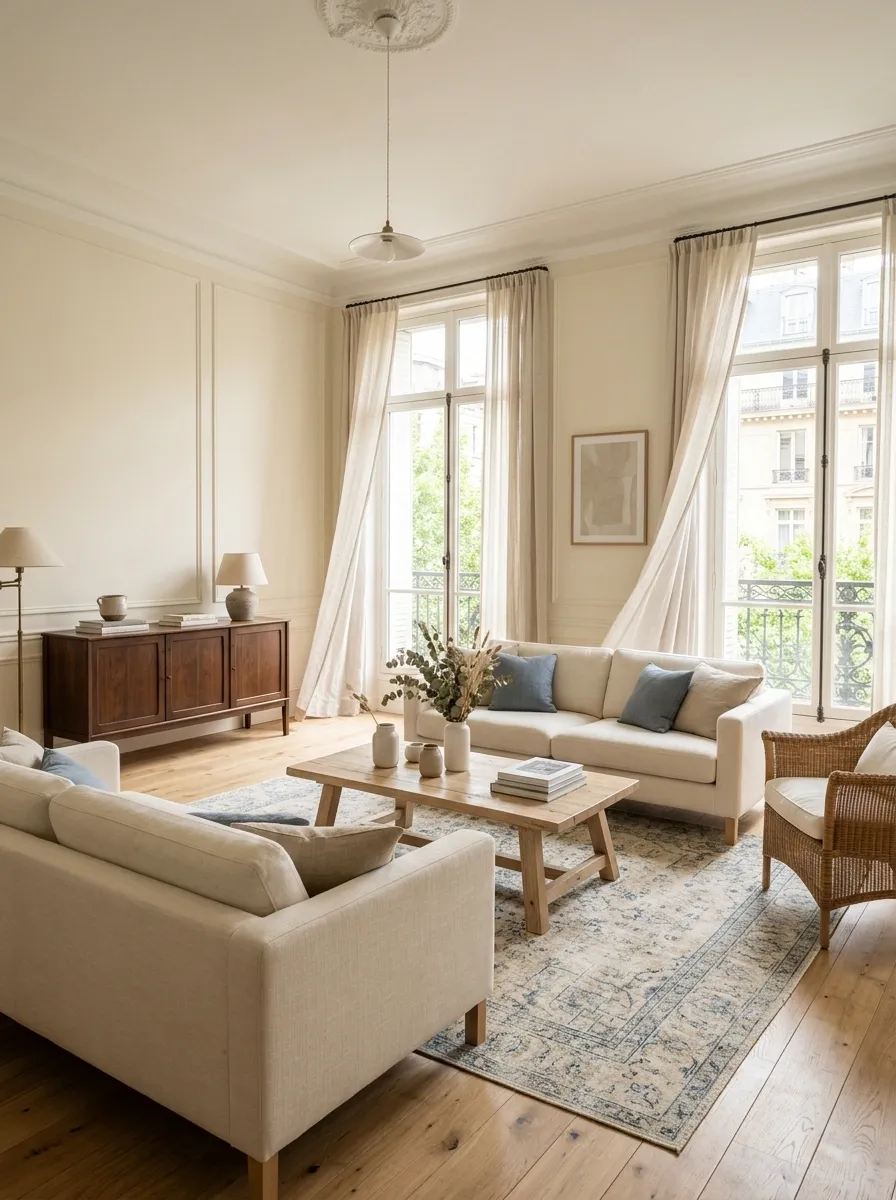
This is the lightest interpretation of the collection. Tall sheer curtains soften large windows, pale oak furniture keeps the room warm without adding heavy visual mass, and cream upholstery creates a bright foundation. Muted blue accents, a faded rug, and a few vintage-inspired case pieces add enough age to keep the room from becoming contemporary minimalism.
The furniture remains relatively open around the center, allowing daylight to move through the room. Traditional silhouettes give the apartment history while the pale materials keep the overall composition fresh.
Vintage, but it has excellent lighting and absolutely knows it.
A Vintage Apartment Should Look Collected, Not Manufactured
The strongest vintage apartments aren’t built around one magic object. They work because the whole room has a point of view. The furniture shapes relate to the architecture, the colors repeat without becoming matchy-matchy, and the older pieces have enough quiet space around them to actually be noticed.
That is also why a complete room is more useful than a shopping list. A walnut cabinet means very little on its own. Put it beside cream upholstery, faded textiles, warm lighting, and the right flooring, and suddenly the direction becomes obvious.
Start with the finished look that feels closest to the apartment, then borrow the parts that actually make sense for the space. Keep the circulation clear, let a few pieces carry the personality, and don’t add vintage clutter simply because an empty shelf made someone nervous.
Save the designs that make you stop scrolling, then come back to them when the apartment needs a little more character.