
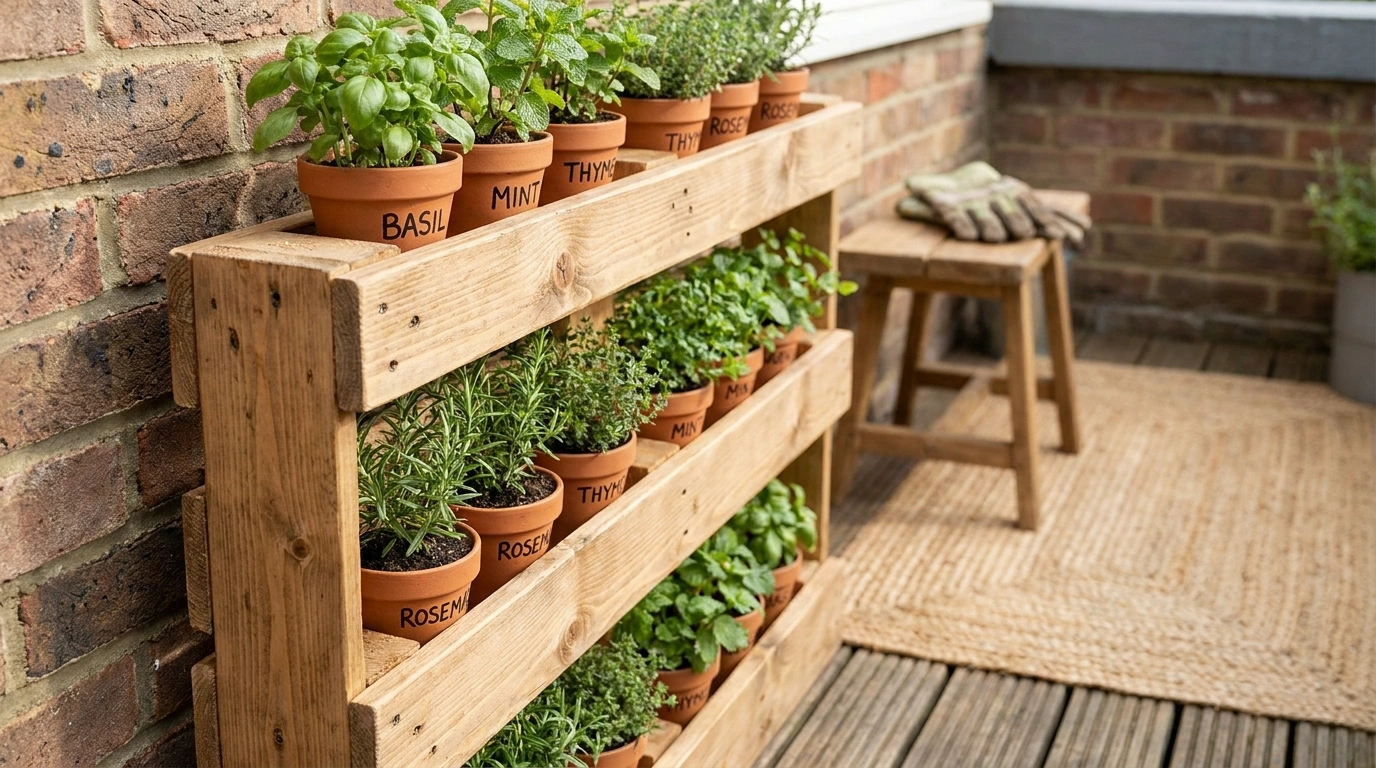
A pallet project can look unfinished even after the last screw goes in. The wood has character, but that alone won’t make a bulky bench suit a narrow porch or a rough table work beside a polished sofa. The surrounding space matters just as much as the project itself.
These DIY pallet project ideas start with the finished setting: the cushions against the timber, the wall behind the headboard, and the clear path beside a garden bar. Some keep the familiar pallet shape. Others use dismantled boards for furniture fronts, wall treatments, and smaller pieces with a more tailored look.
Each direction gives the reclaimed wood a specific role, so the room doesn’t become a collection of competing rustic surfaces.
Before You Choose a Pallet Project
Match the Project to Your Space
Mark the footprint before choosing a design. Open the nearby doors, pull out chairs, and walk past the marked area. A generous lounge seat earns its place on a broad patio. In a tight entryway, a shallow storage piece makes more sense.
Decide Between Whole Pallets and Dismantled Boards
Whole pallets create broad, low forms with visible gaps and a strong industrial character. Dismantled boards give you more control over size and finish. Treat these concepts as design inspiration, not construction plans: the reclaimed surface and the structure supporting it are separate decisions.
Plan the Finish Alongside the Surrounding Furniture
Choose the wood tone beside the fabrics, flooring, and paint that will surround it. Pale timber sits quietly against cream linen. Darker boards hold their own beside leather and black metal. Keep the natural variation, but avoid several competing stain colors in one small setting.
DIY Pallet Project Ideas
Painted Pallet Hallway Console With Ambient Lighting
A whitewashed pallet console stands neatly in the hallway, with warm strip lighting glowing softly through the slatted boards. Natural woven baskets tuck into the lower section, giving the utilitarian timber a polished touch. A large wooden-framed mirror hangs above, reflecting light and making the narrow entrance feel twice its size.
Keep the top surface clean with just a textured tray, a simple vase of eucalyptus, and a lantern for a welcoming glow. The pale finish keeps the heavy structure from feeling bulky in a compact circulation space. Let the warm illumination highlight the raw grain of the reclaimed wood without competing with overhead lights.
Position the console against a neutral wall so the white paint blends seamlessly into the surrounding architecture. A few small decorative elements are enough to anchor the arrangement while keeping the entryway clutter-free. This setup turns rough shipping crates into a high-end drop zone that feels intentional from the moment you walk in.
L-Shaped Pallet Patio Lounge With Cream Cushions and Olive Trees
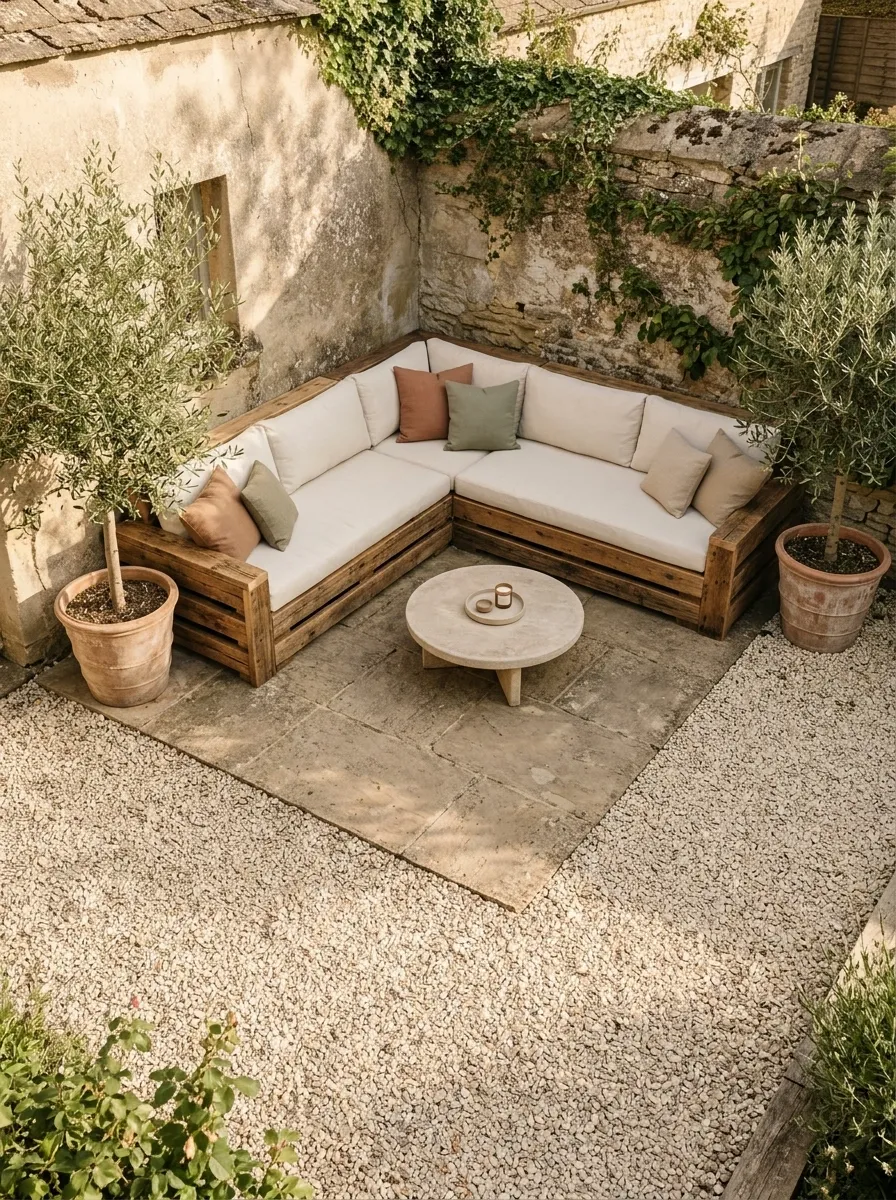
Low pallet seating wraps around a courtyard corner, with cream seat cushions taking the edge off the timber’s heavy shape. A round table sits inside the L, while olive trees in large pots soften the ends. Pale gravel surrounds a firm, level seating area, giving the wood a quieter backdrop than a busy patterned floor.
I’d keep the cushions mostly plain here. The slat gaps already create a strong rhythm, and several patterned pillows would compete with it. Leave the open side facing the garden entrance so guests can join the group without squeezing between the table and a planter.Open approach from the garden
Conceptual overhead view. Place large planters beyond the approach, not inside it.
Blue Pallet Garden Console With Built-In Planters
A dusty blue pallet stand rests against a dark wood fence, creating a dedicated station for trailing greens and potted herbs. Small chalkboard labels attached to the shelves keep the planting bays organized, while pale gravel frames the base to catch any stray soil. The soft blue paint gives the rough planks an unexpected coastal refinement.
Arrange cascading plants and upright herbs across the tiers to break up the linear slats of the wood. A galvanized watering can and a matching pot sit ready on the top surface, adding functional charm to the display. Let climbing ivy from the adjacent fence frame the structure for an overgrown, established look.
Keep the color palette muted with greens, grays, and natural terracotta to let the blue frame stand out gently. The vertical design maximizes floor space on a narrow patio or balcony while keeping gardening supplies within arm’s reach. This arrangement turns a basic shipping pallet into a living architectural feature.
Warm Neutral Bedroom With a Pallet-Board Headboard Wall
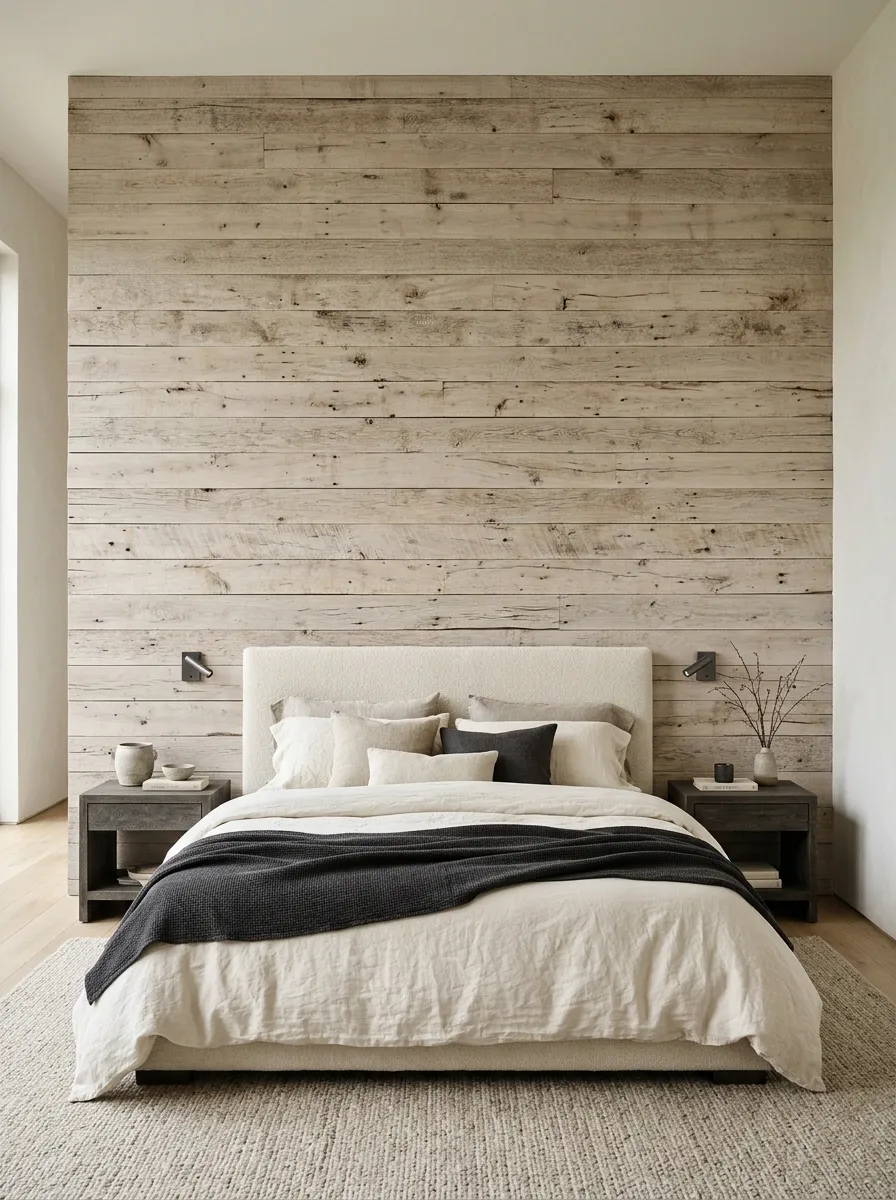
Pale reclaimed boards stretch behind an upholstered bed, making the entire sleeping area feel settled against one warm surface. Cream linen, dark bedside tables, and small reading lights keep the composition clear. Let the timber run beyond the bed so it reads as a wall treatment rather than an oversized headboard.
The upholstery is doing useful work: it breaks up the hard surface where your eye lands first. Keep the opposite wall plain and skip a matching pallet bed base. This room needs one generous area of wood, with quieter shapes around it, rather than timber repeated on every piece.Living Wall Pallet Frame Packed With Succulents
A vertical wooden pallet transforms into a lush living wall, dense with rosettes and trailing succulents in every shade of green and purple. The natural timber frame warms up the dark brown exterior wall behind it, turning a blank surface into a textured botanical display. Every gap between the slats is packed tightly with healthy, low-profile plants.
Allow varying textures, from string-of-pearls to plump echeveria, to spill over the wooden edges and soften the boxy shape of the pallet. A tall, slender plant stands guard to the left, drawing the eye upward and balancing the horizontal lines of the wood. Keep the soil mix well-draining so the vertical setup thrives without retaining excess moisture.
Mount the pallet securely at eye level to make the dense arrangement easy to admire and maintain. The mix of deep purples and silvery greens gives the reclaimed wood a sophisticated, curated feel. This living art piece proves that shipping waste can easily double as high-impact garden decor.
Sage Entryway With a Pallet-Wood Bench and Basket Storage
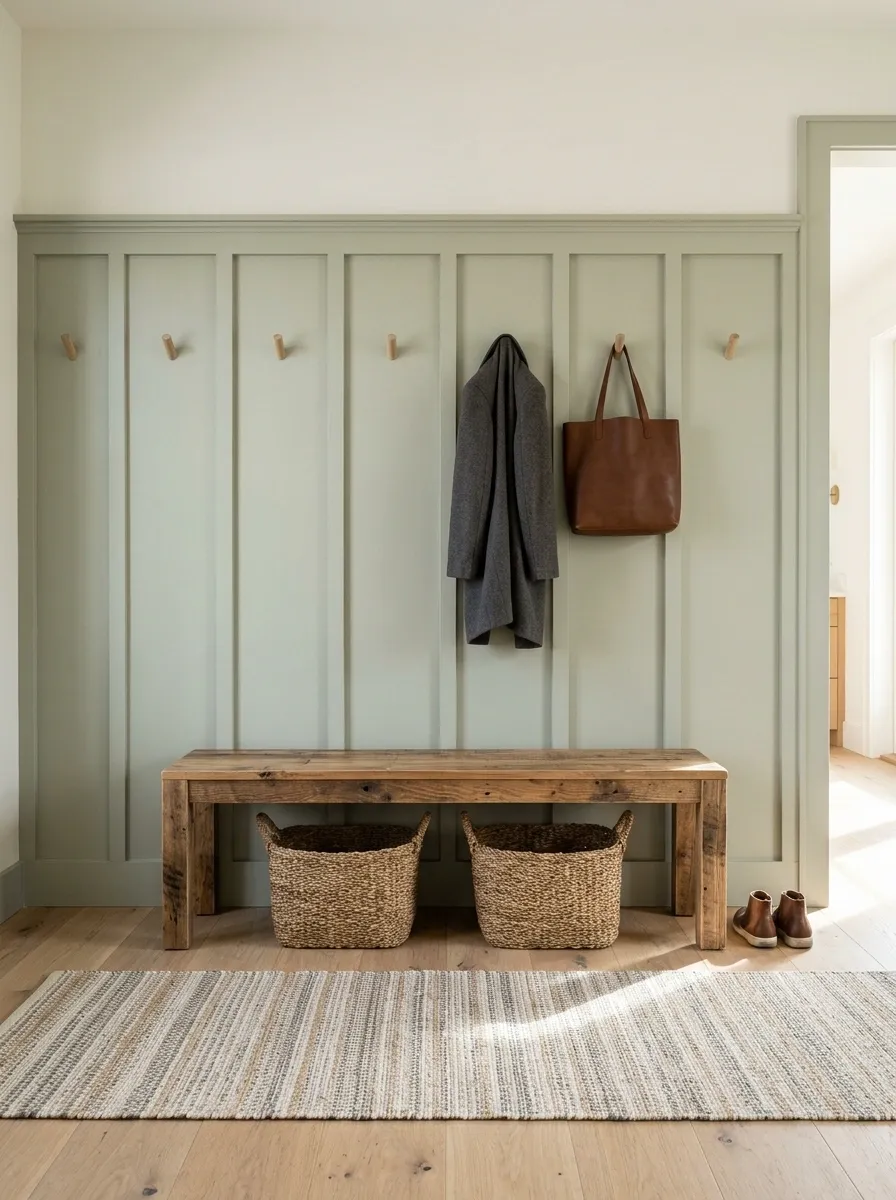
A slim wood bench stands against a sage wall, with baskets tucked beneath and a row of simple coat pegs above. A flat runner leads toward the next room. The wood stays natural, while the painted backdrop gives the small arrangement a softer outline.
Choose baskets that pull forward without catching on the bench legs. That detail matters more than filling every gap with storage. I’d also leave part of the peg rail empty so coats don’t hide the wall entirely. The finished entry should still look like a place to arrive, not a cupboard with its doors removed.Above the seat
Everyday bags and coats within comfortable reach.
On the seat
Clear space to sit and put on shoes.
Below the seat
Pull-out baskets for loose accessories. Keep wet footwear separate.
Pastel Pink Plant Stand Crafted From Reclaimed Wood
A tiered wooden plant stand painted in soft pastel pink creates a whimsical display against a sunlit white wall. White-and-pink pots hold an assortment of upright ferns and leafy greens, creating a cheerful contrast against the painted timber. The staggered shelf design gives each plant its own moment in the spotlight without overcrowding the structure.
Poker-straight white supports anchor the soft pink shelves, keeping the multi-level unit feeling light and airy on a bed of pale pebbles. Place contrasting foliage like snake plants and speckled monsteras on the tiers to add visual depth. Let trailing vines soften the clean edges of the wooden framework.
Position the stand near a bright window or outdoor patio wall to let natural light catch the delicate pastel finish. A few carefully chosen ceramics are all it takes to complete the look without overwhelming the playful color scheme. This project elevates basic lumber into a charming botanical showcase.
Terracotta Balcony Garden With a Pallet Plant Screen
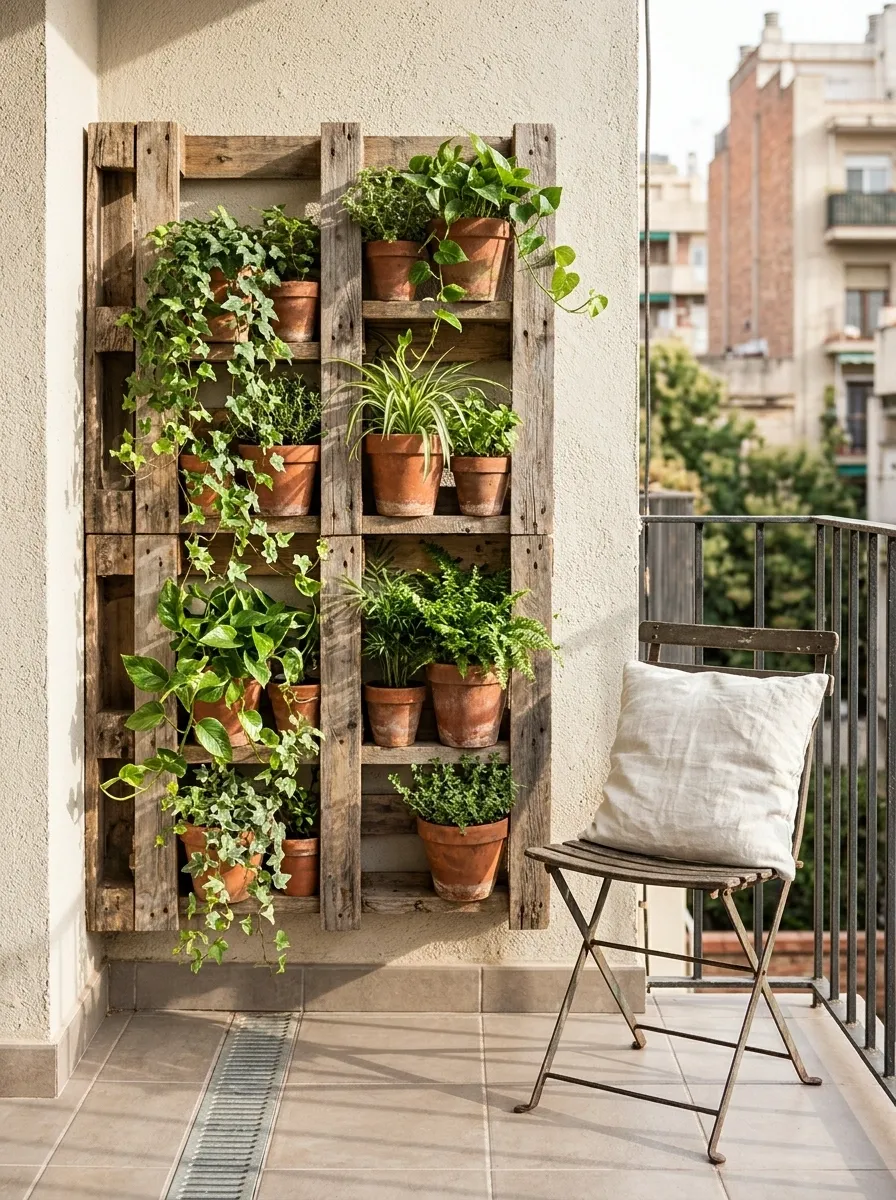
A vertical pallet screen carries removable pots beside a folding chair, turning the far end of a tiled balcony into a planted corner. Terracotta brings warmth to the timber, while a few trailing stems soften the straight slats. Keep the pots visually grouped instead of scattering small plants across every surface.
The chair needs its own patch of floor. If foliage spills over the seat or the screen crowds the door, the garden has swallowed the balcony. Use an appropriately secured support and plan where watering runoff will go. The strongest version lets you tend the plants without dismantling the seating arrangement.Water where runoff can be managed
Return it after drainage
Keep the chair and doorway outside this working space. A plant display should remain reachable as it grows.
Industrial Living Room With a Pallet Coffee Table and Leather Sofa
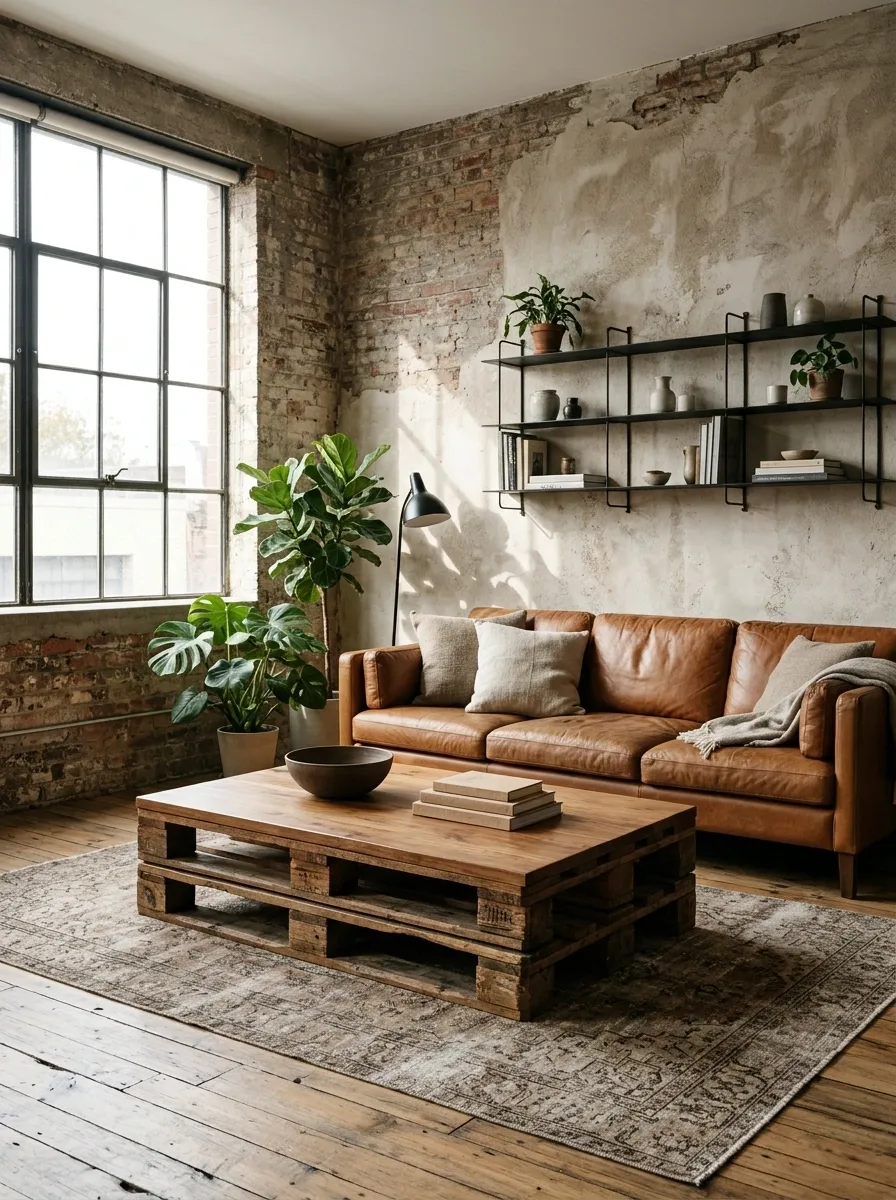
Caramel leather, a faded rug, and black shelving give a low pallet coffee table a convincing setting. The table’s broad shape grounds the room, while a smooth top makes it feel finished. A ceramic bowl and a short stack of books are enough on the surface.
Don’t repeat the black metal on every accessory. The shelving already supplies the sharp lines, and the leather brings depth without another wood grain competing for attention. Choose the table footprint with the sofa in place. A piece that looks modest in an empty room can become awkward once feet, cushions, and side tables enter the picture.Check the footprint before building
Leave room to sit down and move past
Test it with the rug and side tables already positioned. This is a layout check, not a scale drawing.
Cottage Potting Corner With a Pallet-Wood Workbench
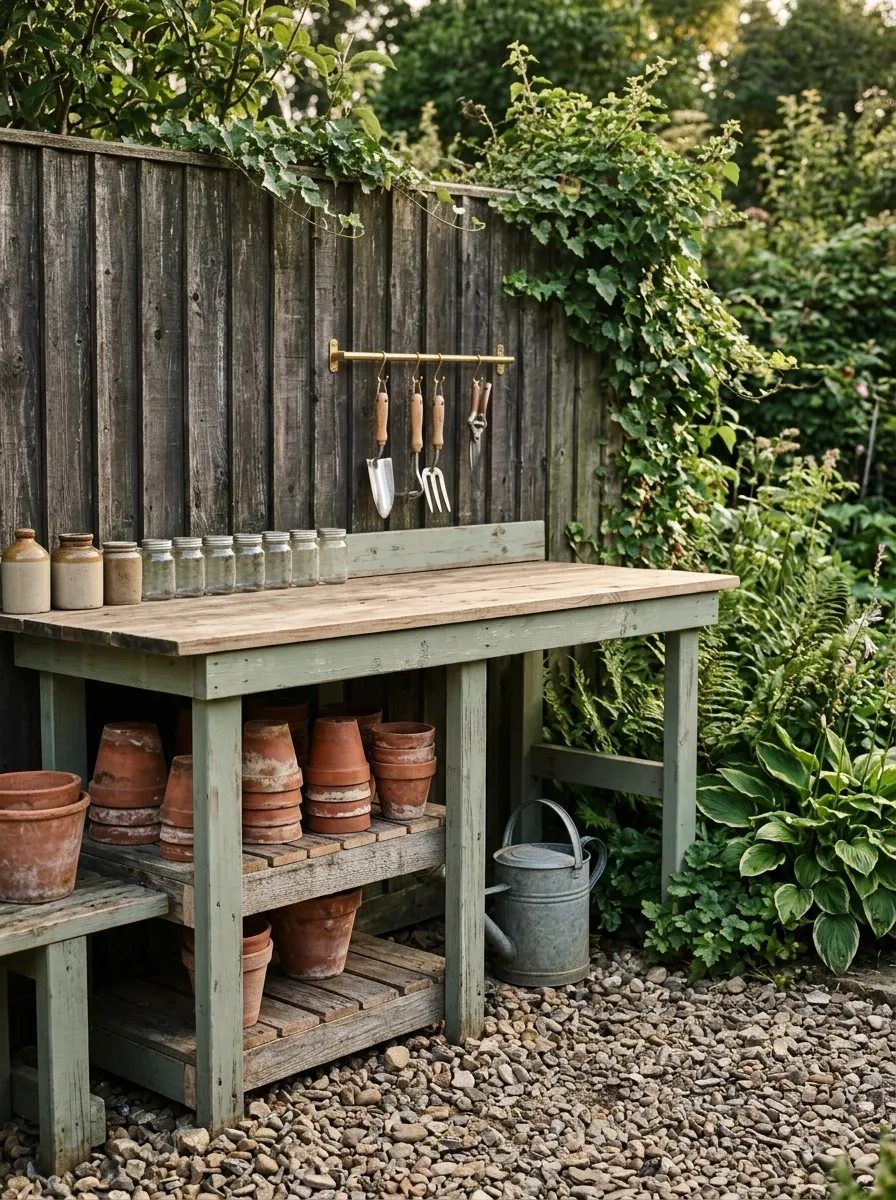
A softly painted workbench sits against a garden fence, with clay pots below and a short tool rail above. Reclaimed boards give the lower shelves texture, while a separate work surface creates a clear place for potting. Gravel underfoot and leafy planting at one end settle the station into the garden.
Keep the upper display loose. A row of identical jars makes this working corner feel staged, while a few useful tools and stacked pots give it purpose. The real luxury here is an empty patch of worktop. Leave one available instead of covering the entire bench with plants.Empty pots
Gather
Clear work surface
Fill and plant
Finished pots
Set aside
Dining Nook With Pallet-Board Banquette Cladding and Mustard Upholstery
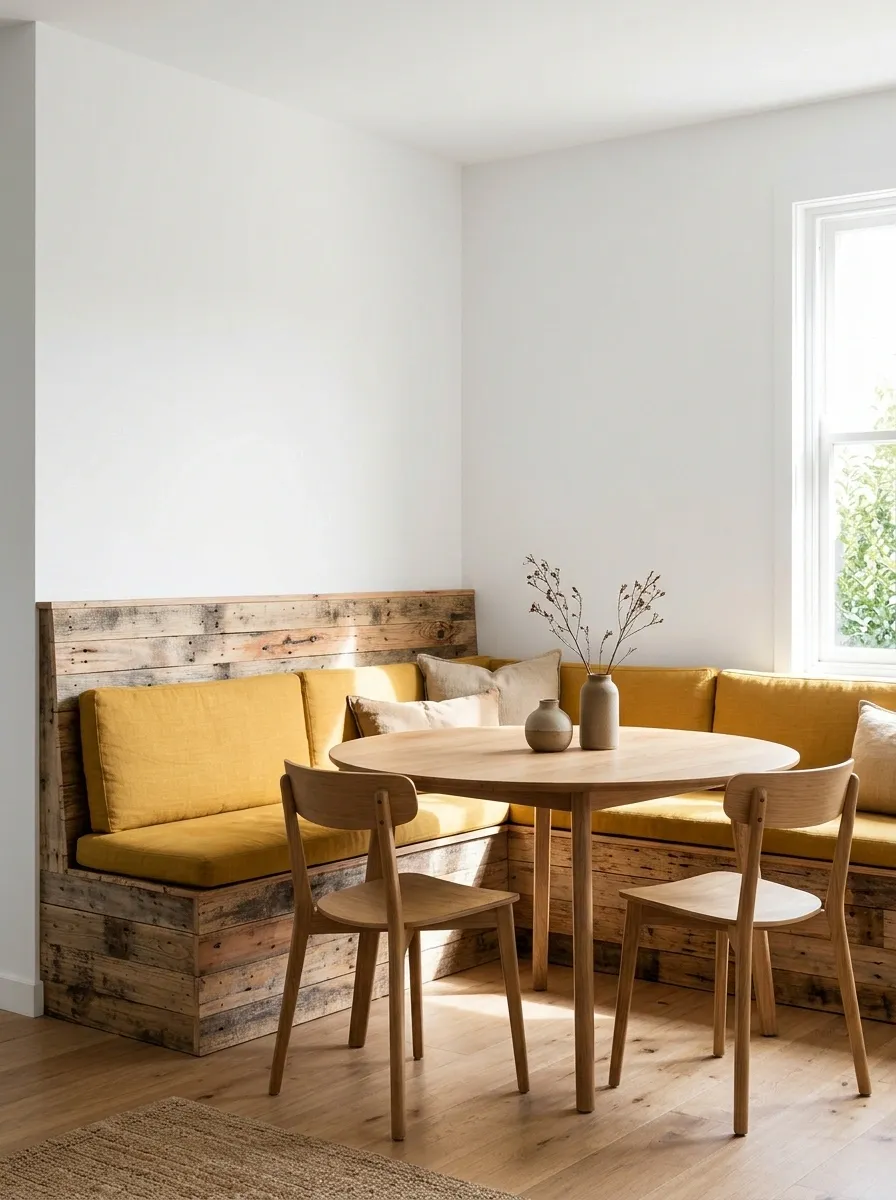
Mustard cushions brighten a window-side bench faced with horizontal pallet boards. A round table softens the corner, and slim chairs on the open side keep the nook from feeling boxed in. White walls give the golden fabric room to stand out without adding another strong color.
The reclaimed wood belongs on the bench face, where its texture shows beneath the cushions. A separately designed frame handles the seating structure. I’d avoid a matching rustic table here. A plain painted or smooth timber top gives the rougher boards a useful contrast and makes the dining area feel assembled with care.Covered Porch Daybed With a Pallet Base and Blue Striped Cushions

Blue stripes make a broad pallet daybed feel like porch furniture rather than a temporary stack of wood. Place it at the closed end of a covered porch, with a small side table beside the cushion and a reading light nearby. Painted floorboards and plain curtains keep the scene light.
A full-length seat cushion gives the base a clean outline. Loose back pillows then make the deep seat more comfortable for upright reading. Keep the throw folded at one end so the stripes remain visible. This design needs enough porch depth to preserve a clear route past the front edge.Garden Party Corner With a Pallet Bar and Slatted Backdrop
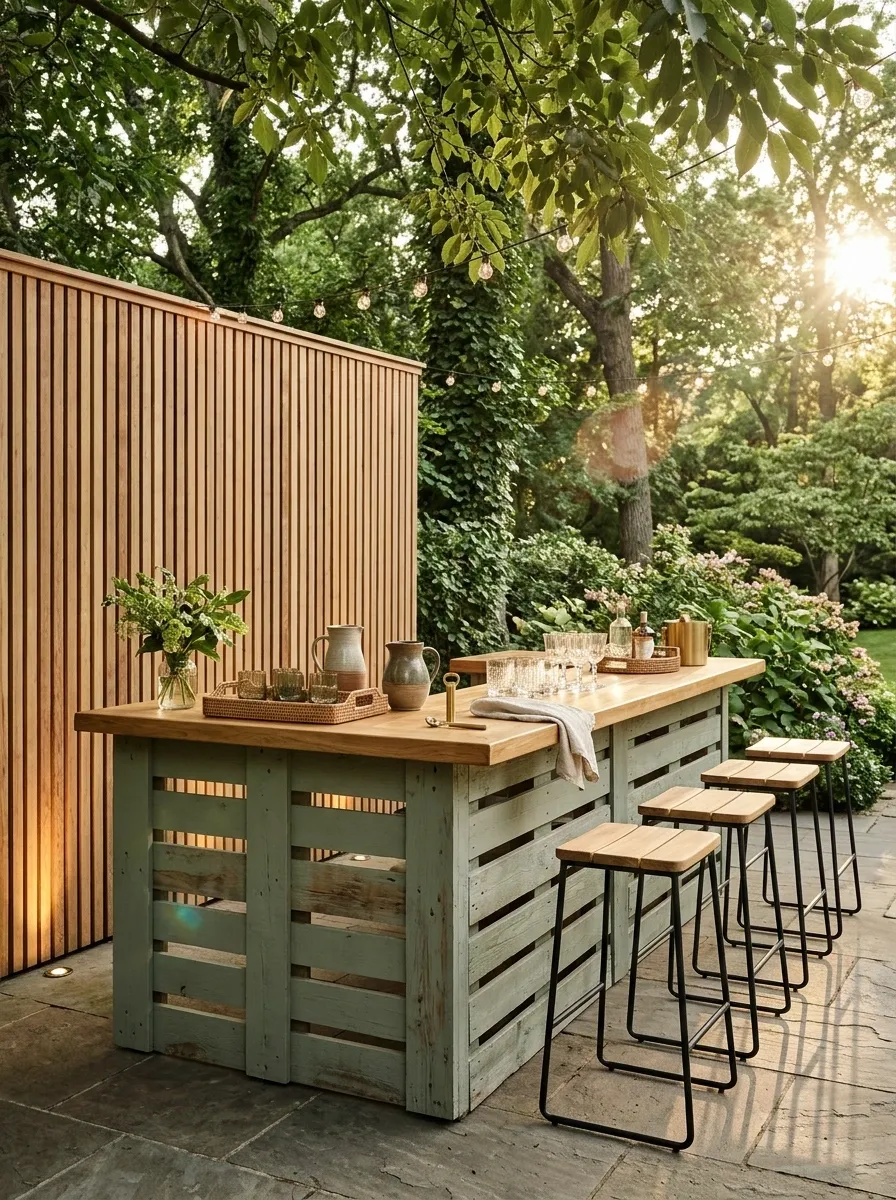
A muted painted bar stands in front of a slatted backdrop, creating a clear destination at the edge of the patio. Keep the serving top smooth and use trays for drinks. A few stools face the garden, while restrained outdoor lighting makes the backdrop visible after sunset.
The open space behind the bar is part of the design. Without it, the host ends up reaching over guests to find supplies. I’d place the bar near the gathering area but outside the main route to the house. Let the backdrop frame the station without turning the whole patio into an enclosure.Host side: storage and an unobstructed working route
Serving surface
Guest side: stools with space to step back
Keep through-traffic beside this arrangement, rather than behind occupied stools.
Minimal Home Office With a Pallet-Wood Desktop and Open Shelving
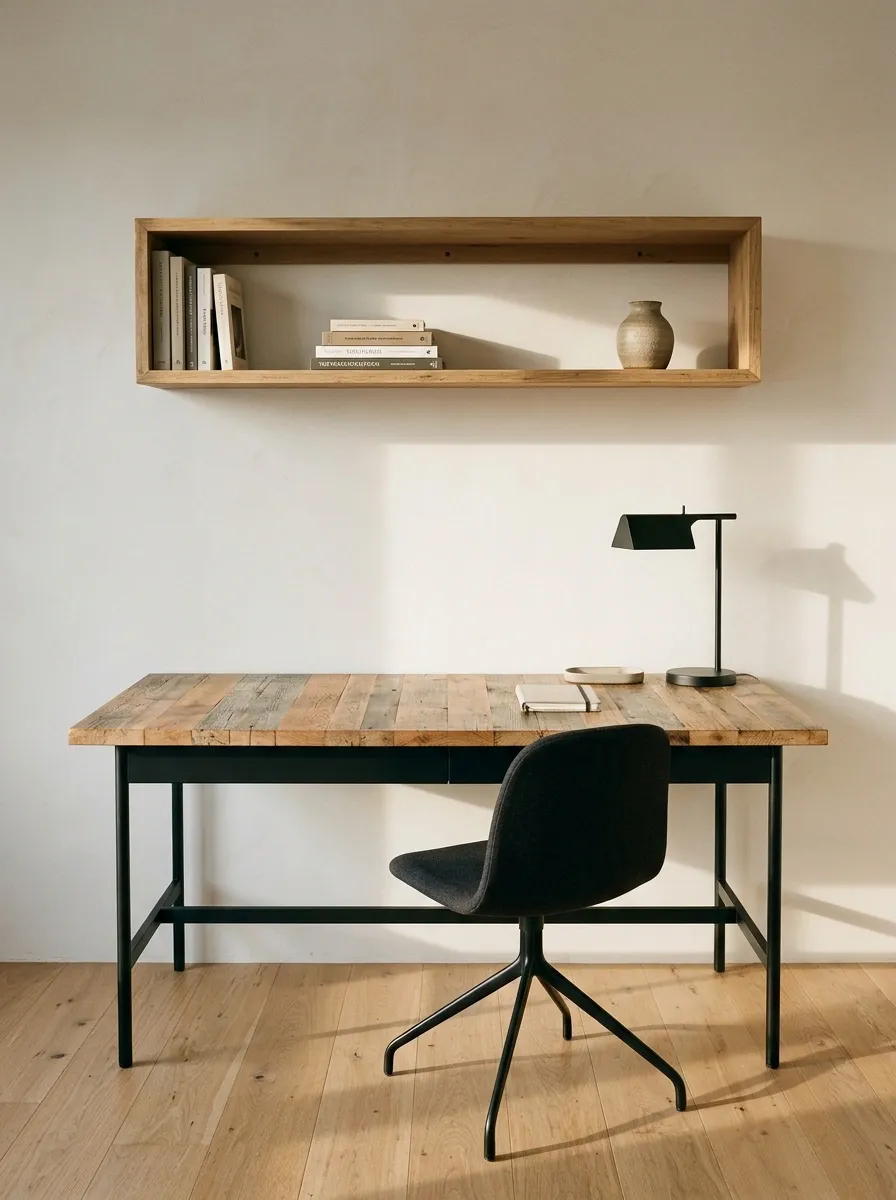
A carefully finished reclaimed desktop rests on a purpose-built base against an off-white wall. One open shelf holds books and a small ceramic piece. A task lamp, a simple chair, and a quiet floor finish let the board variation become the main visual detail.
This is where restraint pays off. Skip the matching wood wall and leave the area under the desk open. The desktop needs a continuous, usable surface, especially where a keyboard or notebook sits. If the boards remain uneven, reserve them for a decorative desk front and choose a separate smooth working top.- Below
- Check knees and chair movement against the frame.
- Behind
- Allow access to plugs and a deliberate cable route.
Laundry Alcove With a Pallet-Board Sorting Cabinet
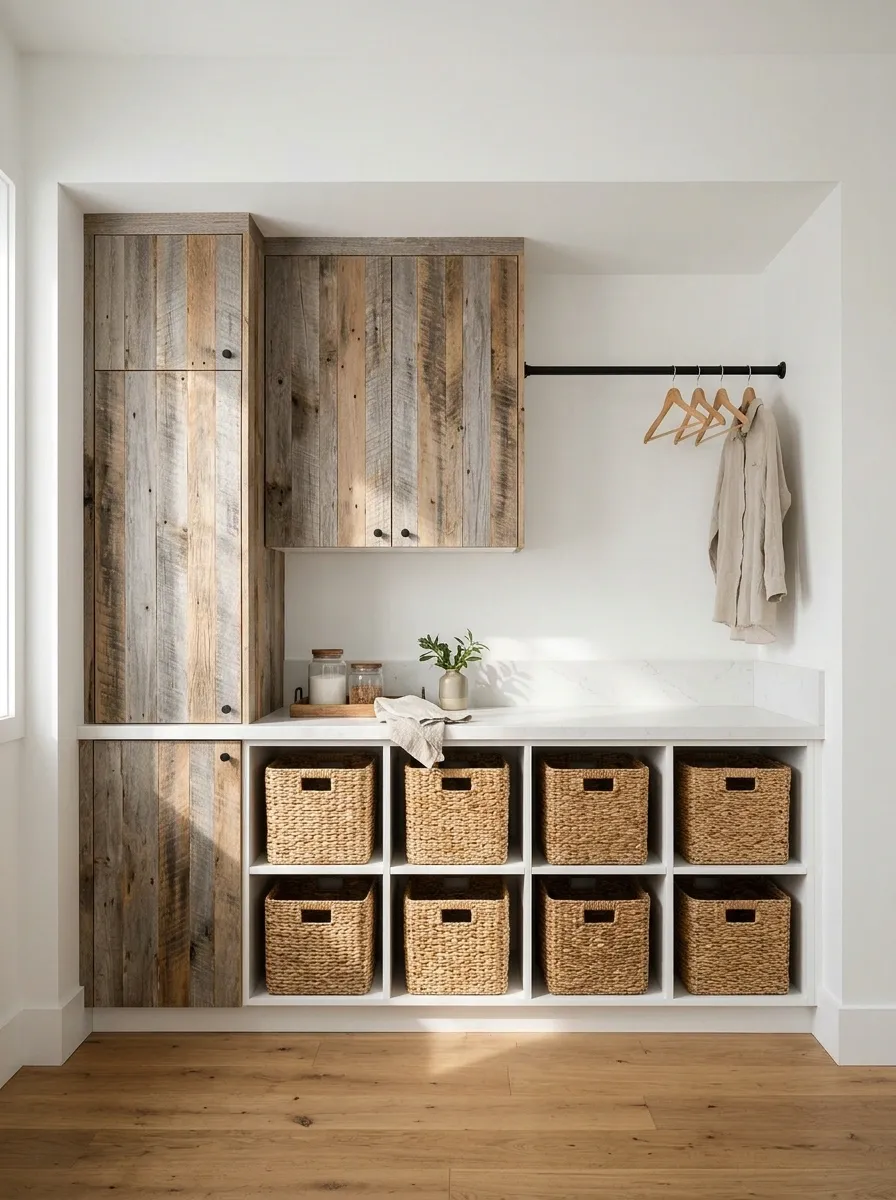
Reclaimed timber fronts bring warmth to a laundry alcove lined with plain white walls. Removable baskets sit beneath a smooth folding counter, with a short hanging rail above the open end. Keep the boards on the dry cabinet faces so the work surface stays easy to wipe.
The baskets should set the cabinet layout. Building first and hunting for containers later usually leaves awkward gaps. A single continuous counter makes the little station feel deliberate, while a clear patch beside it gives you somewhere to stand with a full load. Leave appliance access and ventilation unobstructed.Sort below the counter
Fold on the clear surface
Hang beside the working area
Courtyard Dining Area With a Pallet-Wood Table and Woven Chairs
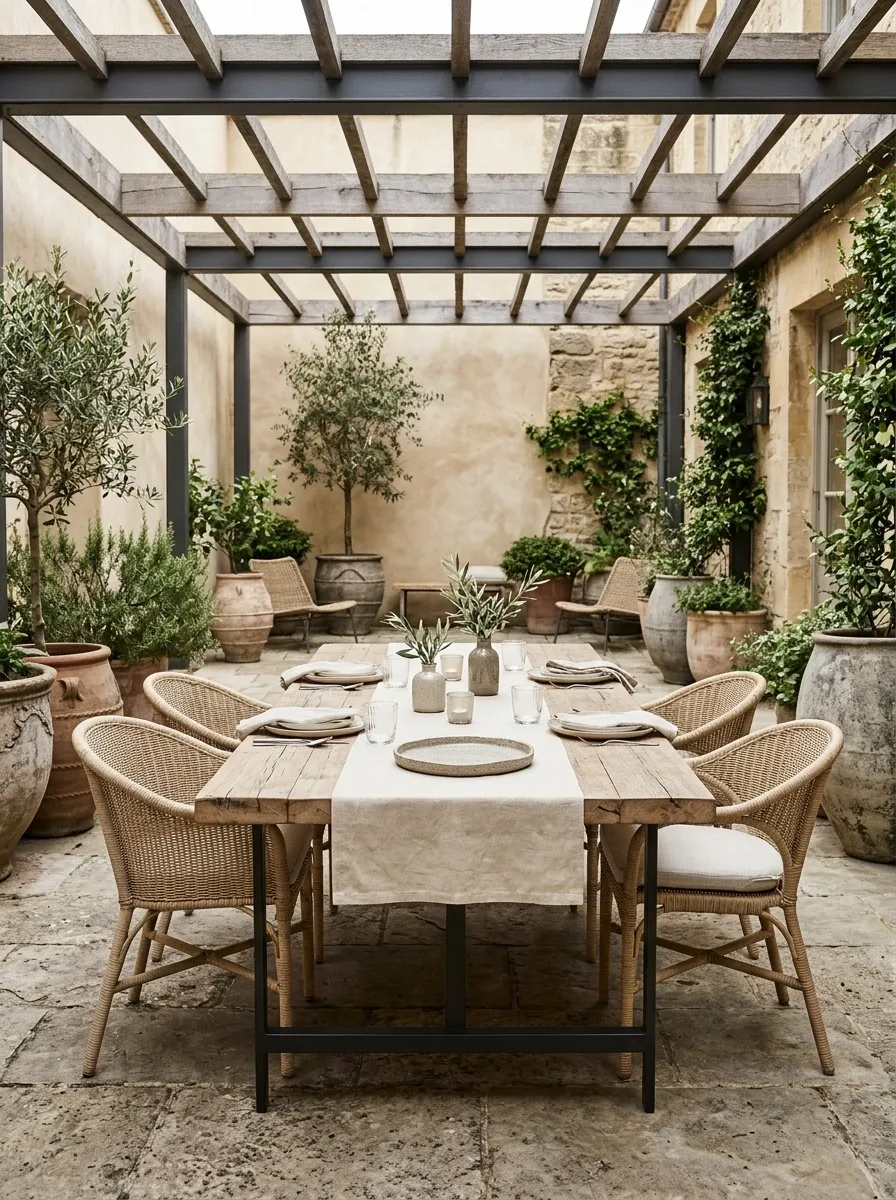
A reconstructed timber tabletop becomes the center of a paved courtyard beneath an open pergola. Woven chairs soften its straight edges, and a plain linen runner leaves plenty of grain visible. Pots sit against the perimeter rather than around the chair legs.
Use a separately designed base that leaves room for people to sit comfortably. The table’s rustic surface doesn’t need equally rustic seating. I’d choose lighter chair shapes and keep the place settings simple. The result feels more relaxed, and the reclaimed wood remains the strongest material in the scene without making the dining area look heavy.Reading Corner With a Low Pallet Bookcase and Deep Armchair
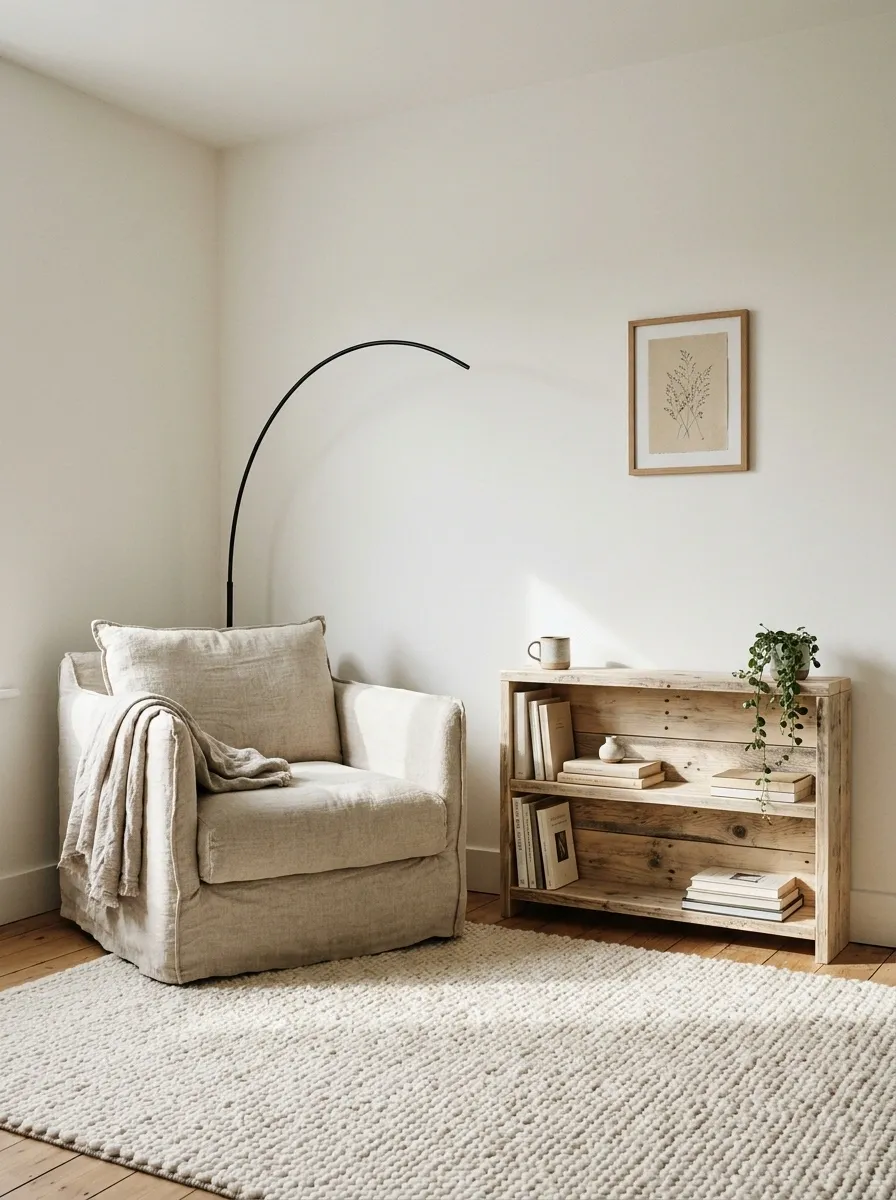
A long, low bookcase in pale pallet wood sits beside a deep armchair, keeping the books within reach without enclosing the corner. A wool rug marks the seating area, and a floor lamp rises above the chair’s shoulder. The wall stays quiet, with one small print rather than a crowded gallery.
Mix upright books with a few larger volumes laid flat. Leaving an open section lets the grain show and stops the shelves becoming a solid visual block. Keep the bookcase low enough that the lamp and chair still lead the composition. This corner needs breathing room more than extra display space.Upright books
Measure your tallest regular volumes.
Wide volumes
Allow a longer opening.
Open space
Leave some timber visible.
Bedroom Dressing Corner With a Pallet-Framed Mirror and Painted Vanity
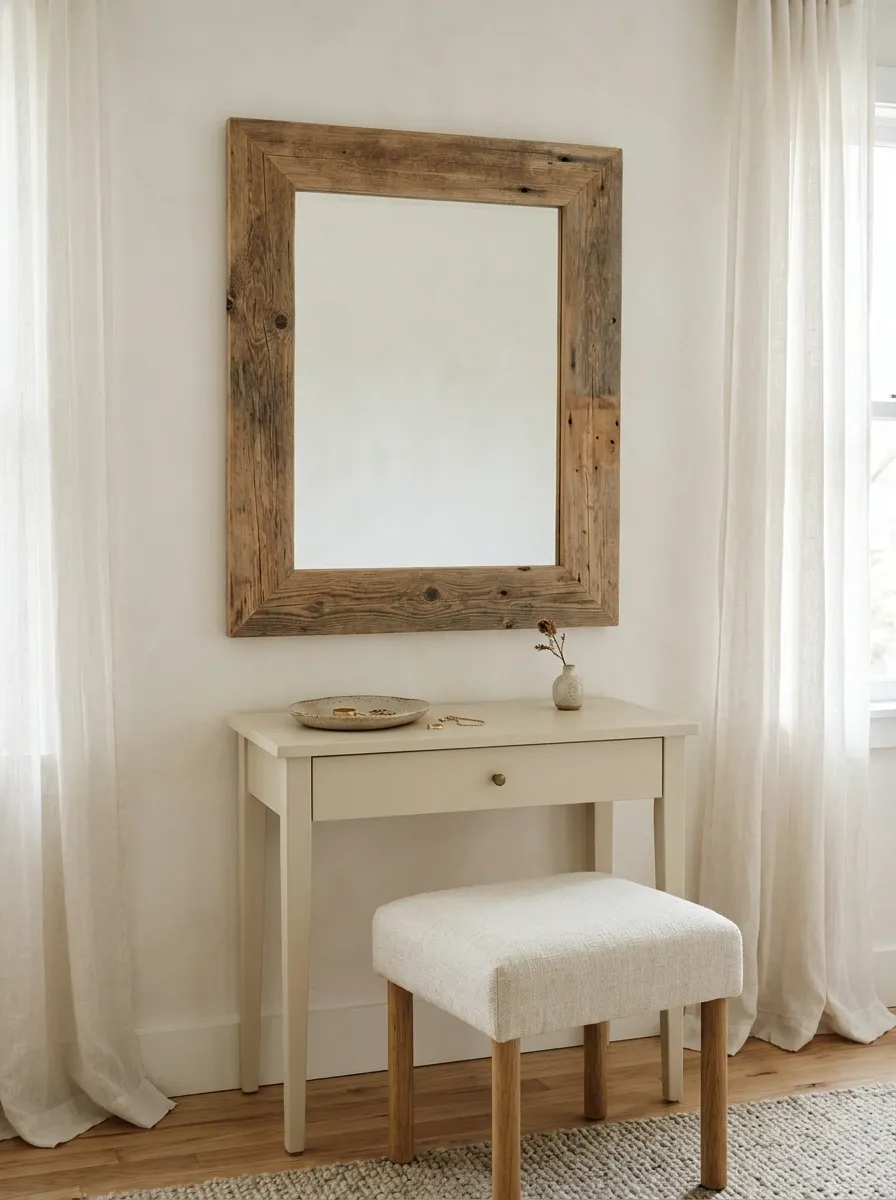
A broad reclaimed-wood mirror frame hangs above a small painted vanity, with a linen stool tucked beneath. Soft curtains filter the window light, and a single ceramic dish holds everyday jewelry. The timber creates a defined outline against the pale wall without adding another large piece of furniture.
Choose boards with a similar overall tone so the frame reads as one shape. Too many contrasting strips can make the mirror look patchy. I’d keep the vanity smooth and plainly finished. Its quiet surface gives the grain room to show, while the tucked-away stool preserves the bedroom’s walking route.Narrow border
More attention on the reflection and wall.
Broad border
More attention on the timber itself.
Garden Retreat With a Pallet-Clad Screen and Freestanding Bench
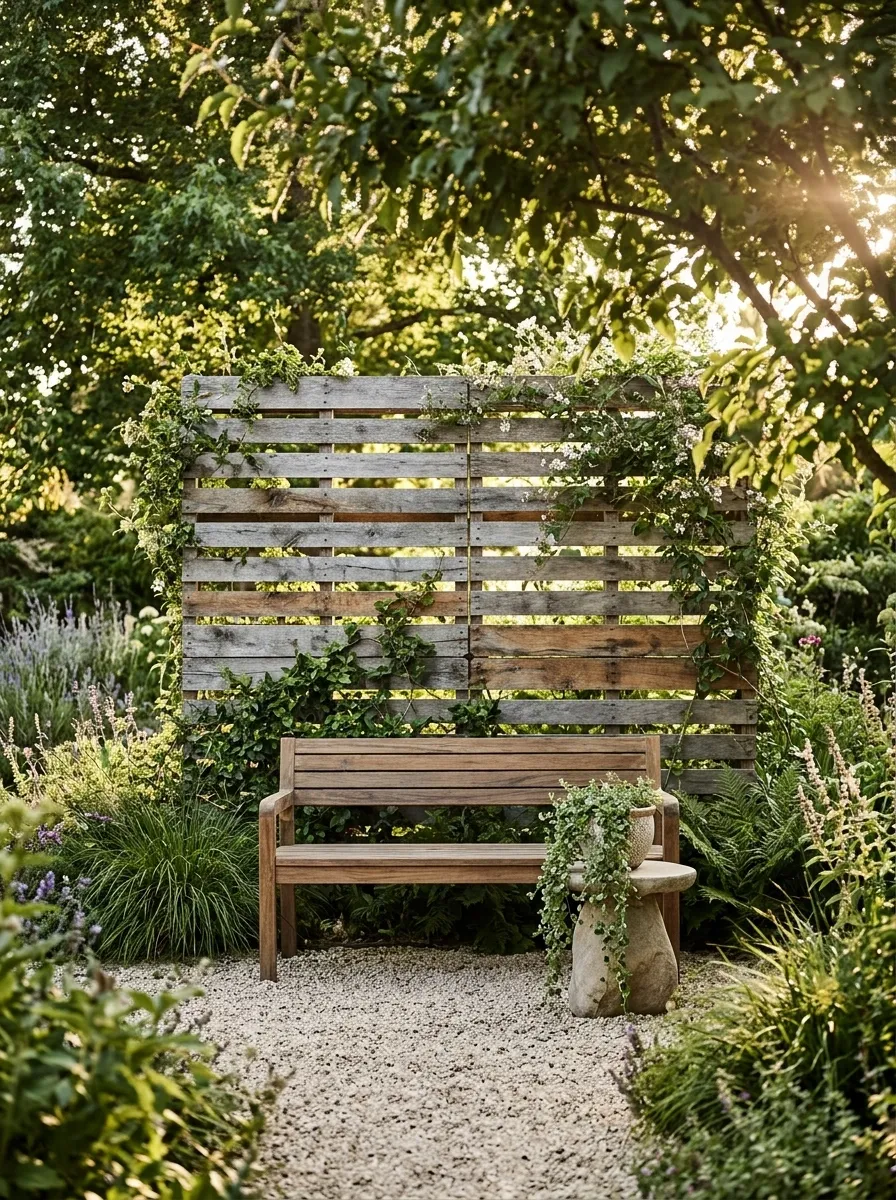
A timber screen forms a quiet backdrop behind a freestanding bench, with climbers softening one side and gravel extending into the surrounding planting. The boards sit on a separate support structure. Their spacing gives the enclosure a lighter look than a solid wall.
Keep the bench independent so its position can change as the planting fills out. A small stone side table adds a different texture without another run of slats. The screen should frame the seat rather than seal it into a dark pocket. Leave the approach open and give nearby plants room to spread.Decide how enclosed the seat should feel
Closer boards create a more continuous visual backdrop.
Wider openings preserve more views through the screen. Check the sightline from the seated position before settling on the spacing.
Dining Room Coffee Station With a Pallet-Wood Cabinet and Ceramic Display

A compact timber cabinet supports a washable counter beneath open shelves of mugs and ceramics. Warm white walls and a small framed print keep the coffee station connected to the dining room. The reclaimed boards belong on the cabinet fronts, where they add texture without complicating the preparation surface.
Leave a landing space beside the coffee maker instead of filling it with decorative jars. A few cups on the shelf make the station easy to read. Store the rest behind doors. The strongest version looks ready for morning use, with the appliance accessible and the counter clear enough to set down a tray.Cups within reach above
Appliance zone
Check lid and reservoir access.
Clear landing zone
Keep space for preparation.
Living Room Pet Nook With a Pallet-Wood Bed Frame
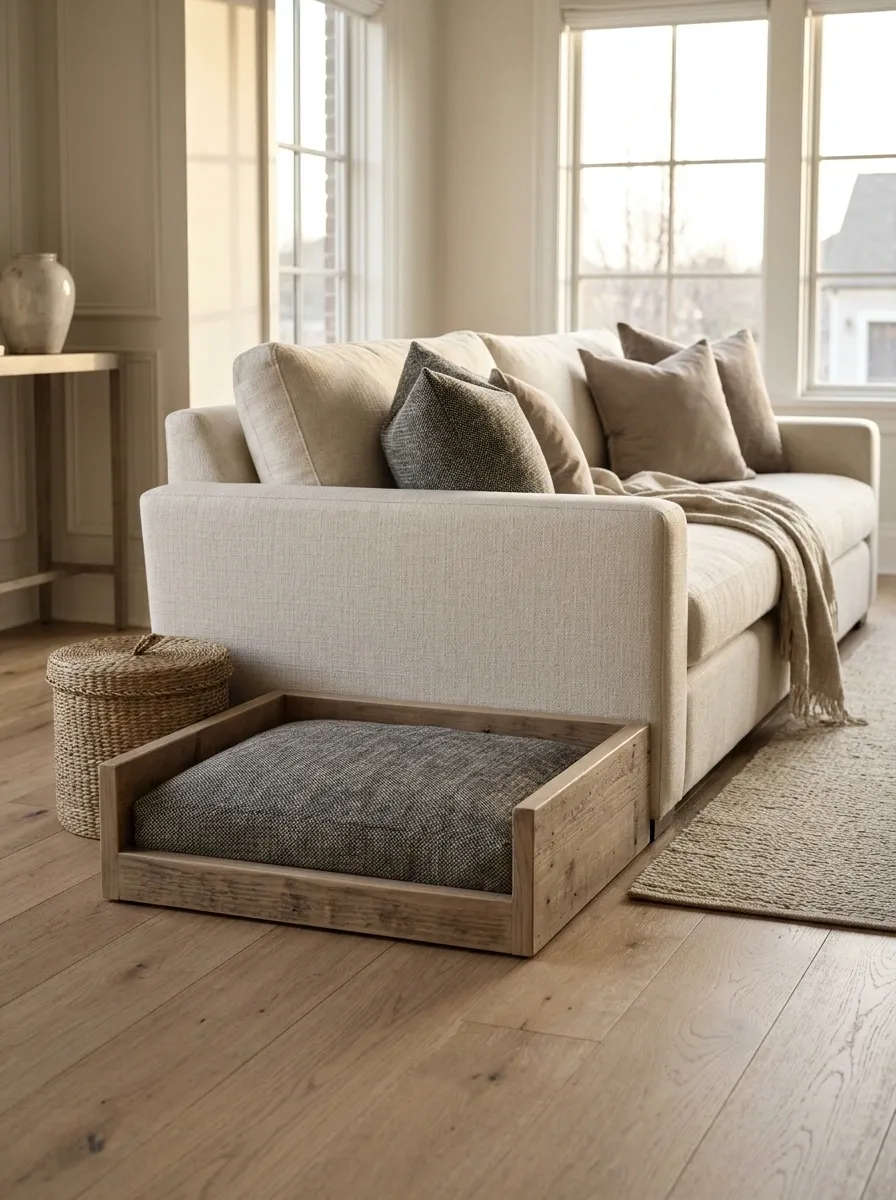
A low timber surround holds a fitted pet cushion beside the sofa, giving the bed a defined place in the room. The fabric echoes a sofa pillow, while a nearby closed basket stores toys. Keep the front edge low and the surrounding floor clear so the nook feels easy to approach.
The wood should act as a quiet border rather than a miniature piece of statement furniture. Smooth edges and a removable cushion matter more than carved lettering or decorative trim. I’d use one restrained finish that works with the existing room, leaving the dog’s or cat’s usual sleeping position to guide the shape.Attic Craft Studio With a Pallet-Board Supply Wall
Timber backing turns the wall beneath a sloping ceiling into a useful craft area. Shallow shelves hold jars and folded supplies above a plain worktable. A movable lamp lights the clear center of the surface, while a simple chair tucks underneath when the room is quiet.
Keep deep storage away from the lowest part of the ceiling. Shallow shelves preserve the sense of space and make small supplies easier to see. The pallet boards give the wall texture, but the storage arrangement should follow how you work. Put frequently used items near the table instead of arranging everything for symmetry.Higher shelves: occasional supplies
Comfortable reach: everyday tools and materials
Worktop: leave the center available for the project
Soft White Bedroom With a Pallet-Wood Blanket Chest
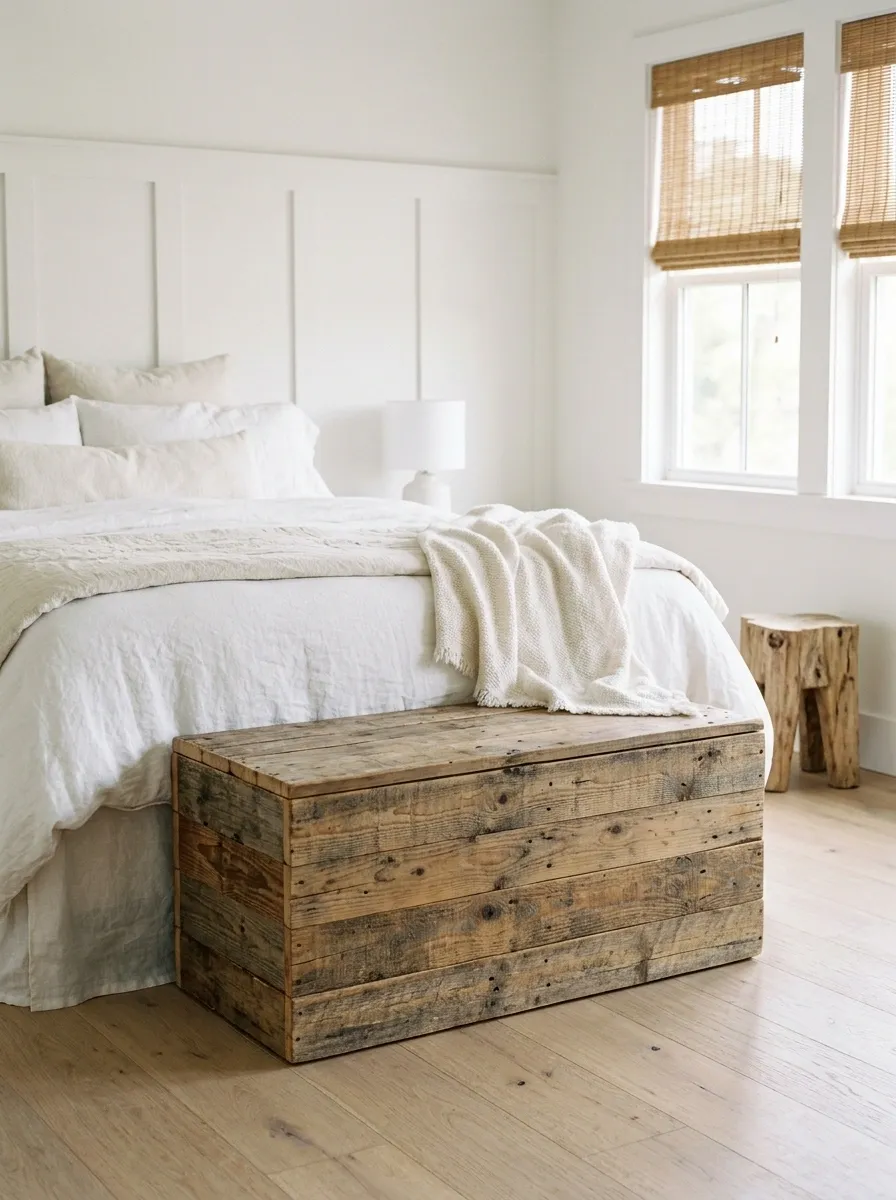
A reconstructed wood chest sits at the foot of a white bed, with woven shades and a small timber stool repeating its warmth. The chest has a simple rectangular shape and a quiet finish. White bedding spills softly above it, creating contrast with the straight board joints.
Keep the top mostly empty so the storage remains useful. A heavily styled lid turns a practical piece into another surface to clear. The chest also needs room to open without brushing the bedding. If the foot of the bed already feels tight, move the piece against a side wall instead of forcing the arrangement.In front of the chest: your route around the bed, including room to stand while opening it.
Covered Outdoor Cinema With Pallet Seating and Layered Floor Cushions
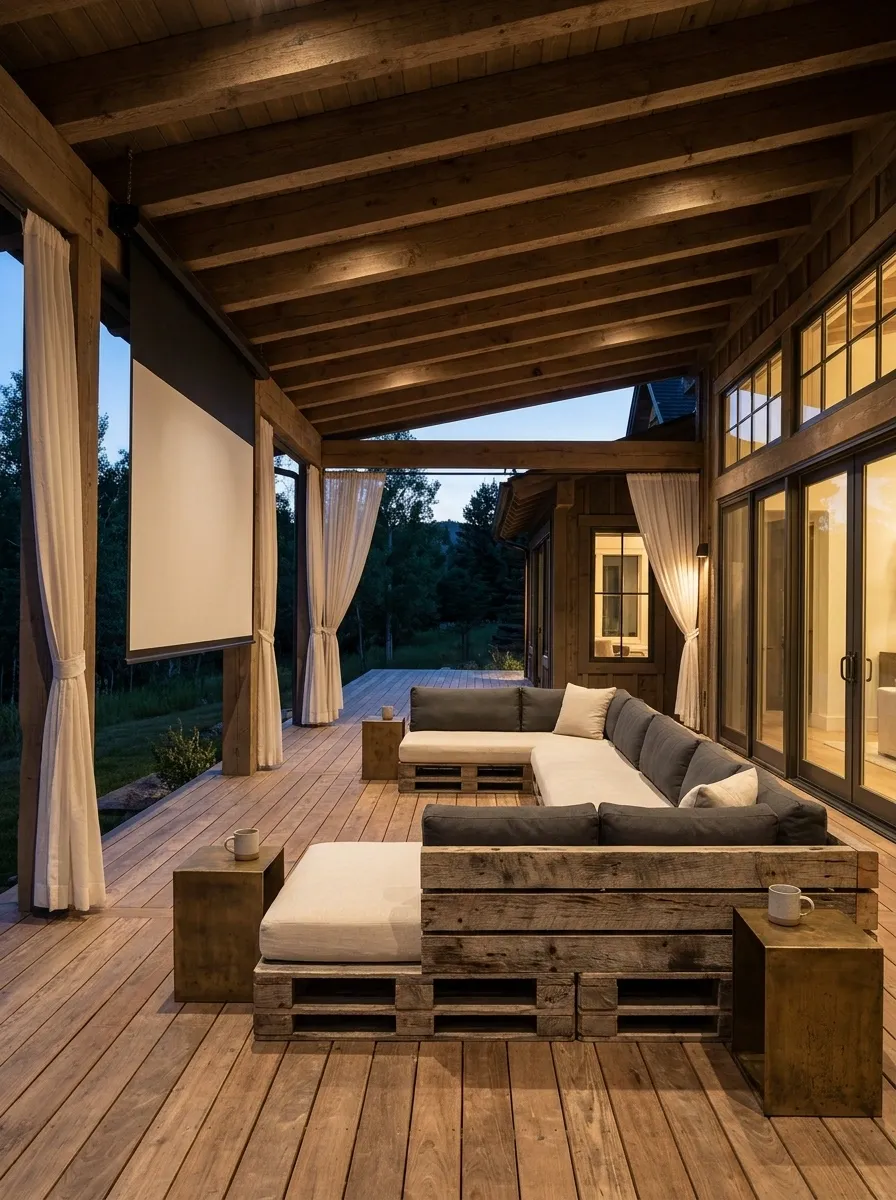
A straight run of low pallet seating faces a retractable screen beneath a covered patio. Large floor cushions sit closer to the screen, with small side tables placed at the outer ends. Plain upholstery keeps the focus on the viewing area, and low lighting marks the edges of the space.
This arrangement works best when the route back to the house runs behind the audience. Guests shouldn’t have to step across the picture to fetch a drink. Store loose textiles when the area isn’t in use, and keep the screen retractable so the patio can return to an open sitting space.Floor cushions facing forward
Access route behind the audience
Apartment Living Area With an Open Pallet-Wood Divider
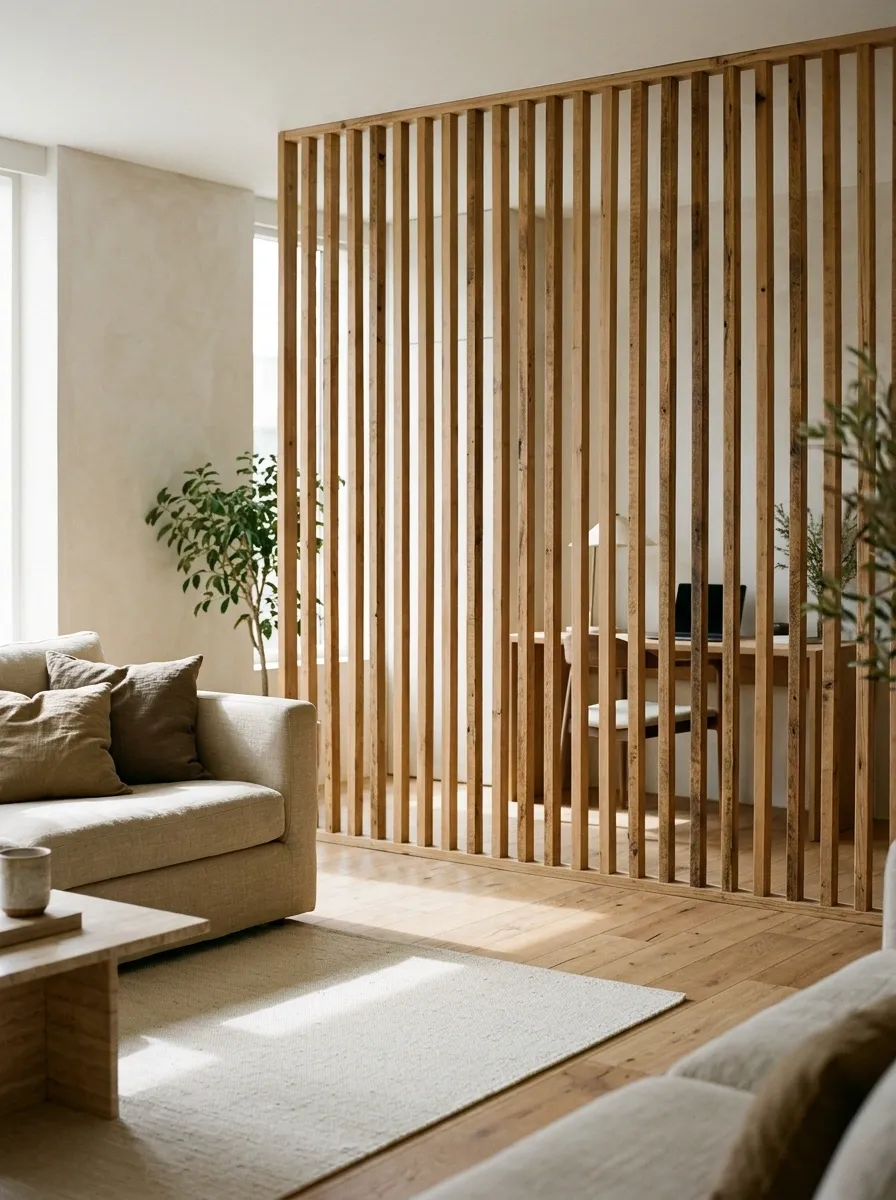
A framed slatted divider separates a small desk from the sofa without creating another solid wall. Reclaimed boards add warmth to the partition, while plain upholstery and a light rug keep the living area open. The desk faces away from the main seating so work supplies don’t dominate the view.
The divider needs a deliberate support and anchoring plan, but its visual role is simple: mark the boundary while allowing glimpses through. I’d keep shelving off this version. Adding plants, books, and ornaments to every opening would turn a light screen into a crowded storage wall and undo the sense of openness.View from the sofa
Does the screen soften the view of the desk surface?
View while standing
Can you still read the room beyond the partition?
Garden Utility Corner With a Pallet-Clad Bin Screen
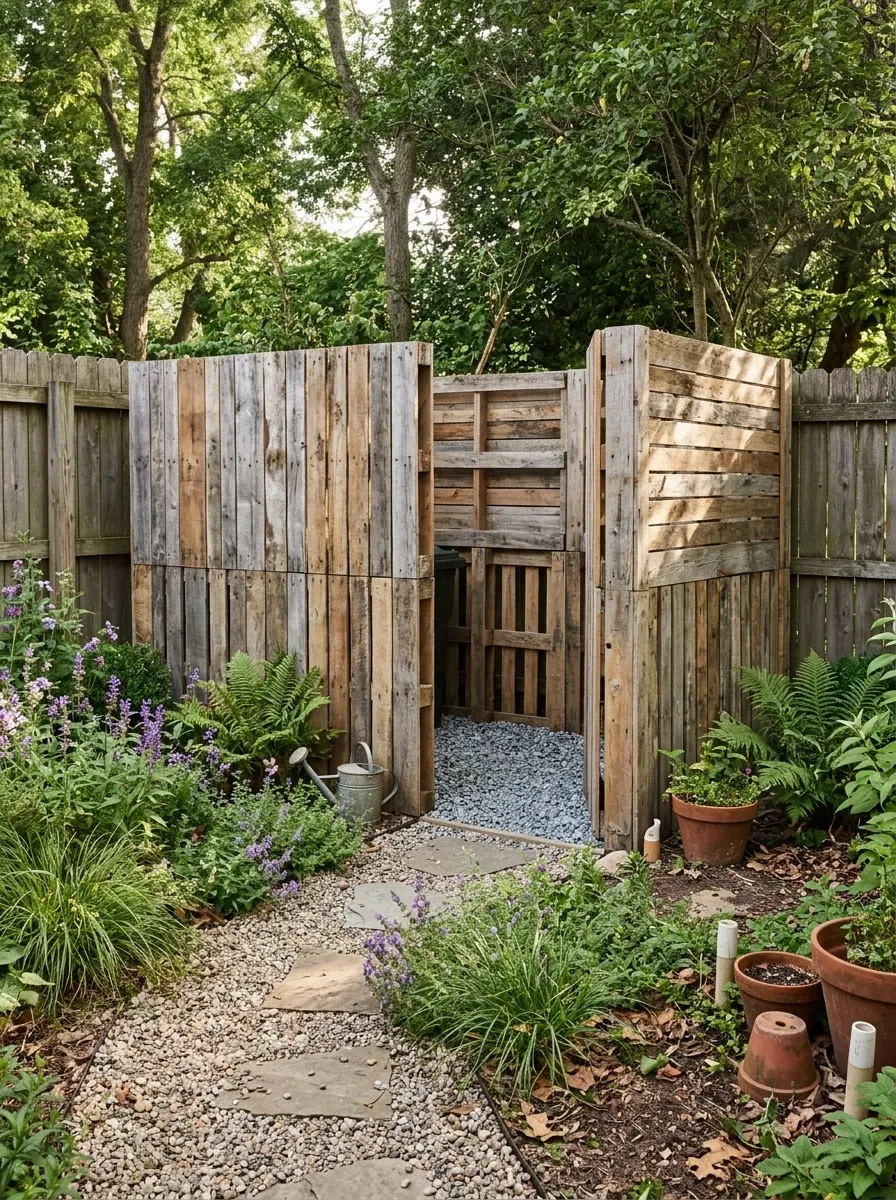
Timber panels tidy the view of a bin area beside a garden path. A planted border softens the outer edge, while the ground inside stays clear and practical. Keep the panel shape plain so the screen blends with fencing rather than becoming a decorative feature that draws attention to the bins.
The entrance should face the route used on collection day. That sounds obvious, but a neatly hidden opening is frustrating if every bin has to turn through a tight corner. Leave lids free to open and keep branches out of the working area. The planting frames the utility space without growing into it.Rustic Dining Room With a Pallet-Board Sideboard and Oversized Artwork
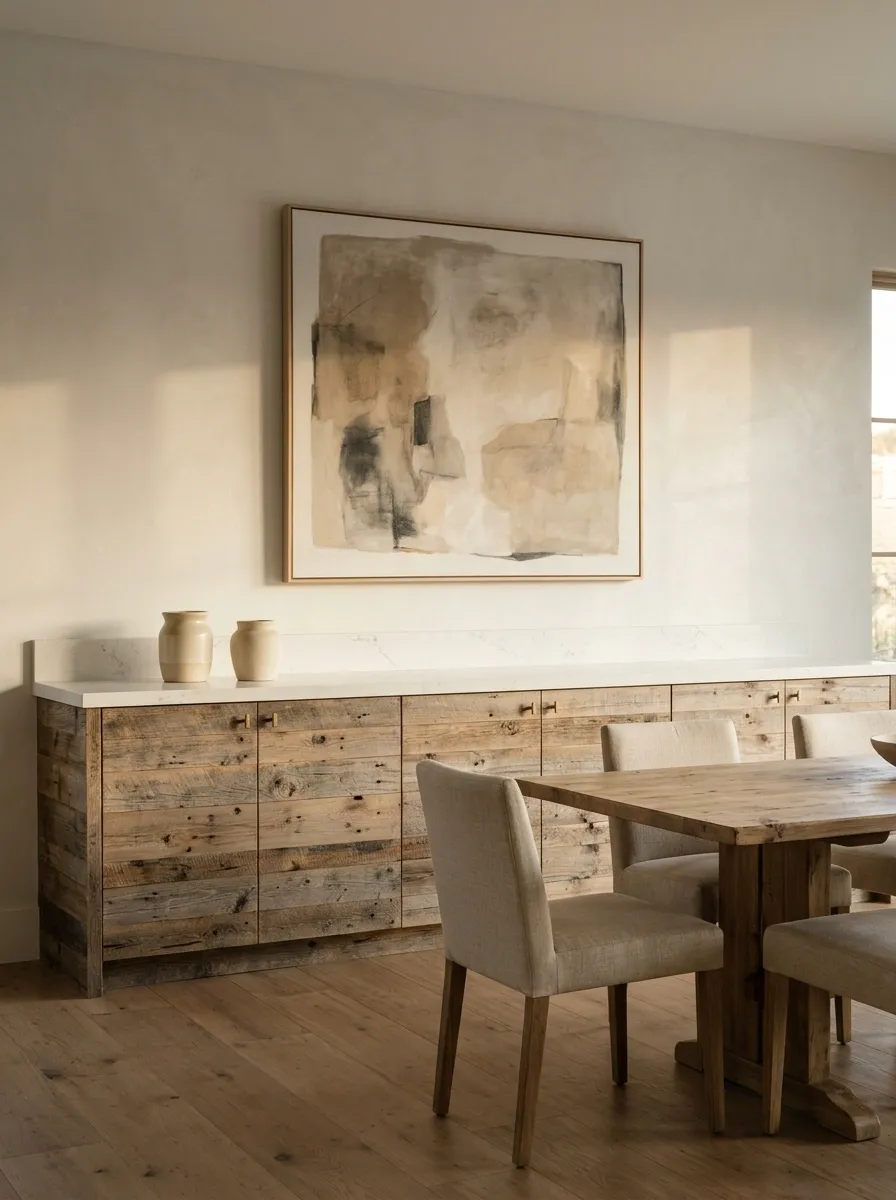
Horizontal reclaimed boards cover the front of a long sideboard beneath one large painting. A smooth top, simple handles, and plain dining chairs keep the composition from becoming overly rustic. The artwork introduces color at eye level, while the wood gives the lower part of the room weight.
Let the painting remain the taller statement. A pair of short ceramic pieces is enough on the sideboard; tall branches would fight for the same space. This project suits a room that needs concealed storage, with the pallet boards providing a visible finish over a properly built cabinet rather than dictating the cabinet’s structure.Artwork sets the vertical focus
Keep tabletop objects below its visual center
Sideboard gives the arrangement a broad base
Seasonal Front Porch With Tiered Pallet-Wood Plant Stands

Staggered timber platforms hold flowering pots beside a painted front door. The tallest arrangement sits furthest from the steps, while lower pots bring color toward the entrance. A plain doormat and one wall light keep the doorway clear and recognizable.
Vary plant height as well as platform height. Tall foliage behind shorter flowers makes the grouping feel layered without needing a tower of stands. Keep each pot stable and leave the stair edges visible. I’d change the planting with the season but keep the timber finish quiet, so the porch doesn’t need a complete restyle every time the flowers change.Back: taller foliage
Middle: fuller flowering pots
Front: lower planting, with the steps left clear
Woodland Garden Work Area With a Pallet-Clad Storage Shed

Reclaimed boards cover a small, separately framed garden shed at the end of a gravel approach. Ferns and leafy planting soften its edges, while a simple dark door gives the facade a clear center. The wood can retain visible variation without the whole structure looking patched together.
Keep the roofline plain and the approach open. A shed already has enough visual detail in its door, trim, and board joints. Inside, a straightforward tool arrangement makes the small building useful. The pallet cladding supplies the character; the frame, roof, and weather protection need their own considered construction plan.Visible exterior
Reclaimed boards establish texture and rhythm.
Weather protection
Plan the roof and wall assembly for the setting.
Supporting structure
A separate frame defines the shed’s shape and support.
Choose the Finished Setting First
The best DIY pallet project ideas begin with a clear place in mind. Choose the shape your space needs, then decide how much wood texture the surrounding room can carry. A broad patio lounge can handle visible pallet layers. A small bedroom may need only a framed mirror or one warm wall behind the bed.
Before collecting materials, mark the project’s footprint and gather the finishes that will sit beside it. That small planning step helps the furniture, fabrics, and timber belong together. Save your favorite complete settings so you can compare the whole look when you’re ready to choose a project.