
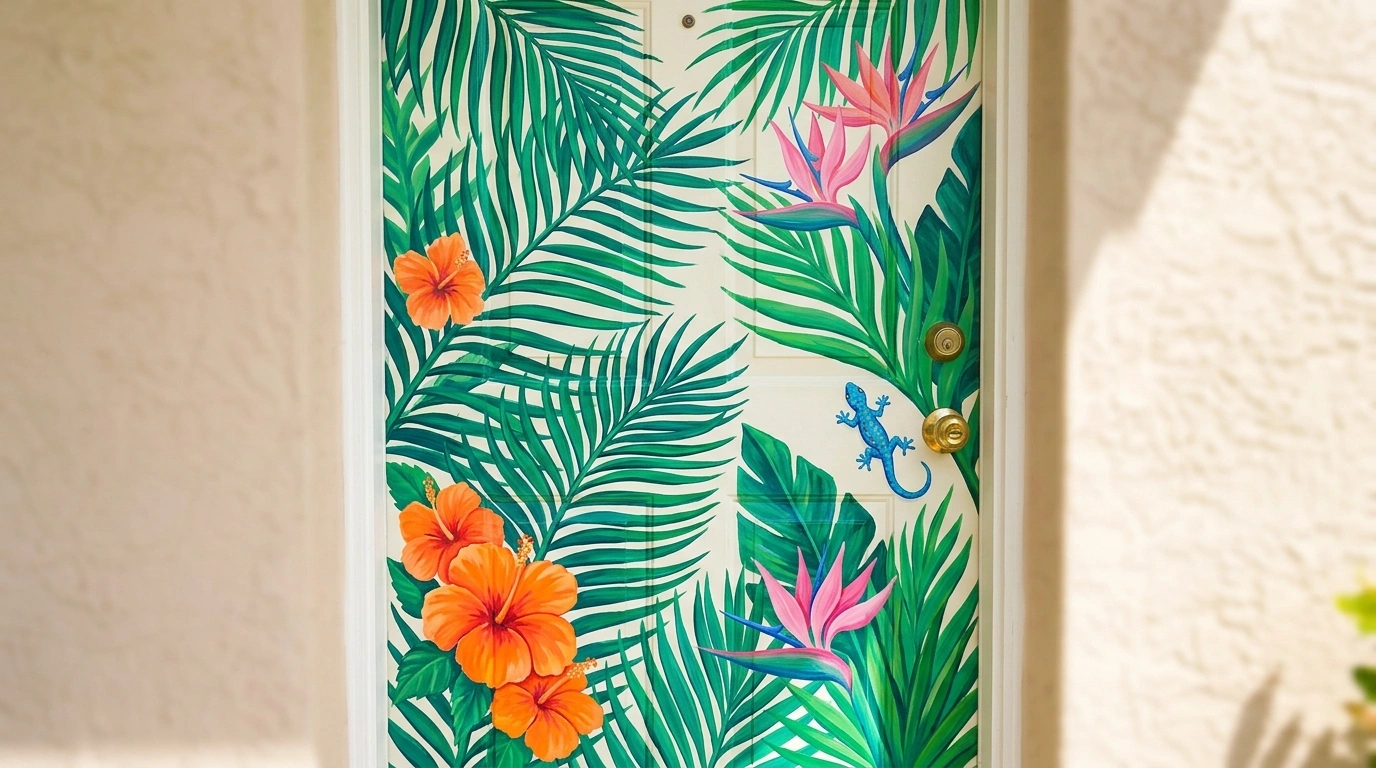
A plain door can make an entrance feel flat even when the rest of the home has plenty of personality. You can have beautiful stone, good lighting, thoughtful landscaping, and carefully chosen furniture, yet the doorway itself may still feel like the one unfinished part of the composition.
That is where a mural can do something a simple coat of paint cannot. It gives the entrance a visual story and creates a relationship between the door, the surrounding architecture, the floor, the plants, and the light.
Door Mural Designs
Hand-Painted Botanical Door With Deep Green Entryway
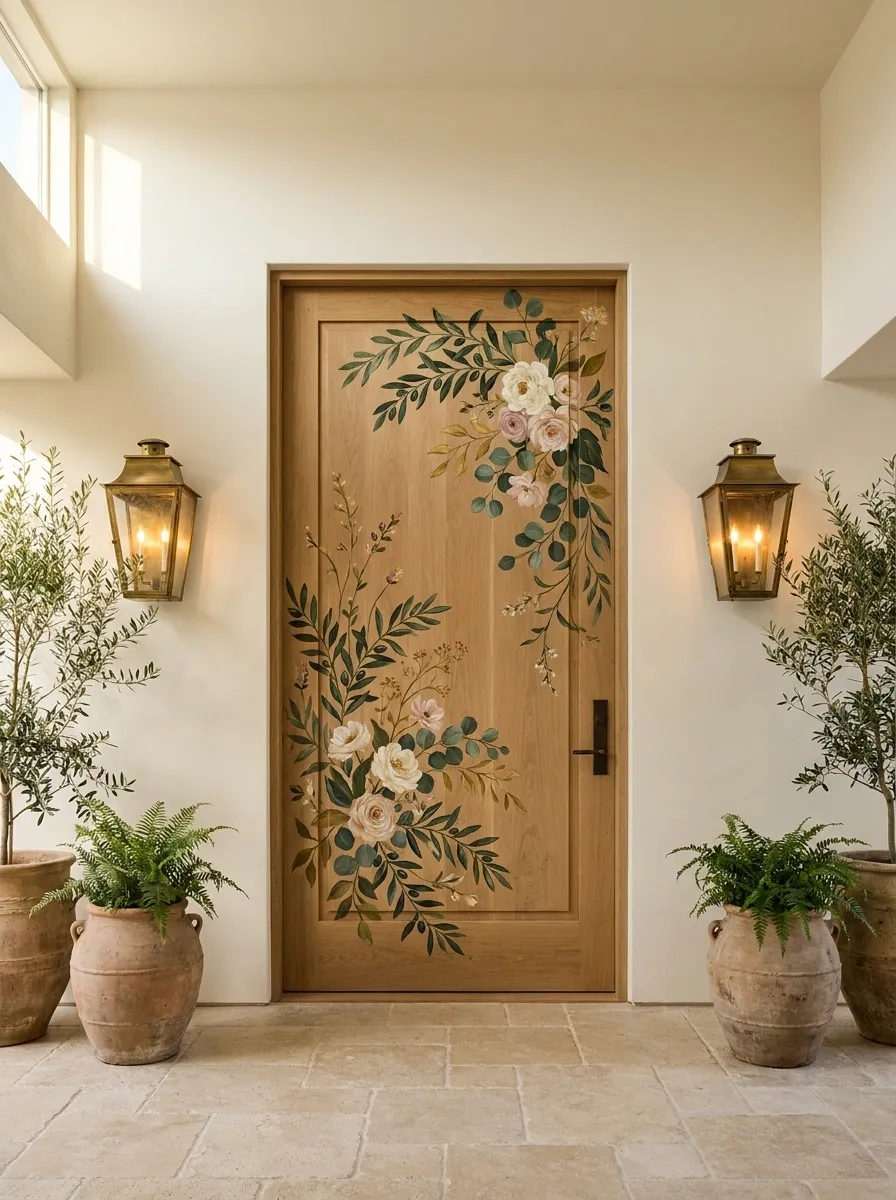
This entrance feels like a garden has grown directly into the architecture. The warm wood door is covered with oversized trailing leaves, loose flowers, and fine stems, while the surrounding walls stay creamy and quiet.
Aged brass lanterns bring a little warmth to the composition, and terracotta planters echo the earthy tones inside the mural. Natural stone underfoot keeps the whole entry grounded rather than overly decorative.
The important detail is scale. The leaves are large enough to read from a distance, but the open spaces between the stems keep the door from looking crowded. I would keep nearby furniture simple here and let the mural remain the strongest visual element.
Whimsical Mushroom Forest Door for a Cottage Entry
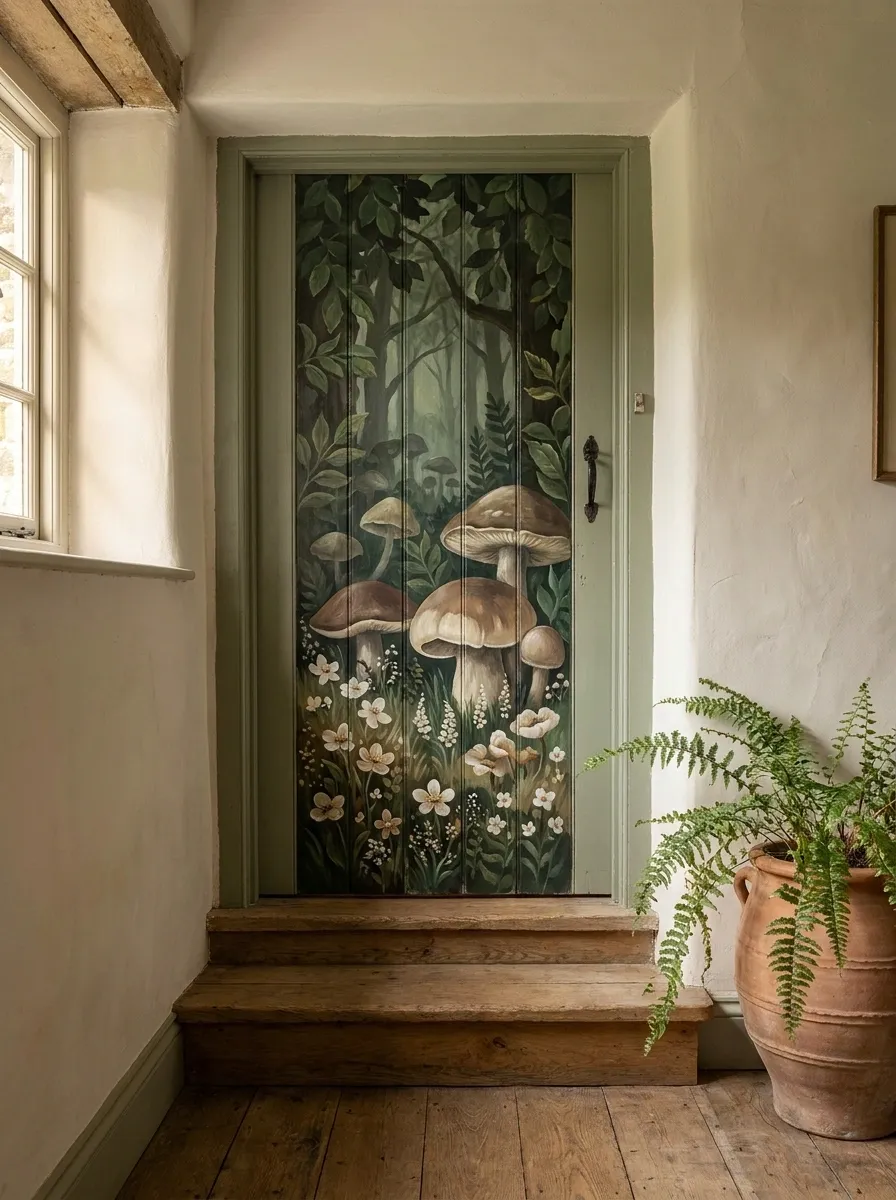
This one leans fully into storybook charm without making the whole cottage feel themed. A muted sage-green door becomes the backdrop for a woodland scene filled with oversized mushrooms, ferns, tiny flowers, and soft forest shapes.
The surrounding entry remains simple. Pale cottage walls, a weathered threshold, and a few real plants make the illustrated world feel connected to the garden outside the door.
The mural works because it has depth. Darker foliage sits behind the mushroom forms, while smaller details bring the eye closer to the center. That layering makes the door feel like a little scene rather than a flat repeating pattern.
Soft Vintage Rose Door With English Garden Surround
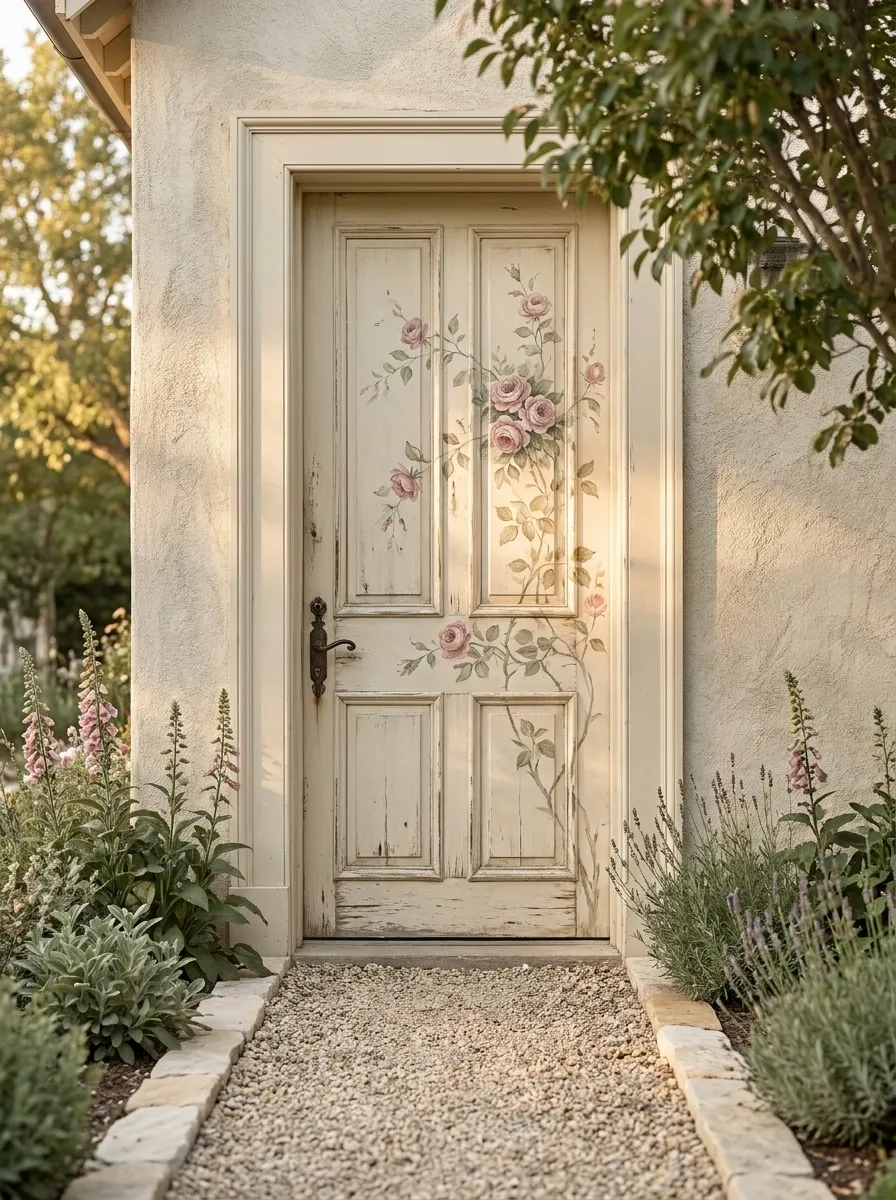
For a quieter floral look, a weathered cream door covered in dusty pink roses creates a distinctly romantic entrance. The flowers climb naturally across the panels, with loose green stems filling the spaces rather than forming a rigid pattern.
A gravel path, pale stone edging, and old-fashioned garden planting complete the scene. The trim stays close to the wall color, which makes the painted roses feel integrated with the architecture instead of framed like artwork.
The palette is what keeps this concept refined. Dusty rose, faded green, cream, and weathered wood have enough variation to feel layered without becoming colorful for the sake of color.
Dramatic Black Door With Oversized White Botanical Painting
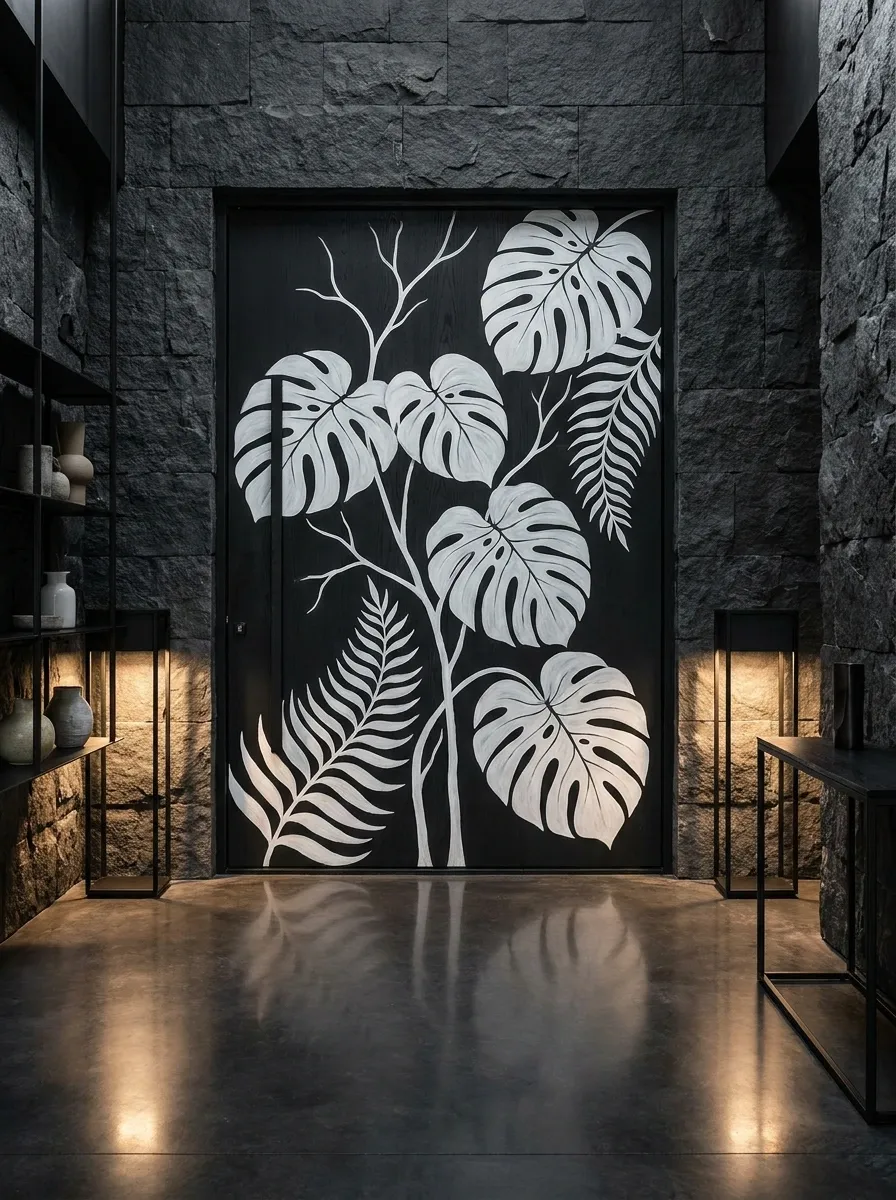
This is the boldest design in the first group. A matte black door becomes almost a piece of graphic art when enormous white leaves and branching stems spread across its surface.
The surrounding architecture stays dark and restrained, with rough stone, black metal details, and warm low lighting. That limited palette makes the painted foliage feel architectural rather than decorative.
The secret is contrast without clutter. The white forms need room around them, so I would avoid adding colorful pots, patterned flooring, or competing wall art nearby. Let the black-and-white relationship do the work.
This concept is especially strong in an entry that already has natural light or a simple architectural shape. The mural becomes a focal point without requiring a large collection of accessories.
Country Meadow Door With Layered Wildflowers
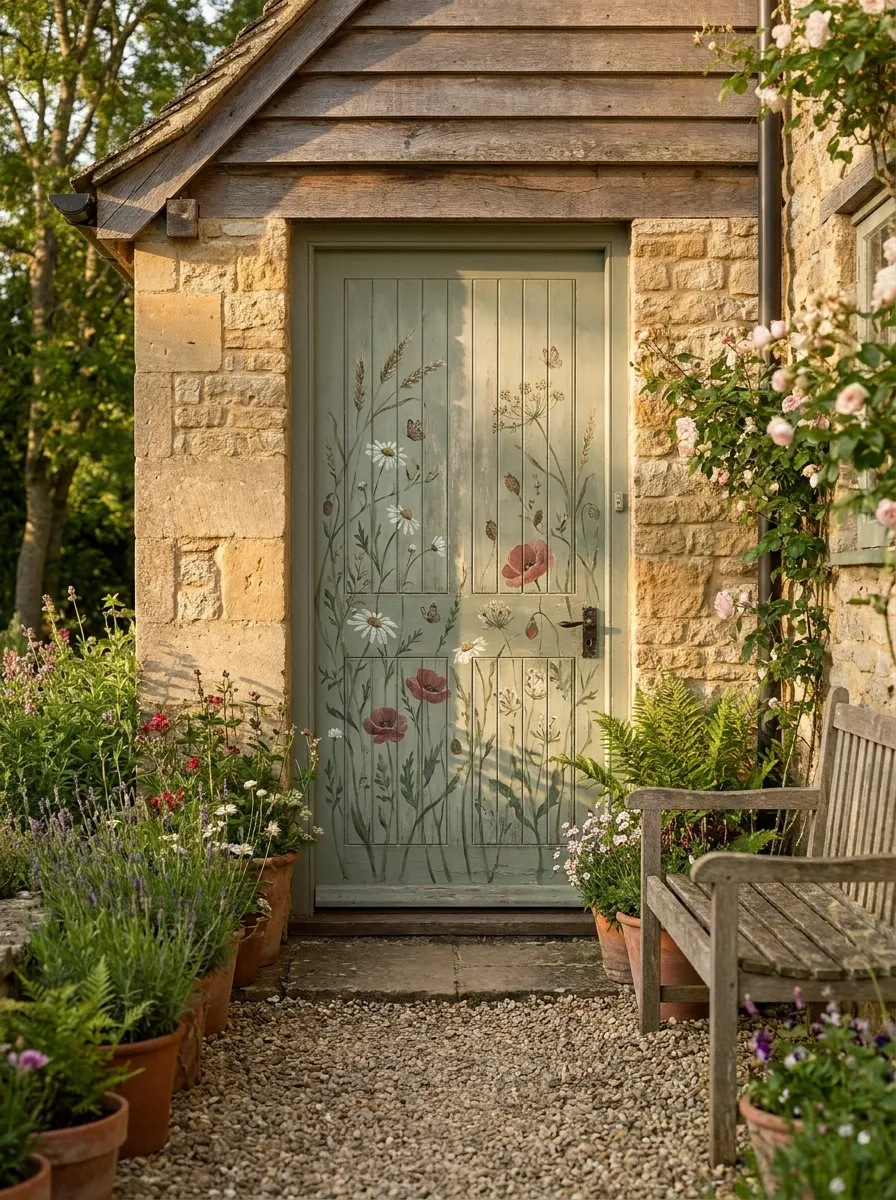
A faded sage door becomes a loose meadow scene filled with daisies, poppies, tall grasses, seed heads, and small butterflies. Instead of arranging each flower evenly, the mural feels like a real patch of garden that naturally wandered across the door.
Warm limestone around the entrance keeps the colors grounded, while a simple wooden bench and a few understated planters connect the painted meadow with the actual garden.
The strongest part of this concept is the varied flower height. Tall grasses near the edges create movement, while smaller blooms gather toward the center. That keeps the mural lively without making the entire door equally busy.
Blue Delft-Inspired Door With Traditional Tile Architecture
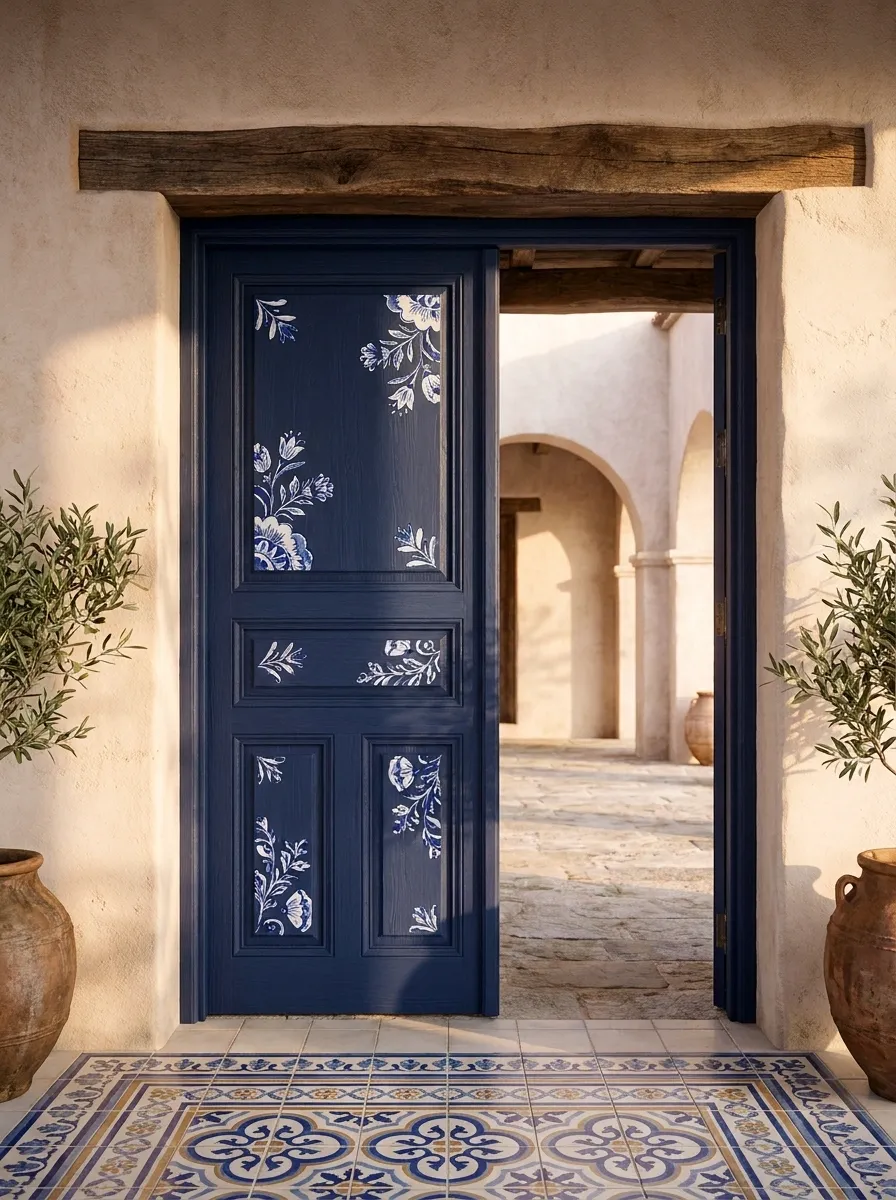
A deep blue door carries a delicate blue-and-white botanical pattern inspired by traditional Delft-style ceramics. The same color relationship continues onto patterned floor tiles, while pale stucco walls and dark timber details give the entrance a historic, collected quality.
Rather than covering the door in one dense pattern, leave some breathing room between the botanical motifs. That small amount of restraint keeps the design architectural.
This composition works particularly well around courtyards, enclosed garden entries, and older homes where patterned flooring already belongs to the architecture. Keep modern accessories to a minimum. The charm comes from the continuity between door, tile, and structure.
Desert Landscape Mural on a Warm Clay Door
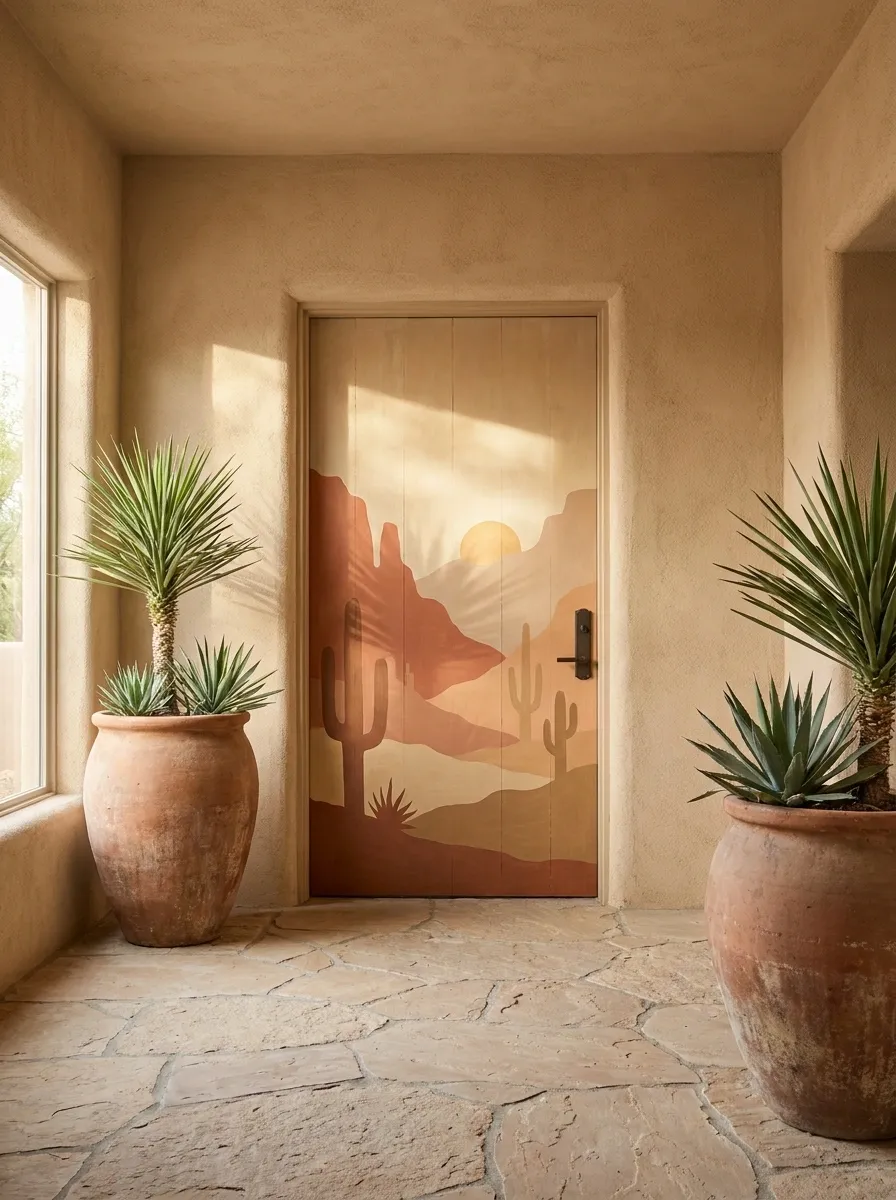
This door feels like a small painted landscape rather than a conventional floral mural. The clay-colored surface carries layered mountains, desert grasses, sculptural cacti, and a low sun, creating a warm Southwestern scene.
The surrounding entry uses sandy stucco, rough stone, and oversized natural planters. There is very little decorative clutter, so the landscape has room to read clearly.
The horizon is especially important here. Keep the tallest plants toward the lower portion of the door and allow the mountain forms to open into more sky near the top. That creates depth while preserving the door’s shape.
Art Nouveau Floral Door With Curved Entry Architecture
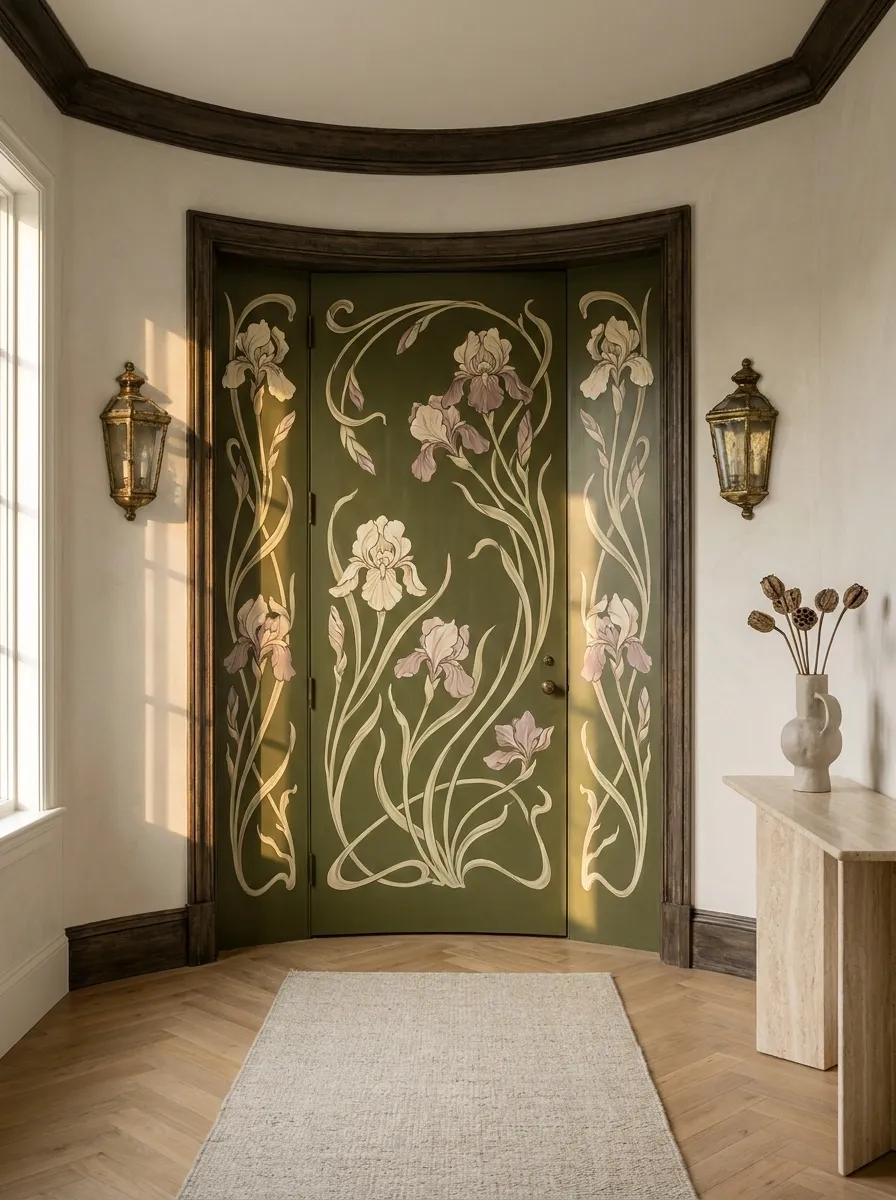
Flowing irises and long botanical stems curve across a deep olive door, echoing the arches and ornamental lines around the entrance. The result feels architectural because the mural follows the shape of the space instead of ignoring it.
Pale plaster, dark timber, and aged metal lanterns provide a quiet frame. The flowers themselves are elongated and graceful, with curved stems that visually pull the eye upward.
This approach suits an entry with interesting trim, arches, or older architectural details. Keep the painted lines fluid and intentional. Heavy geometric patterns would fight the organic movement that makes this composition distinctive.
Moody Cottage Door With Moonlit Forest Scene
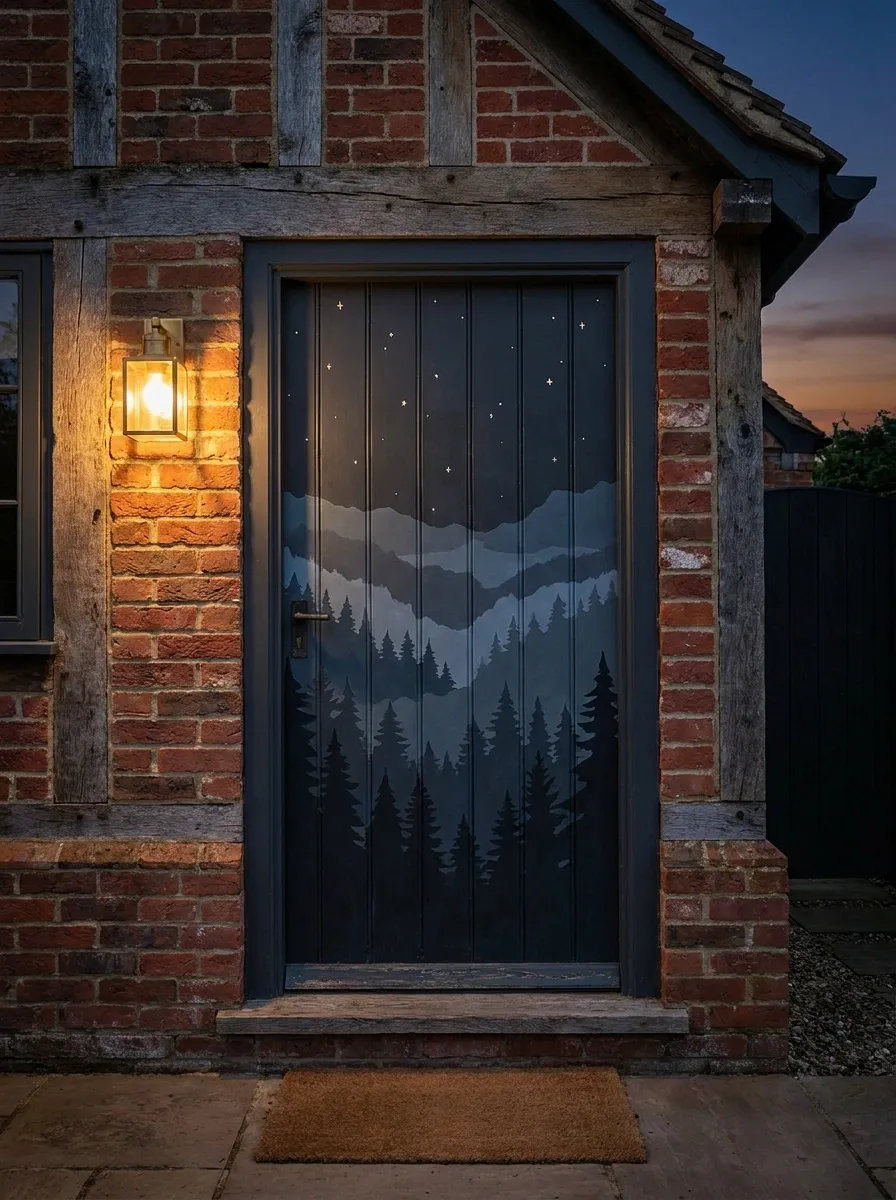
A charcoal door becomes a quiet nighttime forest filled with deep blue foliage, slender tree trunks, tiny stars, and subtle woodland silhouettes. The painting has a mysterious quality, but the surrounding cottage remains warm and welcoming.
Aged brick, weathered timber, and a small warm lantern balance the cooler mural. The contrast between the warm light and dark painted forest is what gives the entrance depth after sunset.
This design benefits from restraint. The stars should remain sparse, and the forest should rely on several shades of deep color rather than pure black everywhere. Too much detail would flatten the scene.
Butterfly Garden Door Surrounded by Soft Neutrals
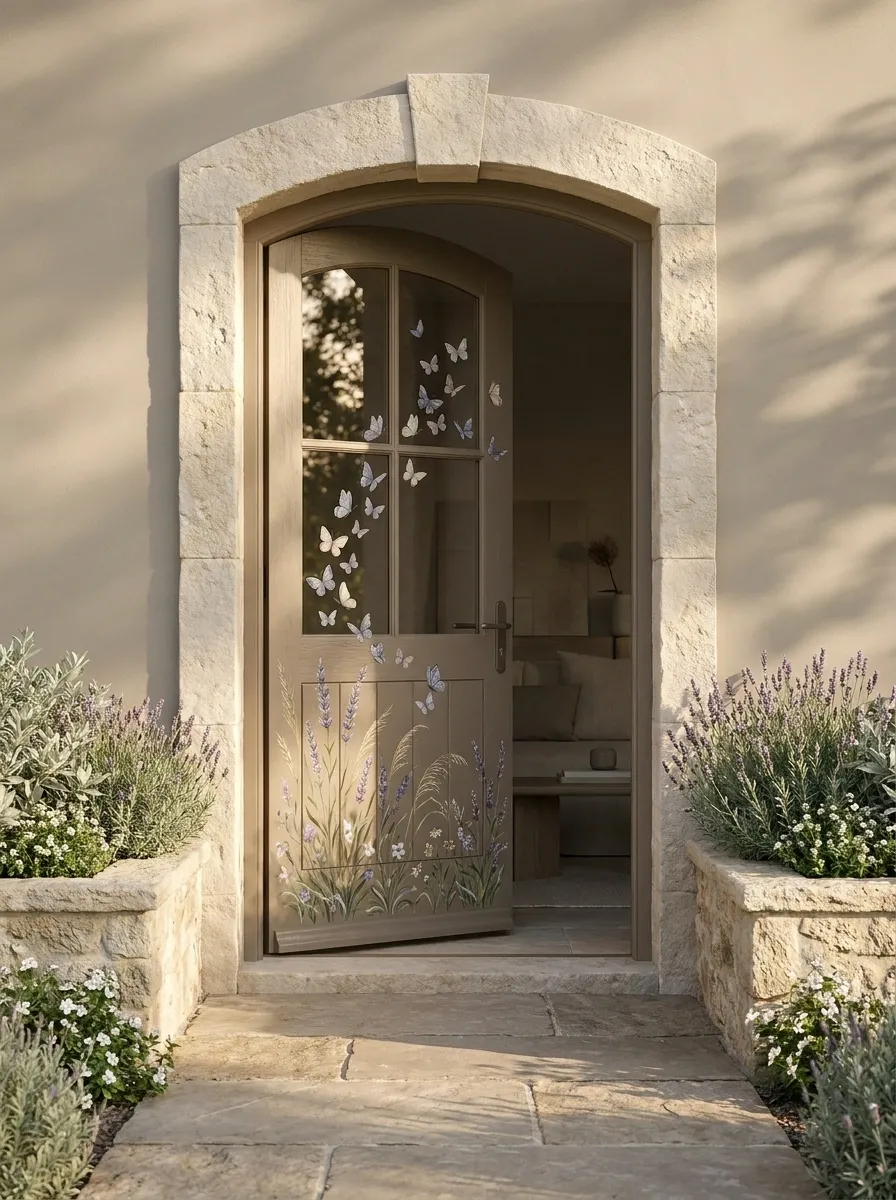
A taupe-painted door becomes a gentle garden scene with lavender, grasses, tiny wildflowers, and several butterflies. The surrounding entry uses pale stone and soft neutral walls, giving the artwork enough contrast without making it feel overly colorful.
The mural feels especially graceful because the butterflies are scattered rather than evenly spaced. Some stay near the flowers, while others drift upward, creating movement through the composition.
I would keep the real landscaping equally restrained. Silvery foliage, lavender, and small flowering plants will connect the painted garden to the actual entrance without turning the space into a collection of competing colors.
Tuscan Vineyard Door With Painted Vines and Shutters
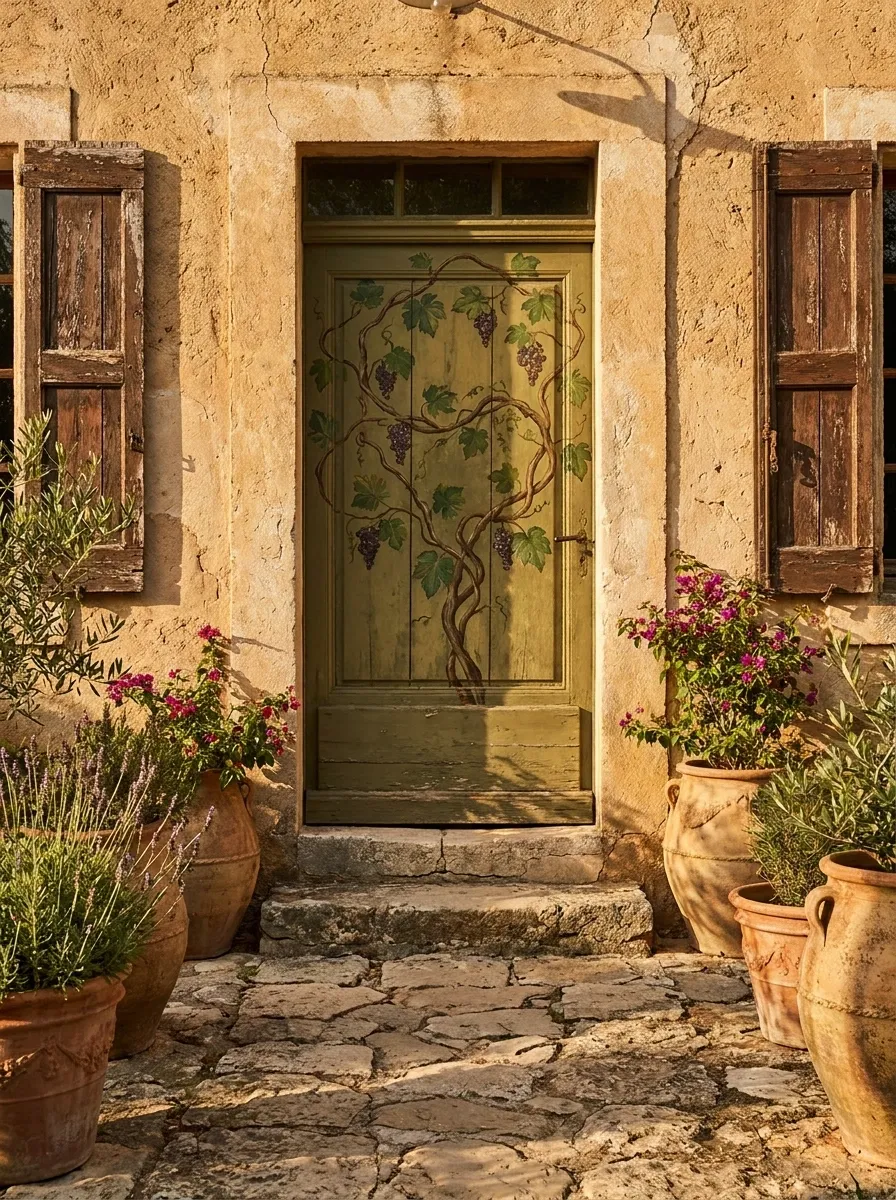
A weathered olive-green door is wrapped with painted grape vines and curling leaves, framed by ochre stucco and rustic shutters. Terracotta pots sit at the threshold while a rough stone path leads toward the entrance.
The whole composition feels warm because every surface belongs to the same Mediterranean family. Nothing is excessively polished. Slightly worn finishes actually strengthen the connection between the mural and the architecture.
The vines should look as if they are growing around the door rather than being placed in a centered rectangle. That irregular growth pattern gives the finished design its old-world character.
door + foliage
pots + floor warmth
Minimal Line-Art Door Mural in a Calm Modern Entry
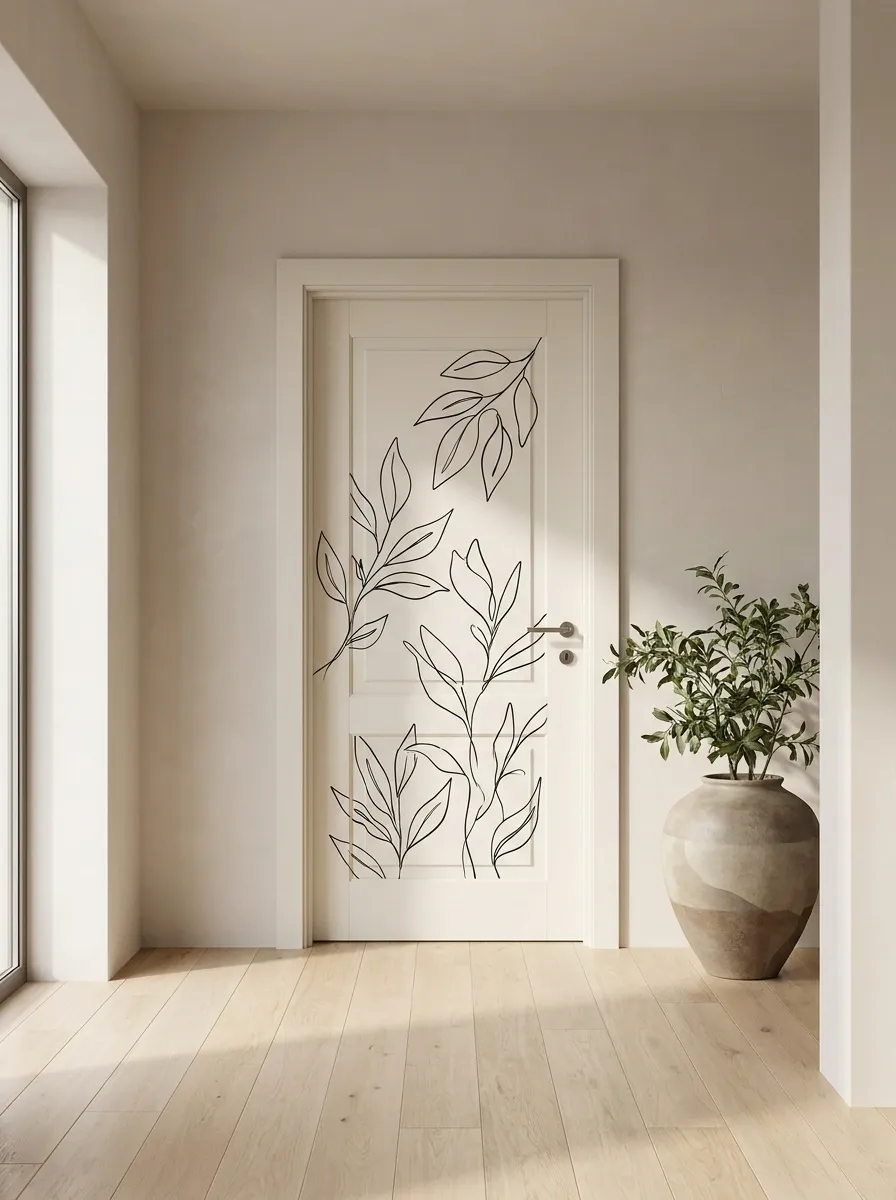
A warm white door carries a single continuous black botanical drawing, with a few graceful leaves and stems stretching across the panels. There is no attempt to fill every inch.
The surrounding entry uses pale oak, smooth plaster, and one or two sculptural plants. Clean geometry lets the mural read almost like a hand-drawn architectural detail.
This is a strong option when the architecture itself is modern and restrained. The artwork should remain deliberately simple. Adding extra florals, patterns, or colorful accessories would destroy the negative space that gives this concept its character.
Navy Nautical Door With Painted Coastal Scene
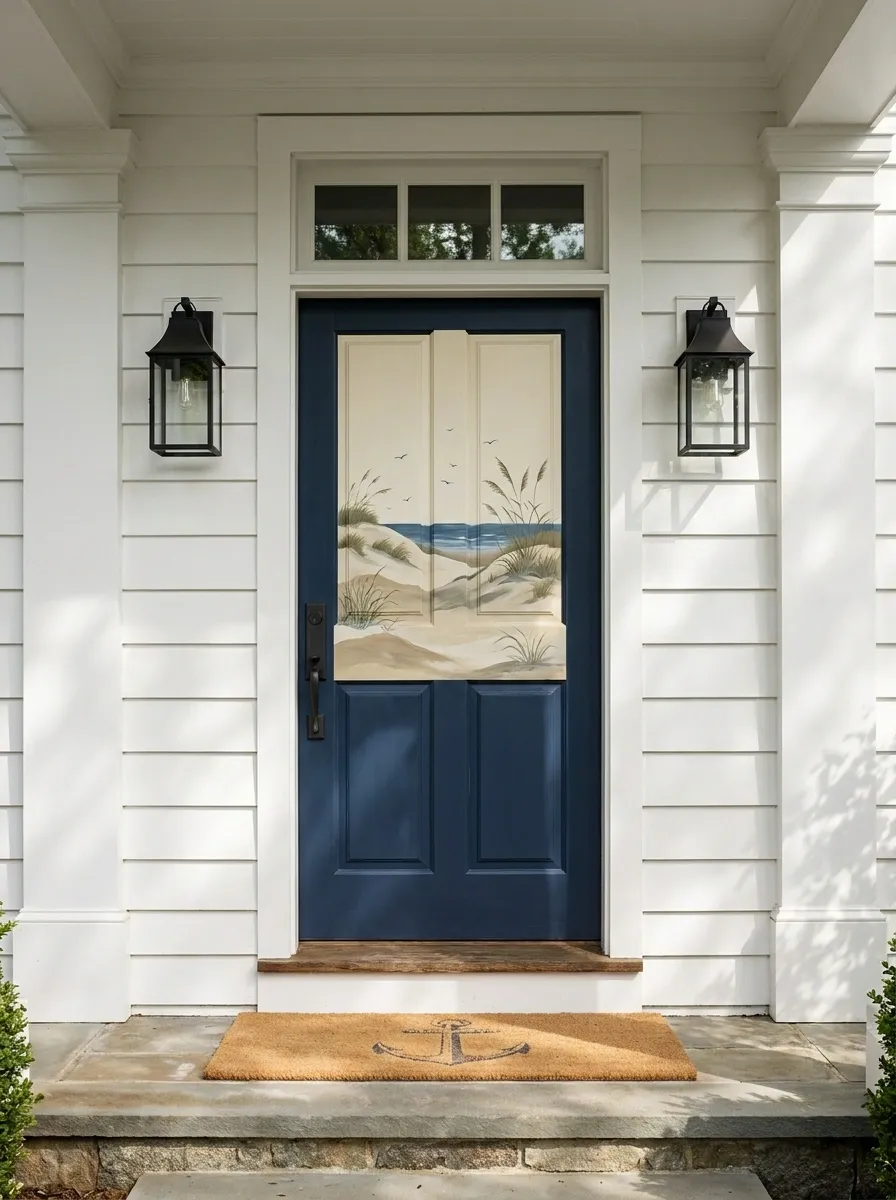
A classic navy door becomes a soft coastal landscape with rolling dunes, tall beach grasses, seabirds, and a distant strip of ocean. White weatherboard siding and simple lanterns frame the image without distracting from it.
The palette stays intentionally narrow. Navy, cream, sandy beige, and muted green are enough to make the doorway feel distinctly coastal without relying on obvious nautical symbols.
The distant ocean should remain subtle. Giving the sky and dunes plenty of open space makes the mural feel larger and calmer, which is far more sophisticated than covering the door with anchors, shells, and repeated rope motifs.
Country Meadow Door With Layered Wildflowers
This door turns a simple cottage entrance into a loose painted meadow. Faded sage forms the base, while daisies, poppies, tall grasses, seed heads, and tiny butterflies climb across the panels in different directions.
The surrounding setting stays grounded with warm limestone, a narrow gravel path, and a simple wooden bench. A few real plants near the threshold echo the mural without competing with it.
What makes the composition work is the uneven height of the flowers. Tall grasses frame the lower edges while smaller blooms gather through the middle, creating the feeling of a real meadow rather than a repeated floral pattern.
Monochrome Fern Door With Textured Stone Entry
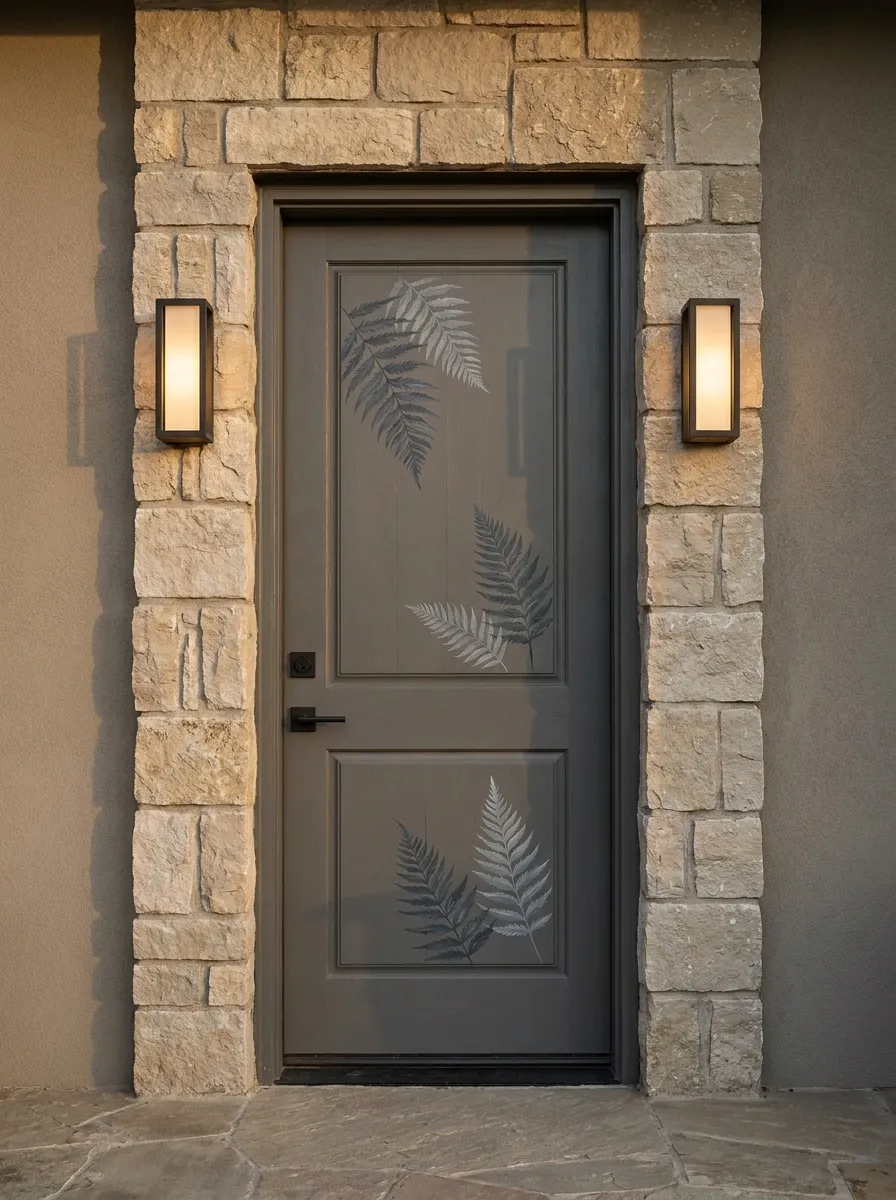
This design is almost entirely about texture and tonal variation. A charcoal-gray door carries painted fern fronds in several shades of gray, while rough limestone surrounds the entrance.
There are no bright flowers or strong decorative accessories. The visual interest comes from the contrast between smooth painted surfaces, rough stone, and the delicate fern shapes.
That restraint makes this concept particularly strong for a modern rustic or contemporary exterior. Keep the hardware simple and the lighting warm. The mural should remain tonal enough that it reads as one composition from a distance.
Cherry Blossom Door With Japanese-Inspired Courtyard
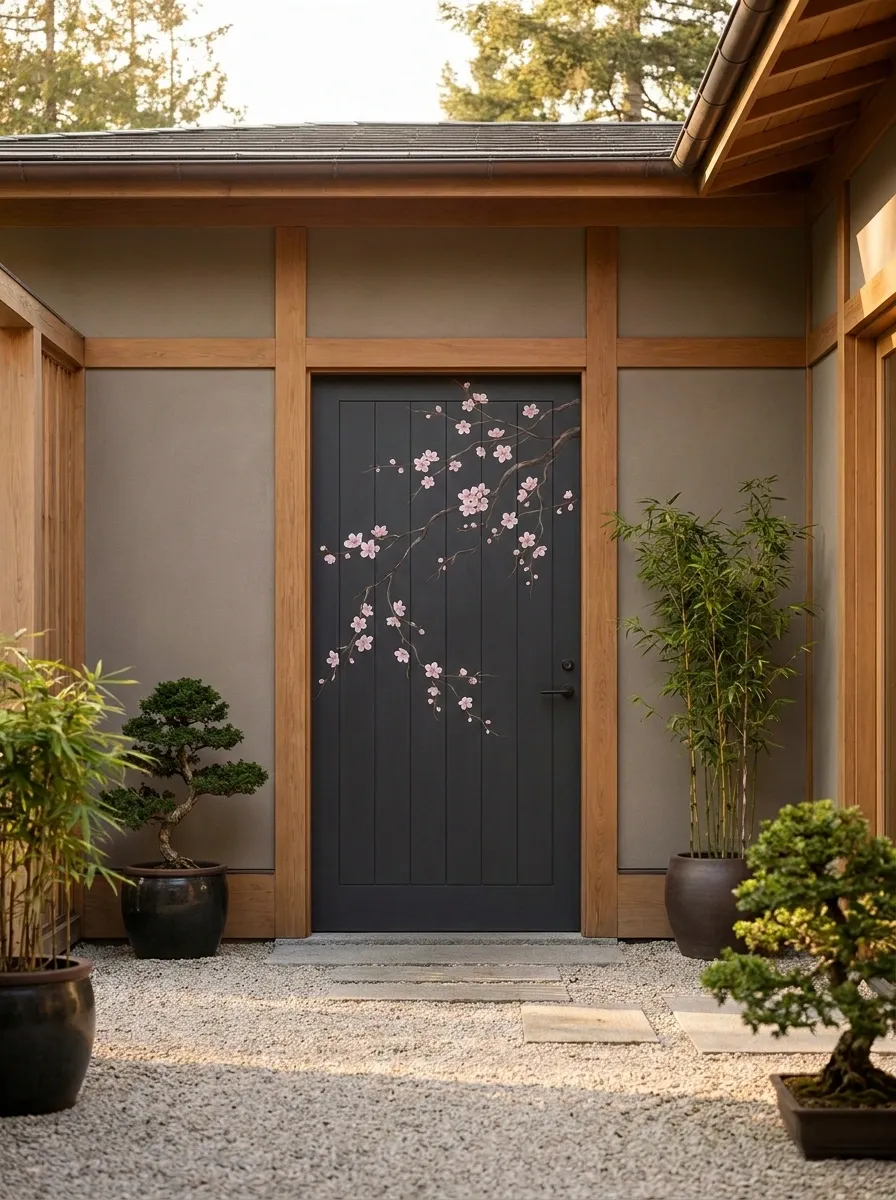
A charcoal door becomes the backdrop for delicate cherry branches that sweep across the surface in an intentionally asymmetrical composition. Pale blossoms are concentrated along selected branches rather than scattered evenly.
The surrounding courtyard uses pale gravel, simple timber, smooth plaster, and carefully placed greenery. The architecture is quiet enough that the painted branches become the main event.
Negative space is crucial here. Large untouched portions of the door make the blossoms feel lighter and more graceful. I would resist filling those areas just because they appear empty. That emptiness is part of the design.
Colorful Folk-Art Door With Layered Geometric Flowers
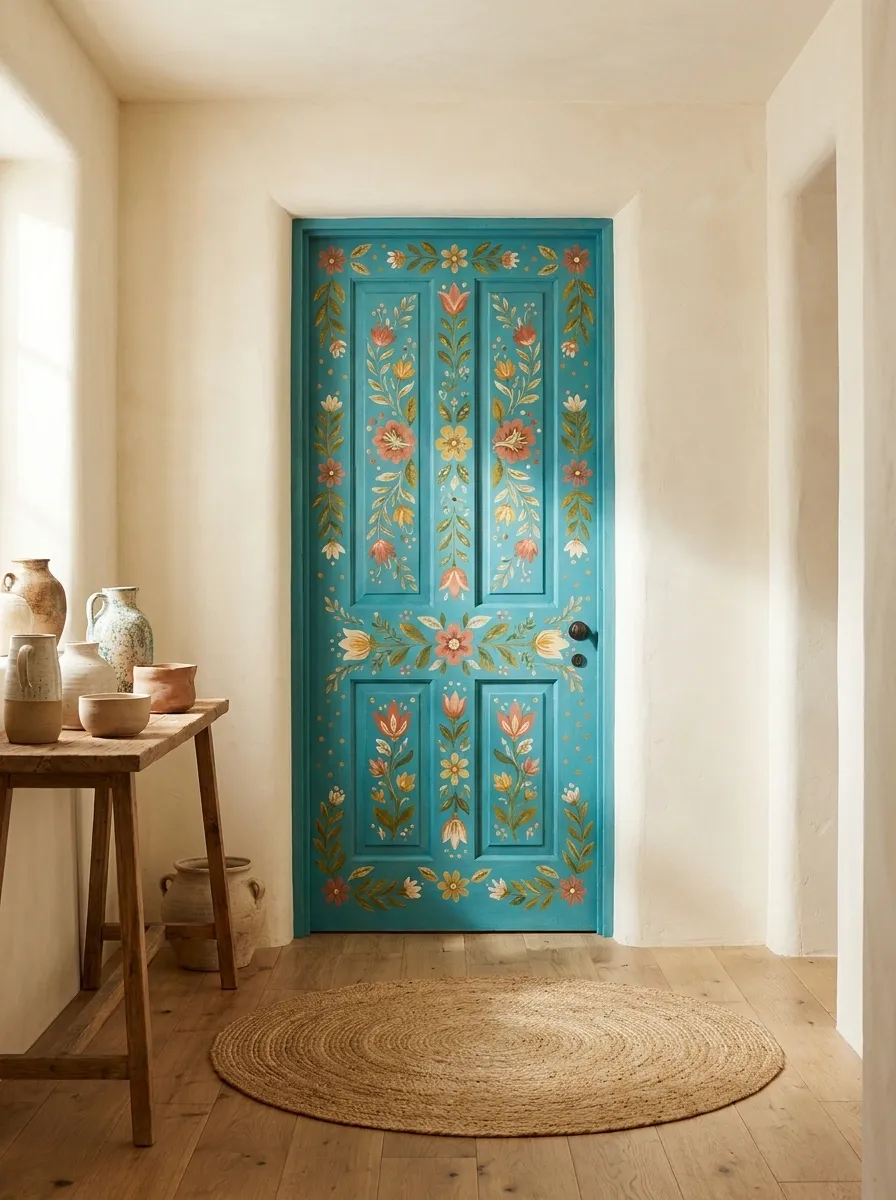
This entrance is deliberately cheerful. A turquoise door carries folk-art flowers, leaves, dots, and geometric shapes in a composition that feels handmade rather than perfectly measured.
Warm cream walls and handmade pottery keep the surrounding entry grounded. A simple woven mat and natural wood details reinforce the craft-inspired character without competing with the painted surface.
The mural becomes much more interesting when some motifs overlap. The flowers should feel painted one over another, with subtle differences in shape and spacing. Too much precision would make this look more like printed wallpaper than hand-painted folk art.
Gothic Botanical Door With Deep Plum and Olive Tones
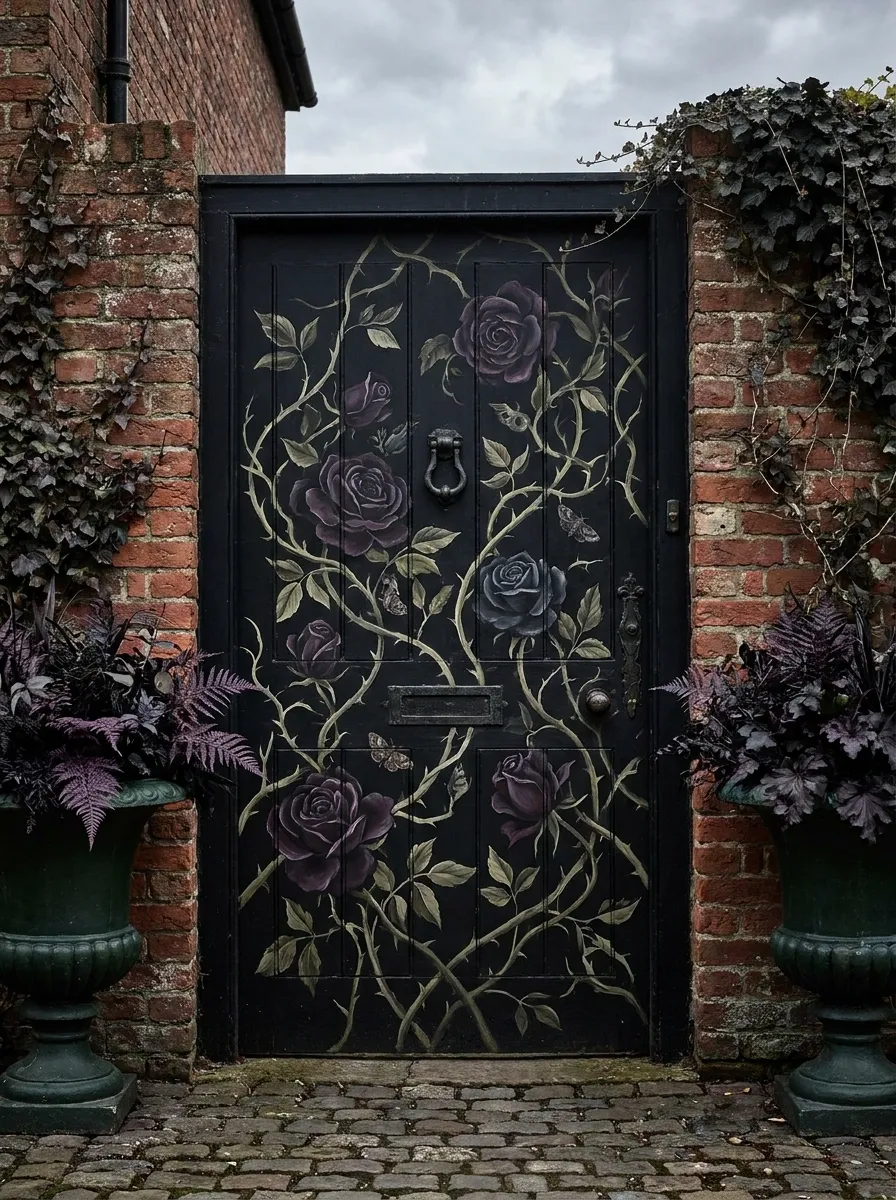
A nearly black door becomes a moody botanical painting filled with thorny vines, deep flowers, and a few subtle moths. Old brick, aged metal, and dark planting continue the mysterious character around the entrance.
Unlike the maximalist tropical design, this mural uses a very controlled palette. Deep plum, olive, charcoal, and muted cream details create variation without breaking the mood.
The design works because the smallest painted elements are saved for moments of discovery. The moths should not be oversized focal points. They are quiet details that reward a closer look.
Rose Arch Door With Painted Garden Passage
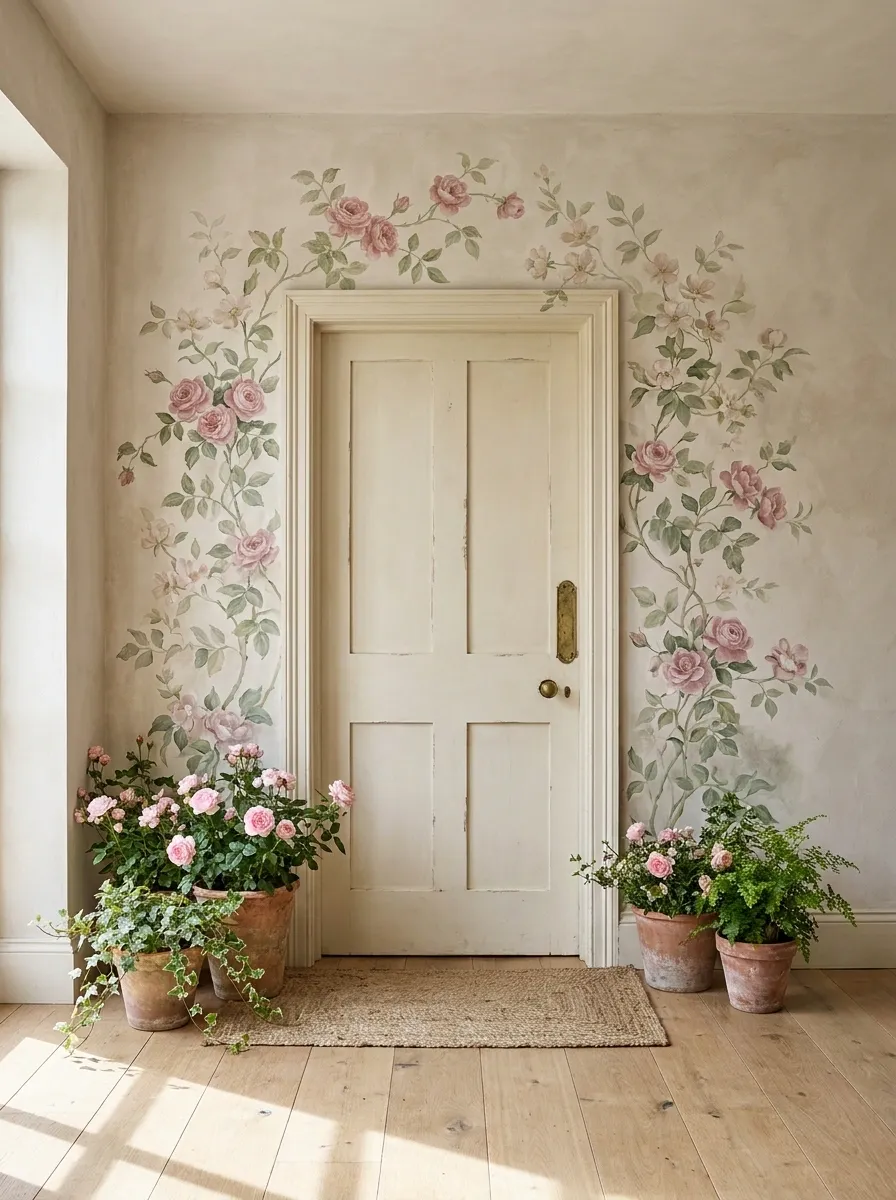
This design makes the entire doorway feel like the entrance to a hidden garden. A soft ivory door is framed by a mural of climbing roses and foliage that visually continues upward and outward, suggesting an arch made from living plants.
Real planters at the threshold carry a few complementary roses and leafy plants, creating a deliberate conversation between painted and living greenery.
The transition matters more than the individual flowers. The mural should fade gradually into the surrounding wall so the doorway appears to sit inside the garden rather than simply having flowers painted around its frame.
Farmhouse Harvest Door With Pumpkins and Autumn Foliage
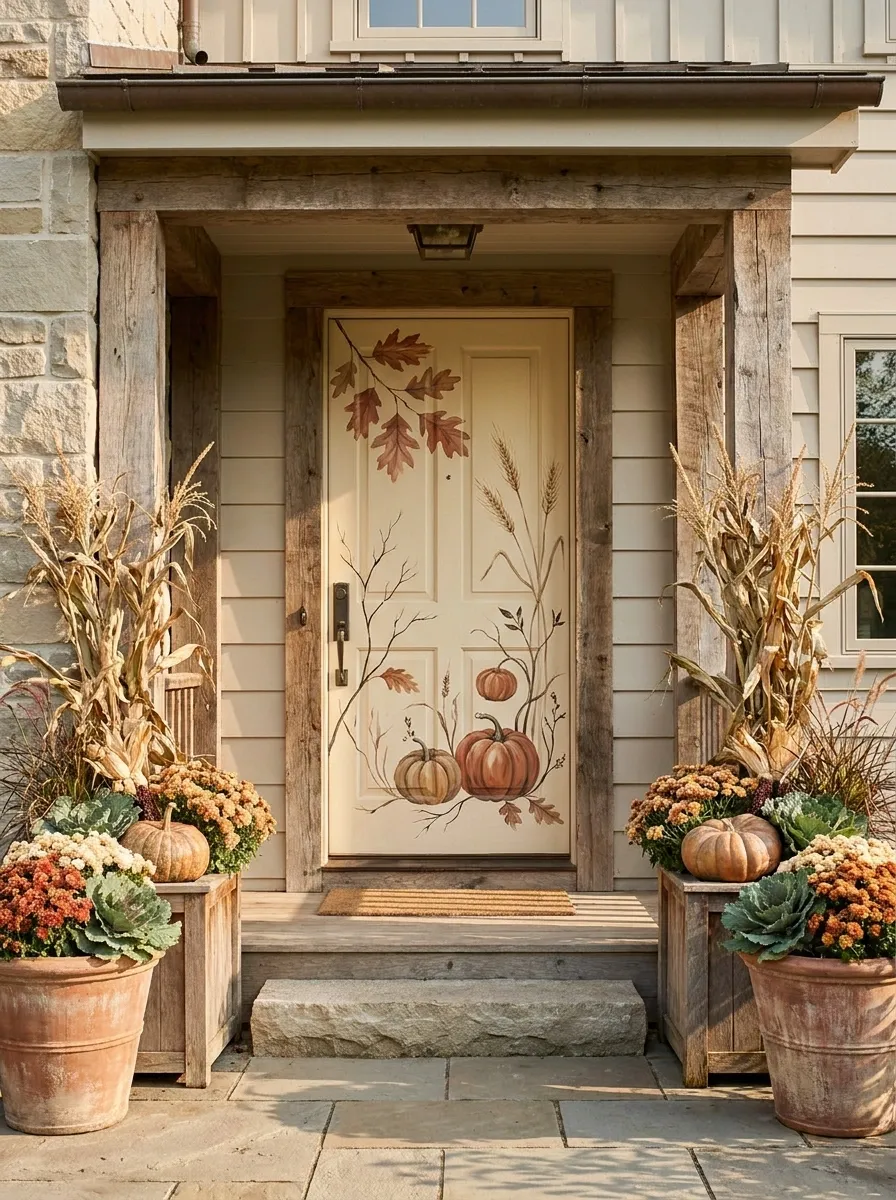
A warm cream door becomes a sophisticated autumn scene with painted pumpkins, dried grasses, branches, and muted rust-colored leaves. The treatment feels seasonal without turning the entry into a novelty display.
Weathered wood, natural planters, and a simple stone threshold complete the farmhouse setting. The surrounding architecture stays neutral, allowing the autumn colors to provide the seasonal identity.
The mural feels richer when the pumpkins are part of a larger composition instead of being repeated symbols. Tuck them visually among stems, leaves, and grasses so the scene resembles a real harvest arrangement.
Middle: pumpkins and branches
Upper: open cream space and fine stems
Coastal Cottage Door With Soft Watercolor Shell Motifs
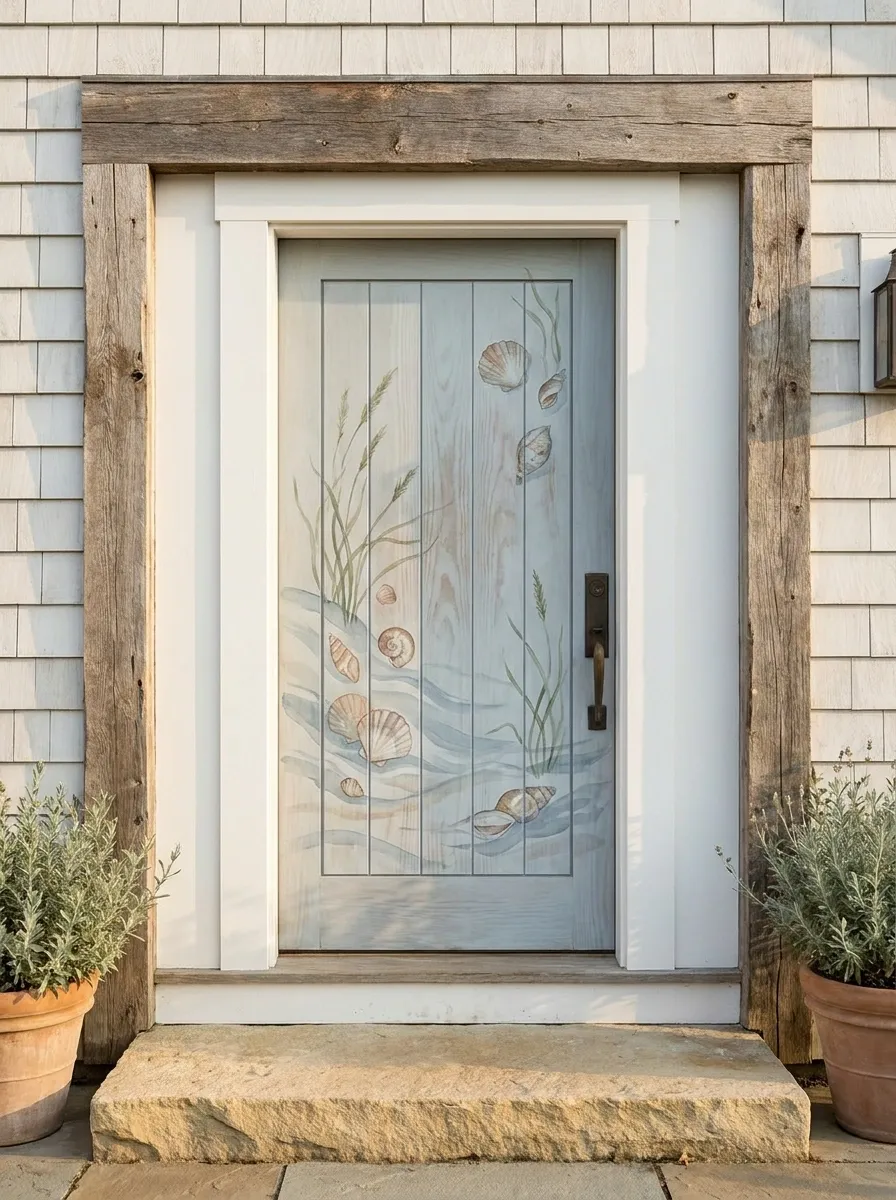
This coastal design stays deliberately subtle. A pale blue-gray door carries loose watercolor-like seashells, sea grass, and soft wave shapes, while white trim, weathered timber, and sandy stone surround it.
There are no oversized anchors or strongly themed nautical accessories. The coastal feeling comes from the palette and the gentle subject matter.
That makes this mural easier to live with year-round. The artwork references the coast without making the entrance feel like a vacation rental. Keep the painted shapes soft and slightly translucent so the door retains some of its original surface character.
Wildlife Meadow Door With Birds Among Tall Grasses
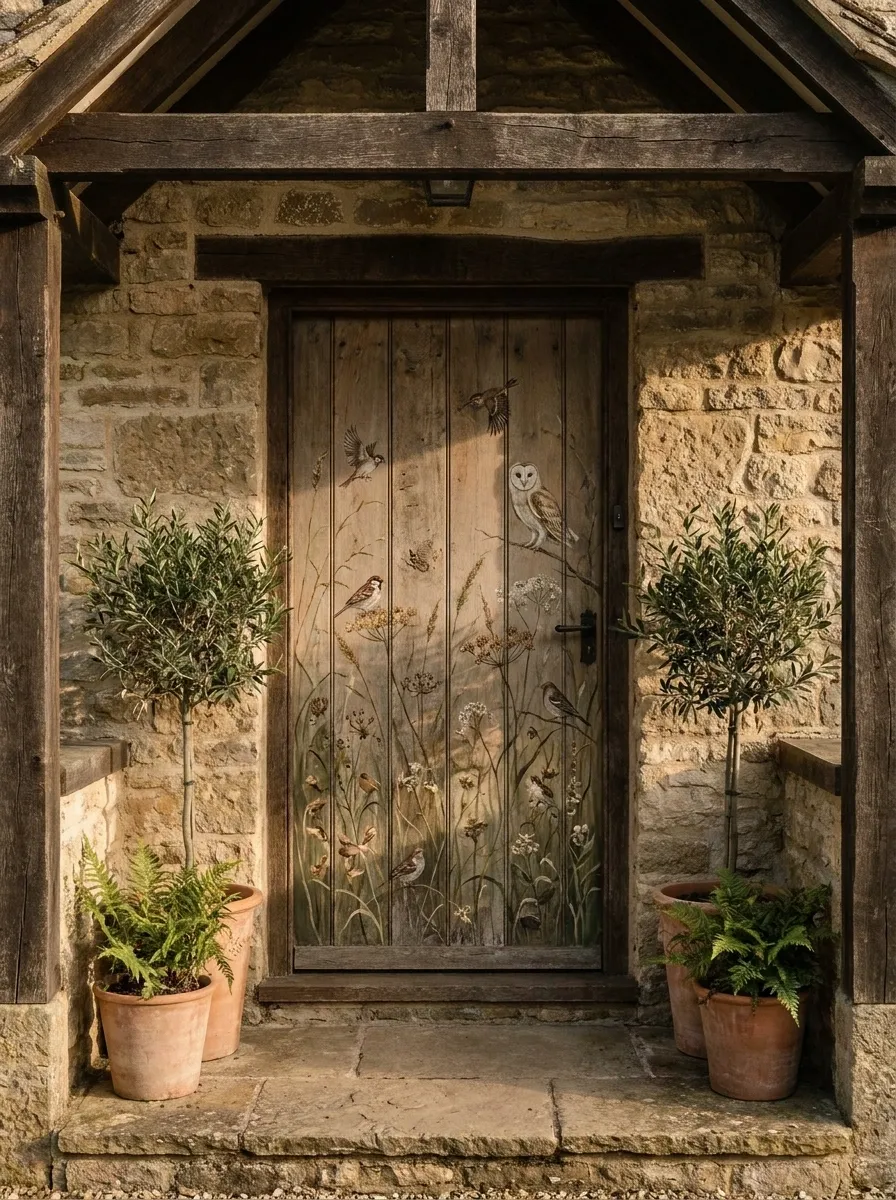
A warm brown door carries a small meadow ecosystem. Tall grasses, seed heads, scattered flowers, and several painted birds create a scene that feels quiet and natural rather than decorative.
The surrounding entry uses rustic stone, natural wood, and understated planting. The door becomes the focal point, but it still belongs to the broader landscape.
Bird placement is the key compositional decision. Rather than putting every bird at the same height, position them at different points through the meadow so the eye travels through the scene. Keep the smallest flowers toward the edges and allow the central bird or two to establish the focal area.
Modern Terracotta Door With Oversized Abstract Leaves
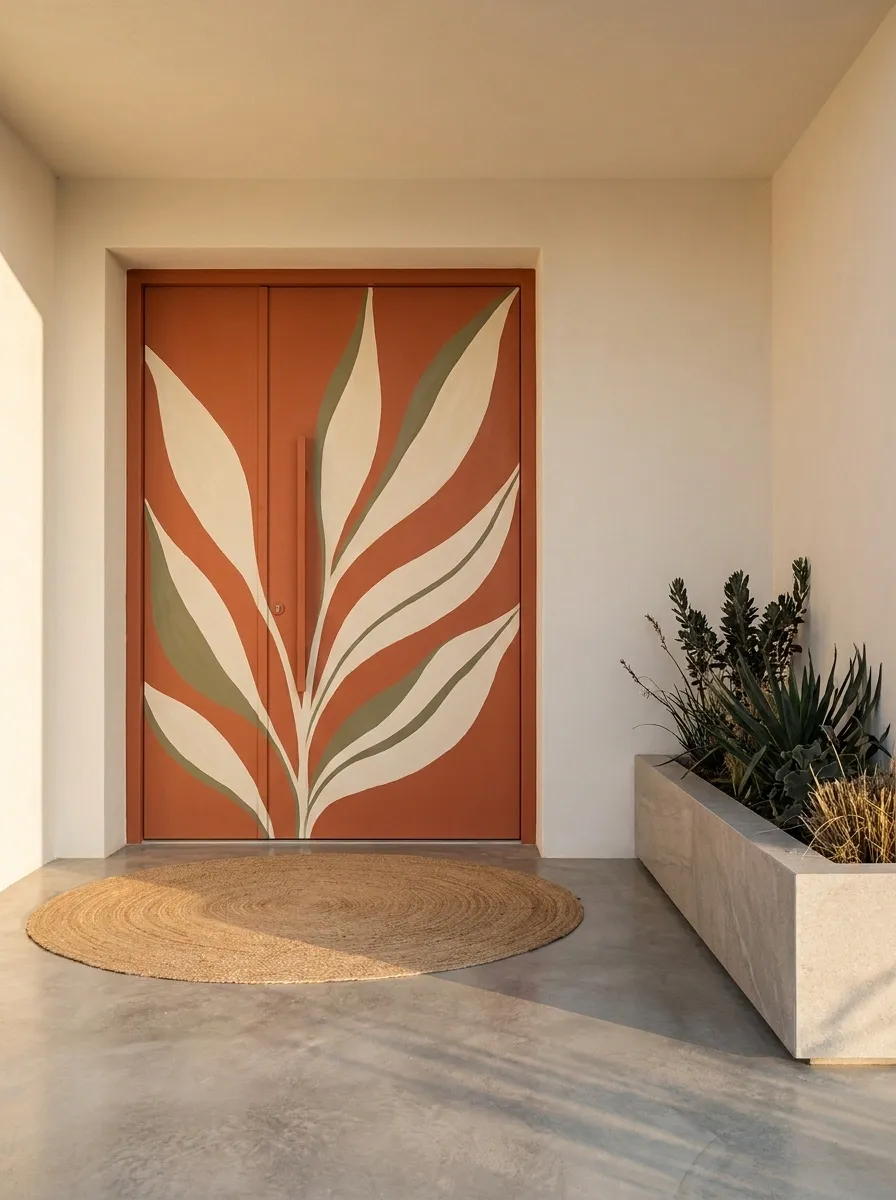
This concept takes a mural in a much more contemporary direction. A burnt-orange door carries large simplified cream and olive leaves, each shape broad enough to read from the other side of the entry.
Smooth plaster walls, concrete paving, and sculptural planting provide a clean architectural backdrop. The mural does not attempt to imitate nature in detail. Its strength comes from simplified shapes and clear proportion.
The scale should stay generous. Small leaves would lose the graphic quality that makes this design feel modern. Keep the surrounding decor equally edited so the large shapes remain the center of attention.
Vintage Provence Door With Lavender and Stone Surround
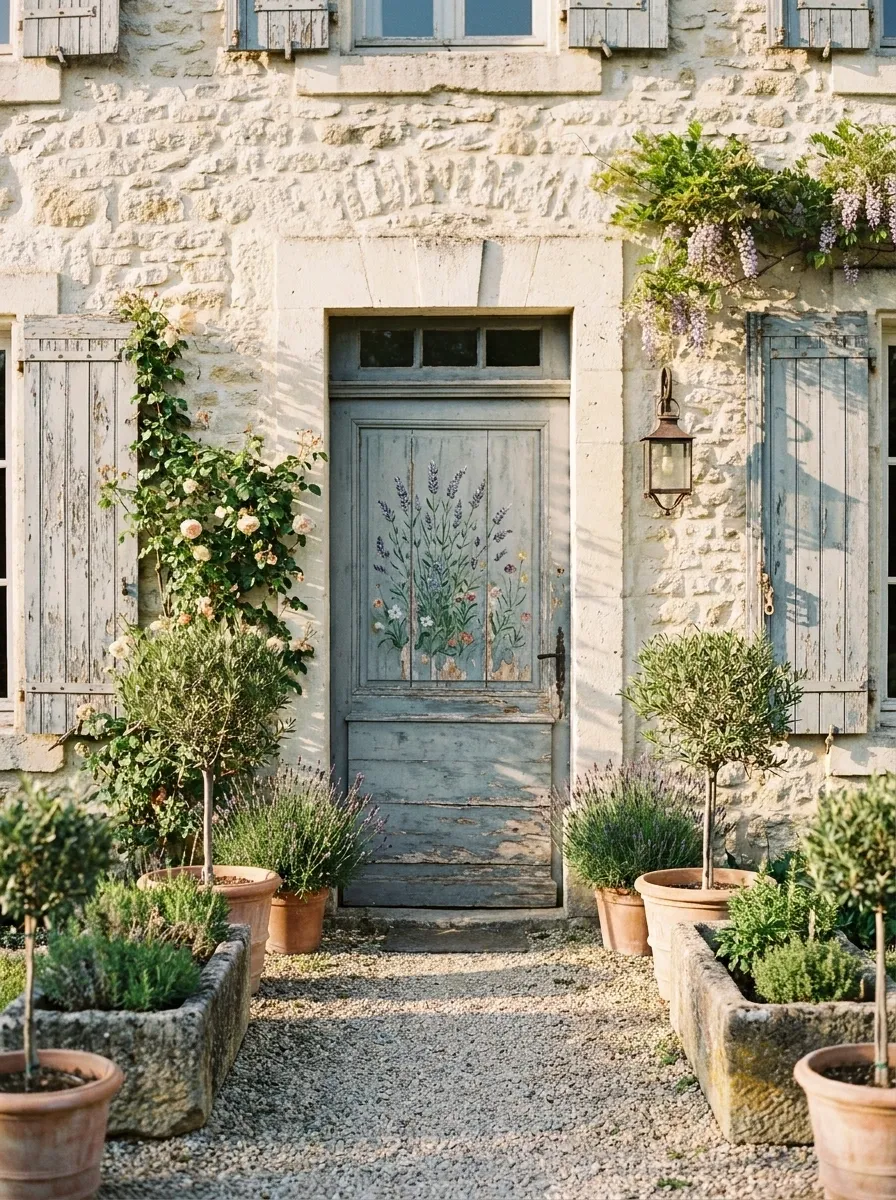
A faded blue-gray door is covered with loose lavender stems and small wildflowers. Pale limestone, aged shutters, and a narrow gravel path create a setting that feels like a weathered countryside entrance rather than a freshly decorated facade.
The colors are soft enough to blend naturally with older materials. Lavender provides the strongest visual connection, while the stone and wood keep the door from looking too pastel.
This concept benefits from a slightly imperfect finish. Brush texture, variation in flower size, and weathered edges help the mural feel as though it belongs to the building rather than having arrived yesterday.
Storybook Village Door With Painted Windows and Flowers
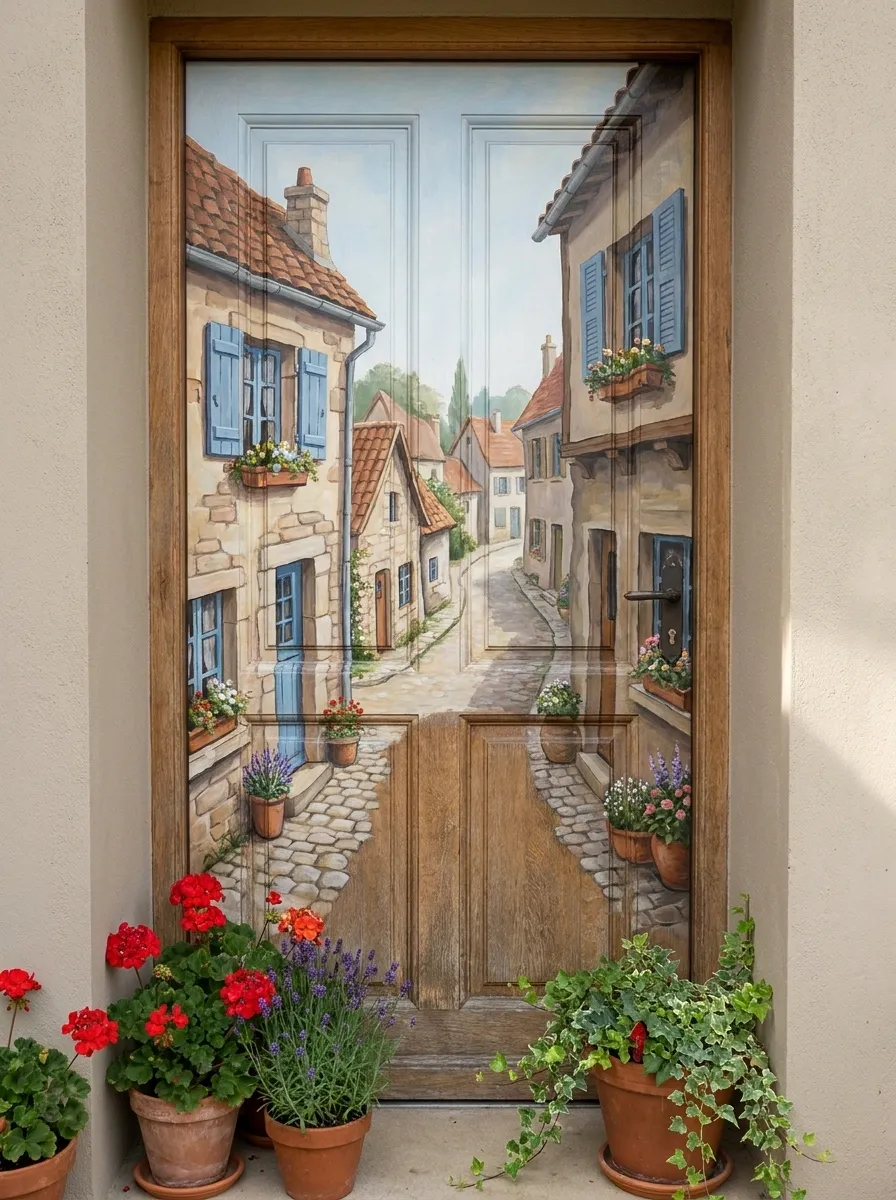
This design turns the entrance into a tiny illustrated world. The door suggests miniature windows, flower boxes, rooftops, winding paths, and small architectural details, creating the impression that the doorway opens into a little village.
The surrounding wall remains understated, allowing the door to carry the fantasy. A few real flowering plants at the base provide a subtle bridge between the painted world and the actual home.
Because this mural contains many details, the color palette should remain controlled. Too many unrelated colors would make the miniature architecture difficult to read.
Black-and-Cream Checkerboard Door With Botanical Borders
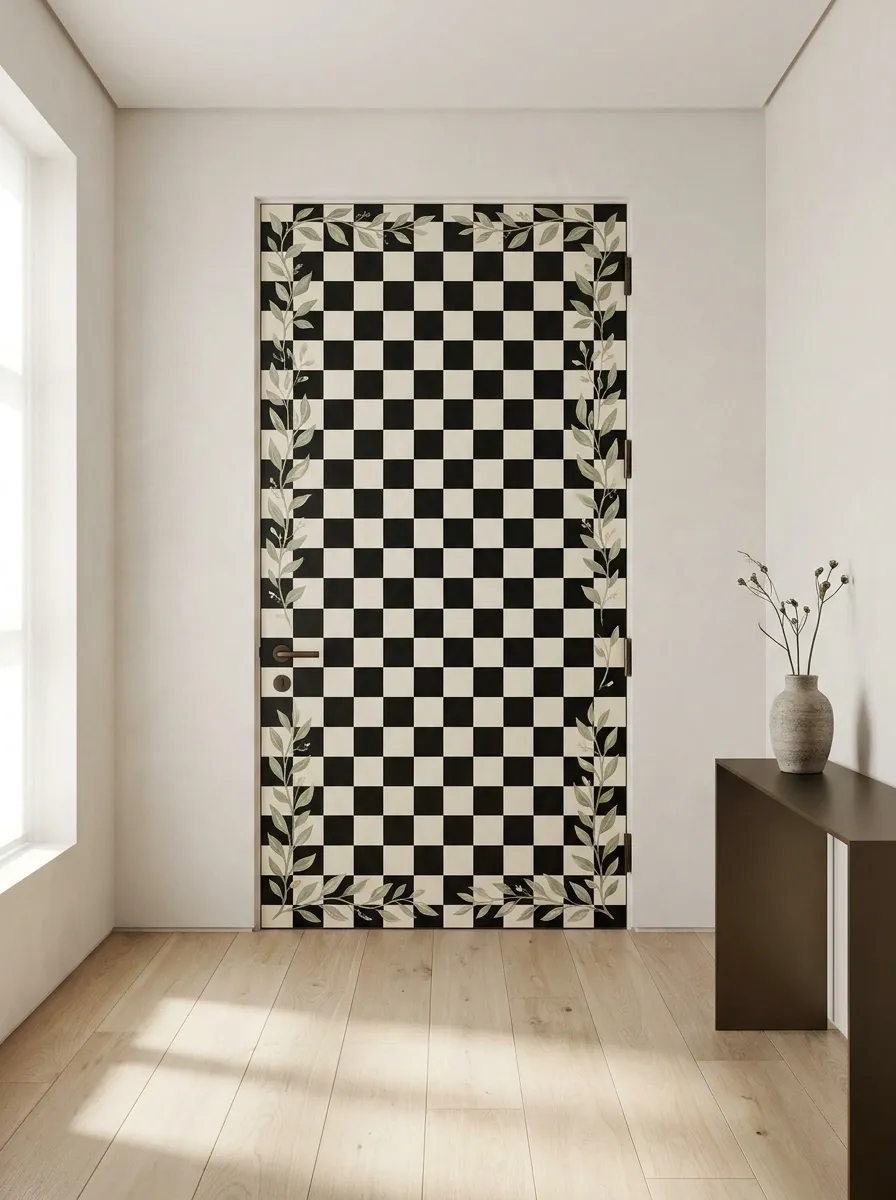
For something more graphic, a black-and-cream checkerboard door creates a bold geometric foundation. Hand-painted leafy borders soften the pattern and keep the entry from feeling overly rigid.
The surrounding architecture stays contemporary and restrained, with pale walls, dark hardware, and simple planting. The combination works because the organic foliage and geometric checkerboard provide opposite visual languages.
Do not add another major pattern nearby. A patterned runner, ornate tile, or busy wallpaper would make this composition feel restless. Let the door be the one place where geometry and nature meet.
Grand Floral Entry Door With Full Surround Mural
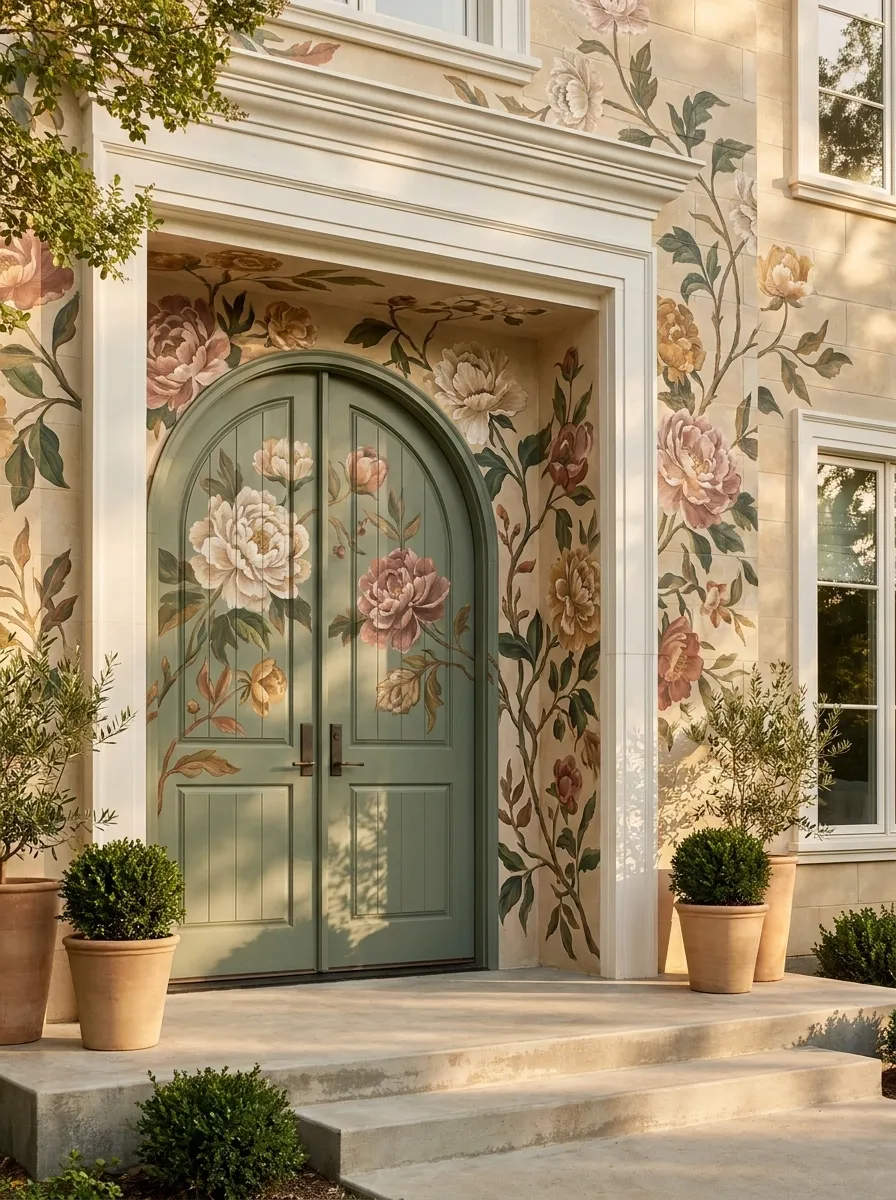
The final concept goes beyond painting the door itself. Oversized peonies, branching stems, and broad foliage spread from the door onto the surrounding wall, turning the entire entrance into one continuous garden composition.
The door, trim, wall, and artwork are treated as one visual field. Simple flooring and restrained planters give the mural enough space to feel theatrical without making the whole exterior chaotic.
The strongest part of this approach is the artwork’s ability to break the expected boundary of the door. Instead of ending at the frame, some branches continue outward, making the entrance feel larger and more immersive.
For a statement entrance, this is the concept I’d save first.
Choosing a Door Mural That Will Still Feel Right Later
A door mural becomes much easier to live with when the artwork has a clear relationship with the architecture around it. Start by looking at the colors and materials that already exist at the entrance, then choose a mural direction that strengthens them instead of fighting them.
The scale matters just as much. A narrow door can handle a large graphic idea, but a very intricate scene may become difficult to read from the walkway. A wide doorway gives you more room for landscape scenes, archways, or sprawling botanical compositions.
Most importantly, save complete references rather than isolated details. A flower you like on one door may look completely different once you place it beside your own flooring, walls, lighting, and landscaping.
A mural should make the entrance feel more like a finished part of the home, not like a separate project attached to it. Look at the entire doorway when you make your choice, including what the eye sees immediately before and after the door.