
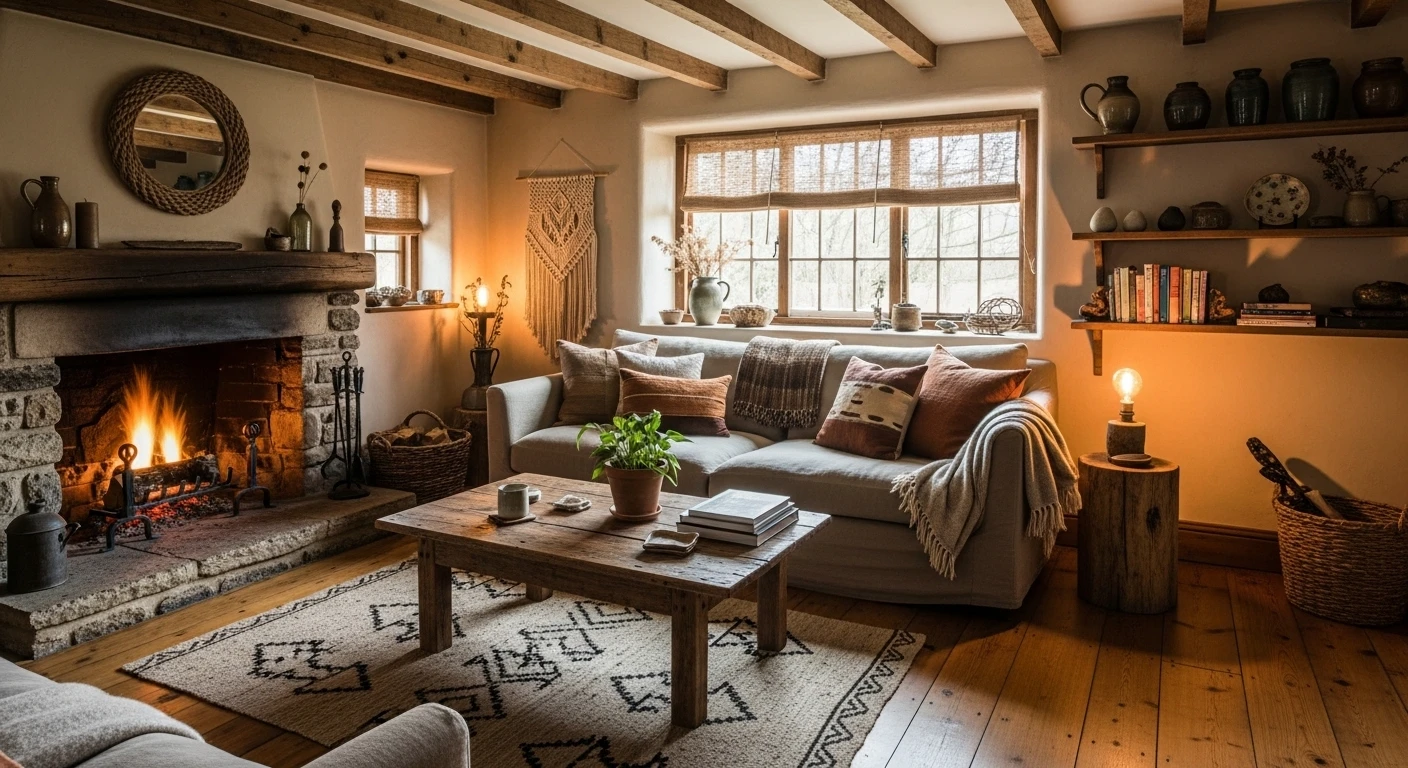
Somewhere between the Instagram farmhouse aesthetic — which is basically shiplap and anxiety — and the genuine article, most people get lost. They buy a chunky knit throw, hang something with the word “gather” on it, and wonder why the room still feels like a set.
Real earthy cottage style has nothing to do with themed accessories. It has everything to do with materials that age well, colors that come from the ground, furniture that looks like it arrived over decades rather than one Saturday at a homeware store, and the kind of layered comfort that makes people sit down and not immediately want to leave.
Earthy Cottage Studio
A cottage room feels accumulated, not selected. Balance your materials, patterns, and patina to create a genuinely lived-in space.
Result
Details
Why Most Cottage Living Rooms Look Like a Catalog Rather Than a Home
They were assembled with a checklist. Exposed beams — check. Linen sofa — check. Jute rug — check. Vintage-style lamp — check. The result is a room with all the right ingredients and none of the right feeling. Authentic earthy cottage rooms feel accumulated rather than selected. The patina comes from actual use. The mix of patterns and textures feels organic because it happened over time, not because someone chose "complementary" options from the same website. The fastest way to fake this is to buy things from different eras, different sources, and with the explicit goal of making them coexist rather than match.
The Material Foundation That Makes Everything Else Work
Stone walls, reclaimed wood beams, parquet or wide-plank floors, exposed structural elements — these are not decorative choices. They are the room's foundation. A cottage living room that has these elements working correctly can absorb almost any furniture decision and still look right. A room without them will always feel like it's trying to be something it isn't, regardless of how carefully the accessories are chosen.
Pattern Mixing Is Not Optional in a Cottage Room
The rooms that look authentically lived-in almost always have at least three patterns working simultaneously — a rug, upholstery, and cushions that shouldn't theoretically work together but somehow do. This is not accidental. It's the result of choosing patterns that share a color family while varying in scale. A large floral sofa, a geometric rug, and a plaid cushion work together because the colors relate even though the patterns don't match. The moment everything coordinates, the room stops feeling like a cottage and starts feeling like a showroom.
The Accumulated Home
Why catalog cottages feel like sets, and how authentic spaces are actually built.
Earthy Cottage Living Room Ideas
Stone Wall, White Beams, Parquet Floors, Linen Sectional:
Keep the original stone wall intact — never render over it, never paint it, never apologize for it. White-painted ceiling joists and exposed beams run across the full width of the room above. Herringbone parquet flooring in warm honey oak below. A large linen sectional in oatmeal as the room's anchor, dressed with cushions in forest green, rust, dark plum, botanical print, and plaid tartan — none of them matching, all of them belonging together because they share the room's earthy palette.
A chunky reclaimed wood coffee table with lower storage basket shelf. A braided jute rug in sage and natural tones beneath the seating zone. Black-framed French doors bringing garden light in through the stone wall. A tall floor lamp with a woven green shade in the corner. A green button-back armchair beside the stairs. A wicker basket in the corner for throws. This room works because the stone wall does all the architectural heavy lifting and every furniture decision simply responds to it.
Gallery Wall, Check Rug, Boucle Chairs, Painted Fireplace:
Paint every surface — walls, ceiling, fireplace surround, and wainscoting — in the same pale grey-green so the room reads as a unified backdrop. This is the move that elevates the room from quaint to considered. Against that quiet backdrop, build a gallery wall of vintage botanical and landscape prints in frames of varying sizes, materials, and finish — black, gold, dark wood, raw wood — arranged asymmetrically so the wall reads as collected rather than composed. Two substantial boucle armchairs in warm mushroom tone facing each other across a simple bleached pine coffee table.
A large check rug in grey and natural tones covering most of the floor. A carved wooden mantel fireplace in the same soft grey paint as the walls, dressed with two or three ceramic vessels and a generous botanical arrangement. A dark antique side table with a worn brass bell and stacked books on the coffee table. The discipline of the single-colour backdrop is what makes the pattern and texture elsewhere feel intentional rather than chaotic.
Warm Taupe Walls, Leather Sofa, Wavy Mirror, Botanical Chair:
Paint the walls in a deep warm taupe that reads almost brown in certain light — a color that makes every piece of wood in the room glow. A substantial deep-cushioned leather sofa in aged cognac brown along one wall, dressed with striped and botanical-print cushions. A round dark stained oak coffee table with sculptural legs at the center of the room. An olive green tufted wool rug below. Against the far wall, a long low oak sideboard with cabinet doors dressed with small ceramic vases, a large botanical arrangement in a rough stoneware jug, and an antique dark bowl.
Above the sideboard, a wavy-framed mirror in warm oak — the organic edge of the frame against the smooth plaster wall is the room's single most important design detail. Two white-plaster candle sconces either side of the mirror. A botanical-print armchair in dark green and cream in the foreground corner. An arched window in the far wall with a simple roman blind. The room feels like it belongs to someone who has spent twenty years acquiring things they genuinely love — which is the hardest feeling to manufacture and the most valuable feeling a cottage room can have.
Floral Sofas, Open Shelves, Garden Window, Terracotta Pots:
Two matching chintz sofas in a red and white floral pattern facing each other — and yes, matching florals in a cottage room is correct when the rest of the room is restrained enough to receive them. A simple oak coffee table between them with a lower shelf for books and magazines and a woven bowl of fruit on top. An ornate floral Persian-style rug in deep blue, red, and cream covering the entire floor area. Open bookshelves in warm dark wood in the corner, stacked with books and terracotta pots and ceramic pieces rather than styled with matching objects.
Terracotta pots of flowering geraniums and chrysanthemums clustered on the windowsill and beside the bookshelves — more plants than most rooms would consider sensible. A large grid-paned cottage window framing a view of the garden, treated with no curtain because the view is the decoration. Dark exposed wooden beams overhead. White vertical paneling on the walls. The red floral sofa only works because every surrounding material — the wood, the stone, the white paneling, the terracotta — earns the right for the floral to exist. Nothing here was chosen from a palette. Everything here belongs.
Symmetrical Fireplace, Globe Chandelier, Toile Chairs, Oriental Rug:
Symmetry in a cottage room is not a contradiction — it's the version of cottage that has always existed in larger, older houses. Two cream tufted sofas facing each other on a large Oriental rug in blue, cream, and warm red. Two blue and white toile armchairs facing the fireplace from the front — the mix of cream sofas and toile armchairs in the same seating arrangement is the pattern confidence that separates a decorator's room from everyone else's.
A simple dark wood coffee table at center with a vase of garden flowers, stacked books on a tray, and one small decorative object. A carved warm wood fireplace mantel at center with a round gilded mirror above, flanked by two arched windows dressed in floral print curtains that pick up the blue and red of the rug. A brass multi-globe chandelier hanging from a plaster ceiling medallion. Two tall dark wood table lamps with pleated cream shades on end tables flanking the sofas.
Built-in bookshelves on both sides of the room in warm dark wood filled with ceramics and books. The room works because the symmetry creates the formal structure and the floral and toile patterns create the warmth within it — each one doing a job the other couldn't do alone.
Go Luxe with River Rocks and Reclaimed Wood
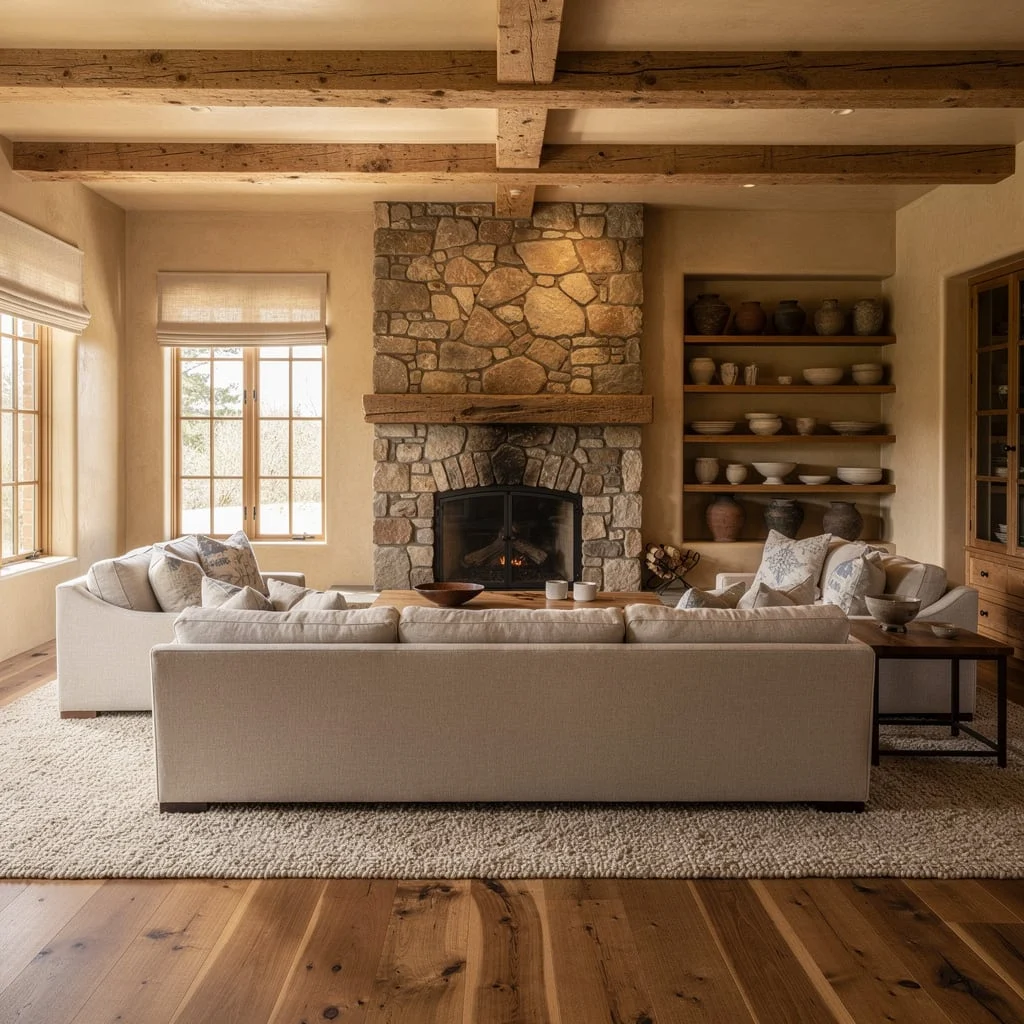
If you want your cottage living room to scream ‘rich and relaxed,’ you need to get cozy with local stone and messy, matte woods. Drop a fat stone fireplace in the middle for instant cred; slap hand-troweled plaster everywhere and make sure your ceiling beams are reclaimed oak (no fake stuff). Lay out wide walnut planks and toss down a wool rug that actually has some chunk. Skip dainty and go linen sectional—fluffy and low wins. Finish with brutalist pottery on built-ins, and always run your roman shades in linen. Pro tip: Keep your shelves ugly—no matching sets, just vintage finds and hand-thrown chaos.
Olive Walls and Organic Textiles: Airy, Not Stuffy
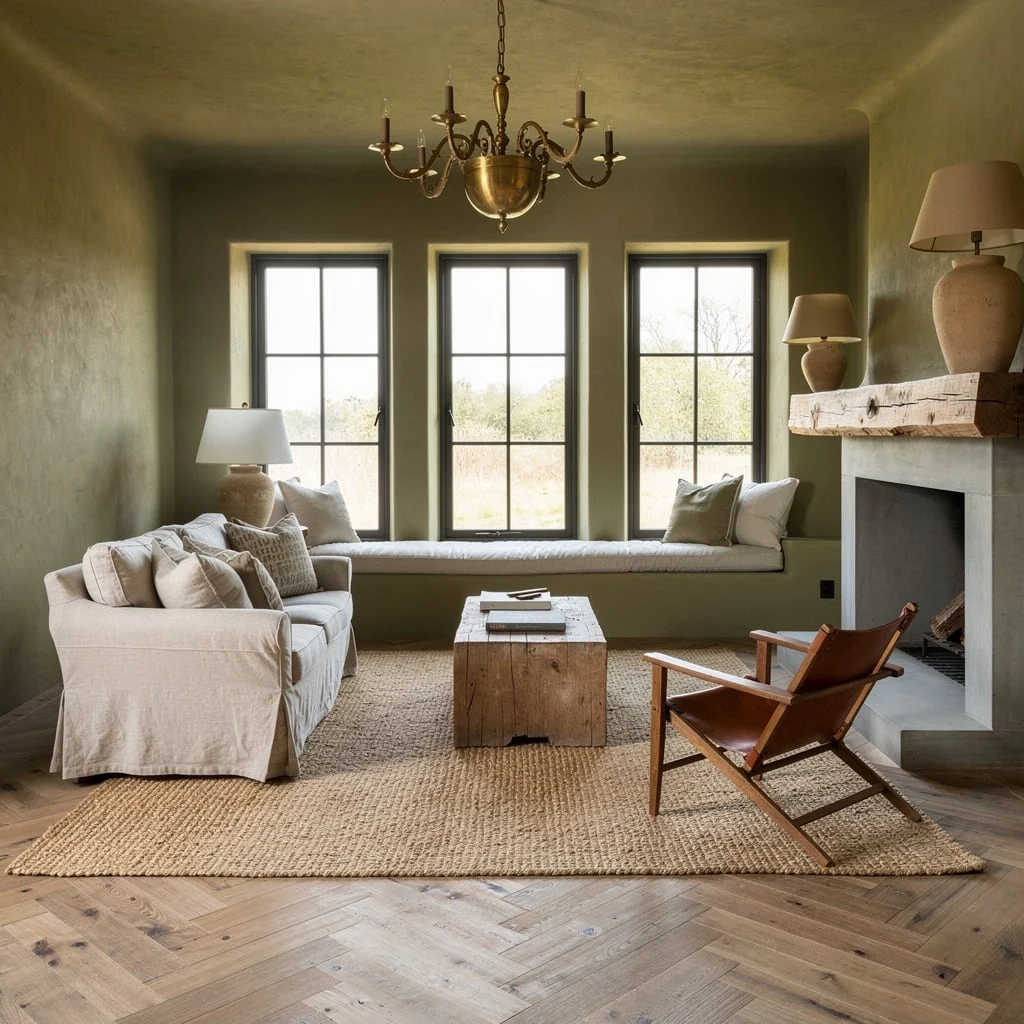
If your goal is to breathe easy and still flex style, put down the paint swatch and grab clay. Tint your walls in muted olive, don’t let them shine. Next, herringbone flooring in weathered ash will toss old school under your feet. Build a window seat upholstered in organic cotton, and go wild with flax slipcovers, leather sling chairs, and a handmade seagrass rug. For fireplace drama, rough-hewn spruce is your bestie. Lighting needs to be big—think ceramic lamp and an antique chandelier. Major rule: keep fabrics violent and textured; mix organic fiber everywhere.
Taupe Limewash and Forest Green Velvet—Textural Overload
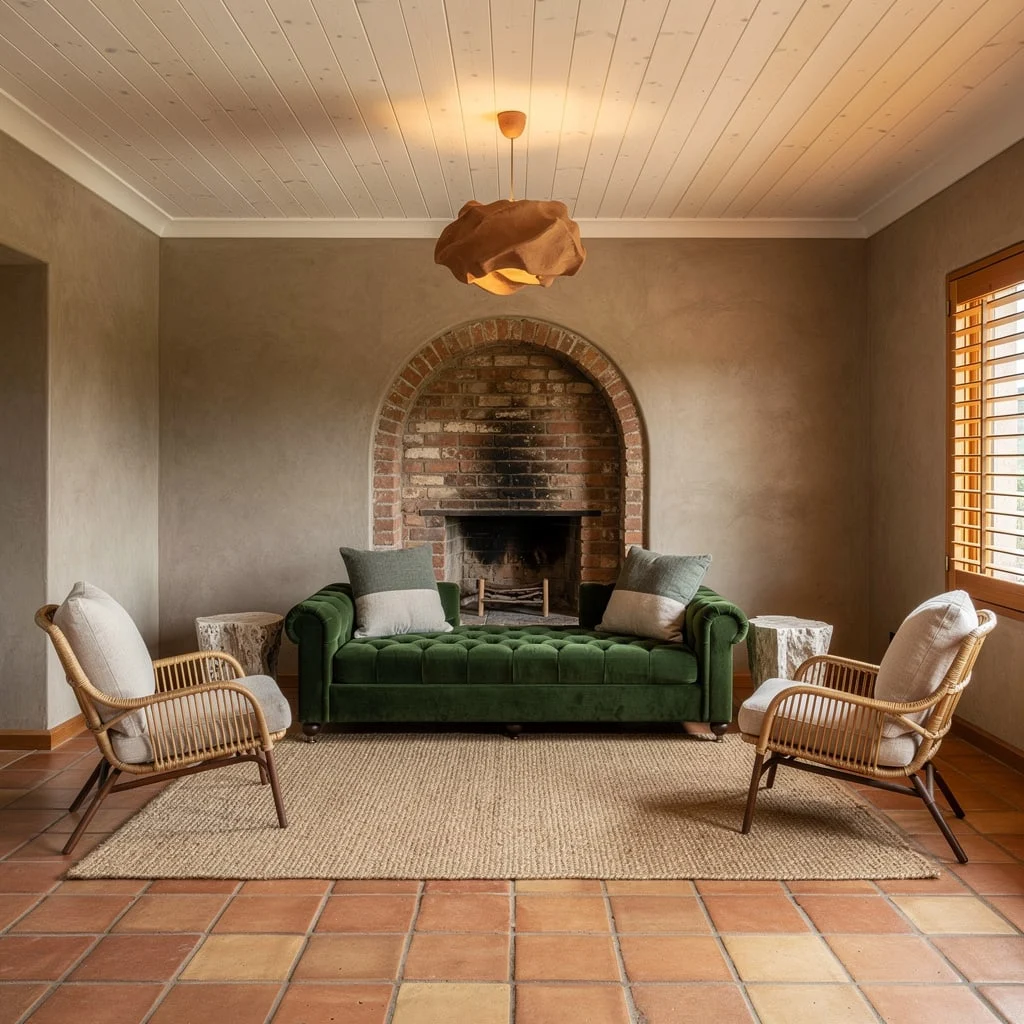
If you’re aiming for grown-up earthy elegance, don’t be basic with paint—limewash in taupe gets you instant depth. Frame your firebox with an arched brick alcove for that lived-in magic, then slap up a ceiling with tongue-and-groove fir, painted soft white. Plop a forest green tufted velvet daybed right in the hot seat, flanked by rattan chairs and petrified wood tables. Go hard on terracotta tile flooring and top off with an artisan jute rug. Keep sunlight mellow with wooden shutters, and always hang your clay pendant light lower than you’d expect. Rule: Layer at least three textures per zone.
Creamy Lime Plaster Walls and Boucle: High-End Cottage
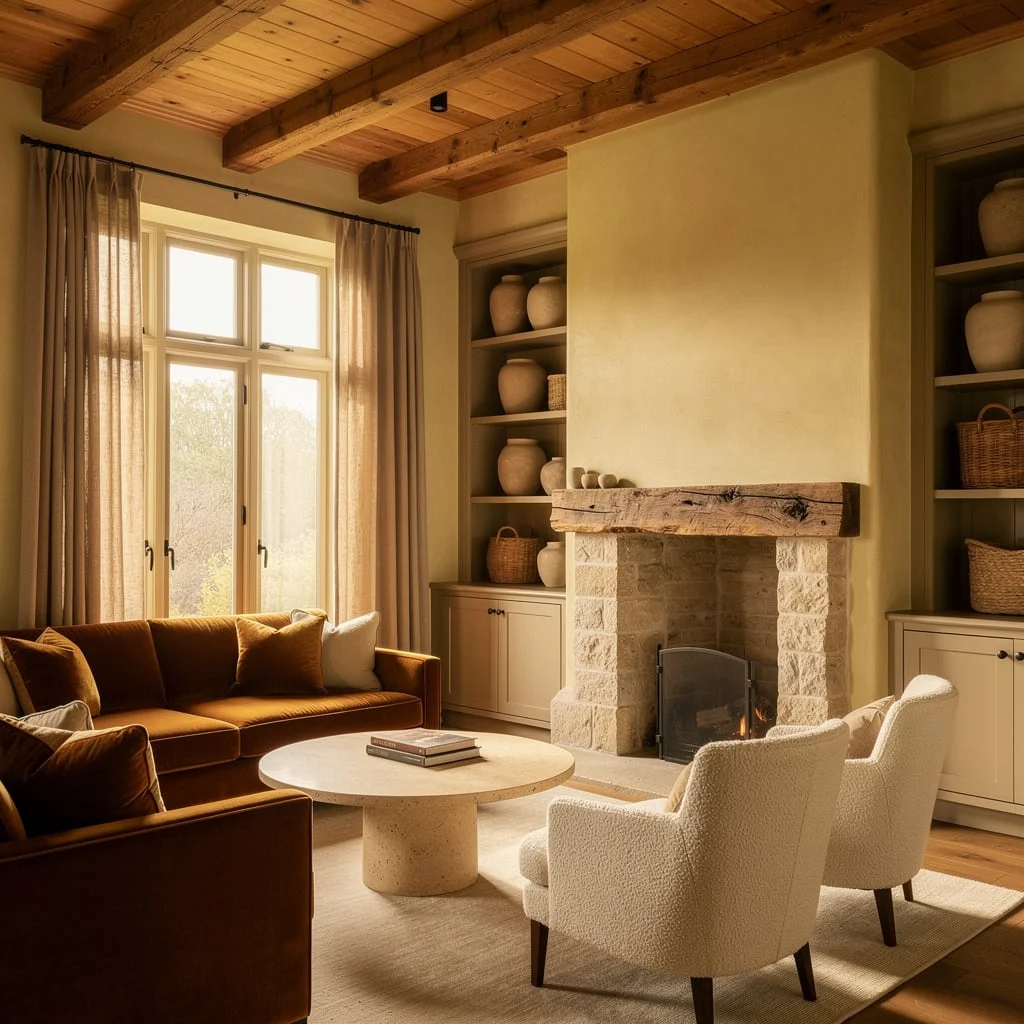
If you want your cottage to feel expensive (without flexing the credit card too hard), start with creamy lime plaster—not your grandma’s wall finish. Contrast by splashing walnut beams overhead, then set a limestone hearth dead center with a gnarly timber mantel. For seating, velvet in cognac works; add boucle wool armchairs and a fat round travertine table. Drape those windows with taupe linen, max out the golden sunlight. Bonus points for open shelving loaded with stoneware and baskets; stop overstyling, leave some gaps. Hanging linen? Go floor-to-ceiling, never short.
Soapstone Fireplace and Deep-Green Wainscoting: Refined Calm
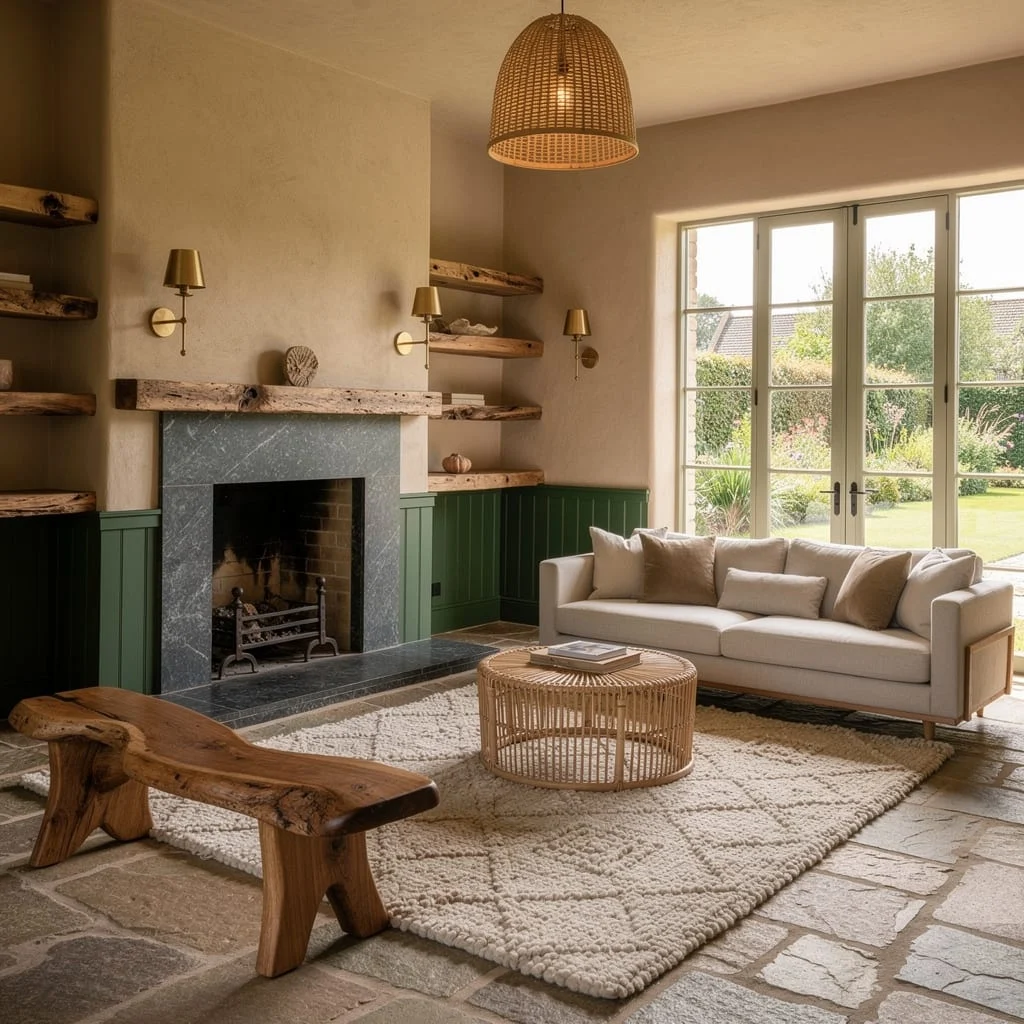
If your cottage needs tranquil but not bland, lean into pale clay walls, then slab deep-green wainscoting for contrast. Rock a double-sided soapstone fireplace—nothing wrong with seeing flames from every angle. Chunky driftwood shelves and flagstone floors keep it gritty, but a thick wool rug makes it cozy, not cold. Put brushed linen and suede on a low sofa, roll out an oak bench, and grab a round rattan coffee table for flexible style. French doors mean max daylight; bamboo pendants and aged brass sconces keep you plugged into chill mood lighting. Always pivot your seating toward the garden view.
Sandplaster Walls and Iron Stove—Chic Without Trying
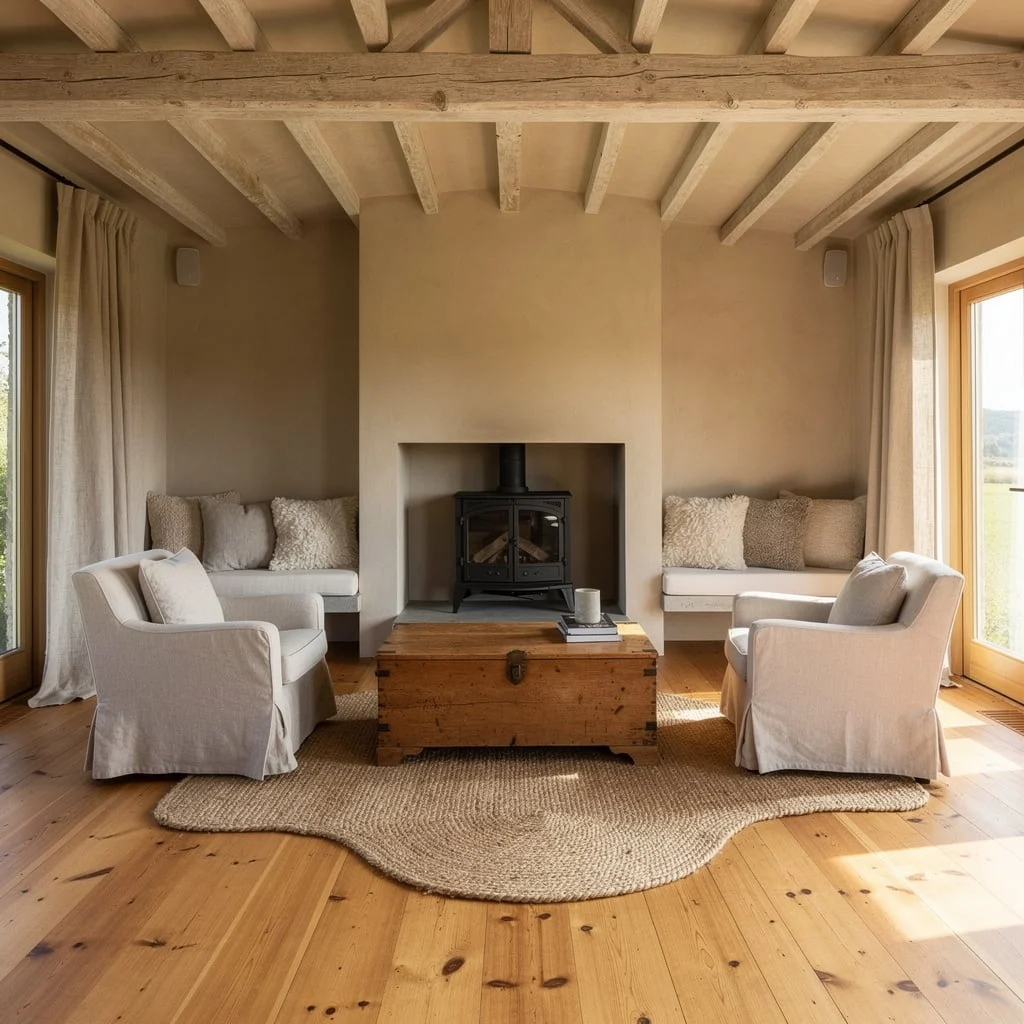
If you want that effortless, ‘lived in but cool’ vibe, throw sandplaster on your walls and let ceiling trusses be exposed and limewashed. Build a concrete bench and slap neutral, textured cushions on it—iron stove dead center for drama. Wide honey pine floorboards stacked with a wild-shaped sisal rug bring earthy underfoot. Use a vintage oak chest for a coffee table, then surround yourself with linen-wrapped armchairs. Oversized windows need raw linen drapes—don’t hem them too tight. Pro move: Keep your textiles un-ironed, wrinkles are your friend.
Whitewashed Brick and Cedar Slats: Cottage With Drama
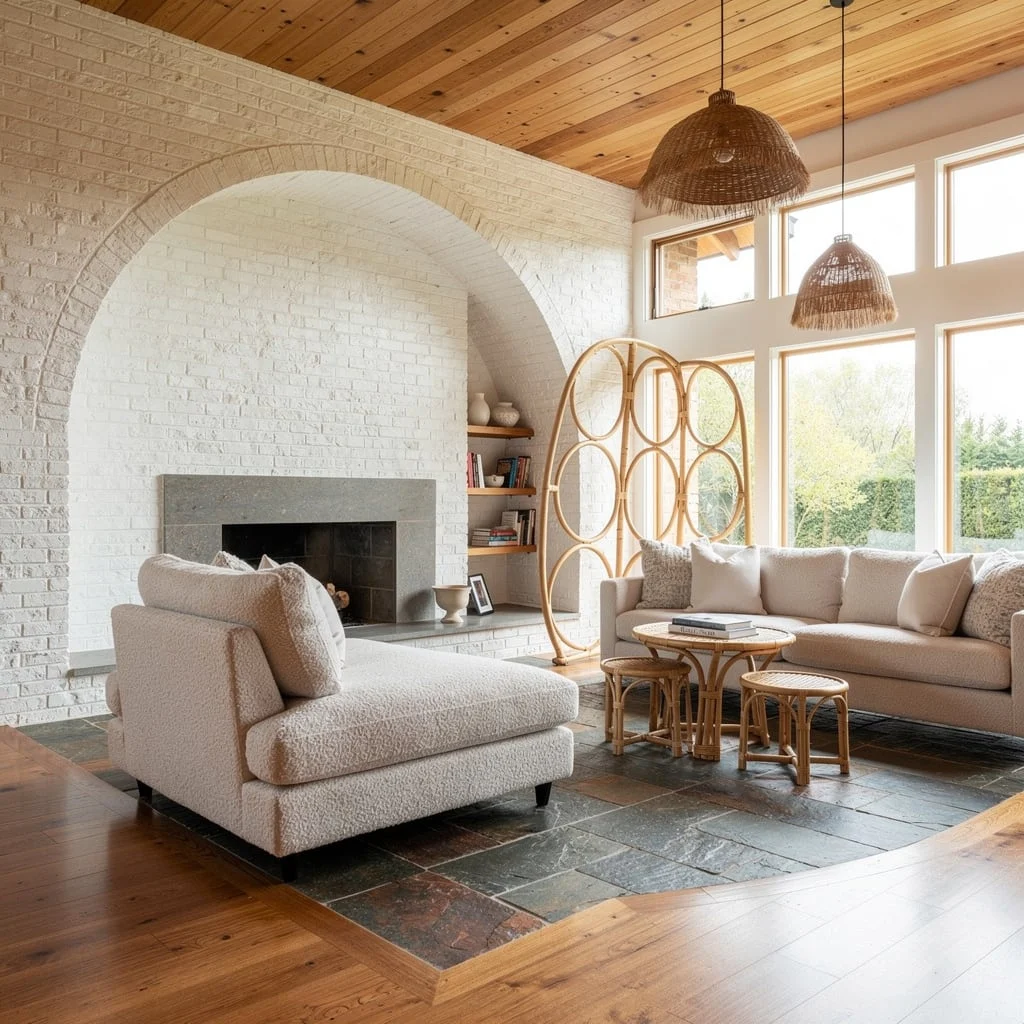
If you’re tired of boring, go statement with whitewashed brick walls—no excuses, go big with oversized alcoves for your soapstone hearth. Nail natural cedar slats on your ceiling, and mess with your floor—mix tumbled slate and polished oak for actual interest. Slide in a woolly chaise, drop boucle poufs, and stack bamboo nesting tables for levels. Segment the space with sculptural bentwood dividers, not lame partitions. Clerestory windows equal daylight flooding, and woven grass pendants keep the lighting soft—not harsh. Rule: Always divide your reading nook; don’t let lounging and books collide.
Warm Taupe Venetian Plaster and Copper: Earthy Harmony
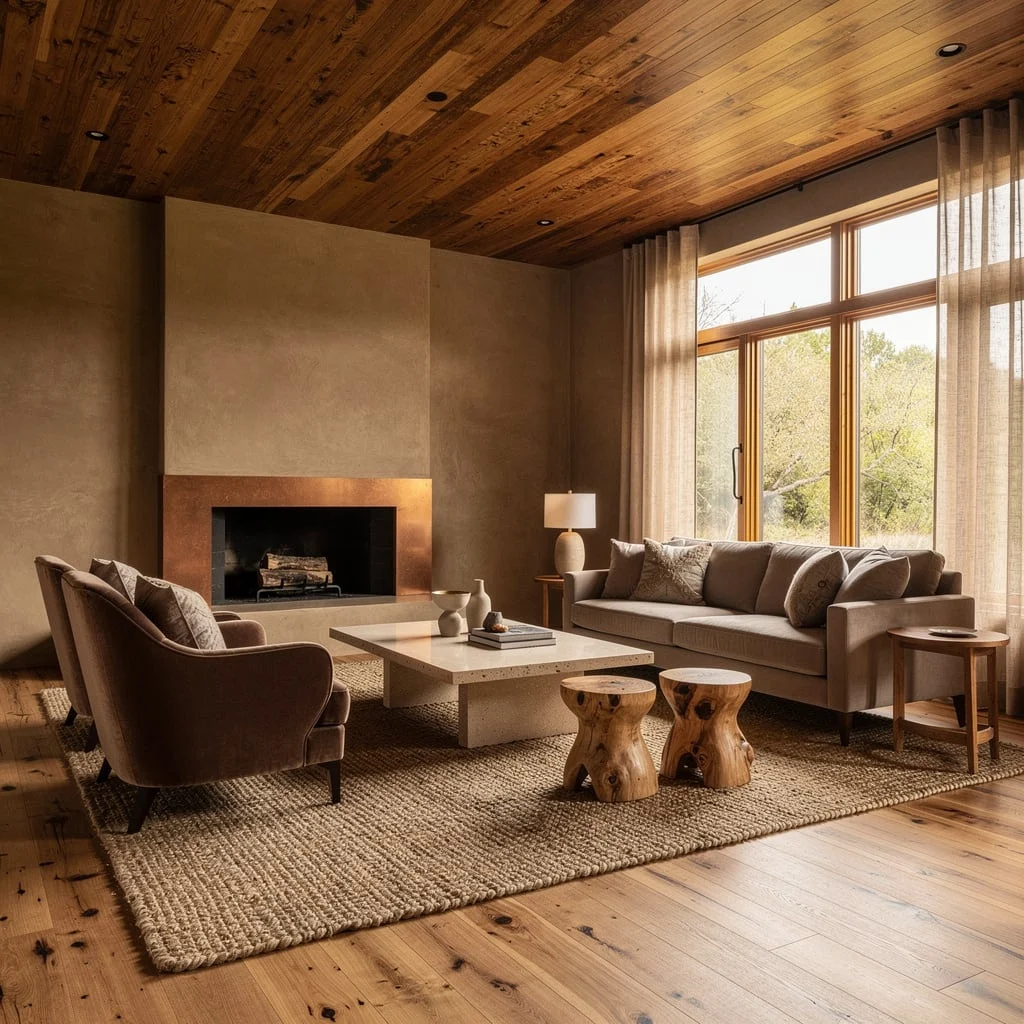
Want your cottage to be peak organic sophistication? Layer taupe Venetian plaster walls, then frame your fireplace with a copper band for designer flex. Pop acacia paneling overhead and knotty alder on the floor, then slap down the biggest woven-fiber rug you can find. Upholster seating in mushroom velvet, add hand-carved maple stools, and a sanded limestone coffee table. Go full-width on window glass and use linen sheers—never blackout. Pro tip: Always curve your fireplace niche; corners are for amateurs.
Granite Accents and Indigo Wool—Bold Rustic Done Right
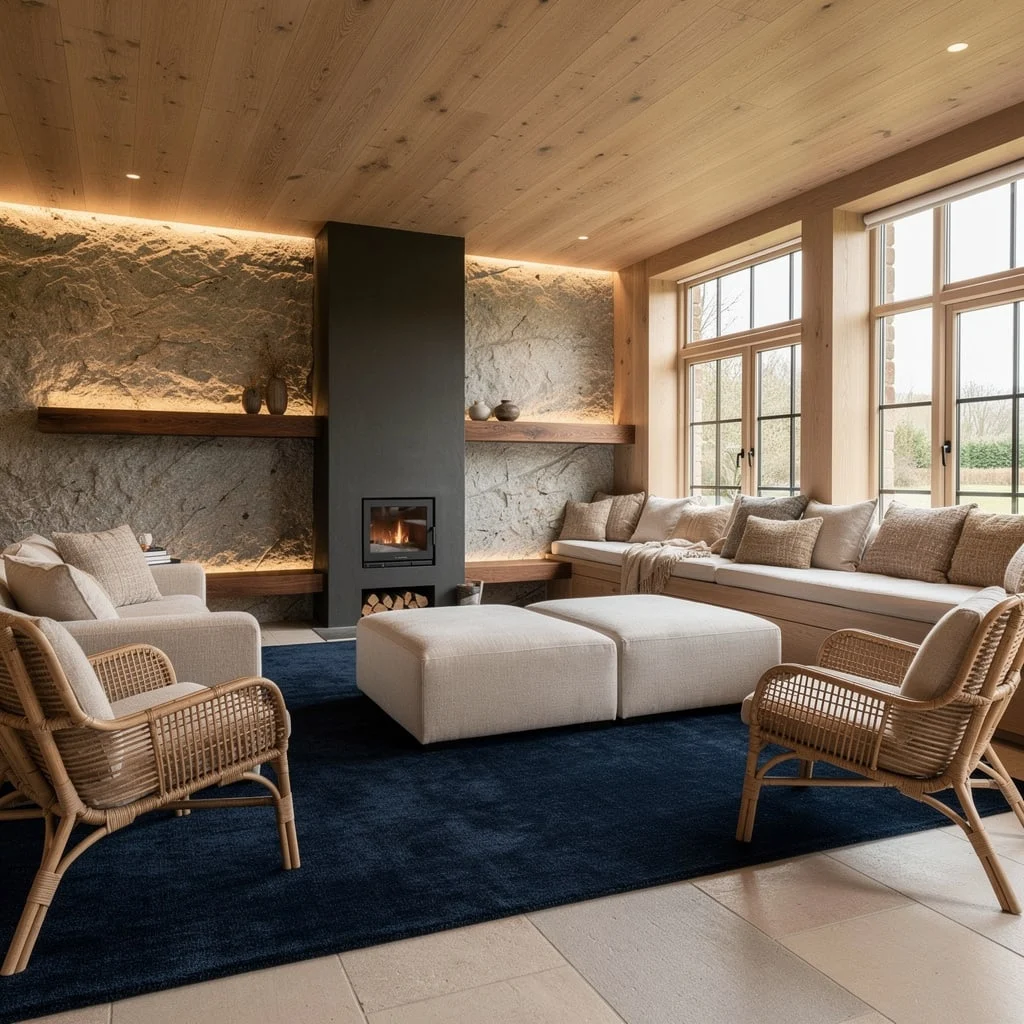
If your cottage needs punch, line the walls with hand-chiseled granite and splash a limewashed oak-paneled ceiling on top. Go chunky with a rectangular wood-burning stove (plaster it in matte charcoal). Deep indigo wool rugs anchor your seating—don’t skip color. Modular sectionals in sand tones and French rattan chairs bring comfort without killing vibe. Built-in window seats with layers of natural fiber cushions are non-negotiable. Uplights and floating walnut shelves give you depth; don’t forget, lighting needs to hide, not scream. Pro tip: Always use rugs with big hits of dark color under light furniture—it’s called contrast, learn it.
Rammed Earth Walls and Pebble Mosaics: Designer Earthy
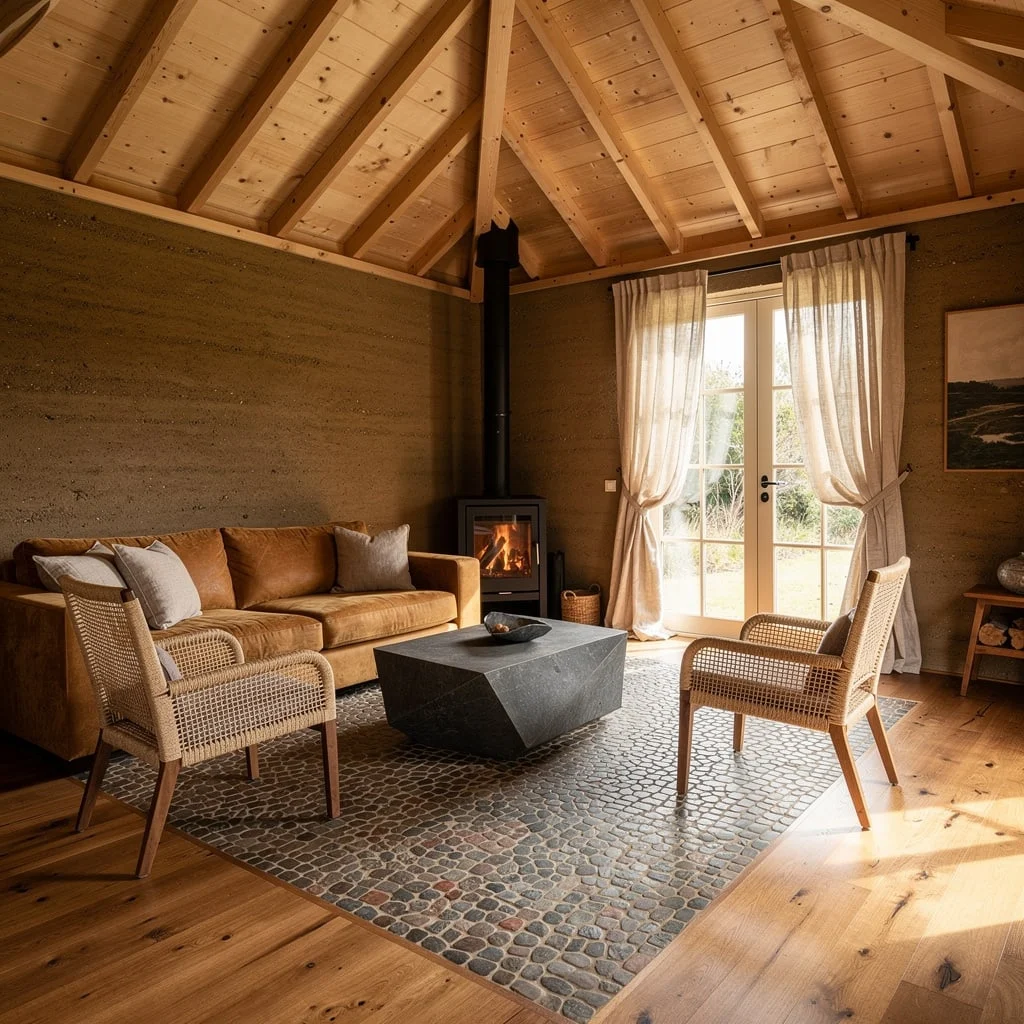
Want to prove your cottage isn’t just hype? Rammed earth for the feature wall is your answer, then vault your pine ceiling and paint it out. Let hand-scraped bamboo lead into a river pebble mosaic for floors. Camel suede sectional and hand-woven abaca chairs mean deep comfort, plus a geometric bluestone coffee table anchors things. Masonry heater—yes please, make it crackle. French windows are mandatory, with billowing linen drapes (never tie them up too neat). Let muted earth pigments bounce sunlight and always include mineral finishes for layering. No bonus points for matchy-matchy furniture—mix it up.
Olive Clay, Maple Ceiling, and Moss Velvet: Earthy Layering Masterclass
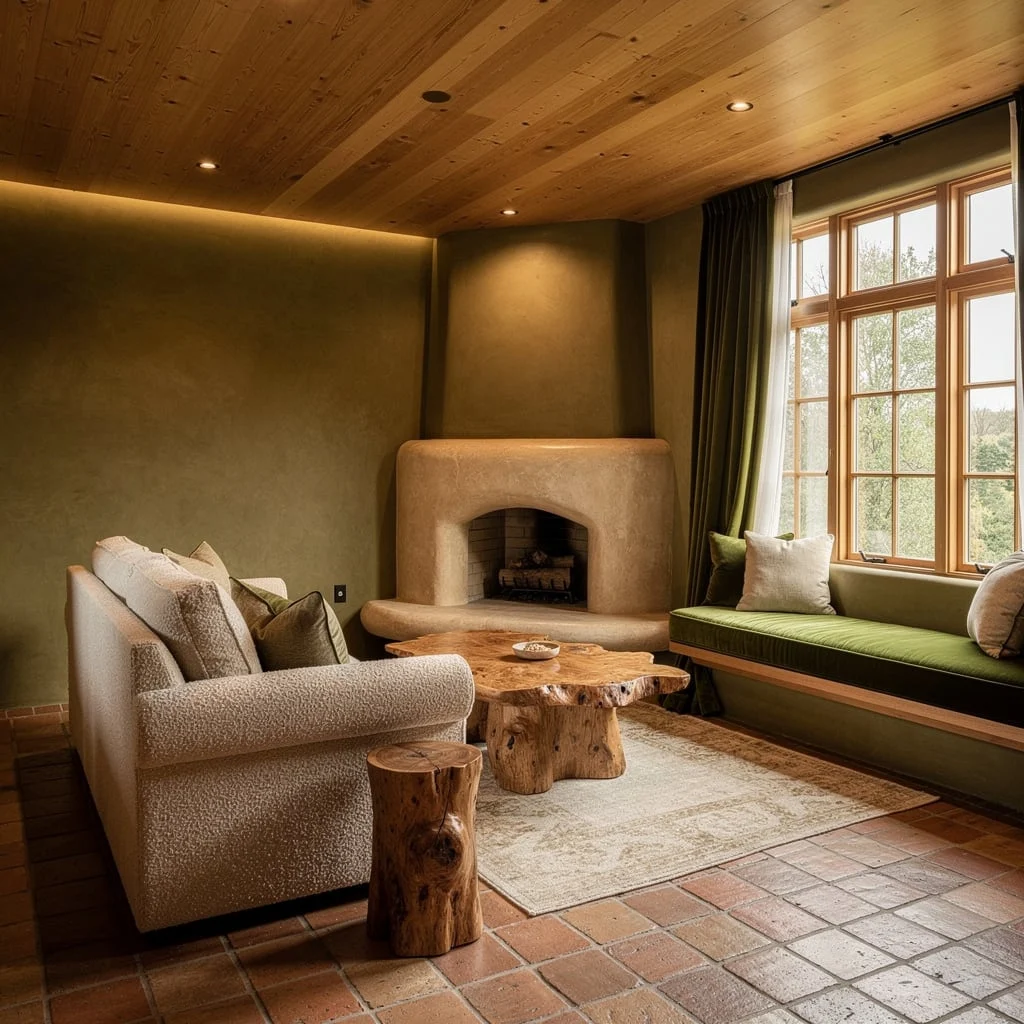
Feeling stuck on how to layer? Olive clay plaster walls lay your foundation, chamfered maple ceiling gives instant warmth, and reclaimed terra cotta tile keeps things tactile underfoot. Float a rounded plaster hearth clad in buff limestone and make a northwest-looking window seat with moss-green velvet (color is your friend). Boucle upholstery and rough-turned elm stools support a burlwood coffee table—the more sculptural, the better. Keep recessed lighting subtle so daylight dominates. Always hang window treatments wide and high for maximum glow: fake it ‘til your ceilings are tall.
The Rules That Actually Apply to Earthy Cottage Living Rooms
Warm beats neutral every time. Cool grey and white may be easier to coordinate but they produce a room that feels clinical rather than warm. Earthy cottage rooms live in warm taupe, ochre, forest green, burnt rust, and aged cream. Those colors age beautifully. Cool colours just age.
Buy things secondhand first. A vintage market armchair that cost forty pounds will do more for a cottage room's authenticity than a new one that cost four hundred. The patina is not available in new production regardless of what the marketing says.
Plants and flowers are structural elements, not accessories. A room with a generous botanical arrangement and two potted plants is warmer than the same room without them, always. Fresh flowers on the coffee table, a large plant in the corner, and a trailing plant on the bookshelf — these are not finishing touches. They are part of the room's material warmth.
Let things be imperfect. The cushions don't have to be perfectly plumped. The throws don't need to be folded. The books don't need to face outward. The slight disorder of actual life is what makes a cottage room feel inhabited rather than staged.
A Cottage Room Is Not a Style
It's the accumulated evidence of a life lived with genuine taste and no particular urgency. The rooms that look most authentically cottage are the ones where nothing was bought to achieve the look — everything was bought because it was needed, or beautiful, or found, or inherited. The look follows from those decisions. It cannot be made to precede them. That's what makes it worth trying for, and what makes it so difficult to fake convincingly.