
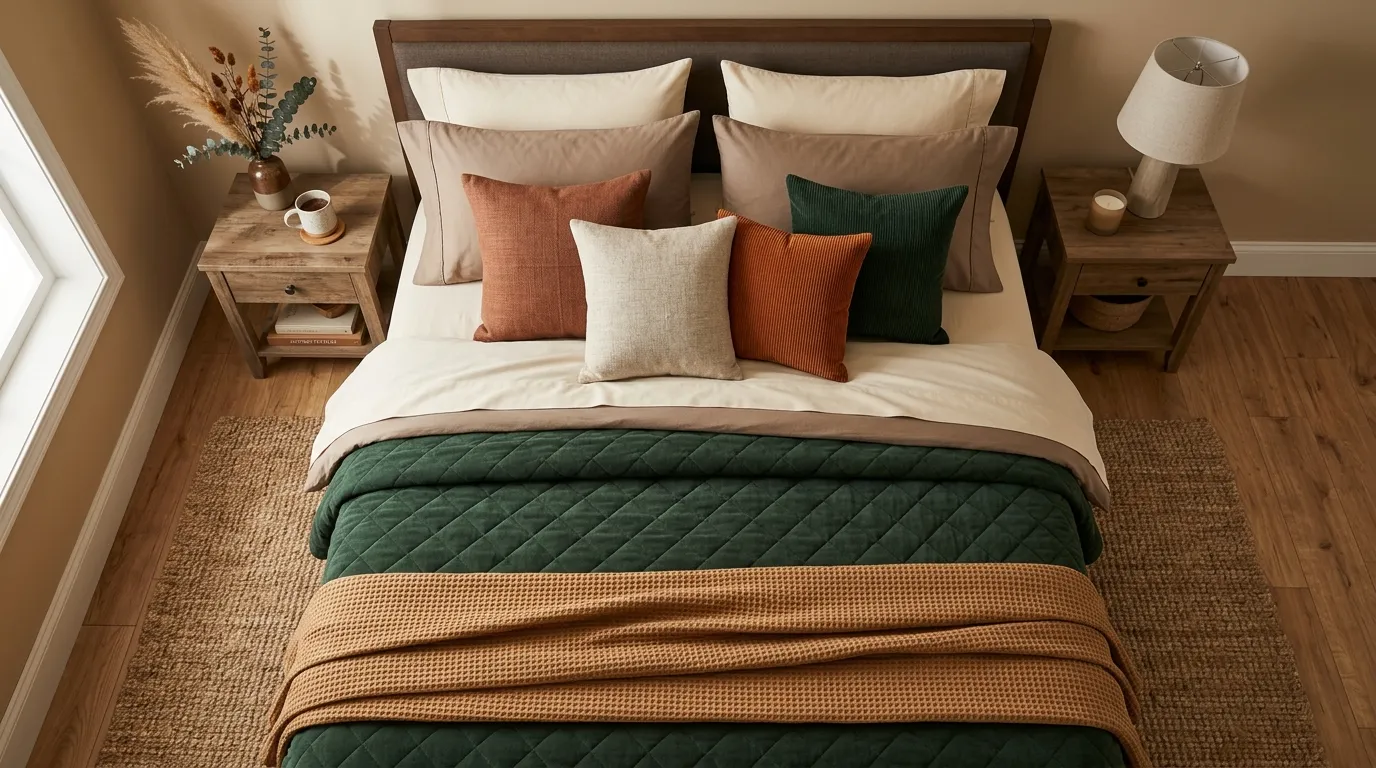
Fall bedding is one of those things people often overcomplicate. You don’t need a completely new bedroom, a dozen decorative pillows, or enough blankets to bury the mattress.
The real problem is usually simpler. Summer bedding can leave a bedroom looking flat and lightweight just when you want it to feel warmer and more inviting. Throwing random autumn colors onto the bed doesn’t fix that. It usually creates a pile of competing textures instead.
The smartest Fall Bedding ideas work with what you already own. A warmer color, a heavier layer, better texture, or one carefully chosen pattern can change the entire bed without making it look decorated for a holiday.
The ideas below focus on the details that actually make a difference. Some are quick swaps. Others change the way you layer the bed. Either way, you’ll know exactly what to do when you reach the bedroom.
Fall Bedding Ideas
Fold a Chunky Knit Blanket Across the Foot of the Bed
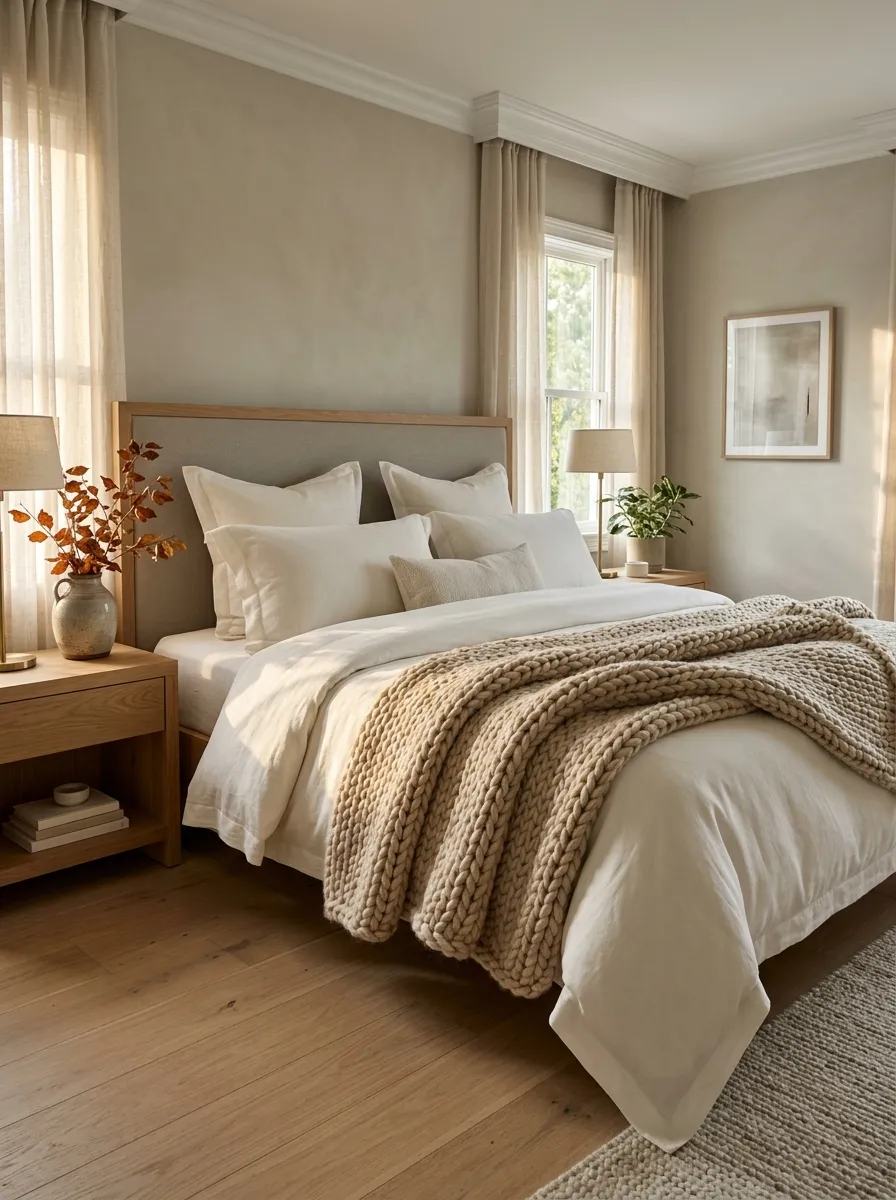
The foot of the bed is where a heavy knit blanket earns its place.
Instead of spreading the blanket across the entire mattress, fold it into a substantial horizontal layer. The texture becomes visible without making the bed look overloaded.
This works especially well with smooth cotton or linen bedding.
Keep the fold loose rather than perfectly pressed. A little natural irregularity makes the arrangement look used instead of staged.
Choose cream, oatmeal, taupe, brown, or muted rust if the rest of the bedding is neutral. The blanket should look substantial enough to notice from across the room.
Layer an Olive Quilt Over Neutral Sheets
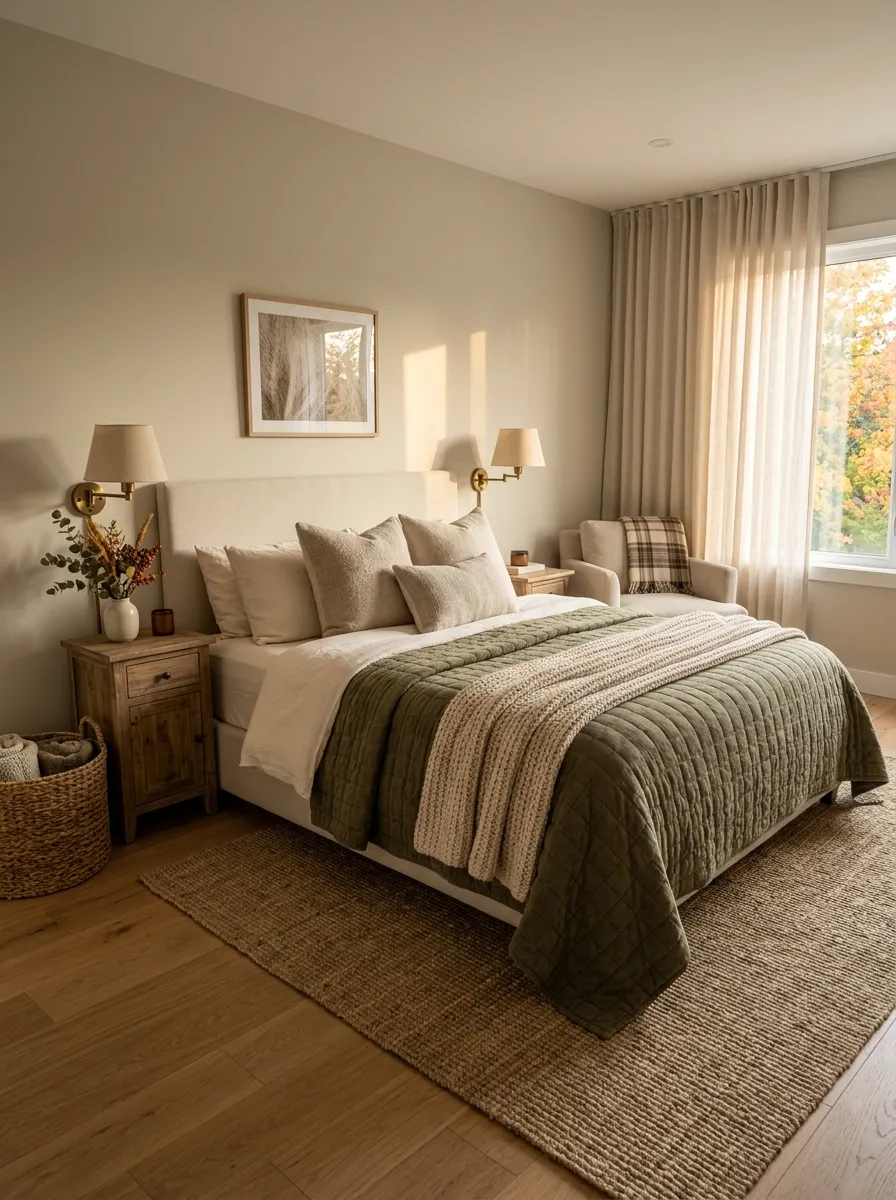
Olive green gives fall bedding a natural depth that orange simply can’t match.
Use neutral sheets underneath and let an olive quilt become the main visual layer. Add cream or oatmeal pillows to keep the bed from becoming too dark.
The trick is choosing an olive that looks muted rather than neon. You want something earthy enough to sit comfortably beside wood, brass, beige, and warm white.
Build the bed around three materials: cotton sheets, a quilted layer, and one softer throw.
This combination works especially well when the bedroom already has plants, natural wood, woven baskets, or other organic details.
Use Quilted Bedding When You Want Texture Without Bulk
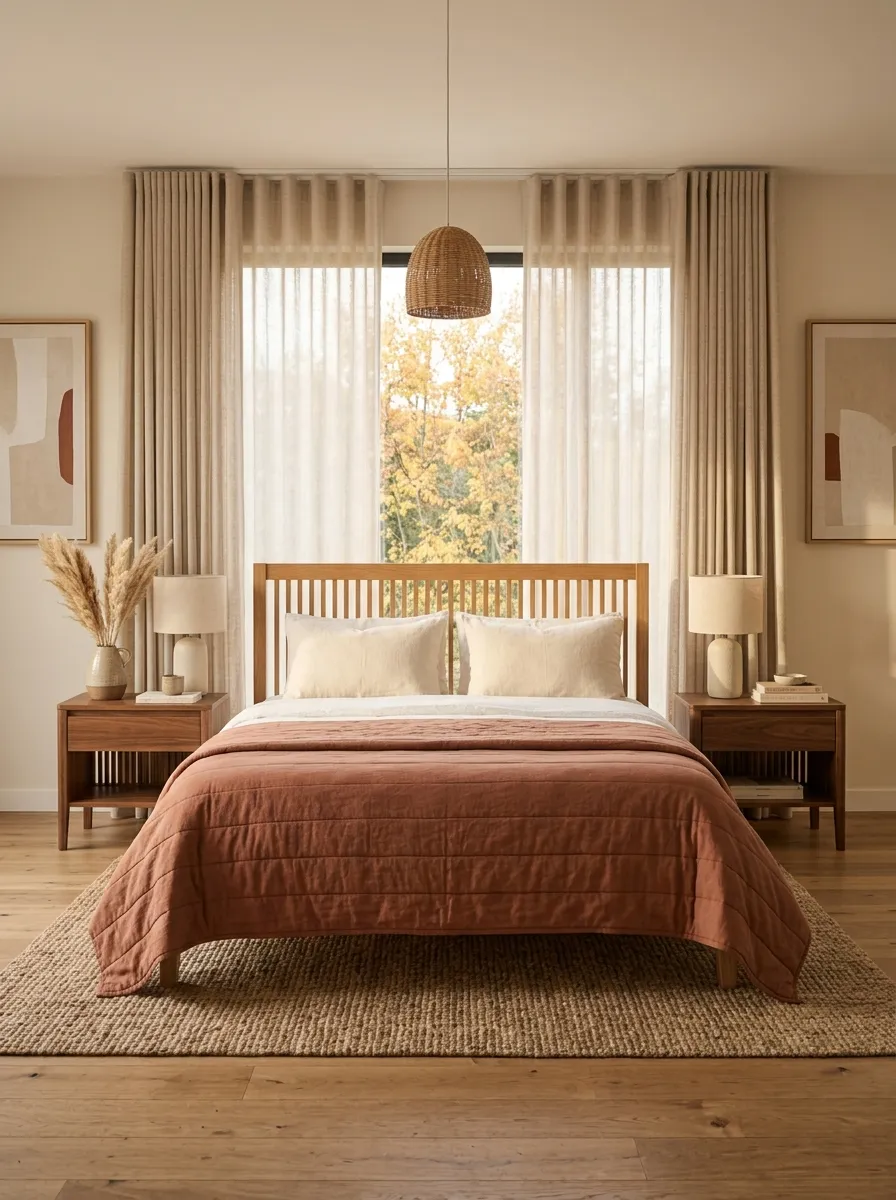
A quilt gives you visible texture without making the bed feel enormous.
Choose a quilt with simple stitching rather than an overly complicated pattern. A solid cream, beige, faded green, or muted rust quilt can completely change a basic duvet.
Use it as either:
- The main cover
- A folded lower layer
- A lightweight extra blanket
The best part is flexibility. You can fold it away during warmer nights and put it back on the bed without rebuilding your bedding.
A quilt also gives plain sheets more visual structure, which is exactly what a simple fall bedroom needs.
Pair Warm Beige Bedding With Dark Wood

Warm beige can look forgettable when everything around it is equally pale. Dark wood gives it the contrast it needs.
Use beige or oatmeal bedding, then let a walnut, espresso, or deep brown headboard and nightstand provide the darker element. Add a warm blanket at the foot of the bed.
The result feels autumnal without relying on obvious fall colors.
Keep the bedding slightly lighter than the furniture. That contrast makes the bed look softer and prevents the whole room from becoming one large brown block.
Add Plaid in One Controlled Layer

Plaid is an easy fall shortcut, but too much of it makes a bedroom look like a seasonal display.
Choose one plaid item and let everything else stay calm. A plaid throw across the foot of the bed is usually enough.
Look for muted combinations such as cream and brown, rust and beige, olive and ivory, or charcoal and cream.
The formula is simple:
- Solid duvet
- Solid sheets
- One plaid accent
- Minimal patterned pillows
The plaid should be something the eye notices after the bed’s overall shape, not before it.
Turn a Simple White Duvet Into a Fall-Ready Base

A white duvet isn’t too summery. It only looks summery when everything around it is thin, pale, and flat.
Keep the duvet. Change what sits around it.
Add a textured quilt at the bottom, swap in warmer pillow covers, and use one substantial throw. Suddenly the same white bedding has a completely different seasonal feel.
Five small changes do the work:
- Add a quilted layer.
- Switch two pillow covers.
- Fold a warm-toned blanket at the foot.
- Use deeper bedside accents.
- Introduce one natural texture.
This is the move to make when you don’t want to buy an entirely new bedding set every season.
Add a Vintage Quilt for Instant Autumn Character
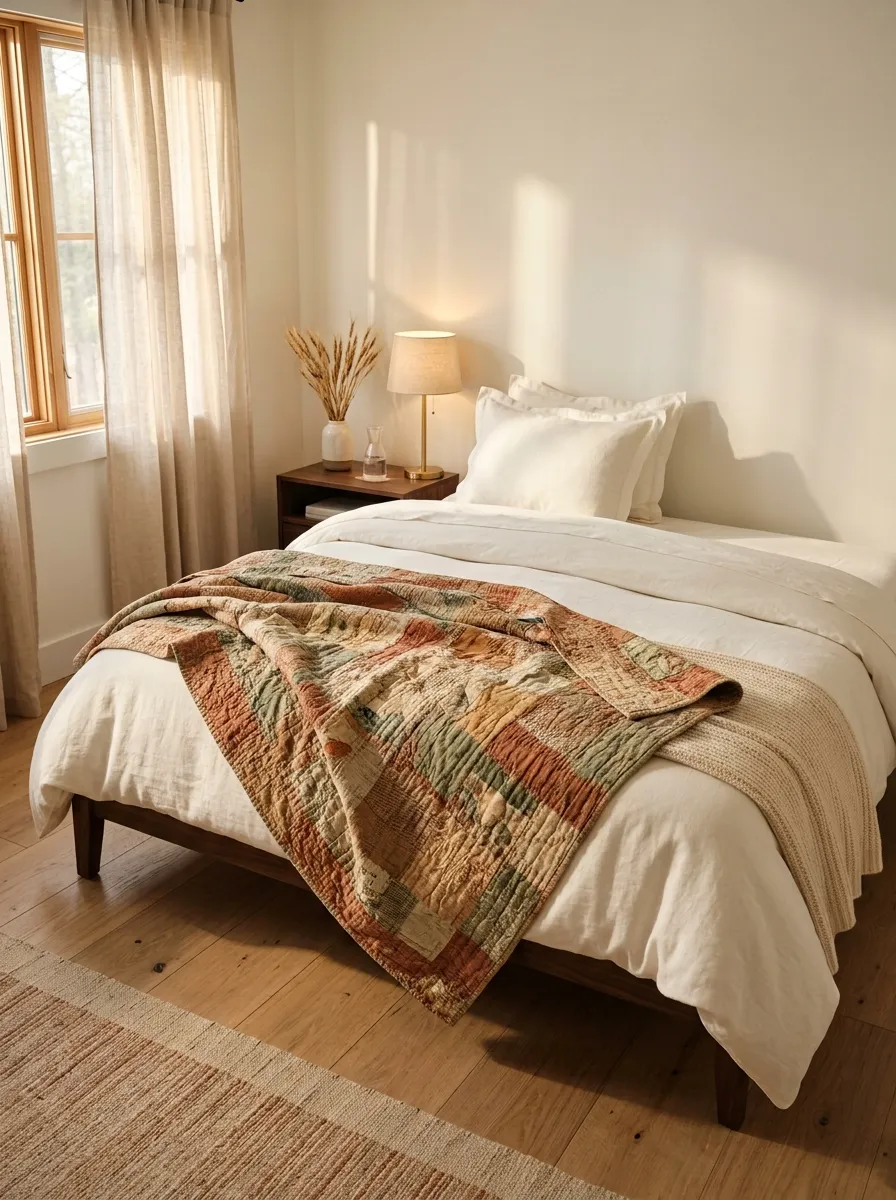
A vintage quilt can carry more personality than a pile of new decorative pillows.
Look for faded colors, visible stitching, and small variations that make the piece feel collected rather than manufactured. Drape it over the lower half of the bed or fold it across one corner.
Don’t pair a busy vintage quilt with another busy pattern. Let the quilt be the visual story.
The strongest combination is simple: neutral sheets, restrained pillows, vintage quilt, and one soft throw.
If the quilt has several colors, repeat only one of them elsewhere. That keeps the bedroom connected without making every accessory match.
Try Deep Forest Green for a Moody Bedroom
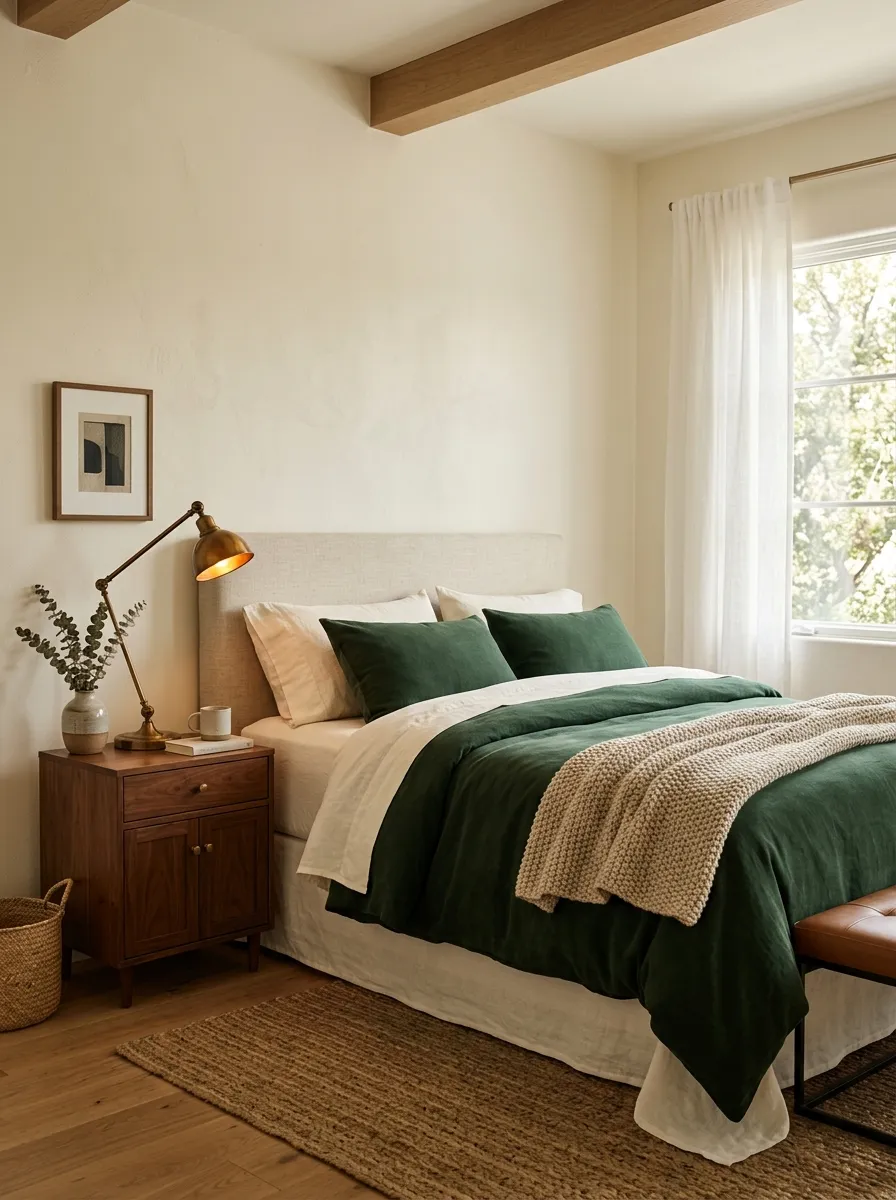
Deep green changes the mood immediately. Use it when warm neutrals feel too predictable and you want the bedroom to have more depth.
A forest green duvet looks especially strong against cream walls, natural wood, antique brass, and warm lighting. The mistake is surrounding it with too many other dark colors.
Keep the sheets light and let the green carry most of the visual weight.
A reliable formula:
- Forest green main layer
- Cream sheets
- Warm brown accent
- Brass or wood nearby
The result feels grounded rather than gloomy. That’s the difference between a dark palette that works and one that simply makes the room feel smaller.
Use Textured Pillow Covers Instead of More Decorative Pillow
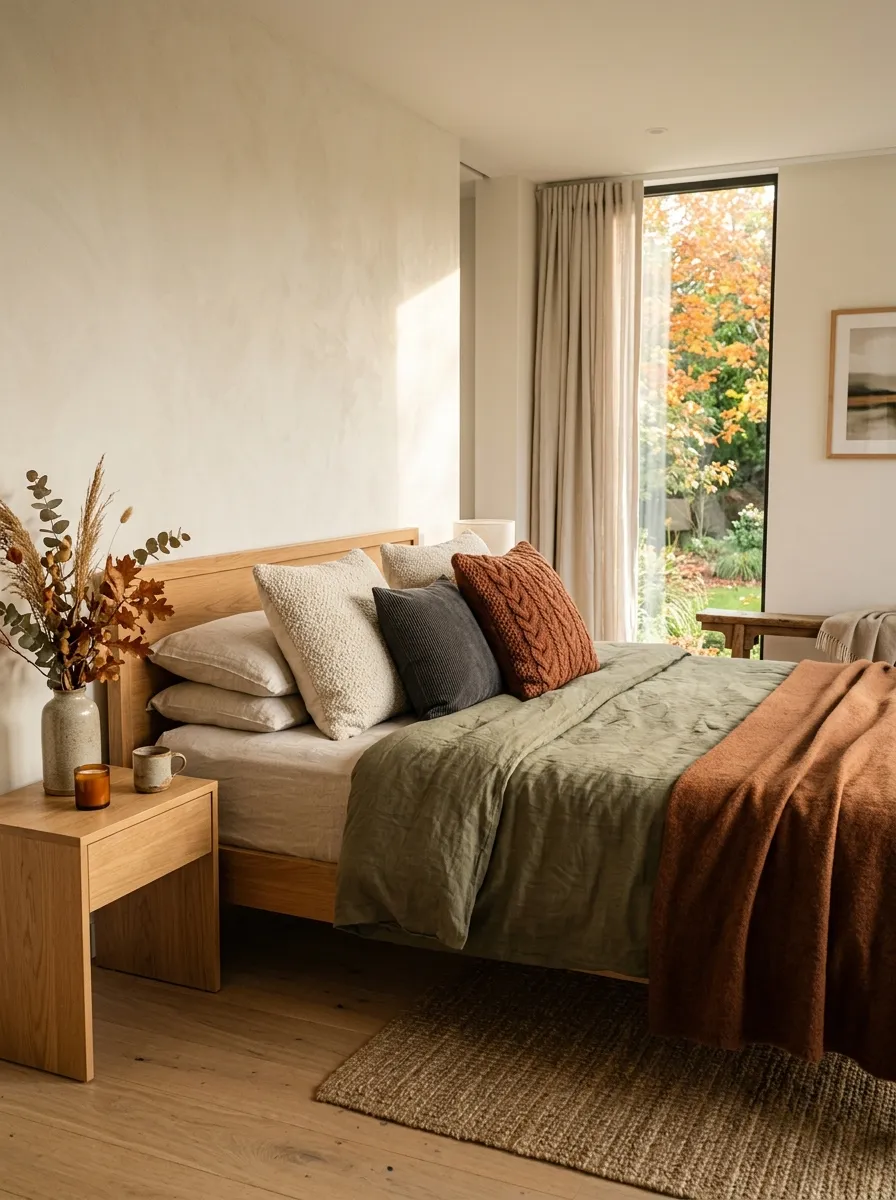
The bed doesn’t need another row of pillows. It needs better surfaces.
Swap a few smooth pillow covers for waffle cotton, bouclé, linen, corduroy, or another clearly textured material. The number of pillows can stay exactly the same.
This is especially useful on smaller beds where extra cushions quickly become clutter.
Choose textures with different scales. A fine woven cover beside a chunkier knit gives the eye more variation than three nearly identical fabrics.
And keep at least one pillow smooth. Texture works because it has something calmer beside it.
Layer a Bed Runner for a Clean, Finished Look
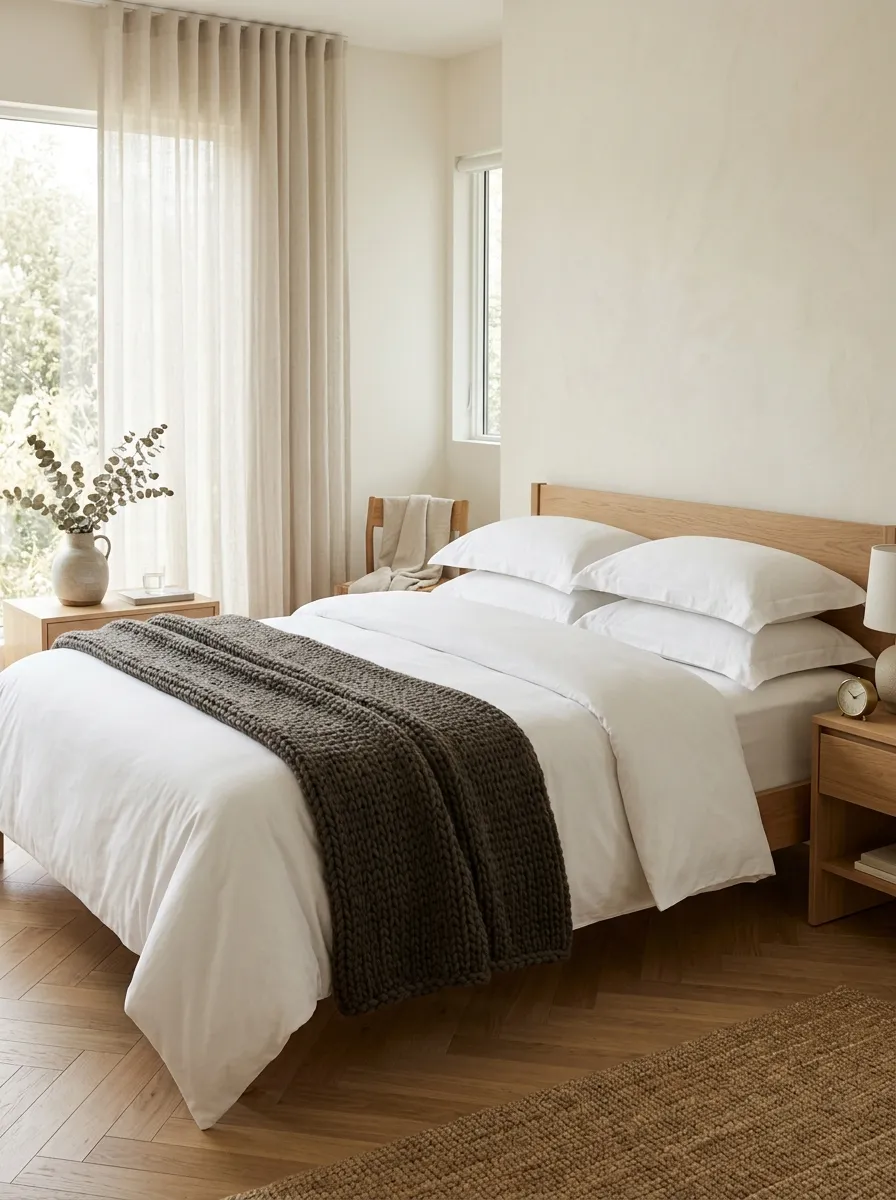
A bed runner is useful when you want the bed to look finished without adding another full-size blanket.
Fold one neatly across the lower portion of the bed. Choose a material that contrasts with the main bedding, such as a quilted runner over linen or a woven runner over smooth cotton.
Keep the proportions simple:
- Use one runner, not several.
- Keep it narrower than the bed.
- Let the main bedding remain visible.
- Match one small color detail elsewhere in the room.
A runner works particularly well in bedrooms where the duvet already has enough texture. It gives you a seasonal accent without adding bulk.
Combine Camel, Cream, and Warm Brown for a Classic Fall Bed
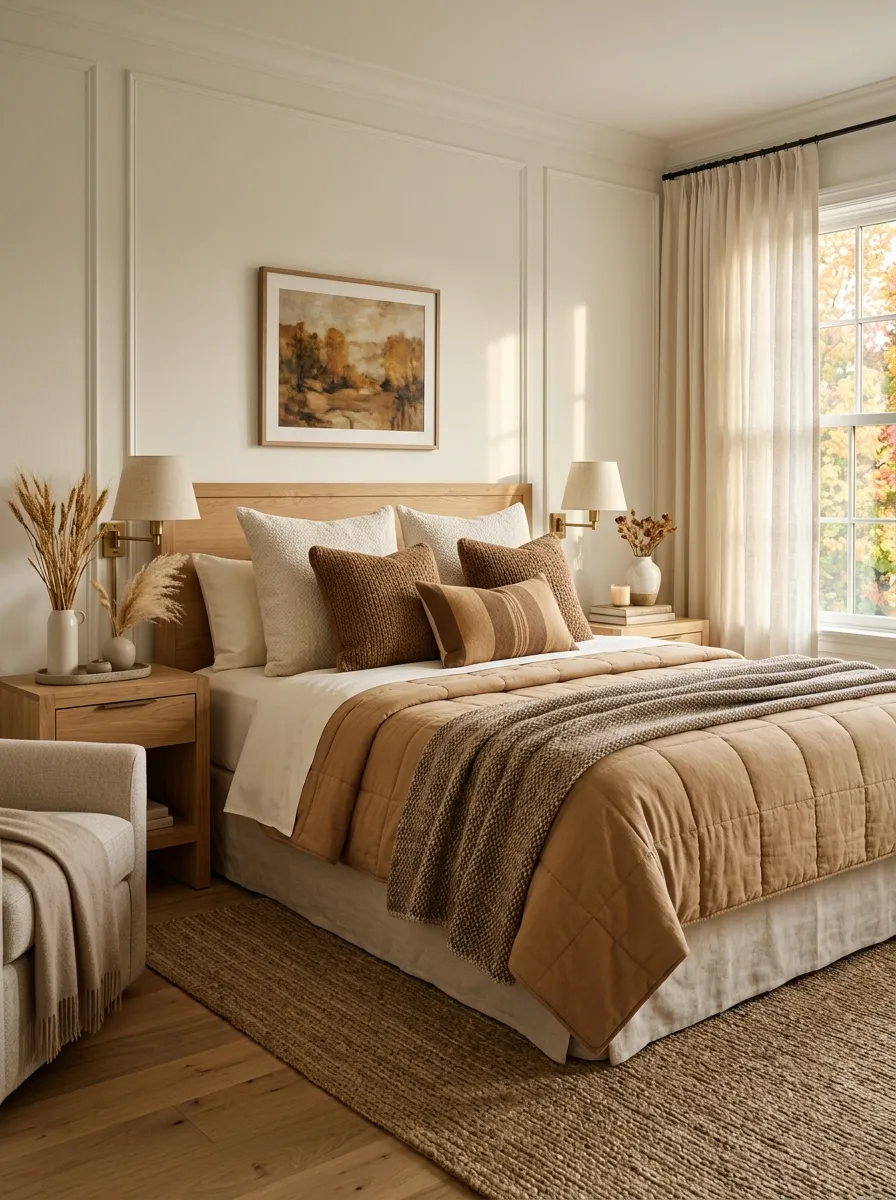
Camel is the color that keeps a warm neutral bed from becoming boring.
Start with cream sheets, add camel through the quilt or duvet, then bring in warm brown with a throw or pillow. The three shades sit close enough together to feel calm, but they’re different enough to create layers.
Don’t make every surface the same fabric. Color variation won’t save a bed where everything feels flat.
Use the colors in different roles:
- Cream for the lightest layer
- Camel for the main body
- Brown for the deepest accent
Wood furniture fits naturally into this palette, so the bedding won’t look disconnected from the rest of the bedroom.
Use Subtle Stripes to Break Up Heavy Autumn Textures

Fall bedding can become visually dense when every layer is chunky, quilted, fuzzy, or heavily woven.
A narrow stripe solves that problem.
Use striped sheets, a striped lumbar pillow, or a thin striped blanket against heavier textures. The clean lines create a visual pause without introducing a completely different style.
Good stripe choices include:
- Cream and brown
- Beige and charcoal
- Rust and cream
- Muted blue and ivory
Keep the stripe scale fairly simple. Tiny busy stripes can look fussy beside large knits and quilts.
The goal isn’t another statement piece. It’s a little structure inside a soft, layered bed.
Add Flannel Without Making the Bedroom Look Rustic
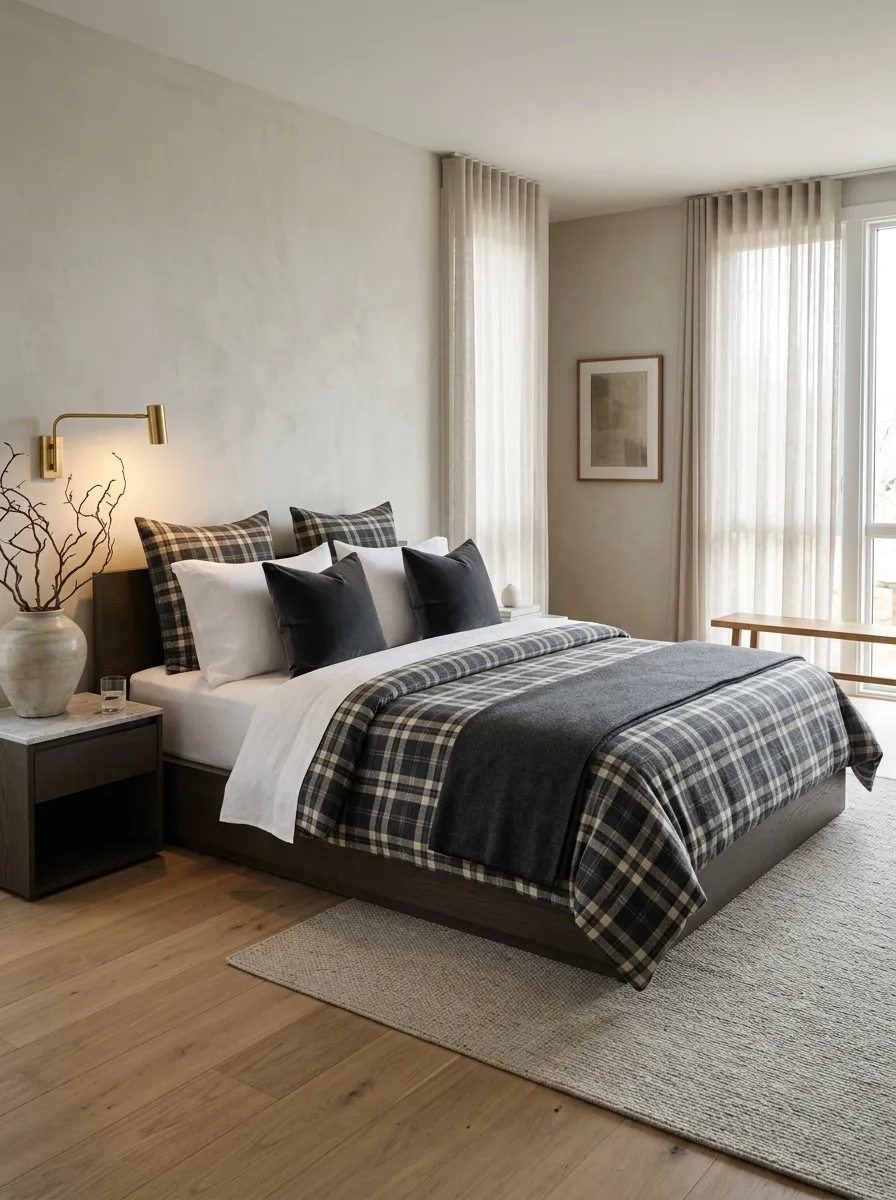
Flannel gets blamed for looking too cabin-like, but the fabric isn’t the problem. The styling is.
Choose a clean flannel pattern and pair it with modern solid bedding. A charcoal, cream, or muted brown check looks much more refined than several competing rustic prints.
Use flannel on one layer only. A duvet cover or folded blanket is enough.
For a cleaner look:
- Choose a restrained check.
- Pair it with solid bedding.
- Keep decorative accessories minimal.
- Add one modern material, such as black metal or smooth wood.
The result feels warm without turning the bedroom into a lodge.
Keep the Head of the Bed Simple When the Bedding Is Bold
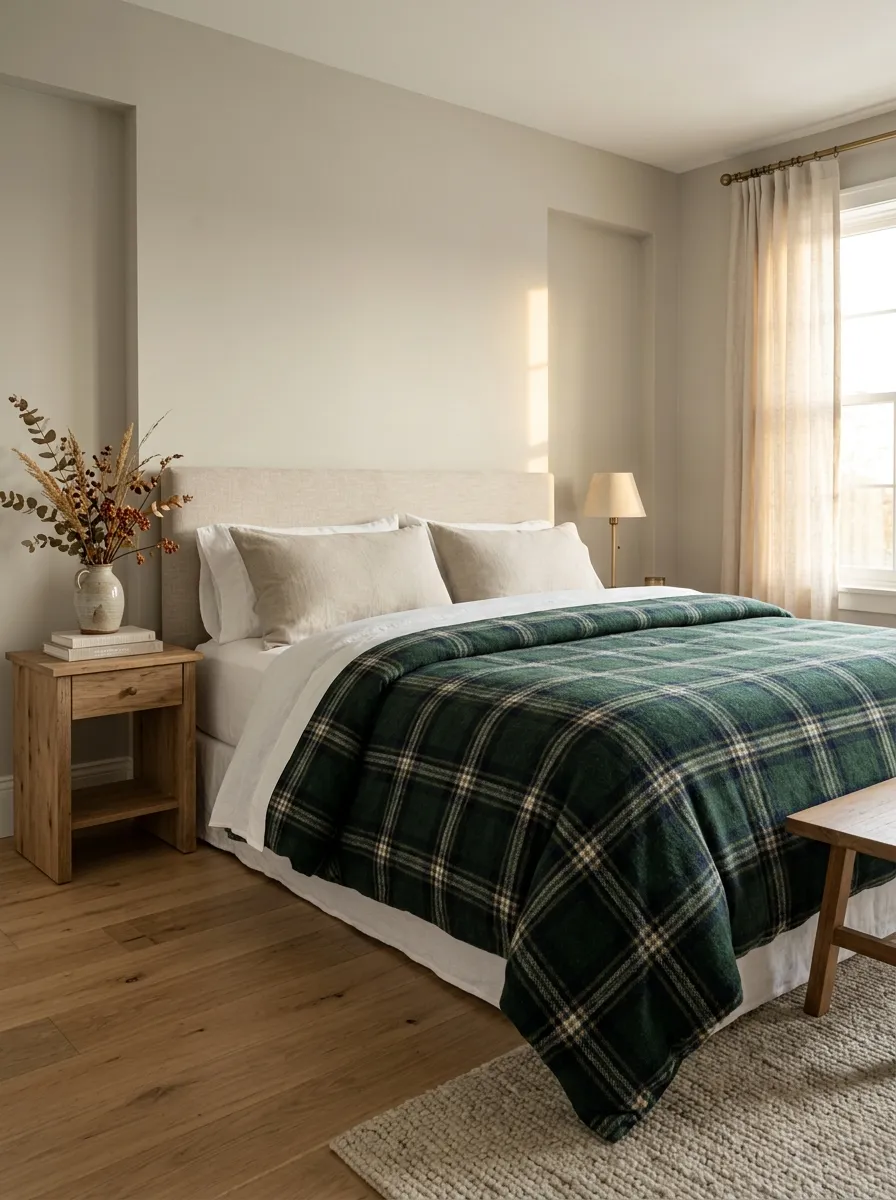
A bold duvet already tells the eye where to look. Don’t compete with it using a giant gallery of pillows.
Leave the head of the bed relatively quiet. Use solid pillow covers, simple shapes, and enough open space to make the main bedding visible.
This matters most when you’ve chosen plaid, a strong floral, deep green, or a large-scale quilt.
The rule is simple: bold bedding needs a quiet backdrop.
If the headboard itself has a strong shape or color, reduce the pillows even further. The bedroom will look more intentional because the strongest element gets to stay strongest.
Use Burnt Orange as an Accent Instead of the Main Color

Burnt orange works best when you don’t force it to cover the entire bed.
Use it where the eye naturally notices smaller details, such as a folded throw, lumbar pillow, quilt border, or one pair of pillow covers. Against cream or oatmeal bedding, the color looks richer and more intentional.
The mistake is using burnt orange on every layer.
Give the color one main job:
- Folded blanket
- Accent pillow
- Quilted coverlet
- Narrow bed runner
Then repeat a tiny amount somewhere nearby, such as a vase, artwork, or bedside accessory. That’s enough to connect the room.
Create a Cozy Fall Bed With Black, Cream, and Tobacco Brown
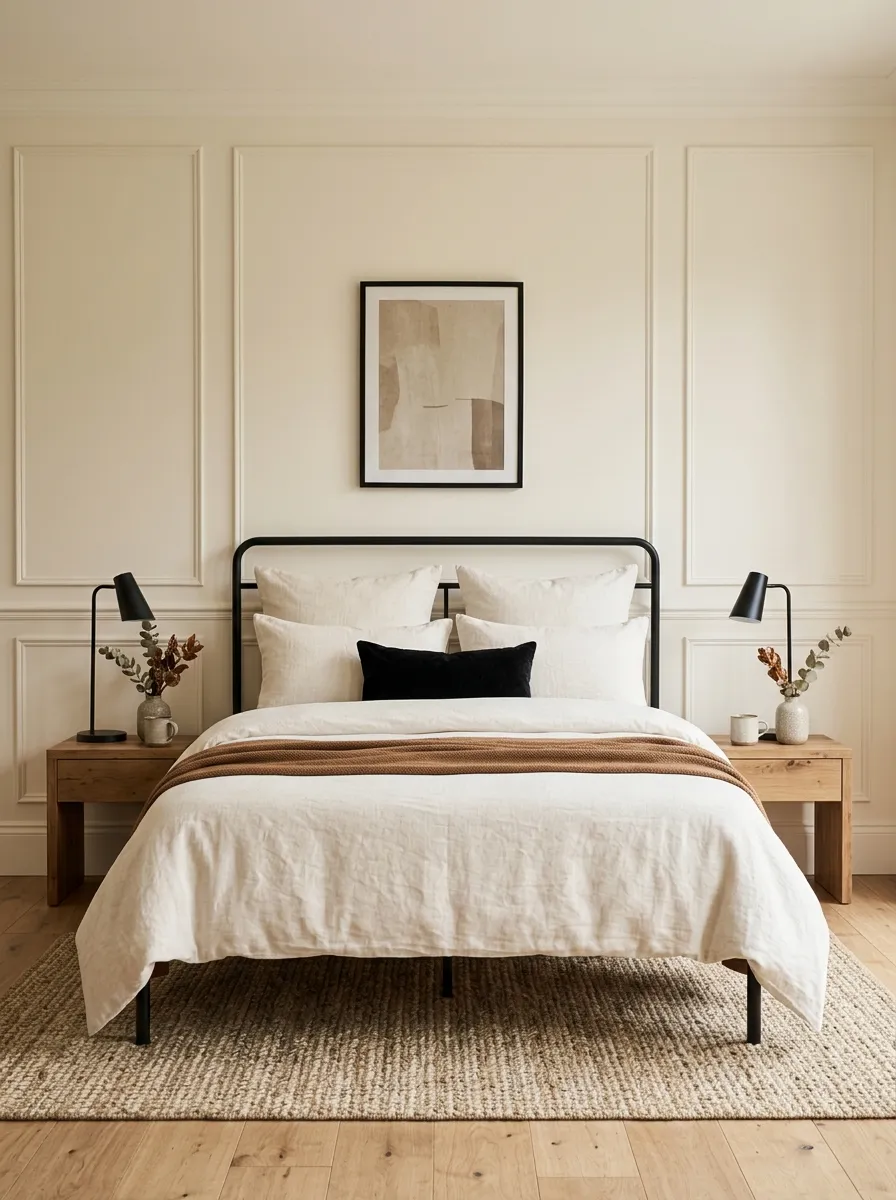
Black gives warm fall bedding a sharper edge. Pair it with cream and tobacco brown and the result feels sophisticated instead of overly seasonal.
Keep cream as the lightest layer, use tobacco brown for warmth, and bring black in through a pillow, throw, or subtle pattern.
Use the colors in different amounts:
- Cream should cover the largest visual area.
- Tobacco brown should provide warmth.
- Black should stay the smallest accent.
This combination works especially well with black metal lamps, dark window frames, or a simple black bed frame. The darker details will feel connected instead of random.
Swap Lightweight Summer Bedding for Heavier Natural Layers

Don’t replace every piece of bedding just because the season changed. Swap the pieces that actually affect warmth and texture.
Put away the thinnest summer throw and lightweight coverlet. Bring in a quilt, heavier cotton blanket, or textured duvet while keeping your breathable sheets underneath.
A practical seasonal swap looks like this:
- Keep: breathable sheets
- Add: quilted layer
- Add: medium-weight duvet
- Remove: thin summer throw
- Finish: one heavier accent blanket
This approach gives you flexibility. If the bedroom warms up during the day, you can remove one layer without rebuilding the entire bed.
Add One Patterned Blanket to a Mostly Solid Bed
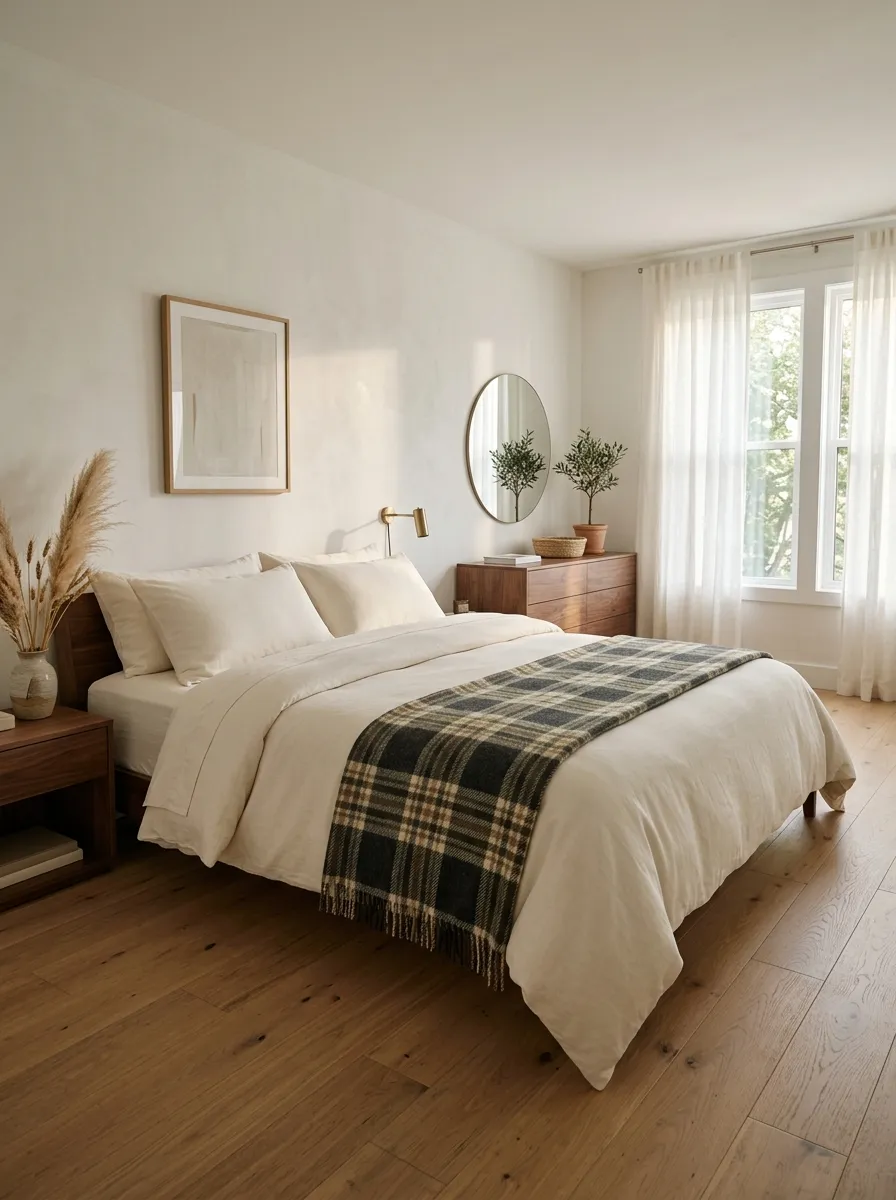
One patterned blanket can make a collection of plain bedding look intentional.
Choose the pattern based on the mood you want. A muted plaid feels classic, a narrow stripe feels cleaner, and a faded geometric pattern gives the room a more modern edge.
Don’t add another pattern just because the first one looks good. Let the blanket carry the visual interest.
Keep these pieces solid:
- Main duvet
- Sheets
- Most pillows
- Bed runner, if you use one
Then place the patterned blanket where it can be seen clearly, usually across the foot or lower third of the bed. That’s enough pattern to make the room interesting without making it busy.
The Best Fall Bedding Doesn’t Need to Be Complicated
A cozy fall bedroom comes down to a few smart changes, not a mountain of seasonal decor. Start with a warm base, add contrasting textures, then bring in one or two autumn colors that actually work with the room you already have. Cream, rust, brown, olive, dusty blue, and natural fabrics give you plenty of room to experiment without making the bed look themed.
The best Fall Bedding also gives you flexibility. Layer a quilt, fold a throw, change a few pillow covers, and stop before the bed gets crowded.
Save this list for the next time your bedroom needs a seasonal refresh without a complete makeover.