
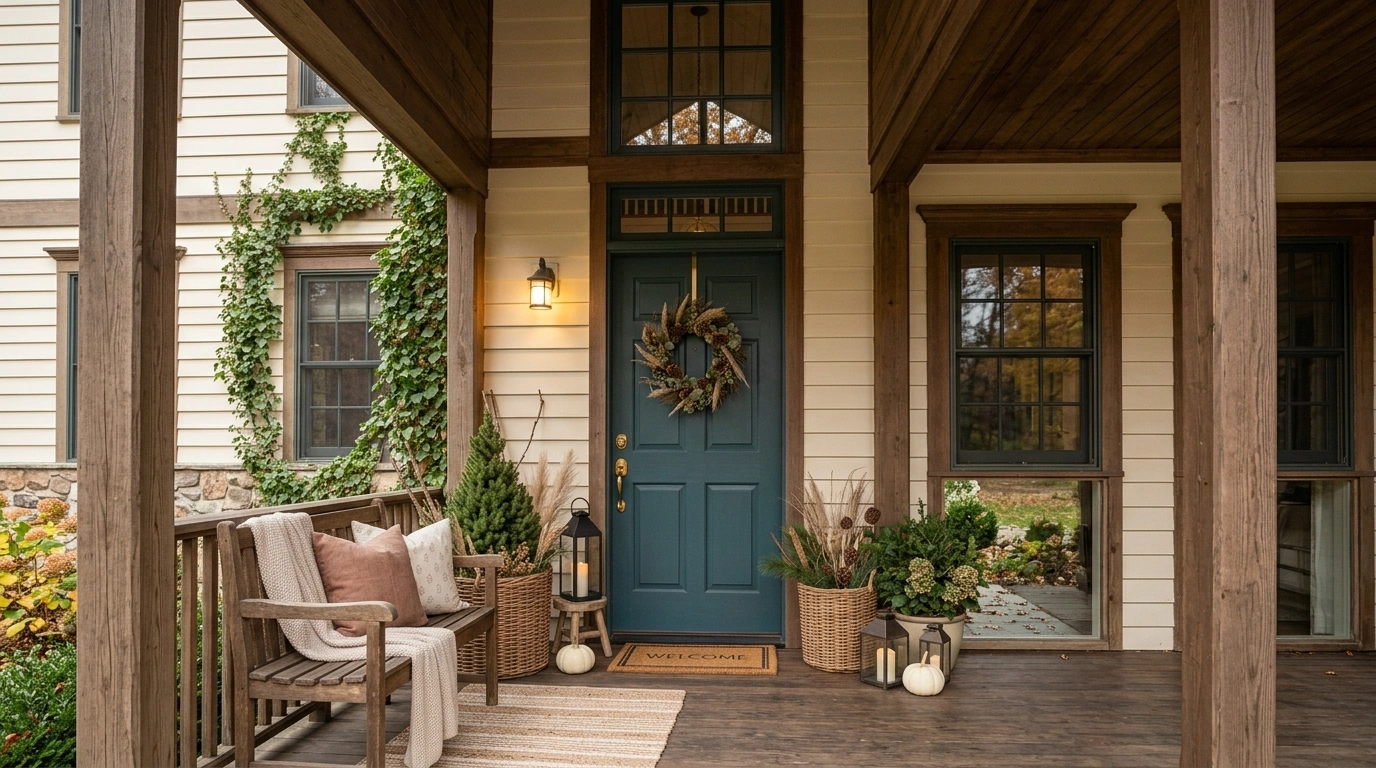
A front porch can look wonderfully warm in October and strangely empty a few weeks later. That usually happens when the decoration is doing all the work. Pumpkins, orange foliage, harvest signs, and seasonal wreaths can create instant impact, but once they come down, there may be very little left holding the composition together.
A better approach starts with the porch itself. Door color, architecture, furniture, planting, lighting, stone, timber, and textiles create the permanent visual structure. Fall accents then become a layer that can be added, reduced, or removed without taking the whole design apart.
A Porch That Changes With the Season
Fall Front Porch Designs
Warm Black Door With Natural Oak and Muted Rust
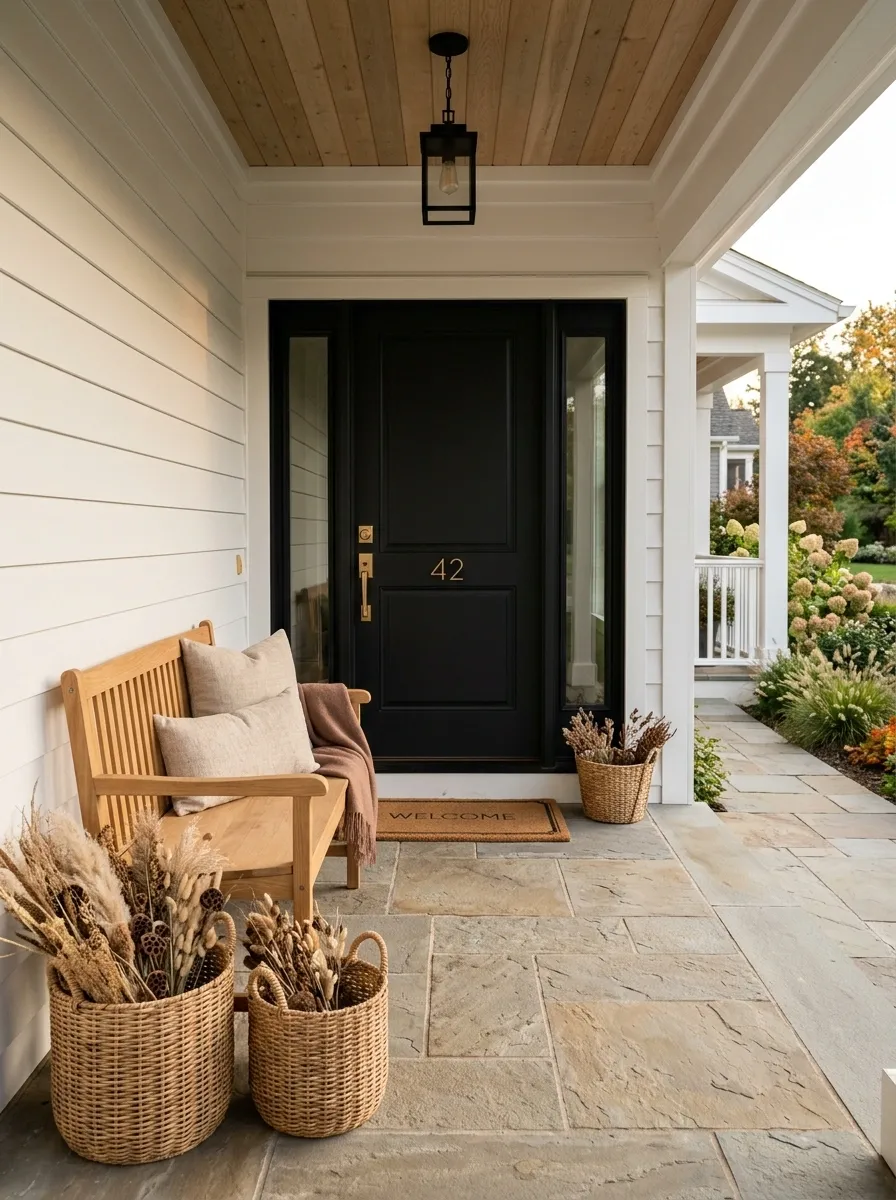
A matte black door gives this porch its strongest architectural line, while pale oak keeps the entry from feeling too severe. A simple oak bench sits beneath the porch wall, paired with oatmeal cushions and a muted rust throw. Large woven baskets hold loose grasses, and warm stone flooring ties the materials together.
The important detail is the restraint. Rust appears in only a few places, so removing it later doesn’t leave a visual hole. The black door, timber, greenery, and warm stone already form a complete composition.
Cream Brick Porch With Olive Green and Burnished Bronze
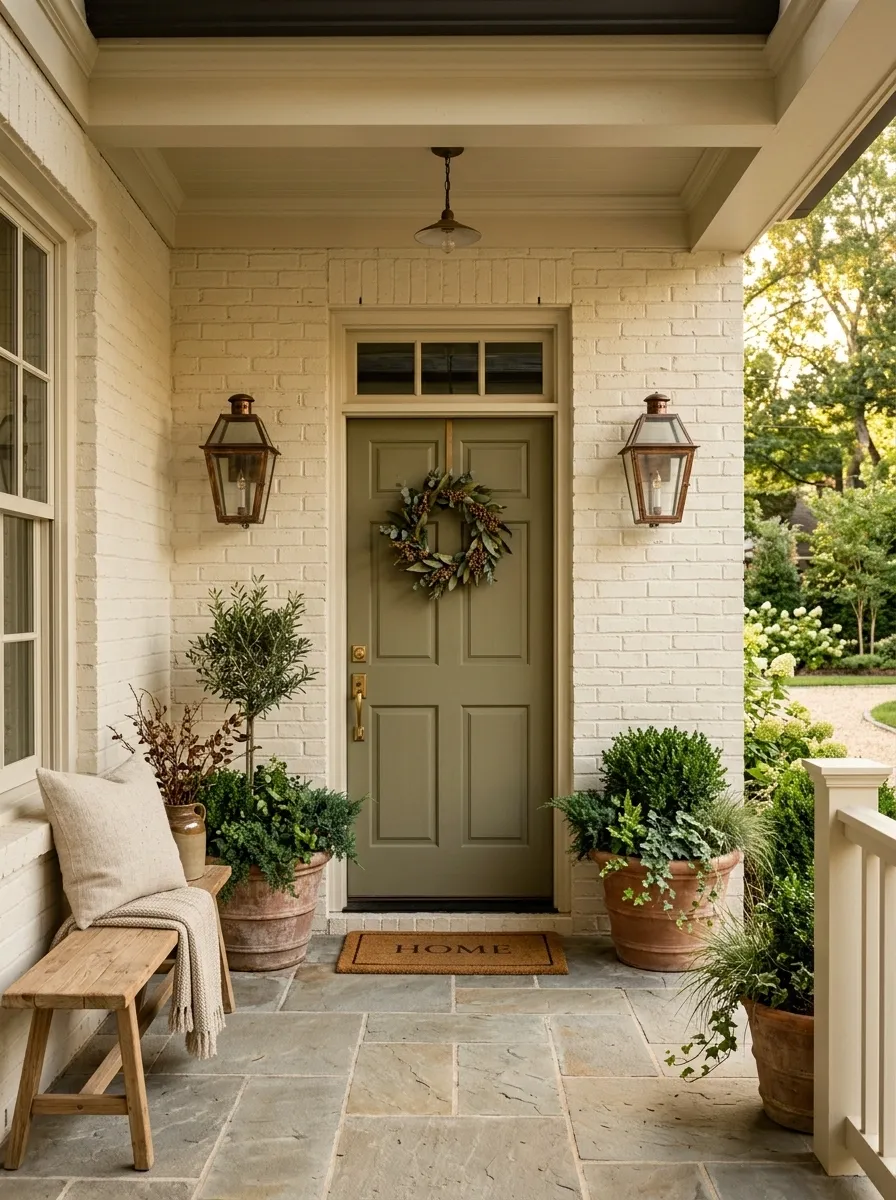
Cream brick makes the architecture feel soft, while an olive green door introduces enough color to keep the entrance memorable. Traditional bronze lanterns flank the doorway, with low evergreen planters anchoring either side. A narrow wooden bench and textured neutral cushion finish the seating area without crowding the entry.
This composition doesn’t need bright orange to read as autumnal. The warmth comes from the brick, bronze, wood, and earthy green. Once autumn decorations disappear, the architecture still carries the design.
Terracotta Door With Weathered Wood and Linen
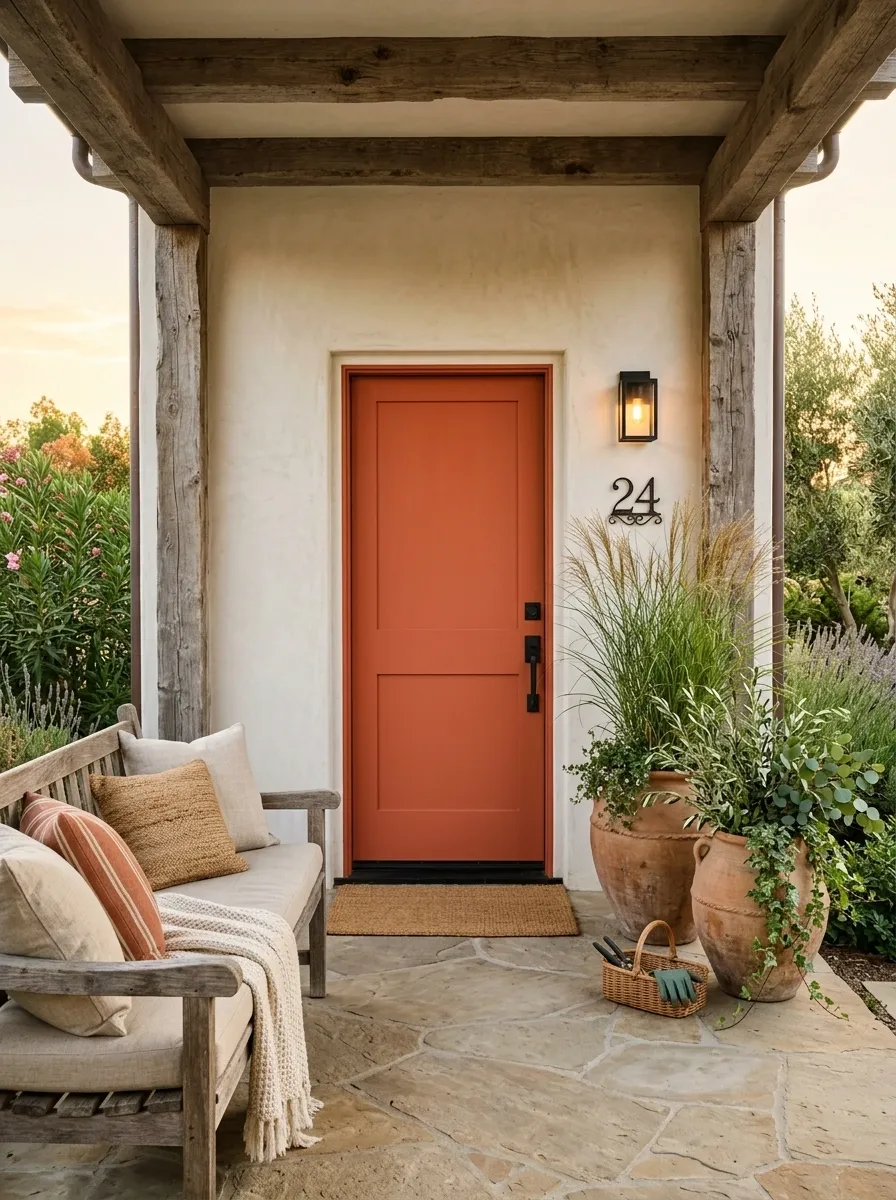
A terracotta front door becomes the warm focal point in this relaxed porch, surrounded by pale walls and weathered timber. A simple wood bench carries oatmeal linen cushions, while handmade clay planters hold tall grasses and loose green stems. Black hardware and a small wall lantern add enough contrast to keep the composition from feeling washed out.
The color feels distinctly autumnal, but the rest of the porch is built from materials that have no fixed season. Clay, linen, timber, and greenery can stay exactly where they are while the temporary fall pieces disappear.
Moody Charcoal Porch With Evergreen Layers
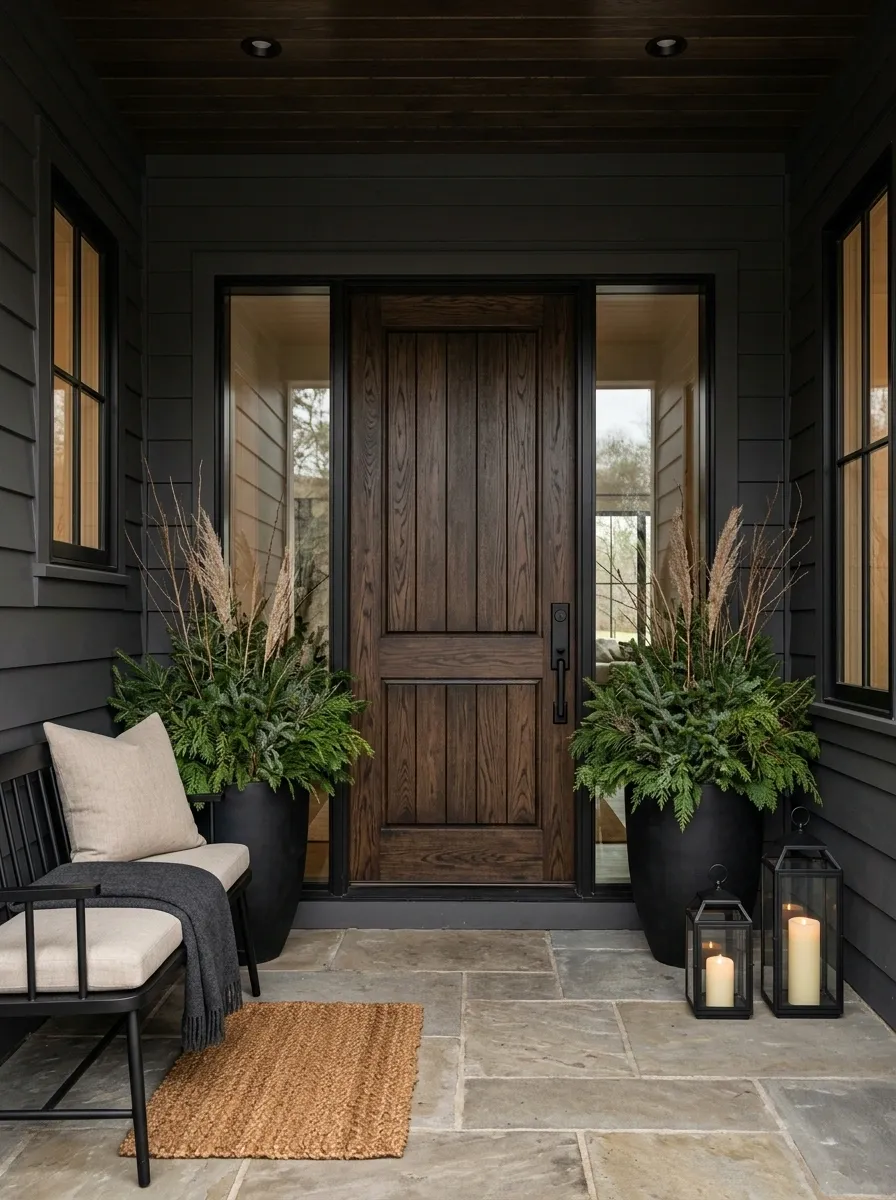
Deep charcoal siding and a dark wood door give this porch a dramatic foundation. Instead of filling the space with seasonal color, the composition relies on oversized evergreen planters, black metal lanterns, a thick neutral bench cushion, and a few tall dried branches for movement.
The darker architecture gives the greenery much more visual weight. That makes this approach especially effective for a porch that should feel rich in fall without looking like a temporary seasonal display.
Soft Taupe Porch With Oversized Planters
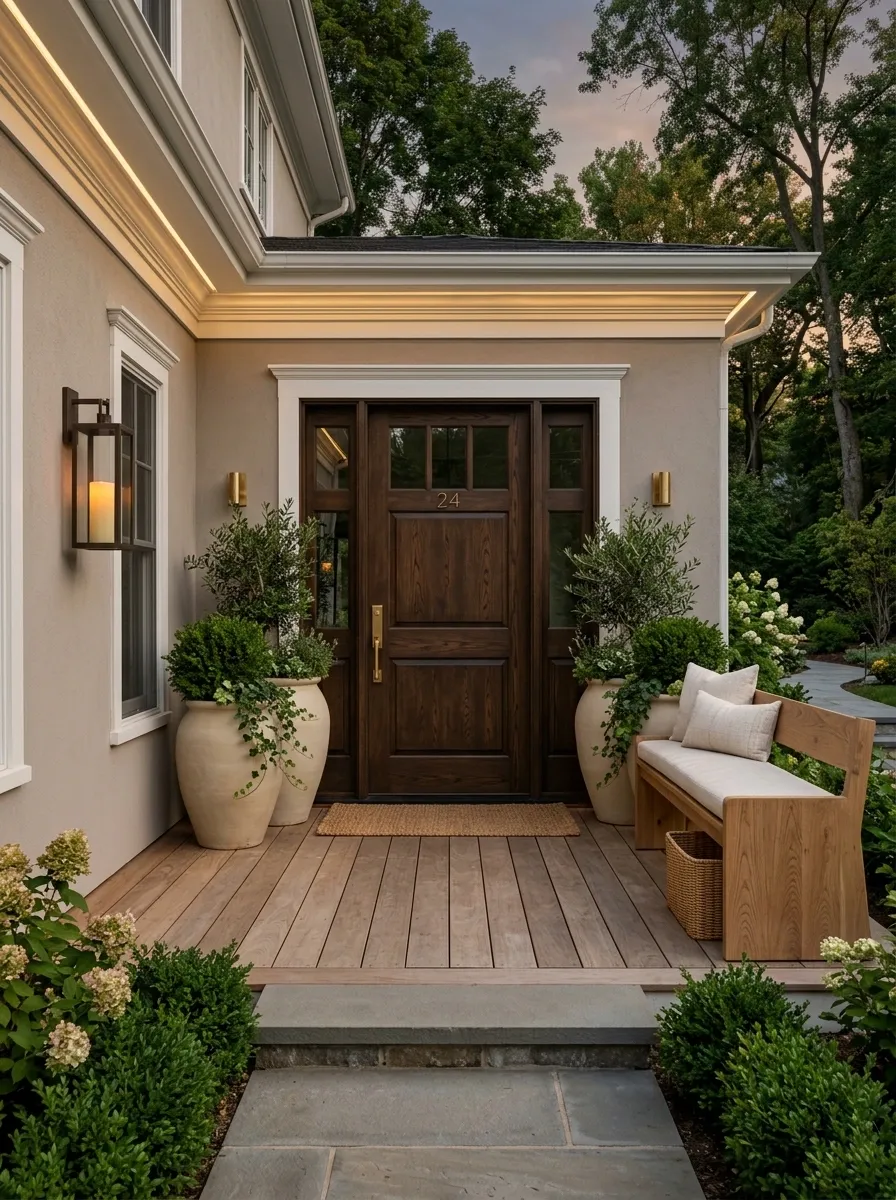
Soft taupe walls create a quiet backdrop for two oversized ceramic planters that frame the front door. A substantial natural wood bench sits off to one side, paired with a textured cream cushion and a simple woven basket. Warm lighting keeps the entry inviting after dark without adding visual clutter.
This is the kind of porch where proportion does most of the decorating. The large planters, broad bench, and generous negative space make the entrance feel finished. Autumn branches can be added temporarily, but the underlying composition doesn’t depend on them.
Deep Green Cottage Porch With Stone and Brass
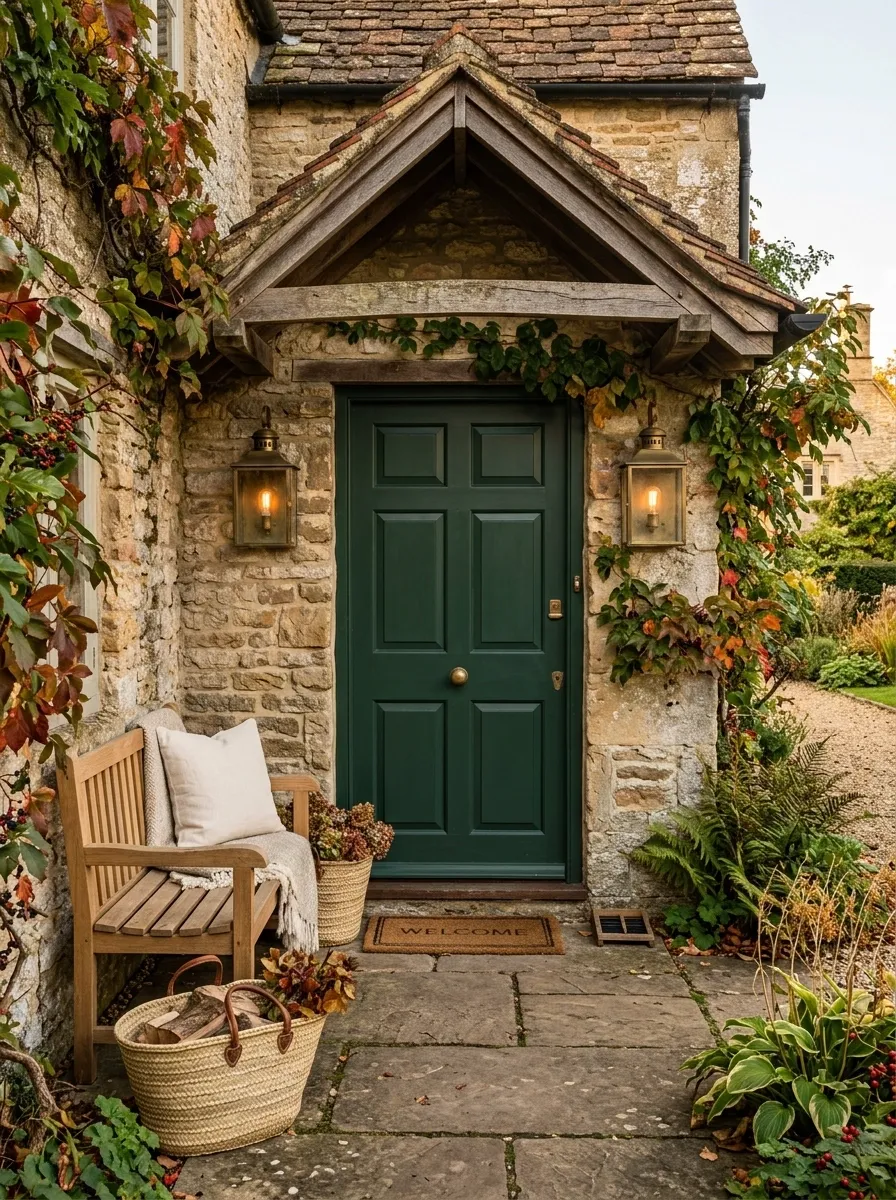
A rich green door sets the mood against weathered stone, while antique-style brass lanterns add warmth around the entrance. A simple wooden seat sits beneath the porch wall, paired with a cream cushion and a few woven baskets. Loose greenery climbs around the edges rather than being arranged in rigid rows.
The strongest part of this composition is the relationship between old-looking materials and controlled color. Green provides the seasonal depth, but stone, brass, wood, and cream remain useful long after fall.
Scandinavian-Inspired Porch With Honey Wood and Cream
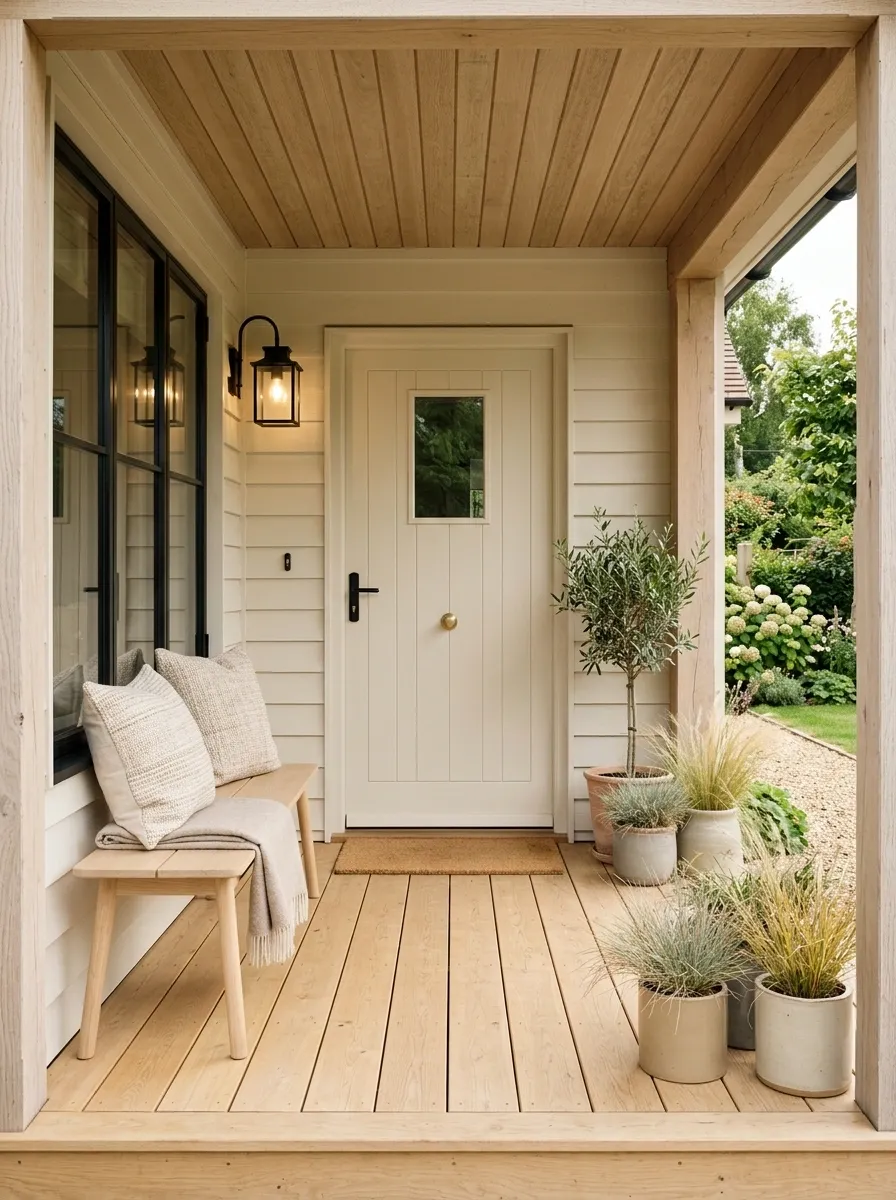
Pale timber gives this porch a warm, quiet foundation, while a cream-painted door and slim wooden bench keep the architecture visually light. Woven cushions, simple lantern-style lighting, and loose ornamental grasses add texture without introducing a pile of seasonal accessories.
The porch feels autumnal because of the honey-colored wood and tactile materials rather than because of obvious fall decoration. That distinction gives the design staying power. A winter wreath or spring planter can replace the seasonal accents without changing the overall composition.
Deep Green Door With Cream Brick and Natural Wood
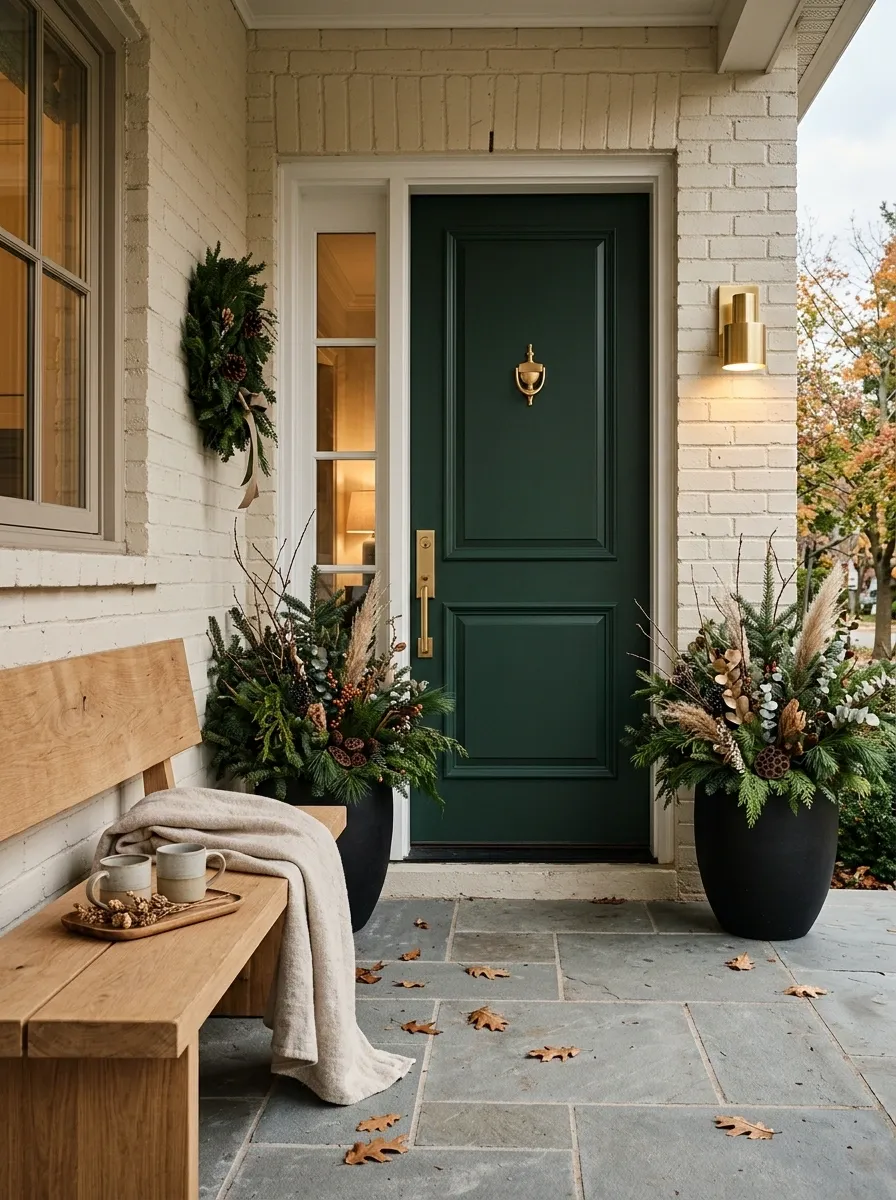
A dark green door anchors this porch against a softly toned cream brick facade. A substantial timber bench stretches across one side, while oversized planters hold a mixture of evergreen foliage and airy stems. Small brass details warm the doorway without competing with the green.
The palette has enough depth for October but isn’t tied to orange or red. The brick and timber soften the darker paint, creating a composition that feels equally at home with winter evergreens or spring greenery.
Modern White Porch With One Rust-Colored Accent
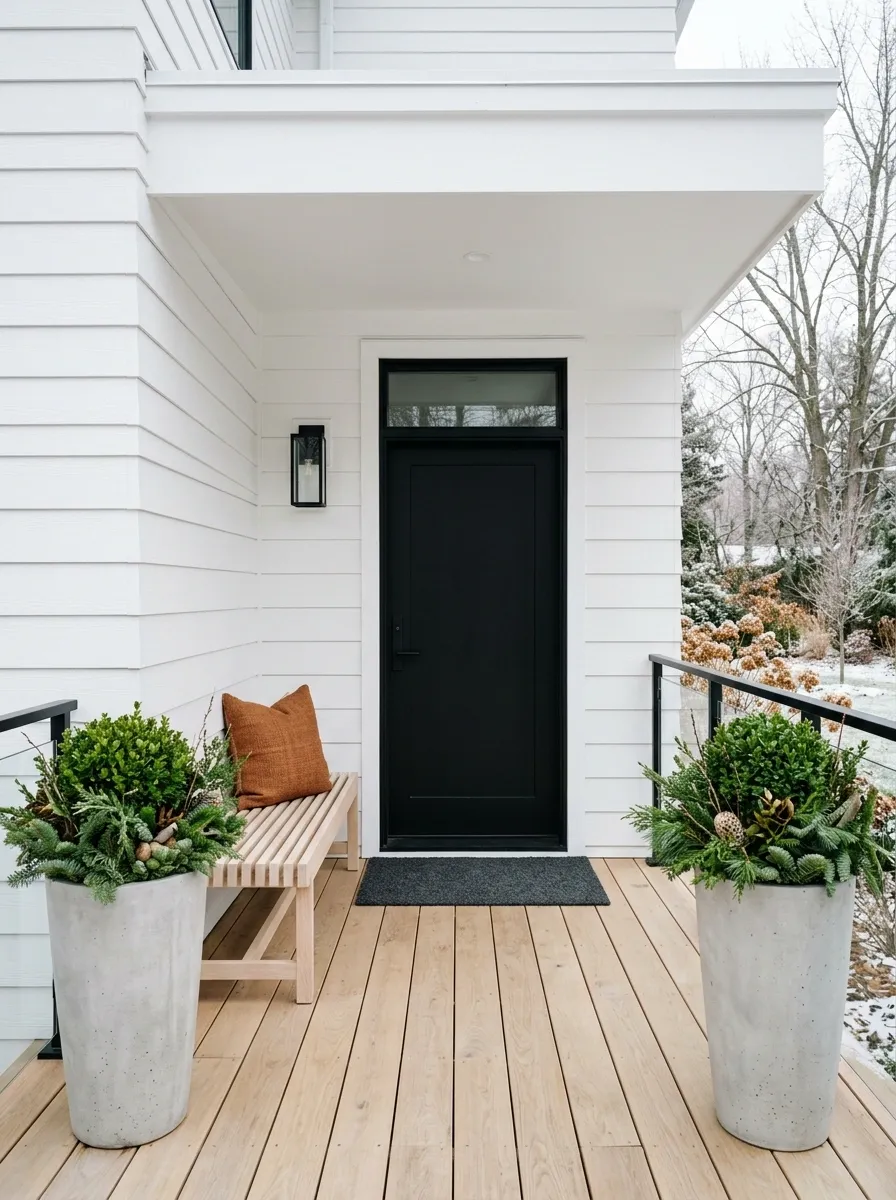
Crisp white walls and a black door create a clean backdrop for sculptural concrete planters, pale wood seating, and dense green foliage. There is only one strong autumn note: a rust-colored cushion placed on the bench.
That single accent is enough because the rest of the composition is already complete. When fall ends, the cushion can disappear and the porch still has a strong palette of white, black, green, wood, and concrete.
White + natural tones Contrast
Black Season
Rust
Cedar Porch With Cream Textiles and Dried Grasses
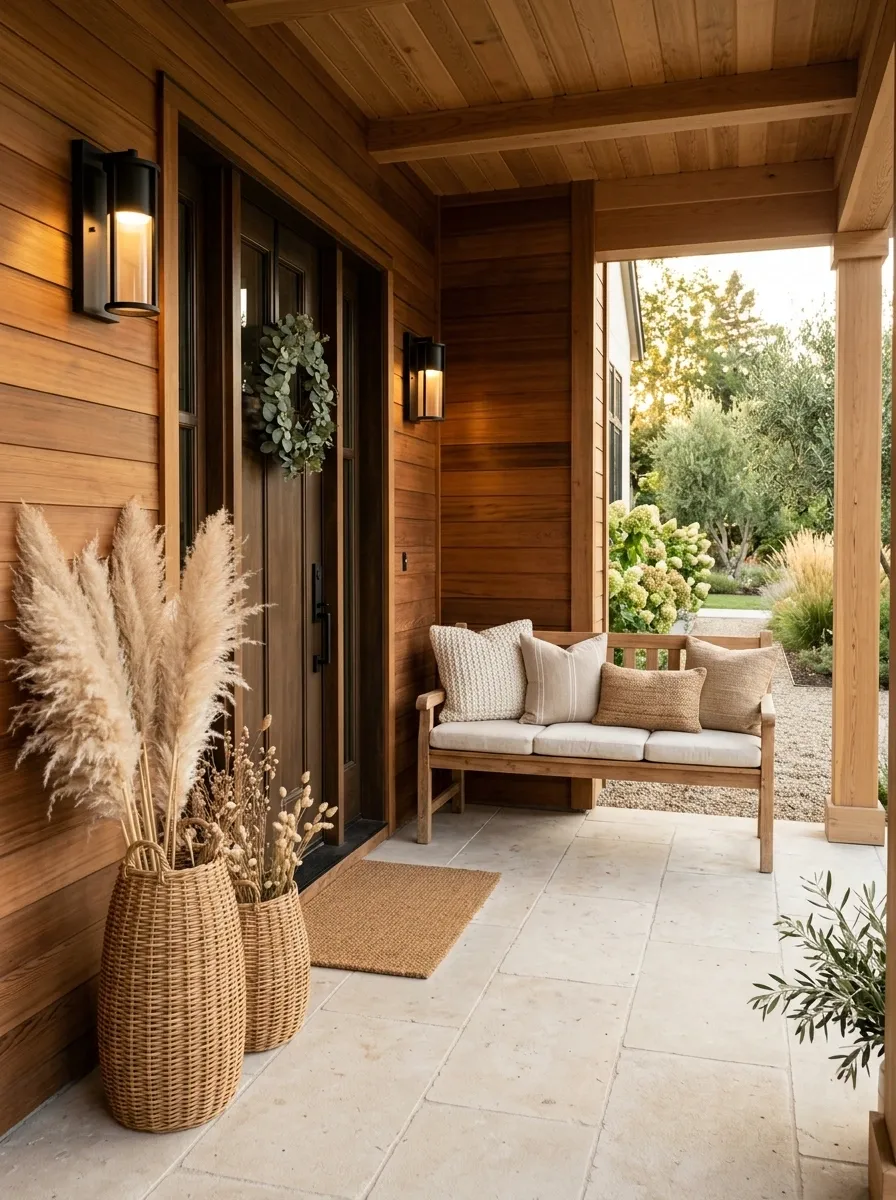
Warm cedar cladding gives this porch an immediate sense of depth. A simple timber bench carries cream cushions, while tall dried grasses rise from broad woven baskets near the entrance. Matte black lighting adds definition, and pale stone flooring prevents all the warm wood from becoming too heavy.
The grasses are the main seasonal gesture, but they don’t read as disposable fall decoration. Their shape remains useful through much of the year, while the cream textiles keep the palette open and adaptable.
Narrow Townhouse Porch With Vertical Greenery
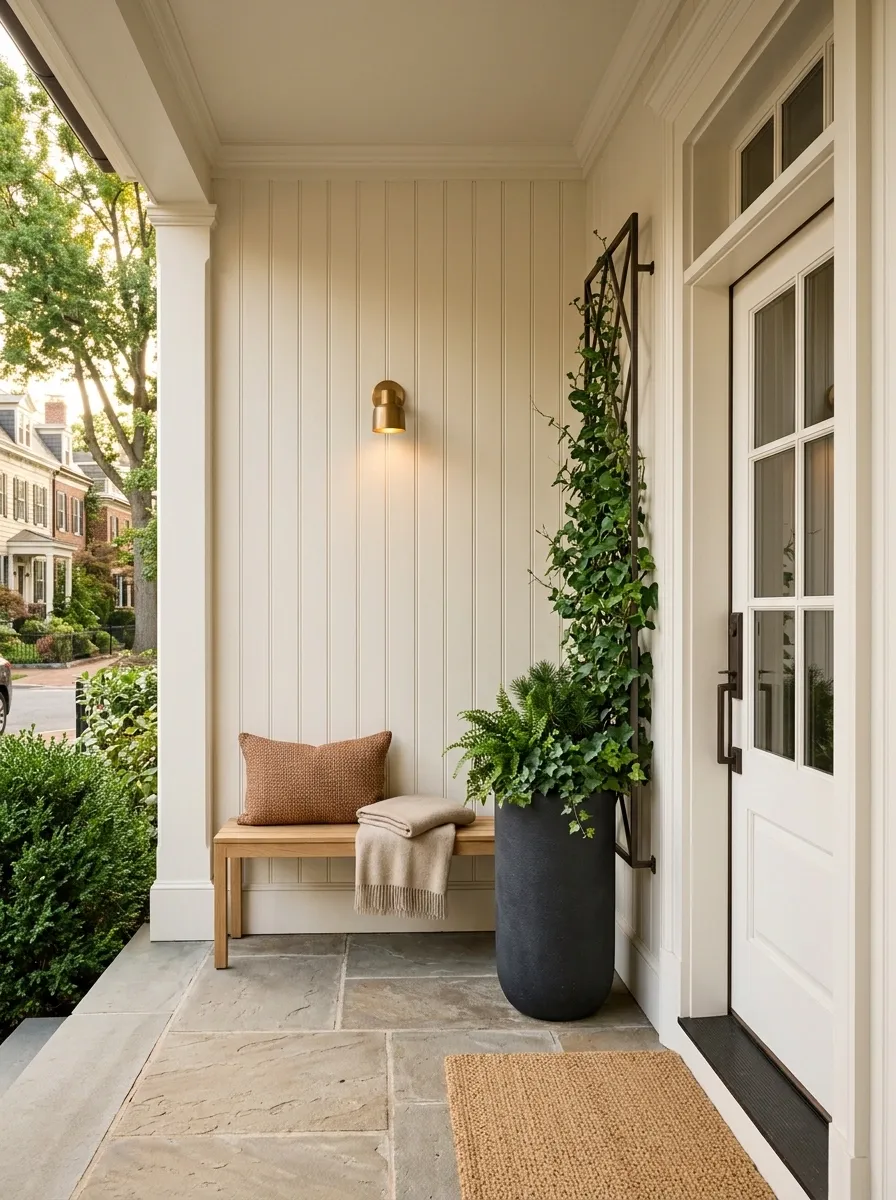
A narrow townhouse entrance doesn’t need a row of bulky planters to feel finished. This composition uses height instead: a slim wood bench sits beneath the wall, while one tall planter and a narrow trellis draw greenery upward beside the door. A compact wall light sits above the planting, and a shallow natural-fiber mat defines the threshold.
The arrangement keeps the walking path open while giving the small porch a strong vertical rhythm. Autumn can bring in dried stems or a muted rust cushion, but the structure works just as well with fresh greenery later.
Coastal Porch With Sand, Driftwood, and Dusty Blue
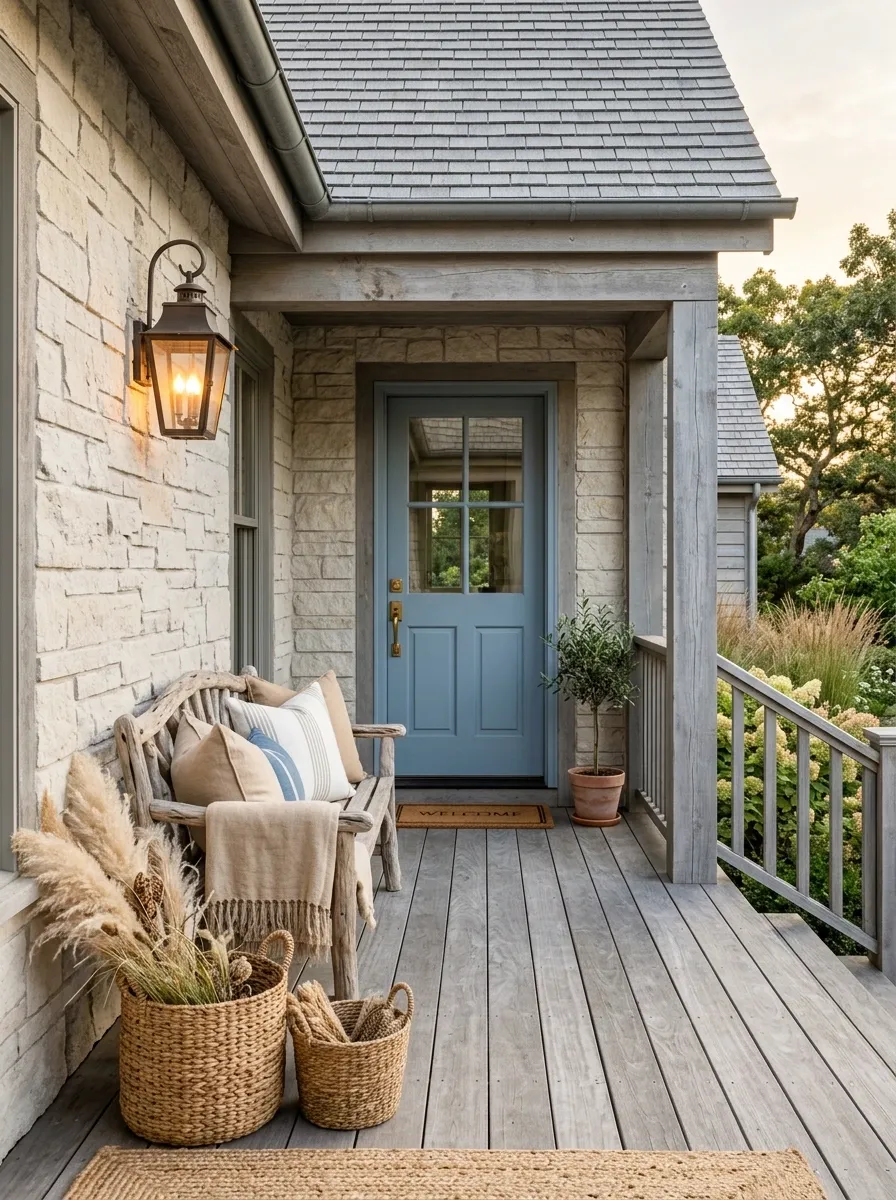
A dusty blue door gives this porch its defining color, surrounded by pale stone, weathered wood, and soft sandy textiles. A driftwood-style bench sits beneath the entry wall, while woven baskets and airy grasses keep the composition relaxed. The lighting stays warm and understated.
Instead of borrowing traditional fall colors, this concept gets its autumn character from weathered textures and warmer natural materials. That makes the porch especially adaptable. The same foundation can carry evergreen branches in winter or lighter planting in spring without losing its identity.
BLUE
BEIGE
Modern Farmhouse Porch With Black Windows and Warm Timber
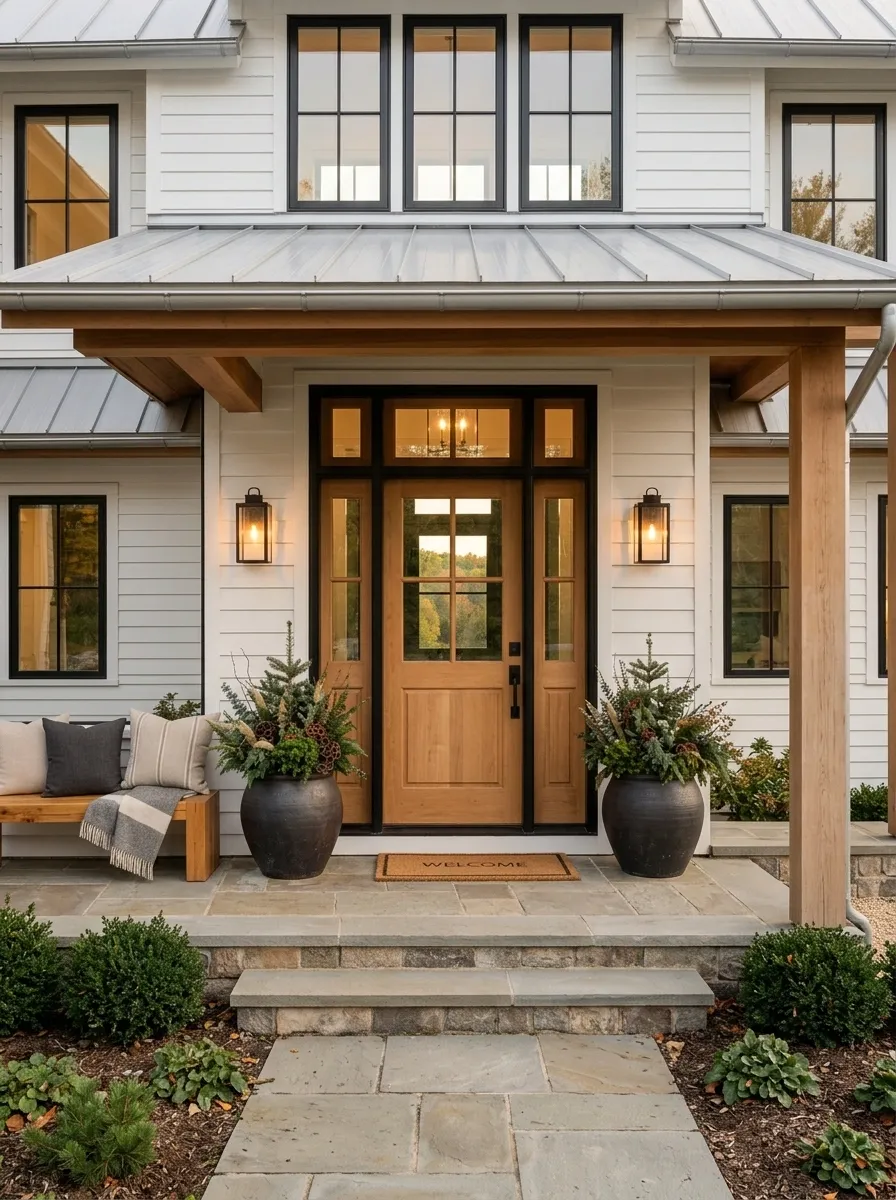
White siding creates a clean backdrop for black-framed windows and a substantial timber bench. Oversized ceramic pots sit near the entrance, filled with structured greenery, while warm exterior lighting brings depth to the facade after sunset. Neutral cushions keep the seating practical and understated.
The farmhouse character comes from the architecture and material contrast rather than signs, plaid, or harvest props. A few autumn branches can layer onto the arrangement, but they aren’t carrying the design. Remove them and the porch still feels complete.
Brick Bungalow Porch With Vintage Wood Furniture
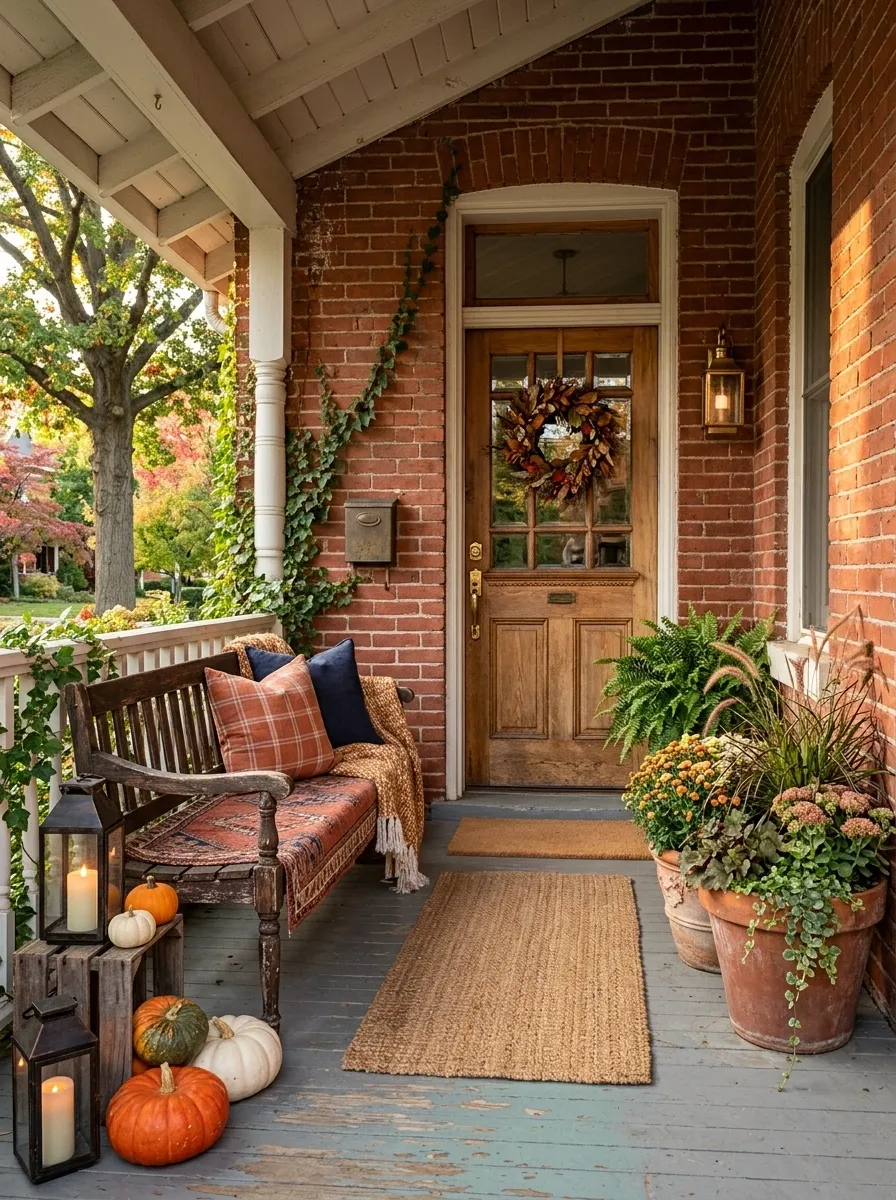
Original brick becomes the star of this bungalow entry, paired with a stained wood door and a vintage-inspired bench. A faded runner extends toward the threshold, while aged metal lanterns and leafy planters reinforce the established character of the architecture. The furniture feels collected rather than perfectly matched.
The slight irregularity is what gives this porch its appeal. Nothing needs to look brand new. Autumn accents fit naturally into the aged materials, while spring foliage or simple evergreen planting can take their place without making the porch feel redesigned.
Japandi Entry With Stone Planter and Low Bench
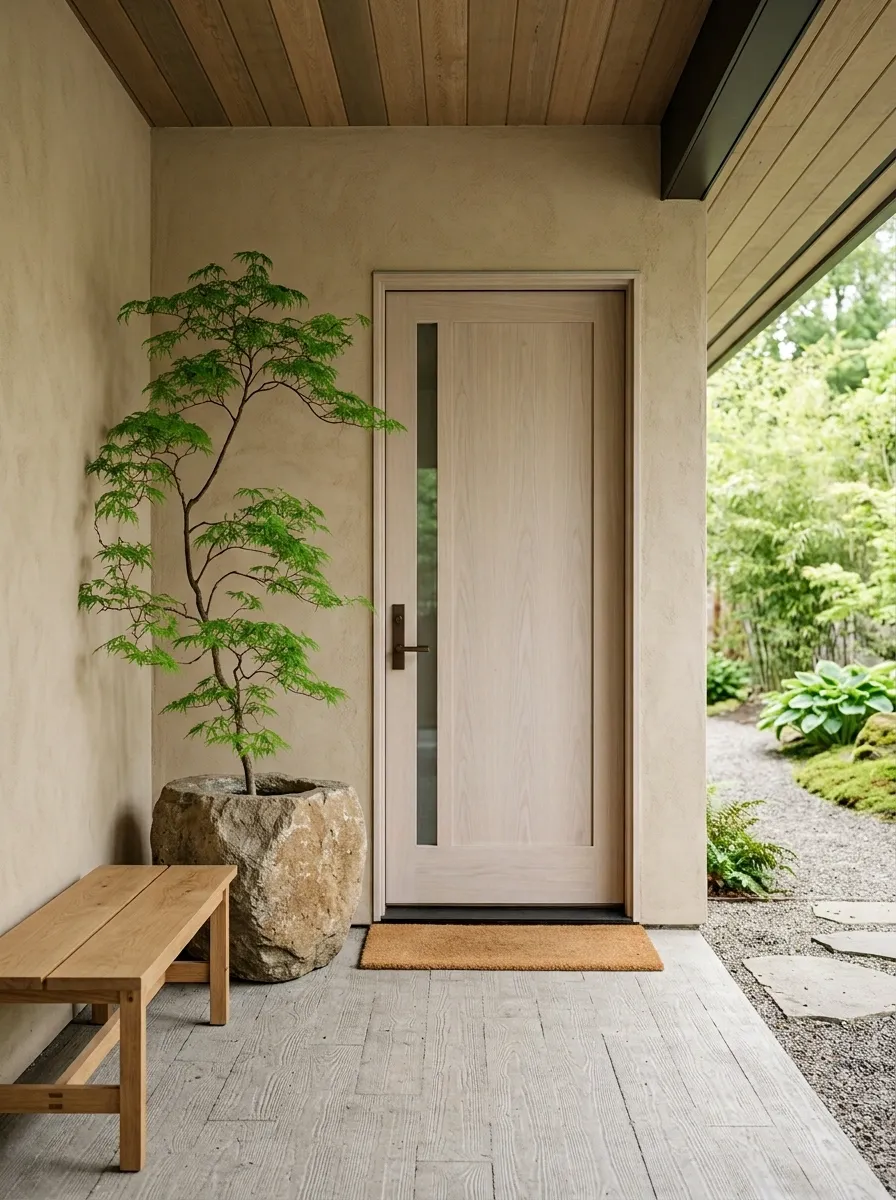
A pale wood door, warm beige wall, low bench, and large stone planter create an unusually quiet porch. The furniture remains close to the ground, while a sculptural plant provides the strongest organic shape near the doorway. Lighting is recessed or minimally expressed rather than decorative.
The restraint is intentional. There are fewer objects here, but each one has enough scale to hold its place. Autumn can be introduced with a single branch arrangement or warmer textile, while the underlying composition stays calm and relevant throughout the year.
English Cottage Porch With Soft Green and Natural Stone
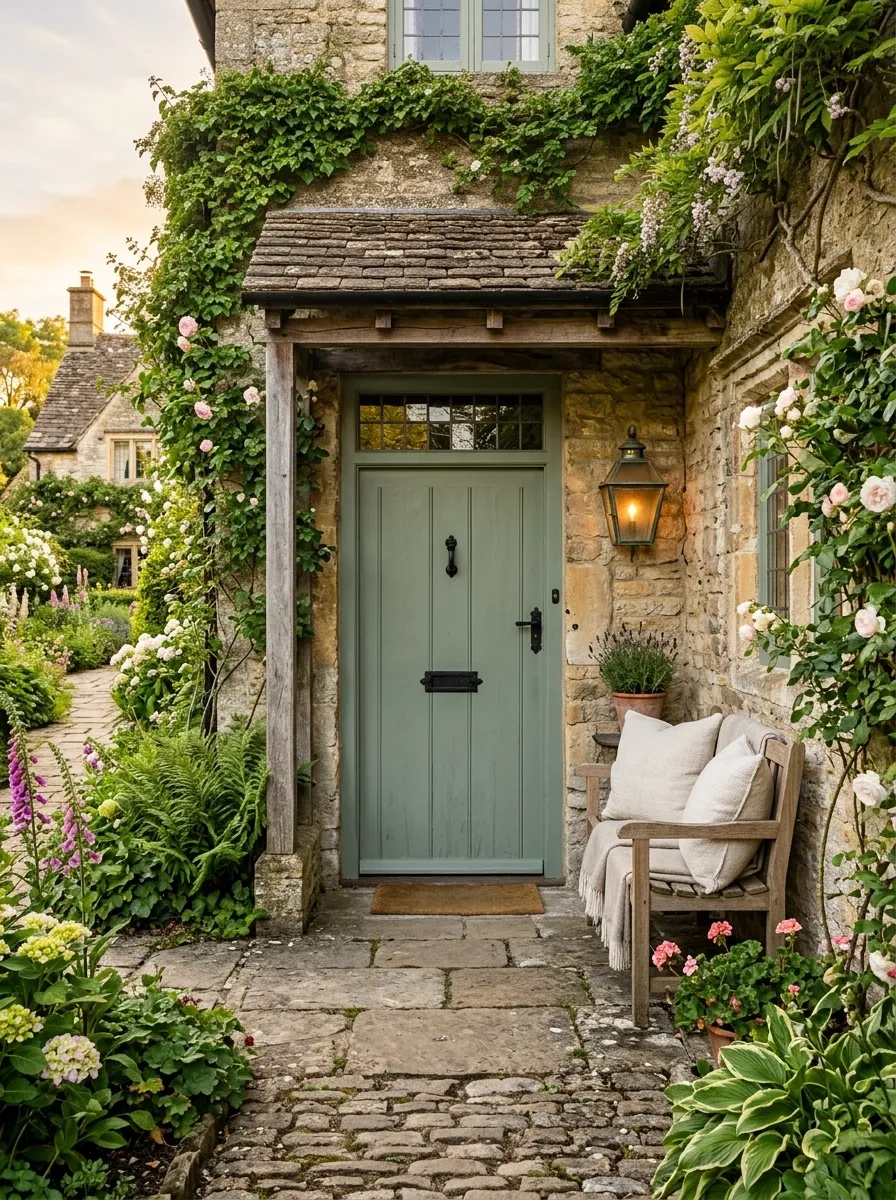
Weathered stone gives this cottage porch an established foundation, while a muted green door blends naturally into the planting around it. A compact wooden seat sits beneath the wall, accompanied by a cream cushion and an old-style lantern. Climbing greenery softens the edges without hiding the architecture.
The charm comes from the relationship between the building and the garden. Autumn branches or a few dried stems can add warmth temporarily, but the stone, greenery, green paint, and timber already create a finished composition. Nothing depends on a seasonal theme.
Southwestern Porch With Clay Pots and Warm Plaster
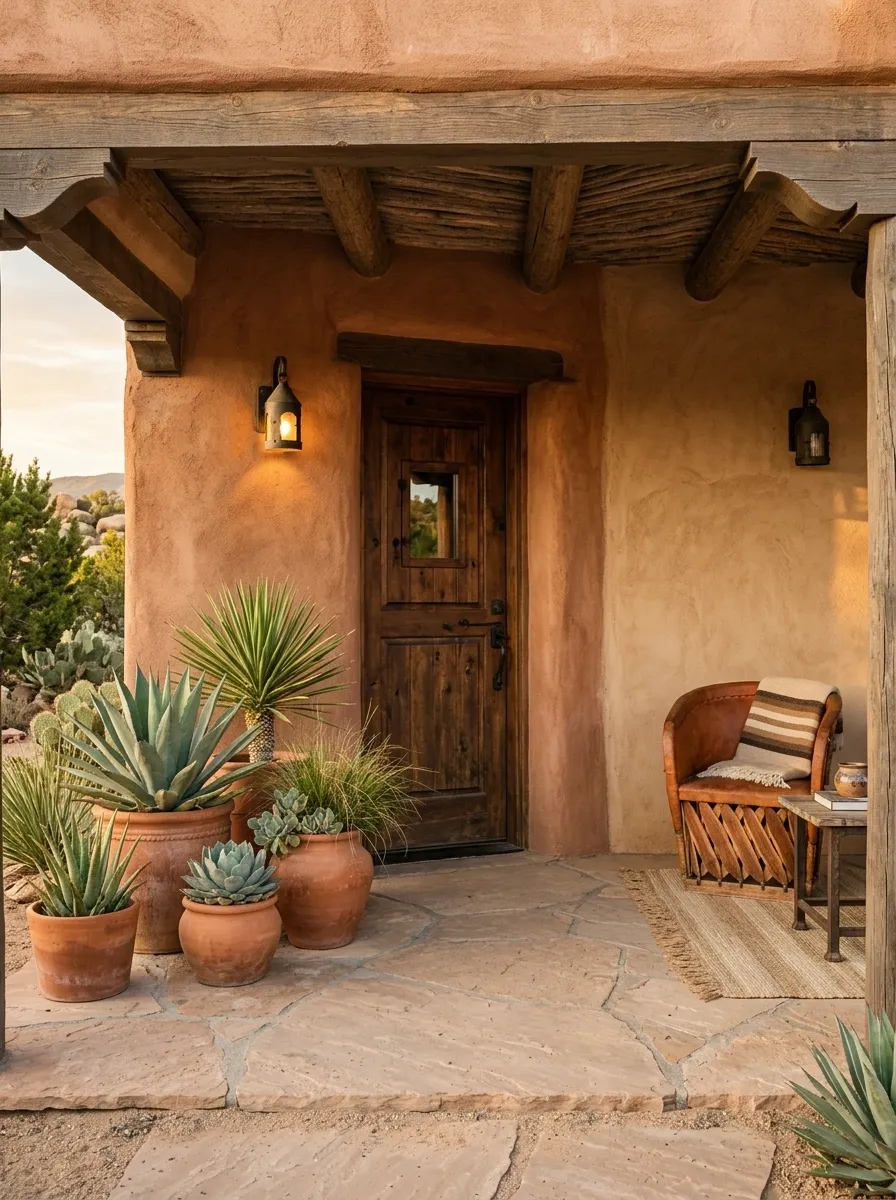
Warm plaster walls create a sunbaked backdrop for a dark wood door, handmade clay pots, sculptural drought-tolerant plants, and woven seating. Aged metal lighting adds a little contrast while keeping the composition grounded. The palette stays close to terracotta, sand, brown, and muted green.
This design already carries plenty of warmth, so additional fall decoration would quickly become unnecessary. The clay and plaster provide the seasonal feeling naturally. Once autumn passes, the same porch can remain almost untouched.
Black-and-Cream Porch With Sculptural Greenery
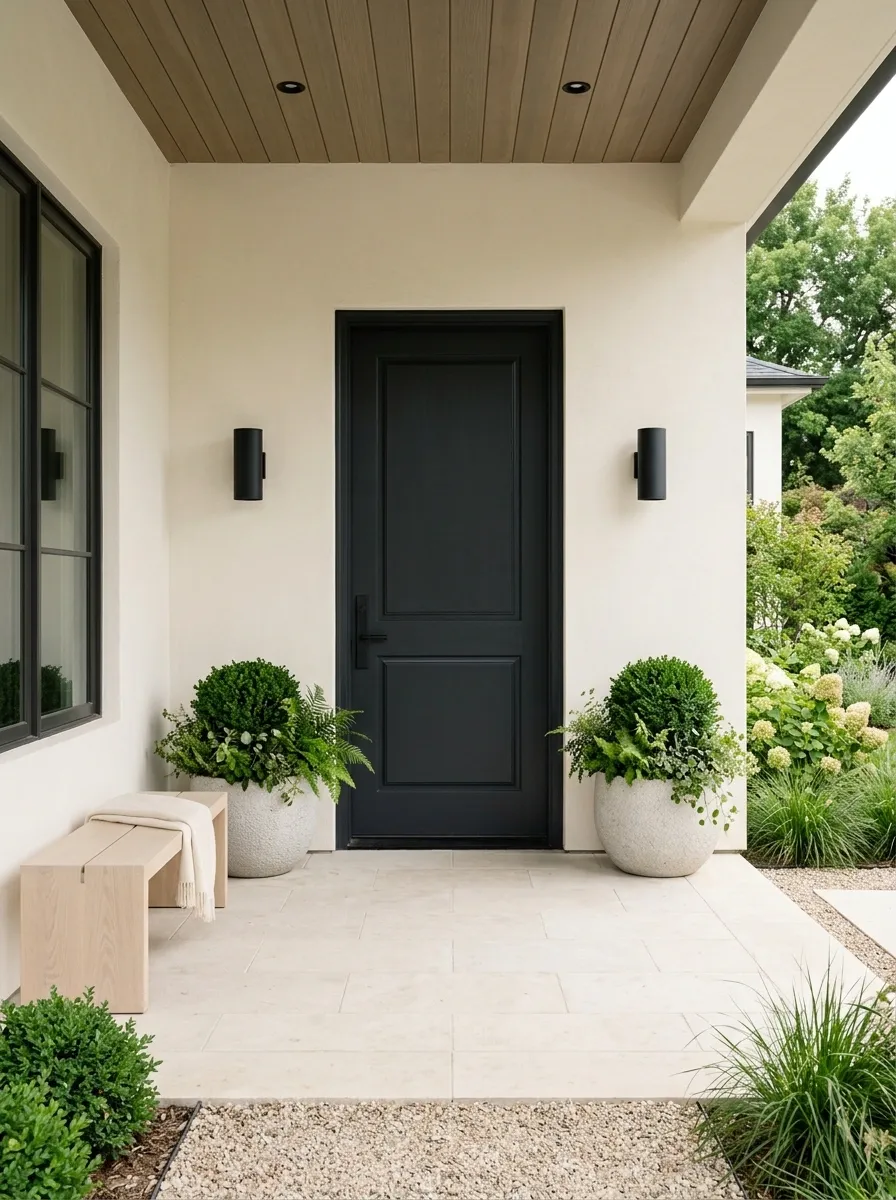
A nearly black front door creates a sharp focal point against a cream facade. Rounded planters in pale stone sit on either side of the entrance, filled with clipped greenery and a few looser stems. Simple black lighting repeats the door color, while a pale wood bench introduces just enough warmth.
This is a stronger approach for homes with clean architecture. The limited palette gives every shape more importance, and the greenery provides enough seasonal softness without making the entrance feel rustic or heavily decorated.
Rustic Mountain Porch With Leather and Stone
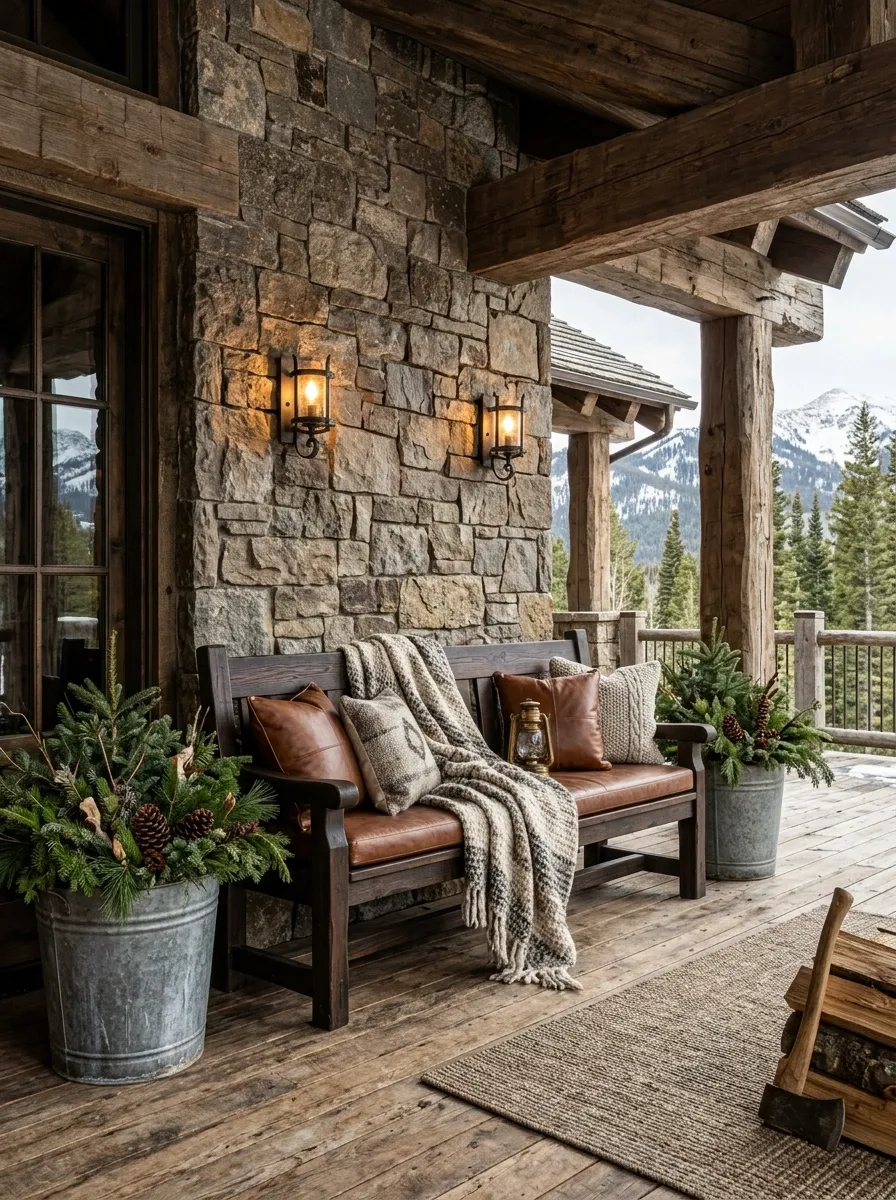
Heavy timber beams, natural stone, a dark-stained bench, and iron lighting give this porch a substantial mountain-lodge character. Brown leather cushions add another layer of richness, while evergreen branches and textured wool provide softer shapes around the seating area.
The composition is intentionally heavier than the earlier designs. That makes it convincing on a large porch where delicate furniture would disappear against the architecture. Autumn fits naturally through wool, leather, timber, and foliage, so obvious seasonal props can stay minimal.
Small Apartment Entry With Foldable Wood Seating
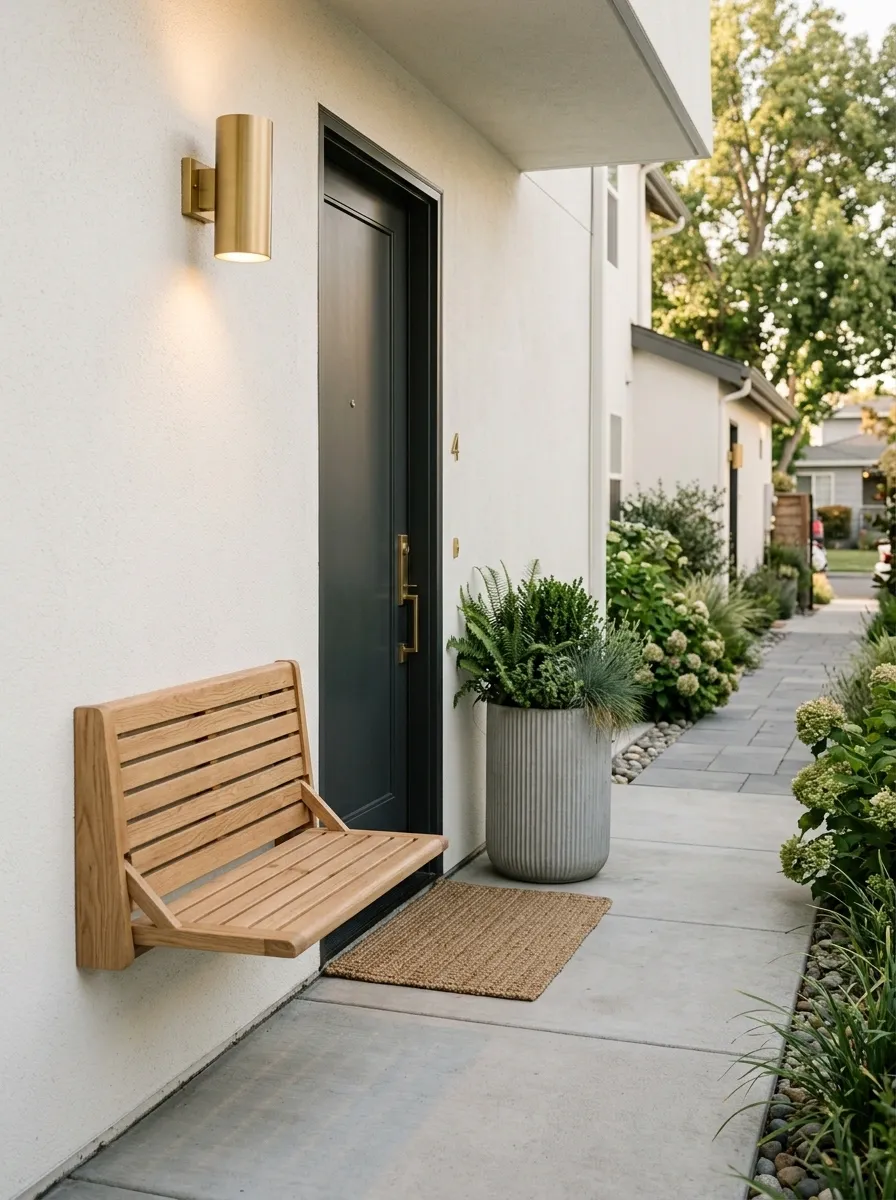
A small apartment porch can still have a complete design without filling the available floor area. This layout uses a shallow foldable wood bench against the wall, one tall planter, a compact woven mat, and a warm wall-mounted light. The door remains visually clear, and the furniture stays tight to the perimeter.
The important distinction is that the design solves circulation first. Seasonal decoration can be added to the bench or planter, but nothing needs to occupy the walking route. That makes the composition useful well beyond autumn.
Shallow footprint
Use the height
Keep the center clear
Transitional Porch With Greige Walls and Warm Walnut
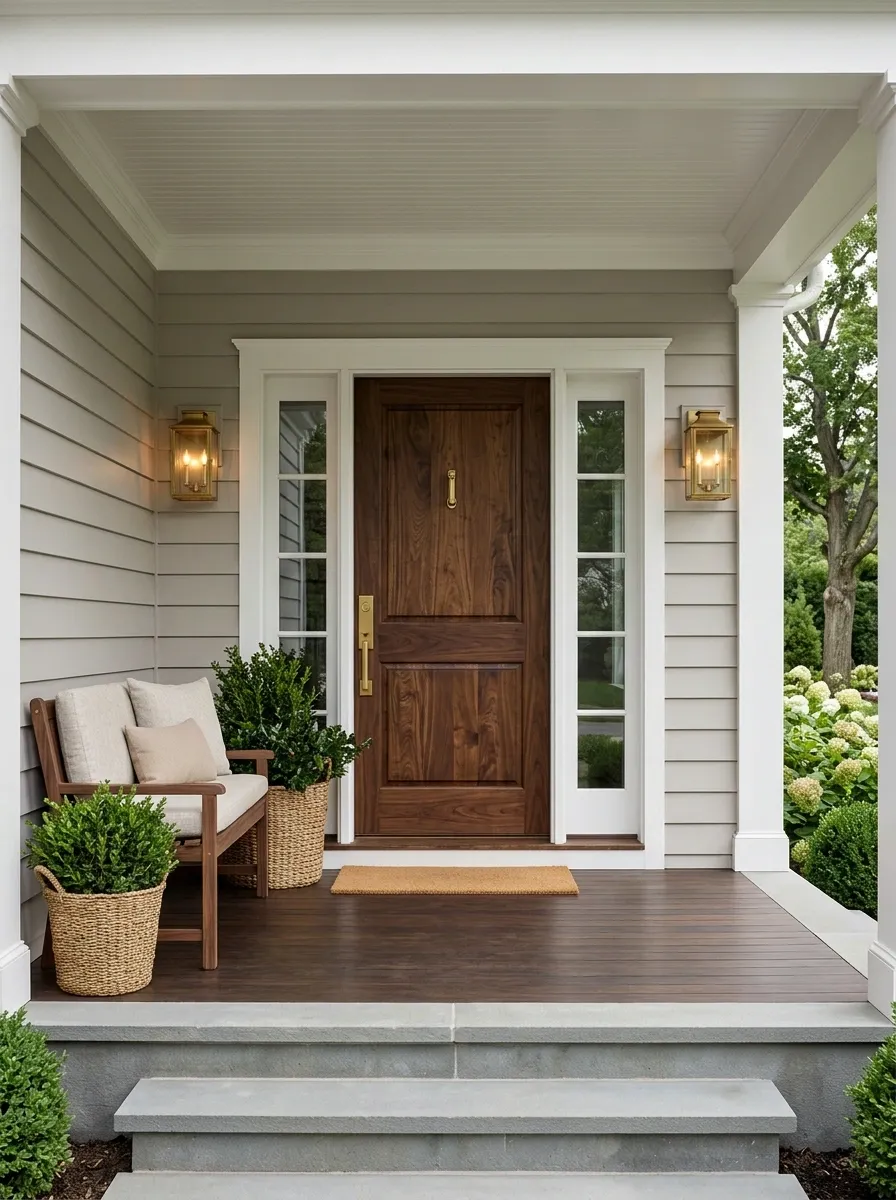
Greige siding creates a softer backdrop for a rich walnut door, tailored bench, warm brass lighting, and structured greenery. The furniture has clean lines, but the wood grain keeps the entry from feeling overly formal. Neutral cushions and a woven planter basket add just enough softness.
The strength here is the balance between traditional warmth and contemporary restraint. The porch can carry autumn branches or a rust-toned cushion for a few weeks, then return to its quieter everyday palette without looking unfinished.
Rustic White Porch With Galvanized Metal and Evergreen
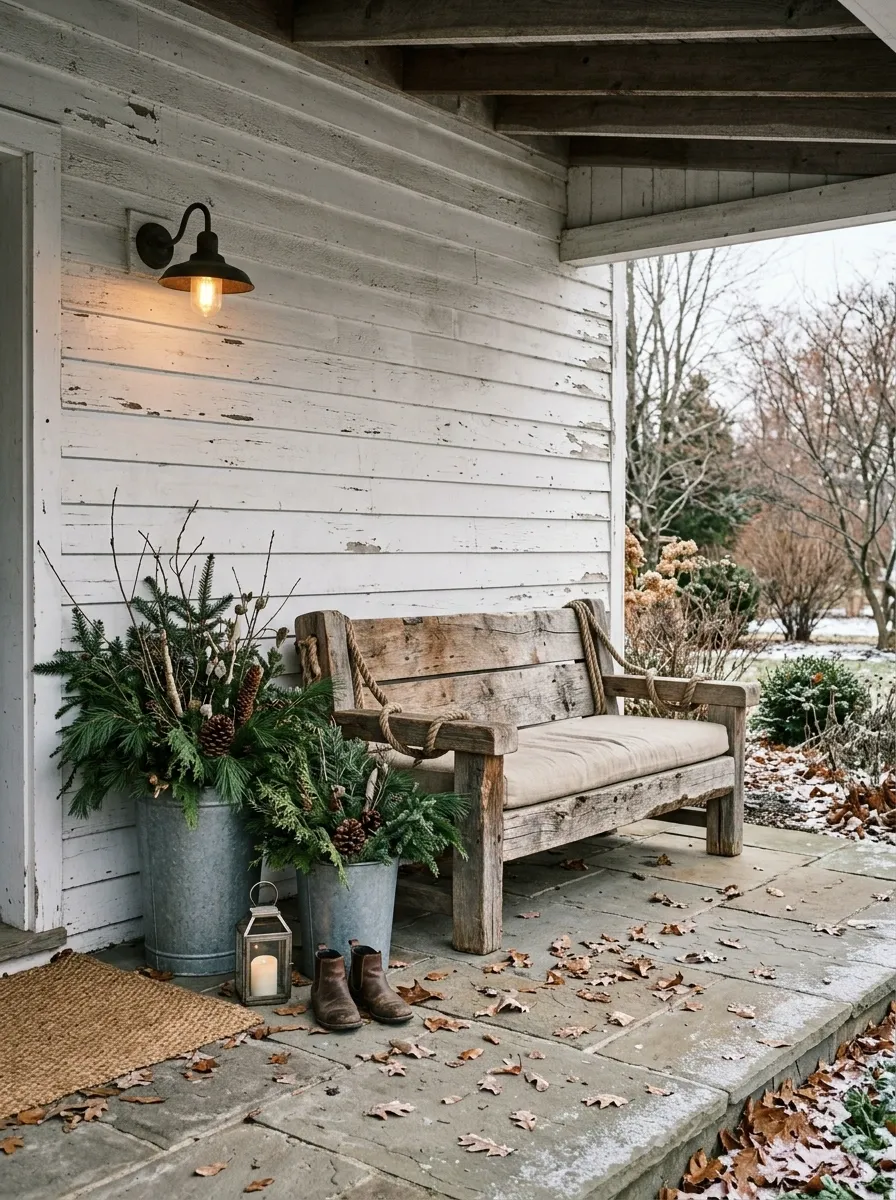
Weathered white siding gives this porch a relaxed farmhouse foundation. Rough timber seating sits beside galvanized planters filled with evergreen branches and loose natural stems. Rope-textured details, a faded neutral cushion, and warm exterior lighting add layers without turning the entrance into a seasonal display.
The materials are doing almost all of the visual work. Galvanized metal and weathered timber provide character, while evergreen planting keeps the composition relevant after fall. The restrained palette also leaves room for small seasonal changes without creating visual clutter.
Contemporary Porch With Concrete, Wood, and Tall Grasses
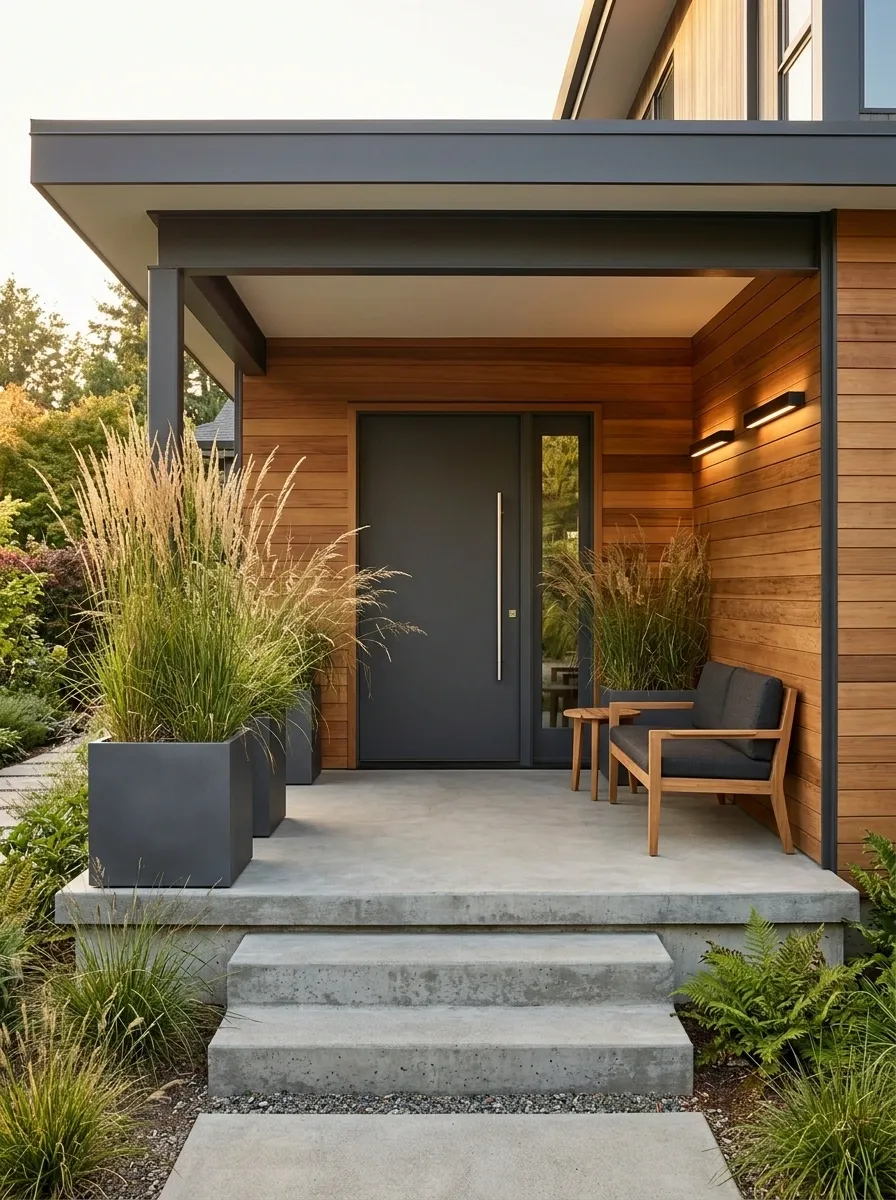
Smooth concrete gives this contemporary porch a strong architectural foundation, balanced by rich timber and tall ornamental grasses. A wide dark door sits behind the planting, while oversized matte planters and simple exterior lighting keep the composition clean. The furniture is deliberately minimal, allowing the architecture to remain dominant.
The grasses add movement that changes naturally with the seasons. In autumn they bring warm texture and height, while the concrete, wood, dark door, and structured planters continue to carry the design afterward.
Romantic Porch With Dusty Rose, Cream, and Aged Brass
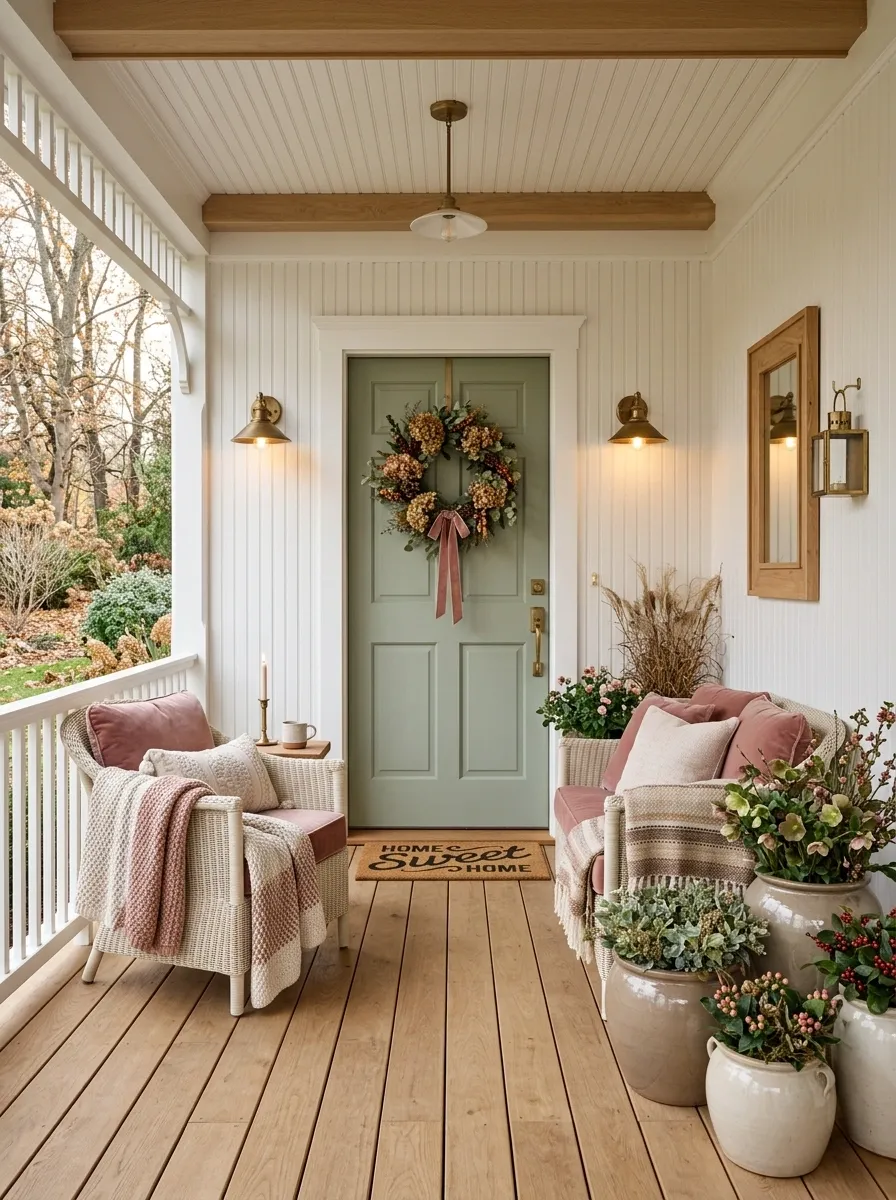
A softly painted door sets a romantic tone, surrounded by cream seating, aged brass lighting, ceramic planters, and loose flowering plants. Dusty rose appears in the cushions and a small textile layer, while muted green keeps the palette connected to the garden.
The color feels warm enough for fall without becoming overtly seasonal. Dusty rose can later give way to another textile shade while the cream, brass, greenery, and painted architecture continue to look intentional.
rose
brass
green
Timeless Natural Porch With Seasonal Accent Swaps
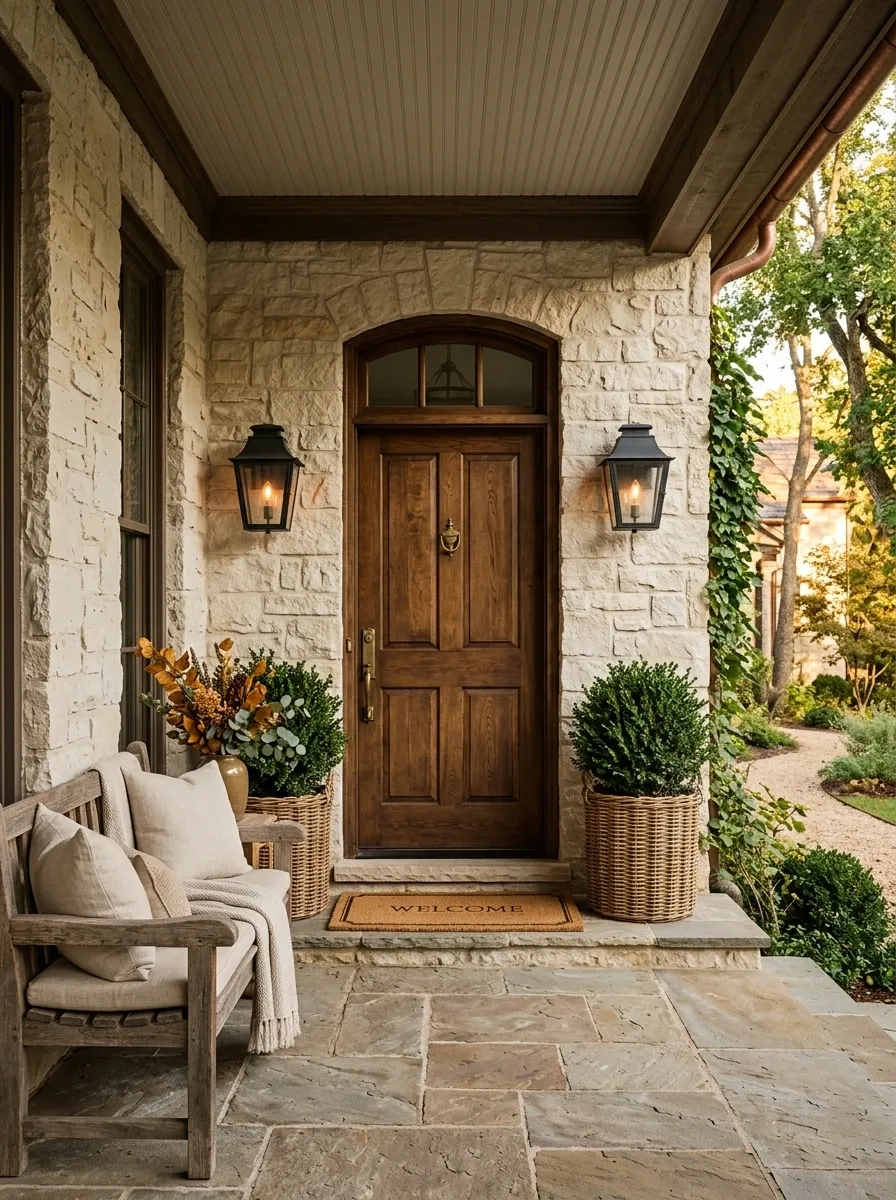
A warm wood door, pale stone facade, substantial bench, woven planters, evergreen structure, and black lanterns create a porch that doesn’t depend on one season. Neutral cushions soften the heavier materials, while a few branches or seasonal textiles can introduce autumn warmth when desired.
This is the most adaptable direction in the collection because the permanent elements already establish scale, color, texture, and balance. Fall decoration becomes a removable layer instead of the identity of the porch. When the season changes, the foundation stays put.