
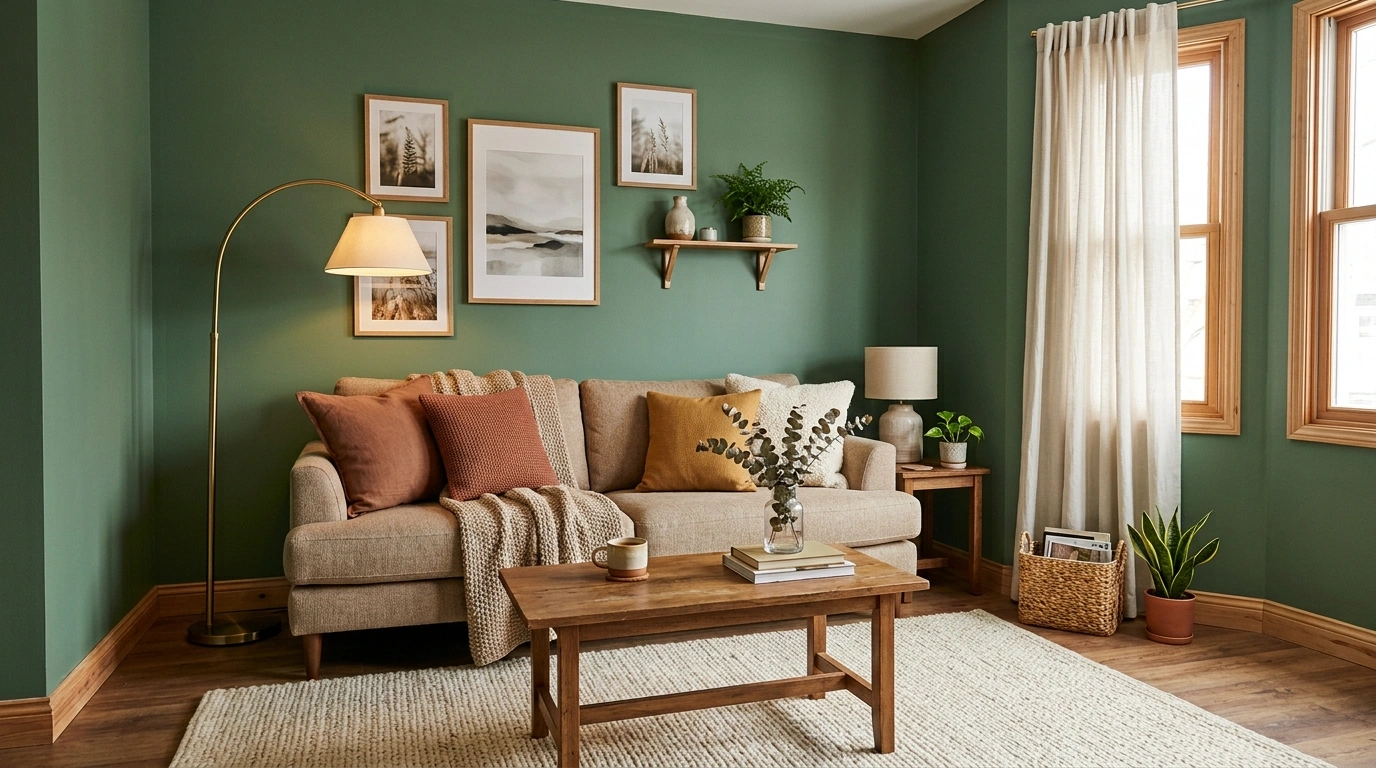
Green sounds simple until it’s time to actually put it on a living room wall.
One green can make a room feel earthy and collected. Another can look gray and sleepy in the afternoon, while a brighter shade can suddenly make every piece of furniture look like it was chosen during a very enthusiastic trip to the paint store.
The problem usually isn’t green itself. It’s the relationship between the walls, furniture, flooring, lighting, architecture, and everything else competing for attention.
That’s why looking at isolated paint colors doesn’t tell the whole story. A finished room gives you something much more useful: a sense of how the color behaves when it’s surrounded by real materials and real furniture.
The Green Living Room Designs
Rich Forest Green Living Room With Gallery Wall and Warm Wood
A gallery wall of black frames against deep green walls gives this space a collected, lived-in feel without tipping into chaos. The dark backdrop lets the artwork breathe while anchoring the room in serious comfort.
A warm wood media console and matching coffee table cut through the darker tones, introducing gorgeous grain and organic warmth. A low-profile leather sofa adds that essential layer of tactile luxury, keeping the seating area grounded and inviting.
Pile on the texture with a patterned vintage rug, woven poufs, and plenty of trailing greenery to tie the whole botanical mood together. It proves that dark green walls don’t need to feel formal; they just need the right mix of wood and cozy seating.
Warm Olive Living Room With Cream Seating and Natural Wood
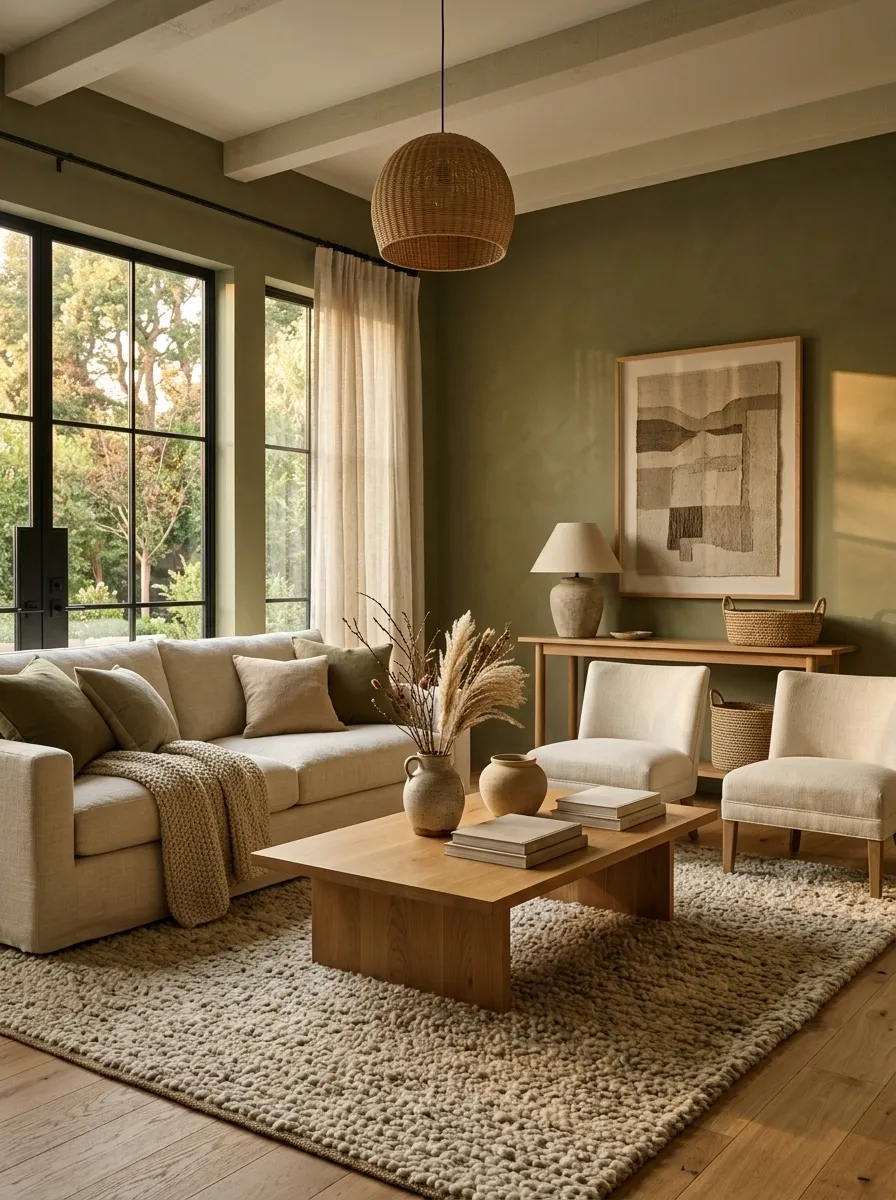
Warm olive walls create a relaxed foundation for a living room filled with cream upholstery, honey-toned wood, and soft woven textures. A large linen sofa sits opposite a low wooden coffee table, while two lighter chairs create a conversational arrangement without making the room feel crowded.
The palette stays close to nature, but the different textures keep it from becoming flat. Matte painted walls, rougher woven fabric, smooth timber, and a thick rug each catch light differently.
This works especially well when the room already has warm flooring or wood trim. The olive connects those existing elements instead of trying to compete with them.
The important part is keeping the cream furniture warm rather than icy white. Stark white can make the olive feel much sharper, while warmer upholstery keeps the whole room grounded.
walls
seating
furniture
texture
Paneled Green Living Room With Tufted Leather and Grand Moldings
Classic wall paneling painted in a muted green instantly elevates a living room into something straight out of a historic townhouse. The architectural detail does all the heavy lifting, giving the space incredible depth and character.
A rich cognac tufted leather sofa sits proudly against the paneled backdrop, flanked by warm wood accents and a statement chandelier overhead. A patterned neutral rug softens the wood flooring while keeping the focus firmly on the dramatic walls.
Lighting is everything in a room with this much moody charm. Wall sconces cast a warm glow across the paneling, making the entire space feel like the ultimate evening retreat.
Deep Forest Green Living Room With Leather and Antique Wood
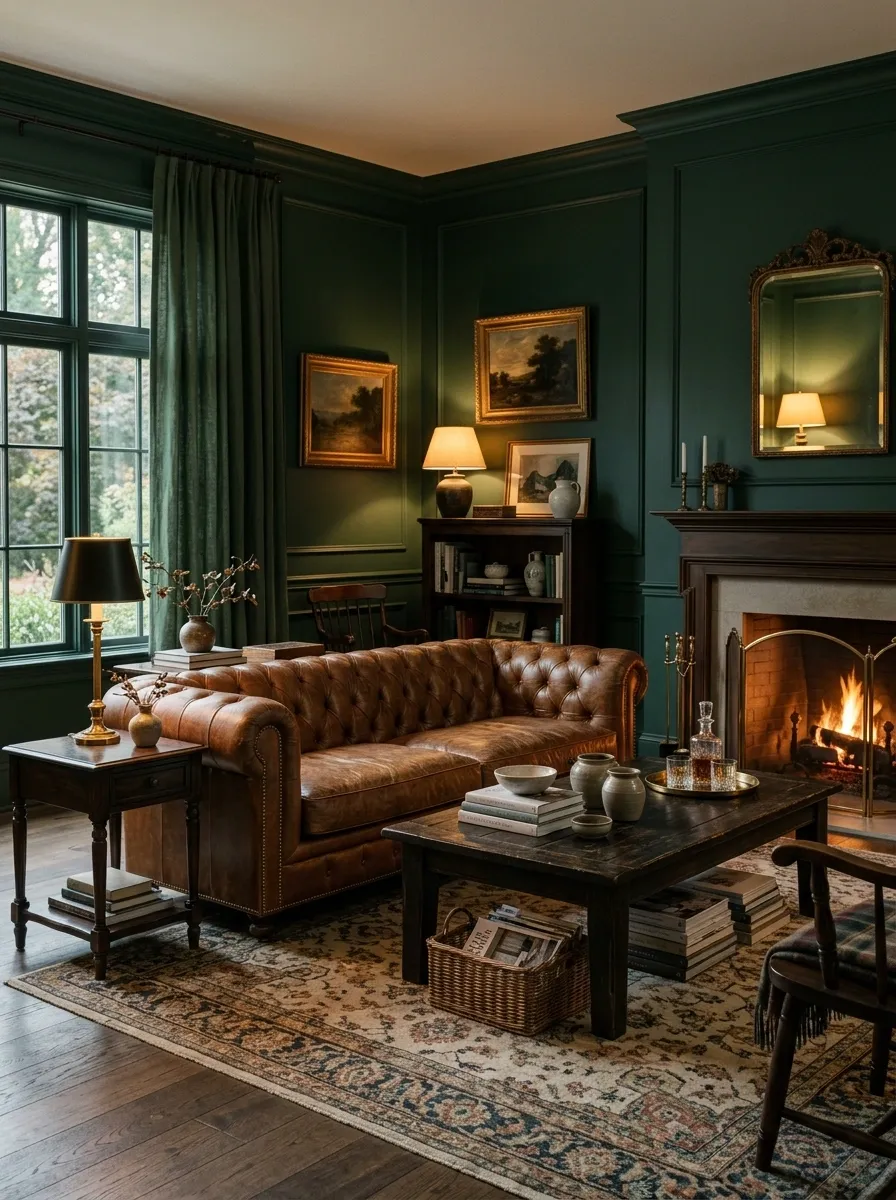
Deep forest green completely changes the mood when paired with dark antique wood and cognac leather. Instead of trying to lighten everything with pale furniture, this room leans into the richness.
A substantial leather sofa anchors the seating area, with a dark wooden coffee table and vintage-inspired side pieces surrounding it. A patterned rug introduces muted cream and rust tones so the darker surfaces don’t merge together.
Lighting matters here. Warm lamps create pools of light against the deep walls and make the room feel layered after sunset.
The design works because the green isn’t being asked to make the room bright. It’s being used as architectural depth. That’s a very different job, and frankly, much more interesting.
Botanical Green Living Room With Statement Mirror and Zebra Print
An oversized round mirror framed in rich wood breaks up a gallery of deep green walls, bouncing light around the room in the most satisfying way. Layered plants and hanging greenery lean heavily into the botanical theme without feeling like a greenhouse.
A green leather sofa piled with striped and textured pillows keeps the seating cohesive, while a zebra-print rug adds a daring kick of pattern underfoot. The unexpected mix of animal print and lush foliage makes the room feel brilliantly curated.
Play with metallic accents through a modern branching chandelier to give the space a bit of mid-century edge. It is a masterclass in how to mix bold patterns and moody walls without losing your cool.
Sage Green Living Room With Bouclé Seating and Pale Oak
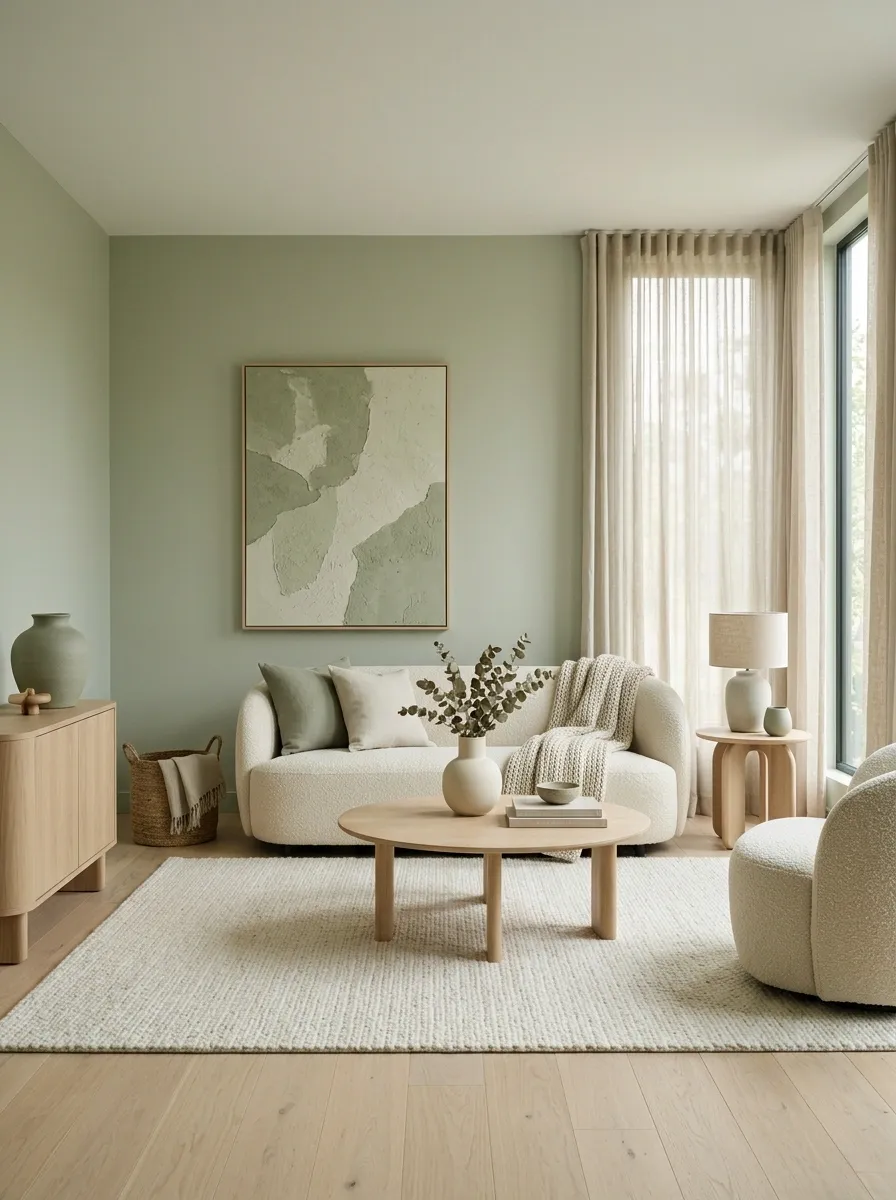
Soft sage takes a completely different direction when surrounded by pale oak, cream bouclé, and simple rounded furniture. The walls provide just enough color to keep the room from feeling bland, while the furniture stays light and tactile.
A low sofa faces a rounded coffee table, with a curved accent chair positioned near a window. Pale oak flooring and an off-white rug create a quiet base, while a few ceramic and woven pieces bring subtle texture.
The furniture silhouettes matter here. Rounded forms reinforce the softness of the sage rather than introducing harsh visual breaks.
Keep the accessories restrained. Once every surface starts collecting baskets, vases, books, candles, trays, and approximately seventeen objects described as “organic,” the clean composition disappears.
Monochromatic Green Living Room With Sculptural Coffee Table
Drenching a space in varied shades of green creates an effortlessly calming atmosphere, especially when paired with soft, textured upholstery. A curved green sofa anchors the room, surrounded by pale ceramics and organic shapes that keep the palette harmonious.
A sculptural white coffee table provides a stunning architectural contrast against the soft fabrics, while delicate branches in a ceramic vase add height and movement. Every element feels deliberate and soothing.
Let natural light stream across the walls to highlight the subtle shifts in texture throughout the room. It is proof that a single color family can feel endlessly dynamic when you let materials do the talking.
Moody Green Living Room With Black Trim and Cream Furniture
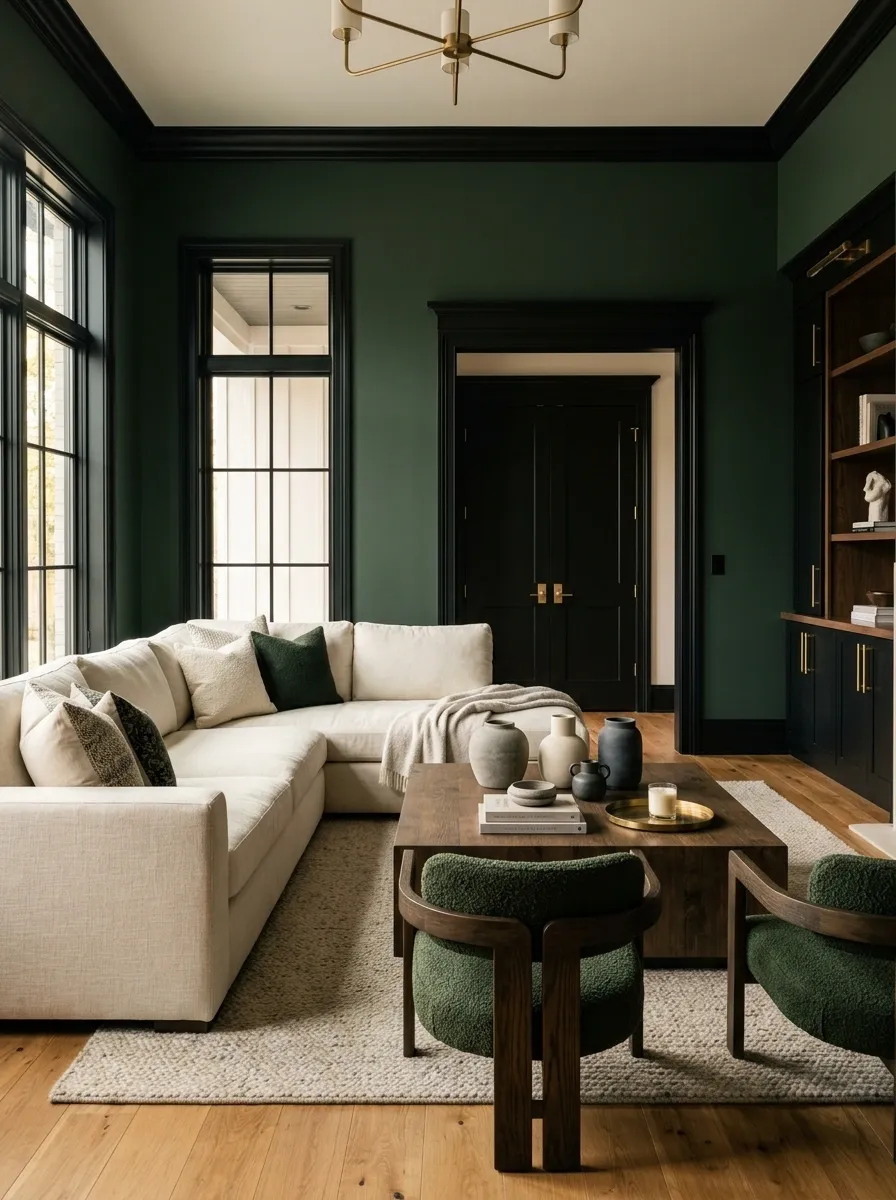
A deep green wall color becomes much more architectural when paired with black trim, dark window frames, and cream furniture. The contrast gives the room definition without requiring a huge collection of accessories.
A large cream sofa creates the main light area, while black-framed windows and a dark coffee table provide sharper lines around it. Warm timber and brass details soften the black so the room doesn’t become overly stark.
This composition suits spaces with strong architectural features because the dark trim emphasizes doors, windows, fireplaces, and built-ins.
The key is restraint. Black trim is already doing plenty. There is no need to add black lamps, black shelves, black frames, black cushions, and a black cat strategically placed in the corner to complete the Pinterest fantasy.
Scarab Green Paneled Living Room With Velvet and Brass
Classic wall moldings painted in a deep, saturated scarab green create an intensely cozy backdrop for a plush velvet sofa. The richness of the paint color works hand-in-hand with traditional paneling to deliver instant architectural drama.
A matching green throw casually draped over the velvet seating creates a luxurious monochromatic moment, while a sleek brass wall sconce adds a refined flash of metallic warmth. A simple side table keeps the styling light and unfussy.
Pair the deep tones with warm wood flooring and minimalist decor to ensure the room stays sophisticated rather than stuffy. It turns out waiting rooms could never dream of looking this good.
Airy Green Living Room With Rattan and Linen
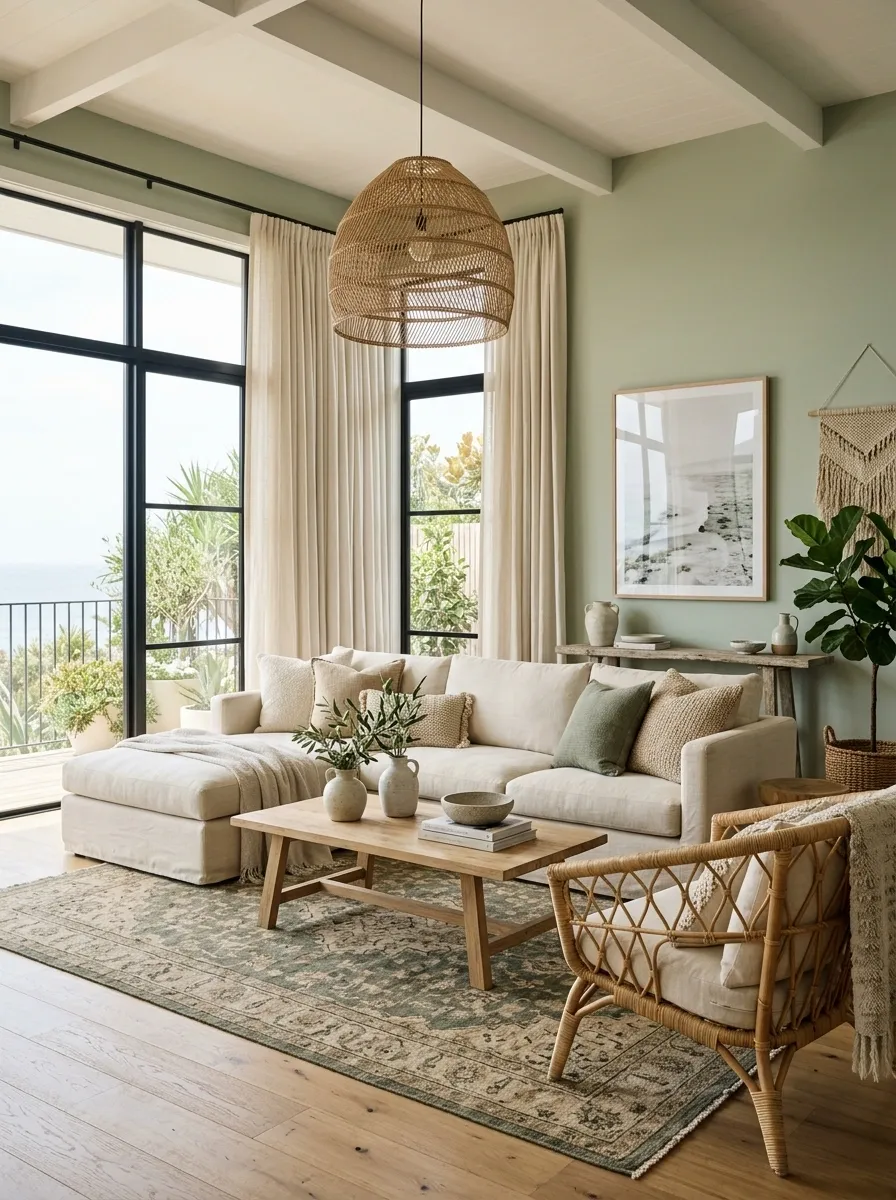
This version takes green somewhere lighter and more relaxed. Pale green walls sit behind linen sofas, natural rattan chairs, woven lighting, and light timber furniture. Large windows keep the room bright, while cream curtains soften the edges of the architecture.
The room feels casual because the materials aren’t overly polished. Rattan introduces irregular texture, linen adds softness, and pale wood keeps the palette warm without making it heavy.
A patterned rug with muted green and beige tones ties the furniture together without becoming the main event.
The trick is avoiding too much of the same natural material. If every surface is wicker, rattan, jute, cane, and unfinished wood, the room starts looking less like a relaxed living room and more like a very expensive basket convention.
Green Living Room With Built-In Bookshelves and a Fireplace
Built-in bookshelves turn green walls into a much stronger architectural feature. Here, the shelving and surrounding walls share the same green finish, creating one continuous backdrop behind a fireplace and comfortable seating area.
Books, ceramics, framed artwork, and a few natural objects break up the shelving without making every compartment equally busy. A cream sofa sits in front, while a patterned rug creates separation between the seating and the floor.
Painting the built-ins and walls together makes the architecture feel intentional rather than like a collection of separate pieces.
The shelves should still have breathing room. Filling every opening because there is an opening is how a beautiful built-in becomes a storage unit having an existential crisis.
OBJECT
SPACE
BOOKS
Dusty Green Living Room With Vintage Floral Upholstery
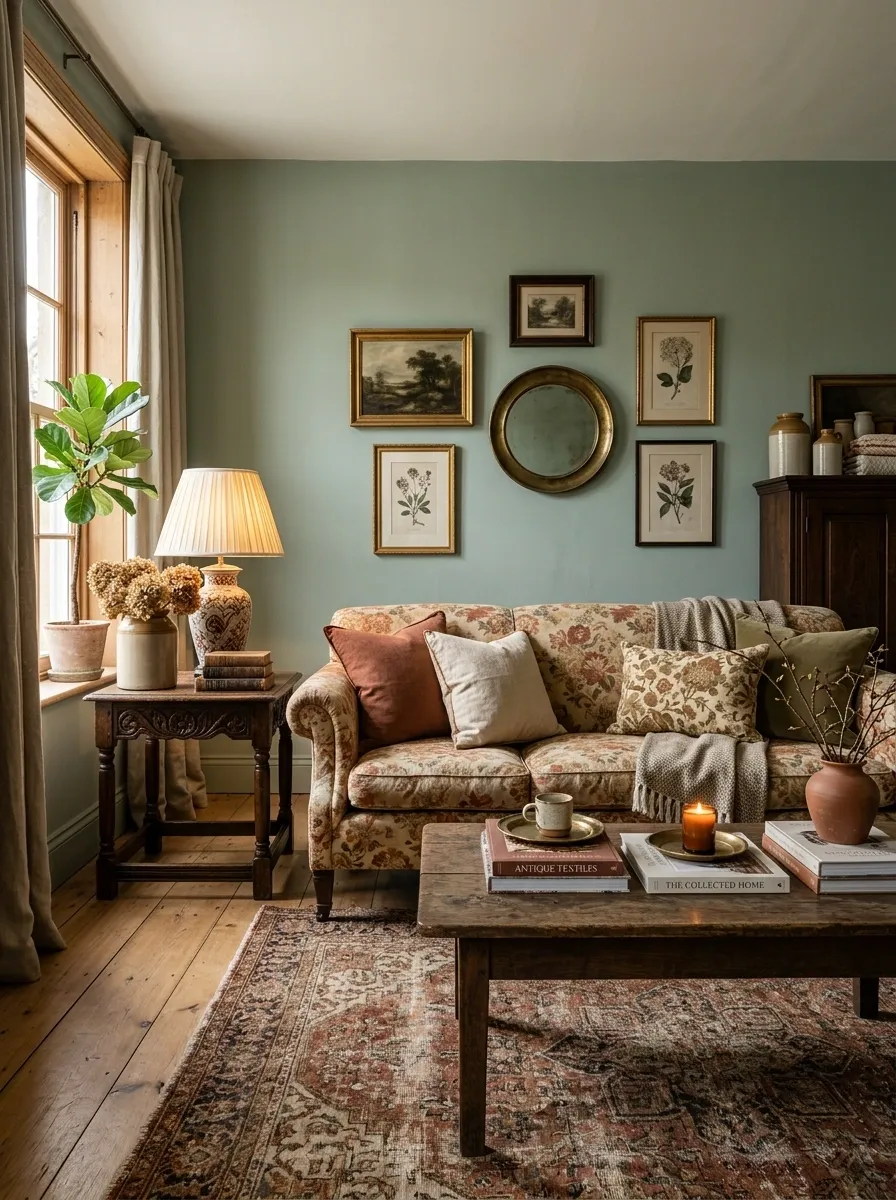
This room leans into old-world character without turning into a museum. Dusty green walls provide a muted background for a vintage floral sofa, carved wood furniture, traditional lamps, and an aged-looking rug.
The floral upholstery becomes the strongest decorative element, so the surrounding furniture uses quieter shapes and colors. Cream and faded rust tones in the fabric repeat elsewhere in small doses, creating a connection between the different pieces.
Nothing needs to match perfectly. In fact, slight variation makes this style feel more believable.
The room should look collected over time, not like someone searched “vintage living room” and bought the entire first page of results.
Green Living Room With Floor-to-Ceiling Curtains and a Long Sofa
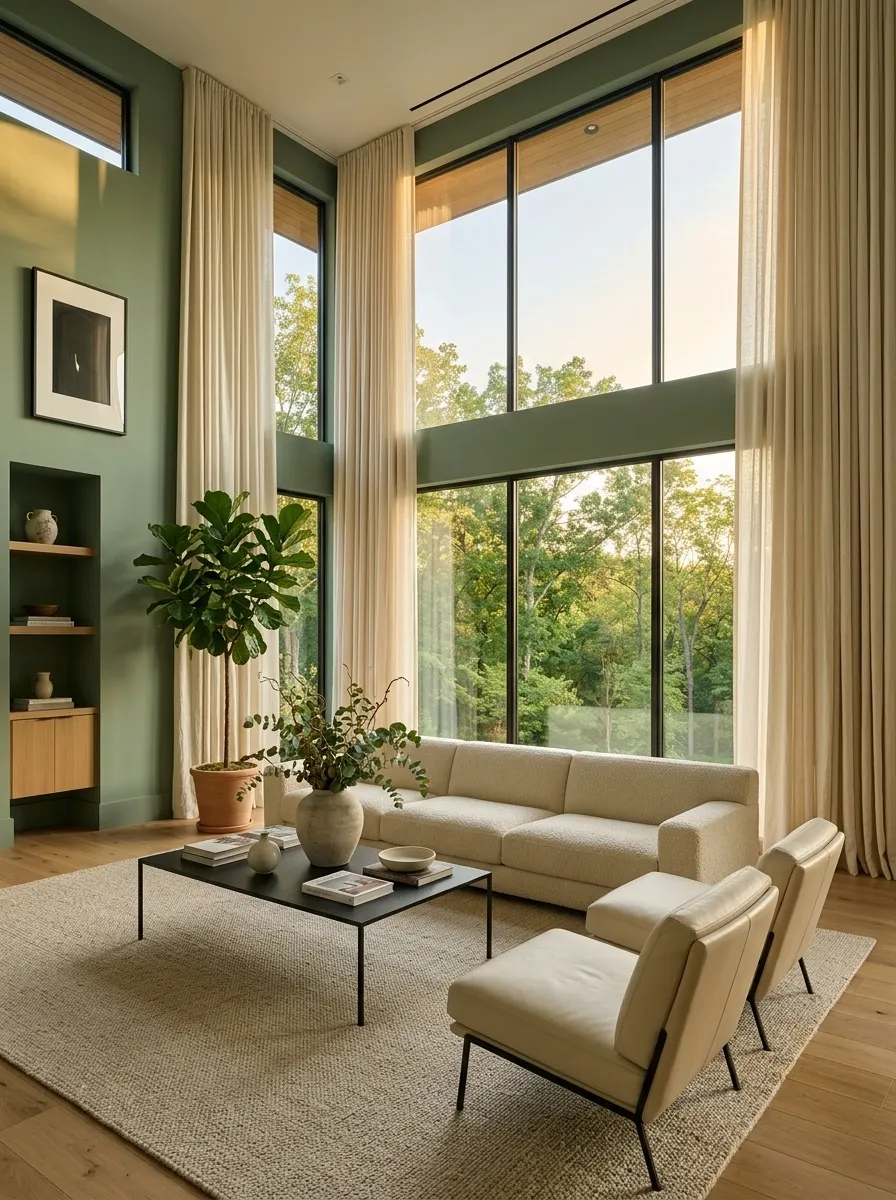
A long wall of windows gives this green living room a naturally tall composition. The walls are a muted medium green, while floor-to-ceiling cream curtains frame the windows and make the room feel vertically connected.
A long sofa runs parallel to the window wall, paired with a slim coffee table and low-profile chairs. The furniture doesn’t compete with the view, and the curtain height gives the room a more deliberate architectural finish.
This layout works when the window wall is the natural focal point. The furniture should support it rather than block it.
Curtains stopping halfway down the wall would weaken the whole idea. The room has gone to the trouble of having height. Let it have the drama.
Earthy Green Living Room With Terracotta and Travertine
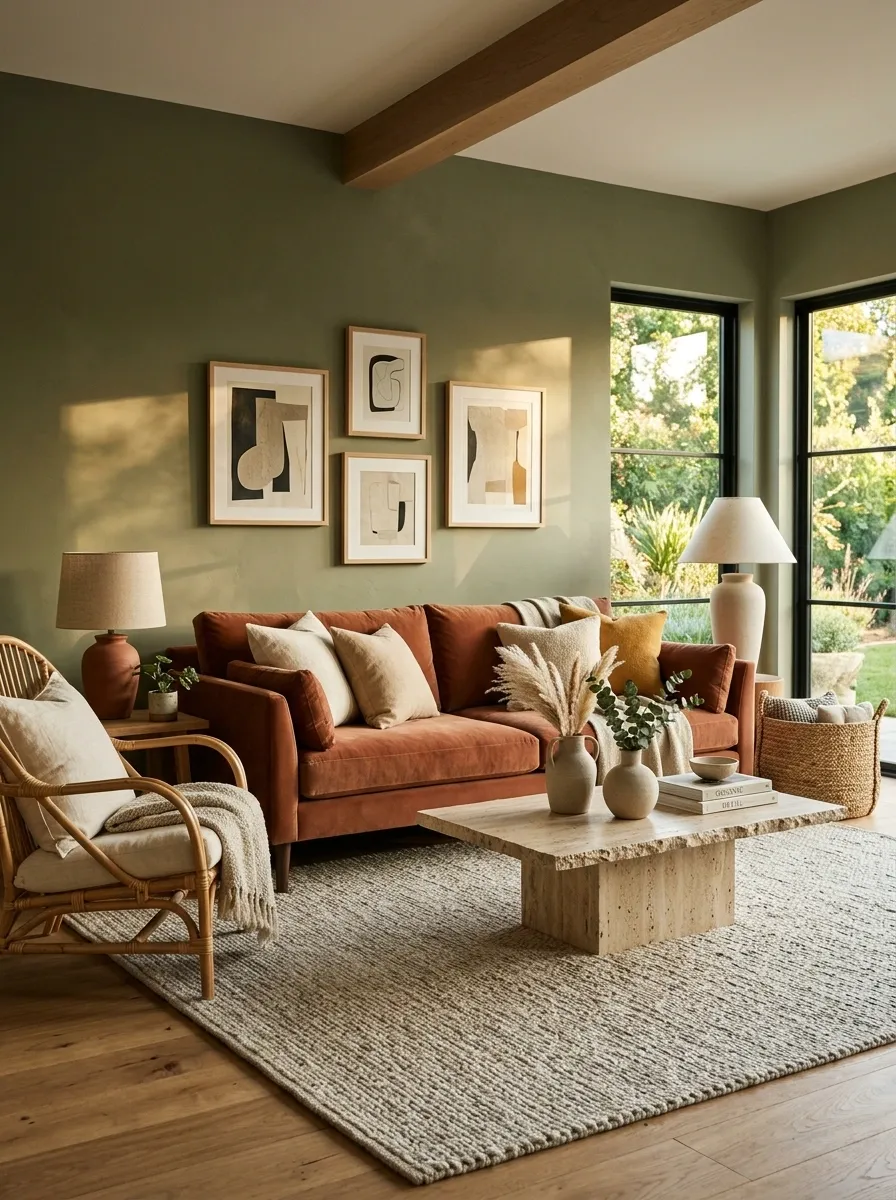
Green and terracotta make a particularly warm pairing when the shades are muted. This room uses earthy green walls with terracotta upholstery, travertine, warm oak, and woven details.
The sofa carries the terracotta tone, while the stone coffee table introduces a lighter mineral surface. A large rug connects the furniture and provides enough neutral space between the stronger colors.
The palette feels warm without relying on beige for absolutely everything.
The trick is choosing a green with enough warmth to sit comfortably beside terracotta. A blue-green wall would create a much sharper contrast and change the entire character of the room.
Green Living Room With a Plaster Fireplace and Curved Sofa
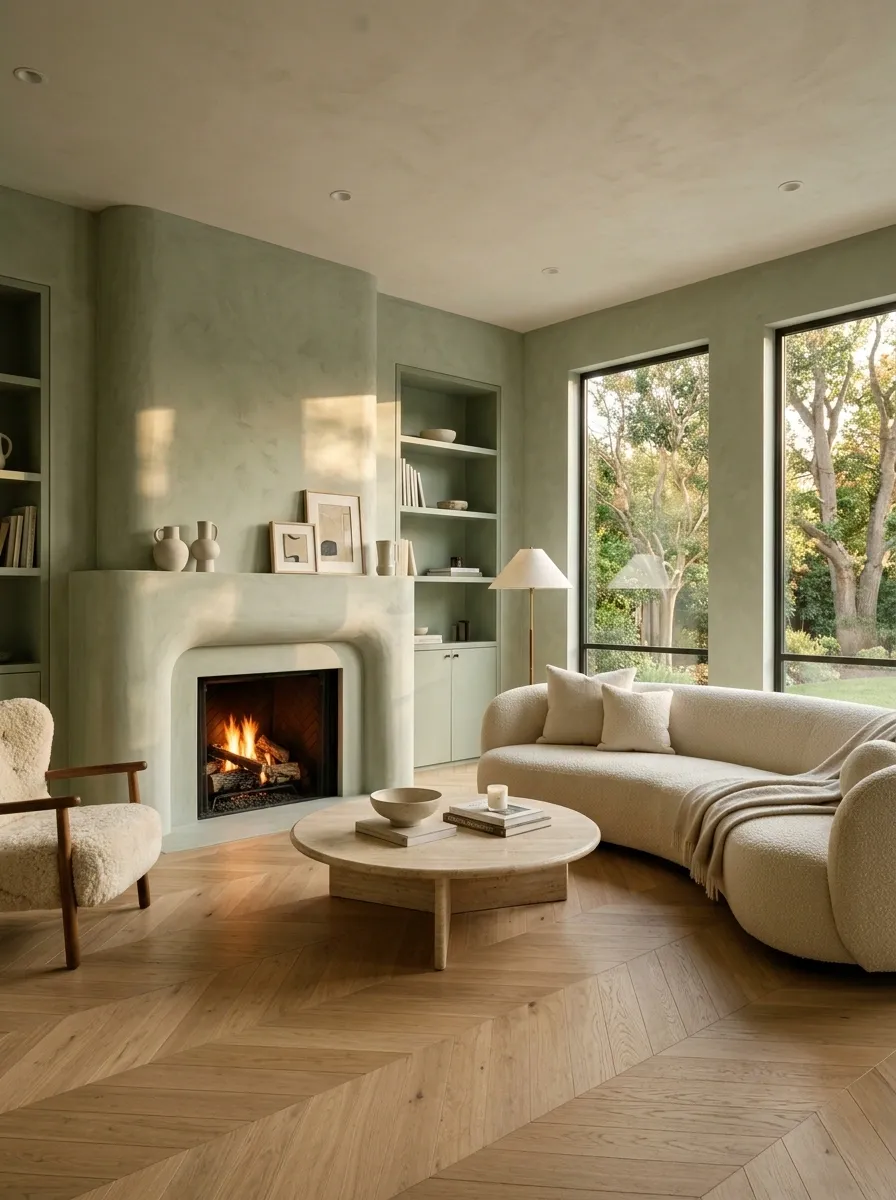
This room builds its identity around curves. A soft green plaster finish wraps the walls, while a curved cream sofa faces a rounded fireplace surround and low circular coffee table. The repeated shapes create a relaxed composition without needing much decoration.
The fireplace becomes an architectural feature rather than simply a place for a television. A few pieces of artwork and warm lighting add interest while keeping the curved geometry visible.
Rounded furniture can easily become too theme-heavy if every object follows the same shape. The straight-edged flooring and rectangular windows provide useful contrast.
Otherwise the room starts looking like someone clicked “round corners” on absolutely everything.
Two-Tone Green Living Room With Dark Lower Walls and Pale Upper Walls
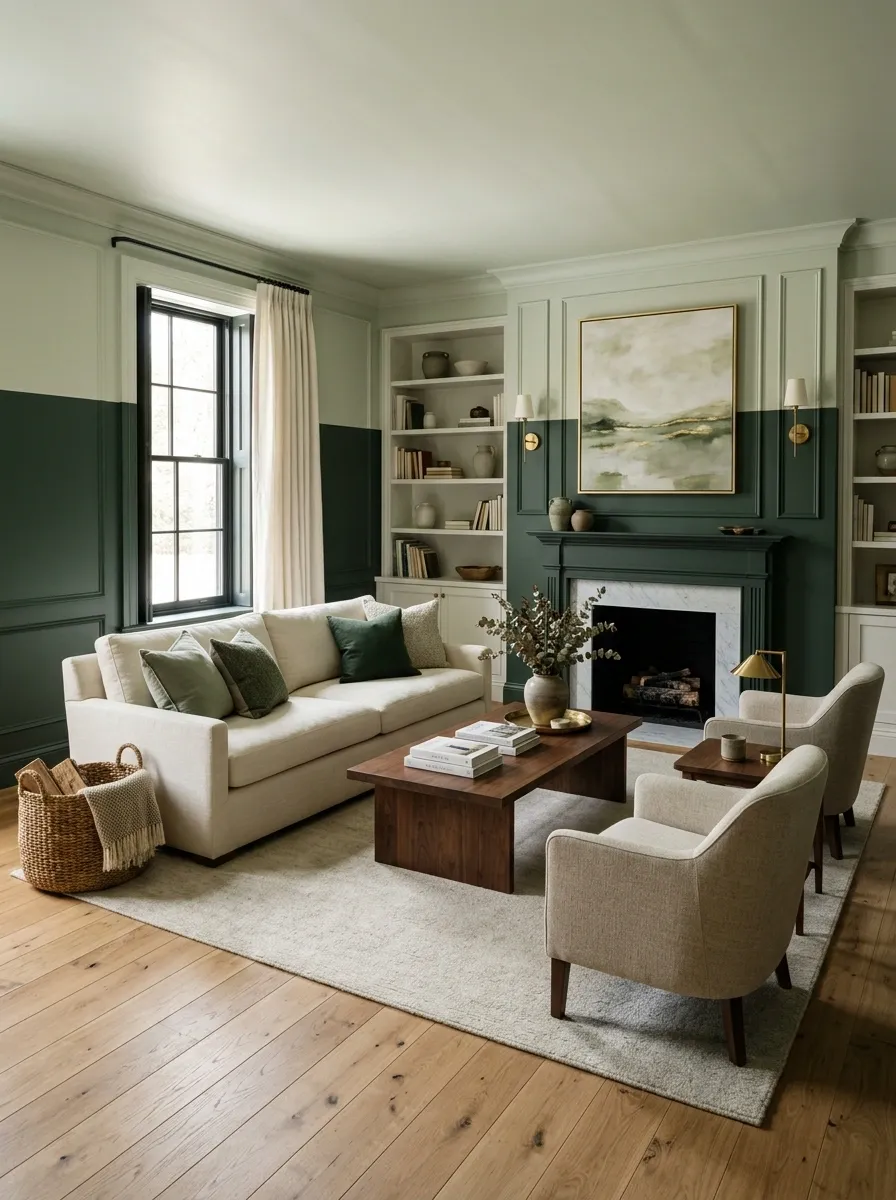
This room uses green in two different strengths to create architectural depth. A deeper green covers the lower portion of the walls, while a much softer green continues above it and across the upper wall area. Traditional trim separates the tones cleanly, and warm wood flooring connects the whole composition.
The furniture stays relatively simple: a cream sofa, dark wood coffee table, and a pair of upholstered chairs. Because the walls already provide a strong horizontal division, the furniture doesn’t need to perform circus tricks.
The darker lower section visually anchors the room while the lighter upper section keeps the ceiling area feeling open. The proportions matter more than the exact shades. Make the darker band too tall and the room starts looking like the wall is wearing pants two sizes too high.
keeps the room open
grounds the furniture
Green Living Room With a Cream Brick Fireplace and Arched Alcoves
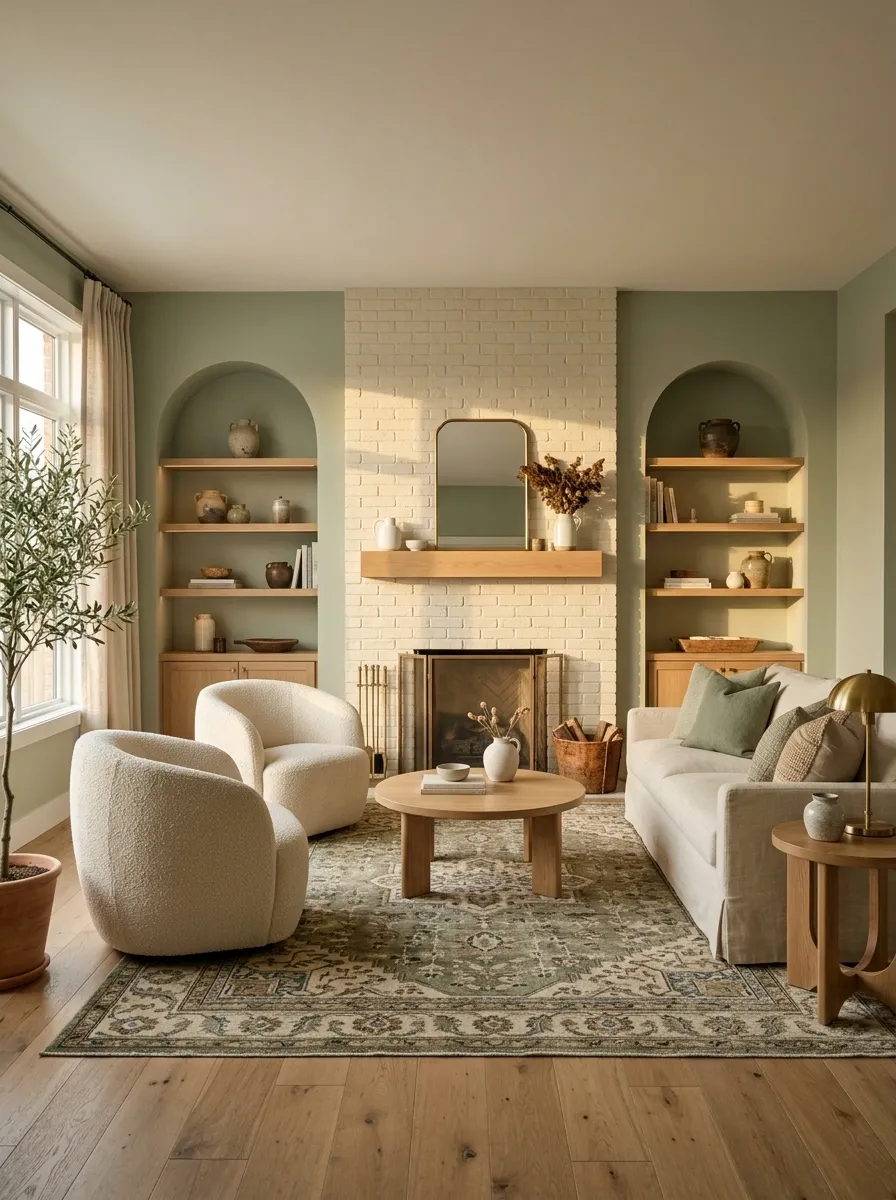
This room has enough architecture to carry the design before the accessories even arrive. Soft green walls frame a cream brick fireplace, while two arched alcoves create visual symmetry on either side. A relaxed linen sofa faces the fireplace, with a pair of rounded chairs positioned slightly inward to form a comfortable conversation area.
The cream masonry gives the green a lighter counterpoint, while the arches soften the stronger horizontal line of the mantel. A patterned rug adds just enough movement beneath the seating.
The room feels distinctive because several elements repeat the same curves and proportions. Nothing is screaming for attention. Even the accessories know their place, which is more discipline than can be said for most people in a group chat.
Contemporary Green Living Room With a Charcoal Sofa and Concrete
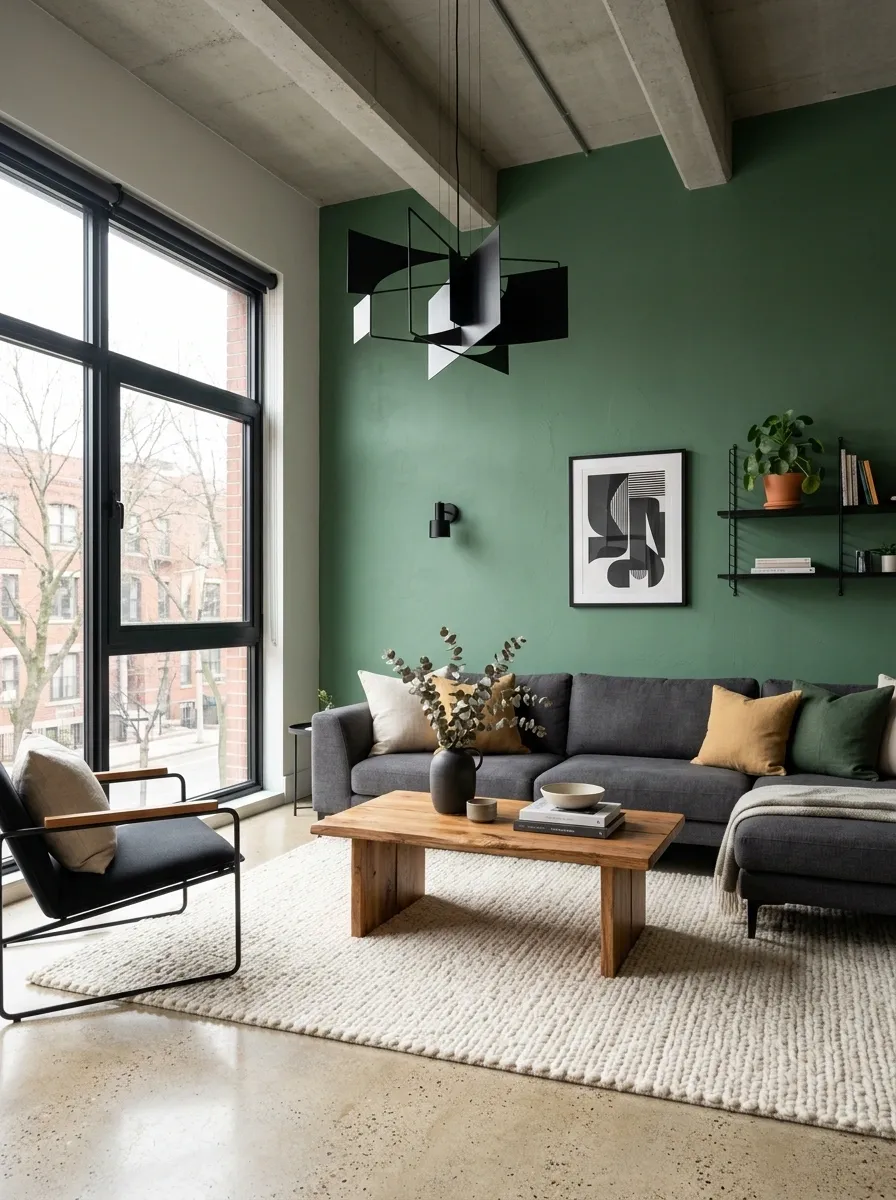
This is the sharper end of the green spectrum. Medium-deep green walls meet a charcoal sofa, pale concrete flooring, black metal details, and a warm timber coffee table. The result feels urban and contemporary without turning cold.
The green prevents the concrete from becoming too stark, while the timber introduces just enough warmth to keep the room comfortable. A large textured rug softens the transition between the hard floor and the seating, and a sculptural pendant gives the ceiling some visual weight.
The room works through contrast rather than decoration. Green against gray, timber against concrete, soft upholstery against hard surfaces. There is plenty happening already. Adding a dozen little accessories would be like putting subtitles on a conversation everyone can already hear.
cool
earthy
cool
warm
Light Olive Living Room With Cream Curtains and Pale Stone
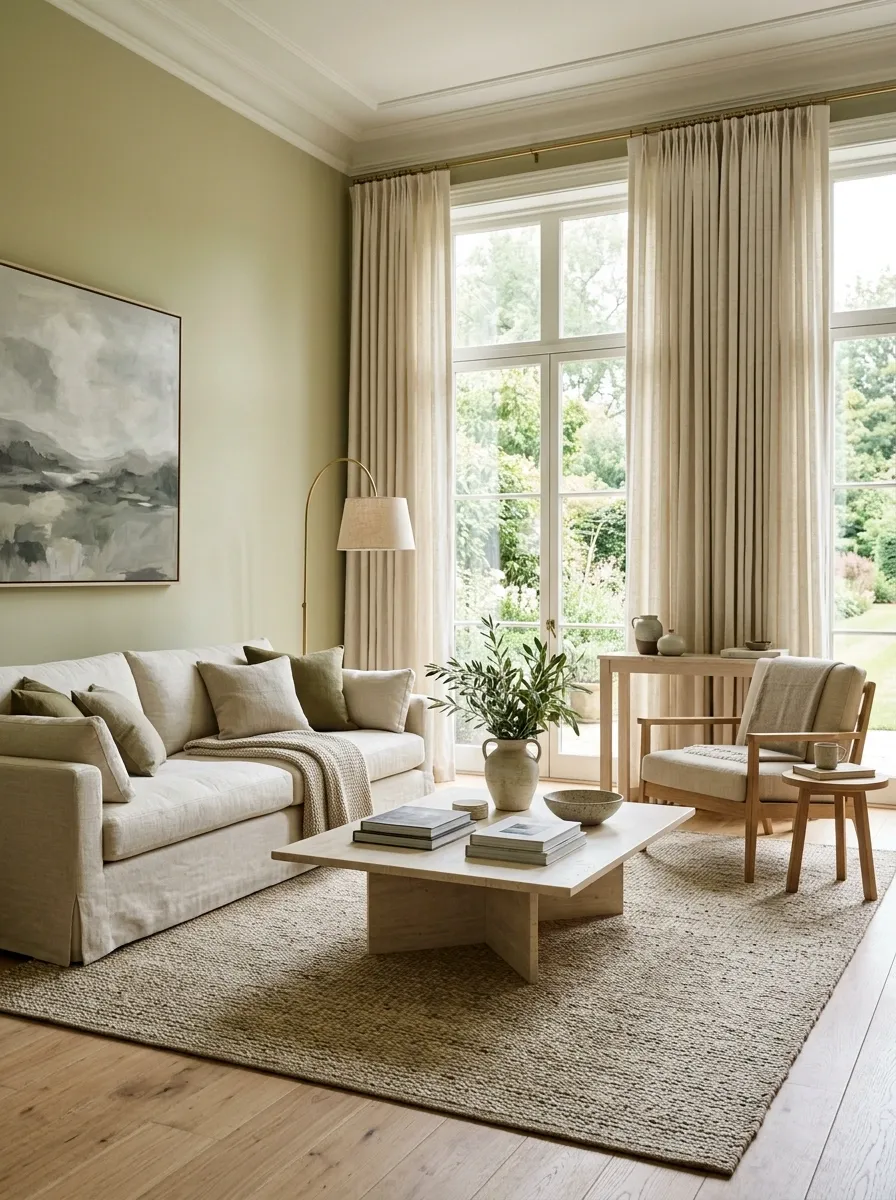
Light olive walls create a calm backdrop for full-height cream curtains, tailored seating, pale stone, and warm wood. The room feels polished, but the materials keep it from becoming too precious. A large stone coffee table sits in the center while a textured cream sofa and simple lounge chair establish a generous seating zone.
The curtains are important because they create a tall vertical layer from ceiling to floor. That makes the room feel more finished than a collection of furniture placed against a painted wall.
Keep the palette close in value and let texture provide the variation. Once every surface becomes a different color, the quiet quality disappears. The room isn’t asking for attention. It’s already getting it.
Green Living Room With a Rust Sofa and Checkerboard Stone Floor
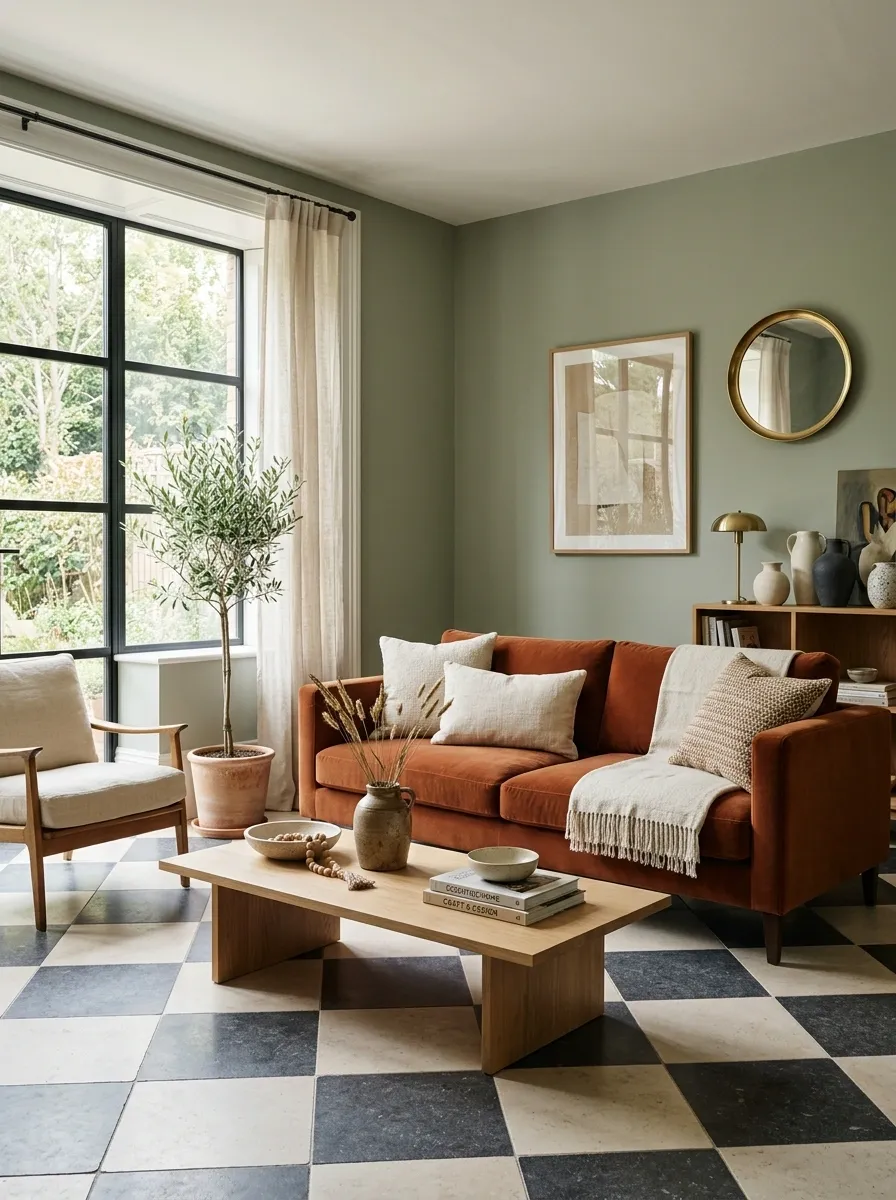
This room doesn’t play it safe, and that’s exactly why it stands out. Muted green walls sit above a checkerboard stone floor, while a rust-colored sofa becomes the warm focal point. Simple wood furniture keeps the room grounded, and a few cream details stop the green and rust from becoming too intense.
The floor brings a graphic pattern into the architecture, so the rest of the room stays fairly quiet. The sofa has a strong color but a simple shape, which keeps the composition from feeling theatrical.
The trick is giving one bold pattern enough space around it. Add patterned curtains, patterned chairs, patterned cushions and suddenly the floor has started a family meeting nobody requested.
Soft Green Living Room With Blush Upholstery and Warm Oak
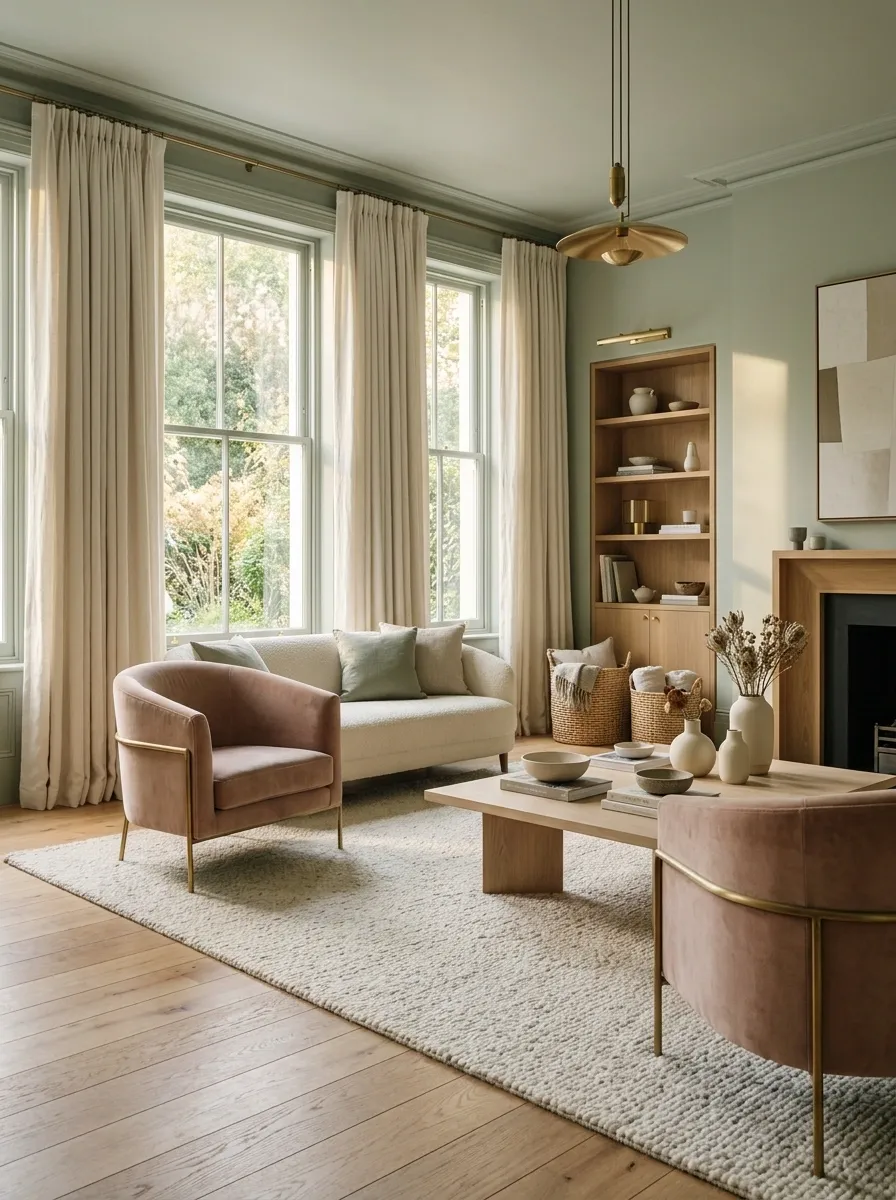
Soft green and dusty blush create a gentler living room without pushing it into sugary territory. The walls stay muted, while a blush-toned sofa or pair of lounge chairs introduces the secondary color. Warm oak furniture, cream curtains, and a pale textured rug keep the composition grounded.
The green does most of the visual work in the background, while blush appears only where the eye naturally looks toward the seating. That makes the contrast feel intentional rather than decorative for decoration’s sake.
The important distinction is saturation. Dusty blush works with softened green because neither color is shouting. Replace it with hot pink and suddenly the room has been promoted from calm interiors magazine to children’s television set.
base
accent
warmth
pause
Minimal Green Living Room With Low Furniture and Pale Limestone
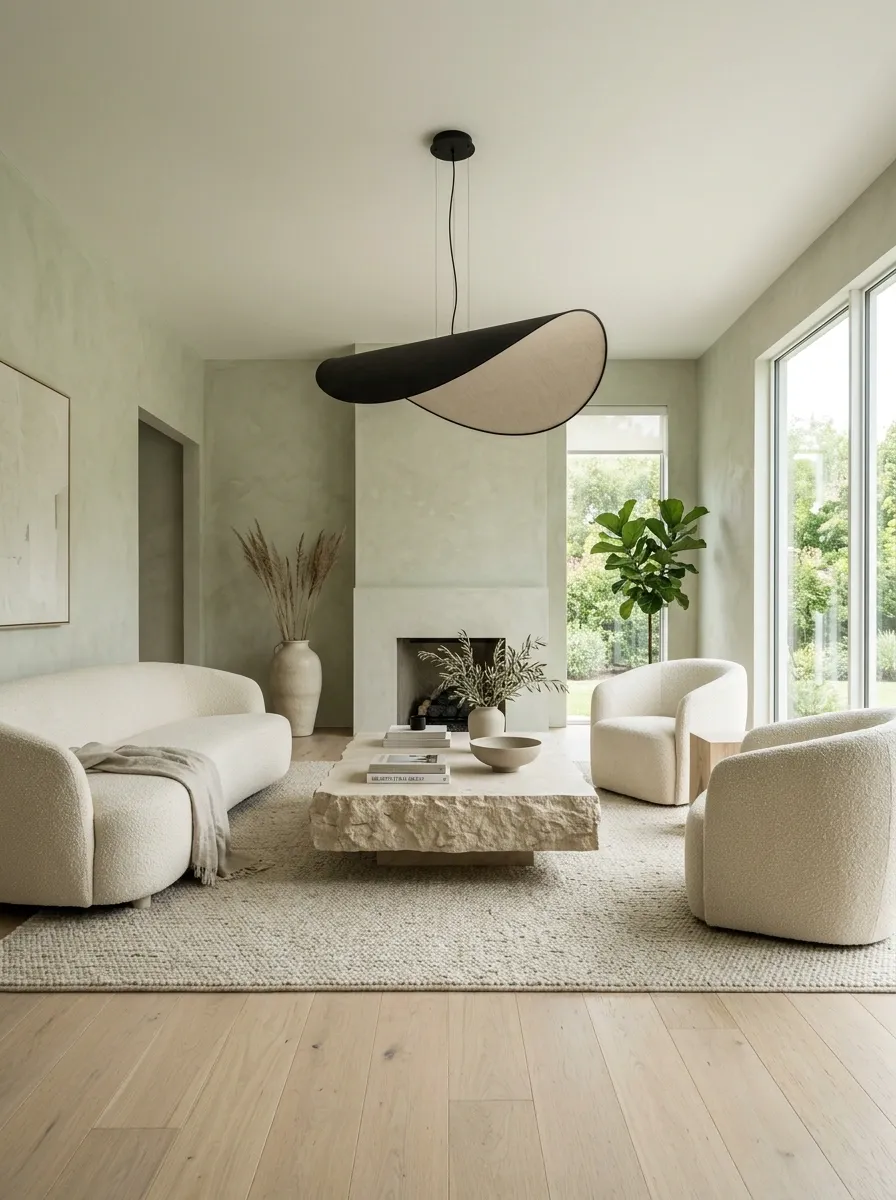
This room proves green doesn’t need a crowded gallery wall to have personality. Pale green walls create a quiet architectural backdrop for low cream seating, a large limestone coffee table, pale timber flooring, and a single sculptural light. The furniture sits away from the walls, leaving generous negative space around the main composition.
The result feels calm because there are fewer visual interruptions. Materials do the heavy lifting instead: rough limestone, soft upholstery, smooth plaster, and warm timber all provide subtle variation.
Minimalism gets accused of being empty, but this room isn’t empty. It’s edited. There is a difference. Every surface doesn’t need a tiny object sitting on it proving that someone owns a tray.
Mid-Century Green Living Room With Walnut Furniture
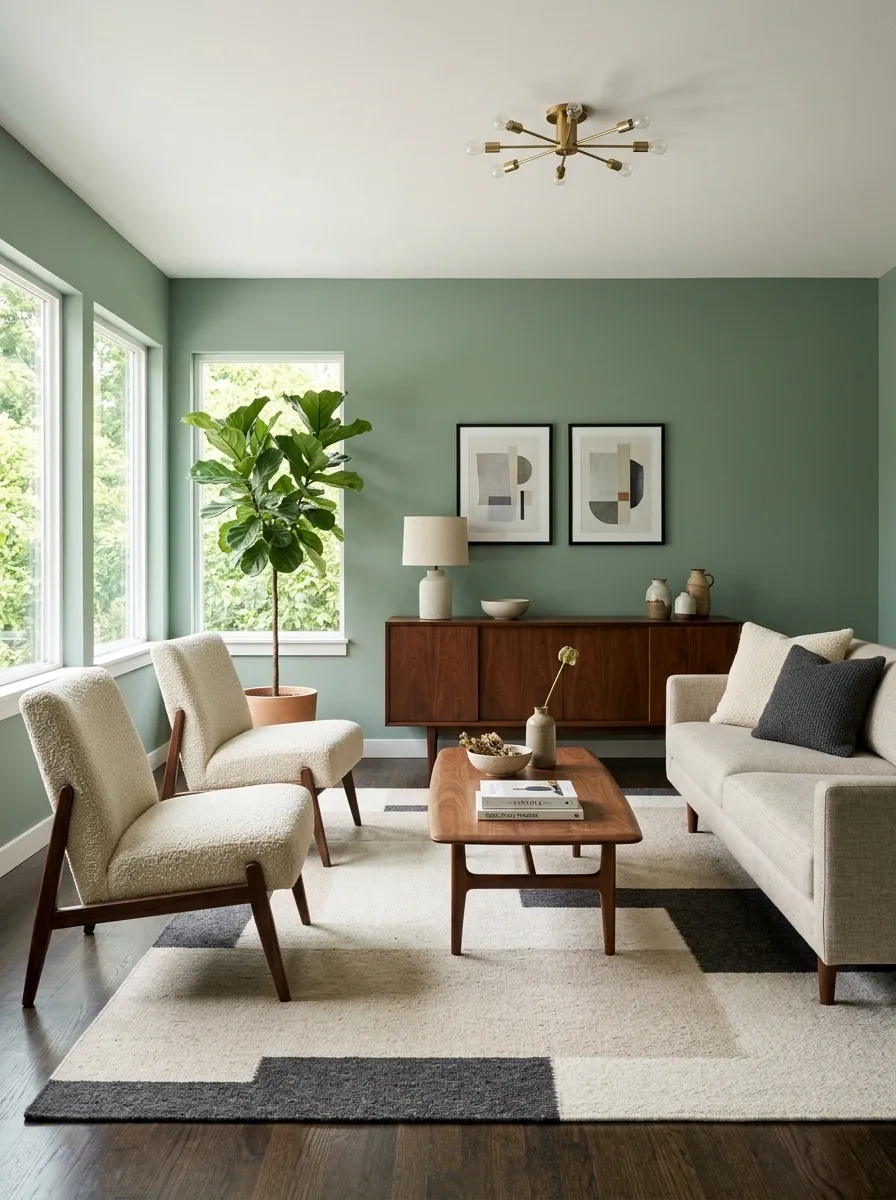
Mid-century furniture gives this green living room a completely different personality. The walls carry a medium, slightly muted green, while a walnut credenza, tapered-leg coffee table, sculptural lounge chairs, and a simple sofa establish the period-inspired foundation.
The furniture stays visually light even though the walnut is dark. Tapered legs keep the floor visible, while a large low rug creates enough separation between the pieces to stop the room feeling scattered.
The architecture stays relatively simple because the furniture already provides the visual language. Replacing the walnut with several ornate pieces would muddy the silhouette. Mid-century design has one rule worth taking seriously: let the legs be legs. They do not need nine layers of things sitting around them.
Warm Green Living Room With Exposed Beams and Stone Flooring
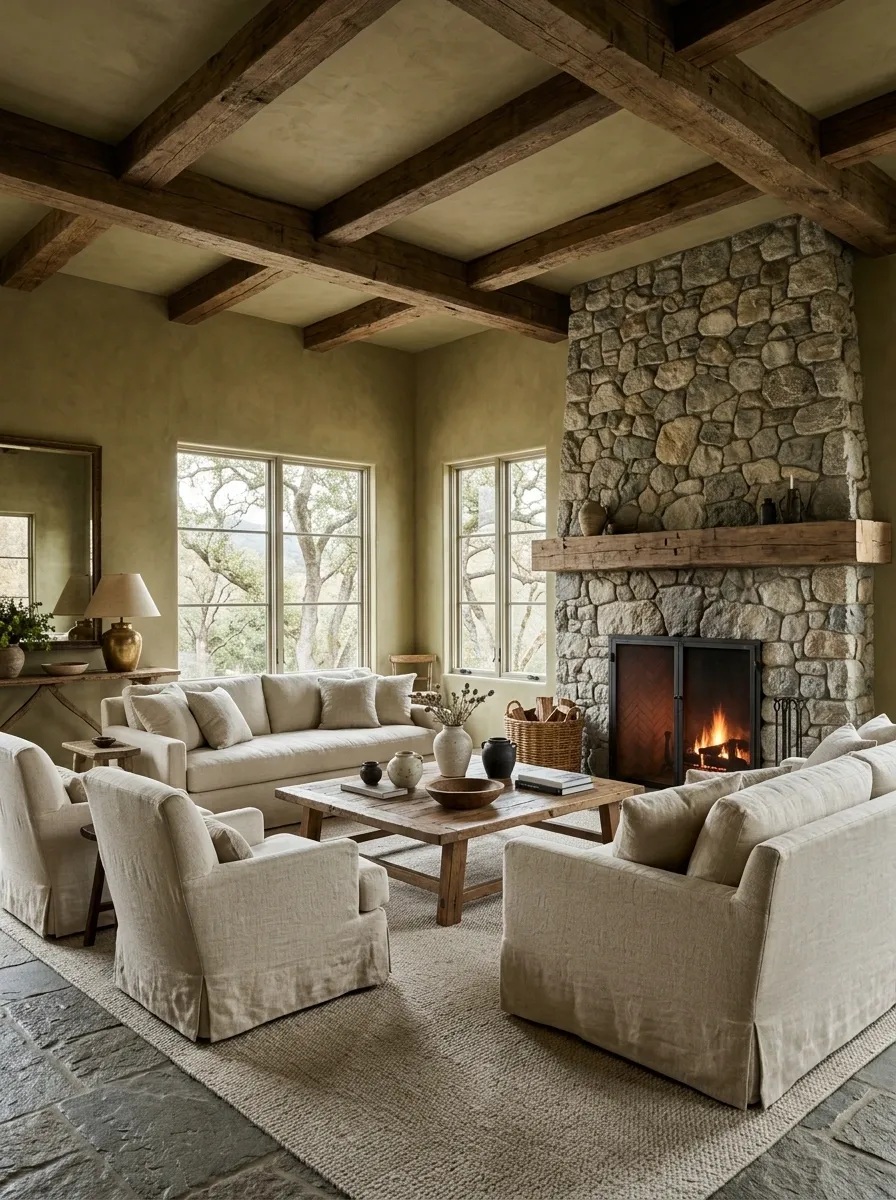
This room gets much of its personality from the architecture. Warm green walls sit beneath exposed timber beams, while natural stone flooring runs through the space and gives the room a grounded, slightly rustic character. A large fireplace becomes the main anchor, with relaxed linen seating arranged around it.
The furniture stays soft and uncomplicated because the beams and stone already provide plenty of texture. A large rug adds comfort beneath the seating without covering the character of the floor completely. Warm lamps pick up the timber tones after dark.
Green works especially well here because it sits between the wood and stone rather than fighting either one. Add glossy finishes and ultra-modern furniture and the room loses its relationship with the architecture. The beams did not sign up for that identity crisis.
warm structure
cool texture
visual bridge
Muted Green Living Room With Monochromatic Upholstery and Drapery
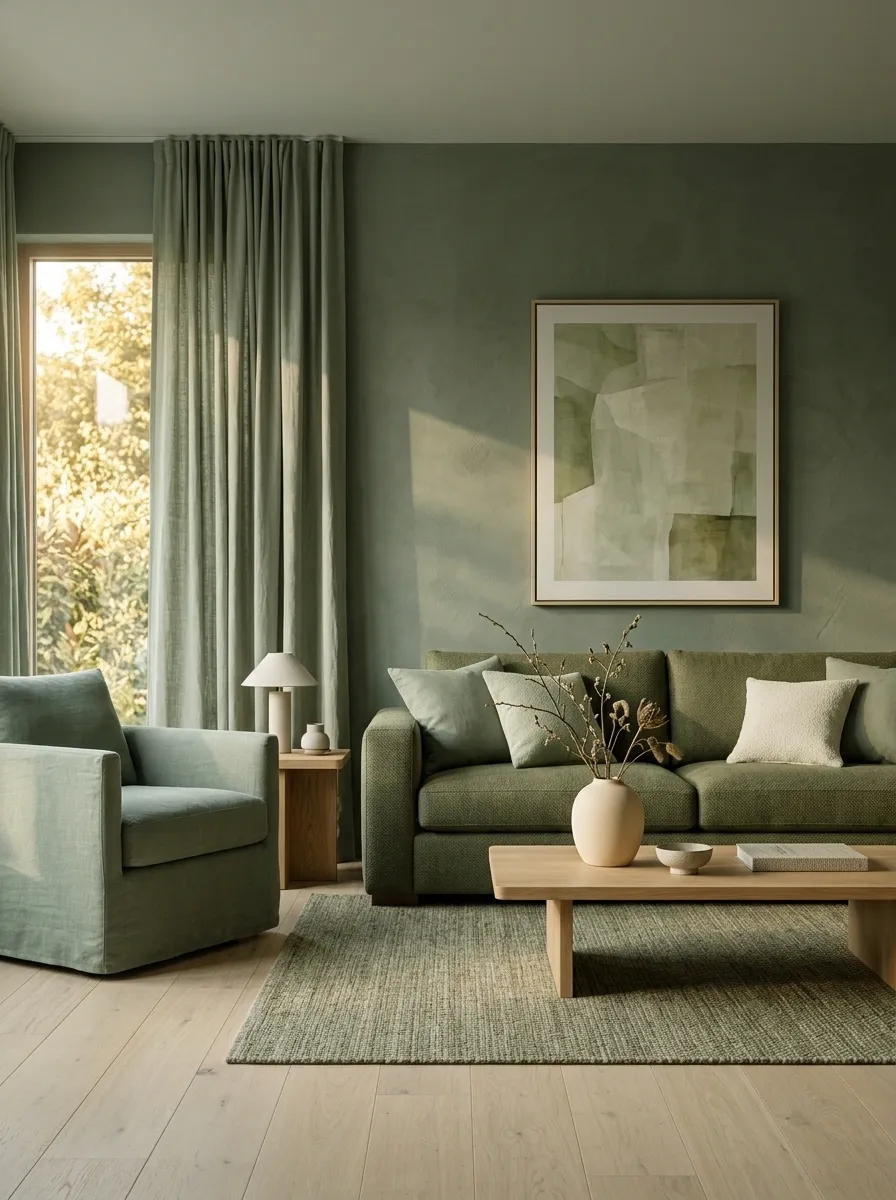
This room takes the quietest possible route with green. The walls, sofa, curtains, and accent chair all stay within closely related muted green tones, while pale flooring and warm ivory accessories keep the composition from becoming visually flat.
The furniture shapes remain simple, allowing the tonal variation to become the main design feature. A lighter green chair sits against a deeper wall, while slightly darker upholstery gives the sofa enough definition to remain visible without introducing a new color.
Monochromatic rooms need changes in texture and value to stay interesting. Linen, plaster, woven fabric, and smooth wood create those differences here.
The goal is not to make every object exactly the same green. That would be less monochromatic sophistication and more evidence that someone got trapped in the paint aisle.
Green Living Room With a Bay Window Reading Corner
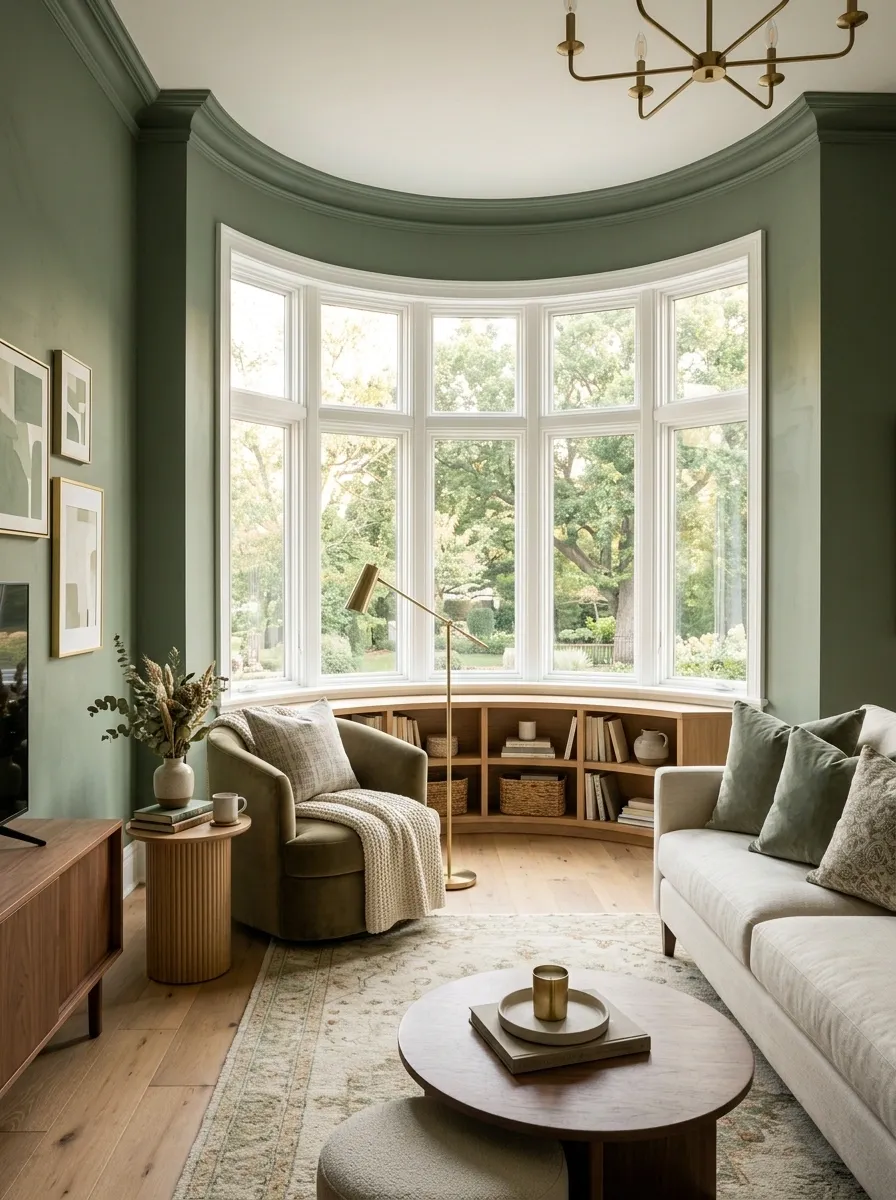
This room is organized around a bay window rather than a television or fireplace. Green walls wrap the space, while a compact reading chair and small side table sit inside the brightest part of the room. The main sofa faces inward, creating a clear relationship between the reading corner and the larger seating area.
A tall floor lamp reinforces the reading zone after sunset, while a small bookcase or low cabinet keeps useful storage close without crowding the window. The rest of the furniture stays relatively compact so the natural light remains visible.
The layout works because each seating area has a reason to exist. The reading corner feels like part of the room instead of furniture dumped beside a window. That distinction is tiny on paper and massive in photographs.
CHAIR
Deep Green Living Room With a Pale Ceiling and Sculptural Lighting
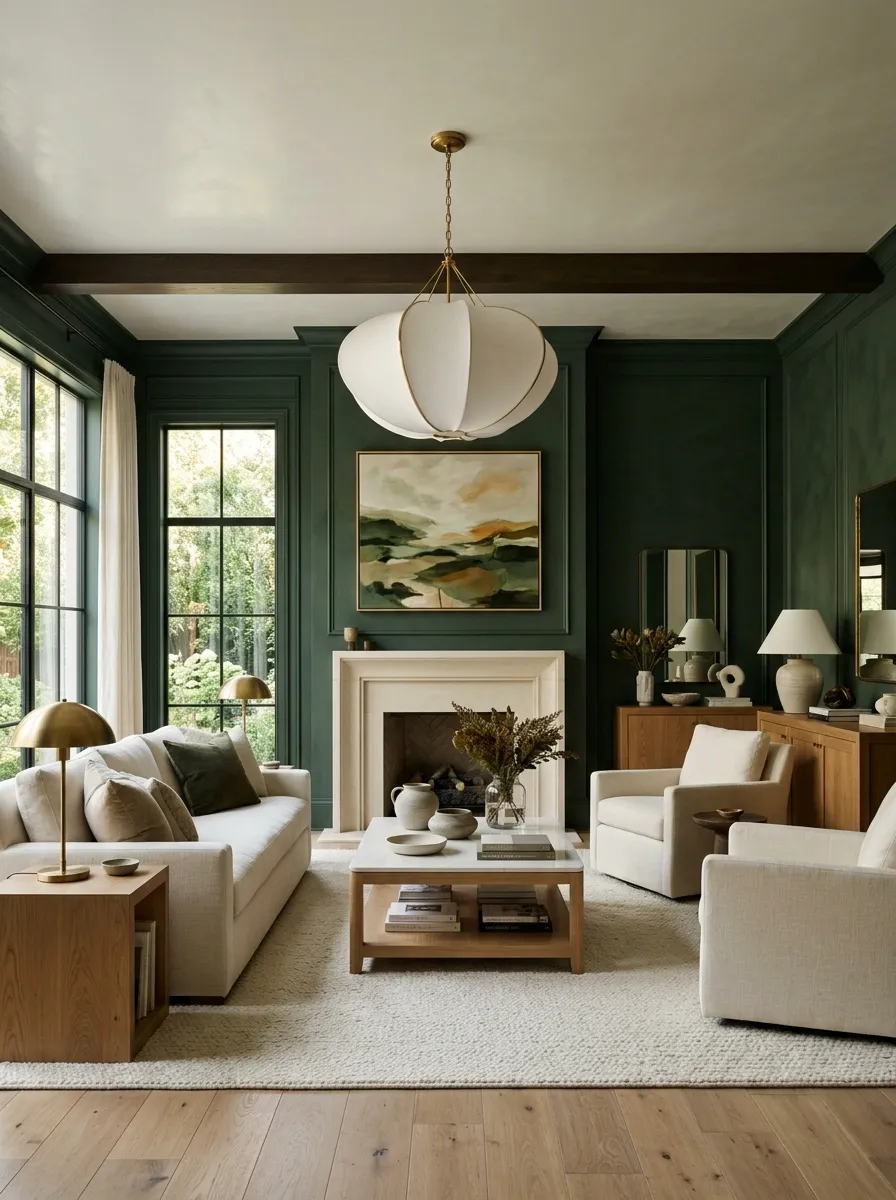
The final room goes dramatic without making the ceiling disappear. Deep green walls create a rich architectural shell, while a noticeably lighter ceiling reflects more light back into the room. A large sculptural pendant hangs above cream seating, with warm wood furniture adding another layer between the dark walls and pale upholstery.
The ceiling is the quiet trick. Instead of extending the darkest green across every surface, the lighter overhead plane creates separation and keeps the room from feeling visually compressed.
Everything else stays relatively restrained because the walls and pendant already provide plenty of drama. Add another oversized statement piece and the room starts behaving like it has an agent.