
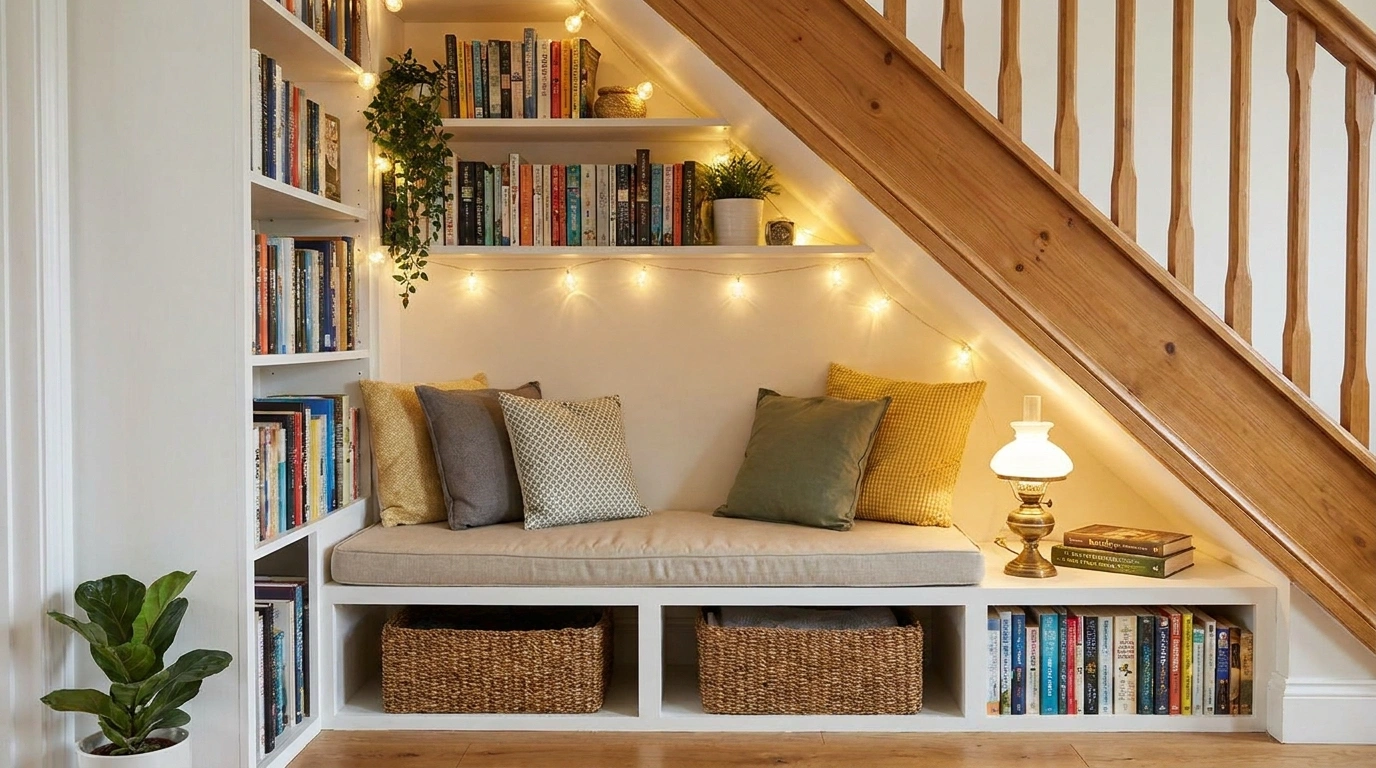
Take everything out from under the stairs. The folding chair, the emergency wrapping paper, and the bag nobody has opened since the move.
Now consider the space itself. It may be a useful alcove, a low storage area, or simply part of the hallway. A triangular gap is not automatically requesting an office, a wine display, and a reading nook simultaneously.
Give it one clear role before adding anything back.
Establish What Can Stay Open and What Must Stay Protected
These ideas assume an existing usable alcove or cupboard. Do not remove stair linings, alter structural components, or create enclosures without checking applicable requirements. Under-stair construction can have fire-protection obligations.
Keep routes, ventilation, and service panels clear. Measure usable headroom where a person sits and stands rather than relying on the tallest point.
Useful Arrangements for the Awkward Shape
Illuminated Built-In Credenza
A sleek dark credenza anchors the lower staircase slope, providing ample hidden storage while keeping the main hallway feeling remarkably open and light. Integrate custom LED strip lighting along the angled wall to showcase decorative objects, framed art, and trailing greenery without overwhelming the visual flow.
Keep styling curated and uncluttered so the sophisticated backdrop remains the star of the space rather than a catch-all for everyday household items. A well-placed woven basket nearby adds functional texture for quick drop-offs while maintaining the pristine aesthetic of the entryway.
Balance the modern dark cabinetry with warm ceramics and natural botanicals to soften the architectural lines. Thoughtful lighting elevates a transitional hallway zone into a polished architectural statement that welcomes guests in style.
A Shallow Console With One Large Piece of Art
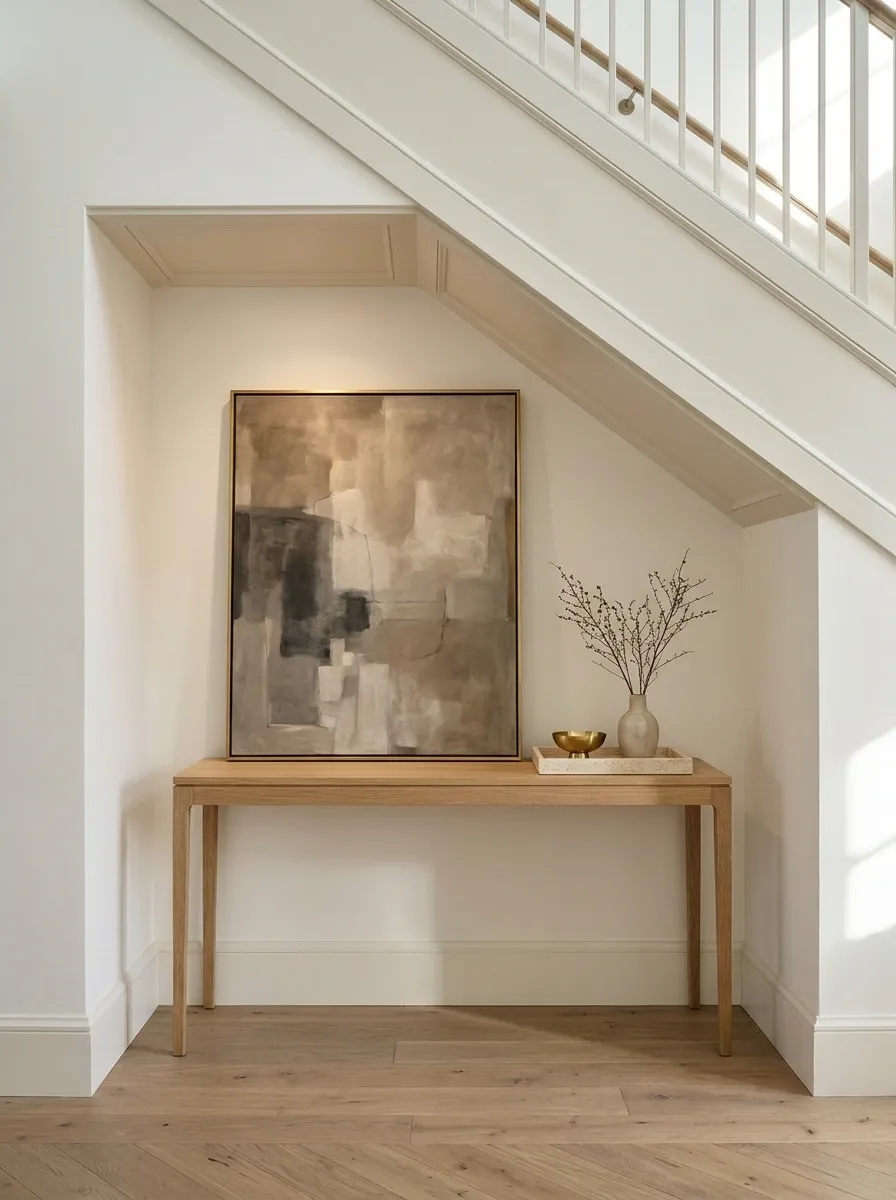
A narrow console finishes an open alcove while leaving the hallway usable. Position it where the surface is reachable without ducking beneath the slope.
Choose one substantial artwork rather than filling the triangle with small frames. A tray can catch keys near the entrance. Check the console’s depth and stability; anyone carrying shopping should still be able to pass normally.
Shallow console + substantial artwork + useful tray.
Cozy Hallway Bench Nook
Transform an awkward lower stair angle into a charming resting spot by tucking in a compact bench layered with inviting textiles and textured accent pillows. Embrace pattern and personality by running botanical wallpaper along the stair stringer to turn structural dead space into an intentional design feature. An under-stair bench offers a convenient spot to pause without crowding a busy thoroughfare, provided you keep the footprint modest and carefully scaled. Ground the arrangement with a woven planter and soft rug to complete the welcoming miniature lounge. Layering tactile elements like a cozy throw blanket makes the petite nook feel finished rather than an afterthought. It proves that even the tightest architectural angles can become a delightful feature with the right decorative touches.
A Closed Shoe Cabinet Near the Entrance
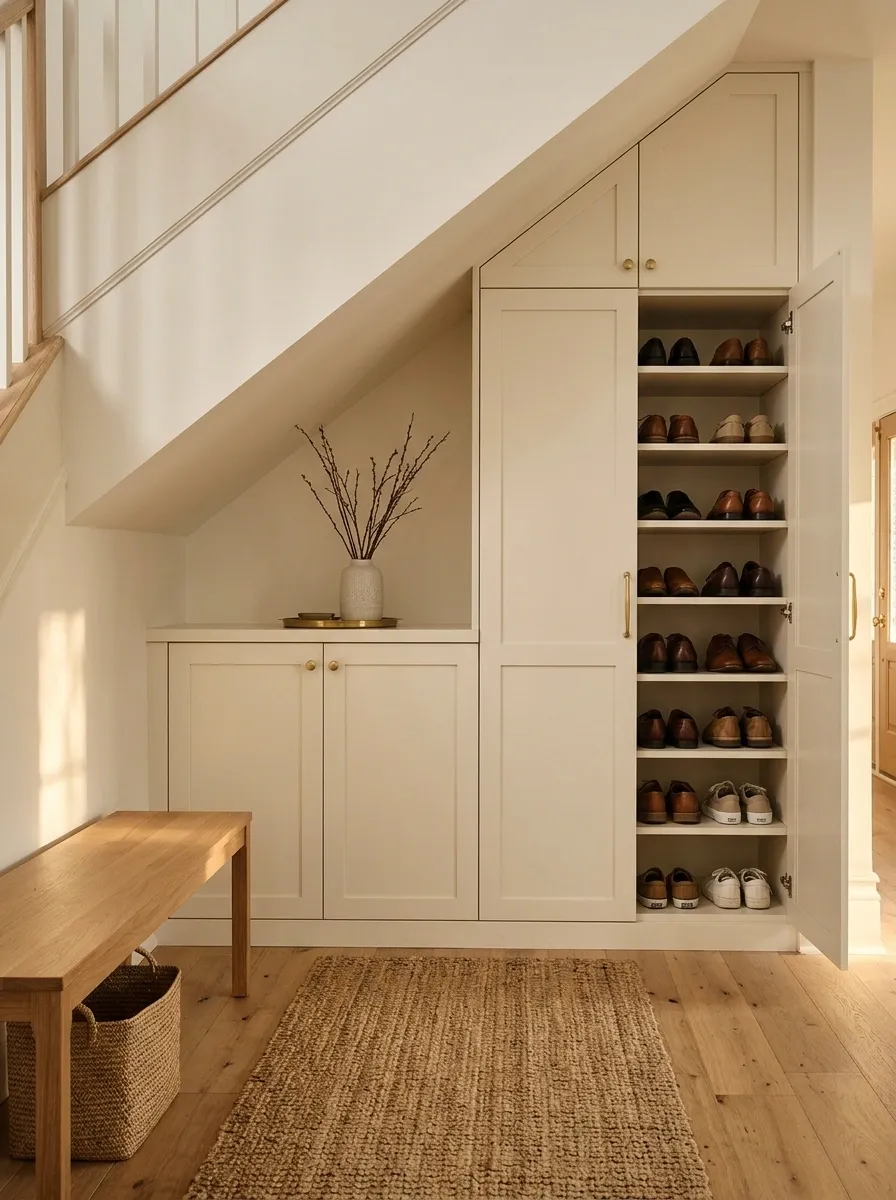
A shallow shoe cabinet can turn a lower alcove into practical entrance storage. Measure it with compartments or doors open.
Keep frequently worn shoes easiest to reach and follow anchoring instructions. If the open unit blocks the route, change its position. Storage should reduce the entrance obstacle course instead of formalizing it behind a coordinated set of fronts.
Custom Black Mudroom Unit
Maximizing vertical capacity, a dramatic black built-in unit combines open coat hooks with concealed bench storage to conquer hallway clutter effortlessly. Match the dark staircase railings with continuous moody millwork to create a cohesive, custom-crafted drop zone that hides daily gear behind sleek cabinet doors. Incorporate warm wood tones on the bench seat and upper shelf to break up the monochromatic finish and add organic character to the hardworking nook. Ensure hardware choices, like warm brass pulls, elevate the utilitarian setup into high-end transitional design. Smart layout planning ensures boots, bags, and jackets have a designated home tucked entirely out of sight. This approach successfully turns chaotic entryway messes into a streamlined, striking architectural feature.
A Reading Chair at the Tall End
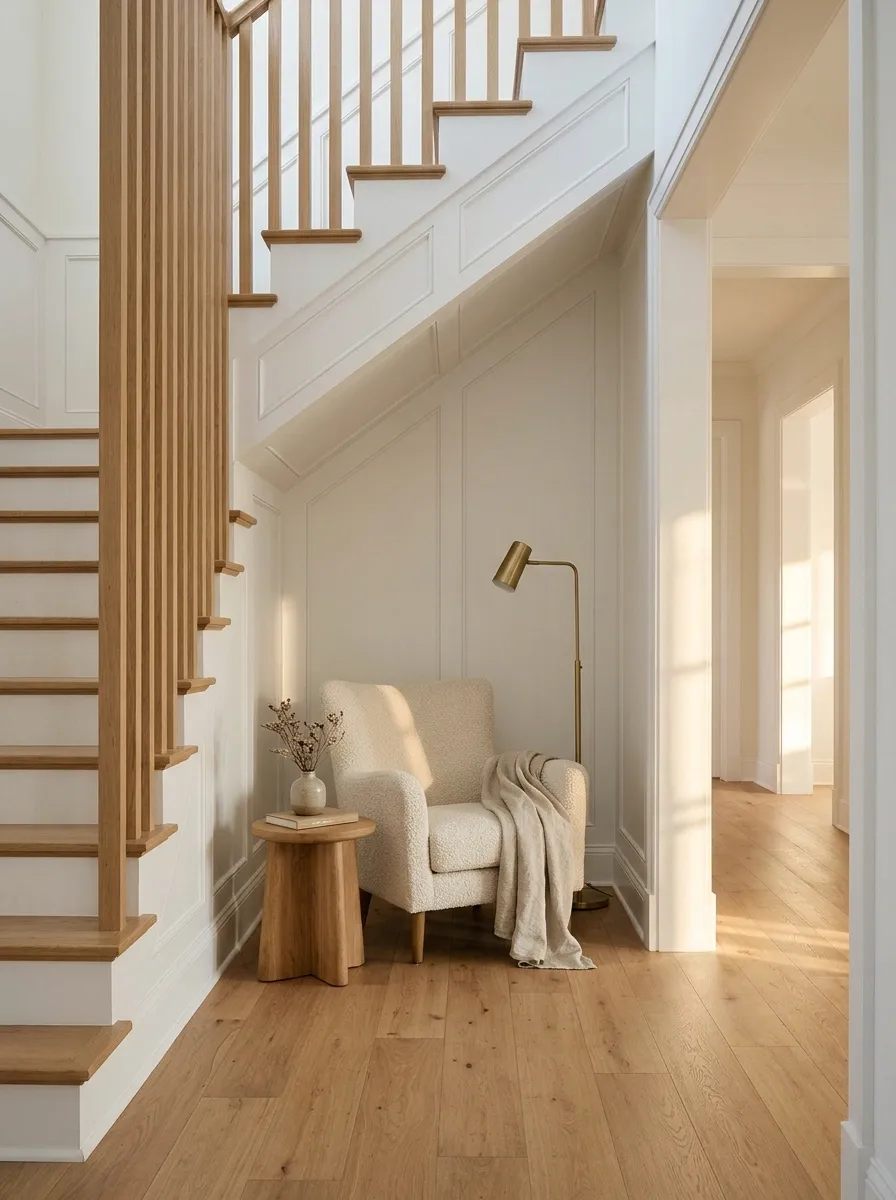
The taller end may accommodate a compact upright chair and small table. Rehearse sitting and standing before selecting furniture.
Add suitable lighting with safely managed cables where power is available. Keep the chair clear of the main route. A modest comfortable seat works better than an oversized lounge chair that spends every day explaining why the hall has become narrow.
Dimmable Library Reading Nook
A recessed shelving unit hugging the stair angle creates a charming mini-library paired with a deeply inviting upholstered armchair for ultimate relaxation. Drape fairy lights along the back of the built-ins to cast a warm, magical glow across your favorite novels and trailing ivy plants. Style the shelves densely with books and small treasures, letting the angled architecture frame the collection naturally. Keep a small wooden side table close at hand to hold a reading lamp and your evening cup of tea. This clever layout turns forgotten dead space into a secluded literary retreat just steps from the main living areas. It proves that small alcoves can deliver maximum coziness when styled with intention and ambient lighting.
A Desk for Short, Specific Tasks
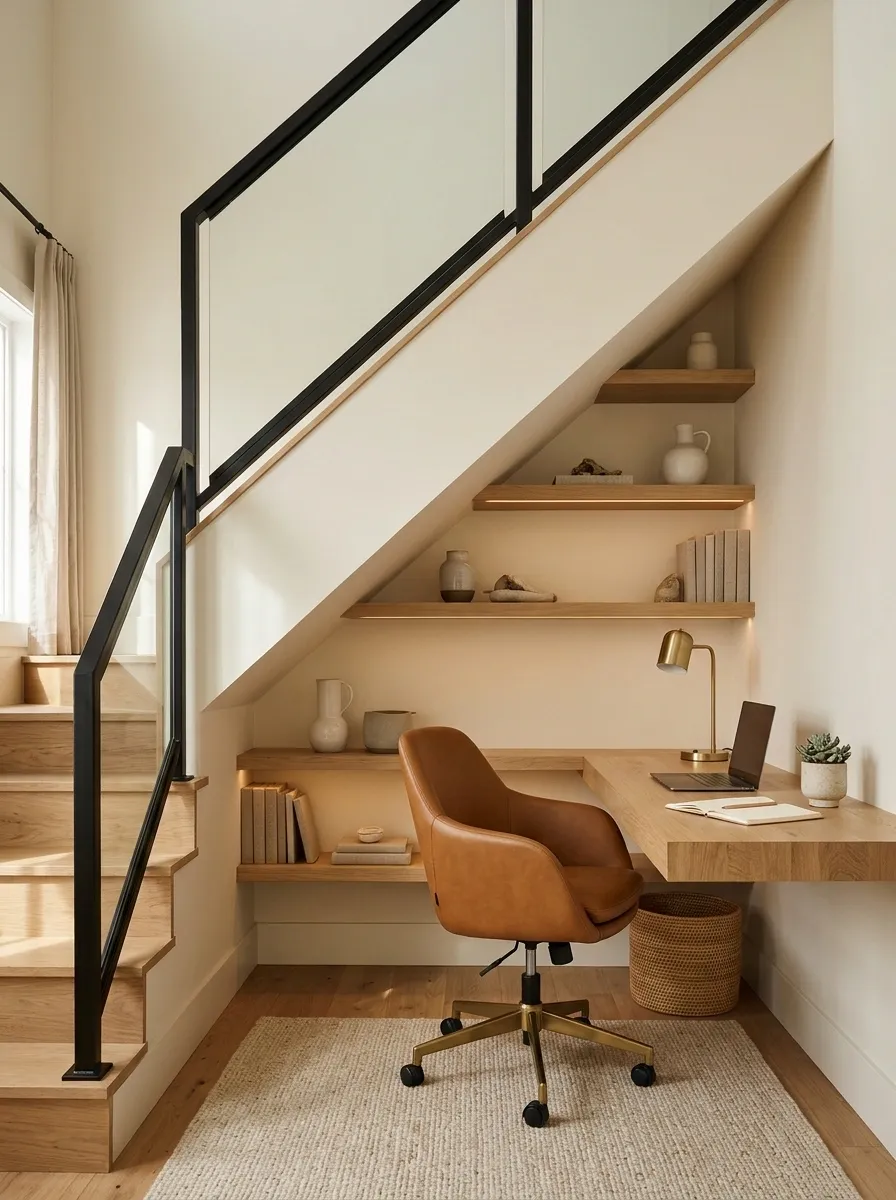
An under-stair desk can suit occasional admin when headroom, depth, and chair movement are adequate. Put the seated position at the high end.
Plan useful light and safe power access. Test screen position and comfort if you expect longer sessions. A triangular ceiling offers architectural interest, but it has no professional qualifications in ergonomics.
A Low Bookcase Along the Back Wall
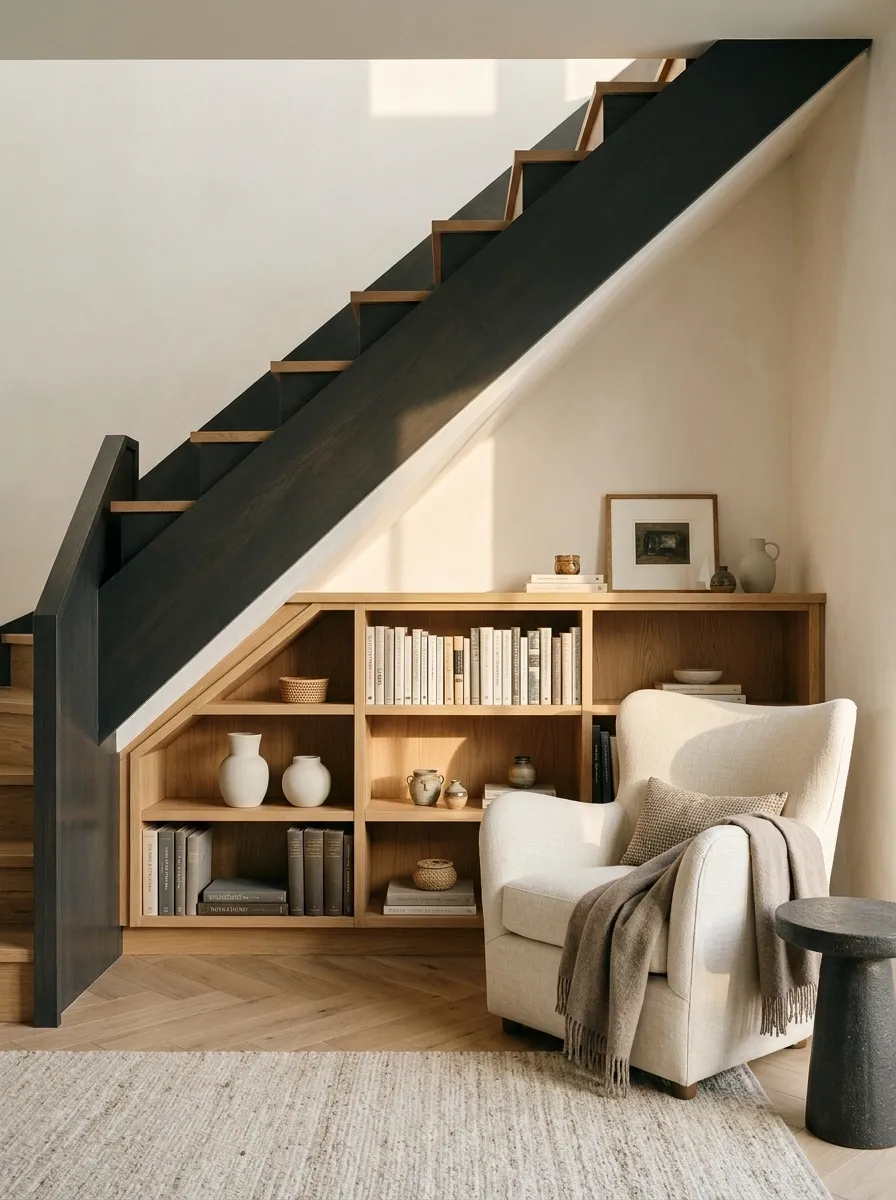
A low bookcase can use the space without following every stair angle. Let the slope remain visible above it.
Use suitable anchoring, adjustable shelves, and sensible loading, with heavier books lower down. Keep retrieval easy. You can have a small library corner without arranging books so decoratively that finding a title requires dismantling an installation.
Heavy books below and enough space to retrieve each one.
A Bench With Baskets for Everyday Bags
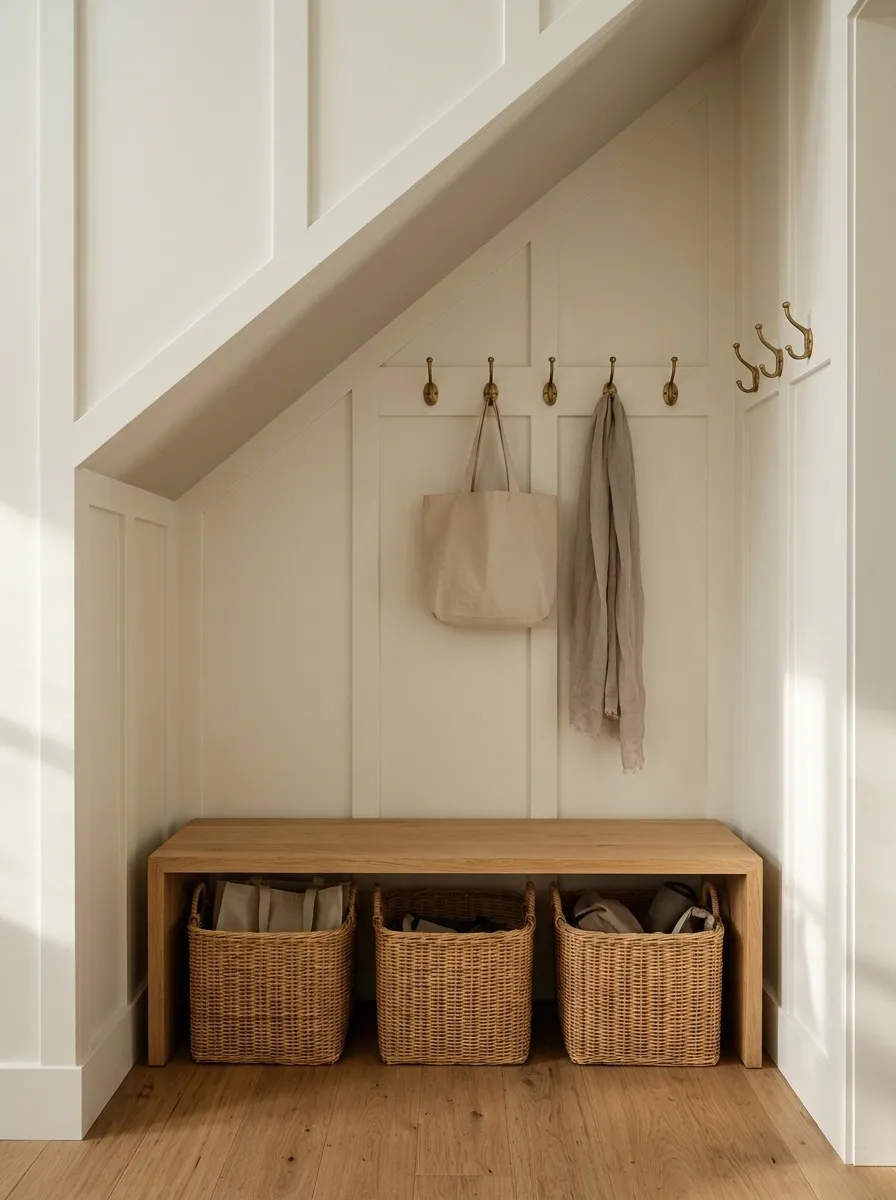
A short purpose-made bench provides a place for shoes, with baskets beneath for reusable bags or outdoor accessories.
Check headroom while rising and keep the seat clear. Size baskets around the belongings instead of expecting belongings to adapt to decorative boxes. Three cushions and an ornamental throw can make a bench technically present and practically unavailable.
A Single Cabinet for Household Supplies
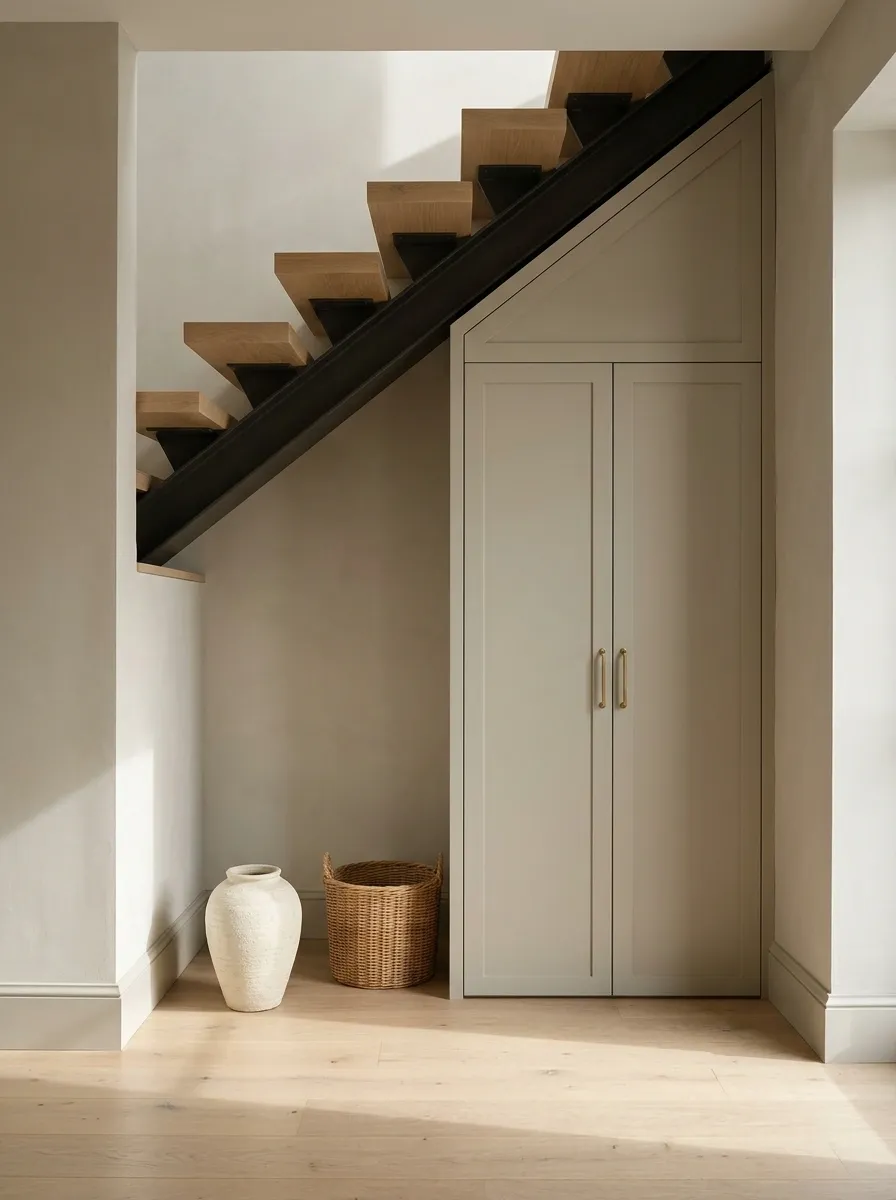
One closed cabinet can quiet the alcove while containing everyday supplies. Assign its contents before choosing interior dimensions.
Keep chemicals stored securely according to their labels and leave services accessible. A plain front connected to the wall color can recede. Avoid creating an “everything cupboard” whose opening requires catching a mop, a bulb, and somebody’s winter hat.
A Display Niche With One Sculptural Object
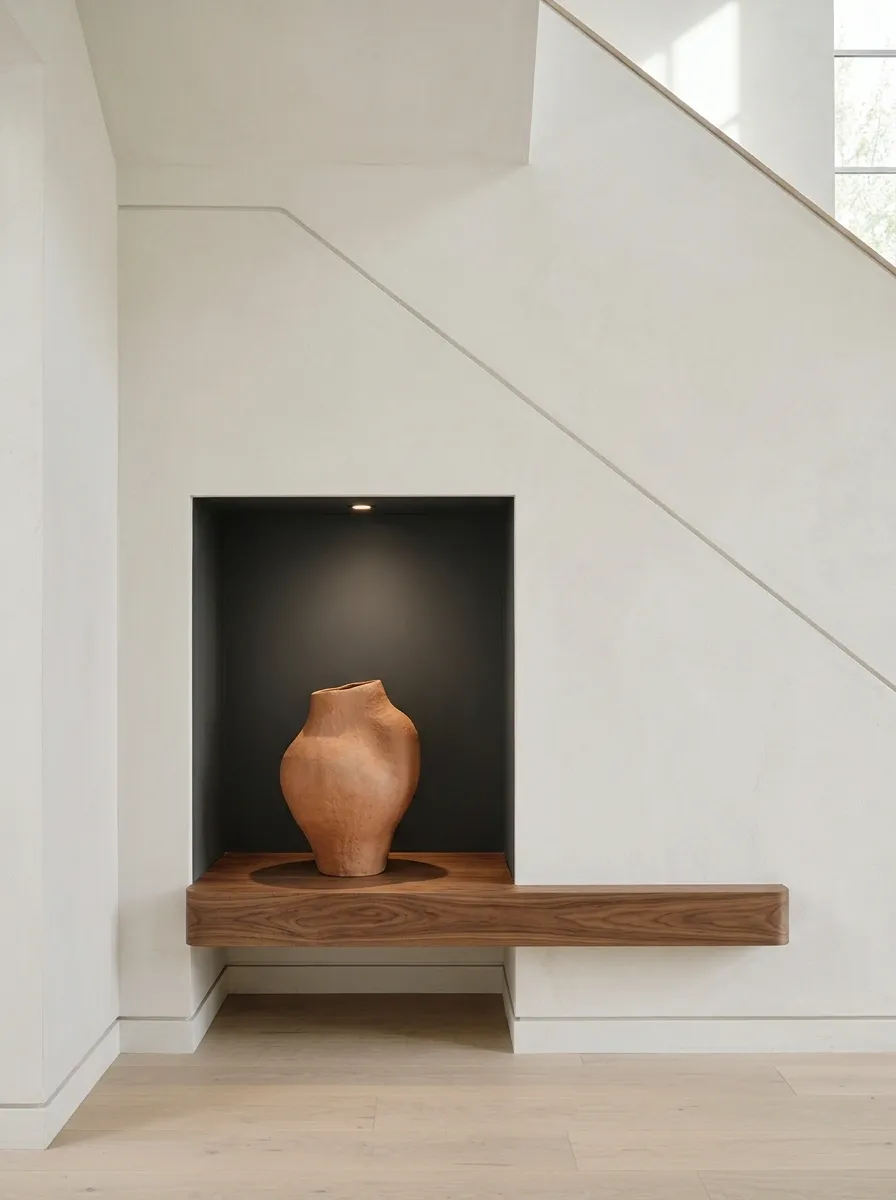
A shallow or low opening may be better as a simple display area. One proportionate object on a stable surface can give it purpose.
Keep projecting edges away from passing shoulders and bags. A contrasting background can provide definition without more furniture. Decorating an alcove does not oblige it to solve the household’s entire storage shortage.
Let the alcove provide the frame.
A Plant Corner Where Daylight Reaches
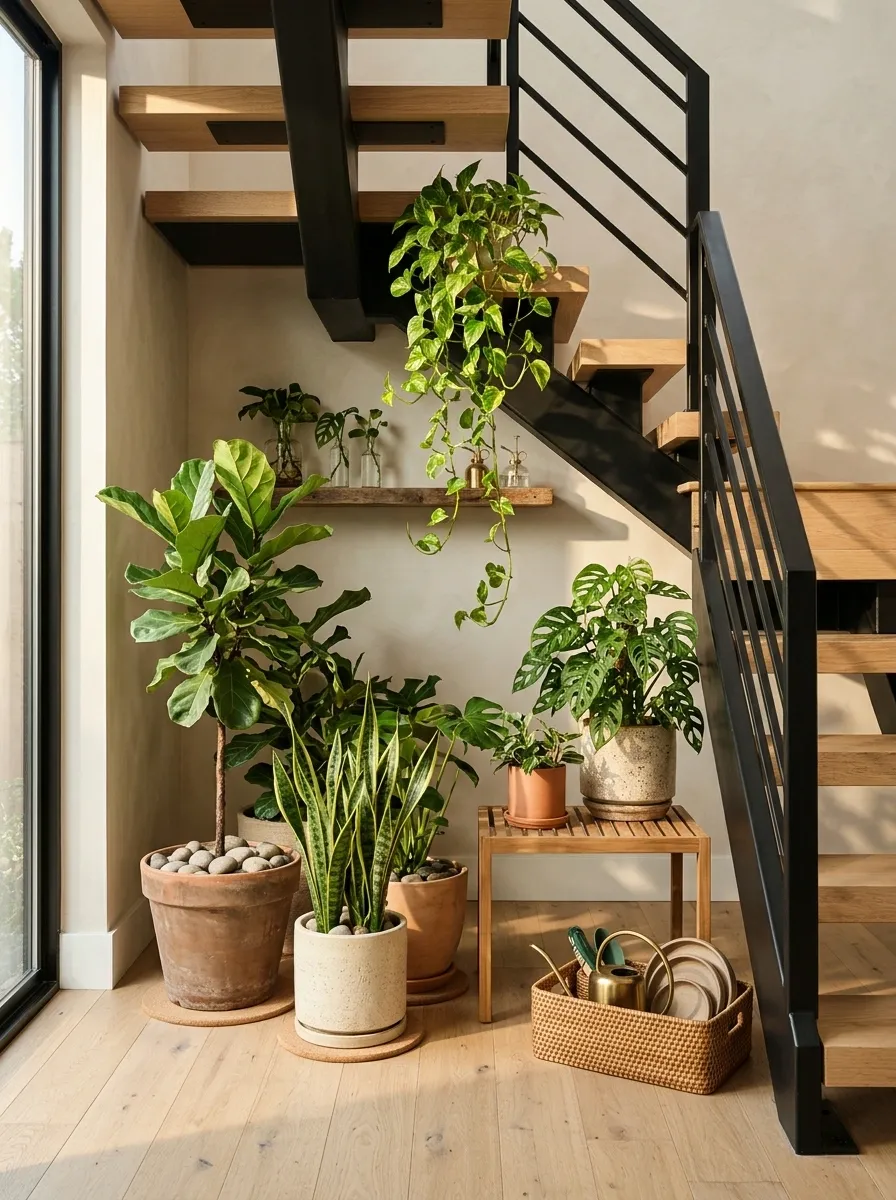
Plants can soften an open stair area when the available light suits them. Choose the species after assessing the location.
Protect floors beneath pots and consider household and pet suitability. A very dim recess may need another decorative approach. “Low light” does not mean a plant has agreed to spend its life inside the architectural equivalent of a cupboard.
Then check water protection and household suitability.
A Landing Point for School and Work Bags
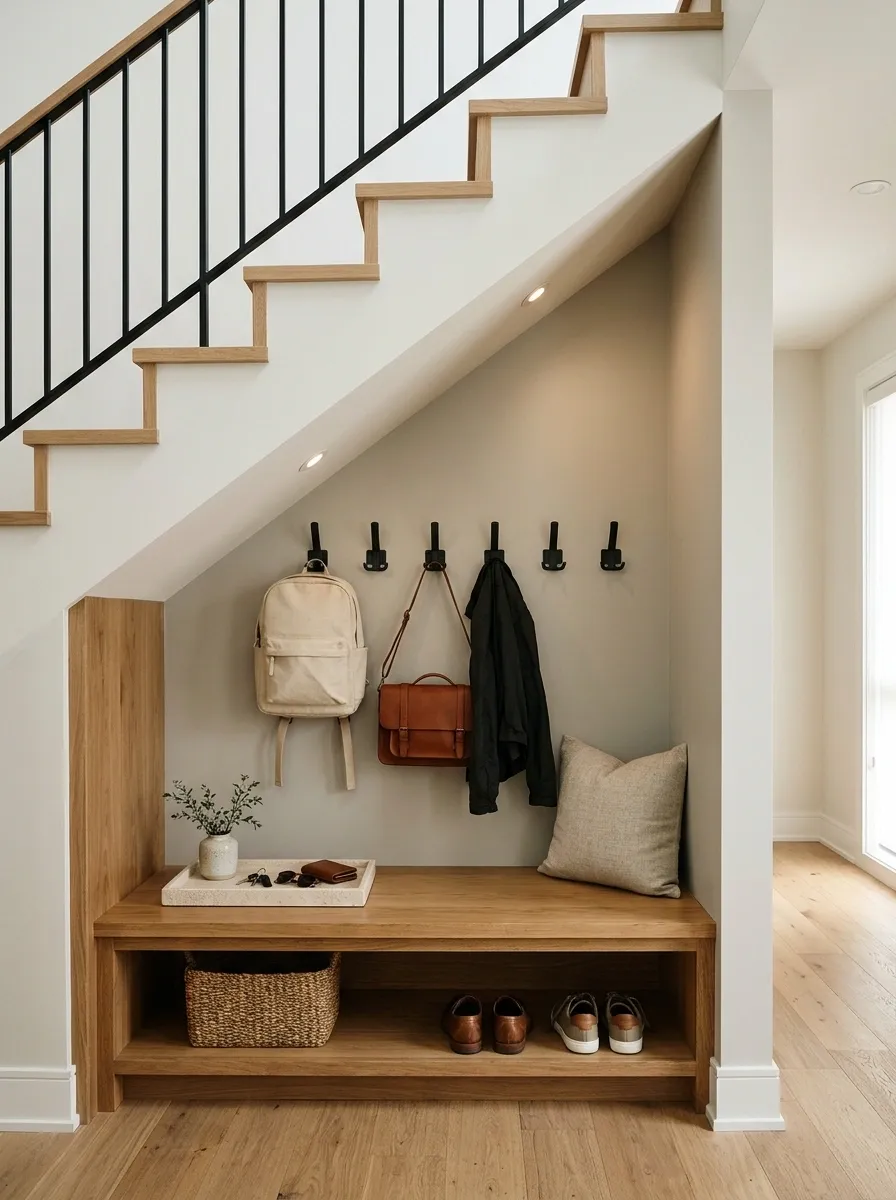
Suitable hooks or a low shelf give bags a home without covering the floor. Position storage within comfortable reach.
Use fixings appropriate to the wall and loaded weight, checking services before drilling. Keep hanging bags outside the route. A simple tray can catch travel essentials. If putting a bag away involves several lids and a decorative ribbon, the floor will continue winning.
A Linen Cabinet in an Existing Dry Cupboard
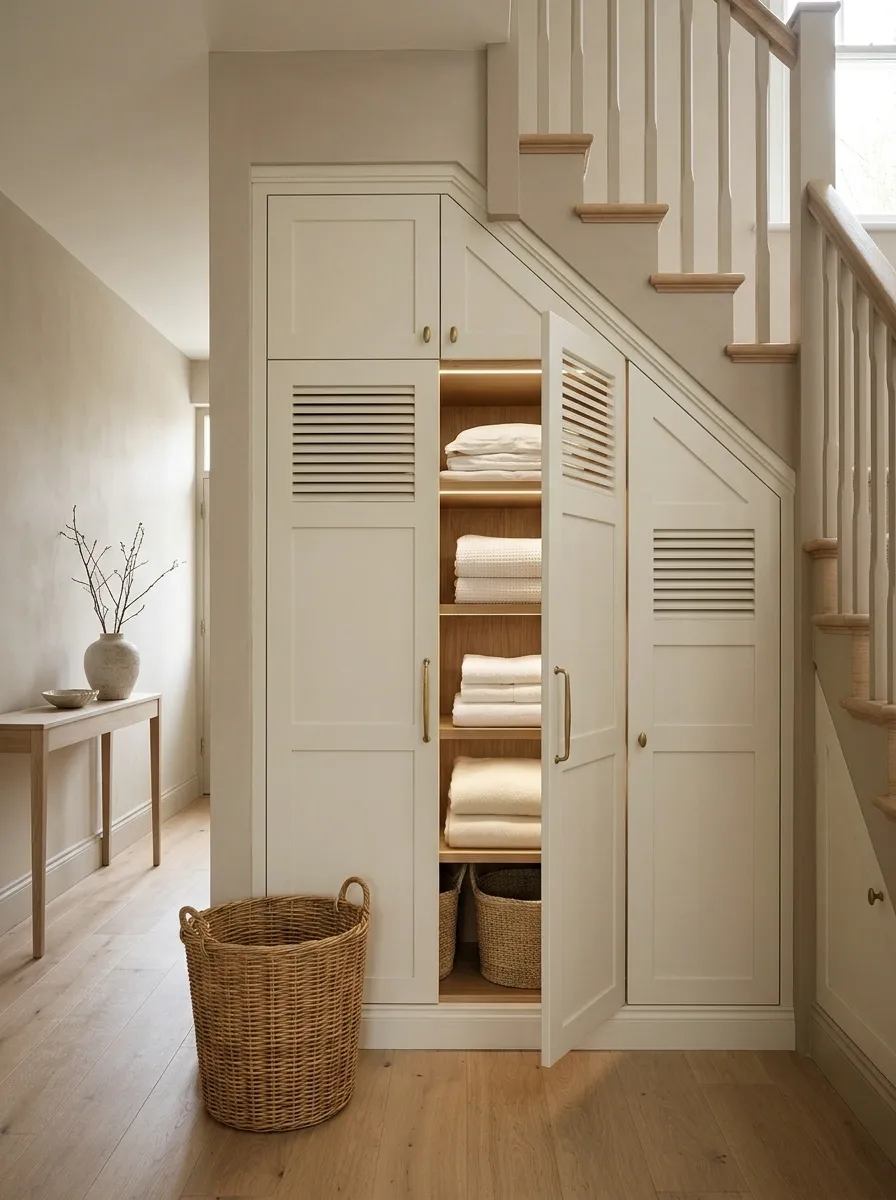
A dry existing cupboard can hold fully dry household linen on appropriately sized shelves. Keep regularly used pieces easiest to retrieve.
Address dampness before introducing fabric. Scented sachets cannot repair a moisture problem, however confident the label maker becomes. Good shelf spacing and adequate lighting may improve the cupboard more than an elaborate exterior makeover.
A Puzzle or Hobby Cabinet With a Clear Work Surface
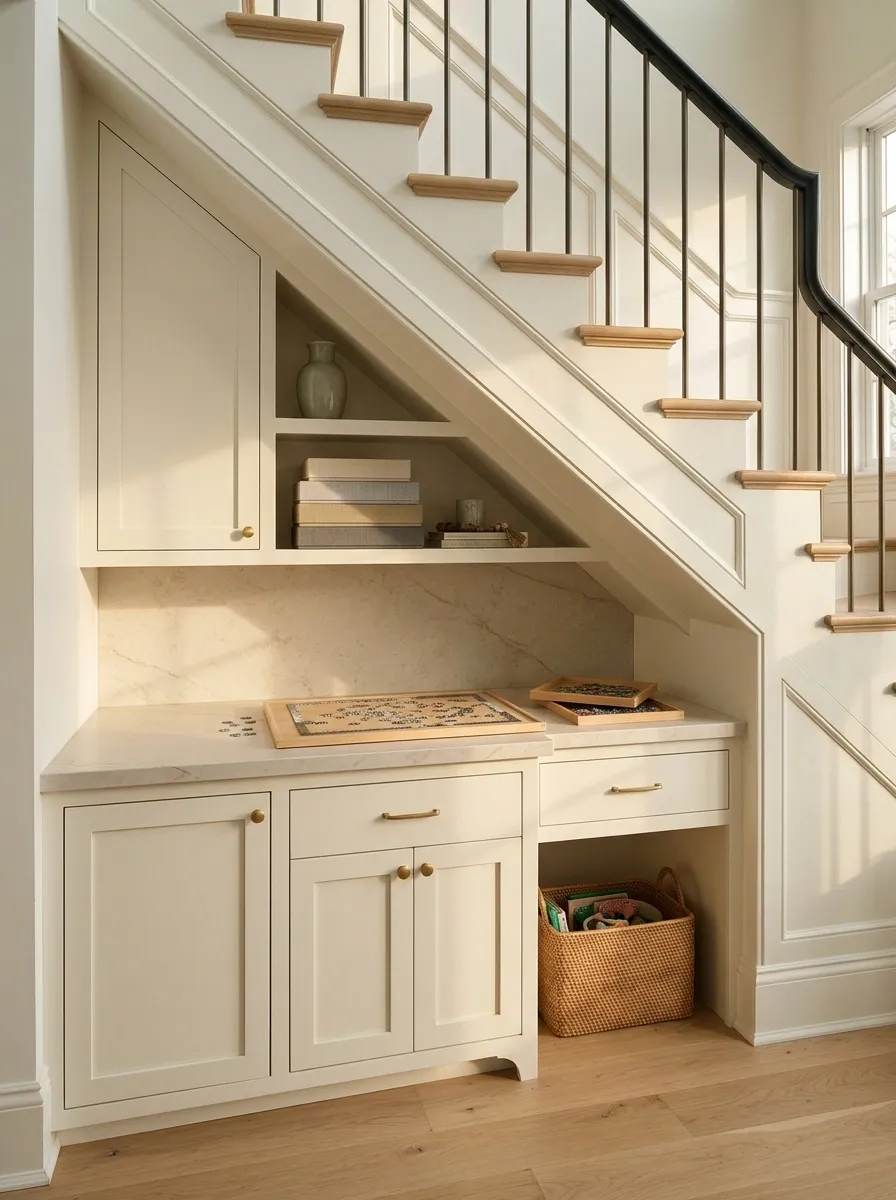
A low cabinet can store games, drawing materials, or puzzles, with its top used for sorting before moving to a proper table.
Keep loose pieces contained and clear the surface between sessions. Follow stability guidance and avoid creating a climbing invitation beside the stairs. A hobby station should simplify starting an activity without exposing every supply like a hallway craft franchise.
A Tall-End Wardrobe With Lower Storage Beside It
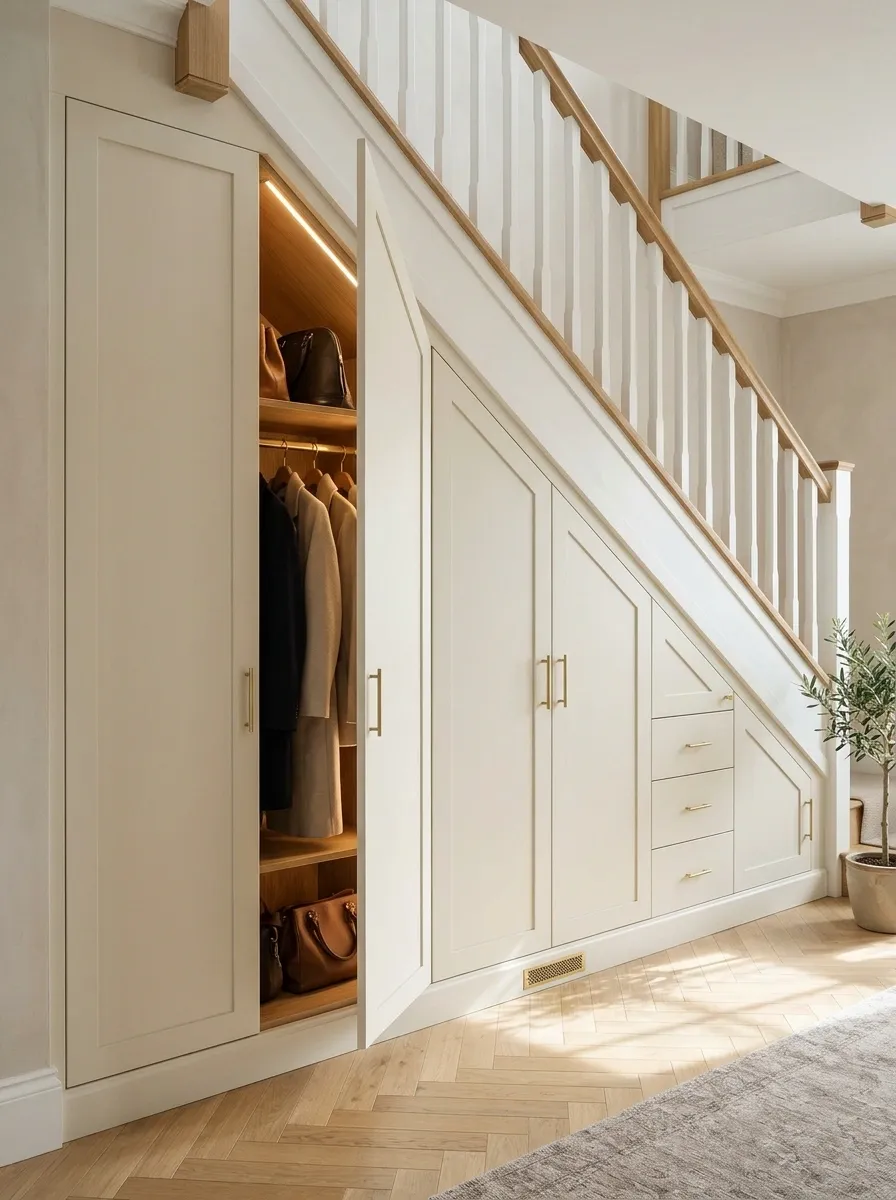
Where permitted and appropriately planned, use the tall end for coats and lower areas for shoes or bags.
Design hinges, ventilation, access, and interior dimensions before choosing the front pattern. Preserve required stair protection and structure. A continuous exterior can look calm, but the inside needs logic; beautiful doors opening onto an unusable triangle are an expensive way to organize disappointment.
An Intentionally Empty Lower Section
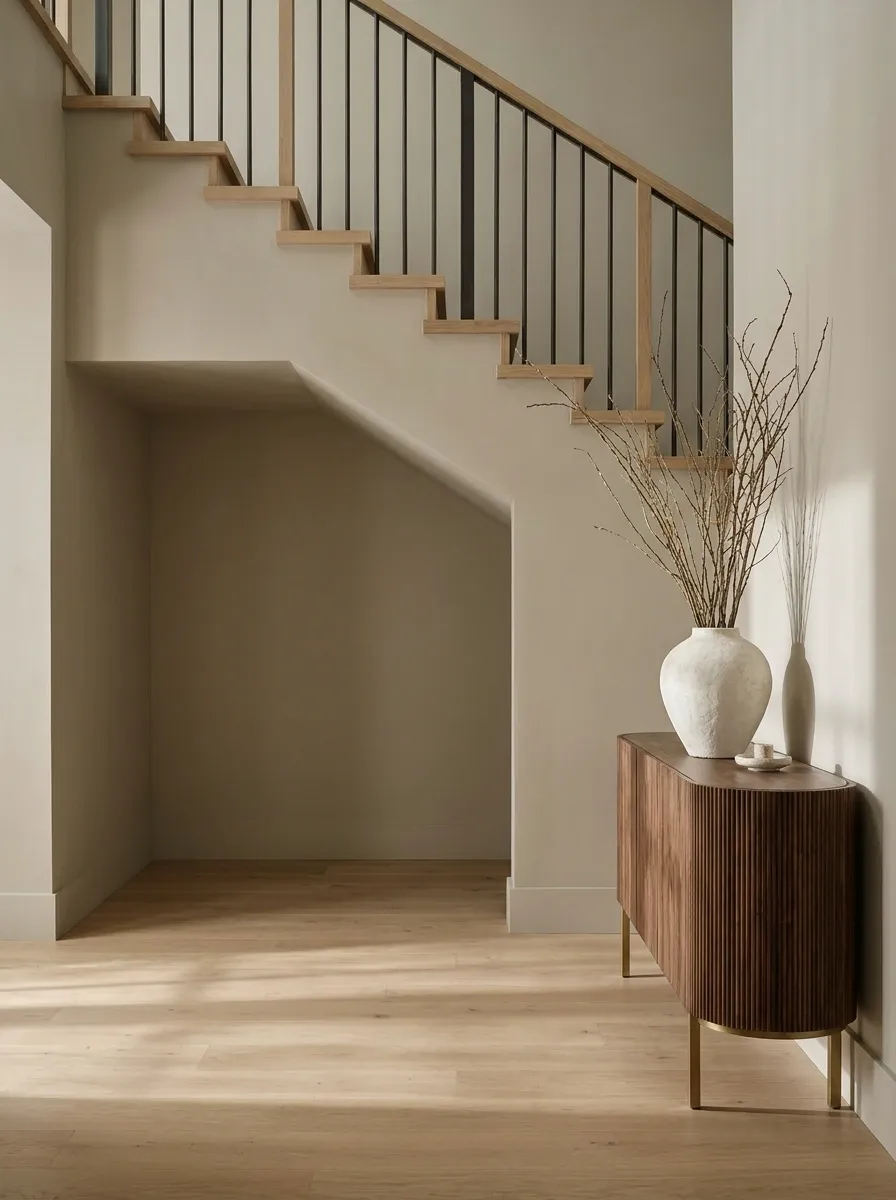
The lowest part may be best left open while useful furniture occupies the taller end. Coherent paint can make the whole opening feel finished.
Keep the floor easy to clean and resist adding baskets solely because they fit. If clutter returns repeatedly, give those items a proper home elsewhere. Every available square inch does not need to receive a new household assignment.
A quiet floor can belong to the composition.
A Comfortable Pet Bed in an Open Alcove
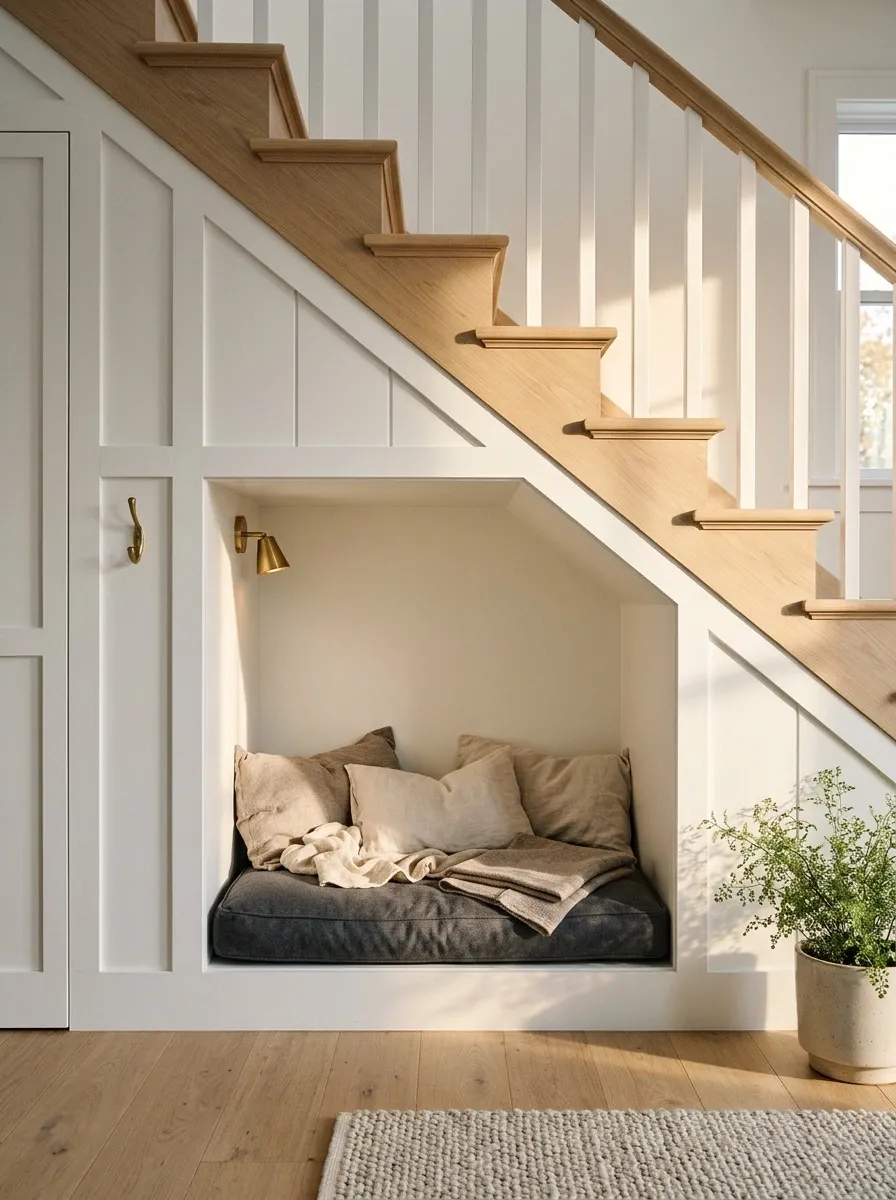
An existing open alcove can provide a pet-resting spot when space, ventilation, and access are suitable. Choose washable bedding and an easy-clean floor arrangement.
Keep heat sources, leads, chemicals, and other hazards elsewhere. Follow the animal’s preferences rather than building a themed miniature house it refuses to enter after an expensive unveiling.
Wallpaper on the Alcove’s Back Wall
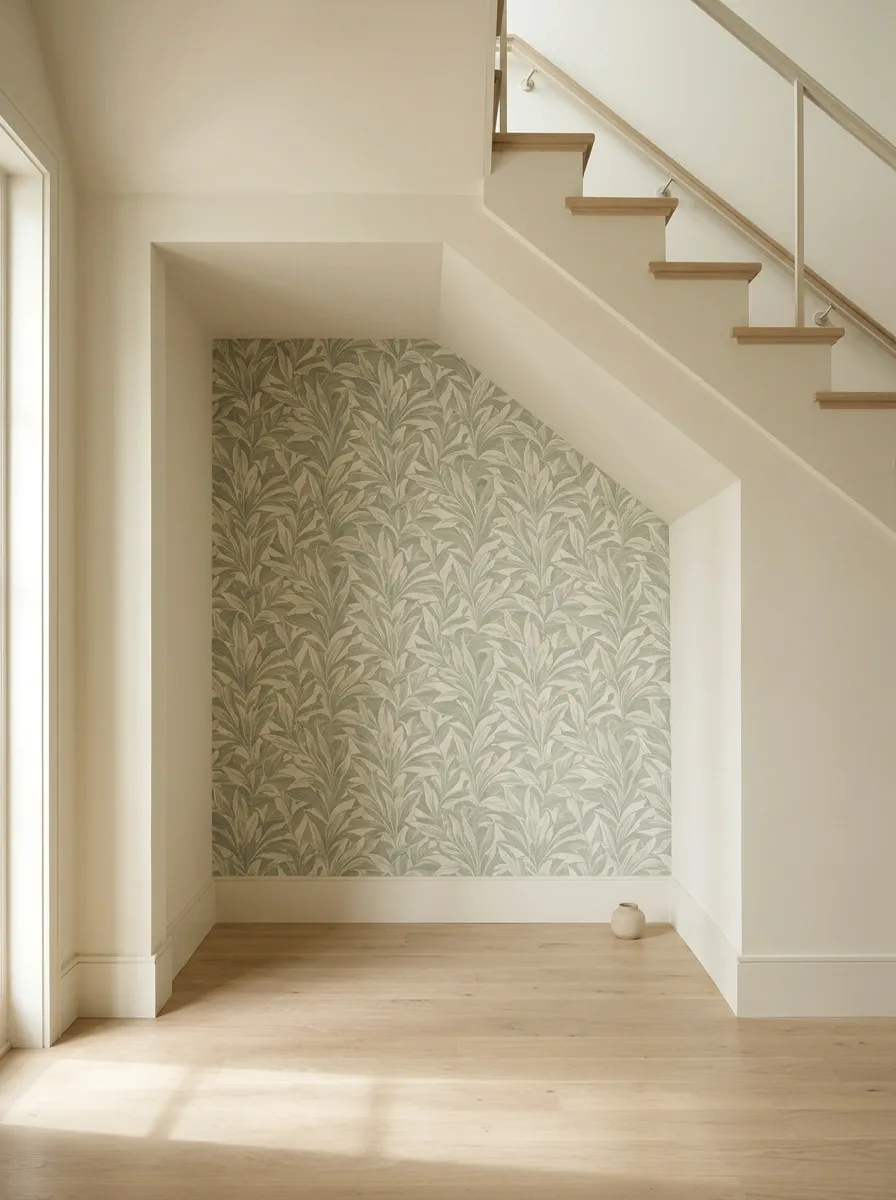
Wallpaper can define an open alcove without adding furniture. Put it on the back wall and keep the surrounding paint restrained.
Choose a scale readable within the opening and a product compatible with the surface. Preserve required linings during preparation. The pattern already supplies interest, leaving little need for a shelf of ornaments recruited to underline the point.
A Deeper Paint Color That Frames the Recess
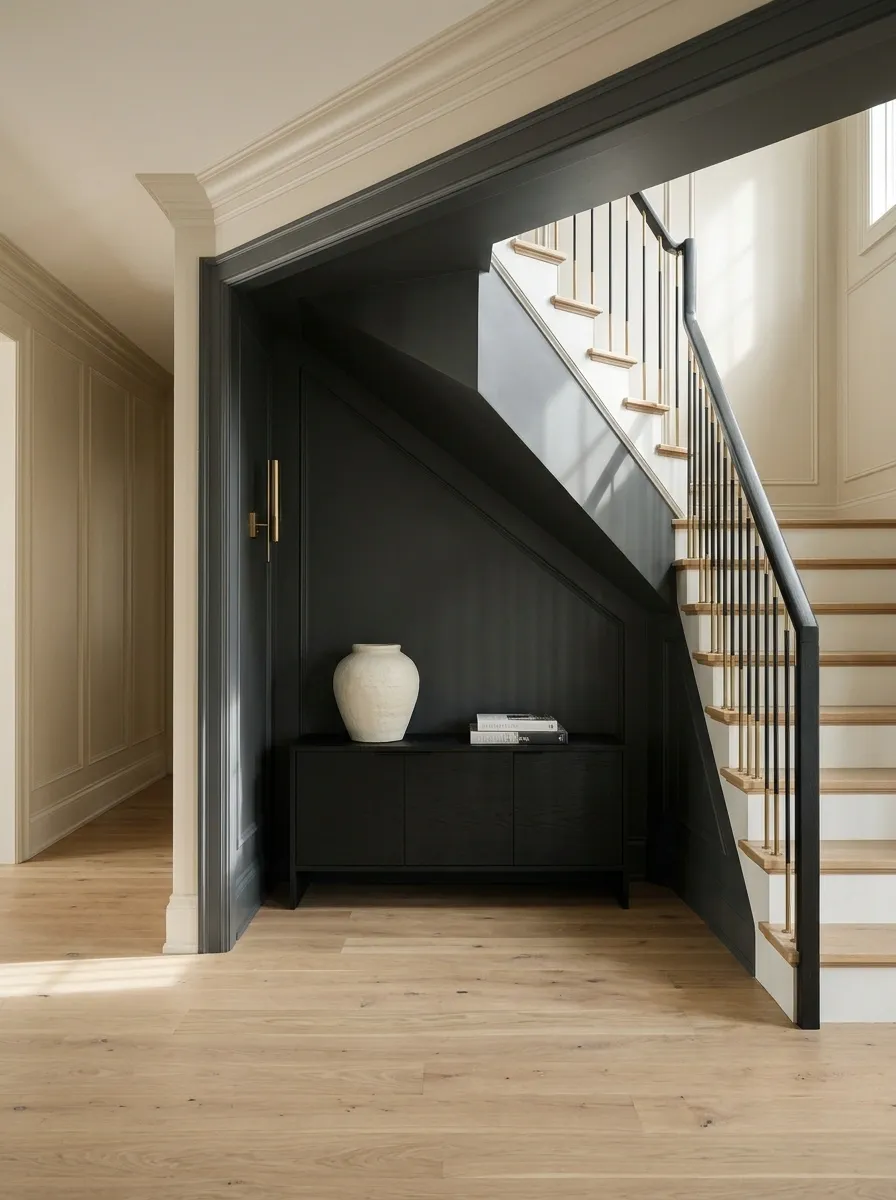
A deeper alcove color makes the existing shape feel intentional. Let the hallway shade remain on outer walls.
Test the paint where the slope casts shadow, particularly if you want displayed objects visible. Preserve access and use suitable coatings. An awkward opening can look complete with little furniture; it does not have to acquire a new occupation to justify its presence.
A Secure Mirror at the Taller End
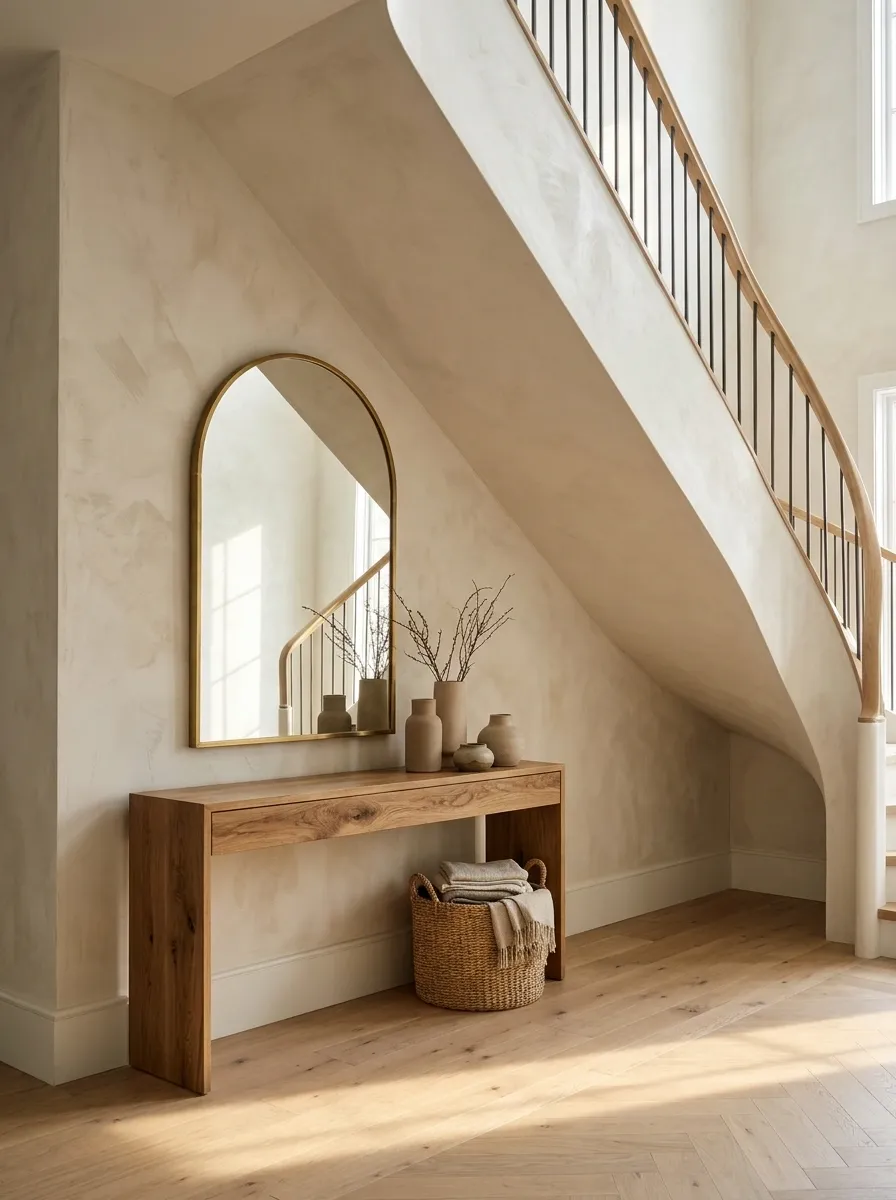
A mirror at the tall end can provide a useful final check near the entrance. Position it for a normal standing view.
Install it securely for its weight and wall construction. Check the reflection before committing; useful light is more appealing than a permanent close-up of the shoe pile. Keep the approach clear so getting ready does not require crouching and a sideways inspection.
Secure mounting and normal standing height.
A Low Record Cabinet With Room to Browse
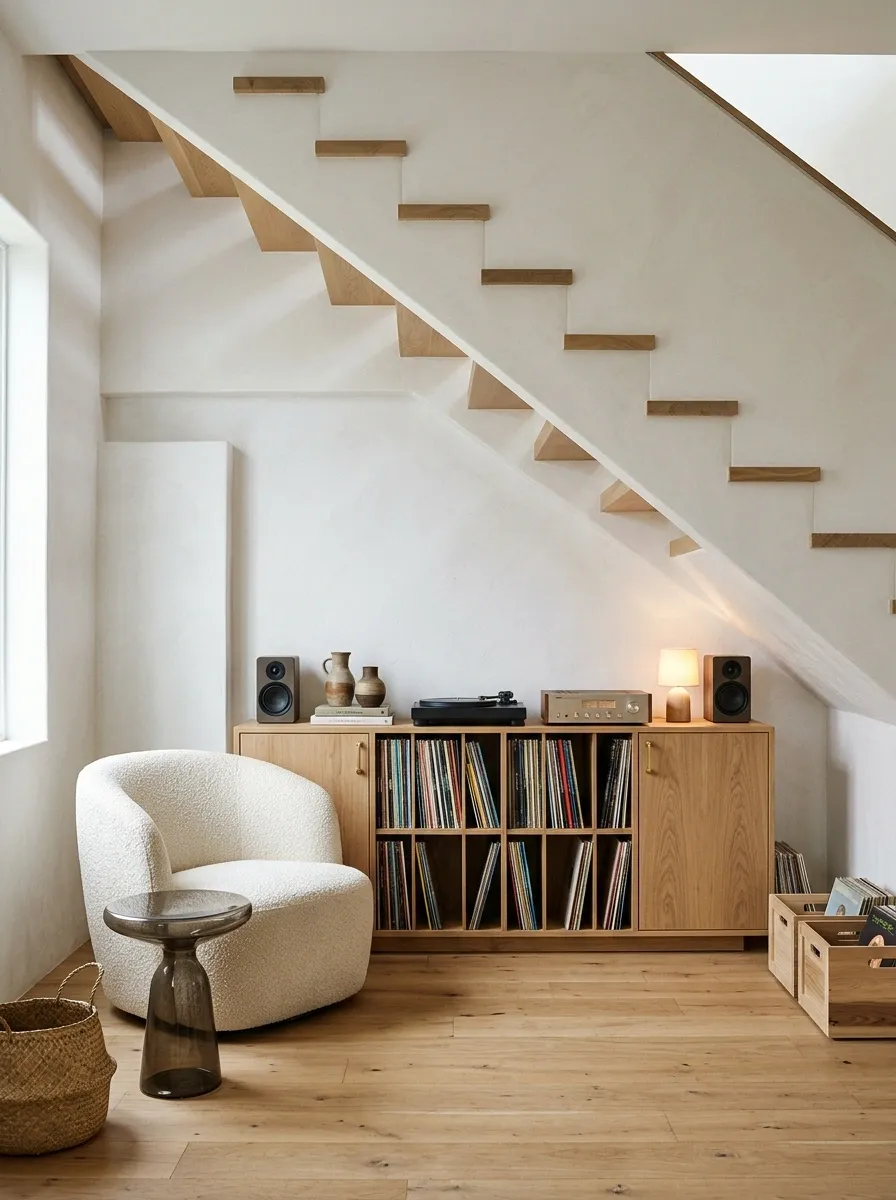
A low cabinet can house records in a suitable dry alcove. Check its load capacity and use appropriate record support.
Leave room to browse. Any playback equipment needs the specified ventilation and safe power arrangement. Protect the collection from heat and damp. An unreachable triangle packed tightly with records creates an archive with a disappointing listening policy.
A Luggage Cupboard for Infrequent Items
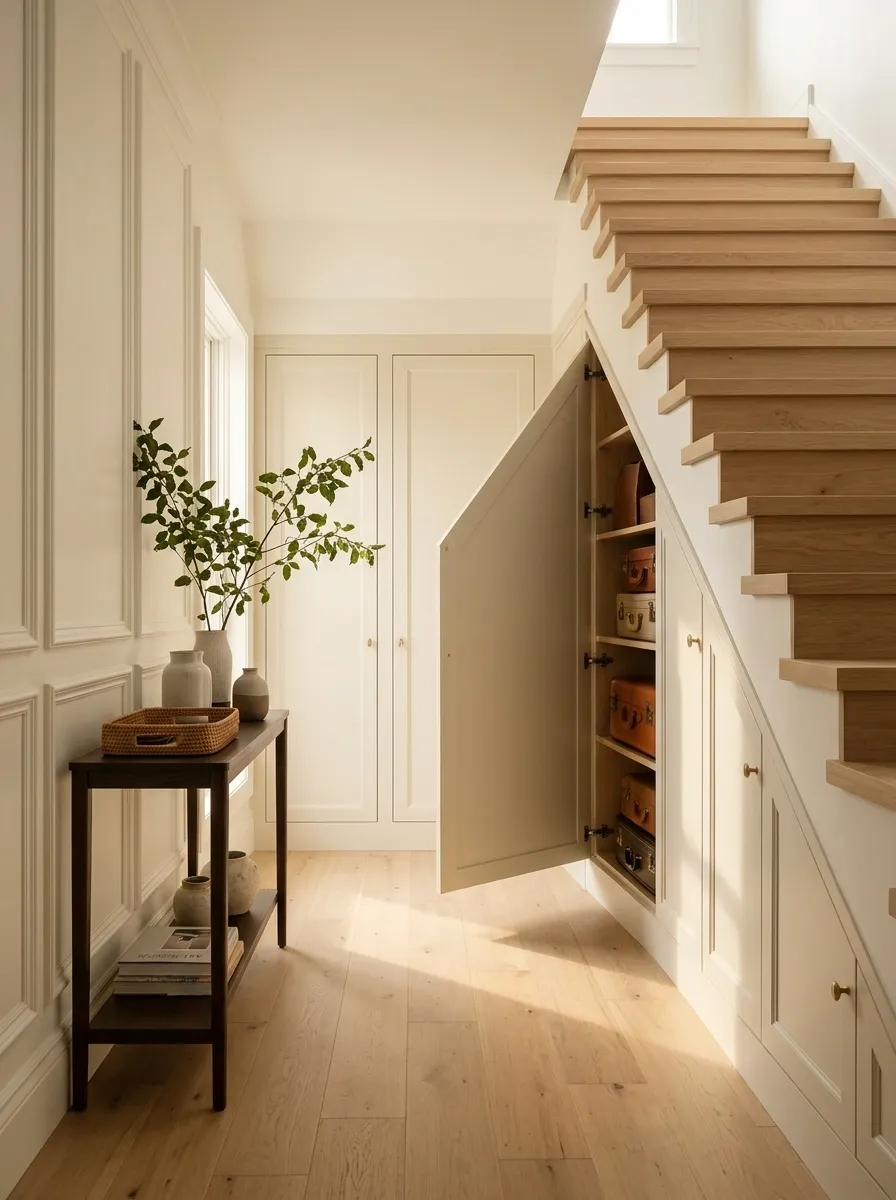
Empty luggage can suit a low cupboard where standing is awkward. Measure the doorway as well as the interior.
Try the largest case through the opening before installing shelves. Keep stored pieces clean and dry, with services accessible. Your suitcase needs less headroom than a desk user, but it still needs a practical route back out when a trip approaches.
Largest suitcase, cupboard opening, and retrieval route.
A Parking Place for Cleaning Equipment
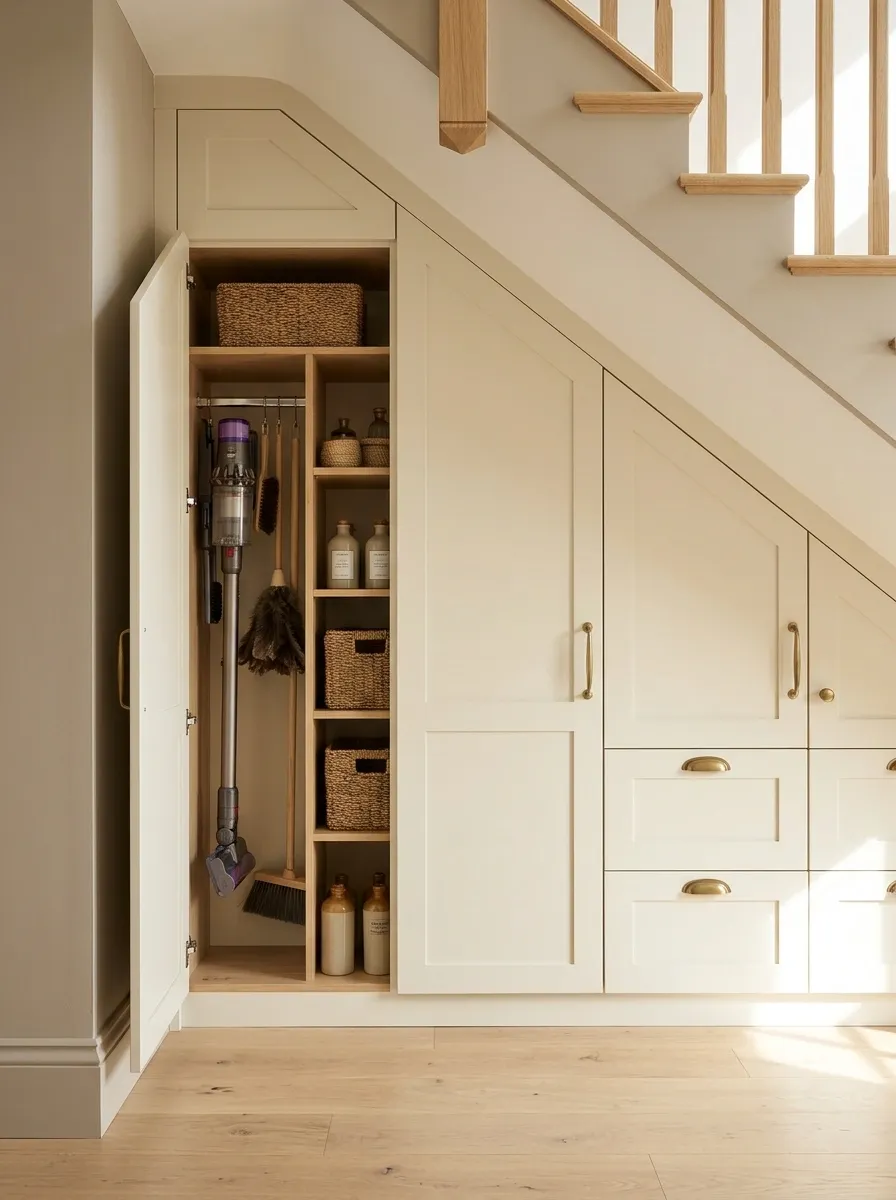
A suitable existing cupboard can give a vacuum and cleaning tools a defined home. Plan around the equipment’s dimensions and lifting movement.
Keep chemicals secured and services accessible. Follow equipment instructions for charging; an enclosed crowded cupboard is not automatically suitable. Avoid loose objects that fall into the route. Opening the cleaning cupboard should not create another cleaning task.
| Store | Equipment with easy removal |
|---|---|
| Charge | Only where instructions and conditions permit |
A Sports-Bag Station With Washable Storage
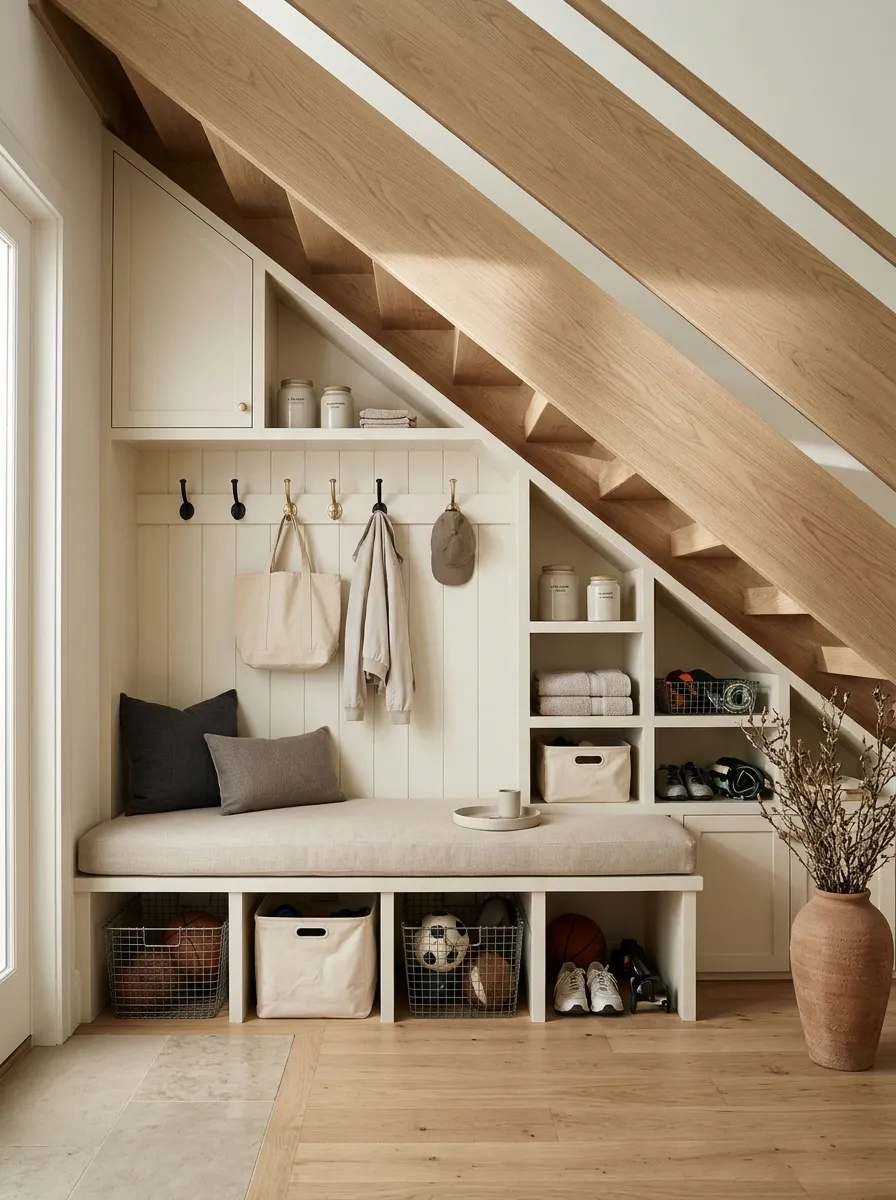
Shelves or baskets can hold clean, dry sports bags near the entrance. Keep heavy or bulky bags easy to lift and small accessories contained.
Use washable materials where practical. Dry damp equipment appropriately before storing it and preserve stair access. Give the arrangement a defined capacity; every new hobby cannot claim permanent floor space simply by arriving with an impressive bag.
A Glassware Cabinet for Occasional Entertaining
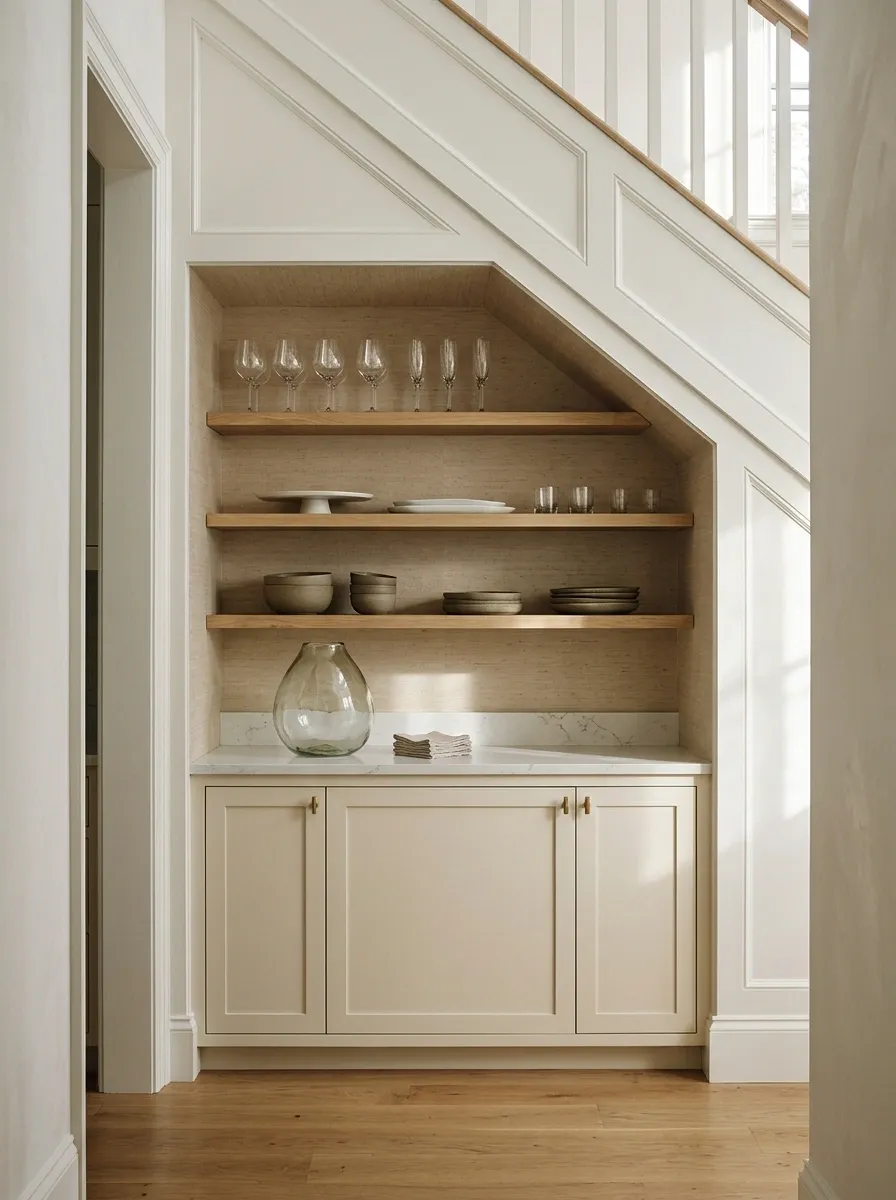
A low cabinet can store spare glasses and serving pieces in an existing suitable alcove. Allow space above each shelf for retrieval.
Check stability, door operation, and loading, keeping heavier pieces lower. Use the top sparingly so the hallway stays composed. The alcove can support entertaining without developing into a miniature bar equipped beyond the ambitions of its owners.
A Printer Station in a Ventilated Tall-End Cabinet
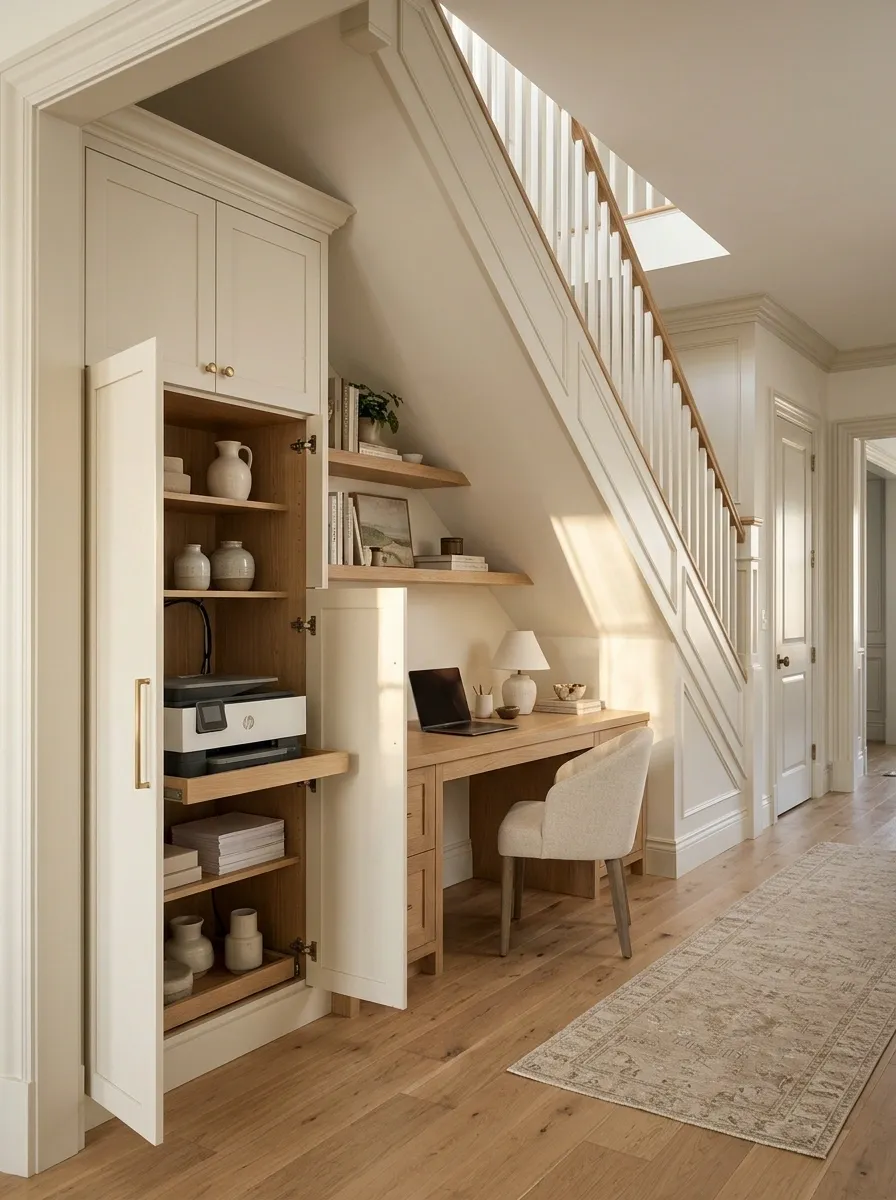
A printer can occupy a suitable tall-end area when its support, ventilation, and operating clearances are adequate.
Measure it with trays and maintenance covers open. Keep paper dry and cables safely routed. A machine that fits while switched off may need considerably more room to work. Avoid turning a convenient occasional-printing spot into an office nobody can comfortably occupy.
Open trays, service covers, ventilation, and safe cable routes.
Walk Past It Carrying a Full Bag
Open nearby doors, retrieve something from the back, and sit down if there is seating.
Those tests reveal what a finished photograph cannot. If the arrangement works when you are distracted or carrying shopping, the alcove has become useful space. There is no need to celebrate by filling the remaining gap with another basket.