
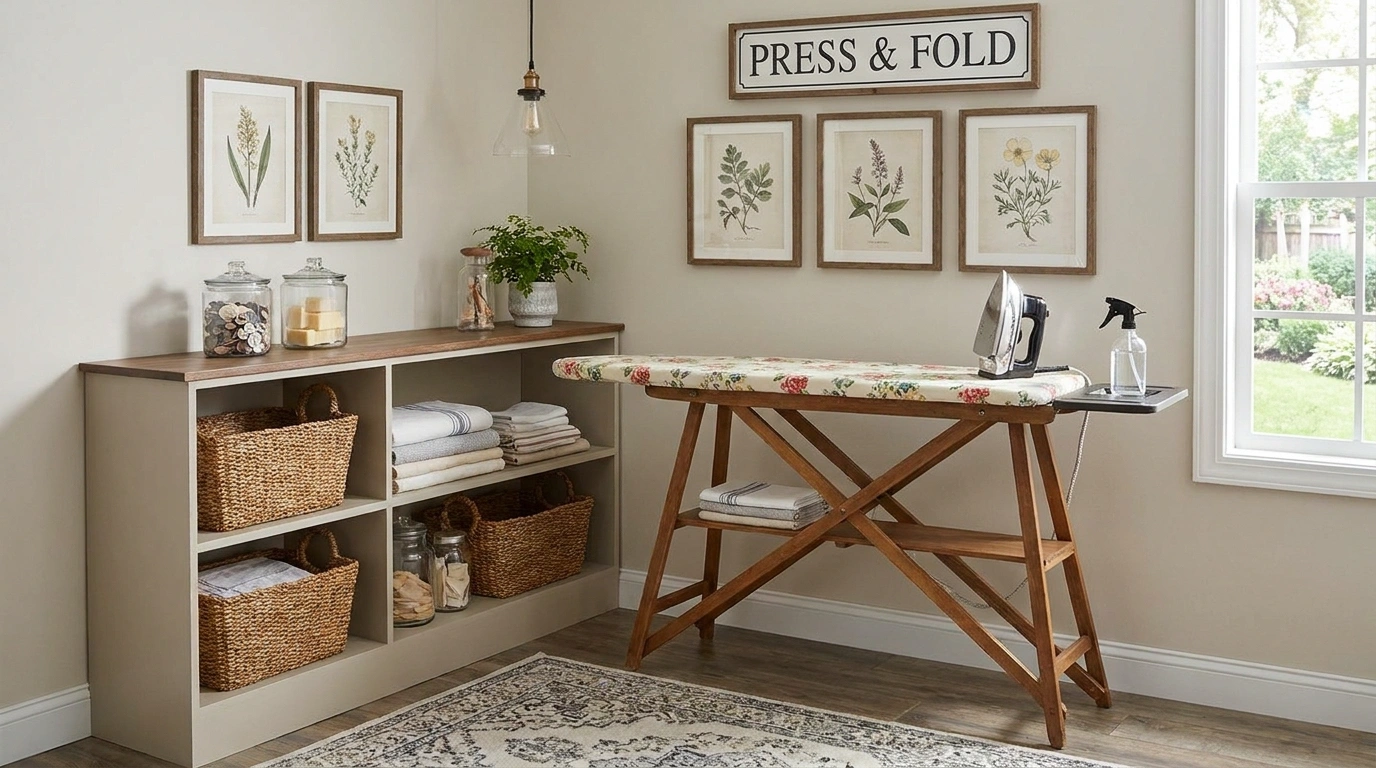
The iron lives in one cupboard. The board is wedged behind a door. The shirt that needs ironing is somewhere on a chair, developing additional creases while you locate the other components.
You do not necessarily need a laundry room. You need a setup that takes less effort to use than deciding the shirt is “supposed to look relaxed.”
A useful ironing station has somewhere to store the equipment, enough space to work, and a sensible place for finished clothes. It can fit into a bedroom, home office, cupboard, or shared living area without taking over the room permanently.
The important distinction is between where the equipment is stored and where you use it. Those can be different places. Your wardrobe does not need to become a miniature steam chamber to qualify as organized.
Plan the Station With the Board Open
Before choosing furniture or storage, set up your ironing board in the proposed position.
Check that:
- You can move around it comfortably.
- The cord stays out of walking routes.
- Nearby doors and drawers still open.
- Garments can hang without dragging on the floor.
- There is a suitable place for the iron to rest.
Follow your appliance’s instructions for use, filling, cooling, and storage. Manufacturer guidance emphasizes a stable, heat-resistant working arrangement and allowing the iron to cool before putting it away. A heat-resistant accessory does not automatically make an ordinary cabinet or table suitable. rowenta.com
Space-Saving Ironing Stations That Fit Into Real Homes
Recessed Wall Cabinet Ironing Station
A recessed wall cabinet keeps your ironing surface and accessories neatly hidden behind a sleek door until duty calls. Measure the depth of your wall cavity carefully to ensure a seamless flush fit with surrounding decor.
Built-in shelving above the board offers a clever spot to store spray bottles and your iron safely out of sight. Keep heavy appliances securely positioned on lower interior ledges so everything stays balanced when the door opens.
This setup delivers full-sized convenience without taking up valuable floor space in compact rooms. The cabinet door closes cleanly to leave a polished, minimalist wall profile when your garments are completely pressed.
Give One Wardrobe Bay an Actual Utility Role

A narrow wardrobe bay can hold the folded board, cooled iron, and a small container of supplies. Measure the board’s complete folded shape, including its feet and projecting parts.
Use appropriate restraints or holders so equipment does not fall when the door opens. Keep heavy items at a manageable height.
The board comes out for use; the wardrobe provides storage. That simple separation can give you an organized station without sacrificing hanging space to an elaborate built-in arrangement.
Securely stored folded board.
Cooled iron and a compact supply kit.
Compact Folding Wall Shelf Board
A streamlined folding wall shelf provides a minimalist ironing platform that disappears flat against the vertical surface when not in use. Choose a sturdy mounting system and verify wall stud locations to support the downward pressure of pressing garments.
Pair the fold-down station with a coordinating wall-mounted iron holder to keep cords tidy and accessible right above your workspace. Position the unit near an electrical outlet so you never have to wrestle with awkward extension cords.
This clever space-saving approach blends effortlessly into modern living areas without dominating the room’s aesthetic. The clean lines and muted tones ensure your ironing zone looks like intentional modern decor rather than a utilitarian chore station.
Store the Full-Size Board Behind a Suitable Door
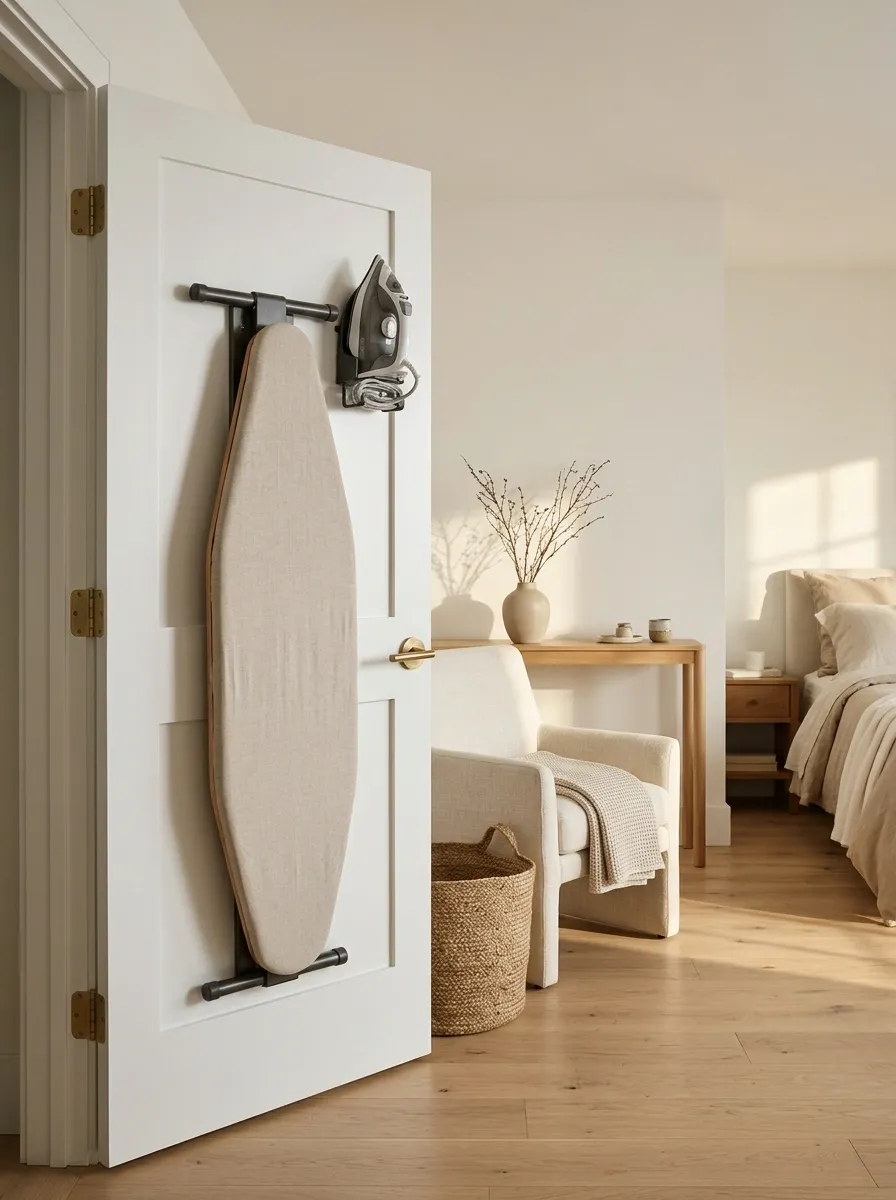
The space behind a door can accommodate a folded board when the opening, wall, and storage fittings are suitable. Check the door’s full movement before committing.
A purpose-made holder can prevent the board sliding or falling. Follow its installation and loading requirements rather than improvising with a small decorative hook.
Leave the door handle and normal access unobstructed. The arrangement should remove clutter, not introduce a metallic crash every time someone enters the bedroom with reasonable enthusiasm.
Measure the hidden space: Include the door handle, skirting, folded board depth, and the door fully open.
Integrated Wardrobe Pull-Out Station
A dedicated pull-out ironing board integrated directly into custom floor-to-ceiling cabinetry creates a seamless laundry solution for compact homes. Ensure the internal mechanism glides smoothly and locks securely into position to handle everyday pressing tasks.
Keep hangers and pressed garments close at hand within the adjacent wardrobe bays to streamline your entire routine. This configuration hides the entire setup behind matching doors, preserving a clean and sophisticated bedroom environment.
Design the interior clearance carefully so the board extends comfortably past surrounding drawers and hardware. You get all the functionality of a dedicated utility room tucked invisibly inside your main storage wardrobes.
Install a Purpose-Made Wall-Folding Board
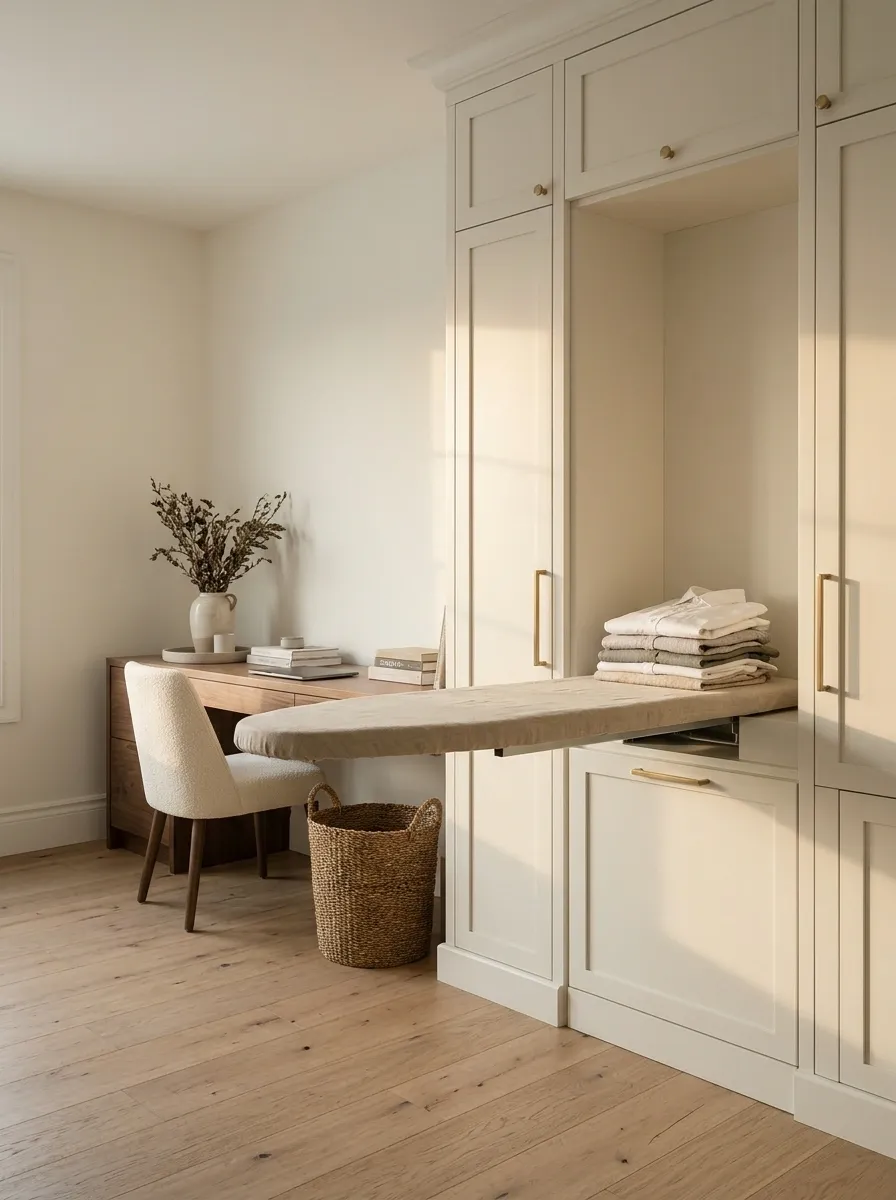
A wall-folding ironing board can work in a bedroom, office, or suitable alcove where its open position leaves enough room to stand and handle clothing.
Choose a system intended for ironing and have it installed appropriately for the wall and load. Check concealed services before any fixing work.
Test the full working height and reach. A board that folds away beautifully is less impressive if using it requires hunching over or pressing shirts with your elbows tucked against the wall.
Depth, door movement, and secure storage.
Working height, movement, and garment space.
Add a Rated Pull-Out Board to Suitable Cabinetry
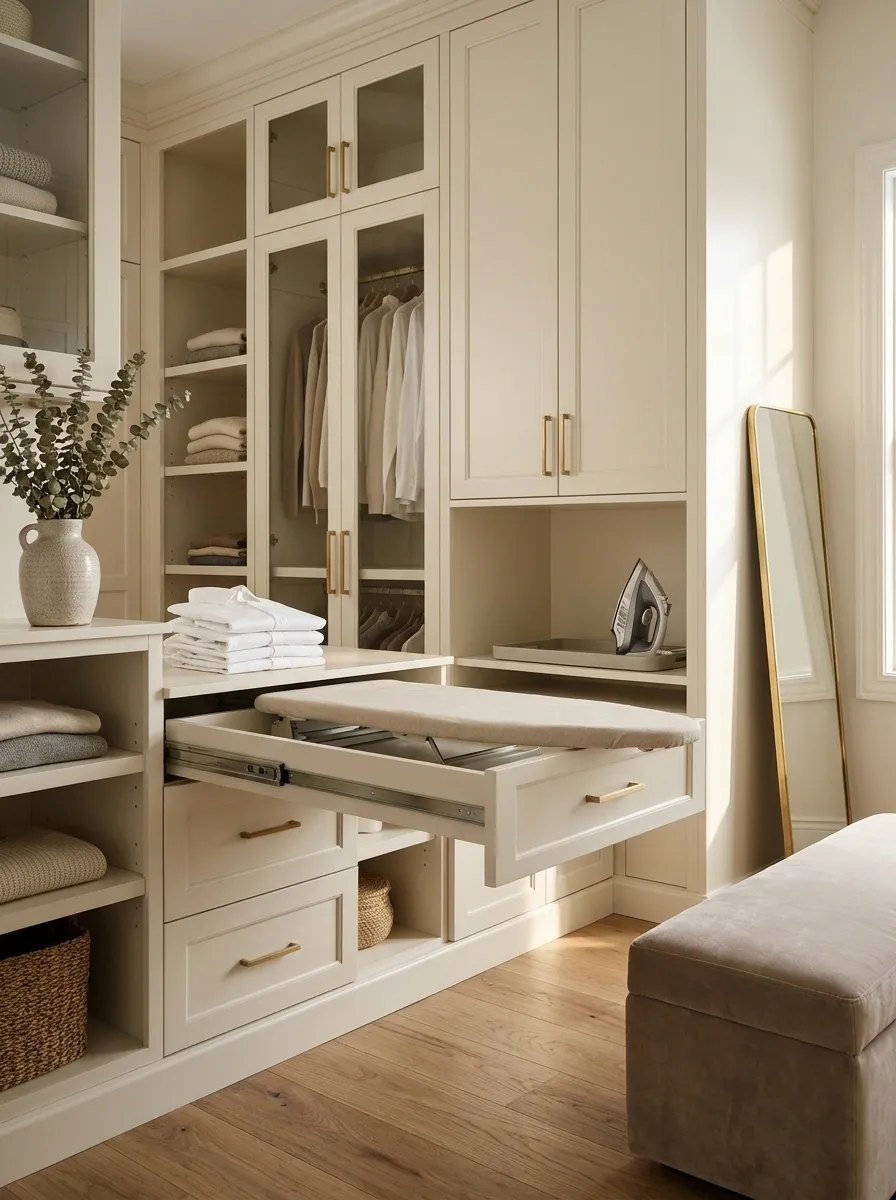
A purpose-made pull-out board can suit a dressing area or wardrobe when the cabinetry and mechanism are designed for it.
Check the board’s working dimensions, support, clearances, and installation requirements. Some compact mechanisms offer a much smaller pressing area than a conventional board.
This works best when you regularly iron smaller quantities and appreciate a quick setup. Do not buy entirely by the drawer-front appearance. The board needs to perform once it emerges from its rather impressive hiding place.
| Check before choosing | Why it matters |
|---|---|
| Open board size | Fits the garments you iron |
| Working height | Comfortable posture |
| Supporting cabinet | Suitable for the system |
| Retraction requirements | Safe storage after use |
Use a Tabletop Board for Occasional Small Jobs
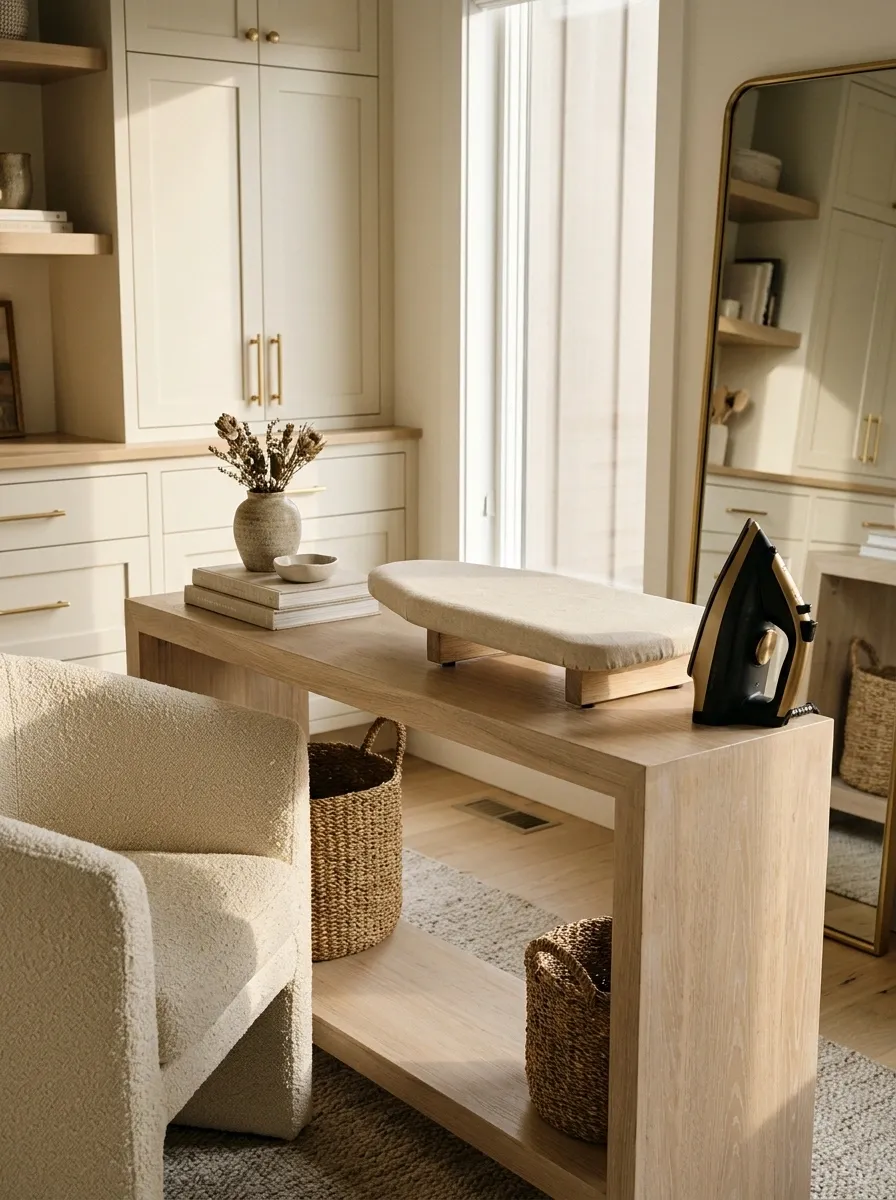
A tabletop board can suit someone who mostly handles shirts, school clothing, or quick touch-ups. Choose a stable model and use it only on a surface compatible with the board and appliance instructions.
Check how heat, steam, and moisture are managed. A thin cloth over a valuable tabletop is not a reliable protection plan.
Store the board close to the iron so setup remains easy. Compact equipment earns its place when it suits the task, rather than simply being the smallest thing available.
Choose an Ironing Cart Designed for the Job
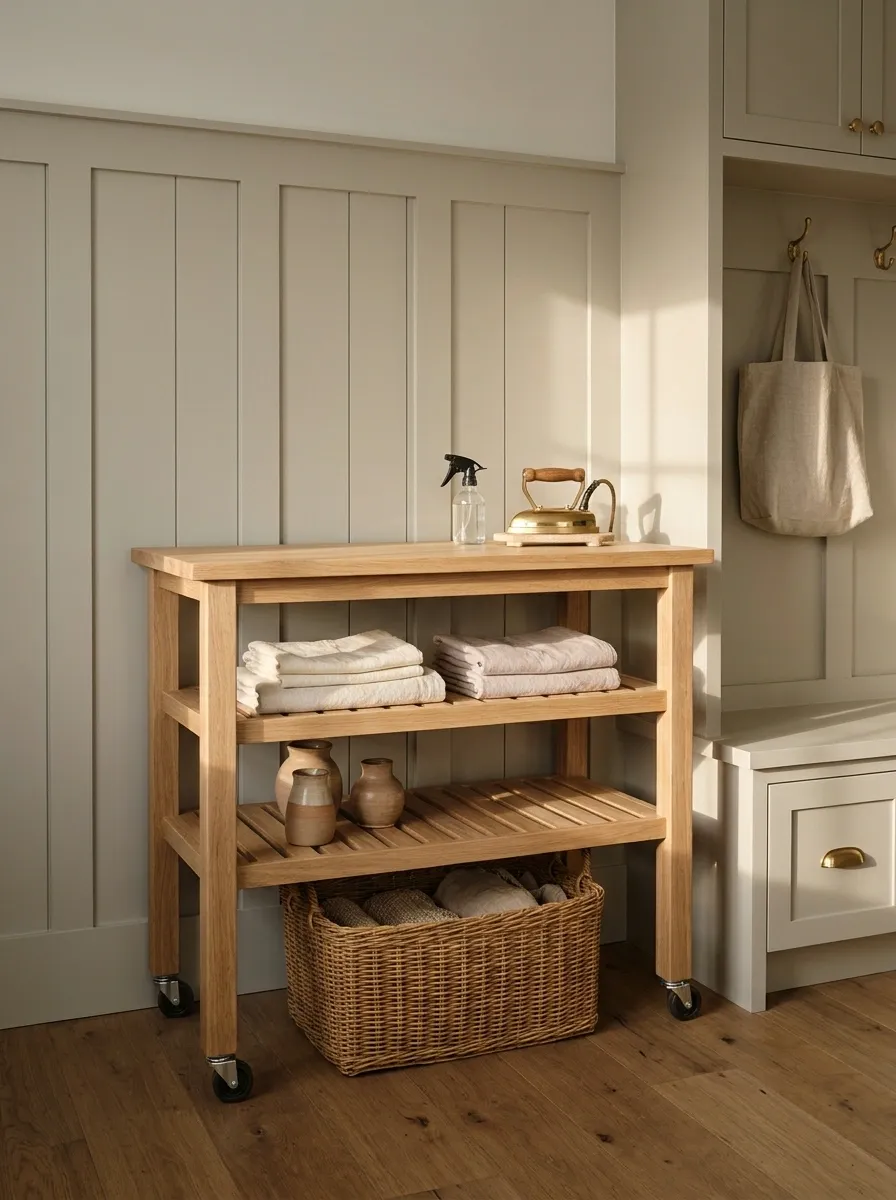
A purpose-made ironing cart can combine a suitable pressing surface with storage below. It can move between rooms when cool and stored according to its instructions.
Check stability, wheel locks where provided, load capacity, and the manufacturer’s intended use. Do not assume an ordinary rolling kitchen trolley can safely support an ironing setup.
Give the cart a parking place outside normal circulation. Otherwise, the space-saving station becomes an unusually mobile piece of furniture that is somehow always standing exactly where you need to walk.
Useful cart features: A suitable ironing surface, stable support, accessible storage, and a defined parked position.
Turn a Slim Console Into the Storage Base
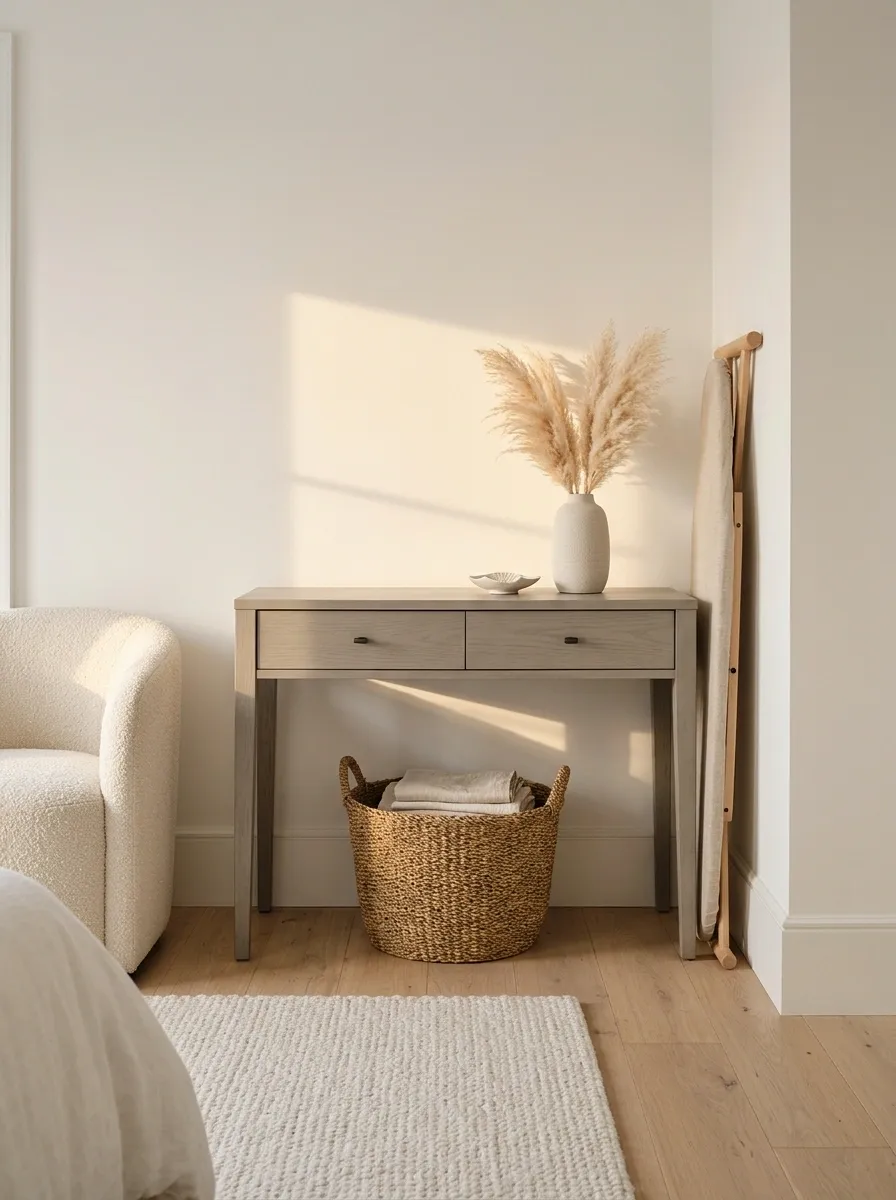
A narrow console or small cabinet can hold the cooled iron and supplies, with the folding board stored securely nearby.
Use the console for storage rather than assuming its top is an ironing surface. Choose one drawer or basket for the essential accessories and leave the rest of the room’s function intact.
This works well in a bedroom or multipurpose space where you want ordinary-looking furniture. The station does not need to advertise its domestic responsibilities whenever someone walks past.
Make a Home Office Do a Second Useful Job
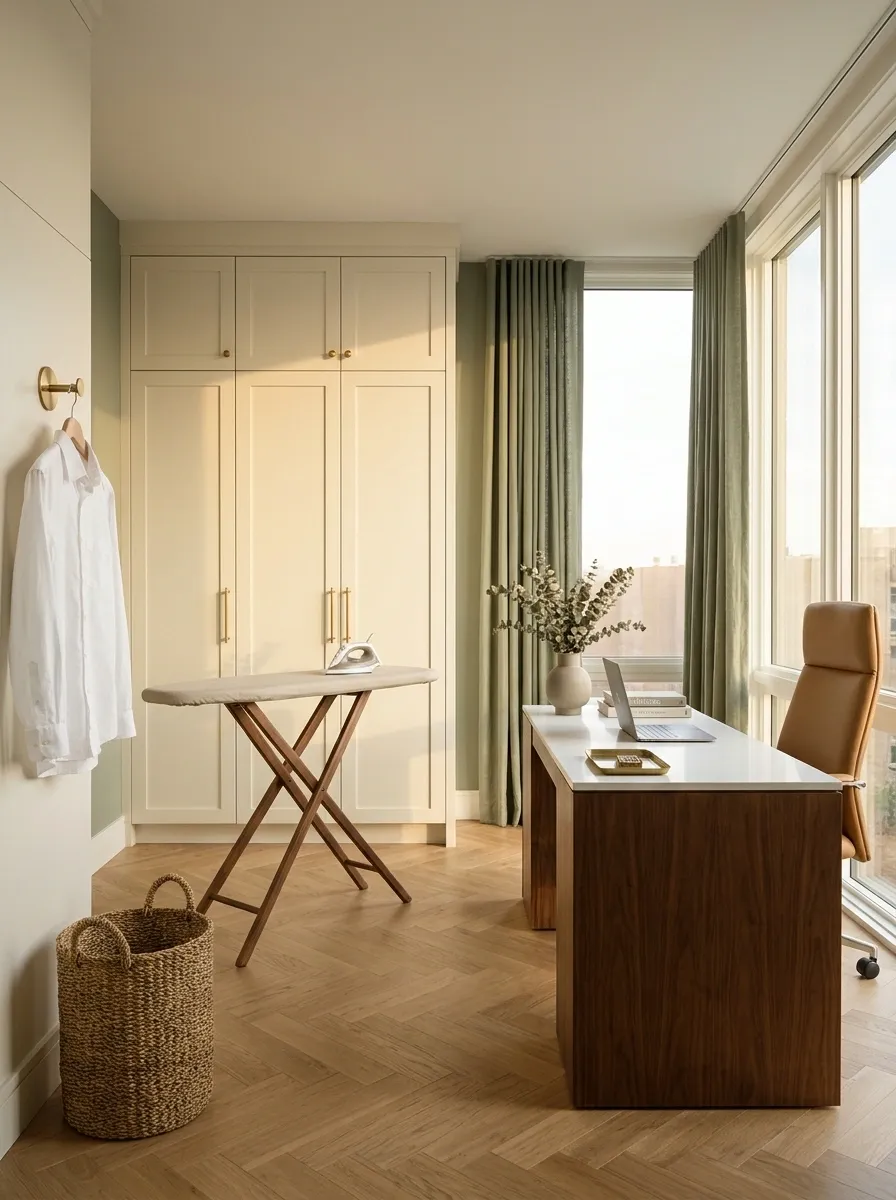
A home office often has a clear floor area outside working hours. Store the board and ironing kit in suitable closed storage, then set up away from the desk equipment.
Keep steam, water, and hot equipment away from computers, paperwork, and cables. Use the board’s own appropriate working surface.
A small hanging space for finished shirts can help complete the routine. The office can handle another task without requiring the printer to share its shelf with a warm iron and a damp pressing cloth.
| Office area | Role |
|---|---|
| Suitable cupboard | Equipment stored after cooling |
| Clear floor | Board opened for use |
| Separate hanging point | Finished clothing |
| Desk and electronics | Kept outside the ironing area |
Create a Guest-Room Station That Packs Away Completely
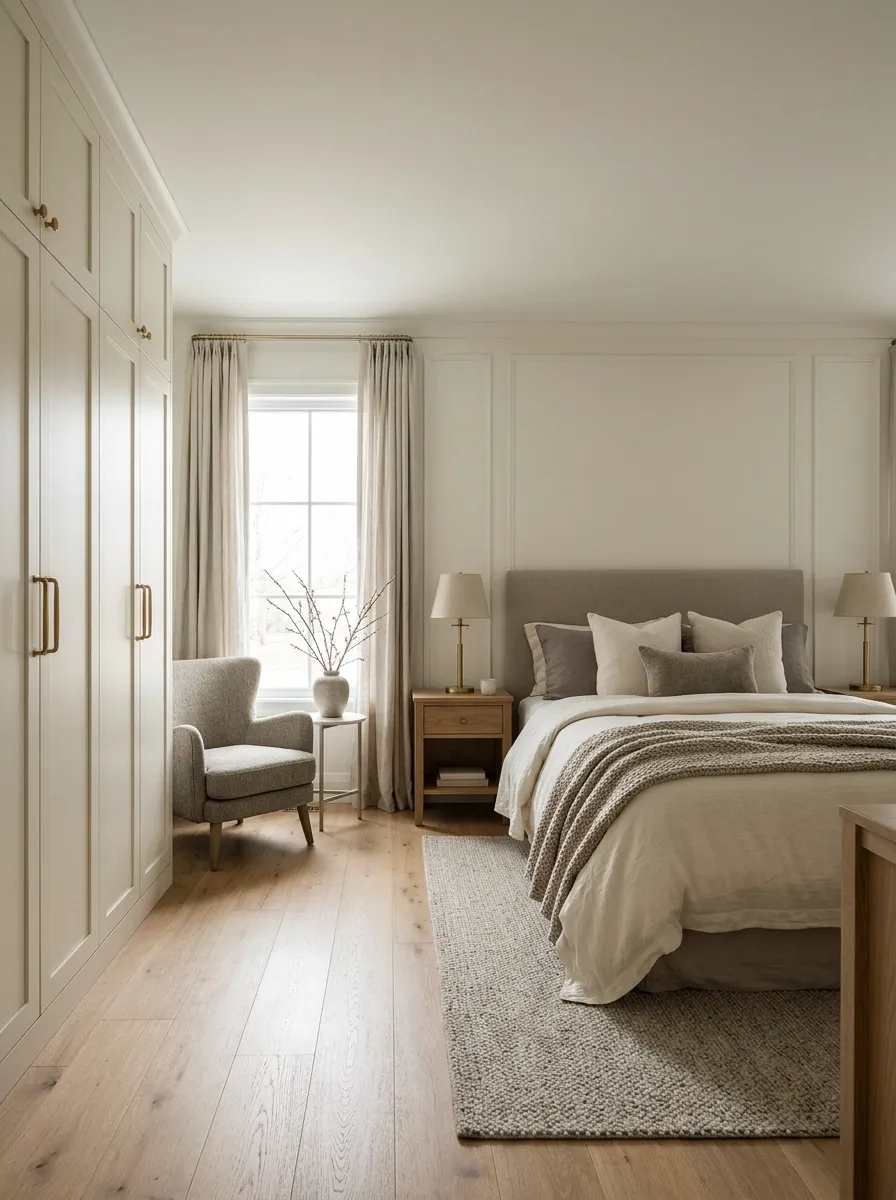
A guest bedroom can accommodate an occasional ironing setup if the equipment has a proper home between sessions.
Use suitable wardrobe storage for the board and cooled iron, leaving visitors enough space for their belongings. Set up on a clear floor area rather than using the bed as an ironing surface.
Before guests arrive, return everything to storage. A guest room should feel ready for a person, not like accommodation offered on the condition that they overlook an unfinished pile of shirts.
Clear floor and reachable equipment.
Everything stored and visitor space available.
Keep the Ironing Kit in a Dining-Room Sideboard
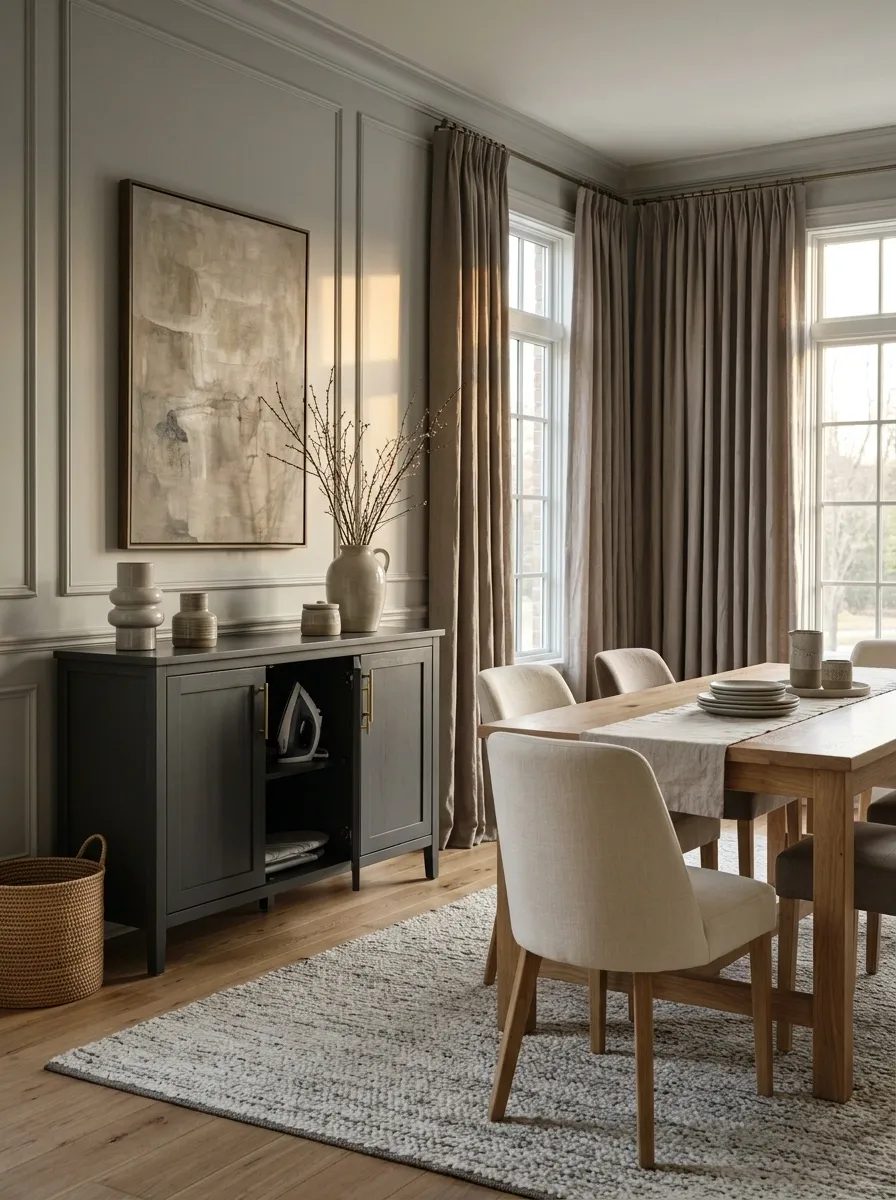
A dining-room sideboard can store a compact kit while a folding board is brought out nearby when the room is free.
Keep equipment separate from table linens if there is any risk of residual moisture, and store the iron only after following its cooling and storage instructions.
The dining table does not automatically become the ironing surface. A separate board may be the simpler option, particularly when the tabletop has a delicate finish or you would prefer dinner without a faint outline of someone’s sleeve.
Separate the functions: The sideboard stores the kit; a suitable board handles the ironing.
Use a Clear Kitchen Area for Short Sessions
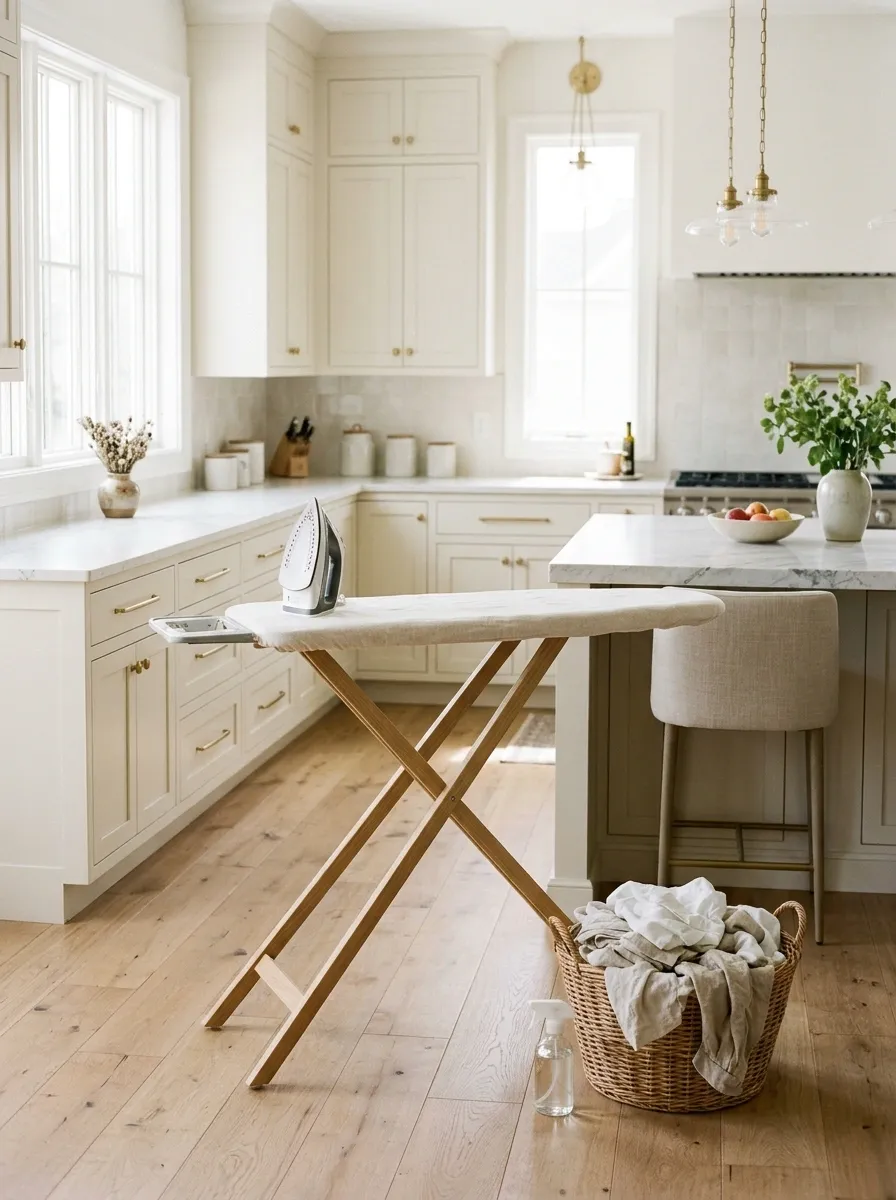
A kitchen can provide temporary ironing space when there is a stable board position, appropriate power access, and enough separation from cooking and water.
Do not iron beside an active hob, across a sink, or in the room’s busiest route. Clear food and splashes away from the working area.
This can suit occasional jobs when the kitchen is otherwise unused. It becomes less practical when somebody is cooking dinner and another person is trying to rotate a fitted sheet through the same narrow gap.
Claim a Spare Alcove Without Blocking the Room
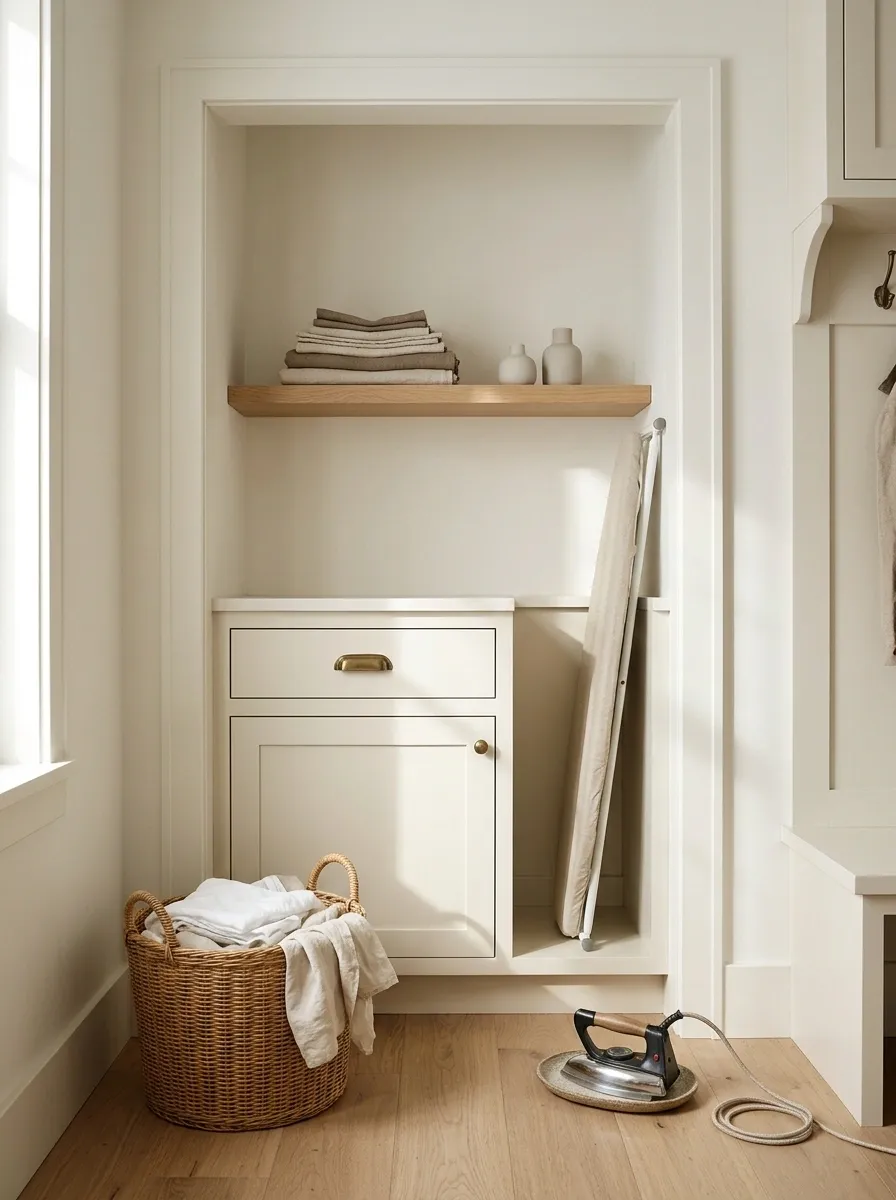
A spare alcove can become the storage location for a small ironing kit, with a folding board opened beside it.
Check the alcove’s depth against the stored equipment and the room’s movement when the board is in use. A narrow shelf may hold supplies if properly installed and loaded.
Keep the arrangement simple enough to return to its original state quickly. The station should borrow a little space, rather than gradually acquiring the entire corner through an expanding collection of baskets, hangers, and unfinished laundry.
Consider a Purpose-Made Mirrored Ironing Cabinet
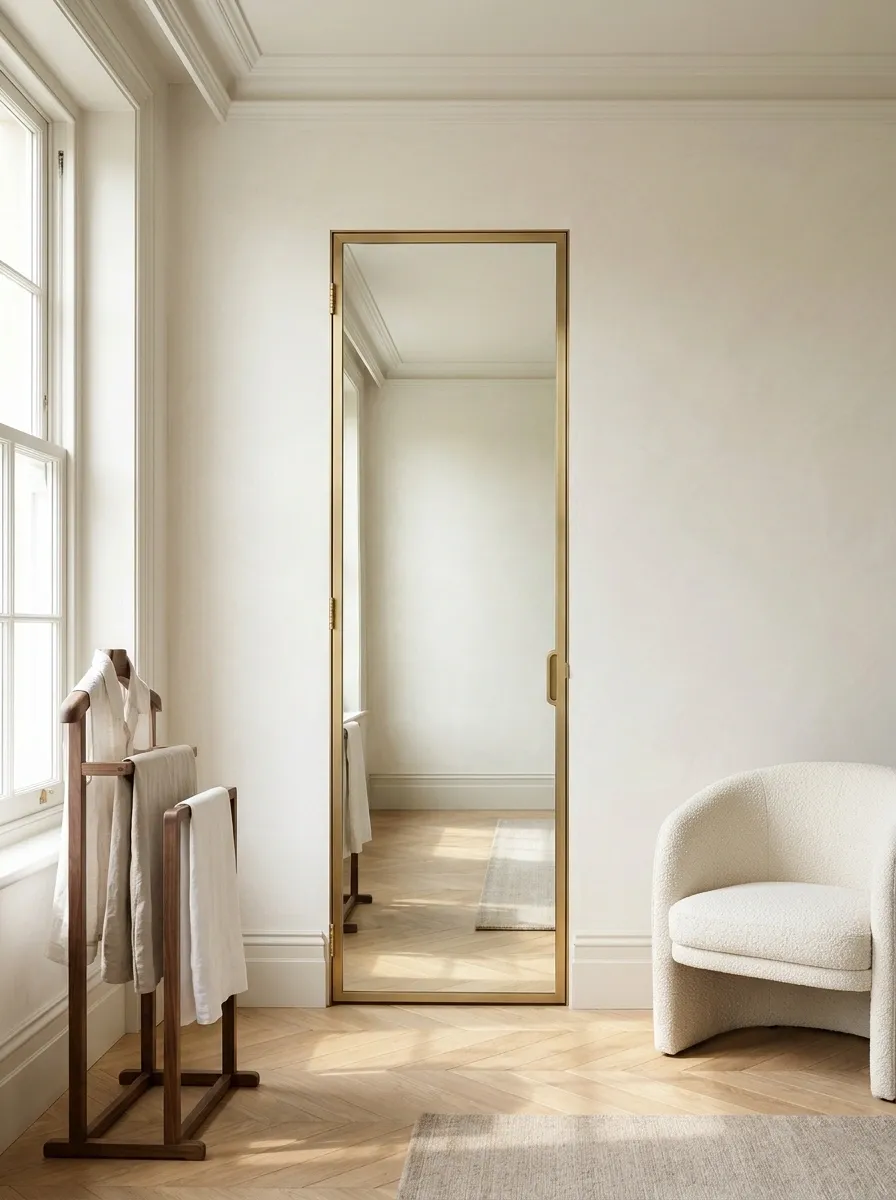
A mirrored ironing cabinet can combine a reflective front with concealed equipment where the product and installation suit the room.
Check what is actually included: some hold a board, others provide additional appliance storage, and the open arrangement varies. Confirm working height, support, electrical requirements, and cooling instructions.
The mirror can help the cabinet feel integrated into a bedroom or dressing area. It still needs to be a good ironing system once opened; a reflective door cannot compensate for an awkward board underneath.
Inspect the open product: Storage layout, board dimensions, working height, and safe appliance handling matter more than the closed-door photograph.
Choose a Freestanding Utility Cabinet for a Rental
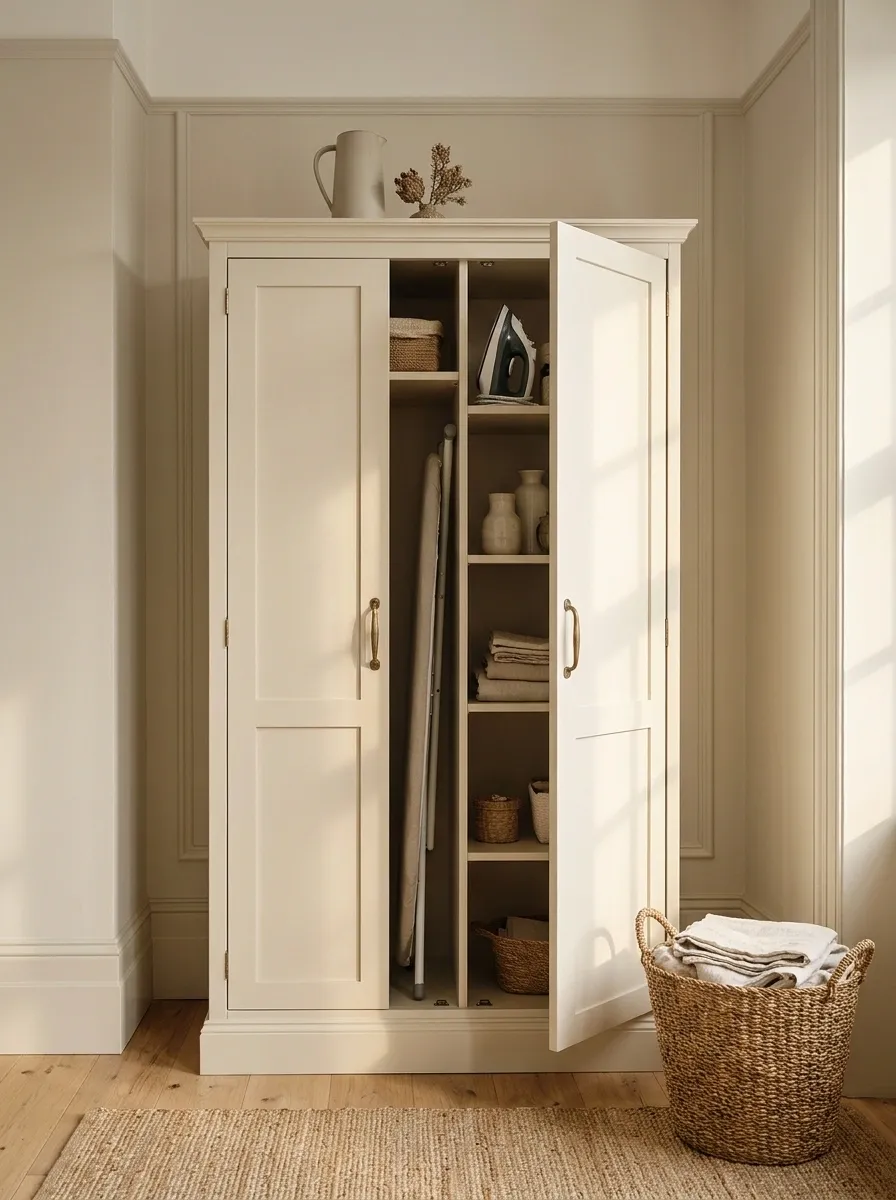
A suitable freestanding cabinet can provide dedicated storage without commissioning fitted joinery. Allow a tall section for the board and reachable space for the cooled iron.
Follow the furniture’s anchoring instructions and any rental permissions needed for installation. Measure the cabinet interior rather than relying on external dimensions.
Keep the contents realistic. A cupboard sized around the equipment you own is useful; a charming narrow cabinet that accommodates everything except the actual ironing board has misunderstood the assignment.
Board, feet, iron, and retrieval space.
Stable furniture and required anchoring.
Combine Ironing With a Small Sewing Corner
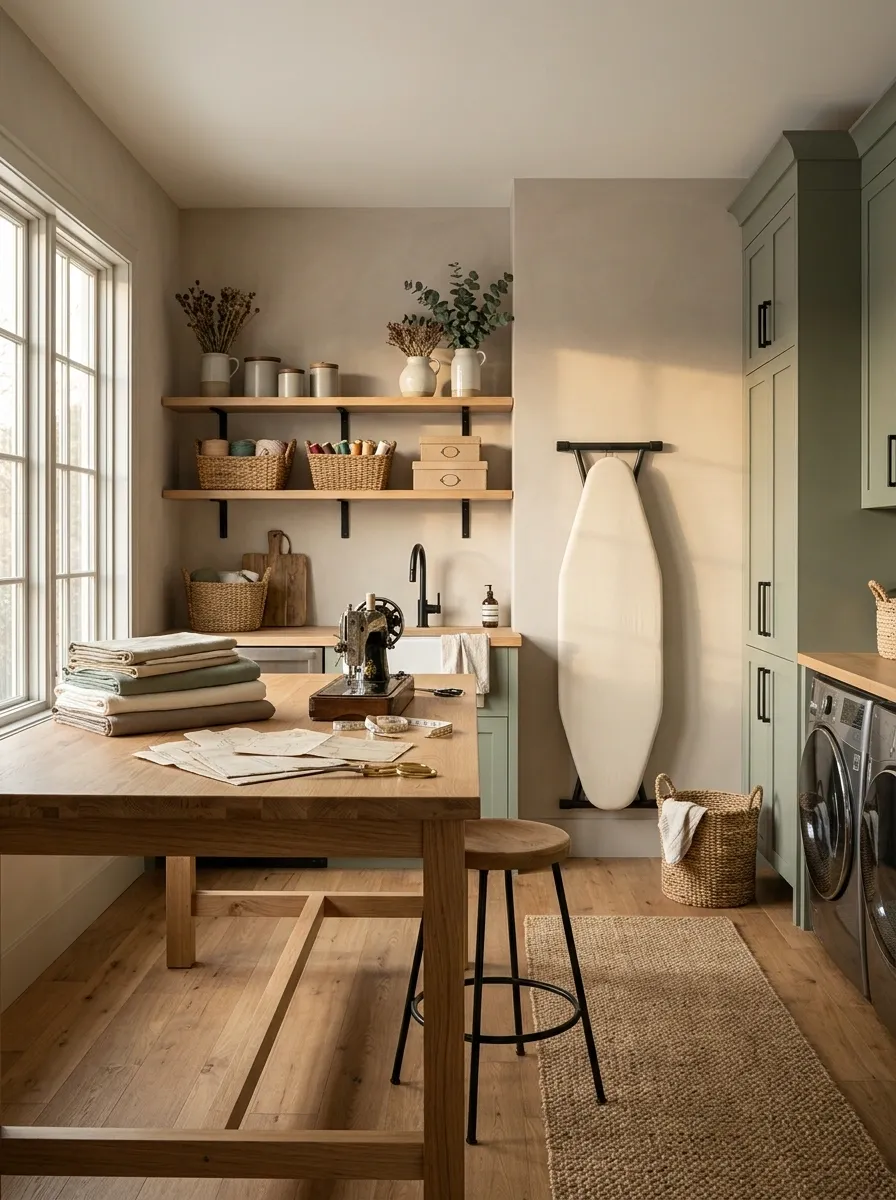
If you sew, mend, or alter clothing, an ironing setup can share the same room while remaining separate from the cutting surface.
Position the board so you can move between tasks comfortably. Keep hot equipment away from fabric stacks, loose patterns, and trailing threads.
Choose storage for scissors and other sharp tools according to household needs. The combination can make both jobs easier, provided the room does not turn into a permanent exhibition of projects awaiting the arrival of a more productive version of you.
Cutting, stitching, and contained tools.
A clear, suitable board position.
Use a Pegboard for Accessories Beside Board Storage
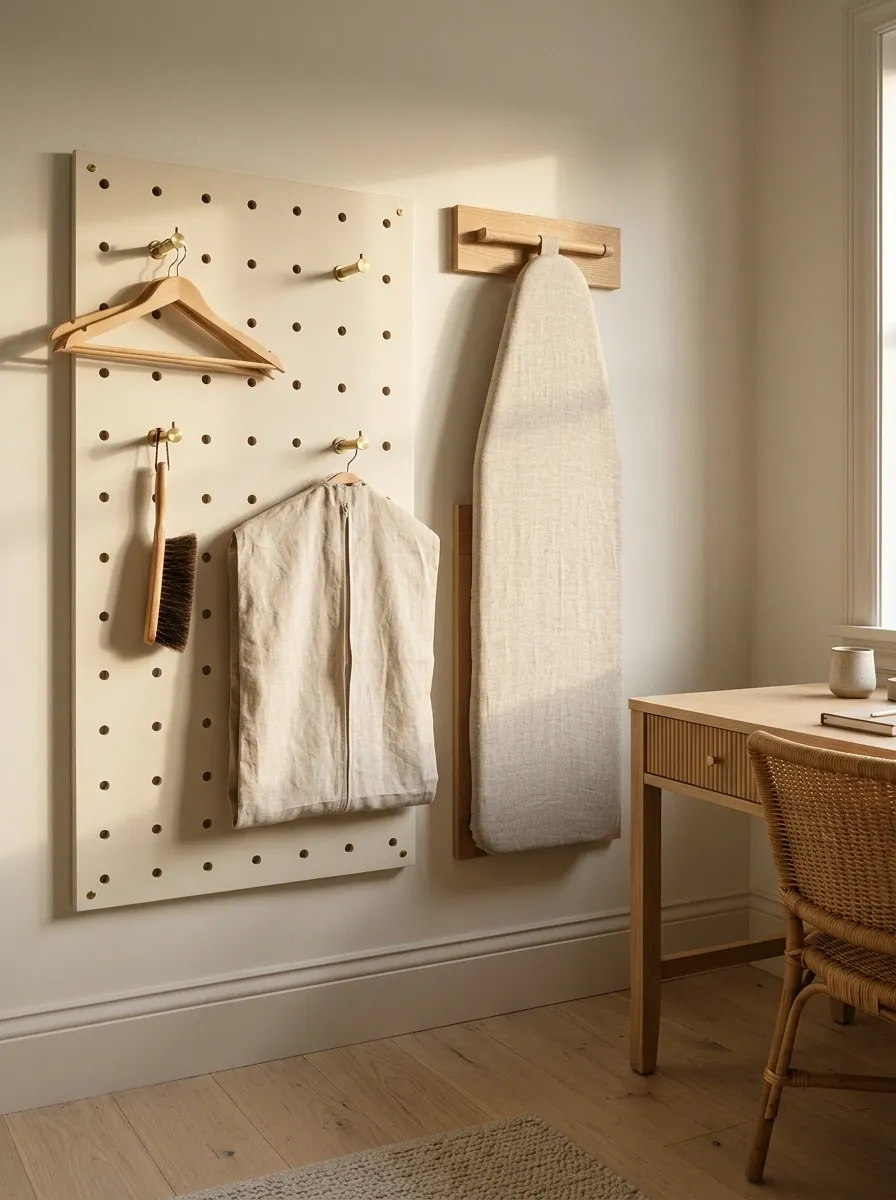
A properly installed pegboard can organize empty hangers, a lint brush, and lightweight accessories near a securely stored board.
Use compatible hooks and keep the loaded items outside the walking route. Store the iron separately unless a specific holder is intended and installed for it.
This can work in a home office, dressing area, or hobby room. Leave some space free. A pegboard should make tools easier to find, not become a vertical junk drawer with stronger branding.
Pair a Compatible Tabletop Board With a Stable Folding Worktable
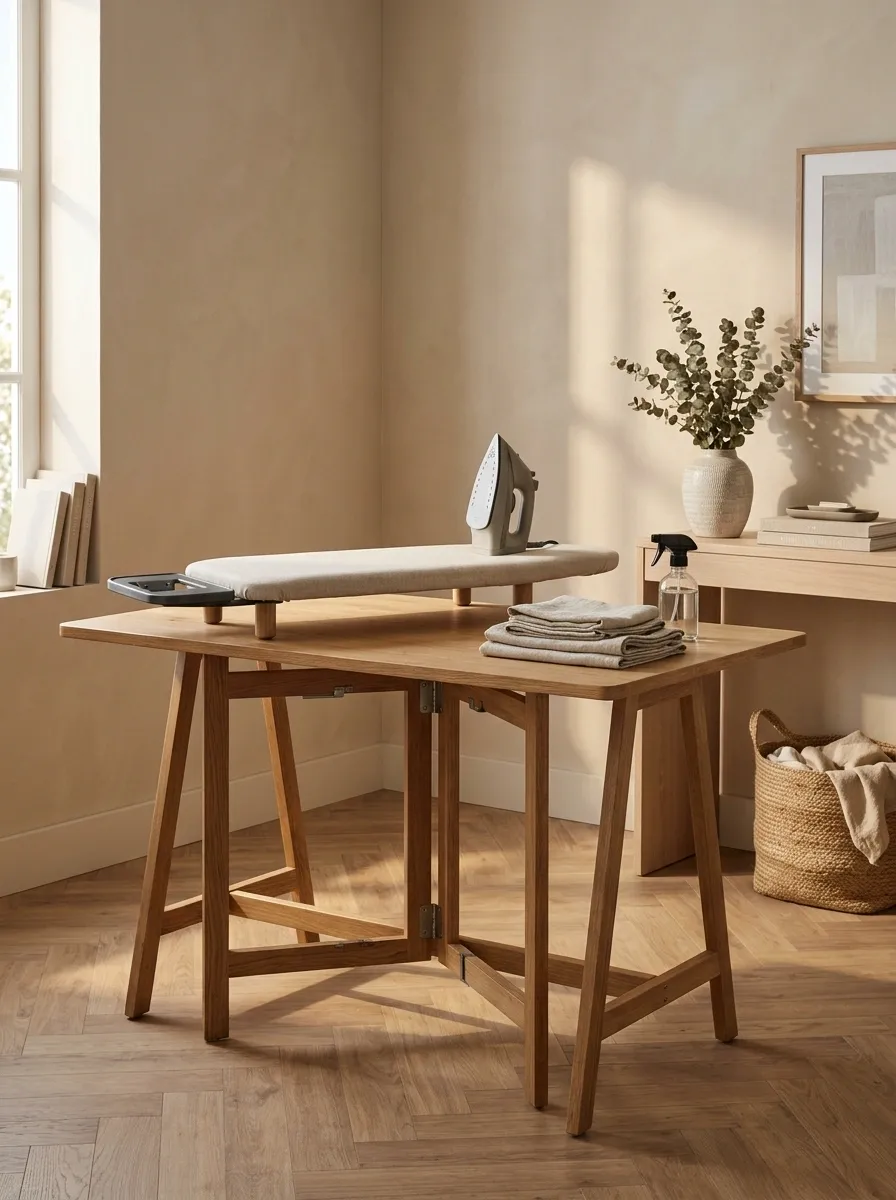
A folding worktable can support an appropriate tabletop ironing board only when both products and the surface arrangement are suitable for the task.
Check stability, locking mechanisms, working height, load limits, and heat and moisture protection. Do not improvise by covering a lightweight camping table with a towel.
When properly compatible, the combination can pack away into a multipurpose room. Test the entire setup before ironing clothing; wobbling furniture is much less entertaining once a hot appliance has joined the conversation.
| Component | What to confirm |
|---|---|
| Worktable | Stable, locked, and suitable |
| Tabletop board | Compatible support and protection |
| Combined height | Comfortable working position |
| Storage | Secure when folded |
Store a Compact Board Under the Bed
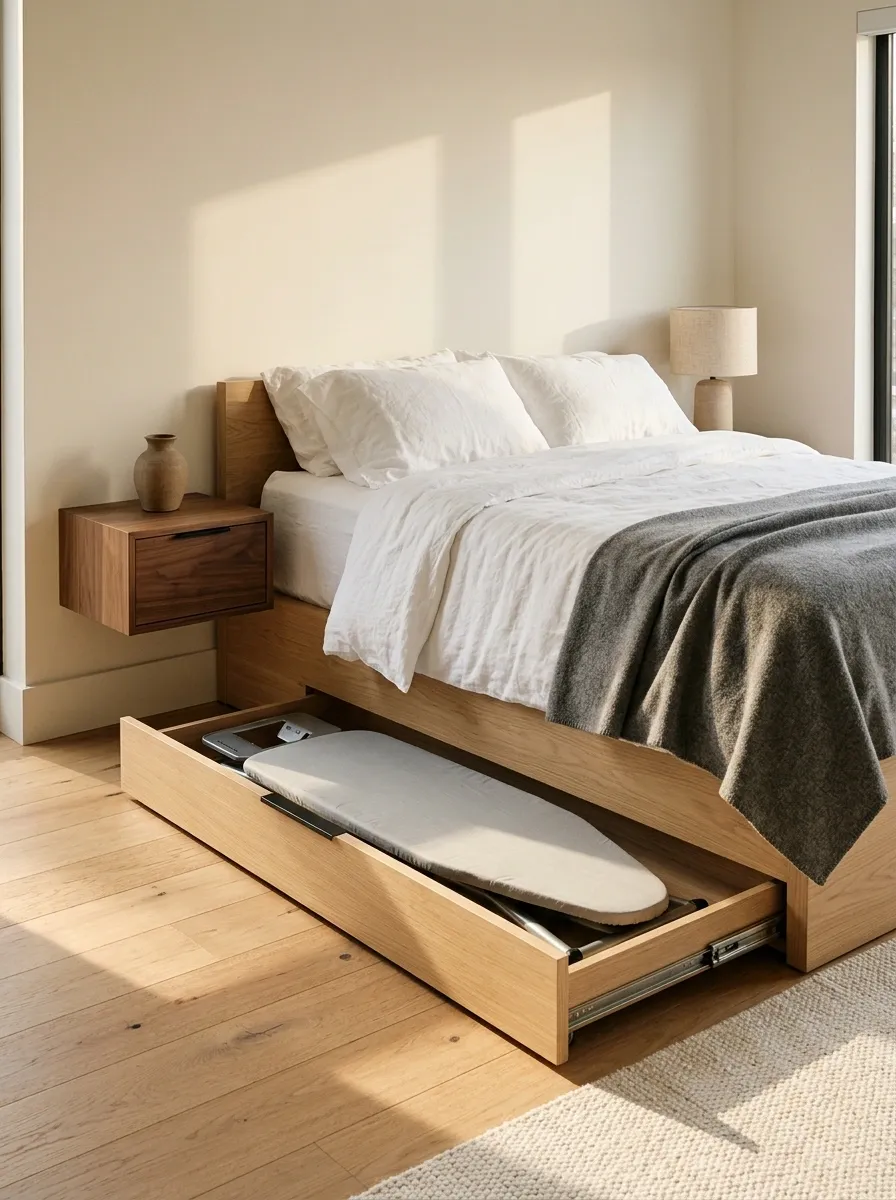
A suitably sized folded board can use under-bed space when it slides out easily and remains clean and dry. Check clearance around bed supports and storage mechanisms.
Keep the cooled iron in a separate suitable location rather than assuming everything belongs in the same low box.
This can suit occasional ironing in a small bedroom. Make retrieval straightforward. If accessing the board requires moving the mattress, the bedside table, and your remaining patience, the storage position is technically available and practically hopeless.
Give a Steam Generator Its Own Rated Support
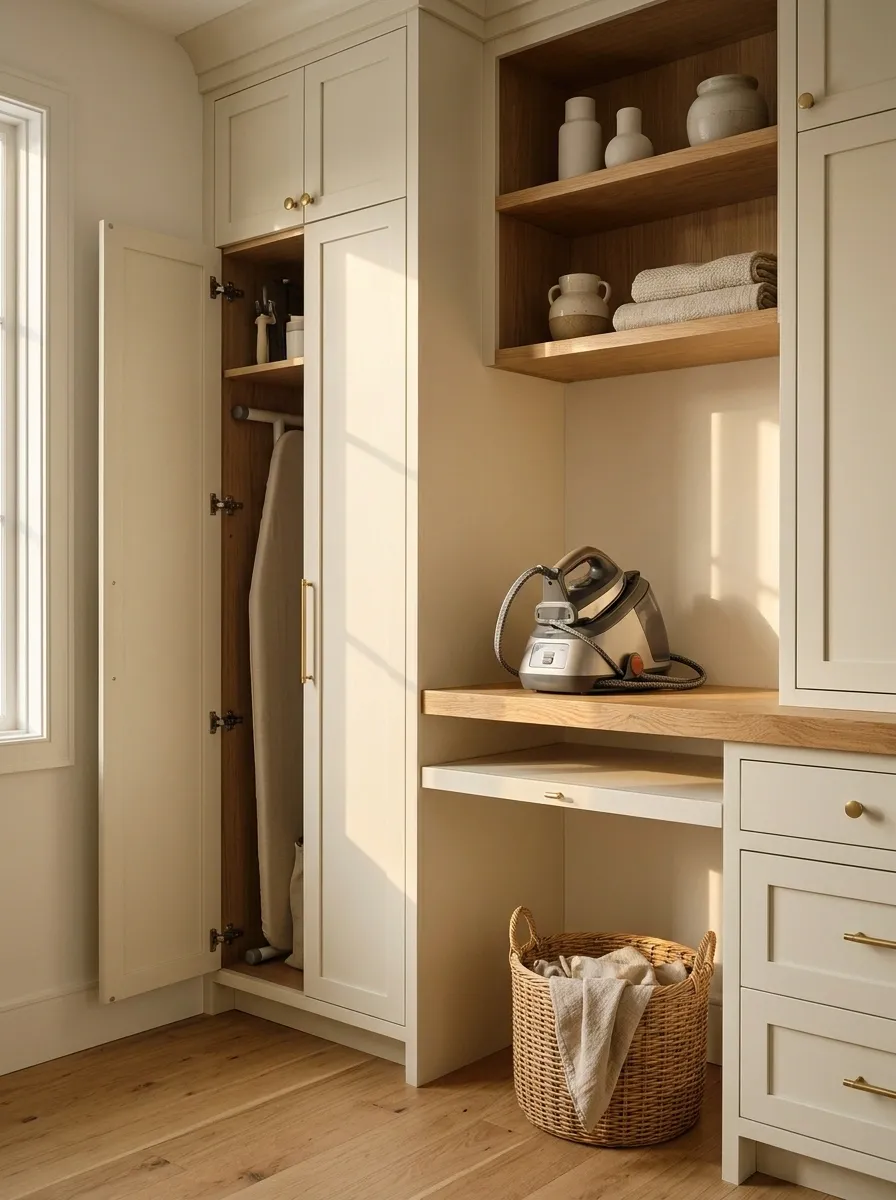
A steam-generator setup may need more support and space than a standard iron. Choose a board or stand explicitly suited to the appliance’s weight and instructions.
Allow for the hose, water tank access, and safe placement of the base. Keep the working route clear so the connection does not become something people step across.
Measure the complete system before choosing storage. A board that fits neatly into a cupboard does not solve the problem if the considerably larger base unit has been left looking for accommodation elsewhere.
Measure the whole system: Board, base, tank access, hose reach, and the equipment’s cooling and storage requirements.
Use a Freestanding Board Holder Where Wall Fixings Are Impractical

A purpose-made freestanding storage rack can hold a folded board without relying on wall installation, provided it is stable and suitable for the equipment.
Check its footprint, load requirements, and resistance to being knocked over. Position it outside door swings and routes used by children or pets.
This can help when the walls are unsuitable or installation is restricted. Choose for the actual board dimensions. A stand that barely grips the frame is offering decorative encouragement rather than dependable storage.
Correct board fit, a stable base, and a position clear of knocks and doors.
Create a Quick Station for One Outfit at a Time
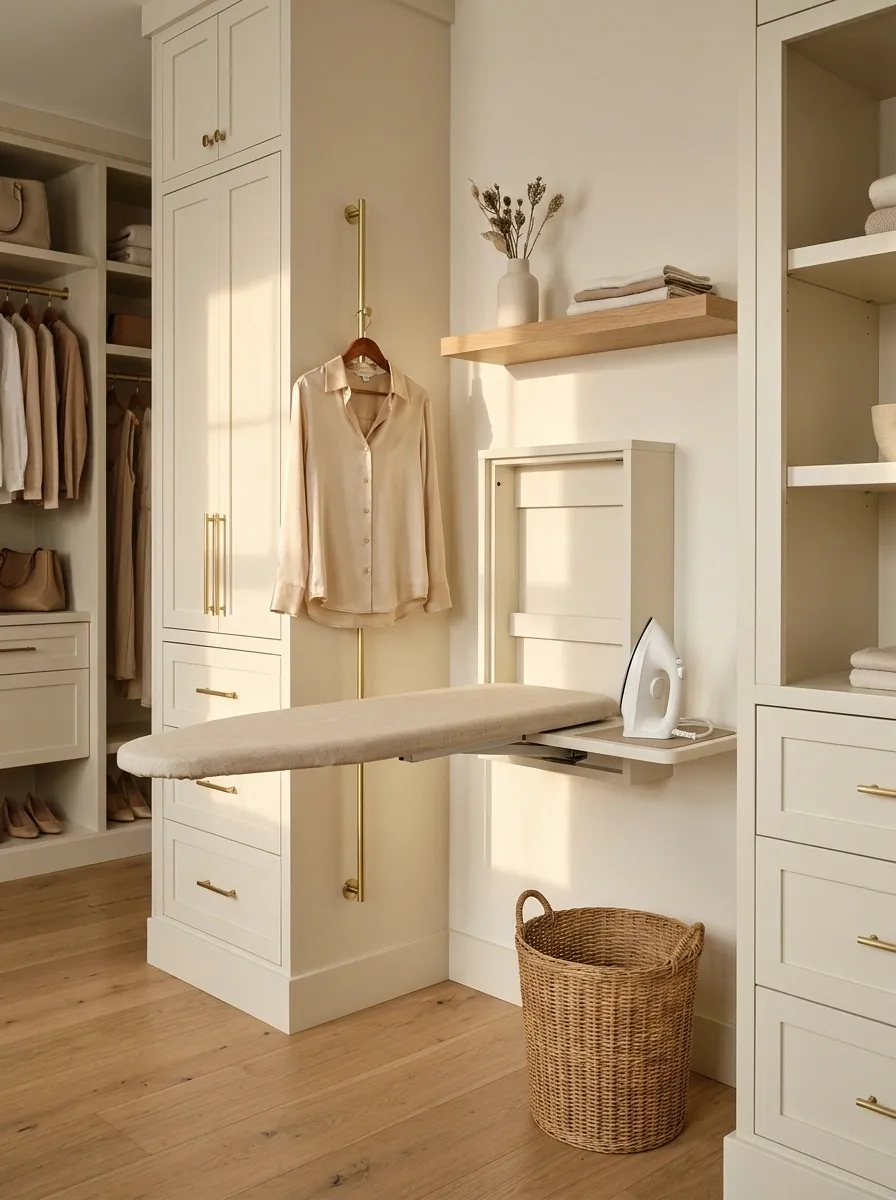
If you rarely iron large loads, organize the station around a small task: one board, one appliance, a few hangers, and somewhere to put finished clothing.
Keep the setup close to where you dress, provided the room offers a suitable working position. Return supplies after use and follow the appliance’s shutdown and cooling instructions.
Avoid adding a large “to iron” basket unless it genuinely helps. An oversized holding area can quietly transform occasional ironing into a permanent textile backlog with excellent storage.
Set up, press the outfit, hang it, and return the equipment after cooling.
Put the Station Away Once Before Buying More Storage
Rehearse the complete routine. Take the board out, open it, reach the supplies, hang a finished garment, and put everything away after the appliance has cooled.
Notice what is awkward.
Perhaps you need a better board holder. Perhaps the finished clothes need a nearby hanging point. Perhaps the cabinet is fine and the basket of miscellaneous accessories is the part making the routine irritating.
A home without a laundry room can still have a useful ironing station. It just needs the equipment to have a home, the working space to remain practical, and the setup to stop feeling like the preliminary round of a domestic endurance event.