
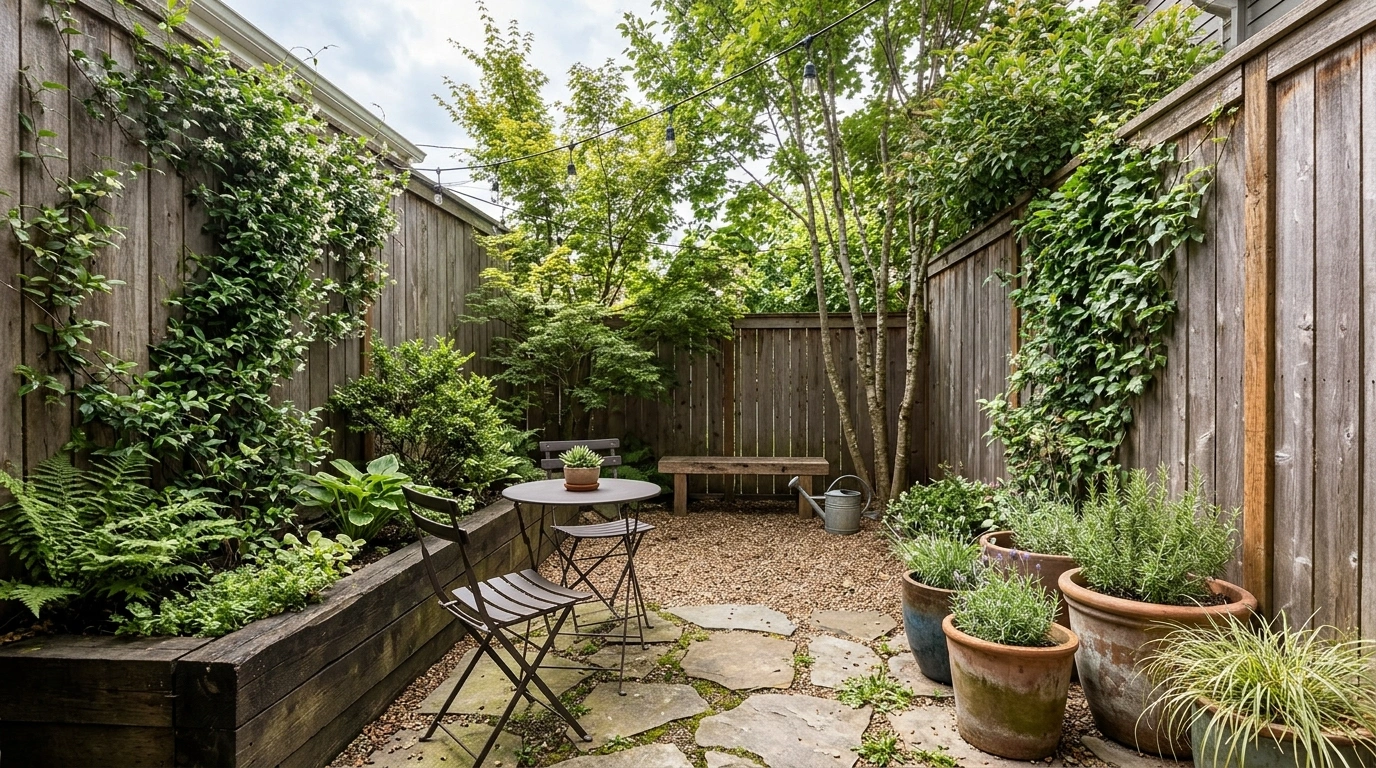
Watch how you use the backyard for a week. Where do you place a chair? Which area becomes muddy? Where does afternoon sunshine turn into a personal roasting arrangement?
Those answers matter more than choosing a stone from a photograph.
A grass-free backyard can become a dining courtyard, planted retreat, growing space, or useful combination. It does not need to become one continuous hard surface with three apologetic pots.
Keep Water, Access, and Maintenance in the Plan
Observe the site after rain before changing surfaces. Identify drains, levels, utilities, trees, and the route from the house.
A permeable-looking finish does not prove the complete installation will drain properly. Base construction, soil, grading, and outlets matter. Get appropriate advice for drainage and substantial work.
Choose planting for local conditions. No grass does not mean no gardening; the weeds will happily confirm that arrangement.
Grass-Free Layouts for Small Outdoor Spaces
A Modern Fire Pit Circle
Surround a central fire feature with comfortable weather-resistant seating to anchor an open backyard layout.
Keep the ground treatment cohesive and clean, using dark gravel to define the gathering zone without introducing complicated lawn maintenance.
Position a secondary dining setup along the perimeter to maximize functionality while keeping the center open for conversation.
A Small Dining Terrace With a Planted Edge
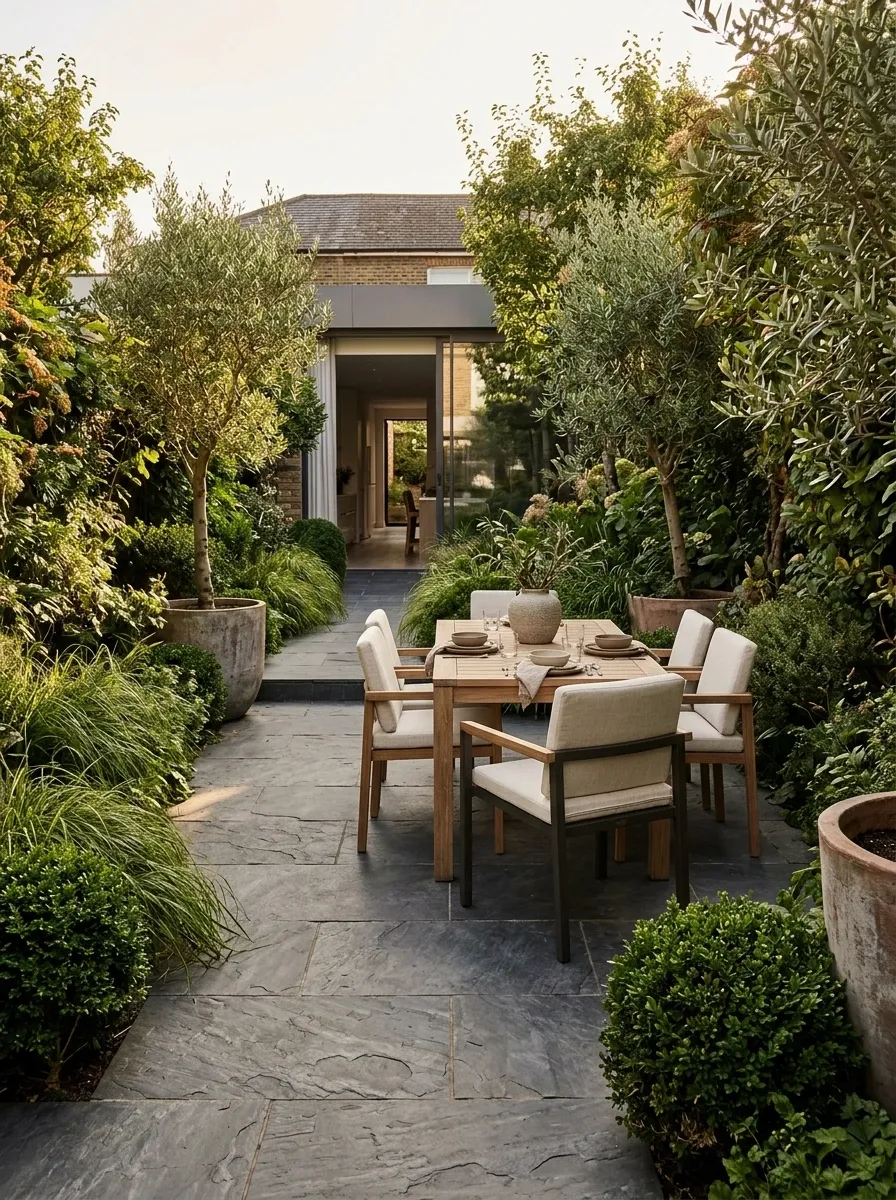
Create enough terrace for the table and occupied chairs, with planting along part of the boundary. Preserve a direct kitchen route.
Choose suitable paving and installation for the site. A compact table helps only when people can still pull chairs out. The planted edge makes the arrangement feel like a garden rather than a table that has escaped into a car park.
A Gravel Sitting Area With a Firm Access Path
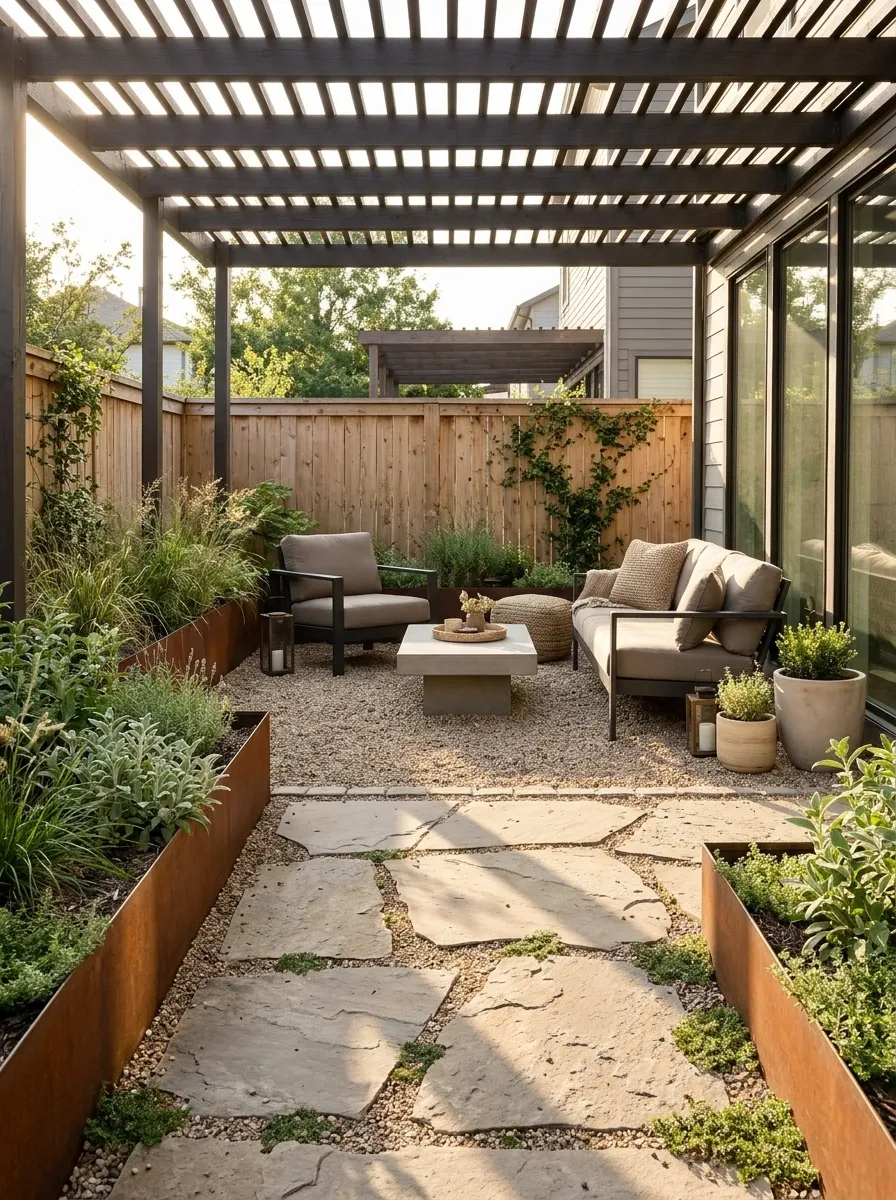
Gravel can suit an informal courtyard when correctly specified and contained. Choose furniture stable on the surface.
Provide suitable firm access where loose material would impede users. Consider wheels, mobility aids, pets, and barefoot trips. Gravel is not universally easier because it arrives in bags; its base, size, and maintenance deserve attention beyond the attractive crunch in somebody else’s garden video.
A Paved Courtyard With Large Planters
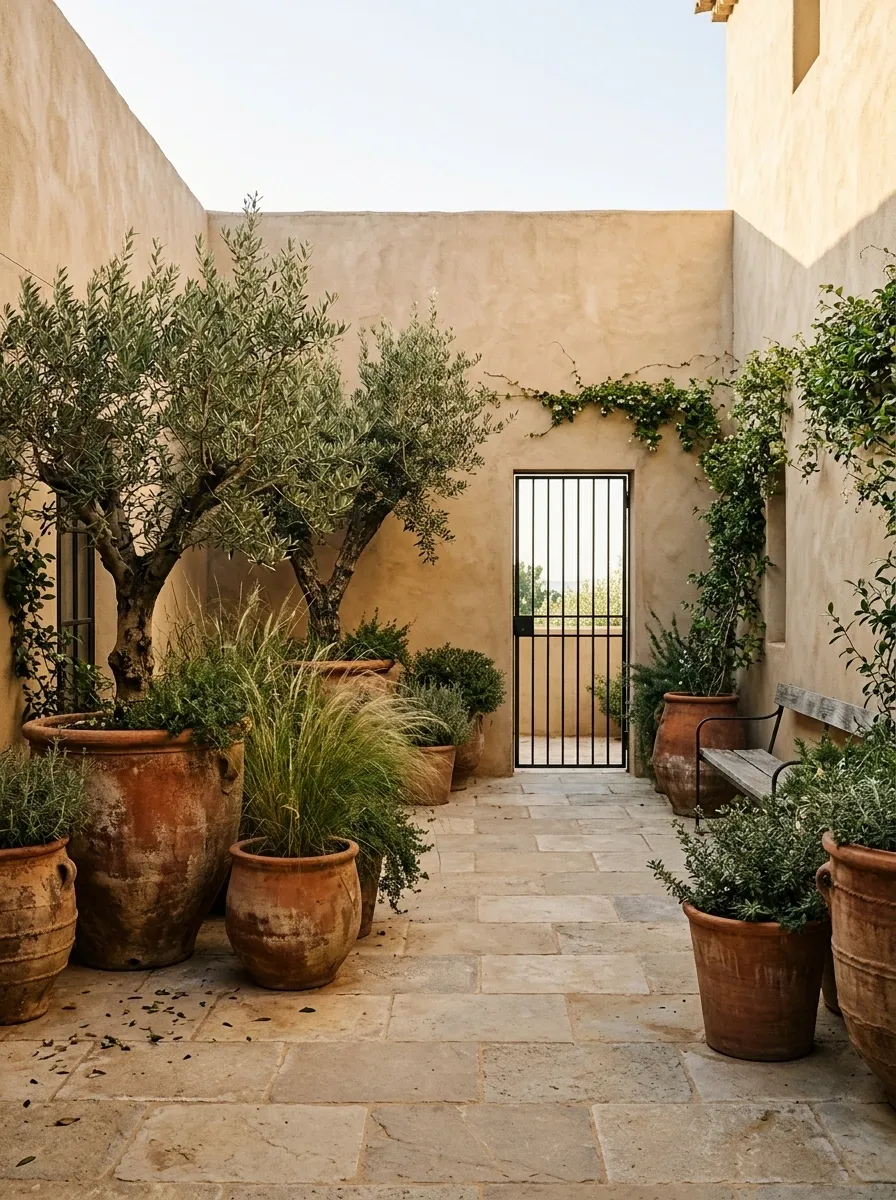
A few substantial containers can give paving structure without crowding every edge with little pots.
Choose plants suited to containers and allow mature growth. Manage drainage and weight appropriately, protecting nearby surfaces. Repeat a pot material for coherence. A collection of tiny thirsty containers can turn an allegedly easy courtyard into an enthusiastic and demanding watering rota.
A Central Path With Deep Planting Beside It
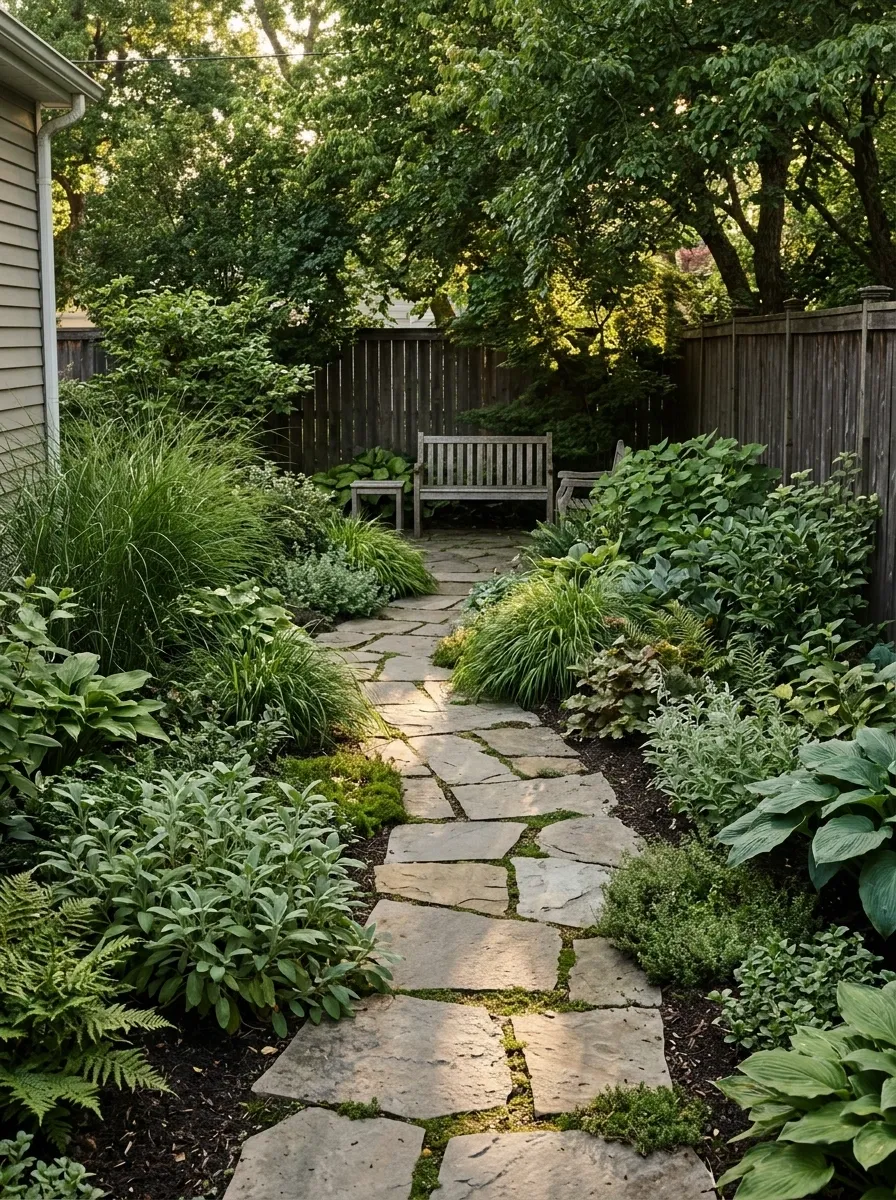
A path can connect the house to a seat while planting occupies the remaining ground. There is no requirement for a central lawn.
Make the route stable and suitable for its users. Allow mature plants room without swallowing it. A path that only remains visible until midsummer may require more pruning than you intended when describing the garden as low maintenance.
A Small Deck With a Garden Bed Beyond
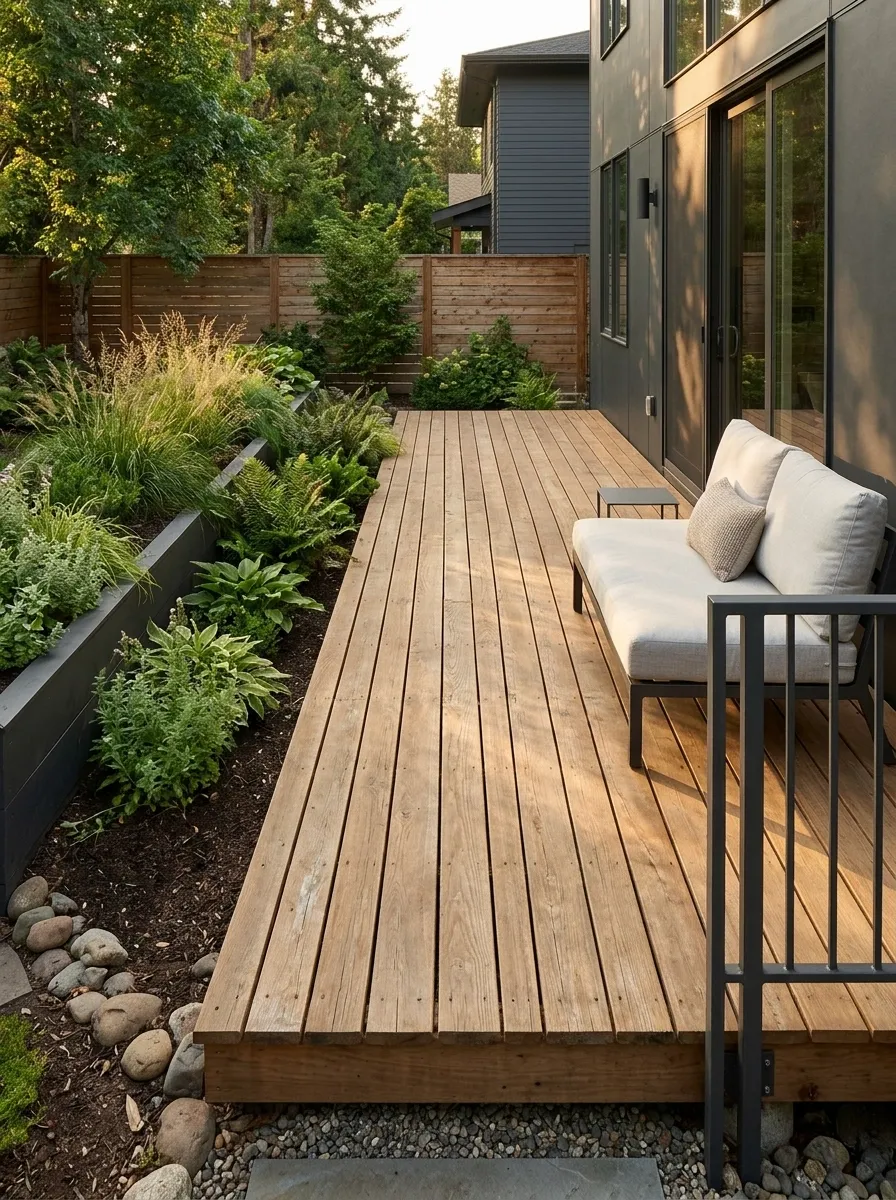
A proportionate deck can define seating while retaining planted ground beyond. Plan it around the site and intended furniture.
Structure, support, drainage, guards, and house connections require appropriate design and any applicable approvals. Do not cover unresolved dampness and call it solved. A smaller sound deck offers more enjoyment than a large platform concealing the yard’s problems.
Groundcover Planting Around Stepping Stones
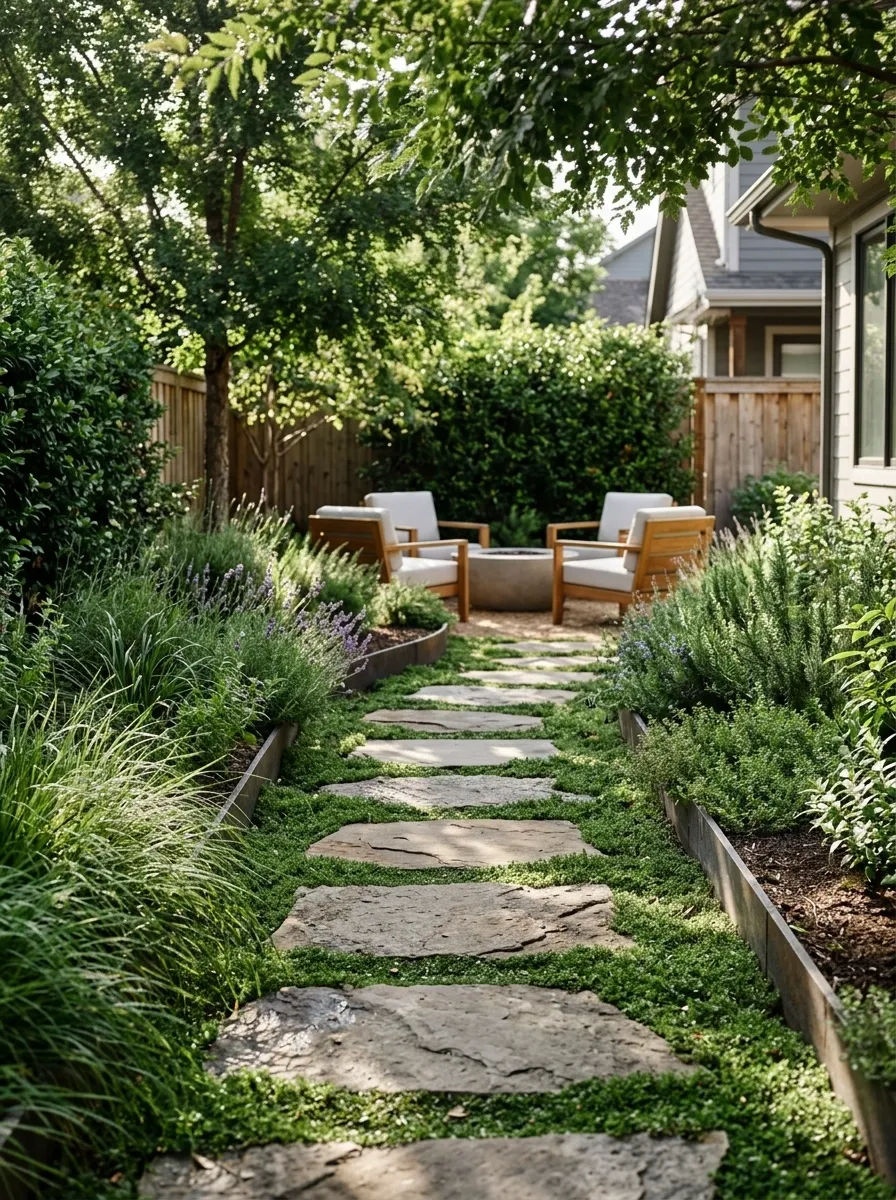
Low planting can soften a path when species suit climate, light, drainage, and expected traffic.
Use stable stepping surfaces at comfortable spacing. Groundcover does not automatically tolerate regular footsteps, so check local suitability and invasive status. Preserve a practical main route while planting establishes. Visitors should not need confidence in their jumping ability to reach the chairs.
| Plant choice | Local conditions and traffic tolerance |
|---|---|
| Walking surface | Stable, comfortable spacing |
Raised Beds Beside a Small Work Area
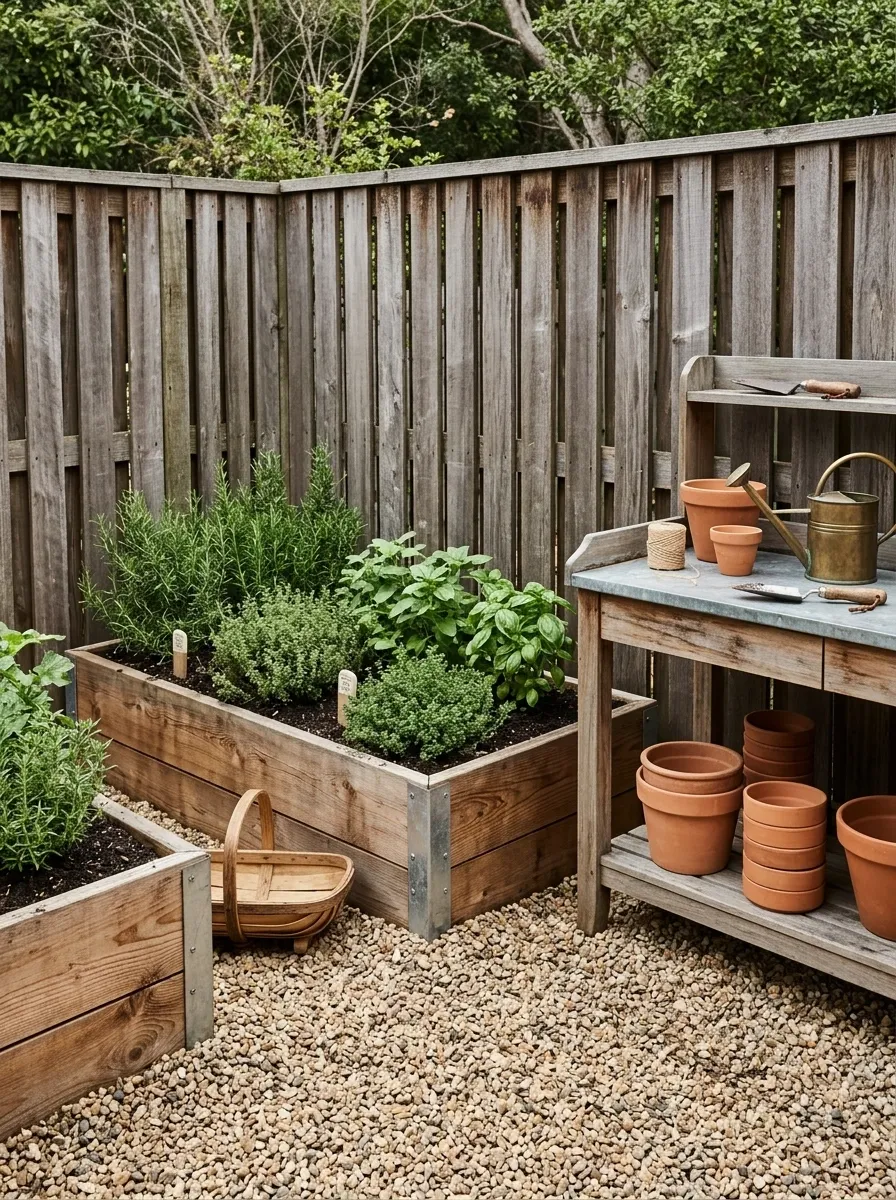
Raised beds can create a productive growing corner. Arrange them for comfortable reach without stepping into the soil.
Choose suitable materials and growing medium, considering water movement and access. A small potting surface may help. Scale the project to your enthusiasm; a casual interest in herbs need not become an unpaid agricultural placement.
A Compact Bistro Corner With a Clear View
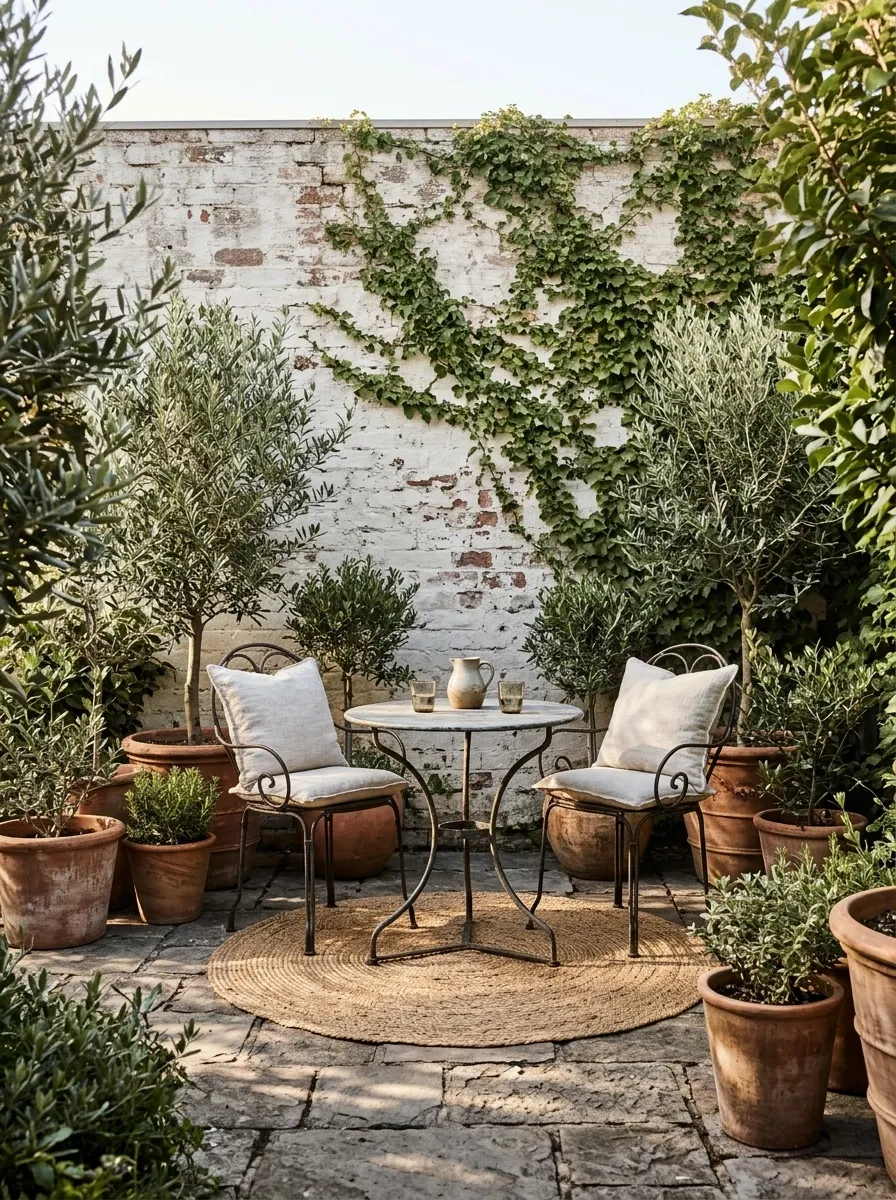
A small table and comfortable chairs can make a modest paved corner useful. Place them according to the time of day you expect to sit.
Test sun, shade, wind, and privacy with existing furniture. Leave movement around occupied chairs. A picturesque corner that never offers comfortable conditions may remain beautifully styled and entirely unoccupied.
Morning coffee, lunchtime shade, or an evening seat?
A Play Area With a Separate Adult Seat
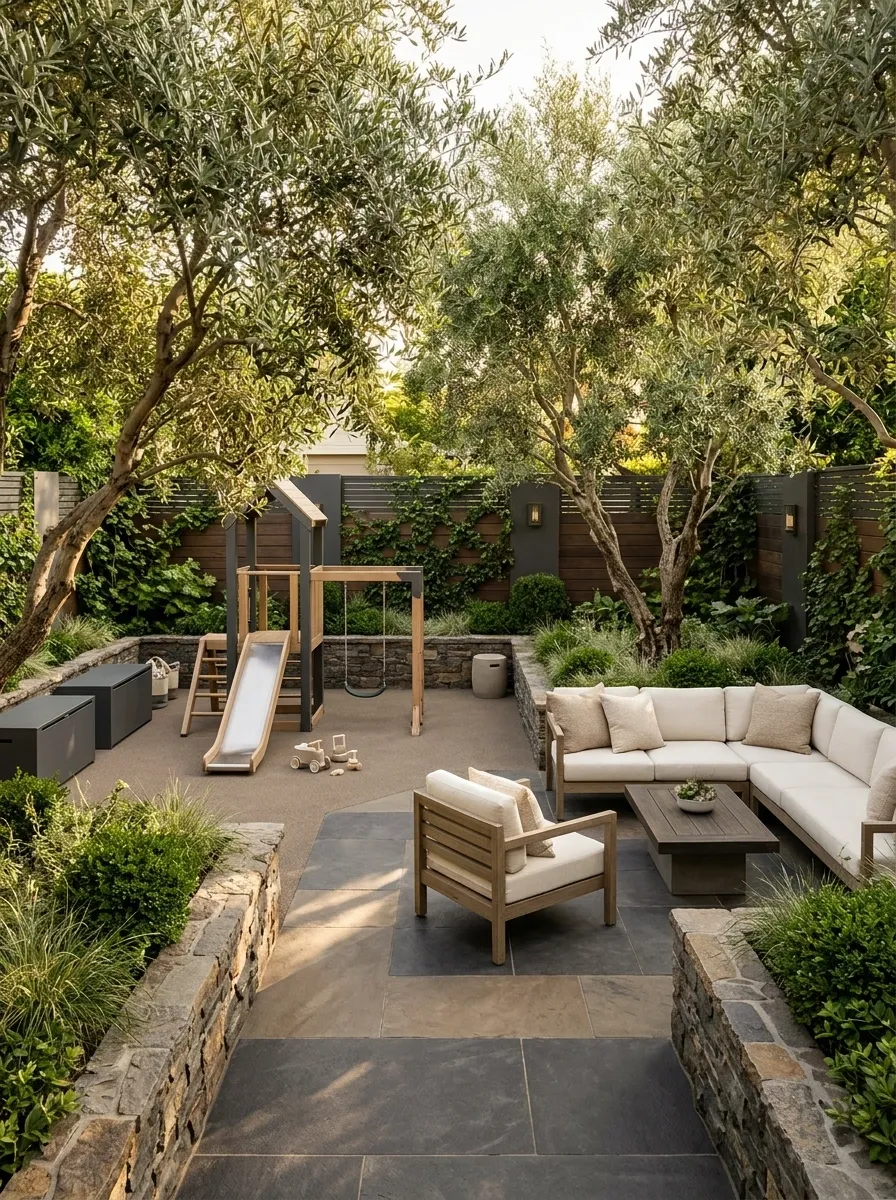
A grass-free yard can support play when the surface matches the activity and users. Equipment involving falls needs appropriate safety surfacing and installation.
Keep the area visible from a comfortable adult seat and give portable toys accessible storage. Protect planting from the busiest activity. Delicate borders and children often maintain different opinions about acceptable ball trajectories.
A Bench Built Into the Garden’s Edge
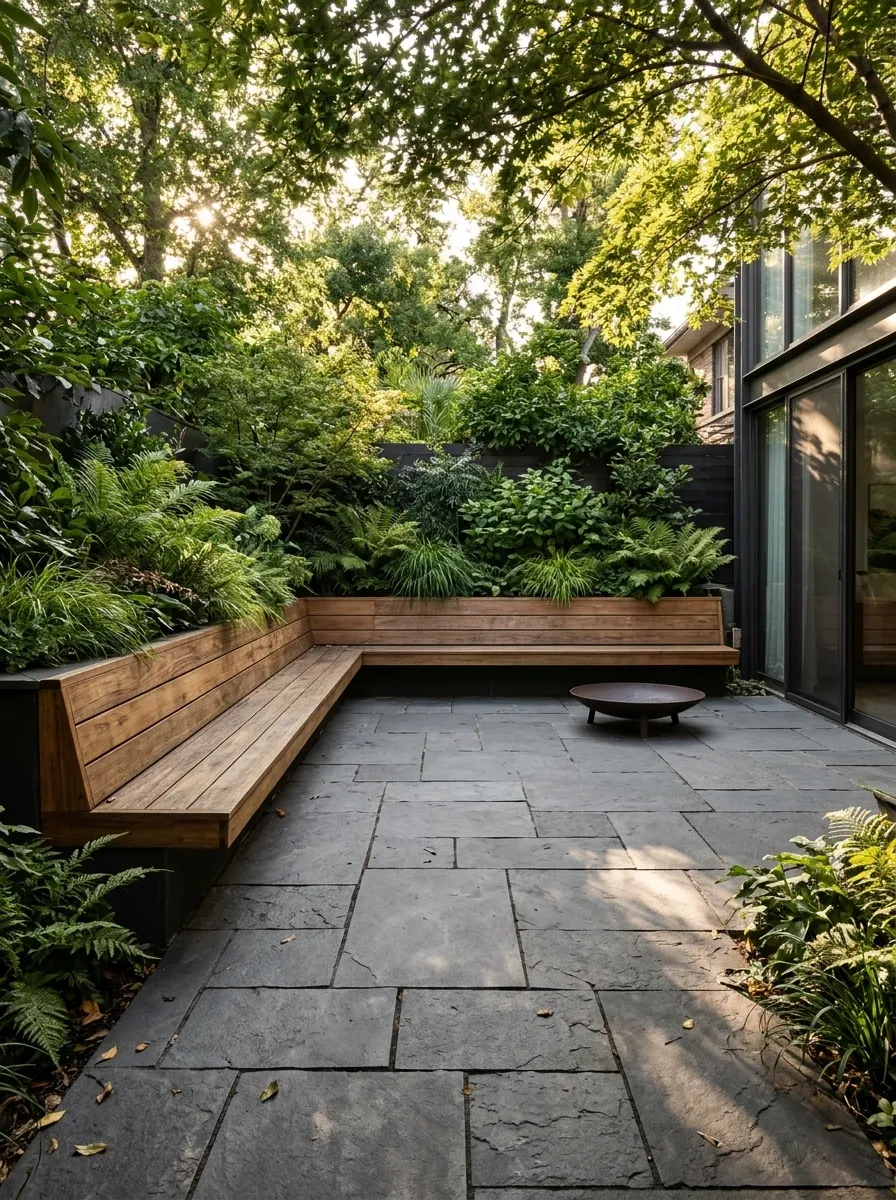
A properly designed boundary bench leaves the center available for movement or a table. Choose seat depth and back comfort before finishes.
Use sound support and weather-suitable materials. Give planting growing room behind shoulders. Test the seating with a real conversation; it should do more than provide an impressive horizontal line from an upstairs window.
A Shaded Garden With Mulched Planting Beds
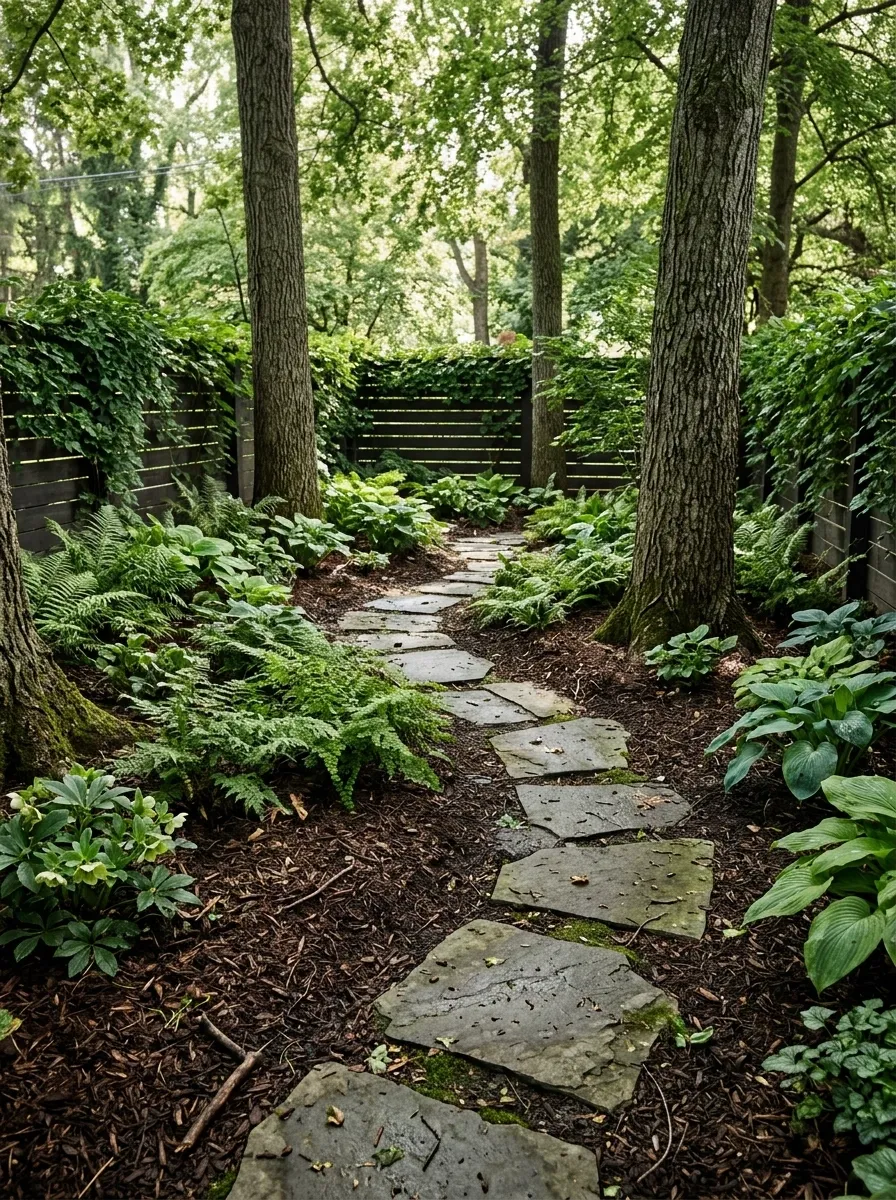
Where lawn struggles under shade, locally suitable planting may work better. Choose for actual light, moisture, and root competition.
Protect established roots and avoid piling material against trunks or buildings. Add a clear path where people naturally walk. Shade can create a retreat without forcing sun-loving plants to spend every summer issuing formal complaints.
A Paved Strip Beside a Deeper Garden Border
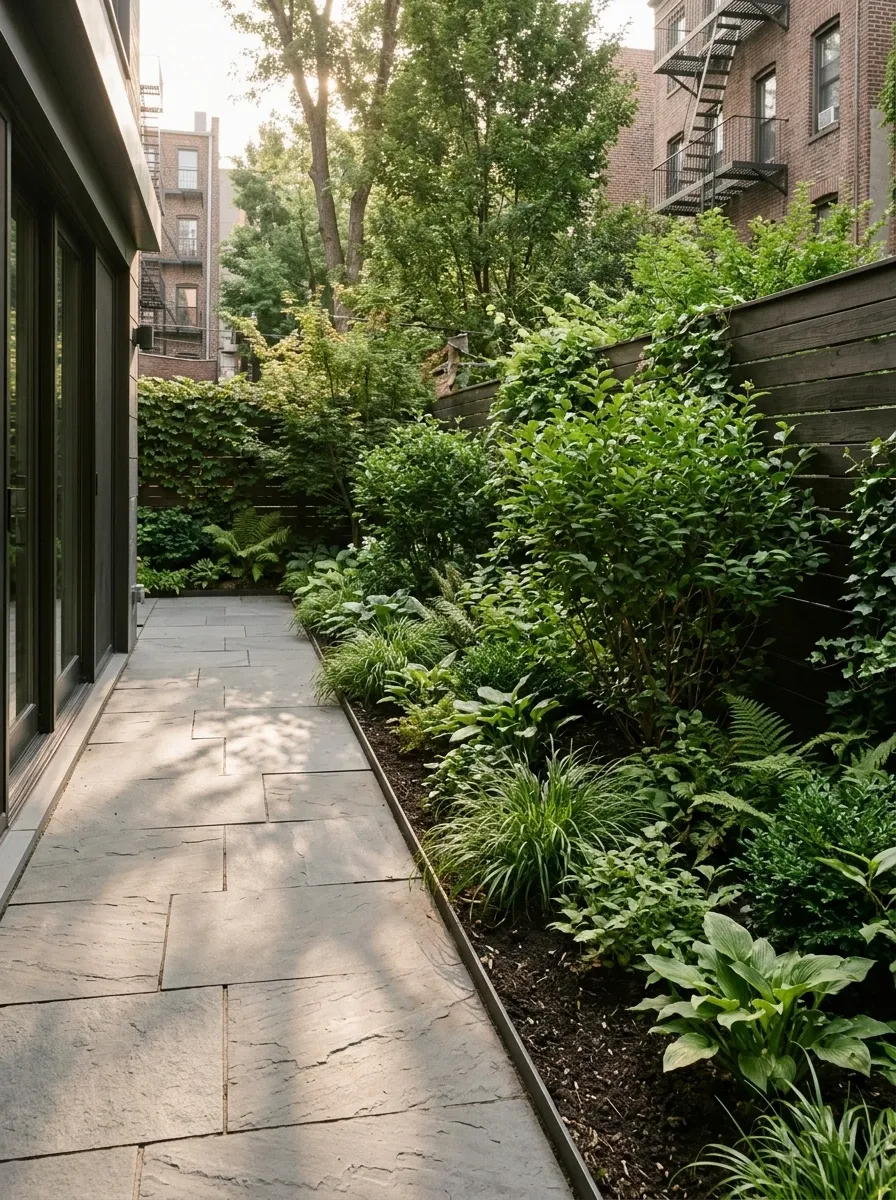
A narrow yard may work well with paving along one side and a deeper continuous bed along the other.
Avoid dividing the width into several unusably thin zones. Allow mature growth and maintenance access. Repeated compatible plants usually feel calmer than fitting in one of everything. The nursery has considerably more floor space than your backyard.
A Container Kitchen Garden Near the Door
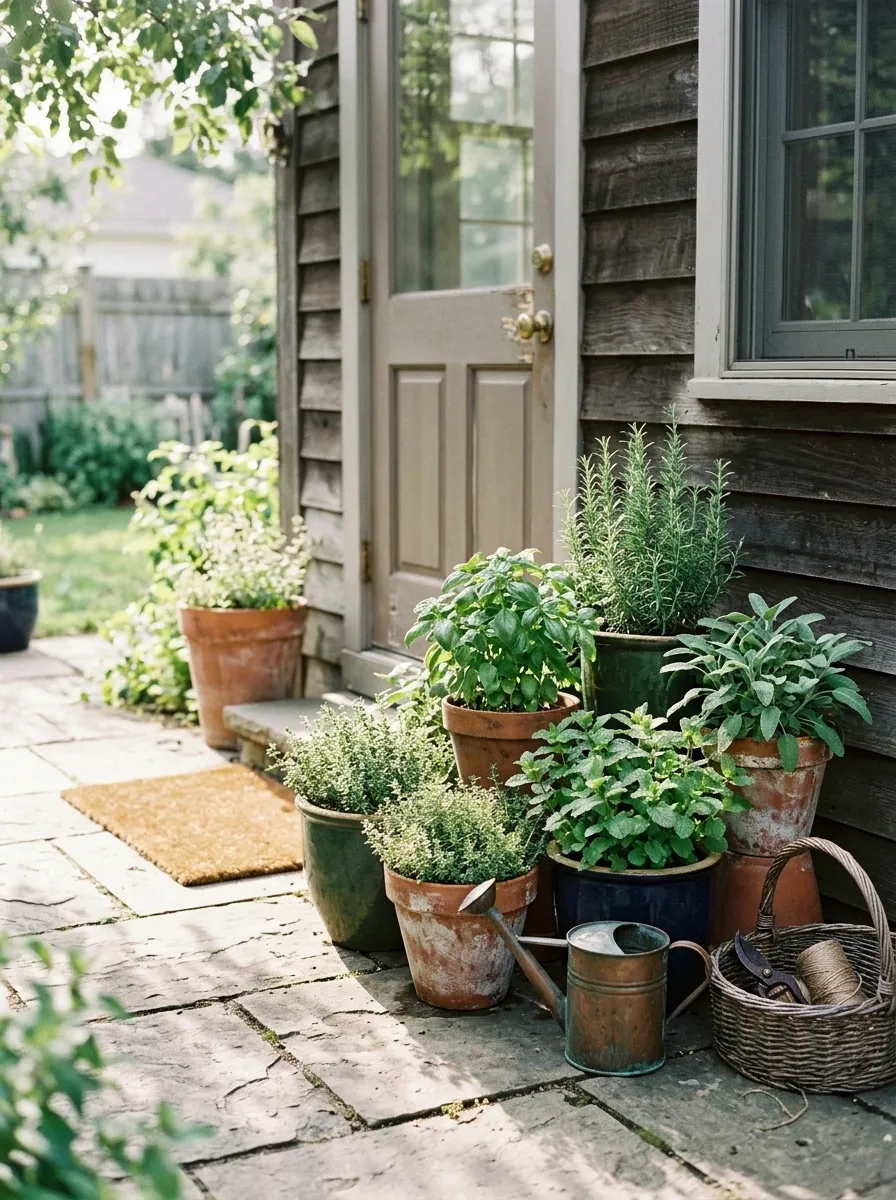
Herbs and compact crops can suit containers near the house when light, water, and drainage meet their needs.
Group pots for access without obstructing the exit. Begin with plants you use and learn the watering routine before expanding. Growing a few useful herbs well beats supervising a dozen exhausted plants purchased during an ambitious Saturday morning.
A Quiet Courtyard With One Focal Plant
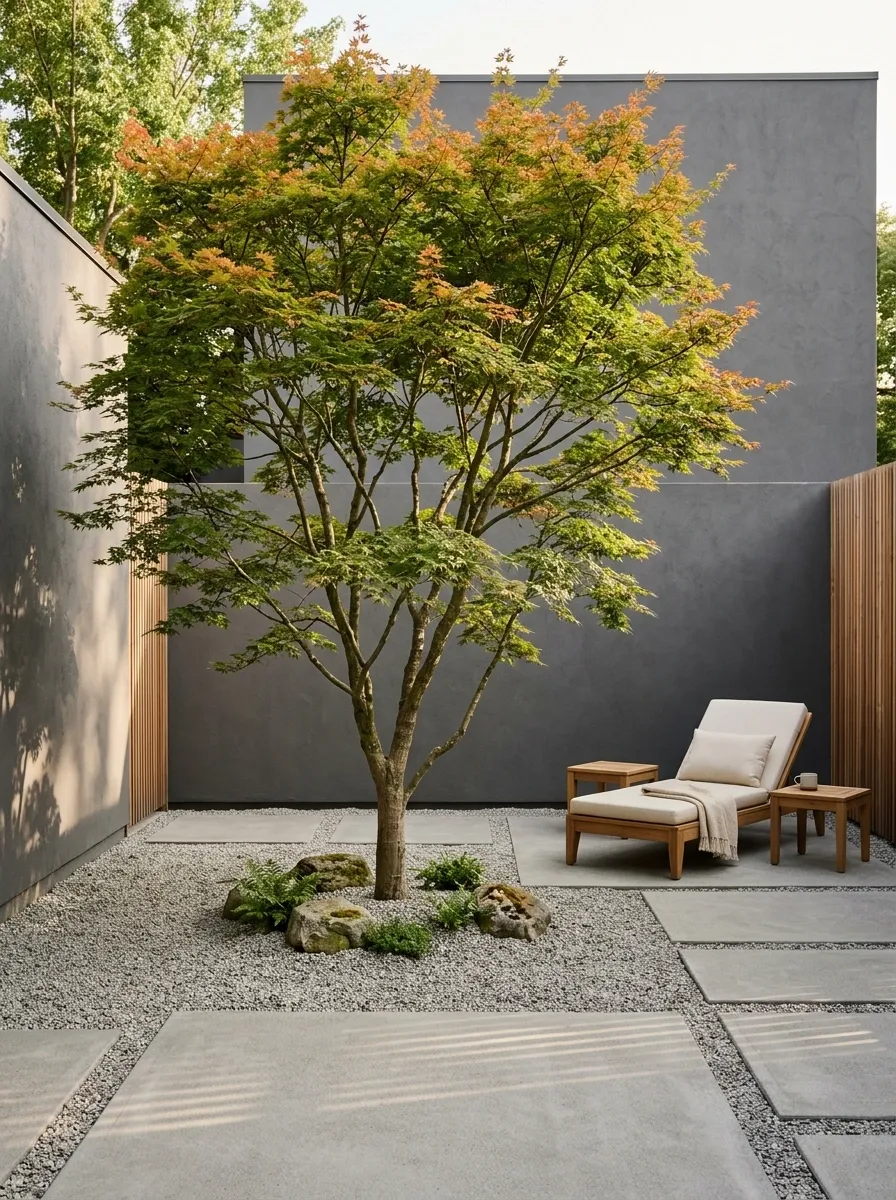
One suitable focal plant can organize a compact yard. Select for mature size, root needs, local climate, and nearby structures.
Use professional advice where a tight site warrants it. Face a seat toward the planting and keep supporting details simple. The focal point does not also need a fountain, mirror, and decorative sign explaining that this is the garden.
Growing room and a useful view from the seat.
A Yard Changed in Stages Rather Than All at Once
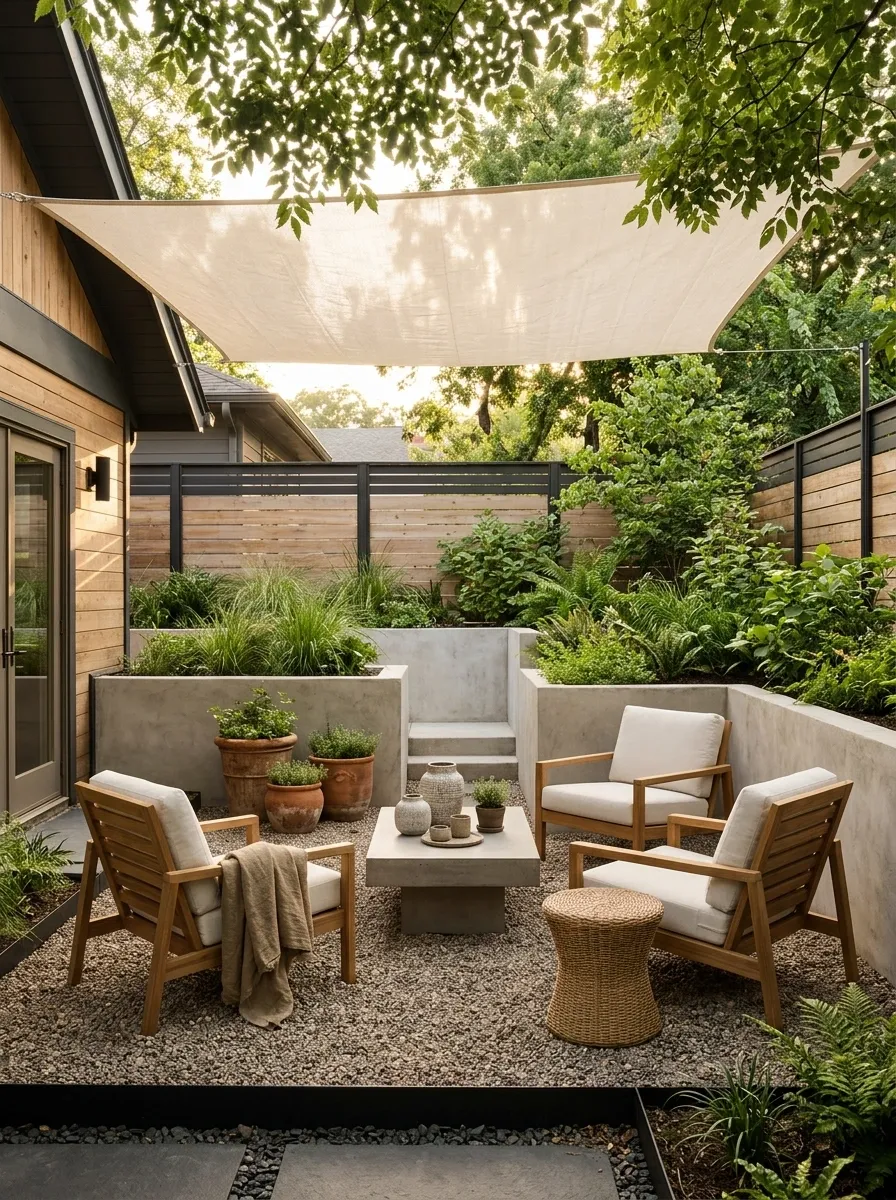
Start with a seating area or planting bed while keeping the long-term drainage and circulation plan in mind.
Temporary furniture helps test positions before permanent work. A phased approach lets you learn sun, wind, and routines. It also avoids spending everything on surfacing before realizing the comfortable garden still needs shade and plants.
Test, observe, then extend the plan.
A Dog-Friendly Yard With Separate Planting
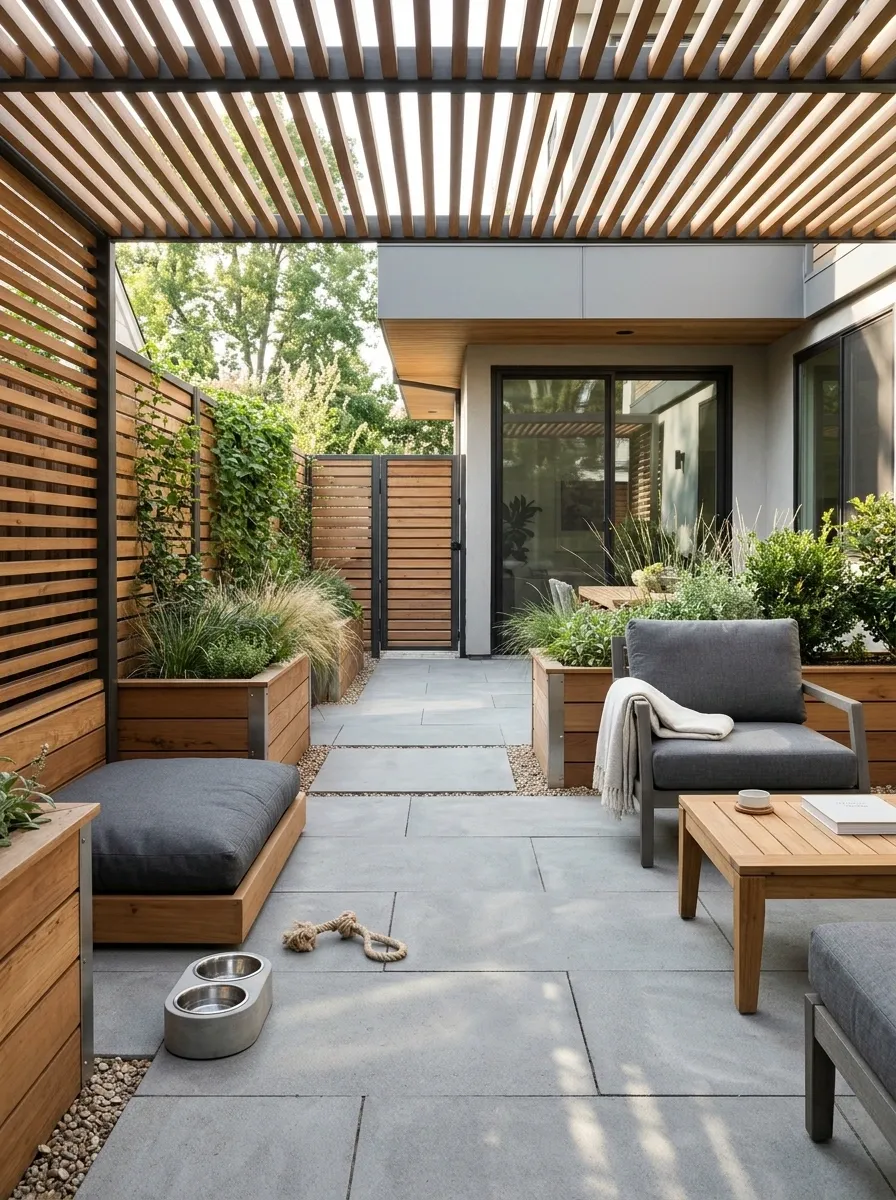
Choose a pet-area surface for comfort, heat behavior, drainage, and cleaning rather than appearance alone.
Provide shade, a clear house route, and household-appropriate plants. Protect fragile beds from busy movement. Test materials where practical. A surface pleasant in a cool showroom can behave differently in afternoon sun, and the dog’s opinion matters more than matching outdoor cushions.
A Courtyard Designed Around Outdoor Games
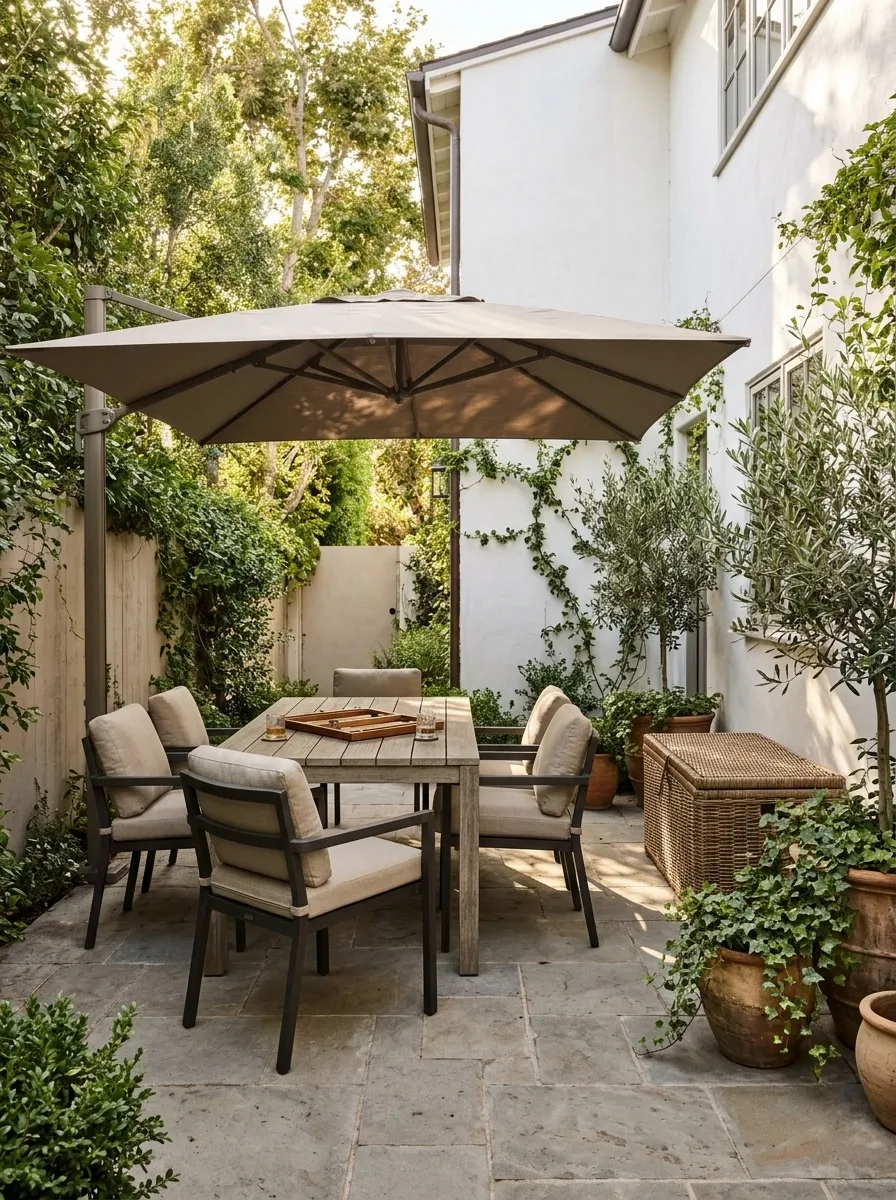
A suitable table can support cards, board games, or quiet hobbies outdoors. Choose comfortable chairs and enough surface for the activity.
Plan shade and portable storage, leaving a clear route around the group. A game corner works when starting is easy, rather than involving a search for chairs and retrieval of the table from behind several planters.
Comfortable chairs, usable table, shade, and contained pieces.
A Small Water Feature With a Comfortable Listening Seat
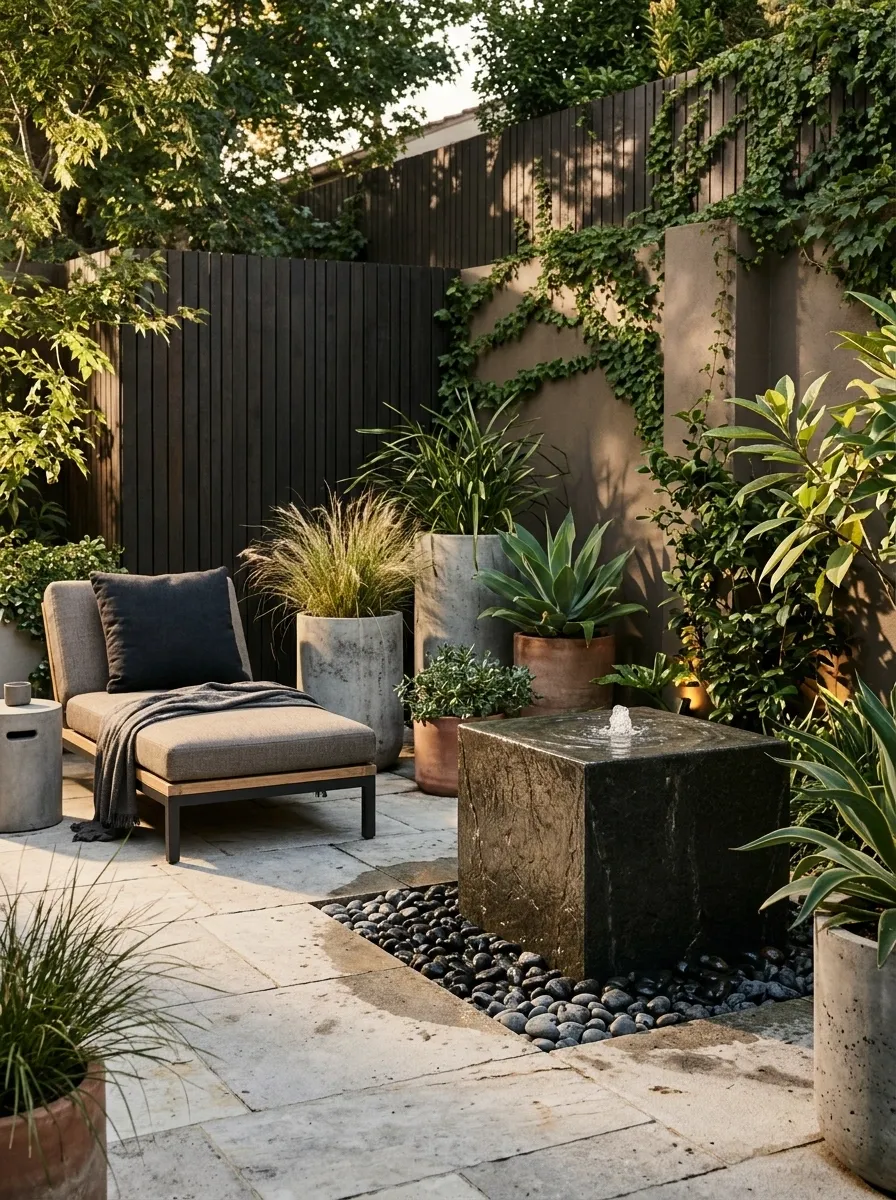
A modest water feature can anchor a courtyard when the site and maintenance commitment suit it.
Plan safe access, cleaning, water management, and any appropriate outdoor power installation. Consider children, pets, wildlife, and local restrictions. Put a seat where you can enjoy it. A neglected basin announcing pump problems every evening offers a less relaxing interpretation of garden atmosphere.
A Dry-Garden Scheme Matched to the Local Climate
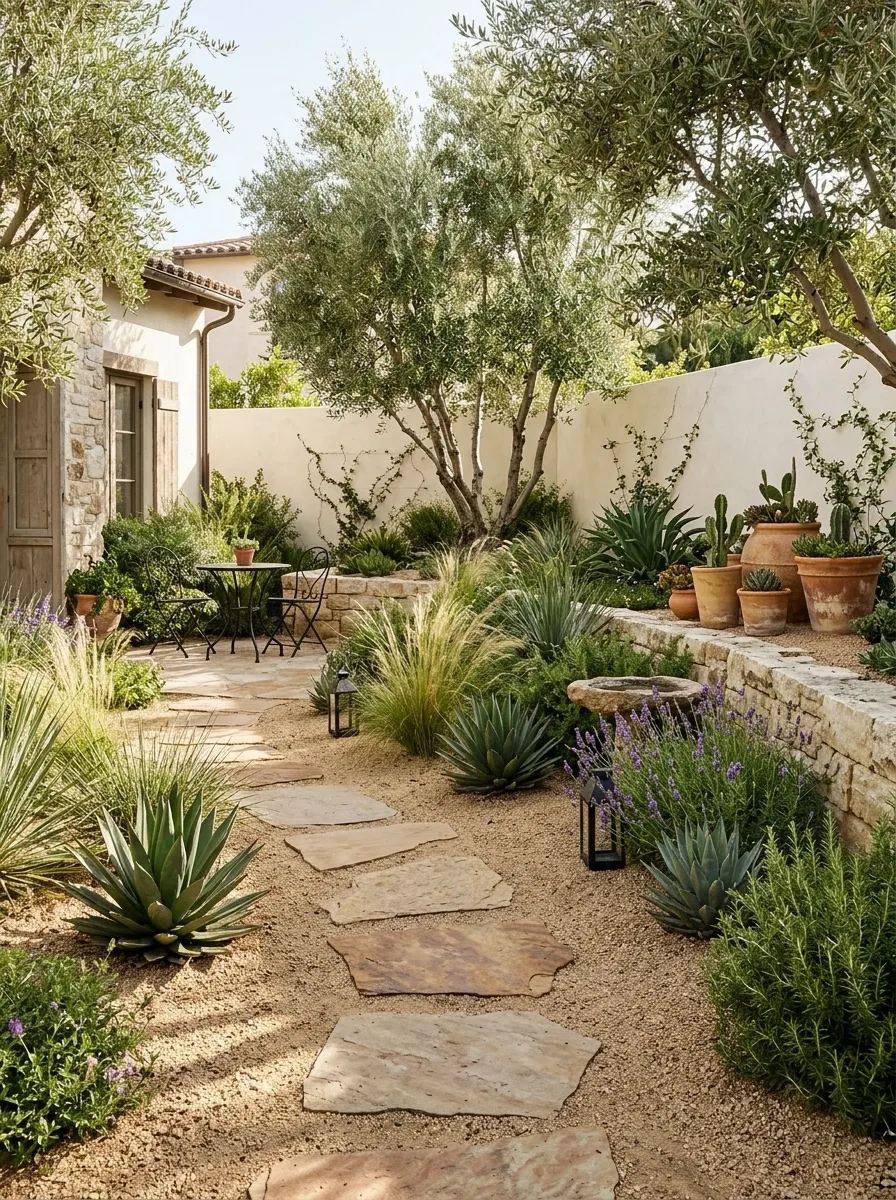
Drought-adapted planting can suit appropriate climates and sites. Select with local advice on rainfall, winter conditions, soil, and exposure.
Plan establishment care and maintenance access. Avoid assuming drought tolerance means immediate independence from watering. The garden should follow the place you live rather than require unsuitable plants to pretend they have relocated to another continent.
A Trained Fruit-Tree Border Against a Suitable Boundary
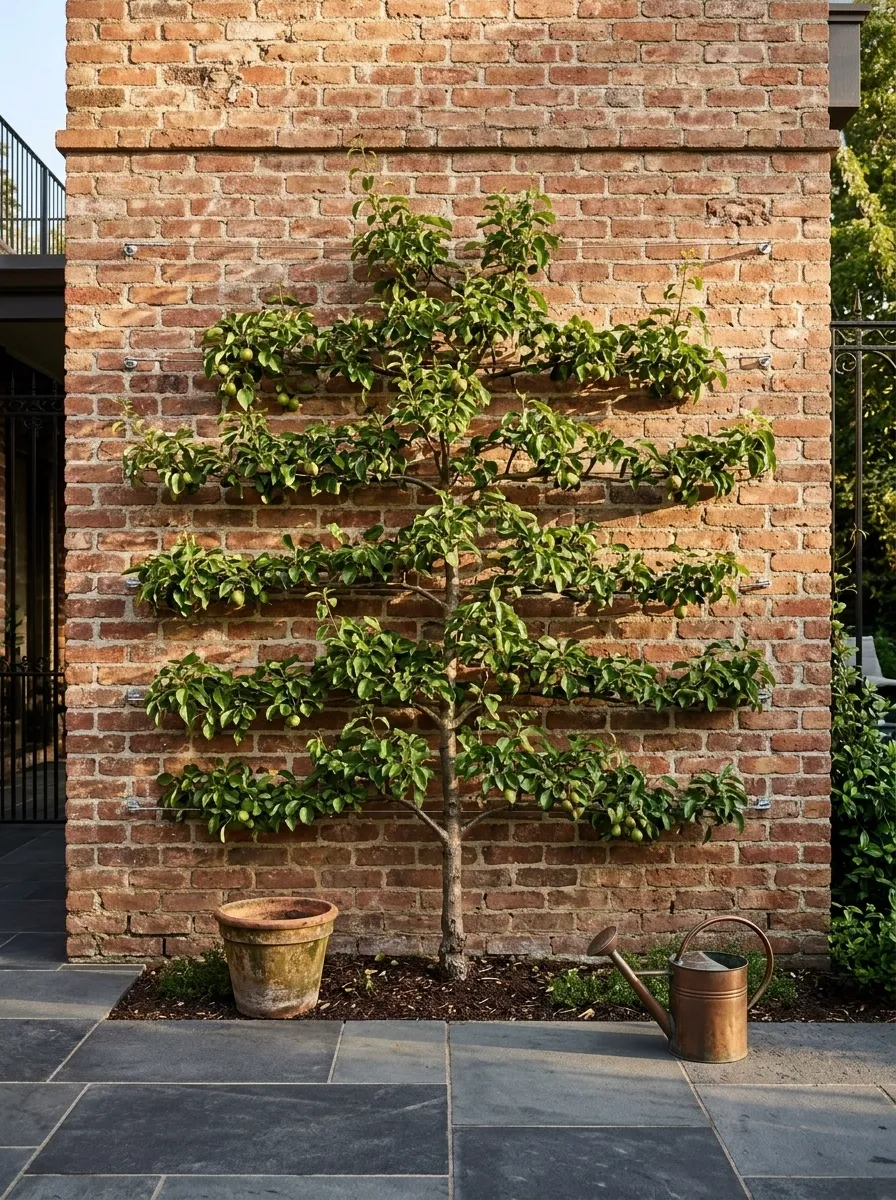
A trained fruit tree can use vertical space where variety, rootstock, support, and conditions are appropriate.
Seek local horticultural guidance and check boundary ownership, services, and maintenance access. Training and pruning remain ongoing tasks. The tree will not stay conveniently flat and productive simply because paving has been installed close beside it.
Suitable tree, support, growing conditions, and long-term access.
A Pergola Over One Useful Seating Area
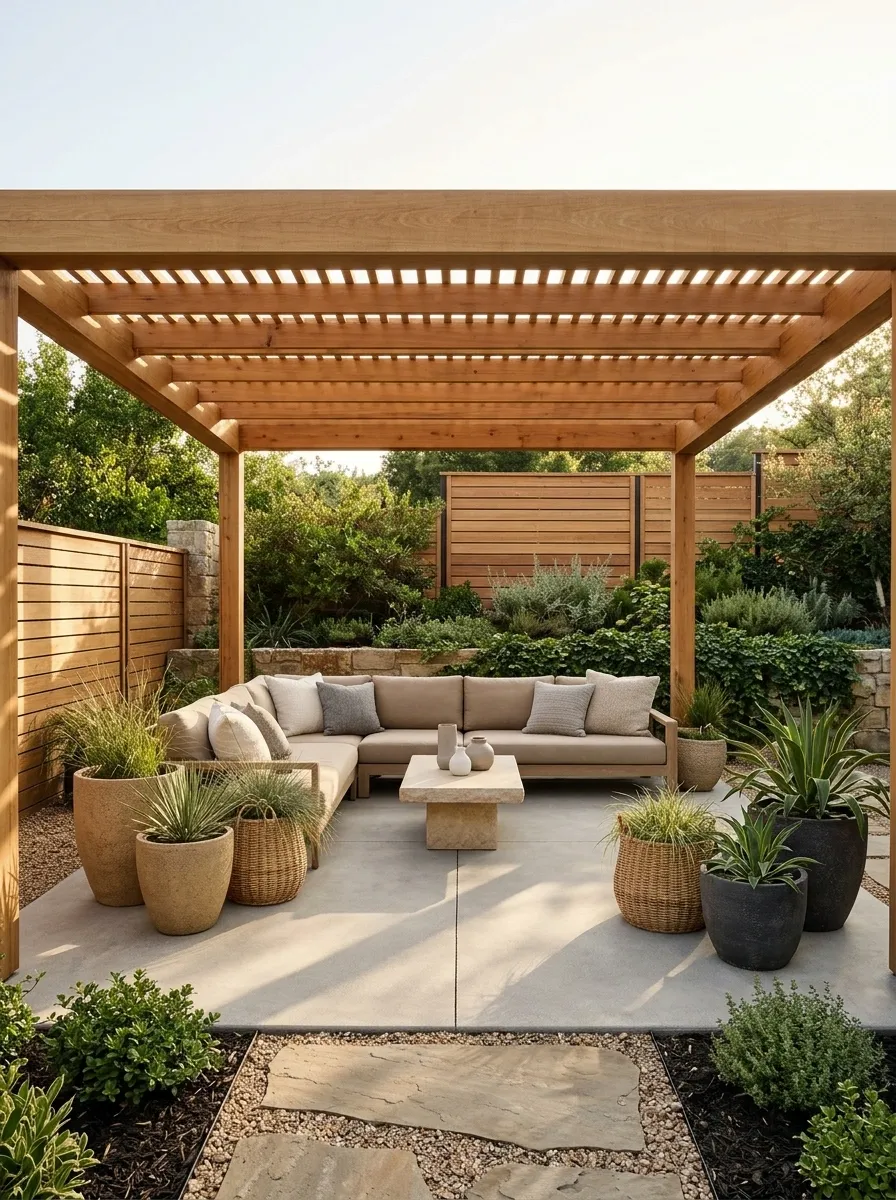
A pergola can define a grass-free sitting space when the site and requirements permit. Size it around occupied furniture.
Structure, foundations, loading, boundaries, and approvals need appropriate assessment. Check shade through the day and allow for plant growth if included. A handsome pergola over the wrong corner can remain impressively constructed and stubbornly empty.
Occupied furniture, useful shade, and properly designed structure.
A Rain Garden Where the Site Can Support One
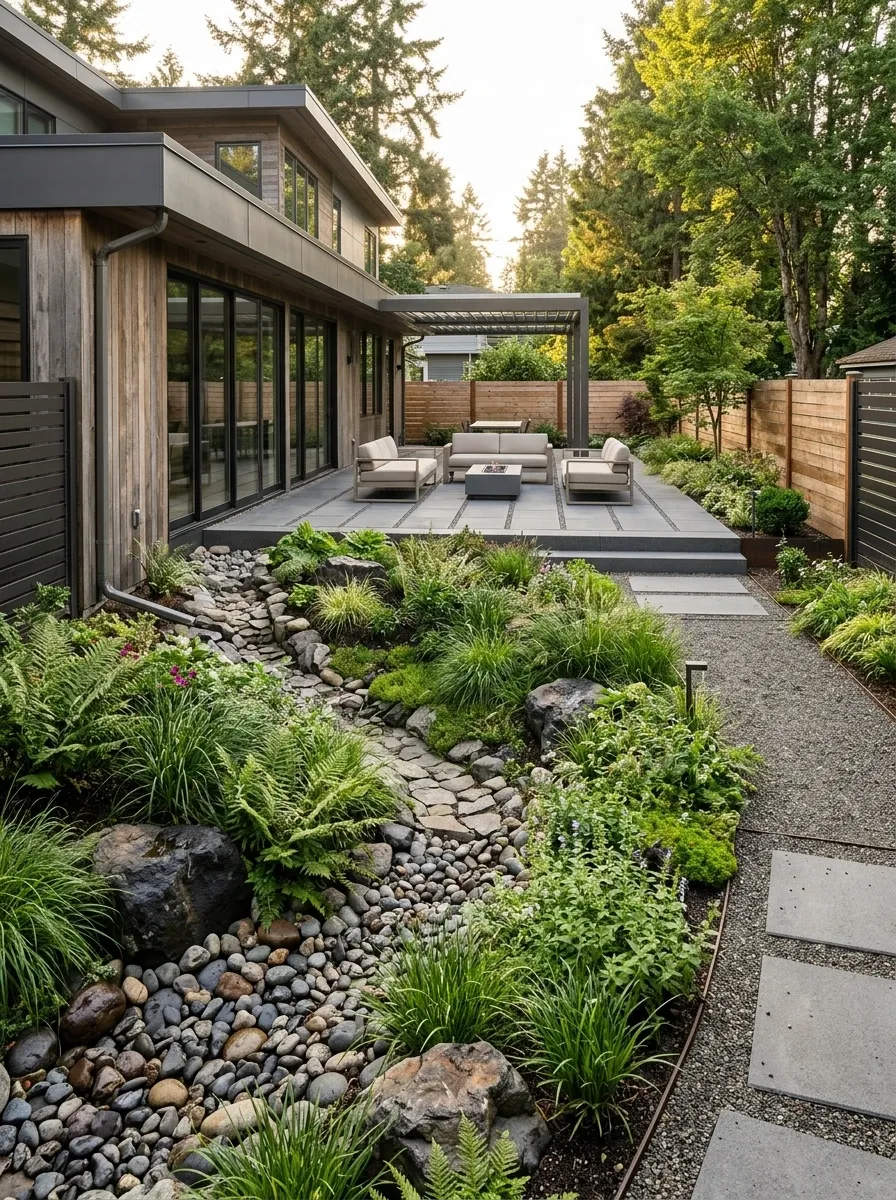
A rain-garden area may suit a professionally assessed site with appropriate soil, drainage, and space. Choose locally suitable plants.
Siting needs care around buildings, services, slopes, and neighboring property. Keep the main route usable. Calling an accidental puddle a rain garden does not automatically turn it into effective landscape design.
A Pollinator Border Around a Simple Sitting Space
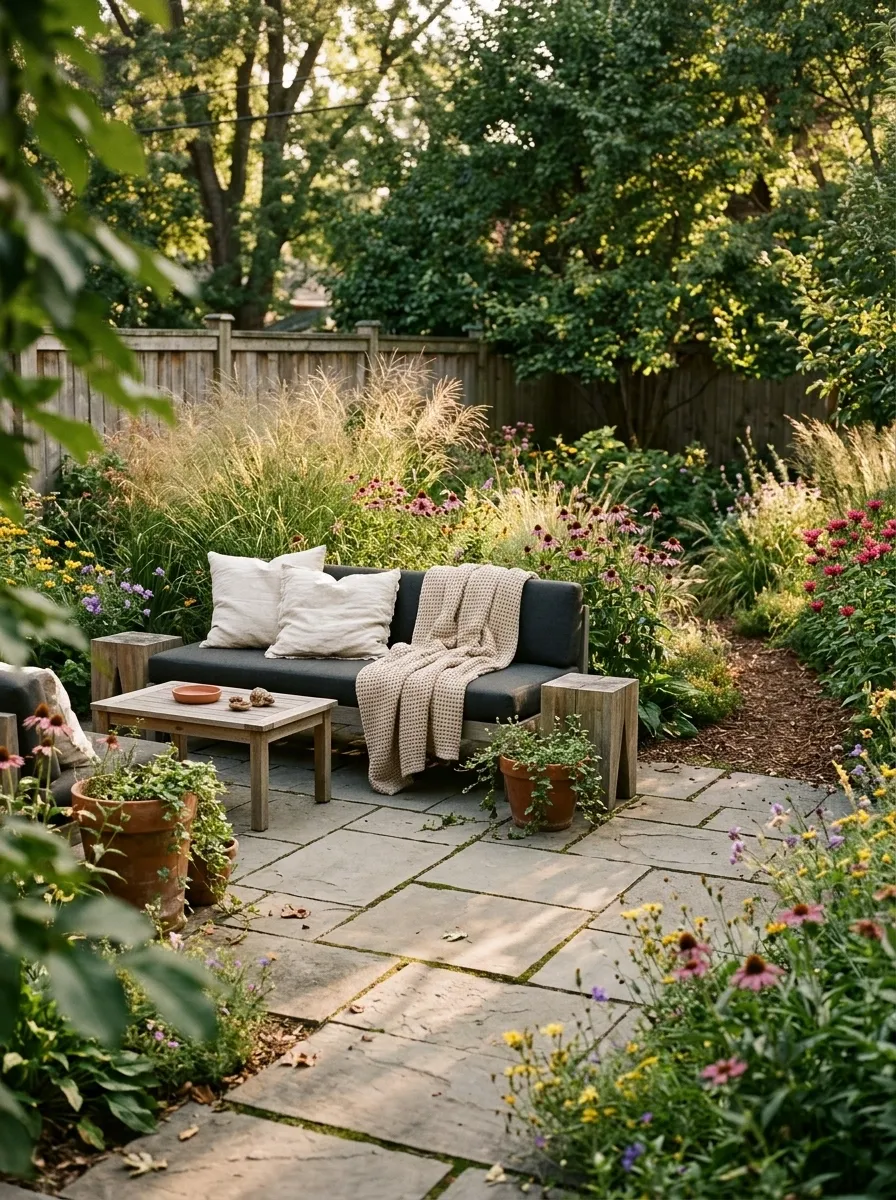
A locally appropriate flowering border can provide changing seasonal interest around part of a seating area.
Allow mature growth and maintenance access. Consider household comfort and activities when positioning busy flowering areas. Repeated plant groups give coherence. Supporting wildlife does not require purchasing every flowering plant and then supervising an overcrowded nursery trolley.
Local suitability, seasonal interest, and room to maintain.
A Secure Bicycle Parking Bay Beside the Garden
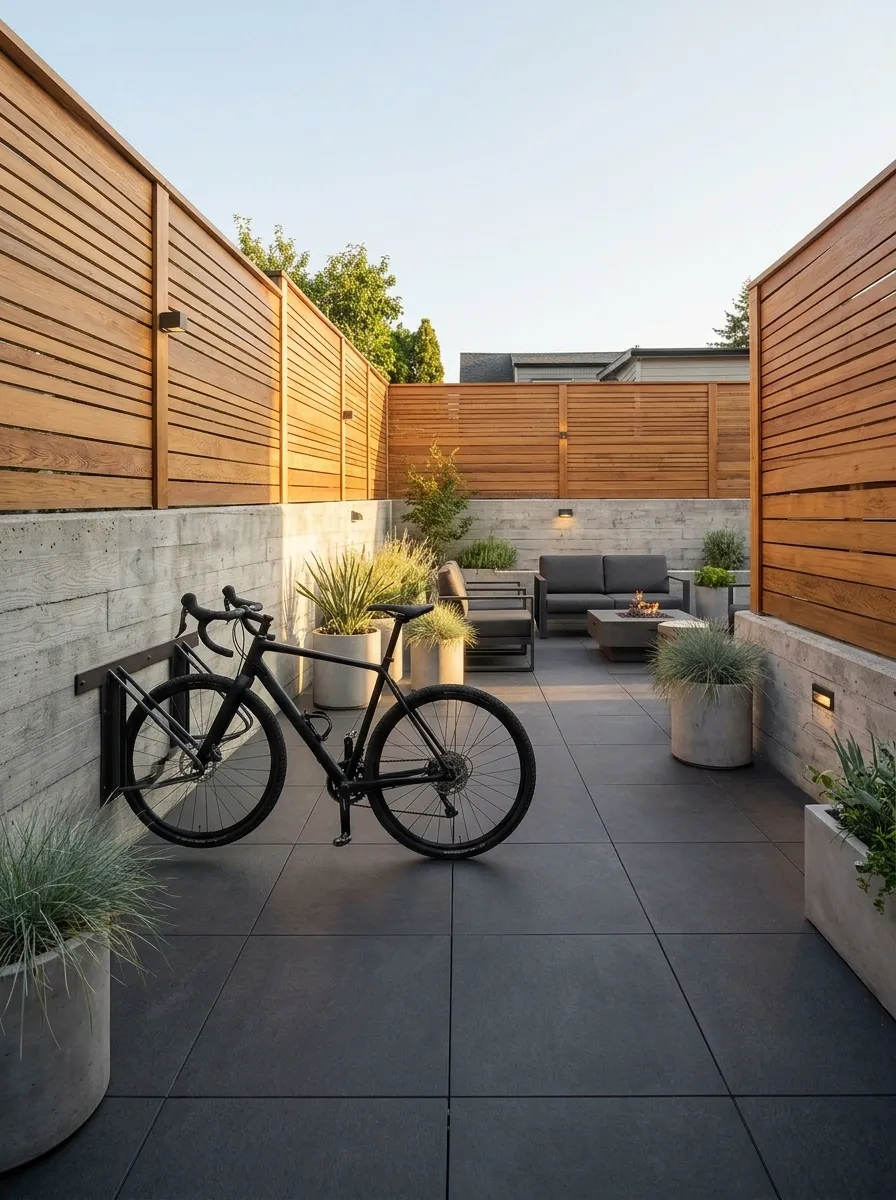
A dedicated bicycle position keeps frames away from dining furniture and fragile plants. Provide a stable surface and suitable security arrangement.
Measure handlebars, storage footprint, and the gate route. Preserve drains and service access. Practical equipment looks more considered with a proper home instead of appearing in every garden view like an apologetic uninvited guest.
A Small Outdoor Stretching Area With Nearby Planting
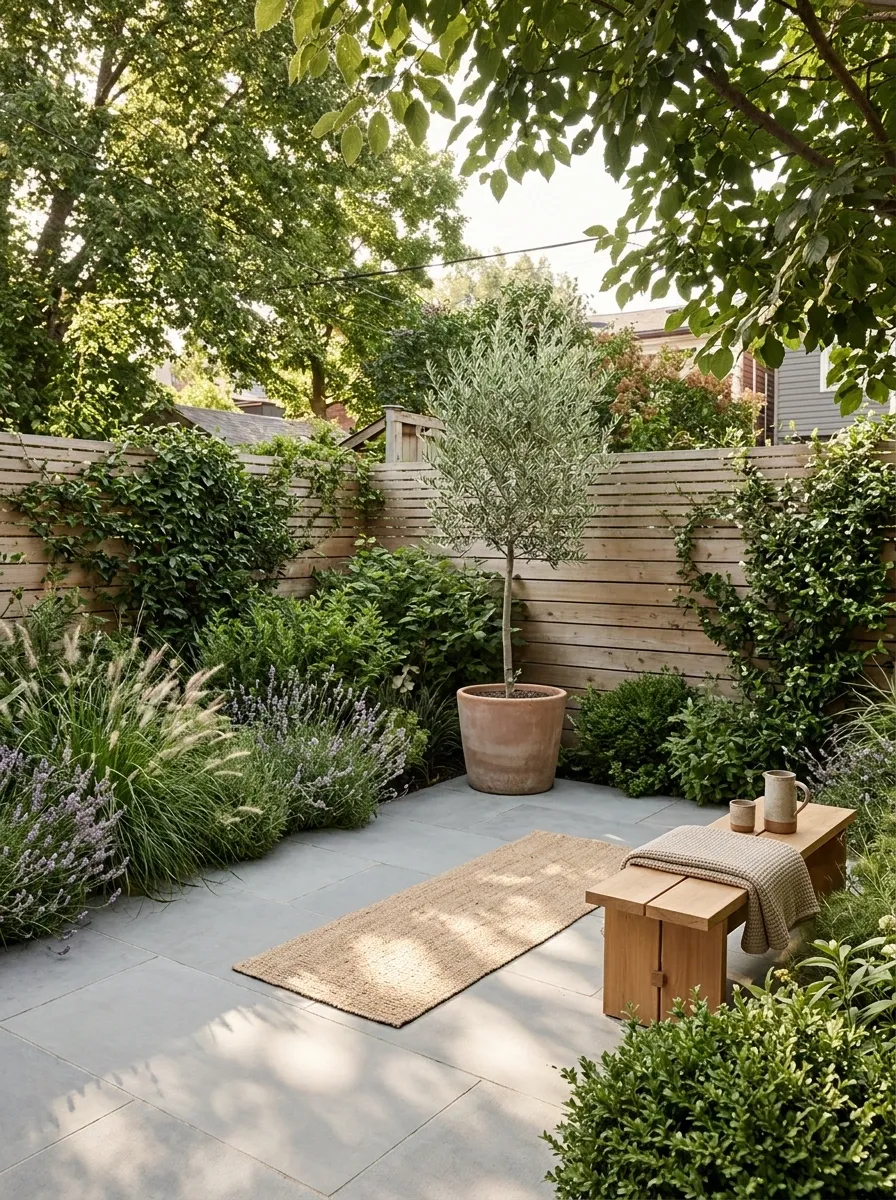
A suitable level area can support stretching or light movement. Assess traction, comfort, weather, and the space needed for the activity.
Keep sharp-edged pots and projecting furniture clear. Store portable equipment dry and bring out a mat only in appropriate conditions. The goal is somewhere pleasant to move, rather than equipment slowly weathering beside a decorative olive tree.
Put a Chair Outside Before Ordering the Surface
Move it over several days. Try the dining position with a table, carry a tray along the route, and inspect the yard after rain.
Those tests can prevent a permanent layout that works only in a photograph. Once the space supports daily outdoor habits, the absence of grass stops being its main feature.