
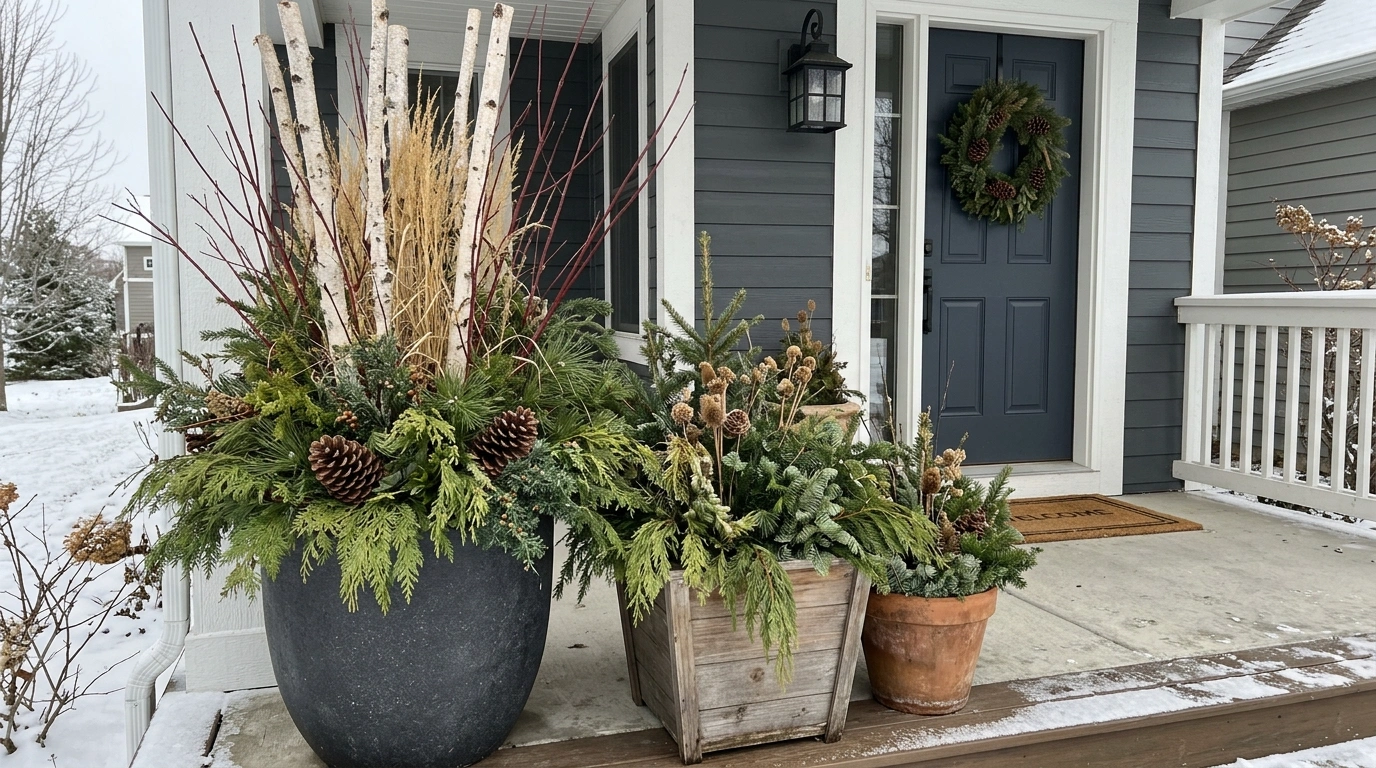
By late winter, the empty summer pots beside the door can start looking less like garden containers and more like abandoned evidence.
They do not need a seasonal slogan, a giant ribbon, or a collection of objects announcing that cold weather has occurred. Good winter planters can rely on shape, foliage, bark, restrained color, and containers that suit the house.
Start by deciding whether you want living plants or an arrangement of cut material. They can create similar visual effects, but they do not have the same care requirements.
A cut branch display is decoration. A living evergreen is a plant with roots and opinions about its location.
Choose the Arrangement for Your Actual Winter
Living container plants need locally suitable hardiness, appropriate light, drainage, and ongoing moisture checks. A plant surviving outdoors in the ground does not automatically mean it will survive exposed in a pot.
Choose containers intended for the conditions and keep drainage outlets clear. The RHS’s winter-container guidance emphasizes suitable plants, careful watering, and containers that can tolerate winter conditions. RHS Advice
For cut displays, use legally and responsibly obtained material, secure it for the site, and inspect it after rough weather. University of Minnesota Extension identifies evergreen boughs, colored twigs, cones, and dried plant material as options for winter arrangements. Their appearance and longevity still depend on the material and conditions. UMN Extension
Keep door swings, steps, handrails, and the route through the porch usable.
Porch Planters With a Clear Winter Direction
Vibrant Blooms in Tall Charcoal Planters
Tall charcoal containers elevate colorful seasonal blooms, creating a striking contrast against pale brick walls and a moody dark door. The vertical lines draw the eye upward without overcrowding the entryway.
Combine upright grassy elements with sprawling purple petals and cascading lime green foliage for a layered display. Let different textures interact naturally rather than trying to force every stem into strict submission.
Step back to check the visual weight before calling it finished. The arrangement should frame your threshold with personality rather than blocking your path to the doorbell.
Mixed Cut Evergreens in a Simple Black Urn
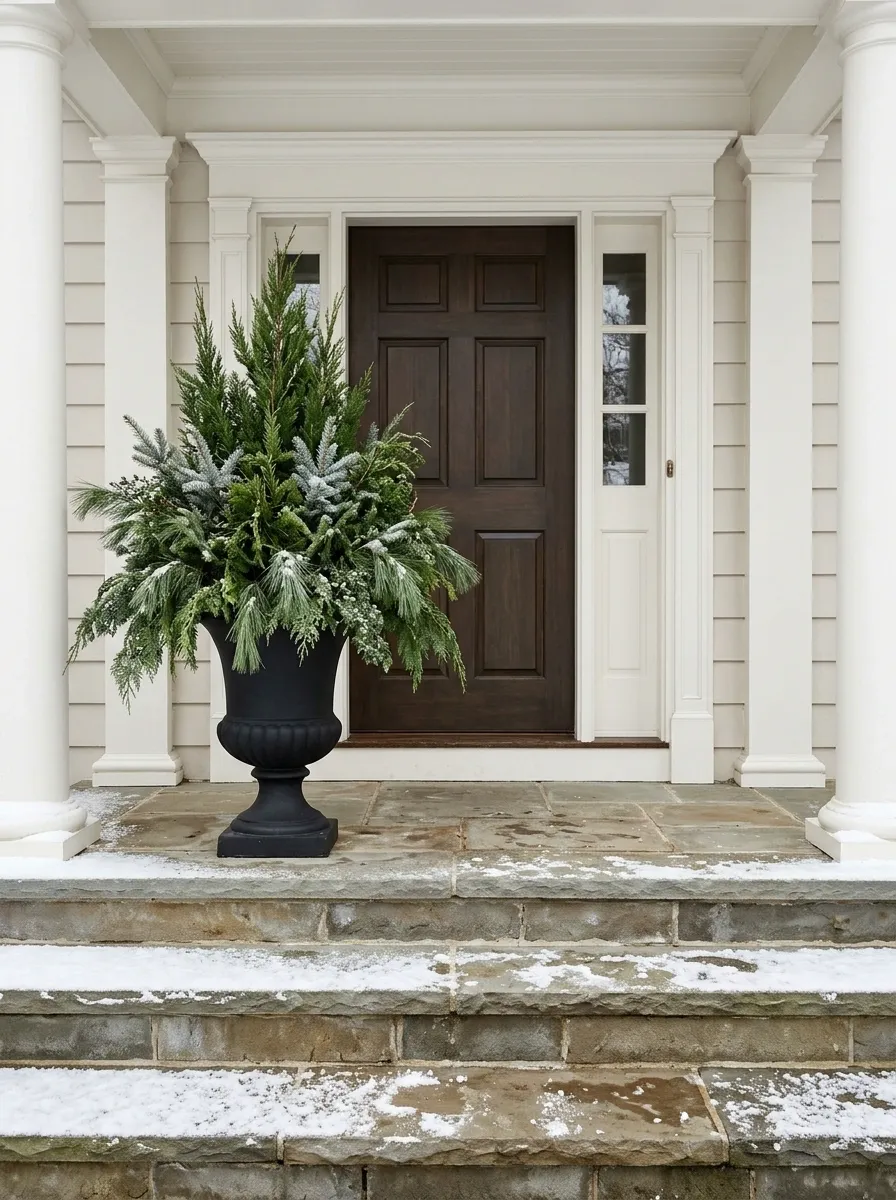
A black urn gives mixed cut greenery a clear outline against pale walls or siding. Combine an upright material with softer branches around the rim.
Keep the spread proportionate to the entrance. The arrangement should frame the doorway without brushing against everyone who enters.
Use the differences in foliage as the decoration. It does not need additional ornaments to prove that the planter has been intentionally filled rather than accidentally visited by a conifer.
Upright structure with softer edges.
Classic Evergreen Urns With Burlap Bows
Traditional black urns packed with dense evergreen boughs and bright white florals deliver timeless winter elegance. A matching neutral bow adds a polished finish that pulls the entire entryway design together.
Arrange the drooping foliage so it drapes softly over the rim of the pot while keeping the central structure upright and full. Balance the height so it complements your surrounding lanterns and seasonal door wreath without feeling cluttered.
Layer in outdoor lighting or glowing pathway lanterns nearby to enhance the welcoming glow after dark. This classic setup proves traditional holiday styling never really goes out of style.
White-Barked Branches With Deep Green Foliage
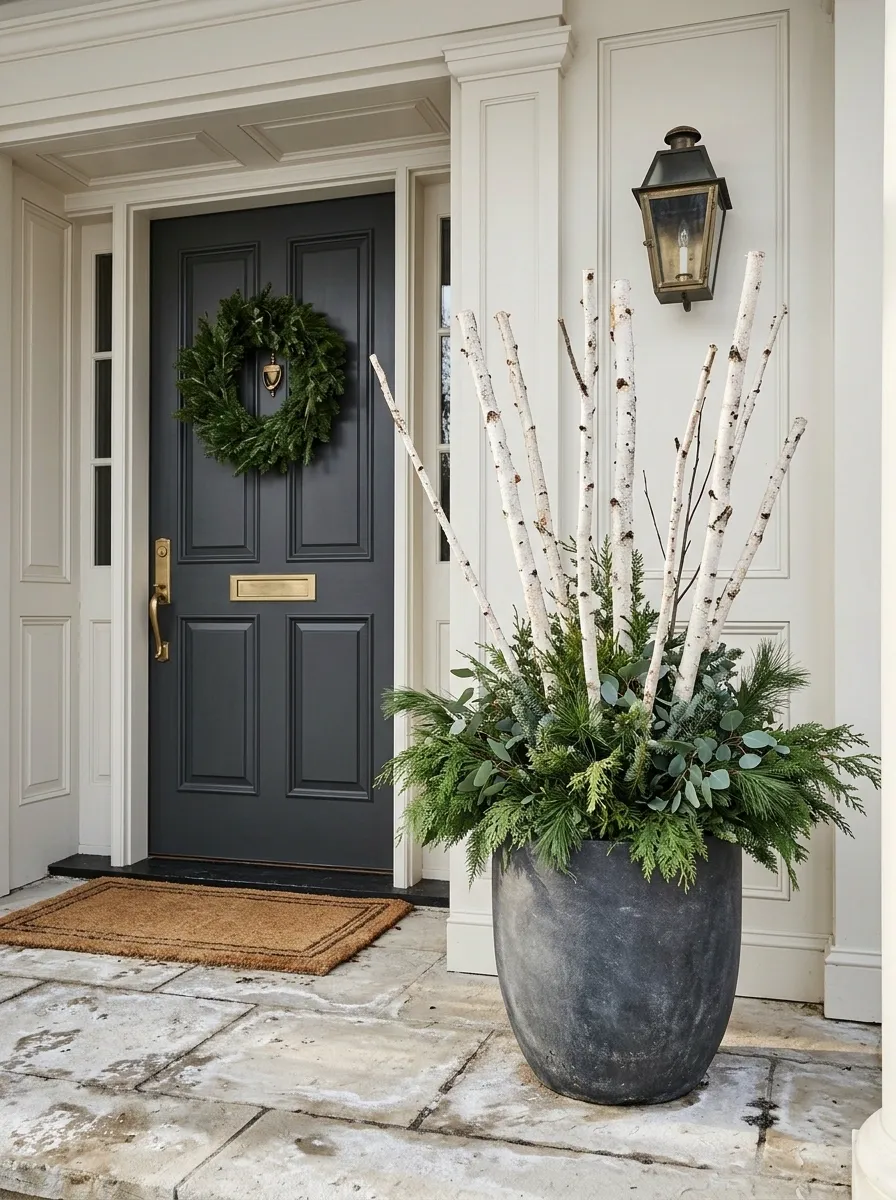
Slender white-barked branches create contrast above a dark green base. They suit a pale stone, gray, or black container without requiring a complicated palette.
Choose manageable branch sizes and secure them appropriately. Avoid using heavy logs in a decorative pot simply because the pale bark looks appealing.
Leave enough space between the stems for the outline to remain visible. A planter should suggest structure rather than contain an entire woodland compressed into a doorway-sized cylinder.
Composition check: Pale vertical stems, a darker foliage base, and enough empty space to read both.
Minimalist Greenery in Clean White Cubes
Sleek white planters offer a crisp, modern home for simple potted evergreens beside a warm wooden door. The minimalist approach lets clean architectural lines and natural wood tones take center stage.
Space your containers evenly to frame a contemporary entryway without overwhelming the clean facade. Choose plants with neat, compact growth habits that require minimal fuss throughout the colder months.
Keep the surrounding porch surfaces clear to let the geometric planters make their statement. A clutter-free space ensures the subtle green tones remain the focal point of your winter styling.
Red-Twig Branches in a Quiet Stone-Look Pot
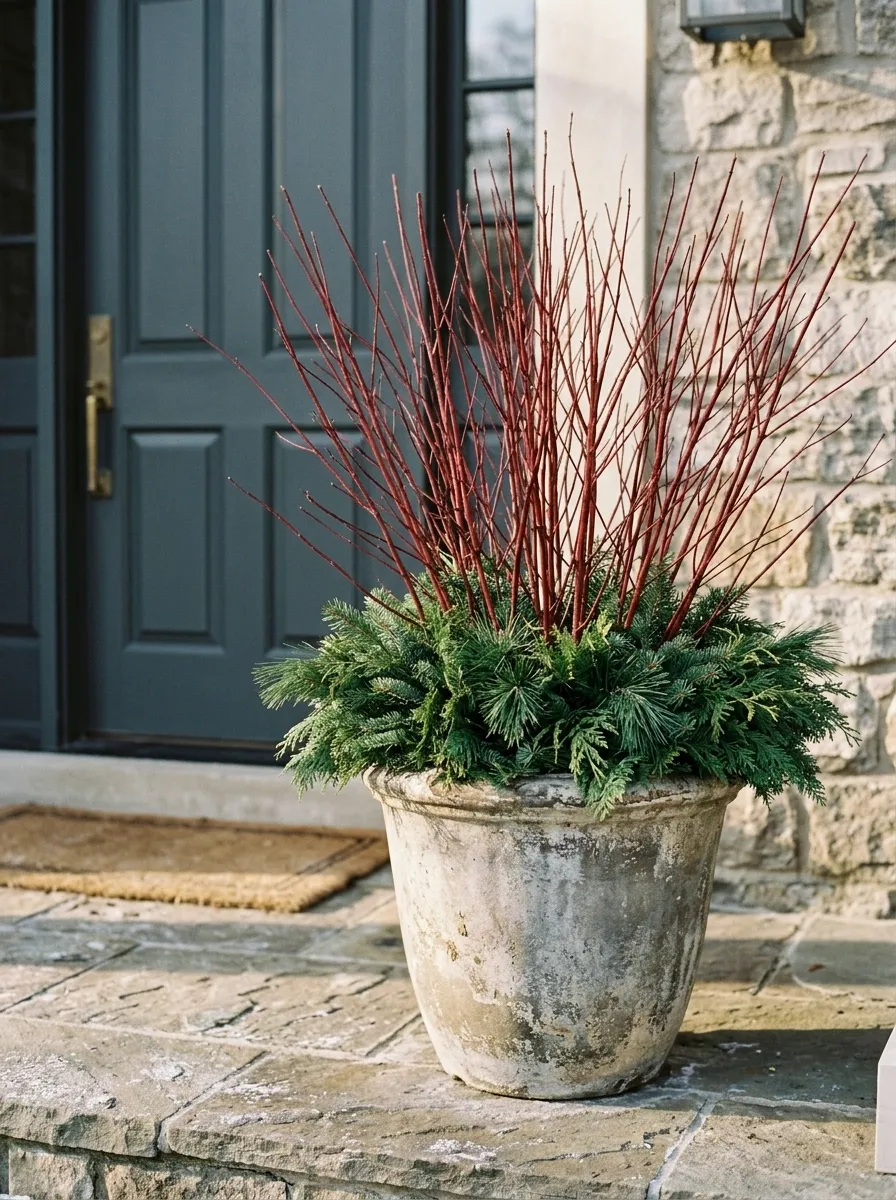
Red twigs can provide winter color without flowers. A restrained stone-look container lets the branches stand out against the porch.
Use a green base with a lower profile so it supports the stems instead of swallowing them. Check the red against the door color; the relationship can be warm and subtle or unexpectedly competitive.
This is a cut-material design unless the actual shrub is planted and cared for appropriately. The twigs are not going to establish themselves through decorative determination.
Red twigs.
Quiet stone tone.
Blue-Green Cut Foliage in a Charcoal Planter
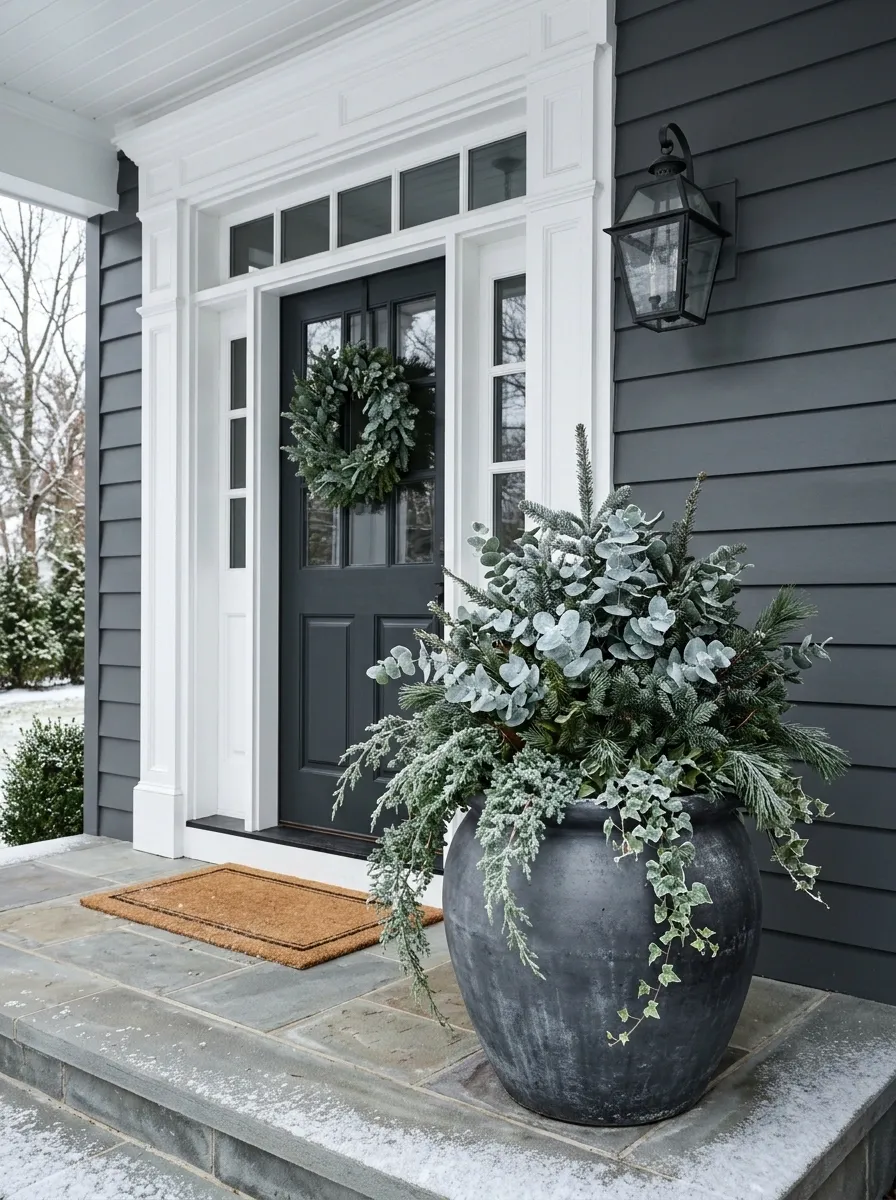
Blue-green foliage can look crisp beside white trim, gray siding, or a dark door. Use a charcoal planter to keep the outline clean.
Mix textures within the same color family rather than introducing several additional shades. A softer trailing edge can prevent the arrangement becoming too rigid.
Check the display from the street before adding more material. Subtle foliage differences should still form a recognizable silhouette rather than merge into one dense, shapeless heap.
| Element | Role |
|---|---|
| Blue-green foliage | Main color |
| Softer greenery | Movement around the edge |
| Charcoal container | Clear base |
Dried Hydrangea Heads With Evergreen Branches
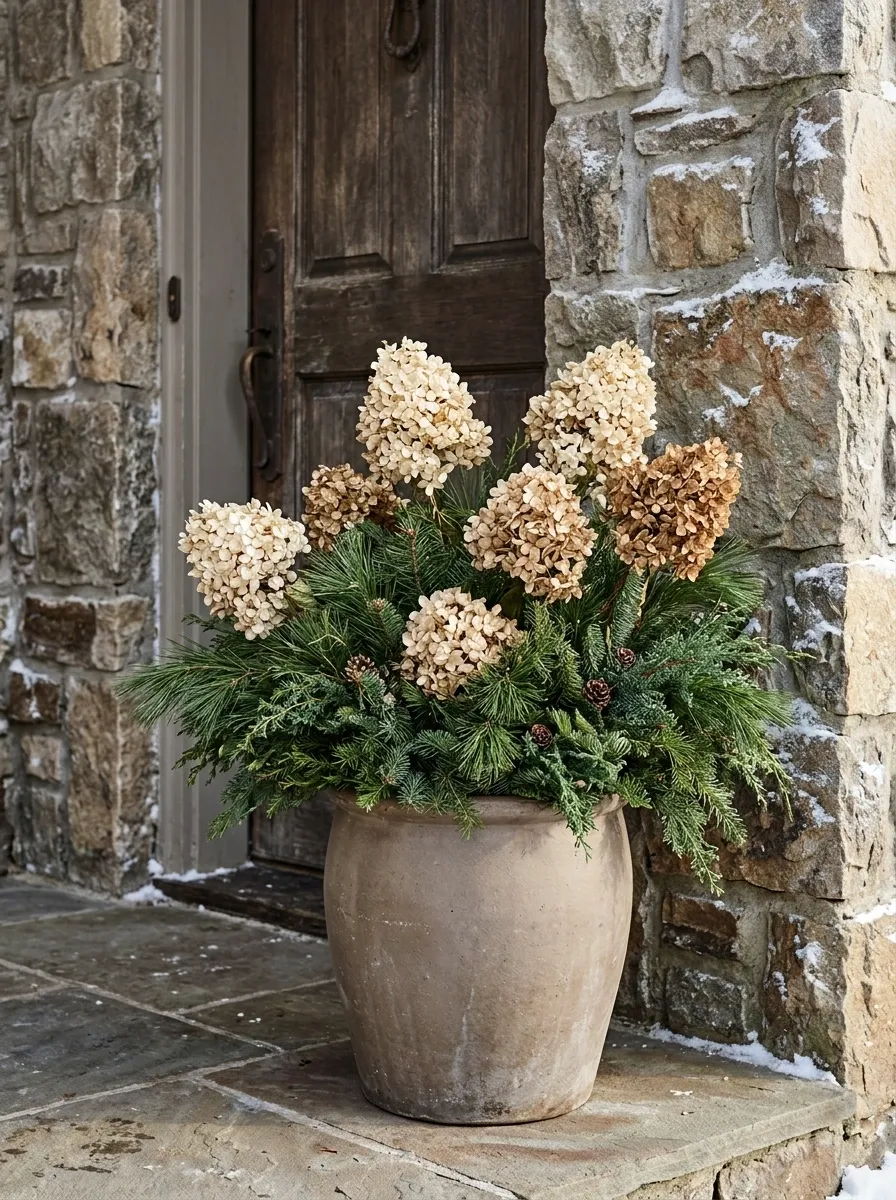
Dried hydrangea heads add a papery texture above a darker evergreen base. Use them selectively so each flower head remains visible.
Choose a sheltered position if the material is fragile, and expect to replace pieces that weather badly. This is not a promise that delicate dried flowers will enjoy a season of sideways rain.
A plain pot helps the texture carry the composition. Keep the color natural if you want the planter to remain useful throughout winter.
A Low Bowl Filled With Cut Greenery
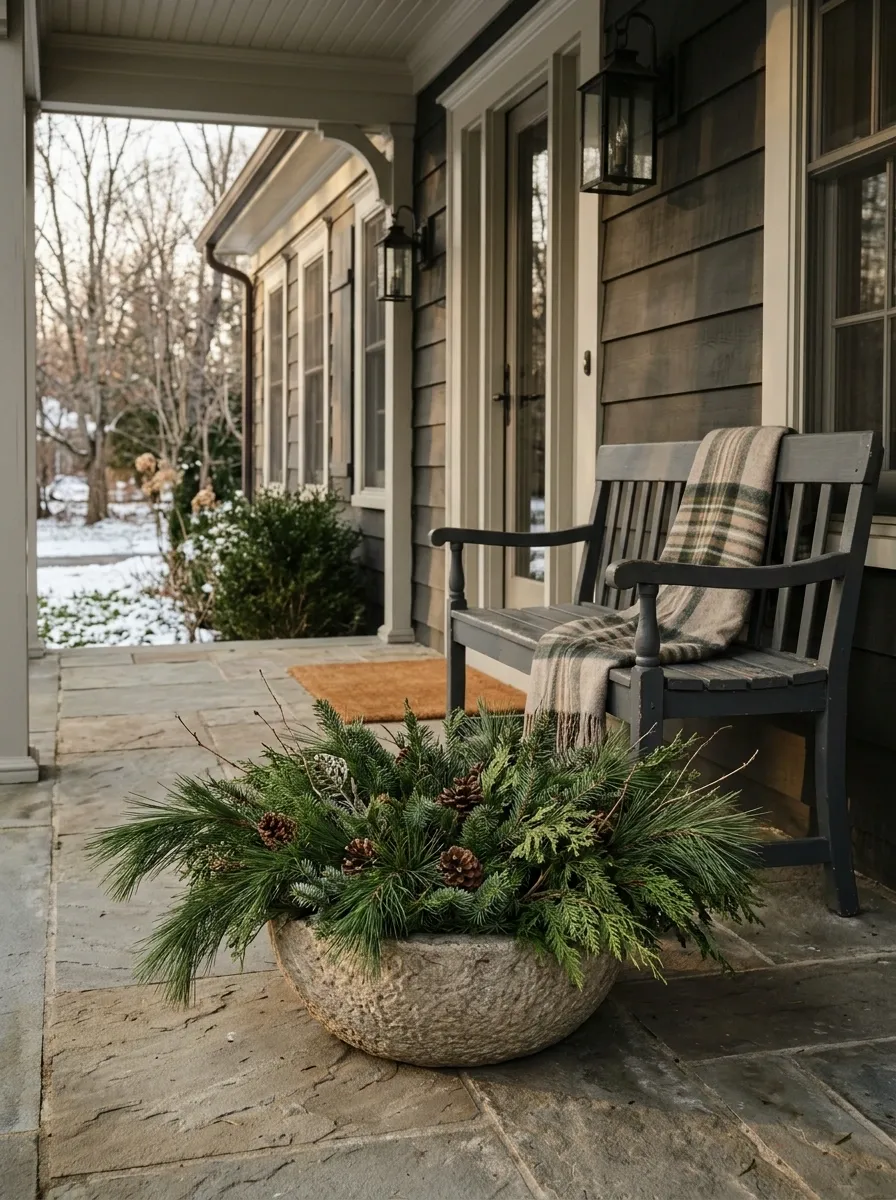
A broad low container can work beside a porch bench or beneath a window where tall branches would interfere with the view.
Keep the outline generous and relatively low. Use changes in foliage texture to create interest across the surface.
Check the bowl’s outdoor suitability, drainage needs, and stability. A decorative indoor bowl does not become winter-ready because it has been placed outside with considerable confidence. Leave the walking route clear around its wider footprint.
Useful placement: Beside seating or below a window, where height needs to remain restrained.
A Living Compact Conifer in a Rectangular Container
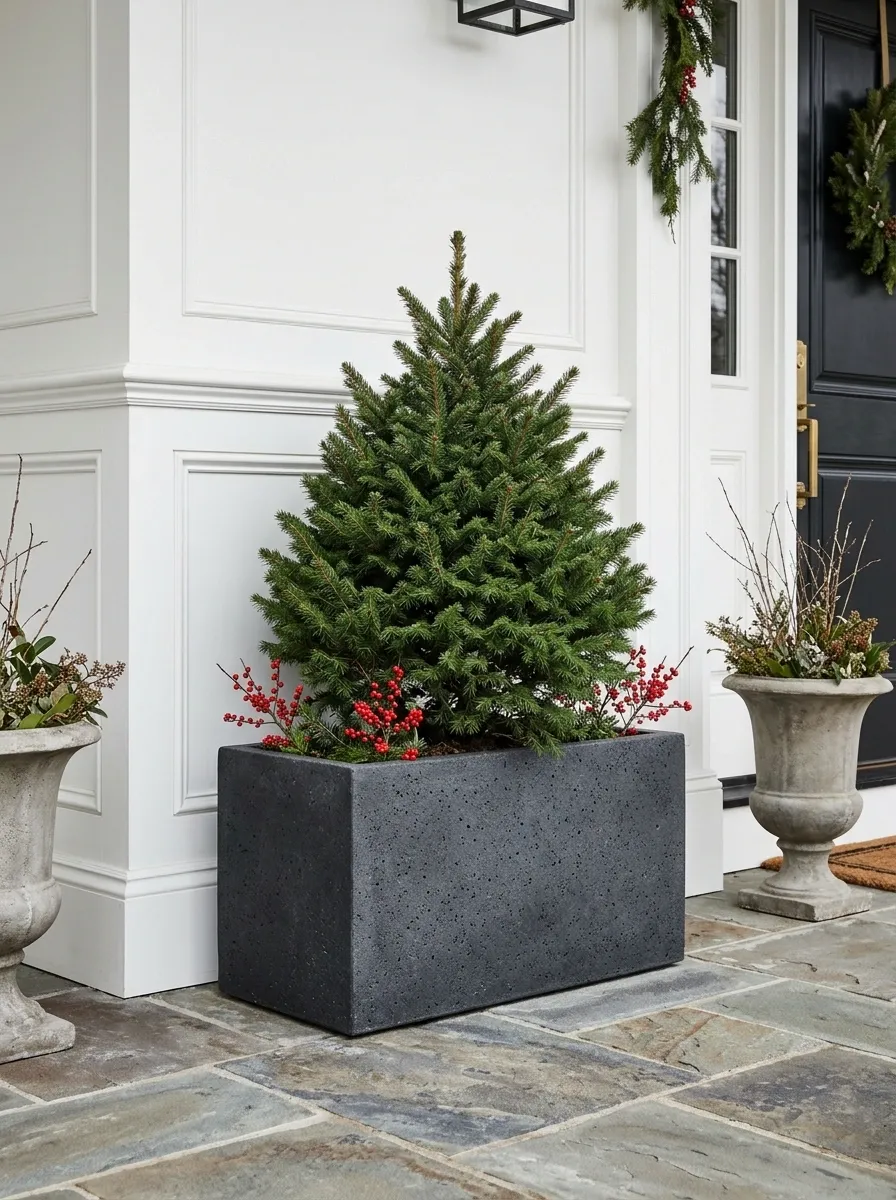
A compact conifer can give a porch a strong year-round structure where the variety, pot size, and climate are appropriate.
Choose the plant for its mature dimensions and container requirements, not simply its current nursery size. Plan winter protection and future maintenance with local advice.
A rectangular planter can sit neatly along a wall, but the foliage still needs space. The house should not gradually disappear behind a plant purchased because it was described as “small.”
Hellebores in a Sheltered Entrance Arrangement
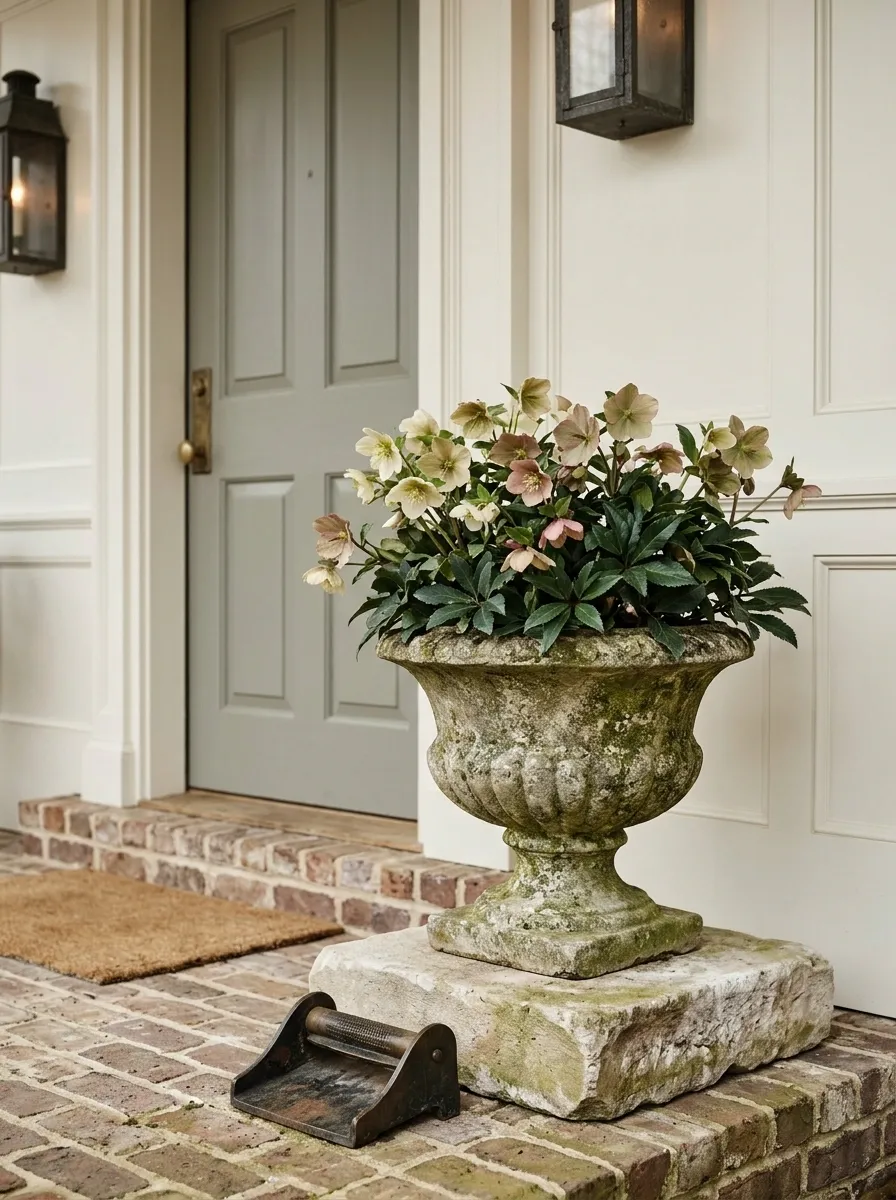
Where suitable locally, hellebores can bring a more garden-like character to a sheltered porch. Let the foliage and flowers sit in a simple container rather than surrounding them with several unrelated decorations.
Choose the position around the particular plant’s needs and check how the blooms are viewed. Lower or nodding flowers may be easier to appreciate near a raised but stable planting position.
Confirm household suitability before buying, particularly where pets or children investigate plants.
| Before choosing | Check |
|---|---|
| Variety | Local hardiness and container suitability |
| Position | Light, shelter, and access |
| Household | Plant safety requirements |
Winter-Interest Heather in a Plain Trough
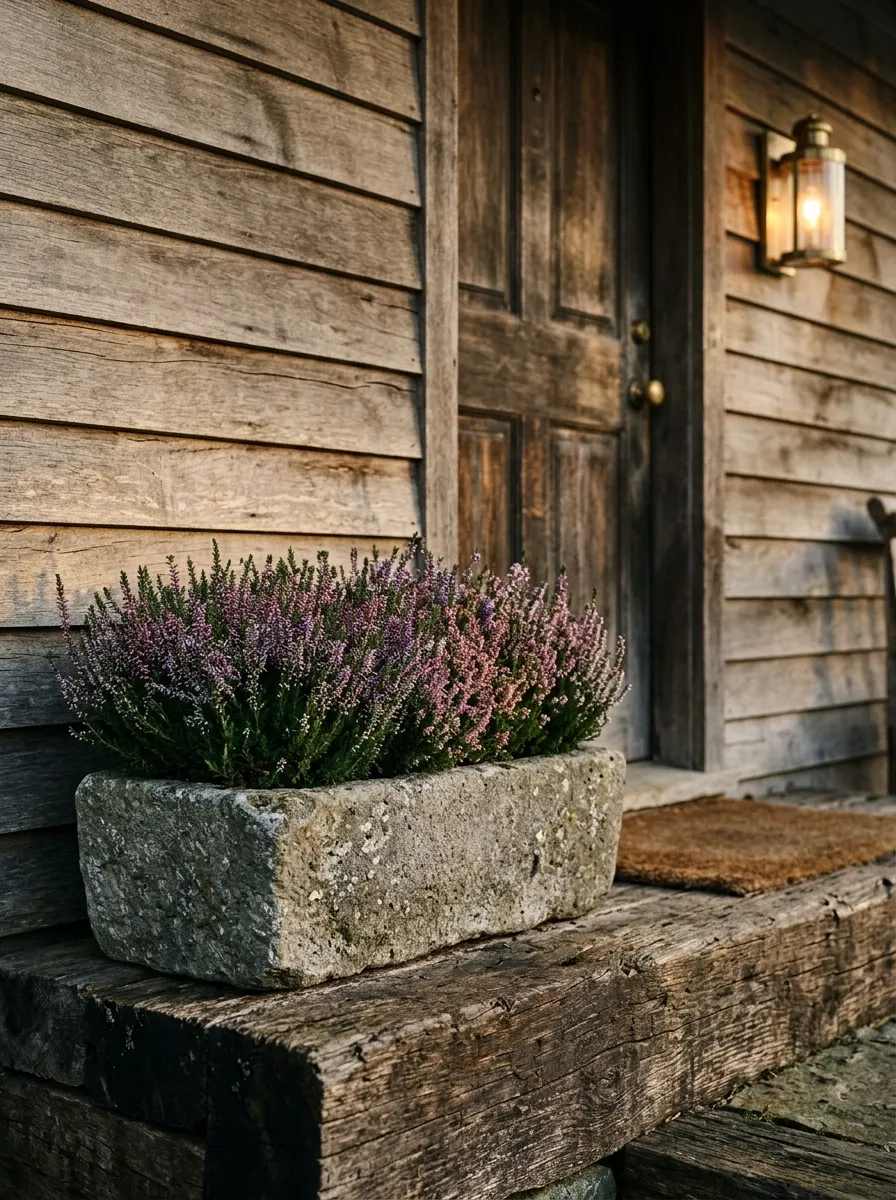
Suitable heathers can create a low, textured display where their growing requirements can be met. Check the particular variety rather than assuming every plant sold as heather behaves the same way.
Use a compatible growing medium and companions, or keep separate nursery pots within a suitable outer arrangement when that is more practical.
A plain trough lets the small-scale foliage and flowers form a continuous surface. The container does not need elaborate detailing competing with every tiny stem.
Choose the variety and growing medium together.
Plum Heuchera Foliage With Pale Container Edges
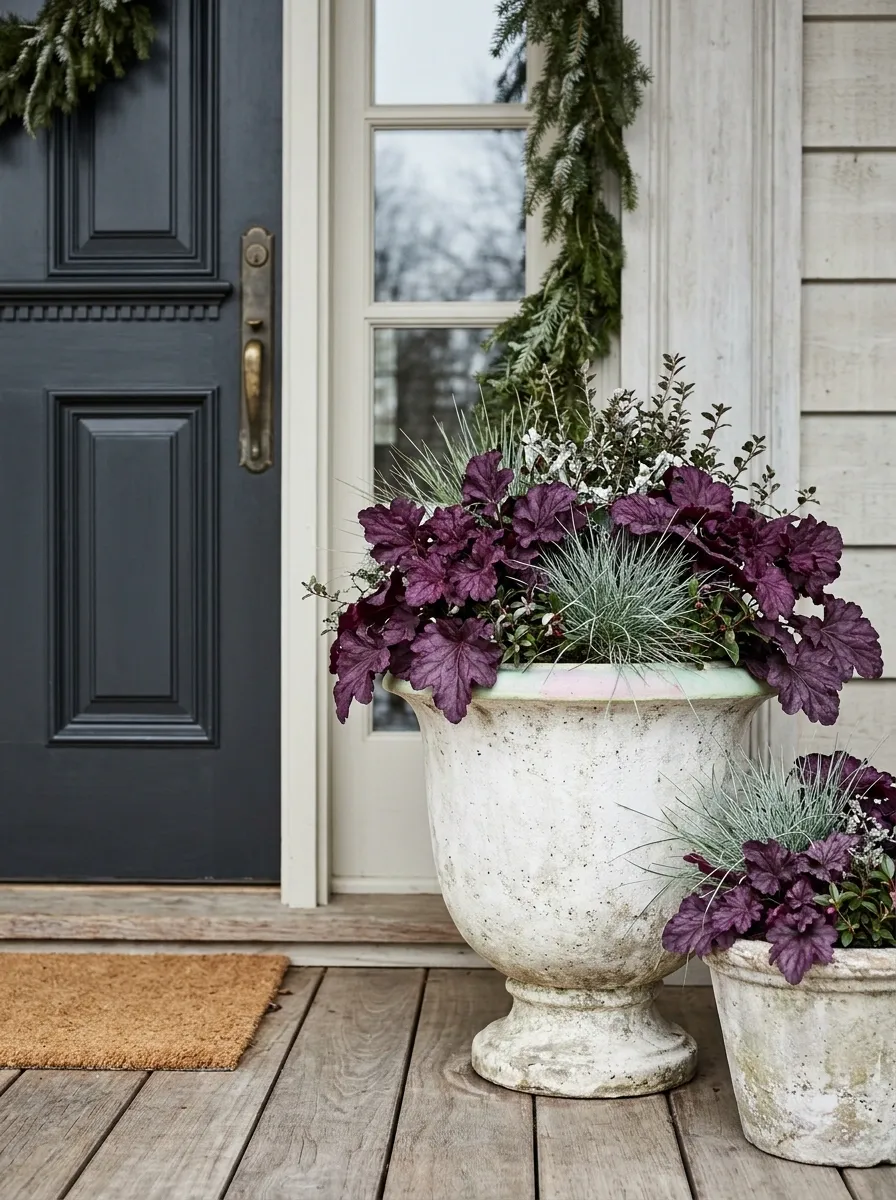
Heuchera foliage can provide a rich winter accent in climates and positions where the selected variety performs well. Pale container edges help darker leaves remain visible.
Keep companions restrained so the foliage shape can be appreciated. Check plant spacing and container conditions instead of packing everything tightly for an immediate photograph.
The appeal is a thoughtful foliage arrangement. It does not require the plant to remain visually unchanged through every weather event for the design to count as successful.
Color relationship: Dark foliage against a lighter rim, with quieter supporting greenery.
A Broadleaf Evergreen as the Main Feature
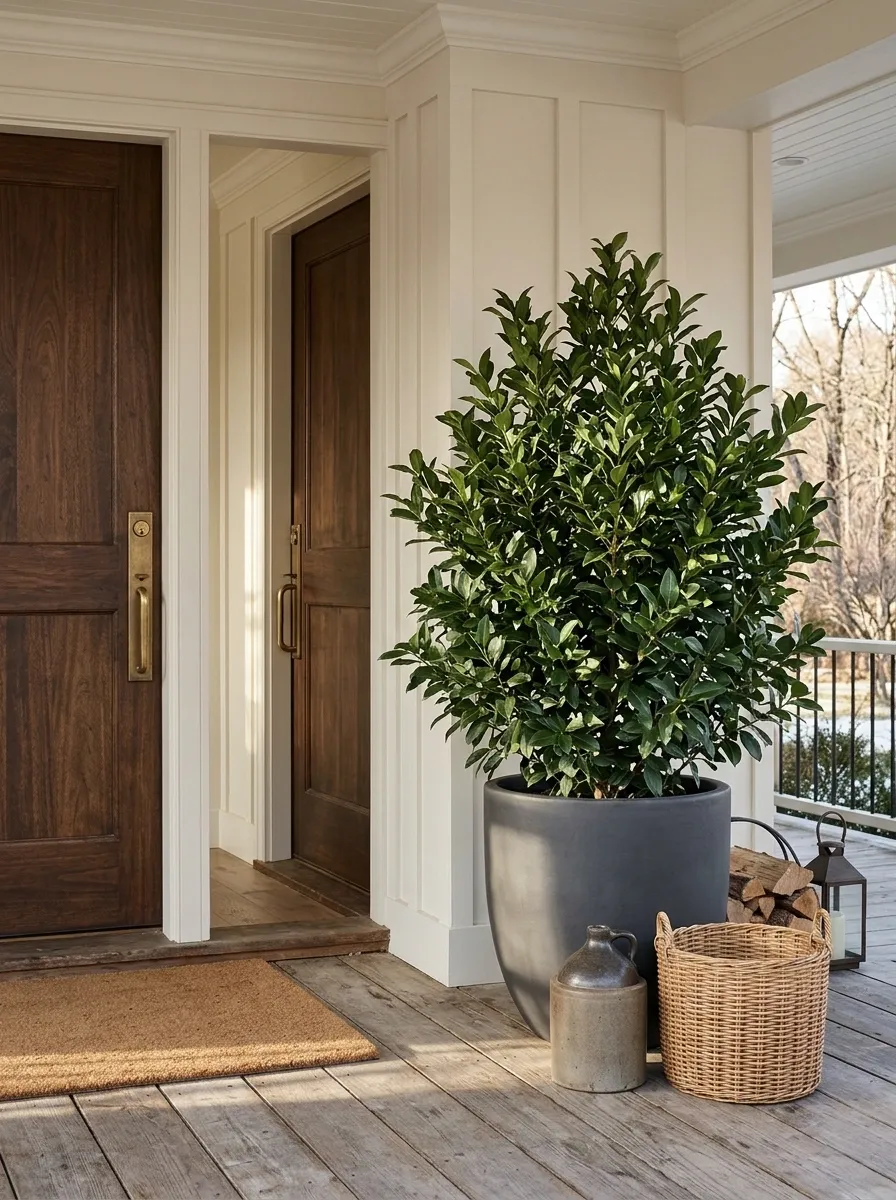
A suitable broadleaf evergreen can create a fuller, softer shape than a narrow conifer. Choose the species and variety around the porch’s actual light and local climate.
Use a generous pot and keep the plant clear of the door handle and approach. A plain container makes the leaf form more noticeable.
Do not select solely for berries or flowers shown on the label. Establish what the particular plant will realistically provide in your conditions before designing around that feature.
A suitable broadleaf evergreen.
A quiet, generous pot.
A Shade-Tolerant Evergreen Beside a Covered Door
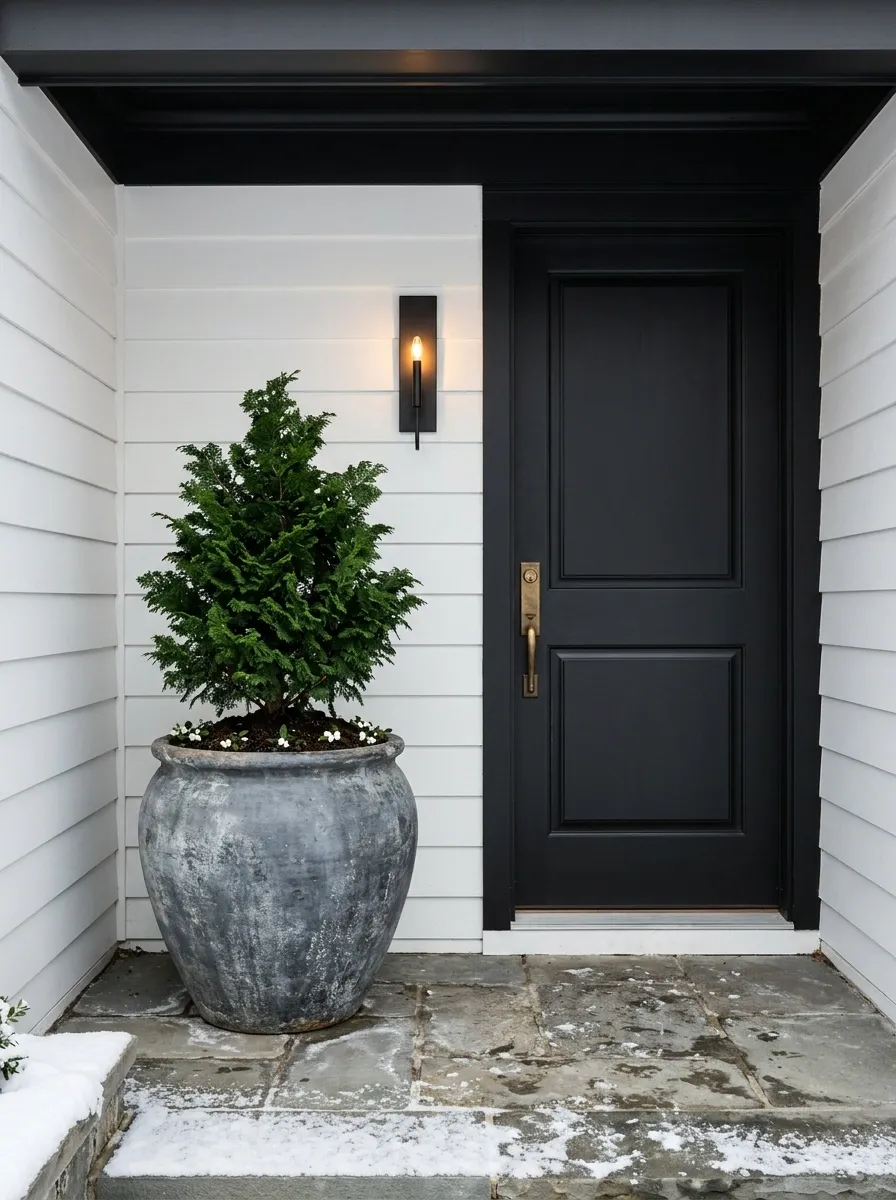
A covered porch may receive much less useful light than the garden beyond it. Choose a plant suited to the actual position rather than assuming shelter is automatically beneficial.
A locally appropriate shade-tolerant evergreen can keep the arrangement simple. Use its shape as the main feature and avoid surrounding it with plants that require different conditions.
The display should be chosen for that corner, not sentenced to live there because the corner was empty.
| Porch condition | Design response |
|---|---|
| Limited light | Select for the actual exposure |
| Deep roof cover | Check moisture rather than assuming rainfall reaches the pot |
| Narrow approach | Keep mature spread manageable |
Violas in a Mild-Winter Porch Pot
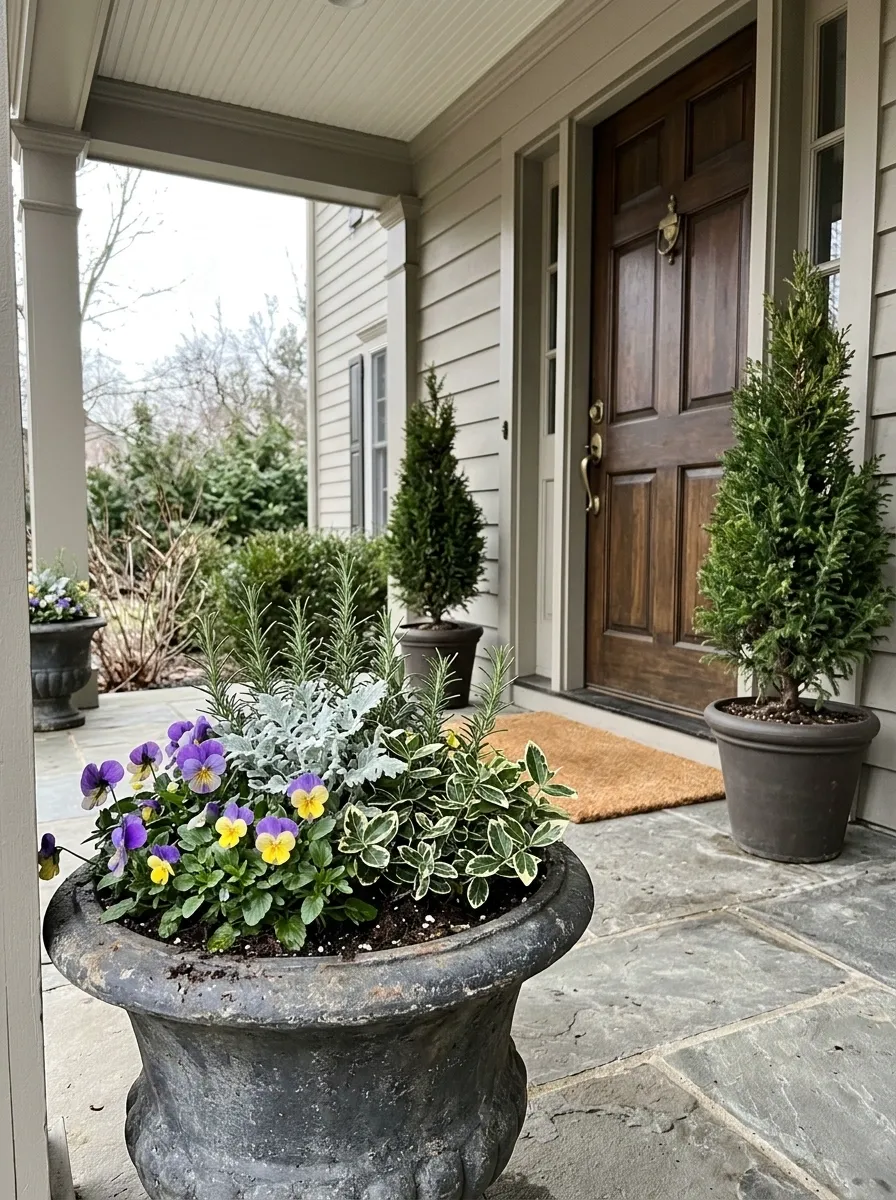
Violas can provide a lower floral display during suitable mild spells, depending on variety and local conditions. Pair them with restrained foliage and a simple pot.
Do not treat the arrangement as guaranteed continuous flowering through severe cold. Let the winter foliage contribute even when blooms pause.
Choose enough plant material for a considered display without overcrowding. A porch pot should not depend on an unrealistic burst of winter growth to stop looking unfinished.
Ornamental Kale in a Substantial Simple Pot
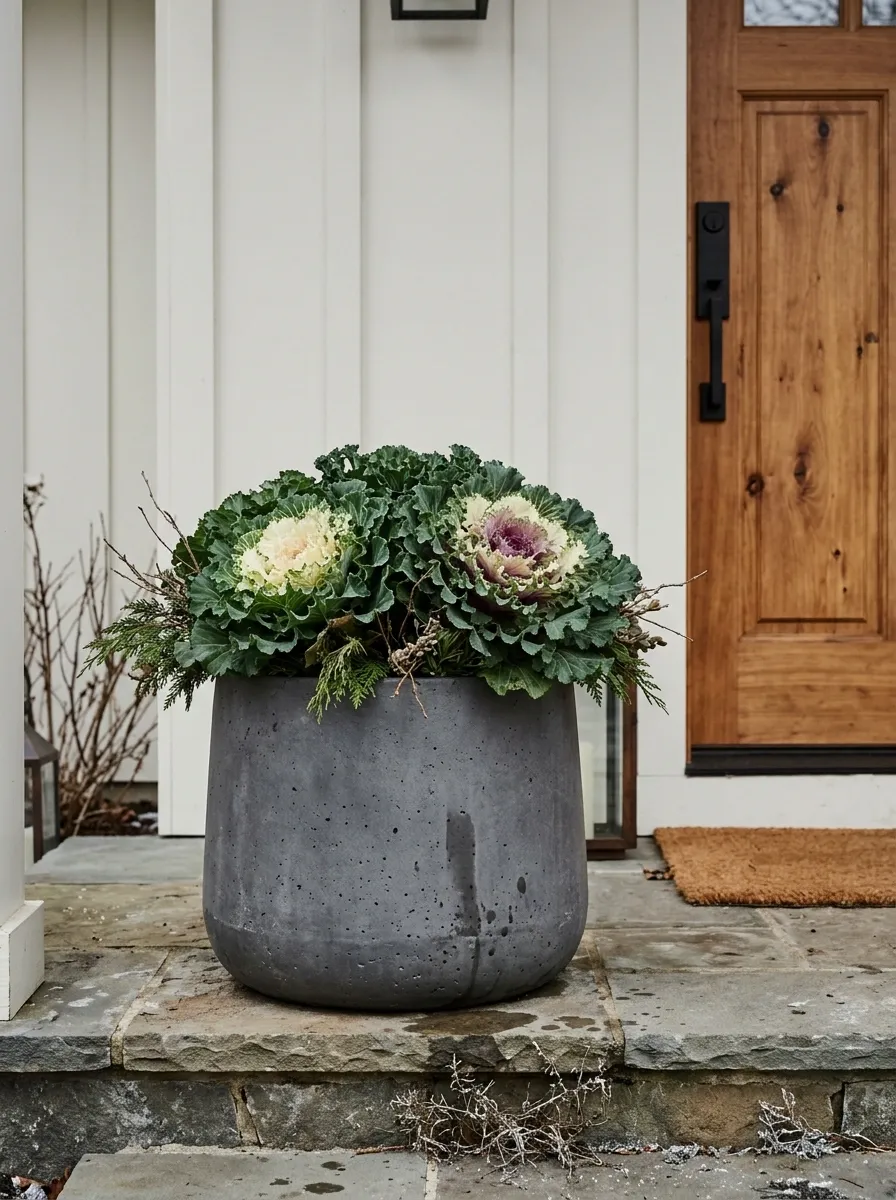
Ornamental kale can create a bold low shape in suitable winter conditions. Use the leaf form as the main feature rather than burying it beneath branches.
A substantial pot makes the arrangement feel deliberate. Choose a container color that relates to the center of the foliage or the porch materials.
Keep the approach clear as leaves spread, and maintain the planting according to its needs. This is an ornamental display; do not assume every decorative plant has been produced for eating.
Shape first: Let the rosette remain visible, with a simple base and enough room around the leaves.
Rosemary in a Sheltered Mild-Winter Entrance
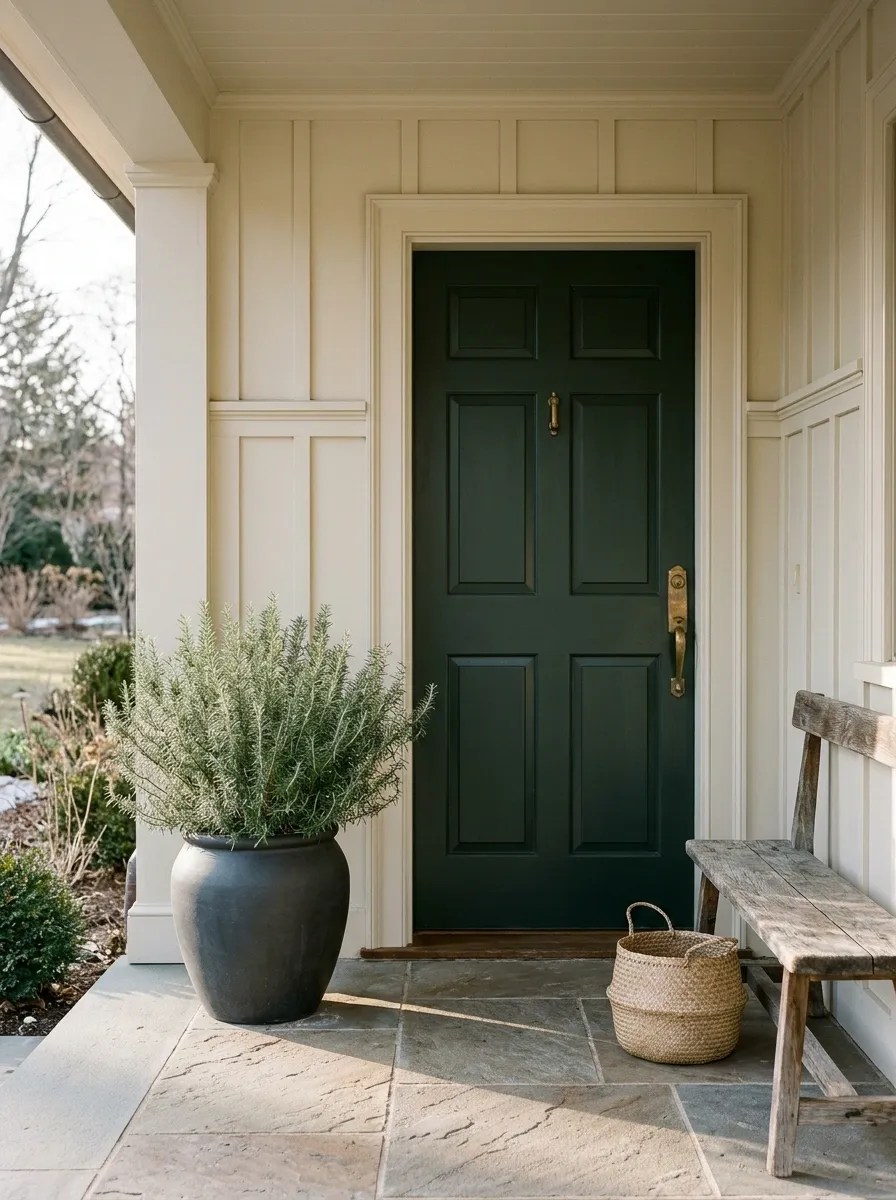
Where rosemary can genuinely overwinter in the selected container and location, it can give an entrance a restrained, practical appearance.
Choose a suitable variety and check local advice on exposure, drainage, and cold protection. A sheltered porch is not a substitute for the plant’s actual requirements.
Keep the shape simple and the pot proportionate. The appeal is a useful living plant beside the door, rather than forcing a tender specimen to impersonate a hardy shrub because the photograph looked convincing.
Variety, local climate, drainage, and exposure decide.
Locally Sourced Seedheads With a Green Base
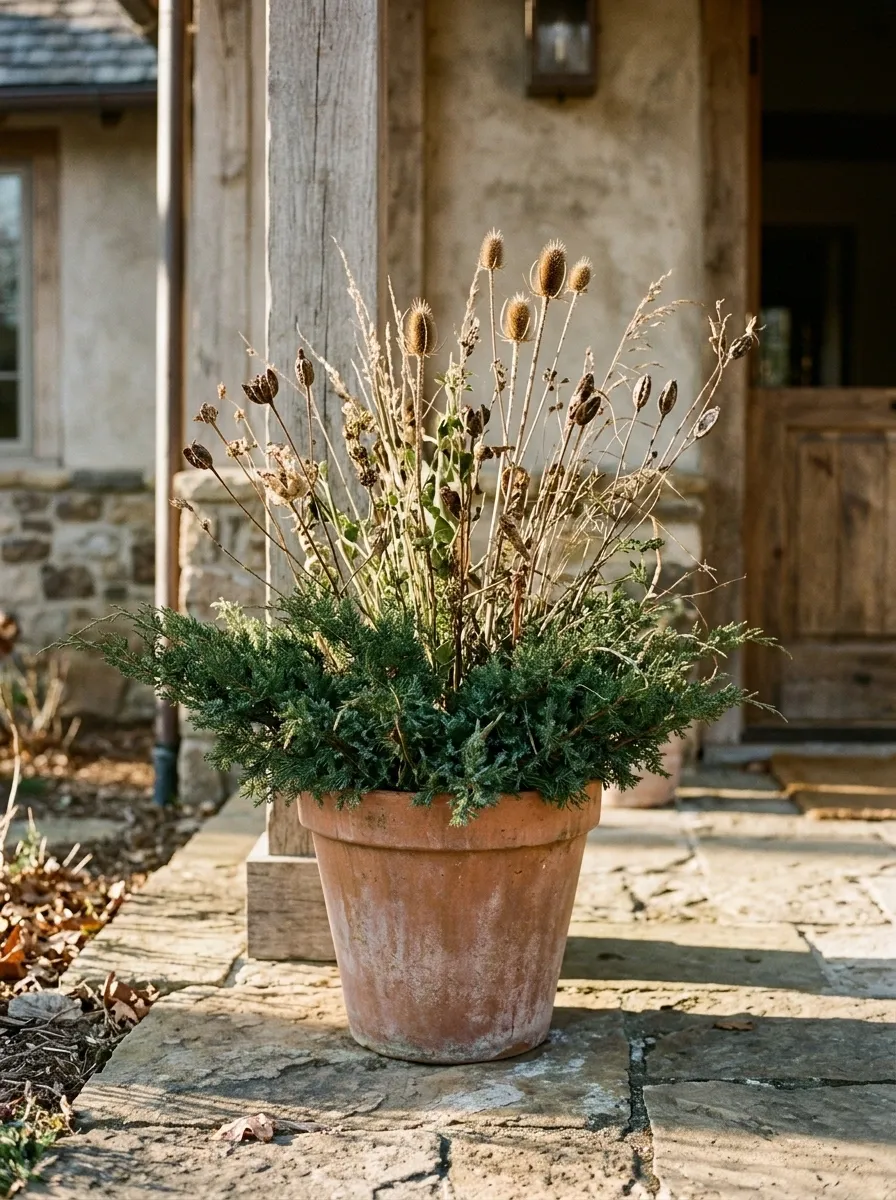
Dried seedheads can bring an informal garden character to a porch display. Use responsibly obtained material and avoid spreading invasive plant seed.
Choose sturdy forms that remain readable from the approach. Keep the green base relatively low so the stems retain their outline.
This works particularly well when the porch already has timber, stone, or other natural textures. The arrangement can feel wintery without adding a single decorative object that requires its own storage box afterward.
| Material | Purpose |
|---|---|
| Sturdy seedheads | Height and silhouette |
| Low cut greenery | A visual base |
| Plain container | A quiet connection to the porch |
Warm Brown Magnolia Leaves With Dark Green Branches
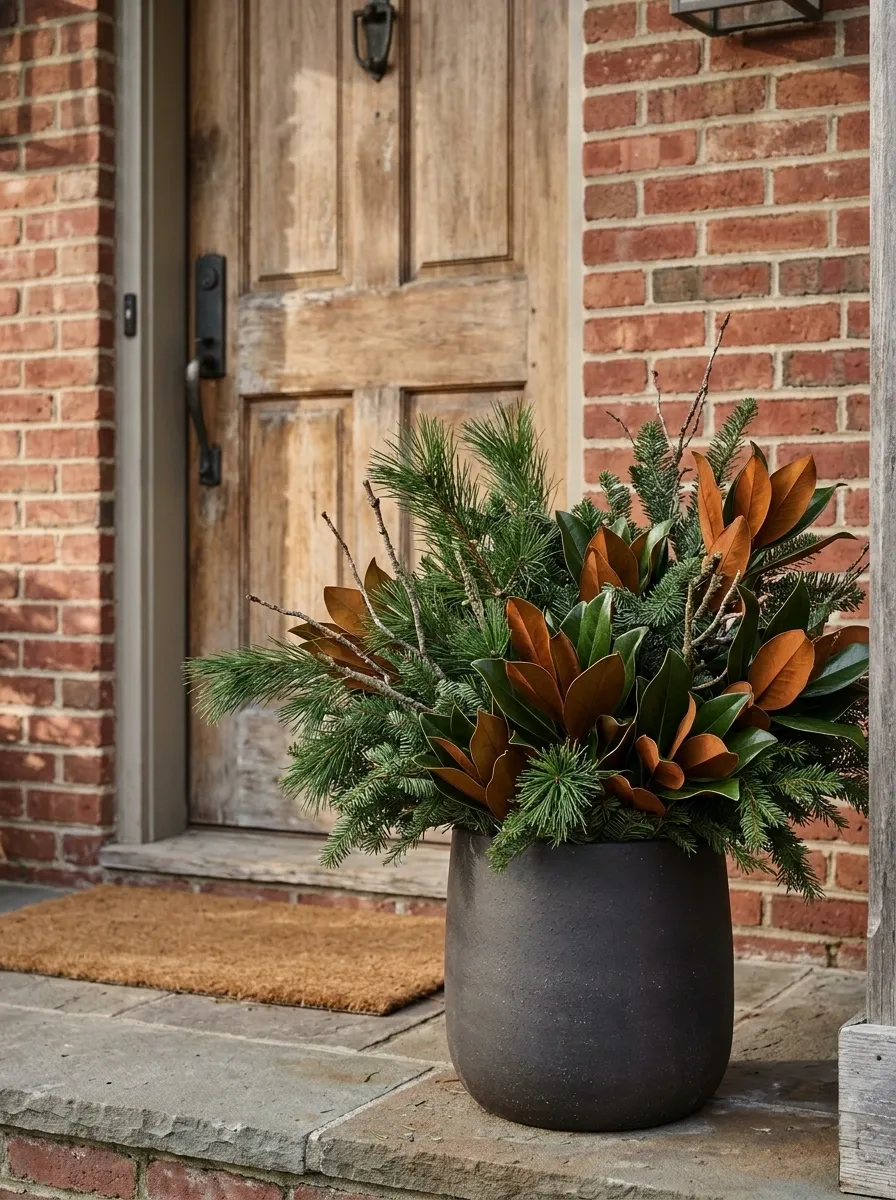
Cut magnolia foliage can introduce warm brown tones through its leaf undersides, where the material is available and suitable for the display.
Combine it with deeper greenery and keep the container simple. Turn the leaves deliberately so the color variation is visible rather than accidental.
Use the warm tones to relate the planter to a timber door or brickwork. You do not need to add orange ornaments to explain that brown and green were intentional choices.
One Generous Planter for a Narrow Porch
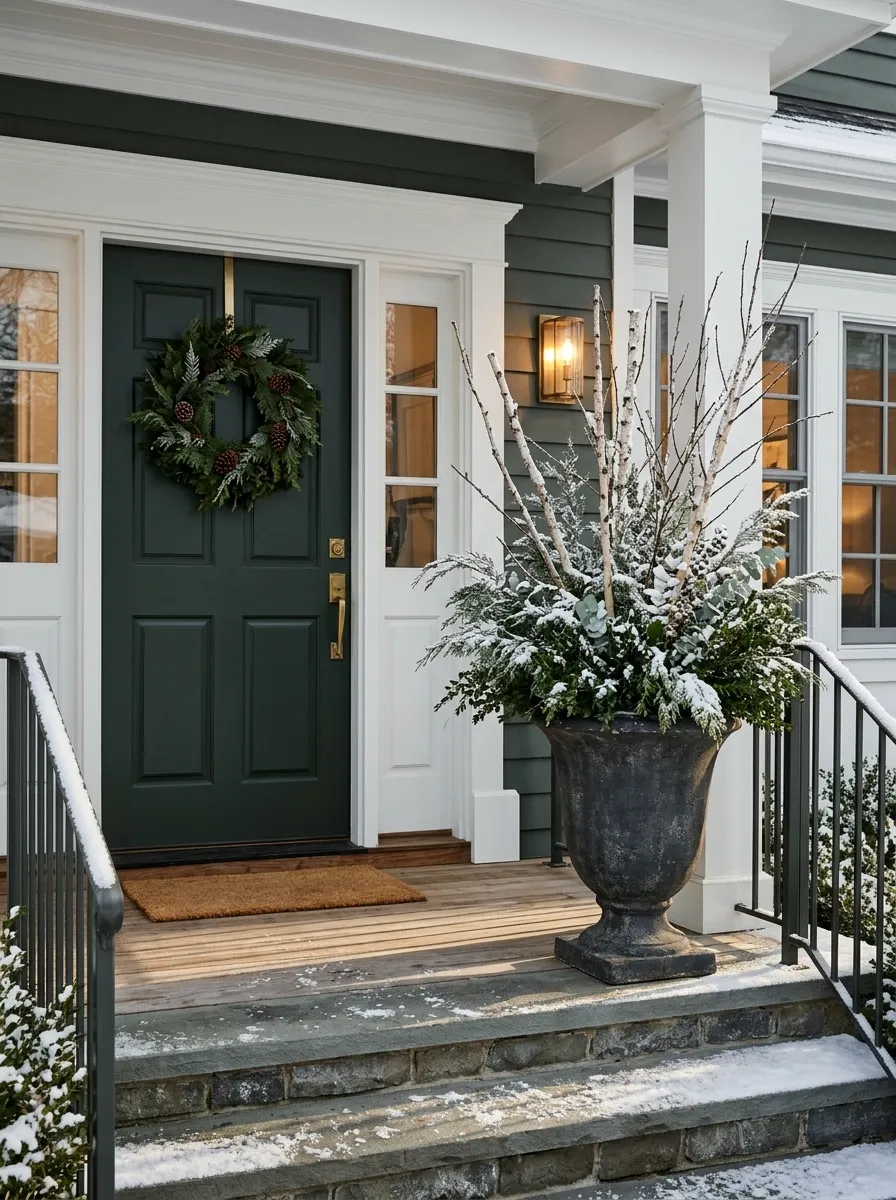
A narrow entrance often looks better with one well-proportioned planter than several small pots scattered along the route.
Choose the position after opening the door fully and walking through with a bag. Keep steps, rails, and approach lighting unobstructed.
Let the arrangement have enough visual presence to stand alone. A single planter is not a compromise when it suits the space; it is simply less likely to turn entering the house into a slalom event.
Test before filling: Open the door, use the steps, and walk past carrying something bulky.
A Group of Planters With Different Heights
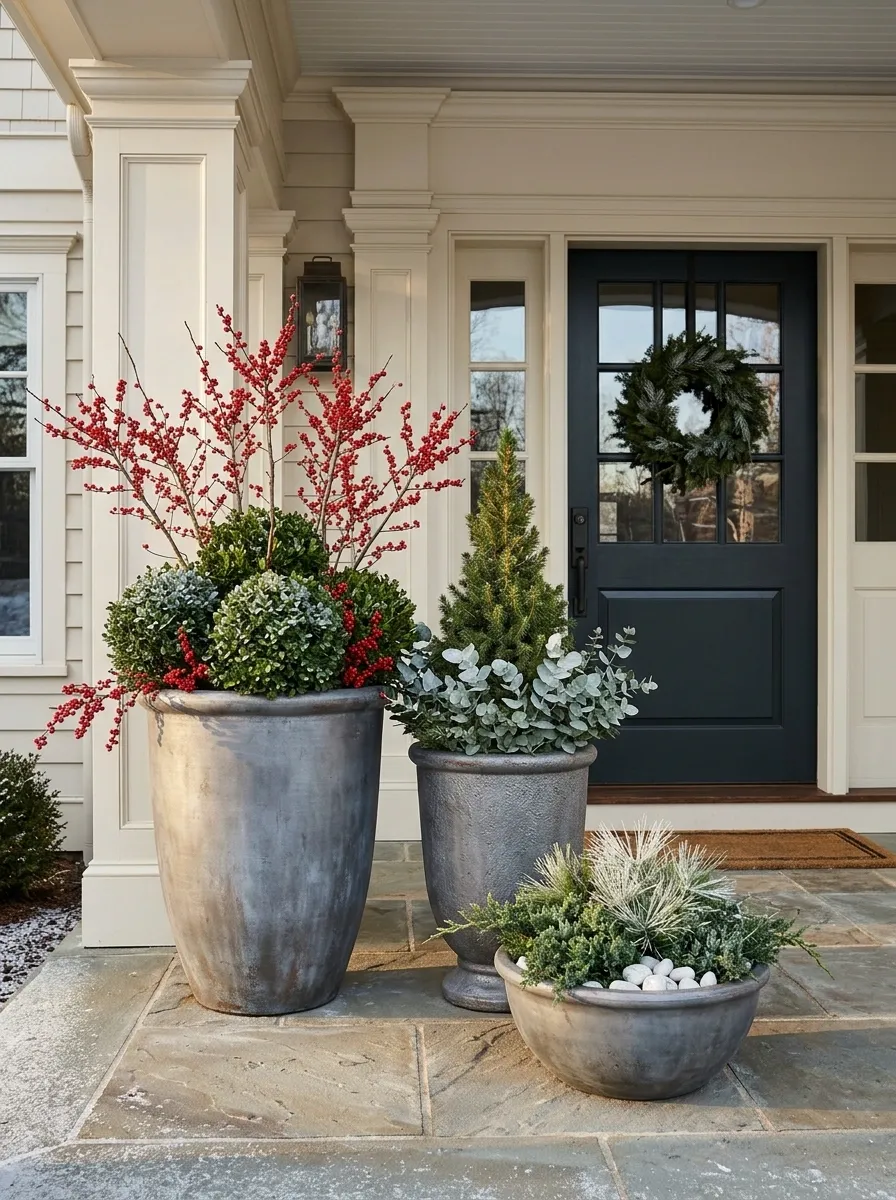
A wider porch can accommodate a small group of related containers. Vary height while keeping one shared finish or color family.
Give the tallest arrangement a clear role, then keep lower ones simpler. Leave breathing room between the group and the entrance.
Do not increase the number of pots until every available corner has been assigned a botanical resident. The grouping should feel composed, with practical access for watering, checking, and cleaning beneath it.
An Asymmetrical Pair Beside the Door
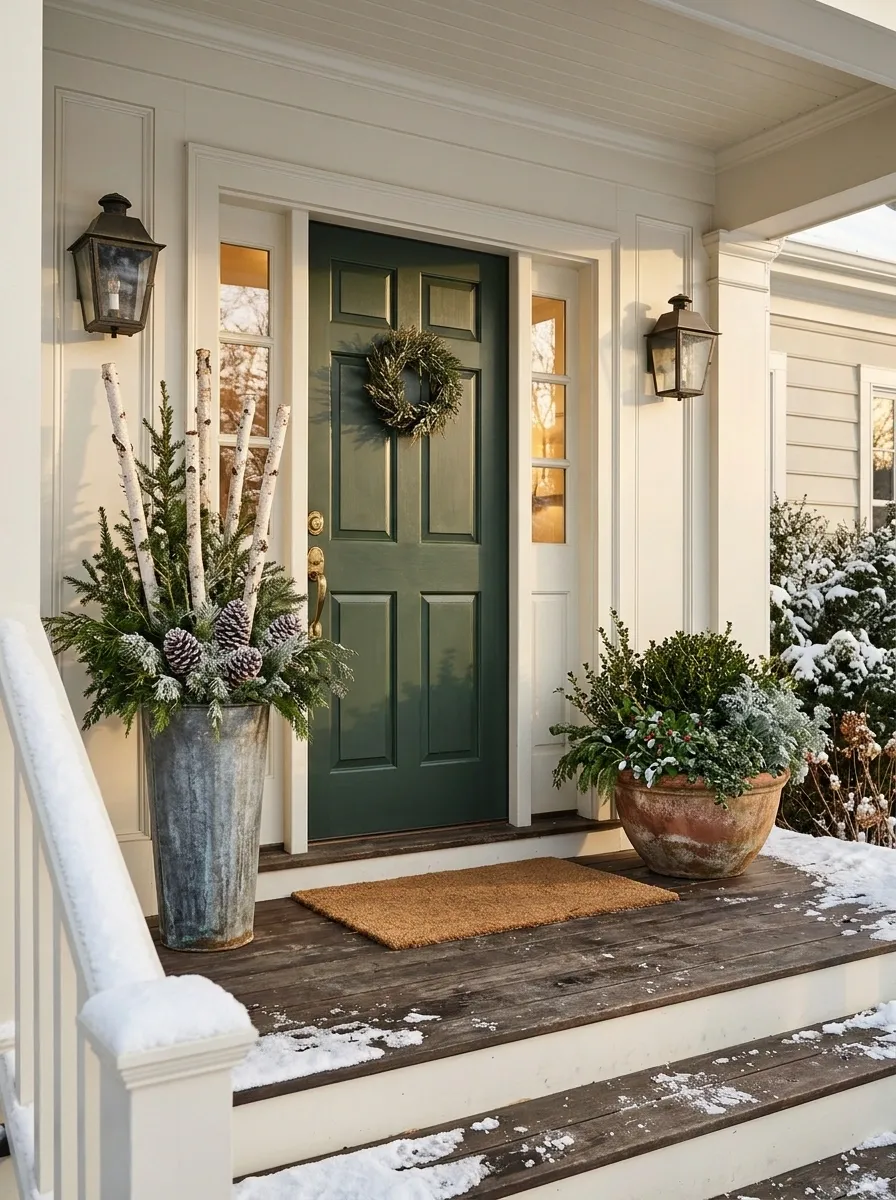
Two planters do not have to contain matching arrangements. A taller upright display on one side and a lower fuller composition on the other can feel balanced when their materials relate.
Check the view from the approach rather than judging each pot separately. Keep one repeated foliage color or container finish.
This works where the architecture itself is uneven. You are responding to the porch rather than demanding symmetry from a doorway that never offered it.
| Side | Possible role |
|---|---|
| More vertical space | Taller, narrower arrangement |
| More horizontal space | Lower, fuller arrangement |
| Both sides | A shared material or color |
A Long Low Trough Beside Porch Seating
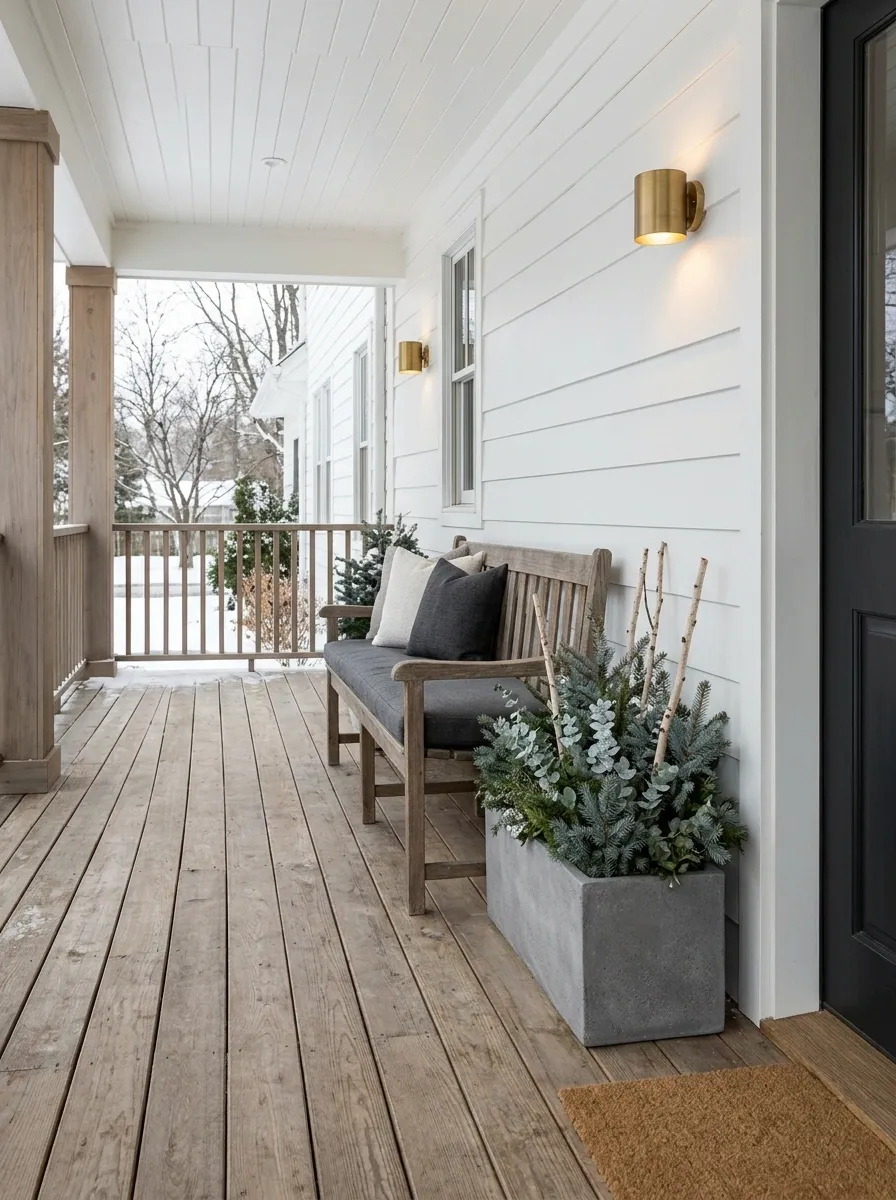
A low trough can connect a bench to the surrounding porch without blocking the view. Use a restrained repeated material rather than several unrelated focal points.
Keep it clear of feet and the space needed to sit down. Choose the contents according to exposure and whether the display is living or cut.
The trough should make the seating area feel finished. If nobody can approach the bench without stepping around branches, the styling has become rather possessive.
A low outline, a repeated texture, and clear foot space.
A Pale Planter Against a Dark Front Door
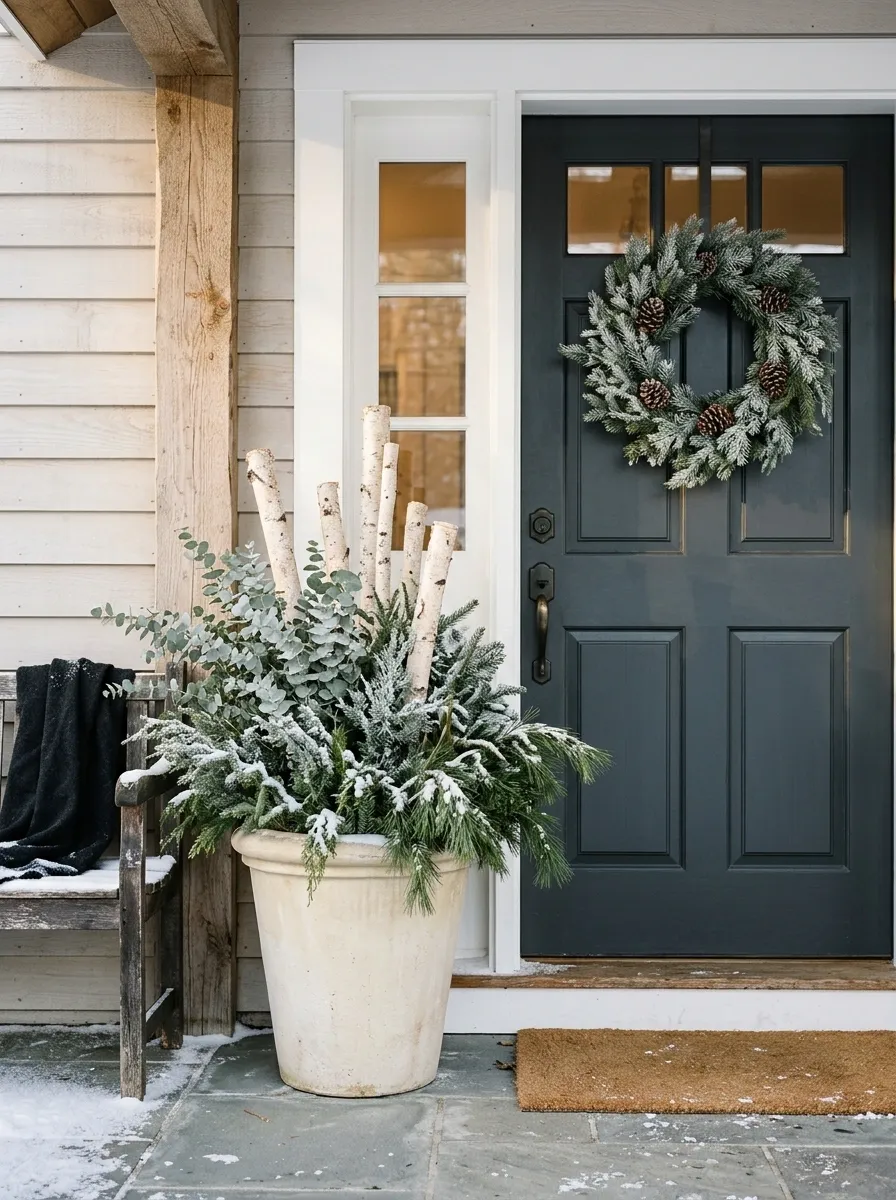
A pale container can create a clear base beside a deep green, charcoal, or dark blue door. Use foliage with enough contrast to remain readable.
Keep the arrangement’s palette restrained so the container-door relationship stays visible. This is especially useful when the porch has little architectural detail.
Choose an outdoor-suitable finish that will tolerate the site. The effect depends on a clean outline, which becomes less convincing when an unsuitable pot spends winter peeling into the entrance mat.
Contrast check: Pale pot, darker doorway, and foliage that remains distinct from both.
A Dark Planter Against Pale Stone or Siding
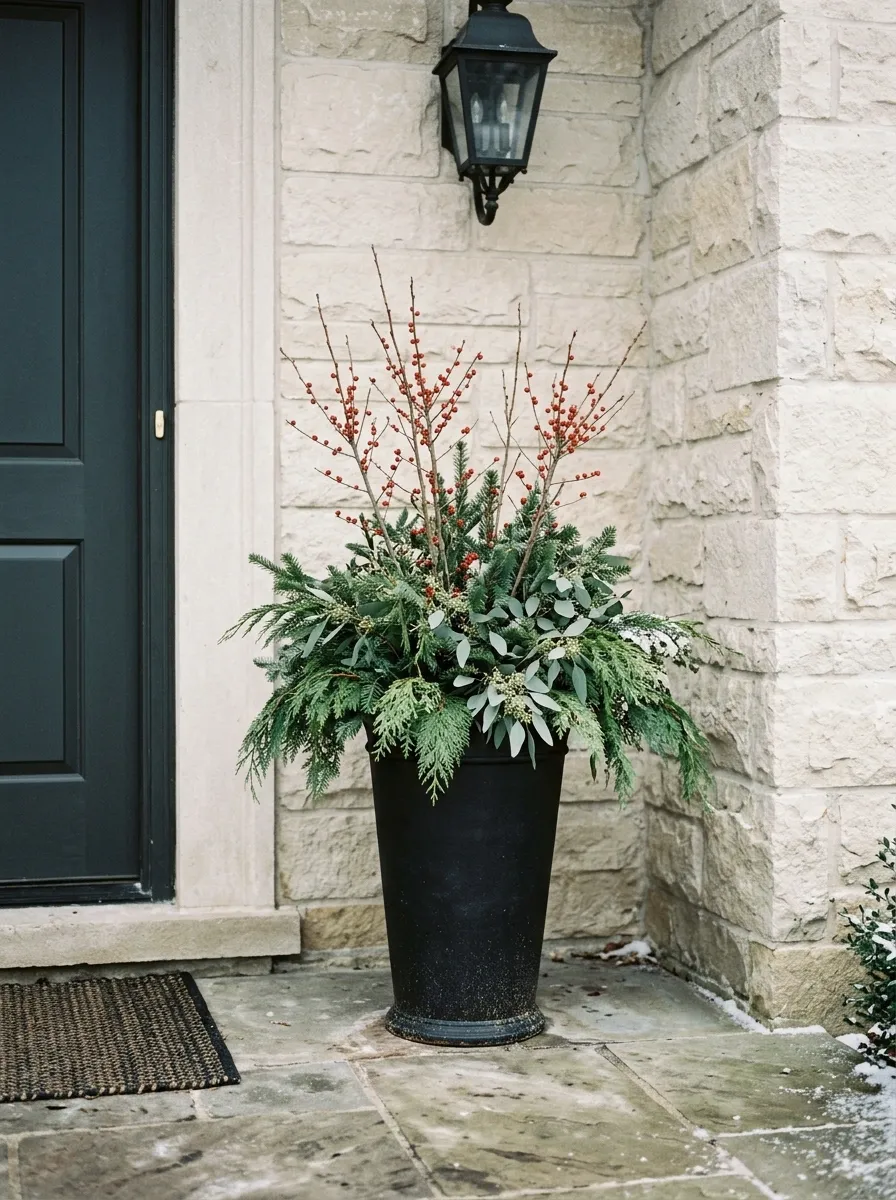
A dark planter can anchor an entrance with pale surroundings. Give it a definite silhouette through upright stems or a generous foliage mass.
Keep the base visible rather than covering every edge. The container is part of the arrangement, particularly when its shape suits the house.
A matte or restrained finish can keep the effect quieter. There is no need to make the porch simultaneously glossy, glittering, heavily patterned, and botanically ambitious.
A Living Center With Separate Cut Accents
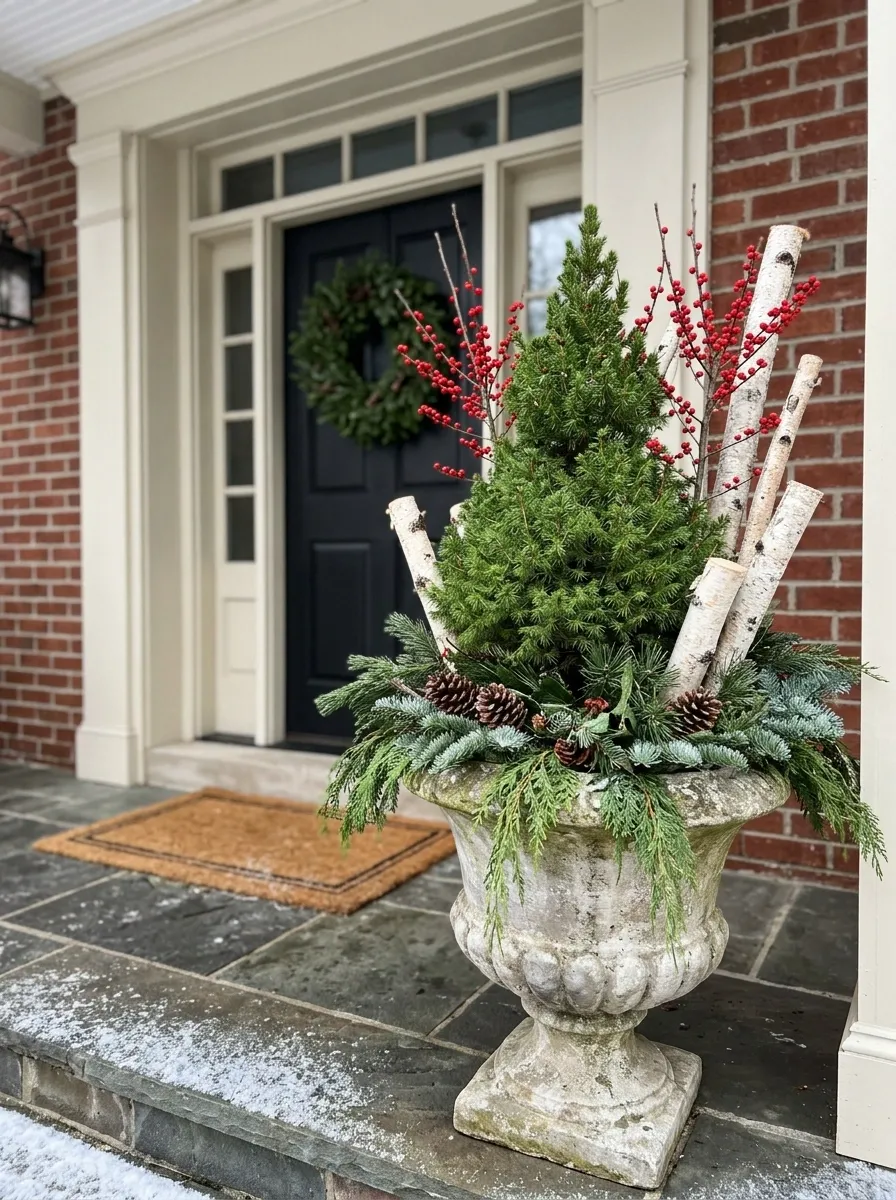
A living plant can provide the main structure while cut material adds seasonal height around it, provided the arrangement preserves the plant’s root space, light, and care needs.
Use a method that avoids damaging roots or disguising moisture problems. Keep the two roles clear when maintaining the display.
This is useful when you want the permanent plant to remain after winter. The temporary decoration should support it rather than treat the living center as a convenient object to decorate around.
| Permanent element | Temporary element |
|---|---|
| A suitable living plant | Removable cut accents |
| Its own care requirements | Inspection and replacement as needed |
| Long-term growing space | No damage to the root zone |
An Outdoor-Rated Faux Arrangement for a Difficult Entrance
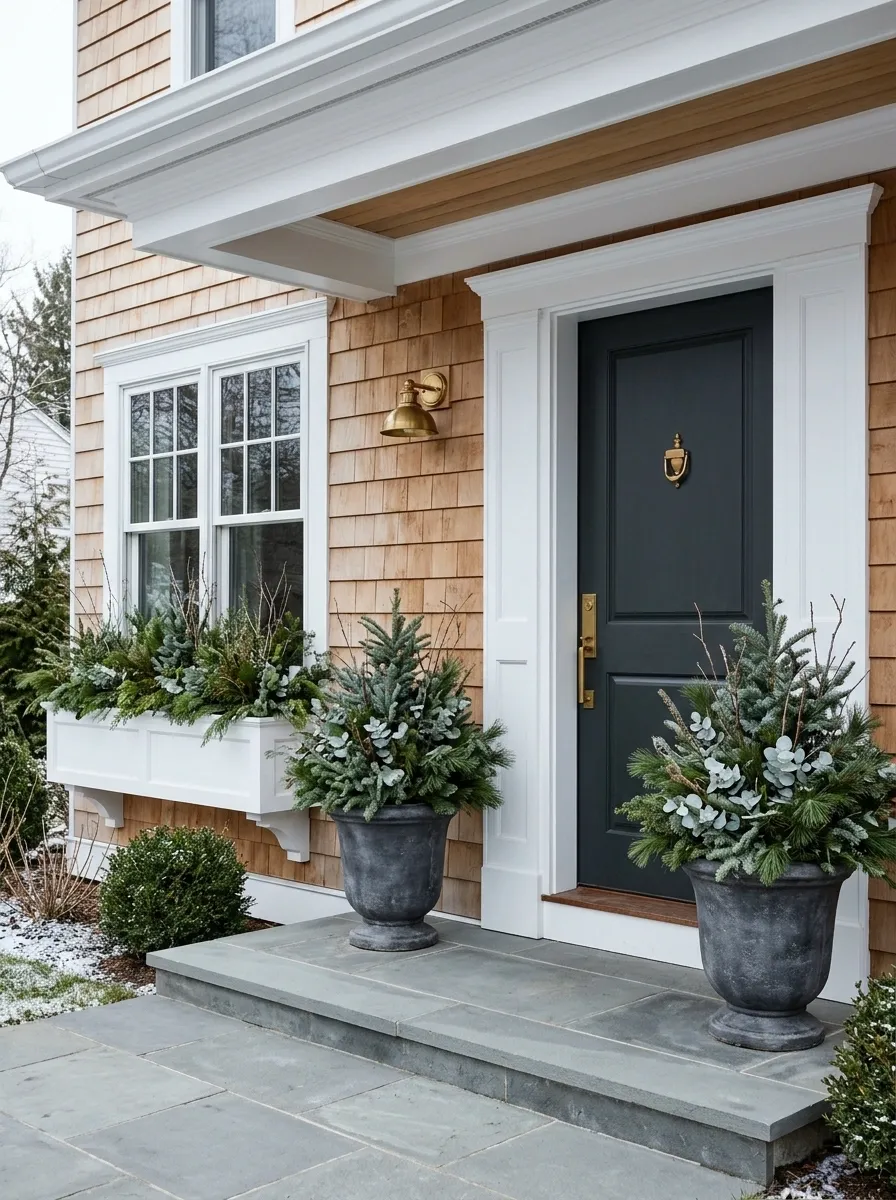
A good faux arrangement can be a practical choice where maintaining living plants or fresh cut material is unrealistic. Choose products specifically intended for the exposure.
Check how the material handles wind, sun, moisture, and secure placement. Avoid pieces that shed easily into the garden or pavement.
Keep the design restrained and believable. A smaller selection of convincing foliage usually works better than an enormous display assembled from every artificial branch available in the seasonal aisle.
Check the Planters After the Weather Changes
A porch arrangement can look excellent when first assembled and quite different after a windy night.
Check stability, damaged material, blocked drainage, and the condition of living plants. Remove what has failed rather than adding more decoration in front of it.
Then look at the entrance as a whole. If the door opens freely, the route is comfortable, and the planters relate to the house, the porch is doing well. It does not need a bow to receive official confirmation.
Winter Window Box Ideas That Give the House Something Better to Look At
An empty window box is unusually good at making a house look as though it has forgotten part of its outfit.
Winter does not require it to remain bare. The long, shallow shape can hold a cut-green arrangement, suitable living plants, or a restrained combination chosen for the actual conditions.
The difference from a porch pot is the viewpoint. A window box needs to work across a horizontal surface, from the street, and sometimes from inside the room. Tall decoration that looks dramatic outside may become a daily collection of sticks across your view.
Start with the box and the window. The plants come afterward.
Check the Installation Before Filling the Box
Confirm that the box, liner, brackets, and fixings are sound and suitable for the fully loaded arrangement, including wet growing medium and any additional winter load. Use appropriate professional help if the installation is uncertain.
Keep window operation, required escape openings, drains, and ventilation clear. Manage runoff so it does not damage the building or create problems below.
For cut displays, Illinois Extension describes using evergreen material at different angles to build a winter arrangement. That is a decorative approach, separate from growing plants through winter. Illinois
Living window boxes need locally appropriate plants and continuing care. Exposed roots, limited soil volume, wind, and the box’s actual light conditions matter.