
That strip of wall above the door is not necessarily asking for a shelf full of things that could fall on someone.
It may need a little color, a well-proportioned artwork, or an architectural detail that connects the opening to the room. Measure the height, view it from the usual approach, and keep the door’s movement and required functions clear.
Use appropriate fixings for the wall, weight, and position. Structural changes, glazing, electrical work, and heavy applied finishes need proper specification. The ideas below concern the composition; they are not installation instructions.
Above Doorway Ideas
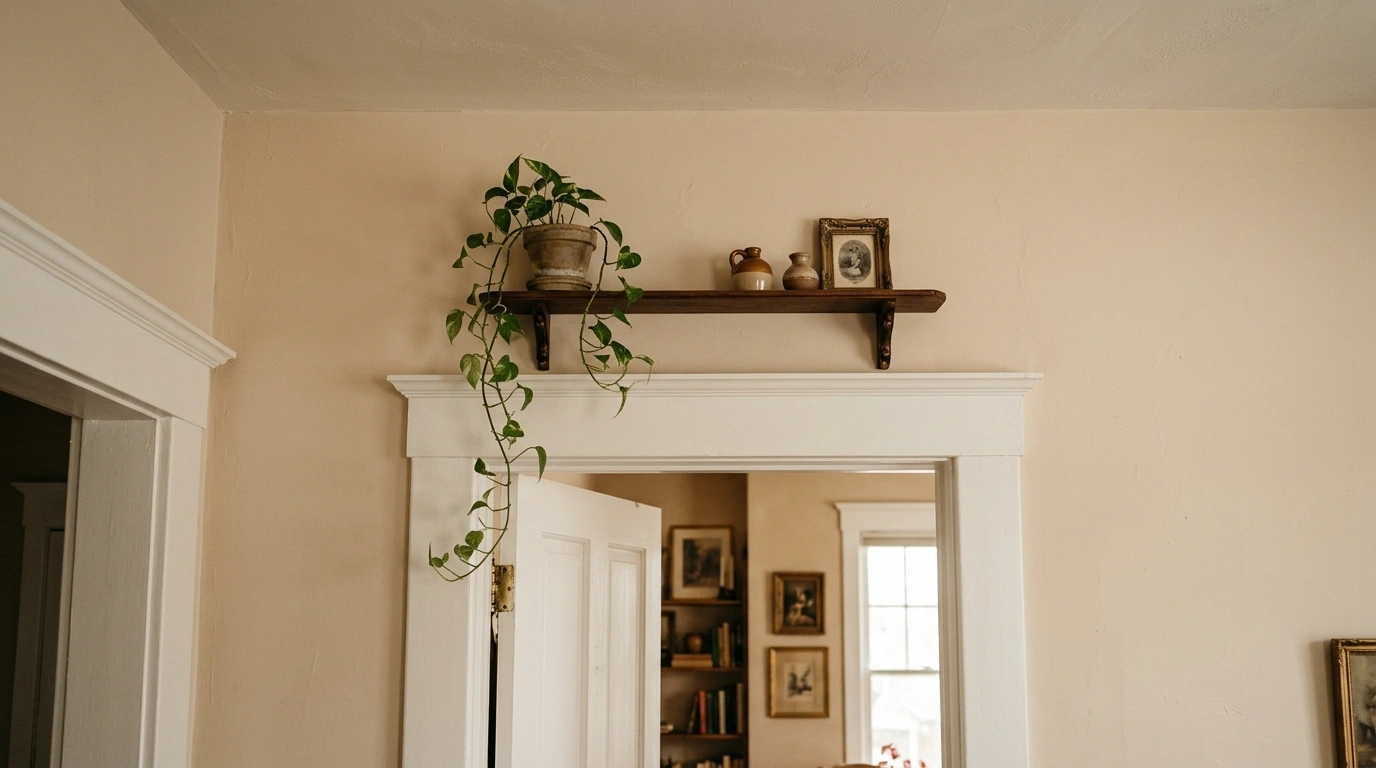
A Plant-Lined Display Shelf
A simple wooden shelf can turn the awkward sliver of wall above a doorway into an intentional display space. Choose a length that spans the door frame comfortably while leaving breathing room against the side walls. Stack a row of favorite books flanked by trailing plants to soften the hard architectural lines.
Keep the items curated and manageable so the upper ledge feels light rather than heavy. Position trailing greenery on either end to draw the eye outward and frame the passage below. This setup makes use of high, otherwise neglected space without making the room feel enclosed.
Ensure everything is balanced securely, especially when combining heavy books with ceramic pots. Let the natural textures of wood, paper, and leaves bring warmth and organic charm to the threshold. It is a brilliant way to add personality right where guests least expect it.
One Horizontal Artwork
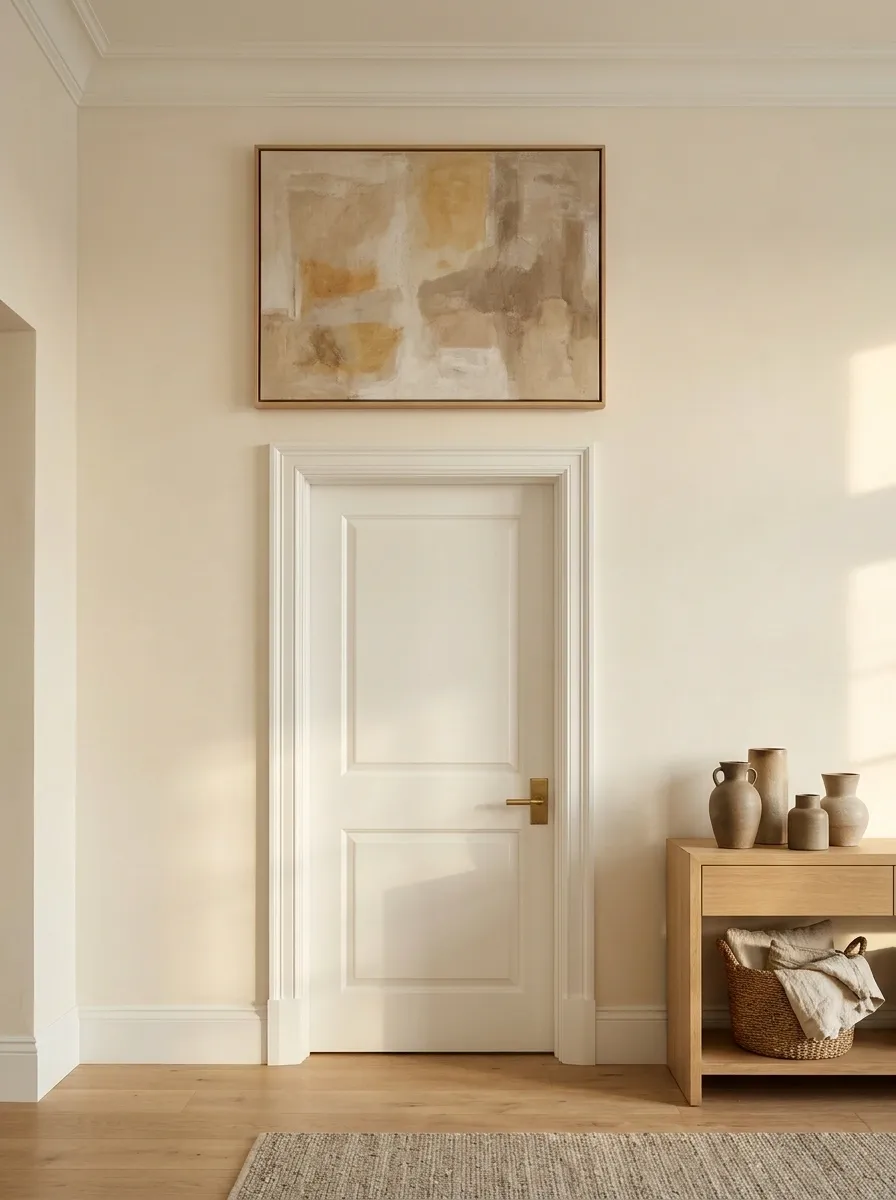
A horizontal piece can relate naturally to the width of a doorway.
Choose it around the available wall area rather than matching the door width automatically. Leave visible space between frame, ceiling, and trim so the arrangement can breathe. Check the artwork from across the room; detail that only reads close up may be wasted in this position.
A Botanical Ledge Display
A slender wooden ledge mounted above a door frame creates a wonderful platform for cascading greenery and treasured reads. Select a rich wood tone that complements your trim, allowing the shelf to feel like a natural extension of the architecture. Let verdant vines spill over the edges to soften the transition between rooms.
Keep the arrangement balanced by placing taller planters or trailing stems symmetrically on either side of a neat stack of books. This utilizes overhead vertical space brilliantly while keeping floor areas clear. The natural draping adds movement and life to an otherwise forgotten architectural zone.
Anchor the shelf securely into wall studs to safely support the weight of soil, pots, and literature. Step back to ensure the scale relates harmoniously to the width of the doorway below. It is a stunning, living vignette that draws the eye upward with effortless style.
A Pair of Small Related Prints
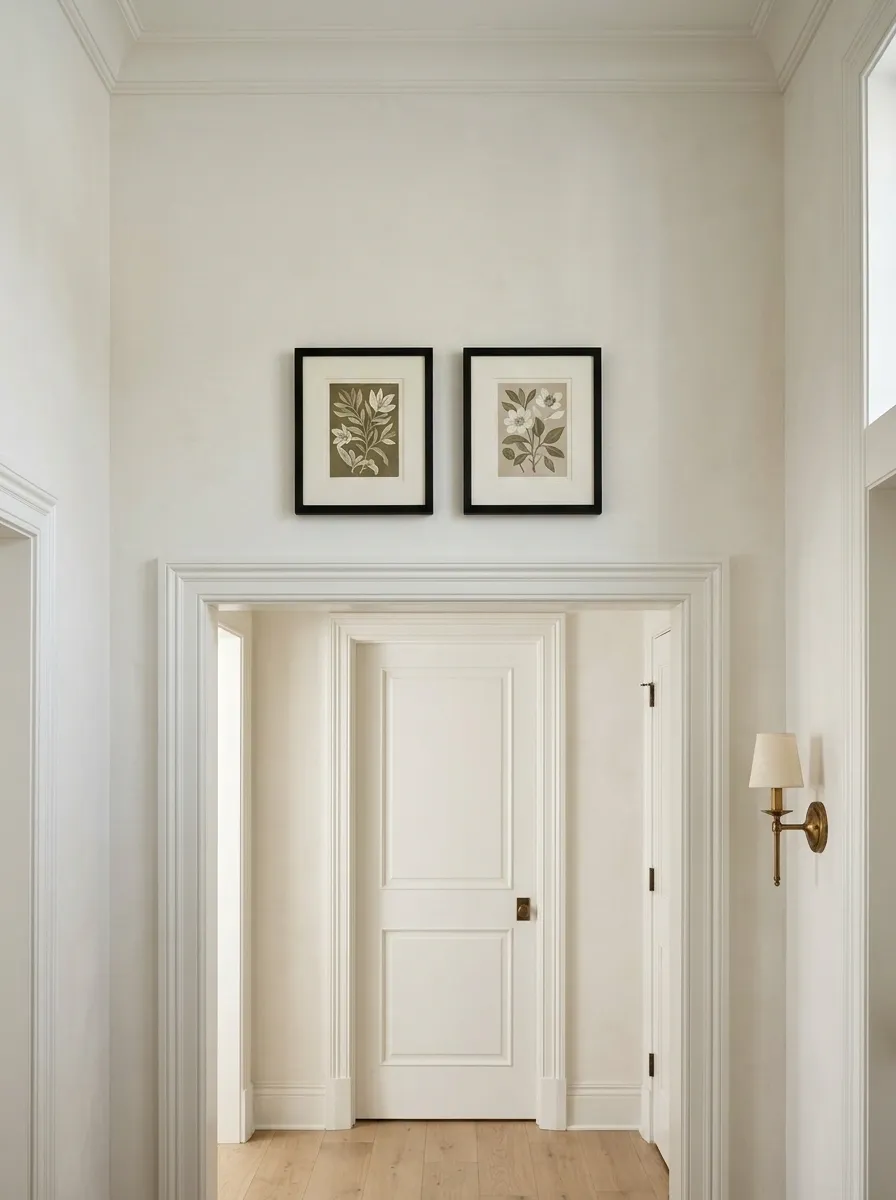
Two related prints can suit a wider wall strip where one long piece would feel too dominant.
Keep the frames and visual weight connected, then align them deliberately. Use generous spacing around the group instead of squeezing the prints between the trim and ceiling. Their shared subject or palette can do more than perfectly identical dimensions.
| Connect the pieces through | Keep clear |
|---|---|
| Subject, palette, or frame finish | Ceiling and door trim |
| Similar visual weight | The outer edges of the group |
A Cascade of Wisteria Blooms
A dramatic sweep of cascading floral garlands can turn an ordinary doorway into a breathtaking, storybook entrance. Choose lush, weeping botanicals that mimic natural vines, allowing them to drape gracefully over the frame. This creates an enchanting threshold that feels both grand and deeply romantic.
Secure the arrangement firmly along the upper trim so the blooms follow the natural curve and architecture of the doorway. Keep surrounding wall decorations complementary to let the floral display remain the undisputed star of the space. The soft, falling petals introduce wonderful texture and an ethereal, dreamlike atmosphere.
Step back to check the visual balance, ensuring the floral weight feels evenly distributed across the entire span. Let the delicate colors and organic shapes infuse the room with permanent spring charm. It is a whimsical approach that elevates a simple passageway into an absolute work of art.
A Panoramic Photograph With Simple Detail
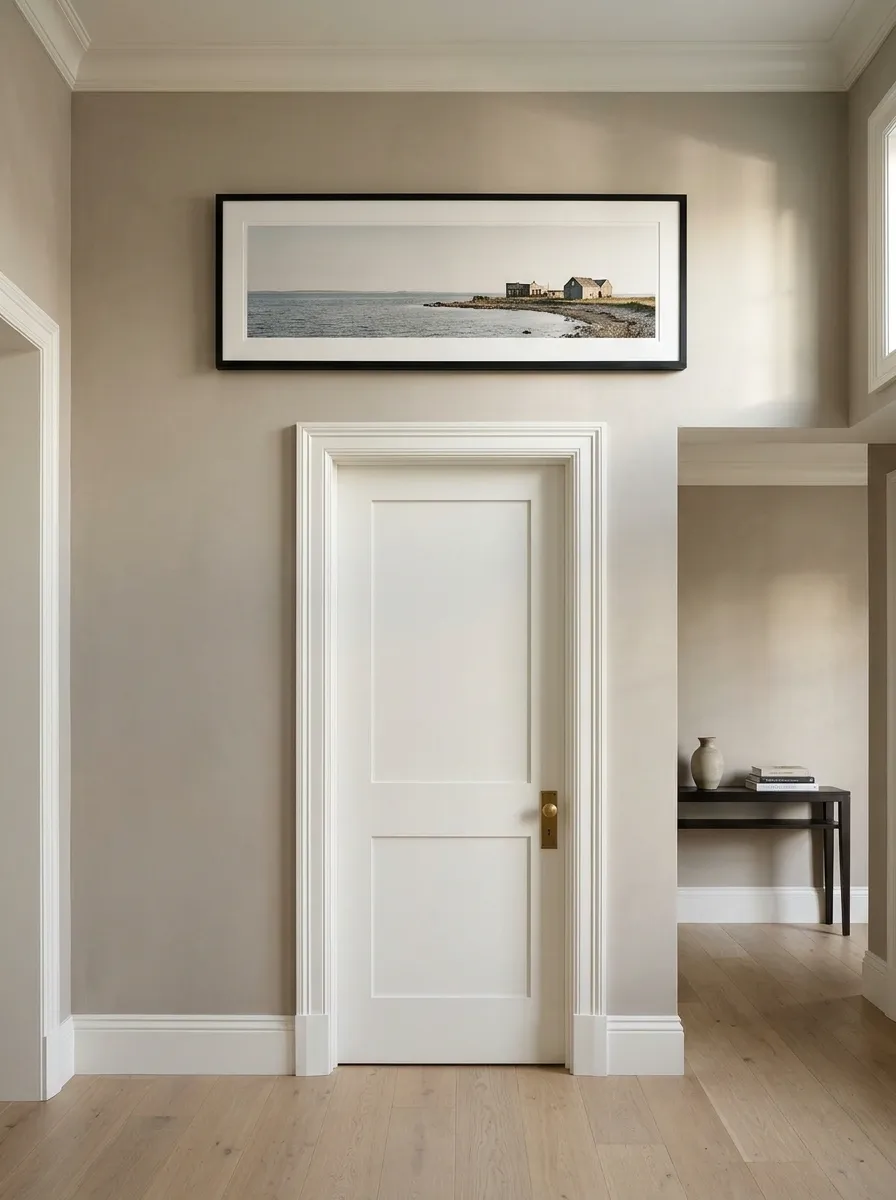
A wide landscape or architectural photograph can hold its own above a doorway without requiring several small frames.
Choose an image with a clear composition that remains readable at a distance. Keep the frame restrained if the photograph already contains a lot of detail. The wall strip should not feel like a storage location for a picture that fitted nowhere else.
Viewpoint test: stand where you normally enter the room and check whether the main subject is still legible.
A Festive Pine Bough Swag
A lush arrangement of fresh evergreen boughs and pinecones brings classic, organic charm to the wall above an entryway. Choose a sweeping design that mirrors the width of the door frame, anchoring it securely for a polished look. The natural greenery introduces wonderful texture against plain painted walls.
Keep the arrangement centered and proportioned so it frames the passage without feeling cumbersome or heavy. Incorporate subtle natural elements like pinecones to add depth and rustic elegance to the composition. This approach makes fantastic use of upper wall space during holiday seasons or year-round cabin aesthetics.
Leave clear space between the top of the swag and the ceiling to maintain an airy, breathable layout. Let the rich green tones and woody details create a welcoming threshold into the next room. It is a timeless and effortless way to elevate standard architectural trim.
A Securely Mounted Textile Panel
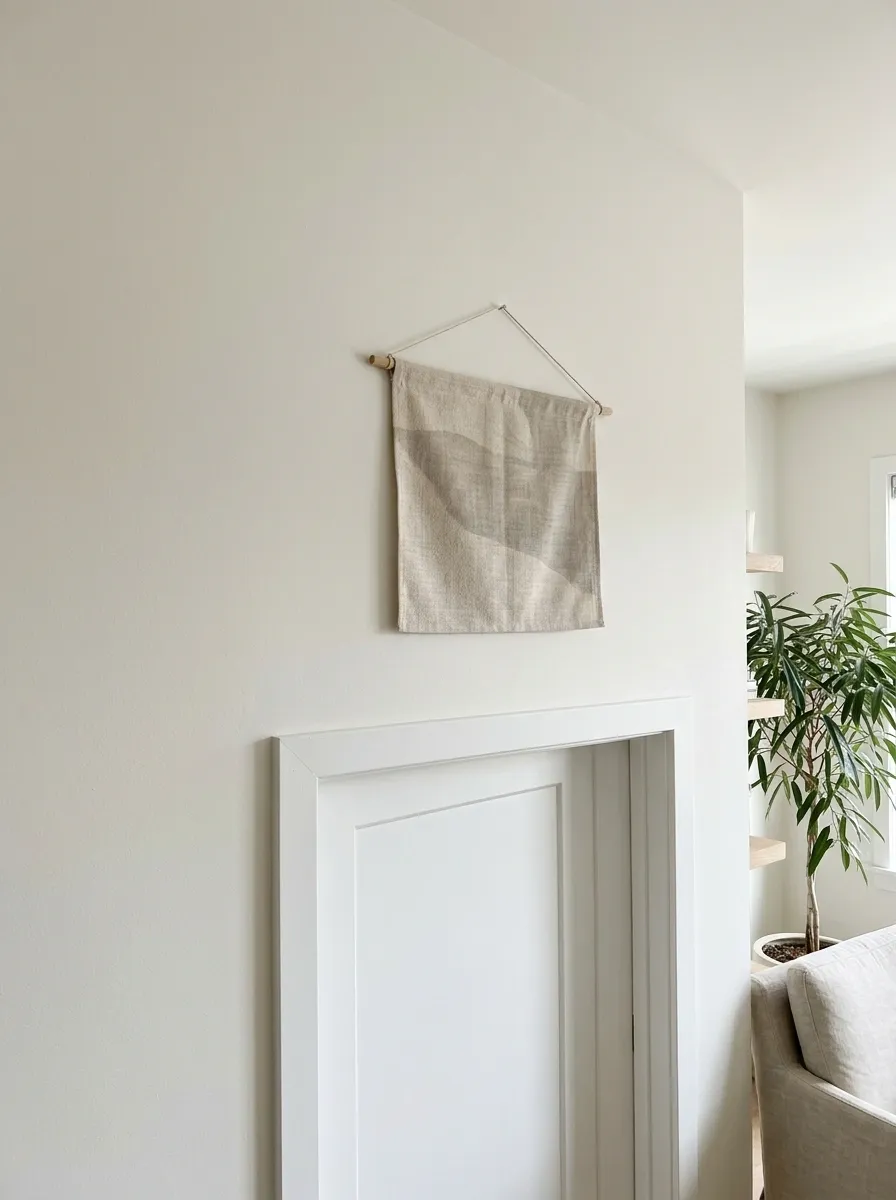
A small, flat textile can introduce softness above a doorway, particularly in a room with plain painted surfaces.
Use a suitable support and secure hanging method, keeping the fabric clear of lighting, heat, and door hardware. Choose a simple weave or broad motif rather than intricate detail. The position favors texture and shape more than something you need to inspect closely.
A Lightweight Paper-Relief Artwork
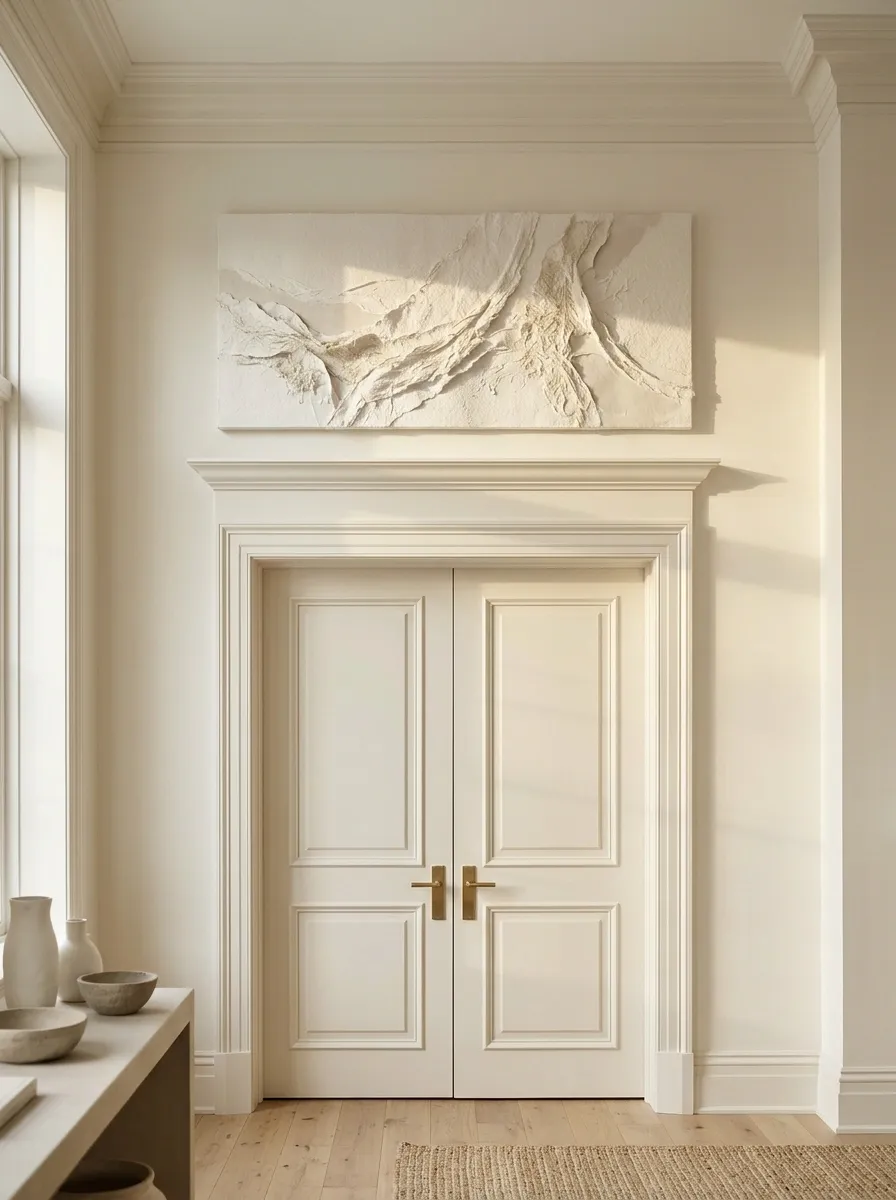
Paper relief can create a little shadow without the visual weight of a dark framed picture.
Choose a well-made piece protected and mounted appropriately for the location. Keep the design broad enough to read from below. This works particularly well when you want a tonal detail that changes gently with the room’s light.
Let the shadow supply interest, rather than adding another strong color.
A Botanical Frieze
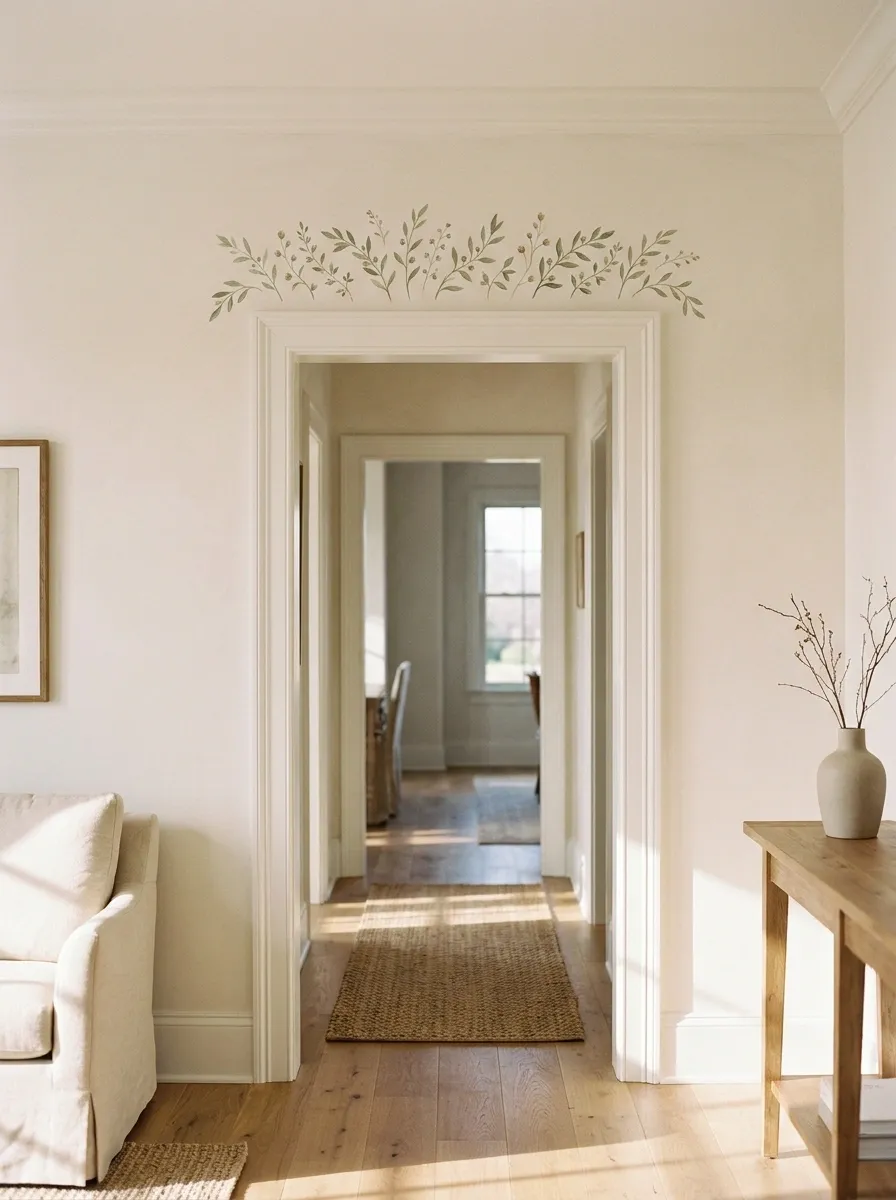
A painted or papered botanical band can connect the doorway to a room with natural materials.
Keep the motif proportionate to the shallow space. Simple stems and leaves are easier to read than a dense floral scene squeezed into a strip. Repeat one color from the room so the detail feels integrated rather than like a separate decorating project overhead.
A Wallpaper Band Across the Wall
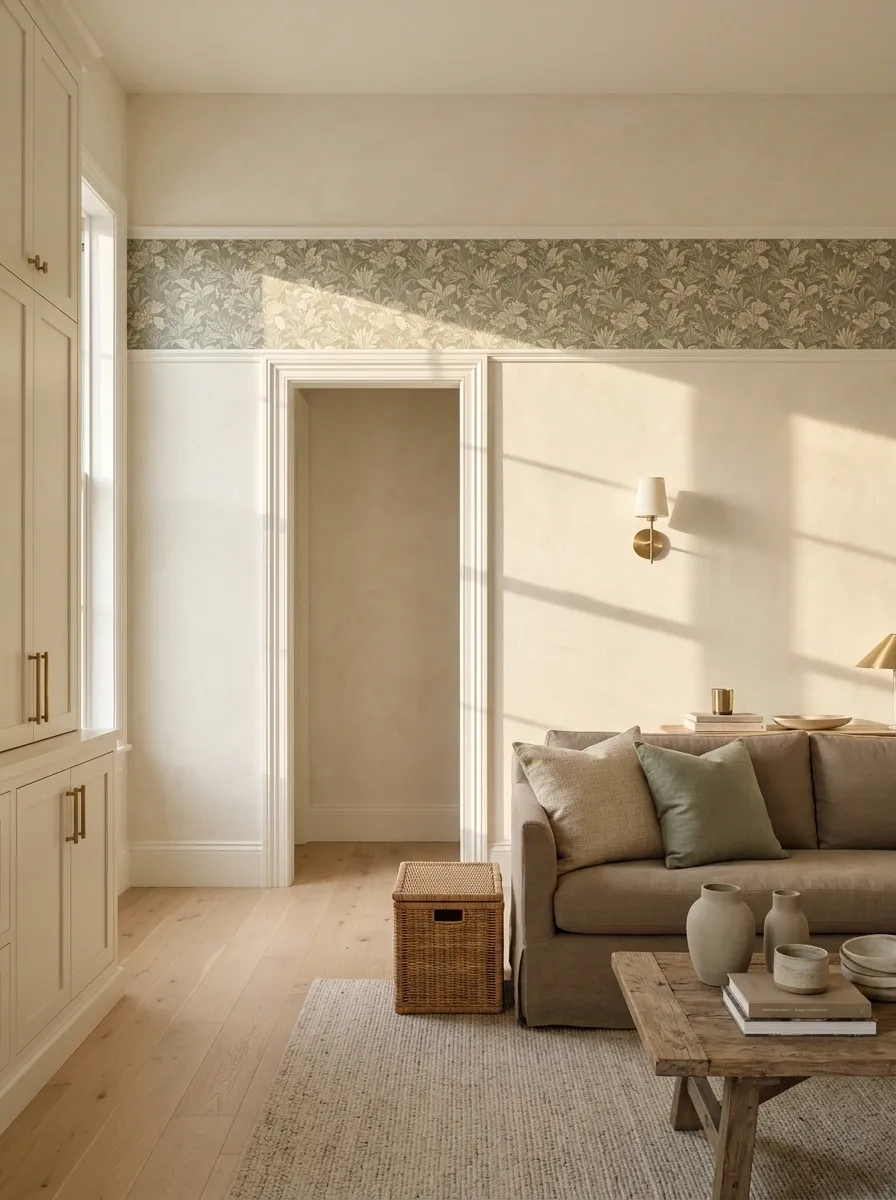
Carry a wallpaper band above the doorway and across the adjoining wall area to make the detail feel part of the room.
Choose a pattern that works in the available height. Do not crop the most important part of the design awkwardly. A continuous band can be more convincing than a small isolated patch directly over the opening.
A Wallpaper Infill Inside a Defined Panel
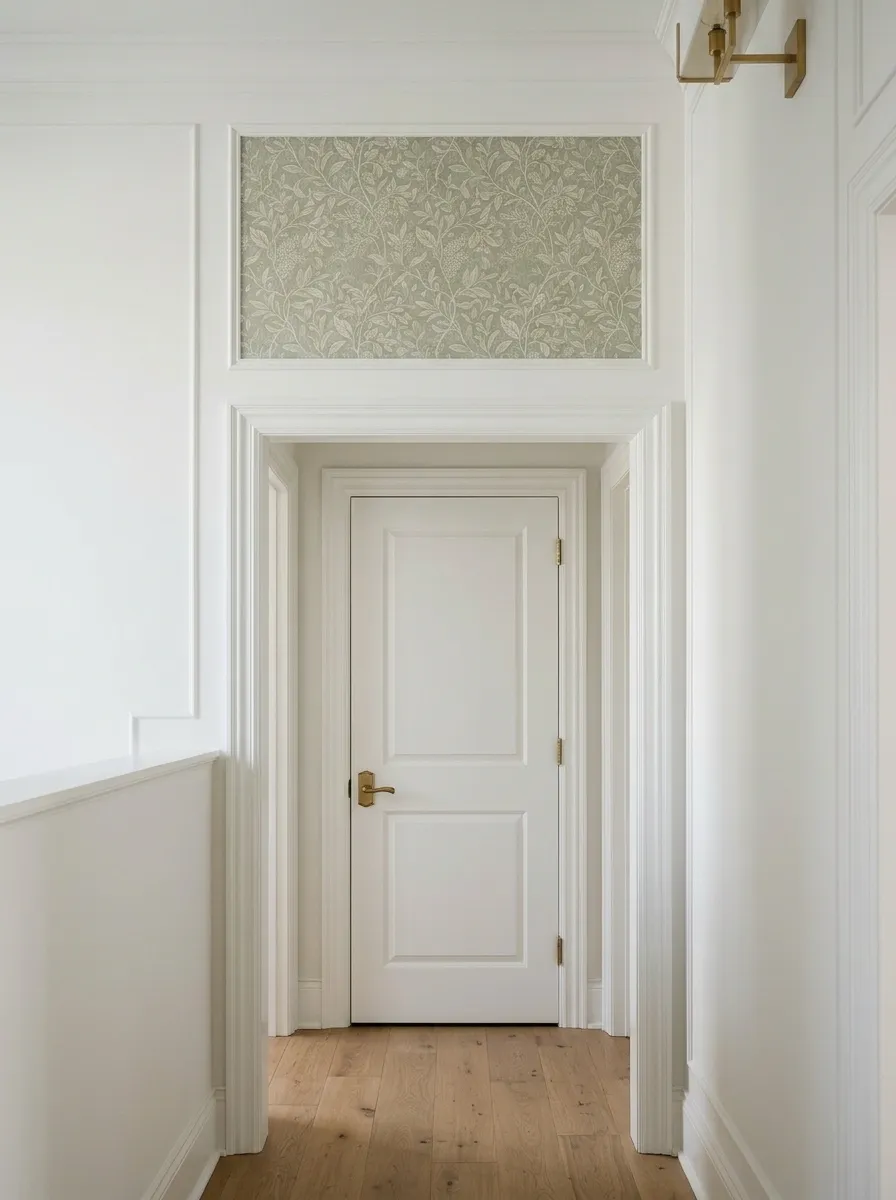
If the architecture provides a recessed or framed area above the door, wallpaper can make that section feel intentional.
Choose a pattern related to the surrounding room and keep its boundary crisp. The panel supplies the frame, so the wallpaper does not need a second decorative border unless the design genuinely calls for one.
Use the existing shape: the most successful detail may be the one the room already gives you.
A Broad Painted Color Band
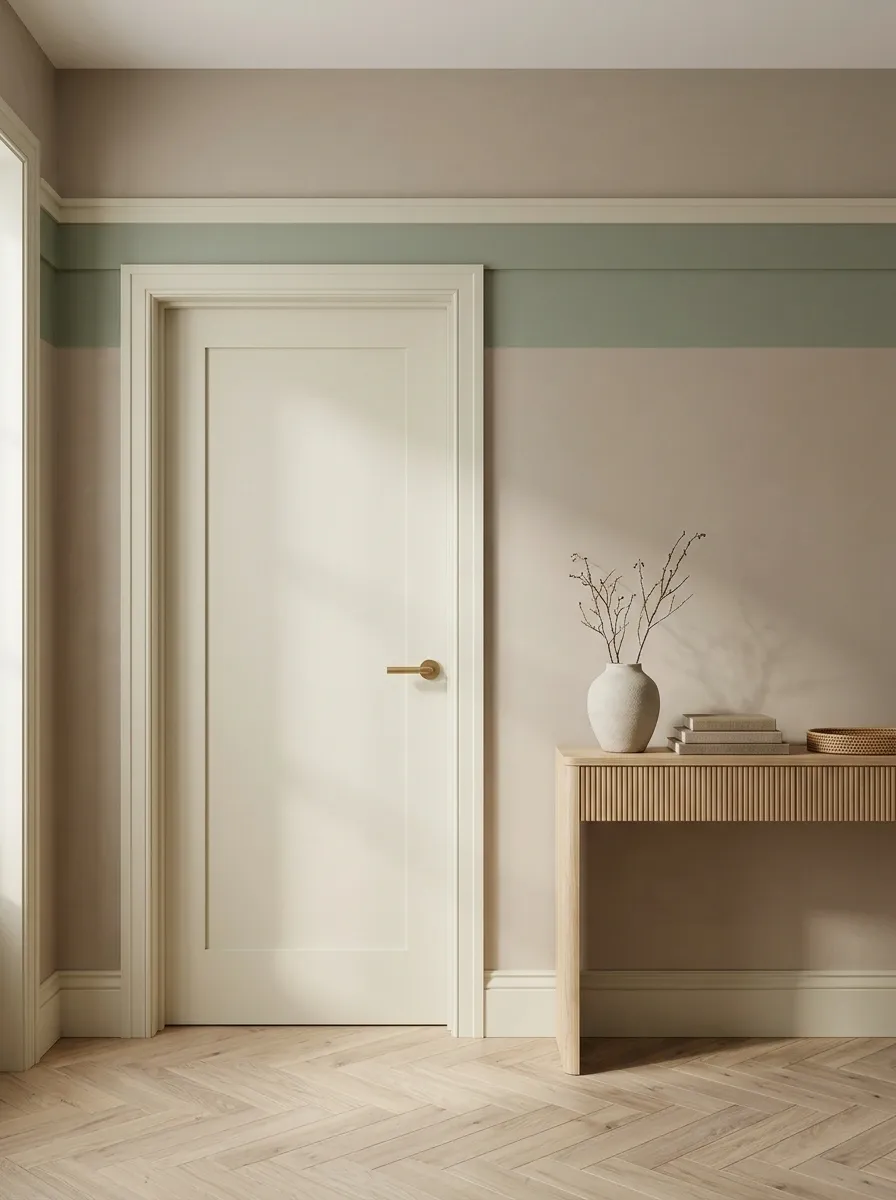
A painted band can connect the door to a larger room palette without adding physical objects.
Set the height and stopping points around the architecture. A broad, confident area usually reads more clearly than an arbitrary small rectangle. Keep the color connected to a cabinet, textile, or adjacent room so it has a reason to appear here.
Extend the Frame Color Above the Trim
Carry the door-frame color into a defined painted area above it for a more substantial outline.
Mock up the proportions first. The effect should look intentional rather than as though someone painted beyond the trim by mistake. This can be useful around a plain door in a room with otherwise quiet walls.
Check from both sides of the room: the extended shape needs to work in the full wall composition.
A Thin Accent Line Near the Ceiling
A narrow painted line can give the upper wall structure without filling the doorway strip itself.
Keep it consistent through corners and relate it to the room’s existing trim. This is a subtle option where the space above the door is too shallow for art. Good preparation matters because a fine line makes every wobble surprisingly confident.
| Stronger line | Softer line |
|---|---|
| Clear contrast against the wall | A related deeper tone |
| More graphic effect | More architectural effect |
A Painted Arch Shape Above a Rectangular Door
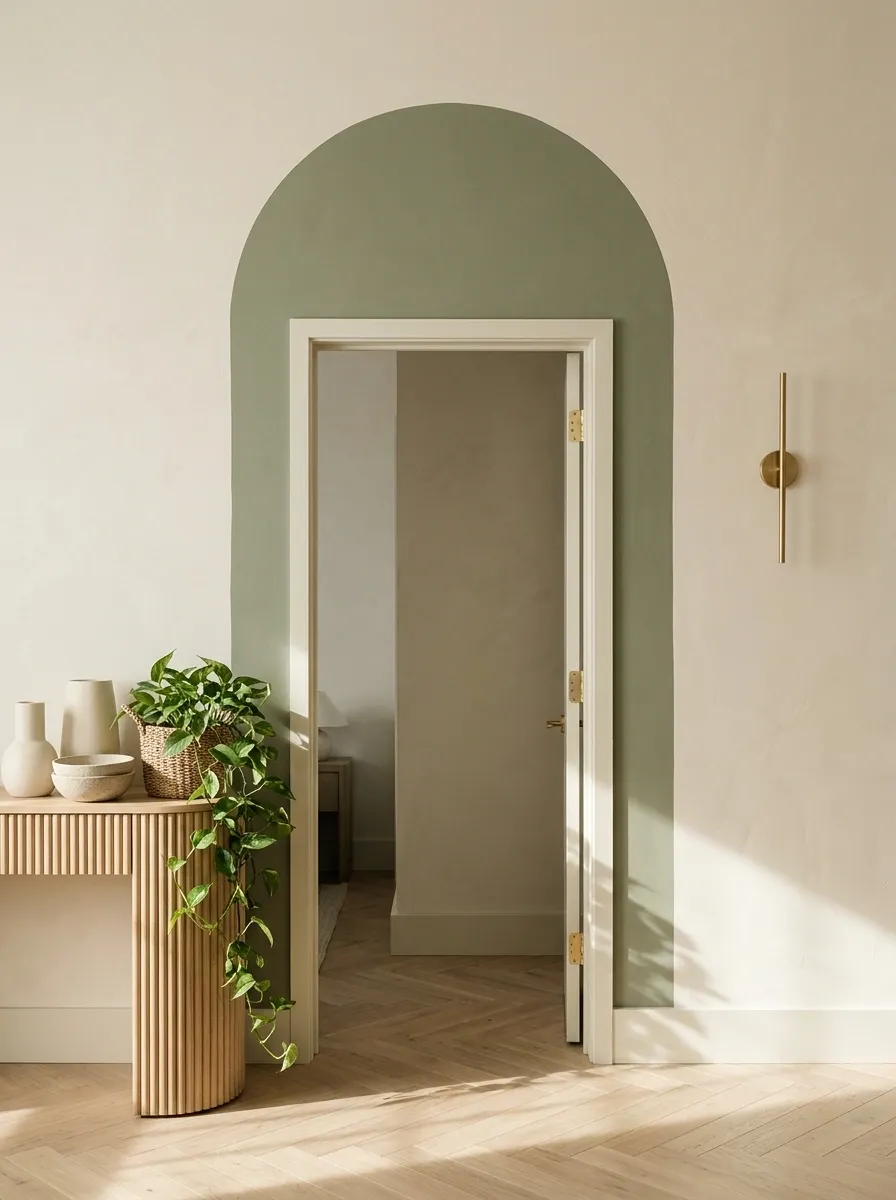
A carefully proportioned painted curve can soften a rectangular opening without changing its construction.
Keep the distinction clear: this is a painted backdrop, not an actual arch. Use a paper mock-up to check the relationship to the frame and ceiling. Leave enough height for the curve to look deliberate rather than compressed.
Small Painted Corner Motifs
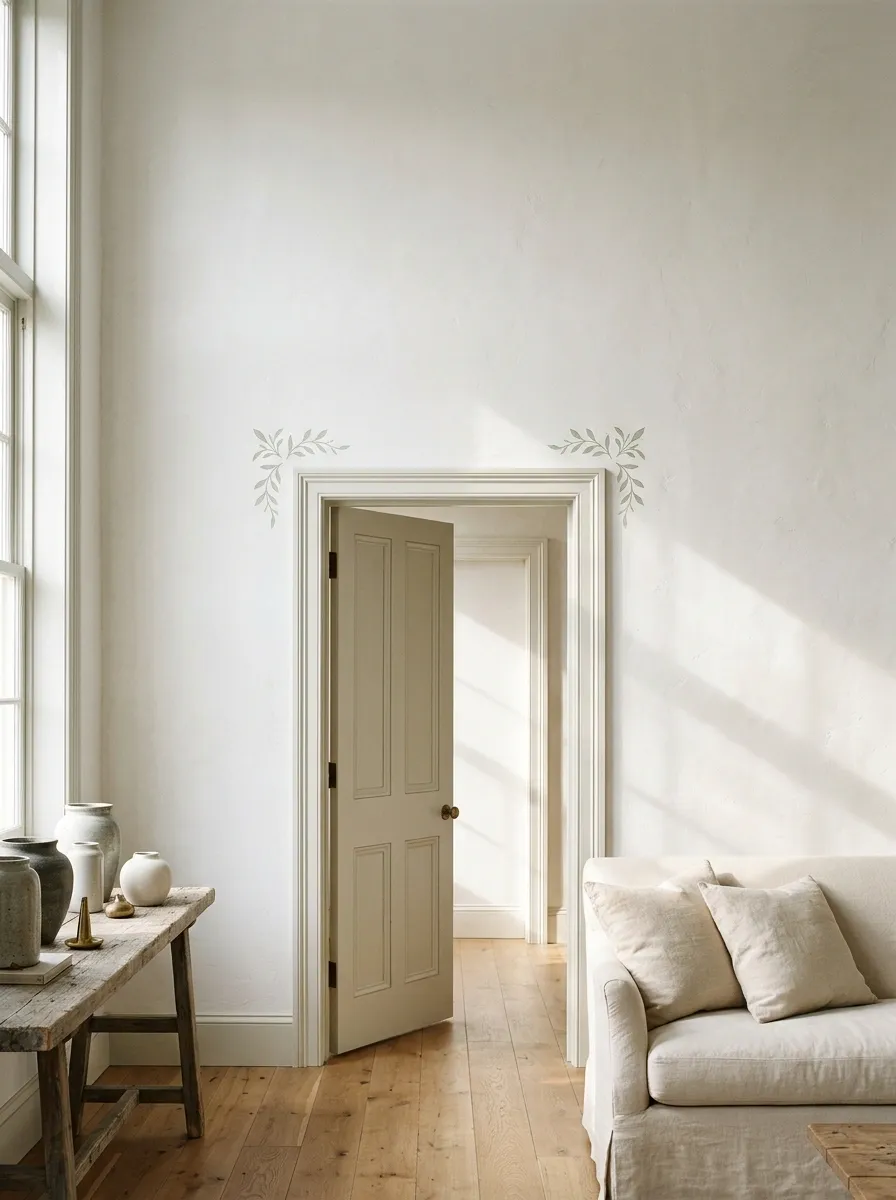
Decorative corner marks can add detail around the upper frame while leaving the center clear.
Use a simple shape or a restrained hand-painted motif that suits the room. Keep the two sides related without making them fussy. This works well when you want something personal but do not have enough wall height for a framed piece.
Try it on paper first. Small motifs are easy to overcomplicate when you are standing on a step ladder with a brush.
Hand-Lettered Words With a Personal Reason
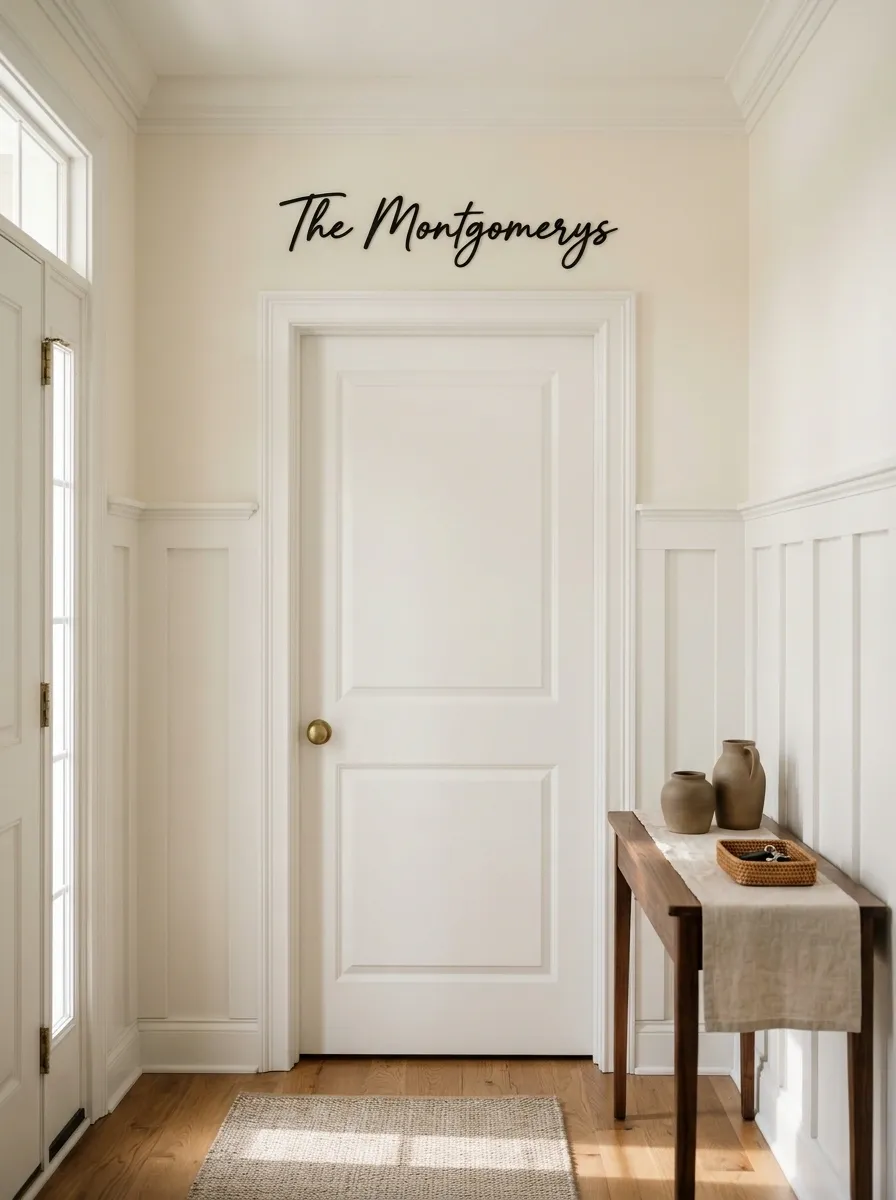
A short phrase, family name, or meaningful word can occupy the strip if it genuinely belongs in the home.
Keep the lettering readable, well-spaced, and appropriate to the room. Avoid choosing a phrase simply because the wall has an empty rectangle. The detail is more convincing when it means something to the household rather than repeating a slogan from a decor aisle.
A Clock With Enough Space Around It
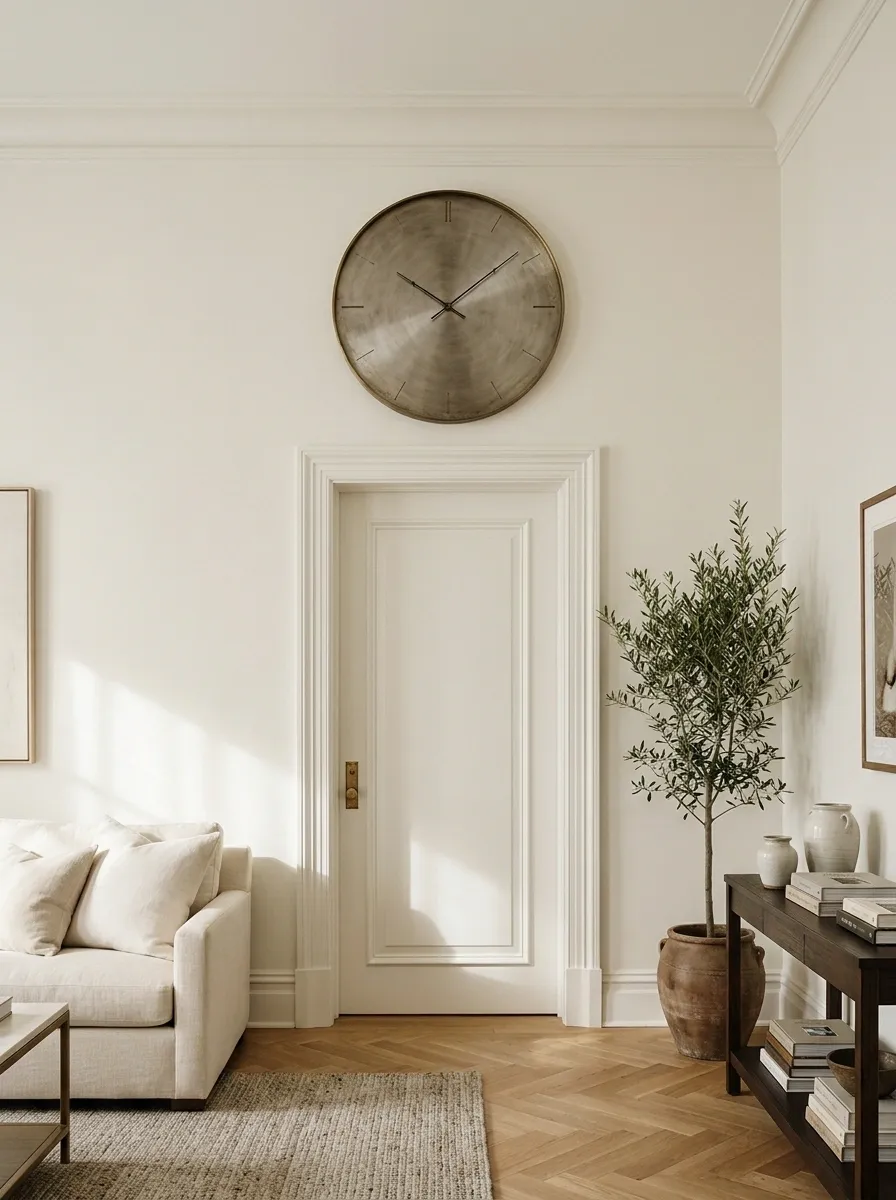
A clock can work over a doorway when its scale and visibility suit the wall.
Choose secure mounting and check that the face can be read from the intended position. Keep enough separation from ceiling and trim that it does not look wedged in. Consider sound as well as appearance if the room is used for sleeping or quiet work.
Avoid the almost-fit: a smaller clock with proper breathing room can look more considered than the largest one the strip allows.
A Carved Timber Panel
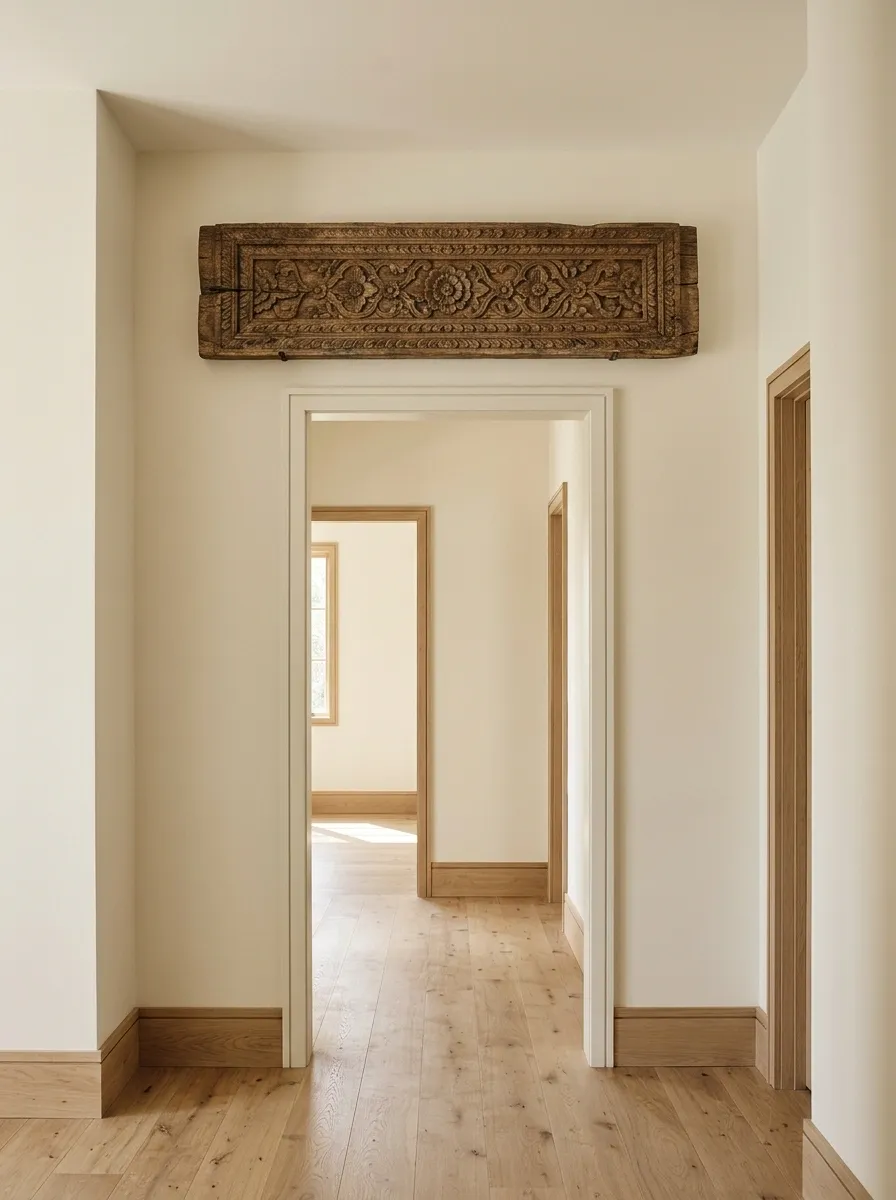
A securely installed timber panel can connect the upper doorway to wood elsewhere in the room.
Choose a design broad enough to read from below and appropriate to the available structure. Keep the carving as the main detail rather than surrounding it with more ornament. An old panel should be assessed for condition and finish before being installed overhead.
A Shallow Fluted Panel
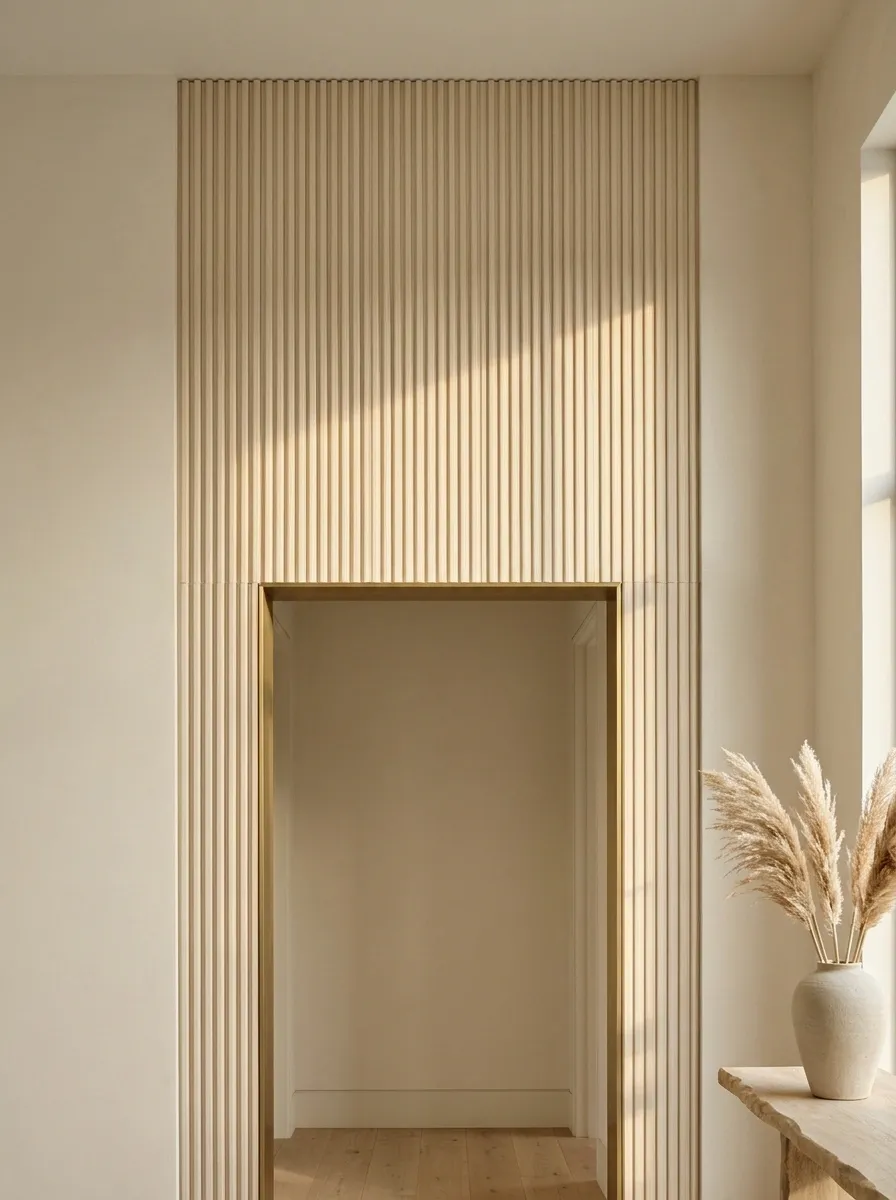
Fluting can add shadow and rhythm without introducing an image.
Specify an appropriate lightweight or professionally installed assembly, with edges finished clearly. Choose spacing that reads at the room’s scale. This suits a contemporary interior where the doorway needs more texture but a picture would feel unrelated.
| Keep related | Keep restrained |
|---|---|
| Panel color and room palette | The amount of extra ornament |
| Flute scale and wall size | Surrounding patterns |
A Tonal Plaster-Relief Detail
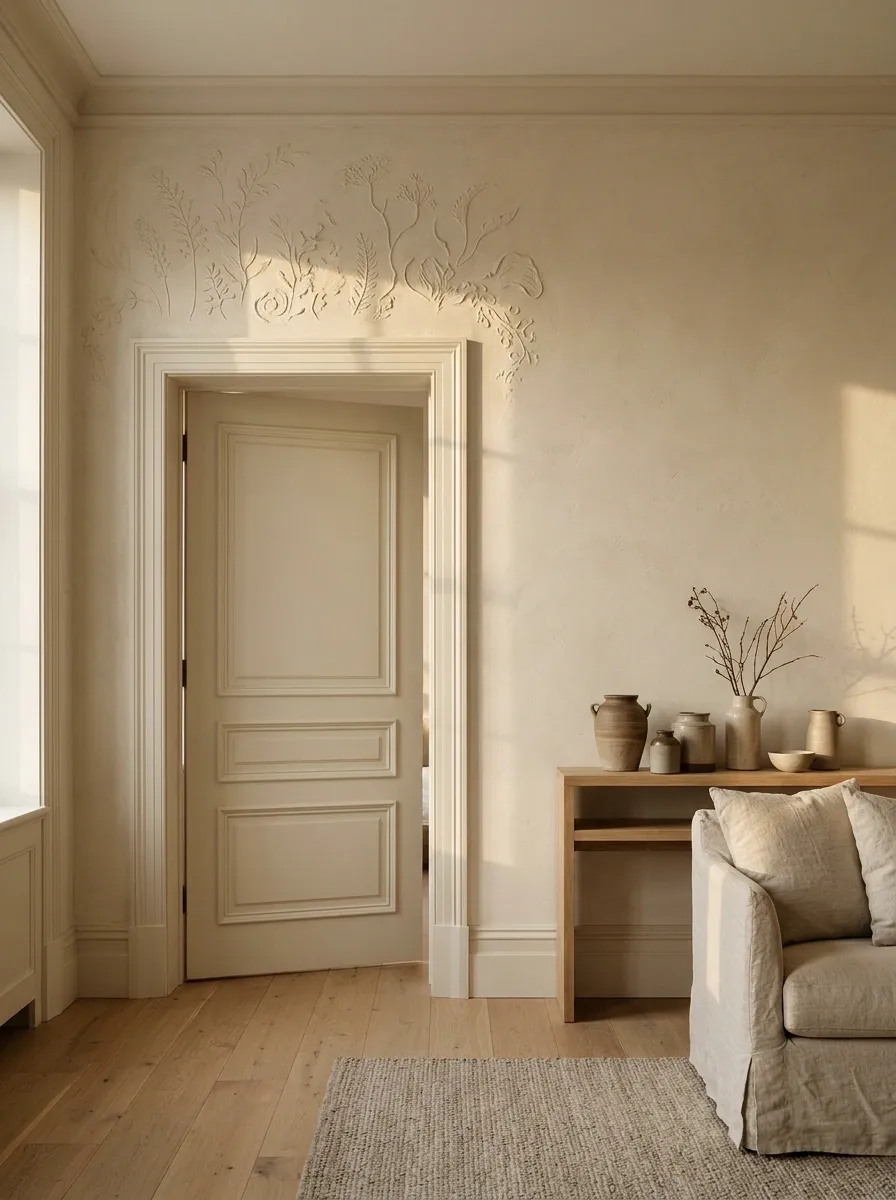
A plaster-style relief can feel integrated with the wall when painted in a related color.
Use materials and fixing appropriate to the location and weight. Keep the form simple enough that light and shadow carry the effect. This can be a quieter alternative to dark artwork above a door, especially in an interior with textured walls or traditional details.
A Professionally Installed Tile Band
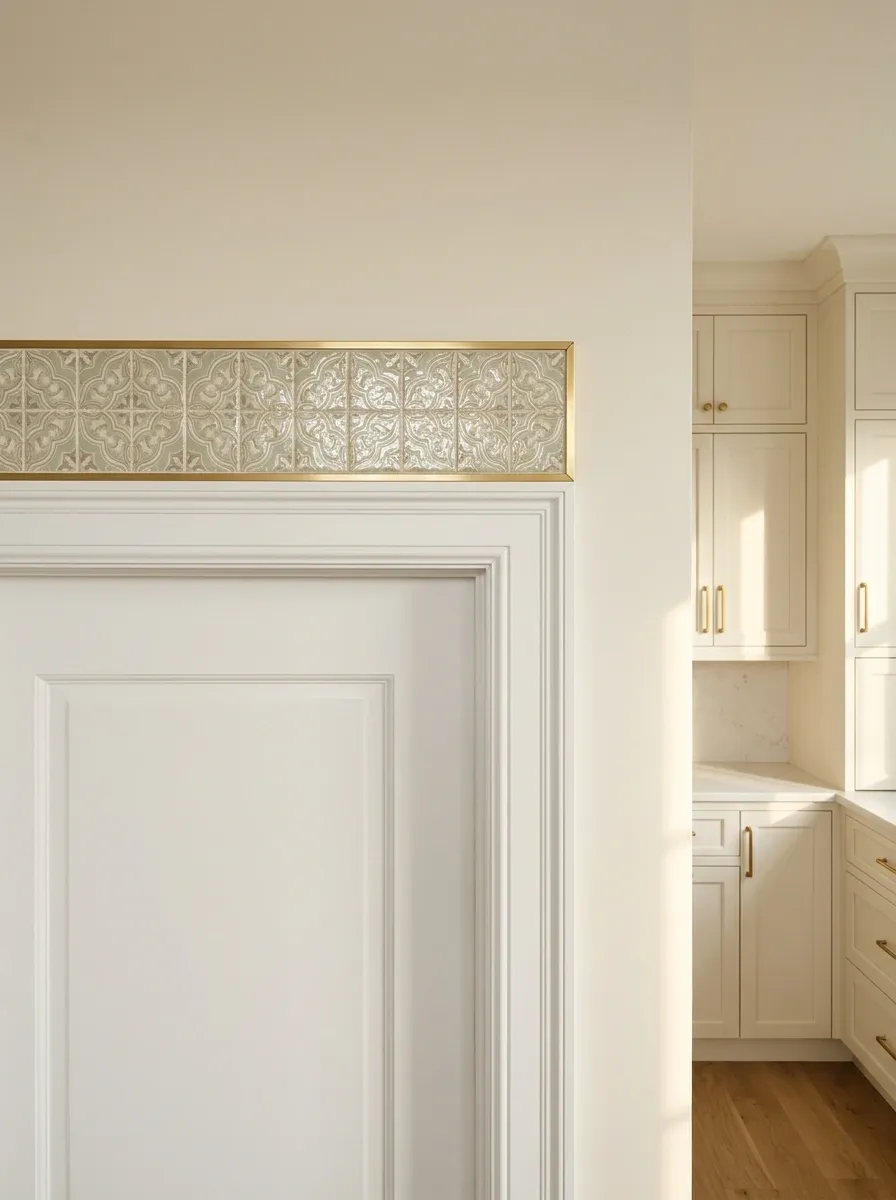
A narrow tile feature may suit a doorway in a kitchen, utility area, or other room already using tile.
Choose appropriate materials, support, and installation rather than adhering heavy pieces overhead as a casual craft project. Relate the pattern to the room without copying every existing surface. The finished edges are part of the design, particularly where tile meets painted trim.
Use sparingly: a small, well-finished tile detail can be more effective than another large patterned surface.
A Genuine Transom Where the Building Allows It
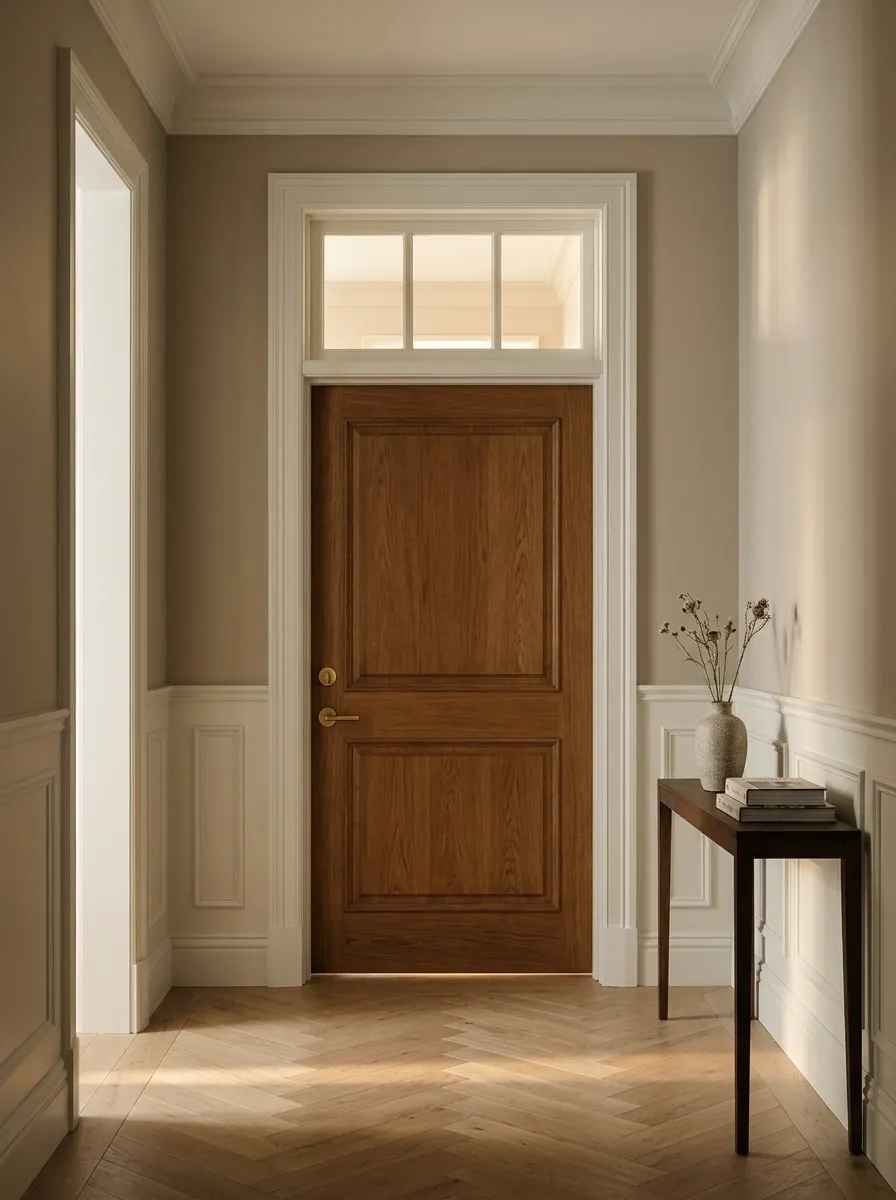
A real transom can change the doorway’s relationship to light and adjoining rooms.
This is a construction project, not a decorative shortcut. Have structure, glazing, privacy, ventilation, and applicable requirements properly assessed. Choose it when the opening serves a useful purpose as well as providing character.
A More Substantial Head Casing
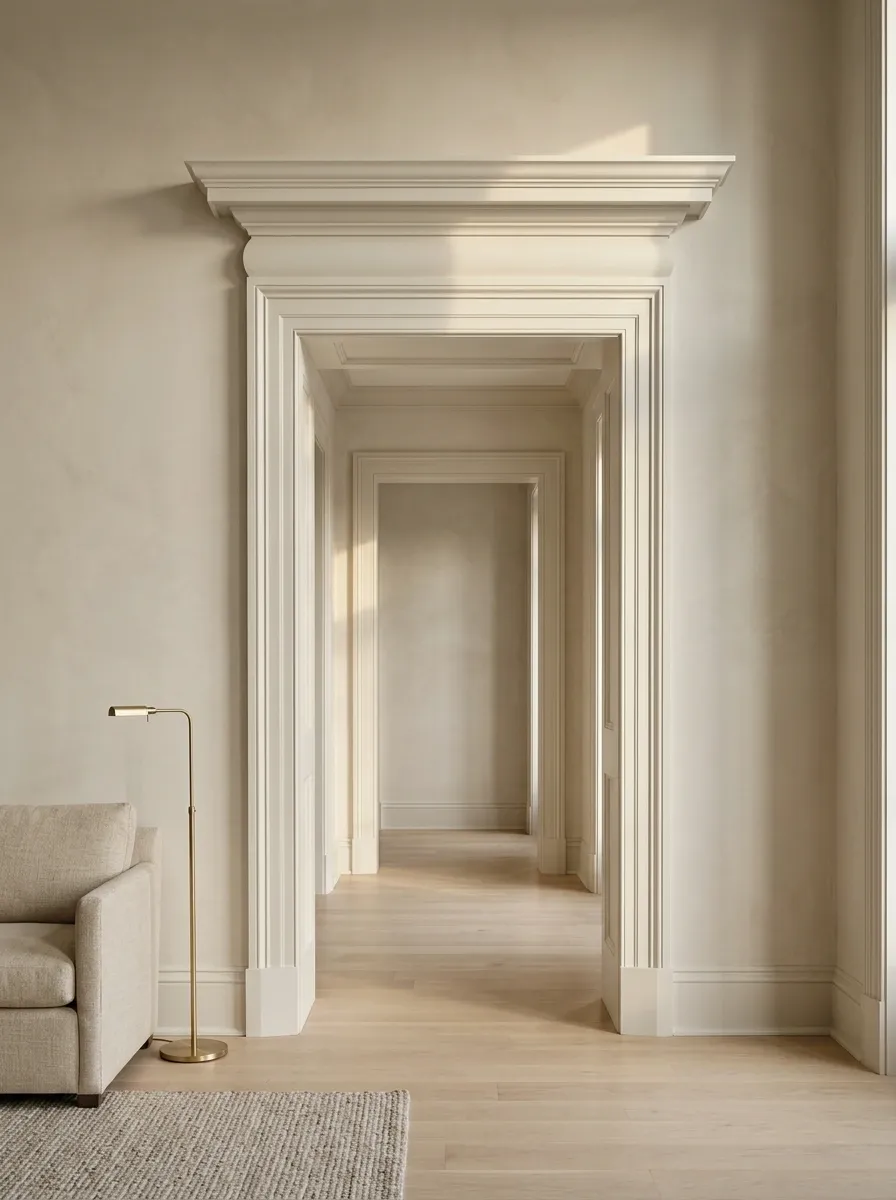
A suitable trim upgrade can give a plain doorway more presence without hanging anything above it.
Design the head casing around the existing opening and the room’s proportions. Keep the side trim related so the assembly feels coherent. A large decorative top attached to very slight side pieces can look less architectural than intended.
Proportion check: view the complete doorway, including its height and surrounding wall.
A Picture Light With One Artwork
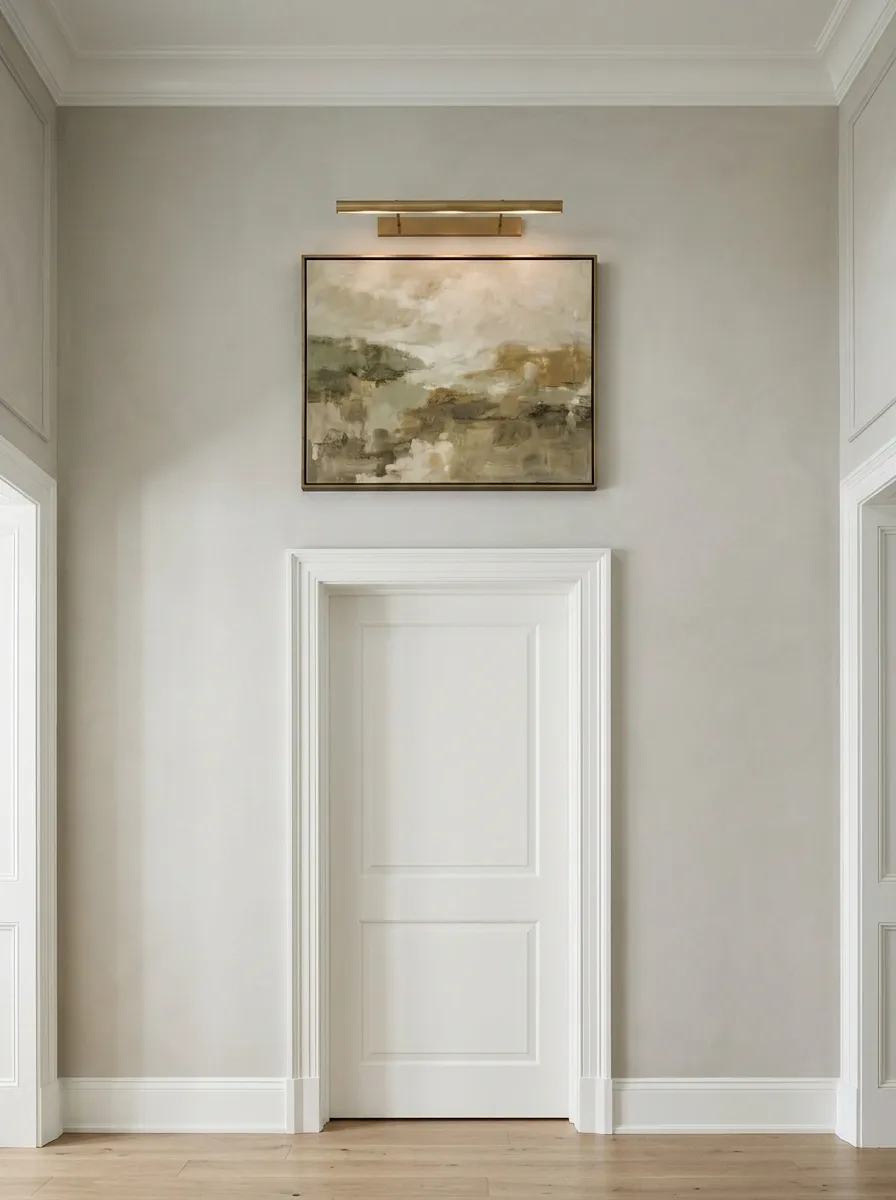
Where a suitable installation is possible, a picture light can make a carefully chosen artwork more visible after dark.
Plan the light, artwork, wiring, and mounting together. Check glare from the approach and avoid excessive light or heat on sensitive work. The fixture should help the art rather than become an awkward extra object squeezed between frame and ceiling.
A Frieze That Connects Neighboring Openings
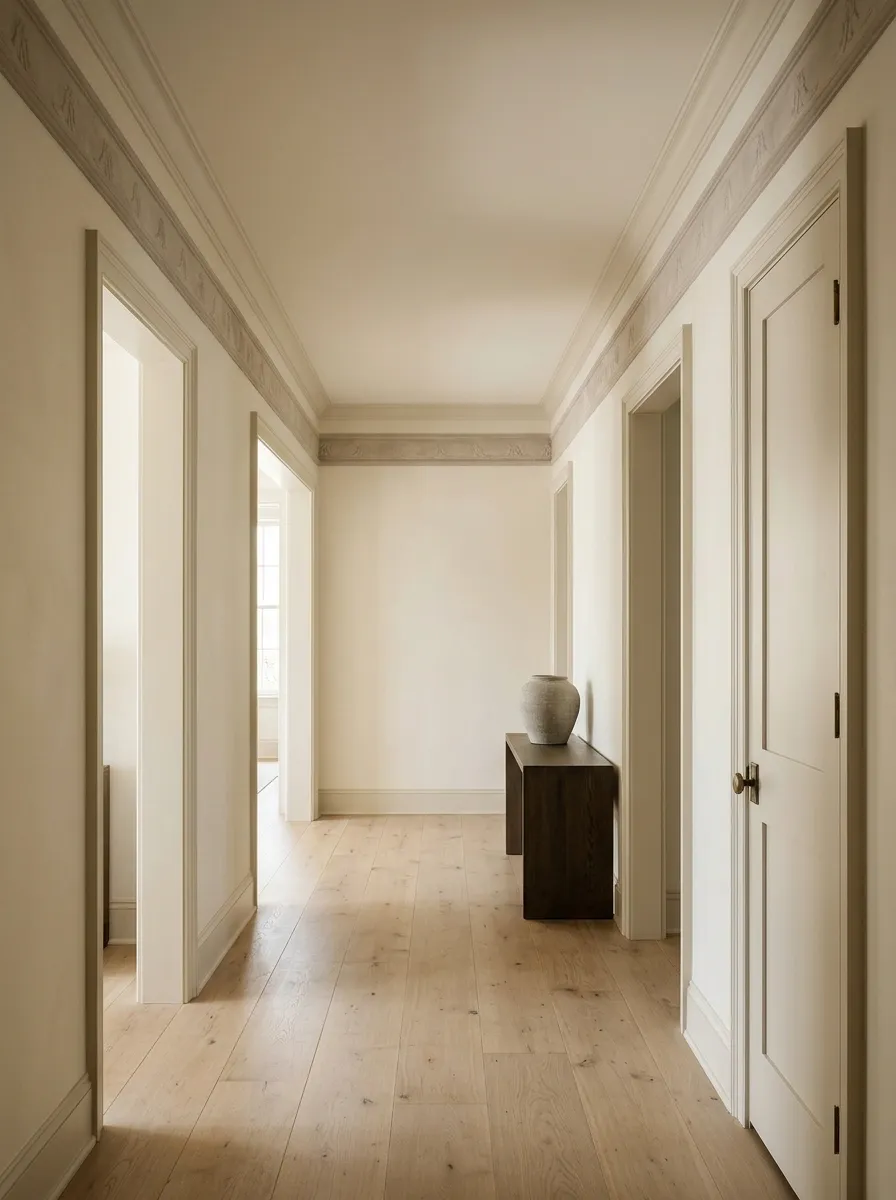
If several doors share a wall, a continuous decorative line or frieze can make them feel related.
Keep the design calm enough to repeat without overwhelming the room. The treatment should connect the architecture rather than make every opening demand separate attention. This can work particularly well where individual pictures would create a cluttered row.
| Repeated element | Useful effect |
|---|---|
| Color band | Connects the upper wall |
| Restrained pattern | Gives the openings a shared rhythm |
A Quiet Wall Color That Lets the Trim Lead
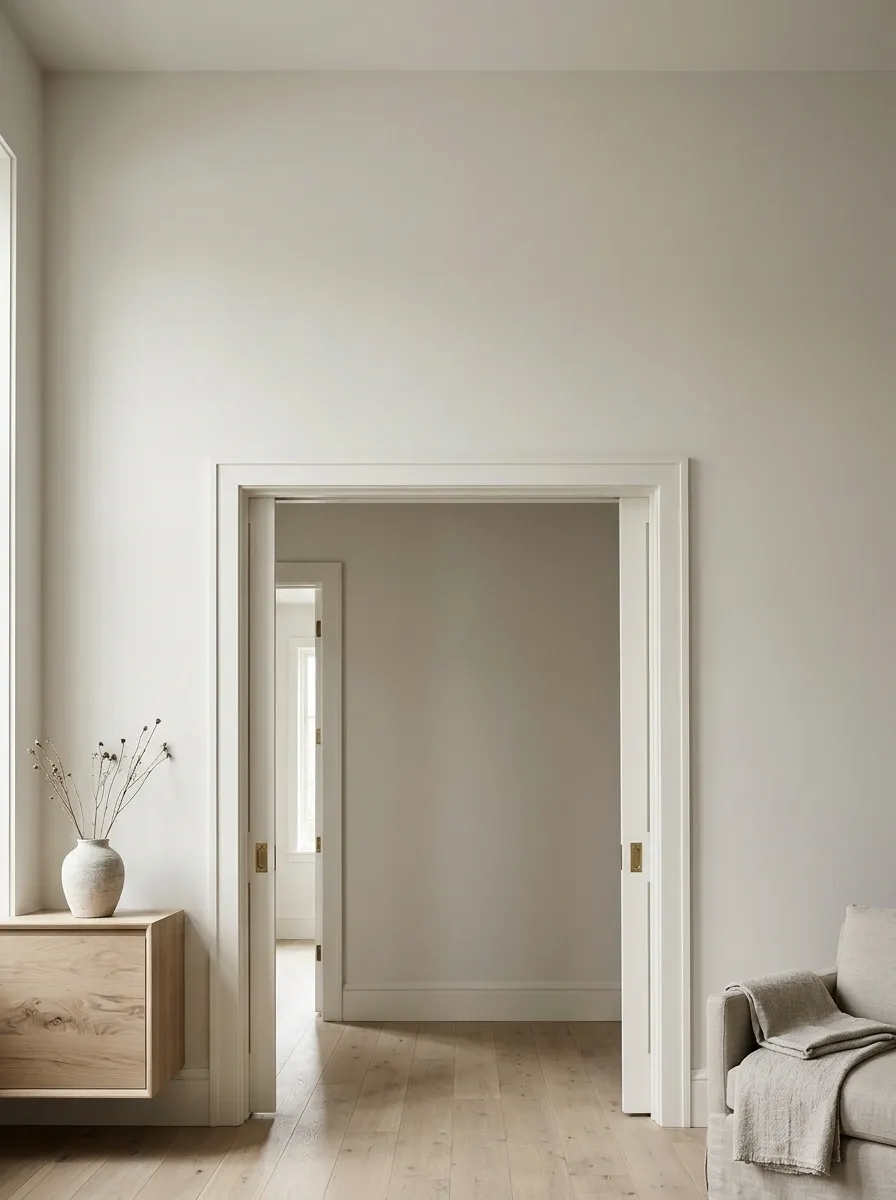
Sometimes the best treatment is a clean, deliberate painted surface with no additional object.
Refresh uneven edges, choose a wall-and-trim relationship you like, and let the doorway’s shape do the work. A narrow strip does not become unfinished because it contains no art. Leaving it calm may help the rest of the room feel more considered.
Look from the ordinary approach before deciding the area needs more. The right detail should belong to the wall, not announce that an empty space has been successfully filled.