
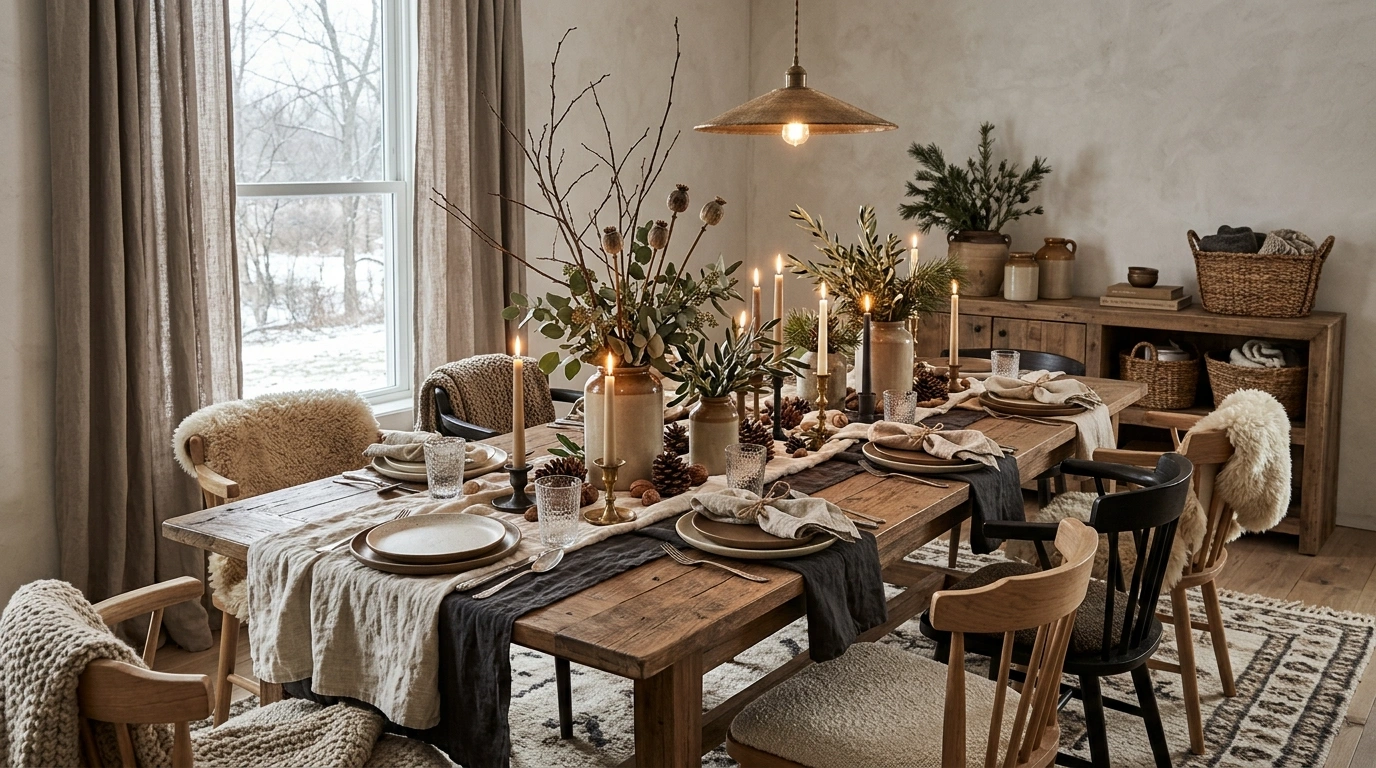
The dining room has a life beyond the centerpiece. People pull out chairs, put down coats, work at the table, and occasionally eat there without a special occasion to justify it.
For winter, make that everyday use more appealing. Bring in texture where people touch things, useful light where they sit, and enough clear space that setting the table does not require relocating a decorative forest.
These ideas keep the season separate from holiday decorating. Choose a few that suit the room rather than adding every winter material at once.
Winter Dining Room Ideas
Textured Seat Pads on Simple Chairs
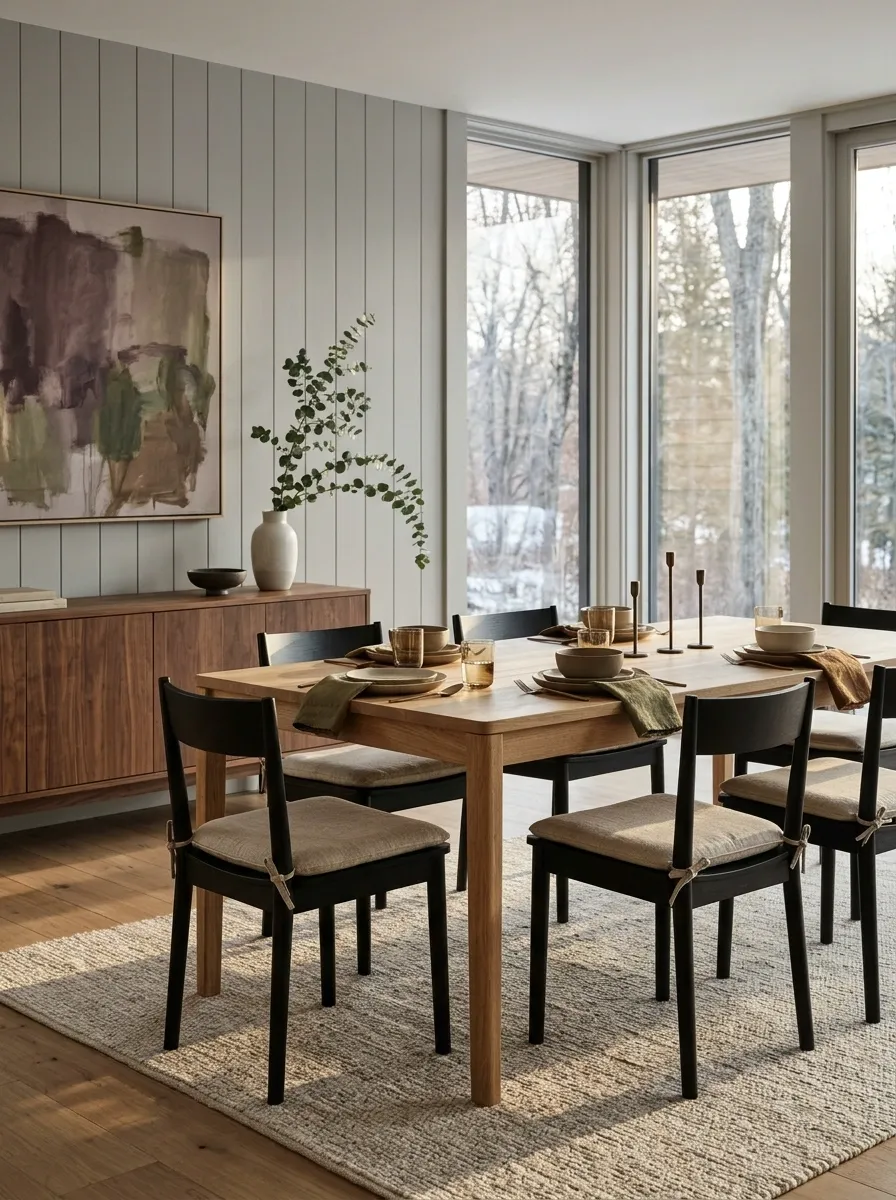
A suitable seat pad can soften the feel of a plain chair without changing the furniture.
Choose a secure fit and a practical fabric that suits the household. Keep the padding comfortable without making the seat unstable or awkwardly high. Oatmeal, tobacco, moss, or muted plum can add a winter note while still looking appropriate after the season ends.
Curtains With More Visual Weight
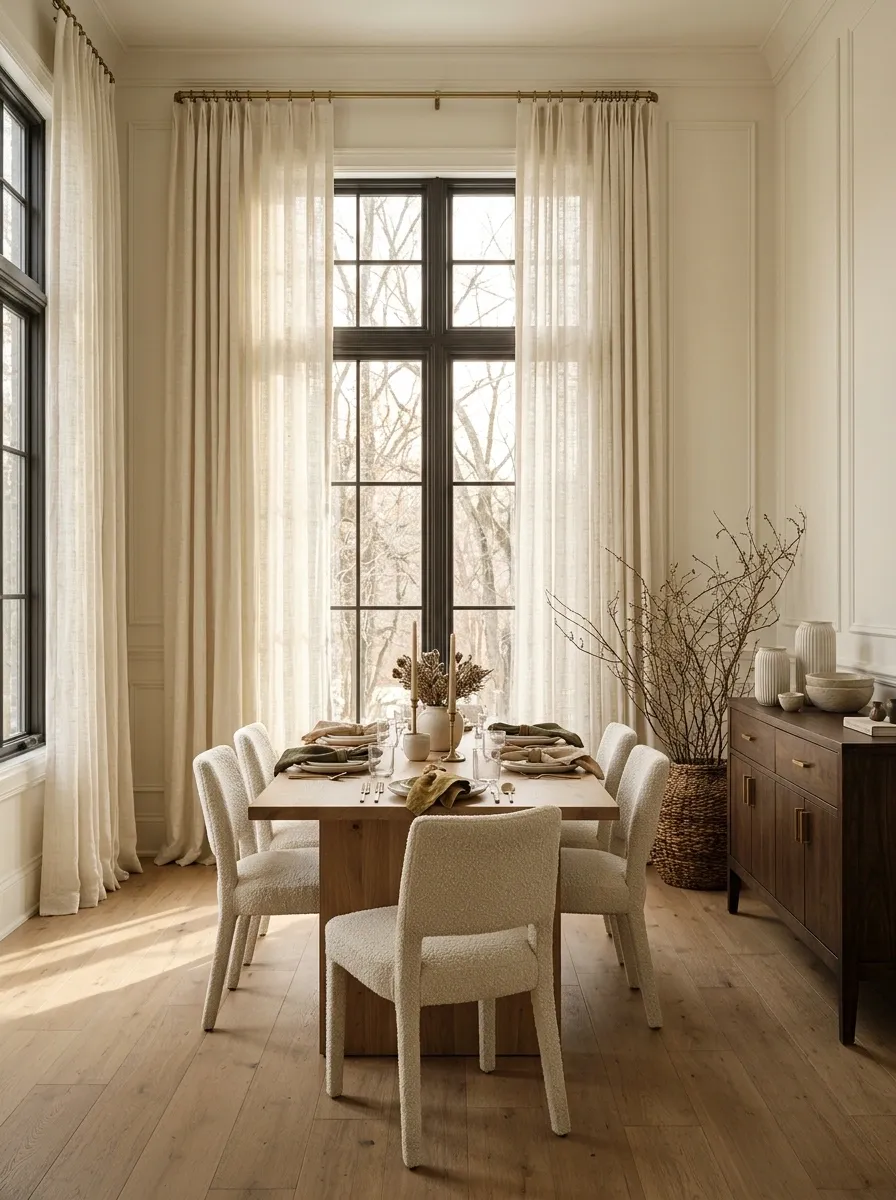
If the room already needs curtains, a fabric with more body can frame the dining area beautifully.
Choose the treatment around light, privacy, and the room’s actual conditions. Keep it clear of heaters, doors, and the route around chairs. The visual warmth can come from texture rather than a dark color; heavier-looking ivory can be just as effective as deep green.
| Softer emphasis | Deeper emphasis |
|---|---|
| Textured ivory or flax | Olive, brown, or plum |
| A visible weave | A richer fabric surface |
Amber Glass at an Otherwise Plain Table
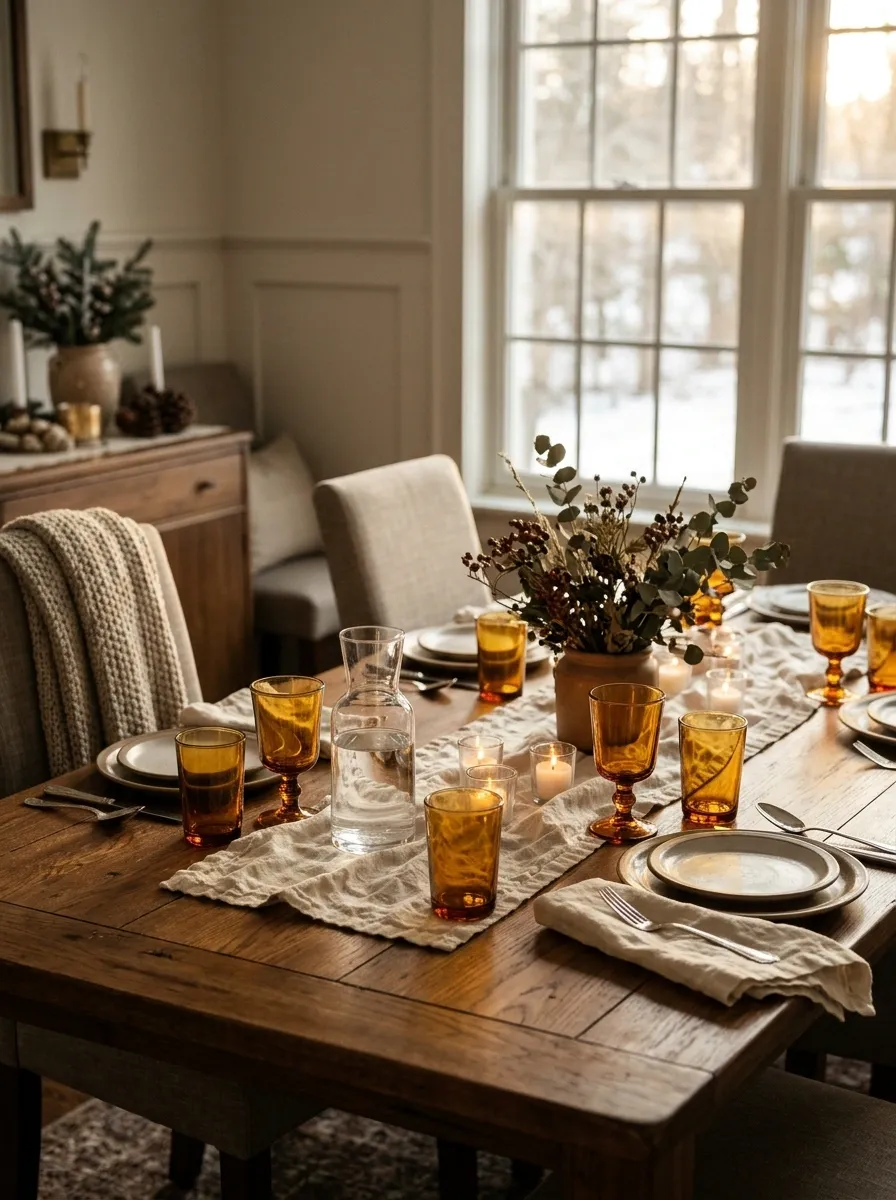
Amber glasses or a simple carafe can introduce warmth without covering the table.
Use items intended for their actual purpose and keep the group modest. The color works especially well beside cream linens and brown wood. You do not need an entire coordinated collection; a few useful pieces can provide the seasonal note.
Keep the tabletop practical: guests should have room for plates and hands, not just an attractive view of glassware.
A Relaxed Tablecloth With Visible Texture
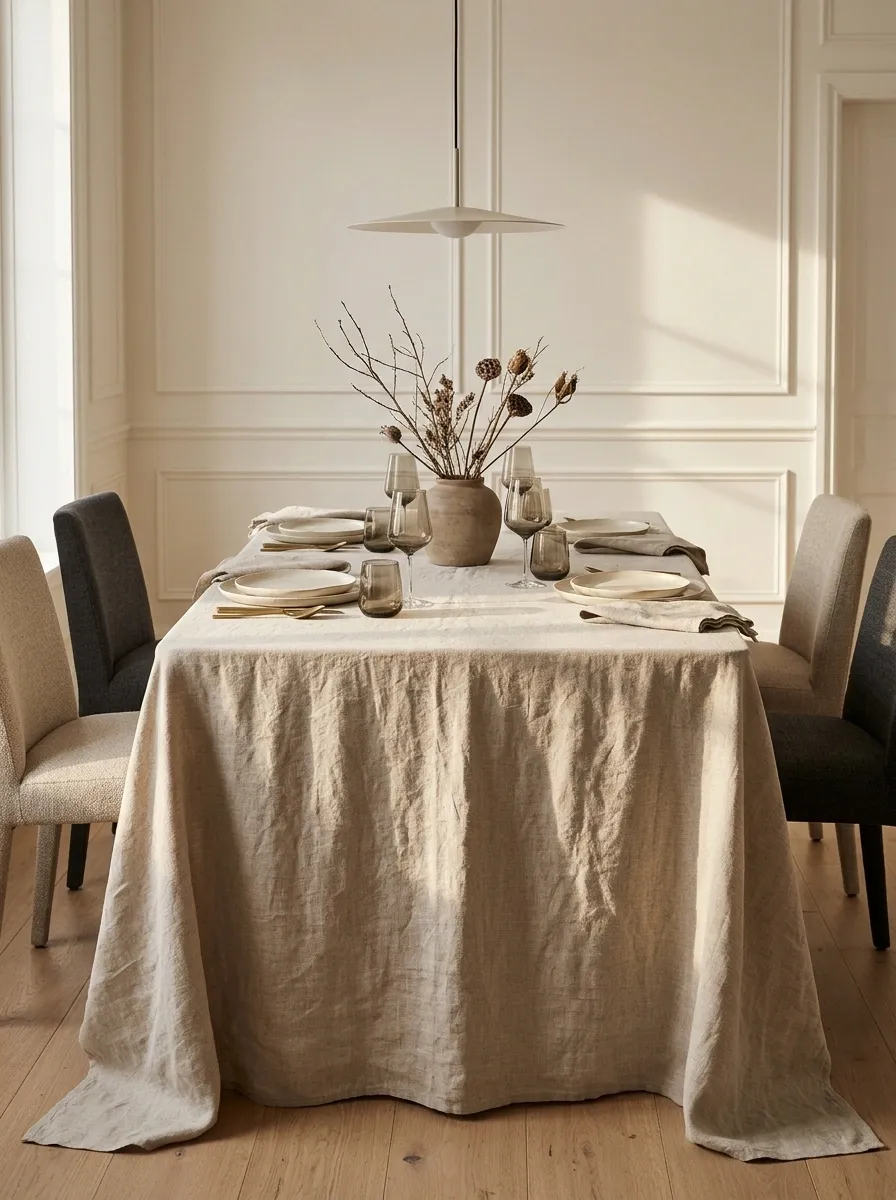
A plain tablecloth can change the room’s mood more than several small ornaments.
Choose a washable fabric and a drop that does not interfere with seating or trail into the route. Let the texture show rather than covering it with another patterned layer. A softly creased linen appearance can feel inviting without turning dinner preparation into a pressing service.
A Broad Runner With Quiet Edges
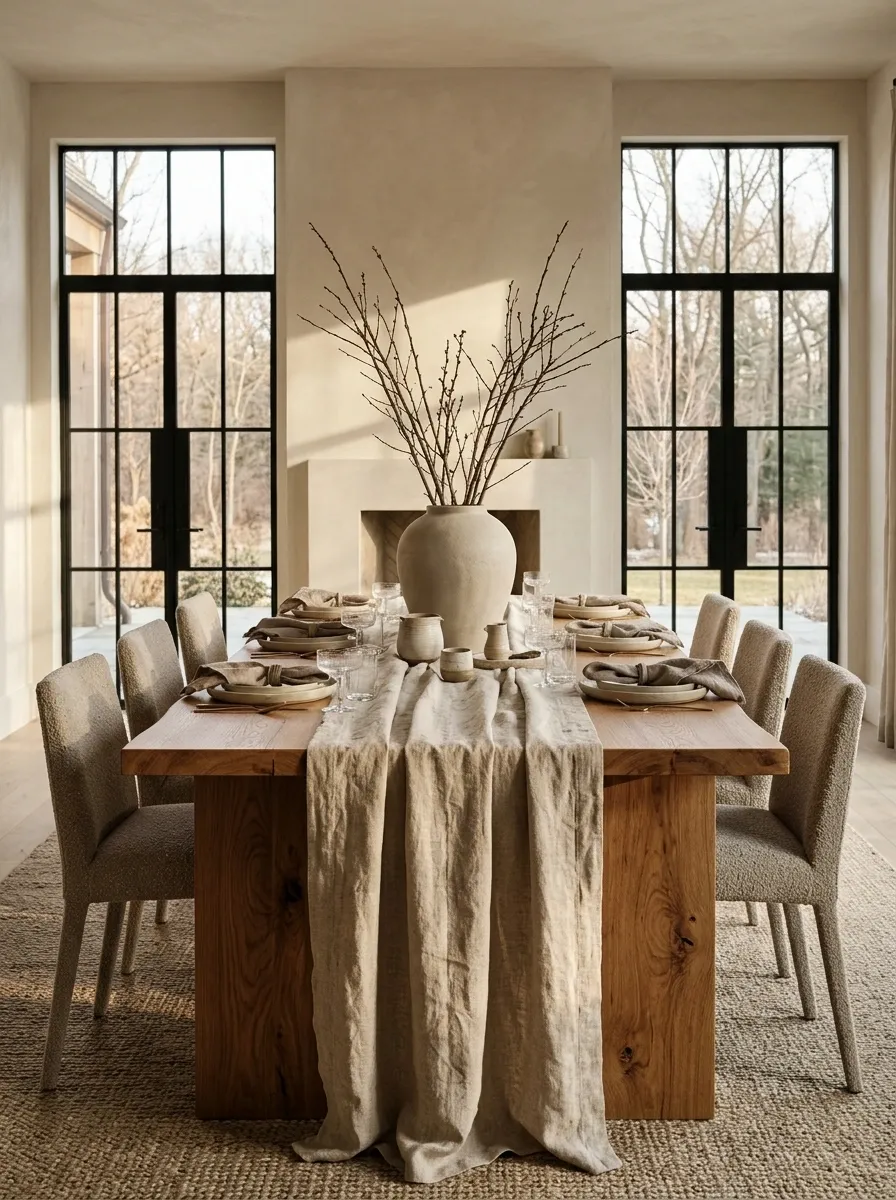
A generous runner can connect the center of the table while leaving the timber visible at the sides.
Use a color close to the wood for a subtle effect or a deeper tone for more definition. Keep the ends manageable around seating. The runner should organize the arrangement, not become a narrow strip buried beneath a line of unrelated objects.
Try: flax on oak, muted green on dark wood, or warm gray beside pale timber.
Bare Branches in a Stable Vase
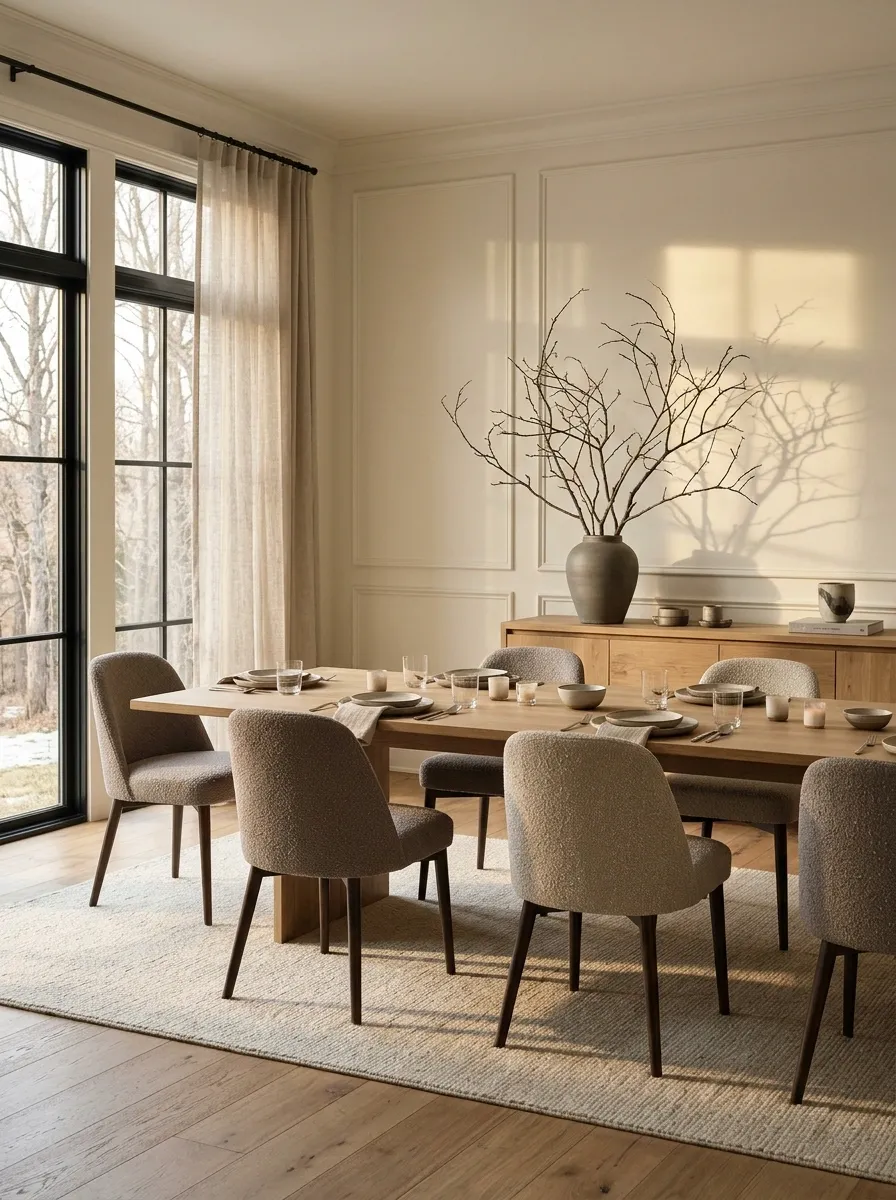
Bare branches can bring winter’s shape indoors without holiday symbols.
Use a stable container and keep the spread clear of lighting and people’s faces. Position taller arrangements on a sideboard rather than directly between diners. Choose branches suitable for indoor use and your household, then let the silhouette remain spare.
A Bowl of Winter Citrus
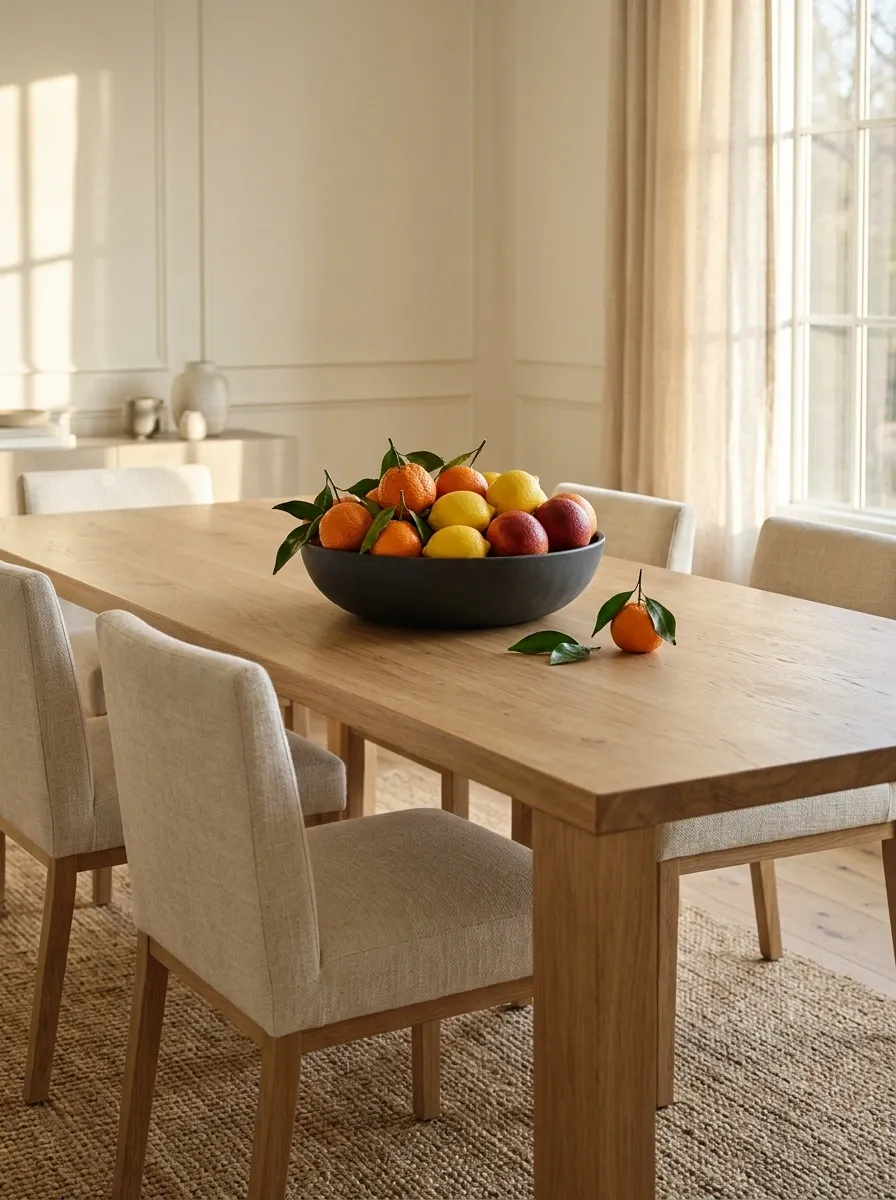
A broad bowl of seasonal citrus can add color and an everyday function.
Keep the arrangement low and inspect the fruit rather than leaving it as permanent decor. Choose a bowl that suits the room’s scale. The effect works well when the rest of the table is simple; the fruit provides enough variation without an additional ornamental collection.
| The bowl supplies | The table retains |
|---|---|
| Color and a low focal point | Clear serving space |
| A useful everyday object | Comfortable sightlines |
One Large Matte Ceramic Vessel
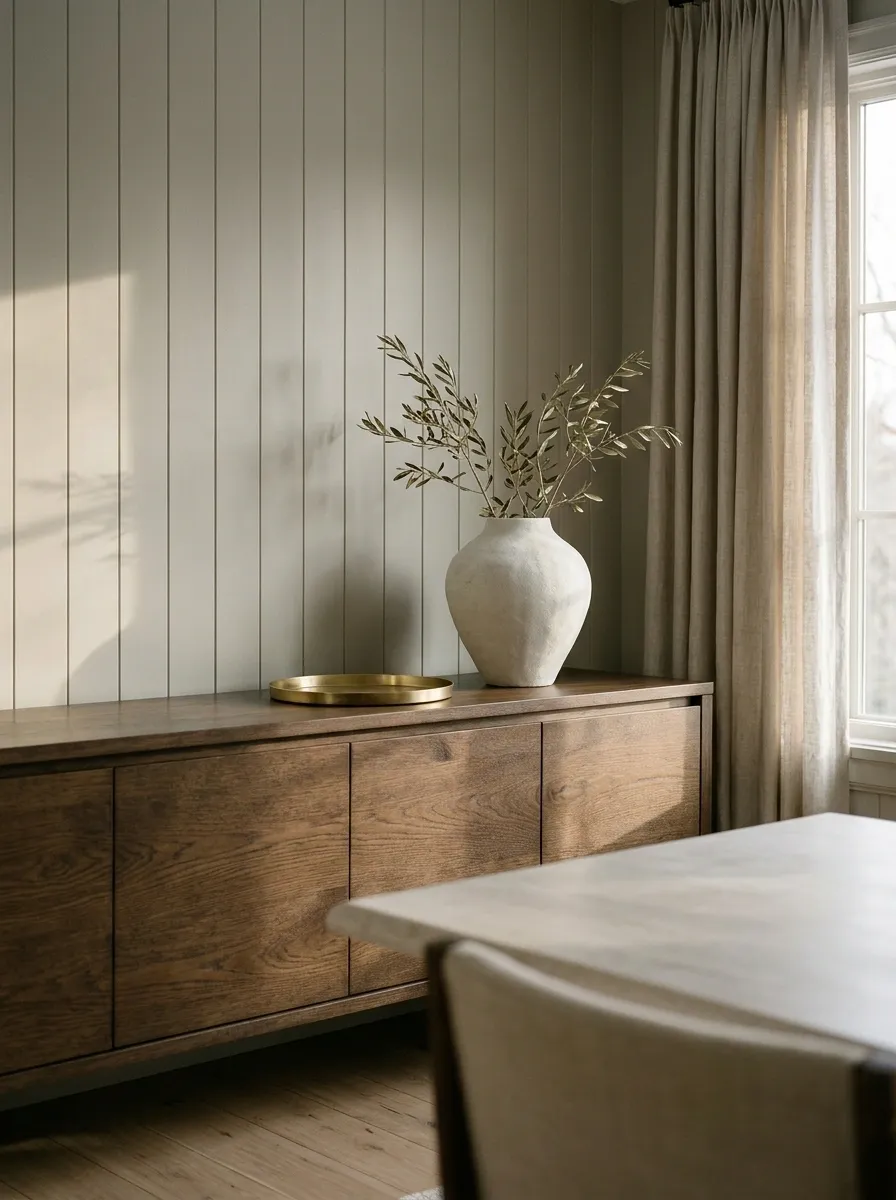
A substantial ceramic shape can make a sideboard feel finished even when it is empty.
Choose a muted finish related to the room—chalk, clay, tobacco, or olive. Leave space around it so the form reads clearly. This can be more effective than replacing a holiday display with an equally crowded arrangement in slightly less festive colors.
Moss Green and Brown in the Textiles
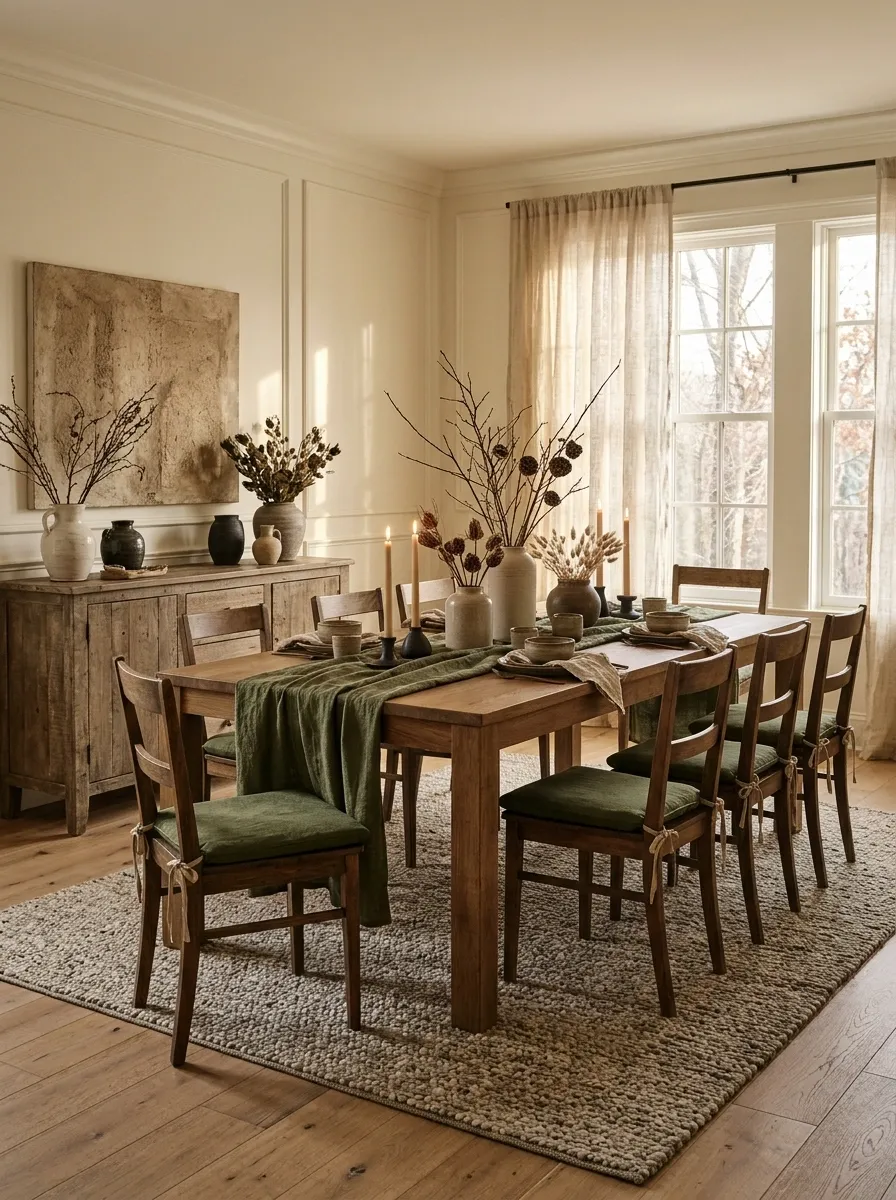
Moss and brown can make a dining room feel grounded without a major change to the walls.
Use the colors in seat pads, a runner, or curtains, choosing one larger emphasis rather than matching every textile. Existing wooden furniture already contributes to the brown side of the palette. Let it count before buying another brown object.
Use the furniture as part of the palette, not as a background that must be covered.
Plum With Soft Gray
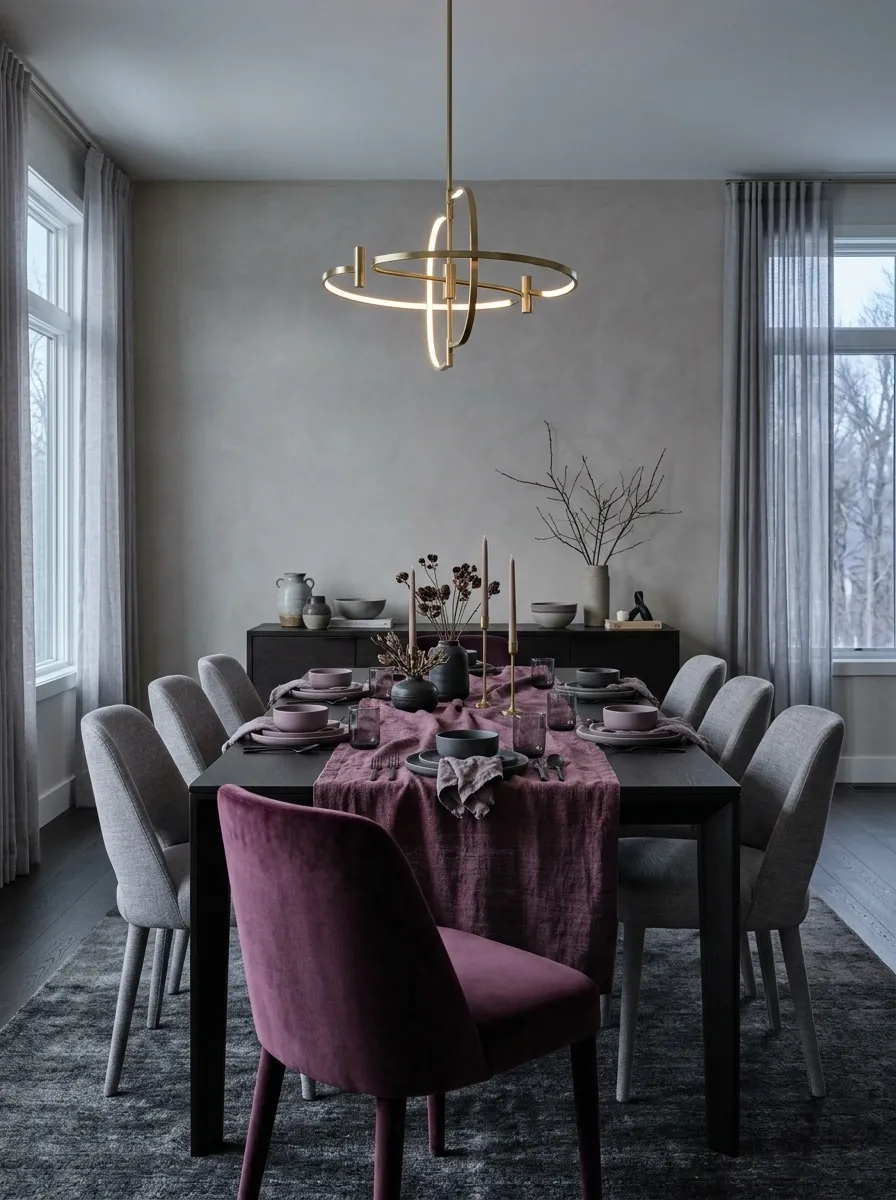
Plum and gray offer a winter palette that feels rich without relying on rustic materials.
Try plum fabric against gray upholstery or a gray wall, keeping the plum concentrated in a generous area. A plain runner or a single upholstered seat can be enough. Keep the gray softly warm if the room already feels cool.
A Dining Light With a Comfortable Evening Setting
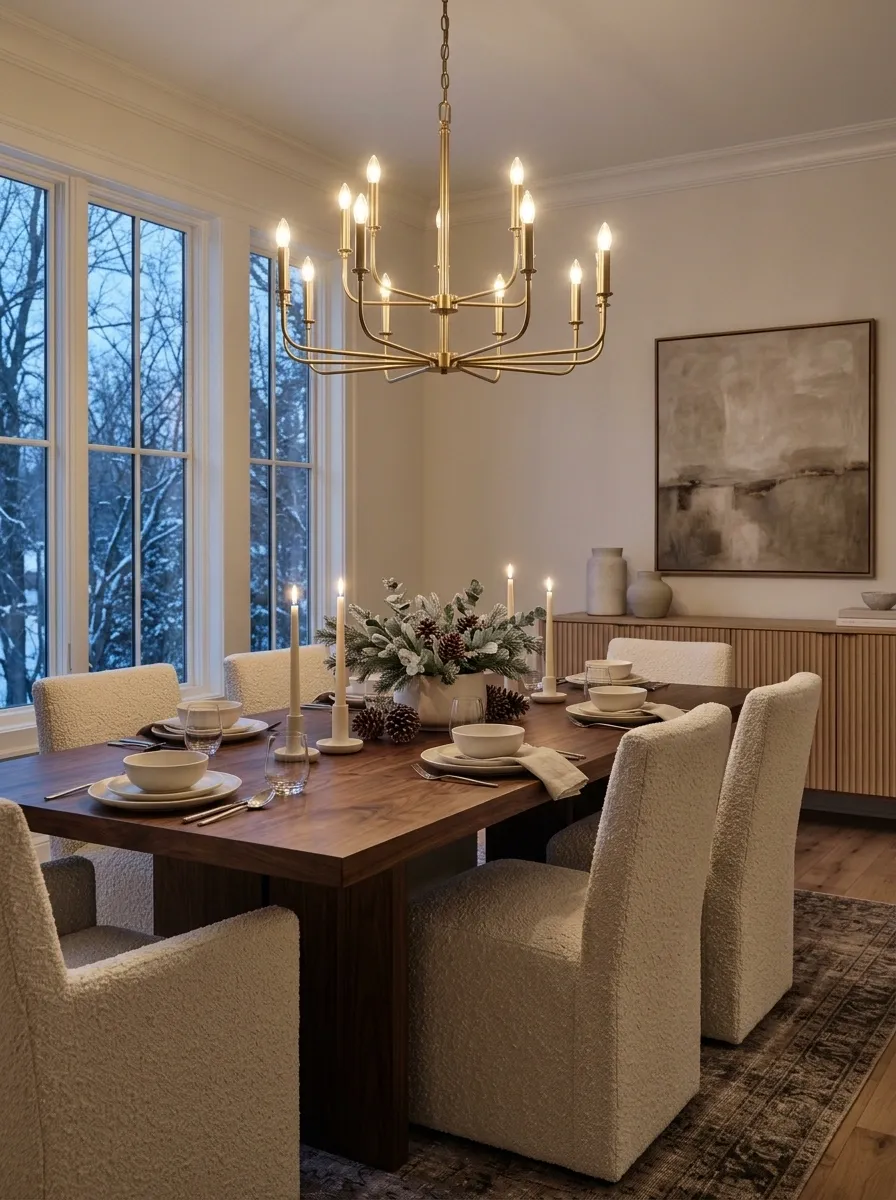
If the existing lighting supports compatible dimming, use it to give the table a gentler evening mode.
Keep enough light for eating and movement. Check the source from seated positions so nobody looks directly into glare. Where changes require installation, have them done appropriately. Atmosphere should not depend on making the food difficult to identify.
Test with people seated: the light can feel very different from the chair than from the doorway.
Light on the Sideboard as Well as the Table
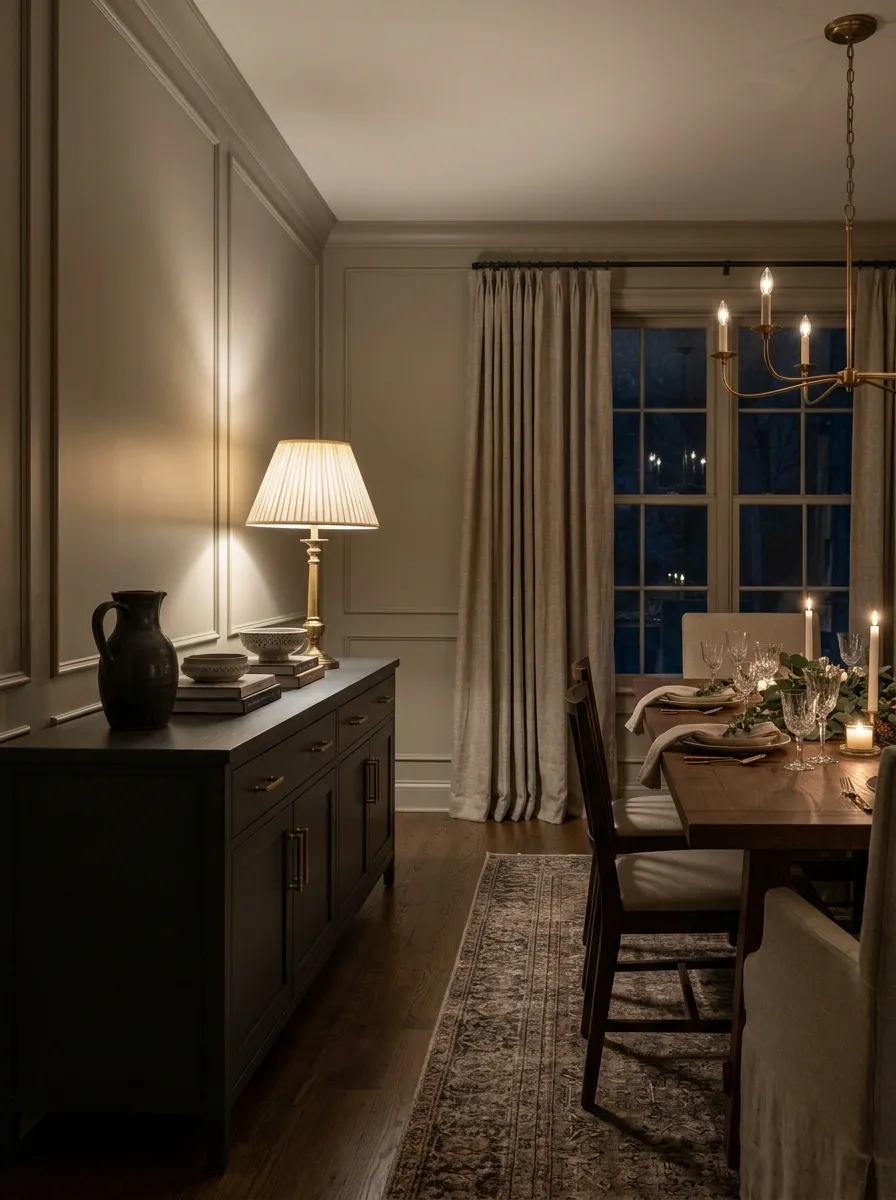
A suitable lamp or properly installed wall light can give the room a second pool of light.
Choose the position around serving space, cords, and the fixture’s instructions. A softly lit sideboard can make the room feel more complete after dark. Keep the surface useful rather than arranging the light in the exact spot needed for dishes.
A Quietly Lit Artwork
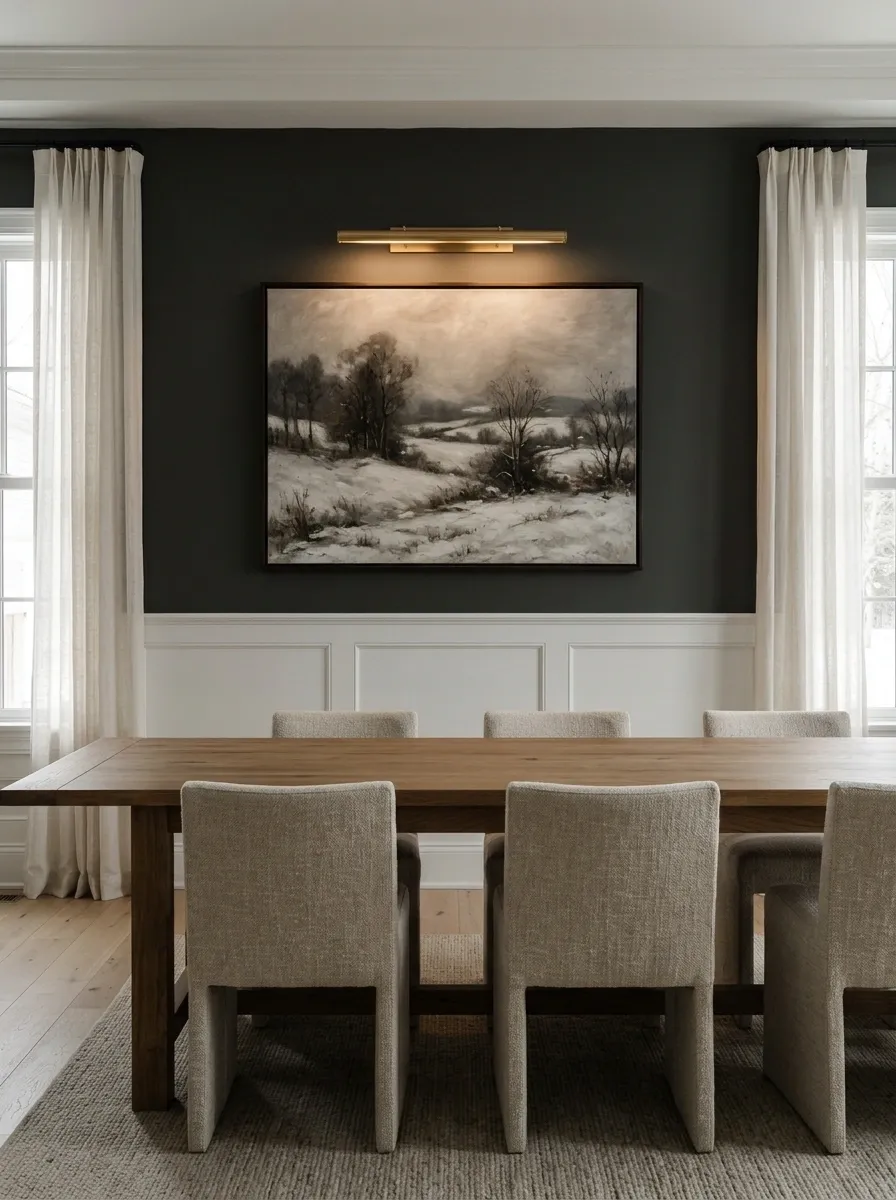
Appropriate art lighting can bring attention to one wall without adding more objects to the table.
Plan glare, exposure, heat, and installation around the artwork and fixture. A winter landscape is optional; an existing piece you enjoy can be enough. The room feels more personal when the seasonal update works with your belongings rather than replacing them with a themed collection.
| Focus the light on | Keep secondary |
|---|---|
| One chosen artwork | Unrelated wall decorations |
| A clear visual destination | Competing bright spots |
Flameless Candlelight in a Low Arrangement
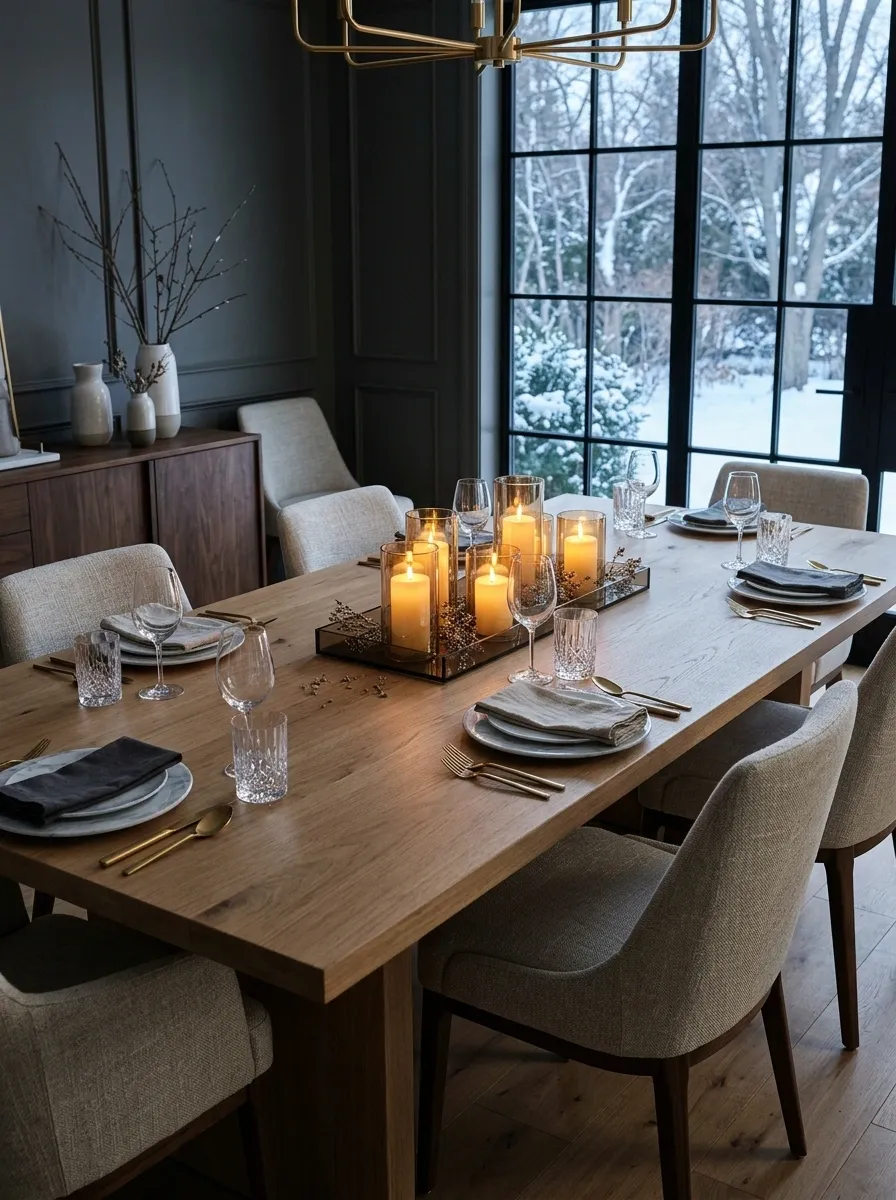
Suitable flameless candles can provide a candlelit effect without an open-flame centerpiece.
Keep the arrangement low, stable, and easy to move. Check the product’s placement and use instructions. Avoid crowding the candles with fabric and filler simply to make the display look seasonal. A restrained group often looks more considered than a tabletop installation with its own geography.
Chair Slipcovers Where They Make Practical Sense
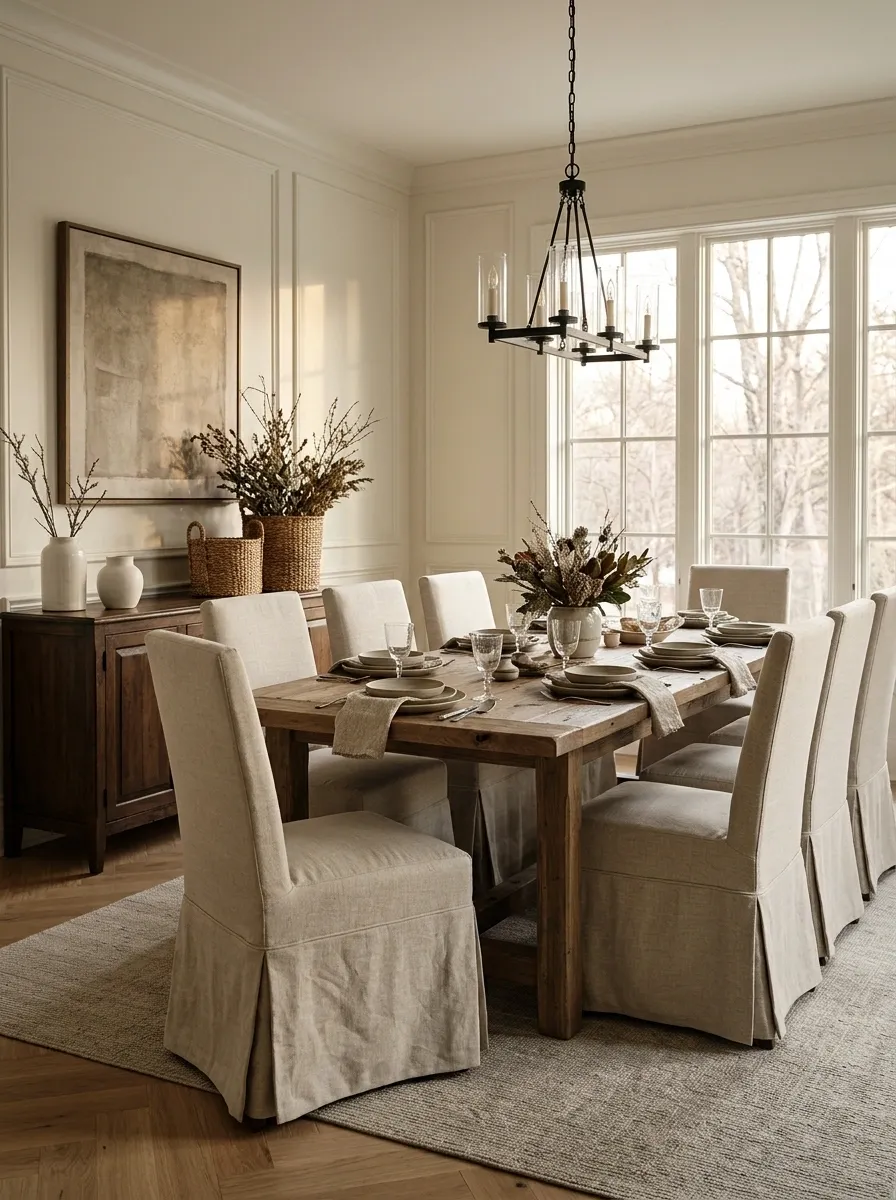
A well-fitted removable cover can soften suitable chairs and introduce a different fabric tone.
Check that the cover stays secure and does not interfere with the chair or trail on the floor. Follow fabric care guidance. This is useful when you want a temporary textile change, not when the underlying chair needs repair.
Choose fit over excess fabric: the chair should still be easy to sit in and move.
A Comfortable Bench Corner
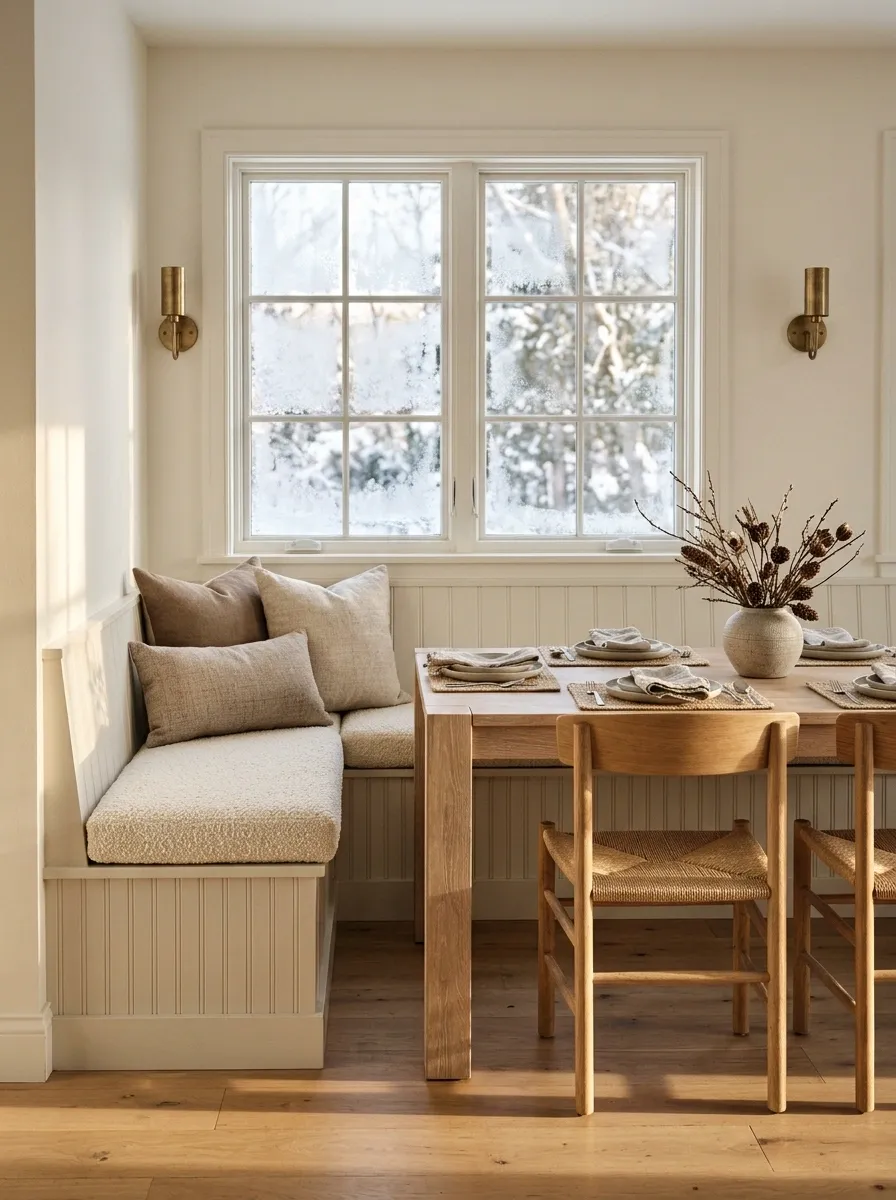
If the dining arrangement includes a suitable bench, add an appropriate cushion where it improves comfort.
Keep it secure and leave usable seating depth. A bench beside a window can feel especially inviting, but keep fabric clear of heat sources and operating hardware. Avoid piling on cushions until guests have nowhere to place their backs.
A Sideboard Set Up for Serving
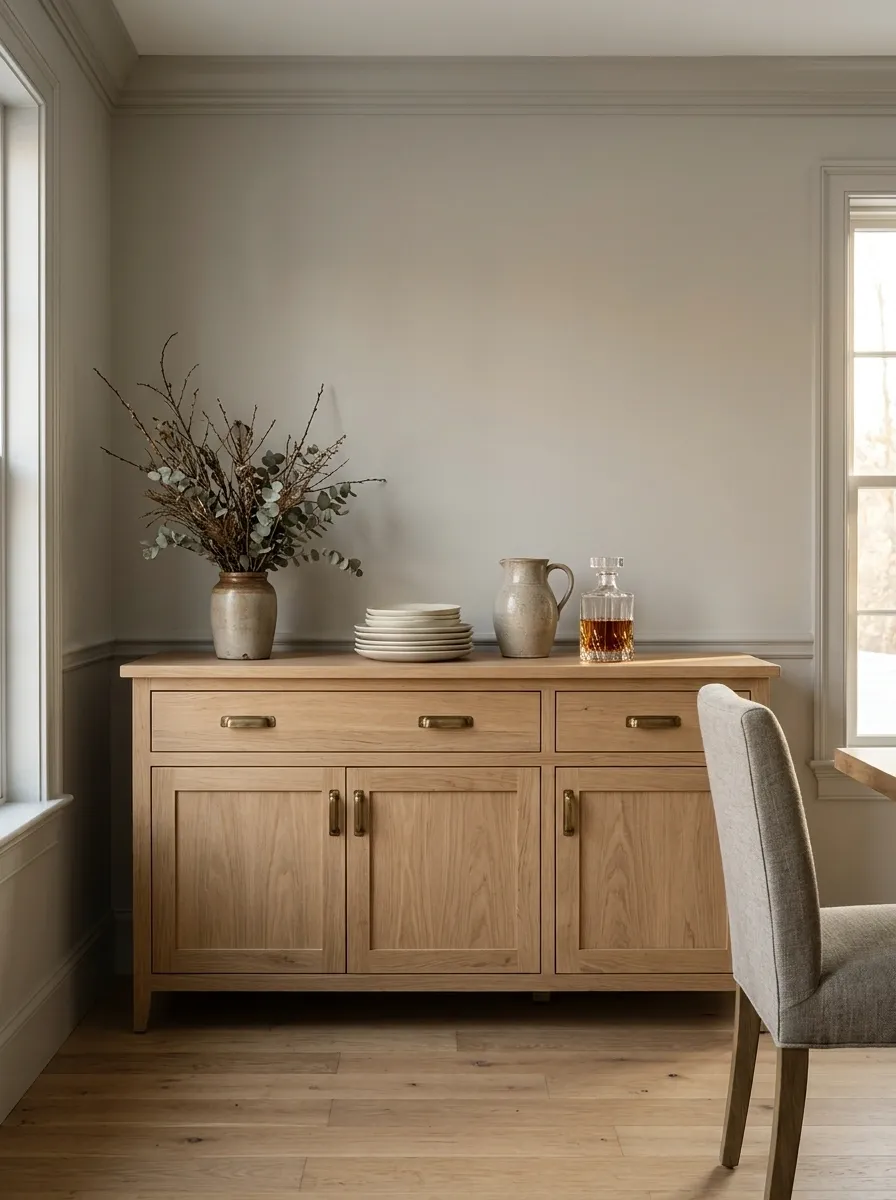
Give the sideboard an actual winter job: holding the dishes or drinks you use during meals.
Clear enough space to set something down safely. Keep decorative objects in one defined area rather than distributing them across every available inch. A room that supports serving feels more welcoming than one that must be partially dismantled before food can arrive.
| Leave ready | Store elsewhere |
|---|---|
| Useful serving surface | Rarely used ornaments |
| Items needed for the meal | Packaging and unrelated paperwork |
A Rug That Works With Pulled-Out Chairs
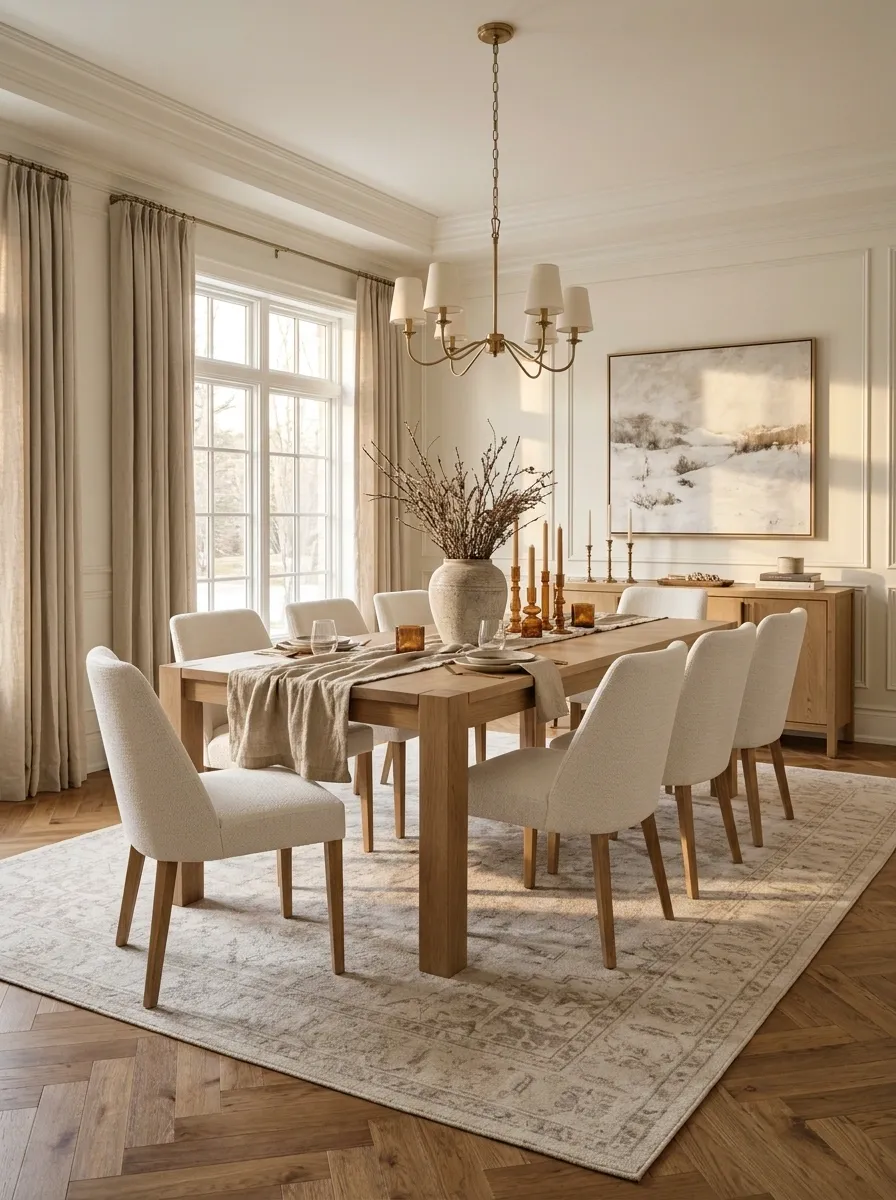
A suitable dining rug can add texture, but its usefulness depends on the chair movement and household care routine.
Check the footprint with chairs pulled back and choose a construction suited to the floor and use. Keep edges stable and transitions manageable. A rug is optional; visible timber or tile can be equally appealing when the room has warmth elsewhere.
A Tonal Artwork With Winter Depth
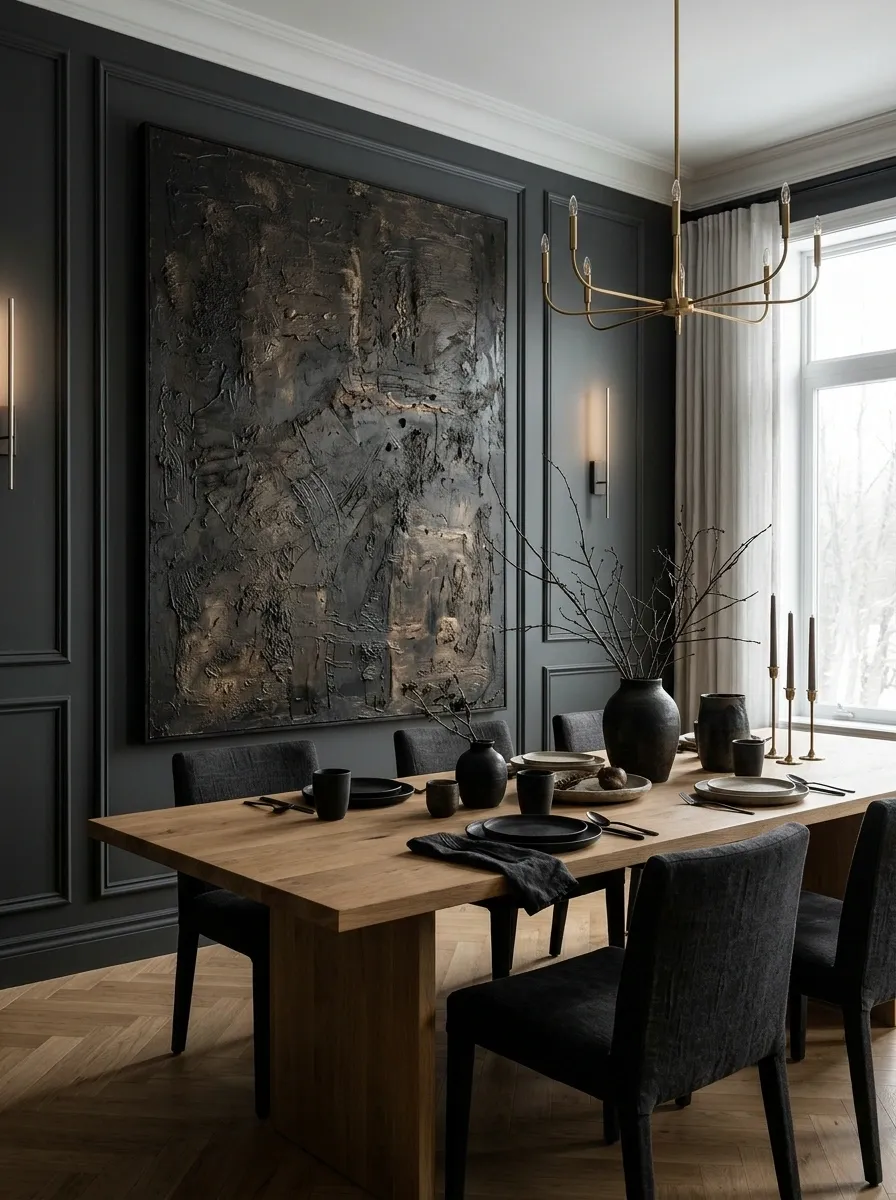
A darker or more textured piece of art can shift the room’s mood without making a seasonal statement.
Choose work you want to keep, then connect one of its tones to a textile or ceramic object. The artwork does not need to depict snow. Winter atmosphere can come from the color relationship rather than a literal scene.
Let the piece remain personal: a meaningful existing work is better than a generic seasonal purchase you do not especially like.
Books in a Dining-Room Cabinet
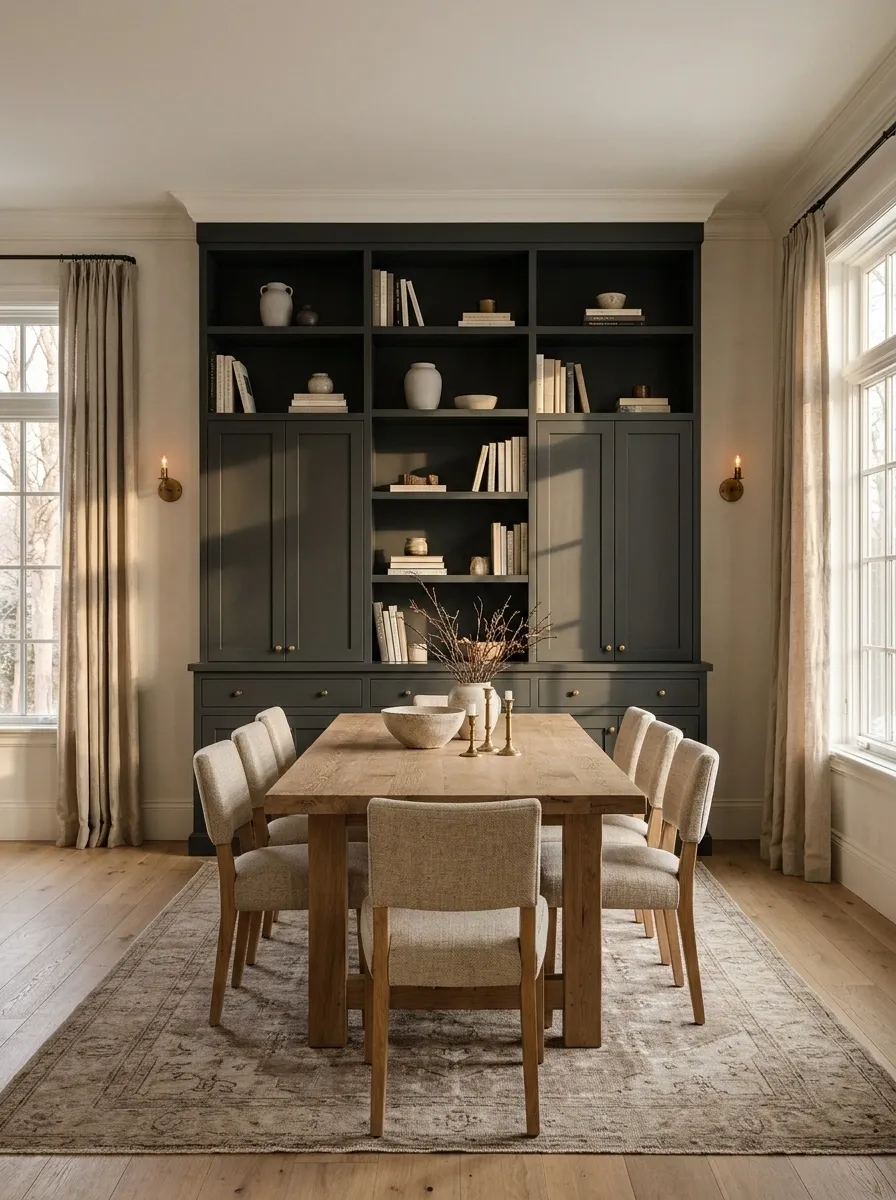
Books can make a dining room feel like a place to spend time between meals.
Use appropriate stable storage and leave serving surfaces clear. Choose a modest selection if the room doubles as a reading space. The combination of table, books, and useful light can make the room feel lived in without requiring additional decorative clutter.
A Textured Wall Color Behind the Table
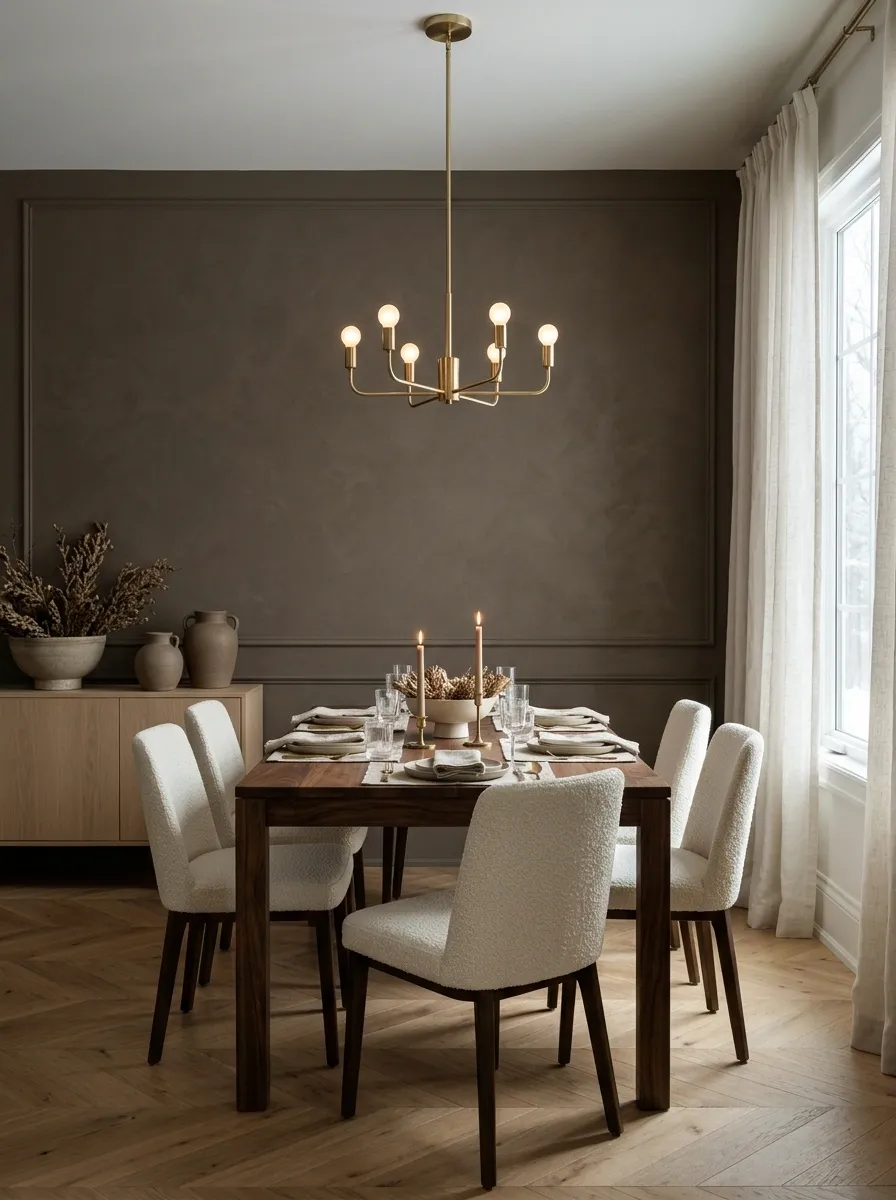
A suitable paint finish in a deeper or warmer tone can make the table feel more defined.
Test the color beside the chairs and floor, with the dining light on. You do not need to repaint every wall to change the room’s emphasis. Keep the boundary tied to the architecture so the choice feels settled rather than temporary.
Sample at table height as well as eye level. Most of the room is experienced while seated.
A Dark-Ground Floral in One Textile
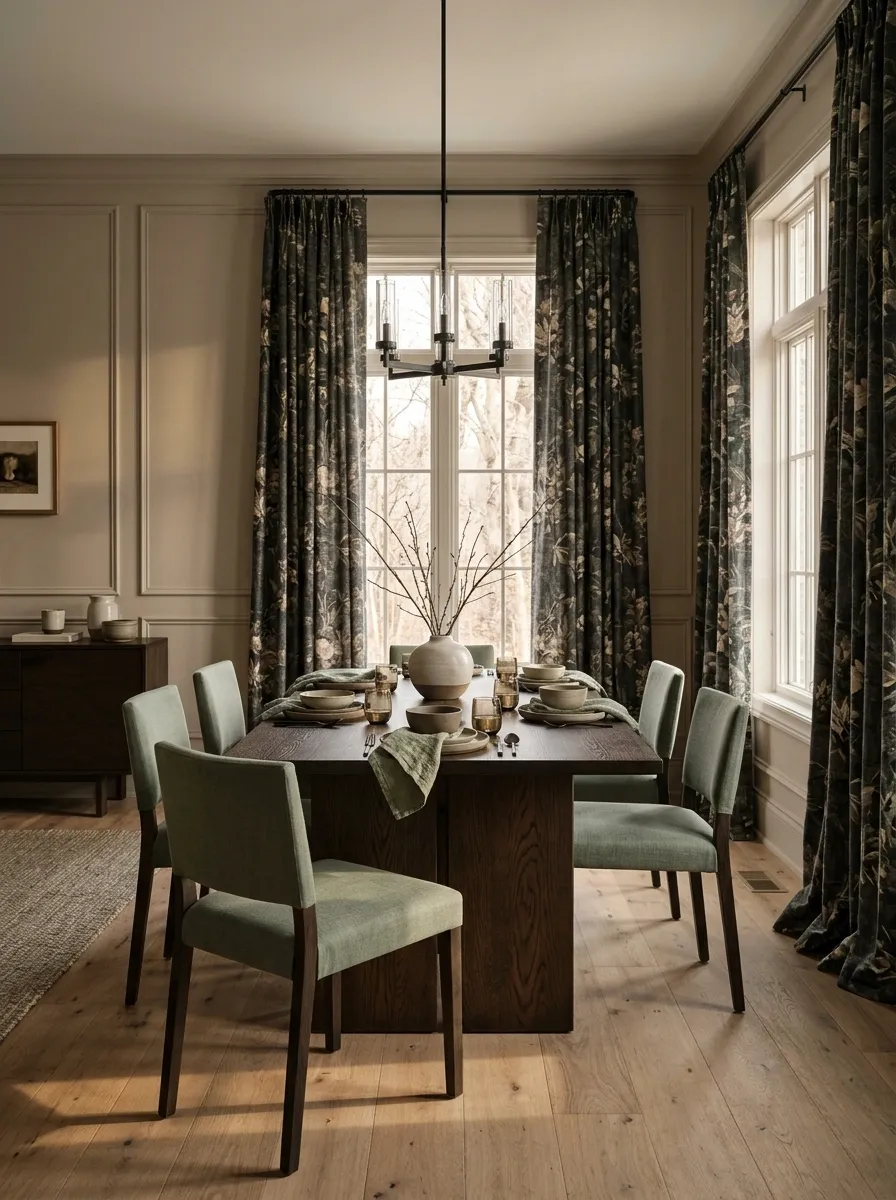
A floral with a deeper background can feel seasonal without looking festive.
Use it in one substantial textile, such as curtains or a suitable runner, and let the surrounding pieces stay simpler. Pick up one of the quieter colors in plain napkins or upholstery. This creates a relationship without turning every surface into another print.
A Dining Table That Resets Easily After Work
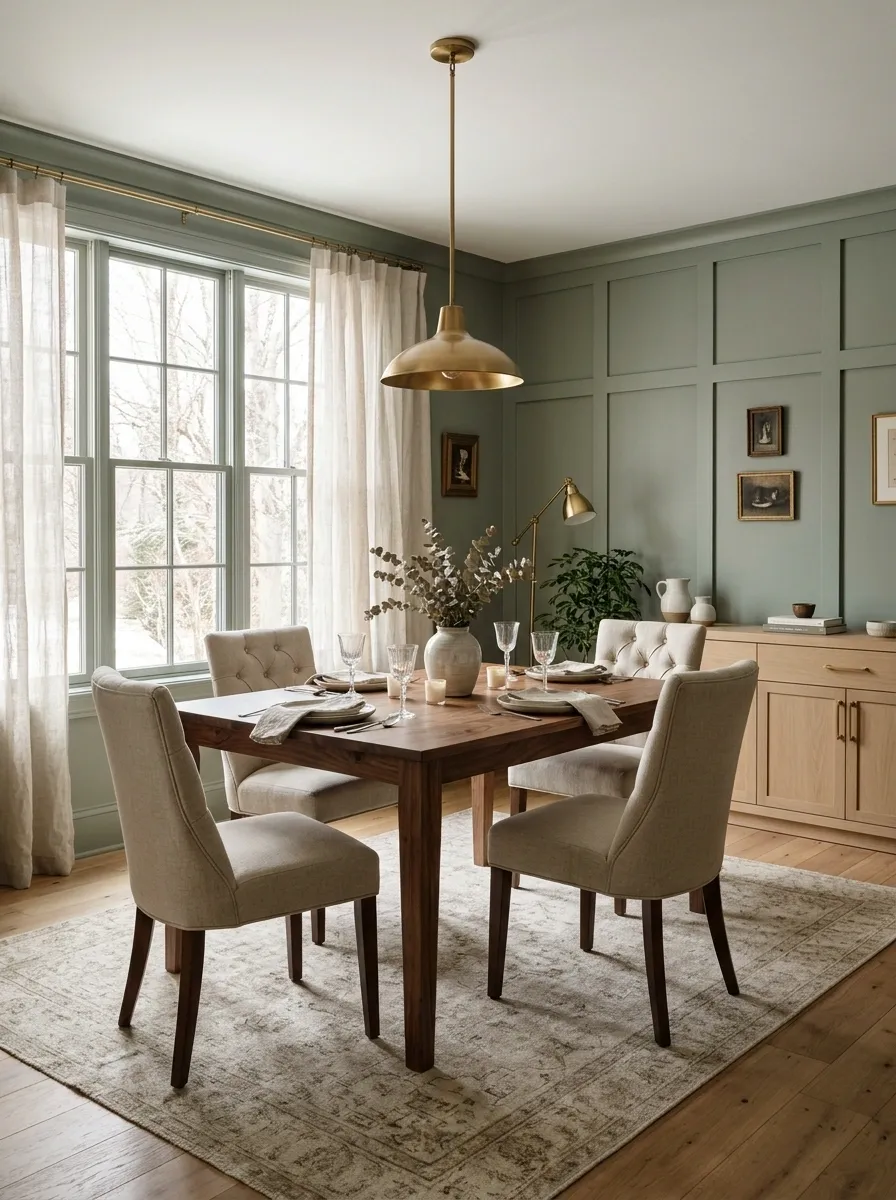
The laptop leaves. The papers follow. The table is ready for dinner.
Make that reset easy with a nearby drawer, cabinet, or suitable portable organizer. Keep each work item somewhere defined rather than sweeping the entire collection into an anonymous pile.
Winter dining feels more inviting when the room is ready for an ordinary meal, not only cleared for guests after a heroic paperwork evacuation.
| Daytime | Mealtime |
|---|---|
| Defined work materials | Clear tabletop |
| Useful task light | Comfortable dining light |
| Nearby storage | Easy reset |
A Coat Landing Outside the Chair Zone
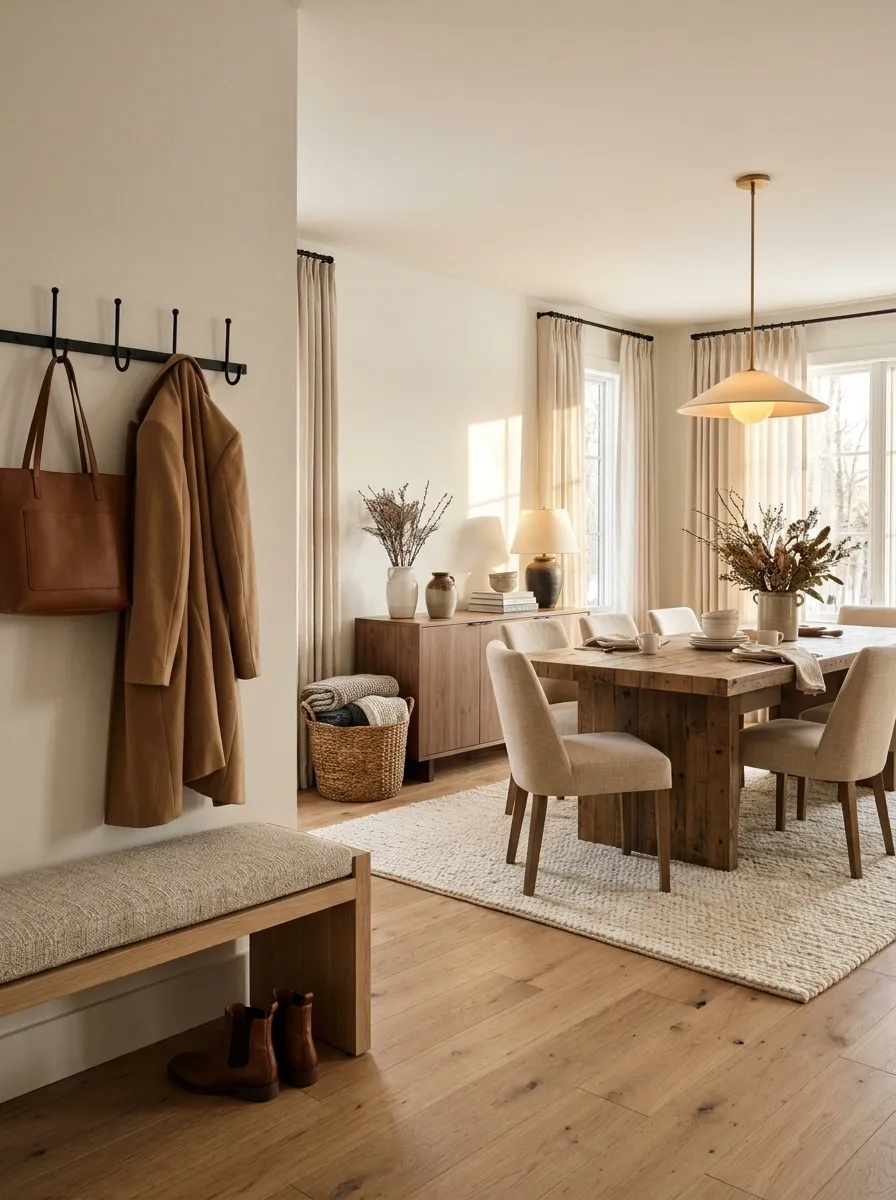
Winter guests often arrive carrying more layers. Give coats and bags a suitable place that does not occupy dining chairs.
Use an existing entry area or another practical location and make it clear on arrival. This is a small update to how the room works, but it prevents the table from shrinking beneath a mound of outerwear before anyone sits down.
Keep available: every chair you intend someone to use.
A Clearer View Through the Window
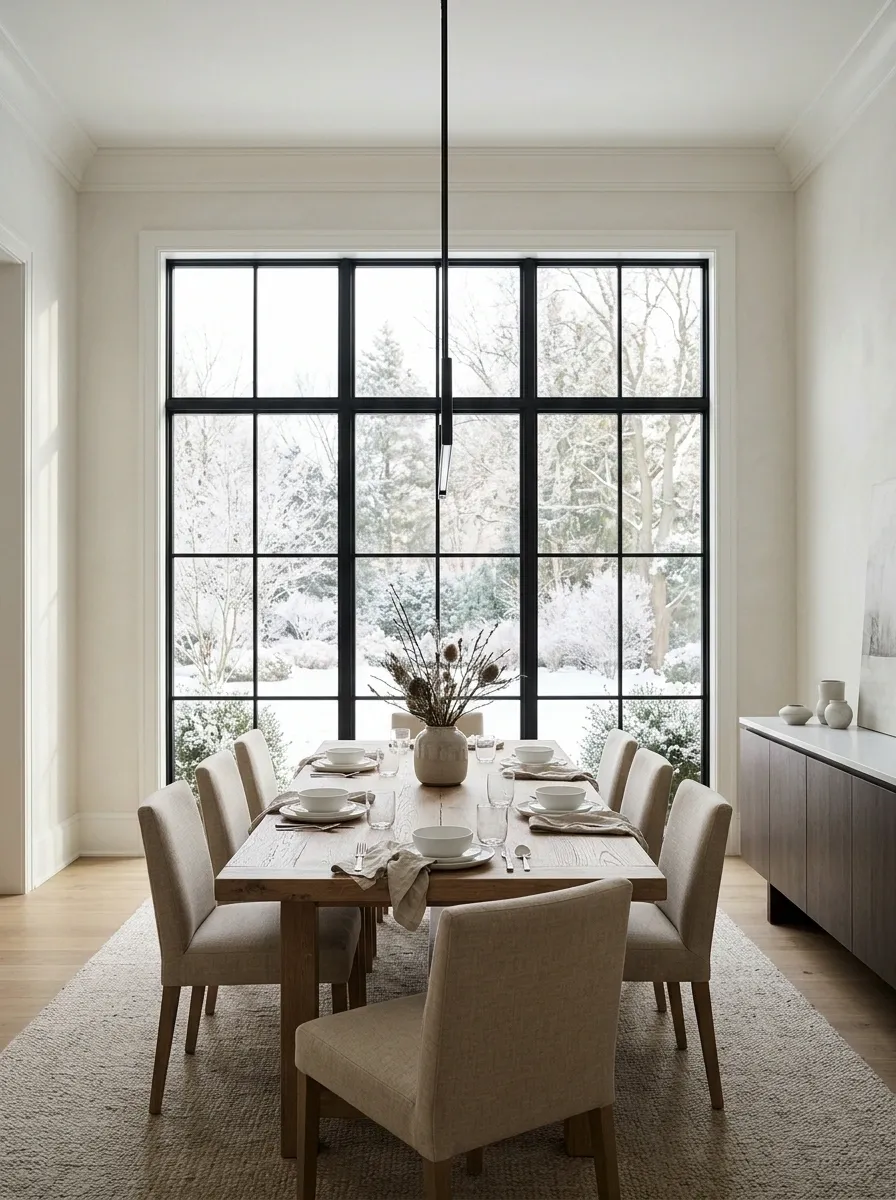
Clean the accessible glass appropriately, simplify an overcrowded sill, and arrange the room so the window remains part of the setting.
Choose privacy and light control around actual conditions. At night, check the reflections from seated positions. The winter room can feel more open when you preserve one clear outlook instead of filling the window with seasonal objects.
Set the table for an ordinary meal and sit down. If you can see the person opposite, reach what you need, and enjoy the room without moving six objects, the winter update is doing its job.