
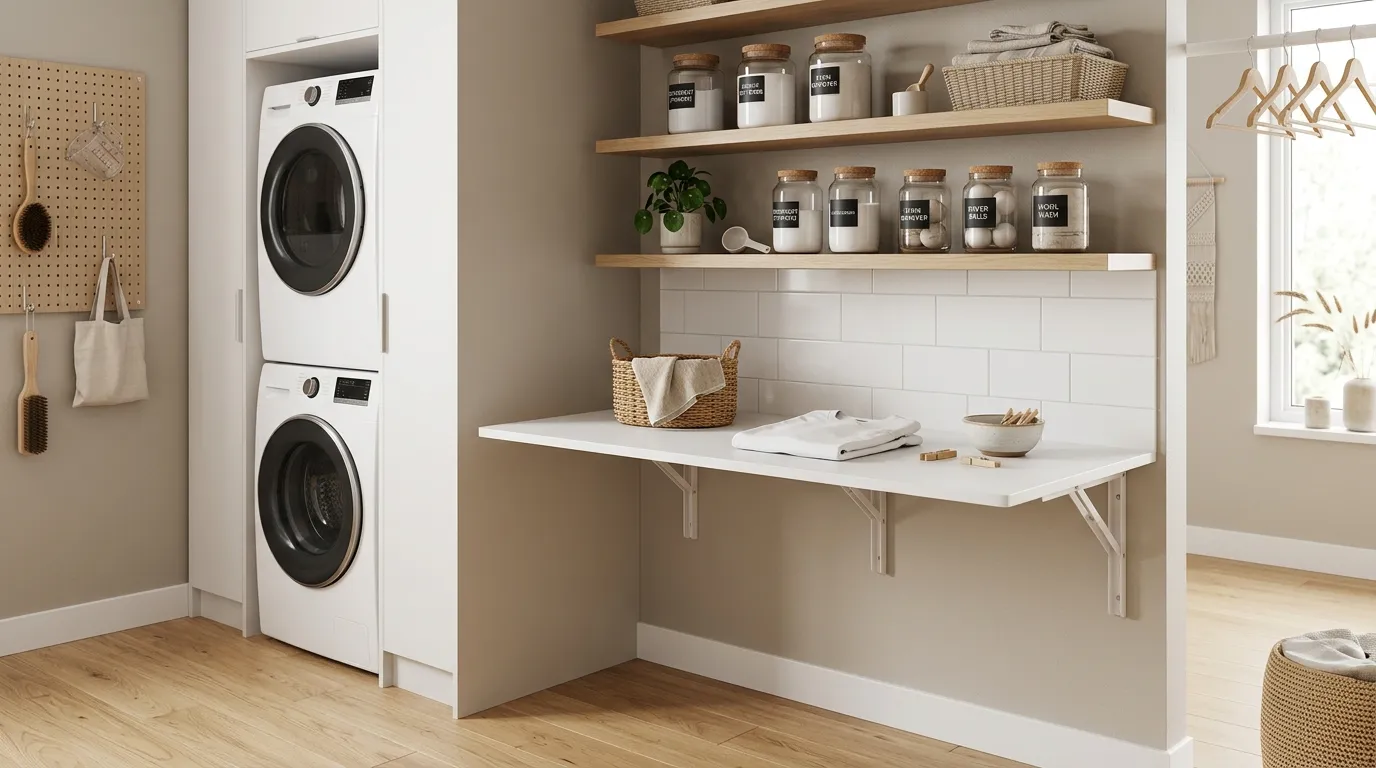
A laundry room can have brand-new machines, plenty of cabinets, and still feel badly designed. The giveaway is what happens when a clean load comes out of the dryer and there’s nowhere to put it.
A shirt ends up balanced on a basket. Towels pile up on the washer. Socks collect beside the detergent. Before long, you’re carrying the whole load to another room just to get enough space to fold it.
That’s why the folding surface matters more than people think.
The right counter doesn’t just give you somewhere to fold clothes. It changes the path laundry takes through the room. Clean clothes can come out of the dryer, land on a clear surface, get sorted, folded, stacked, and leave without creating another mess.
And you don’t need a huge room to make that happen. A wall-mounted panel, a pull-out surface, a counter over the machines, or a slim table can all work when the design fits the room.
The ideas below focus on the layouts that make a laundry room easier to use, easier to keep clear, and much less frustrating on wash day.
What Makes a Laundry Folding Table Actually Work?
The Real Problem Is Usually the Lack of a Flat Work Surface
Most laundry rooms already have the expensive equipment. What’s missing is the surface that lets you use that equipment efficiently.
Without a dedicated counter, clean clothes get placed wherever there’s room. That means the dryer becomes a temporary folding station, the floor becomes a sorting area, and baskets start taking over every open corner.
A proper folding table gives the room one obvious landing spot.
The best location is usually close to the dryer because that’s where clean laundry enters the workflow. Keeping folding within arm’s reach cuts down on carrying piles around the house.
Size Matters More Than the Table Style
A folding table can look fantastic and still be irritating to use.
Depth matters because you need enough room to fold a shirt without pushing the garment against a wall. Width matters because a tiny surface fills up after one towel. Clearance matters because a beautiful counter isn’t useful if you can’t open the washer, dryer, cabinet, or laundry-room door.
Before choosing a design, measure the space with the doors open.
Think in this order:
- Machine access
- Walking clearance
- Counter depth
- Storage needs
- Finish and style
The room should work first. The table should follow.
Built-In, Fold-Down, and Freestanding Tables Solve Different Problems
There isn’t one correct folding-table style.
Built-in counters are strongest when you have a permanent laundry setup and want to use every inch. Fold-down surfaces work better when floor space is tight and you need the table to disappear after folding. Freestanding tables give you the most flexibility because they can move as your storage needs change.
The smartest choice depends on what the room lacks.
A narrow laundry room needs a different solution than a large utility room with open wall space. Once you decide whether your priority is space saving, storage, flexibility, or a built-in look, the table design gets much easier to choose.
Laundry Room Folding Table Ideas
Outdoor Balcony Laundry Station With a Wall-Mounted Table
Taking laundry tasks to an open-air balcony requires smart furniture choices that withstand the elements while saving valuable floor space.
A wall-mounted folding table sits neatly beside a stacked washer and dryer unit, giving you an instant surface for sorting and stacking right where you need it.
Combined with a retractable drying rack overhead, this setup turns a compact outdoor nook into a fully functional laundry headquarters.
Compact Folding Station With Built-In Ironing Board
A dedicated folding station doesn’t require an entire room overhaul when you rely on clever wall-mounted solutions.
This compact setup provides a sturdy surface for folding clothes and easily accommodates a tabletop ironing board for quick touch-ups before heading out.
The fold-flat design keeps the walking path completely clear when laundry day comes to a close.
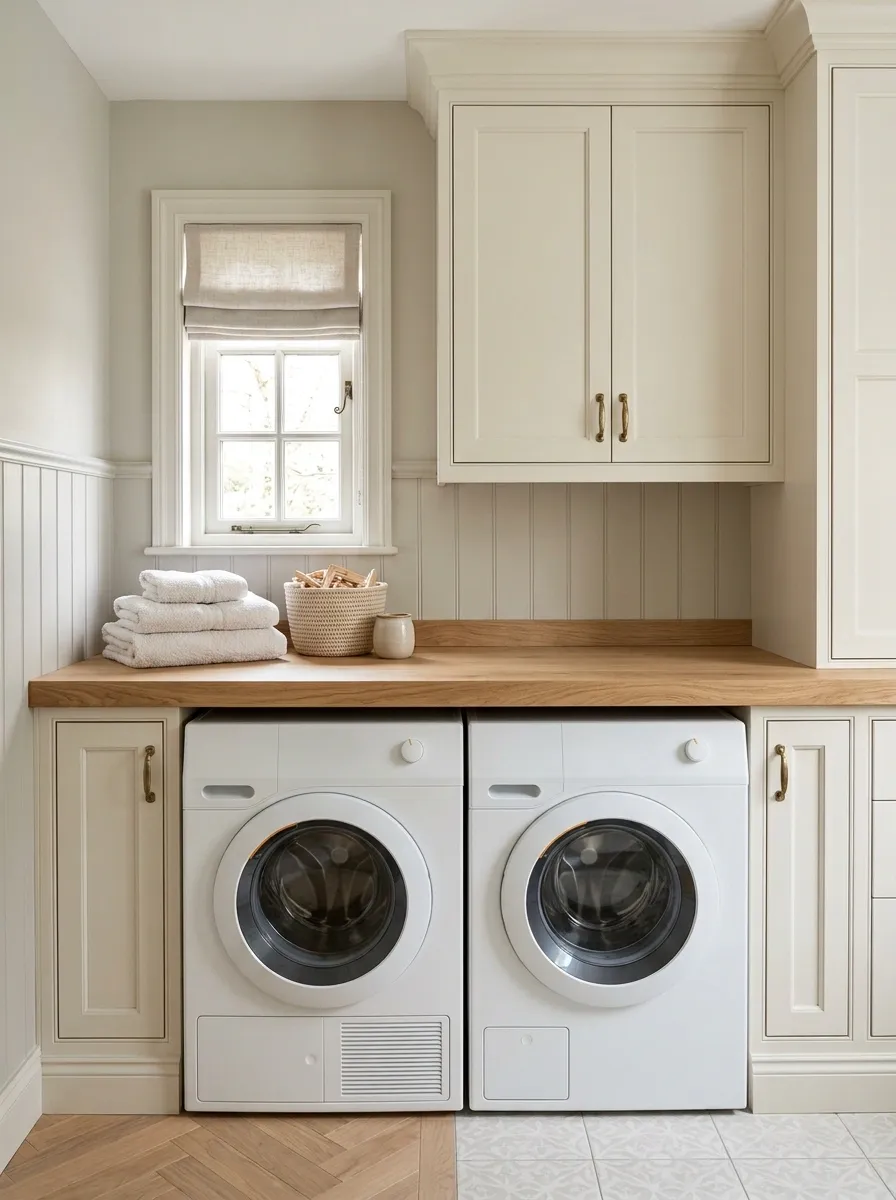
Build a Countertop Directly Over the Washer and Dryer
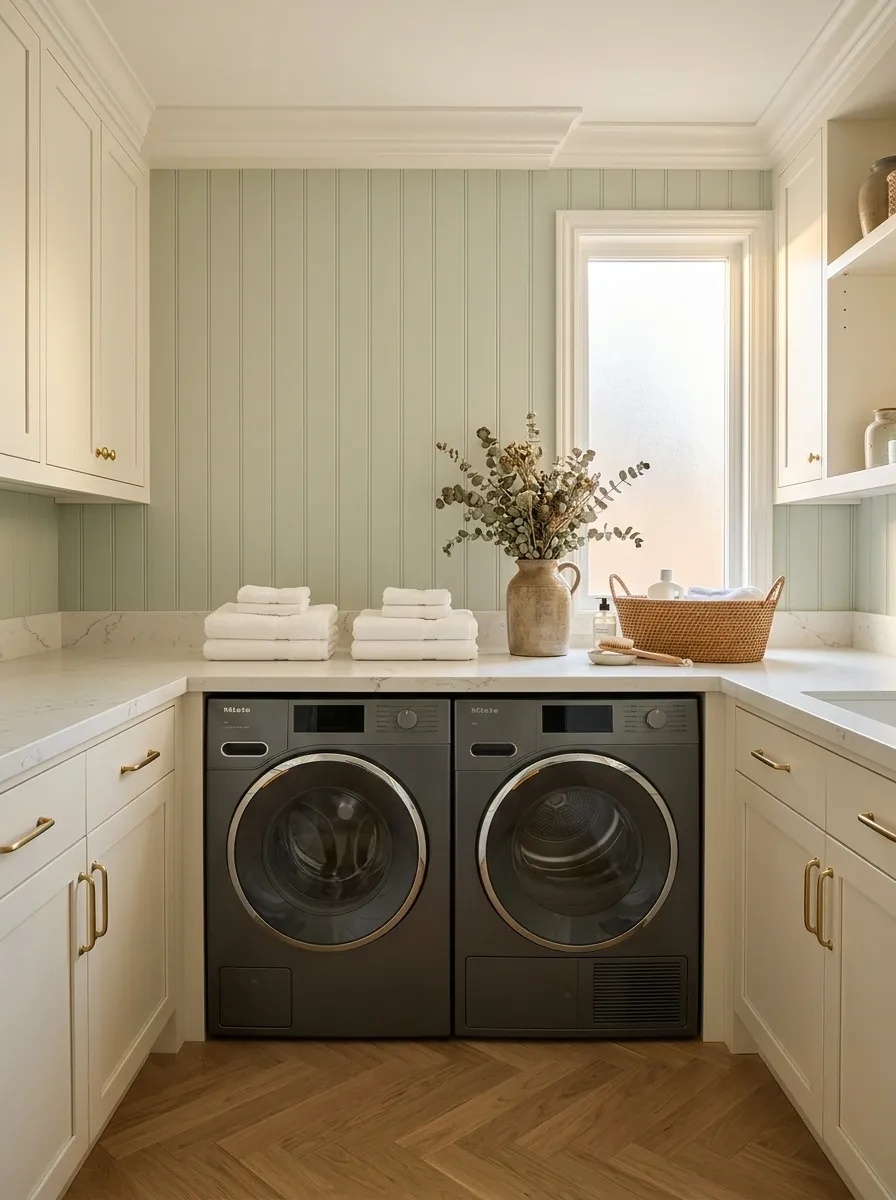
The empty space above side-by-side machines is too useful to waste.
A continuous countertop turns that entire run into a clean folding zone. Clothes come out of the dryer, land on the counter, and get folded without crossing the room.
It also hides the visual gap between separate machines and gives the laundry room a more intentional built-in feel.
Best setup: Keep the counter deep enough for towels and shirts, but make sure the washer and dryer doors still open fully.
Custom Cabinetry Featuring a Drop-Down Folding Table
Integrating a folding table directly into custom laundry cabinetry creates a seamless look while maximizing every square inch of available space.
The matching wood tones tie the room together, making the functional drop-leaf surface feel like an intentional design choice rather than an afterthought.
Paried with deep storage baskets and open shelving, this layout keeps supplies organized and the folding zone instantly accessible.
Use a Pull-Out Folding Surface in a Narrow Laundry Room
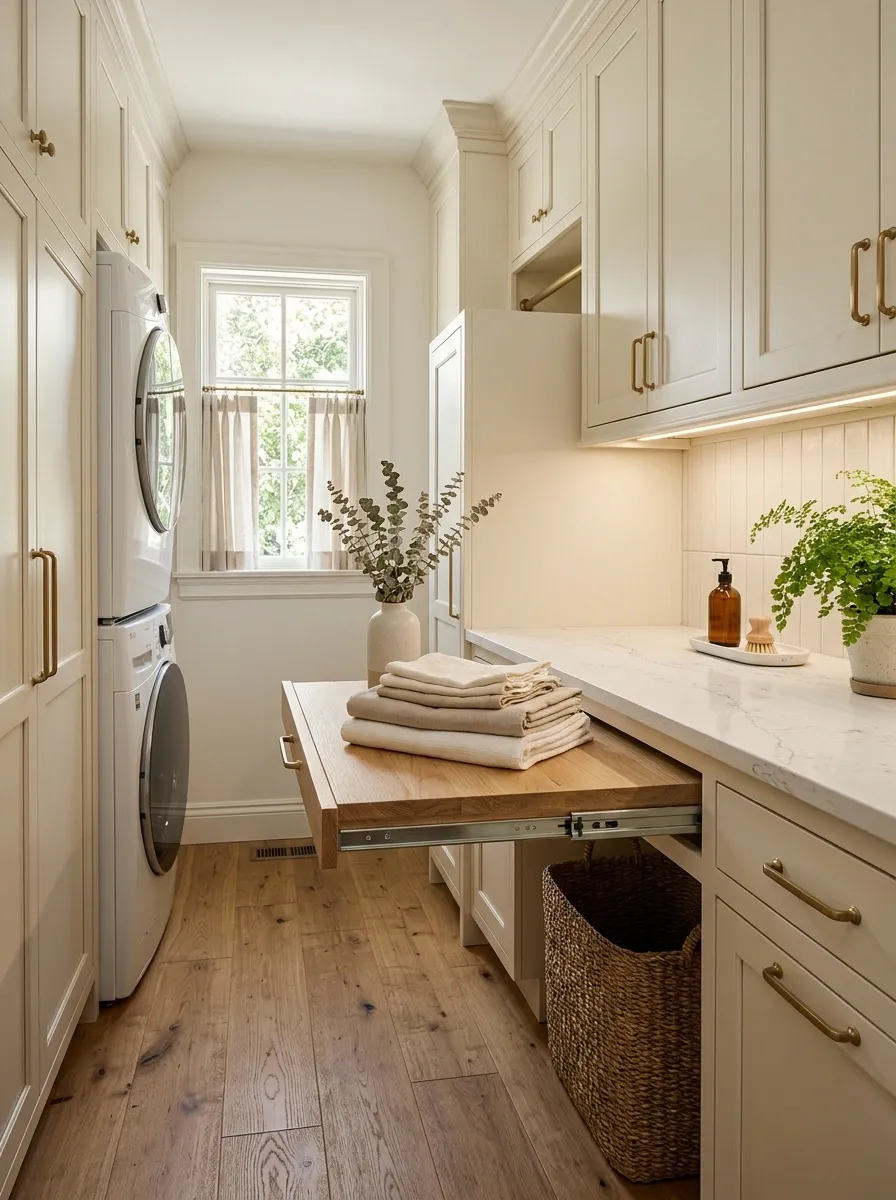
Small laundry rooms don’t need smaller ambitions. They need a smarter surface.
A pull-out counter stays hidden until you actually need it, which makes it ideal when the walking path is narrow or the machines sit close to the opposite wall.
Build it under an existing counter or inside a cabinet bay.
Use this setup:
- Slide the surface out when the dryer finishes.
- Fold the load while everything is still warm.
- Push it back before opening the next cabinet or walking through.
The hidden surface should feel solid when extended. A flimsy board turns a useful idea into a daily annoyance.
Add a Wall-Mounted Drop-Leaf Table That Disappears Flat
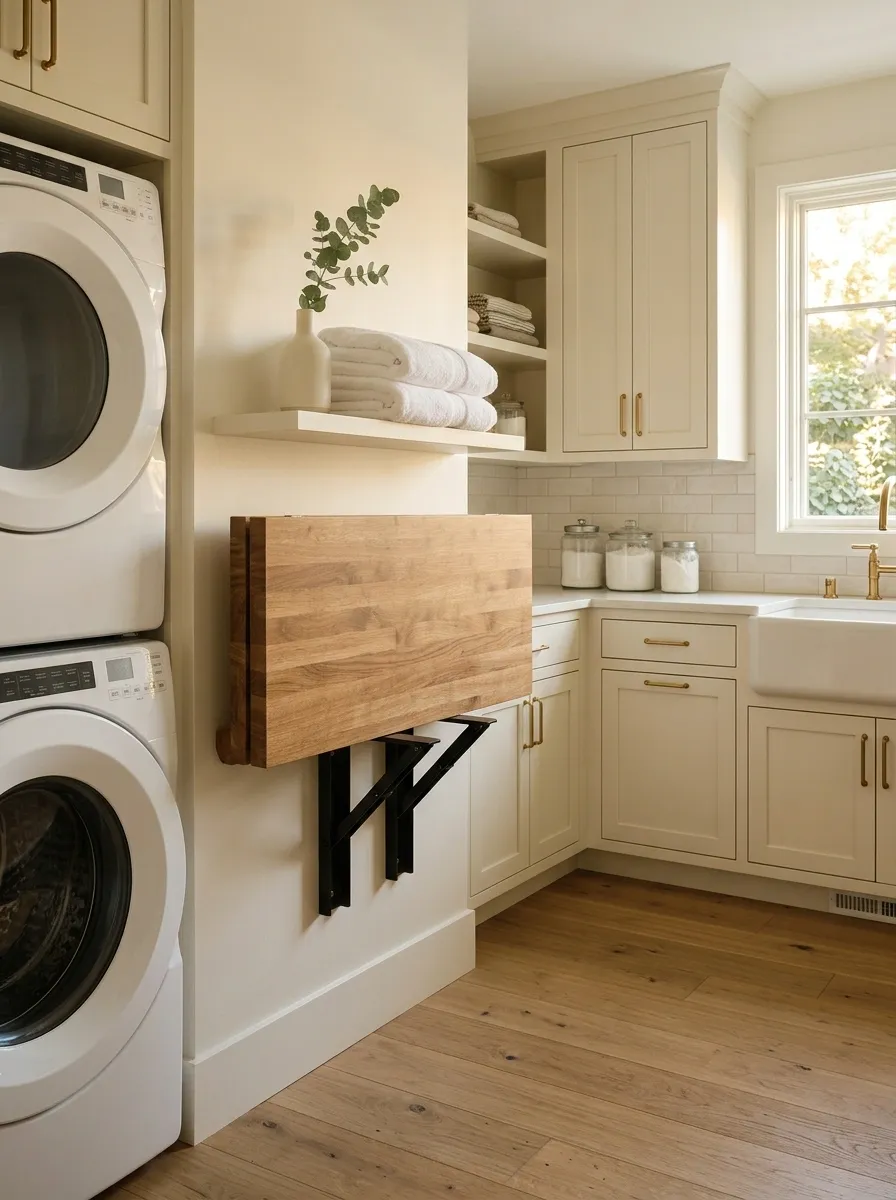
A wall-mounted drop-leaf table solves the biggest problem with folding surfaces: they take up space even when you’re not using them.
Mount the hinged section at a comfortable working height and let it fold flat against the wall afterward. The result is a proper counter when laundry is happening and an almost invisible surface when it isn’t.
This works especially well beside a stacked washer and dryer.
The detail that matters: Add a sturdy support bracket underneath. The surface needs to feel dependable when you’re folding a pile of towels, not like a temporary tray.
Turn a Deep Shelf Into a Dedicated Folding Counter
You don’t always need to build a new table.
A deep utility shelf can become a surprisingly good folding station when it’s at the right height and has a sturdy top. This is a smart move for laundry rooms that already have open shelving but no usable counter.
Remove anything that doesn’t need to live on that shelf. Give the top surface one job: folding.
Check these before using it:
- The shelf shouldn’t flex under normal pressure.
- The front edge should be comfortable against your hands.
- Keep detergents and cleaning supplies off the main folding area.
- Leave enough depth for a folded towel to sit flat.
It’s a simple conversion, but it removes a lot of wasted movement.
Run One Long Counter Across a Side-By-Side Laundry Setup
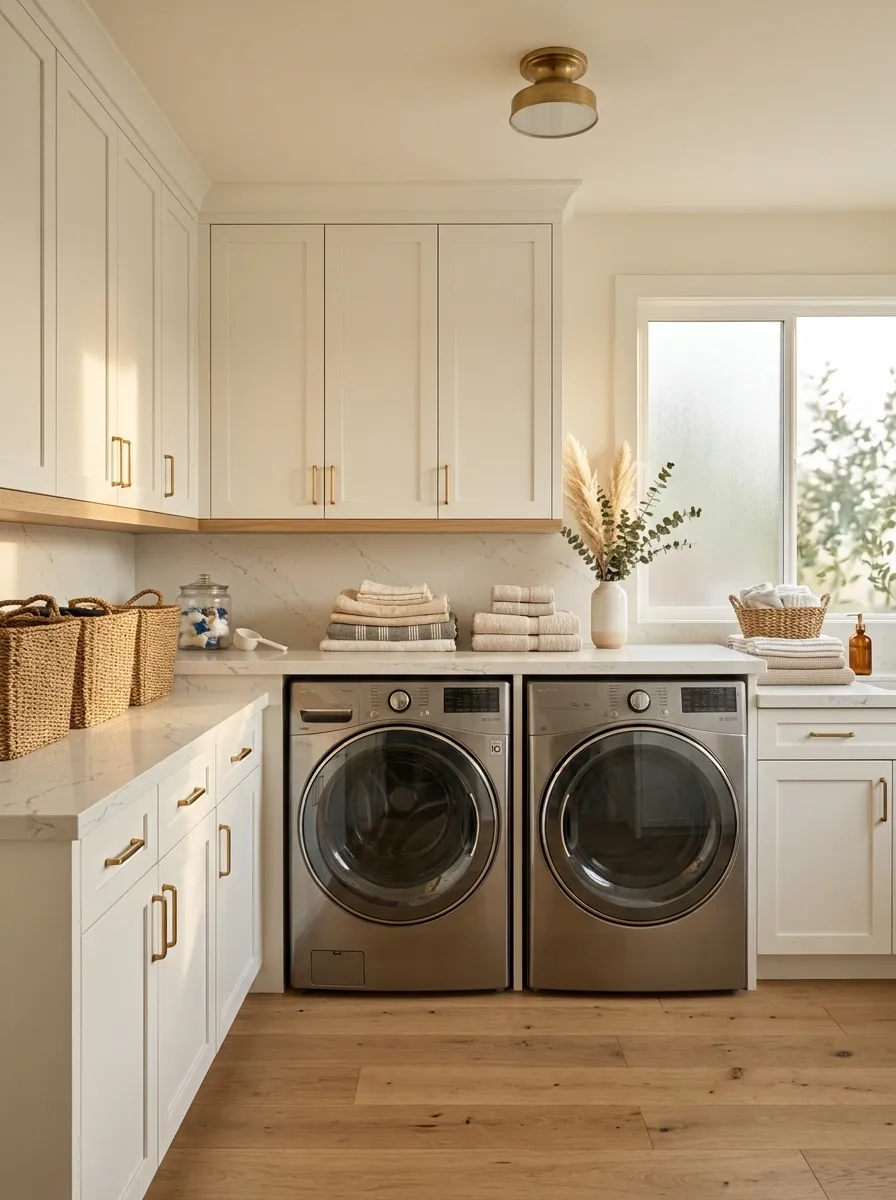
When you have the wall space, stop thinking of the washer and dryer as separate furniture pieces.
A single continuous counter above both machines creates one clean work zone and gives you room to spread out a full load. It also makes sorting much easier because clean clothes don’t have to compete for tiny patches of surface.
This layout is especially useful for families or anyone who washes bulky bedding regularly.
Make the counter do more than fold: keep one end clear for sorting while the other side handles the current pile. That separation keeps clean clothes from turning into one giant stack.
Use a Butcher Block Top for a Warmer Laundry Room
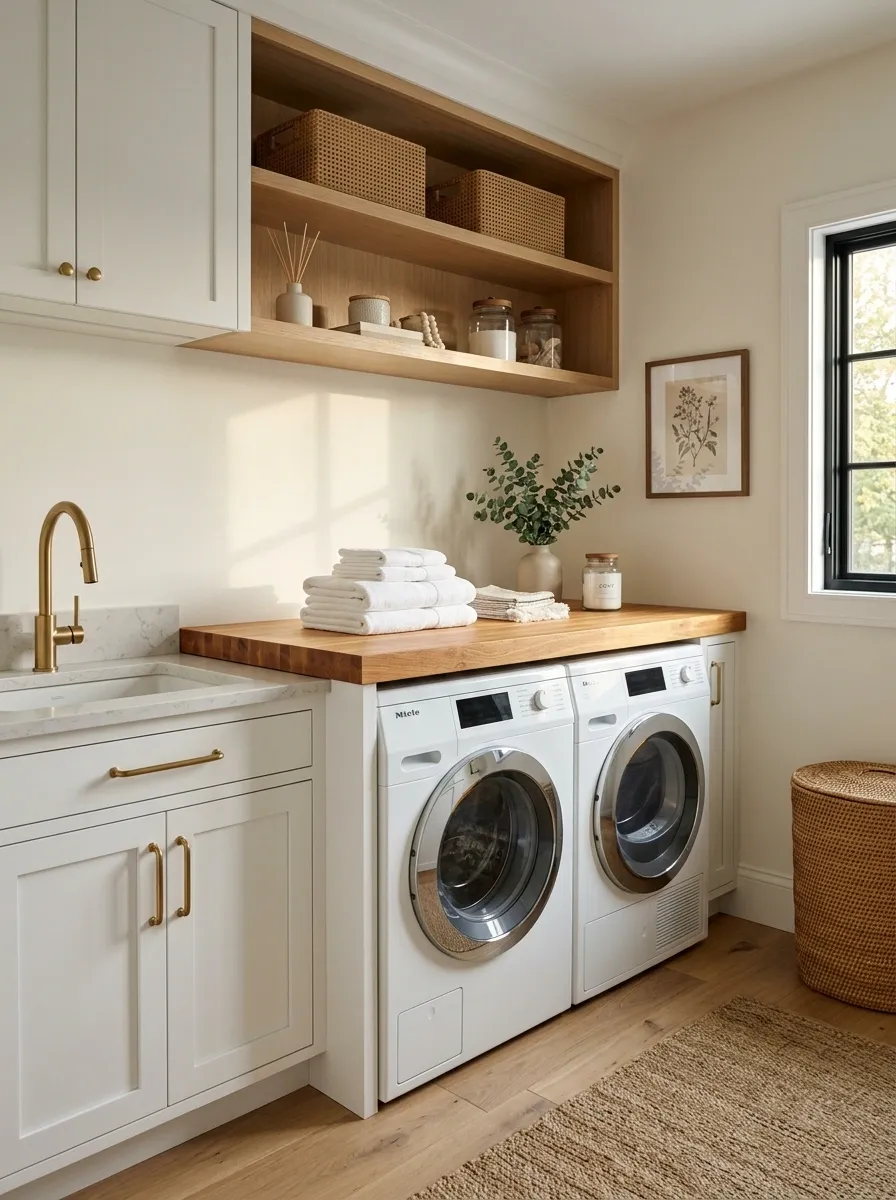
A laundry room can get cold-looking fast when every surface is white, gray, or stainless steel.
A butcher block countertop brings in a warmer material without making the room look decorated for decoration’s sake. It works particularly well with white cabinets, pale walls, or simple shelving.
The key is contrast.
Keep the rest of the room fairly quiet and let the wood top carry the visual weight. You’ll get a folding surface that feels more like real furniture than a utility counter.
Choose this approach when:
- The room needs warmth.
- Your cabinets are simple.
- You want the folding area to feel substantial.
- You’re happy to maintain the countertop properly.
Build a Folding Table Between Tall Cabinets
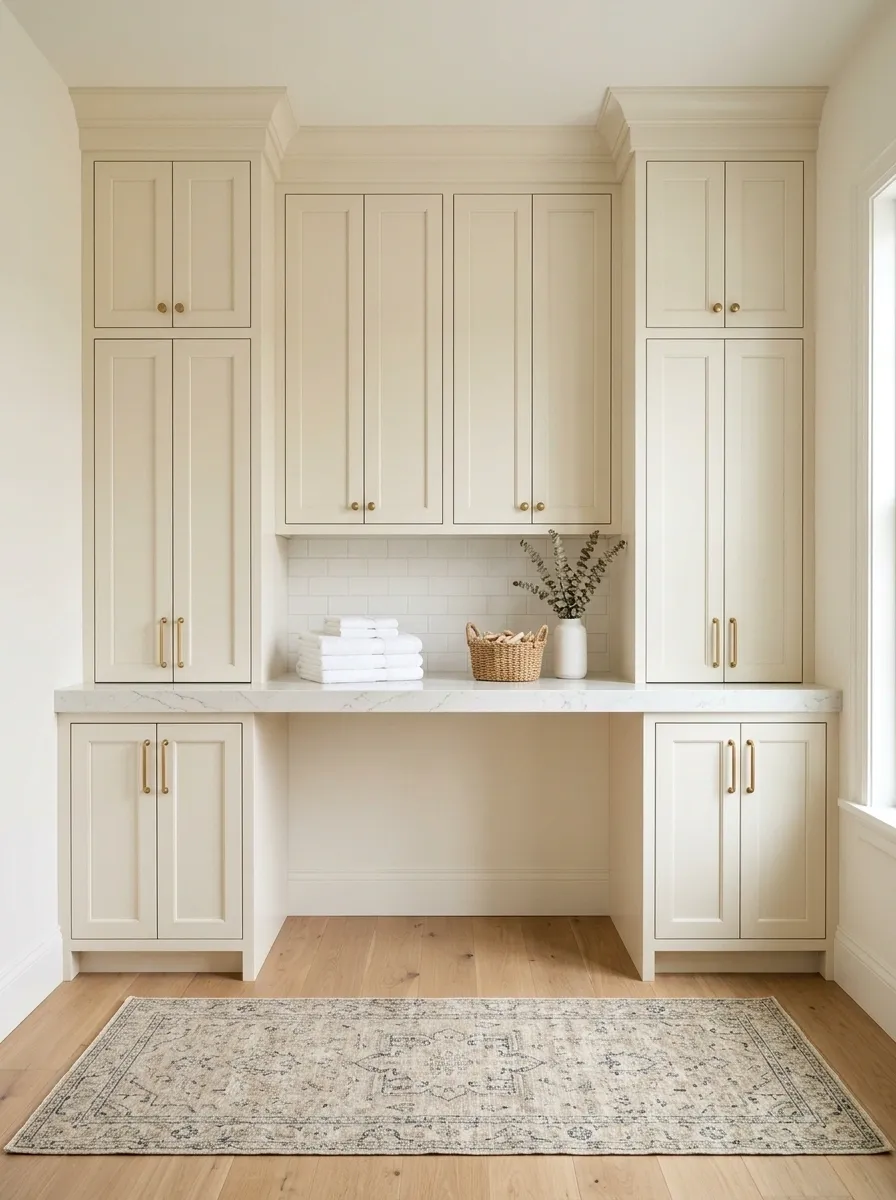
Two tall storage cabinets can frame a folding counter and make the whole wall work harder.
This layout is especially effective when your laundry room has vertical storage but no horizontal workspace. The cabinets hold detergent, towels, baskets, or household supplies while the middle section becomes the dedicated folding zone.
The important move is keeping the counter visually connected to the cabinetry.
A fitted top looks far more deliberate than a random table squeezed into the gap.
Design it as one composition: tall cabinet, open work surface, tall cabinet. The symmetry makes even a basic utility room feel organized.
Choose a Flip-Up Table for a Tight Utility Room
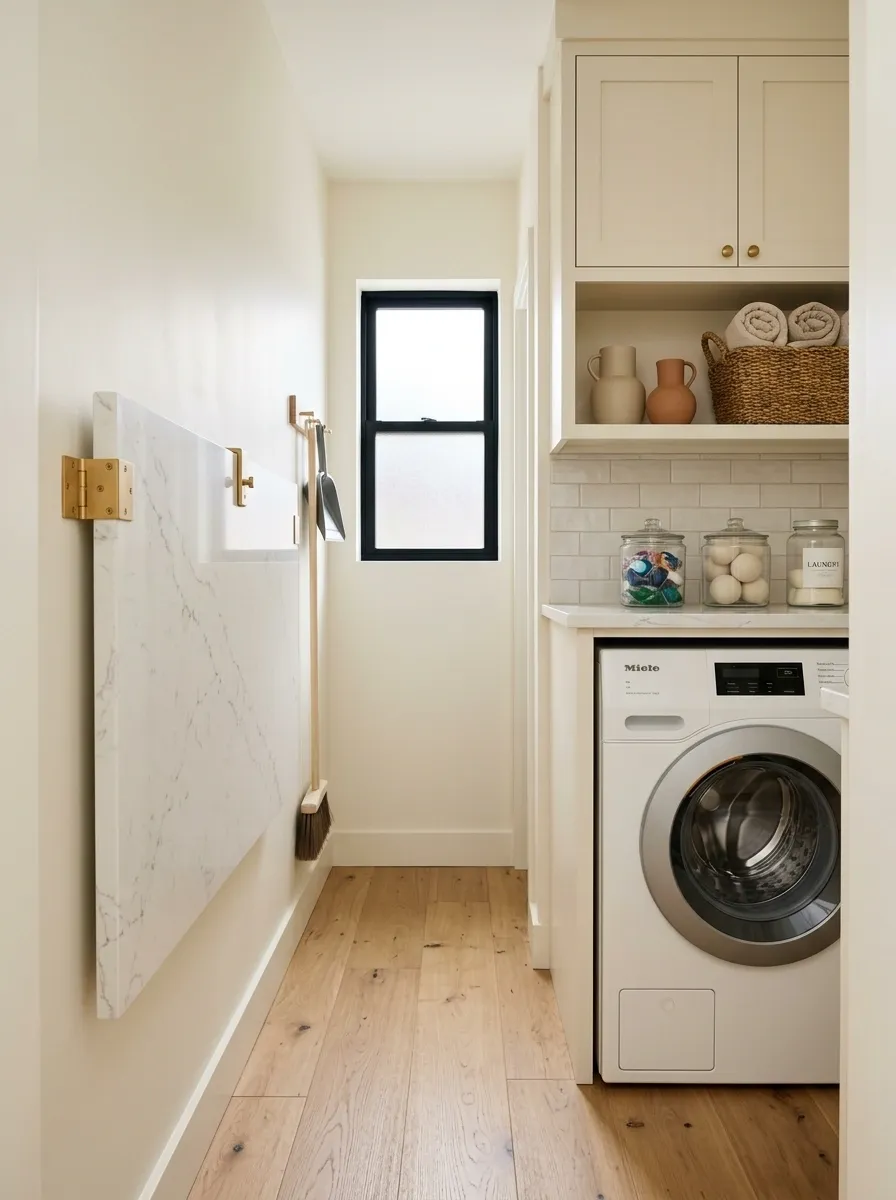
Tiny utility rooms don’t have room for furniture that spends most of its life sitting empty.
A flip-up surface gives you the opposite approach. It stays against the wall until laundry day demands a proper work area.
This is one of the better choices for apartments, narrow passage-style laundry rooms, and utility closets with just enough room to stand.
Keep the mechanism simple. The more complicated the hardware, the more likely the table becomes irritating to use. You want one smooth movement, a stable support, and a surface you can wipe clean quickly.
Create a Fold-Out Table Inside a Laundry Cabinet
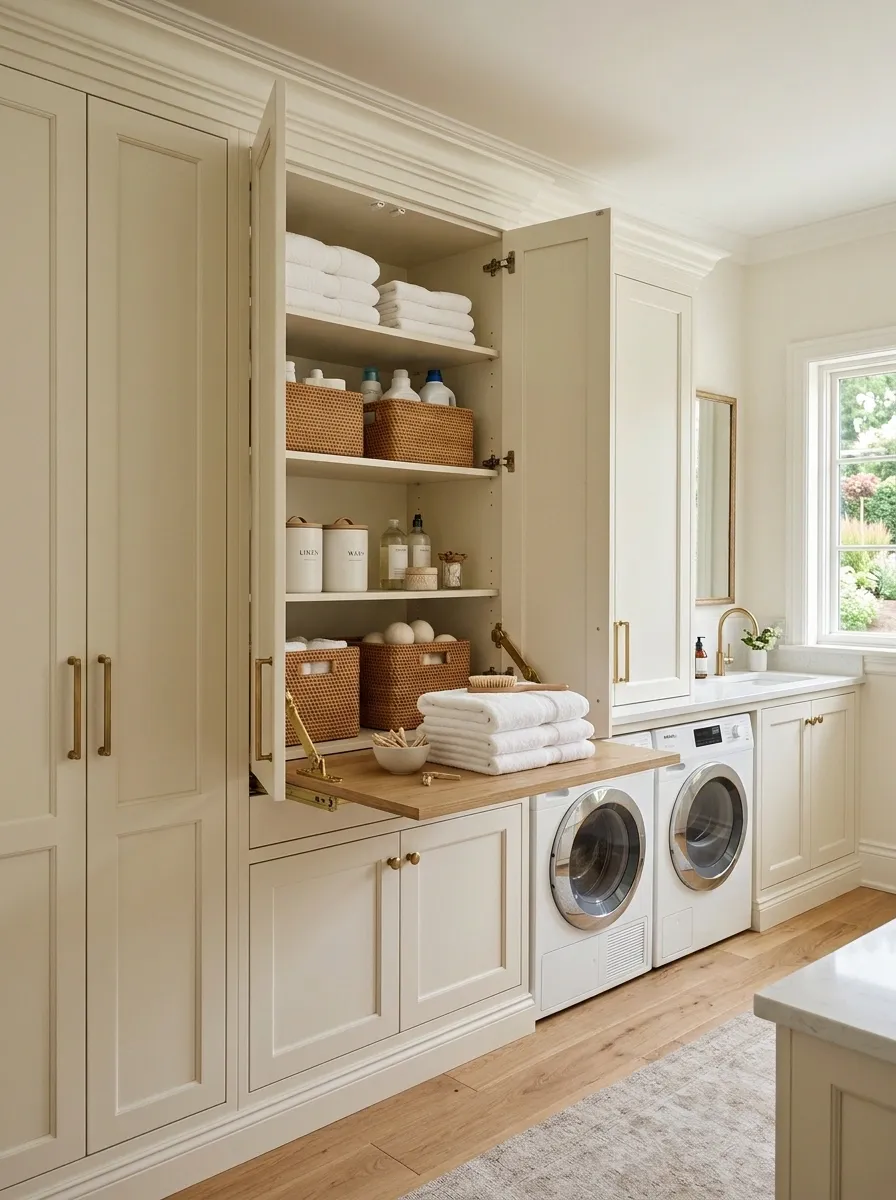
The best hidden furniture doesn’t announce itself.
A cabinet can hold a fold-out work surface behind a single door, giving you a proper place to fold without permanently changing the room’s footprint. Close the door and the whole workstation disappears.
This setup makes sense when your laundry room already depends heavily on cabinetry.
Use the cabinet for the things you don’t want sitting on the counter anyway. Add the folding surface inside, then keep the surrounding shelves organized around the workflow rather than stuffing every inch with supplies.
The winning detail: Put the folding surface at the most comfortable working height, not simply where the empty space happens to be.
Add a Counter With an Open Cubby Below for Baskets
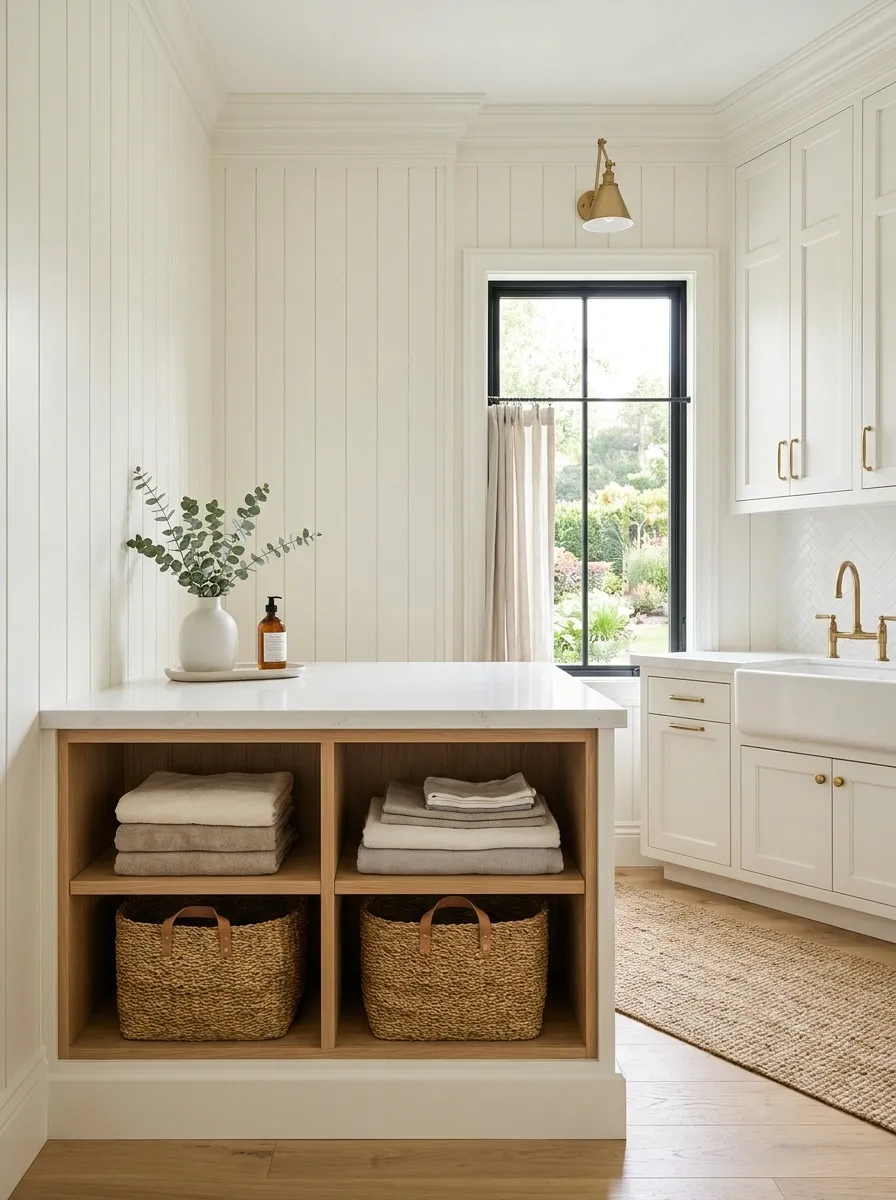
A folding counter shouldn’t force you to give up useful storage underneath.
Build the surface over open cubbies and use those lower sections for laundry baskets, folded towels, or everyday supplies. The open fronts make it easy to grab what you need without opening another cabinet door.
This is especially useful when the laundry room has enough wall width but not enough storage.
Keep the folding area visually calm. If every cubby is stuffed with mismatched containers, the counter will still look cluttered no matter how good the countertop is.
The better layout: open basket storage below, clear folding surface above.
Make a Rolling Folding Table You Can Move When Needed
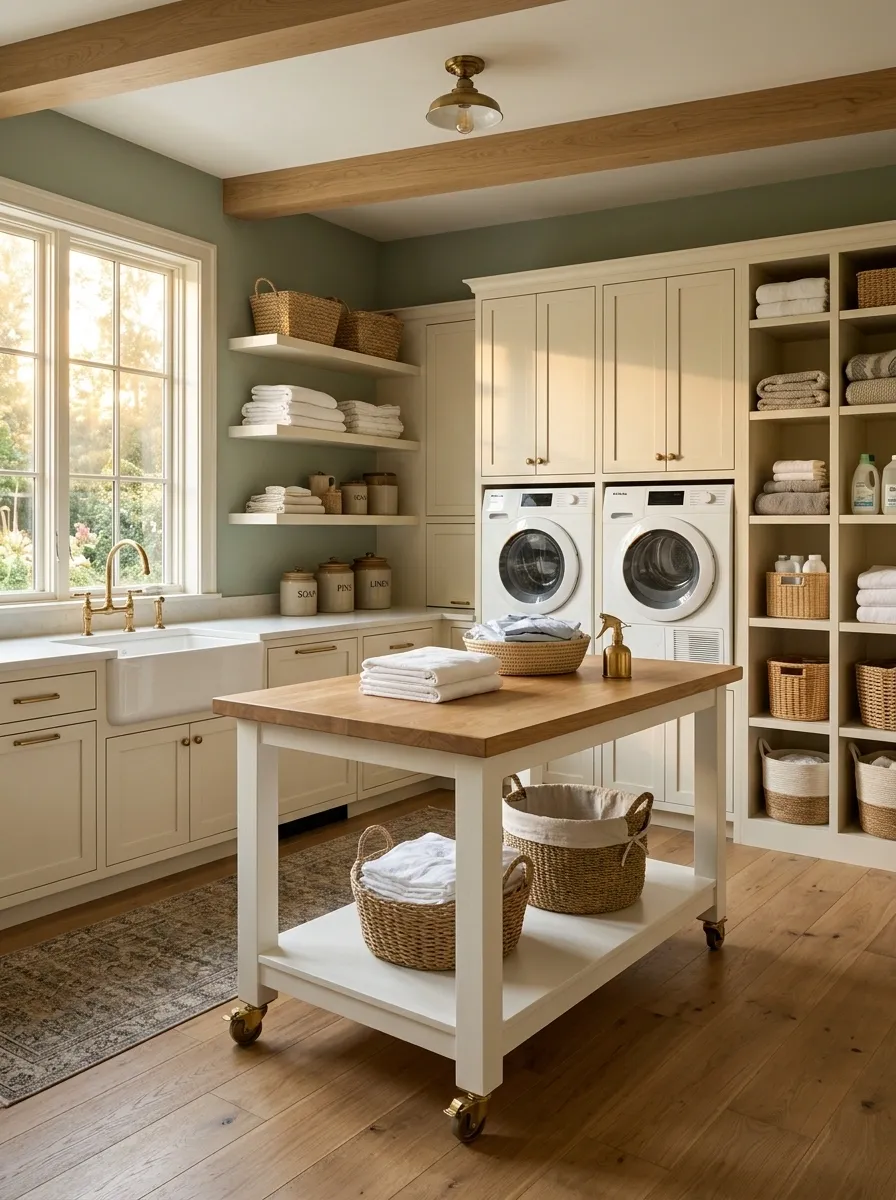
A stationary table isn’t always the smartest choice.
A rolling folding station gives you flexibility when the laundry room doubles as a utility space, mudroom, craft area, or storage zone. Move it closer to the dryer when a load finishes, then push it against the wall when you need the floor clear.
This is one of the few laundry-table ideas that actually benefits from being movable.
Prioritize function over furniture styling: a strong top, smooth casters, and a stable frame matter more than decorative legs.
The table should roll easily when empty but stay put once you’re leaning against it.
Use a Wall-to-Wall Counter for a Dedicated Folding Zone
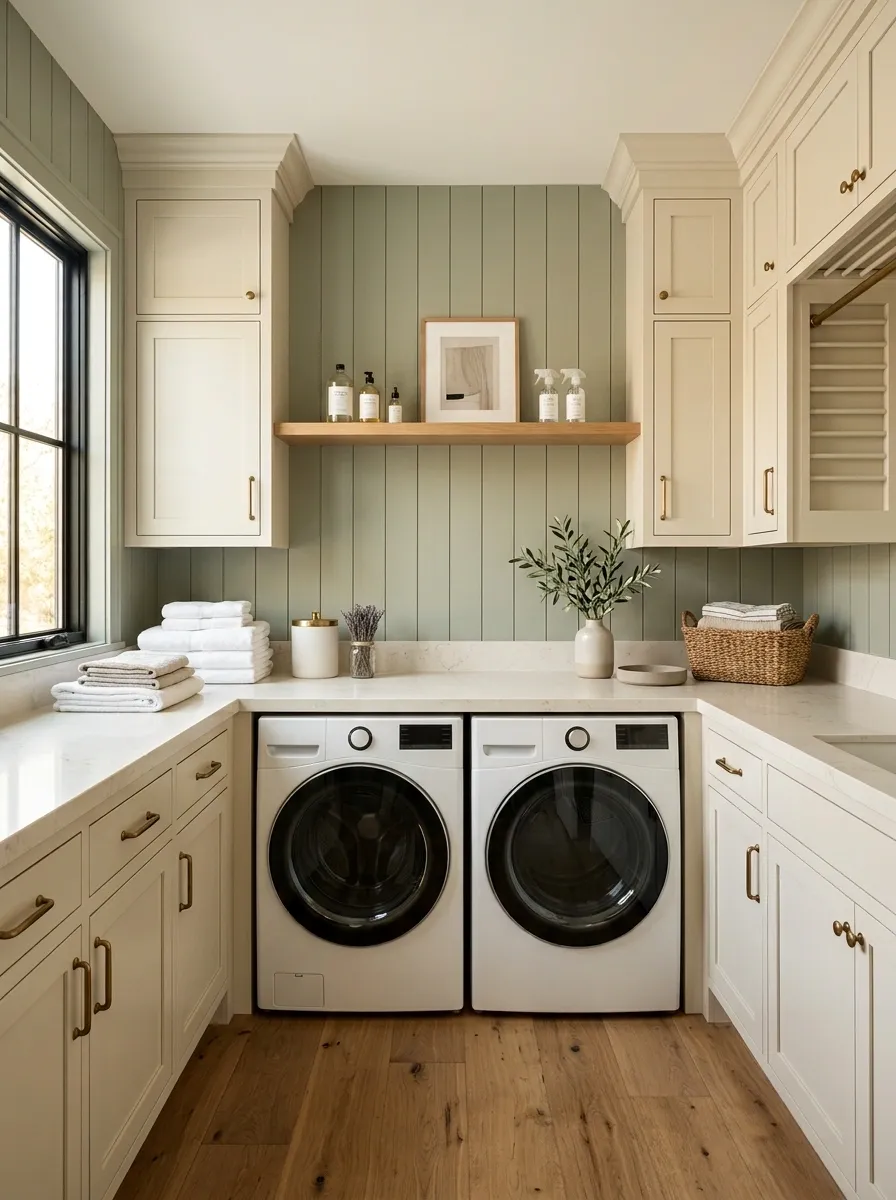
A short counter solves a small problem. A wall-to-wall counter creates a laundry workstation.
If you have a long uninterrupted wall, use it. The extra width gives you room to sort one load while folding another, stack completed piles, or spread out larger pieces like sheets.
It also gives the laundry room a stronger visual anchor.
Don’t fill every inch with accessories. The whole point is to create a generous surface that stays usable.
Think of the counter as a workbench: clear in the center, organized at the edges, and close to the machines.
Pair a Folding Table With a Hidden Pull-Out Hamper
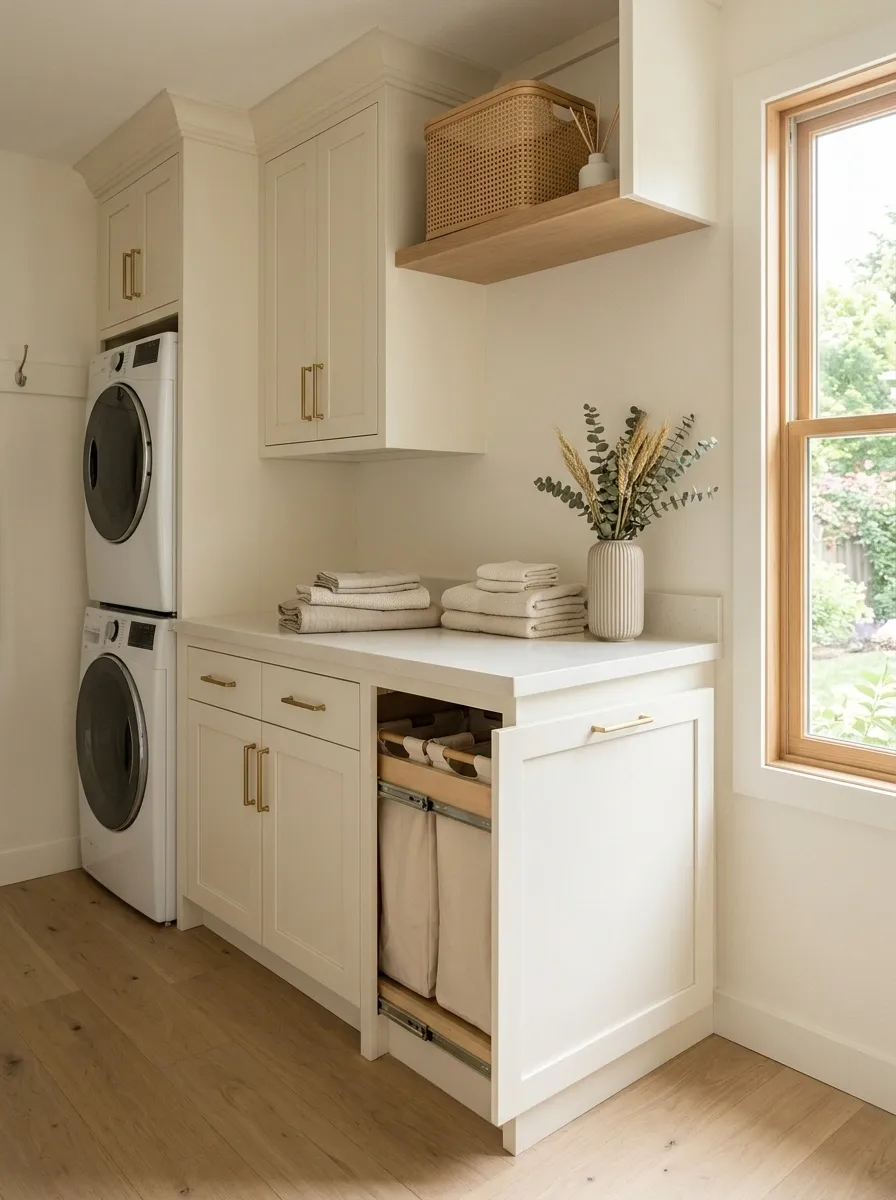
A folding counter works even better when dirty clothes have somewhere to go nearby.
Instead of leaving open baskets all over the room, hide a pull-out hamper directly beneath or beside the folding station. That gives the laundry room a much clearer workflow: dirty clothes enter below, clean clothes leave above.
This is especially useful in compact rooms where every basket steals walking space.
Keep the categories simple. Too many hamper sections create clutter disguised as organization. Use the setup for the laundry divisions you actually follow.
Build a Corner Folding Counter Instead of Wasting the Corner
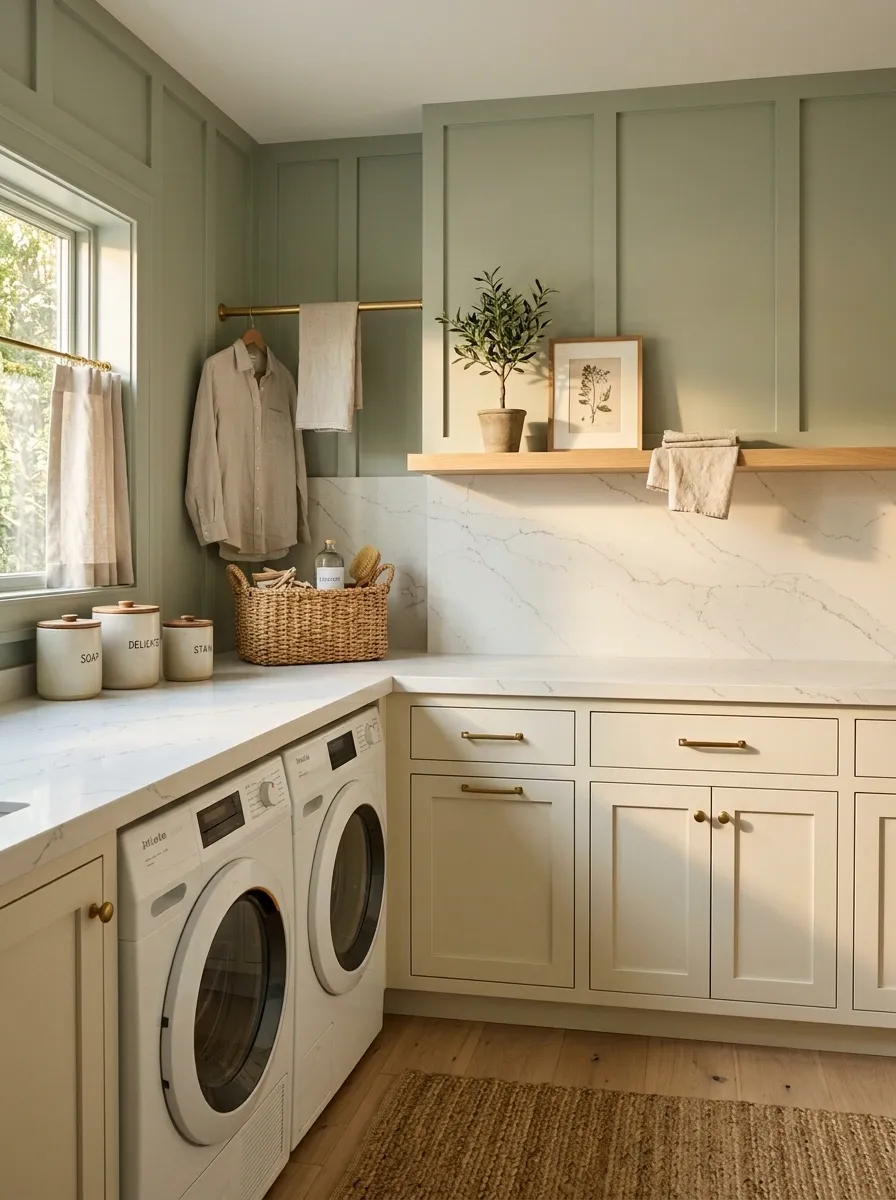
Corners are where bad laundry-room layouts hide their wasted space.
A corner counter can connect two short walls and create a surprisingly generous folding area without taking over the center of the room. It’s a strong solution when the machines occupy one wall and a second wall would otherwise stay empty.
The important part is designing the corner as one continuous surface rather than placing two unrelated pieces together.
Use the longer side for folding and the shorter return for sorting supplies or a small basket.
Don’t overcrowd the inside corner. Leave enough elbow room for the person actually doing the laundry.
Install a Narrow Fold-Down Counter Above the Laundry Baskets
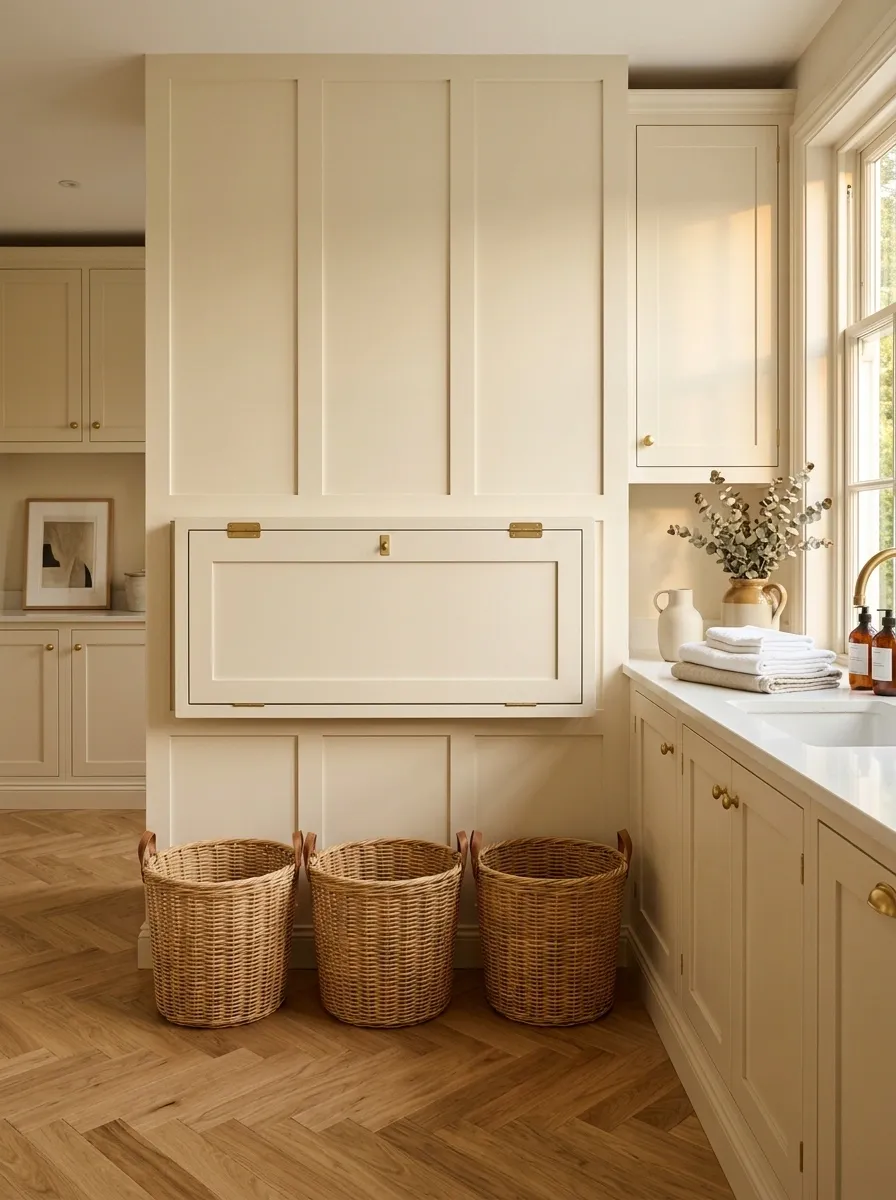
The space above laundry baskets is often treated like dead space when it could become your folding station.
Mount a shallow fold-down counter above the baskets and you’ve created a work surface without sacrificing the storage underneath. When you’re finished, fold it back against the wall.
This layout works particularly well in laundry rooms where baskets already have a permanent parking spot.
Keep the wall visually clean: use one simple panel, minimal hardware, and a finish that relates to the cabinetry. The table should disappear into the room when folded, not become another focal point.
Use a Water-Resistant Countertop Near the Utility Sink
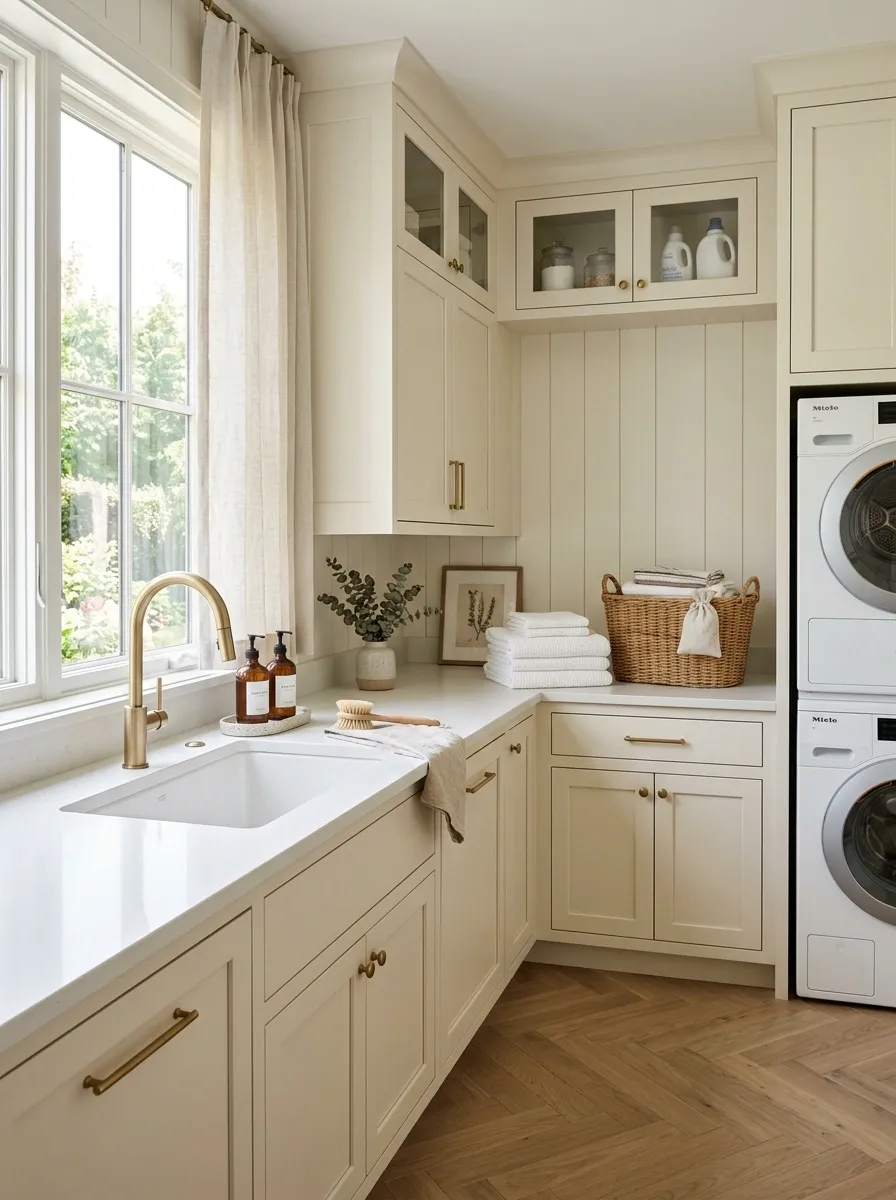
The counter beside a utility sink needs to handle more than folded shirts.
This is where damp towels, stained clothing, cleaning cloths, and wet laundry often end up. A water-resistant surface makes much more sense here than a finish that demands delicate treatment.
Place the folding area next to the sink, but don’t let the sink become part of the main folding zone.
Separate wet and dry jobs.
Keep one side close to the sink for treatment and temporary wet items. Keep the other side clean for folding dry laundry. That small division makes the entire station easier to use.
Add a Freestanding Table With Shelving Underneath
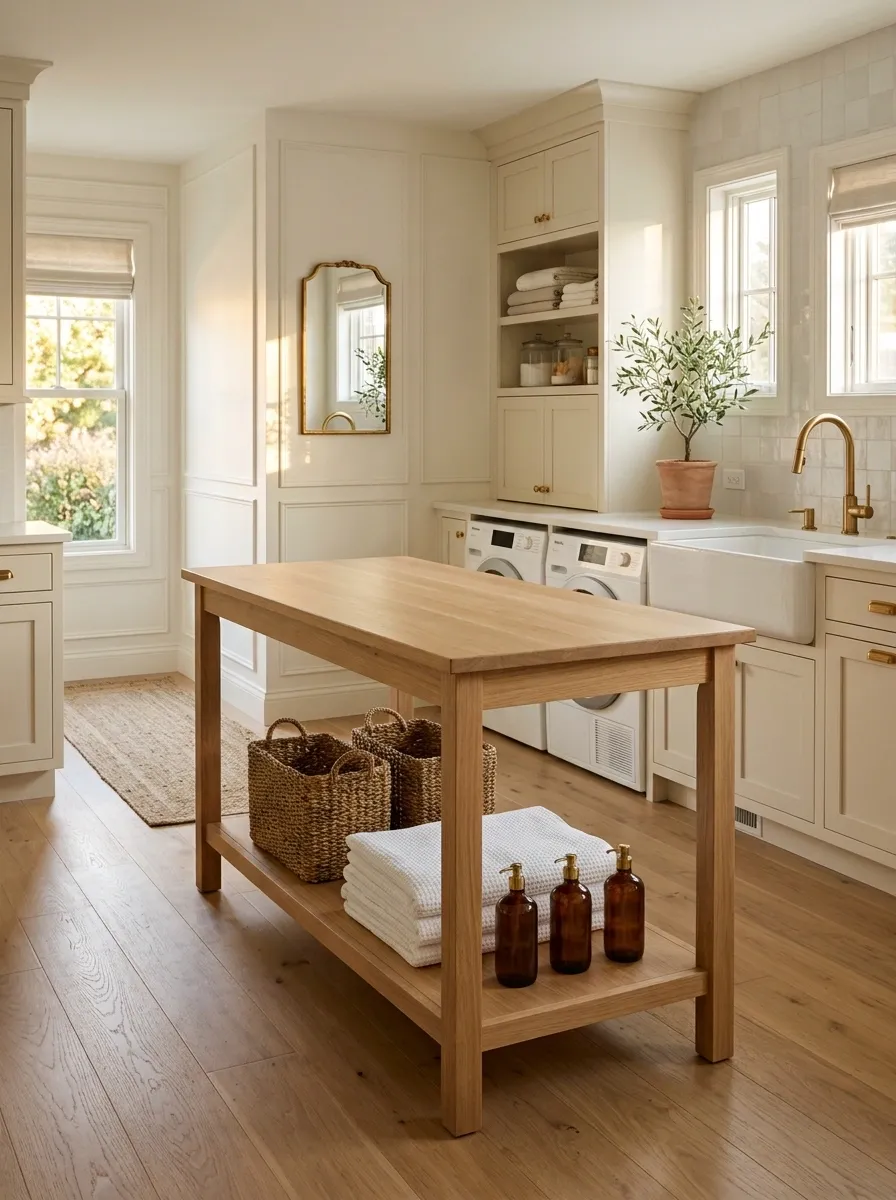
Freestanding furniture earns its place when you need flexibility.
A table with an open lower shelf gives you a proper folding surface now and extra storage without requiring cabinetry work. You can also move it later if the laundry room layout changes.
This is the easiest choice for anyone who doesn’t want a permanent built-in.
Look underneath before looking at the legs.
A lower shelf can hold baskets, towels, spare bedding, or cleaning supplies. That extra storage makes a freestanding table much more useful than a basic top with four legs.
Use a Floating Counter for a Clean, Minimal Laundry Room
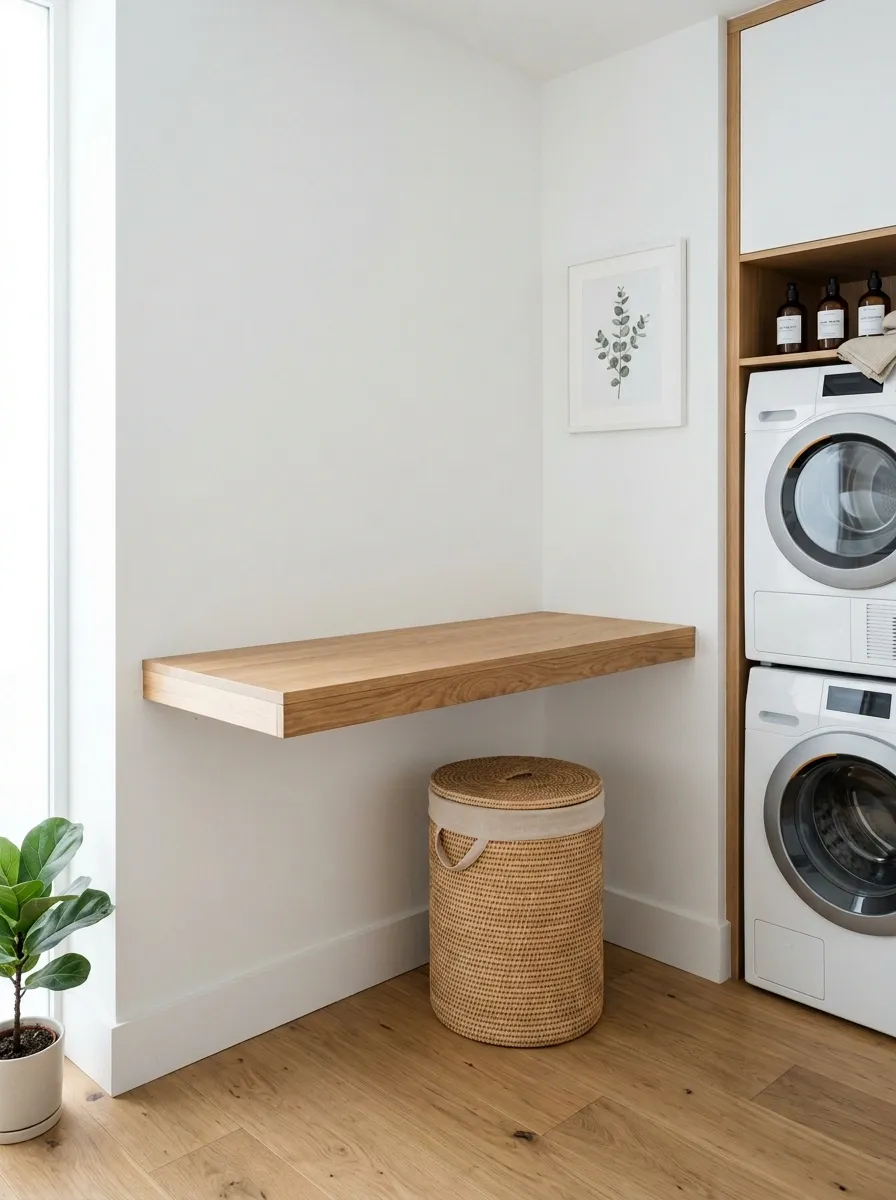
Sometimes the best folding table is the one you barely notice.
A floating counter mounted directly to the wall keeps the floor open and gives the laundry room a lighter appearance. Without table legs underneath, you can slide baskets, stools, or hampers into the space as needed.
This works particularly well in modern, compact, or minimalist rooms.
Don’t decorate the surface just to make it look finished. The clean line is the feature.
Keep the counter almost empty. One laundry basket underneath is more useful than six decorative objects sitting where clean shirts need to go.
Build a Split-Level Counter for Folding and Sorting
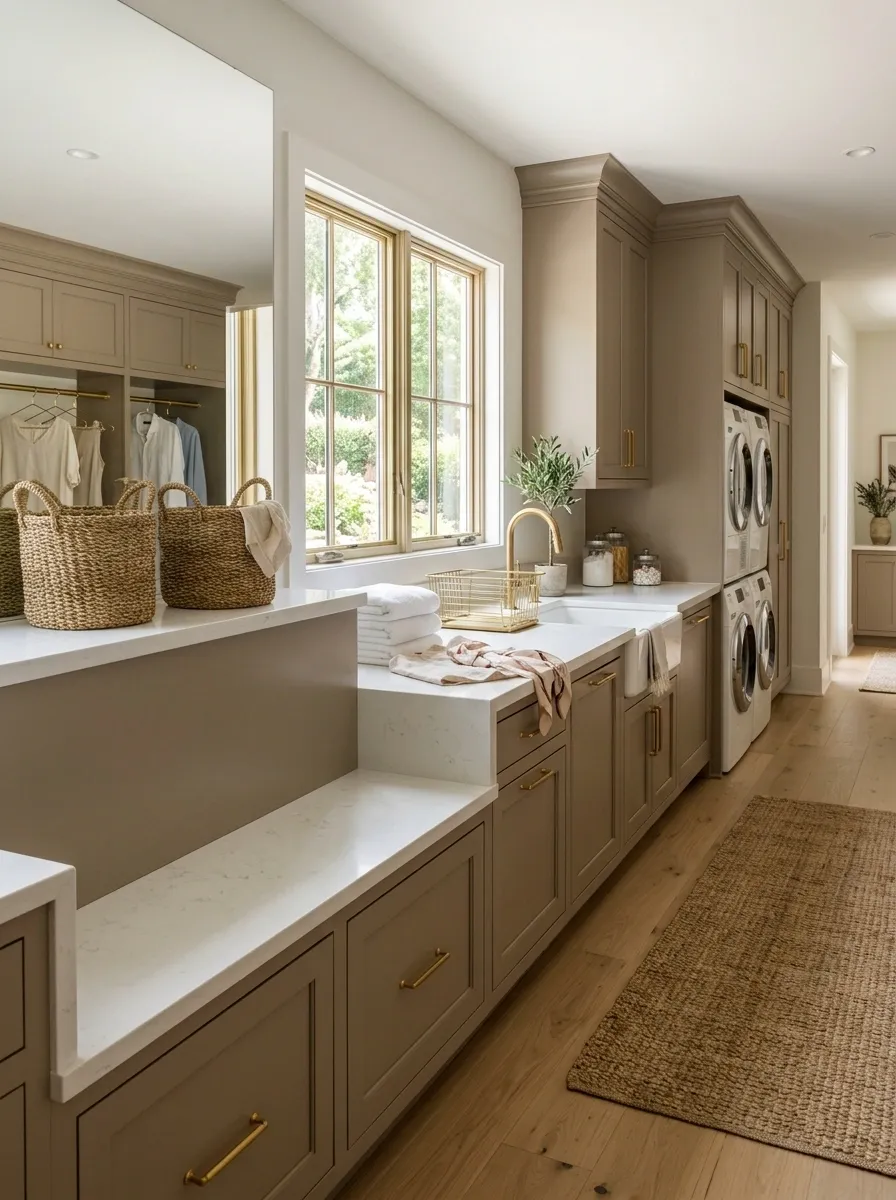
One flat surface doesn’t have to do every laundry job.
A split-level setup gives each task its own place. Keep the main counter at the comfortable folding height, then use a slightly raised section for sorting baskets, small items, or clothes waiting to be folded.
That separation keeps the center of the counter clear.
This idea works especially well in longer laundry rooms where you can create distinct zones without making the space feel crowded.
Make the lower section the main work area. The raised portion should support the workflow, not interrupt it.
Turn an Unused Side Wall Into a Fold-and-Sort Station
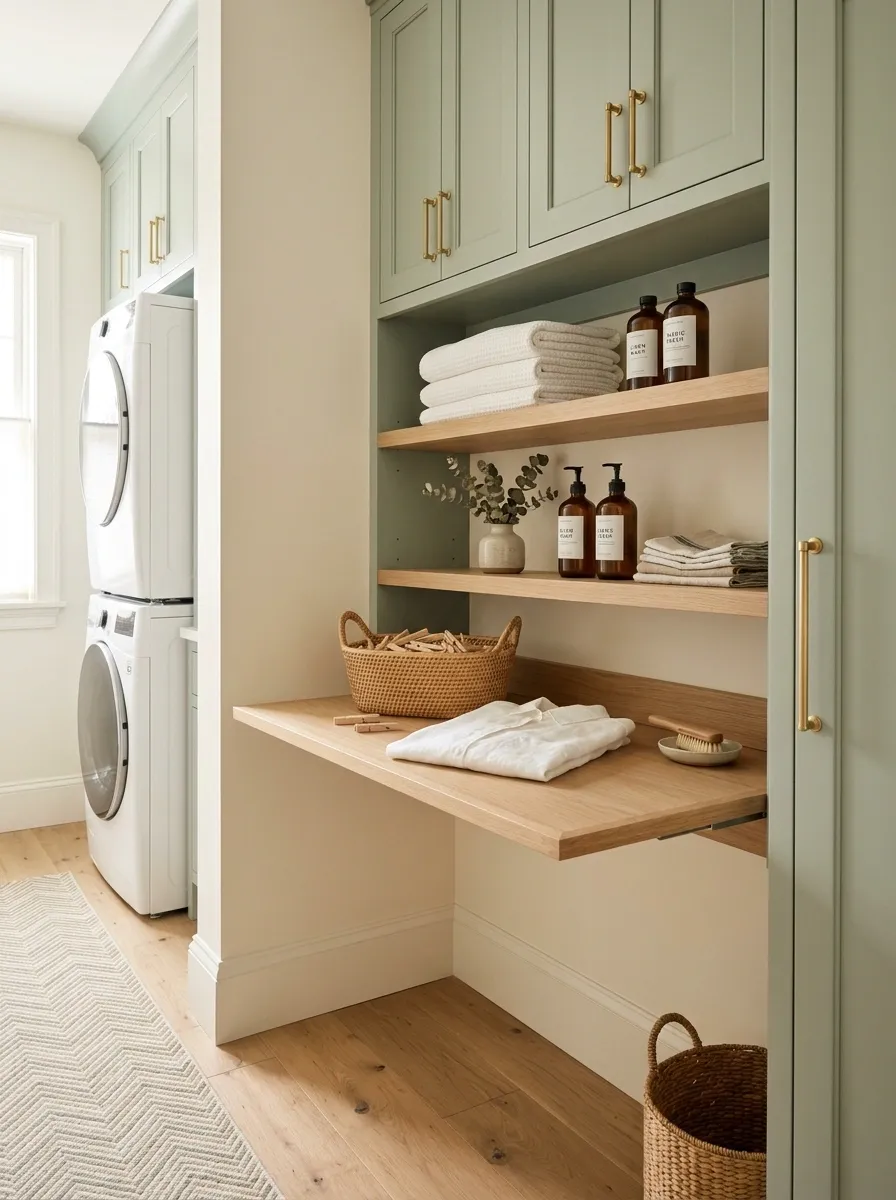
That narrow side wall may not be wide enough for a full cabinet, but it can still earn its keep.
Add a compact folding surface with wall-mounted storage above it and suddenly the forgotten wall becomes the room’s sorting station. This is a smart fix for laundry rooms where the machines already consume the main wall.
Keep the lower section open enough to stand comfortably in front of it.
Before installing anything, mark the footprint with painter’s tape. Stand in the room, open the doors, and walk around it. A design that works on paper can feel completely different once your body is in the space.
Use a Folding Table With a Raised Back Edge for Small Items
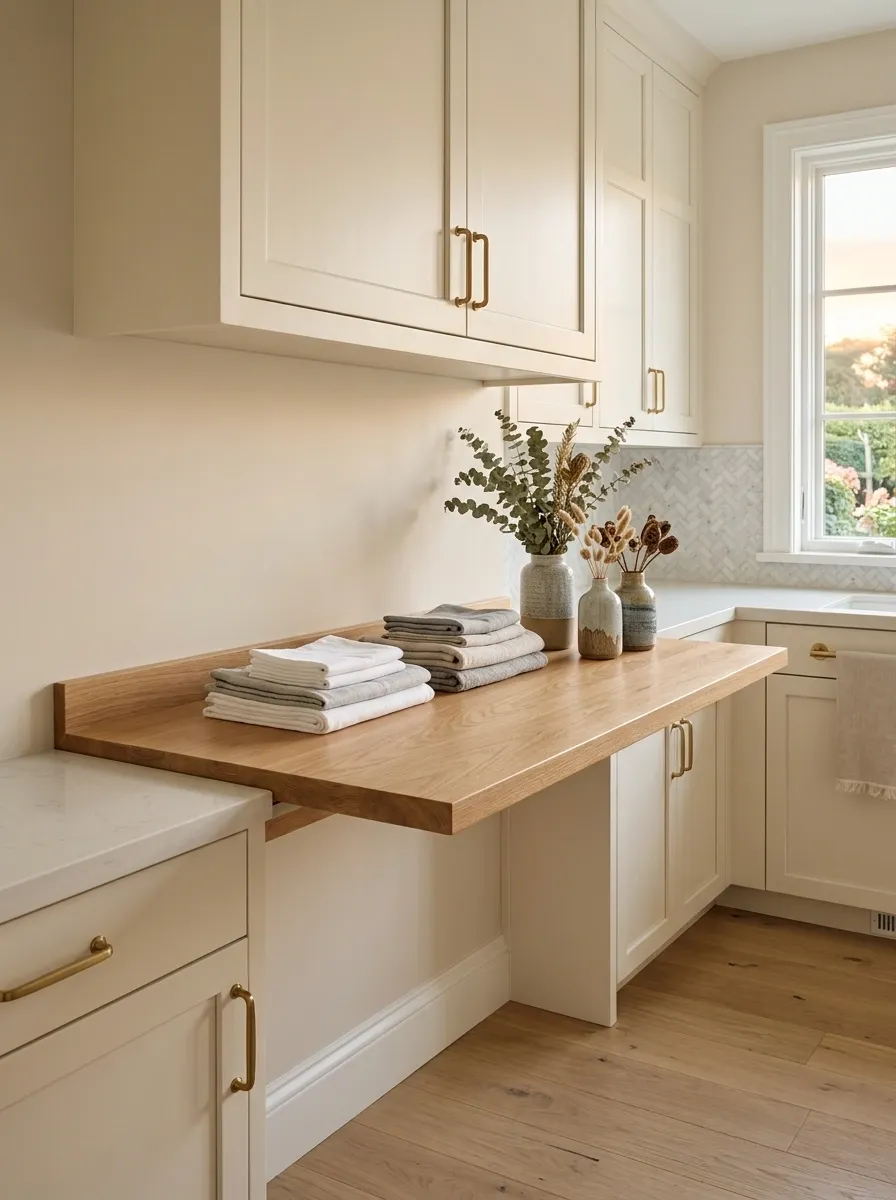
Small laundry pieces are the first things to disappear.
Socks slide off counters. Clothespins roll toward the floor. A small raised edge at the back of the folding surface can stop those little annoyances without turning the table into a box.
This detail is especially useful when the counter sits against an open wall and you regularly handle small garments.
Keep the raised edge subtle.
You don’t need a high barrier. You just need enough of a lip to keep lightweight items from migrating behind the machines or disappearing between furniture.
Match the Folding Counter to the Cabinets for a Built-In Look
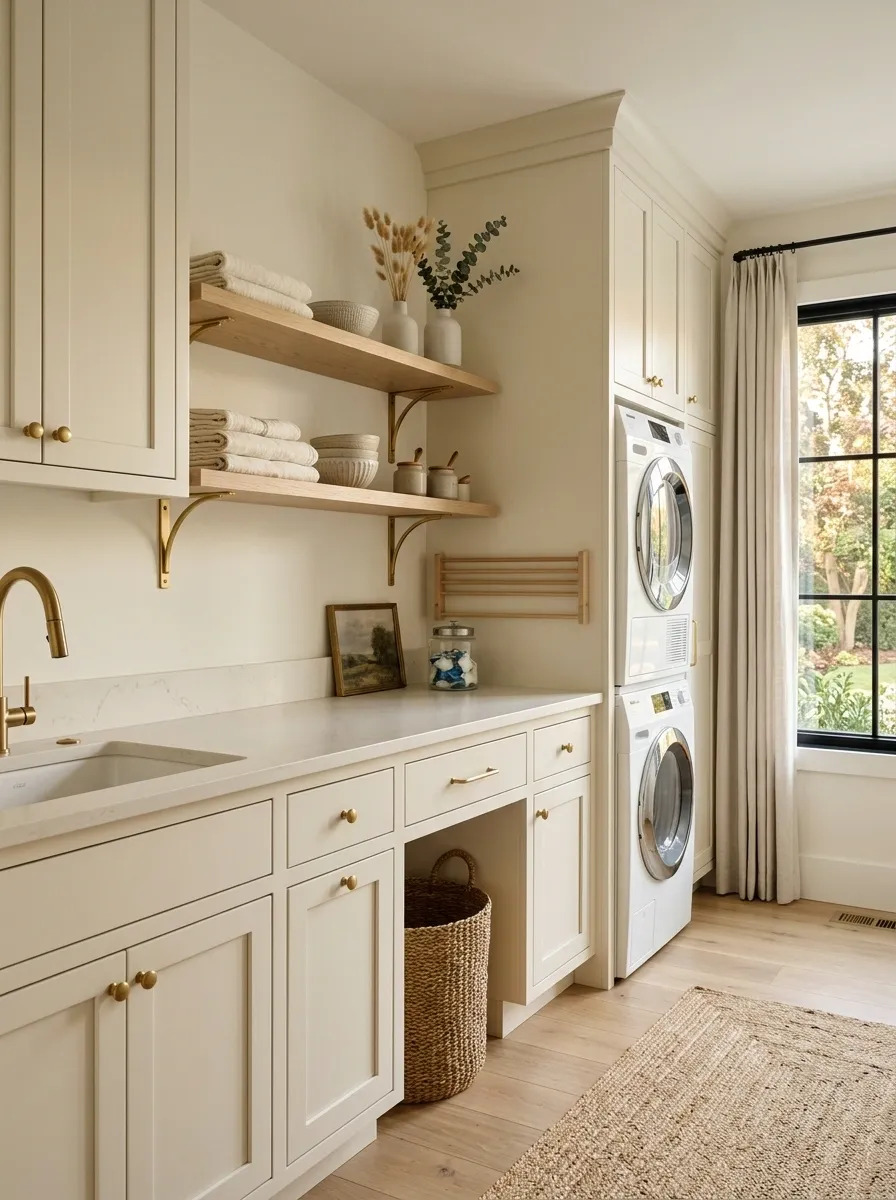
A folding counter feels custom when its finish belongs to the rest of the room.
Match the countertop to your cabinets, repeat the cabinet hardware, or use the same wood tone somewhere else in the laundry area. These small connections make a simple folding station look like it was designed with the room from the beginning.
You don’t need every finish to match perfectly.
Aim for repetition, not sameness.
A wood counter with natural shelves, for example, can connect visually even when the tones aren’t identical. The eye reads the repeated material and the room feels more deliberate.
Create a Full Laundry Workstation Instead of Just a Folding Table
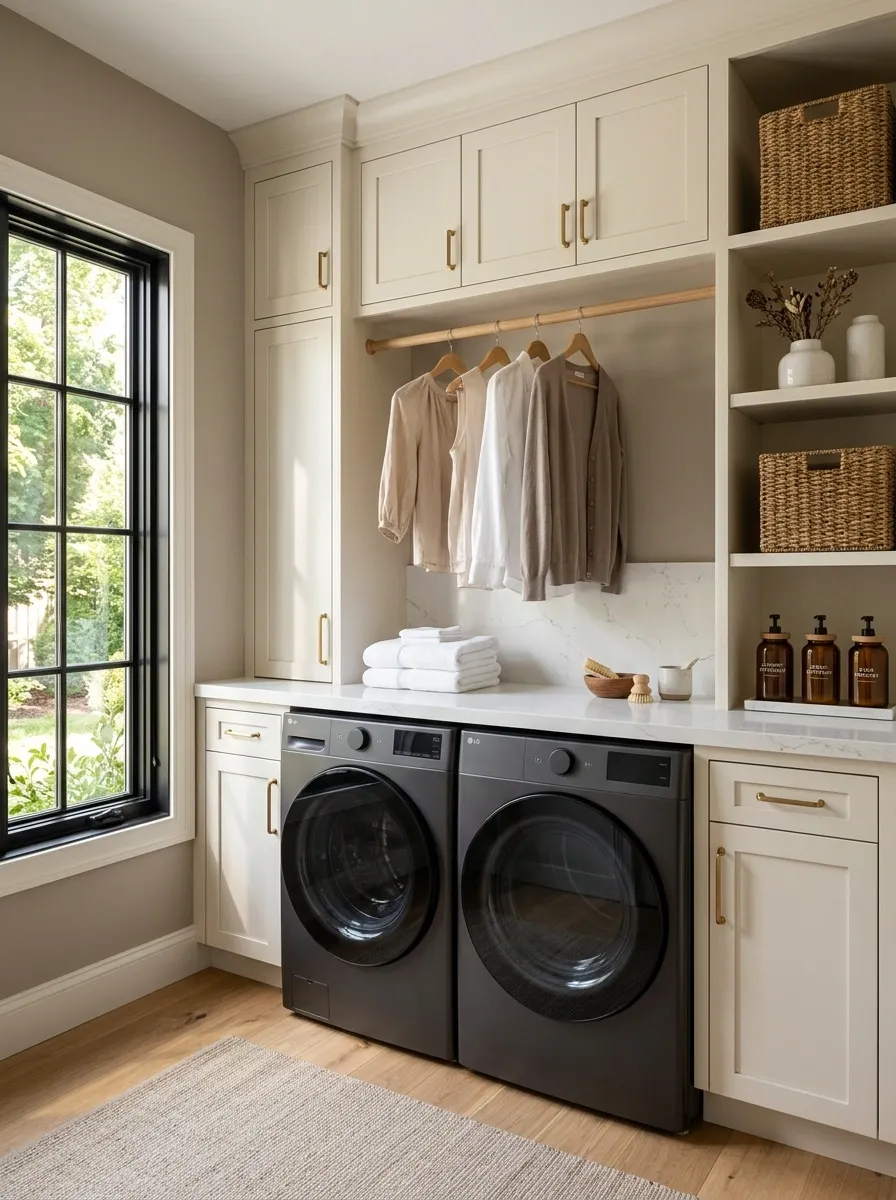
The strongest laundry rooms don’t treat folding as a separate activity.
They build the whole workflow around it.
A full workstation can combine a folding counter, baskets, cabinets, hanging space, a sink, drying rails, or an ironing station depending on the room. The folding surface becomes the center of that system rather than a lonely table added afterward.
You don’t need every feature.
Start with the jobs you actually do every week. Give those jobs permanent homes, then remove anything that constantly gets in their way.
The winning formula is simple: clean laundry lands, gets sorted, gets folded, gets stacked, and leaves without crossing the whole house.
The Best Folding Table Is the One That Removes a Step
A laundry room doesn’t need more furniture just for the sake of looking finished. It needs a surface that makes the next job obvious.
The strongest setup is usually the one that lets you pull clean clothes from the dryer, place them down, fold them without moving the pile, and keep the finished stacks contained until they’re ready to leave the room.
That could mean a full countertop over the machines. It could be a hidden panel inside a cabinet. It could be a narrow wall-mounted surface in a room that barely has any floor space.
Choose the layout that matches the way you actually do laundry.
And protect the main surface from clutter. A folding table that’s permanently covered with detergent bottles, baskets, and random household items isn’t really a folding table anymore.