
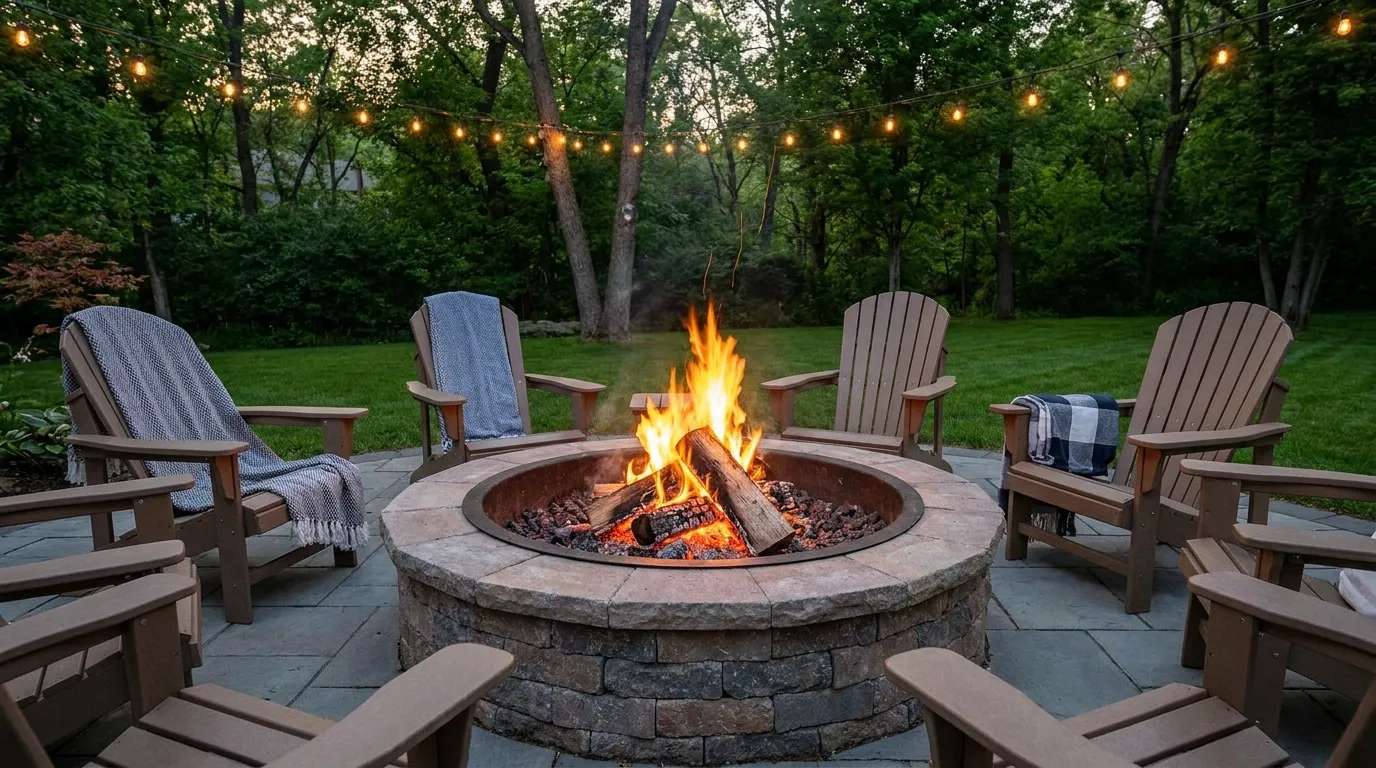
There is a fire pit sitting on bare grass in someone’s backyard right now. No base. No defined area around it. Just a bowl of fire dropped onto a lawn like an afterthought. The owner is wondering why it feels incomplete. The answer is that a fire pit is not a destination on its own. It is the center of a destination. The difference between a fire pit and a fire pit area is everything.
What you sit on, what surrounds you, what’s overhead, what’s underfoot — these things determine whether your backyard feels like somewhere worth being after dark. The fire is the easy part. It’s the room around the fire that most people never build.
Every setup in this list understood that. None of them stopped at the pit.
The Ground Beneath The Fire
The surface under a fire pit area is the decision that changes the entire feeling of the space. Grass is not a surface. Grass is what you’re replacing.
Gravel As The Base Material
Pea gravel and decomposed granite are the most common choices for fire pit areas, and they earn that status. They’re non-combustible. They drain completely. They require no maintenance beyond occasional raking. They give the seating area a defined footprint that reads as intentional from any angle.
The shape of the gravel pad matters as much as the material. A perfect circle works. So does a generous irregular oval. What doesn’t work is a square that’s too small — the chairs end up half on the gravel and half on the grass, and the whole thing looks like it was measured poorly.
Depth matters too. Less than two inches and the gravel migrates underfoot constantly. Three to four inches creates a stable surface that stays put and looks like a finished install rather than material dumped from a bag.
Paving Stone And Flagstone
For fire pit areas attached to or near a house, hardscaping with pavers or irregular flagstone creates a more permanent and finished feel. Concrete pavers in large format reads as modern. Natural flagstone — limestone, bluestone, travertine — reads as traditional or cottage. The fire pit sits on the paving; the seating surrounds it; the whole thing looks like something that was designed rather than assembled.
Raised patio platforms with stone retaining walls take this further. The elevation change gives the fire pit area a sense of place within the larger yard. It says: this is a room. It just happens to be outside.
The No-Surface Decision
Some fire pit areas work without any dedicated surface — a fire ring set in a lawn with chairs pulled up around it. This works when the chairs are pulled back far enough, the fire ring is properly built, and the surrounding lawn is clean and well-maintained. The lawn itself becomes the floor. It’s a legitimate choice, especially for rural or semi-rural settings where the yard is large and formality would feel wrong.
Choosing The Right Fire Element
The fire pit itself is not a neutral object. It has a style. It has a scale. It should match the architecture of the house and the character of the space around it.
Gas Versus Wood
Gas fire pits offer immediate ignition, controllable flame, no smoke, and no ash cleanup. They work for settings where the fire is background ambience rather than the main event — sitting and talking, not stoking and tending. The flame often burns blue at the base, which reads as clean and modern.
Wood fires do something gas cannot. They smell like fire. They crackle. They demand participation — someone has to tend them, add wood, manage the coals. For spaces designed around gathering and activity, the wood fire is the more social choice. It gives people something to do.
Scale Relative To The Seating
The fire pit should be proportionate to the seating around it. A small bowl fire pit surrounded by six chairs reads as underpowered. A massive fireplace-scale feature with two chairs beside it reads as overbuilt. The seated viewer should feel warmth at face and chest level, not have to lean in or lean away. As a rough guide, the diameter of a comfortable fire pit seating circle is roughly four times the diameter of the fire pit bowl or table.
Built-In Versus Freestanding
A built-in fire pit — whether concrete, stone, or masonry — becomes part of the yard permanently. It requires planning, installation, and a real investment. It also pays that investment back in permanence, quality, and the sense that the space was designed as a whole.
A freestanding bowl or table fire pit can be repositioned, replaced, or removed. It allows flexibility. It’s the right starting point for any yard where the long-term layout isn’t yet fixed.
Backyard Fire Pit Ideas
Pergola With Hanging Egg Chairs
Build a cedar pergola roughly fourteen feet wide with an open-top beam structure. Hang two to three wicker egg chairs from the overhead beams using industrial-grade hooks and rated chain. Around the fire pit at the center of the gravel pad below, place additional Adirondack chairs or log seats to accommodate more people. Run globe string lights along the perimeter beams. The hanging chairs become the focal seating pieces while the standard chairs handle overflow. At night with the fire going and the lights on, the egg chairs swaying gently above the fire create something that looks completely unlike a standard backyard.
Adirondack Circle On A Gravel Pad
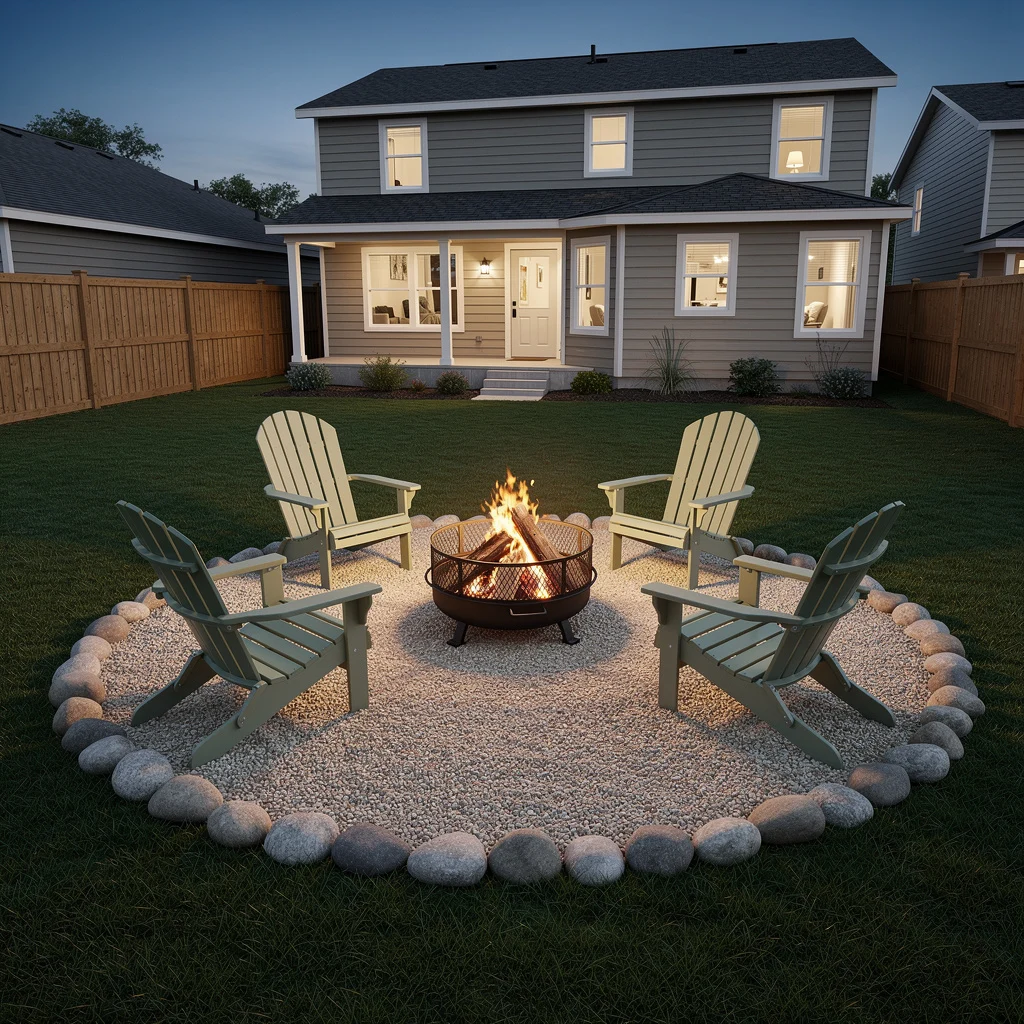
Mark a circle roughly twelve to fifteen feet in diameter in your lawn using a stake and string. Excavate to three inches. Lay landscape fabric. Fill with pea gravel or fine white stone. Edge with large river boulders set directly on the soil line. Place a steel mesh wood-burning fire bowl on three legs in the centre. Surround with Adirondack chairs in a single colour — sage green, charcoal, or natural wood all work — at even spacing. This is the most approachable fire pit setup in terms of cost and skill, and when done with the right scale and edging detail, it looks completely deliberate.
Compact Tropical Deck Setup
On a small deck built from composite or hardwood decking, position a Corten steel fire bowl over a section of slate or gravel set directly into the deck surface as a fireproof base. Angle a teak or iroko bench and one armchair toward the fire in a loose L. Allow tropical or lush foliage — large-leafed plants, palms, or a fig standard tree — to grow right up to the perimeter of the deck so the seating area feels contained within greenery. Paint the fence behind in a dark charcoal or nearly-black tone so the foliage reads against it. The dark fence, the warm wood, the green abundance, and the fire bowl in the centre create a scene that looks nothing like a typical suburban backyard.
Modern Sectional With Concrete Fire Table
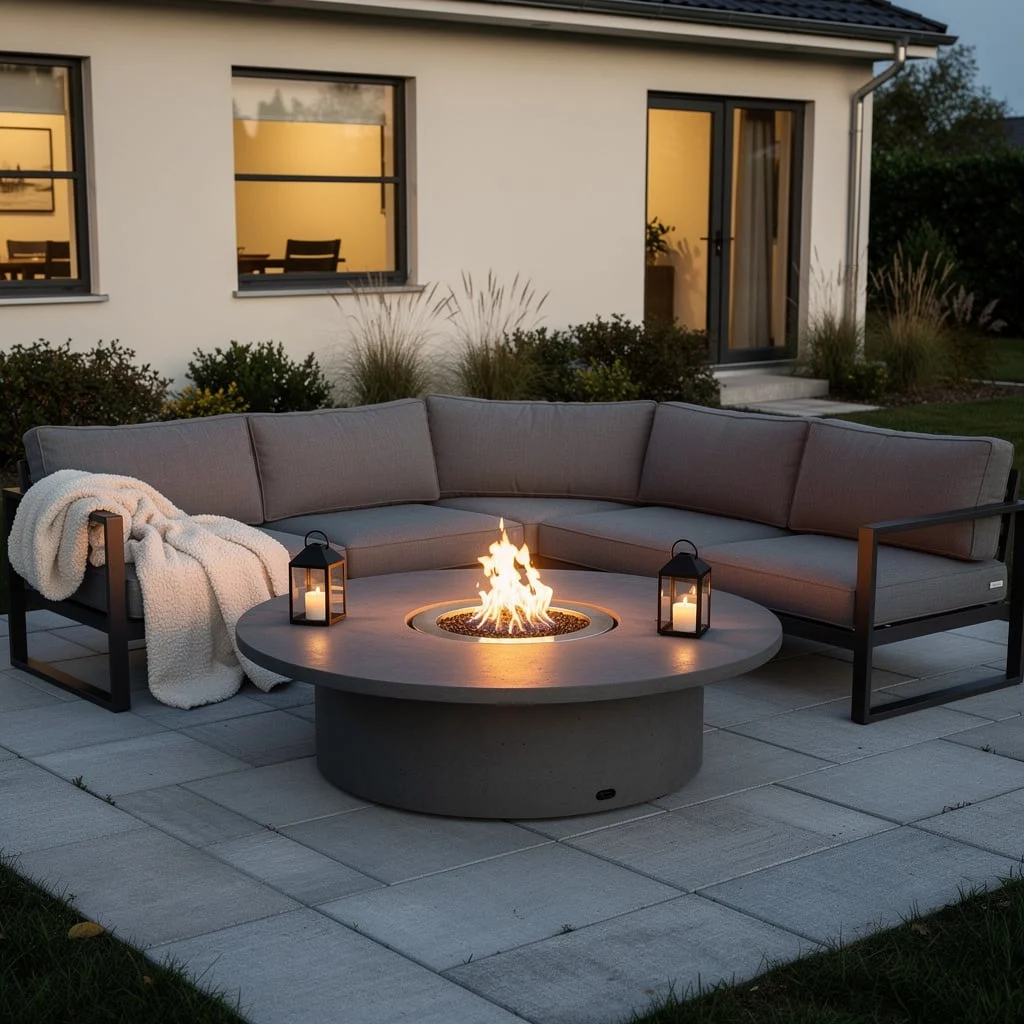
Pour or purchase a low cylindrical concrete fire table — the kind with a recessed gas burner in the centre — and surround it with a three-sided outdoor sectional sofa in a warm greige or linen fabric. The sofa’s L or U shape wraps the fire table on three sides, creating containment without enclosure. Frame the entire setup on large-format concrete pavers. Add two or three black metal lanterns on the fire table surface beside the flame. The sectional cushion fabric should be weatherproof; don’t compromise on this. The whole setup reads as a living room that forgot it was outside.
Cottage Garden Fire Circle
Build a circular brick-edged path using salvaged red brick, set in a gentle arc at the perimeter of a gravel fire pit area. Let low-growing perennials — daisies, creeping thyme, catmint — spill over the brick edge from the surrounding beds onto the path. Use a gas fire ring built from stacked natural stone at the centre of the gravel circle. Pull weathered Adirondack chairs with floral-print cushions around it in a loose arrangement. Let the plants grow as informally as they want around the seating edge; the abundance of the cottage planting is what makes the tidiness of the gravel centre feel intentional by contrast.
Fire Pit In Ornamental Grass Enclosure
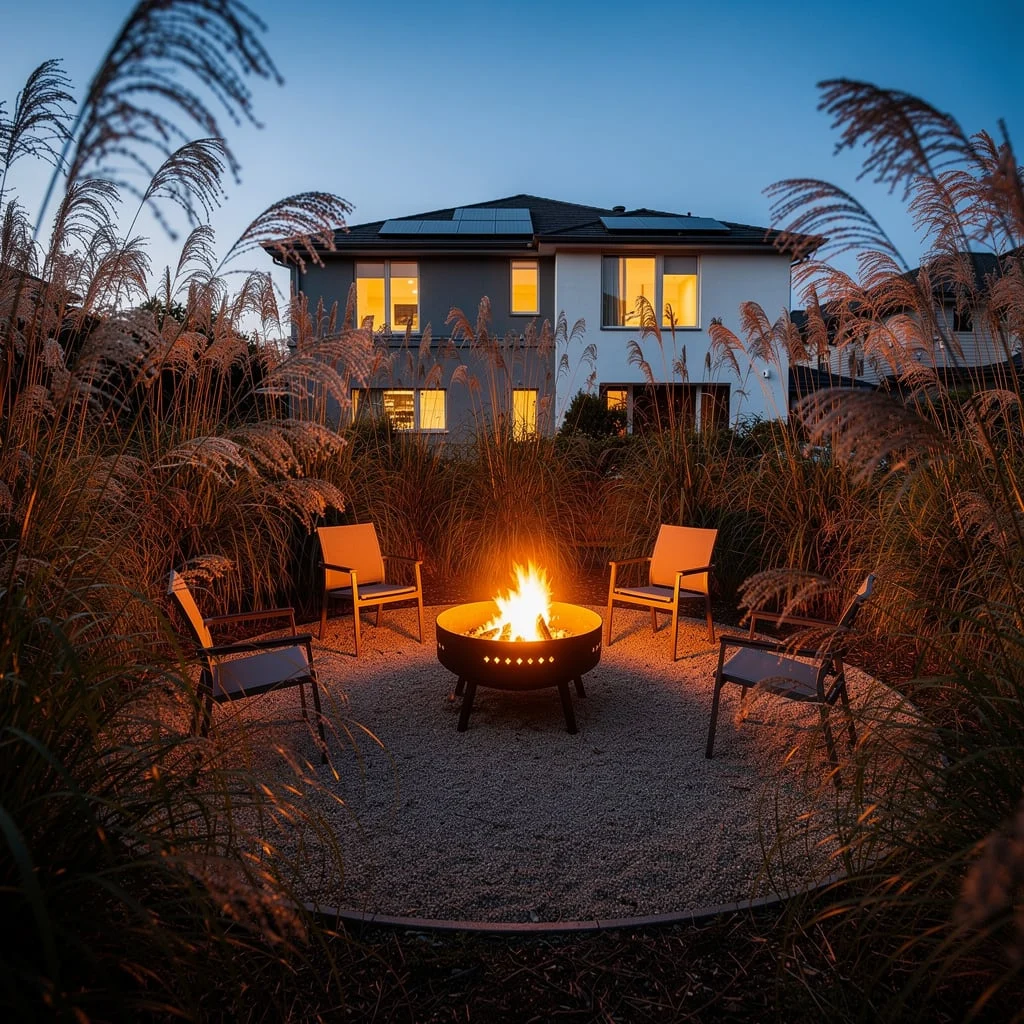
Plant a ring of tall ornamental grasses — miscanthus or Maiden grass varieties that reach five to six feet — in a wide circle around a central gravel pad. Allow two or three seasons for the grasses to fill in and create an enclosed room effect. Inside the grass ring, set a steel or cast iron fire bowl on the gravel and arrange four simple sling chairs around it. At dusk, when the grasses catch the firelight and move in any available breeze, the space becomes something you couldn’t manufacture with hard materials. The enclosure is entirely living. The ceiling is the sky.
Sunken Concrete Circle With Cushioned Bench
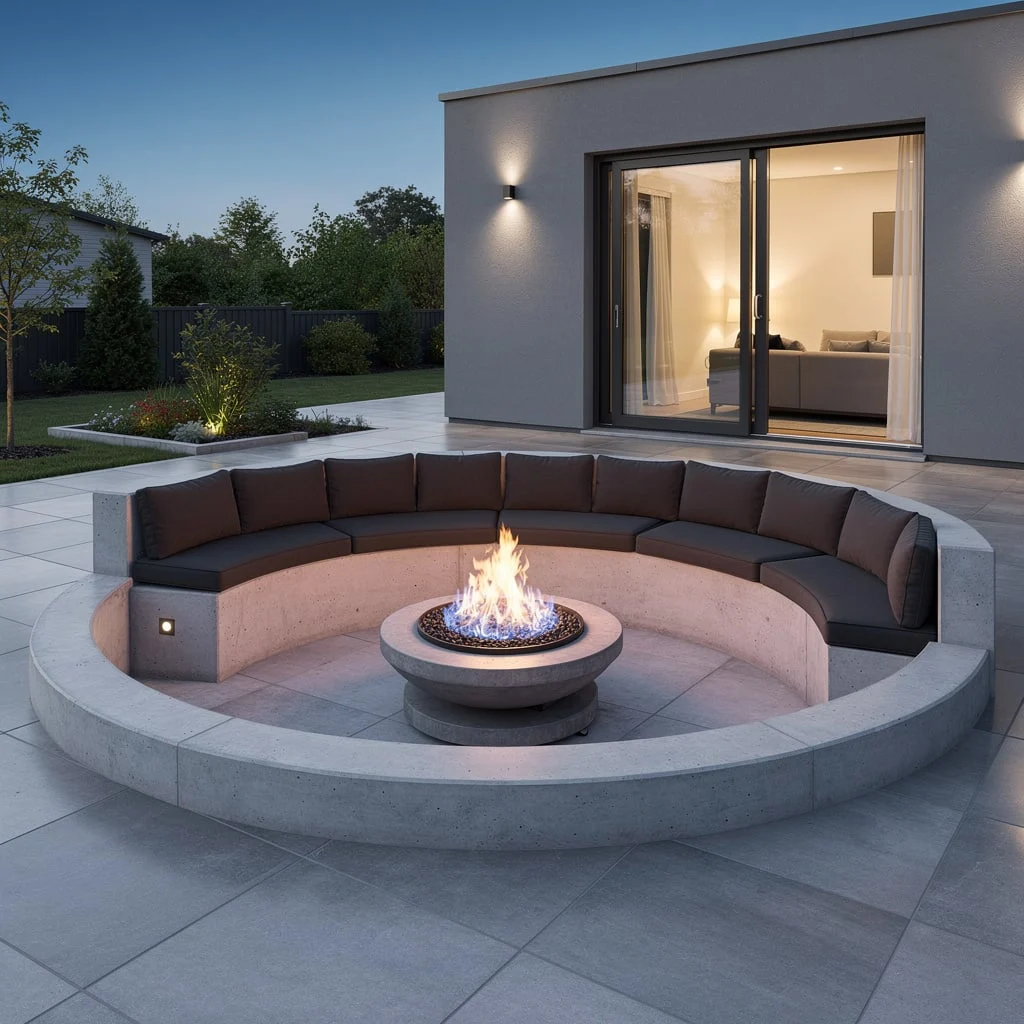
Pour a circular concrete retaining wall — roughly twelve to fourteen inches tall — forming a near-complete circle open at one end for entry. Inside the circle, pour a concrete bench seat that follows the inner wall, and top with fitted outdoor cushions in charcoal or dark brown. In the centre, install a low concrete gas fire bowl. Finish the patio surface inside and outside the circle in large grey concrete tiles. The result is a fire pit room that is architecturally part of the yard — not furniture sitting on the yard, but a room built into it. The entry gap gives the circle a sense of orientation rather than being a closed loop.
Fruit Tree Fire Circle
Tuck a fire pit area into a corner of the yard anchored by two or three mature fruit trees — orange, lemon, or apple — which provide both canopy and the backdrop scent that no landscaping can replicate. Use pea gravel or decomposed granite as the base. Set a round concrete gas fire bowl at the centre. Surround with four black-painted Adirondack chairs in a tight circle. Run a single string of globe lights low across the fence line behind the trees. The fruit hanging in the canopy, the warm light catching it, the chairs in a close circle on the gravel — it’s the fire pit area that looks least designed and most arrived at.
Cedar Pergola With Fire Pit And String Lights
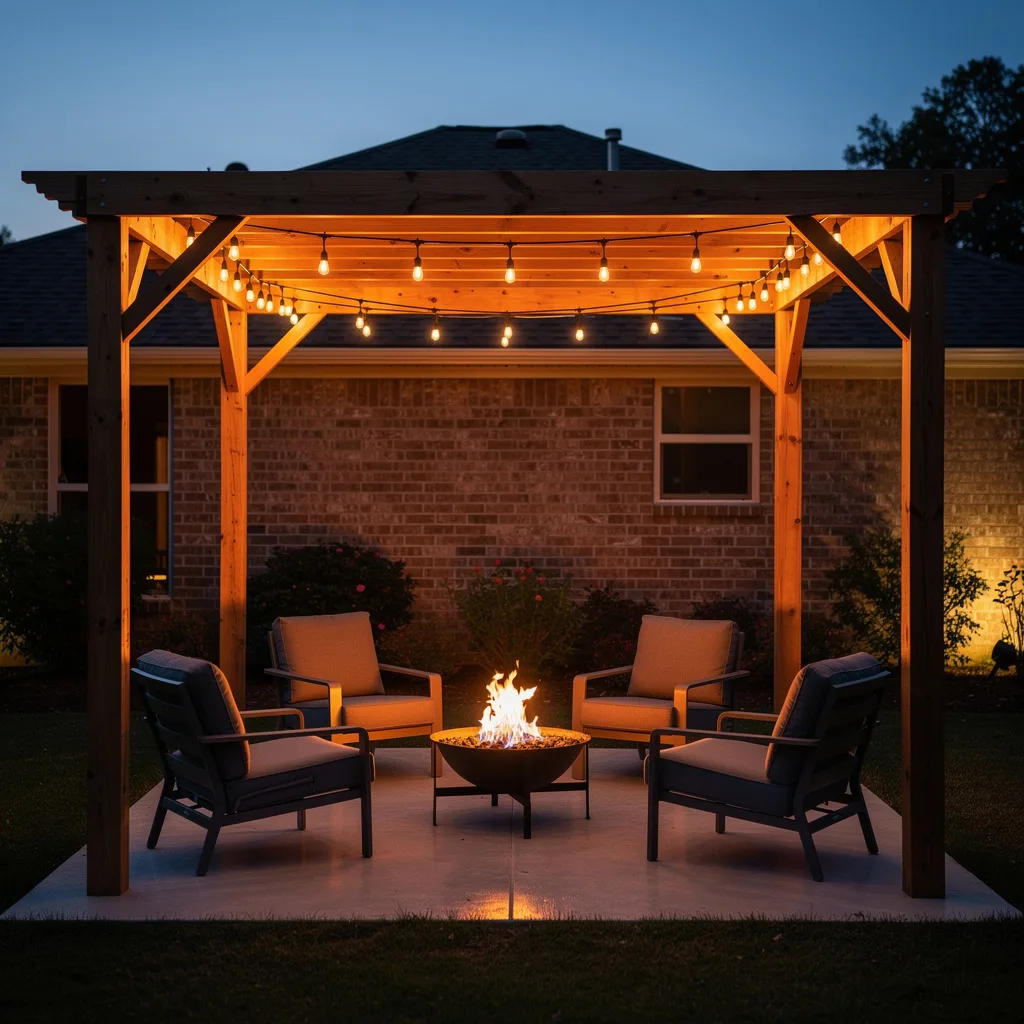
Build or purchase a four-post cedar pergola approximately ten by ten feet. String Edison bulb lights back and forth across the top rafters at six-inch drop intervals so the interior glows amber from above. On the concrete slab below, place a black steel fire bowl on low legs in the centre, and surround with two or four outdoor club chairs with upholstered cushions in dark fabric. The pergola defines the space without enclosing it. The open sides mean the fire doesn’t create smoke buildup. The string lights mean the space is as usable when the fire is off as when it’s burning. This is the setup that looks most like an outdoor room.
Fieldstone Ring With Log Stump Seats
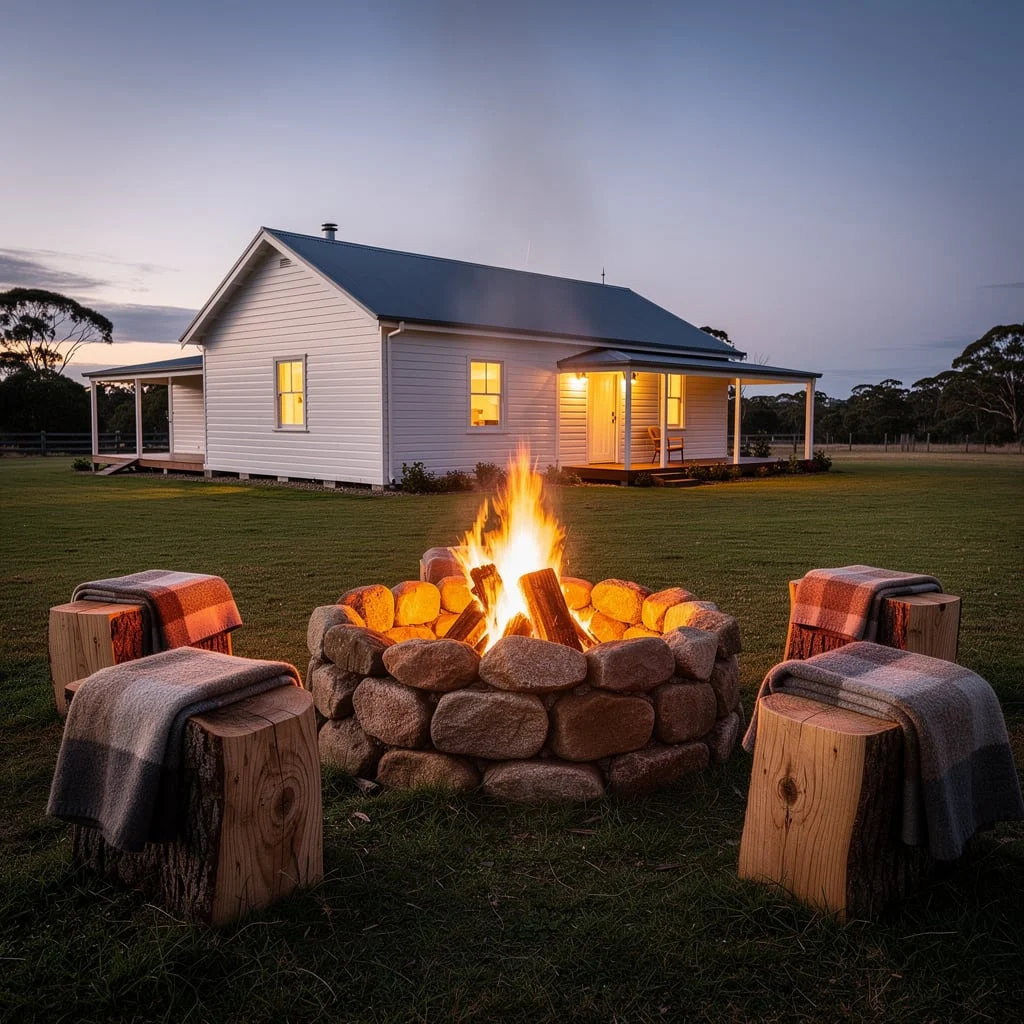
Build a stacked fieldstone fire ring roughly three feet in diameter and two feet high from natural collected or purchased stone, without mortar if you prefer a DIY approach. Set it directly in a lawn. Pull up four to six sections of large timber log ends — flat-cut sections of trunk roughly twelve to fourteen inches in diameter and eighteen inches tall — as seats around the ring. Drape plaid wool blankets over each log seat. The entire setup is materials you either collect or buy once, and it looks like it belongs in a farm setting in a way that purchased fire bowls cannot replicate. This is fire at its most elemental.
Fire Pit And Outdoor Cinema
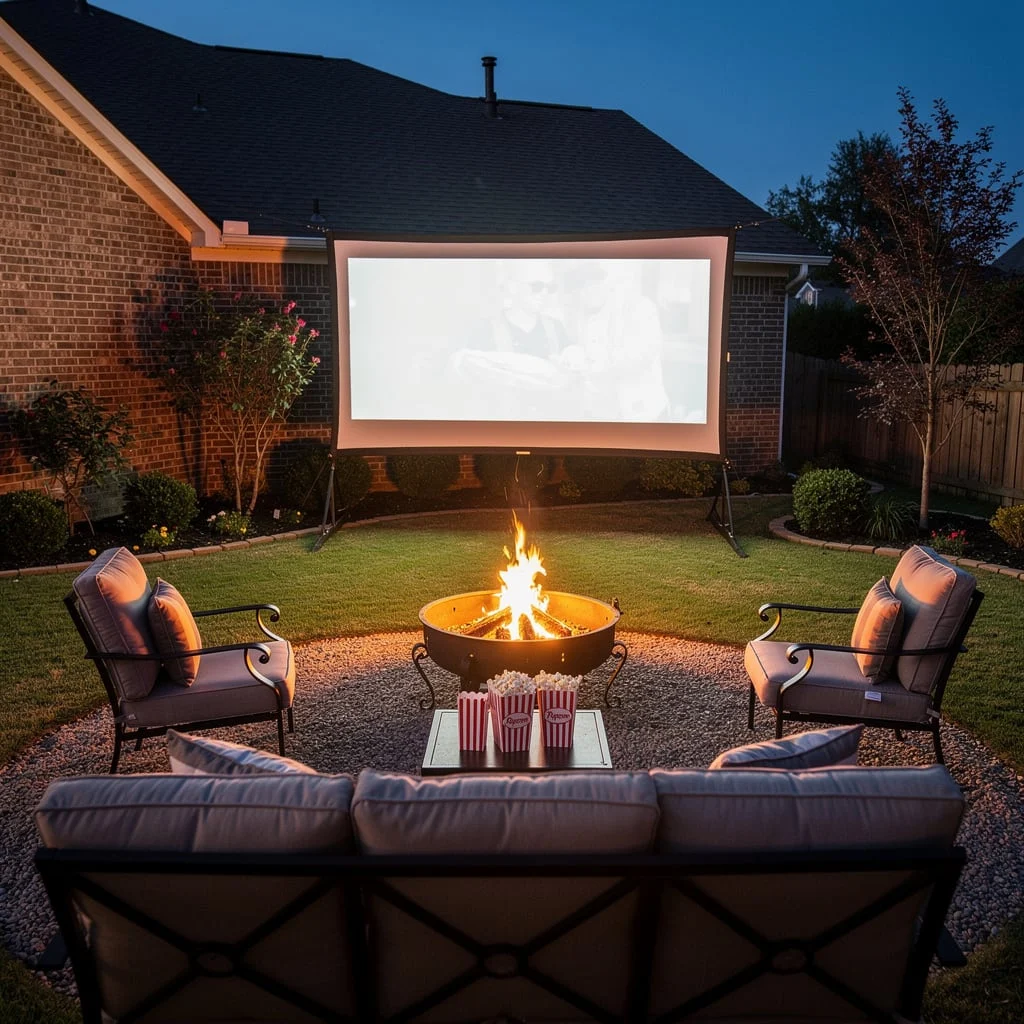
Set up a gravel pad with outdoor club or lounge chairs in a facing arrangement — all chairs oriented in the same direction rather than circling the fire. Place a large iron fire bowl between the seating and the projection screen, positioned so it provides warmth without blocking sight lines to the screen. Mount a standalone projection screen against a wall or fence at the far end of the yard. The fire is a companion element here, not the focal point — it provides warmth and glow while the screen provides the main event. For late summer evenings, this arrangement is difficult to improve upon.
Stacked Masonry Ring With Mixed Seating
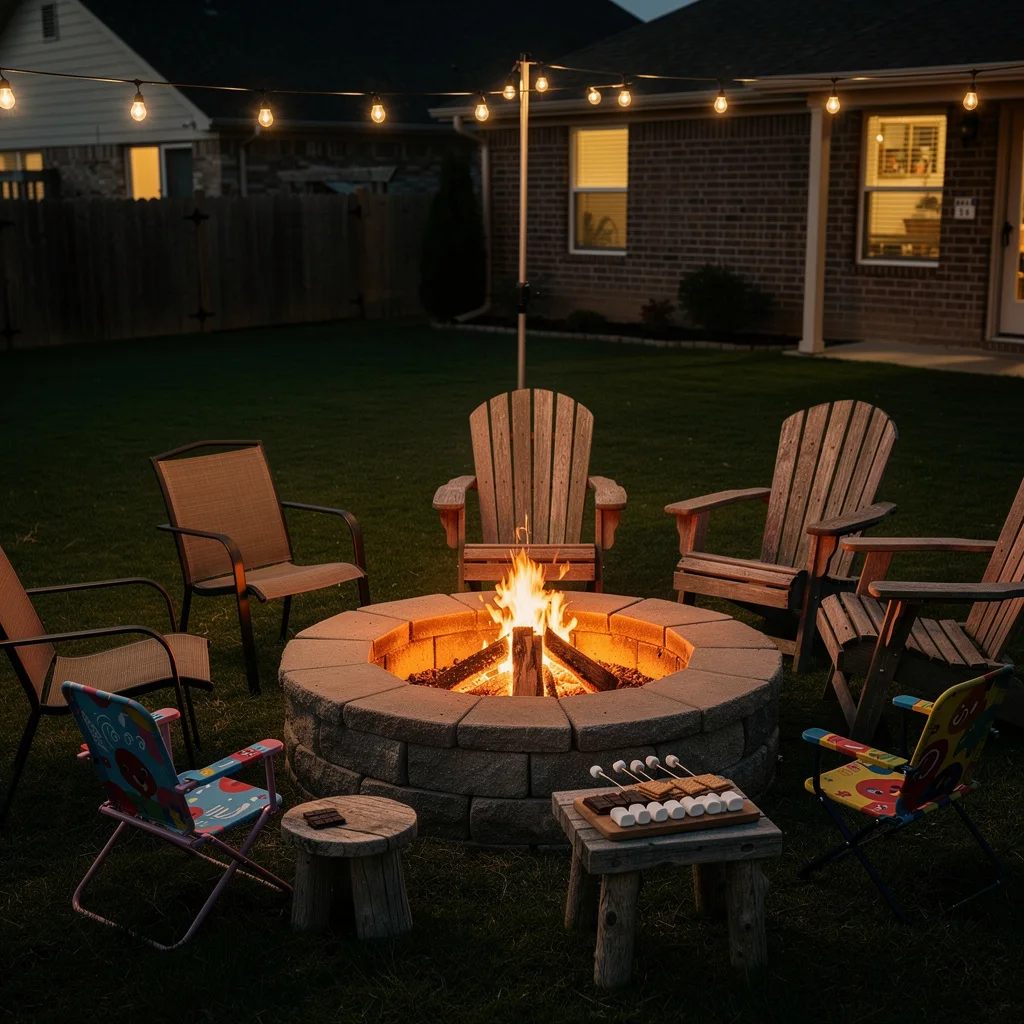
Build a circular masonry fire ring from interlocking retaining wall blocks — the kind sold at hardware stores in grey or tan — at roughly three feet high and three feet in diameter. Surround with a combination of Adirondack chairs, a two-seater bench, and smaller children’s camp chairs. Add two low wooden side tables between chairs for drinks and s’more supplies. Hang a single globe light string from a central pole to a fence or tree at the perimeter. The mix of seating types is the point — it accommodates whoever shows up. The masonry ring is permanent and solid. The seating arrangement changes as the occasion demands.
Raised Flagstone Patio With Corten Fire Bowl
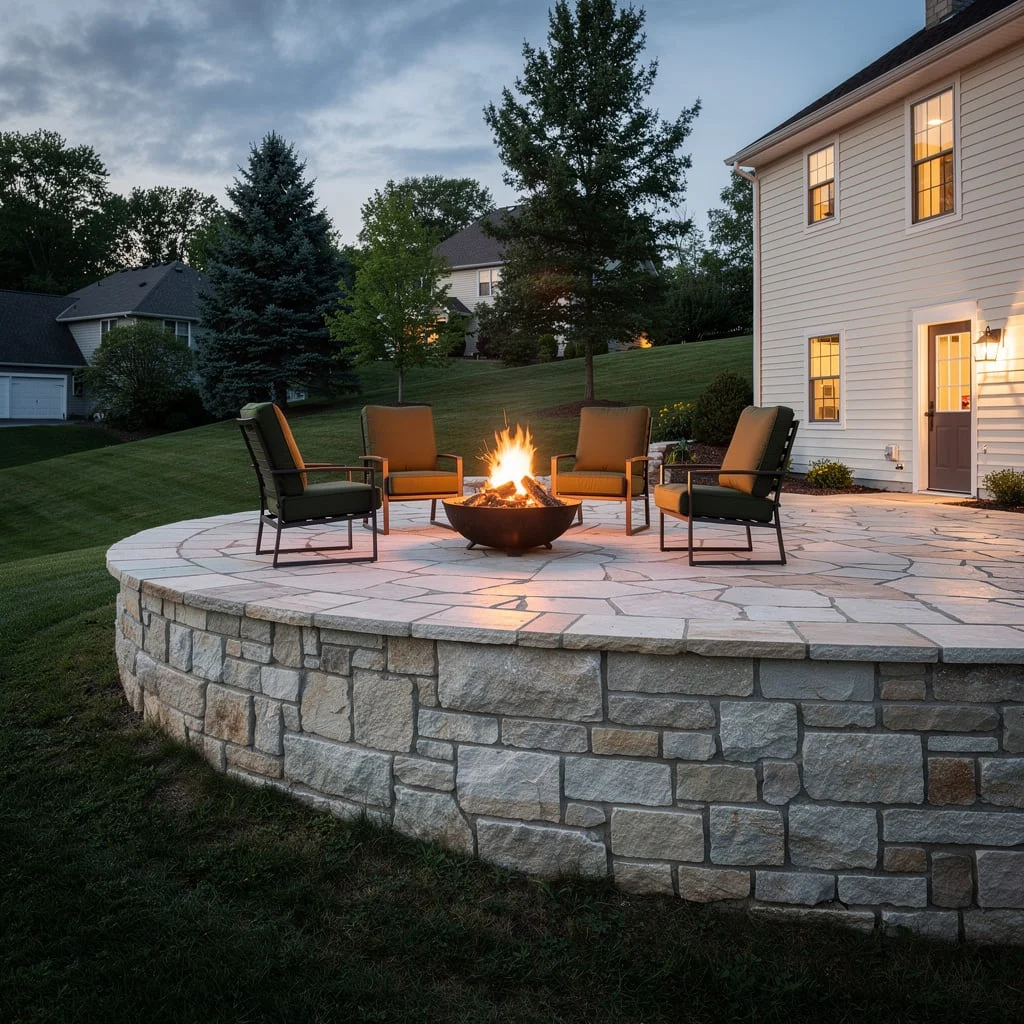
Build a raised patio platform using natural stone retaining walls at a height of twelve to eighteen inches above grade. Lay irregular flagstone across the surface. On the platform, place a Corten weathering steel fire bowl on simple legs in the centre, and arrange four outdoor chairs with warm-toned seat cushions around it. The raised platform makes the fire pit area visible from the house as a complete composition. The Corten steel takes on a rust-orange patina over time that works beautifully against natural stone. This is the most permanent and investment-heavy setup in the list, and the one with the longest visual payoff.
Water Wall With Gas Fire Pit
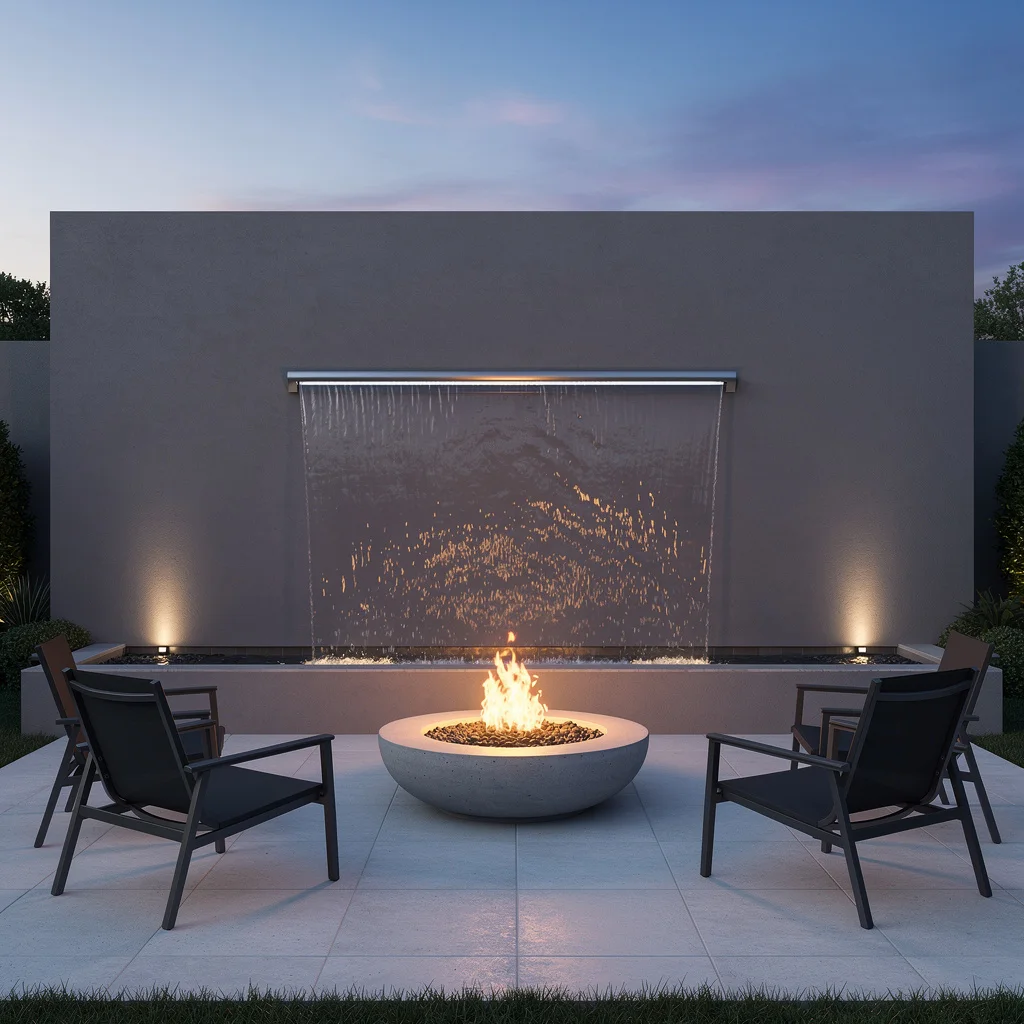
Install a large rendered masonry wall — smooth concrete or plaster finish in a warm grey — as a backdrop to a paved outdoor area. Mount a stainless steel blade water feature at mid-height on the wall, feeding into a long trough at the base. In front of the trough, on white or cream pavers, place a round concrete gas fire bowl at the centre of a simple four-chair seating arrangement in black powder-coated frames with dark fabric. The water and fire elements should be close enough to interact visually without competing. At dusk, the water catches the fire’s glow and the reflection across the trough surface does something no other combination in this list achieves.
Raised Cedar Planters With Square Brick Fire Pit
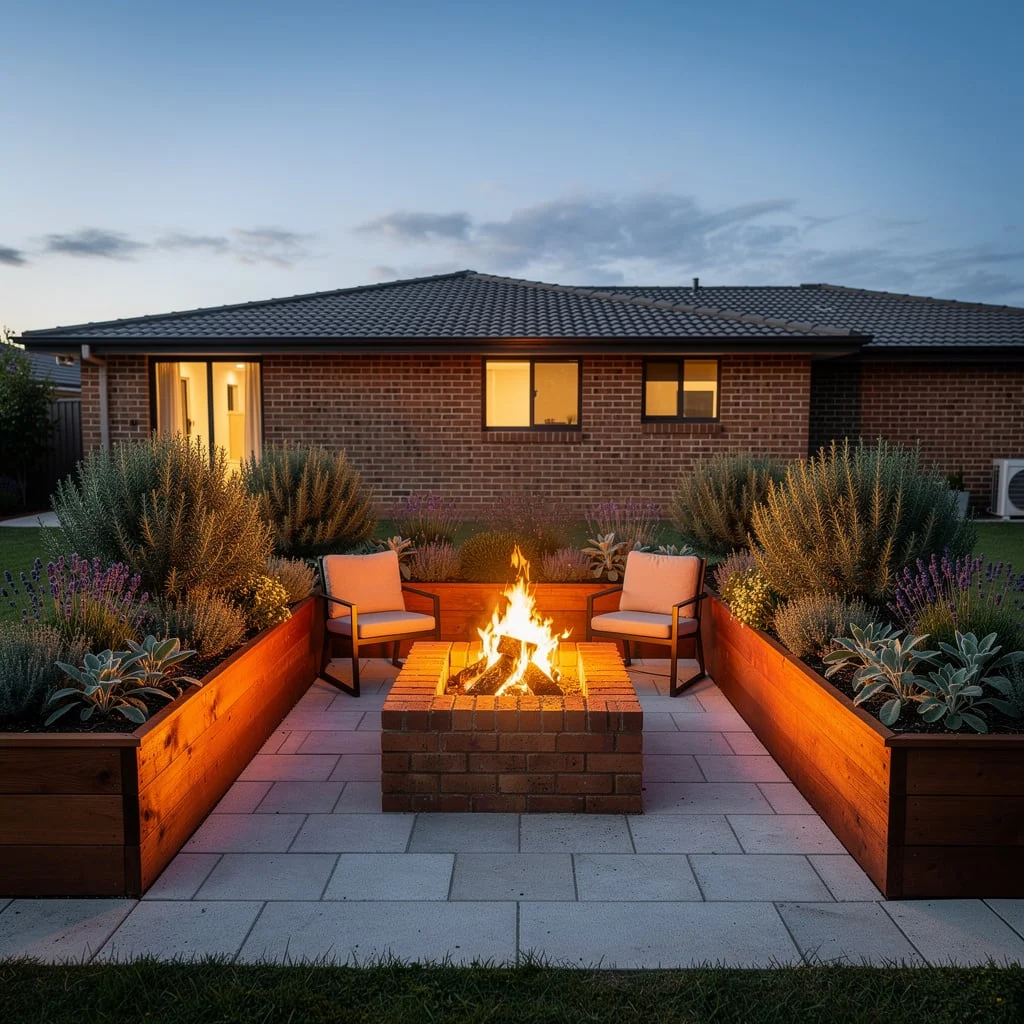
Build two long raised garden beds from cedar boards — the kind finished in a warm amber stain — on either side of a paved seating area, forming a U-shape enclosure. Plant the beds with lavender, sage, and rosemary so the seating area is surrounded by silver and grey foliage. In the centre of the pavers, build a square brick fire pit at roughly eighteen inches high from standard house bricks, leaving a small air gap at the base on each side. Set two cushioned outdoor chairs facing the fire. The scent of the aromatic herbs carries into the fire pit area especially on warm evenings.
White Render Courtyard With Sunken Garden
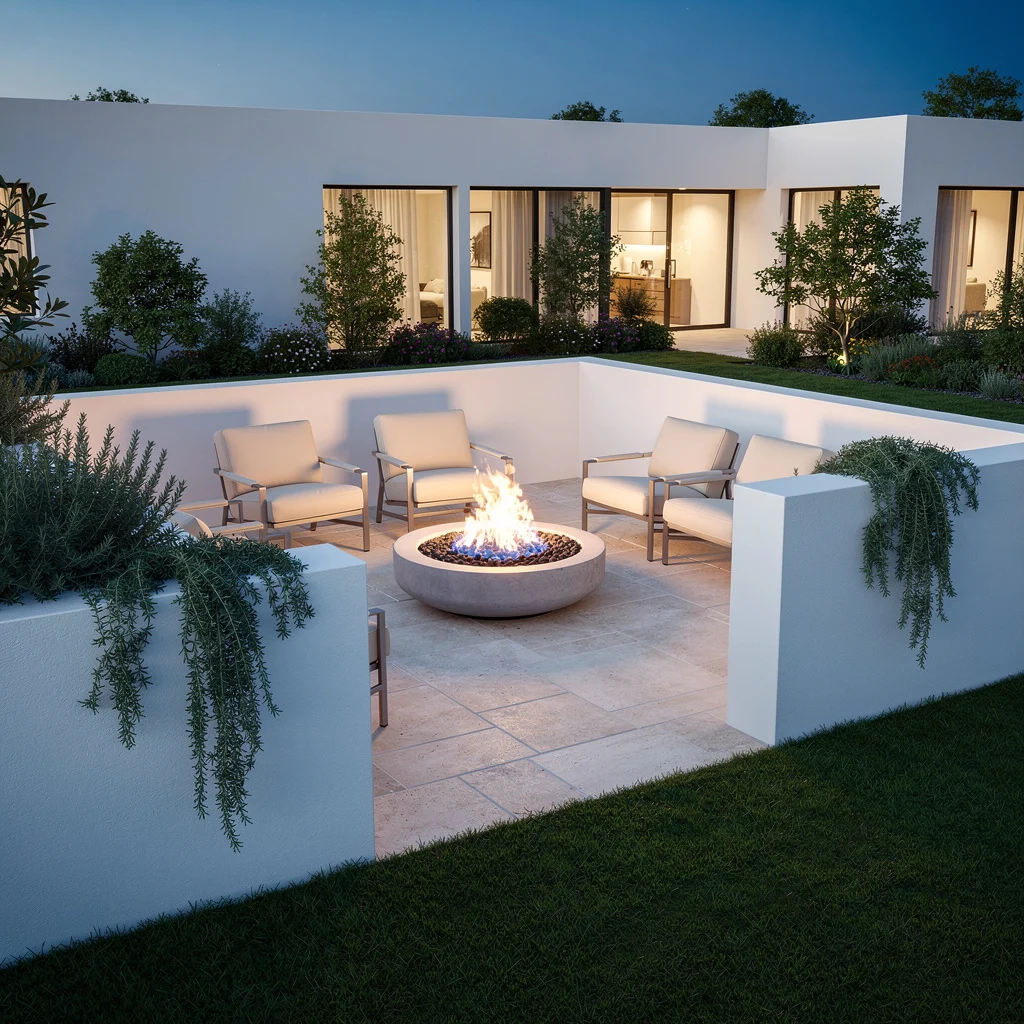
Build a three-sided low wall in rendered white concrete block forming a square courtyard open at one end. Inside the courtyard, lay travertine or limestone tiles. Set a concrete gas fire bowl at the centre and surround with cream-cushioned aluminium frame chairs. Allow trailing rosemary or creeping thyme to spill over the top of the white walls from planter pockets. The white render bounces the fire’s light back into the seating area, making the whole space glow. The enclosure provides wind protection and sound dampening. This setup is the most Mediterranean in character.
Globe Lights Between Trees With Stone Ring
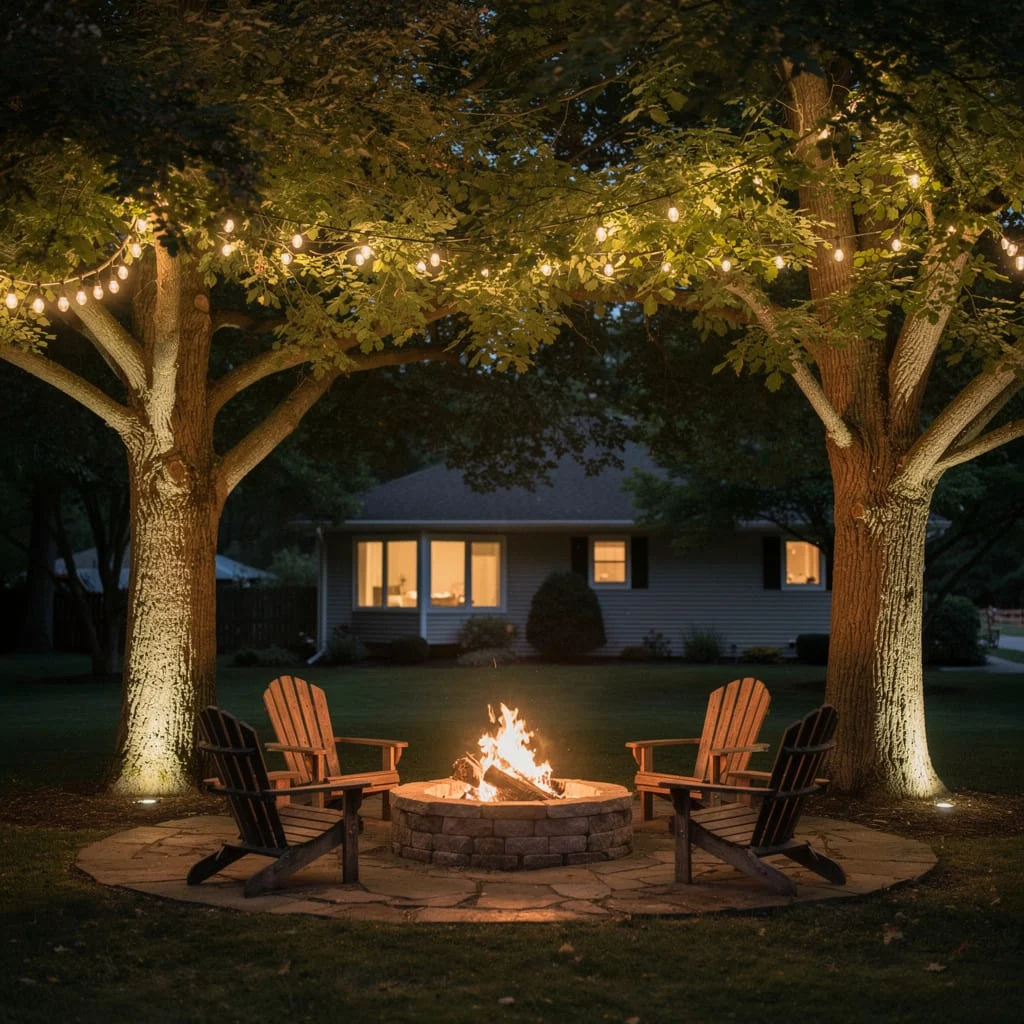
Use existing mature trees as the structure for a fire pit area. Wrap globe string lights between the trunks at a consistent height — roughly eight feet — so the canopy below is lit from above. On the ground between the trees, lay irregular flagstones in a loose circle. Build a medium stacked stone fire ring in the centre. Surround with Adirondack chairs facing the fire. The trees provide a natural ceiling. The string lights define the space at night. Nothing has to be built or purchased beyond the fire ring materials and the lights; the structure already exists.
Hammock Posts Around A Steel Bowl
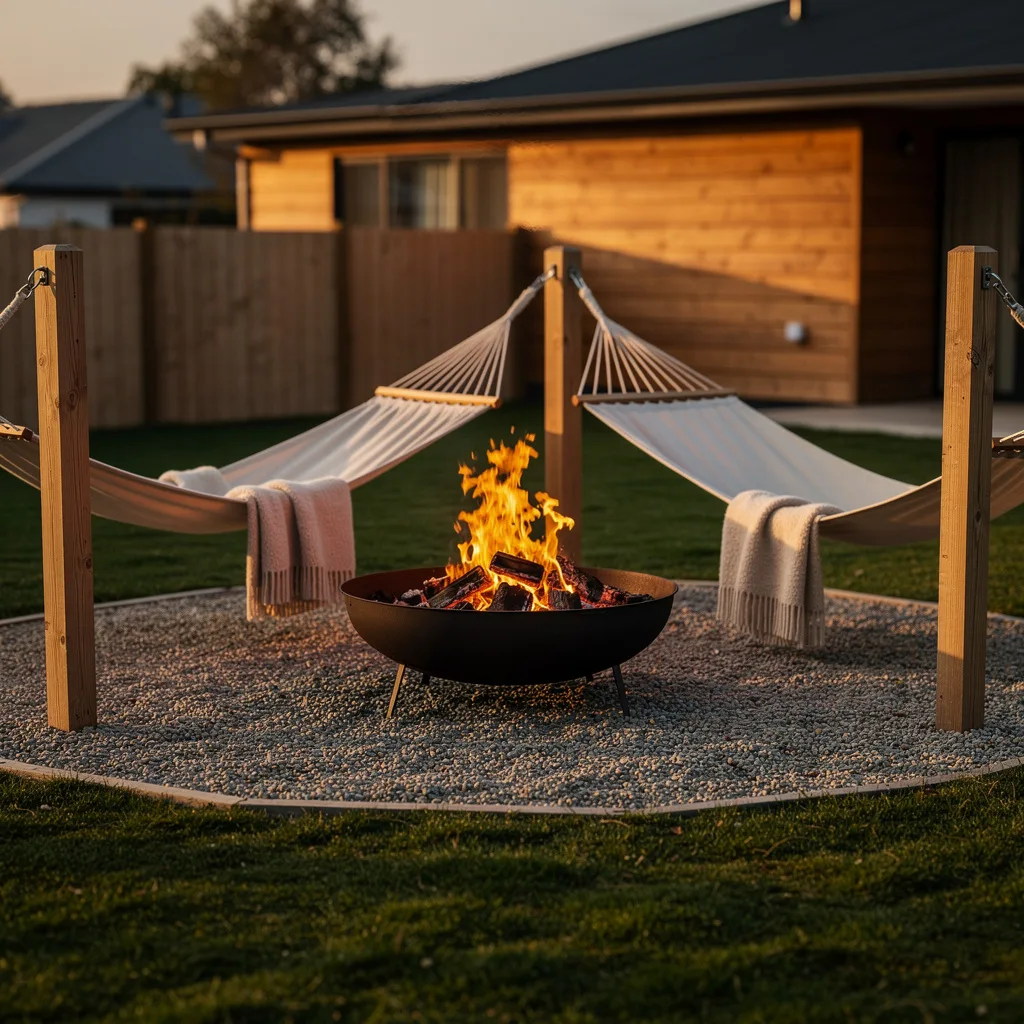
Set four timber posts at the corners of a roughly sixteen by sixteen foot square, digging them into concrete footings at least two feet below grade. String two hammocks diagonally between the posts, each angled toward the centre. On a pea gravel pad between them, set a large black steel fire bowl on three legs. The hammocks face each other across the fire. This is a setup for two people and it makes no apologies for that. A throw blanket on each hammock, a small side table within reach of each, and the gravel pad crisp and edged. Don’t crowd it with more chairs.
Final Thoughts
Every fire pit area that works has one thing in common. Someone decided what it was for before buying anything.
A fire pit for family movie nights needs chairs that face a screen, not each other. A fire pit for long evening conversations needs seating that pulls people close in a circle. A fire pit for two people needs two hammocks and nothing else. A fire pit for gatherings of twelve needs moveable seating, a permanent structure, and enough surface area that no one spends the evening standing.
The fire doesn’t care what surrounds it. You do. The people who come to sit around it do. Build the room, not just the flame.