
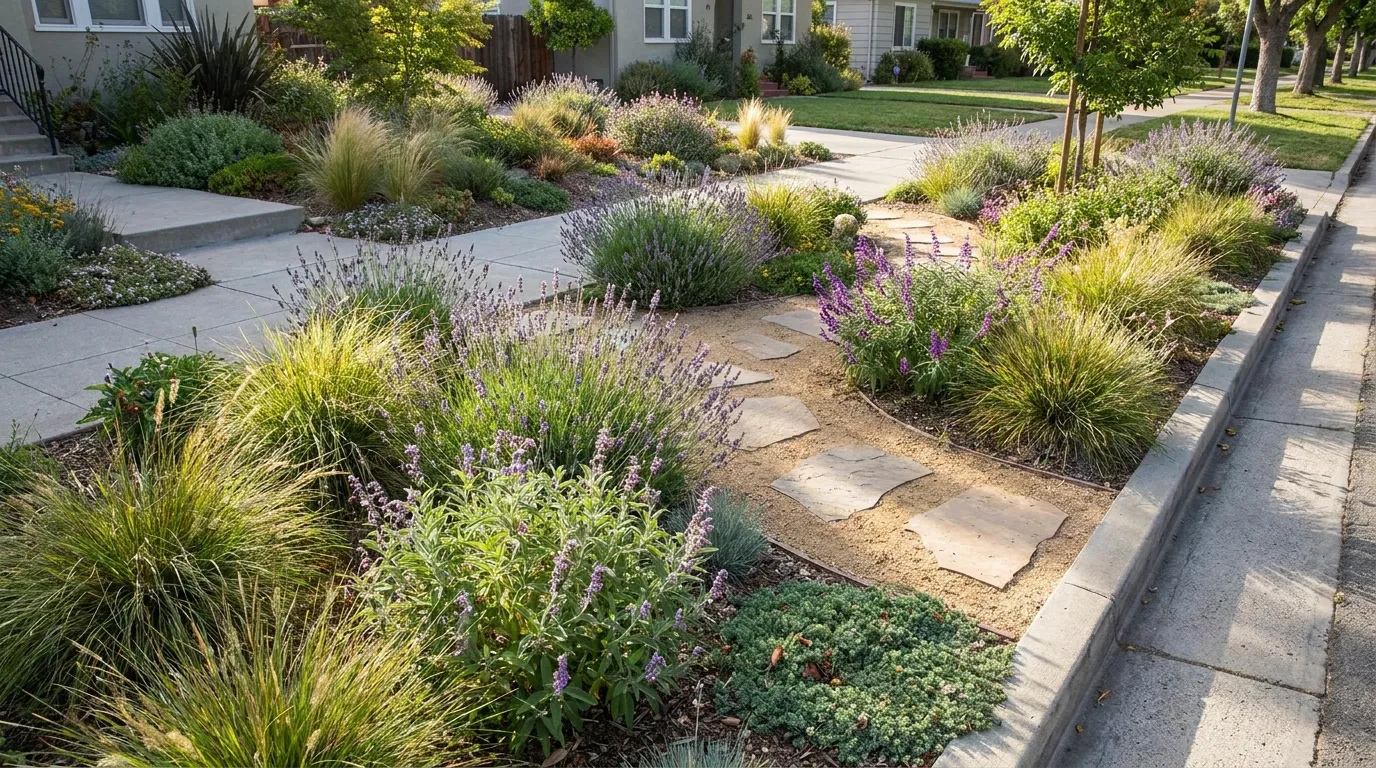
That strip of ground between the sidewalk and the curb is doing one of two things. It’s either the most overlooked real estate on your property, limping along as a dying patch of grass that gets half the water and twice the foot traffic. Or it’s the one place on your entire front yard where you can do something genuinely interesting, low-maintenance, and visible from a moving car.
Most people choose the first option by default.
The parking strip has real constraints. It’s narrow. It bakes in reflected heat from the asphalt. It gets walked on, sat on by car doors, and ignored between mowings. Anything you plant there needs to survive that reality. But those constraints are also an invitation. A long, narrow strip forces you to think in linear compositions — repetition, rhythm, texture along a single axis — which turns out to be one of the most visually compelling things you can do in a residential landscape.
The strip that most people waste is the strip that everyone sees first.
Ground Cover Before Plant Selection
The material you lay down matters as much as the plants you put in it. Bare mulch fades, compacts, and washes toward the curb within a season. Plain soil grows weeds faster than anything you intentionally planted. Before choosing a single plant, decide what the ground layer will be — and choose it based on the overall look you want.
Gravel, Rock, and Crushed Stone
River rock and pea gravel are the most common choices, and they’re common for good reasons. They don’t blow away. They suppress weeds when laid over landscape fabric at adequate depth. They handle the heat radiation from nearby asphalt better than organic mulch.
The rock colour changes everything. Warm tan and buff tones read as desert or Mediterranean. Grey and white read as modern or minimalist. Mixed river rock reads as naturalistic. Pick based on the architecture of the house behind it, not just what was cheapest at the garden centre. A white stucco modern house looks extraordinary behind white marble chip gravel. That same gravel looks like a mistake in front of a craftsman bungalow.
Dark Mulch As A Canvas
For strips planted with perennials or flowering annuals, dark bark mulch — almost black — does something that lighter mulch doesn’t. It makes every colour in the planting pop. Orange marigolds on tan mulch look washed out. Orange marigolds on near-black mulch look like they’re lit from underneath.
Apply it at a minimum depth of three inches and top up each spring before new growth emerges. The dark colour also fades less quickly than brown mulch, keeping the strip looking intentional well into summer.
Stepping Stones As Structure
In strips where foot traffic is unavoidable — where people step from parked cars directly onto the planting — integrate flat stepping stones rather than fighting the problem. Round or square concrete pavers set into a low ground cover of creeping thyme or similar plants give people somewhere legitimate to put their feet and become a design element in their own right.
The Linear Logic Of A Good Strip
A parking strip rewards thinking in terms of the whole length, not the individual plant. The view from a car or from across the street is not a close-up view. It’s a wide shot. What reads from distance is mass, colour, and repetition.
Height Distribution Along The Strip
Plan the height before the plants. A strip that’s the same height from one end to the other is a hedge, not a garden. Vary it: something low and spreading at the edges or front, something mid-height through the body, and something taller at one end or at regular intervals to create rhythm. The variation reads as designed rather than accidental.
Single Variety Versus Mixed Planting
Both work. They work for completely different reasons. A single variety planted in mass — a long run of lavender, a row of agapanthus, a stripe of black mondo grass — reads as bold and intentional. It says someone made a decision. A mixed planting with varied colour, texture, and height reads as abundant and cottage-style. Neither is superior. What fails is the mix of two or three unrelated plants in no particular order, with visible gaps between them. That reads as the garden equivalent of giving up.
Edging Is Not Optional
Whatever you plant, clean edging on both the sidewalk side and the curb side separates it from the surrounding concrete and tells the eye that the strip was designed rather than left to its own devices. Black steel edging is the most invisible and most effective. Brick soldier-course edging adds warmth and texture. Either option is better than no edging, which makes even the best planting look like it escaped from somewhere else.
Parking Strip Landscaping Ideas
The Purple-Pink Rock Garden
Build a mixed perennial planting using river rock as the ground layer rather than soil or mulch. Plant catmint for the large blue-purple mounding masses, salvia for upright deep-purple spikes, creeping phlox for the tight hot-pink domes at the edges, and yarrow for white contrast at the periphery. Vary the height so nothing is uniform. Plant in drifts of three to five rather than one-offs. The river rock ties it together visually and eliminates the need for frequent mulch replenishment. This combination is drought-tolerant once established and blooms from spring through summer with minimal intervention.
Boxwood Spheres On White Chip
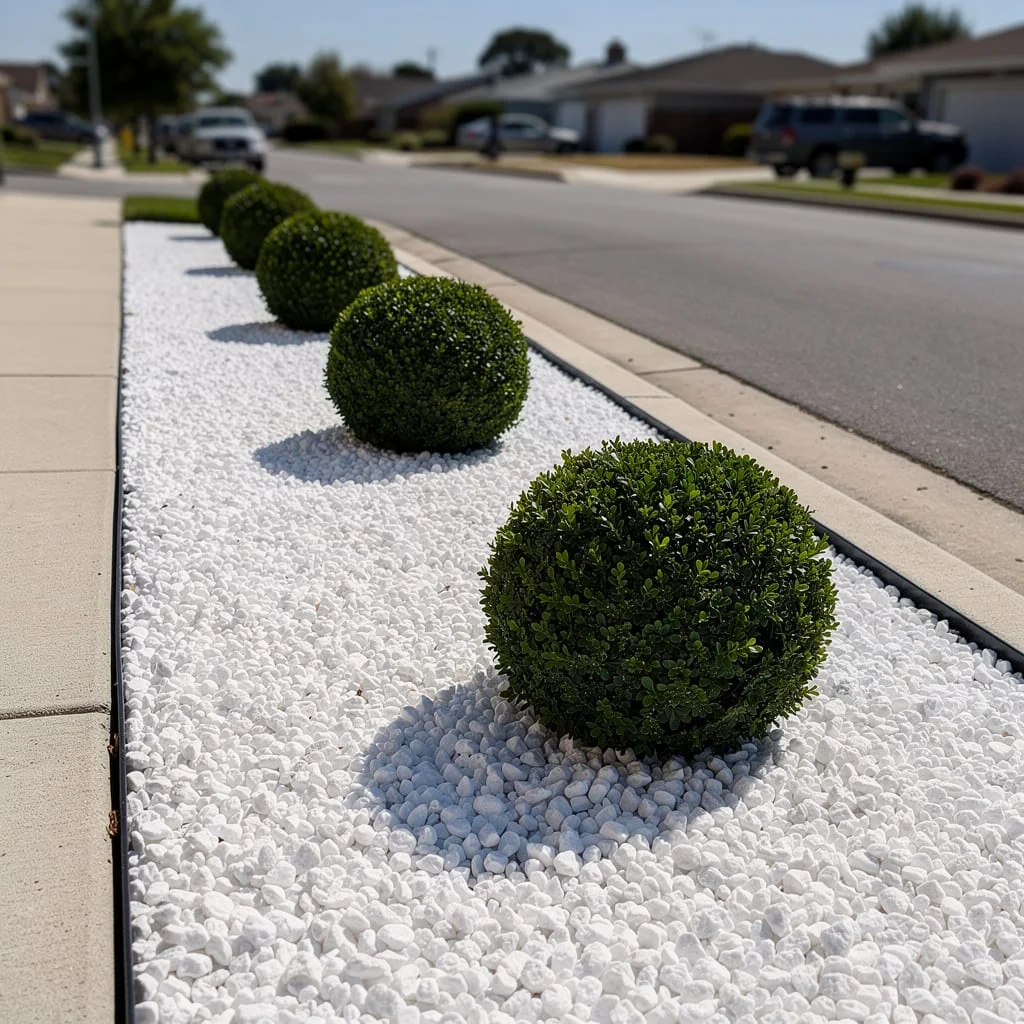
Edge the strip with black steel on both sides. Fill with white marble chip gravel to a depth of three to four inches over landscape fabric. Plant round-sheared boxwood balls at even spacing — three or five plants, never four, as odd numbers read more naturally in a linear composition. Space them so the balls have breathing room from each other and from the edging. The contrast of deep green spheres against pure white gravel is high-contrast and formal. Clip the boxwood twice a year to maintain the sphere shape. This requires the most ongoing shaping but demands the least spontaneity from you; the planting never changes, never dies back, never surprises you.
Single Lavender Mass Along The Curb
Plant one lavender variety — Hidcote or Munstead for compact form, Provence for a larger mass — in a continuous row along the full length of the strip, spaced eighteen inches apart. Use bark mulch or bare soil between plants while young; they’ll fill in within two seasons. The goal is a single unbroken mass of grey-green foliage and purple bloom that reads as one deliberate stroke rather than a collection of individual plants. No mixing, no companion plants, no rock layer. Just lavender and bark. The simplicity is the point. This rewards the driver who passes it every day, who sees it as a unified lavender hedge rather than a patchwork of competing species.
Agave And Blue Fescue In Raked Gravel
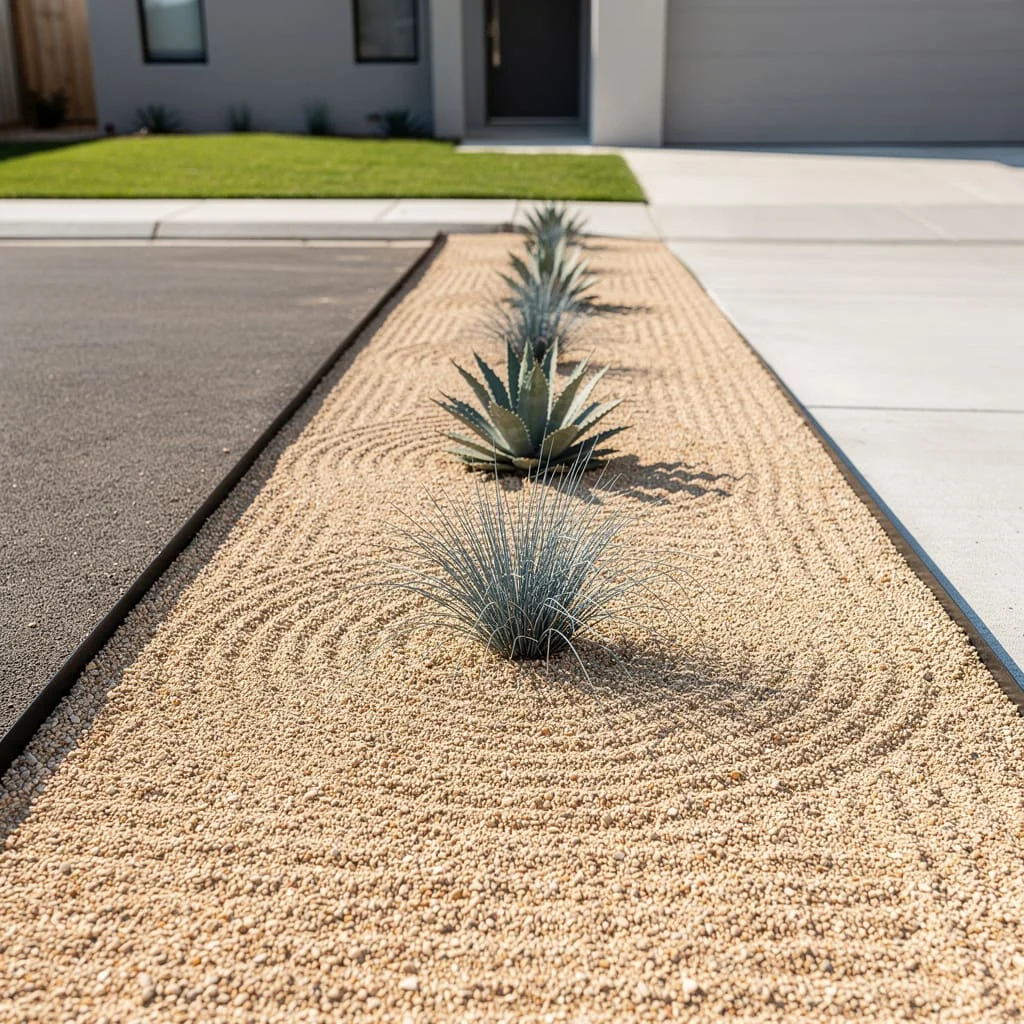
Install black steel edging on both sides of the strip to contain a layer of fine tan or buff-coloured decomposed granite. Rake it in concentric circles around each plant as you install them — the raking creates visual movement in what would otherwise be a static surface. Alternate between blue fescue grass clumps in the foreground and blue agave specimens at regular intervals behind. The silvery-blue of both plants unifies the planting across the length of the strip. This requires essentially no maintenance beyond an annual agave trim to remove dead lower leaves. It’s the strip for people who categorically refuse to water.
Grey Cedar Raised Beds With Vegetables
Build low raised beds from untreated cedar or Douglas fir boards — no more than ten to twelve inches high — in a staggered arrangement along the strip. Use weathered, grey-toned wood rather than fresh-cut lumber; the aged surface reads as intentional rather than new construction. Fill with a high-quality vegetable mix and grow leafy greens, chard, and herbs in the lower front beds, with taller crops like squash and corn in back. Use small round stepping stones set in pea gravel between the beds as the pathway surface. This is functional landscaping that looks deliberate and uses the full-sun exposure of the strip productively.
Native Wildflower Strip
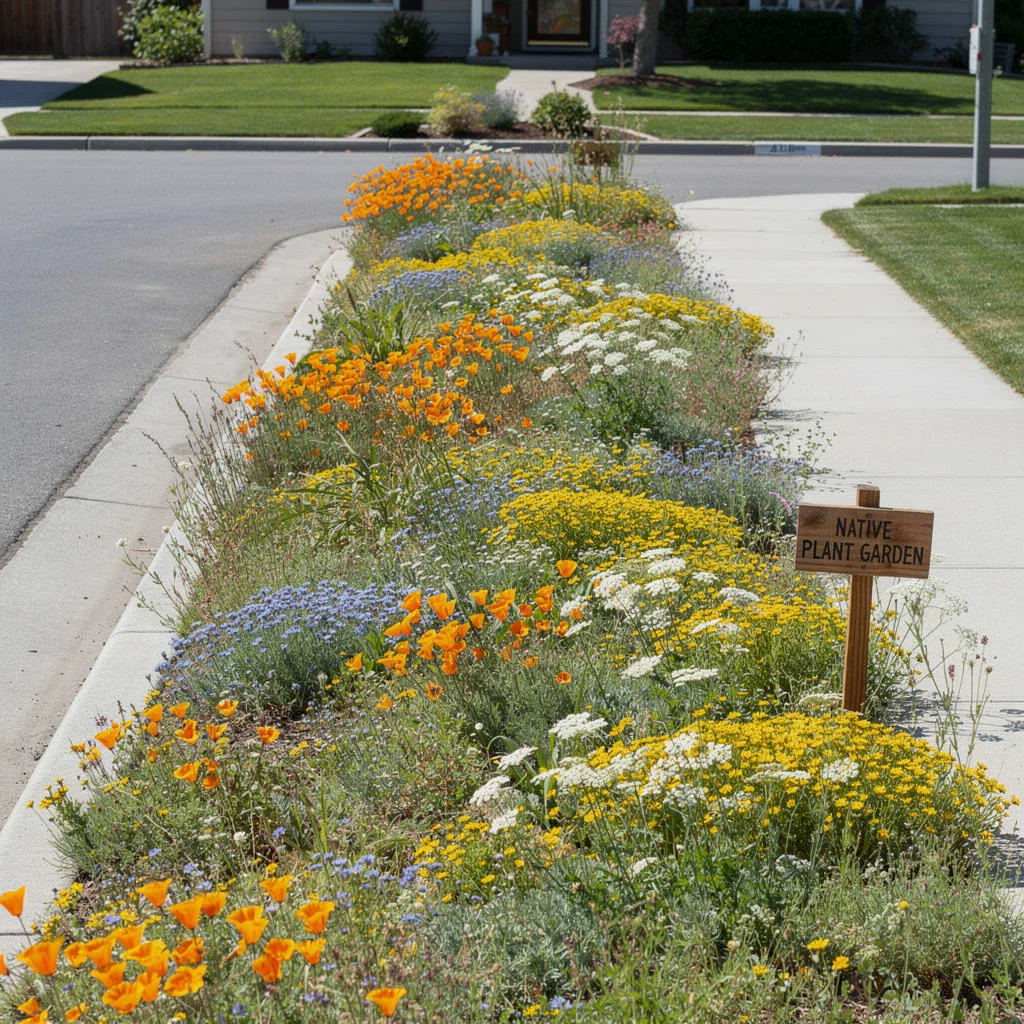
Direct-sow a mix of California poppies, yarrow, globe gilia, and phacelia along the full length of the strip in early spring or late fall, depending on your climate. Mark the strip with a small hand-lettered wooden sign identifying it as a native plant garden — not for decoration, but because it prevents the neighbour from reporting it as an unmaintained strip. The poppy’s orange against the yellow of yarrow and the white of phacelia creates a wildflower palette that reads as deliberate abundance rather than neglect. This approach requires the most patience in year one but becomes self-seeding and effectively maintenance-free by year two. The pollinators will find it before summer ends.
Agapanthus Curb Border
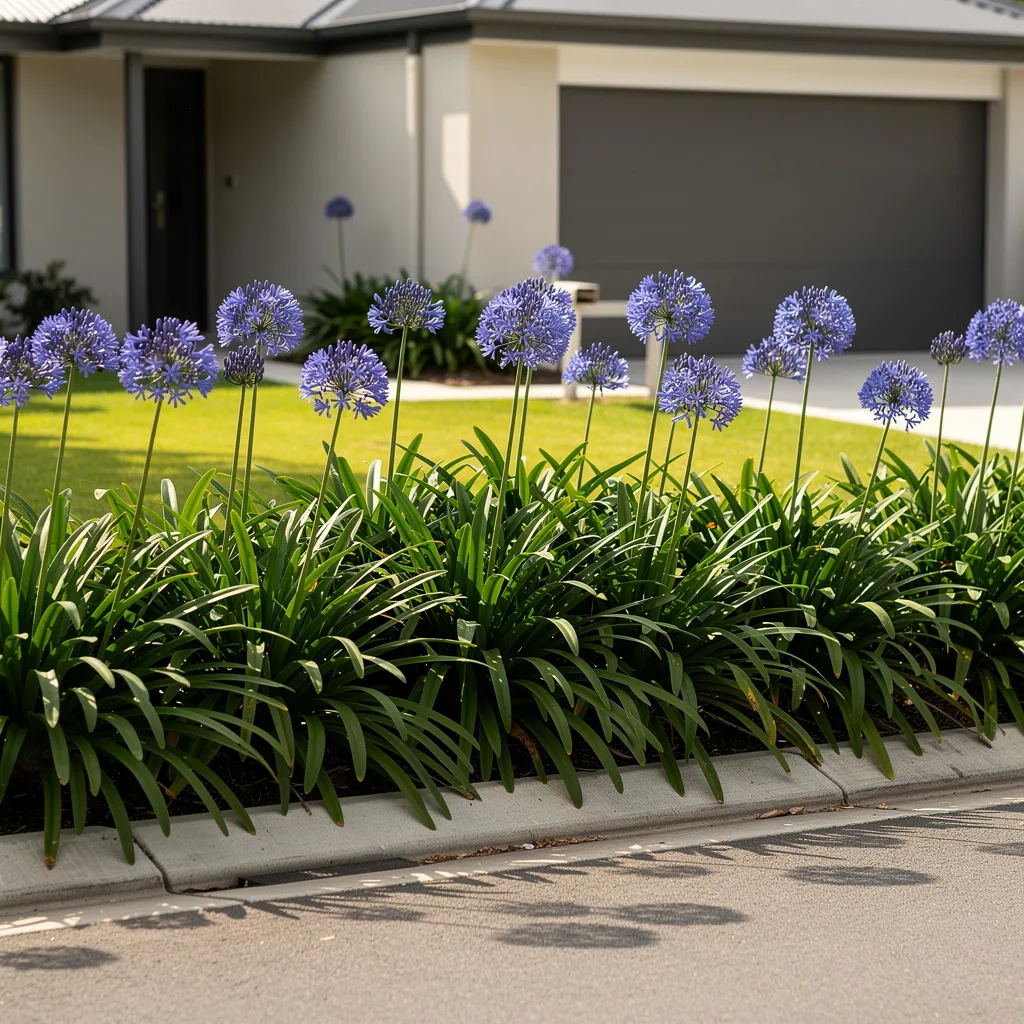
Plant agapanthus — African lily — in a dense, continuous row along the curb edge of the strip at twelve-inch spacing. The strap-like dark green foliage creates a solid low mass from which the tall-stemmed violet-blue flower globes emerge in summer. This works best in mild climates; agapanthus is not reliably hardy below about ten degrees Fahrenheit. The visual effect depends entirely on the density of planting and the contrast between the manicured look of the flower stems and the casual sprawl of the foliage. Back it with a clean green lawn or a simple mulched bed with nothing else competing for attention.
Succulent And Aloe River Rock Strip
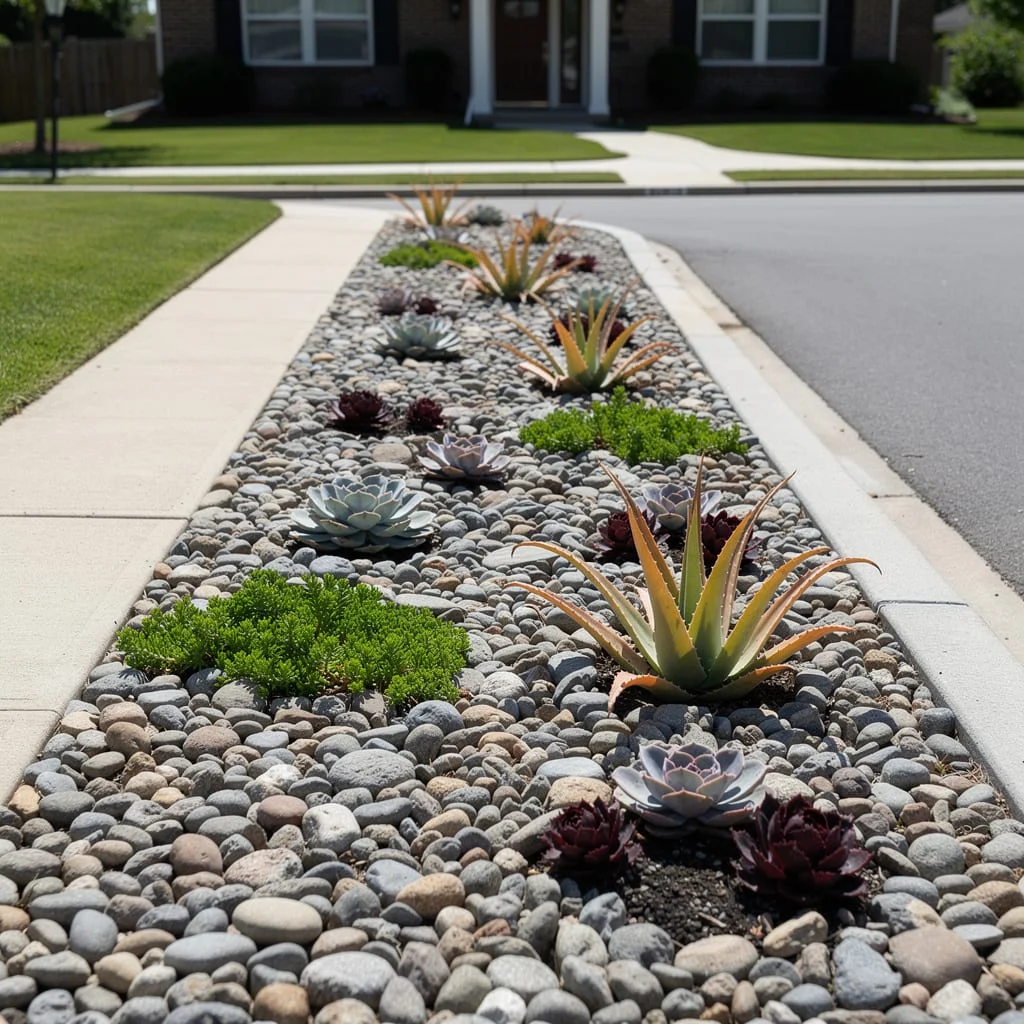
Use medium grey river rock as the base material. Plant a mix of hen-and-chicks echeveria varieties — ranging from silvery blue-green to deep burgundy-purple — at random intervals throughout the rock. Add aloe vera or desert agave specimens at regular spacing for height variation. Tuck compact green groundcovers like sedum or ice plant into occasional gaps. The plant density should leave plenty of visible rock between specimens so the contrast between stone and plant is the primary visual. This is the lowest-water strip in this entire list and the one most likely to survive a summer of pure neglect.
Black Mondo Grass On White Gravel
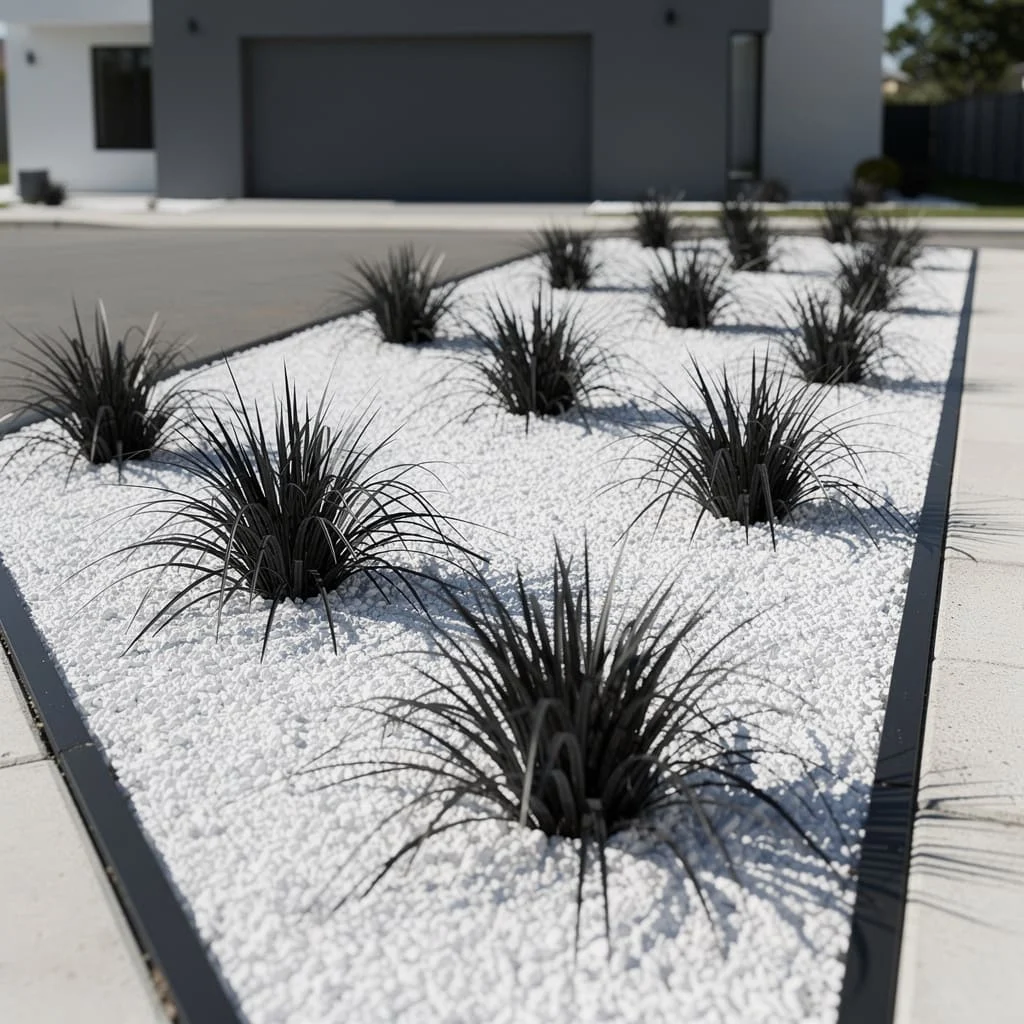
Install black steel edging on all sides of the strip. Lay landscape fabric and cover with white marble chip or white pea gravel to a depth of three inches. Plant black mondo grass at twelve-inch intervals in a staggered grid pattern across the full strip. The contrast between the near-black foliage and the white gravel is extreme — it reads almost graphic rather than botanical. This works specifically for modern or contemporary house styles with clean lines and minimal ornamentation. Nothing else in the strip; no mixing, no companion plants. The whole point is the two-colour composition.
Annual Colour With Brick Edging
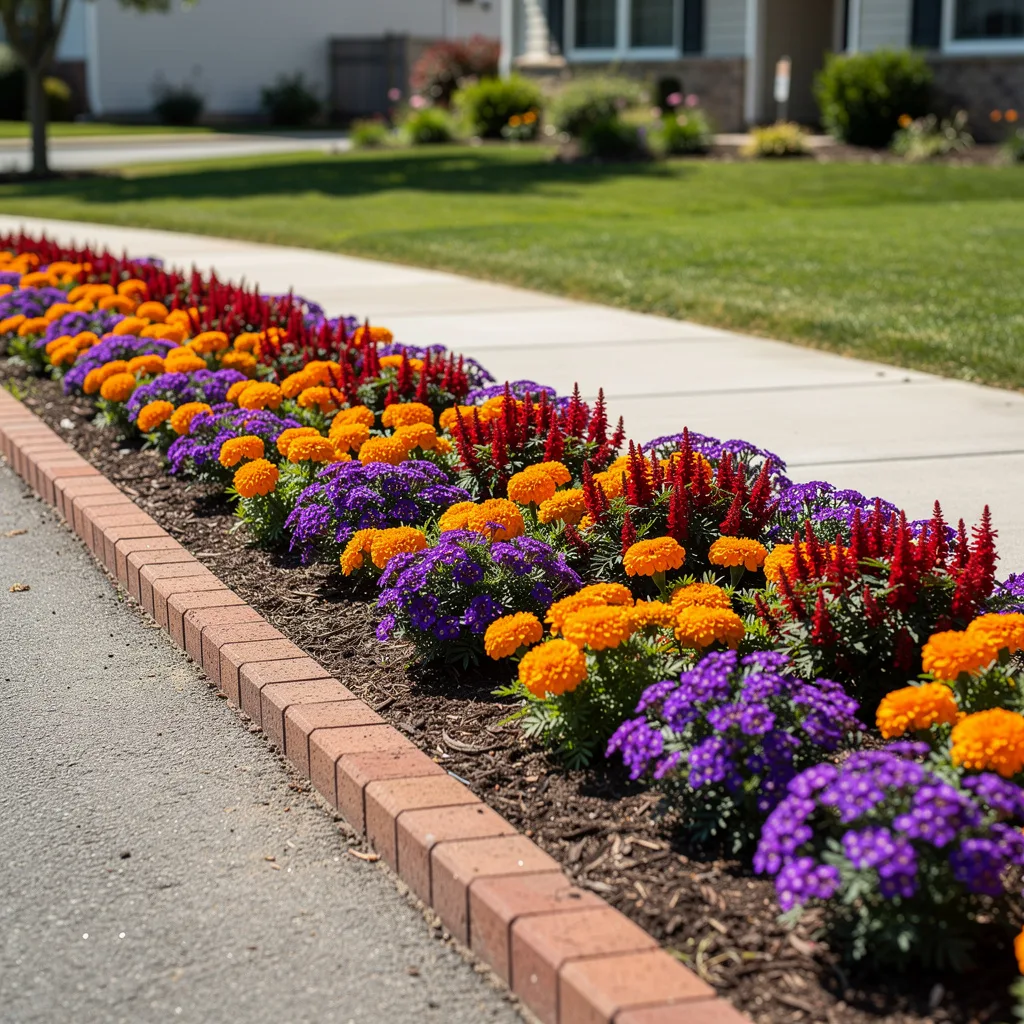
Line the curb side of the strip with a soldier-course of standard red brick set at a slight angle. Fill the strip with dark bark mulch and plant annually in late spring: marigolds in deep orange and yellow, salvia in red, and ageratum or lobularia in purple. Plant in irregular drifts rather than rows, keeping the colours adjacent so they read as colour blocks from the street rather than a mixed blend. Replace in autumn with cool-season colour or let it rest under mulch until spring. This is the highest-maintenance option in the list and the one with the most visual impact during peak summer bloom.
Cedar Raised Bed With Perennial Mix
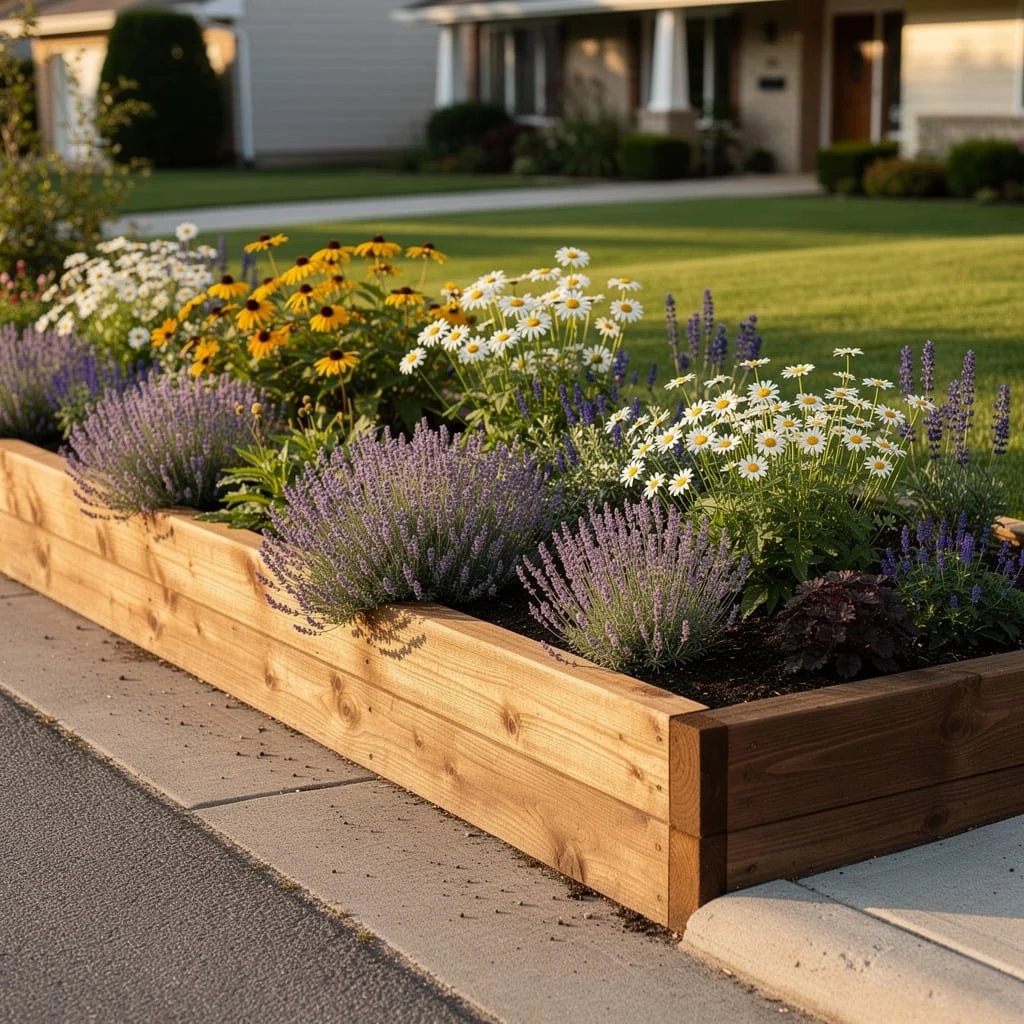
Build a single long raised bed from cedar 2×10 boards, running the full length of the strip at a height of about eight inches. Fill with quality garden soil amended with compost. Plant a mix of rudbeckia, shasta daisy, lavender, and heuchera — varying the heights from front to back with the tallest at the rear. The raised bed defines the planting immediately and gives it an organised, intentional quality that in-ground planting in a narrow strip sometimes struggles to achieve. The wood frame is the visual container that makes the abundance inside it look designed rather than chaotic.
Lavender Mass At The Driveway Corner
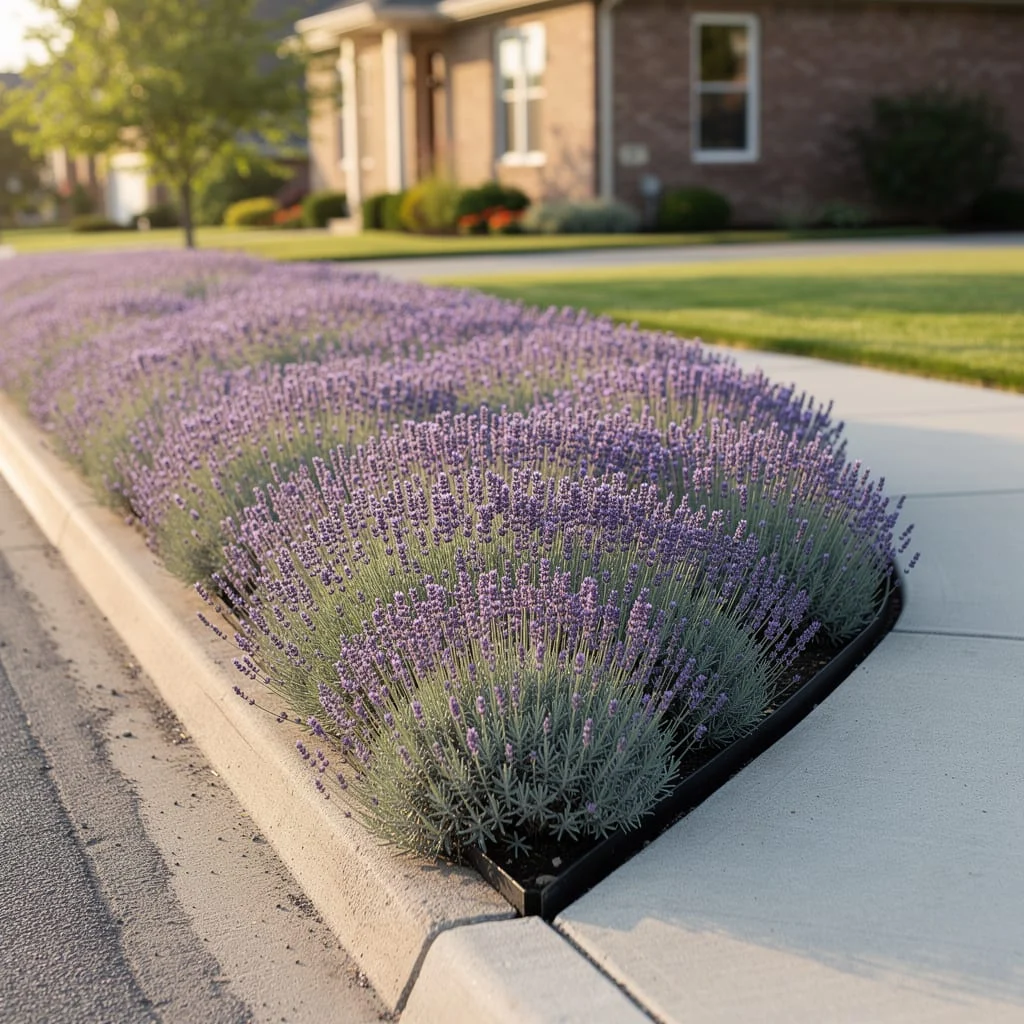
Take the corner where the driveway meets the street — often an awkward wedge — and fill it entirely with a single compact lavender variety. Plant at twelve to fourteen inches spacing on centre and allow them to merge into a continuous mass over two seasons. The corner location means the planting is visible from both the street and the driveway, and the lavender’s mounding habit naturally softens the hard geometry of the concrete edges. Use black steel edging at the perimeter to keep the rock or mulch base contained. This is a single-corner approach that looks better as a dense, single-variety mass than any mixed planting would.
Mixed Daylily Strip
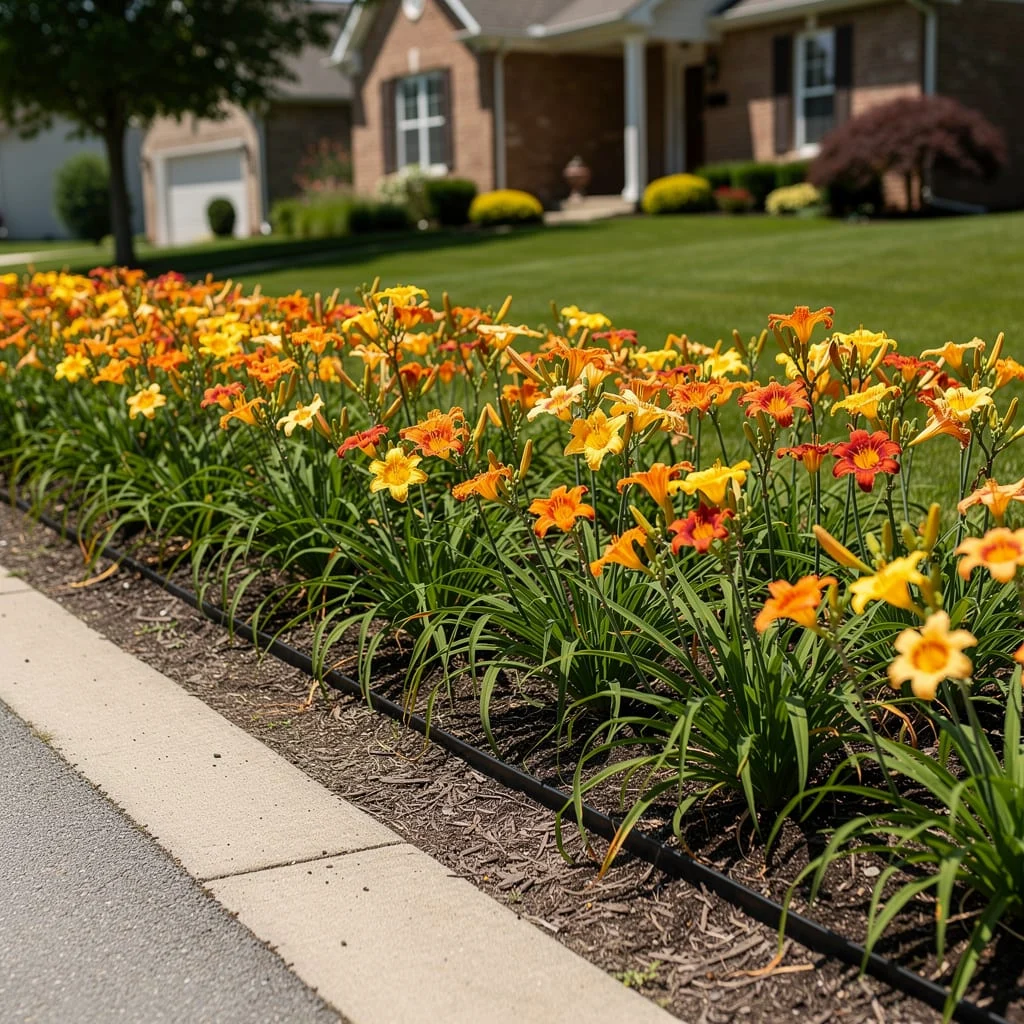
Plant a continuous row of daylily varieties — mixing orange, yellow, and dark red for warm colour across the length — along a strip with black metal edging and dark bark mulch. Daylilies multiply aggressively, so what starts as individual plants spaced eighteen inches apart will become a dense mass within three seasons. Choose varieties that bloom at slightly different times within the summer season so the strip has colour for six to eight weeks rather than two. Deadhead spent blooms by snapping the scape; new buds will continue to open. Once established, the planting is essentially indestructible.
Creeping Thyme With Stepping Stones
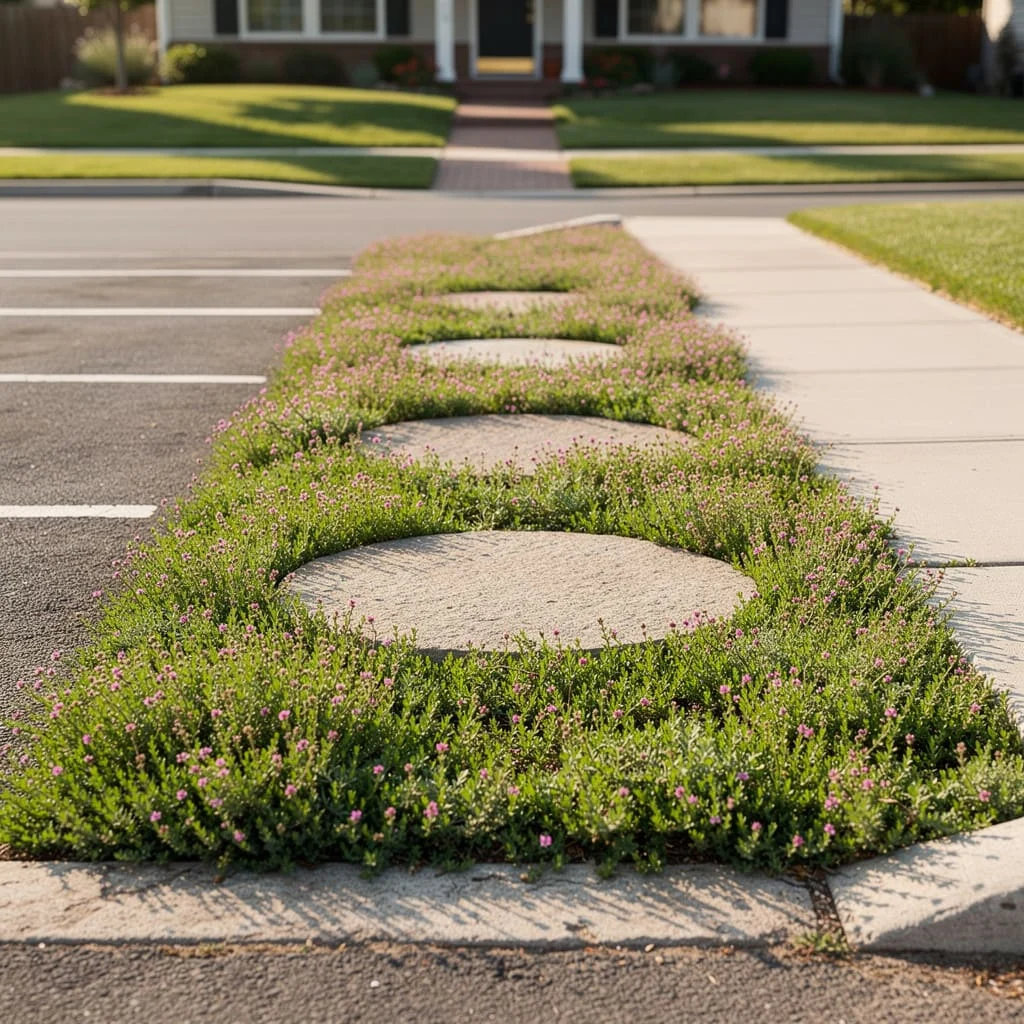
Set large round sandstone or concrete stepping stones along the length of the strip at irregular intervals, pressed firmly into the soil with no more than an inch of the stone above grade. Between and around the stones, plant creeping thyme — either red-flowering or white-flowering varieties — at six-inch spacing. The thyme is low enough not to obstruct car doors, handles foot traffic better than almost any other ground cover, releases fragrance when stepped on, and produces tiny blooms in early summer that draw pollinators in numbers that will surprise you. It spreads to fill gaps within one season. The stepping stones give car door openers a legitimate landing spot.
Prairie Grass At Golden Hour
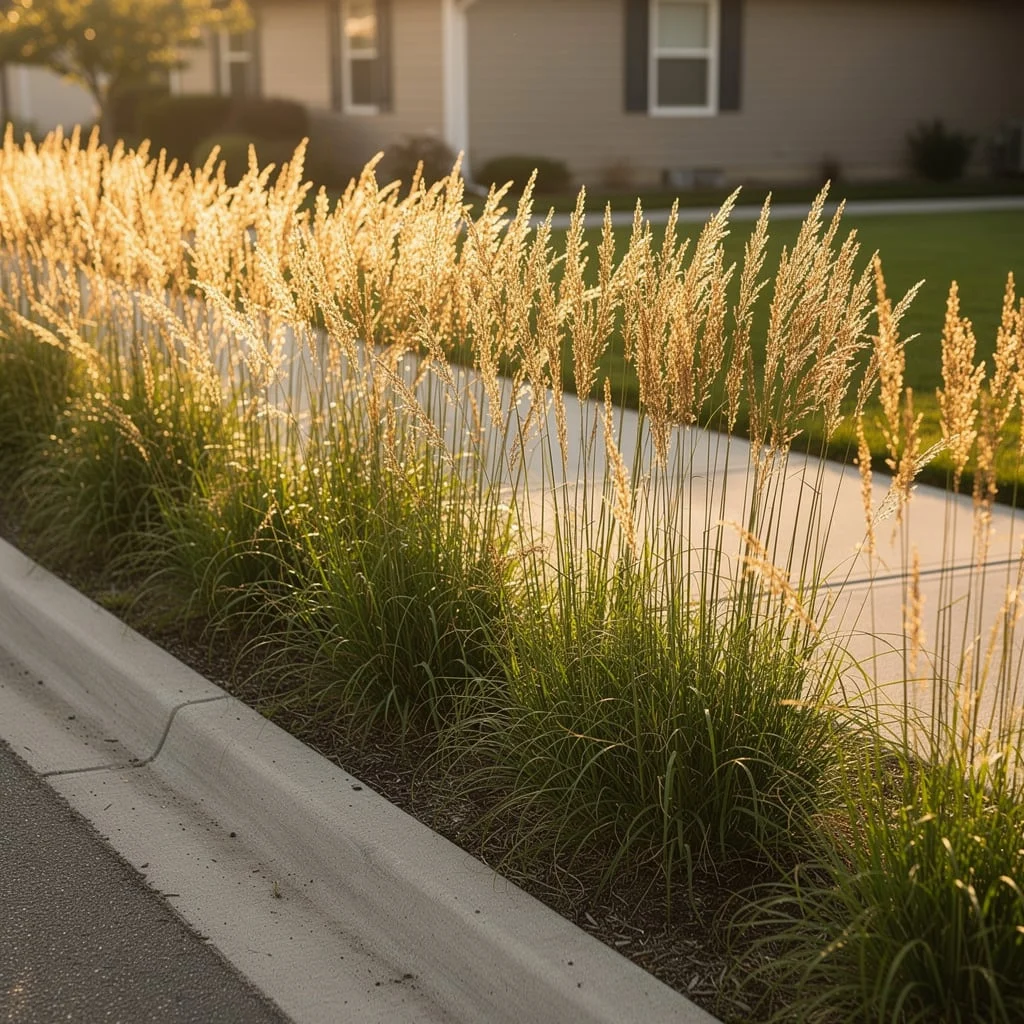
Plant switchgrass or Karl Foerster feather reed grass in a dense row along the full strip, spacing plants eighteen inches apart. These grasses grow from two to four feet tall and produce plumes that catch golden light in late afternoon in a way that almost nothing else in a residential landscape can match. They require no deadheading, survive drought, handle urban heat, and require only a single annual cut to the ground in late winter. Back the planting with a clean concrete curb and a simple mulch base. In summer they’re architectural green columns. In autumn they turn gold. In winter the dried stems and seed heads hold interest through bare months.
Liriope On Dark Mulch
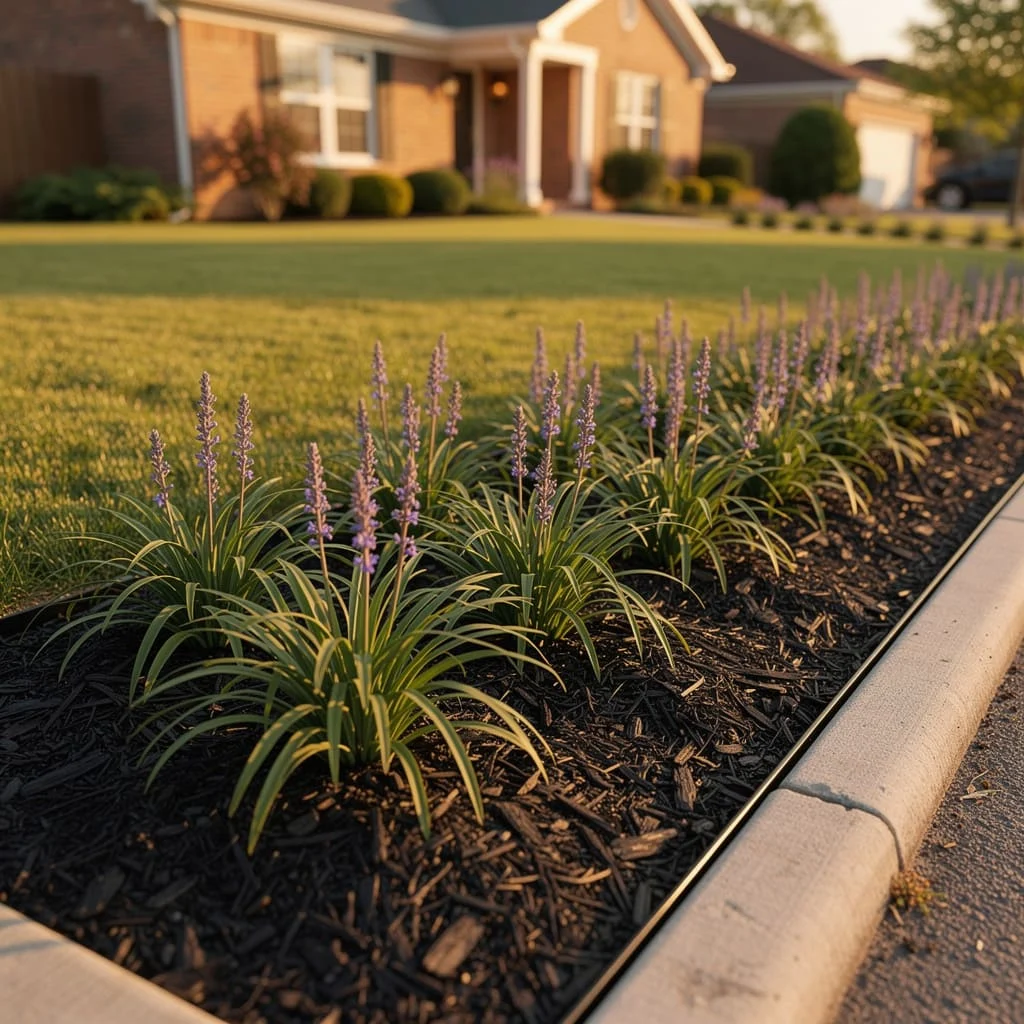
Plant variegated liriope — the kind with cream-edged leaves — in a uniform row on fresh dark bark mulch with black steel edging. Space at ten inches on centre so the planting fills in within one full growing season. Liriope is nearly indestructible: it tolerates heat, drought, deep shade, and salt. The lavender flower spikes it produces in late summer are secondary to the year-round texture of the arching, striped foliage, which keeps the strip looking cared-for even in January. This is the parking strip choice for people who want to plant once and think about it never again.
Curb Herb Garden
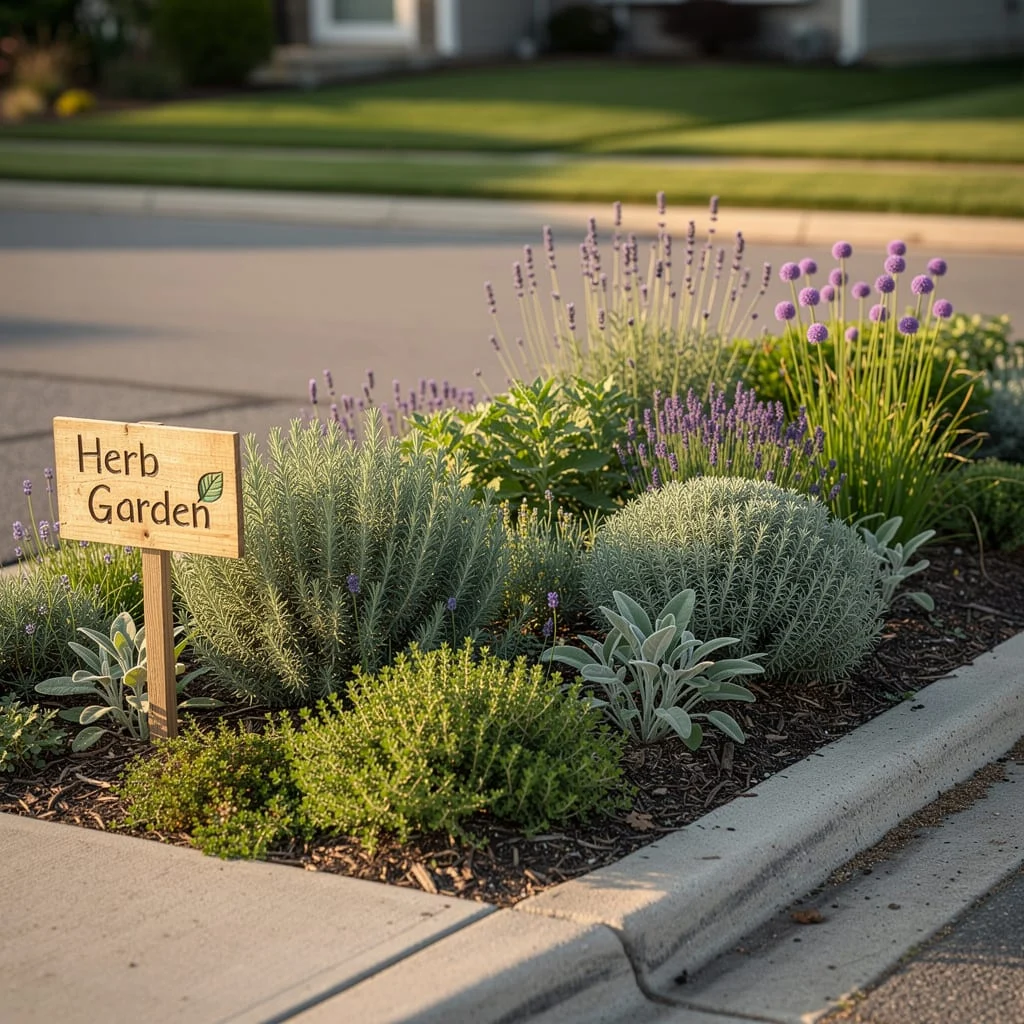
Use the full sun exposure of a south-facing strip for an herb garden of culinary plants with ornamental quality. Plant a central mass of silver-leafed santolina flanked by rosemary, sage, and lavender. Add allium for height and globe form at the rear. Set a small handmade wooden sign at the sidewalk edge identifying it as an herb garden. This performs double duty: it looks deliberately designed from the street, it actually produces herbs you can harvest, and the silver and grey foliage palette reads as cohesive whether or not anything is in bloom. The mulch base should be dark to make the grey-silver foliage pop.
Final Thoughts
The strips in this list share exactly one thing. Every single one of them committed to something before the first plant went in the ground. A colour palette. A material. A structural approach. That decision — made before the first trip to the nursery — is what separates a strip that looks designed from one that looks like an afterthought.
The parking strip is public space. Technically you maintain it, but visually it belongs to everyone who passes your house. That’s not a burden — it’s the interesting part. It’s the one place on your property where the audience is guaranteed.
Whatever you plant there, plant it with enough conviction that a stranger slows down to look at it. That’s the whole job.