
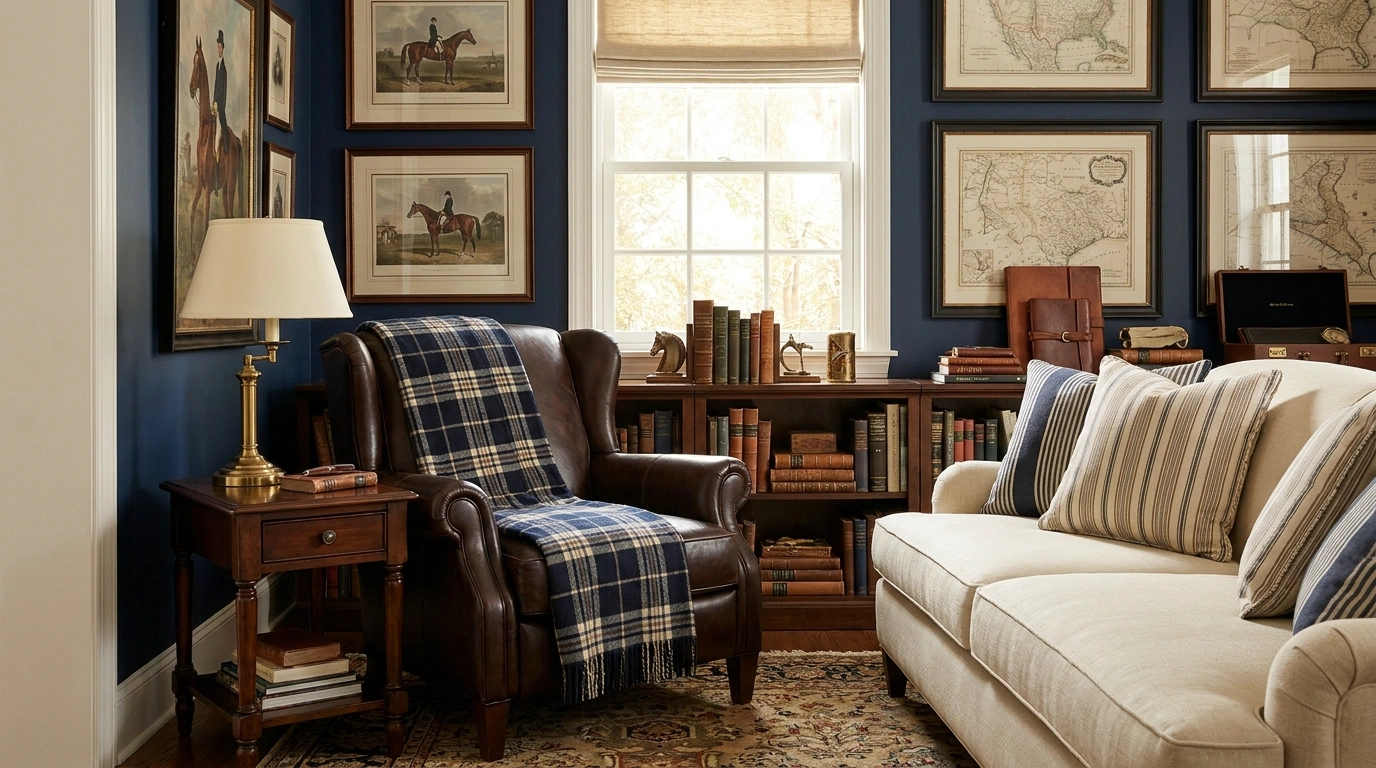
Small rooms don’t need more decoration to feel expensive. They need better editing.
Ralph Lauren inspired interiors can be especially difficult in a compact home because the style naturally brings together rich wood, leather, brass, tailored fabrics, traditional artwork, stripes, plaid, and darker colors. Put too many of those elements into one room and the character gets buried under the furniture.
The strongest version keeps the richness but changes the proportions.
Cream walls leave room for darker wood. One cognac leather chair can become the visual anchor. A narrow console can establish the entire entry. Navy can appear in a pillow and a painting instead of spreading across half the room. Plaid can become the one memorable textile rather than competing with stripes and florals.
Ralph Lauren Styling Ideas for a Small Home
Let One Cognac Leather Piece Anchor the Room
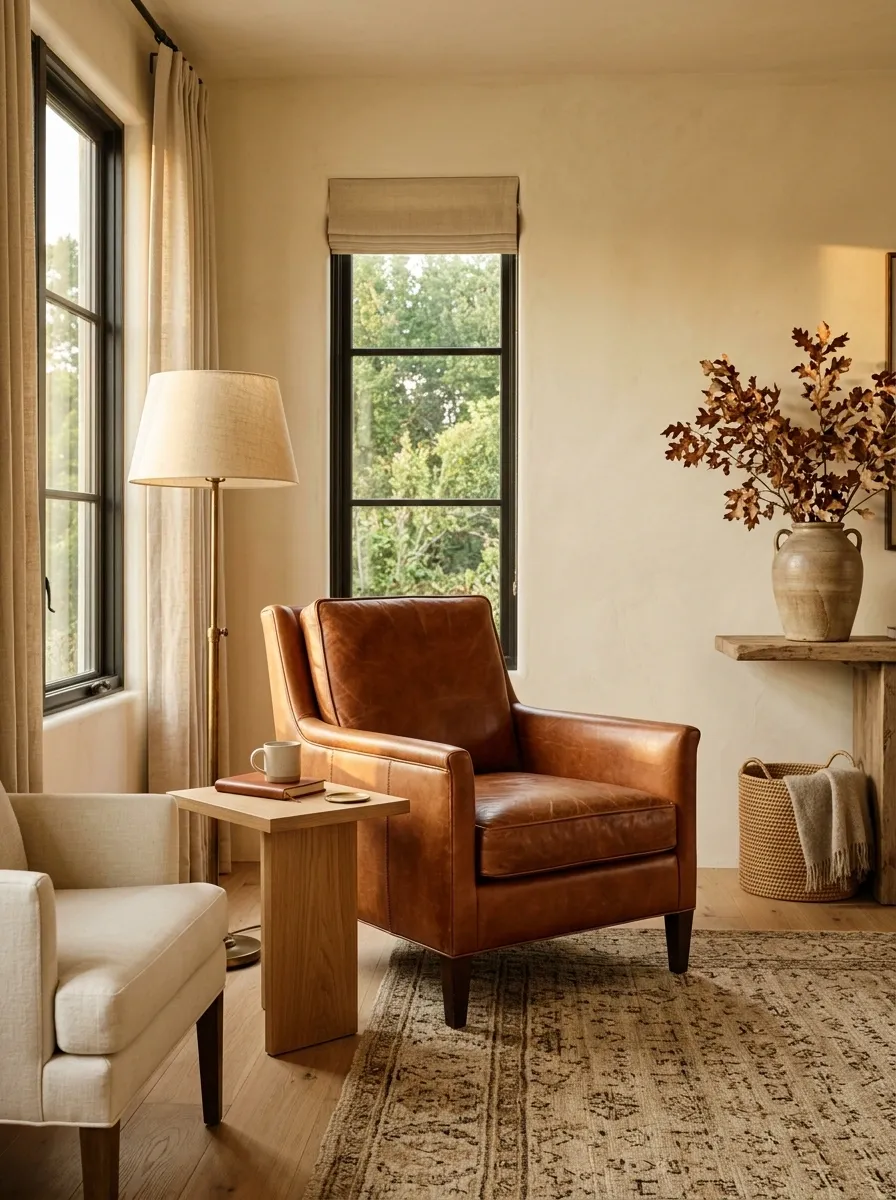
A small room benefits from one visual heavyweight. A cognac leather lounge chair, compact sofa, or tailored bench can establish the whole mood without requiring several dark pieces.
Place it against warm cream walls and surround it with lighter upholstery or natural wood. The leather becomes the room’s richest note while the rest of the palette gives it enough breathing room.
Aged brass works beautifully here because it adds a muted glow rather than another strong color. Keep the nearby accessories restrained. The chair should be memorable because of its shape, material, and placement, not because six other objects are competing with it.
Keep the Walls Cream and the Contrast Intentional
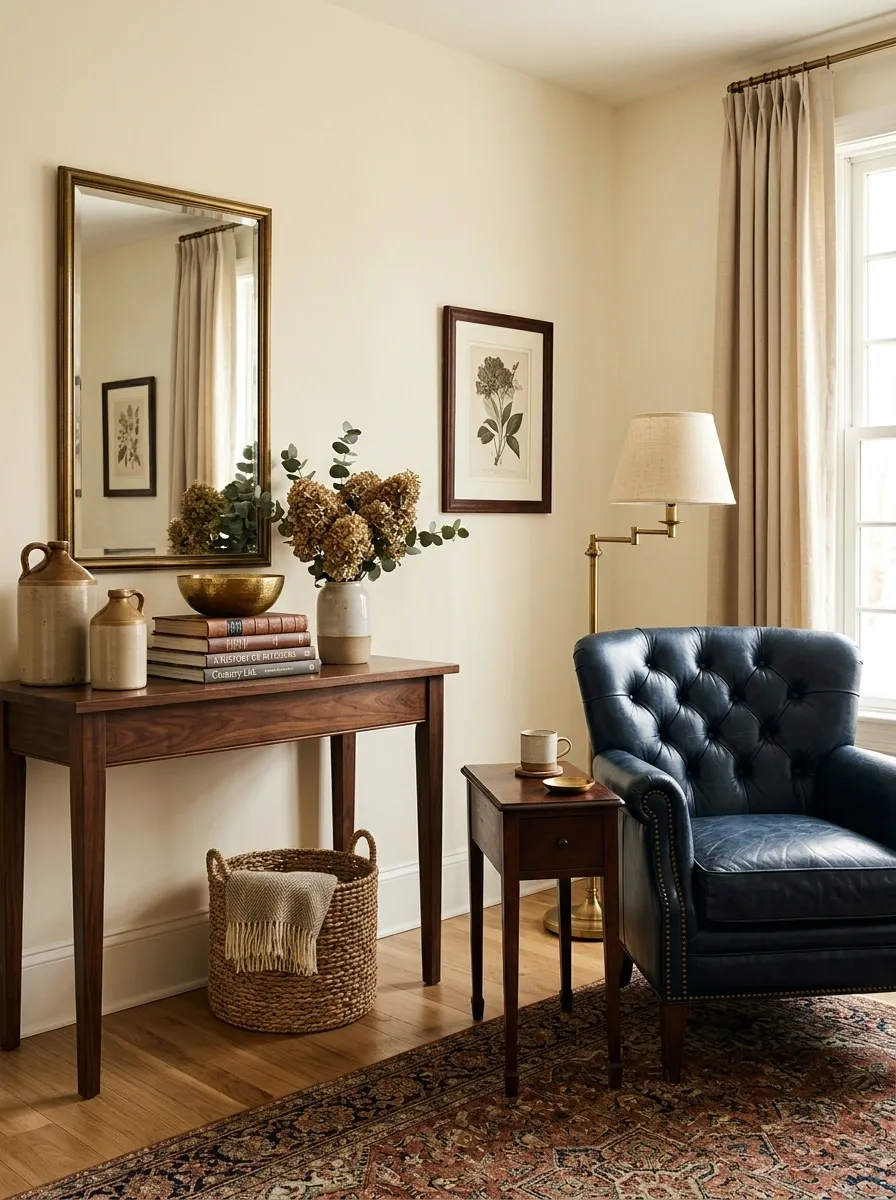
The pale background is doing more work than it first appears to. Warm cream walls separate dark furniture from one another, so walnut, leather, and navy don’t merge into one heavy visual mass.
The shade of cream matters. A warmer neutral gives the room the relaxed quality associated with traditional interiors, while a stark white backdrop can make the richer materials feel disconnected.
Keep larger wall surfaces quiet and let darker pieces provide the contrast.
Build the Palette Around Camel, Cognac, and Tobacco
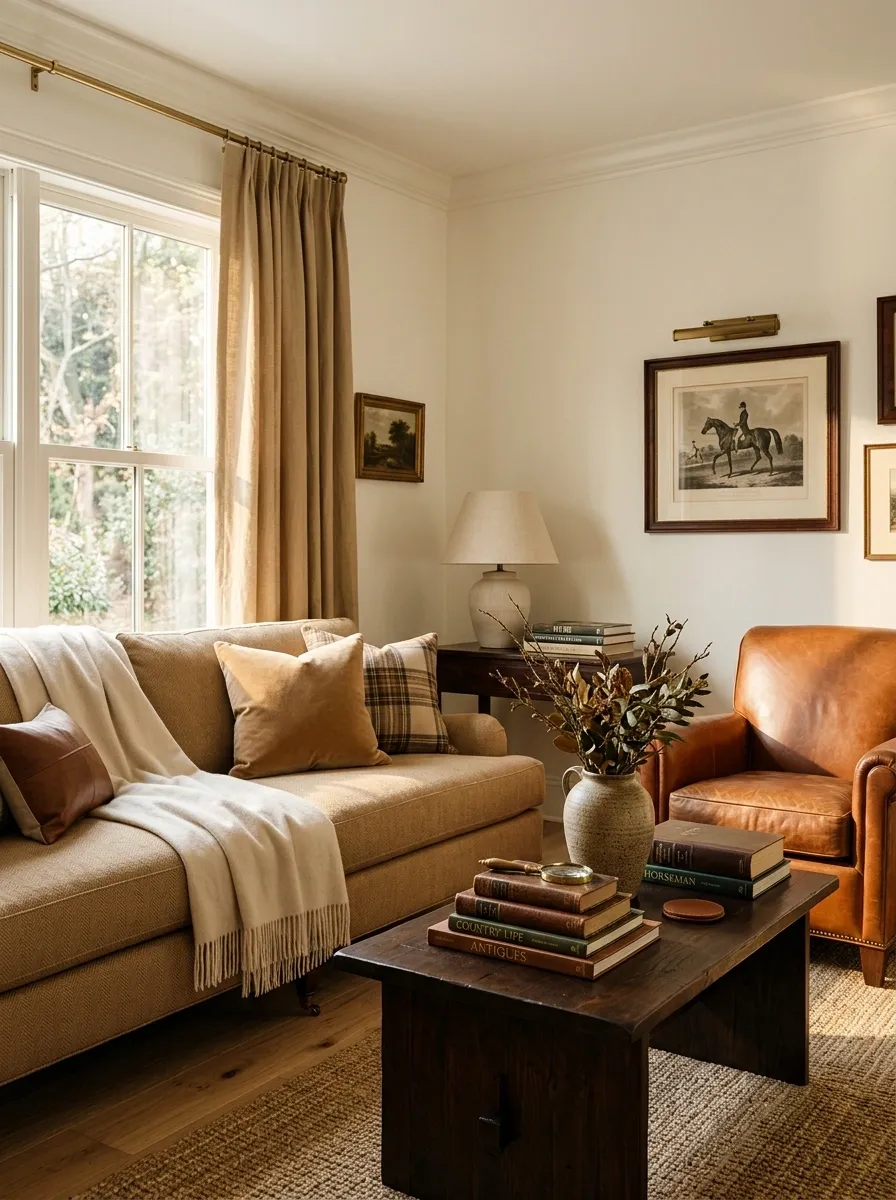
A compact home can carry a remarkably rich palette when the warm shades are related.
Camel works beautifully on upholstery and textiles. Cognac brings the stronger leather note. Tobacco can live in darker wood, picture frames, books, or a deeper textile. Cream then acts as the visual reset.
The colors don’t need to be identical. Their shared warmth is what makes them belong together.
Trade Several Little Tables for One Serious Wood Piece
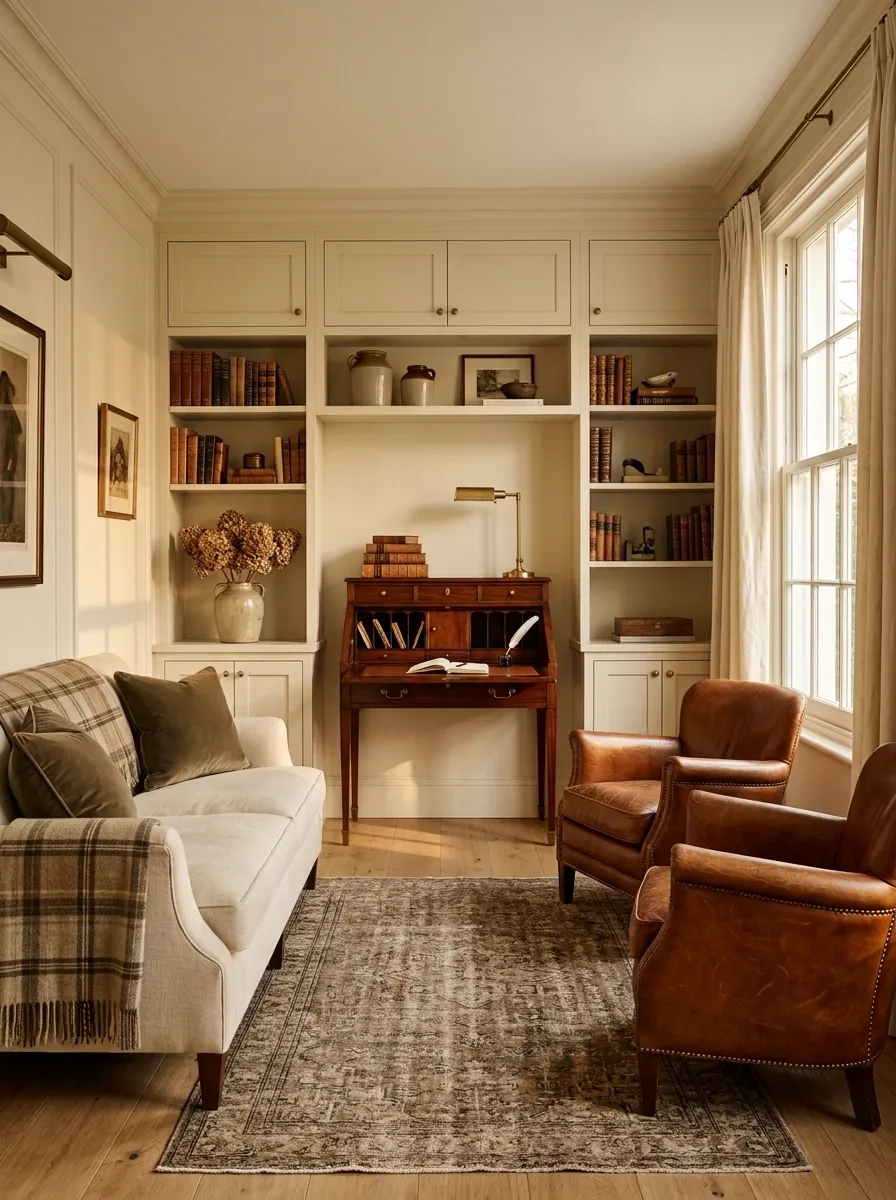
A narrow room quickly becomes visually noisy when every empty corner gets its own tiny table.
One substantial wood piece usually looks richer. A slim console, compact chest, secretary desk, or properly scaled side table gives the room a stronger visual anchor and eliminates several competing silhouettes.
Choose something with enough presence to look intentional, but enough visible floor underneath to keep the room open.
Hang Full-Length Curtains Higher Than the Window
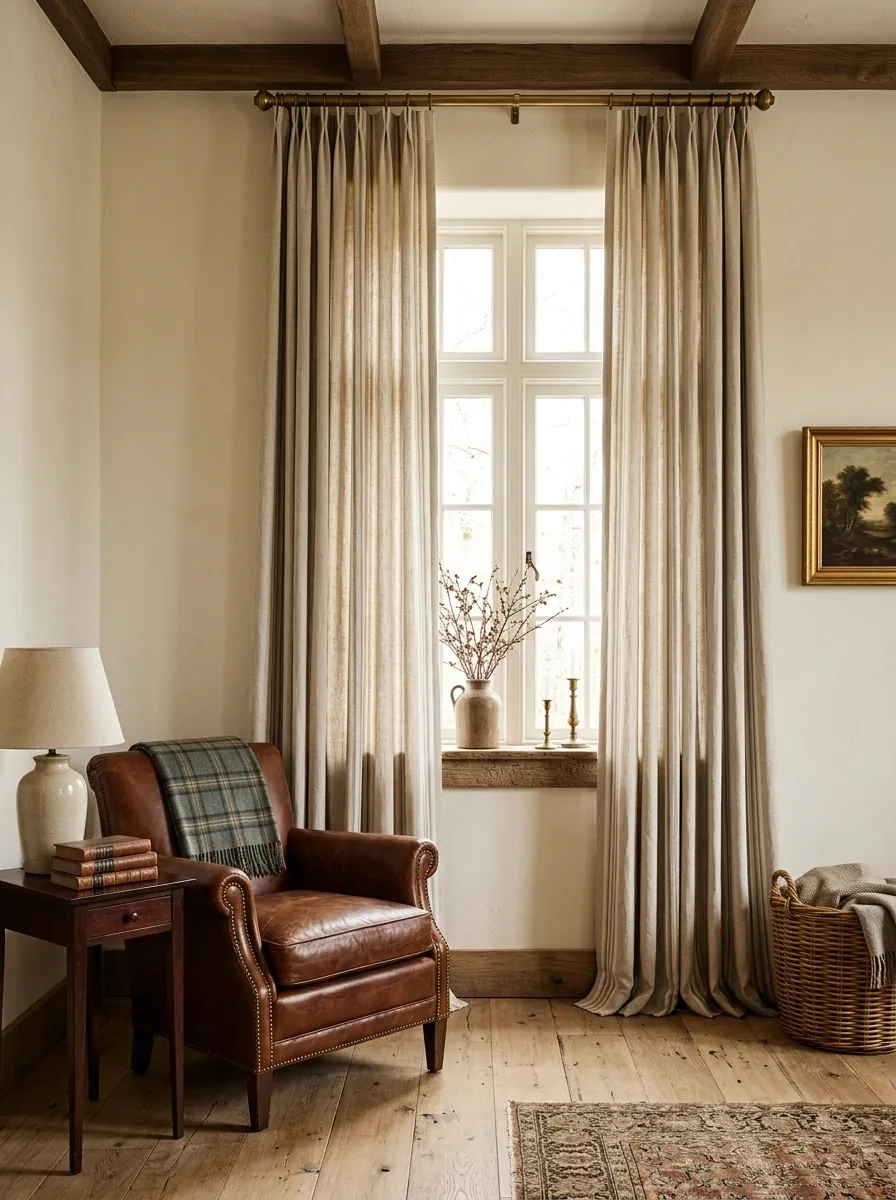
Traditional interiors often rely on vertical fabric to create polish, and a small room can benefit enormously from that trick.
Hang the rod high, keep the fabric long, and let the curtains fall close to the floor. Cream, oatmeal, or muted stripe fabric works especially well with warm wood and leather.
The curtain becomes a tall architectural line instead of a small accessory attached to the window.
Repeat Navy in Small, Deliberate Doses
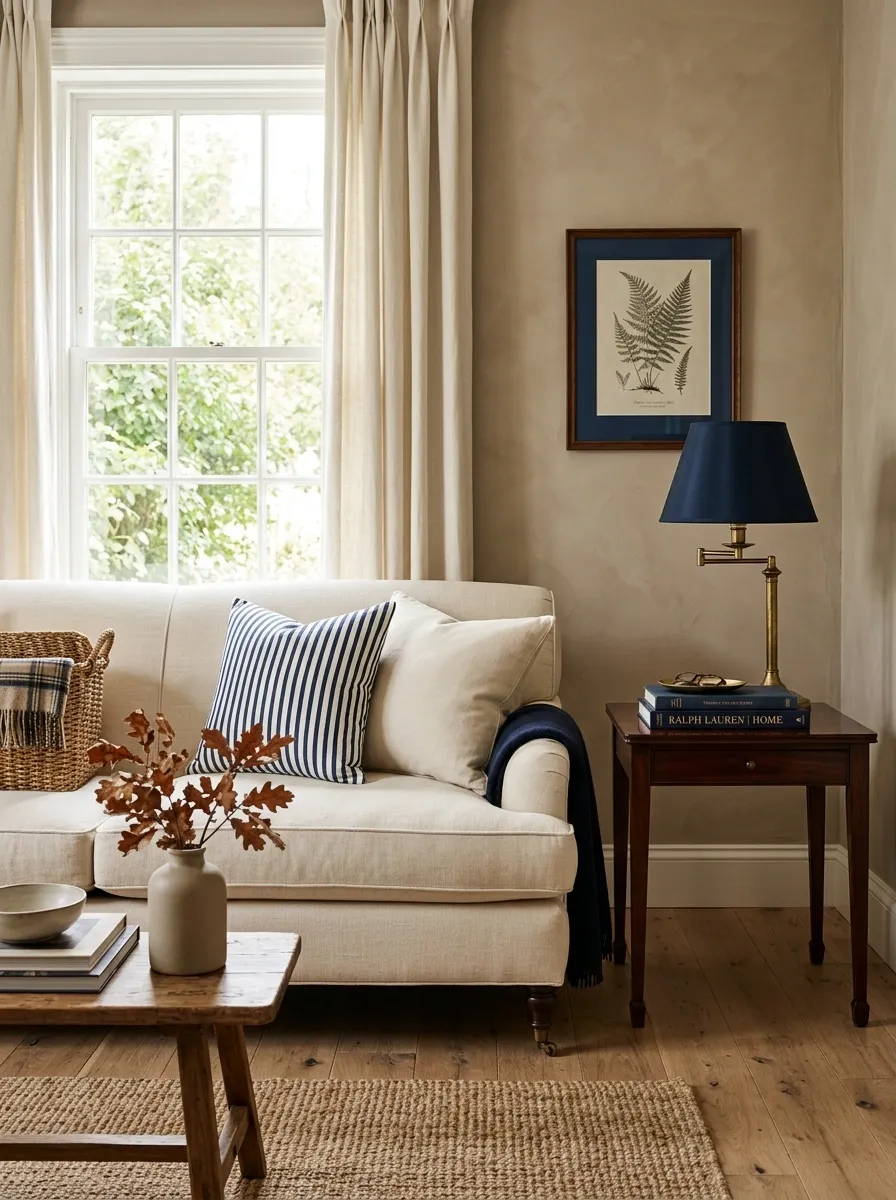
Navy gives the warm palette a sharper edge, but it doesn’t need to dominate the room.
A striped cushion, framed artwork, book spine, lampshade, or dining textile can carry the color. Repeat it in a few different places and let the materials change.
The eye notices the shared color before noticing that the objects themselves aren’t matching.
That gives the room rhythm without adding more furniture.
Use Stripes as the Room’s Graphic Line
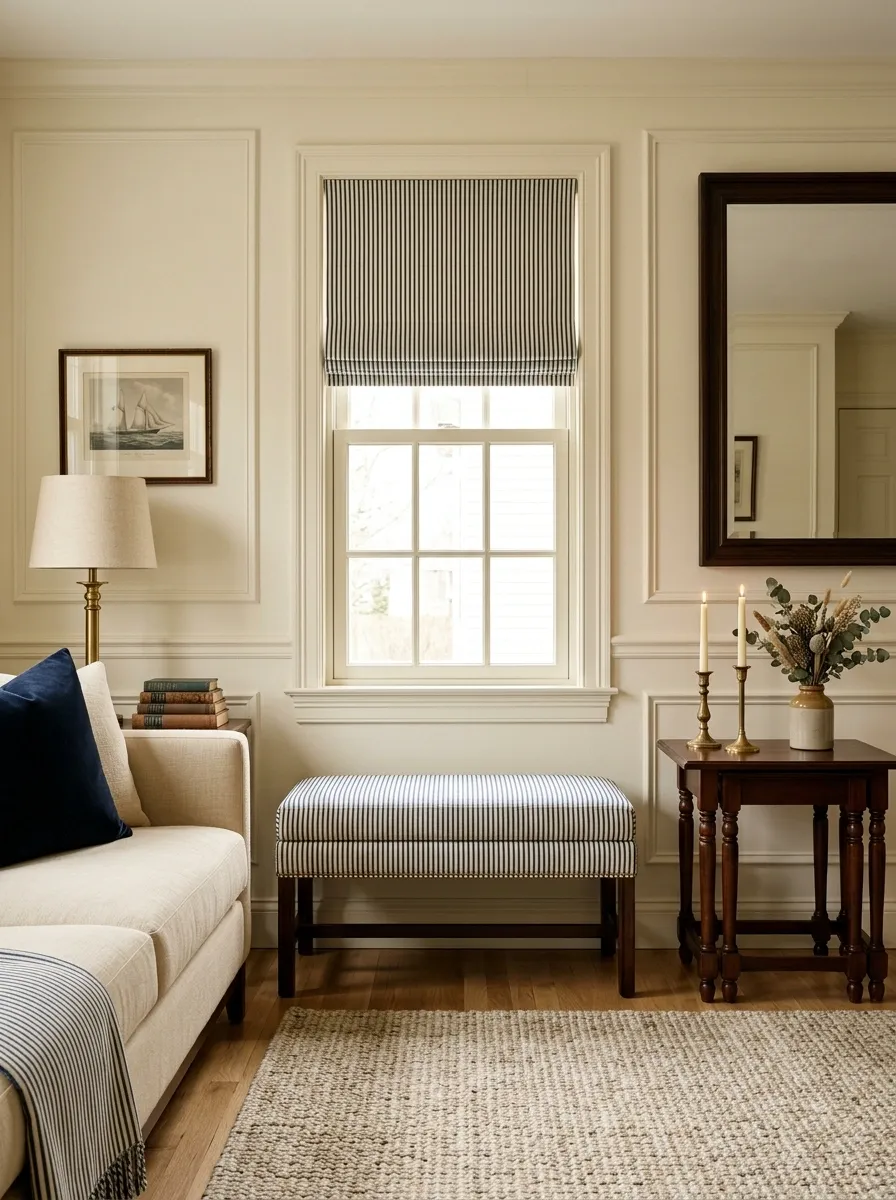
Stripes bring structure without the visual density of a complicated print. That makes them particularly useful in a compact room.
A narrow Roman shade, tailored cushion, upholstered bench, or runner can become the one graphic line in the room. The rest of the fabrics should become quieter.
Thin stripes feel more formal and tailored. Wider ticking stripes feel relaxed and slightly more casual.
Choose one scale and let it become the pattern that defines the room.
Hang One Antique-Style Mirror Where Light Can Work
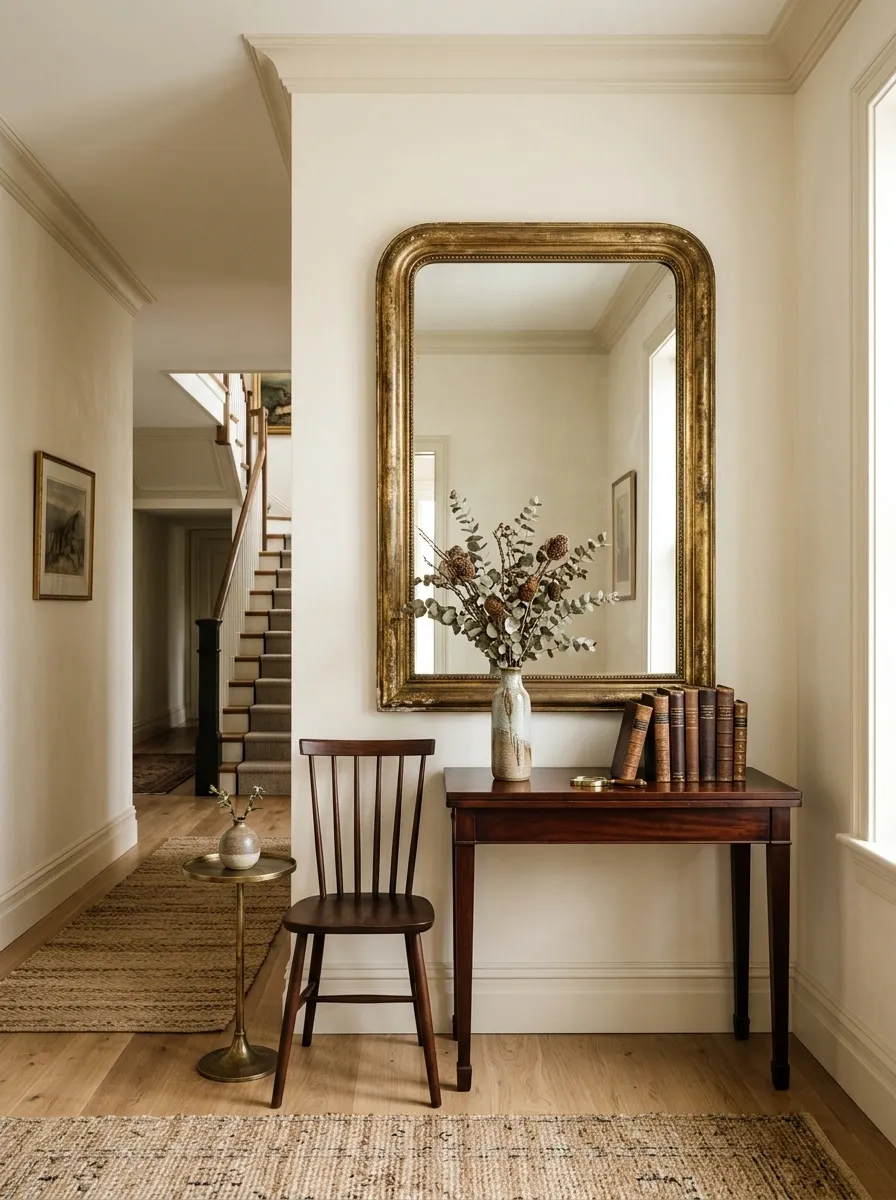
A mirror earns its place in a small home when it contributes more than decoration.
An aged wood or brass-framed mirror can catch daylight, brighten a darker hallway, and create a strong vertical focal point above a narrow console.
One substantial mirror usually looks more intentional than a collection of small reflective pieces.
Place it where the reflection actually adds something to the room rather than simply filling an empty patch of wall.
Add Aged Brass Where the Eye Naturally Lands
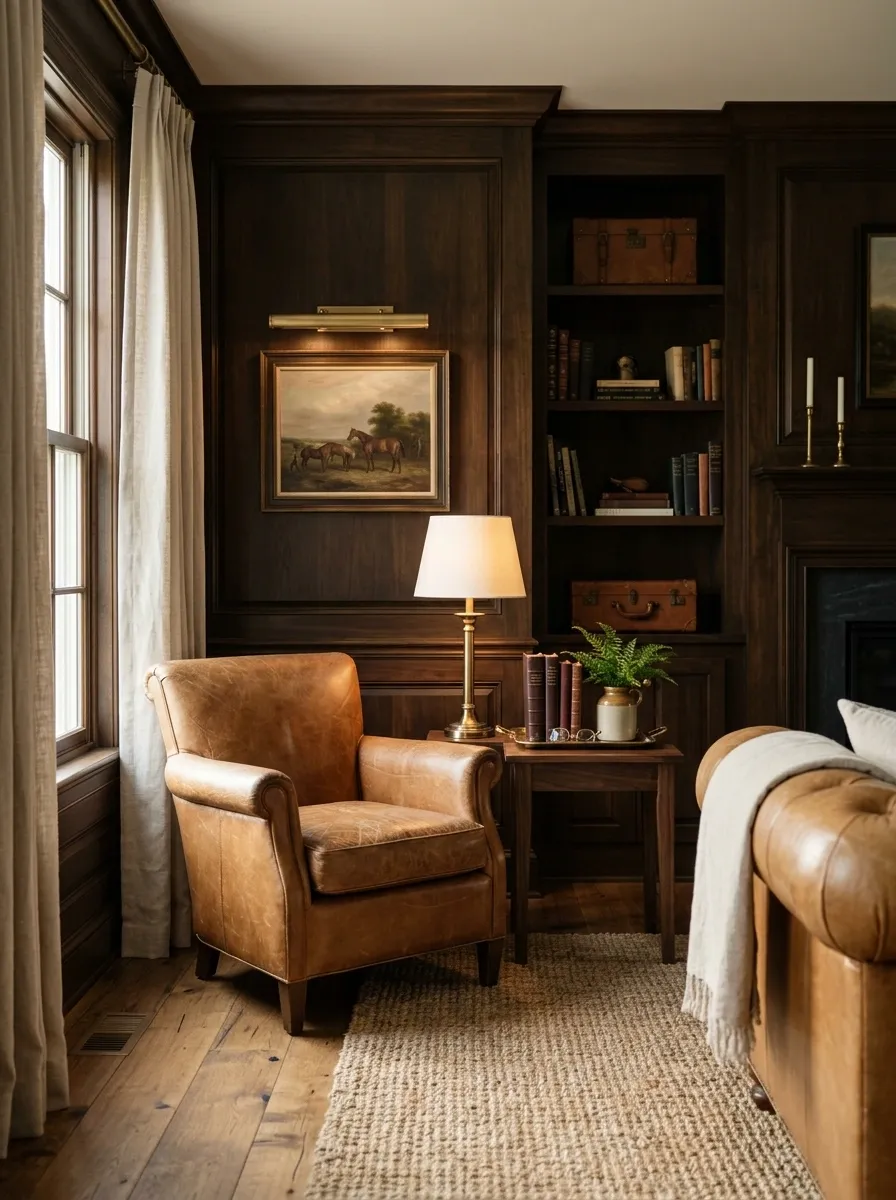
Aged brass feels more convincing when it appears in places that already have a purpose.
A lamp base, picture light, cabinet pull, curtain rod, mirror frame, or small tray can introduce the finish without turning the room into a brass collection.
The muted surface works particularly well with leather and dark wood because all three materials develop depth rather than competing through brightness.
Turn a Tiny Dining Spot Into a Private Club Corner
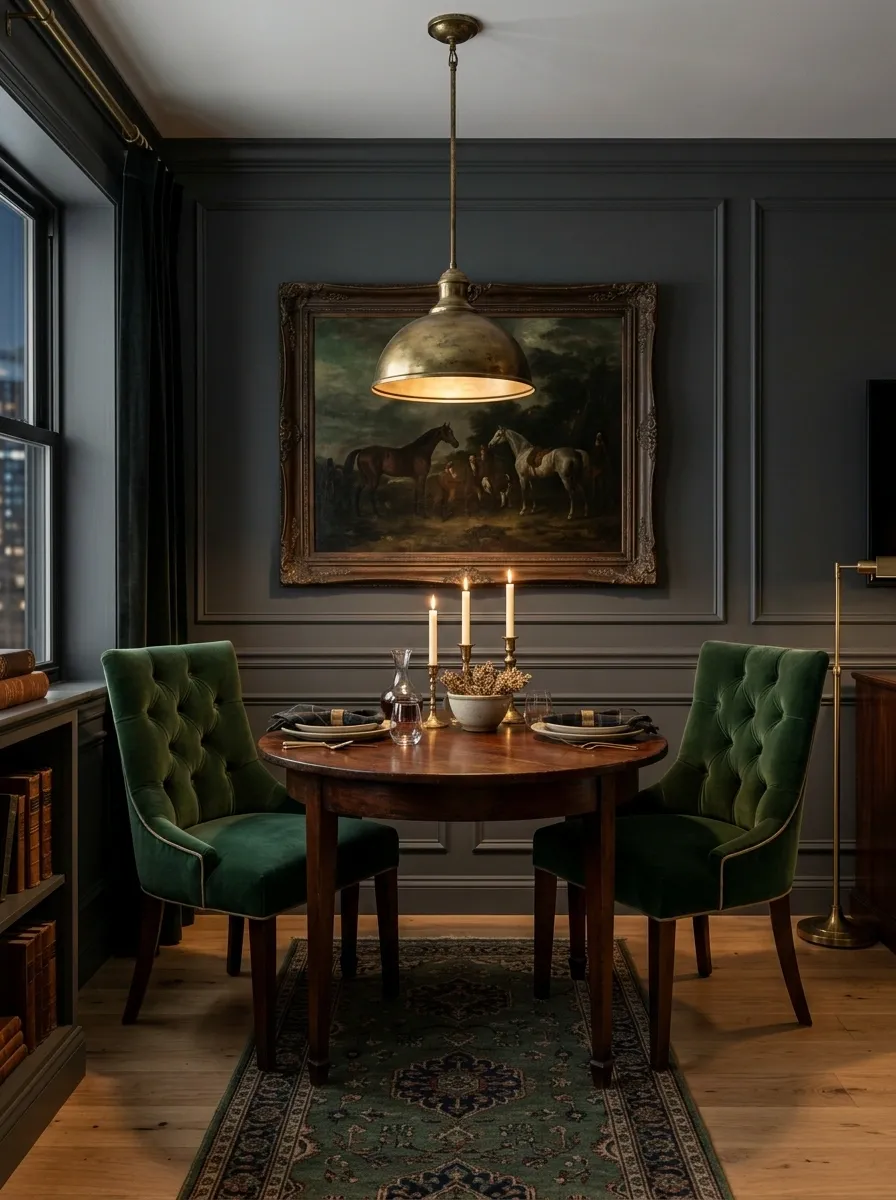
A compact dining area gains personality when it feels deliberately designed rather than squeezed between two rooms.
Use a small round or narrow rectangular table, tailored seating, one focused light, and artwork positioned close to the dining area. The furniture can feel substantial without taking over the floor.
Keep the surrounding space quiet. The dining nook should read as one composed destination.
Put Plaid on One Statement Textile
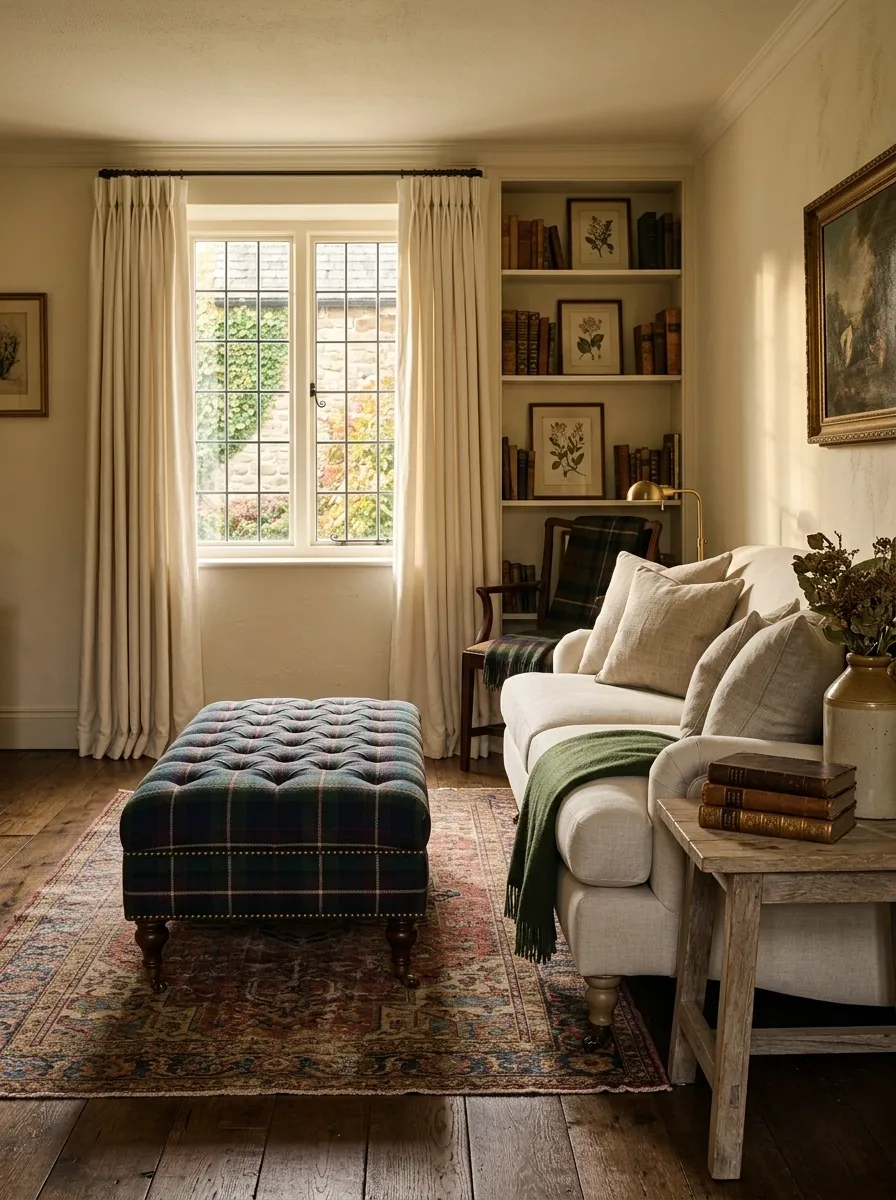
Plaid is one of the easiest ways to bring in that old-school country-house character, but small rooms don’t have enough visual space for several competing patterns.
Choose one substantial plaid piece. A throw across a sofa, a bench cushion, or a compact ottoman is enough.
Let the rest of the textiles become quieter. Linen, wool, cotton, and simple solids give the plaid room to become the memorable pattern.
Choose Lamps With Slim Traditional Silhouettes
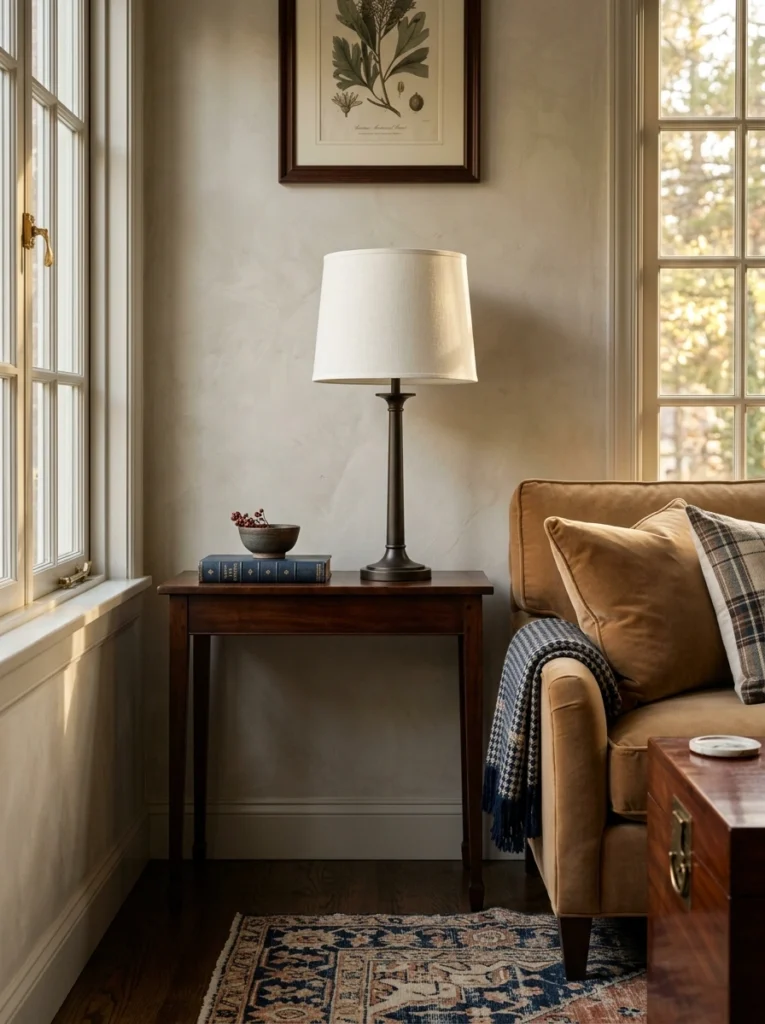
Lighting can easily become oversized in a small room.
Slim ceramic, wood, brass, or dark metal lamps keep the traditional character while preserving valuable table surface. A tailored shade gives the room the right visual language without requiring a bulky base.
The lamp should read well from across the room. That’s where proportion becomes more important than small decorative details.
Build the Entry Around One Narrow Console
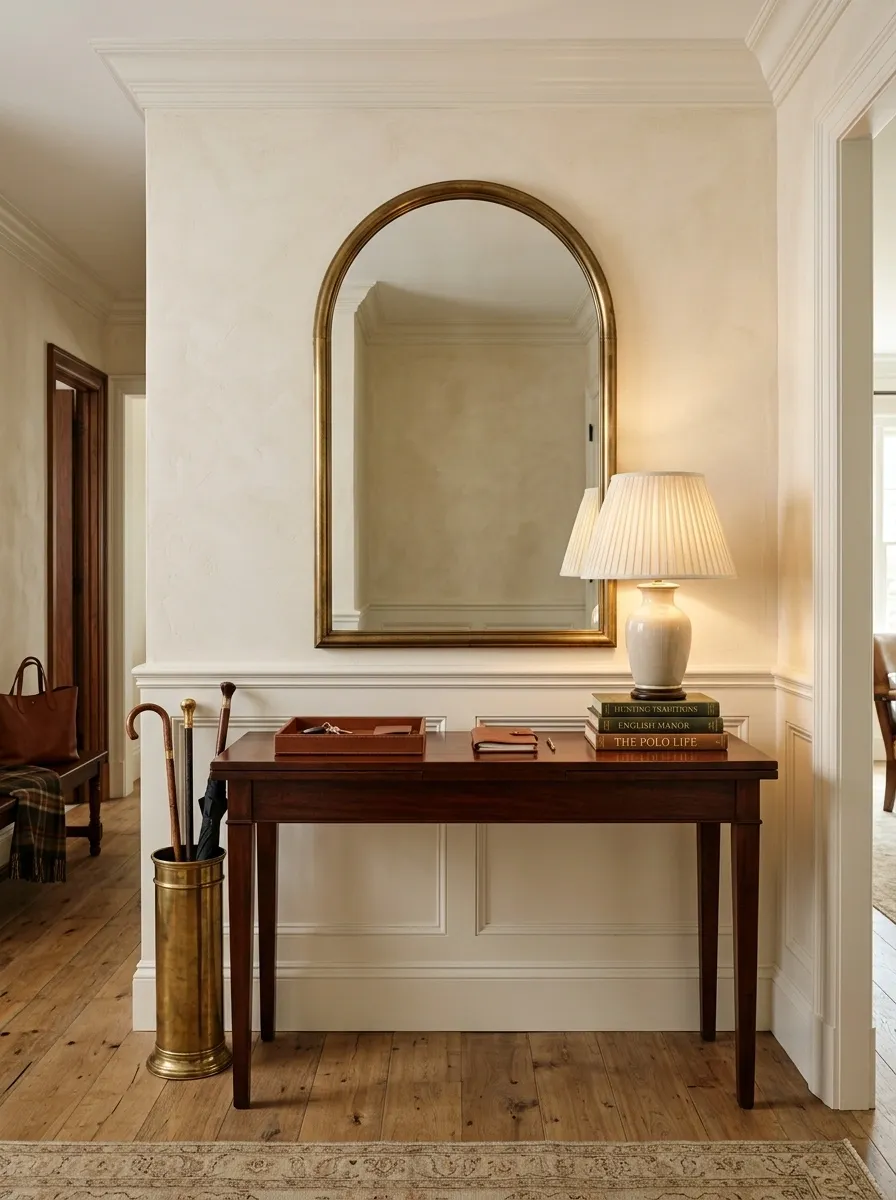
A small entryway rarely needs multiple pieces of furniture.
A slim console, substantial mirror, practical tray, and one lamp create a complete arrangement. The console establishes the horizontal line, while the mirror pulls the eye upward and the light gives the arrival zone warmth.
Keep the accessories sparse enough that the surface still looks usable.
Mix Polished Wood With Relaxed Linen
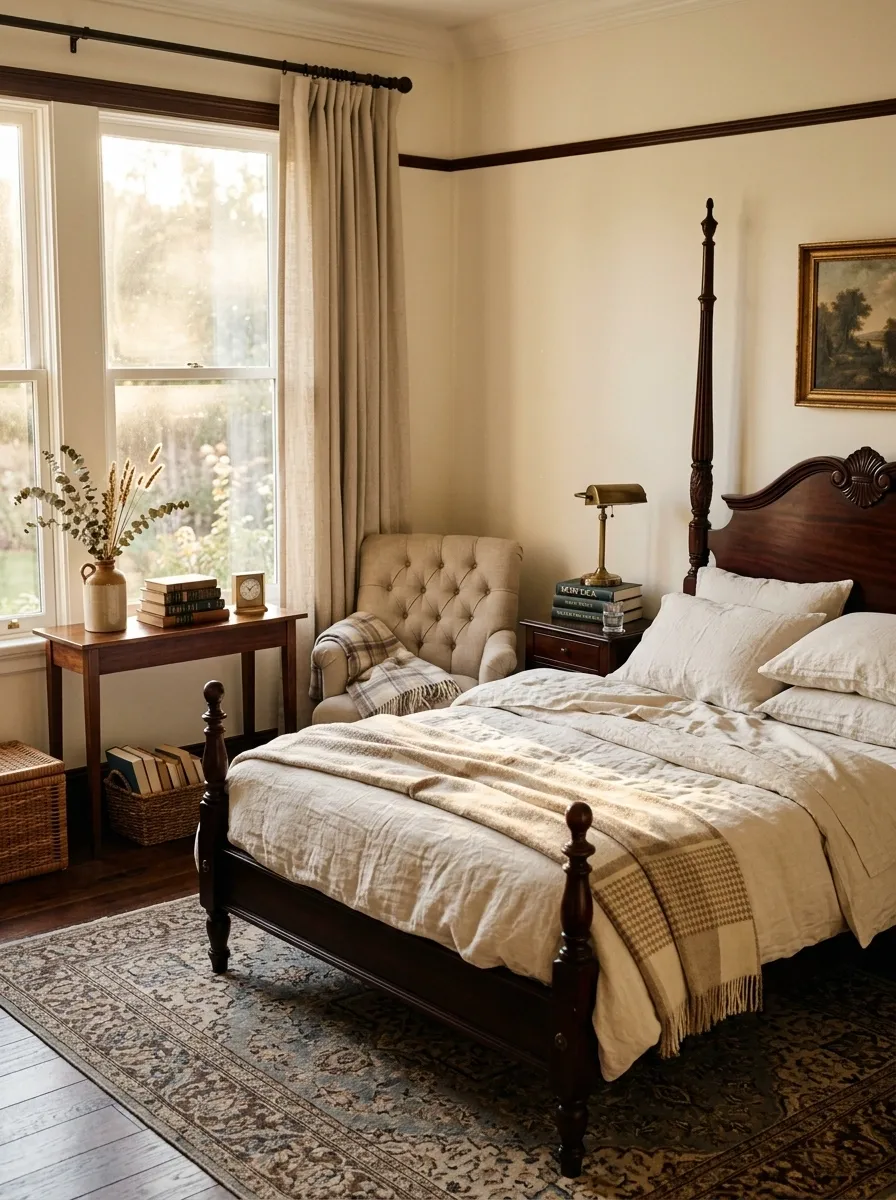
The easiest way to keep traditional styling from becoming stiff is to contrast hard and soft materials.
Polished walnut or mahogany provides structure. Relaxed linen adds softness. A wooden bed with washed linen bedding, a polished console beside a linen chair, or a formal dining table with upholstered seating all use the same principle.
The contrast makes the room feel lived in rather than preserved.
Repeat Leather in Small Details, Not More Furniture
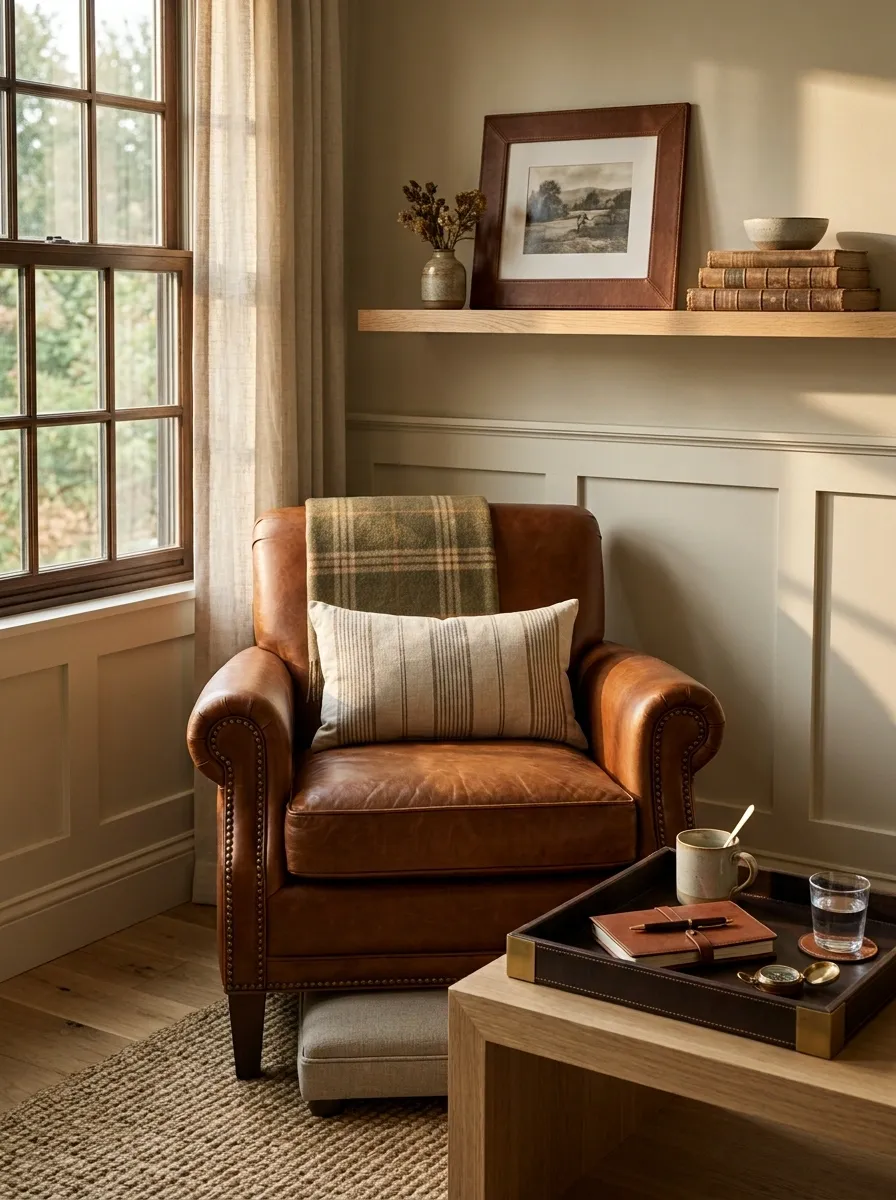
The leather story doesn’t have to stop at the main chair.
A leather tray, wrapped handle, desk accessory, ottoman, or picture-frame detail can quietly repeat the material. That makes the room feel connected without adding another large piece of furniture.
The scale should change. One substantial leather object can be balanced by two or three tiny echoes.
Give the Bedroom a Quiet Hotel-Like Finish
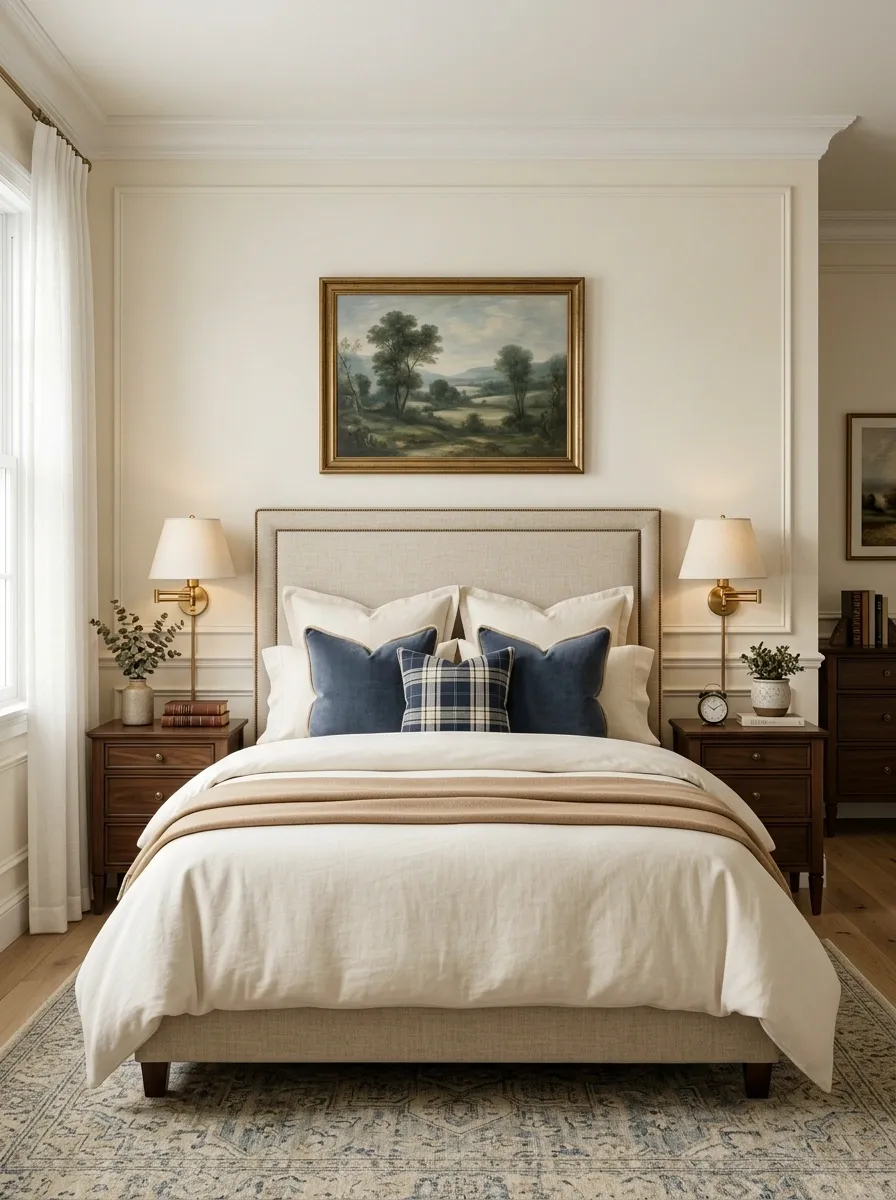
A small bedroom looks richer when the bed becomes the visual center and the furniture around it stays quiet.
Cream, oatmeal, camel, and muted navy create a traditional palette without making the room dark. A tailored throw, substantial headboard, matching lamps, and one restrained artwork give the room enough structure to feel finished.
The nightstands should remain useful rather than crowded. The result is calmer when the accessories are grouped instead of spread across every available surface.
Let One Patterned Rug Define the Seating Area
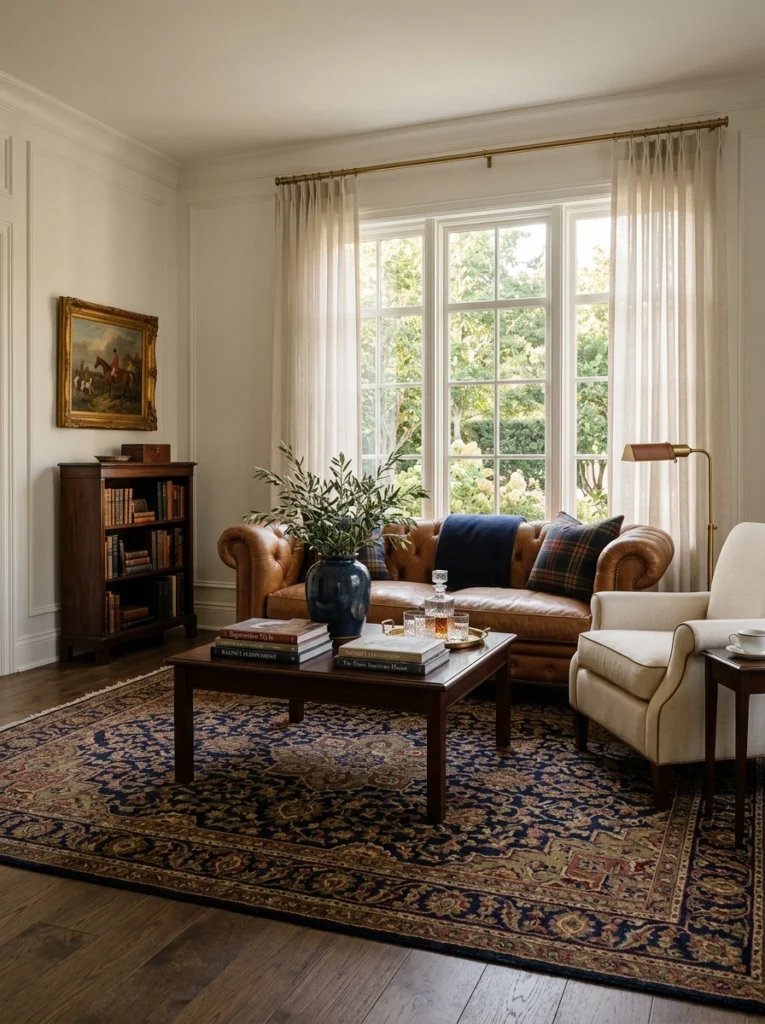
Traditional pattern works particularly well on the floor because it can gather several furniture pieces without competing with them at eye level.
Choose one rug with enough variation to include the existing colors in the room. Put the main seating over it, then simplify the nearby curtains and upholstery.
The pattern belongs to the floor. The walls get to breathe.
Use Books to Suggest a Collected, Lived-In Home
Books add color and history without requiring another piece of furniture.
Stack them on a coffee table, place a few upright on a console, or let them fill a portion of a bookcase while leaving clear gaps around the groups.
The best arrangements don’t make every spine face the same direction. A little variation makes the room feel accumulated rather than staged.
Add Equestrian Details Without Turning the Room Into a Theme
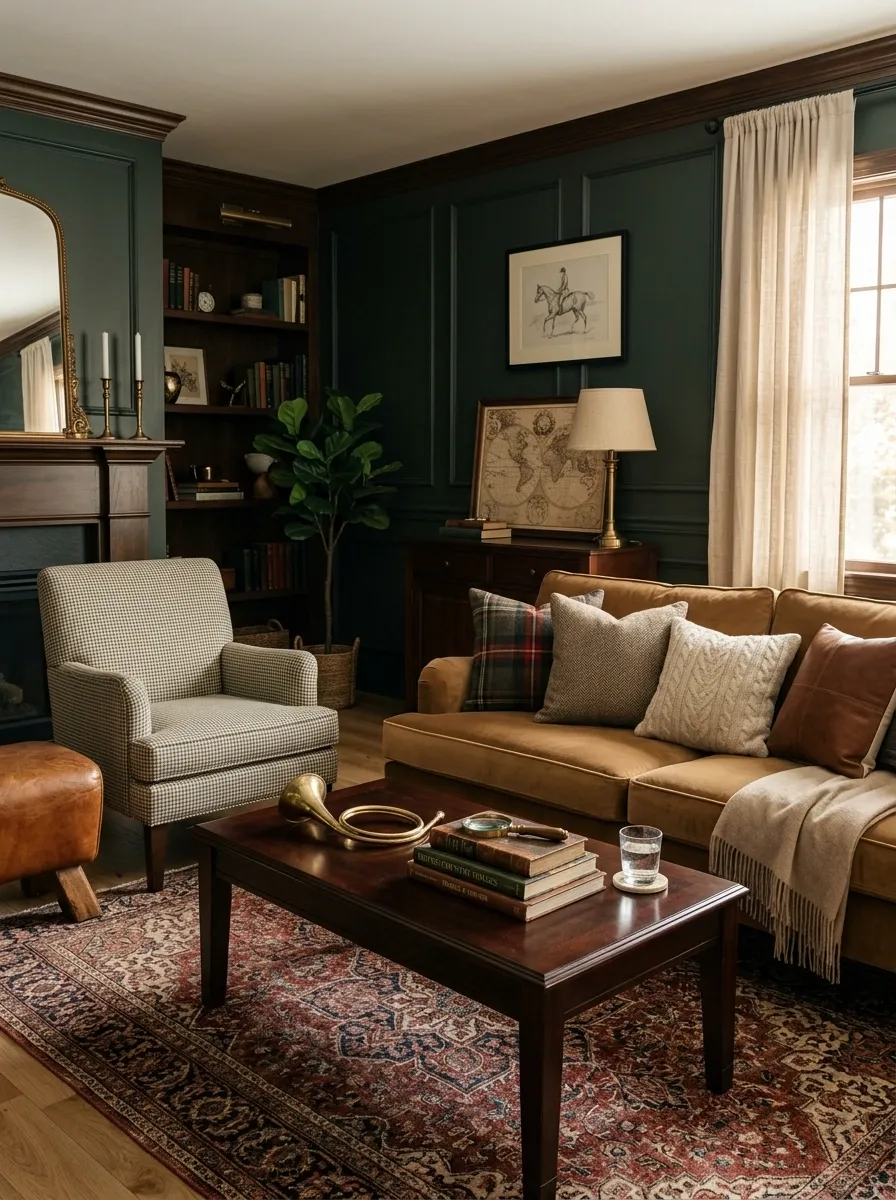
The equestrian influence works best as a reference.
One framed riding sketch, a saddle-brown leather detail, an old-style map, or a brass object can hint at the vocabulary without making the room feel themed.
The rest of the space should still read as a warm traditional interior.
The strongest version makes the reference noticeable only after the overall room has already worked.
Turn a Tiny Workspace Into a Classic Study Nook
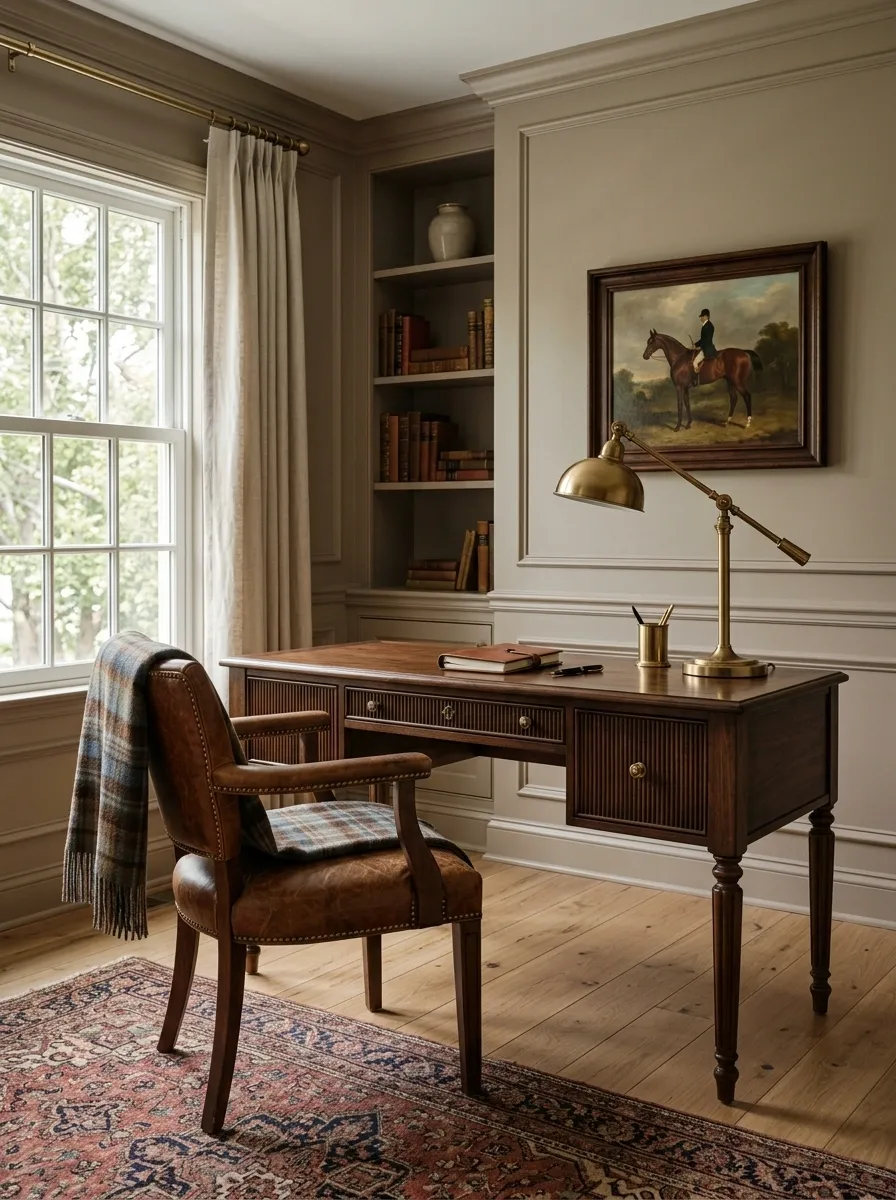
A small desk can still feel substantial when its materials are doing enough of the work.
Choose a compact wood desk, tailored chair, proper task lamp, and one piece of artwork. Keep the desktop mostly open and move papers, cables, and supplies into drawers or boxes.
The chair can carry more visual character than the desk itself. Leather, wool, or a deep neutral upholstery makes the little workspace feel connected to the rest of the home.
Use Matching Lamps to Create Instant Symmetry
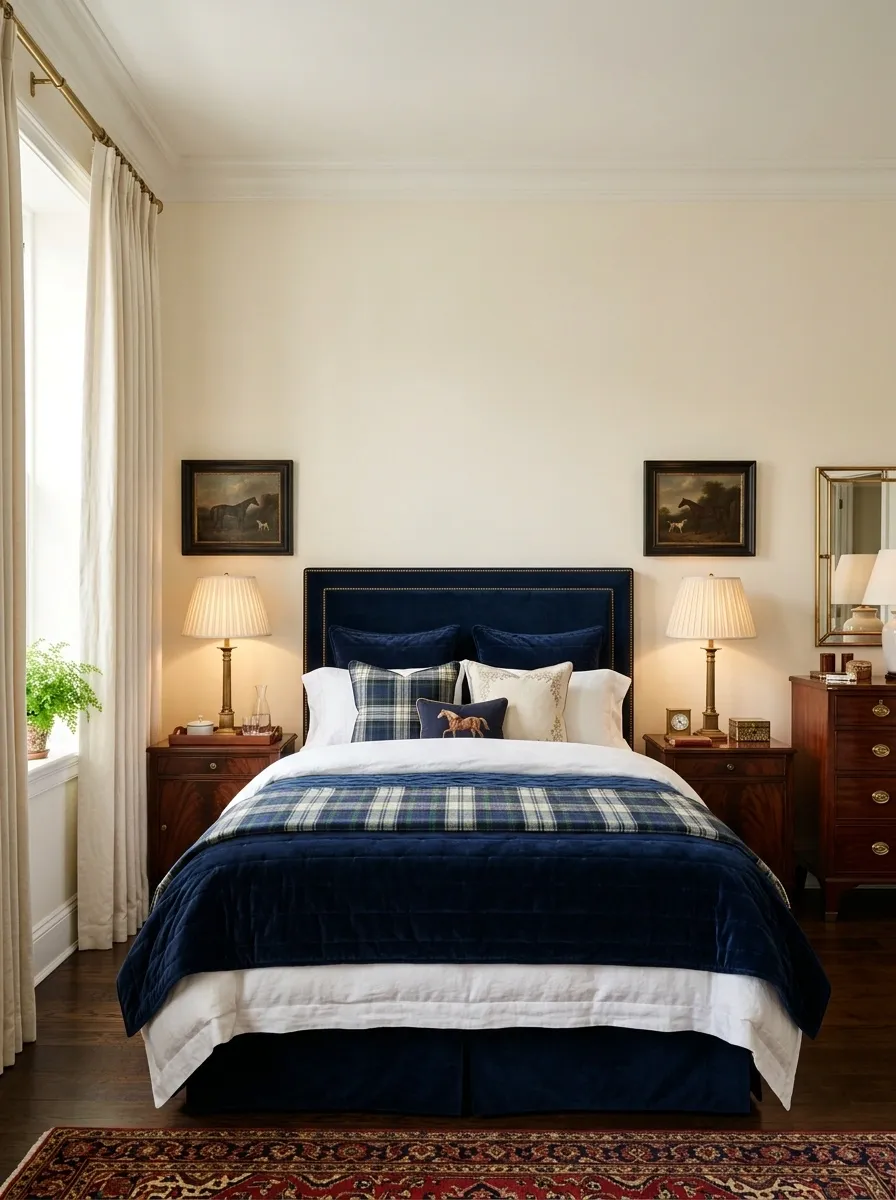
Symmetry is one of the quickest ways to make a small room feel settled.
Matching lamps on either side of a bed, console, or sofa create a clean visual frame without requiring additional decoration. The pair becomes one design decision rather than two separate objects.
This works particularly well in bedrooms and traditional living rooms where the furniture already has a balanced arrangement.
Edit Open Shelving Until Every Item Has a Job
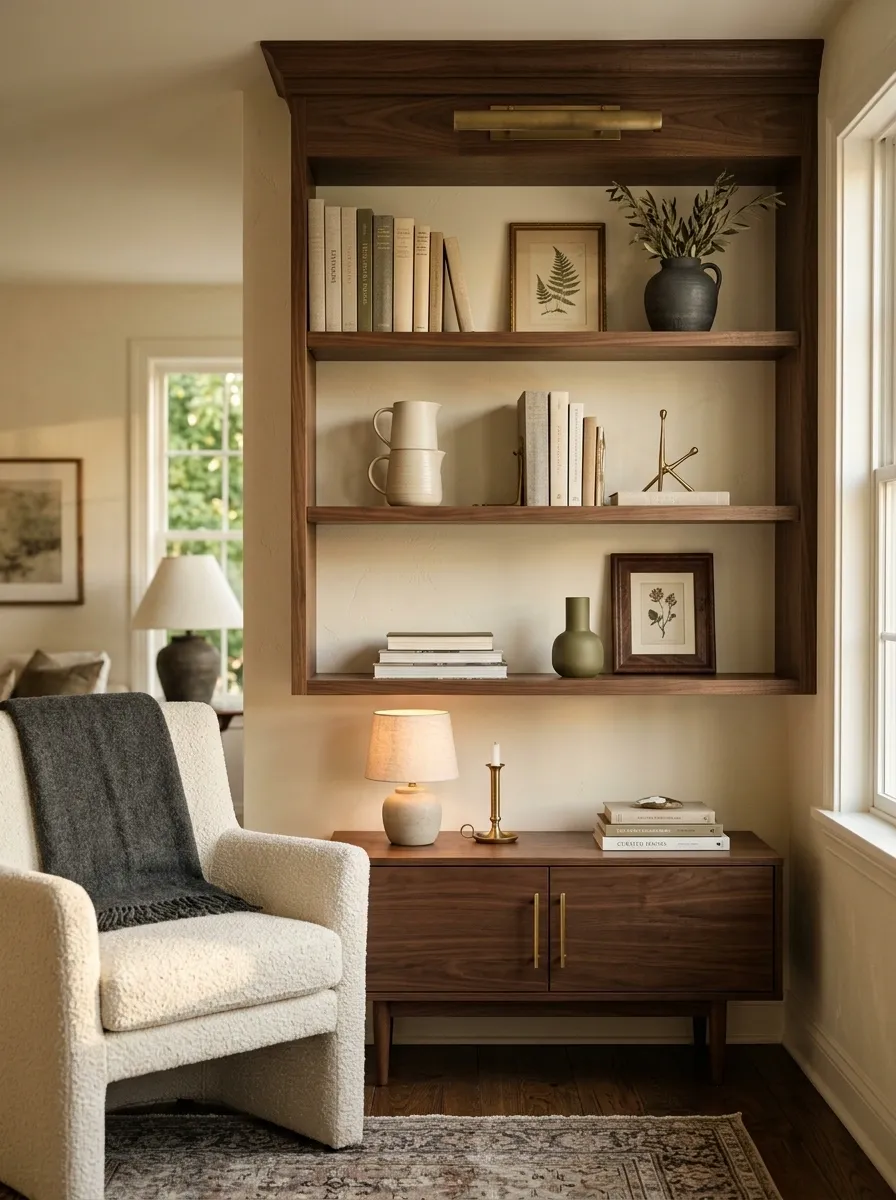
Open shelving exposes visual clutter quickly, so every object needs a reason to remain visible.
Keep books, useful pieces, artwork, and objects with enough height or texture to contribute. Then create empty sections between the groups.
The shelf should feel arranged, not packed.