
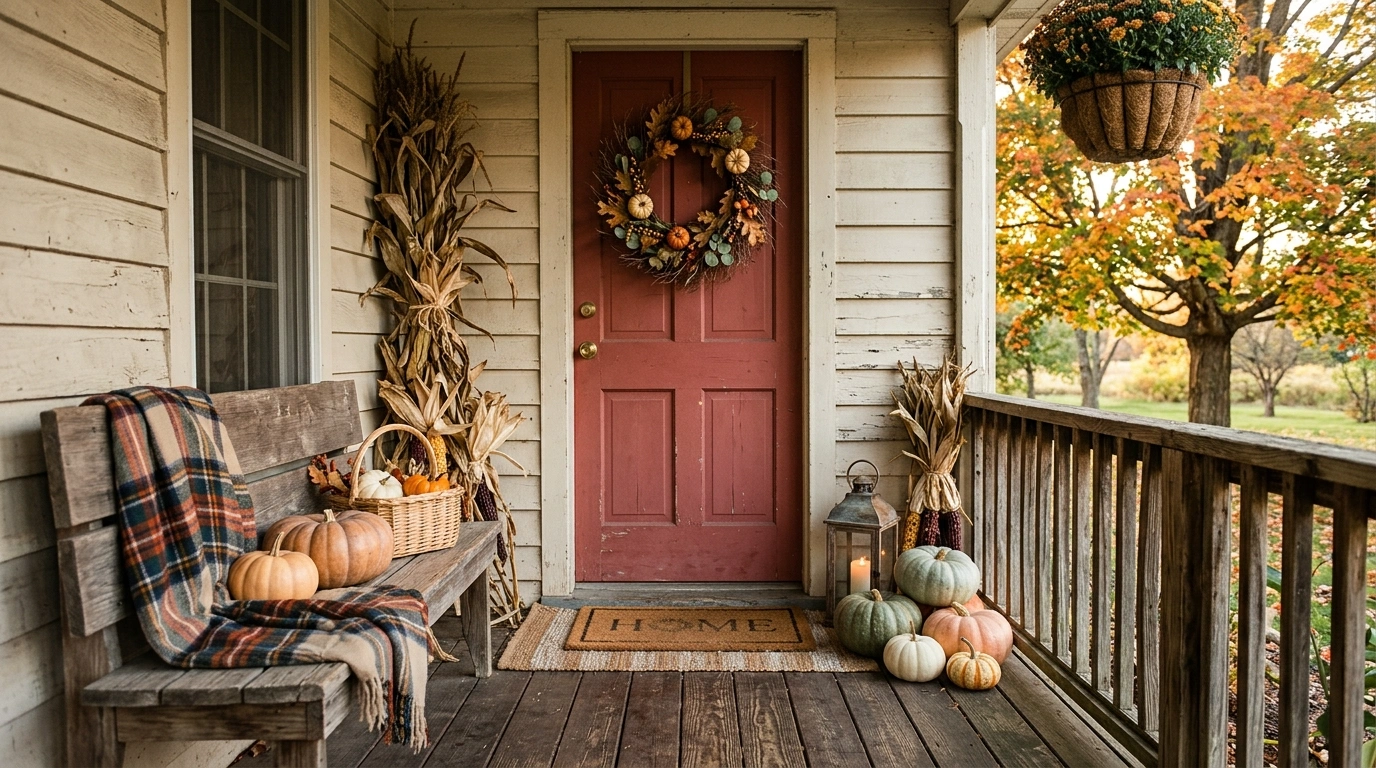
A rustic fall porch should look like it came together over time, not like someone emptied an entire seasonal aisle onto the front steps.
The best displays have a little roughness, a little warmth, and enough empty space for the actual architecture of the house to show through. W
eathered wood, woven baskets, galvanized metal, dried branches, muted pumpkins, and one or two useful pieces can do far more than a porch crowded with matching signs and identical decorations.
The goal isn’t to make every corner scream fall. It’s to create an entry that feels inviting, practical, and collected. A small porch can do that just as well as a wide one. An awkward corner can become useful. A basic doorway can gain height and personality without a renovation.
PORCH REALITY CHECK
Rustic Looks Better With Texture Than With More Stuff
Rustic style depends on contrast. Smooth ceramic beside rough wood works because the surfaces don’t all behave the same way. A woven basket next to a galvanized bucket does the same job.
Skip the temptation to keep adding little seasonal pieces. Three strong textures beat ten tiny decorations.
That matters even more on a small porch. When every object is close together, visual texture creates interest without making the entry feel crowded.
Height Keeps the Porch From Looking Flat
Most porch decor sits on the floor, which is exactly why so many displays end up looking like a pile.
Create a clear high, middle, and low level instead. A tall planter can sit behind a crate. A wreath can anchor the door. Small pumpkins can fill the gaps around the base.
The eye moves through the arrangement instead of stopping at one messy horizontal line. That’s the difference between a display that feels designed and one that feels like everything got dropped beside the front door.
Rustic Does Not Mean Everything Needs to Look Old
A weathered ladder can look great beside a clean black planter. An aged wooden crate looks better with a simple modern lantern than with six more distressed accessories competing for attention.
The goal is contrast, not a time machine.
Keep one or two pieces visibly worn, then balance them with cleaner shapes. That little bit of tension makes the porch feel believable and current instead of like a themed restaurant entrance.
Rustic Fall Porch Ideas
Anchor the Door With Vertical Foliage
A solitary wreath can leave the rest of the entryway feeling a bit naked, so pull the eye outward with an asymmetrical arrangement. Placing a tall textured vessel beside the frame instantly changes the proportions.
Fill it with a dense mix of russet leaves and pinecones, then tuck a single glowing lantern and a couple of pale pumpkins right down below. It feels entirely gathered from the backyard rather than unboxed from a retail plastic bin.
Keep the doormat simple and let the natural textures do all the heavy lifting. The result is pure autumn without the noise.
Frame the Door With Uneven Pumpkin Layers
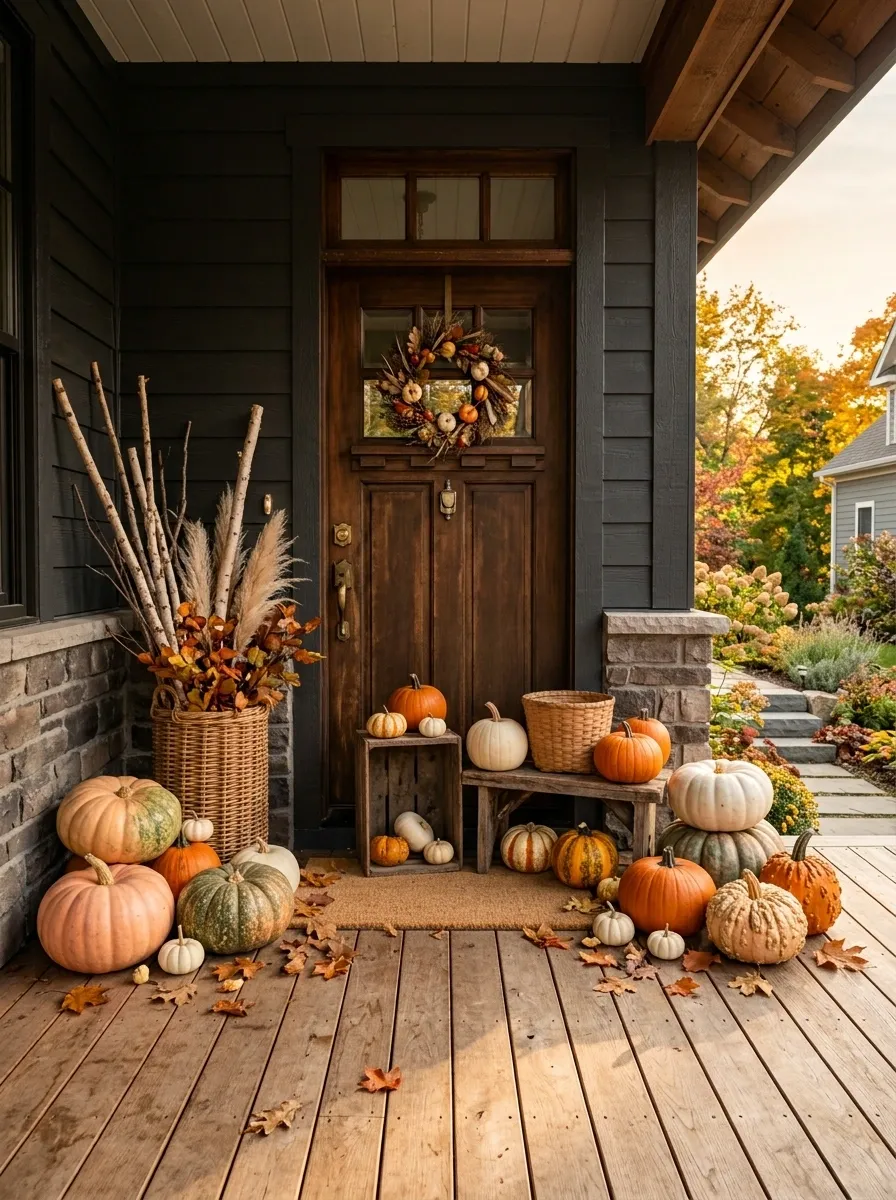
A straight row of pumpkins across the threshold looks stiff. The better move is to build two loose clusters on either side of the door and vary their heights.
Start with the largest pieces toward the back. Tuck smaller pumpkins toward the front, then add one natural texture such as a woven basket or dry branch.
The arrangement should feel slightly imperfect. That’s the point.
The rule: Keep the biggest shapes behind the smaller ones so the whole display reads as one composition instead of a pumpkin lineup.
Layer Textures on a Hay Bale Stage
Hay bales are the ultimate rustic cheat code, but leaving them bare feels far too literal. Soften the edges by stacking them beside a vintage sign and layering different container styles.
Mix galvanized buckets with wooden crates to give the arrangement height variation. Drop a classic mum inside one, then scatter heirloom pumpkins of varying shades across the surface to break up the straw.
Throw in a quirky chalkboard message if you want a little personality, but let the overflowing gourds take center stage. It looks wonderfully abundant without crossing into chaotic territory.
Lean a Weathered Wood Ladder Beside the Entry
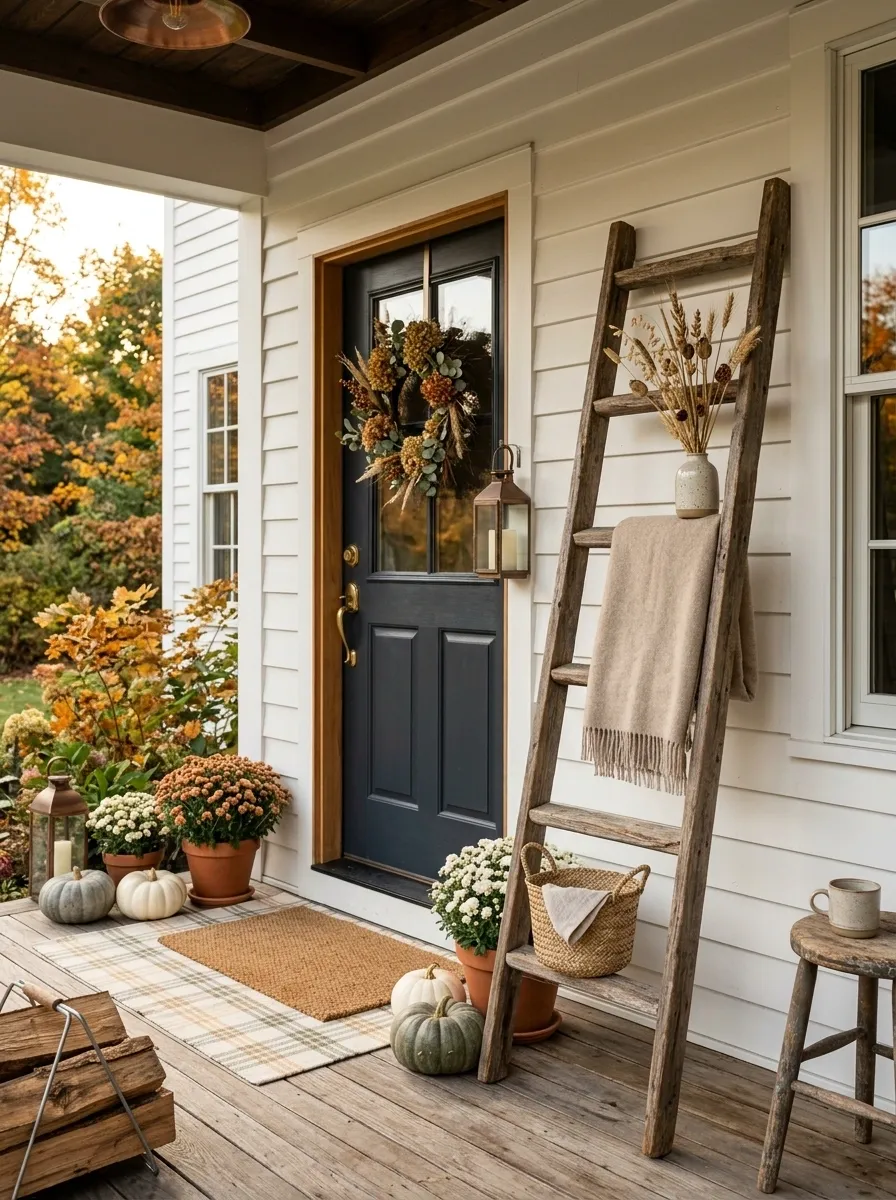
That empty strip beside the door is doing absolutely nothing. A narrow wood ladder fixes that without demanding much floor space.
Lean it slightly against the wall, then use just a few pieces on the rungs. A small basket on one level, a folded blanket on another, and a tiny fall stem near the top are enough.
Keep the ladder visible. Covering every rung defeats the whole rustic look.
Create a Pathway of Warm Glows
A long stretch of concrete porch can easily feel cold once the sun sets early. Guiding the eye with multiple light sources makes the whole approach infinitely more welcoming.
Line the edge with low-profile lanterns and clusters of mums, letting them trail naturally along the path. Toss in a few scattered pumpkins near the wooden bench to connect the seating area to the walkway.
Keep the seating casual with a simple throw blanket tossed over the back. The overall vibe says sit a while and enjoy the crisp air.
Give the Door More Height With Corn Stalks
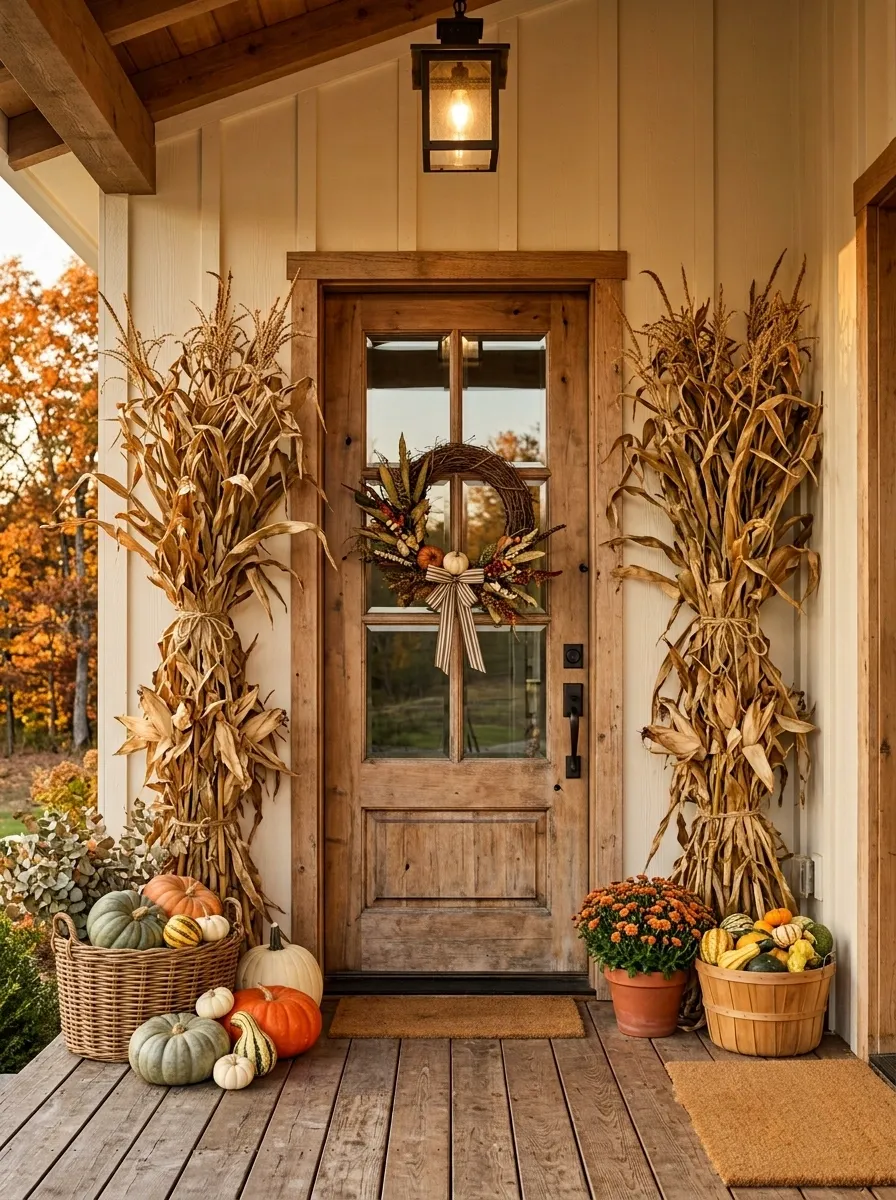
A plain doorway can look surprisingly small once a few low decorations surround it. Corn stalks solve the problem by pulling the eye upward.
Bundle them loosely on each side of the door, then let the ends spread naturally. They don’t need to be perfectly symmetrical. In fact, slightly uneven shapes keep the arrangement from looking manufactured.
Tie the stalks with simple jute or a muted fabric strip. Skip the giant bow. The corn is already doing enough.
Group Galvanized Urns With Dried Branches
Rustic styling thrives on industrial metal paired with organic shapes. Swap out traditional terracotta for tall galvanized urns overflowing with copper berry branches.
Anchor the base with a jute rug, then group creamy white pumpkins and black lanterns nearby to create striking contrast against dark wood walls. The color palette stays subdued and intentional.
Let a few stray stems lean slightly outward to keep the look soft and untamed. Perfection is the absolute enemy of cozy fall porches.
Turn a Wooden Crate Into a Low Fall Display
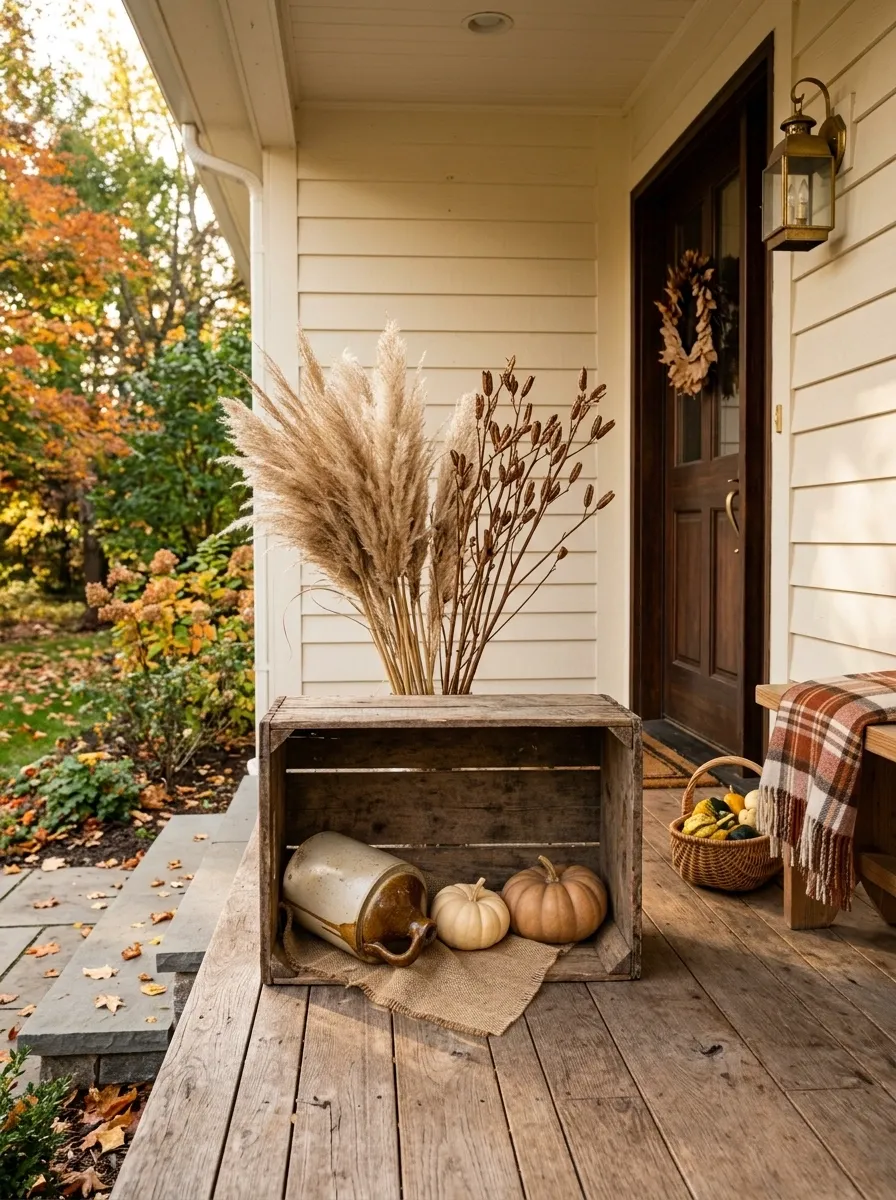
A basic wooden crate has instant rustic character, so there’s no need to decorate it within an inch of its life.
Turn the opening outward and use it as a low stage for a small arrangement. Keep the tallest item toward the back and let one or two pieces spill slightly over the edge.
The crate should still look useful. If it starts resembling a tiny seasonal department store, edit it.
Elevate Mums in a Vintage Wash Tub
Placing potted plants directly on the ground misses an easy opportunity for visual depth. A raised galvanized tub acts as a brilliant rustic pedestal for a massive burst of orange mums.
Nestle a pale heirloom pumpkin right inside the foliage so it peeks out organically. Then, scatter matching gourds and rustic lanterns around the base of the stand to ground the entire vignette.
A draped plaid textile over the side adds just enough pattern without overwhelming the rustic aesthetic. It’s an effortless way to make basic fall florals look curated.
Pair Muted Pumpkins With One Oversized Planter
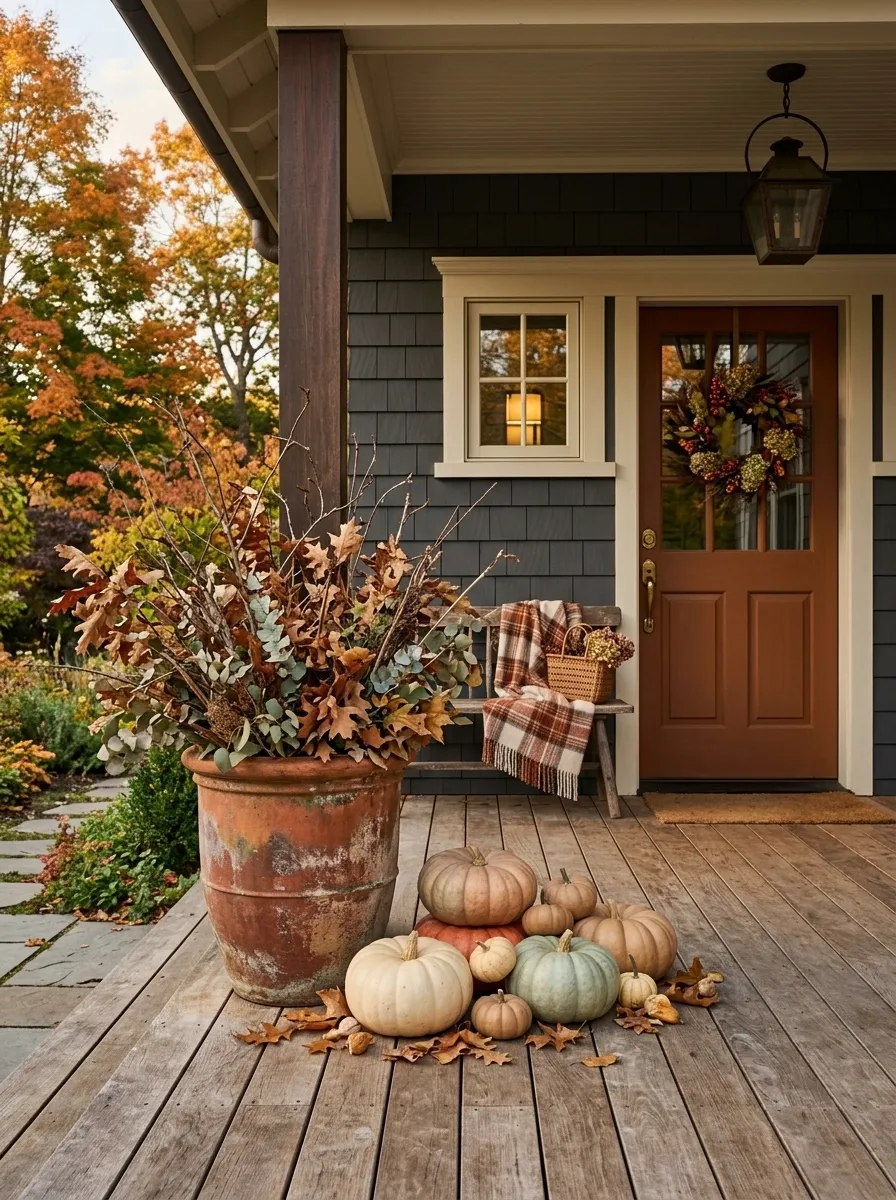
This is the easiest way to make a fall porch look more grown-up.
Use pumpkins in muted cream, dusty orange, tan, or soft green, then place them around one substantial planter. The planter becomes the anchor while the pumpkins act as supporting pieces.
The scale matters more than the quantity. One oversized planter with four thoughtfully placed pumpkins beats a dozen tiny decorations scattered everywhere.
Create a Rustic Welcome With a Woven Basket
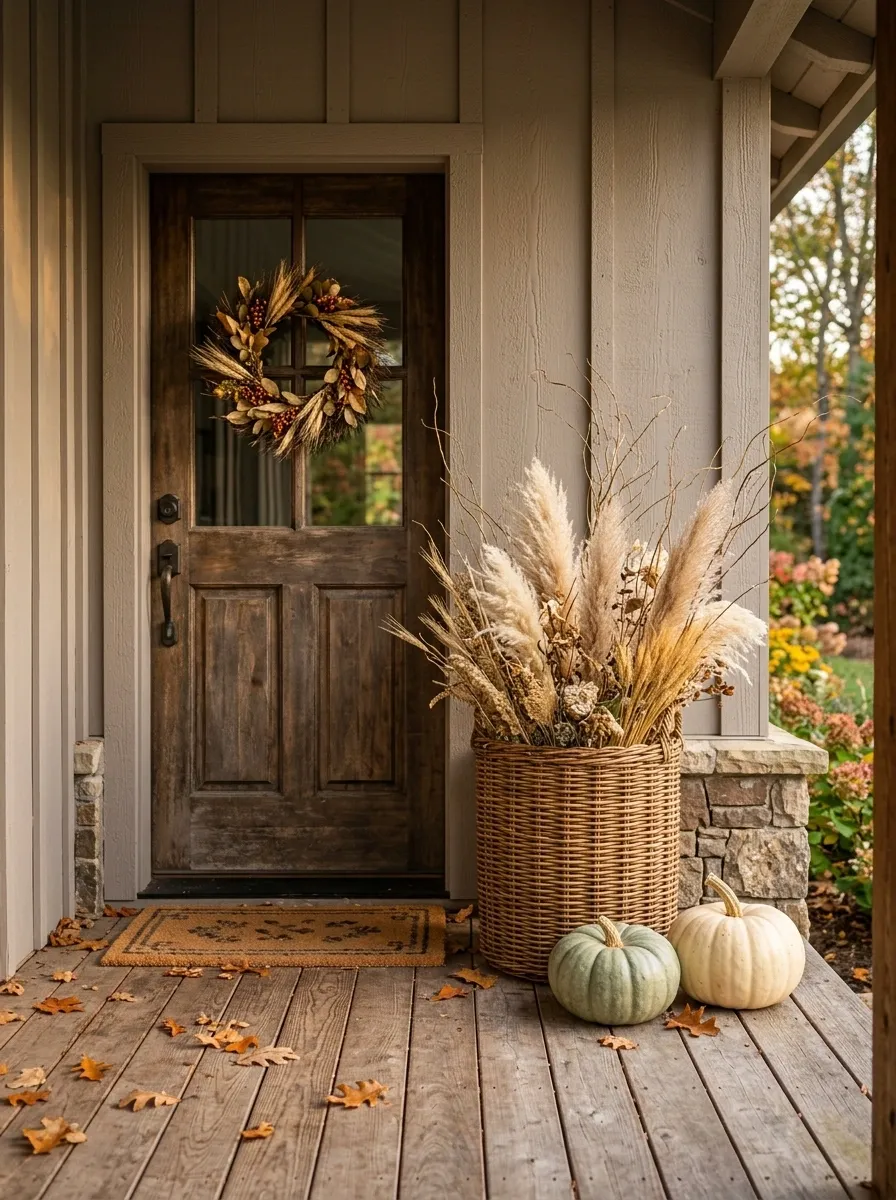
A giant basket beside the door does more than hold decor. Its woven texture instantly gives a plain porch some warmth, especially when everything else has smooth surfaces.
Use one tall basket as the main piece, then fill it with dried grasses, branches, or a loose bundle of seasonal stems. Keep the arrangement relaxed instead of packing it until nothing can move.
The trick is leaving some empty space. A basket that still looks useful feels rustic. A basket stuffed so tightly it needs structural engineering does not.
Stack Hay Bales Under the Bench Instead of Around It
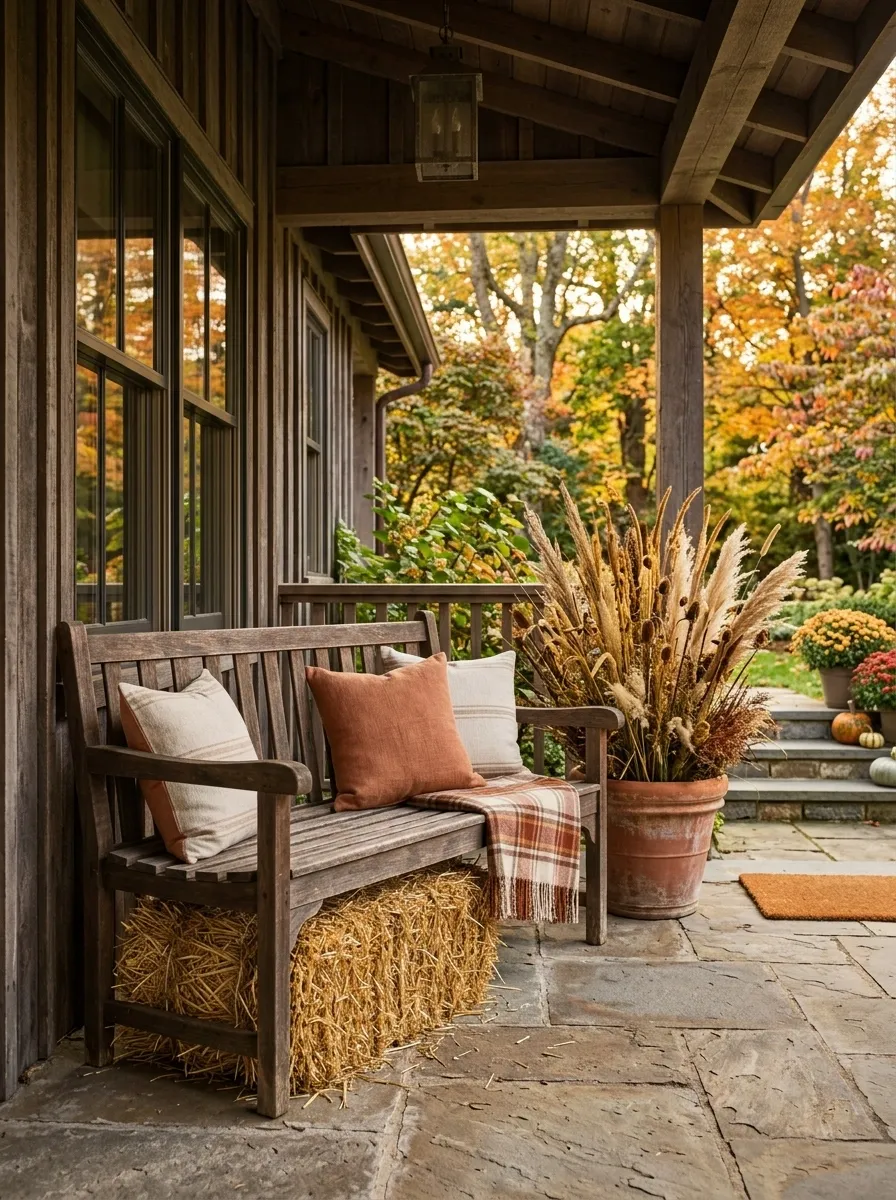
Hay bales can bring instant autumn texture, but scattered around the porch they quickly become visual obstacles.
Use them with a purpose. Tuck one beneath a bench, use another as a low display surface, or place a single bale at the end of a seating zone.
Think structure, not farm cosplay.
A hay bale works best when it connects two parts of the porch instead of becoming another object demanding attention.
| Placement | What it does | Best use |
|---|---|---|
| Under a bench | Adds weight below the seating | Longer porches |
| Beside a planter | Creates a low-high contrast | Wide entry zones |
| Scattered everywhere | Breaks the walking path | Skip it |
Hang a Simple Fall Wreath From an Old Window Frame
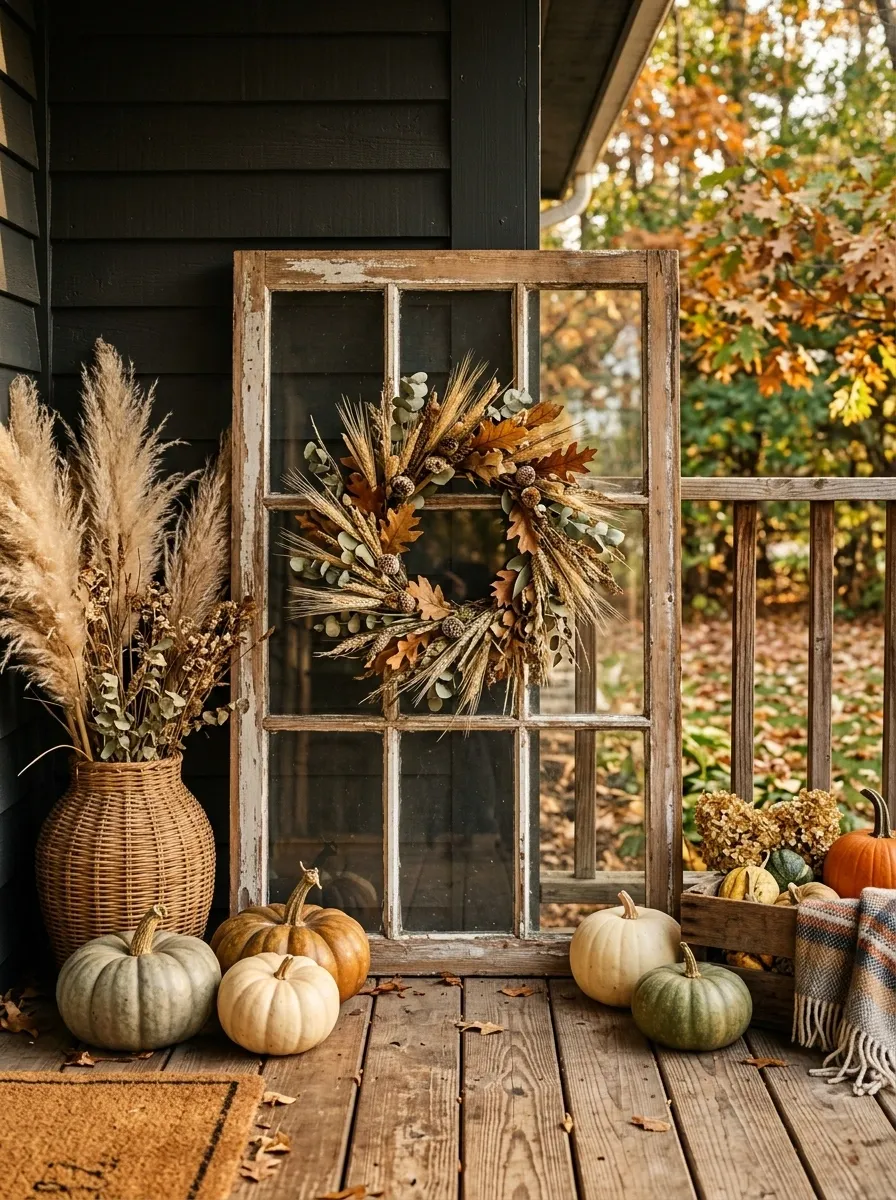
A wreath doesn’t always need to hang directly on the door. An old wood window frame gives it a larger backdrop and makes the entry feel collected instead of decorated in a single afternoon.
Lean the frame against the wall, center a restrained wreath inside it, then let the wood provide most of the visual interest.
Keep the wreath smaller than the frame. That little bit of breathing room is what makes the whole setup look intentional.
Line the Steps With Small Pots Instead of Giant Decor
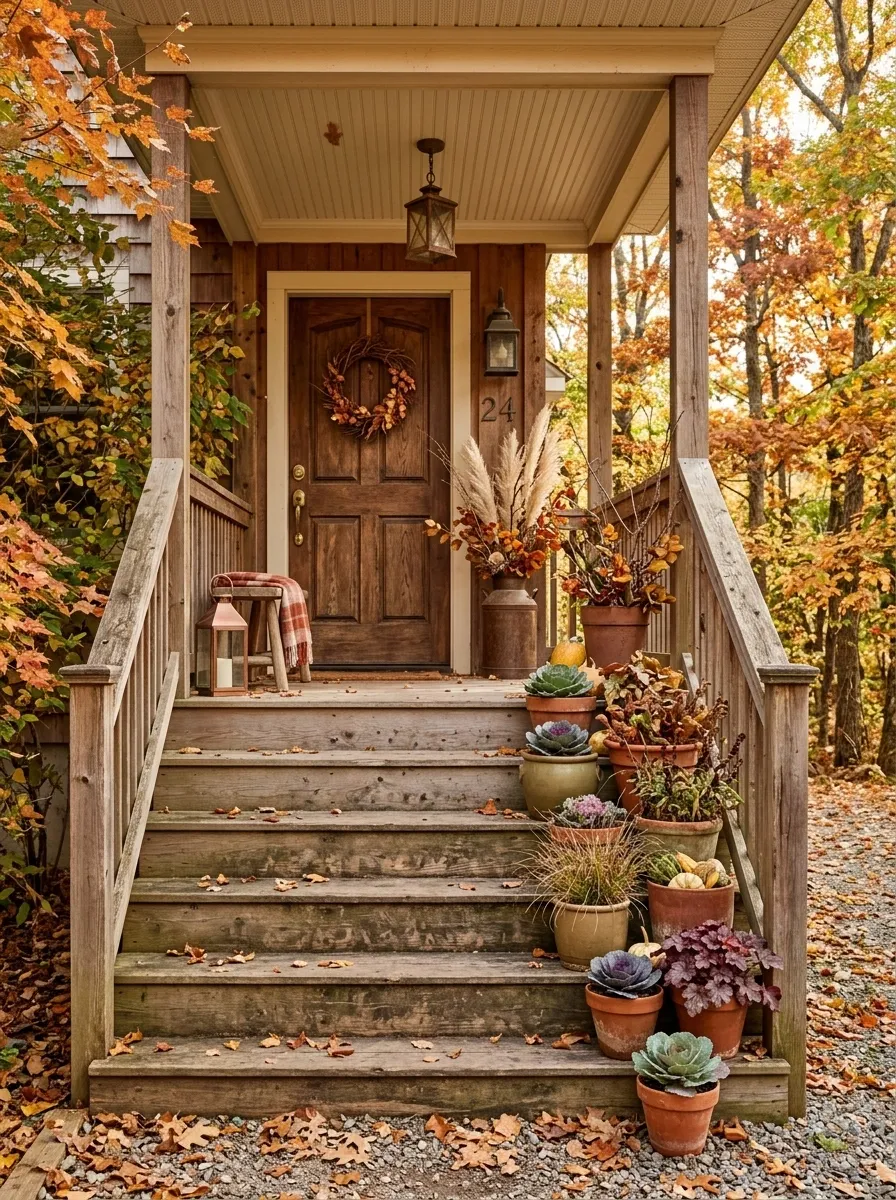
Small entry steps don’t need oversized decorations blocking every corner. A row of compact pots can give the stairs rhythm while keeping the walkway open.
Place the pots slightly off the center line and repeat the shape as the eye moves upward. Use earthy finishes such as terracotta, aged metal, or worn ceramic.
Repeat the container, vary what’s inside. That creates consistency without making every step look copy-pasted.
Bring In Buffalo Check Without Making the Porch Look Themed
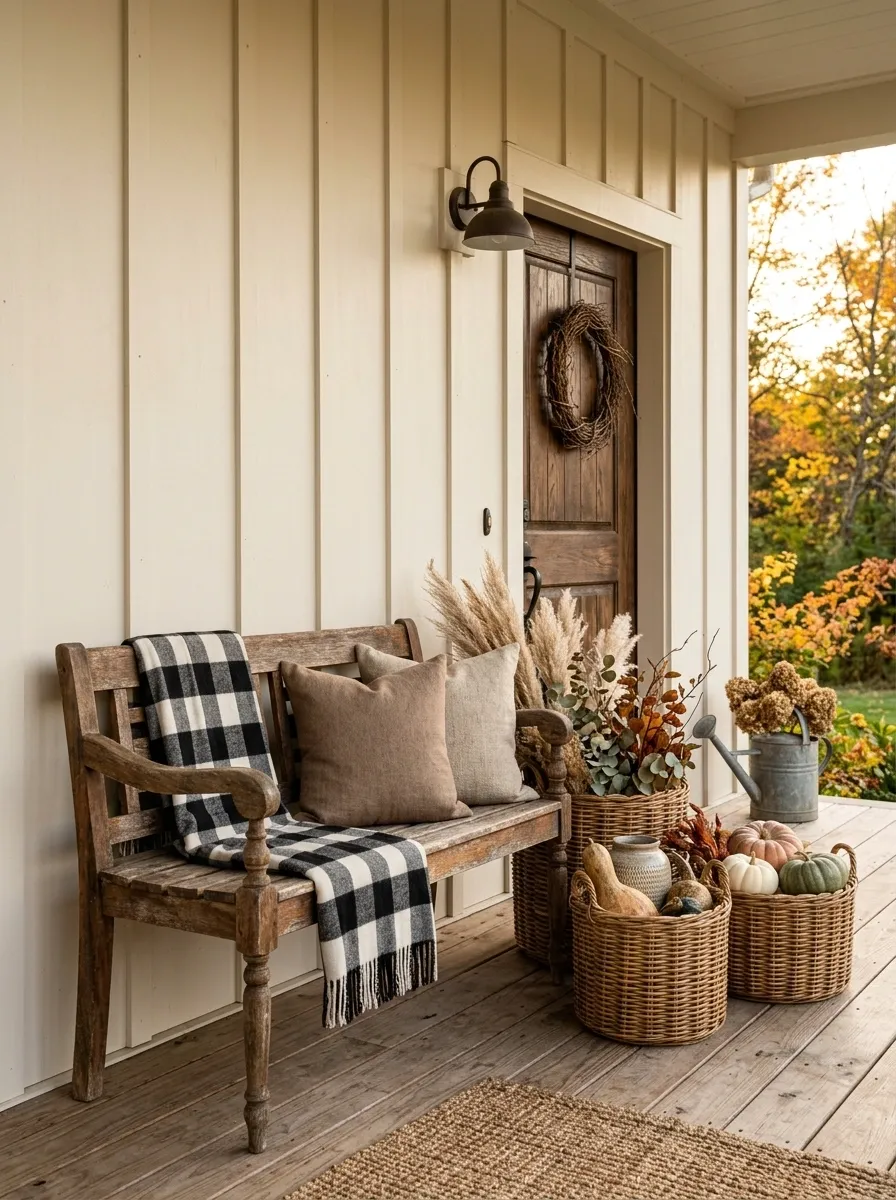
Buffalo check works because it adds a bold graphic pattern against all those natural textures. The problem starts when it appears on the mat, pillow, blanket, sign, ribbon, and absolutely everything else.
Pick one soft layer for the pattern. A bench cushion or folded throw is enough.
Let the rest of the porch stay grounded in wood, metal, baskets, and muted fall tones. The pattern should punctuate the space, not announce itself from three houses away.
Use Galvanized Buckets for Flowers, Branches, and Pumpkins
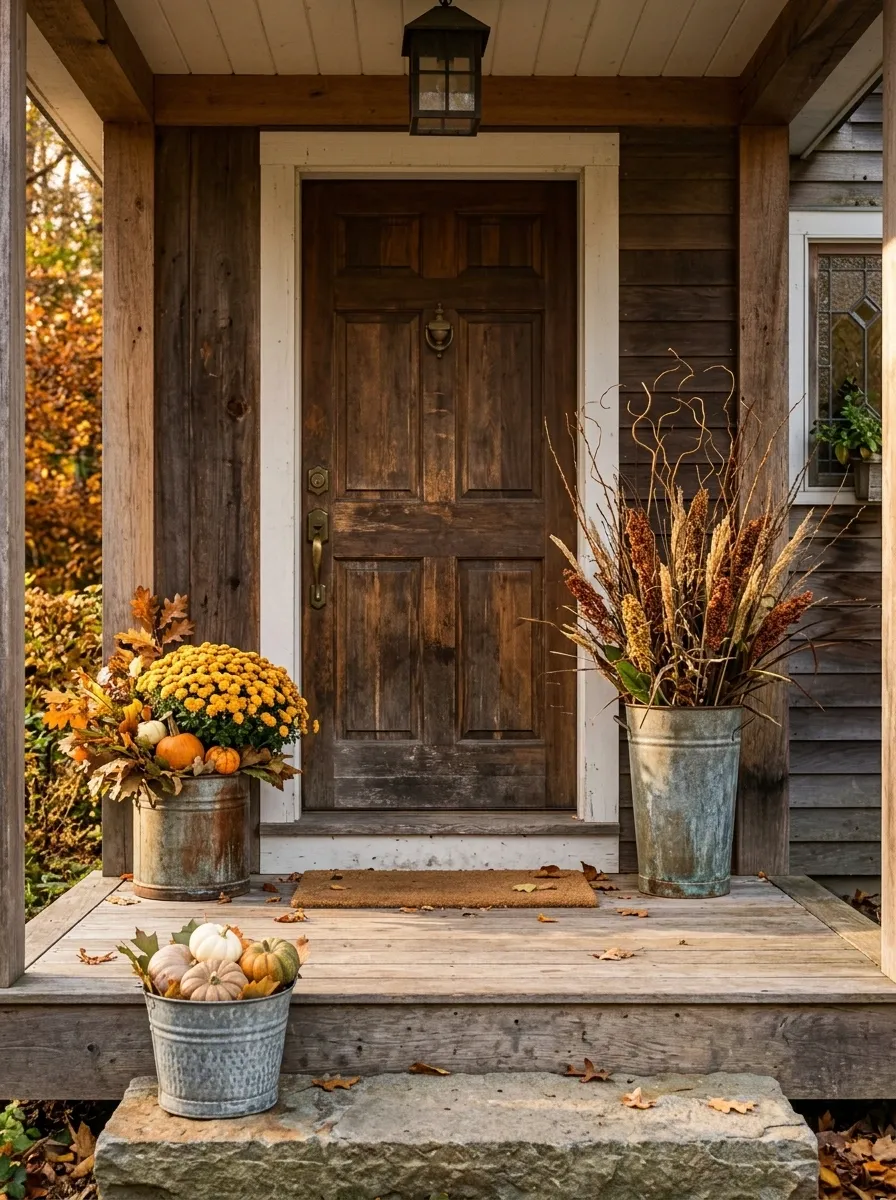
Galvanized metal has exactly the rough, practical feel a rustic porch needs. It also keeps all the seasonal color from becoming a pumpkin-only situation.
Use one tall bucket for dried branches, a shorter one for mums, or a small pail for a few loose pumpkins. Don’t line up a whole collection of metal containers unless the goal is to accidentally open a farm stand.
Let the metal stay visible. That worn silver surface is part of the decor, so don’t bury it under ribbons and fake leaves.
Make a Bench the Main Fall Styling Anchor
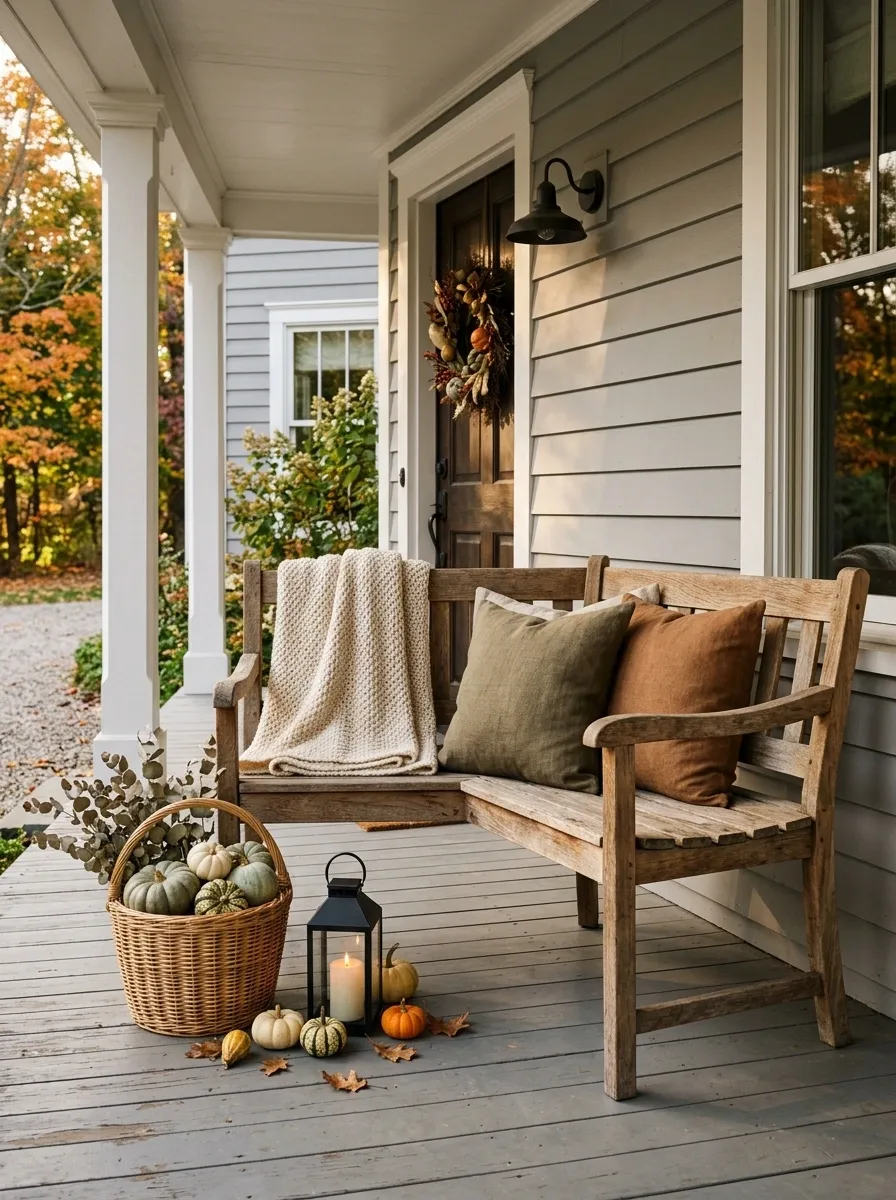
A bench gives a porch an instant focal point, and it doesn’t need a mountain of seasonal accessories sitting on it.
Add one folded throw, two cushions, and a small basket at the side. Keep the seat mostly usable. Nobody needs a decorative bench that looks terrified of an actual human sitting down.
The structure matters more than the number of pieces.
Mix White and Orange Pumpkins With Weathered Wood
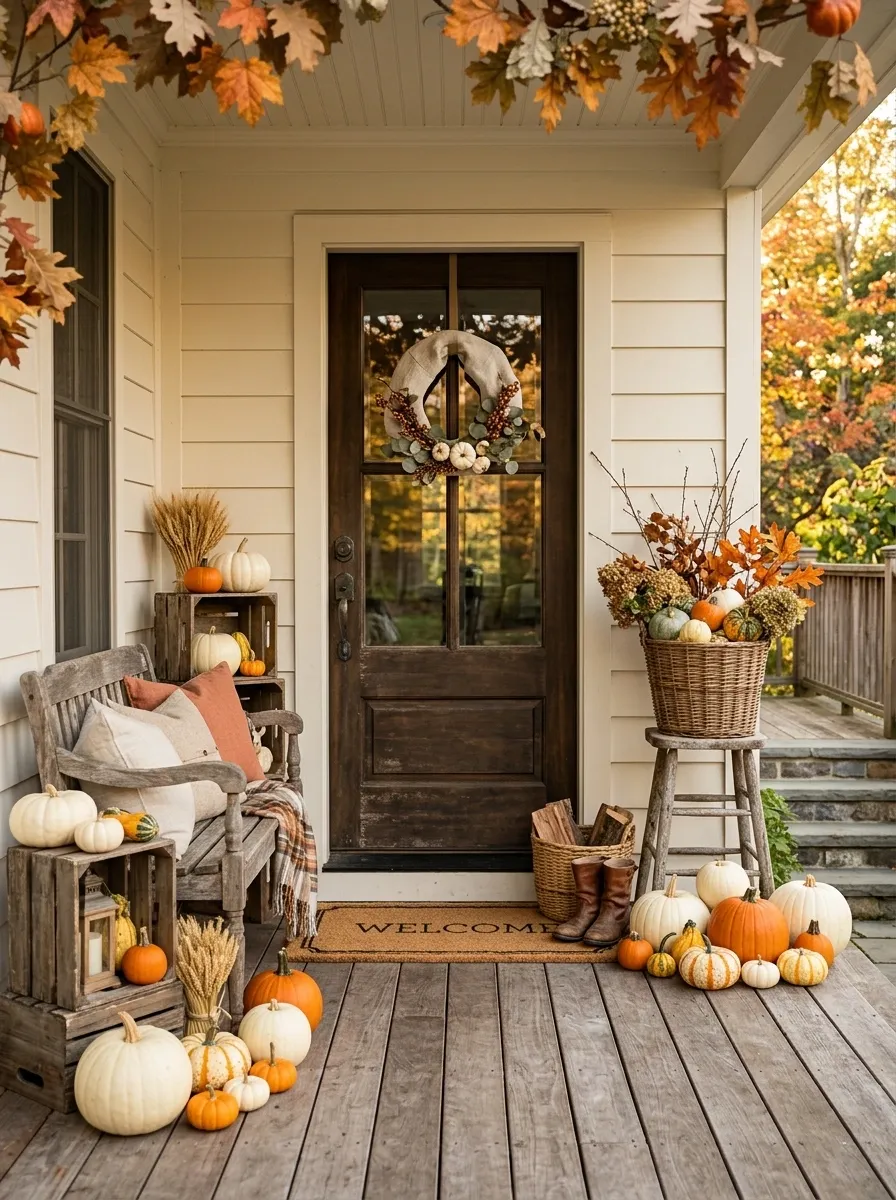
Bright orange pumpkins can feel heavy when every other object on the porch is orange too. Mixing them with creamy white pumpkins and weathered wood immediately calms the display.
Use the wood for crates, stools, signs, or an old bench. Then let orange appear in smaller doses rather than covering the whole arrangement.
The wood is the bridge. It connects the warm orange and lighter pumpkins without introducing another loud color.
| Element | Visual job | Good place |
|---|---|---|
| White pumpkins | Lighten the arrangement | Front and middle layers |
| Orange pumpkins | Add seasonal warmth | Small clusters and accents |
| Weathered wood | Connects the colors | Crates, benches, stools, and signs |
Add a Vintage-Style Sign Without Covering the Door
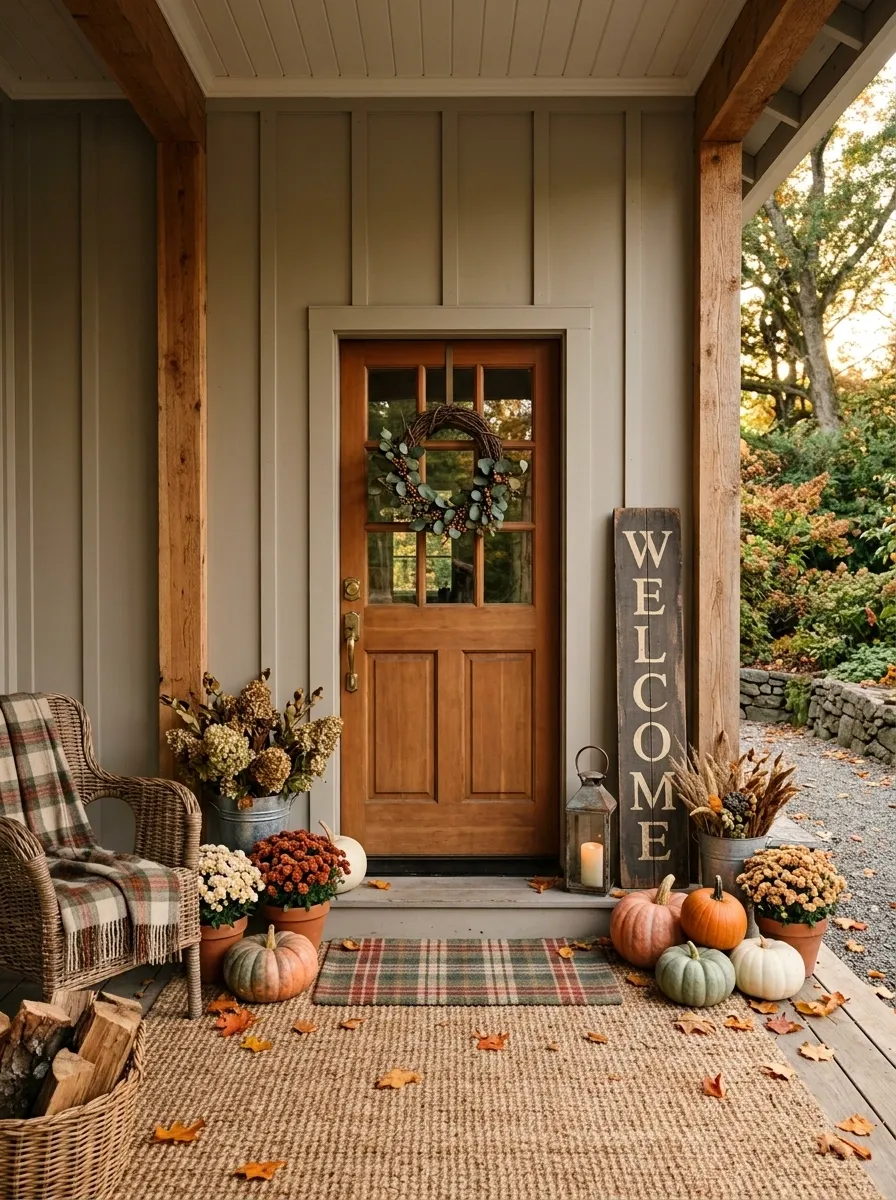
A rustic sign should support the entry, not become the entire personality of the house.
Choose one with a simple finish and enough blank space around the lettering. Lean it beside the door or place it lower in a layered display instead of hanging a giant message directly over the focal point.
Scale it to the porch, not the Pinterest board. A tiny entry doesn’t need a giant sign shouting seasonal commentary at everyone who walks past.
Use Dried Corn Cobs as a Small Unexpected Detail
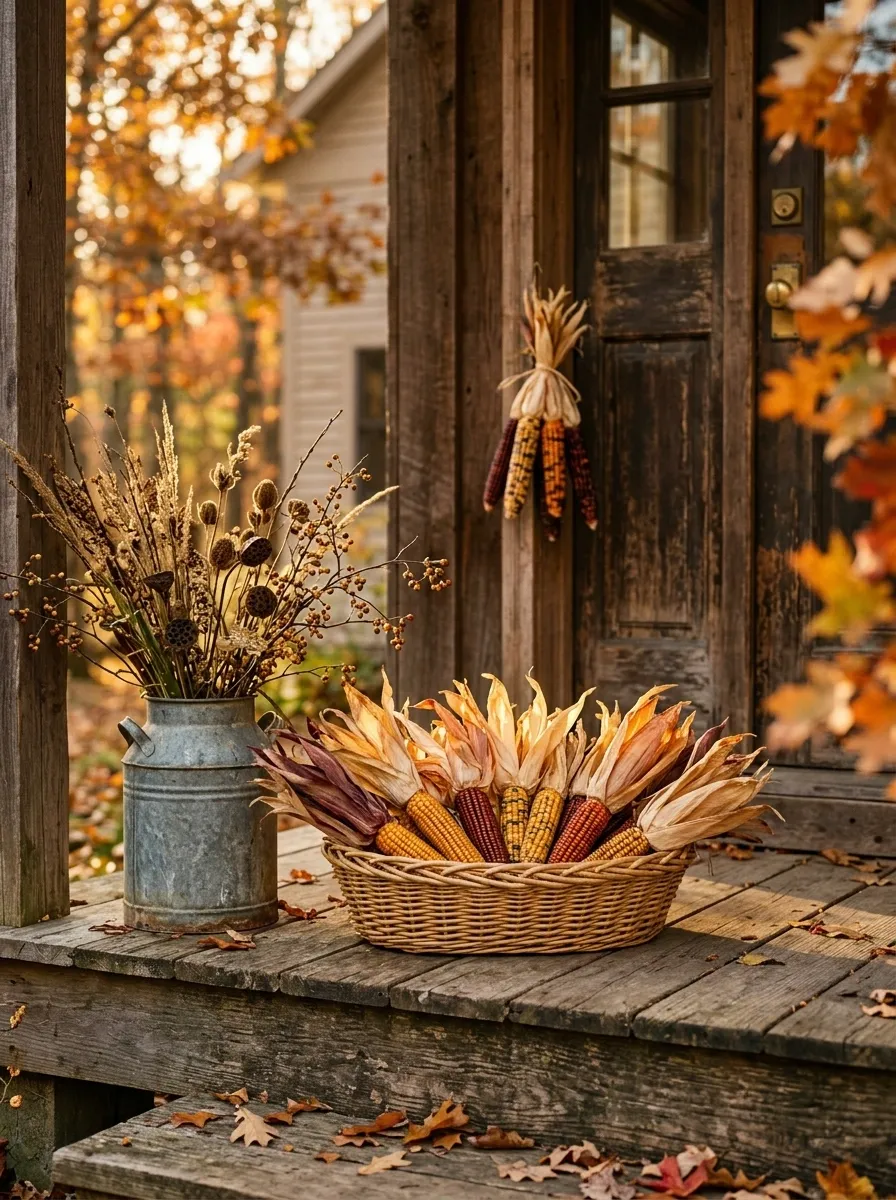
Not every fall detail needs to be a pumpkin. Dried corn cobs bring color, texture, and that old-fashioned harvest feeling without taking over the composition.
Tuck a few into a shallow basket, tie a small bundle beside a door, or place them next to a galvanized container. Their shape is enough. They don’t need ribbons, signs, bows, and three kinds of fake foliage accompanying them like a full entourage.
Use this detail where the porch feels too polished. A little rough texture can make the whole display feel more lived-in.
Create a Porch Corner With a Chair and Soft Throw
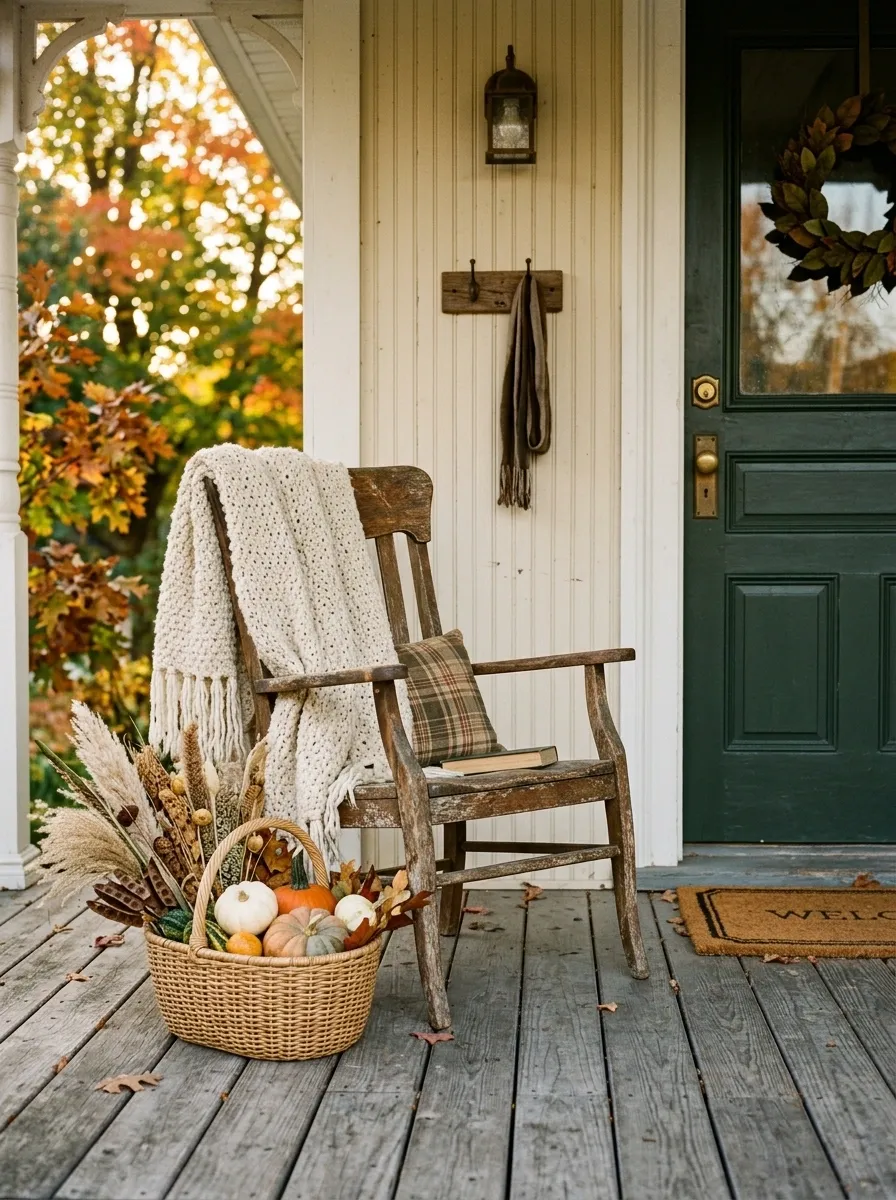
An empty porch corner doesn’t need a dozen accessories to become useful. A single old-looking chair can establish the whole mood.
Angle the chair slightly toward the door instead of pushing it flat against the wall. Add one soft throw over the back and place a low basket or planter beside it. That’s enough to make the corner feel occupied without making it look staged.
Let the chair be the star. The throw supports it. The basket grounds it. Nobody else needs a speaking role.
Swap a Standard Doormat for a Layered Rug Setup
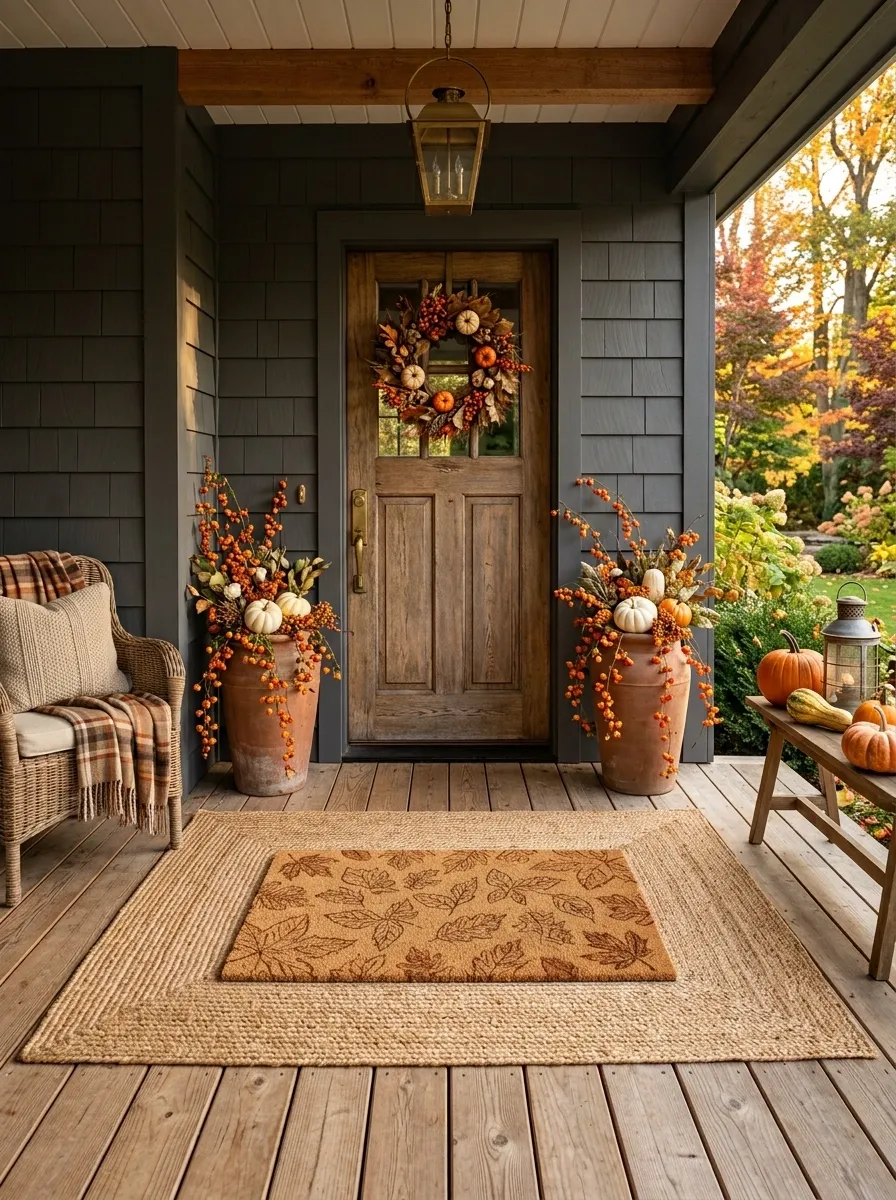
A tiny doormat floating on a huge porch makes the entry look oddly unfinished. Layering a larger flat rug underneath fixes the scale immediately.
Start with a plain woven rug, then center the smaller doormat on top. Keep the colors related, but don’t make both layers identical.
The larger rug gives the doorway some visual weight while the smaller mat keeps the practical job intact.
The bottom rug is the quiet one. Let the doormat carry the pattern or wording, not both.
Fill an Empty Corner With Tall Branches in a Crock
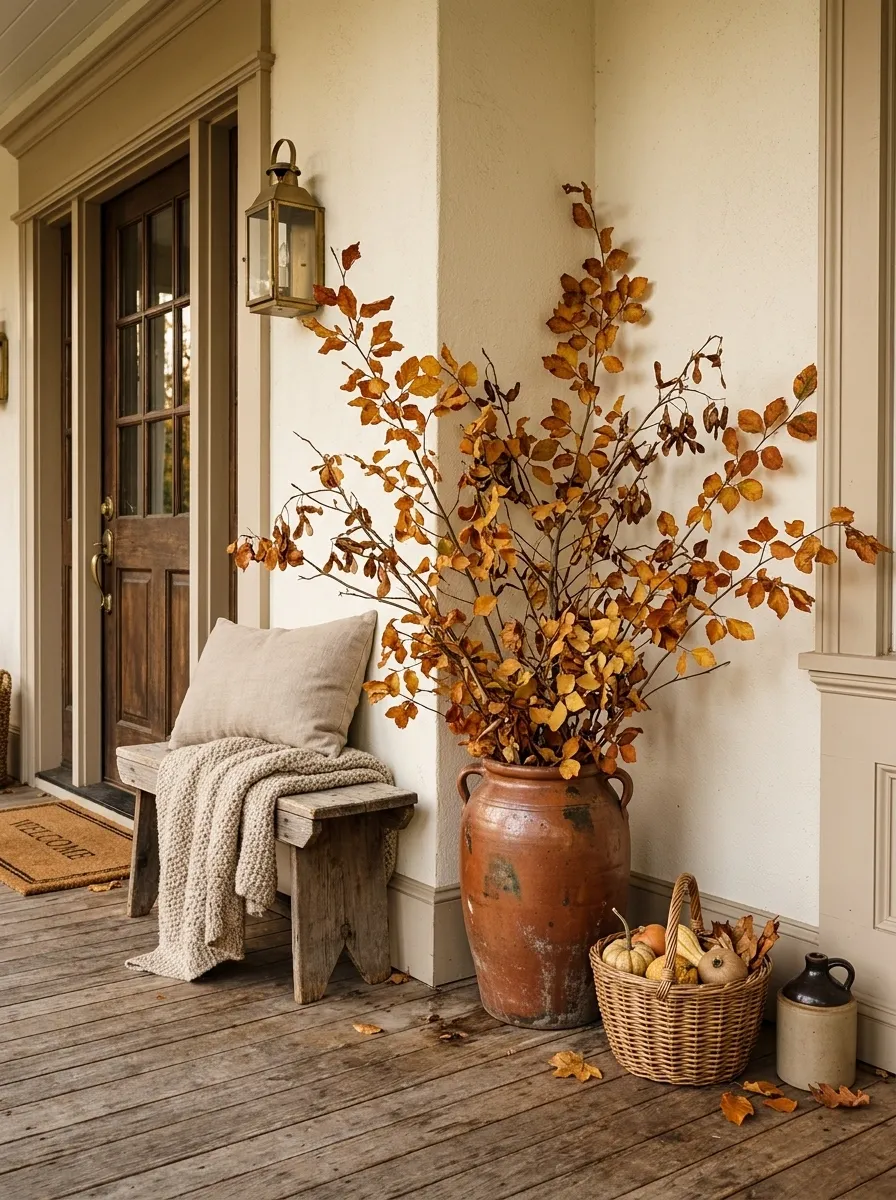
Some porch corners are too narrow for furniture but too empty to ignore. A large ceramic crock filled with tall branches gives that awkward space a purpose.
Choose branches with irregular shapes rather than perfectly matched stems. Keep the container heavy and the top airy so the arrangement doesn’t become a giant solid blob.
This works especially well beside a door, bench, or staircase where the vertical shape can balance lower decor.
One tall branch arrangement can solve an entire dead corner. That’s a much better use of floor space than six tiny objects having an existential crisis together.
Keep the Door Area Dark and Moody With Deep Fall Tones
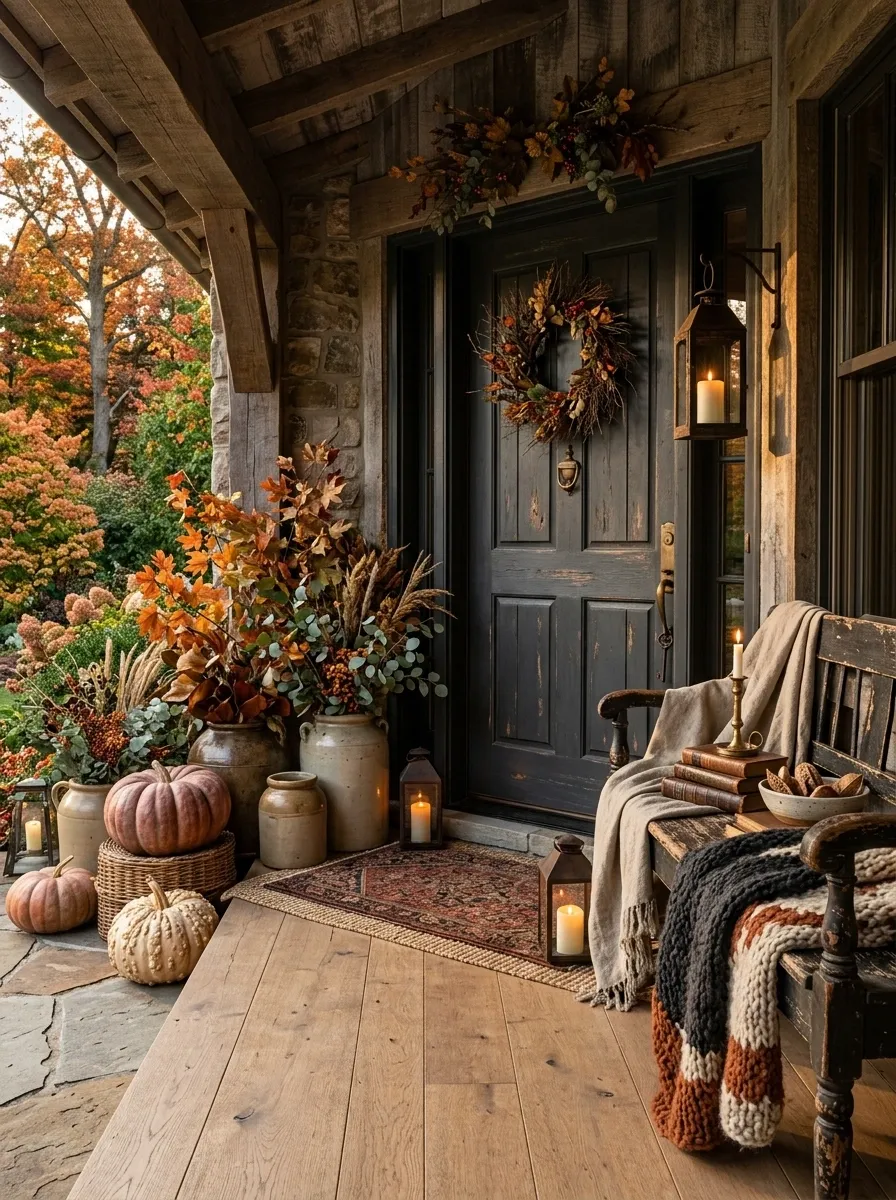
Rustic fall doesn’t have to mean bright orange everywhere. A deeper palette around the door can make weathered wood and warm foliage look richer.
Use tones such as deep brown, muted burgundy, charcoal, cream, and dusty rust. Keep the darkest color closest to the door so it creates a strong visual center.
Dark doesn’t mean gloomy. Warm textures keep the arrangement grounded while the deeper tones give the entry some depth.
Use Wooden Boxes to Turn Small Decor Into One Strong Group
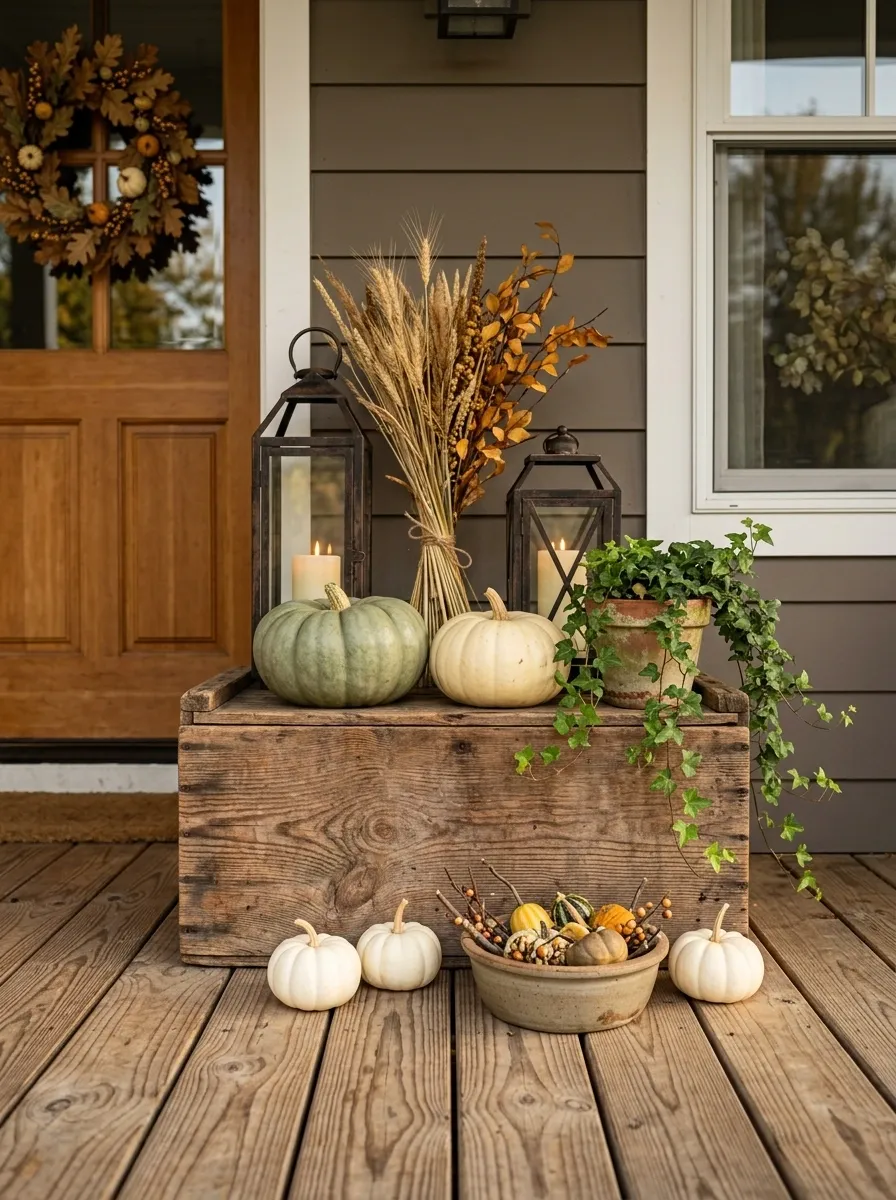
Loose pumpkins, lanterns, and little planters can look messy when they’re scattered across a porch. A wooden box pulls those separate pieces into one readable arrangement.
Place the box low, then use it to raise a few smaller items above the floor. Add one taller piece behind the box and leave some of the wood visible.
The box is doing the organizing for you. It creates a boundary around the little pieces so they stop looking like they wandered into the porch by accident.
Style a Tiny Porch With One Strong Focal Point
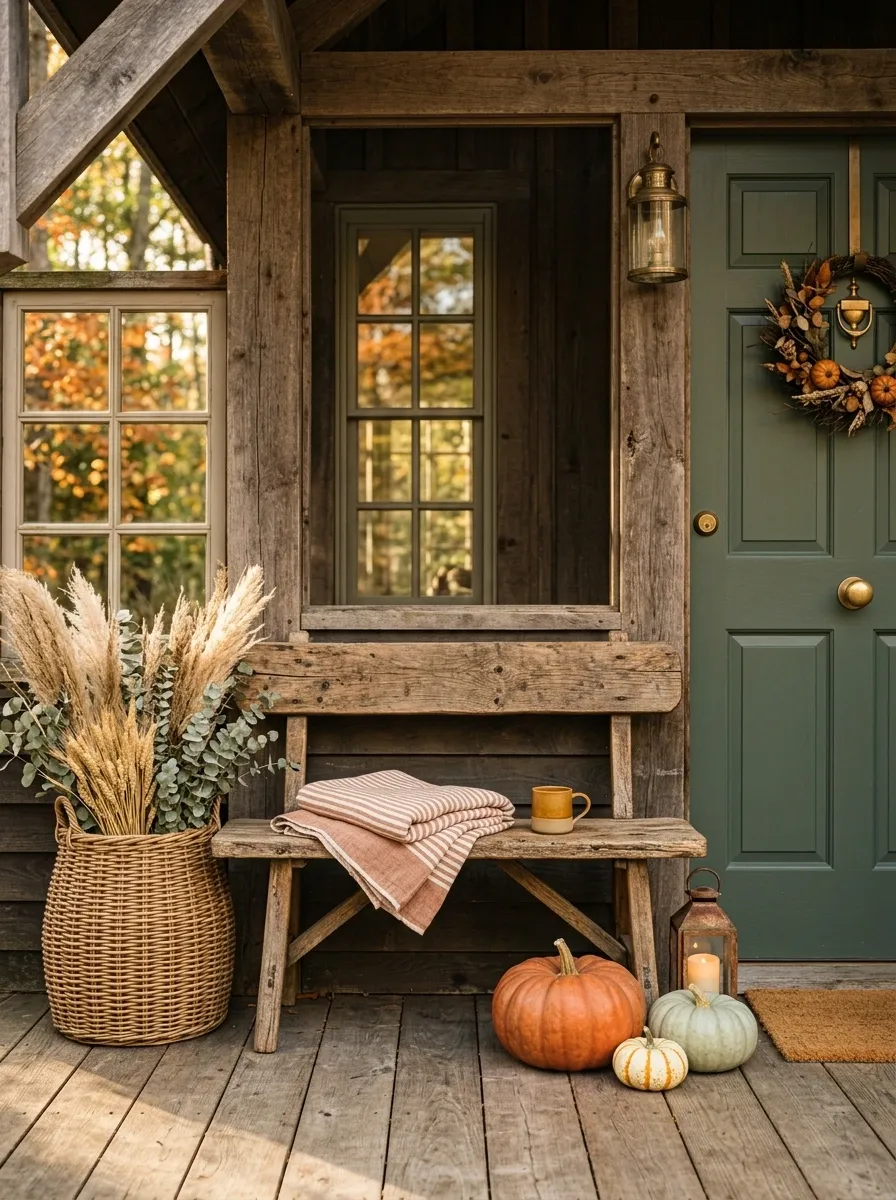
A tiny porch doesn’t have enough floor space for every cute fall idea that exists online. That’s not a problem. It’s actually an advantage.
Choose one dominant feature such as a large wreath, an oversized planter, a rustic bench, or a tall basket. Then use two or three small supporting pieces around it.
Small porch rule: Give the eye one place to land.
When everything is equally loud, the entrance feels cramped. A clear focal point makes the space look more intentional and leaves room for people to actually walk through it.
Add Lanterns at Different Heights Near the Steps
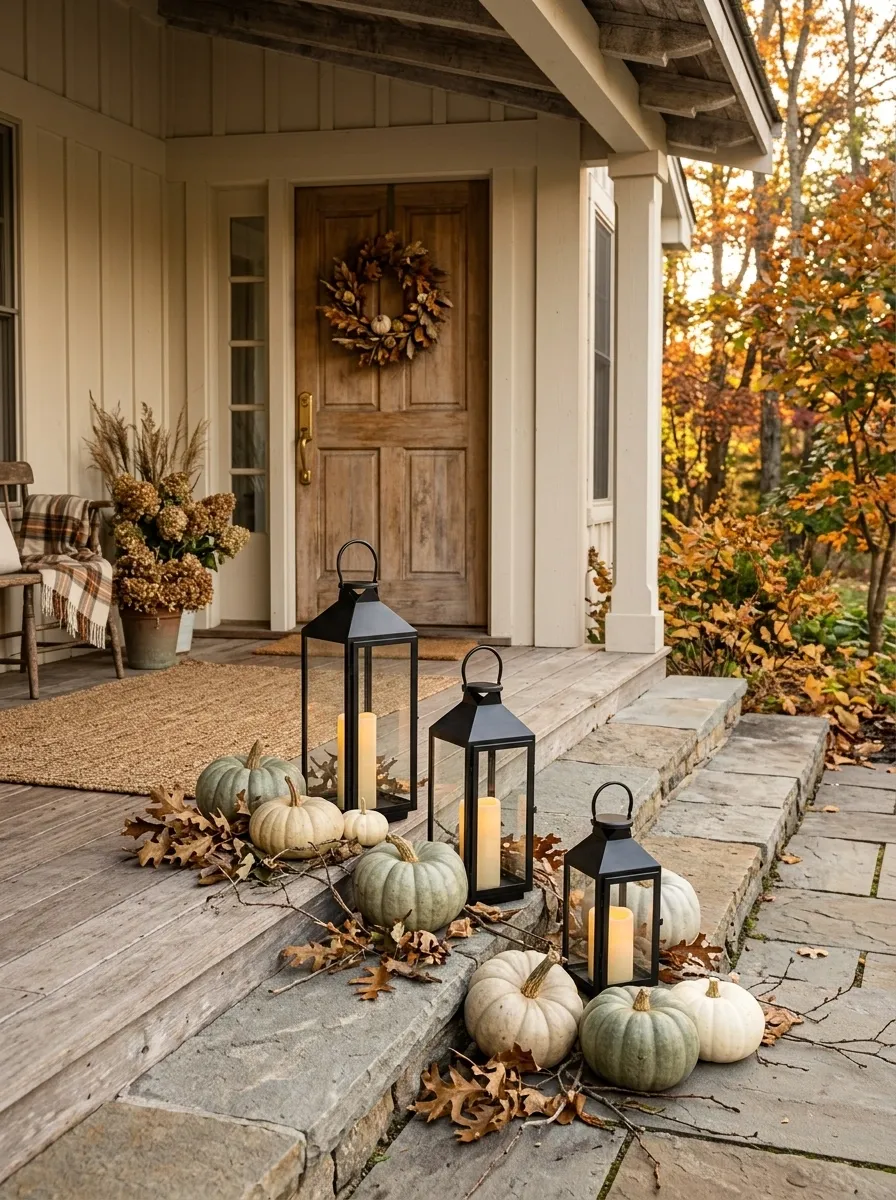
Lanterns look better in a group when they’re not standing like identical soldiers.
Use two or three different heights and place them close enough to feel connected. Put the tallest toward the back, then step down toward the walkway. A few pumpkins or branches can sit around the bases.
Keep the lanterns visually simple. They’re there to create glow and height, not audition for the starring role.
Use Plaid Only in One Soft Layer
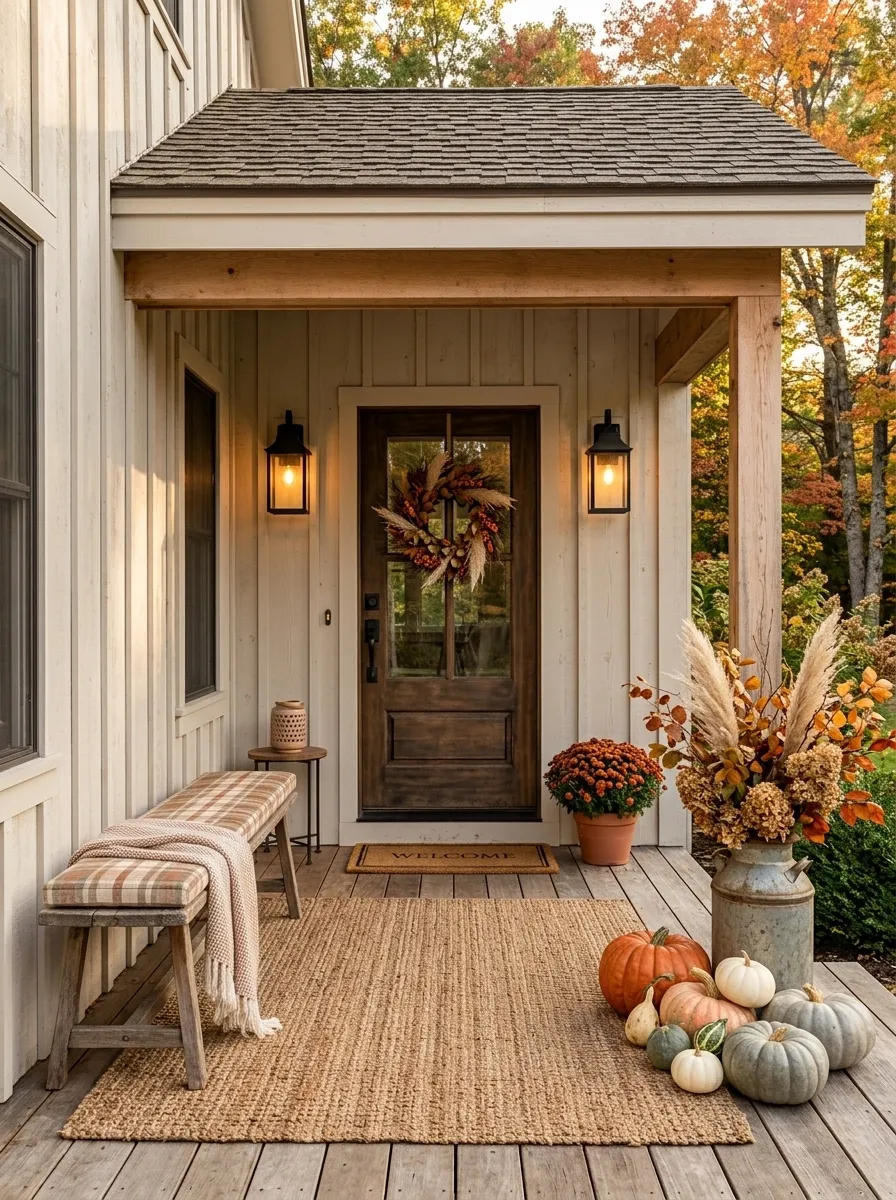
Plaid adds instant fall character, but using it everywhere makes the porch look like it lost a bet with a fabric store.
Pick one place for it. A cushion, throw, or narrow bench pad usually works best because the pattern stays soft and contained.
Then let wood, metal, woven fibers, and solid-colored pumpkins carry the rest of the design.
One plaid moment is memorable. Five plaid moments are a cry for help.
Finish the Porch With Bare Branches Instead of More Pumpkins
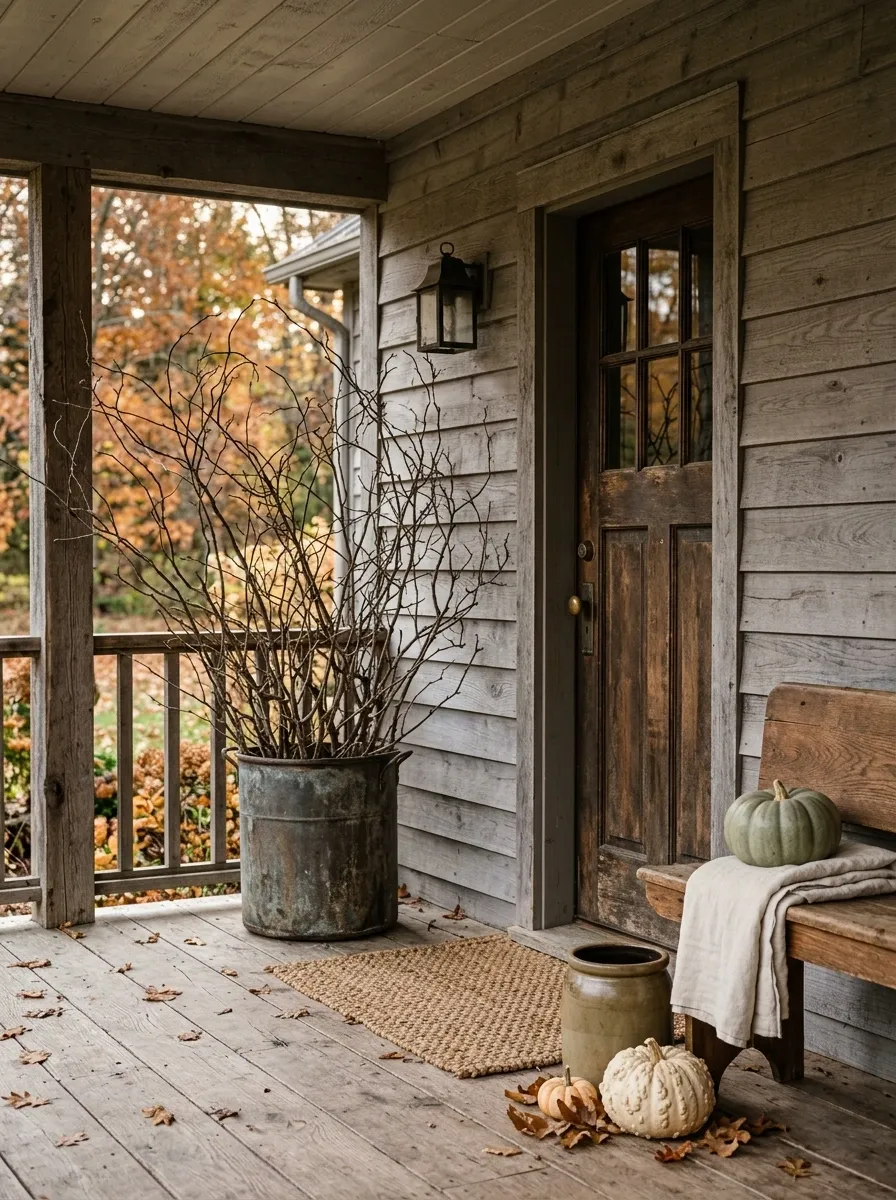
There comes a point when the porch simply needs less orange.
Bare branches solve that problem by adding height, shape, and movement without introducing another pile of seasonal objects. Place them in a ceramic crock, tall basket, or weathered metal container near the door.
Let the branches spread naturally. The slightly irregular silhouette is what makes the arrangement feel organic.
This is the finishing move for a porch that already has enough fall decor. Add shape, not another object.
Build the Porch Around One Old-Fashioned Focal Piece
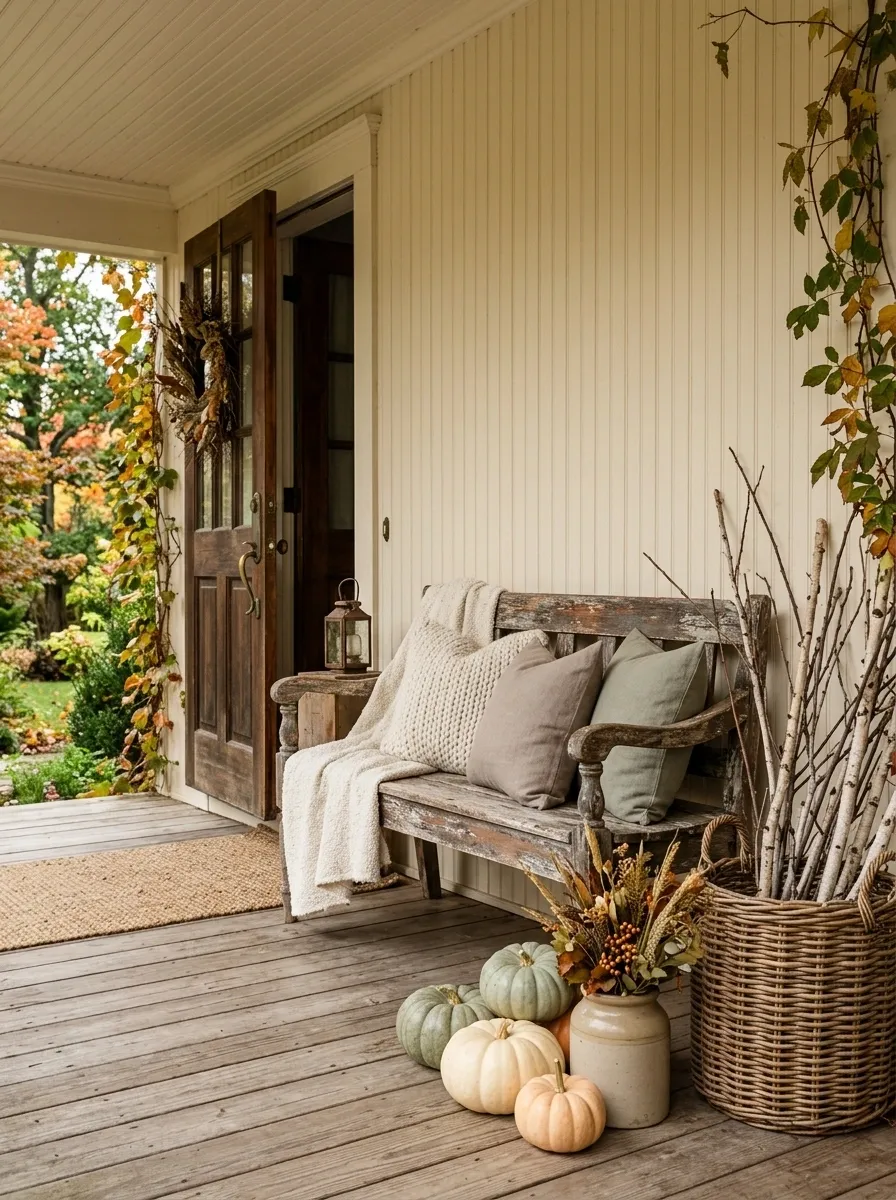
The strongest rustic porches usually have one piece that feels like it has a story. An old wooden bench, weathered door frame, vintage chair, antique-style crock, or battered crate can provide that feeling immediately.
Start with that piece. Build the rest of the porch around its color, texture, and scale. Add a few fall details to support it, then stop before the original piece gets buried.
That’s the whole secret: let one interesting thing carry the personality.
A rustic porch doesn’t need to look expensive. It needs to look like someone knew exactly when to stop.
The Best Rustic Porches Know When to Stop
A beautiful fall porch doesn’t need to announce every season at once. It needs a few pieces with enough texture and character to make the entrance feel warm.
Start with the structure of the space. Notice the empty corner, the narrow strip beside the door, the awkward steps, or the oversized wall that needs height. Then choose pieces that solve those problems instead of simply adding more decoration.
Weathered wood brings warmth. Woven baskets add softness. Galvanized metal keeps the display practical. Bare branches create height. Muted pumpkins bring the season in without turning the porch orange from floor to ceiling.
The best part is that none of those choices require a crowded display.
Leave room for the door to breathe. Keep the walkway usable. Let one piece lead, let the supporting pieces stay quiet, and remove anything that starts looking like it needs its own storage unit.
That is how a rustic fall porch ends up feeling collected instead of overdecorated. It looks welcoming because the materials have personality, the arrangement has shape, and every piece knows when to stop talking.