
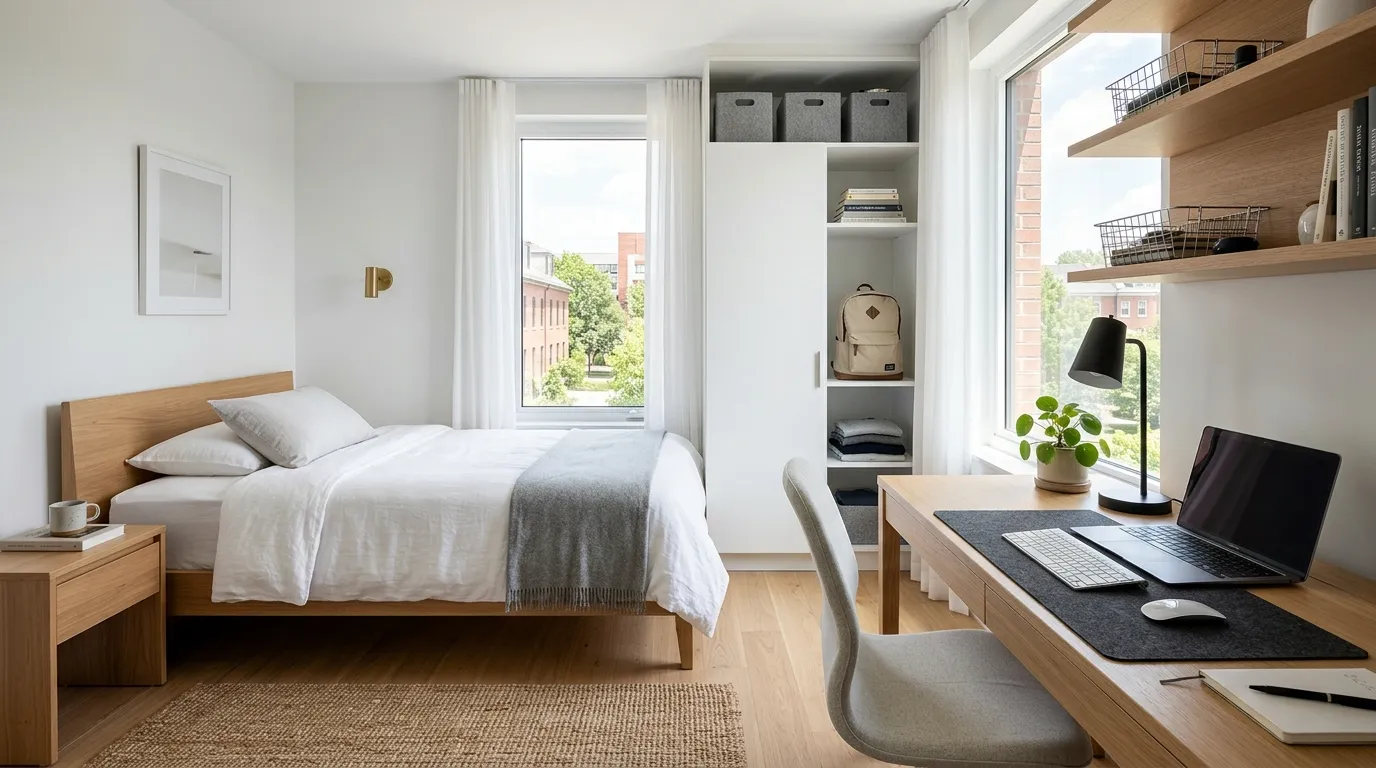
The square footage isn’t the problem. The problem is that most people walk into their dorm room, look at the institutional furniture, and immediately lower their standards to match.
That’s the mistake. The room doesn’t set the standard. You do.
A single dorm room is one of the rare spaces in your life where no one else has a vote. No roommate. No landlord hovering over your choices. Just you, a cinder block box, and the full authority to make it whatever you actually want it to be. Most people waste that. They buy the beige comforter and call it done.
Single Dorm Room Ideas
lack Pallet Headboard Fairy Lights
Build a headboard from standard wooden pallets — two or three stacked and secured together, with the hollow faces facing forward. Paint them matte black. Mount them to the wall using two heavy-duty adhesive strips on each pallet, securing them to the wall in a vertical arrangement slightly wider than the bed.
Thread fairy lights — the fine warm-white variety — across the front face of the pallet headboard, weaving them between the boards so they create a curtain of light within the dark wood structure. The fairy lights are woven, not draped — they live inside the pallet rather than resting on top of it.
Use rope-hang floating shelves on the adjacent wall — two or three dark walnut shelves hung from white-painted rope at each corner, at different heights. Style them with small succulents, a framed world map print, a small letter initial, personal photos.
Keep the bedding almost entirely white — a white pintuck comforter with blush and grey pillow layers on top. The contrast of the white textile against the black pallet headboard is the central visual tension of the room.
Rainbow Subject Colour System
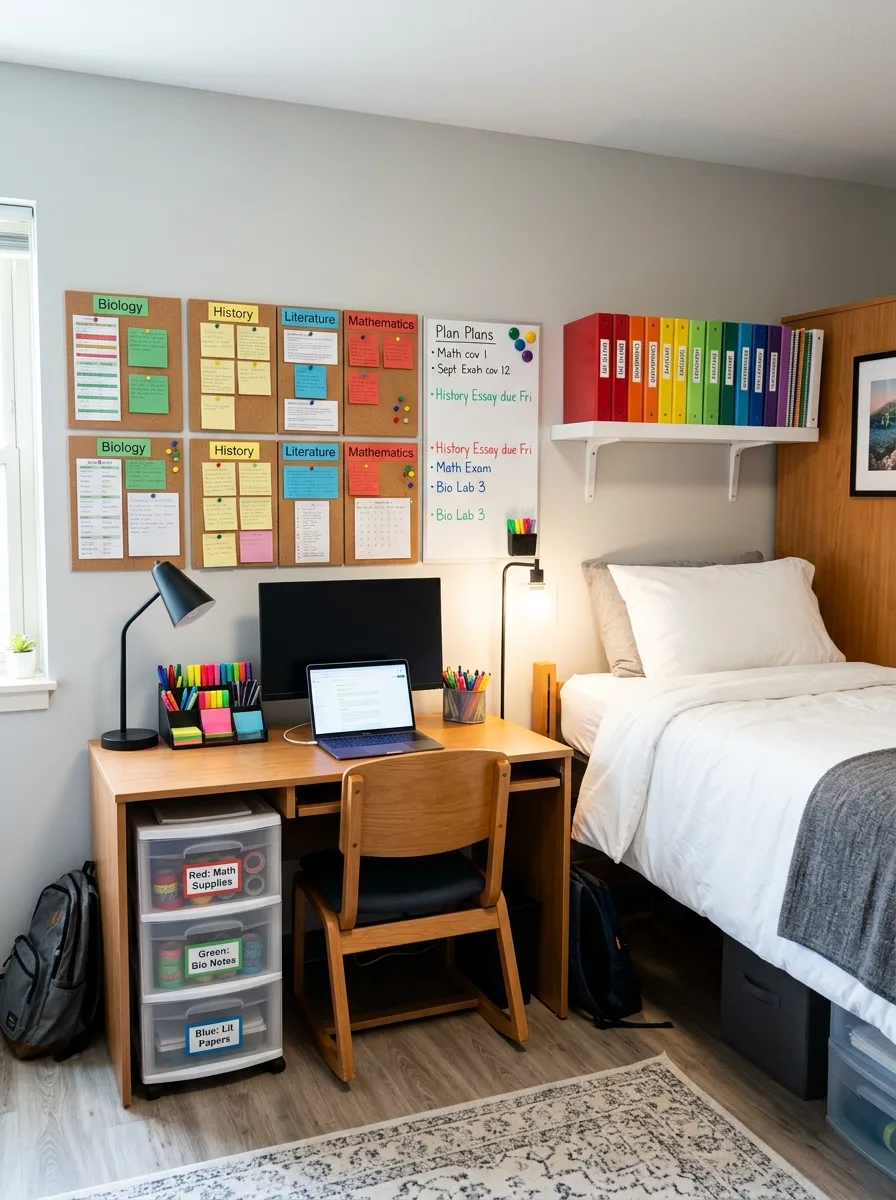
This is the hyper-organised student room, and its design logic is one of the most coherent in the collection. Every organisational system uses colour, and the colour system is the decoration.
Mount a grid of six to eight cork tiles directly on the wall above the desk, arranged in two rows. Label each tile by subject with a printed header card. Each subject uses a different colour of sticky notes, and the visual weight of those colours across the grid becomes the room’s primary wall art.
Install a single white shelf above the cork grid. Line it with binders in ROYGBIV order. This is not a coincidence. The binder rainbow is intentional and should be treated as a deliberate design decision: function made visible as form.
Use colour-coded storage everywhere: coloured markers in matched cups, labelled clear plastic drawers under the desk with coloured label stickers. Repeat each subject’s colour consistently across every type of storage for that subject.
The bedding and rug should be neutral — white duvet, grey blanket, light wood tones — so the desk wall carries all the colour. The contrast between the organised colour explosion at the desk and the calm white of the bed is the room’s visual logic.
Pegboard Blush Command Wall
Cover the full wall behind your desk with a large natural birch pegboard — the kind sold in 2×4 or 4×4 panels that you mount flush to the wall using standoff screws. The pegboard should run from desk height to the ceiling, or as close as your wall allows. This is not an accent piece. It is the entire wall.
Into the pegboard, install a combination of peg shelves, hooks, and ledges at varied heights. The arrangement is not symmetrical and should not try to be. A long ledge near the top for framed art prints leaning against the wall. Two smaller shelves below for small plants, a clock, candles, and a ceramic mug. Hooks at reachable height for a hat, a bag, a scarf.
Trail a pothos or other trailing vine from one of the upper shelves, allowing it to cascade naturally down the pegboard face. The organic movement of the vine against the structured grid of the pegboard holes is the visual tension that makes this wall work. Keep the plant in a simple white or terracotta pot and resist the urge to add more plants than one.
Use a wall-mounted brass sconce on the adjacent wall beside the pegboard rather than a desk lamp. The sconce frees the entire desk surface and casts a warm upward-and-sideward light that reads as residential rather than academic. It is the single most effective swap you can make to a standard dorm desk zone.
Keep the desk itself completely clear except for a laptop and one small plant. Everything that would normally live on the desk surface now lives on the pegboard. That transfer of objects from horizontal to vertical is the practical logic behind the whole setup — and it is also why the room feels so open despite the wall being completely filled.
Amber Globe Reading Nook
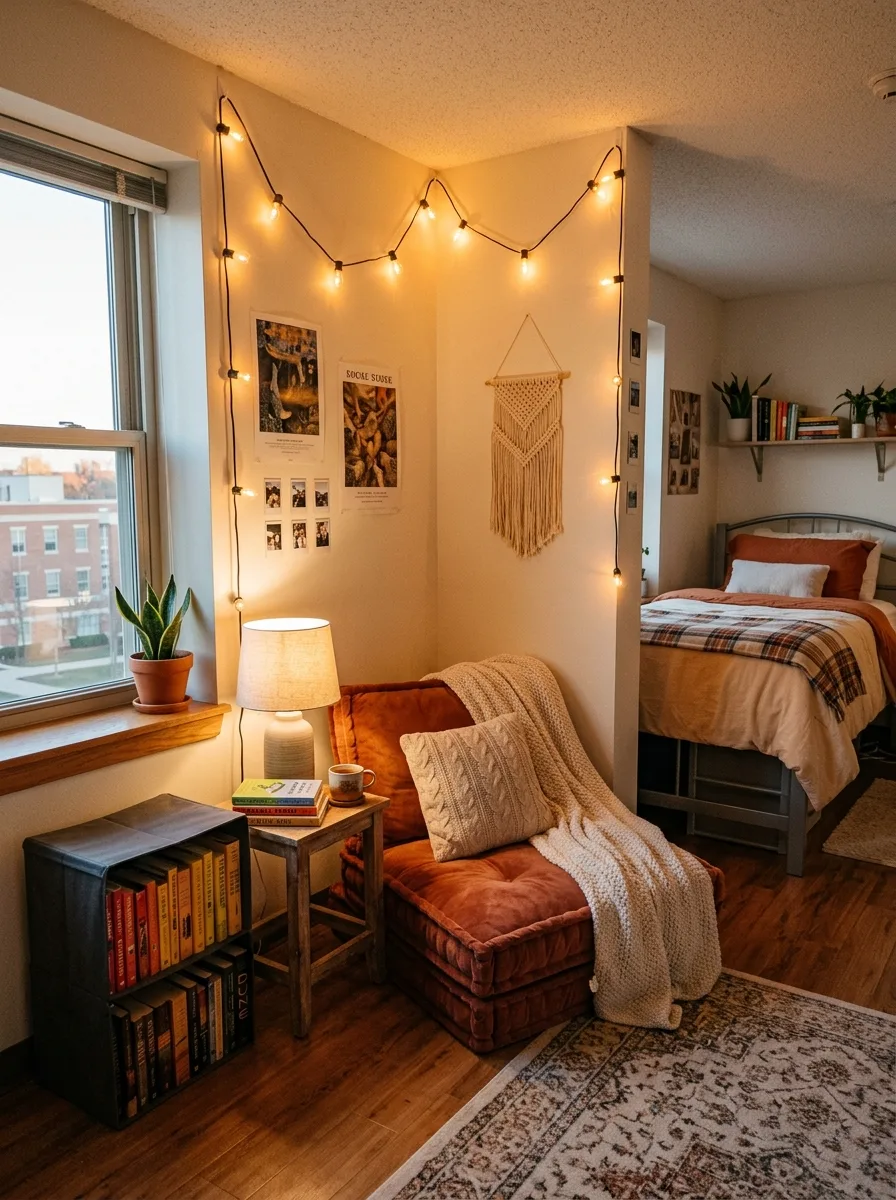
Carve out a reading corner in whatever space your room allows — a corner near the window, the area between the bed and the wall, anywhere that can hold a low chair. Source a velvet or corduroy floor chair or slipper chair in a warm terracotta or rust orange. These sit low to the ground, which makes them proportionally correct for a small space where a full armchair would overwhelm.
String two lines of globe lights across the corner, pinning them to the wall and ceiling with adhesive hooks, allowing them to drape naturally in catenary curves rather than pulling them tight. Use globe lights with clear bulb casings, not frosted — the visible filament at this distance creates a warmer glow.
Add a small side table at arm height — a simple wooden side table, a wooden crate stood upright, anything at the right height for a mug. Stack several books on and under it. Put a terracotta-potted snake plant on the windowsill directly adjacent. The plant and the amber lighting together produce the specific warm organic quality that makes this corner feel like a destination rather than a corner of the room.
Botanical Maximalist Gallery Wall
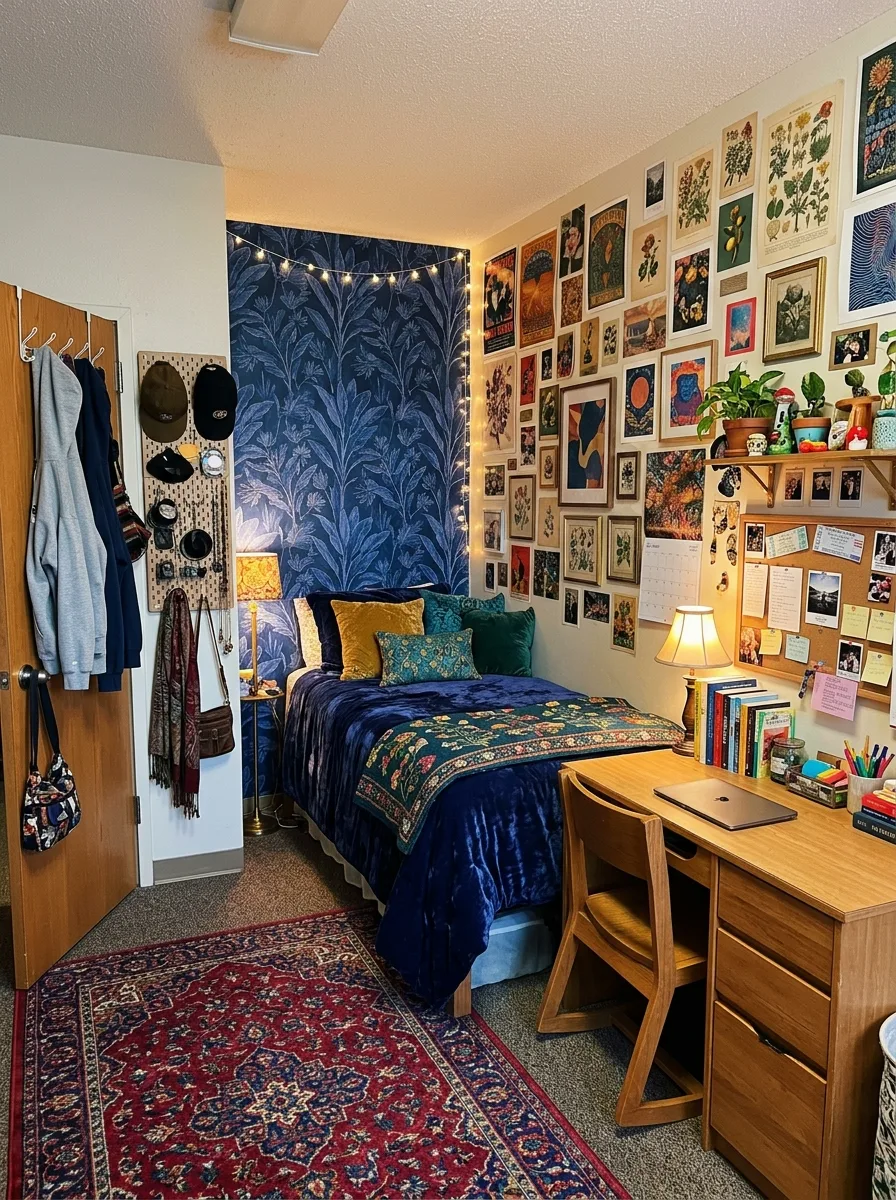
This look requires a full wall — preferably the one opposite the window so it receives reflected light — and a willingness to commit every inch of it. Start with a piece of deep-toned removable botanical wallpaper on a single section of the wall, ideally behind or beside the bed. Deep navy with a botanical print in a lighter tone reads as jewel-toned and intentional.
Frame the wallpapered section with a gallery wall that expands across the adjacent wall. Use prints and posters at mixed scales — large botanical illustrations, smaller concert posters, personal photos at Polaroid scale, vintage advertisements. Mix frames: gold, dark wood, frameless clips, raw tape. The mix of framing methods reads as collected, not coordinated.
Add a deep red Persian-style rug as the floor anchor. It has to be deep and patterned — a flat beige rug will kill the richness of the palette above. The rug connects the navy-gold-red palette across the floor plane and prevents the whole thing from floating.
Bonsai Zen Meditation Corner
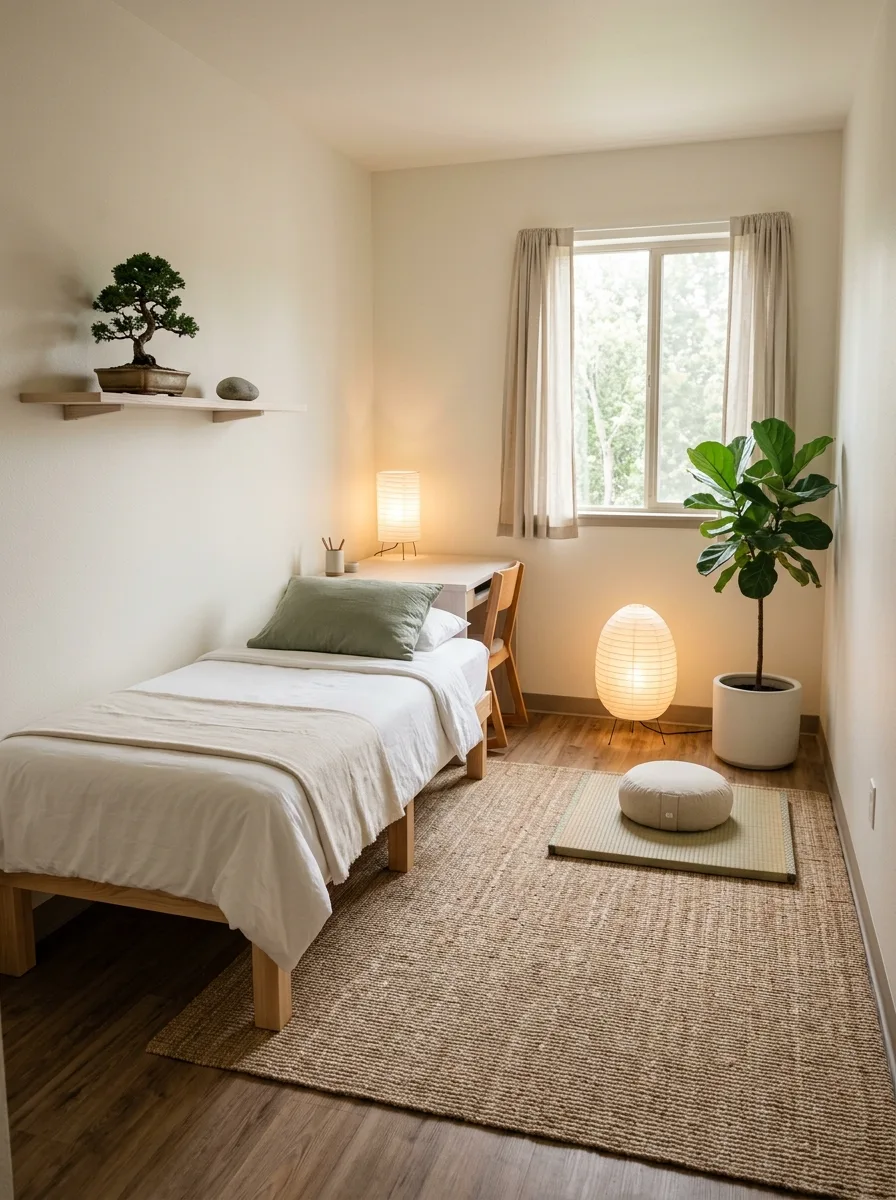
This room requires more discipline than any other on the list. The entire effect depends on restraint.
Start with the bed: a simple low wooden platform bed or a standard dorm bed at its lowest position. White linen duvet, single sage green pillow sham. Nothing else on the bed.
Mount a single narrow floating shelf at eye level on the wall above the bed. Place a bonsai tree on one end of the shelf, a smooth stone in the centre, and nothing else. Two objects. That is the entire wall treatment.
Place a washi paper globe lamp or Akari-style lamp at floor level beside the desk rather than on it — the low placement creates soft upward-washing light that reads as lantern light rather than task light. Set up a tatami mat or yoga mat on the floor with a round zafu cushion. A large fiddle-leaf fig in a plain white ceramic pot near the window.
Every surface in the room should have fewer objects on it than you think it needs. That discipline is not emptiness. It is the whole point.
Hollywood Vanity Mirror Station
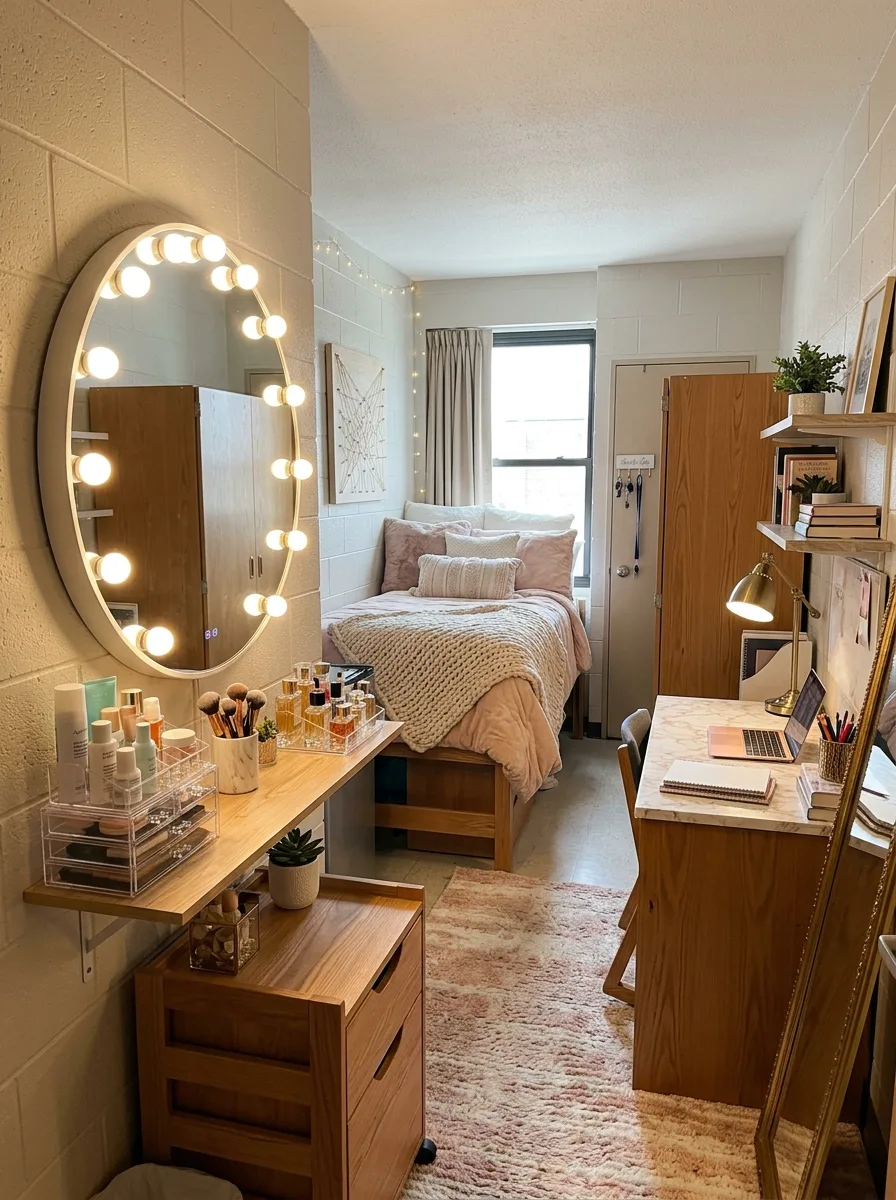
Mount a round Hollywood vanity mirror — the kind with individual exposed globe bulbs around the perimeter — directly to the cinder block wall using a combination of adhesive and a small picture-rail hook through the mirror’s backing. These mirrors are heavy; use removable adhesive rated for at least ten pounds supplemented with a wall hook.
Build a floating vanity surface below it using a wall-mounted shelf bracket at the right height, wide enough for a standard makeup organiser spread. The floating configuration means no table legs, which creates visual space in a narrow room.
Organise the surface in acrylic: clear acrylic makeup organisers, perfume bottles, a single small succulent in a white pot. The transparency of the acrylic keeps the surface from reading as cluttered even when it is fully loaded.
Warm gold as the accent metal throughout: gold desk lamp on the study side, gold hardware on the wardrobe, warm string lights above the bed. The Hollywood mirror provides functional task lighting that doubles as a room feature in evening hours.
Velvet Canopy Dark Chamber
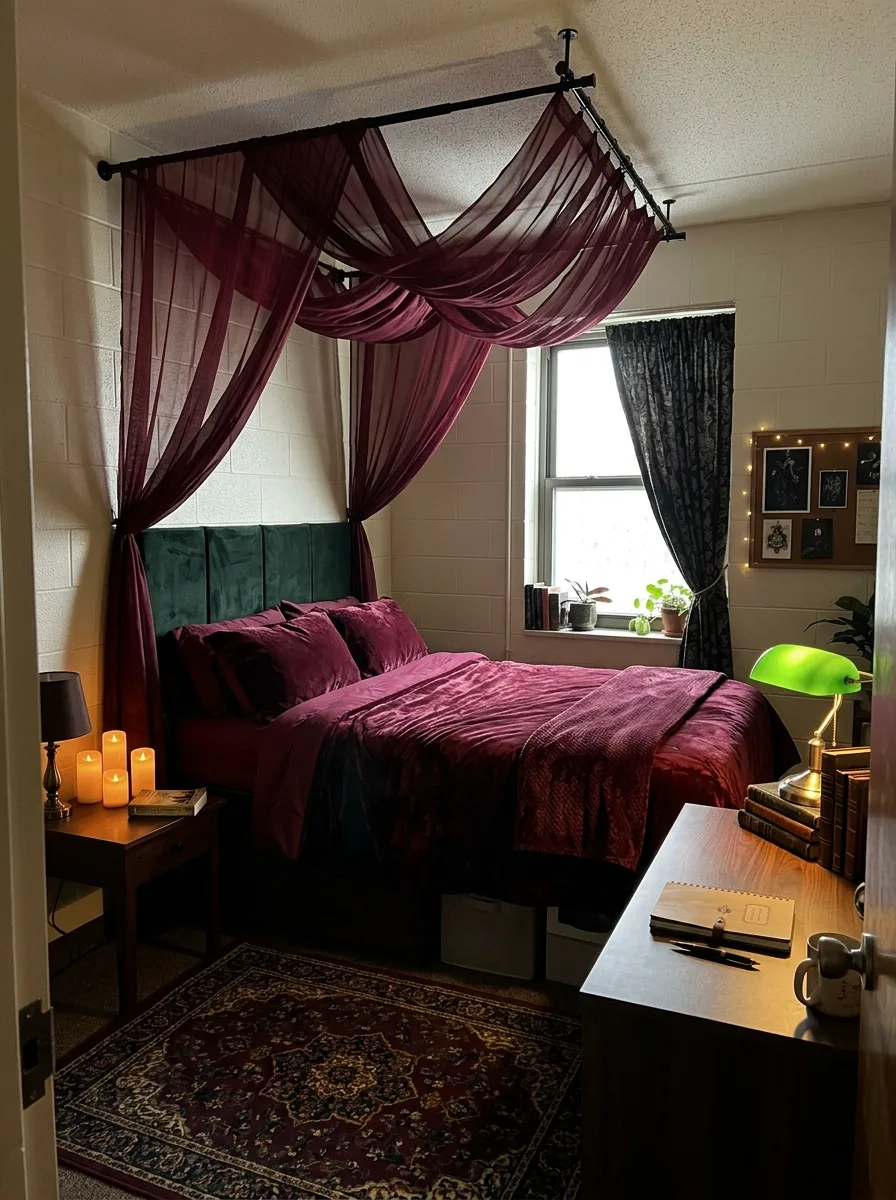
Mount a ceiling canopy rod — a black metal pipe fitting threaded through the ceiling using removable command ceiling hooks — centered over the bed. Drape lengths of deep wine or burgundy sheer fabric over the rod and let them fall to the floor on either side. Pull each panel back loosely like a stage curtain and secure with a loose knot or tie at mid-height. The fabric should pool slightly on the floor rather than ending at the mattress level.
Add a dark bottle-green velvet upholstered headboard behind the bed. The contrast between the burgundy fabric canopy and the green headboard is the defining colour relationship of the room.
At the window, use dark grey velvet or crushed velvet blackout curtains. The room should be able to achieve near-complete darkness during the day. For task light, use a banker’s lamp with a green glass shade — this single specific lamp reads as intellectually serious in a way a standard desk lamp does not.
Use flameless pillar candles on the nightstand in three heights. A Persian rug in deep jewel tones on the floor. Stack hardcover books on every horizontal surface. The result is dark, warm, and completely specific.
Dual Monitor Standing Desk Command Center
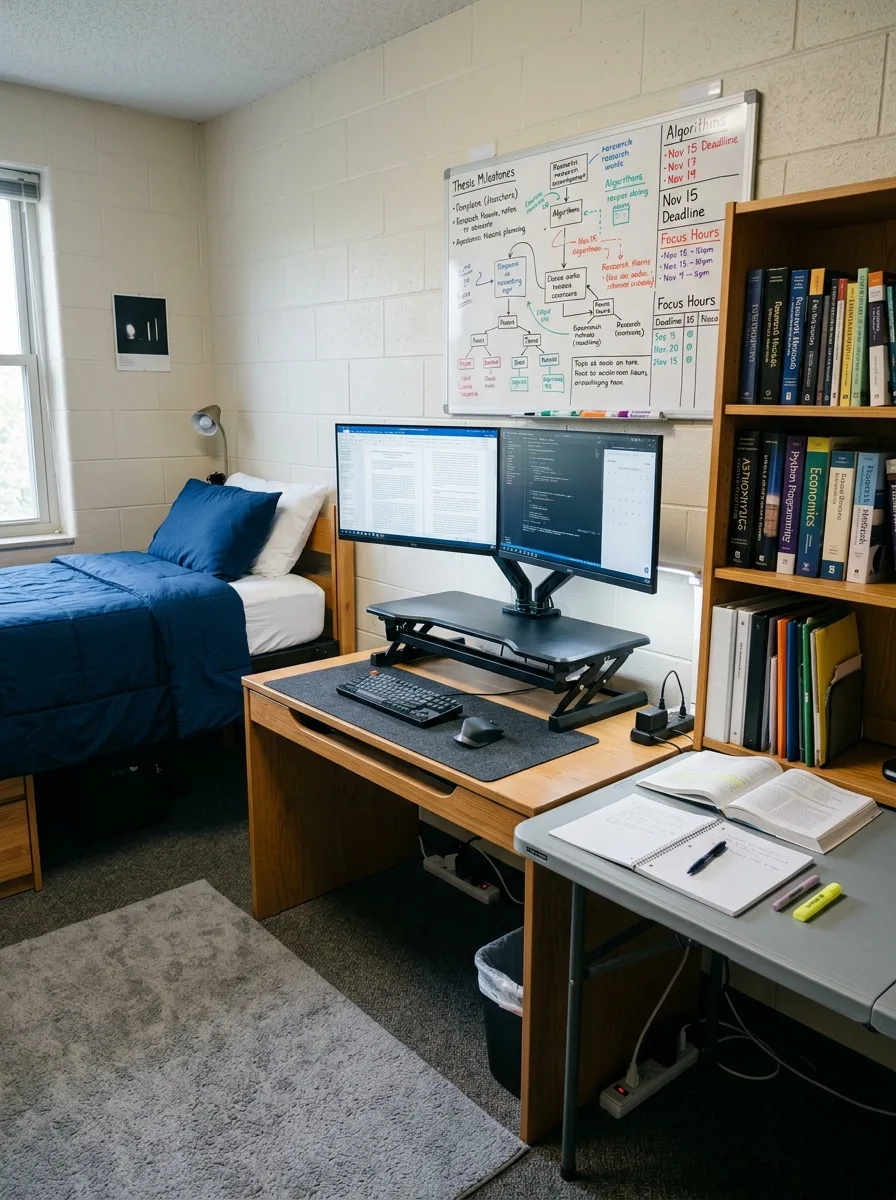
This is the one room in the collection that makes no aesthetic pretense. It is optimised entirely for function, and the honesty of that commitment is its own design statement.
Mount a standing desk converter on the standard dorm desk — these clamp-on platforms raise your monitor and keyboard to ergonomic standing height and lower again for seated work. Position dual monitors on adjustable arms rather than stands, which frees the entire desk surface.
Hang a full-width whiteboard above the desk, mounted with adhesive strips on the upper edge and gravity doing the rest. Use it actively: thesis timelines, algorithm diagrams, weekly schedule in a different marker colour per category.
Keep the bed entirely separate and functional: navy duvet, white pillow, nothing else. Place a full bookcase immediately adjacent to the desk as an extension of the workspace. Arrange the spines by subject or colour — the organisation is part of the visual logic.
No decorative objects. No plants. No string lights. The desk is the room’s entire reason for being, and everything in the room should know it.
Hanging Garden Ceiling Canopy
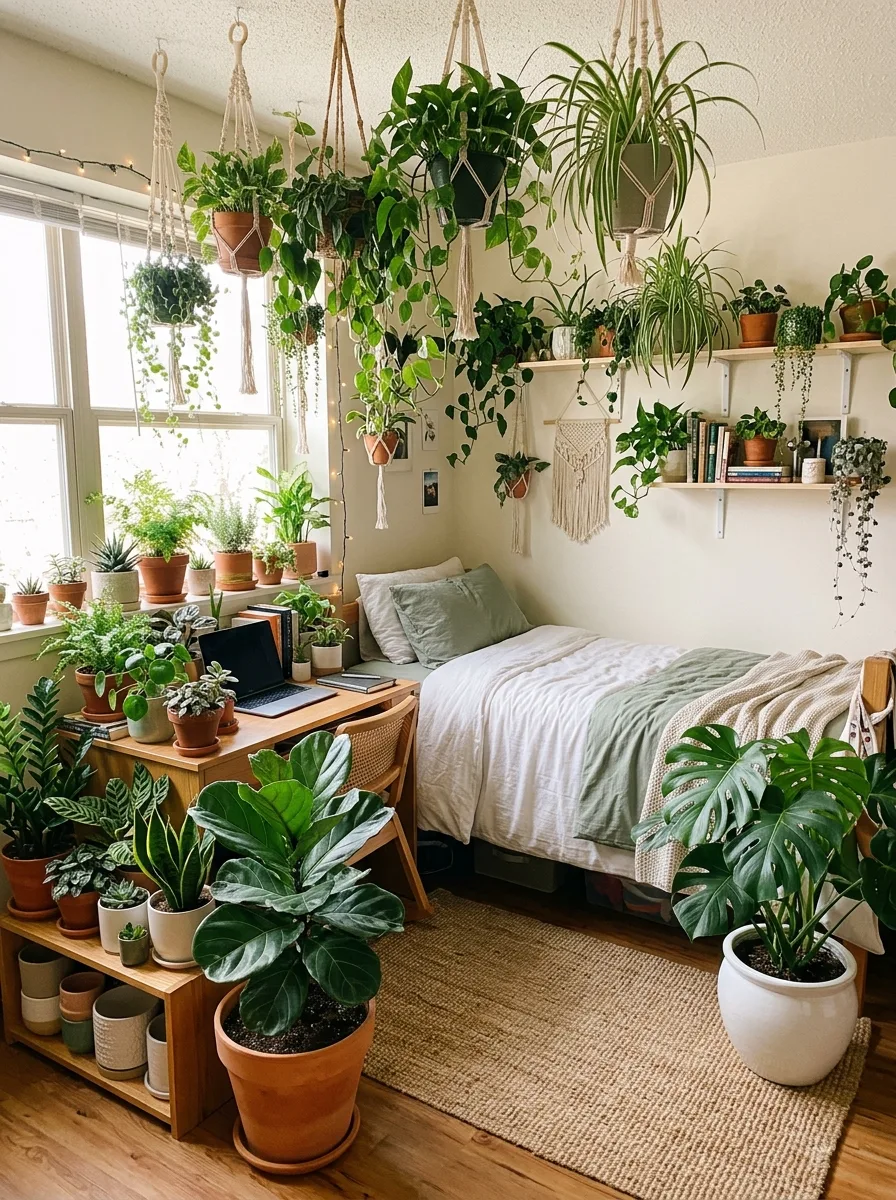
This is the maximum-plant approach and it requires ceiling clearance of at least eight feet and light from at least one large window. Anything less and the plants fail and the whole effect collapses.
Install five to eight ceiling hooks across the ceiling in a cluster formation, concentrated toward the window end of the room where light is strongest. Hang macramé plant hangers of varying lengths from each hook, ensuring the lowest hanging plant is at approximately eye level and the highest is near the ceiling.
Choose plants based on light tolerance and trailing habit: pothos and string of pearls for trailing from high hangers, ferns and spider plants for medium, and compact plants like pilea or succulents for shorter hangers or shelf positions. Terracotta pots throughout — the warmth of the terracotta against all that green reads better than white ceramic in this context.
Add wall-mounted shelves above the bed at two heights and place additional plants across each shelf. The goal is a canopy effect where the plants overhead are denser than the plants at ground level, creating an upside-down garden that makes the ceiling feel higher rather than lower.
Vintage Key Patchwork Study
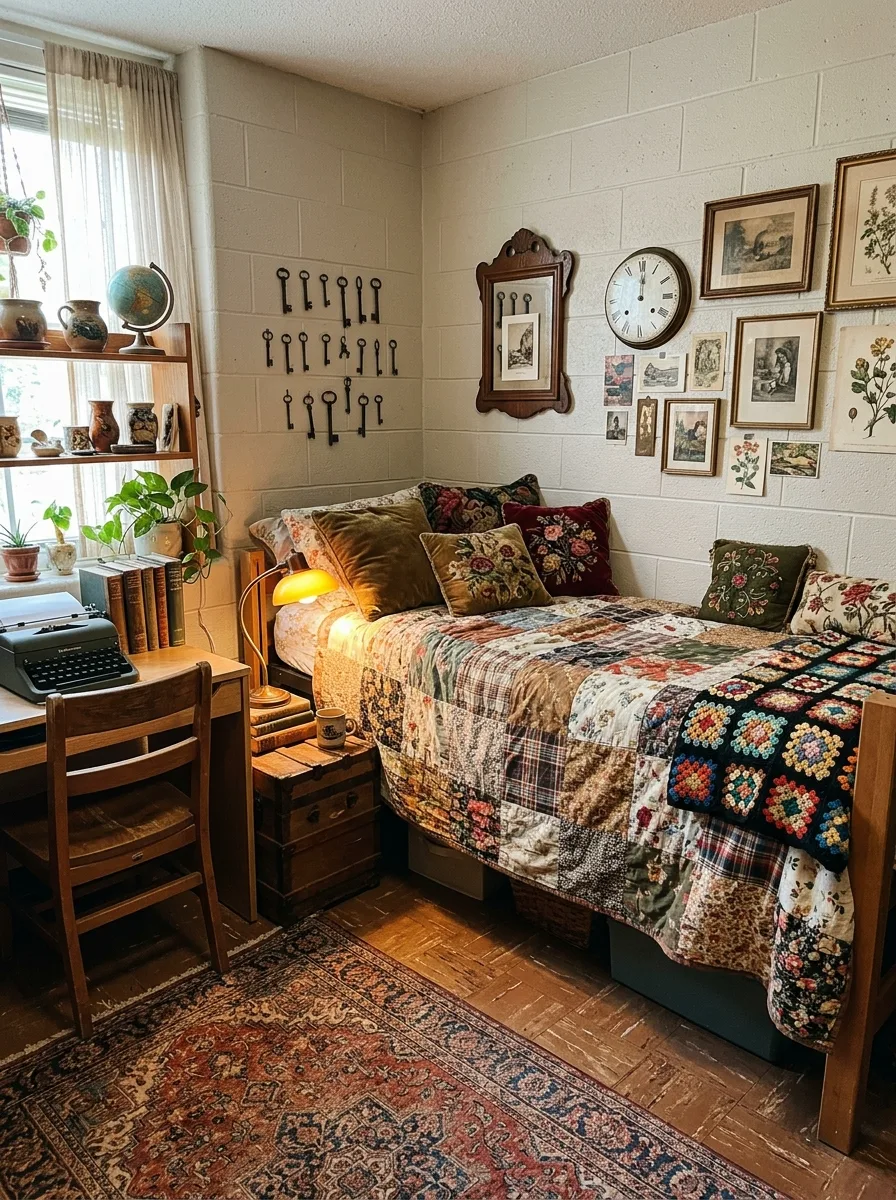
Source a patchwork quilt — not a new one printed to look like a quilt, but an actual layered patchwork in worn florals, plaids, and coordinating cotton prints. This is available in antique shops, estate sales, and dedicated vintage sellers online. The more faded and worn the colours, the better it will look.
Collect twelve to fifteen antique skeleton keys from flea markets, estate sales, or antique dealers. Mount them in a loose grid formation directly on the cinder block wall using small command hooks through their rings. Space them unevenly — three across, then two, then four — and vary the orientation of each key slightly. The collection reads as curated rather than decorative.
Use a Victorian-style carved wood mirror frame above the bed. Mount a large round clock directly on the cinder block. Build a gallery of old prints, botanical illustrations, and aged photographs on the adjacent wall in mismatched gold and dark wood frames.
Place a manual typewriter on the desk — a working one, if you type, a decorative one if you don’t. Stack several clothbound hardcover books beside it. A single brass mushroom-shade desk lamp. The room is a cabinet of curiosities and it should feel accumulated over a lifetime, not assembled over a weekend.
Watercolour Studio Live-In
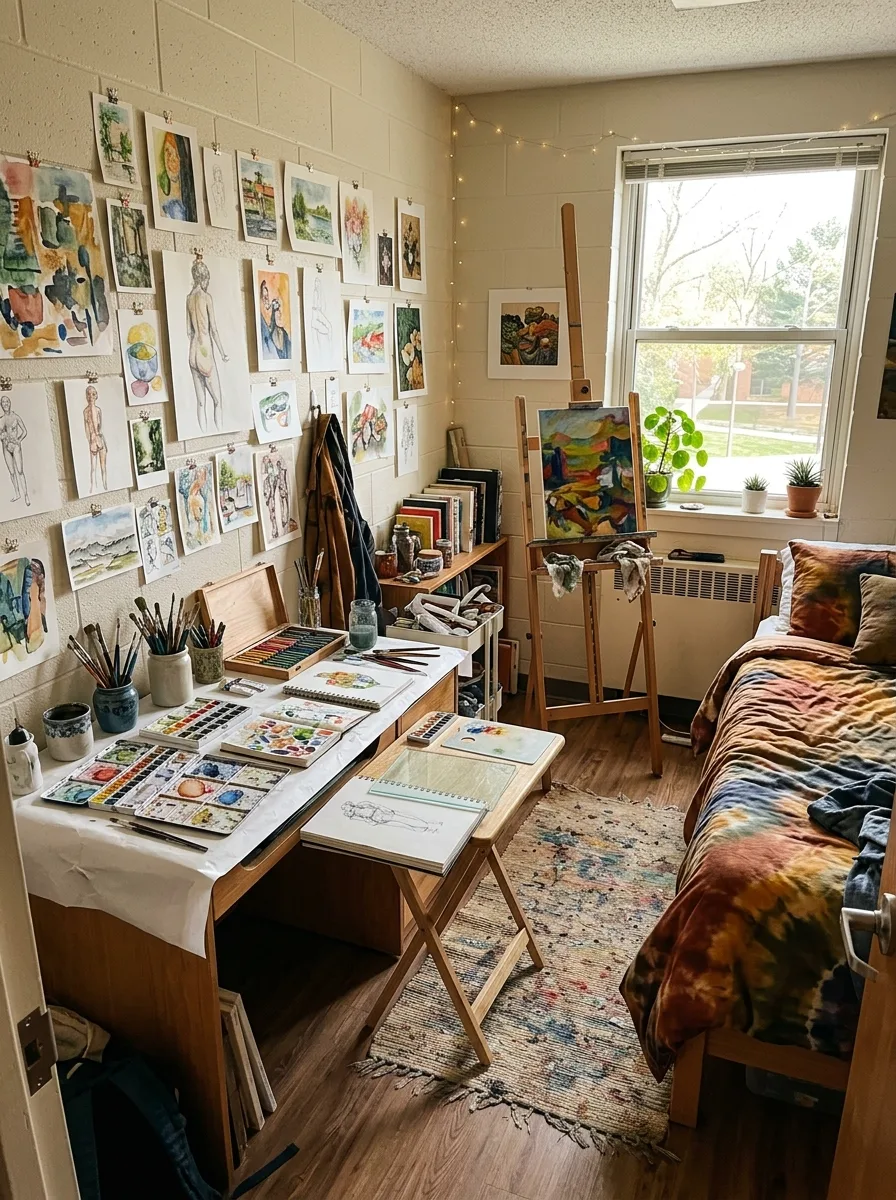
Clear the desk surface completely and treat it as a painting table. Cover it with a single layer of white butcher paper taped down at the edges — replace it monthly. Set up your full palette, water jars, and brush roll as permanent fixtures, treated as part of the room’s aesthetic rather than equipment to be hidden.
Add a folding art table adjacent to the desk as a secondary work surface. This is where works in progress live. The folding table is temporary and can be cleared when you need floor space.
Clip completed paintings and drawings directly to the cinder block wall using binder clips through adhesive hooks. Allow the arrangement to grow organically as you make more work. Do not frame anything. The raw edge of paper against cinder block is the aesthetic.
Set up your easel near the window and keep a painting in progress on it. This is not decorative. It is functional. But its presence is the single most powerful signal in the room that someone who makes things lives here.
RGB Gaming Cave
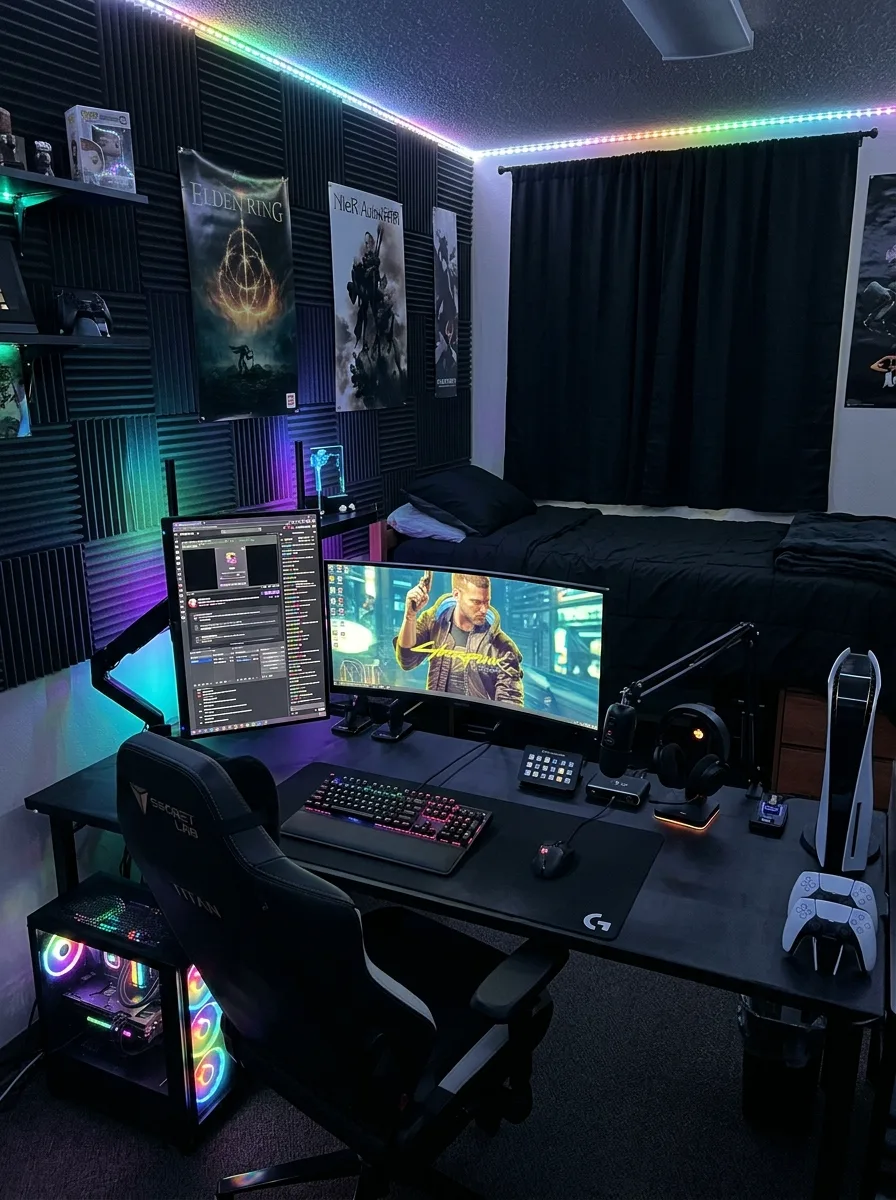
Cover the walls with wedge-shaped acoustic foam panels in a dark colour — charcoal or black. These serve double duty: sound dampening for late-night sessions and a textural backdrop that absorbs light rather than reflecting it. They do not require permanent installation — adhesive foam tape on the backing edges holds them securely on most wall surfaces.
Mount RGB LED strips along the ceiling perimeter using the adhesive backing, following the line where wall meets ceiling. Set the colour and pattern to something static rather than cycling — a single colour is more atmospheric than a disco effect. Deep teal, purple, or a slow fade between cool tones reads as intentional rather than festive.
Install dual monitors on a desk with cable management built in — all cables should route behind the desk surface and emerge only where needed. The cable management is not optional. A good gaming setup with visible cable chaos reads as unfinished.
Black everything on the desk: black keyboard, black mouse pad that covers the entire desk surface, black headphone stand. One exception is the PC tower if it has a window and an RGB build — that tower is the room’s lighting sculpture and should be positioned where it’s visible.
Sage Wellness Sanctuary
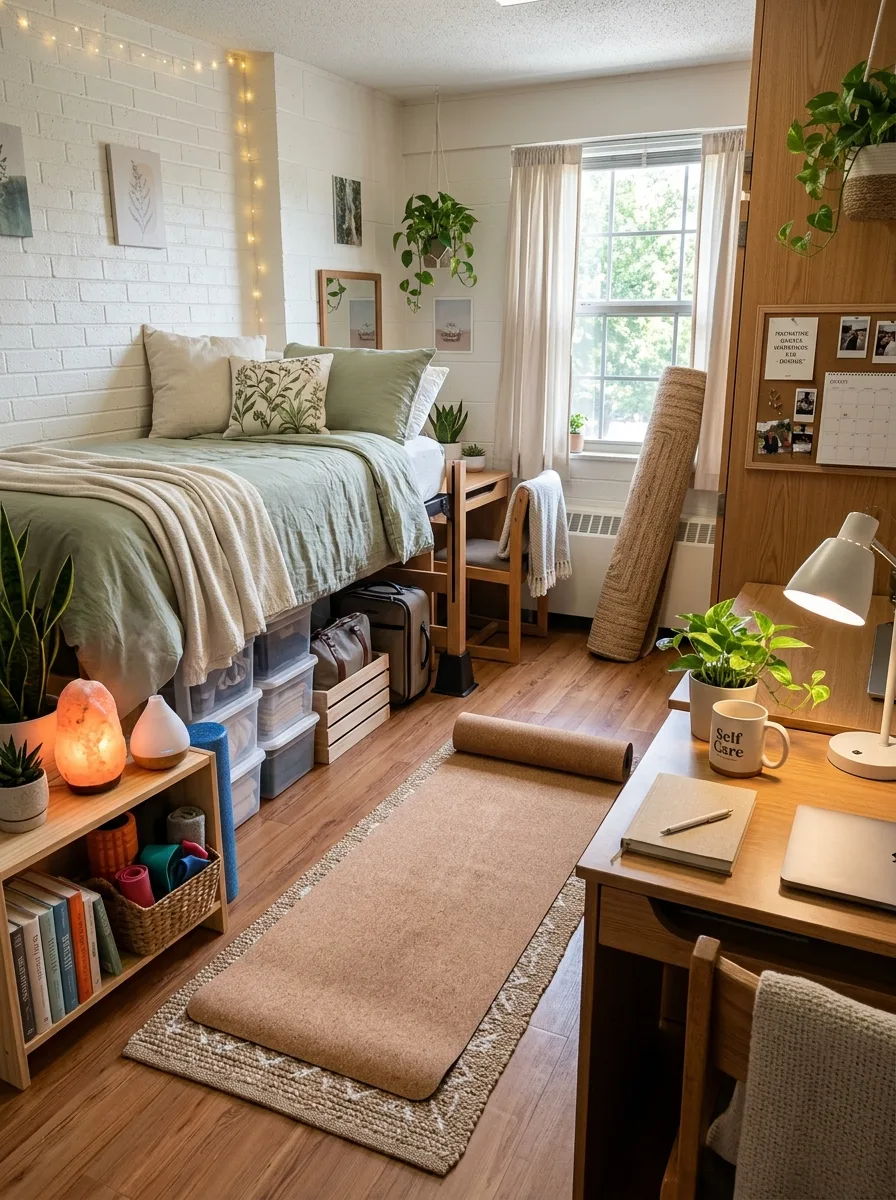
This room has a purpose beyond sleeping. It is designed for recovery, intentionality, and the kind of deliberate self-care that requires a dedicated physical space.
Loft the bed to its maximum height and use every inch of the under-bed zone for organised storage. The storage should be visible and organised — matching clear bins rather than a pile of bags and random items. A low open shelf unit under the bed on one side holds wellness items: foam rollers, resistance bands, yoga accessories, all in matching containers.
Lay a yoga mat lengthwise on the floor between the bed and the window. This mat stays out. It is not rolled up and stored when not in use. Its presence is the commitment: the room prioritises movement and it should be visible that this is the case.
A Himalayan salt lamp on the shelf below the bed provides warm amber ambient light at floor level, which reads differently than any overhead or table-height light source. An essential oil diffuser beside it.
Use sage or soft green bedding — a linen-weight duvet in a muted green — with natural fibre pillows. A botanical print in a natural wood frame above the bed. Fairy lights strung along the top of the wall, not draped artfully, but run straight and clean, as if they belong to the architecture.
Rose Gold Parisian Evening
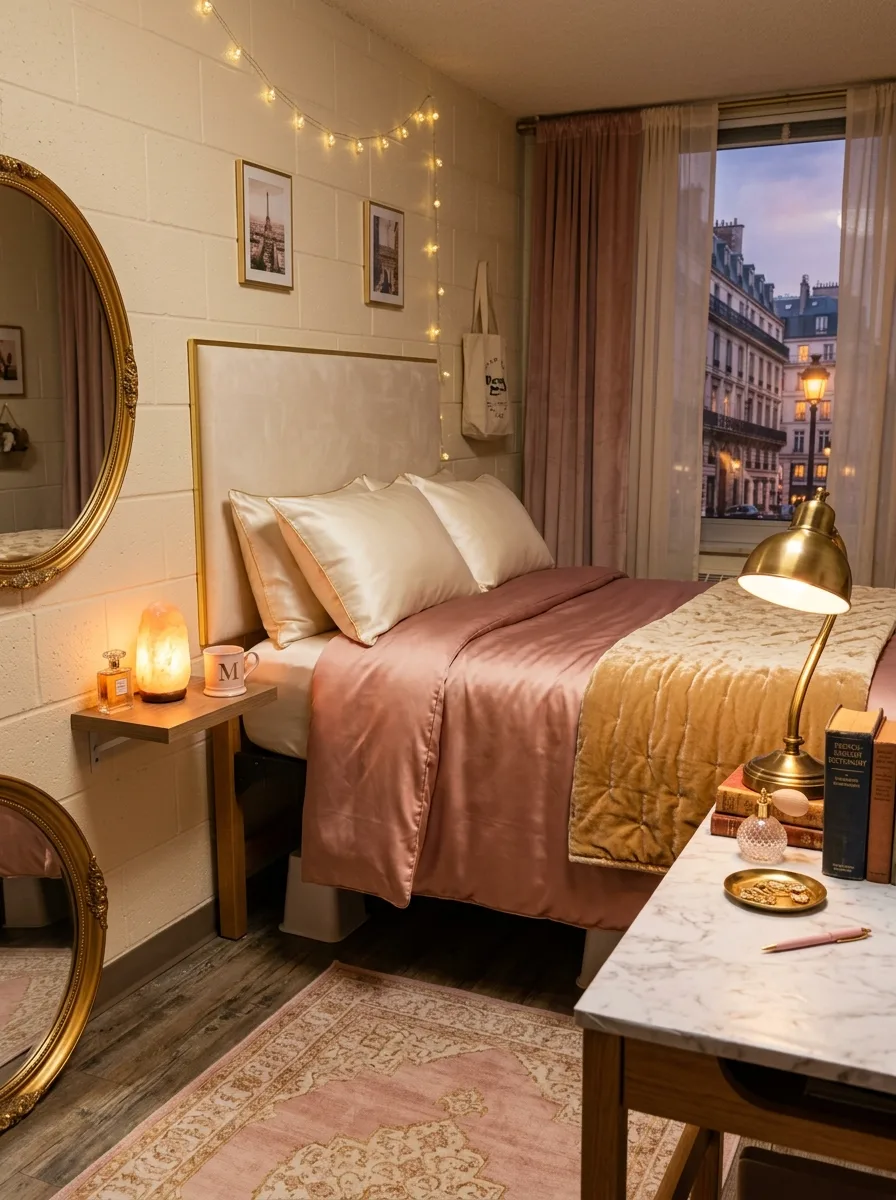
This room is an exercise in what happens when you take the institutional elements seriously and dress them up with intention.
Apply marble-effect contact paper to the desk surface. Cut it carefully around the drawers and edges. A clean application looks like stone. A sloppy one looks like contact paper. Take the time to do it properly.
Mount a tall upholstered freestanding headboard behind the bed — linen or cream fabric with a gold piping trim along the outer edge. This headboard sits between the bed and the wall and requires no mounting. It rises well above the mattress and transforms the reading zone into something that resembles a hotel suite.
Use satin pillowcases in champagne and a textured silk-look duvet runner in dusty rose across the middle of the bed. Layer a gold velvet throw beneath it. The layering of different sheens — satin, velvet, textured linen — is the bed styling approach that reads as Parisian rather than pink bedroom.
A large baroque-framed gold mirror on one wall. A brass adjustable desk lamp. A Himalayan salt lamp on the nightstand. A pink vintage Turkish rug on the floor. Small framed Paris photographs with gold mounts. Every detail in the same warm rose-gold world.
White Linen Negative Space
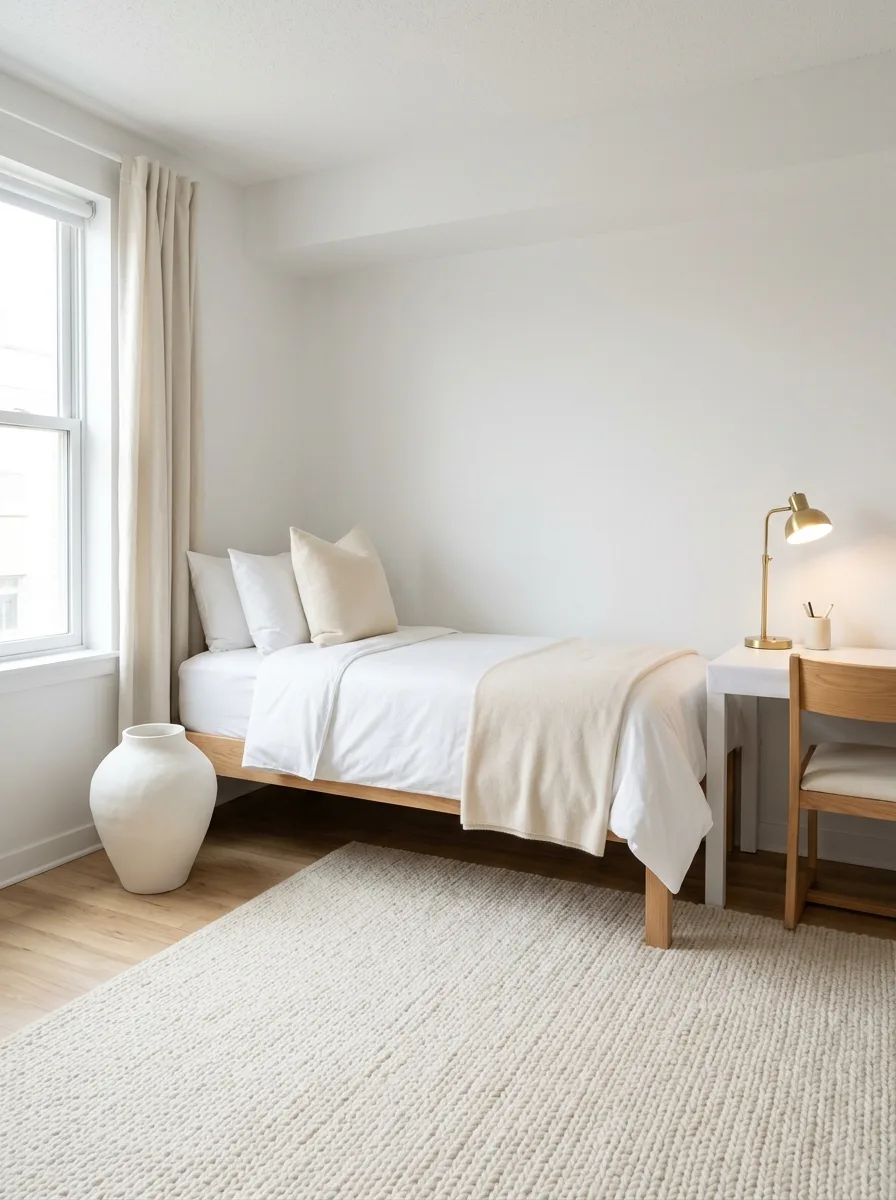
Some rooms achieve their effect through accumulation. This one achieves it through removal.
Start with a true white bed frame — not off-white, not ivory, but bright white. Low profile, simple lines, visible legs. Dress it in white cotton bedding, all white, with a single sand-coloured folded throw across the foot.
Add one cream linen curtain panel at the window — one, not two, hung off-centre to one side so it drapes in a soft fold without covering the full window. The asymmetry of one curtain is more interesting than the symmetry of two.
A large white ceramic floor vase with nothing in it, placed beside the bed on the floor. This single object does remarkable work. It is sculptural, it occupies floor space without adding visual noise, and it signals deliberate design more clearly than almost any wall decoration.
One gold brass desk lamp on the white desk. One small cream pillow at an angle against the white standard-issue pillow. Nothing on the walls. Nothing on the windowsill. The white is not absence. It is the design.
Autumn Forest Wallpaper Mural
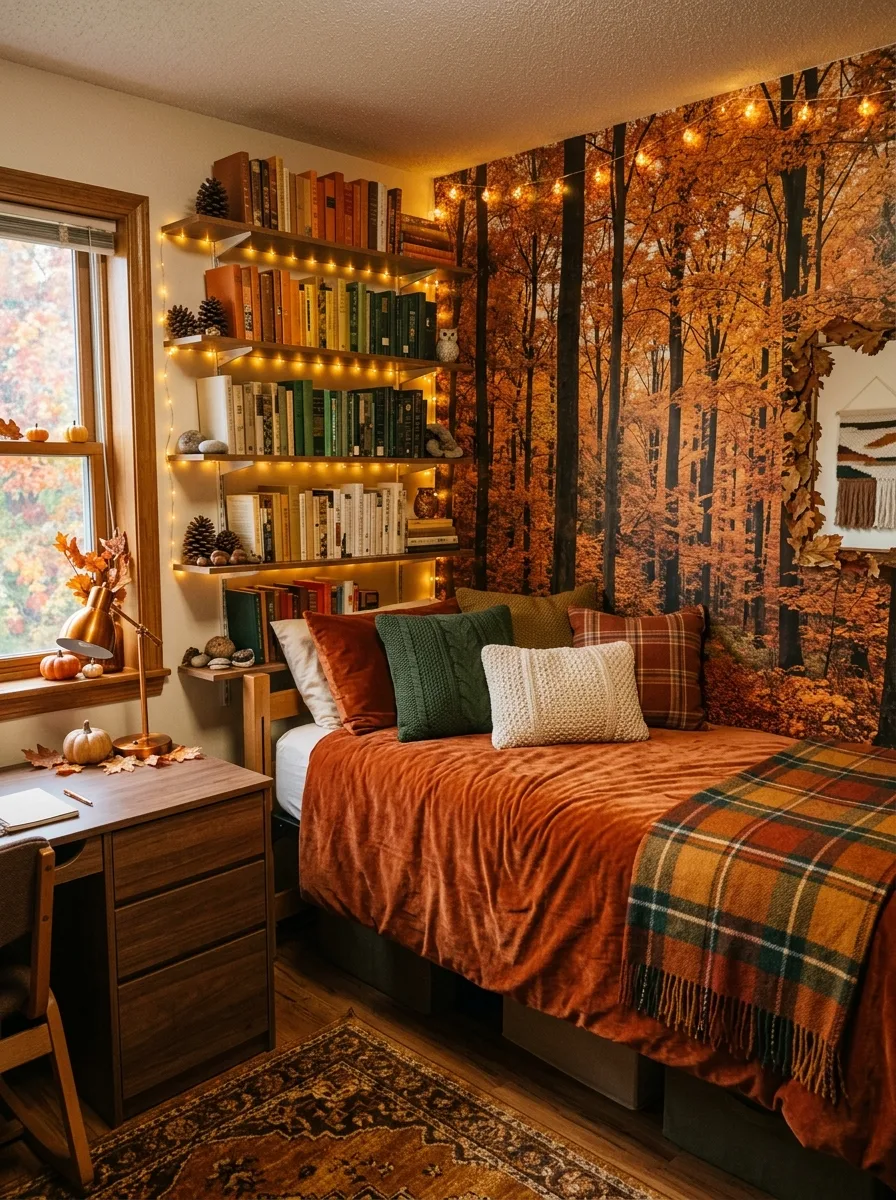
Source a large-format forest mural wallpaper in amber, orange, and deep sienna tones — the kind that depicts tall deciduous trees in full autumn colour, printed at a scale where the trunks are near life-size. Mount it on the wall directly behind the bed, floor to ceiling, from the corner to the opposite edge of the bed. Use removable wallpaper so it comes down cleanly at year’s end.
Install three floating shelves on the adjacent wall, staggered in height, and fill them with books arranged by spine colour — oranges, greens, browns, warm yellows — to echo the mural palette. Weave warm globe string lights along each shelf edge and let them drape slightly between shelves.
Add seasonal objects throughout: small pumpkins on the windowsill, pine cones between the books, a dried autumn leaf arrangement in a brass bud vase, an owl figurine tucked between books. These objects are not permanent. They are part of a seasonal conversation the room is having with the world outside the window.
Burnt orange duvet with a plaid blanket folded at the foot in orange-green-red tartan. A warm wood desk in dark walnut finish. The room commits to its season with an enthusiasm that refuses to apologise.
Final Thoughts
The common thread running through every one of these rooms is the refusal to default.
Defaulting is what produces the forgettable room. The matching set. The single poster. The furniture in the configuration the building intended. Defaulting is easy and it produces a space that communicates nothing except that its occupant had other things to think about.
Every room in this post has something to say. Some of them are quiet and spare. Some of them are loud and layered. Some of them are deeply personal and some are almost impersonal in their precision. But none of them are undecided.
You will spend a year in this room. You will do your most interesting thinking in it, your most difficult crying in it, your best sleeping in it. It will hold your first full year of becoming whoever it is you’re going to be.
That deserves more than the default.