
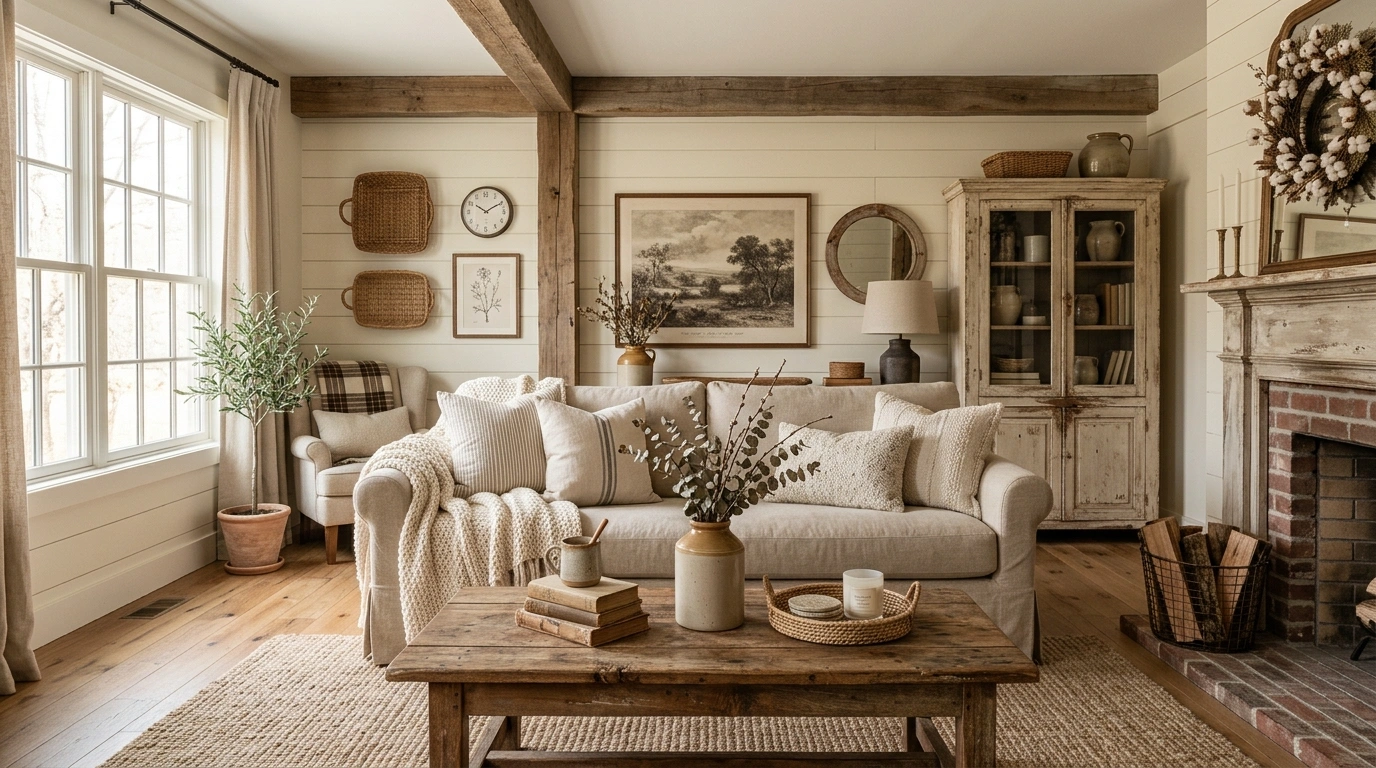
Farmhouse style gets awkward when a room starts looking like a store display. A few rustic pieces can feel warm and lived-in. Too many signs, distressed finishes, matching sets, and decorative farm references quickly make the whole thing feel forced.
The better approach is much quieter.
A farmhouse home has a certain mix of materials and shapes that makes it feel comfortable without trying too hard. Natural wood has a place alongside simple upholstery. Cotton and linen soften harder surfaces. Aged metal gives plain furniture some edge. Even newer homes can get that relaxed character without pretending the house is an old country farmhouse.
That’s the real secret behind how to style your home like a farmhouse. You aren’t trying to make every room look old. You’re creating a balance between practical pieces, natural texture, simple colors, and a few details that feel like they’ve been there for a while.
The ideas below focus on the choices that actually change a room, not the obvious decor tricks that make a farmhouse room look staged.
Farmhouse Style at a Glance: What Your Room Needs
Farmhouse rooms don’t need dozens of themed pieces. Get the basic material mix right first, then layer in personality.
Build the Look With Four Simple Moves
Farmhouse rooms feel right when natural materials, simple shapes, and a little age are balanced instead of piled together.
Soft beige
Muted earthy tones
Simple silhouettes
Visible texture
Cotton
Quiet stripes and plaid
Aged metal
Woven storage
Start With a Warm, Restrained Farmhouse Color Palette
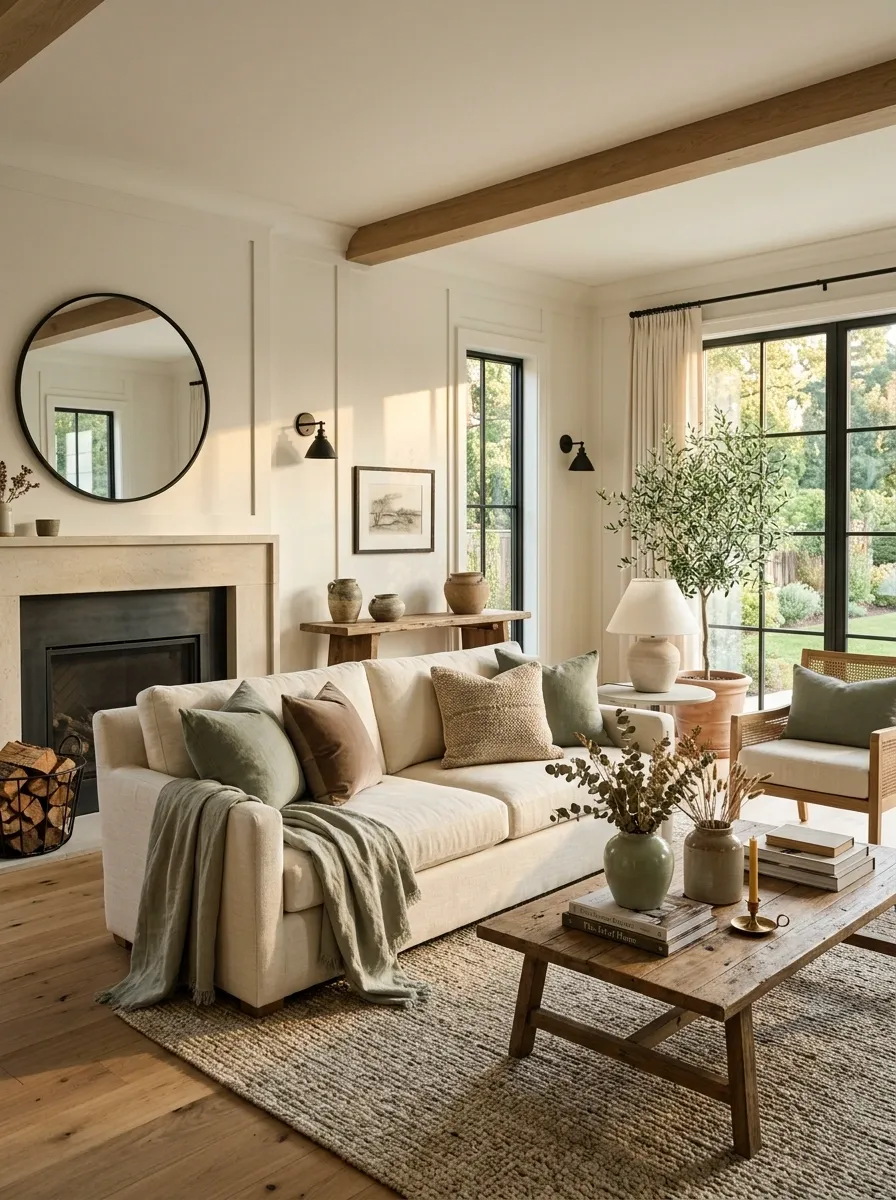
Cold gray can make farmhouse rooms feel flat. Start with warm whites, creamy beige, muted sage, and soft brown instead.
Keep the walls quiet so the wood and texture get the attention.
Easy palette rule:
- Warm white for the largest surfaces.
- Natural brown for wood.
- Sage or olive for controlled color.
- Charcoal or aged black for small accents.
That combination works in living rooms, kitchens, bedrooms, and hallways without forcing the entire house into one exact shade.
Swap Shiny Hardware for Aged Metal Finishes
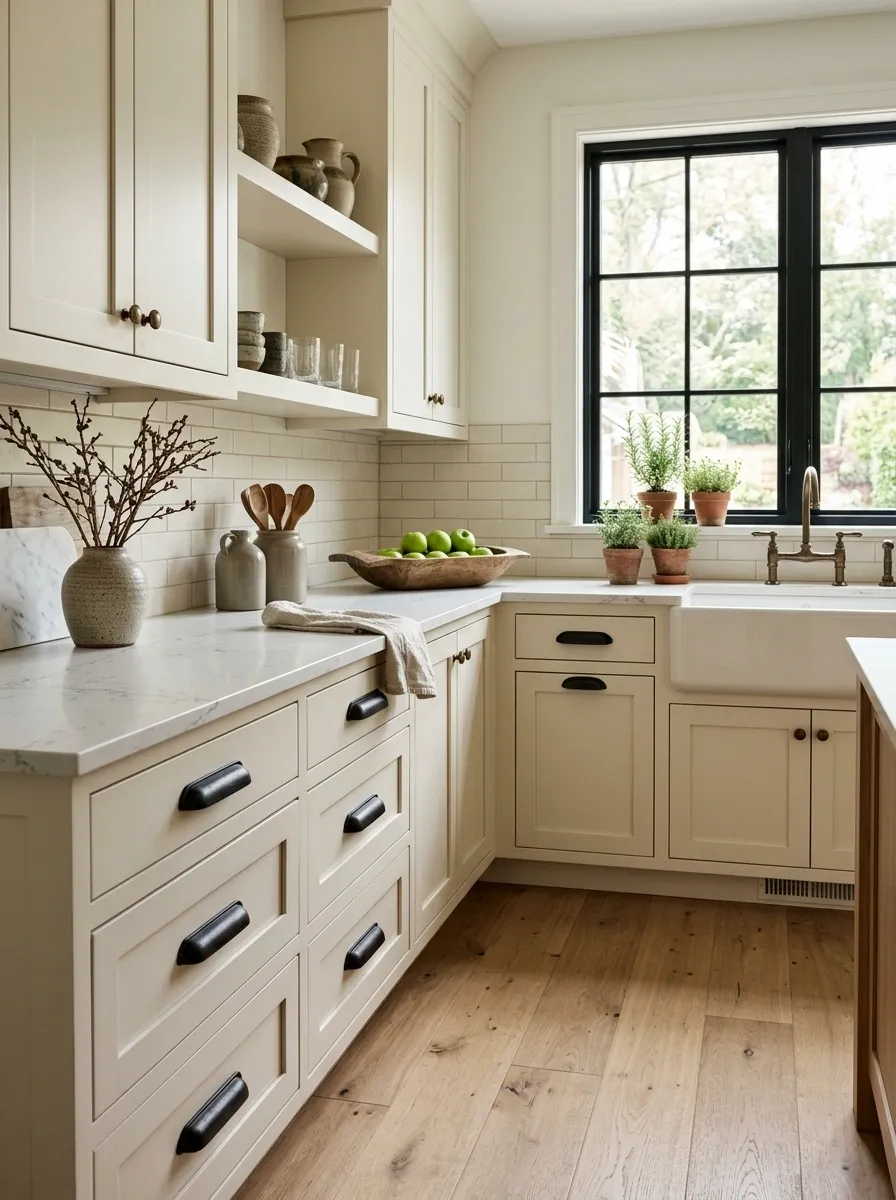
A room can have the right furniture and still miss the farmhouse mark because the small metal details look too polished.
Replace overly shiny knobs, pulls, hooks, or curtain hardware with matte black, aged bronze, or worn-looking metal.
Don’t replace everything at once. Start where the eye naturally lands, such as kitchen cabinets, a bathroom vanity, or an entry console.
Best places to make the swap:
- Cabinet pulls
- Drawer knobs
- Wall hooks
- Shelf brackets
- Curtain rods
The finish should look established, not freshly manufactured.
Use One Strong Wood Piece as the Room’s Anchor
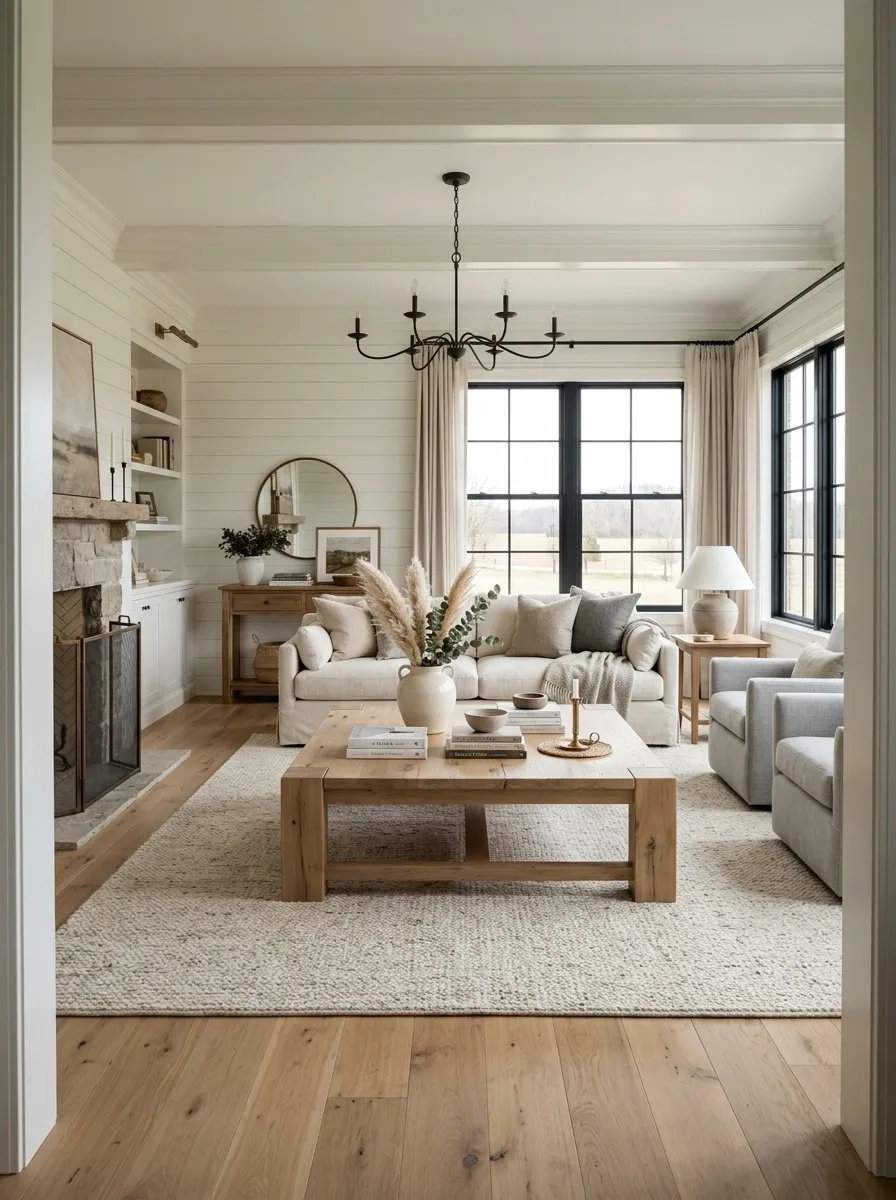
A farmhouse room doesn’t need wood everywhere. One substantial wood element is stronger than several tiny rustic accessories.
Choose something with visual weight, such as a dining table, coffee table, console, headboard, or large open shelf.
Then let the rest of the room support it.
Anchor-piece test:
Can you spot the main wood feature from the doorway? If yes, you’ve got enough. Don’t keep adding wood until every surface starts competing.
Coffee table
Console
Headboard
Large shelf
Simple ceramics
Soft textiles
Quiet accessories
Layer Linen and Cotton Where You Actually Use Them
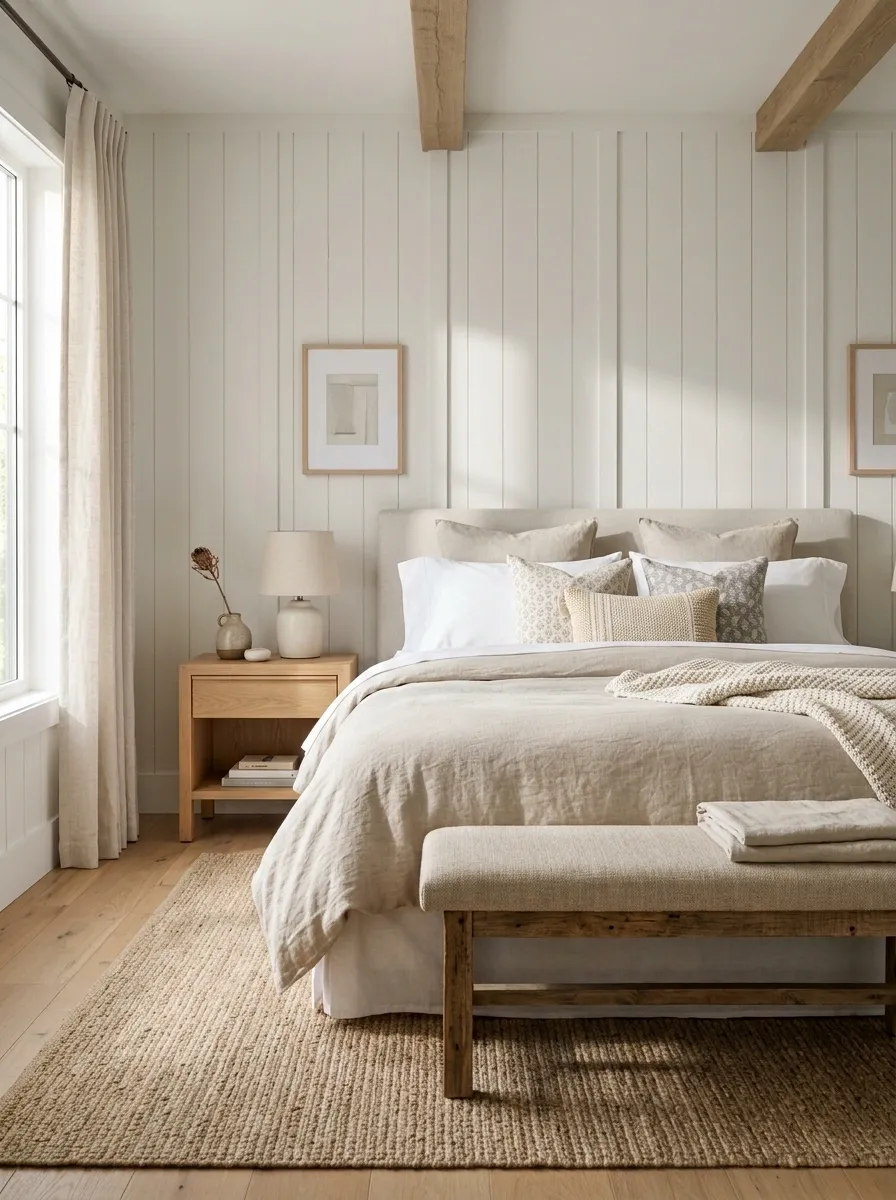
Farmhouse texture shouldn’t exist just for decoration. Put it into the things you touch every day.
Try a linen-look curtain, cotton throw, relaxed duvet cover, kitchen towel, or upholstered bench. These materials add softness without making the room feel overly decorated.
A common mistake is using the same fabric everywhere. Mix the texture, not the entire textile collection.
Best everyday layers:
- Linen curtains
- Cotton bedding
- Woven kitchen runners
- Textured bench cushions
That little bit of looseness is what keeps a farmhouse room from feeling stiff.
STYLE TIP: Use your softest farmhouse textures in areas where people actually sit, sleep, eat, or gather. That’s where texture earns its place.
Choose Lighting That Looks Slightly Aged
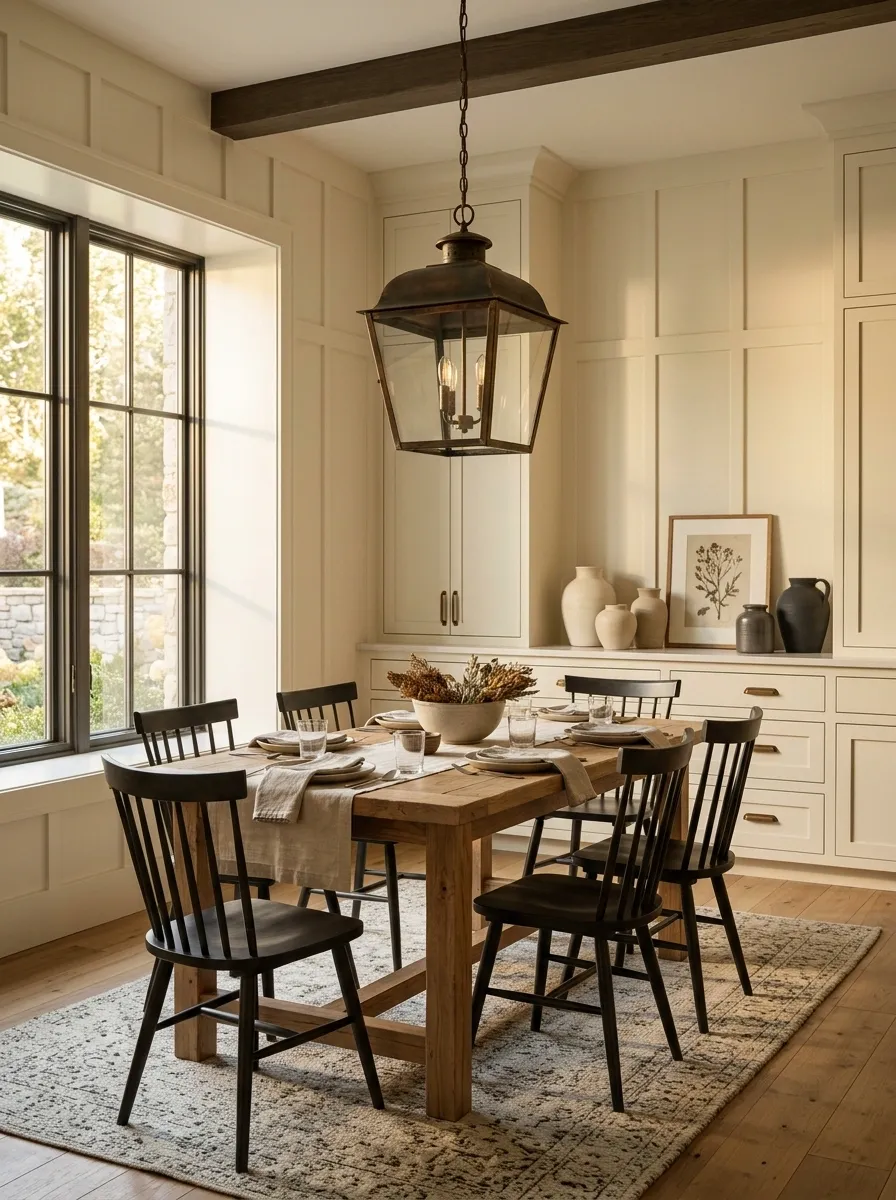
Farmhouse lighting shouldn’t look like it just came out of a showroom. The best fixtures have a simple shape and a finish with some visual weight.
Think aged metal pendants, lantern-style fixtures, simple sconces, or warm-toned table lamps.
Skip oversized decorative fixtures that dominate the entire room. Your dining light doesn’t need to become the centerpiece if the table is already doing that job.
Dome
Simple cage
Straight-arm sconce
Matte black
Worn iron
Muted brass
Does the finish feel relaxed?
Is another object already the room’s focal point?
Add a Simple Farmhouse Table or Bench
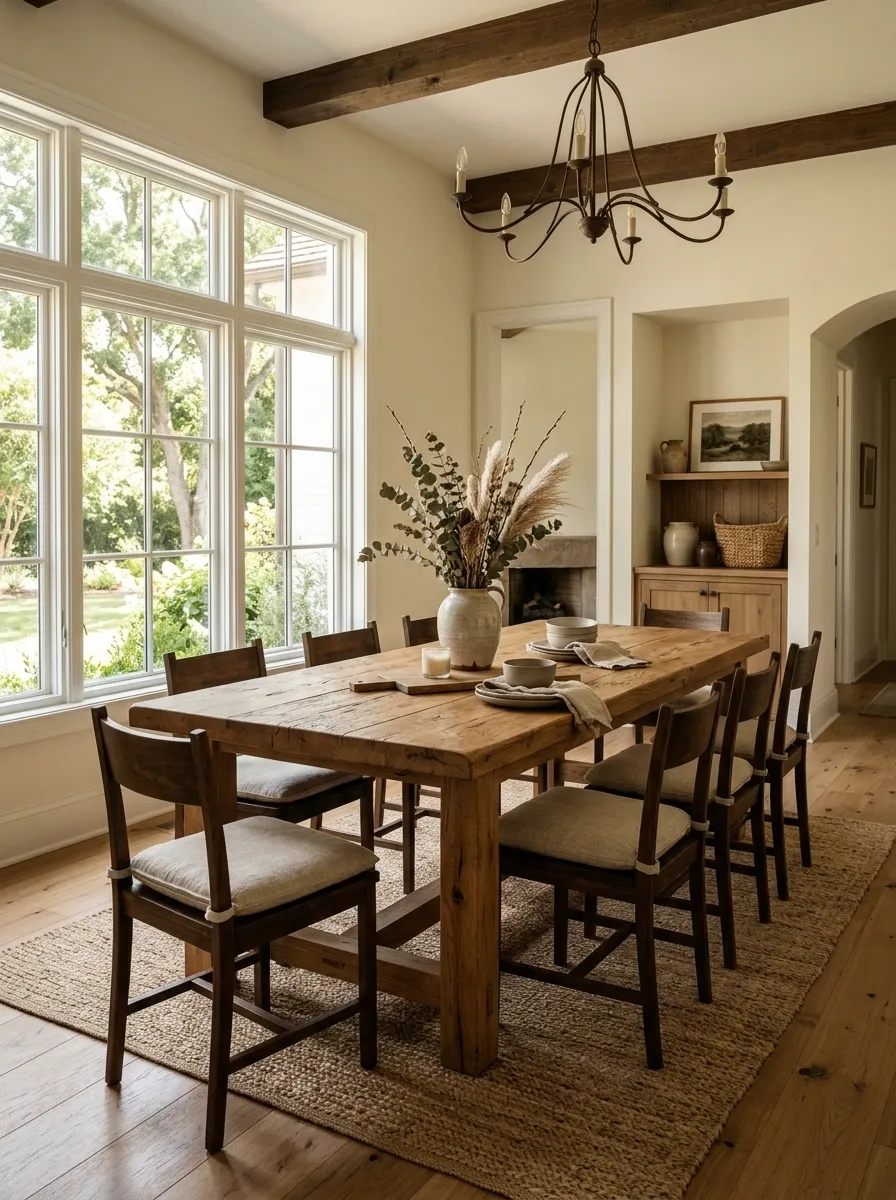
Farmhouse furniture should look like it can handle real life.
A chunky wood dining table, narrow hallway bench, or simple kitchen island instantly brings that practical character into the room. Look for visible grain, straightforward legs, and finishes that aren’t overly glossy.
Keep the proportions relaxed:
- Choose one substantial piece.
- Leave enough open space around it.
- Pair rougher wood with softer upholstery or fabric.
- Skip furniture that looks artificially distressed.
The goal isn’t to make the furniture look old. It should look useful first, with character coming naturally from the material.
Natural or softly stained finish
Sturdy legs
Simple detailing
Cotton upholstery
Simple woven textures
Pair White Walls With Natural Wood Instead of More White Decor
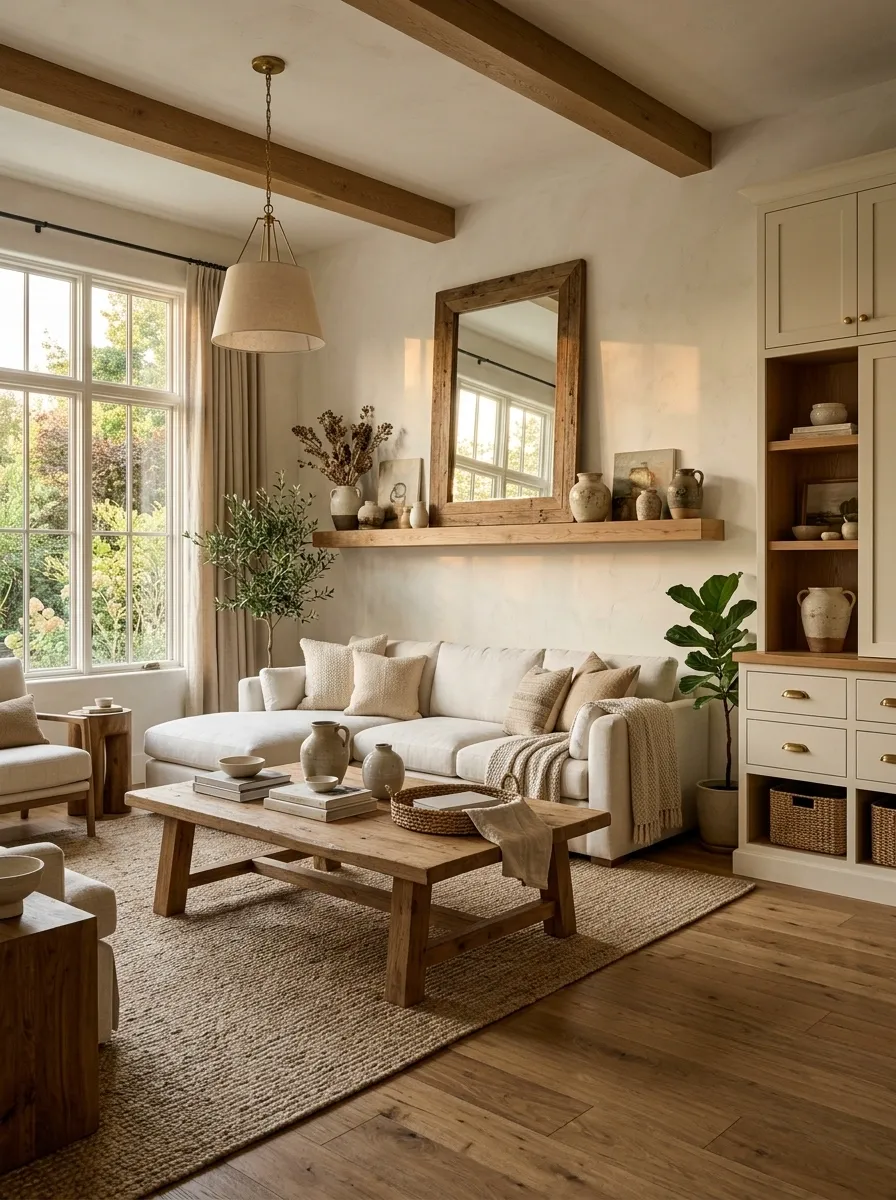
Here’s the mistake: choosing a light wall and then adding pale furniture, pale frames, pale shelves, and pale accessories until the whole room loses its depth.
White walls need contrast.
Bring in medium or warm wood tones through a coffee table, floating shelf, mirror frame, cabinet, or dining furniture. You don’t need a dramatic color. A natural oak, pine, or walnut-like finish is enough to break up the light surfaces.
The contrast makes farmhouse rooms feel grounded without making them dark.
Bring in Woven Storage That Earns Its Floor Space
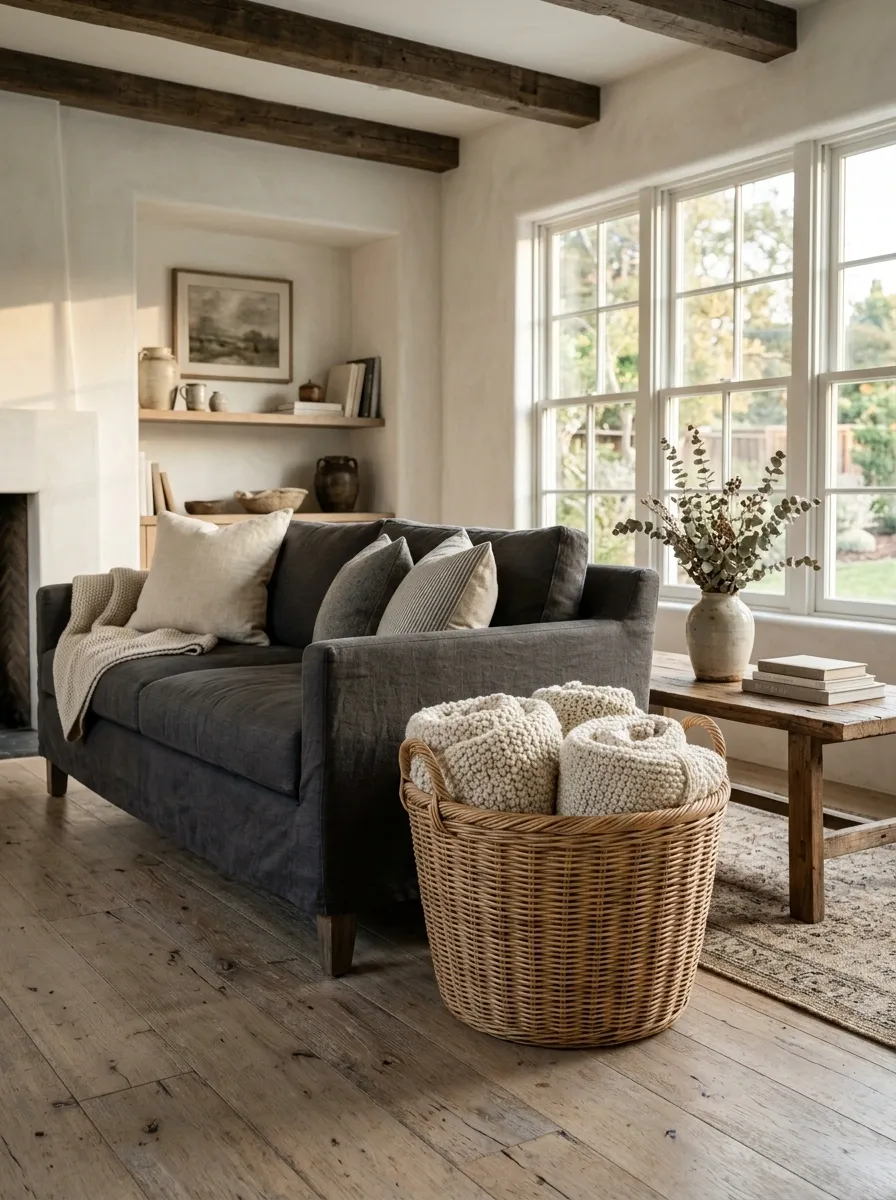
A farmhouse basket should have a job.
Use woven storage beside a sofa for blankets, under an entry bench for shoes, or on an open shelf for small everyday items. That’s more convincing than placing empty baskets around the room simply because they look rustic.
Choose storage by what it holds:
- Tall basket for throws
- Low basket for shoes
- Small woven container for loose accessories
- Lidded basket for items you don’t want visible
One useful basket looks intentional. Five empty ones look like filler.
FARMHOUSE RULE: Storage should solve a real problem before it gets decorative attention.
Frame Windows With Relaxed Linen or Cotton Curtains
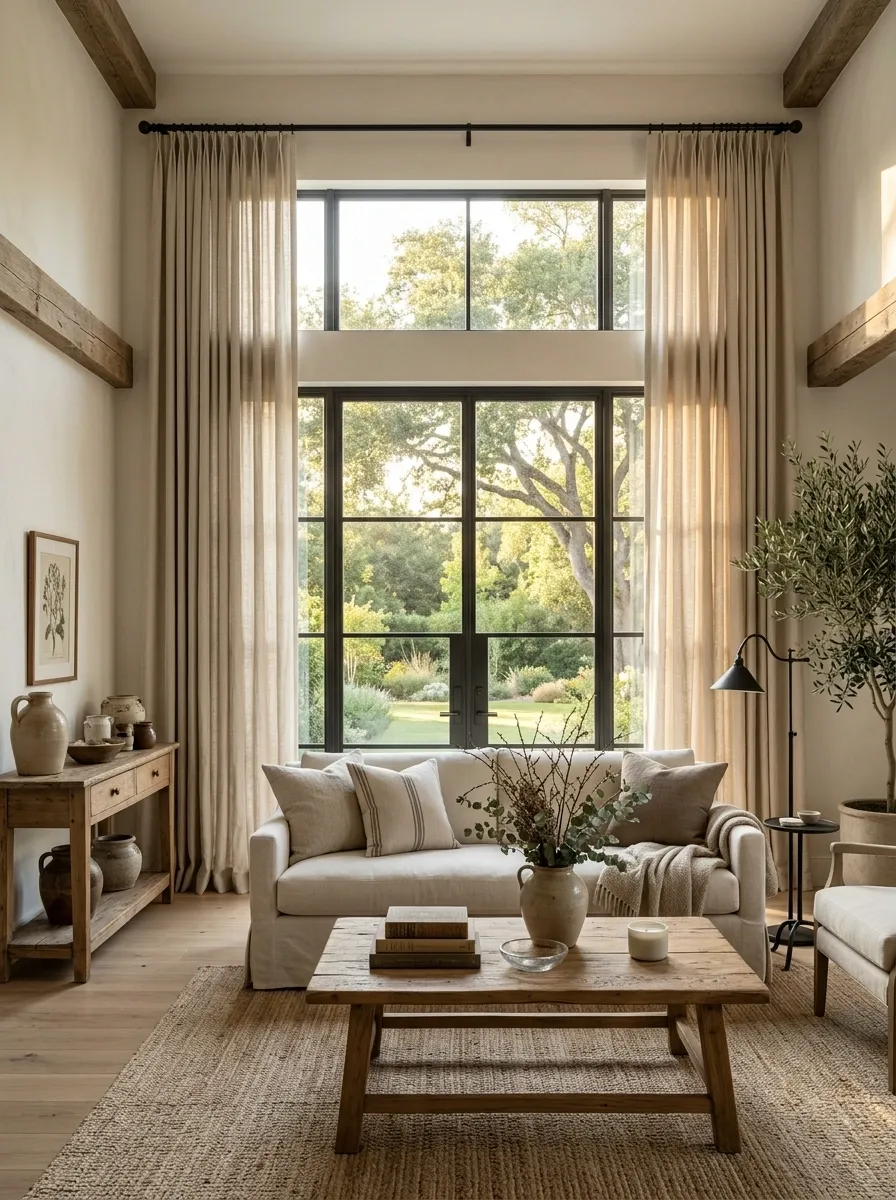
Bare windows can make a farmhouse room feel harder and more unfinished than it needs to.
Hang curtains high and wide, then choose a fabric with a relaxed weave and enough weight to fall naturally. Linen-look and cotton panels work especially well because they soften hard window frames without looking formal.
Don’t use heavy, shiny curtains. They fight the easygoing character you’re trying to build.
Use Black Accents Sparingly to Sharpen Soft Rooms
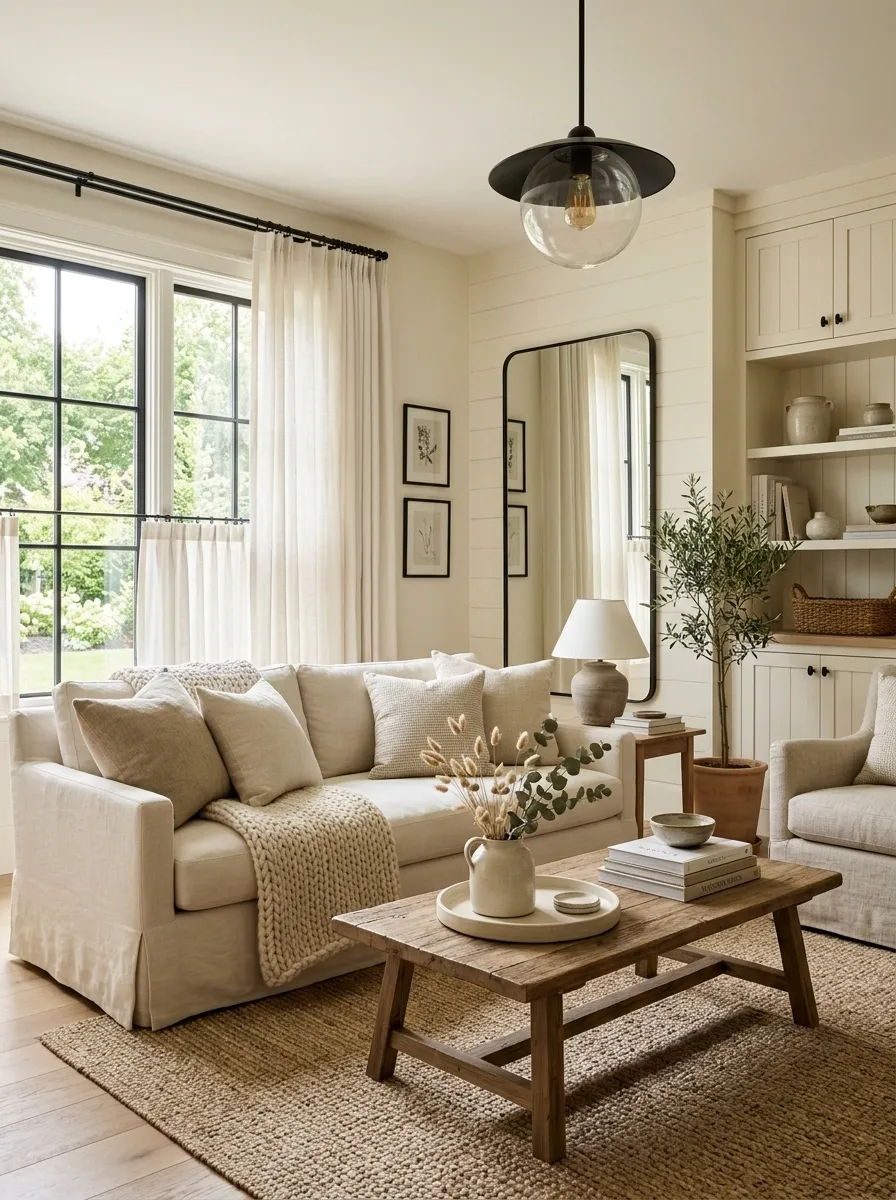
Soft farmhouse colors can start blending together. A little black fixes that.
Add it through a window frame, pendant light, cabinet hardware, mirror, picture frame, or small table lamp. These small dark notes give the eye something to land on.
The key word is small.
Don’t turn every fixture and furniture leg black. One or two controlled accents make the warm wood and light fabrics look stronger.
Best placement: put a dark accent near eye level or in an area that already feels visually quiet.
Build a Farmhouse Focal Point Around the Fireplace
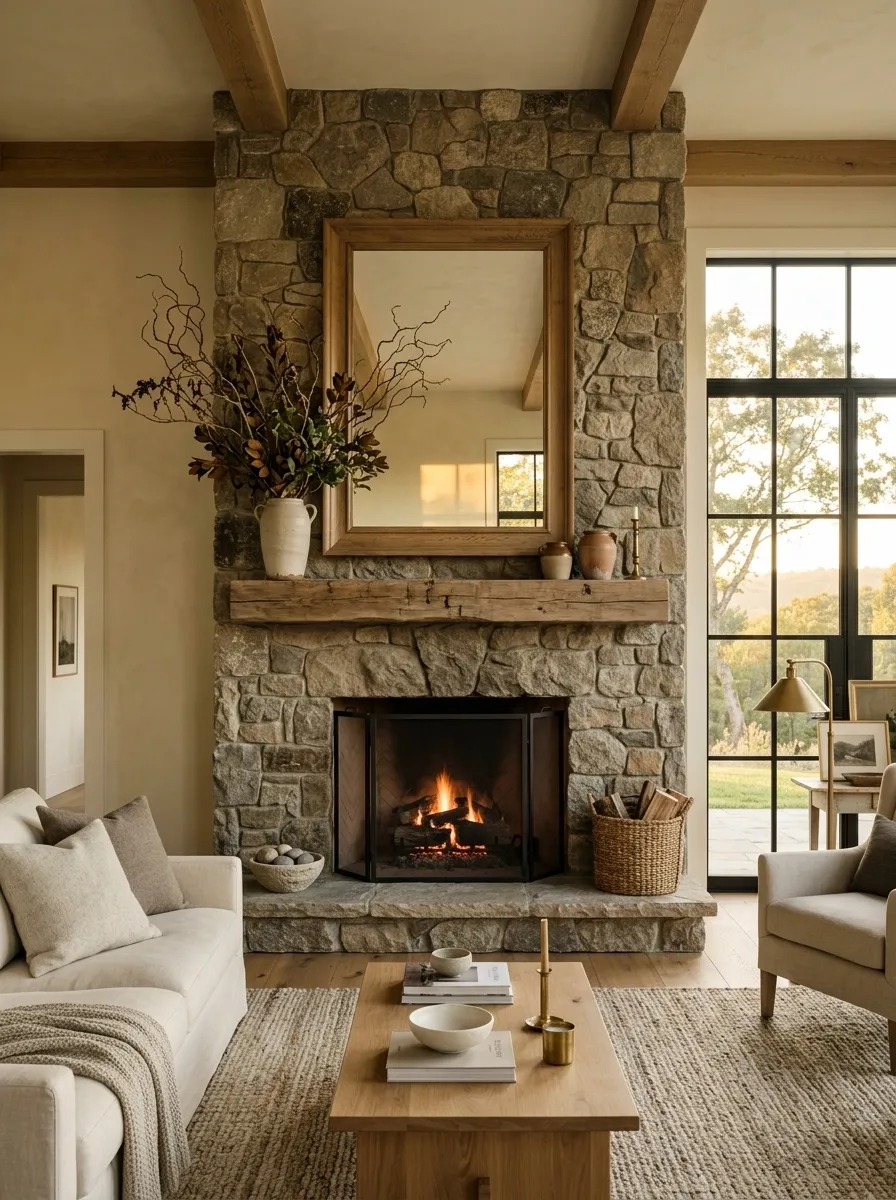
A fireplace already has visual weight, so don’t bury it under a collection of tiny decorations.
Keep the mantel focused. A large wood-framed mirror, simple artwork, ceramic vessel, or a few branches can create the farmhouse feel without making the fireplace look like a seasonal display.
The best arrangement has one dominant piece and a few supporting details.
Try this order:
- Start with the largest object.
- Add one taller texture beside it.
- Finish with one small ceramic or metal piece.
- Leave breathing room around everything.
Mix Plaid or Stripe With Solids, Not More Patterns
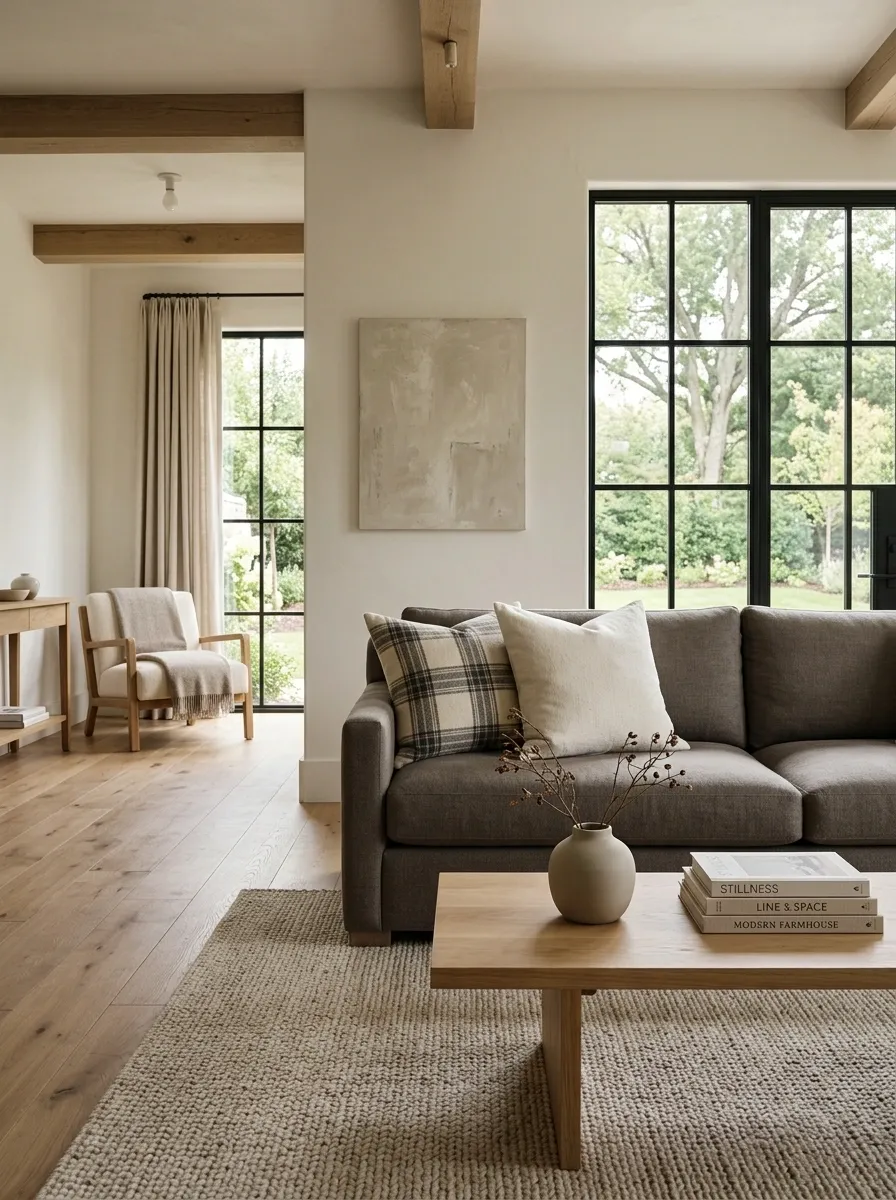
Farmhouse patterns work best when they have somewhere quiet to land.
A plaid pillow beside a solid linen cushion works. A striped runner on a plain wood table works. Three different patterned fabrics fighting across the same sofa don’t.
Choose one pattern, then calm everything around it.
| Pattern | Pair It With | Skip Beside It |
|---|---|---|
| Small plaid | Solid linen | Large floral |
| Simple stripe | Textured cotton | Busy geometric |
| Subtle check | Plain wool or cotton | Another bold check |
The pattern should add rhythm, not become the entire story.
Add Open Shelving Only Where It Will Be Used
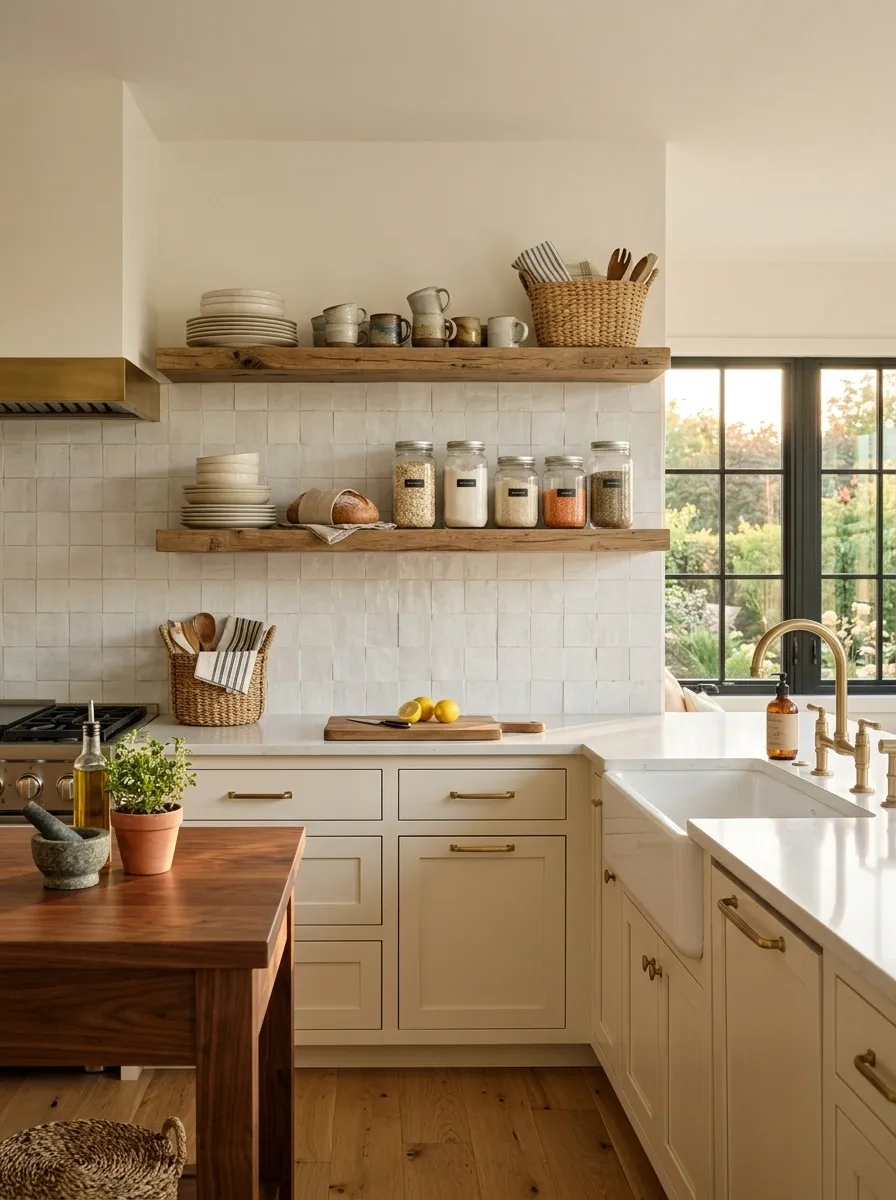
Open shelving looks farmhouse-friendly, but empty shelves collect clutter fast.
Use them where you naturally reach for things, especially in kitchens, laundry rooms, mudrooms, or dining areas. Then give each shelf a job.
Shelf rule:
- Everyday dishes belong near the dishwasher.
- Jars belong near the ingredients.
- Baskets hide small loose items.
- A little empty space keeps the arrangement readable.
Don’t install open shelves just to create a place for decorative objects. That’s how useful storage turns into another surface you have to maintain.
WARNING: Open shelving isn’t automatically charming. If you hate dusting or constantly rearranging objects, closed storage is the smarter farmhouse choice.
Style the Entryway Like a Working Drop Zone
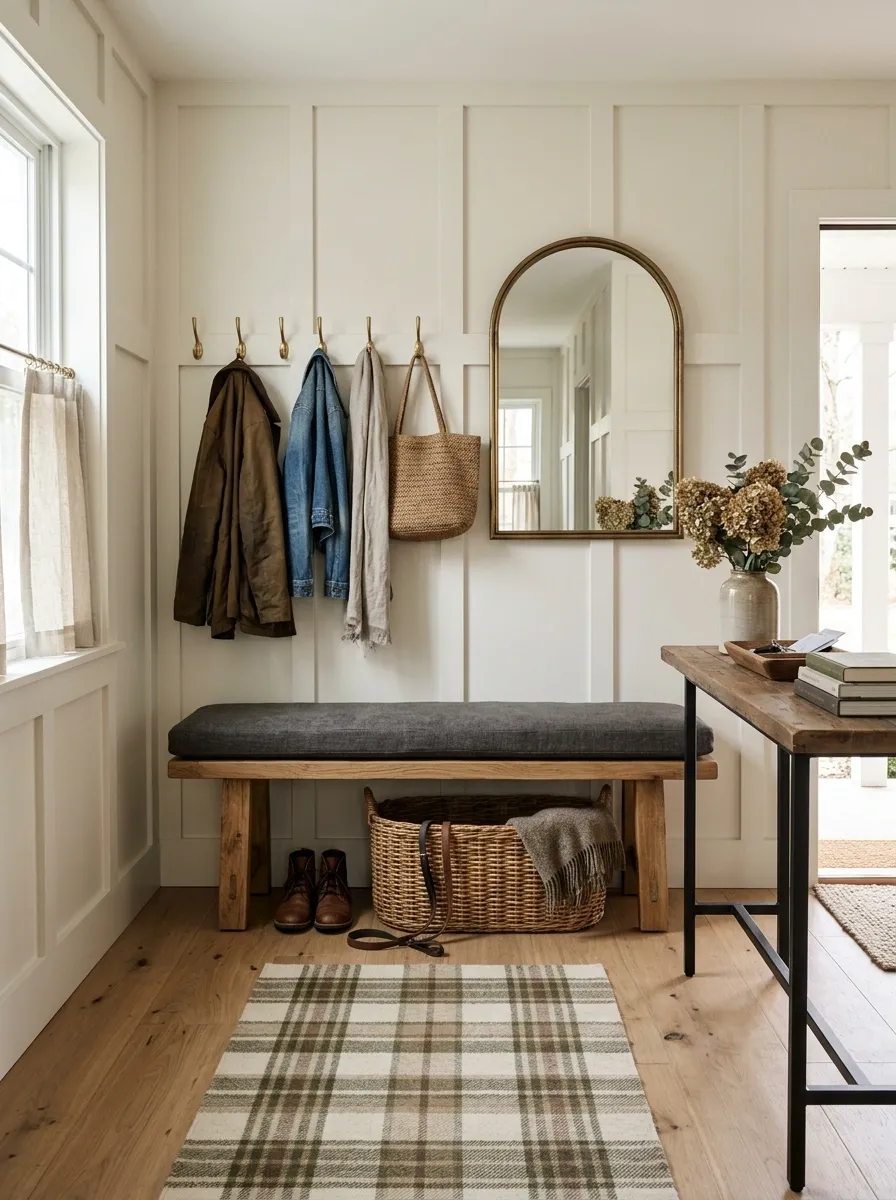
A farmhouse entryway should feel ready for muddy shoes, grocery bags, keys, and jackets.
Start with a bench or narrow console. Add hooks at a useful height, a basket underneath, and one simple piece of artwork or a mirror above. That’s enough.
Entryway checklist:
☐ Seat for putting on shoes
☐ Hooks for everyday coats
☐ Basket for loose items
☐ Hard-wearing runner
☐ Small surface for keys
The room should work before it looks decorative. That practical quality is one of the strongest parts of farmhouse style.
Use Vintage-Looking Decor Without Filling Every Shelf
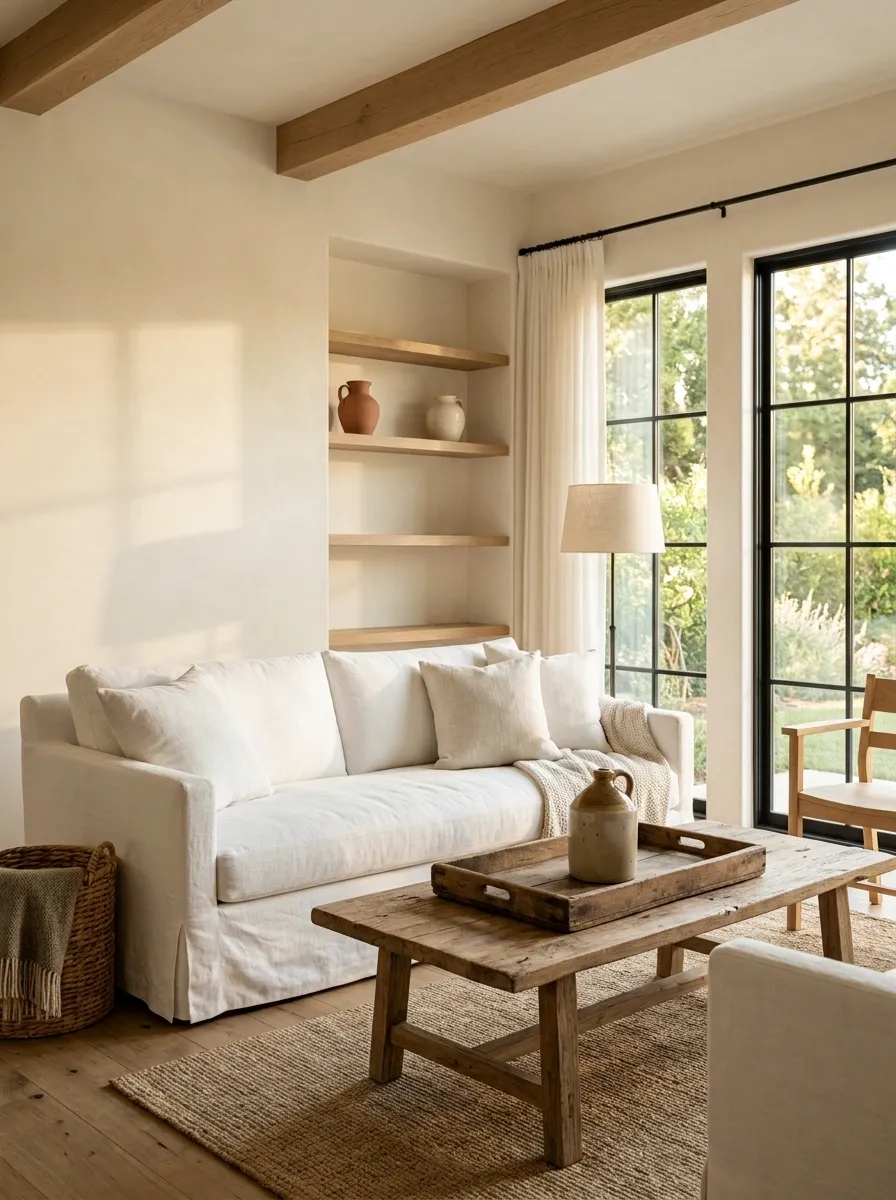
Farmhouse style needs a little history, but that doesn’t mean every surface needs an old-looking object.
Choose one or two pieces with character and give them room to breathe. A ceramic pitcher on a kitchen shelf, an old-style clock in the dining area, or a worn wooden tray on a coffee table is enough to create contrast.
The trick is restraint.
A useful test is simple: remove one decorative object from the arrangement. If the shelf looks better afterward, it was already too full.
EDITING TIP: Keep the pieces that have a different texture, shape, or finish from everything around them. Those are the details that actually earn attention.
Let the Kitchen Show Off Wood, Metal, and Ceramic Texture
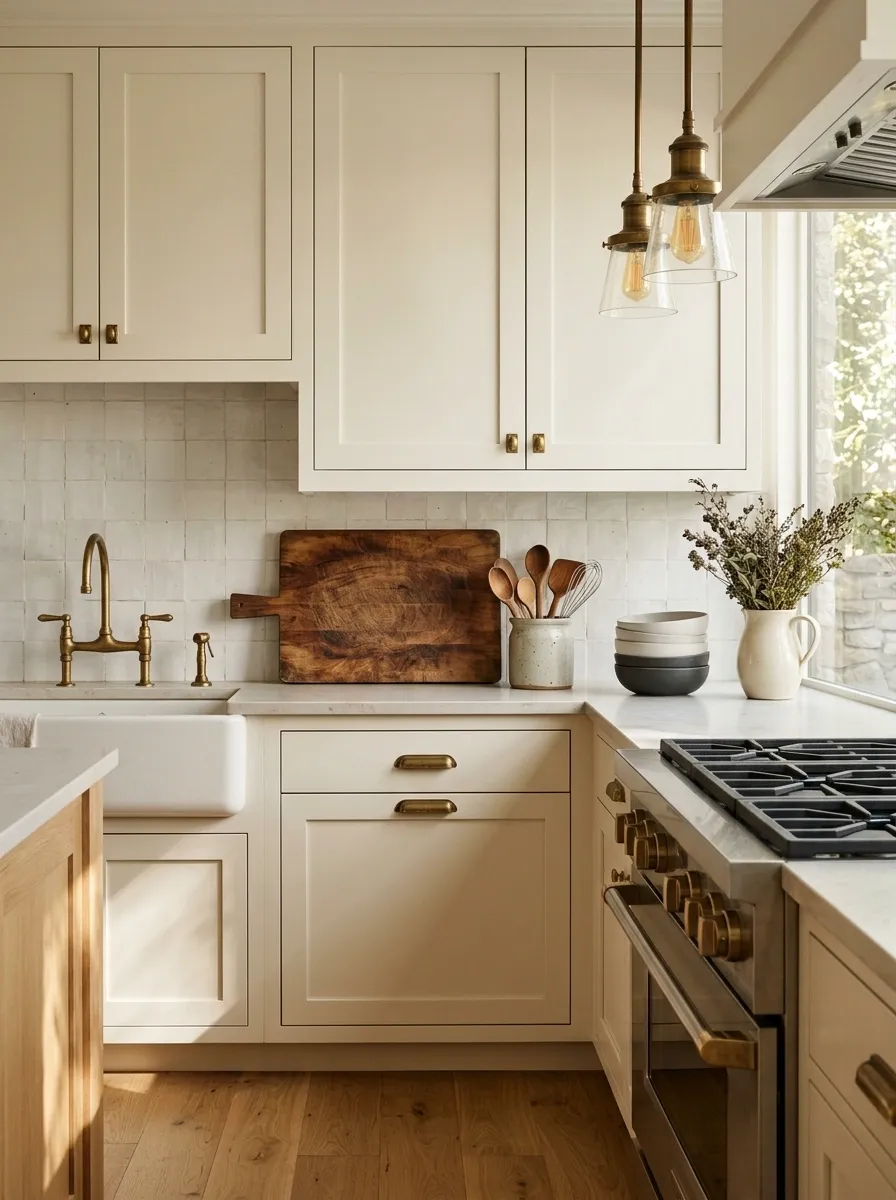
Farmhouse kitchens look strongest when the materials are easy to see.
Let a wood cutting board lean against the backsplash. Use a ceramic utensil crock beside the stove. Add aged-looking metal through cabinet pulls, a faucet, or lighting. The mix creates depth without needing decorative clutter.
Don’t hide every useful object in a cabinet. A few everyday pieces can stay visible when they’re attractive and genuinely used.
Shelves
Stools
Pitchers
Utensil holders
Lighting
Small accents
Choose a Rug With a Quiet Pattern and Natural Feel
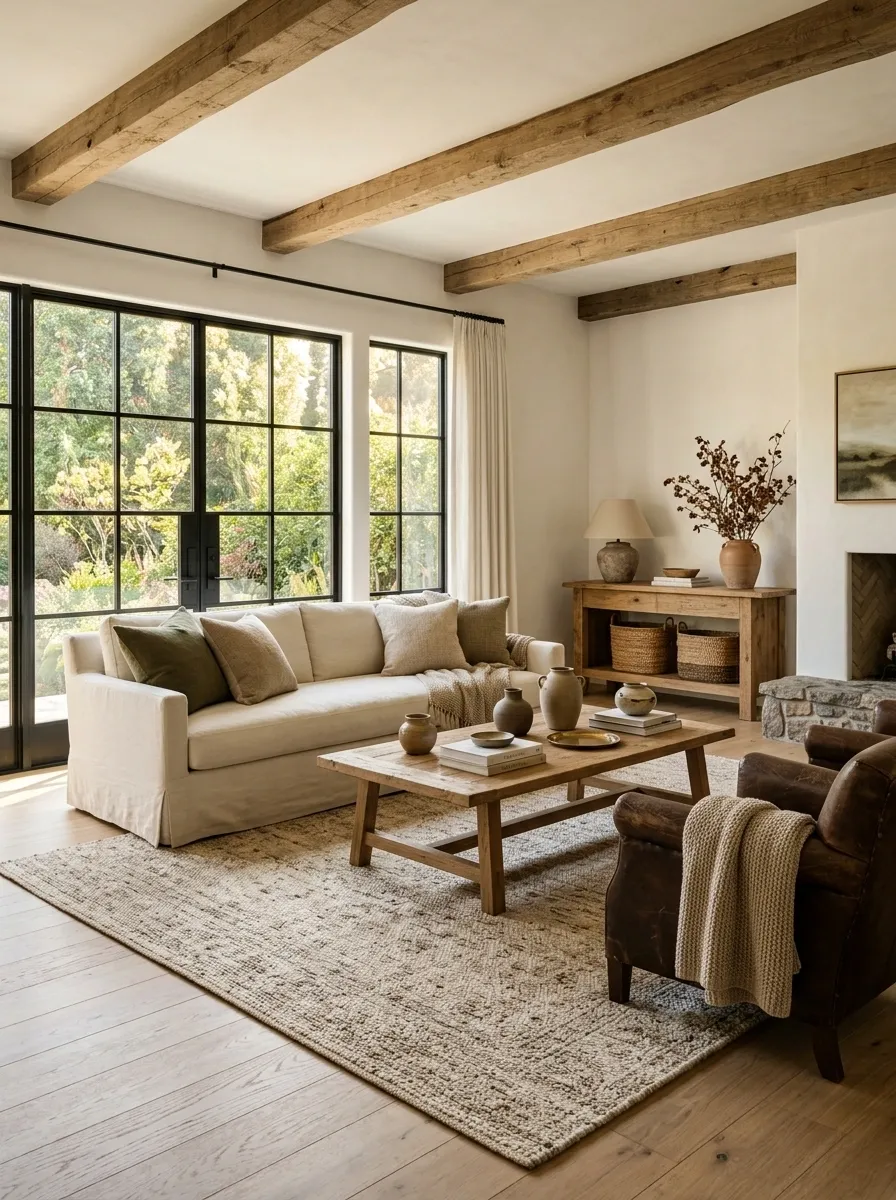
A farmhouse rug shouldn’t compete with the furniture.
Look for a muted pattern, woven texture, or subtle variation that works with your existing colors. Cream, oatmeal, faded green, soft brown, and muted charcoal are especially easy to layer.
The rug also needs to be large enough to connect the furniture. A tiny rug floating in the middle of the room makes even good farmhouse furniture look disconnected.
Before buying, check three things:
- Can the main furniture sit partly on it?
- Does the pattern stay quiet from across the room?
- Does its color repeat something already in the space?
Use Greenery That Looks Believable, Not Plastic and Perfect
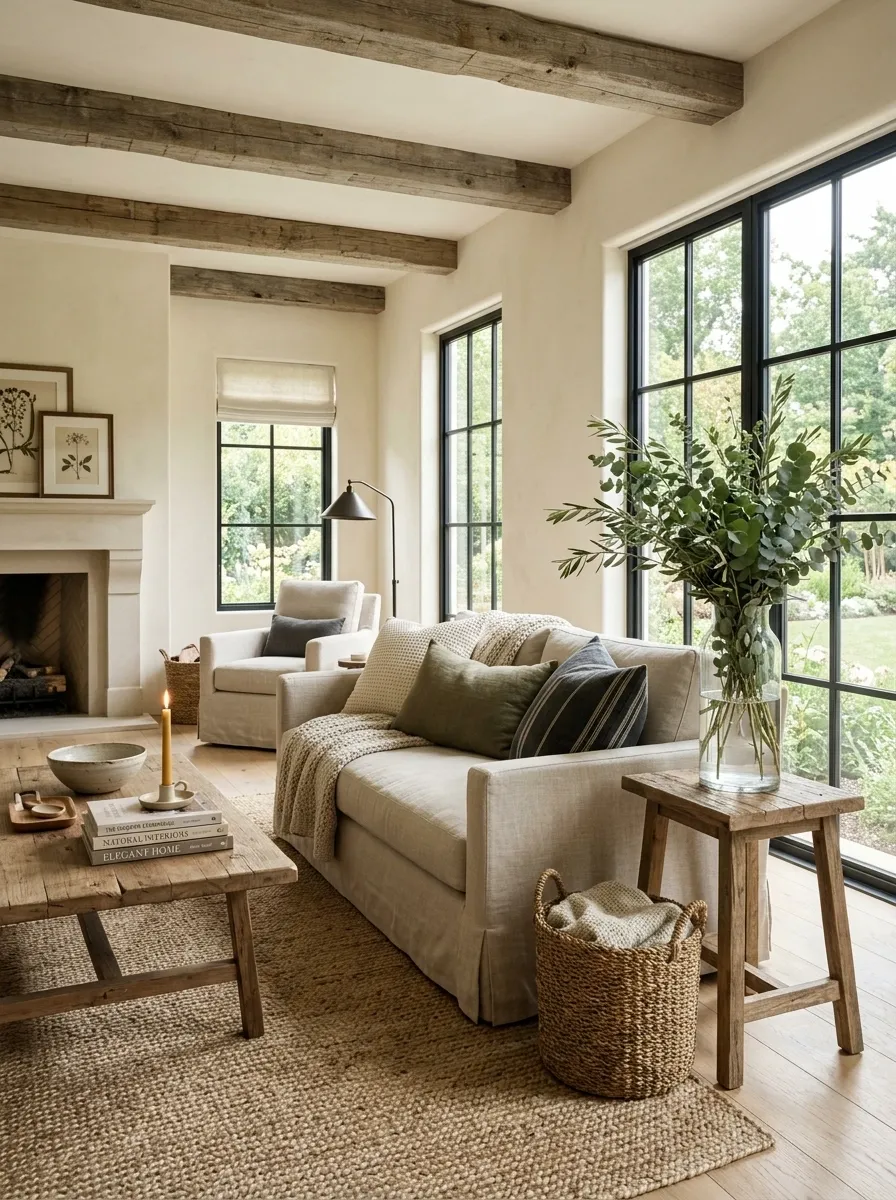
Farmhouse rooms benefit from greenery, but perfectly shaped artificial plants can make the room feel staged.
Choose branches, herbs, olive-like foliage, eucalyptus-style stems, or a simple leafy plant with a slightly loose shape. Put them where greenery would naturally make sense.
A small herb planter in the kitchen feels believable. A branch arrangement on a dining table creates height. A plant beside a sunny window fills an otherwise empty corner.
Give the Bedroom a Softer Farmhouse Layer
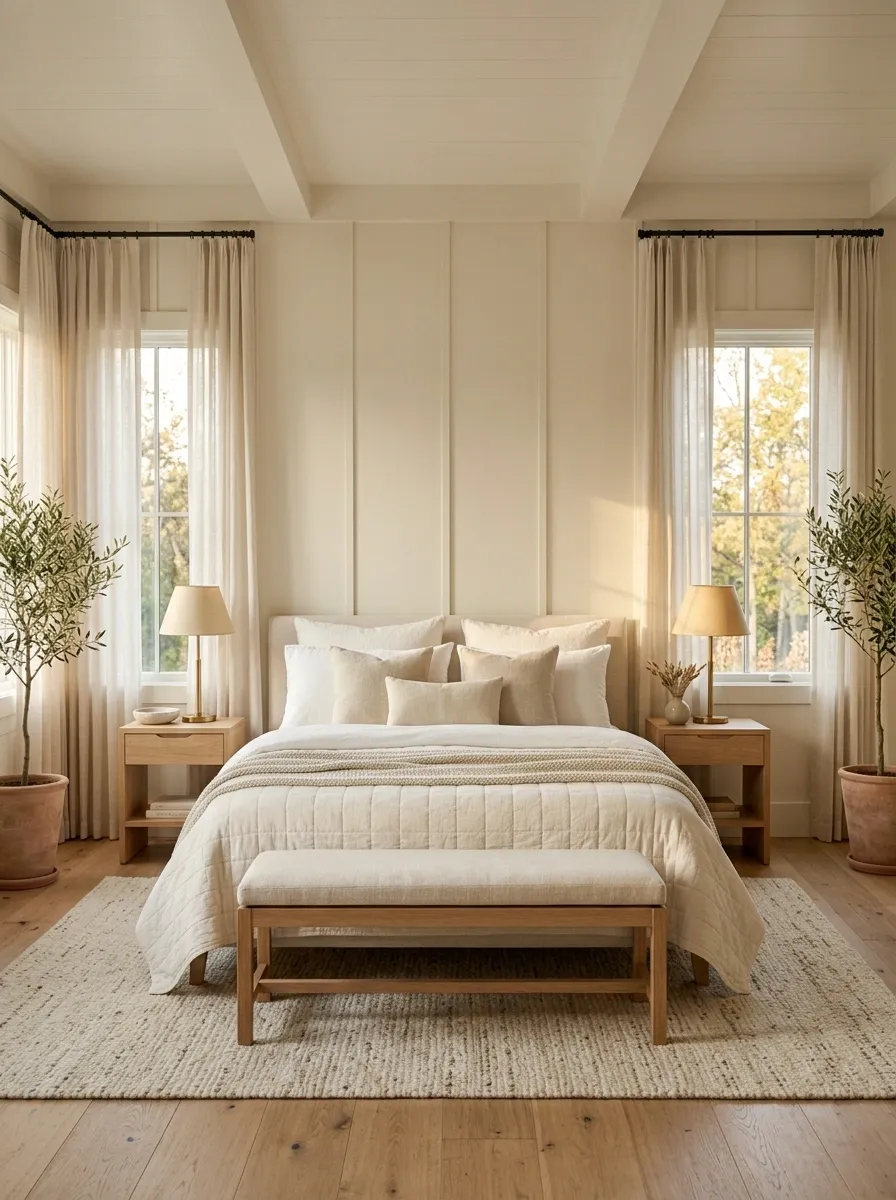
The bedroom shouldn’t feel like the kitchen continued down the hallway.
Keep the farmhouse foundation, then make it softer with cotton bedding, a relaxed quilt, linen-look curtains, a wood nightstand, and one warm bedside lamp. Cream and warm white work especially well here because they let the textures do the talking.
Bedroom formula:
- Light, breathable bedding
- One textured throw
- Warm wood beside the bed
- Simple woven basket
- Soft bedside lighting
Skip overly rustic furniture in every piece. The bedroom needs comfort more than visual roughness.
BEDROOM CHECK: If you can clearly identify the farmhouse theme before noticing the bed looks comfortable, the styling has gone too far.
Add One Architectural Detail That Looks Built In
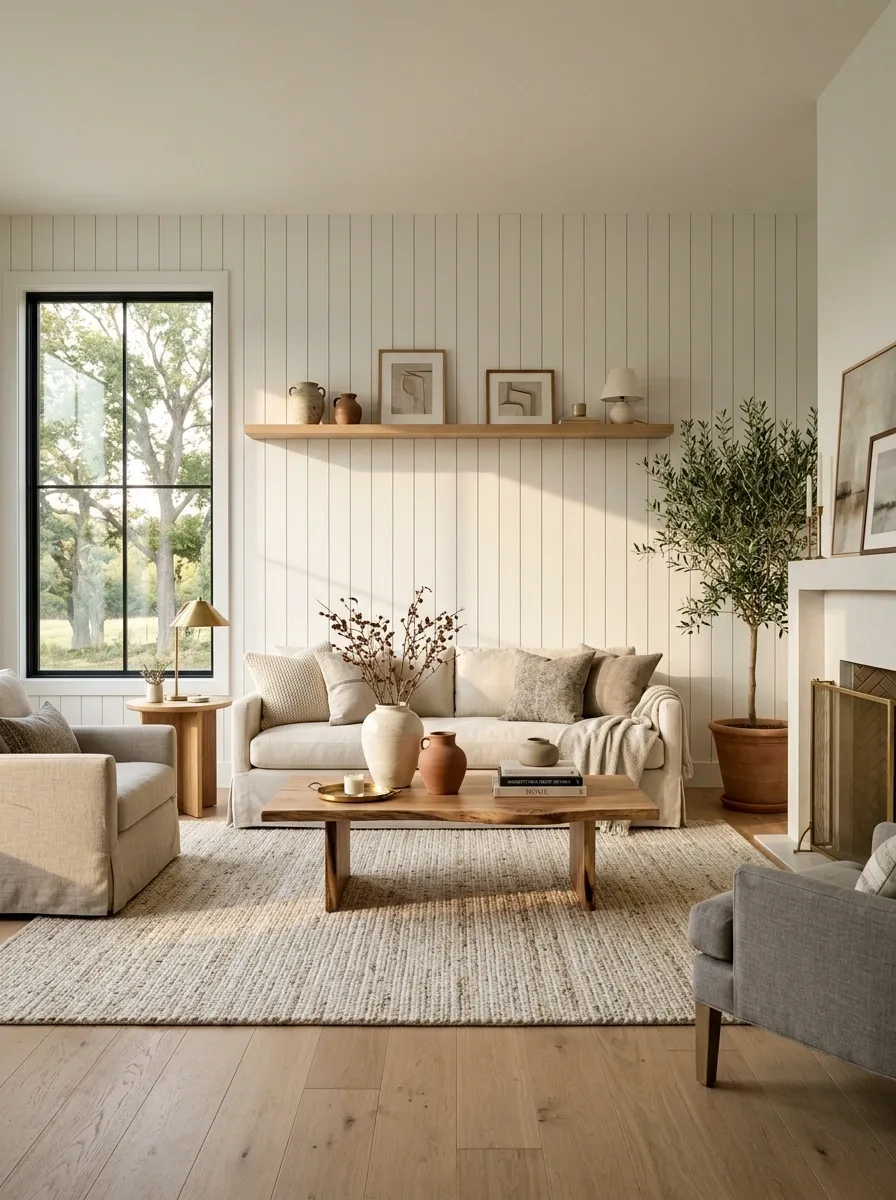
Farmhouse style gets much stronger when the room has something that feels connected to the house itself.
That could be a simple wall of vertical paneling, a built-in bench, chunky floating shelves, exposed-looking beams, or a framed opening around a doorway. You don’t need to renovate the whole room.
Choose one architectural feature and let it carry the character.
Keep Bathroom Finishes Simple and Hardworking
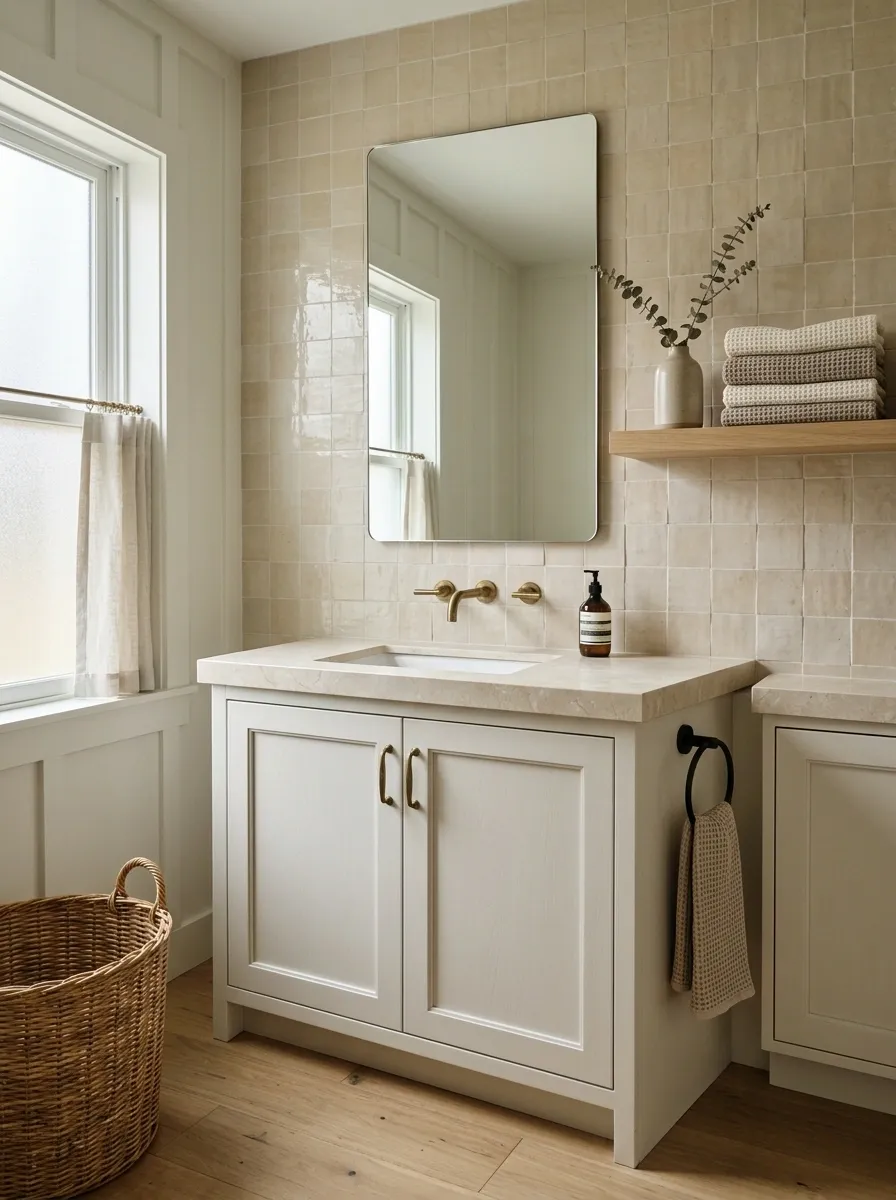
A farmhouse bathroom doesn’t need a collection of rustic decorations.
Start with finishes that look practical: warm tile, simple wood, aged metal, natural stone, and unfussy cabinetry. Then add one or two softer details, such as a woven basket or cotton hand towel.
Build the room around these four pieces:
☐ Simple vanity
☐ Matte or aged hardware
☐ Warm, understated tile
☐ One natural texture
Avoid matching every finish. The bathroom should feel like part of the same home, not like a themed guest cabin.
Style the Dining Area Around One Everyday Gathering Spot
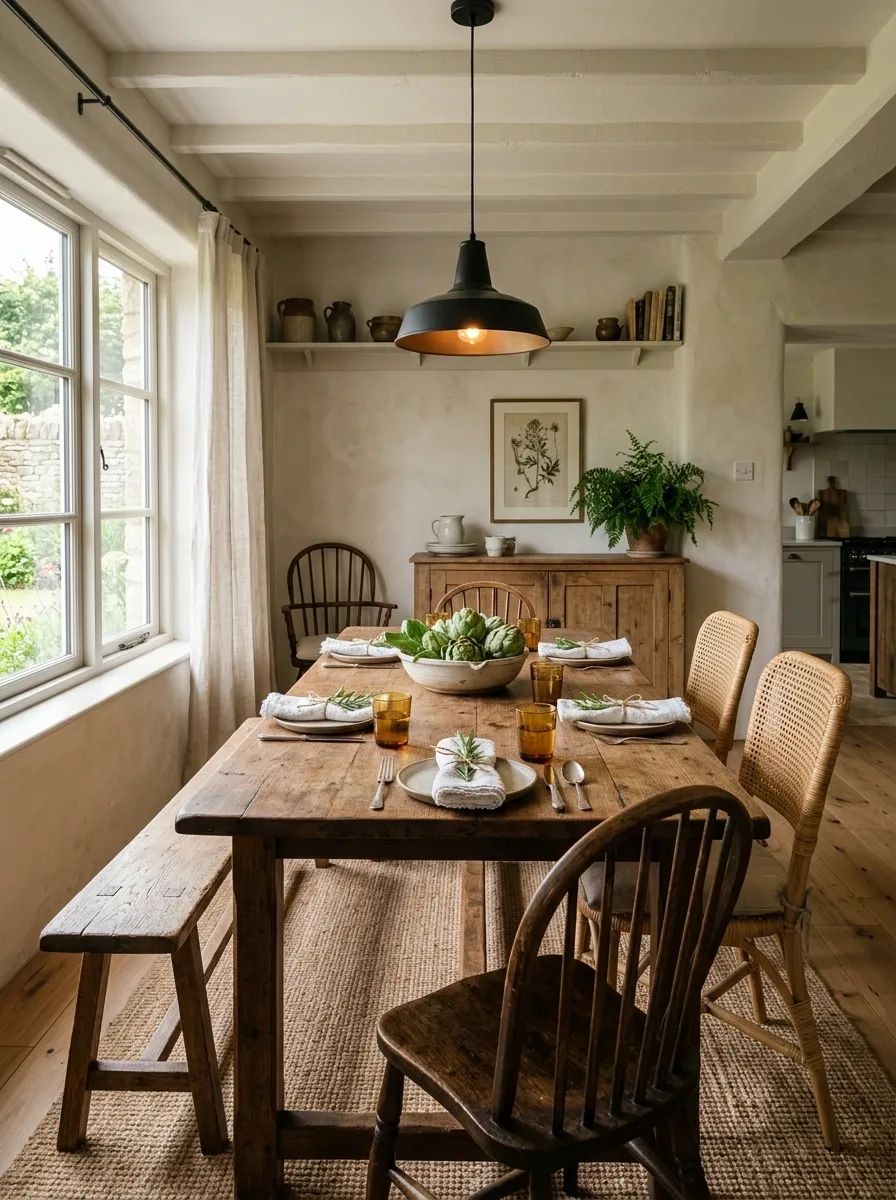
A dining room becomes more convincing when it looks like people actually use it.
Start with the table. Then decide whether chairs, a bench, or a mix works best for the room. Don’t buy a matching dining set just because it’s easier. Farmhouse rooms benefit from slight variation.
| Seating Choice | Best Use | Visual Effect |
|---|---|---|
| All chairs | Formal dining room | Clean and balanced |
| Bench + chairs | Family dining area | Relaxed and practical |
| Mixed chairs | Larger casual space | Collected and less rigid |
Keep the centerpiece low enough that it doesn’t interfere with conversation.
Finish Rooms With Small Black, Brass, or Wood Details
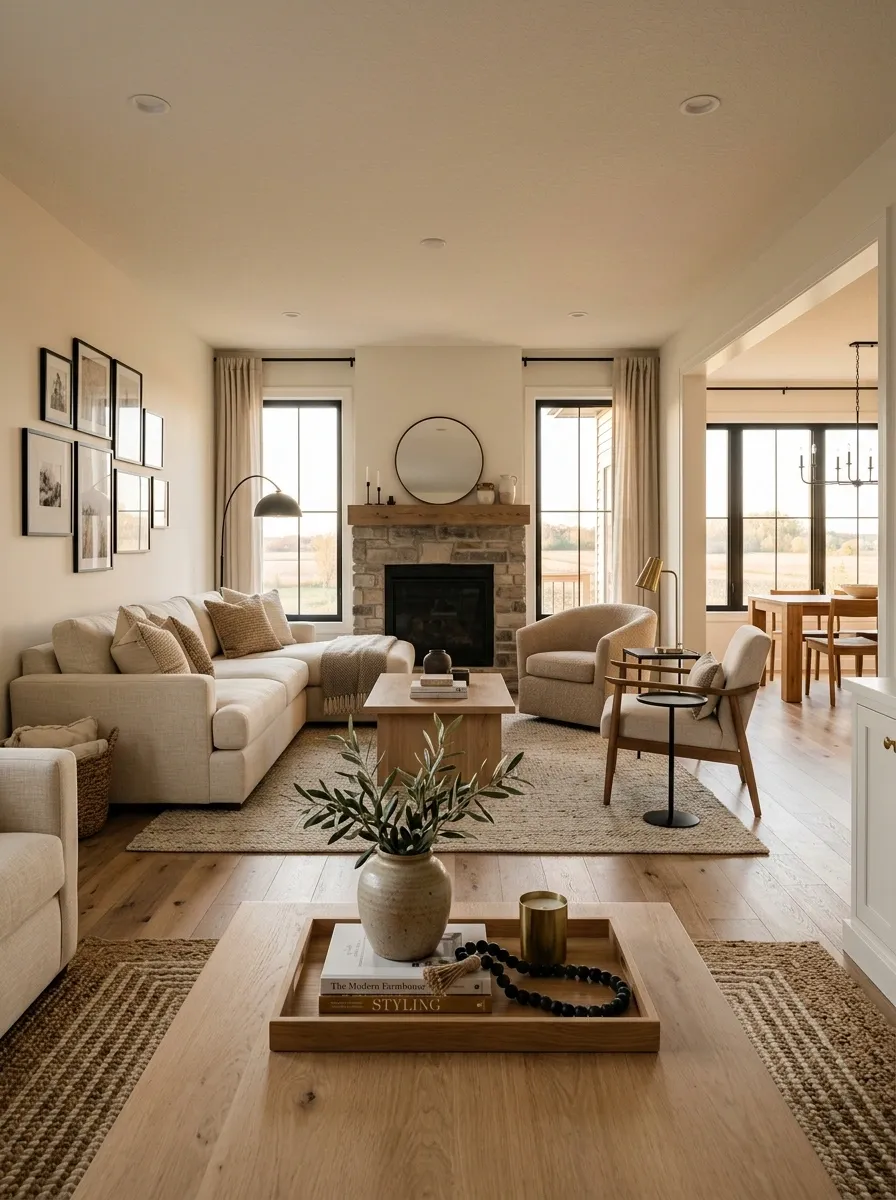
The final details should connect the room, not add another theme.
Look around and find the small objects that feel disconnected. A dark picture frame can repeat a black pendant. A wood tray can echo the dining table. Muted brass can quietly connect hardware and lighting.
Think of these as visual punctuation.
Lighting
Hardware
Lamps
Decorative accents
Frames
Small furniture pieces
Edit the Room Until the Farmhouse Details Feel Natural
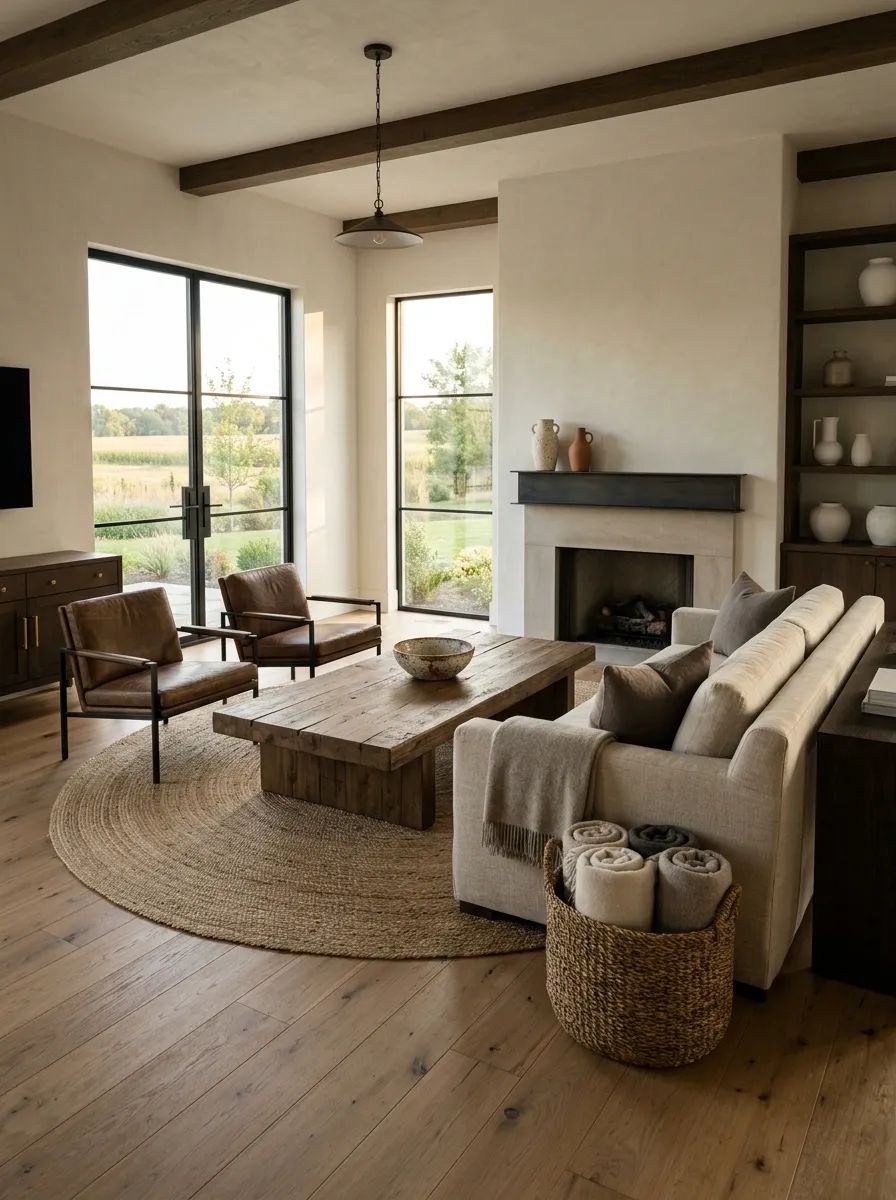
The last step isn’t adding anything.
Walk into the room and remove the pieces that feel too obvious. The farmhouse style should still be clear through the wood, fabrics, finishes, and practical furniture even after the decorative clutter is gone.
Use this final edit:
KEEP pieces that add texture or function.
REMOVE duplicates and obvious theme props.
REPLACE anything overly shiny or overly distressed.
That final bit of restraint is what separates a genuinely farmhouse-inspired room from a room that simply bought farmhouse decor.
Natural materials
Interesting texture
Empty decorative pieces
Obvious theme props
Excessive distressing
Furniture with no purpose
A Farmhouse Home Should Feel Lived In, Not Decorated for the Theme
The strongest farmhouse rooms aren’t the ones with the most rustic pieces. They’re the ones where the materials make sense together.
A worn-looking wood table works because it feels useful. Linen works because it softens the room. Aged metal works because it breaks up all the warm surfaces. A woven basket works because it actually holds something.
That’s the standard to use as you keep changing the room.
Don’t ask whether another piece looks farmhouse enough. Ask whether it improves the way the room works, adds a useful texture, or connects to something that’s already there. The answer should be obvious.
Once the foundation is right, you don’t need much decoration at all. Save this list for the next room you feel tempted to over-style, and use it as a filter before bringing anything new through the door.