
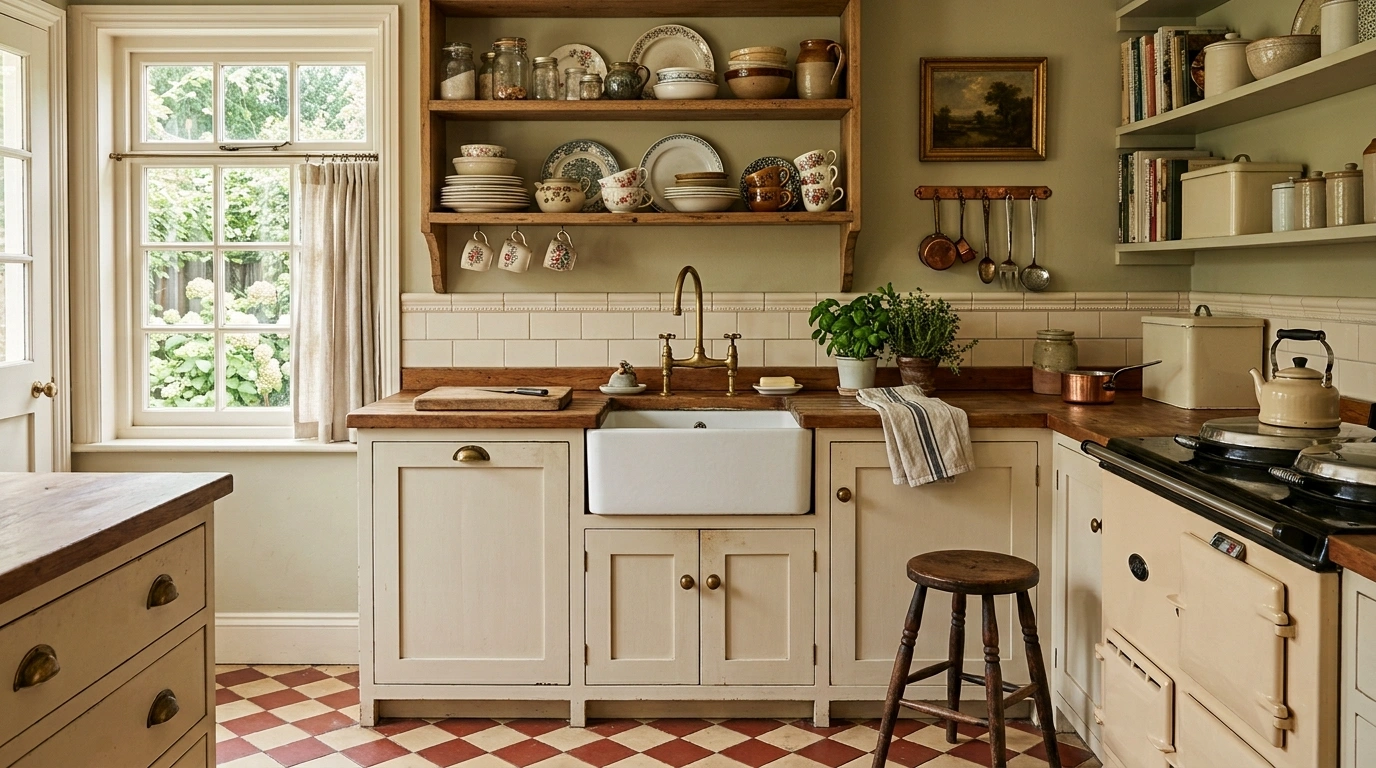
Vintage kitchens are easy to get wrong.
Add one antique lamp to a brand-new white kitchen and suddenly the room is hosting a costume party nobody asked for. Throw in three distressed signs, a rooster, and a stack of fake-old cutting boards, and the kitchen has officially entered gift-shop territory.
The trick is making the entire room speak the same visual language.
That means cabinetry, flooring, lighting, appliances, wood, metal, textiles, and furniture all need to feel like they belong together. A soft sage kitchen with warm oak and aged brass tells a completely different story from a burgundy kitchen with dark wood and chrome. Neither needs a pile of antiques to make the point.
These vintage kitchen ideas focus on complete rooms rather than random decorative details. Each concept is built as a finished scene, with enough personality to work as a real kitchen instead of an accessory checklist.
Some lean cottage, some feel distinctly retro, some are dark and dramatic, and others look like they could have been sitting in the same old house for decades.
The goal isn’t to make everything look old.
The goal is to make the kitchen look like it has a history.
Mix furniture, finishes, and materials instead of matching every piece.
Cream, wood, aged metals, and softer lighting keep the room from feeling sterile.
Give the room a clear era, color story, and material personality.
Vintage doesn’t mean displaying every interesting thing found at the flea market.
Vintage Kitchen Ideas
Mint Retro Diner Vibes
Embrace the playful charm of mid-century Americana by anchoring your kitchen in an uplifting mint green palette. Pairing classic pastel cabinetry with a matching retro refrigerator instantly transports the room to a nostalgic neighborhood diner.
Keep the retro aesthetic authentic with checkerboard flooring in mint and cream, complete with a cozy dinette set featuring chrome-edged tables and bucket-style vinyl chairs. A small scalloped valance over the window adds that final touch of retro whimsy.
Balance the high-shine chrome accents and pastel tones with simple white walls and open shelving stacked with vintage crockery. This space proves that retro styling can feel both vibrant and utterly charming.
Sage Green Cabinets With Warm Oak and Antique Brass
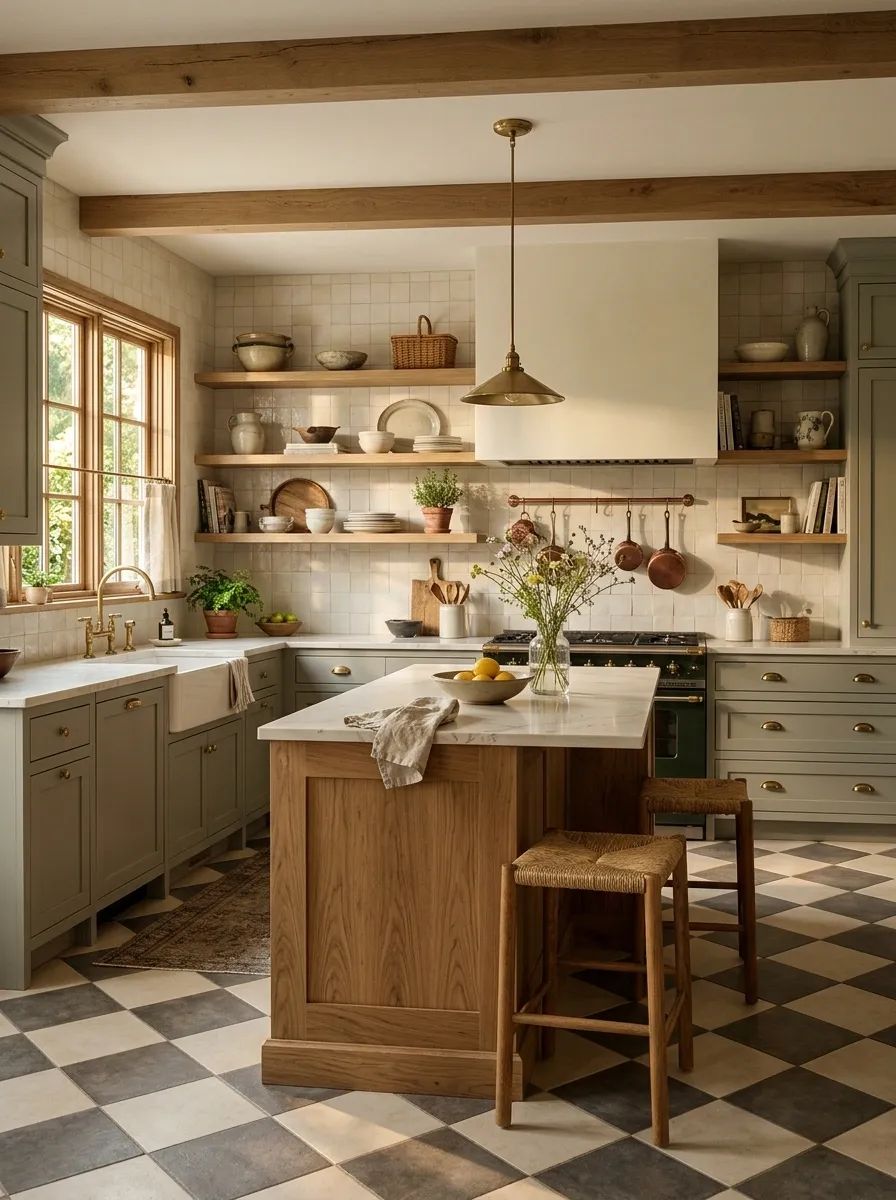
Soft sage cabinetry becomes much more convincing as a vintage kitchen when it’s paired with materials that actually have warmth.
Use shaker-style doors in a muted, slightly gray-green finish, then bring in natural oak for the island or lower furniture pieces. A creamy backsplash keeps the green from becoming too sugary, while aged brass hardware gives the room that slightly worn quality that polished gold simply cannot fake.
A checkerboard floor in warm ivory and muted charcoal adds another old-house reference without turning the kitchen into a themed set.
Keep the countertops quiet. Marble with gentle veining or a warm stone surface works better than something dramatically patterned. The cabinetry should carry the personality.
Classic Blue And Checkerboard
A moody yet luminous blue sets a sophisticated tone in this narrow kitchen, turning a tight footprint into an architectural moment. The rich periwinkle cabinetry provides a tailored backdrop for traditional black-and-white checkerboard marble floors.
An oversized copper lantern hangs overhead, casting a warm glow across classical artwork and fresh blooms that soften the structured cabinetry. A deep apron-front sink nestled beneath a tall multi-pane window makes washing up feel like a scene from an English estate.
Keep styling minimal to let the dramatic colors and proportions speak for themselves. The result is a space that feels deeply historic, curated, and wonderfully personal.
Burgundy Cabinets With Cream Walls and Dark Wood
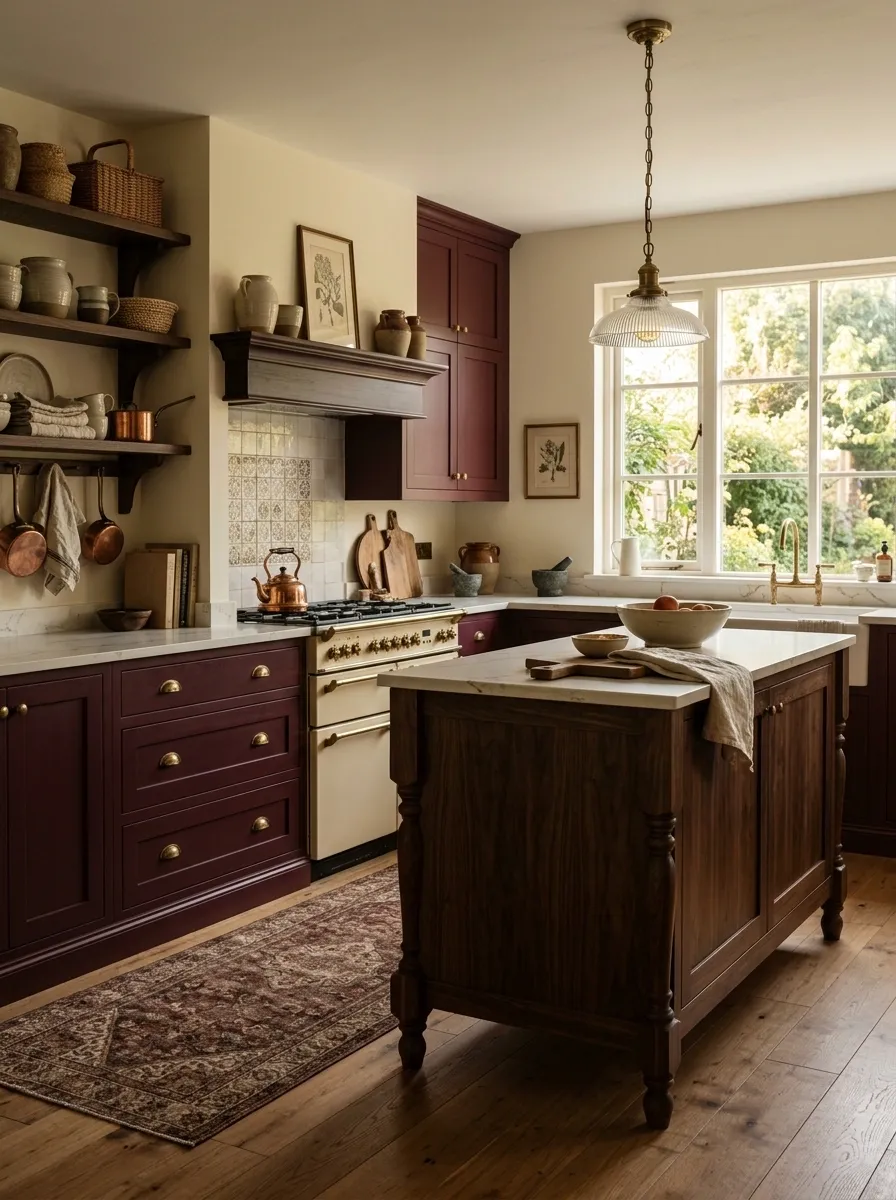
Burgundy can make a vintage kitchen feel wonderfully dramatic without becoming gloomy.
The trick is giving the color enough cream and natural wood to breathe. Use deep burgundy on the cabinetry, warm ivory walls, and a dark walnut island with furniture-style legs. Aged brass hardware adds warmth, while a classic range in cream or stainless steel keeps the room grounded.
A patterned runner can introduce faded reds, beige, and brown without competing with the cabinets. Finish the scene with a traditional pendant or small antique chandelier.
This kitchen should feel slightly moody and old-fashioned, not like someone painted the cabinets red and then panicked.
Moody Green And Brass Details
Deep forest tones paired with rich brass fixtures bring an immediate sense of history and gravitas to any kitchen space. Matte black-green cabinetry grounds the room, while a hammered brass range hood serves as a stunning focal point.
Green zellige tiles create a light-reflecting backsplash that breaks up the deep hues, and an eclectic gallery wall of vintage oil paintings adds layered, collected character. A round wooden table with spindle chairs creates an intimate dining nook.
Finish the look with an antique Persian runner and casually arranged greenery in earthenware pots. This kitchen masters the art of feeling lived-in, dark, and utterly timeless.
Butter Yellow With Chrome and 1950s Character
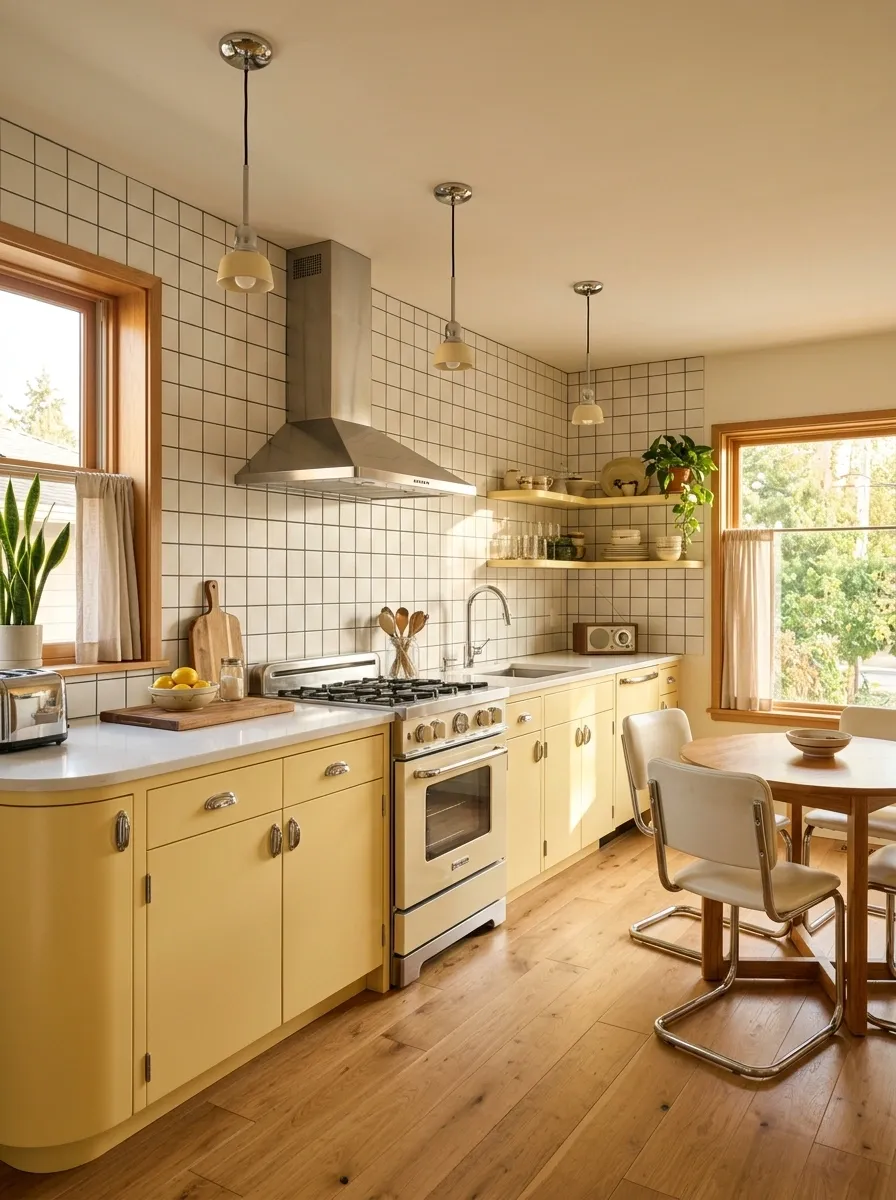
A buttery yellow kitchen can capture the cheerful side of vintage design without looking like a children’s play kitchen.
Use creamy yellow cabinetry with simple slab or softly rounded fronts, then bring in chrome through the range, faucet, lighting, and stools. White tile with dark grout gives the backsplash a period feel, while warm oak keeps all the hard surfaces from becoming too shiny.
A small breakfast table with curved chrome-edged chairs makes the room feel distinctly mid-century diner-inspired. Keep the accessories restrained. The color and silhouettes are already doing the heavy lifting.
This is the kitchen for anyone who wants vintage charm without covering every available surface in antiques.
Mint Green And White Country
Crisp white shaker cabinetry gets a breath of fresh air when paired with a statement refrigerator in a soft mint hue. The combination feels clean and bright while retaining a distinctly vintage soul.
Integrated appliances in matching mint keep the visual flow uninterrupted, while a classic farmhouse sink and brass hardware ground the aesthetic in traditional craftsmanship. Open shelving displays everyday dishware with effortless utility.
Style the room simply with a checkered tea towel and a retro stand mixer that doubles as functional decor. It is a masterclass in blending modern convenience with vintage farmhouse personality.
Forest Green With Soapstone and Walnut
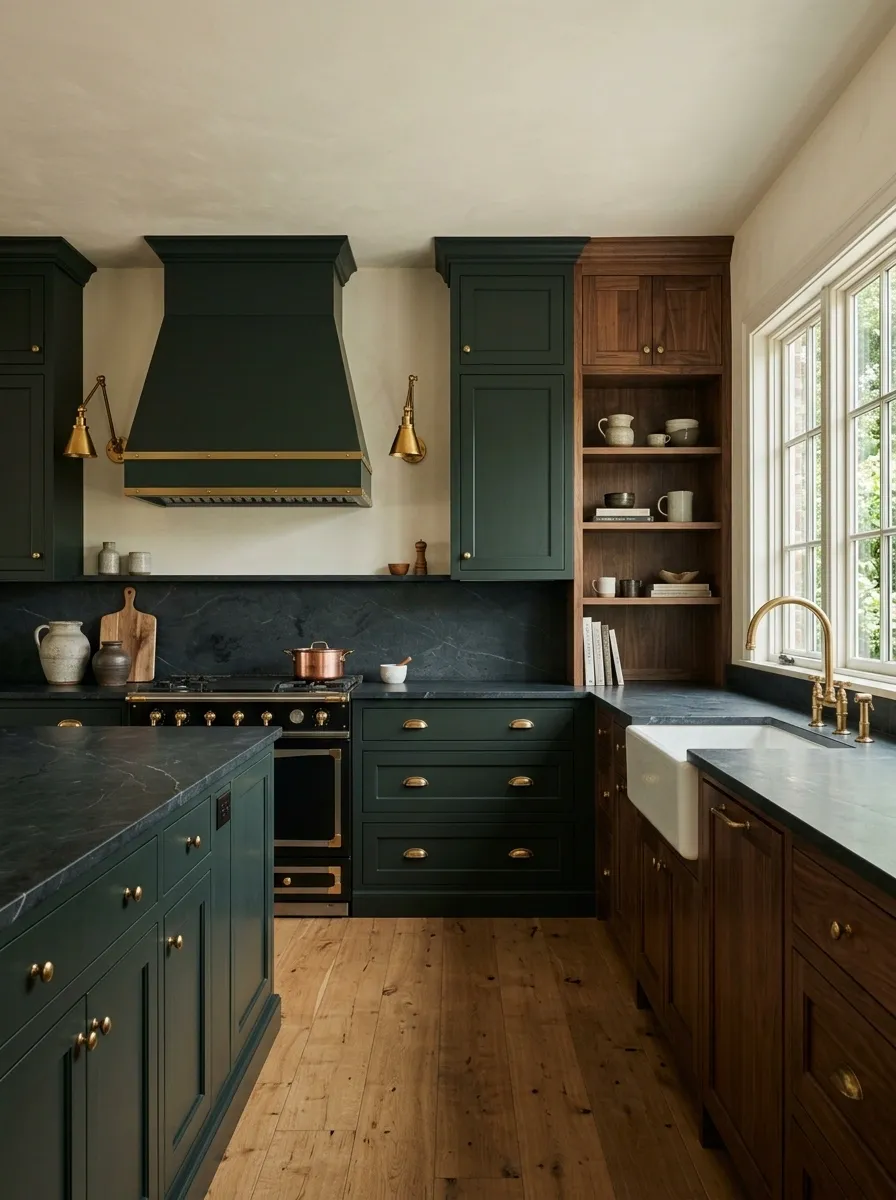
For a darker interpretation of vintage kitchen design, use a deep forest green that almost shifts toward black in low light.
Pair it with matte soapstone countertops and walnut cabinetry or furniture. The combination feels established rather than freshly decorated. Aged brass sconces can add small points of warmth, while a traditional range hood gives the cabinetry a stronger architectural presence.
Use warm cream somewhere in the room, perhaps through the walls, ceiling, or backsplash, so the darker finishes don’t flatten together.
The key is texture. Walnut grain, honed stone, aged metal, and painted cabinetry should all look slightly different. A kitchen this dark needs material variation, not more decorations.
matte, slightly imperfect
SOAPSTONE
soft, honed, weighty
WALNUT
warm grain against the dark palette
Collected Red And Botanical Charm
There is a fearless joy in choosing a fiery red refrigerator and matching range for a traditional country kitchen. The bold hue immediately anchors the space with a lively, collected personality.
Lush trailing pothos vines cascade from open upper shelving, softening the architectural lines and adding an organic, lived-in layer. A classic Turkish runner bridges the warm wood floors, tying together the rich reds and creamy off-white cabinetry.
Keep the remaining surfaces functional and unfussy with everyday copper pots and ceramic crocks. This kitchen thrives on the wonderful friction between vibrant color and rustic warmth.
Cream English Country Kitchen With Oak Beams
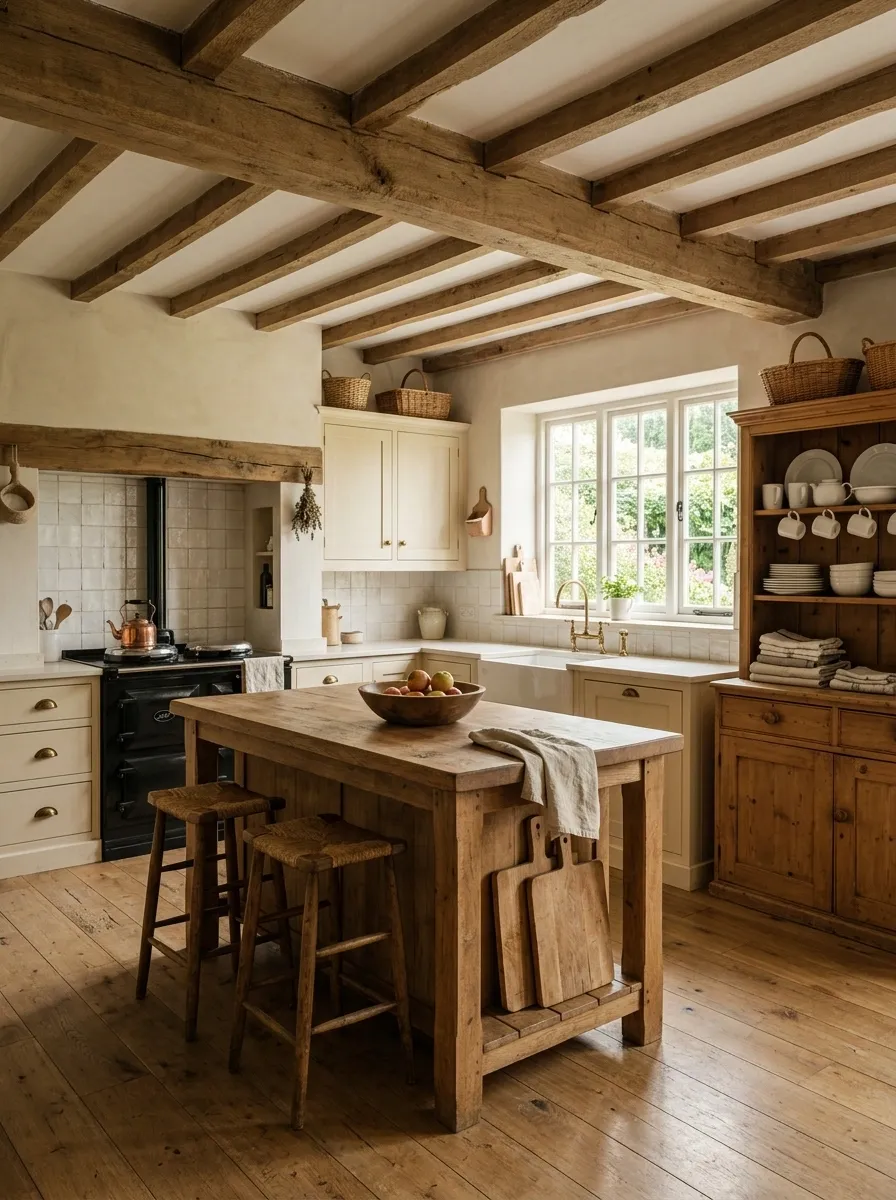
A creamy English-inspired kitchen works best when it feels like an actual room rather than a showroom recreation of one.
Paint the cabinets a warm off-white instead of bright white. Add a substantial oak island, aged brass fixtures, and a backsplash made from handmade-looking cream tile. If the architecture allows it, exposed oak beams immediately reinforce the old-house character.
A freestanding dresser or hutch can hold everyday dishes and linens, giving the room the slightly mismatched quality that makes traditional kitchens interesting.
Keep the styling practical. A bowl of fruit, a stack of plates, a linen towel, and a few wooden boards are enough. The architecture should do most of the talking.
walls + cabinetry
island + beams
hardware + lighting
Soft Mint And Open Shelving
A soothing wash of pale mint cabinetry brings an airy, vintage temperament to a kitchen designed for everyday gathering. Open shelving packed to the brim with copper pots, colorful ceramics, and stoneware gives the walls a wonderfully lived-in, curated appearance.
A classic blue-and-white tiled range hood sits proudly above a traditional stove, while a small bistro table and cane-backed chairs invite quiet morning coffee moments. The tiled backsplash adds subtle texture without overwhelming the eye.
Embrace the collected look by letting your everyday kitchenware double as your main decoration. This space feels less like a sterile showroom and more like a home that has evolved beautifully over decades.
Blue and White Cottage Kitchen With Checkerboard Flooring
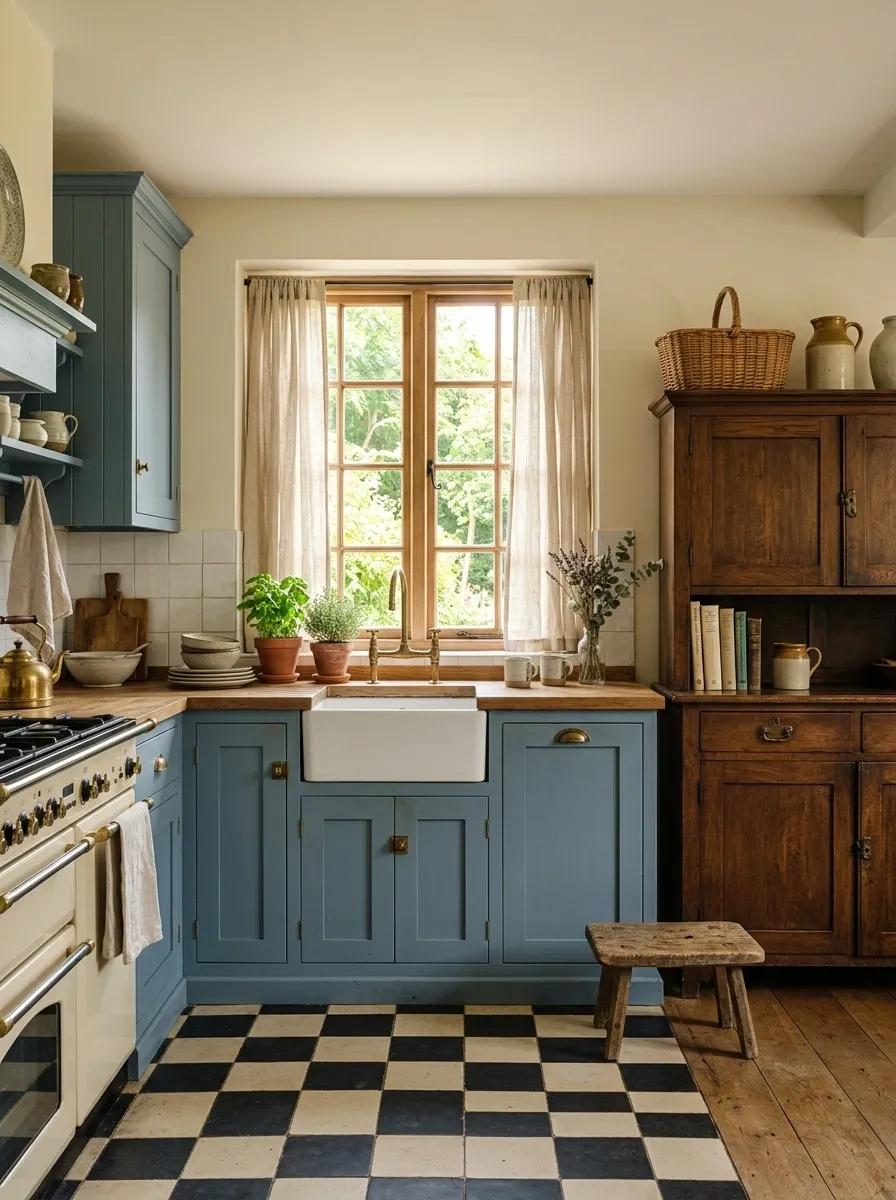
Soft blue cabinetry can look genuinely vintage when the rest of the room stays grounded.
Use a dusty blue rather than an electric or overly clean navy. Pair it with creamy white walls, simple white tile, and warm wood accents. A black-and-cream checkerboard floor gives the room an instant old-house foundation.
Unlacquered brass hardware works beautifully here because it develops a patina instead of remaining permanently shiny. Add a small wooden stool, linen curtains, and a freestanding cabinet for storage.
The room should feel breezy but not precious. A little wear and variation actually helps the design.
Terracotta and Cream With Mediterranean Old-World Warmth
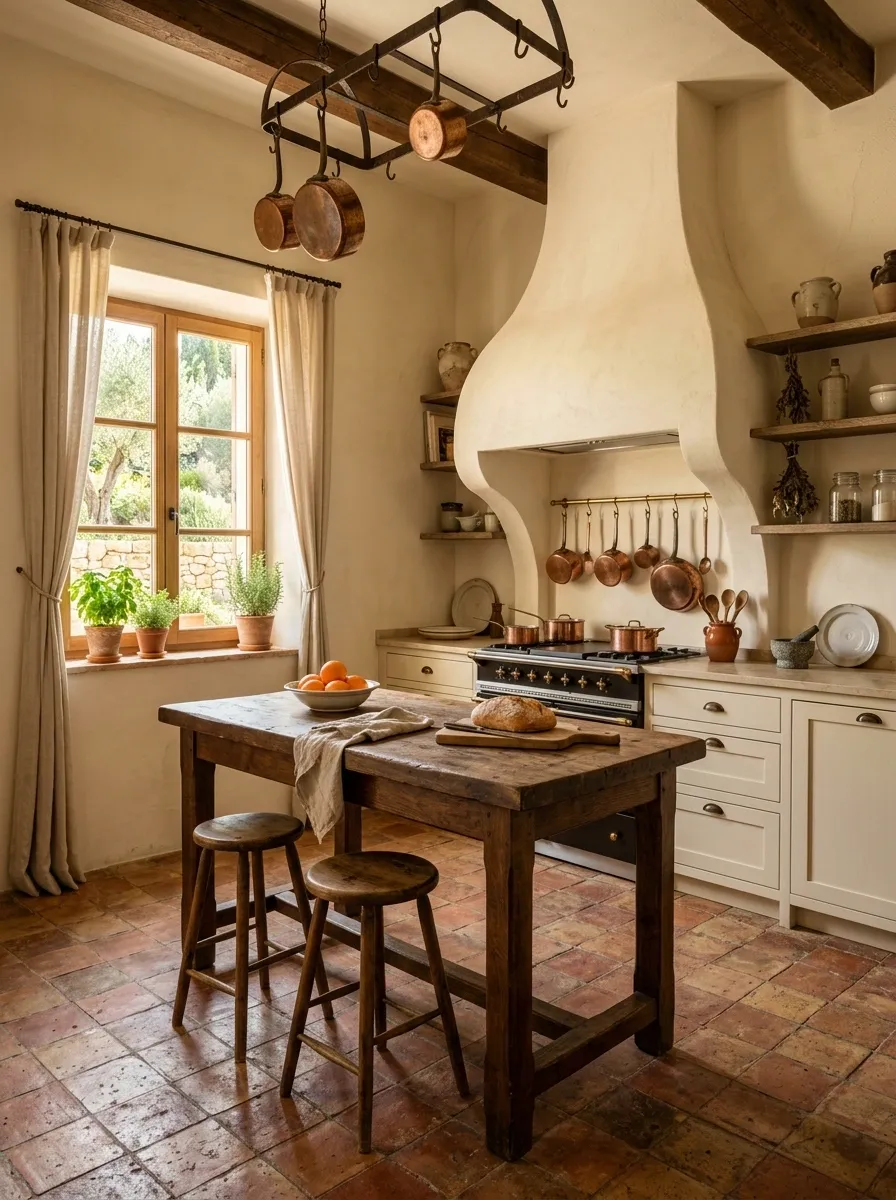
Terracotta flooring gives a vintage kitchen an immediate sense of age, especially when paired with plaster-like walls and dark wood.
Use warm cream cabinetry or open shelving, a chunky wood island, and an arched range hood to create the architectural focus. Terracotta should appear in the floor and perhaps a few accessories, but not everywhere. Too much orange and the kitchen starts looking like a restaurant pretending to be rustic.
Aged copper cookware can sit openly on a rail, while simple linen curtains soften the windows.
The overall room should feel sun-warmed, tactile, and slightly imperfect.
FURNITURE: dark oak
WALLS: warm plaster cream
METAL: aged copper
LIGHT: soft and amber
Dusty Rose Cabinets With Cream and Dark Wood
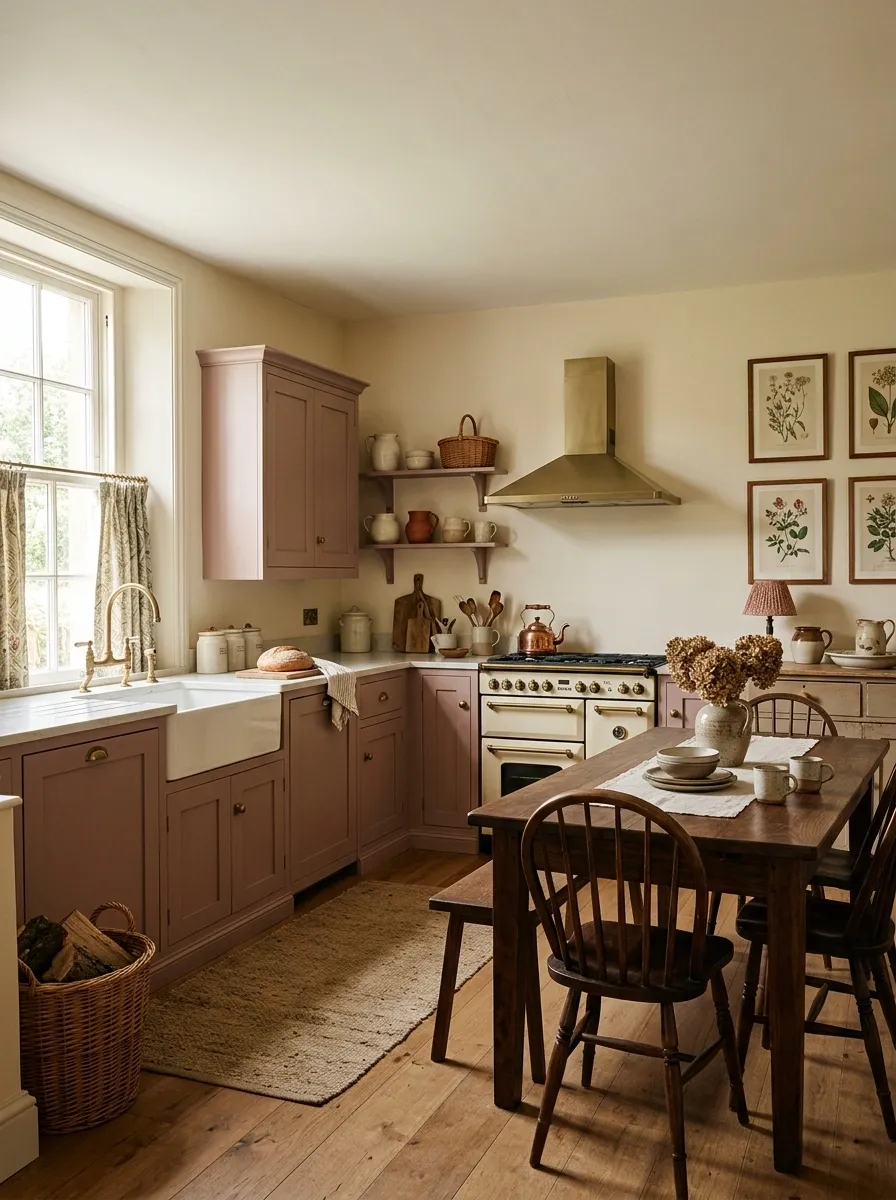
Dusty rose works surprisingly well in a vintage kitchen when the pink is muted enough to feel architectural rather than sugary.
Use the color on simple cabinetry and balance it with warm cream walls and dark walnut furniture. Brass hardware introduces a soft metallic note, while floral or botanical fabric at the windows can quietly reinforce the old-fashioned palette.
A dark wood dining table tucked directly into the kitchen makes the room feel more collected. Keep the countertop neutral and avoid adding more pink accessories. Once the cabinetry establishes the color, the rest of the room should give it breathing space.
Black Lower Cabinets With Warm Ivory Uppers
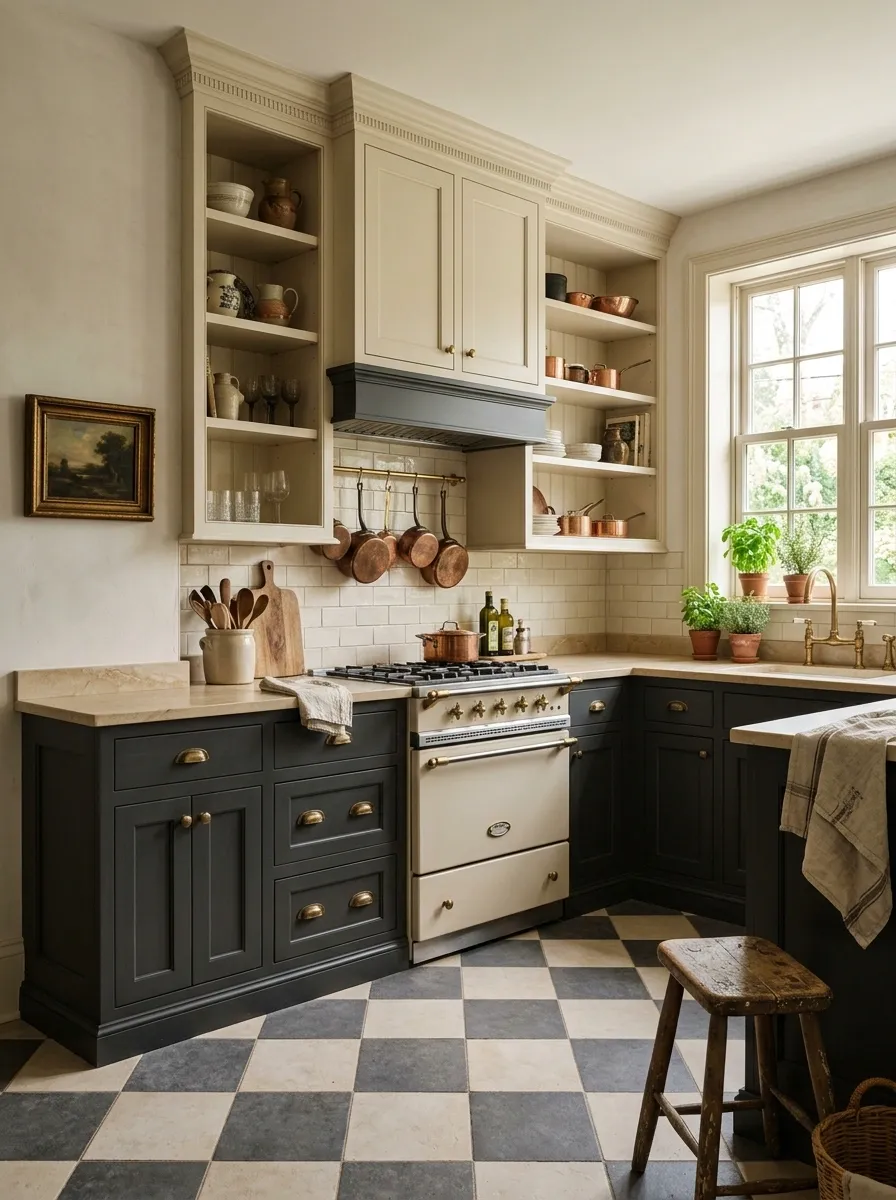
Two-tone cabinetry can create a convincing old-house look when the colors are treated as architectural rather than decorative.
Use warm ivory for the upper cabinets and deep charcoal or near-black for the lower cabinetry. Add a vintage-style cream range, aged brass hardware, and a checkerboard floor. The darker base gives the kitchen visual weight while the lighter upper half keeps it open.
A small antique framed print or old wooden stool can introduce personality without turning the walls into a gallery.
This combination has enough contrast to feel dramatic, but the warm undertones keep it from looking like a modern black-and-white kitchen.
Teal Retro Kitchen With Cream Tile and Walnut
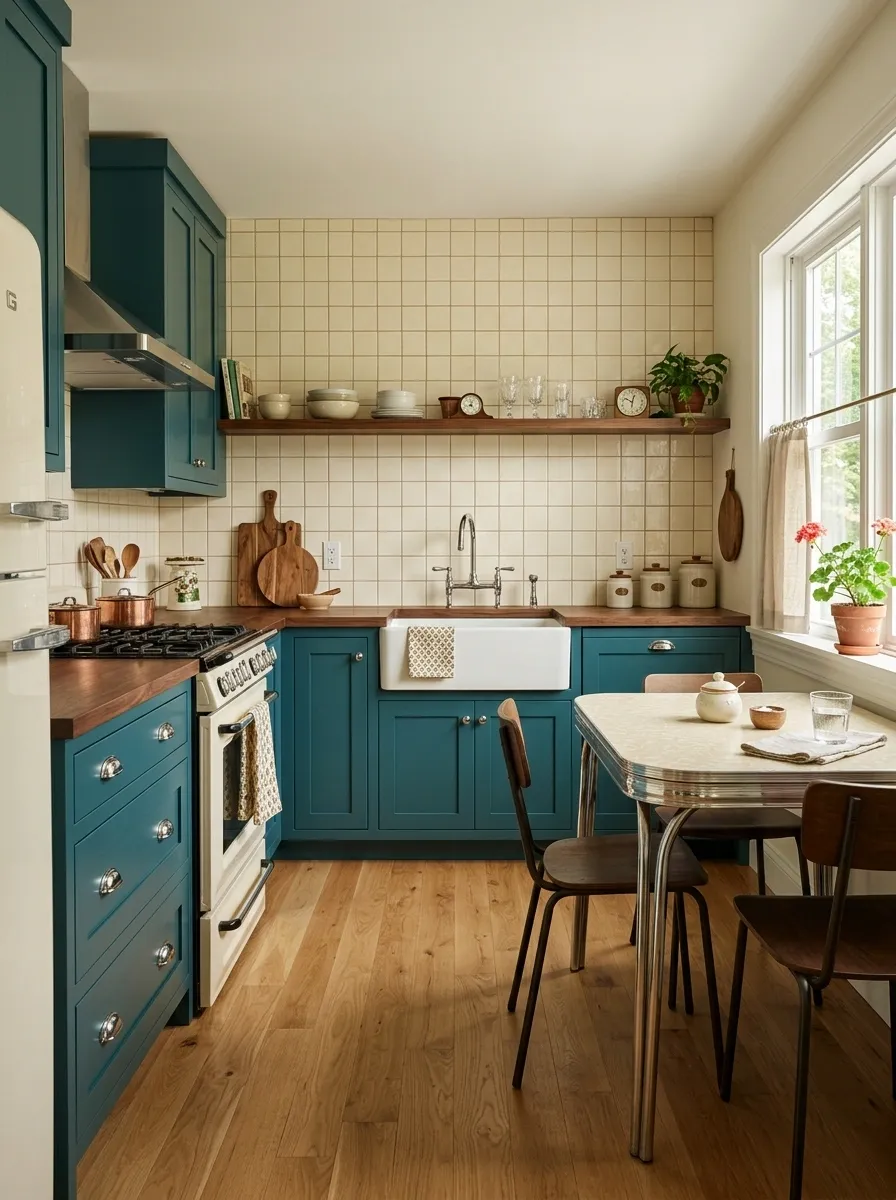
Deep teal brings a playful retro character to the kitchen without requiring a diner theme.
Use teal cabinetry with rounded or simple vintage-inspired profiles, cream square tile, and warm walnut accents. Chrome hardware and a chrome-edged table reinforce the period influence, while creamy walls stop the palette from becoming too saturated.
A vintage-inspired refrigerator in cream or muted teal can become the focal point if the room has enough space for it.
Keep the rest of the accessories simple. Once teal, walnut, cream, and chrome are working together, adding six more colors would be less “collected” and more “someone discovered a color wheel.”
Earthy 1970s Kitchen With Olive and Natural Wood
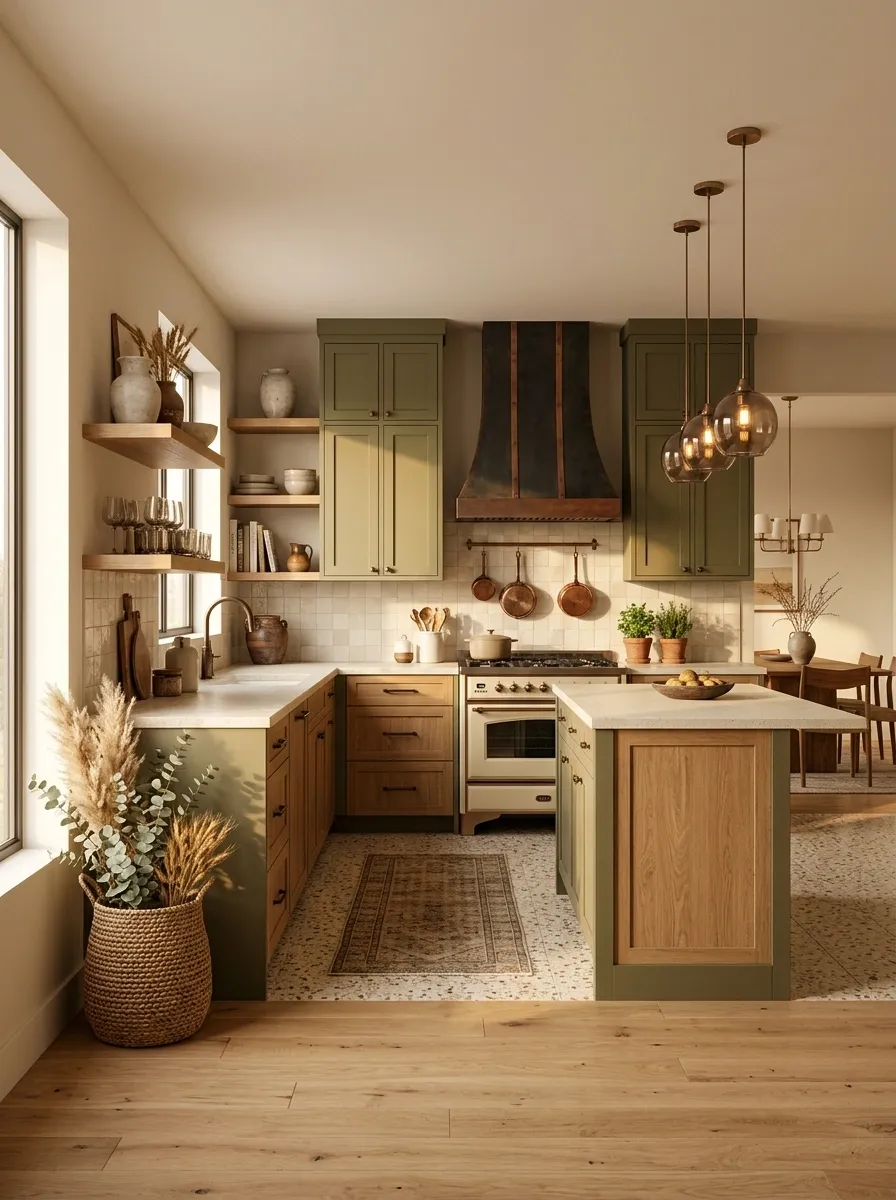
A 1970s-inspired kitchen becomes much more sophisticated when the palette stays earthy.
Use olive or avocado-toned cabinetry with warm wood fronts, cream countertops, and a terrazzo or patterned floor. Smoked glass lighting and dark bronze details can reinforce the era without making the room look like a period set.
Choose one strong vintage shape, such as a globe pendant or sculptural range hood, and let the rest of the room stay relatively simple.
The wood should feel substantial and warm. Bright white modern finishes would fight the palette, so stick with cream, tan, brown, and muted green.
Warm Walnut Mid-Century Kitchen With Cream Tile
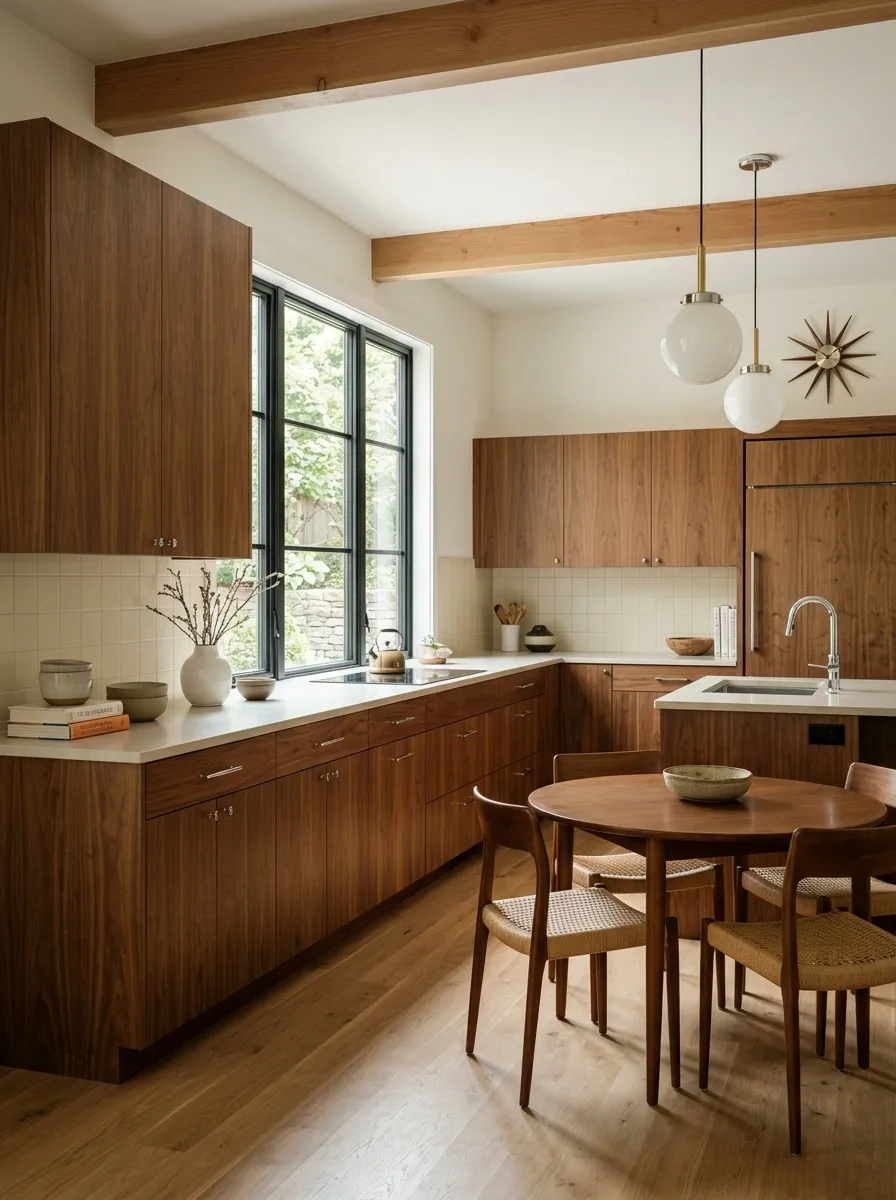
For a cleaner vintage direction, let natural walnut provide most of the character.
Flat-front walnut cabinetry can look distinctly mid-century when paired with cream square tile, slim chrome hardware, and simple globe lighting. Avoid distressed finishes here. The beauty of this style comes from the wood itself and the clean furniture-like silhouettes.
A small dining table with tapered legs can sit within the kitchen, making the entire room feel like a continuous mid-century interior rather than a contemporary kitchen with retro accessories.
Keep the counters light and quiet so the walnut remains the visual anchor.
Tiny Vintage Apartment Kitchen With Sage and Open Shelving
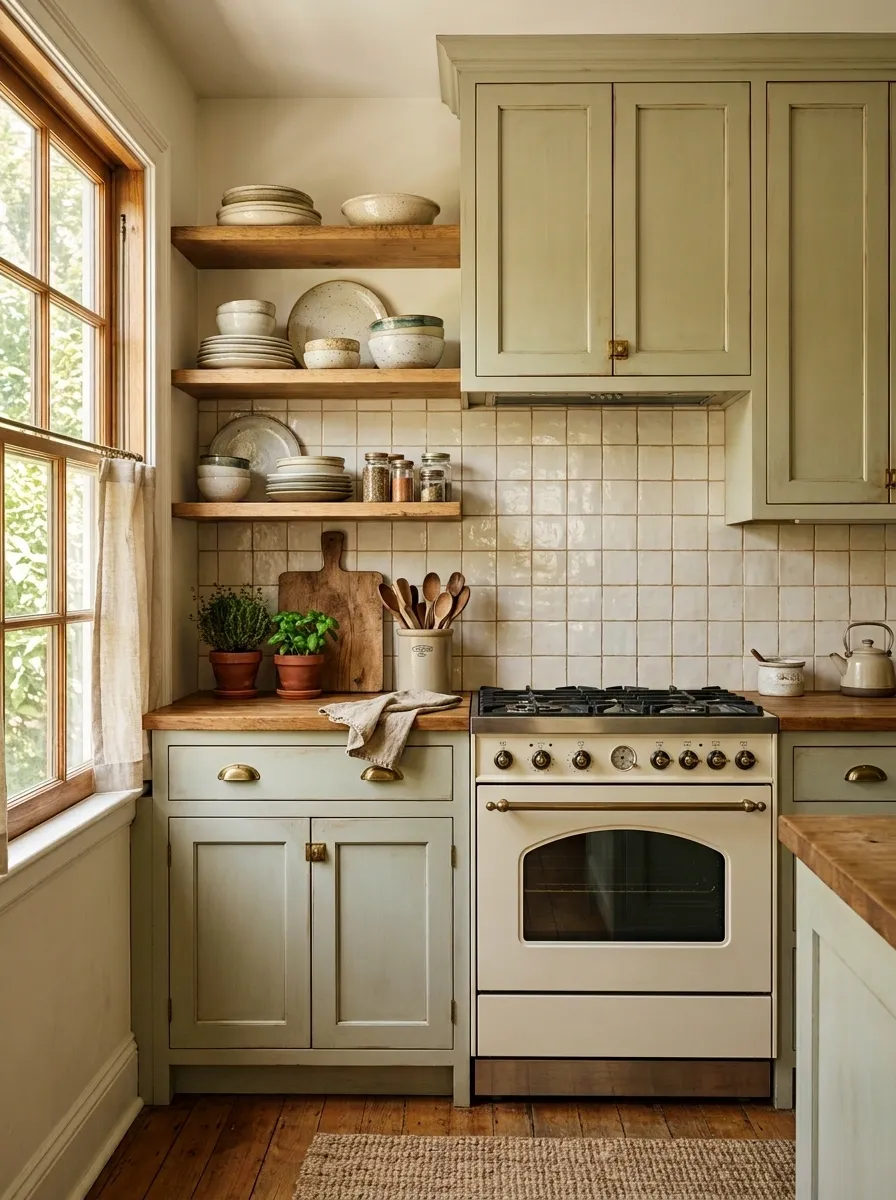
Small kitchens can have serious vintage character without becoming cluttered.
Use pale sage cabinetry, open shelving made from warm wood, and a compact cream range or refrigerator. Keep the backsplash simple with small square tiles and use brass or bronze hardware in a consistent finish.
Because the room is small, every visible object needs to feel intentional. A few stacked plates, one wooden cutting board, a ceramic crock, and a linen curtain can create more personality than a dozen decorative pieces.
The goal is a kitchen that feels compact and established, not packed.
+
WARM OPEN SHELVES
+
ONE STRONG METAL
Blue-Gray Galley Kitchen With Beadboard and Brass
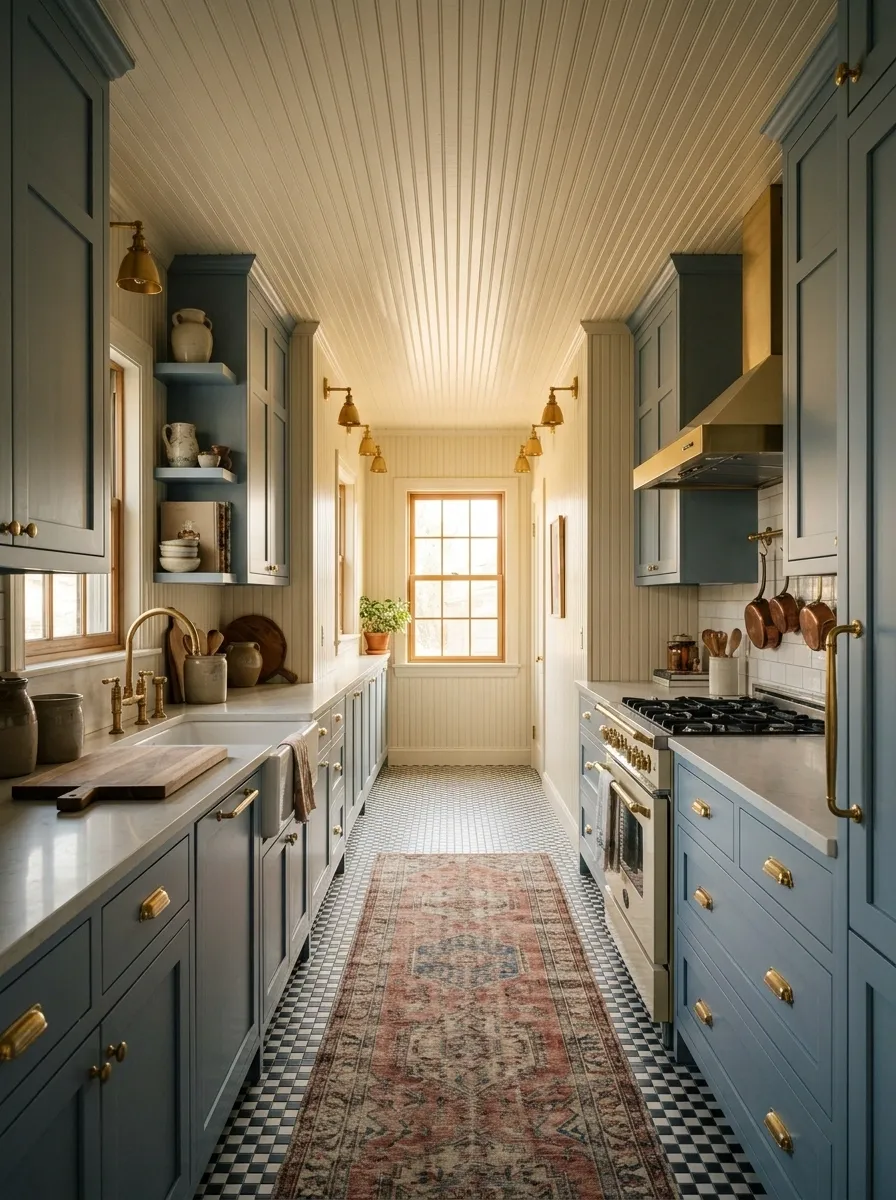
A narrow galley kitchen can feel incredibly old-house when its vertical details are emphasized.
Use muted blue-gray cabinetry, a beadboard ceiling or wall section, warm brass sconces, and a checkerboard or small-format tile floor. Keep the upper cabinetry relatively simple so the narrow room doesn’t feel visually crowded.
A vintage runner can run almost the entire length of the kitchen, connecting the separate work zones into one composition.
The long shape is an advantage here. Use it to create repetition through lighting, cabinetry, and flooring instead of fighting the architecture.
Farmhouse Kitchen With Cream Cabinets and Reclaimed Wood
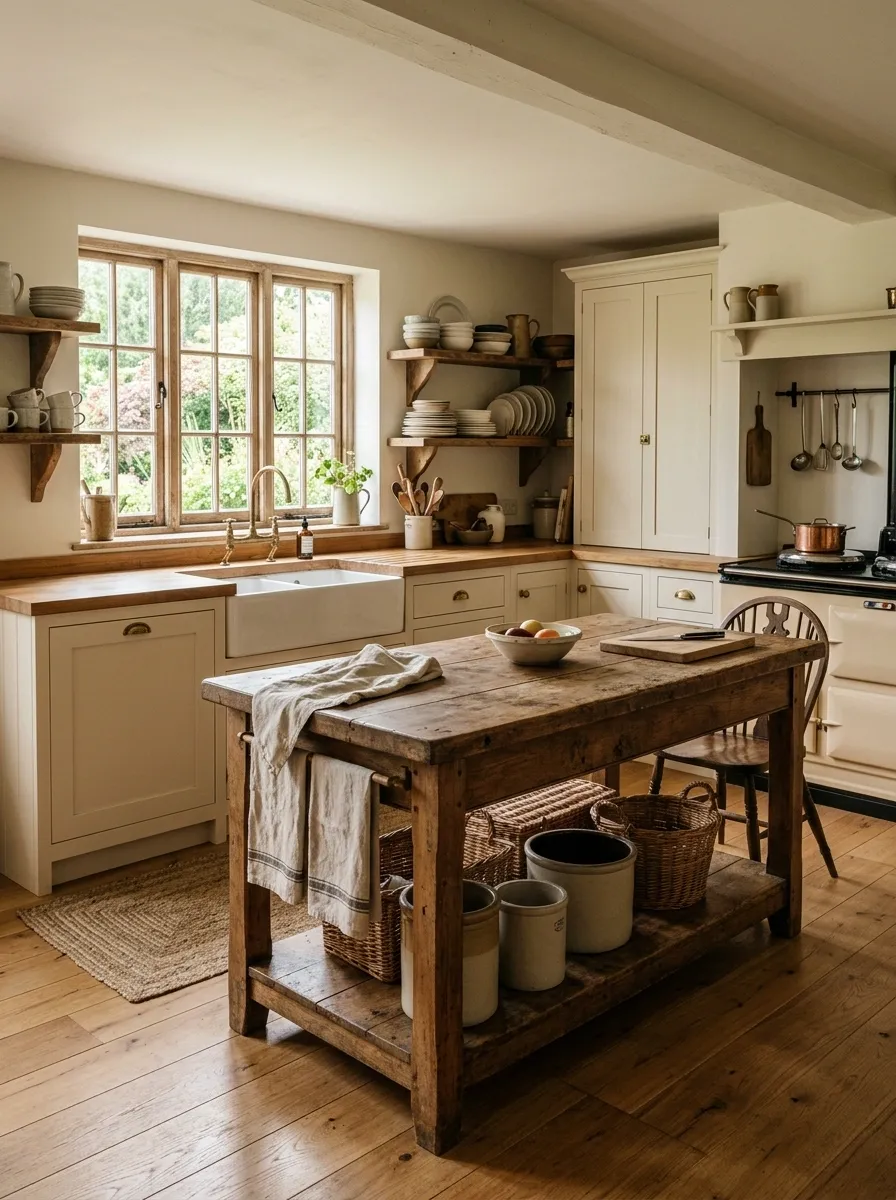
A farmhouse kitchen gets more convincing when the materials look substantial rather than deliberately distressed.
Use cream-painted cabinetry, a deep apron-front sink, butcher-block or reclaimed wood surfaces, and a freestanding island that looks more like furniture than cabinetry. Aged brass or bronze hardware can tie the pieces together.
Open shelves should hold things that are actually used, such as plates, bowls, mugs, and wooden utensils.
Skip the fake farmhouse signs. The wood, sink, cabinetry, and furniture already tell the story. Adding a giant “FARMHOUSE” sign is basically explaining the joke after everyone has already laughed.
Old-House Kitchen With Original Wood Trim
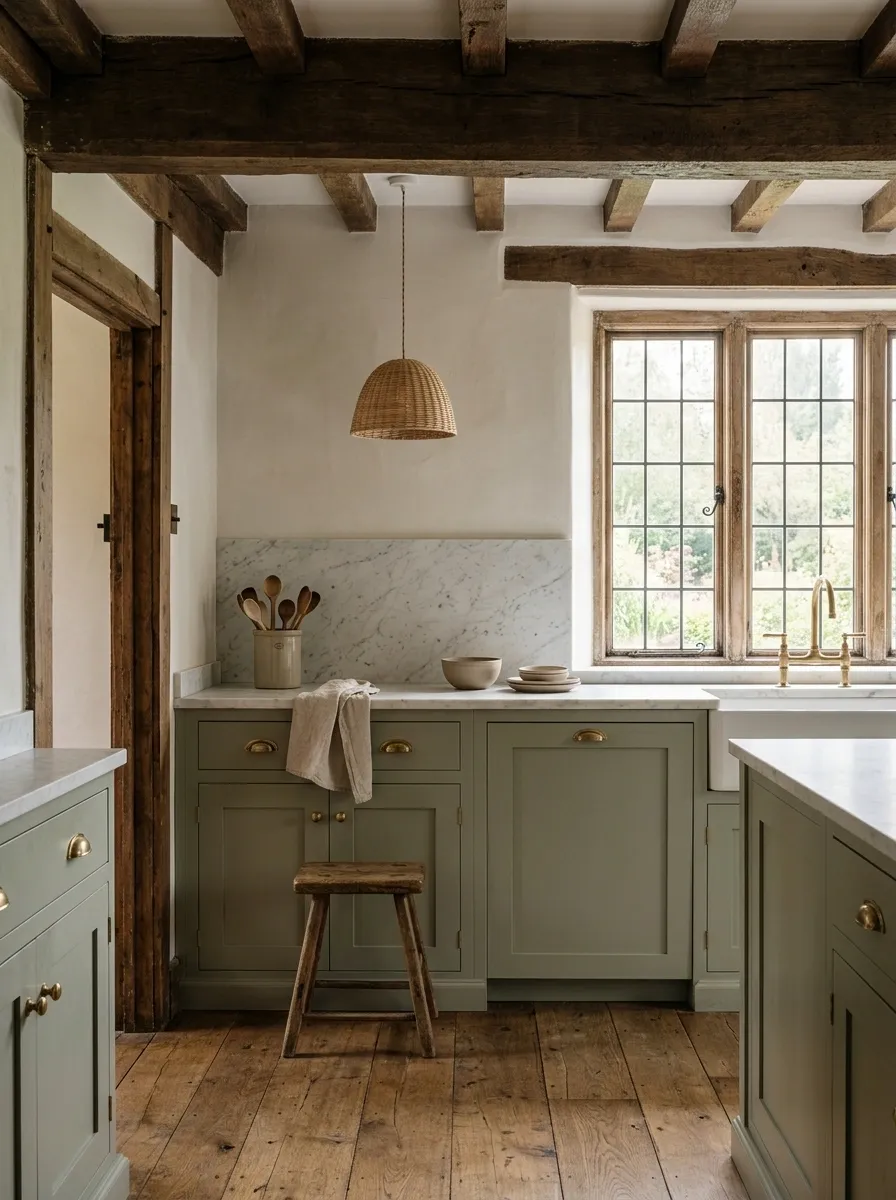
Some kitchens don’t need to pretend they’re vintage because the architecture already did the work.
Keep original wood trim, doors, beams, or flooring visible wherever possible. Pair those elements with muted green cabinetry, warm marble or stone, and traditional hardware.
Instead of filling the room with antiques, let the original architectural details remain the dominant feature. A simple pendant, an old wooden stool, and a few everyday objects are enough to make the kitchen feel lived in.
The strongest move here is restraint. Covering every original surface with trendy finishes would erase exactly what makes the room interesting.
Old wood → let it age
New cabinetry → keep it quiet
Collected Kitchen With Mismatched Chairs and Freestanding Furniture
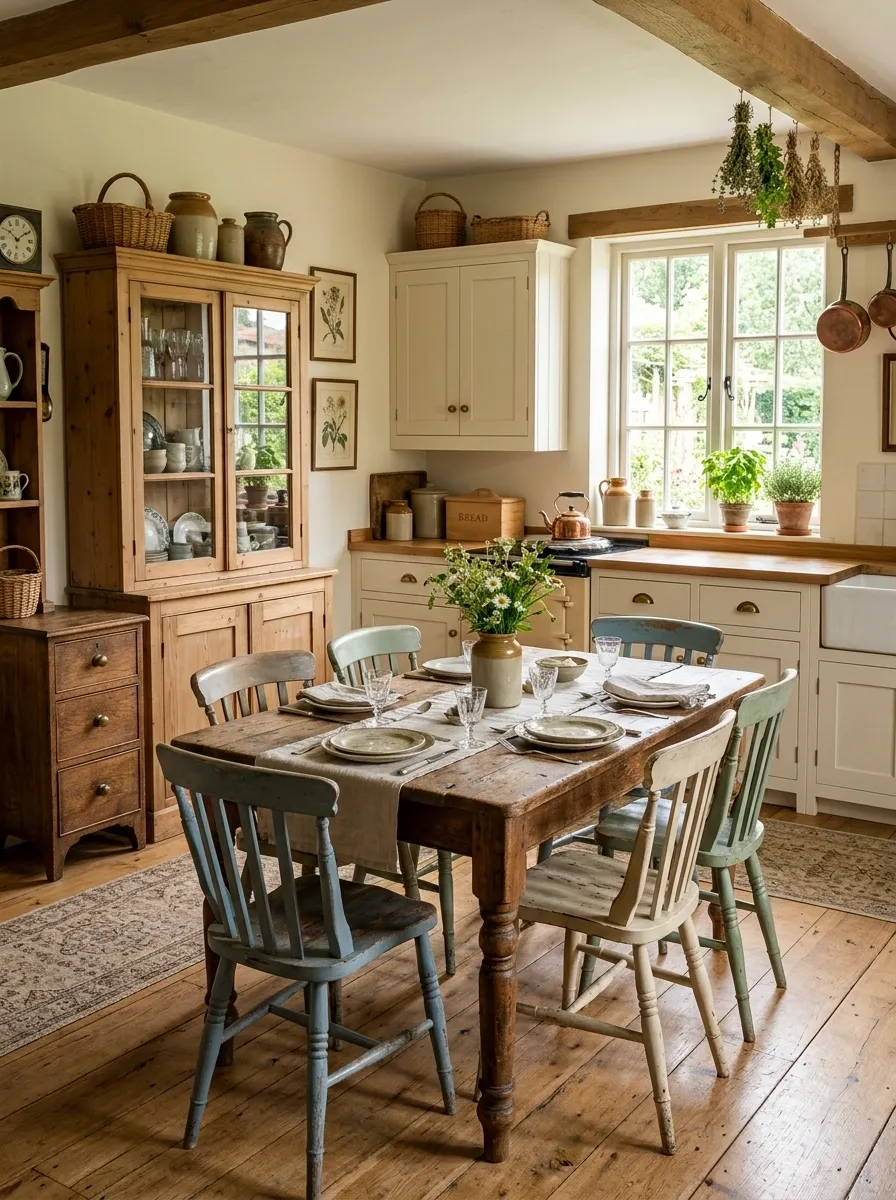
This is the vintage kitchen for anyone who hates matching furniture sets.
Use simple painted cabinetry as the background, then bring in a freestanding hutch, old wooden table, mismatched dining chairs, and perhaps a narrow dresser for additional storage.
The cabinetry doesn’t need to be unusual. The furniture creates the character.
Keep the color palette related so the mismatched pieces look intentional. A mix of cream, faded blue, natural wood, and muted green can tie everything together without making the chairs look like they were purchased as a set.
Parisian-Inspired Vintage Kitchen With Cream and Marble
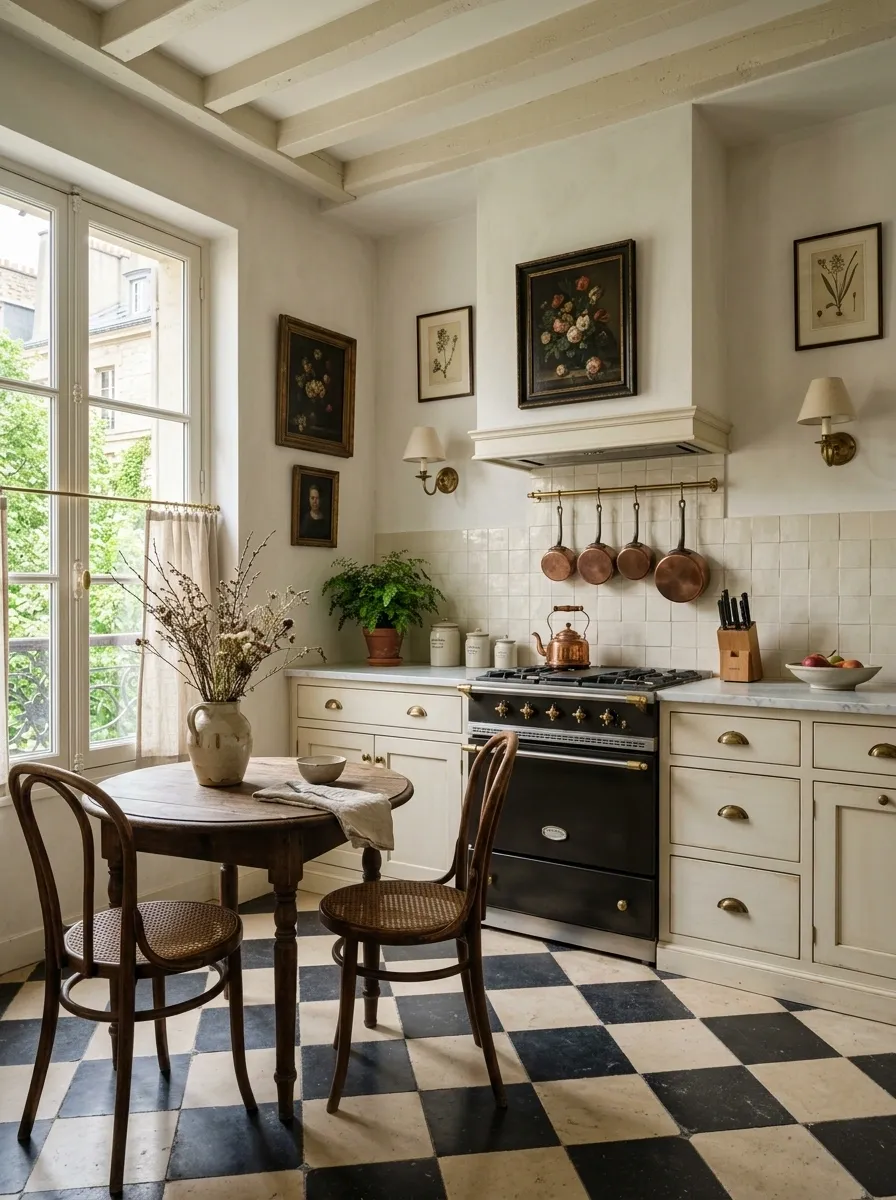
A Parisian-inspired kitchen can be elegant without becoming overly polished.
Use cream cabinetry, a checkerboard floor, pale marble countertops, and aged brass hardware. Traditional wall sconces can sit above the worktops, while a small round table creates a dining moment within the kitchen.
The room should have some restraint. Avoid excessive ornate detailing because the combination of checkerboard flooring, marble, brass, and traditional cabinetry already carries plenty of visual information.
A slightly imperfect ceramic vase or old framed artwork can soften the polished surfaces.
Ink Blue Kitchen With Oak Island and Floral Window Fabric
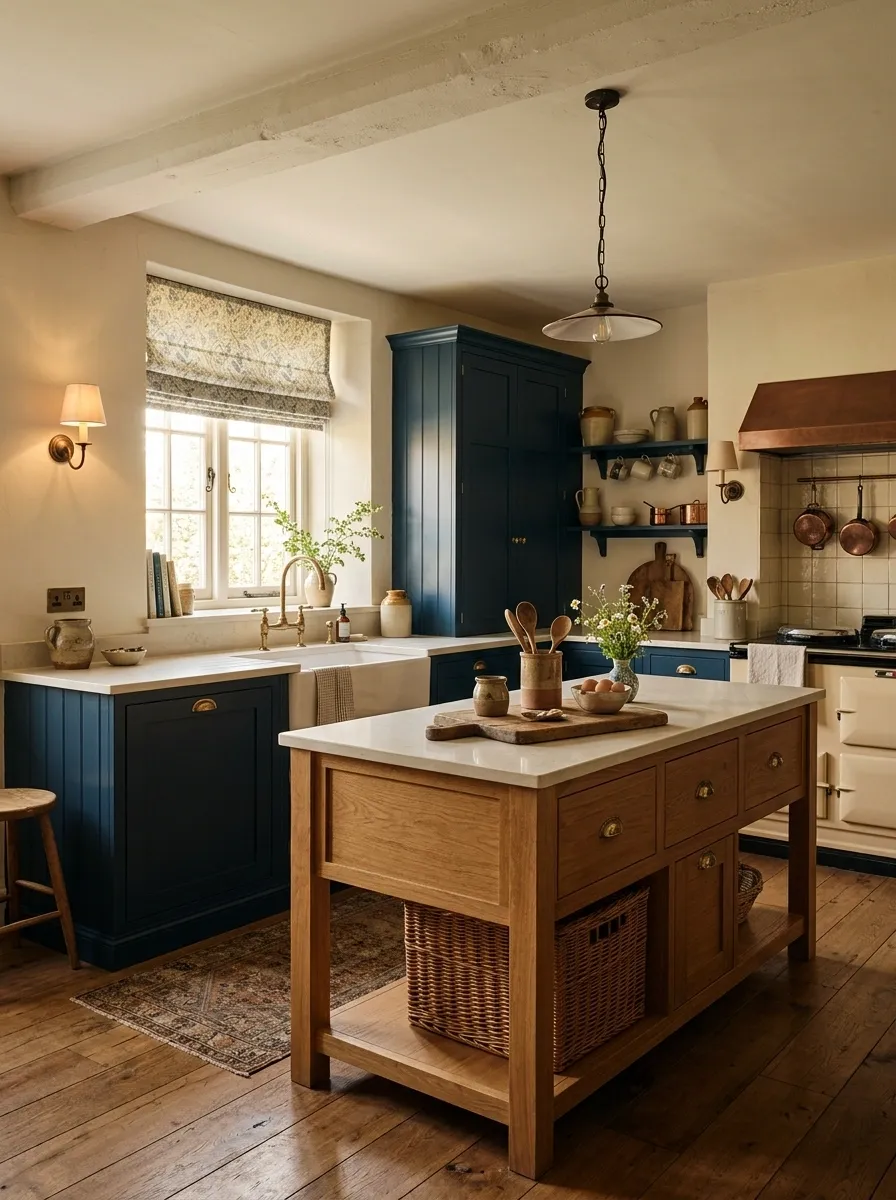
Deep ink blue cabinetry creates a traditional kitchen with a slightly dramatic edge.
Pair it with a warm oak island, creamy countertops, and aged brass hardware. A floral Roman shade or curtain introduces a small amount of pattern without covering the room in flowers.
The oak island is important because it breaks up the darker cabinetry and brings natural warmth into the center of the room.
Use traditional lighting with soft shades rather than exposed industrial bulbs. This kitchen should feel like an old English room that happens to have very good cabinetry.
Soft Scandinavian Vintage Kitchen With Pale Wood
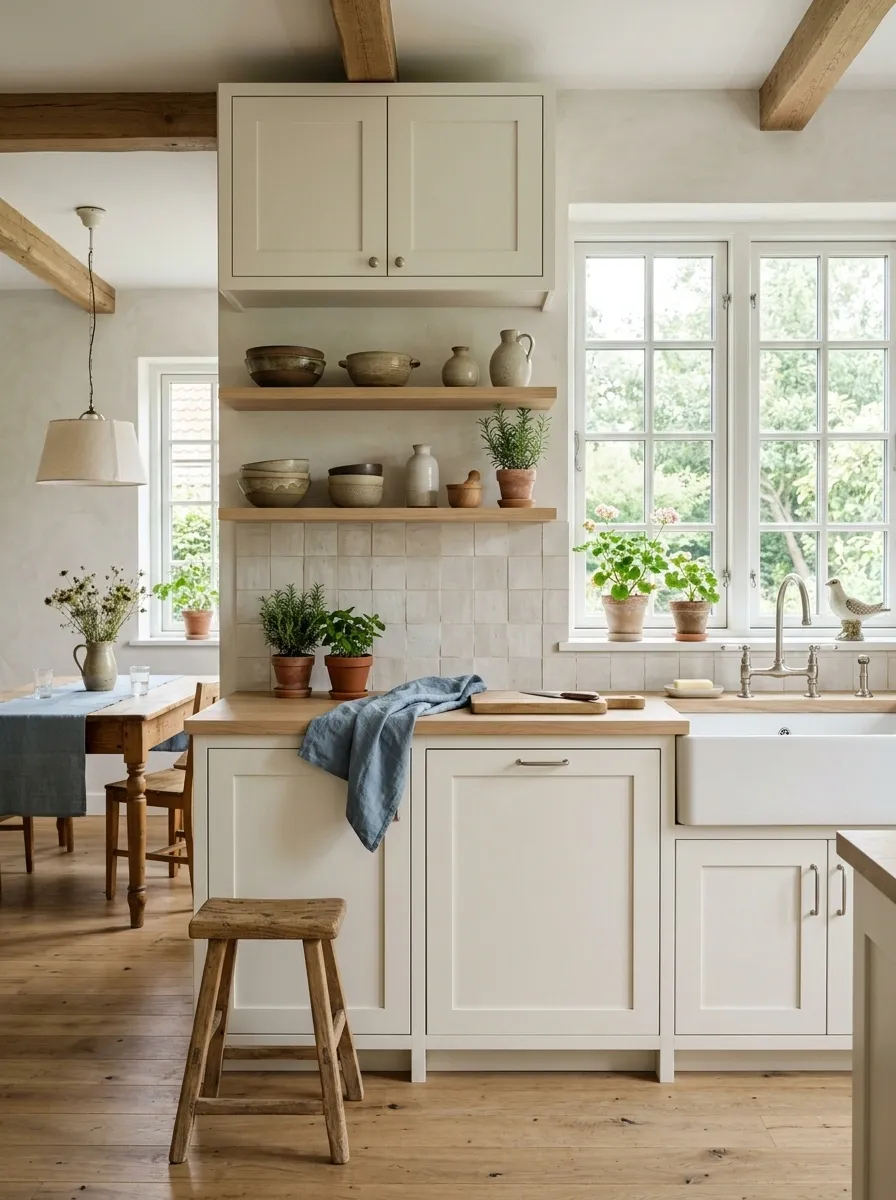
Vintage doesn’t always mean ornate.
A Scandinavian-inspired kitchen can feel old and warm through pale wood, simple cabinetry, handmade-looking tile, and restrained color. Use off-white cabinets, pale oak shelving, muted blue textiles, and a traditional pendant with a soft shade.
A vintage wooden stool or small dining table adds just enough history to keep the room from feeling newly installed.
Avoid glossy finishes. The beauty of this concept is the combination of matte surfaces, natural grain, soft textiles, and simple shapes.
Rustic Italian Kitchen With Plaster Walls and Terracotta
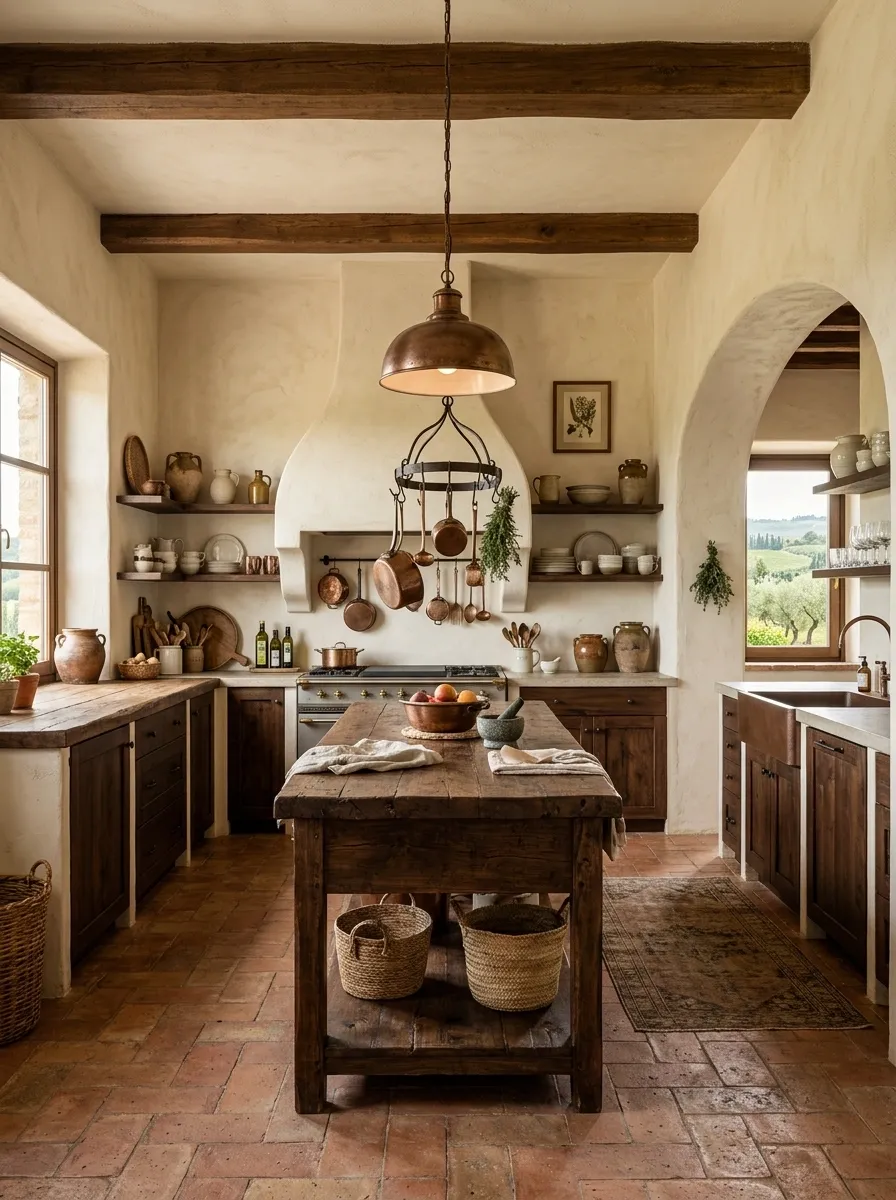
This kitchen should feel sun-warmed and substantial.
Use warm plaster walls, dark wood cabinetry, terracotta floors, and an oversized wooden island. Open shelves can hold handmade ceramics, while an antique-style copper light adds a soft metallic accent.
The range hood can become an architectural feature with a plastered or arched shape rather than a sleek stainless-steel box.
Keep the palette narrow. Terracotta, walnut, cream, muted green, and copper are enough. Adding bright white, chrome, and cool gray would break the warmth.
DARK WOOD
HANDMADE CERAMICS
AGED COPPER
WARM PLASTER
Retro Diner Kitchen With Red, Cream, and Chrome
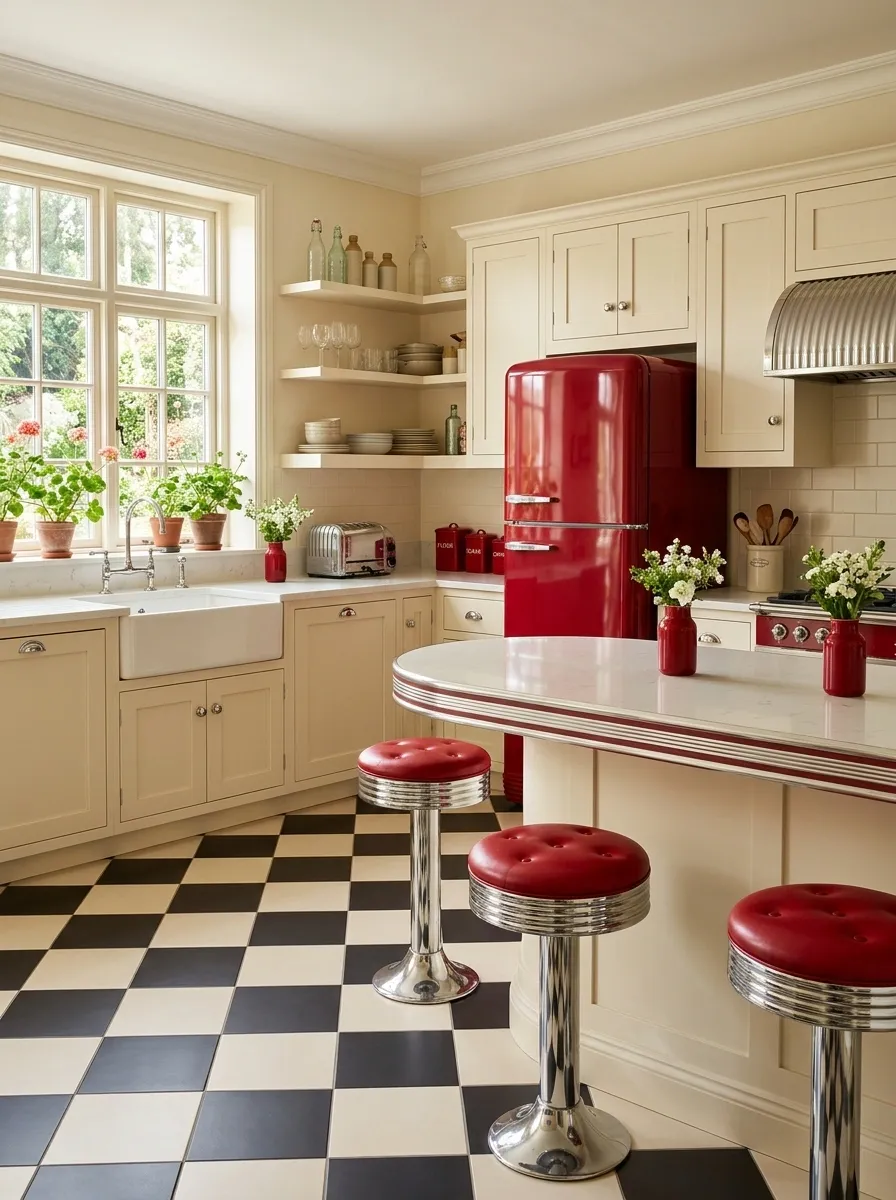
For a stronger retro direction, embrace the diner influence instead of trying to hide it.
Use cream cabinetry, muted cherry-red accents, chrome stools, and a black-and-cream checkerboard floor. A rounded breakfast counter can create the diner silhouette without requiring an entire restaurant makeover.
Keep the red concentrated in a few major areas such as stools, a refrigerator, or lower cabinets. Too much red can quickly turn the kitchen into a themed set.
Chrome should catch the light, while cream keeps the room from becoming visually aggressive.
Maximalist Vintage Kitchen With Floral Wallpaper
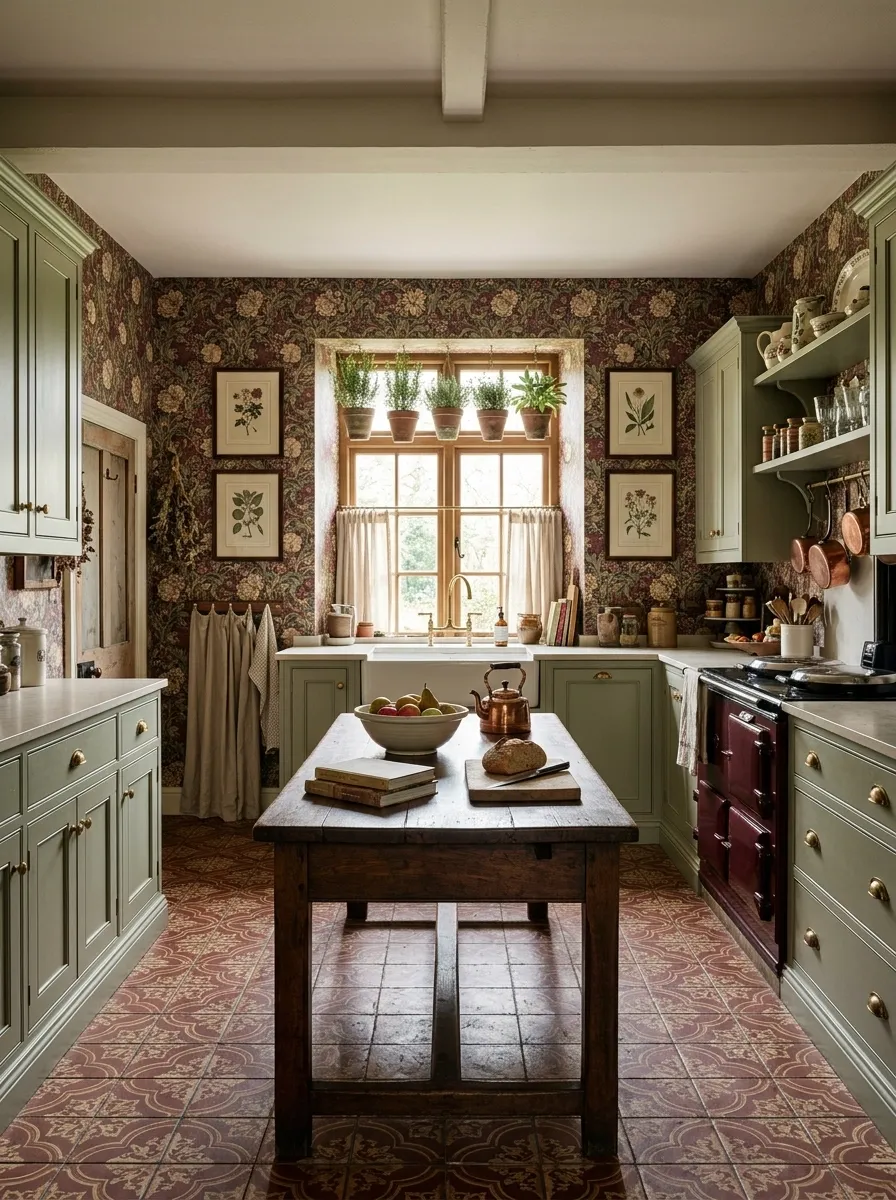
A maximalist vintage kitchen can be wonderfully dramatic if the patterns share a color story.
Use muted green cabinetry, floral wallpaper in cream and burgundy, patterned tile, and antique brass hardware. A dark wood table or island gives the room a solid center.
The trick is letting the wallpaper and cabinetry work together rather than introducing a different pattern on every surface. Choose one major pattern and let the rest support it.
A few framed botanical prints can echo the wallpaper, but they don’t need to cover every inch of wall.
Soft Neutral Vintage Kitchen With Linen Curtains
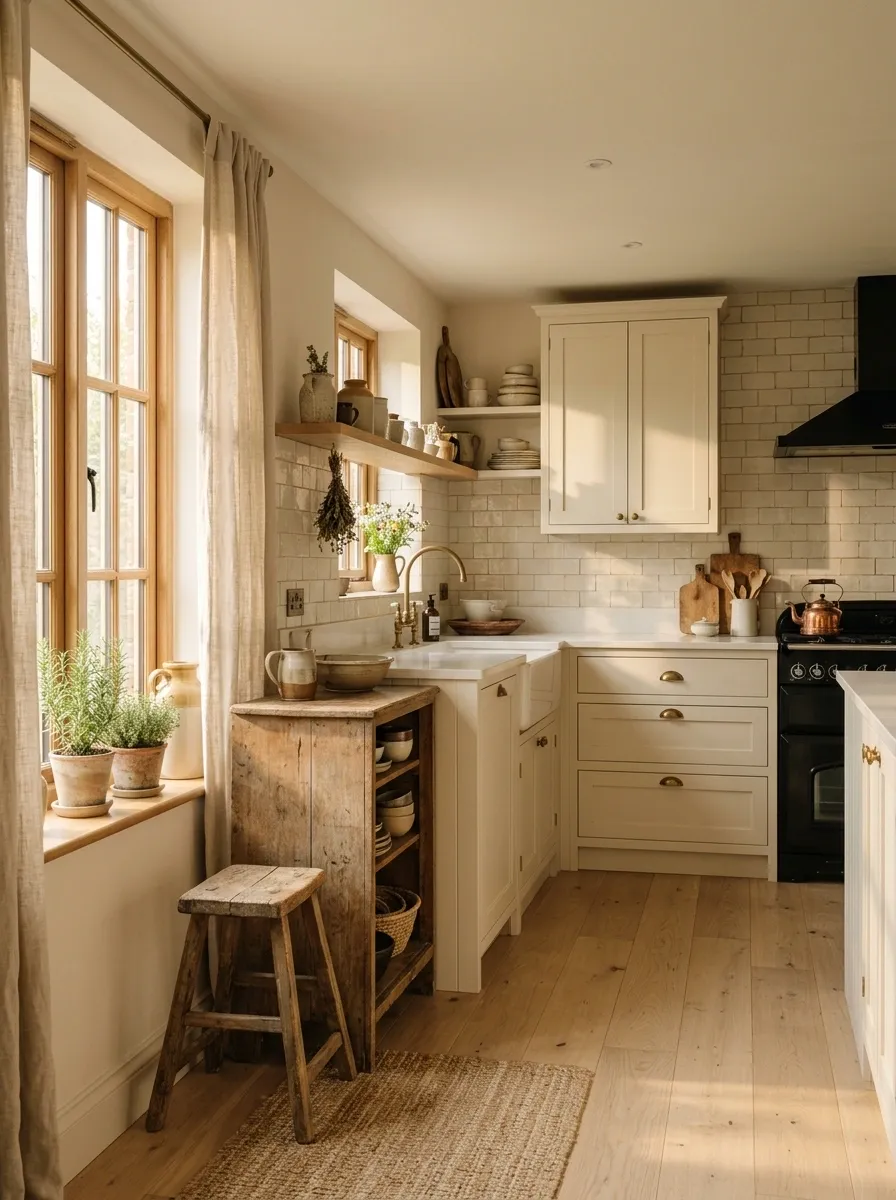
A vintage kitchen doesn’t have to be colorful.
Warm cream cabinetry, pale oak, handmade tile, linen curtains, and antique brass can create a room with a quieter personality. The important part is avoiding a cold neutral palette. Use ivory, oatmeal, biscuit, and natural wood rather than stark white and gray.
A freestanding cabinet or old wooden stool gives the room some age, while handmade-looking ceramics add subtle irregularity.
This approach works especially well when the architecture is already interesting and the finishes need to support rather than compete with it.
Dark Whimsical Kitchen With Plum, Green, and Floral Details
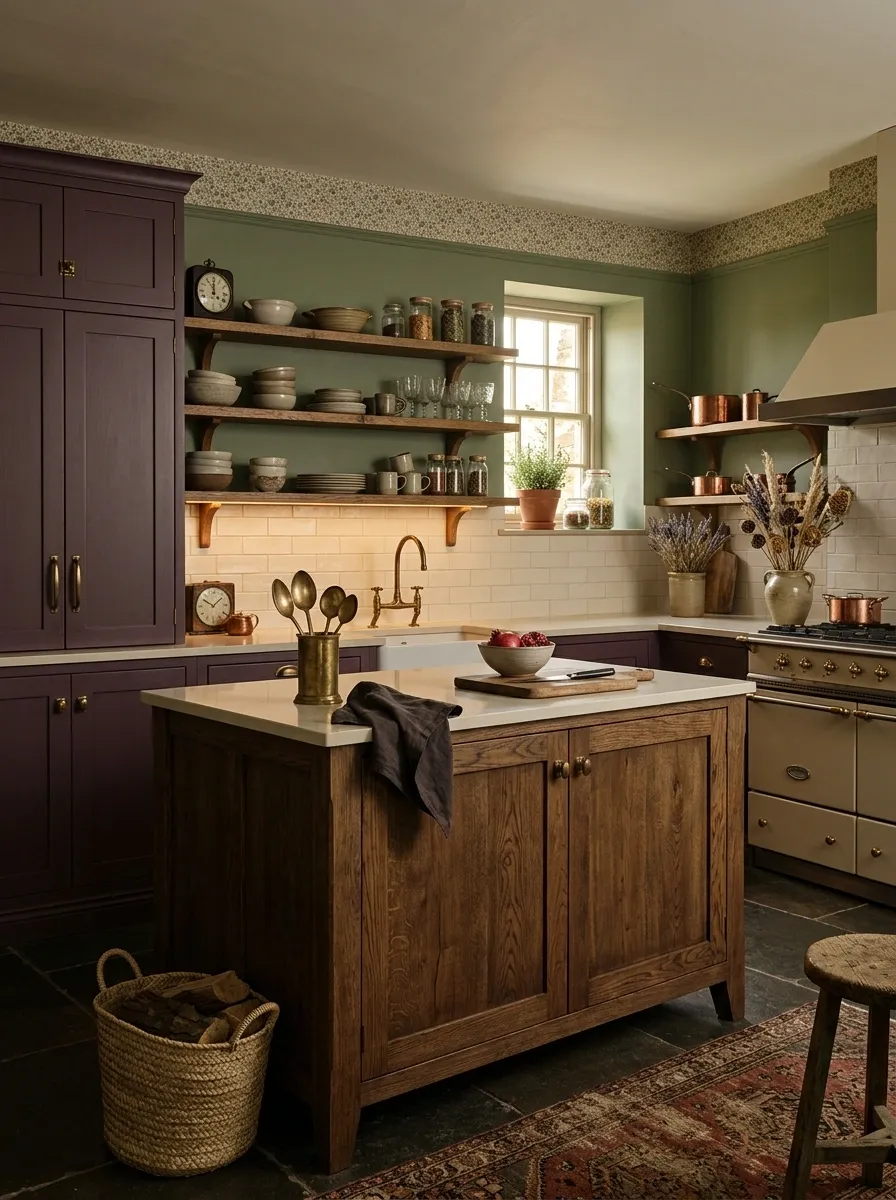
For a more theatrical vintage kitchen, combine deep plum cabinetry with muted green walls or furniture and a small-scale floral pattern.
Use aged brass hardware and warm lighting to keep the dark colors from feeling severe. A dark wood island can anchor the room while cream stone or tile prevents the palette from collapsing into one heavy block.
The floral element should feel slightly old-fashioned, not tropical or overly bright.
This kitchen can handle more personality than most, but it still needs one quiet surface somewhere. Otherwise the room starts arguing with itself.
Vintage Industrial Kitchen With Brick and Painted Cabinets
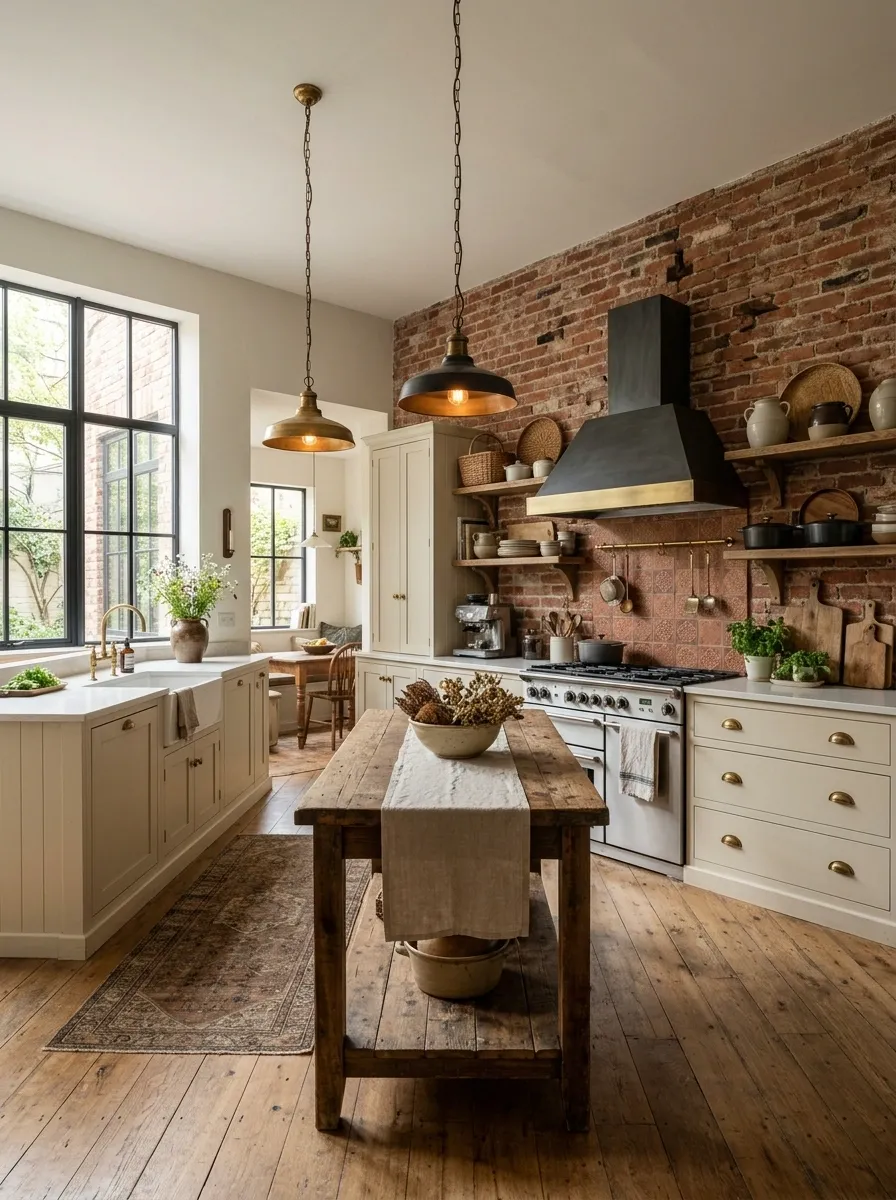
Industrial and vintage can work together when the industrial elements are softened.
Keep exposed brick or old masonry visible, then pair it with painted cabinetry in a muted cream, green, or charcoal. A reclaimed wood island introduces warmth, while a traditional range keeps the room connected to the kitchen’s vintage side.
Use stainless steel selectively. A professional-style range can work beautifully, but too much stainless steel makes the room feel contemporary and commercial.
Old brick, painted wood, warm lighting, and aged metal should dominate the composition.
+ PAINTED WOOD
+ RECLAIMED TIMBER
+ ONE STAINLESS FOCAL POINT
Faded Blue Coastal Kitchen With Beadboard and Oak
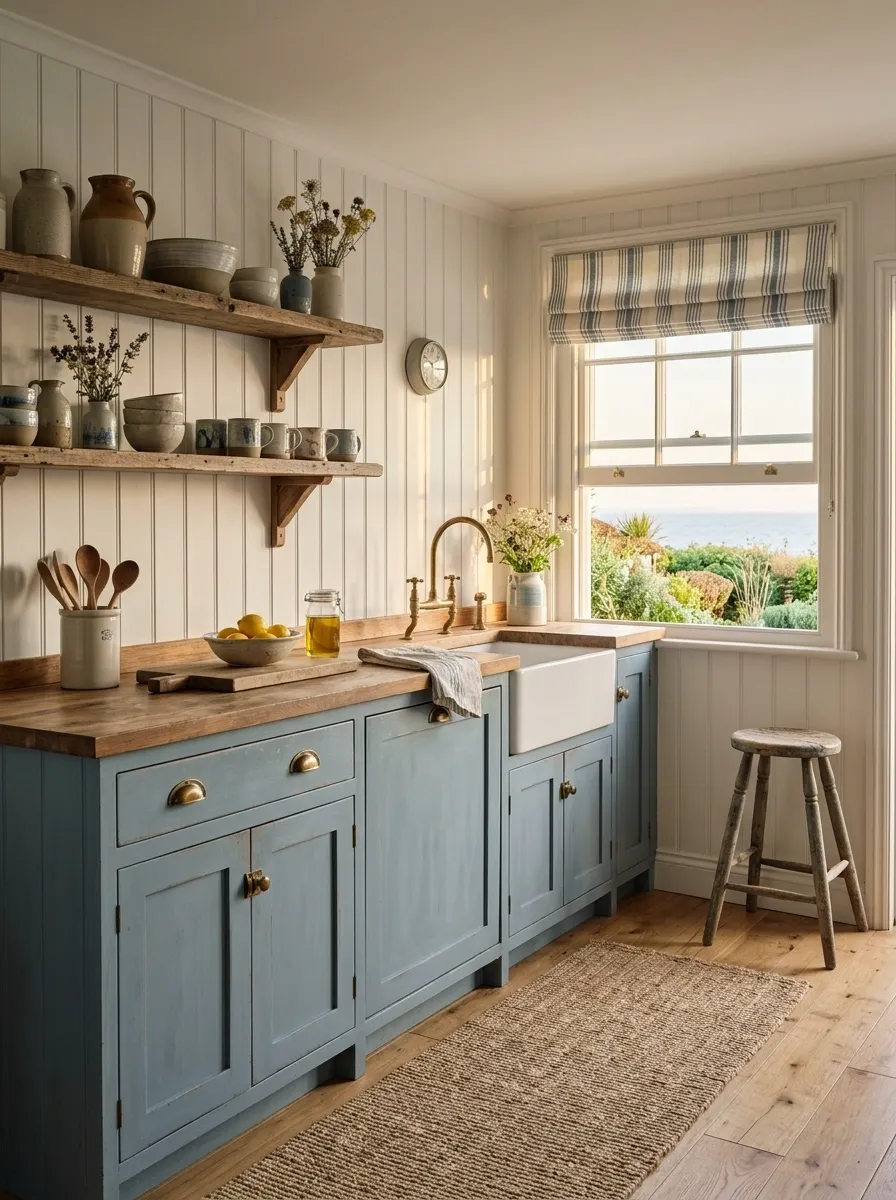
A coastal vintage kitchen can stay relaxed without drifting into obvious nautical decor.
Use faded blue cabinetry, white beadboard, natural oak, and aged brass. Striped linen curtains or a simple woven runner can provide coastal texture without anchors, ropes, or decorative seashell collections making an appearance.
A vintage wooden stool and open shelving keep the room grounded.
The palette should look sun-softened rather than crisp and beachy. Think paint that has been exposed to daylight for years, not a freshly opened can of “Ocean Breeze.”
Cottage Kitchen With Pale Yellow Cabinets and Floral Curtains
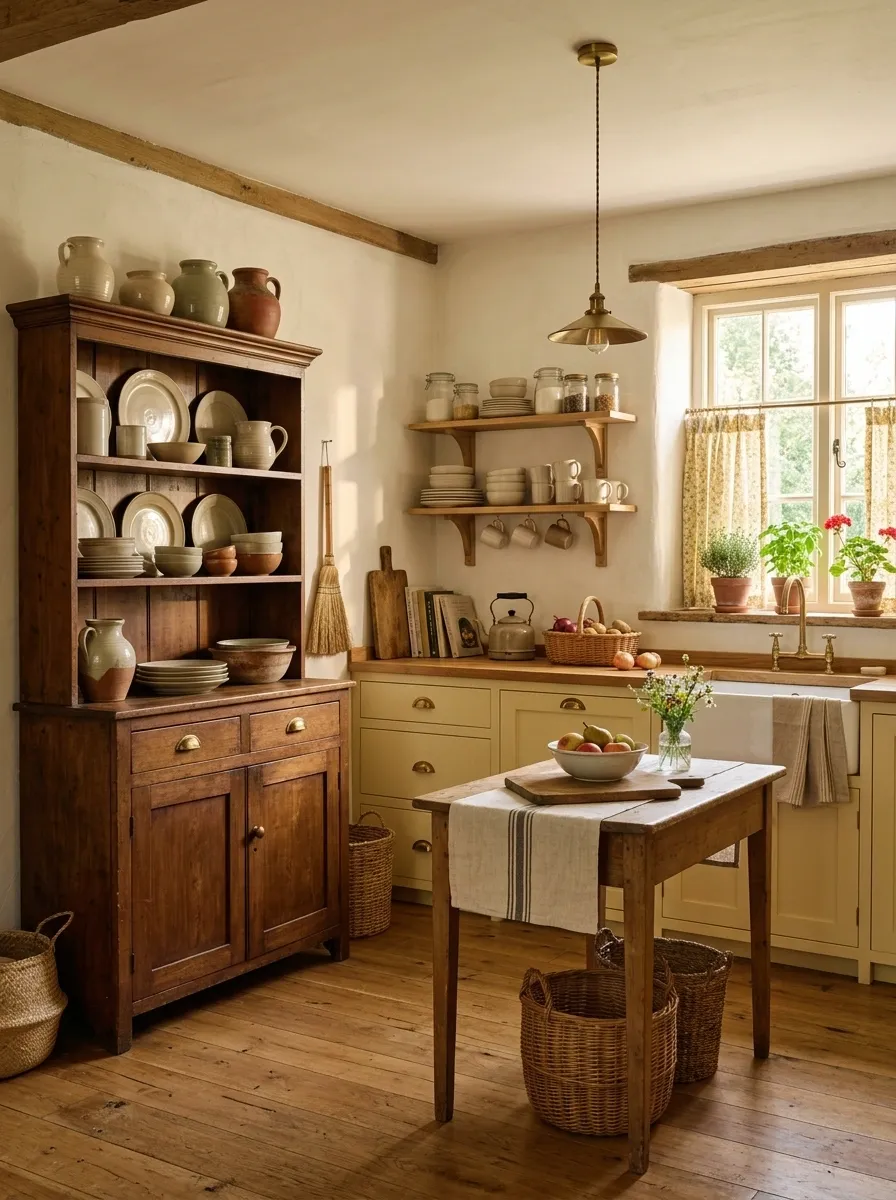
Pale yellow cabinetry gives a cottage kitchen a cheerful vintage foundation.
Pair it with creamy walls, worn wood, a freestanding hutch, and small floral curtains. The cabinetry should have a soft painted finish rather than an overly glossy surface.
A wooden table can double as an island if the kitchen is compact, creating a more furniture-like arrangement. Open shelving can display everyday ceramics in muted colors.
The floral fabric should echo the yellow and cream palette rather than introduce a completely unrelated color explosion.
Emerald Green Kitchen With Walnut and Cream Stone
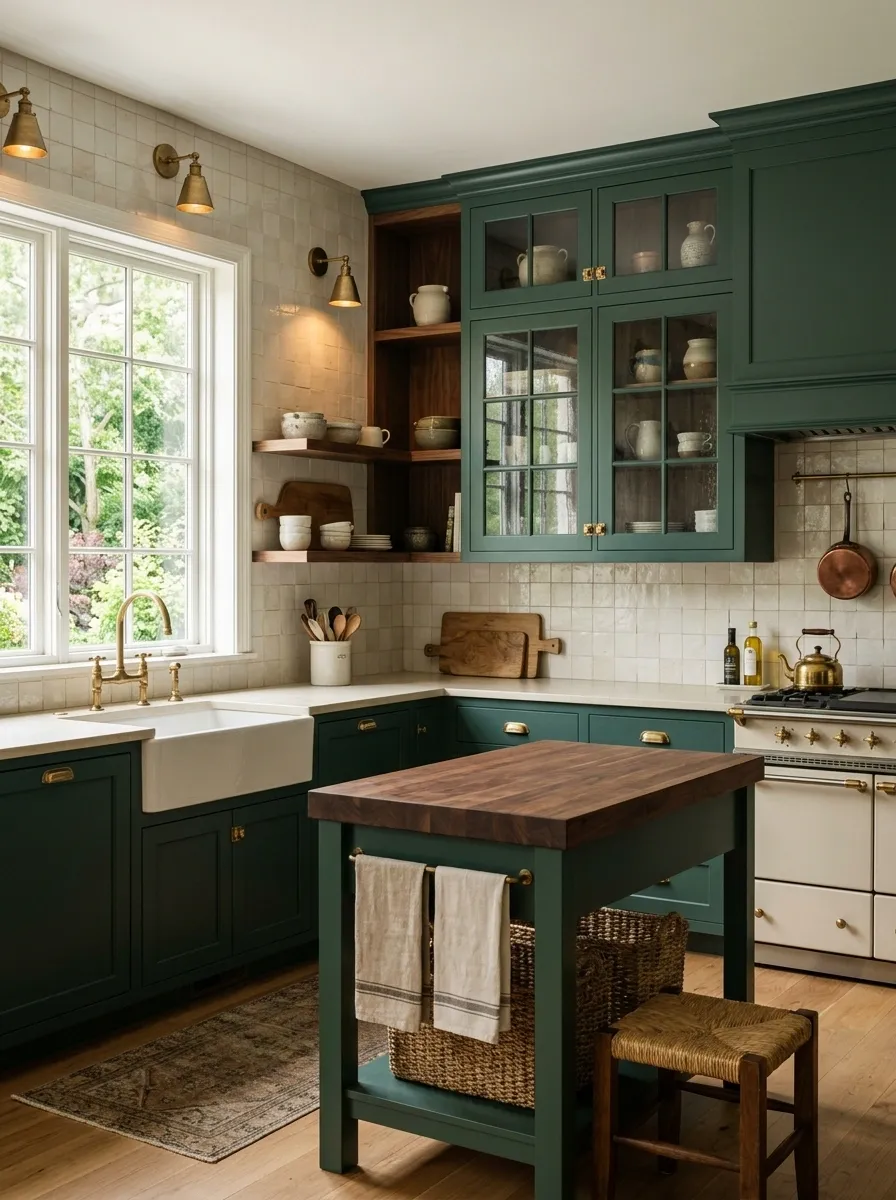
Emerald can create a richer vintage kitchen when it is slightly muted and paired with natural materials.
Use deep green cabinetry, walnut furniture, creamy stone counters, and aged brass. A traditional glass-front cabinet can break up the solid color and display simple ceramics.
Keep the backsplash relatively quiet. Cream handmade tile works especially well because its slight variation prevents the room from looking too polished.
A dark green kitchen needs warm lighting. Soft pendants or traditional sconces will make the walnut and brass glow instead of allowing the room to become visually flat.
Furniture-Style Island With an Antique Dresser Base
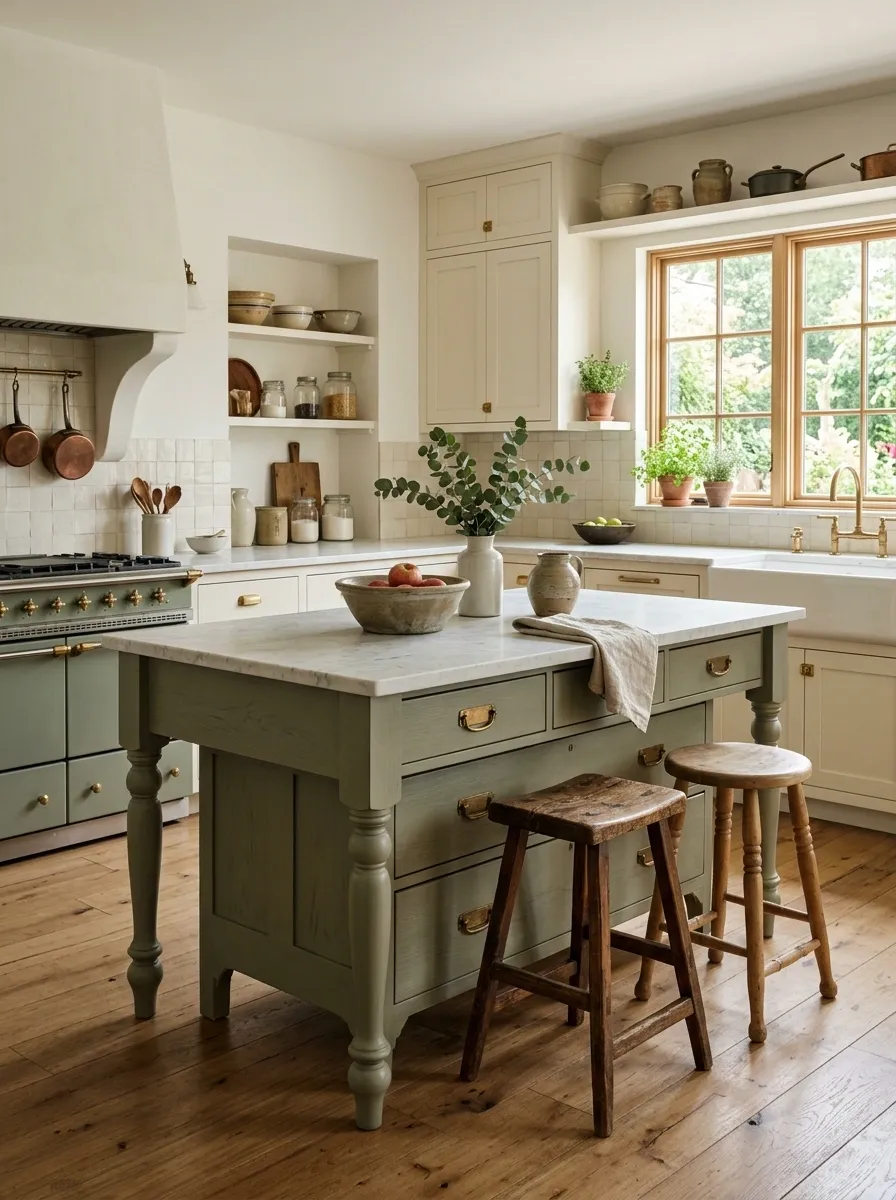
One of the easiest ways to make a kitchen feel older is to stop making every piece look like kitchen cabinetry.
Use a vintage dresser or furniture-inspired island as the center of the room. Paint it a muted green, blue, or cream and let the countertop extend slightly beyond the base like a real piece of furniture.
Surround it with simple cabinetry so the island becomes the character piece. An old wooden stool or pair of mismatched chairs can reinforce the furniture-store-not-kitchen-store feeling.
The result feels collected because the center of the kitchen doesn’t look mass-produced.
Cream and Burgundy Old-World Kitchen With Dark Wood
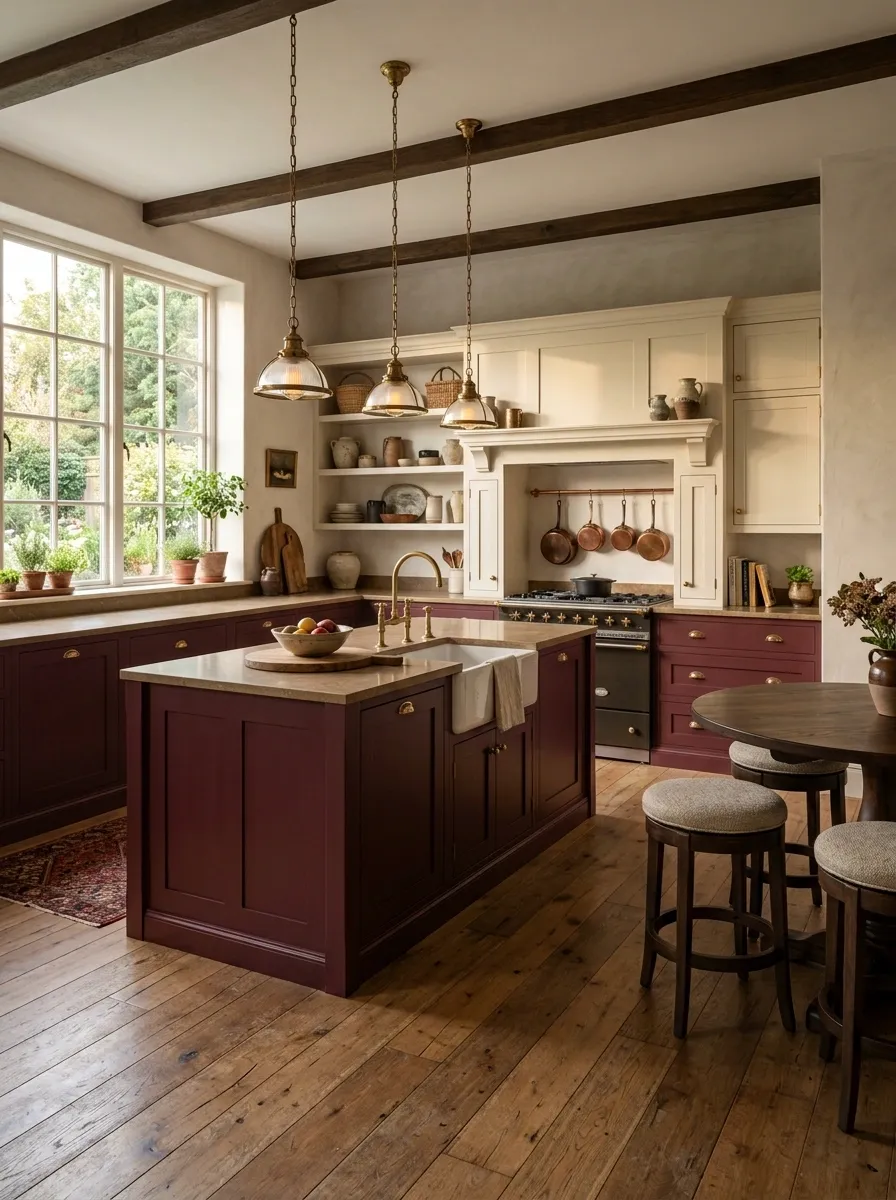
This combination gives a traditional kitchen plenty of richness without relying on ornate decoration.
Use cream cabinetry as the main backdrop, then introduce burgundy through a lower cabinet section, island, runner, or upholstered seating. Dark walnut furniture keeps the colors grounded, while aged brass provides a subtle metallic glow.
A traditional chandelier or shaded pendant can become the focal point above the island or dining table.
Keep the walls quiet. This palette already has enough depth to make the room feel layered.
Thrifted Furniture Kitchen With a Painted Hutch
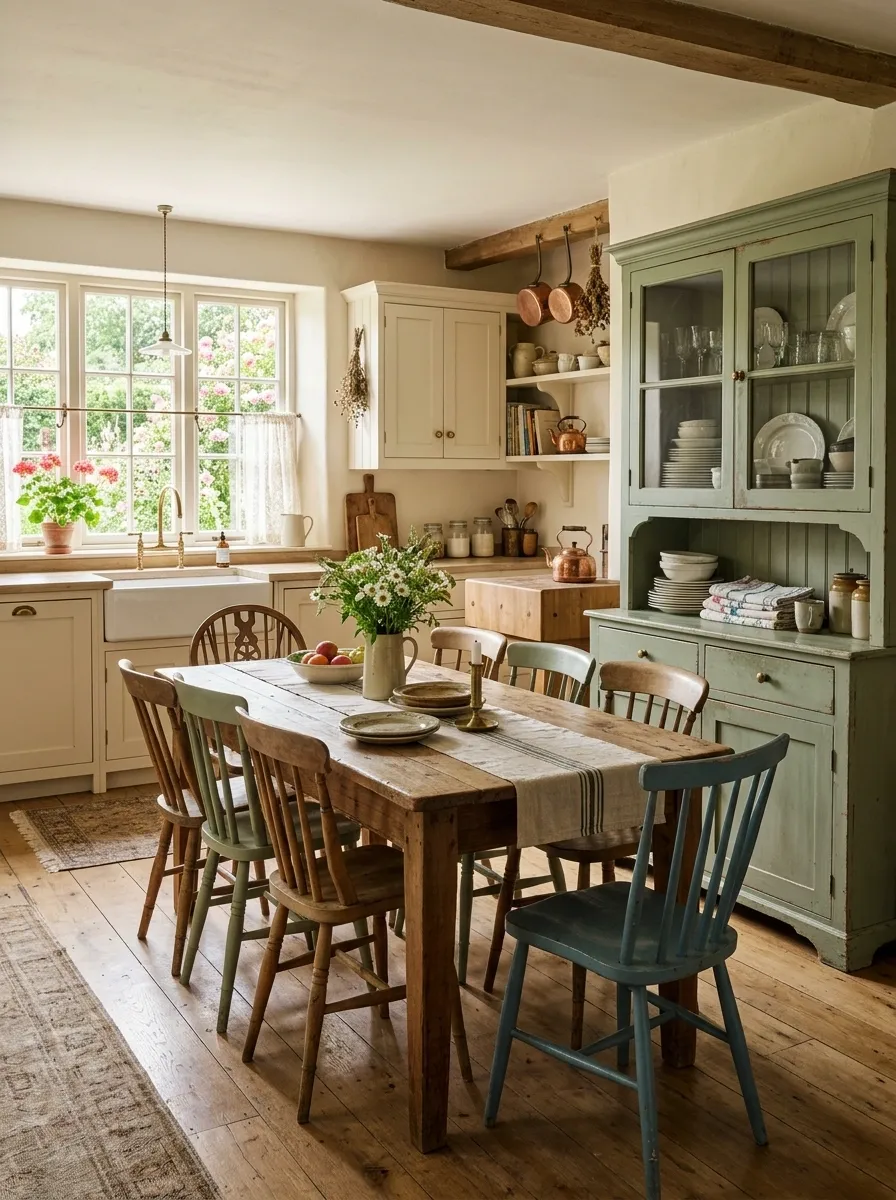
A painted hutch can completely change the personality of a kitchen because it introduces an actual piece of furniture into a wall of cabinetry.
Use a muted painted hutch in cream, sage, dusty blue, or faded yellow. Fill it with plates, glassware, linens, and practical kitchen pieces rather than decorative objects that never get touched.
Pair it with simple cabinetry, a worn wood table, and mismatched seating.
The hutch should look like it could have belonged somewhere else before arriving in the kitchen. That slight sense of history is exactly the point.
Modern-Vintage Kitchen With Classic Cabinetry and Antique Lighting
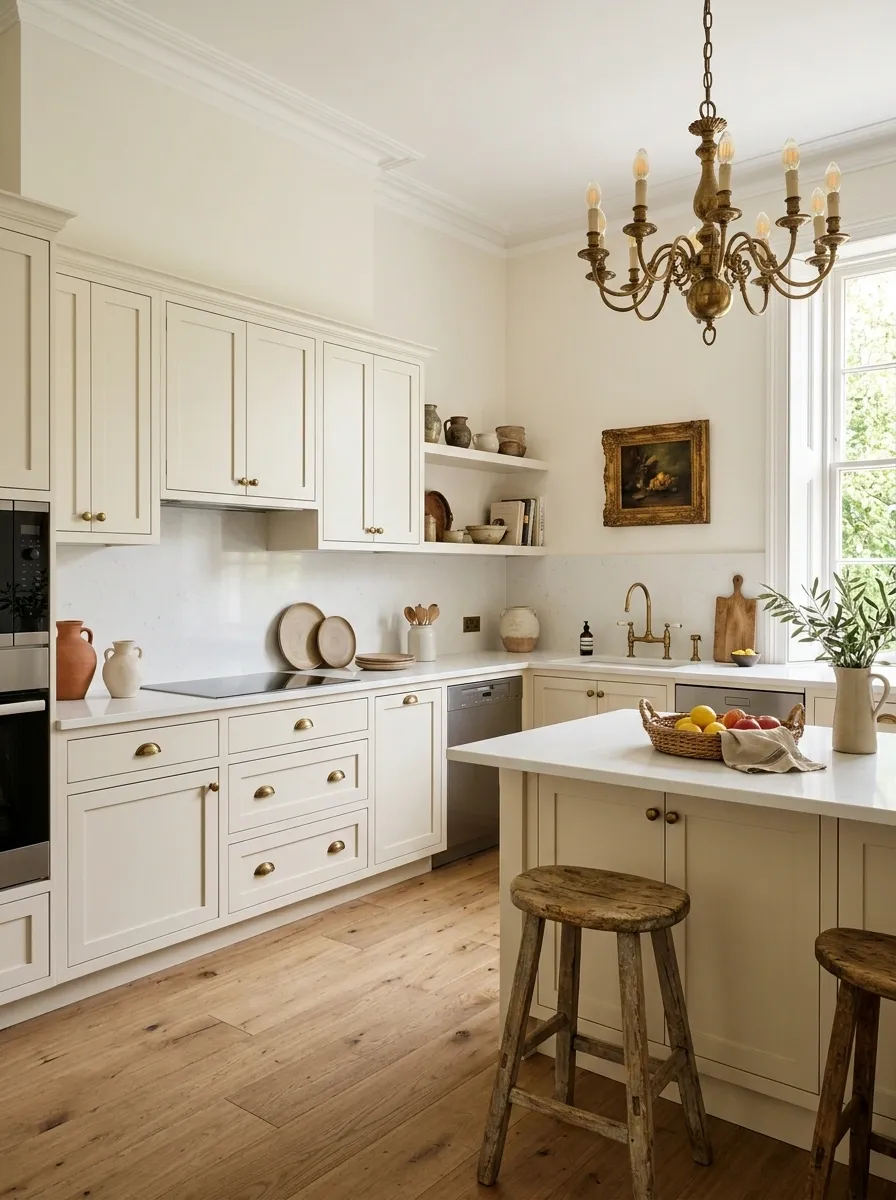
A vintage kitchen doesn’t have to reject every modern convenience.
Use classic shaker cabinetry, a contemporary stone countertop, and efficient appliances, then bring the vintage character through the lighting, hardware, furniture, and smaller architectural details.
An antique chandelier above the island can create an especially strong contrast against otherwise clean cabinetry. Add a vintage stool or old framed artwork to bridge the two eras.
The secret is keeping the modern elements visually quiet. The appliances can work perfectly well without becoming the stars of the room.
Compact 1930s-Inspired Kitchen With Two-Tone Cabinets
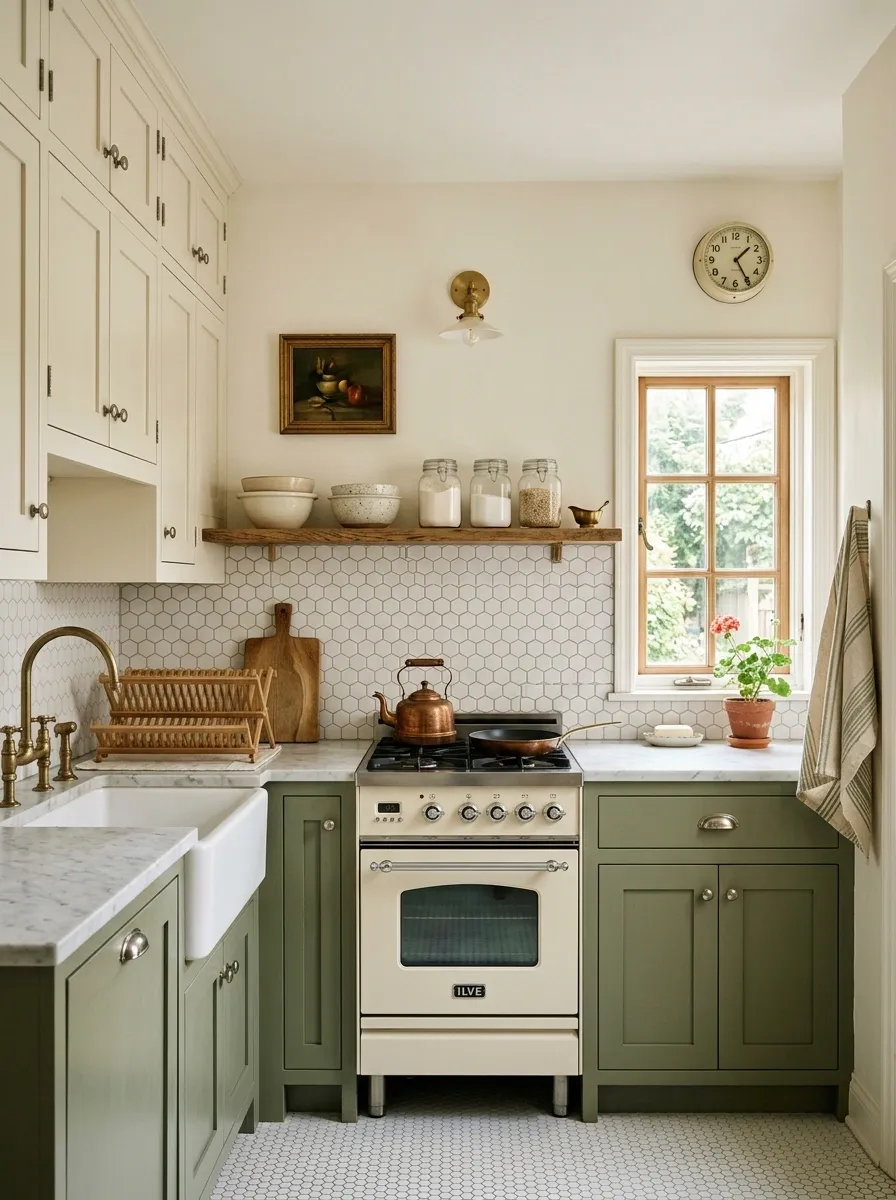
For a smaller kitchen, a two-tone palette can create a strong period reference without requiring elaborate decoration.
Use cream upper cabinets and muted green or blue lower cabinets. Add small-format hex tile, chrome or aged nickel hardware, and a compact vintage-style range.
A narrow open shelf can replace bulky upper storage in one section, keeping the room visually lighter.
The proportions matter more than decorative accessories here. Choose simple cabinet profiles and traditional fixtures that suit the scale of the room.
Checkerboard Floor With Green Cabinetry and Vintage Furniture
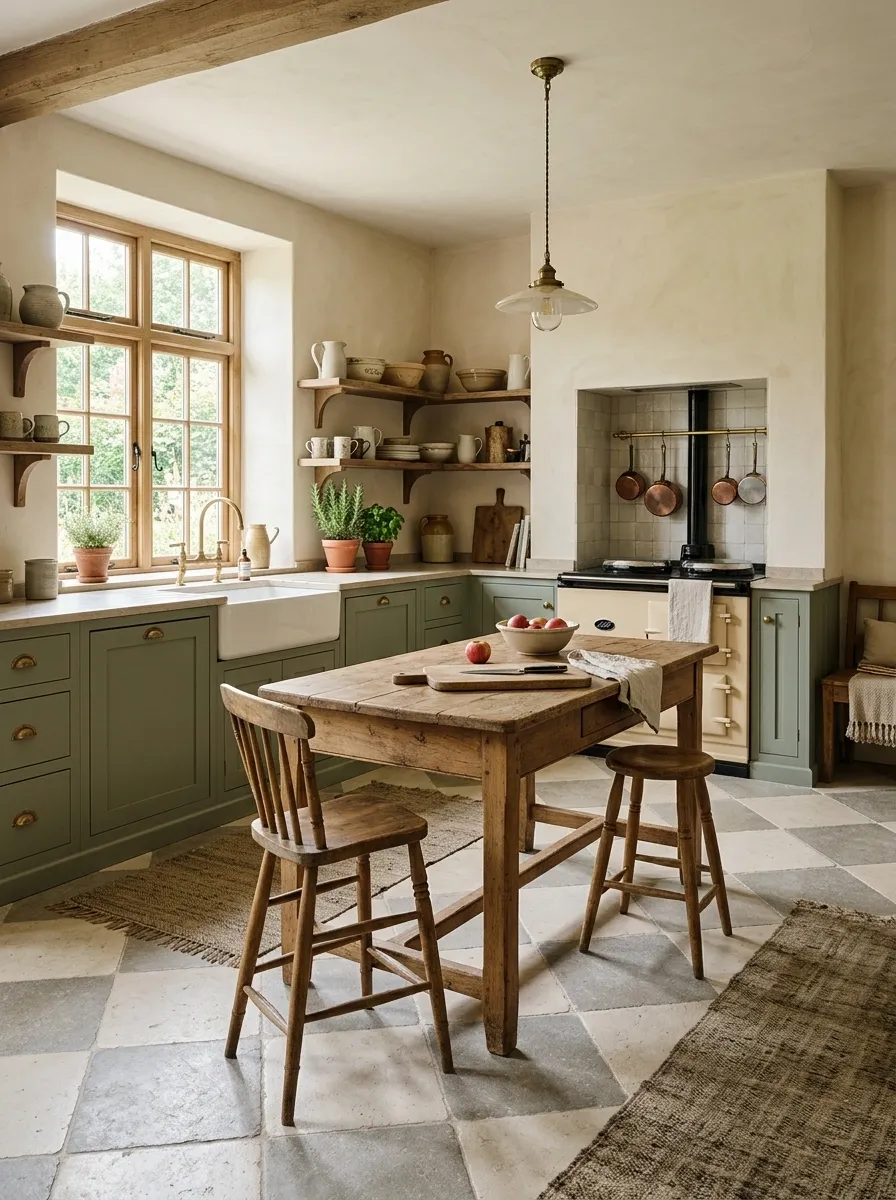
A checkerboard floor becomes much more interesting when the rest of the kitchen avoids the expected black-and-white palette.
Use muted green cabinetry, warm cream walls, natural wood furniture, and aged brass hardware. The floor provides the graphic element, while the wood and painted surfaces soften it.
A vintage table placed in the center instead of a conventional island can make the kitchen feel especially old-fashioned.
Keep the checkerboard large enough to read clearly but avoid introducing another strong geometric pattern elsewhere.
Vintage Kitchen With a Deep Green Range Hood as the Focal Point
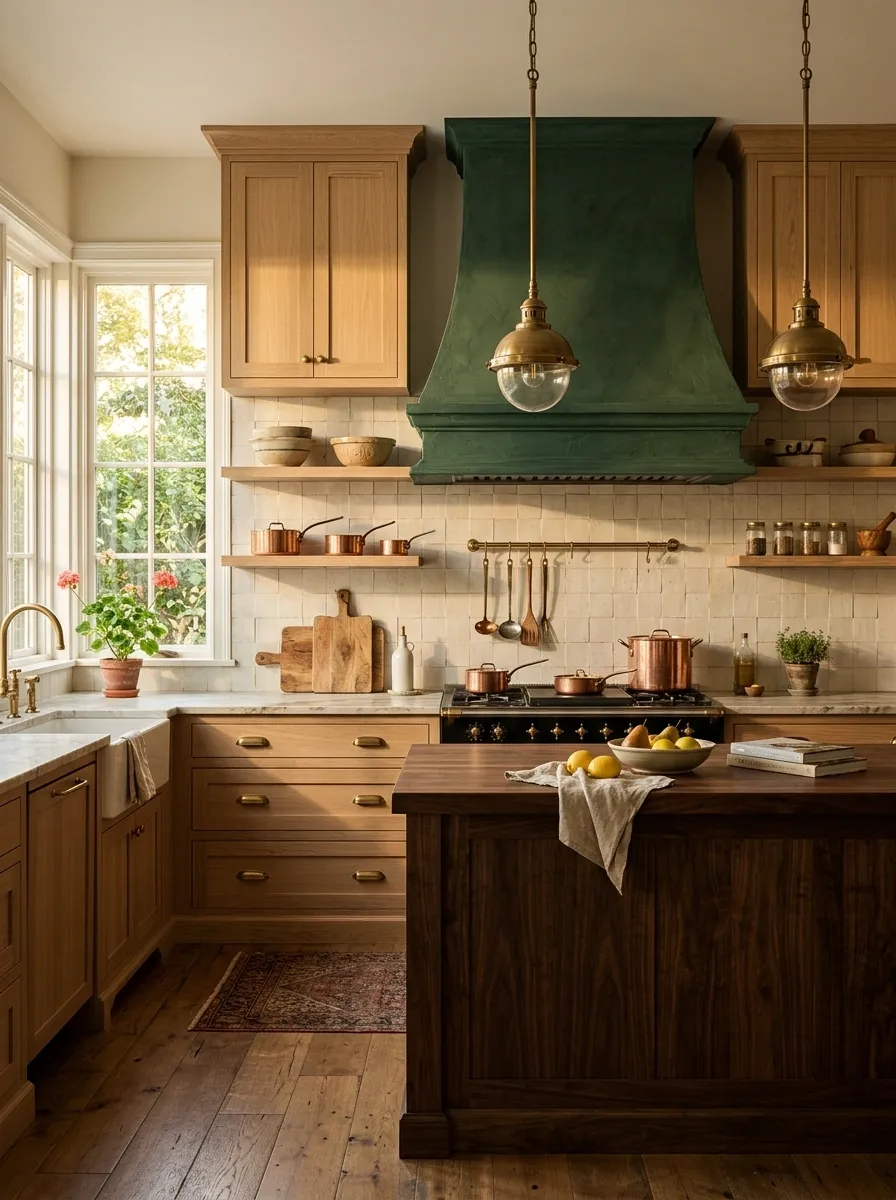
Sometimes the strongest vintage feature isn’t the cabinetry at all.
Keep the surrounding cabinets warm cream or pale oak, then make the range hood a deep green architectural feature. A plaster or furniture-like hood shape can give the room a distinctly old-world center.
Use aged brass hardware, warm stone countertops, and a dark wood island to connect the hood to the rest of the space.
Because the hood is the focal point, the backsplash should stay restrained. Handmade cream tile is enough.
Vintage Kitchen With Warm Oak, Cream Tile, and Antique Pendants
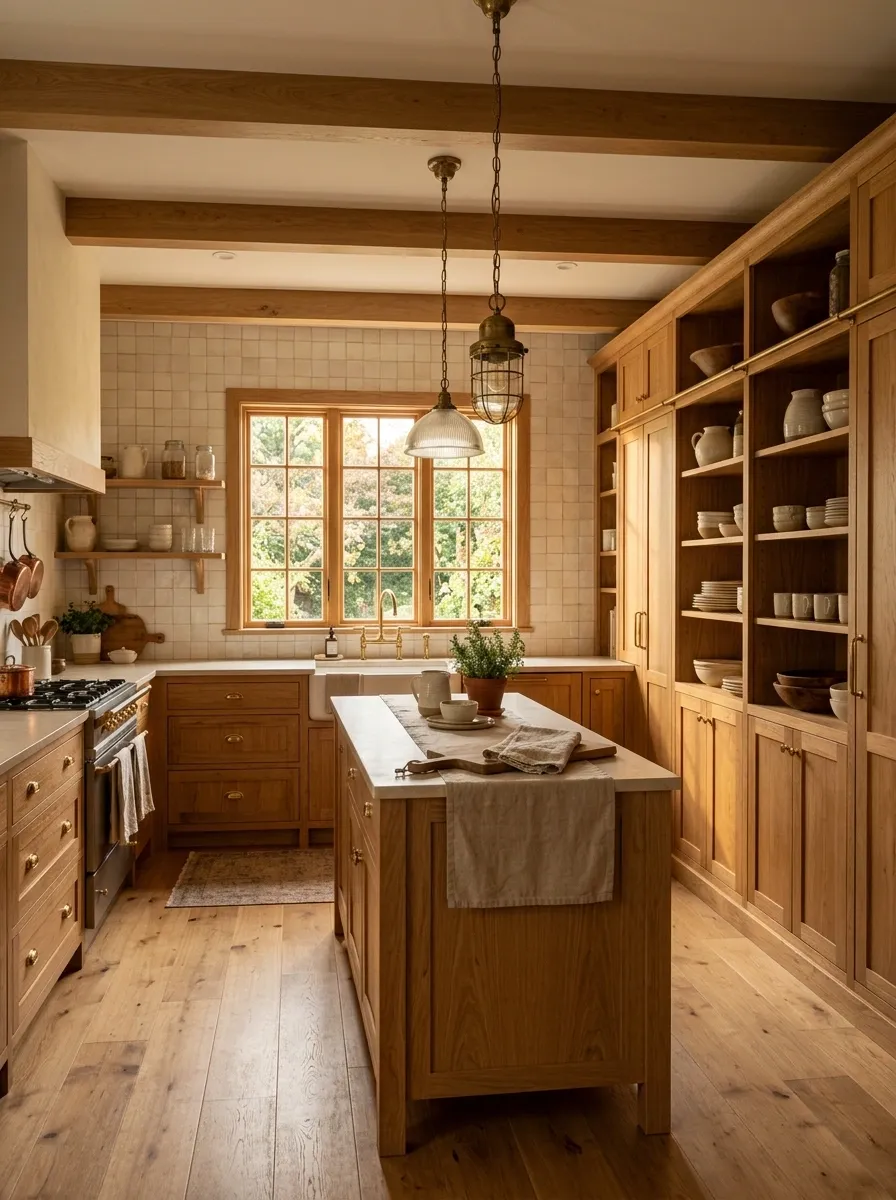
A warm oak kitchen can feel timeless when the wood is allowed to remain the main character.
Use natural oak lower cabinetry or a full oak furniture wall, paired with cream square tile and a simple stone counter. Antique or vintage-style pendant lights can hang above the island, adding a little irregularity against the clean cabinetry.
Muted textiles and ceramic pieces soften the wood without introducing too many colors.
This approach works especially well for kitchens that need warmth but don’t suit heavily painted cabinetry.
quiet stone
antique pendants
soft linen
Faded Green Kitchen With Antique Art and a Wooden Table
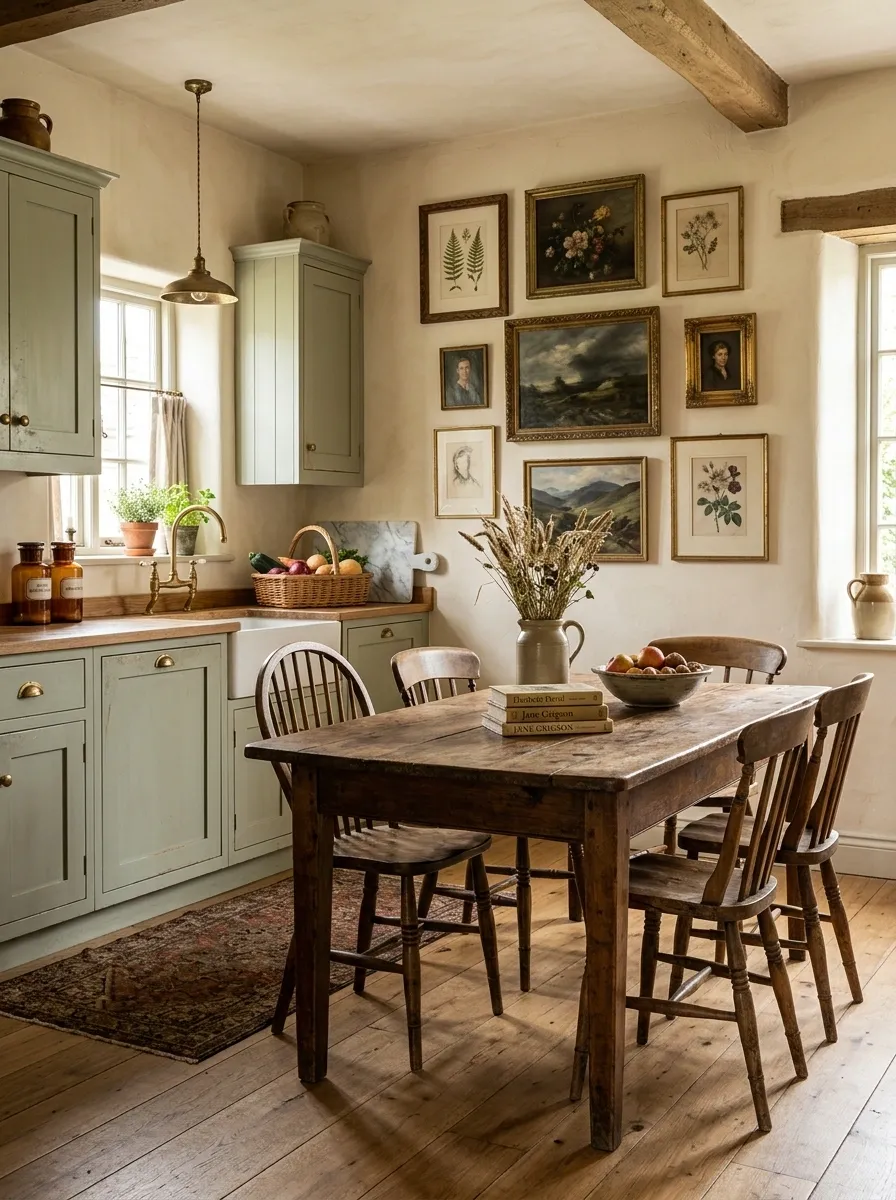
For a kitchen that feels genuinely collected, let the walls and furniture contribute as much as the cabinets.
Use faded green cabinetry, warm cream walls, an old wooden dining table, and several pieces of antique or vintage-inspired artwork. The art doesn’t need to depict food or kitchens. Portraits, botanical studies, landscapes, and old still-life pieces can all work.
Keep the frames related through wood, brass, or aged finishes rather than making every frame identical.
The room should feel like the kitchen has accumulated things over time instead of being decorated during one shopping trip.
Warm Cream Kitchen With a Dark Vintage Range
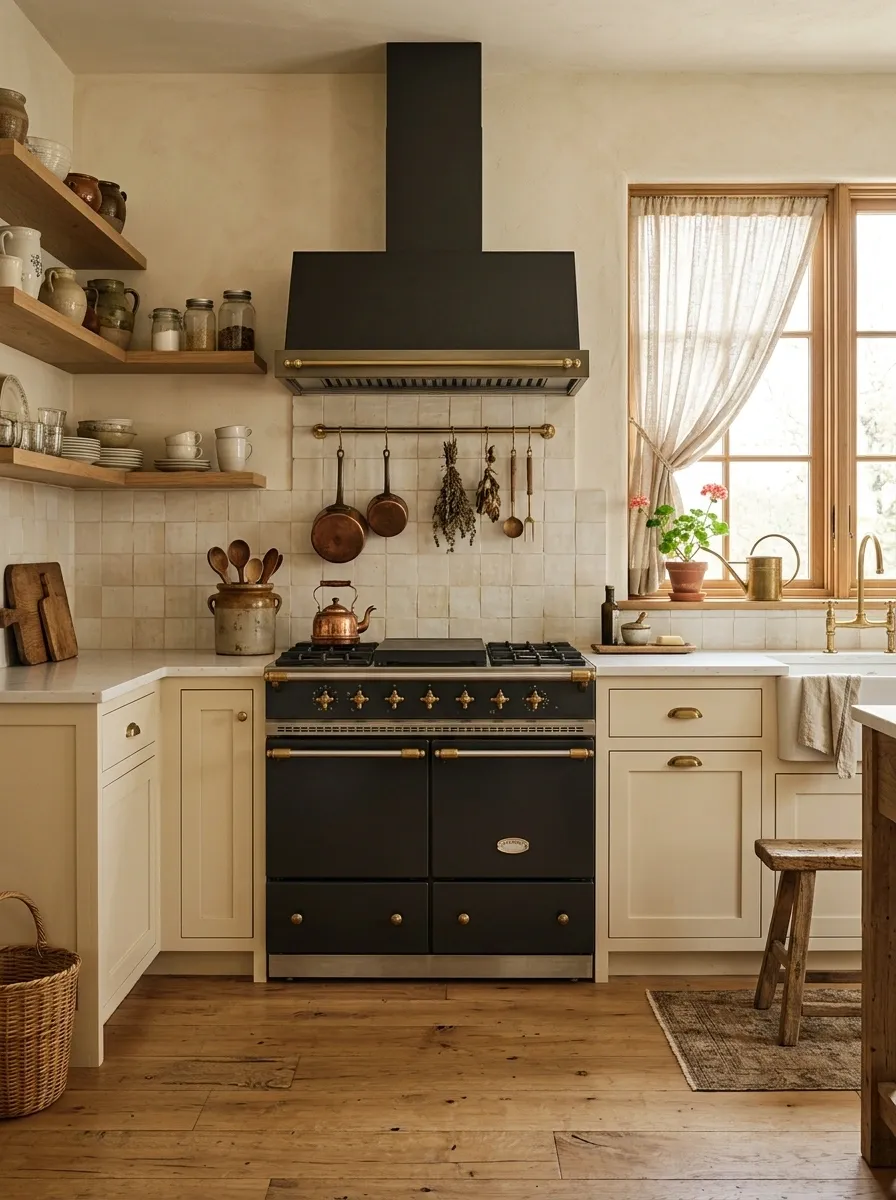
A cream kitchen can become much more interesting when one substantial appliance creates contrast.
Use warm cream cabinetry and walls, then introduce a dark range in charcoal, black, or deep green. Pair it with natural wood, aged brass, and handmade cream tile.
The range becomes the visual anchor without forcing the rest of the kitchen into a dark palette.
A wooden stool, linen curtain, and old ceramic vessel can make the room feel lived in without cluttering the countertops.
Vintage Kitchen With Open Shelves and Handmade Ceramics
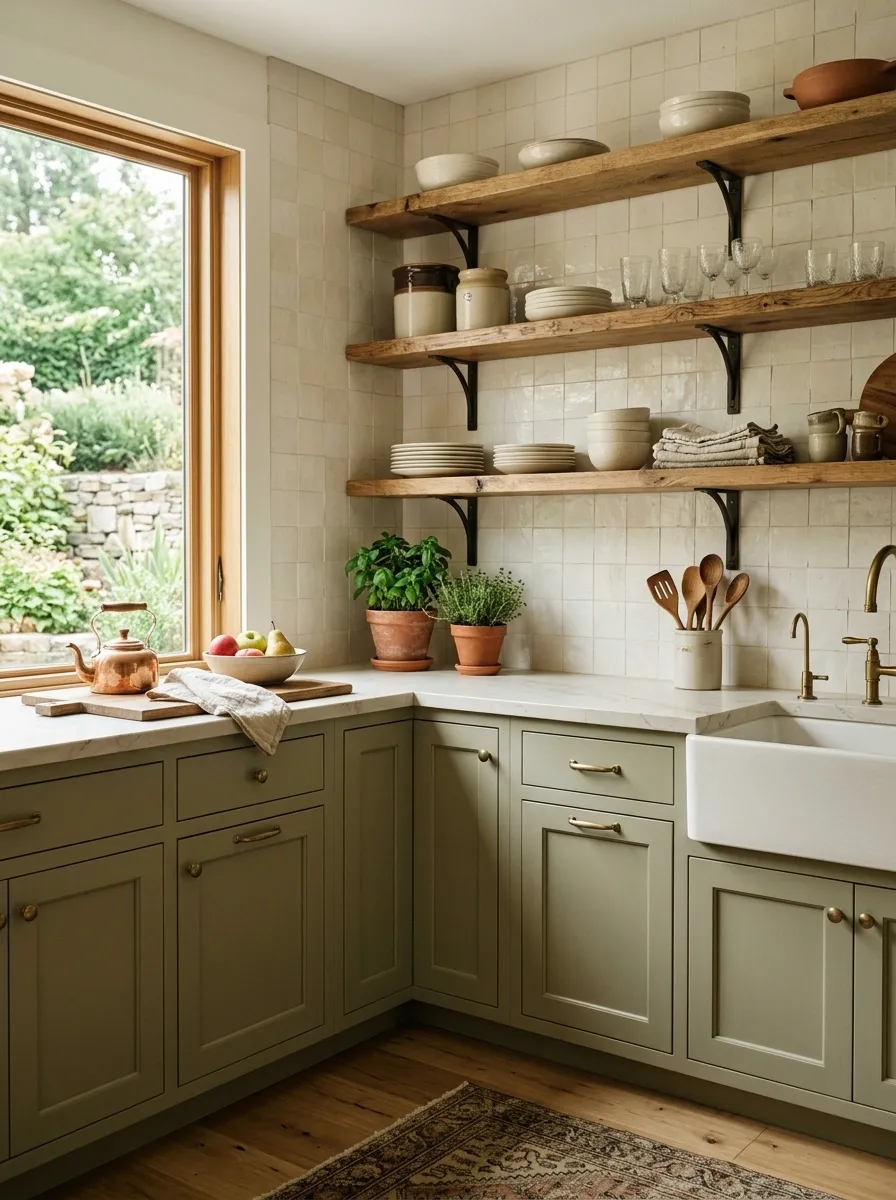
Open shelving can make a kitchen feel wonderfully old-fashioned, but only if the shelves are treated like part of the architecture.
Use thick natural wood shelves against cream tile or painted walls. Fill them with a restrained collection of everyday ceramics, bowls, glasses, and wooden utensils.
Keep the lower cabinetry simple and painted in a muted tone such as sage, cream, or blue-gray.
The shelves should have breathing room. If every inch is packed, the room stops feeling collected and starts looking like the kitchen has lost its storage war.
Dramatic Burgundy and Sage Kitchen With Antique Chandelier
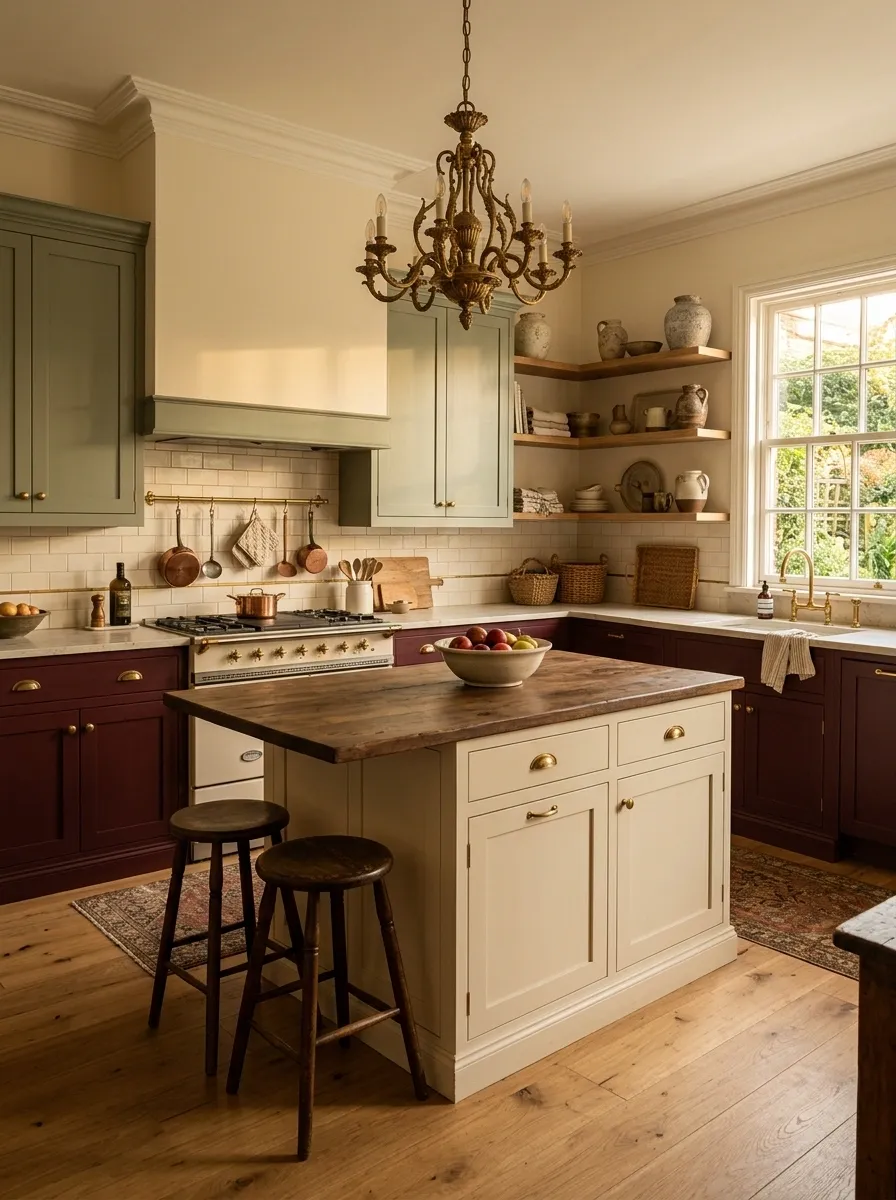
For a kitchen with more theatrical personality, combine burgundy and sage instead of choosing just one statement color.
Use burgundy on the island or lower cabinetry, muted sage on the main cabinets, and warm cream walls. A dark wood table or island top gives the two colors a natural bridge.
Hang an antique chandelier above the central work area to create a strong focal point.
Because the palette is already complex, keep the backsplash and countertops relatively calm. The room should feel layered, not loud.
Small Vintage Kitchen With a Freestanding Cream Refrigerator
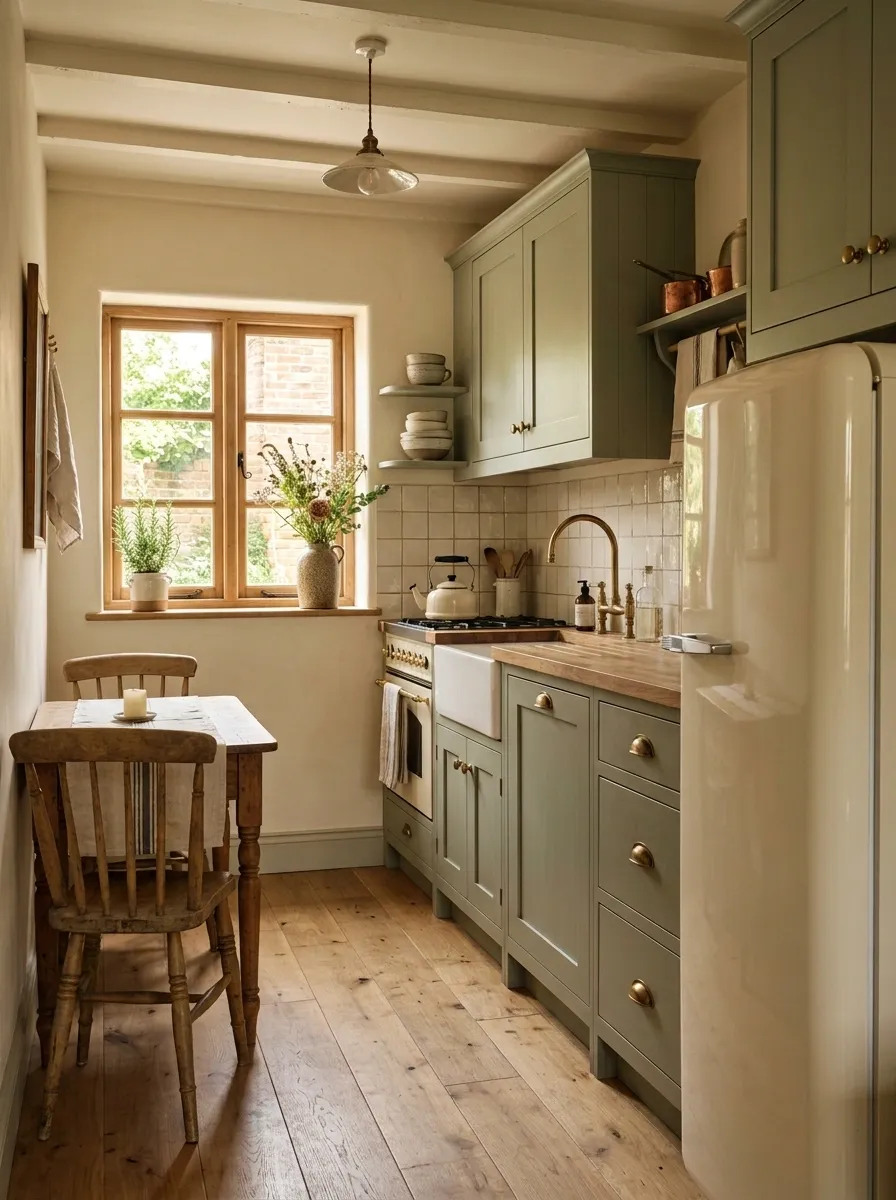
A refrigerator can become the piece that establishes the entire era of a small kitchen.
Use a rounded cream refrigerator as the focal point, then surround it with simple sage, blue, or wood cabinetry. Small square tile, brass or chrome hardware, and a compact wood table complete the composition.
The appliance should feel intentional rather than squeezed into an awkward corner.
In a small room, the palette needs to remain controlled. Two main colors plus wood and metal are enough to make the space feel finished.
Deep Blue Kitchen With Warm Wood and Vintage Pendant Lights
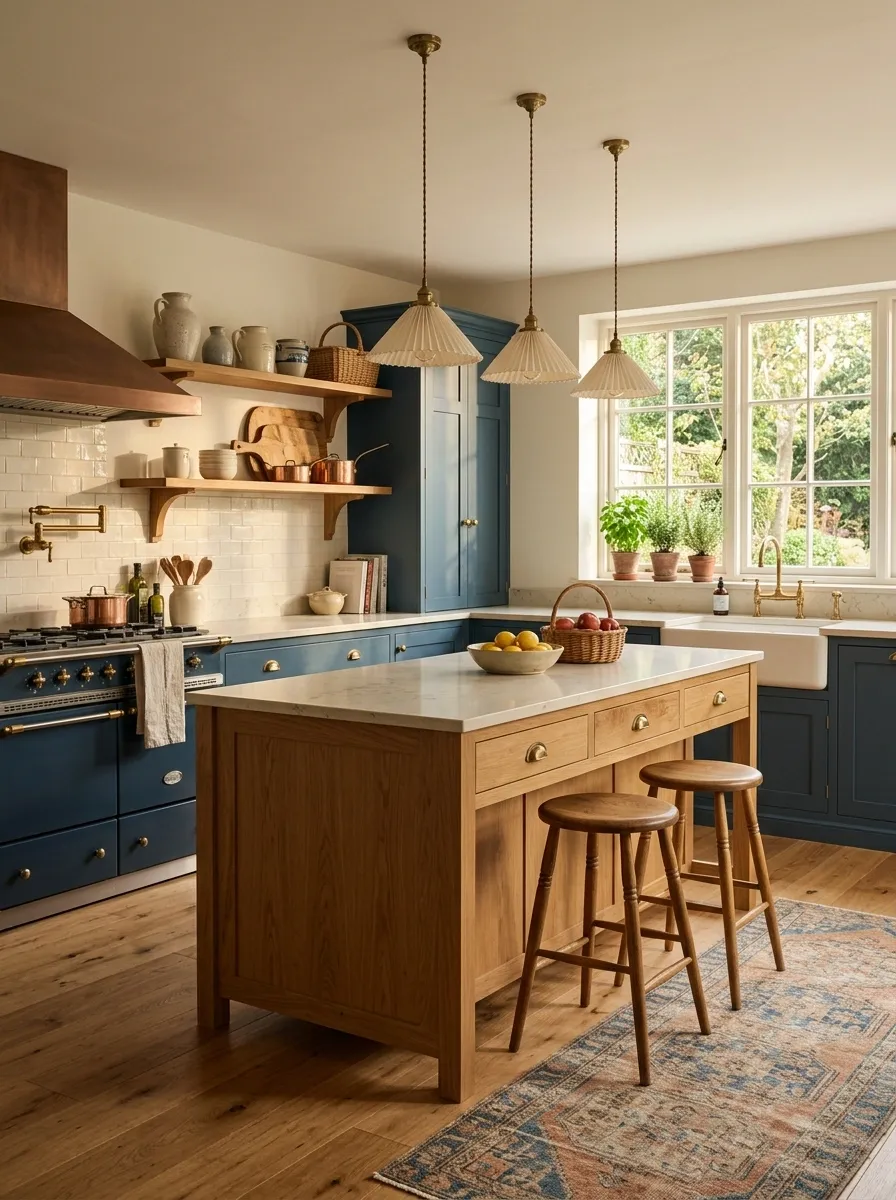
Deep blue cabinetry can feel traditional without becoming overly formal when it’s balanced with plenty of warm wood.
Use a deep muted blue on the cabinets, warm oak for the island, cream stone countertops, and aged brass or bronze hardware. Vintage pendant lights with fabric or glass shades can soften the upper half of the room.
A small patterned runner in faded blue, brown, and cream can tie the floor into the cabinetry.
Keep the walls warm. Bright white would make the blue feel sharper and more contemporary.
Vintage Kitchen With a Built-In Breakfast Nook
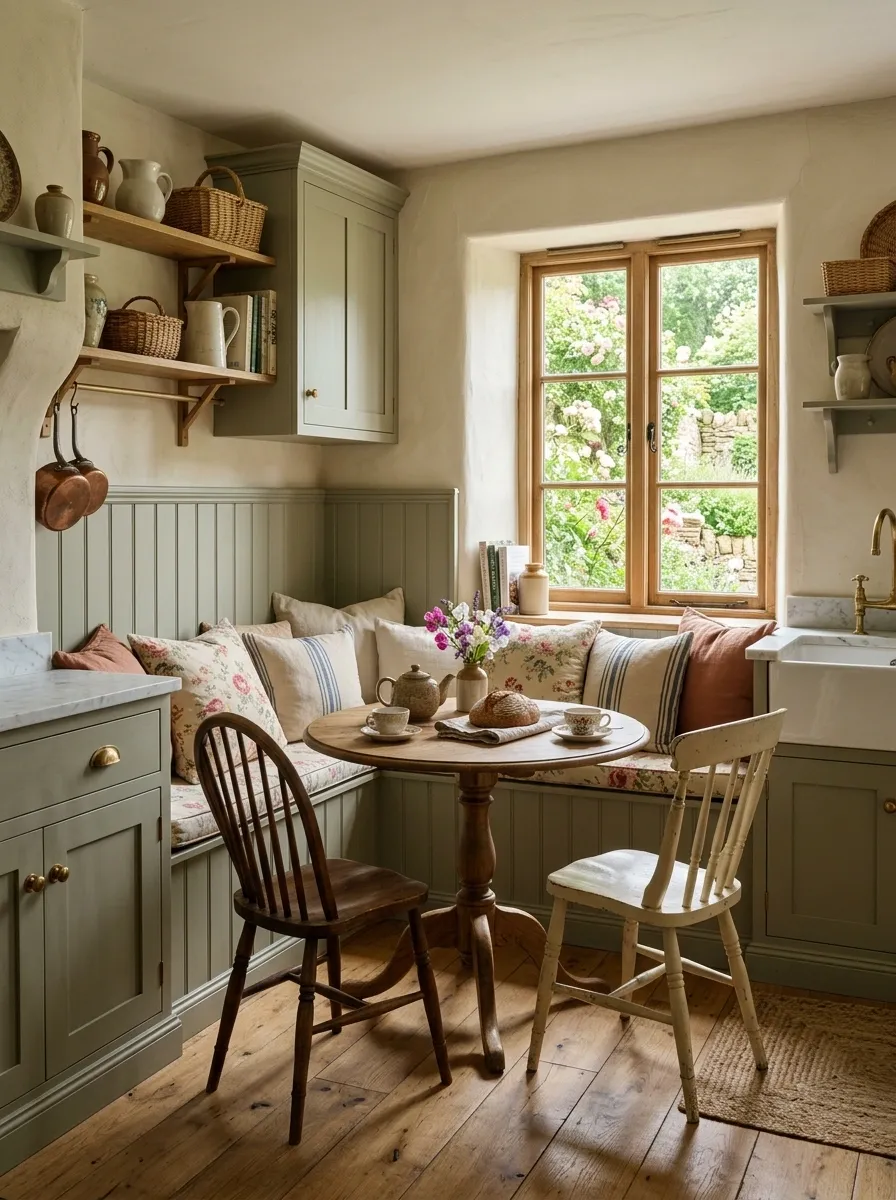
A breakfast nook can make a kitchen feel older because it creates a dedicated little piece of architecture within the room.
Use a built-in bench with painted wood paneling, a small round table, and mismatched vintage chairs. Surround the nook with warm cream cabinetry or muted green cabinets.
Patterned cushions can introduce floral, striped, or checkered fabric without taking over the entire kitchen.
The nook should feel like part of the house, not like a restaurant booth dropped into the kitchen.
Vintage Kitchen With Warm Gray Cabinets and Aged Copper
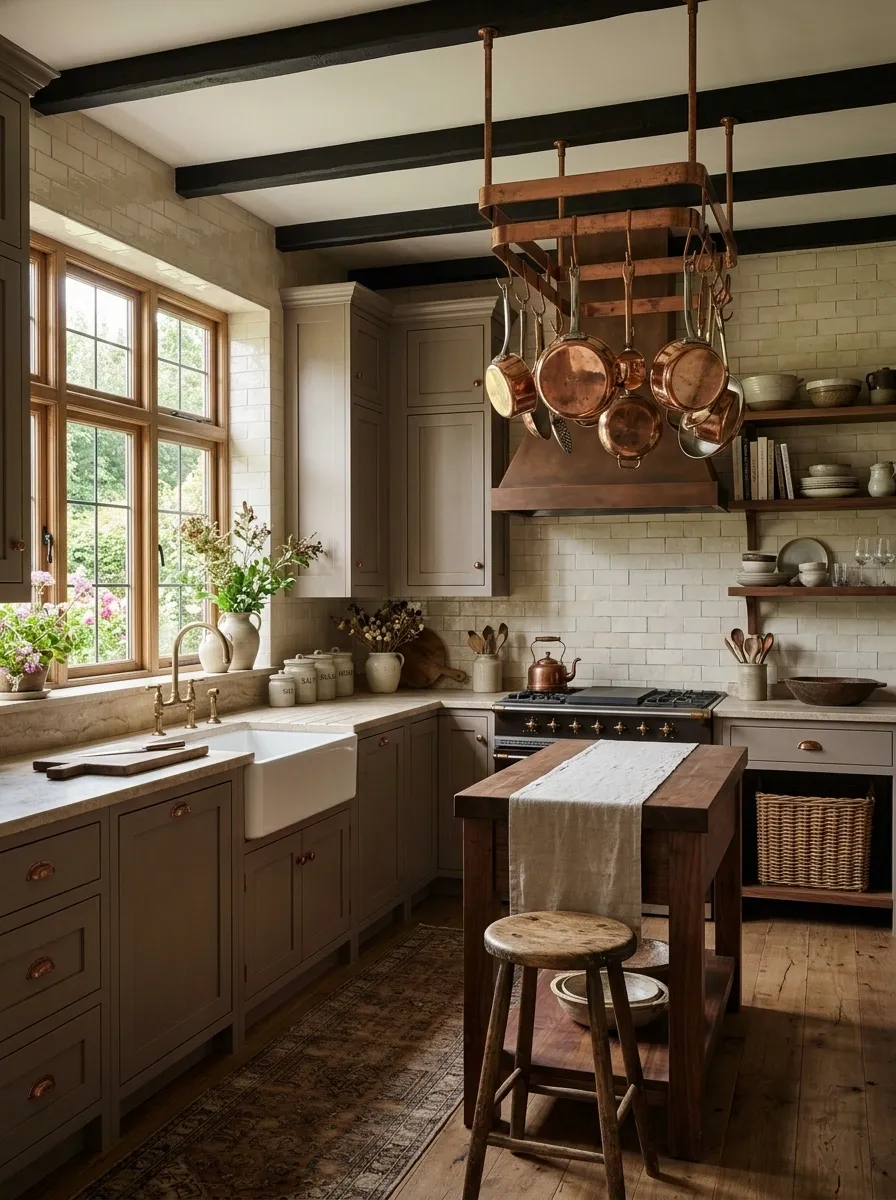
Warm gray can be a beautiful alternative to cream when the room needs a slightly moodier foundation.
Use gray cabinetry with brown or beige undertones, aged copper hardware or lighting, and natural walnut furniture. Cream tile and warm stone prevent the gray from becoming cold.
A copper pot rack or a few visible copper pieces can create a strong vintage reference, but keep the metal concentrated in one area.
This palette works especially well in kitchens with limited natural light because the warm undertones keep the room from feeling icy.
Collected Vintage Kitchen With a Long Wooden Worktable
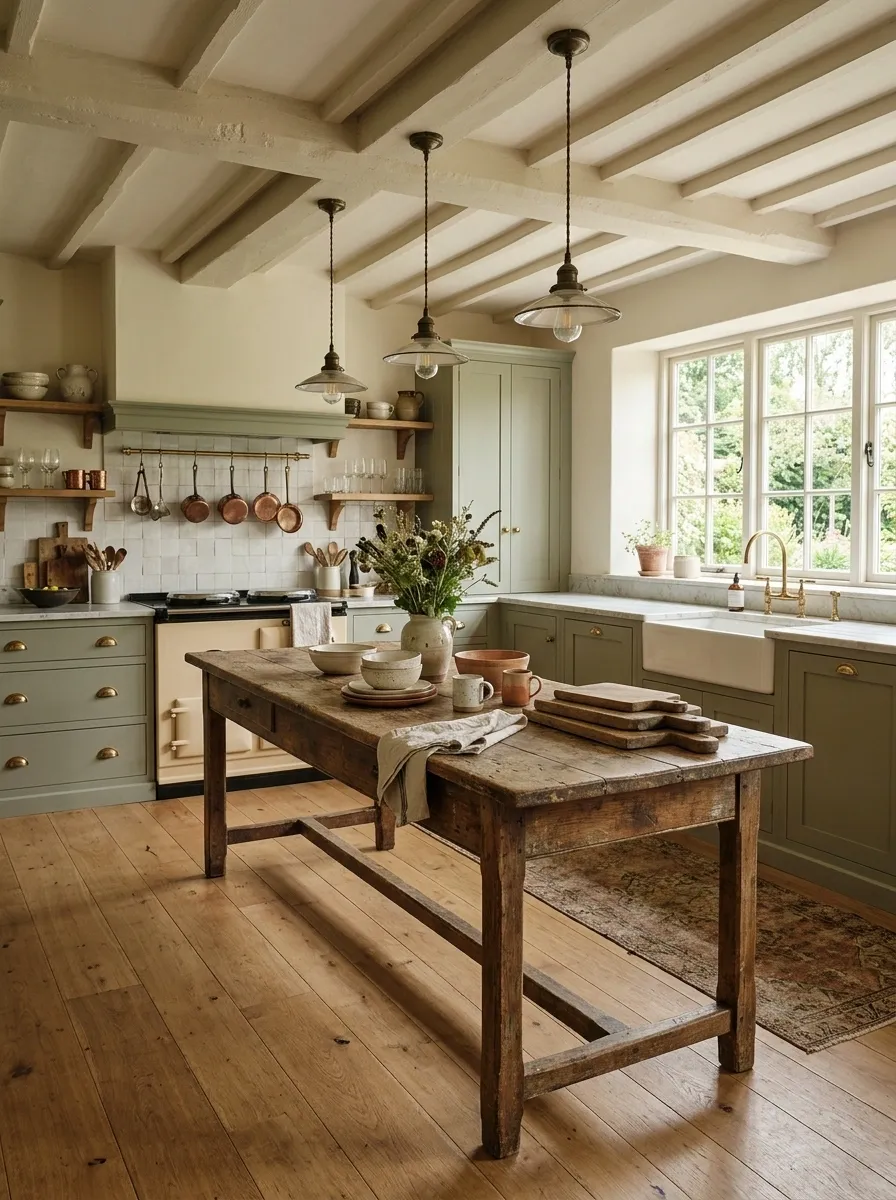
Replace the conventional island with a long old wooden worktable and the entire kitchen immediately feels less standardized.
Use simple painted cabinetry around it, perhaps in cream or muted sage, then let the worktable become the central furniture piece. Its worn surface can hold everyday bowls, cutting boards, and a few ceramic vessels.
Traditional pendant lights above the table reinforce its role as both workspace and gathering spot.
This arrangement works particularly well in larger kitchens because the table prevents the room from feeling like a giant showroom island surrounded by cabinetry.
Soft Green and Cream Kitchen With Vintage Checker Tiles
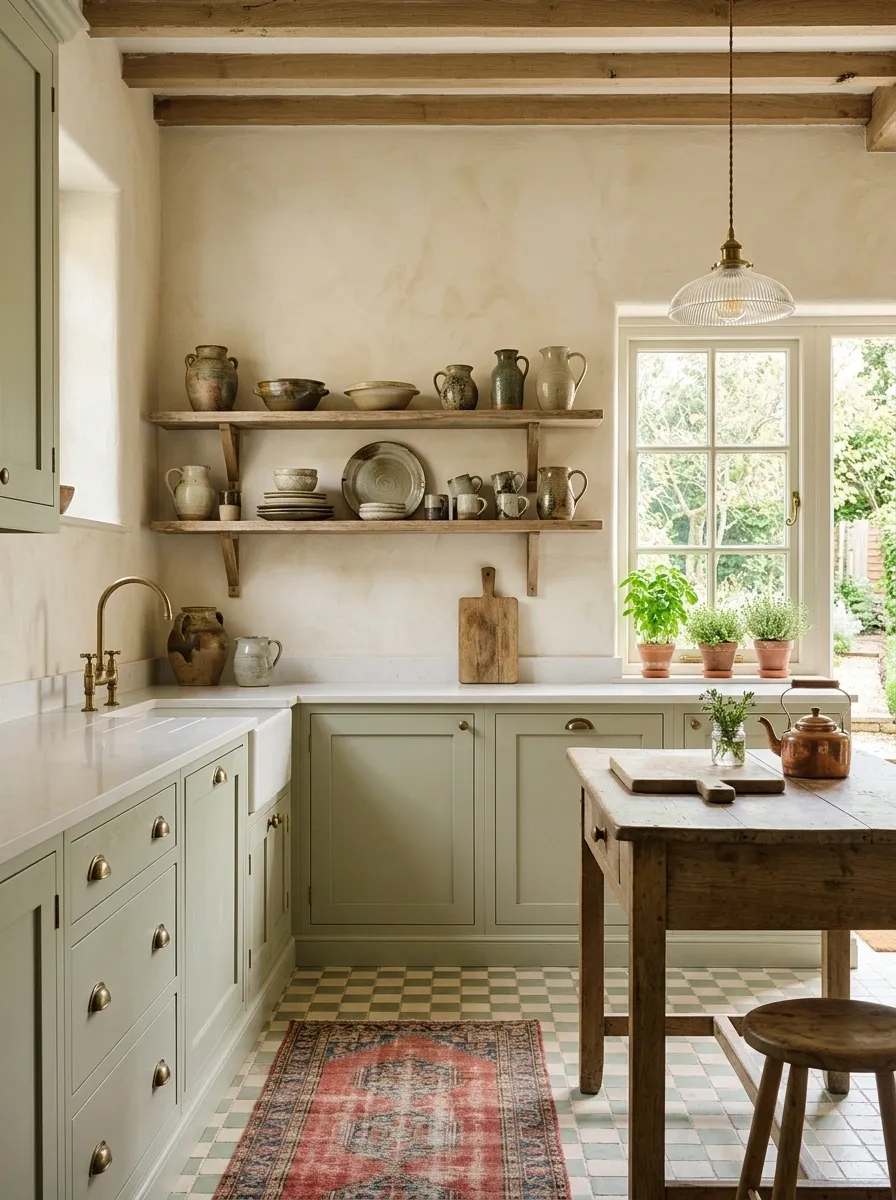
For a gentler vintage look, use pale green cabinetry with warm cream walls and small checker tiles in a slightly irregular finish.
Add natural wood shelves, antique brass hardware, and a simple pendant over the sink or island. The tile can provide the pattern without requiring wallpaper or elaborate accessories.
A small vintage rug in faded red or brown can introduce just enough contrast to keep the palette from becoming too soft.
This version feels especially natural in cottages, older homes, and kitchens with modest proportions.
The Kitchen Should Look Like It Has a Past
A vintage kitchen works when the room feels like it has a history, even if the renovation happened last Tuesday.
The strongest rooms don’t depend on a pile of antique objects. They build character through color, cabinetry, flooring, wood, metal, lighting, furniture, and the small imperfections that keep everything from looking freshly manufactured.
Start with the complete composition rather than shopping for accessories one at a time. A burgundy kitchen needs a different supporting cast than a pale blue cottage kitchen. A tiny apartment kitchen needs different proportions than a farmhouse room with a huge island.
Save the images where the whole room makes sense, not just the ones with the prettiest faucet.
That is where the best vintage kitchen ideas usually begin: one finished room that feels so convincing that the modern world can wait outside for five minutes.