
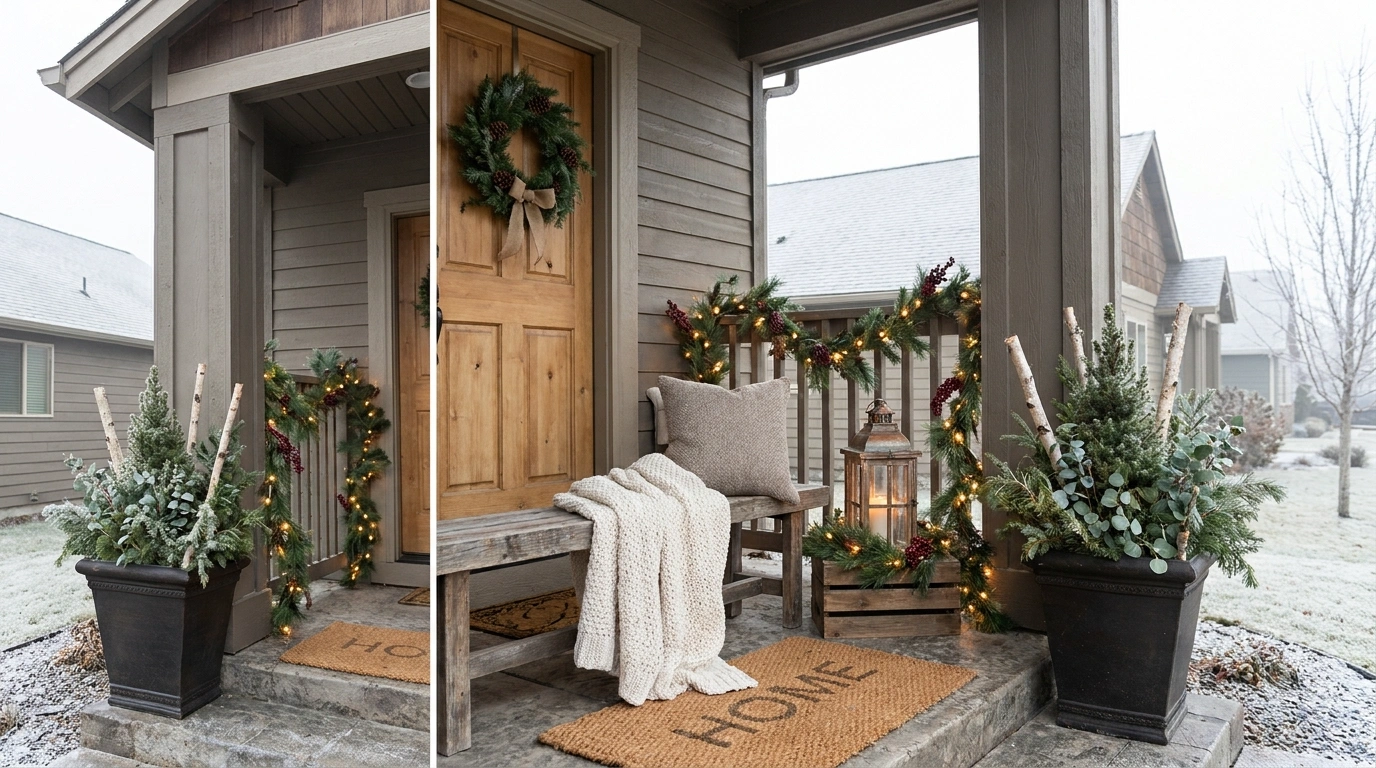
January is an excellent editor. It removes the holiday excuse, exposes every fading bow, and asks why there are still three decorative sleds between the front door and the delivery driver.
A winter porch can keep its character after the festive pieces leave. Evergreens, substantial containers, warm lighting, simple textiles, and a clear entrance can carry the whole season without relying on Santa to explain the arrangement.
The trick is choosing a complete setting that suits the porch you actually have. A deep covered veranda can support seating and a side table.
A narrow exposed doorstep probably needs a good mat and one convincing planter, not a furniture collection with nowhere to stand. Winter weather also makes loose textiles, unstable objects, and trailing cables less charming than they looked while you were shopping.
Winter Doesn’t Mean the Same Weather Everywhere
Plan around your actual exposure: rain, wind, snow, damp shade, or mild dry conditions. Use materials, plants, lighting, and fixings appropriate to that setting.
Fresh greenery and container plants need care. “Seasonal” is not a maintenance instruction, however hopefully the label is printed.
Porch Settings With a Life Beyond December
Rustic Wood Stumps and Lit Lanterns
A pair of natural wood stumps topped with glowing lanterns and wintry greens create an instantly grounded, rustic entrance. Set them slightly off-center to maintain a clear pathway while delivering maximum seasonal warmth.
The sturdy tree-trunk pedestals add wonderful height and organic texture without looking overly manicured. Layering pinecones, berries, and evergreen boughs around the base of each lantern transitions them seamlessly from holiday cheer into deep winter ambiance.
Keep the candles secure inside the glass panes so they weather the breeze safely. A glowing entryway proves that simple, nature-inspired elements can carry your porch stylishly right through the coldest months.
A Single Evergreen Planter Beside a Dark Door
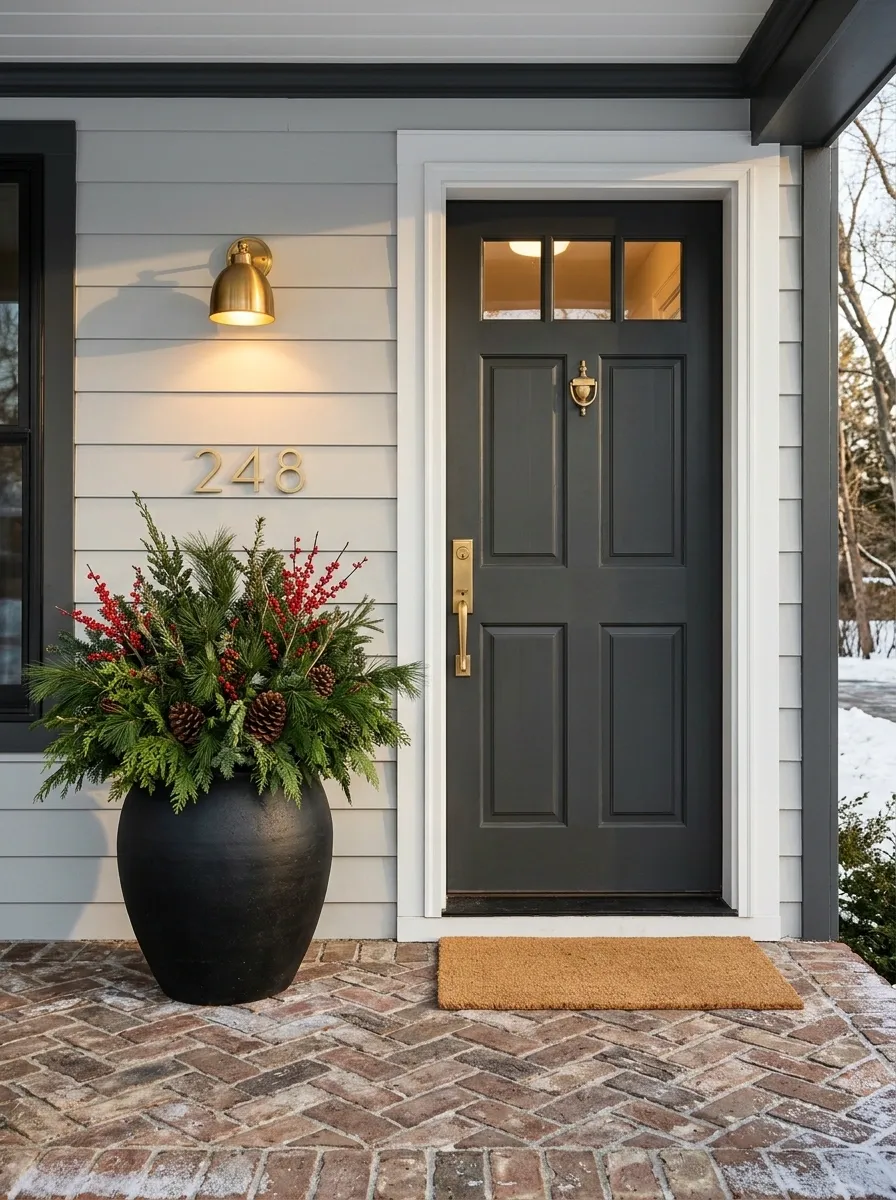
Place one substantial planter on the roomier side of a dark door, with simple evergreen structure and a plain coir-like outdoor mat suited to the location. A clear house number and warm porch light complete the entrance without another cluster of small objects.
The planter should look generous enough to hold the corner without narrowing the approach. Choose planting for the local climate and container conditions. Keep foliage clear of the handle and door swing. One well-sized arrangement can make the entrance feel finished; several tiny pots often look like they arrived separately and are waiting for instructions.
Choose the planter side after opening the door. Include foliage spread in the footprint.
Green Velvet Bow and Classic Wreath
A rich green double door framed by a lush, textured wreath and a sweeping velvet bow makes a timeless statement. Let this classic combination anchor your entryway with understated elegance that easily outlasts the holiday season.
A pair of neat leather boots placed casually at the threshold adds a lived-in, welcoming charm. Flank the entrance with simple potted evergreens to complete the symmetrical look without cluttering the walking space.
Secure the wreath firmly using a heavy-duty hanger designed for your door material. This sophisticated setup requires minimal upkeep while keeping your porch looking polished and inviting long after the festivities end.
A Covered Bench Porch With Green Cushions and Closed Storage
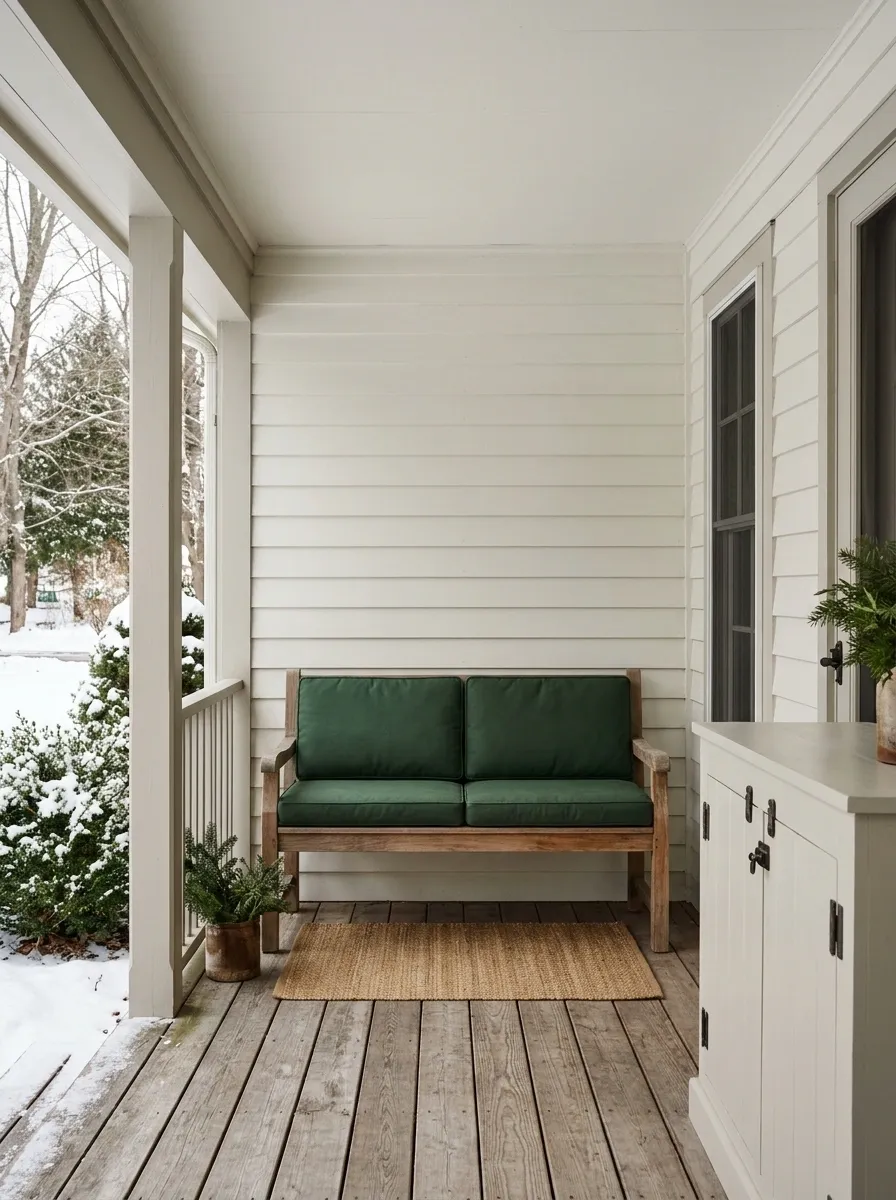
A simple bench sits against the wall beneath a covered porch, with weather-appropriate green cushions and closed storage nearby for items that shouldn’t stay exposed. A plain rug or mat defines the sitting area only where it remains stable and suitable.
The bench needs enough shelter to be useful, not merely photogenic. Keep textiles stored dry when conditions call for it. A cushion permanently absorbing winter weather is not a cozy touch; it’s a damp object with ambitions. Leave the entrance route separate from the seat’s leg space so arrivals don’t require climbing over the furniture.
Comfortable seat and clear leg space.
A dry storage place for textiles.
A Narrow Step With a Door Wreath and Nothing to Trip Over
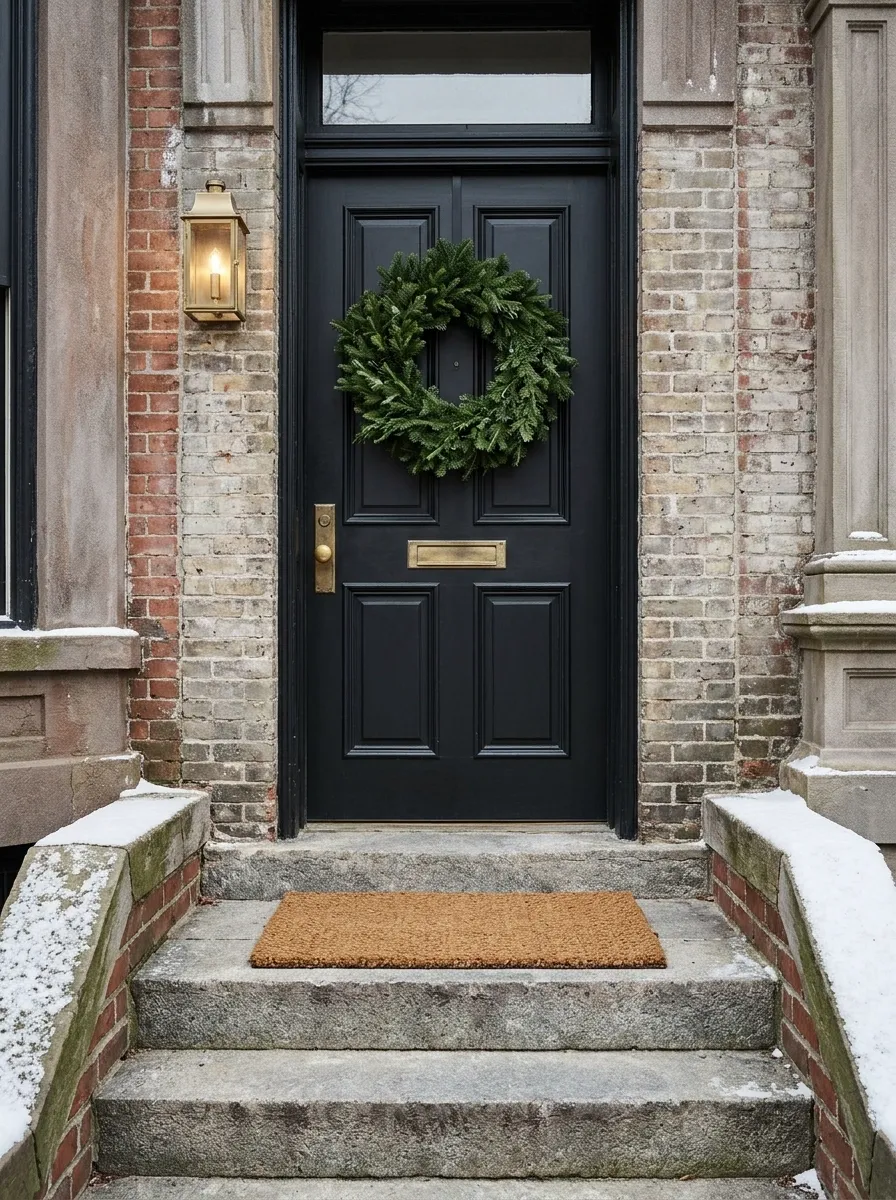
On a narrow doorstep, let a restrained wreath and a suitable fixed porch light carry the decoration. Keep the mat stable and the step edges visible, with any planter placed only where the approach genuinely allows.
A small entrance doesn’t need to pretend it’s a veranda. Concentrating detail on the door preserves the useful floor area and makes deliveries less theatrical. Use an attachment suited to the door and conditions without damaging the finish or obstructing its operation. The wreath can be evergreen and simple enough to remain after the holiday ornaments have been retired.
When the floor is all approach space, use the door and suitable wall-mounted elements rather than adding obstacles.
A Pair of Tall Planters at a Broad Entrance
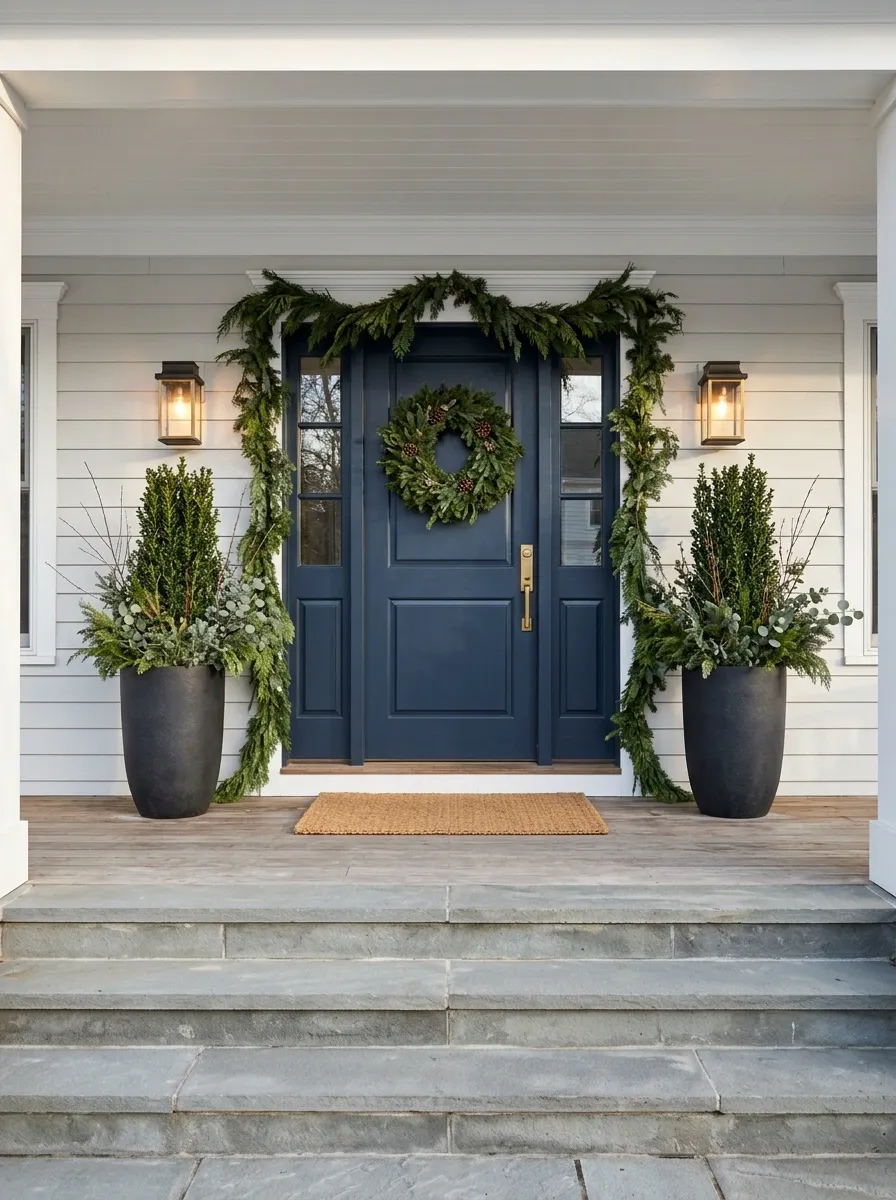
Tall matching planters can frame a broad door, with a simple mat and restrained lighting keeping the center clear. Use related evergreen forms rather than several competing textures, and keep the door decoration modest.
Symmetry is useful only if both sides have enough space. Check the door leaves, handles, and the route used by people carrying bags. Choose stable containers appropriate to exposure and plant them for the site. Two generous planters can establish the entrance cleanly; matching bows, matching lanterns, and matching miniature trees are optional additions, not legal requirements.
Judge symmetry after plotting actual door travel.
A Timber-Chair Porch With a Small Winter Side Table
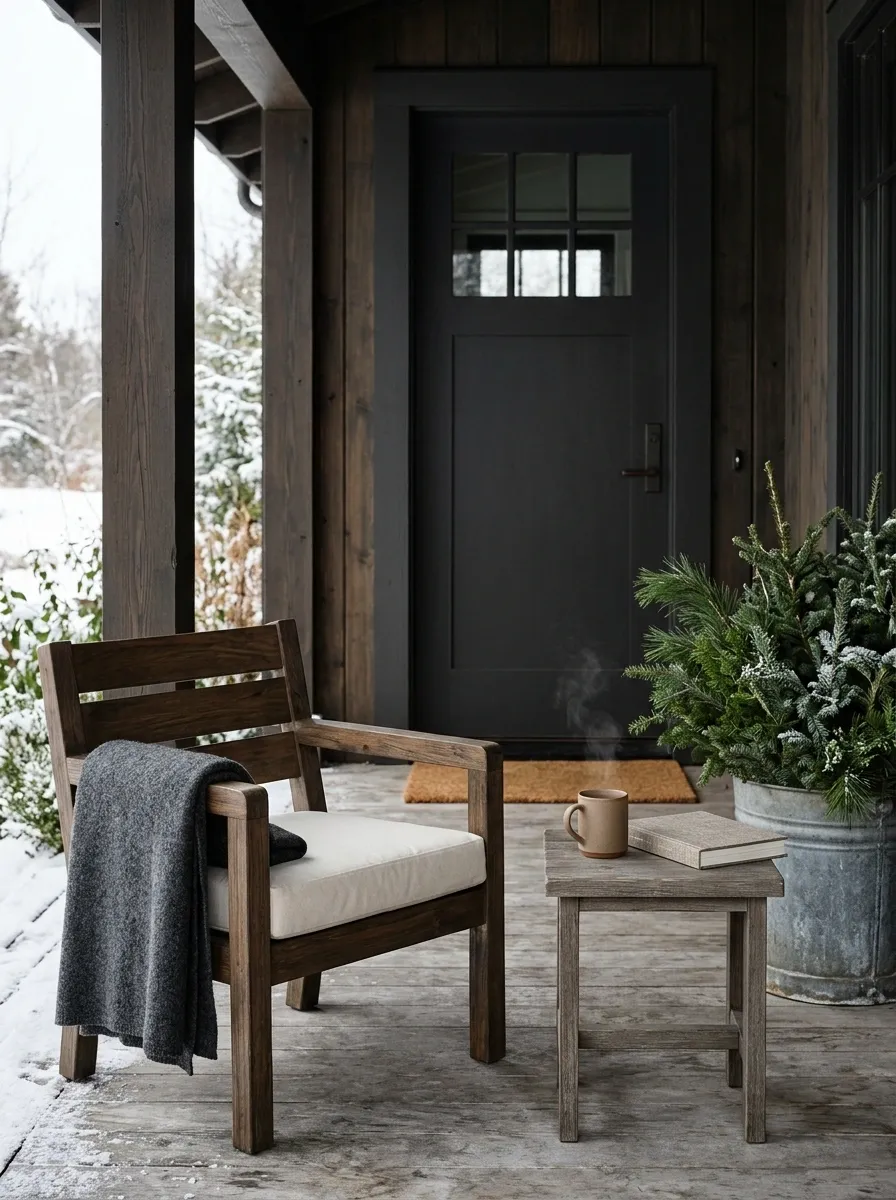
A sturdy outdoor chair and small side table create a useful sheltered corner, with an evergreen container nearby and a plain door behind. Bring out a suitable cushion or throw only when the setting can keep it comfortable.
The table needs a real job: a drink, a book, or a temporary landing spot. Don’t cover it with decorative objects and then wonder where the mug goes. Keep the furniture outside the route to the door, and check that the seat position is genuinely sheltered from the prevailing weather. A winter sitting corner should invite use, not demand optimism.
The sitting area needs somewhere for the person using it, not only a surface for styling.
A White Porch With Dark Containers and Loose Evergreen Shape
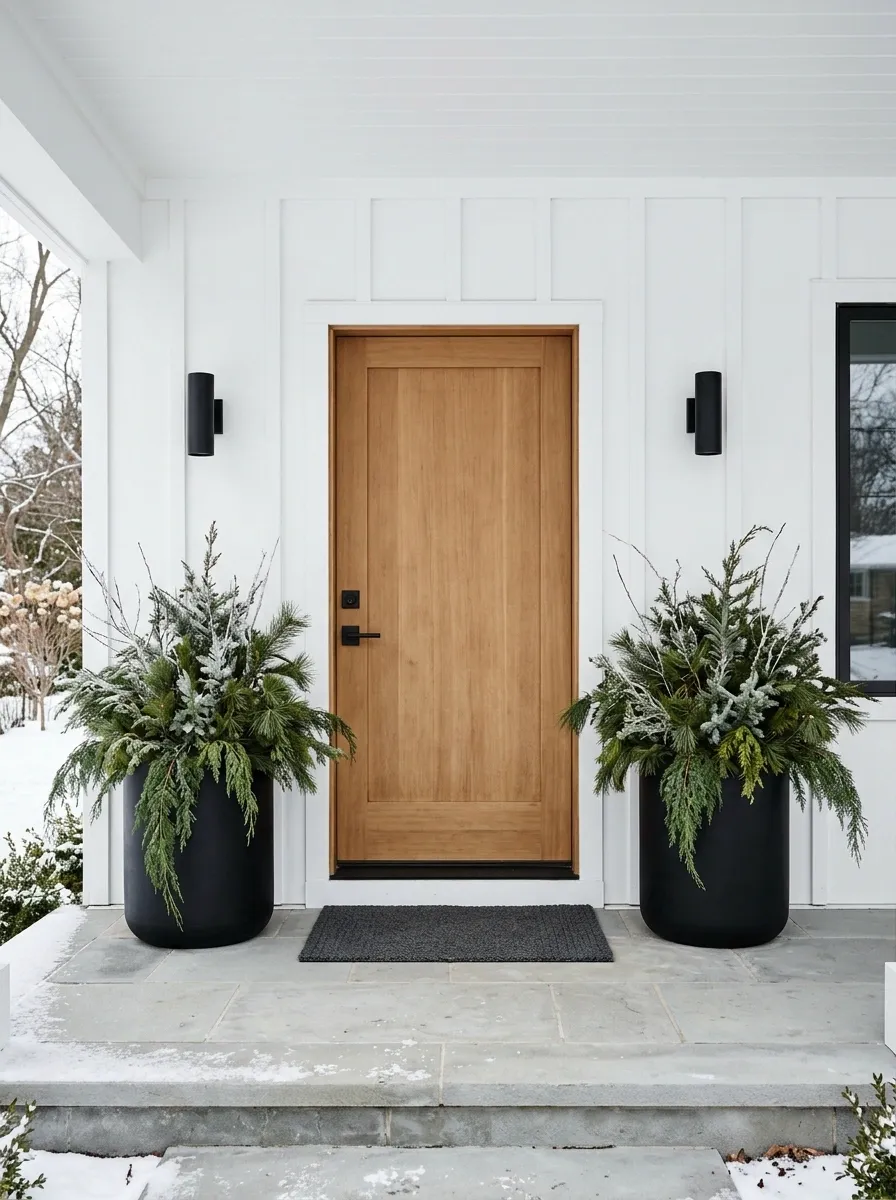
Dark containers give a white porch a grounded base, with evergreen planting providing movement beside a plain door. Keep the mat simple and use the existing architectural lines rather than hanging decoration from every rail.
The contrast can do most of the work. Choose foliage and plants suited to local winter conditions, and avoid overfilling containers until every branch projects into the passage. A slightly looser arrangement can feel natural without becoming untidy. The porch should look intentional from the path and remain equally convincing when someone actually tries to get through it.
Dark pots against pale architecture can carry the entrance without extra rail decorations.
A Brick Porch With Natural Greenery and a Plain Woven Mat
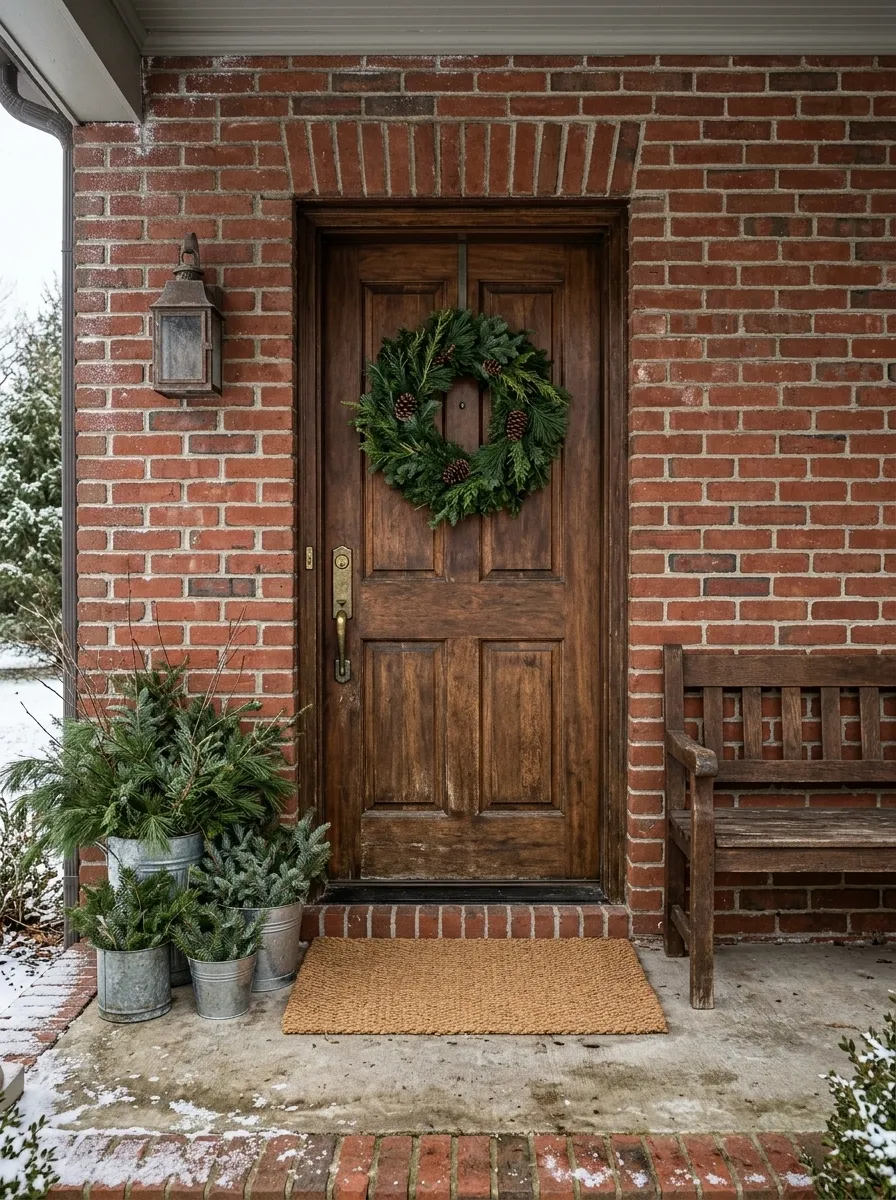
Warm brick provides enough texture for a simple evergreen arrangement, a plain mat, and restrained door decor. Use a container finish that sits comfortably beside the mortar and keep seating, if any, uncomplicated.
The brick doesn’t need to be decorated into submission. Avoid adding several patterned textiles and rustic props on top of a surface already full of variation. Choose greenery for the conditions and keep fallen material off the route. A simple porch can feel rich because the architecture supplies the detail, not because every available ledge has been assigned a seasonal object.
Count the brick as texture.
Keep the mat and container finish plain if the wall already carries strong variation.
A Lantern Group in a Deep Sheltered Recess
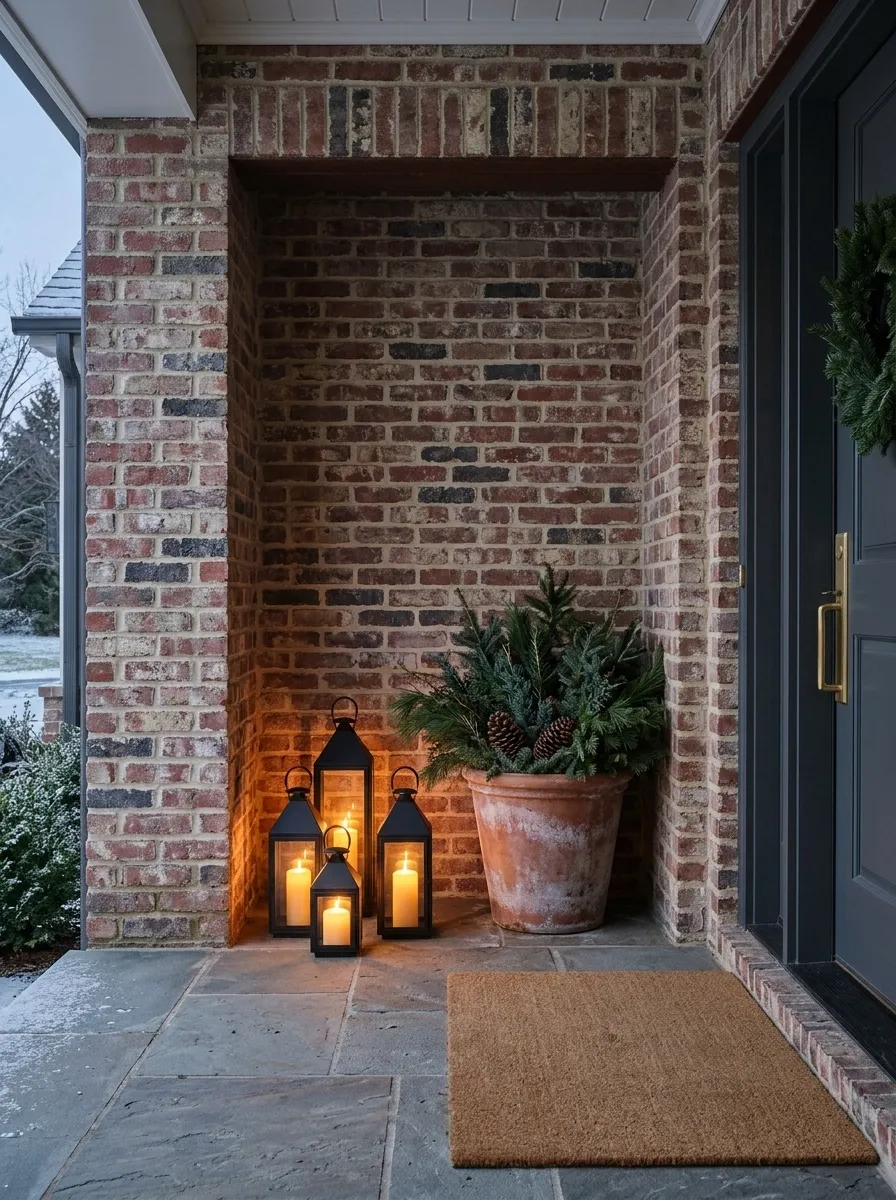
Group suitable outdoor lantern-style lights in a deep recess beside the entrance, with one planted container and a clear mat completing the setting. Keep the lanterns outside the route and choose safe lighting products appropriate to the exposure.
The recess gives the group a defined home. Without that boundary, several floor lanterns can look like objects abandoned during a power cut. Use light sources and installation suited to the setting, and keep cables or controls out of the passage. The group should provide a warm point of interest without becoming an obstacle you navigate in the dark.
Use a recess or side zone. Keep the approach and step edges clearly lit and unobstructed.
A City Porch With a Deep-Colored Door and a Simple Garland
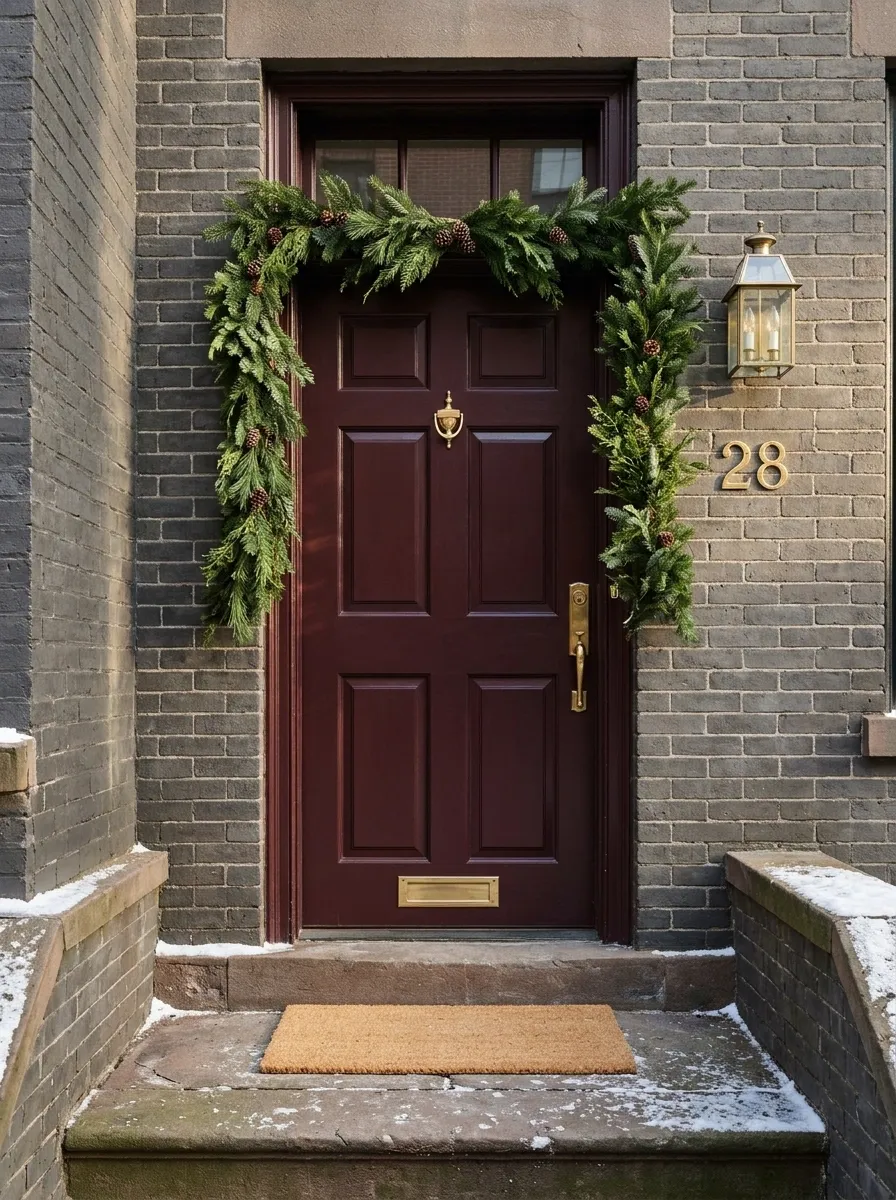
A deep green or burgundy door can carry a city porch, with a restrained garland around the upper frame and a plain mat below. Keep the side walls quiet and the house number visible.
The garland needs secure, suitable fixing without obstructing handles, seals, lights, or the door’s movement. Keep it proportionate to the opening rather than building a foliage tunnel. In a compact entrance, one continuous line often feels more deliberate than many separate hanging objects. Remove tired greenery when it stops looking intentional. Winter decor doesn’t improve through denial.
Door movement, handle, light, number, and delivery access all stay clear of the greenery.
A Coastal Winter Porch With Blue-Gray Seating and Pale Containers
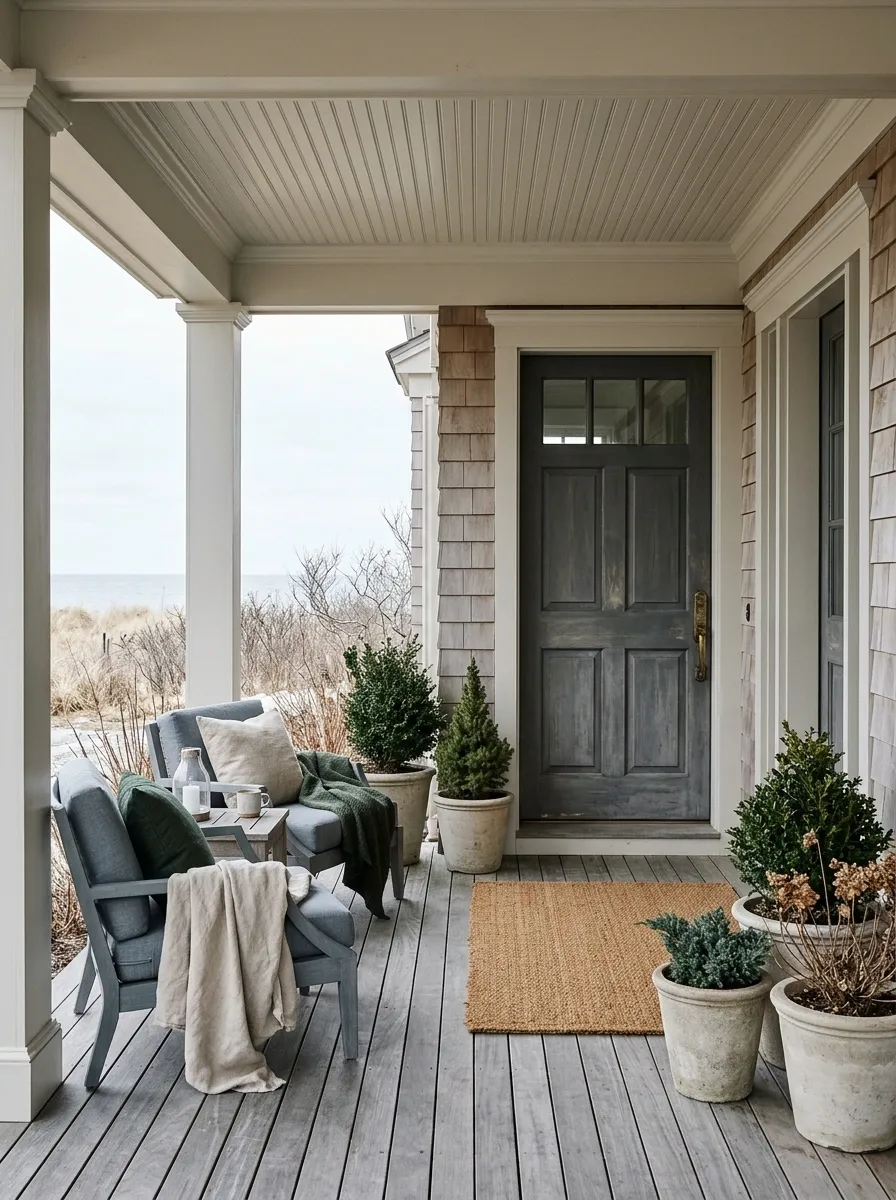
Blue-gray outdoor seating and pale containers give a sheltered porch a quiet winter palette. Add evergreen structure suited to the exposure and keep textiles plain, with a simple mat linking the seating to the door.
The coastal direction comes through color and material, not a collection of anchors that have never encountered a boat. Choose furniture and finishes for the actual weather, particularly wind and moisture exposure. Keep the sitting arrangement compact enough that the entry still reads clearly. A restrained palette can feel seasonal without borrowing red ribbon to prove it knows what month it is.
Seating color.
Container and mat connection.
A Farmhouse Porch With a Plain Bench and One Large Wreath
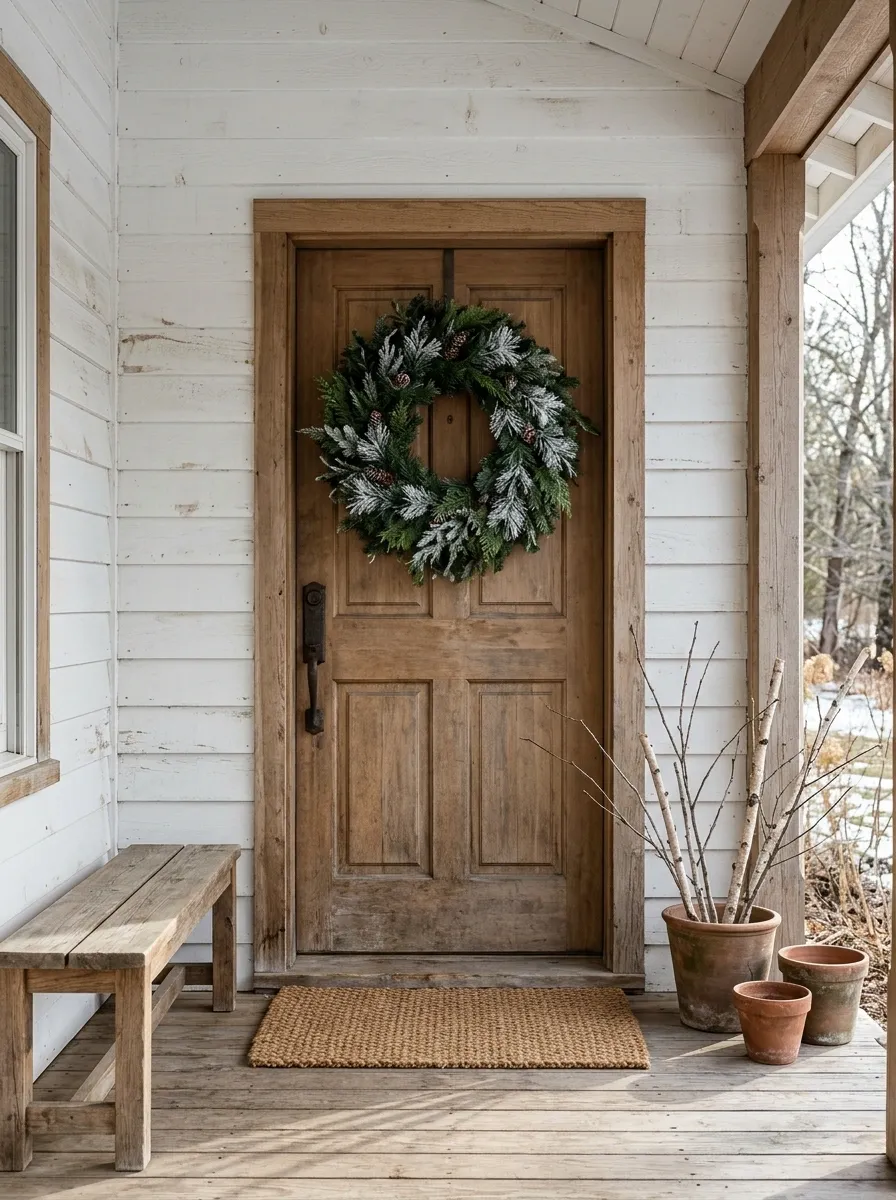
A plain outdoor bench and one substantial wreath can give a farmhouse porch enough winter character. Keep the surrounding containers restrained, use a practical mat, and let timber or painted architecture provide most of the texture.
The bench doesn’t need a pile of themed cushions to explain itself. Leave space for someone to sit or put down a bag, and store textiles dry when needed. Choose the wreath size around the door rather than around how impressive it looked in the shop. The entrance should still look like a door, not foliage with a handle somewhere inside.
A bench covered with permanent decor has become a shelf at an inconvenient height.
A Modern Porch With a Linear Planter and Clear Lighting
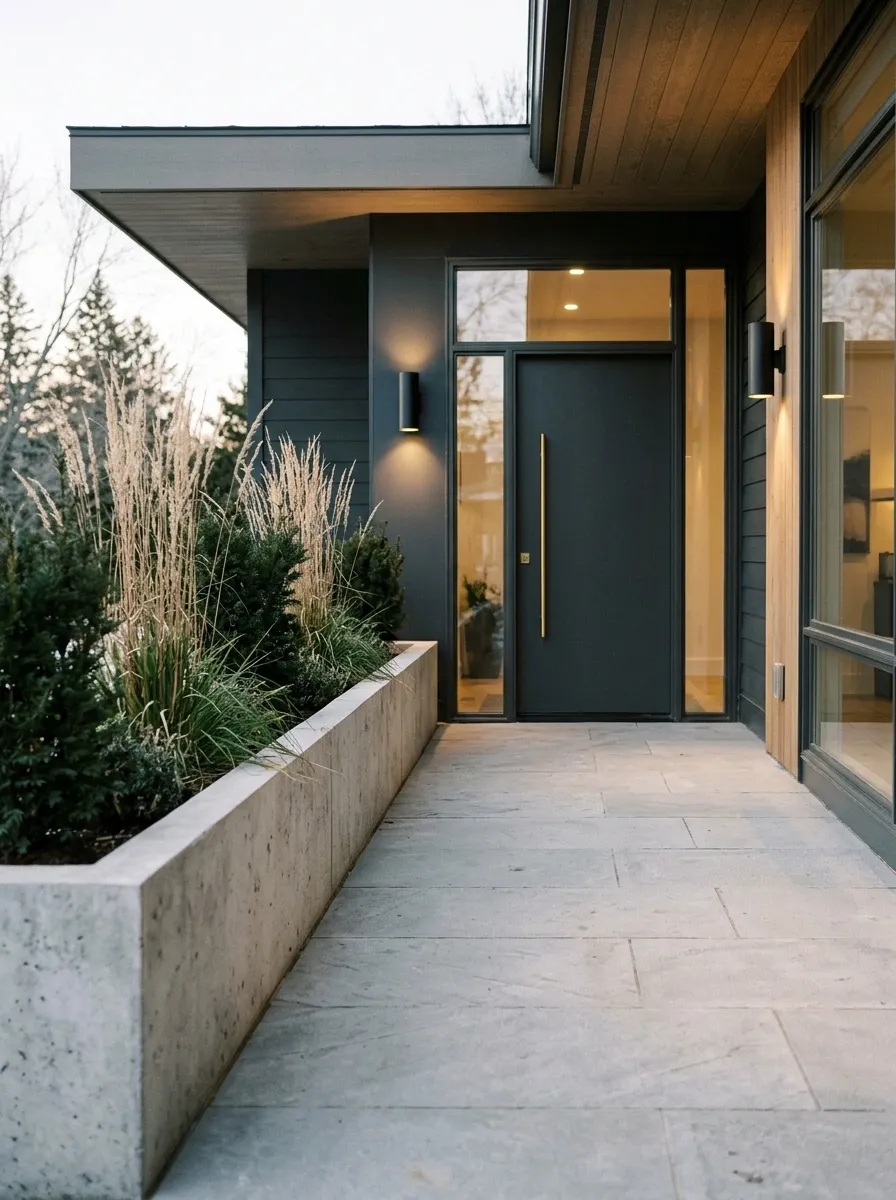
A long planter can define the side of a modern porch, with restrained planting, a plain door, and suitable fixed lighting keeping the entrance clear. Use the planter as one continuous gesture rather than adding separate pots along every edge.
The length should suit the porch without reducing the usable approach. Plan drainage, weight, stability, and maintenance access before choosing the finish. Keep the planting shape simple enough to relate to the architecture. Minimalism works better when the few objects are properly considered, rather than when most of the useful ones have simply been removed for the photograph.
Plot the clear route beside it, including mature foliage.
A Small Porch With a Wall Basket and an Open Floor
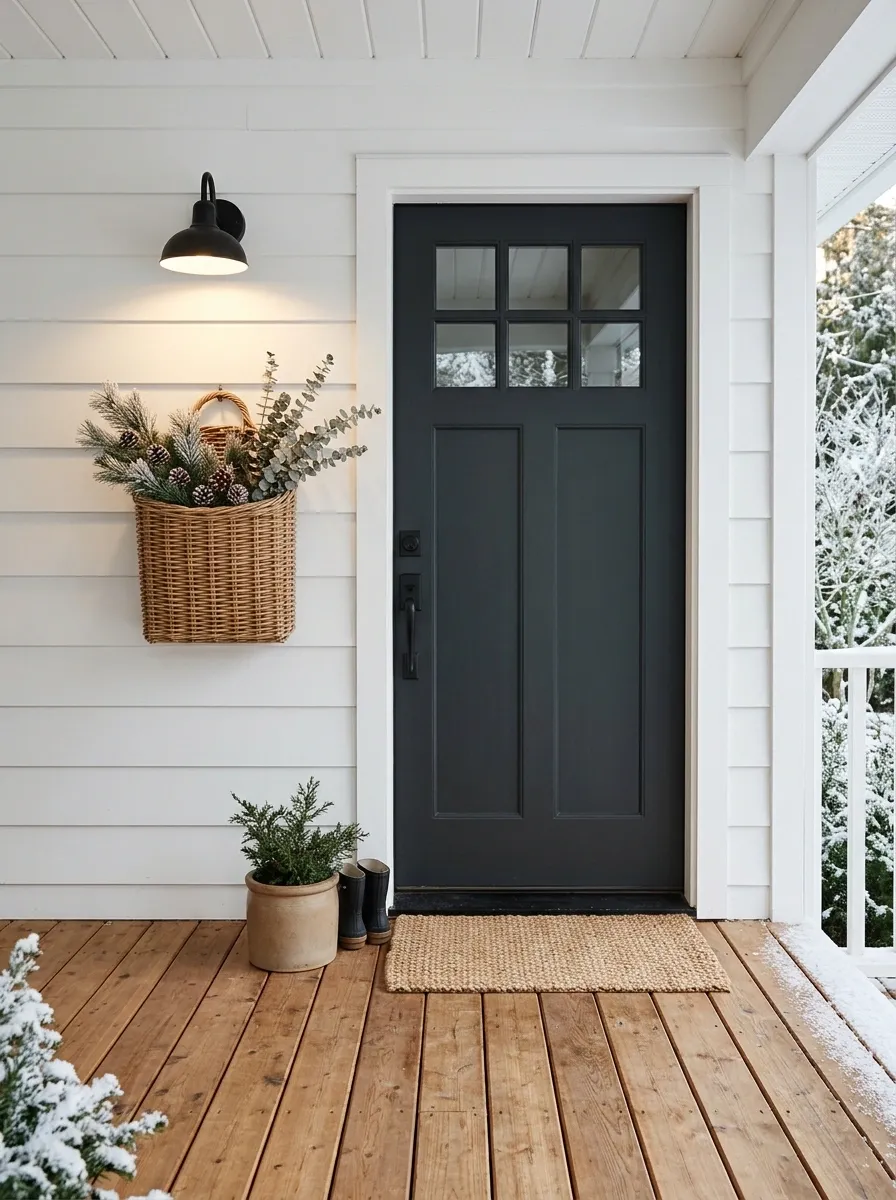
A securely fixed wall basket can hold a modest seasonal arrangement beside the door, leaving the floor open for arrival. Pair it with a plain mat and suitable porch lighting, keeping the rest of the wall uncluttered.
Choose materials and fixings for the exposure, and protect the wall from moisture where needed. The basket should not project into head or shoulder space along the route. This is a useful direction when the doorstep cannot support containers comfortably. Putting decoration on the wall is sensible; putting it exactly where a bag or coat catches is merely relocating the problem vertically.
Wall decor still occupies space. Test the route with normal bags and outdoor clothing.
A Winter Porch With a Boot Zone and Closed Bench Storage
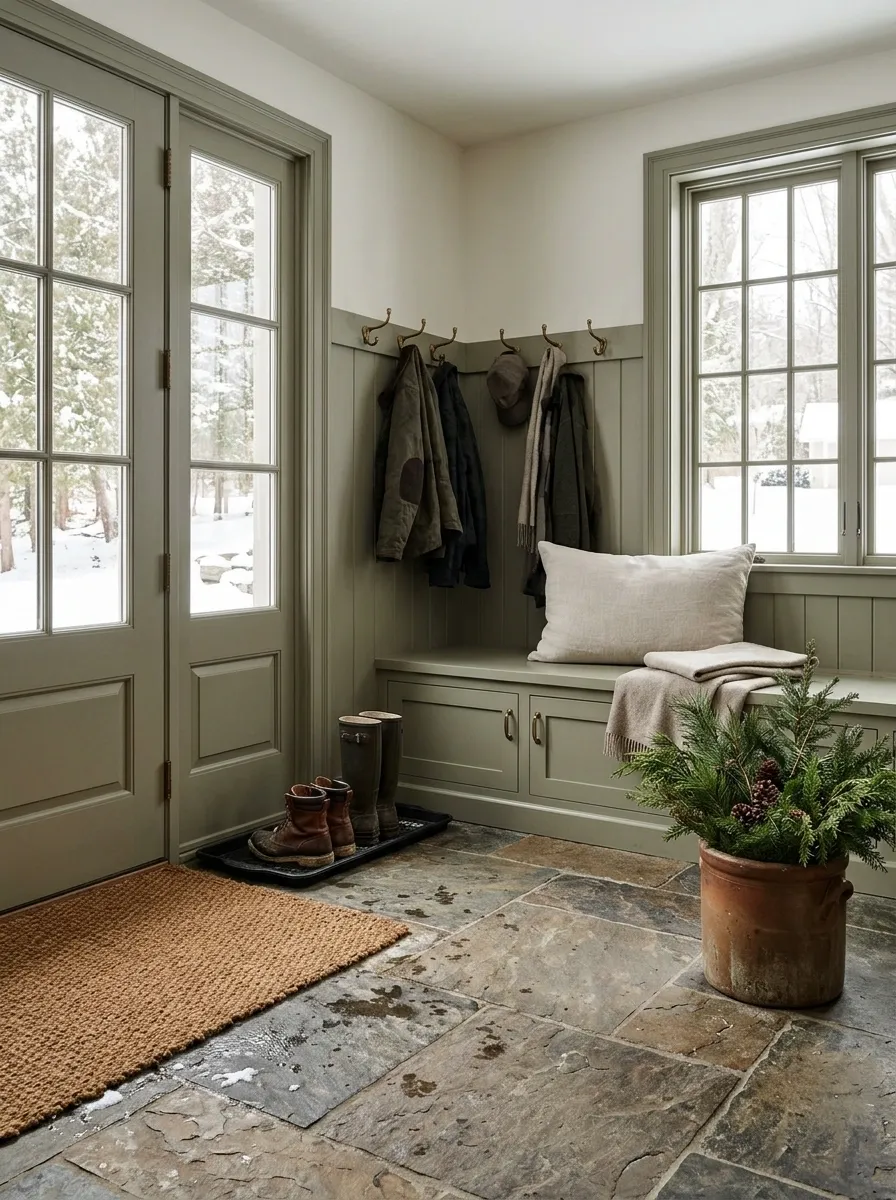
A contained boot area sits beside closed bench storage, with a simple evergreen arrangement keeping the practical porch from feeling purely utilitarian. Durable surfaces and a stable mat define the wetter arrival edge.
Keep the bench’s storage appropriate to the items inside and allow damp footwear to dry rather than sealing it away immediately. The planting belongs outside the changing area, not between the seat and the boots. A practical porch can look considered without pretending nobody ever comes home wet. Winter has a fairly reliable record of disproving that fantasy.
Mat, boot tray, and cleaning access.
Textiles and supplies that need protection.
A Veranda With Paired Chairs and a Shared Winter Table
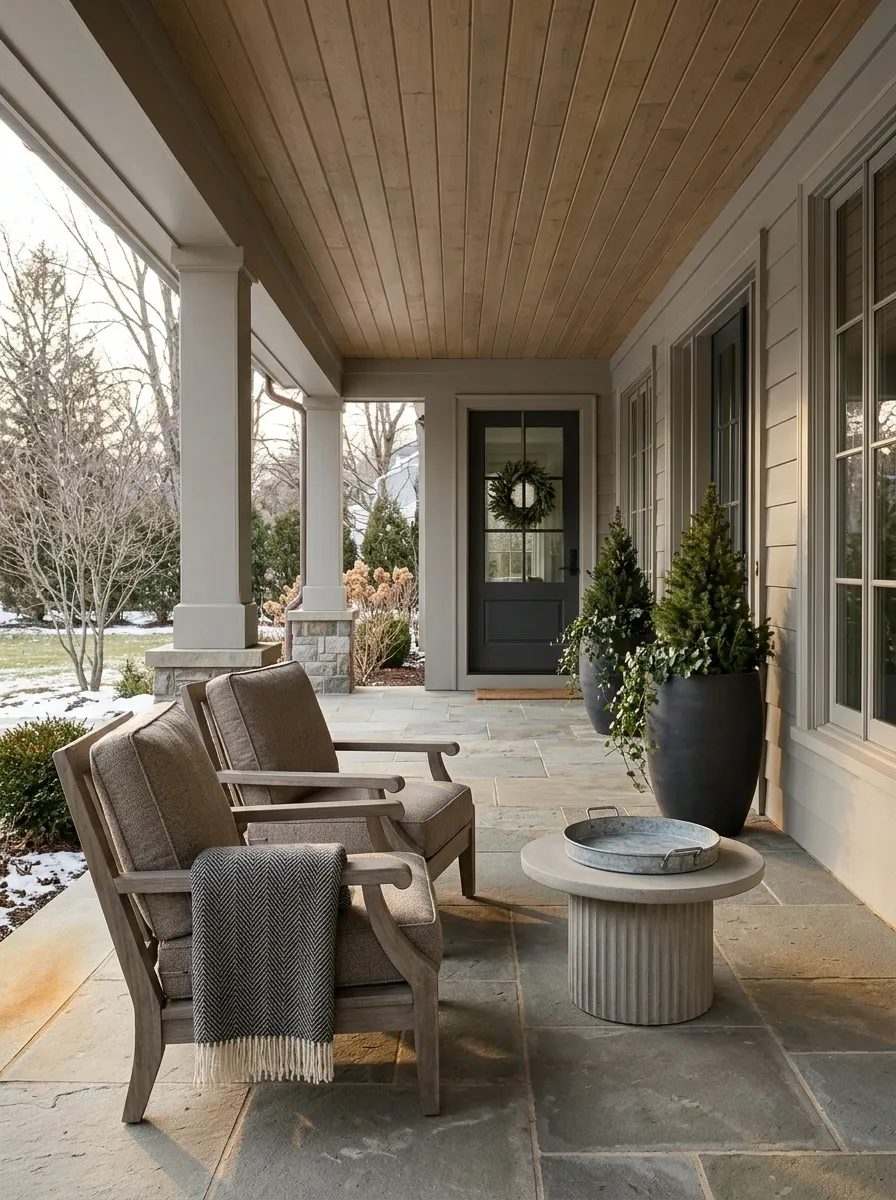
A deep covered veranda can support paired outdoor chairs with a small shared table, leaving a separate clear route to the door. Use a restrained evergreen container to anchor the seating and keep textiles available only when conditions suit them.
The table should be reachable from both seats without requiring anyone to lean across a decorative arrangement. Check wind exposure before choosing lightweight objects. The seating can remain useful in milder winter conditions while still looking composed when empty. A veranda is allowed to be a place to sit, rather than a seasonal display people admire from indoors.
Draw occupied chairs and leg space before marking the route to the entrance.
A Porch With Bare Branches and Restrained Evergreen Structure
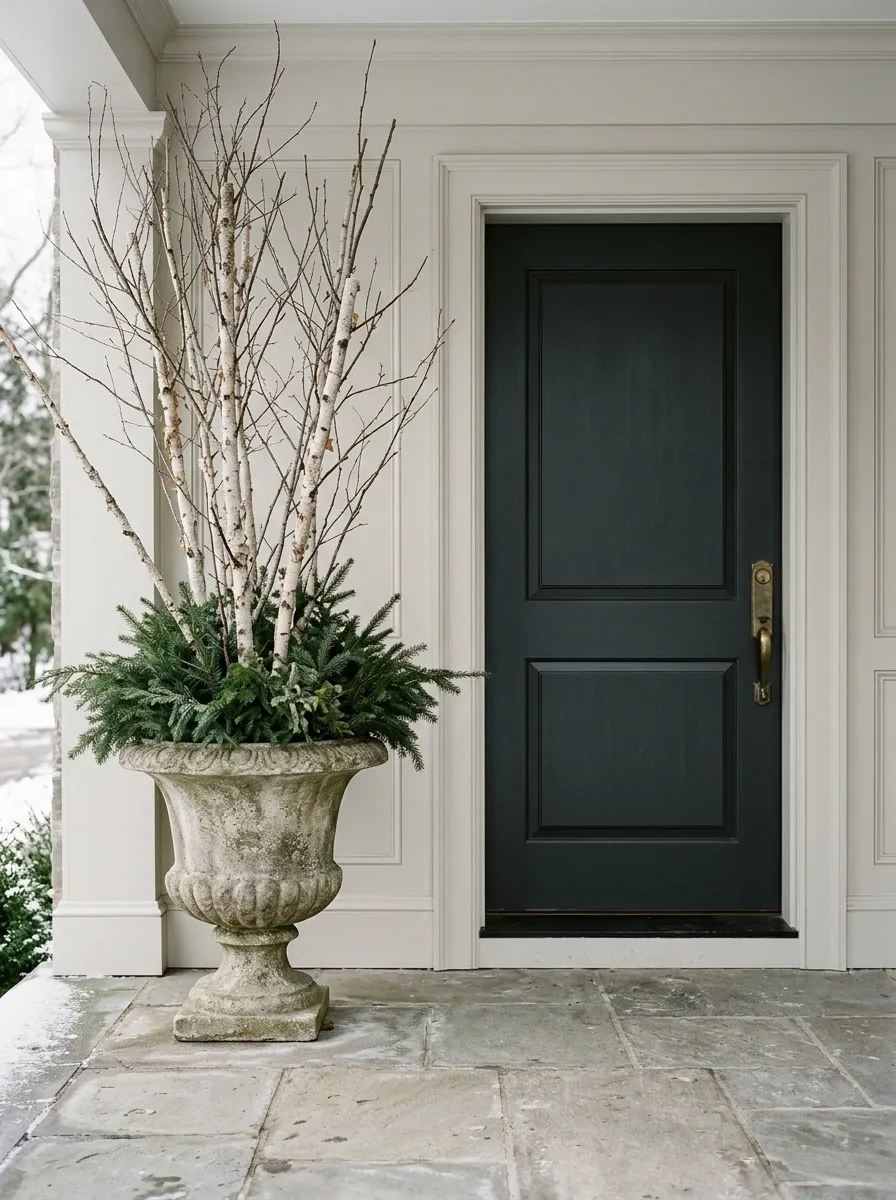
A substantial container can combine suitable bare branches with a simple evergreen base, giving a porch height without filling the floor with objects. Keep the door decoration quiet and let the arrangement establish the seasonal outline.
Secure the contents for the conditions and keep projecting branches away from faces, handles, and the route. Use materials that remain appropriate outdoors and inspect them as weather changes. The branching shape should look deliberate rather than like garden clearance waiting for collection. One clear arrangement is enough; the rest of the porch can remain usefully ordinary.
Check the arrangement’s full spread.
The container footprint doesn’t show where branches project into the arrival route.
An Enclosed Porch With a Window Bench and Winter Textiles
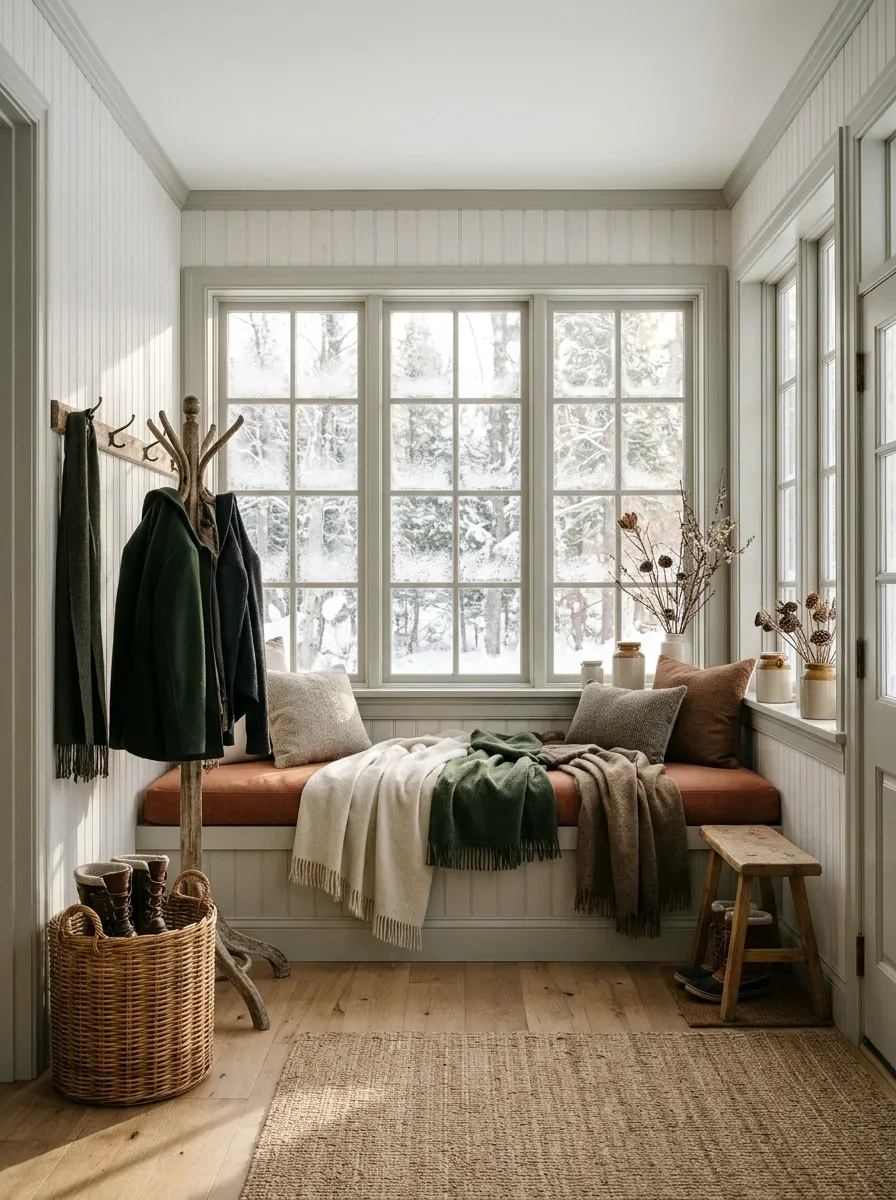
An enclosed porch can use a window bench, simple storage, and warmer textiles to create a useful arrival room. Keep the window area bright and choose a muted green or rust palette that works after holiday decorations leave.
Match materials to the room’s actual temperature and moisture conditions; enclosed doesn’t always mean heated or dry. Leave enough space for coats and bags without covering the seat. The textiles should make the room comfortable, not become a soft obstacle between the door and the house. Keep the strongest color on a replaceable cushion or throw.
Choose fabric, storage, and plants for the porch’s actual temperature, light, and moisture.
A Side-Entry Porch With a Clear Delivery Shelf
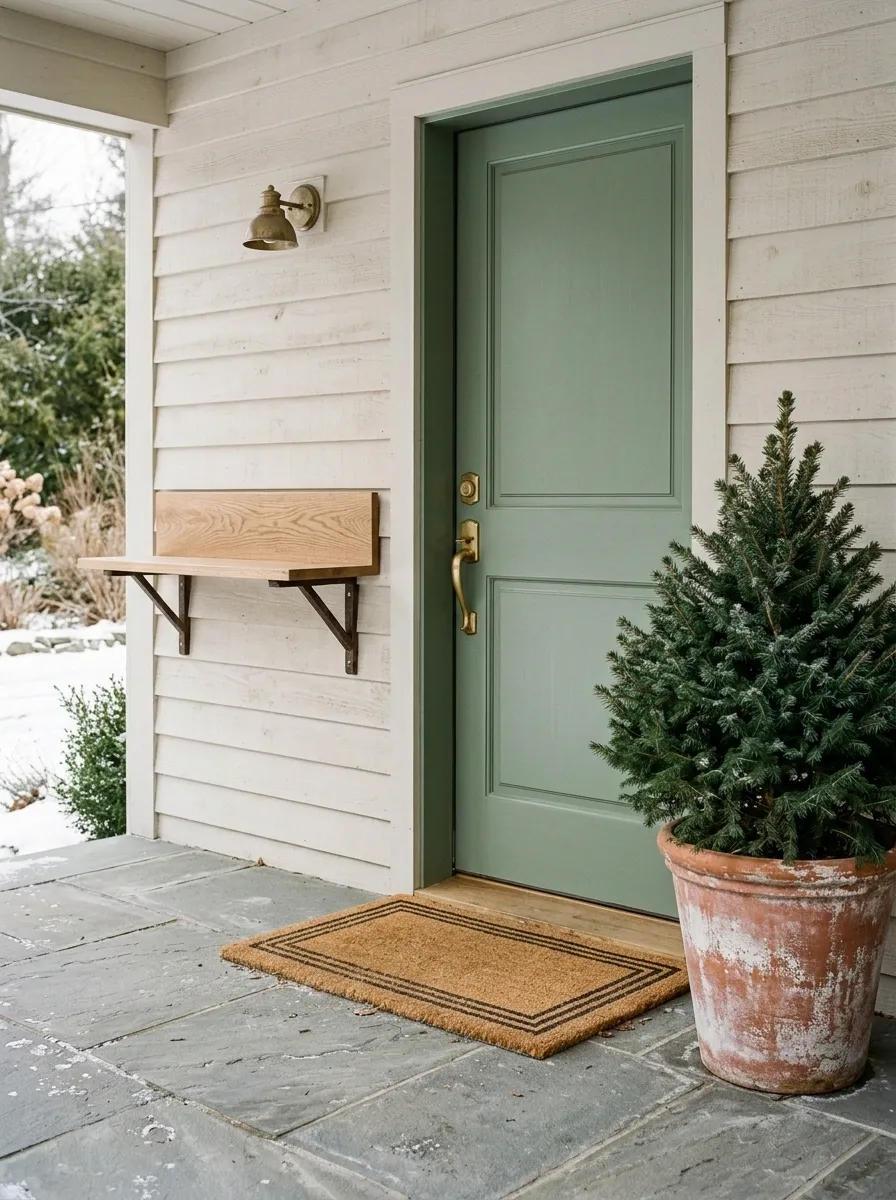
A modest wall shelf or suitable closed parcel storage can make a side-entry porch useful, with one evergreen container and a plain mat supplying winter character. Keep the door and any delivery instructions visible.
Choose a location that doesn’t obstruct the entrance or expose items unnecessarily to weather. The shelf should remain available rather than becoming a permanent arrangement of lanterns and pinecones. Decoration can share a porch with ordinary tasks. It doesn’t need to evict them. A clear landing point often makes the whole entrance feel more intentional than another seasonal object squeezed beside the step.
Keep the delivery landing point clear and place seasonal decor beside it, not on it.
A Winter Porch With a Restrained Rail Garland
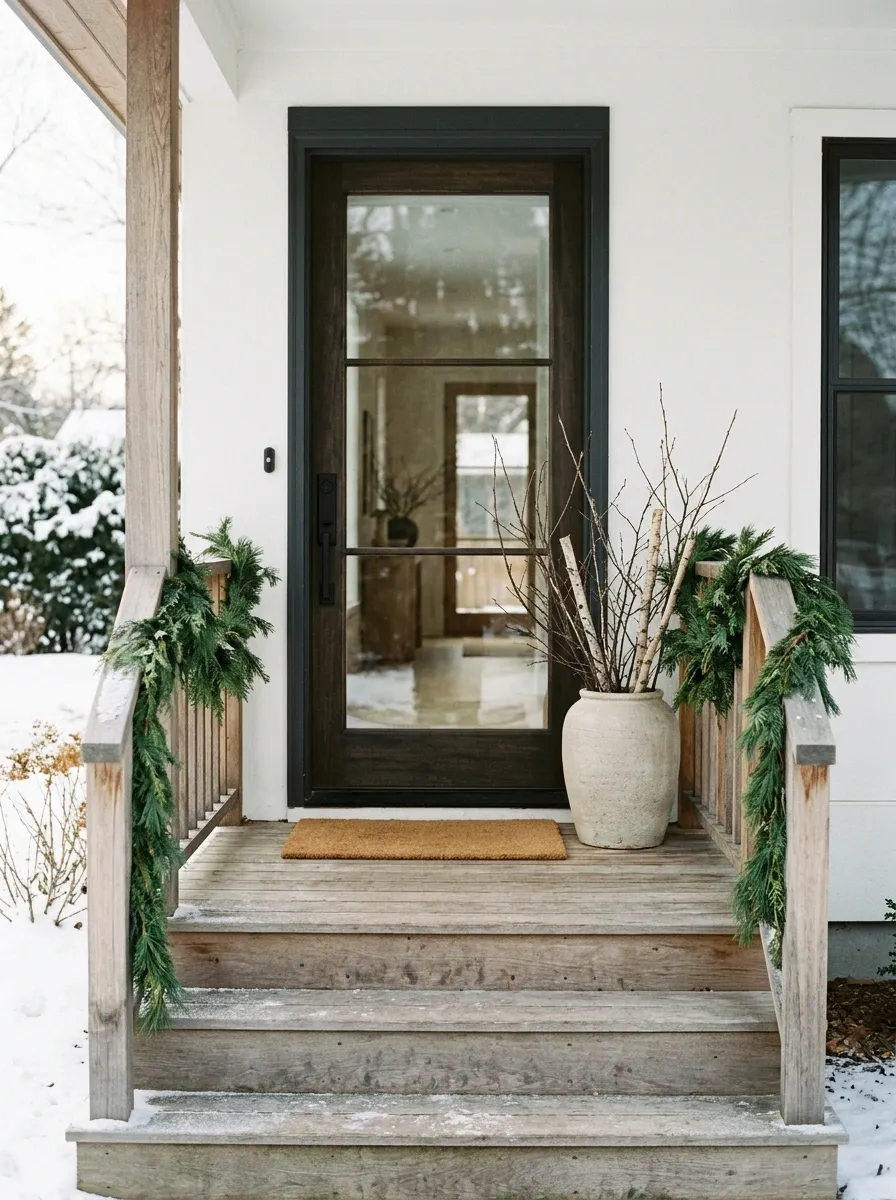
A simple garland can follow a porch rail, with a clear door, plain mat, and one container keeping the whole setting connected. Let the rail provide the line rather than hanging separate objects from every baluster.
Use suitable secure attachments and keep handholds, openings, and the walking route functional. The garland should not obscure step edges or become a loose projection into circulation. Check its condition through the season. A continuous green line can look composed; a tired tangle with escaping ribbon is simply asking for an earlier retirement date.
Keep needed handholds usable and secure all material away from the route.
A Mild-Climate Porch With Living Container Plants
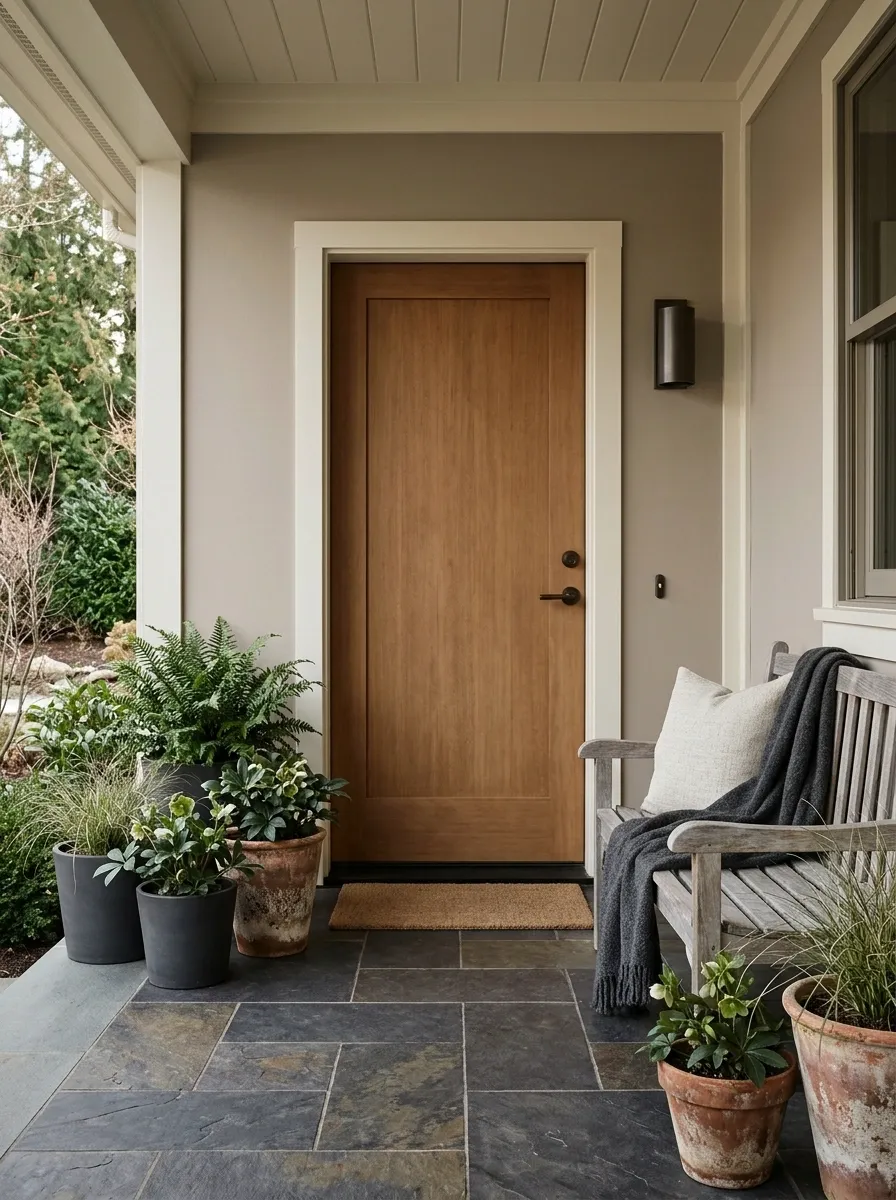
In a milder winter setting, living container plants can provide the main seasonal structure beside a plain door and simple seating. Choose a restrained pot palette and keep the arrangement grouped rather than scattered across the porch.
Select plants for local conditions and the container’s exposure, including wind, light, and watering needs. A winter idea borrowed from a snowy region doesn’t have to be copied literally. The porch can feel seasonal through deeper color, texture, and a calmer planting arrangement without importing artificial snow to explain itself. Climate is allowed to influence decorating. It usually insists anyway.
Does this plant suit your actual winter?
Check local climate, porch light, wind, container size, drainage, and ongoing care before selecting it.
A Porch With a Deep Door Color and Natural-Fiber Texture
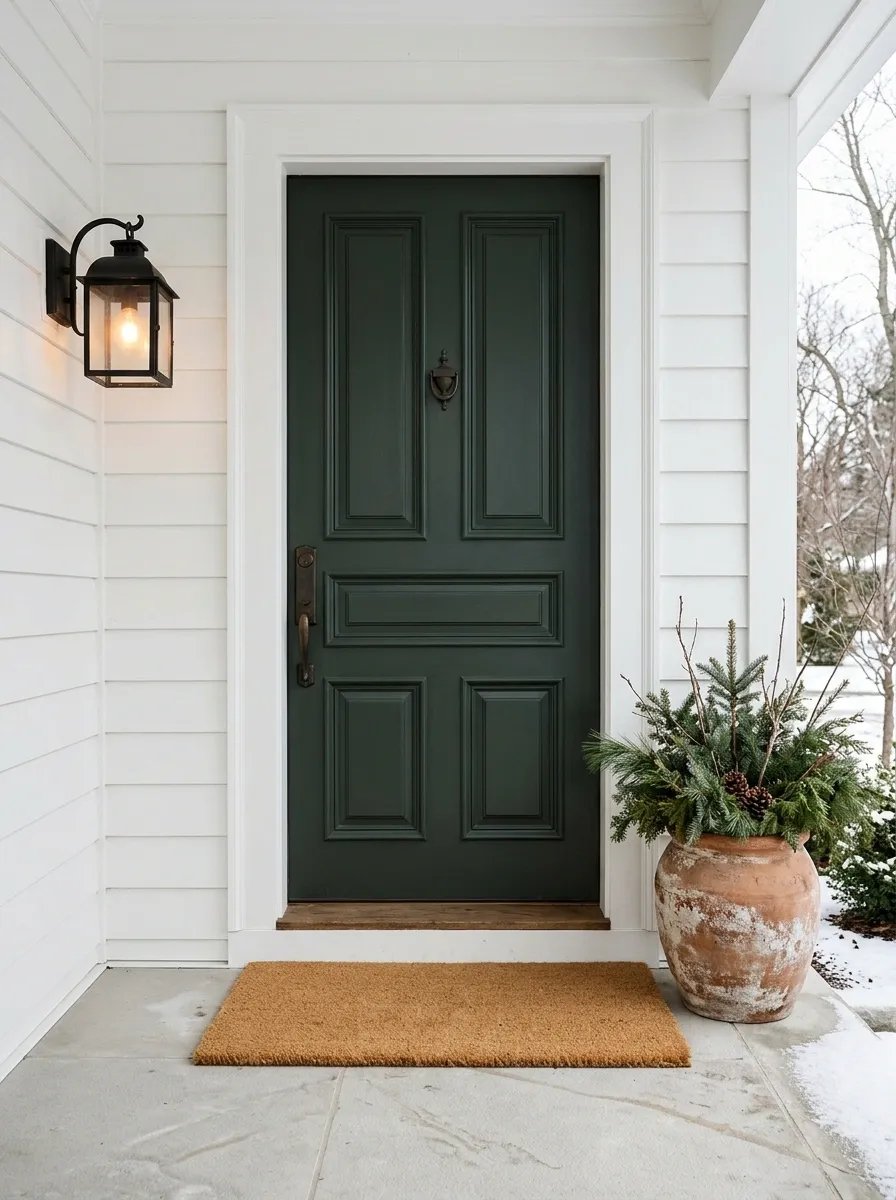
A deep blue or green door can make a simple winter porch feel complete beside a natural-textured mat and plain container. Use a restrained wreath or leave the door bare if its paneling already provides enough detail.
The warm texture softens the dark paint without introducing another strong color. Choose a mat and container suitable for the weather and keep the threshold clear. This is useful when the architecture is attractive but the entrance feels unfinished. Sometimes the missing layer is one grounded material, not an entire shopping cart labeled seasonal essentials.
Architectural weight.
Warmer foreground.
A Corner Porch With an Angled Seat and a Single Light Source
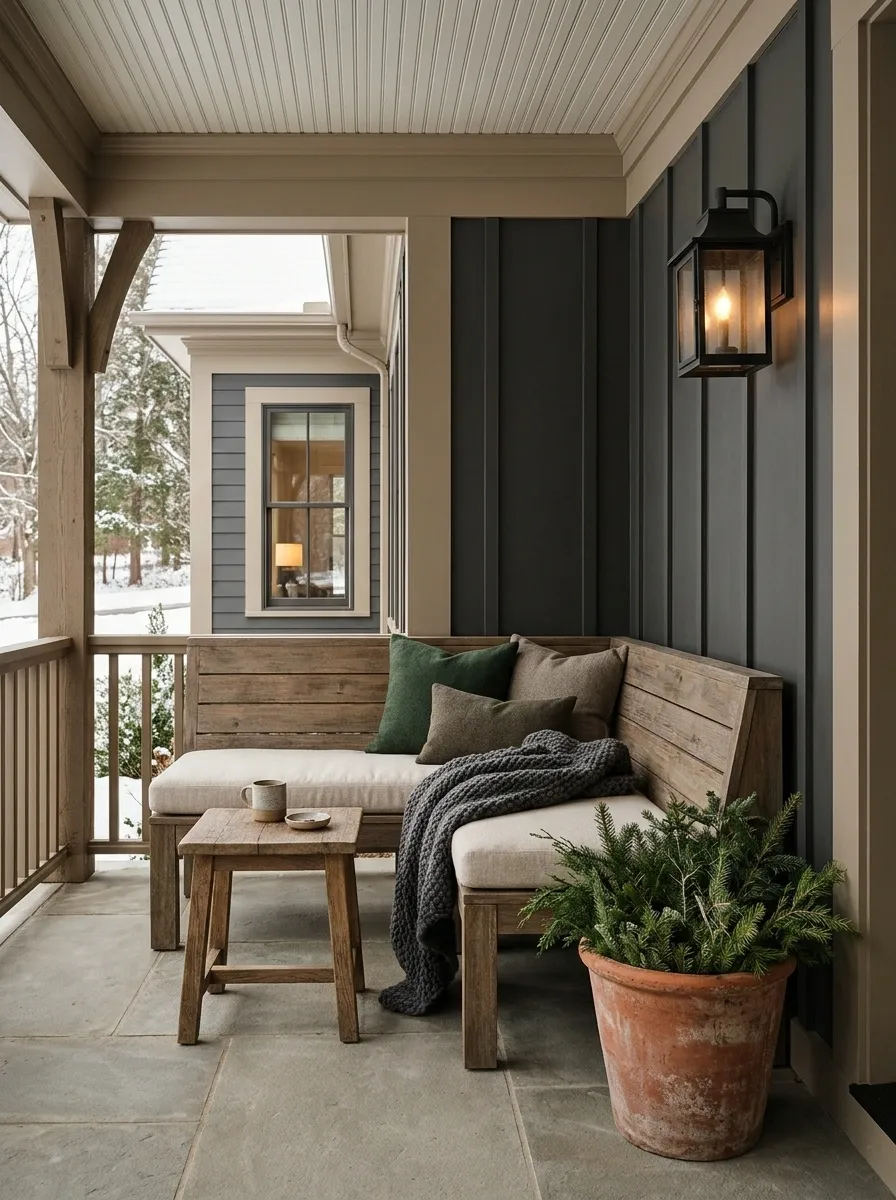
An angled outdoor seat can make a generous porch corner useful, with a small table and one substantial planter completing the setting. Suitable fixed lighting should illuminate both the seat and the route without creating a cluster of floor objects.
Check that the angle leaves enough room to sit and stand without entering the doorway. The seat should respond to the porch shape rather than creating a triangular storage problem behind it. Keep the table simple and leave the planter accessible for care. The corner can be a place to pause, rather than a dumping ground made festive.
Leave cleaning and maintenance access rather than creating an unreachable pocket behind the seat.
A Porch With a Simple Evergreen Door Swag
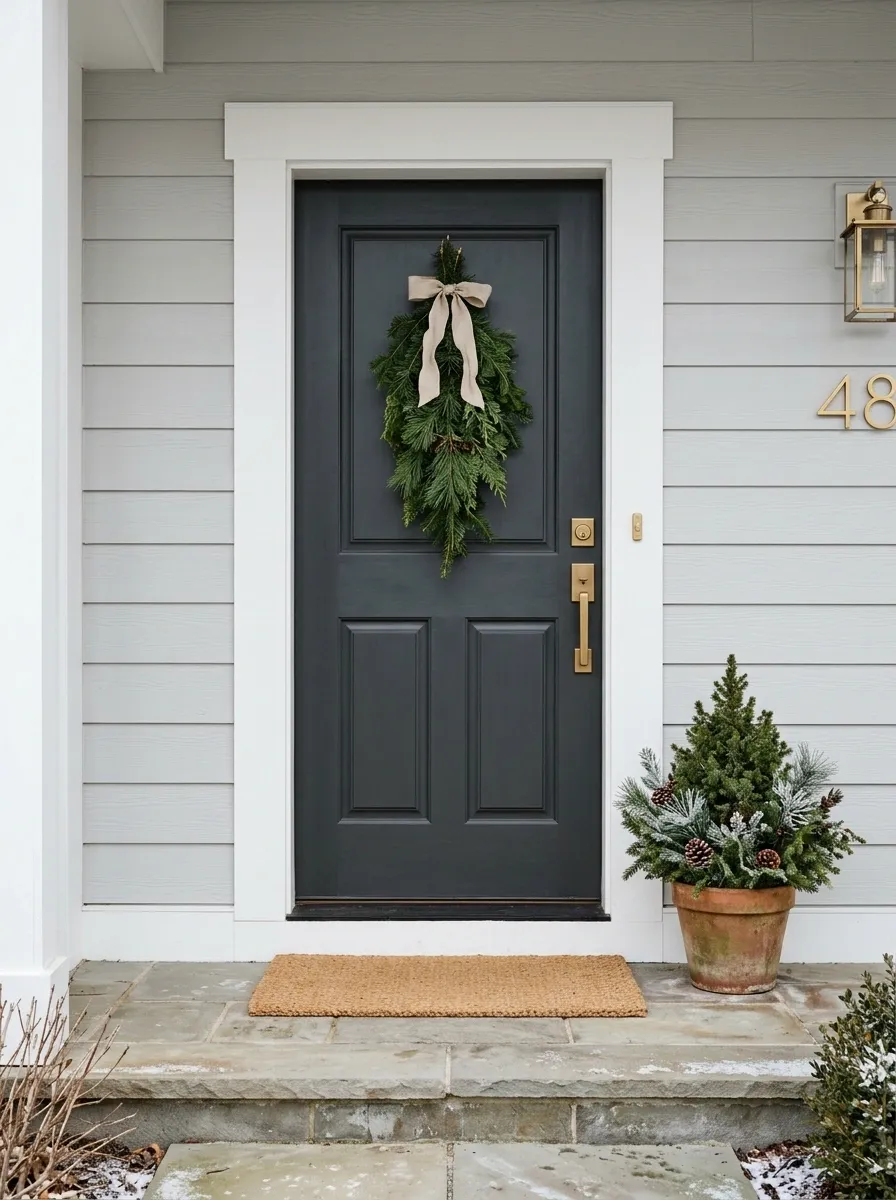
A vertical door swag can suit a narrow panel better than a round wreath. Pair it with a plain mat, clear house number, and one modest side container so the entrance feels connected without much floor occupation.
The swag should hang securely and remain clear of the handle, lock, and door edges. Keep its shape restrained enough to suit the door panel rather than treating every branch as proof of generosity. This is a useful alternative when a wreath looks cramped. Changing the shape can solve the proportion problem more effectively than buying a larger door decoration and hoping.
Keep handle and panel edges clear.
A Broad Porch With Decoration Concentrated on One Side
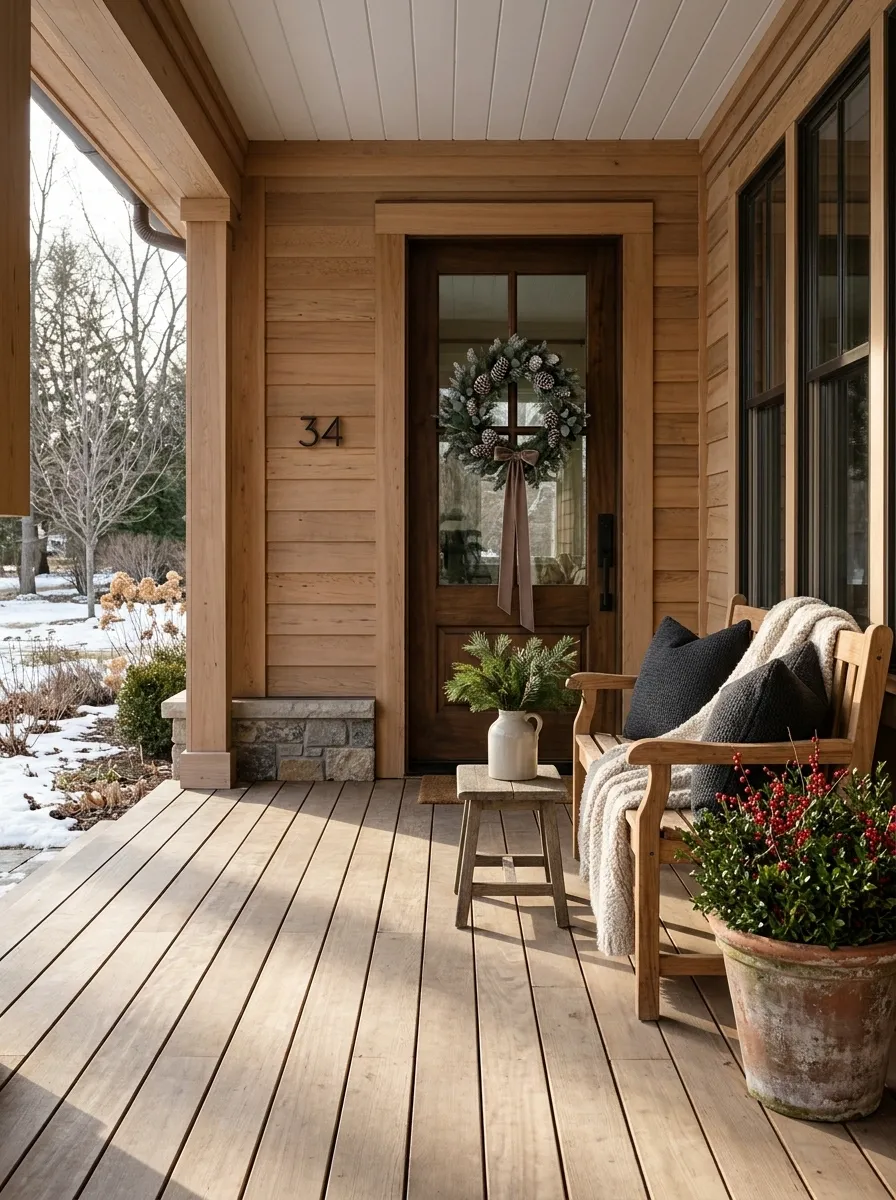
On a broad porch, group a bench, container, and small side table to one side while keeping the other side open. A simple door treatment connects the group to the entrance without forcing symmetry.
The asymmetrical arrangement can feel more useful than filling both sides with furniture nobody needs. Check sightlines from the path and leave the house number visible. Use the open side as genuine circulation or landing space, not as an invitation to accumulate another set of objects later. Empty space is allowed to remain empty. It has not failed its decorating duties.
Bench, table, planting.
Circulation, deliveries, and comfortable arrival.
A Post-Holiday Porch With Evergreens and No Festive Leftovers
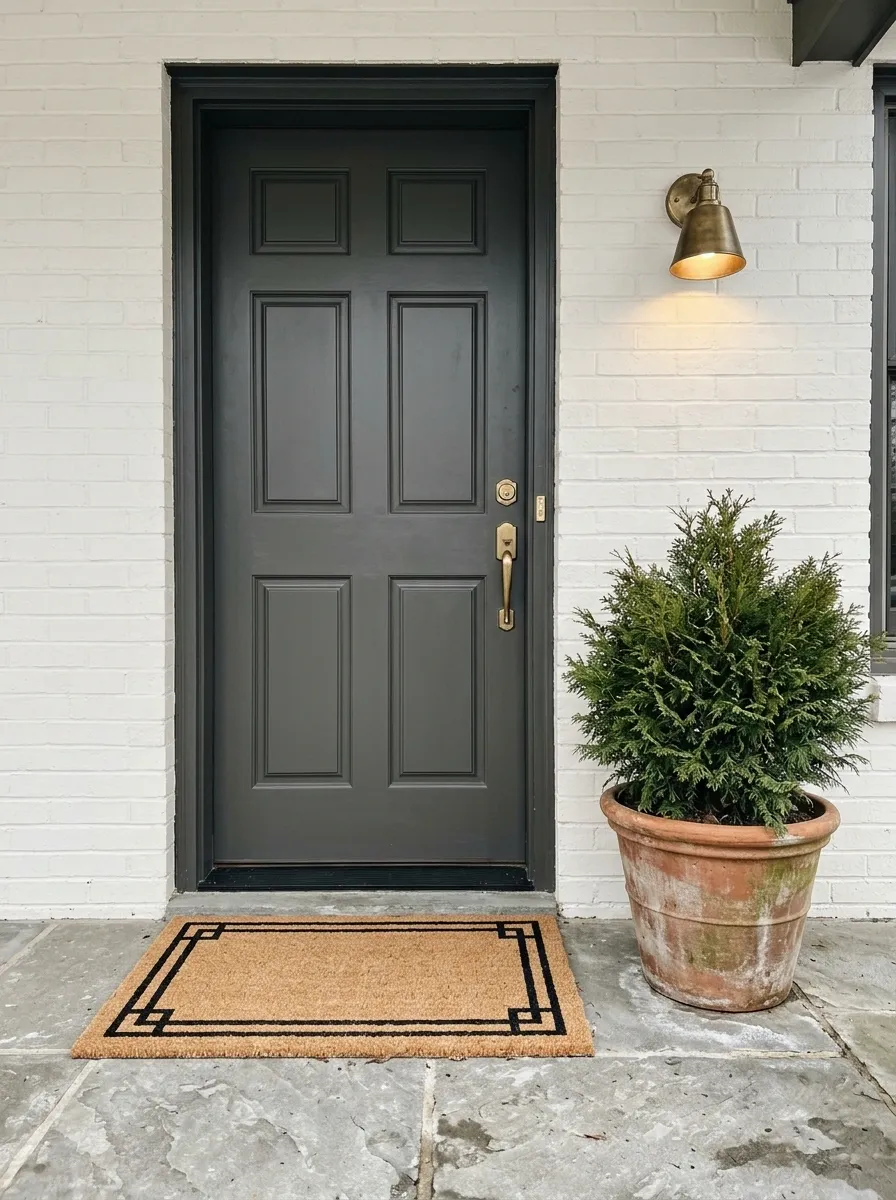
Keep the strongest evergreen container, remove the holiday-specific ornaments, and simplify the door treatment. A clean mat and useful lighting can carry the entrance through the remaining season without rebuilding the whole arrangement.
Assess what still looks healthy, stable, and intentional rather than keeping everything because it was expensive in November. Fresh material needs care and replacement when appropriate. The post-holiday porch should feel edited, not abandoned. Put the themed objects away and let the door, planting, and useful furniture do their jobs. Winter lasts long enough without the decorations insisting it is still a different month.
The winter edit
Healthy greenery, useful lighting, clear mat.
Holiday-specific ornaments and anything tired or unstable.
Make Room for an Ordinary Arrival
Stand outside with the things you usually carry home. Open the door, put a bag down, and notice what gets in the way. Remove that before buying another winter accessory.
A convincing porch doesn’t need a full seasonal identity crisis every few weeks. Keep a strong planted element, suitable lighting, and furniture that earns its space. Store textiles when the weather requires it, clear fallen material from the route, and retire anything that has stopped looking intentional.