
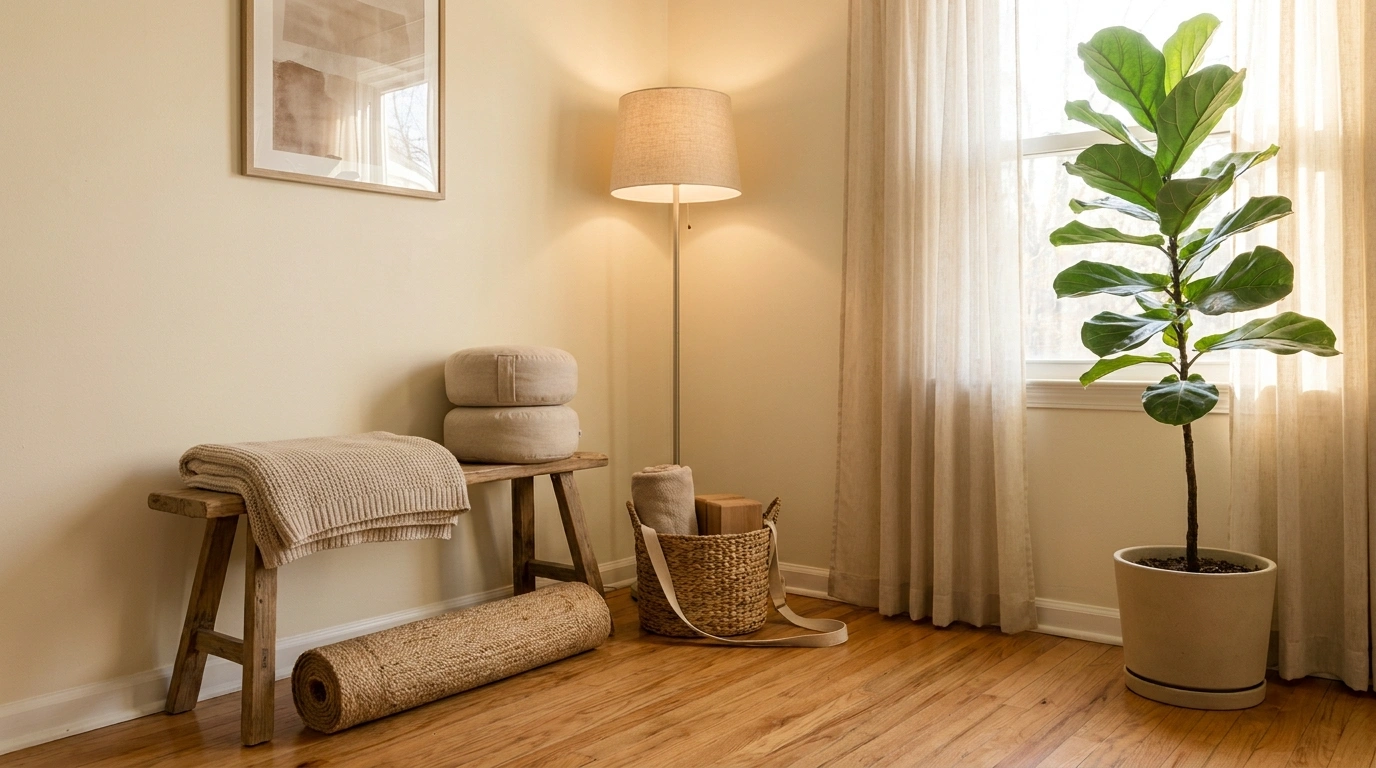
A yoga mat thrown beside the sofa doesn’t automatically create a yoga corner. It creates a yoga mat beside the sofa. There is a difference, and unfortunately, Pinterest has seen enough of the latter.
A good yoga corner should feel intentional without making the rest of the room feel like it has been converted into a wellness showroom.
The best spaces use a small combination of materials, lighting, storage, color, and furniture to create a distinct little zone. That matters even more in apartments, bedrooms, balconies, and awkward corners where every inch already has a job.
Yoga Corner Designs
Sunlit Japandi Window Nook
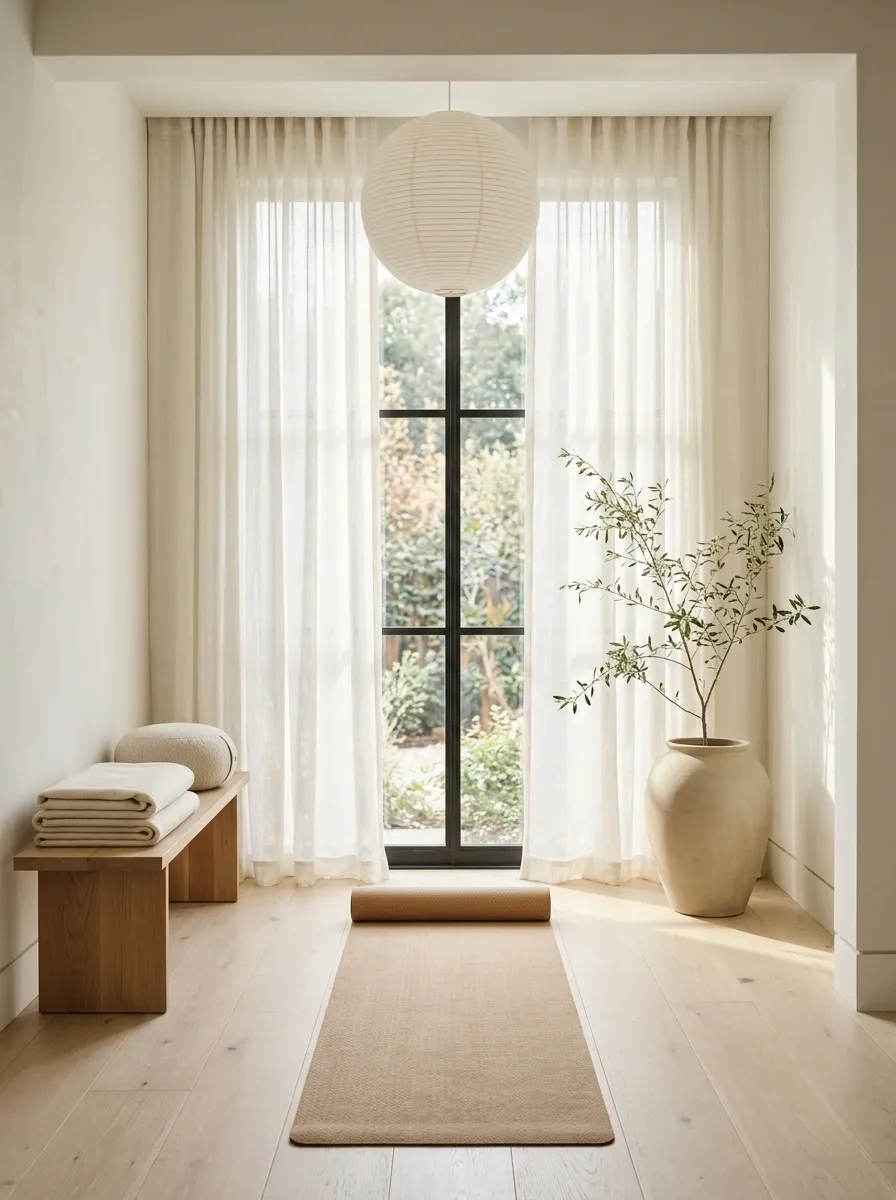
A sunny window is already doing half the work, so there is no reason to bury it under decorations. Keep this corner quiet with pale oak flooring, a warm beige yoga mat, and full-length linen curtains that soften the daylight without blocking it. A low oak bench can sit against the side wall, giving the space somewhere to place folded blankets or a small cushion. Add one oversized ceramic planter near the window rather than turning the floor into a jungle. A simple paper lantern or soft wall light keeps the corner useful after sunset. The result feels calm because every object has breathing room. No inspirational quote needs to be nailed to the wall. The sunlight has already said enough.
Terracotta and Cream Alcove
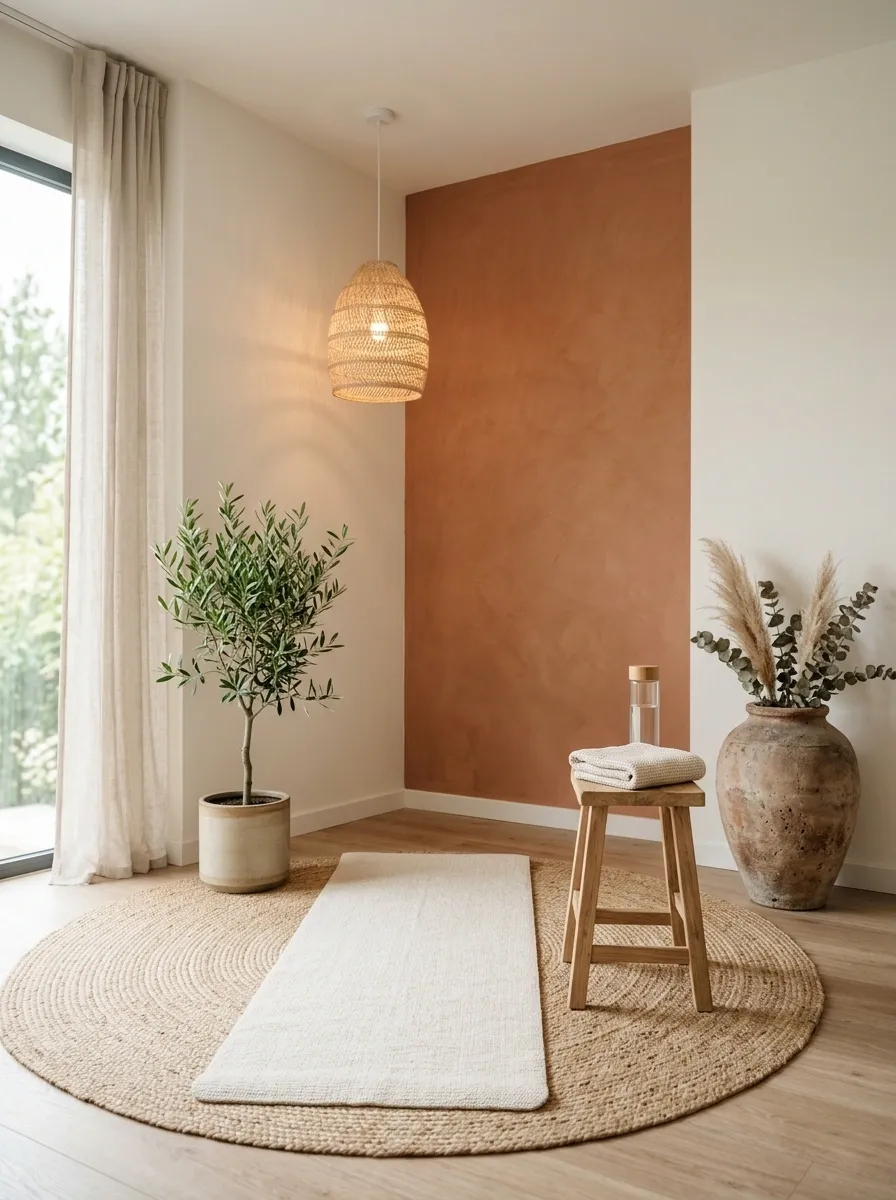
This corner works beautifully when the architecture is plain and the color does the talking. Give the wall a warm terracotta or muted clay finish, then keep the rest of the palette creamy and natural. A cream mat sits on a flat woven rug, while a narrow wooden stool holds a folded towel and water bottle without looking like gym equipment. Use a woven pendant overhead to add texture and a soft pool of light in the evening. A large clay vessel in one corner gives the room some weight, while a small olive tree or similarly restrained plant brings in green without taking over. The combination feels earthy rather than themed. There is no need to place twelve little objects around the mat just because the shelf was empty.
Moody Charcoal Yoga Corner
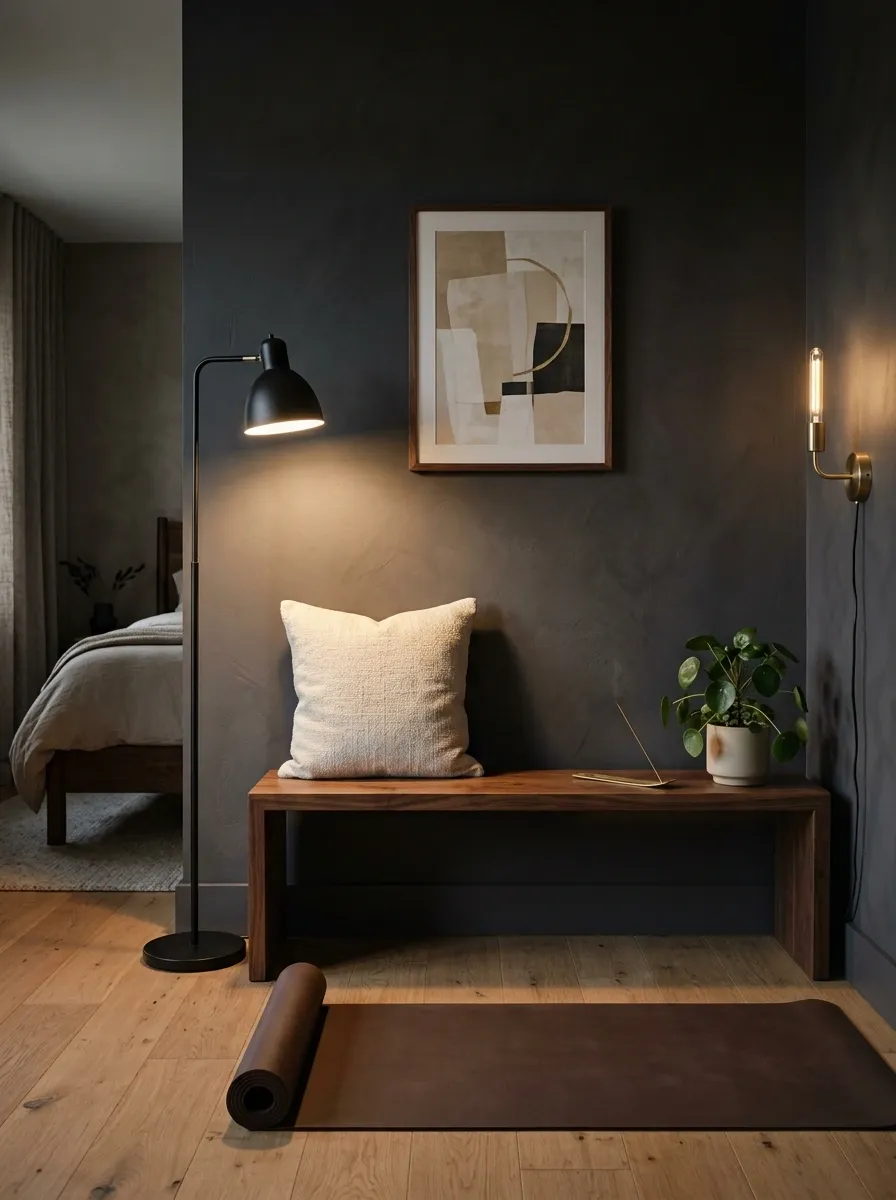
A dark yoga corner can feel surprisingly peaceful when the lighting is handled properly. Paint the wall charcoal or deep warm gray and pair it with a walnut bench, black or deep brown mat, and one textured neutral cushion. Instead of bright ceiling lighting, use a small plug-in wall sconce or shaded floor lamp positioned beside the bench. A framed abstract print in warm neutrals can fill the wall without turning the space into an art gallery. Keep storage low and closed so the darker palette doesn’t become visually cluttered. A small plant adds contrast, but one is enough. This design is especially good in bedrooms or living rooms where a brighter corner would compete with the rest of the space. Dark walls aren’t the problem. Bad lighting is.
Floor lamp beside bench
Warm wall glow
Clean White Corner With Pale Wood
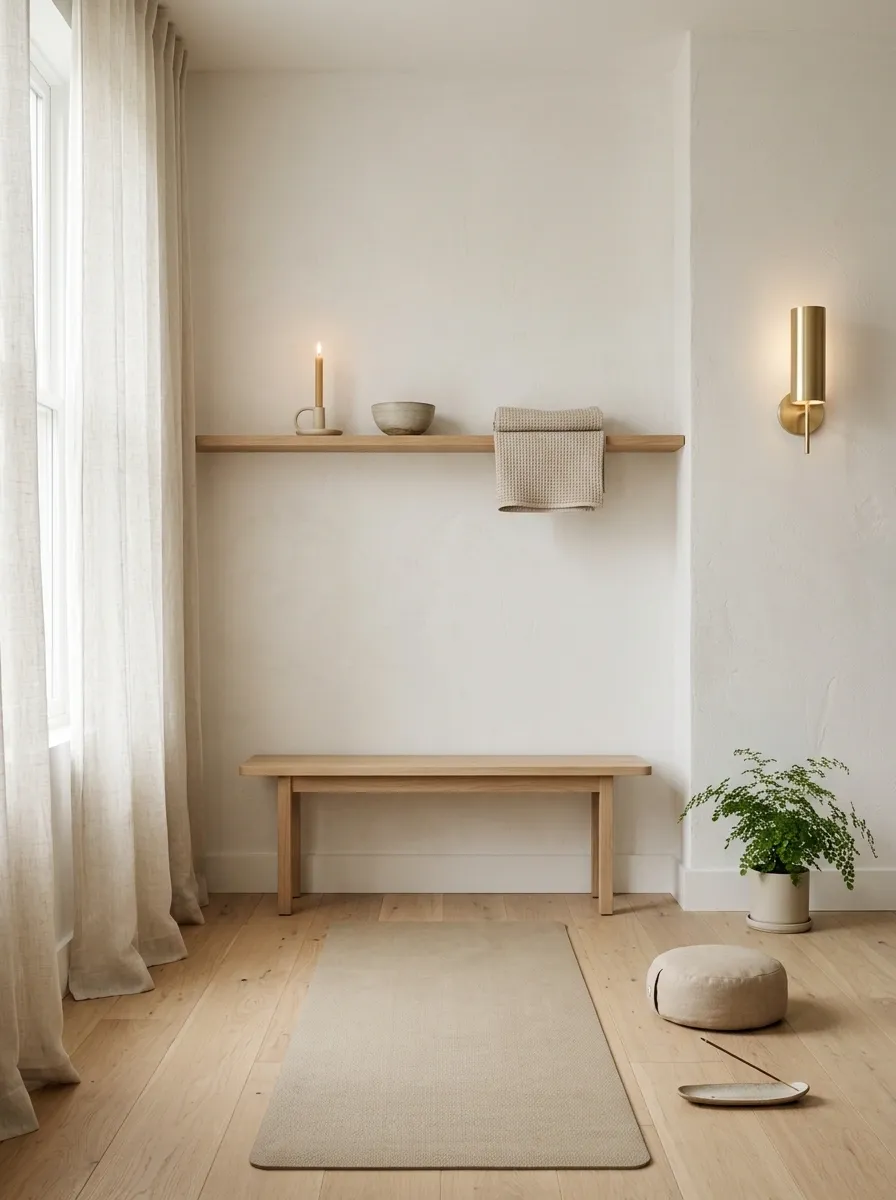
For a tiny space, simplicity usually wins. Keep the walls warm white, use a pale wood stool or narrow bench, and place a muted sand-colored mat on the floor. A single floating shelf can hold a candle, small bowl, and folded towel, but leave most of the shelf empty. That empty space matters. Add a full-length linen curtain if the corner sits near a window, then use a small wall-mounted light to keep the floor completely clear. The palette should stay within warm white, oak, sand, and a little green. This design feels especially good in small apartments because nothing visually pushes forward. It is basically the opposite of the corner that has accumulated six baskets, three candles, and a decorative ladder nobody has ever used.
Warm Modern Apartment Corner
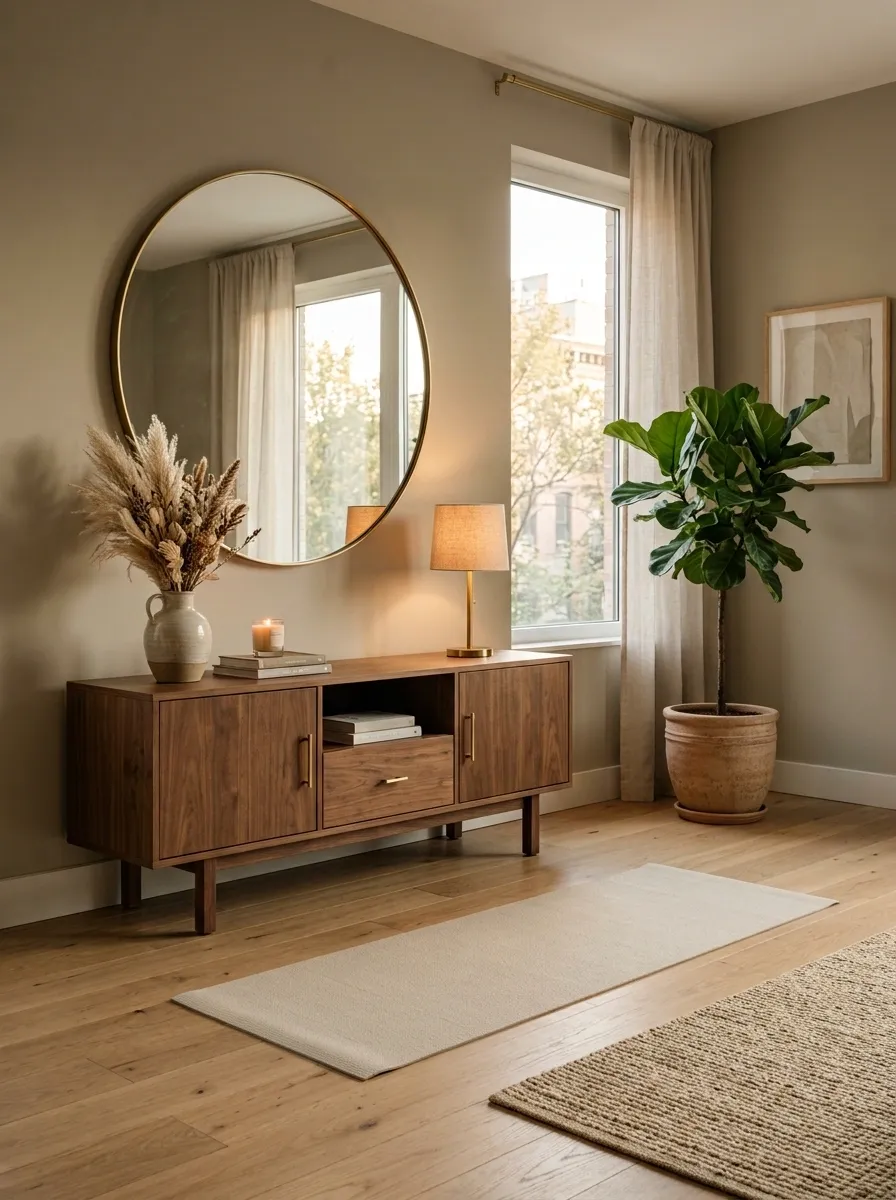
This version works when the yoga space has to coexist with a polished living room. Use a warm greige wall, medium walnut furniture, and a neutral mat that doesn’t scream fitness equipment. A slim console or low cabinet can define the edge of the corner while keeping props hidden inside. Above it, hang a large rounded mirror with a simple frame to bounce daylight around the space. A small table lamp with a fabric shade makes the corner feel connected to the living room at night. Keep the floor mostly clear so the mat becomes the visual center when it is laid out. The secret is restraint. The yoga equipment should look like it belongs in the room, not like it was delivered from a completely different apartment.
Indoor Garden Yoga Retreat
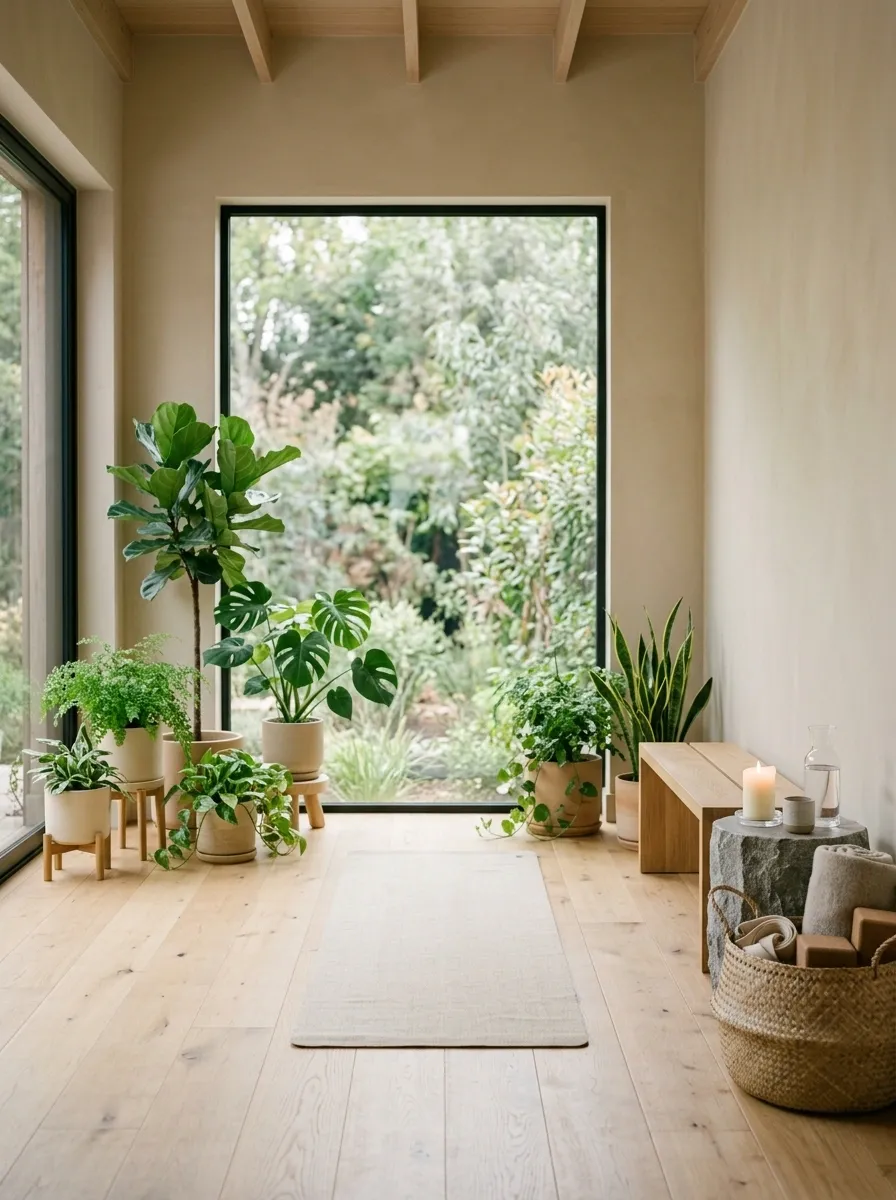
For plant lovers, the corner can become a small indoor garden without turning into a greenhouse. Start with a warm neutral wall and natural wood floor or flooring. Place the mat beside a large window, then arrange a few plants at different heights around the perimeter. A low wooden bench keeps the center open, while a stone or ceramic side table gives the corner somewhere to hold a candle or water. Use woven baskets for blankets and straps. Keep the plant selection visually varied rather than buying ten versions of the same leafy plant. The important part is leaving the center open. Plants should frame the practice area rather than invade it. Nobody needs to perform a downward dog while negotiating with a monstera leaf.
Bedroom Yoga Nook
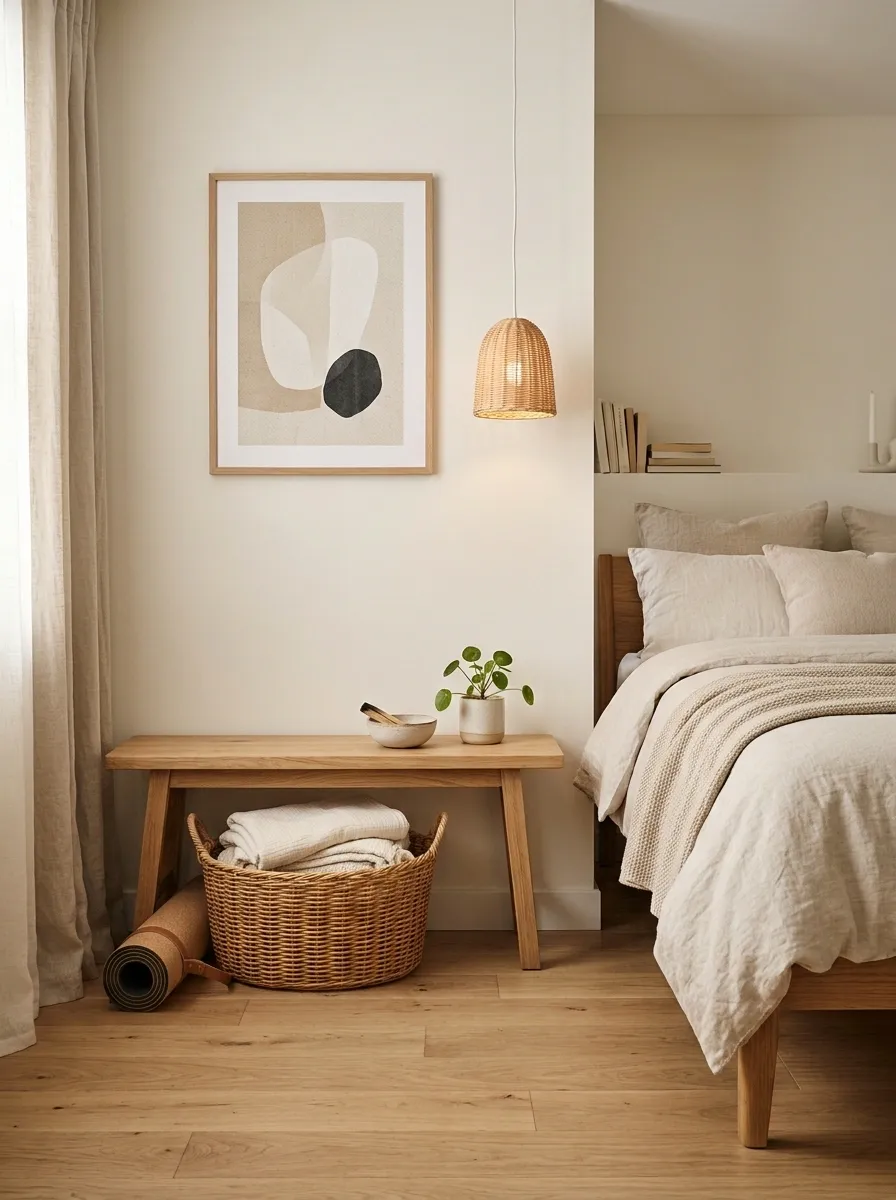
A bedroom corner can become a quiet practice zone without making the room feel like a studio. Place the mat beside the bed, but separate the areas visually with a narrow wood bench or low cabinet. Use the same wood tone on both pieces so the corner feels connected to the bedroom. A soft cream wall, linen bedding, and a small woven pendant keep the palette calm. Add one framed piece above the bench and a basket underneath for blankets. If privacy matters, a ceiling-mounted linen curtain can create a soft divider between the bed and mat. The best part is that the corner doesn’t need much furniture. The bedroom already supplies most of the softness. Adding more would just create a storage problem wearing a wellness costume.
Balcony Yoga Corner
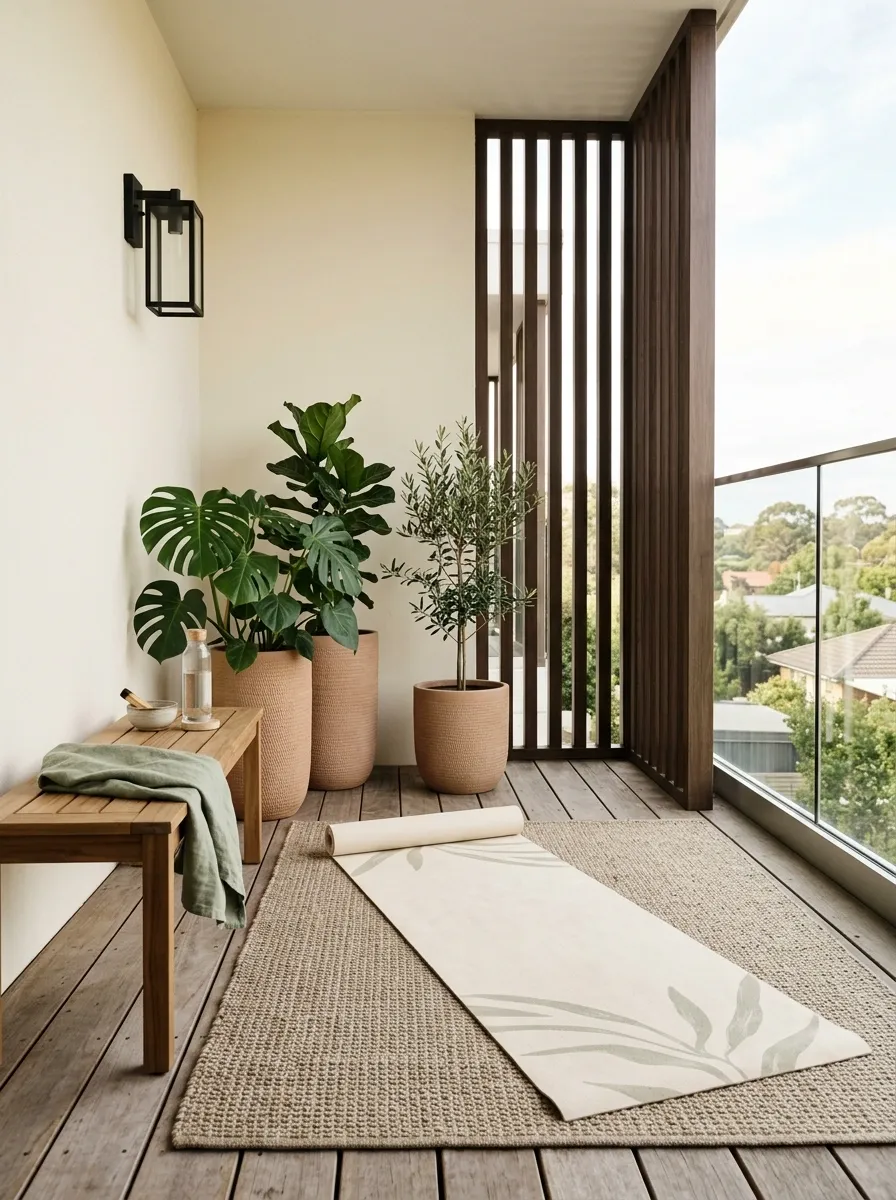
A balcony can make an excellent yoga space when the layout stays simple. Use outdoor decking or a washable neutral floor mat, then position the yoga mat along the longest clear section. Add a narrow weather-resistant bench against the wall and use tall planters or a slatted privacy screen along one side. Keep the color palette light with warm wood, cream, muted green, and a little charcoal. A small outdoor lantern gives the corner evening atmosphere without taking up valuable floor space. Avoid oversized furniture because balcony yoga corners become cramped very quickly. The goal is an open strip with enough breathing room to move comfortably. A balcony with six chairs and one decorative lantern is not a yoga retreat. It’s a furniture traffic jam.
The Awkward Hallway Corner
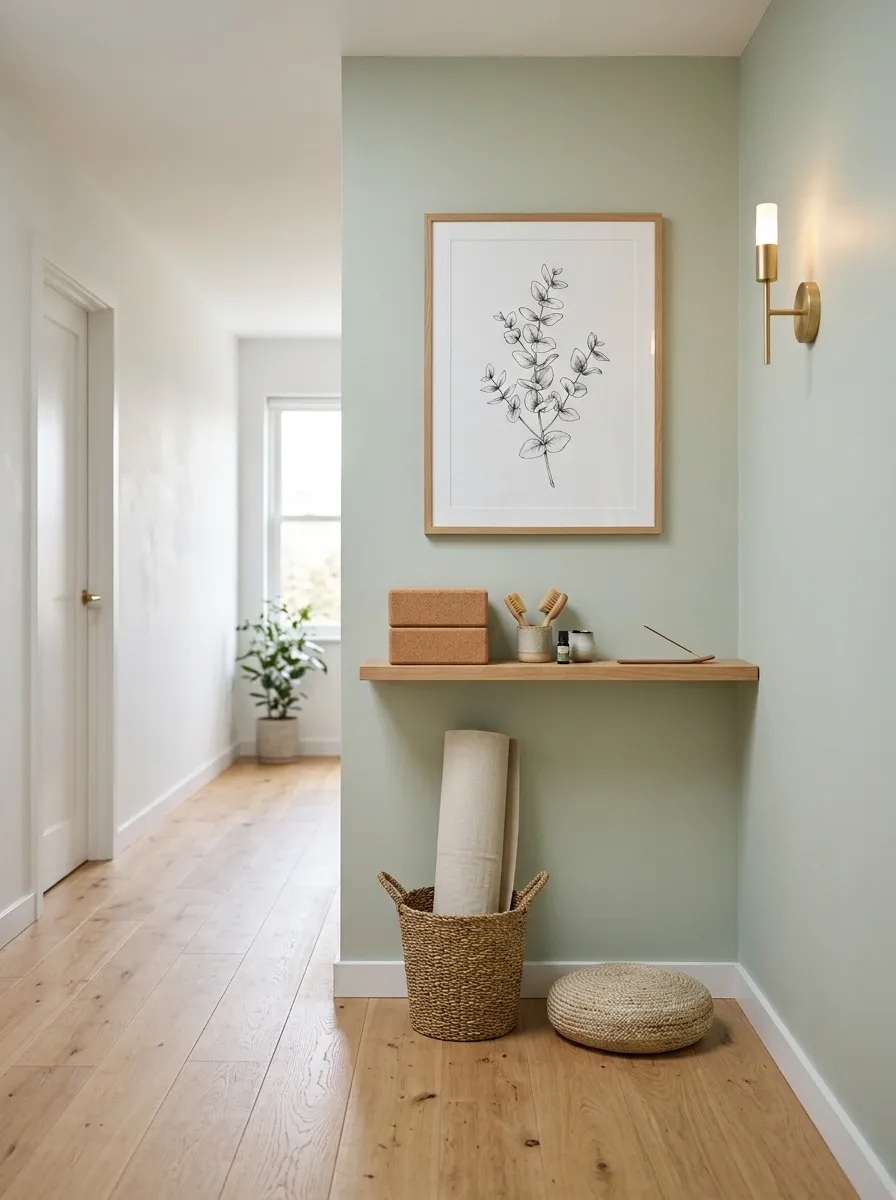
That strange bit of hallway nobody knows what to do with can become a surprisingly good yoga zone. Use a narrow wall-mounted shelf for blocks and small props, then place a rolled neutral mat vertically beside it in a slim basket. Keep the wall warm white or pale sage and add one wall sconce rather than a floor lamp. A narrow wooden bench can sit along the wall if the passage is wide enough, but the center must stay open. One large framed print gives the vertical wall enough presence without filling every inch. This works because the design respects the hallway’s original job. It doesn’t pretend the corridor is suddenly a private studio. It simply gives an awkward corner a purpose.
Bay Window Yoga Retreat
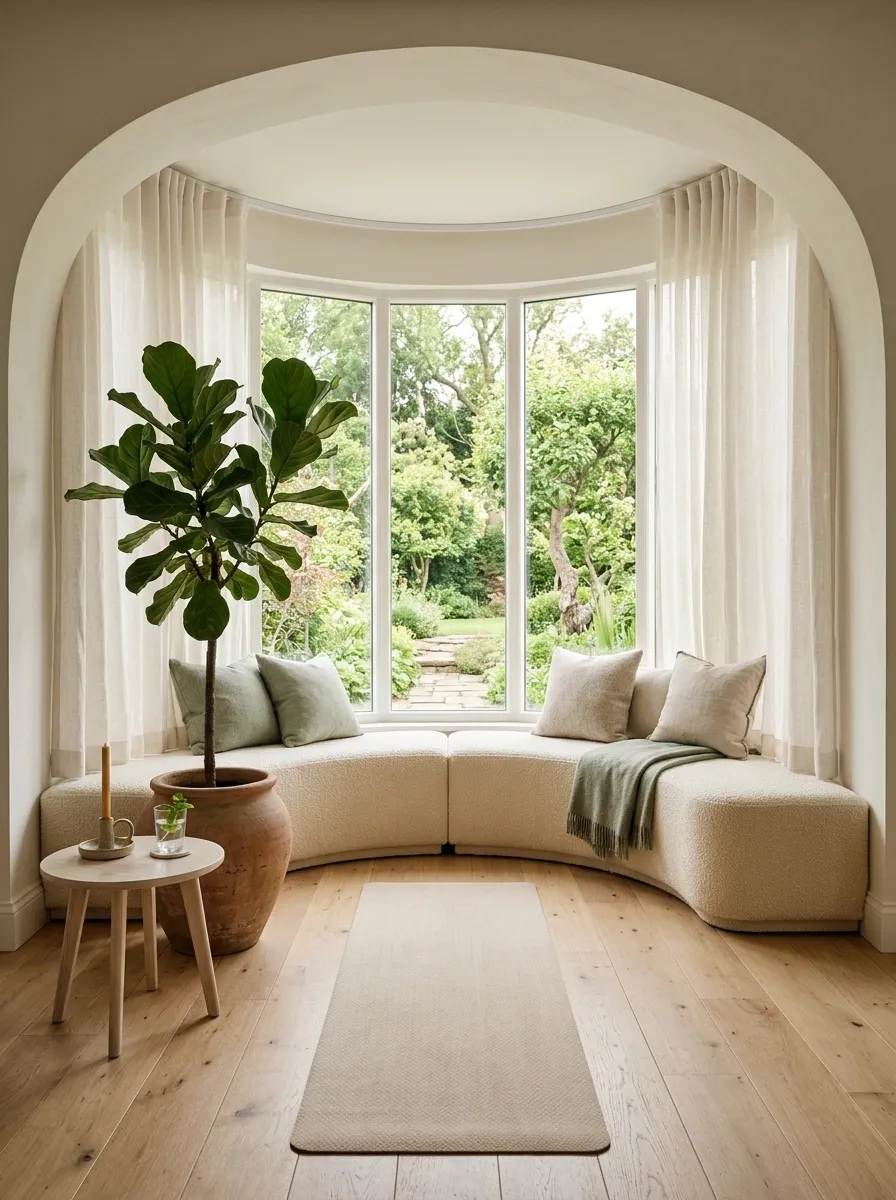
A bay window already creates a natural room within a room, so lean into it. Use a soft beige mat centered toward the window, with a low upholstered bench running along the back wall. Hang sheer linen curtains from ceiling height to soften the architectural edges and make the area feel more private. A small round wooden table can sit beside the mat for a candle or water, while one sculptural plant fills the empty corner. Keep the upholstery and textiles warm and simple, with cream, taupe, pale wood, and muted green. During the day, the window supplies the visual focus. At night, a pair of small lamps on the bench keeps the space softly illuminated. No neon sign required. The window is already the star.
Sage Green and Oak Corner
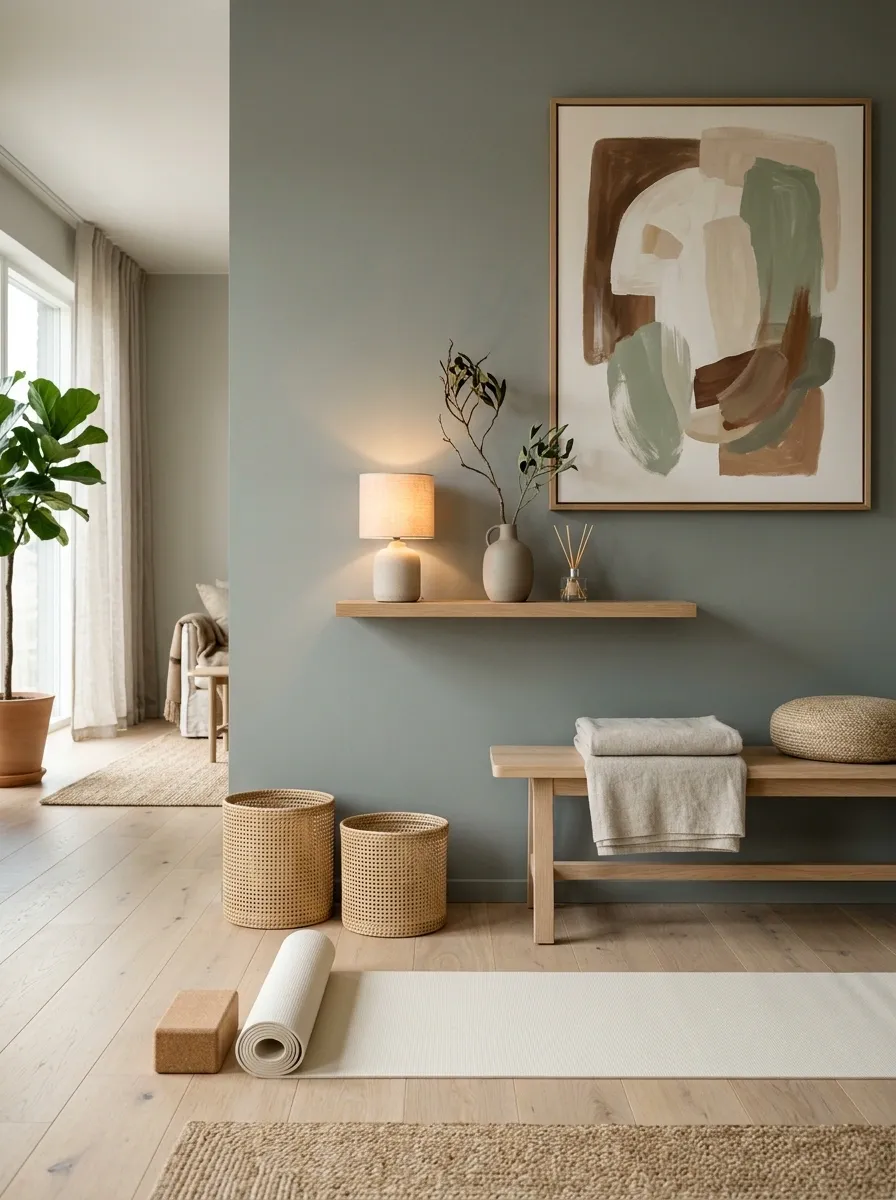
Muted sage green gives a yoga corner enough color without making it feel themed. Paint the wall in a dusty, gray-leaning sage and use pale oak for a bench, stool, or floating shelf. A cream mat creates a clean contrast against the wall, while woven baskets introduce a little texture. Add a small ceramic lamp with a warm bulb and one branch arrangement in a simple vase. Keep artwork minimal, perhaps one oversized abstract piece with cream, brown, and soft green. This design works particularly well in a living room because sage connects naturally with plants and wood. The result is grounded rather than overly polished. The wall gets to have a personality, which is refreshing after years of white walls being asked to solve every design problem.
Soft Blush and Sand Corner
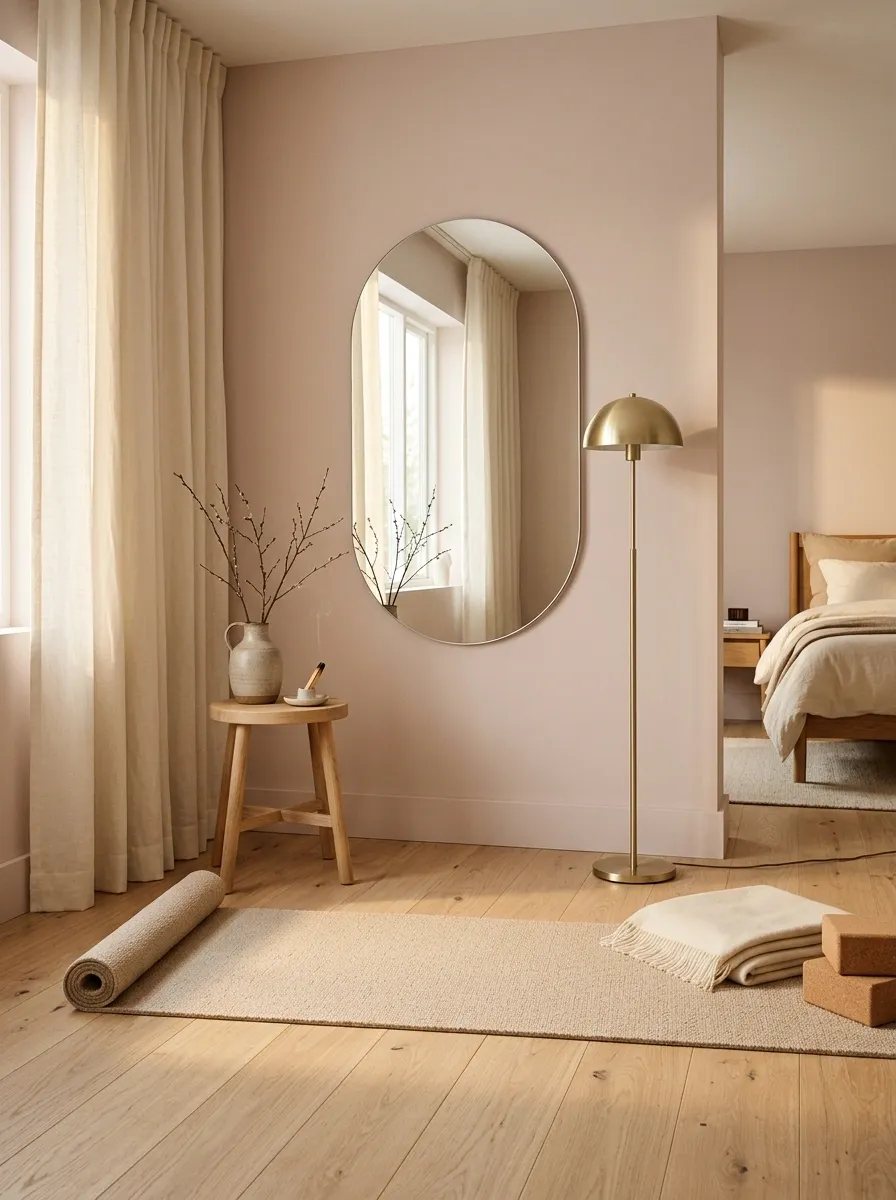
Blush works here because it is muted, dusty, and paired with enough warm neutrals to keep the space grown-up. Paint the wall a pale dusty rose, then use a sand-colored mat, light oak stool, and cream linen curtain. A rounded mirror adds shape without introducing another strong color. Use brushed brass sparingly on a lamp or small hardware, and finish the corner with a ceramic vase holding a few branches. Keep the floor mostly bare. The design should feel soft without becoming a pink-themed room where even the yoga mat has to match the curtains. The contrast between blush, sand, and wood gives the corner enough visual interest while keeping it suitable for a bedroom or quiet living space.
Black Slats and Natural Wood
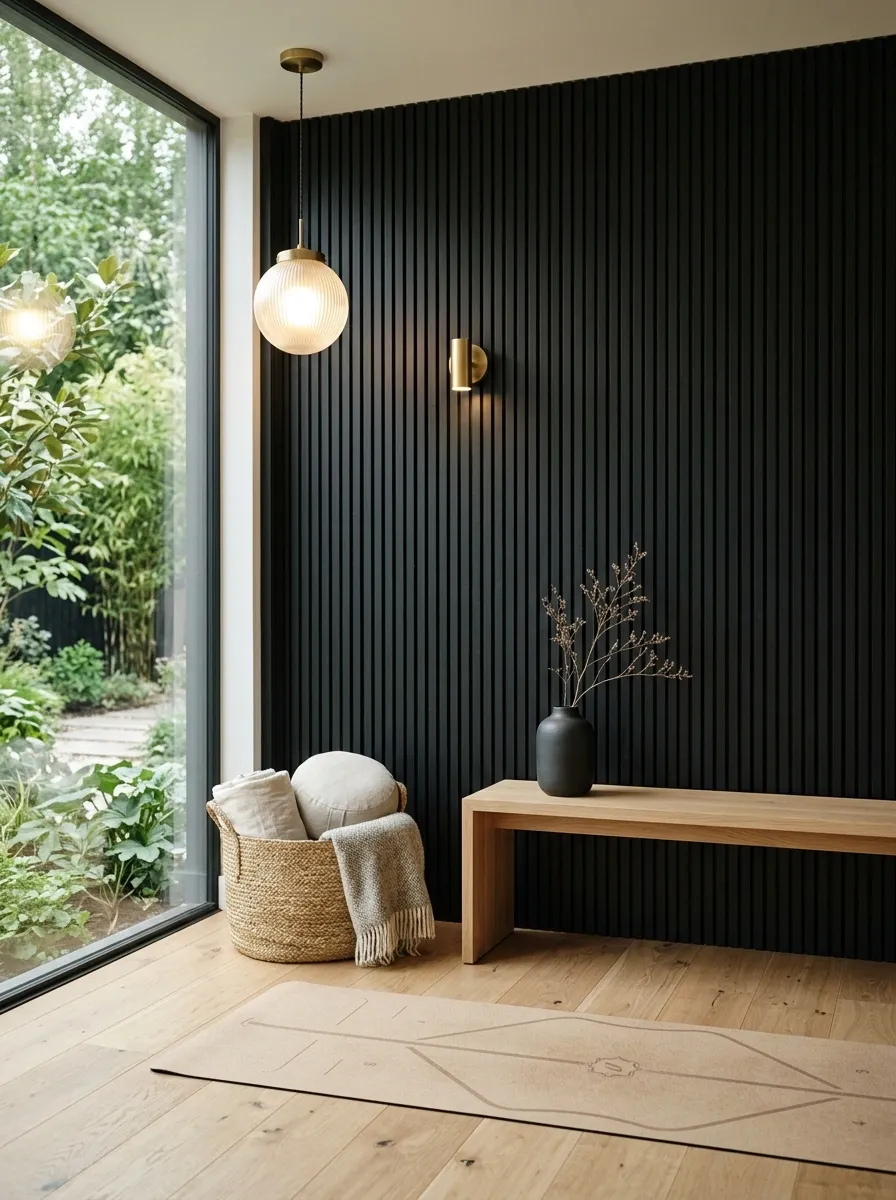
For a more architectural look, use a black slatted accent wall behind the yoga area and balance it with warm natural wood. The slats create vertical rhythm while allowing the rest of the corner to stay simple. Place a light oak bench below the wall, a neutral mat in front, and a low woven basket for blankets. A warm globe pendant or small brass wall light softens the darker backdrop. Keep decorative objects limited to one ceramic vessel and perhaps a single branch arrangement. This works especially well in modern homes where a traditional soft yoga corner might feel out of place. The black wall gives the space structure, while the wood stops it from feeling like a showroom. Dramatic, yes. Dramatic in a “Pinterest has gone too far” way, no.
Vintage-Inspired Yoga Corner
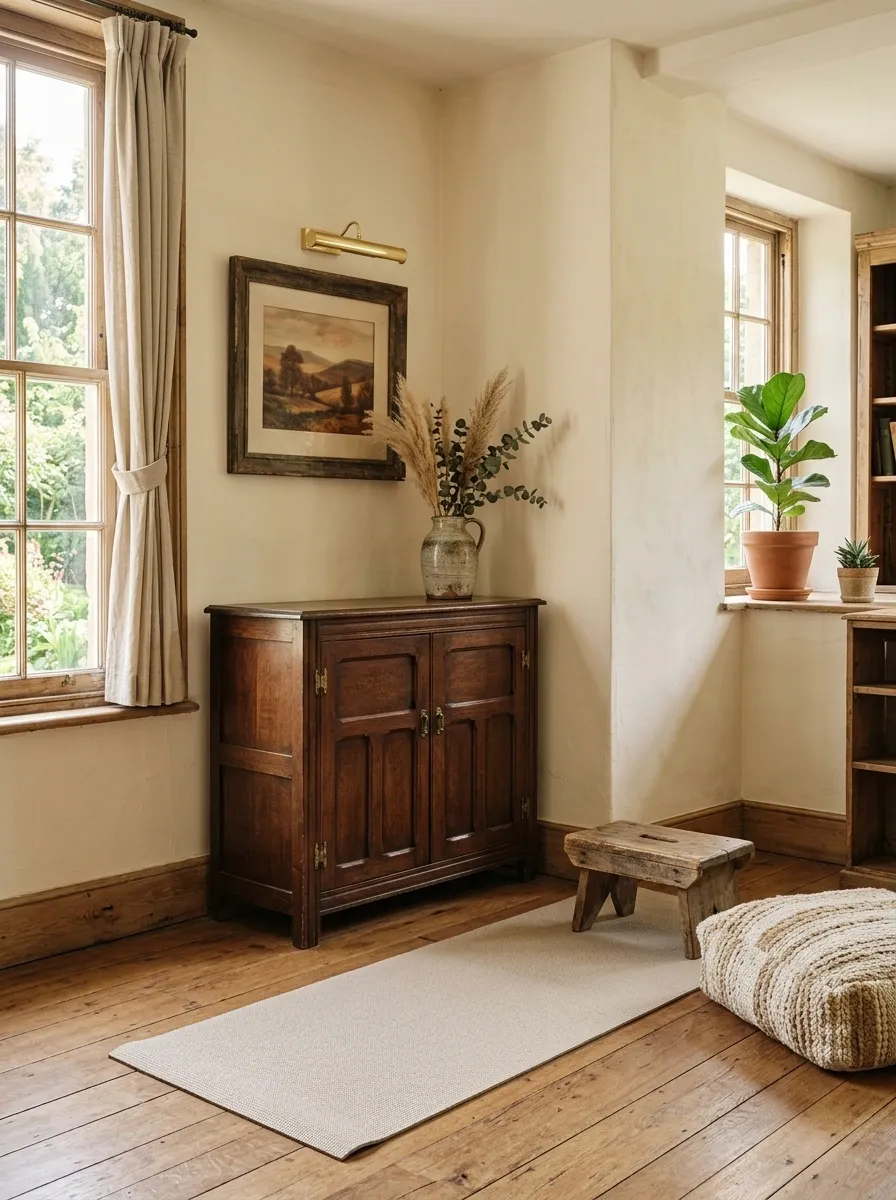
A yoga corner doesn’t have to look contemporary. Use a vintage wooden cabinet as concealed storage, then place a neutral mat in front of it. Above the cabinet, hang one old-looking framed artwork with muted colors and a small brass picture light. A woven floor cushion or low wooden stool can sit nearby, while a ceramic vase adds a handmade element. Keep the walls warm cream or aged white so the furniture gets attention. The yoga equipment should remain simple and modern, which keeps the room from becoming a costume set. The contrast is what makes this design interesting. Old wood, brass, linen, and a clean mat can coexist without looking confused. Apparently wellness does not require a boucle bench.
Coastal Blue-Gray Corner
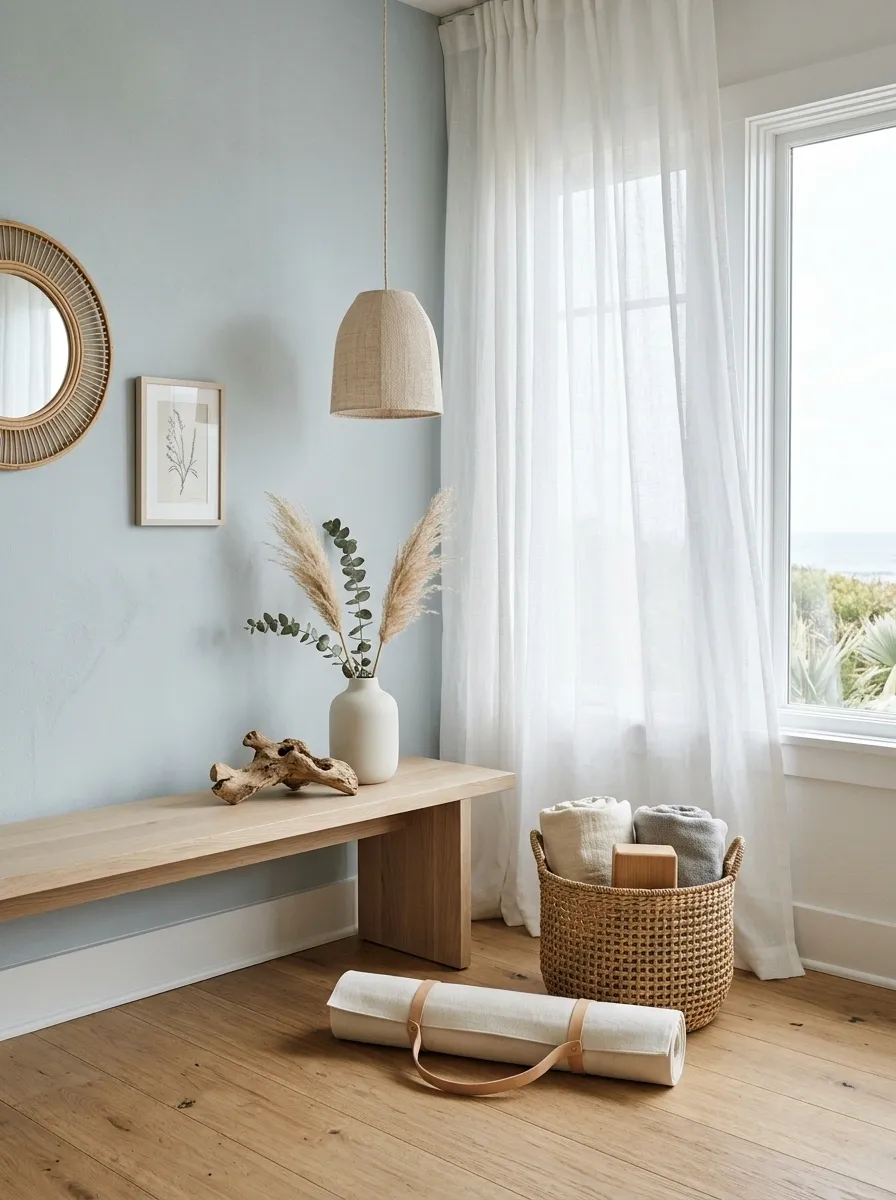
Skip the obvious beach accessories and build a coastal-inspired yoga corner through color and materials instead. Use a pale blue-gray wall, white oak bench, cream mat, and woven basket. Sheer curtains can move lightly beside the window while a simple linen pendant provides evening light. Add one ceramic vase in an off-white finish and perhaps a piece of driftwood-inspired sculptural decor. Avoid anchors, seashell collections, and anything that looks like a souvenir shop has moved in. The space should feel airy because of its proportions and palette, not because it contains seventeen references to the ocean. This is especially effective in bright rooms where blue-gray walls can create a calm backdrop without making the corner feel cold.
Concrete and Warm Wood Corner
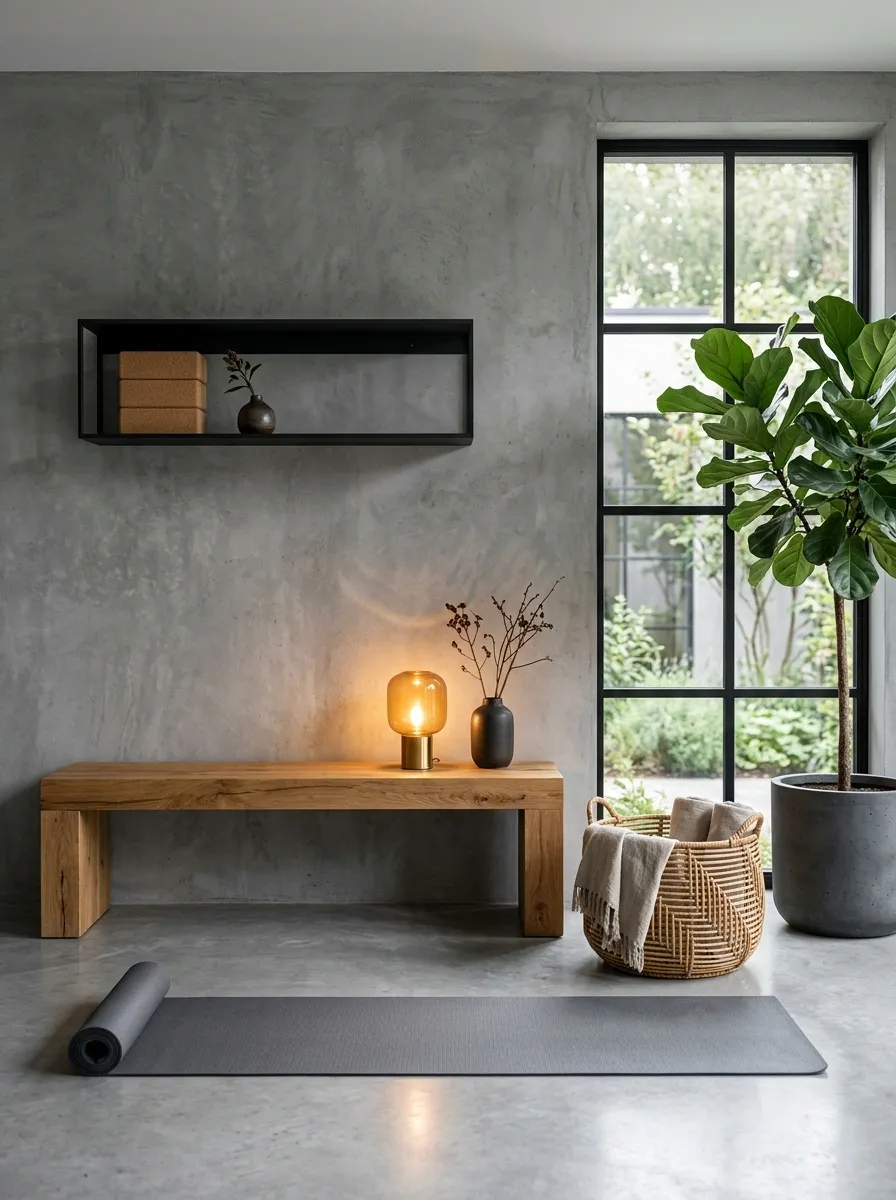
An industrial-inspired yoga corner can look surprisingly inviting when cold materials are balanced with warm ones. Use a concrete-look wall or microcement finish as the backdrop, then introduce a thick wood bench and warm woven basket. A charcoal mat keeps the palette grounded. Use a black metal shelf for a few neatly arranged props, but keep the shelf mostly empty. Warm lighting is essential, especially if the wall has a gray undertone. A small amber glass lamp or warm wall light can prevent the corner from feeling like a converted parking garage. One large plant can soften the edges without turning the industrial look into a generic jungle. This design works best when the materials are allowed to speak for themselves.
Built-In Closet Yoga Nook
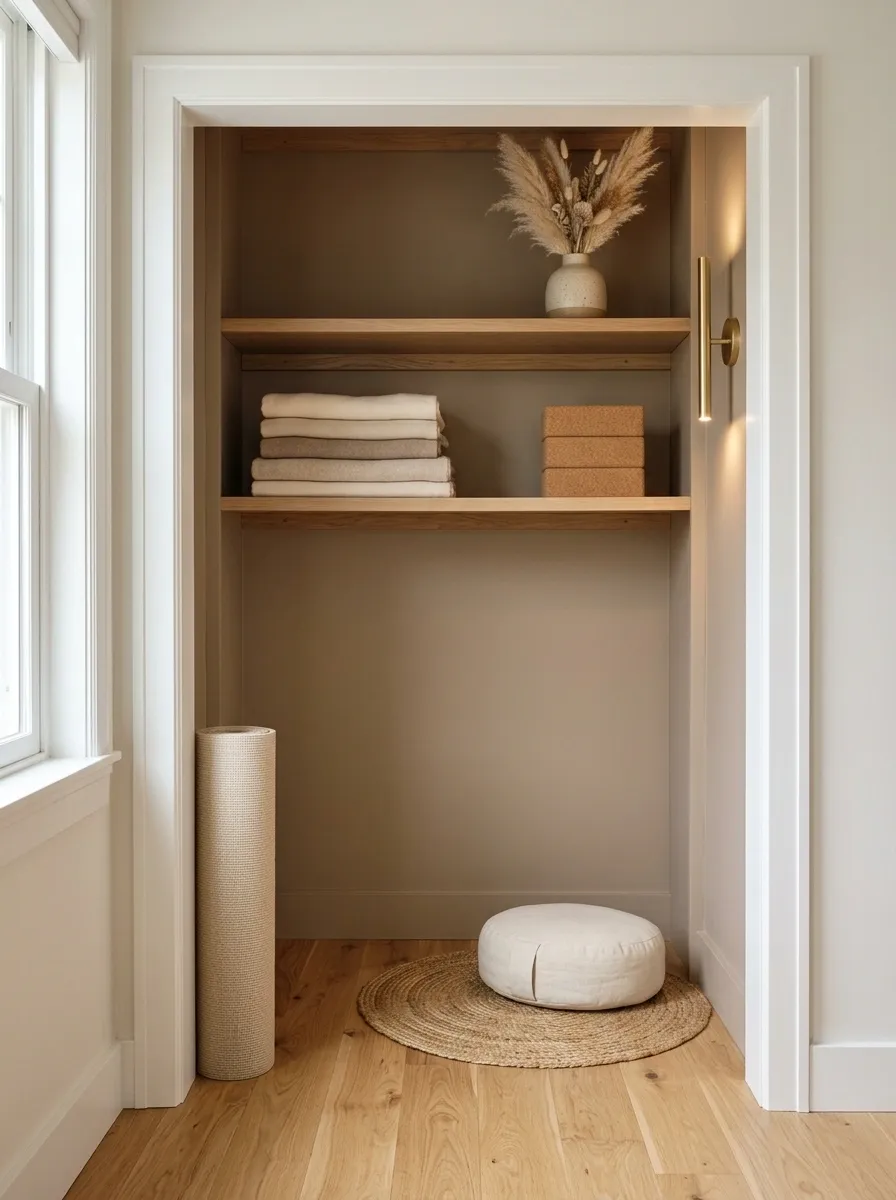
An unused closet can become one of the most practical yoga corners in the home. Remove unnecessary shelving from the lower section and create a clear floor area wide enough for the mat. Keep one or two upper shelves for folded blankets and blocks, then paint the entire interior one warm color so it reads as an intentional little room. A slim wall light can provide focused illumination without taking floor space. If the closet has a door, removing it or replacing it with a curtain can make the nook feel more open. Keep the mat rolled neatly against one side when the space isn’t in use. The biggest advantage here is that everything already has a home. No yoga props need to colonize the living room.
Under-Stairs Yoga Corner
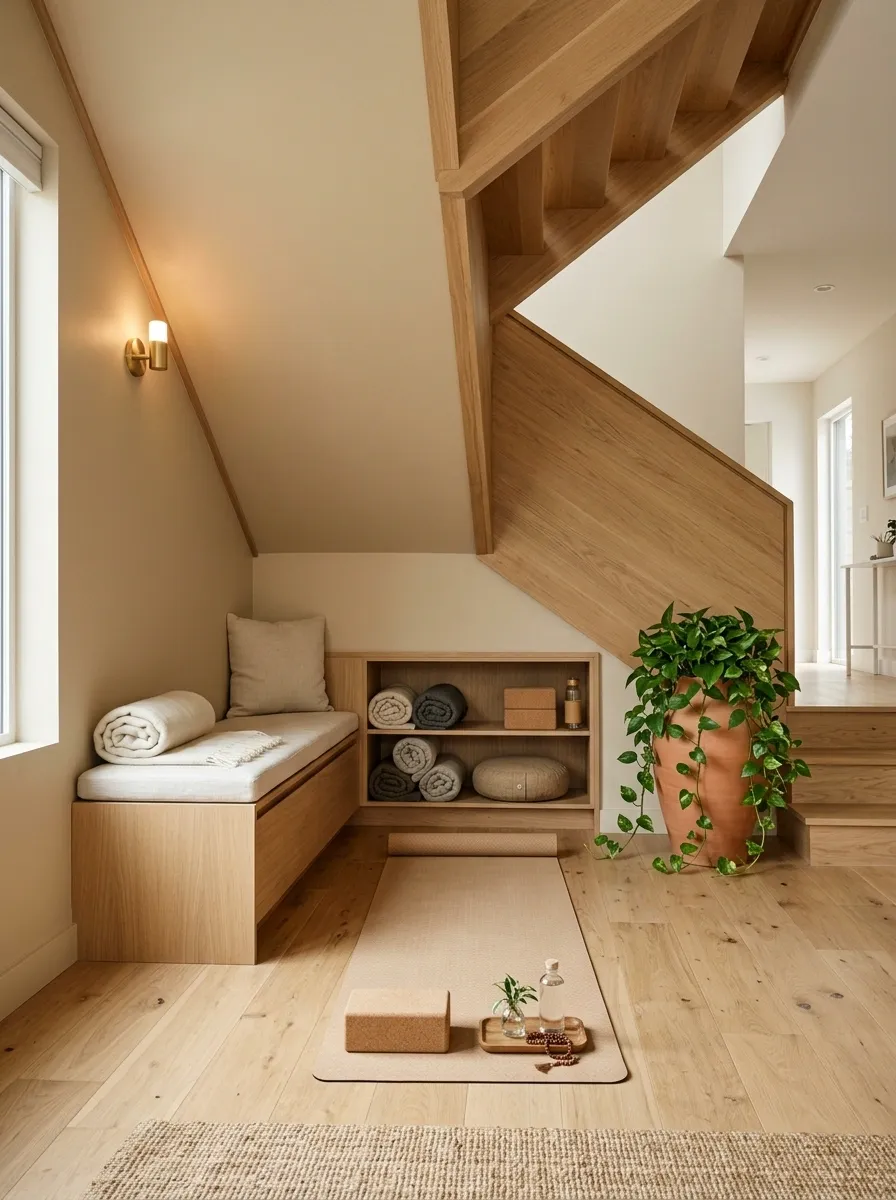
The space beneath stairs is awkward for most furniture but can work beautifully for a low-profile yoga zone. Use the angled ceiling as the feature instead of trying to disguise it. Paint the walls a warm neutral, add a low wood bench along the tallest side, and keep the mat centered where headroom is comfortable. Install a small wall light beneath the stairs to create a warm glow. A built-in drawer or shallow cabinet can store blankets and props without stealing floor space. One large ceramic pot or woven basket can soften the architecture. The important part is knowing where the usable height begins and keeping movement away from the lowest section. A yoga corner should not require ducking every time a pose changes.
Bright Sunroom Yoga Space
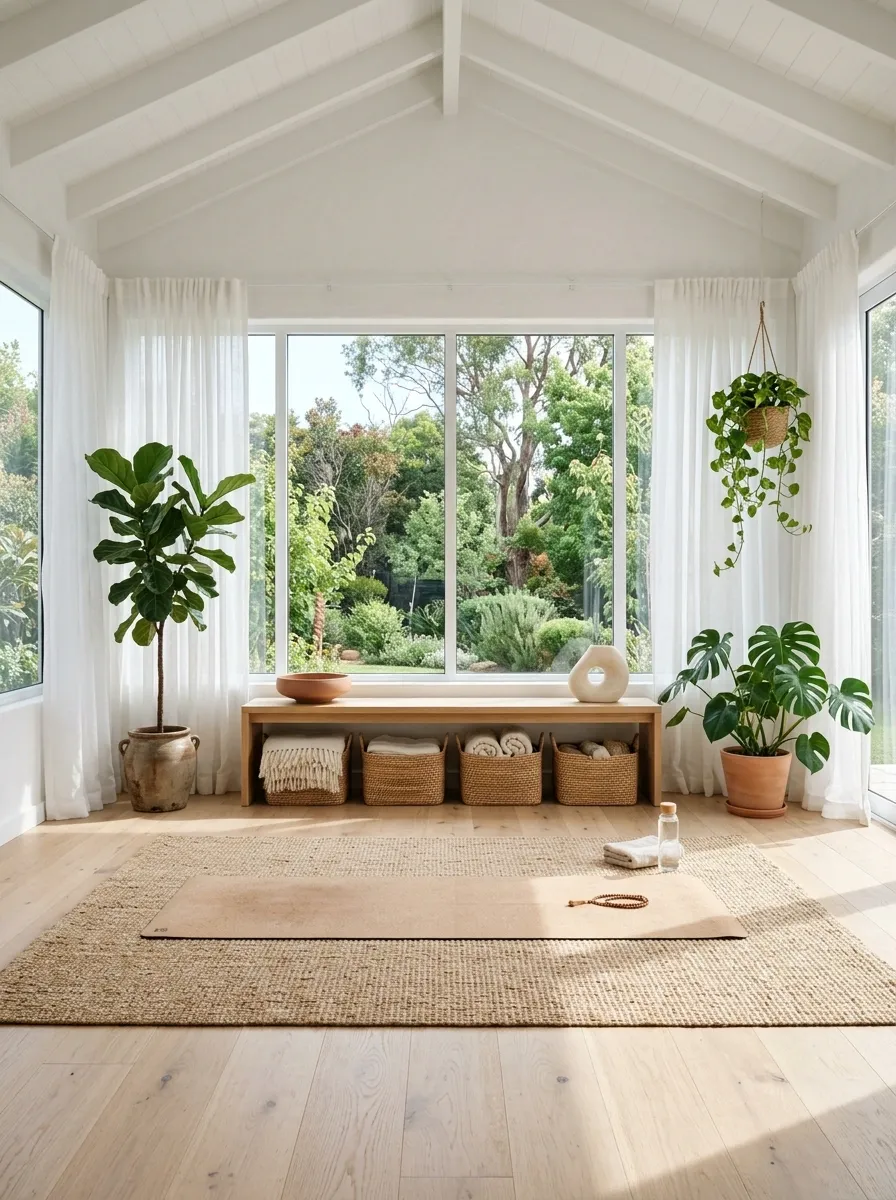
A sunroom can support a larger yoga setup without needing much furniture. Keep the walls and ceiling bright, use a natural wood floor or woven rug, and center the mat where daylight falls. A low bench can run beneath the windows, with baskets tucked underneath for blankets. Use lightweight curtains that can be pulled across the windows when the sun becomes too strong. Plants can sit at the edges, especially near corners where they won’t interfere with movement. Add a low ceramic bowl or sculptural object to the bench rather than covering it with accessories. The entire space should feel open and breathable. This is one of those rooms where adding more decor would actually make the design worse, which is a useful excuse to stop shopping.
Tiny Rental Yoga Corner
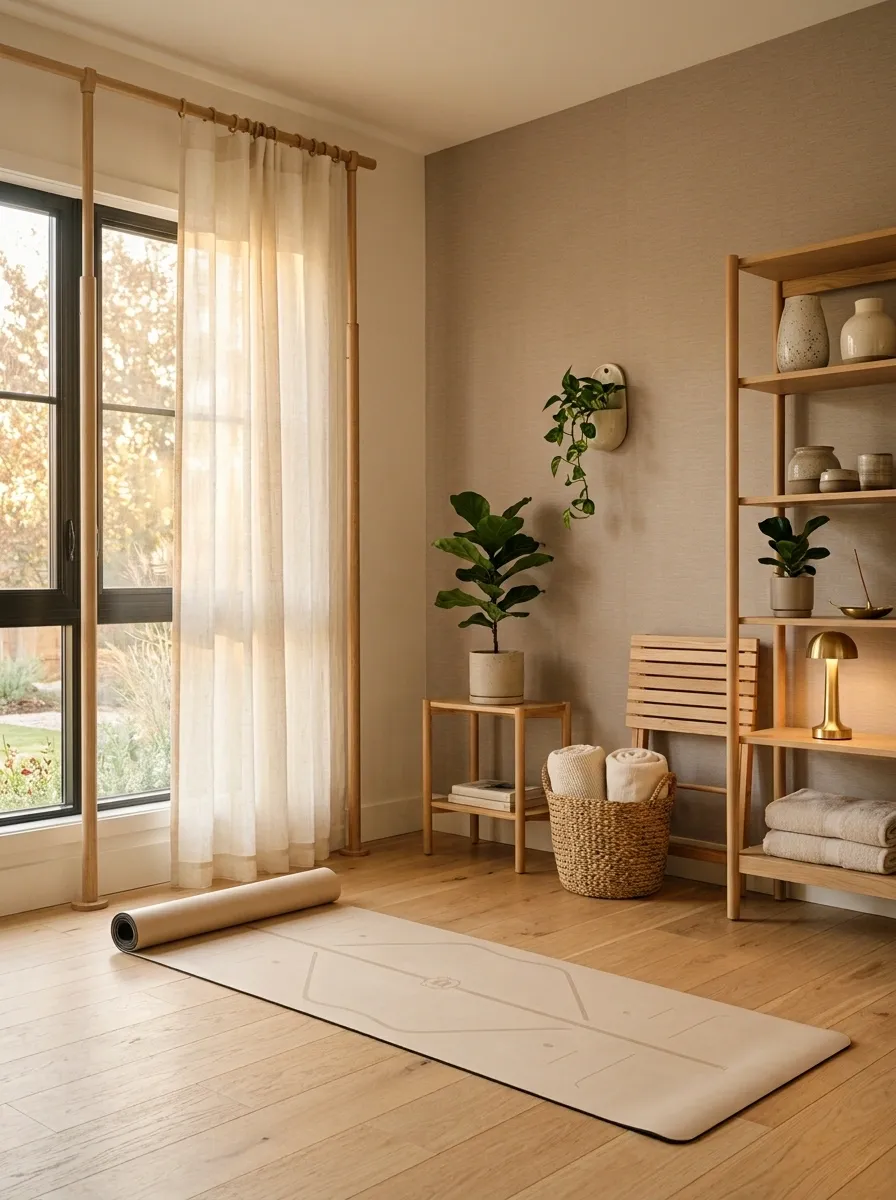
Renters can create a defined yoga space without painting walls or drilling into anything. Use a removable peel-and-stick mural or subtle textured wallpaper on one section of wall, then place a slim freestanding shelf beside the mat. A folding wooden stool can act as seating when needed and disappear against the wall when it isn’t. Choose a neutral mat, woven basket, and small rechargeable lamp. If the corner is near a window, use a freestanding curtain rod to create separation rather than making permanent changes. The design should feel finished but reversible. That is the whole rental game. Make it look intentional without leaving behind a security deposit horror story.
WALL
SEAT
STORAGE
Quiet Hotel-Inspired Corner
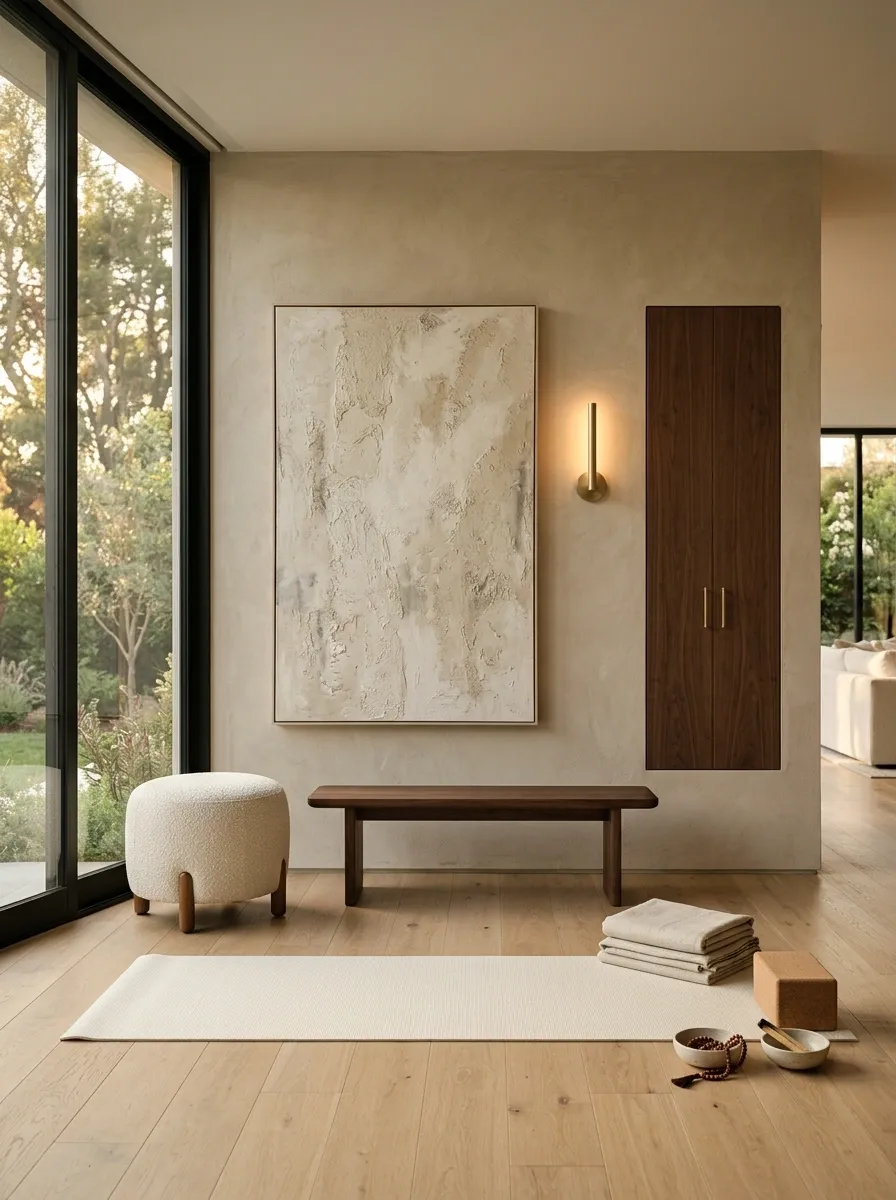
For a more polished look, borrow the visual language of a calm boutique hotel without making the room feel like a hotel lobby. Use a warm stone-colored wall, dark walnut bench, cream mat, and one softly upholstered stool. A muted brass wall light adds a small amount of shine, while a large textured artwork provides the vertical anchor. Keep the floor almost completely empty except for the mat. A concealed cabinet can store blankets and props. The palette should stay within stone, cream, walnut, and muted brass. This style is about proportion more than decoration. Everything should feel substantial but not oversized. The corner says “quiet morning” without needing a wooden sign that literally says “quiet morning.”
Warm Rustic Yoga Corner
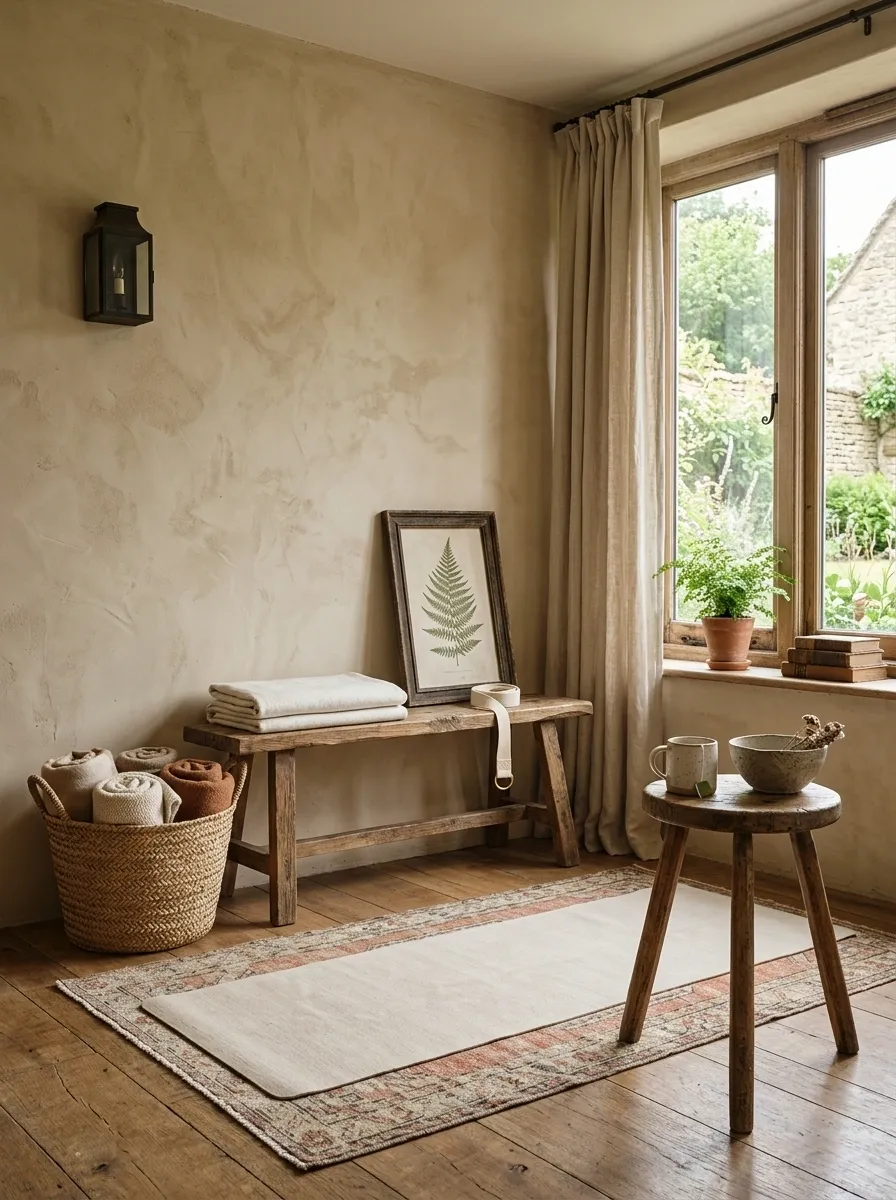
A rustic corner works best when it feels lived-in rather than staged. Use a warm plaster wall, reclaimed or medium-toned wood bench, woven floor basket, and a simple neutral mat. Add a wool or flatweave rug underneath if the floor needs more warmth. A vintage stool can hold a ceramic mug or small bowl, while a simple lantern-style light provides evening illumination. Keep artwork casual, perhaps one old landscape or botanical print in a wood frame. The materials should show some variation and texture. Perfectly matched rustic furniture tends to look like a catalog, while slightly imperfect pieces make the corner feel like part of an actual home. Rustic does not mean every object needs to be beige and distressed at the same time.
Scandinavian Light Corner
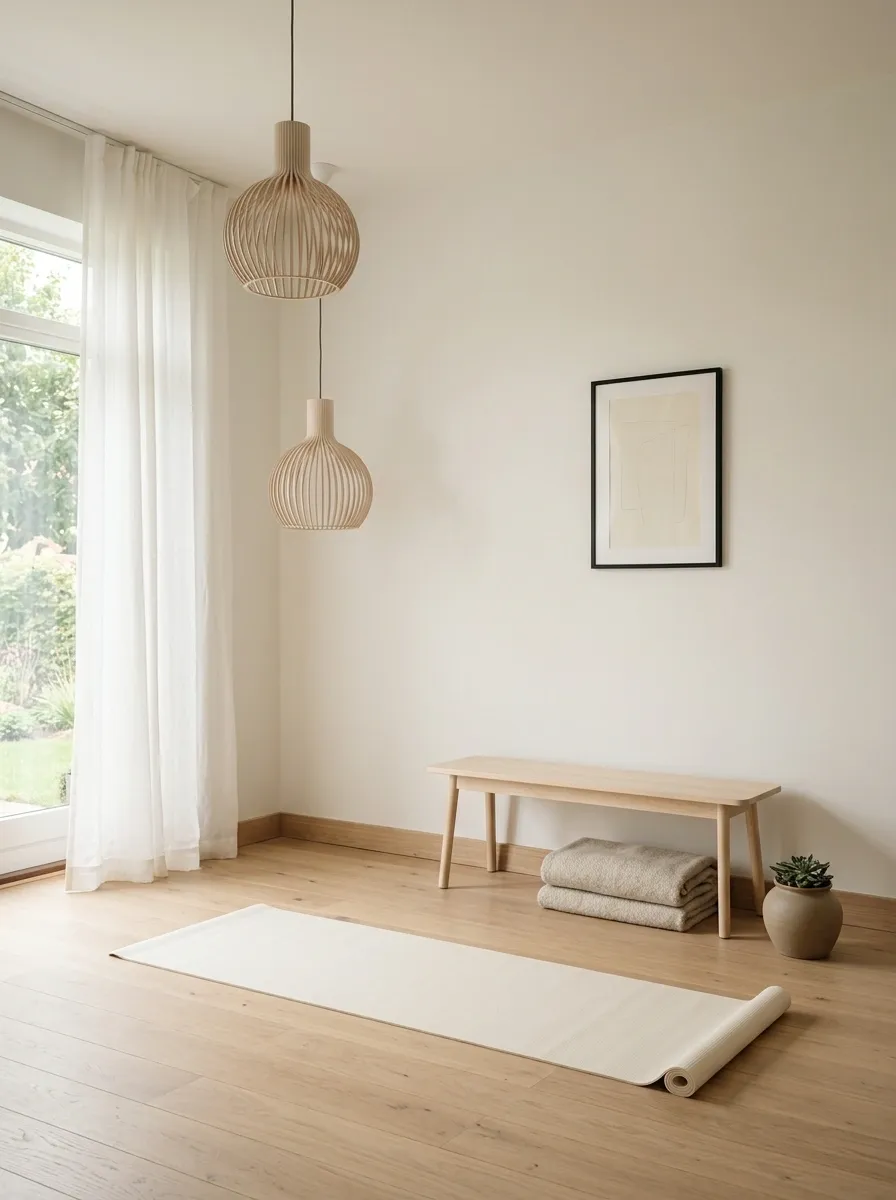
Keep this one exceptionally simple. Use a pale wall, birch or light oak furniture, a cream mat, and one sculptural pendant. A narrow bench sits along the wall with a folded blanket underneath, while a small ceramic pot adds just enough organic shape. A single piece of black-framed artwork creates contrast without making the space feel busy. If there is a window, use white linen curtains to keep the daylight soft. The corner should have clean lines but not look sterile. Warm wood is what makes the difference. This is Scandinavian design at its useful best, where everything earns its place and the empty floor is treated as part of the composition rather than a problem that needs filling.
Clay and Cream Color-Blocked Corner
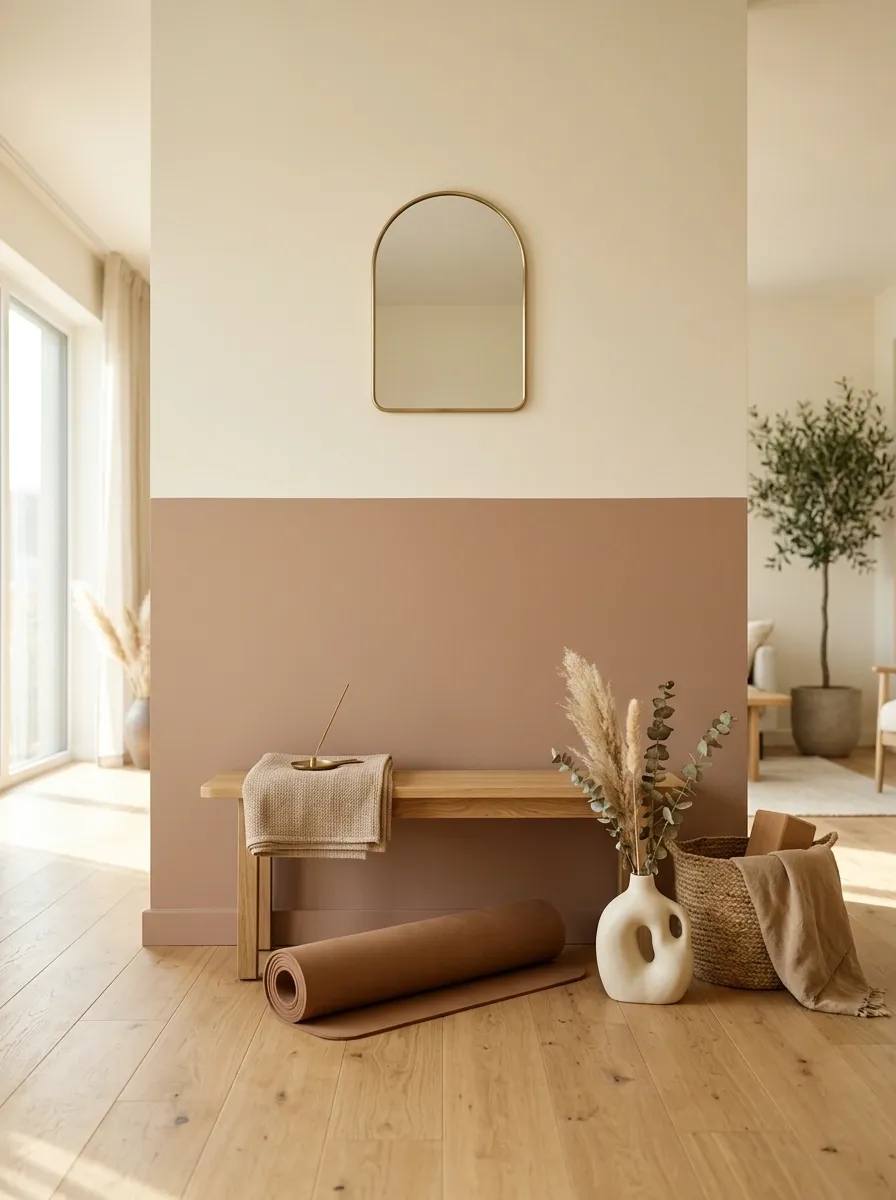
Instead of covering the entire room in color, use a simple color block to define the yoga zone. Paint the lower half of the wall in muted clay and leave the upper half warm cream. A narrow wooden bench can sit directly against the wall, while the mat rests in front. Add a small rounded mirror and one ceramic vase to repeat the curved shapes. Keep textiles in cream, tan, and soft brown so the wall remains the strongest feature. The color block creates an instant boundary without needing a divider or bulky furniture. It is especially useful in open-plan rooms where a yoga corner needs to feel separate from the living area. Paint did the zoning. The furniture can relax.
Indoor-Outdoor Threshold Corner
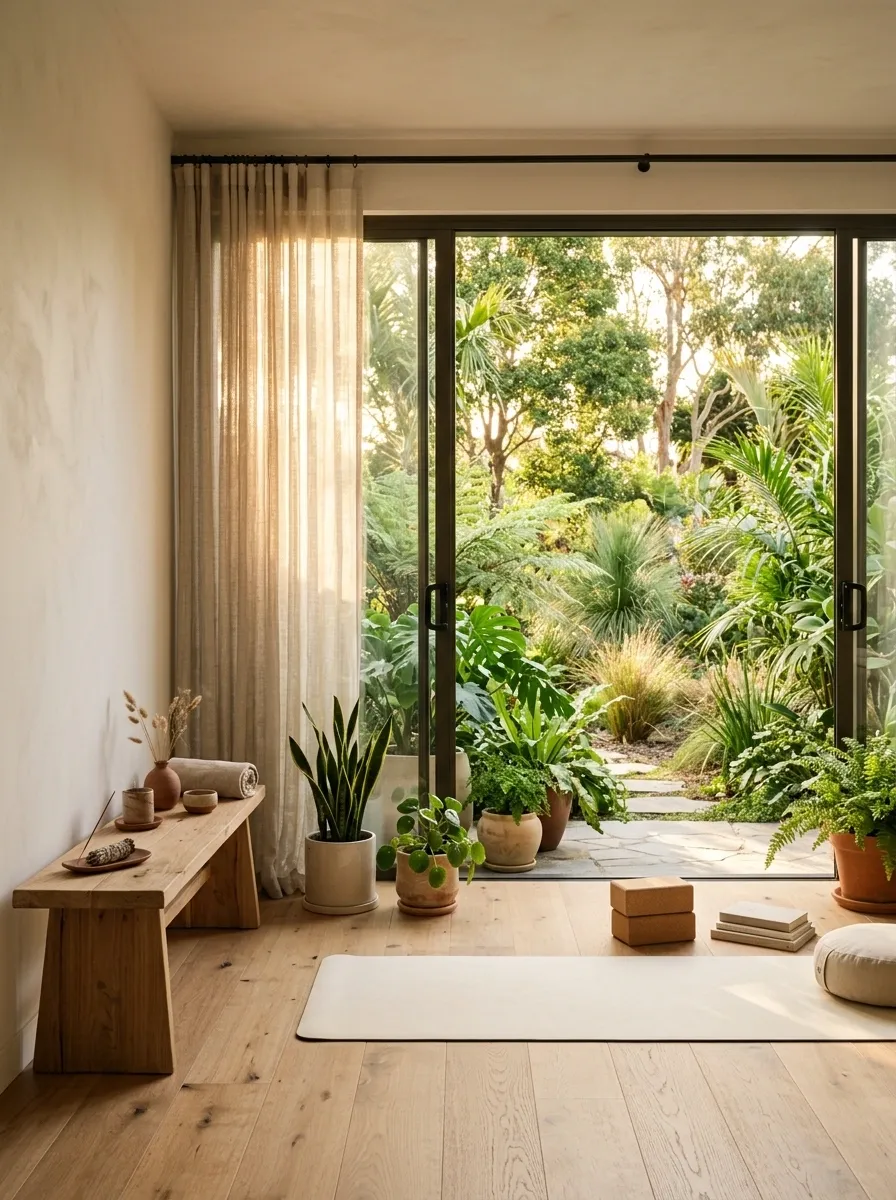
A space beside large sliding doors can become a beautiful yoga area because it connects the interior with the outdoors. Use natural timber, a cream mat, and stone or terracotta accessories. Keep the furniture low so the view remains open. A small bench can sit against an interior wall, while planters frame the edge near the doors. Linen curtains can soften the transition when privacy is needed. Choose a palette of warm white, wood, clay, and green. The corner should feel connected to the outside without becoming a patio transported indoors. When the doors are open, the greenery becomes part of the composition. When they’re closed, the natural materials still keep the corner grounded.
Rooftop Yoga Nook
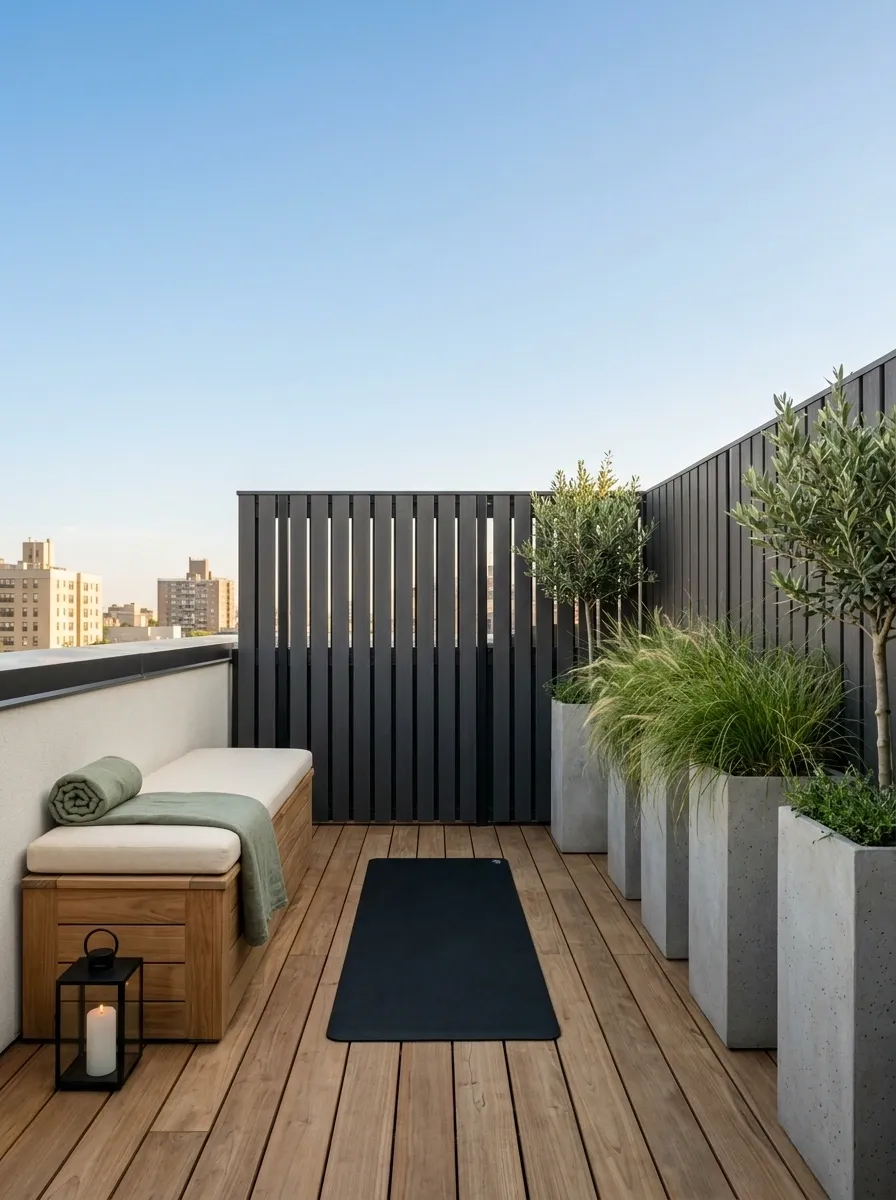
A rooftop space needs weather-aware materials and a strong sense of privacy. Use a compact outdoor mat on wood decking or another stable surface, then position a slatted privacy screen along one side. Built-in planters can soften the screen while a low weather-resistant bench provides storage and seating. Keep the palette to natural wood, charcoal, cream, and green so the sky remains the main visual feature. A small lantern can provide evening light without introducing a bulky fixture. Avoid loose lightweight decor that can become a neighborhood souvenir after the next windy afternoon. The best rooftop corner is open, grounded, and practical. It should feel like part of the architecture rather than a pile of patio accessories gathered around a yoga mat.
Home Office Crossover Corner
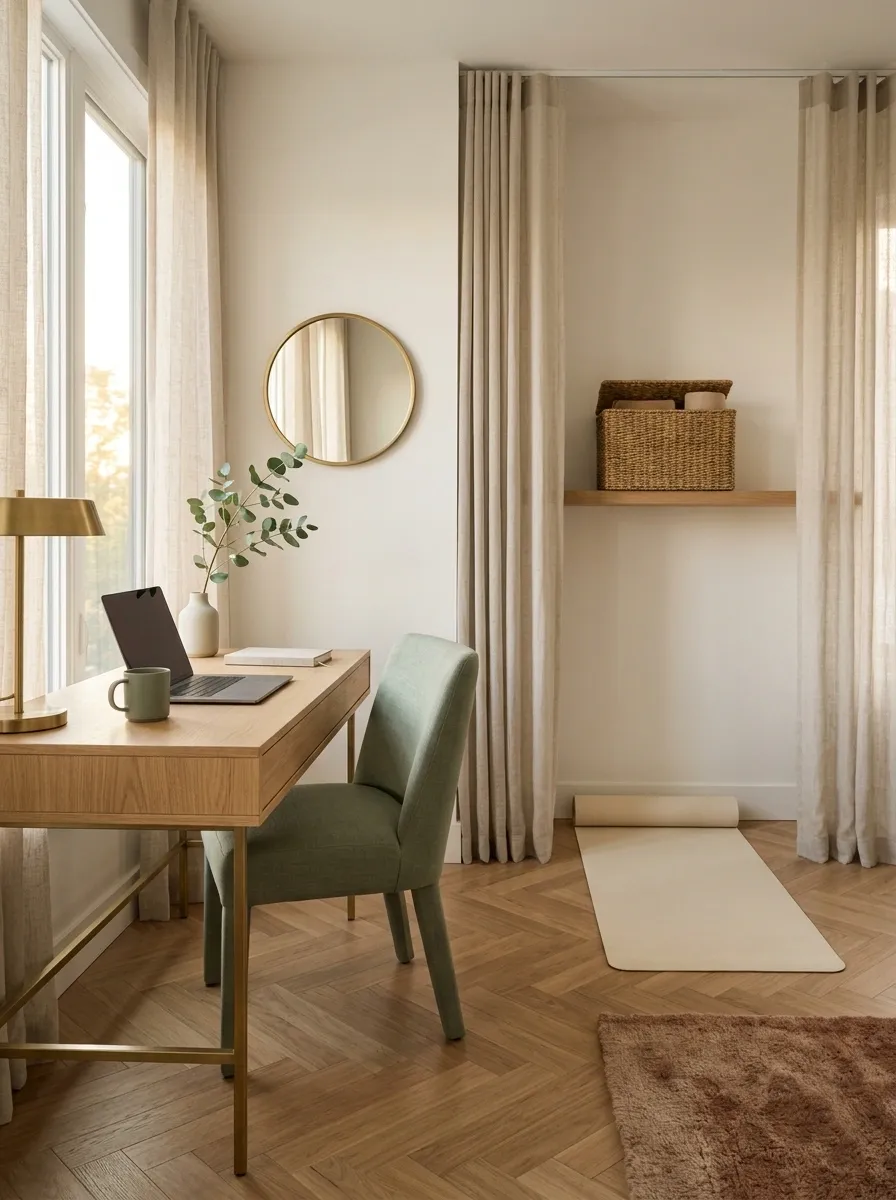
An extra corner in a home office can work as a yoga zone if the design makes switching between work and movement easy. Use a slim folding bench or wall-mounted shelf for storage, then leave a clear rectangle of floor for the mat. Keep the colors connected to the office, perhaps warm white walls, oak furniture, and a muted green or clay accent. A curtain or lightweight screen can hide the work desk when it is time to practice. Keep yoga props inside one closed basket rather than scattered around the office. The goal is a corner that can change purpose without looking like two rooms collided. A desk surrounded by resistance bands and yoga blocks is not multifunctional design. It is visual evidence of procrastination.
DESK
MAT
Dusty Rose and Walnut Corner
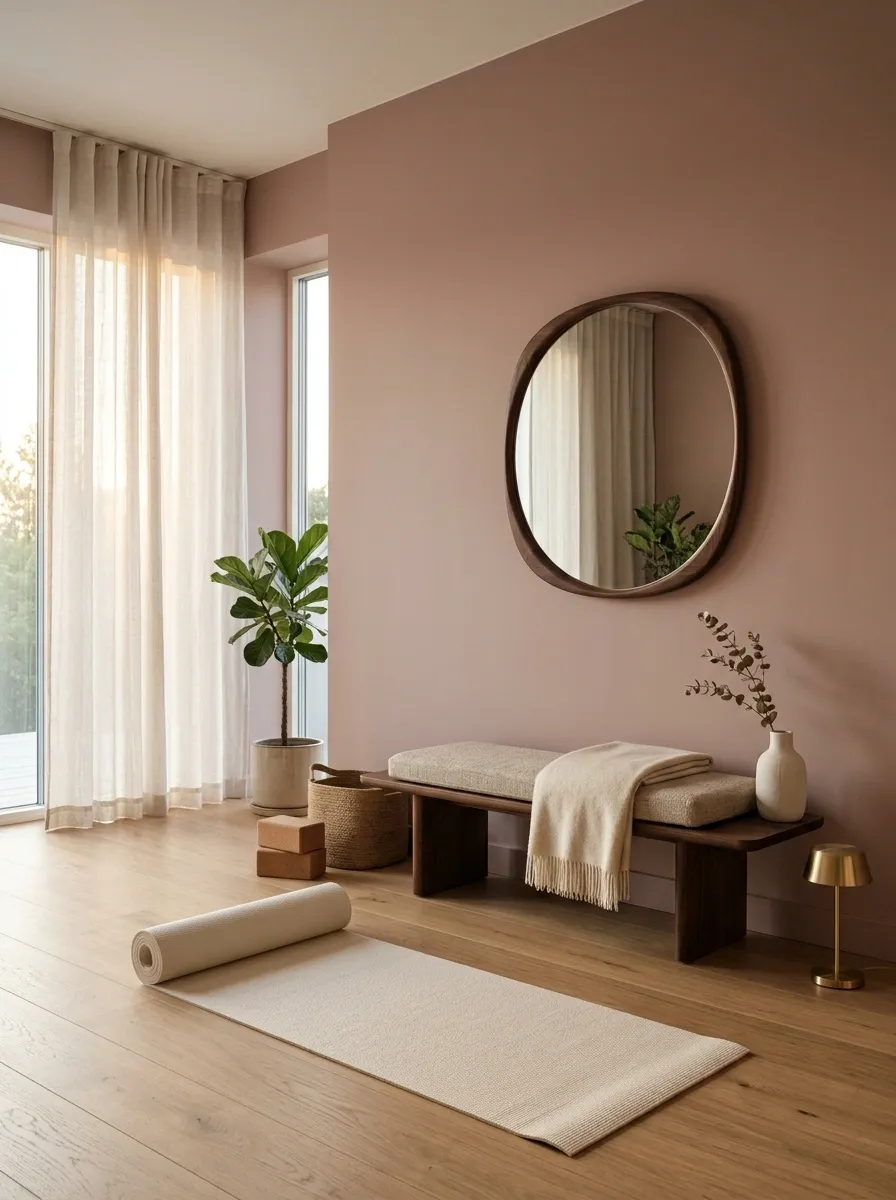
For a richer version of the soft palette, pair dusty rose walls with dark walnut furniture. The deeper wood prevents the pink from becoming sugary, while a cream mat keeps the floor light. Add a rounded walnut mirror, linen bench cushion, and a small brass lamp. A ceramic vase in off-white provides another quiet shape without introducing another color. Keep the wall mostly empty around the mirror so the corner feels spacious. This works particularly well in bedrooms where the rest of the room already uses warm textiles. The trick is to let the dusty rose be muted rather than bright. Nobody needs a yoga corner that looks like a cupcake shop after a very ambitious renovation.
Olive and Charcoal Architectural Corner
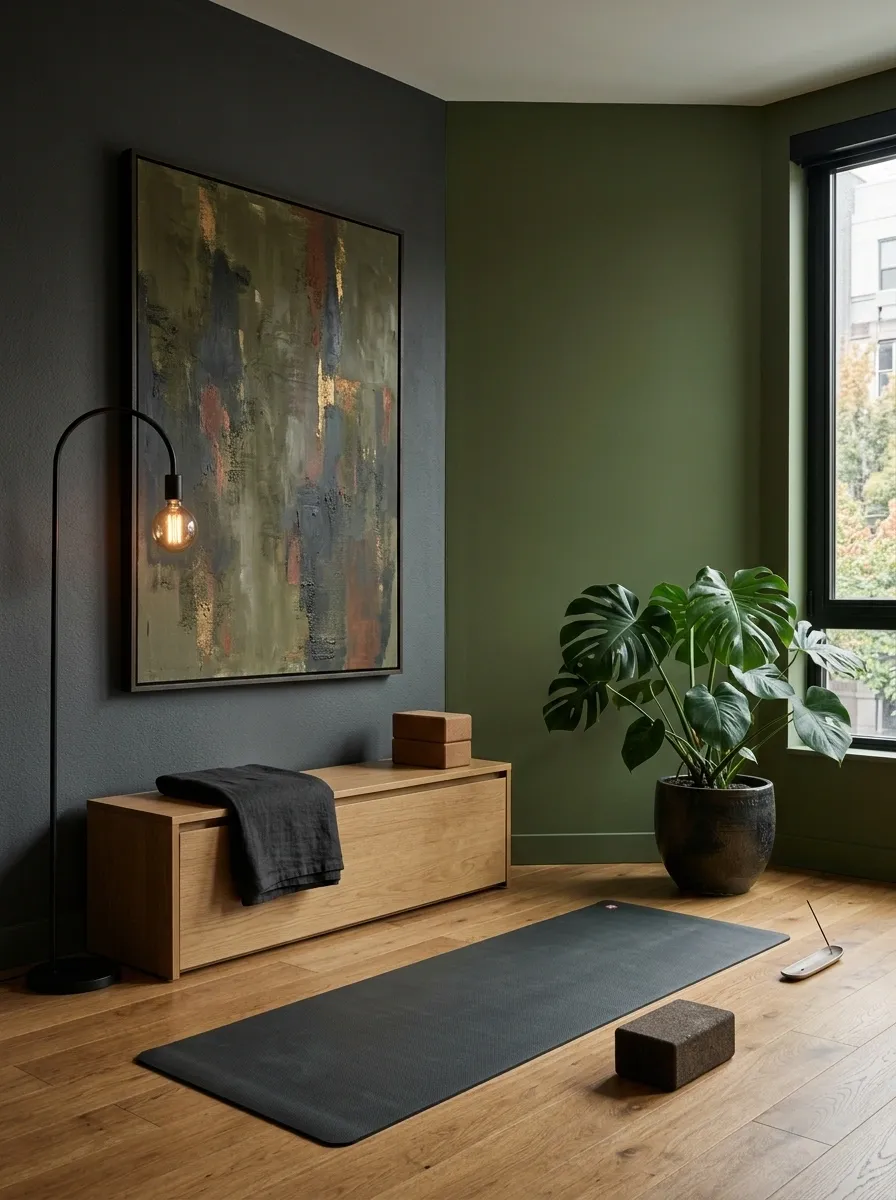
For a stronger, more grounded look, combine an olive wall with charcoal accents and medium wood. A dark mat sits in the center, while a simple wooden bench runs along one side. Use a black metal floor lamp with a warm bulb and one large olive-toned artwork above the bench. Storage should be concealed in the bench or a low cabinet so the floor stays visually clean. A single plant with sculptural leaves can soften the darker colors. This palette works especially well in modern apartments and homes with darker furniture. It feels intentional without relying on lots of decorative objects. The wall color provides enough drama. The corner doesn’t need to start auditioning for a furniture catalog.
Cozy Evening Yoga Corner
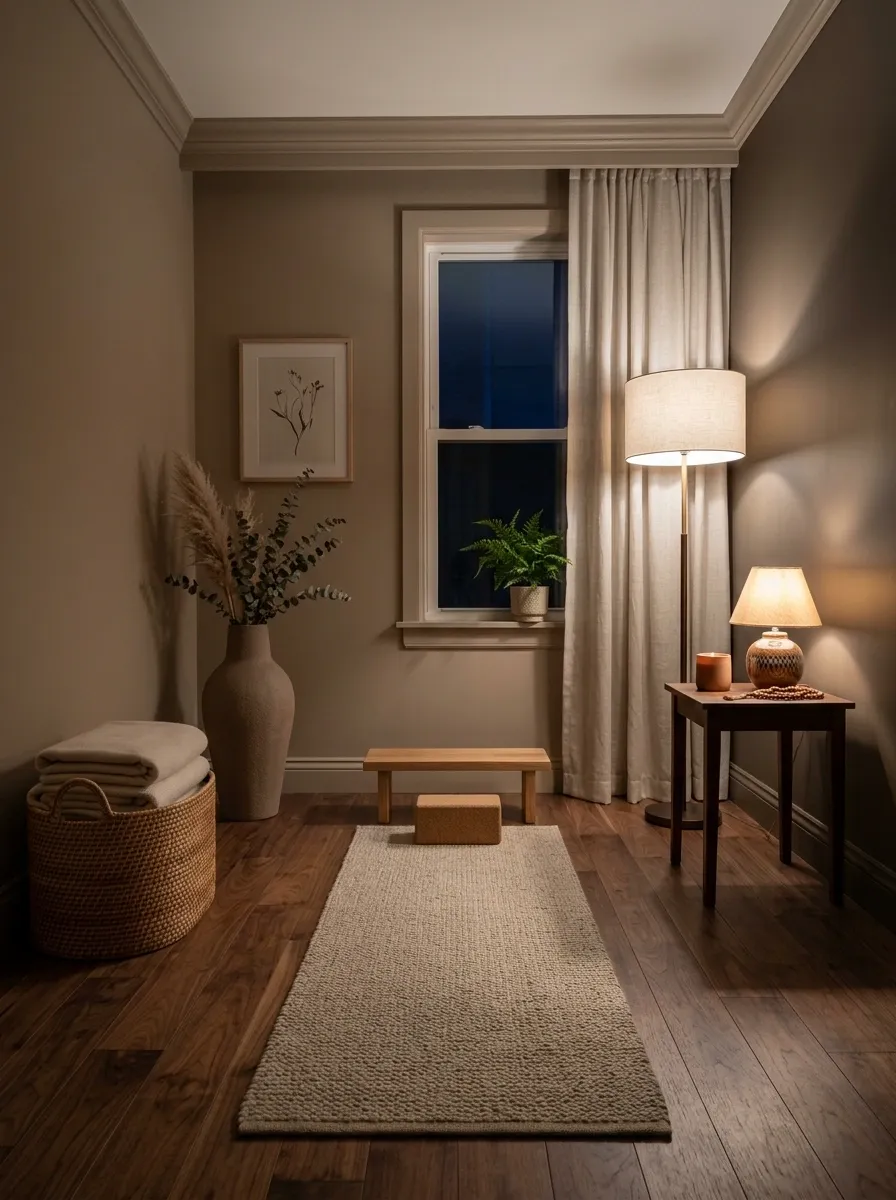
This design is built around what the space feels like after sunset. Use a deep taupe or warm mushroom wall, natural wood bench, thick neutral mat, and layered textiles. A floor lamp with a fabric shade should provide the main light, while a small table lamp adds a lower glow near the bench. Use one woven basket for blankets and one ceramic vessel for texture. If candles are used, keep them contained and safely positioned away from the mat and fabrics. The palette should stay warm and quiet, with cream, taupe, walnut, and soft brown. During the day, the corner looks understated. At night, the lighting gives it character. Finally, a corner that understands the assignment after 7 p.m.
Minimal Corner With a Statement Mirror
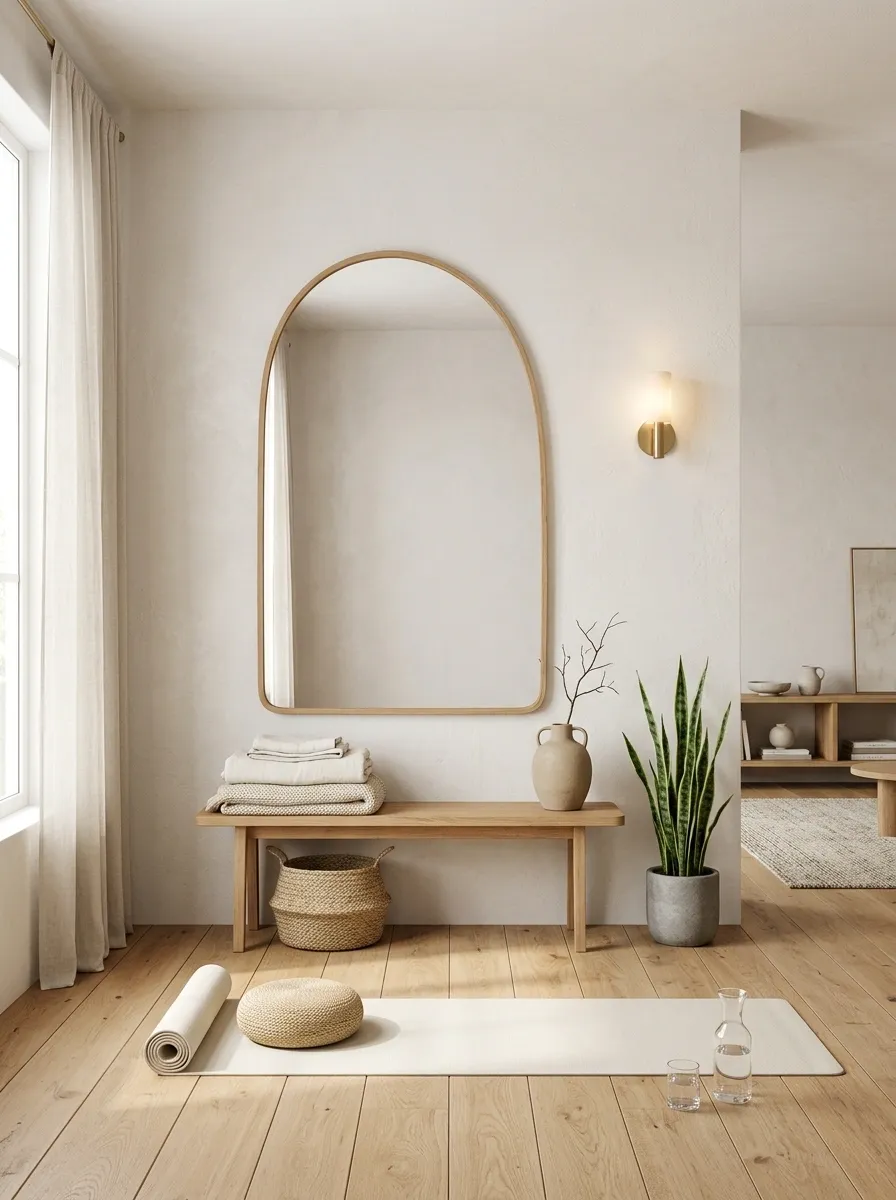
When the room already has enough color and texture, let the mirror become the feature. Use a warm white wall, light oak floor, and neutral mat, then choose one oversized mirror with an unusual rounded or arched shape. A narrow bench beneath it provides storage and a place for folded textiles. Add a single plant or ceramic vessel beside the bench. Lighting should come from a discreet wall fixture so nothing competes with the mirror. The entire corner can remain almost empty. That’s the point. The unusual shape gives the wall enough personality without needing a gallery wall, shelf, sign, or collection of tiny decorative objects. One strong move beats twelve nervous ones.
Earthy Corner With Textured Plaster
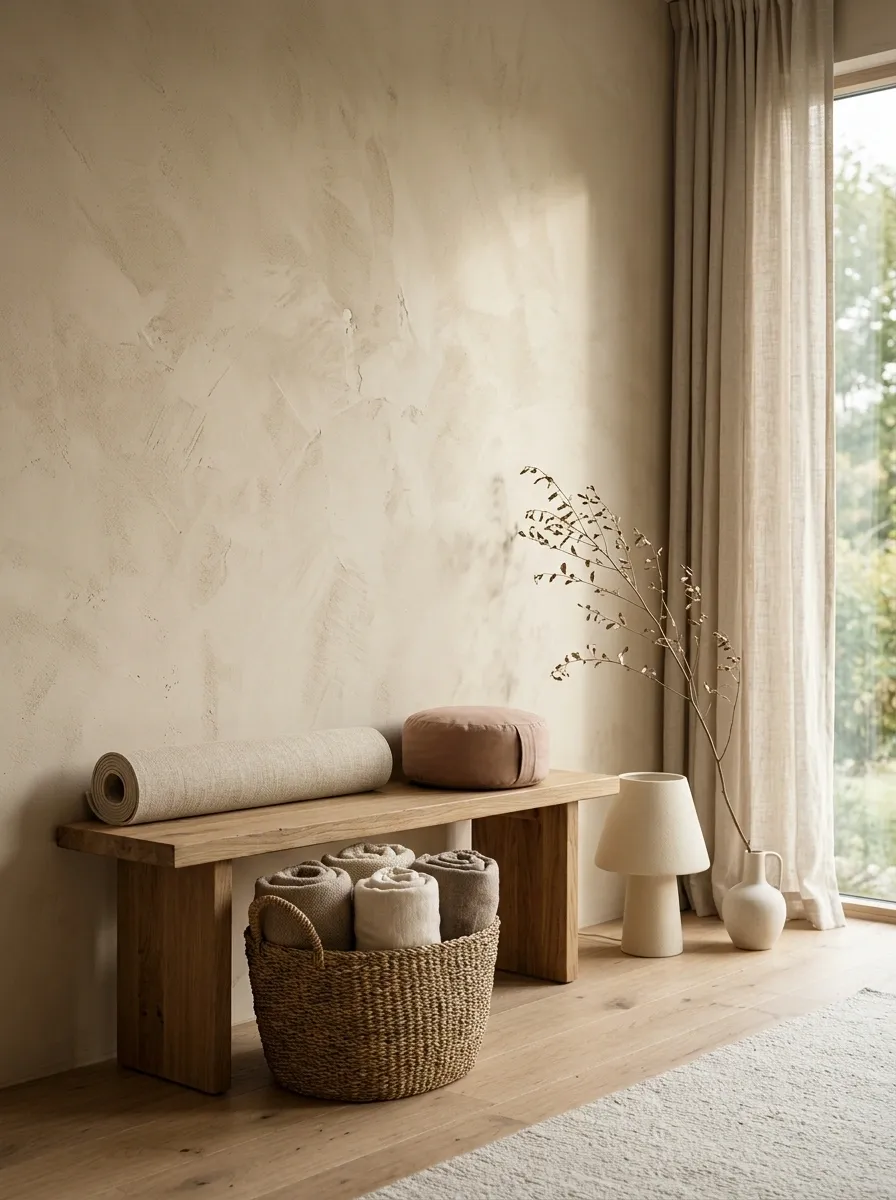
Texture can define the entire corner without adding much furniture. Use a warm plaster or limewash-style wall in beige, mushroom, or soft clay. Pair it with a chunky wooden bench, natural woven basket, and neutral mat. A sculptural ceramic lamp adds another tactile element, while a small branch arrangement introduces height. Keep the artwork minimal or skip it entirely so the wall finish remains visible. This style is especially effective when the corner has strong natural light because changing light reveals the subtle wall texture throughout the day. The design feels expensive without requiring a room full of expensive things, which is always a pleasant plot twist.
Compact Corner With Foldaway Furniture
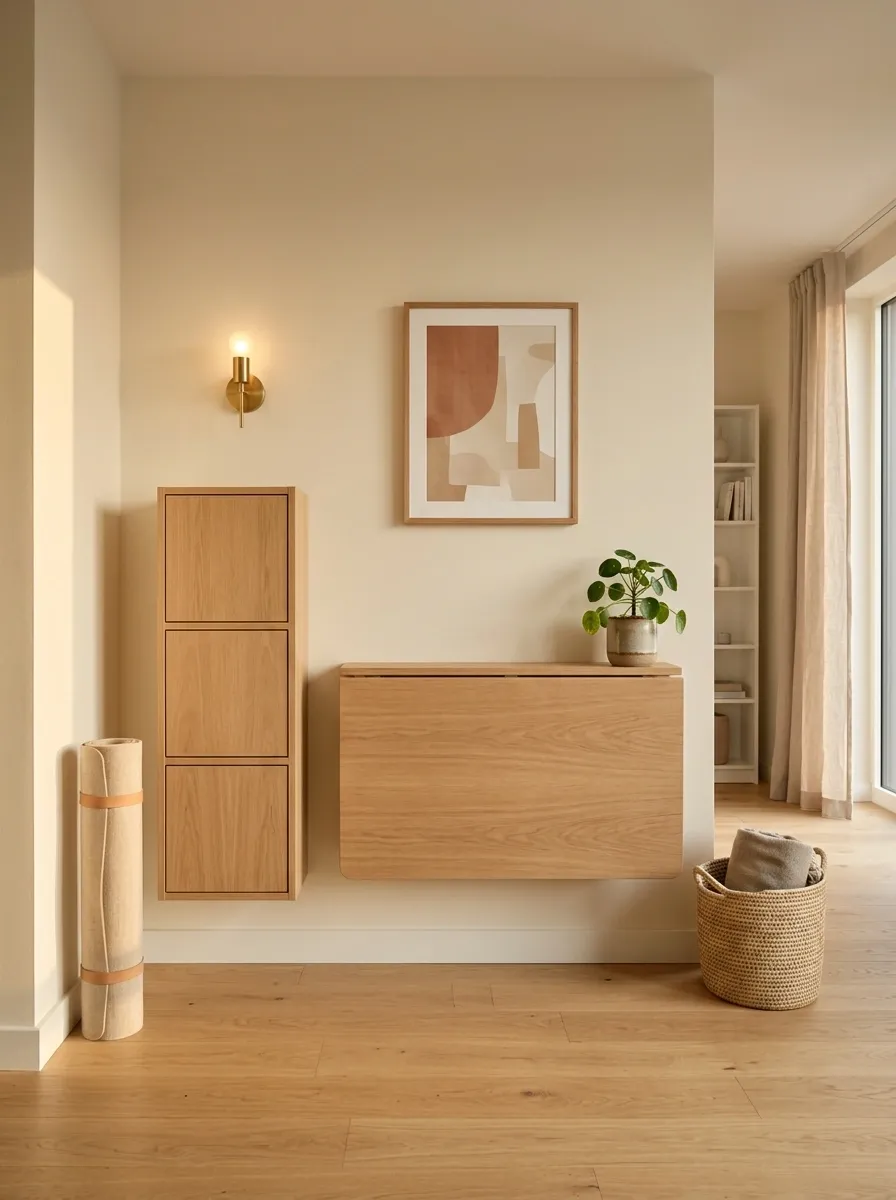
For a genuinely tiny home, every piece needs to disappear when it isn’t useful. Use a wall-mounted folding bench or table, a slim storage cabinet, and a neutral mat that can roll vertically beside the cabinet. Keep the wall pale and use one accent color, such as muted terracotta or olive, on a small textile or artwork. A wall-mounted sconce frees the floor completely. When the mat is rolled away, the corner can function as a reading or seating area. When the furniture folds up, the yoga zone appears. That’s much more useful than dedicating a permanent chair to a corner that is used twice a week. Small-space design should involve actual magic, preferably the kind that creates floor space.
FURNITURE
FLOOR
Neutral Corner With a Curved Bench
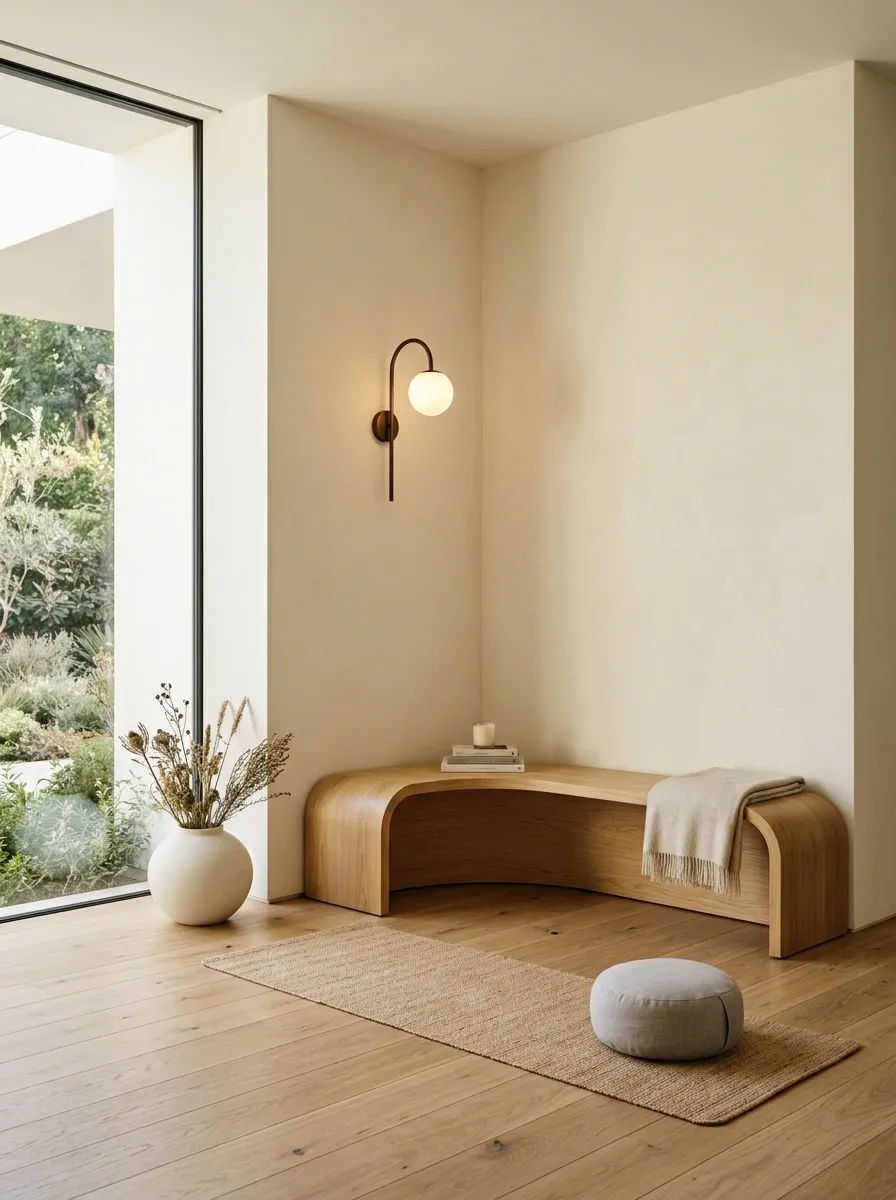
Curved furniture can make a small yoga corner feel softer without adding more decoration. Use a warm ivory wall, natural oak flooring, and a curved wooden bench along one side. Place a neutral mat in front and use a rounded ceramic vessel to echo the bench’s shape. A simple wall light with a curved arm adds another gentle line. Keep the rest of the space almost completely straight and minimal so the curves remain noticeable. This design is particularly useful in contemporary homes where square furniture dominates the rest of the room. One rounded bench can change the entire composition. No need to buy fourteen rounded objects afterward. The curve has already made its point.
Small Corner With a Gallery Wall
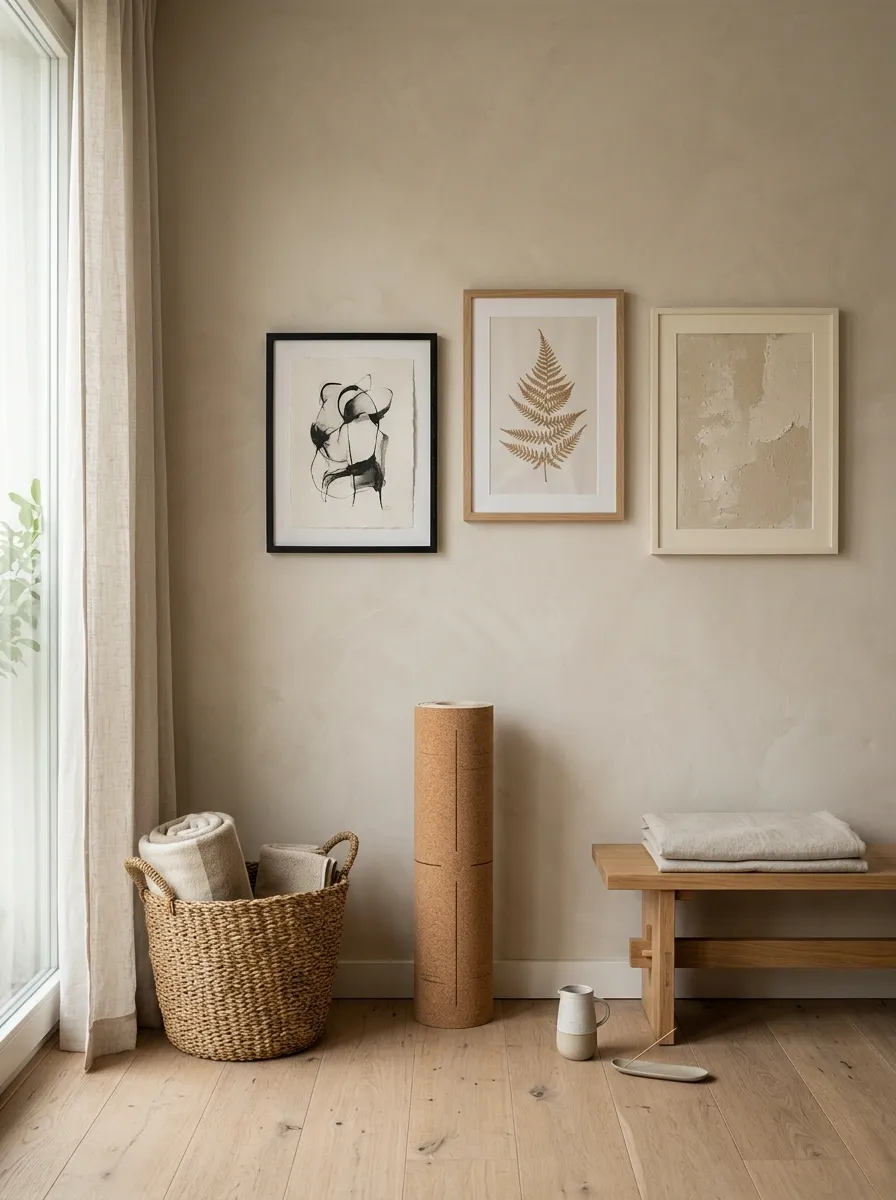
A gallery wall can work in a yoga corner, but it needs to be restrained. Choose three or four pieces with similar neutral backgrounds and simple frames rather than covering the entire wall. Place the mat beneath the arrangement, then add a low wooden bench and one woven basket. Keep the floor clear and the palette consistent with the artwork. The gallery should provide the vertical interest while the furniture stays quiet. Black, oak, and cream frames work particularly well against warm white or muted beige walls. The key is editing. A yoga corner doesn’t need to become an art fair just because there is an empty wall. Three thoughtful pieces usually say more than a wall that looks like it lost an argument with a frame store.
Calm Corner for a Windowless Room
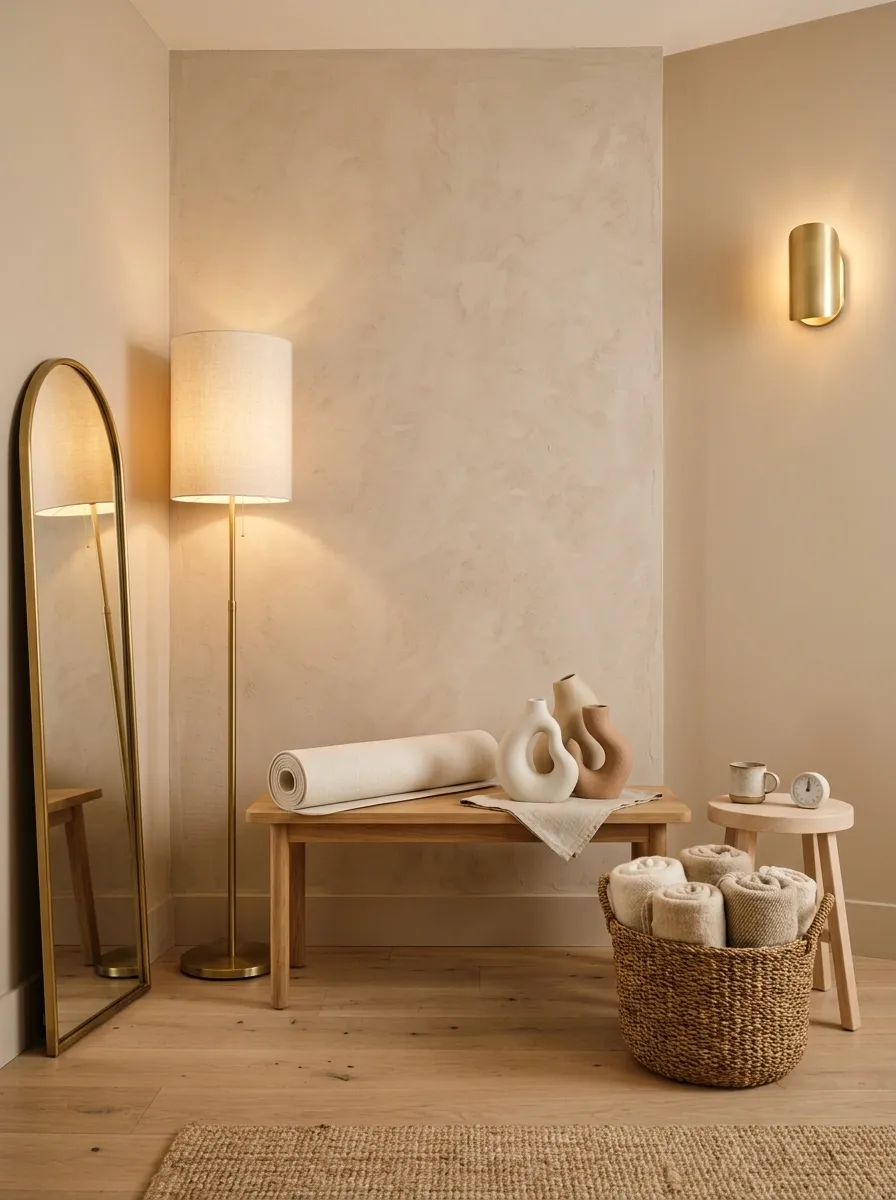
Not every yoga space gets beautiful natural light. A windowless corner can still feel inviting if the lighting is designed first. Use a warm beige or pale clay wall and install a wall sconce with a soft warm bulb. Add a floor lamp behind a low bench for another layer of light. Keep the furniture light in color, with a cream mat, pale wood stool, and woven basket. A mirror can help reflect the lighting and visually open the space. Use one or two plants only if the room supports them, otherwise a ceramic arrangement can provide the same organic shape without pretending there is sunlight. The important thing is warmth. A cold overhead bulb will undo the entire corner faster than a badly placed treadmill.
A Small Meditation-First Corner
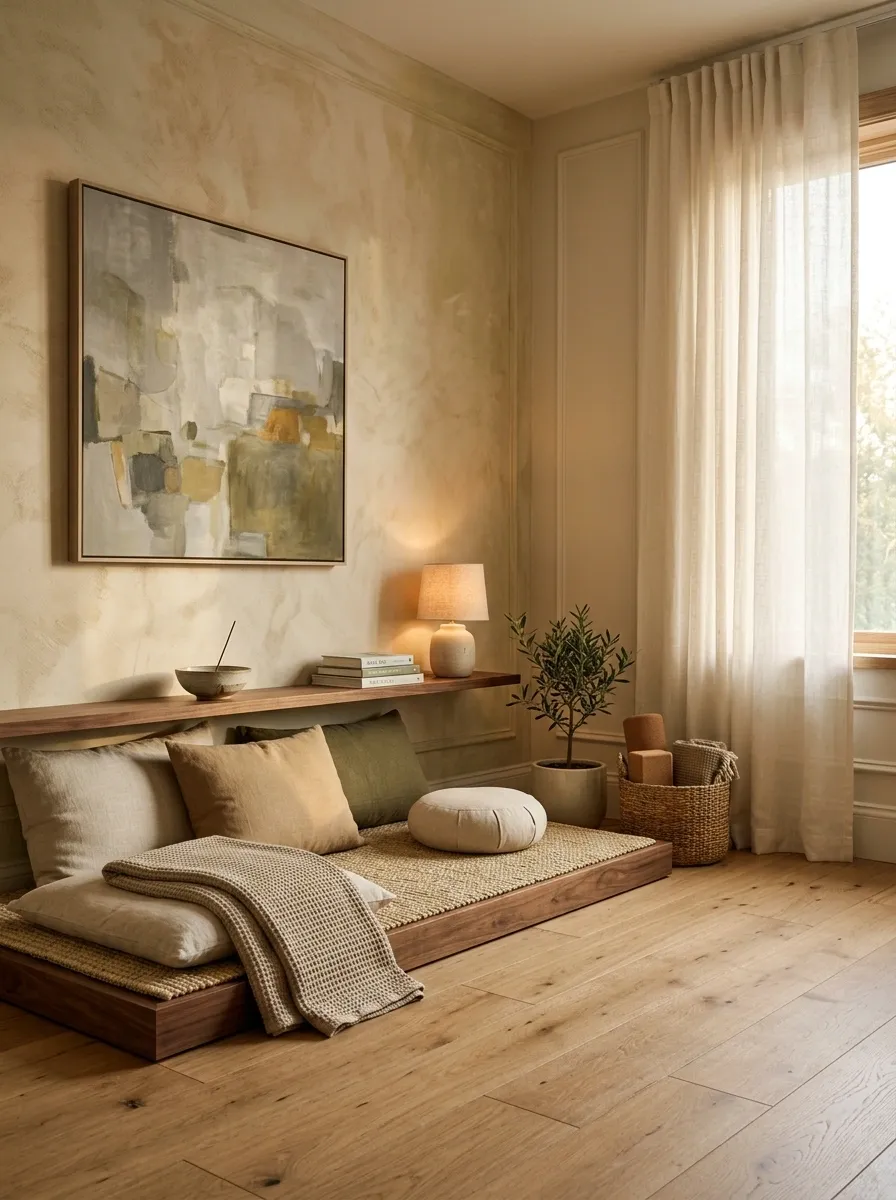
This design keeps the yoga mat from becoming the only purpose of the space. Use a low platform or floor cushion arrangement against a warm plaster wall, then leave enough open floor for a mat when needed. A narrow wood shelf can hold a ceramic bowl, folded blanket, and one small lamp. Keep the colors earthy, with cream, tan, olive, and walnut. A large piece of simple artwork can provide a visual focus without being overly literal. The furniture stays low so the room feels grounded. It works especially well in bedrooms or quiet corners of living rooms. The corner should feel usable for stretching, sitting, breathing, or simply being quiet for five minutes without checking a notification.
A Warm Family Room Yoga Zone
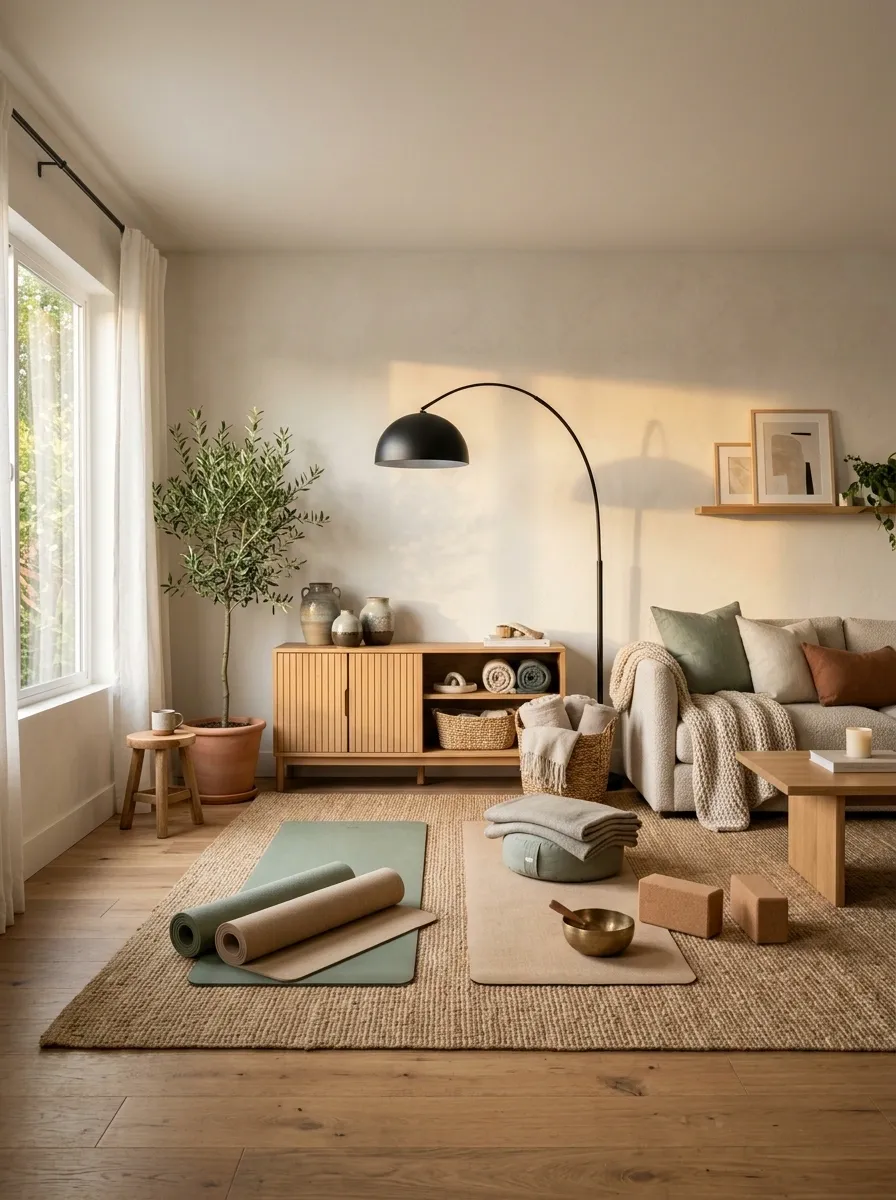
A yoga corner in a shared family room needs to look good even when nobody is practicing. Define the space with a large neutral rug, then place the mat over it when needed. A low storage cabinet along the wall can hold yoga props, children’s items, or extra blankets, making the corner genuinely useful to everyone. Use warm white walls, oak furniture, and muted green accents so the space connects to the rest of the room. A floor lamp can mark the edge without creating a physical barrier. Keep decorative objects high or securely positioned if young children use the room. The goal is a flexible zone that disappears into the room when not in use. That’s a lot more realistic than expecting a family room to remain untouched like a museum.
Warm Minimalist Corner With a Floating Shelf
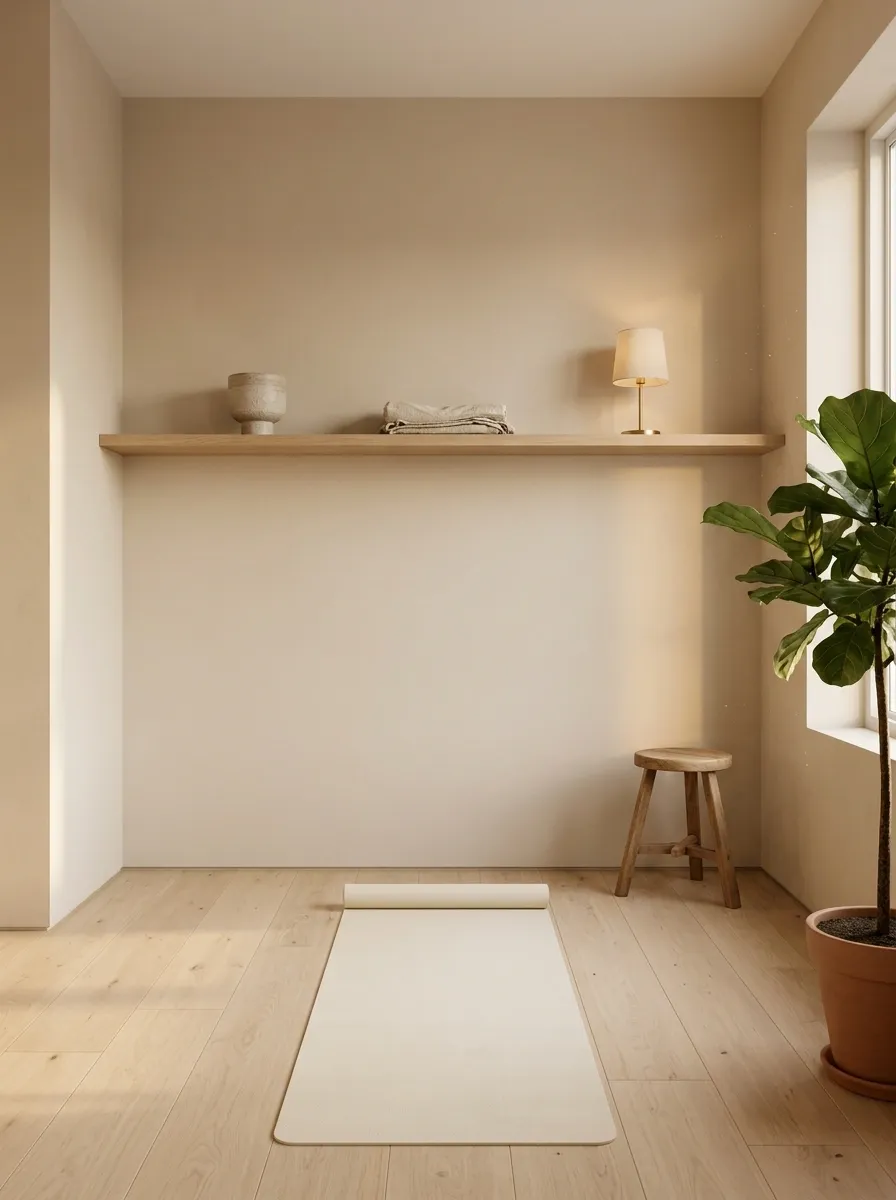
A floating shelf can define a yoga corner without taking any floor space. Use a warm beige wall, pale oak flooring, and a cream mat. Mount one long shelf slightly above eye level and place only a few objects on it: a ceramic vessel, folded textile, and small lamp. Underneath, keep the wall completely open. A simple wooden stool can sit at the side rather than directly in front of the mat. Add a large plant near the corner if there is enough light. The empty wall beneath the shelf is important because it creates visual breathing room. The design works particularly well in narrow apartments where a cabinet would make the room feel smaller. Wall storage is doing the work. The floor gets to stay innocent.
Earthy Corner With a Built-In Bench
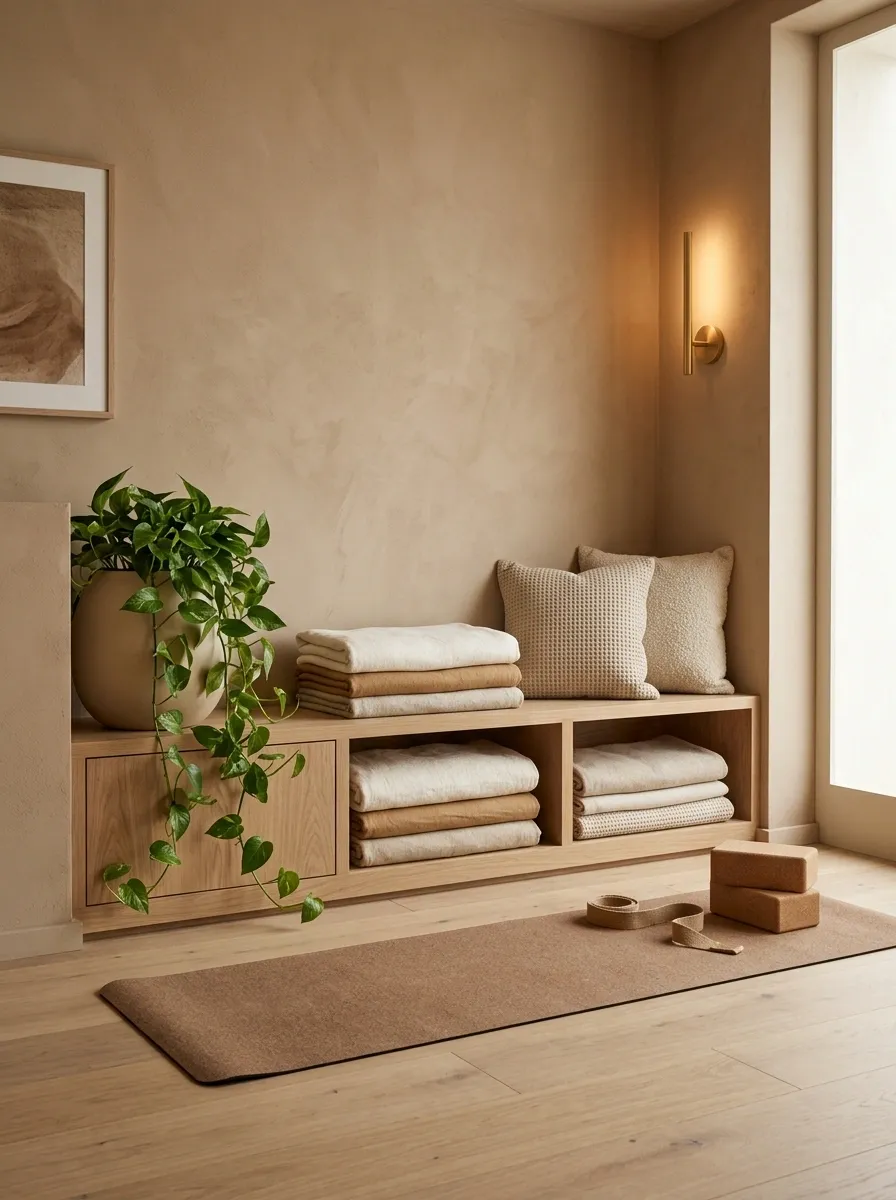
If the home already has a built-in bench or window seat, turn it into the storage anchor for the yoga area. Use the bench for folded blankets and cushions, then place the mat directly in front. A warm clay or olive wall color gives the architecture enough definition. Add a large ceramic planter on one end and a small wall light on the other so the bench becomes visually balanced. Keep the mat and textiles in cream, tan, and muted brown. Because the bench is already substantial, additional furniture isn’t necessary. This is a great example of working with what the room already gives you instead of trying to build a Pinterest corner from scratch. The architecture gets to earn its keep.
Soft Neutral Corner With a Linen Screen
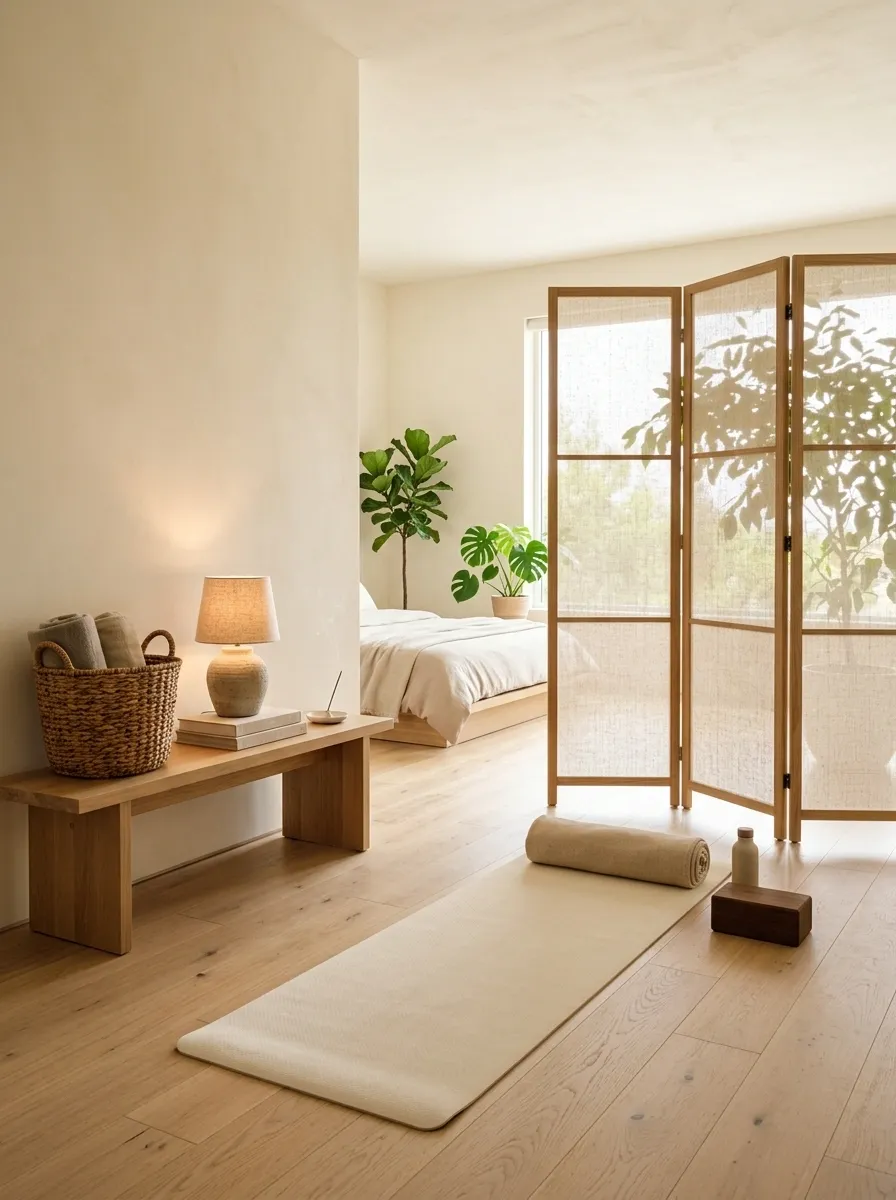
For a corner that needs privacy, a linen screen can create a soft boundary without making the space feel enclosed. Use warm ivory walls, pale wood flooring, and a cream or taupe mat. Position a freestanding linen panel behind one side of the mat, then place a low wooden bench along the opposite wall. A woven basket and small ceramic lamp add texture without clutter. Keep the screen slightly translucent so light can still pass through. This setup works especially well in bedrooms, studios, and open-plan apartments. It creates a distinct practice area while remaining visually connected to the rest of the room. Privacy doesn’t have to mean building a tiny wall and then wondering why the apartment suddenly feels smaller.
The Smallest Possible Yoga Corner
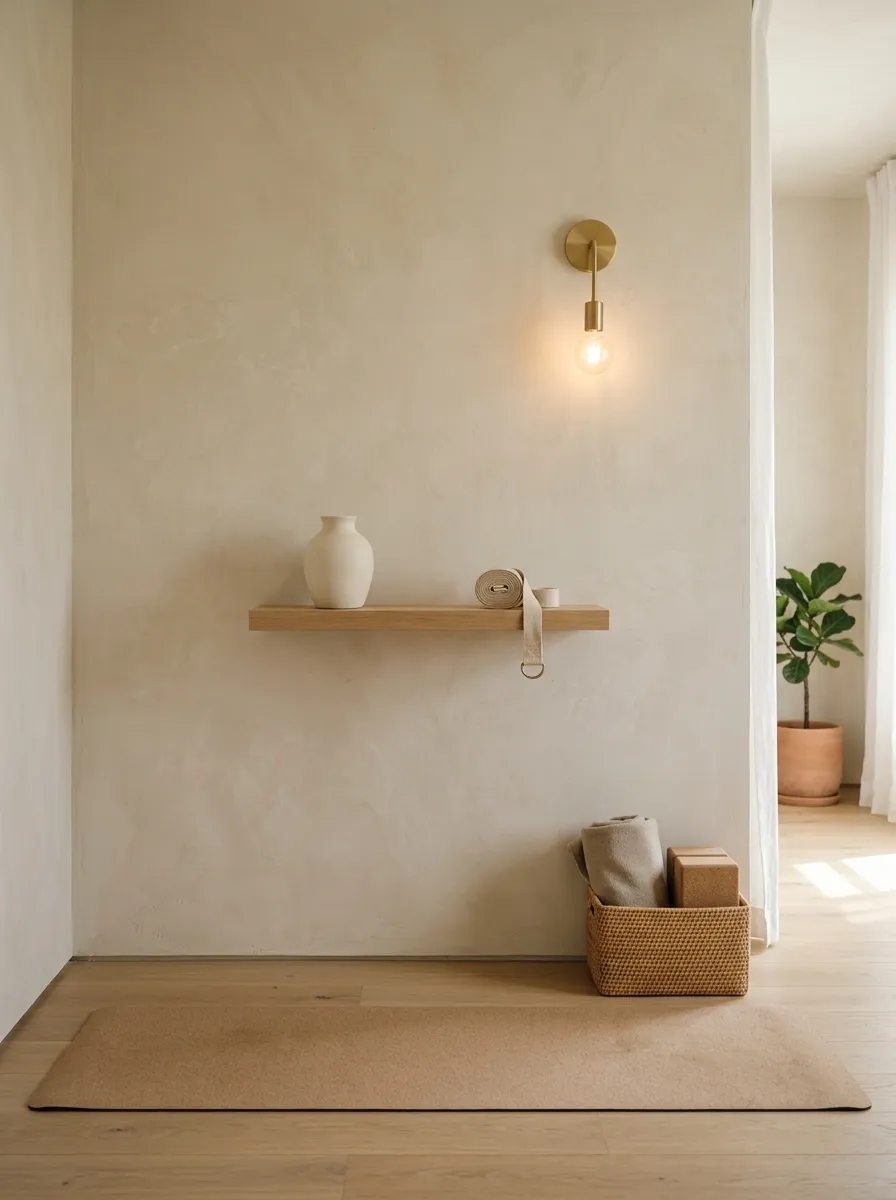
Sometimes the best design is simply a clearly defined patch of floor with one strong wall treatment. Use a warm neutral wall, one narrow floating shelf, a neutral mat, and a small basket for props. Add one wall light and nothing else. If the corner is next to a window, let the daylight provide the atmosphere. If it isn’t, use warm lighting and a mirror to keep the space visually open. The key is to stop before the corner becomes crowded. A tiny space doesn’t need a tiny version of a giant wellness room. It needs a few good decisions scaled to the available space. The mat gets its rectangle. The wall gets its identity. Everything else can politely stay home.
A good yoga corner doesn’t need a huge room, a giant budget, or a collection of objects that all seem to have been purchased during the same beige-colored shopping spree. It needs a clear visual boundary, comfortable proportions, useful storage, and lighting that makes the space feel worth returning to.
Start with the architecture you already have. A window, alcove, balcony, empty hallway, built-in bench, or awkward corner can become the starting point instead of an obstacle. Then choose one strong material or color and let the rest of the design support it.
The best yoga spaces are the ones that still look good when the mat is rolled away. Save the designs that make sense for your room, then borrow the layout, palette, or material combination that actually fits your home.