
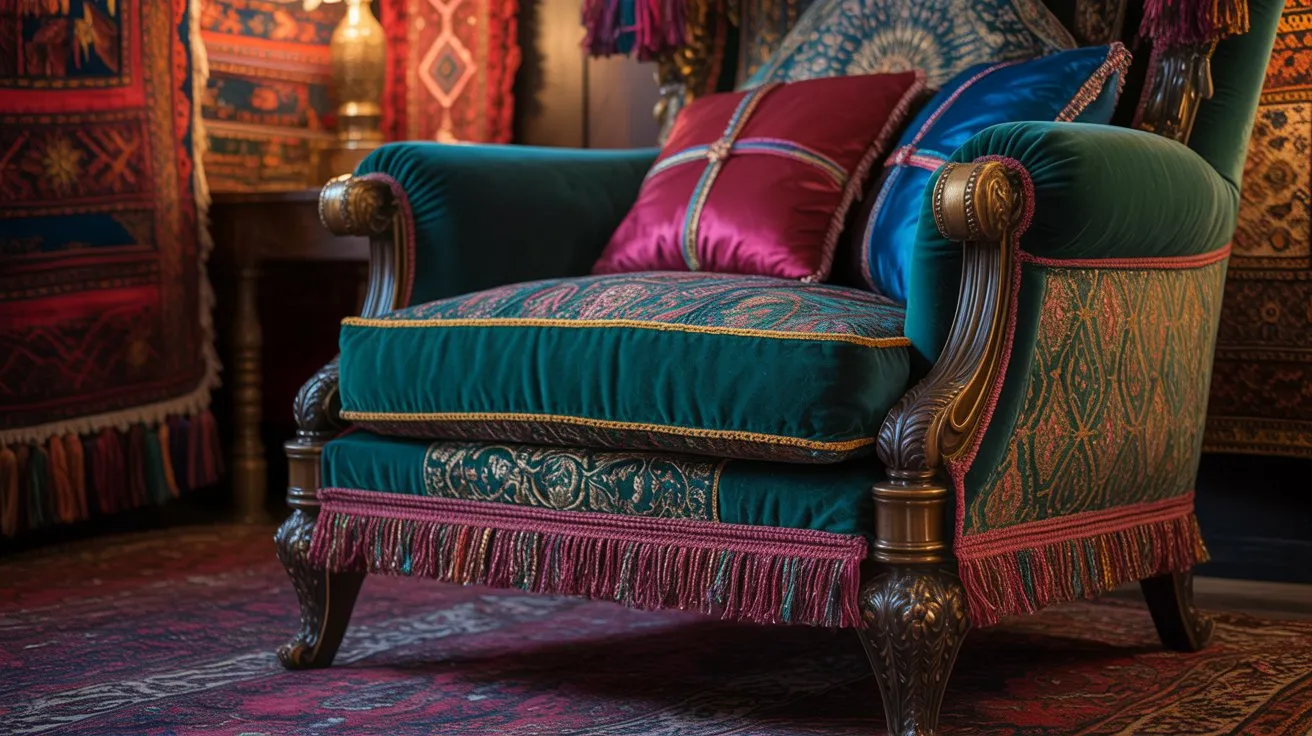
There is a particular kind of furniture purchase that people regret for different reasons than usual. Not because it broke or didn’t fit through the door, but because it was the safe choice. The inoffensive beige armchair. The sensible dining seat. The matching set purchased because it was easy and is now invisible.
Bohemian chairs are the opposite of invisible. They have something to say. They are made from materials that have texture and age and shadow. They take up space not just physically but visually, and they make the rooms around them better for their presence.
This post covers every kind of bohemian seating — rattan, wicker, velvet, hanging, floor, garden, dining — and how to place each one so it does maximum work in a room. Because the chair is only half the picture. Where it lives and what surrounds it is the other half.
What Makes a Chair Bohemian
The word gets applied too loosely. Not every rattan chair is bohemian. Not every velvet armchair with tassels qualifies. The distinction is about the relationship between the chair and craft.
A bohemian chair has evidence of making in it. The weave of the wicker is visible. The fringe was attached by hand. The macramé backrest was knotted in a deliberate pattern that required skill and time. The carved rattan scrollwork at the top of a peacock chair took someone hours. That evidence of human labour is what separates a bohemian chair from a mass-produced one with a jute cushion dropped on it.
Natural Materials and What They Do
Rattan, wicker, bamboo, seagrass, and cane all share one quality that synthetic materials don’t have: they cast shadow. The open weave of a rattan chair allows light to pass through it and land on the floor or wall in a pattern. That pattern changes with the time of day. The chair becomes more interesting to be near because the light around it is interesting.
Wood does the same thing differently. Grain variation and knots mean no two pieces are identical. The wood chair you found at a market has a different grain pattern than every other chair in the world. That specificity is what craft objects offer and manufactured ones cannot.
The Upholstered Exception
A velvet armchair with macramé fringe along the base is technically upholstered furniture. But the fringe transforms it. The handmade detail — stitched on, asymmetrical by nature, made of the same cotton rope used for wall hangings — breaks the upholstered formality and connects the chair to the material world of the rest of a bohemian room. The chair is no longer just seated furniture. It’s a textile composition with legs.
Bohemian Chair Ideas Worth Furnishing Around
The Wicker Tub Chair Pair
Source two low wicker tub chairs with rounded cup-shaped backs and rattan circular bases. The shape should be generous — wide enough to sit sideways in with legs draped over the arm. Leave them uncushioned, or add a simple natural cotton pad in the seat and nothing more.
Place them facing each other across a low round coffee table with a single candle and a trailing plant. The chairs become the room’s conversational infrastructure. Two people sitting in identical round chairs facing each other at low height are already in a different kind of conversation than they would be in upright dining chairs.
The Botanical Print Wingchair
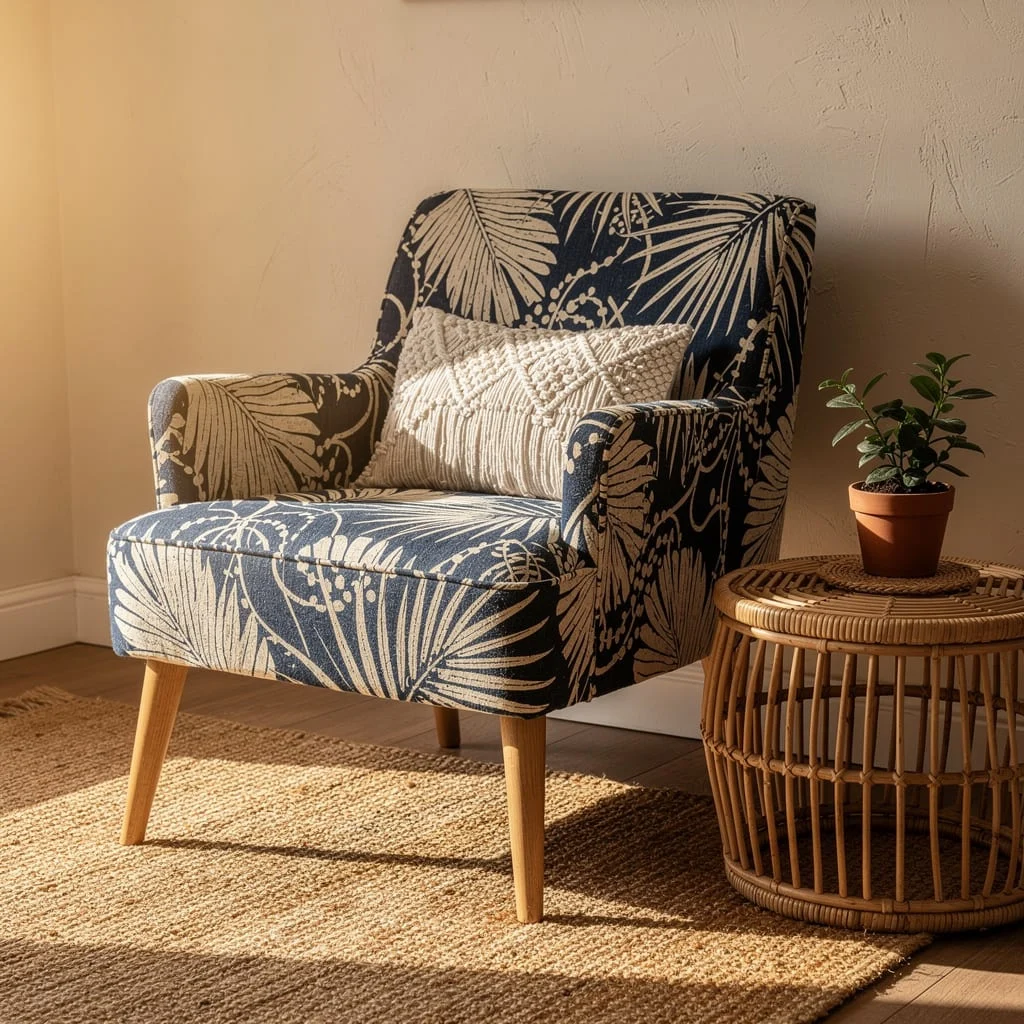
Have a wingback armchair upholstered in a navy and cream large-scale botanical or tropical leaf print fabric. Use straight light wood legs — not dark turned ones — so the chair reads as contemporary rather than traditional. Add one cream macramé lumbar pillow. Place the chair on a jute rug beside a small round rattan side table with a single terracotta pot and a trailing plant.
The botanical print fabric is the chair’s personality. It doesn’t need patterned cushions or a textured throw. It needs breathing room and one plant beside it that echoes the fabric’s subject matter.
The Otomi Dining Chairs
Take four or six French Louis-style dining chairs with circular backs — the kind with dark turned legs and a padded circular back insert. Have each back panel re-upholstered with a different Otomi or Oaxacan bird embroidery textile — toucans, peacocks, tropical birds in jewel tones on bright ground colours. Use a different saturated solid velvet on each seat cushion: hot pink, lime green, purple, orange.
Hang these chairs against a maximalist large-scale floral wallpaper in the same saturated colour world. The chairs and the wall compete and that competition is exactly the point. The dining room stops being a room where people eat and becomes a room where people want to arrive.
The Window Armchair Corner
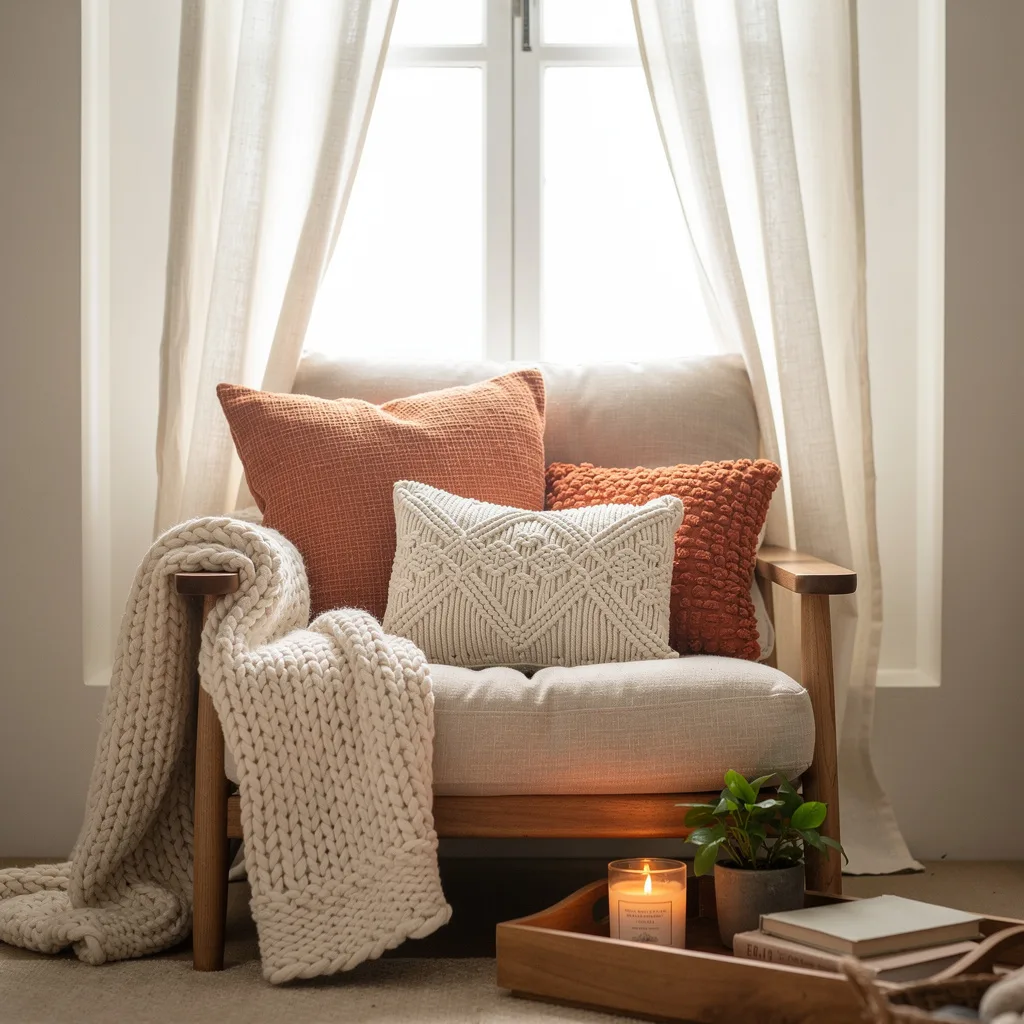
Place a solid oak-armed armchair with a cream linen cushion seat at a window with white linen curtains. Layer two rust-toned pillows and one macramé-knotted cream lumbar in front of them. Drape a chunky cream arm-knit throw over one wooden arm. Place a low wooden tray on the floor beside the chair with one lit candle and one small terracotta plant.
This is the simplest chair composition in this list and among the most effective. Everything in it — the curtain light, the warm linen, the rust and cream textile combination — serves the single purpose of making the chair feel like a destination worth choosing over the sofa.
The Macramé Garden Throne
Commission or source a large-scale garden hanging structure — a teepee-form macramé suspended chair with a circular base, knotted cotton walls that narrow to a point above, cream cotton panels with open latticework sides, and a full tassel fringe around the base hem. The interior should hold a round cushion seat and back cushions. Hang it from a garden arch frame.
This is a piece of outdoor furniture that functions as an outdoor room. Placed among terracotta pots and tall garden plants, the macramé garden throne is simultaneously seating and architecture. Sitting inside it is a specific kind of solitude — enclosed but open-aired, sheltered but not indoors.
The Velvet Fringe Armchair
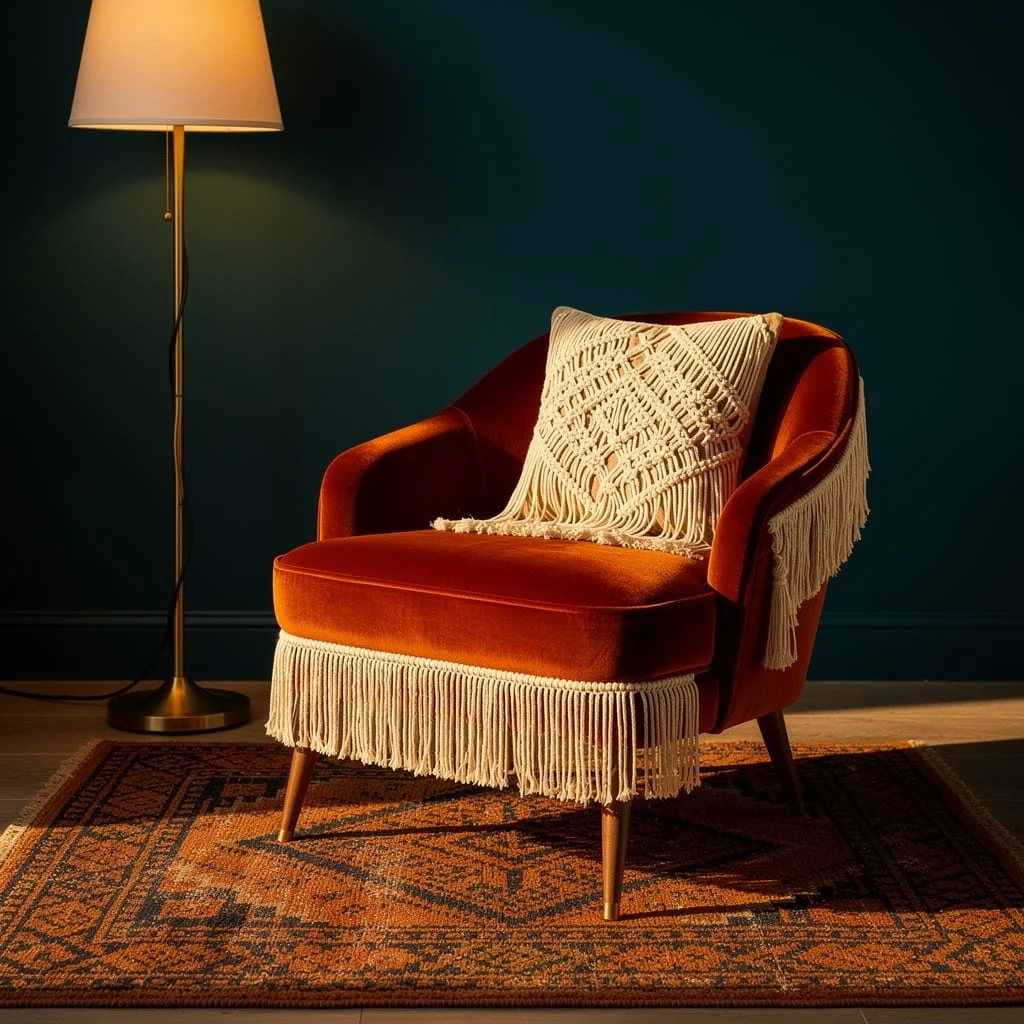
Upholster a curved-back occasional armchair entirely in deep rust velvet. Along the base hem, attach a dense cream cotton macramé fringe — ideally in double-knotted or half-hitch pattern — so the fringe falls evenly around all three sides of the chair. Place one cream macramé pillow in the seat. Set the chair on a vintage kilim rug in matching rust and dark tones. Position a brass floor lamp beside it at shoulder height.
This chair becomes a destination by virtue of the contrast between the smooth velvet above and the handknotted fringe below. The kilim and the lamp complete a reading corner that functions as a room within a room.
The Rattan Petal Chair
Source a rattan chair with a backrest formed from overlapping petal or leaf shapes radiating from a central round seat — five or six individual rattan-framed lobes that together create a floral silhouette. Pair this with a round white faux-sheepskin seat cushion.
Place it in a children’s room, a reading corner, or a photography studio. The chair is sculpture before it is furniture. It doesn’t need styling beyond good placement and a background that doesn’t compete — plain white or pale plaster wall, wide plank wood floor, afternoon light from a nearby window.
The Papasan Corner Shrine
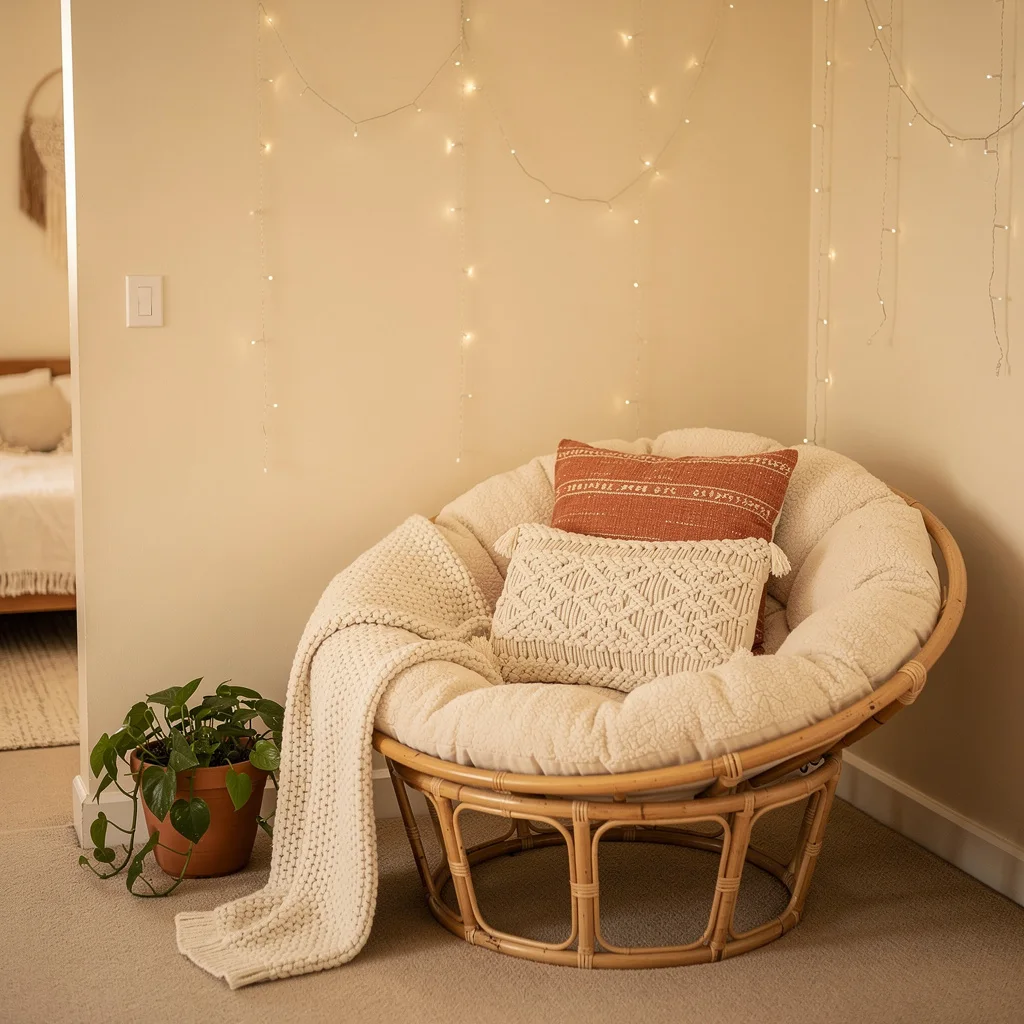
Place a full papasan chair — the overscale bowl-shaped rattan frame with a thick round cushion in cream boucle or wool — in a bedroom corner. Load the cushion with one rust-print lumbar and one macramé diamond pillow. Drape a cream knit throw over one side so it falls loosely onto the floor. Behind the chair, drape fairy lights loosely from ceiling to floor against the wall — not strung neatly, but dropped in gentle curves.
The papasan corner becomes the part of the bedroom that people use for sitting rather than going to bed. It signals that this room has more than one purpose, which is true of all good bedrooms.
The Suspended Disc Chair
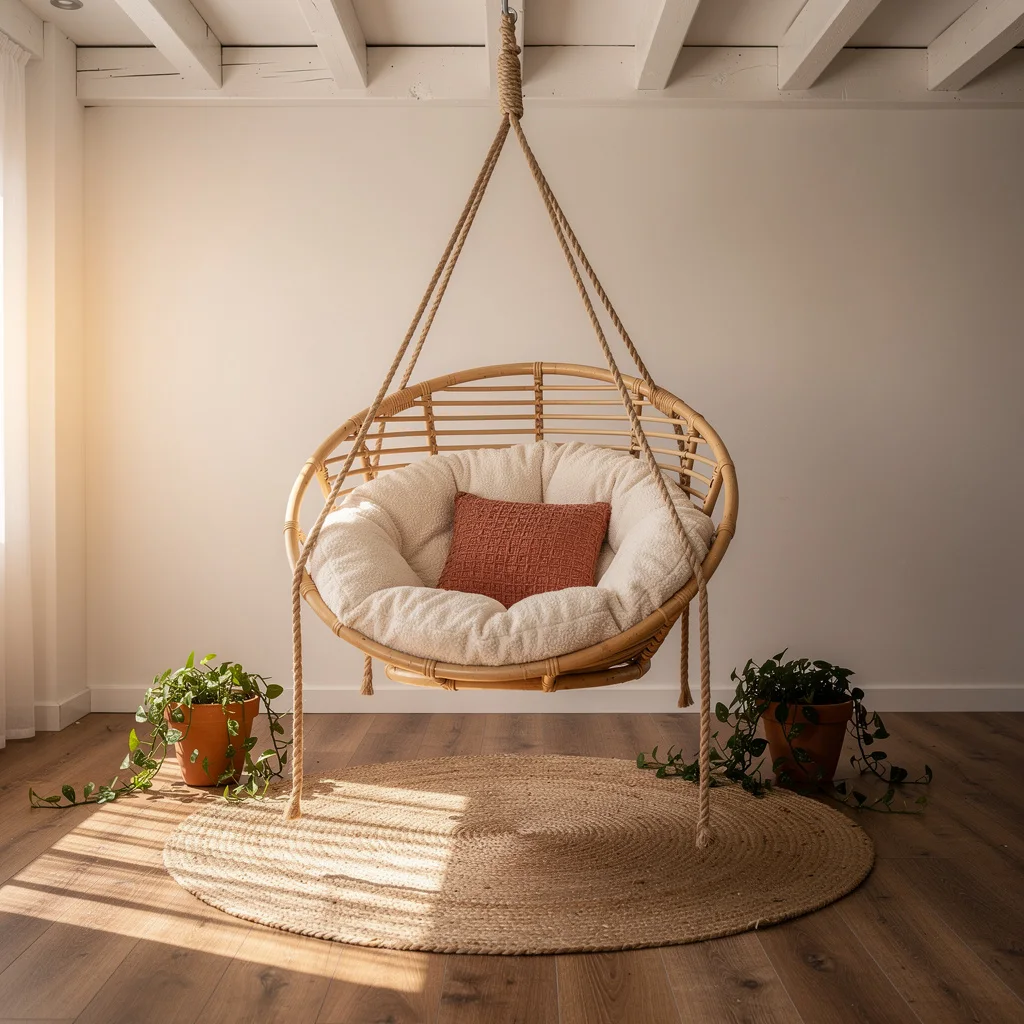
Install a flat circular rattan disc chair — the kind suspended from three points of natural jute rope attached to a ceiling beam — in a light-filled room with exposed white ceiling beams. Fit the disc with a cream boucle round cushion. Add one small rust-print accent pillow at the centre. Place two terracotta pots with trailing pothos on either side on the floor below.
The suspended disc chair needs generous vertical space to work well — at least 2.7 m ceiling height. Given that space, it becomes the room’s visual and gravitational centre. Every other piece of furniture in the room relates to where the disc chair is.
The Teal Fringe Vanity Chair
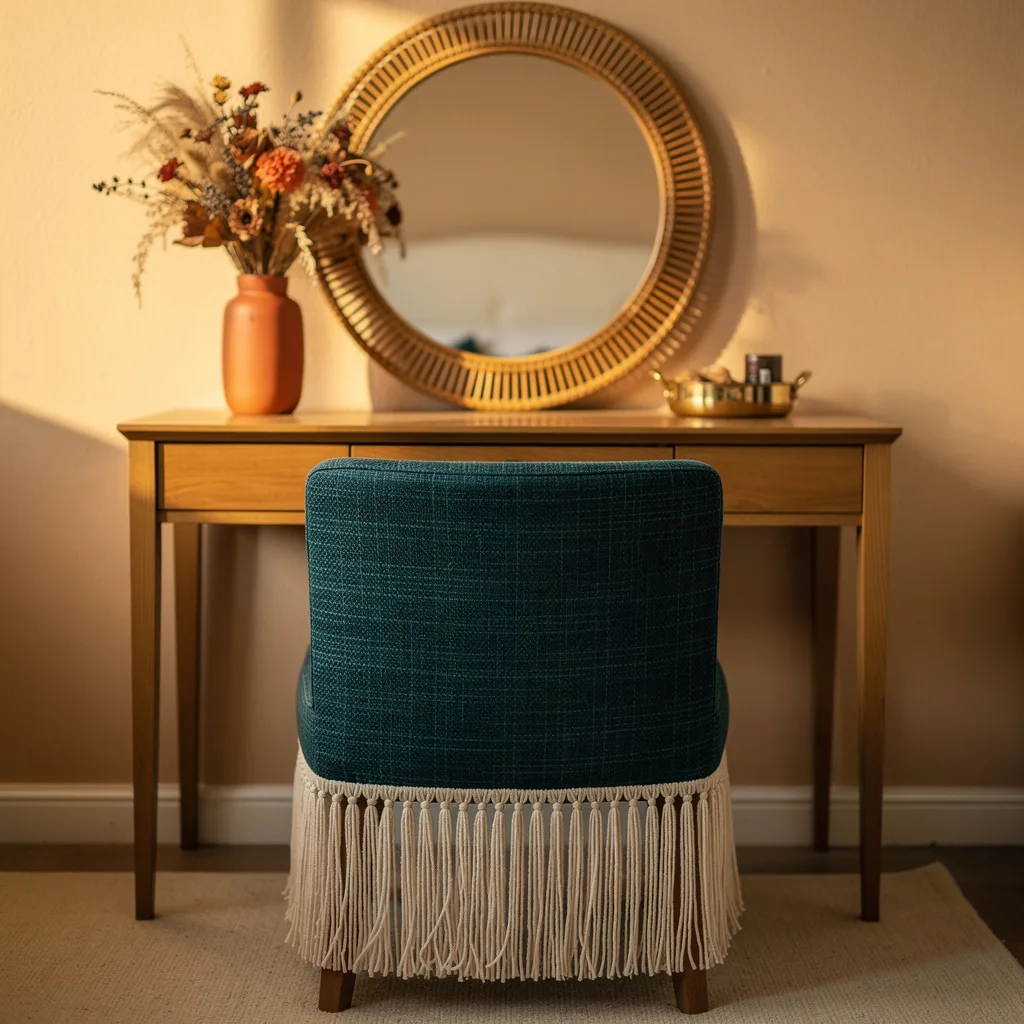
Upholster a small slipper chair or backless stool in deep teal bouclé or woven cotton. Along the base, attach a dense cream macramé tassel fringe — longer at 15 to 20 cm so it moves slightly. Place the chair at a narrow timber dressing table with a round gold or rattan-framed mirror above it. On the table, set a terracotta vase with dried florals, a small gold tray with perfume bottles, and nothing else.
The teal chair facing a warm amber room behind the mirror creates one of the most flattering vanity corners possible. The fringe at the base turns a functional chair into an object worth keeping in view even when not in use.
The Oak Rocker with Kantha Quilt
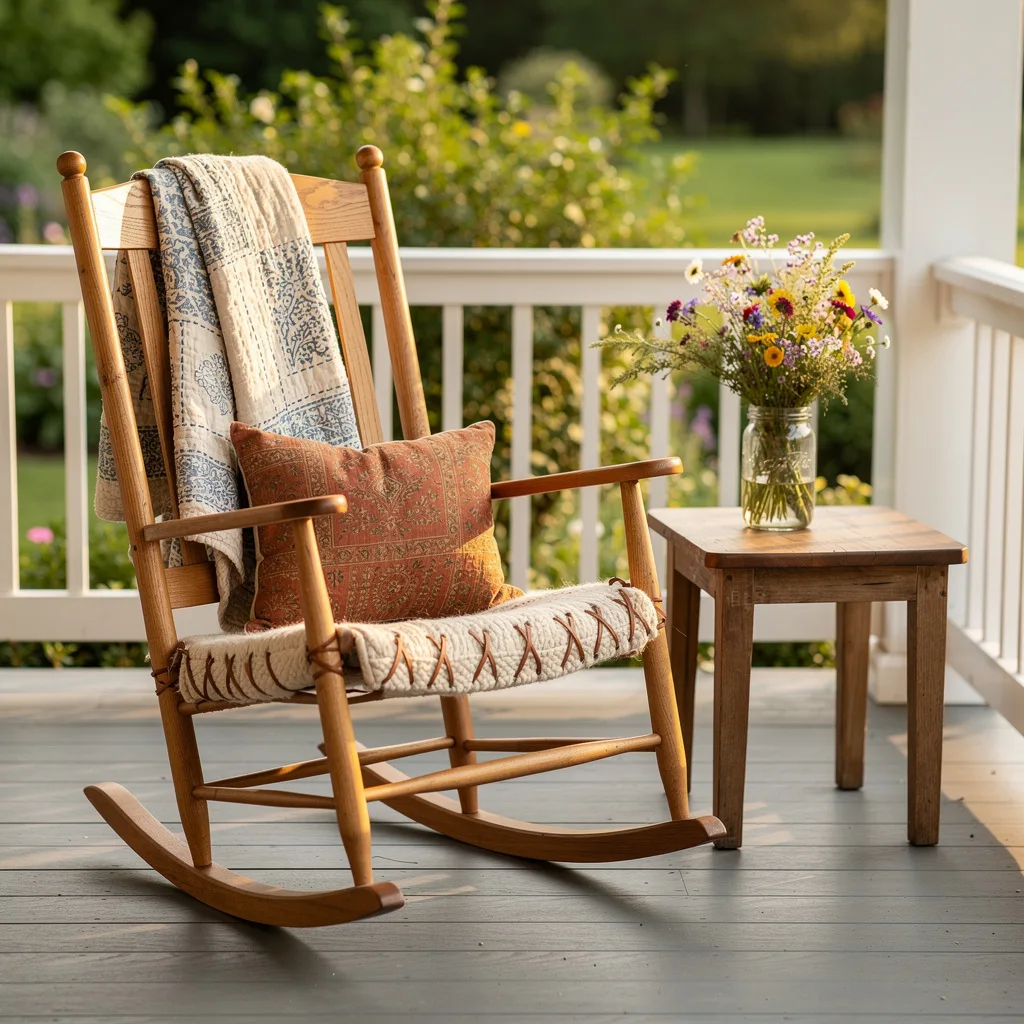
On a wide covered porch, place a simple solid oak rocking chair — classic spindle back, rolled arms, plain rungs. Drape a blue and white block-print kantha quilt over the back. Add one rust and gold printed lumbar in the seat. On a small weathered side table beside it, put a mason jar of wildflowers.
This is the bohemian chair composition that requires the most restraint. The rocking chair is already a strong form. The kantha adds pattern. The wildflowers add life. Any more and the composition tips. It works because everything in it is honest — an old chair, a handmade quilt, garden flowers, a jar someone had in the kitchen.
The Sage Dining Room Setup
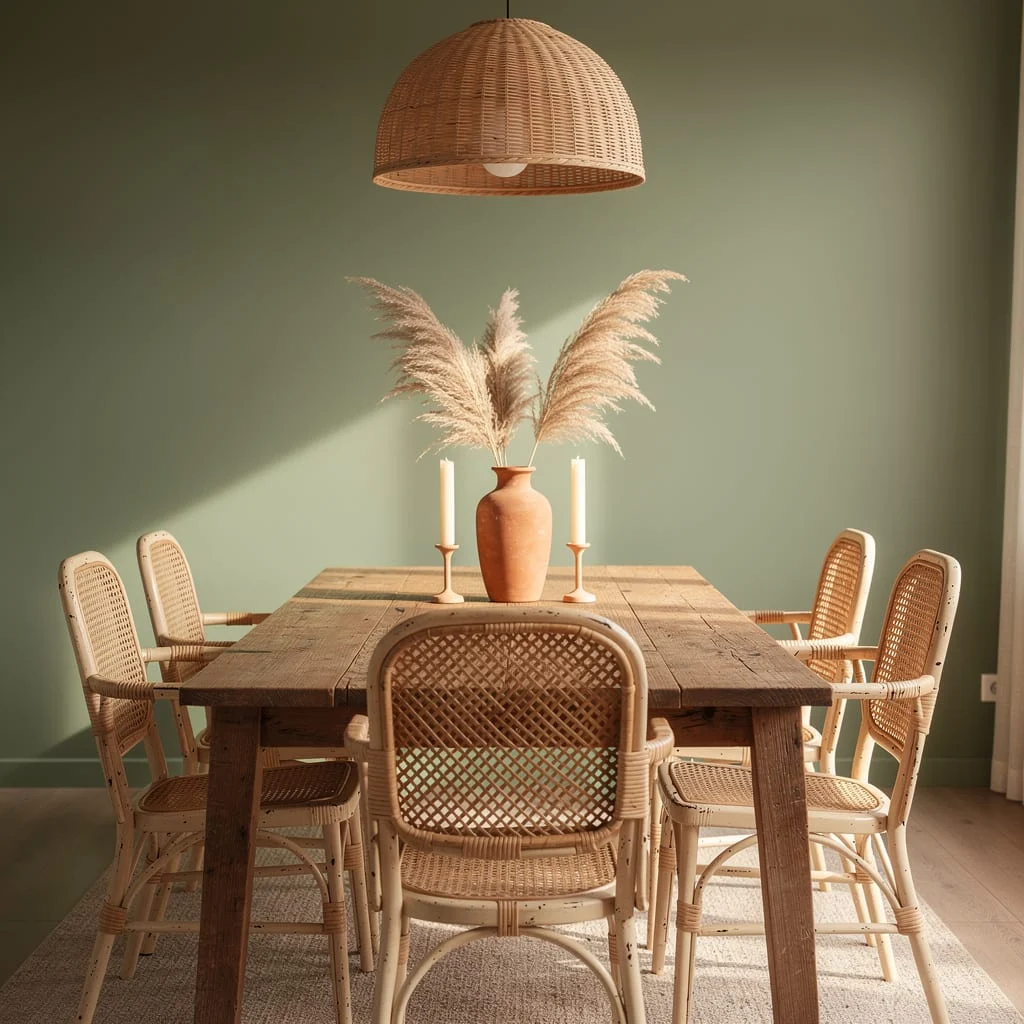
Set a reclaimed timber farm table with visible knots and grain. Surround it with six rattan cane-seat chairs — the bistro style with curved cane backs, painted cream or left natural. Hang a single large rattan dome pendant directly above the table. On the table, place a terracotta vase with tall pampas grass stems and two slim candlesticks.
The sage green wall behind this arrangement does most of the work. Against that wall colour, the natural rattan reads as warm gold, the terracotta vase glows, and the whole room feels like a farmhouse meal even in a city apartment. The chairs themselves are simple — their form, material, and collective arrangement are what make them bohemian.
The Bamboo Chair and Amber Glass Corner
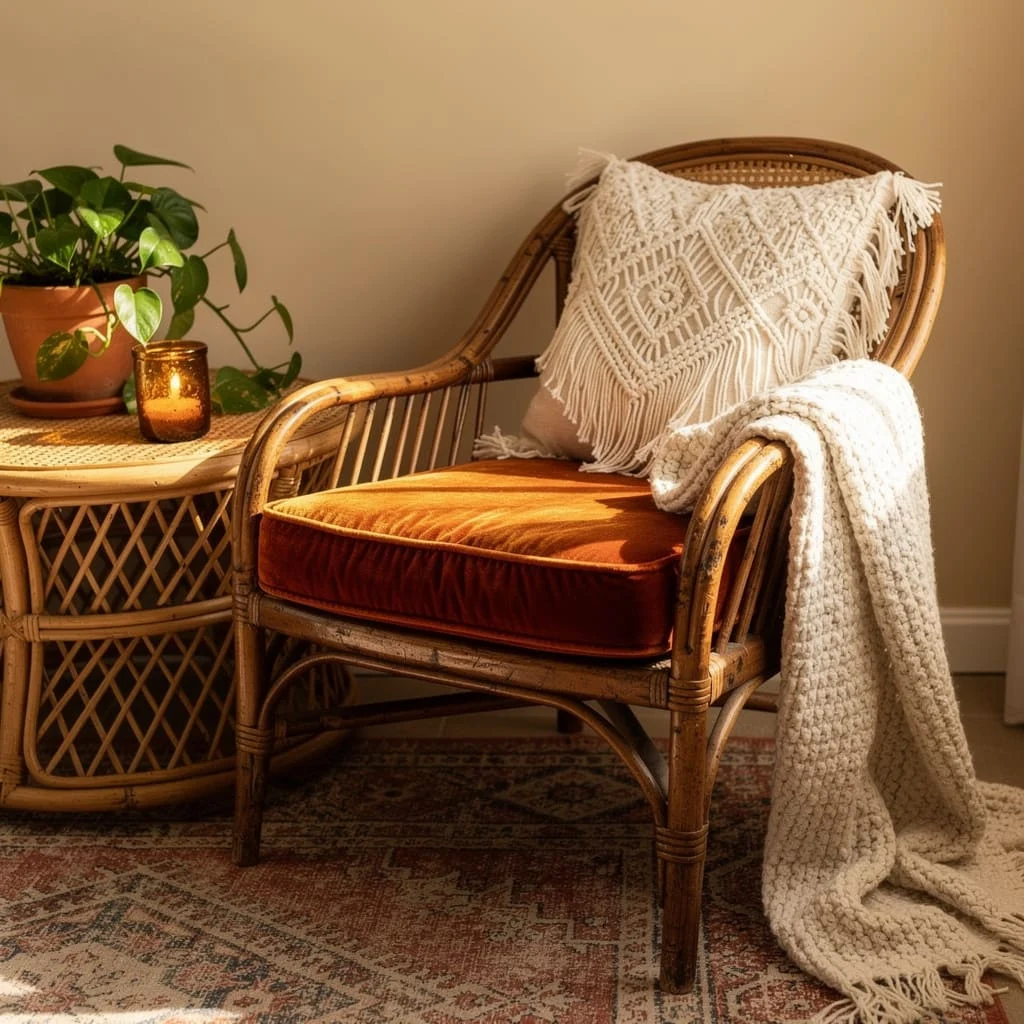
Place a traditional bamboo rattan armchair with a woven cane back in a warm corner with good afternoon light. Fit it with an amber velvet seat cushion. Drape a cream cotton macramé throw over one arm. On a small matching rattan table beside it, set one amber glass votive, one terracotta pot with a philodendron, and one small woven basket.
The amber glass candle lit against the gold tones of the rattan in late afternoon sun creates a corner that is warm in a way that has nothing to do with temperature. The macramé throw bridges the gap between the handmade wall art in the rest of the room and the more conventional furniture form of the chair.
The Porch Egg Chair
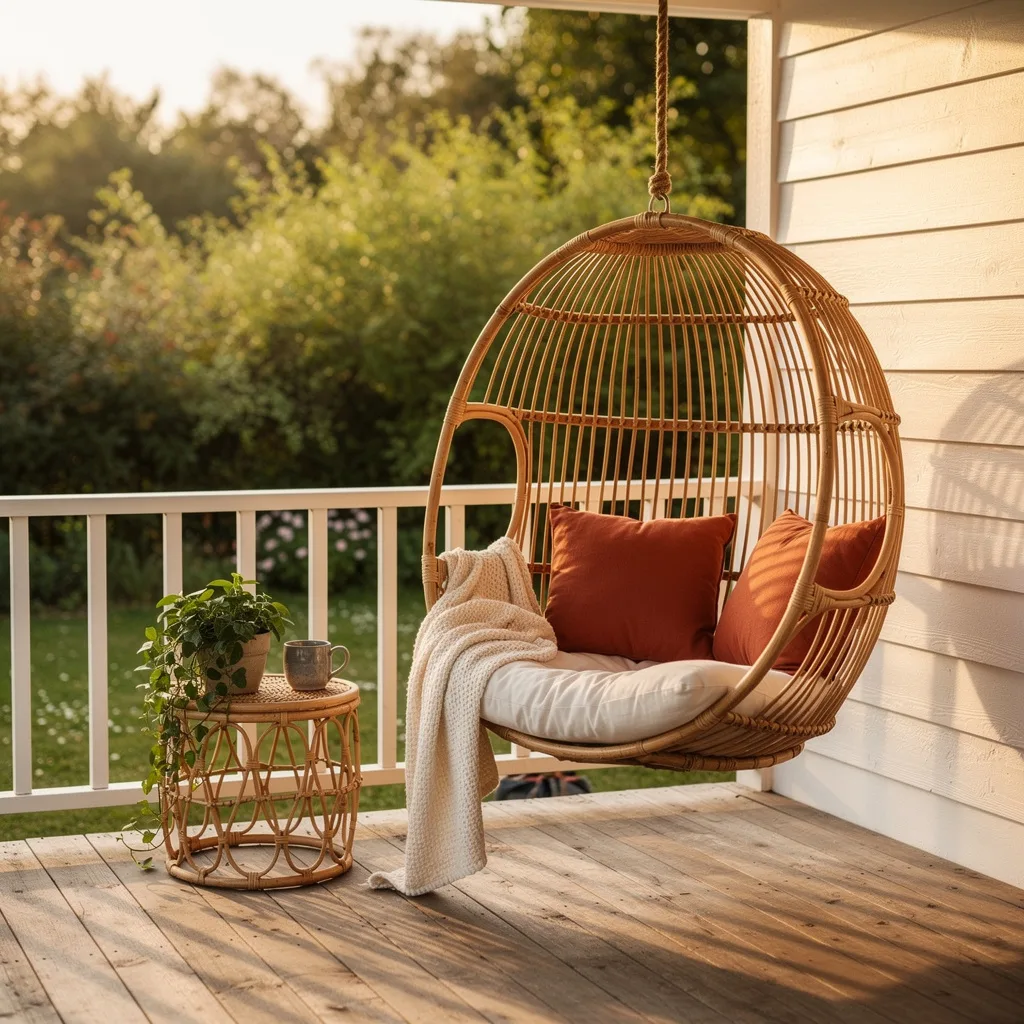
Hang a rattan egg chair — the full enclosed oval shape, not the open-backed version — from the porch ceiling using a heavy-duty rope hook. Fit it with a white cushion base and two rust linen pillows. Drape a cream knit throw over the front rim. On a small round rattan table beside it, set one potted trailing plant and a ceramic mug.
This is the chair that causes people to mention they want one every time they see it. What they are actually responding to is the combination of elevation, enclosure, and softness. The egg chair is at eye level of someone standing, which means sitting inside it creates a slightly private relationship with the garden beyond the porch railing.
The Meditation Floor Cushion
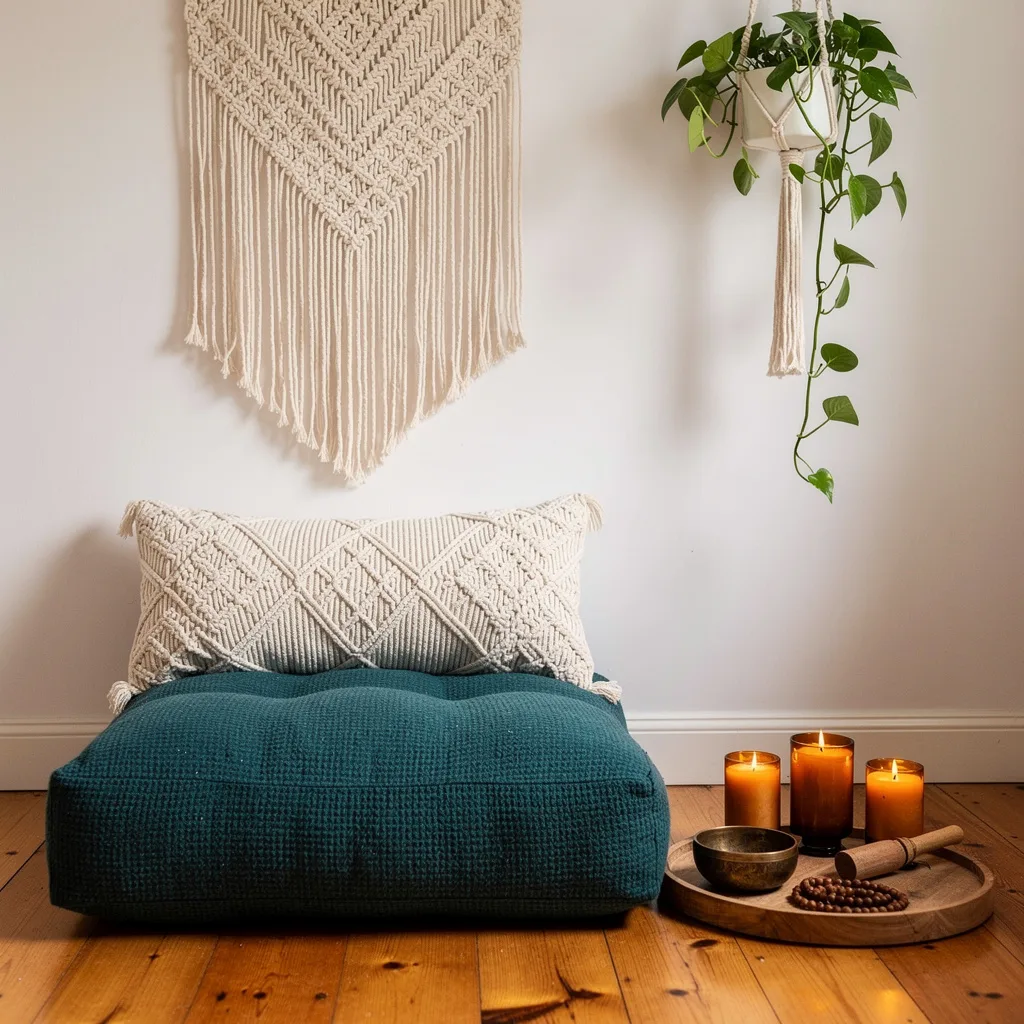
On a plain wooden floor, place a large square floor cushion in deep teal — thick enough to sit comfortably for thirty minutes, with visible texture from a hand-loomed or waffle-weave cotton fabric. Add a cream macramé lumbar pillow at the back. On a small wooden tray beside it, arrange three amber glass jar candles, a brass Tibetan singing bowl, and a strand of wooden prayer beads.
Above the cushion, hang a macramé wall piece — chevron pattern, wide fringe — and to one side, a macramé plant hanger with a pothos. This arrangement is not a chair. But it serves the same function: it designates a place in the room with a specific purpose. Sitting on this cushion in front of these candles means something different from sitting on the sofa. The designation is what makes it work.
The Three-Chair Terracotta Salon
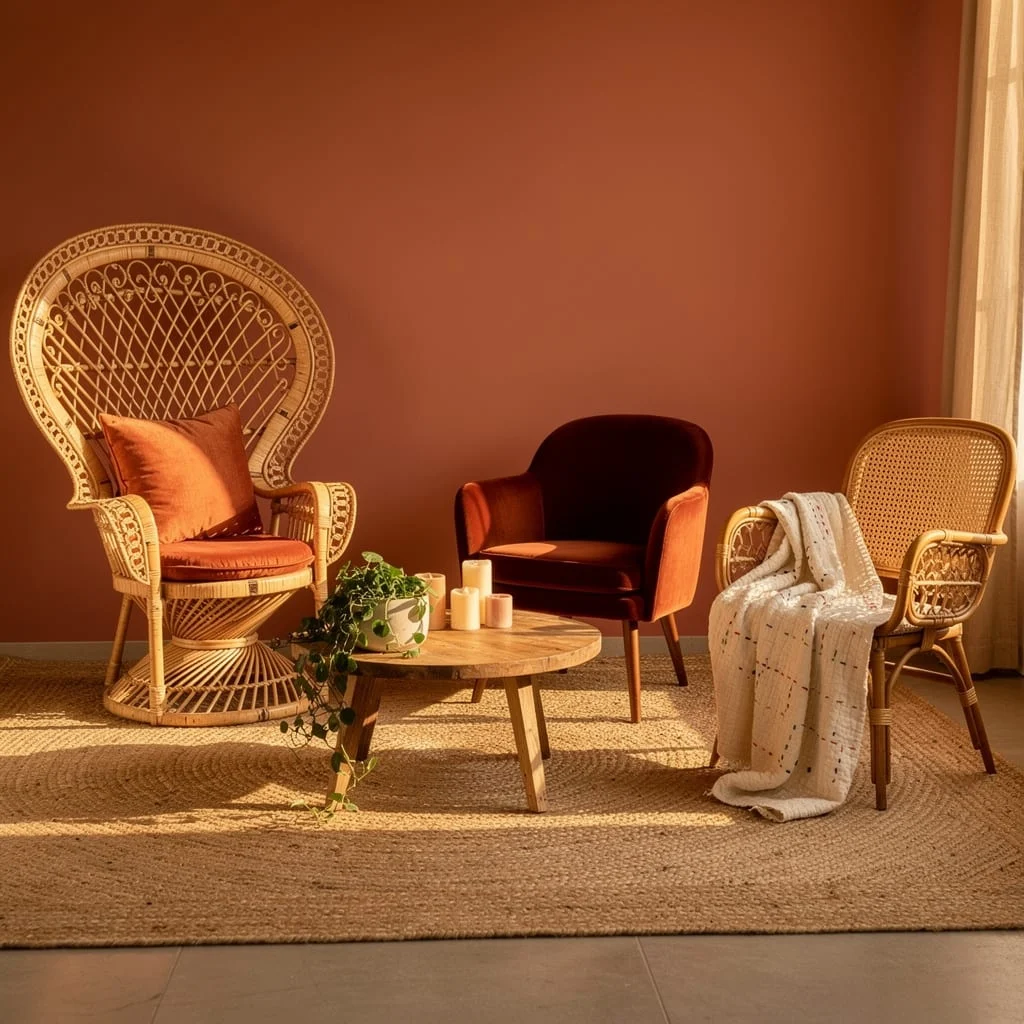
Against a terracotta wall, arrange three chairs on an oval jute rug around a small round wooden coffee table. The first chair is a full peacock rattan chair with elaborate scroll-worked back, an orange-rust seat cushion, and a linen lumbar pillow. The second is a mid-century style compact velvet armchair in deep burgundy with tapered wood legs. The third is a classic rattan cane-back lounge chair with a cream draped throw.
The three chairs share a colour world — warm, rust-adjacent — but have completely different personalities. The peacock chair is theatrical. The velvet chair is sophisticated. The cane chair is casual. Their combination on the same rug creates a sitting room that does not look like it was purchased in one visit, which is the whole point.
The Macramé-Back Outdoor Chair
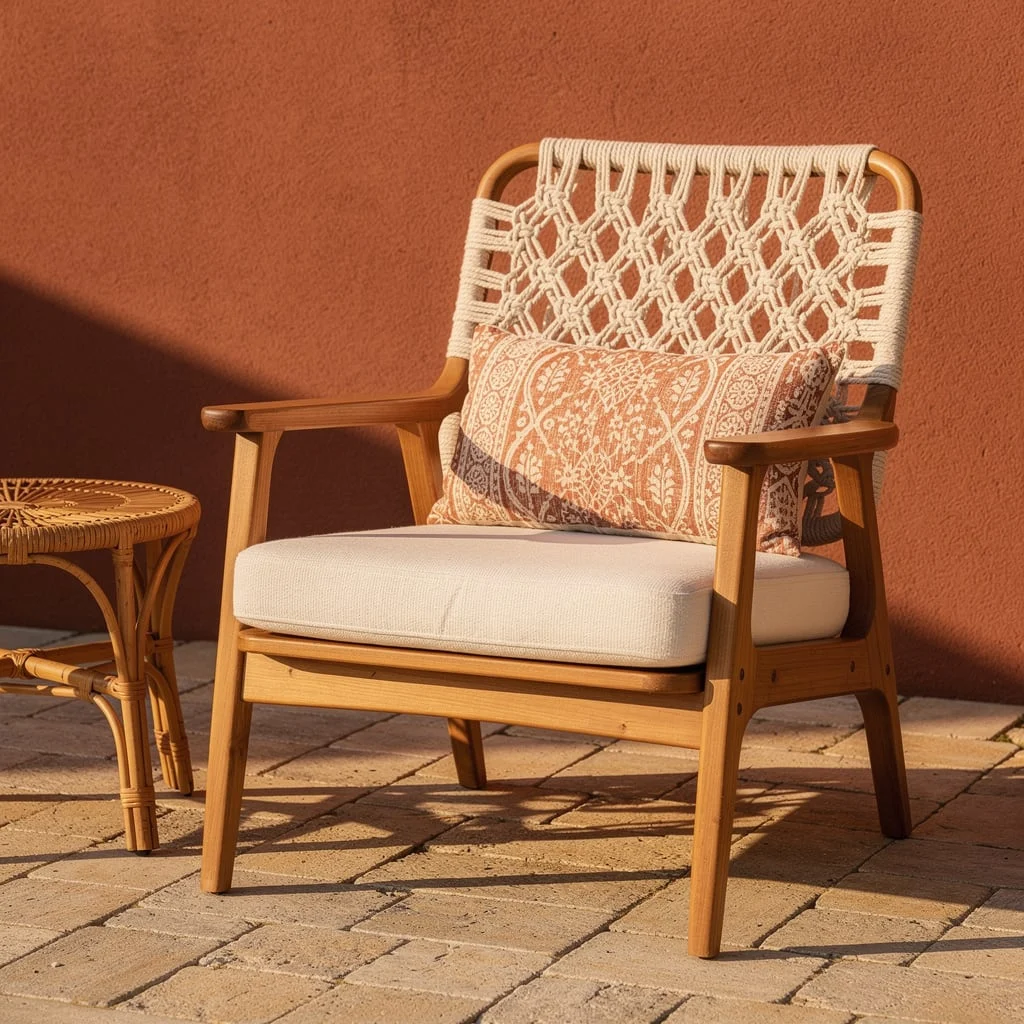
Source a solid teak or hardwood outdoor armchair frame with a traditional flat-arm construction. Replace the slatted or canvas back with a panel of hand-knotted macramé in a diamond grid pattern — the cotton rope threaded through the top rail and bottom rail of the frame and knotted between. Add a cream canvas seat cushion and one rust block-print lumbar.
Pair this chair with a small round rattan side table. Place both on a terracotta-coloured stone or paved patio in direct sun. The macramé back breathes in the outdoor air. It ages well — cotton rope weathers to a warm cream and eventually a warm ivory — and it connects the outdoors setting to the handmade textile vocabulary of the interior. It is simultaneously furniture and craft.
The Cane Chair with Kantha Throw
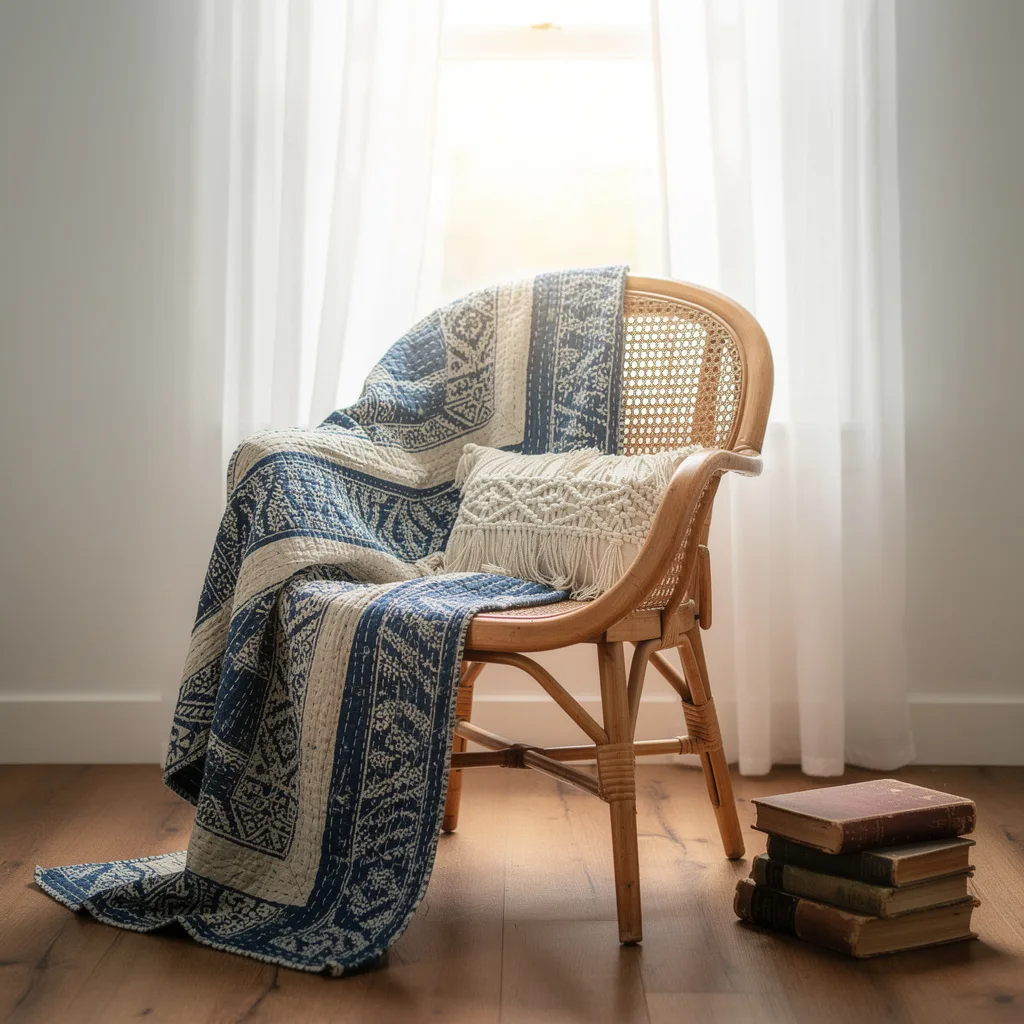
Place a simple rattan or cane armchair — curved back with woven cane panel, natural tone, light legs — in front of a white linen curtained window so the light falls through both the curtain and the cane simultaneously. Drape a blue and white kantha quilt over the back and seat so the quilt covers the chair completely. Lean one macramé fringe cushion against the quilt. Stack three old hardcover books on the floor beside the chair.
The kantha quilt draped over the cane chair is the composition. The chair itself almost disappears under the quilt, which is the point — the textile becomes the statement, the chair becomes the scaffold. The books on the floor signal that this is where someone reads.
The Chair That Earns Its Place
Every chair in this post earns its place differently. The peacock chair earns it through spectacle. The papasan earns it through comfort. The velvet fringe chair earns it through the relationship between its smooth surface and its handmade trim. The rocking chair on the porch earns it through the kantha draped over it and the wildflowers beside it.
What they have in common is that none of them are passive. They don’t sit in rooms looking like seating that was purchased because seating was needed. They sit in rooms looking like decisions were made about them — what material, what texture, what companion objects, what light, what wall behind them.
That decisiveness is what makes a chair bohemian. Not the wicker. Not the rattan. Not the macramé. The fact that someone thought about it and chose it anyway, when a plain upholstered box on four legs would have been so much easier.